An icon representing a coaxial speaker driver.

Coaxial Speaker Drivers

A coaxial driver is a specialized design that mounts two drivers—typically a tweeter and a mid-range—on the same axis, with one positioned in the center of the other. The acoustic benefit of this design is that it creates a single “point source” from which all sound emanates. This leads to improved coherence, imaging, and a more stable soundstage off-axis. This guide lists the manufacturers that engineer these clever, integrated driver units for hi-fi and studio applications.


10

Hi-Fi brands in the category

Summary information and image

Direct links to official websites

Filters
Search
Country
See more See less

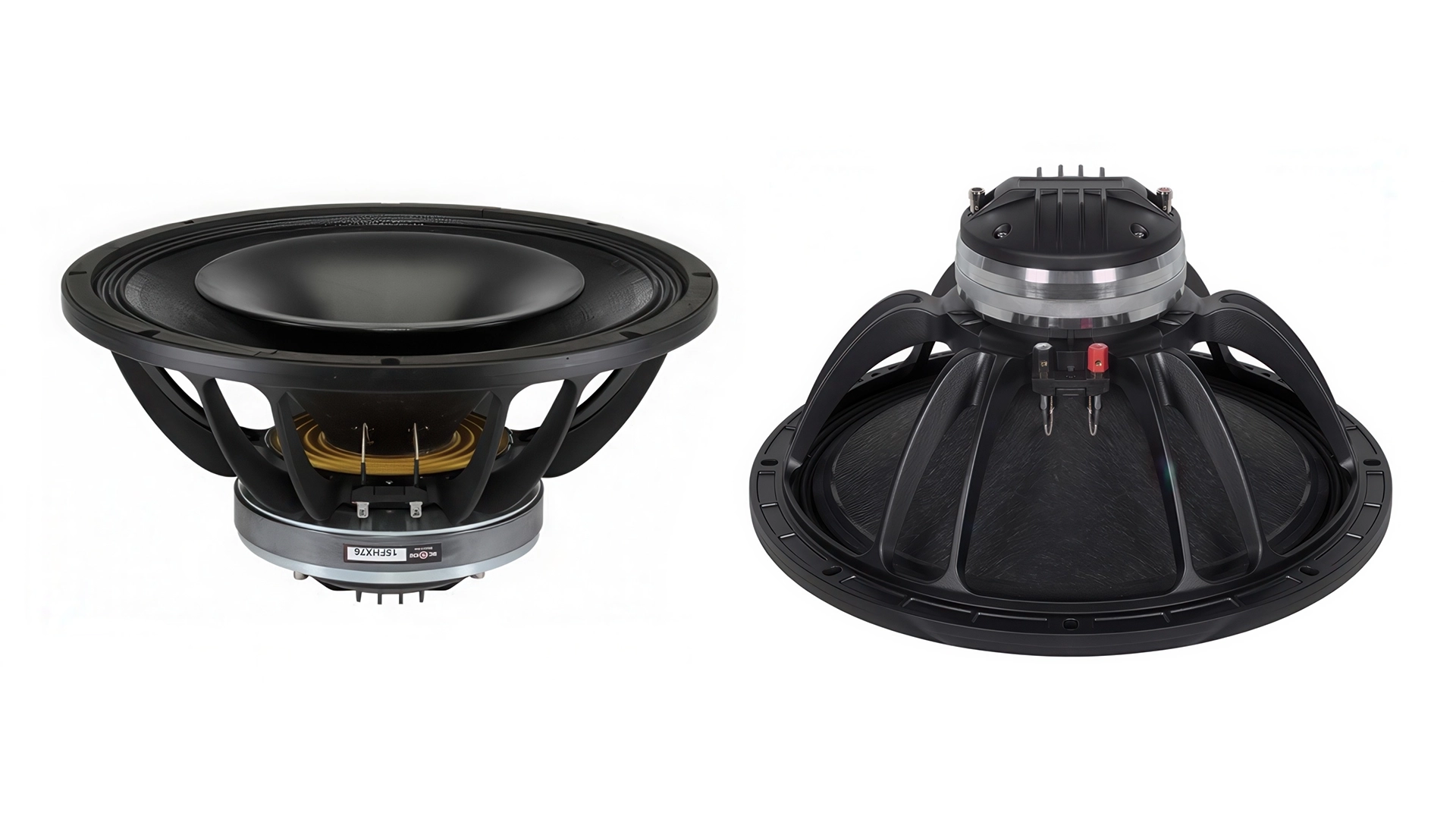
B&C Speakers is an Italian specialist in professional loudspeaker transducers, supplying both its own catalogue and OEM designs to manufacturers worldwide. Its roots reach back to Roberto Coppini and Fernando Borrani’s post-war work in Florence; the company identifies 1946 as the start of continuous production. From its facility in Bagno a Ripoli, B&C develops and manufactures low-frequency cone drivers, compression drivers, coaxial units, horns and line-array components for touring systems, installed sound, cinemas and high-output monitors. Engineering combines finite-element modelling, material development, precision machining and rigorous power and reliability testing. The wider group also includes Eighteen Sound, Ciare and Eminence, but B&C retains its own product programme and Italian manufacturing identity. The entry title remains unchanged for import matching, while the description uses the manufacturer’s correct B&C styling.

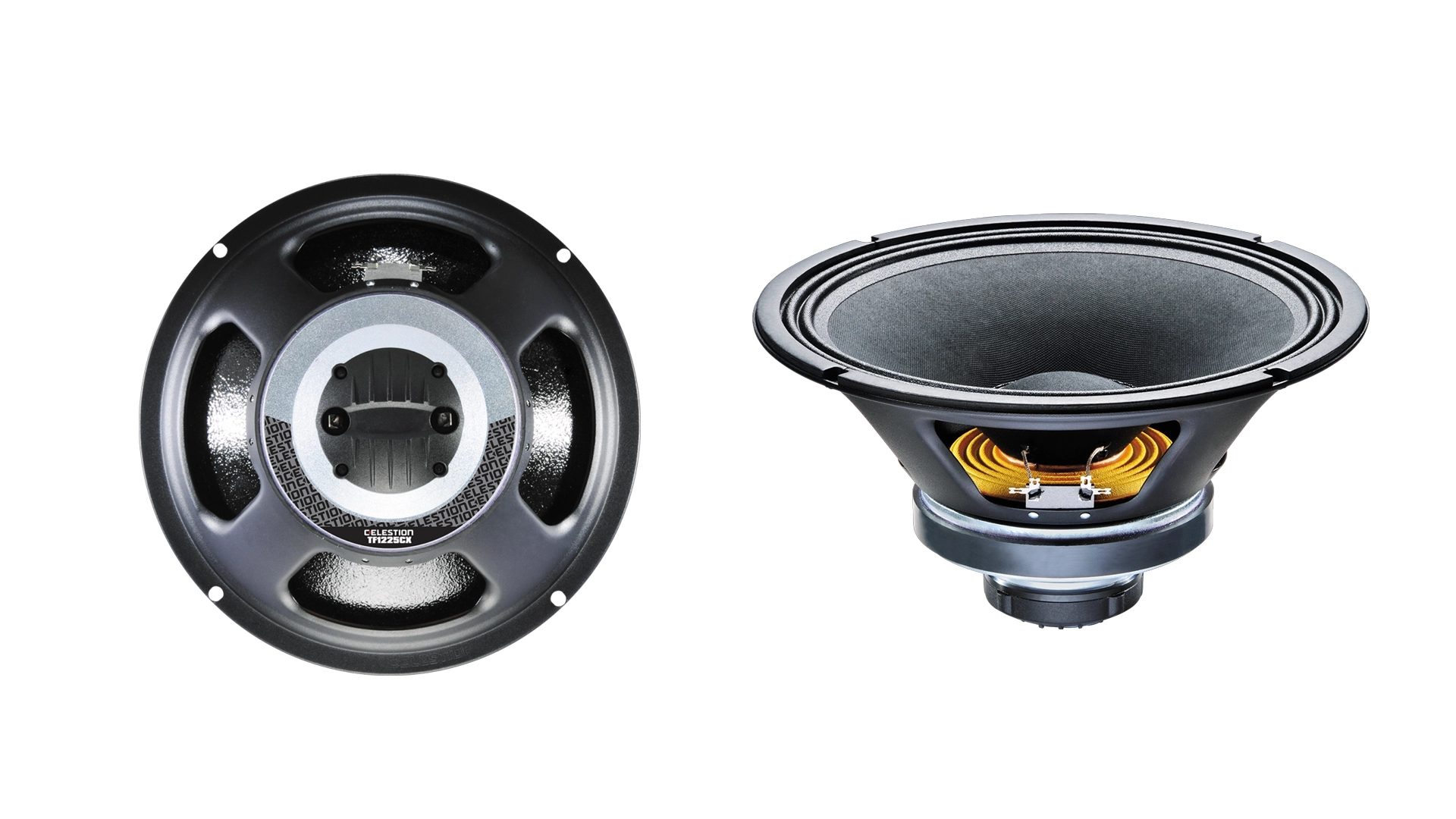
Celestion has shaped both electric-guitar tone and professional loudspeaker engineering from the level of the drive unit itself. The story began in 1924, when Cyril French worked with Eric Mackintosh to develop one of the earliest practical cone loudspeakers; Celestion was initially the product name before becoming the company identity. The British manufacturer is now best known for guitar speakers such as the Blue, G12M Greenback, G12H, Creamback and Vintage 30, whose controlled cone breakup is treated as part of an instrument amplifier’s sound rather than unwanted distortion. Its professional range includes ferrite and neodymium low-frequency drivers, compression drivers and coaxial units for sound reinforcement. The AxiPeriodic Axi2050 is a notable modern development, covering roughly 300 Hz to 20 kHz with one annular diaphragm and avoiding a midband crossover. Celestion also supplies impulse responses and Dynamic Speaker Responses, translating its physical driver catalogue into tools for digital cabinet simulation.

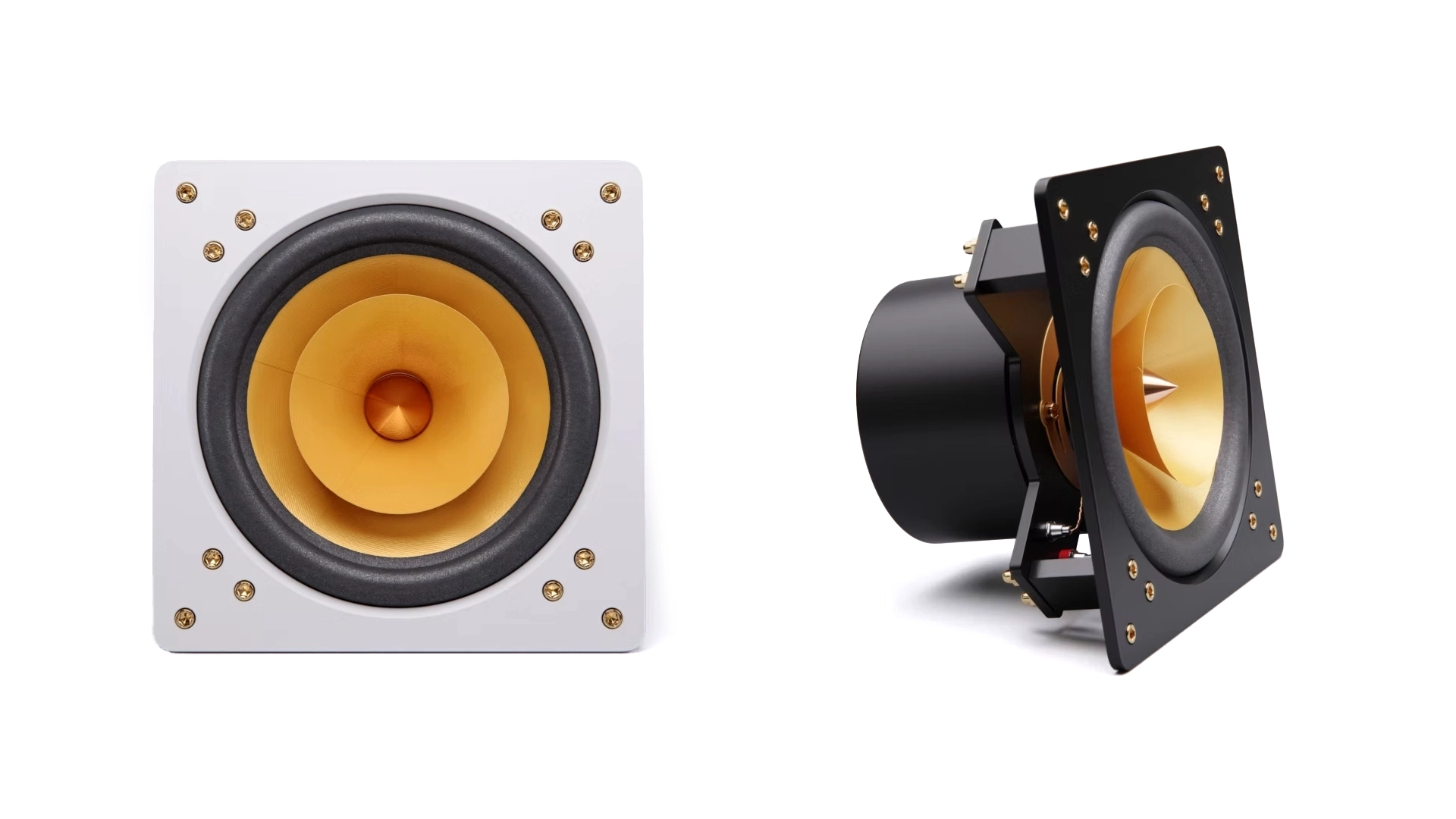
Cube Audio is a Polish loudspeaker and driver manufacturer founded by physicist Grzegorz Rulka and loudspeaker designer Marek Kostrzyński. The company’s central project is the high-performance full-range driver: a transducer expected to reproduce most or all of the audible spectrum without a crossover dividing the critical midband. Cube develops and builds its own large paper-cone drivers, magnet systems, suspensions and field-replaceable elements, then matches them to carefully tuned cabinets. The Nenuphar family demonstrates the purest version of the idea, using a single wideband unit per channel and a cabinet loading system engineered to extend bass without sacrificing immediacy. Other models adapt the same driver knowledge to different room sizes and bandwidth requirements. Removing the crossover can improve phase continuity and point-source imaging, but it places unusually high demands on cone profile, moving mass and motor linearity; those are the areas where Cube’s know-how resides. The brand is therefore more than a boutique cabinet maker: it controls the transducer technology that gives its loudspeakers their distinctive coherence and directness.

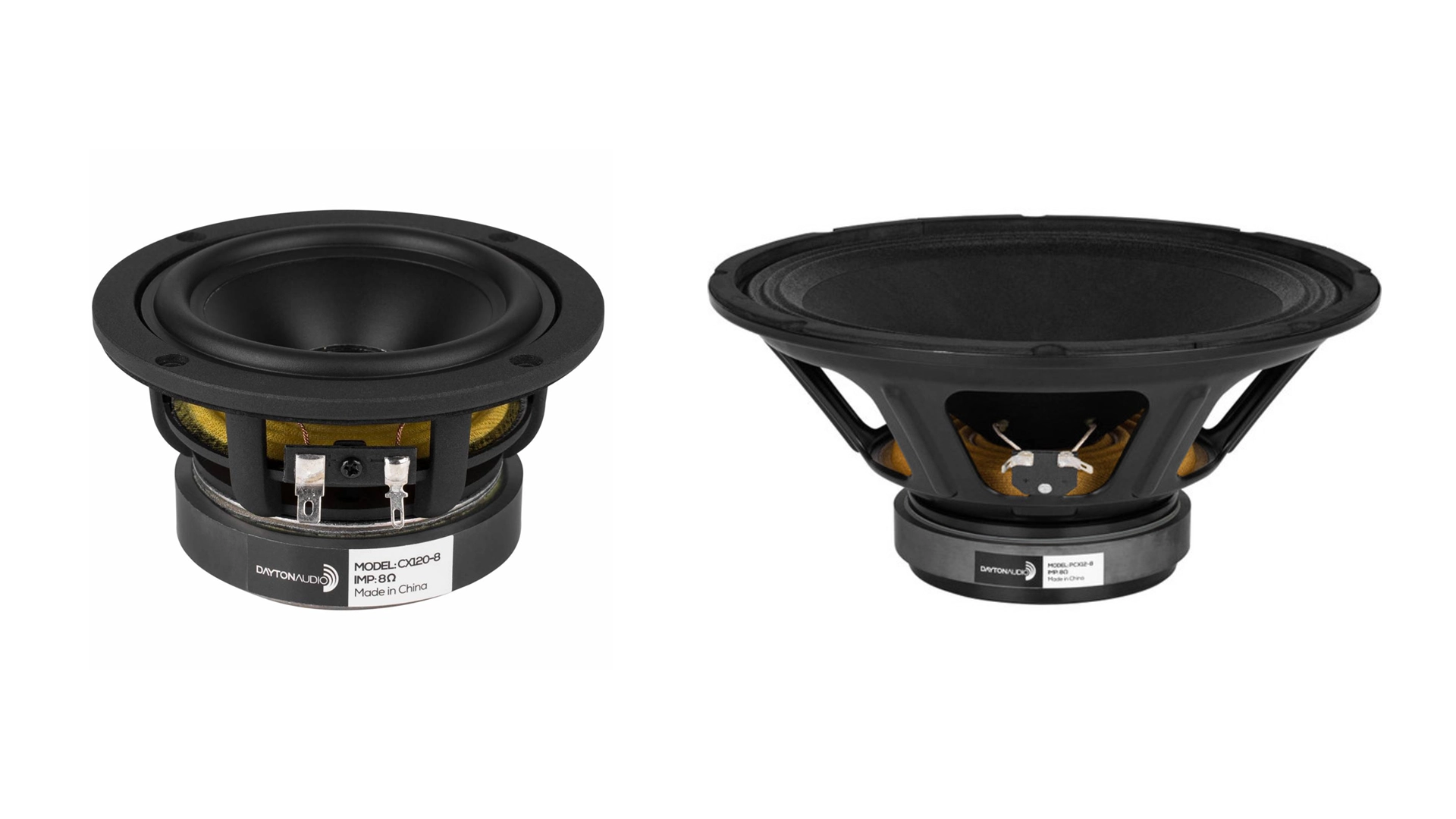
Dayton Audio is the house audio brand associated with Ohio-based Parts Express, serving builders, installers and value-conscious listeners with components that are normally sourced from many separate suppliers. Its catalogue spans individual tweeters, midrange and woofer drivers, passive radiators, subwoofer plate amplifiers, class-D amplifier boards, DSP modules, finished subwoofers, compact speakers and complete kits. Reference and Signature drivers provide measured parameters for original loudspeaker designs, while Ultimax subwoofers prioritise long excursion and power handling. Just as important is the supporting tool chain: the DATS measurement system helps builders determine driver impedance and Thiele-Small parameters, and project documentation makes the parts usable rather than merely inexpensive. Dayton also collaborates with independent designers on kits and supplies OEM or custom-installation solutions through Parts Express. Its distinctive strength is breadth with technical accessibility — drivers, electronics, measurement and practical documentation within one ecosystem — making it especially useful to DIY loudspeaker builders who want compatible parts and test tools from one source.

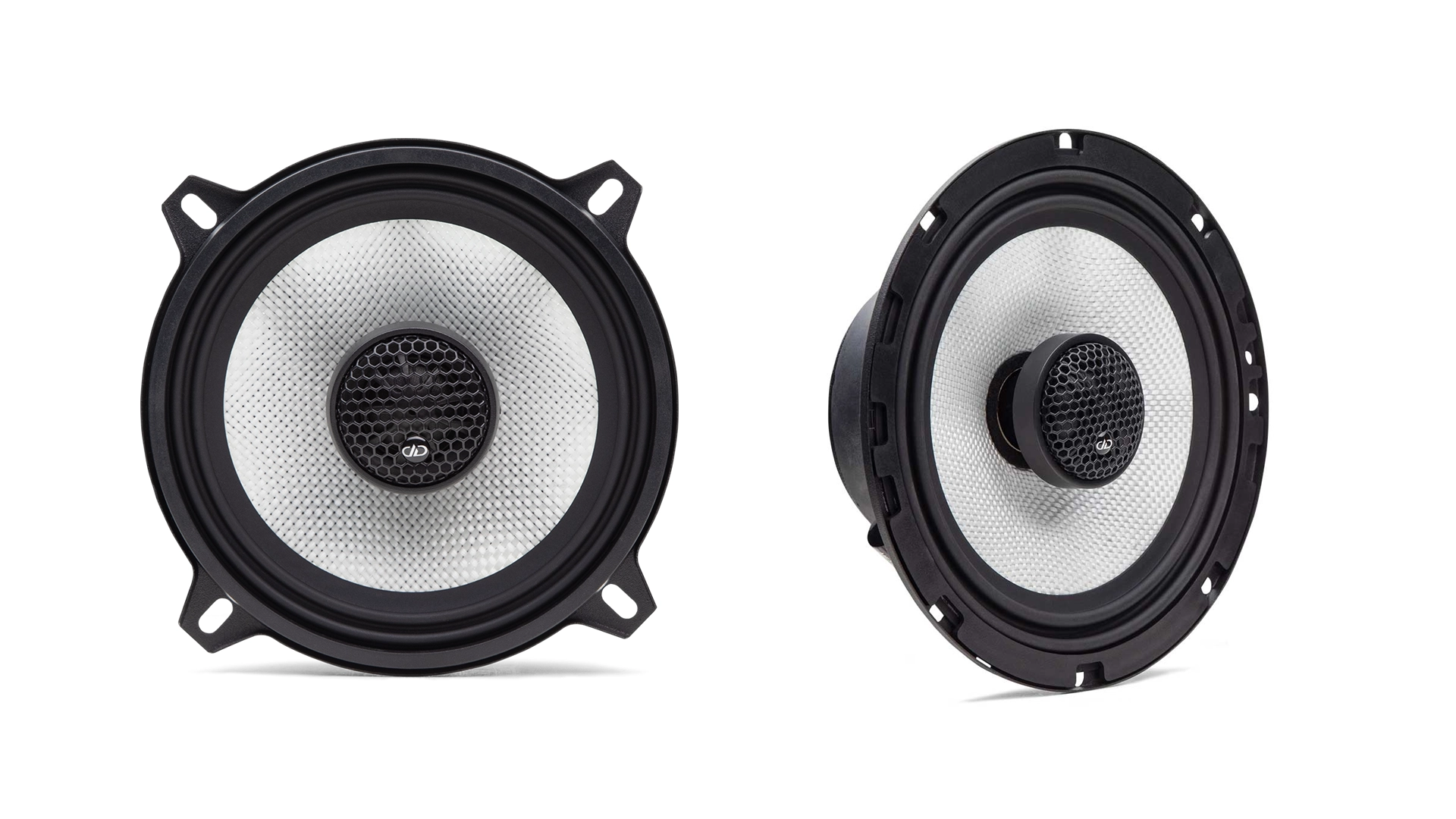
DD Audio, originally Digital Designs, is an American mobile-audio manufacturer founded by Jassa and Vicki Langford in Southern California in 1986 and based in Oklahoma City since 1991. The company is best known for high-output subwoofers that are engineered and hand-built in the United States, including reconeable competition-oriented models rather than sealed imported assemblies. DD develops motor structures, voice coils, suspensions and cone systems around defined power and excursion requirements; its Z-series neodymium architecture represents the extreme sound-pressure end of that work, while 2500, 3500 and 9500 families serve progressively more demanding daily and competition systems. Amplifiers, component speakers, pro-audio-style Voice Optimized drivers and vehicle-specific or universal enclosures complete the signal chain. The catalogue also extends to marine products, but car audio remains the centre of gravity. DD Audio’s individuality lies in retaining domestic subwoofer engineering, assembly and service capability while spanning both sound-quality installations and very-high-SPL competition — two uses that demand different alignments, cooling and mechanical durability.

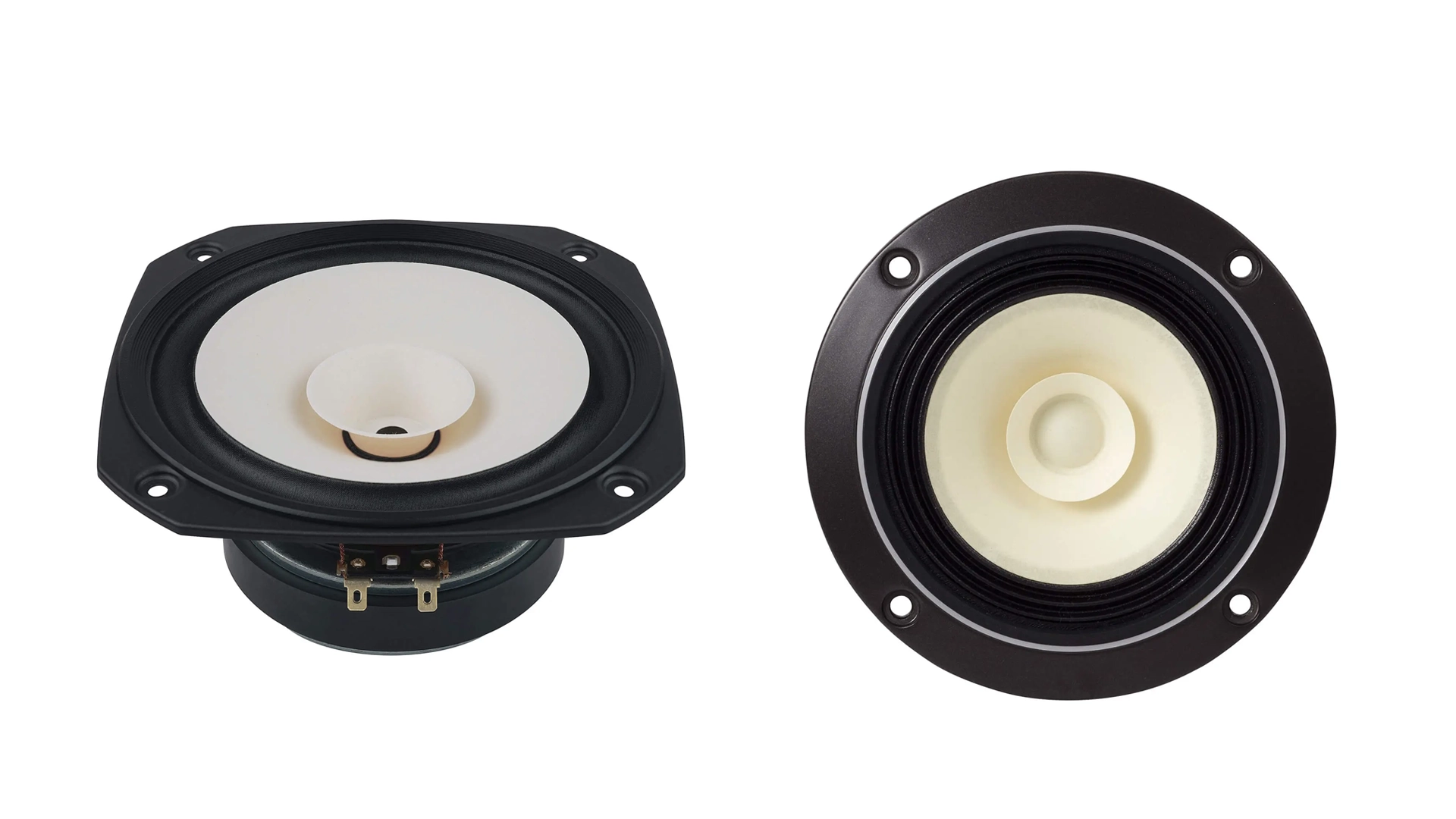
Fostex connects Japanese transducer manufacturing with tools used by recording engineers, musicians and hands-on loudspeaker builders. The company was created in 1973 as an independently managed subsidiary of Foster Electric, whose OEM loudspeaker experience gave the new brand an unusually deep production base. In 1974 it introduced RP, or Regular Phase, technology: a planar diaphragm carrying a printed conductor and driven across its surface in phase. Successive RP generations power the long-running T50RP family and newer premium planar-magnetic headphones, while the TH series explores dynamic drivers and crafted wooden housings. Fostex also makes active studio monitors, field and multitrack recorders, headphone amplifiers, microphones and professional accessories. A second, equally distinctive part of the catalogue is its raw loudspeaker components, including full-range drivers, compression tweeters and enclosure kits used in commercial and DIY designs. That breadth explains why the name appears both in studios and in enthusiast-built speaker systems.

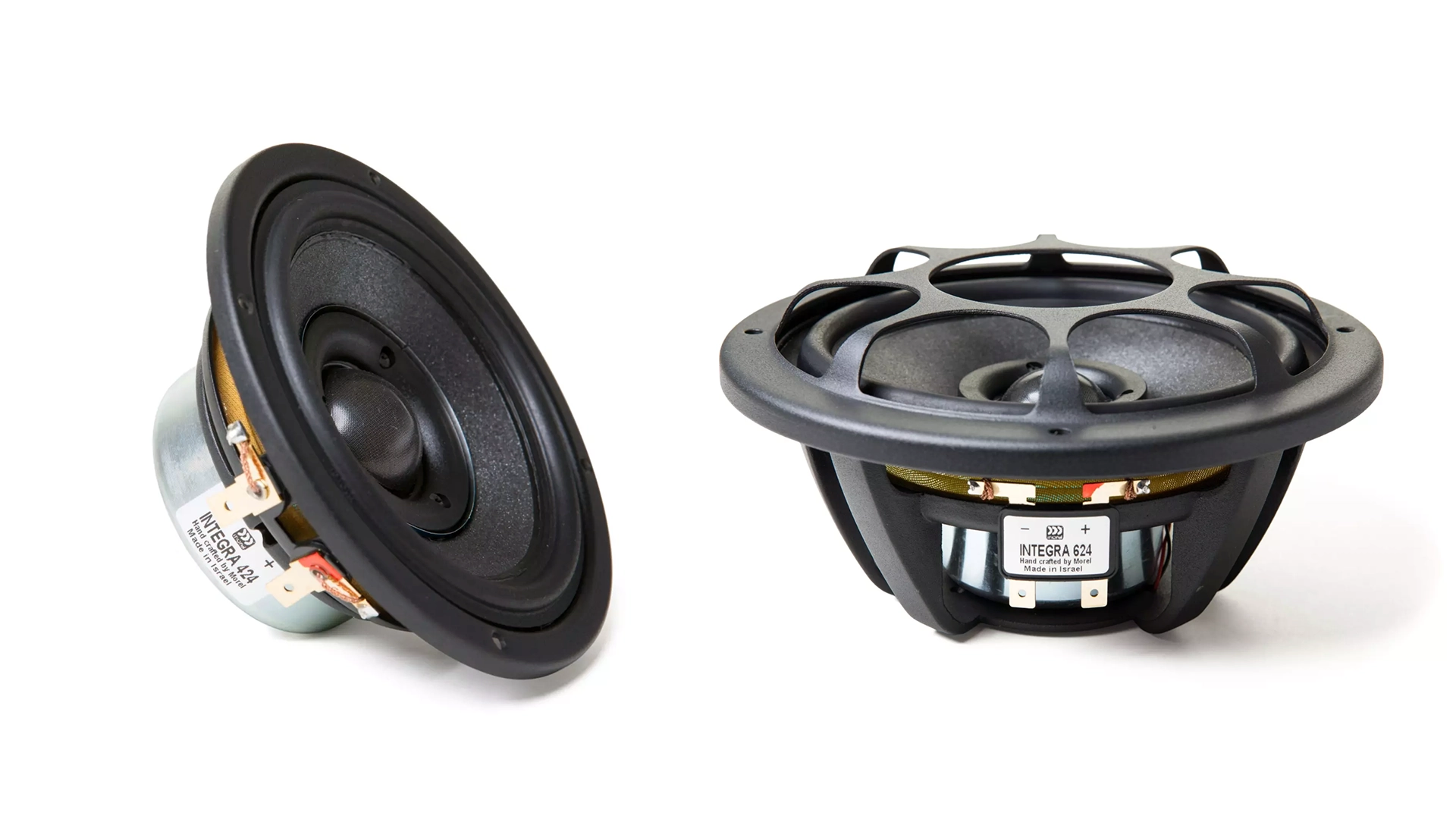
Morel is an Israeli loudspeaker and drive-unit specialist whose complete home and car systems are grounded in nearly five decades of transducer manufacturing. Meir Mordechai founded the company in 1975; the name derives from Mordechai Electro-acoustics. Morel remains family owned and develops raw drivers as well as finished products, giving it control over the motor, suspension, diaphragm and enclosure rather than forcing a speaker design around catalogue parts. The brand’s signature technologies include large External Voice Coils, which place the magnetic motor inside the coil for efficient use of magnetic energy, and Hexatech aluminium wire shaped to pack the winding with minimal air gaps. Hybrid neodymium/ferrite magnet systems, damped polymer composite cones and soft-dome midrange units appear across different applications. Home-audio lines such as Sopran, Avyra and Högtalare sit alongside architectural models, car-audio components and OEM drivers supplied to other makers. Morel’s distinction is therefore broader than a particular “sound”: it is the unusual overlap of specialist driver engineering, hand assembly and the ability to carry the same motor and diaphragm know-how from a raw transducer to a complete loudspeaker.

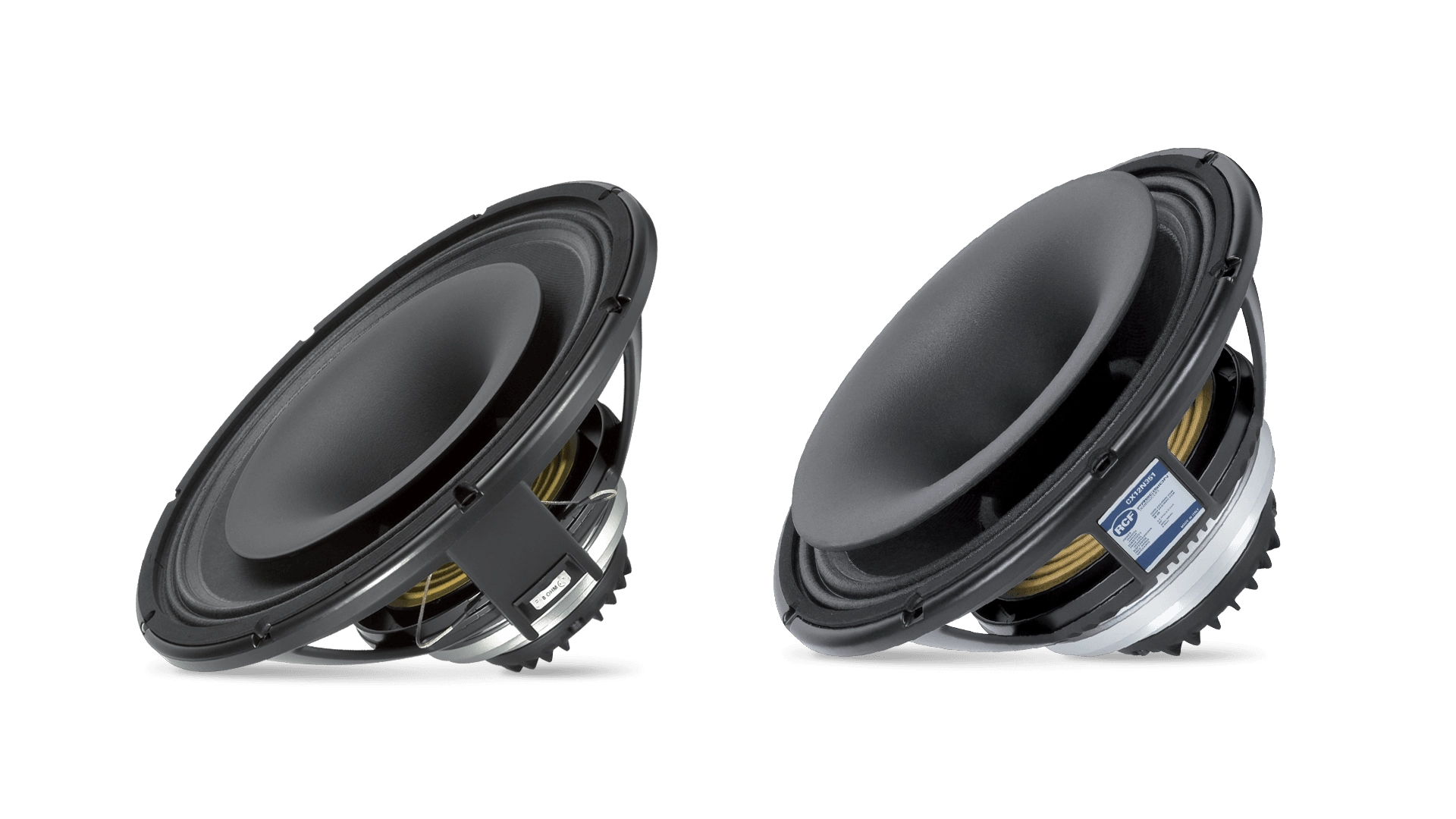
RCF is an Italian professional-audio manufacturer founded in Reggio Emilia in 1949, originally producing loudspeakers and microphones for other companies. The title “RFC” in this database is a transposition; the brand connected to the supplied rcf.it address is RCF. Decades of designing and manufacturing its own transducers remain central to the company: compression drivers, woofers, horns, enclosures, amplification and DSP are developed as parts of one system rather than assembled from unrelated modules. RCF was an early force in self-powered professional loudspeakers, and the ART series, introduced in the 1990s, became one of its most recognisable product families for portable PA, musicians and events. The current catalogue stretches from ART, NX and compact installation speakers to HDL line arrays and the high-output TT+ Audio range for touring, theatres and stadium-scale systems. SUB models, stage monitors and digital mixers complete the live-sound side, while D-Line and architectural products address fixed installations. RDNet provides networked control and monitoring of large systems; FiRPHASE processing is used to align phase response through the crossover region, and Bass Motion Control extends useful low-frequency behaviour while protecting the transducer. RCF’s value is the depth of that vertical integration. It can apply the same driver knowledge to a compact active cabinet and to a flown line-array module, then supply the electronics and software needed to deploy both predictably. The company is not a domestic hi-fi brand despite the similarity of some terminology: its reputation was built on reliable, intelligible and scalable sound for professionals.

SB Acoustics is an Indonesian loudspeaker-driver brand conceived in 2008 by Sinar Baja Electric together with the Danish engineering consultancy Danesian Audio. The previous 1981 date belongs to the older history of Sinar Baja Electric, not to SB Acoustics itself. This collaboration explains the brand’s unusual structure: transducers are developed in Denmark and manufactured in Indonesia in facilities with deep experience in cones, voice coils, motors and complete loudspeaker production. The standard SB range made carefully engineered tweeters, midranges, woofers and passive radiators accessible to both commercial manufacturers and DIY designers. Satori moves higher with refined motor systems, low-loss suspensions and diaphragms such as Egyptian papyrus, Textreme carbon fibre and proprietary composite constructions. Beryllium domes, ring-radiator tweeters and shallow-profile drivers extend the options for demanding two-channel, home-cinema and automotive designs. The company publishes detailed response, distortion and impedance data and supports complete kits, allowing a designer to work from measured behaviour rather than brand mythology. SB Audience, launched separately in 2020, applies the parent company’s manufacturing knowledge to professional sound-reinforcement drivers; it should not be confused with the core SB Acoustics hi-fi lines. Nor is the company simply an importer attaching a European name to generic units: the Danish-Indonesian partnership is the product strategy, combining specialised development with vertically integrated, repeatable production. SB Acoustics became influential because it offers serious transducer technology across price levels, from practical OEM and DIY drivers to ambitious Satori units that can anchor genuinely high-end loudspeakers.

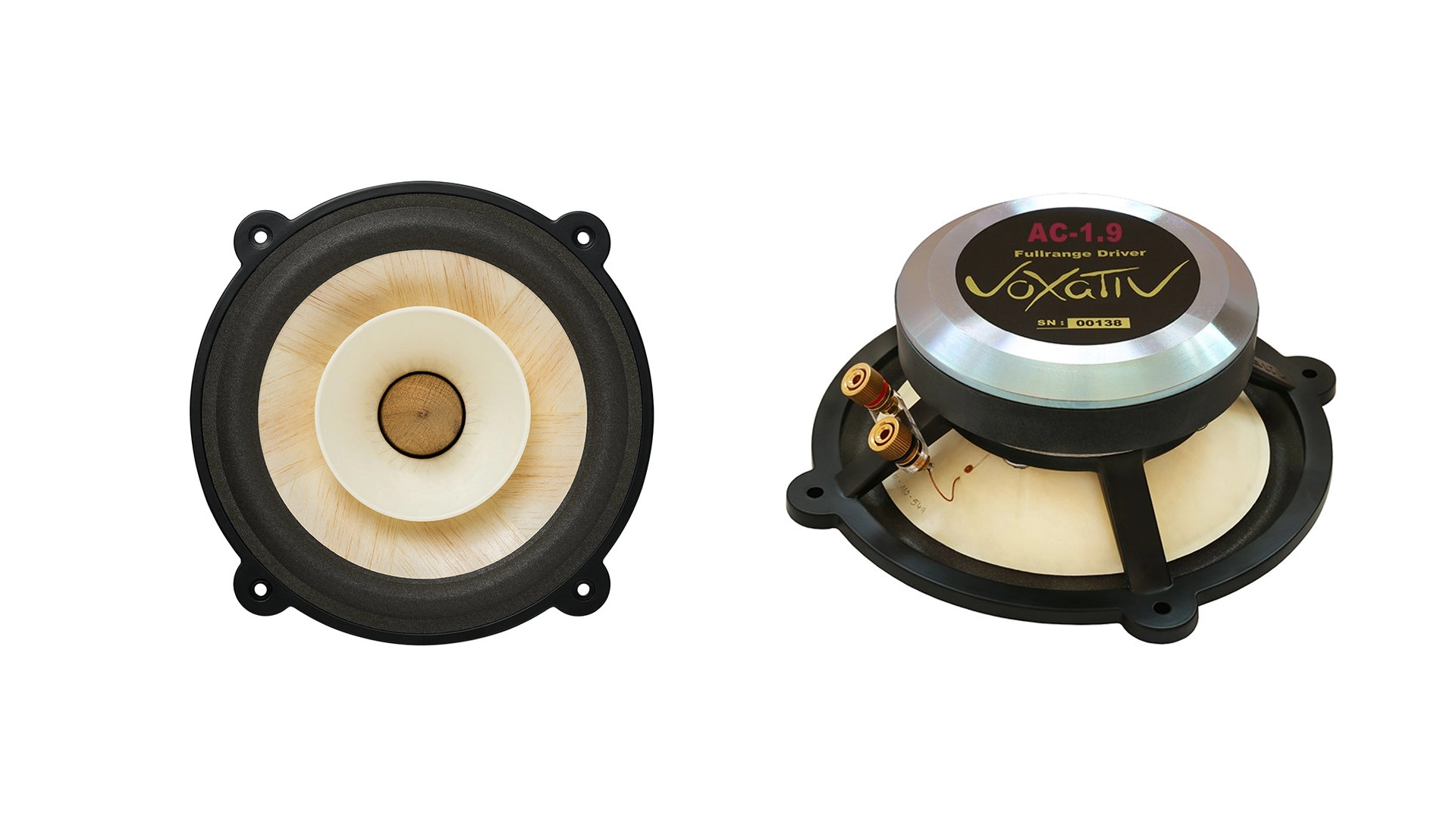
Voxativ is the Berlin loudspeaker company founded by engineer Inès Adler to pursue full-range reproduction without a conventional crossover. Its loudspeakers ask one highly specialised driver to cover most or all of the audible spectrum, avoiding the phase and integration problems created where separate bass, midrange and treble units hand the signal to one another. Making that principle work requires exceptionally light paper cones, carefully controlled suspensions and powerful magnetic motors. Voxativ designs and manufactures its own drivers in Germany, offering both permanent-magnet versions and field-coil models whose magnetic field is supplied electrically. The drivers are sold separately for specialist projects, but their natural context is the company’s complete loudspeakers. Ampeggio established the brand internationally with a rear-loaded horn folded inside a tall cabinet; the compact Hagen and Pi designs adapt the same single-driver logic to smaller rooms, while the modular 9.87 and 9.88 systems add dedicated bass sections when greater scale is required. Field-coil power supplies and low-powered amplification complete the ecosystem. Voxativ does not pretend that a crossoverless speaker is the universal answer: efficiency, cabinet loading and room placement are integral to the result. Its achievement is the depth with which one concept has been developed—from cone formulation and motor construction to horn geometry and complete systems—giving the brand a recognisable technical and musical character rather than merely another variation on a multiway box.

HFS Ad Rotator · default · slot 1
HFS Ad Rotator · default · slot 2
Add a missing AV-brand or update an existing one

Add a missing AV-brand or update an existing one

Any user can submit a Quick Submission Form to suggest a new AV-brand or suggest update details for an existing one. Brand owners or official representatives of brand can fill a Official Brand Submission Form to provide complete company information, ensuring maximum accuracy and visibility in our portal. All submissions are moderated before publication. 

For suggesting new AV-brands or suggesting updating existing one by users.

Complete official form for brand owners and representatives to provide complete company details to add a new one or update an existing one

Brand Categories:
  • SPEAKERS
    • Bookshelf Speakers — Compact loudspeakers designed for placement on a shelf or dedicated stands.
    • Floorstanding Speakers — Large, full-range loudspeakers that stand directly on the floor, designed for powerful and expansive sound.
    • In-wall Custom Install Speakers — Speakers designed to be installed flush into walls or ceilings for a discreet, "zero-footprint" audio solution.
    • On-Wall Speakers — Slim, low-profile speakers designed to be mounted directly on a wall, often to complement a flat-panel TV.
    • Studio Monitors — Speakers designed for professional audio production, offering a flat, accurate, and uncolored sound reproduction.
    • Planar Ribbon Electrostatic Speakers — Speakers using large, thin diaphragms (panels) instead of cones, prized for their transparent and detailed sound.
    • Horn Speakers — Highly efficient speakers that use a flared horn to amplify a driver, known for their dynamic, "live" sound.
    • Active Powered Speakers — Loudspeakers with built-in amplifiers, creating a simple all-in-one audio solution.
    • Wireless Portable Speakers — Compact, battery-powered speakers with Bluetooth for on-the-go music.
    • Outdoor Speakers — Durable, weather-resistant speakers engineered to provide high-quality audio in open-air spaces like patios and gardens.
    • Marine Extreme Speakers — Rugged, waterproof, and corrosion-resistant speakers built to withstand harsh marine environments on boats and yachts.
    • Commercial Speakers — Durable loudspeaker systems designed for background music and public address in business environments.
    • Invisible Speakers — Architectural speakers installed in a wall and plastered over, making them completely invisible.
    • Subwoofers Bass Speakers — Specialized speakers dedicated to reproducing only the lowest bass frequencies for impact and depth for all purposes
  • AMPLIFIERS
    • Integrated Amplifiers — An all-in-one component combining a preamplifier and a power amplifier in a single chassis.
    • PreAmplifiers — The control hub of a separates audio system, used for source selection and volume control.
    • Power Amplifiers — A component with the sole job of taking a line-level signal and amplifying it to drive loudspeakers.
    • Phono Preamps Phono Stages — A device that amplifies the weak signal from a turntable's cartridge and applies necessary RIAA equalization.
    • Tube Amplifiers — Amplifiers that use vacuum tubes (valves) instead of transistors, prized for their warm and rich sound character.
    • Multi-Zone Multi-Room Amplifiers — Amplifiers that power speakers in multiple different rooms or "zones" from a single, centralized unit.
    • Network Amplifiers — An integrated amplifier with built-in networking and streaming capabilities, creating a modern "just add speakers" system.
    • Desktop Headphone Amplifiers — Mains-powered amplifiers designed to drive high-quality headphones in a desktop or home audio system.
    • Portable Headphone Amplifiers Players — Compact, battery-powered devices (DAPs or amps) for delivering high-quality sound on the move.
  • DAC STREAMERS
    • DAC Desktop — Digital-to-Analog Converters designed to improve sound quality from a computer or other home digital source.
    • DAC Portable — Compact, battery-powered Digital-to-Analog Converters for improving audio from smartphones and laptops.
    • Music Streamers — Devices that connect to the internet to access and play music from online services like Tidal and Spotify.
    • Network Players — Source components focused on high-fidelity playback of digital audio files from a local network (NAS drive).
    • Music Servers HDD Storages — Dedicated devices for storing, managing, and playing a local digital music library with high fidelity.
    • CD Transport Media Players — High-precision disc players that read physical media (CDs, SACDs) and output a pure digital signal to an external DAC.
    • Compact All-in-One Systems — Self-contained audio systems that combine source, amplification, and often speakers into a single, compact unit.
    • Streaming Amplifier — An integrated amplifier with built-in streaming capabilities.
  • TURNTABLES VINYL
    • Turntables — Electromechanical devices that play vinyl records by rotating them at a stable speed.
    • Tonearms — The precision arm on a turntable that holds the cartridge, allowing the stylus to track the record groove.
    • Cartridges — The transducer on a turntable's tonearm that holds the stylus and converts groove vibrations into an electrical signal.
    • Vinyl Cleaning Machine — Specialized machines that use fluid and vacuum/ultrasonic action to deep-clean vinyl records.
    • Vinyl Accessories — Essential tools for setup and maintenance, like clamps, brushes, and alignment protractors.
  • HEADPHONES
    • In-Ear Earbuds — Ultra-portable listening devices, including True Wireless (TWS) models, designed for convenience and daily use.
    • In-Ear Monitors IEM — High-performance in-ear headphones that seal in the ear canal for superior sound isolation and detail.
    • On-Ear Headphones — Headphones with cushions that rest directly on the ears, offering a balance of portability and sound quality.
    • Over-Ear Headphones — Full-sized headphones with large earcups that completely encircle the ears for maximum comfort and immersion.
    • Wireless Headphones — Headphones that connect to source devices via Bluetooth, often featuring Active Noise Cancellation (ANC).
    • Planar Magnetic Ribbon Headphones — High-end headphones using a thin, flat diaphragm driven by magnets, known for their detailed and low-distortion sound.
    • Electrostatic Headphones — High-end headphones using a massless diaphragm in an electrostatic field, requiring a special energizer/amplifier.
  • HOME THEATER
    • AV Receivers Media Players — Central components of a home cinema, combining audio/video processing, amplification, and playback.
    • Home Theater Speakers — Matched sets of speakers (front, center, surround) designed to create an immersive cinematic soundfield.
    • Soundbars — A simple, all-in-one speaker bar that provides a significant audio upgrade over a television's built-in speakers.
    • Subwoofers — Specialized speakers dedicated to reproducing only the lowest bass frequencies for impact and depth for home theaters
    • Processors Amplifiers — High-end home cinema "separates" consisting of a surround sound processor and a multi-channel power amplifier.
    • Screens — High-quality projection surfaces designed to provide an optimal image for a home cinema projector.
    • Projectors — Video projectors optimized for home cinema use, focusing on color accuracy, contrast, and black levels.
  • CABLES ACCESSORIES
    • Speaker Cables — Cables that carry the amplified, high-level signal from an amplifier to passive loudspeakers.
    • Analog Cables — Cables (RCA, XLR) used to transmit analog audio signals between components like DACs and amplifiers.
    • Digital Cables — Cables (Coaxial, Optical, USB) that transmit digital audio data between components.
    • Phono Cables — Specially shielded cables designed to carry the delicate, low-level signal from a turntable to a phono preamp.
    • Headphone Cables — Aftermarket and replacement cables used to upgrade or customize high-quality headphones.
    • Connectors Terminals — The fundamental hardware (plugs, jacks, spades, etc.) used to terminate cables and connect equipment.
    • Power Cables — High-performance AC cords designed to deliver clean, noise-free power to audio components.
    • Power Supplies Conditioners — Devices that filter, stabilize, and protect the AC power supplied to an audio system for improved performance.
  • FURNITURE
    • Speaker Stands Mounts — Stands and mounts used to position speakers at the correct height and angle for optimal sound.
    • Furniture Racks — Purpose-built furniture designed to house audio/video components with a focus on stability, ventilation, and vibration control.
    • Isolation Footers Spikes Shelves — Specialized accessories (spikes, footers, platforms) designed to manage vibrations and isolate components.
    • Soundproof Solutions — Products designed to control room acoustics, including treatment (panels, diffusers) and sound-blocking materials.
  • PROFESSIONAL
    • Concert Speakers — Large-scale PA systems, including line arrays and stage monitors, for live music and public events.
    • Cinema Speakers — Specialized, high-output loudspeaker systems certified for use in large commercial movie theaters.
    • Concert Electronics — Robust electronics including mixing consoles, processors, and amplifiers for live sound reinforcement.
    • Cinema Electronics — Professional, DCI-compliant processors and amplifiers for use in commercial movie theaters.
    • Cinema Screens — Large-format, often acoustically transparent, projection screens built to professional cinema standards.
    • Cinema Projectors — Ultra-high-brightness, DCI-compliant projectors designed for continuous use in commercial movie theaters.
    • Professional Cables Accessories — Rugged, reliable cables and hardware (e.g., snake cables, Speakon connectors) for touring and professional installation.
  • DIY Components
    • Speaker drivers Tweeters — The individual transducers (woofers, mid-range, tweeters) that are the fundamental building blocks of a loudspeaker.
    • Coaxial Speaker Drivers — Speaker drivers where the tweeter is mounted in the center of the woofer, creating a single point source for sound.
    • DIY Speaker Kits — Complete packages including drivers, crossovers, and plans for enthusiasts to build their own loudspeakers.
    • Electron Vacuum Tubes — Glass valves used in tube amplifiers that provide amplification and can be replaced to tune the sound.
    • Electronic Components — Discrete parts (capacitors, resistors, transistors) used by manufacturers and DIYers to build audio circuits.
  • OTHERS
    • Line Stage — A type of preamplifier that exclusively handles line-level sources, without a built-in phono stage.
    • Time Alignment Device — A signal processor that corrects timing delays between drivers or speakers for improved sound coherence.
    • Smart Portable Speakers — Wireless portable speakers with integrated voice assistants (e.g., Alexa, Google Assistant) and smart home functionality.
    • DJ Turntables — Durable, high-torque direct-drive turntables with pitch control, built for performance and DJing applications.
    • Motor Drives — External motor units and power supplies for turntables, providing improved rotational stability and isolation.
    • Crossovers — Electronic circuits that split an audio signal into different frequency bands to route to the correct speaker driver.
    • Car Audio — Audio equipment, including speakers, amplifiers, and source units, specifically designed for use in vehicles.

Brand Categories:
  • Active Powered Speakers — Loudspeakers with built-in amplifiers, creating a simple all-in-one audio solution.
  • Analog Cables — Cables (RCA, XLR) used to transmit analog audio signals between components like DACs and amplifiers.
  • AV Receivers Media Players — Central components of a home cinema, combining audio/video processing, amplification, and playback.
  • Bookshelf Speakers — Compact loudspeakers designed for placement on a shelf or dedicated stands.
  • Car Audio — Audio equipment, including speakers, amplifiers, and source units, specifically designed for use in vehicles.
  • Cartridges — The transducer on a turntable's tonearm that holds the stylus and converts groove vibrations into an electrical signal.
  • CD Transport Media Players — High-precision disc players that read physical media (CDs, SACDs) and output a pure digital signal to an external DAC.
  • Cinema Electronics — Professional, DCI-compliant processors and amplifiers for use in commercial movie theaters.
  • Cinema Projectors — Ultra-high-brightness, DCI-compliant projectors designed for continuous use in commercial movie theaters.
  • Cinema Screens — Large-format, often acoustically transparent, projection screens built to professional cinema standards.
  • Cinema Speakers — Specialized, high-output loudspeaker systems certified for use in large commercial movie theaters.
  • Coaxial Speaker Drivers — Speaker drivers where the tweeter is mounted in the center of the woofer, creating a single point source for sound.
  • Commercial Speakers — Durable loudspeaker systems designed for background music and public address in business environments.
  • Compact All-in-One Systems — Self-contained audio systems that combine source, amplification, and often speakers into a single, compact unit.
  • Concert Electronics — Robust electronics including mixing consoles, processors, and amplifiers for live sound reinforcement.
  • Concert Speakers — Large-scale PA systems, including line arrays and stage monitors, for live music and public events.
  • Connectors Terminals — The fundamental hardware (plugs, jacks, spades, etc.) used to terminate cables and connect equipment.
  • Crossovers — Electronic circuits that split an audio signal into different frequency bands to route to the correct speaker driver.
  • DAC Desktop — Digital-to-Analog Converters designed to improve sound quality from a computer or other home digital source.
  • DAC Portable — Compact, battery-powered Digital-to-Analog Converters for improving audio from smartphones and laptops.
  • Desktop Headphone Amplifiers — Mains-powered amplifiers designed to drive high-quality headphones in a desktop or home audio system.
  • Digital Cables — Cables (Coaxial, Optical, USB) that transmit digital audio data between components.
  • DIY Speaker Kits — Complete packages including drivers, crossovers, and plans for enthusiasts to build their own loudspeakers.
  • DJ Turntables — Durable, high-torque direct-drive turntables with pitch control, built for performance and DJing applications.
  • Electron Vacuum Tubes — Glass valves used in tube amplifiers that provide amplification and can be replaced to tune the sound.
  • Electronic Components — Discrete parts (capacitors, resistors, transistors) used by manufacturers and DIYers to build audio circuits.
  • Electrostatic Headphones — High-end headphones using a massless diaphragm in an electrostatic field, requiring a special energizer/amplifier.
  • Floorstanding Speakers — Large, full-range loudspeakers that stand directly on the floor, designed for powerful and expansive sound.
  • Furniture Racks — Purpose-built furniture designed to house audio/video components with a focus on stability, ventilation, and vibration control.
  • Headphone Cables — Aftermarket and replacement cables used to upgrade or customize high-quality headphones.
  • Home Theater Speakers — Matched sets of speakers (front, center, surround) designed to create an immersive cinematic soundfield.
  • Horn Speakers — Highly efficient speakers that use a flared horn to amplify a driver, known for their dynamic, "live" sound.
  • In-Ear Earbuds — Ultra-portable listening devices, including True Wireless (TWS) models, designed for convenience and daily use.
  • In-Ear Monitors IEM — High-performance in-ear headphones that seal in the ear canal for superior sound isolation and detail.
  • In-wall Custom Install Speakers — Speakers designed to be installed flush into walls or ceilings for a discreet, "zero-footprint" audio solution.
  • Integrated Amplifiers — An all-in-one component combining a preamplifier and a power amplifier in a single chassis.
  • Invisible Speakers — Architectural speakers installed in a wall and plastered over, making them completely invisible.
  • Isolation Footers Spikes Shelves — Specialized accessories (spikes, footers, platforms) designed to manage vibrations and isolate components.
  • Line Stage — A type of preamplifier that exclusively handles line-level sources, without a built-in phono stage.
  • Marine Extreme Speakers — Rugged, waterproof, and corrosion-resistant speakers built to withstand harsh marine environments on boats and yachts.
  • Motor Drives — External motor units and power supplies for turntables, providing improved rotational stability and isolation.
  • Multi-Zone Multi-Room Amplifiers — Amplifiers that power speakers in multiple different rooms or "zones" from a single, centralized unit.
  • Music Servers HDD Storages — Dedicated devices for storing, managing, and playing a local digital music library with high fidelity.
  • Music Streamers — Devices that connect to the internet to access and play music from online services like Tidal and Spotify.
  • Network Amplifiers — An integrated amplifier with built-in networking and streaming capabilities, creating a modern "just add speakers" system.
  • Network Players — Source components focused on high-fidelity playback of digital audio files from a local network (NAS drive).
  • On-Ear Headphones — Headphones with cushions that rest directly on the ears, offering a balance of portability and sound quality.
  • On-Wall Speakers — Slim, low-profile speakers designed to be mounted directly on a wall, often to complement a flat-panel TV.
  • Outdoor Speakers — Durable, weather-resistant speakers engineered to provide high-quality audio in open-air spaces like patios and gardens.
  • Over-Ear Headphones — Full-sized headphones with large earcups that completely encircle the ears for maximum comfort and immersion.
  • Phono Cables — Specially shielded cables designed to carry the delicate, low-level signal from a turntable to a phono preamp.
  • Phono Preamps Phono Stages — A device that amplifies the weak signal from a turntable's cartridge and applies necessary RIAA equalization.
  • Planar Magnetic Ribbon Headphones — High-end headphones using a thin, flat diaphragm driven by magnets, known for their detailed and low-distortion sound.
  • Planar Ribbon Electrostatic Speakers — Speakers using large, thin diaphragms (panels) instead of cones, prized for their transparent and detailed sound.
  • Portable Headphone Amplifiers Players — Compact, battery-powered devices (DAPs or amps) for delivering high-quality sound on the move.
  • Power Amplifiers — A component with the sole job of taking a line-level signal and amplifying it to drive loudspeakers.
  • Power Cables — High-performance AC cords designed to deliver clean, noise-free power to audio components.
  • Power Supplies Conditioners — Devices that filter, stabilize, and protect the AC power supplied to an audio system for improved performance.
  • PreAmplifiers — The control hub of a separates audio system, used for source selection and volume control.
  • Processors Amplifiers — High-end home cinema "separates" consisting of a surround sound processor and a multi-channel power amplifier.
  • Professional Cables Accessories — Rugged, reliable cables and hardware (e.g., snake cables, Speakon connectors) for touring and professional installation.
  • Projectors — Video projectors optimized for home cinema use, focusing on color accuracy, contrast, and black levels.
  • Screens — High-quality projection surfaces designed to provide an optimal image for a home cinema projector.
  • Smart Portable Speakers — Wireless portable speakers with integrated voice assistants (e.g., Alexa, Google Assistant) and smart home functionality.
  • Soundbars — A simple, all-in-one speaker bar that provides a significant audio upgrade over a television's built-in speakers.
  • Soundproof Solutions — Products designed to control room acoustics, including treatment (panels, diffusers) and sound-blocking materials.
  • Speaker Cables — Cables that carry the amplified, high-level signal from an amplifier to passive loudspeakers.
  • Speaker drivers Tweeters — The individual transducers (woofers, mid-range, tweeters) that are the fundamental building blocks of a loudspeaker.
  • Speaker Stands Mounts — Stands and mounts used to position speakers at the correct height and angle for optimal sound.
  • Streaming Amplifier — An integrated amplifier with built-in streaming capabilities.
  • Studio Monitors — Speakers designed for professional audio production, offering a flat, accurate, and uncolored sound reproduction.
  • Subwoofers — Specialized speakers dedicated to reproducing only the lowest bass frequencies for impact and depth for home theaters
  • Subwoofers Bass Speakers — Specialized speakers dedicated to reproducing only the lowest bass frequencies for impact and depth for all purposes
  • Time Alignment Device — A signal processor that corrects timing delays between drivers or speakers for improved sound coherence.
  • Tonearms — The precision arm on a turntable that holds the cartridge, allowing the stylus to track the record groove.
  • Tube Amplifiers — Amplifiers that use vacuum tubes (valves) instead of transistors, prized for their warm and rich sound character.
  • Turntables — Electromechanical devices that play vinyl records by rotating them at a stable speed.
  • Vinyl Accessories — Essential tools for setup and maintenance, like clamps, brushes, and alignment protractors.
  • Vinyl Cleaning Machine — Specialized machines that use fluid and vacuum/ultrasonic action to deep-clean vinyl records.
  • Wireless Headphones — Headphones that connect to source devices via Bluetooth, often featuring Active Noise Cancellation (ANC).
  • Wireless Portable Speakers — Compact, battery-powered speakers with Bluetooth for on-the-go music.

Sales Channels:
  • Dealer & Distributor Network — The traditional sales model where products are sold through a network of authorized, independent retail stores and custom installers. This is the primary channel for most specialized Hi-Fi brands.
  • Direct-to-Consumer (DTC) — The brand sells its products directly to end-users through its own official website, bypassing traditional retail channels. A rapidly growing model in the industry.
  • Custom Installation (CI) Channel — Products are sold primarily through professional firms that design and install integrated smart home and audio-visual systems. This channel is crucial for architectural and high-end integrated solutions.
  • Mass Market Retail — Products are available in large, non-specialized consumer electronics chain stores. This typically applies to more mainstream product lines from larger brands.
  • Brand-Owned Stores / Showrooms — The brand operates its own physical, flagship retail stores or dedicated showrooms to offer a direct and immersive brand experience. This is the least common model, typically used by top-tier brands.

For companies: For any questions about listings & partnership opportunities, please contact us at contact@hifiselector.com

Have a suggestion or found a flaw? Help us improve​

Have a suggestion or found a flaw?