
Processors Amplifiers
For the ultimate in performance, enthusiasts often choose separate components over an all-in-one AV receiver. This high-end approach consists of an AV Processor (the “brain” for decoding and control) and one or more Multi-Channel Power Amplifiers (the “muscle” to drive the speakers). This separation allows for maximum power, control, and fidelity. This directory is your guide to the specialized brands that manufacture these elite home cinema electronics.
Hi-Fi brands in the category
Summary information and image
Direct links to official websites
Acurus

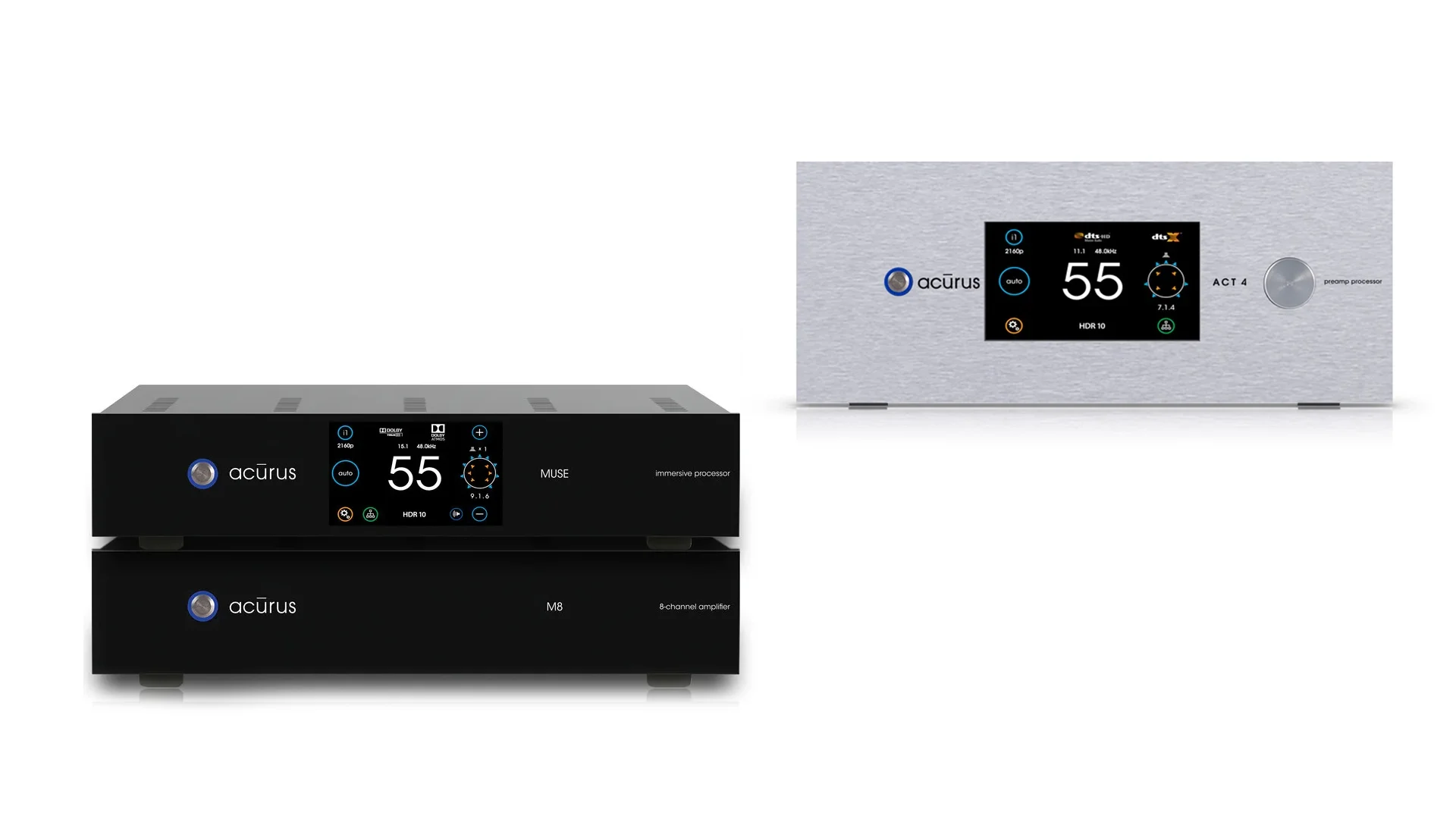
Acurus builds home-cinema processors, power amplifiers and room-optimisation tools with custom installation in mind. Its MUSE and ACT 4 processors combine immersive-audio decoding with control-system integration, while ASPEQT provides a dedicated route to measuring and tuning a system in its room. This makes setup and integration as important to the brand as channel count or amplifier power. Developed and manufactured in the United States by Indy Audio Labs, Acurus equipment is intended to work within professionally planned media rooms and home cinemas. The brand’s roots go back to Mondial Designs, which introduced Acurus in 1993.
Anthem

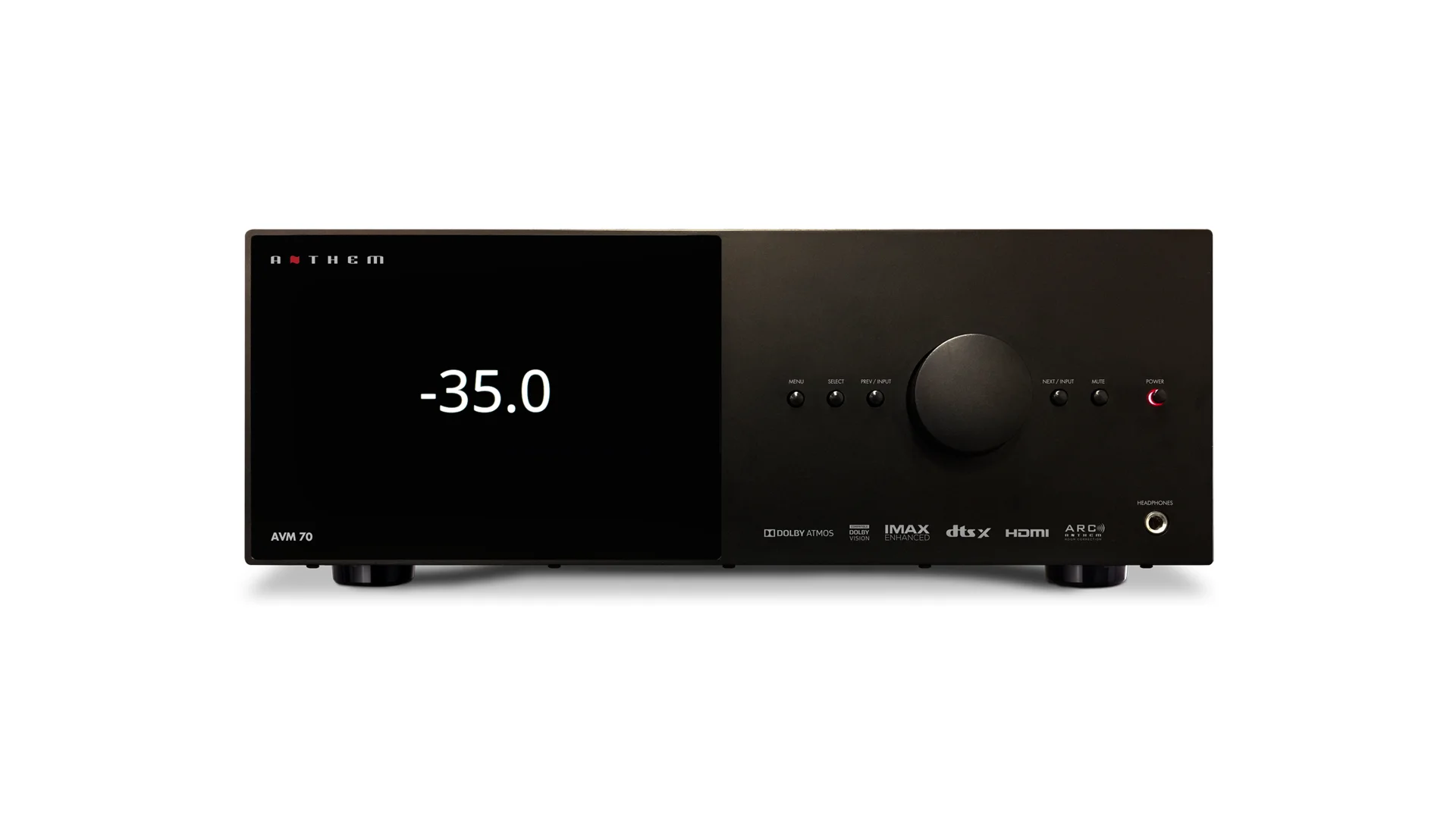
Anthem builds AV receivers, surround processors and amplifiers with room calibration at the centre of the system. Its ARC Genesis software uses microphone measurements to calculate correction filters, while allowing users to adjust target curves and the frequency range being corrected. The Canadian-engineered catalogue separates MRX receivers from AVM processors and MCA power amplifiers, giving home-theatre owners a choice between integrated and separate electronics. STR components bring room correction and bass management into two-channel listening. Developed within the same audio family as Paradigm, Anthem focuses on the interaction between electronics, loudspeakers and the room—not just the amplifier’s specifications in isolation.
Aperion Audio

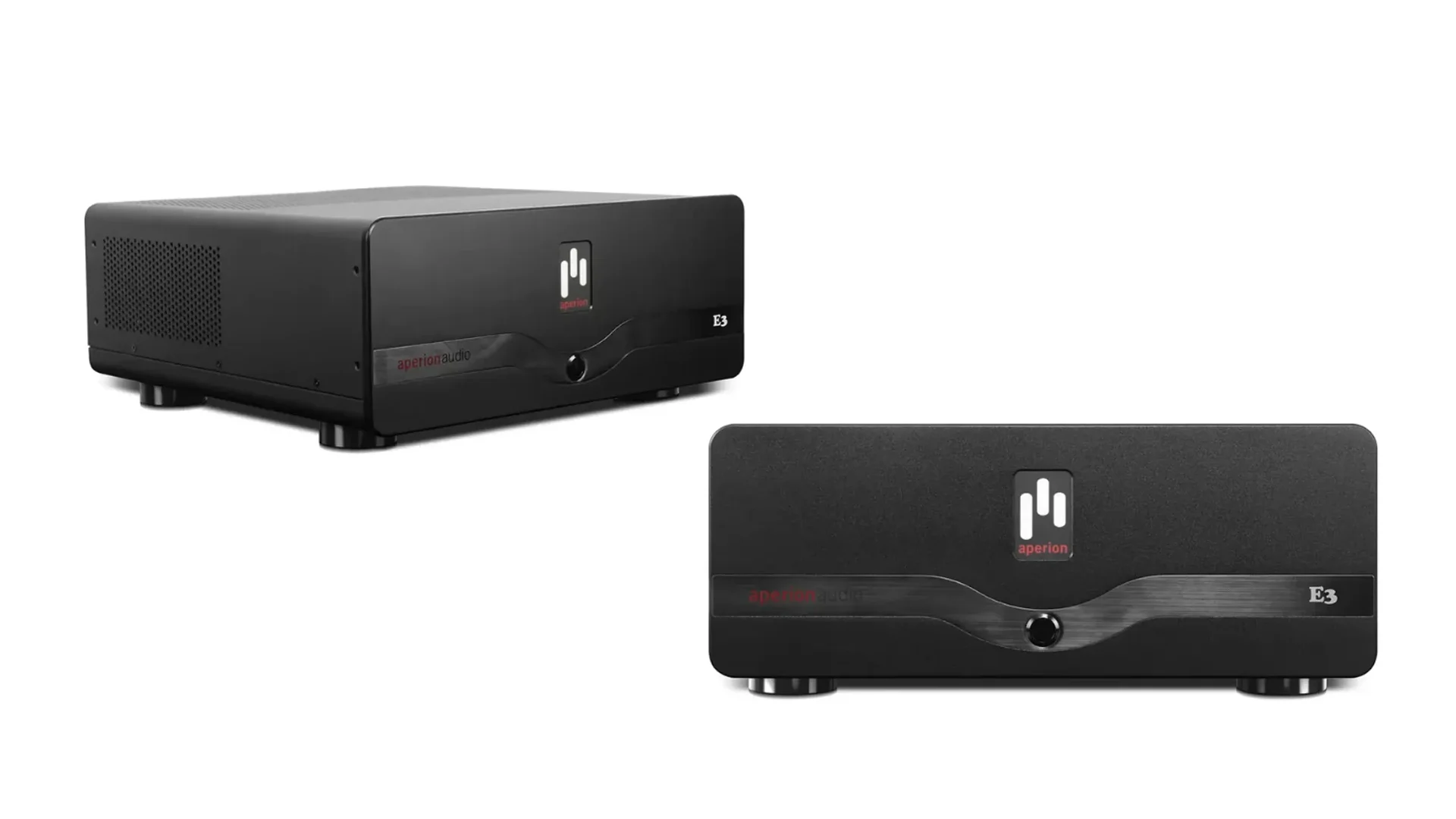
Aperion Audio grew from a practical question: could people choose serious loudspeakers at home instead of relying entirely on a showroom audition? Win Jeanfreau’s search for a replacement music system in 1998 led to the American direct-to-consumer speaker business. Its early Intimus home-theatre system established a path that now includes Verus and Novus speakers, subwoofers and architectural models. The catalogue also has an unusual accessory category: add-on super tweeters for existing loudspeakers. Bookshelf, floorstanding and centre-channel designs let buyers assemble either a stereo pair or a coordinated surround system. Direct sales and the opportunity to audition at home remain part of the brand’s identity.
Arcam

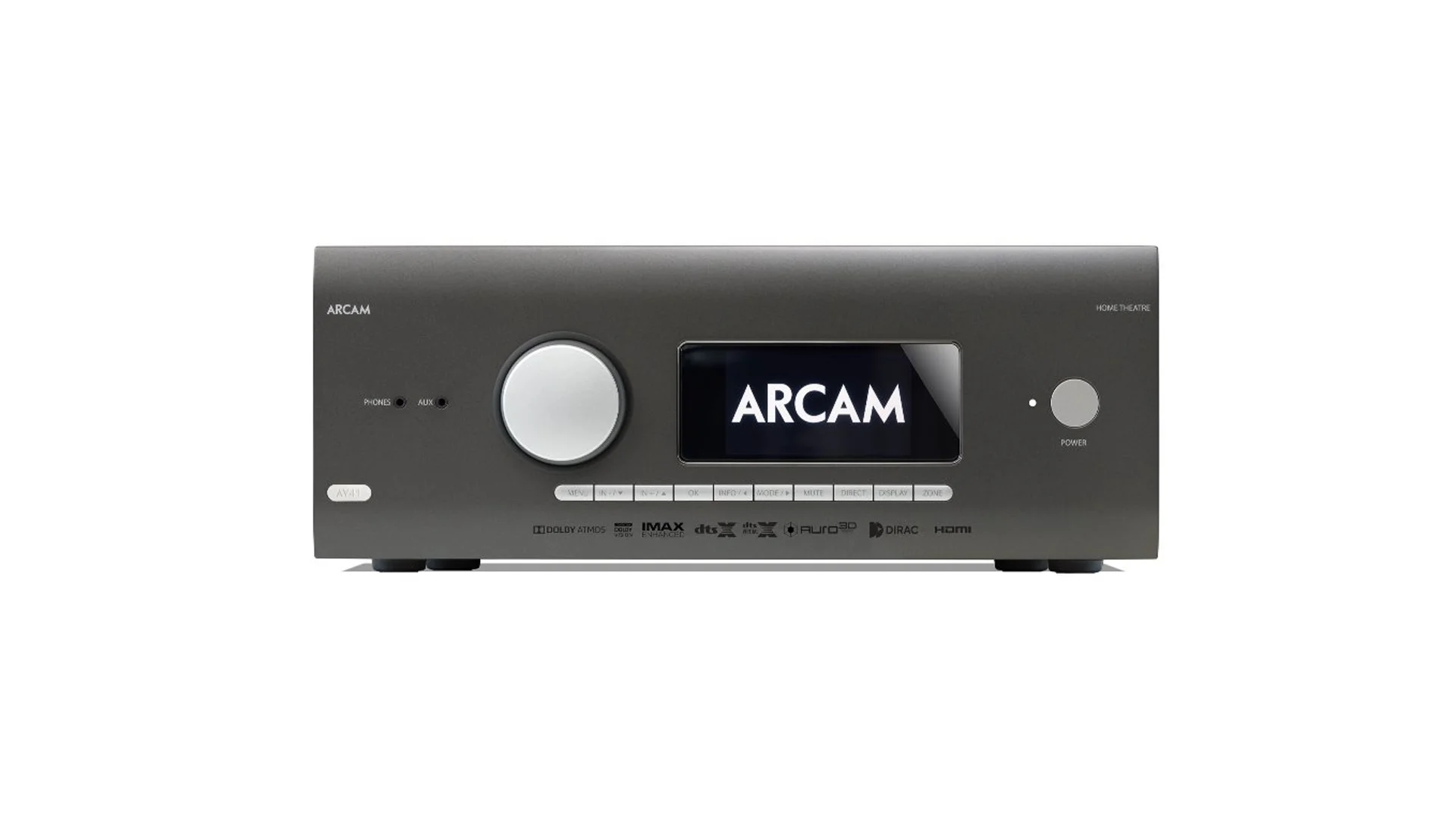
Arcam’s story starts with the A60 integrated amplifier, created in Cambridge in 1976 by John Dawson and Chris Evans. The two students had met through a tape-recording society; their Amplification and Recording Cambridge business later expanded into CD players, DACs and home cinema. A continuing specialism is Class G amplification, which changes the output stage’s supply voltage with signal demand to reduce wasted heat while retaining headroom for musical peaks. The Radia family carries that amplifier heritage into products with modern digital connections, while Arcam’s wider range serves both stereo and surround systems. The A25+, for example, combines Class G amplification with phono, USB-C and HDMI eARC inputs.
AudioControl

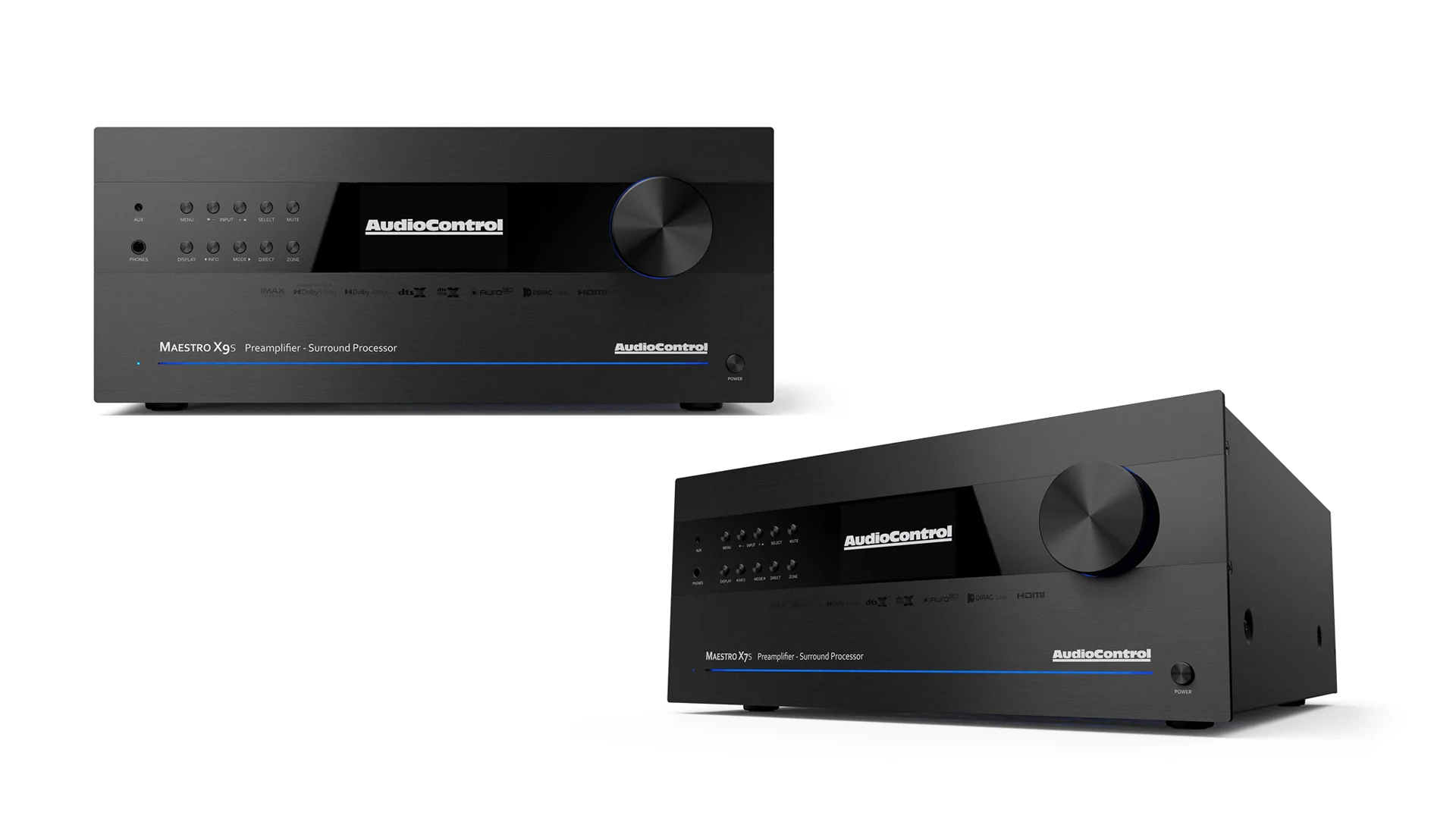
AudioControl built its reputation by solving system-integration problems with signal processing. Greg Mackie founded the company in the Pacific Northwest in 1977, initially producing stereo equalizers and analysers for home audio. That experience developed into two practical specialities: DSP, amplification and signal interfaces for car audio, plus multichannel and multi-zone electronics for home cinema and custom installation. The car range combines line-output converters, equalisation, crossovers and amplification for factory-system upgrades. Architect and Director amplifiers address distributed audio, while Concert receivers and Maestro processors serve dedicated cinemas with room correction and flexible control. AudioControl’s value lies in measurement, calibration and installation tools built into robust hardware, rather than in a single signature amplifier topology.
Aurea Cinema

Aurea Cinema brings commercial-theatre loudspeaker engineering into dedicated home cinemas. The Spanish manufacturer, based near Madrid, develops screen-channel systems, surrounds, in-wall and ceiling speakers, subwoofers and matching amplification for professional and residential installations. Its screen models are built for high output, intelligible dialogue and controlled coverage across several seating rows rather than for decorative placement in a living room. Three-way screen systems divide bass, midrange and treble duties, while compact in-wall and overhead models extend the same cinema-oriented approach to immersive layouts. Aurea’s close connection with professional cinema supply and installation is the useful distinction: the home products are derived from equipment designed to work behind screens and in purpose-built theatres. No dependable public foundation date was found, so the year remains unspecified.
Canton

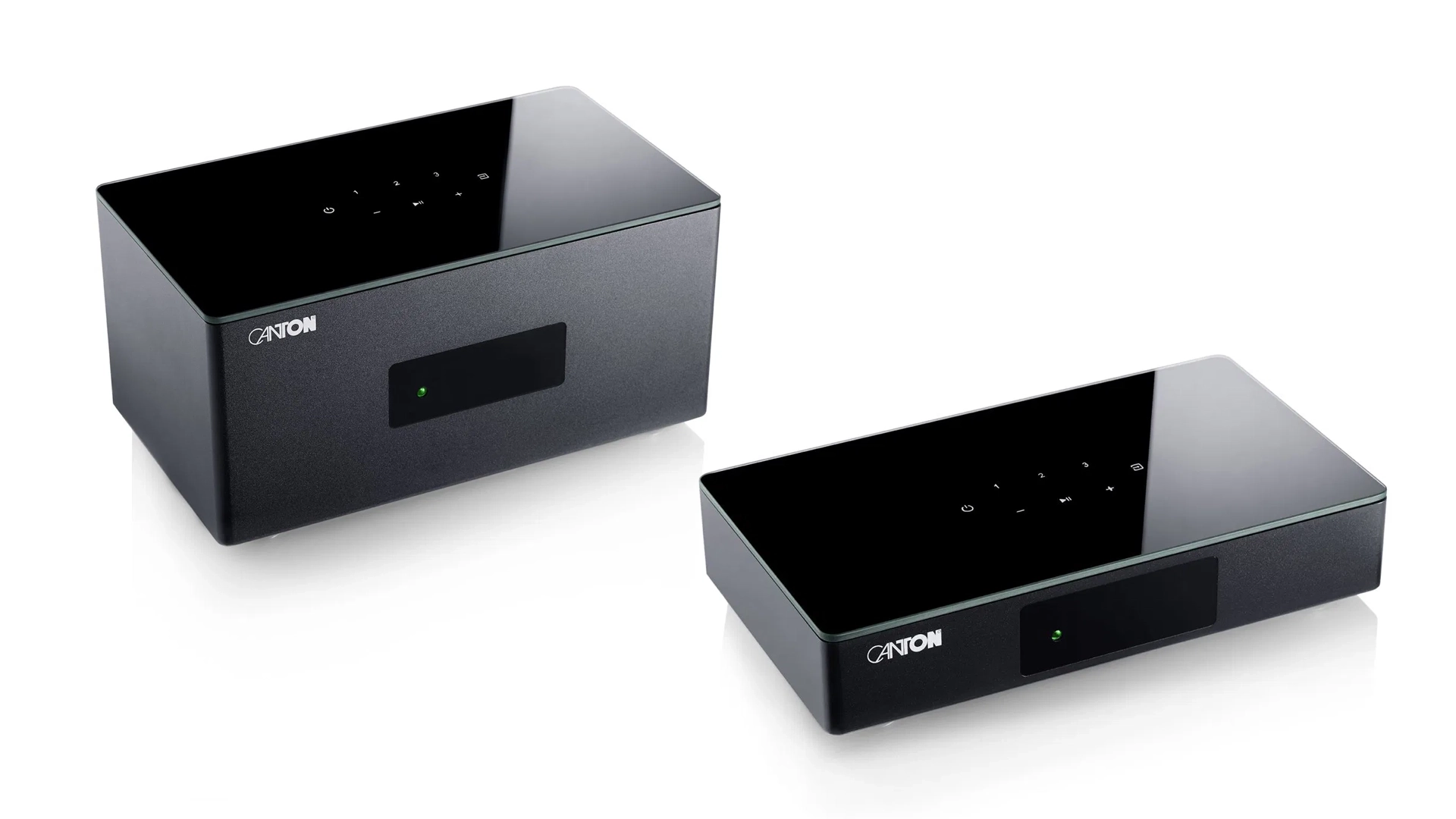
Canton is a family-owned German loudspeaker company with enough scale to develop drivers, cabinets, electronics and measurement facilities under one programme. Hubert Milbers, Otfried Sandig, Wolfgang Seikritt and Günther Seitz founded it in Weilrod in 1972. The early LE 250 compact speaker was followed by one of the company’s recurring themes: achieving substantial bandwidth and output in forms suited to real living spaces. Today’s catalogue extends from GLE and Townus through Vento to the Reference and Reference Alpha lines, with centre speakers, subwoofers and installation models for complete cinema systems. The Smart series adds active wireless stereo and surround configurations, while soundbars cover television systems. Aluminium-ceramic and later ceramic-tungsten diaphragms, waveguides, cabinet simulations and measurements in Canton’s own anechoic chamber support the range. Reference models and selected production remain closely tied to the Weilrod facility.
Emotiva

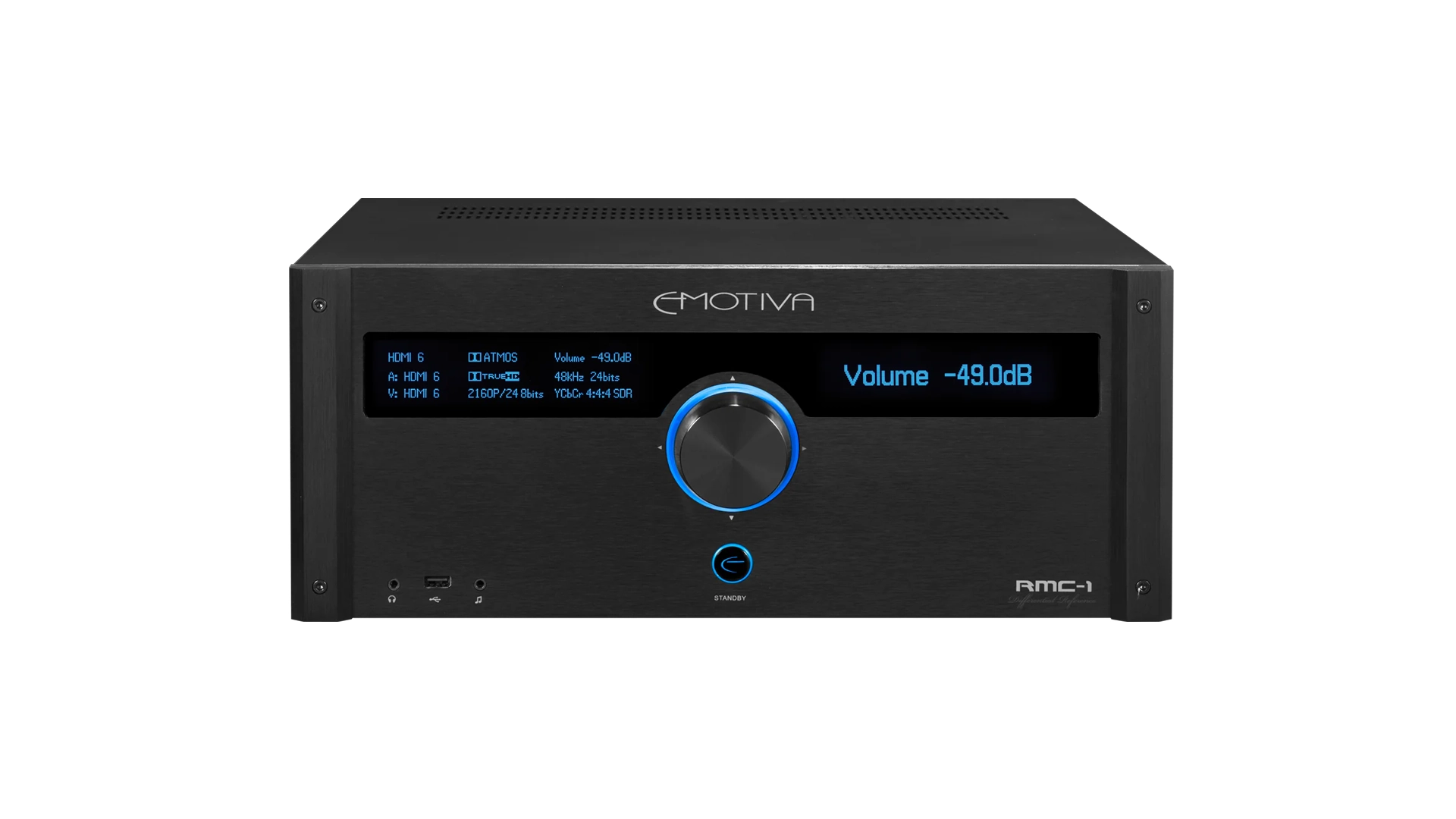
Emotiva is an American audio company founded in 2003 by Dan Laufman to sell serious stereo and home-theatre electronics directly to listeners, removing several layers of conventional distribution cost. That business model matters because it shaped the products: substantial power supplies, high channel counts and upgrade-friendly platforms offered at prices below many specialist competitors. BasX covers accessible amplifiers, preamps and cinema electronics, while XPA power amplifiers scale from stereo systems to multichannel installations through modular high-current Class A/B stages and efficient switch-mode supplies. Differential Reference models use fully balanced, fully differential signal paths and Optimized Class H supply operation for demanding front channels or two-channel systems. Surround processors and receivers address immersive formats, and loudspeakers extend the catalogue into complete systems. Emotiva’s identity is not simply “value for money”; it is the combination of direct sales with unusually powerful, configurable hardware for enthusiasts who may need two channels today and a large cinema later. Design and final product development are centred in Tennessee, with model-specific manufacturing choices rather than a blanket claim that every component is built in the United States.
Goldmund

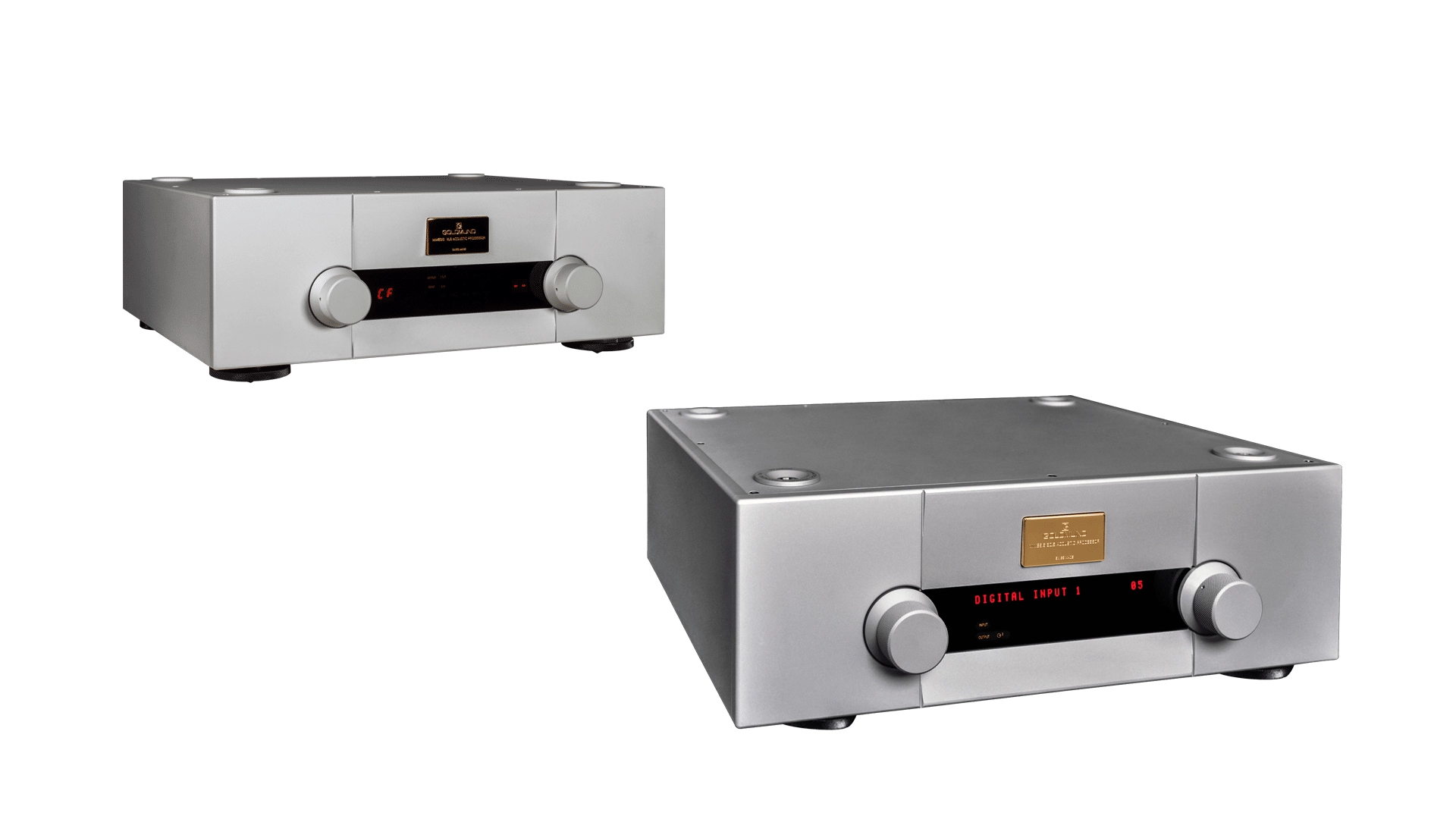
Goldmund is a Geneva-based audio house whose work joins precision mechanics, high-speed amplification and digital system control. The company began in France in 1978 with the servo-controlled T3 tonearm; Michel Reverchon acquired it in 1980 and moved it to Switzerland. The Studio direct-drive turntable and 1983 Reference established Goldmund’s Mechanical Grounding principle, intended to drain vibration through a controlled structural path. Later milestones include Mimesis electronics, Claudio Rotta-Loria’s Apologue loudspeaker, Alize digital conversion and the Proteus mathematical model used to align active speaker systems in time and amplitude. Today the range spans Telos/NextGen amplifiers, preamplifiers, music sources, processors and active or wireless loudspeakers. Goldmund is most distinctive when these elements operate as one engineered system rather than as unrelated luxury components.
K.C.S

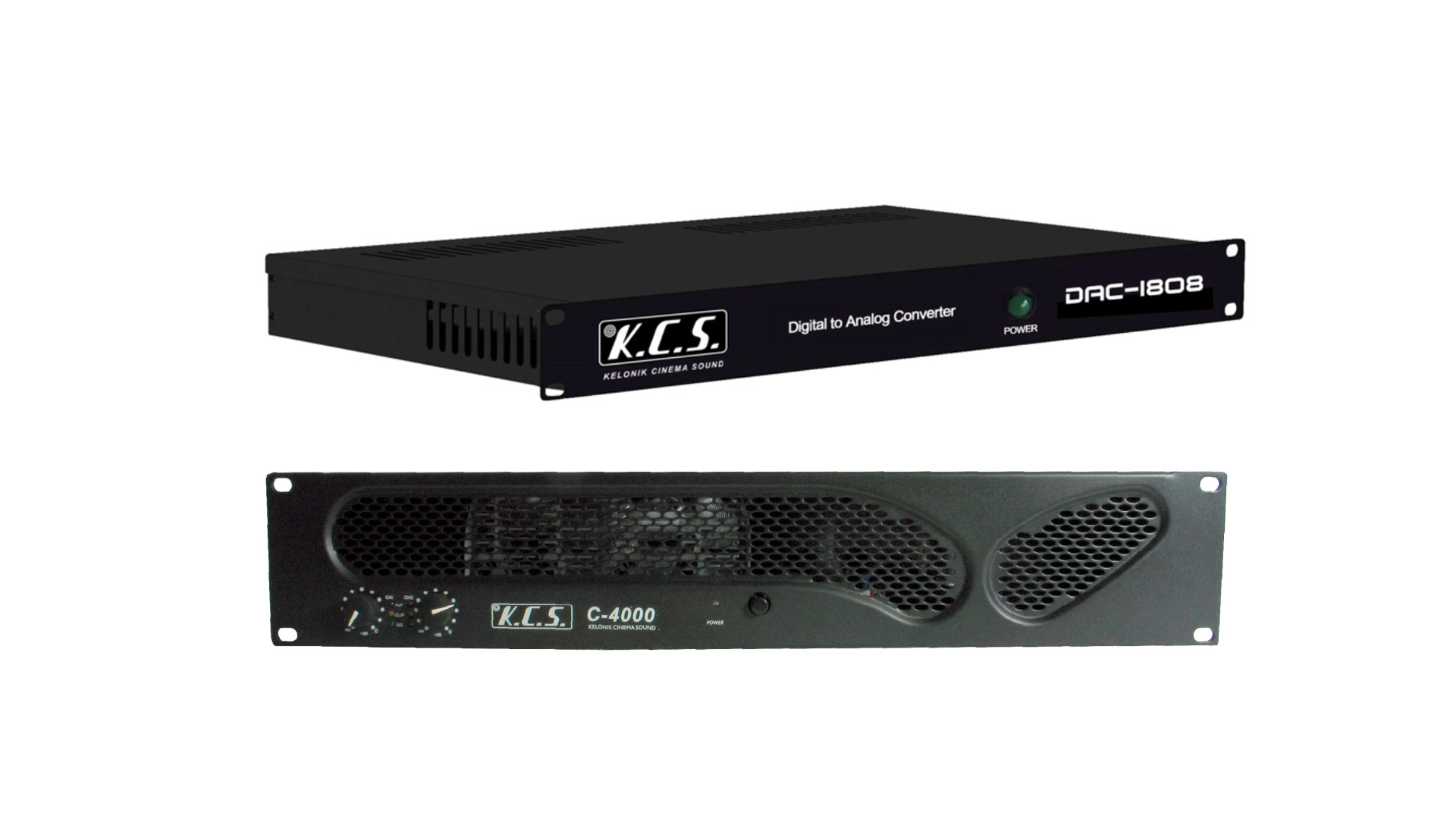
K.C.S—Kelonik Cinema Sound—is a Spanish loudspeaker specialist created specifically for commercial cinemas. Suministros Kelonik, an established cinema-service company, formed the KCS division in 1990; the previous 1979 date did not mark the launch of this speaker brand. Its systems are organised around the architecture of an auditorium: screen-channel loudspeakers deliver dialogue and front-stage energy, surrounds provide coverage around the audience, and high-output subwoofers handle low-frequency effects. KCS offers two- and three-way, bi-amplified and tri-amplified solutions sized for small rooms through large theatres, plus products intended for immersive layouts such as Dolby Atmos and Auro. That breadth matters because cinema design is a coverage and reliability problem, not simply a matter of placing hi-fi speakers behind a screen. The company draws on Kelonik’s installation experience to match directivity, sensitivity and output to room volume and throw distance, and supports complete projects through a distribution network. Its distinctive know-how is therefore practical: purpose-built transducers and enclosures informed by decades of commissioning real cinemas.
Krell

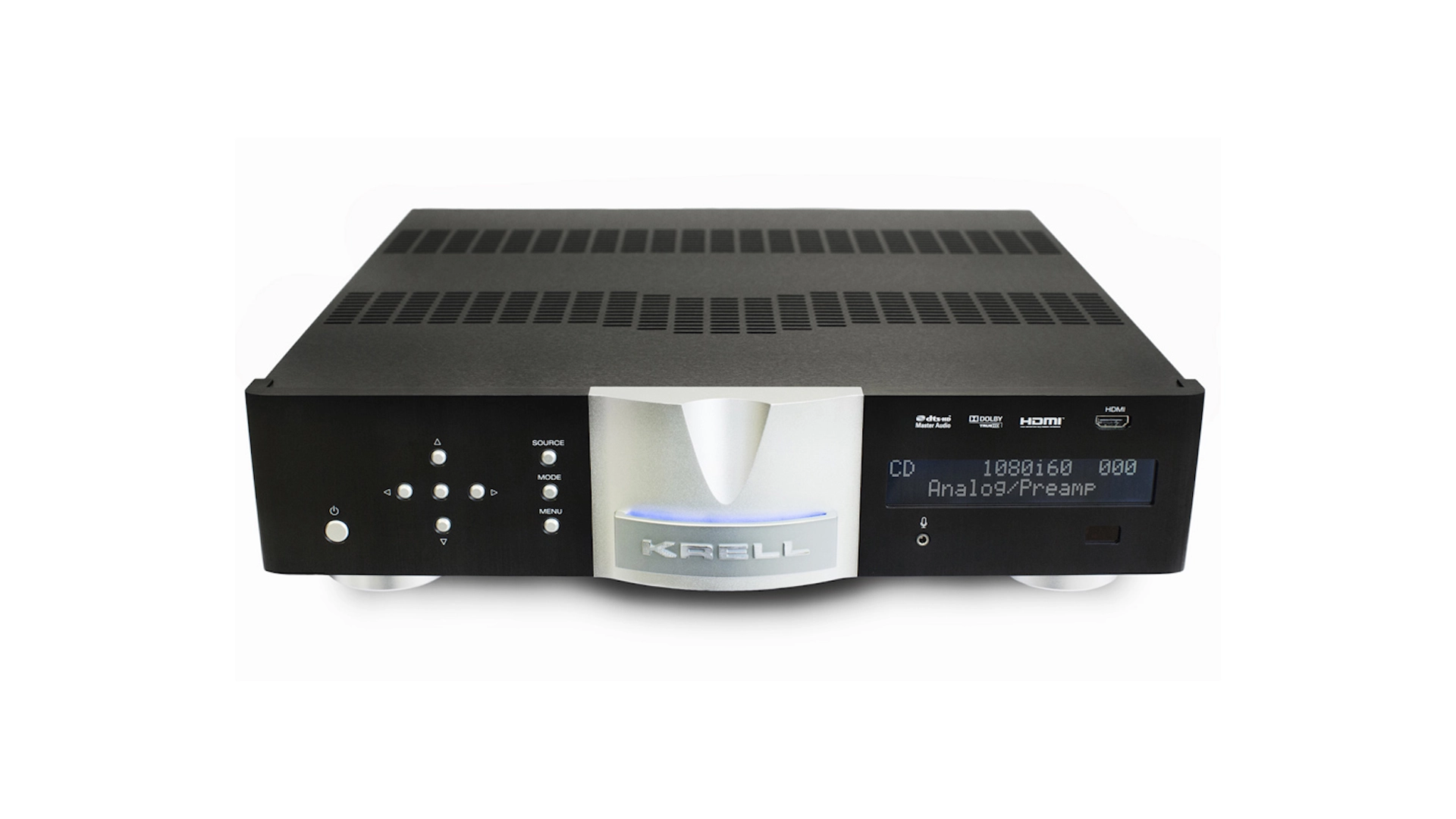
Krell is an American high-end audio manufacturer built around one demanding idea: an amplifier must remain composed when a loudspeaker asks for serious current. Dan and Rondi D’Agostino founded the company in Connecticut in 1980, and its early KSA power amplifiers helped establish high-current, wide-bandwidth solid-state amplification as a reference in high-end listening. Krell’s identity still centres on powerful integrated, stereo and multichannel amplifiers, joined by preamplifiers and digital sources. Its best-known engineering signature is Class A operation; in later designs, the proprietary iBias system varies the bias with the musical signal so the output stage can retain Class A behaviour without continuously dissipating maximum power. The company’s XD circuit revisions focus on lower output impedance, greater current delivery and tighter loudspeaker control. Products such as the KSA-i power amplifiers, K-300i integrated amplifier and Illusion preamplifiers translate that know-how into systems valued for scale, dynamics and bass authority rather than cosmetic luxury alone.
Krix
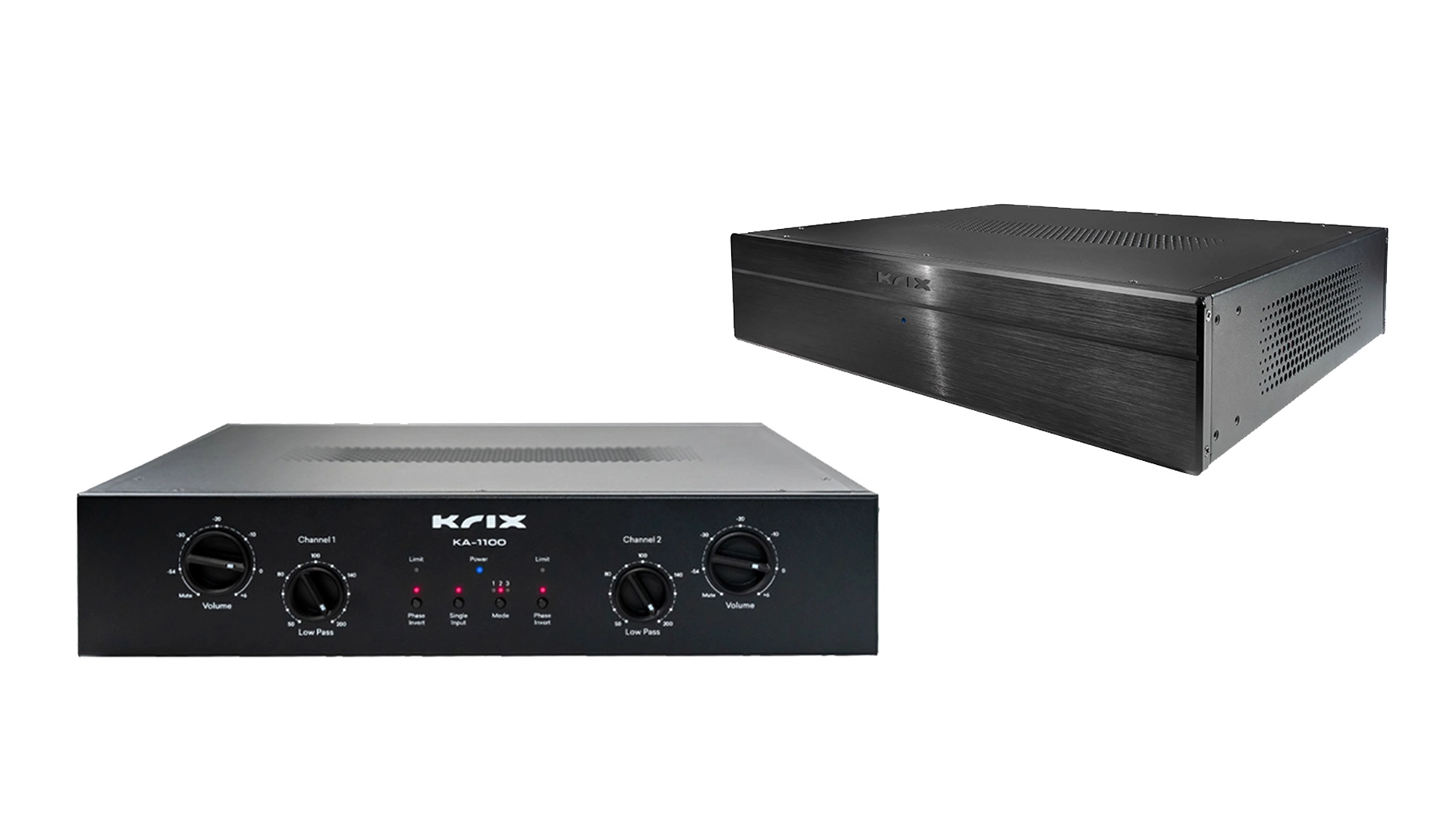
Krix is an Australian loudspeaker company with an unusually direct link between home audio and the commercial cinema. Scott Krix began building loudspeakers in Adelaide in 1974 and installed his first cinema system in 1980; today the company designs and manufactures speakers for dedicated theatres, living rooms and professional auditoriums at its South Australian facility. Cinema experience is central to the brand’s know-how: controlled directivity, high sensitivity, generous headroom and consistent coverage across a seating area. Krix develops its own constant-directivity horns, uses finite-element analysis and extensive acoustic measurement, and builds cabinets in-house with model-specific bracing. For home cinema, the modular Series MX systems place screen, surround and subwoofer channels behind an acoustically transparent screen or within a baffle wall, bringing commercial-cinema architecture into private rooms. Series SX and architectural models address flexible installations, while Esoterix loudspeakers show the same engineering discipline in two-channel hi-fi. The result is a brand whose strength is not a house sound slogan, but predictable dynamics and coverage at real cinema levels.
Lumagen

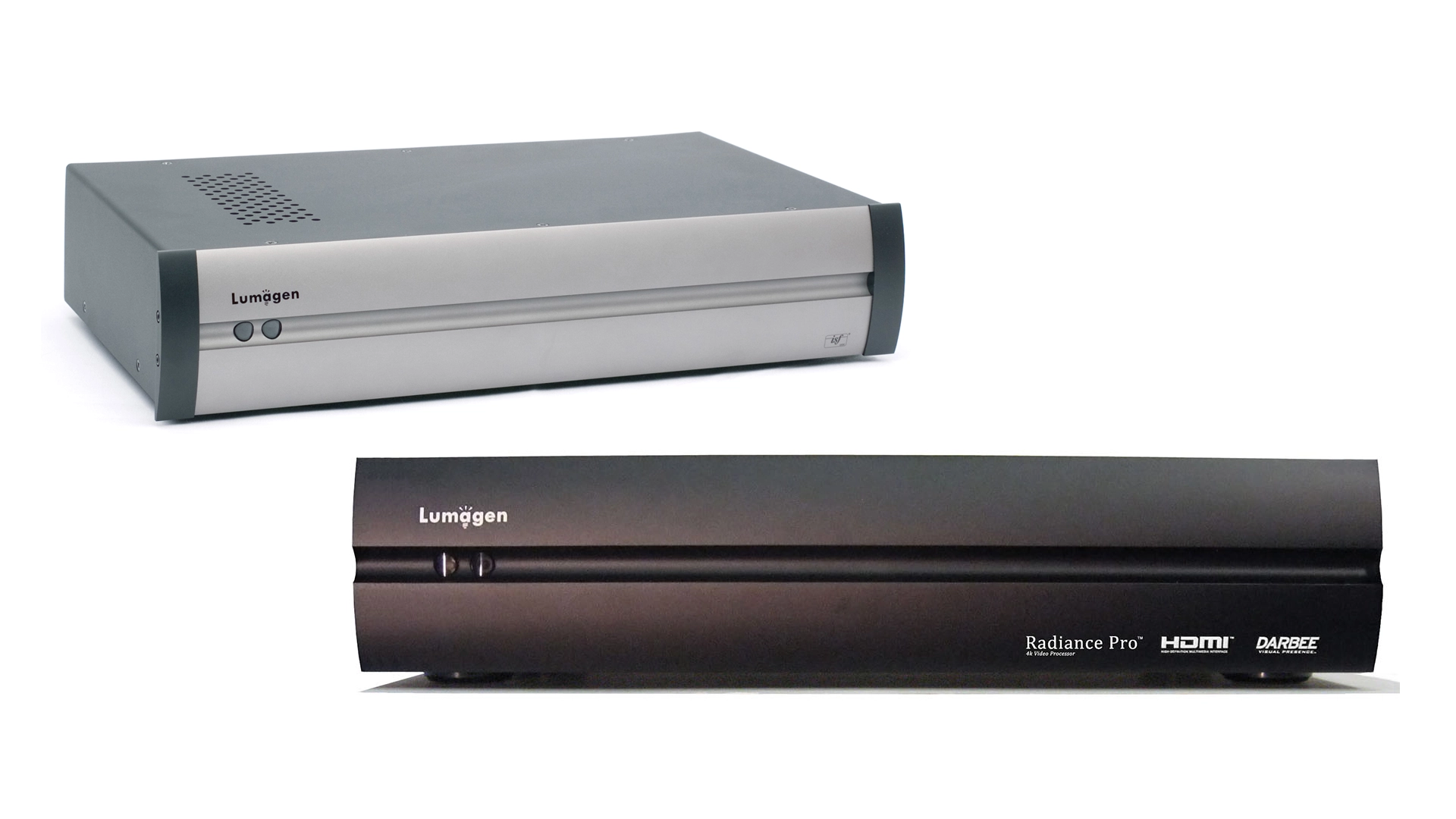
Lumagen is an American video-processing company founded in 2001 by mathematics and electronics engineer Jim Peterson. Its Radiance processors sit between sources, AV equipment and a display or projector, correcting the image at system level when the playback device’s internal processing is insufficient. The current Radiance Pro platform uses field-programmable gate-array hardware rather than a general-purpose PC. That allows Lumagen to revise core algorithms through firmware while maintaining deterministic video timing and very low latency. Its best-known function is scene- and frame-adaptive HDR dynamic tone mapping, which reshapes high-dynamic-range material for the actual light output and black level of a projector or television. The same unit provides scaling, deinterlacing, aspect-ratio control, 1D and 3D LUT calibration, source switching and precise audio/video delay. Genlock-based timing helps avoid repeated or dropped frames, while a low-latency mode supports gaming. Radiance Pro units are used in reference home cinemas, calibration work and parts of professional production or quality-control workflows. Lumagen’s distinction is narrow and substantial: it treats moving-image processing, colour accuracy and timing as one dedicated engineering problem.
MadVR
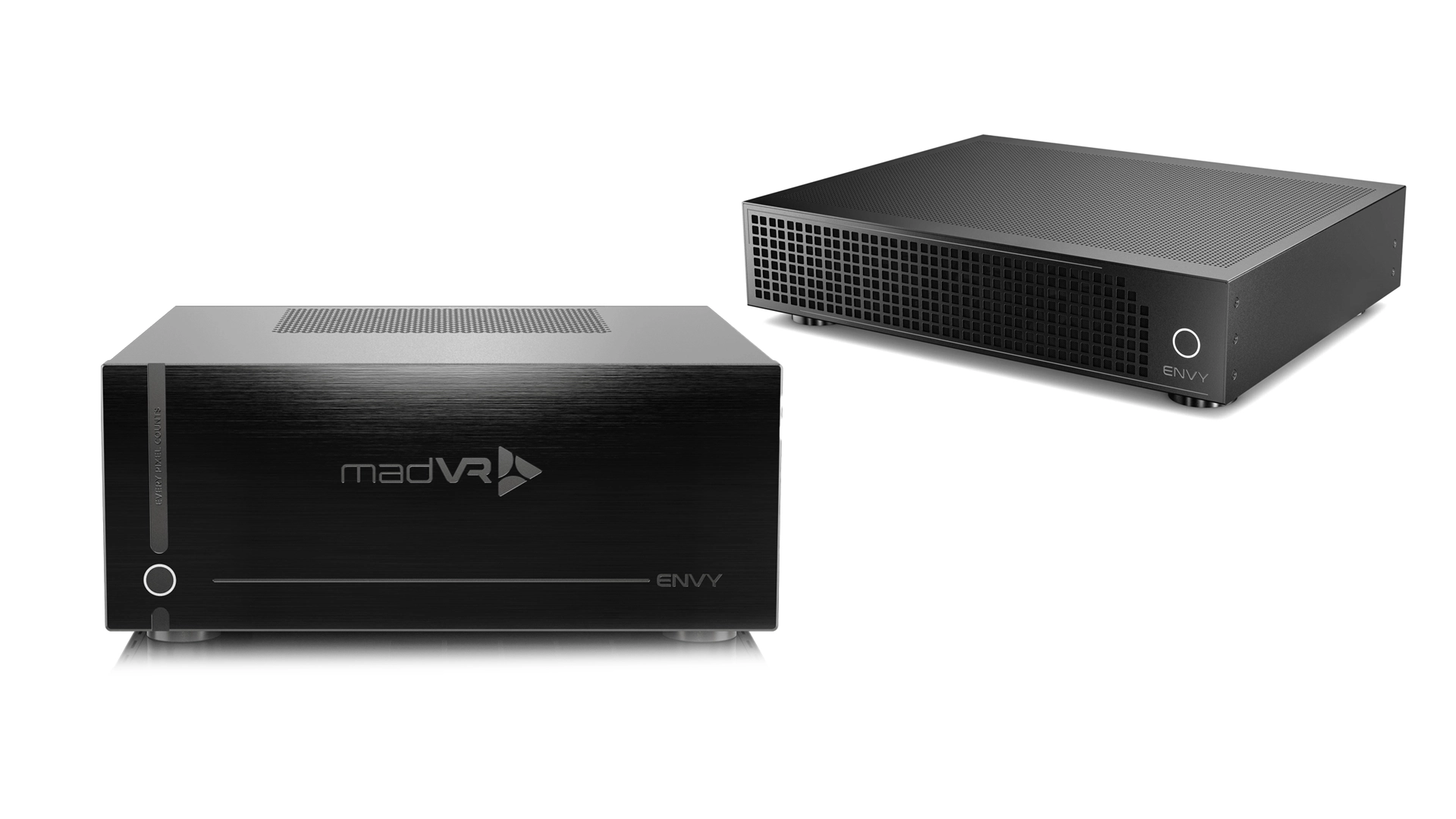
madVR Labs is an American video-processing company launched in 2019 by CEO Richard T. Litofsky and German software developer Mathias Rauen, the creator of the original madVR PC renderer. Its Envy processors bring more than a decade of software development into dedicated, appliance-like hardware for premium home cinemas and post-production work. The unit sits between sources and a projector or display, analysing video in real time. Dynamic tone mapping adapts HDR luminance scene by scene or frame by frame; aspect-ratio detection, subtitle repositioning and non-linear stretch manage constant-height screens; scaling, deinterlacing, sharpening and 1D/3D LUT support address resolution and calibration. Higher models add geometry correction and MotionAI frame interpolation. Unlike a fixed-function video chip, Envy uses powerful GPU processing, which gives the company room to revise algorithms through software updates. The latest generation moves beyond the older Extreme MK2 named in the original description: Extreme MK3, Pro MK3 and Core MK2 platforms add full-bandwidth HDMI 2.1 hardware, 8K capability and high-refresh gaming support in model-dependent configurations. madVR’s speciality is therefore not video switching—it is computational image processing made usable as a professionally supported cinema component.
MAG Theatron

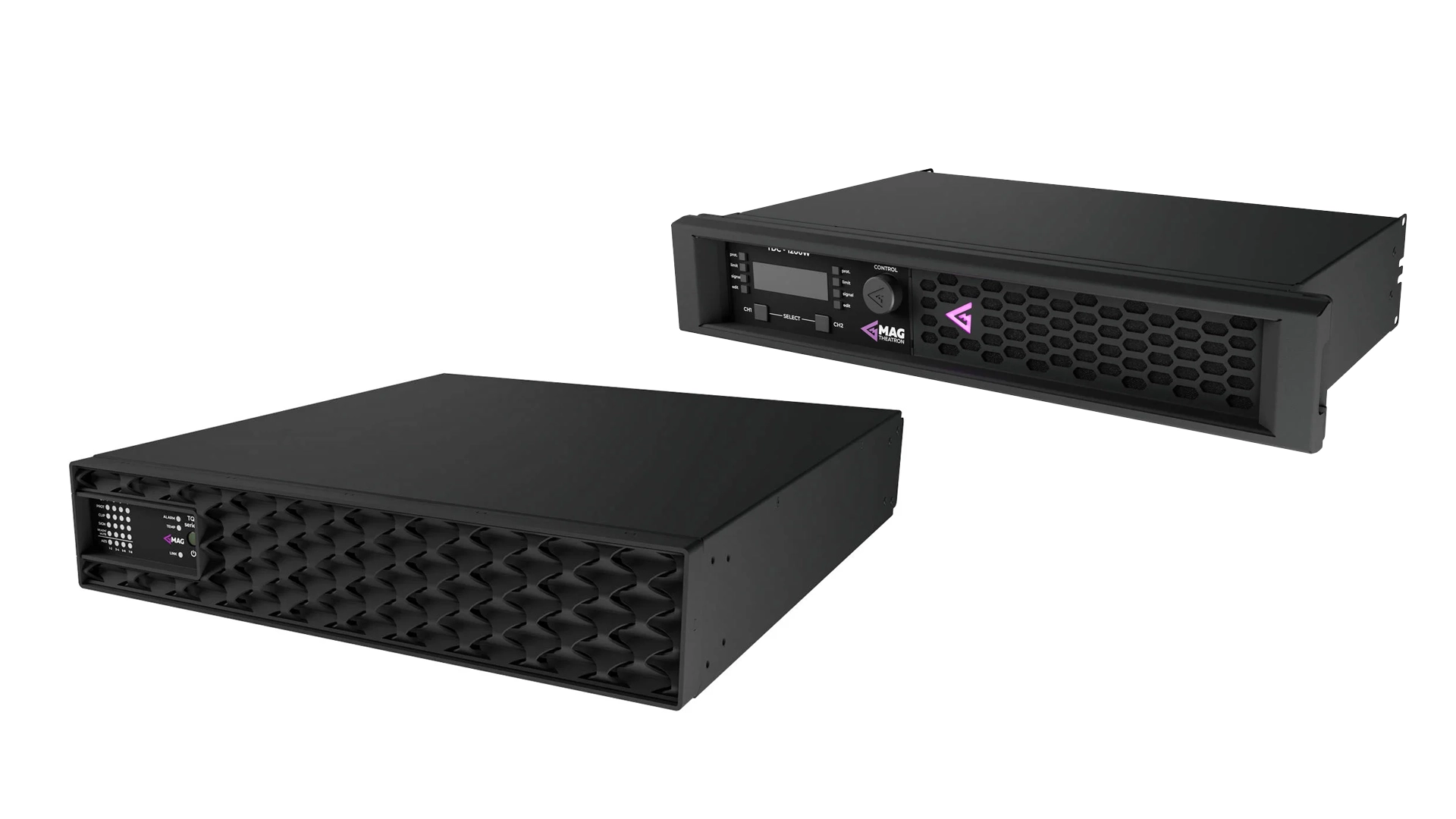
MAG Theatron is the residential home-cinema brand added to the MAG Audio portfolio in 2020, not a company founded in 1991. It takes the efficiency, dynamic headroom and controlled coverage of MAG Cinema systems and adapts them for private screening rooms, where listening distances are shorter, background noise is lower and equipment must integrate discreetly with interiors. Screen-channel speakers, surrounds and subwoofers are designed as coordinated systems rather than unrelated hi-fi boxes placed around a room. Families such as the compact M-series and larger purpose-built solutions let an installer scale output to room volume and seating, while shallow cabinets and flexible mounting simplify placement behind acoustically transparent screens or within treated walls. High sensitivity reduces the amplifier power required for cinema peaks, and professional-style compression drivers and robust low-frequency units preserve dialogue intelligibility and impact at reference playback levels. Theatron also supports project design, calibration and demonstration installations through specialist partners, acknowledging that the final result depends on room acoustics and setup as much as the loudspeakers. Its defining idea is precise: reproduce the energy and coverage of a real cinema at domestic distance, using MAG’s Ukrainian manufacturing base and commercial-theatre experience without pretending that a living room is a multiplex auditorium.
McIntosh

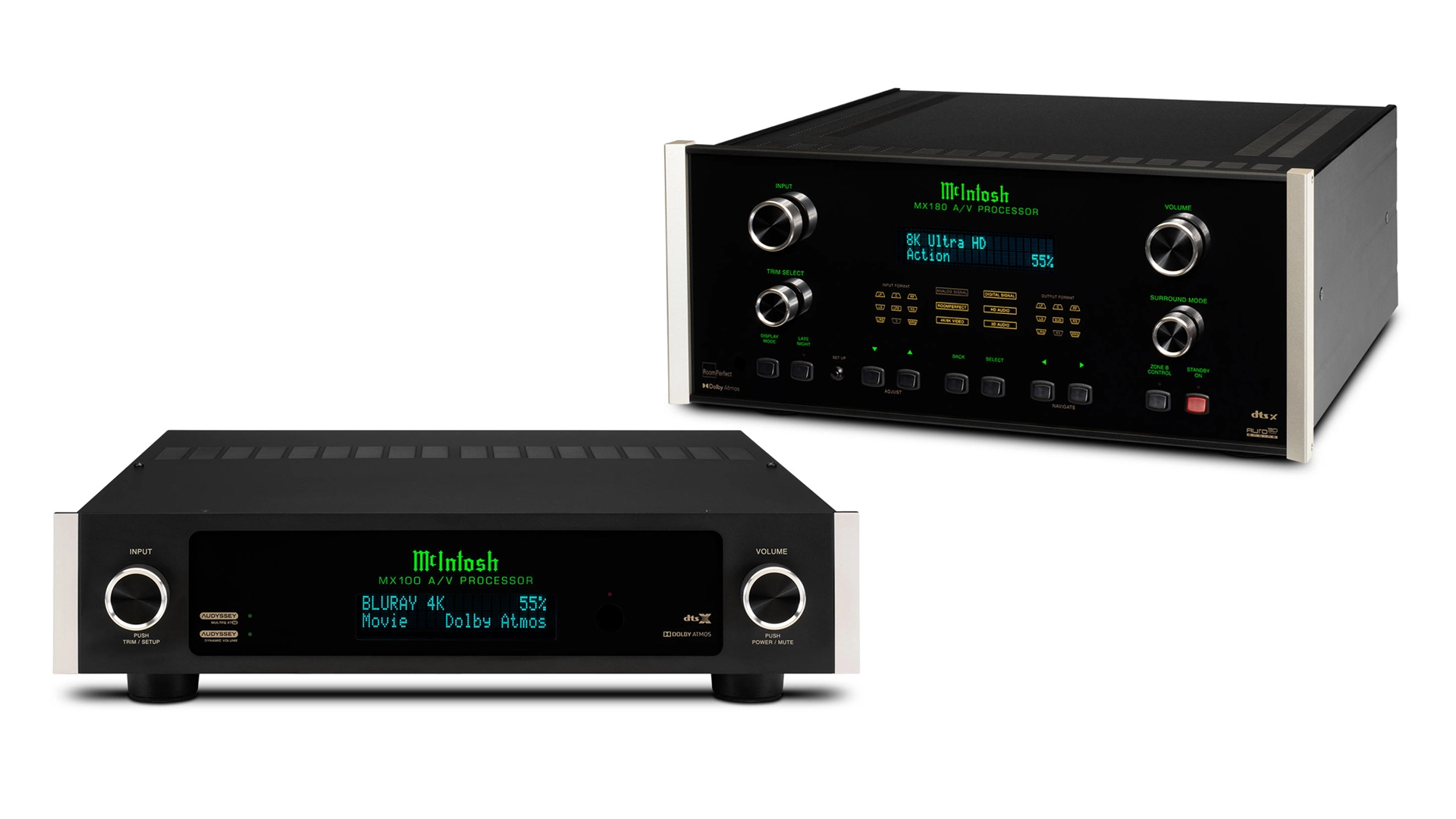
McIntosh is an American high-end audio manufacturer whose blue power meters and black-glass front panels identify products built around unusually durable amplifier engineering. Frank H. McIntosh and Gordon Gow founded the company in 1949 after developing the Unity Coupled Circuit, a transformer-coupled output topology designed to deliver high power with low distortion across the audible band. McIntosh moved to Binghamton, New York, in 1951 and continues to design and assemble products there. The catalogue covers valve and solid-state power amplifiers, preamplifiers, integrated amplifiers, source components, streamers, turntables, speakers and home-cinema processors. Many transistor power amplifiers use Autoformers to deliver their rated power into different loudspeaker impedances, while Power Guard monitors the waveform to reduce clipping-related distortion and Sentry Monitor protects against unsafe operating conditions. The company still winds key transformers in house, and signature glass panels are printed and assembled for long service life. McIntosh’s appeal extends beyond styling: its defining know-how is the marriage of protective circuitry, stable load behavior and conservative construction with a product ecosystem that can support both two-channel and large cinema systems.
Meridian

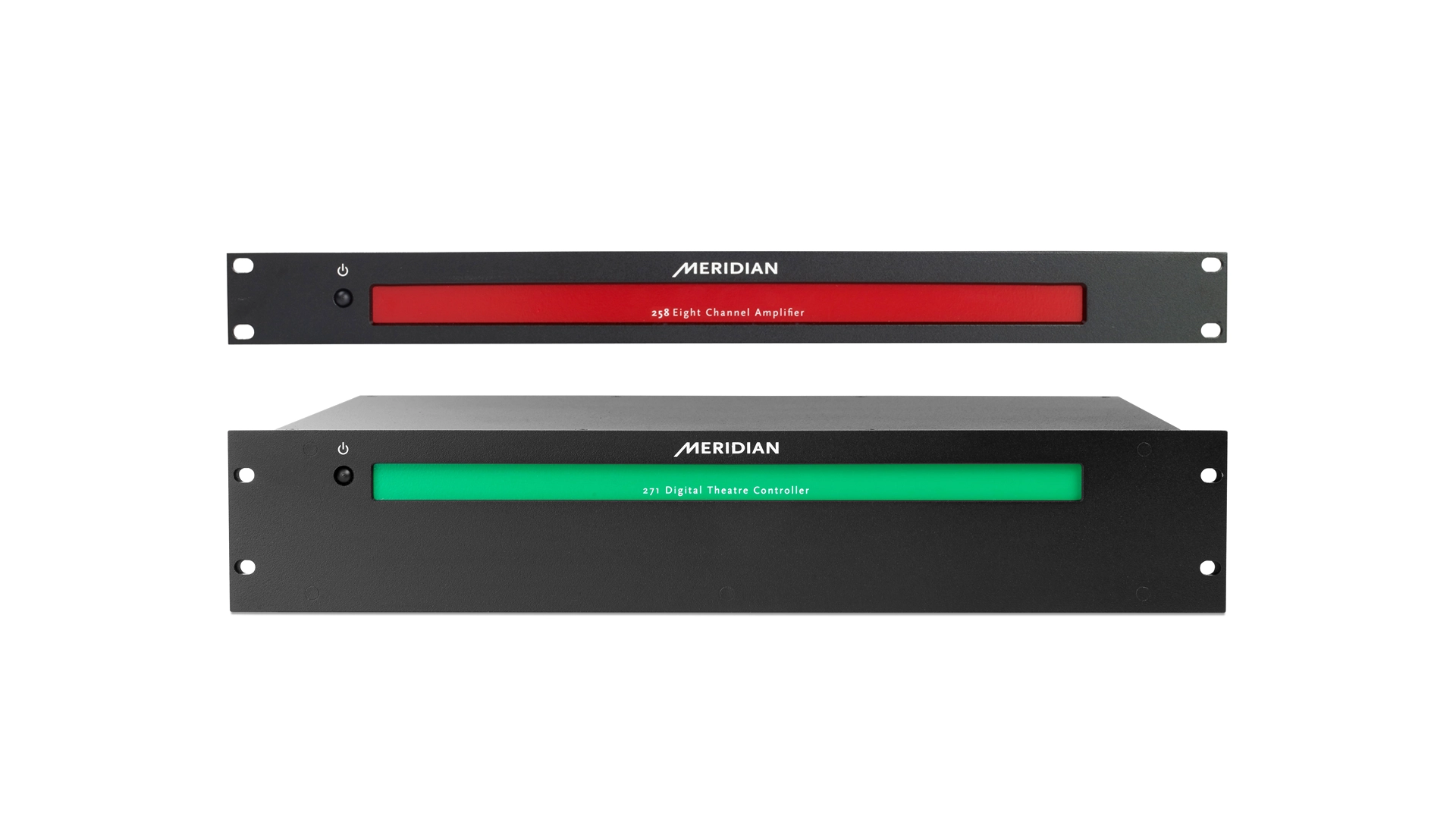
Meridian is a British digital-audio pioneer whose central achievement is treating the loudspeaker, amplification and signal processing as one engineered system. Bob Stuart and industrial designer Allen Boothroyd founded the company in 1977. The active M1 loudspeaker established their combination of electronics and acoustics, while later products helped advance digital source design, lossless coding and DSP-controlled playback. Meridian’s flagship loudspeakers place digital crossovers, dedicated amplification and drivers in the same enclosure, allowing the company to control phase, timing, bass alignment and protection far more precisely than a passive speaker permits. Proprietary techniques include apodising filters, Enhanced Bass Alignment and psychoacoustic processing, implemented in products such as the DSP9 and DSP8000 XE. The wider range includes controllers, streamers, architectural speakers and distributed-audio components, alongside engineering partnerships for automotive, marine, aviation and lifestyle brands. Meridian co-created MQA, but MQA is now independently owned and should not be presented as the company’s defining current product. Meridian’s lasting distinction is broader: decades of research into DSP, active architecture and how complete systems behave in real rooms.
Monitor Audio
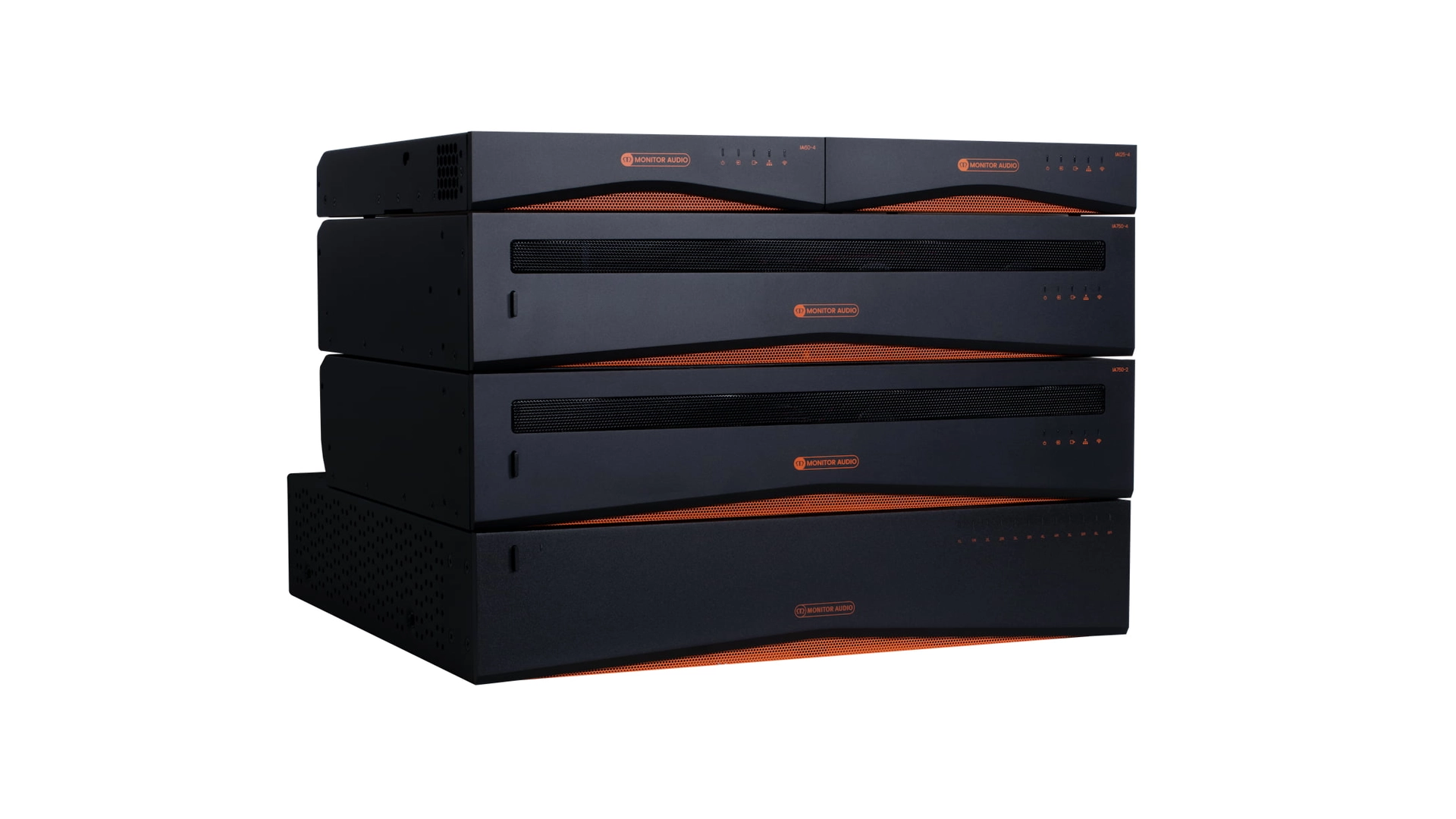
Monitor Audio is a British loudspeaker manufacturer whose strongest identity lies in developing its own metal-diaphragm driver families across products from entry-level stereo to architectural and flagship systems. Mo Iqbal founded the company in 1972 in Teversham near Cambridge, and the MA1 was its first loudspeaker. Design and engineering remain centred in Britain, while the catalogue now spans standmount and floorstanding speakers, home-cinema channels, subwoofers, creator-series installation models and outdoor audio. C-CAM—Ceramic-Coated Aluminium/Magnesium—is the foundation technology, providing a light, rigid diaphragm used in cones and the familiar gold-dome tweeter. Higher ranges extend it through RDT III sandwich cones, MPD III micro-pleated high-frequency transducers, DCF coupling and Hive II reflex ports. The Hyphn flagship arranges six RDT III midrange units around an MPD III transducer as a point-source M-Array and uses opposed, force-cancelling bass drivers. Bronze, Silver, Gold and Platinum apply related ideas at different levels without pretending they are identical. Monitor Audio’s advantage is this continuous driver-development ladder, backed by a broad system range rather than a single celebrated model.
NAD

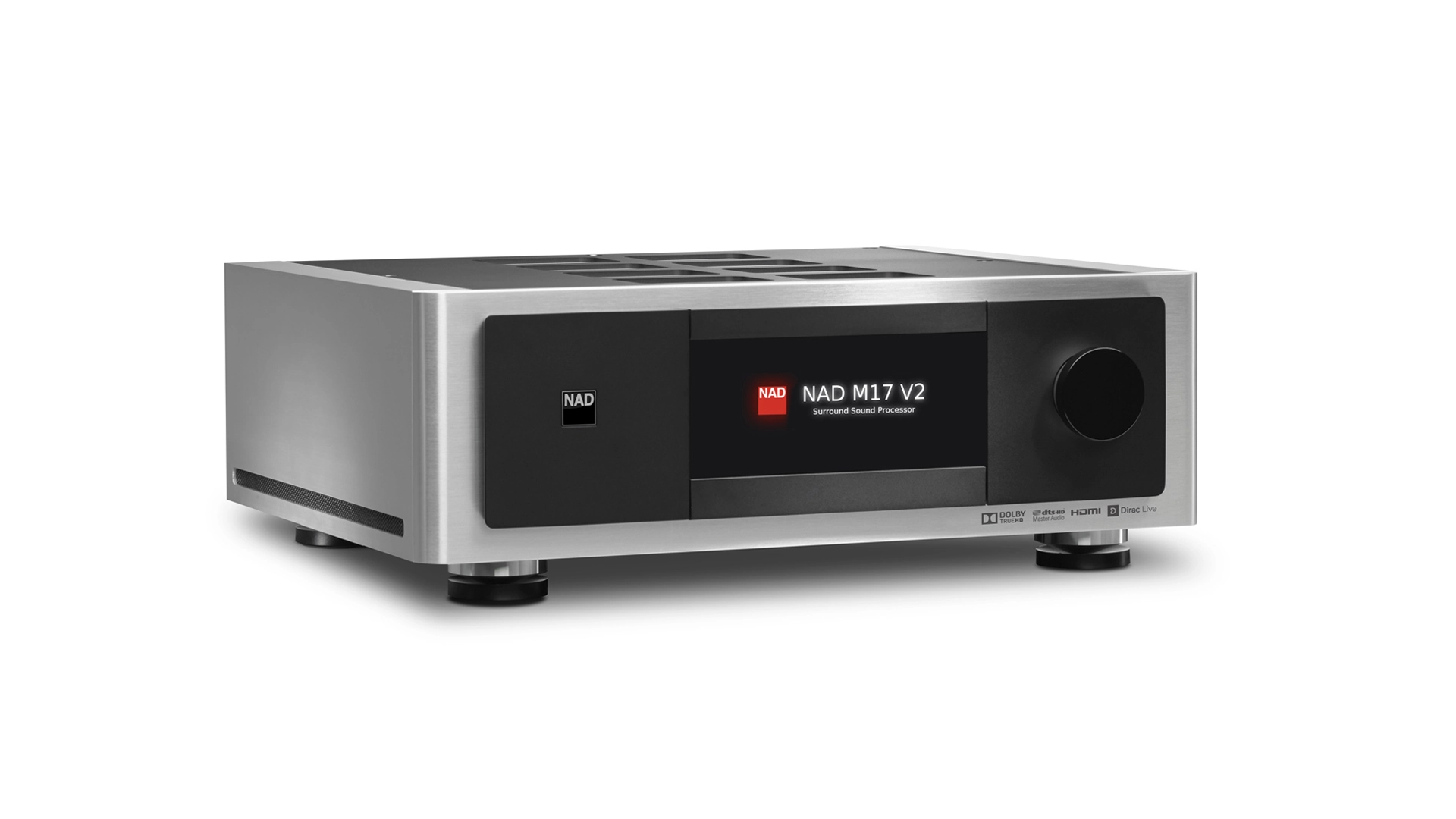
NAD—New Acoustic Dimension—is the British-founded electronics brand that made high-current, musically convincing amplification available without luxury-casework pricing. The company began in London in 1972 when audio-industry entrepreneur Dr Martin “Marty” Borish brought together a group of European distributors. Its turning point was the 3020 integrated amplifier, designed by Bjørn Erik Edvardsen and launched in 1978. Modestly rated at 20 watts per channel, it could drive demanding loudspeakers far beyond what the specification suggested and became one of hi-fi’s landmark affordable amplifiers. That practical engineering continues in the Classic and Masters ranges: integrated, pre- and power amplifiers, streamers, AV receivers and custom-installation components. PowerDrive manages voltage and current reserves for real loudspeaker loads, while Modular Design Construction lets selected amplifiers and receivers accept replaceable digital or HDMI modules. Current products also combine BluOS multi-room streaming with technologies such as Purifi Eigentakt amplification in appropriate models. NAD passed through Danish ownership before Canada’s Lenbrook acquired it in 1999; product development and headquarters are now Canadian, but the brand’s country of origin remains the United Kingdom. The lasting NAD idea is simple: spend the budget on usable power, upgradeability and music rather than decorative excess.
Nice

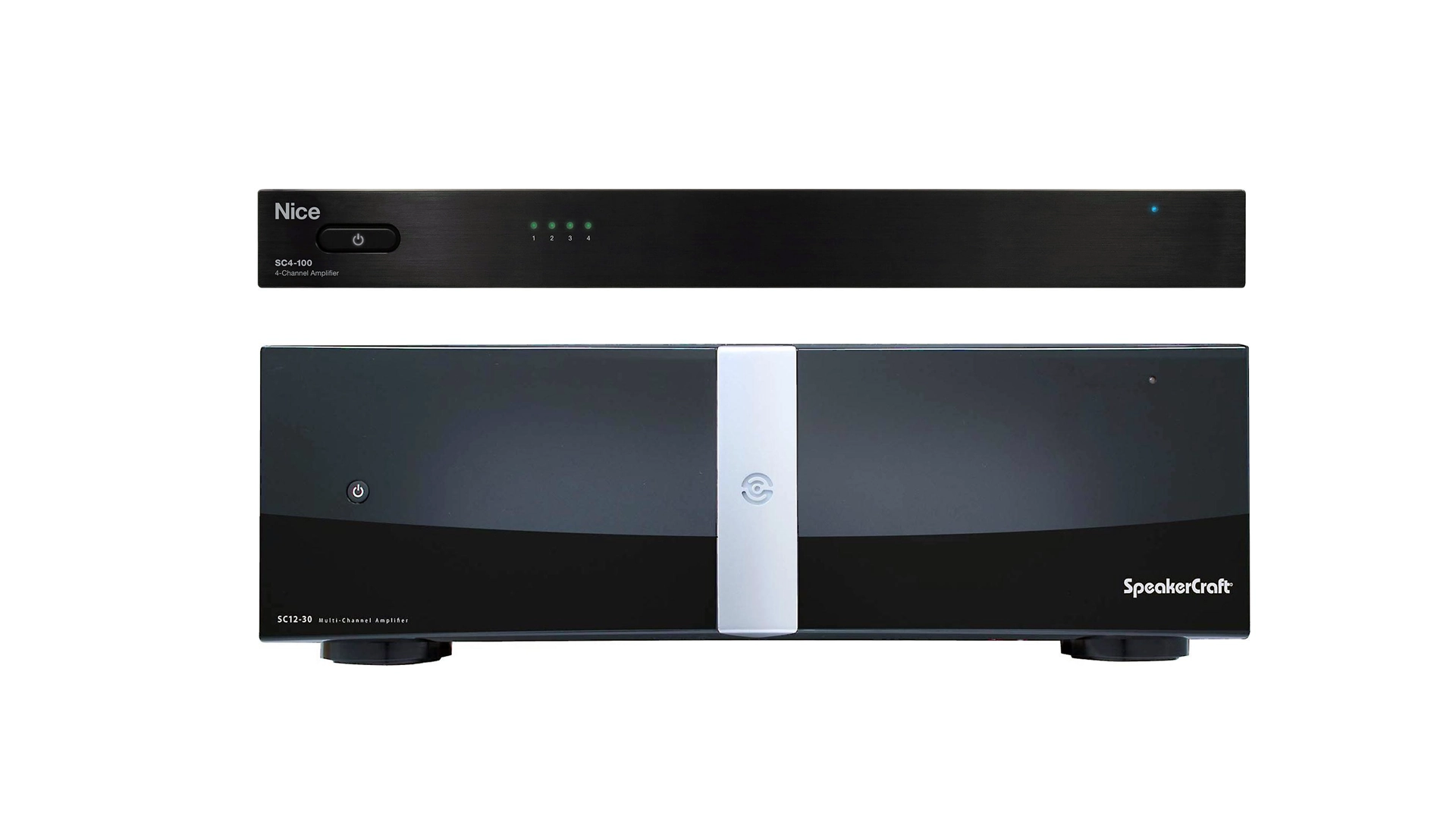
Nice is an Italian home-automation group, not a conventional standalone hi-fi manufacturer. Lauro Buoro founded the company in 1993 in Oderzo, and it grew through gate, door, shading, security and whole-home control systems. The audio products linked from the listed North American site belong to that integrated-home strategy: architectural loudspeakers, multi-room distribution, control interfaces and power management intended for professional installers rather than two-channel components sold in isolation. The decisive expansion came in October 2021, when Nice acquired Nortek Security & Control. That transaction brought established custom-installation names including ELAN, SpeakerCraft, Proficient, Panamax and Furman into the group. Nice subsequently converged parts of ELAN control, SpeakerCraft audio and Panamax energy management under the Nice name, while some heritage brands and product identities continue in the wider portfolio. The practical result is a single ecosystem in which in-wall and in-ceiling speakers, amplifiers, media sources, surveillance, lighting and motorised systems can be managed through ELAN OS and protected by specialised power products. An accurate description should therefore resist presenting Nice as a boutique Italian loudspeaker maker. Its audio relevance comes from owning and integrating decades of North American installation know-how into a broader Italian automation platform.
NuPrime

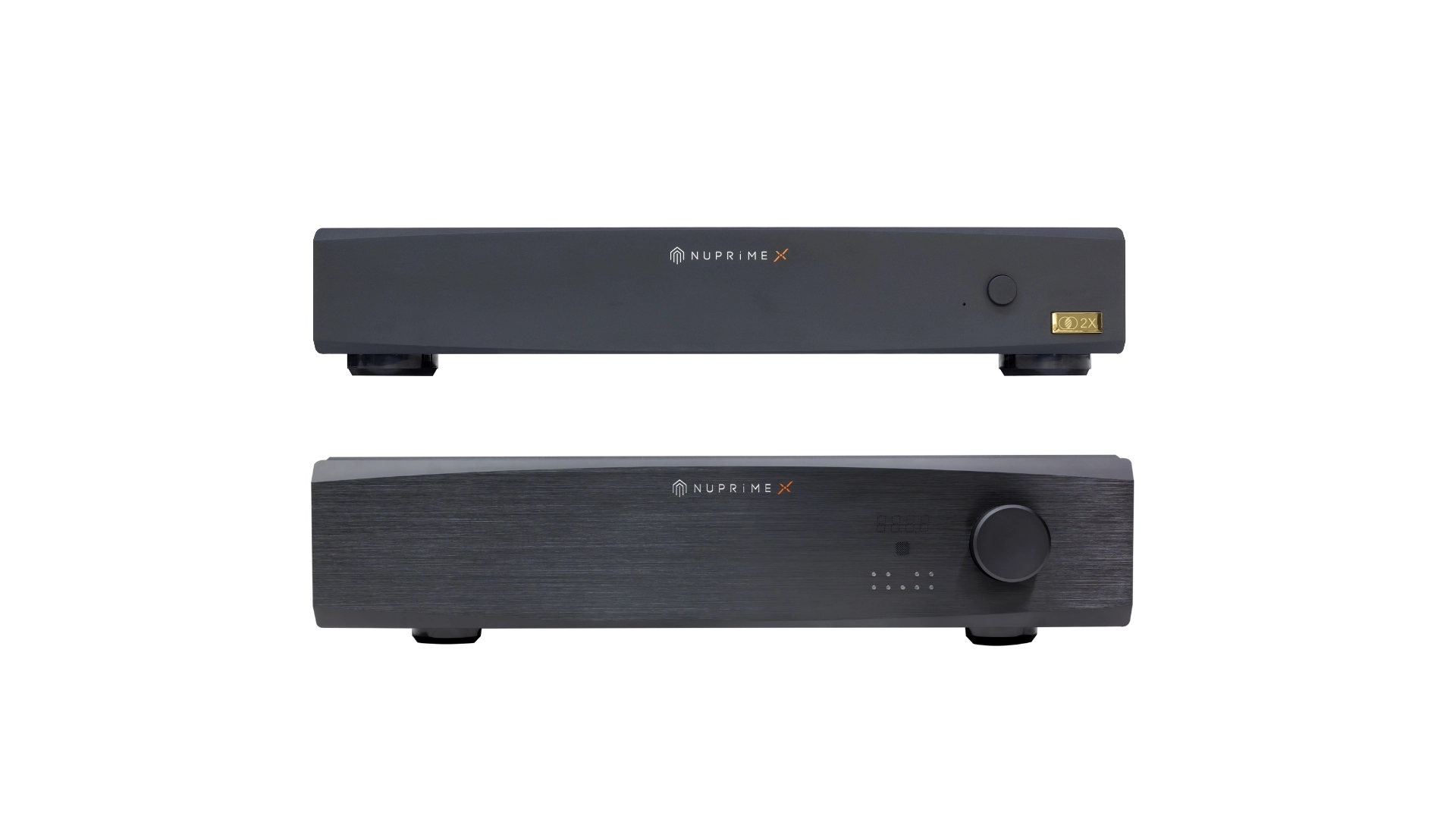
NuPrime Audio is the high-end electronics company Jason Lim created in 2014 after co-founding NuForce. With backing from a Taiwanese OEM partner, Lim acquired the assets of NuForce’s premium division and formed NuPrime to continue developing compact, efficient amplifiers and digital components. That lineage matters because NuPrime was not simply a renamed catalogue: it retained the high-end engineering direction while NuForce’s consumer brand followed a separate path. Amplification is the centre of the range. NuPrime designs its own switching stages and control loops instead of building every model around an off-the-shelf Class-D module; it describes the result as hybrid Class-D, combining a tailored analogue front end with a high-frequency switching output stage. Evolution is the reference family, AMG emphasises compact separates, and the 9 Series offers accessible DACs, preamps and power amplifiers with matching proportions. Integrated amplifiers, phono stages, streamers and the NuPrime-X multi-channel platform extend the architecture into complete and installed systems. As of 2026 the brand is managed by Singapore-based Nuoem Pte. Ltd., while NuPrime Audio, Inc. retains its American origin. The defining advantage is a coherent ecosystem of small, low-heat electronics built around proprietary amplification rather than Class-D efficiency alone.
Paradigm

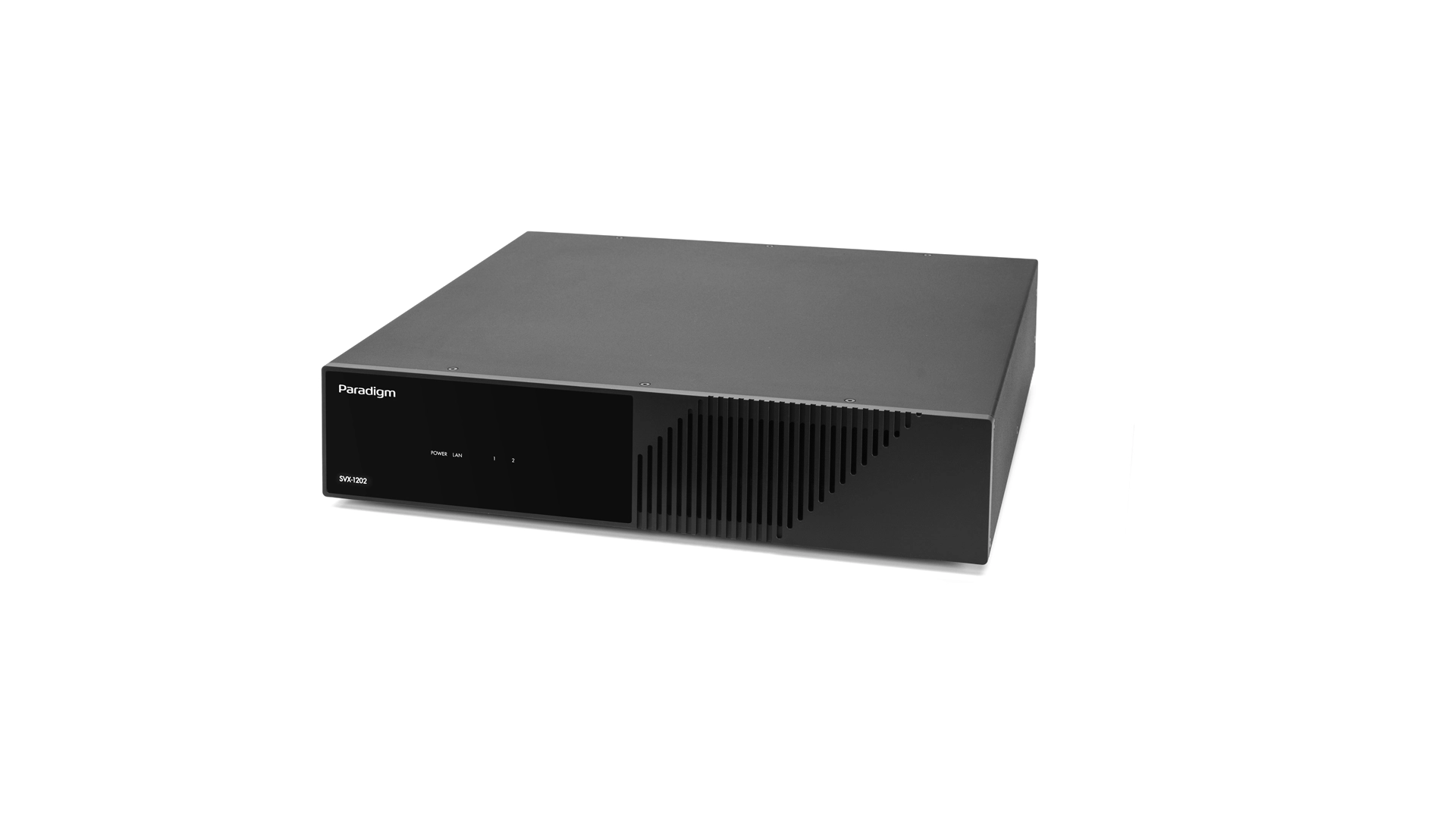
Paradigm is the Canadian loudspeaker manufacturer founded in Toronto in 1982 by Jerry VanderMarel and Scott Bagby. The early Model 7 and Model 9 established an unusual promise for the time: use controlled listening and serious measurement to improve performance while keeping production efficient. Collaboration with Canada’s National Research Council gave the young company access to psychoacoustic research and anechoic testing, a discipline Paradigm later brought into its own engineering facilities. That research-led approach now spans several clear product levels. Monitor SE and Premier make the core technology accessible; Founder combines proprietary aluminium-magnesium ceramic and carbon-based drivers with advanced cabinet isolation, while Persona uses beryllium diaphragms in its premium midrange and tweeter systems. Defiance subwoofers add app control and, on selected models, Anthem Room Correction. Millenia, CI architectural speakers and outdoor models extend the same voicing principles beyond traditional floorstanders. Paradigm designs drivers, crossovers and cabinets together and manufactures many key components and higher-level speakers at its Canadian facility rather than assembling a range solely from catalogue parts. The brand’s signature is not a single famous cone material: it is the long feedback loop between blind listening, anechoic measurement, in-house driver development and scalable Canadian production.