An icon representing on-wall speakers.

On-Wall Speakers

On-wall speakers offer a slim, low-profile alternative to traditional bookshelf or floorstanding models, making them an excellent solution when floor space is limited. Mounted directly on the wall like a picture frame, they provide a clean aesthetic and are often designed to complement modern flat-panel televisions. This guide gathers the key manufacturers of on-wall speakers, from stylish lifestyle-focused brands to companies producing high-performance models for serious home cinema systems. Explore the directory to find the right on-wall solution for your space.

38

Hi-Fi brands in the category

Summary information and image

Direct links to official websites

Filters
Search
Country
See more See less

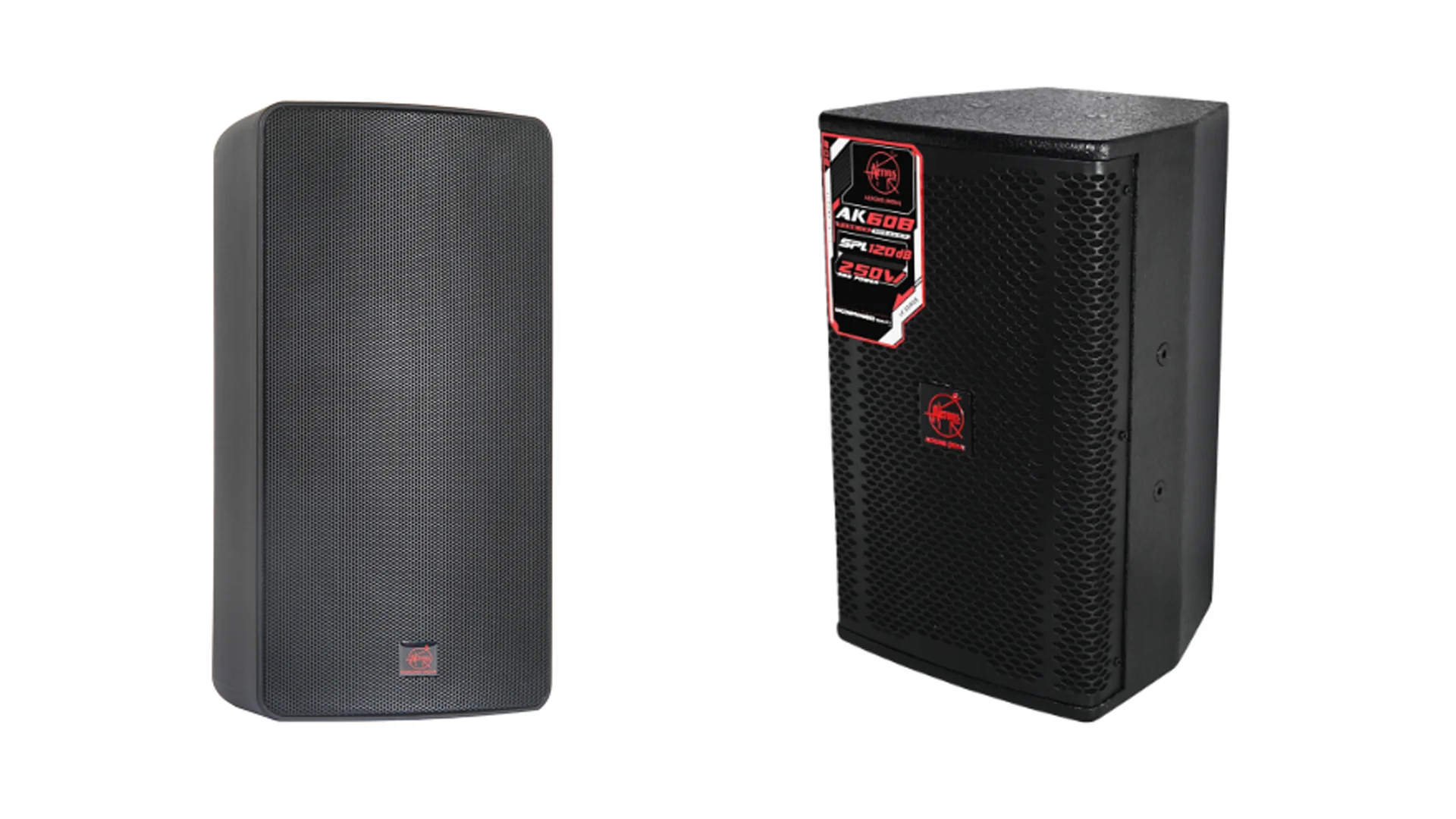
AERONS supplies professional sound equipment for live events, public-address systems and permanent installations in India. Its catalogue covers line arrays, power amplifiers, mixers, microphones, signal processing and installation speakers, alongside equipment from international brands it distributes. The business traces its roots to radio and loudspeaker work in 1962; its own history identifies 2000 as an export-business milestone, not its founding year. Its work spans the equipment needs of venues, installers and sound-reinforcement operators, from microphones and mixing to amplification and loudspeaker coverage.

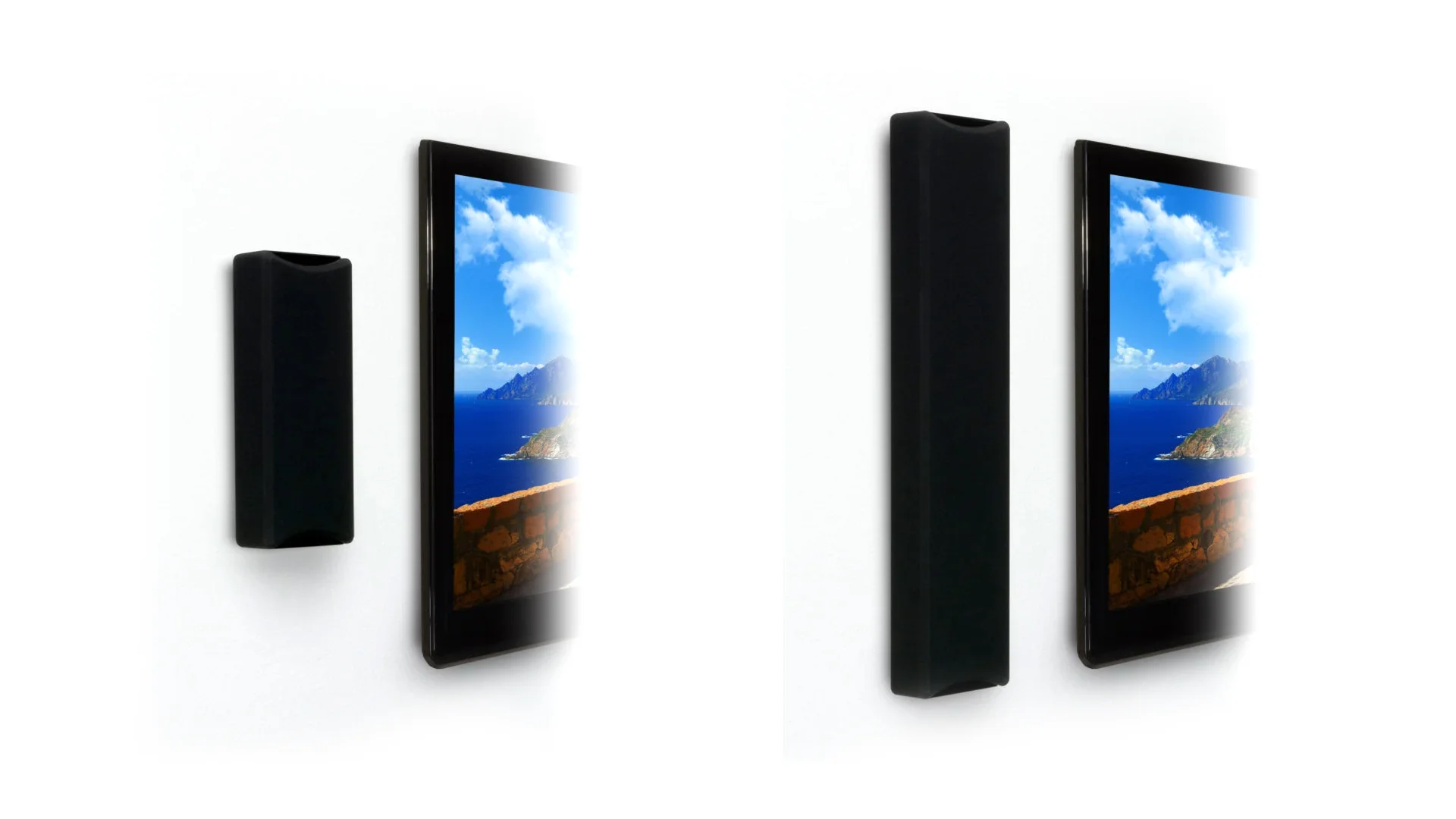
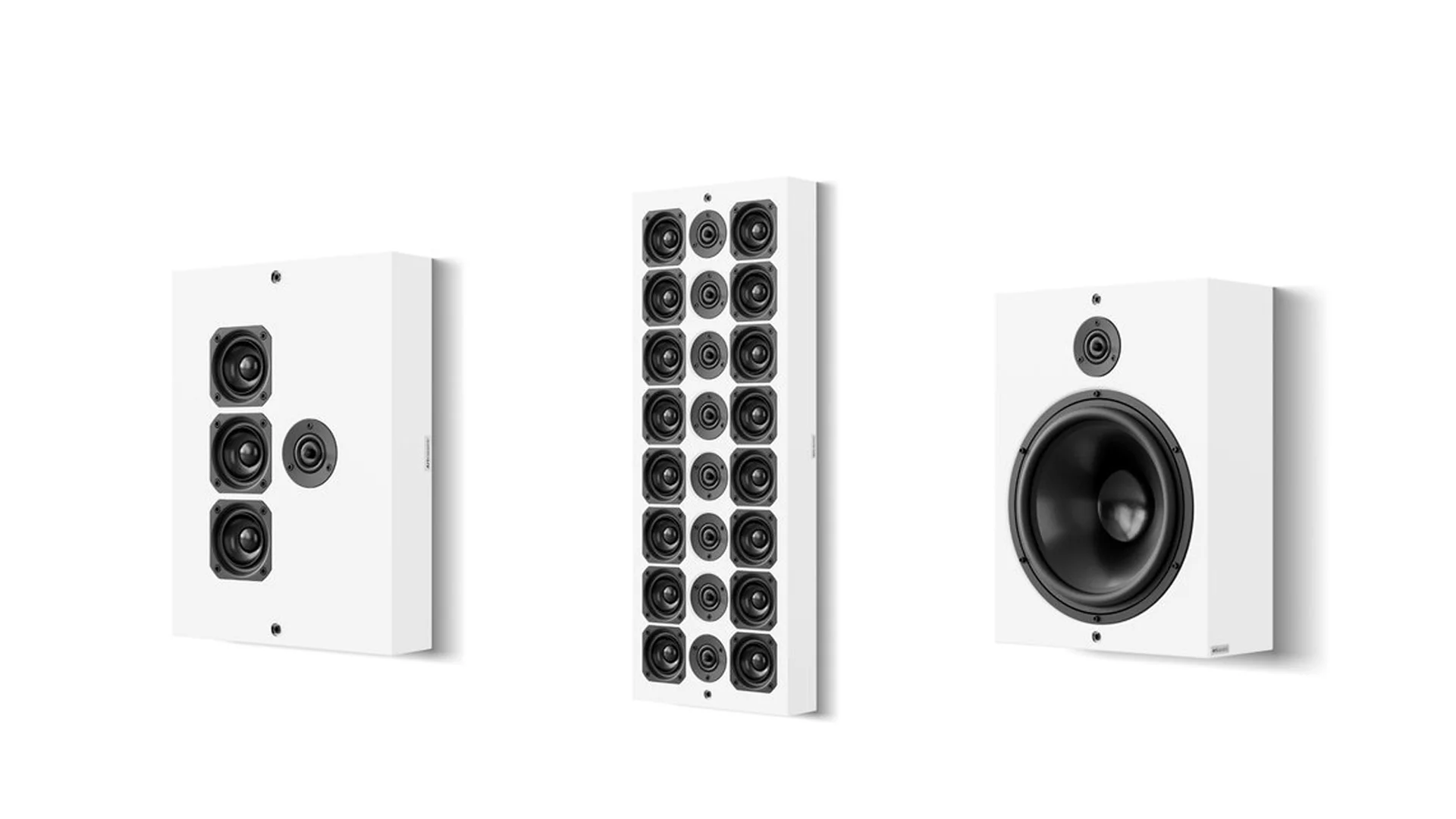
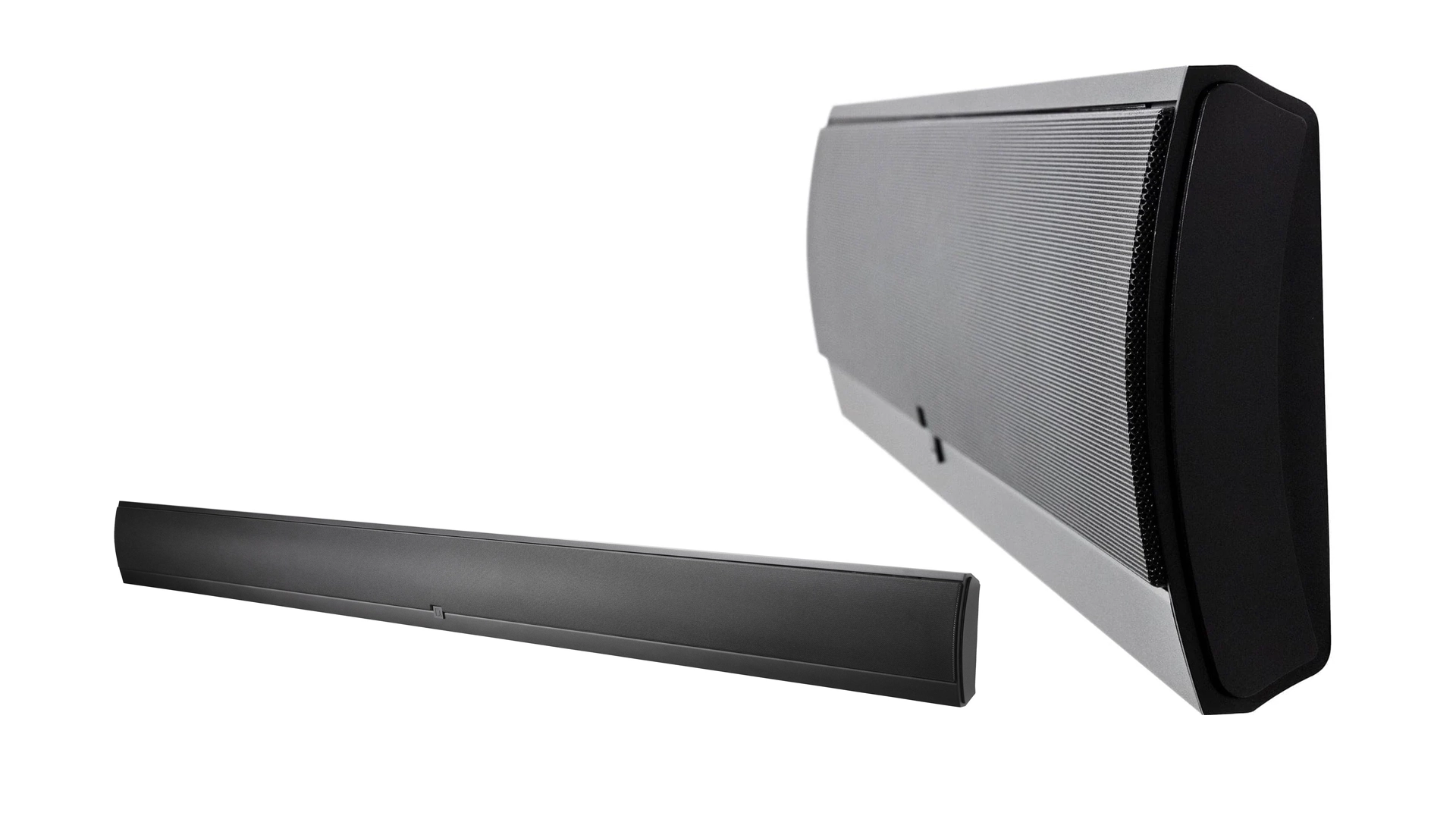
Angstrom makes loudspeakers for places where conventional speaker boxes do not fit: beside a television, within a wall or ceiling, and in architectural installations. The Canadian company’s history begins in 1978 as Angstrom Acoustic Laboratories and includes loudspeaker testing at the National Research Council in Ottawa. Its Suono Spatial Diffuser designs add side-firing tweeters to the forward-radiating drivers. In the Suono 600SD, two cabinets also accommodate the left, centre and right channels of a home-theatre system. This combination of acoustic layout and installation practicality is more representative of Angstrom than a generic focus on floorstanding hi-fi speakers. The wider range includes architectural and outdoor models.

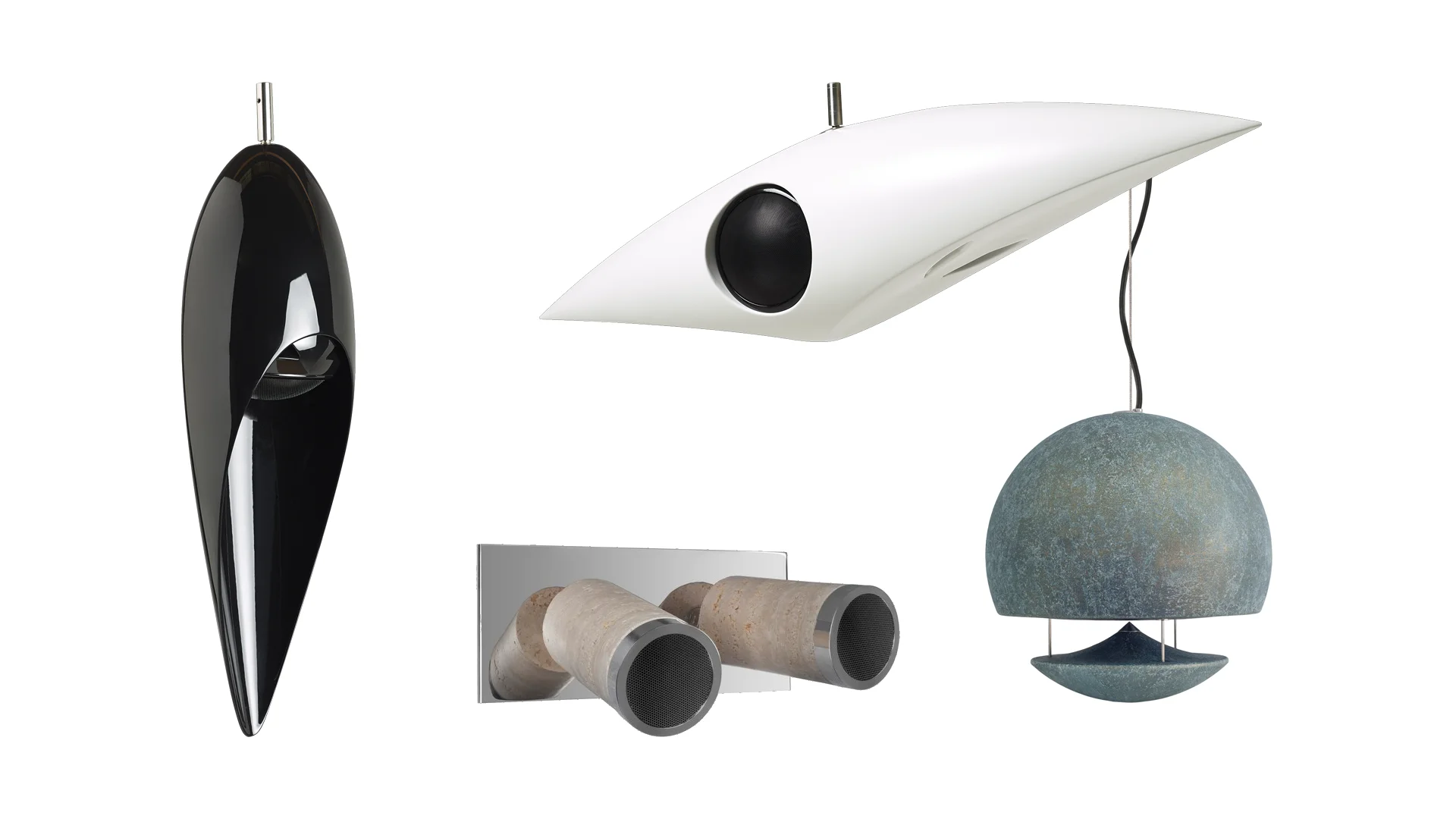
Architettura Sonora makes loudspeakers that function as architectural objects, using forms such as spheres, cylinders and cubes in stone, concrete and terracotta. Established in 2009 as a division of Italian driver manufacturer B&C Speakers, it joins loudspeaker engineering with material and spatial design. Its products are intended for interiors as well as gardens, terraces and other outdoor settings, with construction and placement chosen for the installation. The sculptural forms are not simply disguises for conventional boxes: the relationship between the driver, enclosure and surrounding space is part of the design. Bespoke finishes and installation-oriented models serve residential, hospitality and other architectural projects.

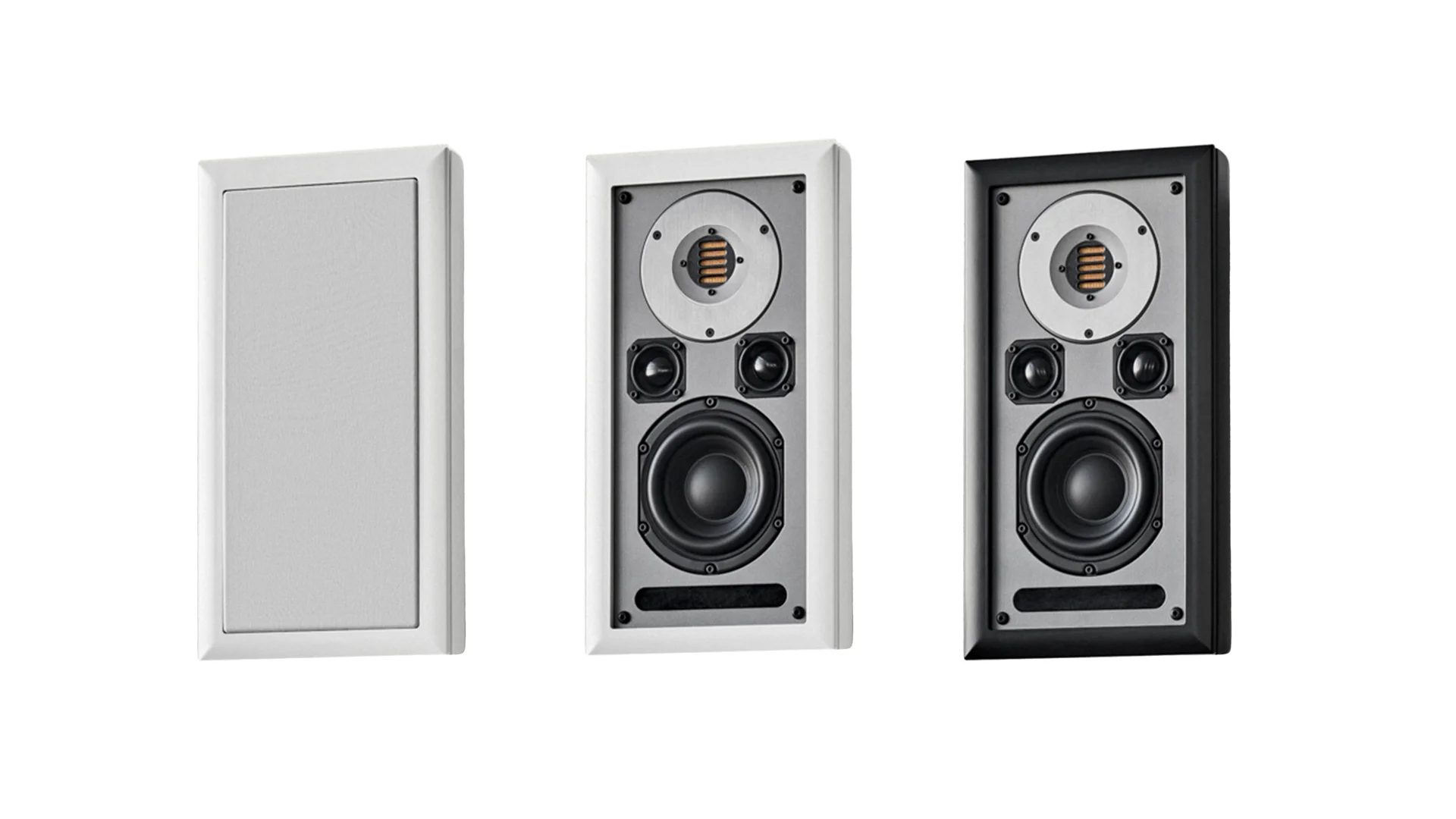
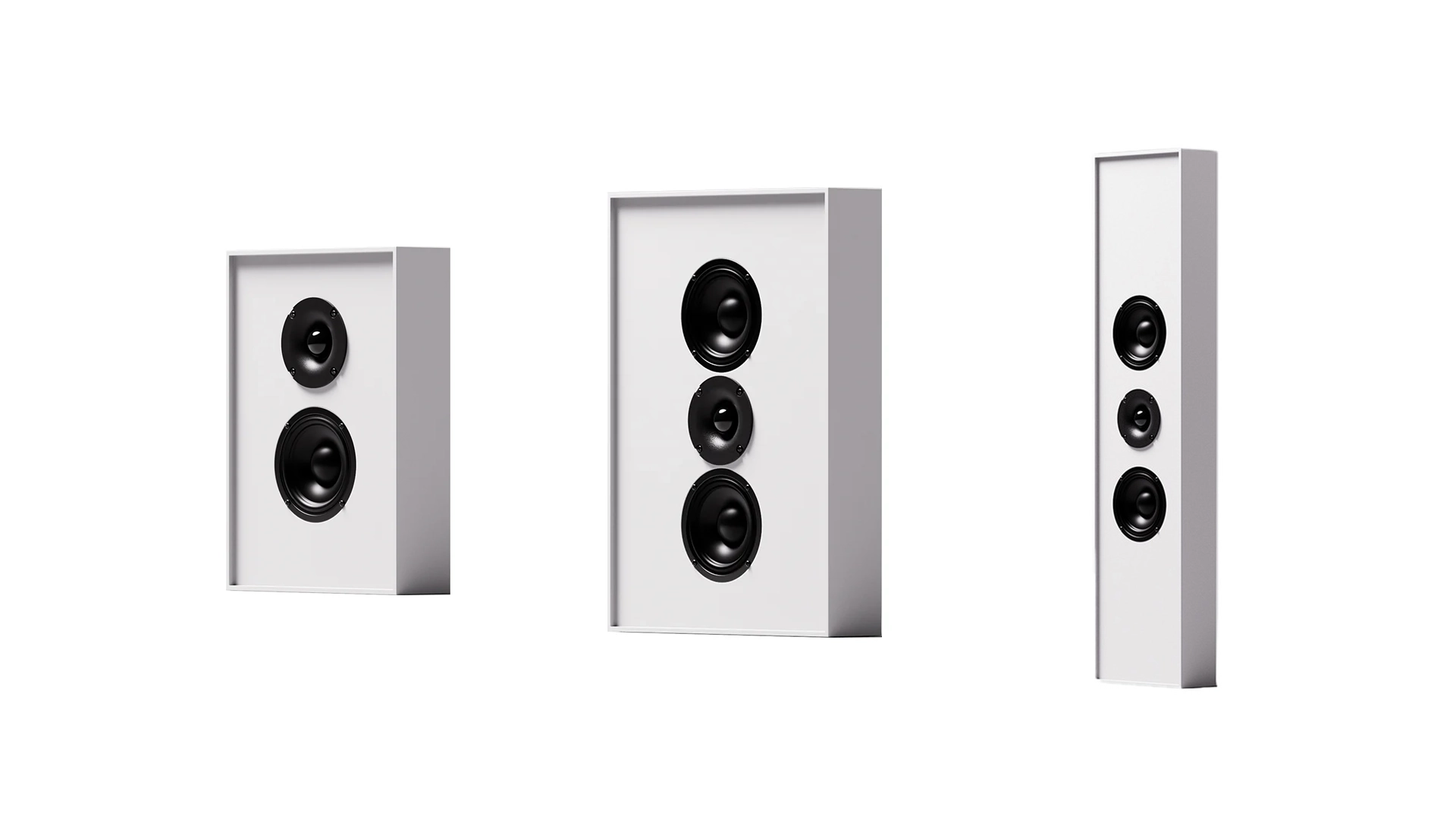
Artcoustic makes shallow loudspeakers whose appearance can be changed as readily as the artwork in a room. Kim Donvig and Patricia Ljungberg founded the Danish brand in 1998, combining an interest in pro-audio performance with Scandinavian interior design. On-wall models can be specified in RAL or NCS colours and fitted with interchangeable magnetic screens, including printed artwork. Behind that visual flexibility is a system-oriented range: SL speakers for domestic installations, Spitfire cinema models, soundbars, ceiling speakers and subwoofers. Different cabinet sizes and driver arrays let an installer build anything from a discreet stereo system to a dedicated cinema without abandoning the same visual language.

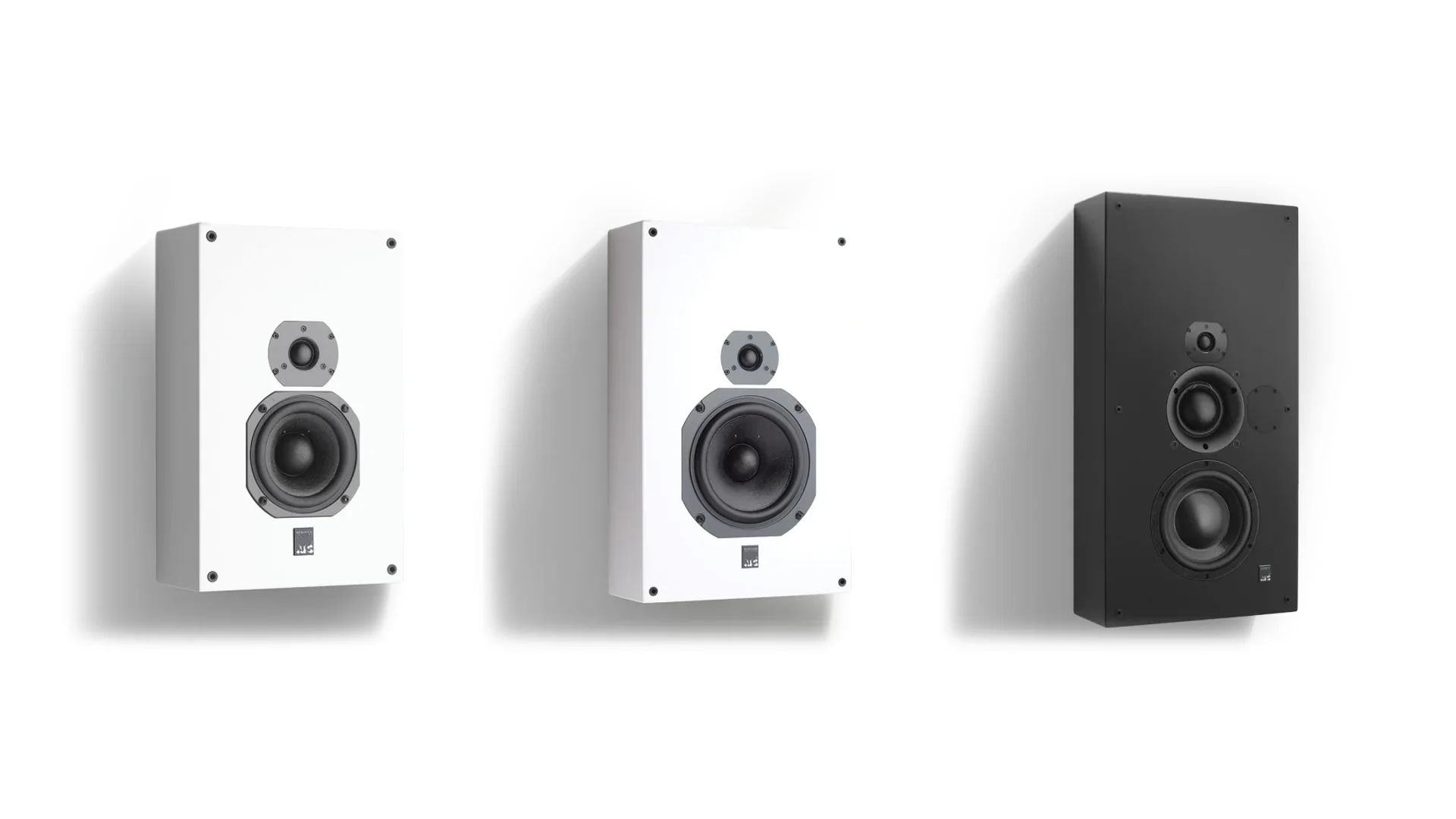
ATC grew from making professional loudspeaker drivers into building complete studio monitors and domestic hi-fi systems. Billy Woodman founded the British company in 1974; its large soft-dome midrange driver followed in 1976 and remains a defining part of many three-way designs. Another development, Super Linear motor technology, addresses distortion associated with magnetic hysteresis. Active models combine electronic crossovers with separate amplification for the drive units, while passive versions allow owners to choose their own power amplifiers. The SCM50 and SCM100 families connect the studio and home catalogues, supported by smaller speakers and separate electronics. Driver development is the thread running through both sides of the business.
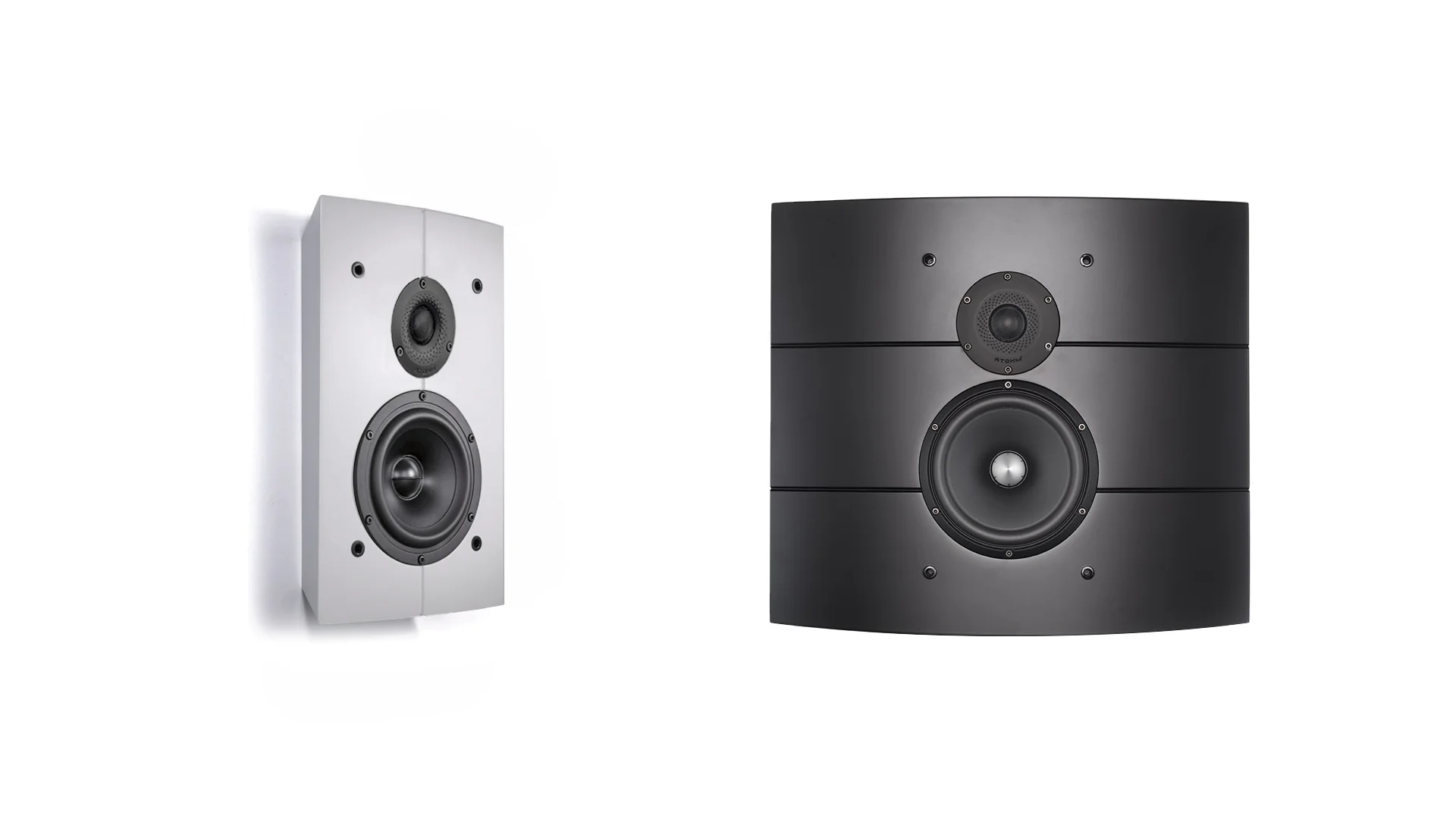
Atohm develops the drive units as well as the finished loudspeaker, and also supplies drivers and kits to people building their own systems. Thierry Comte established the French business behind the brand, Welcohm Technology, in 2000. Its catalogue connects GT and Sirocco loudspeakers with Rafale subwoofers, amplification and ZEF cables. The GT technical platform illustrates the detail of its driver engineering: the Absolute Series tweeter combines a treated silk dome, a neodymium motor and a copper ring intended to reduce and linearise inductance. Motor geometry and dispersion are developed together with the diaphragm and suspension. The same engineering interests extend into its component and DIY offerings.

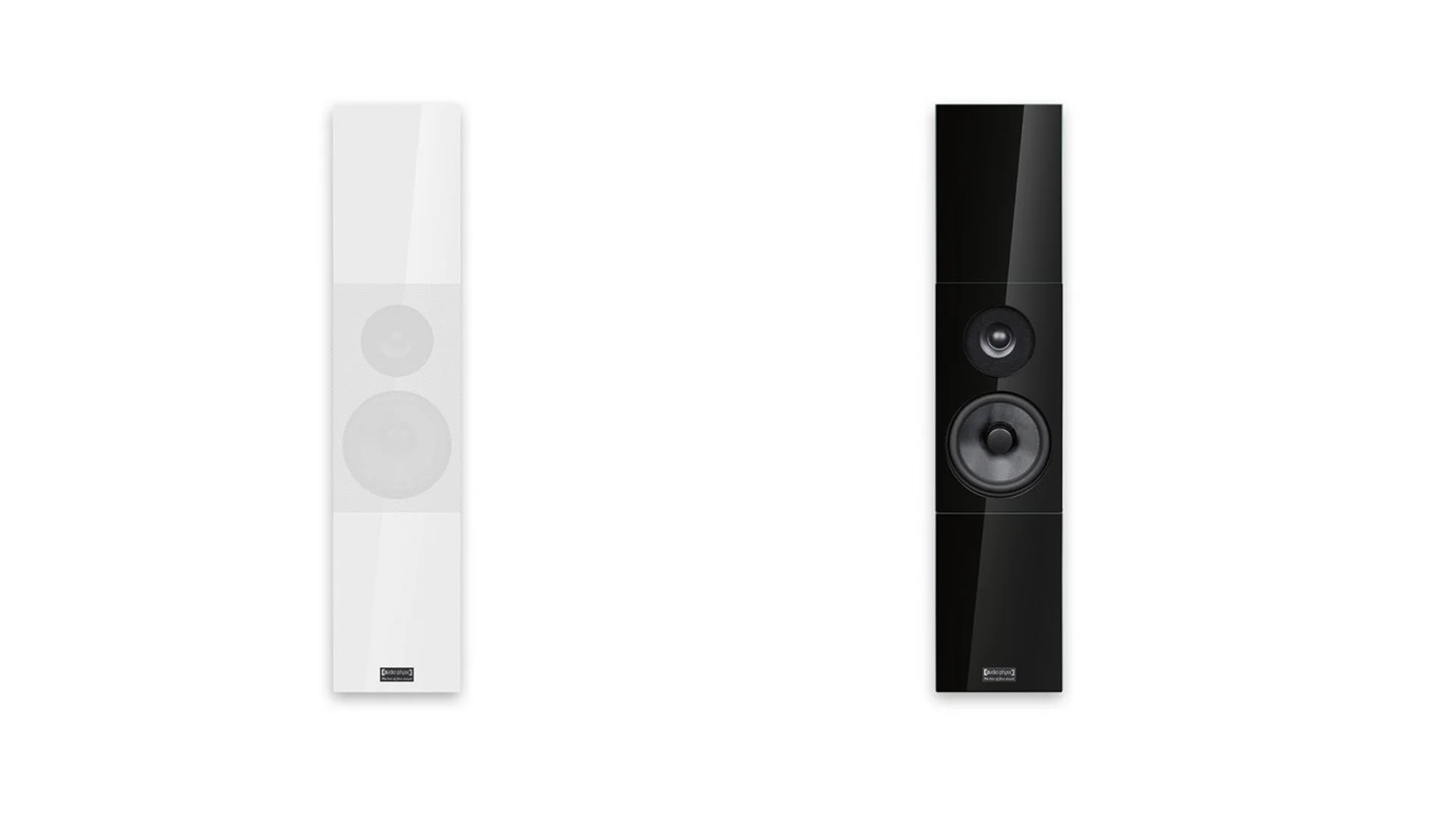
Audio Physic approaches loudspeaker design through the interaction of drivers, cabinet behaviour and the listening room. Wilhelm Hegener and Joachim Gerhard founded the German company in 1985, two years earlier than the date previously recorded. Their early work established a principle still visible in current models: an enclosure should be rigid where necessary, carefully damped and free from energy storage that masks fine detail. Modern speakers use Audio Physic’s Hyper Holographic Cone midrange and tweeter technologies, developed to suppress unwanted vibration at the driver, together with multi-layer cabinet structures and mechanical isolation. Cardeas sits at the top of a range that also includes Codex, Midex, Avanti and Tempo. The brand’s strength is spatial precision and low cabinet contribution, expressed in slim floorstanders rather than oversized conventional boxes.

Audiovector makes upgradeability part of the loudspeaker itself. Ole Klifoth founded the Copenhagen company in 1979 and introduced the original Trapeze that year; today his son Mads Klifoth leads the family-owned business. Its Individual Upgrade Concept allows eligible speakers to be rebuilt to a higher version with revised drivers, crossovers and internal parts, extending the useful life of the original cabinet. The R and QR families cover stand-mount, floorstanding, centre, surround and subwoofer roles, while the Trapeze Reimagined reconnects the range with Klifoth’s first design. Air Motion Transformer tweeters, mechanically isolated enclosures and careful attention to phase and low compression recur across the catalogue. Audiovector designs, hand-assembles and tests its speakers in Denmark.

Cornered Audio is a Danish loudspeaker company built around founder Hans V. Madsen’s deceptively simple 90-degree triangular enclosure. The shape lets a speaker sit flush in the junction of two walls, or mount neatly between wall and ceiling, without a visually dominant bracket. That is more than styling: corner placement provides predictable boundary reinforcement and frees the design from the usual rectangular box standing out in the room. The brand develops compact passive speakers for homes, home cinemas, distributed audio and demanding commercial venues, with related C and installation-oriented Ci models covering different output requirements. Carefully chosen professional-grade drivers, robust crossovers and shallow cabinets allow the systems to deliver useful dynamics while remaining architecturally discreet. Some models can also be mounted horizontally or coupled with subwoofers, so the same visual language scales from a living room to hospitality spaces. Cornered Audio’s real niche is not simply “speakers for corners,” but loudspeakers whose acoustics, mounting method and industrial design were conceived together for spaces where conventional boxes are intrusive.

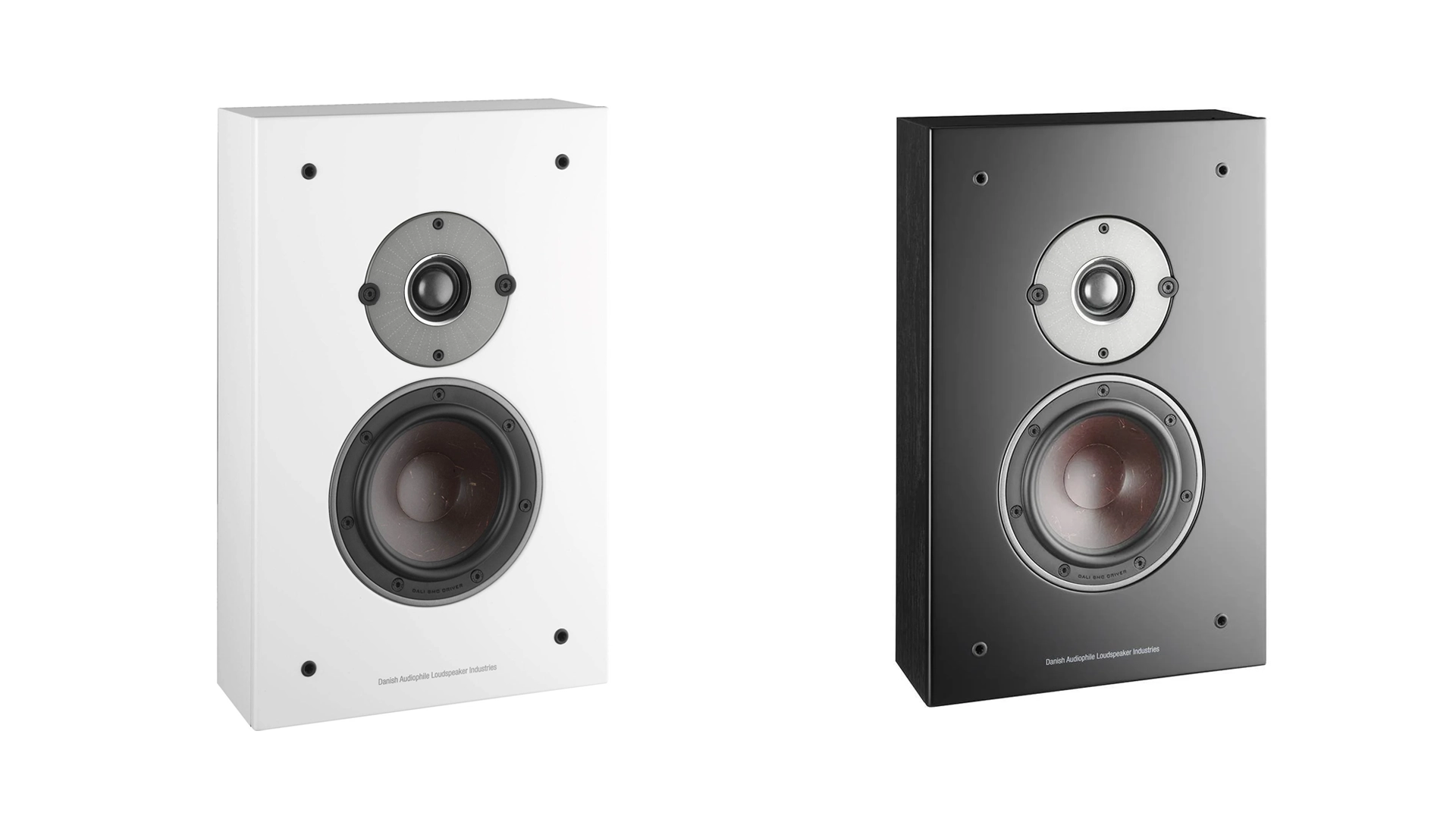
DALI — Danish Audiophile Loudspeaker Industries — was founded by Peter Lyngdorf in 1983 to build loudspeakers that reproduce music honestly across a wide listening area. The company opened its factory in Nørager in 1986, creating the vertically integrated development and production base that still shapes the brand. Several technologies make a DALI speaker easy to identify technically: low-mass wood-fibre cones, wide-dispersion driver geometry, soft-dome or hybrid dome-and-ribbon tweeter modules, and in upper ranges the company’s low-loss SMC magnetic material. These choices are intended to reduce distortion and preserve consistent tonal balance when the listener is not locked to one narrow seat. DALI applies the same principles across compact, floorstanding, on-wall, active and custom-installation models, from accessible OBERON and OPTICON families through RUBIKORE and EPICON to the KORE flagship. The breadth of the catalogue is important, but the stronger story is continuity: driver materials, magnet systems and dispersion behaviour developed for statement products are progressively adapted for speakers intended for ordinary living rooms.

Definitive Technology is the American loudspeaker brand founded in 1990 by Sandy Gross, Don Givogue and Ed Blais, initially around a tower that combined bipolar radiation with its own powered subwoofer. That pairing remains central to the company’s identity. Front- and rear-facing driver arrays create a broader, more enveloping field than a conventional forward-radiating box, while active bass sections allow deep low-frequency output from a relatively narrow cabinet and reduce the burden on an external amplifier. The current Dymension family develops this formula with bipolar towers, integrated powered woofers and optional height modules for immersive home cinema; Mythos applies Definitive’s acoustic approach in slimmer wall-friendly enclosures. Matching centres, surrounds, subwoofers and architectural speakers allow complete multichannel systems rather than isolated stereo models. Although the company has passed through several corporate owners since its 2004 acquisition, the more useful story for users is product continuity: spacious bipolar presentation, substantial built-in bass and visually restrained cabinets designed to make one system effective for both films and music.

ELAC is a German audio company founded in Kiel on 1 September 1926 by Dr Heinrich Hecht, Dr Wilhelm Rudolph and Gerhard Schmidt. Its near-century history is unusually broad: the company began in electroacoustics and sonar, became a major post-war maker of turntables and cartridges, and shifted its centre of gravity to loudspeakers in the 1980s. Modern ELAC is therefore more than the affordable speakers often associated with designer Andrew Jones. The Debut and Uni-Fi families use carefully engineered cone drivers and, in Uni-Fi, concentric midrange/tweeter geometry to bring controlled directivity and coherent imaging to accessible systems. Carina, Vela and higher ranges draw on the folded JET tweeter, while active subwoofers and electronics complete stereo and cinema installations. Turntables keep the brand’s analogue history visible rather than treating it as a retro licensing exercise. ELAC’s lasting advantage is range backed by real transducer engineering: it can translate its knowledge of motors, diaphragms, wave launch and cabinet behaviour from compact entry models to elaborate floorstanders, while the 1926 date describes the actual company lineage rather than a recently revived name.

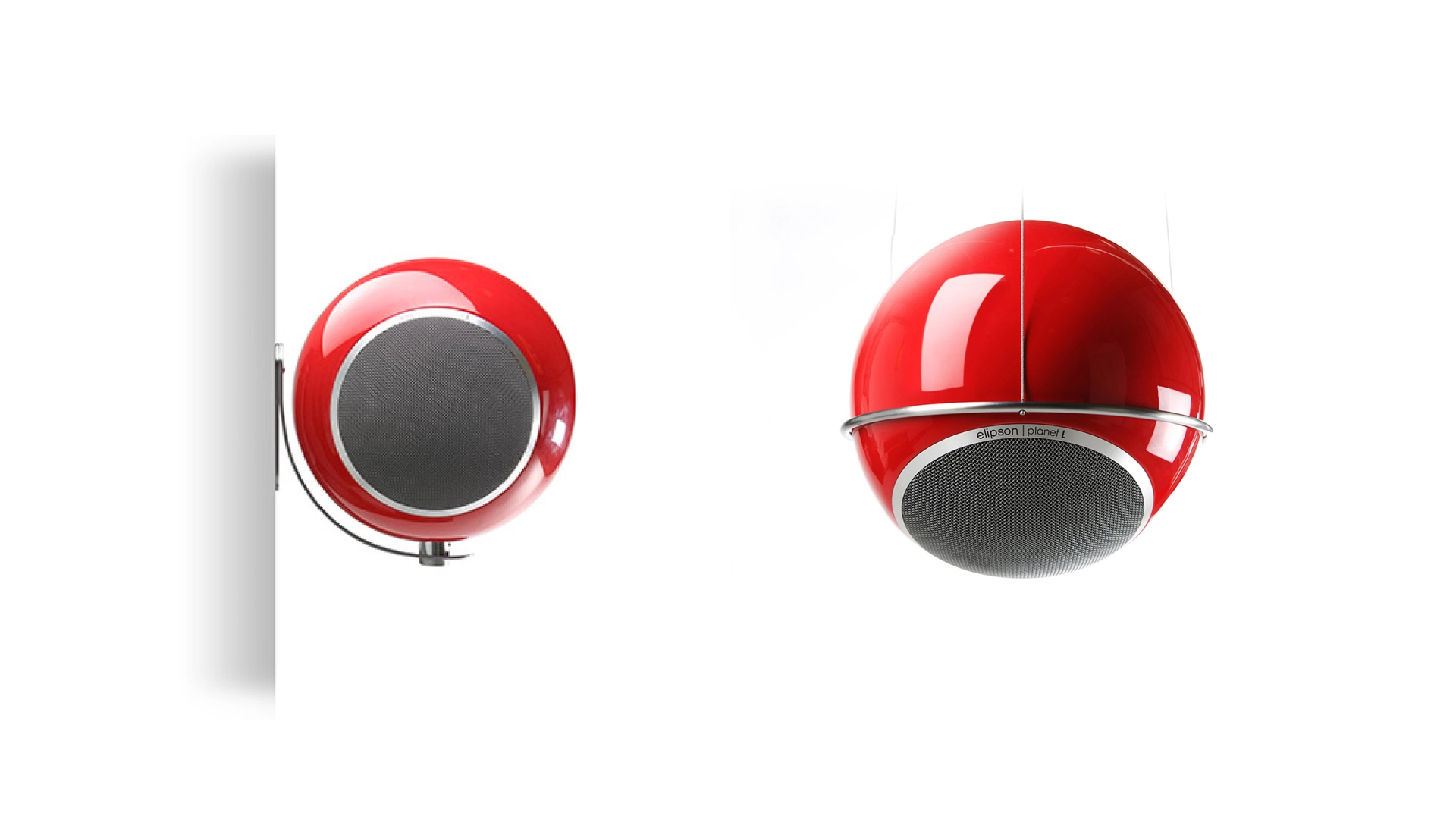
Elipson is France’s oldest surviving specialist loudspeaker name, tracing its company origin to 1938 and its distinctive acoustic identity to engineer Joseph Léon. The historical sequence deserves precision: the business began as Multimoteur, early audio research started around 1940, Léon joined in 1946 and led the company from 1948, and the Elipson name—formed from “ellipse” and the French word “son”—was adopted in 1951. Under Léon, spheres, reflectors and resonators were engineering tools for controlling diffraction, radiation and time alignment, not merely futuristic styling. The BS50 Chambord and later 402 made those experiments iconic in French broadcasting and public installations. Today the Planet series keeps the spherical enclosure visible, while Heritage models revisit large-format designs and newer Prestige, Legacy and wireless products cover conventional home systems. Elipson also offers turntables and electronics, but loudspeaker form remains its signature. Its strength is the unusually direct link between acoustic research and industrial design: shapes that are instantly recognisable because they were first chosen to solve propagation and enclosure problems.

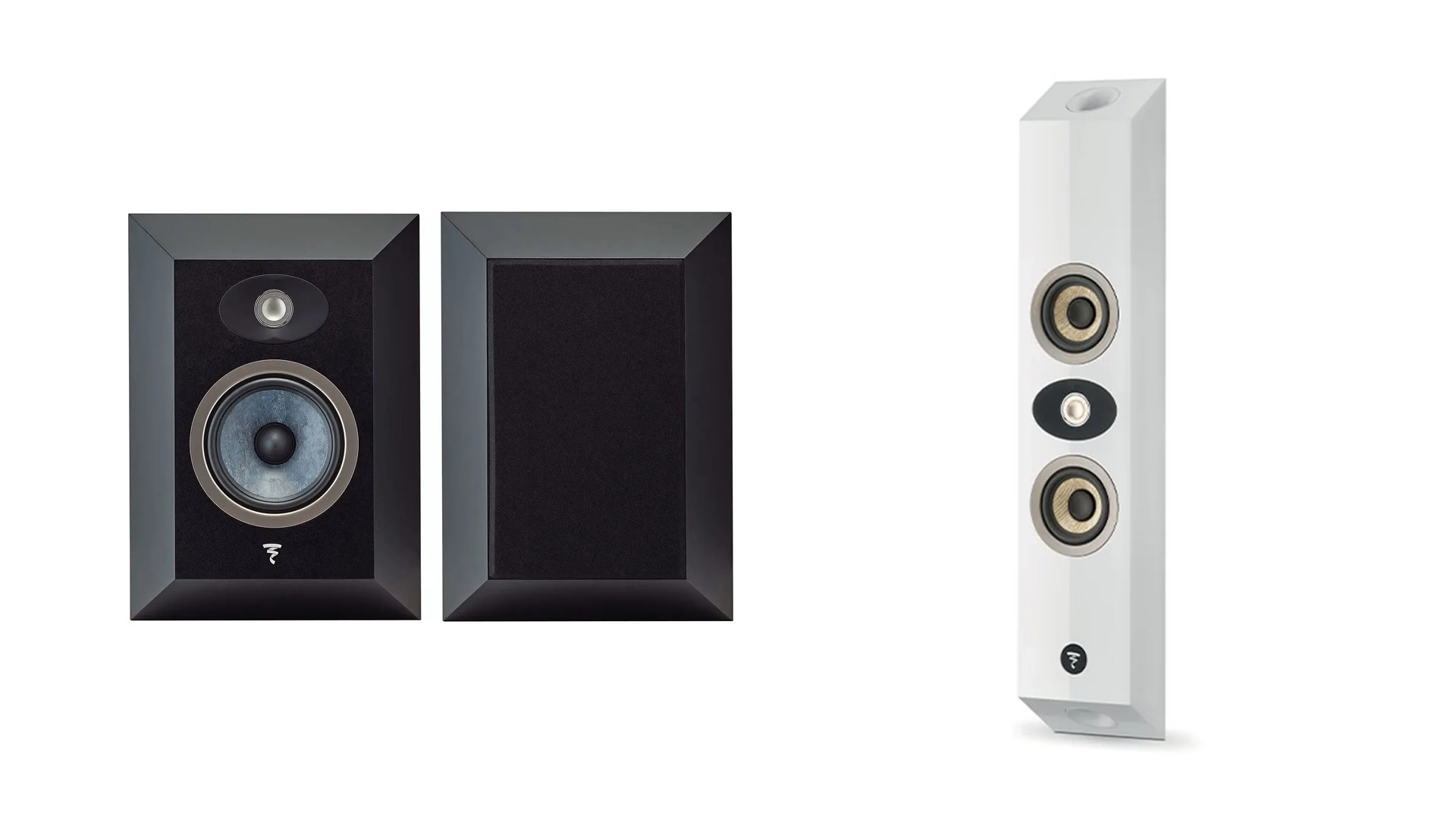
Few audio manufacturers cover as much of the reproduction chain as Focal while still developing and making key drivers in-house. Engineer Jacques Mahul founded Focal-JMlab in Saint-Étienne in 1979, initially building loudspeaker drivers and complete systems in a family precision-engineering workshop. The French company now serves home hi-fi and cinema, professional studios, car audio, headphones and custom installation. Its technical identity is visible in pure-beryllium tweeters, W-composite and K2 cones, flax-sandwich diaphragms, M-shaped profiles and Tuned Mass Damper surrounds; each technology is used where its stiffness, mass or resonance behaviour suits the product. Landmark Utopia loudspeakers established Focal’s high-end reputation, while Sopra, Kanta, Aria Evo X and Vestia broaden the home range. Bathys, Clear, Stellia and Utopia headphones bring the same driver-led philosophy closer to the listener. Cabinet making for the upper loudspeaker lines and much of the driver production remain centred in France.

Gallo Acoustics turns the loudspeaker enclosure into a sphere, reducing parallel-panel standing waves and edge diffraction while keeping the product compact enough for domestic and architectural use. American designer Anthony Gallo developed the first commercial Nucleus loudspeaker in 1994 after years of experiments with electrostatic, ribbon and piezo-film transducers. The later Micro and A’Diva models placed small dynamic drivers in rigid steel spheres, while proprietary S2 loading extended useful bass response from the limited internal volume. Strada 2 uses twin spherical bass/mid units around Gallo’s cylindrical-diaphragm CDT3 tweeter, which provides broad horizontal dispersion without a conventional voice coil. The current Scottish-based company assembles products in Lanark and supports stereo, home-cinema and custom-install systems with Micro, A’Diva, Droplet and Strada speakers plus RoomSub and ProfileSub subwoofers. Its history is American, its present operating base is British, and the spherical form follows an acoustic argument rather than styling alone.

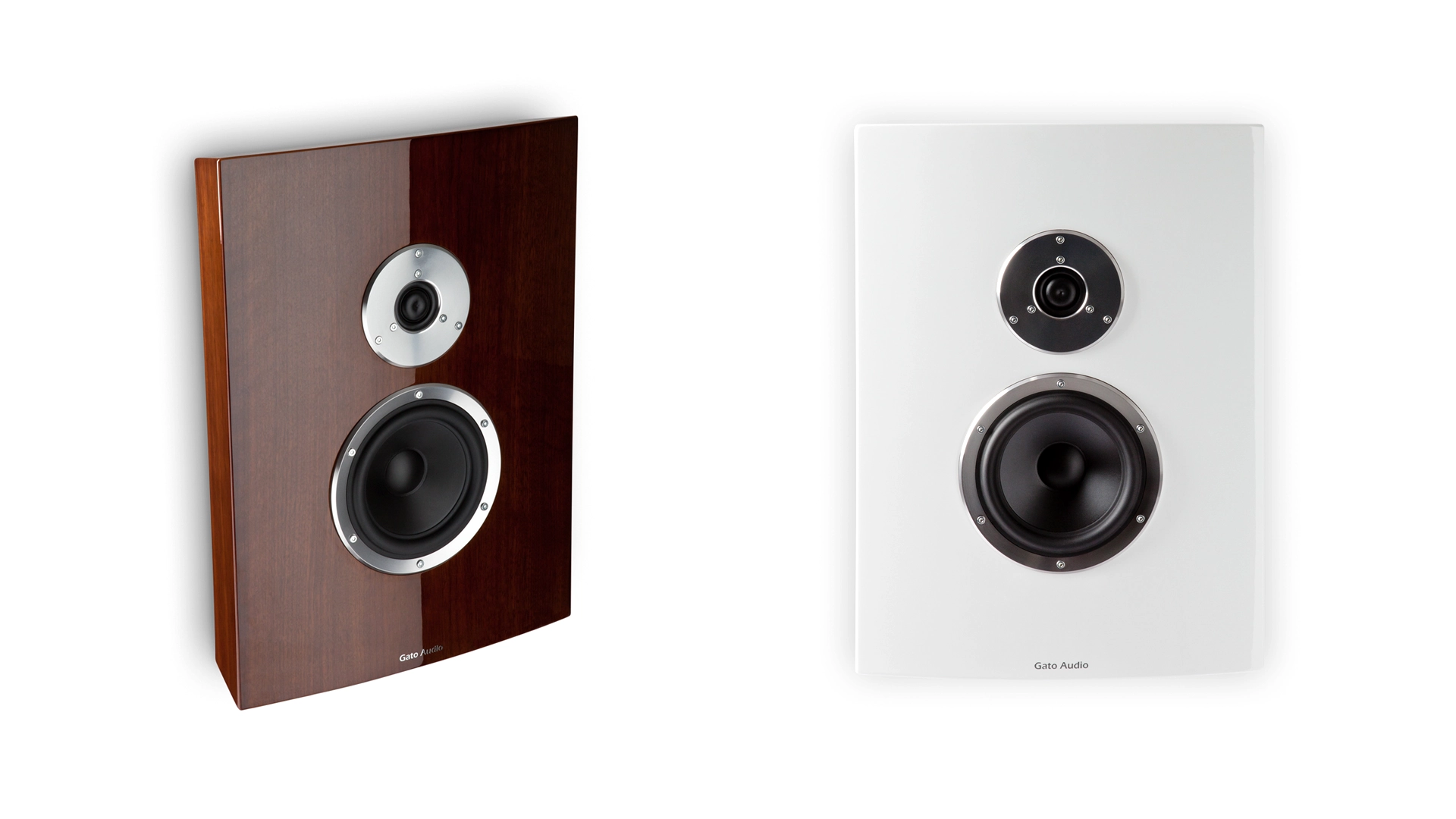
Gato Audio combines Danish industrial design with a complete hi-fi chain rather than concentrating on one component category. Kresten Dinesen, Rasmus Holm and Frederik Johansen founded the company in 2008, bringing experience from Scandinavian audio development and production. Its electronics place large displays and compact curved cabinets around several distinct platforms: TwinFET MOSFET push-pull amplification in the AMP-150, high-power Class D in the DIA integrated amplifiers and PWR-222 monoblock, plus DAC, phono and network functions in products such as SDA-1, PPA-1 and PRD-3S NPM. The replaceable NPM module adds network playback to compatible models, allowing the digital section to evolve without replacing the amplifier. Gato loudspeakers use laminated FusedMASS cabinets, Danish drivers and PurePHASE crossover design across the FM family and the newer CLC65. Products are designed and built in Denmark, and the visual restraint is supported by unusually broad engineering across sources, amplification and speakers.

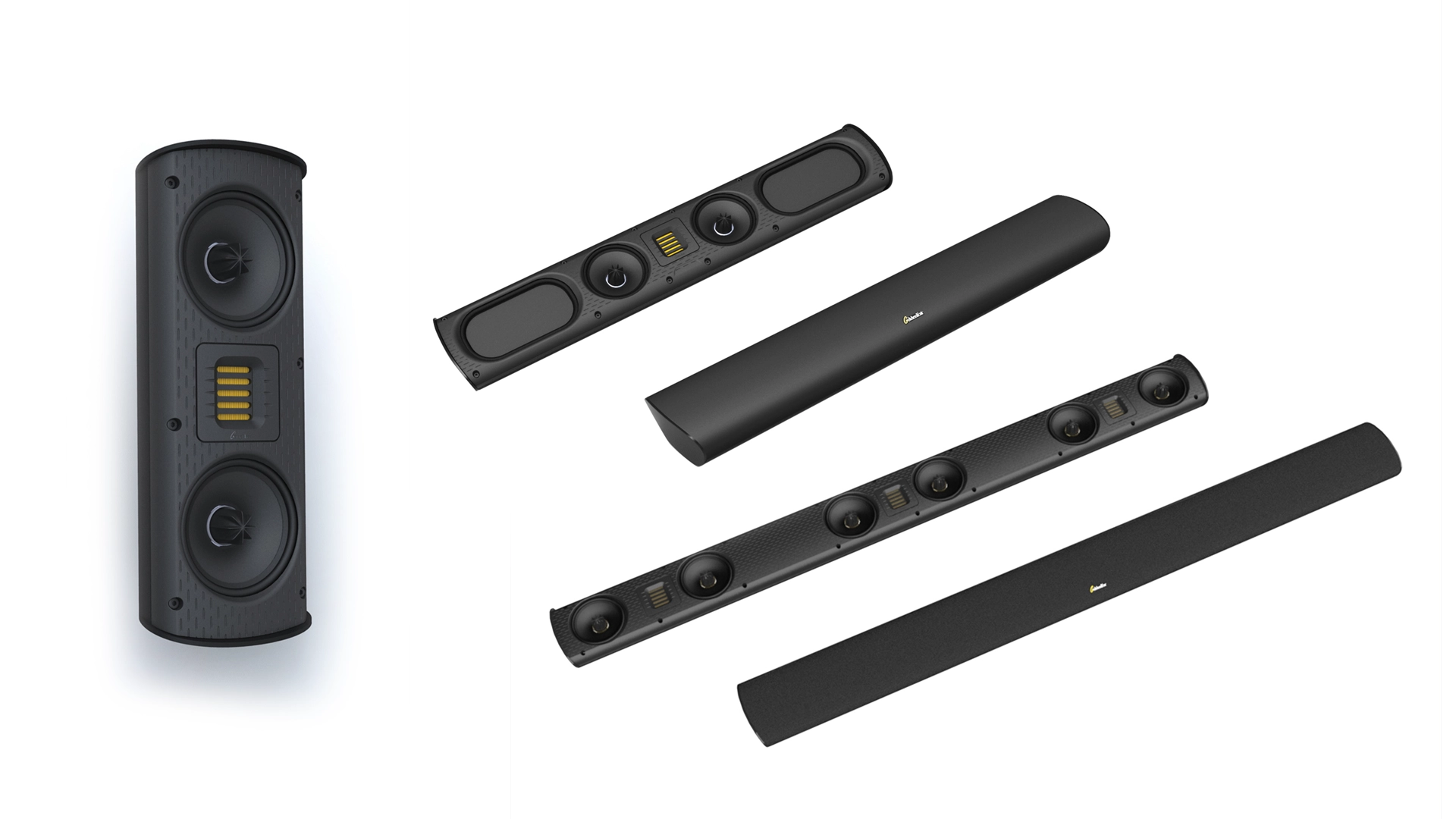
GoldenEar is an American loudspeaker brand that combines compact cabinets with unusually ambitious bass and high-frequency systems. Sandy Gross—previously a co-founder of Polk Audio and Definitive Technology—launched the company in 2010. Its signature High-Velocity Folded Ribbon tweeter moves air by squeezing it through folds in a light diaphragm, while many tower models pair passive radiators with internally powered subwoofer sections. This architecture defines the Triton and newer T-series towers, giving the main speakers control over deep bass without requiring a fully external subwoofer system. GoldenEar also makes BRX bookshelf speakers, SuperSat satellites, centre channels, architectural models and ForceField subwoofers, so the same driver ideas can be used in stereo or cinema installations. The brand’s strength lies in fitting wide bandwidth and room-friendly flexibility into relatively slim enclosures.

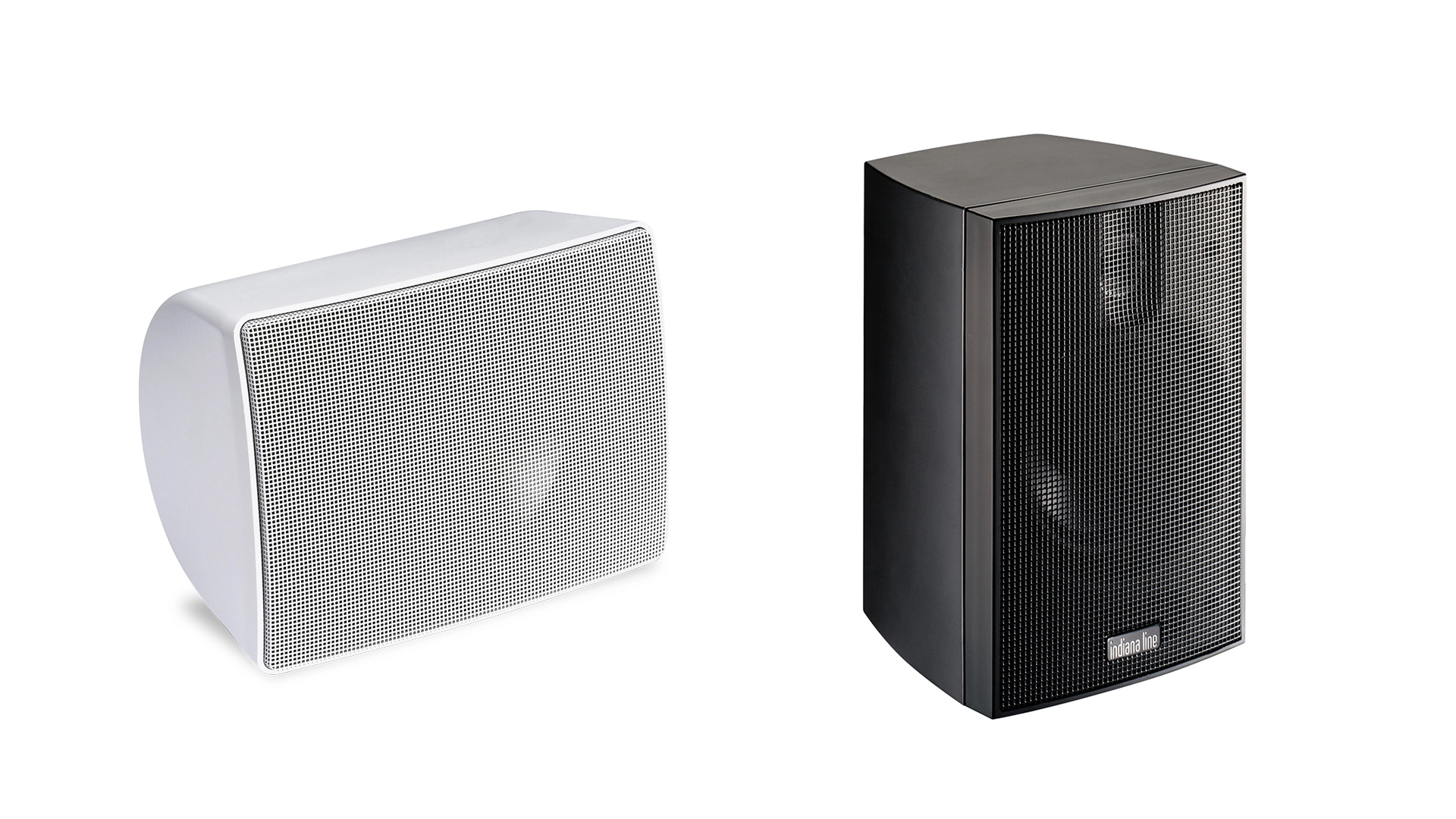
Indiana Line is an Italian loudspeaker brand founded in Turin in 1977, known for turning practical domestic speakers into carefully engineered hi-fi products. Its catalogue covers the ambitious Diva series, the widely accessible Tesi and Nota families, DJ models, Basso subwoofers and architectural speakers for custom installation. The engineering changes with price rather than relying on one repeated recipe: Curv polypropylene appears in selected mid-woofers, mica-reinforced cones are used where greater stiffness is needed, and soft-dome tweeters are loaded and damped to integrate smoothly with the midrange. Cabinets use substantial internal bracing and acoustic damping, while crossover slopes are chosen for predictable behaviour with ordinary 4–8-ohm amplifiers. Indiana Line’s long history includes its development under Coral Electronic and a later transition from Italian to Polish ownership, but the design identity remains rooted in compact European speakers that offer sensible size, finish and system compatibility rather than exotic scale.

James Loudspeaker designs high-performance speakers for rooms in which conventional boxes are visually or physically unacceptable. Founded in California in 1999 and now part of Sonance, the company specialises in architectural, custom and outdoor systems built around rigid aluminium enclosures, purpose-designed drivers and unusually flexible fabrication. Its Small Aperture models place the visible opening at lighting-fixture scale while locating the enclosure behind the wall or ceiling. PowerPipe subwoofers move low-frequency output through a remote port when the cabinet must be hidden, and the high-output Mavericks range addresses dedicated cinemas. James also makes on-wall, in-wall, landscape, marine and soundbar solutions, including custom widths, colours and finishes for a particular screen or interior. Technologies such as quad-tweeter arrays and the EMB low-frequency platform serve installation problems rather than acting as generic badges. The brand’s strongest advantage is therefore not one signature speaker: it is the ability to engineer an acoustically serious system around architectural constraints, then manufacture the enclosure and finish to suit the project.
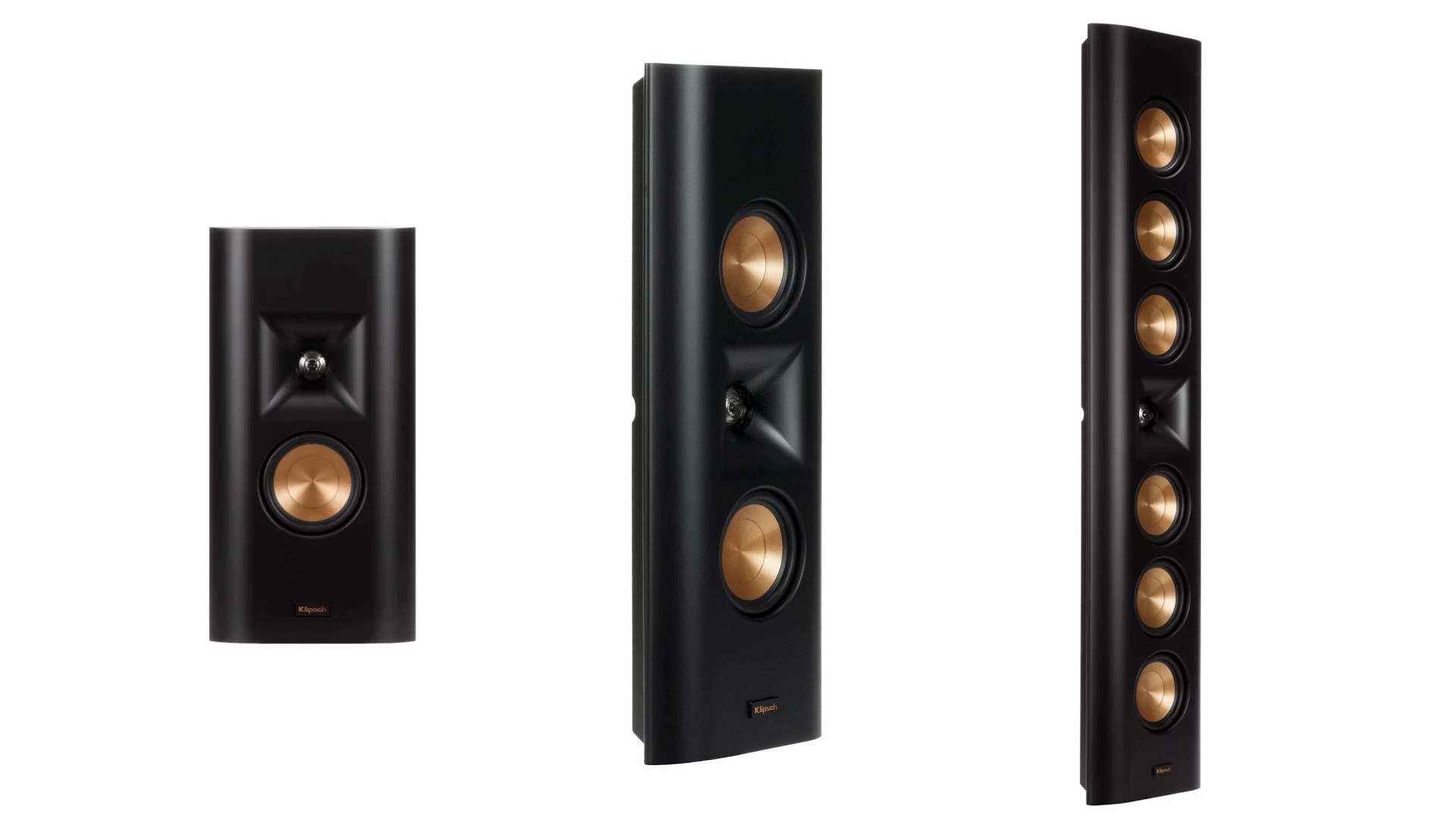
Klipsch is an American loudspeaker company founded by engineer Paul W. Klipsch in Hope, Arkansas, in 1946. His central solution was horn loading: coupling a driver to a shaped acoustic horn raises efficiency and controls dispersion, allowing high output and wide dynamics from comparatively little amplifier power. The corner-loaded Klipschorn put that idea into a domestic loudspeaker and remains in production, joined in the Heritage range by La Scala, Cornwall, Heresy and Forte. Modern Reference Premiere models use Tractrix-based horns in more conventional towers, monitors and centre channels, while the company also makes subwoofers, soundbars, architectural speakers and powered stereo systems. The designs vary widely, but high sensitivity and controlled directivity remain the recognisable technical thread. Klipsch now operates within Premium Audio Company, owned by Gentex, yet Heritage models are still assembled in Hope. Few audio brands can point to both an original flagship still being made and a current mass-market range built around the same underlying acoustic principle.

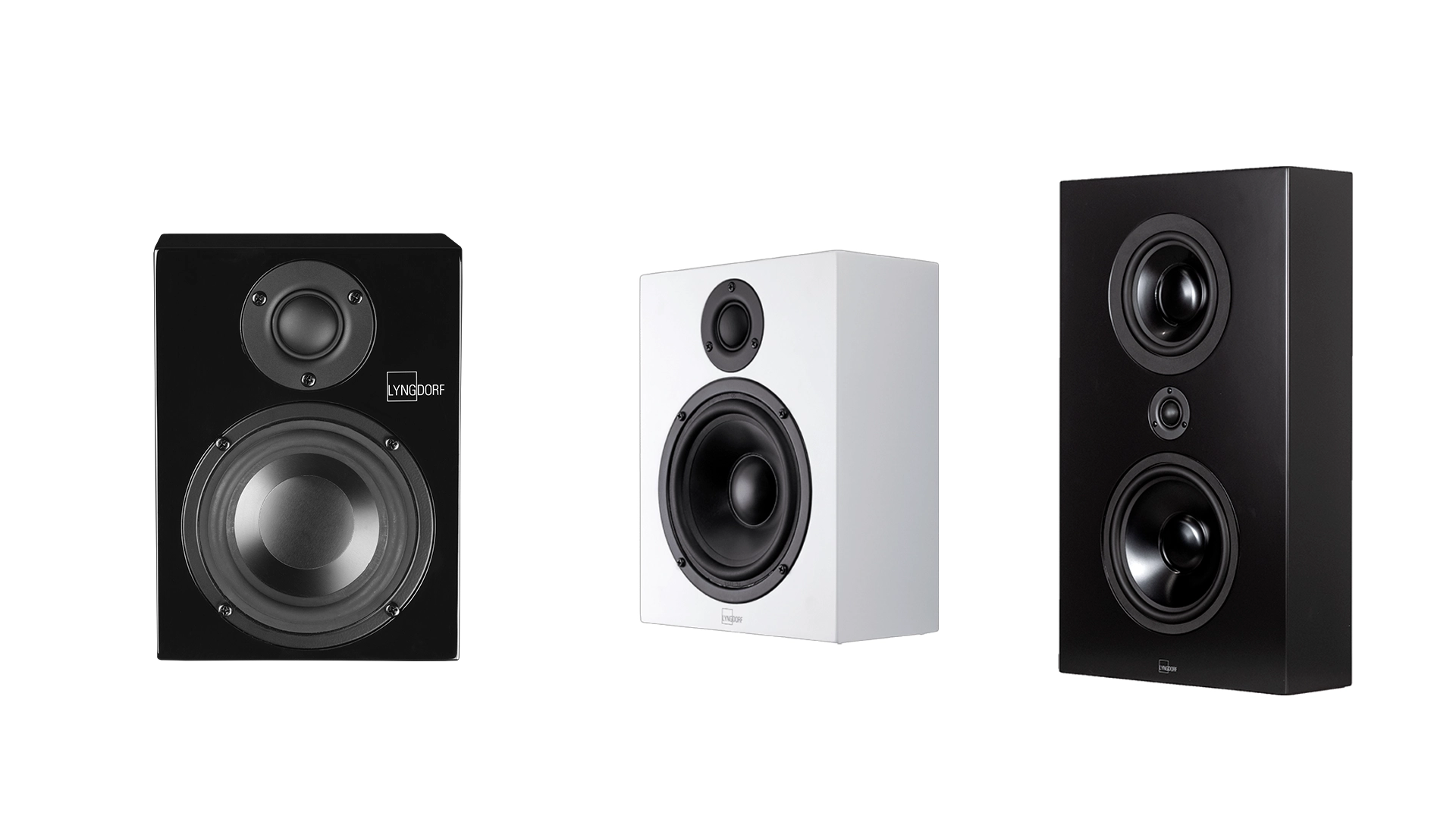
Lyngdorf Audio is a Danish manufacturer built around digital signal processing, system integration and the acoustic behaviour of real rooms. Peter Lyngdorf founded the brand in 2005 after decades of work in loudspeakers, digital amplification and speaker calibration. Its signature RoomPerfect system, developed by Jan Abildgaard Pedersen and a Danish engineering team, measures both a principal listening position and multiple locations around the room. It then reduces room-induced errors while retaining the loudspeaker’s intended tonal character, offering Focus and Global listening modes rather than imposing a generic target curve. The TDAI integrated amplifiers keep sources in the digital domain through volume control and switching, converting close to the output stage; they combine streaming, optional HDMI and analogue modules, bass management and RoomPerfect in a single chassis. MP-series processors extend the same approach to immersive home cinema, while SDA/MXA power amplifiers, compact loudspeakers and boundary woofers allow complete systems to be designed around it. Lyngdorf’s real strength is not room correction as an isolated feature. Amplification, crossover functions, speaker placement and calibration are engineered together so a sophisticated installation can remain comparatively simple to operate.
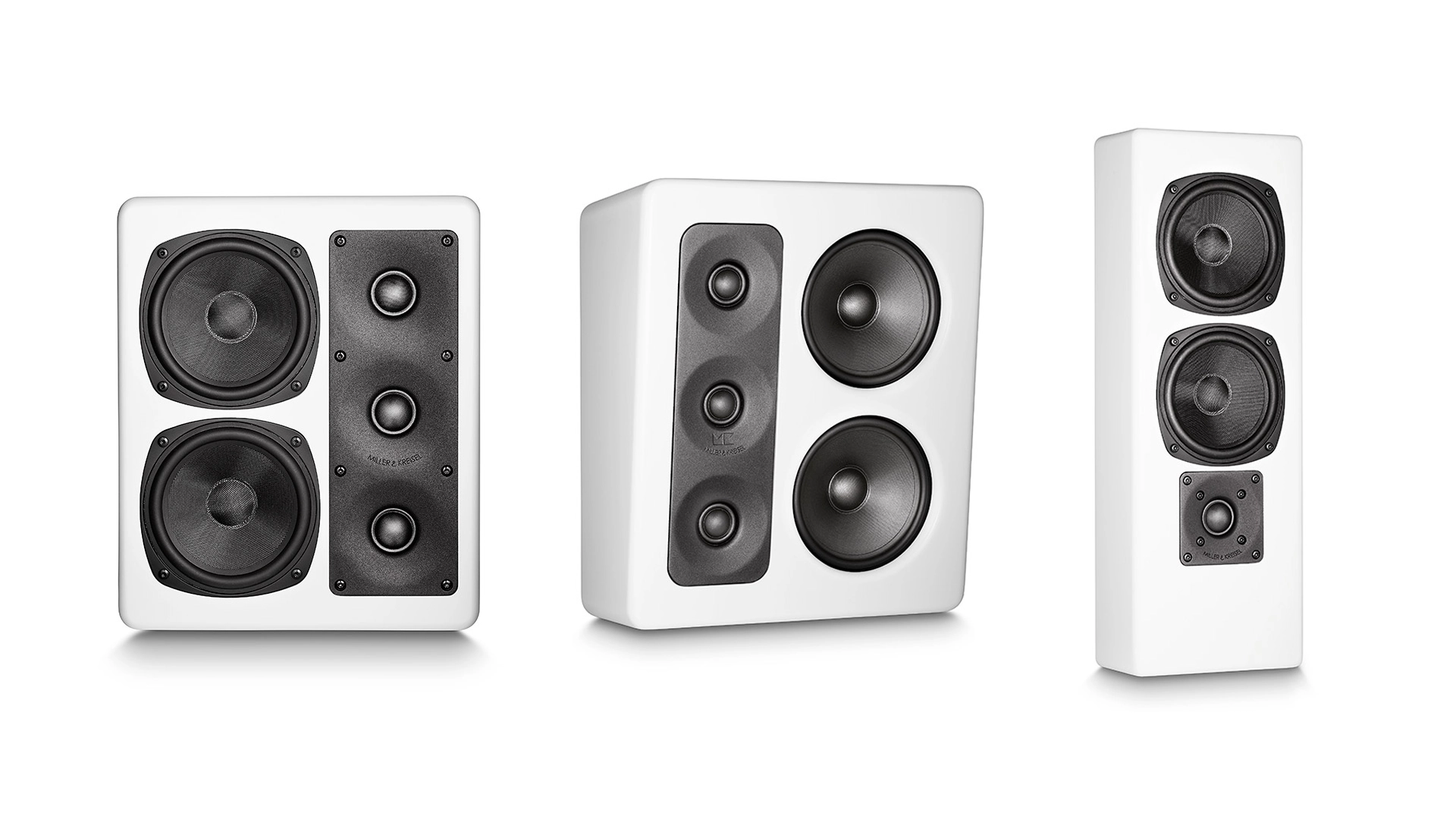
M&K Sound—originally Miller & Kreisel—is a studio-monitor and home-cinema loudspeaker brand with American roots and a present-day base in Denmark. Jonas Miller and Ken Kreisel began the company in Beverly Hills in 1973 after Walter Becker of Steely Dan requested a reference bass system for work on Pretzel Logic. The resulting balanced dual-driver subwoofer made low-frequency reproduction a separate engineering task, and M&K subsequently helped establish the compact satellite-plus-subwoofer format. Its monitors became fixtures in music, film mixing and post-production, creating a direct connection between the rooms where soundtracks are made and the systems used to reproduce them at home. The S150 remains the reference point for the brand’s controlled directivity and high output, while S300, 950 and 750 series address different room sizes. X+ subwoofers use opposed or push-pull driver arrangements to reduce cabinet reaction and distortion, and dedicated surrounds support multichannel installations. Numerous models carry THX certifications, including demanding Dominus applications, but certification is a consequence of measurable output and consistency rather than the whole identity. M&K’s lasting speciality is system scale: compact, closely matched speakers hand the deepest bass to purpose-designed subwoofers, allowing predictable results from stereo through immersive cinema.

HFS Ad Rotator · default · slot 1
HFS Ad Rotator · default · slot 2
Add a missing AV-brand or update an existing one

Add a missing AV-brand or update an existing one

Any user can submit a Quick Submission Form to suggest a new AV-brand or suggest update details for an existing one. Brand owners or official representatives of brand can fill a Official Brand Submission Form to provide complete company information, ensuring maximum accuracy and visibility in our portal. All submissions are moderated before publication. 

For suggesting new AV-brands or suggesting updating existing one by users.

Complete official form for brand owners and representatives to provide complete company details to add a new one or update an existing one

Brand Categories:
  • SPEAKERS
    • Bookshelf Speakers — Compact loudspeakers designed for placement on a shelf or dedicated stands.
    • Floorstanding Speakers — Large, full-range loudspeakers that stand directly on the floor, designed for powerful and expansive sound.
    • In-wall Custom Install Speakers — Speakers designed to be installed flush into walls or ceilings for a discreet, "zero-footprint" audio solution.
    • On-Wall Speakers — Slim, low-profile speakers designed to be mounted directly on a wall, often to complement a flat-panel TV.
    • Studio Monitors — Speakers designed for professional audio production, offering a flat, accurate, and uncolored sound reproduction.
    • Planar Ribbon Electrostatic Speakers — Speakers using large, thin diaphragms (panels) instead of cones, prized for their transparent and detailed sound.
    • Horn Speakers — Highly efficient speakers that use a flared horn to amplify a driver, known for their dynamic, "live" sound.
    • Active Powered Speakers — Loudspeakers with built-in amplifiers, creating a simple all-in-one audio solution.
    • Wireless Portable Speakers — Compact, battery-powered speakers with Bluetooth for on-the-go music.
    • Outdoor Speakers — Durable, weather-resistant speakers engineered to provide high-quality audio in open-air spaces like patios and gardens.
    • Marine Extreme Speakers — Rugged, waterproof, and corrosion-resistant speakers built to withstand harsh marine environments on boats and yachts.
    • Commercial Speakers — Durable loudspeaker systems designed for background music and public address in business environments.
    • Invisible Speakers — Architectural speakers installed in a wall and plastered over, making them completely invisible.
    • Subwoofers Bass Speakers — Specialized speakers dedicated to reproducing only the lowest bass frequencies for impact and depth for all purposes
  • AMPLIFIERS
    • Integrated Amplifiers — An all-in-one component combining a preamplifier and a power amplifier in a single chassis.
    • PreAmplifiers — The control hub of a separates audio system, used for source selection and volume control.
    • Power Amplifiers — A component with the sole job of taking a line-level signal and amplifying it to drive loudspeakers.
    • Phono Preamps Phono Stages — A device that amplifies the weak signal from a turntable's cartridge and applies necessary RIAA equalization.
    • Tube Amplifiers — Amplifiers that use vacuum tubes (valves) instead of transistors, prized for their warm and rich sound character.
    • Multi-Zone Multi-Room Amplifiers — Amplifiers that power speakers in multiple different rooms or "zones" from a single, centralized unit.
    • Network Amplifiers — An integrated amplifier with built-in networking and streaming capabilities, creating a modern "just add speakers" system.
    • Desktop Headphone Amplifiers — Mains-powered amplifiers designed to drive high-quality headphones in a desktop or home audio system.
    • Portable Headphone Amplifiers Players — Compact, battery-powered devices (DAPs or amps) for delivering high-quality sound on the move.
  • DAC STREAMERS
    • DAC Desktop — Digital-to-Analog Converters designed to improve sound quality from a computer or other home digital source.
    • DAC Portable — Compact, battery-powered Digital-to-Analog Converters for improving audio from smartphones and laptops.
    • Music Streamers — Devices that connect to the internet to access and play music from online services like Tidal and Spotify.
    • Network Players — Source components focused on high-fidelity playback of digital audio files from a local network (NAS drive).
    • Music Servers HDD Storages — Dedicated devices for storing, managing, and playing a local digital music library with high fidelity.
    • CD Transport Media Players — High-precision disc players that read physical media (CDs, SACDs) and output a pure digital signal to an external DAC.
    • Compact All-in-One Systems — Self-contained audio systems that combine source, amplification, and often speakers into a single, compact unit.
    • Streaming Amplifier — An integrated amplifier with built-in streaming capabilities.
  • TURNTABLES VINYL
    • Turntables — Electromechanical devices that play vinyl records by rotating them at a stable speed.
    • Tonearms — The precision arm on a turntable that holds the cartridge, allowing the stylus to track the record groove.
    • Cartridges — The transducer on a turntable's tonearm that holds the stylus and converts groove vibrations into an electrical signal.
    • Vinyl Cleaning Machine — Specialized machines that use fluid and vacuum/ultrasonic action to deep-clean vinyl records.
    • Vinyl Accessories — Essential tools for setup and maintenance, like clamps, brushes, and alignment protractors.
  • HEADPHONES
    • In-Ear Earbuds — Ultra-portable listening devices, including True Wireless (TWS) models, designed for convenience and daily use.
    • In-Ear Monitors IEM — High-performance in-ear headphones that seal in the ear canal for superior sound isolation and detail.
    • On-Ear Headphones — Headphones with cushions that rest directly on the ears, offering a balance of portability and sound quality.
    • Over-Ear Headphones — Full-sized headphones with large earcups that completely encircle the ears for maximum comfort and immersion.
    • Wireless Headphones — Headphones that connect to source devices via Bluetooth, often featuring Active Noise Cancellation (ANC).
    • Planar Magnetic Ribbon Headphones — High-end headphones using a thin, flat diaphragm driven by magnets, known for their detailed and low-distortion sound.
    • Electrostatic Headphones — High-end headphones using a massless diaphragm in an electrostatic field, requiring a special energizer/amplifier.
  • HOME THEATER
    • AV Receivers Media Players — Central components of a home cinema, combining audio/video processing, amplification, and playback.
    • Home Theater Speakers — Matched sets of speakers (front, center, surround) designed to create an immersive cinematic soundfield.
    • Soundbars — A simple, all-in-one speaker bar that provides a significant audio upgrade over a television's built-in speakers.
    • Subwoofers — Specialized speakers dedicated to reproducing only the lowest bass frequencies for impact and depth for home theaters
    • Processors Amplifiers — High-end home cinema "separates" consisting of a surround sound processor and a multi-channel power amplifier.
    • Screens — High-quality projection surfaces designed to provide an optimal image for a home cinema projector.
    • Projectors — Video projectors optimized for home cinema use, focusing on color accuracy, contrast, and black levels.
  • CABLES ACCESSORIES
    • Speaker Cables — Cables that carry the amplified, high-level signal from an amplifier to passive loudspeakers.
    • Analog Cables — Cables (RCA, XLR) used to transmit analog audio signals between components like DACs and amplifiers.
    • Digital Cables — Cables (Coaxial, Optical, USB) that transmit digital audio data between components.
    • Phono Cables — Specially shielded cables designed to carry the delicate, low-level signal from a turntable to a phono preamp.
    • Headphone Cables — Aftermarket and replacement cables used to upgrade or customize high-quality headphones.
    • Connectors Terminals — The fundamental hardware (plugs, jacks, spades, etc.) used to terminate cables and connect equipment.
    • Power Cables — High-performance AC cords designed to deliver clean, noise-free power to audio components.
    • Power Supplies Conditioners — Devices that filter, stabilize, and protect the AC power supplied to an audio system for improved performance.
  • FURNITURE
    • Speaker Stands Mounts — Stands and mounts used to position speakers at the correct height and angle for optimal sound.
    • Furniture Racks — Purpose-built furniture designed to house audio/video components with a focus on stability, ventilation, and vibration control.
    • Isolation Footers Spikes Shelves — Specialized accessories (spikes, footers, platforms) designed to manage vibrations and isolate components.
    • Soundproof Solutions — Products designed to control room acoustics, including treatment (panels, diffusers) and sound-blocking materials.
  • PROFESSIONAL
    • Concert Speakers — Large-scale PA systems, including line arrays and stage monitors, for live music and public events.
    • Cinema Speakers — Specialized, high-output loudspeaker systems certified for use in large commercial movie theaters.
    • Concert Electronics — Robust electronics including mixing consoles, processors, and amplifiers for live sound reinforcement.
    • Cinema Electronics — Professional, DCI-compliant processors and amplifiers for use in commercial movie theaters.
    • Cinema Screens — Large-format, often acoustically transparent, projection screens built to professional cinema standards.
    • Cinema Projectors — Ultra-high-brightness, DCI-compliant projectors designed for continuous use in commercial movie theaters.
    • Professional Cables Accessories — Rugged, reliable cables and hardware (e.g., snake cables, Speakon connectors) for touring and professional installation.
  • DIY Components
    • Speaker drivers Tweeters — The individual transducers (woofers, mid-range, tweeters) that are the fundamental building blocks of a loudspeaker.
    • Coaxial Speaker Drivers — Speaker drivers where the tweeter is mounted in the center of the woofer, creating a single point source for sound.
    • DIY Speaker Kits — Complete packages including drivers, crossovers, and plans for enthusiasts to build their own loudspeakers.
    • Electron Vacuum Tubes — Glass valves used in tube amplifiers that provide amplification and can be replaced to tune the sound.
    • Electronic Components — Discrete parts (capacitors, resistors, transistors) used by manufacturers and DIYers to build audio circuits.
  • OTHERS
    • Line Stage — A type of preamplifier that exclusively handles line-level sources, without a built-in phono stage.
    • Time Alignment Device — A signal processor that corrects timing delays between drivers or speakers for improved sound coherence.
    • Smart Portable Speakers — Wireless portable speakers with integrated voice assistants (e.g., Alexa, Google Assistant) and smart home functionality.
    • DJ Turntables — Durable, high-torque direct-drive turntables with pitch control, built for performance and DJing applications.
    • Motor Drives — External motor units and power supplies for turntables, providing improved rotational stability and isolation.
    • Crossovers — Electronic circuits that split an audio signal into different frequency bands to route to the correct speaker driver.
    • Car Audio — Audio equipment, including speakers, amplifiers, and source units, specifically designed for use in vehicles.

Brand Categories:
  • Active Powered Speakers — Loudspeakers with built-in amplifiers, creating a simple all-in-one audio solution.
  • Analog Cables — Cables (RCA, XLR) used to transmit analog audio signals between components like DACs and amplifiers.
  • AV Receivers Media Players — Central components of a home cinema, combining audio/video processing, amplification, and playback.
  • Bookshelf Speakers — Compact loudspeakers designed for placement on a shelf or dedicated stands.
  • Car Audio — Audio equipment, including speakers, amplifiers, and source units, specifically designed for use in vehicles.
  • Cartridges — The transducer on a turntable's tonearm that holds the stylus and converts groove vibrations into an electrical signal.
  • CD Transport Media Players — High-precision disc players that read physical media (CDs, SACDs) and output a pure digital signal to an external DAC.
  • Cinema Electronics — Professional, DCI-compliant processors and amplifiers for use in commercial movie theaters.
  • Cinema Projectors — Ultra-high-brightness, DCI-compliant projectors designed for continuous use in commercial movie theaters.
  • Cinema Screens — Large-format, often acoustically transparent, projection screens built to professional cinema standards.
  • Cinema Speakers — Specialized, high-output loudspeaker systems certified for use in large commercial movie theaters.
  • Coaxial Speaker Drivers — Speaker drivers where the tweeter is mounted in the center of the woofer, creating a single point source for sound.
  • Commercial Speakers — Durable loudspeaker systems designed for background music and public address in business environments.
  • Compact All-in-One Systems — Self-contained audio systems that combine source, amplification, and often speakers into a single, compact unit.
  • Concert Electronics — Robust electronics including mixing consoles, processors, and amplifiers for live sound reinforcement.
  • Concert Speakers — Large-scale PA systems, including line arrays and stage monitors, for live music and public events.
  • Connectors Terminals — The fundamental hardware (plugs, jacks, spades, etc.) used to terminate cables and connect equipment.
  • Crossovers — Electronic circuits that split an audio signal into different frequency bands to route to the correct speaker driver.
  • DAC Desktop — Digital-to-Analog Converters designed to improve sound quality from a computer or other home digital source.
  • DAC Portable — Compact, battery-powered Digital-to-Analog Converters for improving audio from smartphones and laptops.
  • Desktop Headphone Amplifiers — Mains-powered amplifiers designed to drive high-quality headphones in a desktop or home audio system.
  • Digital Cables — Cables (Coaxial, Optical, USB) that transmit digital audio data between components.
  • DIY Speaker Kits — Complete packages including drivers, crossovers, and plans for enthusiasts to build their own loudspeakers.
  • DJ Turntables — Durable, high-torque direct-drive turntables with pitch control, built for performance and DJing applications.
  • Electron Vacuum Tubes — Glass valves used in tube amplifiers that provide amplification and can be replaced to tune the sound.
  • Electronic Components — Discrete parts (capacitors, resistors, transistors) used by manufacturers and DIYers to build audio circuits.
  • Electrostatic Headphones — High-end headphones using a massless diaphragm in an electrostatic field, requiring a special energizer/amplifier.
  • Floorstanding Speakers — Large, full-range loudspeakers that stand directly on the floor, designed for powerful and expansive sound.
  • Furniture Racks — Purpose-built furniture designed to house audio/video components with a focus on stability, ventilation, and vibration control.
  • Headphone Cables — Aftermarket and replacement cables used to upgrade or customize high-quality headphones.
  • Home Theater Speakers — Matched sets of speakers (front, center, surround) designed to create an immersive cinematic soundfield.
  • Horn Speakers — Highly efficient speakers that use a flared horn to amplify a driver, known for their dynamic, "live" sound.
  • In-Ear Earbuds — Ultra-portable listening devices, including True Wireless (TWS) models, designed for convenience and daily use.
  • In-Ear Monitors IEM — High-performance in-ear headphones that seal in the ear canal for superior sound isolation and detail.
  • In-wall Custom Install Speakers — Speakers designed to be installed flush into walls or ceilings for a discreet, "zero-footprint" audio solution.
  • Integrated Amplifiers — An all-in-one component combining a preamplifier and a power amplifier in a single chassis.
  • Invisible Speakers — Architectural speakers installed in a wall and plastered over, making them completely invisible.
  • Isolation Footers Spikes Shelves — Specialized accessories (spikes, footers, platforms) designed to manage vibrations and isolate components.
  • Line Stage — A type of preamplifier that exclusively handles line-level sources, without a built-in phono stage.
  • Marine Extreme Speakers — Rugged, waterproof, and corrosion-resistant speakers built to withstand harsh marine environments on boats and yachts.
  • Motor Drives — External motor units and power supplies for turntables, providing improved rotational stability and isolation.
  • Multi-Zone Multi-Room Amplifiers — Amplifiers that power speakers in multiple different rooms or "zones" from a single, centralized unit.
  • Music Servers HDD Storages — Dedicated devices for storing, managing, and playing a local digital music library with high fidelity.
  • Music Streamers — Devices that connect to the internet to access and play music from online services like Tidal and Spotify.
  • Network Amplifiers — An integrated amplifier with built-in networking and streaming capabilities, creating a modern "just add speakers" system.
  • Network Players — Source components focused on high-fidelity playback of digital audio files from a local network (NAS drive).
  • On-Ear Headphones — Headphones with cushions that rest directly on the ears, offering a balance of portability and sound quality.
  • On-Wall Speakers — Slim, low-profile speakers designed to be mounted directly on a wall, often to complement a flat-panel TV.
  • Outdoor Speakers — Durable, weather-resistant speakers engineered to provide high-quality audio in open-air spaces like patios and gardens.
  • Over-Ear Headphones — Full-sized headphones with large earcups that completely encircle the ears for maximum comfort and immersion.
  • Phono Cables — Specially shielded cables designed to carry the delicate, low-level signal from a turntable to a phono preamp.
  • Phono Preamps Phono Stages — A device that amplifies the weak signal from a turntable's cartridge and applies necessary RIAA equalization.
  • Planar Magnetic Ribbon Headphones — High-end headphones using a thin, flat diaphragm driven by magnets, known for their detailed and low-distortion sound.
  • Planar Ribbon Electrostatic Speakers — Speakers using large, thin diaphragms (panels) instead of cones, prized for their transparent and detailed sound.
  • Portable Headphone Amplifiers Players — Compact, battery-powered devices (DAPs or amps) for delivering high-quality sound on the move.
  • Power Amplifiers — A component with the sole job of taking a line-level signal and amplifying it to drive loudspeakers.
  • Power Cables — High-performance AC cords designed to deliver clean, noise-free power to audio components.
  • Power Supplies Conditioners — Devices that filter, stabilize, and protect the AC power supplied to an audio system for improved performance.
  • PreAmplifiers — The control hub of a separates audio system, used for source selection and volume control.
  • Processors Amplifiers — High-end home cinema "separates" consisting of a surround sound processor and a multi-channel power amplifier.
  • Professional Cables Accessories — Rugged, reliable cables and hardware (e.g., snake cables, Speakon connectors) for touring and professional installation.
  • Projectors — Video projectors optimized for home cinema use, focusing on color accuracy, contrast, and black levels.
  • Screens — High-quality projection surfaces designed to provide an optimal image for a home cinema projector.
  • Smart Portable Speakers — Wireless portable speakers with integrated voice assistants (e.g., Alexa, Google Assistant) and smart home functionality.
  • Soundbars — A simple, all-in-one speaker bar that provides a significant audio upgrade over a television's built-in speakers.
  • Soundproof Solutions — Products designed to control room acoustics, including treatment (panels, diffusers) and sound-blocking materials.
  • Speaker Cables — Cables that carry the amplified, high-level signal from an amplifier to passive loudspeakers.
  • Speaker drivers Tweeters — The individual transducers (woofers, mid-range, tweeters) that are the fundamental building blocks of a loudspeaker.
  • Speaker Stands Mounts — Stands and mounts used to position speakers at the correct height and angle for optimal sound.
  • Streaming Amplifier — An integrated amplifier with built-in streaming capabilities.
  • Studio Monitors — Speakers designed for professional audio production, offering a flat, accurate, and uncolored sound reproduction.
  • Subwoofers — Specialized speakers dedicated to reproducing only the lowest bass frequencies for impact and depth for home theaters
  • Subwoofers Bass Speakers — Specialized speakers dedicated to reproducing only the lowest bass frequencies for impact and depth for all purposes
  • Time Alignment Device — A signal processor that corrects timing delays between drivers or speakers for improved sound coherence.
  • Tonearms — The precision arm on a turntable that holds the cartridge, allowing the stylus to track the record groove.
  • Tube Amplifiers — Amplifiers that use vacuum tubes (valves) instead of transistors, prized for their warm and rich sound character.
  • Turntables — Electromechanical devices that play vinyl records by rotating them at a stable speed.
  • Vinyl Accessories — Essential tools for setup and maintenance, like clamps, brushes, and alignment protractors.
  • Vinyl Cleaning Machine — Specialized machines that use fluid and vacuum/ultrasonic action to deep-clean vinyl records.
  • Wireless Headphones — Headphones that connect to source devices via Bluetooth, often featuring Active Noise Cancellation (ANC).
  • Wireless Portable Speakers — Compact, battery-powered speakers with Bluetooth for on-the-go music.

Sales Channels:
  • Dealer & Distributor Network — The traditional sales model where products are sold through a network of authorized, independent retail stores and custom installers. This is the primary channel for most specialized Hi-Fi brands.
  • Direct-to-Consumer (DTC) — The brand sells its products directly to end-users through its own official website, bypassing traditional retail channels. A rapidly growing model in the industry.
  • Custom Installation (CI) Channel — Products are sold primarily through professional firms that design and install integrated smart home and audio-visual systems. This channel is crucial for architectural and high-end integrated solutions.
  • Mass Market Retail — Products are available in large, non-specialized consumer electronics chain stores. This typically applies to more mainstream product lines from larger brands.
  • Brand-Owned Stores / Showrooms — The brand operates its own physical, flagship retail stores or dedicated showrooms to offer a direct and immersive brand experience. This is the least common model, typically used by top-tier brands.

For companies: For any questions about listings & partnership opportunities, please contact us at contact@hifiselector.com

Have a suggestion or found a flaw? Help us improve​

Have a suggestion or found a flaw?