AV Receivers Media Players
The AV Receiver is the command center of a modern home cinema, combining a multi-channel amplifier, a surround sound processor, and audio/video switching into one component. It decodes formats like Dolby Atmos and powers your speakers. Media players—such as 4K Blu-ray players or high-performance streamers—are the source devices that feed the receiver with high-quality picture and sound. This page is your guide to the brands that create these essential electronic hearts of an immersive cinema experience.
Hi-Fi brands in the category
Summary information and image
Direct links to official websites
Anthem

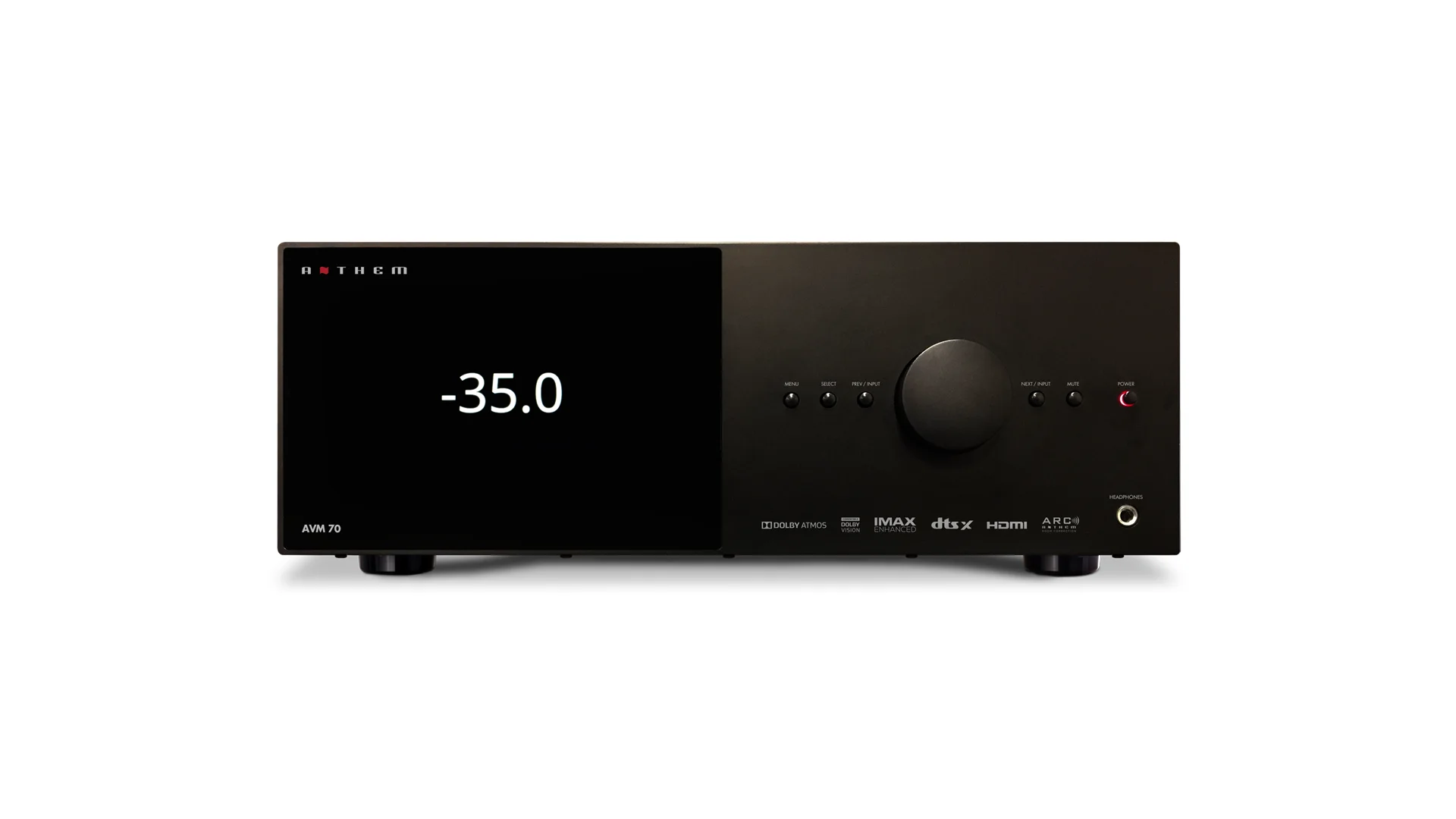
Anthem builds AV receivers, surround processors and amplifiers with room calibration at the centre of the system. Its ARC Genesis software uses microphone measurements to calculate correction filters, while allowing users to adjust target curves and the frequency range being corrected. The Canadian-engineered catalogue separates MRX receivers from AVM processors and MCA power amplifiers, giving home-theatre owners a choice between integrated and separate electronics. STR components bring room correction and bass management into two-channel listening. Developed within the same audio family as Paradigm, Anthem focuses on the interaction between electronics, loudspeakers and the room—not just the amplifier’s specifications in isolation.
Arcam

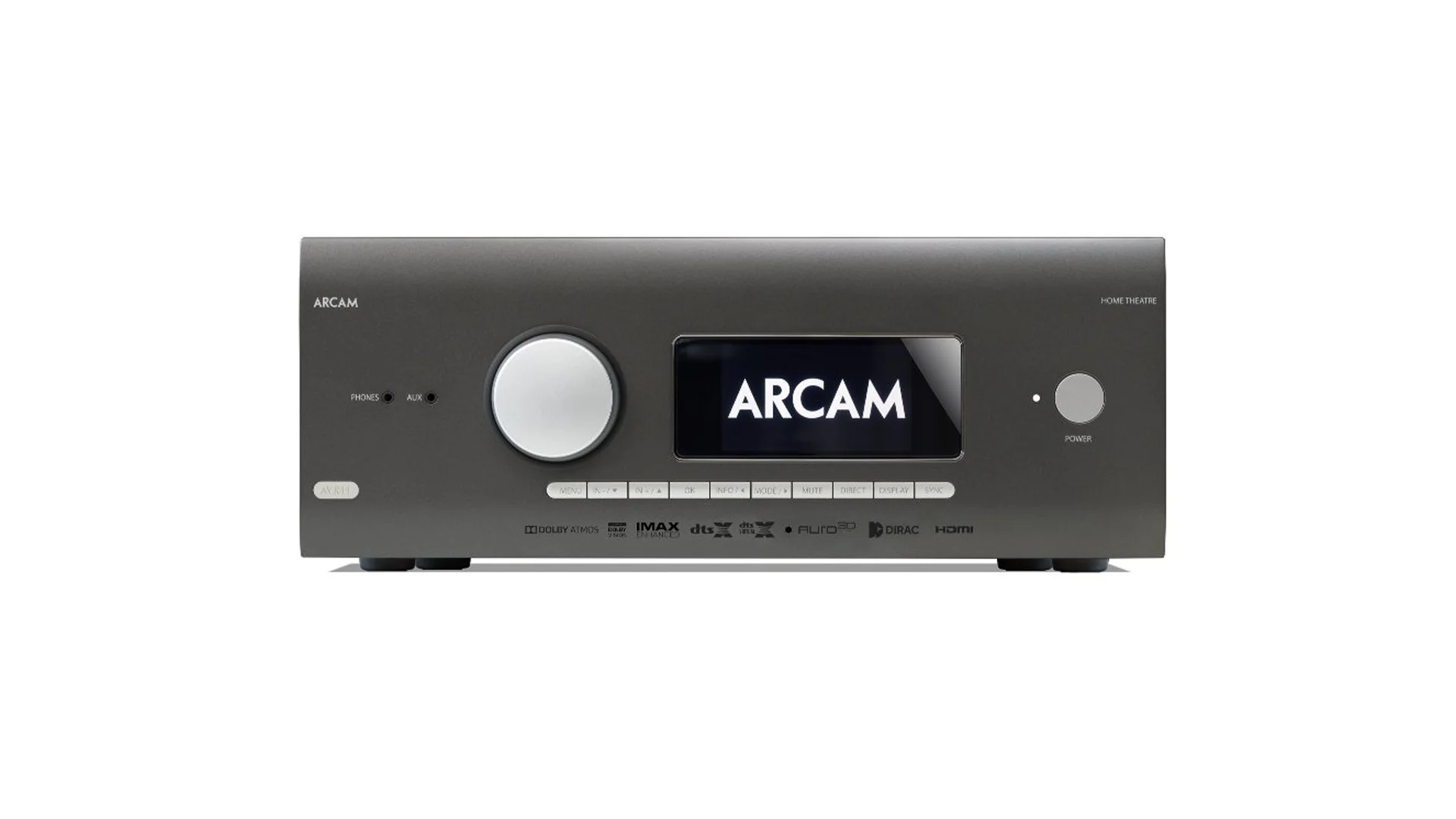
Arcam’s story starts with the A60 integrated amplifier, created in Cambridge in 1976 by John Dawson and Chris Evans. The two students had met through a tape-recording society; their Amplification and Recording Cambridge business later expanded into CD players, DACs and home cinema. A continuing specialism is Class G amplification, which changes the output stage’s supply voltage with signal demand to reduce wasted heat while retaining headroom for musical peaks. The Radia family carries that amplifier heritage into products with modern digital connections, while Arcam’s wider range serves both stereo and surround systems. The A25+, for example, combines Class G amplification with phono, USB-C and HDMI eARC inputs.
AudioControl

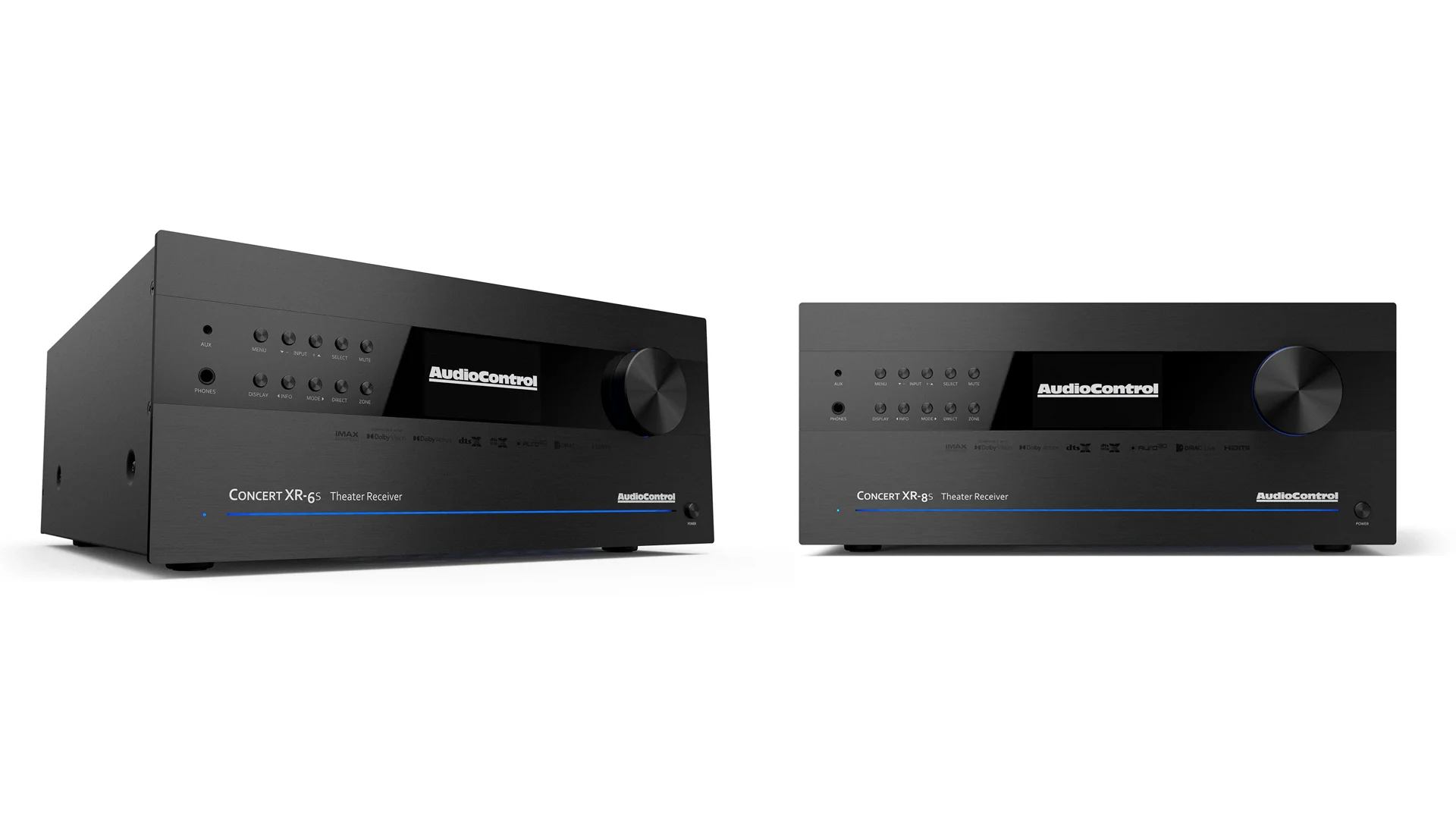
AudioControl built its reputation by solving system-integration problems with signal processing. Greg Mackie founded the company in the Pacific Northwest in 1977, initially producing stereo equalizers and analysers for home audio. That experience developed into two practical specialities: DSP, amplification and signal interfaces for car audio, plus multichannel and multi-zone electronics for home cinema and custom installation. The car range combines line-output converters, equalisation, crossovers and amplification for factory-system upgrades. Architect and Director amplifiers address distributed audio, while Concert receivers and Maestro processors serve dedicated cinemas with room correction and flexible control. AudioControl’s value lies in measurement, calibration and installation tools built into robust hardware, rather than in a single signature amplifier topology.
Denon

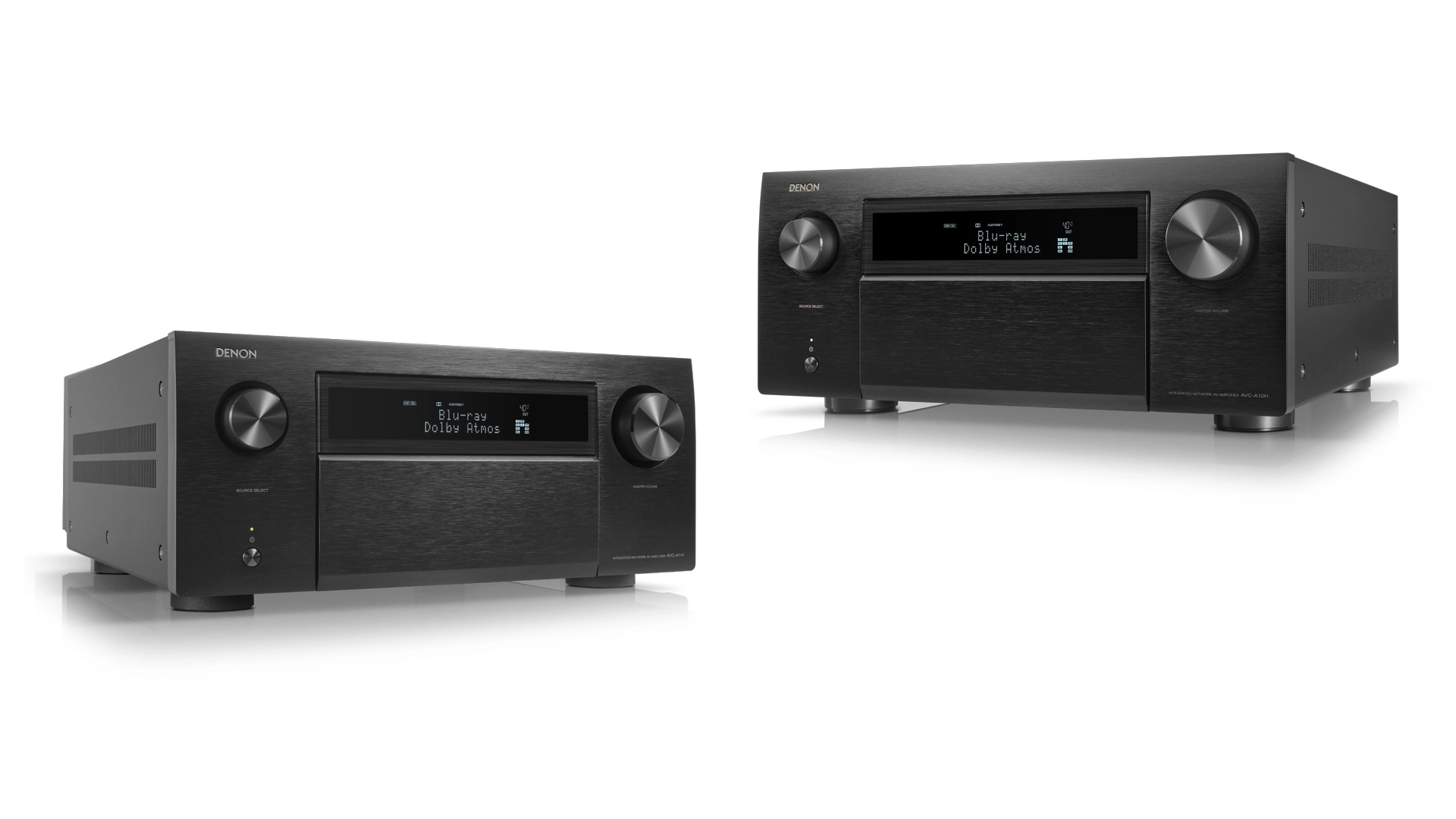
Denon’s history begins in 1910, when American entrepreneur Frederick Whitney Horn established the Japan Recorders Corporation, the antecedent of today’s Japanese audio brand, to manufacture records and gramophones. The company subsequently linked recording and playback in ways few consumer manufacturers can claim: it built Japan’s first professional disc recorder, released the country’s first commercial LP records, developed the broadcast-standard DL-103 moving-coil cartridge in 1963 and introduced an eight-channel PCM digital recorder in 1972. That combination of analogue, digital and broadcast experience still appears in a broad catalogue. AVR and AVC home-cinema receivers integrate amplification, decoding, room correction and HEOS network audio; PMA amplifiers and DCD disc players serve stereo systems; turntables, cartridges, headphones and soundbars cover other parts of the chain. The DL-103 remains in production decades after its broadcast origins, while modern receivers adopt current HDMI and immersive-audio standards. Denon’s strength is not merely age or product count, but a continuous ability to translate professional recording and format changes into durable home-audio products.
Emotiva
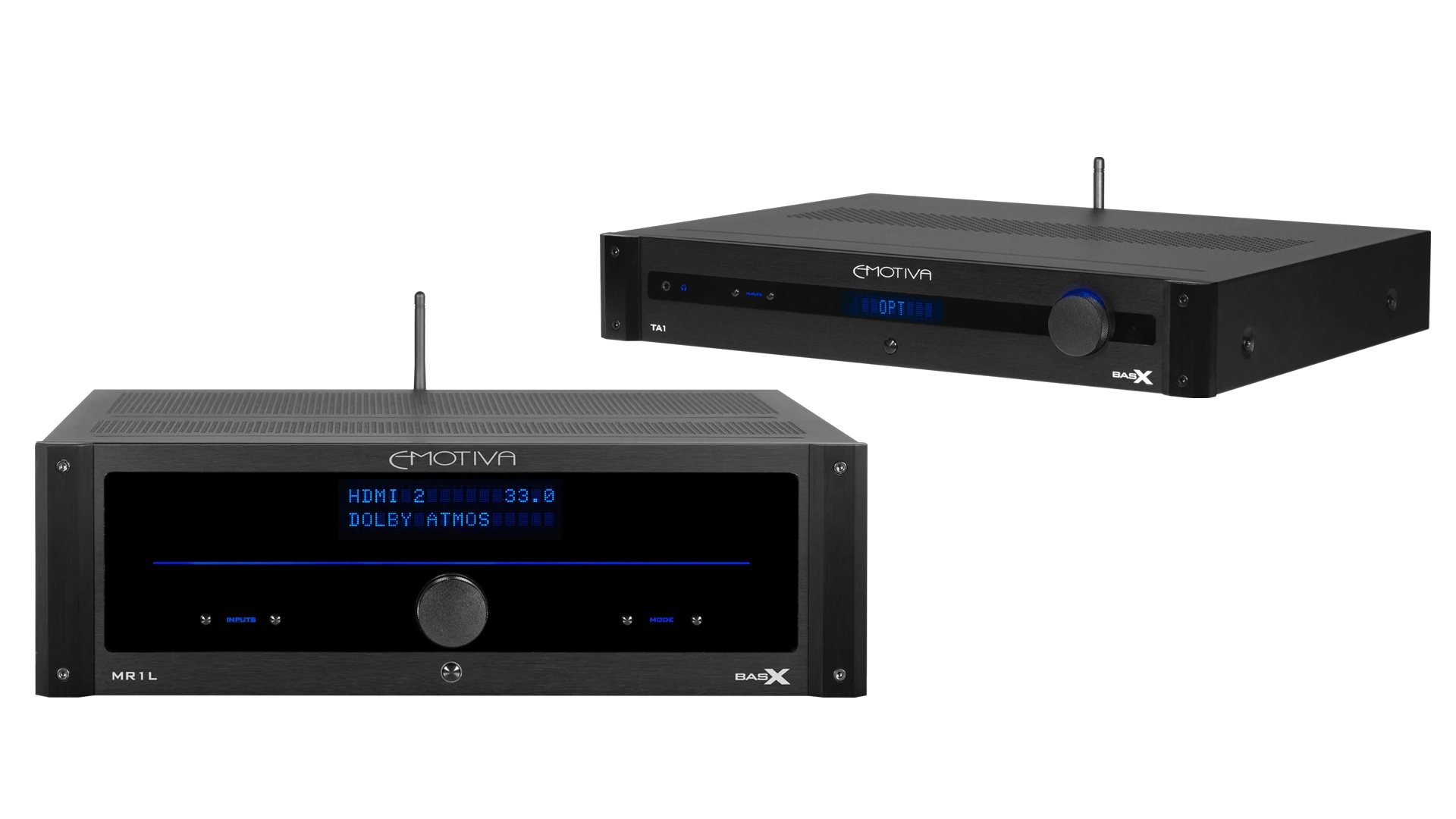
Emotiva is an American audio company founded in 2003 by Dan Laufman to sell serious stereo and home-theatre electronics directly to listeners, removing several layers of conventional distribution cost. That business model matters because it shaped the products: substantial power supplies, high channel counts and upgrade-friendly platforms offered at prices below many specialist competitors. BasX covers accessible amplifiers, preamps and cinema electronics, while XPA power amplifiers scale from stereo systems to multichannel installations through modular high-current Class A/B stages and efficient switch-mode supplies. Differential Reference models use fully balanced, fully differential signal paths and Optimized Class H supply operation for demanding front channels or two-channel systems. Surround processors and receivers address immersive formats, and loudspeakers extend the catalogue into complete systems. Emotiva’s identity is not simply “value for money”; it is the combination of direct sales with unusually powerful, configurable hardware for enthusiasts who may need two channels today and a large cinema later. Design and final product development are centred in Tennessee, with model-specific manufacturing choices rather than a blanket claim that every component is built in the United States.
Integra
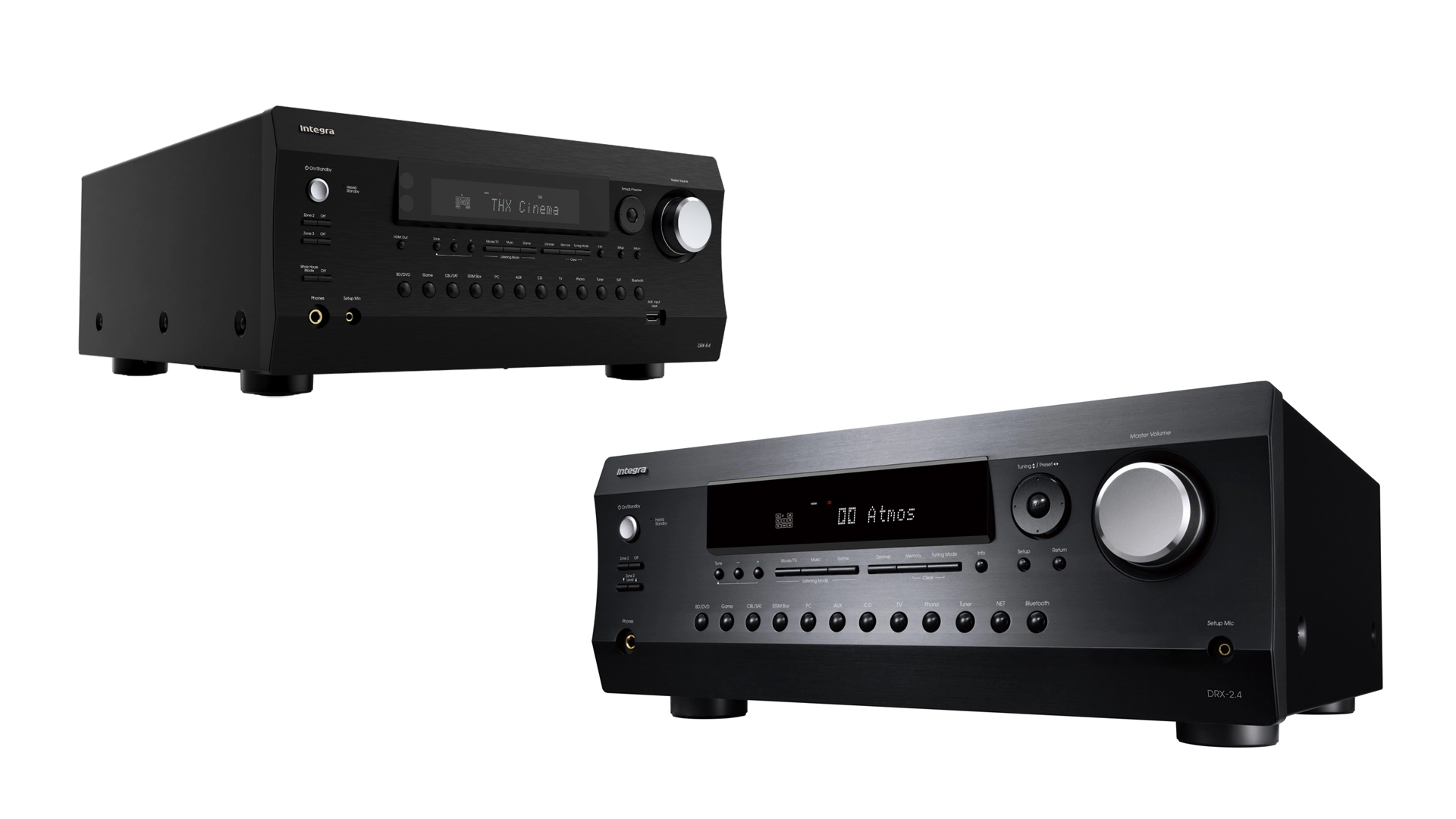
Integra is the Japanese-origin AV brand created for systems that must perform well and integrate cleanly into a professionally installed home. The name traces back to Onkyo’s premium Integra amplifier line introduced in 1969; Integra later became a dedicated division for custom residential cinema and is now operated within the Premium Audio Company and Sharp audio business. DRX network receivers, DHC processors and DTA power amplifiers are specified not only for surround formats and video switching but also for the work installers face after commissioning: IP and RS-232 control, web-based setup, rack-friendly connectivity, automation-system compatibility and remote diagnostics. Current receivers add technologies such as Dirac Live room correction and modern HDMI video support, but the lasting distinction is system integration rather than a checklist of consumer features. Integra is therefore best understood as Onkyo’s installation-focused premium lineage, not as an unrelated American receiver manufacturer.
JBL

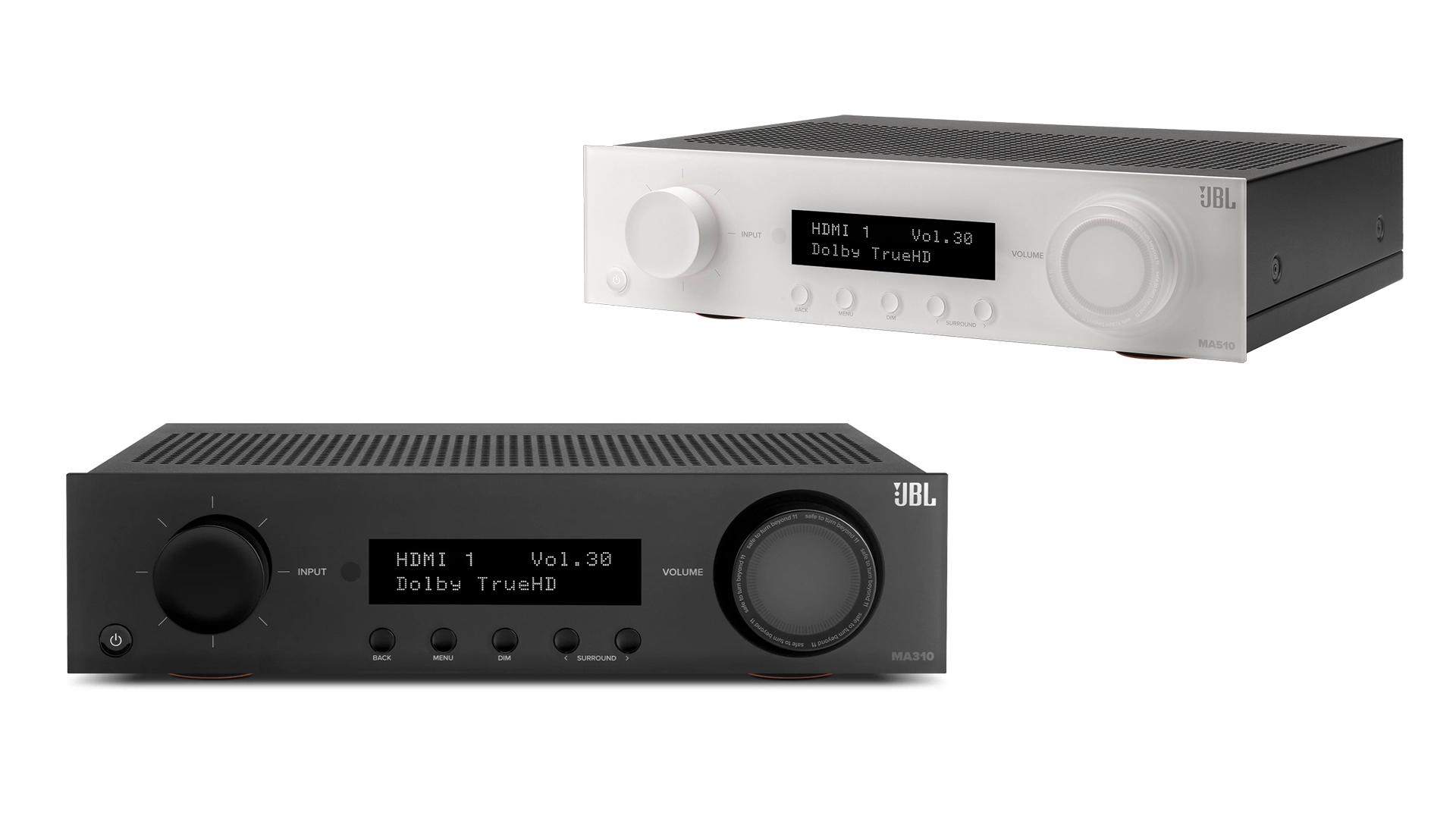
JBL is one of the few audio brands with equally deep roots in cinema, recording studios, touring sound and domestic loudspeakers. Engineer James Bullough Lansing founded James B. Lansing Sound in Los Angeles in 1946, and the early D130 driver introduced a four-inch flat-wire voice coil that helped establish the company’s reputation for high efficiency and power handling. JBL later became a studio reference through 4300-series monitors and translated that visual and acoustic language into the L100 for the home. Its professional division now covers cinema systems, installed sound, stage monitors and large-format arrays, while consumer products range from portable Bluetooth speakers and headphones to Classic and Synthesis systems. Compression drivers, horns and controlled-directivity waveguides recur across many categories because JBL designs for predictable output beyond a single listening seat. The company has belonged to Harman since 1969; Harman has been owned by Samsung since 2017. Scale is part of JBL’s know-how: transducer engineering developed for venues and studios can inform car, home and portable products without erasing the differences between them.
Marantz

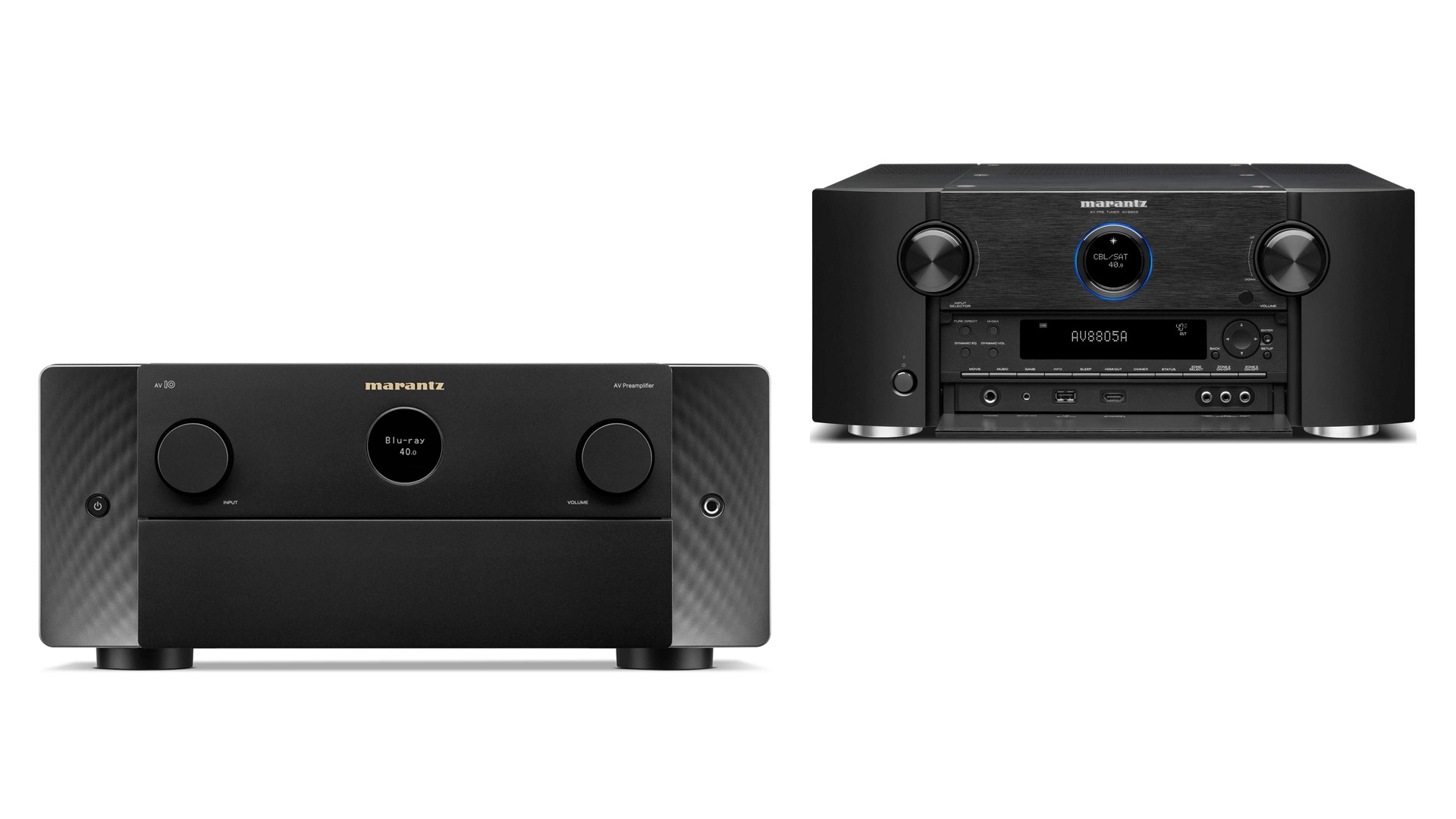
Marantz is a historic high-fidelity brand whose modern amplifiers, network players and home-cinema electronics combine American roots with Japanese audio engineering. Saul B. Marantz began by building the Audio Consolette for his own record collection; its success led to the Marantz company in New York in 1953. The Model 1 preamplifier, Model 7, Model 9 power amplifier and Model 10B tuner established a reputation for elegant circuits, low distortion and unusually thoughtful industrial design. Today the range spans stereo integrated amplifiers, SACD and network sources, turntables, AV receivers and processors. A defining element of many premium models is the company’s discrete Hyper Dynamic Amplifier Module (HDAM), used instead of generic integrated op-amps in critical analogue stages. Current reference components also emphasize short signal paths, carefully separated power supplies, shielding and rigid multi-layer chassis construction. Products such as the MODEL 30 and MODEL 40n bring that approach to contemporary systems, while the CINEMA series applies it to immersive home theatre. Marantz is distinctive because it has repeatedly translated its classic emphasis on musical, usable equipment into each new playback era rather than treating heritage as decoration.
McIntosh

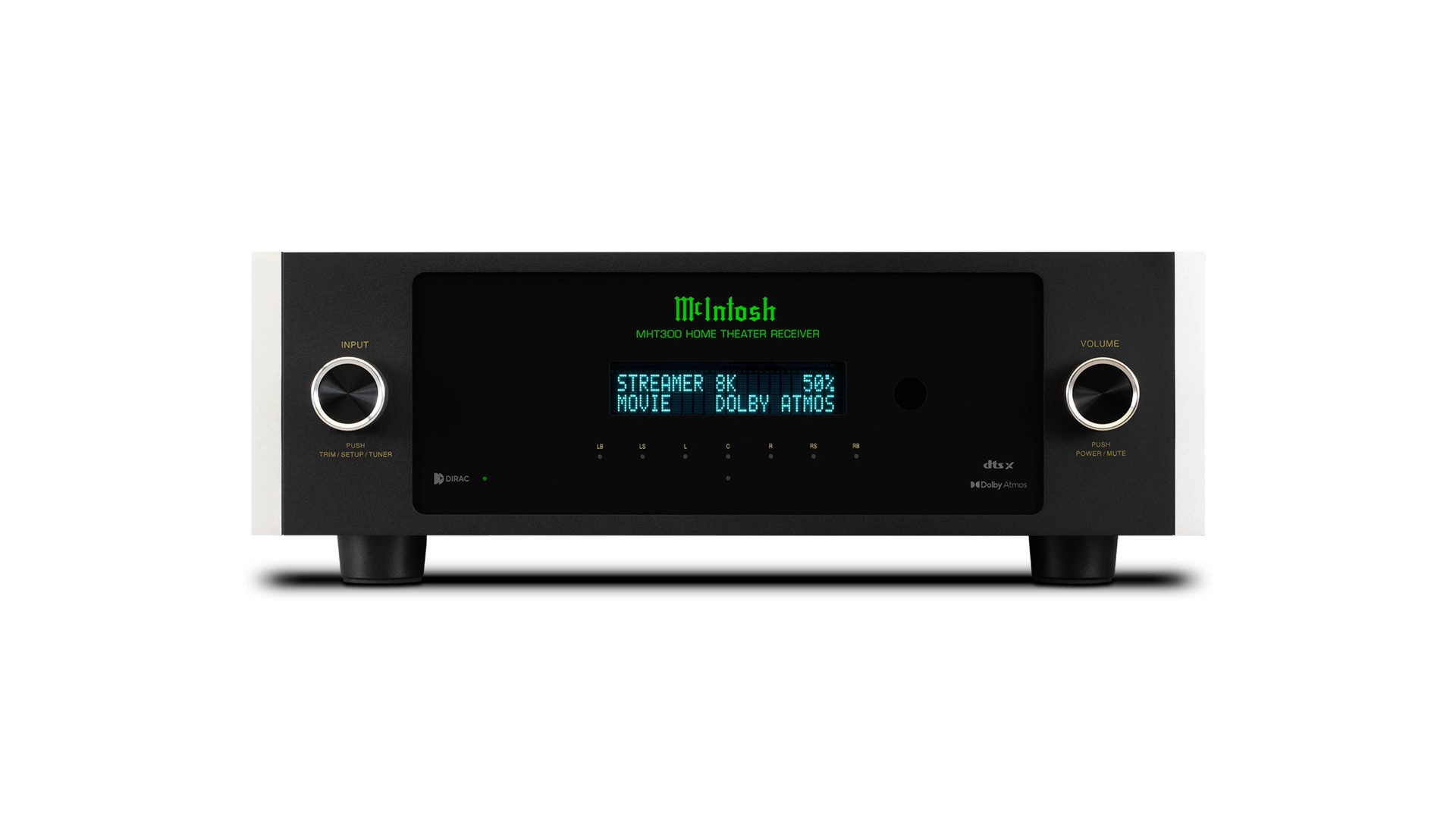
McIntosh is an American high-end audio manufacturer whose blue power meters and black-glass front panels identify products built around unusually durable amplifier engineering. Frank H. McIntosh and Gordon Gow founded the company in 1949 after developing the Unity Coupled Circuit, a transformer-coupled output topology designed to deliver high power with low distortion across the audible band. McIntosh moved to Binghamton, New York, in 1951 and continues to design and assemble products there. The catalogue covers valve and solid-state power amplifiers, preamplifiers, integrated amplifiers, source components, streamers, turntables, speakers and home-cinema processors. Many transistor power amplifiers use Autoformers to deliver their rated power into different loudspeaker impedances, while Power Guard monitors the waveform to reduce clipping-related distortion and Sentry Monitor protects against unsafe operating conditions. The company still winds key transformers in house, and signature glass panels are printed and assembled for long service life. McIntosh’s appeal extends beyond styling: its defining know-how is the marriage of protective circuitry, stable load behavior and conservative construction with a product ecosystem that can support both two-channel and large cinema systems.
NAD
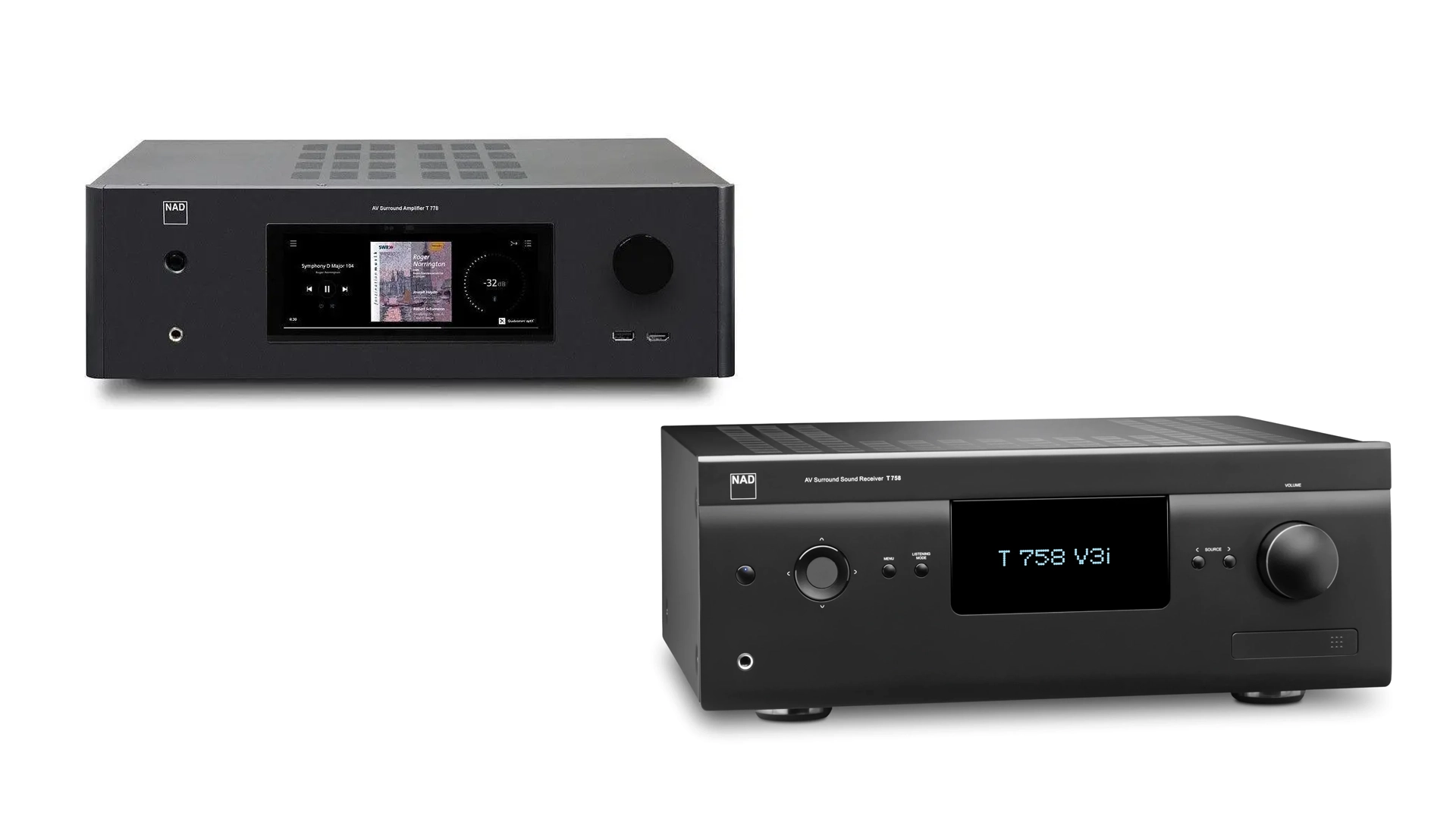
NAD—New Acoustic Dimension—is the British-founded electronics brand that made high-current, musically convincing amplification available without luxury-casework pricing. The company began in London in 1972 when audio-industry entrepreneur Dr Martin “Marty” Borish brought together a group of European distributors. Its turning point was the 3020 integrated amplifier, designed by Bjørn Erik Edvardsen and launched in 1978. Modestly rated at 20 watts per channel, it could drive demanding loudspeakers far beyond what the specification suggested and became one of hi-fi’s landmark affordable amplifiers. That practical engineering continues in the Classic and Masters ranges: integrated, pre- and power amplifiers, streamers, AV receivers and custom-installation components. PowerDrive manages voltage and current reserves for real loudspeaker loads, while Modular Design Construction lets selected amplifiers and receivers accept replaceable digital or HDMI modules. Current products also combine BluOS multi-room streaming with technologies such as Purifi Eigentakt amplification in appropriate models. NAD passed through Danish ownership before Canada’s Lenbrook acquired it in 1999; product development and headquarters are now Canadian, but the brand’s country of origin remains the United Kingdom. The lasting NAD idea is simple: spend the budget on usable power, upgradeability and music rather than decorative excess.
Onkyo
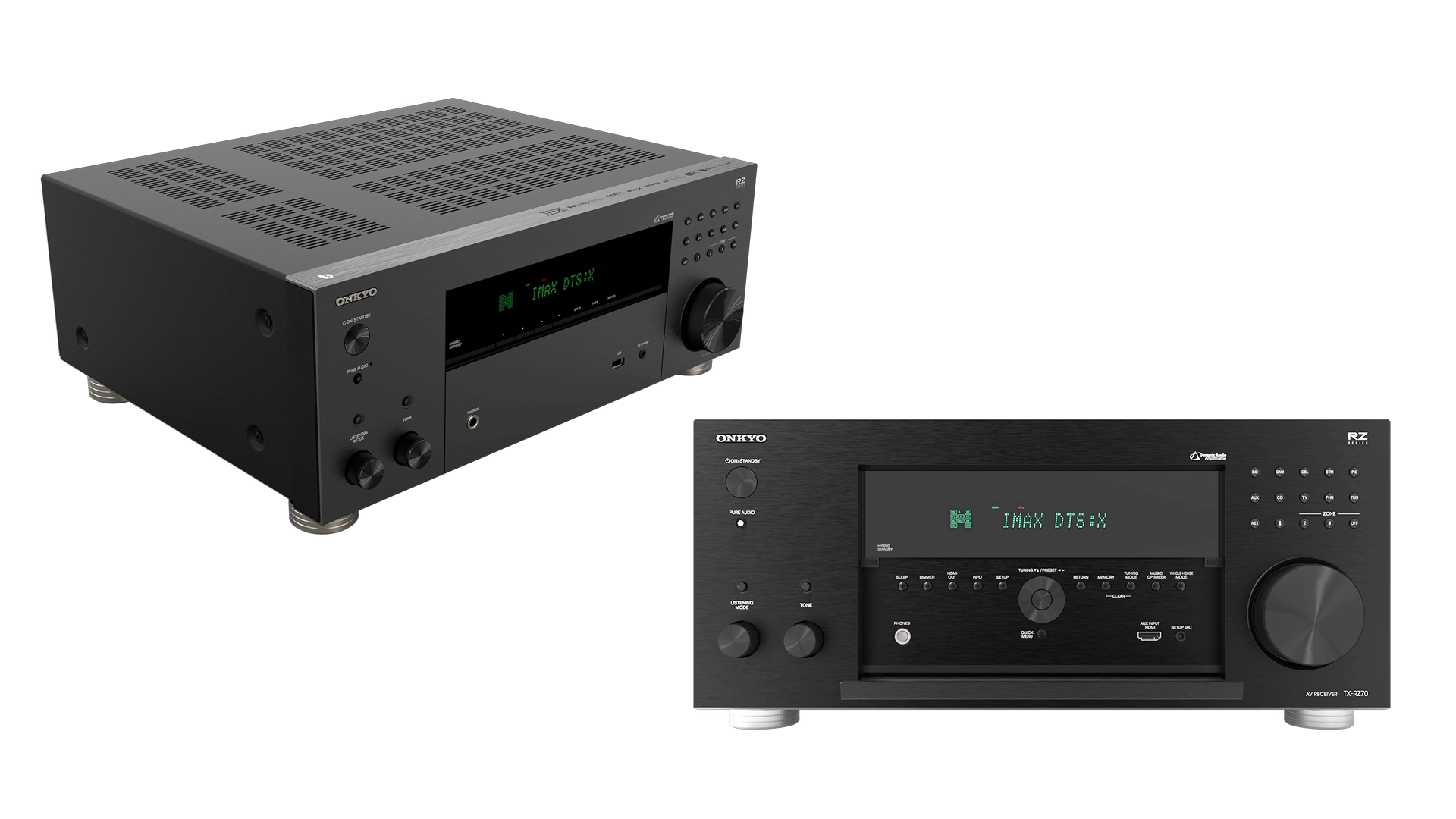
Onkyo is the Japanese audio brand founded in Osaka in 1946 by Takeshi Godai as Osaka Denki Onkyo. Its early products included a locally made phono pickup, and the company grew through loudspeakers, amplifiers, tuners and cassette decks before becoming especially influential in home cinema. Onkyo helped make high-channel-count AV receivers, network audio and advanced room processing accessible to enthusiasts without abandoning traditional two-channel components. TX-NR and TX-RZ receivers remain the centre of the range, combining HDMI switching, Dolby Atmos and DTS:X decoding, multi-zone operation and, on selected models, Dirac Live calibration. The revived Icon Series adds the P-80 network preamplifier, M-80 power amplifier and A-50 integrated amplifier, reconnecting the brand with serious stereo separates. The corporate history changed decisively before the bankruptcy of the former Onkyo Home Entertainment company in 2022: in 2021 the Onkyo and Integra home-audio assets were acquired by a joint venture led by Premium Audio Company with Sharp as manufacturing partner. Premium Audio Company is now part of Gentex following its 2025 acquisition of VOXX. Onkyo is therefore active, not a dormant brand with an uncertain future. Its continuing role is to unite Japanese audio heritage with practical networked stereo and cinema platforms produced under new ownership.
R_volution

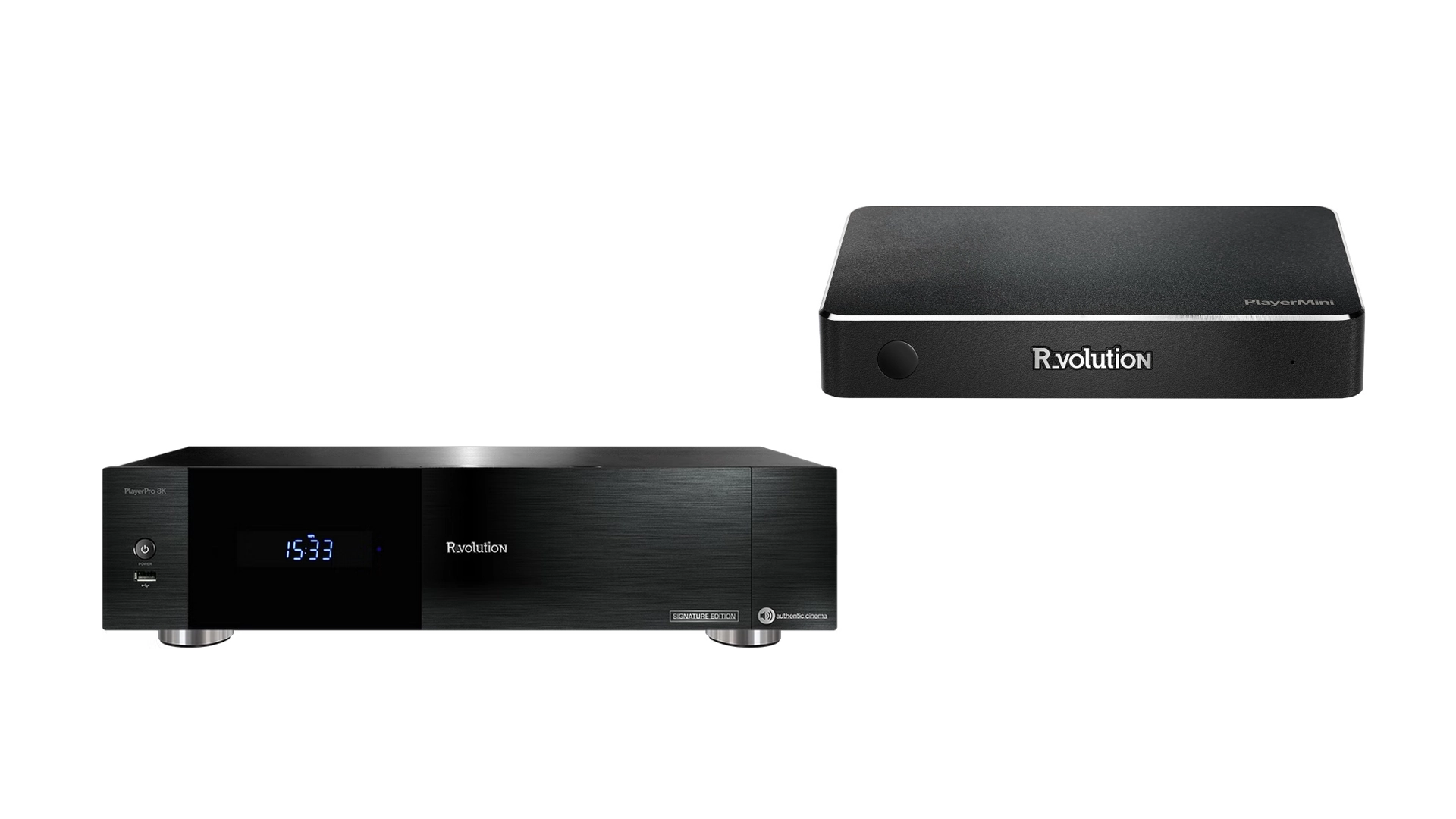
R_volution is the French media-player and video-server brand launched by Groupe Archisoft in late 2023. It emerged after the end of Zappiti’s hardware business, but it is not merely a renamed player: R_volution develops its own R_video library software and a new generation of 4K and 8K hardware. Groupe Archisoft in Paris is the company behind both R_volution and the Reavon disc-player brand, which explains the emphasis on dedicated home-cinema sources rather than mass-market streaming boxes. R_video scans films, television series and concerts stored on local drives or NAS, identifies them, retrieves artwork and credits, groups sagas and presents the collection through an interface designed for 16:9 or 2.35:1 screens. It is included with R_volution players and is also available for PC, Mac and compatible legacy Zappiti players under separate conditions. PlayerMini provides the compact entry point; PlayerOne and PlayerOne 8K add internal storage and broader connectivity; PlayerPro 8K uses a more elaborate chassis, power supply, audio outputs and isolation for premium theatres. TV versions add certified streaming functions on supported models. The matching NAS and NAS Ultra are designed to store, back up and distribute large disc-derived libraries around a home. Current players support model-dependent combinations of Dolby Vision, HDR10+, Dolby Atmos, DTS:X, multichannel DSD, SMB networking and source-based tone mapping; 8K models use newer Amlogic processing with AI-assisted scaling and picture controls. The source description contained only two vague sentences and an inaccurate reference to HDMI inputs. The real proposition is a managed local movie library spanning player, server, metadata software and multiroom playback.
Reavon
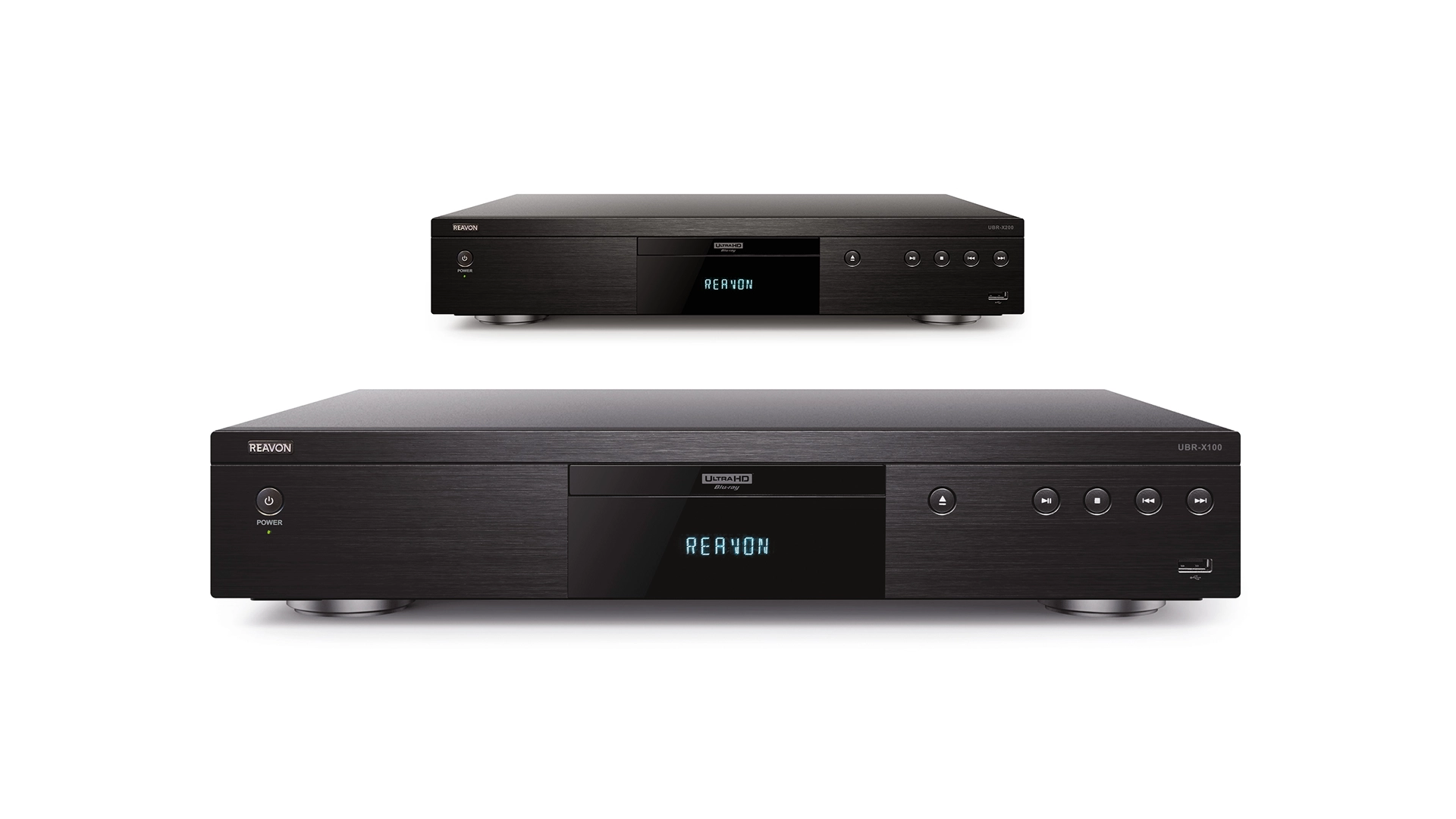
Reavon is the French premium disc-player brand developed by Paris-based Groupe Archisoft and launched in 2021. Its purpose is unusually focused at a time when many electronics companies have left optical media: provide substantial universal transports for collectors of Ultra HD Blu-ray, Blu-ray, DVD and CD, with selected models also handling SACD and DVD-Audio. The chassis, power supply and output arrangement are treated as part of a dedicated home-cinema source rather than a disposable streaming accessory. UBR-X100 established the range as a primarily digital UHD player with HDMI audio/video output, Dolby Vision and HDR10 support, native 24p playback, USB media and network access. UBR-X110 adds SACD and broader universal-disc capability. UBR-X200 is the audio-led flagship: besides universal disc transport, it adds high-grade stereo and multichannel analogue outputs, balanced XLR connection and dedicated digital-to-analogue conversion for systems that use the player directly into an analogue preamplifier or processor. All three can bitstream immersive formats such as Dolby Atmos and DTS:X to a compatible AV component; codec, file and streaming support should be checked by model rather than assumed. Reavon does not run a subscription movie service and is distinct from Archisoft’s R_volution local-media players and servers. Its relevance is the opposite of mass-market convergence: robust, quiet hardware for owners who want to keep physical film and music collections usable in a modern 4K theatre. The blank founding field has been set to 2021, the year Reavon’s first UBR-X100 and UBR-X200 players reached the market.
Sony

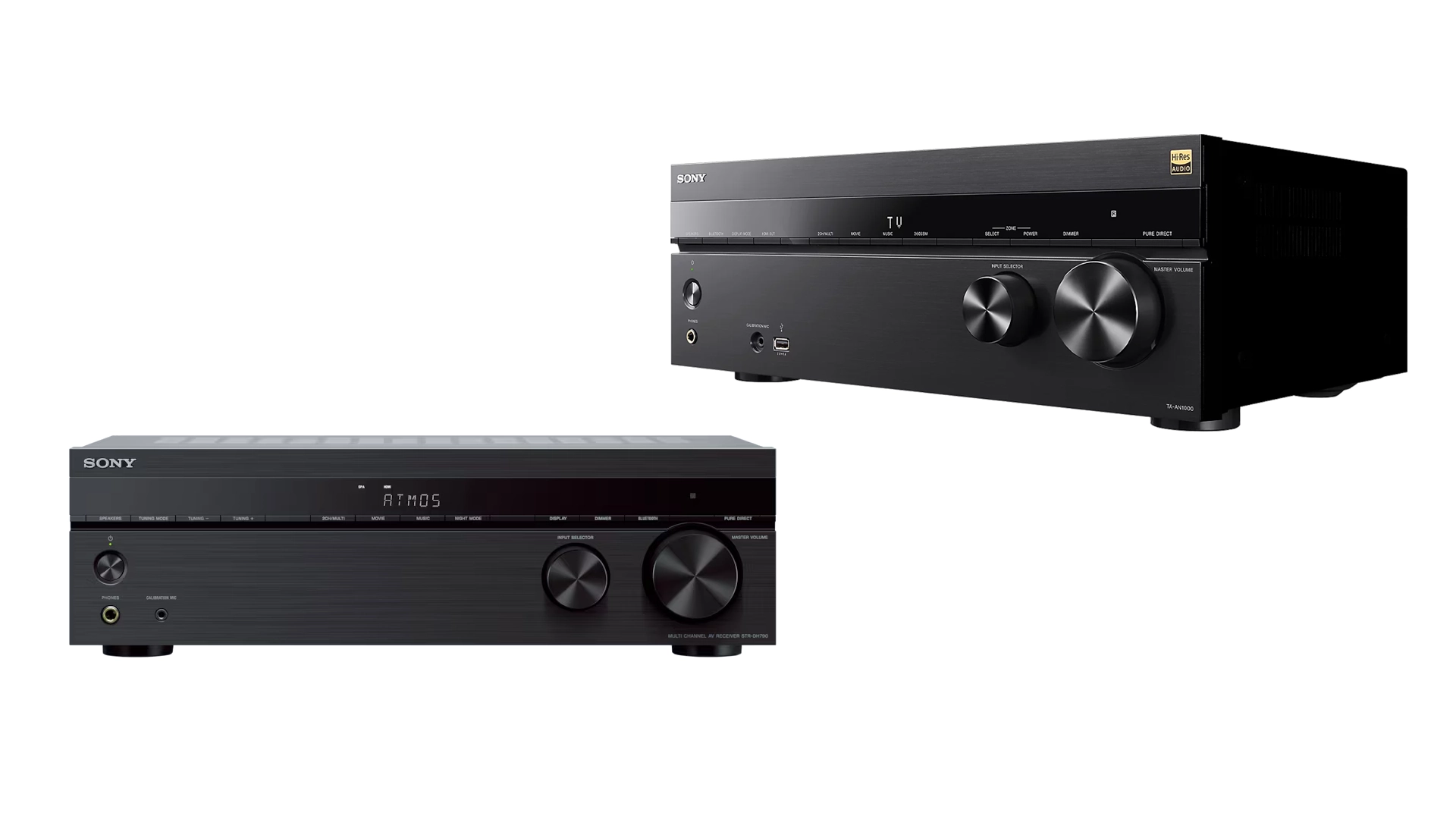
Sony helped shape both personal listening and home entertainment, from the Walkman and Compact Disc era to televisions, headphones and cinema systems. Masaru Ibuka and Akio Morita established the company in Tokyo in 1946 as Tokyo Tsushin Kogyo; the Sony name became its corporate identity in 1958. Tape recorders and transistor radios provided early foundations, but the 1979 TPS-L2 Walkman changed how people carried music with them. The CDP-101 followed in 1982, and the compact D-50 portable CD player in 1984 helped bring digital discs beyond the living room. Sony also played a central role with Philips in developing the Compact Disc and later SACD formats. Its hi-fi history includes ES amplifiers and disc players, while Walkman continued into digital music players. Headphones became another major field, spanning studio use, dedicated home listening and wireless noise-cancelling models. In video, the progression from Trinitron to BRAVIA televisions sits alongside home-cinema projectors and professional imaging equipment. Soundbars, receivers and disc players connect these audio and video interests within domestic systems. Sony’s scale matters because it works across recording, signal processing, playback hardware and entertainment production, with technologies moving between those areas. The consumer brand therefore encompasses far more than its professional AV division: it includes several of the products and formats through which generations of listeners first encountered recorded music and film.
StormAudio


StormAudio designs the electronics at the centre of ambitious immersive home cinemas: surround processors, multichannel power amplifiers and integrated receivers. The brand is based in France and concentrates on systems where channel count, bass management, calibration and long-term upgradeability matter as much as format logos. Its ISP processors support Dolby Atmos, DTS:X Pro and Auro-3D, with configurations extending far beyond conventional 7.1 playback. ISP Elite and ISP Evo models provide modular input and output architectures, while the ISR Fusion combines processing and amplification in one chassis for installations that need fewer separate boxes. StormAudio’s calibration platform integrates Dirac Live, including Bass Control and Active Room Treatment options on compatible systems. This allows an installer to work with several subwoofers and seats as a coordinated acoustic system instead of equalising each channel in isolation. The company’s own Expert Bass Management and flexible routing address the complex loudspeaker layouts found in purpose-built cinemas. StormAudio emerged as a dedicated premium brand within Auro Technologies; in late 2017, Yves Trélohan led a management buyout through Immersive Audio Technologies Group, which remains the company behind the marque. Product development and assembly continue in France. That ownership history matters because it explains the brand’s present focus: a specialist team controls a platform designed for professional integration, publishes meaningful hardware and software upgrades, and avoids treating a high-cost processor as disposable when connection standards or decoding requirements change.
Tonewinner

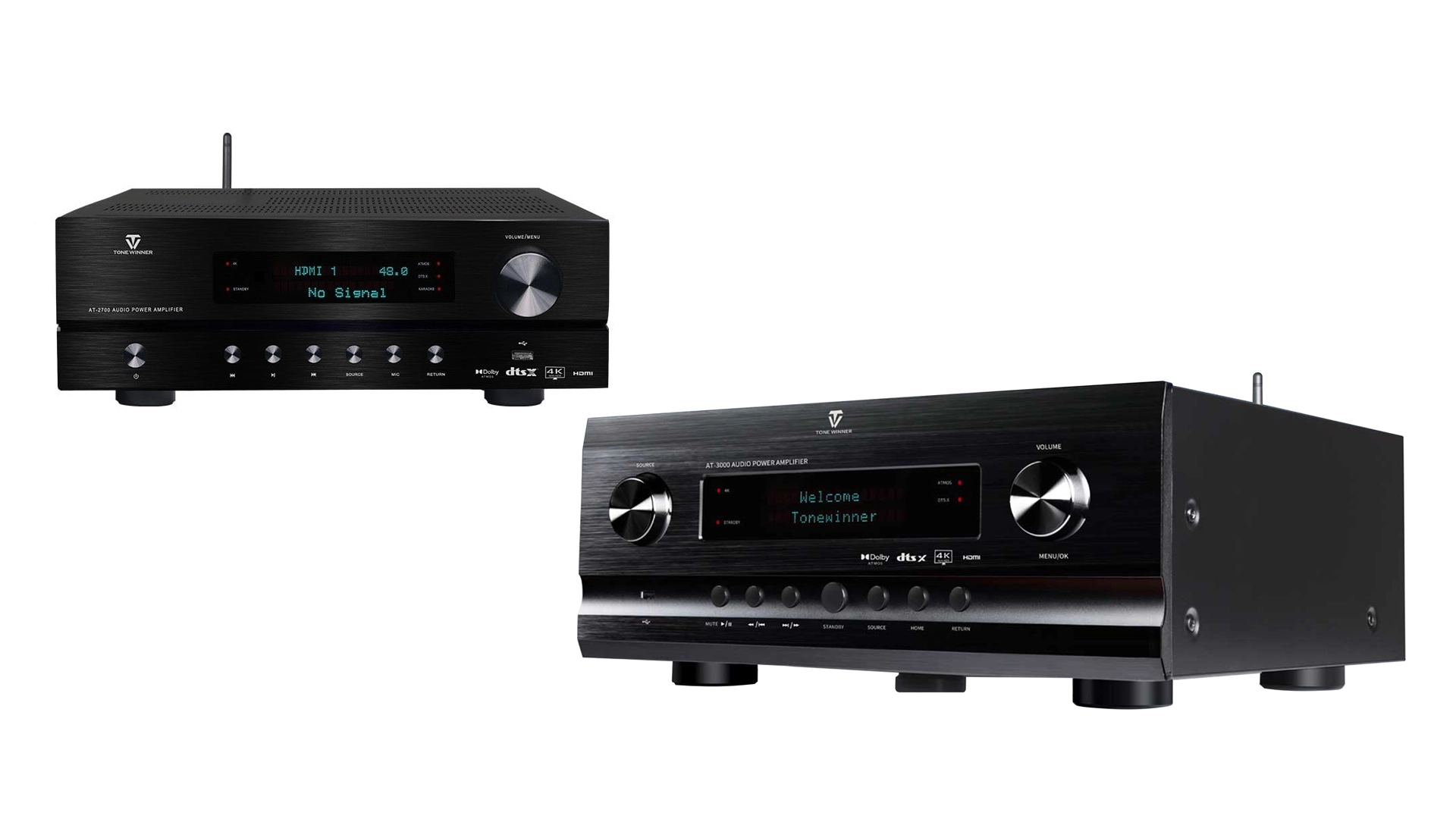
ToneWinner is a Chinese audio manufacturer founded in 1992 and based in Guangzhou. The company is best known internationally for home-cinema electronics that deliver high channel counts and substantial power without the pricing of boutique brands, but its work spans stereo amplifiers, DACs, headphone products, loudspeakers and professional or OEM manufacturing. Large-scale production and in-house engineering are central to its value proposition.
The AT-series processors and AD-series multichannel power amplifiers made ToneWinner particularly visible to cinema builders. Models such as the AT-300 provide immersive decoding and room-calibration functions, while amplifiers including the AD-7300PA+ supply separate high-current channels for demanding speaker arrays. The catalogue also includes integrated stereo components, monoblock and Class A amplification, source electronics and subwoofers, allowing the brand to serve both two-channel listeners and complete theatres.
ToneWinner’s identity should not be reduced to “affordable Chinese hi-fi.” It has decades of experience with power supplies, thermal management, metalwork and the repeatability required for multi-channel hardware, and it manufactures at a scale smaller high-end companies cannot match. At the same time, model specifications and software features vary by market and generation, so individual products deserve evaluation rather than blanket claims. The brand’s strongest contribution is practical: bringing balanced connections, powerful amplification and modern surround processing to systems whose budgets would otherwise force a compromise in channel count or output capability.
Trinnov
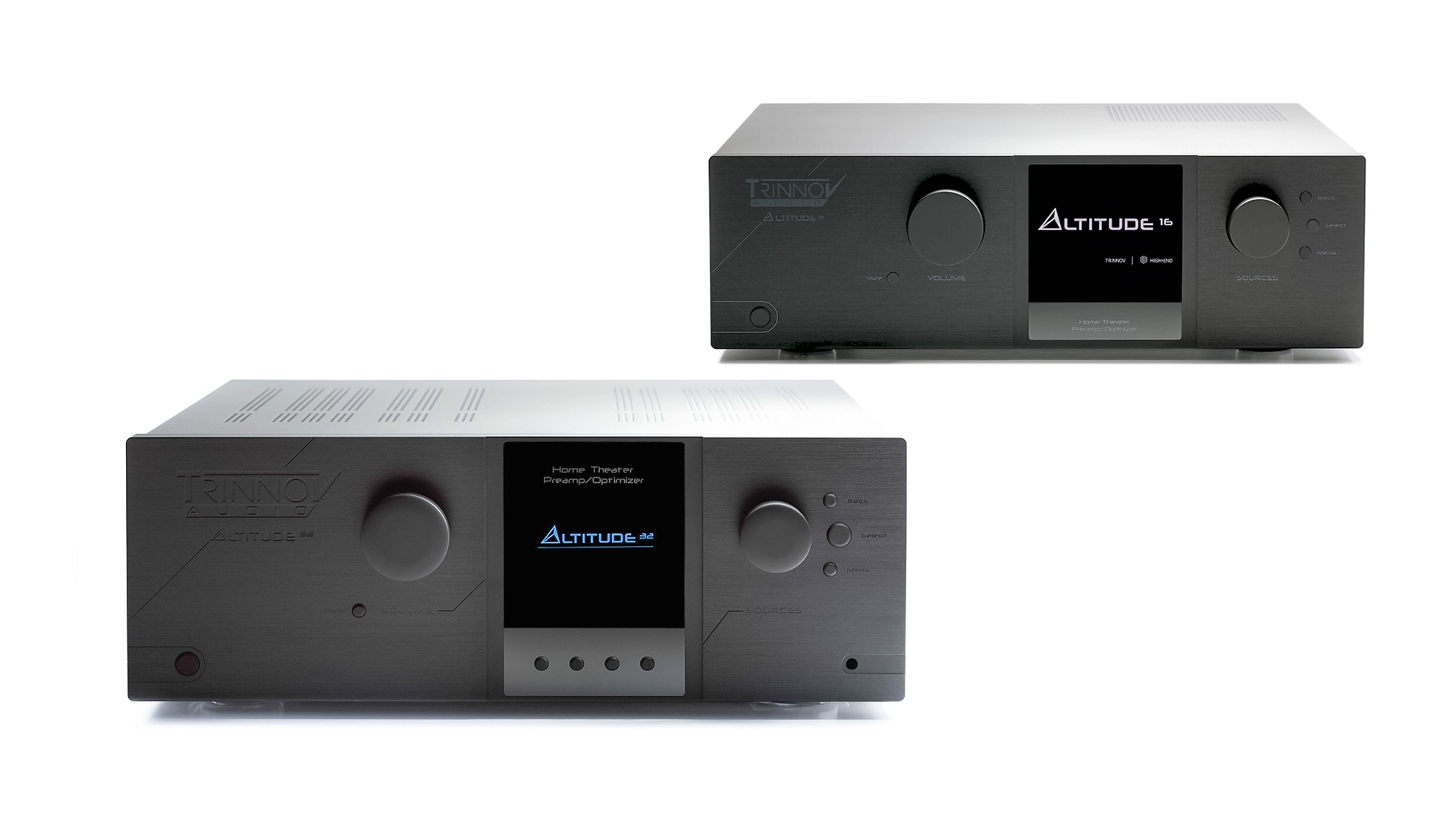
Trinnov Audio is the French digital-audio specialist founded in 2003 after its three co-founders began research into high-spatial-resolution sound at IRCAM in 2000. The name joins “Tri” and “Innovation,” reflecting a company built around three-dimensional measurement, loudspeaker/room optimisation and immersive reproduction. Its processors serve mastering and recording studios, commercial cinemas and some of the most ambitious residential theatres.
The Optimizer platform measures loudspeaker position and room behaviour with Trinnov’s distinctive four-capsule 3D microphone. It can correct amplitude, phase, delay and routing while 3D Remapping compensates for loudspeakers that cannot occupy ideal locations. Altitude16 and Altitude32 processors brought this software-led architecture to home cinema, supporting Dolby Atmos, DTS:X Pro and Auro-3D without relying on a fixed consumer DSP chipset. Amethyst serves two-channel systems, while D-MON and Nova combine monitoring control and calibration for professional rooms.
WaveForming extends the work into low frequencies by coordinating multiple subwoofers to control how bass propagates and decays through a room. The method depends on suitable loudspeaker placement and professional design; it is not a one-button cure for every space. Trinnov’s lasting advantage is that algorithms, measurement hardware, operating software and processor electronics are developed as one platform in France. Products can gain formats and functions through software long after installation, which explains why Altitude has remained relevant since 2014. The brand does not merely apply equalisation—it treats the geometry of the listening environment as part of the reproduction system.
Yamaha

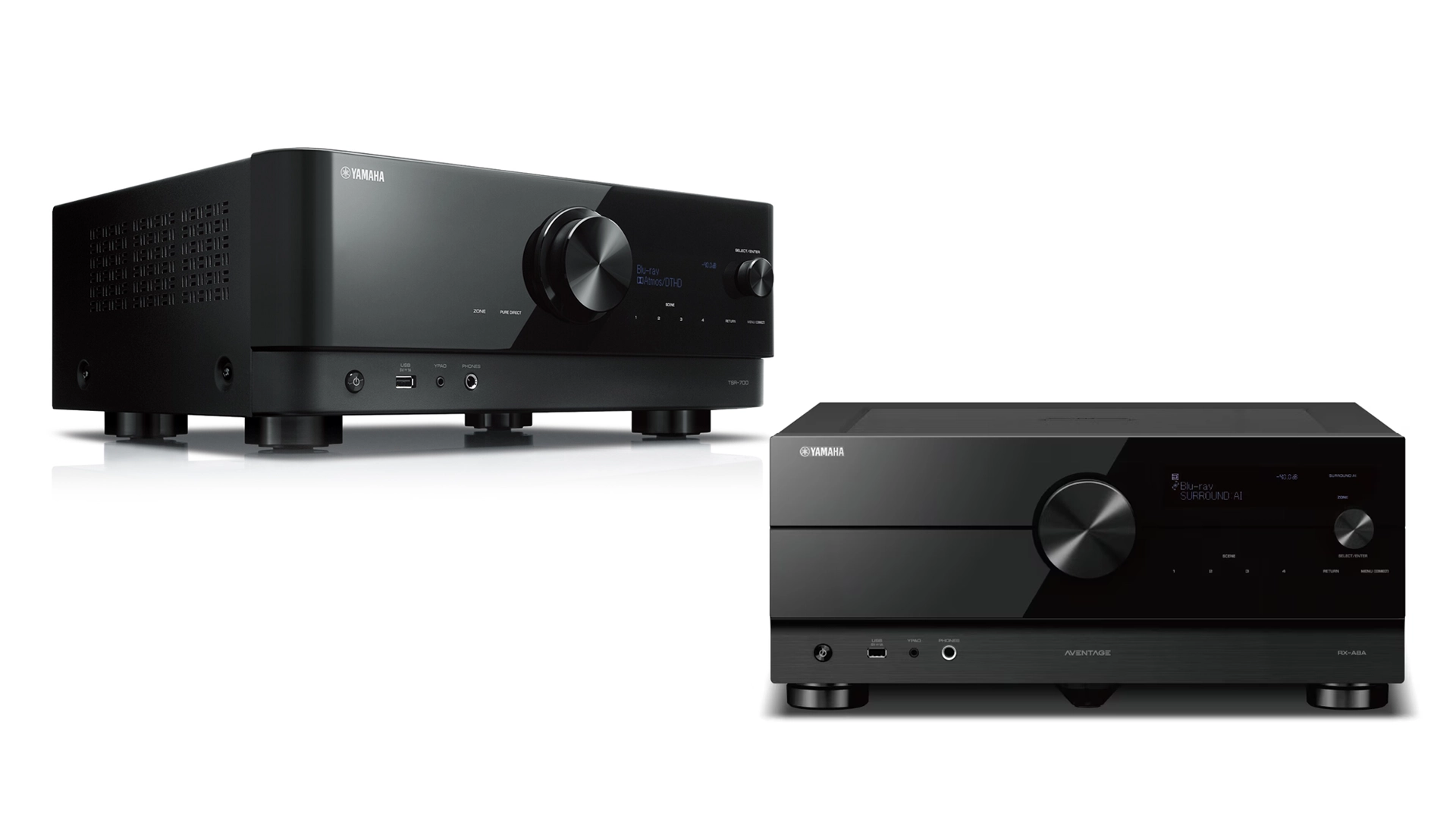
Yamaha began in 1887 when Torakusu Yamaha repaired a reed organ in Hamamatsu and built his own instrument; the tuning-fork emblem still reflects that origin. The company became Nippon Gakki and developed pianos, organs and other instruments long before expanding into electronics, professional sound and home audio. Yamaha’s audio strength comes from this unusually broad view of the chain—from the instrument and recording venue to mixing, amplification and reproduction. The NS-1000 loudspeaker of 1974 was a landmark use of beryllium domes for both midrange and treble, while the B-1 introduced a powerful vertical-FET amplifier and the GT turntables explored extreme mechanical stability. Modern hi-fi retains those threads. A-S integrated amplifiers range from accessible models to the fully balanced A-S3200; R-N network receivers add MusicCast streaming and multi-room control; the C-5000/M-5000 separates and GT-5000 turntable form the flagship 5000 Series. NS-2000A and NS-5000 loudspeakers use Yamaha’s Zylon-based Harmonious Diaphragm concept across multiple drivers to improve tonal continuity. At the same time, Yamaha remains a major force in AV receivers, soundbars, studio monitors, digital mixers and concert systems. Yamaha Motor has been a separate company since 1955, so motorcycles should not blur this audio history. The enduring identity is integration: acoustic-instrument knowledge, professional production tools, cinema processing and domestic hi-fi developed within one Japanese engineering culture.
Zappiti Canada

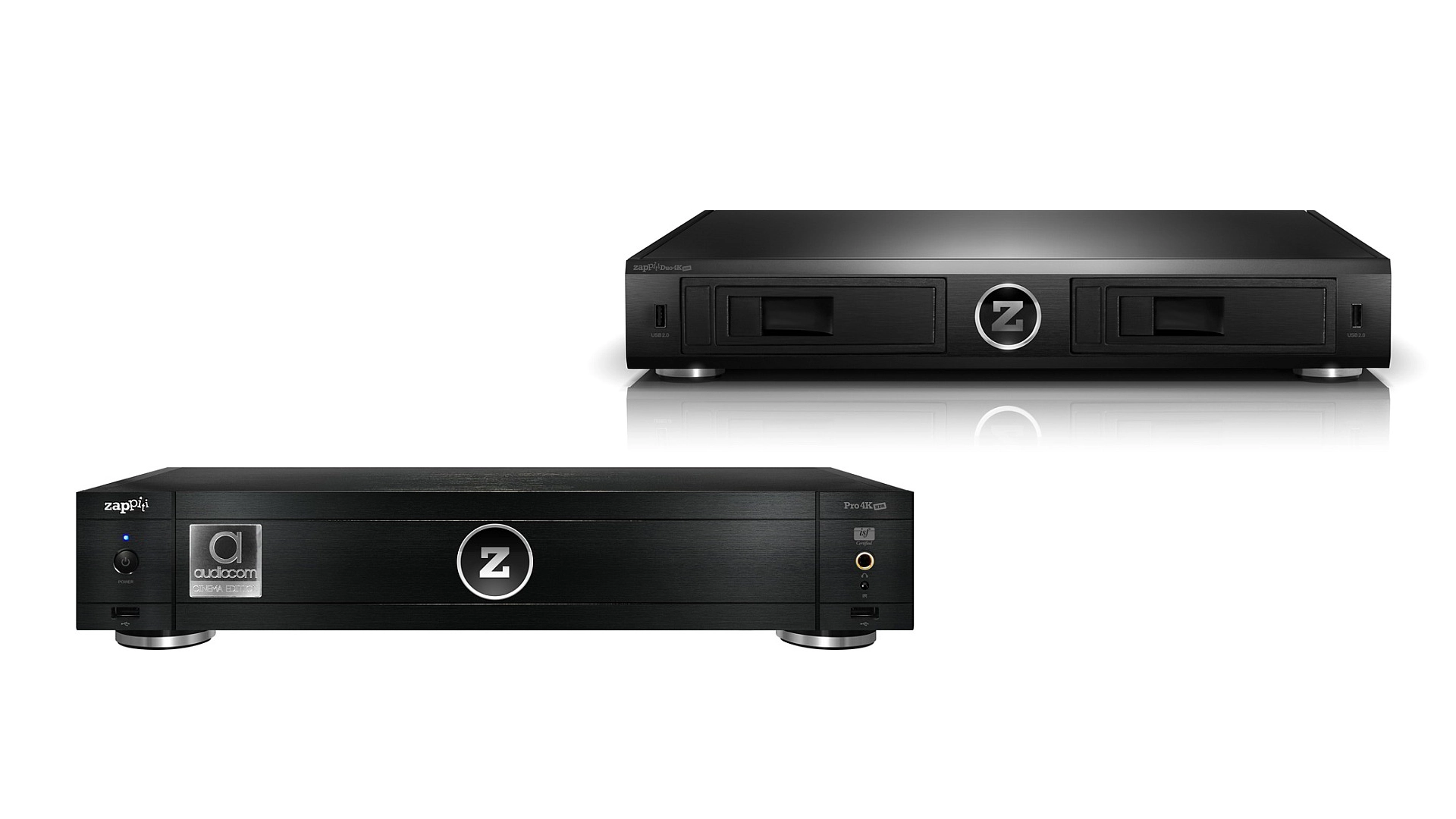
Zappiti was a French media-management and home-cinema brand founded in 2009. It first created a movie and television indexing interface for Dune HD players, then introduced its own hardware in 2013. Zappiti Player, Mini, One, Duo and Pro models combined local-file playback with poster-wall browsing, metadata, parental controls and multi-room access; NAS-based systems added disc ripping and central storage for large private film libraries. Later players supported 4K, HDR, lossless multichannel audio and dual hard-drive bays, making the brand popular with custom cinema installers who wanted an alternative to manually navigating folders. The entry named “Zappiti Canada” represents the Canadian distributor and support site, not a separate Canadian manufacturer, so France remains the correct country. The brand’s status changed decisively in 2023: Zappiti announced liquidation and shut down its cloud services, meaning it should no longer be described as an active maker with a current product range. Former members of the wider team subsequently developed R_volution and its R_video software; R_video can provide a subscription-based interface for compatible legacy Zappiti players, but it is a successor service, not proof that Zappiti itself survived. This historical description preserves what made the products notable while making the closure explicit. For a living directory, the record may ultimately be marked discontinued or redirected to a legacy-support context rather than presented alongside active manufacturers without qualification.
Zidoo

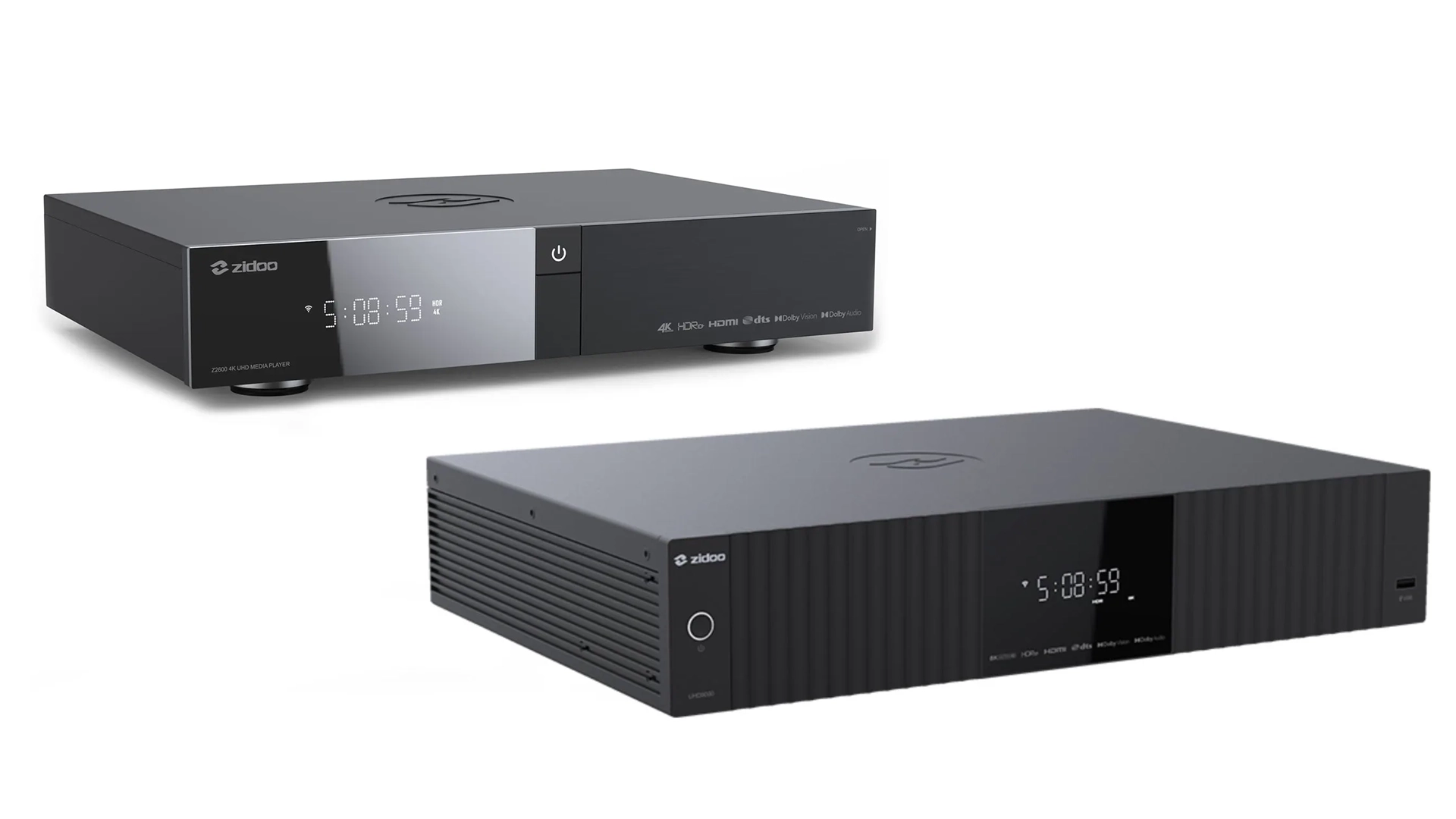
Zidoo is a Shenzhen-based electronics company founded in 2014 and best known for media players designed around locally stored film libraries. Its early Android boxes combined broad format support with HDMI output, but the X9S of 2016 established a more specialised direction: reliable 4K playback, automatic frame-rate and resolution switching, Blu-ray menu handling and an interface suited to large collections. Poster Wall software scans files, retrieves artwork and metadata and presents a cinema library without exposing the underlying folder structure. Later Z9X, Z10 Pro and UHD models added Dolby Vision processing, HDR conversion, dual-drive storage, linear power supplies and progressively stronger audio sections. Current 8K-generation players continue this separation between the media library, video engine and high-quality AV output, with flagship chassis intended for dedicated theatres. Zidoo also entered two-channel audio with NEO players and developed streaming-focused products through the related Eversolo brand, but the two names should not be collapsed: Zidoo remains primarily the home-cinema and local-media platform. The company develops firmware, mobile control, library management and hardware together, which is why long-term software behaviour matters as much as the selected system-on-chip. Its strength is practical integration rather than inventing a new video codec: one appliance can index large local libraries, decode uncommon disc structures, output modern HDR formats and provide the control and connectivity expected in an installed cinema.