
Planar Magnetic Ribbon Headphones
Planar magnetic headphones are a favorite among audiophiles, utilizing an advanced driver technology for incredibly detailed and accurate sound. Instead of a conventional cone, they use a large, ultra-thin diaphragm suspended between powerful magnets. This design delivers exceptionally fast transient response, powerful yet low-distortion bass, and a rich, transparent sound signature. This directory is your guide to the specialized manufacturers who engineer these high-performance headphones.
Hi-Fi brands in the category
Summary information and image
Direct links to official websites
Abyss

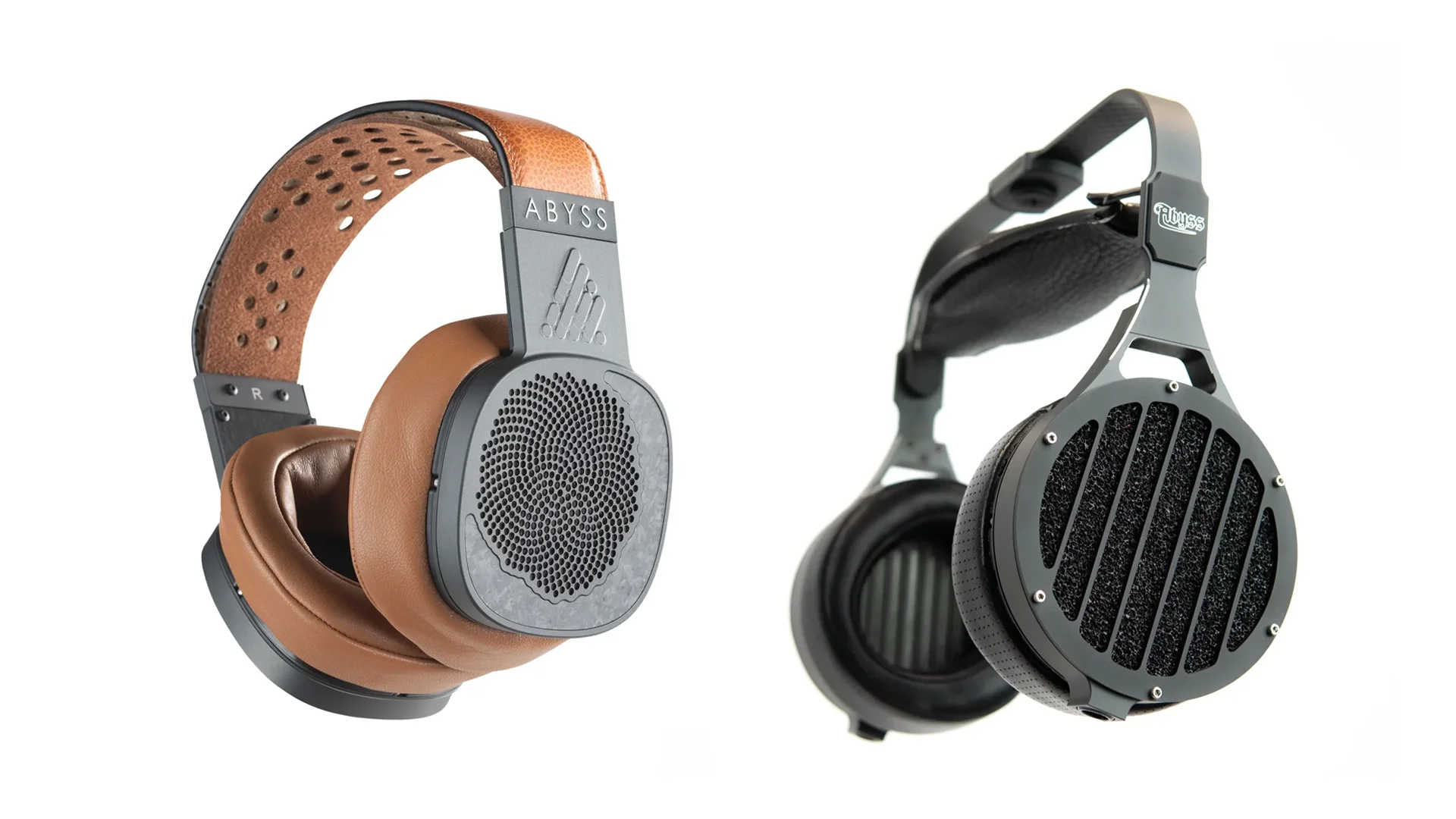
ABYSS specialises in planar magnetic headphones, producing its drivers and machining its aluminium frames in New York. The AB-1266 makes that engineering unusually visible: its machined metal frame and magnetically adjustable ear pads make physical fit part of the acoustic setup. The headphone business grew out of JPS Labs, founded by Joe Skubinski; he and his son Eric developed the original AB-1266 together. The Diana family takes a more compact approach to the same broad type of driver technology. In-house driver production and metalwork are central to the brand, rather than simply cosmetic details. Its headphones are intended for dedicated personal listening, with model choice involving both physical fit and the requirements of the partnering headphone amplifier.
Dan Clark Audio

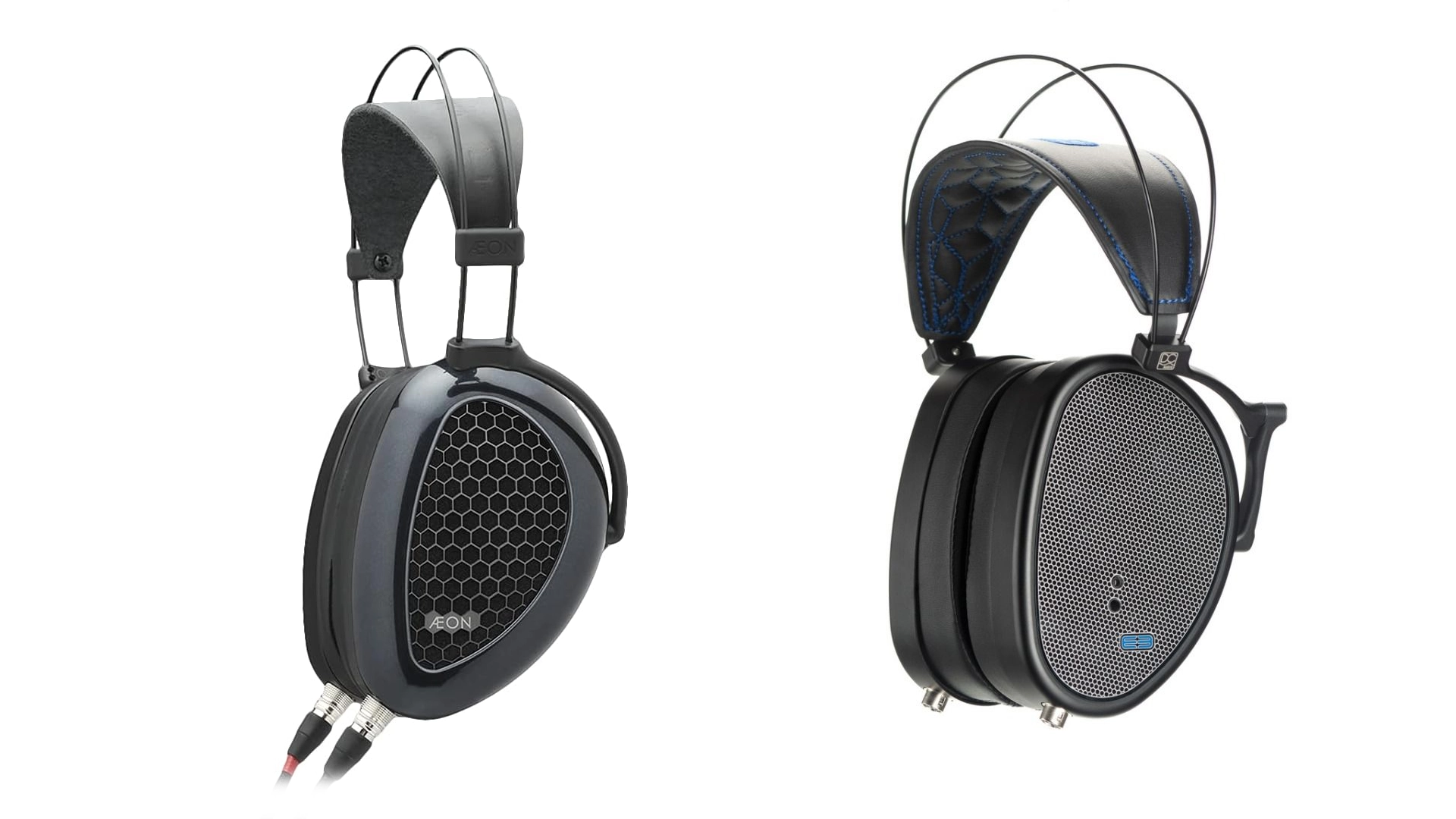
Dan Clark Audio is a San Diego headphone manufacturer that grew from one engineer’s experiments with modified Fostex models into a specialist in proprietary planar-magnetic and electrostatic designs. Dan Clark founded the company as MrSpeakers in 2012; the early Mad Dog modifications financed Alpha Dog, widely recognised as the first production headphone with 3D-printed ear cups, and then ETHER, its first fully in-house planar model. The business adopted the Dan Clark Audio name in 2019. Its technical identity now rests on several linked ideas: V-Planar creases give the diaphragm greater linear excursion, TrueFlow shapes airflow through the motor, and the Acoustic Metamaterial Tuning System uses tuned acoustic structures between driver and ear to control high-frequency resonances. STEALTH and EXPANSE apply these technologies at flagship level, while E3, ÆON and NOIRE models translate them into lighter or more attainable formats. Folding gimbals, nickel-titanium headbands and careful weight distribution show that comfort is treated as part of engineering, not as an accessory to sound quality.
Erzetich Audio

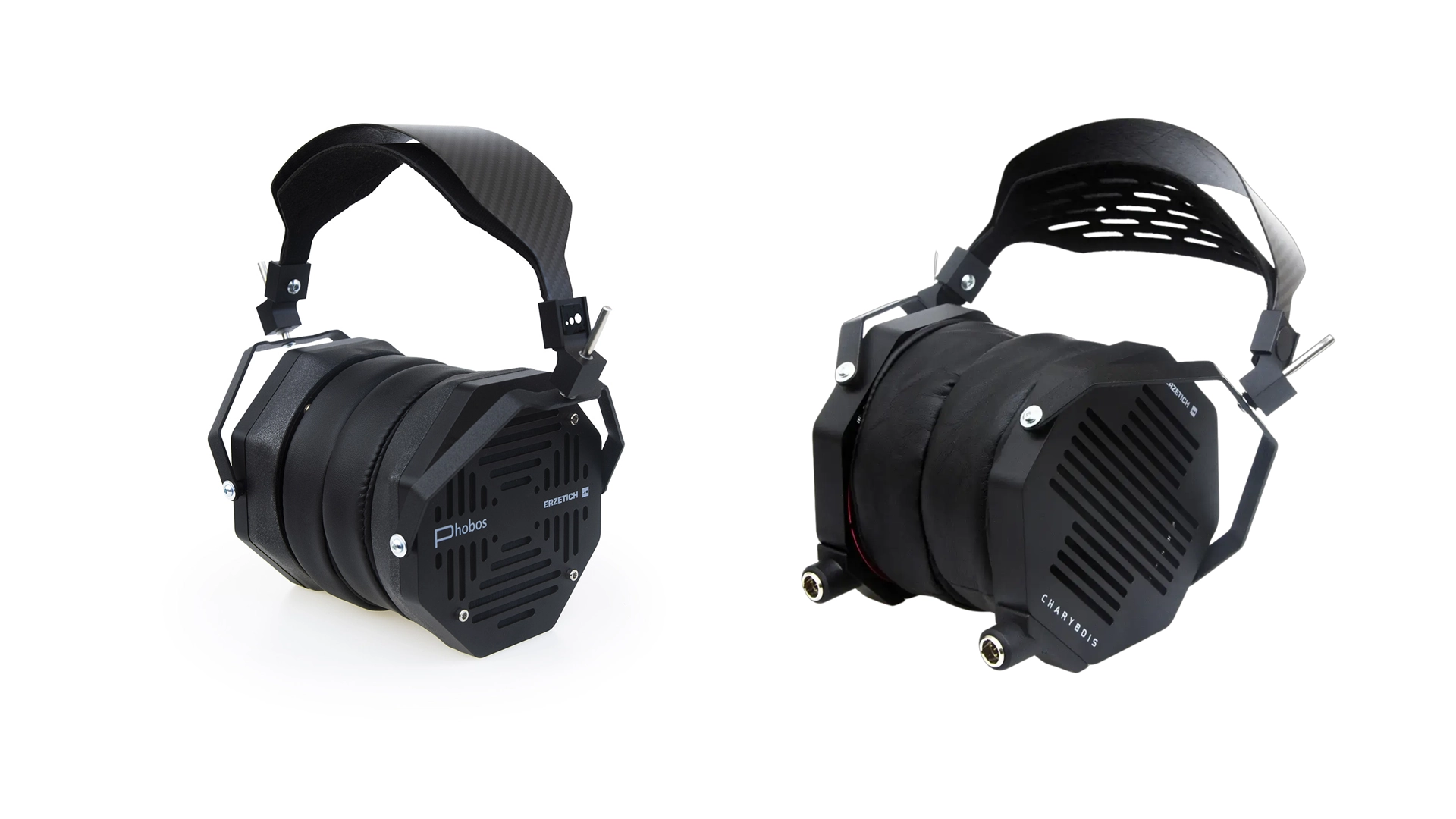
Erzetich Audio is a Slovenian personal-audio workshop founded by Blaž Erzetič in 2012. The first product was the compact Bacillus headphone amplifier, followed by larger designs including the dual-mono Class A Deimos and balanced Scylla. The company later added headphones, with open planar-magnetic models such as Phobos and the flagship Charybdis becoming central to the range. Erzetič’s background spans electronics, recording, music and visual design, which explains products that are technically purposeful but visually unlike mass-market studio gear. Wood, metal and locally sourced craft work are used selectively rather than as decoration applied to a standard chassis. The brand’s real niche is a coherent headphone system—amplifiers and transducers developed by the same small team, built in Slovenia and offered in limited-production forms.
Final

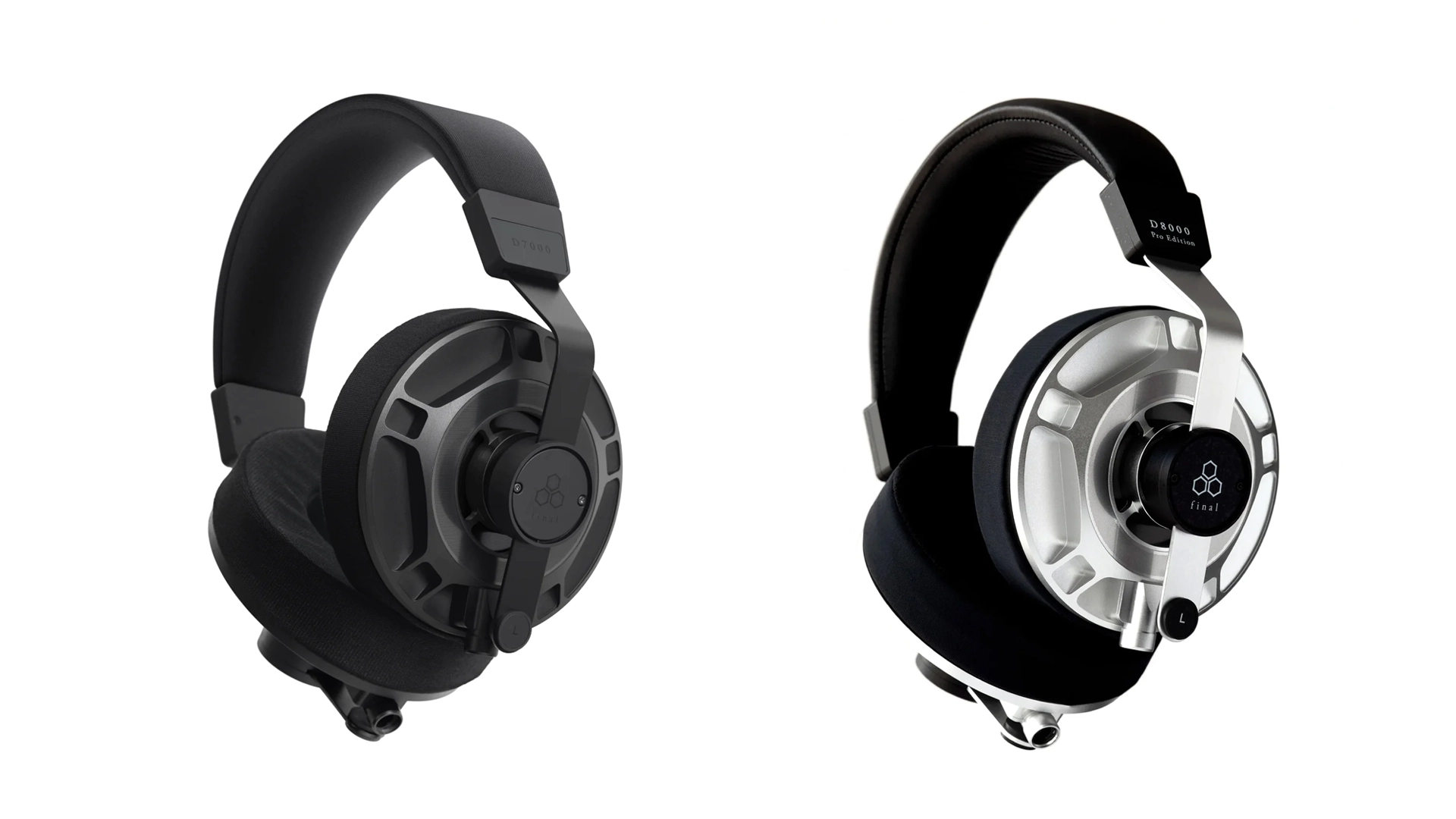
Final traces its Japanese audio lineage to 1974, when Kanemori Takai established the original Final brand and pursued unconventional analogue and transducer designs, including a cartridge with a one-piece diamond cantilever and stylus. The modern company began a new chapter when Takai and engineer Takashi Yamaguchi established Final Audio Design in 2007; earphone production followed in 2009, and S’NEXT brought the operation and final name together after a management buyout in 2014. Current products range from E-, A- and B-series earphones to D-series headphones and true-wireless models. Landmark projects show the engineering range: the user-tunable MAKE earphones, the titanium 3D-printed LAB I and the D8000 planar-magnetic headphone with Air Film Damping System. The brand is therefore neither a generic IEM maker nor an uninterrupted single corporation—the accurate story is a 1974 design lineage continued by today’s S’NEXT team.
Fostex

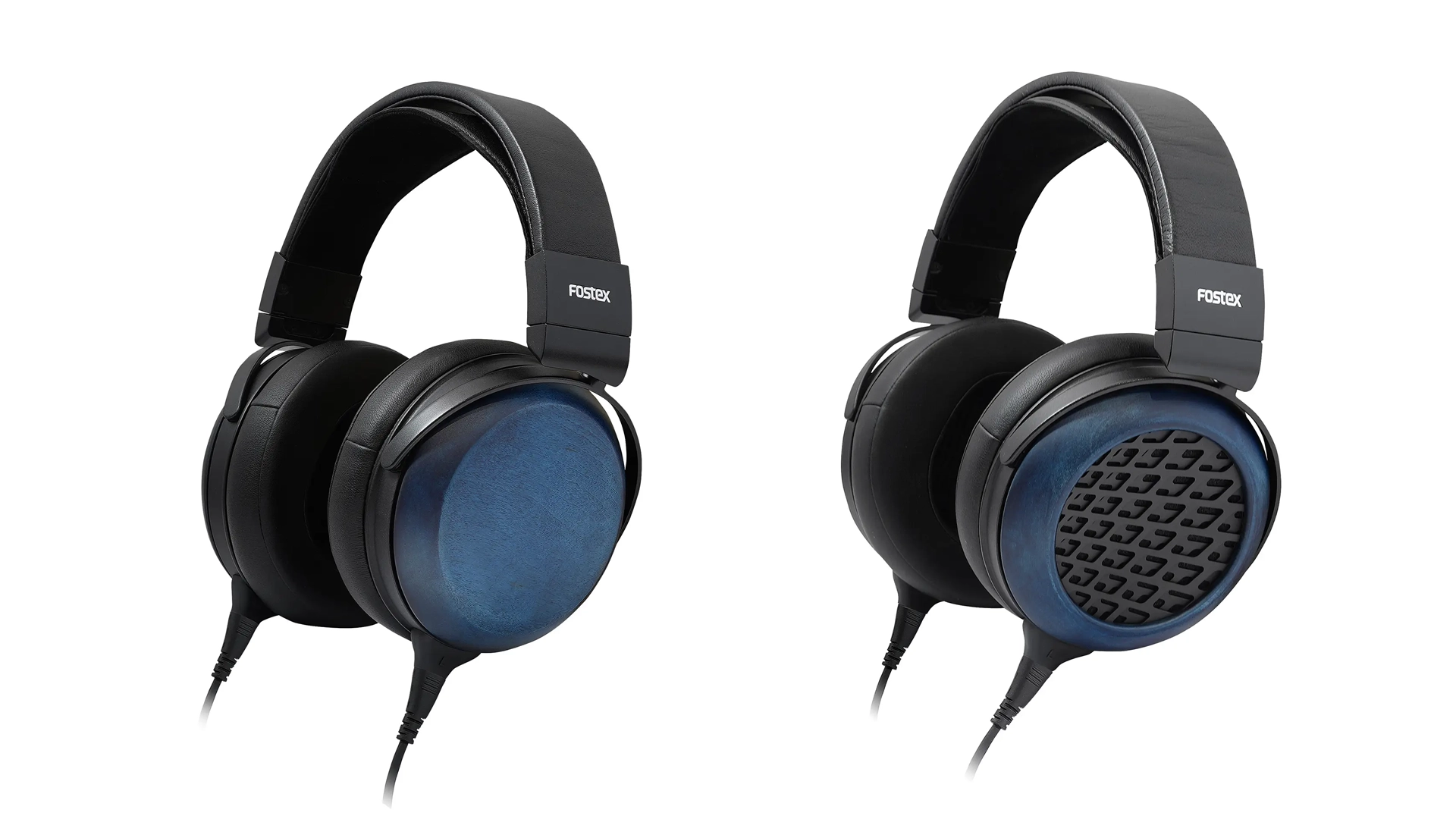
Fostex connects Japanese transducer manufacturing with tools used by recording engineers, musicians and hands-on loudspeaker builders. The company was created in 1973 as an independently managed subsidiary of Foster Electric, whose OEM loudspeaker experience gave the new brand an unusually deep production base. In 1974 it introduced RP, or Regular Phase, technology: a planar diaphragm carrying a printed conductor and driven across its surface in phase. Successive RP generations power the long-running T50RP family and newer premium planar-magnetic headphones, while the TH series explores dynamic drivers and crafted wooden housings. Fostex also makes active studio monitors, field and multitrack recorders, headphone amplifiers, microphones and professional accessories. A second, equally distinctive part of the catalogue is its raw loudspeaker components, including full-range drivers, compression tweeters and enclosure kits used in commercial and DIY designs. That breadth explains why the name appears both in studios and in enthusiast-built speaker systems.
Meze Audio

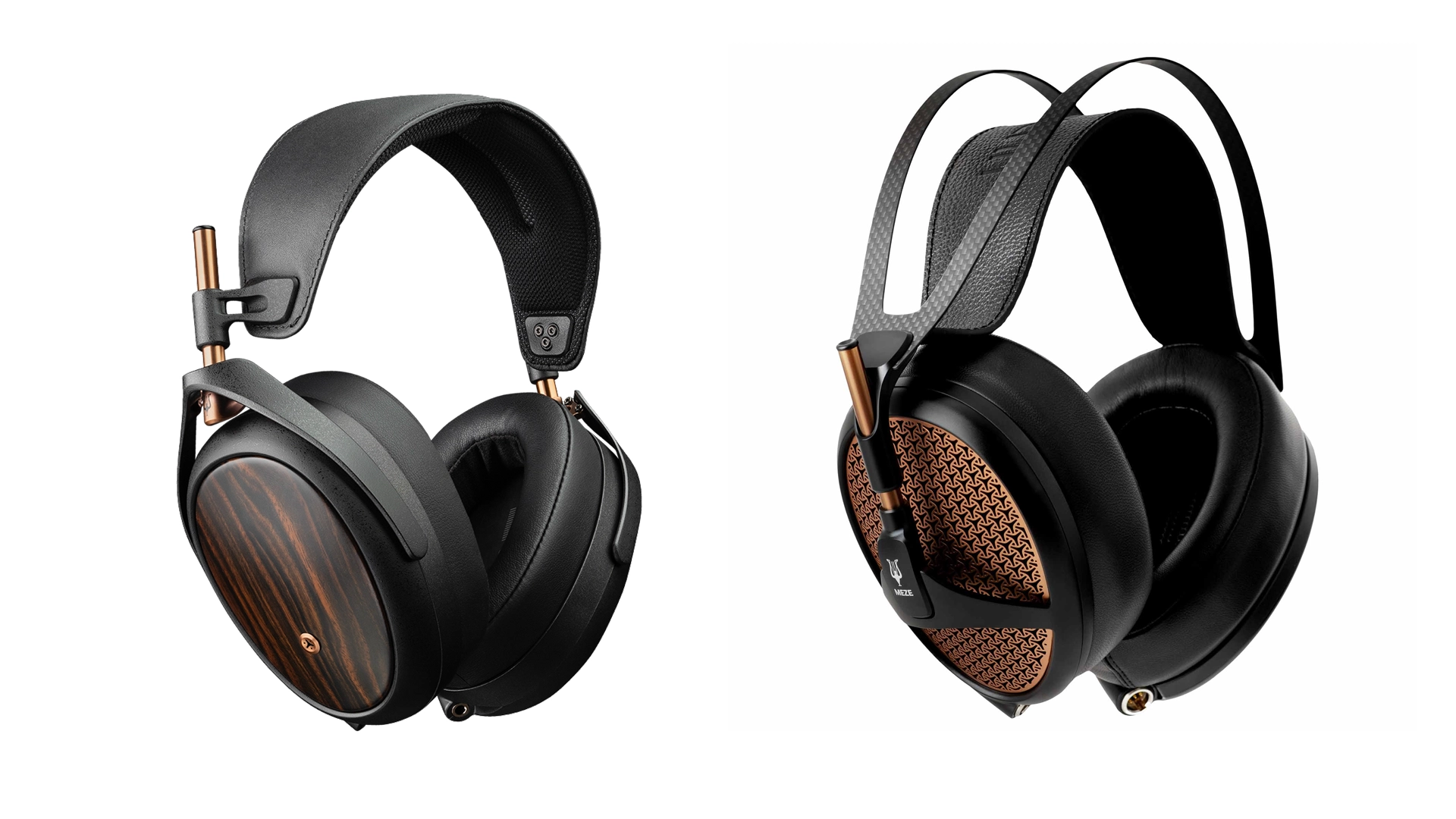
Meze Audio is a Romanian headphone specialist that combines distinctive industrial design with replaceable parts and acoustic platforms developed for long service. Designer Antonio Meze founded the company in Baia Mare in 2011. The wooden 99 Classics established its international identity in 2015, showing that a comfortable, repairable headphone could also have a recognizable visual and sonic character. The range now spans dynamic open- and closed-back headphones, planar-magnetic flagships and in-ear monitors. Empyrean, Empyrean II and Elite use isodynamic hybrid-array drivers developed with Rinaro, a Ukrainian-founded planar specialist; differently shaped voice-coil traces direct low and high frequencies toward appropriate areas of the ear. Models such as 109 Pro, 105 AER and 99 Classics use dynamic drivers and carefully shaped earcups, while Alba, Advar and Rai Penta address portable in-ear listening. Materials include wood, machined aluminium, carbon fibre and leather, but longevity is more important than ornament: ear pads, headbands, cables and many structural parts can be replaced. Meze’s genuine signature is the integration of ergonomics, sculptural form and serviceability with serious driver development.
Quad

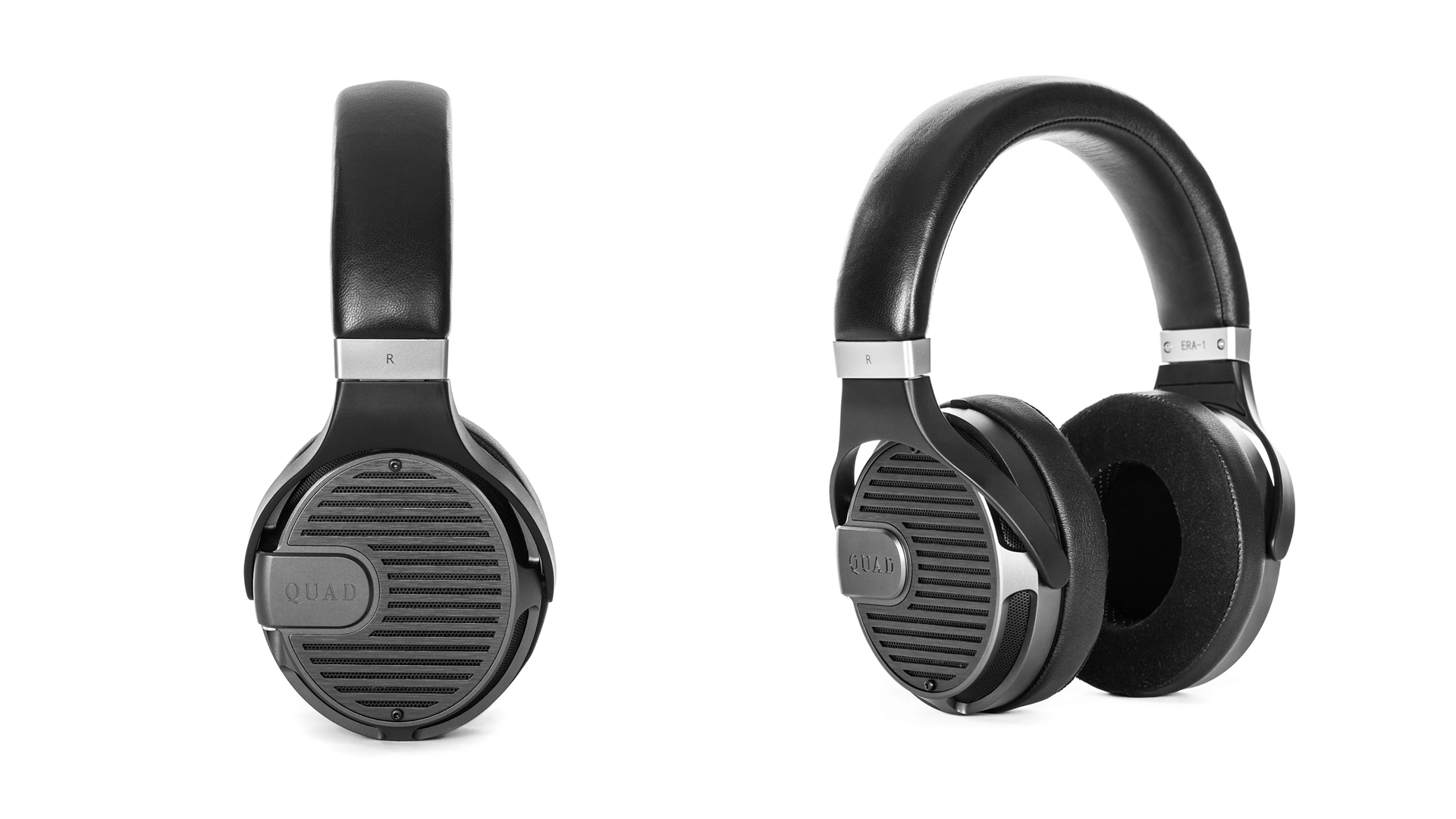
QUAD was founded by Peter J. Walker in 1936 as S.P. Fidelity Sound Systems, later becoming the Acoustical Manufacturing Company. The name came from “Quality Unit Amplifier Domestic,” but the brand’s lasting reputation rests on two different inventions: full-range electrostatic loudspeakers and current-dumping amplification. Both pursued Walker’s famous aim of making the closest approach to the original sound through low distortion rather than theatrical voicing. The original Electrostatic Loudspeaker of 1957—now commonly called the ESL-57—used a charged film diaphragm driven over its area instead of a conventional cone and voice coil. Its transparency made it a reference, while the ESL-63 introduced concentric delay-line stators that approximate a point source. Current ESL-2812X and ESL-2912X models continue that lineage with improved structure, protection and power handling. A factual error in the old description has been corrected: the Quad 303 was a conventional transistor amplifier; Peter Walker’s current-dumping circuit reached production in the Quad 405 in the mid-1970s. It combines a low-power precision amplifier with high-power “dumpers,” using error correction to achieve low distortion efficiently. QUAD also made enduring valve electronics such as the QUAD II and now offers Artera, Vena, Quad 3, the revived 33/303 pairing and Platina electronics, alongside Revela and other dynamic loudspeakers. Since 1997 the company has been part of International Audio Group; management, design and service remain in Huntingdon, including support for many historic products. QUAD therefore remains British in origin and engineering identity even within an international owner.
RAAL-Requisite

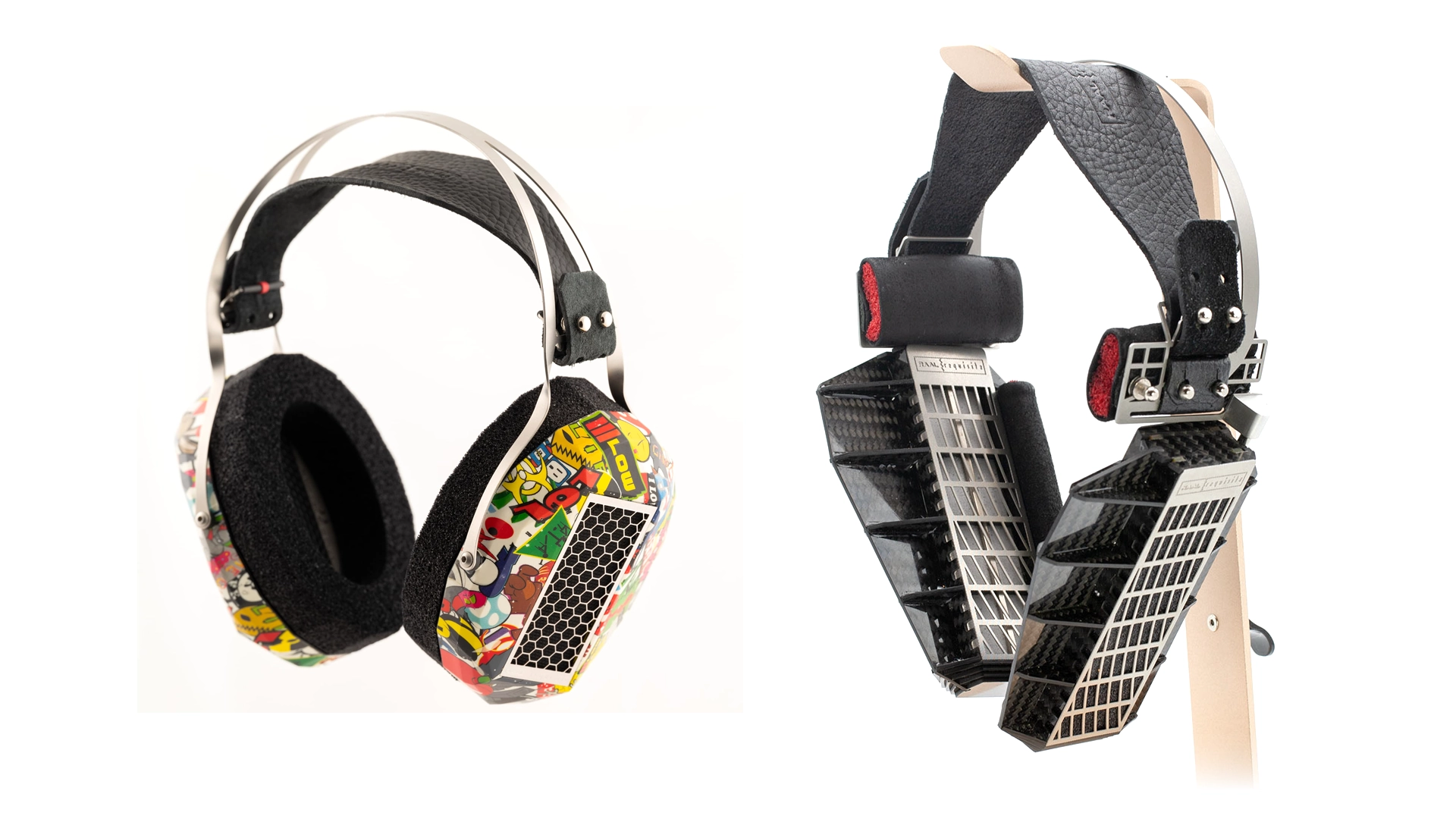
RAAL-requisite was the collaboration between Serbian ribbon specialist RAAL and Danny “Sage” McKinney’s Requisite Audio in California. McKinney and designer Aleksandar Radisavljević worked together for roughly two decades before the SR1a appeared in 2018. Their goal was not to put a conventional planar diaphragm into a headphone cup, but to adapt a true ribbon—the conductor and radiating diaphragm are the same corrugated aluminium foil—to full-range personal listening. The SR1a became the defining product. Its open “earfield monitor” wings sit beside the ears and can be angled to alter the presentation, creating a speaker-like field without sealed cups. The extremely low-impedance ribbon initially required an interface connected to a suitable speaker amplifier or a purpose-built direct-drive amplifier. HSA-1b and VM-1a were developed around that unusual load. CA-1a later placed a full-range ribbon in a more familiar circumaural form while retaining replaceable ribbon cartridges and dedicated amplification requirements. The old text incorrectly suggested a range of open- and closed-back conventional models; neither SR1a nor CA-1a is an ordinary closed-back headphone. The corporate presentation has since changed. Requisite Audio now represents RAAL 1995 in the Americas, and the current Magna and Immanis headphones use two or three purpose-tuned true ribbons per side; Magna EVO continues that multi-ribbon generation. RAAL-requisite remains historically important as the name under which SR1a and CA-1a reached the market, while the current products sit under RAAL 1995 and Requisite. No speculative founding year has been added to the joint brand.
Rosson Audio Design

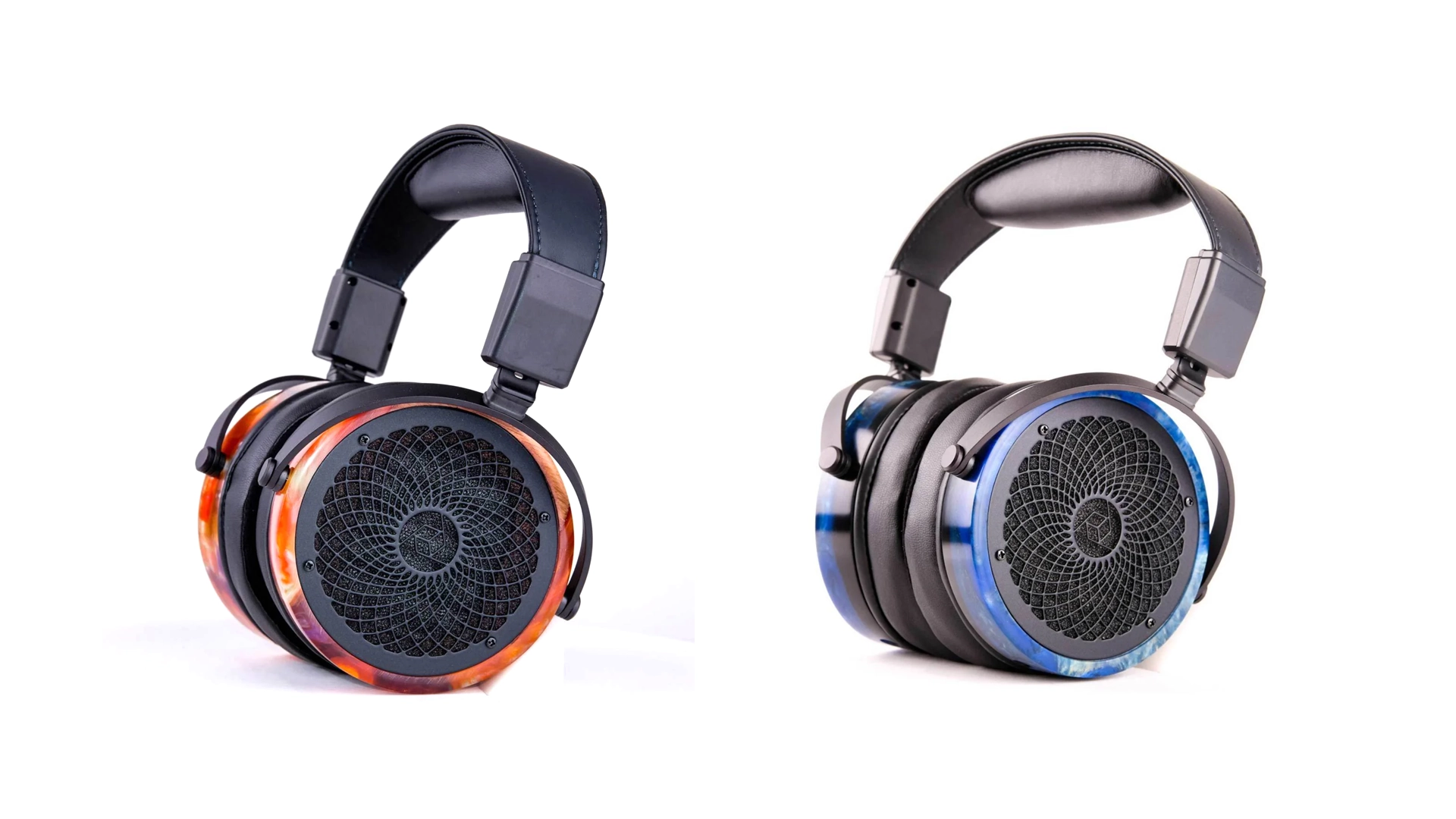
Rosson Audio Design is an American maker of planar-magnetic headphones founded by Alex Rosson, co-founder and former chief executive of Audeze. The company appeared in 2019 with the RAD-0, a deliberately low-volume headphone in which acoustic engineering and individual hand finishing carry equal weight. Its open-back planar driver was developed to combine physical bass, dense tonal colour and high resolution without turning the presentation into a clinical exercise. Just as distinctive are the earcups: stabilized woods, resins and custom colour work produce patterns that cannot be duplicated, so even standard RAD-0 pairs differ visually and fully bespoke commissions can be built around a client’s palette. The substantial aluminium hardware, replaceable pads and suspension headband are designed for long-term use rather than a seasonal fashion cycle. RAD later expanded the idea with the MPL-0, a larger statement model that uses a 66 mm planar diaphragm and an elaborate sculpted enclosure, while collaborations and limited editions explore unusual materials and finishes. Manufacturing and final assembly take place in California, with Alex Rosson’s experience in recording, headphone development and visual art shaping both tuning and presentation. Rosson Audio Design is therefore not simply another boutique brand applying decorative wood to an existing platform. Its identity comes from treating the transducer, mechanical structure and surface finish as one authored object: a serious high-end headphone whose sound is repeatable even though the appearance of each pair remains genuinely individual.
Sendy Audio

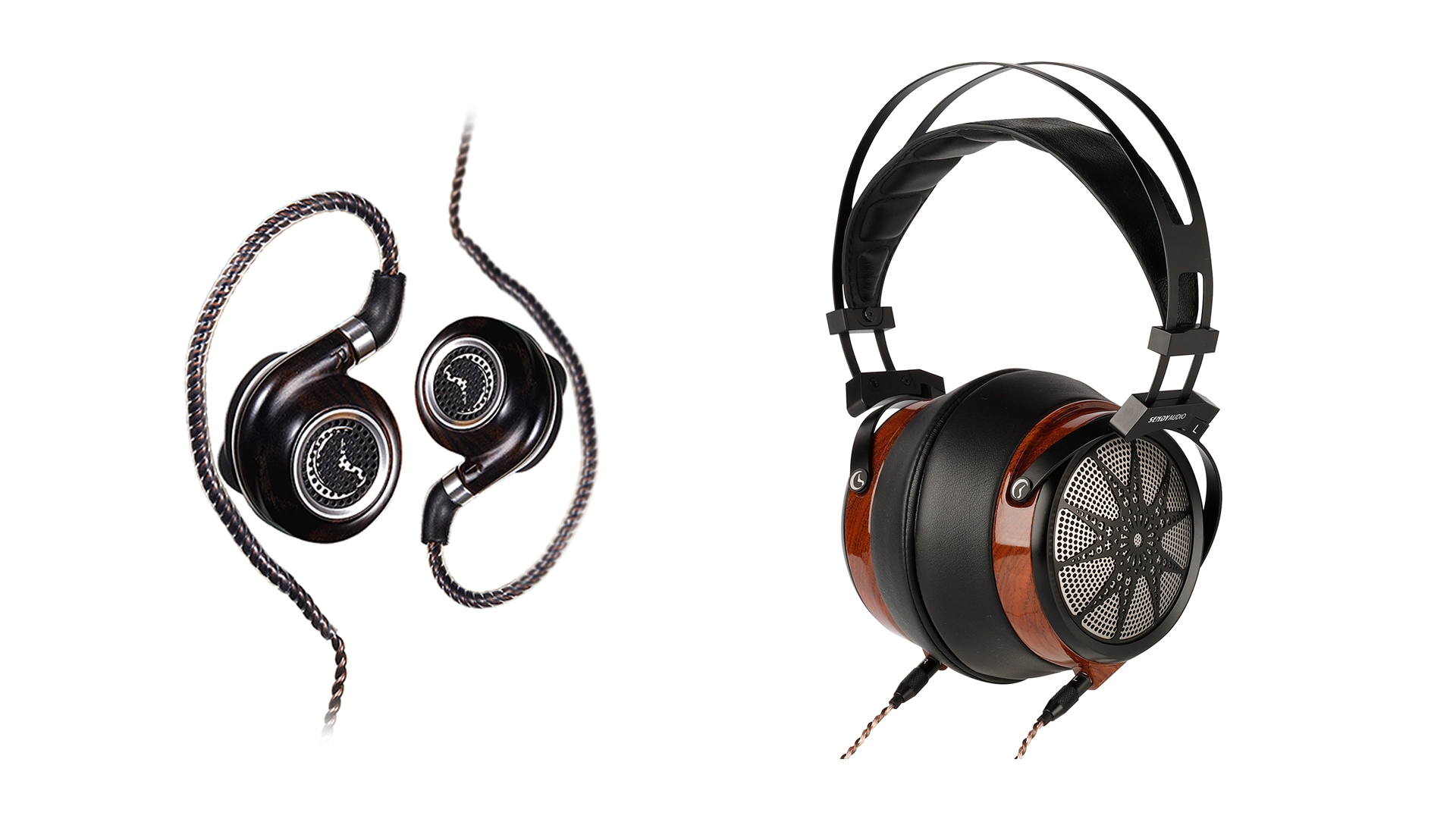
Sendy Audio is a Chinese high-end headphone label created by Dongguan SIVGA Electronic as a more ambitious outlet for its woodworking and transducer development. The brand is closely associated with open-back planar-magnetic headphones and with earcups carved from natural hardwood, rather than metal housings decorated to imitate wood. Selection, machining, polishing, coating and repeated drying make the cups labour-intensive and leave every pair with a different grain. AIVA brought Sendy to international attention and received a Japanese VGP award in 2019. It uses a large planar diaphragm with a double-sided magnet structure and became the visual template for later models: sculpted solid wood, metal grilles and a detachable balanced cable. Peacock moved upward with a thinner diaphragm, revised magnetic system and more elaborate zebrawood construction, while Apollo explored a lighter, more approachable interpretation of the same planar idea. Recent Apollo Pro and related developments continue the focus on planar speed and full-size listening rather than wireless features. Sendy describes the driver programme as the Black Beauty series, developed over several years to control diaphragm tension, conductor layout and magnetic force. Because Sendy is a SIVGA sub-brand, the two names share manufacturing knowledge and some design language, but they are not interchangeable product ranges; Sendy occupies the more specialised, low-volume tier. Its strength is the integration of craft and mechanism. The wood is not a generic luxury claim but part of a complete, recognisable enclosure, while proprietary planar assemblies give the brand an acoustic identity beyond finish alone. An exact founding year is not consistently documented, so the date field remains blank rather than inventing one.
T+A

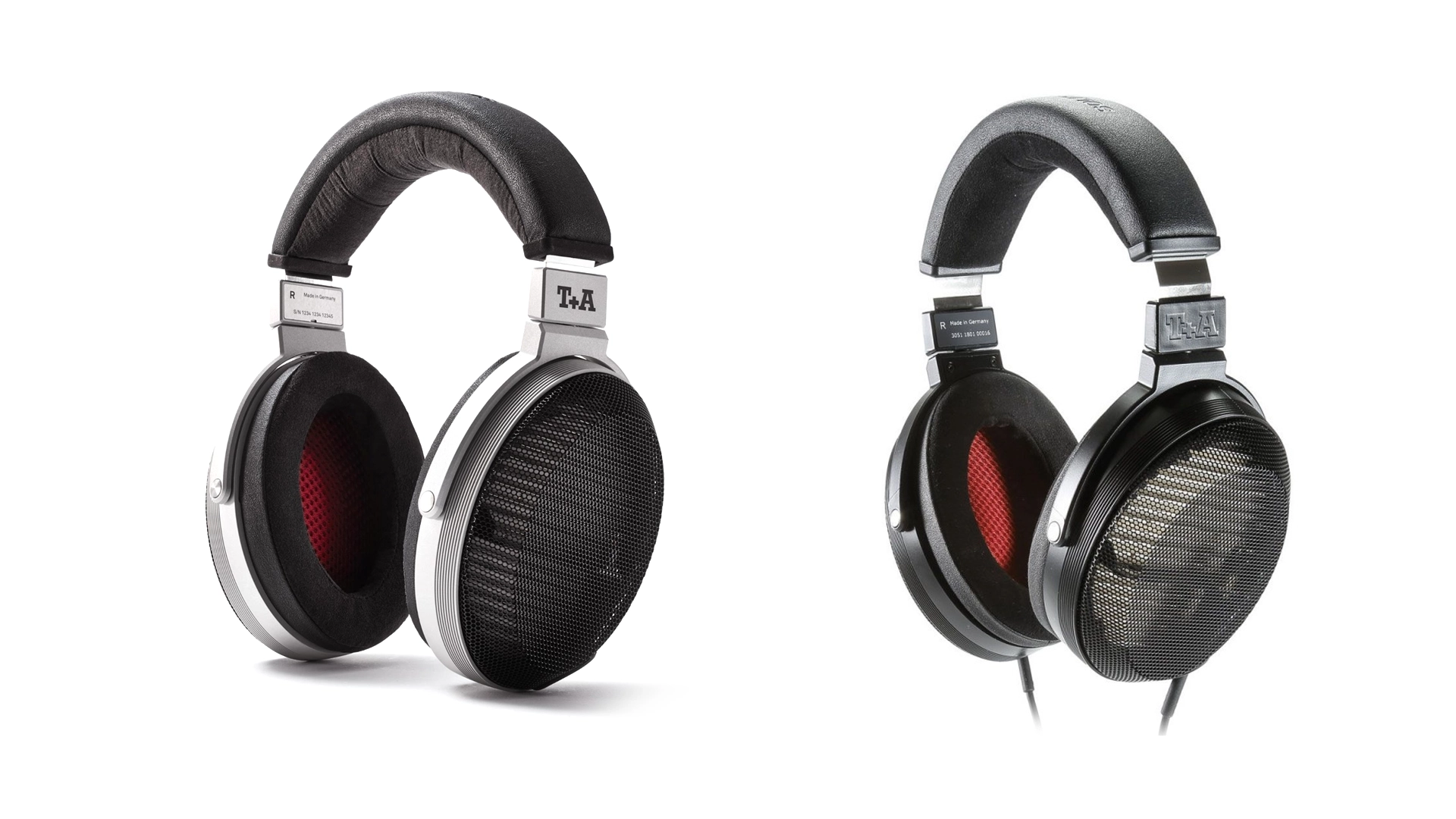
T+A elektroakustik (Theory + Application) is a German manufacturer of high-end audio equipment, known for its wide range of products, innovative technologies, and a focus on delivering both exceptional sound quality and comprehensive features. The company’s product range includes amplifiers, preamplifiers, integrated amplifiers, CD players, streamers, all-in-one systems, loudspeakers, and even headphones. T+A often utilizes proprietary technologies and advanced engineering in its designs, aiming to push the boundaries of audio performance. Their products are characterized by their robust build quality, elegant aesthetics, and a sonic signature that emphasizes detail, dynamics, and a natural, unforced presentation. The “HV” (High Voltage), “R” series , and “Cala” series represent different facets of their product offerings. T+A products are positioned in the high-end segment of the market, appealing to audiophiles who value both performance and German engineering.