
Commercial Speakers
Commercial speakers are designed for use in public spaces such as retail stores, restaurants, offices, and hotels, where reliability and broad, even sound coverage are critical. Unlike home hi-fi, their purpose is to deliver clear background music (BGM) or announcements to a wide area, often operating all day. This page is a guide to the leading manufacturers of these installed sound solutions, from discreet in-ceiling models to robust surface-mount and pendant speakers for any commercial application.
Hi-Fi brands in the category
Summary information and image
Direct links to official websites
Aeron
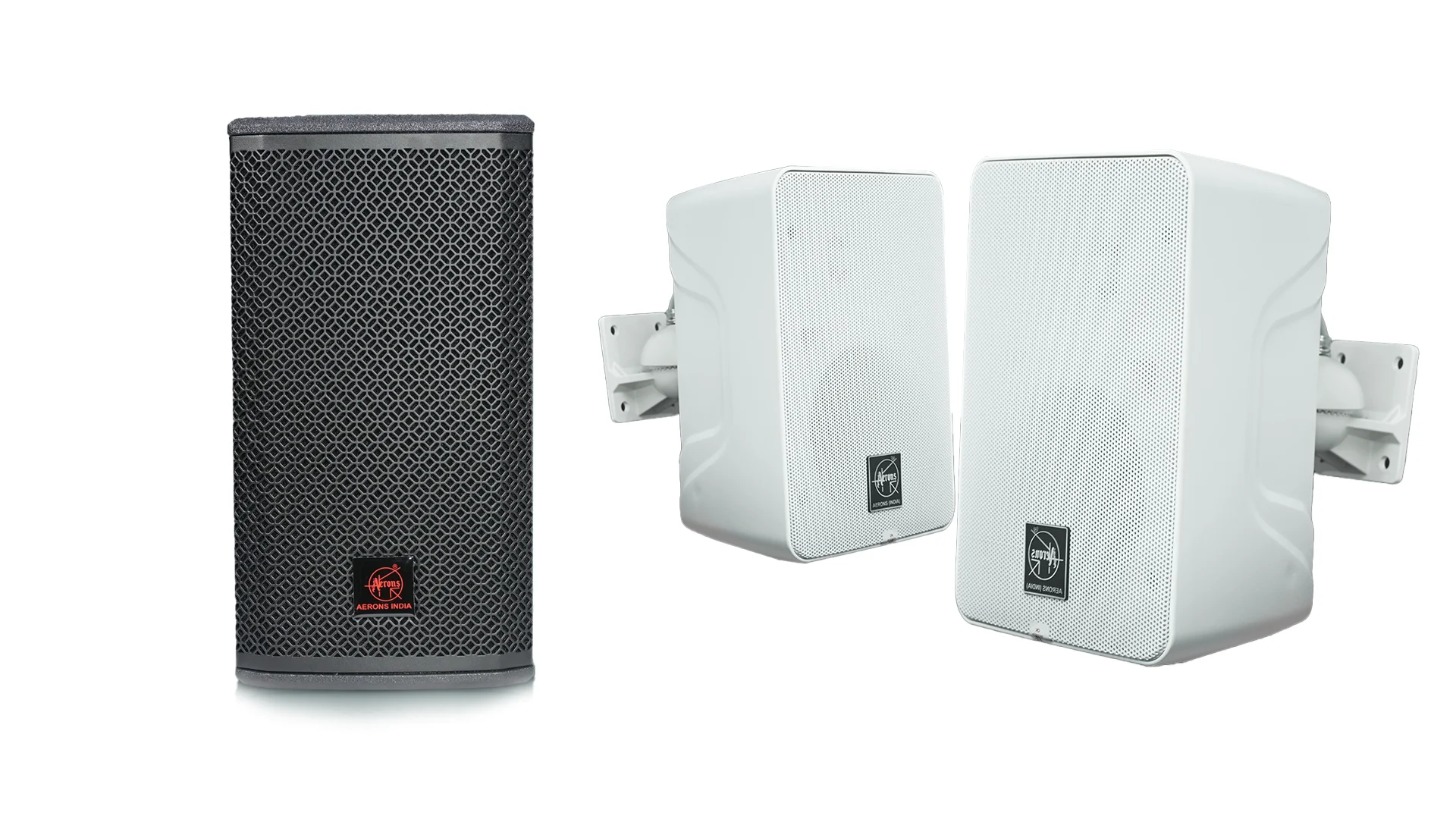
AERONS supplies professional sound equipment for live events, public-address systems and permanent installations in India. Its catalogue covers line arrays, power amplifiers, mixers, microphones, signal processing and installation speakers, alongside equipment from international brands it distributes. The business traces its roots to radio and loudspeaker work in 1962; its own history identifies 2000 as an export-business milestone, not its founding year. Its work spans the equipment needs of venues, installers and sound-reinforcement operators, from microphones and mixing to amplification and loudspeaker coverage.
Axis Communications

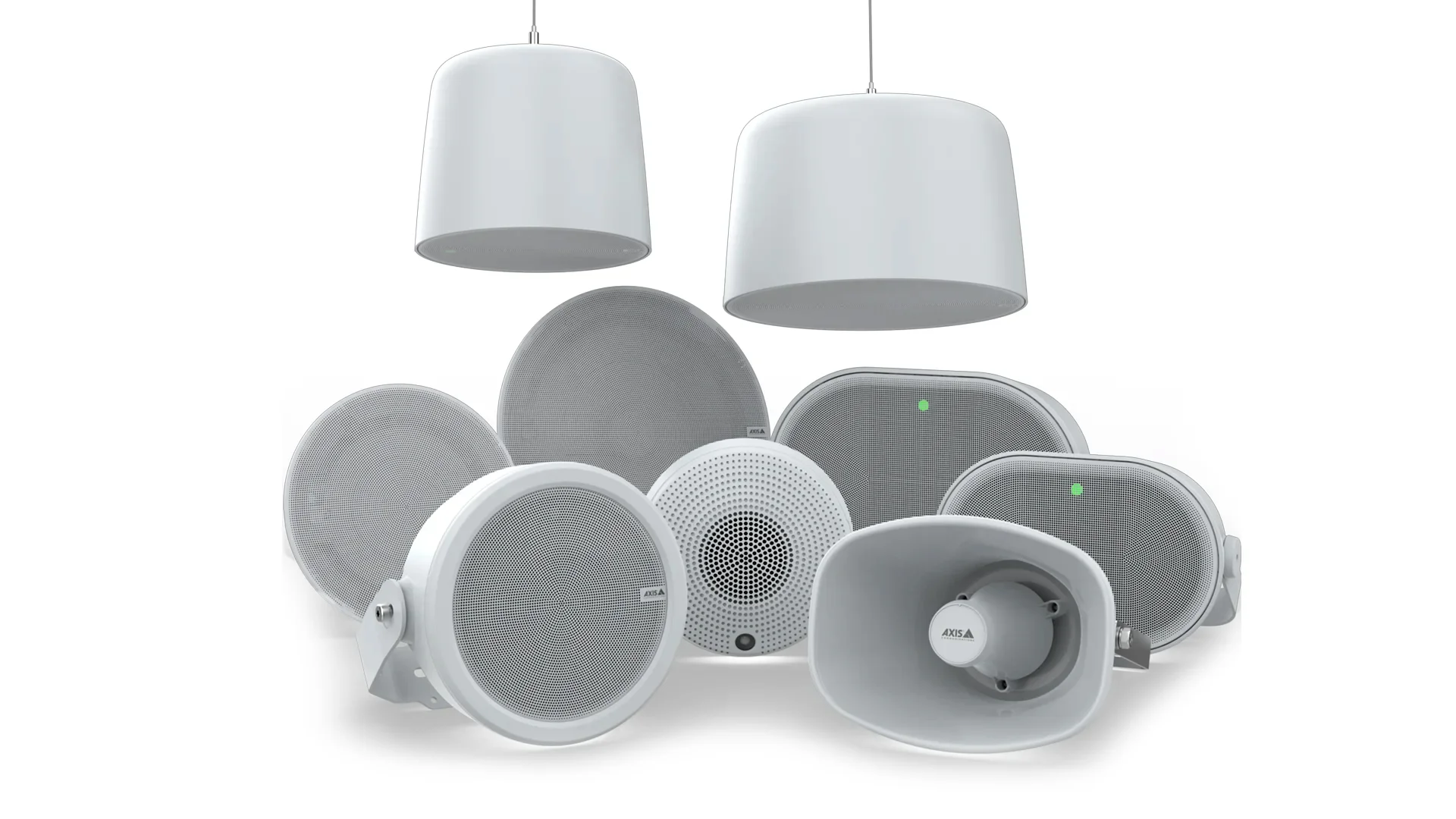
Axis Communications is a Swedish network-technology company whose audio products are built for public address, security and operational communication. Founded in Lund in 1984 by Martin Gren, Mikael Karlsson and Keith Bloodworth, Axis first made network interfaces and later introduced the AXIS 200, widely recognised as the first network camera, in 1996. Its present portfolio combines video surveillance, access control, intercom, analytics and IP audio. Network speakers, horns, sound projectors, microphones and audio-management software can deliver scheduled announcements, live paging, background music and event-triggered warnings over standard data infrastructure. This is the company identified by the title and axis.com address. The previous entry mistakenly described Australia’s Axis Loudspeakers and therefore had the wrong founders, country, year and product category.
Bluesound Professional

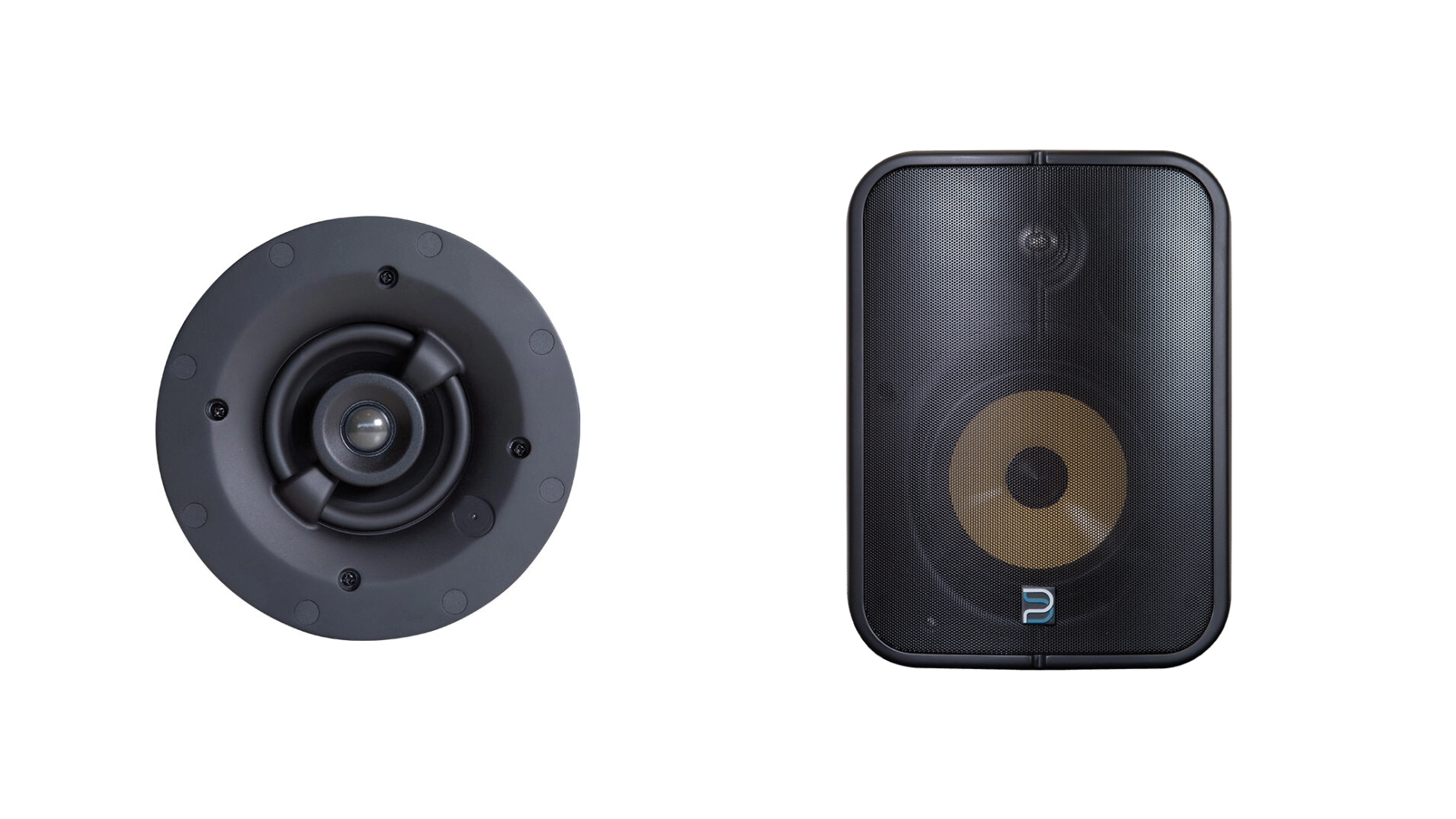
Bluesound Professional adapts the BluOS streaming platform for commercial spaces that need centrally managed audio across many zones. Lenbrook created the Canadian division in 2019, six years after the consumer Bluesound brand, so the earlier 2013 date described the parent platform rather than this business. Its range includes rack-mount streamers and amplifiers, network music players, wall controllers, powered loudspeakers and Power over Ethernet endpoints for retail, hospitality, restaurants, workplaces and other installed systems. Integrators can route different sources to separate areas, group zones, schedule playback and connect supported music services without building every project around a traditional central matrix. The important distinction is installation infrastructure: products, mounting and control are designed for continuous commercial deployment while retaining BluOS’s familiar source management and networked high-resolution audio architecture.
Electro-Voice

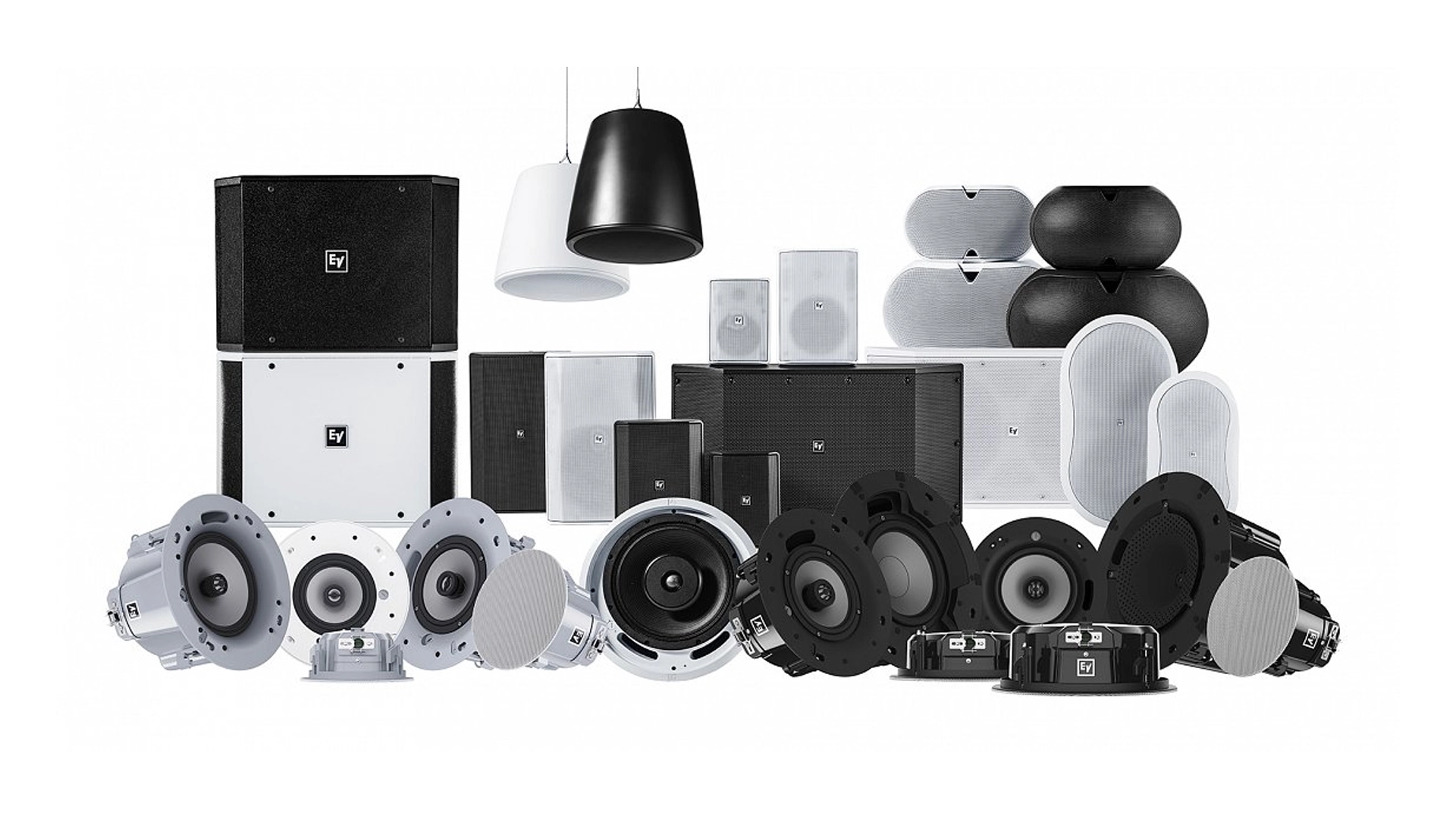
Electro-Voice is an American professional-audio manufacturer formed in 1930 by Lou Burroughs and Albert R. Kahn, whose work grew from servicing early public-address equipment into microphones and loudspeakers used on stages, in broadcast and in installed sound. The name reportedly followed football coach Knute Rockne’s description of Burroughs’ PA as his “electric voice.” EV’s importance rests on engineering that became industry vocabulary. Variable-D microphone construction controls proximity effect through rear acoustic ports and is embodied by the enduring RE20 broadcast microphone. Constant-directivity horn research helped make coverage predictable over frequency, while later powered systems integrated transducers, amplification, DSP limiting and presets as one calibrated platform. The current catalogue spans portable ZLX and EKX speakers, higher-output ETX systems, line arrays, installation loudspeakers, amplifiers, processing and wired or wireless microphones. Electro-Voice has been part of Bosch since 2006, but retains a distinct product and engineering identity. Its speciality is controlled, repeatable performance under professional conditions: intelligibility, pattern control, high output and reliability rather than domestic-audio ornament.
Genelec

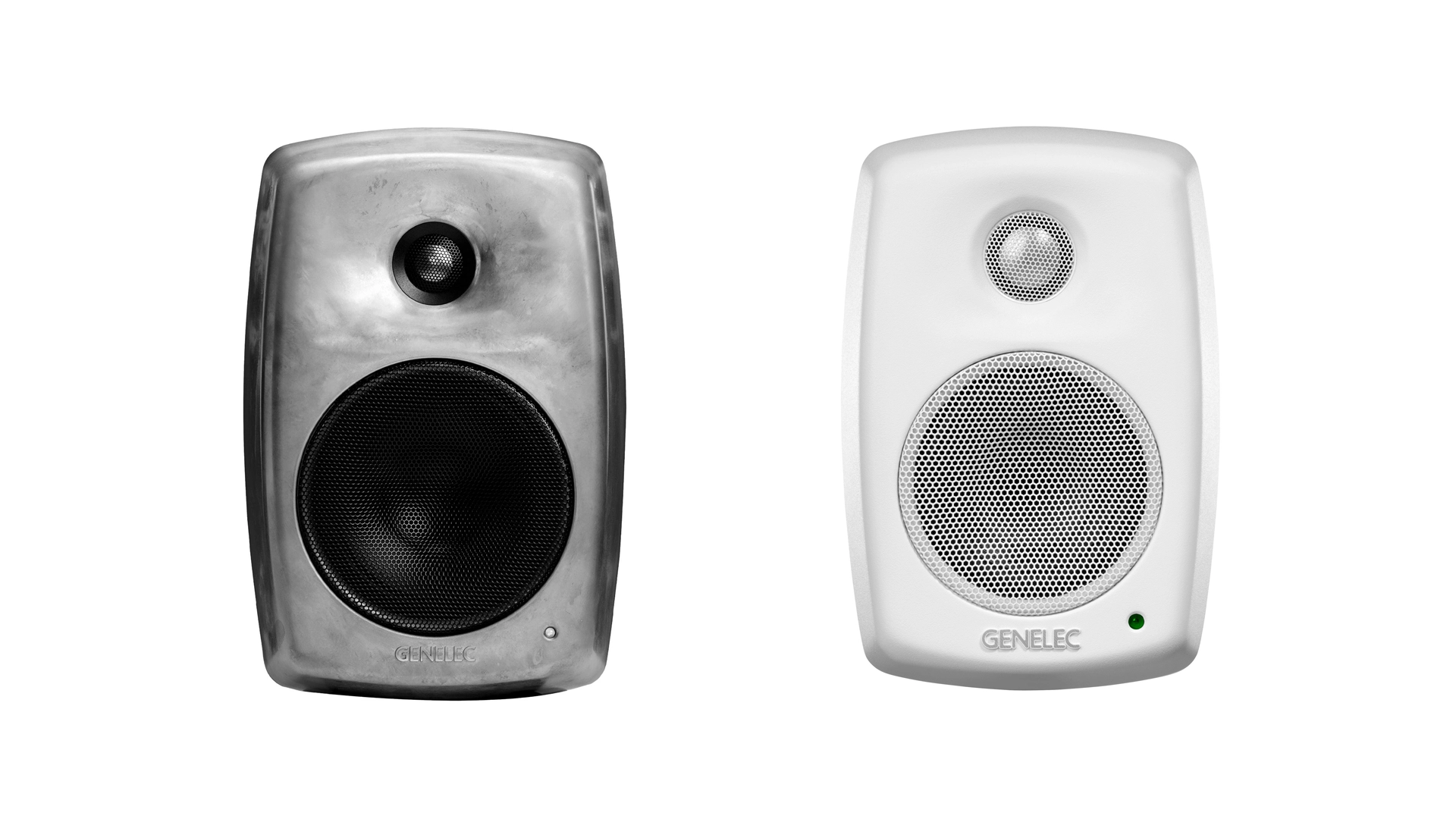
Genelec made active loudspeakers a repeatable monitoring system rather than simply placing an amplifier inside a cabinet. Ilpo Martikainen and Topi Partanen founded the company in Iisalmi in 1978 after Finnish broadcaster YLE asked them to develop a reliable active control-room monitor; the resulting S30 established separate amplification, protection, calibration controls and long-term serviceability as core principles. Modern 8000-series monitors use rounded Minimum Diffraction Enclosures, Directivity Control Waveguides and integrated reflex ports to control radiation and cabinet effects. Smart Active Monitors add DSP and network control, while GLM software measures and calibrates level, delay and room response across stereo or immersive arrays. The Ones combine a Minimum Diffraction Coaxial mid/tweeter with Acoustically Concealed Woofers to create point-source behaviour over a wide bandwidth. Genelec also serves installed audio through Smart IP and home listening through the G and F series. Product development and much of the recycled-aluminium enclosure manufacturing remain in Iisalmi, Finland.
James Loudspeaker
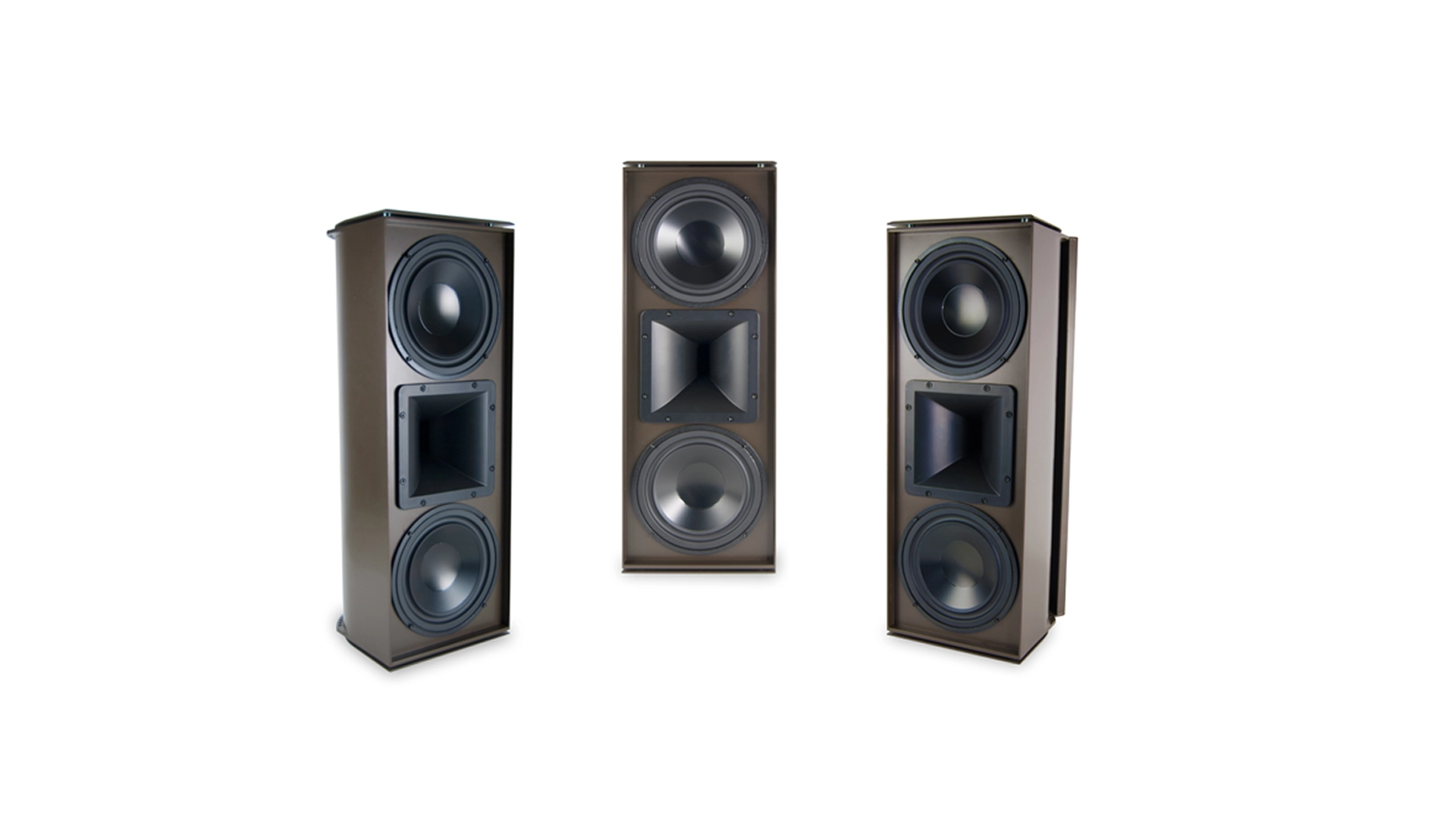
James Loudspeaker designs high-performance speakers for rooms in which conventional boxes are visually or physically unacceptable. Founded in California in 1999 and now part of Sonance, the company specialises in architectural, custom and outdoor systems built around rigid aluminium enclosures, purpose-designed drivers and unusually flexible fabrication. Its Small Aperture models place the visible opening at lighting-fixture scale while locating the enclosure behind the wall or ceiling. PowerPipe subwoofers move low-frequency output through a remote port when the cabinet must be hidden, and the high-output Mavericks range addresses dedicated cinemas. James also makes on-wall, in-wall, landscape, marine and soundbar solutions, including custom widths, colours and finishes for a particular screen or interior. Technologies such as quad-tweeter arrays and the EMB low-frequency platform serve installation problems rather than acting as generic badges. The brand’s strongest advantage is therefore not one signature speaker: it is the ability to engineer an acoustically serious system around architectural constraints, then manufacture the enclosure and finish to suit the project.
Lithe Audio

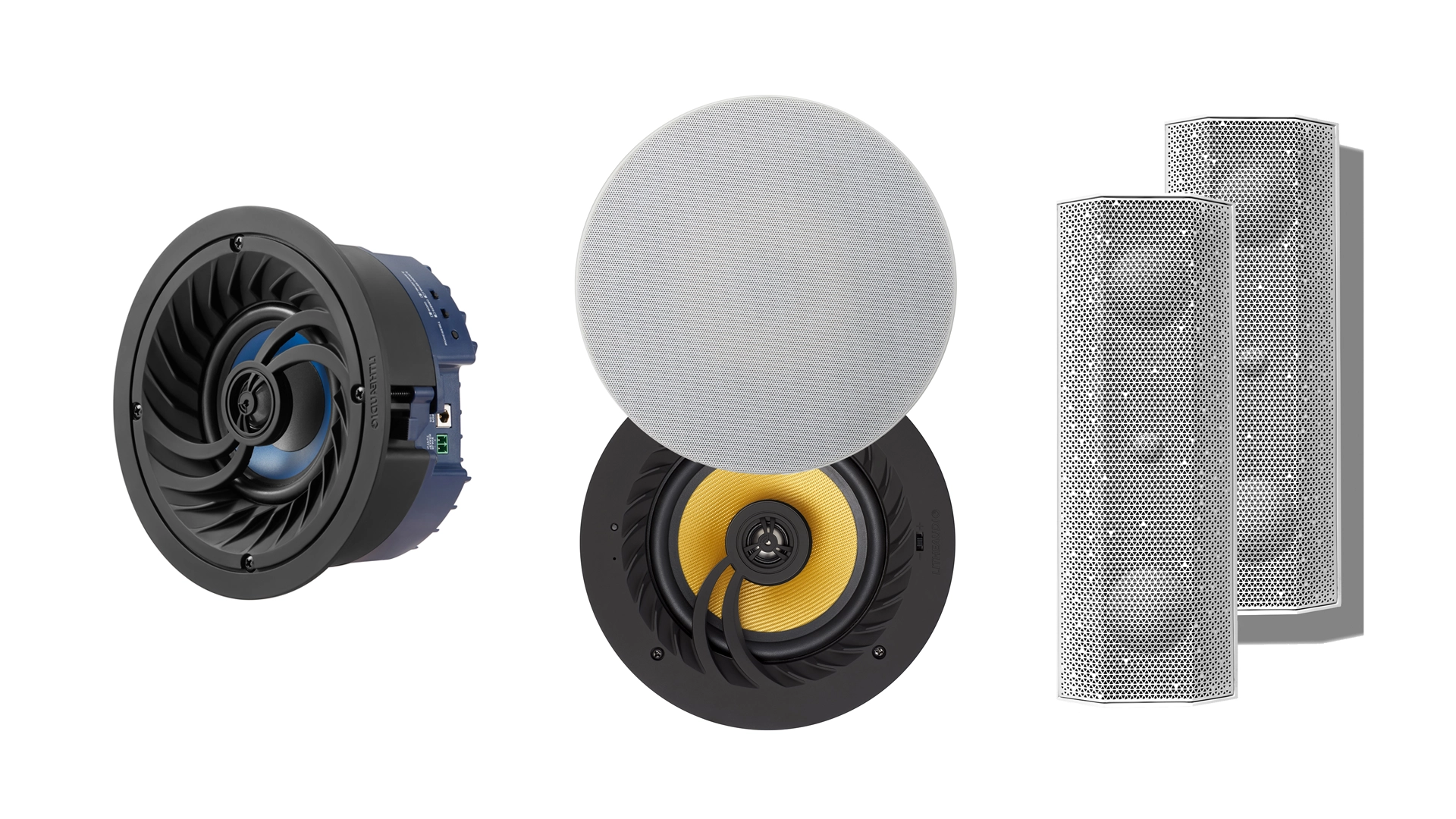
Lithe Audio is a British installation-audio company founded in 2014 to remove the separate amplifier, speaker cable and control hardware from everyday built-in sound. Co-founder Amit Ravat and the development team made the active ceiling speaker the centre of the system: amplification and wireless connectivity sit inside the speaker, so an installer normally adds mains power and a network or Bluetooth source rather than a remote equipment rack. The range includes simple Bluetooth ceiling speakers and Wi-Fi models with AirPlay 2 and Google Cast for synchronised multiroom playback. Pro-series speakers address larger installations, IP-rated models serve bathrooms and outdoor locations, and the iO1 combines an integrated amplifier with multiple mounting options for indoor or exterior use. Lithe Cinema uses WiSA wireless multichannel transport to build scalable surround systems with active ceiling speakers and subwoofers, while newer Auracast products target broadcast audio in commercial spaces. Passive variants and fire or acoustic hoods remain available where regulations or system architecture require them. Lithe Audio’s strength is practical integration: it packages amplification, streaming and loudspeaker engineering into an installer-friendly format without pretending that every room needs traditional hi-fi furniture.
Origin Acoustics

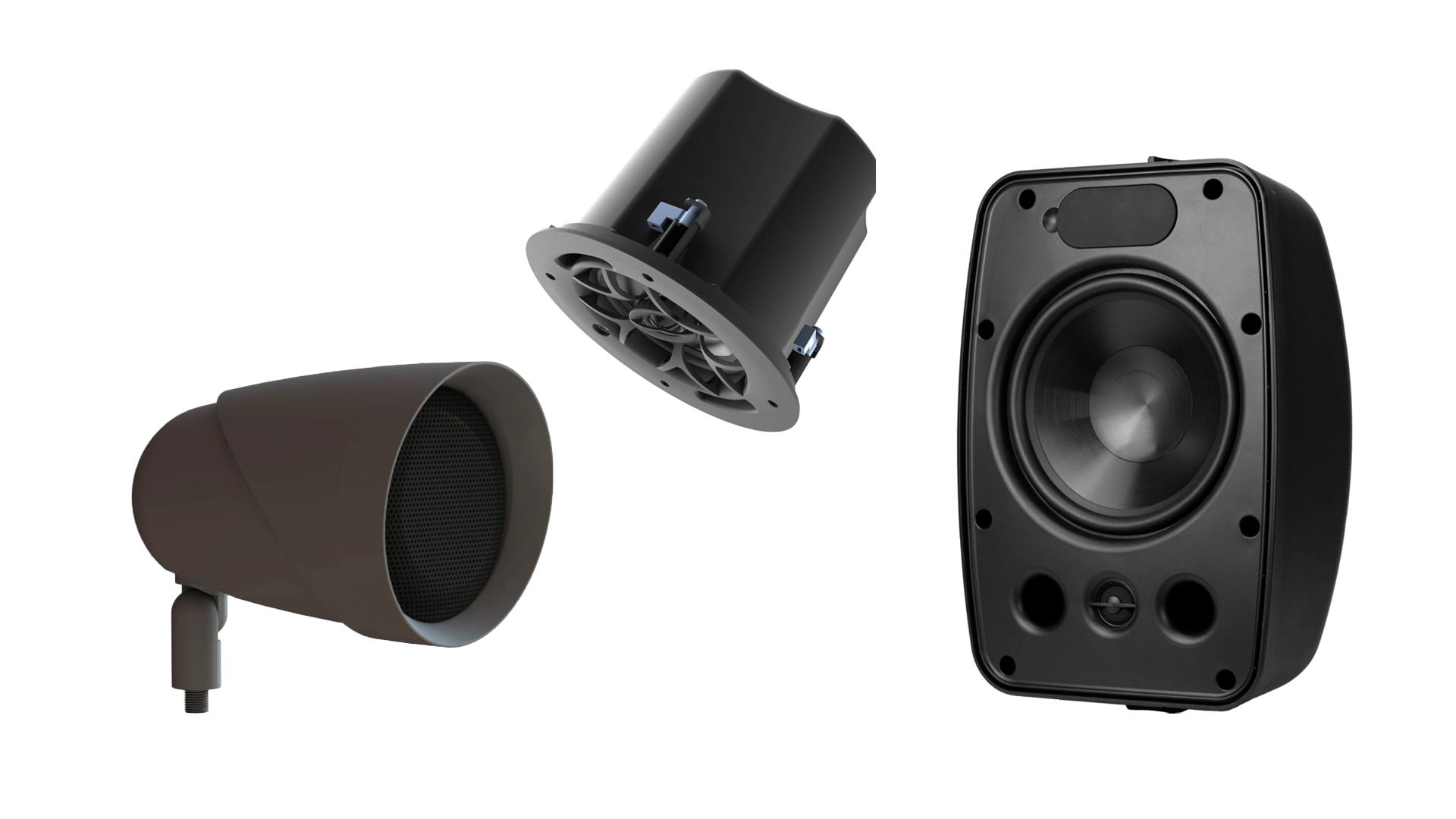
Origin Acoustics is the American architectural-audio company launched in 2014 by Jeremy Burkhardt, Ken Humphreys and Ed Haase. Its roots reach further back: Humphreys and Haase opened a Riverside, California stereo shop in 1976 and helped pioneer the flush-mounted in-wall loudspeaker in the early 1980s; Burkhardt later joined them in building SpeakerCraft into a major custom-installation brand. Origin reunited that experience around products designed from the outset for installers and interior integration. The catalogue covers in-ceiling and in-wall speakers, subwoofers, outdoor and marine systems, soundbars, amplifiers and dedicated cinema products. ThinFit addresses shallow cavities, Minimal Opening models reduce the visible aperture, and BLENDS uses an acoustically active surface for installations intended to disappear under the finish. ZipClip mounting and tool-conscious mechanical details shorten installation and make servicing more predictable, while Director Collection speakers use adjustable or directed arrays to aim sound from fixed ceiling positions. Marquee cinema systems and bollard or landscape products extend the same design language into dedicated rooms and outdoor zones. Origin’s key advantage is not simply hiding a loudspeaker. It combines decades of architectural-speaker experience with mounting hardware, dispersion control and product families that let a designer achieve consistent sound across ceilings, walls, gardens and yachts without compromising the visual plan.
QSC

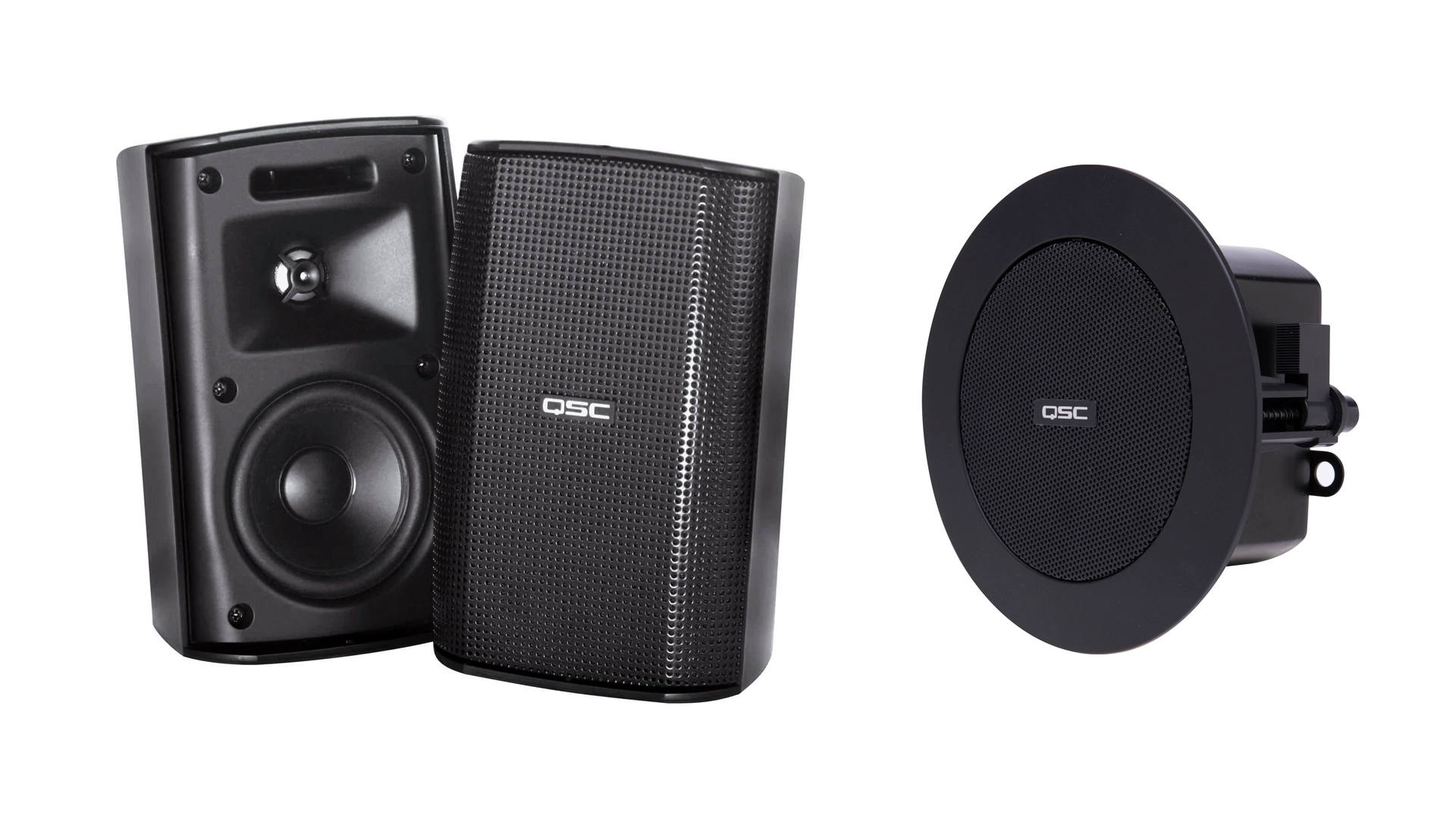
QSC began in Costa Mesa, California, in 1968 as Quilter Sound Things, founded by Pat Quilter with brothers Barry and John Andrews. The first products were hand-built guitar amplifiers, but professional power amplifiers soon became the larger business. That transition established QSC’s reputation: high output, reliability and manufacturable engineering for equipment expected to work night after night in venues, cinemas and installed systems. PowerLight switching technology was an important step in reducing the weight of touring amplifiers without giving up useful output. QSC later expanded from amplification into complete sound systems. K and K.2 powered loudspeakers combine drivers, amplification, protection and onboard DSP in one repeatable package; CP provides a more compact route, while E Series serves passive systems. TouchMix digital mixers put multitrack recording, effects, scene storage and remote control into small-format live consoles. The other side of the company developed into Q-SYS, a software-based network platform that unifies audio processing, video, control and monitoring for workplaces, education, hospitality, entertainment and large venues. This is more than a DSP product line and should not be confused with TouchMix. Corporate status has also changed: Acuity completed its acquisition of QSC in January 2025, placing Q-SYS within Acuity Intelligent Spaces while QSC Audio continues the professional loudspeaker and live-sound range. The original American identity, founders and 1968 date remain; what has grown is the scope—from a small amplifier shop to loudspeaker systems and a cloud-manageable AV-control platform.
RFC

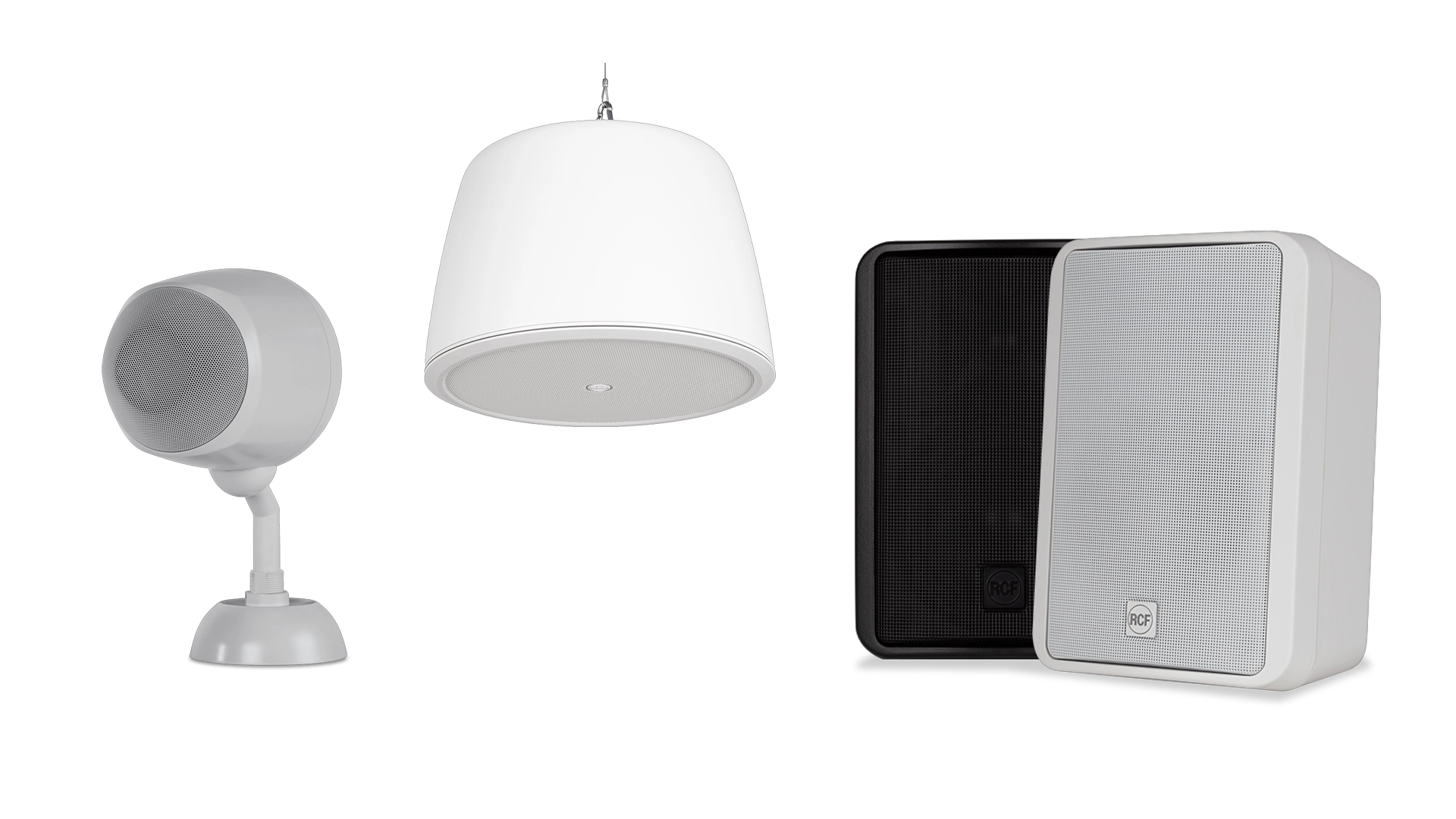
RCF is an Italian professional-audio manufacturer founded in Reggio Emilia in 1949, originally producing loudspeakers and microphones for other companies. The title “RFC” in this database is a transposition; the brand connected to the supplied rcf.it address is RCF. Decades of designing and manufacturing its own transducers remain central to the company: compression drivers, woofers, horns, enclosures, amplification and DSP are developed as parts of one system rather than assembled from unrelated modules. RCF was an early force in self-powered professional loudspeakers, and the ART series, introduced in the 1990s, became one of its most recognisable product families for portable PA, musicians and events. The current catalogue stretches from ART, NX and compact installation speakers to HDL line arrays and the high-output TT+ Audio range for touring, theatres and stadium-scale systems. SUB models, stage monitors and digital mixers complete the live-sound side, while D-Line and architectural products address fixed installations. RDNet provides networked control and monitoring of large systems; FiRPHASE processing is used to align phase response through the crossover region, and Bass Motion Control extends useful low-frequency behaviour while protecting the transducer. RCF’s value is the depth of that vertical integration. It can apply the same driver knowledge to a compact active cabinet and to a flown line-array module, then supply the electronics and software needed to deploy both predictably. The company is not a domestic hi-fi brand despite the similarity of some terminology: its reputation was built on reliable, intelligible and scalable sound for professionals.
Sonance

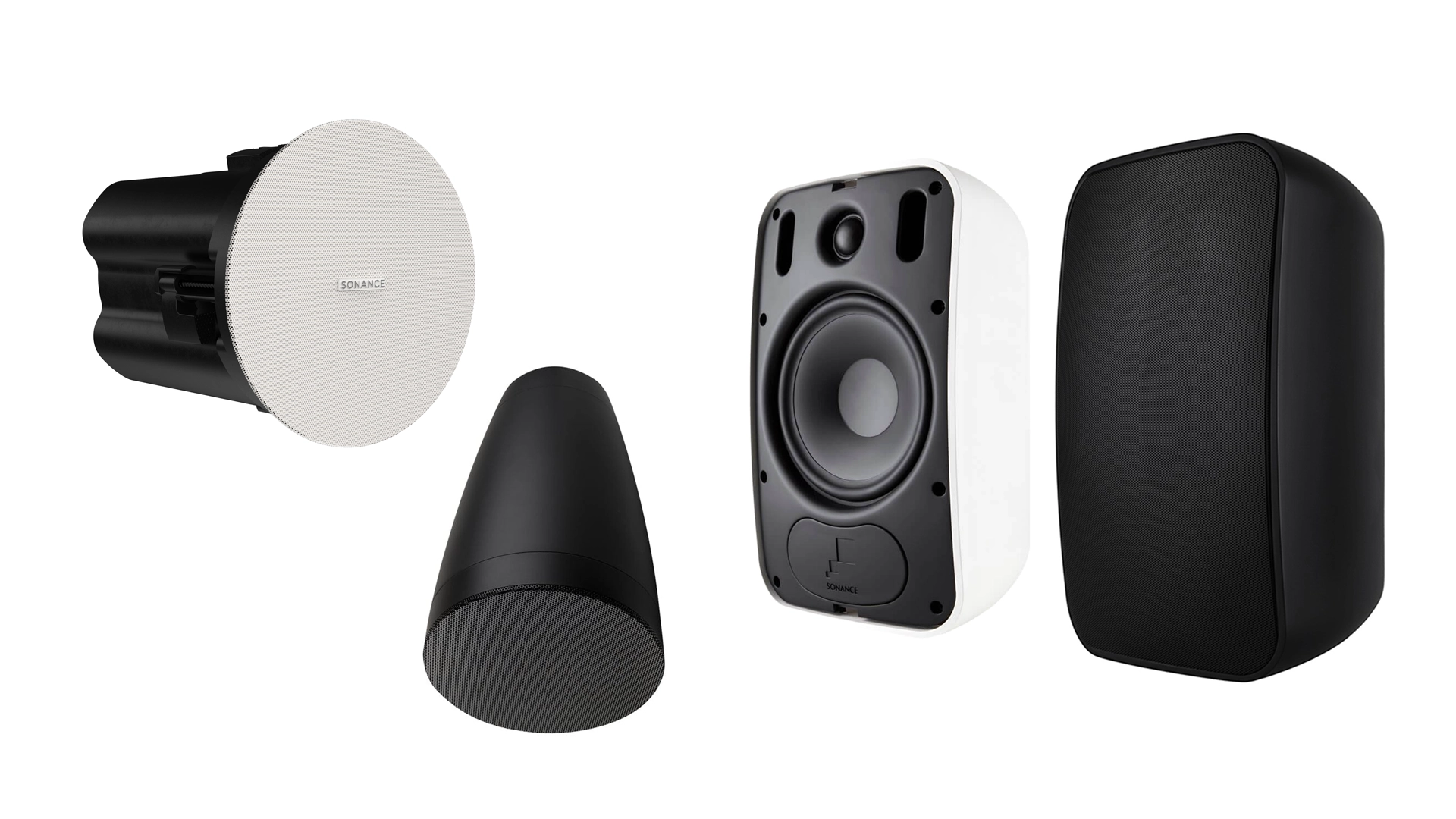
Sonance makes loudspeakers that become part of a building, from discreet ceiling systems to speakers concealed completely behind a finished wall. Scott Struthers and Geoff Spencer founded the Californian company in 1983, helping establish architectural audio as a category in its own right. Its in-wall and in-ceiling designs brought music into rooms without requiring freestanding cabinets, and that integration remains central to the brand. Visual Performance and architectural speaker families serve residential installations, while outdoor systems extend coverage into gardens and terraces. The Invisible Series takes the idea further: the speaker radiates through a thin finish layer, leaving no visible grille. Its Motion Flex architecture combines an Air Flex woofer, Wave Flex drive unit and an acoustically isolated baffle. Installation is part of the engineering; the D.I.S.C. calibration system helps installers check the thickness of the material applied over the speaker, since the finish affects its performance. Professional versions add facilities such as 70V/100V transformer taps for distributed commercial systems. The wider Sonance portfolio includes amplification and solutions for residential, commercial and marine environments, supported by system design resources for integrators. This is the thread connecting its products: the speaker, its coverage and the surrounding architecture are planned together. A Sonance installation can therefore range from barely noticeable background music to a dedicated cinema, with the visual presence of the equipment chosen to suit the room.
Sonos

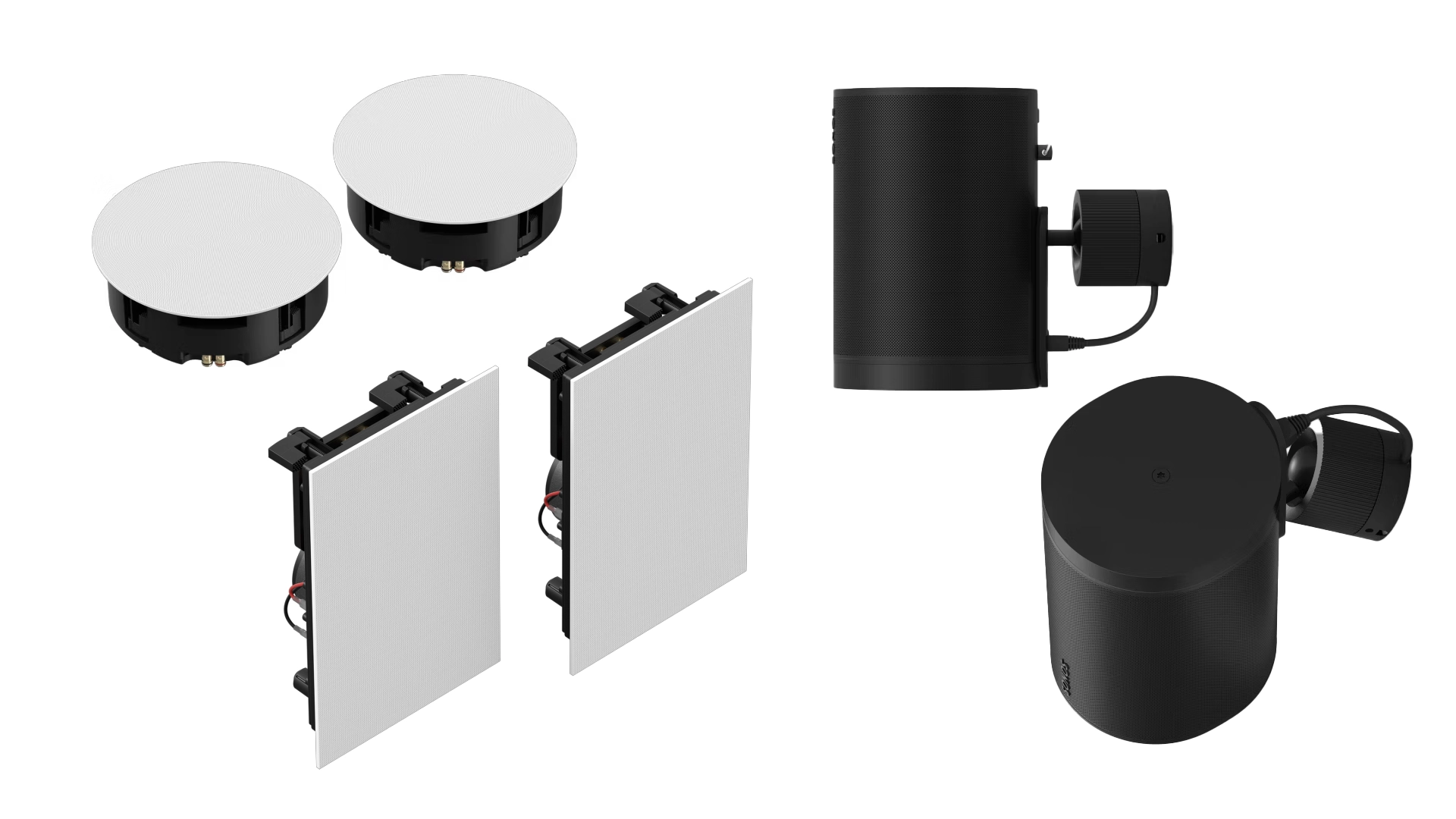
Sonos made synchronised music in different rooms the foundation of an audio system that can grow one speaker at a time. John MacFarlane, Tom Cullen, Trung Mai and Craig Shelburne founded the company in Santa Barbara, California, in 2002. Their idea was to use home networking to make music accessible throughout a house, with playback and room selection managed through a common interface. Early ZonePlayer components established the system approach; the arrival of all-in-one speakers in 2009 made it accessible without a separate amplifier and speakers in every room. Products such as Play:5 and One became familiar expressions of that idea, followed by the Era family. Matching speakers can form stereo pairs, and selected models can work with soundbars and subwoofers in a home-theatre configuration. Arc and Beam brought television into the ecosystem, while Move and Roam added portable listening. Sonos also makes Amp and Port components for connecting conventional loudspeakers or an existing hi-fi system. Its more recent range includes Arc Ultra, Move 2, Roam 2 and Ace headphones, the latter extending compatible television sound to private listening through TV Audio Swap. Across these different forms, Sonos’s defining product is the connected system as much as the individual enclosure: software, synchronisation and compatible hardware make it possible to use rooms separately or bring them together. That continuity explains how a brand associated with wireless speakers also has a substantial role in installed home audio.
Stealth Acoustics

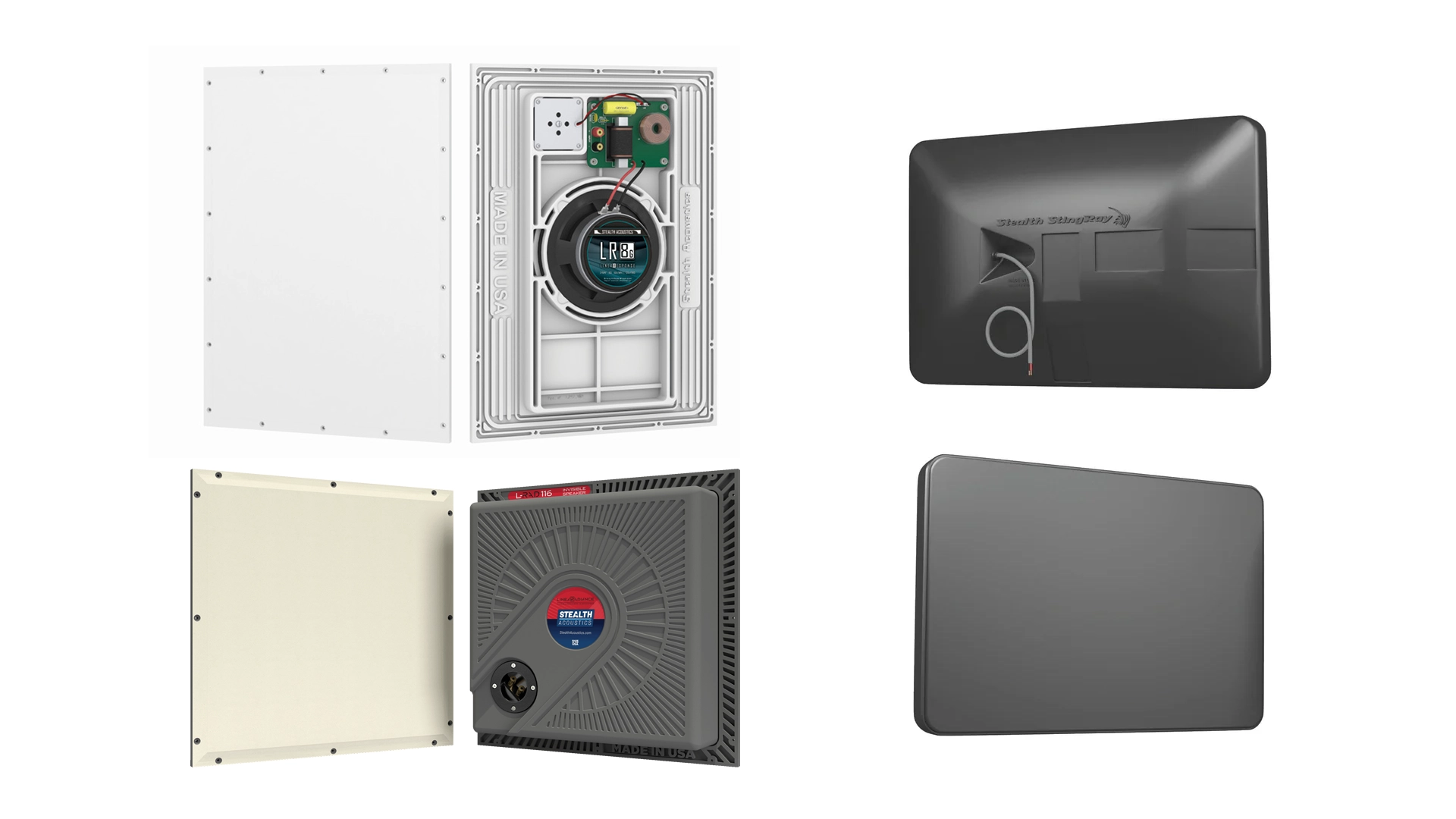
Stealth Acoustics makes loudspeakers intended to disappear behind a finished wall or ceiling while remaining serviceable elements of a designed audio system. The American company is a division of Dimensional Communications in Mount Vernon, Washington, and launched its first invisible-speaker products in 2003 after a dedicated development programme. Rather than hiding a conventional cone speaker behind plaster, Stealth uses a rigid frame and a radiating face panel that becomes the visible—or more accurately invisible—part of the room after skim coating and paint, wallpaper or another approved finish. The LineaResponse family covers two-channel, distributed-audio and home-cinema duties, with models sized for different output and bandwidth requirements. Matching invisible subwoofers extend low-frequency performance without introducing a grille into the interior. Installation is part of the technology: correct mounting, finishing depth and system equalisation matter because the final surface participates in the acoustic result. Stealth therefore supplies DSP amplification and installation guidance alongside the speakers. The company also applies related panel-transducer experience to outdoor products. StingRay loudspeakers use weather-resistant, fibreglass-infused ABS enclosures for locations where durability and a discreet profile matter more than total concealment. Stealth Acoustics is strongest where architecture sets strict visual conditions. Its contribution is a purpose-built loudspeaker system designed from the outset to be integrated, finished and calibrated as part of the wall rather than a standard speaker simply placed out of sight.
Taga Harmony


TAGA Harmony is a company specializing in loudspeakers, audio electronics, and cables, known for its focus on providing high-quality sound at accessible price points. While having European roots, the company has significant operations and design influence from Japan. TAGA Harmony offers a wide range of products, including floor-standing speakers, bookshelf speakers, center channel speakers, subwoofers, integrated amplifiers, and various cables. Their products often feature a modern aesthetic and are designed to deliver a balanced and engaging sound. The company’s design philosophy emphasizes a combination of engineering principles and subjective listening evaluations to achieve optimal performance. TAGA Harmony products are positioned in the
Tannoy

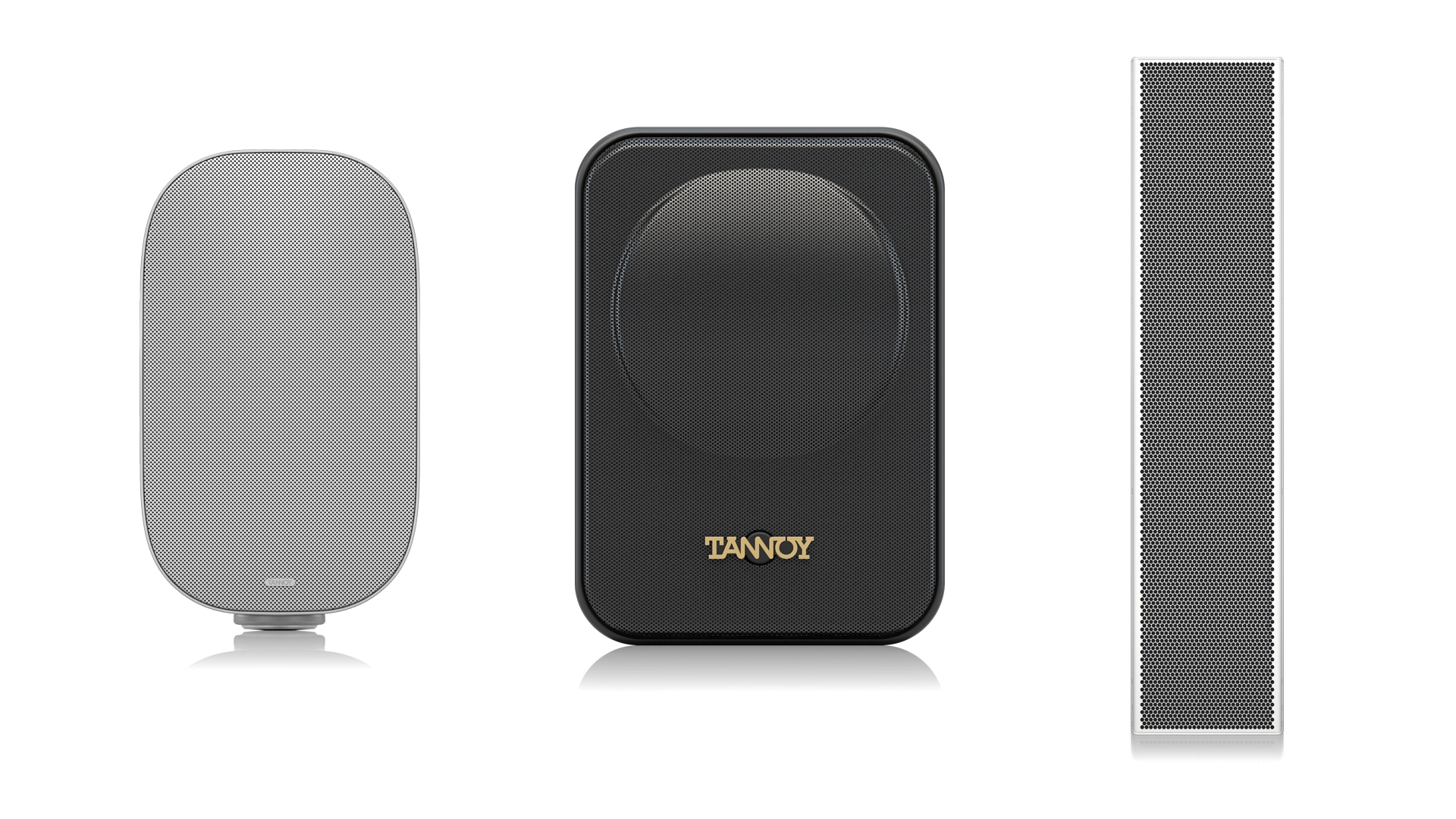
Tannoy is a classic British loudspeaker manufacturer with a long and storied history in the audio industry, particularly known for its “Dual Concentric” driver technology. Founded by Guy Fountain. The company’s Dual Concentric design places the tweeter at the center of the woofer, aiming to create a point-source sound with improved imaging and coherence. Tannoy loudspeakers are used in a variety of applications, from professional studio monitoring and sound reinforcement to high-end home audio. They offer a wide range of models, from compact bookshelf speakers to large, floor-standing designs. The “Prestige,” “Legacy,” and “Definition” series represent different points in their product line. Tannoy products are often characterized by their warm, musical, and engaging sound, with a particular emphasis on midrange clarity and naturalness. The company is a major player in the global loudspeaker market, with a reputation for quality, innovation, and a distinctive sonic signature.
Tru Audio
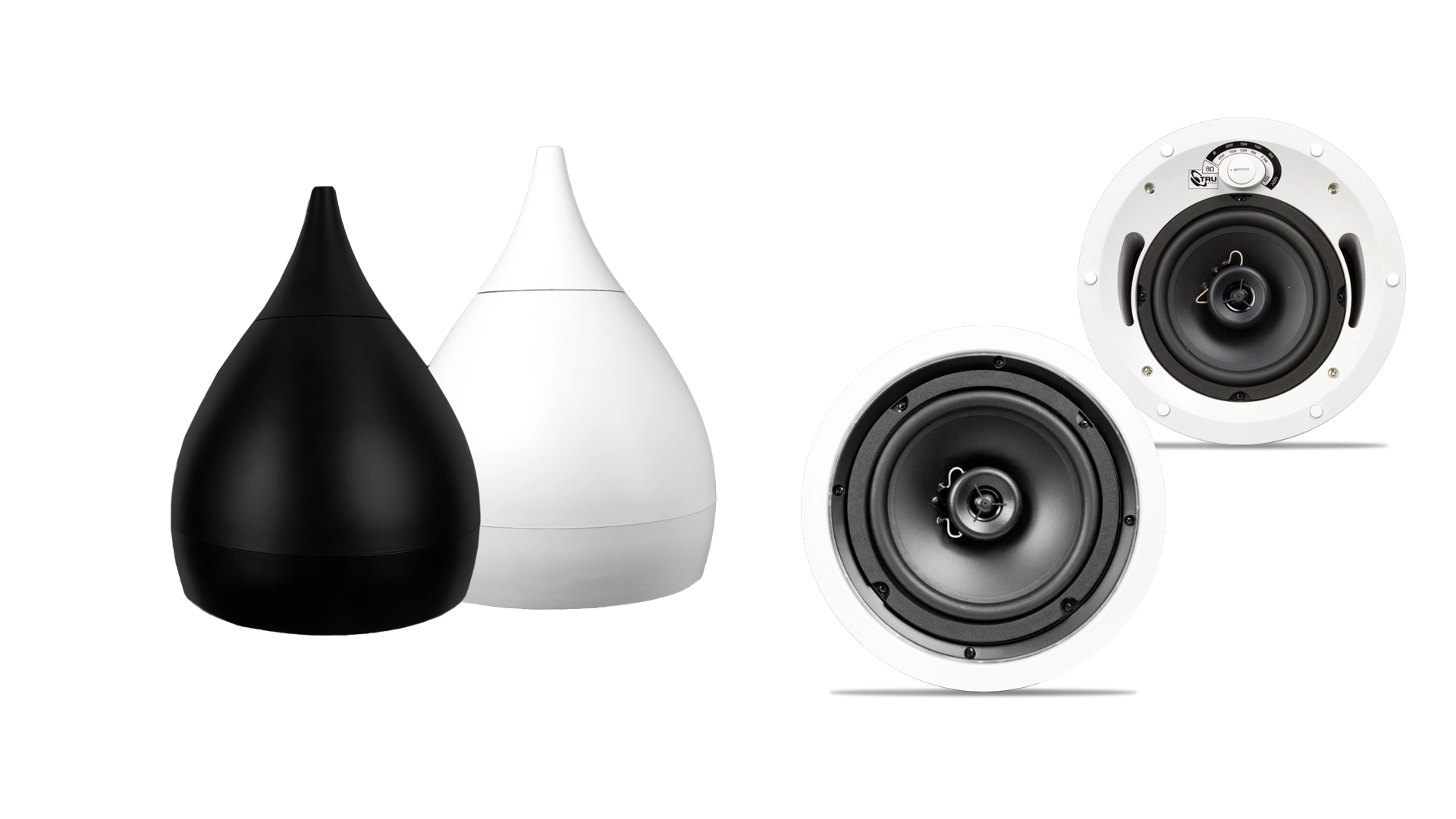
TruAudio is an American architectural-loudspeaker brand founded by custom integrators in 2000 and based in Hurricane, Utah. The founders had designed and installed thousands of theatres and multiroom systems before becoming manufacturers, so the range was shaped by conditions installers encounter: restricted depth, visible grilles, awkward outdoor locations and the need to service a finished room without damaging it.
The Ghost series made TruAudio particularly recognisable by using an almost rimless in-ceiling frame and a magnetic grille with minimal reveal. Phantom and Shadow in-wall and in-ceiling families, LCR and soundbar models, subwoofers and REV or Elite cinema speakers cover residential applications. AcoustiScape, SubTerrain and hardscape products carry distributed sound outdoors, while commercial ceiling and pendant speakers extend the same installer-oriented approach. Matching DSP and multichannel amplifiers allow complete systems to be specified from one source.
Driver materials vary by application—woven carbon fibre, titanium, aluminium and polypropylene appear where their balance of stiffness, weather resistance and cost is appropriate. The more important continuity is mechanical: flush mounting, paintable grilles, protected outdoor enclosures and practical connection details are designed alongside the acoustic system. TruAudio now operates as a division of SoundVision Technologies, but its original country and custom-installation identity remain unchanged. The brand’s real innovation is not making a speaker invisible in a photograph; it is making high-performance audio easier to integrate, align and maintain inside actual architecture.
Vanguard Dynamics

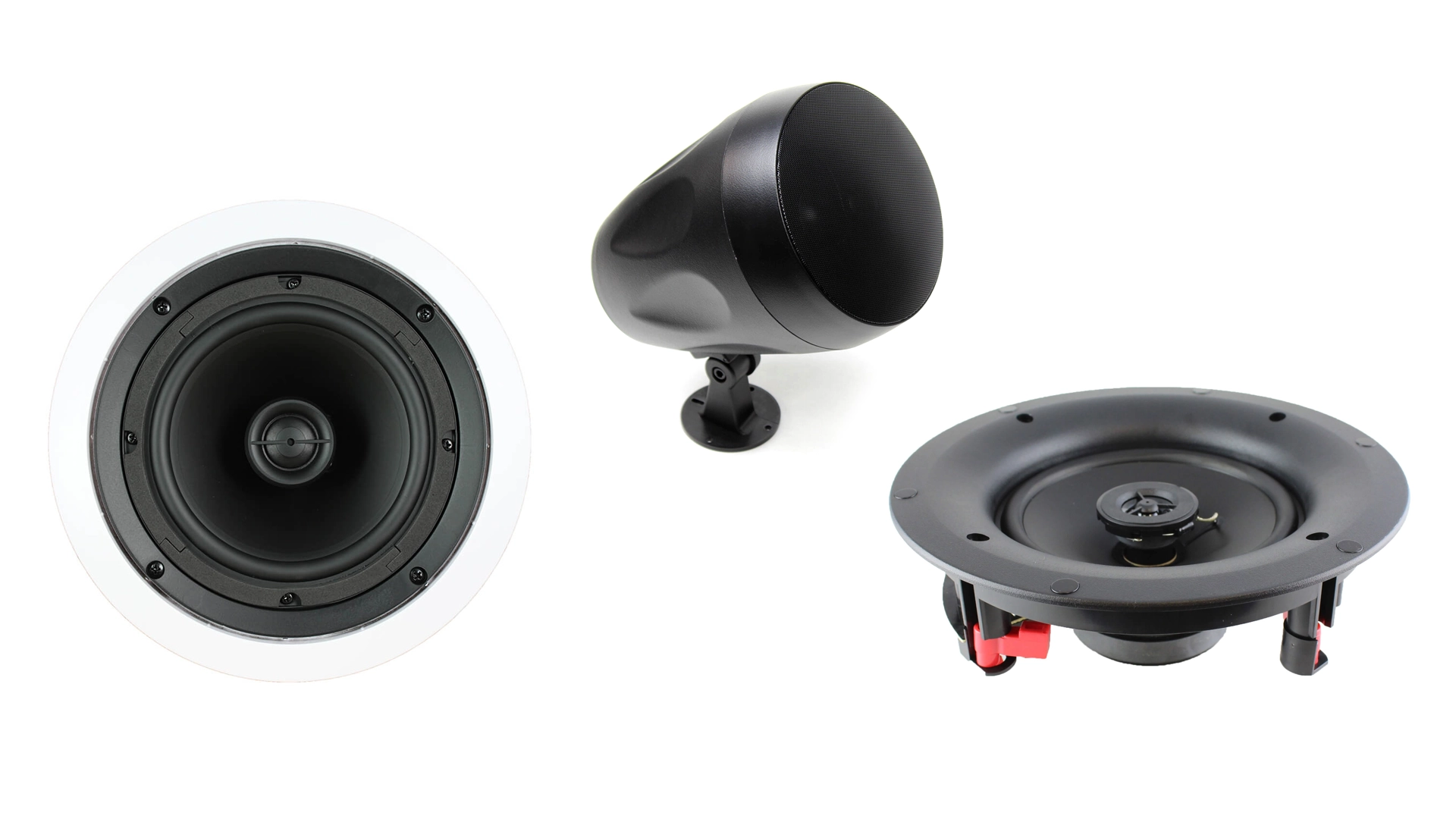
Vanguard Dynamics is a California-based architectural-audio brand built for custom installers rather than for conventional showroom hi-fi. Jeff Francisco and Alex Chiou launched Vanguard Dynamics and sister company TDG Audio in 2012, combining Francisco’s long experience at SpeakerCraft with Chiou’s background in loudspeaker manufacturing and product development. Its core catalogue covers in-ceiling and in-wall loudspeakers, outdoor and commercial models, subwoofers, multi-zone amplifiers, switchers and installation controls. The products are designed to solve practical whole-home and hospitality requirements: broad coverage, unobtrusive placement, reliable protection and straightforward integration with control systems. Vanguard’s most distinctive work has been bringing voice assistants and streaming directly into the wall. The VAIL Amp, introduced in 2018, turned an Amazon Echo Dot into an installed amplifier and interface rather than leaving a smart speaker on a shelf. VAIL Cast followed as a compact streaming amplifier designed to work across Chromecast, AirPlay and Alexa ecosystems. Those products reveal the brand’s real speciality. Vanguard Dynamics is not simply another maker of round ceiling speakers; it develops the electronics, mounting formats and accessories that allow distributed audio to become part of the building. Its loudspeaker lines and multi-room hardware therefore make most sense as one installation platform, supported by a company whose founders have spent decades working on architectural audio from both the design and manufacturing sides.
VUE Audiotechnik

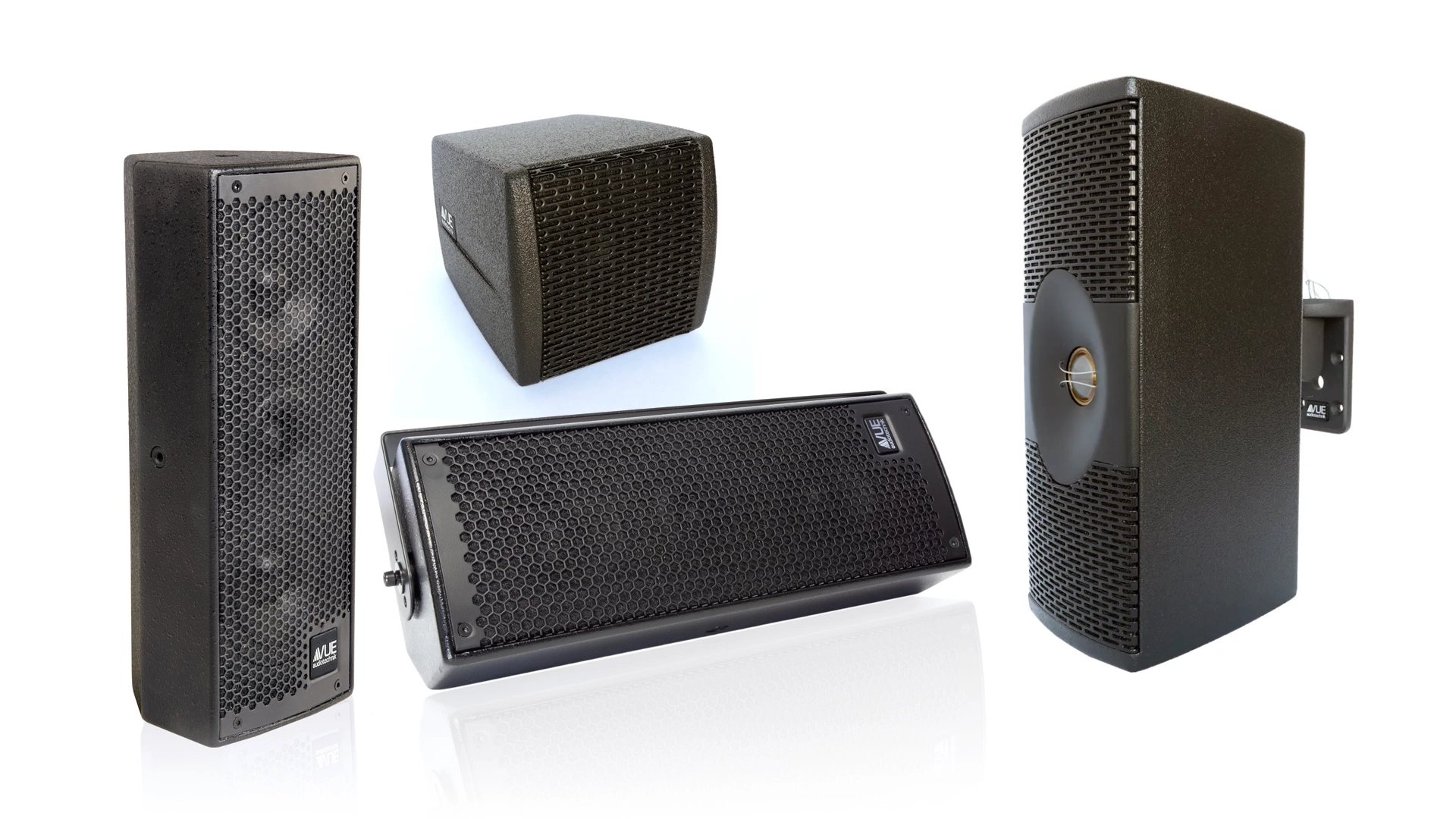
VUE Audiotechnik is an American professional-loudspeaker company founded in 2012 by industry veterans Ken Berger, Jim Sides and Michael Adams. Adams’ design experience at companies including JBL, QSC and Yamaha shaped a practical brief: specifications must survive large-signal operation, touring conditions and difficult venues, not merely look good in a laboratory. VUE therefore develops drivers, waveguides, enclosures, amplification and DSP as complete systems. The al-Class line arrays address scalable touring and installed sound; h-Class systems use high-output transducers and beryllium compression drivers in point-source and arrayable formats; a-Class models bring the same controlled-directivity approach to compact reinforcement and monitoring. Subwoofers, stage monitors, networked processors and system amplifiers allow a deployment to be voiced and protected as one platform. Beryllium is not used as a prestige label alone: its high stiffness-to-mass ratio lets the compression diaphragm operate farther above the audio band, helping reduce breakup within its working range. Coverage consistency, intelligibility at high sound-pressure levels and predictable rigging are equally important because these products serve theatres, houses of worship, clubs, touring productions and studios. VUE’s individuality lies in that field-led engineering culture. The company treats loudspeaker behaviour at performance level, deployment speed and long-term service as parts of sound quality, producing professional tools designed by people who have had to install, tune and rely on such systems in the real world.