
Cartridges
The phono cartridge is the tiny transducer at the end of the tonearm that reads the information in a record’s groove. As its diamond stylus vibrates, the cartridge’s motor system converts these physical movements into the delicate electrical signal that becomes music. With distinct technologies like Moving Magnet (MM) and Moving Coil (MC), the cartridge has a profound impact on the final sound. This index lists the brands that craft these essential devices, which are ultimately responsible for the voice of your vinyl collection.
Hi-Fi brands in the category
Summary information and image
Direct links to official websites
Accuphase

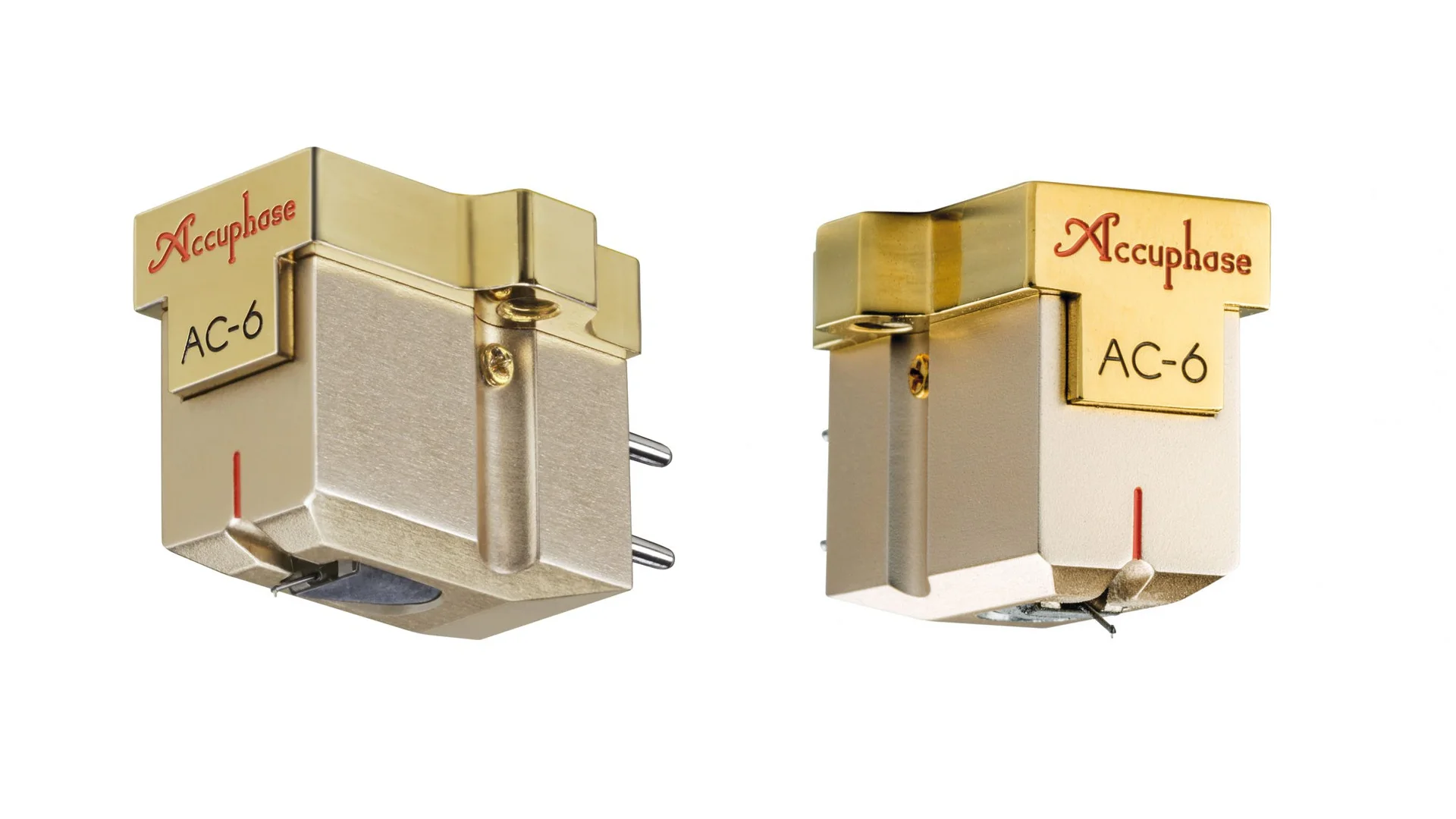
Japan’s Accuphase builds amplifiers and digital source components around proprietary circuit designs, with volume control itself forming part of its engineering identity. Its AAVA system adjusts level without a conventional variable resistor in the music signal path, while MCS operates multiple amplification circuits in parallel to improve their combined performance. Its history began in 1972 as Kensonic, founded by brothers Nakaichi and Jiro Kasuga with a team from Kenwood that included Shigemasa Saito and Yasumasa Ishizuka. The original products included the P-300 power amplifier, C-200 preamplifier and T-100 tuner. The catalogue spans integrated and separate amplifiers, disc players, digital processors and equalisation equipment. Accuphase documents its circuit principles and product history in detailed technical literature.
Acoustic Signature

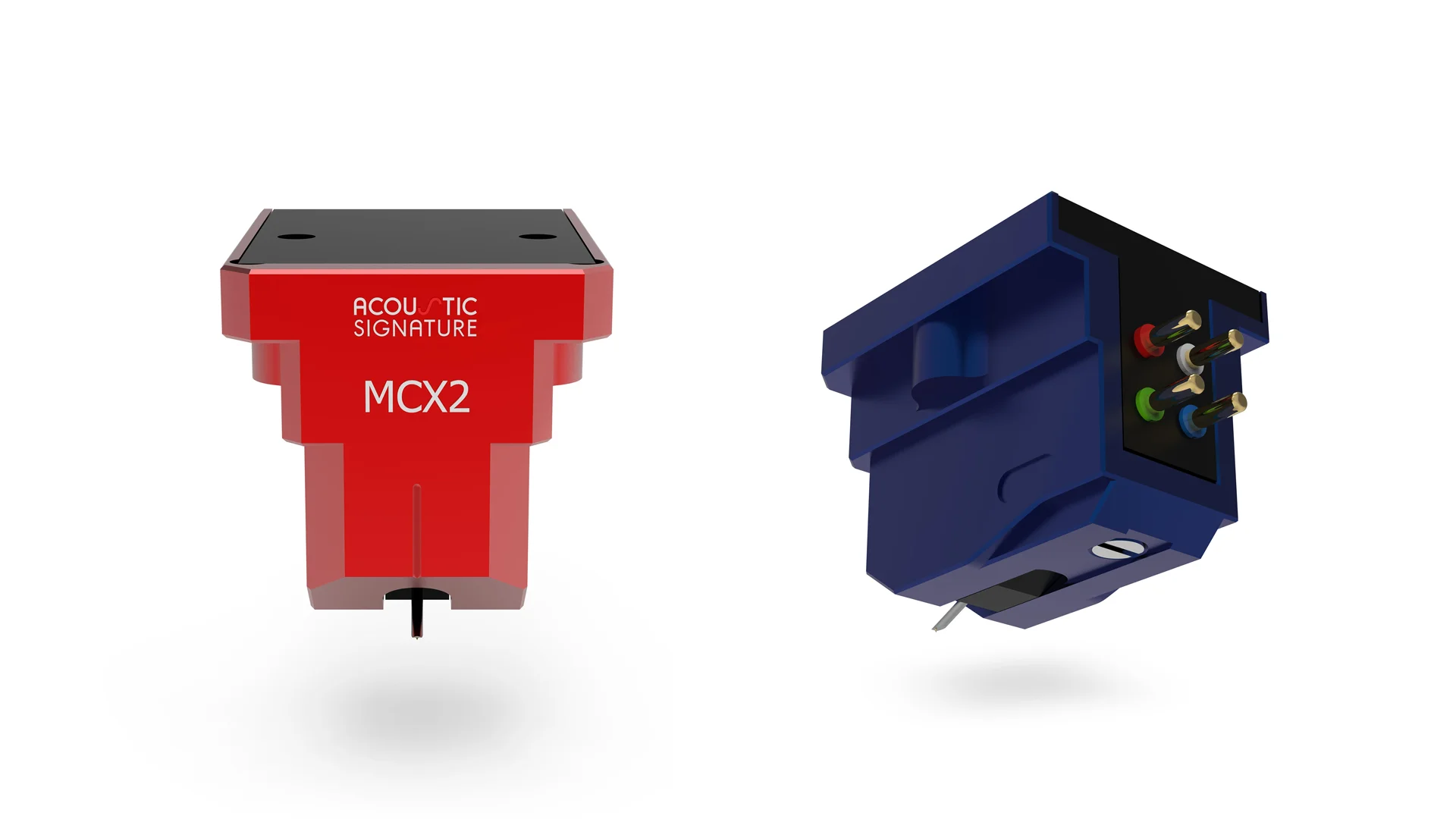
Acoustic Signature develops turntables around high-mass construction and targeted control of mechanical vibration. Its Silencer and Constraint Layer Damping designs address platter and chassis resonances, while Automatic Vibration Control adjusts motor-drive signals to reduce motor-induced vibration. Established in 1996, the company presented its first turntable the following year under managing director and chief developer Gunther Frohnhöfer. In the NEO range, the Dura Turn Diamond bearing uses a diamond-coated spindle, replacing the earlier Tidorfolon design. The German manufacturer’s range also covers tonearms, moving-coil cartridges and phono stages. Its distinctive focus is the mechanical foundation of vinyl playback: the bearing, motor system and supporting structure that let a cartridge follow the record groove.
Acoustical Systems

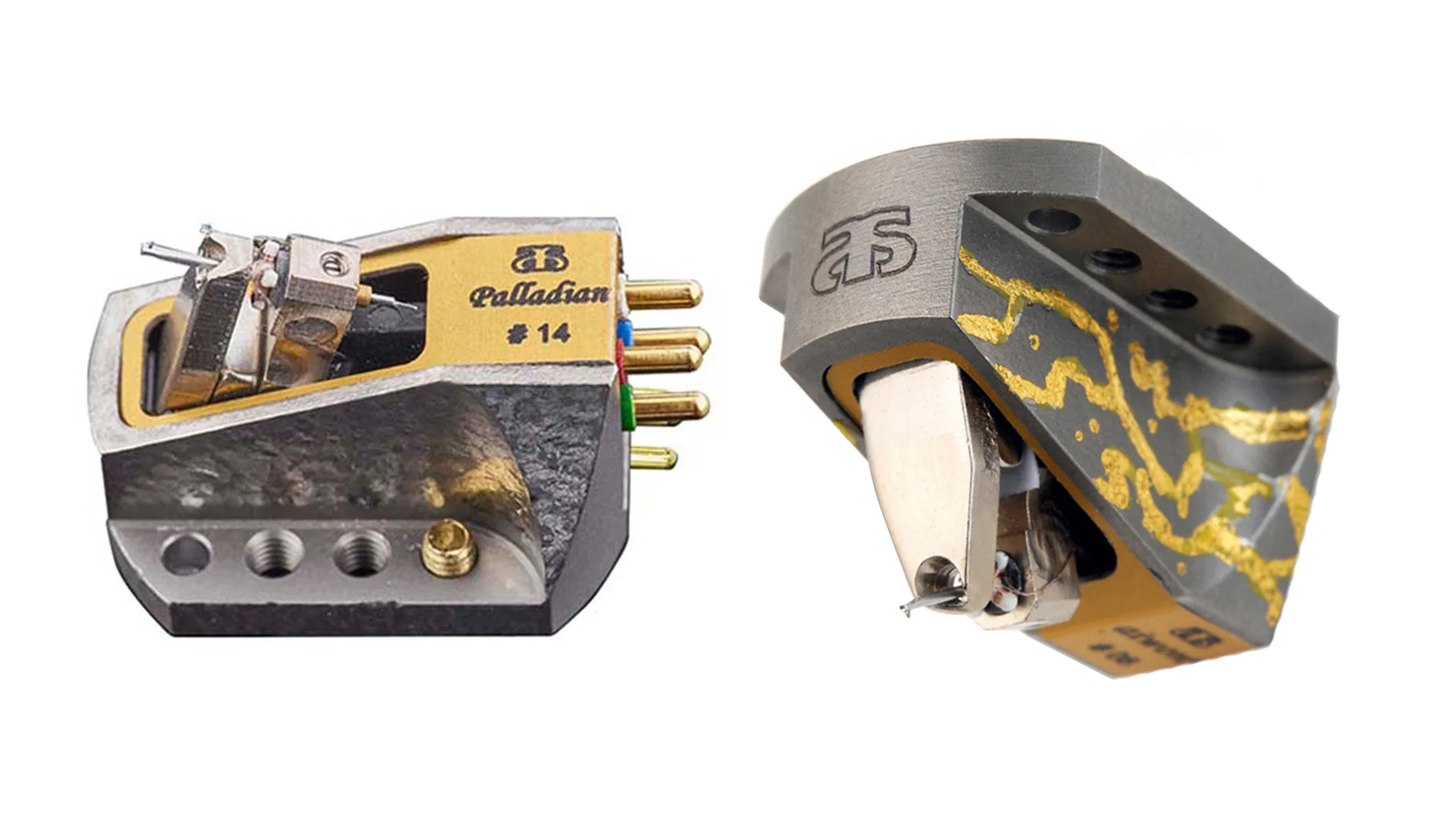
Acoustical Systems treats cartridge alignment as a central part of vinyl playback, alongside the design of turntables, tonearms and cartridges themselves. Its SMARTractor alignment tool offers five geometries, including the company’s UNI-DIN approach, and measures the distance between the platter spindle and tonearm pivot. Established in 1998 by Axinia Schäfer, the family business has Dietrich Brakemeier as its chief designer. It initially supplied vintage audio tubes, then developed complete systems before concentrating on analogue front-end products from 2010. The same focus on analogue setup runs through products such as the AXIOM tonearm and Palladian cartridge family. Its products are designed, manufactured and assembled in Germany with specialist machining and fine-mechanics partners. Its catalogue reaches from practical alignment tools to complete analogue source components.
Aidas Cartridges

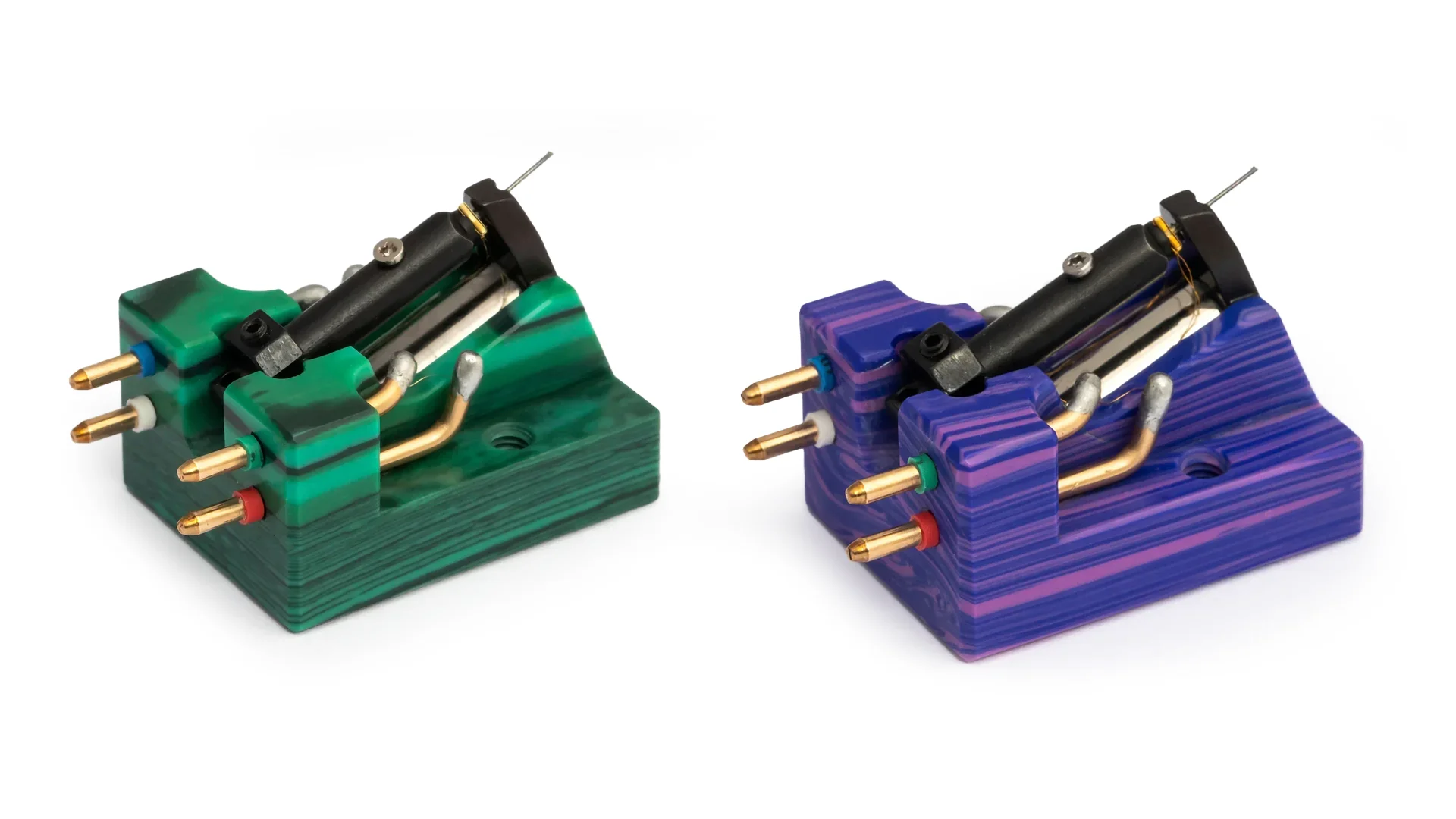
Aidas Cartridges makes moving-coil phono cartridges in Kaunas, Lithuania, with an unusually material-focused approach to the generator and body. Designer Aidas Svazas began repairing and building cartridges in the late 1990s and produced his first AS-1 in 2010. The range shares a generator concept and double suspension, while coil materials progress from copper through plated copper to pure gold. Body choices include stone composites and mammoth-tusk material, rather than serving only as decorative finishes around an otherwise anonymous mechanism. The Mammoth Gold, for example, pairs gold coils with a boron cantilever and MicroRidge stylus. The shared mechanical platform gives the range a common foundation while leaving room for different coil and body combinations.
Air Tight

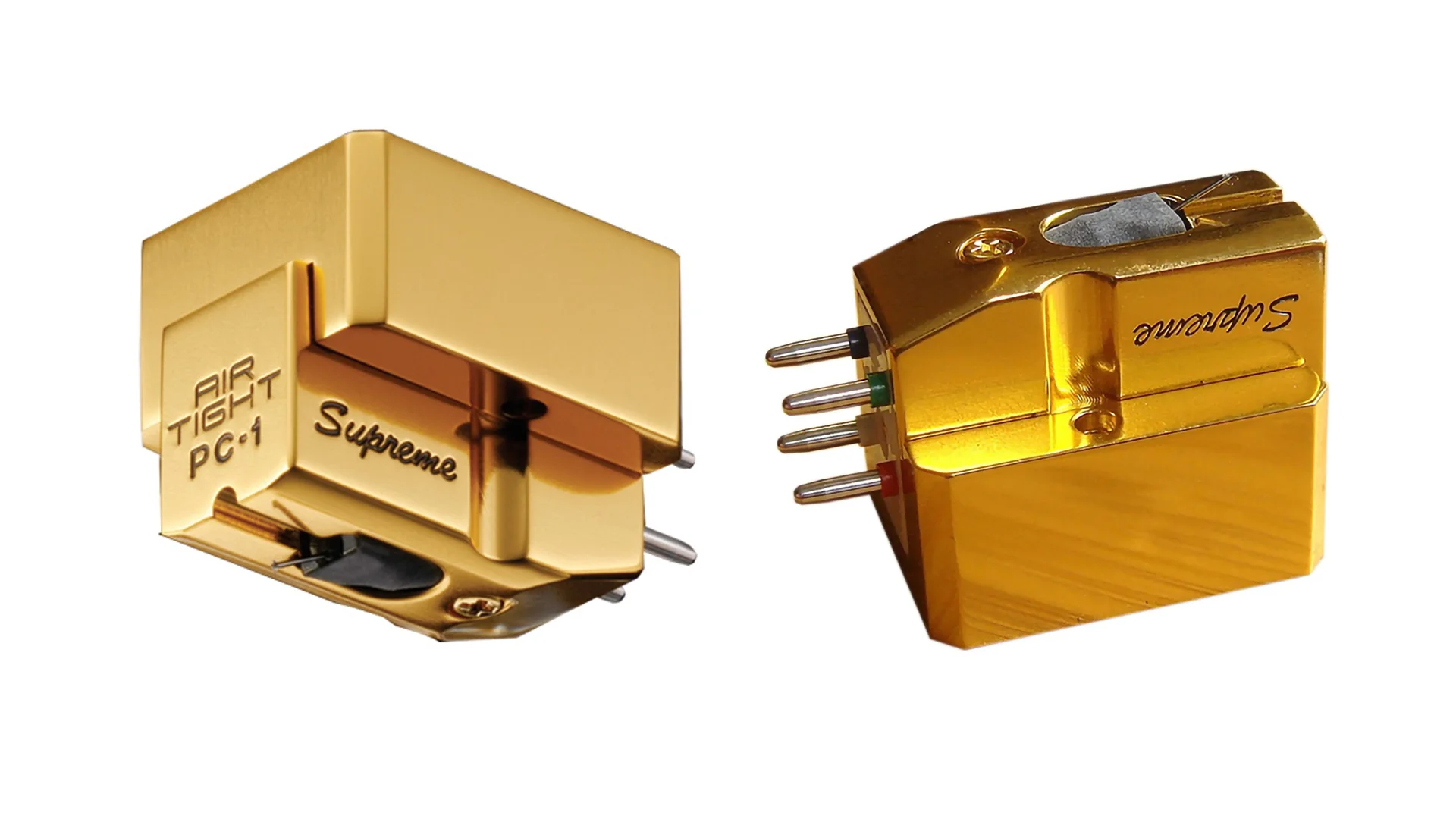
Air Tight carries Japanese valve-amplifier practice into hand-wired power amplifiers, preamplifiers and specialist vinyl electronics. Atsushi Miura, formerly of Luxman, founded A&M Limited with designer Masami Ishiguro in April 1986; their first product was the EL34 push-pull ATM-1. Point-to-point wiring remains an important part of the company’s construction approach, alongside a catalogue that also includes moving-coil cartridges and step-up transformers. Its attention to records extends beyond amplification: the ATE-3011 phono stage offers five equalisation curves with independently selectable turnover and roll-off settings for different recording practices. That combination of valve-circuit craft and detailed support for analogue playback is more revealing than a generic promise of warm sound.
Analog Relax

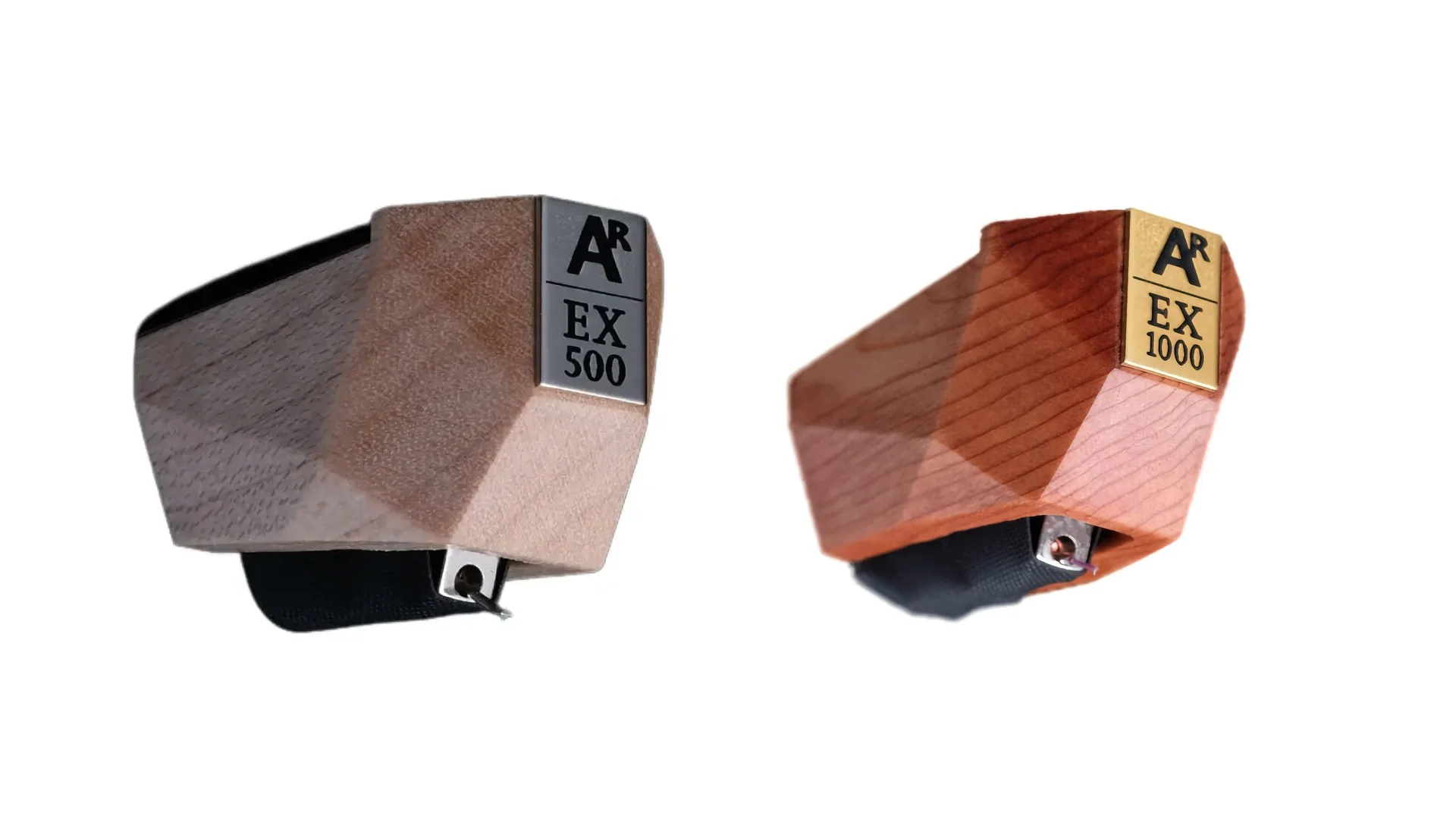
Analog Relax approaches moving-coil cartridges through Japanese craftsmanship and the materials of musical instruments. Behind the brand is Yasushi Yurugi, a designer and musician whose experience includes drums and saxophone. Different cartridge models explore different body woods and generator assemblies; the EX500, for example, combines Romanian hard maple with high-purity silver coils, an aluminium cantilever and a custom elliptical diamond. These are concrete construction choices, not simply decorative finishes. The Japanese-made range extends from the EX300 to more elaborate designs, alongside record-care accessories such as antistatic brushes. Its identity lies in this close attention to the cartridge as a small mechanical instrument.
Audio Exklusiv

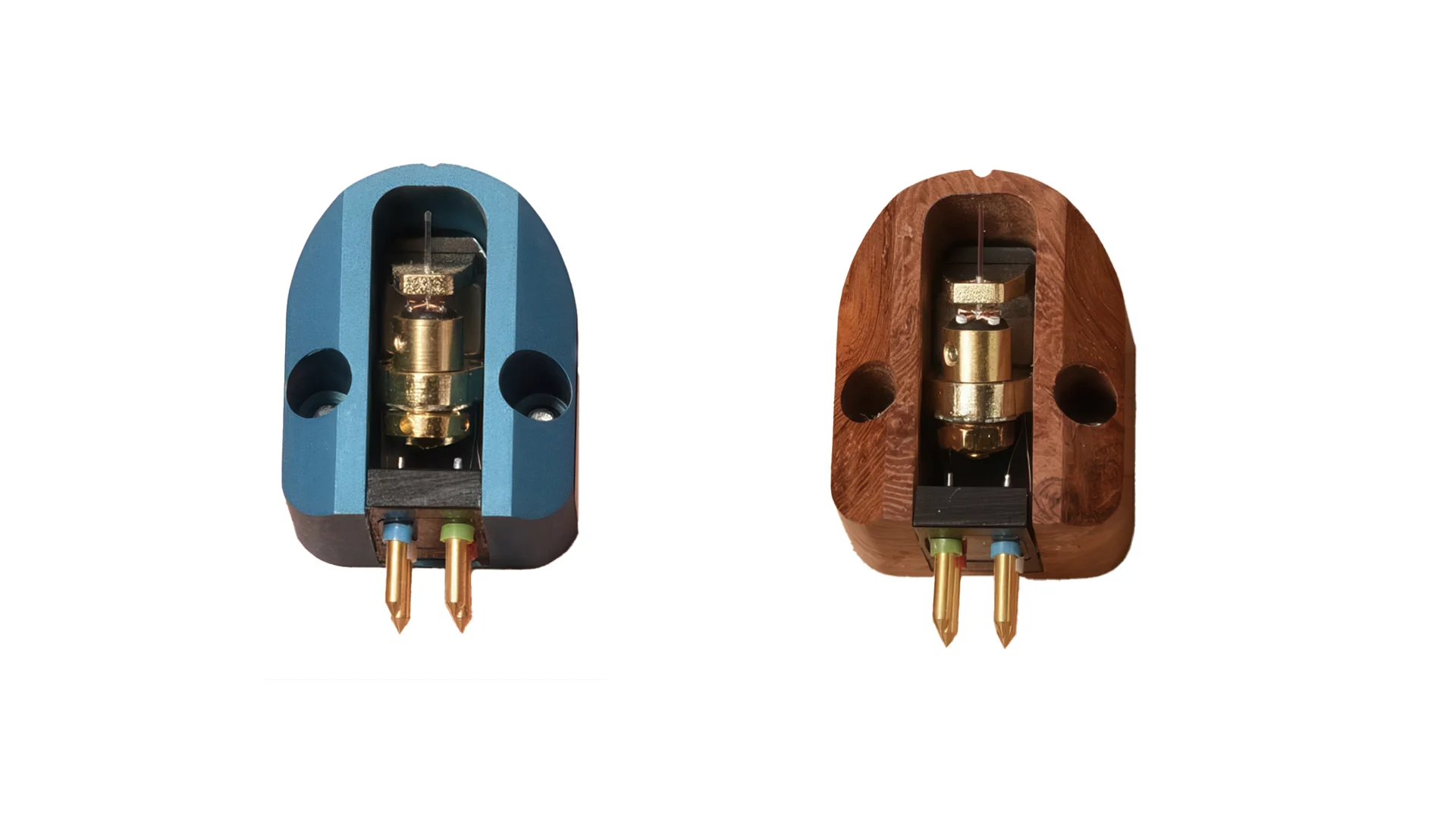
Audio Exklusiv began with Gerd Pütz’s determination to escape the cabinet colouration of conventional loudspeakers. He founded the German company on 1 October 1979 after developing speakers at HECO, then introduced the Tubular Bell I in 1980 and the P3 electrostatic loudspeaker in 1982. Electronics followed because the electrostatics required suitable amplification; the catalogue grew to include tube and transistor preamplifiers, power amplifiers and analogue sources. After Pütz died in 1990, his family continued the business, and Andreas Schönberg acquired the trademark and technical rights in 2009 to restart development. Current products retain the electrostatic heritage while also addressing resonance control, phono playback and system accessories, with development and production carried out in Germany.
Audio Note

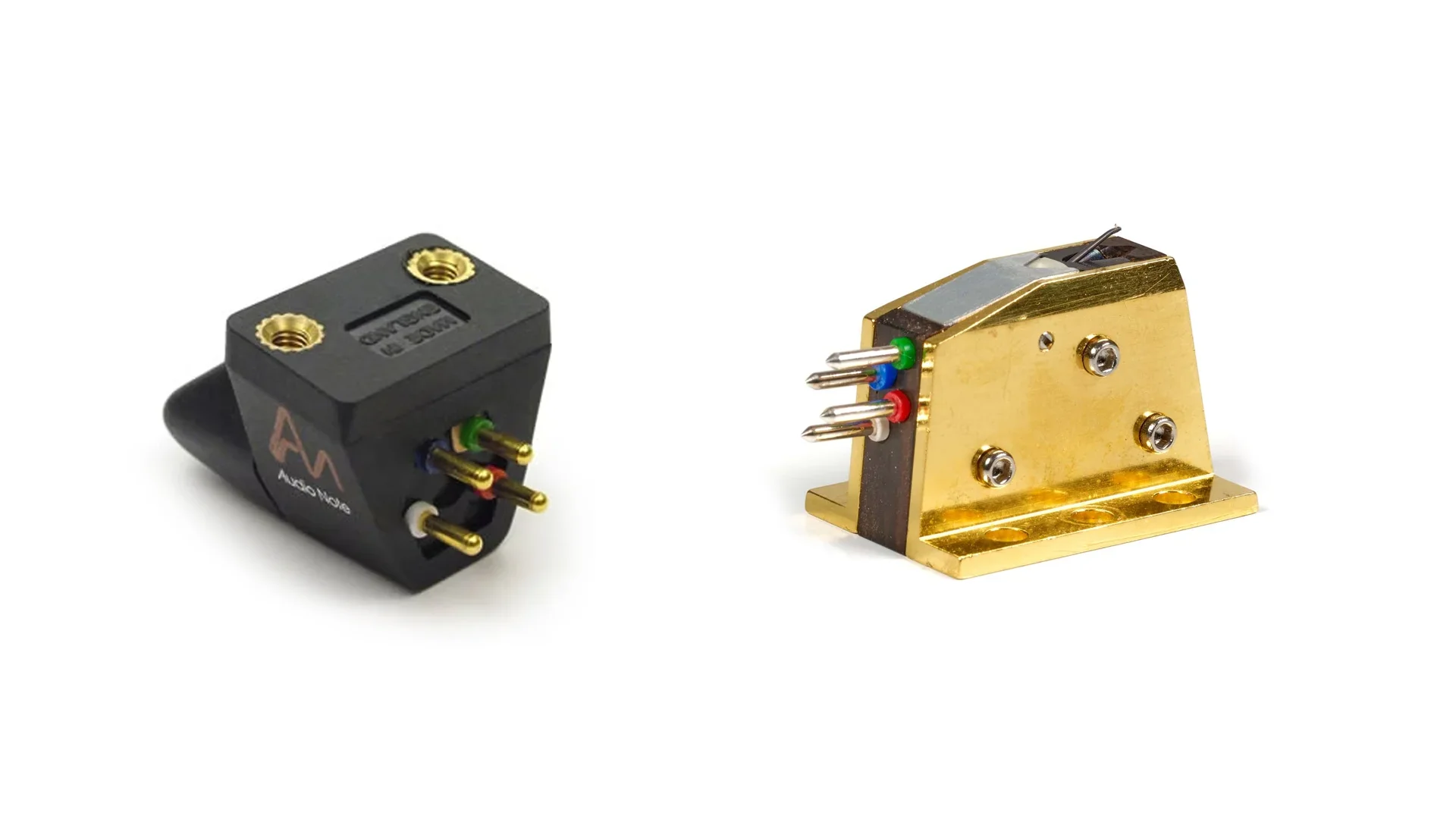
Audio Note (UK) builds complete valve-based playback systems, from cartridges and digital sources to amplifiers, cables and loudspeakers. The UK company led by Peter Qvortrup introduced the OTO PP integrated amplifier in 1991, and that long-lived model still captures its preference for simple circuits and serviceable products. Single-ended triode amplifiers, custom output transformers and internally developed resistors, capacitors and wiring are central to the range. Its DACs deliberately avoid oversampling, digital filtering and conventional reconstruction filters, pursuing timing and musical continuity through a different engineering route. Products are organised by levels from Zero to Five, with models such as Meishu and Ongaku showing how parts quality and transformer design are progressively developed. The name here refers specifically to Audio Note (UK), not Kondo Audio Note Japan.
Audio-Technica

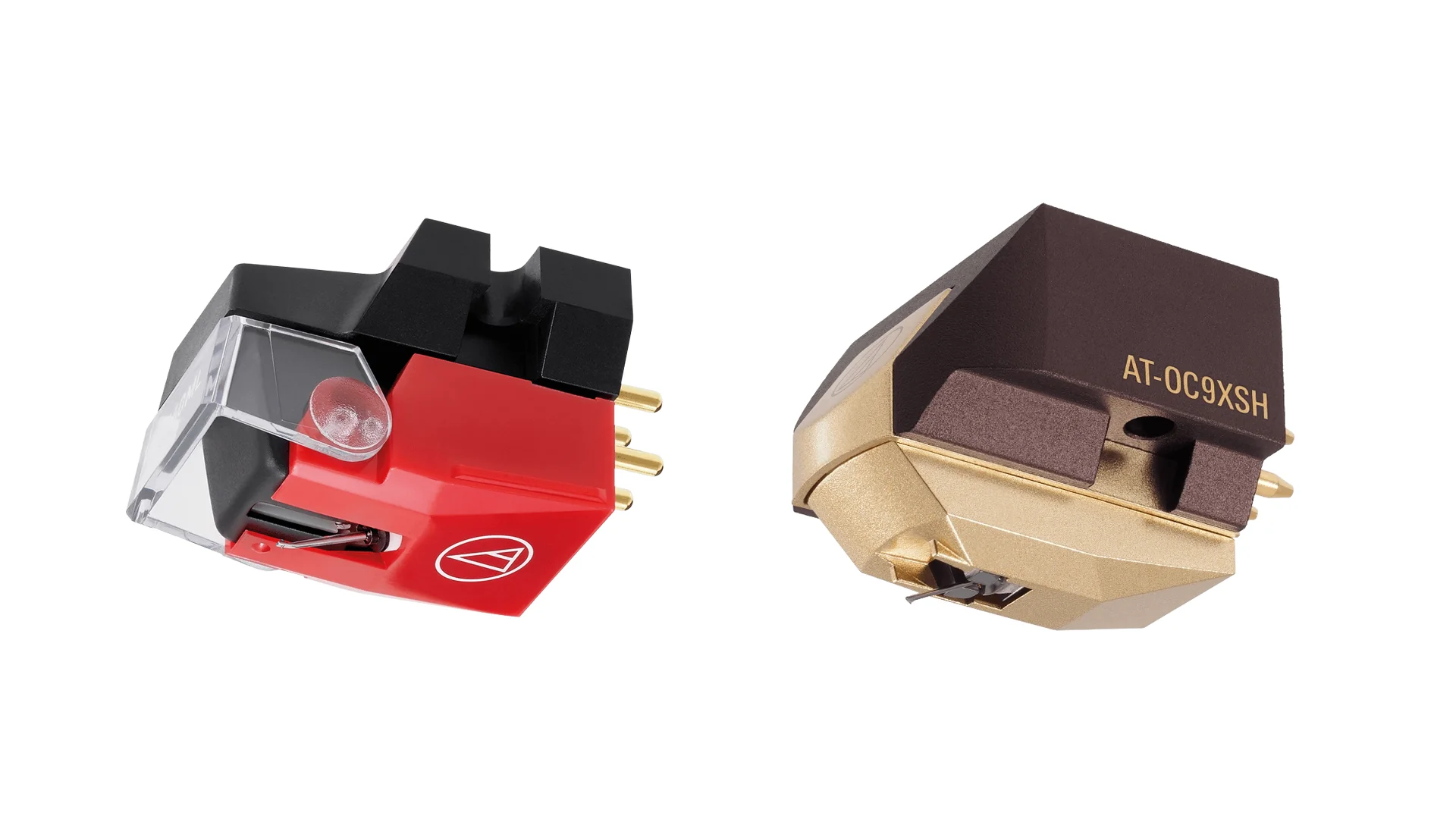
Audio-Technica began with the part that reads a record groove and grew into one of Japan’s broadest audio manufacturers. Hideo Matsushita founded the company above a ramen shop in Shinjuku on 17 April 1962; its first products were the AT-1 and AT-3 phono cartridges. Cartridge engineering remains a defining strength, spanning affordable VM models, long-running AT-OC9 moving-coil designs and the direct-power AT-ART1000 series. The company later applied its transducer expertise to studio, broadcast and live microphones, professional and domestic headphones, wireless systems and turntables. Products such as the ATH-M50x became working tools as well as consumer favourites, while high-end cartridges continue to be serviced and tested at the Japanese production facility. The unusually wide catalogue is connected by practical transducer design rather than by a single audiophile price tier.
Avid HiFi

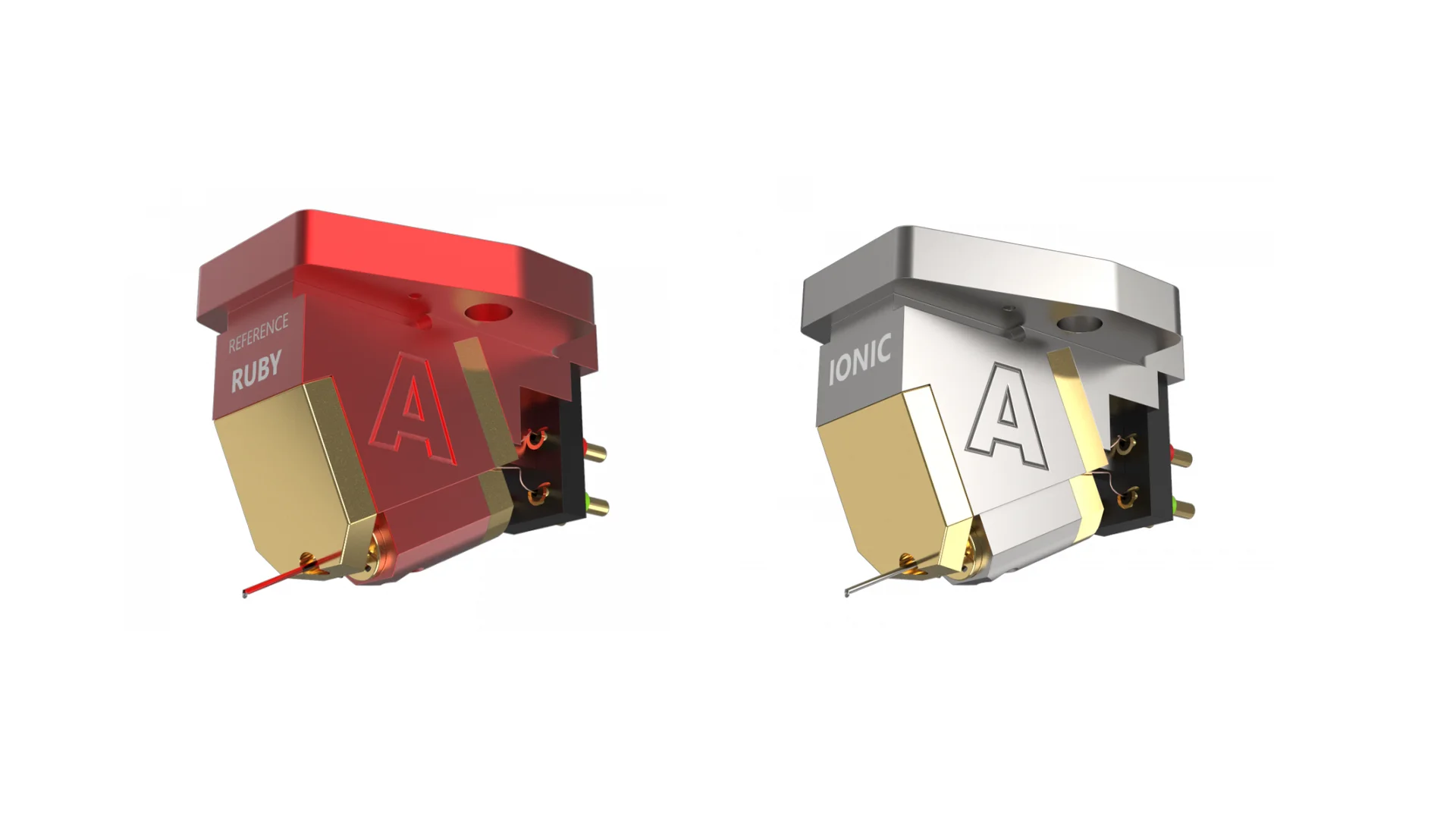
AVID HiFi engineers analogue playback by controlling how vibration enters, travels through and leaves a turntable. Conrad Mas founded the British company in 1995, and the Acutus turntable launched in 1999 after years of development. Its inverted bearing, powerful outboard supply, heavy platter, clamping system and tuned suspension treat record, platter and structure as one mechanical path. Volvere and Sequel extend that architecture, while Diva models provide a simpler rigid platform. AVID has since built a complete ‘groove to ear’ system: cartridges, tonearms, phono stages, integrated and separate amplifiers, loudspeakers, cables and supports. The expansion does not erase the original speciality; the range still begins with extracting information from a moving record while keeping motor, bearing and environmental energy under control. Products are made across the company’s two English factories.
Brinkmann

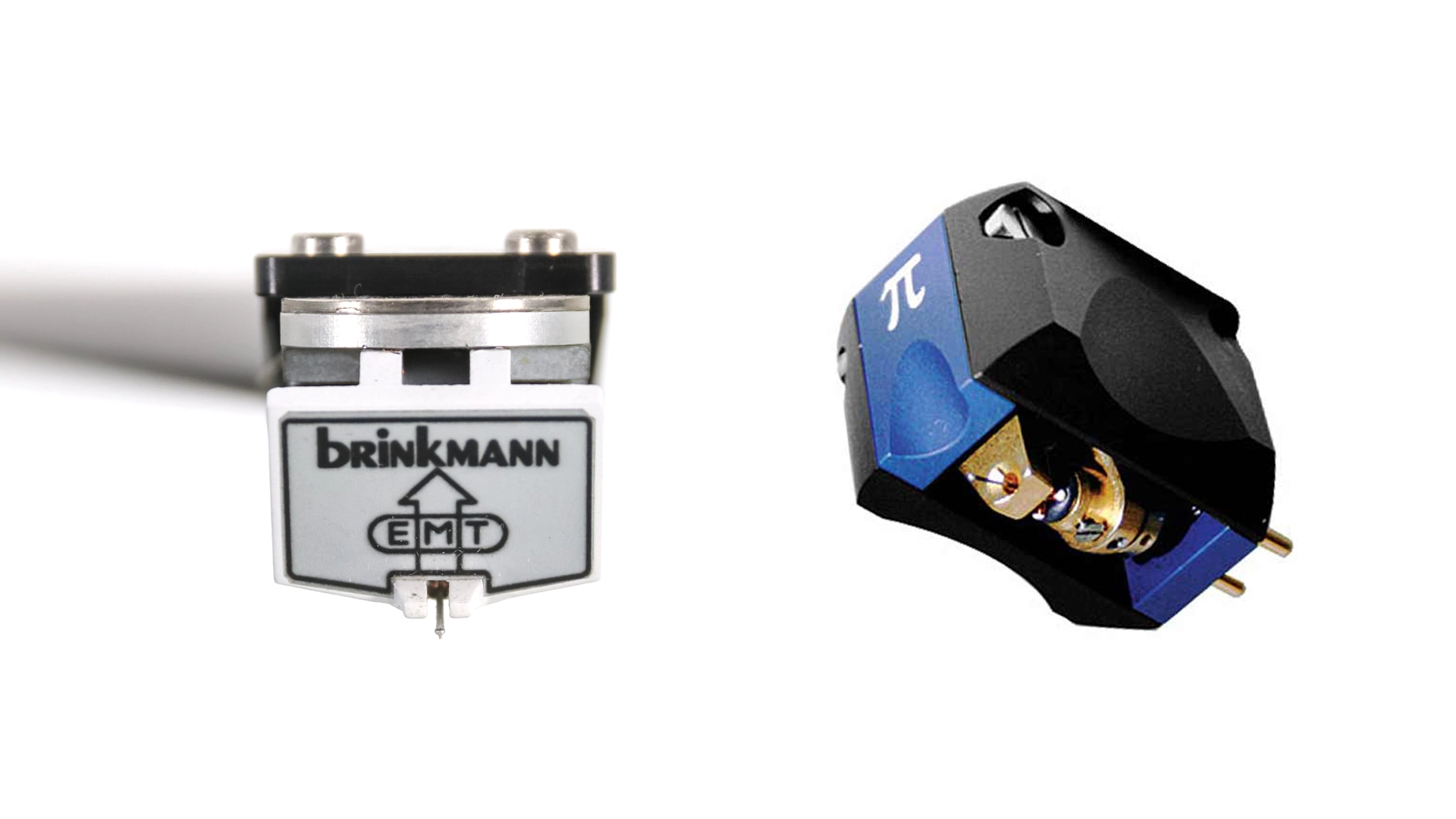
Brinkmann Audio treats the turntable, phono stage, source and amplifier as parts of one engineered playback chain. Helmut Brinkmann founded the German company in 1985 after his earlier work with Audiolabor. The Balance turntable became its best-known design, combining a high-mass platter, heated bearing and separate motor control. Taurus, Spyder and Bardo offer different mechanical architectures, supported by Brinkmann tonearms, cartridges and the RöNt valve power supply. The company was already respected for amplification before building turntables, and its present catalogue includes Edison phono stages, Marconi preamplification, stereo and mono power amplifiers and integrated designs. Nyquist adds streaming and digital conversion without abandoning the same attention to power, grounding and analogue output circuitry. This broader product history corrects the impression that Brinkmann works only with vinyl hardware.
Clearaudio

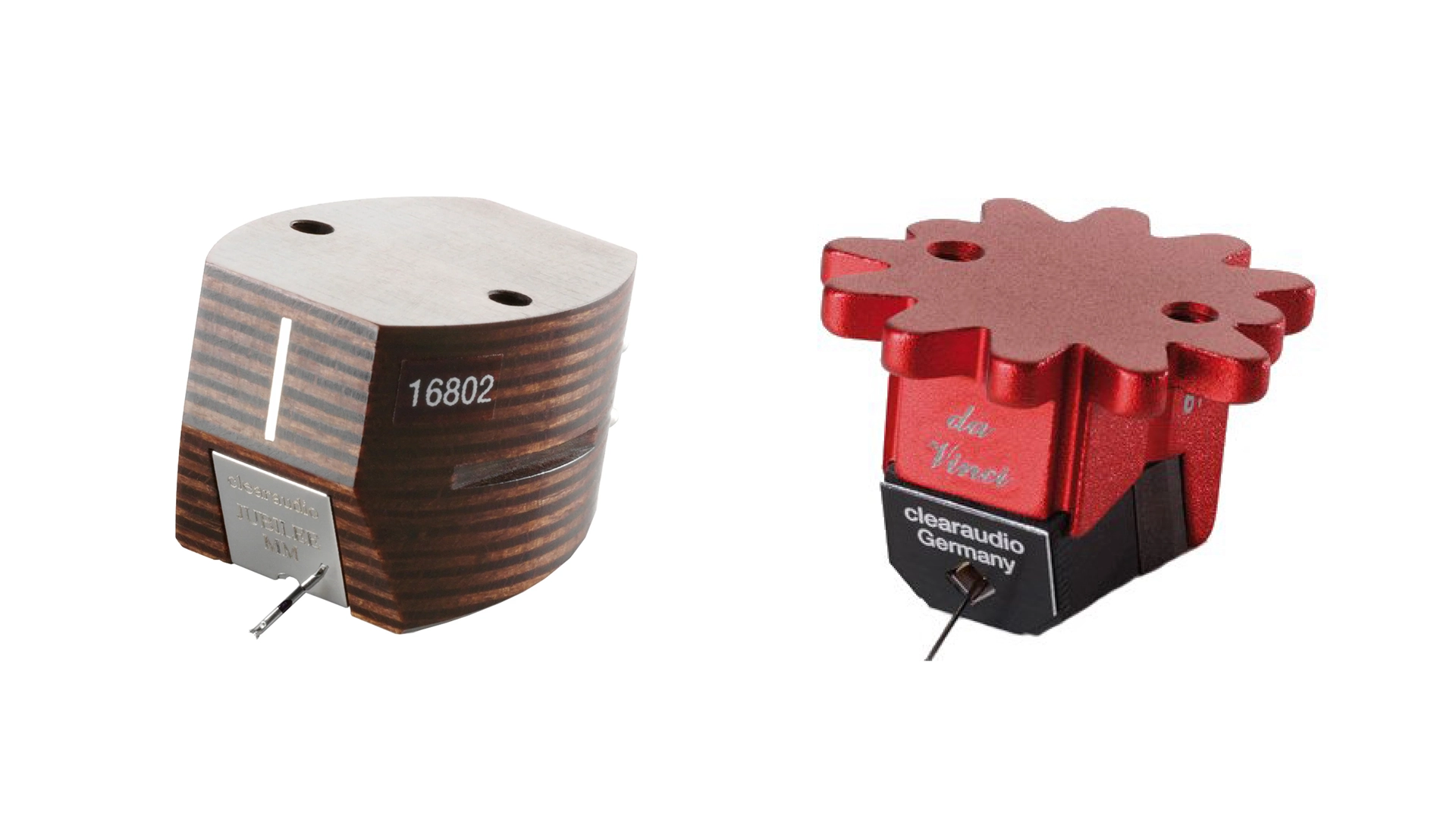
Clearaudio is a family-run German analogue specialist capable of supplying almost every mechanical and electronic part between a record and a line-level input. Peter Suchy founded the company in Erlangen in 1978 and introduced its first fully symmetrical moving-coil cartridge that same year. Clearaudio subsequently expanded from cartridges into turntables, pivoted and tangential tonearms, phono stages, record clamps, isolation accessories and record-cleaning machines. The range begins with accessible Concept packages and progresses through Performance DC, Ovation and Innovation designs to Master Innovation and Statement-level systems. Low-friction bearings, controlled-speed belt drives, layered platters and chassis using acrylic, aluminium, wood composites and ceramics are applied according to model rather than as decorative signatures. Cartridges and tonearms are developed alongside the decks, allowing geometry and mechanical interfaces to be treated as one system. Design, precision manufacture and assembly remain centred at the company’s Erlangen facility, now involving the second generation of the Suchy family.
DaVinciAudio

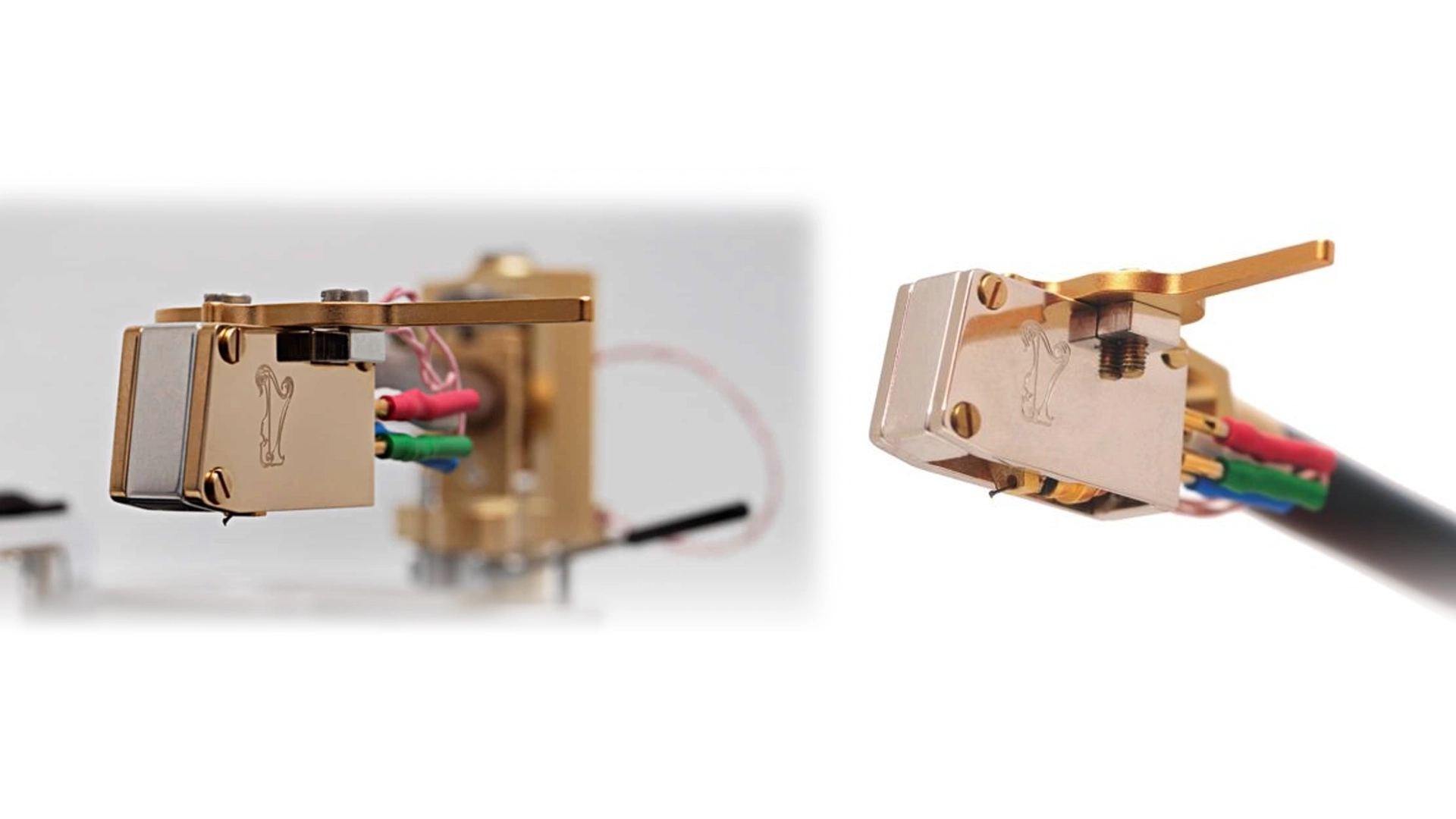
DaVinciAudio Labs is a Swiss workshop best known for treating analogue replay as precision mechanical craft. Founder and chief engineer Peter Brem developed the Gabriel and Grandezza turntables, Grandezza and Virtu tonearms, phono cartridges and limited-production electronics with the live concert as his reference; after his death in 2013, the family team and close collaborators continued the house’s work. The Gabriel reference deck and the more compact Equilibrium address bearing stability, drive, platter energy and arm geometry as one system rather than as a collection of accessories. DaVinci’s tonearms use carefully machined structures and high-grade bearings assembled with watchmaker-like attention, while its Grandezza moving-coil cartridges were specified and assembled in Switzerland around a magnetic engine supplied by Benz Micro. The company has also produced phono stages, line electronics and very low-volume Master Reference amplification. Its activity is documented from the early 2000s, although the company does not publish a sufficiently authoritative exact founding year. The identity is clear: bespoke, made-to-order analogue components whose distinctive value lies in mechanical execution, adjustment precision and continuity of craftsmanship rather than a rapidly changing product cycle.
Denon

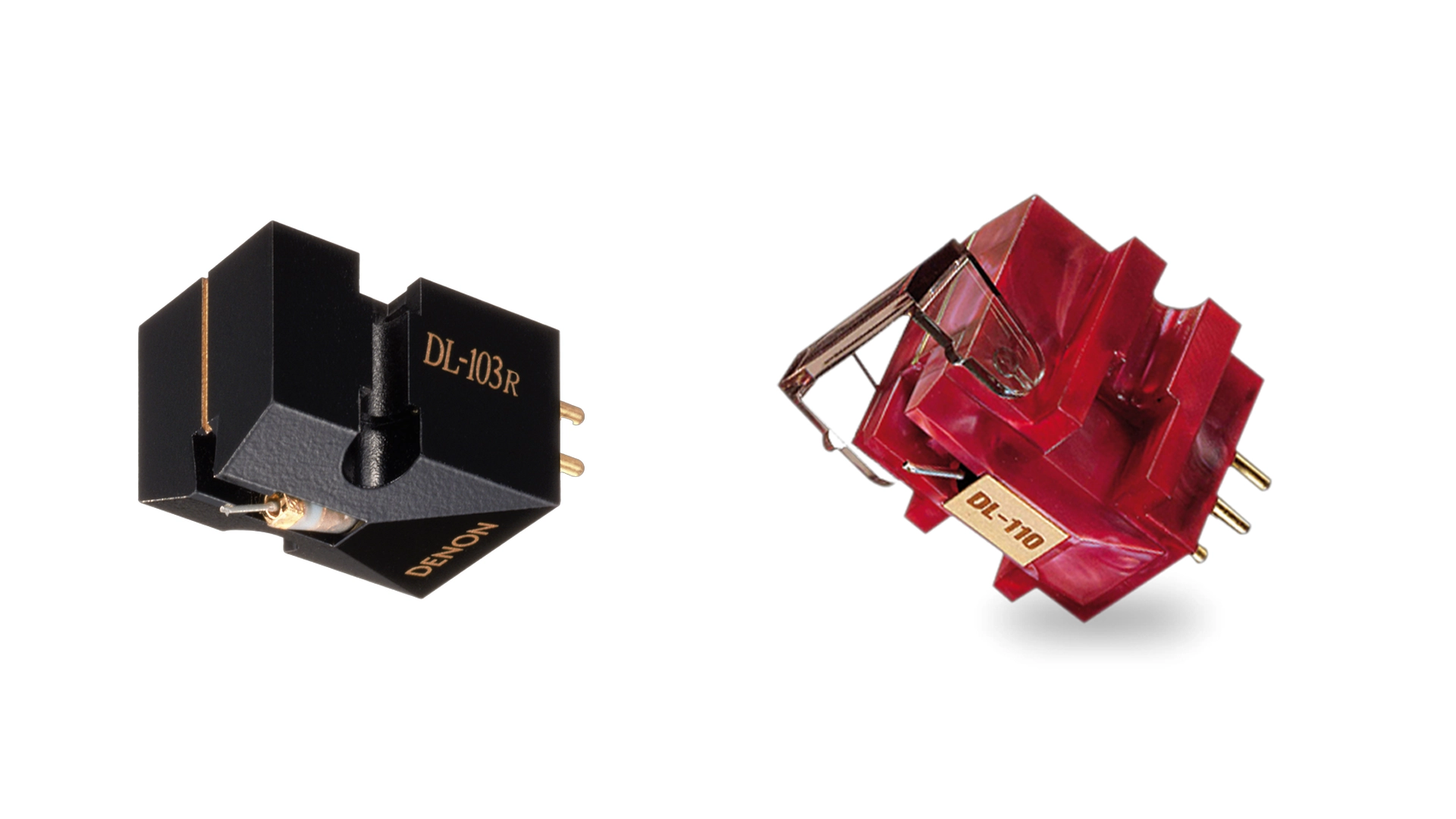
Denon’s history begins in 1910, when American entrepreneur Frederick Whitney Horn established the Japan Recorders Corporation, the antecedent of today’s Japanese audio brand, to manufacture records and gramophones. The company subsequently linked recording and playback in ways few consumer manufacturers can claim: it built Japan’s first professional disc recorder, released the country’s first commercial LP records, developed the broadcast-standard DL-103 moving-coil cartridge in 1963 and introduced an eight-channel PCM digital recorder in 1972. That combination of analogue, digital and broadcast experience still appears in a broad catalogue. AVR and AVC home-cinema receivers integrate amplification, decoding, room correction and HEOS network audio; PMA amplifiers and DCD disc players serve stereo systems; turntables, cartridges, headphones and soundbars cover other parts of the chain. The DL-103 remains in production decades after its broadcast origins, while modern receivers adopt current HDMI and immersive-audio standards. Denon’s strength is not merely age or product count, but a continuous ability to translate professional recording and format changes into durable home-audio products.
DS Audio

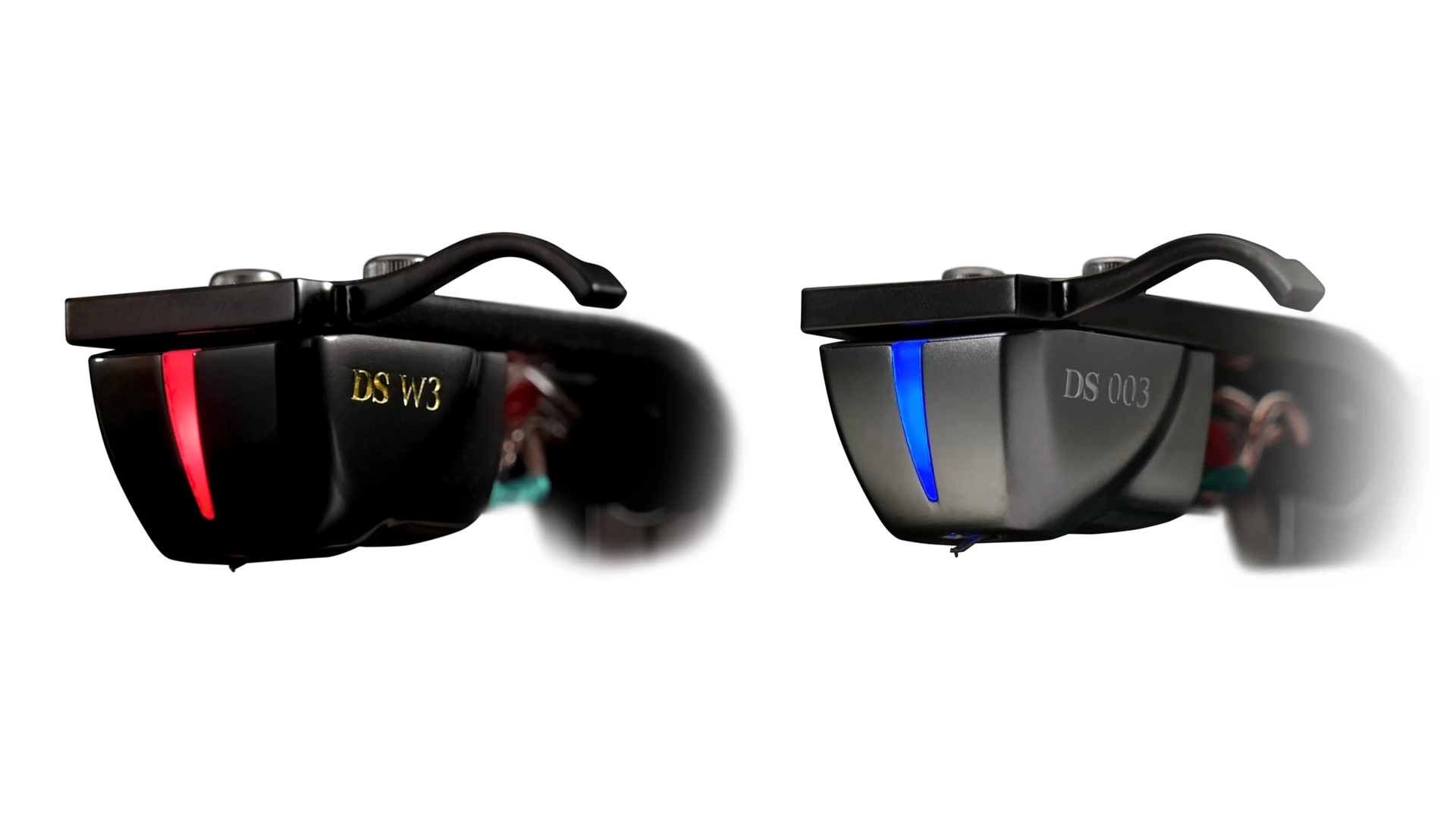
DS Audio is the Japanese analogue division of optical-technology company Digital Stream Corporation, launched in 2013 by Tetsuaki Aoyagi to revive the optical phono cartridge with modern components. Despite the name, the signal remains analogue: an LED illuminates a moving shading plate, and photodetectors convert its changing light level into left and right electrical signals. Removing coils and magnets from the moving system reduces effective moving mass and avoids the magnetic resistance and inductance inherent in MM and MC generators. The concept requires a dedicated equaliser and power supply rather than a conventional phono input, so DS Audio develops cartridges and matching equalisers as a system. Successive generations have refined the LED/photocell arrangement, channel separation, mechanical construction and the extremely light shading plate; the range extends from accessible models to the Grand Master system. Aoyagi’s breakthrough was not inventing optical pickup from nothing — earlier Toshiba designs existed — but solving their heat and component limitations with LEDs, modern sensors and precision manufacturing. DS Audio’s central contribution is making optical vinyl replay a mature, scalable high-end format again.
Dynavector Systems

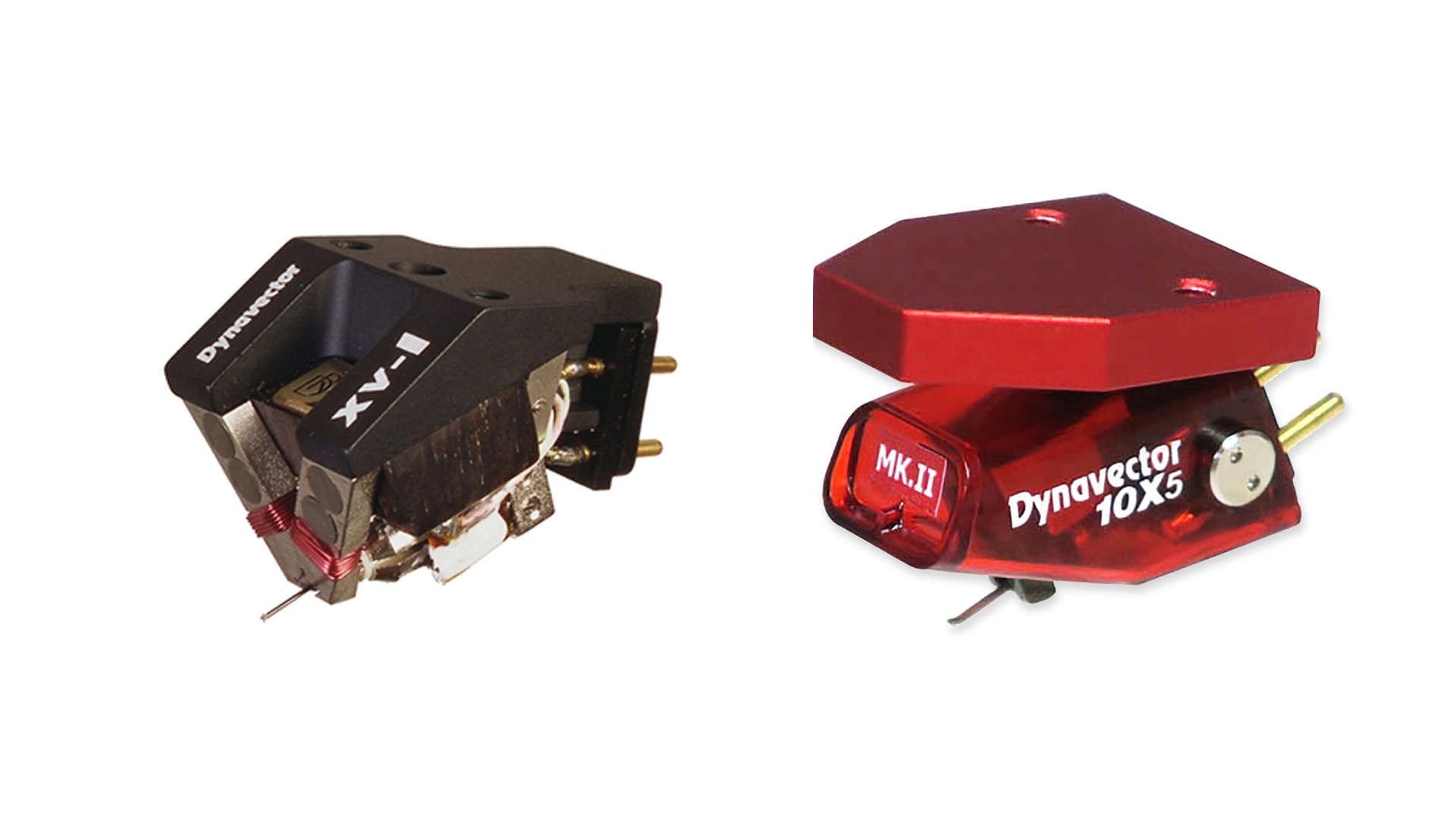
Dynavector Systems is a Japanese analogue-audio company founded in 1975 by engineering professor Dr Noboru Tominari, best known for moving-coil phono cartridges that combine advanced magnetic design with practical system compatibility. Dynavector helped make high-output MC cartridges a serious category, allowing models such as the 10X series to work with many moving-magnet phono inputs, while low-output designs such as 20X, XX-2A, Te Kaitora Rua and XV-1t serve progressively more specialised arms and phono stages. Two patented ideas recur across the range: Flux Damper stabilises unwanted variations in the magnetic circuit, and Softened Magnetism controls abrupt magnetic behaviour that can contribute to distortion. Fine wire coils, carefully shaped armatures, powerful magnets and cantilevers selected for each performance level complete the generator system. The company has also produced tonearms and electronics, but cartridges remain its central identity. Dynavector’s strength is not simply exotic material choice; it is the sustained application of magnetic-circuit theory to preserve tracking energy, dynamics and tonal information while offering both accessible high-output and reference low-output MC solutions.
EAT

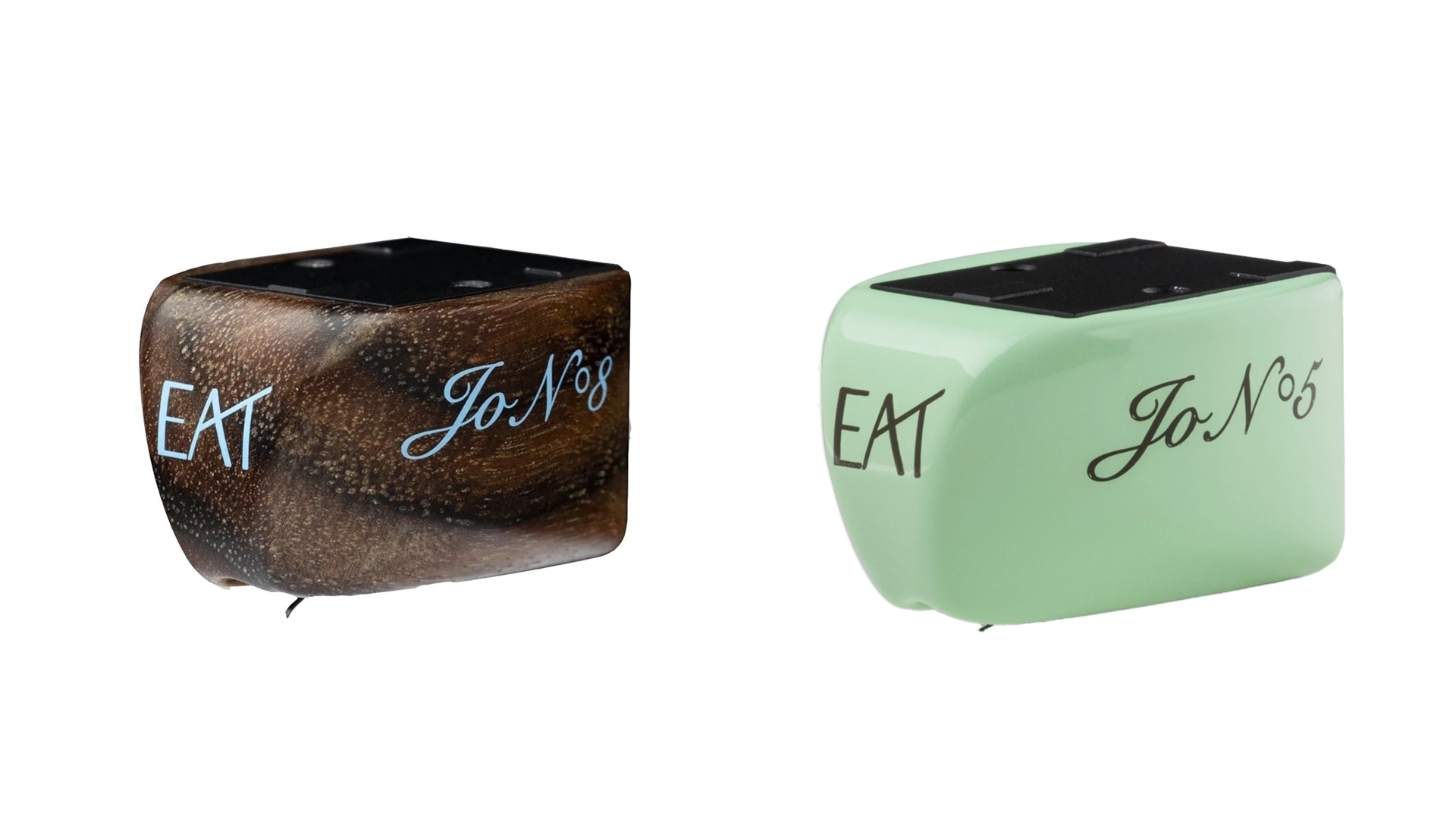
European Audio Team, or E.A.T., is a Slovak high-end analogue brand founded by Jozefina Lichtenegger, with production links spanning Slovakia, Prague and Austria. Its story began with vacuum tubes rather than turntables: after work connected with VAIC, Lichtenegger commissioned 300B and KT88 valves from the former Tesla operation in Prague and established E.A.T. around 2003. She later acquired the tube-making assets, preserving specialist tooling and knowledge that few modern audio firms possess. The first E.A.T. turntable, the substantial Forte, followed in 2009 and set the direction for a range that now includes Fortissimo, F-Dur, Forte, C-Sharp, C-Major and B-Sharp decks, alongside proprietary tonearms, cartridges, phono stages, record accessories and valves. Designs use high-mass platters, isolated motors, carbon-fibre structures and carefully controlled bearings in different combinations rather than repeating one platform cosmetically. The company also develops E-Glo valve phono electronics, connecting its original tube expertise with vinyl replay. E.A.T.’s real individuality lies in that continuity: a founder-led analogue company whose knowledge runs from the cartridge and arm through the deck, phono stage and vacuum tube.
EMT Tontechnik

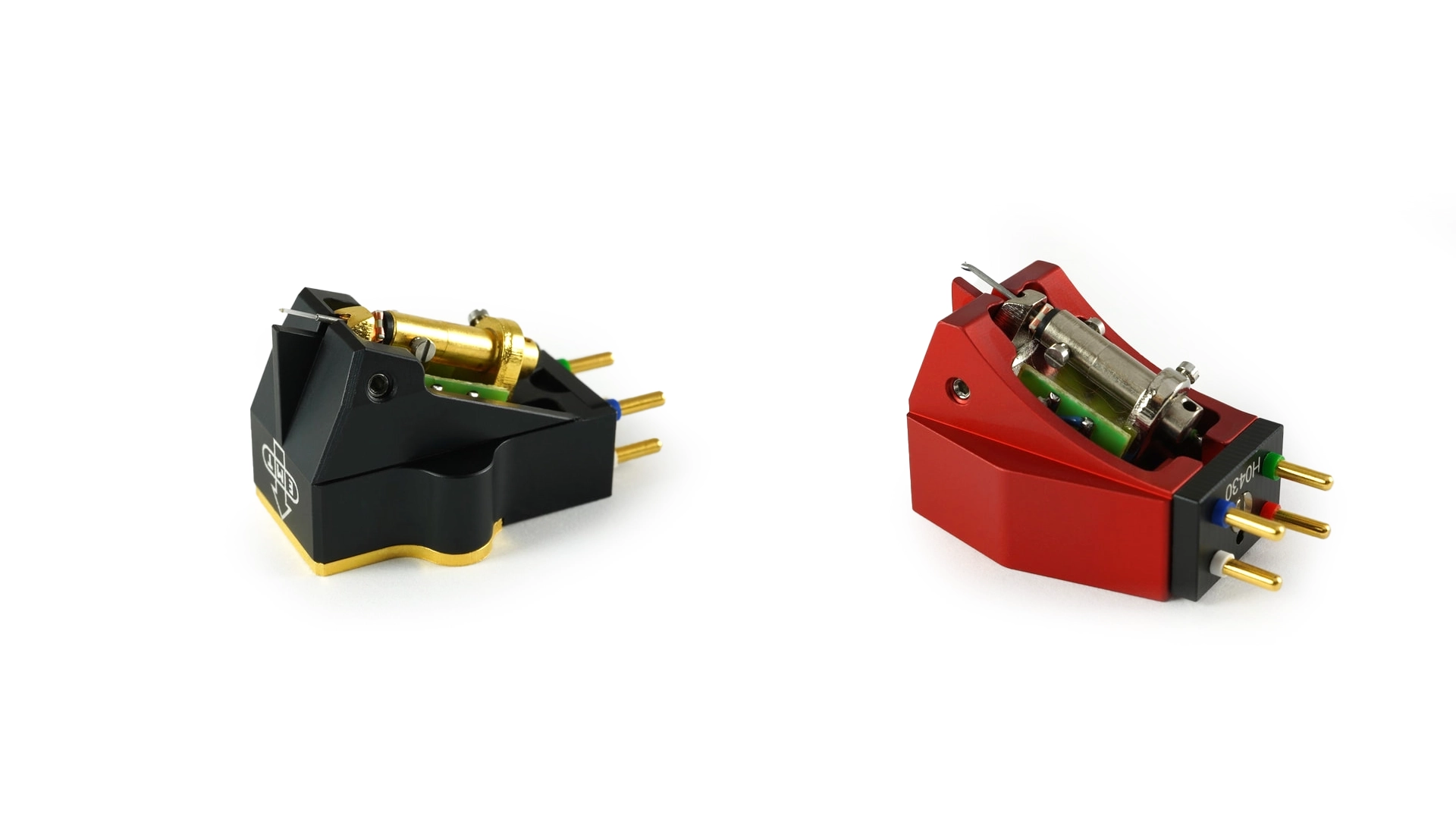
EMT began in Berlin in 1940, when Wilhelm Franz founded Elektromesstechnik Wilhelm Franz to make measurement equipment for broadcasting. The name became inseparable from professional analogue playback: EMT 927 and 930 idler-drive turntables, the direct-drive 950 and the TSD 15 moving-coil cartridge were engineered for continuous studio use, fast cueing and repeatable performance. EMT also created landmark studio processors including the 140 plate reverb and 250 digital reverb. Today the brand’s analogue know-how is continued in Switzerland by HiFiction AG, which develops and manufactures EMT cartridges, the 928 II turntable, 909/912 tonearms and phono electronics. Modern products retain the serviceable, precision-built character of the broadcast originals while using current materials and machining.
Garrott Brothers

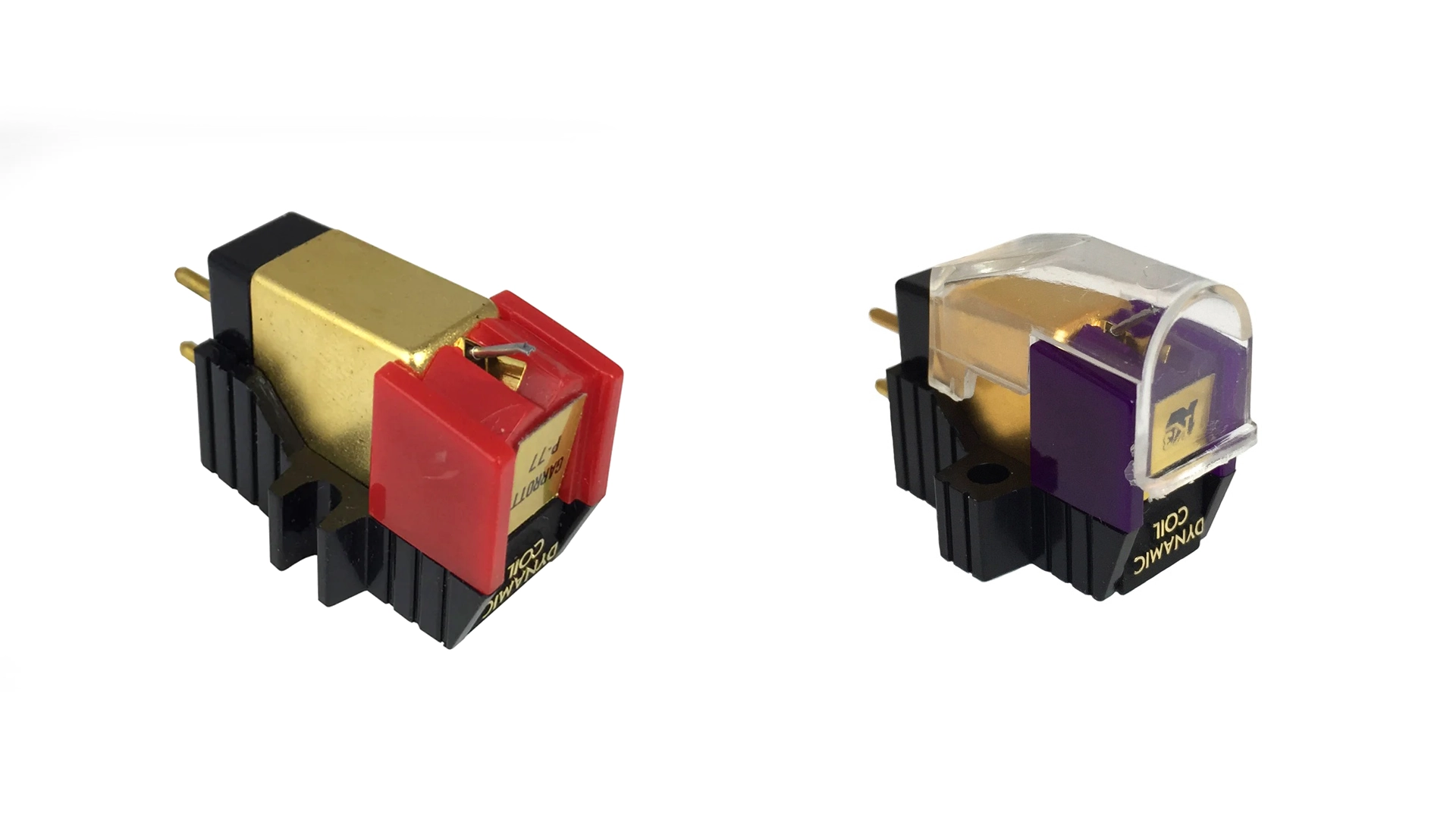
Garrott Brothers is an Australian phono-cartridge name rooted in the microscopic craft of stylus inspection, retipping and rebuilding. Twin brothers John and Brian Garrott began that work in 1973, developing a reputation for modifying Decca cartridges and later creating their own designs, most notably the P77 moving-magnet cartridge and a series of moving-coil models. There was no third founding brother: the frequently repeated name Graeme is an error. After John and Brian died in 1992, the brand and its specialist services continued under Audio Dynamics rather than disappearing permanently. Today’s range retains the P77i and offers K-series moving-magnet cartridges, Optim moving-coil versions with fine-line, FGS and ruby-cantilever options, replacement styli and rebuild or retip services for cartridges from many manufacturers. The continuity of workshop knowledge is central to the brand, because alignment, cantilever mass, stylus profile and suspension condition matter as much as the cartridge body carrying the Garrott name.
Genuin

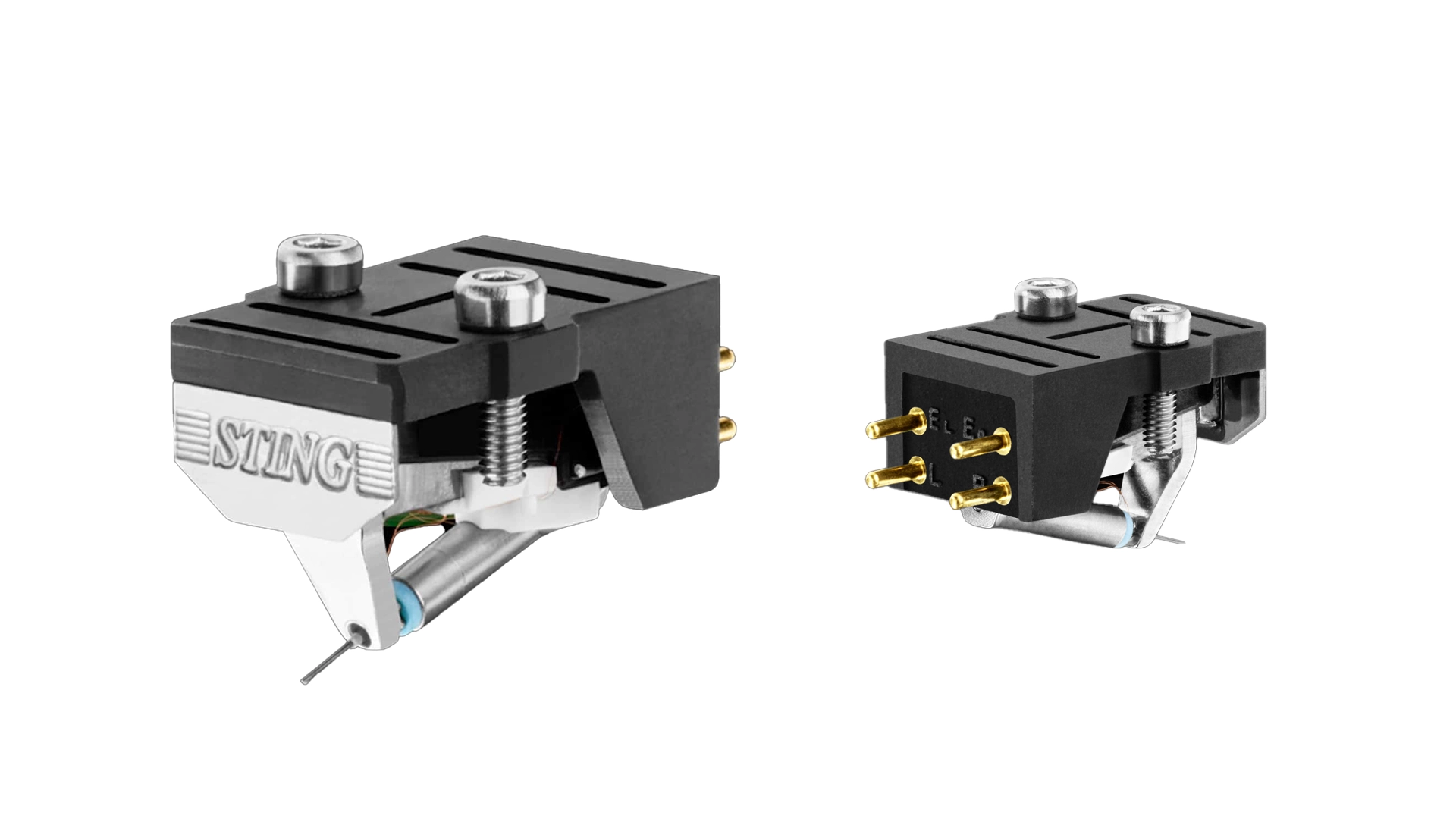
Genuin Audio is Thomas Wendt’s attempt to offer an entire high-end playback chain through commissioned German engineering rather than a single in-house designer. After decades as a listener and as owner of HiFi-Studio Cottbus, Wendt created the product line by asking recognised specialists to develop components specifically for the brand; specialised German manufacturers then build them in small quantities. The catalogue is unusually complete and its short product names describe a coherent system: drive turntable, point tonearm, sting cartridge, pearl phono preamplifier, tars music server, direct cables and the neo, ava, alex and next active loudspeakers. This allows Genuin to address the mechanical, analogue, digital and room-facing parts of reproduction as one chain while keeping each project in the hands of an appropriate expert. The understated cases reflect the company’s ‘The inside matters’ principle: engineering resources are directed toward circuit, mechanism and acoustic function, with manufacture and final quality control kept in Germany.
Gold Note

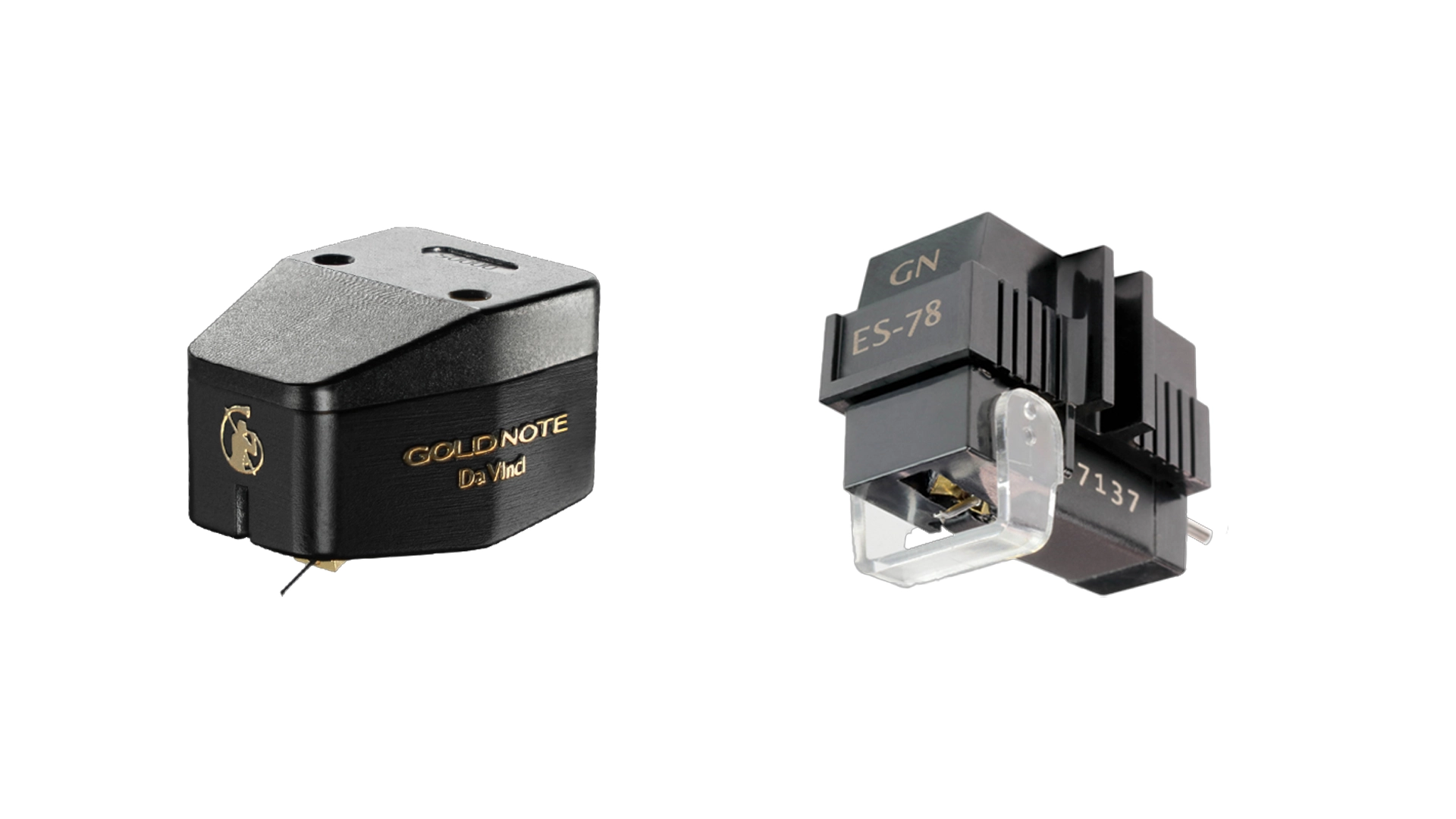
Gold Note is an Italian full-system audio manufacturer whose modern brand grew from Maurizio Aterini’s engineering studio, established in Florence in 1992 to design analogue products for other companies. The Gold Note name itself was founded in 2012, after Elena Basciano and later Alessio Oronti joined the enterprise. Its catalogue now links turntables and cartridges with phono stages, digital sources, all-in-one players, amplifiers, loudspeakers, racks and cables. Recognisable products include the Mediterraneo turntable, PH-10 phono stage, DS-series streamers and IS-series integrated systems. A useful feature of the range is modular upgrading: many components accept dedicated external power supplies, allowing the core unit to remain in service while its power section is improved. Design, development and much of the production remain concentrated in Tuscany.
Goldring

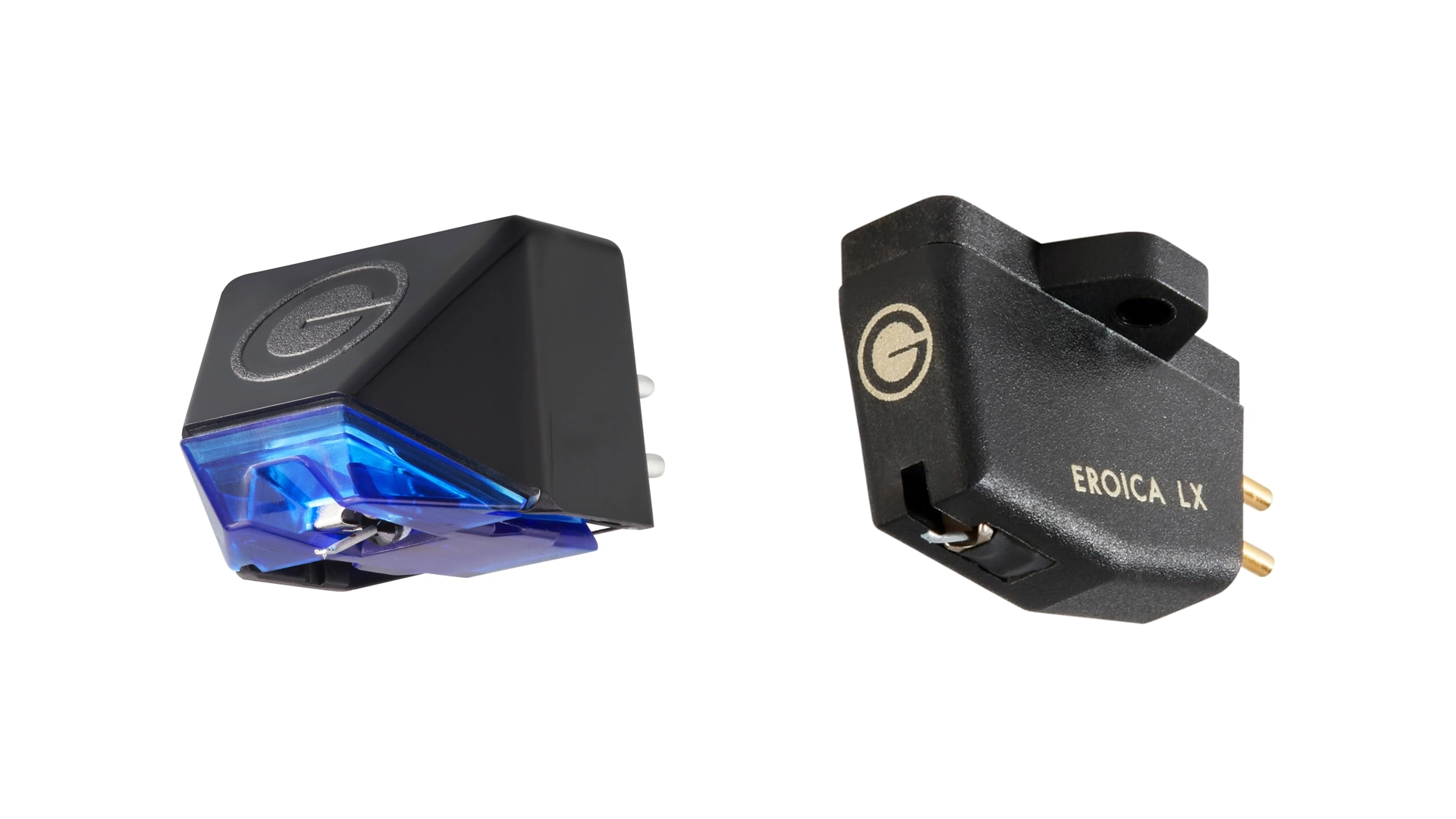
Goldring is a British analogue-audio specialist with roots in the earliest electrical record reproduction. Czech-born brothers Heinrich and Julius Scharf founded Gebrüder Scharf in Berlin in 1906; the business moved to England in 1933 and adopted the Goldring Manufacturing name in 1953. Its history includes the Goldring 500 pickup, the widely used G800 cartridge, collaboration with Lenco on turntables such as the GL75, and the Electro II moving-coil design. The current range covers E-series and 1000/2000-series moving-magnet cartridges alongside Eroica, Elite, Ethos and Legacy moving-coil models, plus replacement styli and dedicated phono accessories. Goldring continues to design cartridges in the UK and hand-builds its moving-coil models there. Long-term stylus support and factory repair expertise are as important to the brand as introducing new models.