The Complete Bookshelf about Sound
Your room is the final component in your audio system, and arguably the most important one. This page gathers essential articles, books, and guides on acoustic design and soundproofing to help you get it right. Whether you’re fine-tuning a listening room, building a home studio, or creating a home cinema, these curated resources cover the key principles of acoustic treatment and sound isolation. Explore them to learn how to tame reflections, control bass, and build a truly great-sounding space.
Acoustic Absorbers and Diffusers
- by Trevor J. Cox & Peter D’Antonio
- 3rd Edition
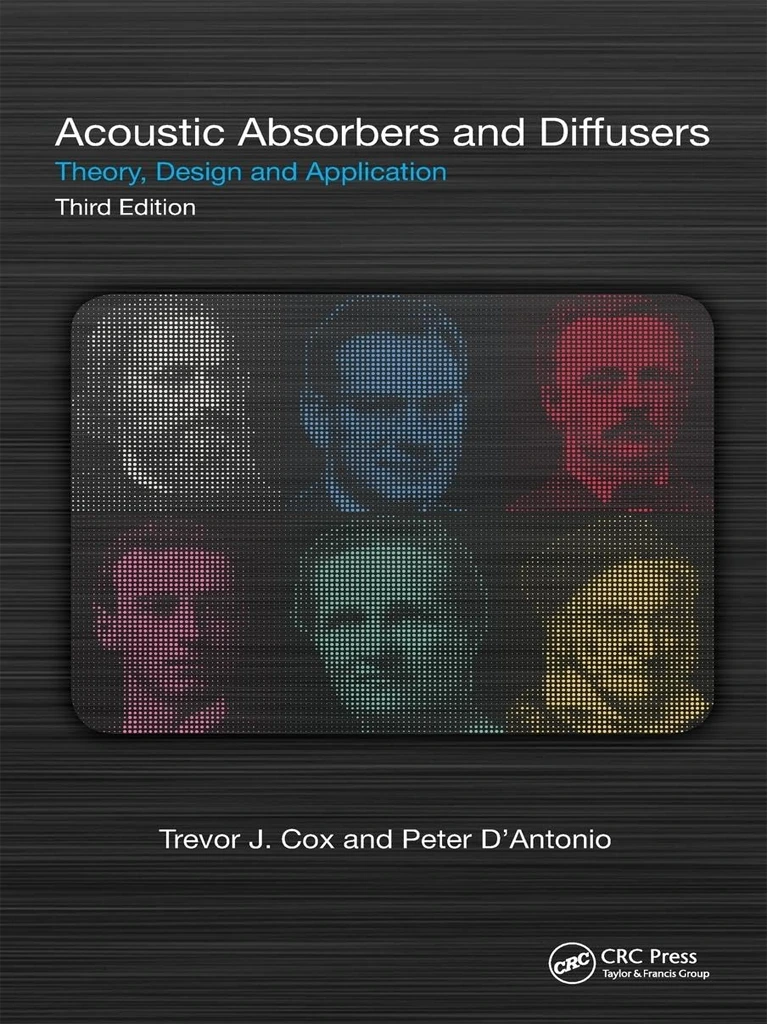
Acoustic Absorbers and Diffusers is a specialist guide to the two main passive tools used to shape a room’s acoustic response: absorption and diffusion. Cox and D’Antonio explain how porous and resonant absorbers work, how scattering and diffusion are measured, how Schroeder and geometric diffusers are designed, and how these treatments behave when installed in real rooms. The third edition also covers newer applications, updated measurement methods, sustainability, and prediction techniques linked to downloadable MATLAB implementations.
Buy this if you want to understand acoustic treatment beyond simple placement rules. It is most useful for acousticians, studio and listening-room designers, advanced DIY builders, and students who need to predict why a treatment works, select the right type, and evaluate its performance. The mathematics can be demanding, but the combination of theory, measurements, case studies, and practical design methods makes it a long-term technical reference rather than a quick decorating guide.
Acoustic Design for the Home Studio
- by Mitch Gallagher
- 1st Edition
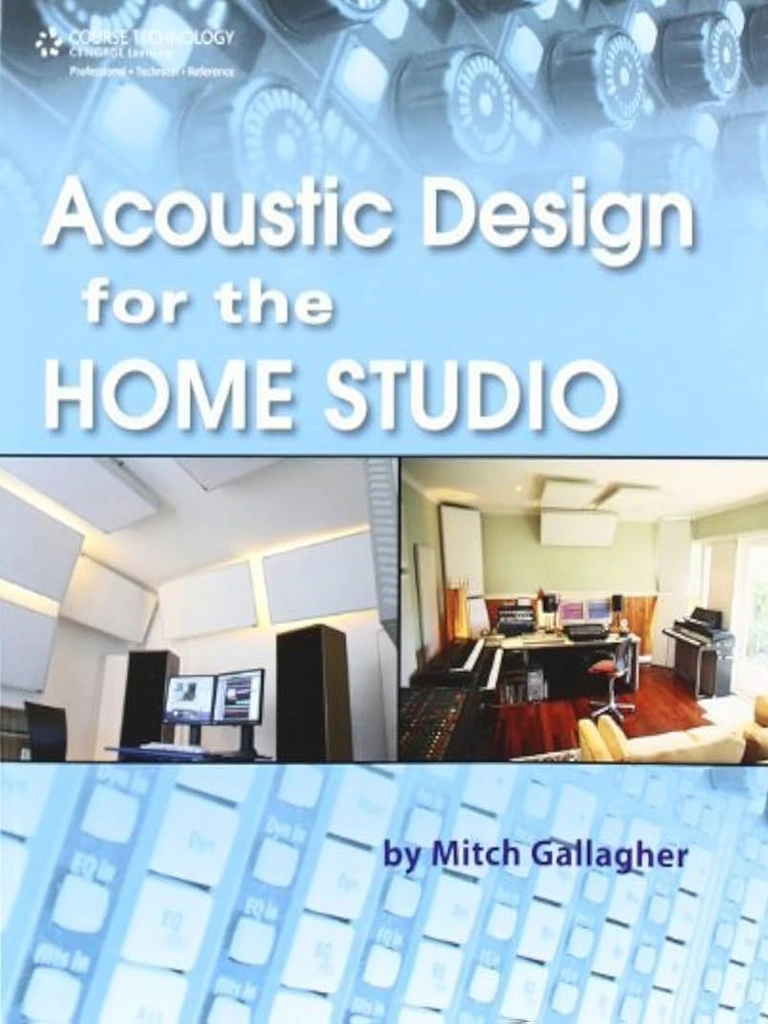
Acoustic Design for the Home Studio is written for musicians and project-studio owners who need better monitoring and recording results from an ordinary room. Mitch Gallagher explains the acoustic problems that make bedrooms, garages, and basements unreliable—reflections, standing waves, bass buildup, flutter echo, and poor isolation—and shows how placement and treatment can improve them. The emphasis is practical: diagrams, photographs, real-room examples, readily available materials, and solutions ranging from little or no cost to more complete commercial treatment.
Buy this if you want useful acoustic improvements without first studying advanced physics. It helps you understand why a mix sounds balanced in one room but fails elsewhere, where treatment matters most, and how to spend a limited budget intelligently. It is less comprehensive than a professional acoustics textbook, but that is part of its appeal: the book stays focused on the decisions a home-studio owner can actually make and implement.
Acoustics
- by Allan D. Pierce
- 3dr Edition
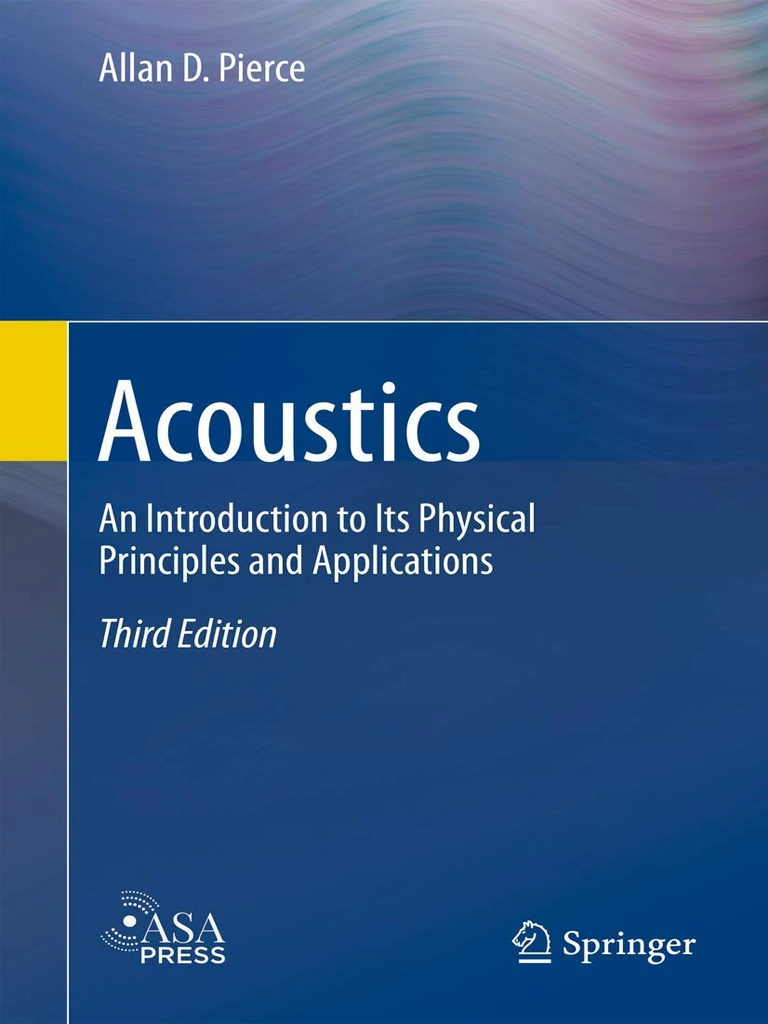
Allan D. Pierce’s Acoustics is a rigorous introduction to physical acoustics and the mathematical framework behind sound propagation. It develops the subject from first principles, covering wave theory, quantitative sound measures, reflection and transmission, radiation from vibrating bodies, room acoustics, ray methods, scattering and diffraction, dissipative effects, and nonlinear propagation. The corrected modern edition preserves the depth of the landmark 1981 text while adding a new foreword and preface, and it includes substantial end-of-chapter problems with answers.
Buy this if you want a foundation strong enough for serious work in acoustics rather than a collection of practical rules. It is best suited to graduate students, engineers, physicists, and advanced readers comfortable with calculus and differential equations. The reward for the mathematical effort is a transferable understanding that applies across architectural acoustics, audio engineering, noise control, ultrasonics, underwater sound, and other wave-based problems.
Acoustics
- by Leo L. Beranek
- 1st Edition
Leo L. Beranek’s Acoustics is a foundational engineering text that connects the physics of sound with the behavior of practical electroacoustic systems. It develops sound pressure, power, impedance, radiation, resonance, and room behavior while making extensive use of electrical and mechanical analogies. Microphones, loudspeakers, horns, enclosures, and other transducers are treated as engineering systems rather than isolated products, which makes the book especially useful for readers coming from electronics or electrical engineering.
Buy this for the fundamentals that sit underneath much of modern audio and acoustical engineering. Some terminology, examples, and technology reflect the era in which the book was written, so it is not the best source for current digital-audio practice. Its value is deeper: Beranek shows how acoustical, mechanical, and electrical domains relate, giving designers and technically minded audio readers a disciplined way to reason about transducers, sound fields, impedance, efficiency, and radiation.
Acoustics and Audio Technology
- by Mendel Kleiner
- 3rd Edition
Acoustics and Audio Technology is a broad university-level introduction that links the physics of sound to the systems used to capture, reproduce, and control it. Mendel Kleiner moves from sound propagation and basic acoustic equations into human hearing, voice, room acoustics, absorption, noise control, microphones, loudspeakers, and audio reproduction. The third edition is structured as a teaching text, with end-of-chapter problems and enough mathematics to develop engineering understanding without becoming a narrowly theoretical treatise.
Buy this if you want one book that connects acoustics, electroacoustics, and audio technology instead of treating them as separate subjects. It is particularly useful for engineering and audio students, technically ambitious enthusiasts, and professionals who need to strengthen weak areas in their fundamentals. The book’s strength is its continuity: hearing, rooms, transducers, and sound propagation are explained as parts of the same system, making later specialist texts much easier to approach.
Architectural Acoustics
- by Marshall Long
- 2nd Edition
Marshall Long’s Architectural Acoustics is a large, technically detailed reference on how sound behaves in buildings and how acoustical problems are solved through design. It starts with acoustics, perception, measurement, noise metrics, and environmental noise, then develops wave behavior, sound transmission, vibration isolation, floors, walls, and mechanical-system noise. Later chapters apply those principles to dwellings, offices, speech rooms, music rooms, auditoriums, studios, listening rooms, theaters, and sound-reinforcement systems, with extensive figures and case-based design guidance.
Buy this if you need more than a surface-level introduction to building acoustics. It works both as an advanced textbook and as a desk reference for architects, engineers, consultants, and serious studio designers who need to trace a problem from physics to construction detail. The breadth is the main attraction: instead of focusing only on room treatment, it covers isolation, services noise, vibration, architectural planning, and room performance as one connected design discipline.
Architectural Acoustics Illustrated
- by Michael Ermann
- 1st Edition
Architectural Acoustics Illustrated translates building acoustics into the visual language of architecture. Michael Ermann uses more than 350 illustrations to explain how sound propagates, reflects, is absorbed, passes through constructions, and interacts with the shape and use of a space. The book connects those principles directly to early design decisions, including site planning, room layout, partitions, HVAC and plumbing noise, sound isolation, and spaces intended for speech or music. Chapter summaries and design checklists make it especially easy to use while developing a project.
Buy this if equations-heavy acoustics books feel disconnected from architectural practice. It is aimed at architects, interior designers, students, and building professionals who need to recognize acoustic consequences before construction makes them expensive to correct. The book does not replace a specialist engineering reference for detailed calculations, but it excels at developing visual intuition—what to look for in a plan or section, why a problem is likely to occur, and which design direction can prevent it.
Architectural Acoustics Illustrated
- by Michael Ermann
- 1st Edition
Architectural Acoustics Illustrated translates building acoustics into the visual language of architecture. Michael Ermann uses more than 350 illustrations to explain how sound propagates, reflects, is absorbed, passes through constructions, and interacts with the shape and use of a space. The book connects those principles directly to early design decisions, including site planning, room layout, partitions, HVAC and plumbing noise, sound isolation, and spaces intended for speech or music. Chapter summaries and design checklists make it especially easy to use while developing a project.
Buy this if equations-heavy acoustics books feel disconnected from architectural practice. It is aimed at architects, interior designers, students, and building professionals who need to recognize acoustic consequences before construction makes them expensive to correct. The book does not replace a specialist engineering reference for detailed calculations, but it excels at developing visual intuition—what to look for in a plan or section, why a problem is likely to occur, and which design direction can prevent it.
Audio Engineering Explained
- by Douglas Self
- 1st Edition
Audio Engineering Explained is a curated technical reference rather than a conventional single-author textbook. Douglas Self selected established material from the Focal and Newnes catalogues and organized it into a wide survey of audio engineering: acoustics and hearing, microphones, mixers and interconnects, grounding, power amplifiers, loudspeakers and crossovers, DSP and MIDI, large-room acoustics, sound-system equalization, sound isolation, and studio environments. Individual chapters come from recognized specialists, so the book brings several expert perspectives into one volume.
Buy this if you want a substantial engineering library starter without collecting a separate book for every part of the signal chain. It is especially useful for students, technicians, designers, and experienced audio people who need a dependable reference outside their main specialty. Because it compiles material from different sources, the voice is less uniform than a purpose-written course, but the breadth and technical depth make it valuable for looking up how real audio hardware and systems work.
Handbook for Sound Engineers
- by Glen M. Ballou
- 5th Edition
Handbook for Sound Engineers is an encyclopedic reference covering an unusually wide range of professional audio and acoustics. The fifth edition brings together specialist contributors on fundamentals, psychoacoustics, hearing, small- and large-room acoustics, microphones, loudspeakers, amplifiers, consoles and DAWs, grounding and interfacing, digital formats, test and measurement, cinema and surround sound, system design, stadiums, assistive listening, communications, and many other practical topics. At well over a thousand pages, it is designed for consultation rather than casual cover-to-cover reading.
Buy this if you want one serious desk reference that can answer questions across many branches of audio engineering. Its greatest value is breadth: a studio engineer can look up acoustics or grounding, while a systems engineer can move into transducers, measurement, digital interfaces, or amplifier design without changing books. Some chapters will matter more than others for any individual reader, but the range of contributors and subjects makes it particularly useful in professional, educational, and workshop libraries.
Home Recording Studio: Build It Like the Pros
- by Rod Gervais
- 2nd Edition
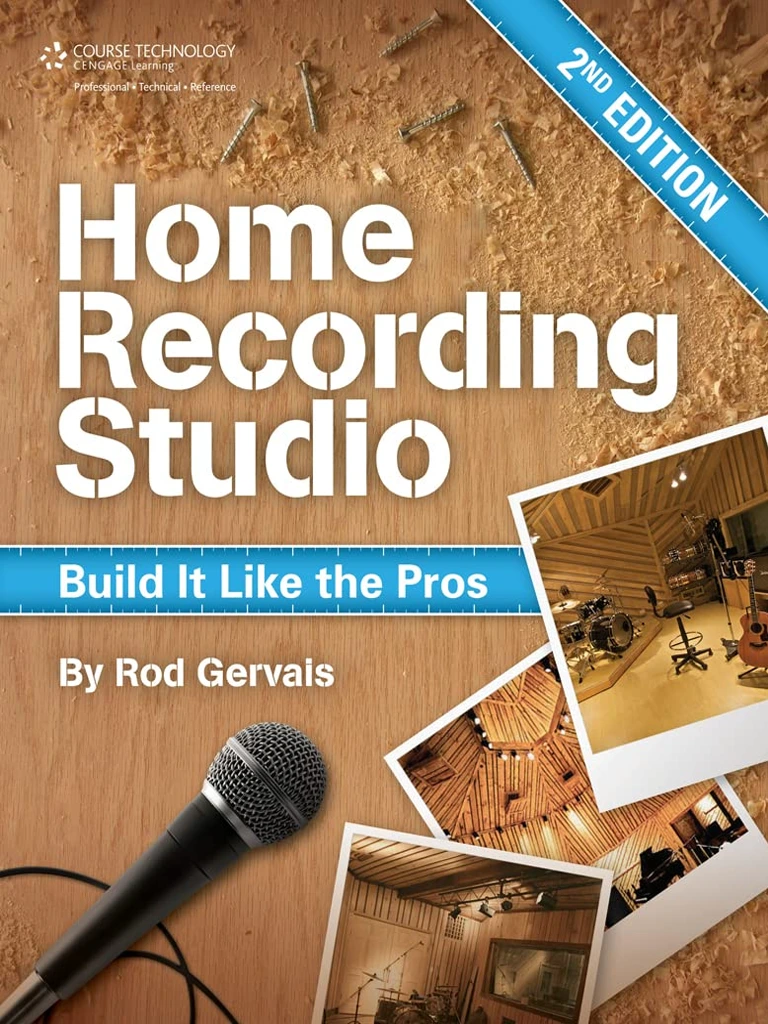
Home Recording Studio: Build It Like the Pros is a construction-focused guide for turning a residential space into a genuinely usable recording studio. Rod Gervais explains room modes and isolation concepts, then goes into floor, wall and ceiling assemblies, doors and windows, electrical systems, HVAC, room testing, treatment, wiring, permits, and other details that become critical once a project moves beyond hanging acoustic panels. The second edition uses diagrams, real-world examples, and widely available building materials to show how the pieces fit together.
Buy this if you are planning to build or substantially remodel a home studio and want to avoid expensive structural mistakes. Its strongest material is not mixing advice or equipment selection, but the practical interface between acoustics and construction: keeping sound in or out, controlling flanking paths, creating quiet ventilation, and building assemblies correctly. For serious DIY builders and contractors, it is far more useful than a simple room-treatment guide because it addresses the hidden parts of the room that cannot be fixed easily after completion.
Keep the Peace!
- by Mark Parsons
- 1st Edition
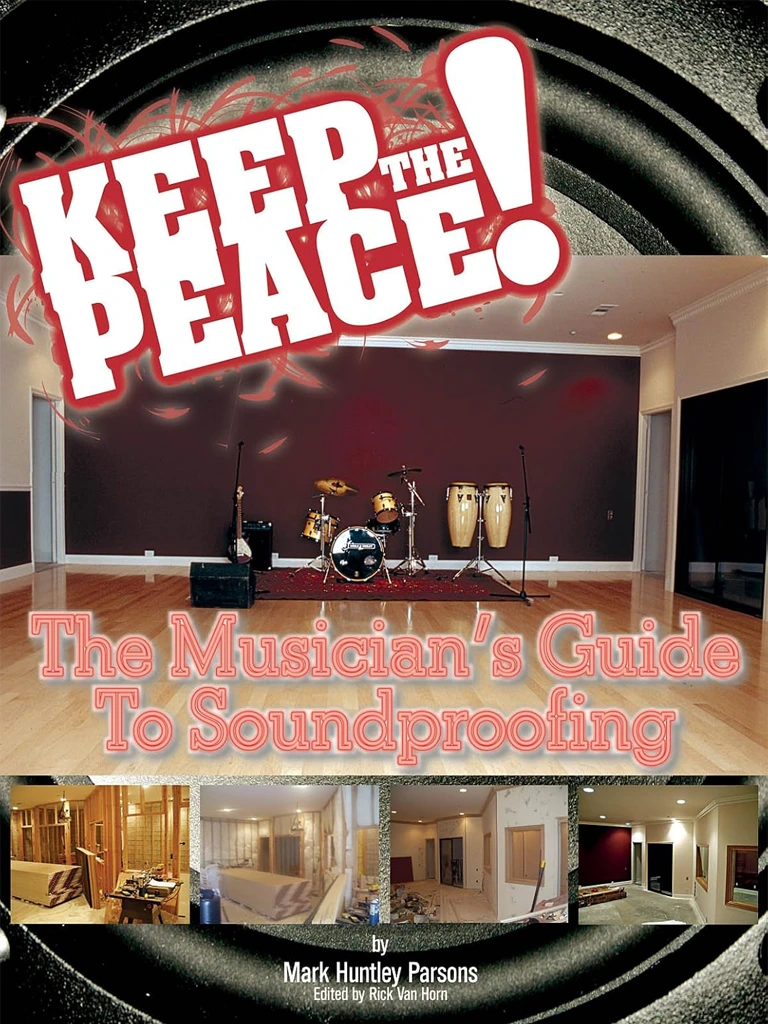
Keep the Peace! is a short, practical soundproofing guide written specifically for musicians who need to rehearse without turning noise into a household or neighborhood problem. Mark Parsons covers the realities of sound control, then works through walls, ceilings, floors, windows, doors, HVAC, power, lighting, and the idea of treating the room as a complete isolation system. The book also includes an acoustics-expert roundtable and case studies, giving its 64 pages more substance than the light, musician-friendly presentation might suggest.
Buy this if your main question is simply, “How can I practice louder without disturbing everyone around me?” It is particularly relevant to drummers, amplified guitarists, bands, and home-studio owners who need an accessible introduction before committing to a construction project. It will not replace a detailed engineering or building-acoustics manual, but it is quick to read, focused on real musician problems, and useful for understanding why doors, air paths, structure-borne sound, and weak construction points matter as much as acoustic foam.
Loudspeaker and Headphone Handbook
- by John Borwick
- 3rd Edition
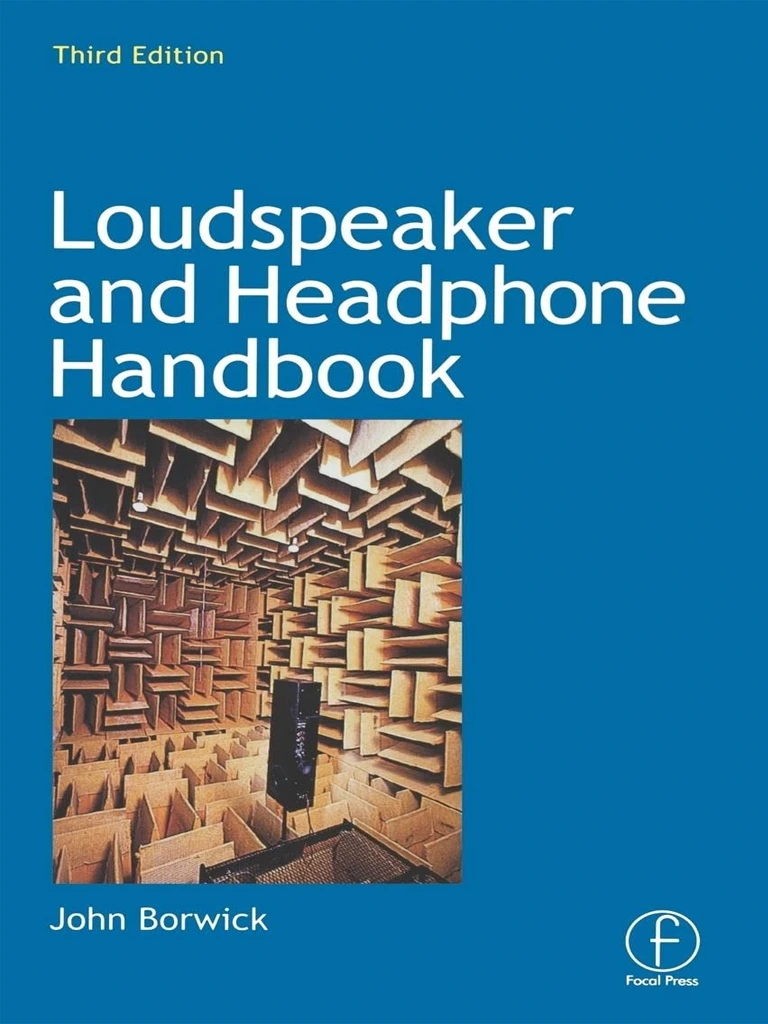
Loudspeaker and Headphone Handbook is a multi-author technical reference devoted to transducers and the systems around them. The third edition covers sound radiation, drive mechanisms, electrostatic and distributed-mode designs, multi-driver systems, amplifier–loudspeaker interaction, enclosures, room effects, sound reinforcement, studio monitoring, measurements, subjective evaluation, headphones, standards, and terminology. It also reflects the growing role of computer-aided design, digital processing, and newer measurement and research methods in loudspeaker development.
Buy this if you want to understand loudspeakers as engineered systems rather than compare finished products by specifications alone. It is most useful for designers, students, measurement-oriented enthusiasts, and audio professionals who need detailed treatment of drivers, cabinets, crossover behavior, radiation, room interaction, and evaluation methods in one place. Some technology has naturally moved on since 2001, but the underlying physics and engineering relationships remain highly relevant, making the book a strong reference for deeper study.
Master Handbook of Acoustics
- by Ken C. Pohlmann
- 7th Edition
Master Handbook of Acoustics is a practical bridge between acoustic theory and the design of real listening, recording, and performance spaces. The seventh edition by F. Alton Everest and Ken C. Pohlmann explains reflection, absorption, diffraction, diffusion, reverberation, room modes, measurement, materials, sound isolation, HVAC noise, psychoacoustics, and acoustic modeling. It applies those ideas to listening rooms, home theaters, studios, control rooms, auditoriums, and other acoustically critical spaces, with useful construction details and example designs.
Buy this if you want acoustics you can calculate and then build. It is accessible enough for serious enthusiasts and studio owners, yet broad enough for students and working designers. Compared with more theoretical textbooks, its strength is the direct link between a principle and a practical decision—room dimensions, treatment type, isolation assembly, measurement, or construction detail—so it moves naturally from “why does this happen?” to “what should I do about it?”
Noise and Vibration Control
- by Leo L. Beranek & Others
- 1st Edition
Noise and Vibration Control is a classic multi-author engineering reference edited by Leo L. Beranek for readers who need to reduce unwanted sound and mechanical vibration at the source, along the transmission path, or at the receiver. It combines fundamental acoustics with practical methods for source characterization, absorption, barriers and enclosures, silencers, vibration isolation and damping, machinery noise, building problems, and measurement. The revised edition retains extensive design data and methods developed for real industrial and architectural work.
Buy this if your problem goes beyond room treatment and involves machinery, structures, services, or environmental noise. It suits engineers, consultants, and advanced students who need quantitative tools and reference data rather than simplified soundproofing advice. Standards and products have evolved, so current regulations should be checked separately, but the physical principles and source–path–receiver method remain a strong foundation for diagnosing and controlling noise and vibration.
Noise Control Manual
- by David A. Harris
- 1st Edition
Noise Control Manual is a compact problem-solving reference for industrial, commercial, office, school, hospital, and other building environments where excessive noise affects communication, comfort, productivity, or hearing safety. Edited by David A. Harris, it organizes practical information on sound-absorbing materials, barriers and enclosures, vibration damping, silencers, vibration isolation, complete noise-control systems, and office acoustics. Numerous diagrams, data tables, and design-oriented sections make it a working manual rather than a broad academic survey of acoustics.
Buy this if you need a concise guide to identifying a noise path and choosing an appropriate control method. It is especially useful for facility engineers, architects, safety staff, consultants, and students who want a practical introduction to material and system choices without carrying a much larger handbook. The underlying edition dates from an earlier period even though later reprints are common, so present-day codes and exposure limits should always be verified separately; the value here is the clear engineering logic and application data.
Recording Studio Design
- by Philip Newell
- 4th Edition
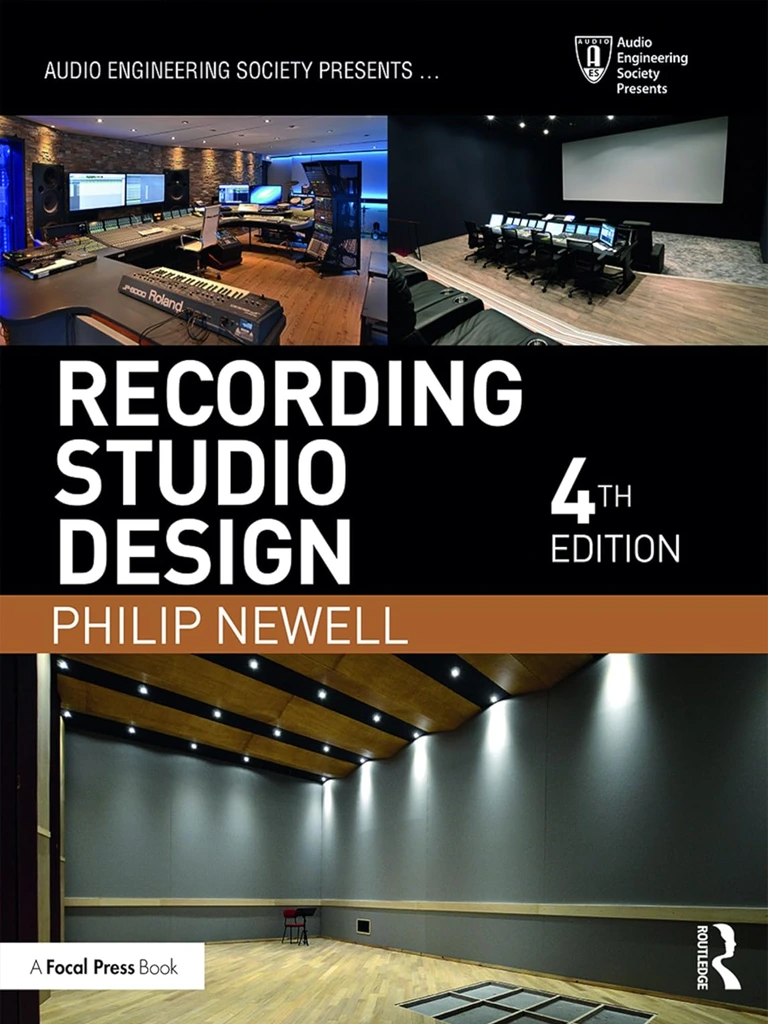
Recording Studio Design is a deep, experience-driven guide to the acoustical and technical design of recording, mixing, and production spaces. Philip Newell covers sound isolation, background noise, decibels and hearing, room behavior, live rooms, neutral rooms, variable acoustics, control rooms, loudspeakers in rooms, monitoring, response correction, studio infrastructure, audio interfacing, construction, and human factors. The fourth edition also expands cinema-sound topics, including B-chain response and calibration, and adds updated research and an illustrated chapter on room construction.
Buy this if you want to understand why professional studios are designed as complete systems rather than as rooms with treatment added afterward. The book is substantial and sometimes demanding, but it carries decades of practical consulting experience into questions of layout, isolation, monitoring accuracy, construction, and workflow. It is especially valuable for studio designers, acousticians, engineers, and ambitious builders who need to evaluate trade-offs and avoid solutions that look correct on paper but fail in real operation.
Room Acoustics
- by Heinrich Kuttruff
- 6th Edition
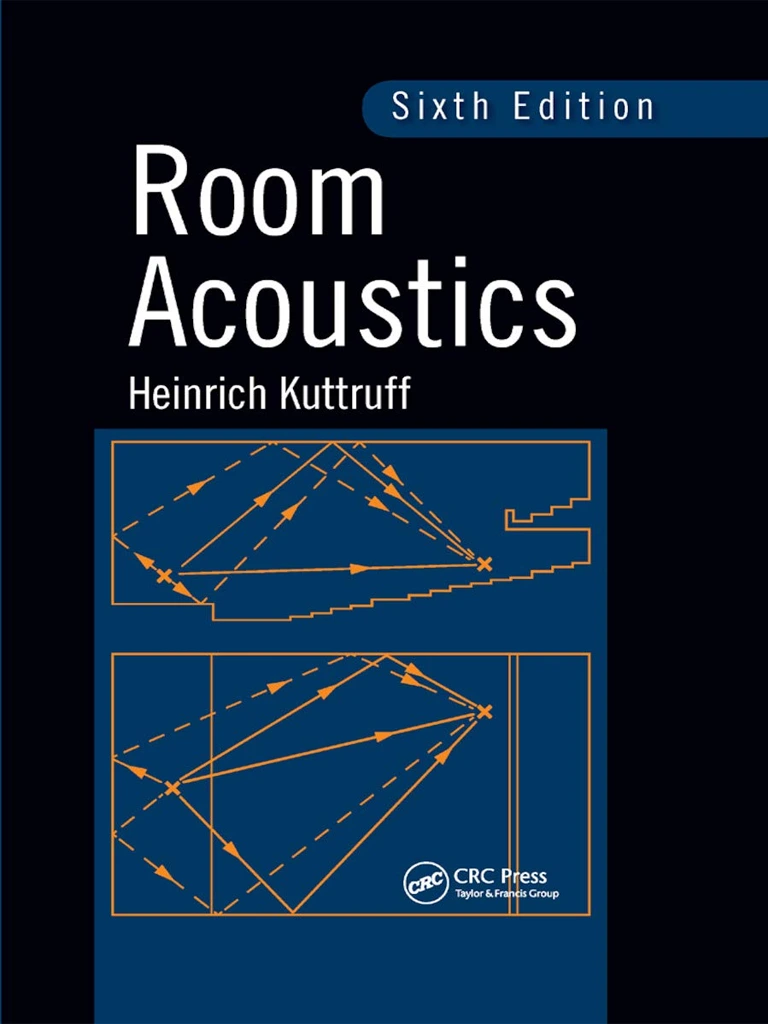
Room Acoustics is an advanced text focused on the behavior of sound in enclosed spaces. Heinrich Kuttruff develops wave and geometrical descriptions of rooms, reflection and scattering, modal behavior, reverberation, absorption, subjective room acoustics, measurement, design procedures, and electroacoustic systems used to support or modify a hall’s natural response. The sixth edition updates the established material and adds spherical-wave reflection, finite-element sound-field calculation, virtual reality, and newer approaches to perceptual assessment.
Buy this if you need to understand room behavior beyond treatment recipes and rule-of-thumb reverberation targets. It is aimed at acoustics students, researchers, consultants, and experienced designers comfortable with technical analysis. Its strength is concentration: it connects physical models, measurements, perception, and design within enclosed-space acoustics. For serious work on reverberation, reflections, scattering, and hall behavior, it remains a valuable specialist reference.
Sound Reinforcement Handbook
- by Gary Davis & Ralph Jones
- 1st Edition
The Sound Reinforcement Handbook is a practical foundation for understanding and operating PA and live-sound systems. Written for Yamaha by Gary Davis and Ralph Jones, it combines theory with system practice, covering frequency response, decibels, dynamic range, indoor and outdoor propagation, microphones, mixers, amplifiers, signal processing, loudspeakers, interconnection, gain, feedback, specifications, and troubleshooting. The second edition added topics such as MIDI and synchronization while retaining the clear diagrams and step-by-step explanations that made the book widely used in training.
Buy this if you want to understand why a live-sound system behaves as it does, not just learn a particular mixer. The equipment examples are dated, but signal flow, level relationships, microphone behavior, loudspeaker fundamentals, gain structure, and acoustic principles remain relevant. For beginners and working technicians, it is still an unusually readable foundation before moving into modern DSP-heavy system-design and alignment books.
Sound Reproduction
- by Floyd E. Toole
- 3rd Edition
Sound Reproduction examines the complete listening chain through the interaction of loudspeakers, rooms, measurements, and human perception. Floyd E. Toole draws on decades of controlled listening research to explain which loudspeaker measurements correlate with listener preference, how direct and reflected sound combine, what room resonances and early reflections do, how multiple subwoofers and equalization can be used, and why stereo and multichannel systems must be judged with both acoustics and psychoacoustics in mind. The third edition updates and reorganizes the science for modern playback systems.
Buy this if you want evidence-based answers to questions that often become arguments in hi-fi: what makes a loudspeaker objectively good, which room effects matter, what measurements can predict, and where equalization helps or hurts. It is valuable to loudspeaker designers, reviewers, calibrators, serious enthusiasts, and anyone building a high-performance listening room. The book is technical but unusually relevant to actual listening, making it one of the clearest links between laboratory data and perceived sound quality.
Sound System Design and Optimization
- by Bob McCarthy
- 3rd Edition
Sound Systems: Design and Optimization is a specialist guide to designing, measuring, and aligning modern sound-reinforcement systems. Bob McCarthy explains how phase, polarity, level, delay, summation, crossover behavior, loudspeaker interaction, arrays, room effects, and audience geometry determine what a system actually produces in space. The third edition expands the methodology with clearer explanations, current measurement practices, and detailed case studies, focusing on decisions that can be verified with dual-channel FFT and other professional analysis tools rather than tuned by ear alone.
Buy this if you already understand basic live sound and want to progress into system engineering and alignment. It is especially useful for touring engineers, system technicians, designers, and advanced students who need to predict interactions before applying EQ and delay. This is not a beginner’s PA handbook: the value lies in developing a disciplined mental model of acoustic summation and then using measurements to confirm it, so optimization becomes a repeatable engineering process instead of trial and error.
Sound System Engineering
- by Don Davis & Eugene Patronis
- 4th Edition
Sound System Engineering is a comprehensive engineering text for designing, implementing, measuring, and testing sound-reinforcement systems. In the fourth edition, Don Davis, Eugene Patronis, and Pat Brown cover psychoacoustics, decibels, mathematics for audio, digital theory, electrical–acoustical interfacing, measurement, large- and small-room acoustics, acoustic gain, speech intelligibility, microphones, loudspeakers and arrays, power ratings, computer-aided design, delay and synchronization, signal processing, and system equalization. The material ranges from first principles to large modern systems.
Buy this if you want the engineering framework behind professional sound-system practice rather than a collection of operating tips. It is demanding enough for formal study but practical enough to stay on a designer’s desk, especially when questions involve intelligibility, gain-before-feedback, directivity, measurement, or system interaction with a room. Compared with narrower alignment books, its strength is breadth: it teaches how the electrical, electroacoustic, acoustical, and perceptual parts of a system fit together.
Some store links on this page are affiliate links. We may earn a commission from qualifying purchases at no additional cost to you. As an Amazon Associate I earn from qualifying purchases.