An icon for planar, ribbon, or electrostatic speakers.

Planar Ribbon Electrostatic Speakers

This category covers exotic speaker technologies that operate without traditional cone drivers. Instead, they use a large, ultra-thin diaphragm (a panel or ribbon) suspended in an electrostatic or magnetic field to produce sound. The result is exceptionally detailed, transparent, and fast audio with a lifelike sense of space. This directory is your guide to the specialized manufacturers who engineer these remarkable panel speakers, from legendary electrostatic designs to modern planar magnetic and true ribbon models.

12

Hi-Fi brands in the category

Summary information and image

Direct links to official websites

Filters
Search
Country
See more See less

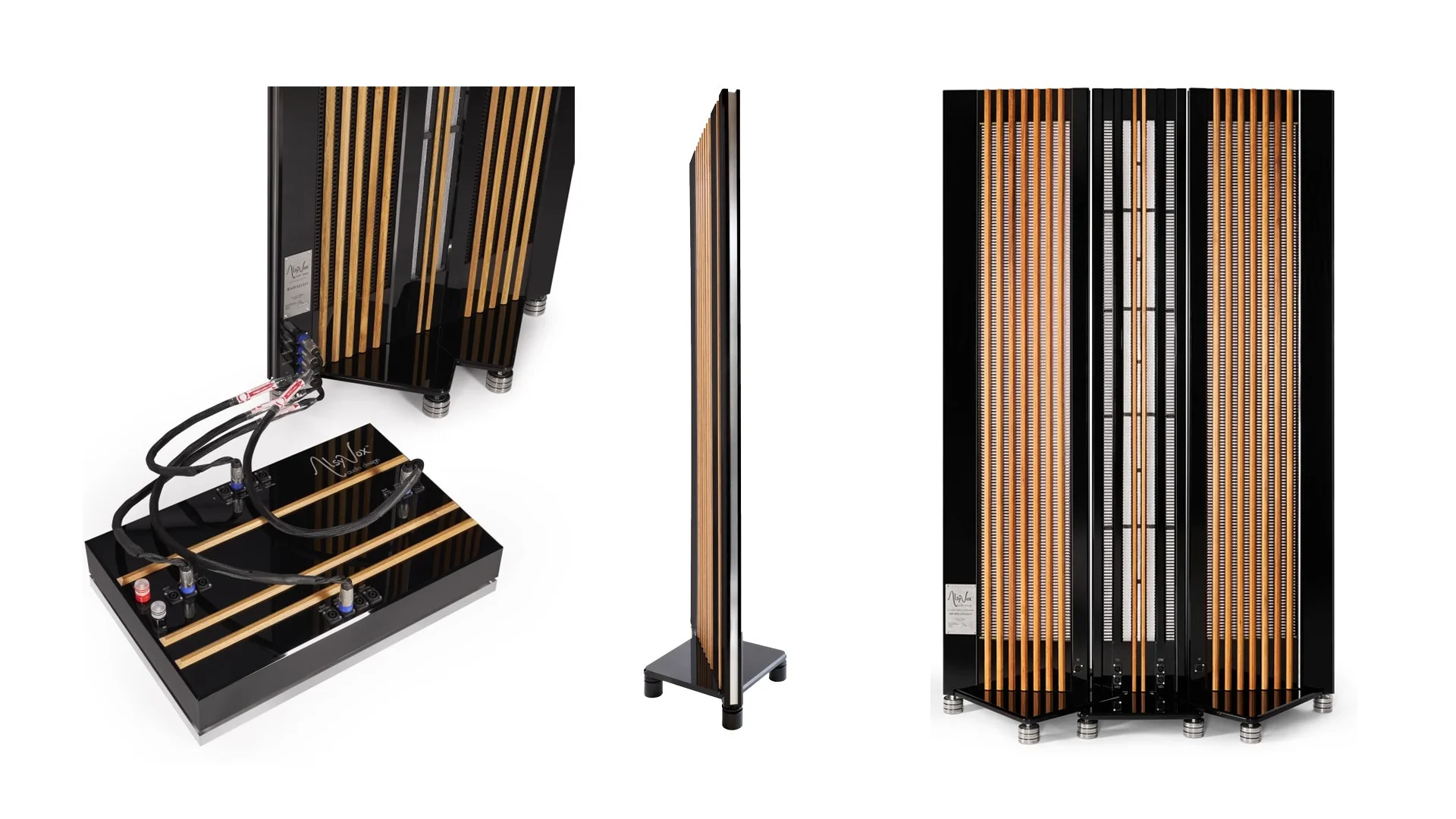
Alsyvox makes large dipole panel loudspeakers that dispense with the conventional box enclosure. Developed in Italy and assembled and tested in Spain, the designs combine planar bass sections with separate ribbon midrange and high-frequency elements, rather than asking one ribbon to reproduce the whole spectrum. Their open front-and-back radiation and broad panel surfaces make them physically and acoustically different from a cone speaker in a cabinet. The company’s published development history reaches back to ribbon work in the 1980s and the RES Audio Sky 1 in 1994, followed by later neodymium and planar-woofer developments. Alsyvox brings that accumulated work into a full-range panel system with a rigid supporting structure.

Audio Exklusiv began with Gerd Pütz’s determination to escape the cabinet colouration of conventional loudspeakers. He founded the German company on 1 October 1979 after developing speakers at HECO, then introduced the Tubular Bell I in 1980 and the P3 electrostatic loudspeaker in 1982. Electronics followed because the electrostatics required suitable amplification; the catalogue grew to include tube and transistor preamplifiers, power amplifiers and analogue sources. After Pütz died in 1990, his family continued the business, and Andreas Schönberg acquired the trademark and technical rights in 2009 to restart development. Current products retain the electrostatic heritage while also addressing resonance control, phono playback and system accessories, with development and production carried out in Germany.

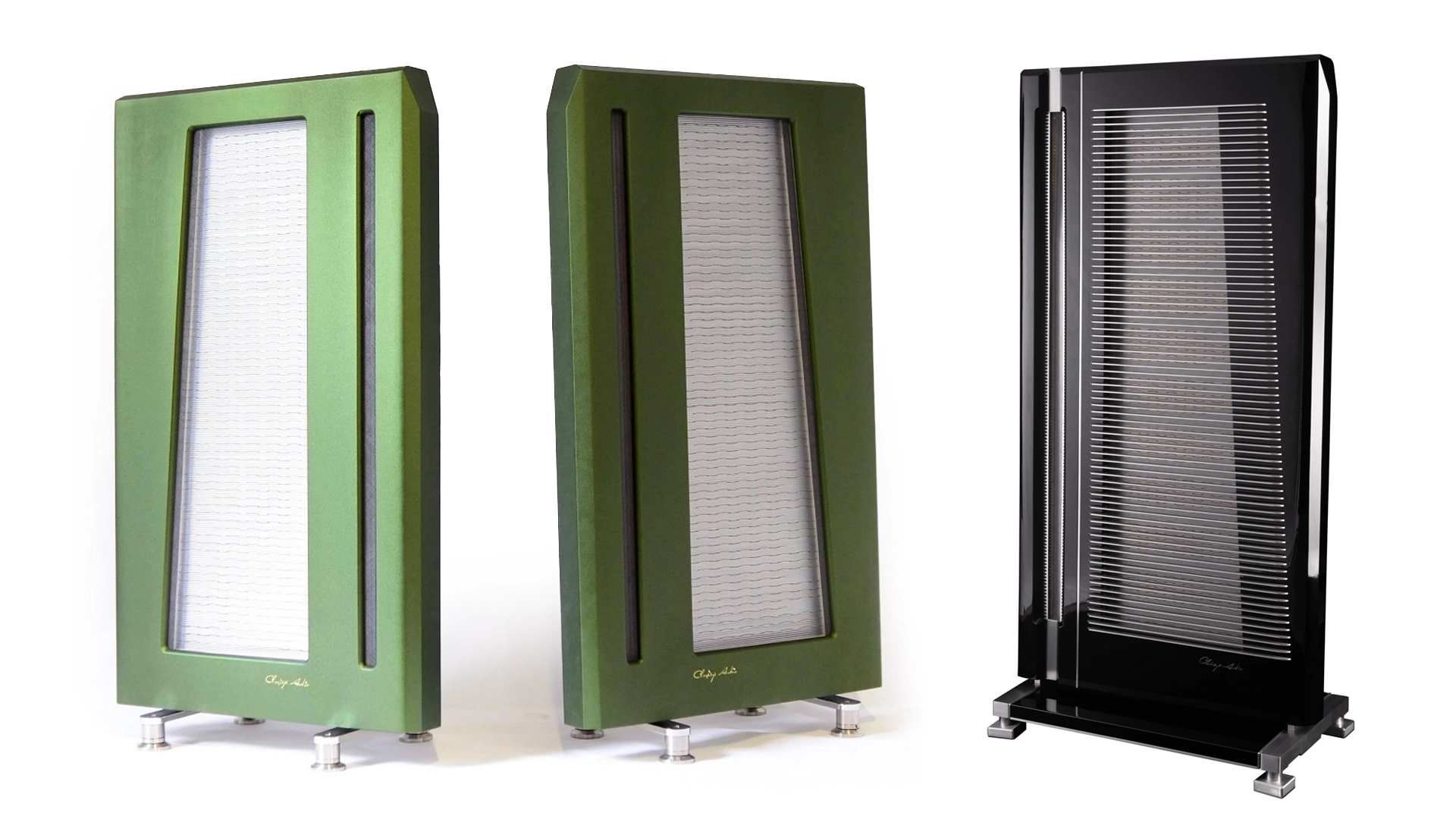
Clarisys Audio develops full-range ribbon loudspeakers as rigid, serviceable systems rather than fragile reproductions of vintage planar designs. Its international engineering effort began in 2010 with the aim of removing common failure points and improving the structural stability of classic ribbon speakers. The present MK2 platform uses extremely light pure-aluminium ribbons, powerful N52 neodymium magnet arrays and double-sided bass motors within substantial aluminium frames. Bipolar radiation energises the room from front and rear, while separate bass and mid/high ribbon sections avoid conventional cone drivers and box enclosures. The range progresses through Piccolo, Minuet and Studio to Auditorium, Aria and the large Atrium flagship. Engineering and voicing are centred in Switzerland, specialist assembly is carried out in Vietnam, and global distribution operates from Sarasota, Florida. This cross-border structure makes Clarisys difficult to reduce to one national workshop, but its product identity is precise: rebuildable, high-output ribbon panels designed for greater bass authority and longevity than the historical designs that inspired them.

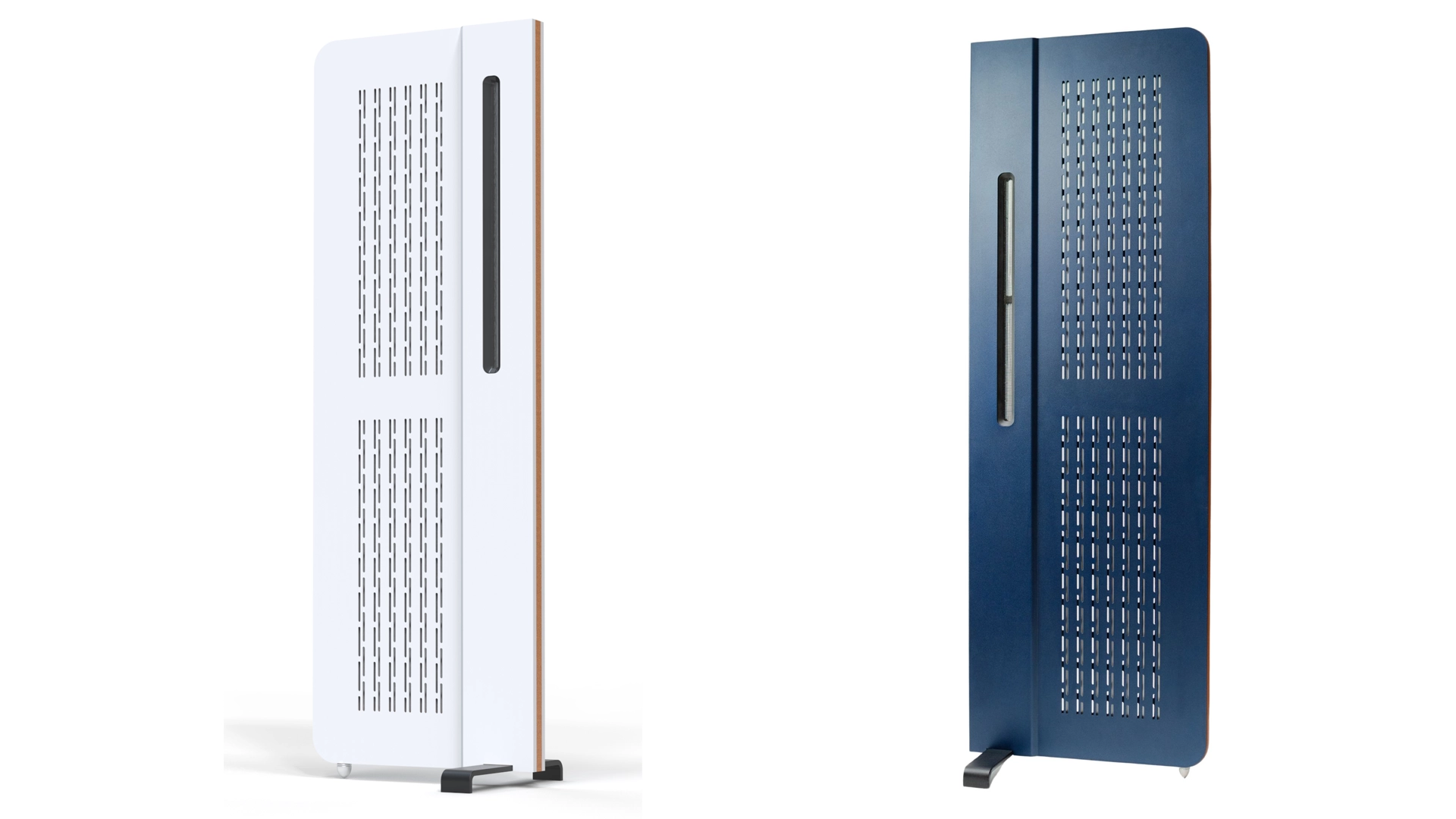
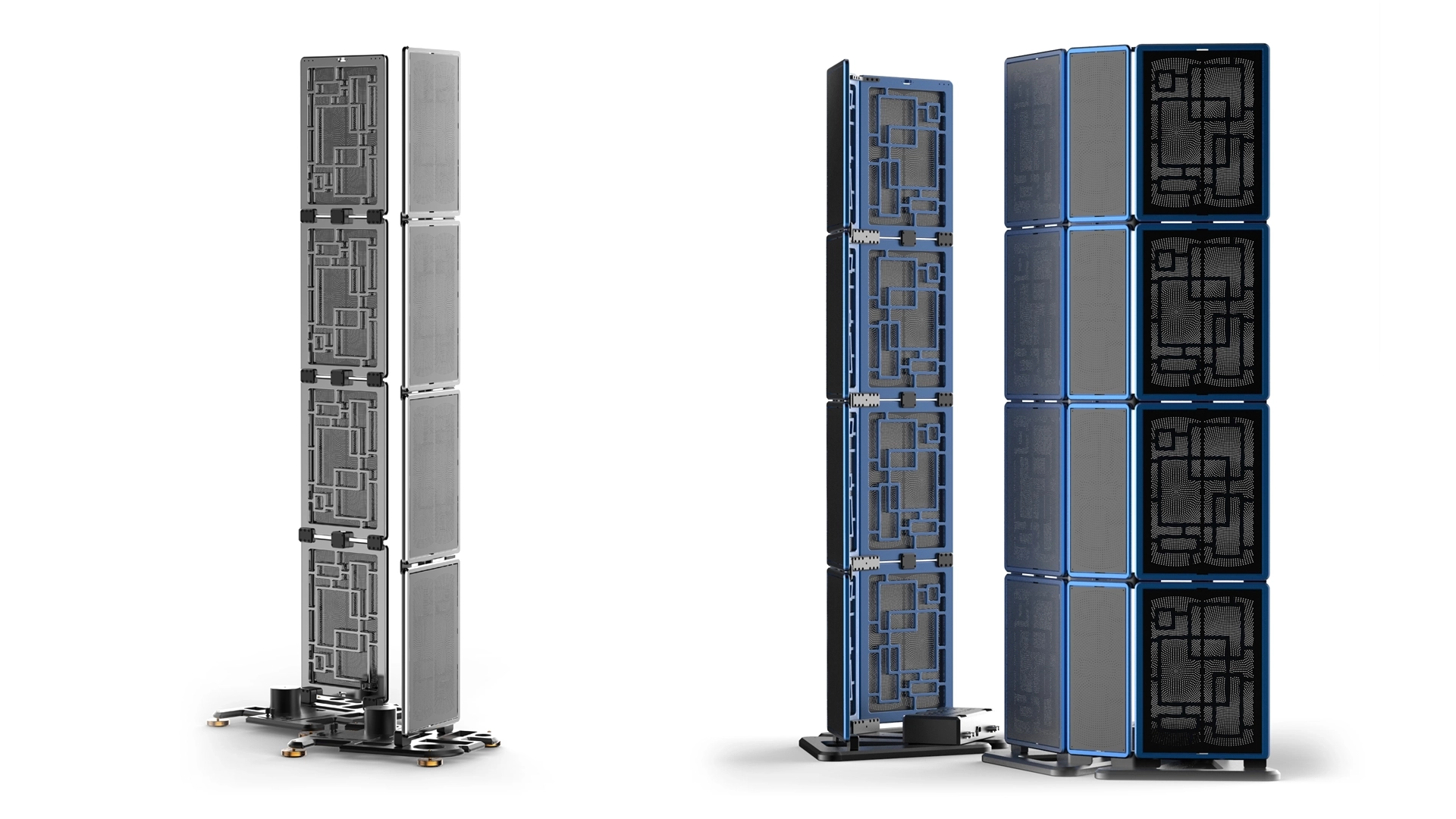
Diptyque Audio is a French specialist in isodynamic planar loudspeakers, born from the collaboration of electronics designer Gilles Douziech and metalwork specialist Eric Poix. Their work began in 2001 with a flat loudspeaker created for a photographic and sound exhibition, then developed into full-range domestic systems built in the company’s Montauban workshops. A lightweight membrane carrying conductive traces is tensioned inside a rigid open frame and driven across a large surface by magnetic structures; upper models use Diptyque’s push-pull bipolar arrangement to apply force more symmetrically. Because the panel radiates as a dipole, rear energy is part of the room interaction rather than being trapped in a box, while the large radiating area reduces the need for conventional cone excursion. Precise frame manufacture and stable diaphragm tension are central to performance, which is where Poix’s mechanical expertise complements Douziech’s acoustic and electronic work. From compact DP models to the Reference, Diptyque’s character comes from joining planar speed and spatial openness with enough membrane area and bass-panel engineering to reproduce full musical scale.

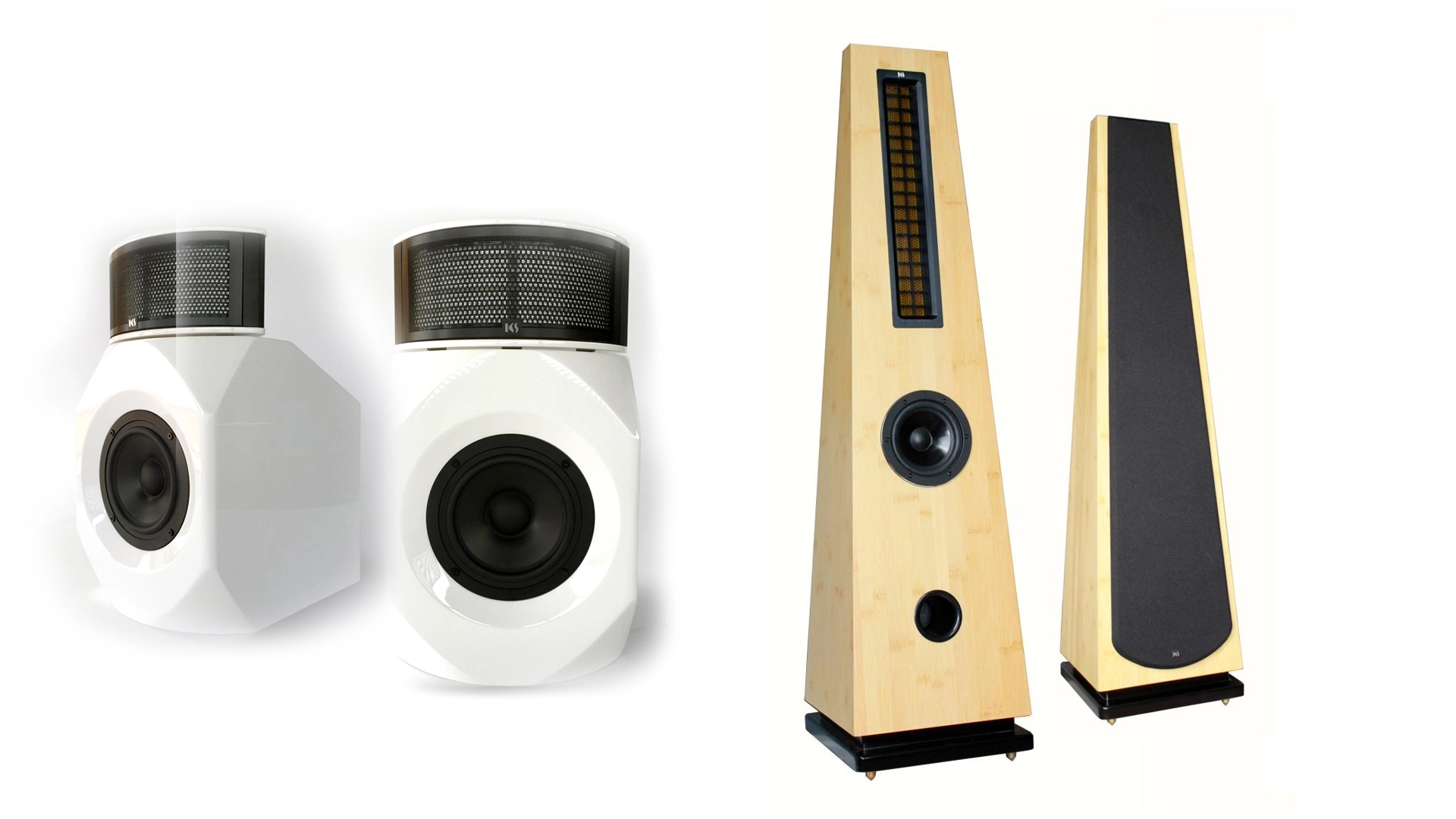
King Sound, also presented as King’s Audio, is a Hong Kong specialist best known for making electrostatic loudspeakers and headphones accessible in several sizes. An electrostatic panel moves an extremely light diaphragm suspended between charged stators, giving the brand a route to low moving mass and rapid transient response that differs fundamentally from conventional cone drivers. The company has used this principle in full-height models such as King and King III, smaller Prince variants and later KS-series designs. Some loudspeakers combine electrostatic panels with dynamic bass sections, so the range should not be reduced to the inaccurate claim that every model is a crossover-free full-range panel. King Sound has also produced matching high-voltage energisers, headphone amplifiers and electrostatic headphones, allowing the same expertise to serve personal listening. Product availability and naming have varied by market, but the technical identity is consistent: complete electrostatic playback systems built by a rare Asian manufacturer with experience in both room and headphone formats.

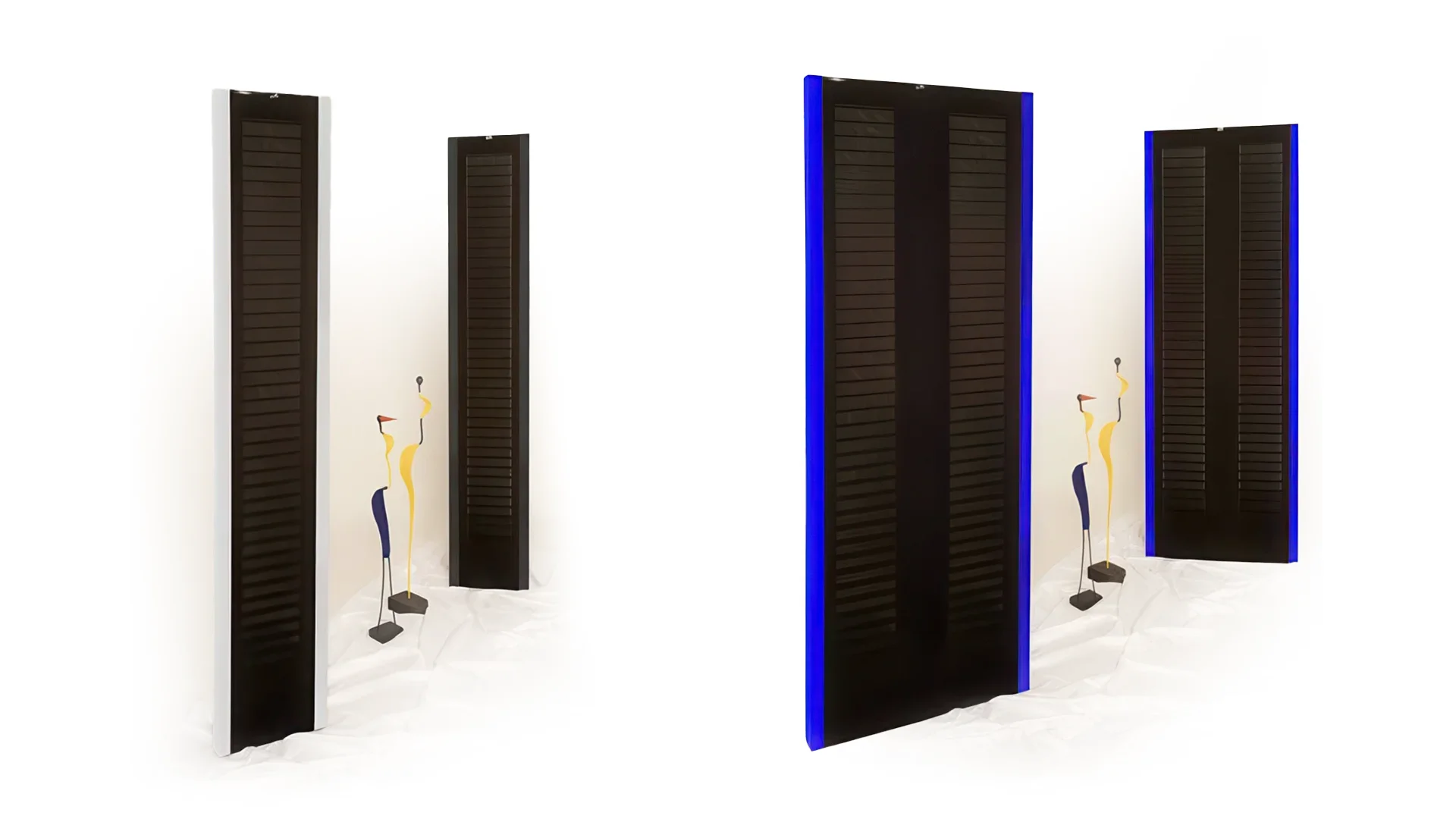
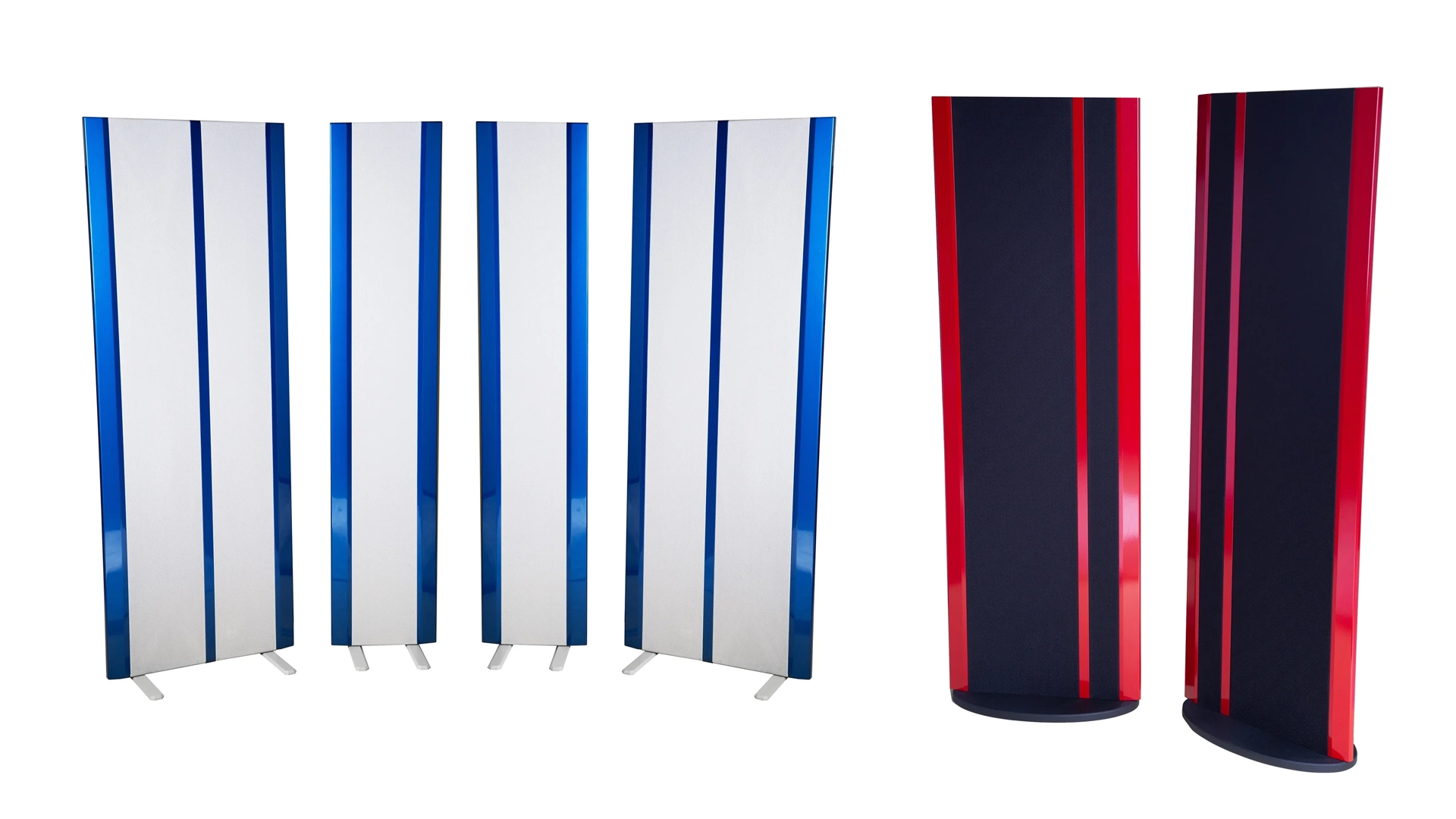
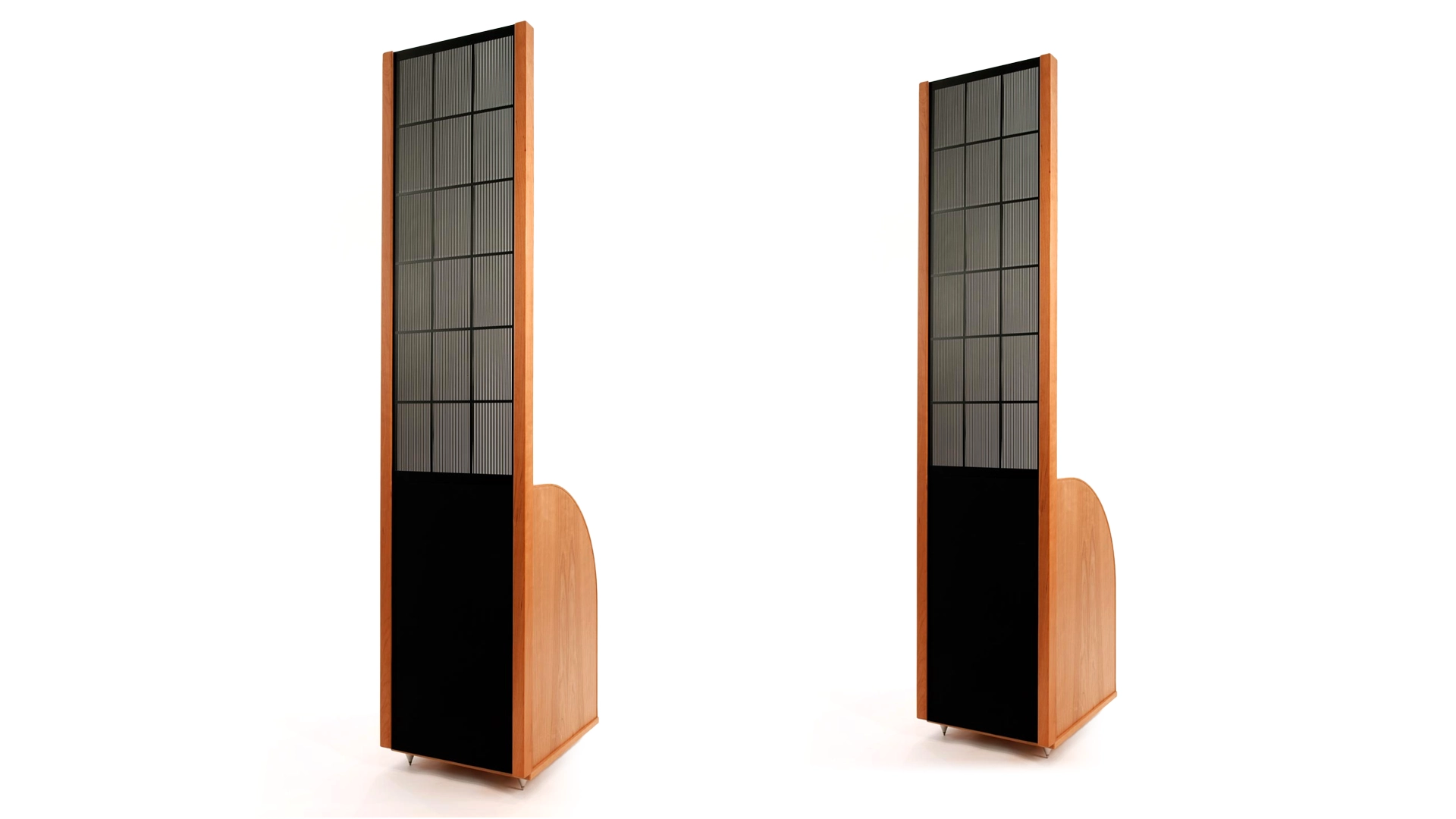
Magnepan is an American loudspeaker manufacturer founded in 1969 by engineer Jim Winey, inventor of the Magneplanar planar-magnetic speaker. Instead of mounting cone drivers in a box, a Magnepan spreads the voice conductor across a large, lightweight film diaphragm suspended in a magnetic field. Much of the surface drives the air, reducing the energy stored in a conventional cabinet and creating a tall line-like source. The panels radiate forward and backward as dipoles, so their open presentation depends on sufficient distance from the wall behind them and careful positioning in the room. Most models use aluminium-wire or foil quasi-ribbon bass and midrange sections; the larger 3.7i and 20.7 add a separate true-ribbon tweeter, an important distinction often lost when every Magnepan is called a ribbon speaker. The range runs from the compact LRS+ and .7 through 1.7i and revived 2.7i to the large reference systems, with X versions offering upgraded frames and crossover components. Low sensitivity and largely resistive four-ohm loads reward an amplifier comfortable with sustained current, while deep bass may require a well-integrated subwoofer in some rooms. Magnepan continues to build its panels in White Bear Lake, Minnesota. Its enduring strength is a fundamentally different way of coupling a loudspeaker to the room, offered from accessible to reference scale.

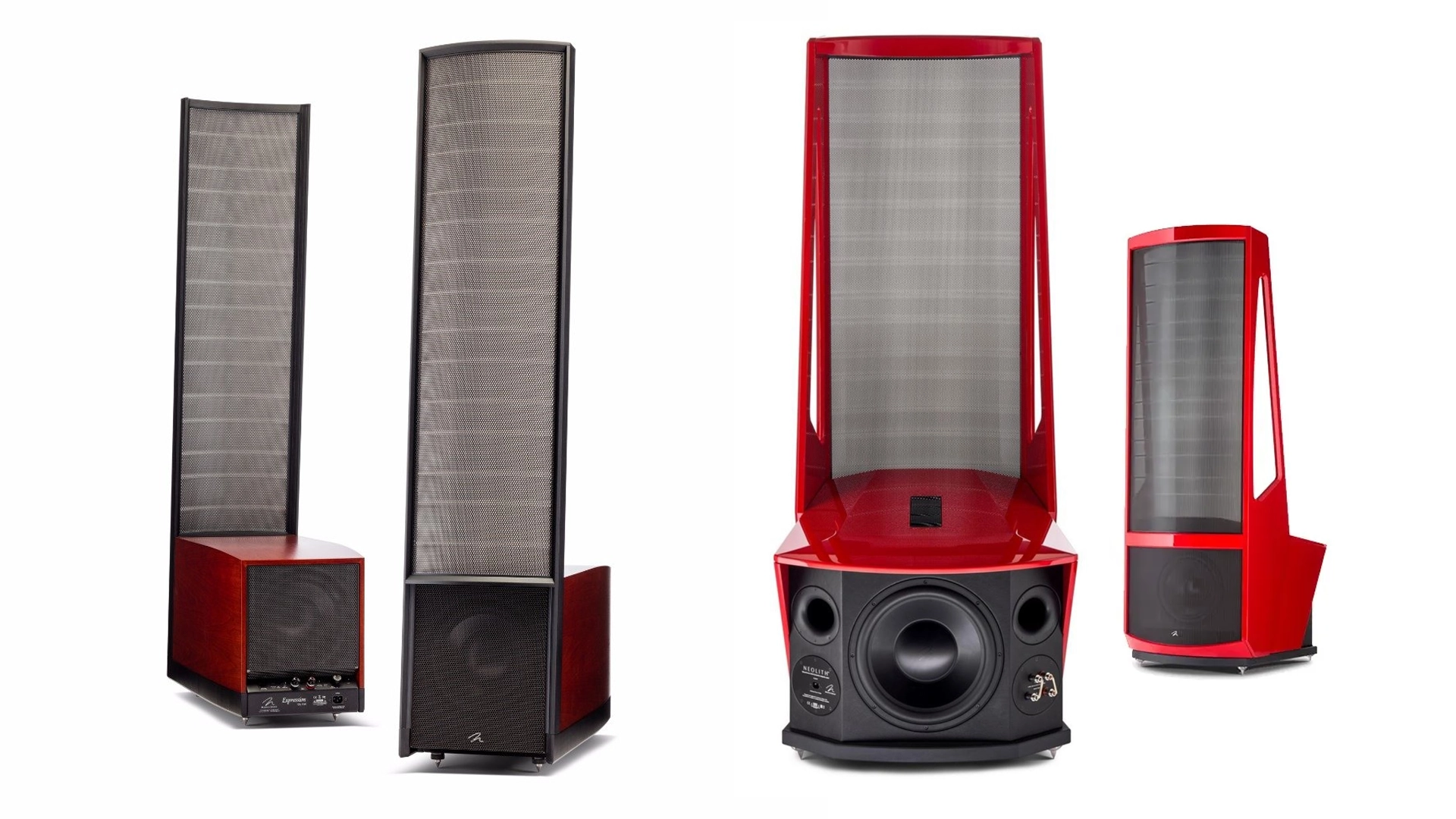
MartinLogan is the American loudspeaker specialist that made the curved electrostatic panel practical for full-range domestic systems. Gayle Martin Sanders and Ron Logan Sutherland developed their first production model, the Monolith, in 1983 after several years of experiments. Its hybrid architecture paired a transparent electrostatic membrane with a dynamic bass driver, solving one of the central limitations of earlier electrostatic designs while preserving their speed and low moving mass. The brand’s large electrostatic models use Curvilinear Line Source panels to control dispersion, MicroPerf stators to increase radiating area and AirFrame structures that hold the panel rigidly without a conventional box. Powered bass sections in selected models add Anthem Room Correction and controlled-force woofer arrangements. MartinLogan also applies its Folded Motion and Folded Motion XT tweeters to the more conventional Motion range, and offers subwoofers, architectural speakers and home-theatre solutions. The important distinction is that MartinLogan is not simply a maker of unusual-looking panels: its know-how lies in integrating electrostatic midrange and treble with dynamic bass, useful room behavior and manageable domestic proportions.

Metaxas & Sins is the design-led audio house of Greek-born engineer, artist and recording specialist Kostas Metaxas, creating amplifiers, headphone systems and open-reel machines as functional sculpture. Metaxas formed his original audio company in 1981 after building equipment for his own recordings. His hundreds of live concert sessions shaped a preference for very short signal paths, wide bandwidth and circuits intended to preserve transient information without excessive filtering. The current family company pairs that electronics work with forms drawn by hand and machined from solid metal. Products such as the Solitaire and Ikarus amplifiers, Marquis headphone amplifier and Ethereal electrostatic system avoid conventional rectangular cases, but the shapes also address rigidity, cooling and resonance. The Tourbillon T-RX and Papillon open-reel machines revisit professional tape transport through precision mechanics, direct-drive concepts and visibly exposed motion. Production is deliberately small-scale and involves Kostas and his sons. Metaxas & Sins stands apart because its visual language is inseparable from the engineering: these are not standard components placed in decorative shells, but audio circuits, mechanisms and enclosures conceived as one object.

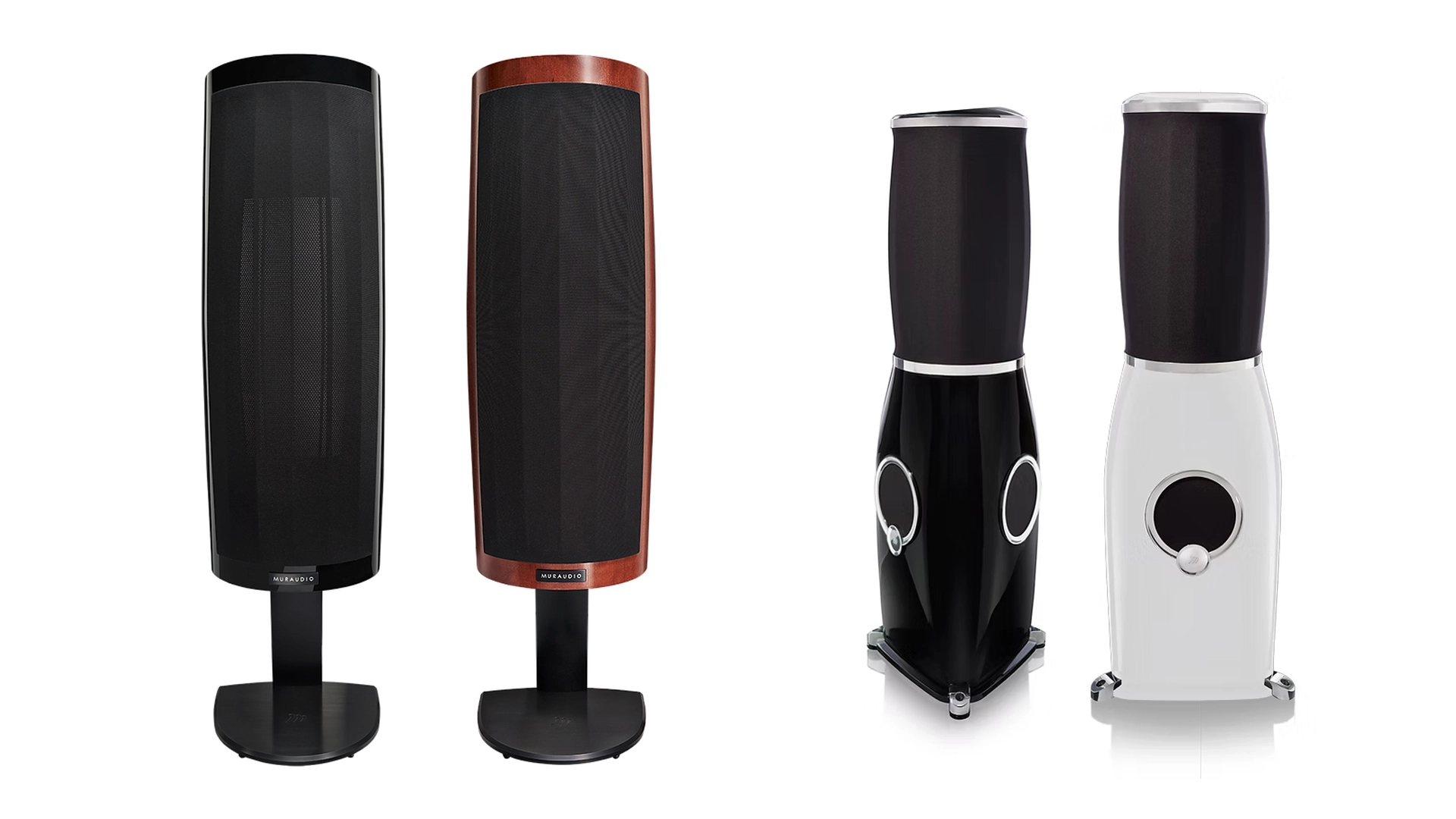
Muraudio is a Canadian loudspeaker company created around Murray Harman’s patented Continuous Curve Electrostatic technology. Its Domain Omni models use curved electrostatic panels arranged to radiate through 360 degrees, addressing the narrow listening window typical of flat electrostatic speakers. The result is a hybrid system: the electrostatic array handles frequencies above the bass region, while dynamic woofers supply low-frequency output and the crossover blends the two operating principles. The Domain Omni PX and active DA versions are sculptural, room-filling designs; the more compact SP1 applies a doubly curved point-source electrostatic panel with opposed dynamic woofers to achieve broader placement options. Building a curved ESL requires precise stator geometry, uniform diaphragm tension, high-voltage drive and controlled dispersion, so the shape is fundamental to the acoustic method rather than styling applied to a conventional box. Founder Murray Harman’s work began years before the company reached the market, and published accounts disagree about the exact incorporation date. For that reason a single founding year is best left unstated. Muraudio’s clear distinction is the effort to combine electrostatic speed with wide horizontal coverage and practical bass output.

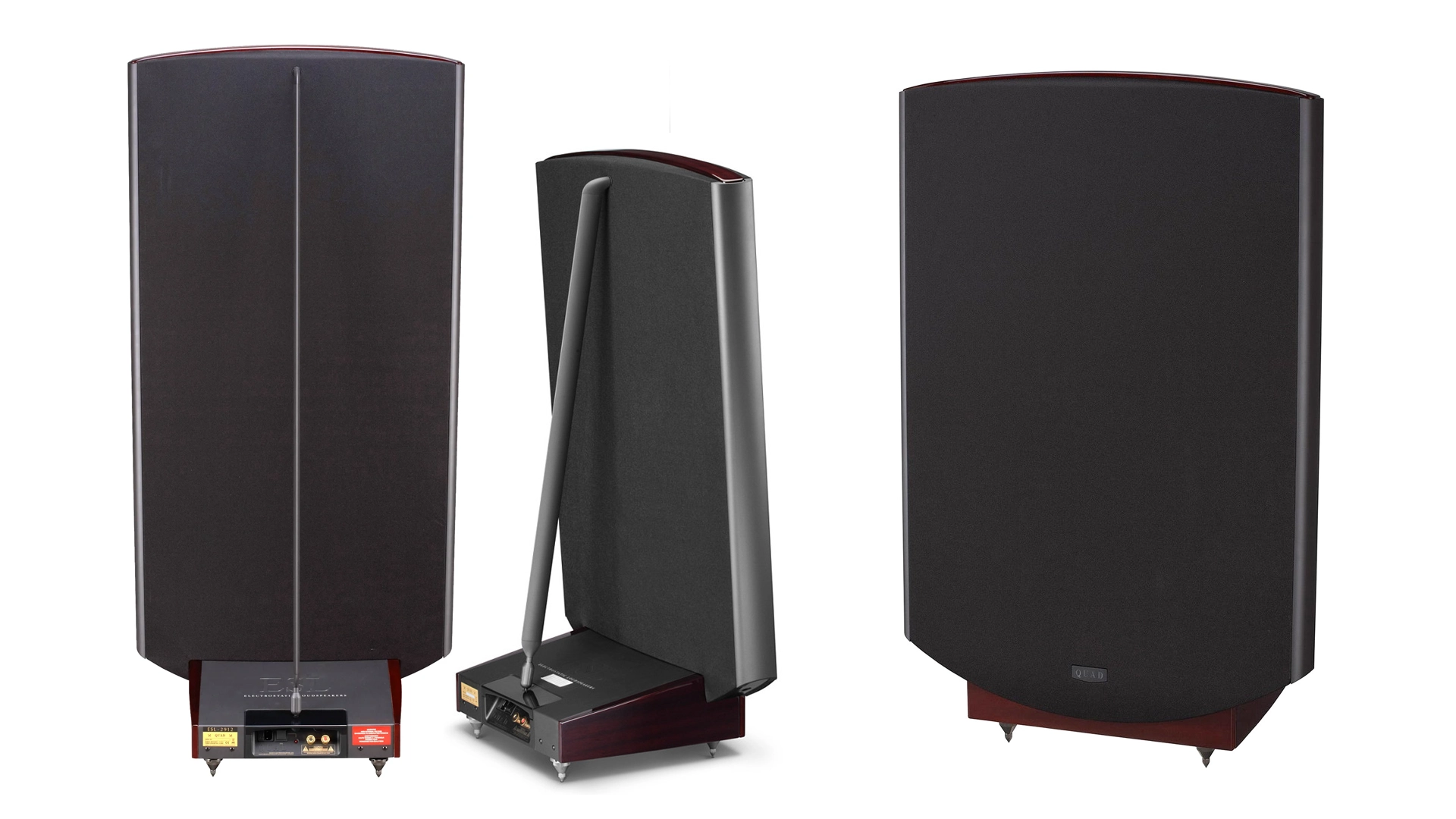
QUAD was founded by Peter J. Walker in 1936 as S.P. Fidelity Sound Systems, later becoming the Acoustical Manufacturing Company. The name came from “Quality Unit Amplifier Domestic,” but the brand’s lasting reputation rests on two different inventions: full-range electrostatic loudspeakers and current-dumping amplification. Both pursued Walker’s famous aim of making the closest approach to the original sound through low distortion rather than theatrical voicing. The original Electrostatic Loudspeaker of 1957—now commonly called the ESL-57—used a charged film diaphragm driven over its area instead of a conventional cone and voice coil. Its transparency made it a reference, while the ESL-63 introduced concentric delay-line stators that approximate a point source. Current ESL-2812X and ESL-2912X models continue that lineage with improved structure, protection and power handling. A factual error in the old description has been corrected: the Quad 303 was a conventional transistor amplifier; Peter Walker’s current-dumping circuit reached production in the Quad 405 in the mid-1970s. It combines a low-power precision amplifier with high-power “dumpers,” using error correction to achieve low distortion efficiently. QUAD also made enduring valve electronics such as the QUAD II and now offers Artera, Vena, Quad 3, the revived 33/303 pairing and Platina electronics, alongside Revela and other dynamic loudspeakers. Since 1997 the company has been part of International Audio Group; management, design and service remain in Huntingdon, including support for many historic products. QUAD therefore remains British in origin and engineering identity even within an international owner.

Sanders Sound Systems is an American high-end audio company founded in 2007 by Roger Sanders in Colorado. Sanders had been building electrostatic loudspeakers since 1972 and previously co-founded InnerSound, so the company began with decades of practical work on panels, amplifiers and room interaction rather than a new-found fascination with the technology. Its central product is the Model 10e, a hybrid loudspeaker that combines a flat UltraStat electrostatic panel for the midrange and treble with a dynamic woofer loaded by a transmission line. A steep, user-adjustable electronic crossover and dedicated bass amplification integrate the two sections, while the current Loudspeaker Management System adds DSP, measurement and room-correction tools. Sanders deliberately preserves the panel’s narrow horizontal dispersion. Instead of treating a small listening window as a defect to be curved away, he uses it to reduce early side-wall reflections and to deliver a precise stereo image at the listening position. Electronics are designed around the loads they must drive. The ESL amplifier is optimised for the difficult capacitive impedance of electrostatic panels; the high-power Magtech uses a regulated power supply to maintain voltage under demanding dynamic loudspeaker loads. Analogue and digital preamplifiers complete the system, and upgrade kits support earlier InnerSound Eros speakers. Products are manufactured in Conifer, Colorado and sold with home-trial and lifetime-warranty policies. Sanders Sound Systems’ individuality comes from a complete, openly argued engineering position: controlled dispersion, a direct-radiating electrostatic panel, transmission-line bass, active integration and amplifiers designed for each job.
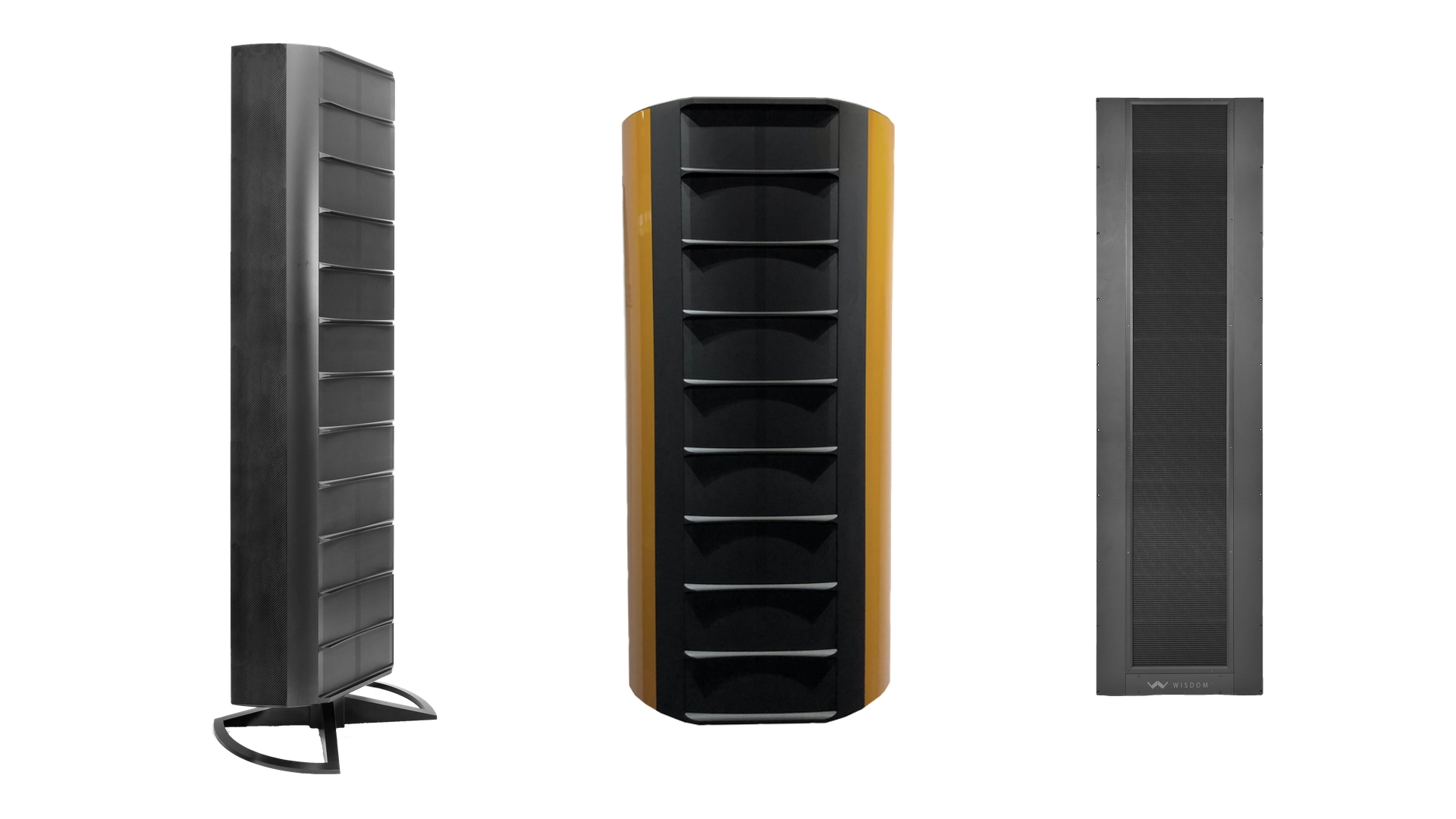
Wisdom Audio is an American loudspeaker company founded in 1996 by Tom and Debi Bohlender. Its early work grew from Bohlender’s experience with large planar-magnetic transducers, but the modern company found a distinctive role in architectural systems where high output and audiophile resolution must coexist with concealed installation. Wisdom’s planar-magnetic drivers place a lightweight conductive diaphragm in a magnetic field, spreading drive force across a large area and avoiding the voice-coil former of a conventional cone. In many models they operate as line sources, producing controlled vertical dispersion that reduces floor and ceiling reflections and maintains level more evenly with distance. Dynamic woofers supply the excursion needed for deep bass, while dedicated system controllers provide crossover, equalisation and protection. Sage is the core high-performance range, including in-wall, on-wall and freestanding line-source models; Insight brings related technology to smaller projects, and the Wisdom Series scales it into multi-metre reference arrays. Regenerative Transmission Line bass modules hide substantial low-frequency systems within walls or joinery. This architecture makes planning essential: speaker height, baffle construction, subwoofer placement, amplification and room calibration must be designed together. Based in Carson City, Nevada, Wisdom works closely with custom integrators and cinema designers rather than treating installation as an after-sale detail. Its identity is the successful translation of very large planar systems into purpose-built residential architecture—thin enough to disappear, yet capable of the dynamics and coverage demanded by serious music rooms and private cinemas.

HFS Ad Rotator · default · slot 1
HFS Ad Rotator · default · slot 2
Add a missing AV-brand or update an existing one

Add a missing AV-brand or update an existing one

Any user can submit a Quick Submission Form to suggest a new AV-brand or suggest update details for an existing one. Brand owners or official representatives of brand can fill a Official Brand Submission Form to provide complete company information, ensuring maximum accuracy and visibility in our portal. All submissions are moderated before publication. 

For suggesting new AV-brands or suggesting updating existing one by users.

Complete official form for brand owners and representatives to provide complete company details to add a new one or update an existing one

Brand Categories:
  • SPEAKERS
    • Bookshelf Speakers — Compact loudspeakers designed for placement on a shelf or dedicated stands.
    • Floorstanding Speakers — Large, full-range loudspeakers that stand directly on the floor, designed for powerful and expansive sound.
    • In-wall Custom Install Speakers — Speakers designed to be installed flush into walls or ceilings for a discreet, "zero-footprint" audio solution.
    • On-Wall Speakers — Slim, low-profile speakers designed to be mounted directly on a wall, often to complement a flat-panel TV.
    • Studio Monitors — Speakers designed for professional audio production, offering a flat, accurate, and uncolored sound reproduction.
    • Planar Ribbon Electrostatic Speakers — Speakers using large, thin diaphragms (panels) instead of cones, prized for their transparent and detailed sound.
    • Horn Speakers — Highly efficient speakers that use a flared horn to amplify a driver, known for their dynamic, "live" sound.
    • Active Powered Speakers — Loudspeakers with built-in amplifiers, creating a simple all-in-one audio solution.
    • Wireless Portable Speakers — Compact, battery-powered speakers with Bluetooth for on-the-go music.
    • Outdoor Speakers — Durable, weather-resistant speakers engineered to provide high-quality audio in open-air spaces like patios and gardens.
    • Marine Extreme Speakers — Rugged, waterproof, and corrosion-resistant speakers built to withstand harsh marine environments on boats and yachts.
    • Commercial Speakers — Durable loudspeaker systems designed for background music and public address in business environments.
    • Invisible Speakers — Architectural speakers installed in a wall and plastered over, making them completely invisible.
    • Subwoofers Bass Speakers — Specialized speakers dedicated to reproducing only the lowest bass frequencies for impact and depth for all purposes
  • AMPLIFIERS
    • Integrated Amplifiers — An all-in-one component combining a preamplifier and a power amplifier in a single chassis.
    • PreAmplifiers — The control hub of a separates audio system, used for source selection and volume control.
    • Power Amplifiers — A component with the sole job of taking a line-level signal and amplifying it to drive loudspeakers.
    • Phono Preamps Phono Stages — A device that amplifies the weak signal from a turntable's cartridge and applies necessary RIAA equalization.
    • Tube Amplifiers — Amplifiers that use vacuum tubes (valves) instead of transistors, prized for their warm and rich sound character.
    • Multi-Zone Multi-Room Amplifiers — Amplifiers that power speakers in multiple different rooms or "zones" from a single, centralized unit.
    • Network Amplifiers — An integrated amplifier with built-in networking and streaming capabilities, creating a modern "just add speakers" system.
    • Desktop Headphone Amplifiers — Mains-powered amplifiers designed to drive high-quality headphones in a desktop or home audio system.
    • Portable Headphone Amplifiers Players — Compact, battery-powered devices (DAPs or amps) for delivering high-quality sound on the move.
  • DAC STREAMERS
    • DAC Desktop — Digital-to-Analog Converters designed to improve sound quality from a computer or other home digital source.
    • DAC Portable — Compact, battery-powered Digital-to-Analog Converters for improving audio from smartphones and laptops.
    • Music Streamers — Devices that connect to the internet to access and play music from online services like Tidal and Spotify.
    • Network Players — Source components focused on high-fidelity playback of digital audio files from a local network (NAS drive).
    • Music Servers HDD Storages — Dedicated devices for storing, managing, and playing a local digital music library with high fidelity.
    • CD Transport Media Players — High-precision disc players that read physical media (CDs, SACDs) and output a pure digital signal to an external DAC.
    • Compact All-in-One Systems — Self-contained audio systems that combine source, amplification, and often speakers into a single, compact unit.
    • Streaming Amplifier — An integrated amplifier with built-in streaming capabilities.
  • TURNTABLES VINYL
    • Turntables — Electromechanical devices that play vinyl records by rotating them at a stable speed.
    • Tonearms — The precision arm on a turntable that holds the cartridge, allowing the stylus to track the record groove.
    • Cartridges — The transducer on a turntable's tonearm that holds the stylus and converts groove vibrations into an electrical signal.
    • Vinyl Cleaning Machine — Specialized machines that use fluid and vacuum/ultrasonic action to deep-clean vinyl records.
    • Vinyl Accessories — Essential tools for setup and maintenance, like clamps, brushes, and alignment protractors.
  • HEADPHONES
    • In-Ear Earbuds — Ultra-portable listening devices, including True Wireless (TWS) models, designed for convenience and daily use.
    • In-Ear Monitors IEM — High-performance in-ear headphones that seal in the ear canal for superior sound isolation and detail.
    • On-Ear Headphones — Headphones with cushions that rest directly on the ears, offering a balance of portability and sound quality.
    • Over-Ear Headphones — Full-sized headphones with large earcups that completely encircle the ears for maximum comfort and immersion.
    • Wireless Headphones — Headphones that connect to source devices via Bluetooth, often featuring Active Noise Cancellation (ANC).
    • Planar Magnetic Ribbon Headphones — High-end headphones using a thin, flat diaphragm driven by magnets, known for their detailed and low-distortion sound.
    • Electrostatic Headphones — High-end headphones using a massless diaphragm in an electrostatic field, requiring a special energizer/amplifier.
  • HOME THEATER
    • AV Receivers Media Players — Central components of a home cinema, combining audio/video processing, amplification, and playback.
    • Home Theater Speakers — Matched sets of speakers (front, center, surround) designed to create an immersive cinematic soundfield.
    • Soundbars — A simple, all-in-one speaker bar that provides a significant audio upgrade over a television's built-in speakers.
    • Subwoofers — Specialized speakers dedicated to reproducing only the lowest bass frequencies for impact and depth for home theaters
    • Processors Amplifiers — High-end home cinema "separates" consisting of a surround sound processor and a multi-channel power amplifier.
    • Screens — High-quality projection surfaces designed to provide an optimal image for a home cinema projector.
    • Projectors — Video projectors optimized for home cinema use, focusing on color accuracy, contrast, and black levels.
  • CABLES ACCESSORIES
    • Speaker Cables — Cables that carry the amplified, high-level signal from an amplifier to passive loudspeakers.
    • Analog Cables — Cables (RCA, XLR) used to transmit analog audio signals between components like DACs and amplifiers.
    • Digital Cables — Cables (Coaxial, Optical, USB) that transmit digital audio data between components.
    • Phono Cables — Specially shielded cables designed to carry the delicate, low-level signal from a turntable to a phono preamp.
    • Headphone Cables — Aftermarket and replacement cables used to upgrade or customize high-quality headphones.
    • Connectors Terminals — The fundamental hardware (plugs, jacks, spades, etc.) used to terminate cables and connect equipment.
    • Power Cables — High-performance AC cords designed to deliver clean, noise-free power to audio components.
    • Power Supplies Conditioners — Devices that filter, stabilize, and protect the AC power supplied to an audio system for improved performance.
  • FURNITURE
    • Speaker Stands Mounts — Stands and mounts used to position speakers at the correct height and angle for optimal sound.
    • Furniture Racks — Purpose-built furniture designed to house audio/video components with a focus on stability, ventilation, and vibration control.
    • Isolation Footers Spikes Shelves — Specialized accessories (spikes, footers, platforms) designed to manage vibrations and isolate components.
    • Soundproof Solutions — Products designed to control room acoustics, including treatment (panels, diffusers) and sound-blocking materials.
  • PROFESSIONAL
    • Concert Speakers — Large-scale PA systems, including line arrays and stage monitors, for live music and public events.
    • Cinema Speakers — Specialized, high-output loudspeaker systems certified for use in large commercial movie theaters.
    • Concert Electronics — Robust electronics including mixing consoles, processors, and amplifiers for live sound reinforcement.
    • Cinema Electronics — Professional, DCI-compliant processors and amplifiers for use in commercial movie theaters.
    • Cinema Screens — Large-format, often acoustically transparent, projection screens built to professional cinema standards.
    • Cinema Projectors — Ultra-high-brightness, DCI-compliant projectors designed for continuous use in commercial movie theaters.
    • Professional Cables Accessories — Rugged, reliable cables and hardware (e.g., snake cables, Speakon connectors) for touring and professional installation.
  • DIY Components
    • Speaker drivers Tweeters — The individual transducers (woofers, mid-range, tweeters) that are the fundamental building blocks of a loudspeaker.
    • Coaxial Speaker Drivers — Speaker drivers where the tweeter is mounted in the center of the woofer, creating a single point source for sound.
    • DIY Speaker Kits — Complete packages including drivers, crossovers, and plans for enthusiasts to build their own loudspeakers.
    • Electron Vacuum Tubes — Glass valves used in tube amplifiers that provide amplification and can be replaced to tune the sound.
    • Electronic Components — Discrete parts (capacitors, resistors, transistors) used by manufacturers and DIYers to build audio circuits.
  • OTHERS
    • Line Stage — A type of preamplifier that exclusively handles line-level sources, without a built-in phono stage.
    • Time Alignment Device — A signal processor that corrects timing delays between drivers or speakers for improved sound coherence.
    • Smart Portable Speakers — Wireless portable speakers with integrated voice assistants (e.g., Alexa, Google Assistant) and smart home functionality.
    • DJ Turntables — Durable, high-torque direct-drive turntables with pitch control, built for performance and DJing applications.
    • Motor Drives — External motor units and power supplies for turntables, providing improved rotational stability and isolation.
    • Crossovers — Electronic circuits that split an audio signal into different frequency bands to route to the correct speaker driver.
    • Car Audio — Audio equipment, including speakers, amplifiers, and source units, specifically designed for use in vehicles.

Brand Categories:
  • Active Powered Speakers — Loudspeakers with built-in amplifiers, creating a simple all-in-one audio solution.
  • Analog Cables — Cables (RCA, XLR) used to transmit analog audio signals between components like DACs and amplifiers.
  • AV Receivers Media Players — Central components of a home cinema, combining audio/video processing, amplification, and playback.
  • Bookshelf Speakers — Compact loudspeakers designed for placement on a shelf or dedicated stands.
  • Car Audio — Audio equipment, including speakers, amplifiers, and source units, specifically designed for use in vehicles.
  • Cartridges — The transducer on a turntable's tonearm that holds the stylus and converts groove vibrations into an electrical signal.
  • CD Transport Media Players — High-precision disc players that read physical media (CDs, SACDs) and output a pure digital signal to an external DAC.
  • Cinema Electronics — Professional, DCI-compliant processors and amplifiers for use in commercial movie theaters.
  • Cinema Projectors — Ultra-high-brightness, DCI-compliant projectors designed for continuous use in commercial movie theaters.
  • Cinema Screens — Large-format, often acoustically transparent, projection screens built to professional cinema standards.
  • Cinema Speakers — Specialized, high-output loudspeaker systems certified for use in large commercial movie theaters.
  • Coaxial Speaker Drivers — Speaker drivers where the tweeter is mounted in the center of the woofer, creating a single point source for sound.
  • Commercial Speakers — Durable loudspeaker systems designed for background music and public address in business environments.
  • Compact All-in-One Systems — Self-contained audio systems that combine source, amplification, and often speakers into a single, compact unit.
  • Concert Electronics — Robust electronics including mixing consoles, processors, and amplifiers for live sound reinforcement.
  • Concert Speakers — Large-scale PA systems, including line arrays and stage monitors, for live music and public events.
  • Connectors Terminals — The fundamental hardware (plugs, jacks, spades, etc.) used to terminate cables and connect equipment.
  • Crossovers — Electronic circuits that split an audio signal into different frequency bands to route to the correct speaker driver.
  • DAC Desktop — Digital-to-Analog Converters designed to improve sound quality from a computer or other home digital source.
  • DAC Portable — Compact, battery-powered Digital-to-Analog Converters for improving audio from smartphones and laptops.
  • Desktop Headphone Amplifiers — Mains-powered amplifiers designed to drive high-quality headphones in a desktop or home audio system.
  • Digital Cables — Cables (Coaxial, Optical, USB) that transmit digital audio data between components.
  • DIY Speaker Kits — Complete packages including drivers, crossovers, and plans for enthusiasts to build their own loudspeakers.
  • DJ Turntables — Durable, high-torque direct-drive turntables with pitch control, built for performance and DJing applications.
  • Electron Vacuum Tubes — Glass valves used in tube amplifiers that provide amplification and can be replaced to tune the sound.
  • Electronic Components — Discrete parts (capacitors, resistors, transistors) used by manufacturers and DIYers to build audio circuits.
  • Electrostatic Headphones — High-end headphones using a massless diaphragm in an electrostatic field, requiring a special energizer/amplifier.
  • Floorstanding Speakers — Large, full-range loudspeakers that stand directly on the floor, designed for powerful and expansive sound.
  • Furniture Racks — Purpose-built furniture designed to house audio/video components with a focus on stability, ventilation, and vibration control.
  • Headphone Cables — Aftermarket and replacement cables used to upgrade or customize high-quality headphones.
  • Home Theater Speakers — Matched sets of speakers (front, center, surround) designed to create an immersive cinematic soundfield.
  • Horn Speakers — Highly efficient speakers that use a flared horn to amplify a driver, known for their dynamic, "live" sound.
  • In-Ear Earbuds — Ultra-portable listening devices, including True Wireless (TWS) models, designed for convenience and daily use.
  • In-Ear Monitors IEM — High-performance in-ear headphones that seal in the ear canal for superior sound isolation and detail.
  • In-wall Custom Install Speakers — Speakers designed to be installed flush into walls or ceilings for a discreet, "zero-footprint" audio solution.
  • Integrated Amplifiers — An all-in-one component combining a preamplifier and a power amplifier in a single chassis.
  • Invisible Speakers — Architectural speakers installed in a wall and plastered over, making them completely invisible.
  • Isolation Footers Spikes Shelves — Specialized accessories (spikes, footers, platforms) designed to manage vibrations and isolate components.
  • Line Stage — A type of preamplifier that exclusively handles line-level sources, without a built-in phono stage.
  • Marine Extreme Speakers — Rugged, waterproof, and corrosion-resistant speakers built to withstand harsh marine environments on boats and yachts.
  • Motor Drives — External motor units and power supplies for turntables, providing improved rotational stability and isolation.
  • Multi-Zone Multi-Room Amplifiers — Amplifiers that power speakers in multiple different rooms or "zones" from a single, centralized unit.
  • Music Servers HDD Storages — Dedicated devices for storing, managing, and playing a local digital music library with high fidelity.
  • Music Streamers — Devices that connect to the internet to access and play music from online services like Tidal and Spotify.
  • Network Amplifiers — An integrated amplifier with built-in networking and streaming capabilities, creating a modern "just add speakers" system.
  • Network Players — Source components focused on high-fidelity playback of digital audio files from a local network (NAS drive).
  • On-Ear Headphones — Headphones with cushions that rest directly on the ears, offering a balance of portability and sound quality.
  • On-Wall Speakers — Slim, low-profile speakers designed to be mounted directly on a wall, often to complement a flat-panel TV.
  • Outdoor Speakers — Durable, weather-resistant speakers engineered to provide high-quality audio in open-air spaces like patios and gardens.
  • Over-Ear Headphones — Full-sized headphones with large earcups that completely encircle the ears for maximum comfort and immersion.
  • Phono Cables — Specially shielded cables designed to carry the delicate, low-level signal from a turntable to a phono preamp.
  • Phono Preamps Phono Stages — A device that amplifies the weak signal from a turntable's cartridge and applies necessary RIAA equalization.
  • Planar Magnetic Ribbon Headphones — High-end headphones using a thin, flat diaphragm driven by magnets, known for their detailed and low-distortion sound.
  • Planar Ribbon Electrostatic Speakers — Speakers using large, thin diaphragms (panels) instead of cones, prized for their transparent and detailed sound.
  • Portable Headphone Amplifiers Players — Compact, battery-powered devices (DAPs or amps) for delivering high-quality sound on the move.
  • Power Amplifiers — A component with the sole job of taking a line-level signal and amplifying it to drive loudspeakers.
  • Power Cables — High-performance AC cords designed to deliver clean, noise-free power to audio components.
  • Power Supplies Conditioners — Devices that filter, stabilize, and protect the AC power supplied to an audio system for improved performance.
  • PreAmplifiers — The control hub of a separates audio system, used for source selection and volume control.
  • Processors Amplifiers — High-end home cinema "separates" consisting of a surround sound processor and a multi-channel power amplifier.
  • Professional Cables Accessories — Rugged, reliable cables and hardware (e.g., snake cables, Speakon connectors) for touring and professional installation.
  • Projectors — Video projectors optimized for home cinema use, focusing on color accuracy, contrast, and black levels.
  • Screens — High-quality projection surfaces designed to provide an optimal image for a home cinema projector.
  • Smart Portable Speakers — Wireless portable speakers with integrated voice assistants (e.g., Alexa, Google Assistant) and smart home functionality.
  • Soundbars — A simple, all-in-one speaker bar that provides a significant audio upgrade over a television's built-in speakers.
  • Soundproof Solutions — Products designed to control room acoustics, including treatment (panels, diffusers) and sound-blocking materials.
  • Speaker Cables — Cables that carry the amplified, high-level signal from an amplifier to passive loudspeakers.
  • Speaker drivers Tweeters — The individual transducers (woofers, mid-range, tweeters) that are the fundamental building blocks of a loudspeaker.
  • Speaker Stands Mounts — Stands and mounts used to position speakers at the correct height and angle for optimal sound.
  • Streaming Amplifier — An integrated amplifier with built-in streaming capabilities.
  • Studio Monitors — Speakers designed for professional audio production, offering a flat, accurate, and uncolored sound reproduction.
  • Subwoofers — Specialized speakers dedicated to reproducing only the lowest bass frequencies for impact and depth for home theaters
  • Subwoofers Bass Speakers — Specialized speakers dedicated to reproducing only the lowest bass frequencies for impact and depth for all purposes
  • Time Alignment Device — A signal processor that corrects timing delays between drivers or speakers for improved sound coherence.
  • Tonearms — The precision arm on a turntable that holds the cartridge, allowing the stylus to track the record groove.
  • Tube Amplifiers — Amplifiers that use vacuum tubes (valves) instead of transistors, prized for their warm and rich sound character.
  • Turntables — Electromechanical devices that play vinyl records by rotating them at a stable speed.
  • Vinyl Accessories — Essential tools for setup and maintenance, like clamps, brushes, and alignment protractors.
  • Vinyl Cleaning Machine — Specialized machines that use fluid and vacuum/ultrasonic action to deep-clean vinyl records.
  • Wireless Headphones — Headphones that connect to source devices via Bluetooth, often featuring Active Noise Cancellation (ANC).
  • Wireless Portable Speakers — Compact, battery-powered speakers with Bluetooth for on-the-go music.

Sales Channels:
  • Dealer & Distributor Network — The traditional sales model where products are sold through a network of authorized, independent retail stores and custom installers. This is the primary channel for most specialized Hi-Fi brands.
  • Direct-to-Consumer (DTC) — The brand sells its products directly to end-users through its own official website, bypassing traditional retail channels. A rapidly growing model in the industry.
  • Custom Installation (CI) Channel — Products are sold primarily through professional firms that design and install integrated smart home and audio-visual systems. This channel is crucial for architectural and high-end integrated solutions.
  • Mass Market Retail — Products are available in large, non-specialized consumer electronics chain stores. This typically applies to more mainstream product lines from larger brands.
  • Brand-Owned Stores / Showrooms — The brand operates its own physical, flagship retail stores or dedicated showrooms to offer a direct and immersive brand experience. This is the least common model, typically used by top-tier brands.

For companies: For any questions about listings & partnership opportunities, please contact us at contact@hifiselector.com

Have a suggestion or found a flaw? Help us improve​

Have a suggestion or found a flaw?