Speaker Stands Mounts
Speaker stands and mounts are essential accessories for positioning bookshelf and satellite speakers for optimal performance. They serve two key functions: first, placing the speaker’s tweeter at the listener’s ear level for correct imaging and a balanced soundstage, and second, providing a stable, inert platform that minimizes vibrations. This page is a directory of brands that manufacture these critical supports, from elegant floor stands to discreet wall mounts.
Hi-Fi brands in the category
Summary information and image
Direct links to official websites
Airpulse

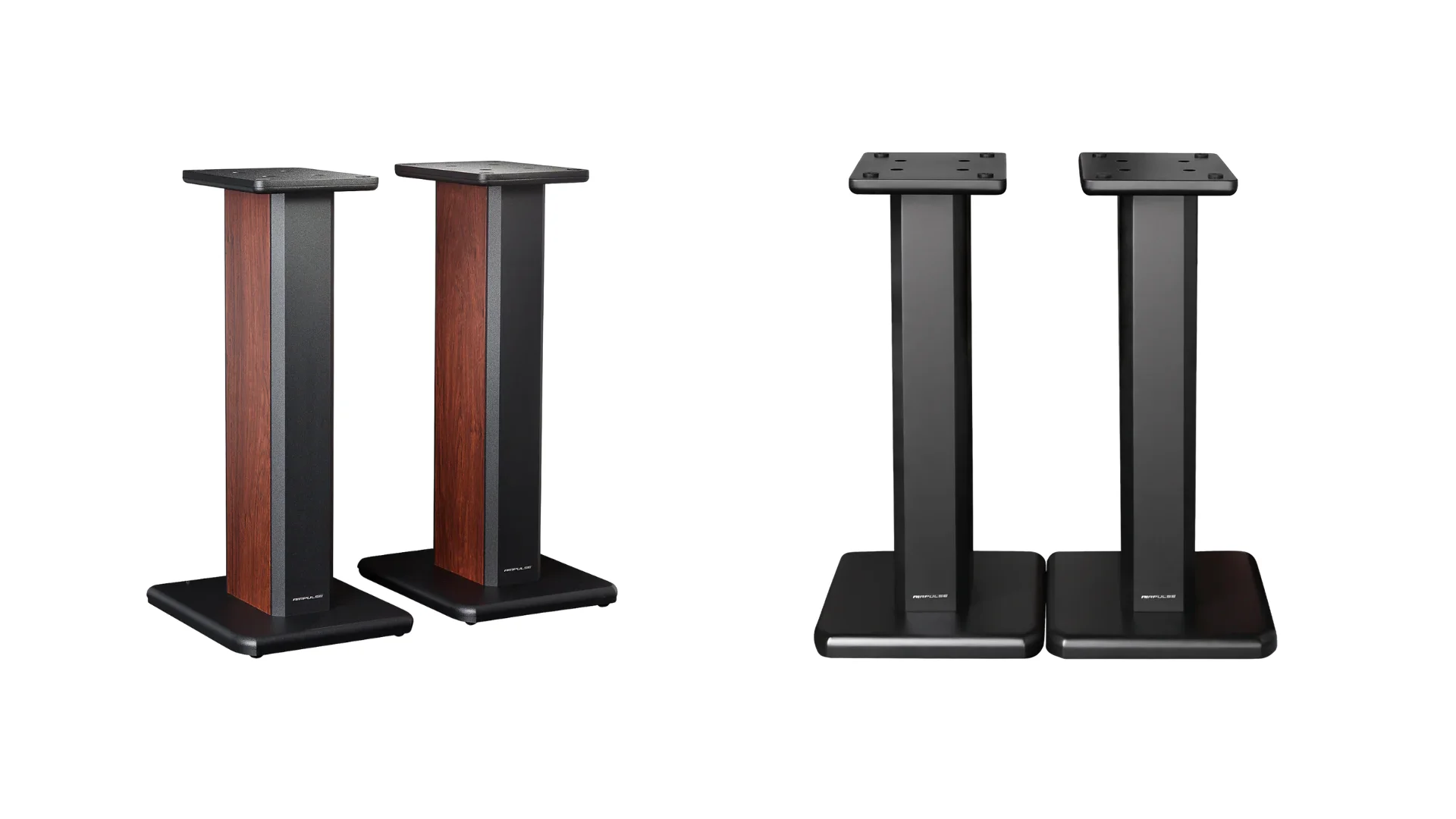
Airpulse puts Phil Jones’s loudspeaker engineering into active speakers that need no separate power amplifier. The A100 illustrates the approach: a horn-loaded ribbon tweeter works with an aluminium-cone mid/bass driver, with amplification built into the system. USB, optical, analogue and Bluetooth inputs allow the same pair to serve a computer, television or other music source, while a subwoofer output provides an expansion option. The A-series also includes larger designs such as the A300, extending the same active-speaker concept to different listening spaces. Airpulse’s identity lies in this combination of distinctive driver design and a self-contained playback system, rather than Bluetooth convenience alone.
Aperion Audio

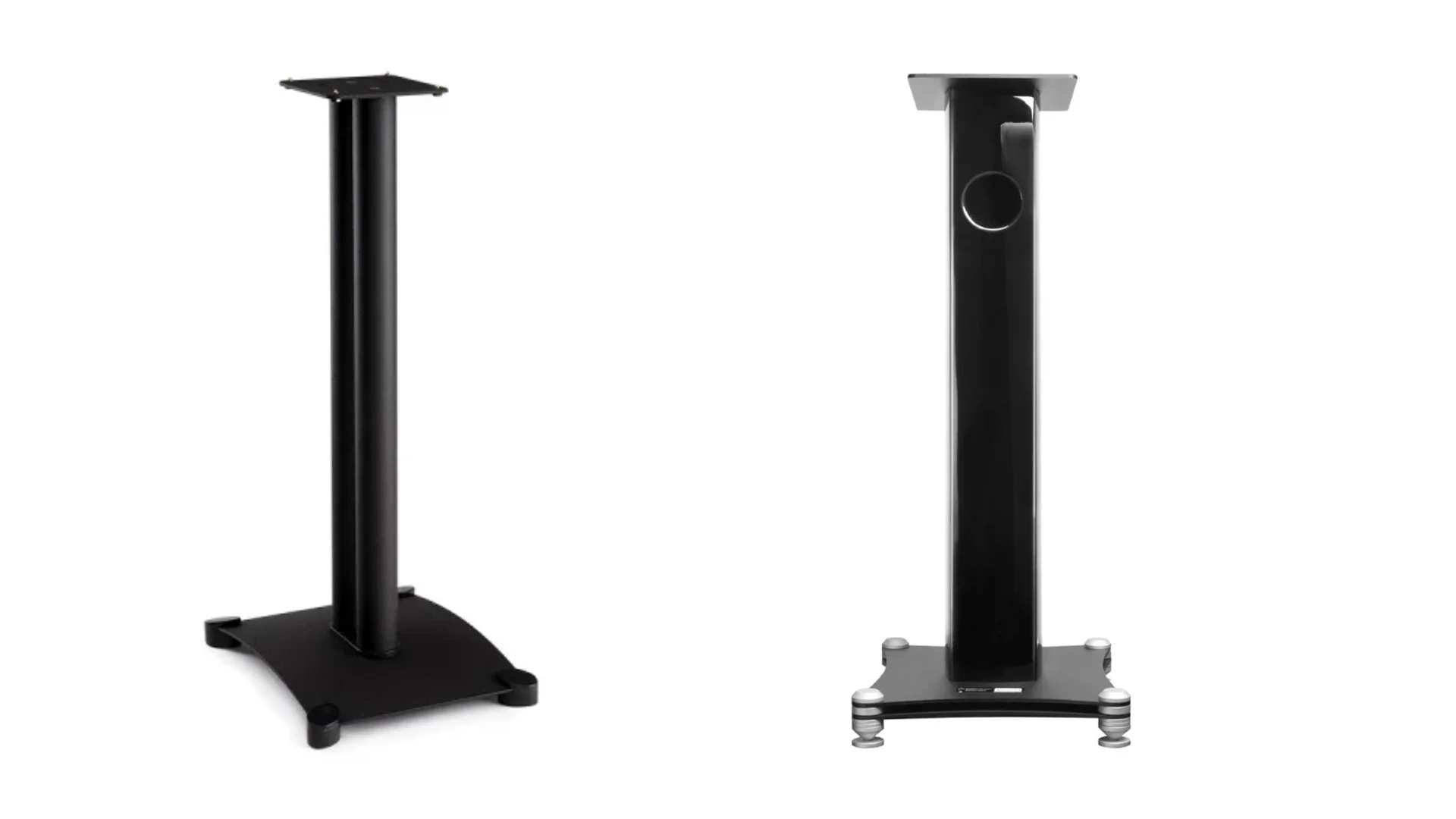
Aperion Audio grew from a practical question: could people choose serious loudspeakers at home instead of relying entirely on a showroom audition? Win Jeanfreau’s search for a replacement music system in 1998 led to the American direct-to-consumer speaker business. Its early Intimus home-theatre system established a path that now includes Verus and Novus speakers, subwoofers and architectural models. The catalogue also has an unusual accessory category: add-on super tweeters for existing loudspeakers. Bookshelf, floorstanding and centre-channel designs let buyers assemble either a stereo pair or a coordinated surround system. Direct sales and the opportunity to audition at home remain part of the brand’s identity.
Argon Audio

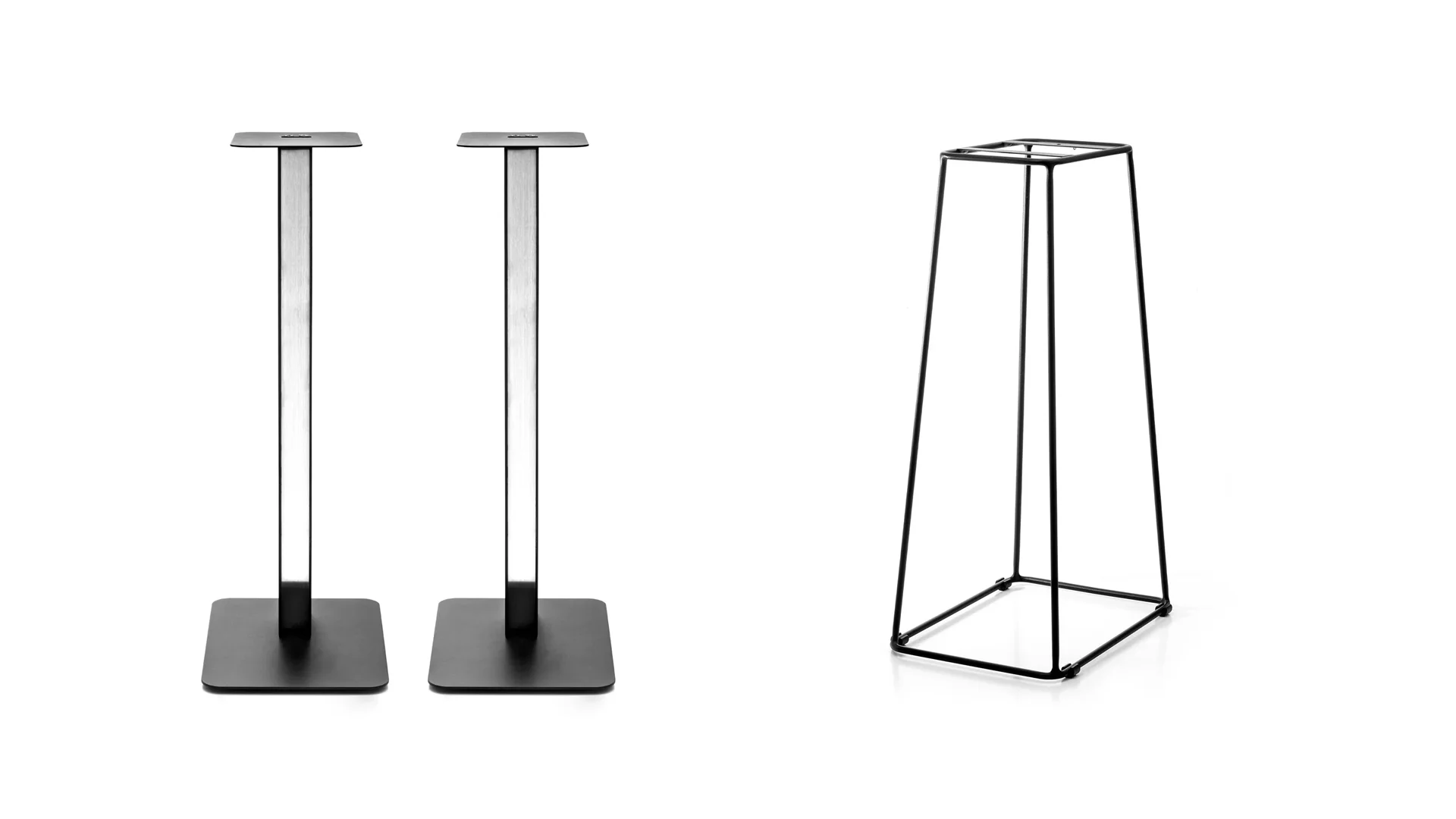
Argon Audio makes compact, affordable hi-fi that reduces the number of separate boxes needed to start listening. Its Danish roots are in HiFi Klubben, where Klaus Philipsen helped develop the brand in the early 2000s. A DAB radio was an early product, followed by active loudspeakers and turntables; the business became a separate limited company in 2019. Today, FENRIS active speakers combine amplification with connections for several sources, including television, while the turntable range offers a straightforward entry into vinyl. The consistent idea is a usable first system—or a smaller second one—with restrained Scandinavian styling and functions selected around everyday listening.
Atacama

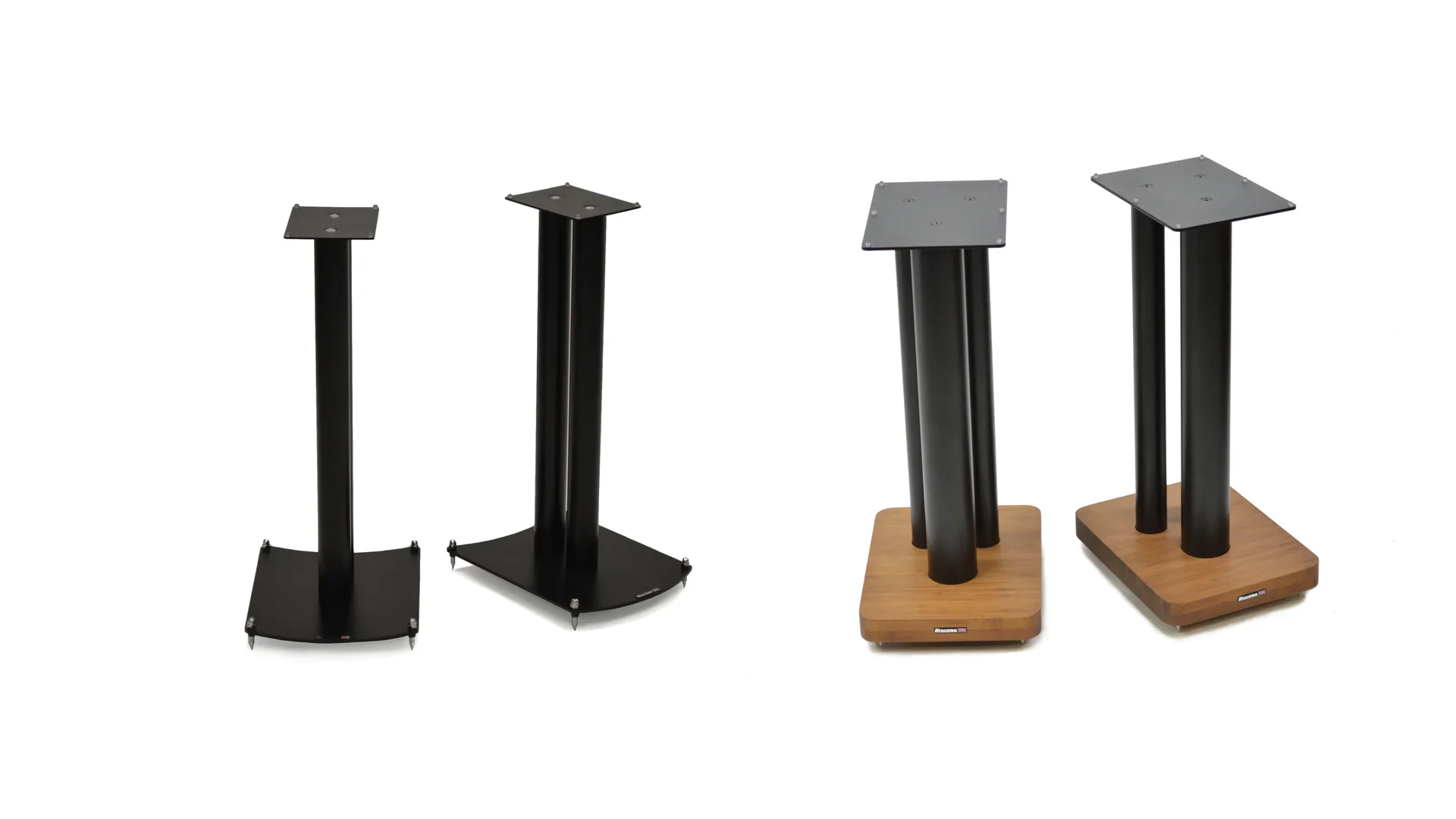
Atacama makes modular hi-fi racks and speaker stands in the UK, with sizes and support arrangements that can be matched to the equipment they carry. Its move into loudspeaker-stand development began in 1987, following earlier engineering work outside hi-fi. Bamboo shelves are a recognisable feature of the Evoque Eco racks, whose separate modules allow the height and capacity of a system to change. Moseco stands pair metal columns with bamboo bases, while other families offer different base materials and load requirements. Replacement components and additional shelving for discontinued ranges also form part of the offering. This makes compatibility and long-term adaptability as relevant as the appearance of the finished rack.
Audio Pro

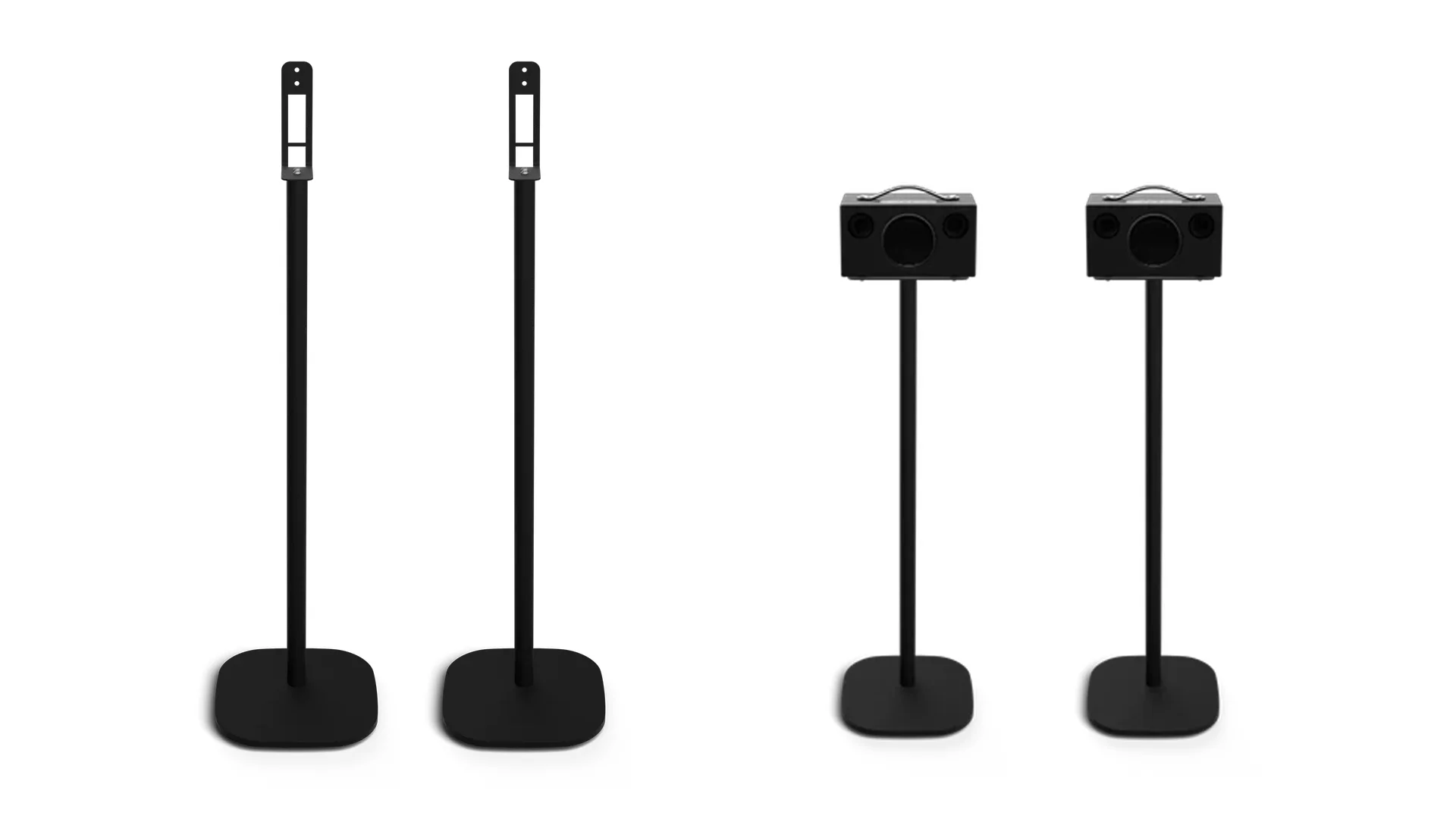
Audio Pro was building compact powered speakers long before wireless multiroom audio became a consumer category. The Swedish company started in 1978 with active speakers and subwoofers developed around engineer Karl-Erik Ståhl’s ACE-Bass technology, which uses amplifier control to obtain deeper, cleaner bass from a small enclosure. The B2.50 subwoofer and A4.14 active speaker established that technical direction. Today’s A, C and Drumfire families translate the same small-box, powered-speaker idea into Wi-Fi, Bluetooth and multiroom products, while models such as C20 also connect televisions and analogue sources. Scandinavian form, direct operation and unusually ambitious bass for the cabinet size remain more useful identifiers than generic smart-speaker features. The previous 1970 foundation date was incorrect.
Audioengine

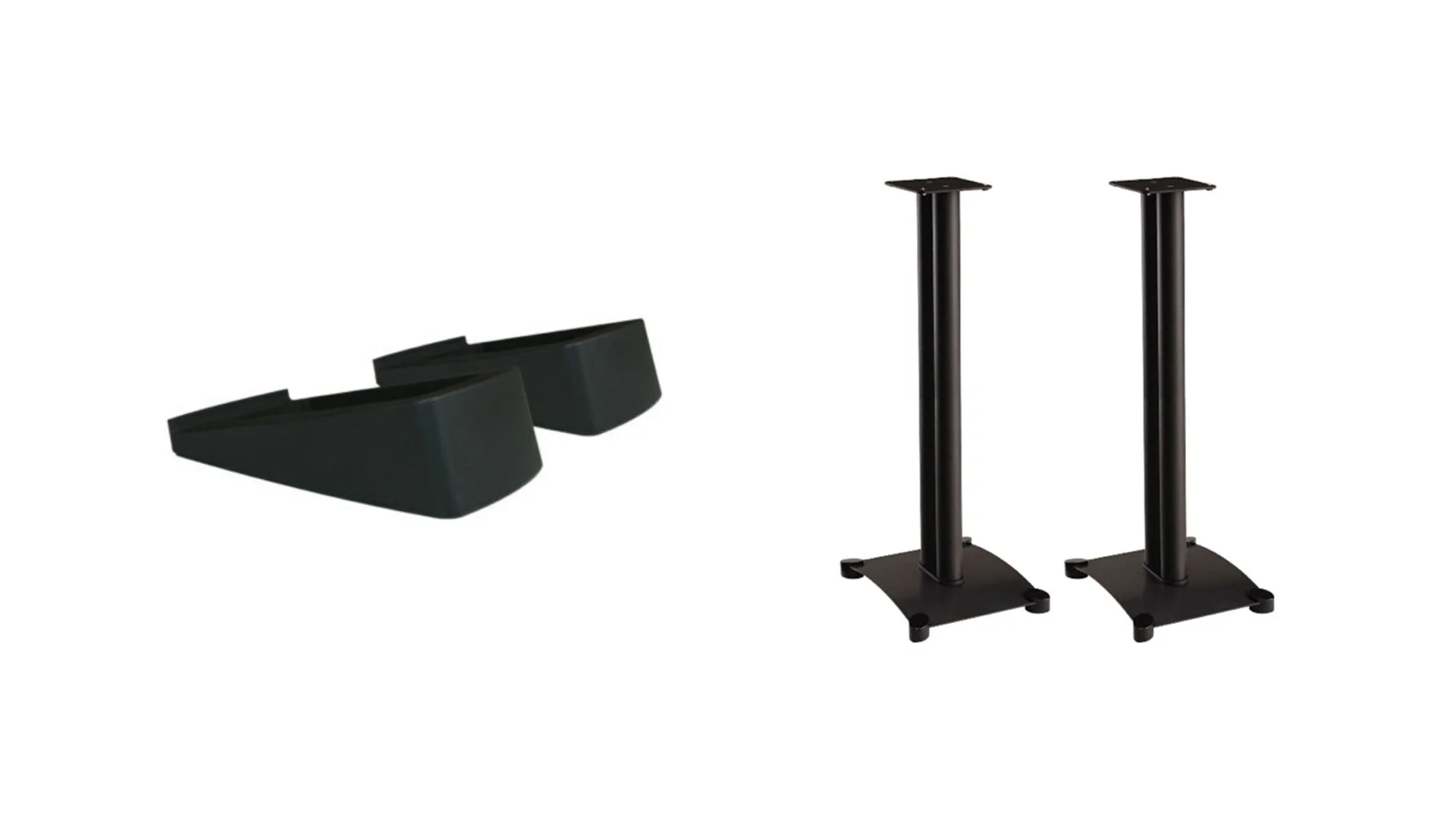
Audioengine helped make a pair of compact powered speakers a credible main music system for a desk, office or small room. Industry veterans Brady and Dave founded the company in Austin, Texas, in 2005 after work with firms including Harman, Apple, Gibson and Alesis. The original A5 put amplification inside a conventional wooden bookshelf cabinet and connected directly to everyday sources. Subsequent A2+, A5+ and HD models added USB, optical and high-quality Bluetooth options without turning setup into a network project. The range also includes passive speakers, subwoofers, DAC/headphone amplifiers and receivers such as the B1 for adding wireless playback to an existing system. Audioengine’s consistent strength is integration: useful connections, matched amplification and domestic-scale cabinets in products that remain recognisably stereo pairs.
Audiovector

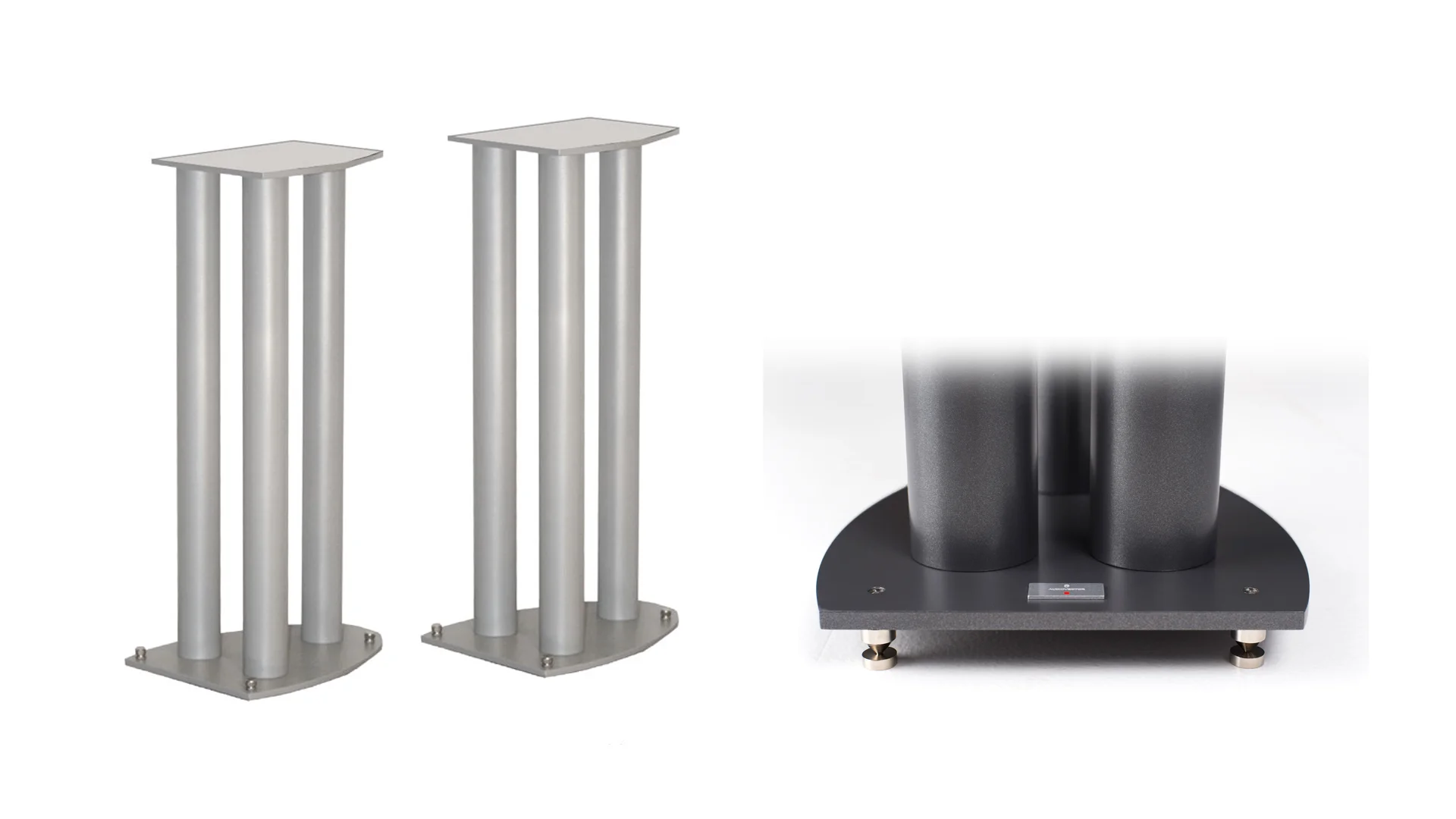
Audiovector makes upgradeability part of the loudspeaker itself. Ole Klifoth founded the Copenhagen company in 1979 and introduced the original Trapeze that year; today his son Mads Klifoth leads the family-owned business. Its Individual Upgrade Concept allows eligible speakers to be rebuilt to a higher version with revised drivers, crossovers and internal parts, extending the useful life of the original cabinet. The R and QR families cover stand-mount, floorstanding, centre, surround and subwoofer roles, while the Trapeze Reimagined reconnects the range with Klifoth’s first design. Air Motion Transformer tweeters, mechanically isolated enclosures and careful attention to phase and low compression recur across the catalogue. Audiovector designs, hand-assembles and tests its speakers in Denmark.
Canton

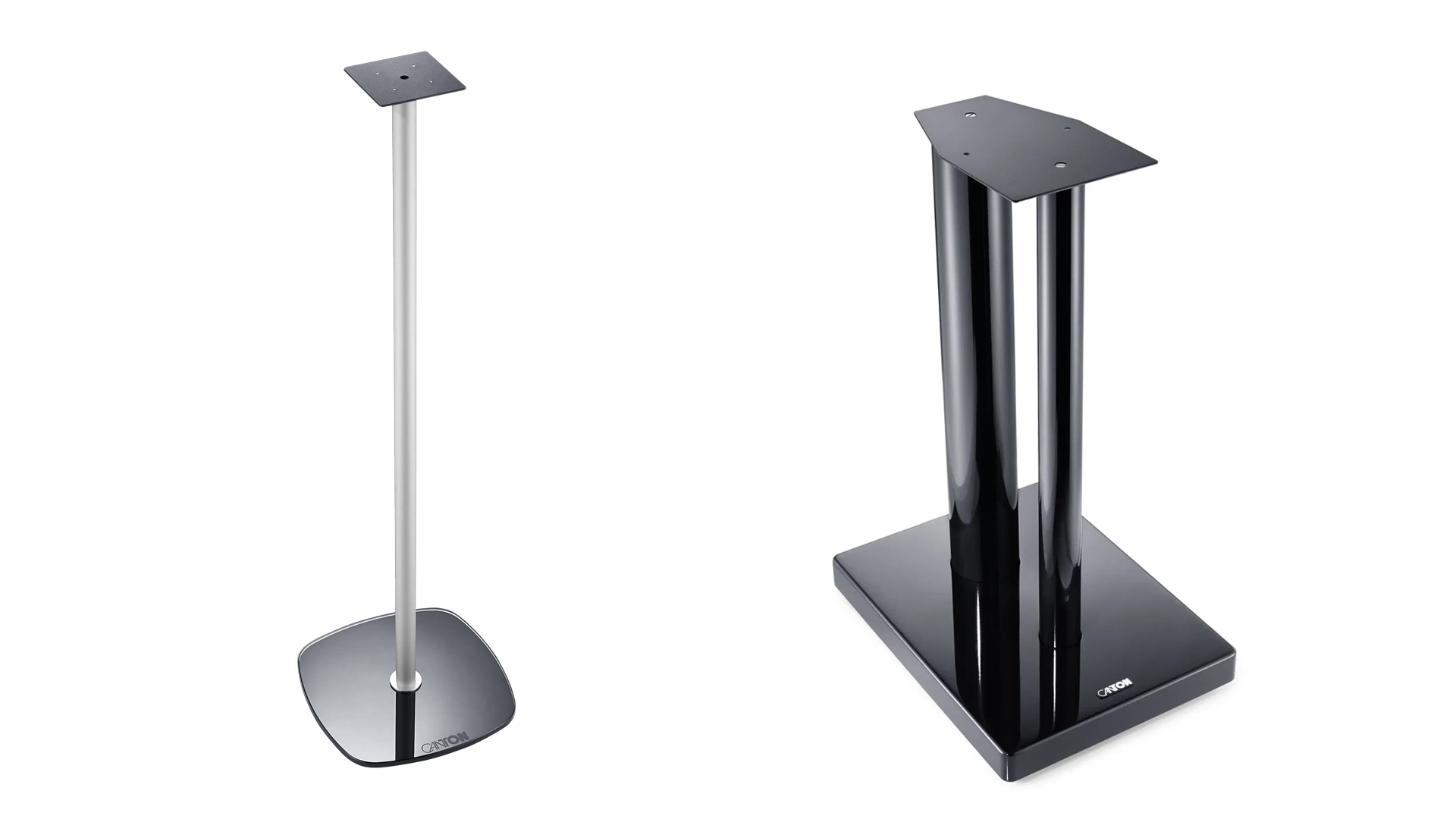
Canton is a family-owned German loudspeaker company with enough scale to develop drivers, cabinets, electronics and measurement facilities under one programme. Hubert Milbers, Otfried Sandig, Wolfgang Seikritt and Günther Seitz founded it in Weilrod in 1972. The early LE 250 compact speaker was followed by one of the company’s recurring themes: achieving substantial bandwidth and output in forms suited to real living spaces. Today’s catalogue extends from GLE and Townus through Vento to the Reference and Reference Alpha lines, with centre speakers, subwoofers and installation models for complete cinema systems. The Smart series adds active wireless stereo and surround configurations, while soundbars cover television systems. Aluminium-ceramic and later ceramic-tungsten diaphragms, waveguides, cabinet simulations and measurements in Canton’s own anechoic chamber support the range. Reference models and selected production remain closely tied to the Weilrod facility.
Custom Design

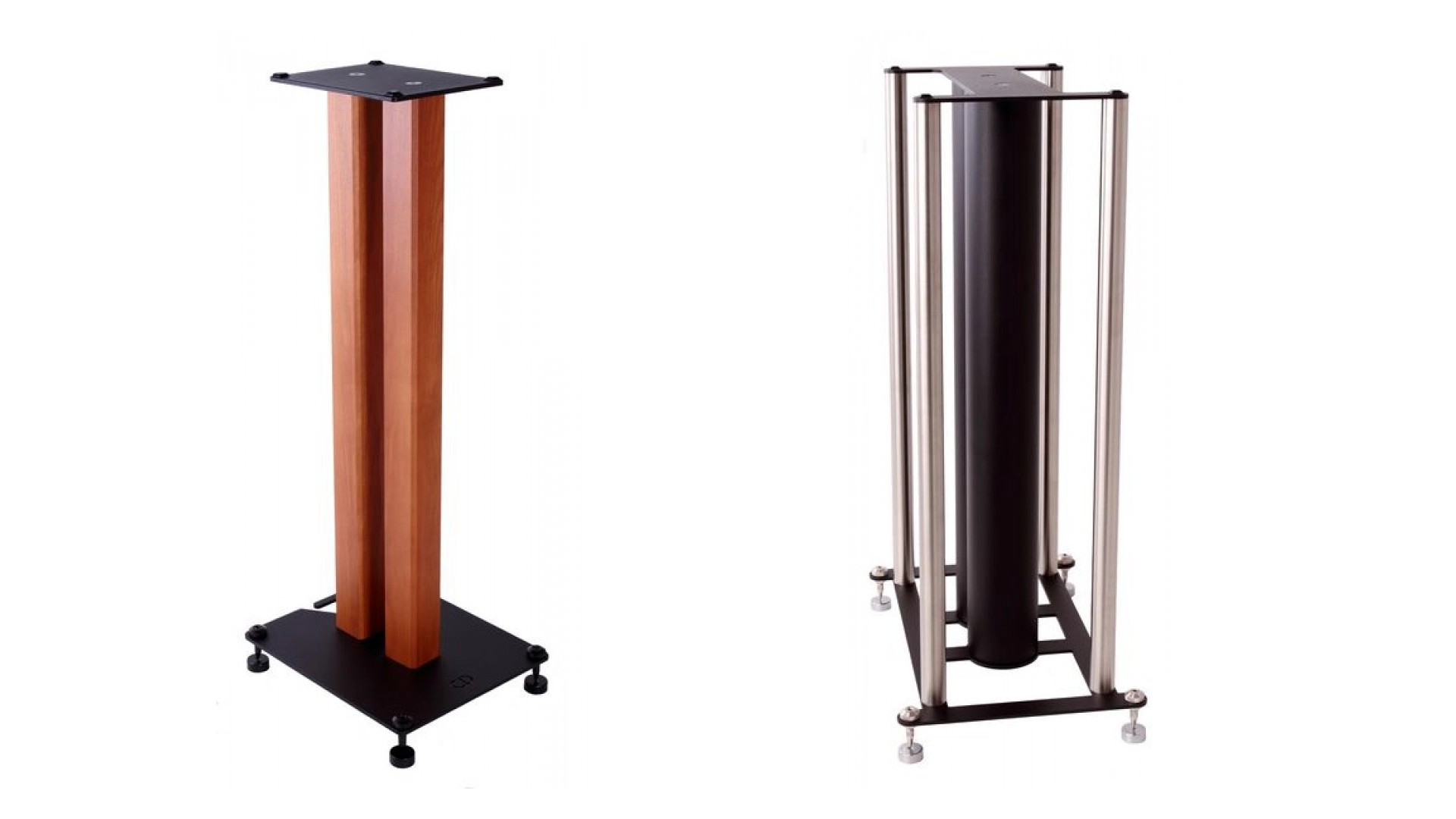
Custom Design is a family-run British manufacturer of speaker stands, hi-fi racks, isolation platforms and audio-visual furniture based in Newcastle upon Tyne. With more than three decades of specialist experience, its broad catalogue is built around a practical idea: a support should be matched mechanically and dimensionally to the component or loudspeaker it carries, not chosen only by appearance. The company combines steel plate, glass, timber, polymers and its own inert mass-loading material to manage resonance in different ways. Acoustic Steel top and base plates, fillable columns and the iRAP isolation-resonance-absorbing platform are recurring technologies, while Milan, Icon and Reference furniture ranges provide modular equipment storage. Custom Design also manufactures model-specific stands for loudspeakers from brands such as Harbeth, KEF, ATC, Focal and Acoustic Energy, adjusting height, top-plate size and mass to the intended speaker. Choice of finishes and custom dimensions remains part of the service, but the important distinction is domestic engineering and fabrication: these are support systems developed and made in the UK, not generic furniture carrying an audio label.
Elac

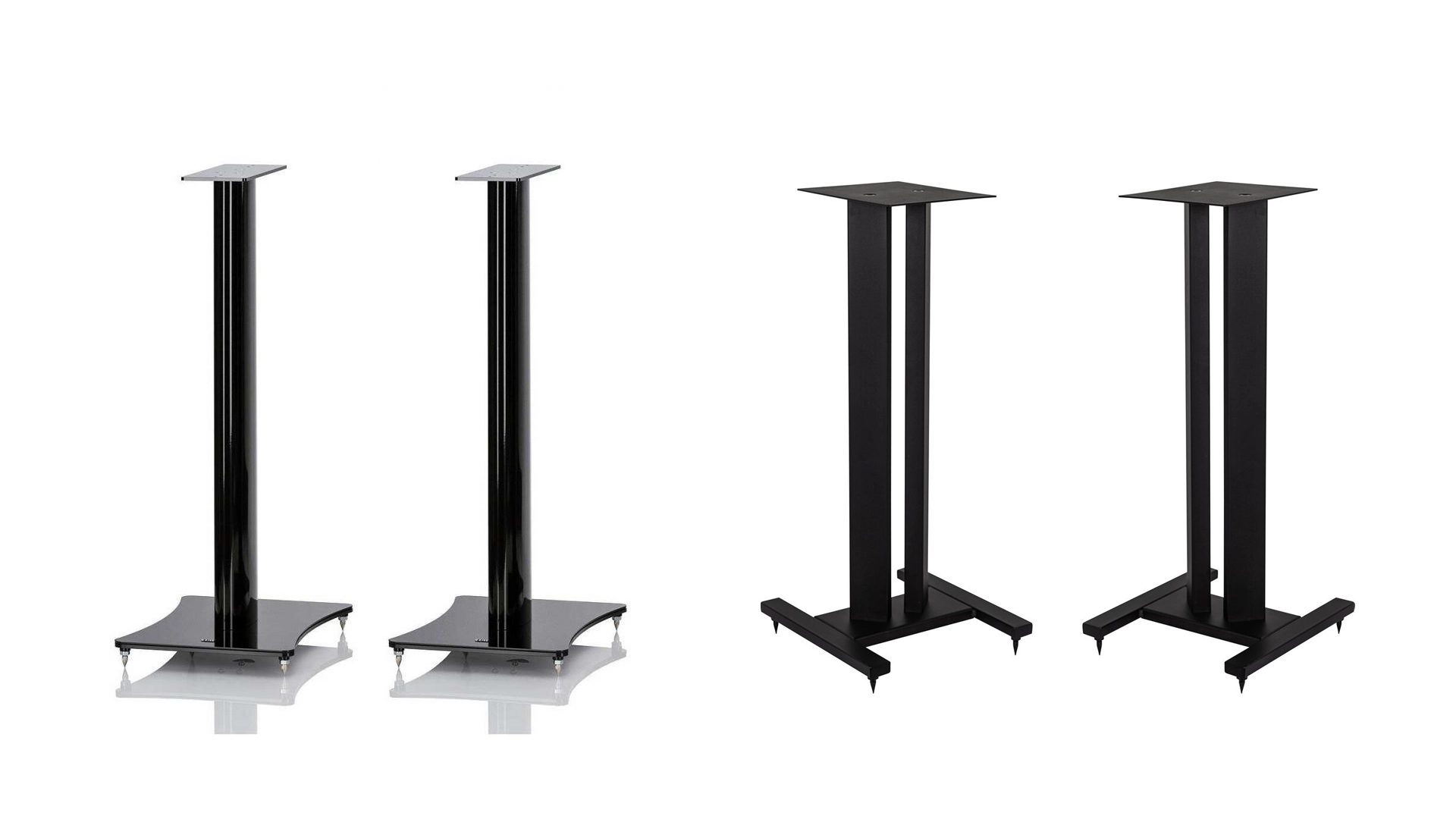
ELAC is a German audio company founded in Kiel on 1 September 1926 by Dr Heinrich Hecht, Dr Wilhelm Rudolph and Gerhard Schmidt. Its near-century history is unusually broad: the company began in electroacoustics and sonar, became a major post-war maker of turntables and cartridges, and shifted its centre of gravity to loudspeakers in the 1980s. Modern ELAC is therefore more than the affordable speakers often associated with designer Andrew Jones. The Debut and Uni-Fi families use carefully engineered cone drivers and, in Uni-Fi, concentric midrange/tweeter geometry to bring controlled directivity and coherent imaging to accessible systems. Carina, Vela and higher ranges draw on the folded JET tweeter, while active subwoofers and electronics complete stereo and cinema installations. Turntables keep the brand’s analogue history visible rather than treating it as a retro licensing exercise. ELAC’s lasting advantage is range backed by real transducer engineering: it can translate its knowledge of motors, diaphragms, wave launch and cabinet behaviour from compact entry models to elaborate floorstanders, while the 1926 date describes the actual company lineage rather than a recently revived name.
Esthetica
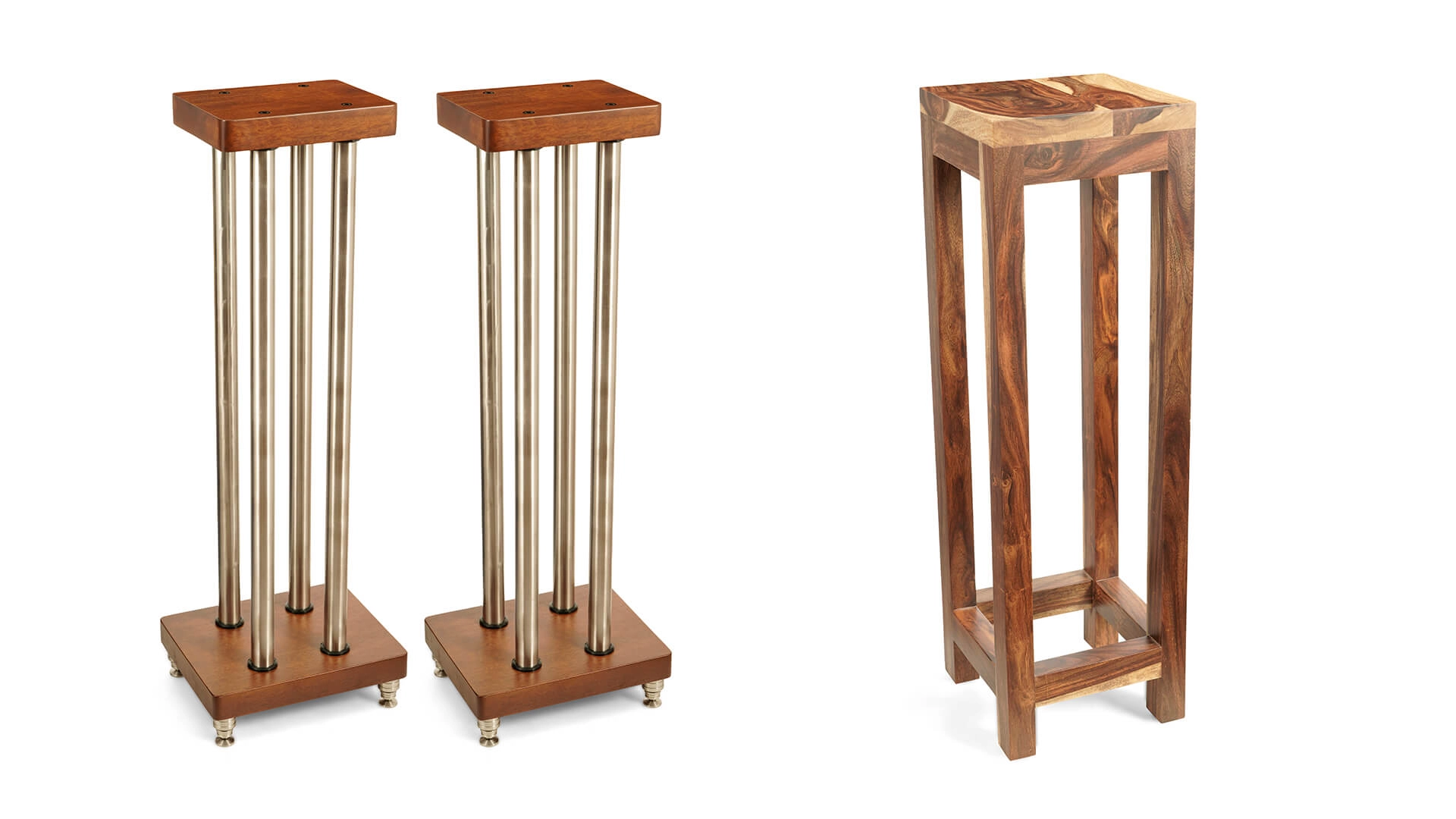
Esthetica is an Indian furniture manufacturer that applies its bespoke woodworking experience to hi-fi and AV racks. Founded by Bhavya Sharma and operating a modern workshop in Manesar, the company works with solid hardwoods including Indian rosewood, teak, American white oak and European maple, combined with CNC-turned 304-grade stainless-steel hardware. The audio range covers component racks, wider AV cabinets and speaker stands, with shelf spacing, timber, finish and dimensions available to order. Adjustable spikes, anti-vibration mats and rigid joinery address levelling and mechanical stability without disguising the products as laboratory equipment. Esthetica’s useful distinction is therefore custom manufacture: racks can be proportioned for a particular amplifier, turntable or room while retaining the grain, joinery and finish of substantial domestic furniture.
Flexson

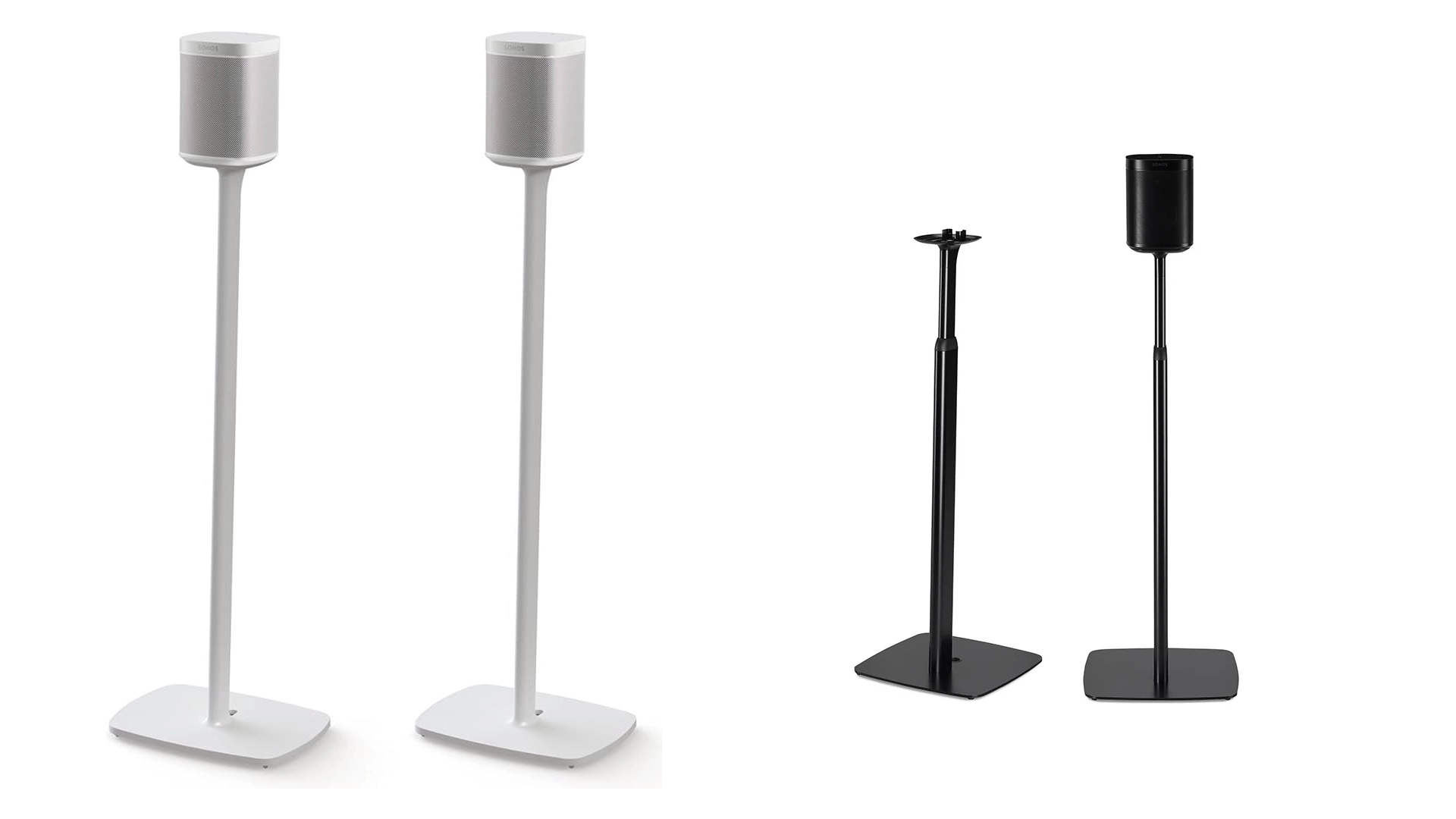
Flexson specialises in the practical side of owning Sonos: positioning, mounting and integrating the speakers cleanly into a room. Its accessories are designed and engineered in the United Kingdom around the dimensions, controls, cable paths and acoustic requirements of specific Sonos models, rather than adapted from universal hardware. The range covers wall and ceiling mounts, height-adjustable and fixed floor stands, desktop stands, TV and soundbar attachments, power solutions and custom-install products. High-grade steel construction, concealed cable management and access to the speaker’s buttons and connectors are recurring details. Flexson follows new Sonos launches closely, producing dedicated solutions for products such as Era, Five, One, Move, Arc, Beam, Ray and Sub. This single-brand focus is the company’s real strength: it lets an installer or home user choose hardware that fits both the product and the intended listening position without improvised brackets or furniture.
Kanto

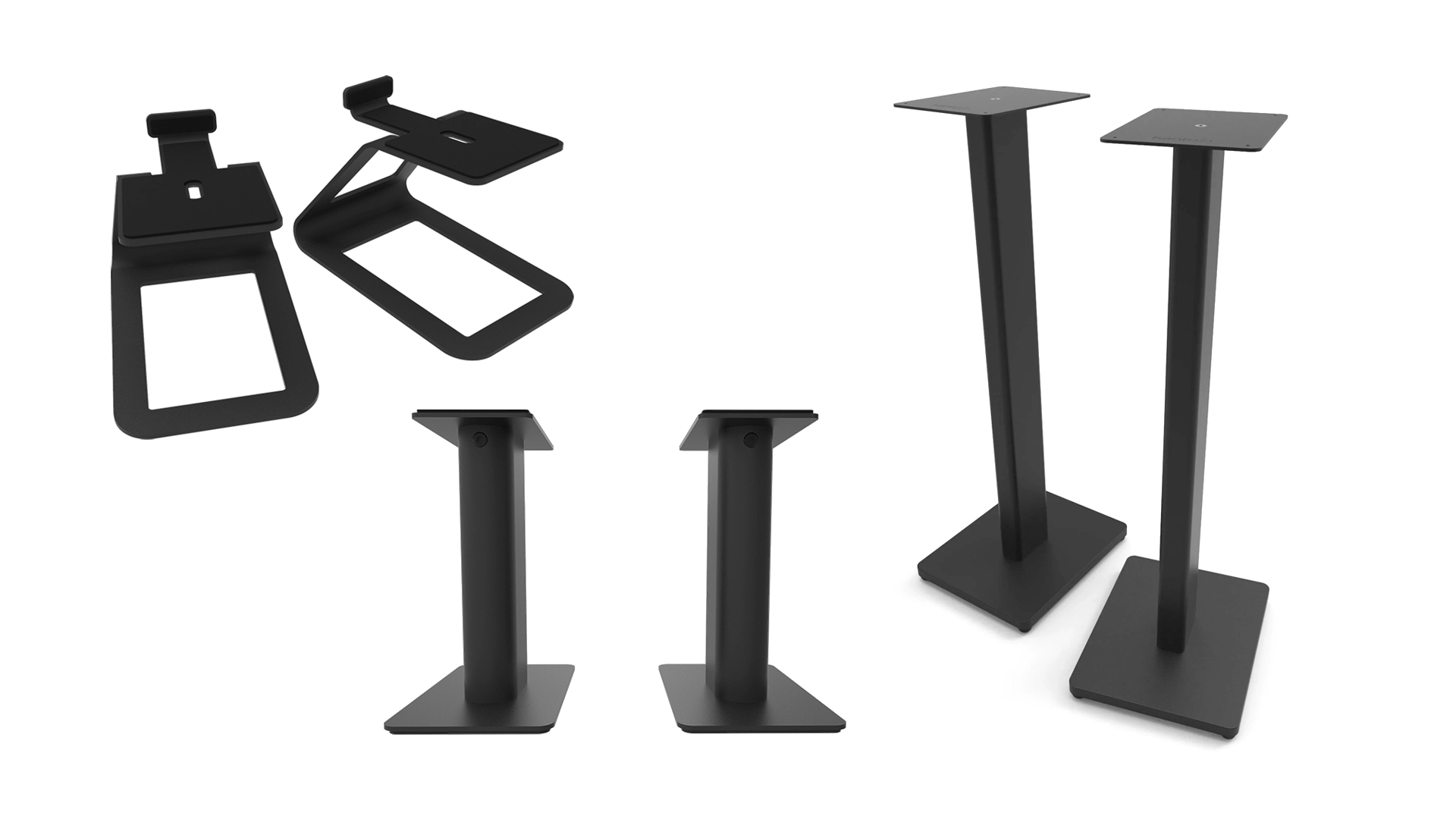
Kanto is a Canadian audio company best known for powered speakers that connect directly to the sources people actually keep on a desk or in a living room. Founded in 2007, it packages amplification, input switching and loudspeaker engineering in compact systems that avoid a separate receiver. The YU family ranges from small desktop models to larger bookshelf speakers, typically combining Bluetooth with analogue inputs; selected versions add USB audio, optical input, a moving-magnet phono stage and a subwoofer output. TUK moves upward with an AMT tweeter, greater power and broader digital connectivity, while ORA targets near-field computer listening in an even smaller enclosure. Matching SUB subwoofers, desktop and floor stands, and mounting products let the speakers form a coherent workspace or TV system. Kanto does not pretend that every model serves the same listener: input sets, cabinet size and bass capability change clearly across the range. Its strength is thoughtful integration—clean industrial design, useful controls and enough connection options to bridge a turntable, computer, television and phone without turning a simple system into a rack of electronics.
KEF

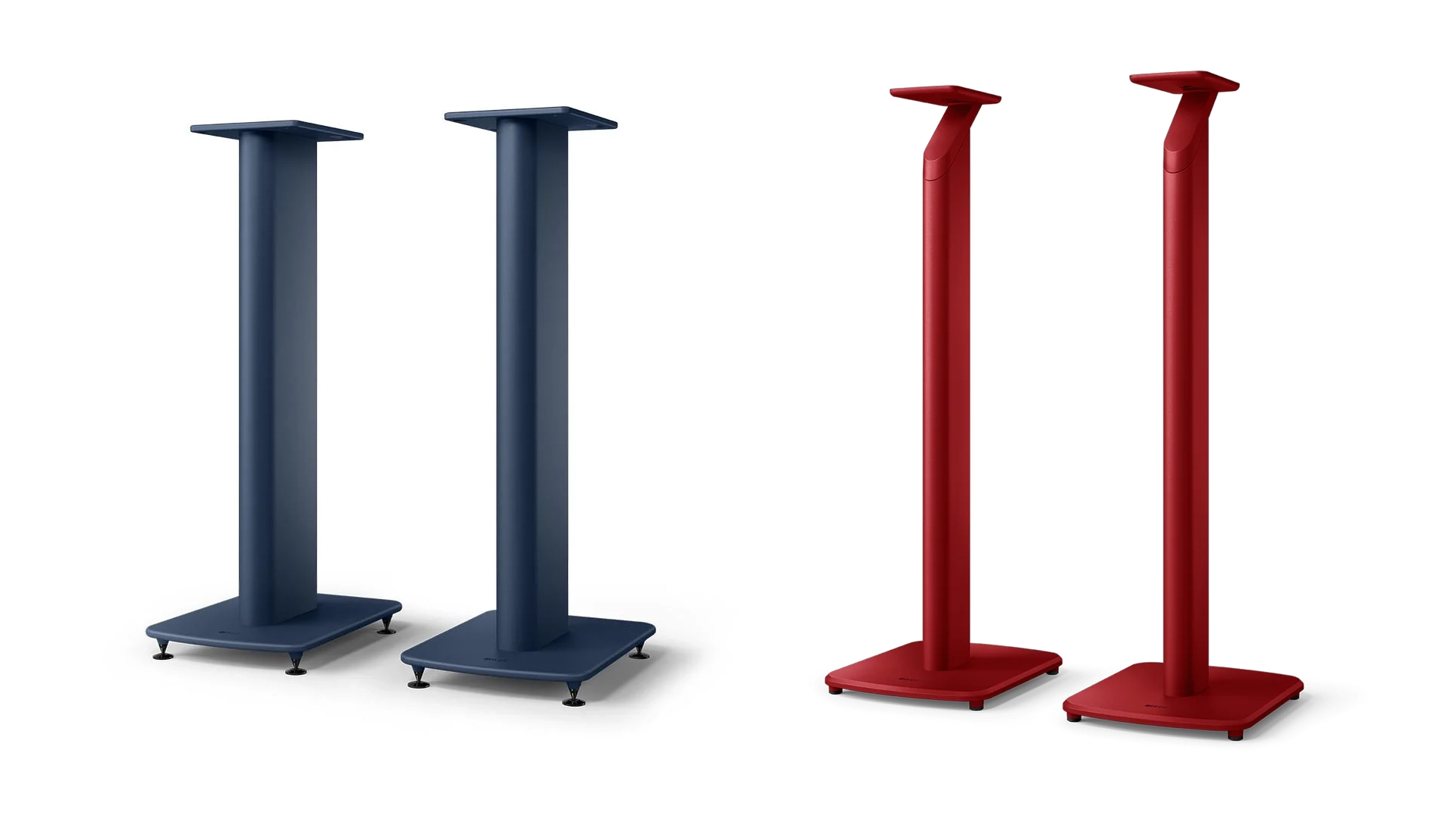
KEF is a British loudspeaker company whose identity rests on acoustic research and driver engineering rather than a house style applied to conventional boxes. BBC engineer Raymond Cooke founded it in Maidstone in 1961; the name comes from Kent Engineering & Foundry, the site of the first workshop. KEF’s defining invention is Uni-Q, introduced in 1988, which places the tweeter at the acoustic centre of the midrange cone so the two behave more like one source across a wide listening area. Recent generations add Metamaterial Absorption Technology behind the tweeter to manage rear radiation, while Uni-Core allows opposed subwoofer drivers to share a compact motor structure. These ideas appear at different scales across the Q, R and Reference ranges, the sculptural Blade models, KC subwoofers and the active LS50 Wireless II and LS60 Wireless. The catalogue spans passive, wireless, architectural and personal audio, but the common thread is unusually deep in-house modelling, measurement and transducer development.
Mission

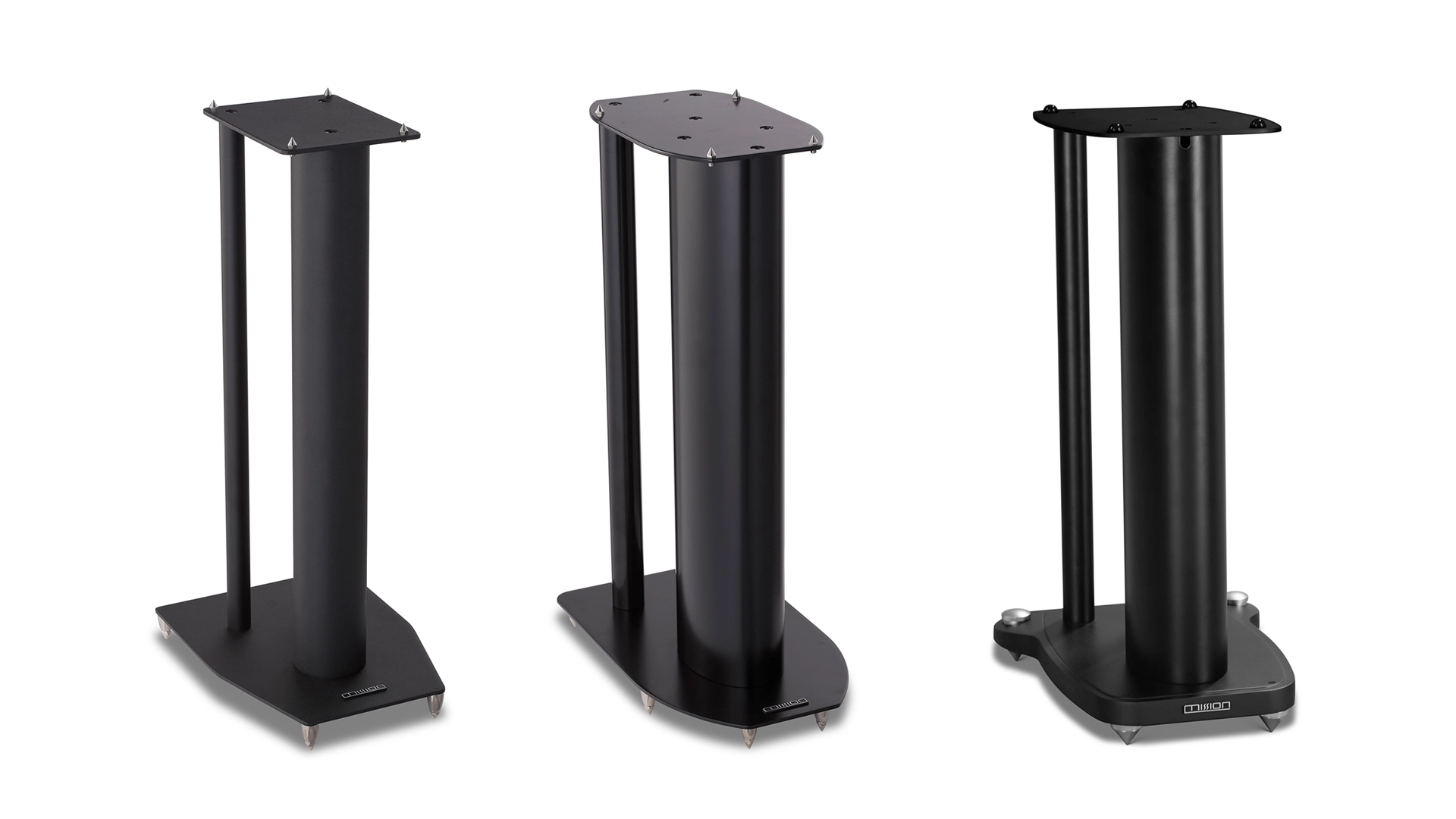
Mission is a British loudspeaker brand whose identity was established by compact, affordable speakers that used unconventional geometry to solve practical acoustic problems. Farad Azima founded Mission in 1977, and the original 770 quickly became a reference point for the company. One of its most recognizable ideas is Inverted Driver Geometry: placing the treble unit below the bass/mid driver to align the acoustic paths at the listening position and improve integration through the crossover region. Mission now offers standmount and floorstanding loudspeakers, centre and surround channels, subwoofers, active wireless systems and the revived 778 electronics. The LX MKII and QX MKII families bring the brand’s core concepts to accessible systems, while the modern 700, 750 and 770 reinterpret historic models with contemporary drivers, crossovers and cabinets. Depending on the range, Mission uses DiaDrive-style mid/bass diaphragms, ring-dome or microfibre-dome tweeters and carefully profiled cabinet structures. Its lasting distinction is not generic “British sound,” but the ability to turn specific engineering choices—driver order, crossover timing and cabinet proportions—into complete ranges that remain straightforward to own.
MoFi Electronics

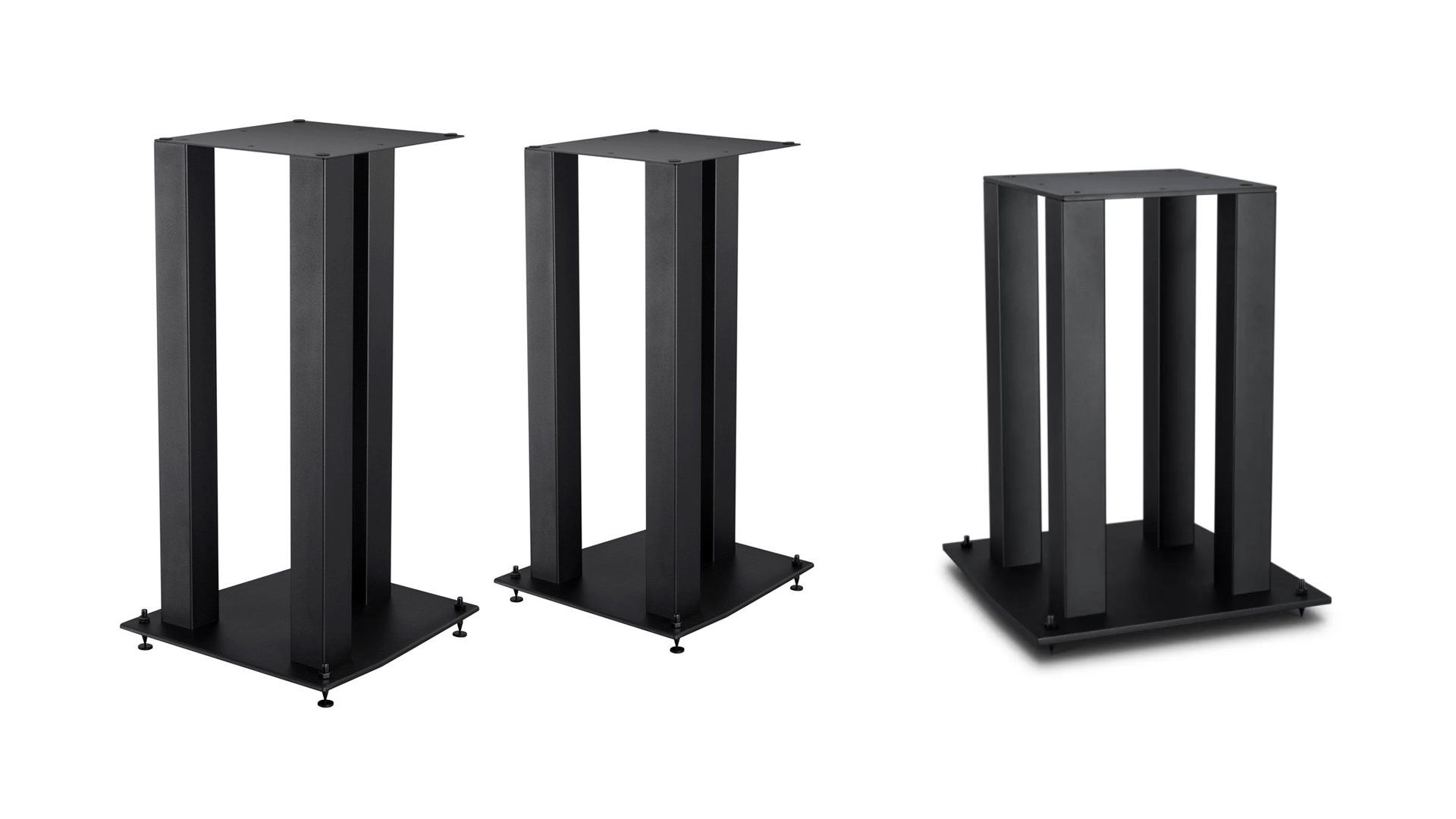
MoFi Electronics is the hardware arm of the Mobile Fidelity family, translating the record label’s analogue experience into turntables, cartridges, phono stages and loudspeakers. The business was formed in 2014 and introduced its first hardware publicly in 2016, drawing on outside specialists rather than claiming that mastering expertise alone is sufficient to design equipment. Turntable engineer Allen Perkins led the analogue platform, while later loudspeakers were created by Andrew Jones and the MasterPhono by Peter Madnick. StudioDeck and UltraDeck established the line with isolated AC motors, constrained-layer plinths and proprietary tonearms; the Allen Perkins-designed MasterDeck adds three-speed operation and fine speed adjustment. UltraGold, MasterTracker and other cartridges are voiced as part of the same playback chain. SourcePoint speakers use Jones’s concentric driver architecture to control directivity and integrate treble with the mid/bass unit from a common acoustic centre. MoFi Electronics is distinctive because its catalogue is not a label-logo exercise: it is a set of purpose-designed components by identifiable engineers, informed by how records are cut, evaluated and replayed.
Monitor Audio

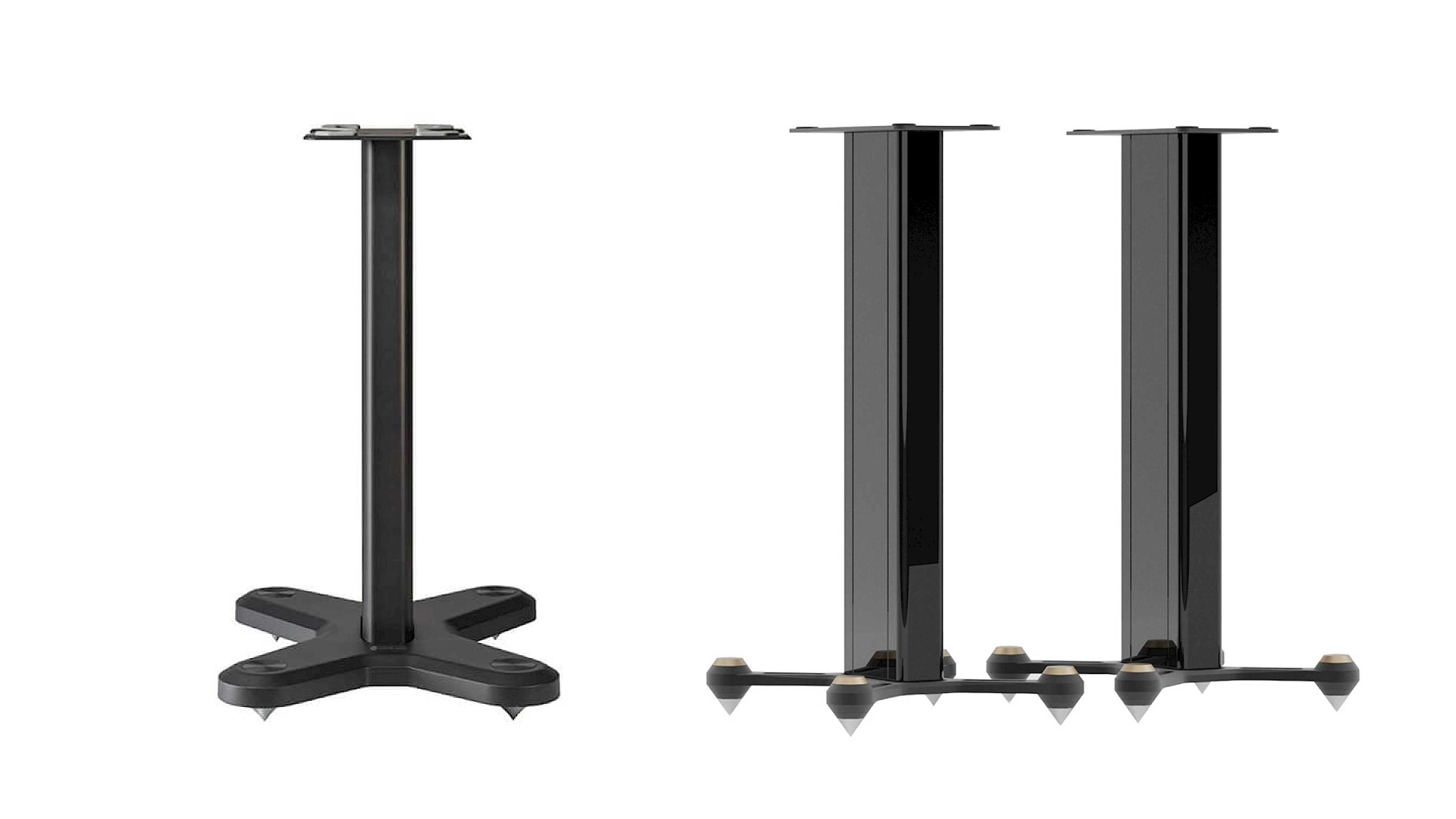
Monitor Audio is a British loudspeaker manufacturer whose strongest identity lies in developing its own metal-diaphragm driver families across products from entry-level stereo to architectural and flagship systems. Mo Iqbal founded the company in 1972 in Teversham near Cambridge, and the MA1 was its first loudspeaker. Design and engineering remain centred in Britain, while the catalogue now spans standmount and floorstanding speakers, home-cinema channels, subwoofers, creator-series installation models and outdoor audio. C-CAM—Ceramic-Coated Aluminium/Magnesium—is the foundation technology, providing a light, rigid diaphragm used in cones and the familiar gold-dome tweeter. Higher ranges extend it through RDT III sandwich cones, MPD III micro-pleated high-frequency transducers, DCF coupling and Hive II reflex ports. The Hyphn flagship arranges six RDT III midrange units around an MPD III transducer as a point-source M-Array and uses opposed, force-cancelling bass drivers. Bronze, Silver, Gold and Platinum apply related ideas at different levels without pretending they are identical. Monitor Audio’s advantage is this continuous driver-development ladder, backed by a broad system range rather than a single celebrated model.
NorStone

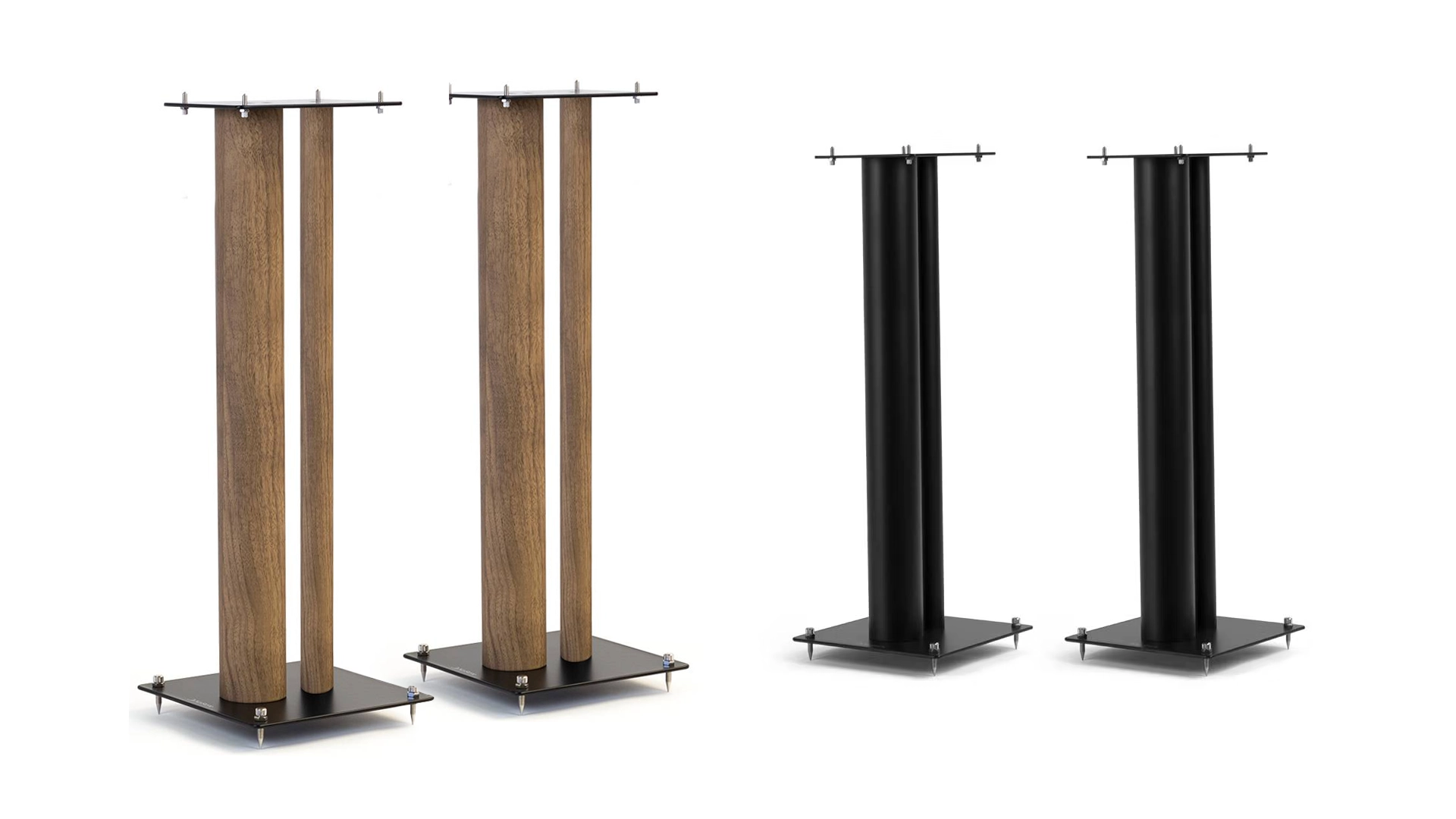
NorStone is the French AV-Industry brand that treats furniture and support as part of an audio-video installation rather than as generic household shelving. Its range spans hi-fi racks, speaker stands, television furniture, vinyl storage, wall and projector mounts, professional racks and a broad cable catalogue. The products are designed to organise real systems—allowing for component depth, ventilation, cable routing, equipment weight and loudspeaker height—while remaining visually light enough for a living room. Esse is the accessible open-frame AV rack, Stäbbl and Spider use modular shelves for heavier hi-fi components, and Bergen and Slender address more traditional equipment stacks. Stylum is the best-known speaker-stand family, with steel columns, spikes and several heights for standmount loudspeakers; Walk and Counter offer purpose-built record storage and turntable support. NorStone also sells terminated and bulk speaker cable, RCA, XLR, HDMI, USB, optical and mains connections, so an installer can finish the system within one design language. NorStone is a registered trademark of the French AV-Industry group, alongside brands including Elipson, Tangent, Eltax and Lumene. Published sources disagree on whether the brand began in 1997 or 2001, so leaving the founding-year field blank is more accurate than choosing a false precision.
Quadraspire

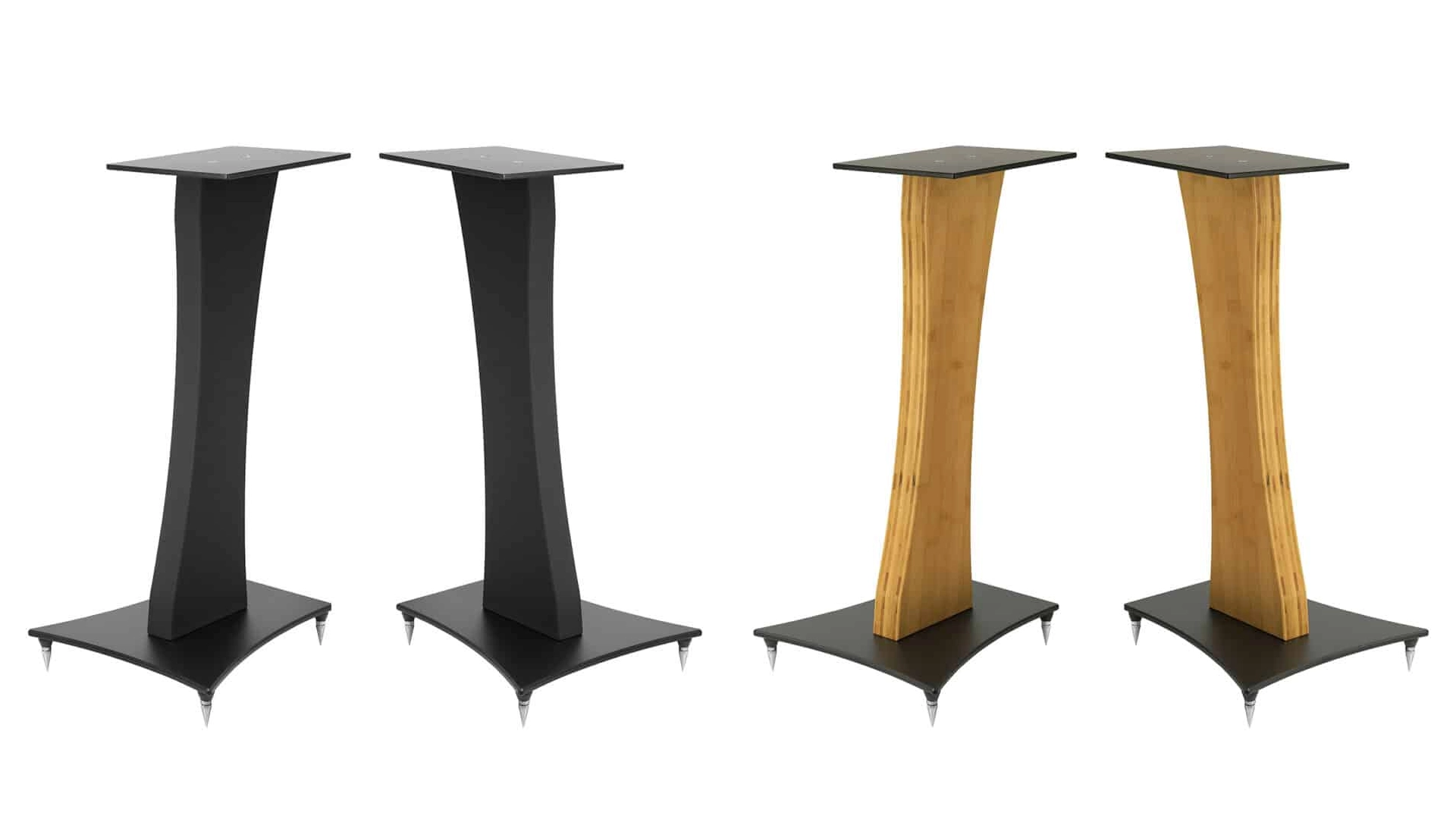
Quadraspire was founded in 1995 by Dutch designer Eddie Spruit in an East London studio. The name came from one of his earlier pieces of folding furniture, but the product that defined the company was the Q4 equipment rack. Instead of treating a rack as a heavy rectangular cupboard, Spruit made it open, modular and visually light, with shaped shelves separated by aluminium columns. The company later established its own manufacturing facility near Bath, England. The design has an acoustic purpose as well as a recognisable look. Curved shelf edges avoid long parallel boundaries and reduce the broad flat surfaces on which standing waves and vibration can build; open sides allow equipment to cool naturally. Threaded columns make shelf spacing configurable and let a system grow one level at a time, while spikes provide defined mechanical contact with the floor. Q4EVO remains the accessible modular platform. SVT uses thicker, vented shelves and a more substantial column system for heavier components; bamboo versions exploit a stiff laminated material with useful damping properties. X-Reference is the flagship architecture, adding constrained-layer shelves, bronze components and more elaborate energy control. QPlus interfaces and Bronze Upgrade parts let owners improve support under individual components without replacing an entire rack, while dedicated speaker stands and wall shelves extend the same thinking. Quadraspire does not promise that furniture changes the electronics inside a component. Its know-how is more practical: manage support, airflow and mechanical energy while giving a serious system furniture that can be reconfigured, repaired and kept in the room for decades.
Raidho Acoustics

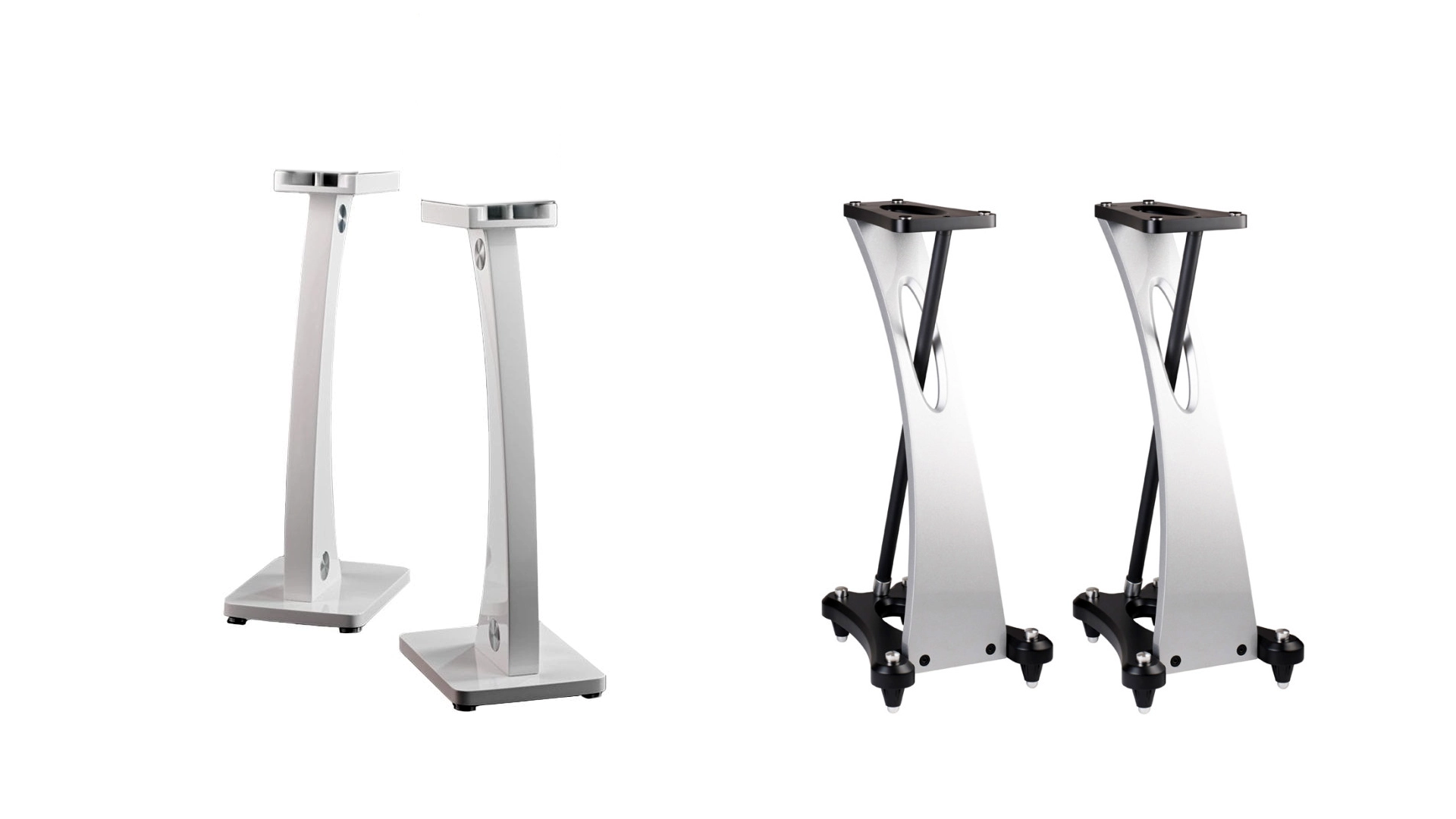
Raidho Acoustics was founded in Denmark in 2001 by loudspeaker designer Michael Børresen. The existing since value of 2009 confused the brand’s founding with a later corporate event: in 2009 Danish public company Dantax acquired the Raidho project. Raidho is now built at Dantax’s facility in Pandrup, where cabinets, crossovers and proprietary drivers are produced or assembled with a high degree of local control. The original country therefore remains Denmark, while Dantax ownership belongs in the description. The signature device is Raidho’s planar-magnetic ribbon tweeter, made from an extremely thin foil with conductive traces and driven by a strong magnetic system. Its very low moving mass and open acoustic path are intended to extend response far beyond the audible band without the stored energy of a conventional dome. Dynamic mid/bass drivers begin with an aluminium cone whose surface is converted to a hard ceramic layer—the basis of Ceramix technology. In the TD series, tantalum and diamond-related surface treatments further increase stiffness and push breakup modes away from the operating band. Current X models provide the more attainable route into the ribbon-and-ceramic architecture; TD is the reference family, extending from compact monitors to large multiway floorstanders. TD8 SUB and TD10 SUB apply diamond-coated drivers to dedicated low-frequency systems. Older C and XT series remain part of Raidho’s development history but should not be presented as the complete current range. After Børresen’s departure, the company continued with a new engineering team, including designer Benno Baun Meldgaard. Raidho’s real distinction is vertically integrated Danish driver work, not ribbon terminology alone.
Revival Audio
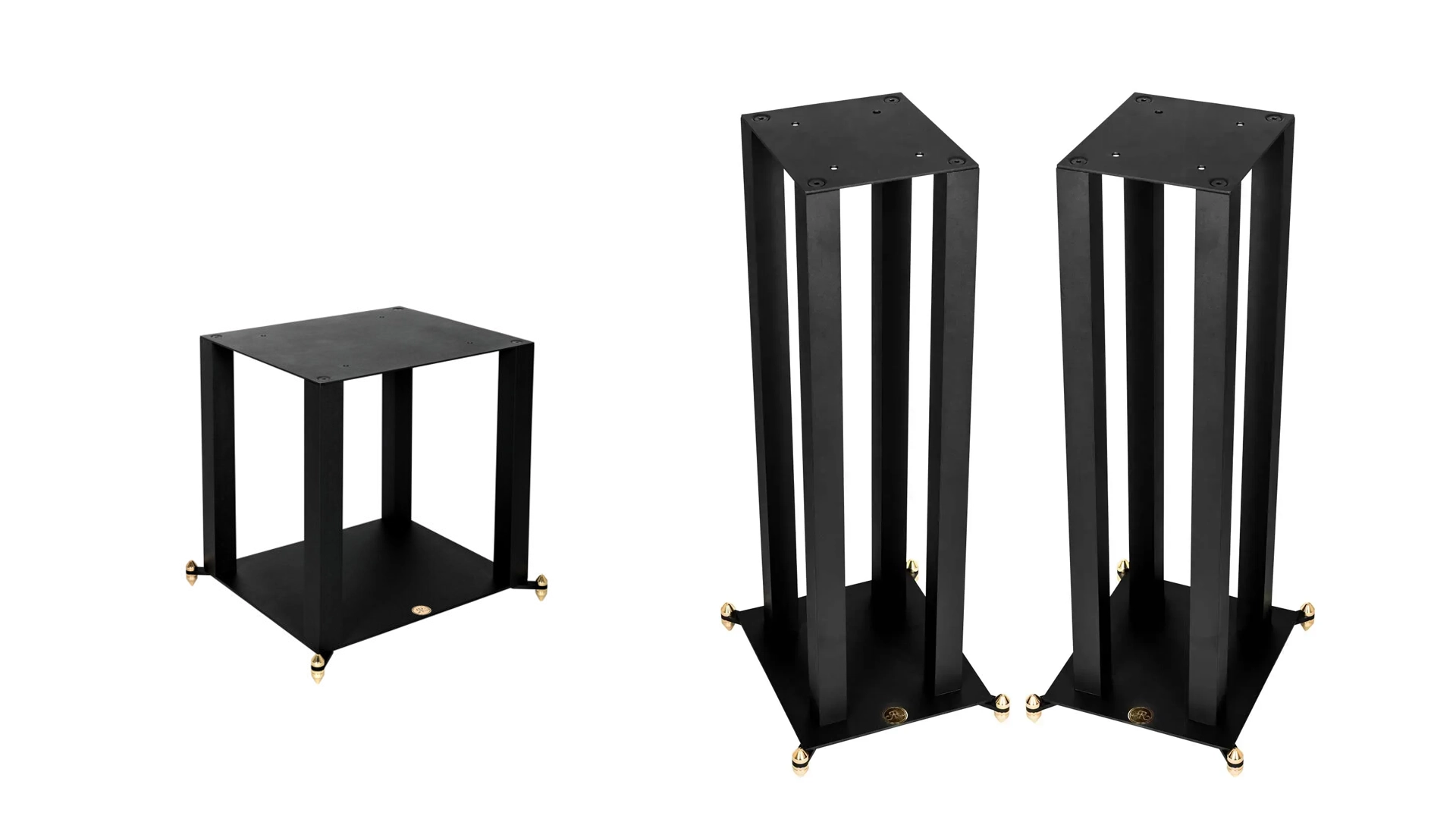
Revival Audio is a French loudspeaker company created at the end of 2021 by engineer Daniel Emonts and entrepreneur Jacky Lee. Emonts brought more than three decades of transducer and loudspeaker-development experience, while Lee built the commercial and operational side; the company established its engineering base in Alsace and set out to control the important acoustic parts in-house. Revival first made its name with the ATALANTE series—ATalante 3, ATALANTE 4 and the large ATALANTE 5—whose broad baffles, walnut finishes and matching stands recall classic studio furniture without simply reproducing an old design. Their core technologies are current: the RASC 28 mm soft-dome tweeter uses the large ARID rear chamber to absorb back-wave energy, while the BSC midrange and bass drivers employ a basalt-fibre sandwich construction developed for stiffness, damping and low mass. The sculpted Elytron element around the tweeter and midrange controls diffraction and gives the front baffle a distinctive functional identity. ATALANTE models are assembled in France, and their industrial design was developed with the Paris studio A+A Cooren. The newer SPRINT range translates Revival’s driver work into slimmer, more accessible loudspeakers and includes stand-mount, floorstanding and centre-channel options for stereo and cinema systems. Revival Audio’s appeal is the clarity of this proposition: proprietary drivers, measured acoustic solutions and French manufacture presented through warm, domestic design rather than laboratory aesthetics. It is a young brand, but not an inexperienced one, and its products already have a recognisable technical and visual language.
Rogoz Audio

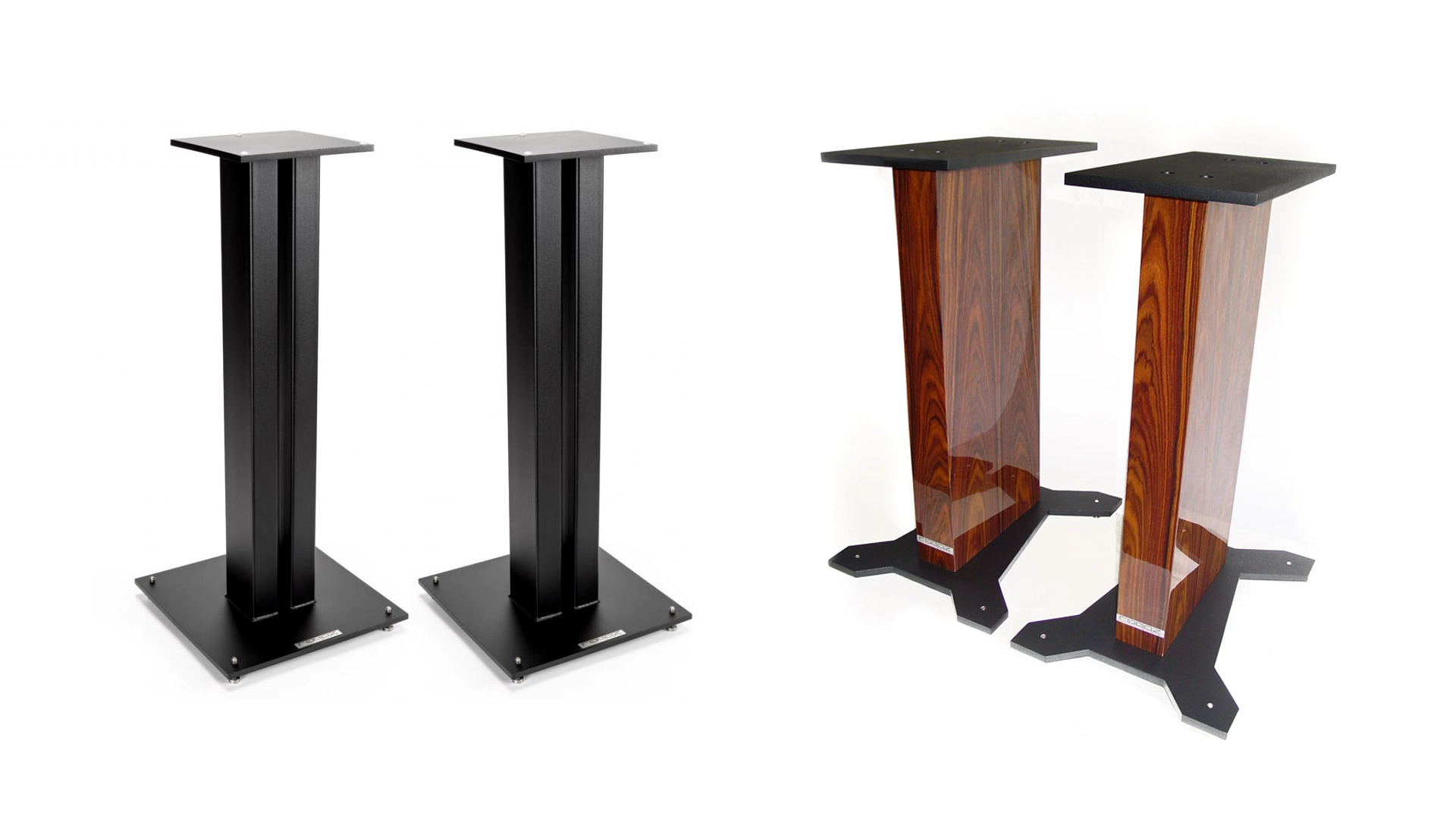
Rogoz Audio is a Polish manufacturer of specialist supports for high-end audio systems, founded in 2010 by Janusz Rogoz. Rather than treating a rack as interior furniture with audiophile branding, the company concentrates on the mechanical path between a component, its support and the floor. Its catalogue includes modular equipment racks, amplifier platforms, turntable bases, loudspeaker stands and anti-vibration accessories, many of them built to order for the mass, dimensions and centre of gravity of a specific component. Steel structures, hardwood and engineered platforms are combined with constrained joints and adjustable interfaces so that energy can be drained, distributed or isolated in a controlled way. A central Rogoz idea is the Balancing Board System, in which a platform is supported at calculated points and allowed a limited, controlled movement instead of being clamped rigidly at every corner. Different rack families adapt that principle to compact systems, heavy power amplifiers and multi-shelf installations. Speaker stands receive the same attention to stability, height, footprint and coupling, and custom fabrication is an important part of the business because a universal platform is not always mechanically appropriate. Products are designed and manufactured in Poland, with visible metalwork and joinery forming part of their identity. Rogoz Audio’s strength is the narrowness of its focus: it does not claim to improve the electrical circuit inside a component. It engineers the physical conditions in which that component or loudspeaker operates, offering repeatable construction and system-specific solutions instead of decorative “isolation” accessories.