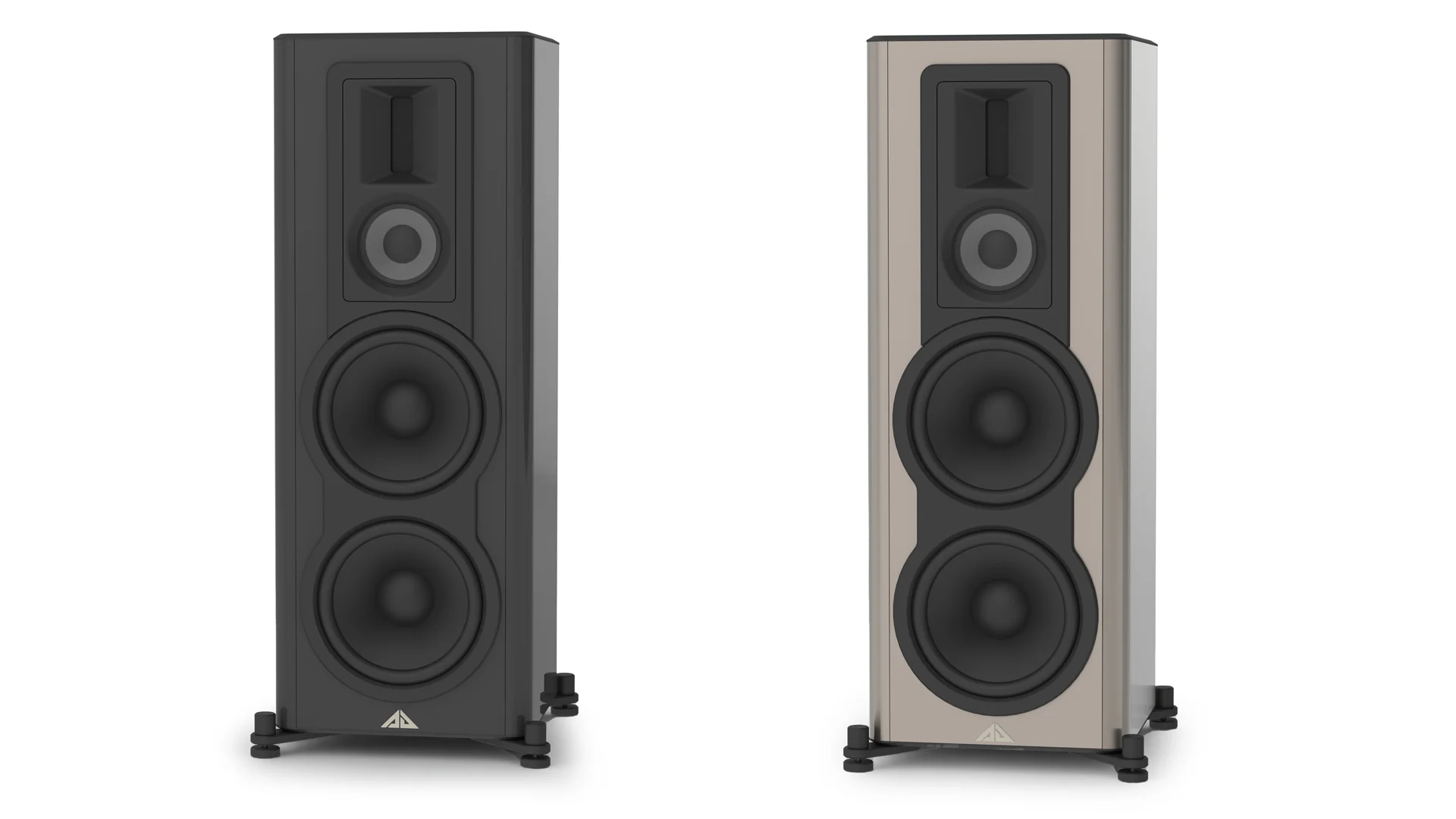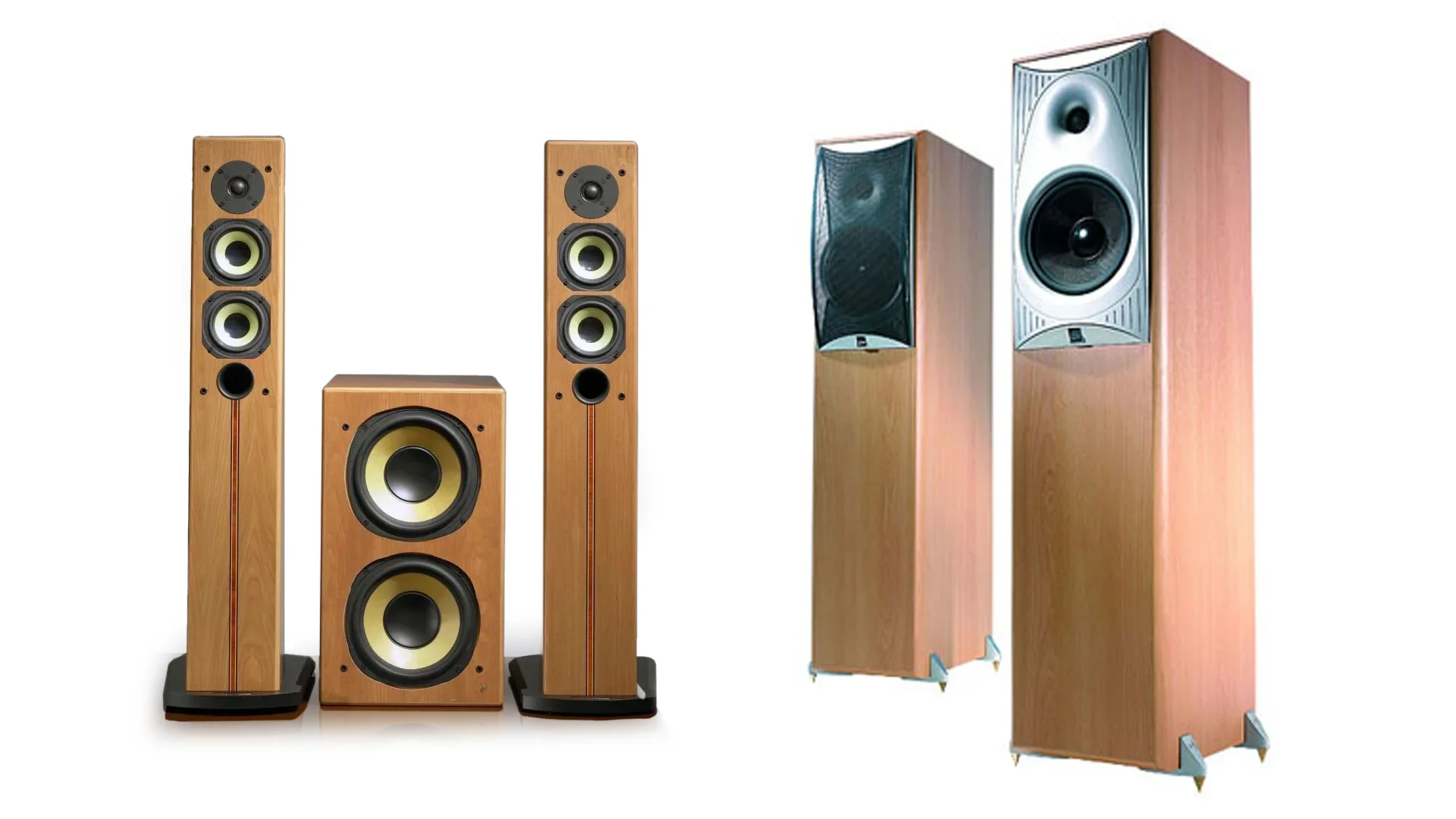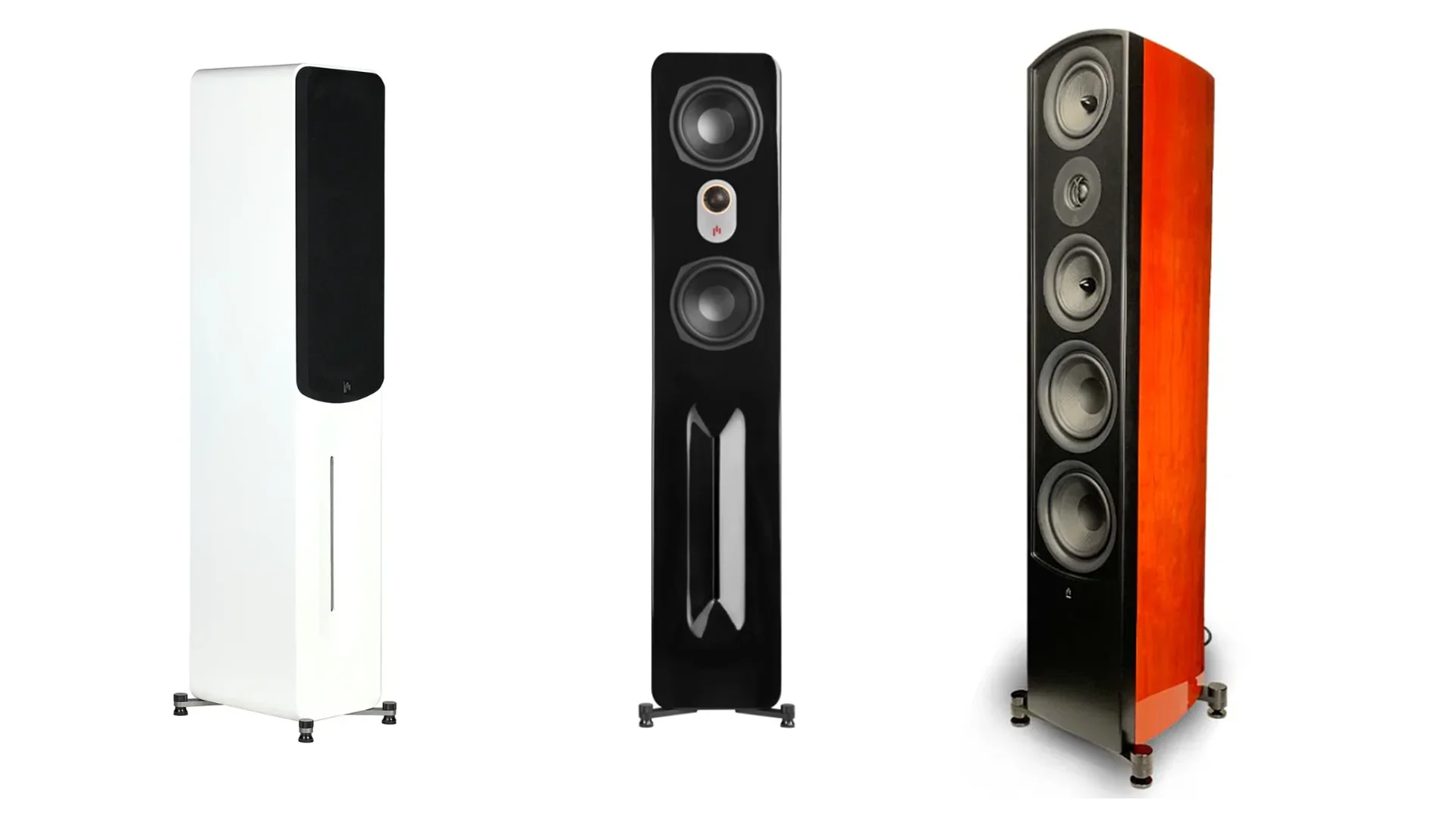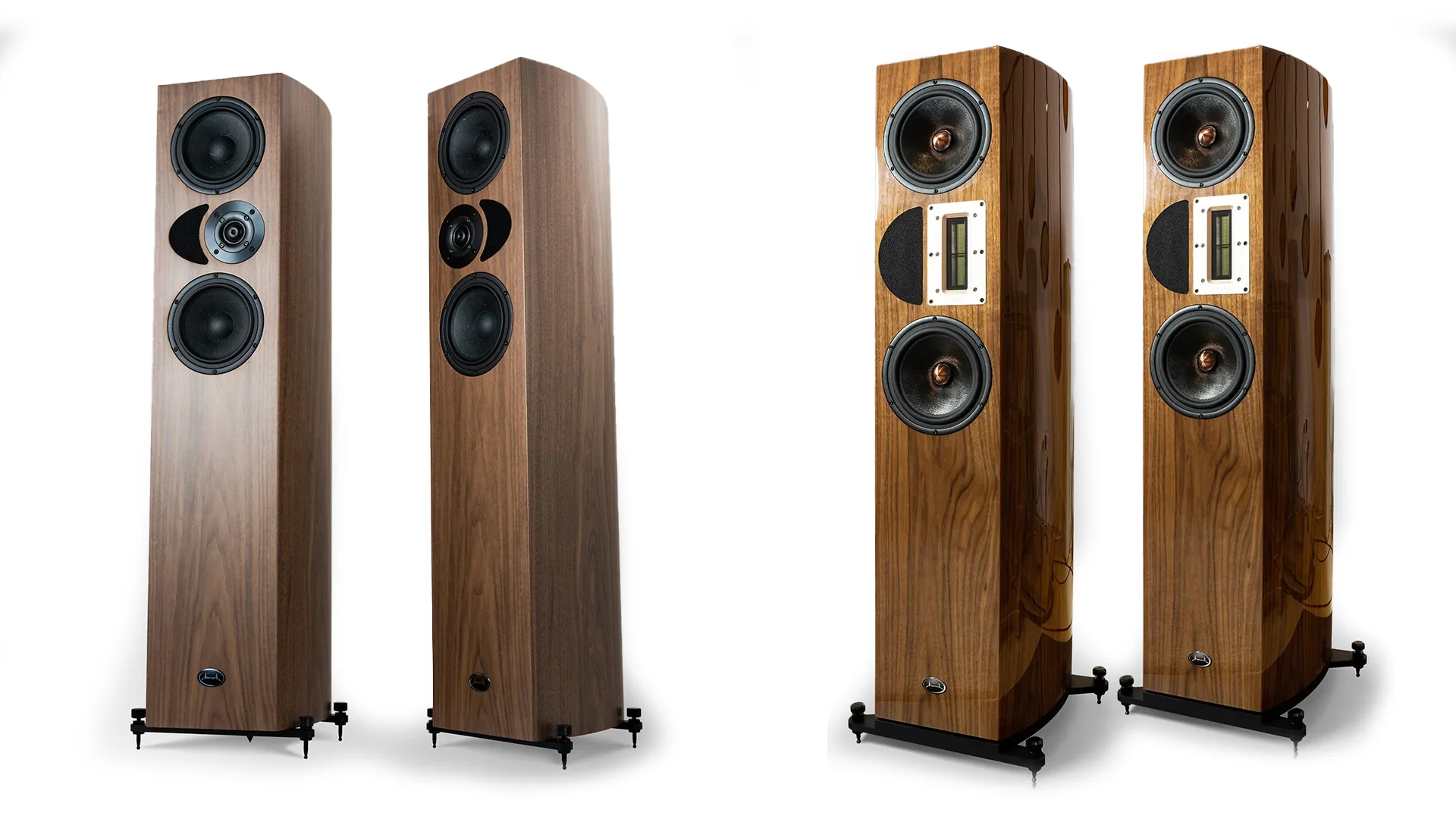
An icon representing floorstanding speakers.

Floorstanding Speakers

This page provides a wide-ranging collection of floorstanding speaker manufacturers. We have compiled a vast list of brands to serve as a central resource for discovering companies that produce tower speakers. For every manufacturer listed, this database provides key information such as the country of origin, founding details, and a direct link to the floorstanding speaker products on their official site. This resource is intended to be a practical and comprehensive reference for the global market of tower speakers.

235

Hi-Fi brands in the category

Summary information and image

Direct links to official websites

Filters
Search
Country
See more See less

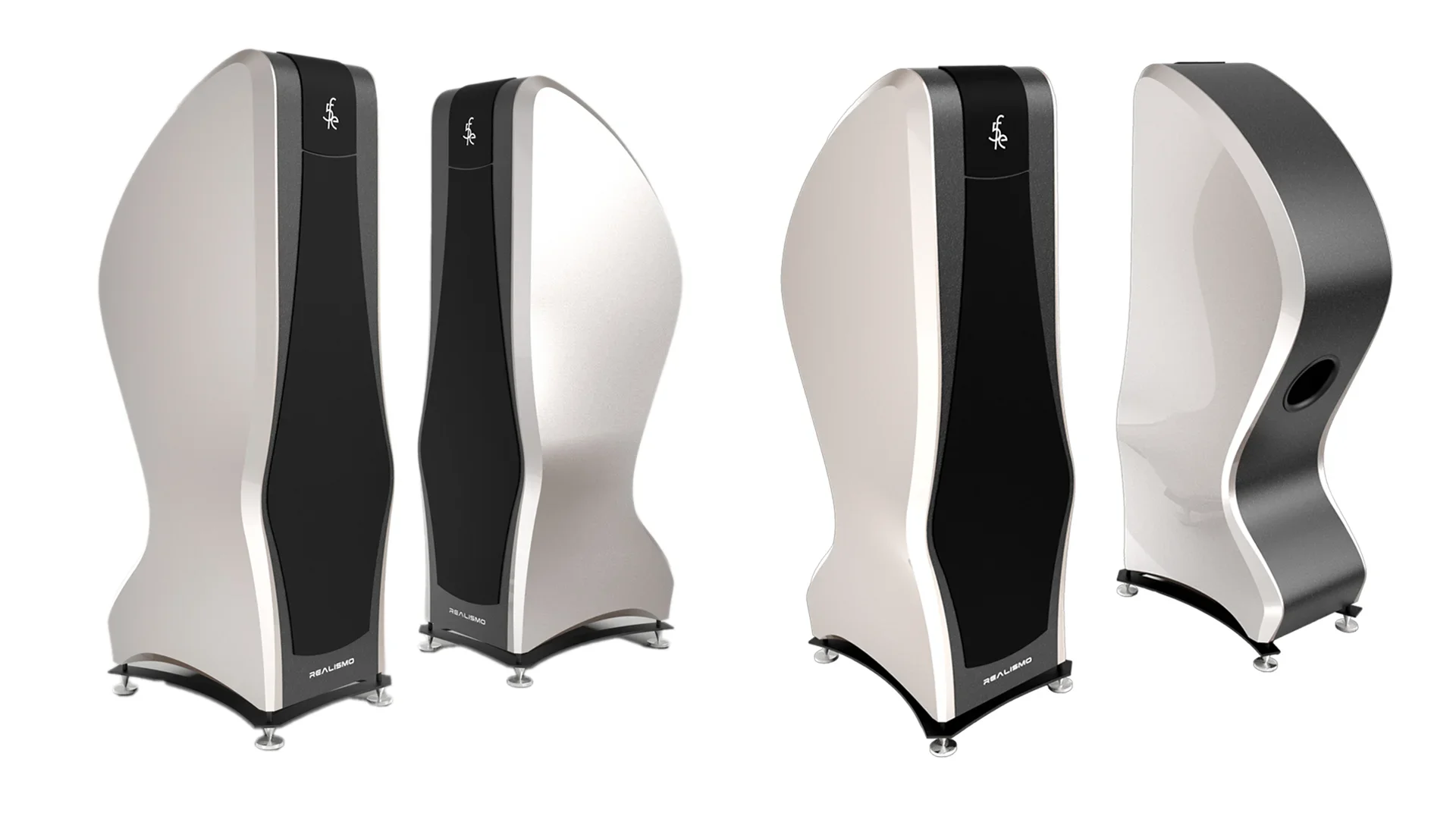
5Fe develops loudspeakers and amplification together as a matched stereo system. The Polish brand’s Realismo floorstanders and Trono hybrid power amplifier were designed as complementary products, with system matching considered from the outset. Realismo uses a three-way bass-reflex layout with a beryllium tweeter and paper-cone midrange and bass drivers. In a published interview, designer Zbigniew Latos describes Trono as a Class A tube/transistor design with a circlotron output stage. The sculpted cabinets and amplifier enclosure are also his work, giving the system a recognisable visual identity as well as a shared engineering direction.

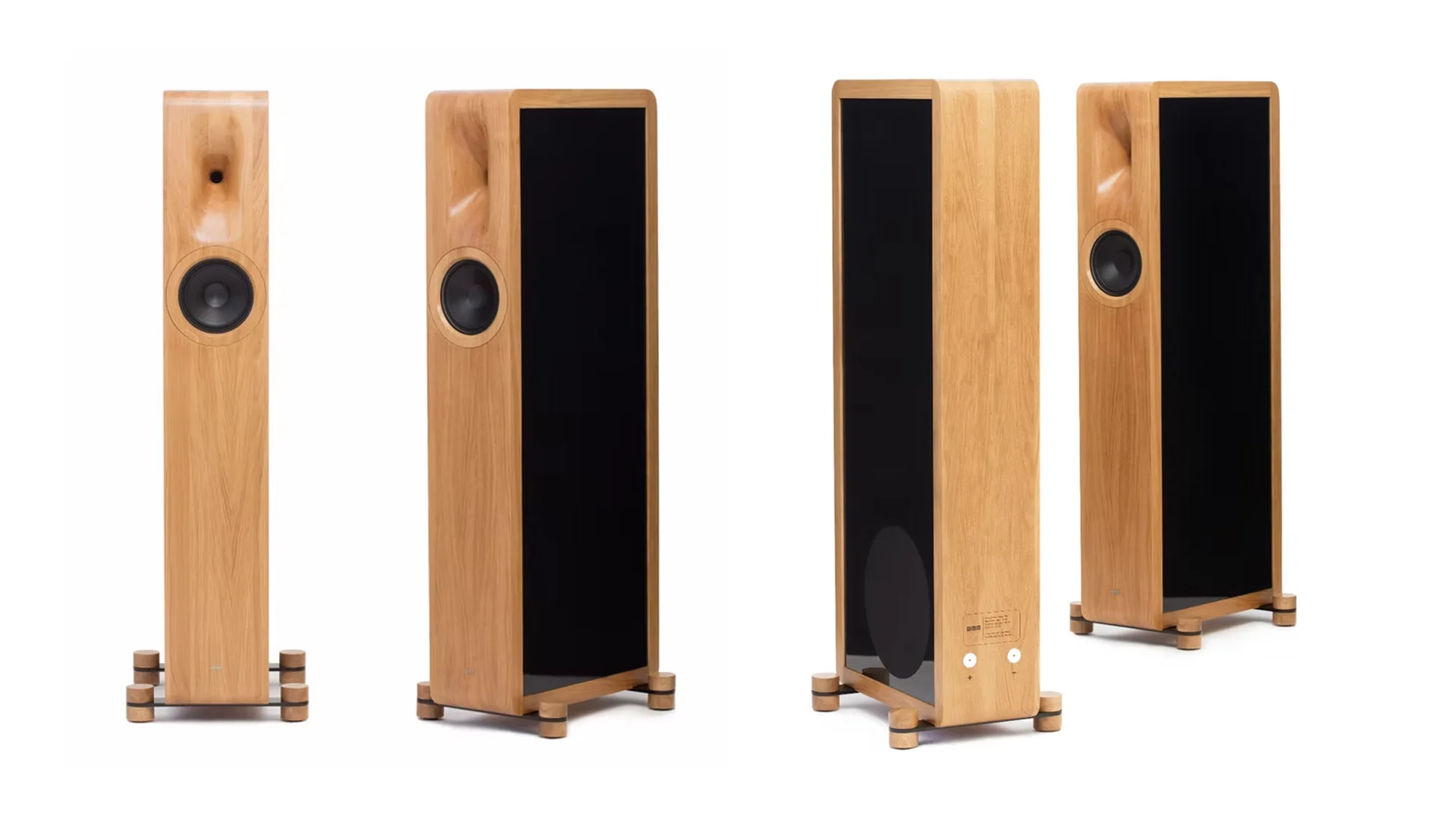
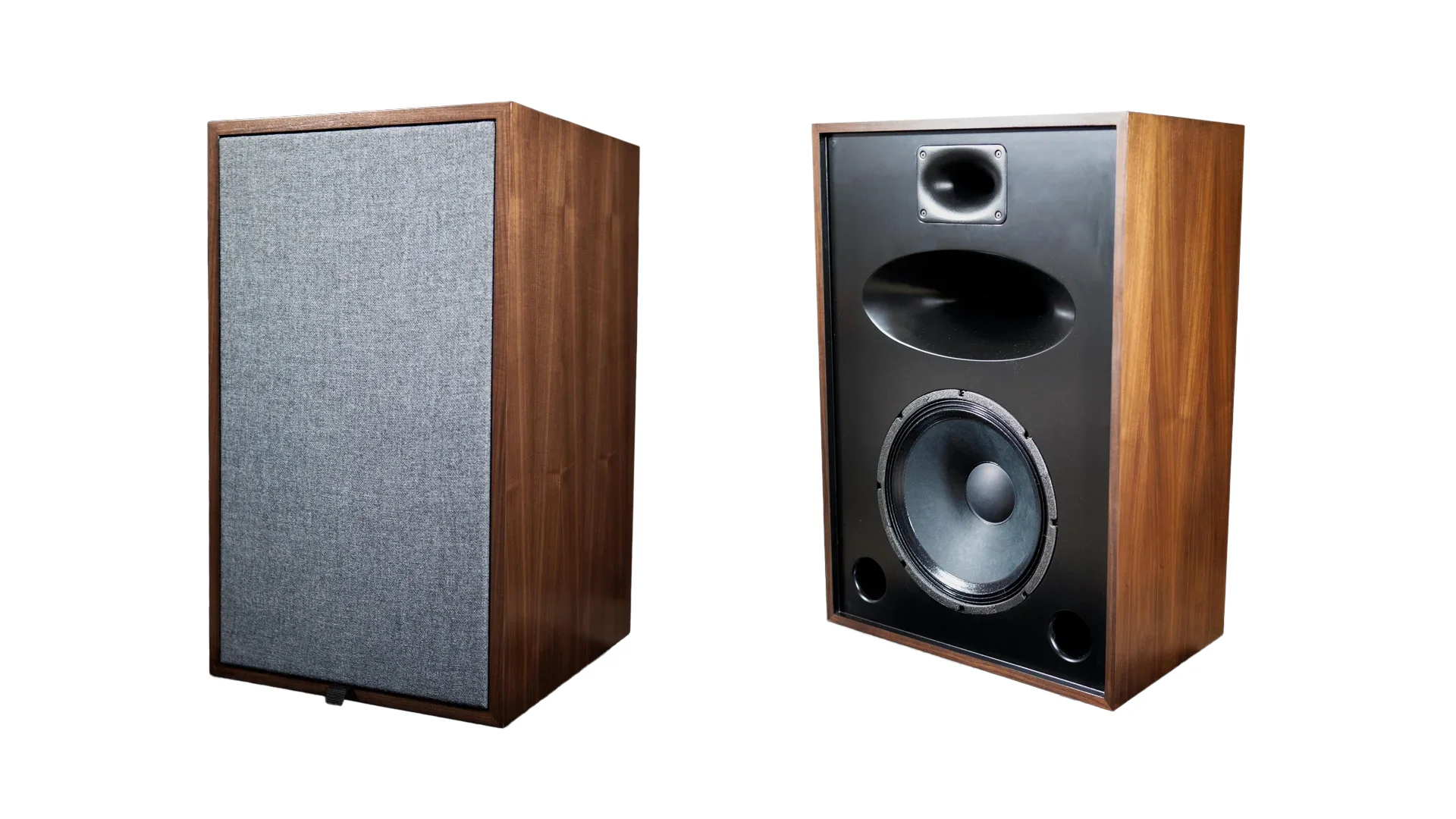
8MM Audiolab makes loudspeakers in Lithuania with substantial oak construction and an unusually sculpted cabinet profile. Its PIU three-way design combines a 12-inch woofer, a midrange driver and a compression driver loaded by a waveguide machined into solid oak. The cabinet uses a braced oak structure, thick front panels and six-layer damped sidewalls, making enclosure construction a defining part of the design. Alongside PIU, the company presents PIU mini and Linga loudspeakers and offers custom design work.

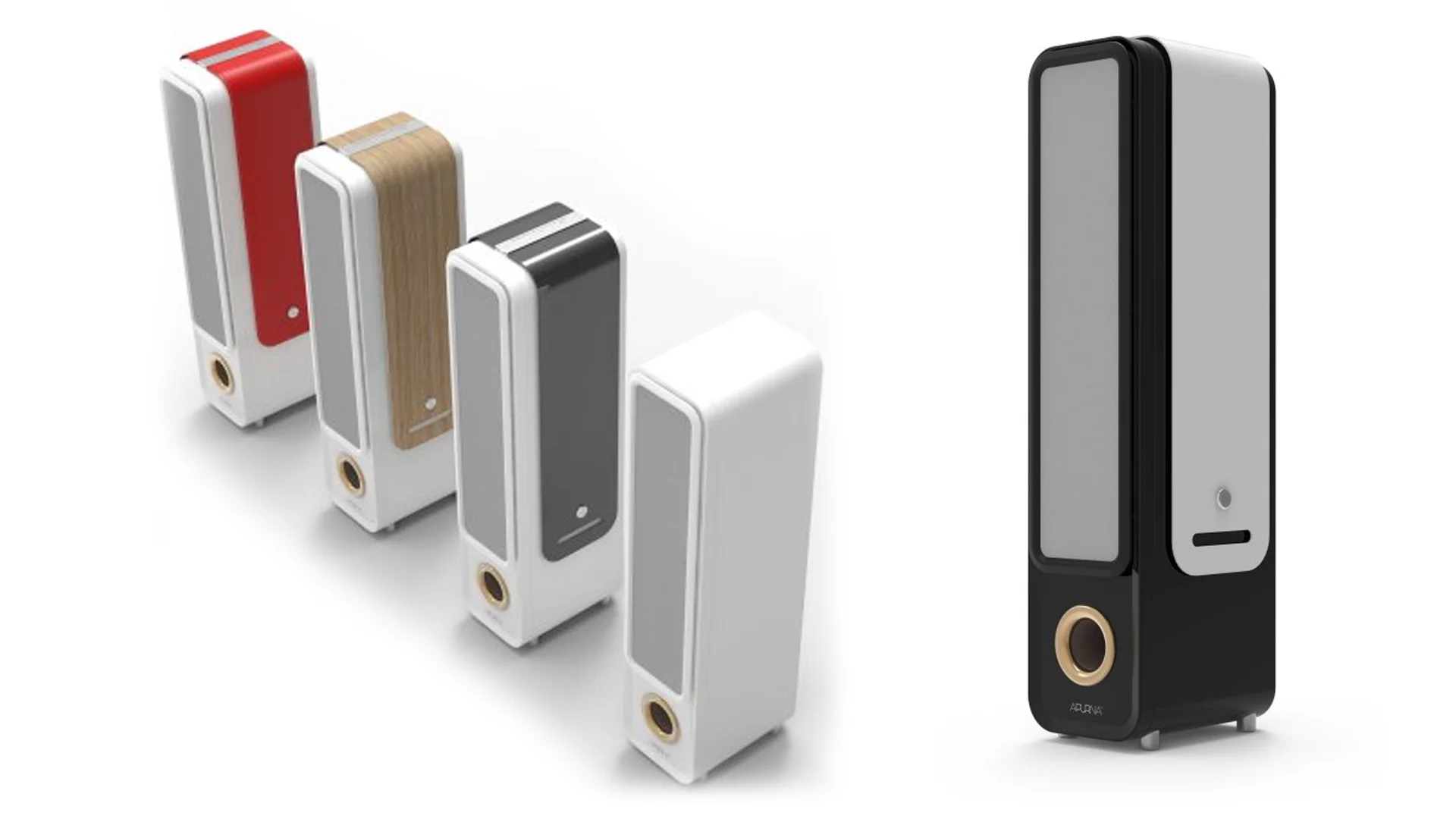
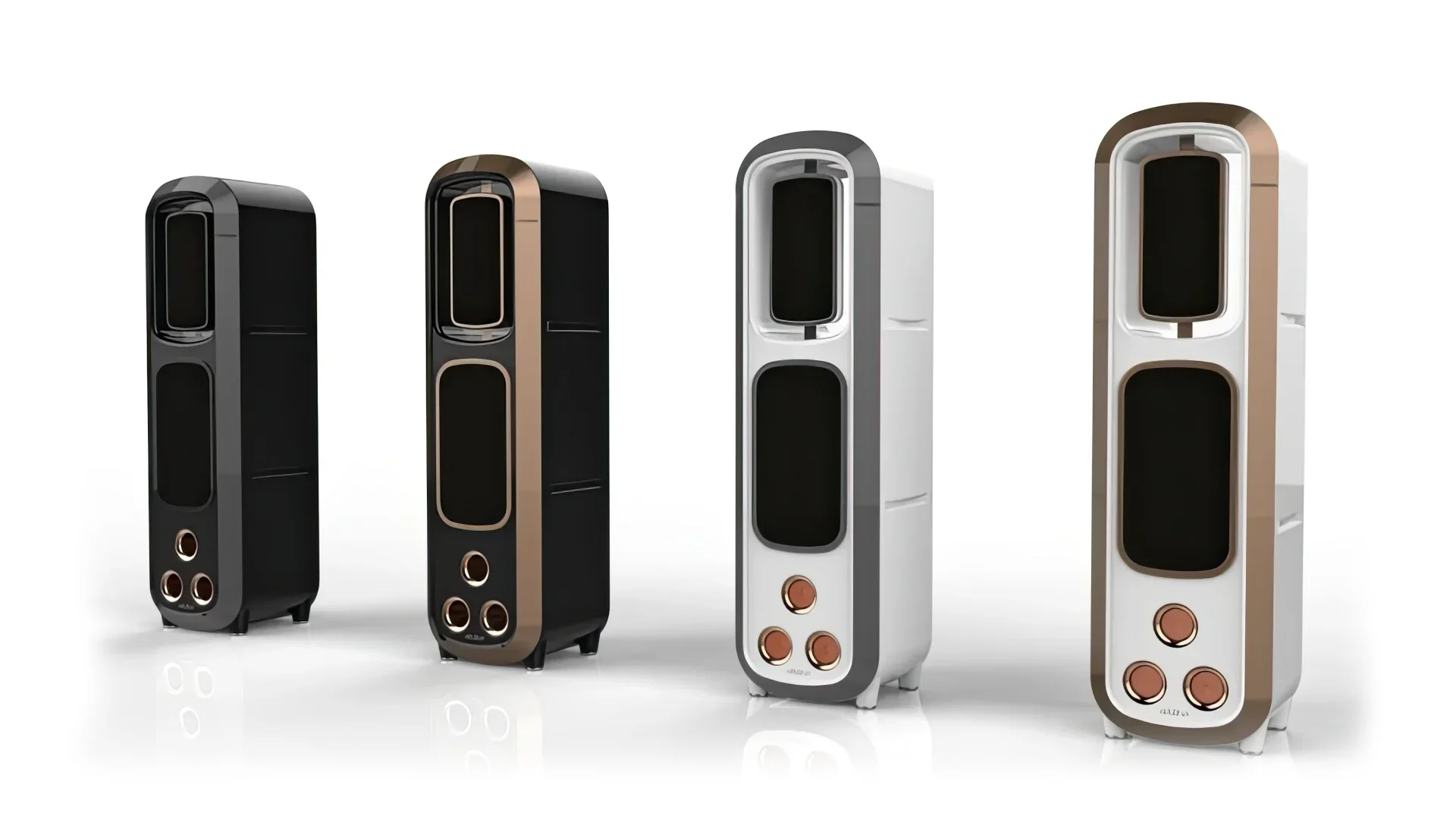
ABORA carries APURNA’s amplifier technology into simpler, more accessible designs with extensive finish options. The French brand offers the A400S power amplifier and A400Si integrated amplifier, whose front panels can be personalised with paint, wood, carbon or leather. Development of the new ABORA amplifiers began in 2021, extending the engineering work behind APURNA. The integrated version adds source selection, volume control and an RF remote, with a display that can be dimmed or switched off. ABORA also makes the ava three-way loudspeaker, using a composite enclosure derived from APURNA’s CARS construction and a copper bass-reflex port. Its appeal lies in the combination of shared APURNA engineering and equipment that can be visually tailored to a room.

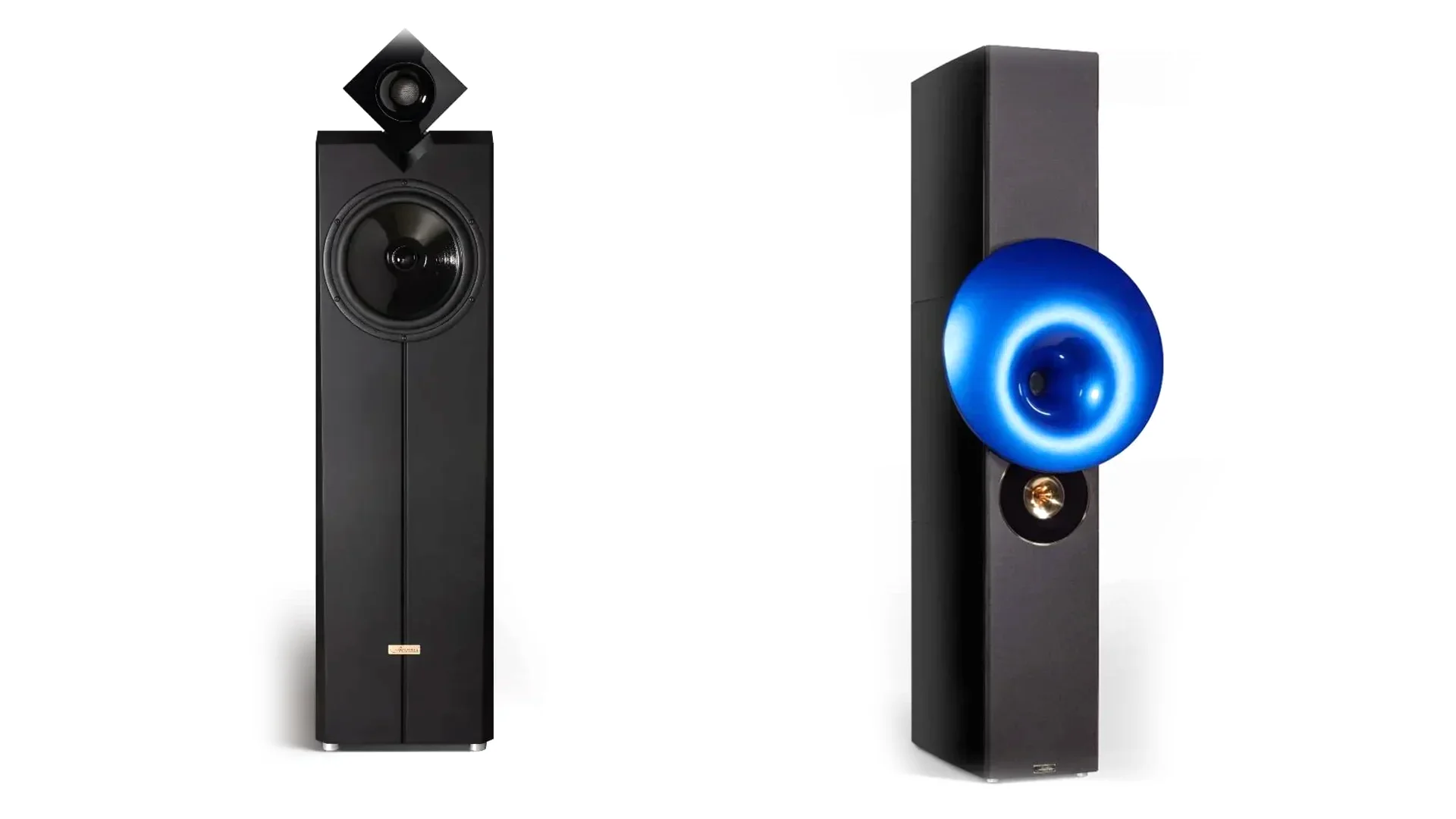
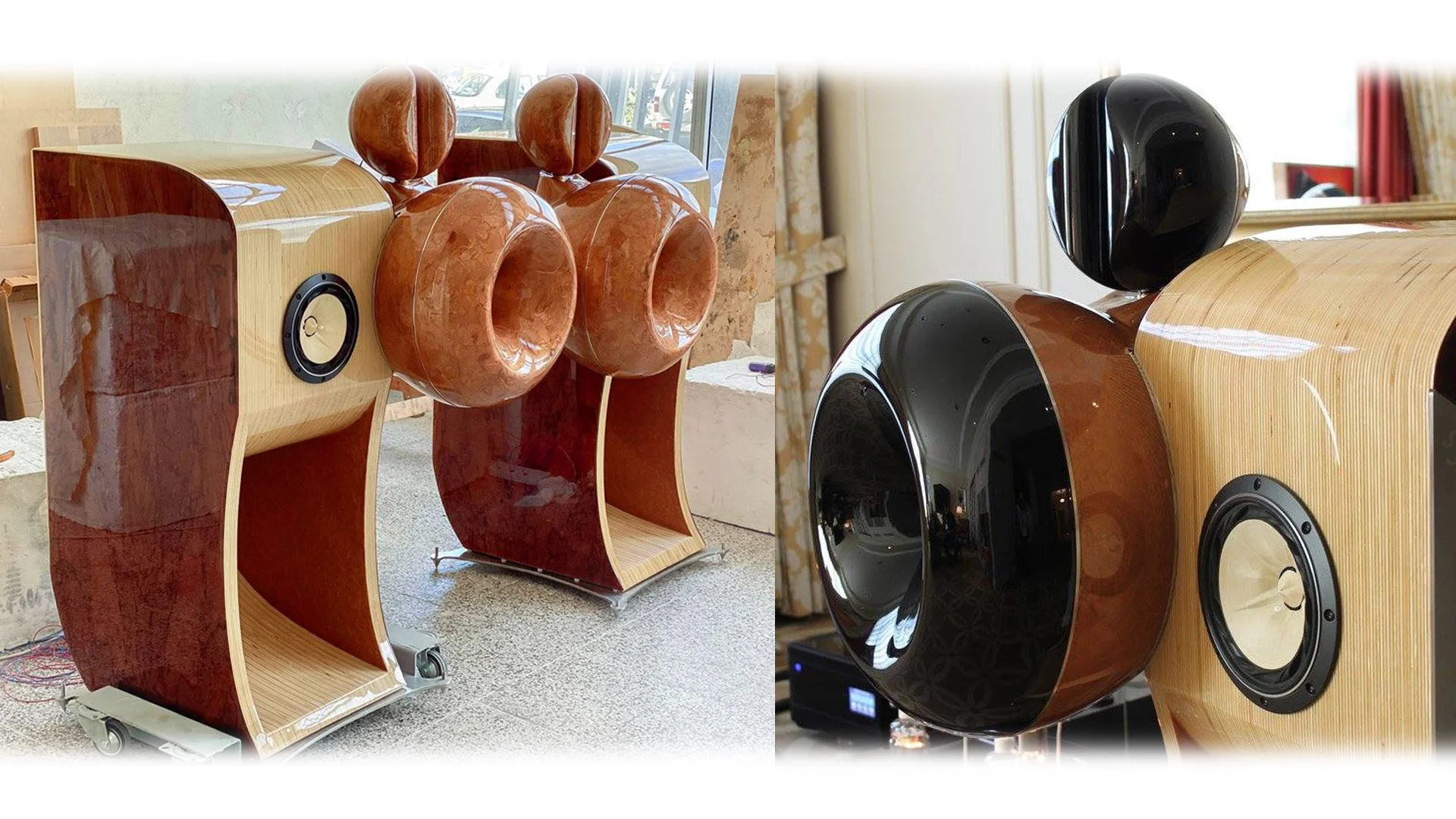
Acapella Audio Arts is a German loudspeaker maker distinguished by large spherical and hyperspherical horns and, in selected designs, an ion tweeter. This tweeter creates sound by exciting air with a plasma flame instead of moving a conventional diaphragm. Founders Alfred Rudolph and Hermann Winters built the company around these unconventional loudspeaker principles. Systems such as Atlas and Campanile combine that approach with horn loading and dedicated cone bass drivers, giving the brand a very different construction from a conventional box loudspeaker. Acapella also emphasises long ownership: its history describes upgrades for earlier Violon and Campanile models as those designs evolved. The range extends from smaller domestic speakers to large multi-part systems.

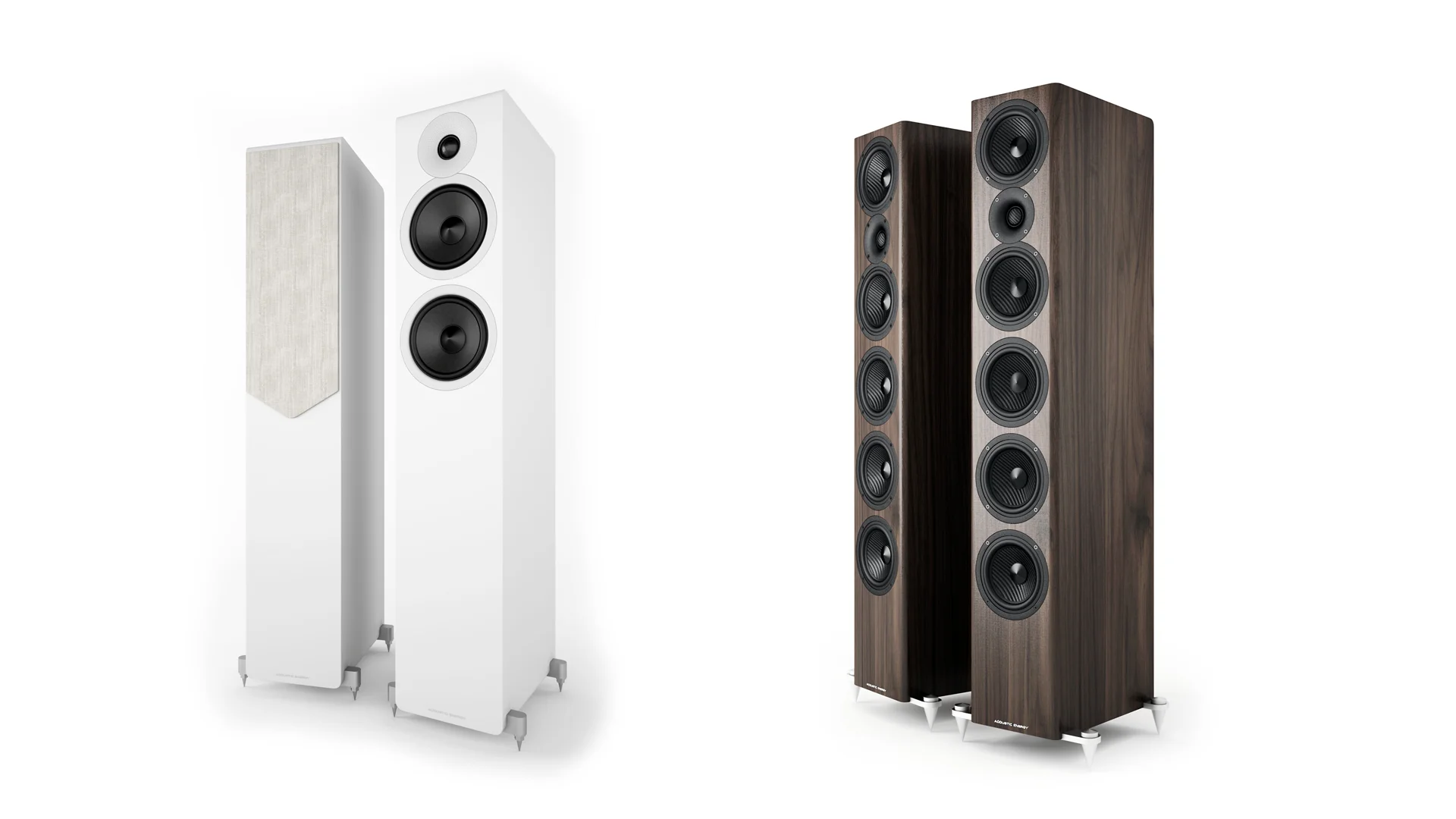
Acoustic Energy’s story began with the compact AE1, and its loudspeakers continue to explore how driver and cabinet design can deliver substantial performance from domestic-sized enclosures. The British company develops standmount and floorstanding speakers, with different materials chosen for different ranges. Corinium, for example, combines carbon-fibre midrange and bass cones with a soft-dome tweeter, an aluminium front baffle and a layered Resonance Suppression Composite cabinet. Founded in London in 1987, Acoustic Energy links its original compact-monitor heritage with larger home-listening designs.

Aequo Audio approaches loudspeaker design as a problem of fitting the speaker to the room, not simply choosing better drivers. Its Dutch development team, led by Ivo Sparidaens and supported by long-time collaborator Paul Rassin, created the Ensis with powered bass and a passive midrange/treble section. The analogue ARPEC controls let the listener adjust bass for room size and placement without DSP, while the EHDL acoustic lens shapes high-frequency dispersion. The first Ensis was completed in 2015, followed by Stilla in 2018. Later work includes Diluvite, a cast metal-matrix composite used for sculpted cabinets. The recurring theme is control over bass, dispersion and enclosure behaviour rather than a conventional rectangular speaker box.

Alare is the Italian loudspeaker project associated with Audia Flight, with the Remiga floorstanders built around transmission-line bass loading and carefully engineered cabinets. Chief designer Massimo Costa worked with Massimiliano Marzi and Andrea Costa on the acoustic, electrical and mechanical development. In the Remiga 2 Dia, carbon-fibre woofers feed a tapered transmission line, while a ceramic midrange driver and diamond tweeter handle the upper frequencies. The enclosure combines layered wood, damping material and an internal steel bracing structure. Alare’s use of simulation, laser measurements and accelerometers is directed at the behaviour of the complete loudspeaker, not just the selection of prestigious driver materials.

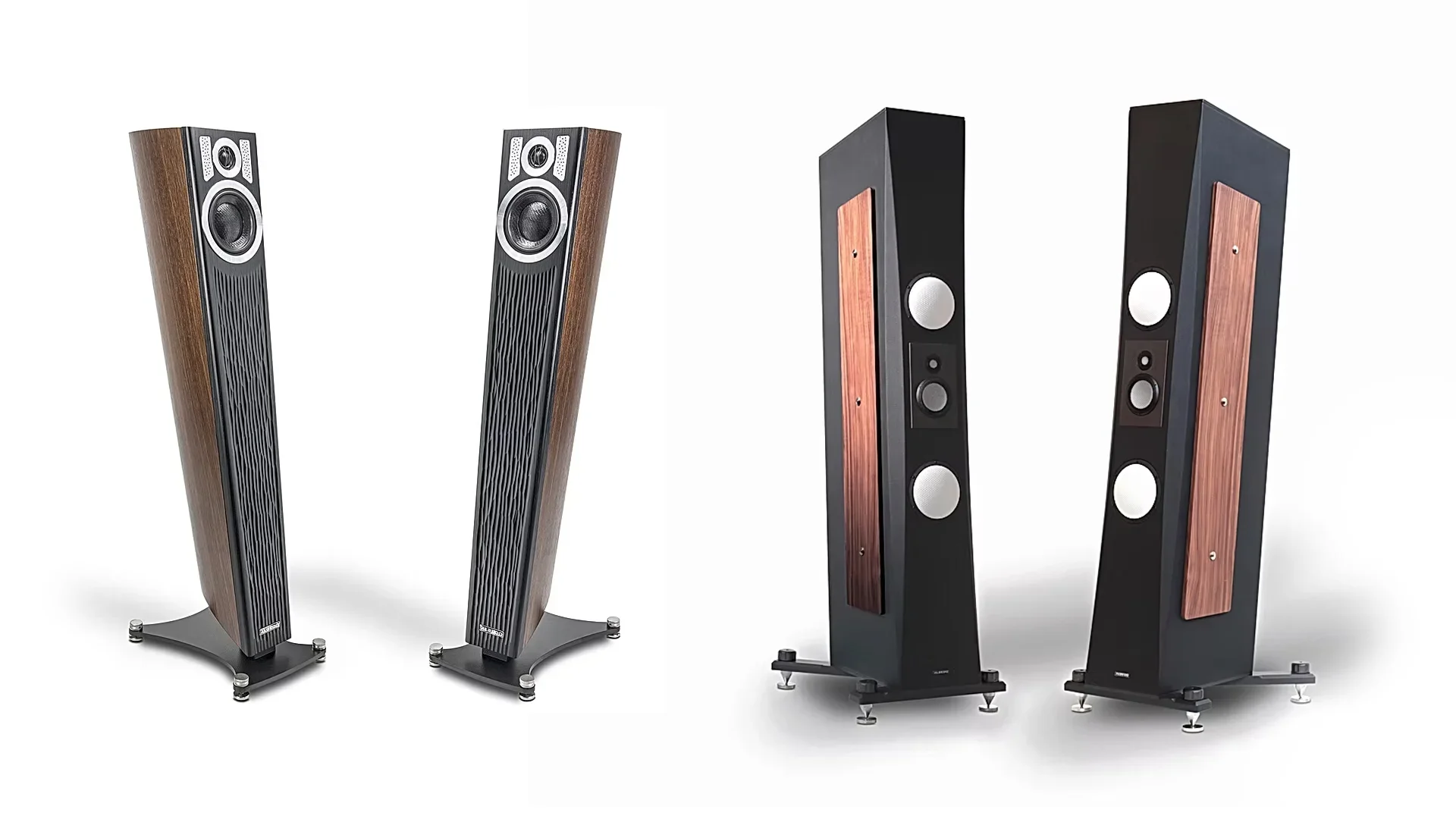
Albedo’s defining idea is Helmholine: a transmission-line loudspeaker enclosure with tuned Helmholtz resonators that filter unwanted energy inside the line. The Italian project grew from work by designer Massimo Costa and physicist Giuseppe Pucacco in the early 1990s, with a first design reaching the market through another company in 1995. Rather than treating the bass enclosure as a simple ported box, Albedo models and tunes the acoustic path behind the driver. Ceramic drivers and carefully controlled diffraction are other recurring elements of its engineering. Here, the brand’s DSD designation refers to a Diffraction Shaping Device, a physical acoustic treatment—not the digital audio format with the same initials.

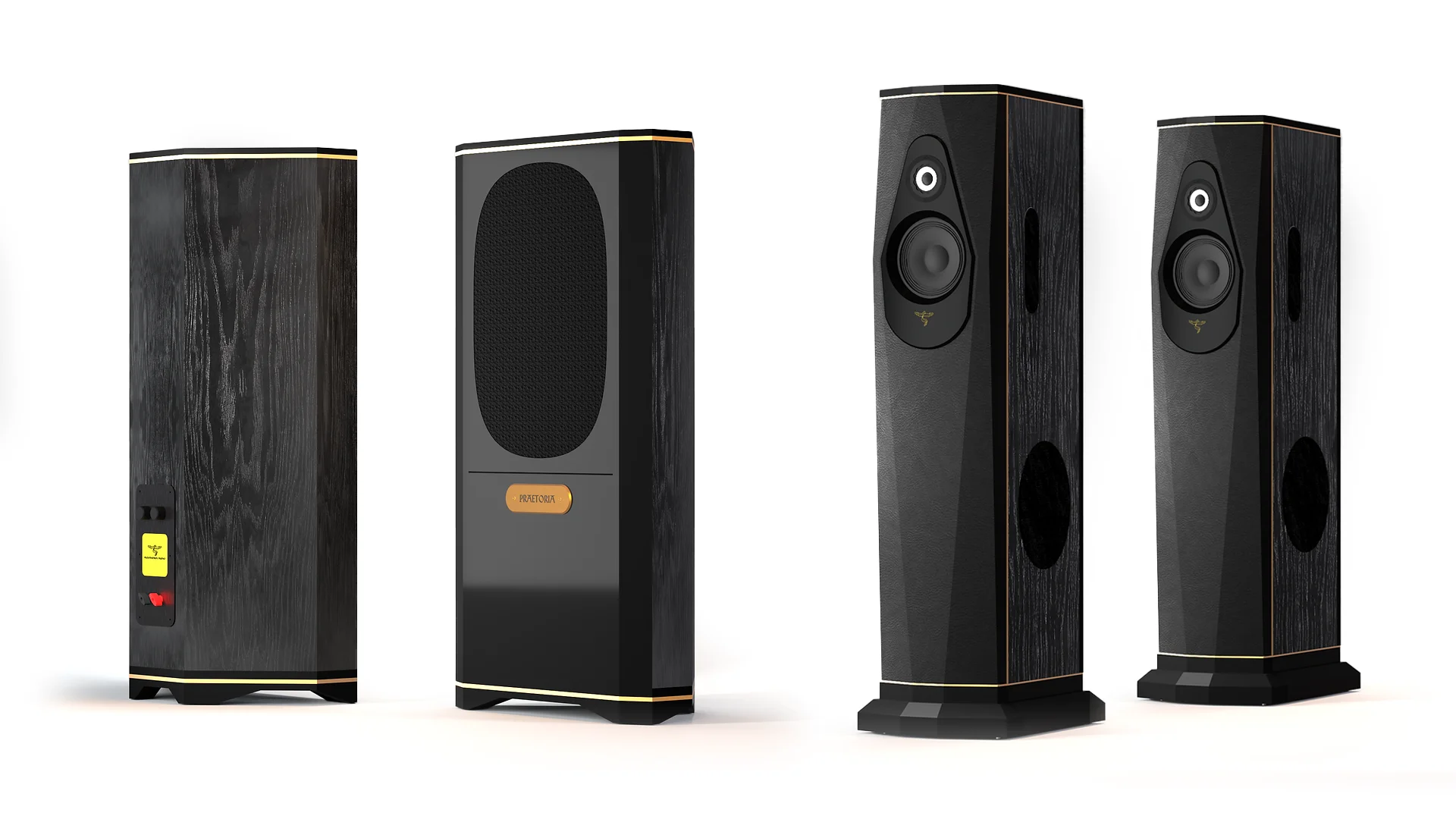
Alexandria Audio builds loudspeakers in Bali with a particular interest in high sensitivity and compatibility with low-powered amplifiers. Henry Kristanto and Kenneth Lin founded the Indonesian company in 2019, bringing together loudspeaker development and cabinet-making experience. Its designs are not confined to one format: The Monitor combines a paper/carbon mid/bass driver with a waveguide-loaded dome tweeter, while Praetoria uses a large paper woofer and horn-loaded compression driver. Those choices distinguish the individual models more usefully than a single claimed house sound. Alongside loudspeakers, Alexandria offers audio electronics and cables, but speaker design and locally made cabinetry provide the clearest introduction to the brand.

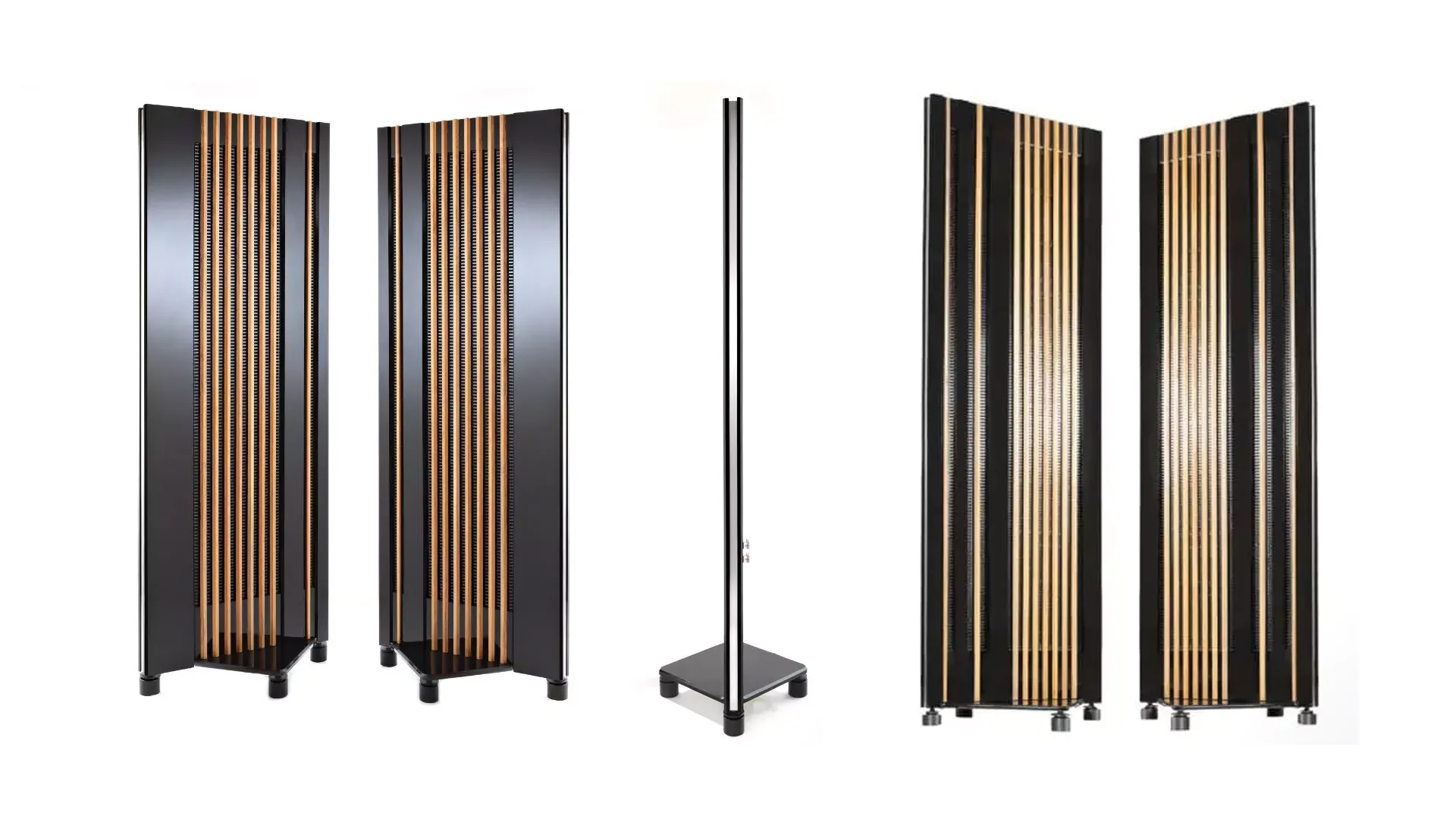
Alsyvox makes large dipole panel loudspeakers that dispense with the conventional box enclosure. Developed in Italy and assembled and tested in Spain, the designs combine planar bass sections with separate ribbon midrange and high-frequency elements, rather than asking one ribbon to reproduce the whole spectrum. Their open front-and-back radiation and broad panel surfaces make them physically and acoustically different from a cone speaker in a cabinet. The company’s published development history reaches back to ribbon work in the 1980s and the RES Audio Sky 1 in 1994, followed by later neodymium and planar-woofer developments. Alsyvox brings that accumulated work into a full-range panel system with a rigid supporting structure.

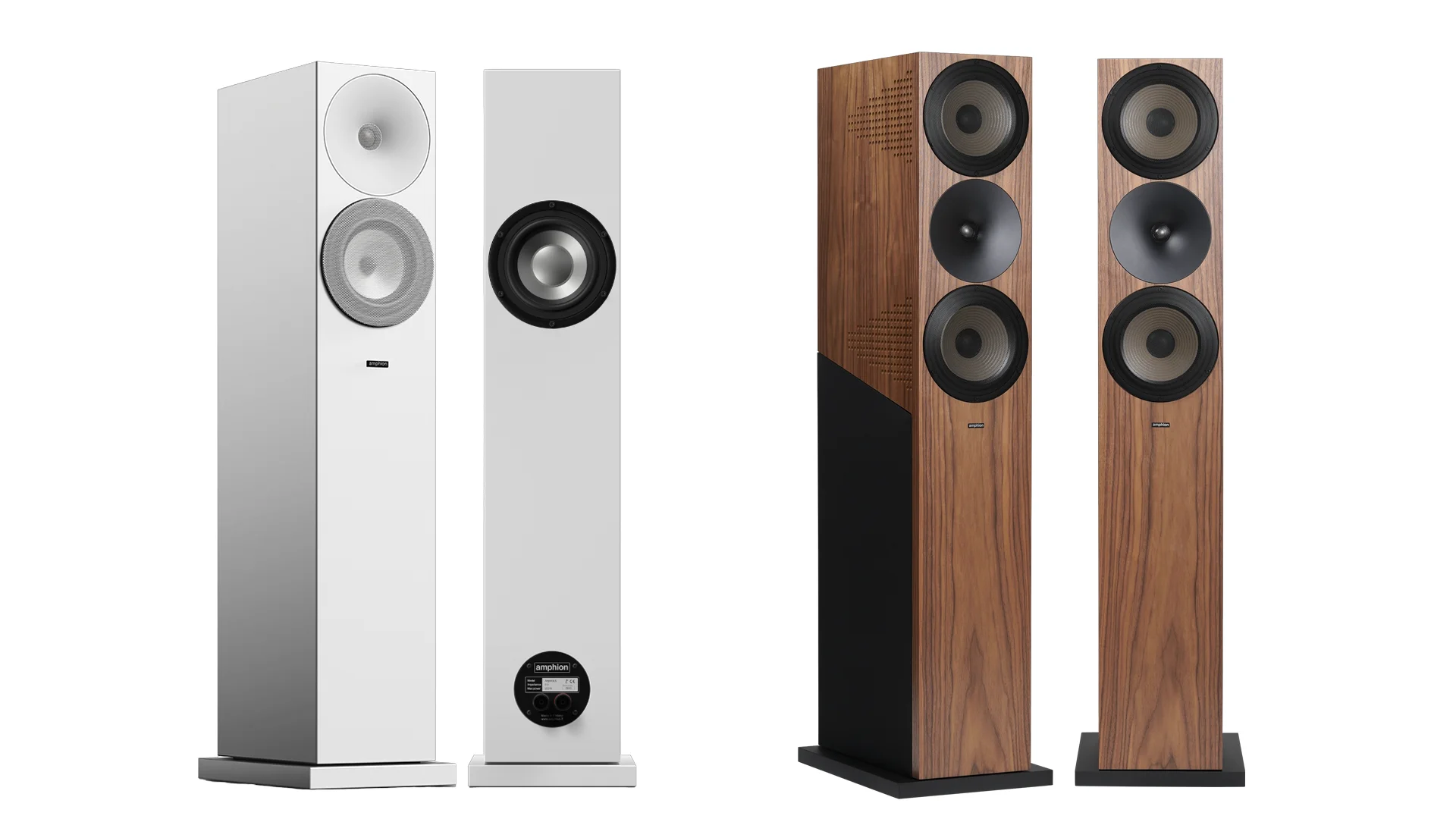
Amphion brings the same loudspeaker-design priorities to living rooms and recording studios: controlled dispersion, a clear acoustic image and a restrained Finnish appearance. Co-founded in 1998 by Anssi Hyvönen, the company builds its speakers in Finland. The deep waveguide around the tweeter helps shape how sound spreads through the room and integrates with the mid/bass driver. Home models span compact Helium and Argon speakers through the larger Krypton designs. Its move into professional monitoring developed into a separate range, where selected passive models use rear passive radiators instead of reflex ports. The studio catalogue also includes the active One25A, so Amphion is no longer exclusively a passive-monitor specialist.

Ampsandsound builds tube amplifiers for headphone listeners as well as owners of high-sensitivity loudspeakers. Justin Weber’s work with vintage Luxman, Dynaco and RCA equipment helped shape the American company’s approach: transformer-coupled circuits, accessible construction and hands-on assembly. Kenzie, Bigger Ben and Agartha represent different amplifier designs rather than one circuit repeated in different boxes. Weber develops the transformers in-house, and turret-board construction features prominently in the headphone range. The business also makes loudspeakers and stereo electronics, extending its interest in tube amplification beyond the desktop. Equipment is assembled by a small family operation and tested by Weber himself.

Analog Domain develops solid-state amplifiers around a specific engineering problem: keeping the output stage correctly biased as operating conditions change. Its proprietary DXDrive circuitry monitors idle current directly and adjusts bias dynamically, rather than relying only on a temperature sensor. Based in Germany and led by Angel Despotov, the company offers amplification under names including Isis, Artemis and Apollo, alongside digital conversion and loudspeakers. Large power supplies and substantial chassis are visible features, but the more distinctive work is inside the amplifier’s control circuitry. The range is aimed at systems needing dedicated stereo electronics, with different amplifier formats rather than a single all-in-one platform.

Angstrom makes loudspeakers for places where conventional speaker boxes do not fit: beside a television, within a wall or ceiling, and in architectural installations. The Canadian company’s history begins in 1978 as Angstrom Acoustic Laboratories and includes loudspeaker testing at the National Research Council in Ottawa. Its Suono Spatial Diffuser designs add side-firing tweeters to the forward-radiating drivers. In the Suono 600SD, two cabinets also accommodate the left, centre and right channels of a home-theatre system. This combination of acoustic layout and installation practicality is more representative of Angstrom than a generic focus on floorstanding hi-fi speakers. The wider range includes architectural and outdoor models.

Aperion Audio grew from a practical question: could people choose serious loudspeakers at home instead of relying entirely on a showroom audition? Win Jeanfreau’s search for a replacement music system in 1998 led to the American direct-to-consumer speaker business. Its early Intimus home-theatre system established a path that now includes Verus and Novus speakers, subwoofers and architectural models. The catalogue also has an unusual accessory category: add-on super tweeters for existing loudspeakers. Bookshelf, floorstanding and centre-channel designs let buyers assemble either a stereo pair or a coordinated surround system. Direct sales and the opportunity to audition at home remain part of the brand’s identity.

Apertura’s loudspeakers are shaped as much by their crossover design as by their curved cabinets. Founded by French designer Christian Yvon, the brand traces its first loudspeaker to 1983. Its proprietary DRIM filter uses a multi-slope approach to manage the transition between drivers. In models such as the Edena Evolution, each driver pair is measured and the crossover adjusted to match it, rather than treating every production unit as electrically identical. That model combines a ribbon tweeter with a woven-polypropylene mid/bass driver, housed in a laminated cabinet with non-parallel surfaces. The result is a recognisable engineering approach built around driver integration, individual matching and control of cabinet resonances.

Apurna treats the power amplifier as a bespoke object as well as an electronic component. The French project grew from a live performance of Carmina Burana in Lyon in March 2014, which inspired the ambition behind the brand. Its Apogée amplifiers use bipolar push-pull output stages operating in Class AB, supported by linear power supplies with toroidal transformers. The industrial design allows a choice of materials and finishes, so the enclosure can be tailored to its setting rather than offered only in a standard metal finish. Integrated control functions and radio-frequency remote operation are part of the concept. French manufacture and this combination of amplification with custom presentation define the brand.

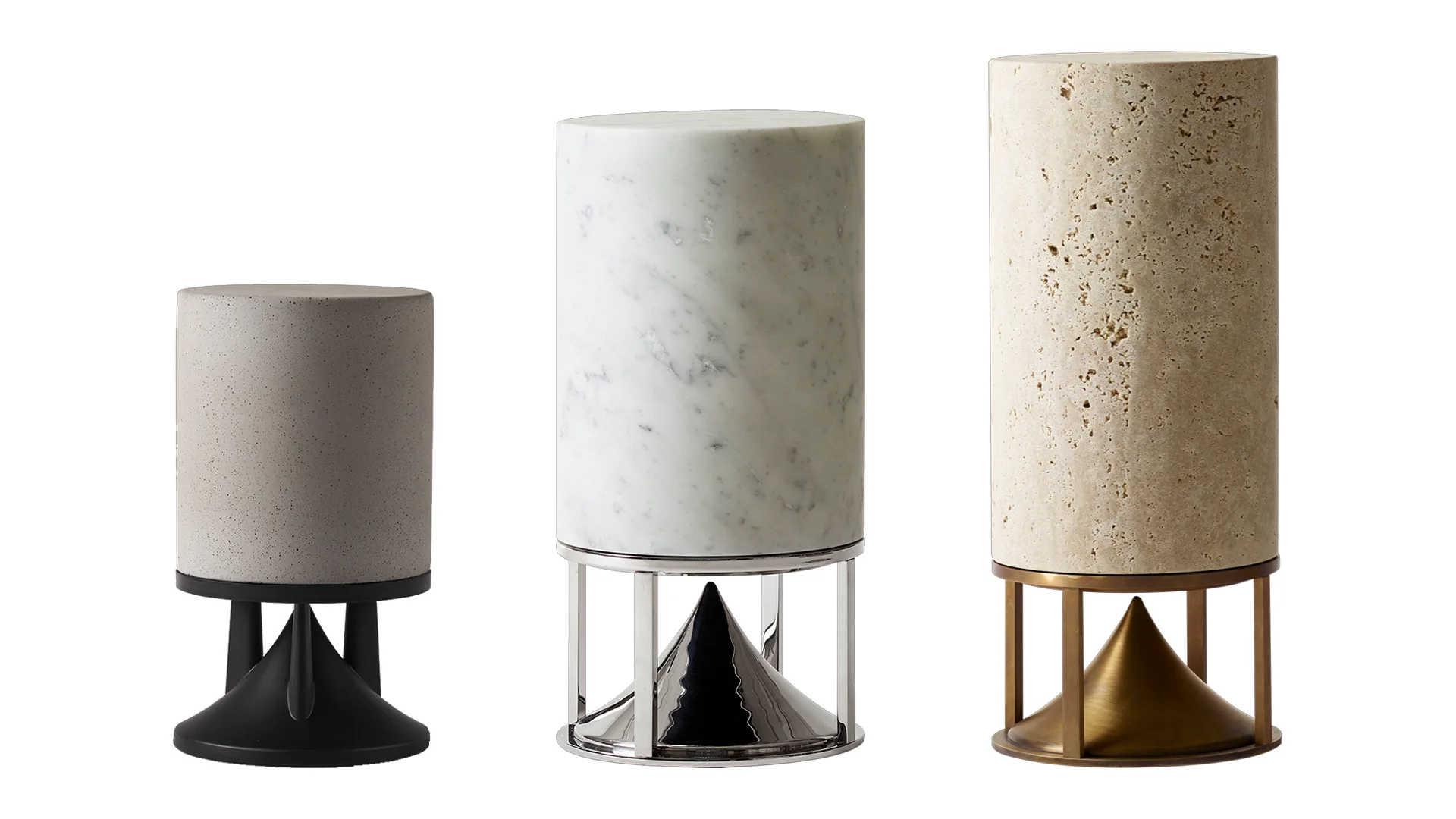
Architettura Sonora makes loudspeakers that function as architectural objects, using forms such as spheres, cylinders and cubes in stone, concrete and terracotta. Established in 2009 as a division of Italian driver manufacturer B&C Speakers, it joins loudspeaker engineering with material and spatial design. Its products are intended for interiors as well as gardens, terraces and other outdoor settings, with construction and placement chosen for the installation. The sculptural forms are not simply disguises for conventional boxes: the relationship between the driver, enclosure and surrounding space is part of the design. Bespoke finishes and installation-oriented models serve residential, hospitality and other architectural projects.

Aries Cerat builds audio electronics around large-scale tube circuits and custom transformers, with digital conversion receiving the same attention as amplification. Stavros Danos founded the company in Cyprus in 2010. Its range includes power amplifiers, preamplifiers and DACs, with different circuit approaches across the families. The Heléne DAC shows how those interests meet: parallel R-2R converter chips operate without oversampling, transformers perform current-to-voltage conversion, and a tube stage provides the analogue output. The company also develops its own Inverted Triode designs. Heléne is the smaller DAC in the range, rather than its flagship; much of its architecture draws on the larger Kassandra models.

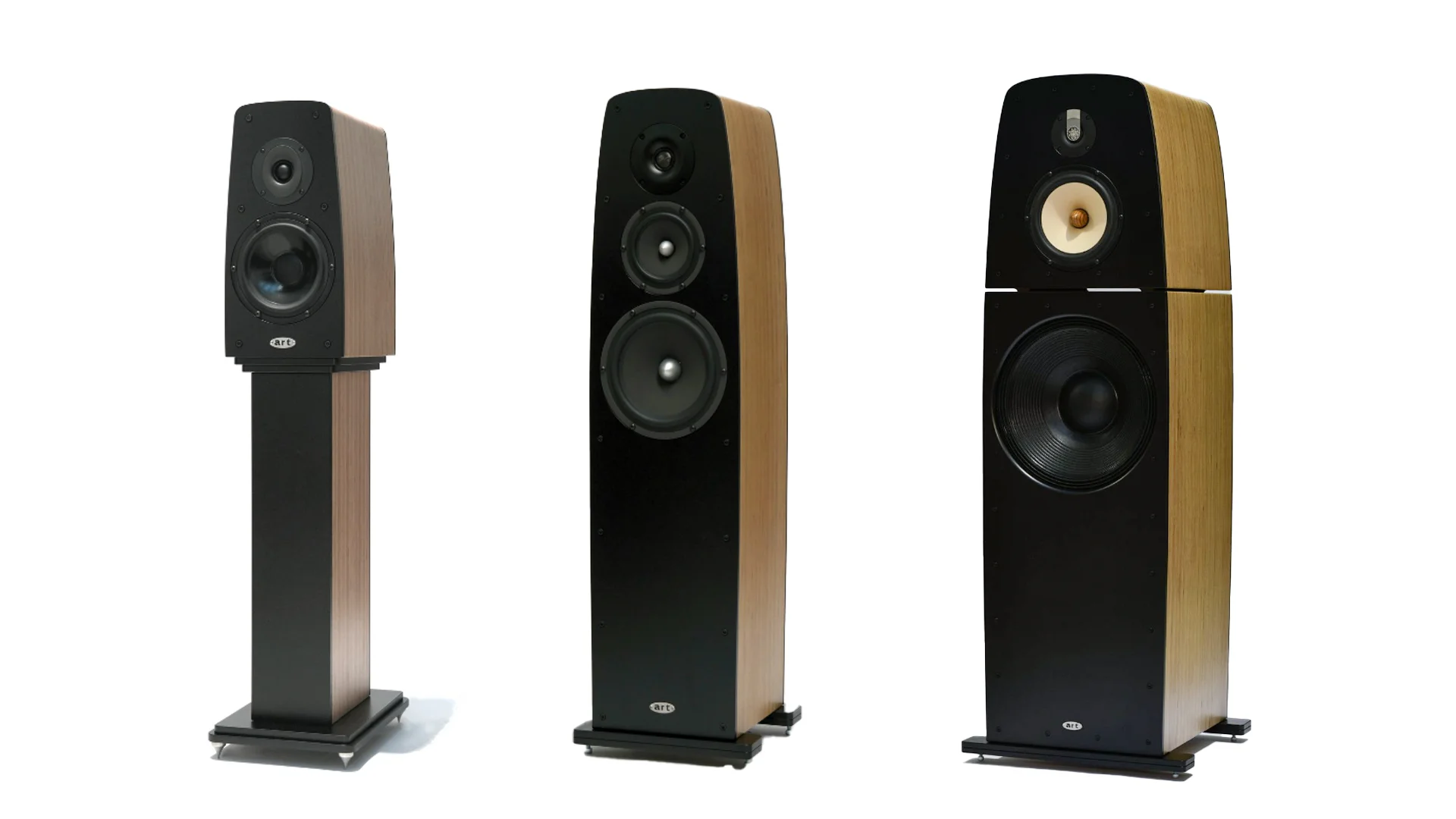
ART Loudspeakers designs and manufactures its speakers in Troon, Scotland, where cabinet construction is a substantial part of the engineering. Established in 1998, the business shares its home with Systemdek turntables, connecting two strands of Scottish hi-fi manufacture. Its Expression range illustrates the attention given to the enclosure: the Expression 8 uses a Richlite front panel and cabinet construction intended to control resonance and internal reflections. The catalogue has included Emotion and Impression designs as well as Expression models. ART develops the loudspeaker’s structure together with its driver arrangement, producing substantial domestic speakers with a distinctly furniture-like presence.

Artcoustic makes shallow loudspeakers whose appearance can be changed as readily as the artwork in a room. Kim Donvig and Patricia Ljungberg founded the Danish brand in 1998, combining an interest in pro-audio performance with Scandinavian interior design. On-wall models can be specified in RAL or NCS colours and fitted with interchangeable magnetic screens, including printed artwork. Behind that visual flexibility is a system-oriented range: SL speakers for domestic installations, Spitfire cinema models, soundbars, ceiling speakers and subwoofers. Different cabinet sizes and driver arrays let an installer build anything from a discreet stereo system to a dedicated cinema without abandoning the same visual language.

Ascend Acoustics sells loudspeakers directly to listeners, putting much of its development effort into measured acoustic behaviour and practical upgrade paths. David Fabrikant founded the Californian company in 1999. The catalogue spans Signature, Sierra and ELX speakers for stereo and home cinema, with compact monitors, centre channels and floorstanding designs. Recent revisions use Klippel Near Field Scanner measurements to refine the crossover and the speaker’s radiation pattern. In some cases, that work is also offered as an upgrade kit for existing owners: the Duo V2 kit, for example, updates the crossover and cabinet treatment of an earlier Duo. This links ongoing engineering development to products already in customers’ systems.

HFS Ad Rotator · default · slot 1
HFS Ad Rotator · default · slot 2
Add a missing AV-brand or update an existing one

Add a missing AV-brand or update an existing one

Any user can submit a Quick Submission Form to suggest a new AV-brand or suggest update details for an existing one. Brand owners or official representatives of brand can fill a Official Brand Submission Form to provide complete company information, ensuring maximum accuracy and visibility in our portal. All submissions are moderated before publication. 

For suggesting new AV-brands or suggesting updating existing one by users.

Complete official form for brand owners and representatives to provide complete company details to add a new one or update an existing one

Brand Categories:
  • SPEAKERS
    • Bookshelf Speakers — Compact loudspeakers designed for placement on a shelf or dedicated stands.
    • Floorstanding Speakers — Large, full-range loudspeakers that stand directly on the floor, designed for powerful and expansive sound.
    • In-wall Custom Install Speakers — Speakers designed to be installed flush into walls or ceilings for a discreet, "zero-footprint" audio solution.
    • On-Wall Speakers — Slim, low-profile speakers designed to be mounted directly on a wall, often to complement a flat-panel TV.
    • Studio Monitors — Speakers designed for professional audio production, offering a flat, accurate, and uncolored sound reproduction.
    • Planar Ribbon Electrostatic Speakers — Speakers using large, thin diaphragms (panels) instead of cones, prized for their transparent and detailed sound.
    • Horn Speakers — Highly efficient speakers that use a flared horn to amplify a driver, known for their dynamic, "live" sound.
    • Active Powered Speakers — Loudspeakers with built-in amplifiers, creating a simple all-in-one audio solution.
    • Wireless Portable Speakers — Compact, battery-powered speakers with Bluetooth for on-the-go music.
    • Outdoor Speakers — Durable, weather-resistant speakers engineered to provide high-quality audio in open-air spaces like patios and gardens.
    • Marine Extreme Speakers — Rugged, waterproof, and corrosion-resistant speakers built to withstand harsh marine environments on boats and yachts.
    • Commercial Speakers — Durable loudspeaker systems designed for background music and public address in business environments.
    • Invisible Speakers — Architectural speakers installed in a wall and plastered over, making them completely invisible.
    • Subwoofers Bass Speakers — Specialized speakers dedicated to reproducing only the lowest bass frequencies for impact and depth for all purposes
  • AMPLIFIERS
    • Integrated Amplifiers — An all-in-one component combining a preamplifier and a power amplifier in a single chassis.
    • PreAmplifiers — The control hub of a separates audio system, used for source selection and volume control.
    • Power Amplifiers — A component with the sole job of taking a line-level signal and amplifying it to drive loudspeakers.
    • Phono Preamps Phono Stages — A device that amplifies the weak signal from a turntable's cartridge and applies necessary RIAA equalization.
    • Tube Amplifiers — Amplifiers that use vacuum tubes (valves) instead of transistors, prized for their warm and rich sound character.
    • Multi-Zone Multi-Room Amplifiers — Amplifiers that power speakers in multiple different rooms or "zones" from a single, centralized unit.
    • Network Amplifiers — An integrated amplifier with built-in networking and streaming capabilities, creating a modern "just add speakers" system.
    • Desktop Headphone Amplifiers — Mains-powered amplifiers designed to drive high-quality headphones in a desktop or home audio system.
    • Portable Headphone Amplifiers Players — Compact, battery-powered devices (DAPs or amps) for delivering high-quality sound on the move.
  • DAC STREAMERS
    • DAC Desktop — Digital-to-Analog Converters designed to improve sound quality from a computer or other home digital source.
    • DAC Portable — Compact, battery-powered Digital-to-Analog Converters for improving audio from smartphones and laptops.
    • Music Streamers — Devices that connect to the internet to access and play music from online services like Tidal and Spotify.
    • Network Players — Source components focused on high-fidelity playback of digital audio files from a local network (NAS drive).
    • Music Servers HDD Storages — Dedicated devices for storing, managing, and playing a local digital music library with high fidelity.
    • CD Transport Media Players — High-precision disc players that read physical media (CDs, SACDs) and output a pure digital signal to an external DAC.
    • Compact All-in-One Systems — Self-contained audio systems that combine source, amplification, and often speakers into a single, compact unit.
    • Streaming Amplifier — An integrated amplifier with built-in streaming capabilities.
  • TURNTABLES VINYL
    • Turntables — Electromechanical devices that play vinyl records by rotating them at a stable speed.
    • Tonearms — The precision arm on a turntable that holds the cartridge, allowing the stylus to track the record groove.
    • Cartridges — The transducer on a turntable's tonearm that holds the stylus and converts groove vibrations into an electrical signal.
    • Vinyl Cleaning Machine — Specialized machines that use fluid and vacuum/ultrasonic action to deep-clean vinyl records.
    • Vinyl Accessories — Essential tools for setup and maintenance, like clamps, brushes, and alignment protractors.
  • HEADPHONES
    • In-Ear Earbuds — Ultra-portable listening devices, including True Wireless (TWS) models, designed for convenience and daily use.
    • In-Ear Monitors IEM — High-performance in-ear headphones that seal in the ear canal for superior sound isolation and detail.
    • On-Ear Headphones — Headphones with cushions that rest directly on the ears, offering a balance of portability and sound quality.
    • Over-Ear Headphones — Full-sized headphones with large earcups that completely encircle the ears for maximum comfort and immersion.
    • Wireless Headphones — Headphones that connect to source devices via Bluetooth, often featuring Active Noise Cancellation (ANC).
    • Planar Magnetic Ribbon Headphones — High-end headphones using a thin, flat diaphragm driven by magnets, known for their detailed and low-distortion sound.
    • Electrostatic Headphones — High-end headphones using a massless diaphragm in an electrostatic field, requiring a special energizer/amplifier.
  • HOME THEATER
    • AV Receivers Media Players — Central components of a home cinema, combining audio/video processing, amplification, and playback.
    • Home Theater Speakers — Matched sets of speakers (front, center, surround) designed to create an immersive cinematic soundfield.
    • Soundbars — A simple, all-in-one speaker bar that provides a significant audio upgrade over a television's built-in speakers.
    • Subwoofers — Specialized speakers dedicated to reproducing only the lowest bass frequencies for impact and depth for home theaters
    • Processors Amplifiers — High-end home cinema "separates" consisting of a surround sound processor and a multi-channel power amplifier.
    • Screens — High-quality projection surfaces designed to provide an optimal image for a home cinema projector.
    • Projectors — Video projectors optimized for home cinema use, focusing on color accuracy, contrast, and black levels.
  • CABLES ACCESSORIES
    • Speaker Cables — Cables that carry the amplified, high-level signal from an amplifier to passive loudspeakers.
    • Analog Cables — Cables (RCA, XLR) used to transmit analog audio signals between components like DACs and amplifiers.
    • Digital Cables — Cables (Coaxial, Optical, USB) that transmit digital audio data between components.
    • Phono Cables — Specially shielded cables designed to carry the delicate, low-level signal from a turntable to a phono preamp.
    • Headphone Cables — Aftermarket and replacement cables used to upgrade or customize high-quality headphones.
    • Connectors Terminals — The fundamental hardware (plugs, jacks, spades, etc.) used to terminate cables and connect equipment.
    • Power Cables — High-performance AC cords designed to deliver clean, noise-free power to audio components.
    • Power Supplies Conditioners — Devices that filter, stabilize, and protect the AC power supplied to an audio system for improved performance.
  • FURNITURE
    • Speaker Stands Mounts — Stands and mounts used to position speakers at the correct height and angle for optimal sound.
    • Furniture Racks — Purpose-built furniture designed to house audio/video components with a focus on stability, ventilation, and vibration control.
    • Isolation Footers Spikes Shelves — Specialized accessories (spikes, footers, platforms) designed to manage vibrations and isolate components.
    • Soundproof Solutions — Products designed to control room acoustics, including treatment (panels, diffusers) and sound-blocking materials.
  • PROFESSIONAL
    • Concert Speakers — Large-scale PA systems, including line arrays and stage monitors, for live music and public events.
    • Cinema Speakers — Specialized, high-output loudspeaker systems certified for use in large commercial movie theaters.
    • Concert Electronics — Robust electronics including mixing consoles, processors, and amplifiers for live sound reinforcement.
    • Cinema Electronics — Professional, DCI-compliant processors and amplifiers for use in commercial movie theaters.
    • Cinema Screens — Large-format, often acoustically transparent, projection screens built to professional cinema standards.
    • Cinema Projectors — Ultra-high-brightness, DCI-compliant projectors designed for continuous use in commercial movie theaters.
    • Professional Cables Accessories — Rugged, reliable cables and hardware (e.g., snake cables, Speakon connectors) for touring and professional installation.
  • DIY Components
    • Speaker drivers Tweeters — The individual transducers (woofers, mid-range, tweeters) that are the fundamental building blocks of a loudspeaker.
    • Coaxial Speaker Drivers — Speaker drivers where the tweeter is mounted in the center of the woofer, creating a single point source for sound.
    • DIY Speaker Kits — Complete packages including drivers, crossovers, and plans for enthusiasts to build their own loudspeakers.
    • Electron Vacuum Tubes — Glass valves used in tube amplifiers that provide amplification and can be replaced to tune the sound.
    • Electronic Components — Discrete parts (capacitors, resistors, transistors) used by manufacturers and DIYers to build audio circuits.
  • OTHERS
    • Line Stage — A type of preamplifier that exclusively handles line-level sources, without a built-in phono stage.
    • Time Alignment Device — A signal processor that corrects timing delays between drivers or speakers for improved sound coherence.
    • Smart Portable Speakers — Wireless portable speakers with integrated voice assistants (e.g., Alexa, Google Assistant) and smart home functionality.
    • DJ Turntables — Durable, high-torque direct-drive turntables with pitch control, built for performance and DJing applications.
    • Motor Drives — External motor units and power supplies for turntables, providing improved rotational stability and isolation.
    • Crossovers — Electronic circuits that split an audio signal into different frequency bands to route to the correct speaker driver.
    • Car Audio — Audio equipment, including speakers, amplifiers, and source units, specifically designed for use in vehicles.

Brand Categories:
  • Active Powered Speakers — Loudspeakers with built-in amplifiers, creating a simple all-in-one audio solution.
  • Analog Cables — Cables (RCA, XLR) used to transmit analog audio signals between components like DACs and amplifiers.
  • AV Receivers Media Players — Central components of a home cinema, combining audio/video processing, amplification, and playback.
  • Bookshelf Speakers — Compact loudspeakers designed for placement on a shelf or dedicated stands.
  • Car Audio — Audio equipment, including speakers, amplifiers, and source units, specifically designed for use in vehicles.
  • Cartridges — The transducer on a turntable's tonearm that holds the stylus and converts groove vibrations into an electrical signal.
  • CD Transport Media Players — High-precision disc players that read physical media (CDs, SACDs) and output a pure digital signal to an external DAC.
  • Cinema Electronics — Professional, DCI-compliant processors and amplifiers for use in commercial movie theaters.
  • Cinema Projectors — Ultra-high-brightness, DCI-compliant projectors designed for continuous use in commercial movie theaters.
  • Cinema Screens — Large-format, often acoustically transparent, projection screens built to professional cinema standards.
  • Cinema Speakers — Specialized, high-output loudspeaker systems certified for use in large commercial movie theaters.
  • Coaxial Speaker Drivers — Speaker drivers where the tweeter is mounted in the center of the woofer, creating a single point source for sound.
  • Commercial Speakers — Durable loudspeaker systems designed for background music and public address in business environments.
  • Compact All-in-One Systems — Self-contained audio systems that combine source, amplification, and often speakers into a single, compact unit.
  • Concert Electronics — Robust electronics including mixing consoles, processors, and amplifiers for live sound reinforcement.
  • Concert Speakers — Large-scale PA systems, including line arrays and stage monitors, for live music and public events.
  • Connectors Terminals — The fundamental hardware (plugs, jacks, spades, etc.) used to terminate cables and connect equipment.
  • Crossovers — Electronic circuits that split an audio signal into different frequency bands to route to the correct speaker driver.
  • DAC Desktop — Digital-to-Analog Converters designed to improve sound quality from a computer or other home digital source.
  • DAC Portable — Compact, battery-powered Digital-to-Analog Converters for improving audio from smartphones and laptops.
  • Desktop Headphone Amplifiers — Mains-powered amplifiers designed to drive high-quality headphones in a desktop or home audio system.
  • Digital Cables — Cables (Coaxial, Optical, USB) that transmit digital audio data between components.
  • DIY Speaker Kits — Complete packages including drivers, crossovers, and plans for enthusiasts to build their own loudspeakers.
  • DJ Turntables — Durable, high-torque direct-drive turntables with pitch control, built for performance and DJing applications.
  • Electron Vacuum Tubes — Glass valves used in tube amplifiers that provide amplification and can be replaced to tune the sound.
  • Electronic Components — Discrete parts (capacitors, resistors, transistors) used by manufacturers and DIYers to build audio circuits.
  • Electrostatic Headphones — High-end headphones using a massless diaphragm in an electrostatic field, requiring a special energizer/amplifier.
  • Floorstanding Speakers — Large, full-range loudspeakers that stand directly on the floor, designed for powerful and expansive sound.
  • Furniture Racks — Purpose-built furniture designed to house audio/video components with a focus on stability, ventilation, and vibration control.
  • Headphone Cables — Aftermarket and replacement cables used to upgrade or customize high-quality headphones.
  • Home Theater Speakers — Matched sets of speakers (front, center, surround) designed to create an immersive cinematic soundfield.
  • Horn Speakers — Highly efficient speakers that use a flared horn to amplify a driver, known for their dynamic, "live" sound.
  • In-Ear Earbuds — Ultra-portable listening devices, including True Wireless (TWS) models, designed for convenience and daily use.
  • In-Ear Monitors IEM — High-performance in-ear headphones that seal in the ear canal for superior sound isolation and detail.
  • In-wall Custom Install Speakers — Speakers designed to be installed flush into walls or ceilings for a discreet, "zero-footprint" audio solution.
  • Integrated Amplifiers — An all-in-one component combining a preamplifier and a power amplifier in a single chassis.
  • Invisible Speakers — Architectural speakers installed in a wall and plastered over, making them completely invisible.
  • Isolation Footers Spikes Shelves — Specialized accessories (spikes, footers, platforms) designed to manage vibrations and isolate components.
  • Line Stage — A type of preamplifier that exclusively handles line-level sources, without a built-in phono stage.
  • Marine Extreme Speakers — Rugged, waterproof, and corrosion-resistant speakers built to withstand harsh marine environments on boats and yachts.
  • Motor Drives — External motor units and power supplies for turntables, providing improved rotational stability and isolation.
  • Multi-Zone Multi-Room Amplifiers — Amplifiers that power speakers in multiple different rooms or "zones" from a single, centralized unit.
  • Music Servers HDD Storages — Dedicated devices for storing, managing, and playing a local digital music library with high fidelity.
  • Music Streamers — Devices that connect to the internet to access and play music from online services like Tidal and Spotify.
  • Network Amplifiers — An integrated amplifier with built-in networking and streaming capabilities, creating a modern "just add speakers" system.
  • Network Players — Source components focused on high-fidelity playback of digital audio files from a local network (NAS drive).
  • On-Ear Headphones — Headphones with cushions that rest directly on the ears, offering a balance of portability and sound quality.
  • On-Wall Speakers — Slim, low-profile speakers designed to be mounted directly on a wall, often to complement a flat-panel TV.
  • Outdoor Speakers — Durable, weather-resistant speakers engineered to provide high-quality audio in open-air spaces like patios and gardens.
  • Over-Ear Headphones — Full-sized headphones with large earcups that completely encircle the ears for maximum comfort and immersion.
  • Phono Cables — Specially shielded cables designed to carry the delicate, low-level signal from a turntable to a phono preamp.
  • Phono Preamps Phono Stages — A device that amplifies the weak signal from a turntable's cartridge and applies necessary RIAA equalization.
  • Planar Magnetic Ribbon Headphones — High-end headphones using a thin, flat diaphragm driven by magnets, known for their detailed and low-distortion sound.
  • Planar Ribbon Electrostatic Speakers — Speakers using large, thin diaphragms (panels) instead of cones, prized for their transparent and detailed sound.
  • Portable Headphone Amplifiers Players — Compact, battery-powered devices (DAPs or amps) for delivering high-quality sound on the move.
  • Power Amplifiers — A component with the sole job of taking a line-level signal and amplifying it to drive loudspeakers.
  • Power Cables — High-performance AC cords designed to deliver clean, noise-free power to audio components.
  • Power Supplies Conditioners — Devices that filter, stabilize, and protect the AC power supplied to an audio system for improved performance.
  • PreAmplifiers — The control hub of a separates audio system, used for source selection and volume control.
  • Processors Amplifiers — High-end home cinema "separates" consisting of a surround sound processor and a multi-channel power amplifier.
  • Professional Cables Accessories — Rugged, reliable cables and hardware (e.g., snake cables, Speakon connectors) for touring and professional installation.
  • Projectors — Video projectors optimized for home cinema use, focusing on color accuracy, contrast, and black levels.
  • Screens — High-quality projection surfaces designed to provide an optimal image for a home cinema projector.
  • Smart Portable Speakers — Wireless portable speakers with integrated voice assistants (e.g., Alexa, Google Assistant) and smart home functionality.
  • Soundbars — A simple, all-in-one speaker bar that provides a significant audio upgrade over a television's built-in speakers.
  • Soundproof Solutions — Products designed to control room acoustics, including treatment (panels, diffusers) and sound-blocking materials.
  • Speaker Cables — Cables that carry the amplified, high-level signal from an amplifier to passive loudspeakers.
  • Speaker drivers Tweeters — The individual transducers (woofers, mid-range, tweeters) that are the fundamental building blocks of a loudspeaker.
  • Speaker Stands Mounts — Stands and mounts used to position speakers at the correct height and angle for optimal sound.
  • Streaming Amplifier — An integrated amplifier with built-in streaming capabilities.
  • Studio Monitors — Speakers designed for professional audio production, offering a flat, accurate, and uncolored sound reproduction.
  • Subwoofers — Specialized speakers dedicated to reproducing only the lowest bass frequencies for impact and depth for home theaters
  • Subwoofers Bass Speakers — Specialized speakers dedicated to reproducing only the lowest bass frequencies for impact and depth for all purposes
  • Time Alignment Device — A signal processor that corrects timing delays between drivers or speakers for improved sound coherence.
  • Tonearms — The precision arm on a turntable that holds the cartridge, allowing the stylus to track the record groove.
  • Tube Amplifiers — Amplifiers that use vacuum tubes (valves) instead of transistors, prized for their warm and rich sound character.
  • Turntables — Electromechanical devices that play vinyl records by rotating them at a stable speed.
  • Vinyl Accessories — Essential tools for setup and maintenance, like clamps, brushes, and alignment protractors.
  • Vinyl Cleaning Machine — Specialized machines that use fluid and vacuum/ultrasonic action to deep-clean vinyl records.
  • Wireless Headphones — Headphones that connect to source devices via Bluetooth, often featuring Active Noise Cancellation (ANC).
  • Wireless Portable Speakers — Compact, battery-powered speakers with Bluetooth for on-the-go music.

Sales Channels:
  • Dealer & Distributor Network — The traditional sales model where products are sold through a network of authorized, independent retail stores and custom installers. This is the primary channel for most specialized Hi-Fi brands.
  • Direct-to-Consumer (DTC) — The brand sells its products directly to end-users through its own official website, bypassing traditional retail channels. A rapidly growing model in the industry.
  • Custom Installation (CI) Channel — Products are sold primarily through professional firms that design and install integrated smart home and audio-visual systems. This channel is crucial for architectural and high-end integrated solutions.
  • Mass Market Retail — Products are available in large, non-specialized consumer electronics chain stores. This typically applies to more mainstream product lines from larger brands.
  • Brand-Owned Stores / Showrooms — The brand operates its own physical, flagship retail stores or dedicated showrooms to offer a direct and immersive brand experience. This is the least common model, typically used by top-tier brands.

For companies: For any questions about listings & partnership opportunities, please contact us at contact@hifiselector.com

Have a suggestion or found a flaw? Help us improve​

Have a suggestion or found a flaw?