
Floorstanding Speakers
This page provides a wide-ranging collection of floorstanding speaker manufacturers. We have compiled a vast list of brands to serve as a central resource for discovering companies that produce tower speakers. For every manufacturer listed, this database provides key information such as the country of origin, founding details, and a direct link to the floorstanding speaker products on their official site. This resource is intended to be a practical and comprehensive reference for the global market of tower speakers.
Hi-Fi brands in the category
Summary information and image
Direct links to official websites
Bowers & Wilkins

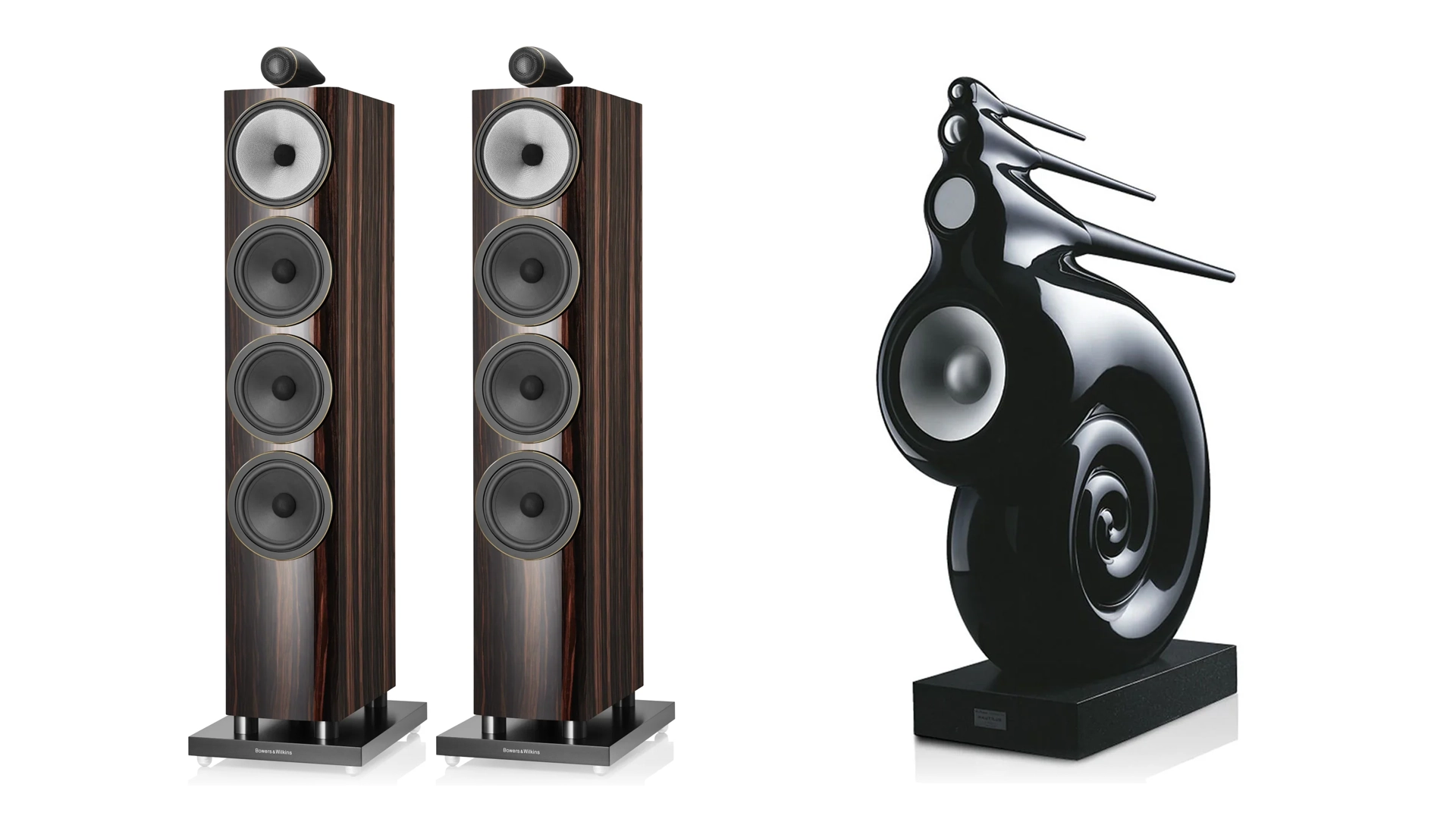
Bowers & Wilkins develops loudspeakers from the driver, enclosure and measurement system outward rather than assembling standard parts into a cabinet. John Bowers established the speaker company in Worthing in 1966 after operating an electronics shop with Roy Wilkins. The P1 funded early measurement equipment, and the later 801 became an influential studio monitor adopted by Abbey Road. Matrix bracing, tapered Nautilus tubes, diamond-dome tweeters, Continuum midrange cones, Aerofoil bass cones and Biomimetic Suspension mark successive stages of its research. The 800 Series Diamond D5 is the current flagship family, with 700 and 600 Series models covering more accessible stereo and home-cinema systems. Bowers & Wilkins also makes headphones, wireless speakers and soundbars. The brand is now part of Sound United within Harman, while its high-end loudspeaker development and 800 Series production remain centred in Worthing.
Brodmann
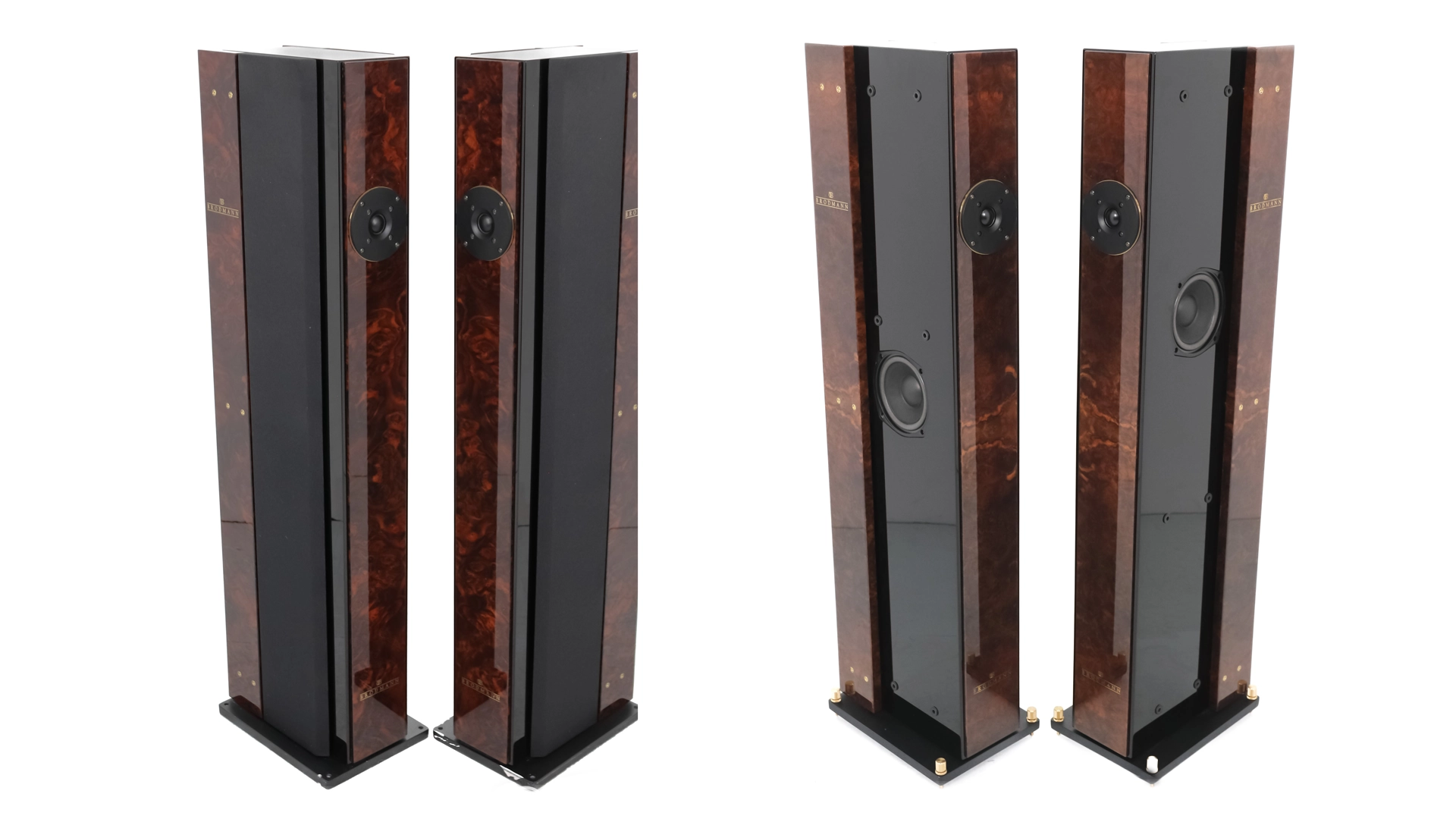
Brodmann Acoustics deliberately lets the loudspeaker enclosure radiate, applying ideas closer to a piano soundboard than to a heavily damped box. The modern Austrian loudspeaker company emerged in 2008 after Yamaha acquired Bösendorfer and its earlier Hans Deutsch-designed speaker programme ended. Deutsch continued the underlying work with Brodmann. His Acoustic Active Principle couples side-mounted bass and midrange drivers to controlled cabinet panels, while the Horn Resonator uses a narrow opening to reinforce low-frequency propagation. Front tweeters and carefully arranged reflecting surfaces complete a broad radiation pattern. Festival, Vienna Classic and Joseph Brodmann series scale the concept from relatively compact floorstanders to multi-module reference systems. The name draws on Vienna’s piano-making heritage, but the relevant audio lineage is the continuation of Deutsch’s Bösendorfer loudspeaker engineering, not a claim that the present speaker company dates from Joseph Brodmann’s eighteenth-century workshop.
Burmester

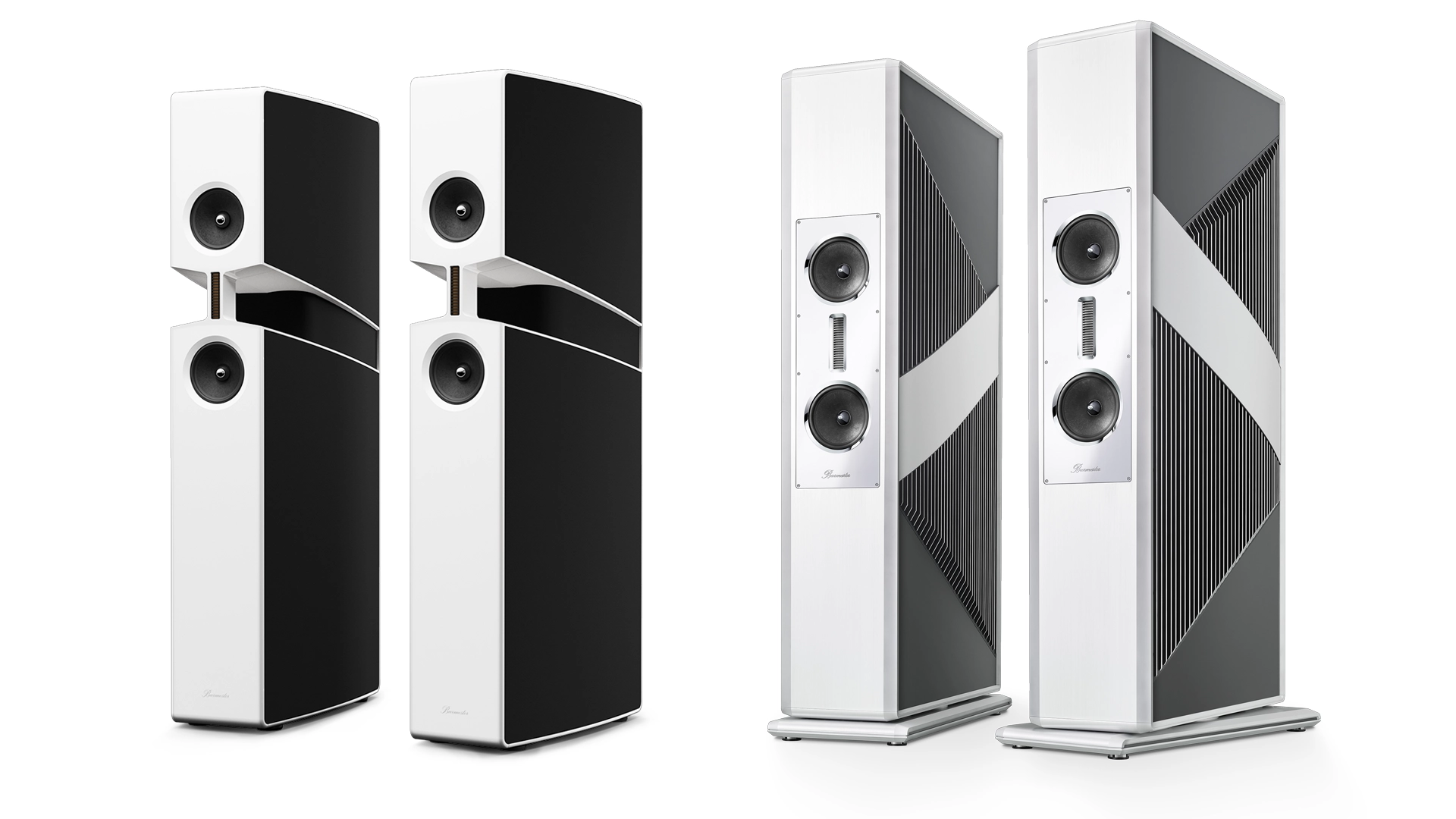
Burmester combines Berlin manufacturing, balanced electronics and a visual language that makes its components immediately recognisable. Musician and engineer Dieter Burmester founded the company in 1977 after building the 777 preamplifier to replace an unsatisfactory unit in his own system. The model number recorded its launch in July 1977 and began a naming convention still used today. The modular 808 preamplifier, DC-coupled signal paths and early symmetrical circuit work became important milestones, while polished chrome fronts became the exterior signature. Current Classic, Top, Reference and Signature products include sources, preamplifiers, power amplifiers, integrated systems, turntables, power treatment and loudspeakers. Burmester also develops factory audio systems with luxury car manufacturers. Despite that breadth, final assembly and much of the specialised production remain in Berlin, keeping the brand closer to a manufactory than a mass-market luxury label.
Cabasse

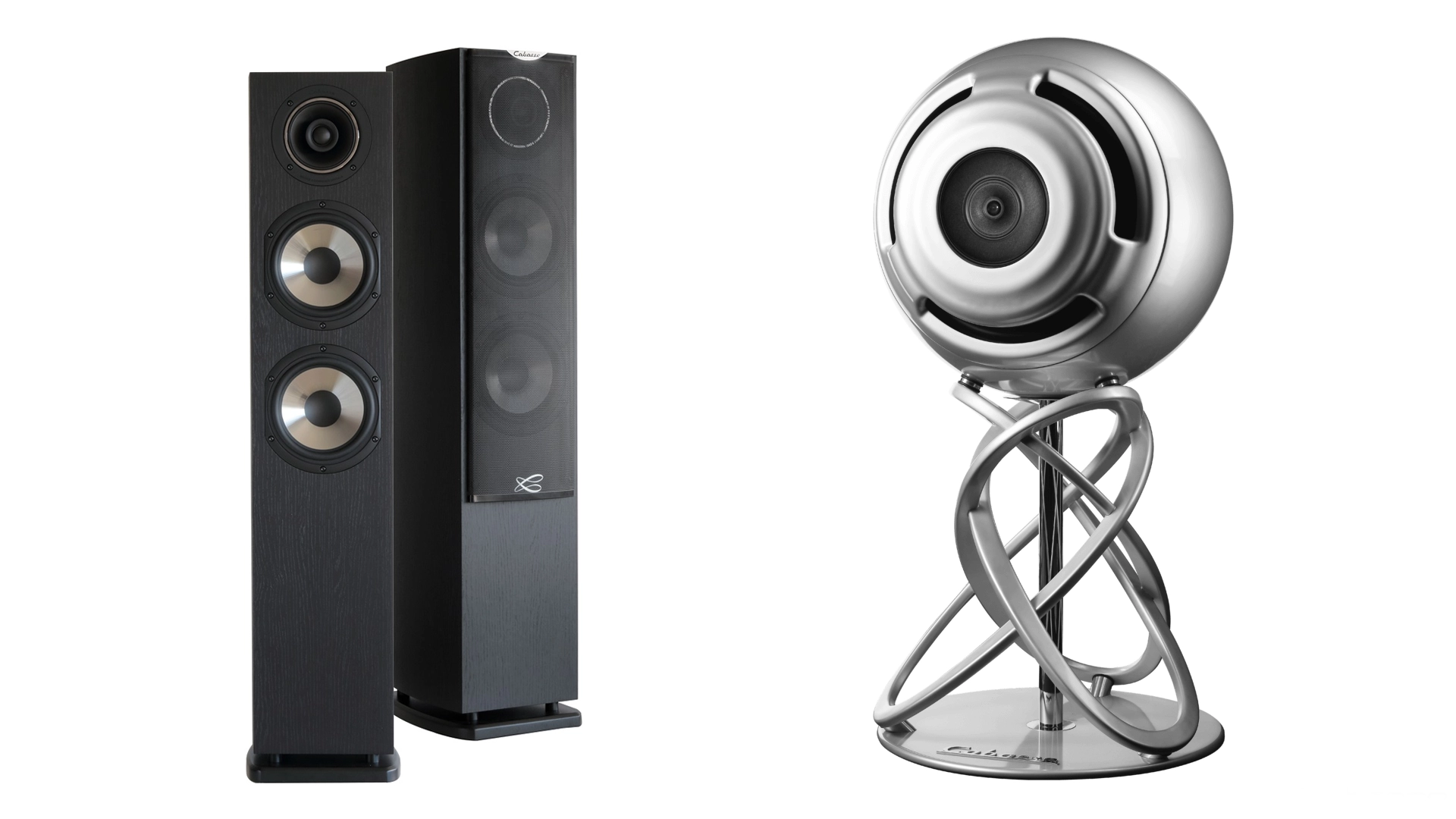
Cabasse has pursued the point-source loudspeaker for decades, progressing from cinema coaxials to active connected spheres. Electrical engineer Georges Cabasse founded the company in Brittany in 1950, continuing a family tradition associated with musical-instrument making. A two-way coaxial driver was already used for the Grand Rex cinema installation in 1952. Later Spatially Coherent System research placed several frequency ranges on the same acoustic axis, culminating in the four-way La Sphère and the compact Baltic. The Pearl Collection carries that geometry into self-powered wireless speakers with amplification, digital processing, room correction and network playback, while passive models and custom-installation products cover conventional stereo and cinema systems. Loewe Technology acquired Cabasse in April 2026 after the French company entered receivership, allowing the brand and its acoustic development to continue within the German group.
Cambridge Audio

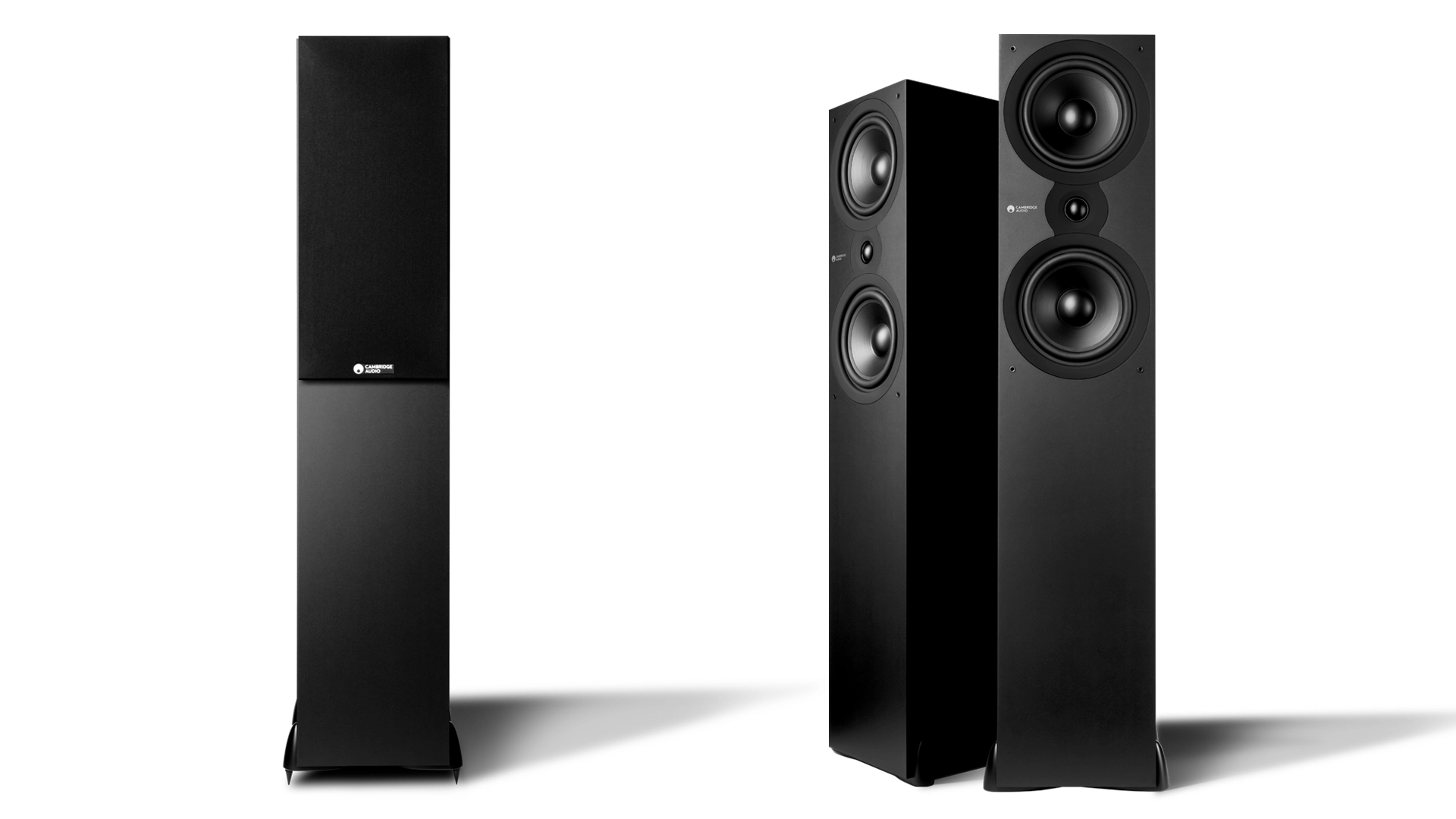
Cambridge Audio has spent more than five decades bringing useful engineering advances into attainable hi-fi components. The company began in Cambridge in 1968, when a team including Gordon Edge and Peter Lee created the P40 integrated amplifier. It was an early commercial amplifier built around a toroidal transformer, a solution that later became standard throughout the industry. Today’s AX and CX ranges cover integrated amplification, CD playback and network sources. Edge uses the company’s Class XA amplifier topology at the flagship level, while Evo combines StreamMagic streaming, conversion and speaker amplification in a compact system. Alva turntables add direct-drive vinyl playback and Bluetooth transmission. StreamMagic remains a major strength because Cambridge controls both the network hardware and the software platform, and continues adding service support to older generations. Product design is led from London, with the range aimed at complete systems rather than one specialist category.
Canton

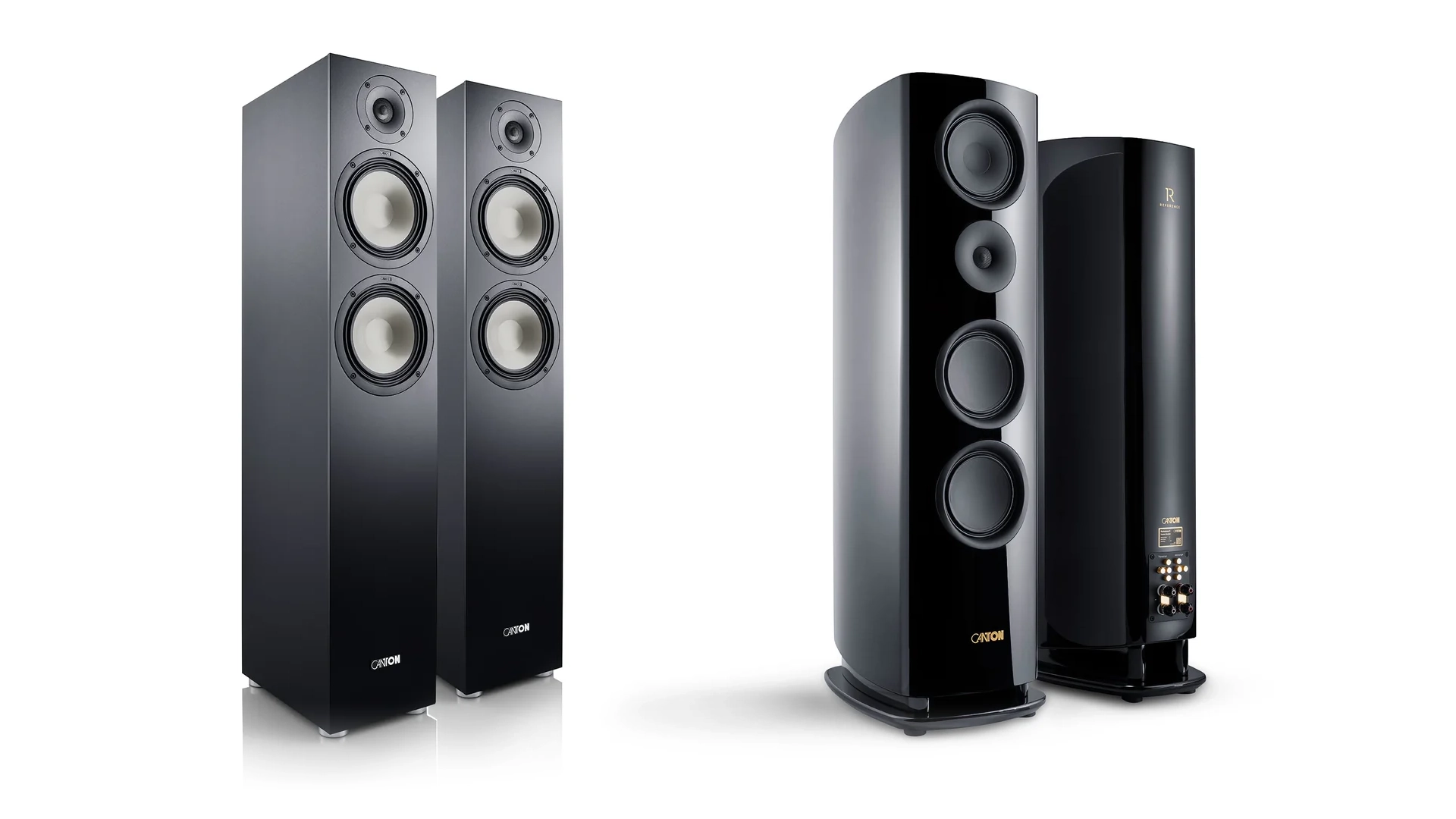
Canton is a family-owned German loudspeaker company with enough scale to develop drivers, cabinets, electronics and measurement facilities under one programme. Hubert Milbers, Otfried Sandig, Wolfgang Seikritt and Günther Seitz founded it in Weilrod in 1972. The early LE 250 compact speaker was followed by one of the company’s recurring themes: achieving substantial bandwidth and output in forms suited to real living spaces. Today’s catalogue extends from GLE and Townus through Vento to the Reference and Reference Alpha lines, with centre speakers, subwoofers and installation models for complete cinema systems. The Smart series adds active wireless stereo and surround configurations, while soundbars cover television systems. Aluminium-ceramic and later ceramic-tungsten diaphragms, waveguides, cabinet simulations and measurements in Canton’s own anechoic chamber support the range. Reference models and selected production remain closely tied to the Weilrod facility.
Castle

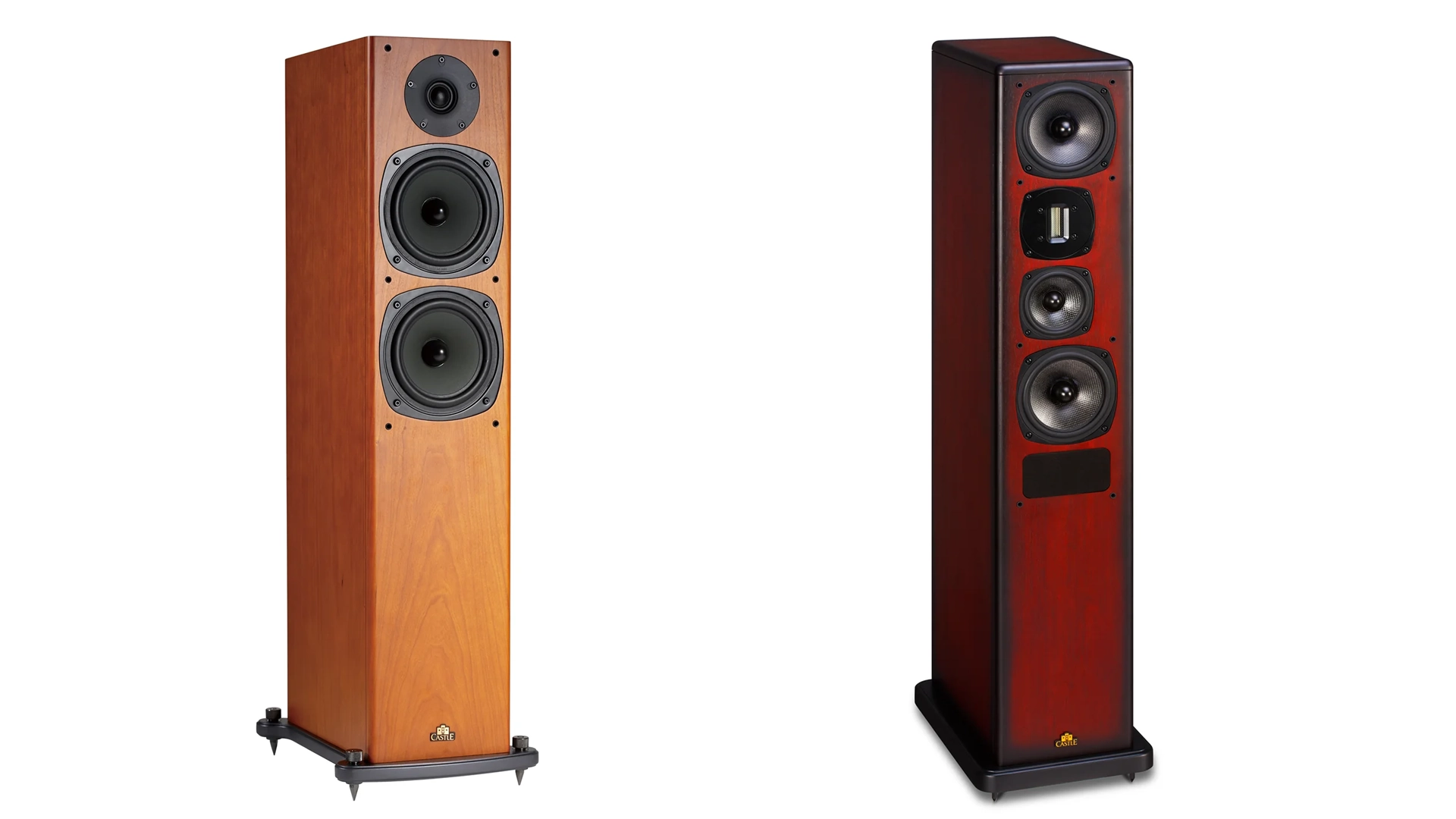
Castle combines traditional British cabinetmaking with loudspeaker engineering, treating the enclosure as both an acoustic structure and a finished piece of furniture. The company was established in Skipton on 3 September 1973 by former Wharfedale engineers led by William ‘Bill’ Escott and John Collinson. Castle became known for making drive units and real-wood veneered cabinets in-house, with compact Richmond models and larger Howard and Conway loudspeakers defining different periods of its history. After the original business failed, International Audio Group revived the brand in 2007. The Windsor Duke and Earl marked Castle’s return to UK manufacturing in 2023, followed by the Walmer and Tintagel ranges; critical parts are developed within IAG and cabinets are hand-finished in selected veneers. Twin Drive transmission-line loading, carefully controlled cabinet resonances and a deliberately furniture-like appearance distinguish Castle from the many brands that simply apply wood-pattern finishes to conventional boxes.
Cerwin-Vega!

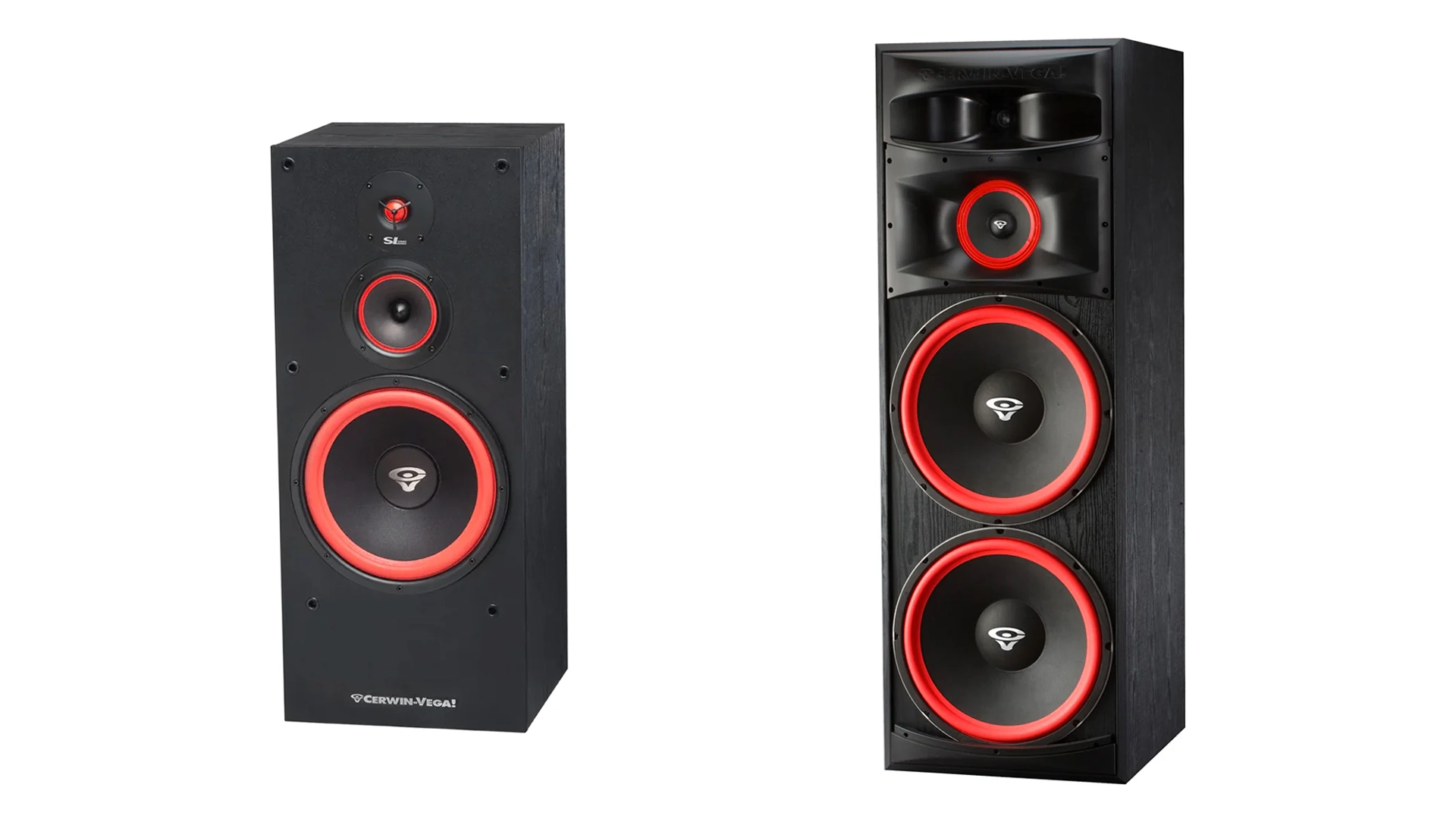
Cerwin-Vega! designs loudspeakers around high efficiency, deep bass and the ability to produce convincing live-event sound pressure without fragile construction. Aerospace engineer Eugene ‘Gene’ Czerwinski founded Vega Associates in Los Angeles in 1954; the company later became Cerwin-Vega. An early 18-inch system capable of exceptional output at 30 Hz established its low-frequency reputation, while professional systems, instrument speakers and the red-surround home models made the brand visually unmistakable. Cerwin-Vega also supplied the folded-horn subwoofer technology used for Universal’s Sensurround presentation of Earthquake in 1974, work recognised with a special technical Academy Award. The brand later passed through several owners and was split between mobile and pro/home operations, but those divisions were reunited under Cerwin-Vega Inc. in 2020. Current ranges cover home speakers and subwoofers, professional PA systems, amplifiers and car audio, preserving the original emphasis on robust drivers, high output and bass with physical impact.
Cessaro

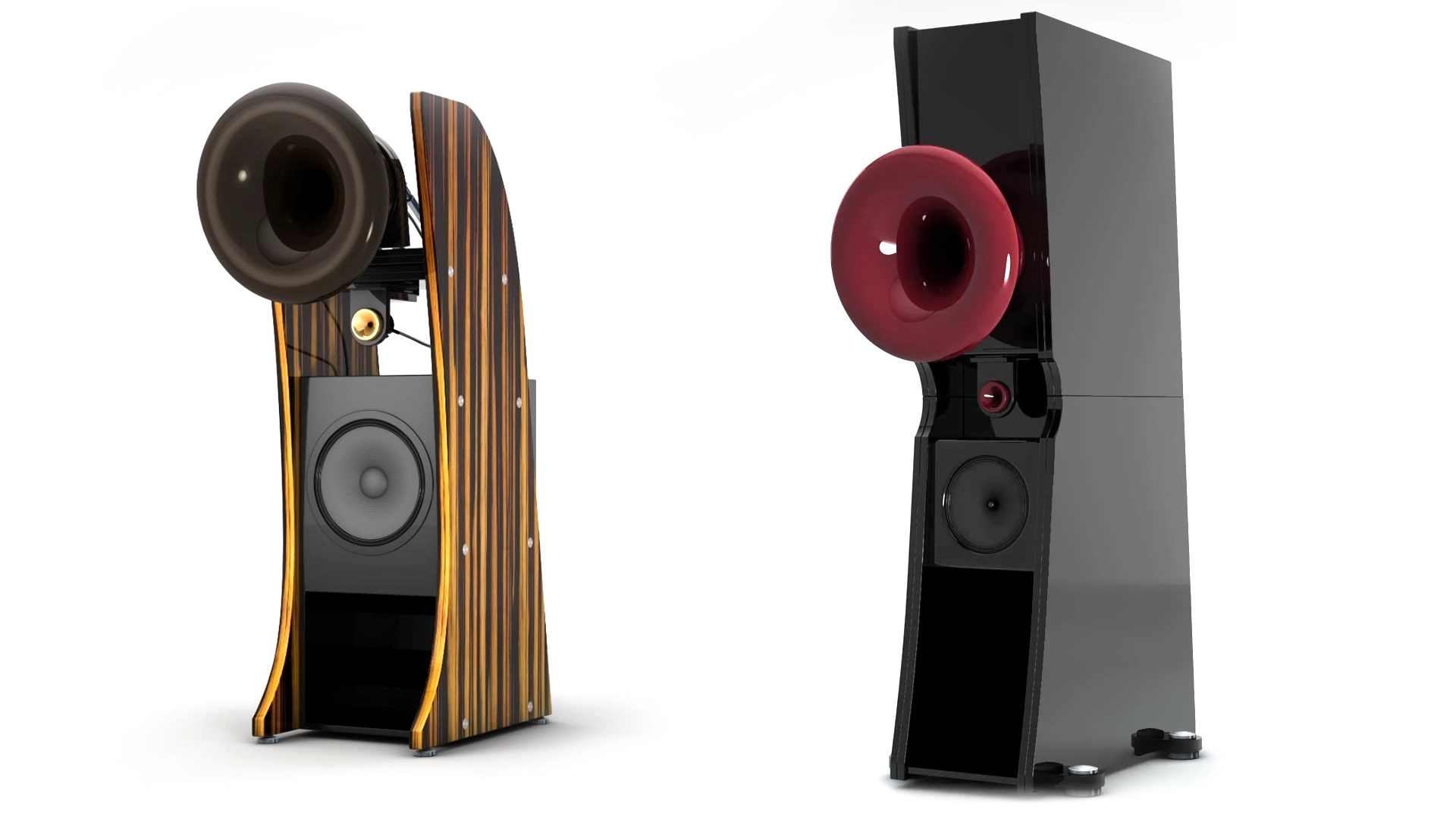
Cessaro Horn Acoustics builds room-scale horn systems for listeners who want the sensitivity and immediacy of professional cinema sound without accepting utilitarian construction. Ralph Krebs founded the German company in 2006. Its most distinctive hardware is the horn itself: a hand-built two-shell composite structure filled with a damping polymer and coupled to the compression driver through a machined aluminium flange. Cessaro combines selected TAD compression units with proprietary in-house drivers, high-sensitivity passive sections and, in larger systems, actively amplified low bass. Opus I and Gaia provide different entry points, while the modular Alpha III can be upgraded toward Beta III or Gamma III configurations; Omega II occupies the statement end of the range. The partly active four-way Alpha III illustrates the approach, pairing horn-loaded mid and high frequencies with a 16-inch bass driver. Systems can be extensively customised in finish and architecture, and the company treats long-term upgradeability as part of the design rather than replacing an entire loudspeaker generation.
Chario

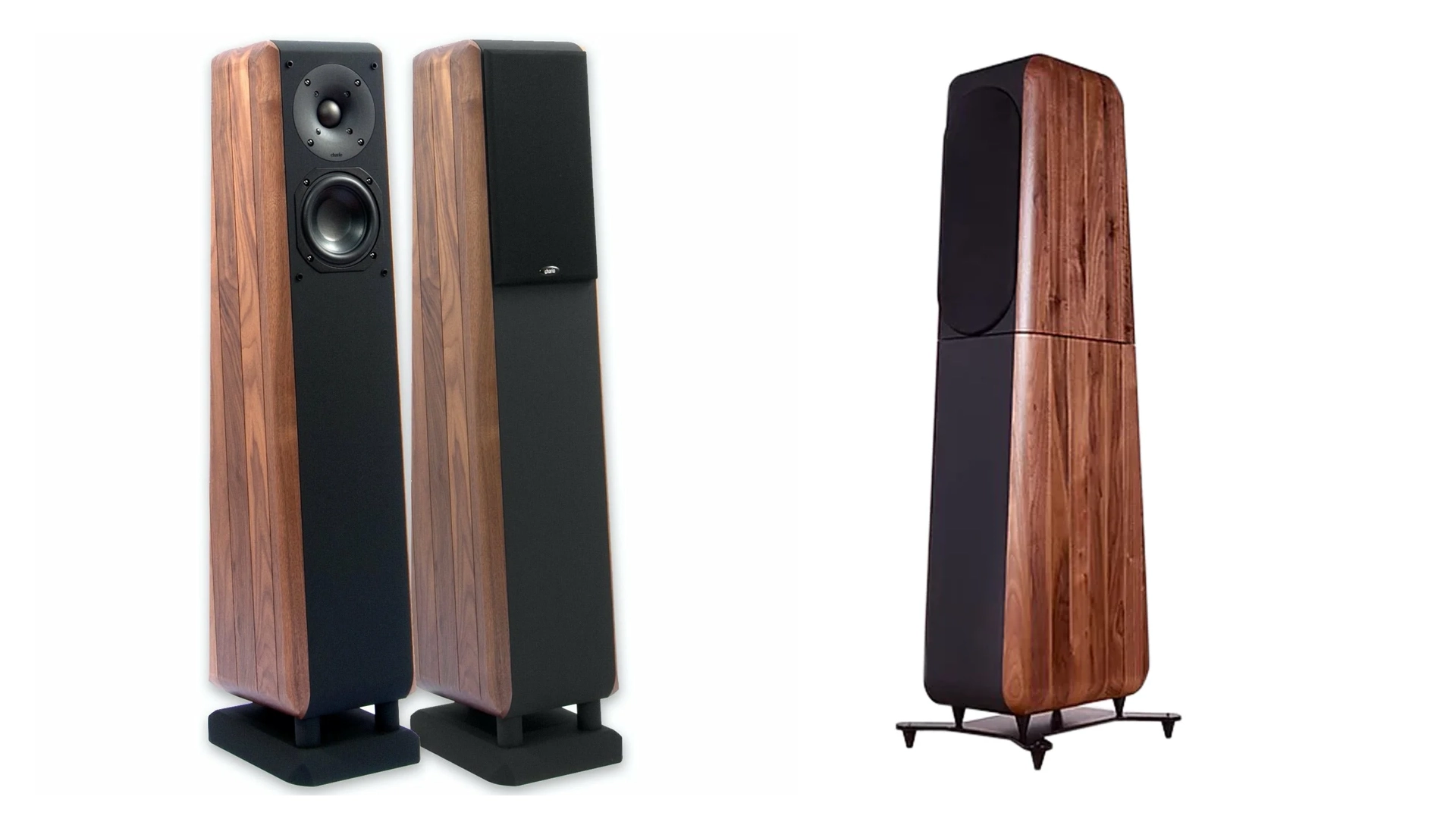
Chario treats loudspeaker design as applied acoustics and psychoacoustics, with the cabinet, drivers and their interaction with a real room developed together. Founded in Milan in 1975, the Italian company designs its components to its own specifications and hand-assembles its loudspeakers in Italy, often using solid walnut or carefully finished wood panels. Its WMT principle controls the overlapping radiation of woofer, midrange and tweeter, while the Acoustic Doublet concept uses low-frequency source spacing and room reflections to preserve spatial information. Down-firing woofers, reversed vertical driver layouts and substantial subdivided enclosures recur in the Academy models. The catalogue ranges from compact Constellation and Aviator speakers to the Academy Sovran and five-way Serendipity flagship, with centre-channel options for multichannel systems. Chario’s identity lies less in decorative Italian styling than in unusual radiation control and in engineering speakers specifically for the dimensions and acoustic behaviour of domestic rooms.
Clarisys Audio

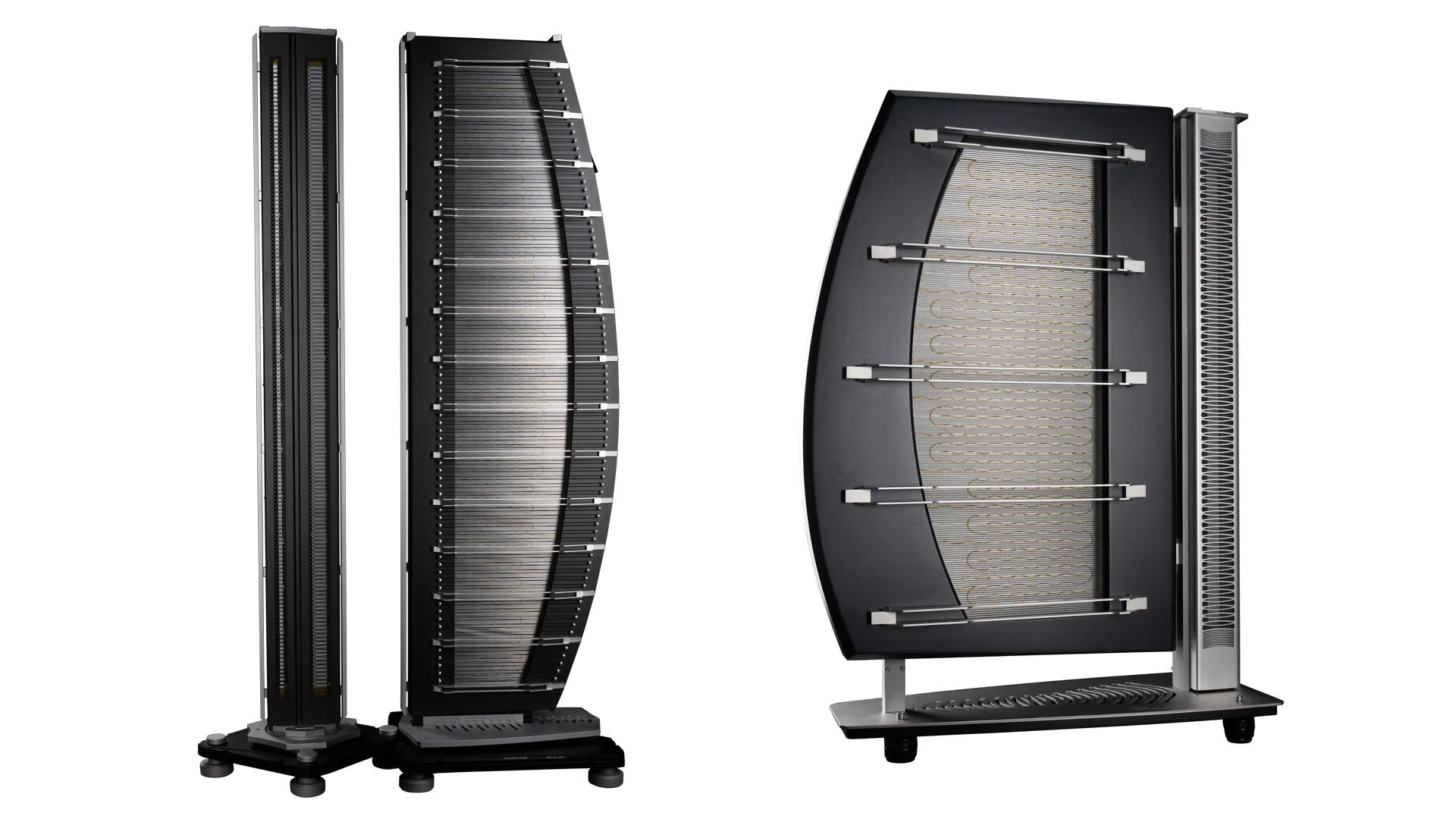
Clarisys Audio develops full-range ribbon loudspeakers as rigid, serviceable systems rather than fragile reproductions of vintage planar designs. Its international engineering effort began in 2010 with the aim of removing common failure points and improving the structural stability of classic ribbon speakers. The present MK2 platform uses extremely light pure-aluminium ribbons, powerful N52 neodymium magnet arrays and double-sided bass motors within substantial aluminium frames. Bipolar radiation energises the room from front and rear, while separate bass and mid/high ribbon sections avoid conventional cone drivers and box enclosures. The range progresses through Piccolo, Minuet and Studio to Auditorium, Aria and the large Atrium flagship. Engineering and voicing are centred in Switzerland, specialist assembly is carried out in Vietnam, and global distribution operates from Sarasota, Florida. This cross-border structure makes Clarisys difficult to reduce to one national workshop, but its product identity is precise: rebuildable, high-output ribbon panels designed for greater bass authority and longevity than the historical designs that inspired them.
Credo Audio Switzerland

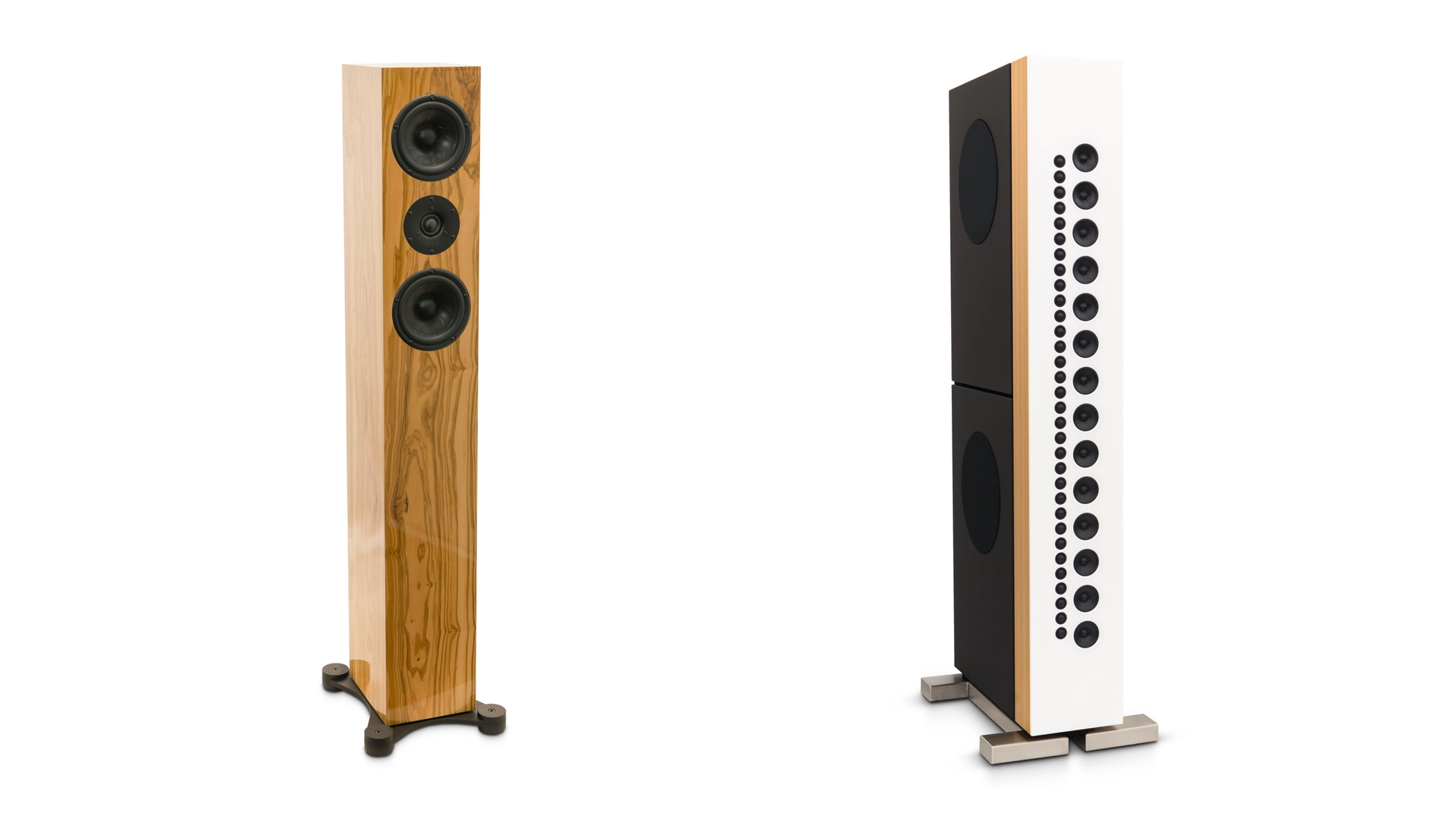
Credo Audio Switzerland is a small-batch loudspeaker manufacturer founded by Rudolf Kraske in 1992 and now closely associated with designer Michael Kraske. The company develops and builds its systems in Switzerland, bringing an increasing share of cabinet machining and assembly in-house after installing its first CNC equipment in 2006. Credo’s EV and Reference models favour controlled cabinet behaviour, carefully developed crossovers and custom-specified European drive units rather than an attention-seeking visual formula. The EV Reference One, for example, separates its sealed bass section from the mid/high enclosure and uses side-firing woofers, while the large Cinema LTM applies the same concern for bandwidth, dynamics and room integration on a much greater scale. Credo first traded internationally in the 1990s, concentrated on its domestic market after restructuring, then rebuilt worldwide distribution from 2015. That history matters: this is not a vague “1990s” brand, but a long-running Swiss workshop whose strength is the integration of acoustic design, machining, finishing and final assembly under close control.
Cube

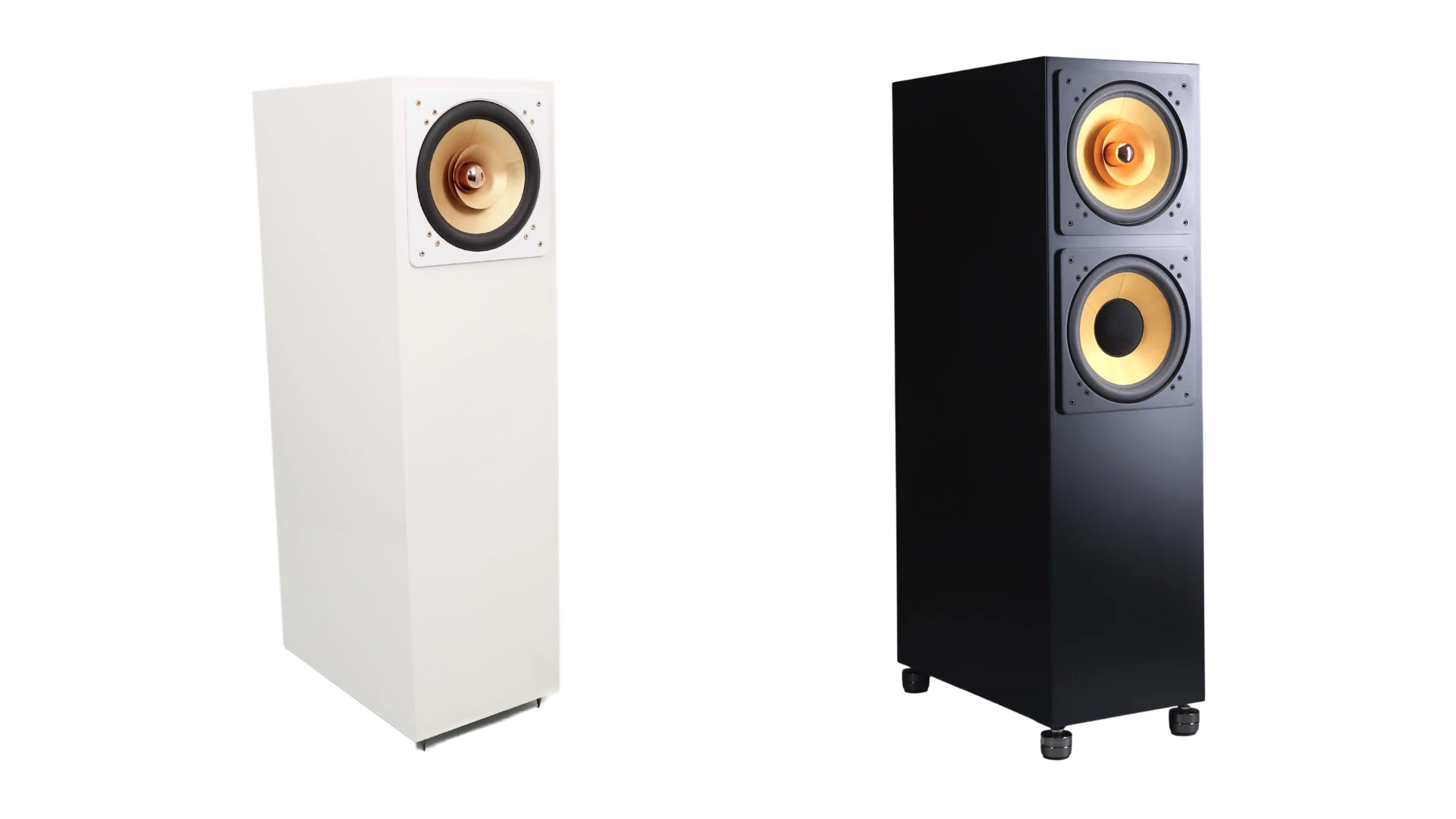
Cube Audio is a Polish loudspeaker and driver manufacturer founded by physicist Grzegorz Rulka and loudspeaker designer Marek Kostrzyński. The company’s central project is the high-performance full-range driver: a transducer expected to reproduce most or all of the audible spectrum without a crossover dividing the critical midband. Cube develops and builds its own large paper-cone drivers, magnet systems, suspensions and field-replaceable elements, then matches them to carefully tuned cabinets. The Nenuphar family demonstrates the purest version of the idea, using a single wideband unit per channel and a cabinet loading system engineered to extend bass without sacrificing immediacy. Other models adapt the same driver knowledge to different room sizes and bandwidth requirements. Removing the crossover can improve phase continuity and point-source imaging, but it places unusually high demands on cone profile, moving mass and motor linearity; those are the areas where Cube’s know-how resides. The brand is therefore more than a boutique cabinet maker: it controls the transducer technology that gives its loudspeakers their distinctive coherence and directness.
Curvi Hifi

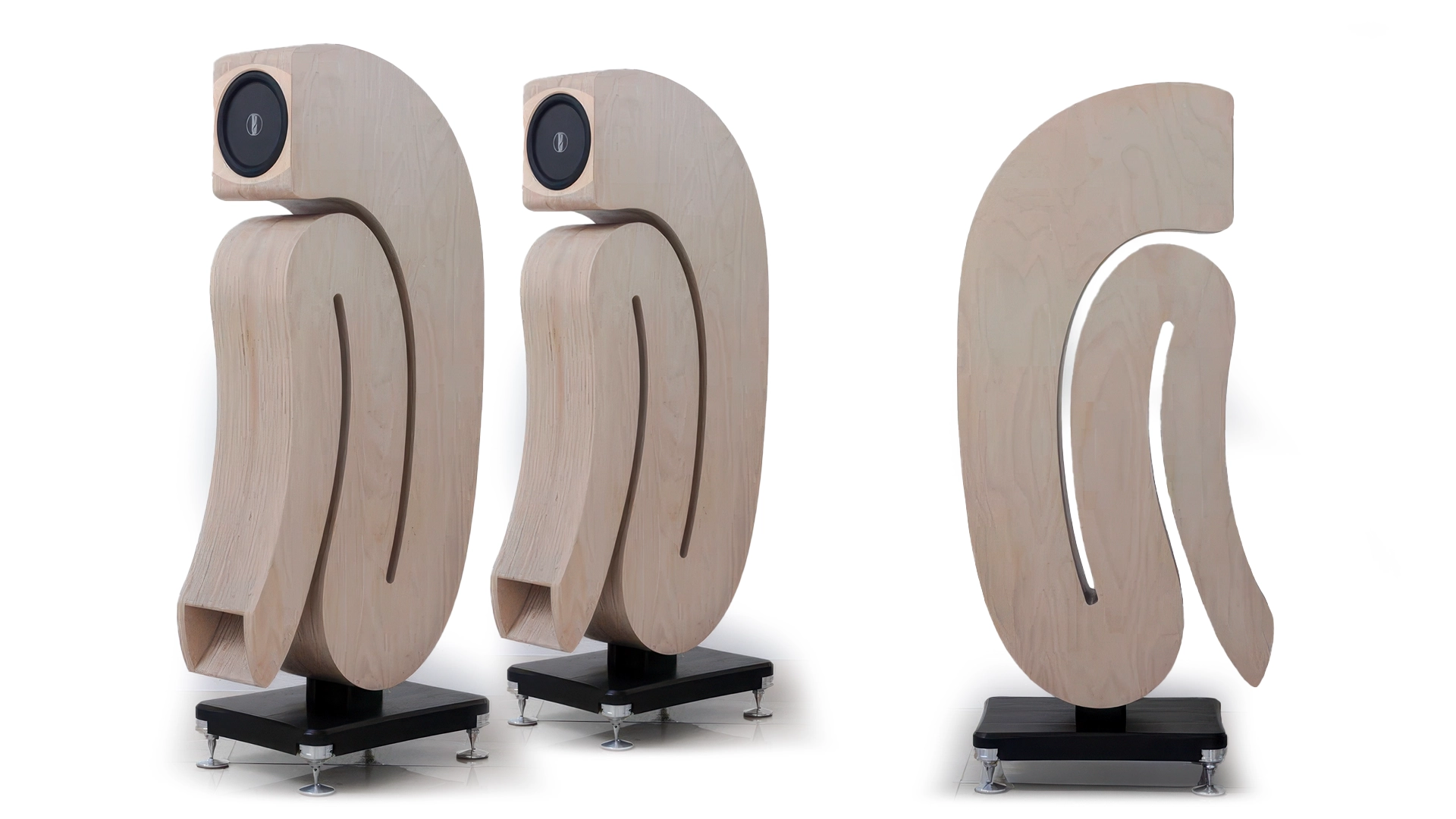
Curvi HiFi is the British loudspeaker project of Dr Chris Liauw, a polymer-science researcher with a PhD in composite materials and long experience building speaker enclosures. Around 2004 he began translating that knowledge into a cabinet assembled from CNC-cut laminated sections rather than flat panels joined into a box. Five years of development produced the original Curvi Model 1: a narrow, continuously curved enclosure with a single full-range driver feeding a tapered transmission line. The shape is visually unmistakable, but it also gives the cabinet changing cross-sections, substantial stiffness and fewer broad parallel surfaces in which standing waves can develop. Later Curvi-BMR designs use a balanced-mode radiator and retain the same interest in laminated plywood, controlled resonance and a slim acoustic profile. Liauw’s work is closer to applied materials research than conventional model-year marketing; individual products evolve through changes to bases, internal structures and damping. Curvi’s defining know-how is therefore the union of composite construction, CNC geometry and transmission-line loading in loudspeakers that could not be reproduced by simply styling a rectangular cabinet.
DALI

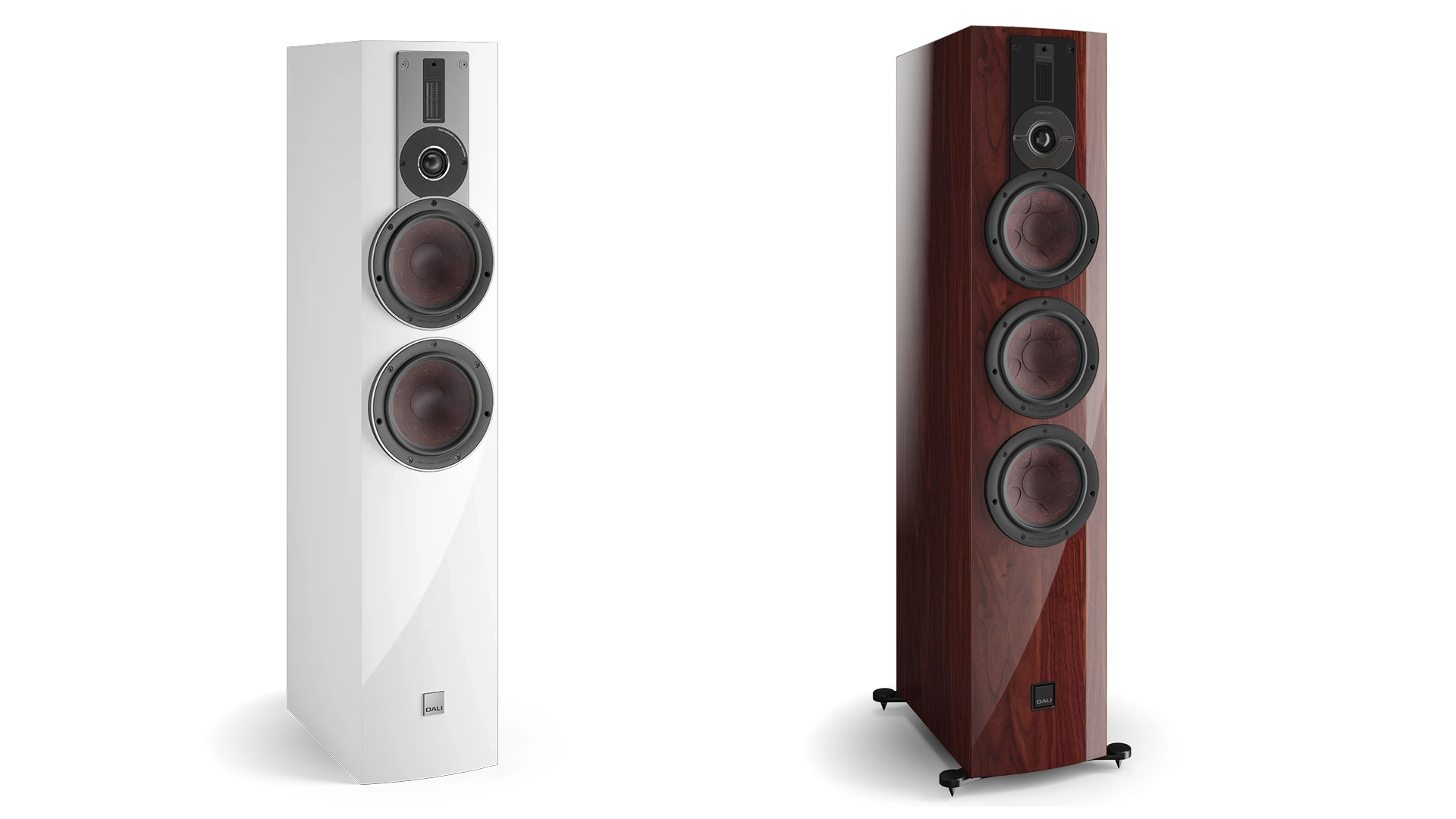
DALI — Danish Audiophile Loudspeaker Industries — was founded by Peter Lyngdorf in 1983 to build loudspeakers that reproduce music honestly across a wide listening area. The company opened its factory in Nørager in 1986, creating the vertically integrated development and production base that still shapes the brand. Several technologies make a DALI speaker easy to identify technically: low-mass wood-fibre cones, wide-dispersion driver geometry, soft-dome or hybrid dome-and-ribbon tweeter modules, and in upper ranges the company’s low-loss SMC magnetic material. These choices are intended to reduce distortion and preserve consistent tonal balance when the listener is not locked to one narrow seat. DALI applies the same principles across compact, floorstanding, on-wall, active and custom-installation models, from accessible OBERON and OPTICON families through RUBIKORE and EPICON to the KORE flagship. The breadth of the catalogue is important, but the stronger story is continuity: driver materials, magnet systems and dispersion behaviour developed for statement products are progressively adapted for speakers intended for ordinary living rooms.
Daniel Hertz

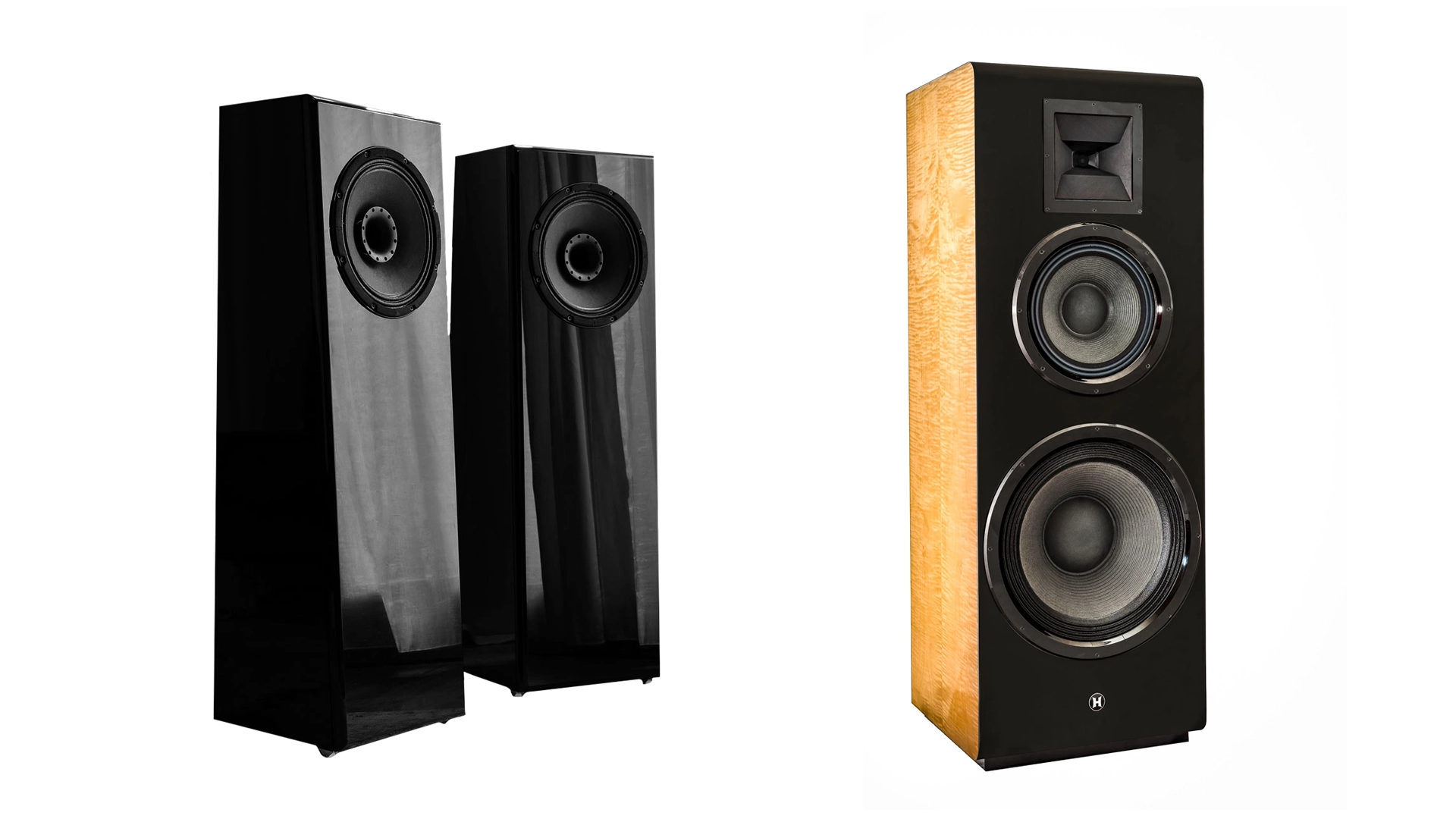
Daniel Hertz is the Swiss audio company founded in 2007 by Mark Levinson, the musician-engineer who had previously created Mark Levinson Audio Systems, Cello and Red Rose Music. The brand combines high-efficiency loudspeakers with integrated amplification and proprietary digital processing, seeking complete-system behaviour rather than isolated components. Its current Maria 350 and four-channel Maria 800 place DAC, preamplifier, power amplification, headphone output, active crossover and time-alignment functions in one chassis. Central to that platform is the programmable Mighty Cat audio chip and the patented C Wave process, which Daniel Hertz describes as restoring continuity to PCM playback through a tuned algorithm; its technical claims should be distinguished from the company’s more speculative health messaging. Maria can drive passive speakers or actively bi-amplify Daniel Hertz models such as Chiara, M1 and M4, while Anton and Amber Midnight broaden the loudspeaker range. The old country entry was incorrect: Daniel Hertz S.A. is based in Switzerland, although its founder and much of his earlier career are American.
Davis Acoustics
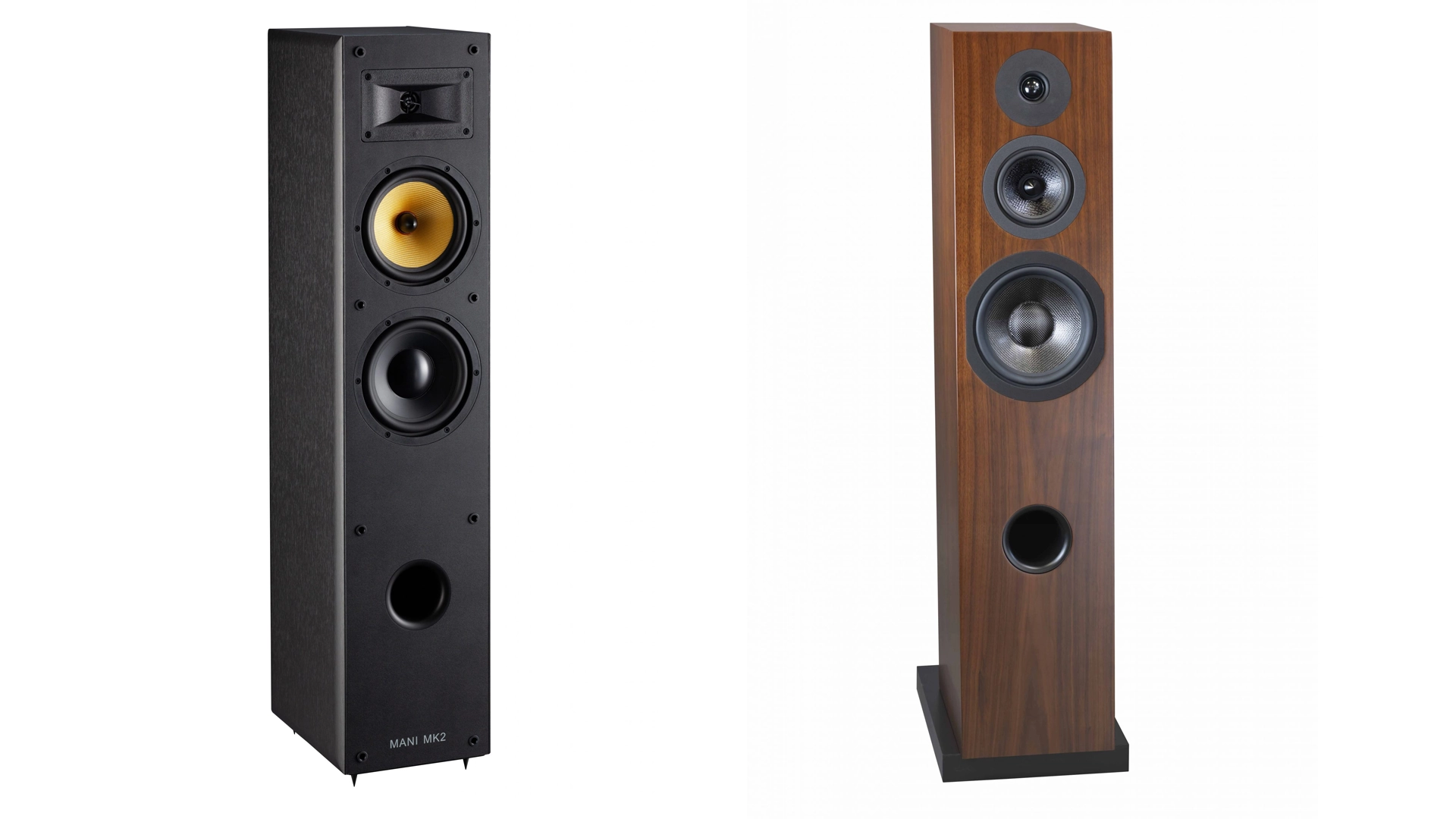
Davis Acoustics is a French loudspeaker company founded in 1986 by electroacoustic engineer Michel Visan after his work at Audax and as technical director of Siare. It began as a driver manufacturer, and its first product, the 13KVL5A mid-bass unit, already used a braided Kevlar cone. Davis then expanded into DIY kits in 1988 and complete loudspeakers with the DK200 in 1993, while continuing to design transducers for its own systems and OEM customers. That vertical expertise remains the brand’s strongest differentiator: Kevlar, carbon fibre, fibreglass, paper and wideband membranes are selected and formed according to the required mass, stiffness and damping rather than used as decorative claims. Finished ranges such as Ariane and Courbet cover conventional stereo and home cinema, while specialist drivers and kits preserve the company’s close relationship with builders. The last wideband project led by Michel Visan, the 20DE8, also became the basis of the single-driver MV One. Davis Acoustics therefore connects French driver engineering, accessible kit culture and complete loudspeakers within one unusually continuous manufacturing history.
Davone Audio

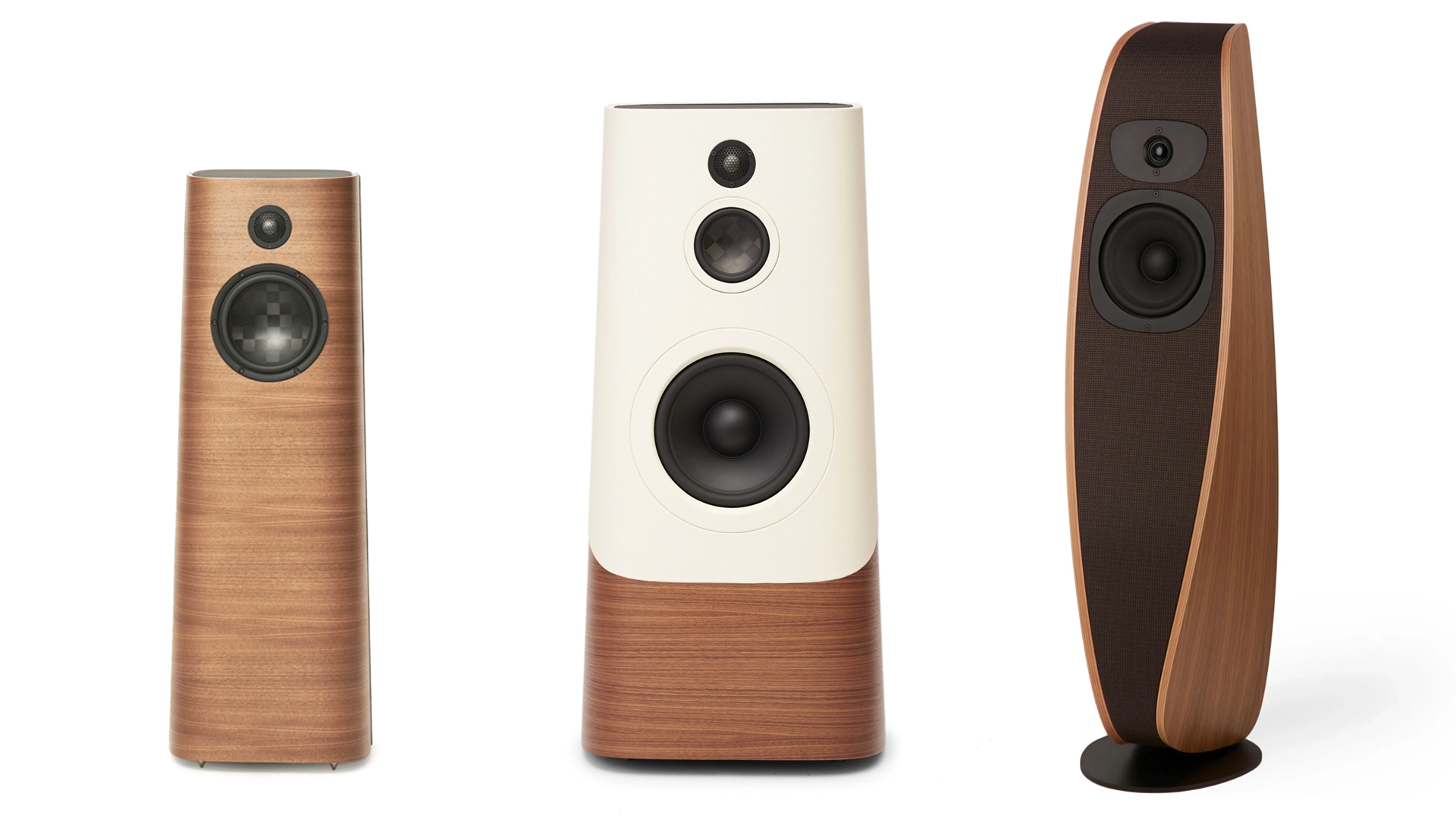
Davone is the Danish loudspeaker brand in which engineer Paul Schenkel joins acoustic development with the forms and materials of mid-century furniture. Schenkel’s background includes aeronautical engineering, physics and vibro-acoustic analysis at Philips; he began developing the curved Rithm concept years before establishing Davone and commencing production in Denmark in 2007. The Rithm’s bent-plywood shell, leather upholstery and reclined stance made it look more like a lounge chair than an equipment box, yet its geometry was developed alongside crossover and vibration analysis. Later Ray, Solo, Meander and Twist models explored different combinations of moulded wood, fabric, metal and compact driver layouts without abandoning the idea that a loudspeaker must belong visually in a living space. Davone writes measurement software, evaluates cabinet modes and develops crossovers in-house, so the aesthetic is supported by conventional acoustic discipline rather than substituted for it. This union is the brand’s genuine speciality: sculptural loudspeakers that draw on Danish furniture traditions while remaining engineered audio products, not furniture shells built around an off-the-shelf speaker module.
Dayton Audio

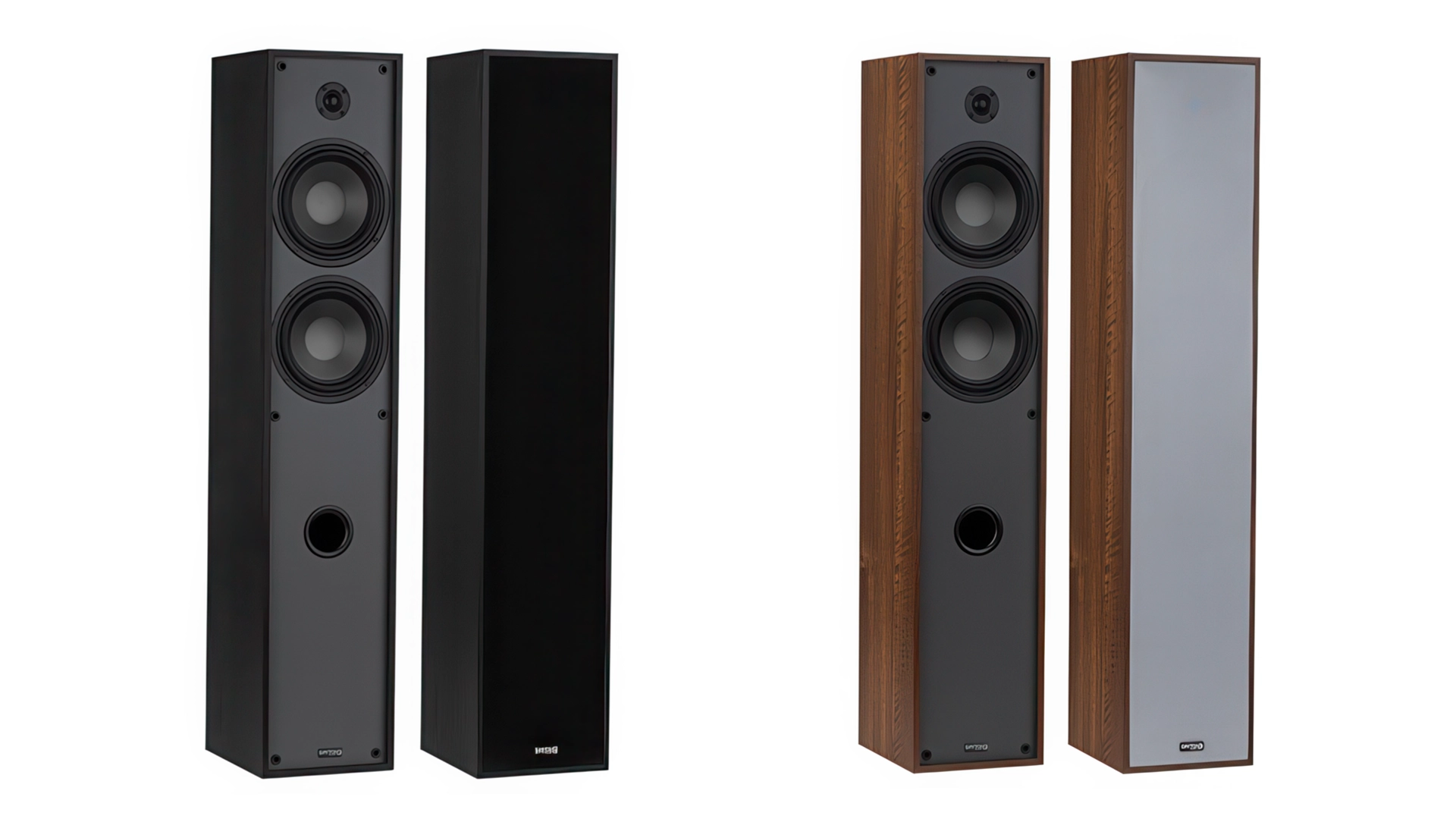
Dayton Audio is the house audio brand associated with Ohio-based Parts Express, serving builders, installers and value-conscious listeners with components that are normally sourced from many separate suppliers. Its catalogue spans individual tweeters, midrange and woofer drivers, passive radiators, subwoofer plate amplifiers, class-D amplifier boards, DSP modules, finished subwoofers, compact speakers and complete kits. Reference and Signature drivers provide measured parameters for original loudspeaker designs, while Ultimax subwoofers prioritise long excursion and power handling. Just as important is the supporting tool chain: the DATS measurement system helps builders determine driver impedance and Thiele-Small parameters, and project documentation makes the parts usable rather than merely inexpensive. Dayton also collaborates with independent designers on kits and supplies OEM or custom-installation solutions through Parts Express. Its distinctive strength is breadth with technical accessibility — drivers, electronics, measurement and practical documentation within one ecosystem — making it especially useful to DIY loudspeaker builders who want compatible parts and test tools from one source.
Definitive Technology

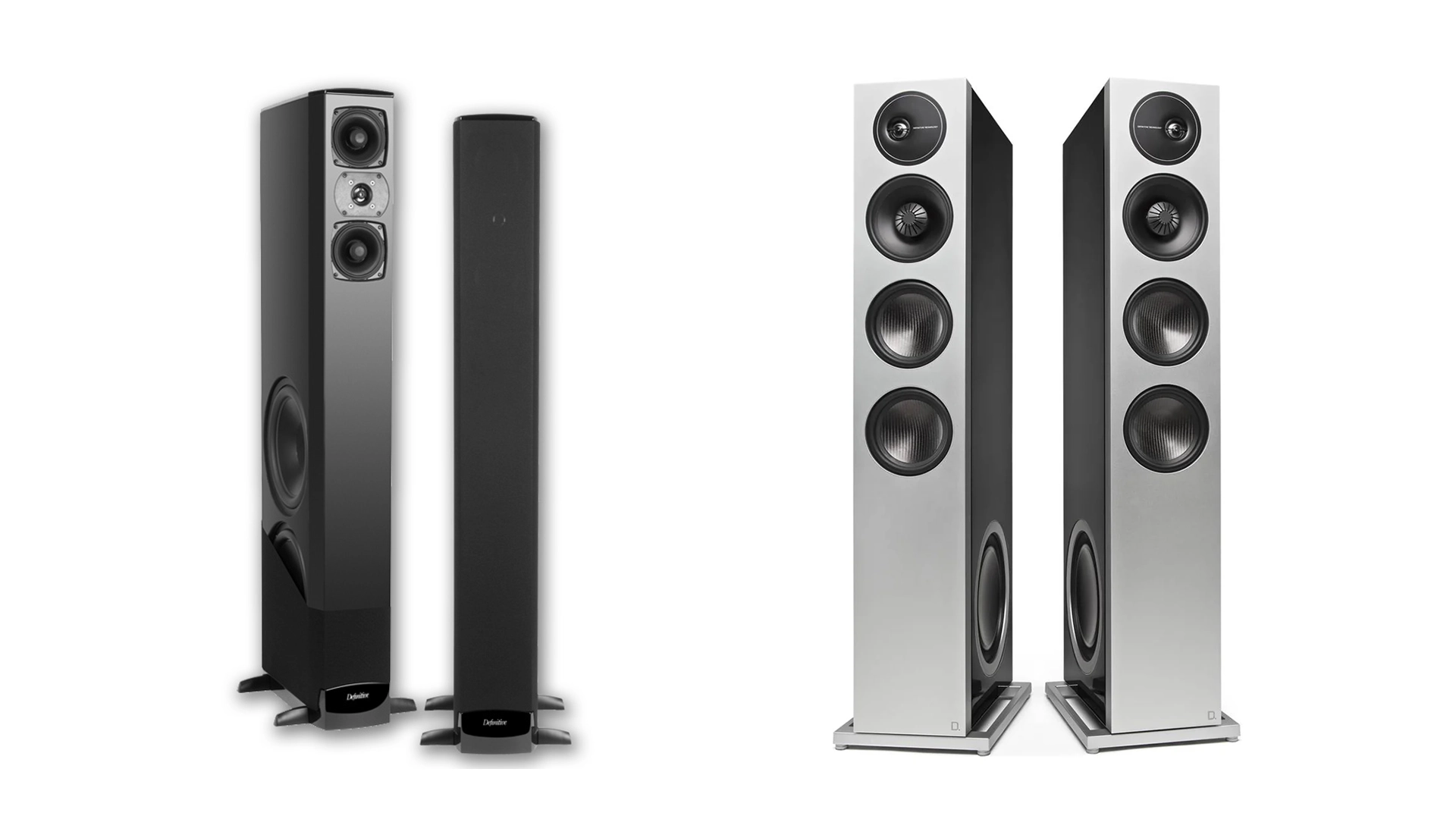
Definitive Technology is the American loudspeaker brand founded in 1990 by Sandy Gross, Don Givogue and Ed Blais, initially around a tower that combined bipolar radiation with its own powered subwoofer. That pairing remains central to the company’s identity. Front- and rear-facing driver arrays create a broader, more enveloping field than a conventional forward-radiating box, while active bass sections allow deep low-frequency output from a relatively narrow cabinet and reduce the burden on an external amplifier. The current Dymension family develops this formula with bipolar towers, integrated powered woofers and optional height modules for immersive home cinema; Mythos applies Definitive’s acoustic approach in slimmer wall-friendly enclosures. Matching centres, surrounds, subwoofers and architectural speakers allow complete multichannel systems rather than isolated stereo models. Although the company has passed through several corporate owners since its 2004 acquisition, the more useful story for users is product continuity: spacious bipolar presentation, substantial built-in bass and visually restrained cabinets designed to make one system effective for both films and music.
Dellichord

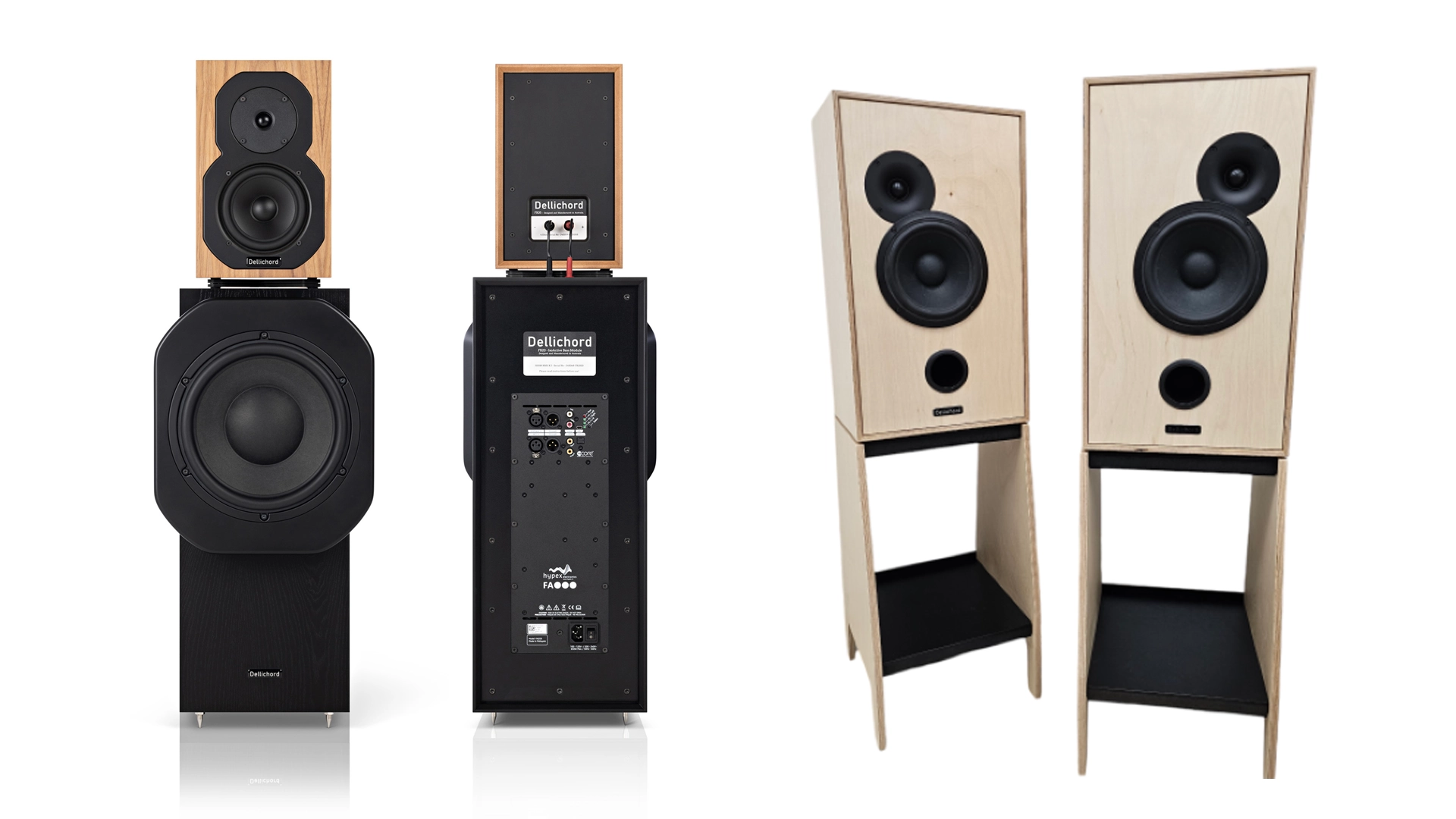
Dellichord is an Australian loudspeaker brand founded in Brisbane in 2021 by electronics technician and long-time hi-fi retailer, importer and distributor Andrew Hutchison through his manufacturing company Stereotech. Its first FR35 monitor deliberately revisited the priorities of the BBC LS3/5A — natural voice reproduction, compact dimensions and long-term listenability — while using contemporary drivers, cabinet construction and crossover development. Australian designer Brad Serhan assisted with the FR35’s crossover and acoustic work, adding experience from Orpheus and Serhan Swift without erasing Hutchison’s original concept. The FR2035 expands the monitor with a dedicated active isobaric bass module, creating a three-way system that can preserve the small cabinet’s midrange character while adding extension and output. Newer models broaden the same locally manufactured family rather than pivoting to unrelated imported products. Dellichord’s individuality is this transparent combination of references and resources: classic British monitor values, modern Australian engineering, local cabinet manufacture and an optional modular bass architecture that lets the compact speaker grow into a full-range system.
DeVore Fidelity

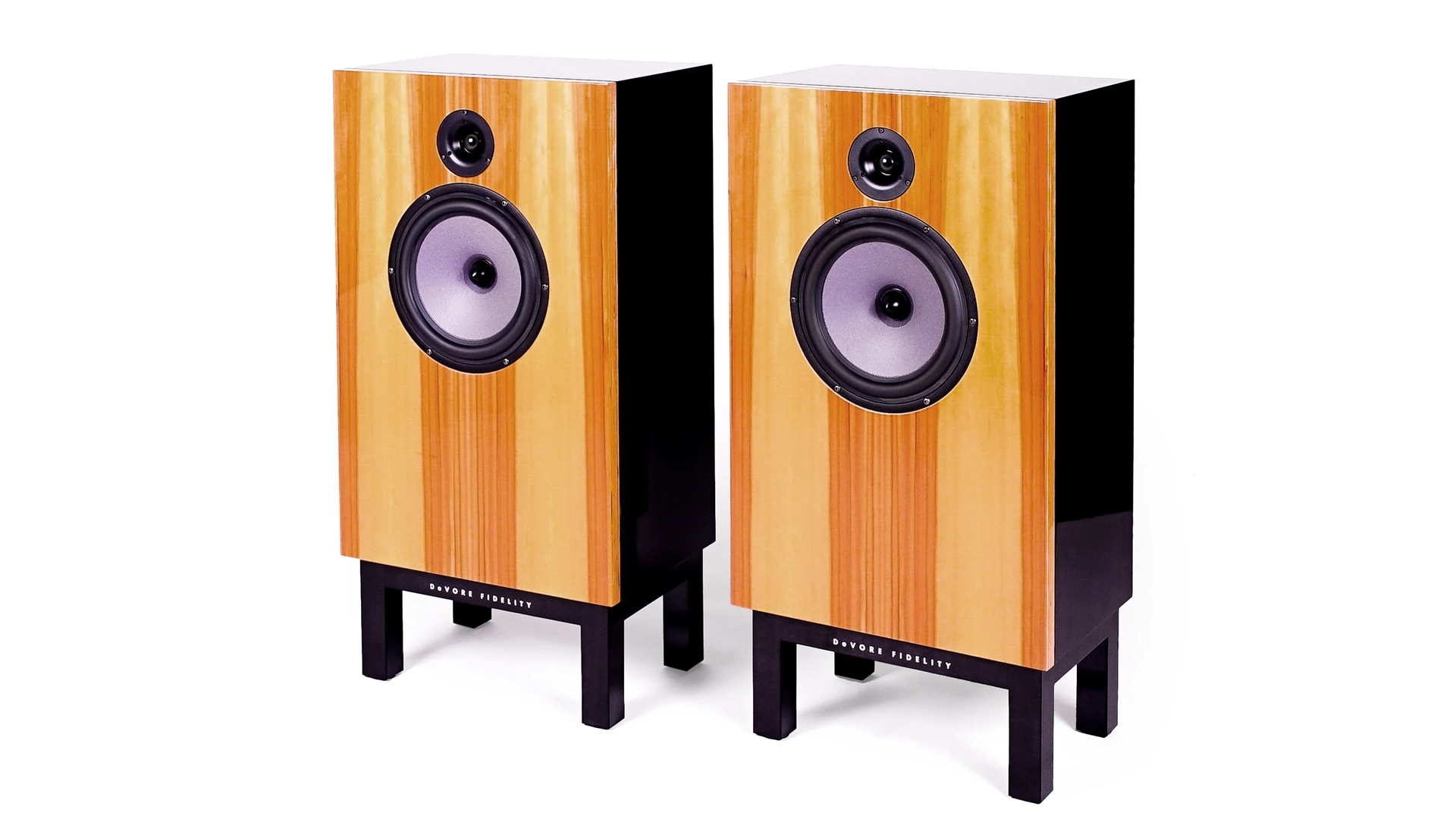
DeVore Fidelity is a Brooklyn loudspeaker workshop founded in 2000 by musician and designer John DeVore, with every speaker built by hand in New York. The brand is especially associated with the Orangutan series: wide-baffle, high-sensitivity designs created to preserve tone and dynamic contrast while remaining friendly to lower-powered tube amplifiers. Large paper-cone woofers, carefully shaped cabinets and deliberately simple electrical interfaces distinguish models such as the O/96, O/baby and the four-piece O/Reference. The slimmer Gibbon lineage, including the Super Nine, approaches the same goal through a more conventional floorstanding form and broader amplifier compatibility. DeVore does not treat sensitivity as a marketing number alone; cabinet proportions, driver behaviour and crossover voicing are developed together so the speaker can move easily from quiet listening to realistic musical peaks. The result is a recognisable alternative to compact, low-efficiency high-end speakers: physically expressive loudspeakers designed around musical scale, timbre and the practical use of specialist valve amplification.