An icon representing a turntable or record player.

Turntables

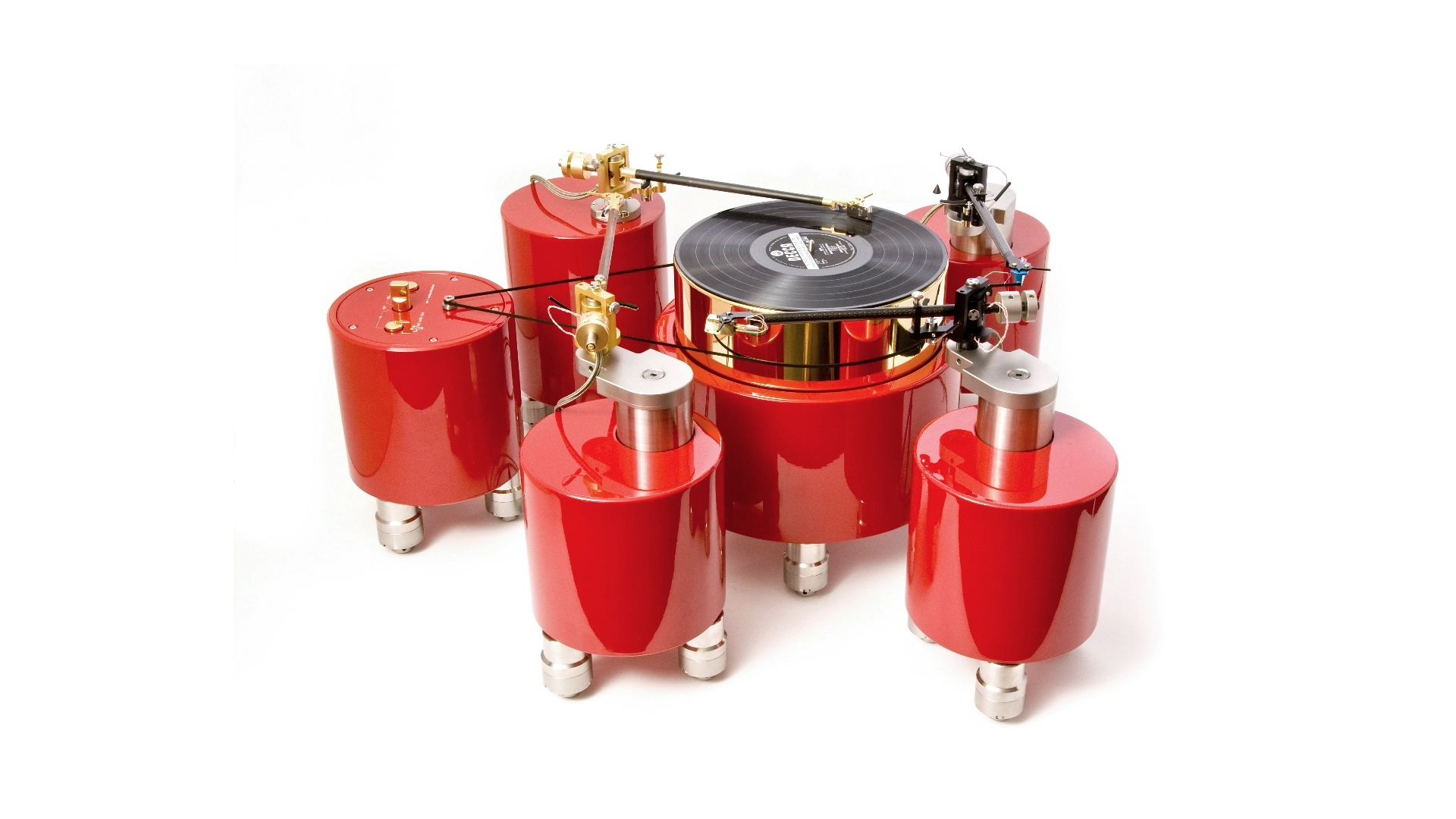
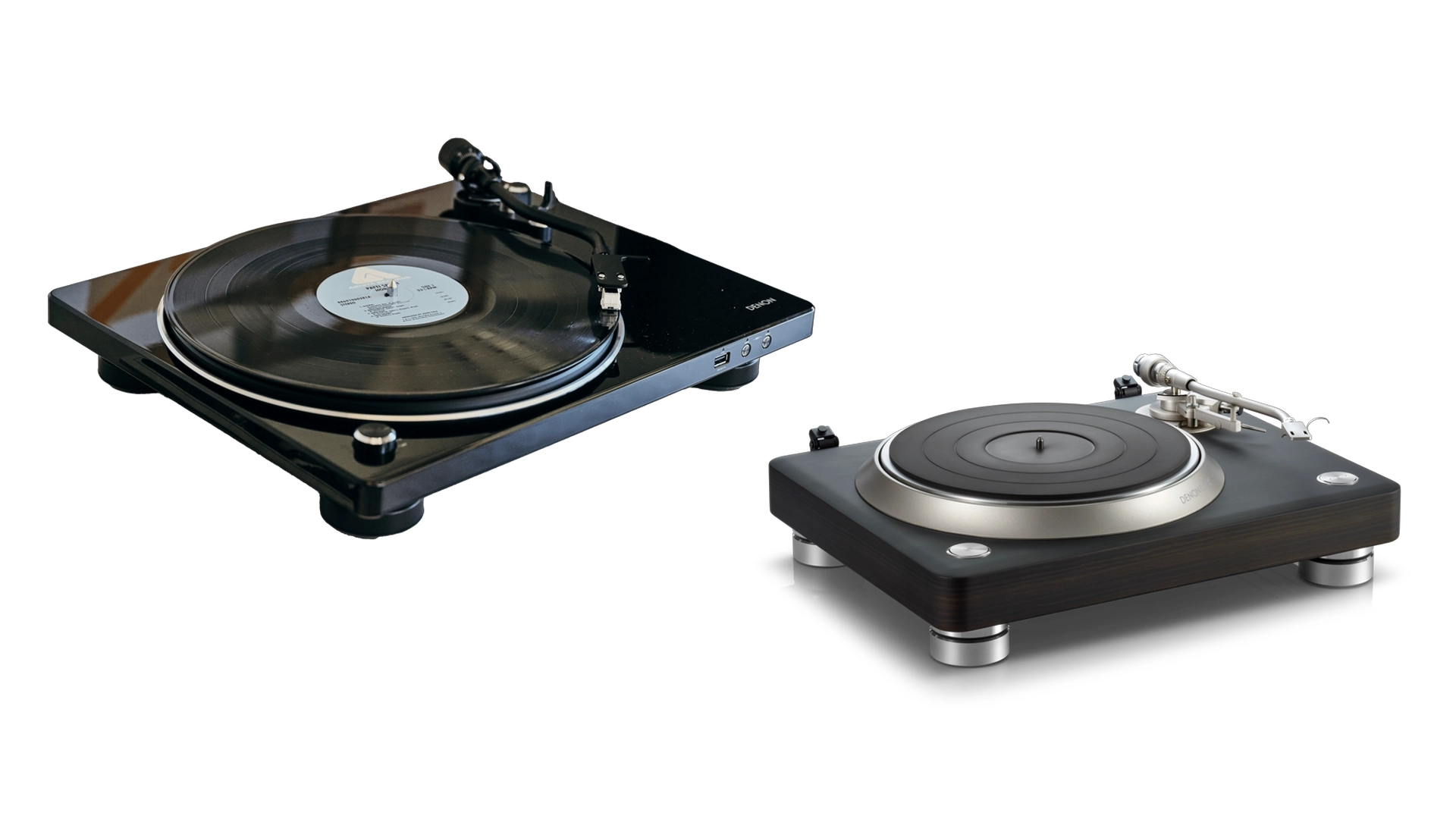
The turntable, or record player, is the electromechanical heart of any analog audio system, designed to bring vinyl records to life. Its function is to spin a record at a highly precise and stable speed while its tonearm allows a stylus to flawlessly track the microscopic grooves. This page is a complete directory of the world’s leading turntable manufacturers, covering everything from accessible belt-drive models for newcomers to massive, high-end direct-drive and suspended designs for the dedicated audiophile.

102

Hi-Fi brands in the category

Summary information and image

Direct links to official websites

Filters
Search
Country
See more See less

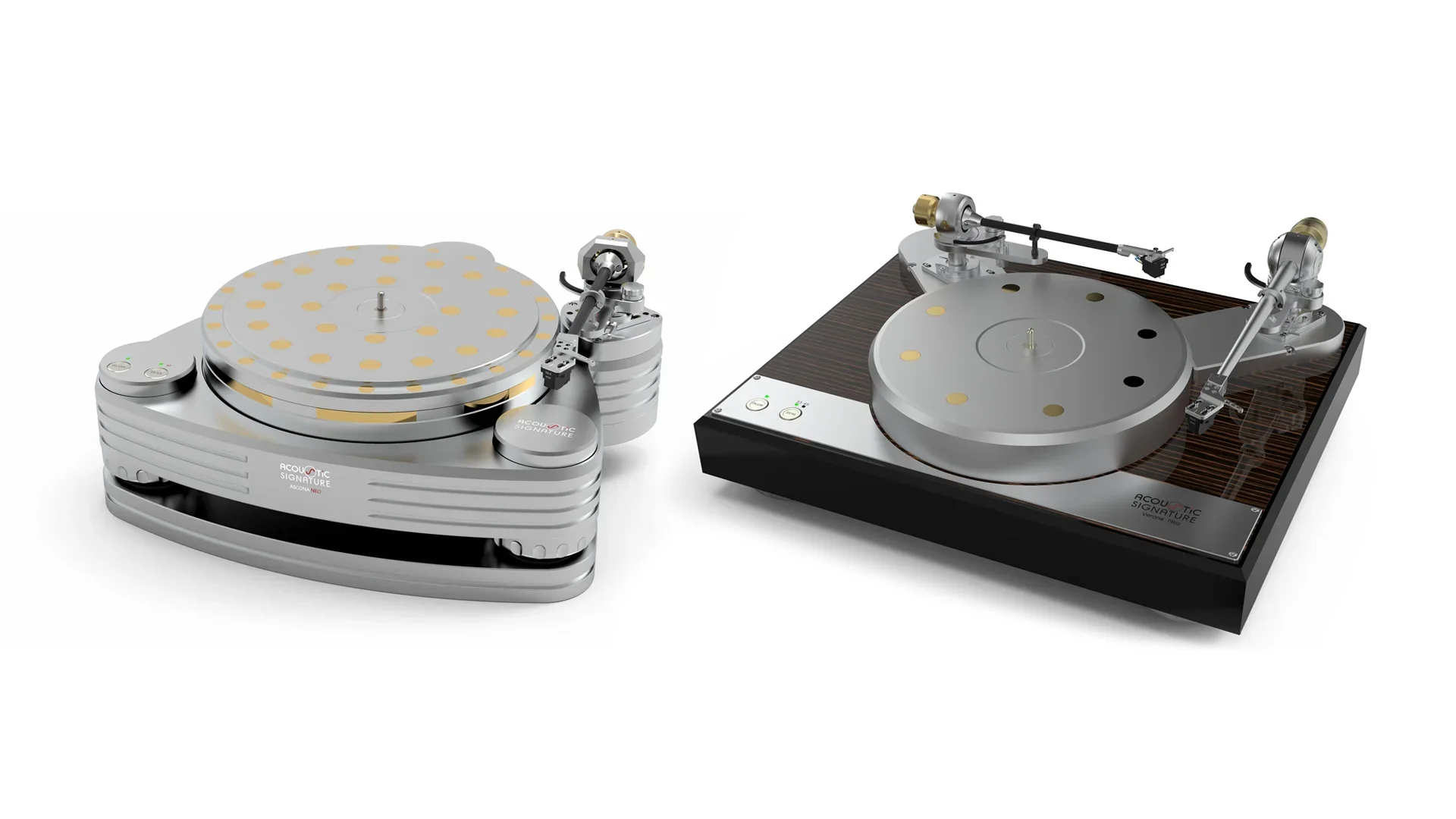
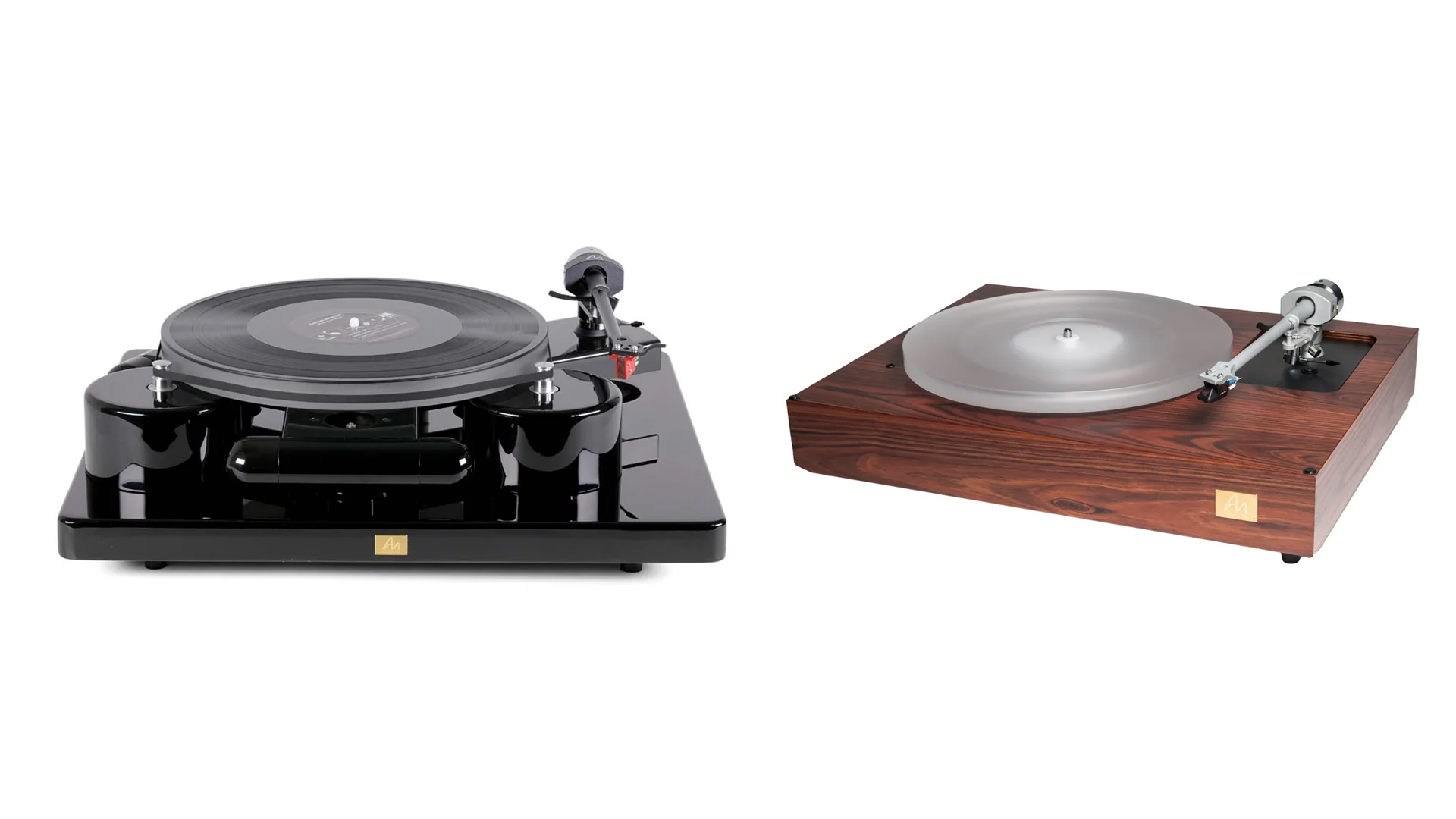
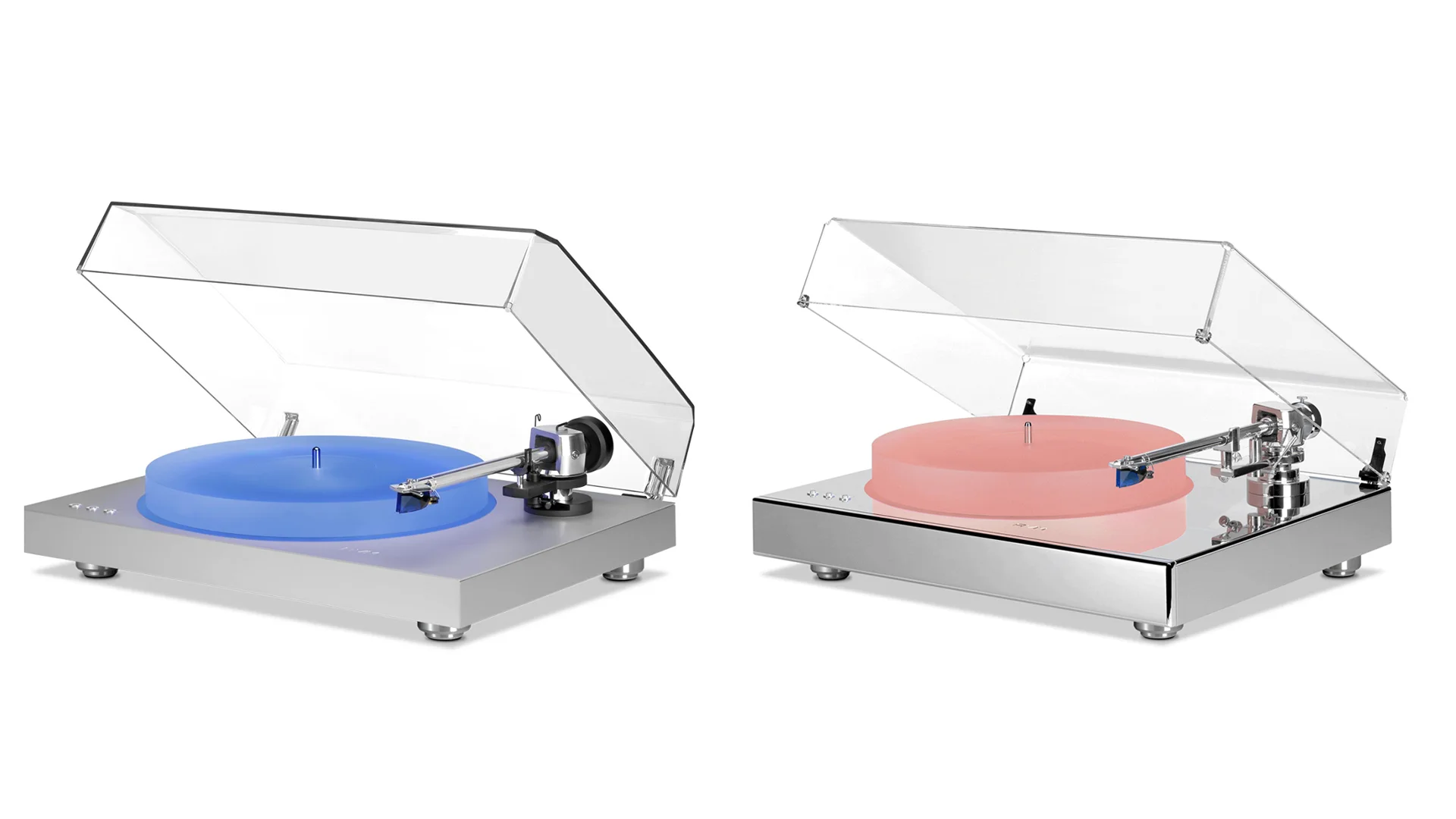
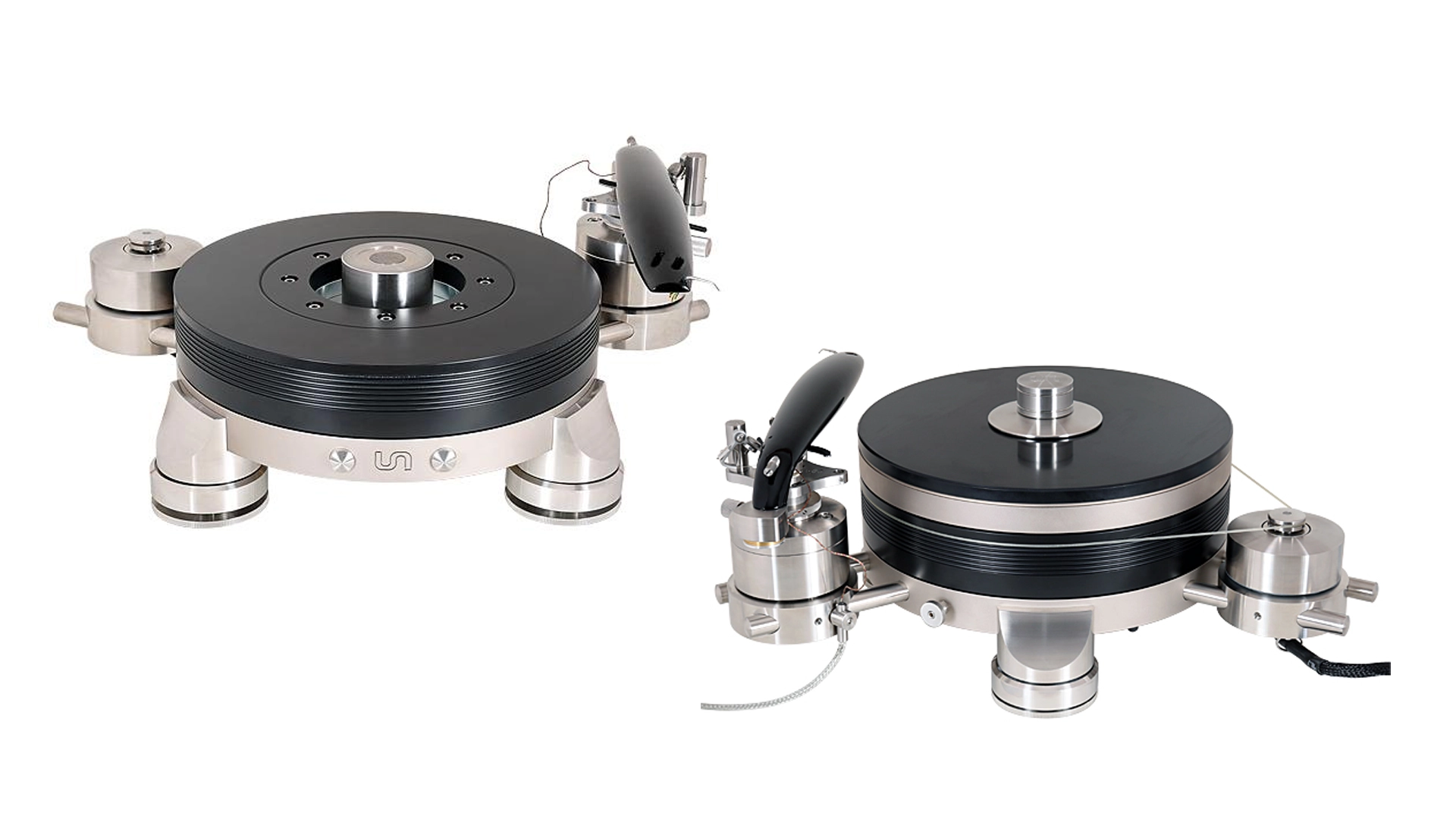
Acoustic Signature develops turntables around high-mass construction and targeted control of mechanical vibration. Its Silencer and Constraint Layer Damping designs address platter and chassis resonances, while Automatic Vibration Control adjusts motor-drive signals to reduce motor-induced vibration. Established in 1996, the company presented its first turntable the following year under managing director and chief developer Gunther Frohnhöfer. In the NEO range, the Dura Turn Diamond bearing uses a diamond-coated spindle, replacing the earlier Tidorfolon design. The German manufacturer’s range also covers tonearms, moving-coil cartridges and phono stages. Its distinctive focus is the mechanical foundation of vinyl playback: the bearing, motor system and supporting structure that let a cartridge follow the record groove.

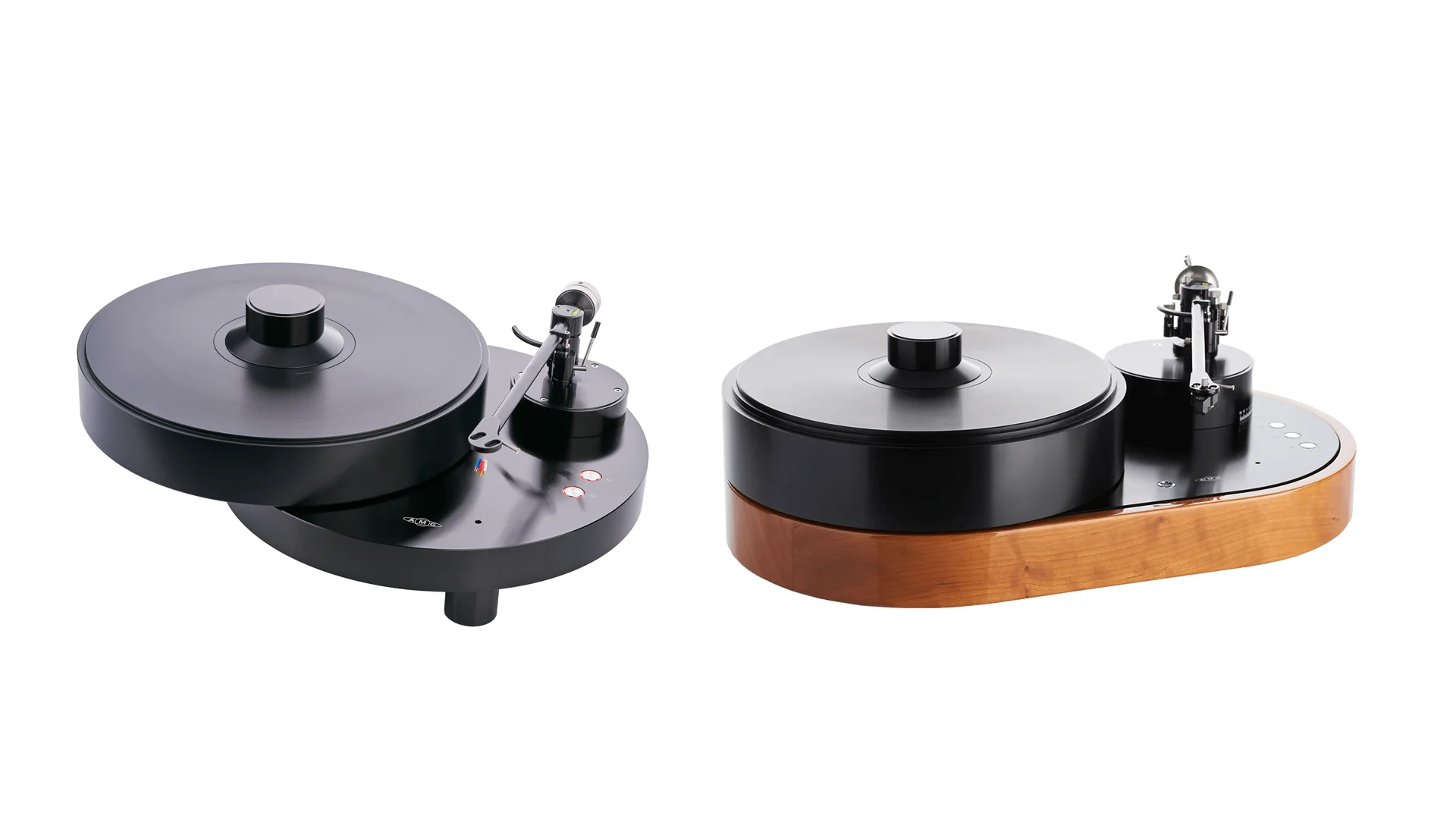
Analog Manufaktur Germany builds turntables and tonearms with an emphasis on precision machining and bearing design. Founder Werner Röschlau, a pilot and master mechanical engineer, established AMG in 2011 after earlier work making components for other analogue-audio manufacturers. His son Julian Lorenzi took over in 2013. Based in Deining, Bavaria, the company develops and manufactures its products around that engineering background; its tonearm work includes a distinctive spring-steel, two-point bearing arrangement. Turntables such as the Viella make AMG’s approach tangible through the relationship between platter, drive and tonearm, rather than decorative complexity. The family history and in-house mechanical work are central to understanding the brand.

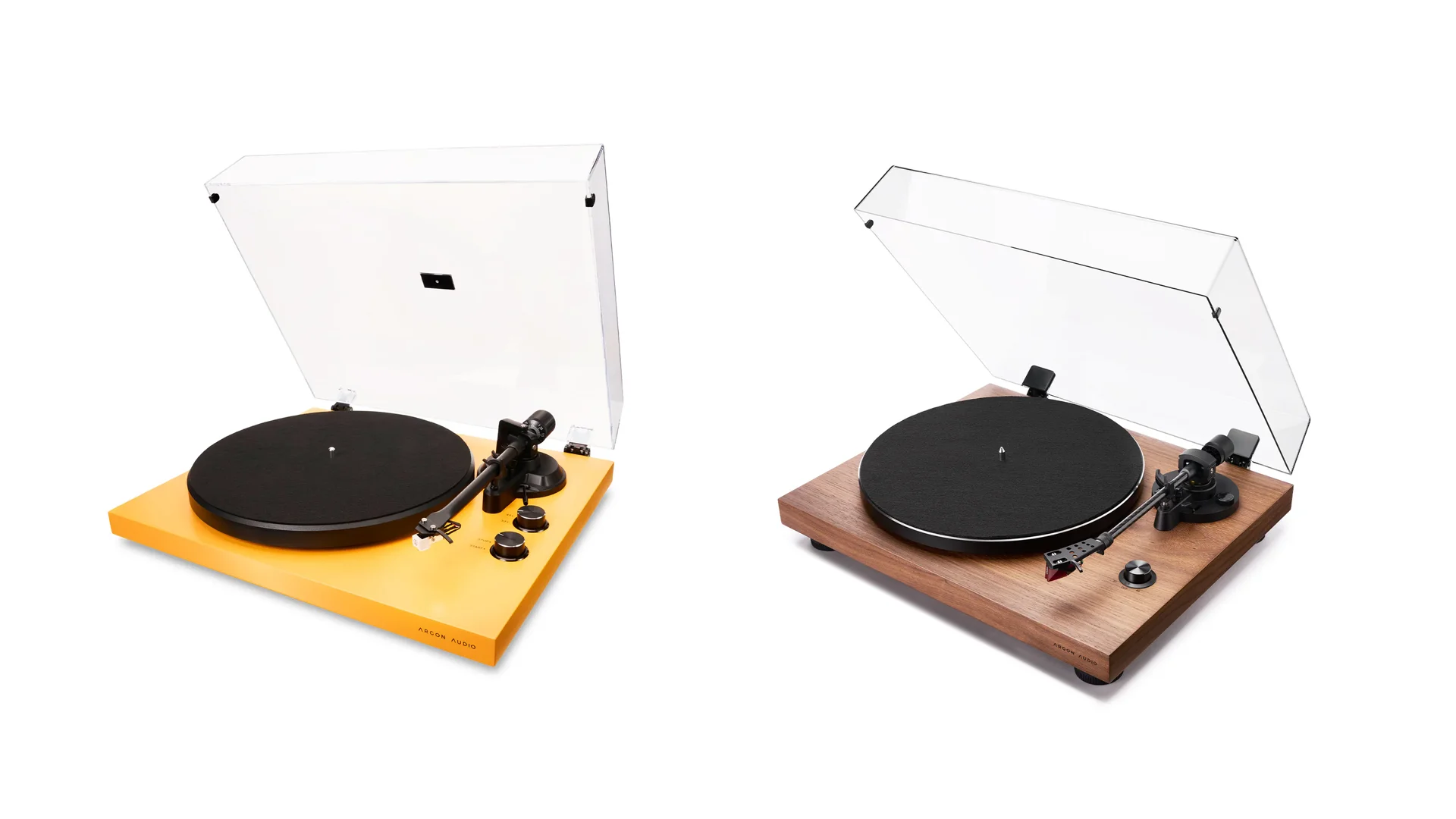
Argon Audio makes compact, affordable hi-fi that reduces the number of separate boxes needed to start listening. Its Danish roots are in HiFi Klubben, where Klaus Philipsen helped develop the brand in the early 2000s. A DAB radio was an early product, followed by active loudspeakers and turntables; the business became a separate limited company in 2019. Today, FENRIS active speakers combine amplification with connections for several sources, including television, while the turntable range offers a straightforward entry into vinyl. The consistent idea is a usable first system—or a smaller second one—with restrained Scandinavian styling and functions selected around everyday listening.

Audio Exklusiv began with Gerd Pütz’s determination to escape the cabinet colouration of conventional loudspeakers. He founded the German company on 1 October 1979 after developing speakers at HECO, then introduced the Tubular Bell I in 1980 and the P3 electrostatic loudspeaker in 1982. Electronics followed because the electrostatics required suitable amplification; the catalogue grew to include tube and transistor preamplifiers, power amplifiers and analogue sources. After Pütz died in 1990, his family continued the business, and Andreas Schönberg acquired the trademark and technical rights in 2009 to restart development. Current products retain the electrostatic heritage while also addressing resonance control, phono playback and system accessories, with development and production carried out in Germany.
Audio Note (UK) builds complete valve-based playback systems, from cartridges and digital sources to amplifiers, cables and loudspeakers. The UK company led by Peter Qvortrup introduced the OTO PP integrated amplifier in 1991, and that long-lived model still captures its preference for simple circuits and serviceable products. Single-ended triode amplifiers, custom output transformers and internally developed resistors, capacitors and wiring are central to the range. Its DACs deliberately avoid oversampling, digital filtering and conventional reconstruction filters, pursuing timing and musical continuity through a different engineering route. Products are organised by levels from Zero to Five, with models such as Meishu and Ongaku showing how parts quality and transformer design are progressively developed. The name here refers specifically to Audio Note (UK), not Kondo Audio Note Japan.

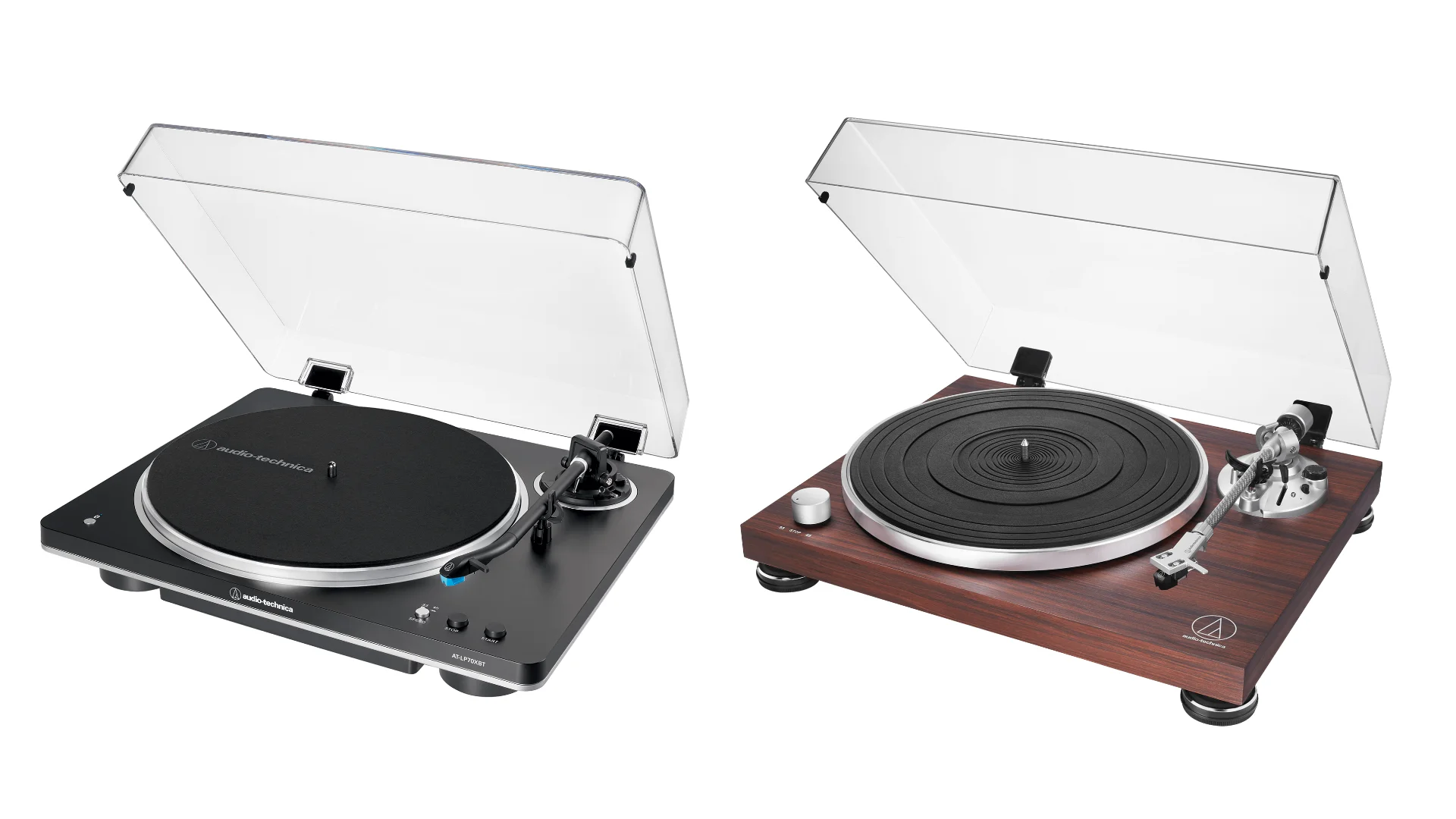
Audio-Technica began with the part that reads a record groove and grew into one of Japan’s broadest audio manufacturers. Hideo Matsushita founded the company above a ramen shop in Shinjuku on 17 April 1962; its first products were the AT-1 and AT-3 phono cartridges. Cartridge engineering remains a defining strength, spanning affordable VM models, long-running AT-OC9 moving-coil designs and the direct-power AT-ART1000 series. The company later applied its transducer expertise to studio, broadcast and live microphones, professional and domestic headphones, wireless systems and turntables. Products such as the ATH-M50x became working tools as well as consumer favourites, while high-end cartridges continue to be serviced and tested at the Japanese production facility. The unusually wide catalogue is connected by practical transducer design rather than by a single audiophile price tier.

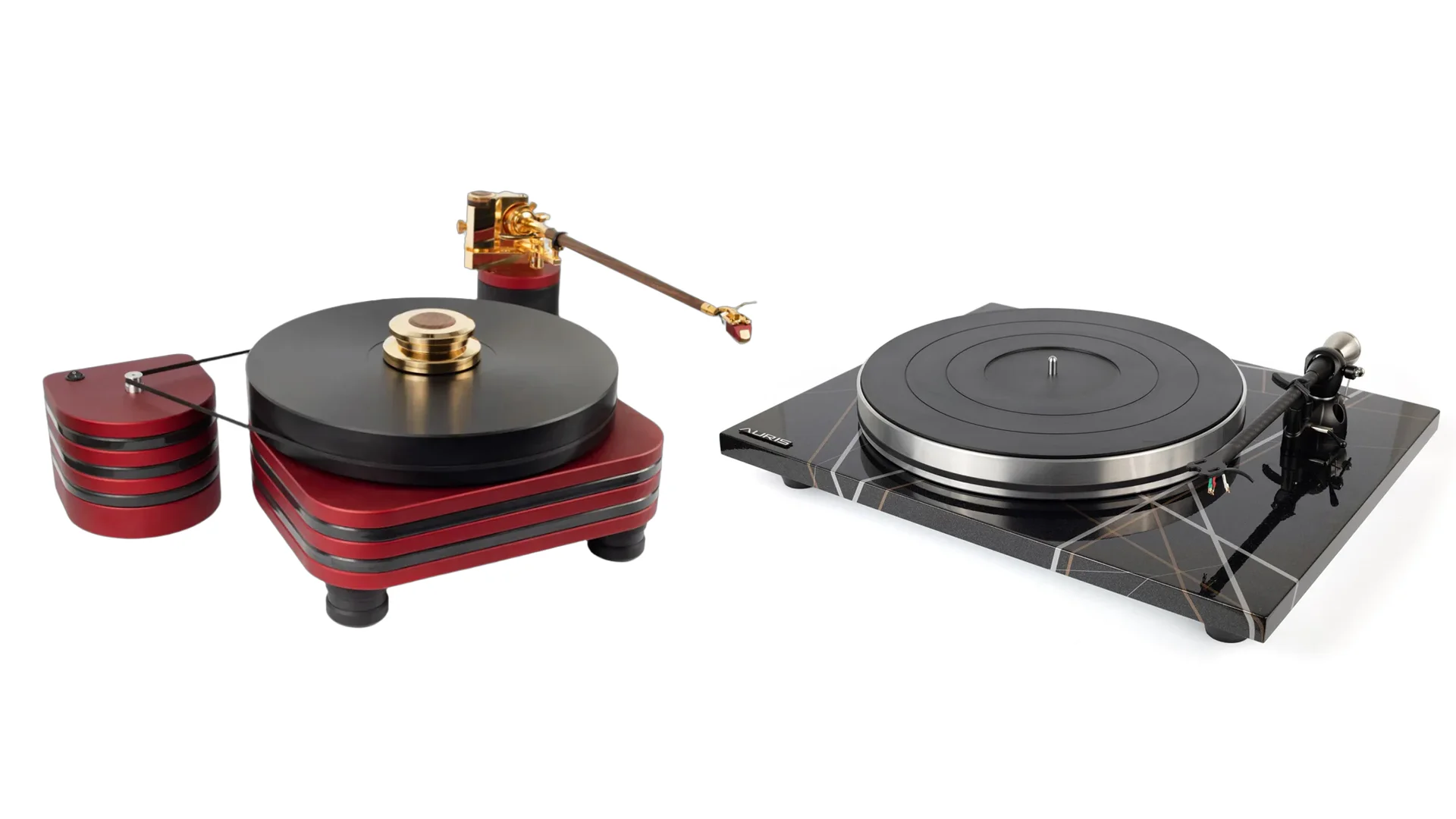
Auris Audio gives valve electronics a recognisable Serbian identity through hand assembly and extensive use of wood, leather and metalwork. Founder and CEO Milomir Trosic formally established the company in 2013 after years of designing amplifiers and other electronics. Integrated and power amplifiers form the core of the range, joined by preamplifiers, DACs, loudspeakers and a particularly strong headphone line. Headonia is the statement headphone amplifier, while Nirvana and the compact Euterpe address different headphones and system roles; Forte power amplifiers extend the same tube-led approach to loudspeakers. Transformers and power supplies are treated as fundamental parts of each circuit rather than hidden commodities. The result is a manufacturer defined by its own valve engineering and material craft, not simply retro styling.
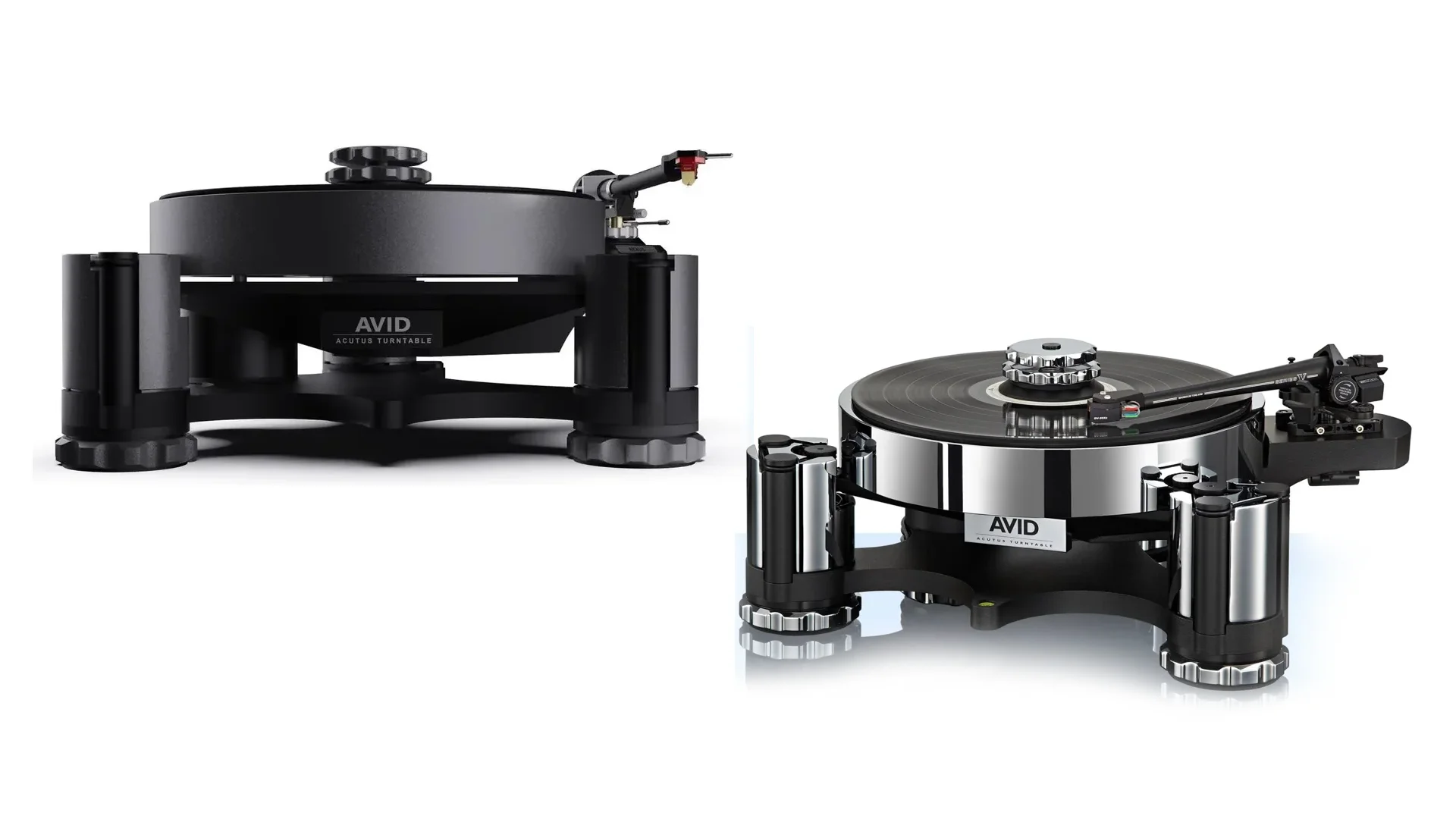
AVID HiFi engineers analogue playback by controlling how vibration enters, travels through and leaves a turntable. Conrad Mas founded the British company in 1995, and the Acutus turntable launched in 1999 after years of development. Its inverted bearing, powerful outboard supply, heavy platter, clamping system and tuned suspension treat record, platter and structure as one mechanical path. Volvere and Sequel extend that architecture, while Diva models provide a simpler rigid platform. AVID has since built a complete ‘groove to ear’ system: cartridges, tonearms, phono stages, integrated and separate amplifiers, loudspeakers, cables and supports. The expansion does not erase the original speciality; the range still begins with extracting information from a moving record while keeping motor, bearing and environmental energy under control. Products are made across the company’s two English factories.

AVM builds complete German hi-fi systems around modular electronics and long product life. Engineers Günther Mania and Robert Winiarski founded Audio Video Manufaktur in April 1986, first gaining attention with the M1 monoblock amplifier. Udo Besser acquired the company in 2010 and broadened its reach while retaining development and hand assembly in Malsch. Inspiration, Evolution and Ovation families cover integrated, pre and power amplification, streaming, DAC and CD functions at progressively higher levels; Rotation turntables added an analogue source developed to work within the same system. AVM often combines transistor output stages with valve line stages where the design calls for it, and its modular streaming platform allows network functions to evolve without redefining the whole product. The brand’s character is system breadth backed by in-house electronics rather than one signature circuit topology.

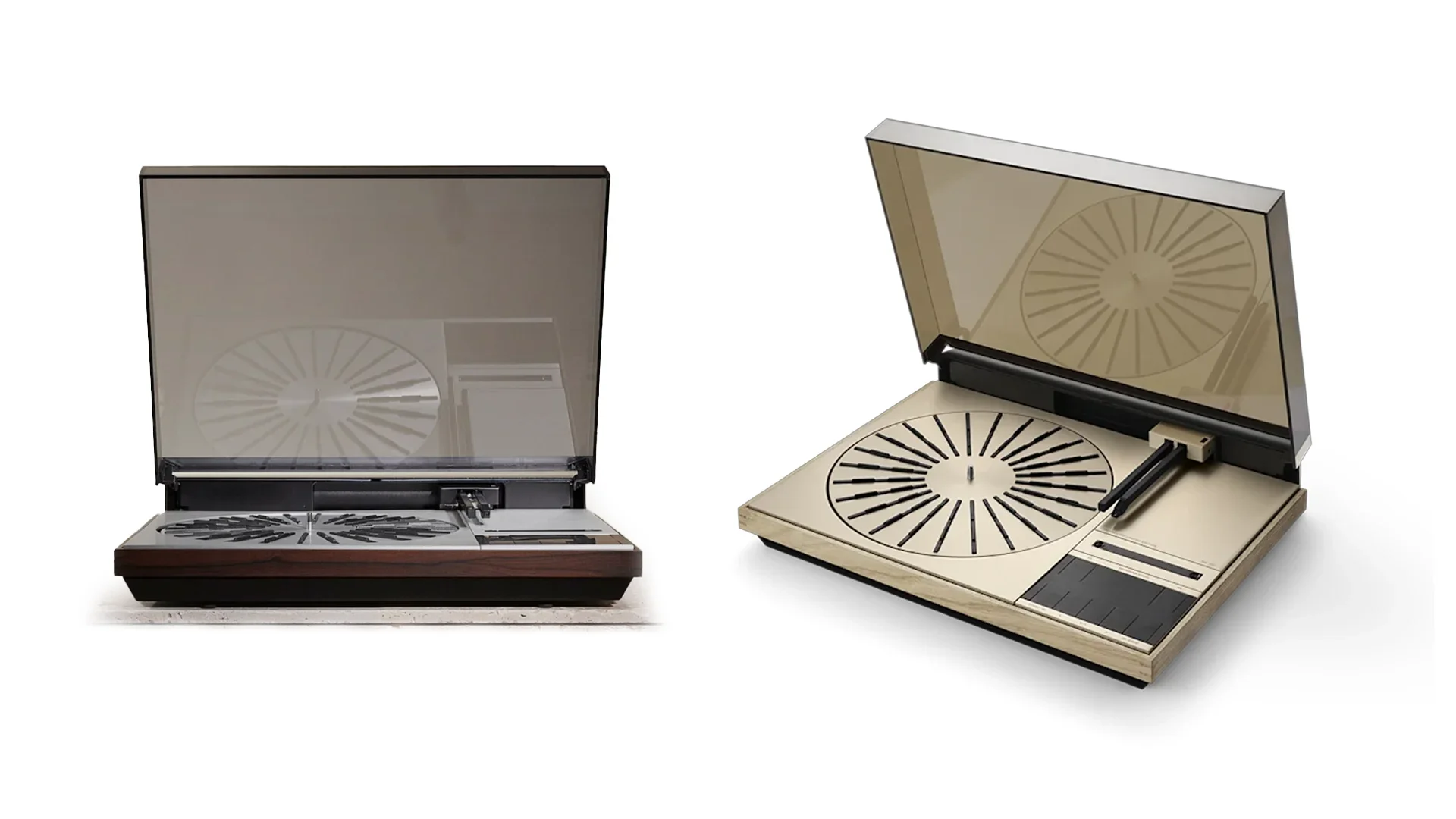
Bang & Olufsen has spent a century treating sound, mechanics and furniture-scale design as one discipline. Engineers Peter Bang and Svend Olufsen founded the Danish company in 1925 at the Olufsen family estate, Quistrup. From early radios and the mains-powered Eliminator to Beomaster systems and active Beolab loudspeakers, B&O repeatedly integrated technology that other manufacturers left in separate boxes. Beolab 90 represents the engineering extreme with multiple amplified drivers, beam-width control and room compensation; Beosound speakers, Beovision televisions, soundbars and Beoplay headphones carry the approach into everyday rooms and portable use. Aluminium machining, acoustic textiles, motorised movement and long software support are used as parts of the experience rather than surface decoration. The strongest B&O products are identifiable before music plays, yet their form is built around active acoustic and interaction engineering.

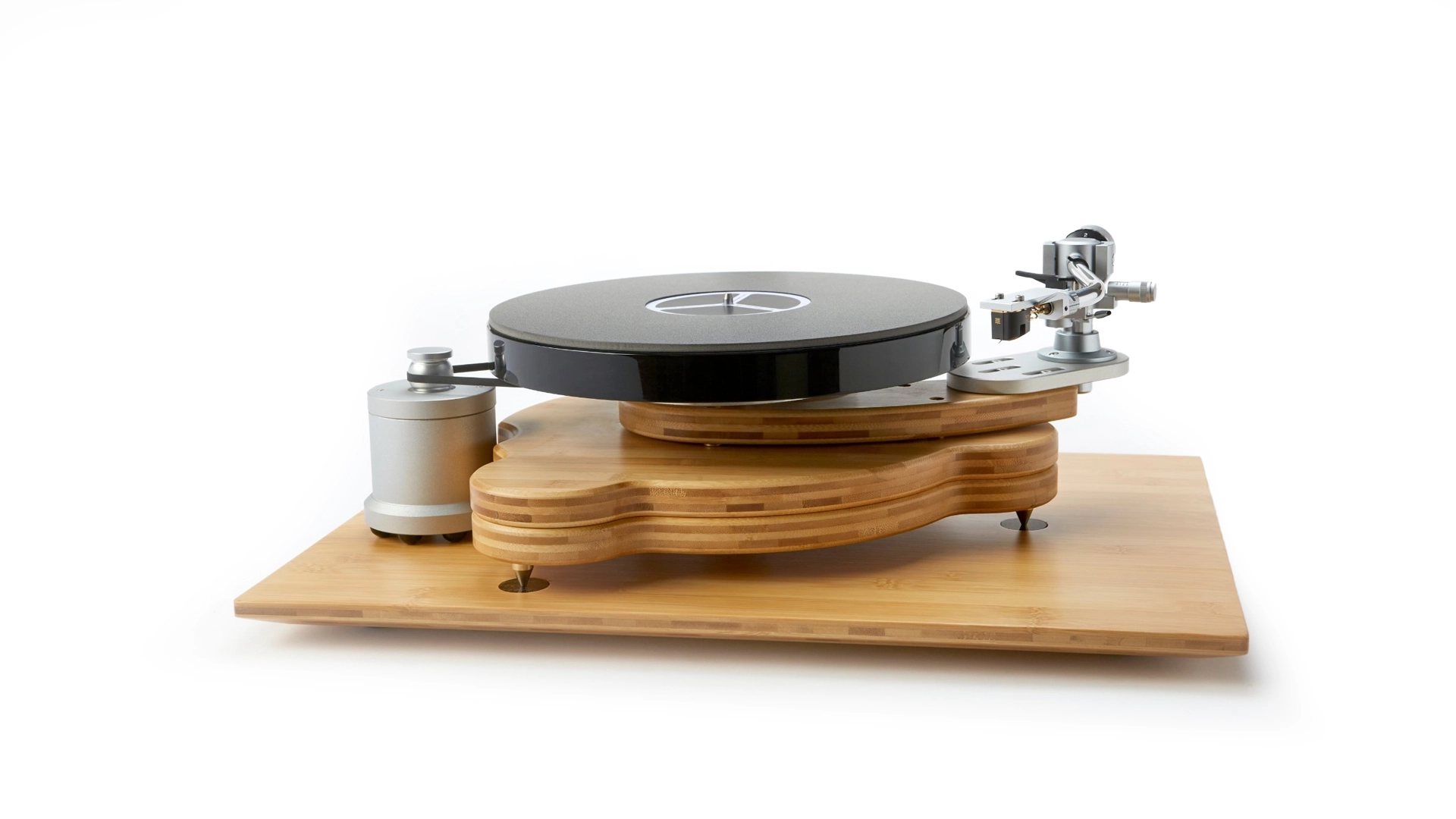
Bauer Audio approaches analogue playback as a compact precision-mechanical system rather than a collection of oversized parts. German designer Willibald Bauer is best known for the dps turntable, whose layered, damped plinth, separate motor and power supply, inverted bearing and carefully controlled contact with the support address vibration at every stage. The accompanying Bauer tonearm uses a unipivot concept developed to preserve low friction and stable cartridge geometry. The company also offers OM and LS loudspeakers and the modular regal equipment support, extending the same restrained industrial design beyond the record player. Production remains small-scale and closely associated with Bauer himself. No dependable public foundation year could be established, so the date is intentionally left blank instead of deriving it from the launch of one product.

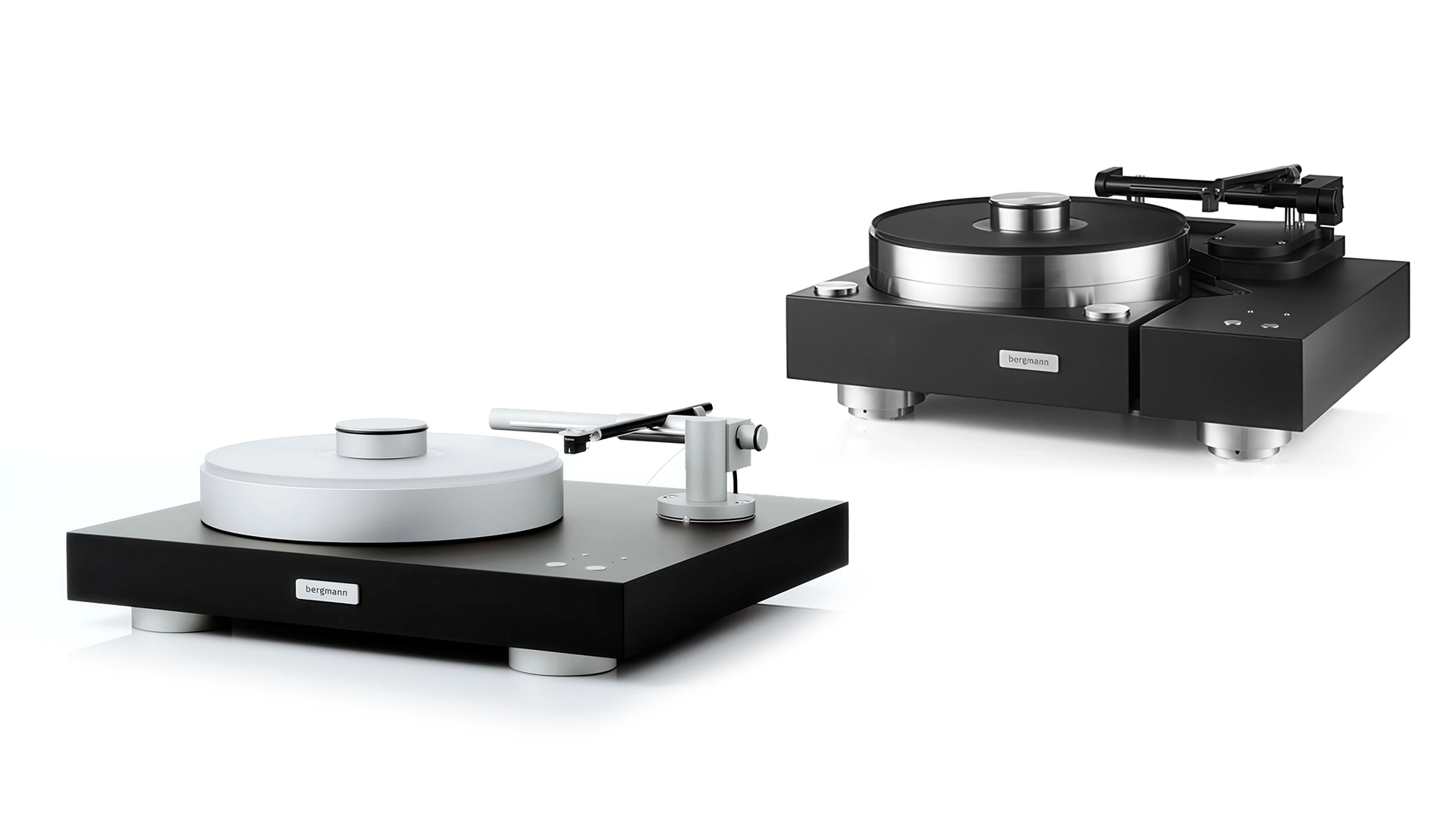
Bergmann Audio removes conventional mechanical contact from two critical parts of vinyl replay: the platter bearing and tonearm movement. Johnnie Bergmann established the Danish company in 2008 and introduced the Sindre air-bearing turntable, setting the pattern for later designs. A thin film of air supports the platter or spindle assembly, while Bergmann’s linear-tracking tonearms also travel on an air bearing so the cartridge follows the record with minimal friction and little tracking-angle error. Galder and Modi turntables can be paired with Odin or Thor arms, while Magne integrates turntable and linear tracker in one system. Pumps and air delivery are engineered as part of the product rather than treated as external laboratory hardware. Every unit is designed, produced and assembled in-house in Denmark, giving the company control over the close tolerances on which the concept depends.

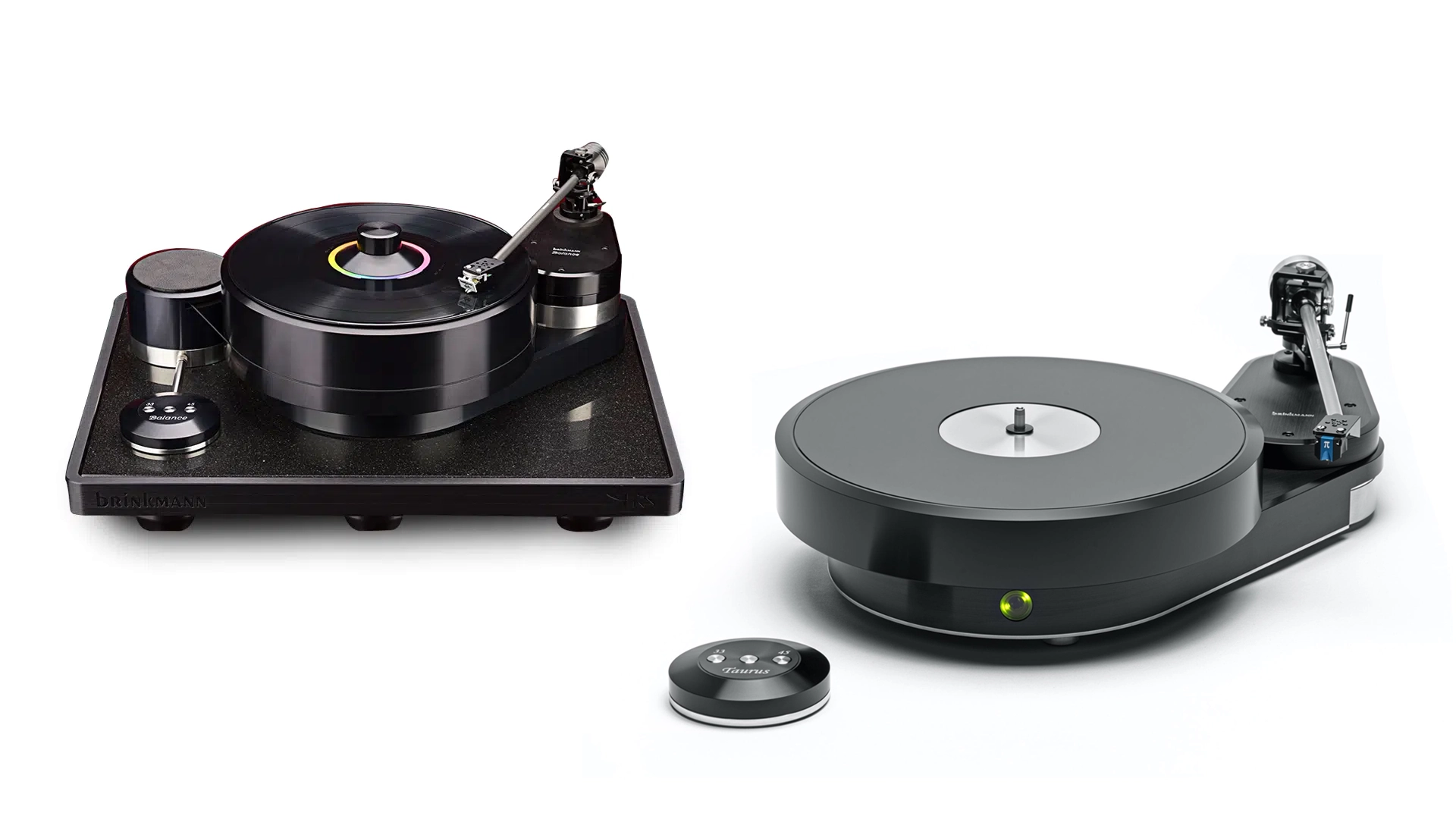
Brinkmann Audio treats the turntable, phono stage, source and amplifier as parts of one engineered playback chain. Helmut Brinkmann founded the German company in 1985 after his earlier work with Audiolabor. The Balance turntable became its best-known design, combining a high-mass platter, heated bearing and separate motor control. Taurus, Spyder and Bardo offer different mechanical architectures, supported by Brinkmann tonearms, cartridges and the RöNt valve power supply. The company was already respected for amplification before building turntables, and its present catalogue includes Edison phono stages, Marconi preamplification, stereo and mono power amplifiers and integrated designs. Nyquist adds streaming and digital conversion without abandoning the same attention to power, grounding and analogue output circuitry. This broader product history corrects the impression that Brinkmann works only with vinyl hardware.

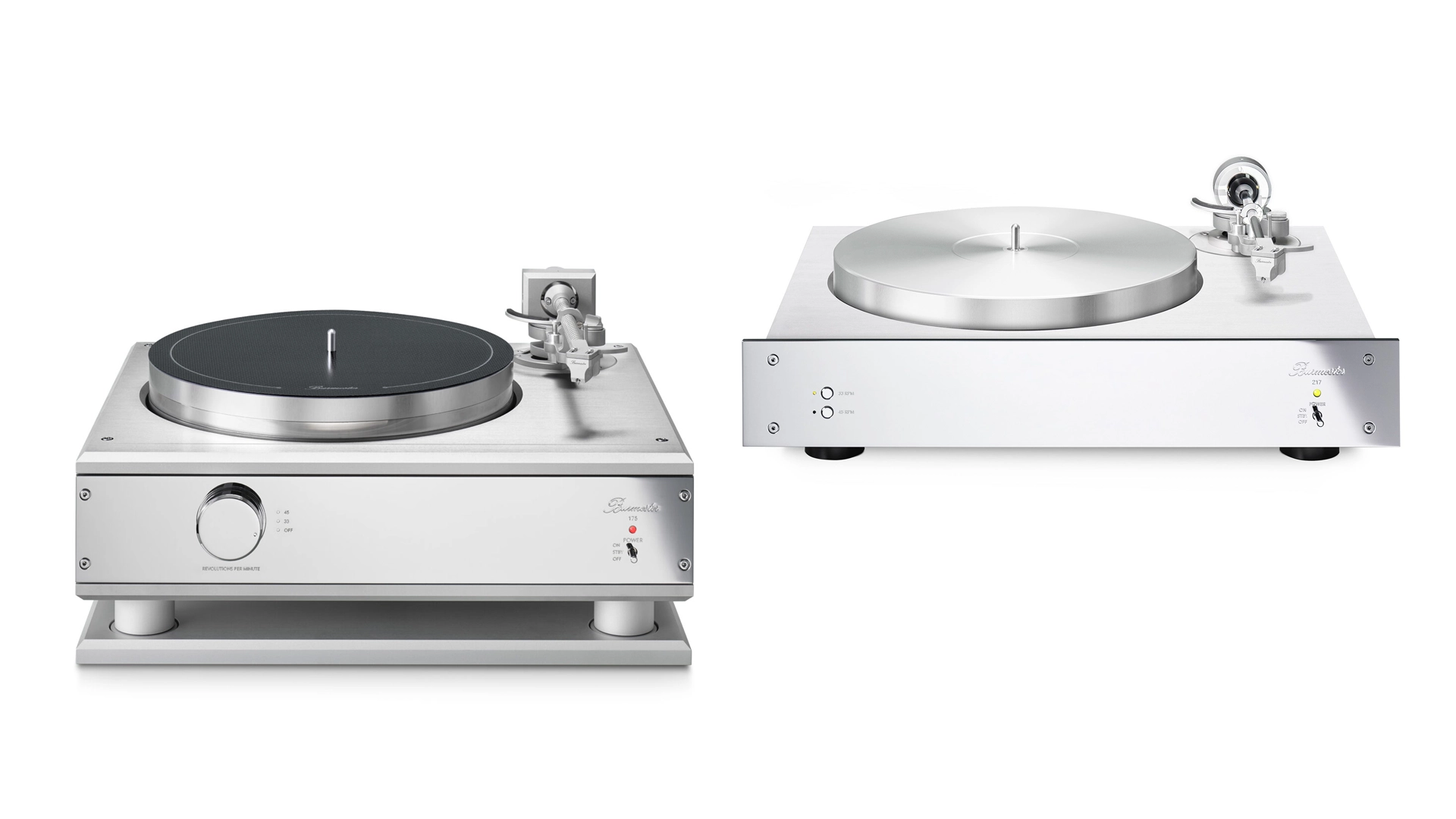
Burmester combines Berlin manufacturing, balanced electronics and a visual language that makes its components immediately recognisable. Musician and engineer Dieter Burmester founded the company in 1977 after building the 777 preamplifier to replace an unsatisfactory unit in his own system. The model number recorded its launch in July 1977 and began a naming convention still used today. The modular 808 preamplifier, DC-coupled signal paths and early symmetrical circuit work became important milestones, while polished chrome fronts became the exterior signature. Current Classic, Top, Reference and Signature products include sources, preamplifiers, power amplifiers, integrated systems, turntables, power treatment and loudspeakers. Burmester also develops factory audio systems with luxury car manufacturers. Despite that breadth, final assembly and much of the specialised production remain in Berlin, keeping the brand closer to a manufactory than a mass-market luxury label.

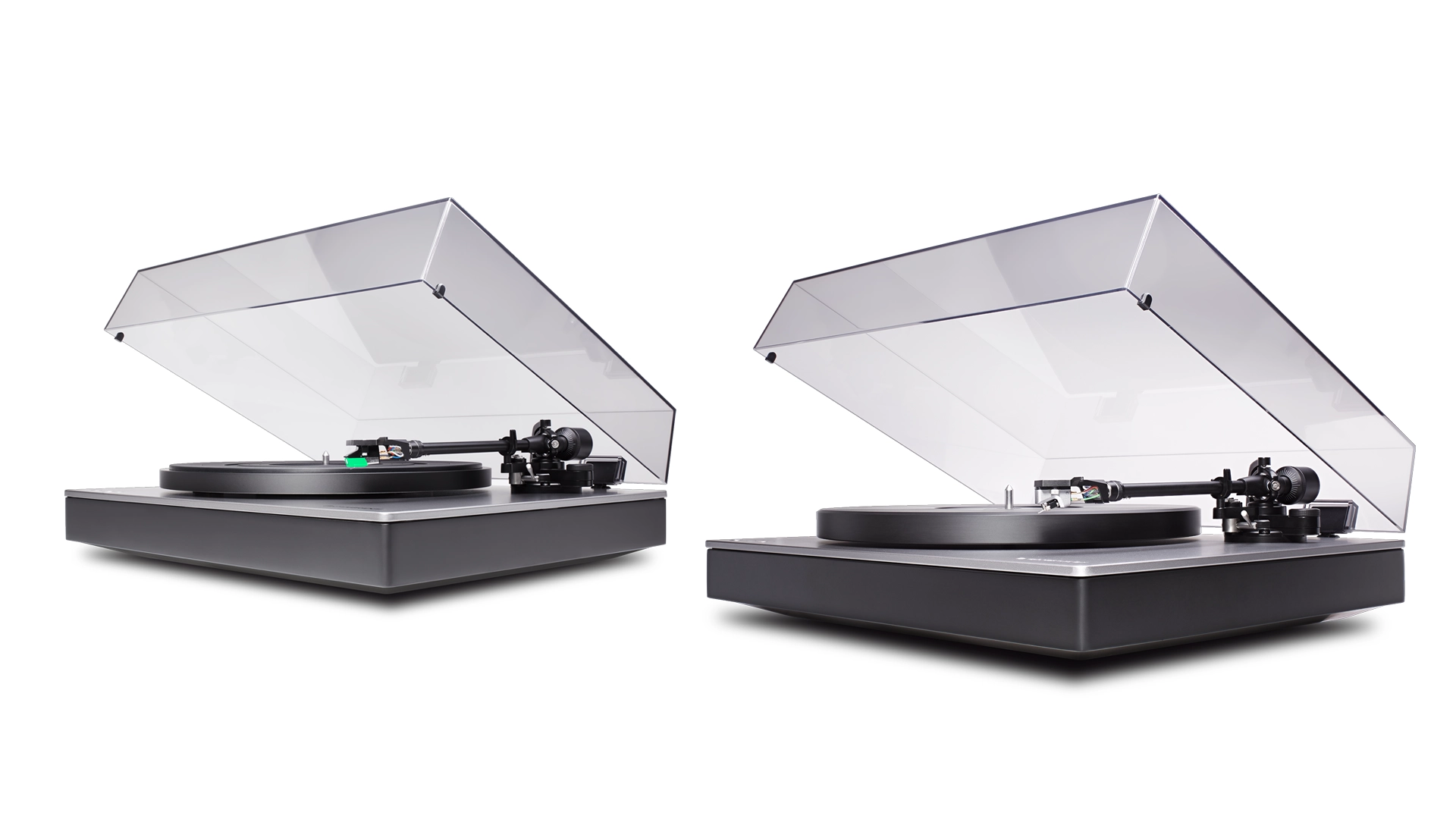
Cambridge Audio has spent more than five decades bringing useful engineering advances into attainable hi-fi components. The company began in Cambridge in 1968, when a team including Gordon Edge and Peter Lee created the P40 integrated amplifier. It was an early commercial amplifier built around a toroidal transformer, a solution that later became standard throughout the industry. Today’s AX and CX ranges cover integrated amplification, CD playback and network sources. Edge uses the company’s Class XA amplifier topology at the flagship level, while Evo combines StreamMagic streaming, conversion and speaker amplification in a compact system. Alva turntables add direct-drive vinyl playback and Bluetooth transmission. StreamMagic remains a major strength because Cambridge controls both the network hardware and the software platform, and continues adding service support to older generations. Product design is led from London, with the range aimed at complete systems rather than one specialist category.

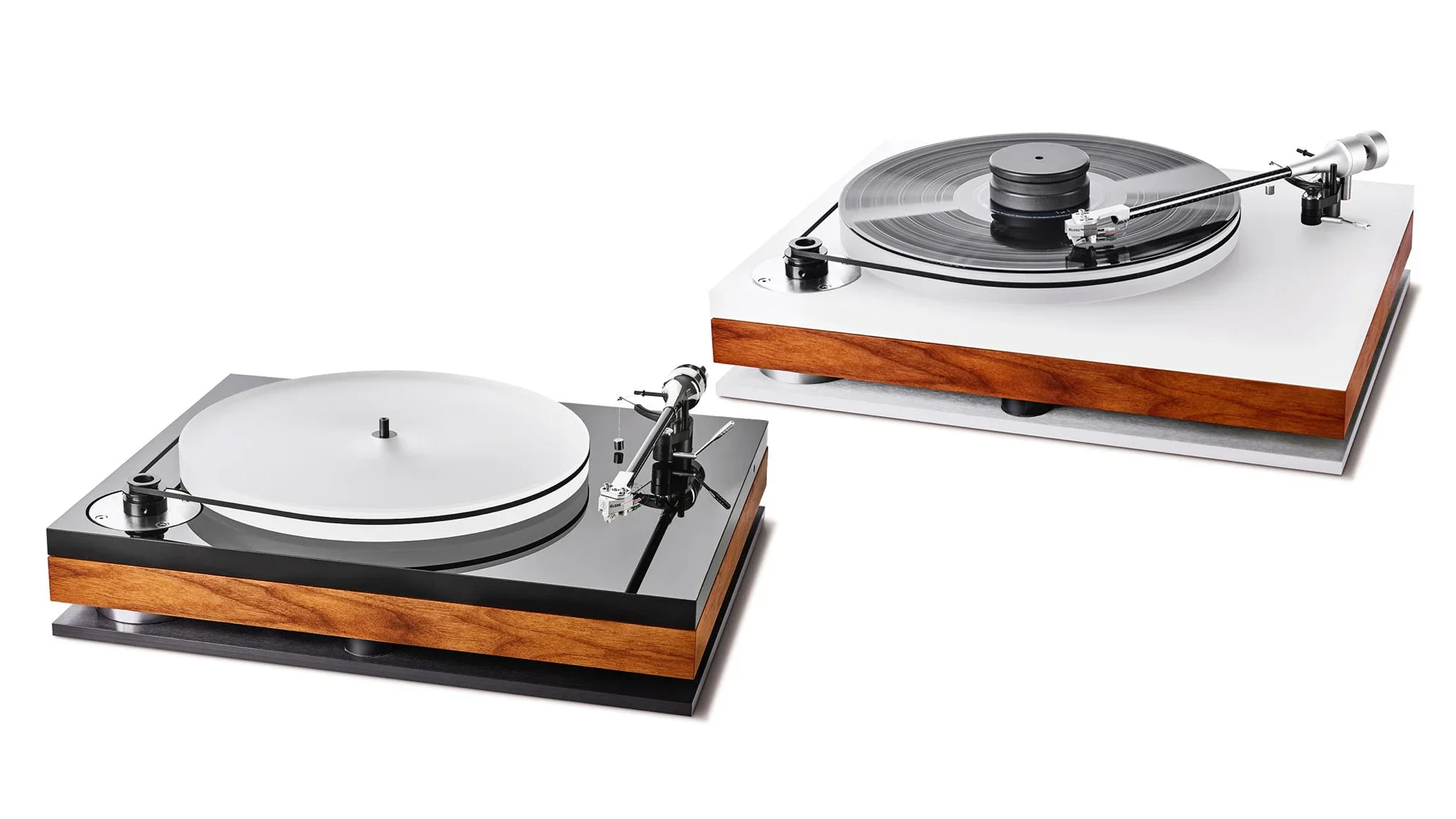
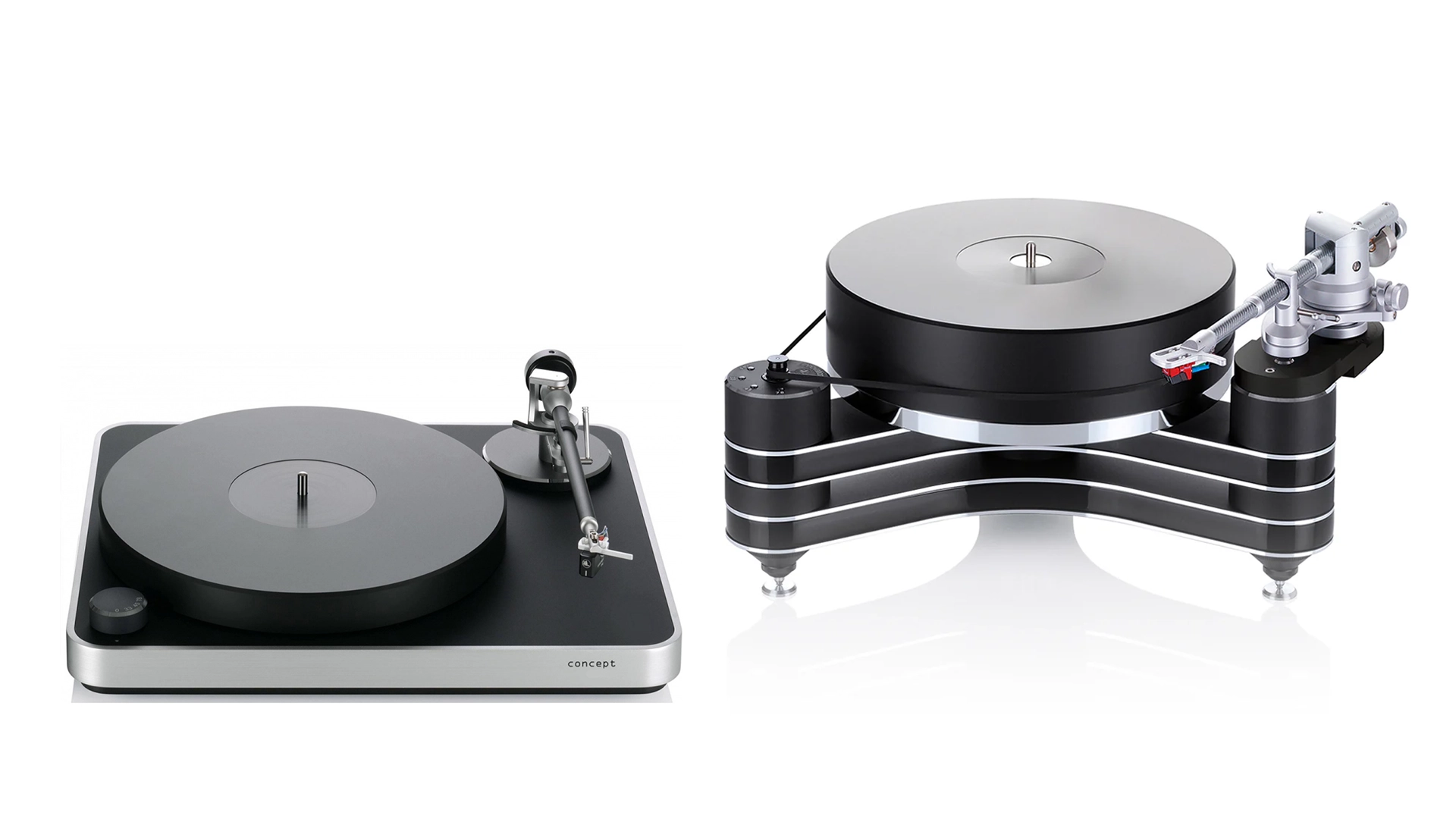
Clearaudio is a family-run German analogue specialist capable of supplying almost every mechanical and electronic part between a record and a line-level input. Peter Suchy founded the company in Erlangen in 1978 and introduced its first fully symmetrical moving-coil cartridge that same year. Clearaudio subsequently expanded from cartridges into turntables, pivoted and tangential tonearms, phono stages, record clamps, isolation accessories and record-cleaning machines. The range begins with accessible Concept packages and progresses through Performance DC, Ovation and Innovation designs to Master Innovation and Statement-level systems. Low-friction bearings, controlled-speed belt drives, layered platters and chassis using acrylic, aluminium, wood composites and ceramics are applied according to model rather than as decorative signatures. Cartridges and tonearms are developed alongside the decks, allowing geometry and mechanical interfaces to be treated as one system. Design, precision manufacture and assembly remain centred at the company’s Erlangen facility, now involving the second generation of the Suchy family.

Connected-Fidelity is a British designer and manufacturer of analogue front ends, power products, isolation devices and cables — not merely a grounding-accessory brand. Its catalogue has included turntables and tonearms, balanced mains supplies, distribution blocks, RF filters, audiophile fuses and the Unity cable family, with manufacture carried out in the UK. The same system-level idea links these otherwise different products: reduce mechanical movement, radio-frequency contamination and mains-related noise before they obscure low-level musical information. Float 30 pucks and related supports address vibration beneath components and loudspeakers, while the power and cable ranges provide complementary electrical paths. The company describes an unusually iterative development method involving material research, prototypes and extensive comparative listening, and it explains much of the construction while keeping proprietary processes confidential. Connected-Fidelity is therefore best understood as a focused ecosystem of source, power and support products intended to work at several noise-entry points in a high-resolution audio system.

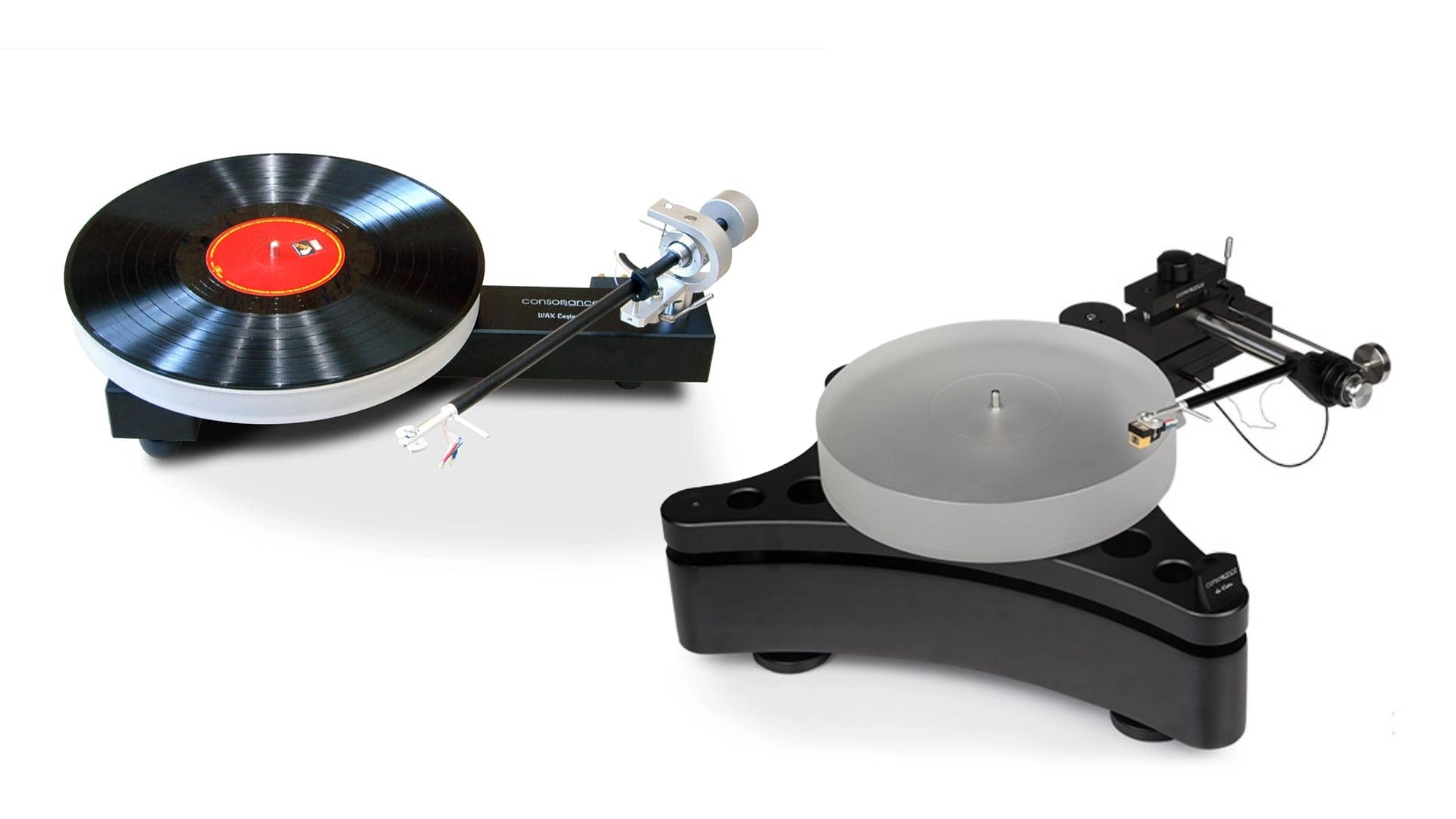
Consonance is the product brand of Opera Audio, one of China’s early internationally distributed high-end audio manufacturers. Opto-mechanical engineer and opera enthusiast Shi Hui Liu founded the Beijing company in 1994 after building a valve amplifier for himself and then being asked to make another. That origin still explains the range: tube and solid-state amplifiers sit alongside CD players, DACs, streamers, loudspeakers, cables and an especially substantial analogue line. Opera became an early Chinese high-end turntable manufacturer, and Consonance decks such as the Droplet, Die Walküre and Wax Engine show a willingness to develop complete mechanisms, plinths and tonearms rather than treat vinyl as a sideline. Many model names reference European opera, but the engineering is not confined to retro styling; the company combines traditional valve circuits with digital sources and modern manufacturing. Its “Simple. Human.” philosophy is a useful summary of the house character: direct circuits, restrained interfaces and a broad, internally designed system intended to serve music rather than specification theatre.

Continuum Audio Labs is an Australian analogue specialist whose Caliburn turntable, Cobra tonearm and Castellon isolation stand became one of the defining vinyl playback systems of the mid-2000s. Co-founders David Payes and Murali Murugasu brought together specialists from mechanical engineering, materials science, vibration control and industrial design; engineer Mark Doehmann was central to the original Caliburn concept launched in 2005. The system treated motor, platter, bearing, arm and support as one mechanical problem. Castellon, for example, combined magnetic and pneumatic isolation while keeping motor and chassis on the same reference plane. Continuum later carried that research into the Obsidian turntable and Viper tonearm, using a new architecture rather than simply miniaturising the Caliburn. Contrary to the old description, Continuum should not be presented as definitively defunct: its official catalogue and technical archive remain centred on Obsidian, Viper, Caliburn and Cobra. The brand’s lasting distinction is rigorous control of energy and geometry across the entire record-playing chain.

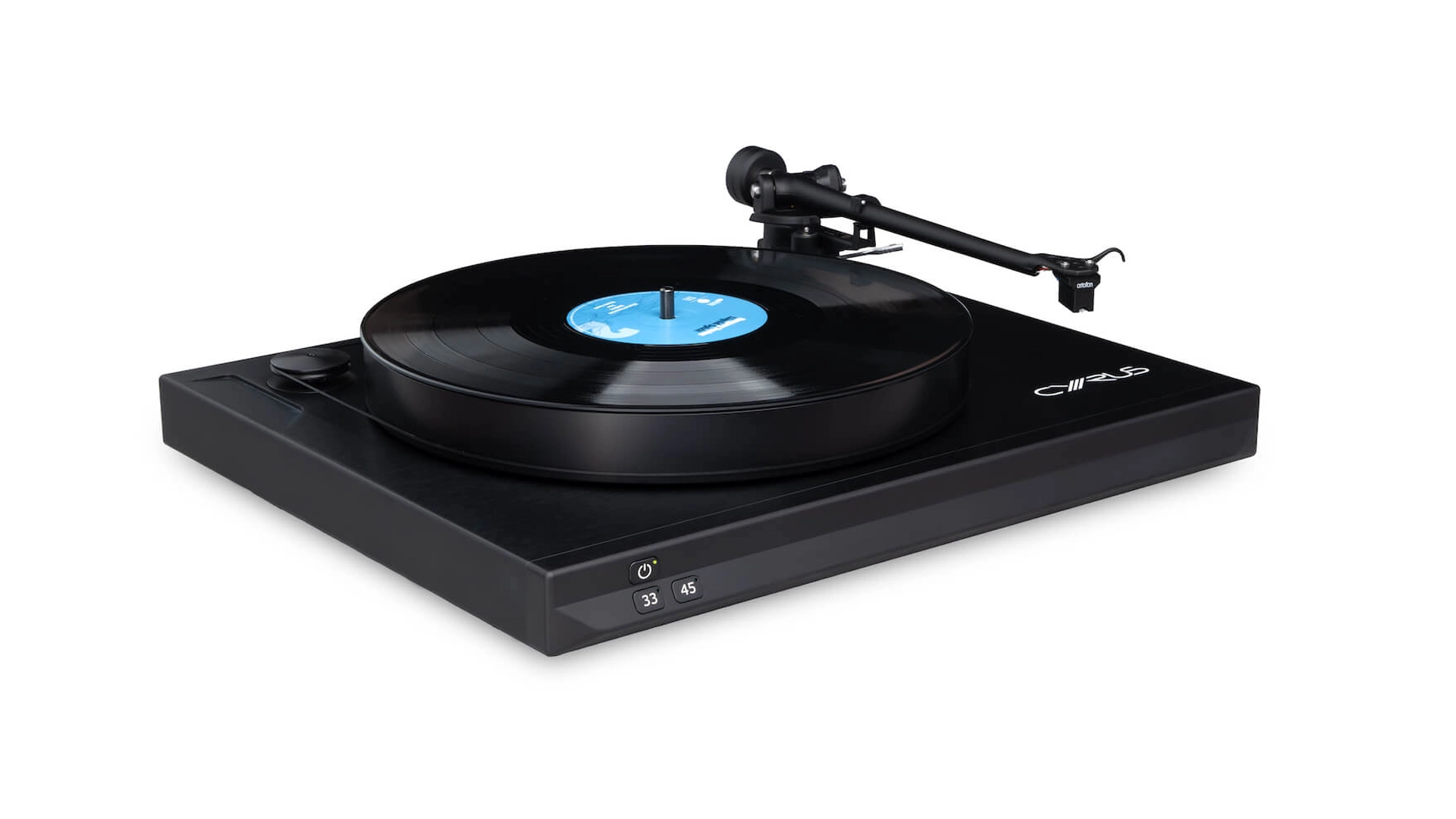
Cyrus Audio is the British company that made half-width hi-fi separates a serious system format. The original Cyrus One integrated amplifier appeared in 1984, when Cyrus was the electronics arm associated with Mission, and established the compact die-cast chassis, clean fascia and upgrade path that became the brand’s visual and technical language. Cyrus later became independent and remains based in Cambridgeshire. Its range has covered integrated and power amplifiers, preamplifiers, CD players, streamers, phono stages and external power supplies, allowing a system to grow without abandoning its core components. The 40 Series carries the concept into a wider but still compact aluminium case with dedicated 40 AMP, 40 ST streamer, 40 CD and 40 PSU models, while the 80 range develops the performance tier further. External PSUs and trade-in or servicing programmes reinforce the long-life, modular philosophy. Cyrus’s individuality is not compactness alone: it is the disciplined use of a consistent footprint, separated power options and interoperable components to build a high-performance system progressively.
DaVinciAudio Labs is a Swiss workshop best known for treating analogue replay as precision mechanical craft. Founder and chief engineer Peter Brem developed the Gabriel and Grandezza turntables, Grandezza and Virtu tonearms, phono cartridges and limited-production electronics with the live concert as his reference; after his death in 2013, the family team and close collaborators continued the house’s work. The Gabriel reference deck and the more compact Equilibrium address bearing stability, drive, platter energy and arm geometry as one system rather than as a collection of accessories. DaVinci’s tonearms use carefully machined structures and high-grade bearings assembled with watchmaker-like attention, while its Grandezza moving-coil cartridges were specified and assembled in Switzerland around a magnetic engine supplied by Benz Micro. The company has also produced phono stages, line electronics and very low-volume Master Reference amplification. Its activity is documented from the early 2000s, although the company does not publish a sufficiently authoritative exact founding year. The identity is clear: bespoke, made-to-order analogue components whose distinctive value lies in mechanical execution, adjustment precision and continuity of craftsmanship rather than a rapidly changing product cycle.
Denon’s history begins in 1910, when American entrepreneur Frederick Whitney Horn established the Japan Recorders Corporation, the antecedent of today’s Japanese audio brand, to manufacture records and gramophones. The company subsequently linked recording and playback in ways few consumer manufacturers can claim: it built Japan’s first professional disc recorder, released the country’s first commercial LP records, developed the broadcast-standard DL-103 moving-coil cartridge in 1963 and introduced an eight-channel PCM digital recorder in 1972. That combination of analogue, digital and broadcast experience still appears in a broad catalogue. AVR and AVC home-cinema receivers integrate amplification, decoding, room correction and HEOS network audio; PMA amplifiers and DCD disc players serve stereo systems; turntables, cartridges, headphones and soundbars cover other parts of the chain. The DL-103 remains in production decades after its broadcast origins, while modern receivers adopt current HDMI and immersive-audio standards. Denon’s strength is not merely age or product count, but a continuous ability to translate professional recording and format changes into durable home-audio products.

HFS Ad Rotator · default · slot 1
HFS Ad Rotator · default · slot 2
Add a missing AV-brand or update an existing one

Add a missing AV-brand or update an existing one

Any user can submit a Quick Submission Form to suggest a new AV-brand or suggest update details for an existing one. Brand owners or official representatives of brand can fill a Official Brand Submission Form to provide complete company information, ensuring maximum accuracy and visibility in our portal. All submissions are moderated before publication. 

For suggesting new AV-brands or suggesting updating existing one by users.

Complete official form for brand owners and representatives to provide complete company details to add a new one or update an existing one

Brand Categories:
  • SPEAKERS
    • Bookshelf Speakers — Compact loudspeakers designed for placement on a shelf or dedicated stands.
    • Floorstanding Speakers — Large, full-range loudspeakers that stand directly on the floor, designed for powerful and expansive sound.
    • In-wall Custom Install Speakers — Speakers designed to be installed flush into walls or ceilings for a discreet, "zero-footprint" audio solution.
    • On-Wall Speakers — Slim, low-profile speakers designed to be mounted directly on a wall, often to complement a flat-panel TV.
    • Studio Monitors — Speakers designed for professional audio production, offering a flat, accurate, and uncolored sound reproduction.
    • Planar Ribbon Electrostatic Speakers — Speakers using large, thin diaphragms (panels) instead of cones, prized for their transparent and detailed sound.
    • Horn Speakers — Highly efficient speakers that use a flared horn to amplify a driver, known for their dynamic, "live" sound.
    • Active Powered Speakers — Loudspeakers with built-in amplifiers, creating a simple all-in-one audio solution.
    • Wireless Portable Speakers — Compact, battery-powered speakers with Bluetooth for on-the-go music.
    • Outdoor Speakers — Durable, weather-resistant speakers engineered to provide high-quality audio in open-air spaces like patios and gardens.
    • Marine Extreme Speakers — Rugged, waterproof, and corrosion-resistant speakers built to withstand harsh marine environments on boats and yachts.
    • Commercial Speakers — Durable loudspeaker systems designed for background music and public address in business environments.
    • Invisible Speakers — Architectural speakers installed in a wall and plastered over, making them completely invisible.
    • Subwoofers Bass Speakers — Specialized speakers dedicated to reproducing only the lowest bass frequencies for impact and depth for all purposes
  • AMPLIFIERS
    • Integrated Amplifiers — An all-in-one component combining a preamplifier and a power amplifier in a single chassis.
    • PreAmplifiers — The control hub of a separates audio system, used for source selection and volume control.
    • Power Amplifiers — A component with the sole job of taking a line-level signal and amplifying it to drive loudspeakers.
    • Phono Preamps Phono Stages — A device that amplifies the weak signal from a turntable's cartridge and applies necessary RIAA equalization.
    • Tube Amplifiers — Amplifiers that use vacuum tubes (valves) instead of transistors, prized for their warm and rich sound character.
    • Multi-Zone Multi-Room Amplifiers — Amplifiers that power speakers in multiple different rooms or "zones" from a single, centralized unit.
    • Network Amplifiers — An integrated amplifier with built-in networking and streaming capabilities, creating a modern "just add speakers" system.
    • Desktop Headphone Amplifiers — Mains-powered amplifiers designed to drive high-quality headphones in a desktop or home audio system.
    • Portable Headphone Amplifiers Players — Compact, battery-powered devices (DAPs or amps) for delivering high-quality sound on the move.
  • DAC STREAMERS
    • DAC Desktop — Digital-to-Analog Converters designed to improve sound quality from a computer or other home digital source.
    • DAC Portable — Compact, battery-powered Digital-to-Analog Converters for improving audio from smartphones and laptops.
    • Music Streamers — Devices that connect to the internet to access and play music from online services like Tidal and Spotify.
    • Network Players — Source components focused on high-fidelity playback of digital audio files from a local network (NAS drive).
    • Music Servers HDD Storages — Dedicated devices for storing, managing, and playing a local digital music library with high fidelity.
    • CD Transport Media Players — High-precision disc players that read physical media (CDs, SACDs) and output a pure digital signal to an external DAC.
    • Compact All-in-One Systems — Self-contained audio systems that combine source, amplification, and often speakers into a single, compact unit.
    • Streaming Amplifier — An integrated amplifier with built-in streaming capabilities.
  • TURNTABLES VINYL
    • Turntables — Electromechanical devices that play vinyl records by rotating them at a stable speed.
    • Tonearms — The precision arm on a turntable that holds the cartridge, allowing the stylus to track the record groove.
    • Cartridges — The transducer on a turntable's tonearm that holds the stylus and converts groove vibrations into an electrical signal.
    • Vinyl Cleaning Machine — Specialized machines that use fluid and vacuum/ultrasonic action to deep-clean vinyl records.
    • Vinyl Accessories — Essential tools for setup and maintenance, like clamps, brushes, and alignment protractors.
  • HEADPHONES
    • In-Ear Earbuds — Ultra-portable listening devices, including True Wireless (TWS) models, designed for convenience and daily use.
    • In-Ear Monitors IEM — High-performance in-ear headphones that seal in the ear canal for superior sound isolation and detail.
    • On-Ear Headphones — Headphones with cushions that rest directly on the ears, offering a balance of portability and sound quality.
    • Over-Ear Headphones — Full-sized headphones with large earcups that completely encircle the ears for maximum comfort and immersion.
    • Wireless Headphones — Headphones that connect to source devices via Bluetooth, often featuring Active Noise Cancellation (ANC).
    • Planar Magnetic Ribbon Headphones — High-end headphones using a thin, flat diaphragm driven by magnets, known for their detailed and low-distortion sound.
    • Electrostatic Headphones — High-end headphones using a massless diaphragm in an electrostatic field, requiring a special energizer/amplifier.
  • HOME THEATER
    • AV Receivers Media Players — Central components of a home cinema, combining audio/video processing, amplification, and playback.
    • Home Theater Speakers — Matched sets of speakers (front, center, surround) designed to create an immersive cinematic soundfield.
    • Soundbars — A simple, all-in-one speaker bar that provides a significant audio upgrade over a television's built-in speakers.
    • Subwoofers — Specialized speakers dedicated to reproducing only the lowest bass frequencies for impact and depth for home theaters
    • Processors Amplifiers — High-end home cinema "separates" consisting of a surround sound processor and a multi-channel power amplifier.
    • Screens — High-quality projection surfaces designed to provide an optimal image for a home cinema projector.
    • Projectors — Video projectors optimized for home cinema use, focusing on color accuracy, contrast, and black levels.
  • CABLES ACCESSORIES
    • Speaker Cables — Cables that carry the amplified, high-level signal from an amplifier to passive loudspeakers.
    • Analog Cables — Cables (RCA, XLR) used to transmit analog audio signals between components like DACs and amplifiers.
    • Digital Cables — Cables (Coaxial, Optical, USB) that transmit digital audio data between components.
    • Phono Cables — Specially shielded cables designed to carry the delicate, low-level signal from a turntable to a phono preamp.
    • Headphone Cables — Aftermarket and replacement cables used to upgrade or customize high-quality headphones.
    • Connectors Terminals — The fundamental hardware (plugs, jacks, spades, etc.) used to terminate cables and connect equipment.
    • Power Cables — High-performance AC cords designed to deliver clean, noise-free power to audio components.
    • Power Supplies Conditioners — Devices that filter, stabilize, and protect the AC power supplied to an audio system for improved performance.
  • FURNITURE
    • Speaker Stands Mounts — Stands and mounts used to position speakers at the correct height and angle for optimal sound.
    • Furniture Racks — Purpose-built furniture designed to house audio/video components with a focus on stability, ventilation, and vibration control.
    • Isolation Footers Spikes Shelves — Specialized accessories (spikes, footers, platforms) designed to manage vibrations and isolate components.
    • Soundproof Solutions — Products designed to control room acoustics, including treatment (panels, diffusers) and sound-blocking materials.
  • PROFESSIONAL
    • Concert Speakers — Large-scale PA systems, including line arrays and stage monitors, for live music and public events.
    • Cinema Speakers — Specialized, high-output loudspeaker systems certified for use in large commercial movie theaters.
    • Concert Electronics — Robust electronics including mixing consoles, processors, and amplifiers for live sound reinforcement.
    • Cinema Electronics — Professional, DCI-compliant processors and amplifiers for use in commercial movie theaters.
    • Cinema Screens — Large-format, often acoustically transparent, projection screens built to professional cinema standards.
    • Cinema Projectors — Ultra-high-brightness, DCI-compliant projectors designed for continuous use in commercial movie theaters.
    • Professional Cables Accessories — Rugged, reliable cables and hardware (e.g., snake cables, Speakon connectors) for touring and professional installation.
  • DIY Components
    • Speaker drivers Tweeters — The individual transducers (woofers, mid-range, tweeters) that are the fundamental building blocks of a loudspeaker.
    • Coaxial Speaker Drivers — Speaker drivers where the tweeter is mounted in the center of the woofer, creating a single point source for sound.
    • DIY Speaker Kits — Complete packages including drivers, crossovers, and plans for enthusiasts to build their own loudspeakers.
    • Electron Vacuum Tubes — Glass valves used in tube amplifiers that provide amplification and can be replaced to tune the sound.
    • Electronic Components — Discrete parts (capacitors, resistors, transistors) used by manufacturers and DIYers to build audio circuits.
  • OTHERS
    • Line Stage — A type of preamplifier that exclusively handles line-level sources, without a built-in phono stage.
    • Time Alignment Device — A signal processor that corrects timing delays between drivers or speakers for improved sound coherence.
    • Smart Portable Speakers — Wireless portable speakers with integrated voice assistants (e.g., Alexa, Google Assistant) and smart home functionality.
    • DJ Turntables — Durable, high-torque direct-drive turntables with pitch control, built for performance and DJing applications.
    • Motor Drives — External motor units and power supplies for turntables, providing improved rotational stability and isolation.
    • Crossovers — Electronic circuits that split an audio signal into different frequency bands to route to the correct speaker driver.
    • Car Audio — Audio equipment, including speakers, amplifiers, and source units, specifically designed for use in vehicles.

Brand Categories:
  • Active Powered Speakers — Loudspeakers with built-in amplifiers, creating a simple all-in-one audio solution.
  • Analog Cables — Cables (RCA, XLR) used to transmit analog audio signals between components like DACs and amplifiers.
  • AV Receivers Media Players — Central components of a home cinema, combining audio/video processing, amplification, and playback.
  • Bookshelf Speakers — Compact loudspeakers designed for placement on a shelf or dedicated stands.
  • Car Audio — Audio equipment, including speakers, amplifiers, and source units, specifically designed for use in vehicles.
  • Cartridges — The transducer on a turntable's tonearm that holds the stylus and converts groove vibrations into an electrical signal.
  • CD Transport Media Players — High-precision disc players that read physical media (CDs, SACDs) and output a pure digital signal to an external DAC.
  • Cinema Electronics — Professional, DCI-compliant processors and amplifiers for use in commercial movie theaters.
  • Cinema Projectors — Ultra-high-brightness, DCI-compliant projectors designed for continuous use in commercial movie theaters.
  • Cinema Screens — Large-format, often acoustically transparent, projection screens built to professional cinema standards.
  • Cinema Speakers — Specialized, high-output loudspeaker systems certified for use in large commercial movie theaters.
  • Coaxial Speaker Drivers — Speaker drivers where the tweeter is mounted in the center of the woofer, creating a single point source for sound.
  • Commercial Speakers — Durable loudspeaker systems designed for background music and public address in business environments.
  • Compact All-in-One Systems — Self-contained audio systems that combine source, amplification, and often speakers into a single, compact unit.
  • Concert Electronics — Robust electronics including mixing consoles, processors, and amplifiers for live sound reinforcement.
  • Concert Speakers — Large-scale PA systems, including line arrays and stage monitors, for live music and public events.
  • Connectors Terminals — The fundamental hardware (plugs, jacks, spades, etc.) used to terminate cables and connect equipment.
  • Crossovers — Electronic circuits that split an audio signal into different frequency bands to route to the correct speaker driver.
  • DAC Desktop — Digital-to-Analog Converters designed to improve sound quality from a computer or other home digital source.
  • DAC Portable — Compact, battery-powered Digital-to-Analog Converters for improving audio from smartphones and laptops.
  • Desktop Headphone Amplifiers — Mains-powered amplifiers designed to drive high-quality headphones in a desktop or home audio system.
  • Digital Cables — Cables (Coaxial, Optical, USB) that transmit digital audio data between components.
  • DIY Speaker Kits — Complete packages including drivers, crossovers, and plans for enthusiasts to build their own loudspeakers.
  • DJ Turntables — Durable, high-torque direct-drive turntables with pitch control, built for performance and DJing applications.
  • Electron Vacuum Tubes — Glass valves used in tube amplifiers that provide amplification and can be replaced to tune the sound.
  • Electronic Components — Discrete parts (capacitors, resistors, transistors) used by manufacturers and DIYers to build audio circuits.
  • Electrostatic Headphones — High-end headphones using a massless diaphragm in an electrostatic field, requiring a special energizer/amplifier.
  • Floorstanding Speakers — Large, full-range loudspeakers that stand directly on the floor, designed for powerful and expansive sound.
  • Furniture Racks — Purpose-built furniture designed to house audio/video components with a focus on stability, ventilation, and vibration control.
  • Headphone Cables — Aftermarket and replacement cables used to upgrade or customize high-quality headphones.
  • Home Theater Speakers — Matched sets of speakers (front, center, surround) designed to create an immersive cinematic soundfield.
  • Horn Speakers — Highly efficient speakers that use a flared horn to amplify a driver, known for their dynamic, "live" sound.
  • In-Ear Earbuds — Ultra-portable listening devices, including True Wireless (TWS) models, designed for convenience and daily use.
  • In-Ear Monitors IEM — High-performance in-ear headphones that seal in the ear canal for superior sound isolation and detail.
  • In-wall Custom Install Speakers — Speakers designed to be installed flush into walls or ceilings for a discreet, "zero-footprint" audio solution.
  • Integrated Amplifiers — An all-in-one component combining a preamplifier and a power amplifier in a single chassis.
  • Invisible Speakers — Architectural speakers installed in a wall and plastered over, making them completely invisible.
  • Isolation Footers Spikes Shelves — Specialized accessories (spikes, footers, platforms) designed to manage vibrations and isolate components.
  • Line Stage — A type of preamplifier that exclusively handles line-level sources, without a built-in phono stage.
  • Marine Extreme Speakers — Rugged, waterproof, and corrosion-resistant speakers built to withstand harsh marine environments on boats and yachts.
  • Motor Drives — External motor units and power supplies for turntables, providing improved rotational stability and isolation.
  • Multi-Zone Multi-Room Amplifiers — Amplifiers that power speakers in multiple different rooms or "zones" from a single, centralized unit.
  • Music Servers HDD Storages — Dedicated devices for storing, managing, and playing a local digital music library with high fidelity.
  • Music Streamers — Devices that connect to the internet to access and play music from online services like Tidal and Spotify.
  • Network Amplifiers — An integrated amplifier with built-in networking and streaming capabilities, creating a modern "just add speakers" system.
  • Network Players — Source components focused on high-fidelity playback of digital audio files from a local network (NAS drive).
  • On-Ear Headphones — Headphones with cushions that rest directly on the ears, offering a balance of portability and sound quality.
  • On-Wall Speakers — Slim, low-profile speakers designed to be mounted directly on a wall, often to complement a flat-panel TV.
  • Outdoor Speakers — Durable, weather-resistant speakers engineered to provide high-quality audio in open-air spaces like patios and gardens.
  • Over-Ear Headphones — Full-sized headphones with large earcups that completely encircle the ears for maximum comfort and immersion.
  • Phono Cables — Specially shielded cables designed to carry the delicate, low-level signal from a turntable to a phono preamp.
  • Phono Preamps Phono Stages — A device that amplifies the weak signal from a turntable's cartridge and applies necessary RIAA equalization.
  • Planar Magnetic Ribbon Headphones — High-end headphones using a thin, flat diaphragm driven by magnets, known for their detailed and low-distortion sound.
  • Planar Ribbon Electrostatic Speakers — Speakers using large, thin diaphragms (panels) instead of cones, prized for their transparent and detailed sound.
  • Portable Headphone Amplifiers Players — Compact, battery-powered devices (DAPs or amps) for delivering high-quality sound on the move.
  • Power Amplifiers — A component with the sole job of taking a line-level signal and amplifying it to drive loudspeakers.
  • Power Cables — High-performance AC cords designed to deliver clean, noise-free power to audio components.
  • Power Supplies Conditioners — Devices that filter, stabilize, and protect the AC power supplied to an audio system for improved performance.
  • PreAmplifiers — The control hub of a separates audio system, used for source selection and volume control.
  • Processors Amplifiers — High-end home cinema "separates" consisting of a surround sound processor and a multi-channel power amplifier.
  • Professional Cables Accessories — Rugged, reliable cables and hardware (e.g., snake cables, Speakon connectors) for touring and professional installation.
  • Projectors — Video projectors optimized for home cinema use, focusing on color accuracy, contrast, and black levels.
  • Screens — High-quality projection surfaces designed to provide an optimal image for a home cinema projector.
  • Smart Portable Speakers — Wireless portable speakers with integrated voice assistants (e.g., Alexa, Google Assistant) and smart home functionality.
  • Soundbars — A simple, all-in-one speaker bar that provides a significant audio upgrade over a television's built-in speakers.
  • Soundproof Solutions — Products designed to control room acoustics, including treatment (panels, diffusers) and sound-blocking materials.
  • Speaker Cables — Cables that carry the amplified, high-level signal from an amplifier to passive loudspeakers.
  • Speaker drivers Tweeters — The individual transducers (woofers, mid-range, tweeters) that are the fundamental building blocks of a loudspeaker.
  • Speaker Stands Mounts — Stands and mounts used to position speakers at the correct height and angle for optimal sound.
  • Streaming Amplifier — An integrated amplifier with built-in streaming capabilities.
  • Studio Monitors — Speakers designed for professional audio production, offering a flat, accurate, and uncolored sound reproduction.
  • Subwoofers — Specialized speakers dedicated to reproducing only the lowest bass frequencies for impact and depth for home theaters
  • Subwoofers Bass Speakers — Specialized speakers dedicated to reproducing only the lowest bass frequencies for impact and depth for all purposes
  • Time Alignment Device — A signal processor that corrects timing delays between drivers or speakers for improved sound coherence.
  • Tonearms — The precision arm on a turntable that holds the cartridge, allowing the stylus to track the record groove.
  • Tube Amplifiers — Amplifiers that use vacuum tubes (valves) instead of transistors, prized for their warm and rich sound character.
  • Turntables — Electromechanical devices that play vinyl records by rotating them at a stable speed.
  • Vinyl Accessories — Essential tools for setup and maintenance, like clamps, brushes, and alignment protractors.
  • Vinyl Cleaning Machine — Specialized machines that use fluid and vacuum/ultrasonic action to deep-clean vinyl records.
  • Wireless Headphones — Headphones that connect to source devices via Bluetooth, often featuring Active Noise Cancellation (ANC).
  • Wireless Portable Speakers — Compact, battery-powered speakers with Bluetooth for on-the-go music.

Sales Channels:
  • Dealer & Distributor Network — The traditional sales model where products are sold through a network of authorized, independent retail stores and custom installers. This is the primary channel for most specialized Hi-Fi brands.
  • Direct-to-Consumer (DTC) — The brand sells its products directly to end-users through its own official website, bypassing traditional retail channels. A rapidly growing model in the industry.
  • Custom Installation (CI) Channel — Products are sold primarily through professional firms that design and install integrated smart home and audio-visual systems. This channel is crucial for architectural and high-end integrated solutions.
  • Mass Market Retail — Products are available in large, non-specialized consumer electronics chain stores. This typically applies to more mainstream product lines from larger brands.
  • Brand-Owned Stores / Showrooms — The brand operates its own physical, flagship retail stores or dedicated showrooms to offer a direct and immersive brand experience. This is the least common model, typically used by top-tier brands.

For companies: For any questions about listings & partnership opportunities, please contact us at contact@hifiselector.com

Have a suggestion or found a flaw? Help us improve​

Have a suggestion or found a flaw?