
Turntables
The turntable, or record player, is the electromechanical heart of any analog audio system, designed to bring vinyl records to life. Its function is to spin a record at a highly precise and stable speed while its tonearm allows a stylus to flawlessly track the microscopic grooves. This page is a complete directory of the world’s leading turntable manufacturers, covering everything from accessible belt-drive models for newcomers to massive, high-end direct-drive and suspended designs for the dedicated audiophile.
Hi-Fi brands in the category
Summary information and image
Direct links to official websites
Thrax

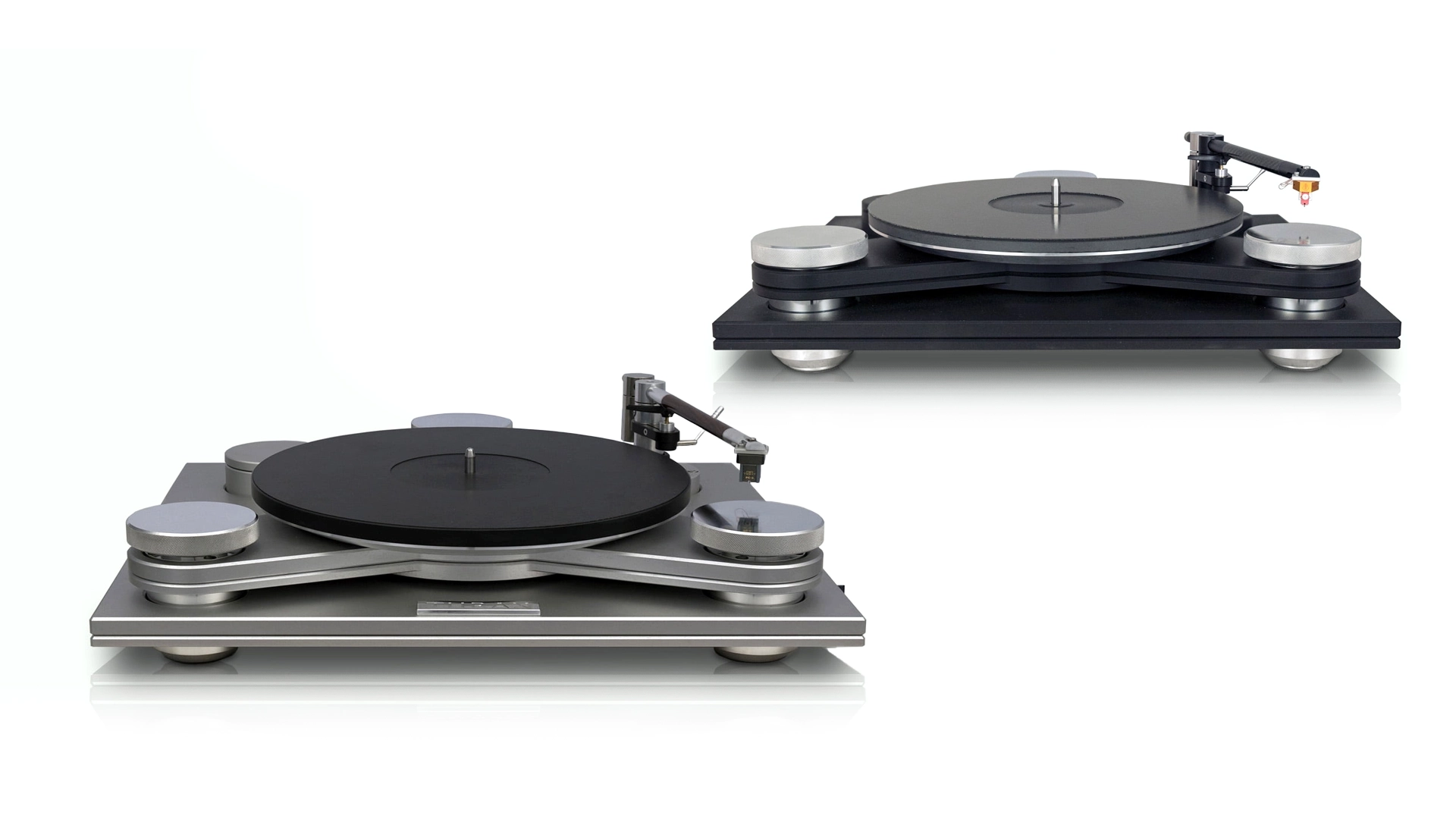
Thrax Audio is a Bulgarian high-end manufacturer founded in Sofia in 2008 by engineer Rumen Artarski. The first product was the Dionysos line preamplifier, created around a single-tube gain stage and an elaborate transformer volume control. It was followed by the Orpheus phono stage and the Spartacus power amplifier, establishing a range that combines vacuum-tube simplicity with demanding power supplies, magnetics and mechanical construction.
The modern statement line includes the Spartacus 300 monoblocks and Libra preamplifier. Maximinus addresses digital conversion, while Orpheus continues the company’s interest in LCR phono equalisation and flexible cartridge matching. Thrax also builds integrated and solid-state amplification, loudspeakers and more accessible Evolution components. These are not scaled copies with different front panels. Artarski’s team chooses a topology for each role, whether directly heated triodes, transformer coupling or high-current solid-state output is the more appropriate tool.
Production is concentrated in Sofia. Transformers are wound in-house, chassis are machined from solid aluminium, and completed units are listened to before shipment. That vertical control is important for a small company working with circuits whose performance depends heavily on magnetics, grounding and physical layout. Thrax’s character comes from joining Eastern European engineering self-reliance with a clear visual and mythological language. The products are luxurious, but the brand’s real credibility lies in original circuits and the ability of a compact team to manufacture the difficult parts itself.
Thuono

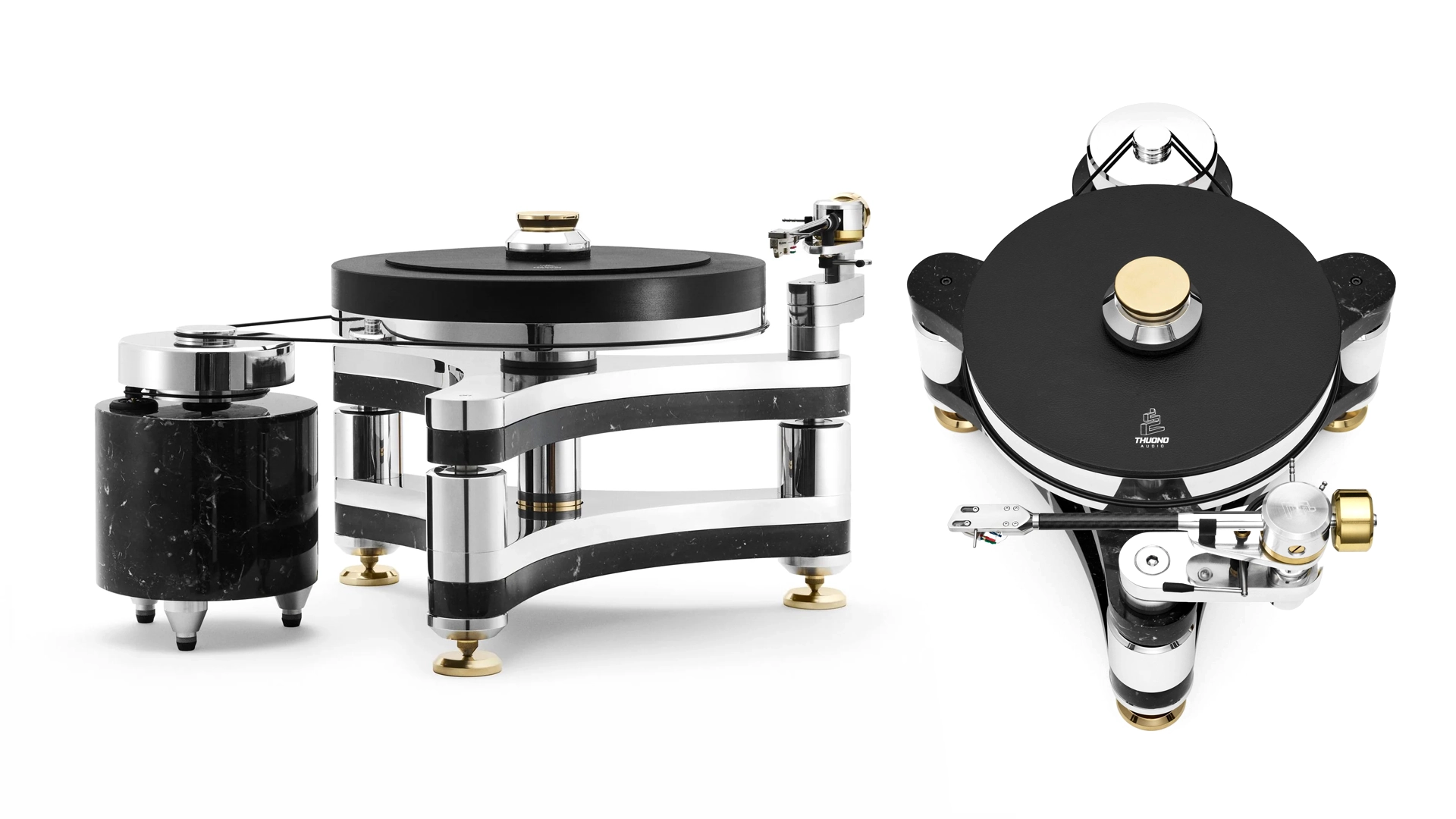
Thuono Audio is an Italian family company that designs and handcrafts high-end turntables in the province of Vicenza. The earlier description incorrectly reduced the brand to isolation platforms. Its central products are the TH300, TH350 and flagship TH400 record players, named for their platter diameters, together with matching tonearms and analogue accessories. Gino Bonollo, his daughter Eleonora and Mattia Rigon developed the range after years of research into drive energy, material behaviour and mechanical isolation.
All three turntables use belt drive, with a flywheel intended to preserve rotational energy while keeping motor vibration away from the platter. Magnetic suspension assemblies decouple the upper structure, and the chassis combine black Marquinia marble with aluminium, brass, bronze and damping materials selected for both mechanical and tonal behaviour. The increasing platter size and mass distinguish the three models rather than a simple change of finish. The large TH400 uses its extreme inertia as part of the drive concept.
Thuono also offers 10-, 12- and 13-inch tonearm designs, a universal record clamp, cables and related supports. The Magic Wood moving-coil cartridge was developed with Sublima Audio Research and uses a body made from aged Italian olive wood treated with luthier-style finishes. This is a young and specialised brand, and a reliable public source for the previously listed 2012 founding year could not be established, so the date is better left open. What can be stated confidently is more interesting: Thuono builds complete, visually unmistakable Italian vinyl systems in which marble architecture, magnetic isolation and high-inertia belt drive are engineered together.
Tien Audio

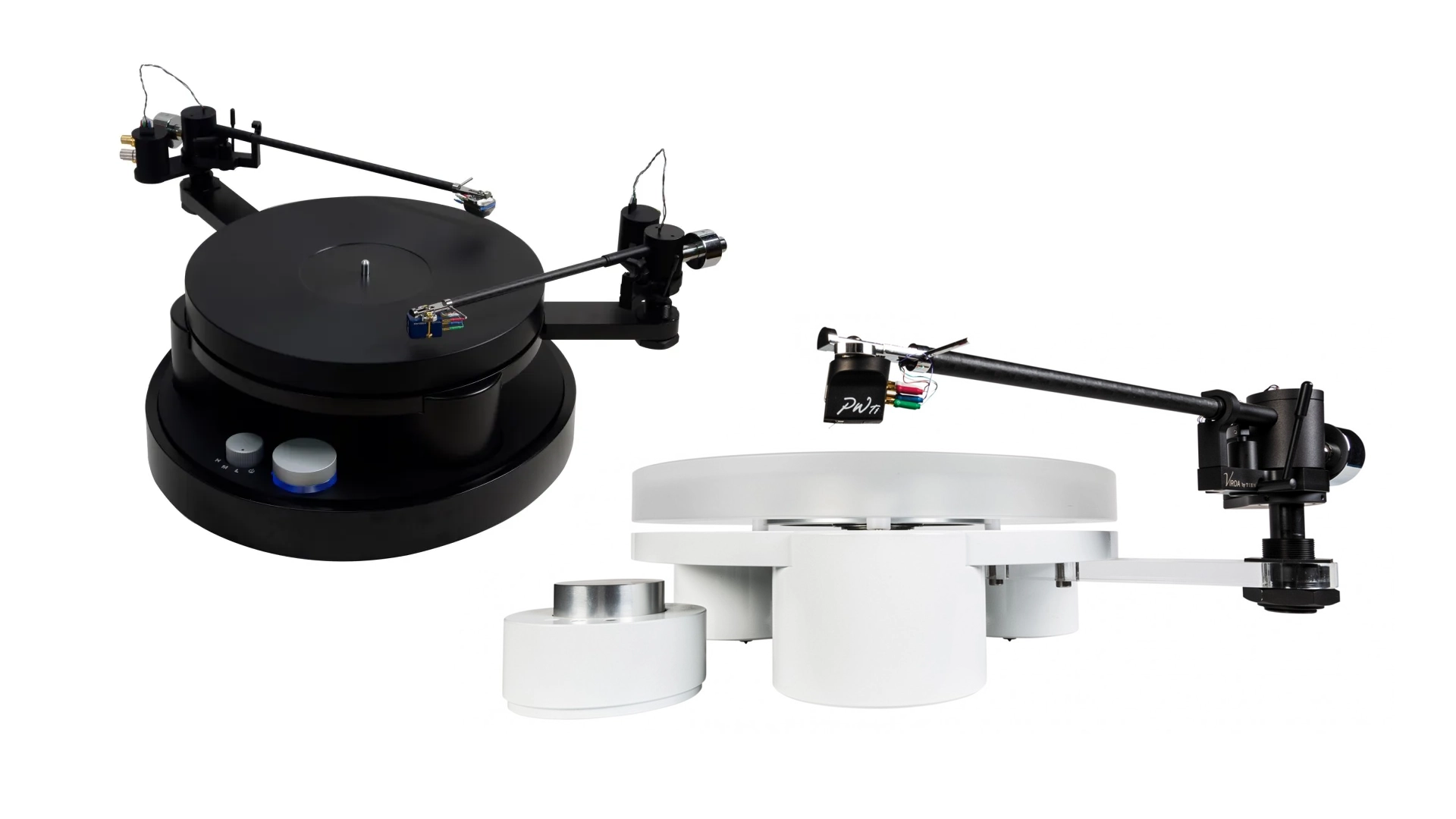
Tien Audio is a Taiwanese analogue specialist led by designer Jeff Tien, whose turntables turn an unusual multi-motor idea into a clear visual and mechanical identity. The company has been associated with vinyl playback since 2002, but its international reputation rests on later machines such as the TT3 Phantom and TT5 and on the Viroa tonearm. Design and manufacture are centred in Taiwan rather than outsourced under a decorative badge.
The TT3 architecture places three motors around the platter. By distributing belt tension in several directions, Tien aims to reduce the one-sided load that a conventional single pulley applies to the bearing while maintaining stable torque. Recent versions use three brushless DC motors and electronic speed control for 33⅓, 45 and 78 rpm. The arrangement is not theatre: motor position, belt geometry, platter inertia and bearing load are treated as one drive system. Larger Tien models extend the same concern with more substantial plinths and isolation.
The Viroa and Viroa Plus tonearms are equally characteristic. Their dual-pivot bearing seeks a useful balance between the low friction of a unipivot and more predictable lateral stability, with adjustment for serious cartridge setup. Tien’s strongest products therefore come as a coherent analogue platform rather than a collection of unrelated accessories. The brand is interesting because it approaches familiar belt-drive problems through geometry—multiple motors, balanced force and a distinctive arm bearing—while keeping the construction readable and serviceable for the owner.
Torqueo Audio

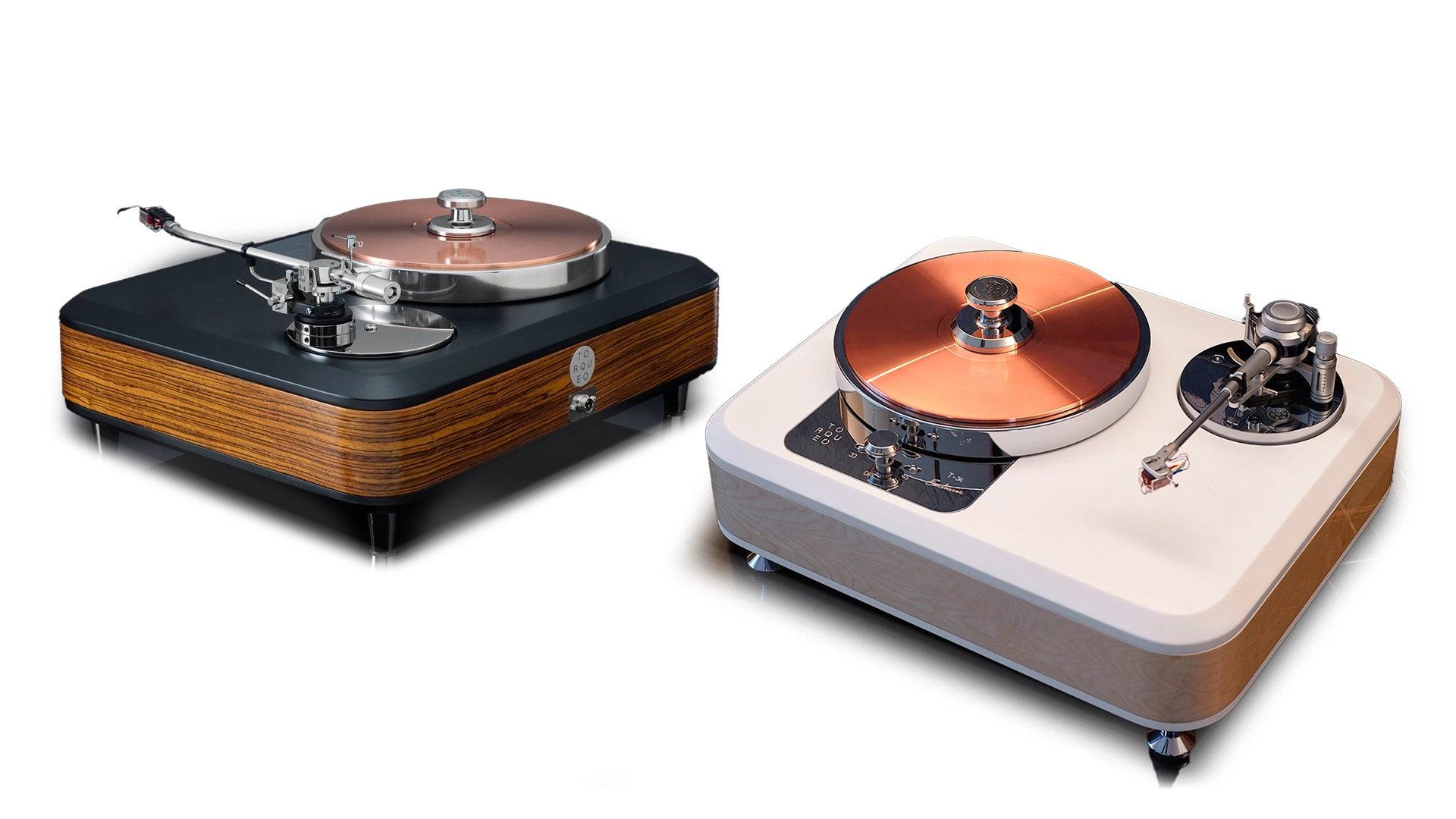
Torqueo Audio is an Italian turntable maker devoted to idler-drive and pulley-driven vinyl replay, with each machine handcrafted rather than assembled from a generic OEM platform. The company began by developing a record player for its own use after historic examples failed to meet its expectations. Three years of mechanical and materials research led to the T-34 architecture and a philosophy that treats the turntable as a musical instrument: material, resonance and drive must be voiced together.
Torqueo uses restored and adapted NOS Papst external-rotor motors with hysteresis-synchronous operation, prized for torque and speed stability. The drive mechanism combines bronze, brass, non-magnetic stainless steel and Ergal aluminium, machined to close tolerances. High-mass plinths mix dense natural woods, Finnish plywood, metals and viscoelastic layers, while separate bronze-and-aluminium arm bases accept a wide range of modern and vintage tonearms. External Controllo units regenerate an adjustable AC waveform for stable motor operation.
The T-34 Exclusive appears in carefully finished woods, slate and metal combinations; the newer T-34 Limited develops the concept with a heavier dual structure and mechanically separated Pilastro tonearm base. Oscar di Tillio’s material craft is closely associated with the brand, but Torqueo presents the work as a workshop effort rather than a single-founder story, so an unsupported establishment date is best omitted. Its individuality is unmistakable: it does not imitate the appearance of classic broadcast turntables, but rebuilds the high-torque idler principle through contemporary Italian machining, cabinetmaking and system-level vibration control.
Transrotor

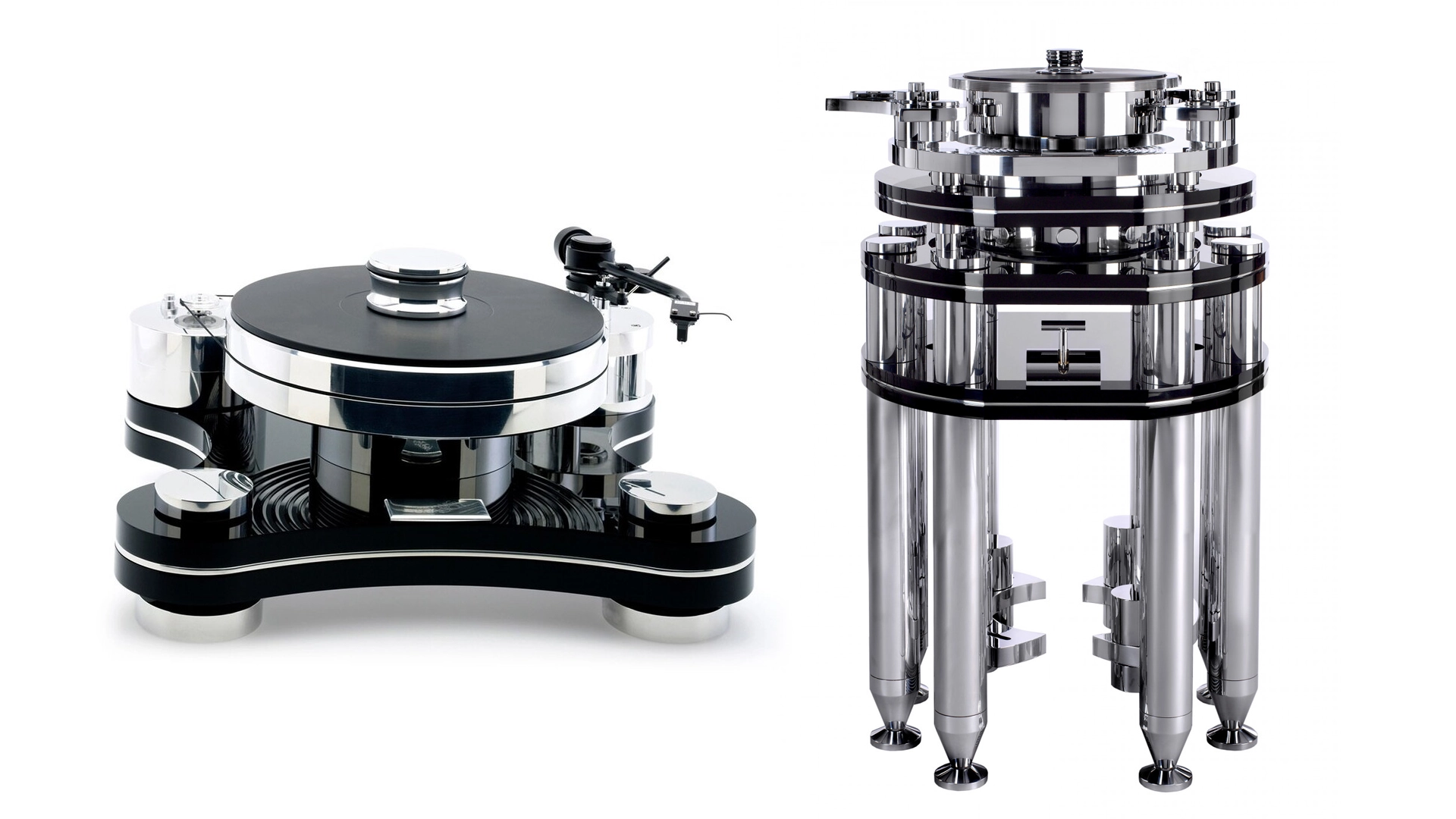
Transrotor is a German turntable manufacturer founded in 1971 by Jochen Räke. The company began by distributing and developing British Transcriptors designs, then established its own identity in Bergisch Gladbach through record players that made the mechanism visually legible. Acrylic, polished aluminium, massive platters and separated motors were not merely decoration: they exposed the bearing, drive and support structure as the architecture of the product.
Early machines such as the AC helped define that look, while later lines broadened it from accessible high-mass decks to elaborate reference systems. Zet 1 and Zet 3, Dark Star and Max offer clear steps into the range; Rondino, Massimo and flagship Artus develop multiple motors, magnetic bearing concepts and substantial isolation at a much larger scale. Many models accept more than one tonearm and can be upgraded with power supplies, additional motors, different armboards and record clamps rather than being replaced as a closed appliance.
Transrotor also offers tonearms and cartridges, including Alto and Figaro families, so dealers can configure a complete analogue source while preserving setup choice. Jochen’s son Dirk Räke is now closely involved in the company, giving the family business continuity beyond its founder. Every Transrotor is unmistakably German in machining and assembly, yet the brand avoids one compulsory technical doctrine: acrylic and metal, belts and magnetic support are combined according to the model. Its lasting achievement is turning precision turntable engineering into a modular, serviceable and instantly recognisable product language.
Triangle

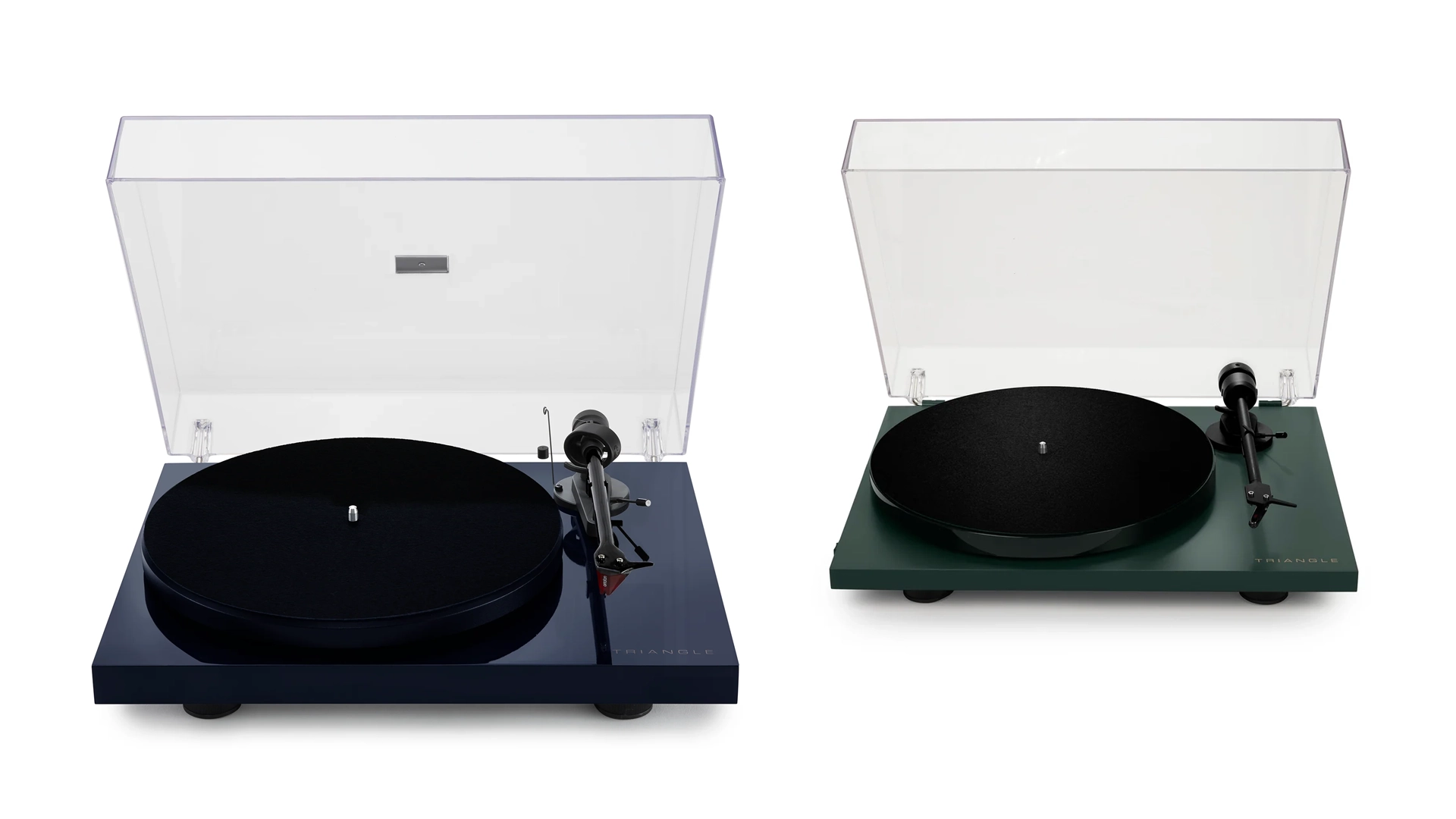
Triangle is a French loudspeaker manufacturer founded in 1980 by engineer Renaud de Vergnette. From its earliest models, the company pursued speed, sensitivity and dynamic contrast rather than the heavily damped, low-efficiency fashion common in parts of the high-end market. Triangle develops key drivers and assembles its premium loudspeakers in Soissons, giving the brand control over the transducers that shape its recognisable presentation.
Horn-loaded tweeters are a signature, designed to provide high efficiency and controlled radiation. Many models pair them with natural-cellulose paper midrange cones, chosen for low mass and direct vocal reproduction, while proprietary bass drivers and carefully vented cabinets provide scale. The flagship Magellan family demonstrates the fullest version of this engineering. Signature and Esprit EZ carry much of it into smaller systems, and the widely successful Borea range brings Triangle’s driver philosophy to accessible stereo and home cinema.
The company now covers architectural speakers, subwoofers and active or connected products as well as traditional passive designs. AIO systems address streaming, while Capella combines active wireless speakers with room optimisation. That expansion has not erased the original character: Triangle speakers are generally designed to communicate musical energy easily and to work with a broad range of amplifiers. The brand’s longevity comes from more than “French sound” or elegant cabinets. It rests on four decades of driver development, a coherent preference for efficiency and transients, and the ability to carry those priorities from a compact Borea monitor to a full Magellan system.
U-Turn Audio

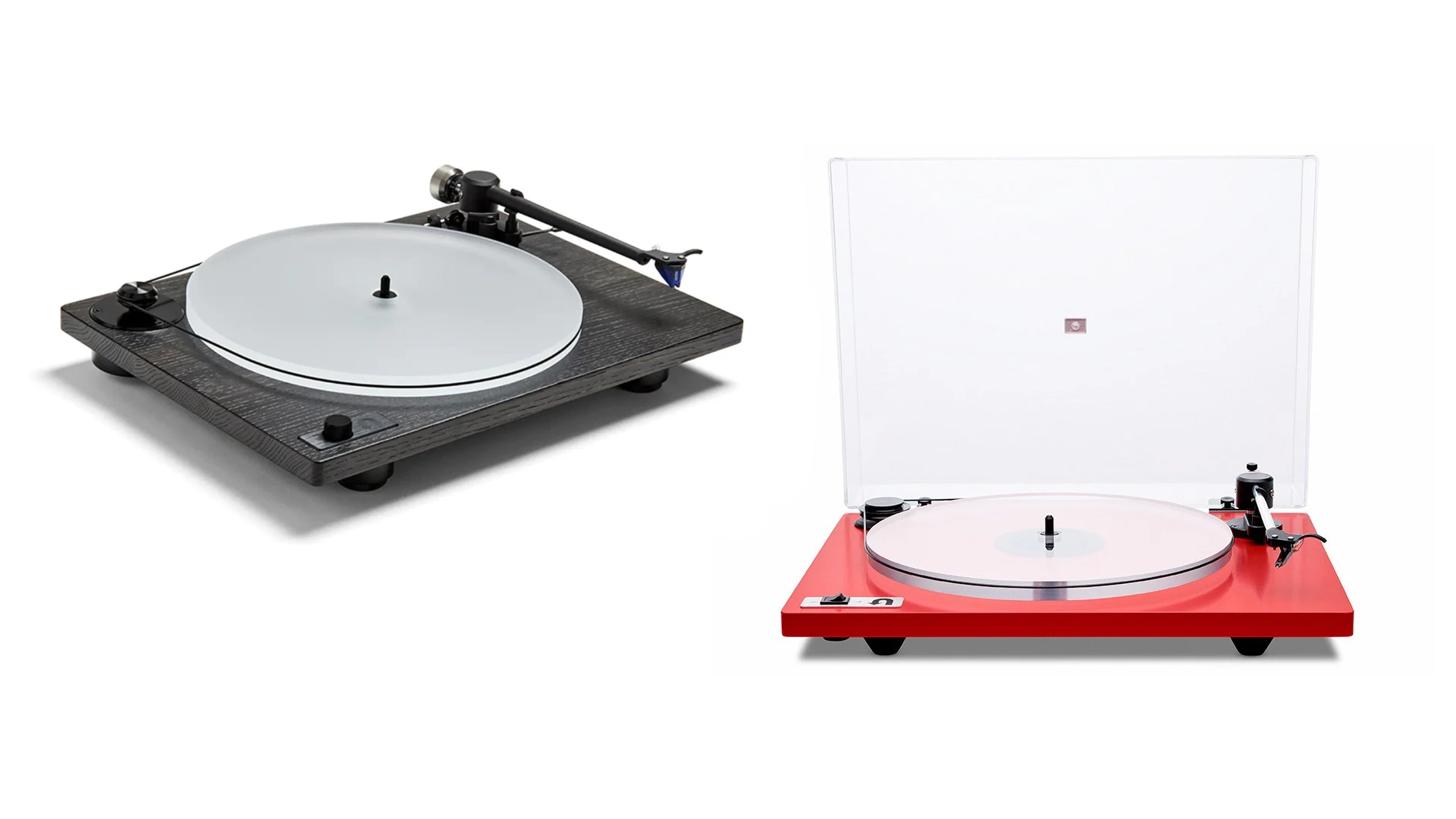
U-Turn Audio is an independent American turntable maker founded in 2012 by Benjamin Carter, Robert Hertig and Peter Maltzan. The three friends developed the first Orbit while taking part in a Northeastern University venture programme, then funded production through Kickstarter. Their proposition was direct and timely: build a simple, genuinely serviceable belt-drive record player in Massachusetts and sell it without the layers that often inflate specialist-audio pricing.
Orbit Basic, Plus, Special and configurable Orbit Custom models share a clean plinth, isolated motor and straightforward manual operation. Successive generations improved the in-house tonearm, cueing, speed control and cartridge options rather than obscuring the platform with cosmetic editions. The higher Orbit Theory uses a more substantial plinth, advanced OA3 Pro tonearm and electronic speed selection. Every Orbit is assembled and tested in U-Turn’s Woburn workshop, with many parts sourced from American suppliers.
The Pluto phono preamplifier allowed systems without a phono input to remain equally simple, and Ethos powered speakers extended U-Turn from source component to complete starter system. Direct sales and clear configuration choices remain part of the product design: buyers can understand what an acrylic platter, cartridge or built-in phono stage changes before ordering. U-Turn’s achievement is not inventing belt drive. It is making the conventional turntable legible again—few controls, accessible replacement parts, domestic assembly and enough upgrade choice to keep a first serious record player useful as its owner’s system develops.
Unitra

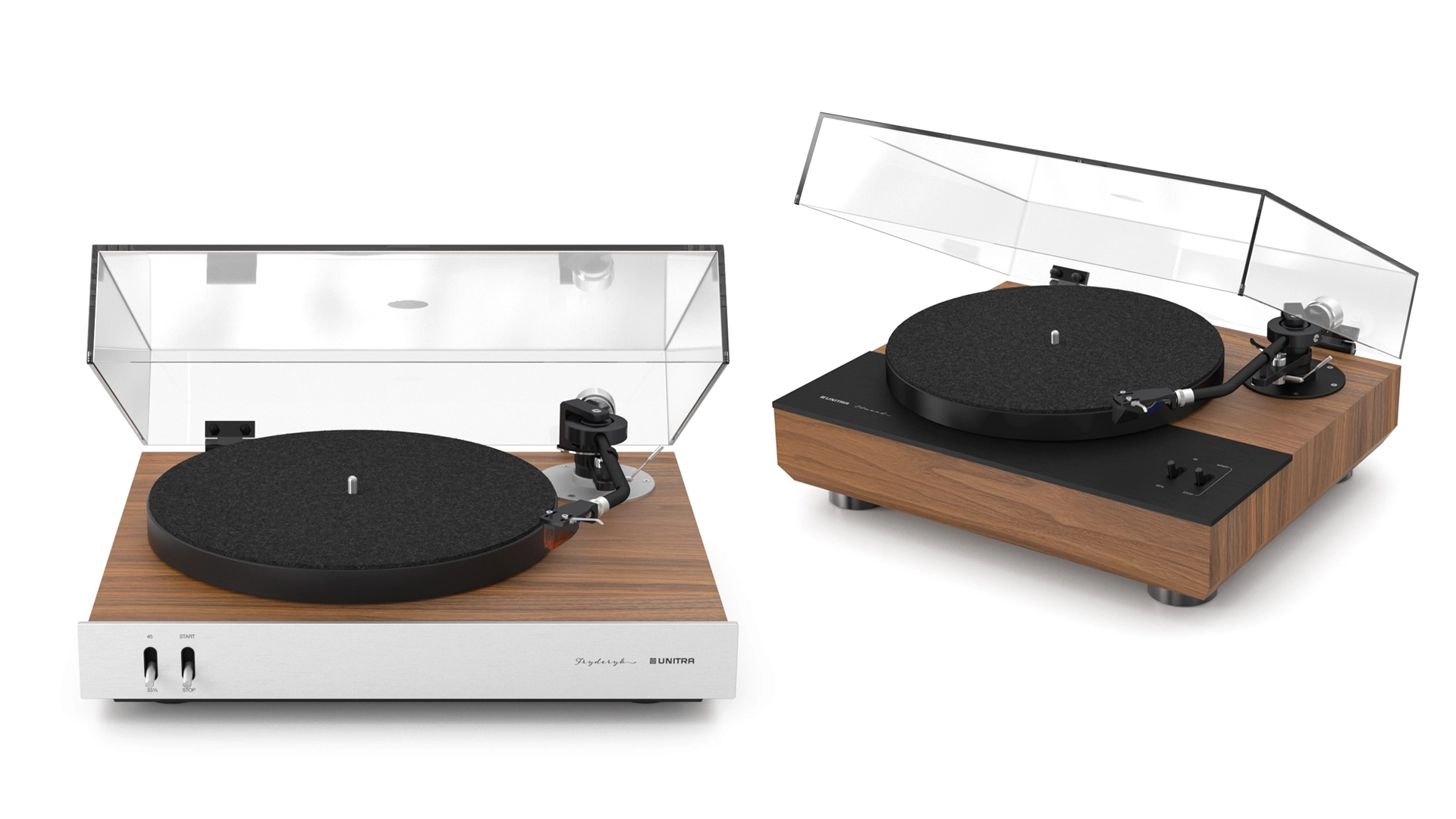
Unitra is the historic Polish electronics name established in 1961 as an association of state-owned radio, telecommunications and consumer-electronics factories. At its height it coordinated an enormous industrial network producing radios, amplifiers, tape machines, turntables and loudspeakers for Poland, other Eastern Bloc markets and export customers. Unitra was therefore not one conventional factory or designer, but a shared brand and research structure joining companies such as Fonica, Diora, Tonsil and ZRK.
The original organisation declined after Poland’s economic transformation and ceased in its old form around 1989. A new management team revived Unitra for specialist audio in 2021, with the current product generation reaching the market in 2023. This ownership and organisational break should be explicit: today’s private company inherits the name and Polish design heritage, not the original state combine itself.
The WSH-805 integrated amplifier uses dual-mono construction, switchable Class A/Class AB operation, analogue inputs and physical meters. GSH-630 Fryderyk and GSH-801 Edmund are direct-drive turntables with Unitra-developed motors and R10 tonearms. CSH-801 adds CD playback, while ZGZ loudspeakers and cables complete the system. Products are designed and engineered in Poland with emphasis on repairability, replaceable assemblies and long support. The achievement of the revival is not retro styling alone: Unitra has rebuilt a coherent Polish hi-fi range around tactile controls and original engineering while honestly carrying one of Central Europe’s most important consumer-audio names into a new corporate era.
Vertere

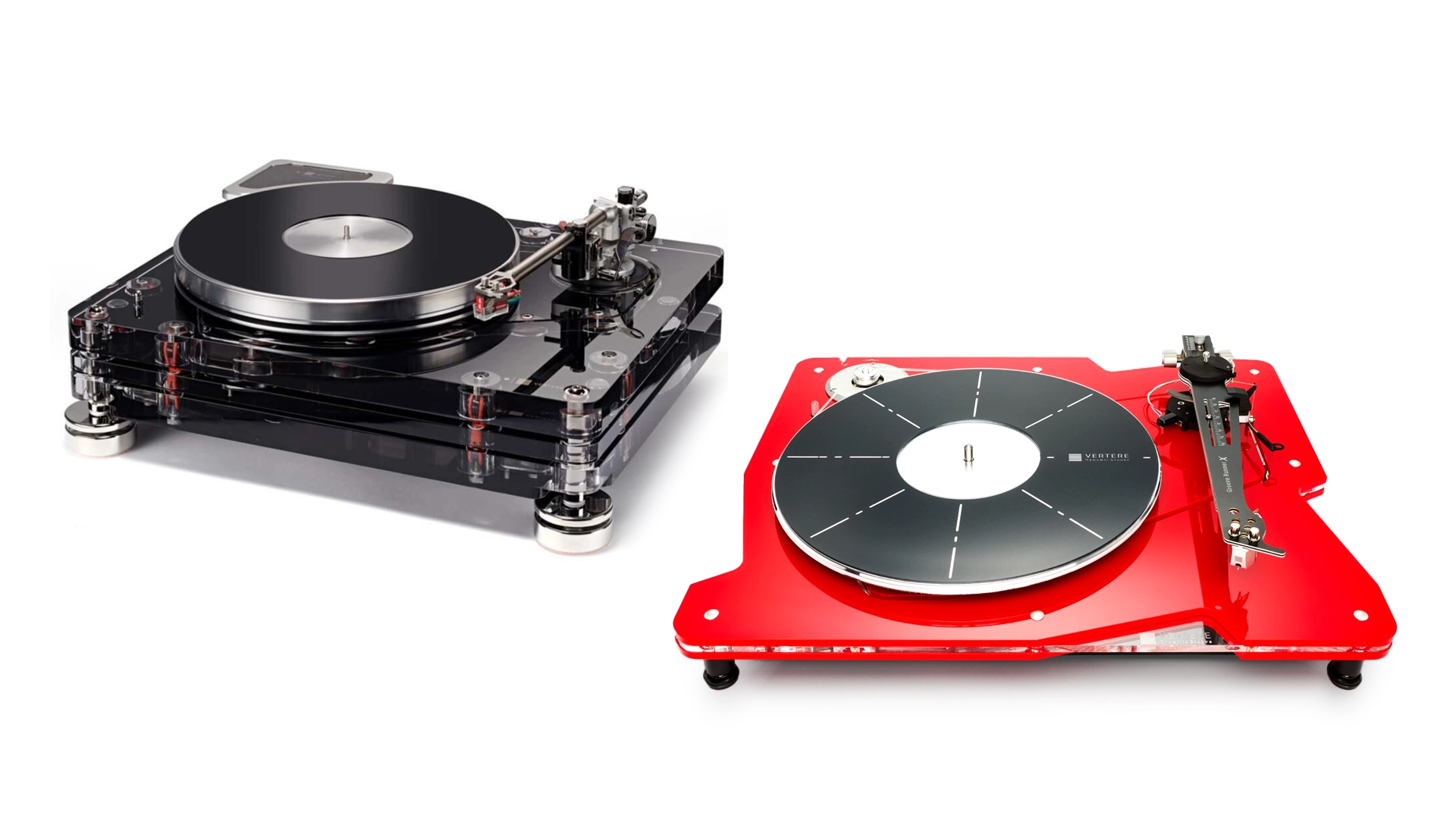
Vertere is the British analogue specialist founded in 2010 by Touraj Moghaddam, the engineer who had earlier co-founded Roksan and designed the Xerxes turntable. The company began with high-performance cables, but its defining work is now a complete vinyl-replay chain in which turntable, motor drive, tonearm, cartridge, phono stage and connections are developed together. At the top, the RG-1 Reference Groove and SG-1 Super Groove platforms pursue extreme control of bearing, structure and motor noise. MG-1 Magic Groove brings related ideas to a less rarefied level, while DG-1 Dynamic Groove—and its later DG X development—uses an immediately recognisable layered acrylic structure to make careful mechanical engineering easier to own and set up. Vertere’s tonearms include Reference, SG-1 and Groove Runner designs; Mystic is its moving-coil cartridge, Phono-1 MkII its adjustable phono stage, and Imperium a high-grade motor-drive power supply. The cable catalogue remains central rather than incidental, reflecting Moghaddam’s view that microscopic cartridge signals are especially vulnerable to conductor geometry, shielding and connector behaviour. Across the range, the recurring task is to prevent unwanted movement from being confused with the modulation in the record groove. Vertere products are modular and upgradeable where practical, so a system can evolve without discarding its mechanical foundation. The brand’s character comes from this unusually coherent engineering authorship: four decades of turntable experience distilled into a modern British ecosystem rather than a collection of unrelated accessories.
VPI Industries

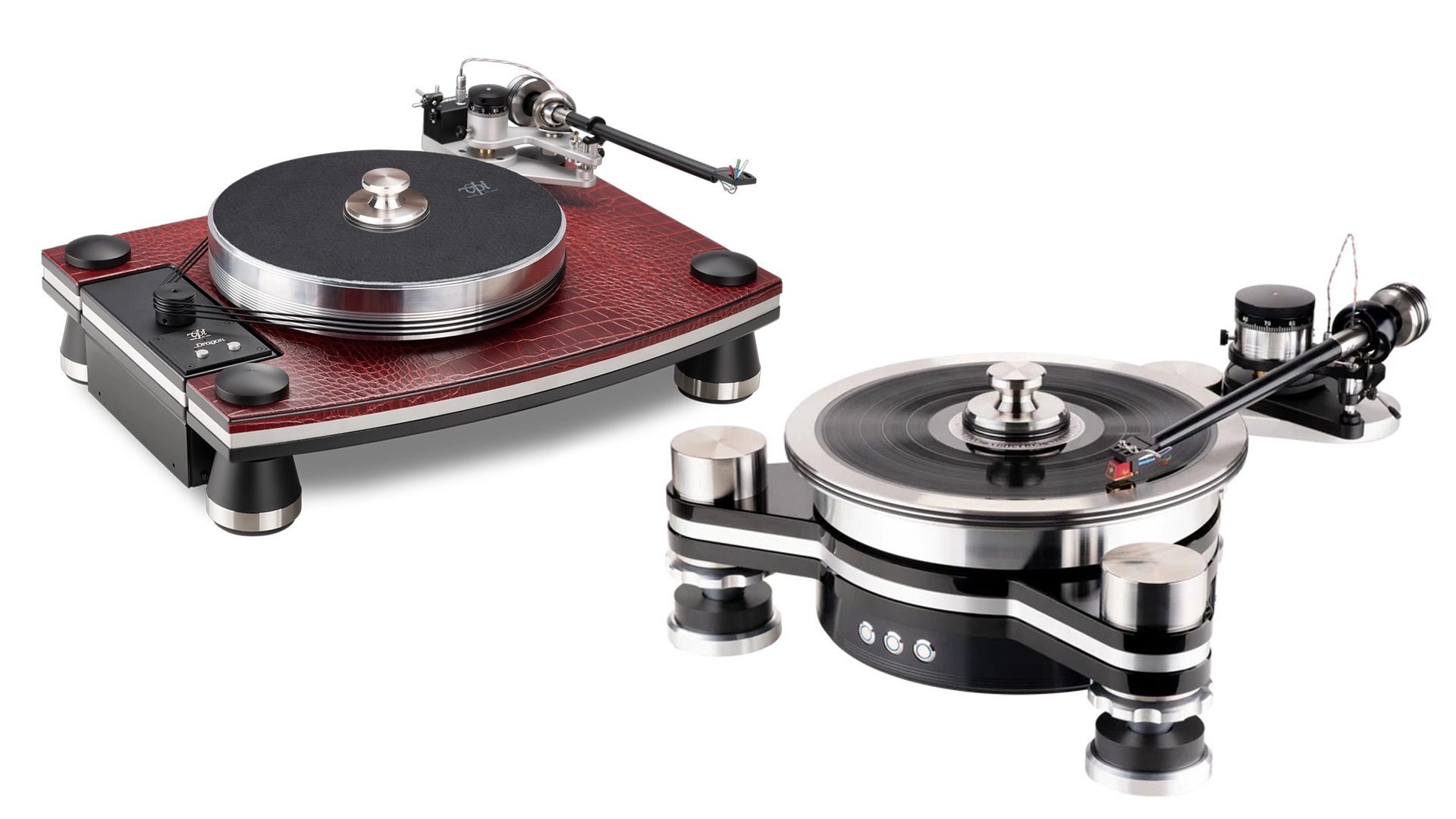
VPI Industries is an American family company whose history joins two parts of vinyl replay that are often treated separately: cleaning the record and playing it accurately. Harry and Sheila Weisfeld founded VPI in 1978, beginning with a practical record-cleaning machine before moving into turntables, tonearms and accessories. The HW-16.5 vacuum cleaner became a long-lived reference, while the HW-19 turntable established VPI as a serious analogue manufacturer. Later generations produced the Scout, Classic, Prime and Avenger families, ranging from approachable high-performance decks to modular reference platforms. VPI became especially associated with JMW unipivot tonearms, whose single-point bearing allows low-friction movement and easy exchange of complete arm wands; the company now also offers gimbal-bearing arms for listeners who prefer their different handling and stability. Heavy platters, substantial bearings, outboard motors and upgradeable construction recur throughout the range, but are applied according to the scale and purpose of each model rather than as a fixed recipe. Current flagships include the direct-drive Titan alongside belt-driven Avenger configurations. After Sheila’s death, their son Mat Weisfeld took a leading role and has kept production, service and much component machining in New Jersey. That continuity matters: VPI turntables are designed as products owners can maintain, modify and keep for decades, supported by a company whose record-cleaning machines, arms and decks grew from the same hands-on knowledge of vinyl.
Well Tempered Lab

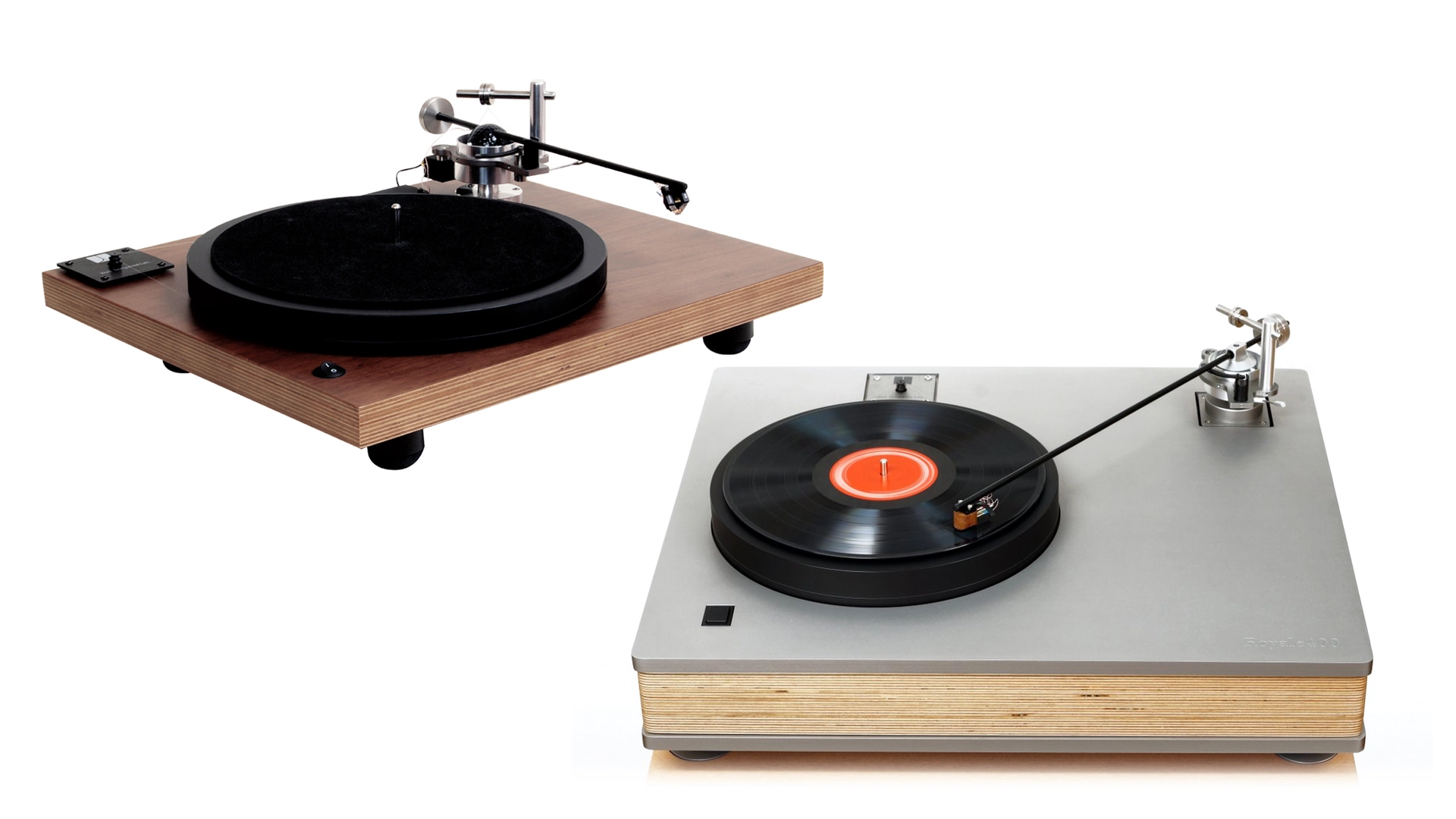
Well Tempered Lab is defined by designer William Firebaugh’s willingness to replace familiar turntable bearings with deceptively simple mechanisms. Firebaugh developed the original Well Tempered Arm in the United States during the 1980s, using a lightweight ball suspended by fine threads and partly immersed in silicone fluid. The threads establish the pivot geometry and azimuth, while the viscous bath damps unwanted movement; later versions famously use a golf ball because its size, surface and availability suit the job. The turntables are equally unconventional. Their platter bearings use a precision spindle constrained against a polymer surface by a fine filament, removing conventional bearing chatter and maintaining stable contact, while a separate belt-driven motor limits vibration reaching the record. Amadeus, Simplex and Versalex models apply these ideas at different scales, with the larger Royale and dedicated LTD arm extending the range. The brand was revived and developed in New Zealand by engineer and distributor Frank Denson in collaboration with Firebaugh, which explains its present New Zealand identity despite the American origin of the concept. Well Tempered Lab products are minimalist, but not primitive: setup of fluid level, thread suspension, azimuth and belt is part of their precisely balanced operation. The brand’s lasting contribution is showing that a tonearm does not need a conventional metal bearing and a turntable does not need massive complexity to control friction and resonance—provided every force is understood and deliberately constrained.
Wilson Benesch

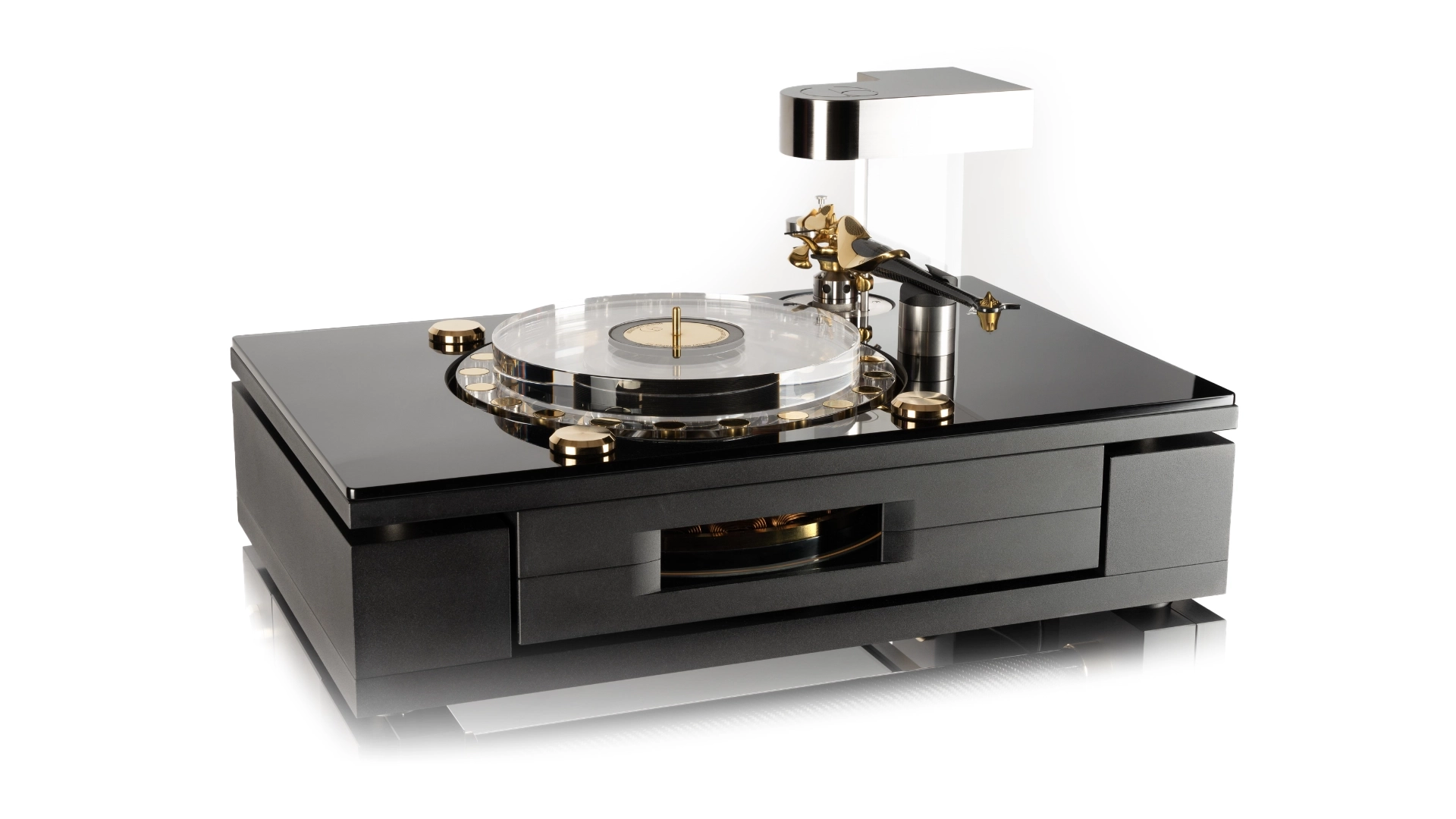
Wilson Benesch is a British engineering company founded in Sheffield in 1989 by Craig and Christina Milnes. A government-supported research programme gave the young firm access to advanced composite technology, leading to the Wilson Benesch Turntable and the A.C.T. One tonearm—among the earliest audio products to use carbon fibre as a structural material rather than decoration. The same thinking soon entered loudspeakers. Curved A.C.T. monocoque cabinets use carbon-composite shells to create a stiff, well-damped enclosure with fewer broad resonant panels, while machined alloy elements define the driver interfaces. The company subsequently developed its own Tactic mid/bass driver and the Fibonacci tweeter, whose hybrid dome and carbon-fibre structure is designed to control high-frequency breakup. Discovery, Endeavour and Resolution established the Geometry series; the newer Omnium and Eminence models extend the platform with larger isobaric bass systems and increasingly complex composite structures. Torus infrasonic generators use a large carbon-fibre diaphragm driven around its circumference, a distinctive alternative to a conventional pistonic subwoofer. Wilson Benesch still produces turntables, including the GMT One System, linking its present reference analogue work to the product that launched the company. Design, carbon-composite manufacture, machining and assembly are centred in Sheffield, with specialist British partners contributing where required. Few audio brands have applied one materials programme so consistently across tonearms, turntables, loudspeaker enclosures and low-frequency drivers.
Yamaha

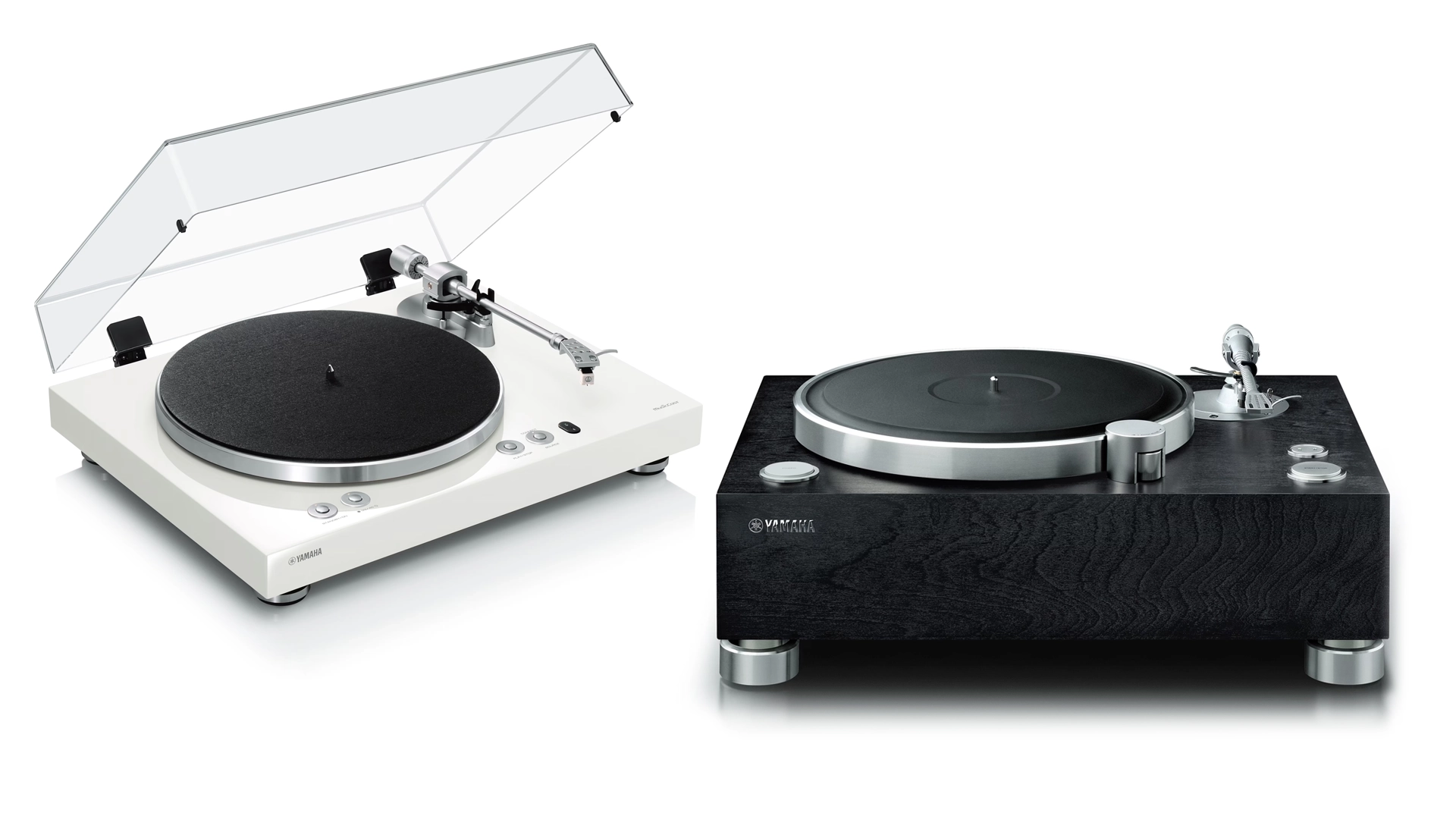
Yamaha began in 1887 when Torakusu Yamaha repaired a reed organ in Hamamatsu and built his own instrument; the tuning-fork emblem still reflects that origin. The company became Nippon Gakki and developed pianos, organs and other instruments long before expanding into electronics, professional sound and home audio. Yamaha’s audio strength comes from this unusually broad view of the chain—from the instrument and recording venue to mixing, amplification and reproduction. The NS-1000 loudspeaker of 1974 was a landmark use of beryllium domes for both midrange and treble, while the B-1 introduced a powerful vertical-FET amplifier and the GT turntables explored extreme mechanical stability. Modern hi-fi retains those threads. A-S integrated amplifiers range from accessible models to the fully balanced A-S3200; R-N network receivers add MusicCast streaming and multi-room control; the C-5000/M-5000 separates and GT-5000 turntable form the flagship 5000 Series. NS-2000A and NS-5000 loudspeakers use Yamaha’s Zylon-based Harmonious Diaphragm concept across multiple drivers to improve tonal continuity. At the same time, Yamaha remains a major force in AV receivers, soundbars, studio monitors, digital mixers and concert systems. Yamaha Motor has been a separate company since 1955, so motorcycles should not blur this audio history. The enduring identity is integration: acoustic-instrument knowledge, professional production tools, cinema processing and domestic hi-fi developed within one Japanese engineering culture.
Zavfino

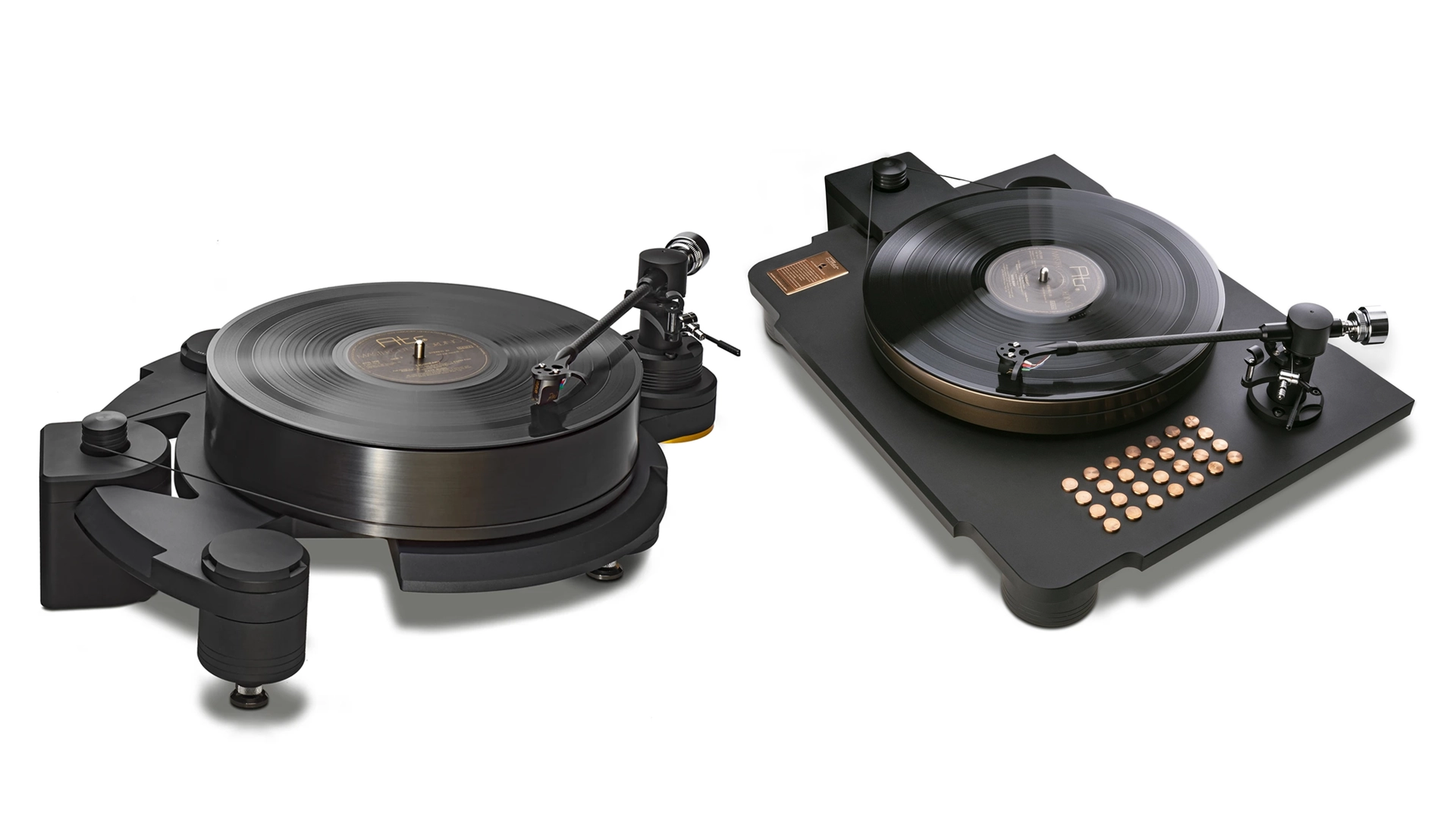
Zavfino is a Canadian-owned analogue and cable brand created around 2009 alongside the 1877Phono name. Its founder came from industrial wire extrusion and OEM cable manufacture, and the company retains unusually direct control over conductor drawing, insulation, geometry and termination instead of sourcing generic finished cable. The catalogue ranges from fine tonearm wire, headshell leads and DIN/RCA connectors to interconnects, loudspeaker cables and power cords. Pure copper, OCC copper, silver and hybrid conductors are used in different constructions, with products such as Fusion, Arcadia, Prima and Silver Dart offering clear steps in material and geometry. 1877Phono originally focused on vinyl accessories, but the business expanded into complete analogue hardware. ZV turntables, Copperhead and Aeshna models use substantial plinths, precision bearings and external motors, while Blackbird and other tonearms extend the same mechanical programme. Canadian offices and ownership are paired with manufacturing expertise and facilities in Asia, including Taiwan; describing the company as exclusively Canadian-made would therefore be misleading. The original country field remains Canada because that is the brand’s commercial identity and home base. Zavfino’s distinguishing strength is vertical knowledge across two scales: manufacturing the minute conductors and connectors between cartridge and phono stage, then designing the turntable and tonearm that generate and carry that signal. This makes its cable work part of a broader analogue system rather than an unrelated accessory line.