
Turntables
The turntable, or record player, is the electromechanical heart of any analog audio system, designed to bring vinyl records to life. Its function is to spin a record at a highly precise and stable speed while its tonearm allows a stylus to flawlessly track the microscopic grooves. This page is a complete directory of the world’s leading turntable manufacturers, covering everything from accessible belt-drive models for newcomers to massive, high-end direct-drive and suspended designs for the dedicated audiophile.
Hi-Fi brands in the category
Summary information and image
Direct links to official websites
Kronos

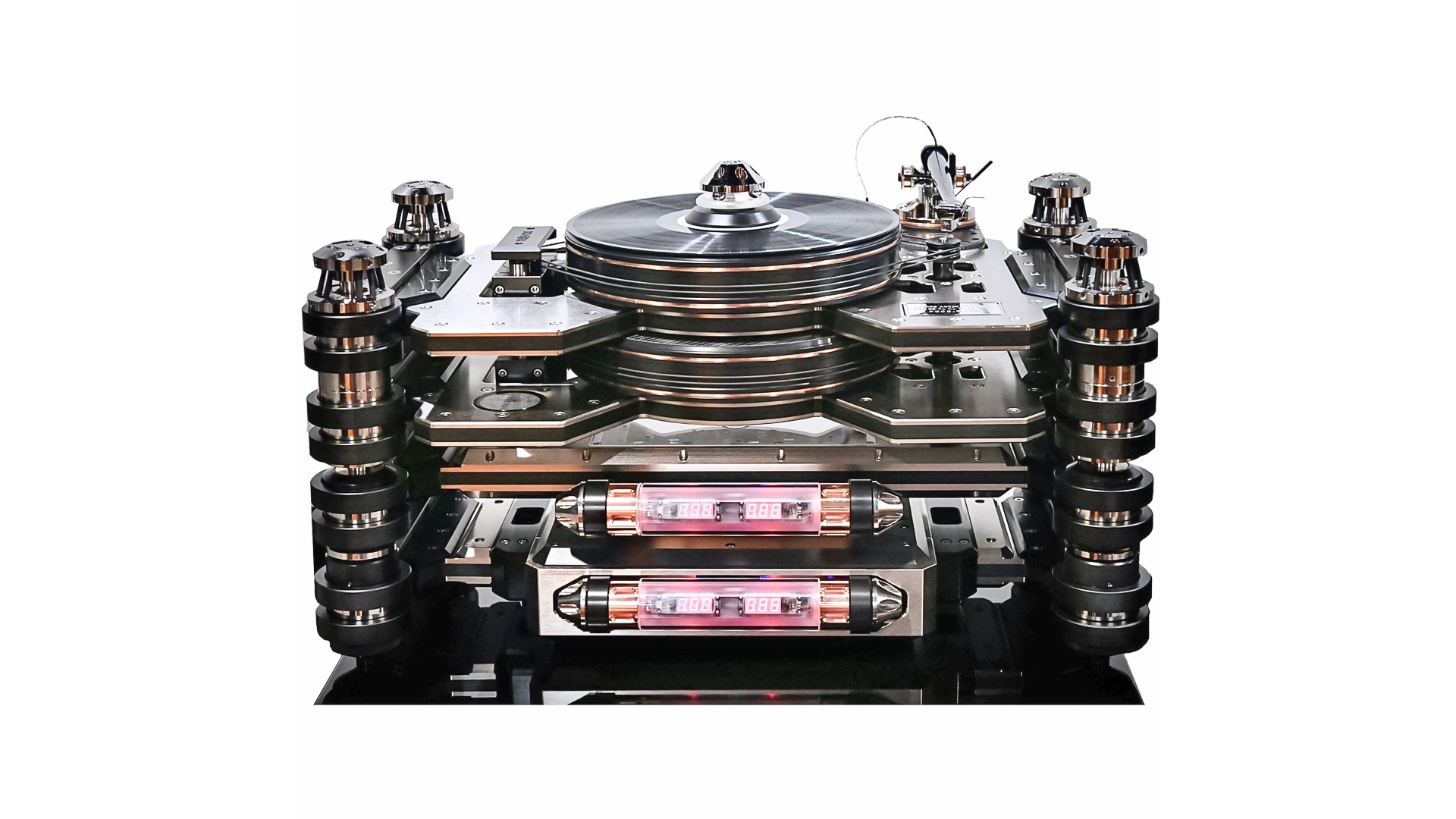
Kronos Audio is a Canadian analogue specialist founded by designer Louis Desjardins, and its defining invention is visible before a record even starts playing. The company’s suspended turntables use two equal-mass platters rotating in opposite directions. Because their drive systems generate opposing torque, rotational forces that would otherwise disturb the suspension largely cancel each other, giving the cartridge a more stable platform from which to read the groove. The concept first appeared publicly at the Montreal Audio Show in 2011 and has evolved from the Sparta to the flagship Discovery. Kronos treats the turntable as a complete mechanical system: constrained structures, carefully controlled belt drive, precision bearings, outboard power supplies and, in upper models, supercapacitor energy storage all target lower vibration and steadier speed. Its Discovery RS and Helena tonearms, SCPS power supplies and vibration-control racks extend the same approach beyond the platter. Kronos also designs products so important advances can often be retrofitted, allowing an existing deck to move closer to later specifications instead of becoming obsolete with each revision.
Kuzma

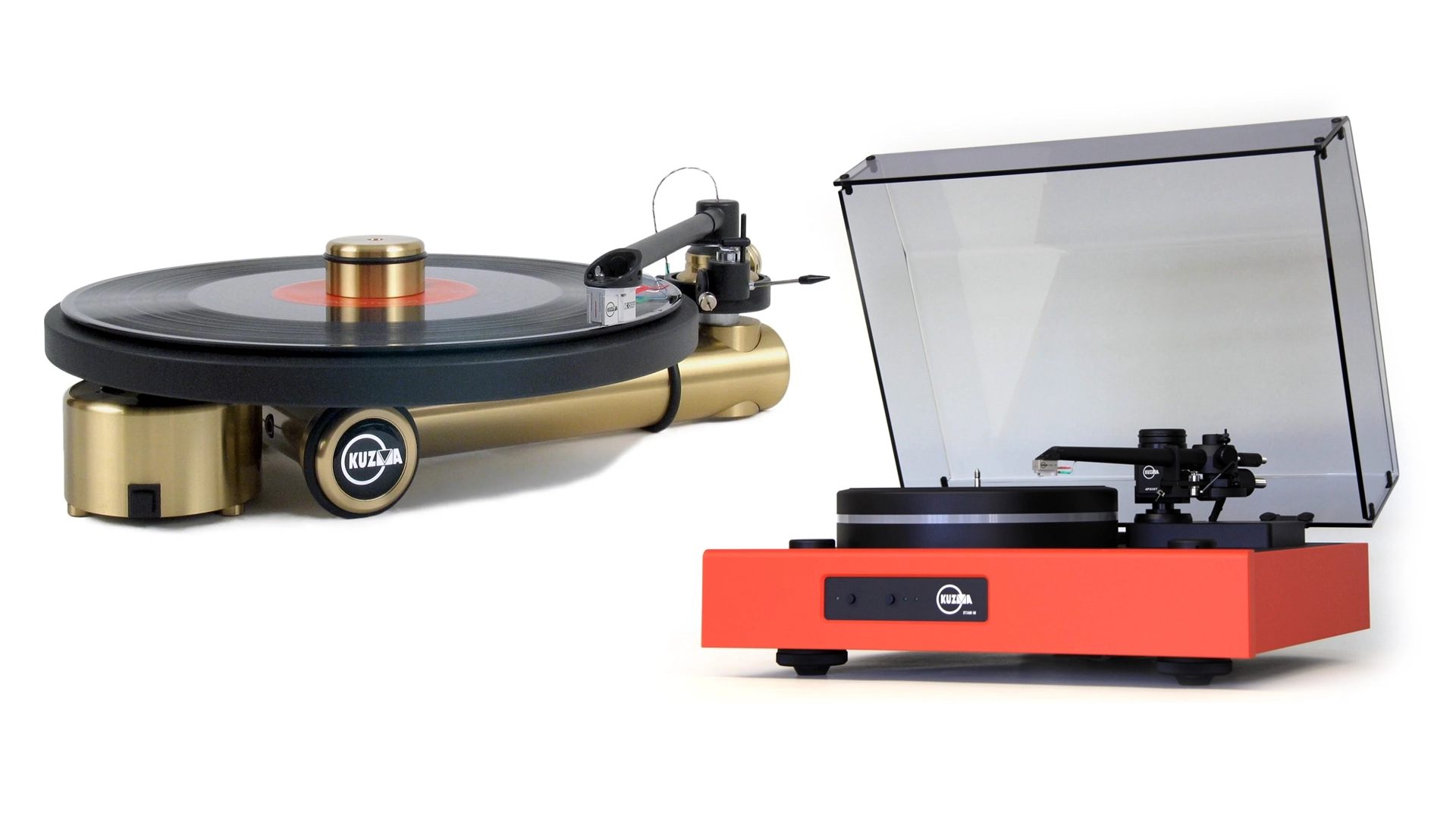
Kuzma is a Slovenian analogue manufacturer whose turntables and tonearms are engineered as precision mechanical instruments. Franc Kuzma founded the company in 1983, applying a background in mechanical engineering to the problems of speed stability, bearing noise and unwanted resonance. The long-running Stabi S demonstrates the basic formula with a rigid, skeletal brass structure and separate motor; the modular Stabi R uses a solid aluminium chassis that accepts multiple tonearms, while the Stabi M and XL DC pursue still greater mass, isolation and rotational consistency. Kuzma’s 4Point tonearms are equally distinctive: four bearing points provide stable, low-friction movement in the horizontal and vertical planes while preserving accurate azimuth, and versions range from the compact 4Point 9 to the 14-inch model. The tangential Air Line and sapphire-arm-tube Safir 9 explore different solutions to the same tracing problem. Cartridges, power supplies and isolation accessories complete the system. Across the range, Kuzma avoids fashion-driven reinvention; rigid structures, serviceable components and upgrade paths keep established designs relevant for decades.
Lenco

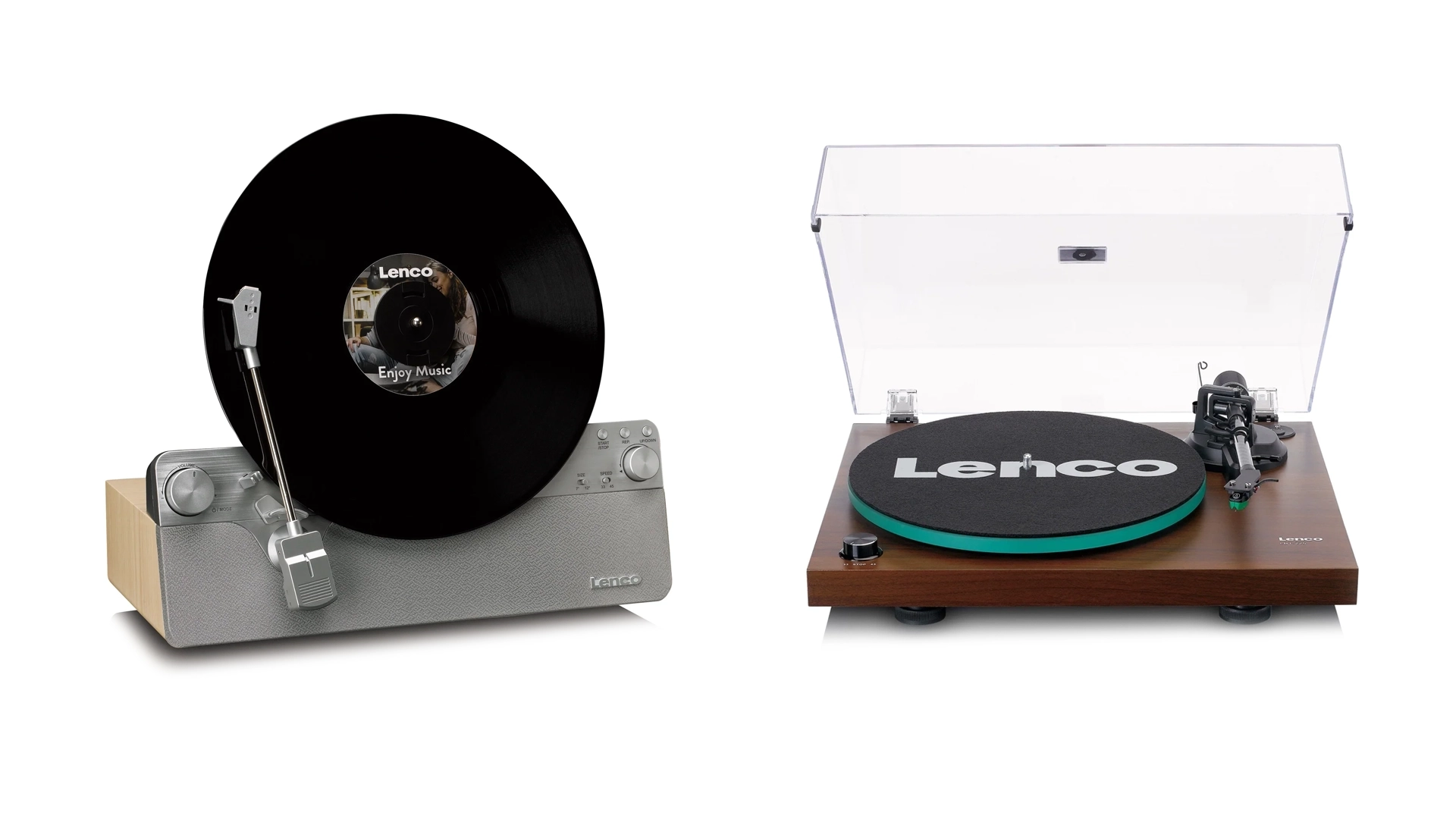
Lenco is a heritage turntable name with Swiss origins and a modern Dutch consumer-audio business. Fritz Laeng, Marie Laeng-Stucki and technician Bruno Grütter established Lenco in Burgdorf, Switzerland, in 1946; the company produced its first record player in 1949 and later became famous for robust idler-drive decks such as the L75, introduced in 1967. The original Swiss manufacturer failed in the late 1970s, and the trademark subsequently passed through several owners. Today Lenco is based in the Netherlands and has belonged to the Dutch Commaxx Group since 2015. For that reason, 2015 describes the current ownership chapter, not the birth of the brand. The contemporary catalogue is deliberately broad and accessible: manual and automatic turntables, direct-drive DJ models, record players with built-in speakers, radios, portable audio and related accessories. USB recording, Bluetooth and integrated phono stages appear where they make vinyl easier to use in present-day systems. Modern Lenco does not claim to reproduce the engineering organisation behind every classic Swiss deck; its value is keeping a historically important name active through affordable products while the surviving L75 and related models retain a separate enthusiast following.
Linn

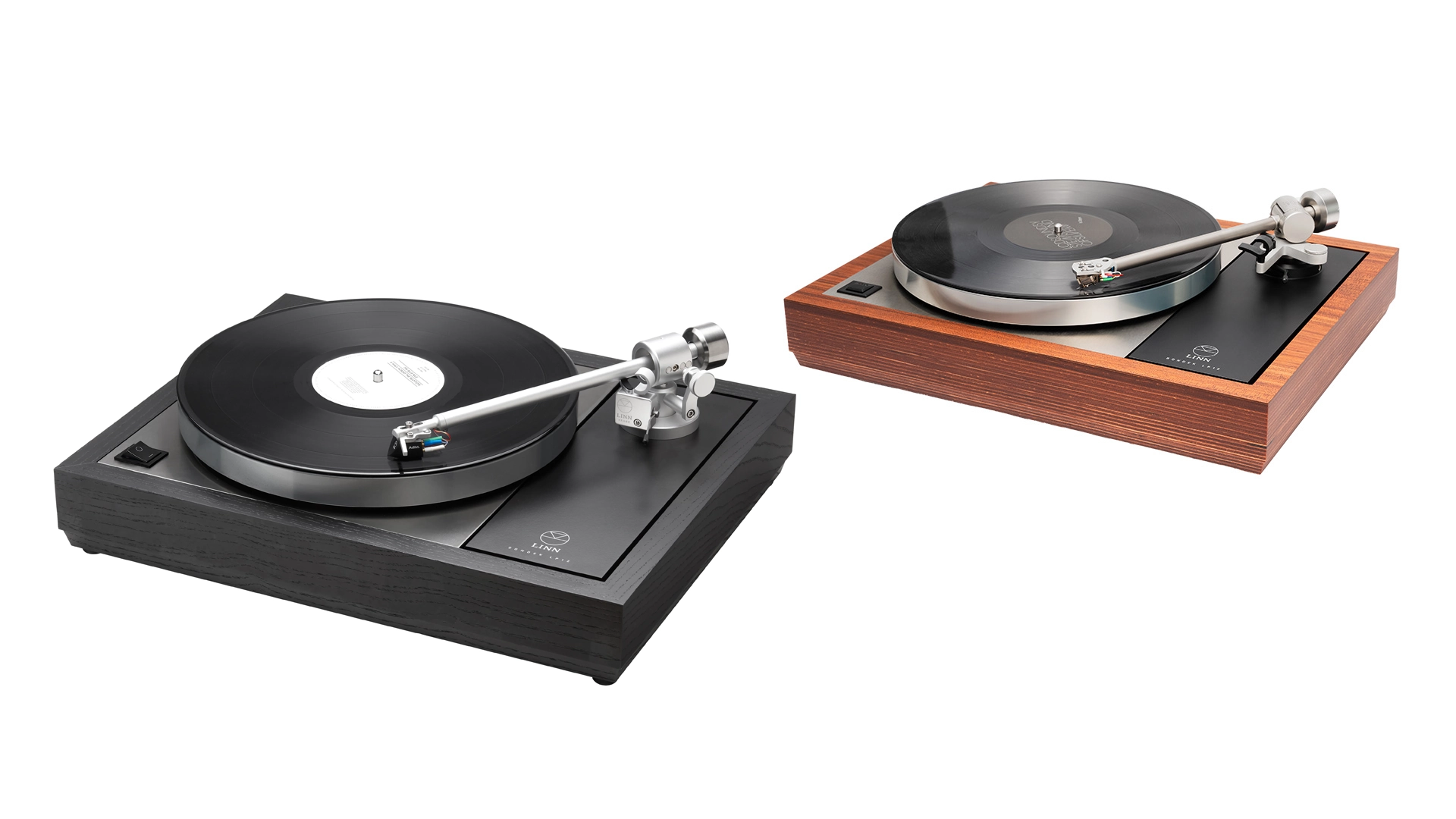
Linn is a Scottish hi-fi manufacturer founded by Ivor Tiefenbrun in 1973, the year the Sondek LP12 established the company’s “source first” argument: information lost at the beginning of a replay chain cannot be recovered later. The suspended, belt-driven LP12 remains in production, but its significance is also structural. Bearings, subchassis, power supplies, tonearms and cartridges can be upgraded individually, allowing decades-old decks to incorporate current engineering. Linn carried the same system thinking into digital audio with its DS network players and today’s Klimax, Selekt and Majik DSM products. Organik is Linn’s in-house discrete DAC architecture; Exakt moves the crossover into the digital domain and time-aligns individual drive units; Space Optimisation models a specific loudspeaker and room to reduce low-frequency interaction without requiring a calibration microphone. Selekt DSM can be configured as a source, preamplifier, integrated amplifier or multichannel hub and upgraded with different DAC and amplification modules. Loudspeakers and complete active systems close the loop. Designed and manufactured near Glasgow, Linn’s defining strength is controlled evolution: analogue and digital platforms are built to accept meaningful upgrades instead of being discarded.
MAG-LEV Audio

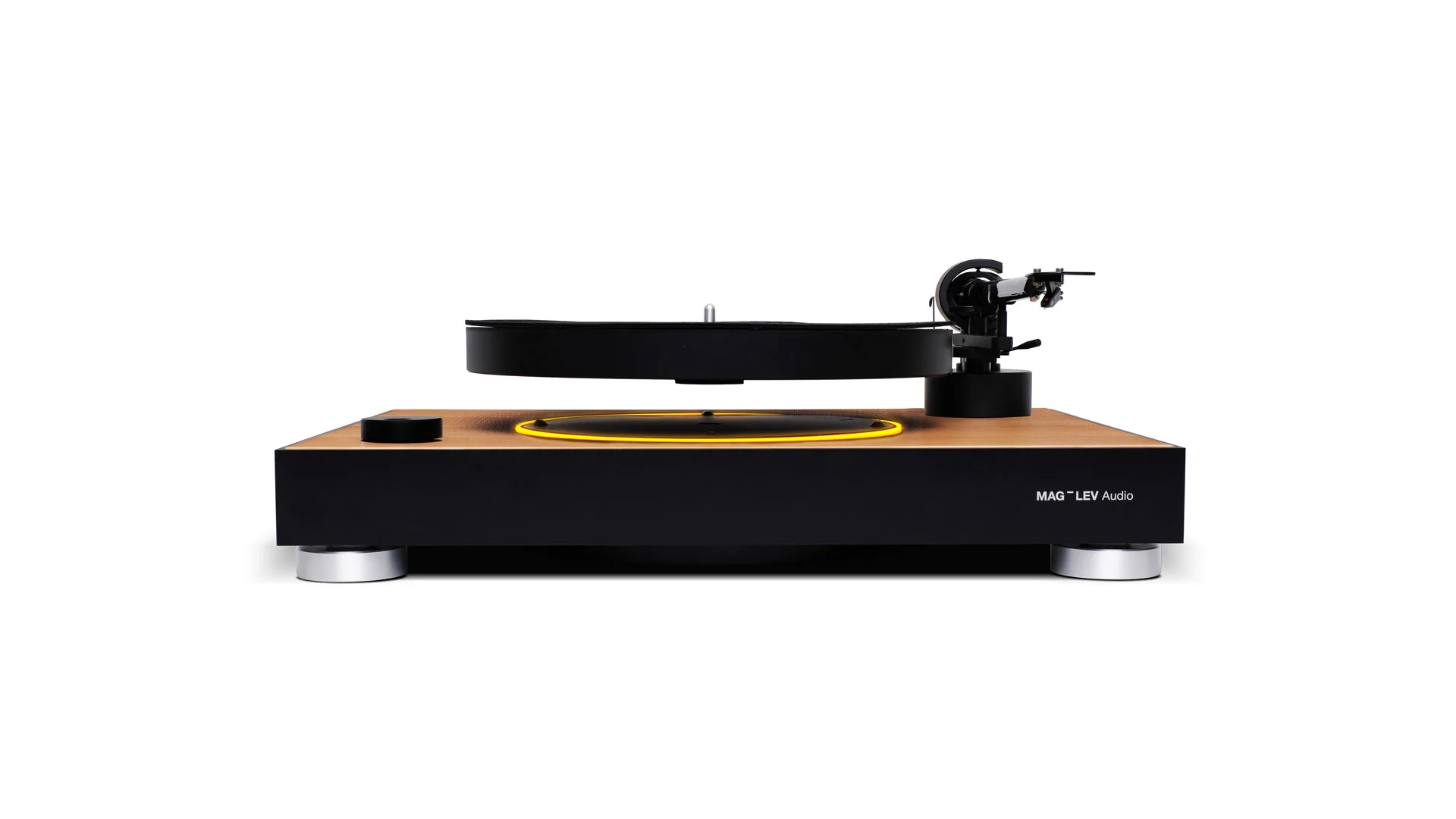
MAG-LEV Audio is a Slovenian company built around the ML1, a turntable whose platter visibly levitates while a record is playing. The project became public through a successful Kickstarter campaign in 2016 and has since progressed from prototype spectacle to a production record player. Arrays of magnets support the platter without a conventional mechanical bearing, while sensors and control software regulate its height, balance and rotational speed. Retractable feet hold the platter when the deck is switched off; they lower as levitation stabilises and return automatically at the end of use. An internal backup supply allows the platter to descend safely if mains power fails. The ML1 plays 33⅓ and 45 rpm records and is supplied as a ready-to-use package with tonearm and cartridge options, automatic cueing at the end of a side and illuminated controls. Magnetic support does not remove every source of vibration—the stylus still tracks a physical groove—but it eliminates direct bearing contact and makes the drive principle immediately visible. MAG-LEV has not tried to disguise a conventional deck beneath dramatic styling. Its originality lies in solving the feedback, control and safety problems required to turn magnetic levitation into a repeatable consumer product, making the mechanism both the technical core and the visual identity of the brand.
Magnat

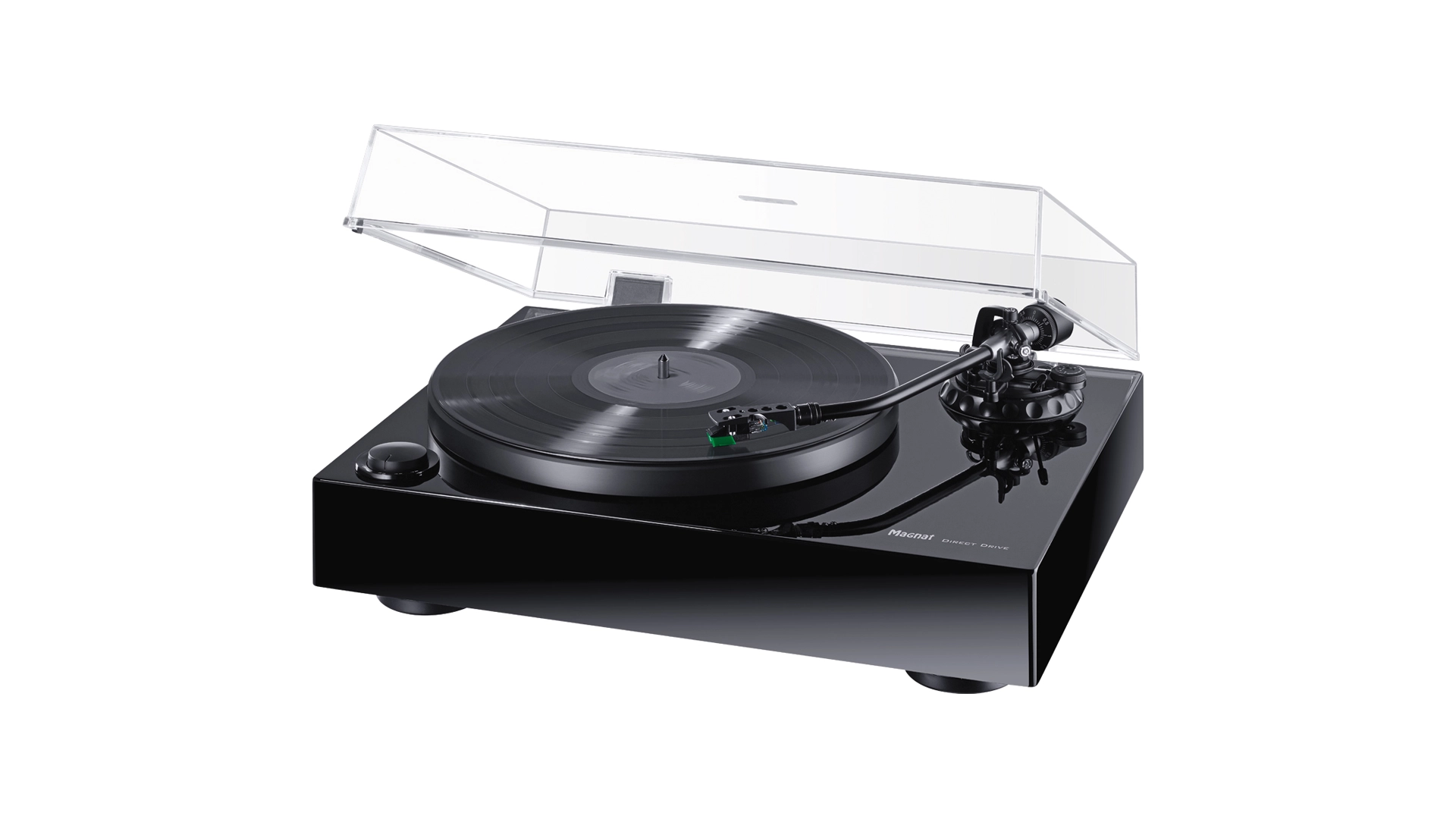
Magnat is a German loudspeaker and audio-electronics brand founded in Cologne by Rainer Haas in 1973. Loudspeaker engineering came first, and bass reproduction has remained a recurring speciality, but the company’s history is more varied than a generic mass-market description suggests. The early Log series established the name internationally; an omnidirectional plasma tweeter followed in 1979, the All-Ribbon family in 1981, and Magnat entered car audio in 1983. Its present home catalogue ranges from compact Monitor S models to Signature loudspeakers, retro-proportioned Transpuls systems and the THX-certified Cinema Ultra family. Active Monitor Reference designs, subwoofers, on-wall and architectural speakers extend the range into lifestyle and custom installation. Magnat also makes electronics, including hybrid valve/solid-state receivers, a network receiver and the substantial MTT 990 direct-drive turntable. Different families serve very different budgets, so the brand should not be characterised only as affordable or only as high-end. Measurement facilities, driver development and crossover optimisation provide the continuity between them. Magnat is now part of Premium Audio Company, but its identity remains German product development applied across stereo, cinema and installation rather than a badge placed on one narrow type of component.
Marantz

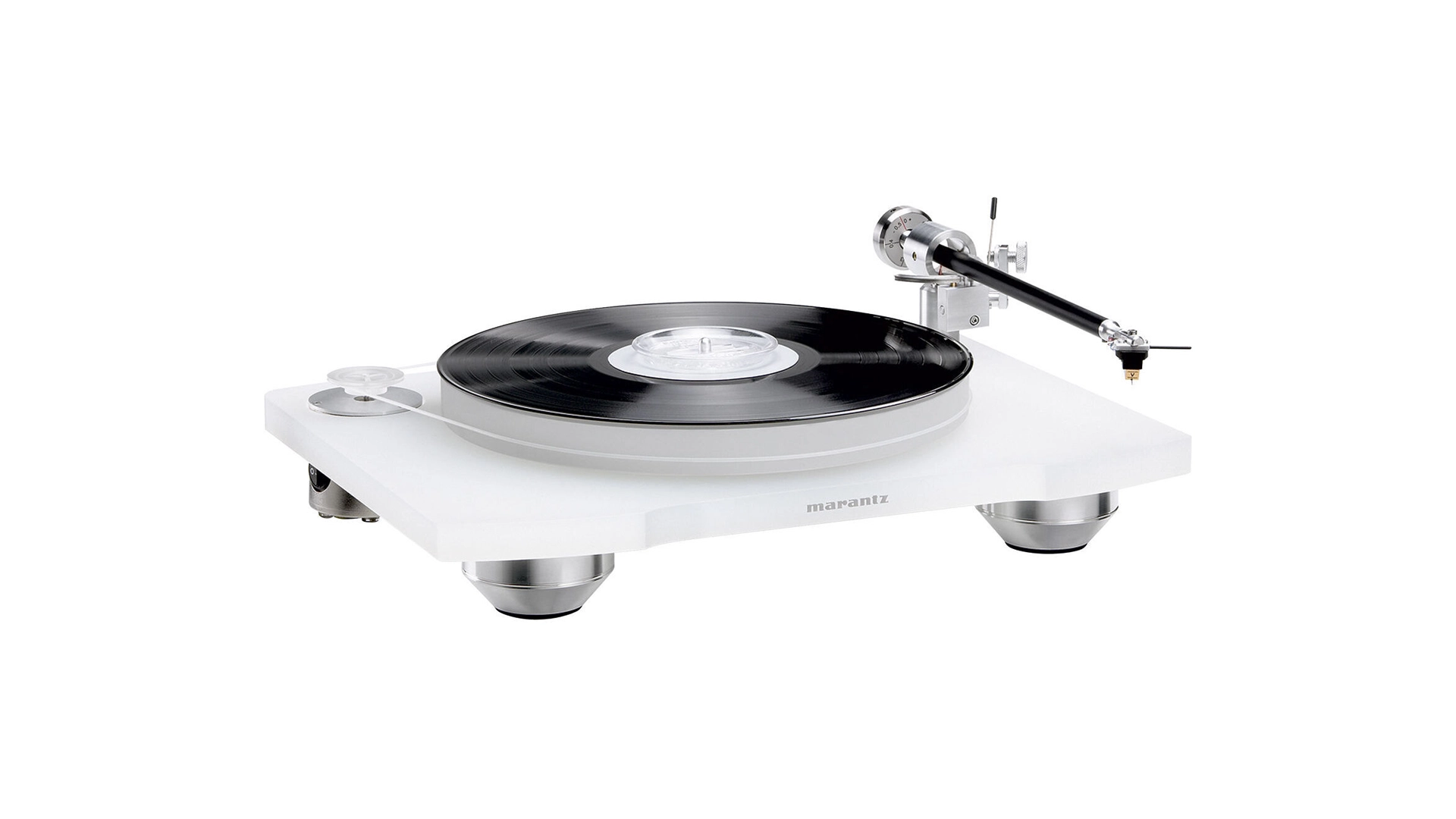
Marantz is a historic high-fidelity brand whose modern amplifiers, network players and home-cinema electronics combine American roots with Japanese audio engineering. Saul B. Marantz began by building the Audio Consolette for his own record collection; its success led to the Marantz company in New York in 1953. The Model 1 preamplifier, Model 7, Model 9 power amplifier and Model 10B tuner established a reputation for elegant circuits, low distortion and unusually thoughtful industrial design. Today the range spans stereo integrated amplifiers, SACD and network sources, turntables, AV receivers and processors. A defining element of many premium models is the company’s discrete Hyper Dynamic Amplifier Module (HDAM), used instead of generic integrated op-amps in critical analogue stages. Current reference components also emphasize short signal paths, carefully separated power supplies, shielding and rigid multi-layer chassis construction. Products such as the MODEL 30 and MODEL 40n bring that approach to contemporary systems, while the CINEMA series applies it to immersive home theatre. Marantz is distinctive because it has repeatedly translated its classic emphasis on musical, usable equipment into each new playback era rather than treating heritage as decoration.
Mark Levinson

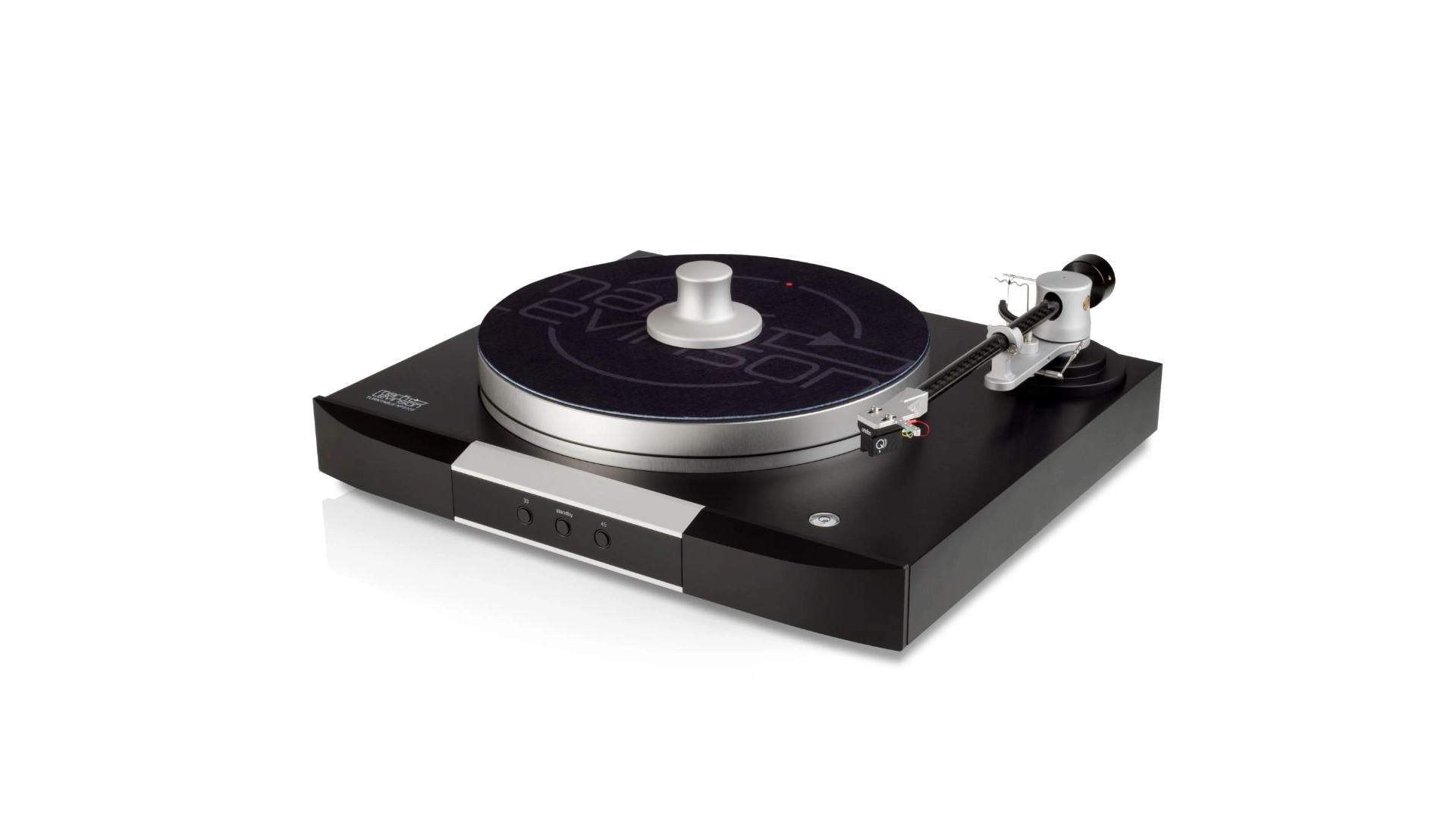
Mark Levinson is an American high-end electronics brand built around low-noise analogue circuitry, substantial power supplies and a deliberately uncompromising approach to signal integrity. Professional musician and recording engineer Mark Levinson founded the company in 1972 after seeking playback equipment that could reproduce the natural scale and timbre he heard in live performance. Early products such as the LNP-2 preamplifier helped define the emerging specialist high-end market. Now part of Harman, the brand produces preamplifiers, power and integrated amplifiers, digital players, turntables and premium headphones, and also develops factory audio systems for Lexus. Its components are identified by the Nº model prefix and typically use proprietary Pure Path circuit architecture, dual-mono layouts where appropriate, fully balanced signal paths and tightly regulated supplies. The Nº 5805 and Nº 5802 integrated amplifiers combine this analogue foundation with modern digital conversion, while the Nº 5909 extends the brand into wireless noise-cancelling headphones. Mark Levinson’s real distinction is not a cosmetic luxury treatment but the application of measurement-led, wide-bandwidth engineering and careful system integration across both traditional separates and newer product categories.
McIntosh

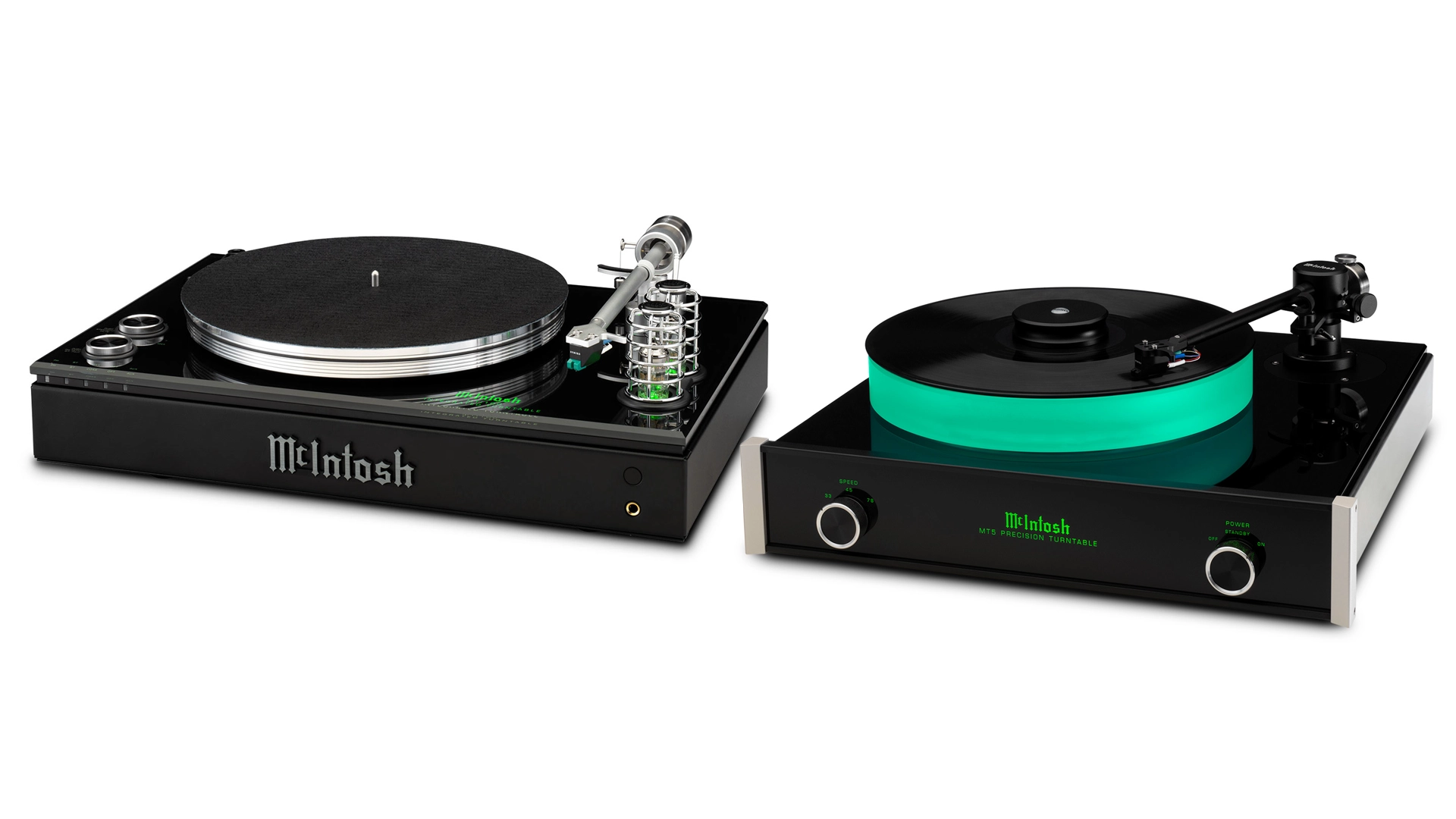
McIntosh is an American high-end audio manufacturer whose blue power meters and black-glass front panels identify products built around unusually durable amplifier engineering. Frank H. McIntosh and Gordon Gow founded the company in 1949 after developing the Unity Coupled Circuit, a transformer-coupled output topology designed to deliver high power with low distortion across the audible band. McIntosh moved to Binghamton, New York, in 1951 and continues to design and assemble products there. The catalogue covers valve and solid-state power amplifiers, preamplifiers, integrated amplifiers, source components, streamers, turntables, speakers and home-cinema processors. Many transistor power amplifiers use Autoformers to deliver their rated power into different loudspeaker impedances, while Power Guard monitors the waveform to reduce clipping-related distortion and Sentry Monitor protects against unsafe operating conditions. The company still winds key transformers in house, and signature glass panels are printed and assembled for long service life. McIntosh’s appeal extends beyond styling: its defining know-how is the marriage of protective circuitry, stable load behavior and conservative construction with a product ecosystem that can support both two-channel and large cinema systems.
Metaxas & Sins

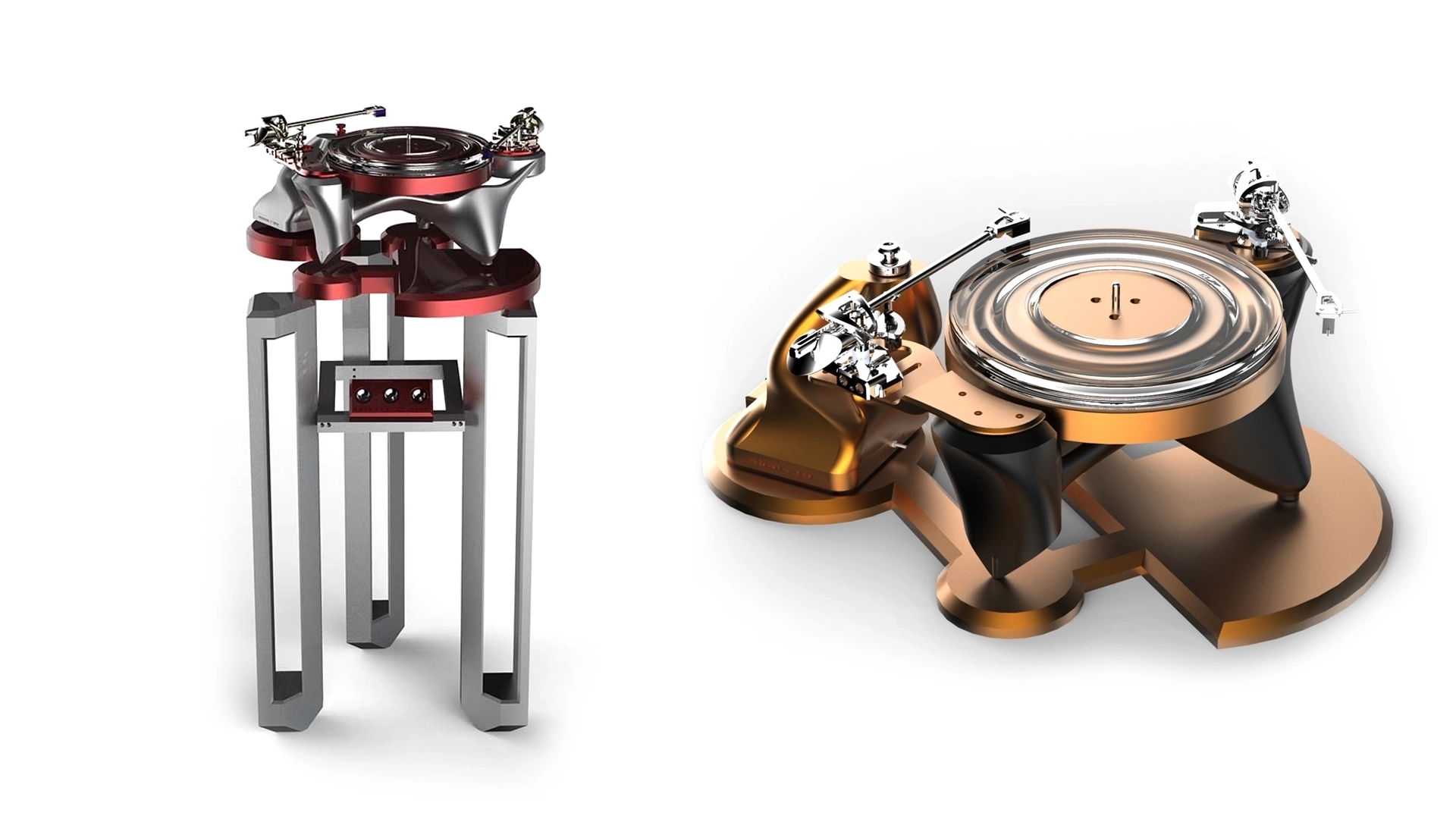
Metaxas & Sins is the design-led audio house of Greek-born engineer, artist and recording specialist Kostas Metaxas, creating amplifiers, headphone systems and open-reel machines as functional sculpture. Metaxas formed his original audio company in 1981 after building equipment for his own recordings. His hundreds of live concert sessions shaped a preference for very short signal paths, wide bandwidth and circuits intended to preserve transient information without excessive filtering. The current family company pairs that electronics work with forms drawn by hand and machined from solid metal. Products such as the Solitaire and Ikarus amplifiers, Marquis headphone amplifier and Ethereal electrostatic system avoid conventional rectangular cases, but the shapes also address rigidity, cooling and resonance. The Tourbillon T-RX and Papillon open-reel machines revisit professional tape transport through precision mechanics, direct-drive concepts and visibly exposed motion. Production is deliberately small-scale and involves Kostas and his sons. Metaxas & Sins stands apart because its visual language is inseparable from the engineering: these are not standard components placed in decorative shells, but audio circuits, mechanisms and enclosures conceived as one object.
Michell Audio

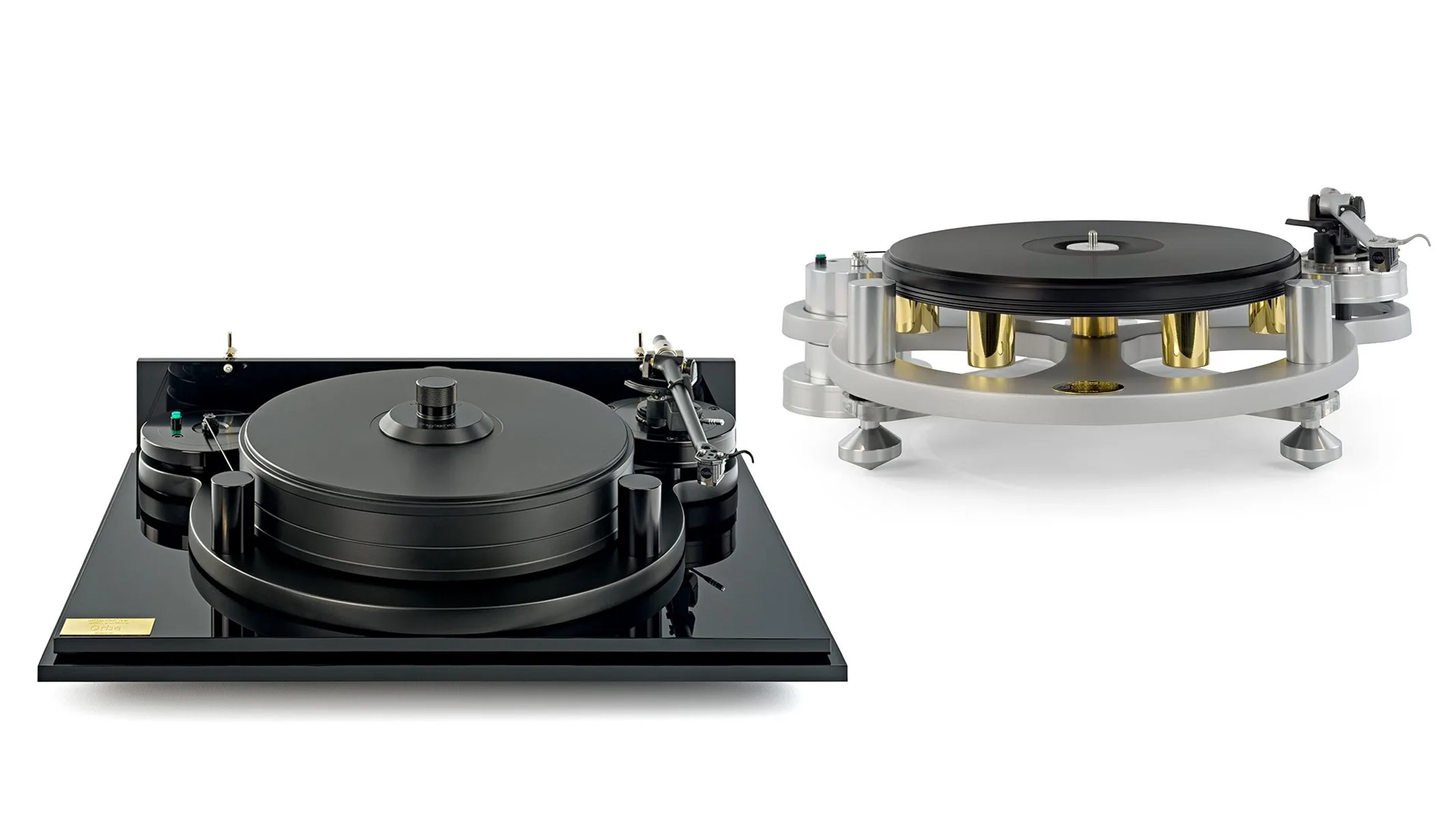
Michell Audio is the British turntable maker behind the unmistakable GyroDec and Orbe: skeletal, suspended record players whose engineering is meant to remain visible. John Michell founded Michell Engineering in the mid-1960s, initially machining precision parts for other manufacturers. Work for Transcriptors, followed by licensed production of the Hydraulic Reference, gave the company a direct route into analogue replay; Michell’s own Reference Electronic appeared in 1977 and the GyroDec followed in the early 1980s. The current range includes the GyroDec, open-frame Gyro SE, flagship Orbe, compact TecnoDec, tonearms, power supplies and upgrades for long-running models. Signature details include suspended subchassis construction, an inverted oil-circulating main bearing, belt drive with an outboard motor, and the GyroDec’s weighted platter. Rather than replacing successful decks every few seasons, Michell develops them through compatible bearings, clamps, power supplies and suspension parts. That continuity is the brand’s real strength: these are visually original turntables supported as evolving mechanical systems, not fashion-led products with a short service life.
MoFi Electronics

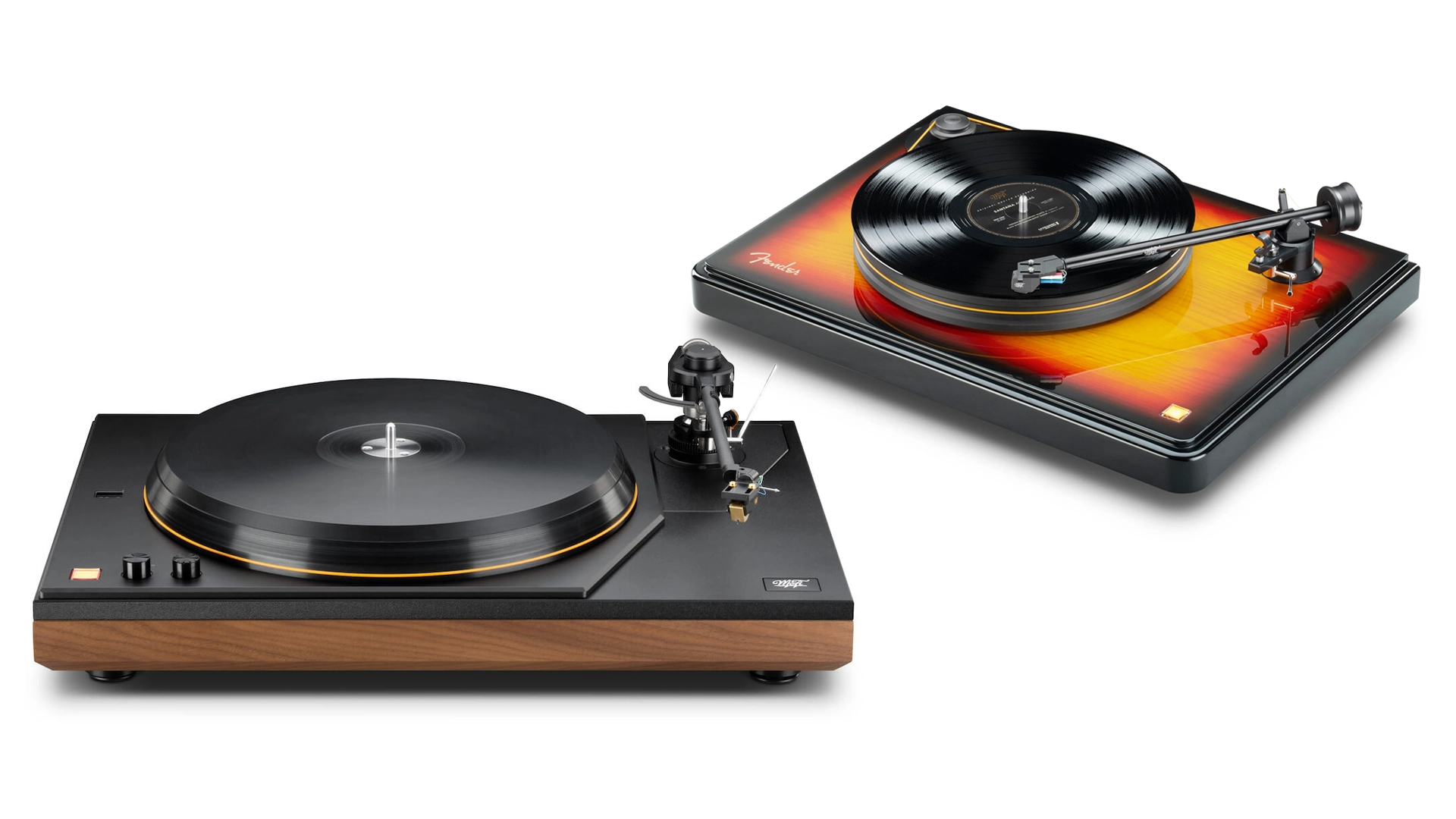
MoFi Electronics is the hardware arm of the Mobile Fidelity family, translating the record label’s analogue experience into turntables, cartridges, phono stages and loudspeakers. The business was formed in 2014 and introduced its first hardware publicly in 2016, drawing on outside specialists rather than claiming that mastering expertise alone is sufficient to design equipment. Turntable engineer Allen Perkins led the analogue platform, while later loudspeakers were created by Andrew Jones and the MasterPhono by Peter Madnick. StudioDeck and UltraDeck established the line with isolated AC motors, constrained-layer plinths and proprietary tonearms; the Allen Perkins-designed MasterDeck adds three-speed operation and fine speed adjustment. UltraGold, MasterTracker and other cartridges are voiced as part of the same playback chain. SourcePoint speakers use Jones’s concentric driver architecture to control directivity and integrate treble with the mid/bass unit from a common acoustic centre. MoFi Electronics is distinctive because its catalogue is not a label-logo exercise: it is a set of purpose-designed components by identifiable engineers, informed by how records are cut, evaluated and replayed.
Musical Fidelity

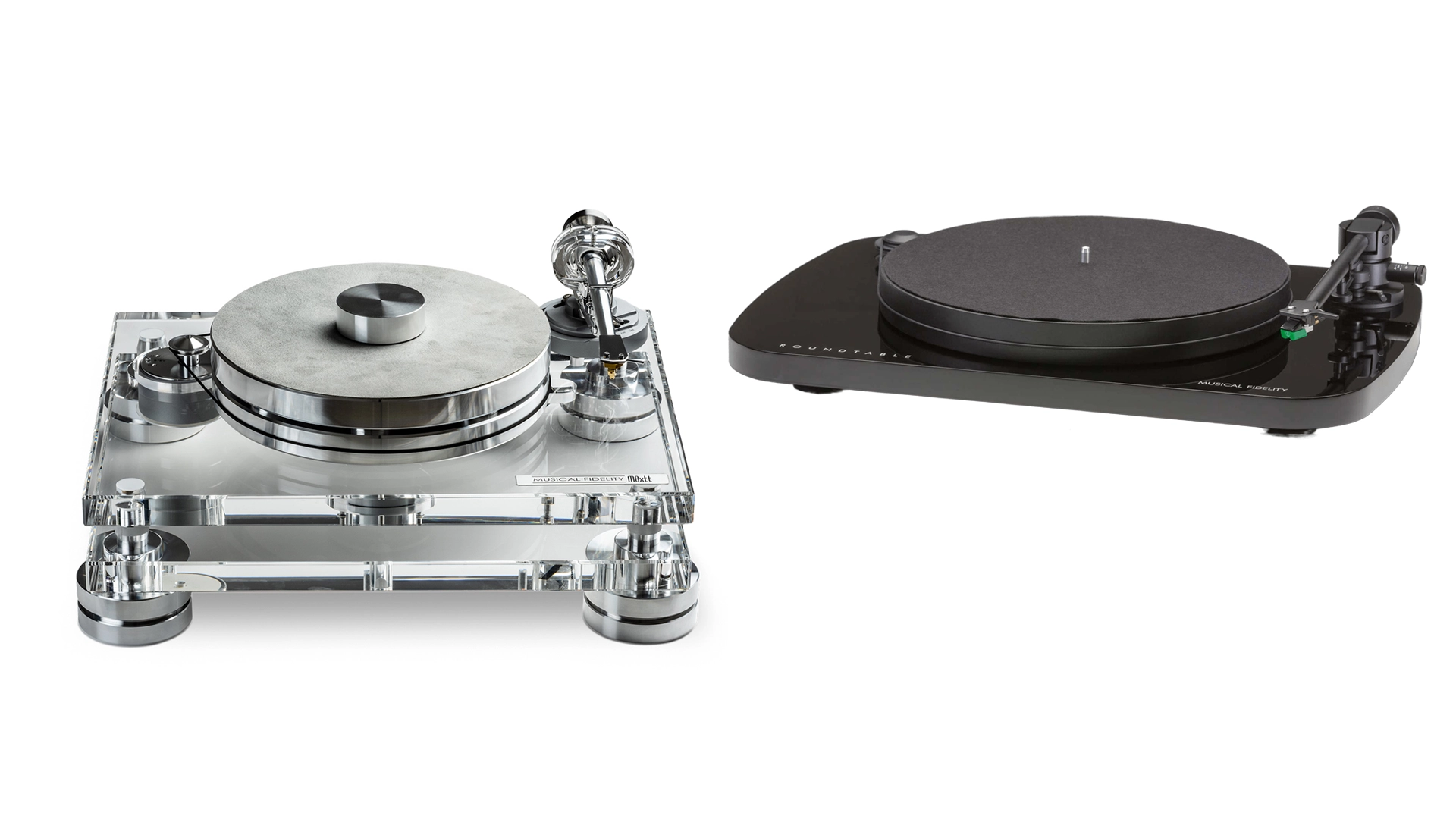
Musical Fidelity is a British hi-fi electronics brand founded in 1982 by clarinettist and audio enthusiast Antony Michaelson. It became known for amplifiers that combined generous power reserves with compact or unconventional formats: the original A1 integrated amplifier, launched in 1985, ran heavily biased in Class A, while the cylindrical X-series made serious phono, DAC and headphone functions accessible as separate components. The Nu-Vista line later adopted nuvistor valves, a low-noise miniature tube technology rarely used in modern consumer audio. The current catalogue includes integrated, pre and power amplifiers, phono stages, DACs, CD players, streamers, turntables and power conditioning. A1 and X-series products have been re-engineered rather than merely cosmetically revived, while M3, M5, M6, M8 and Nu-Vista cover progressively larger systems. Since 2018 the brand has been owned and operated by Austria’s Audio Tuning, but product identity remains explicitly British and analogue-led. Musical Fidelity’s strength is range without anonymity: high-current transistor amplification, discrete phono circuitry and the unusual nuvistor platform give different families real technical character instead of the same chassis being repackaged at several prices.
NAD

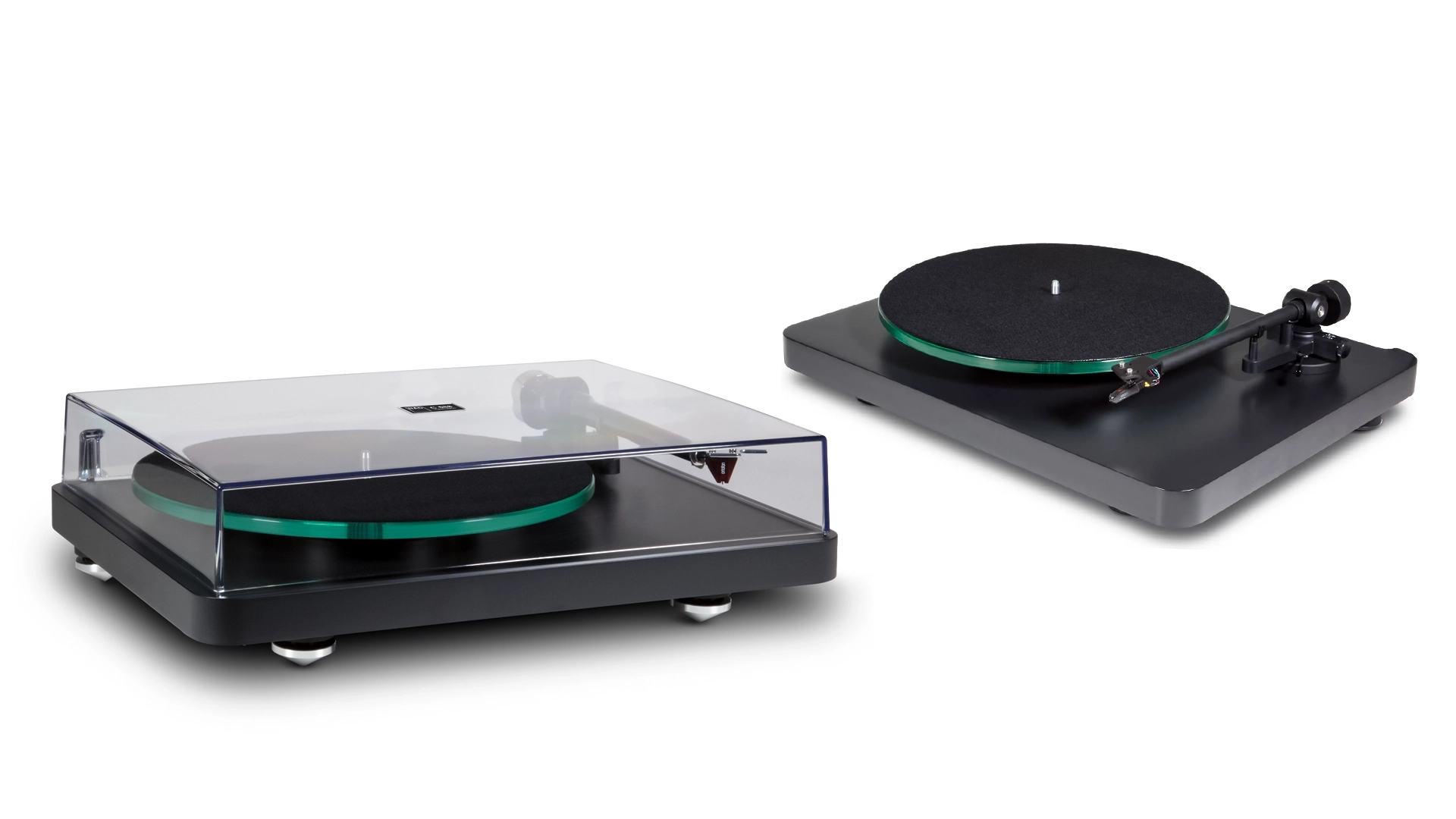
NAD—New Acoustic Dimension—is the British-founded electronics brand that made high-current, musically convincing amplification available without luxury-casework pricing. The company began in London in 1972 when audio-industry entrepreneur Dr Martin “Marty” Borish brought together a group of European distributors. Its turning point was the 3020 integrated amplifier, designed by Bjørn Erik Edvardsen and launched in 1978. Modestly rated at 20 watts per channel, it could drive demanding loudspeakers far beyond what the specification suggested and became one of hi-fi’s landmark affordable amplifiers. That practical engineering continues in the Classic and Masters ranges: integrated, pre- and power amplifiers, streamers, AV receivers and custom-installation components. PowerDrive manages voltage and current reserves for real loudspeaker loads, while Modular Design Construction lets selected amplifiers and receivers accept replaceable digital or HDMI modules. Current products also combine BluOS multi-room streaming with technologies such as Purifi Eigentakt amplification in appropriate models. NAD passed through Danish ownership before Canada’s Lenbrook acquired it in 1999; product development and headquarters are now Canadian, but the brand’s country of origin remains the United Kingdom. The lasting NAD idea is simple: spend the budget on usable power, upgradeability and music rather than decorative excess.
Nagra
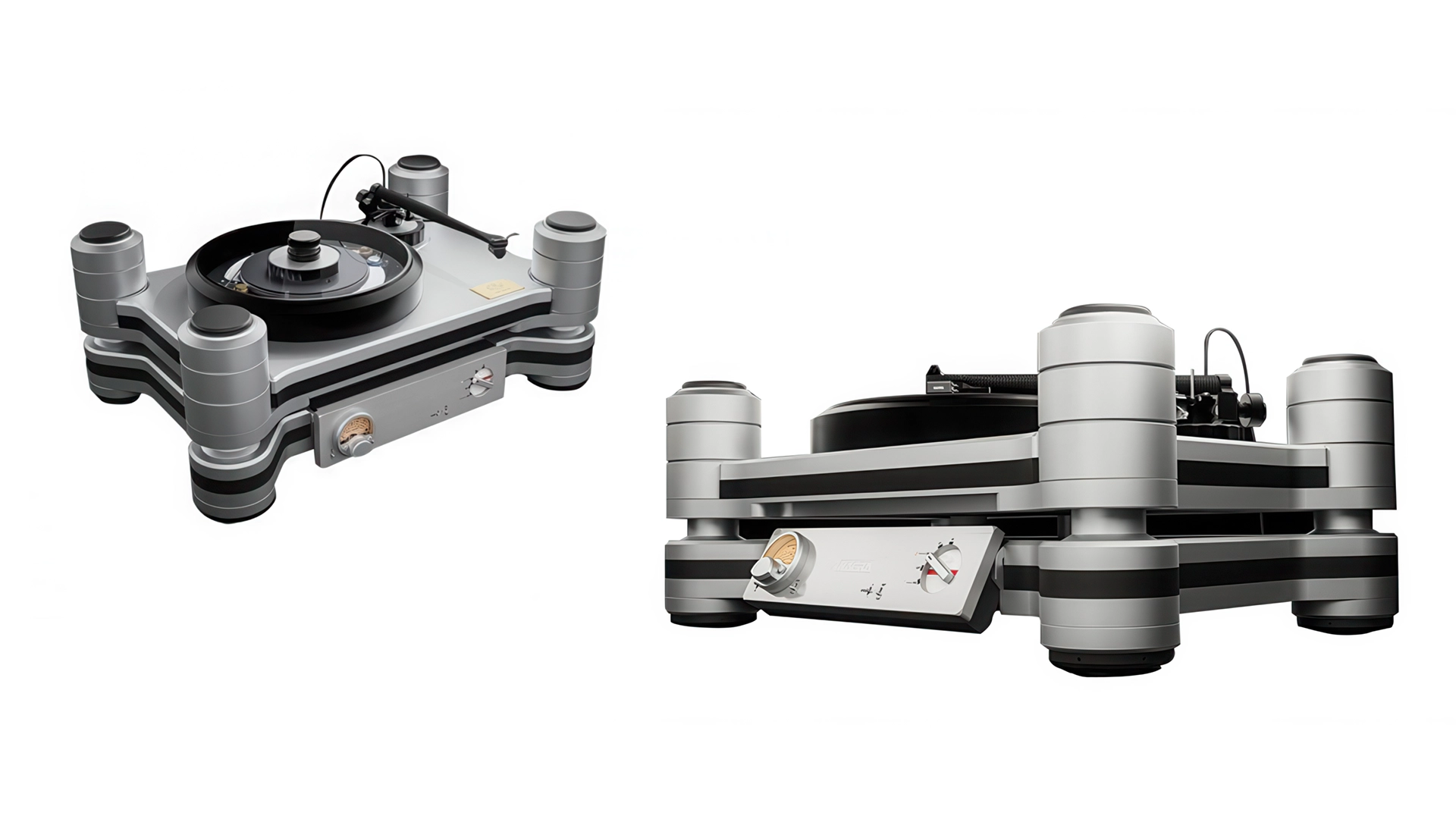
Nagra is the Swiss audio name created by Stefan Kudelski’s first portable recorder in 1951. “Nagra” means “it will record” in Polish, and the compact machine transformed location sound by letting one operator capture broadcast- and film-quality audio away from a studio. The Nagra III and IV generations became fixtures of journalism, documentary production and cinema; Kudelski and the company received multiple Academy and Emmy awards for their technical contribution. Rugged mechanics, precise tape transport and the instantly recognizable modulation meter made the recorder an industry tool rather than a styling exercise. Today Nagra spans professional recorders, security equipment and reference home audio. The Nagra VII continues the field-recording lineage, while the Compact, Classic, HD and Reference families cover streamers, DACs, phono stages, preamplifiers, power amplifiers, turntables and cartridges. Their compact proportions and meter-led design deliberately echo the recorders, but the substance lies in in-house power supplies, analogue circuitry and precision mechanical construction. In 2012 the audio division was spun out of Kudelski Group as Audio Technology Switzerland; members of the Kudelski family remain its principal shareholders. Nagra products are designed and manufactured in the Lake Geneva region, preserving a direct link between the professional machines and the current high-end range.
New Horizon

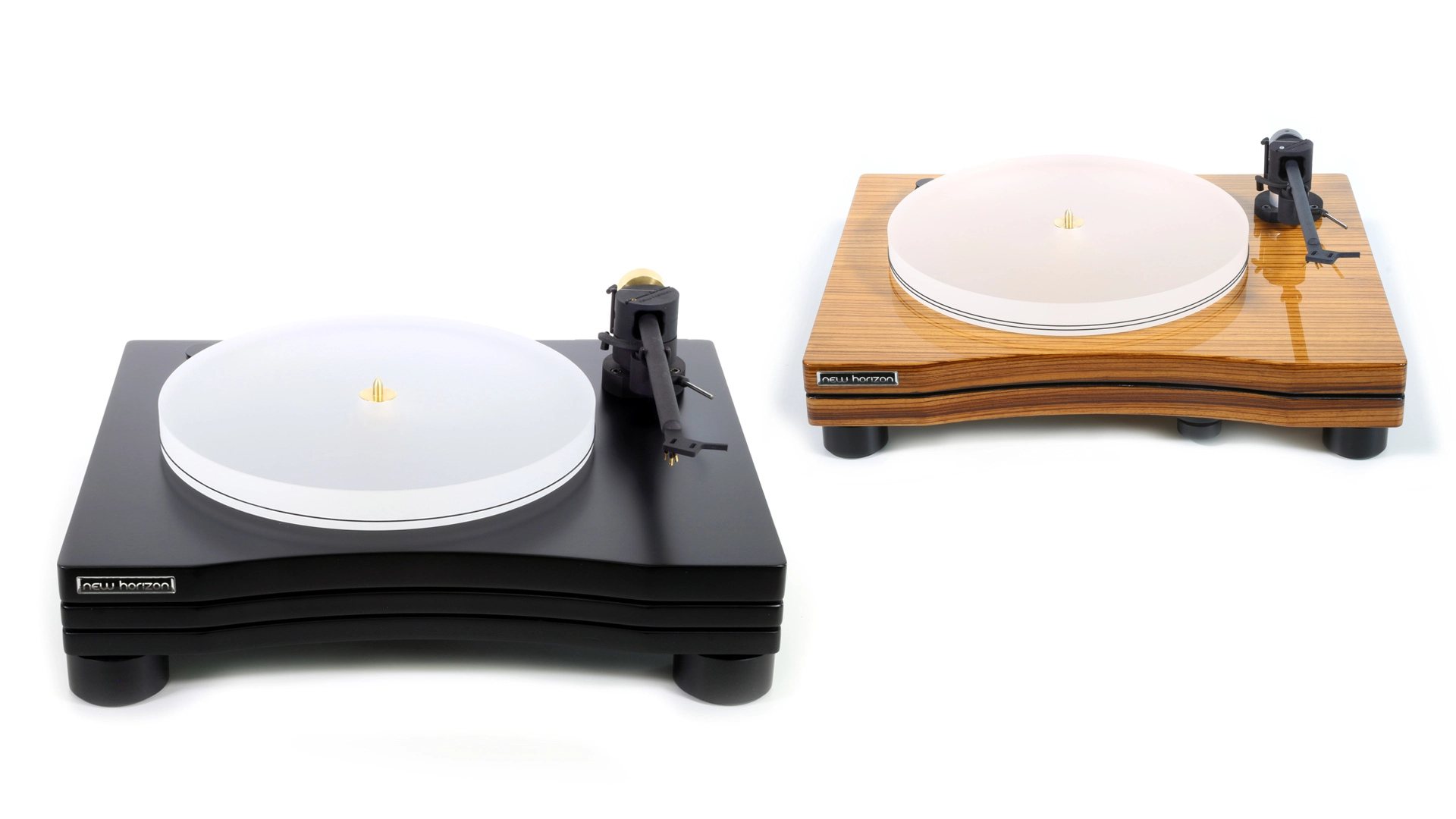
New Horizon is an Italian analogue brand founded at the end of 2016 to design and build belt-drive turntables entirely in Italy. Its decks avoid automation and decorative complexity in favour of the mechanical fundamentals: stable rotation, a rigid bearing and deliberate separation of the motor, platter and tonearm from one another. The result is a range intended to give new vinyl listeners a clear upgrade path while retaining the adjustability expected by experienced users. Vibration control is the central idea. The entry models use damped plinths, isolated AC motors and precision main bearings; higher designs increase mass and divide the structure into separately decoupled layers. The 203, for example, uses three plinth sections so the motor, platter bearing and tonearm do not share one resonant path. New Horizon’s original GD—Giro Decoupled—models made this strategy explicit, and the current 100-, 200- and 300-level decks develop it at different prices. Accessories include record clamps, mats, power supplies and isolation supports rather than unrelated electronics. New Horizon is not historically important because of a single famous vintage model—it is a young, focused maker. Its individuality lies in translating the suspended or multi-plinth logic of ambitious turntables into clean, serviceable Italian decks that remain approachable in price and setup.
Oracle Audio

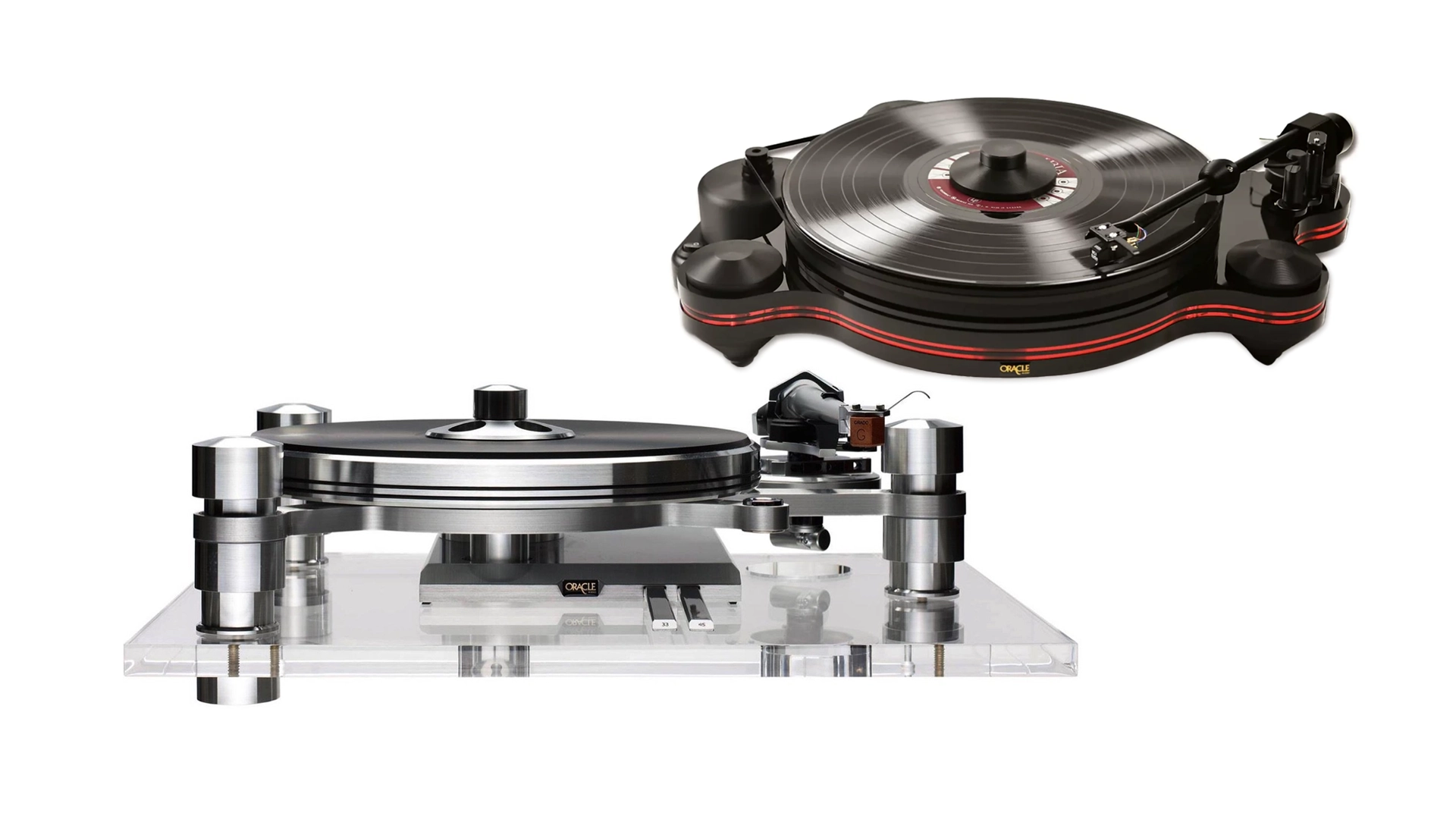
Oracle Audio is the Canadian analogue specialist founded in 1979 by Marcel Riendeau. Its first turntable, the Delphi AC, appeared publicly in 1980 and immediately established the visual and mechanical language that still identifies the brand: an exposed acrylic structure, three suspension towers and a carefully isolated belt-drive platform. Few turntables have evolved through so many generations without losing their basic architecture. The current Delphi MkVII is offered in Classic, Reference and Signature forms, refining the suspended subchassis, bearing, motor control and power supply rather than replacing them with fashion. Paris MkV offers a more conventional silhouette, while Origine MkII provides a simpler route into Oracle’s design philosophy. Matching Origine and Paris tonearms, PH100 and PH200 phono stages, cartridges, record clamps and the Turbo power supply let owners build or upgrade the analogue chain in stages. Oracle also continues a distinctive digital line: CD1000, CD2000 and CD2500 use mechanically substantial transports and DAC architecture for collectors who still value disc replay. Products are developed and built in Quebec. Oracle’s lasting contribution is its treatment of vibration as a complete system—from motor and bearing through suspension, support and clamp—combined with an upgrade path that keeps older Delphi decks serviceable rather than obsolete.
Origin Live

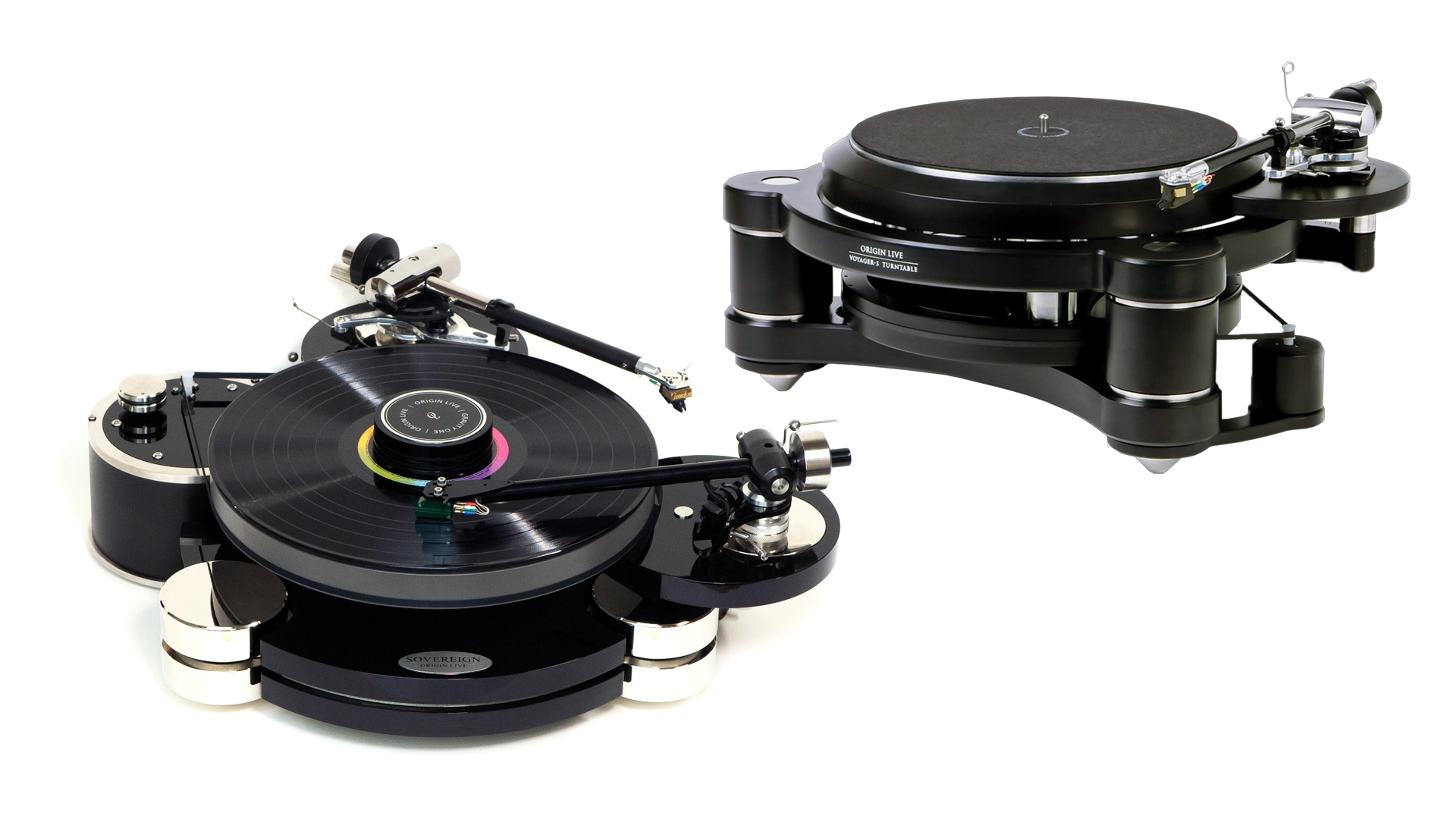
Origin Live is the British analogue manufacturer founded by engineer Mark Baker and operating from Southampton since 1986, not 1990. The company first became known for modifying turntables and developing a replacement DC motor power supply; that practical upgrade work grew into complete decks, tonearms and accessories built around the control of vibration and energy flow. Its turntable range progresses from Aurora and Swift through Calypso, Resolution and Sovereign to the flagship Voyager. Rather than rely on one fashionable material, Origin Live combines low-friction bearings, carefully decoupled motors, layered plinth structures and platter interfaces according to the model. Tonearms are equally central: Onyx and Silver open the range, followed by Zephyr, Encounter, Illustrious, Conqueror, Enterprise, Agile and Renown. Their development focuses on bearing behaviour, tube rigidity, counterweight placement and how mechanical energy leaves the cartridge. Motor kits and structural upgrades remain available for decks from other manufacturers, preserving the company’s original problem-solving role. Origin Live designs and manufactures in Britain and uses listening alongside measurement to judge changes. Its individuality lies in treating the entire record-playing mechanism—motor, bearing, platter, arm and support—as an energy-management system, then offering that knowledge both as complete products and as upgrades.
Pear Audio Analogue

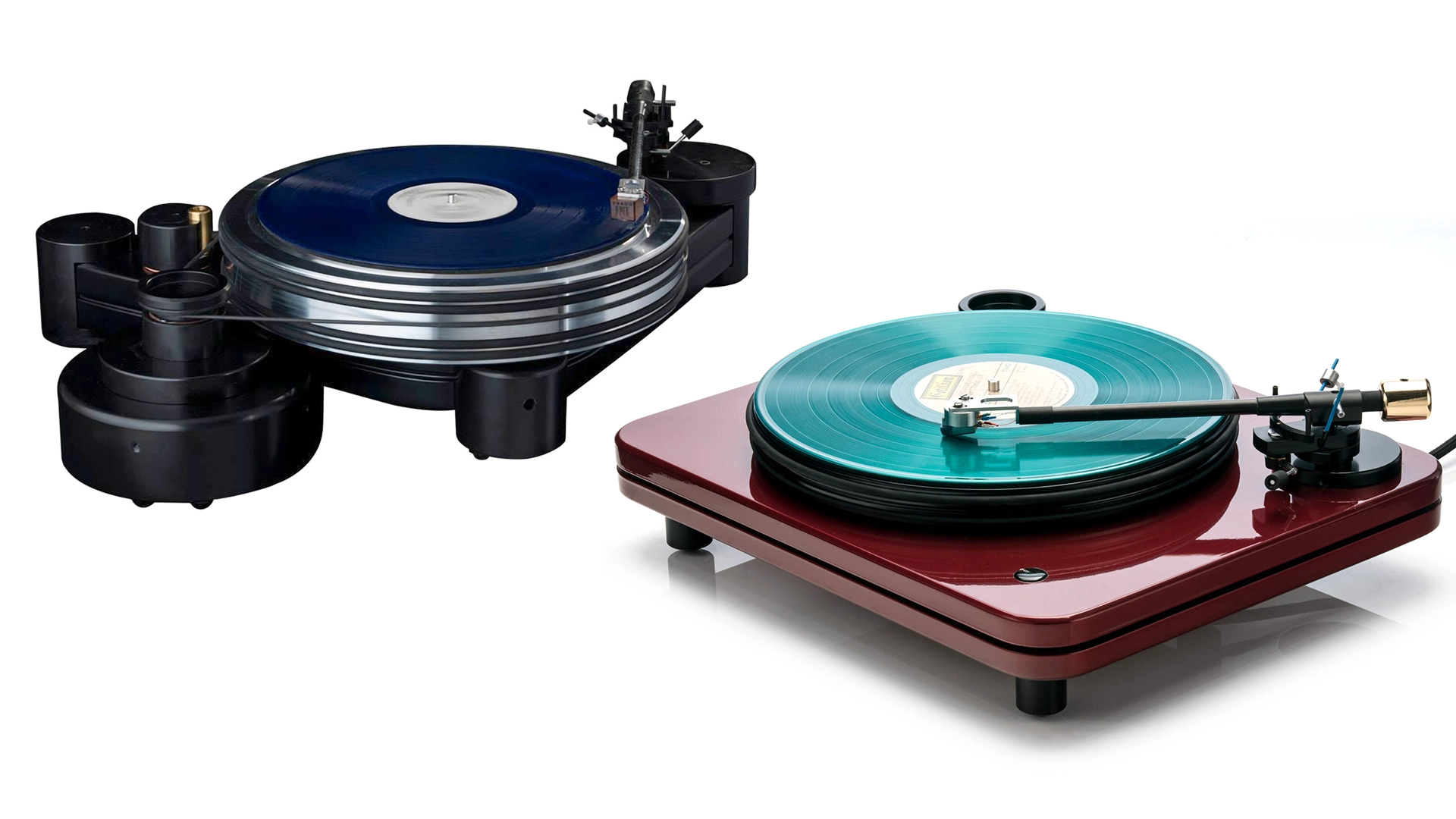
Pear Audio Analogue is Peter Mezek’s Slovenian turntable company and the custodian of the final design ideas of the late Tom Fletcher, founder of Nottingham Analogue. Mezek distributed and worked closely with Fletcher for years; the Pear project grew from that relationship rather than from an attempt to imitate the appearance of classic record players. Because the company does not publish a dependable founding date, the year is best left unstated. The range develops Fletcher’s conviction that a turntable should add as little stored mechanical energy as possible. Low-torque motors, massive platters, carefully matched bearings and restrained plinth structures are used to reduce vibration before it reaches the stylus. On several designs the platter is started by hand, allowing the motor to maintain speed with minimal torque and correspondingly little disturbance. Little John and Captain John Handy provide the more accessible decks; Kid Howard, Kid Thomas and the larger Odar move toward heavier platters, more elaborate power supplies and deeper isolation. Cornet tonearms complete the analogue path. The product names honour jazz musicians whom Mezek and Fletcher enjoyed, giving the catalogue a personal history instead of an invented technical code. Turntables and arms are built by hand in Slovenia. Pear Audio Analogue’s importance is precisely this verified lineage: it carries Tom Fletcher’s low-energy, low-torque approach forward through Peter Mezek’s own manufacturing rather than turning the association into nostalgia.
Perpetuum Ebner
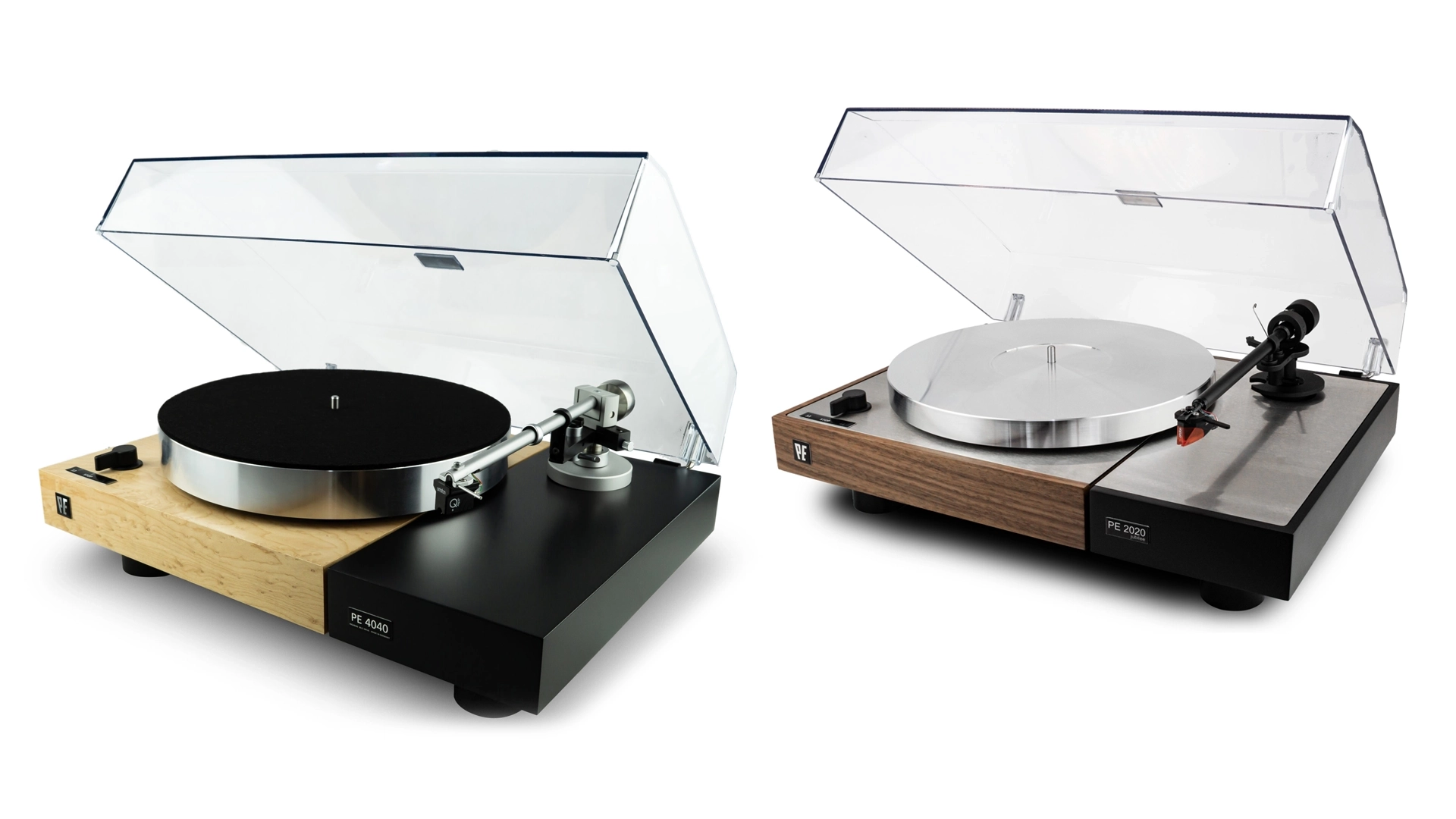
Perpetuum Ebner is a modern German turntable company with roots in one of the Black Forest’s historic phono manufacturers. Josef Steidinger established Perpetuum in St. Georgen in 1911 after leaving the family business that became Dual; the name Perpetuum-Ebner followed the union of the Steidinger and Ebner families in the 1930s. The original company became a major record-player producer, was taken over by Dual in 1971 and ceased independent production in the 1970s. The current brand is a revival, not an uninterrupted continuation. Wolfgang and Regina Epting’s WE Audio Systems relaunched Perpetuum Ebner in 2014 and returned turntable production to the region near its original home. That distinction is why the database year remains 2014 while the description preserves the 1911 heritage. The contemporary range includes PE 1010 MKII, 2525 MKII and 4040 MKII belt-drive models, progressing in motor control, plinth construction and tonearm provision, plus the reference PE 7070. The latter separates motor, platter bearing and tonearm base mechanically within a substantial multi-part structure to stop their vibrations from modulating one another. PE combines locally rooted assembly with parts and tonearms selected for each level rather than reproducing an antique automatic changer. Its value lies in a carefully documented restart: a historic German name applied to new analogue engineering in St. Georgen, with the original rise, acquisition and long gap stated openly.
Plus Audio

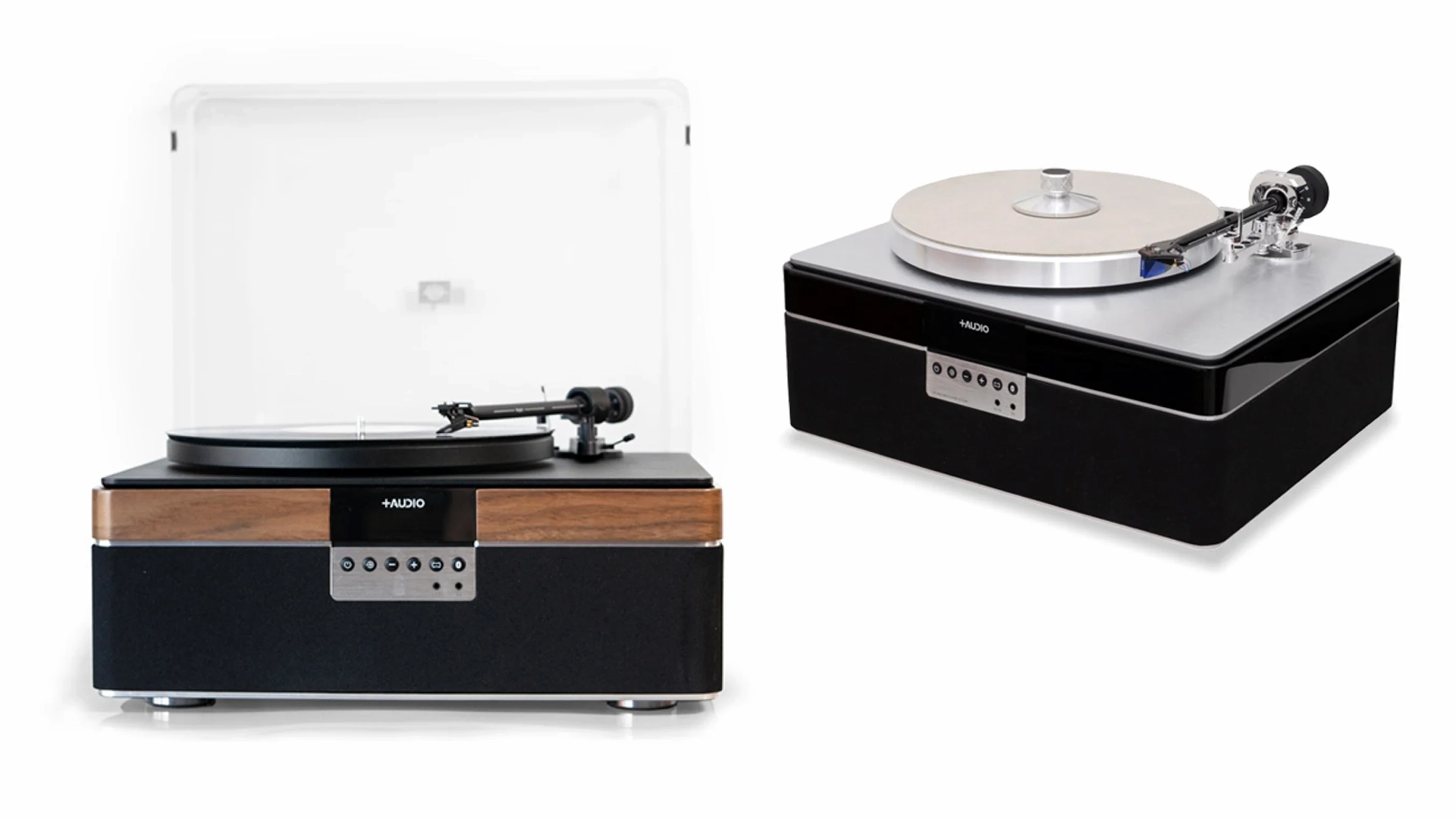
Plus Audio builds compact systems for listeners who want the ritual of vinyl without assembling a turntable, phono stage, amplifier and loudspeakers from separate boxes. Its defining product, THE+RECORD PLAYER, integrates all four functions into one low-profile cabinet, but it is not simply a portable record player enlarged for the living room. The record-playing section is supplied by Pro-Ject and uses an Ortofon cartridge, while Plus Audio develops the amplification, loudspeakers, motor control and system integration around it. The internal phono stage uses passive RIAA equalisation specified within ±0.5 dB. A synthesised oscillator supplies the motor rather than relying directly on the mains frequency, allowing electronic selection of 33⅓ or 45 rpm. Each channel has its own aluminium-cone woofer and soft-dome tweeter, with DSP dividing and correcting the signal before six Class D amplifier channels drive the four loudspeaker units and the motor system. Bluetooth and analogue connections let the cabinet serve as an everyday music system as well as a turntable. THE+RP SYSTEM separates the same concept into a record-player unit and matching speaker, while THE+AUDIO WiFi SYSTEM adds network playback; Special Edition and Reference versions refine materials and finish. Lead product designer Alexander Åhnebrink gave the range the furniture-like form that makes its engineering practical in a normal room. Plus Audio’s strength is therefore credible integration: established analogue parts, active loudspeaker control and unusually tidy industrial design in a genuinely self-contained vinyl system.
Pre-audio turntables

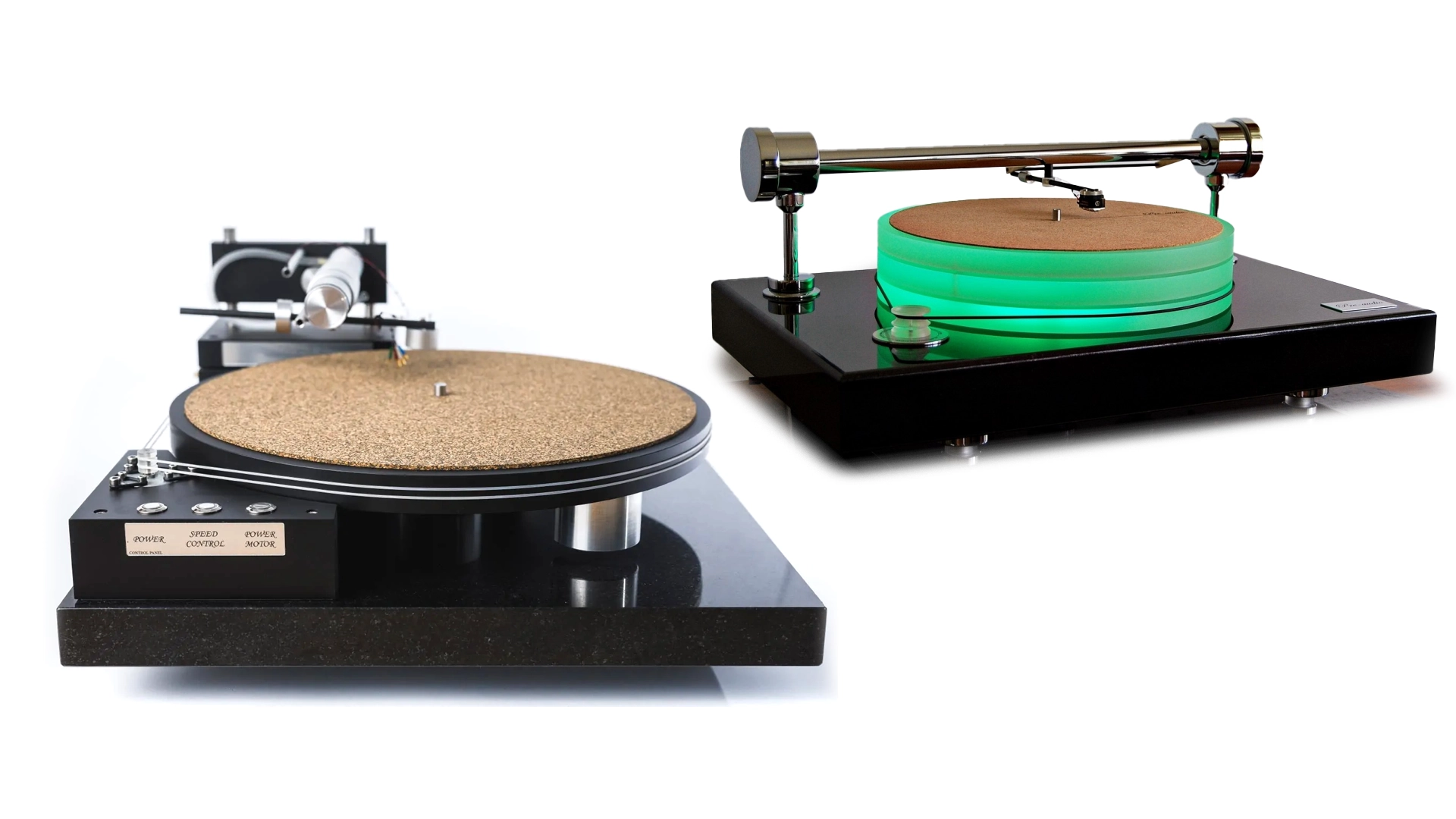
Pre-audio is a small Polish analogue manufacturer in Nysa whose turntables are built around tangential, or linear-tracking, tonearms. That choice distinguishes the company more clearly than generic claims about precision. A conventional pivoted arm traces an arc across the record; a tangential arm keeps the cartridge aligned along a radius, following the geometry used by the cutting lathe and therefore avoiding the changing angular tracking error inherent in a pivoted arm when it is correctly set up. Pre-audio implements the idea with very low-friction air bearings. In the ASP-15 and DE-18 arms, the arm carriage moves along a guide supported by compressed air and is pulled across the record by the stylus itself, without an electronic tracking servo. The absence of a conventional pivot and offset angle can reduce skating force, but the result still depends on cartridge alignment, levelling, clean air supply and careful installation; it should not be described as magically eliminating every source of vinyl distortion. Current turntables include the compact GL-1102, ASP-1501N and DE-1800, as well as the larger BG-XX01, with model-specific combinations of plinth, platter, drive and linear arm. Separate tonearms allow the approach to be used on other decks. The company works in small series and publishes far less corporate history than large brands, so no founding year has been added without dependable evidence. Pre-audio’s real story is sufficient: a Polish specialist that commits its whole record-player range to passive tangential tracking and develops the air-bearing mechanics needed to make it work.