
Cinema Electronics
Cinema electronics are the specialized hardware that decode, process, and amplify audio in commercial theaters, adhering to strict industry standards (DCI). This includes advanced cinema processors for immersive formats like Dolby Atmos, high-channel-count amplifiers, and media servers that play the Digital Cinema Package (DCP). This page lists the manufacturers of these high-reliability components designed for the professional cinema industry.
Hi-Fi brands in the category
Summary information and image
Direct links to official websites
Aeron
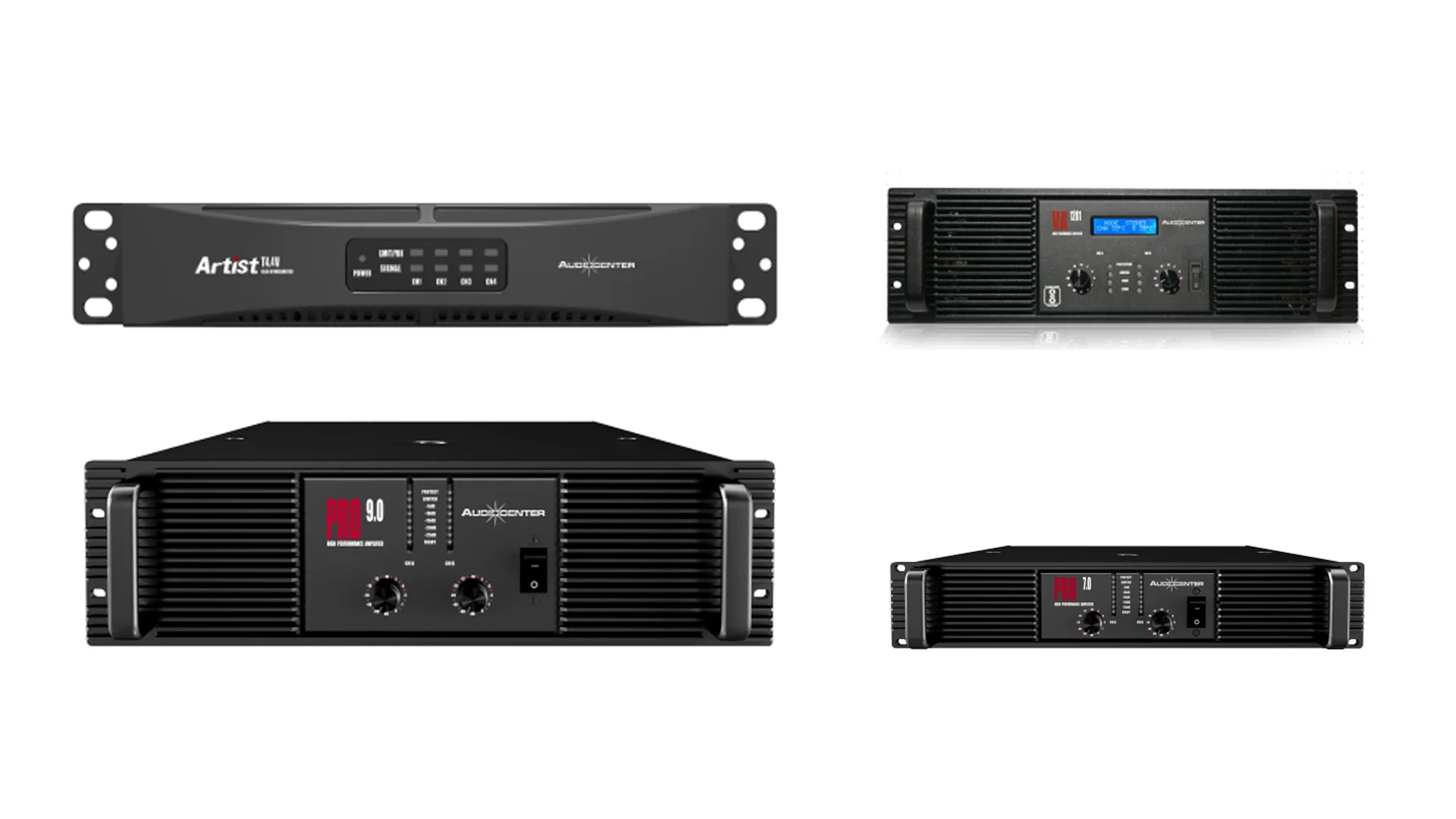
AERONS supplies professional sound equipment for live events, public-address systems and permanent installations in India. Its catalogue covers line arrays, power amplifiers, mixers, microphones, signal processing and installation speakers, alongside equipment from international brands it distributes. The business traces its roots to radio and loudspeaker work in 1962; its own history identifies 2000 as an export-business milestone, not its founding year. Its work spans the equipment needs of venues, installers and sound-reinforcement operators, from microphones and mixing to amplification and loudspeaker coverage.
Ascendo

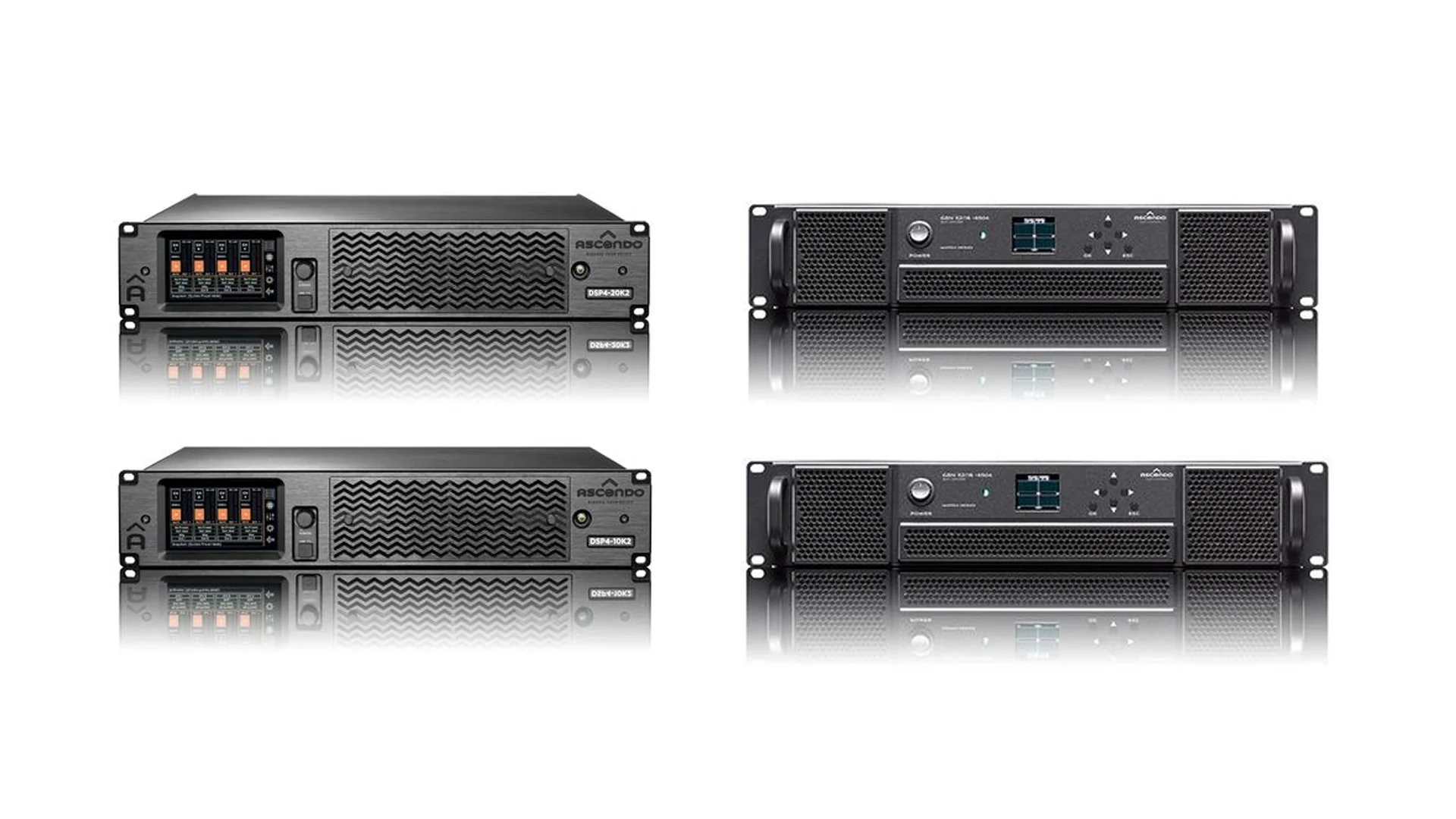
ASCENDO designs cinema systems around coaxial loudspeakers and unusually ambitious low-frequency reproduction. The German brand began in 1999; ASCENDO Immersive Audio followed in 2014, when Geoffrey Heinzel joined Stefan Köpf to develop the cinema business. Its coaxial arrangement places the high-frequency source on the same axis as the larger driver, helping control how the channels integrate across listening positions. The subwoofer range extends from shallow cabinets for constrained installations to very large infrasonic designs. Dedicated electronics and system planning complete the approach. Today’s emphasis is residential cinema, with speaker coverage, installation depth and bass capability considered together as parts of a complete installation.
Audio Excellence

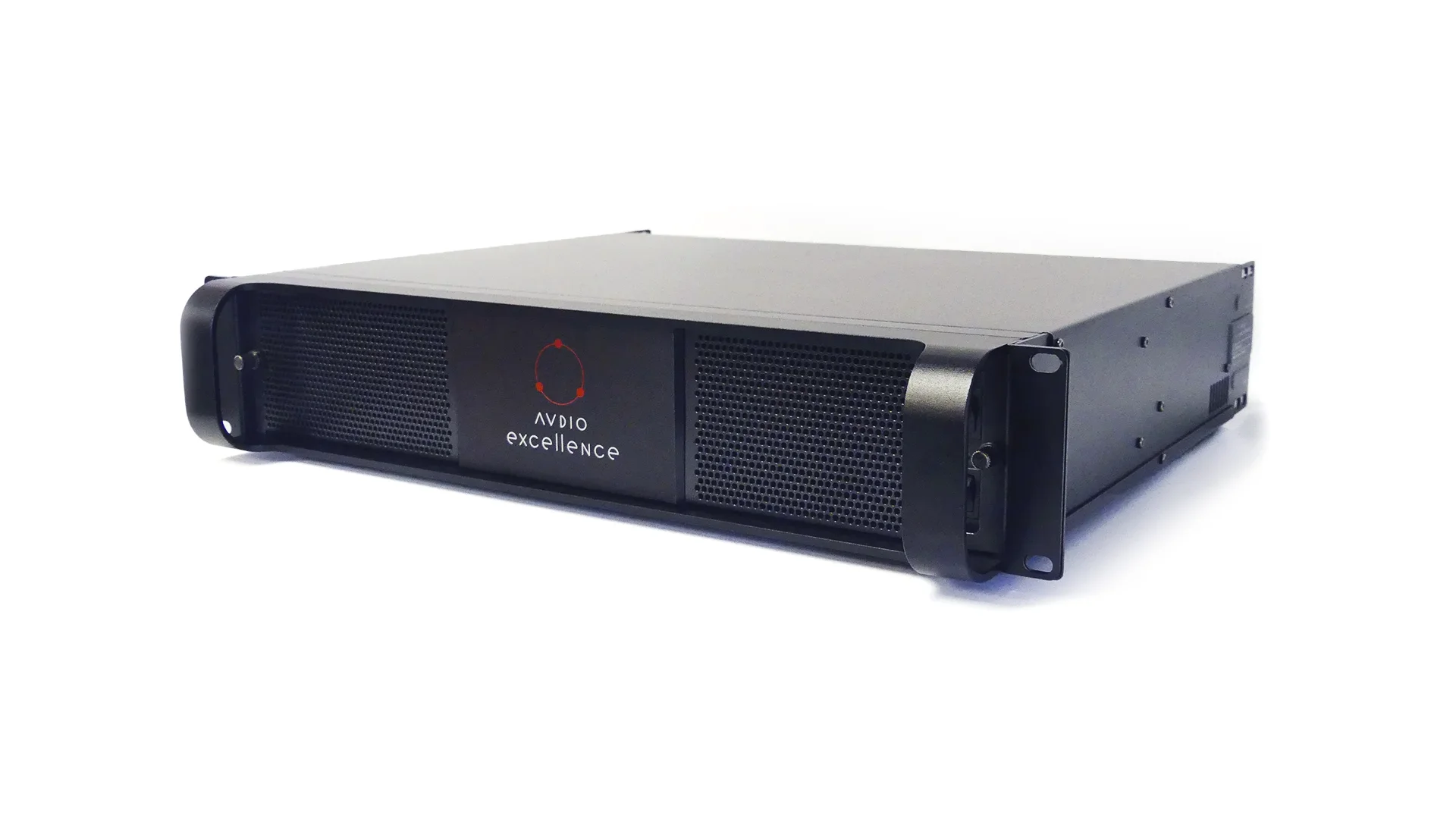
Audio Excellence designs loudspeakers and electronics specifically for private cinemas, where dialogue clarity, controlled dispersion and sound localisation at the screen matter more than conventional hi-fi styling. Created in 2015 as the audio division of Screen Excellence, the Suffolk-based brand is led by loudspeaker designer Patrice Congard. Its systems combine custom speakers, multichannel amplification and DSP control, often behind an acoustically transparent projection screen. Congard’s patented layout and signal-routing method, known as the Congard Code, addresses bass management and the relationship between sound and picture. Components are tested before assembly, completed loudspeakers are individually measured, and every system passes final quality and listening checks.
Aurea Cinema

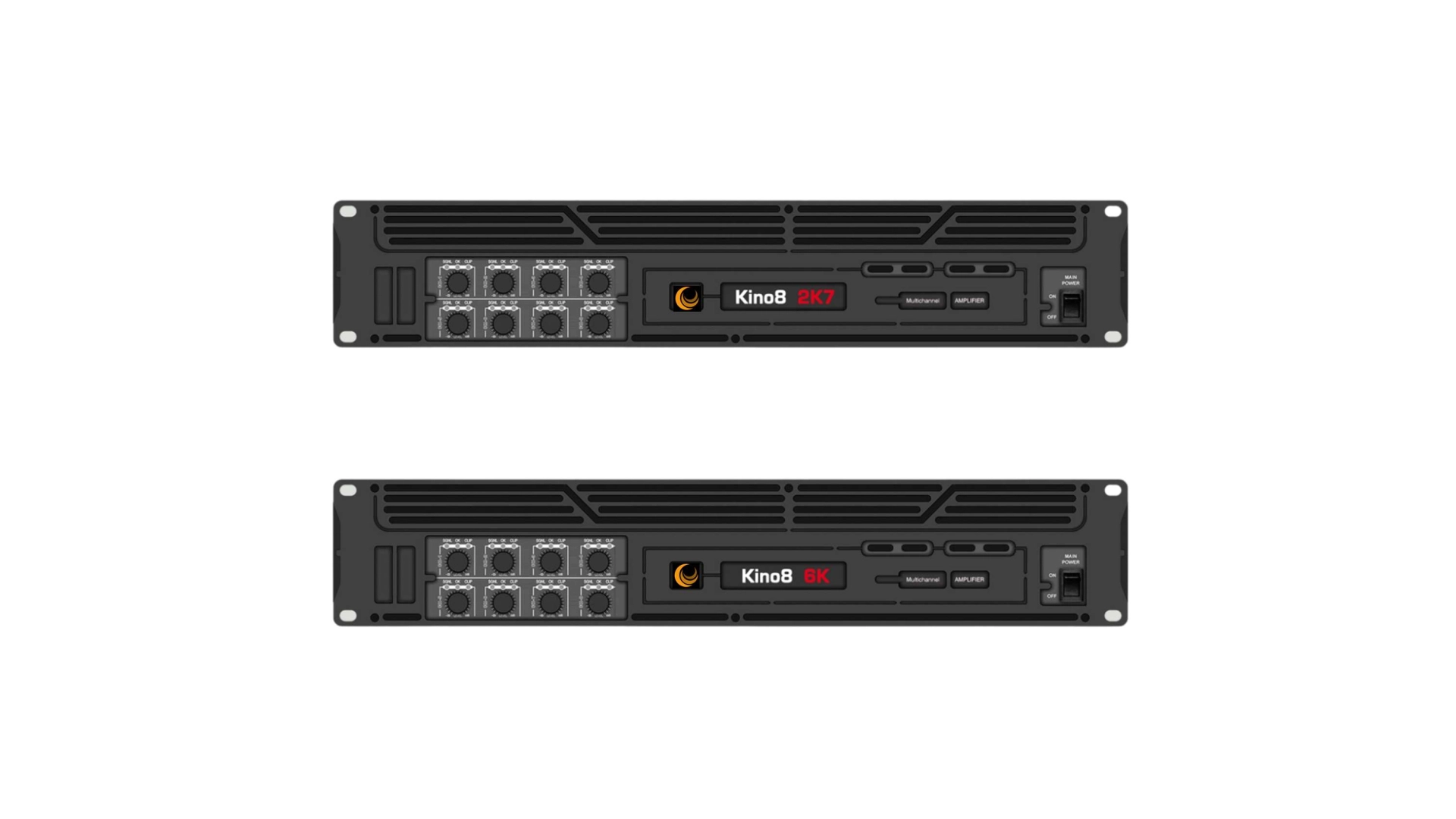
Aurea Cinema brings commercial-theatre loudspeaker engineering into dedicated home cinemas. The Spanish manufacturer, based near Madrid, develops screen-channel systems, surrounds, in-wall and ceiling speakers, subwoofers and matching amplification for professional and residential installations. Its screen models are built for high output, intelligible dialogue and controlled coverage across several seating rows rather than for decorative placement in a living room. Three-way screen systems divide bass, midrange and treble duties, while compact in-wall and overhead models extend the same cinema-oriented approach to immersive layouts. Aurea’s close connection with professional cinema supply and installation is the useful distinction: the home products are derived from equipment designed to work behind screens and in purpose-built theatres. No dependable public foundation date was found, so the year remains unspecified.
Barco

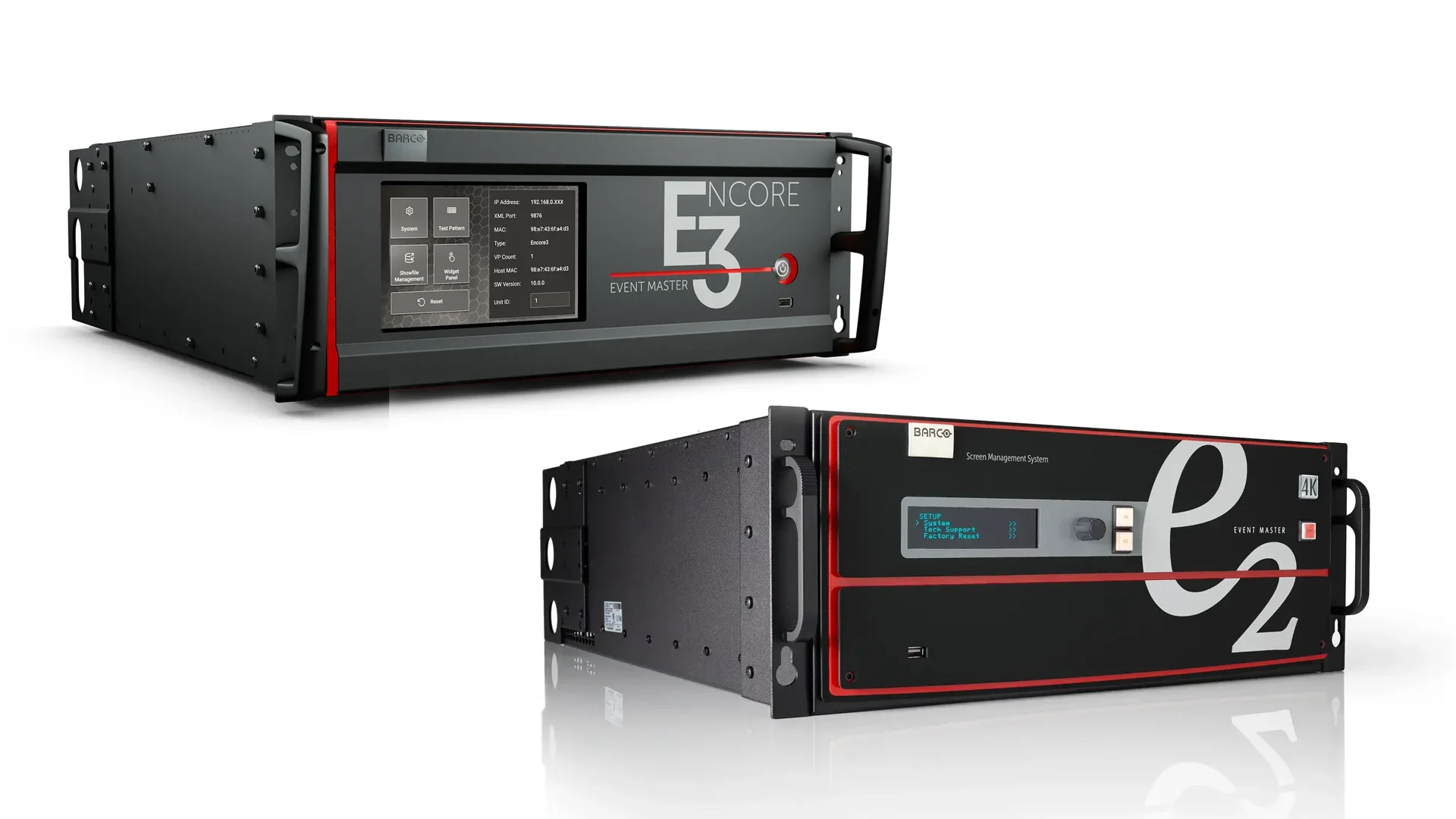
Barco is a Belgian visual-technology company with a major role in digital cinema projection. Founded in 1934 as the Belgian American Radio Corporation, it moved from radios and televisions into professional displays, projection and image processing. Today its cinema range centres on laser projectors for conventional screens, premium large formats and specialised venues, supported by lenses, servers and management tools. Barco also supplies projection and processing for live events and simulation, diagnostic and surgical displays for healthcare, control-room visualisation and ClickShare collaboration systems. Its expertise is accurate, reliable presentation of images at professional scale. The previous description incorrectly suggested that Barco provides cinema sound and built-in high-quality audio playback; audio systems normally come from other manufacturers and are integrated alongside Barco’s visual equipment.
Christie Digital
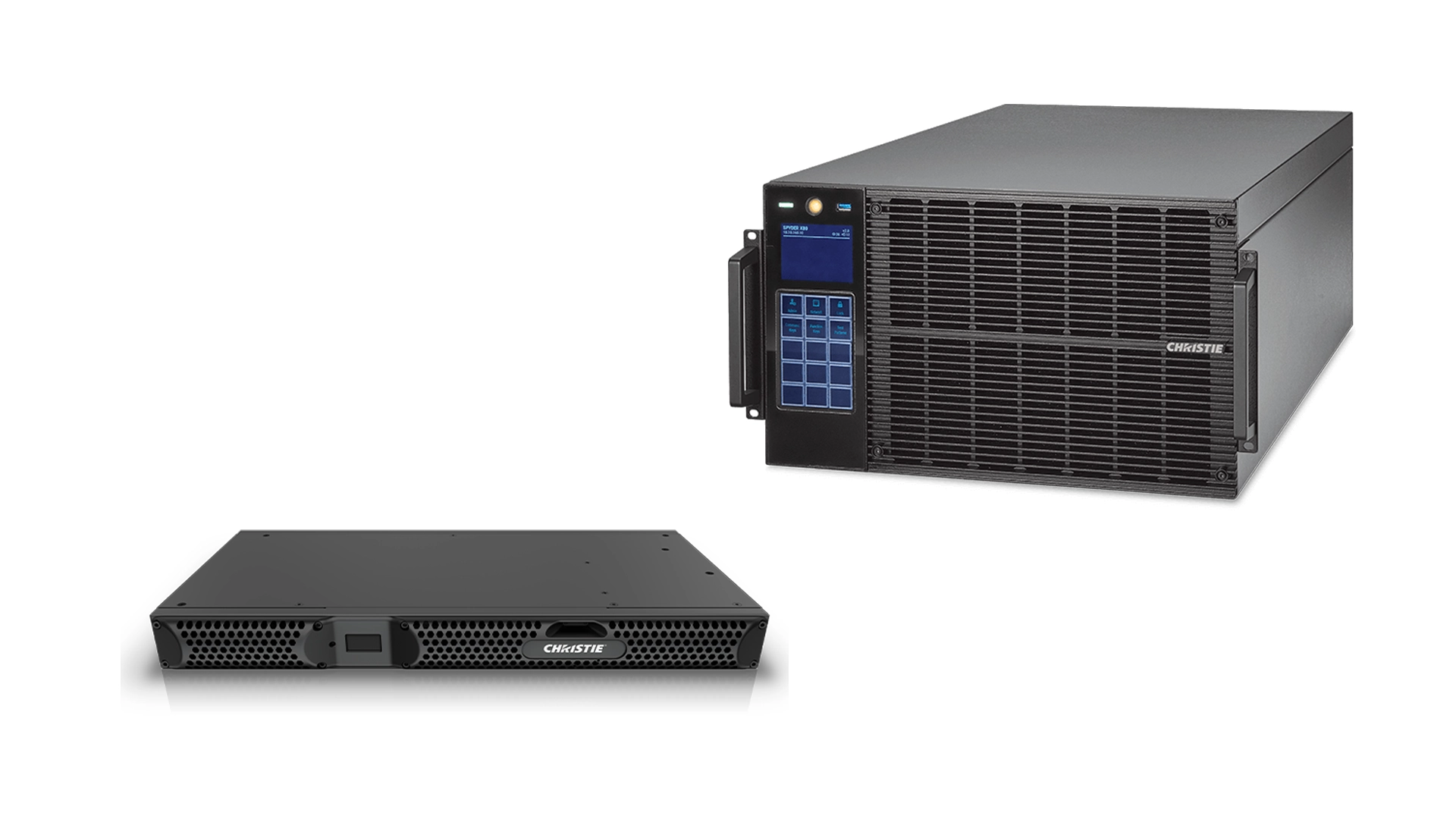
Christie is a professional visual-technology company whose equipment moves images from cinema projection booths to large venues, themed attractions, control rooms and simulation systems. S. L. Christie established the original California business in 1929 to build battery chargers and power supplies before it became an important supplier of 35 mm cinema projectors and lamp houses. Japanese light-source specialist Ushio acquired Christie in 1992. Christie then became the first licensee of Texas Instruments’ DLP technology and acquired Electrohome’s Canadian projection operation in 1999, accelerating its move into digital cinema. Its current portfolio includes high-brightness laser projectors, cinema systems, direct-view LED, MicroTiles modular displays, image processors and media/show-control platforms. Engineering operations in Kitchener complement the US headquarters in Cypress, California. Christie’s relevance to AV is therefore not domestic hi-fi but the tightly integrated projection, processing and content-management infrastructure used where image scale, colour, reliability and continuous operation are critical.
Elementi Audio

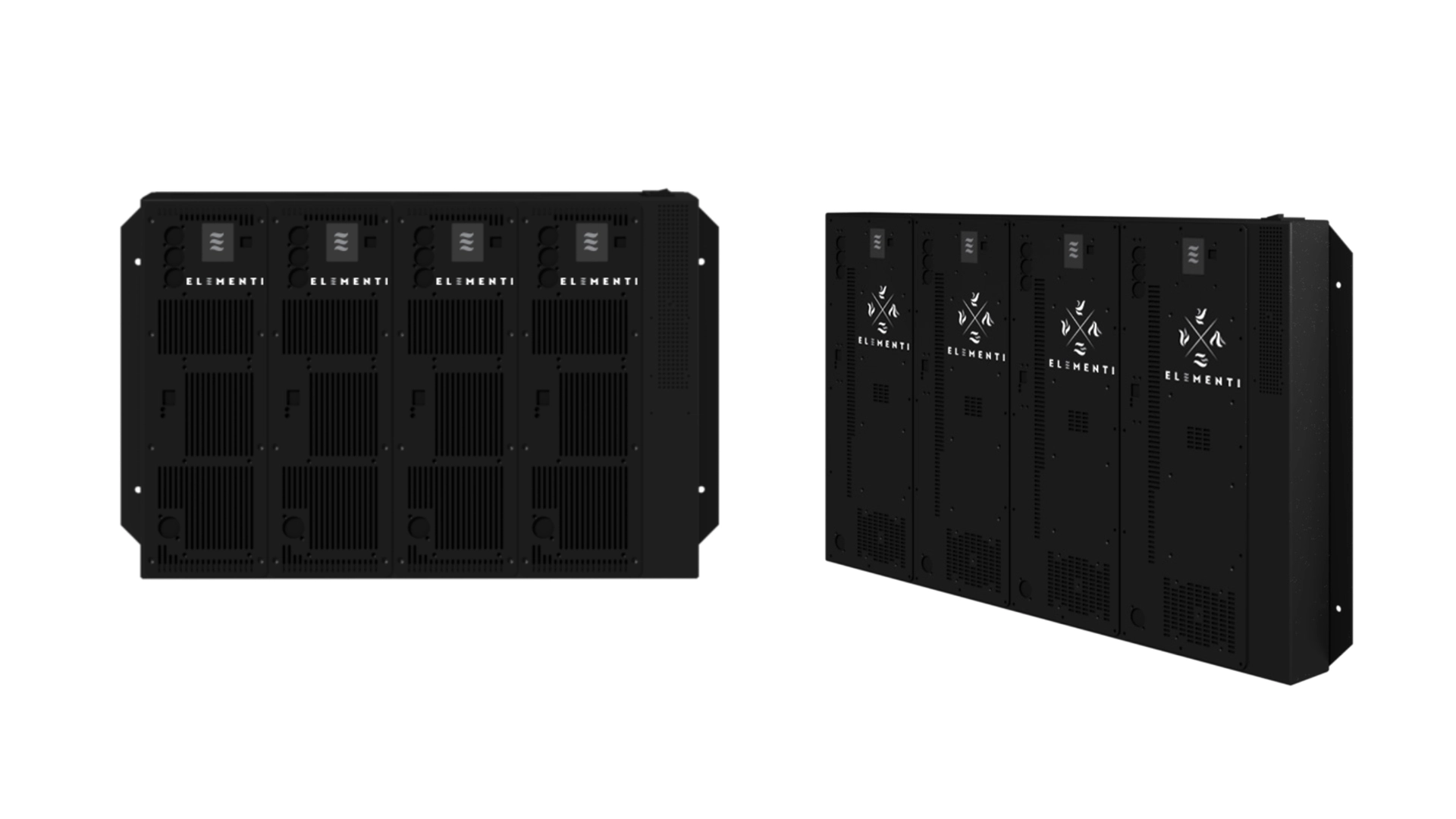
Elementi Audio is an Australian active-loudspeaker system created by cinema designer and acoustician David Moseley of Wavetrain Cinemas and formally launched in 2021 for purpose-built private and commercial theatres. It is not a conventional range of passive hi-fi boxes. Every speaker is paired with dedicated amplification and floating-point DSP, allowing crossover slopes, FIR time correction, protection and output capability to be specified as part of the installed system. The families are organised by function. Fire models use compression drivers for high sound-pressure levels and long throw; Air designs pursue linear-phase reproduction with pleated-diaphragm high-frequency units; Water supplies compact wide-coverage channels for immersive-audio positions; and Earth comprises subwoofers, including extreme models intended to reproduce infrasonic cinema energy. Fire-Dragon is the large three-way LCR flagship, while smaller Firebird, Phoenix and Firefly models cover different room dimensions and seating distances. Elementi’s defining skill is engineering from the room backward: coverage angle, listening distance, reference level, thermal compression and bass requirement determine the loudspeaker and amplifier configuration, rather than asking one retail model to suit every cinema.
K.C.S

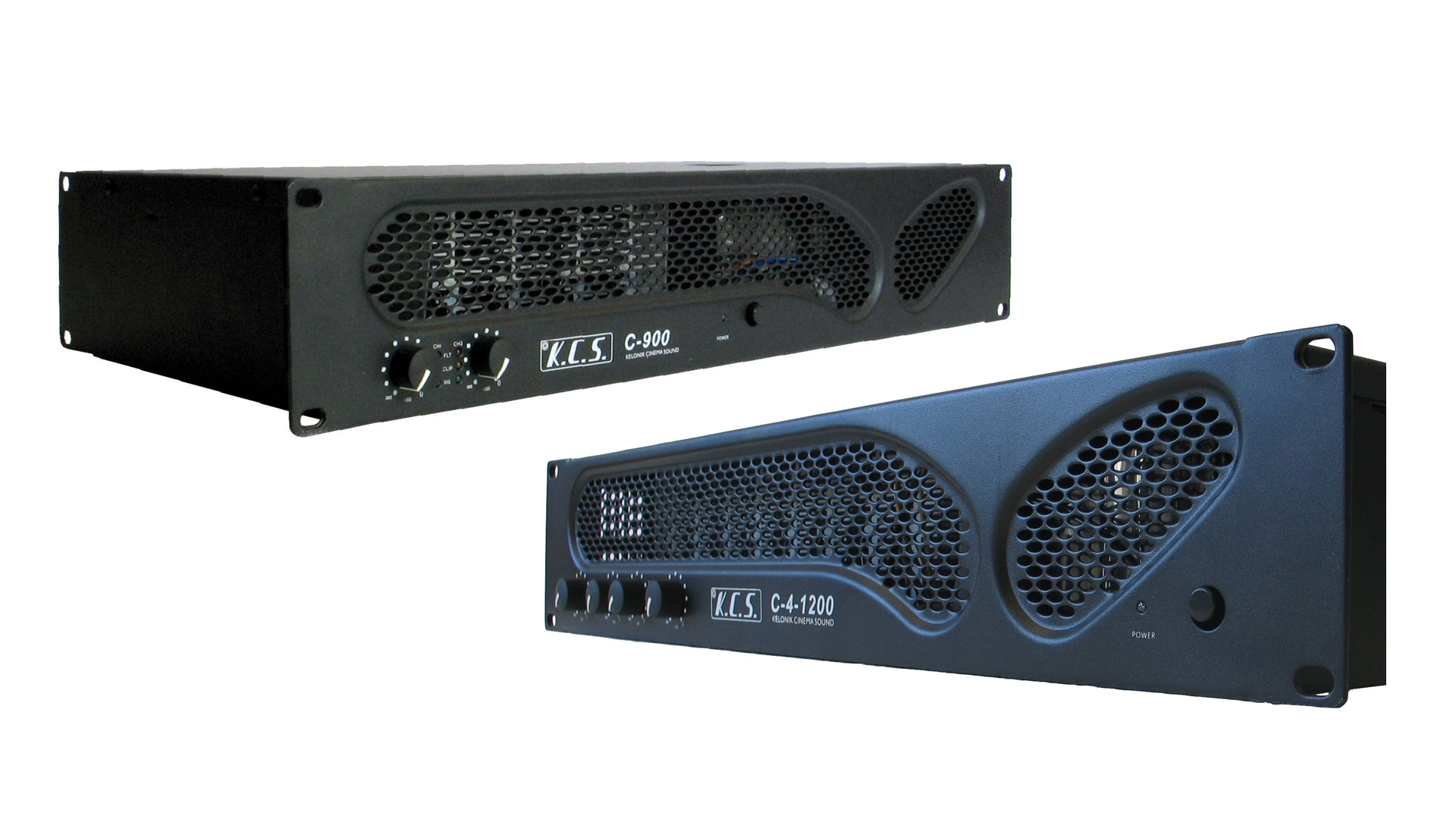
K.C.S—Kelonik Cinema Sound—is a Spanish loudspeaker specialist created specifically for commercial cinemas. Suministros Kelonik, an established cinema-service company, formed the KCS division in 1990; the previous 1979 date did not mark the launch of this speaker brand. Its systems are organised around the architecture of an auditorium: screen-channel loudspeakers deliver dialogue and front-stage energy, surrounds provide coverage around the audience, and high-output subwoofers handle low-frequency effects. KCS offers two- and three-way, bi-amplified and tri-amplified solutions sized for small rooms through large theatres, plus products intended for immersive layouts such as Dolby Atmos and Auro. That breadth matters because cinema design is a coverage and reliability problem, not simply a matter of placing hi-fi speakers behind a screen. The company draws on Kelonik’s installation experience to match directivity, sensitivity and output to room volume and throw distance, and supports complete projects through a distribution network. Its distinctive know-how is therefore practical: purpose-built transducers and enclosures informed by decades of commissioning real cinemas.
MAG Cinema
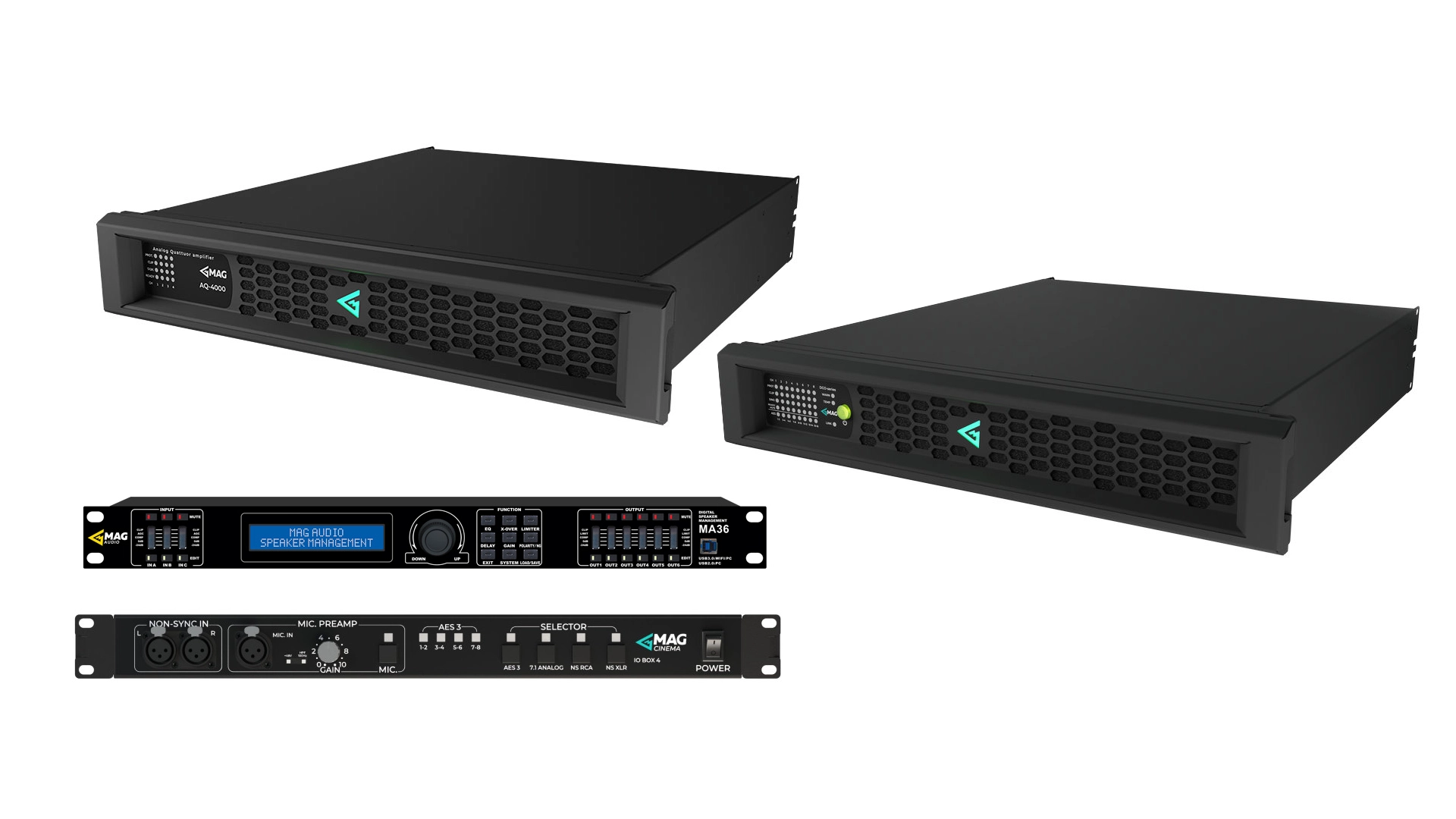
MAG Cinema is the commercial-cinema division of Ukrainian manufacturer MAG Audio, applying the parent company’s driver and enclosure engineering to complete auditorium sound systems. The 1991 date refers to MAG’s industrial origin, not to a separately documented launch of the Cinema division. Its product structure follows the practical needs of a theatre: high-output screen-channel loudspeakers reproduce dialogue and the front soundstage, dedicated surrounds maintain consistent coverage across seating rows, and subwoofers supply controlled low-frequency effects. Modular systems and multiple cabinet sizes allow designers to match room volume, throw distance and amplifier capacity rather than forcing one package into every auditorium. MAG Cinema also develops shallow and specialised solutions for direct-view LED cinema screens, where conventional loudspeakers cannot be placed behind a perforated projection surface. High sensitivity, power handling, serviceable components and secure mounting matter because the equipment must deliver the same programme repeatedly for years, not only sound impressive during a demonstration. The division benefits from MAG’s own transducer production and its experience in touring sound, but cinema voicing and coverage are treated as a distinct task. Its identity is professional infrastructure: an engineered family of screen, surround and bass channels intended to work together throughout an auditorium.
Meyer Sound
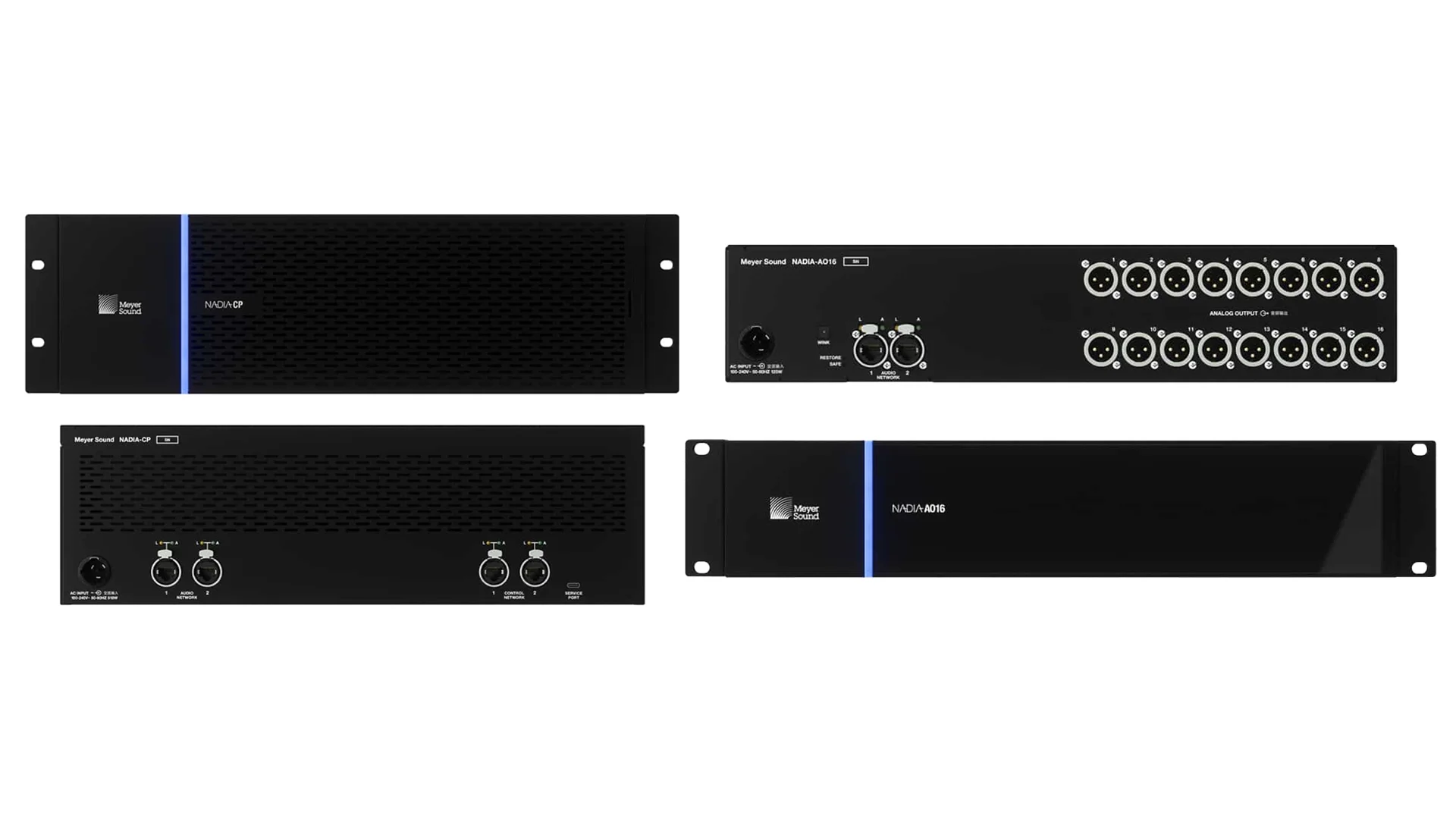
Meyer Sound is an American professional-audio company that helped make self-powered loudspeaker systems a reliable standard for touring, theatre and fixed installation. John and Helen Meyer founded the family-owned business in 1979, combining transducer research with rigorous measurement and repeatable system behavior. The HD-1 studio monitor and MSL-4 reinforcement loudspeaker were important milestones in integrating amplification, processing and drivers as one calibrated product. Today Meyer Sound builds point-source speakers, line arrays, subwoofers, stage monitors, spatial-audio tools and active-acoustic systems. LEO-family arrays—including PANTHER, LEOPARD and LINA—scale from large tours to compact venues, while ULTRA-X models apply concentric-driver concepts to versatile point sources. MAPP 3D predicts coverage and system interaction before installation; GALAXY processors provide networked control and optimization; Spacemap Go handles spatial sound, and Constellation uses microphones, processing and loudspeakers to alter a room’s acoustic response. The company manufactures in Berkeley, California, and supports products with extensive testing and education. Its strongest distinction is systems engineering: loudspeaker, amplifier, protection, prediction and room behavior are designed as one reproducible chain.
Pro Audio Technology
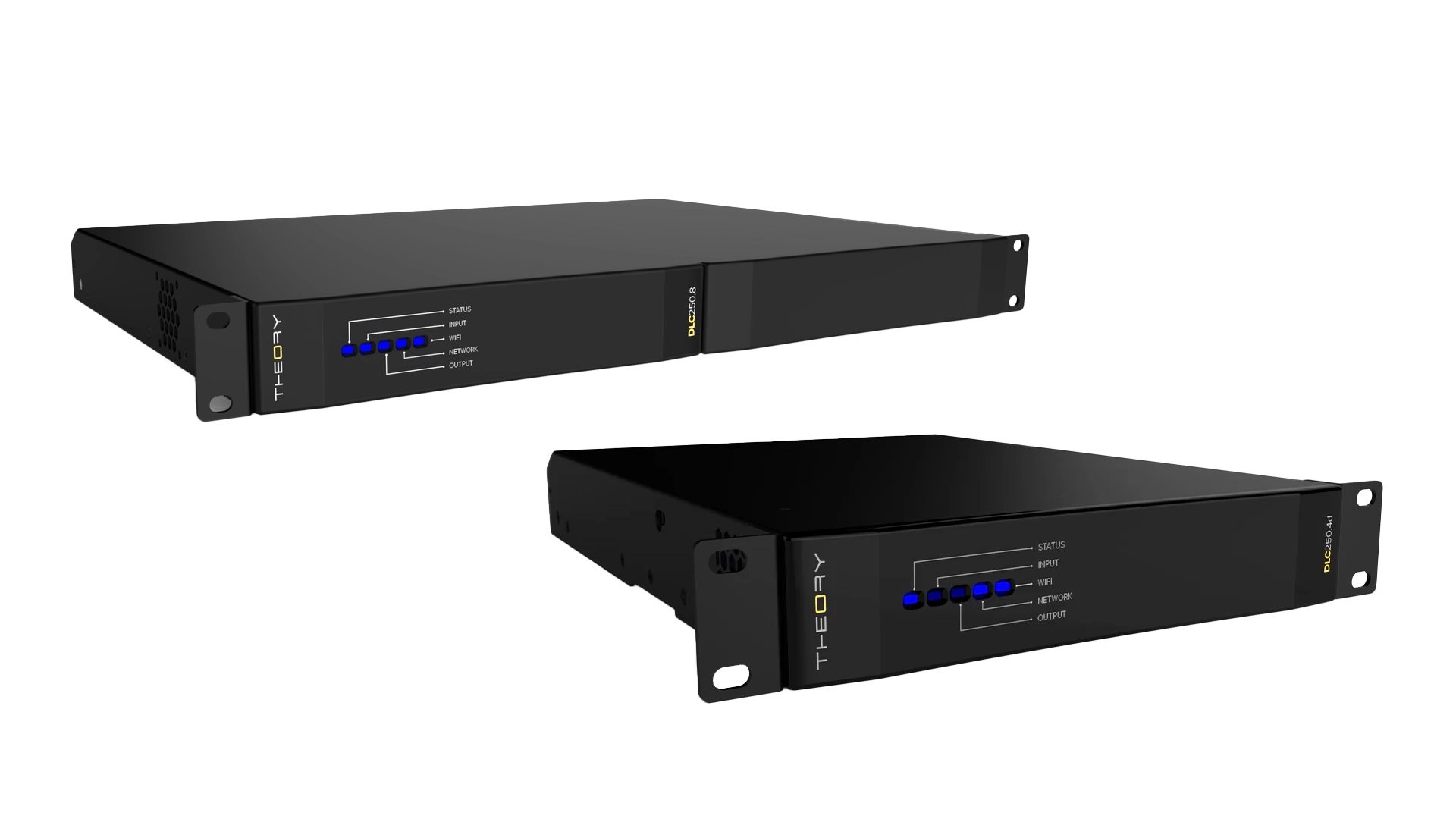
Pro Audio Technology began in 2004 as Professional Home Cinema, LLC, founded by mechanical engineer and loudspeaker designer Paul Hales. It adopted the Pro Audio Technology name in 2010, but the original purpose did not change: bring the output capability, controlled directivity and system engineering of professional cinema into private screening rooms. Hales had previously founded Hales Design Group, led loudspeaker R&D at QSC and consulted for Samsung, BMW and Dolby, giving the company an unusually direct bridge between audiophile, installed and professional sound. PRO systems combine high-sensitivity loudspeakers, large subwoofers and proprietary DSP amplifier/controllers rather than selling each box as an isolated product. Compression drivers and waveguides provide controlled coverage and high output with lower diaphragm excursion; professional-style woofers preserve dynamic headroom; and the DSP electronics store model-specific crossover, equalisation, delay and protection settings. That architecture lets an installer scale a system from a compact media room to a large cinema while keeping tonal behaviour and maximum level predictable. SCRS loudspeakers and LFC subwoofers cover different room sizes and mounting formats, including shallow and in-wall solutions, while PMA amplifier/controllers and the SoundTools software handle configuration and commissioning. In 2018 Hales also founded sister brand Theory Audio Design to adapt related engineering to more attainable installed systems. PRO’s distinguishing product is therefore not a single speaker model but a calibrated loudspeaker–amplifier ecosystem designed to deliver cinema dynamics without asking a residential integrator to assemble incompatible professional parts.
Procella Audio

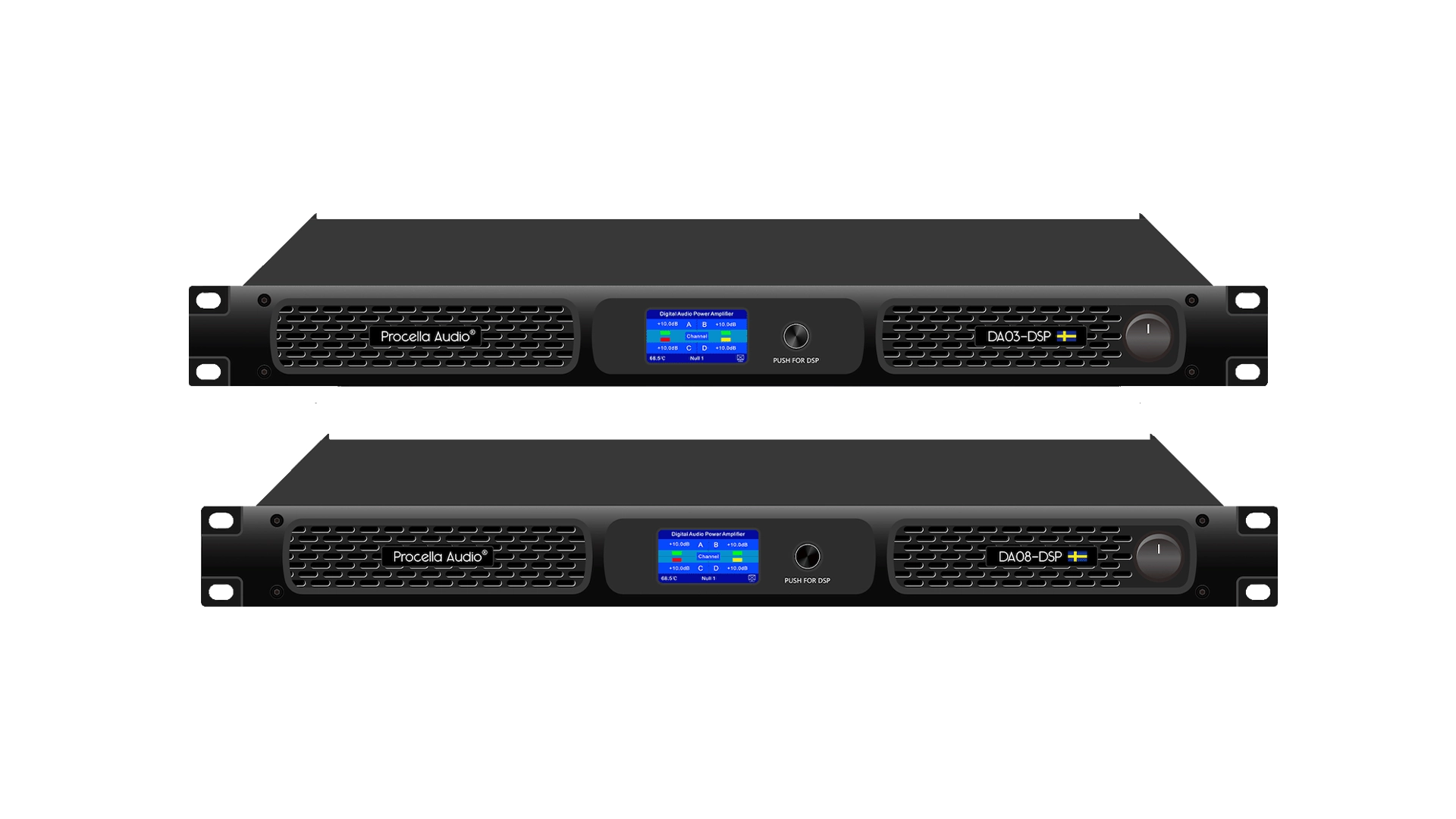
Procella Audio was established in 2005 after Anders Uggelberg and Gerben van Duyl designed the loudspeaker system for a state-of-the-art DTS theatre in Europe. Work on a 7.1 system for BAFTA in London led them to redesign the concept for wider use, and the second generation appeared publicly in 2006. The origin explains the product better than generic home-cinema language: Procella began with the requirement to reproduce cinema reference levels and consistent coverage in a professional demonstration room, then scaled that architecture for private theatres and studios. The P-series uses high-sensitivity woofers and compression-driver waveguides to combine controlled directivity with high output and low compression. P5, P6 and P8 cover compact to substantial screen and surround duties; P610 and P28 increase headroom; the P860 is the large flagship. P10, P12, P15 and other subwoofers extend the system below the main channels, while Procella DSP amplification provides model-specific crossover, equalisation and protection. In-wall and height-channel versions allow the same tonal family to be used behind screens and in immersive Dolby Atmos or DTS:X layouts. Procella Audio Svenska AB and a Swedish factory were established in 2009, including hand assembly of critical parts such as crossovers. In 2024 Wim Buyens and Ignace Rombaut, both with cinema-technology experience at Cinionic/Barco, joined as new owners; Rombaut serves as CEO and Buyens chairs the board. The original Swedish engineering identity remains, now backed by ownership with deep commercial-cinema experience.
Trinnov
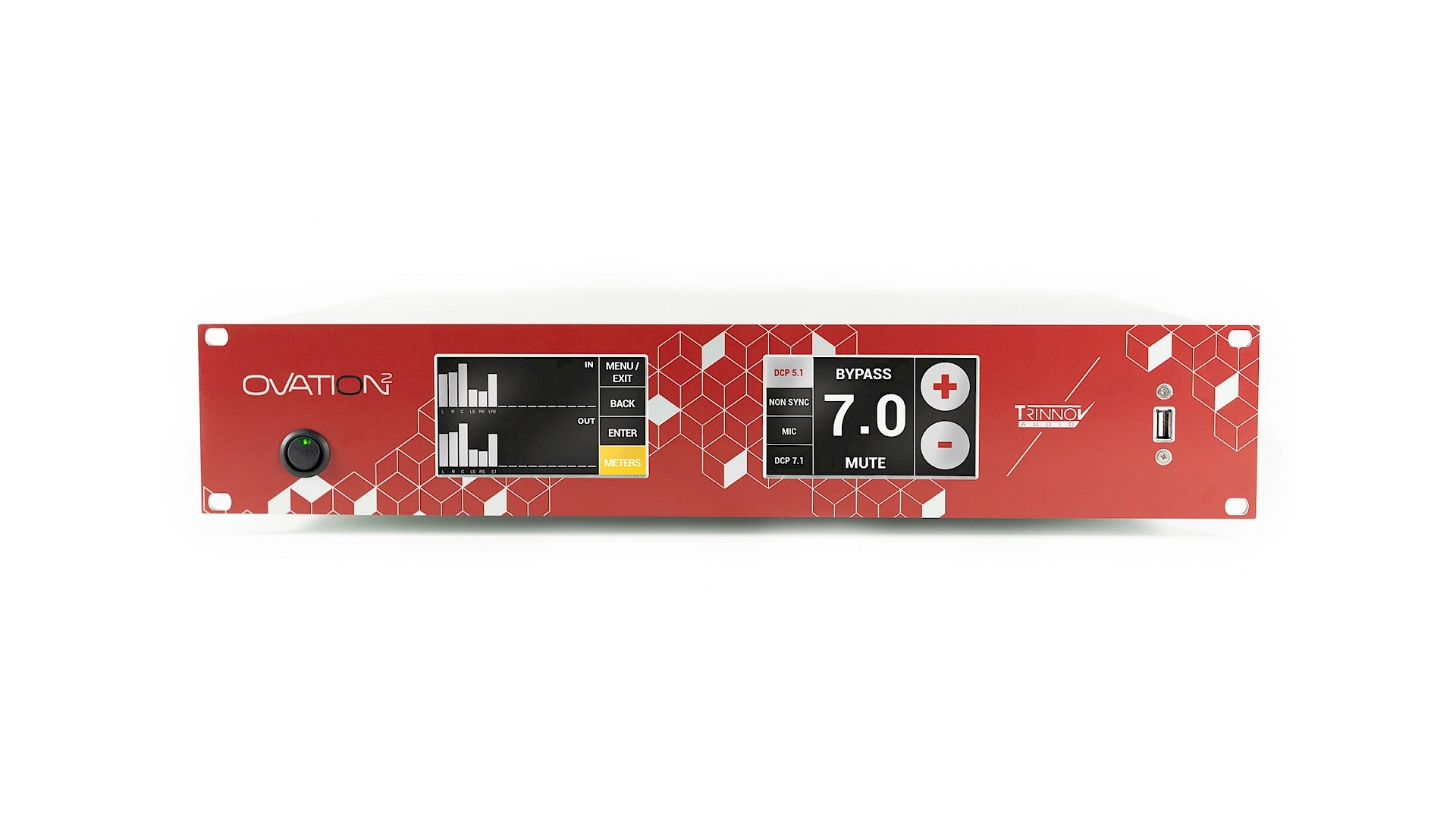
Trinnov Audio is the French digital-audio specialist founded in 2003 after its three co-founders began research into high-spatial-resolution sound at IRCAM in 2000. The name joins “Tri” and “Innovation,” reflecting a company built around three-dimensional measurement, loudspeaker/room optimisation and immersive reproduction. Its processors serve mastering and recording studios, commercial cinemas and some of the most ambitious residential theatres.
The Optimizer platform measures loudspeaker position and room behaviour with Trinnov’s distinctive four-capsule 3D microphone. It can correct amplitude, phase, delay and routing while 3D Remapping compensates for loudspeakers that cannot occupy ideal locations. Altitude16 and Altitude32 processors brought this software-led architecture to home cinema, supporting Dolby Atmos, DTS:X Pro and Auro-3D without relying on a fixed consumer DSP chipset. Amethyst serves two-channel systems, while D-MON and Nova combine monitoring control and calibration for professional rooms.
WaveForming extends the work into low frequencies by coordinating multiple subwoofers to control how bass propagates and decays through a room. The method depends on suitable loudspeaker placement and professional design; it is not a one-button cure for every space. Trinnov’s lasting advantage is that algorithms, measurement hardware, operating software and processor electronics are developed as one platform in France. Products can gain formats and functions through software long after installation, which explains why Altitude has remained relevant since 2014. The brand does not merely apply equalisation—it treats the geometry of the listening environment as part of the reproduction system.