
Compact All-in-One Systems
All-in-one audio systems pack a complete high-quality sound system—source, amplification, and often speakers—into a single, compact enclosure. These “plug-and-play” solutions are designed to deliver impressive audio performance without the complexity and space requirements of a traditional component-based setup. Ideal for an office, bedroom, or any design-conscious space, they offer a perfect blend of convenience and quality. This guide lists the brands known for engineering these elegant and capable integrated audio systems.
Hi-Fi brands in the category
Summary information and image
Direct links to official websites
Argon Audio


Argon Audio makes compact, affordable hi-fi that reduces the number of separate boxes needed to start listening. Its Danish roots are in HiFi Klubben, where Klaus Philipsen helped develop the brand in the early 2000s. A DAB radio was an early product, followed by active loudspeakers and turntables; the business became a separate limited company in 2019. Today, FENRIS active speakers combine amplification with connections for several sources, including television, while the turntable range offers a straightforward entry into vinyl. The consistent idea is a usable first system—or a smaller second one—with restrained Scandinavian styling and functions selected around everyday listening.
Cabasse

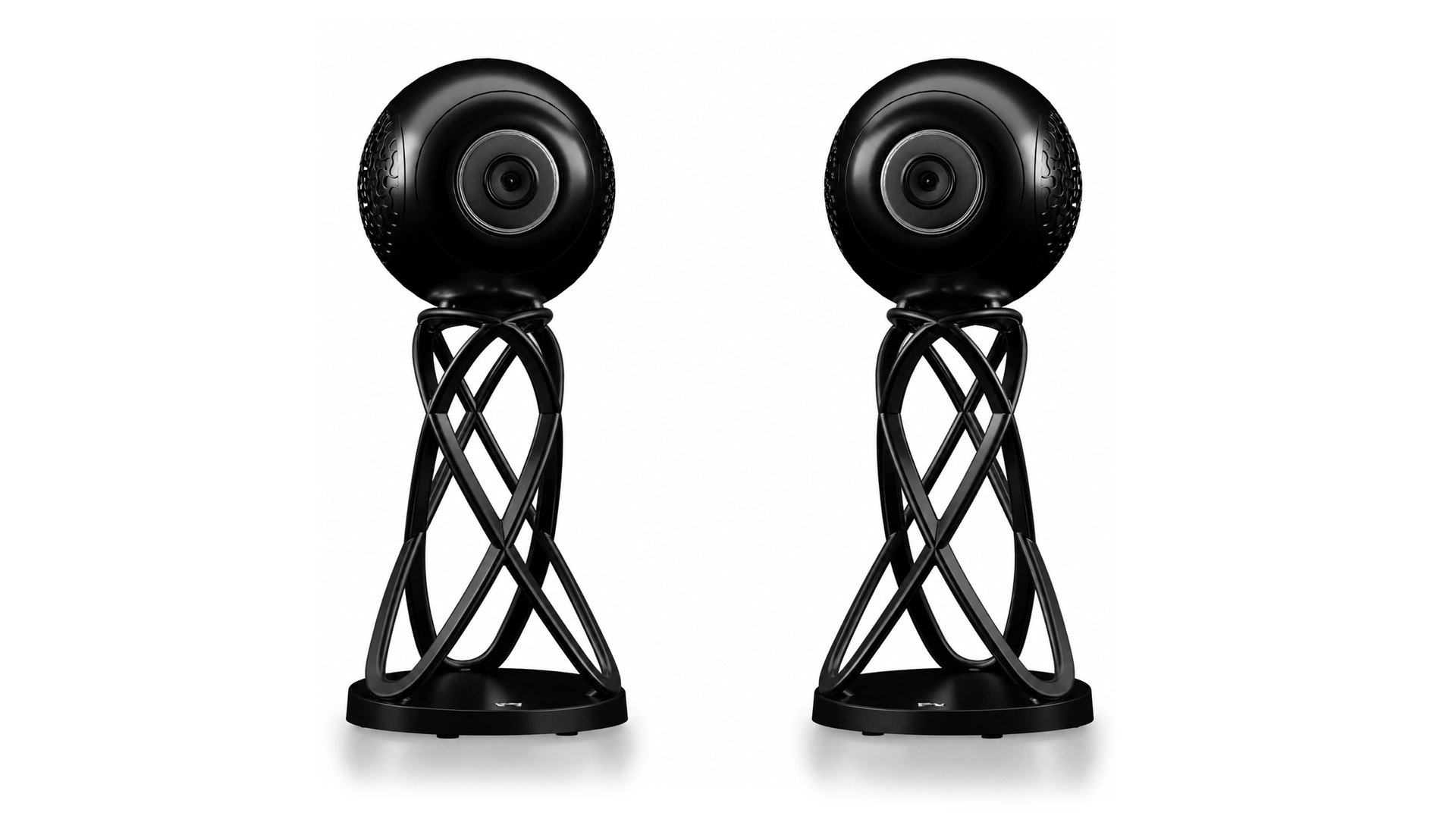
Cabasse has pursued the point-source loudspeaker for decades, progressing from cinema coaxials to active connected spheres. Electrical engineer Georges Cabasse founded the company in Brittany in 1950, continuing a family tradition associated with musical-instrument making. A two-way coaxial driver was already used for the Grand Rex cinema installation in 1952. Later Spatially Coherent System research placed several frequency ranges on the same acoustic axis, culminating in the four-way La Sphère and the compact Baltic. The Pearl Collection carries that geometry into self-powered wireless speakers with amplification, digital processing, room correction and network playback, while passive models and custom-installation products cover conventional stereo and cinema systems. Loewe Technology acquired Cabasse in April 2026 after the French company entered receivership, allowing the brand and its acoustic development to continue within the German group.
Denon


Denon’s history begins in 1910, when American entrepreneur Frederick Whitney Horn established the Japan Recorders Corporation, the antecedent of today’s Japanese audio brand, to manufacture records and gramophones. The company subsequently linked recording and playback in ways few consumer manufacturers can claim: it built Japan’s first professional disc recorder, released the country’s first commercial LP records, developed the broadcast-standard DL-103 moving-coil cartridge in 1963 and introduced an eight-channel PCM digital recorder in 1972. That combination of analogue, digital and broadcast experience still appears in a broad catalogue. AVR and AVC home-cinema receivers integrate amplification, decoding, room correction and HEOS network audio; PMA amplifiers and DCD disc players serve stereo systems; turntables, cartridges, headphones and soundbars cover other parts of the chain. The DL-103 remains in production decades after its broadcast origins, while modern receivers adopt current HDMI and immersive-audio standards. Denon’s strength is not merely age or product count, but a continuous ability to translate professional recording and format changes into durable home-audio products.
Echowell


Echowell Audio is a Taiwanese vacuum-tube audio project created inside the wider Echowell Electronics company, but it should not be confused with that parent’s cycling computers or industrial controls. Echowell Electronics dates to 1982; the dedicated audio R&D team was assembled in December 2012, which is the relevant starting point for this brand entry. Its most distinctive products are the echoElite Vi and echoStream Vi: all-in-one music systems that combine valve amplification with digital streaming, radio and physical-source playback in a single sculptural chassis. Their output stages use EL84 tubes with 12AX7-family small-signal valves, while the electronics integrate network playback, USB, CD and broadcast-radio functions depending on model. Echowell also developed mechanical grounding and noise-control details for the cabinet and rear structure, an important task when sensitive tube circuitry, digital boards, transports and loudspeakers share one enclosure. This is a rare product concept rather than a broad cable brand: compact lifestyle systems designed to give modern multi-source convenience a visibly analogue amplification core. Claims about a large conventional hi-fi range would misrepresent what Echowell Audio actually makes.
Geneva


Geneva helped turn the all-in-one music system from a convenience product into a serious piece of home audio. Founder and CEO Jan-Erik Lundberg launched the Swiss brand in 2005 with the Model L, integrating stereo drivers, digital amplification, source control and an iPod dock in one furniture-grade wooden cabinet. The important idea was not miniaturisation alone: internal chambers, DSP and carefully placed drivers were used to create a stereo presentation without two visible speaker boxes. Geneva removed dock connectors as listening habits changed and added wireless playback, radio and streaming while retaining direct controls and a domestic rather than technical appearance. The current family includes DeCon connected hi-fi systems in several sizes, the Duo stereo concept and Geneva Time analogue/digital radios, following earlier Classic, Touring, Acustica and AeroSphère lines. Hand-finished walnut veneer and multilayer piano lacquer remain part of the cabinet identity, pairing Swiss system engineering with an object intended to live openly in a room.
Harman Kardon


Harman Kardon helped turn separate hi-fi components into products that ordinary music lovers could use as a coherent system. Sidney Harman and Bernard Kardon founded the company in New York in 1953 after leaving the David Bogen Company, and the early Festival receivers brought tuner, preamplifier and power amplifier functions together in a refined domestic component. The Citation series then showed the brand’s more ambitious engineering side, with wide-bandwidth amplifiers and preamplifiers that became enduring collector pieces. Harman Kardon later carried this combination of audio engineering and industrial design into cassette decks, CD players, home-cinema receivers and landmark desktop products such as SoundSticks. Today the name is used across wireless speakers, home-audio systems and selected automotive installations. Its strongest legacy is not one circuit or format, but the repeated effort to make serious audio technology elegant, integrated and approachable.
iFi audio


iFi audio is the British specialist that brought serious DAC and headphone-amplifier engineering into genuinely portable and desktop formats. Launched in 2012 as a sister brand to Abbingdon Music Research, iFi develops its products from its headquarters in Southport, UK. The ZEN range made compact DACs, headphone amplifiers, phono stages and streamers easy to combine, while the hip-dac, GO and xDSD families address phones, laptops, Bluetooth listening and travel. Many designs use Burr-Brown conversion, balanced or symmetrical analogue stages and practical proprietary functions such as XBass, XSpace and iEMatch rather than relying on specification-sheet features alone. At the upper end, the Pro and iCAN products explore more elaborate power supplies and amplification; the SilentPower line tackles USB, network and mains noise around the system. iFi’s strength is the breadth of problems it solves without abandoning small enclosures or approachable system building.
JBL


JBL is one of the few audio brands with equally deep roots in cinema, recording studios, touring sound and domestic loudspeakers. Engineer James Bullough Lansing founded James B. Lansing Sound in Los Angeles in 1946, and the early D130 driver introduced a four-inch flat-wire voice coil that helped establish the company’s reputation for high efficiency and power handling. JBL later became a studio reference through 4300-series monitors and translated that visual and acoustic language into the L100 for the home. Its professional division now covers cinema systems, installed sound, stage monitors and large-format arrays, while consumer products range from portable Bluetooth speakers and headphones to Classic and Synthesis systems. Compression drivers, horns and controlled-directivity waveguides recur across many categories because JBL designs for predictable output beyond a single listening seat. The company has belonged to Harman since 1969; Harman has been owned by Samsung since 2017. Scale is part of JBL’s know-how: transducer engineering developed for venues and studios can inform car, home and portable products without erasing the differences between them.
Kii Audio


Kii Audio is a German active-loudspeaker company founded in 2015 around engineer Bruno Putzeys and a team drawn from professional and domestic audio. Its central idea is Active Wave Focusing: multiple drivers, dedicated amplification and DSP work together to control how low and mid frequencies spread behind and beside the cabinet. This cardioid behaviour reduces the energy sent toward nearby walls, addressing room interaction at the loudspeaker rather than relying only on later equalisation. The Kii THREE packages that architecture into a compact monitor, with user controls for boundary position and tonal adjustment; the BXT bass module extends it into a floor-standing line-source system. Kii SEVEN brings the same controlled-directivity thinking to a networked, more compact platform. Digital and analogue inputs, onboard conversion and amplification make each model a complete playback system, yet the engineering is aimed at a specific acoustic problem rather than convenience alone. That combination explains Kii’s unusual relevance to mastering rooms, studios and design-conscious home systems alike.
Lenco


Lenco is a heritage turntable name with Swiss origins and a modern Dutch consumer-audio business. Fritz Laeng, Marie Laeng-Stucki and technician Bruno Grütter established Lenco in Burgdorf, Switzerland, in 1946; the company produced its first record player in 1949 and later became famous for robust idler-drive decks such as the L75, introduced in 1967. The original Swiss manufacturer failed in the late 1970s, and the trademark subsequently passed through several owners. Today Lenco is based in the Netherlands and has belonged to the Dutch Commaxx Group since 2015. For that reason, 2015 describes the current ownership chapter, not the birth of the brand. The contemporary catalogue is deliberately broad and accessible: manual and automatic turntables, direct-drive DJ models, record players with built-in speakers, radios, portable audio and related accessories. USB recording, Bluetooth and integrated phono stages appear where they make vinyl easier to use in present-day systems. Modern Lenco does not claim to reproduce the engineering organisation behind every classic Swiss deck; its value is keeping a historically important name active through affordable products while the surviving L75 and related models retain a separate enthusiast following.
McIntosh


McIntosh is an American high-end audio manufacturer whose blue power meters and black-glass front panels identify products built around unusually durable amplifier engineering. Frank H. McIntosh and Gordon Gow founded the company in 1949 after developing the Unity Coupled Circuit, a transformer-coupled output topology designed to deliver high power with low distortion across the audible band. McIntosh moved to Binghamton, New York, in 1951 and continues to design and assemble products there. The catalogue covers valve and solid-state power amplifiers, preamplifiers, integrated amplifiers, source components, streamers, turntables, speakers and home-cinema processors. Many transistor power amplifiers use Autoformers to deliver their rated power into different loudspeaker impedances, while Power Guard monitors the waveform to reduce clipping-related distortion and Sentry Monitor protects against unsafe operating conditions. The company still winds key transformers in house, and signature glass panels are printed and assembled for long service life. McIntosh’s appeal extends beyond styling: its defining know-how is the marriage of protective circuitry, stable load behavior and conservative construction with a product ecosystem that can support both two-channel and large cinema systems.
Naim


Naim Audio is the Salisbury electronics maker whose reputation rests on amplifiers and sources designed to preserve musical timing and momentum. Julian Vereker’s early amplifier work grew from a contract for Capital Radio, and Naim Audio was incorporated in 1973 with Vereker and Shirley Clarke as directors. The first consumer power amplifiers established a deliberately direct circuit philosophy; the NAP 250, introduced in 1975, became the long-running reference, while the compact NAIT integrated amplifier showed that the same priorities could work in an affordable system. Naim later built complete upgradeable systems around separate preamps, power amps and external power supplies, then became an early serious adopter of network replay. Uniti streaming amplifiers and Mu-so wireless systems broadened the audience, while ND sources, the New Classic separates and Statement amplification maintain the specialist end. Mechanical isolation, low-noise power regulation, carefully controlled grounding and proprietary streaming software matter more to the engineering than the familiar shorthand “PRaT.” Naim joined French loudspeaker maker Focal in 2011 under VerVent Audio Group, while design and production remained centred in Salisbury. In August 2026 Belgium’s Barco completed its acquisition of VerVent, so Naim is now part of Barco while retaining its British origin, brand and manufacturing identity.
Plus Audio


Plus Audio builds compact systems for listeners who want the ritual of vinyl without assembling a turntable, phono stage, amplifier and loudspeakers from separate boxes. Its defining product, THE+RECORD PLAYER, integrates all four functions into one low-profile cabinet, but it is not simply a portable record player enlarged for the living room. The record-playing section is supplied by Pro-Ject and uses an Ortofon cartridge, while Plus Audio develops the amplification, loudspeakers, motor control and system integration around it. The internal phono stage uses passive RIAA equalisation specified within ±0.5 dB. A synthesised oscillator supplies the motor rather than relying directly on the mains frequency, allowing electronic selection of 33⅓ or 45 rpm. Each channel has its own aluminium-cone woofer and soft-dome tweeter, with DSP dividing and correcting the signal before six Class D amplifier channels drive the four loudspeaker units and the motor system. Bluetooth and analogue connections let the cabinet serve as an everyday music system as well as a turntable. THE+RP SYSTEM separates the same concept into a record-player unit and matching speaker, while THE+AUDIO WiFi SYSTEM adds network playback; Special Edition and Reference versions refine materials and finish. Lead product designer Alexander Åhnebrink gave the range the furniture-like form that makes its engineering practical in a normal room. Plus Audio’s strength is therefore credible integration: established analogue parts, active loudspeaker control and unusually tidy industrial design in a genuinely self-contained vinyl system.
Pro-Ject

Pro-Ject Audio Systems was founded in Austria in 1991 by Heinz Lichtenegger, at a moment when the audio industry was treating the compact disc as vinyl’s replacement. Lichtenegger’s counterargument was the Pro-Ject 1: a simple belt-drive turntable built around the parts necessary for stable speed and accurate tracking, without automatic mechanisms or cosmetic complexity. The strategy proved prescient, and the Debut, introduced in 1999, became the model that brought the company to a much wider generation of record listeners. Pro-Ject now covers almost every scale of manual turntable. E and T families address first systems; Debut remains the recognisable centre; X, RPM and Xtension add more elaborate plinths, bearings, platters and tonearms; and Signature represents the flagship engineering. Many decks are assembled by hand in the Czech Republic, preserving production skills from the region’s long record-player history. The company also makes phono stages, speed controls, cartridges, record-cleaning machines and accessories, so a turntable can be upgraded rather than discarded. Box Design electronics—compact phono stages, amplifiers, DACs, streamers and CD transports—are largely produced in Slovakia and extend the same space-efficient philosophy beyond vinyl. Artist Collection editions use visual collaborations and licensed themes, but beneath the artwork they remain functional Pro-Ject platforms. The brand’s significance is not simply that it sells many turntables: it maintained European manual-turntable production through the digital era and built a clear path from an inexpensive first deck to genuinely ambitious analogue systems.
Pure Radio


Pure is the British radio brand that helped move DAB from a specialist technology into an everyday kitchen and bedside product. Its consumer audio business emerged from VideoLogic and Imagination Technologies, and the Evoke-1, launched in 2002 below the psychologically important £100 level, became the breakthrough. The appeal was not merely digital reception: Pure made station selection, presets and display information simple enough that a new broadcasting format felt like a normal radio rather than computer equipment. Evoke remains the best-known family, now ranging from compact bedside models to Evoke Spot, Play and Home systems with combinations of DAB+, FM, internet radio, Bluetooth, Spotify Connect and, in the Home, CD playback. Elan provides simpler portable and tabletop radios, while the Classic range revisits familiar radio forms with current tuners and wireless functions. Model-specific features matter: not every Pure radio includes internet services, a battery, stereo speakers or a disc drive, so the brand should not be presented as one universal streaming platform. In 2016 Pure was acquired from Imagination Technologies by Austrian company AVenture AT. Development and ownership therefore changed, but the brand’s origin and the product category it helped establish remain British; the country field should stay UK. Pure’s durable strength is accessibility. It turned DAB into a mass-market object through the Evoke-1 and continues to combine broadcast radio with just enough network and Bluetooth functionality for people who still want a dedicated, tactile receiver rather than another phone app.
Rega


Rega Research was founded in England in 1973 by Roy Gandy and Tony Relph; the name combines parts of their surnames. Its first commercial turntable was the unconventional Planet, but the Planar 3 of 1976 created the enduring template: a simple belt drive, rigid low-mass plinth, glass platter and an integrated tonearm developed as one mechanical system. Rega’s influence comes not from preserving that design unchanged, but from repeatedly refining the same priorities while manufacturing a remarkably broad range in Essex. The central principle is lightweight rigidity. Gandy argues that excessive mass can store vibration and release it later, so current Planar models remove material where it is unnecessary and add stiffness between the main bearing and tonearm through double-brace structures. One-piece RB tonearm tubes minimise joints from headshell to bearing housing; higher models use increasingly precise bearings, ceramic platters and sophisticated power supplies. Planar 1, 2, 3, 6, 8 and 10 form the main progression, while Naia translates research from the limited Naiad into the production flagship. Rega also develops Nd moving-magnet and Ania, Apheta and Aphelion moving-coil cartridges, Fono and Aria phono stages, so the complete record-playing chain can be engineered together. Io, Brio, Elex, Elicit, Aethos and Osiris amplifiers, Apollo and Saturn digital sources, and Kyte or Aya loudspeakers broaden the system without displacing vinyl from the centre. Rega’s lasting strength is purposeful reduction: spend materials and tolerance where they control speed, bearing behaviour, rigidity and cartridge alignment, then leave out mechanisms that do not help record playback.
Revo Audio


Revo is a Scottish audio brand founded in Lanark in 2004 by David Baxter and Colin Urie. It helped turn DAB and internet radio from utilitarian kitchen appliances into products that could sit comfortably beside serious hi-fi, combining solid cabinet work, clear displays and straightforward controls with modern broadcast and network sources. Models such as the original Revo DAB radios, Blik and Axis established that direction; SuperConnect later became the brand’s best-known all-in-one receiver by bringing DAB/DAB+, FM and internet radio together with network streaming, Bluetooth and access to online services. The current family develops the same idea at different scales. SuperSignal is a compact table radio, SuperConnect Stereo adds true stereo reproduction, SuperSystem provides a larger one-box system, and SuperCD combines radio and streaming with a slot-loading CD player. Real-wood veneers, aluminium details, OLED displays and the characteristic joystick controller give the range a coherent industrial identity, while BMR and conventional drivers are selected to produce wide dispersion from compact enclosures. Ownership has changed: German company TELESTAR-DIGITAL acquired Revo in 2020, and the Revo, TELESTAR and Imperial brands were subsequently acquired by the Netherlands-based Commaxx Group in 2024. The country field remains the United Kingdom because the brand was conceived and developed in Scotland. Revo’s lasting contribution is the connected radio treated as a designed audio product—multi-source, easy to live with and visually distinct rather than a generic smart speaker.
Ruark

Ruark is a British audio company created in 1985 by Brian O’Rourke and his son Alan in Rayleigh, Essex. It began as Ruark Acoustics, building serious passive loudspeakers: the Sabre and Broadsword arrived in 1986, followed by models such as Accolade, Talisman and Crusader. That loudspeaker background matters because Ruark’s later success did not begin with generic radios. Seeing how poorly many early DAB receivers reproduced music, the company developed the original R1 tabletop radio, launched in 2006 under the Vita Audio name; since 2012 the products have again carried the Ruark name. The R1 and stereo R2 established the formula—purpose-designed drivers and enclosures, tactile controls, readable displays and furniture-grade finishes in a compact product. Today’s range stretches from R1S and R2 connected radios to R3S, R410 and the large R810 radiogram-style system, combining DAB/DAB+, FM, internet radio, Bluetooth, Wi-Fi streaming and service integration according to model. R610 revives the separate music-console idea for use with external speakers, while Sabre-R—and, in 2026, Talisman-R—reconnect the catalogue directly with Ruark’s original loudspeaker craft. The products use real-wood veneers, carefully formed cabinets and the distinctive RotoDial controller instead of disguising audio hardware as anonymous smart technology. Ruark’s strength is this unusual continuity between traditional British speaker making and modern connected listening. It understands that a compact system lives in full view and must be pleasant to operate, but it earns its place through acoustics and long-term design rather than appearance alone.
Sangean


Sangean is a Taiwanese radio and audio manufacturer founded in 1974. While many consumer brands treated radio as a minor feature inside another product, Sangean built its identity around reception itself: tuner sensitivity, selectivity, antenna behaviour, useful controls and dependable operation. The catalogue covers compact FM/AM portables, tabletop and clock radios, DAB/DAB+ receivers, internet radios, worksite models, emergency sets and specialist multiband equipment. The ATS-909 line is especially important among shortwave listeners; the current ATS-909X2 receives FM, medium wave, long wave, shortwave and air band, combining DSP filtering, multiple bandwidths, memories, RDS and external-antenna support in a portable unit. WR tabletop radios emphasise simple tuning and substantial sound from wooden cabinets, while PR and DT portables serve everyday listening. WFR models add Wi-Fi, internet stations, podcasts and network playback, and DPR products address digital broadcasting. The MMR family is designed for emergencies and outdoor use, pairing radio reception with rechargeable power, hand-crank or solar charging on selected models, lights and device-charging functions. Sangean also has extensive OEM manufacturing experience, but products under its own name are recognisable for putting radio behaviour ahead of disposable styling. The company continually adds Bluetooth, streaming and digital standards without abandoning analogue bands or tactile controls. Its strength is therefore breadth with a clear centre: from a bedside set to an enthusiast world-band receiver, Sangean treats reliable access to broadcasts as an engineering discipline rather than a nostalgic extra.
Sonoro


Sonoro brings radio, discs and streaming into music systems designed to live comfortably in an ordinary room. Founded in Germany in 2006 by Marcell Faller, the company develops its products in Neuss with equal attention to their controls, proportions and audio functions. Compact all-in-one systems made its name: products such as Elite, Prestige and Meisterstück gather sources and loudspeakers into a single enclosure, reducing the equipment and cabling needed for everyday listening. Depending on the model, the source selection combines CD playback, FM and DAB+ radio, internet radio and network services. That mixture is an important part of Sonoro’s identity, accommodating a physical music collection alongside newer listening habits. Meisterstück has developed into a more substantial all-in-one platform; its second generation adds facilities including AirPlay, Chromecast and room calibration. Sonoro has also expanded beyond self-contained radios and music centres. Maestro supplies the electronics for a separate stereo system, Orchestra loudspeakers provide the matching speaker option, and Platinum turntables bring vinyl into the catalogue. This gives the brand a path from a single bedroom or living-room unit to a system with physically separated speakers. The common design language remains restrained and domestic, with clearly arranged controls and cabinets intended to be seen. Sonoro’s particular strength is assembling familiar and modern sources into approachable products whose use and appearance matter as much as their specification lists.
Sonos


Sonos made synchronised music in different rooms the foundation of an audio system that can grow one speaker at a time. John MacFarlane, Tom Cullen, Trung Mai and Craig Shelburne founded the company in Santa Barbara, California, in 2002. Their idea was to use home networking to make music accessible throughout a house, with playback and room selection managed through a common interface. Early ZonePlayer components established the system approach; the arrival of all-in-one speakers in 2009 made it accessible without a separate amplifier and speakers in every room. Products such as Play:5 and One became familiar expressions of that idea, followed by the Era family. Matching speakers can form stereo pairs, and selected models can work with soundbars and subwoofers in a home-theatre configuration. Arc and Beam brought television into the ecosystem, while Move and Roam added portable listening. Sonos also makes Amp and Port components for connecting conventional loudspeakers or an existing hi-fi system. Its more recent range includes Arc Ultra, Move 2, Roam 2 and Ace headphones, the latter extending compatible television sound to private listening through TV Audio Swap. Across these different forms, Sonos’s defining product is the connected system as much as the individual enclosure: software, synchronisation and compatible hardware make it possible to use rooms separately or bring them together. That continuity explains how a brand associated with wireless speakers also has a substantial role in installed home audio.
SVS


SVS is an American company specializing in high-performance subwoofers, loudspeakers, and audio accessories, known for its direct-to-consumer sales model and its focus on delivering exceptional value for money. The company’s subwoofers are particularly well-regarded, known for their deep bass extension, high output, and ability to provide a powerful and impactful low-frequency foundation for both music and home theater systems. SVS offers a wide range of subwoofers, from compact sealed models to large ported designs, catering to different room sizes and listening preferences. They also produce a range of loudspeakers, designed to complement their subwoofers and provide a complete audio solution. The “PB” (Ported Box) and “SB” (Sealed Box) prefixes are commonly used to denote their subwoofer models, while the “Prime” and “Ultra” series represent different tiers within their loudspeaker lineup.