
Compact All-in-One Systems
All-in-one audio systems pack a complete high-quality sound system—source, amplification, and often speakers—into a single, compact enclosure. These “plug-and-play” solutions are designed to deliver impressive audio performance without the complexity and space requirements of a traditional component-based setup. Ideal for an office, bedroom, or any design-conscious space, they offer a perfect blend of convenience and quality. This guide lists the brands known for engineering these elegant and capable integrated audio systems.
Hi-Fi brands in the category
Summary information and image
Direct links to official websites
Swan Speakers

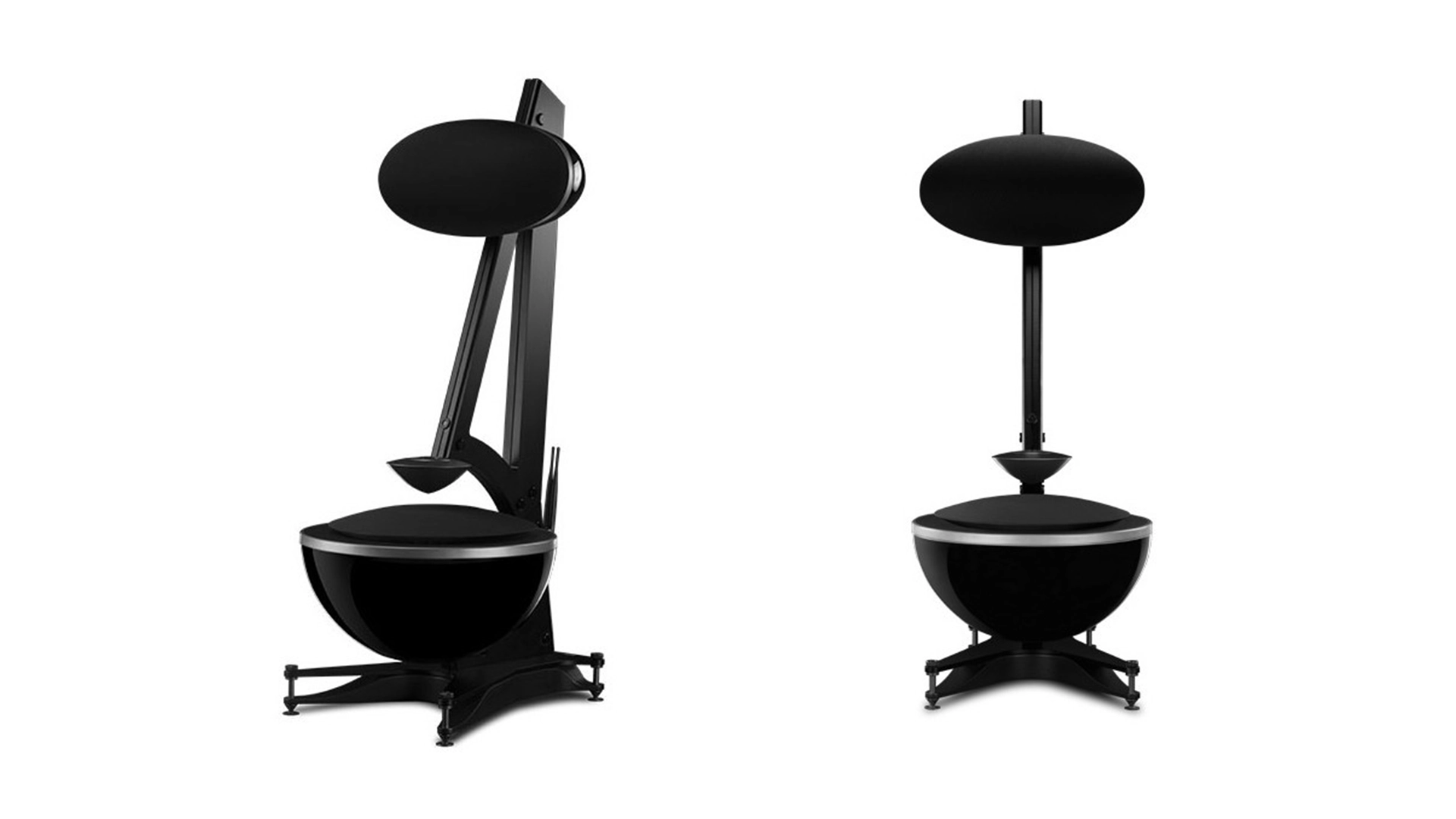
Swan Speakers (HiVi Technology, stock code 002888) is a Chinese audio manufacturer founded in 1991, initially focused on high-end speakers. Their philosophy is “Hear the Difference.” In 1997, they merged with Swan Speaker Systems (USA), acquiring the Swan brand and Frank Hale as chief designer. Hale, known for his work on the Swan M1 speaker, had previously designed the world’s first isodynamic ribbon speaker. The company has grown significantly, with three major industrial bases totaling 200,000 square meters, including a Zhuhai production base established in 2011. They have a full product range, including Hi-Fi, home theater, multimedia active audio, power amplifiers, internet cloud audio, headphones, car audio, professional audio, smart radios, conference systems, and speaker drivers. Swan possesses advanced facilities, including two large anechoic chambers. Their speaker drivers are used by many other audio manufacturers in Europe and America. Swan has won 17 CES Innovation Awards, including two Best of CES. They emphasize innovation, combining advanced electroacoustic technology with Chinese precision manufacturing.
Tangent


Tangent is a Danish brand of audio electronics, known for its stylish and compact designs, often featuring a minimalist Scandinavian aesthetic. The company offers a range of products, including radios, CD players, amplifiers, speakers, and all-in-one music systems. Tangent products are often characterized by their ease of use, intuitive controls, and support for various wireless technologies, such as Bluetooth and Wi-Fi. They are designed to be versatile and user-friendly, integrating seamlessly into modern living spaces. The company’s focus is on providing a good balance of sound quality, features, and design, at accessible price points. Tangent products are positioned in the mid-range consumer market, appealing to a broad audience who appreciate both aesthetics and functionality.
Technics


Technics is Panasonic’s Japanese hi-fi brand, introduced in 1965 and defined above all by its transformation of the turntable. The first product to carry the name was the Technics 1 loudspeaker, but the SP-10 of 1970 created the decisive legacy: it was the first commercially available direct-drive turntable, placing the platter directly on the motor and eliminating belts and idlers. The SL-1200 followed in 1972, and the quartz-controlled SL-1200MK2 of 1979 became an enduring tool for broadcasters, clubs, DJs and home listeners. That achievement can obscure the breadth of the company. Technics also built amplifiers, cassette and open-reel machines, CD players and loudspeakers, often using advanced motor, power-supply and digital research from the wider Panasonic organisation. After a pause in dedicated hi-fi production, the brand returned in 2014 with new Reference and Grand Class systems rather than a purely retro catalogue.
Modern turntables range from the accessible SL-1500C and SL-1200GR2 to the SL-1200G and Reference SP-10R, whose coreless direct-drive motors address cogging and rotational stability with current control technology. Electronics such as the SU-R1000 integrated amplifier use digital signal processing for functions including cartridge calibration and load-adaptive speaker control, while wireless systems and loudspeakers broaden the range. Technics remains distinctive because one engineering idea became both an audiophile reference and a global musical instrument, yet the company continues to refine it instead of merely reproducing the past.
Tivoli Audio


Tivoli Audio is the American radio and compact-audio company founded in Boston in 2000 by Tom DeVesto. Its first product, the Model One table radio, was designed by legendary engineer Henry Kloss. At a time when portable electronics were becoming visually disposable, that small wooden cabinet, analogue tuning dial and room-filling mono sound made a strong argument for a simple object designed to be lived with for years.
The Model One was followed by the stereo Model Two and the portable PAL, turning Tivoli into a recognisable category rather than a single hit. Kloss’s contribution was central to the original acoustic and tuner design, while DeVesto built the brand, distribution and product family around it. The radios combined long tuning scales, useful FM reception, a single full-range driver and furniture-grade veneers; their appeal came from disciplined function, not from pretending a tabletop radio was a miniature component system.
Tivoli later added Bluetooth, Wi-Fi streaming, DAB reception and multiroom products, including Model One Digital and Music System variants. Some generations have changed as network platforms evolved, but the core idea remains visible: contemporary sources in controls and cabinets that do not demand attention. Tivoli Audio is strongest when it preserves that restraint. Its place in audio history comes from making the radio desirable again at the beginning of the twenty-first century—and from proving that approachable industrial design, understandable operation and careful voicing can matter as much as a long feature list.
Tonewinner


ToneWinner is a Chinese audio manufacturer founded in 1992 and based in Guangzhou. The company is best known internationally for home-cinema electronics that deliver high channel counts and substantial power without the pricing of boutique brands, but its work spans stereo amplifiers, DACs, headphone products, loudspeakers and professional or OEM manufacturing. Large-scale production and in-house engineering are central to its value proposition.
The AT-series processors and AD-series multichannel power amplifiers made ToneWinner particularly visible to cinema builders. Models such as the AT-300 provide immersive decoding and room-calibration functions, while amplifiers including the AD-7300PA+ supply separate high-current channels for demanding speaker arrays. The catalogue also includes integrated stereo components, monoblock and Class A amplification, source electronics and subwoofers, allowing the brand to serve both two-channel listeners and complete theatres.
ToneWinner’s identity should not be reduced to “affordable Chinese hi-fi.” It has decades of experience with power supplies, thermal management, metalwork and the repeatability required for multi-channel hardware, and it manufactures at a scale smaller high-end companies cannot match. At the same time, model specifications and software features vary by market and generation, so individual products deserve evaluation rather than blanket claims. The brand’s strongest contribution is practical: bringing balanced connections, powerful amplification and modern surround processing to systems whose budgets would otherwise force a compromise in channel count or output capability.
Triangle


Triangle is a French loudspeaker manufacturer founded in 1980 by engineer Renaud de Vergnette. From its earliest models, the company pursued speed, sensitivity and dynamic contrast rather than the heavily damped, low-efficiency fashion common in parts of the high-end market. Triangle develops key drivers and assembles its premium loudspeakers in Soissons, giving the brand control over the transducers that shape its recognisable presentation.
Horn-loaded tweeters are a signature, designed to provide high efficiency and controlled radiation. Many models pair them with natural-cellulose paper midrange cones, chosen for low mass and direct vocal reproduction, while proprietary bass drivers and carefully vented cabinets provide scale. The flagship Magellan family demonstrates the fullest version of this engineering. Signature and Esprit EZ carry much of it into smaller systems, and the widely successful Borea range brings Triangle’s driver philosophy to accessible stereo and home cinema.
The company now covers architectural speakers, subwoofers and active or connected products as well as traditional passive designs. AIO systems address streaming, while Capella combines active wireless speakers with room optimisation. That expansion has not erased the original character: Triangle speakers are generally designed to communicate musical energy easily and to work with a broad range of amplifiers. The brand’s longevity comes from more than “French sound” or elegant cabinets. It rests on four decades of driver development, a coherent preference for efficiency and transients, and the ability to carry those priorities from a compact Borea monitor to a full Magellan system.