
Concert Speakers
This category covers large-scale loudspeaker systems designed for live sound reinforcement at concerts, festivals, and major public events. Unlike hi-fi speakers, this equipment is engineered for maximum sound pressure levels (SPL), controlled audio dispersion over vast areas, and extreme durability for touring. This includes everything from massive line arrays and powerful subwoofers to stage monitors for performers. This page is a directory of the leading brands that build these powerful professional sound systems.
Hi-Fi brands in the category
Summary information and image
Direct links to official websites
Adamson

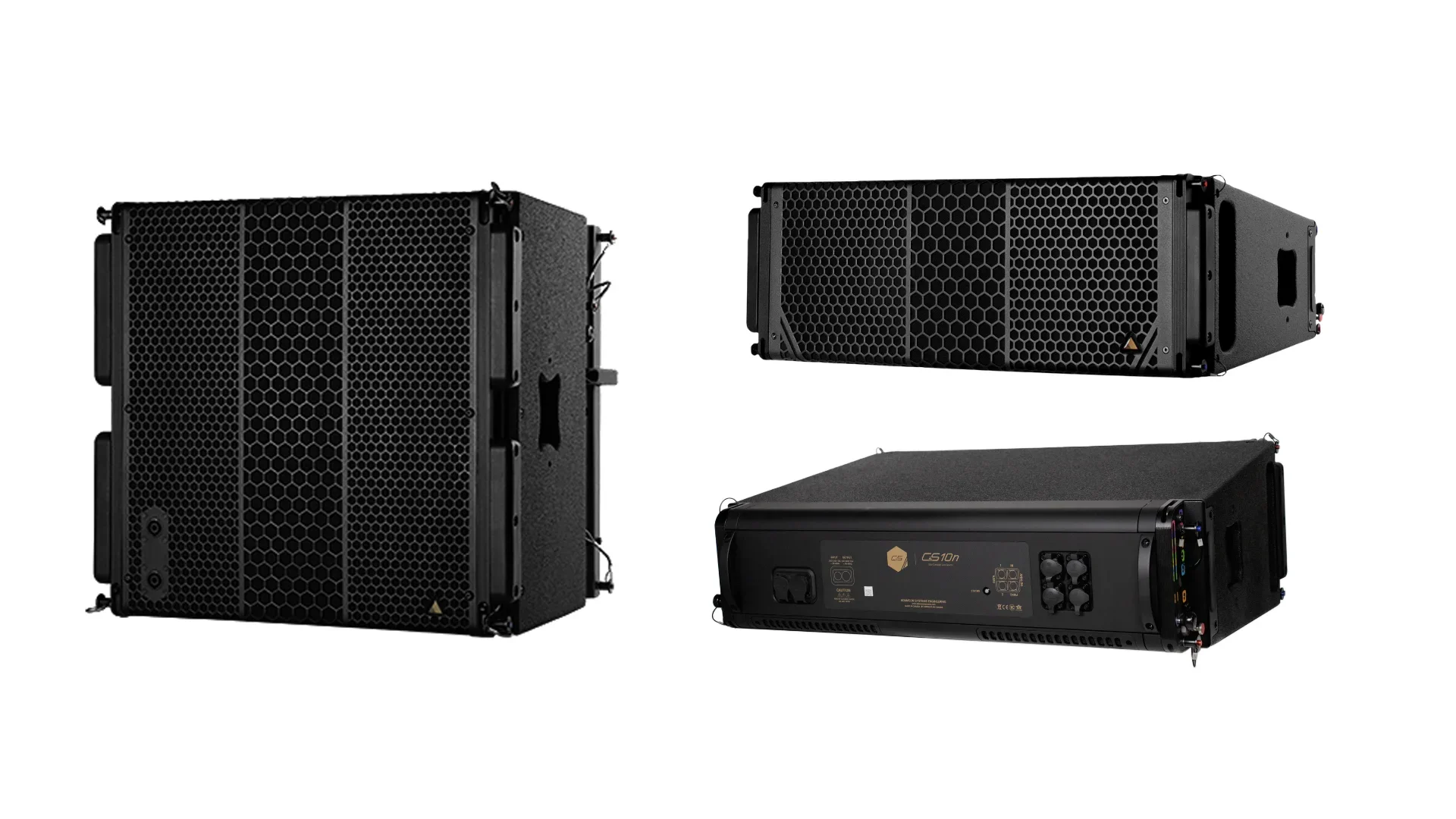
Adamson develops professional loudspeaker systems for touring sound and permanent installations, with much of the engineering and manufacturing carried out at its Canadian facility. Its work extends beyond assembling cabinets: the company designs its own transducers and has a long history of using Kevlar-cone technology. Brock Adamson started the business in Vancouver before relocating to Ontario, bringing an early background in building studio monitors into professional sound reinforcement. Line arrays, point-source loudspeakers and subwoofers form the core of a catalogue intended for venues and audiences of different sizes. Adamson combines driver development with the practical demands of deploying a complete sound system. Its identity is rooted in live sound, where coverage, repeatable setup and durability are central design concerns.
Aeron
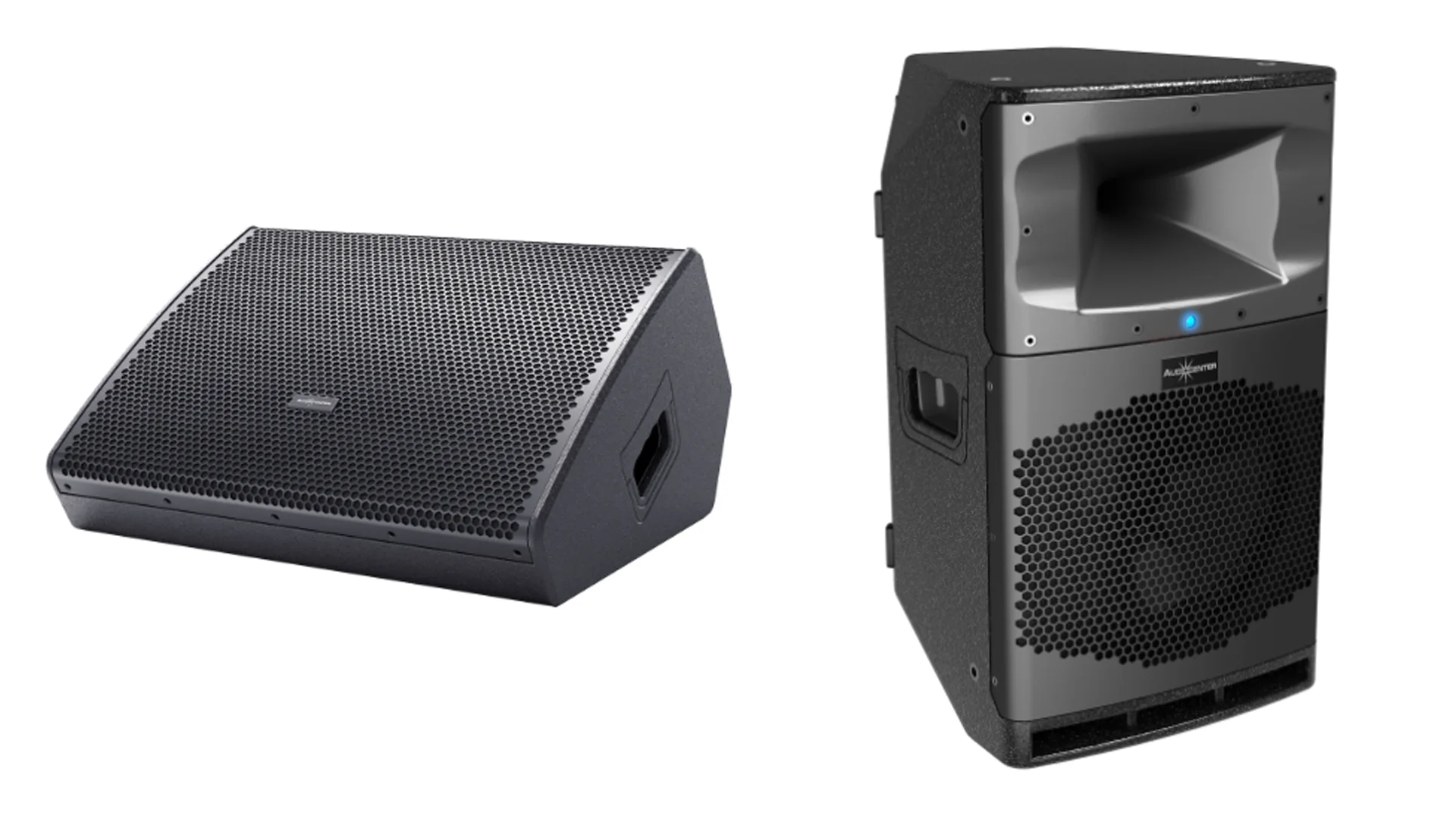
AERONS supplies professional sound equipment for live events, public-address systems and permanent installations in India. Its catalogue covers line arrays, power amplifiers, mixers, microphones, signal processing and installation speakers, alongside equipment from international brands it distributes. The business traces its roots to radio and loudspeaker work in 1962; its own history identifies 2000 as an export-business milestone, not its founding year. Its work spans the equipment needs of venues, installers and sound-reinforcement operators, from microphones and mixing to amplification and loudspeaker coverage.
Alcons Audio

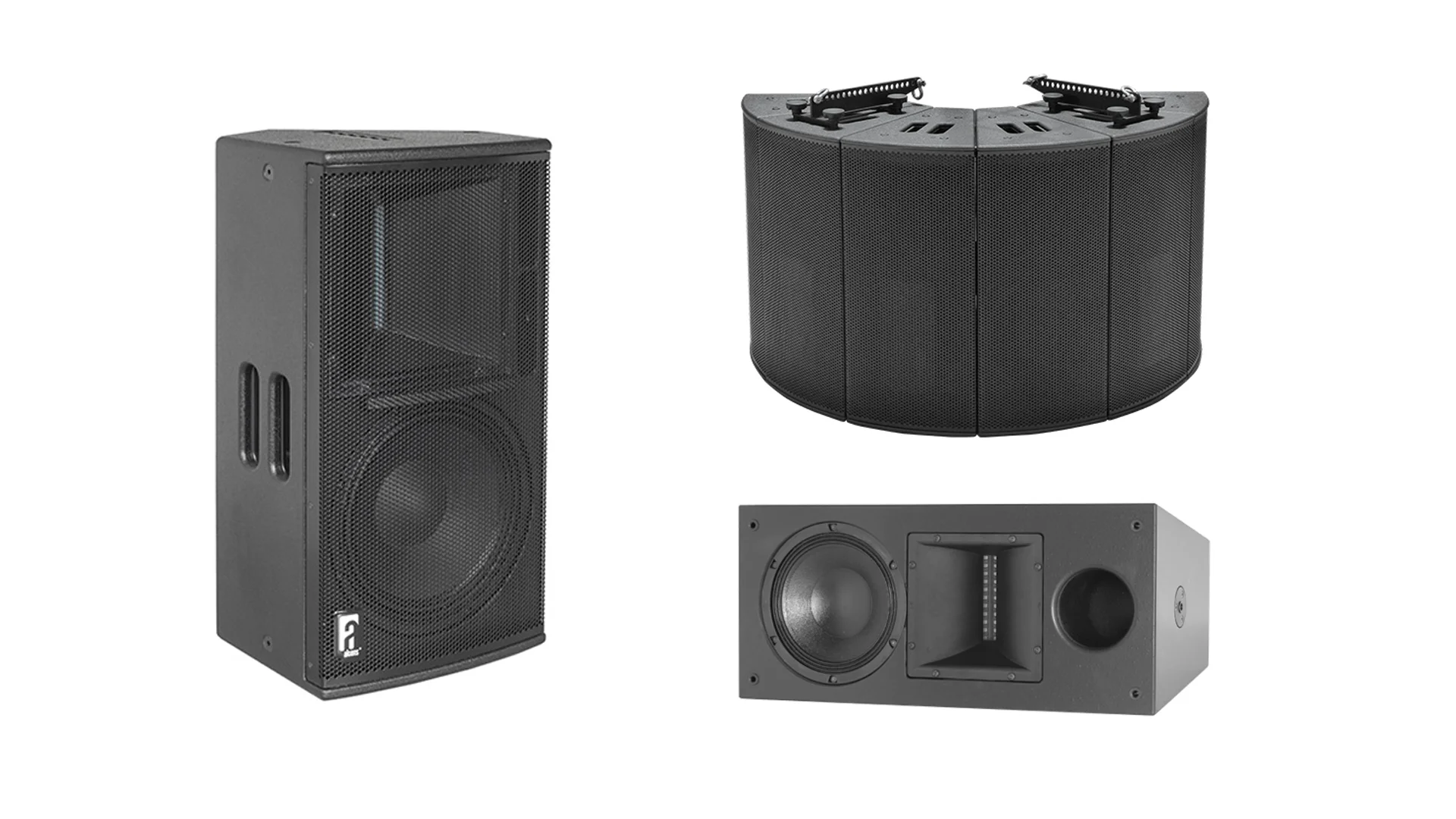
Alcons Audio develops pro-ribbon loudspeaker systems for sound reinforcement, cinemas and demanding residential theatres. Founded in the Netherlands in 2002 by Tom Back, the company pairs his professional-audio background with ribbon-transducer development led by Philip de Haan. Its ribbons are engineered for professional output levels, rather than simply transplanting a domestic hi-fi tweeter into a PA cabinet. The range spans touring line arrays, columns, point-source systems and dedicated cinema speakers. Sentinel amplifier-processors form part of the system approach, bringing amplification and loudspeaker processing together. This makes Alcons a complete professional sound-system manufacturer, with residential cinema as one application of the same engineering discipline.
Aurea Cinema

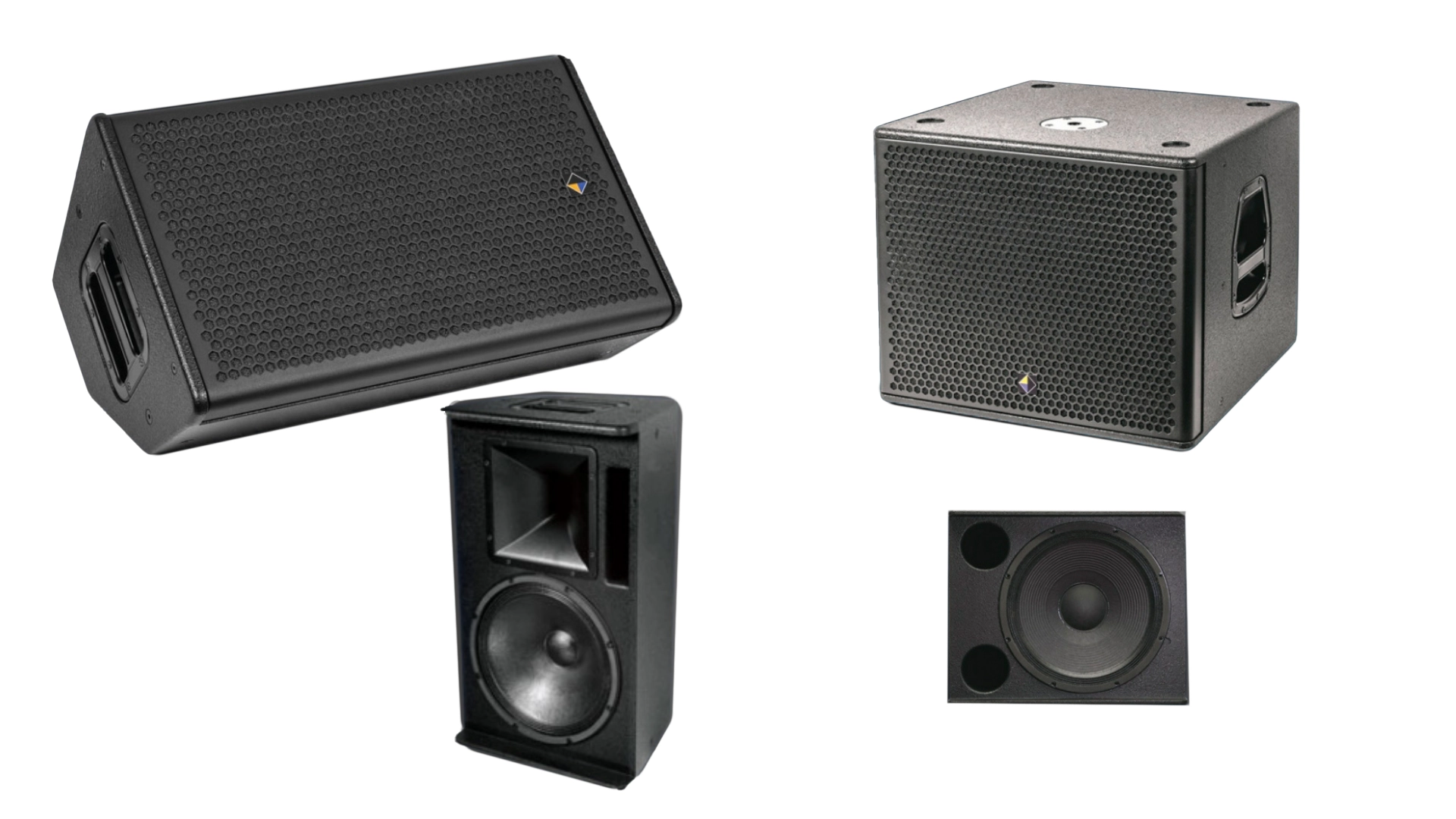
Aurea Cinema brings commercial-theatre loudspeaker engineering into dedicated home cinemas. The Spanish manufacturer, based near Madrid, develops screen-channel systems, surrounds, in-wall and ceiling speakers, subwoofers and matching amplification for professional and residential installations. Its screen models are built for high output, intelligible dialogue and controlled coverage across several seating rows rather than for decorative placement in a living room. Three-way screen systems divide bass, midrange and treble duties, while compact in-wall and overhead models extend the same cinema-oriented approach to immersive layouts. Aurea’s close connection with professional cinema supply and installation is the useful distinction: the home products are derived from equipment designed to work behind screens and in purpose-built theatres. No dependable public foundation date was found, so the year remains unspecified.
Bag End Loudspeakers

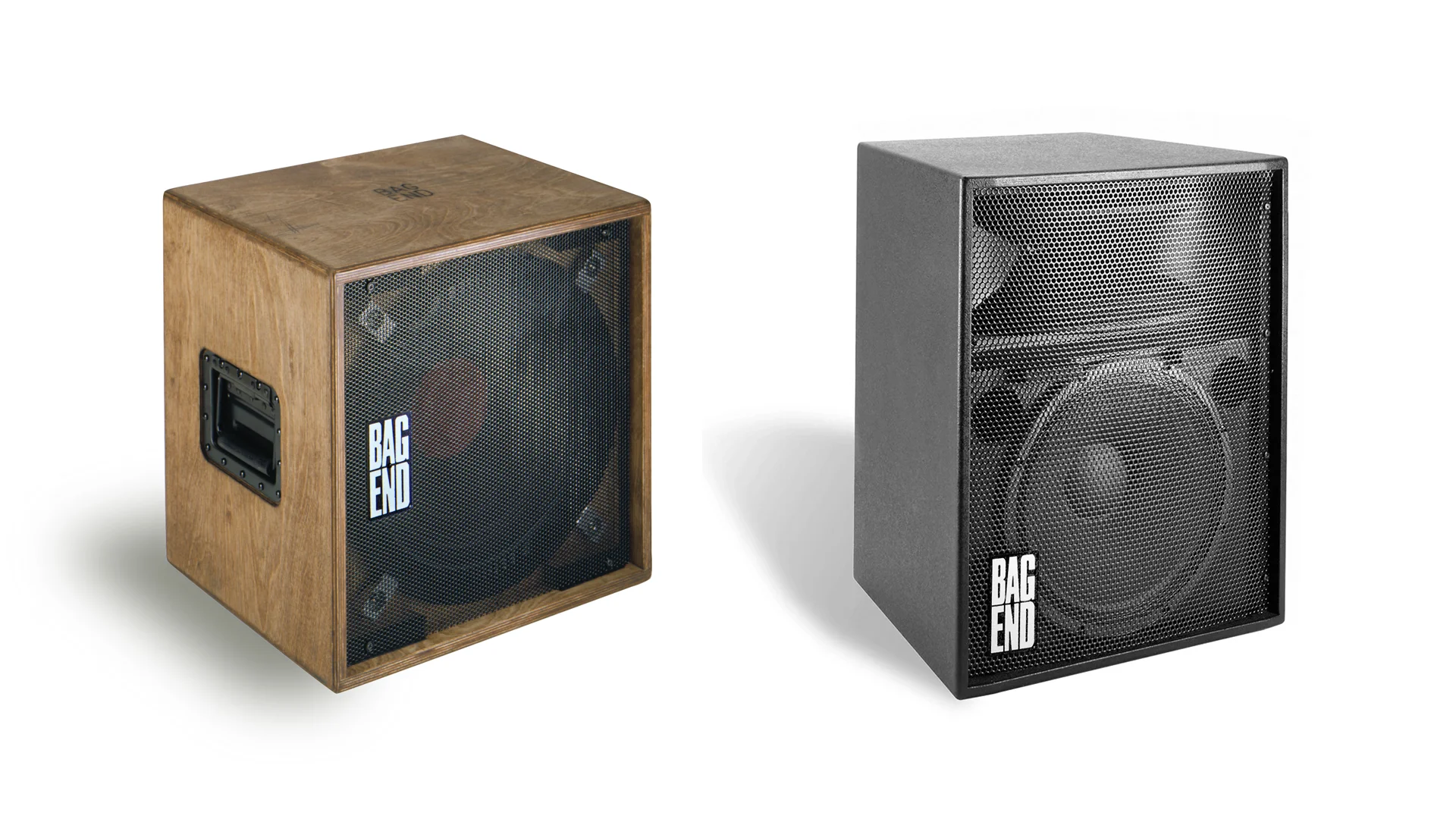
Bag End Loudspeakers connects studio monitoring, sound reinforcement and home audio through two unusual technologies: Time-Align full-range speakers and InfraSub bass systems. The Illinois company officially began in 1976, growing from practical theatre and live-sound work. In 1980 it incorporated the Time-Align approach developed by E.M. Long Associates, aligning driver output in time through physical placement and crossover design instead of treating frequency response alone as the goal. Infra processors and sealed subwoofers use a dual-integrator circuit to extend controlled response into the infrasonic region without a conventional high-order crossover character. TA and professional monitor models are built for coherent arrival, robust output and repeatable installation. Bag End’s value is this specific work on phase, time and very-low-frequency reproduction, not a generic claim of studio accuracy.
Cerwin-Vega!

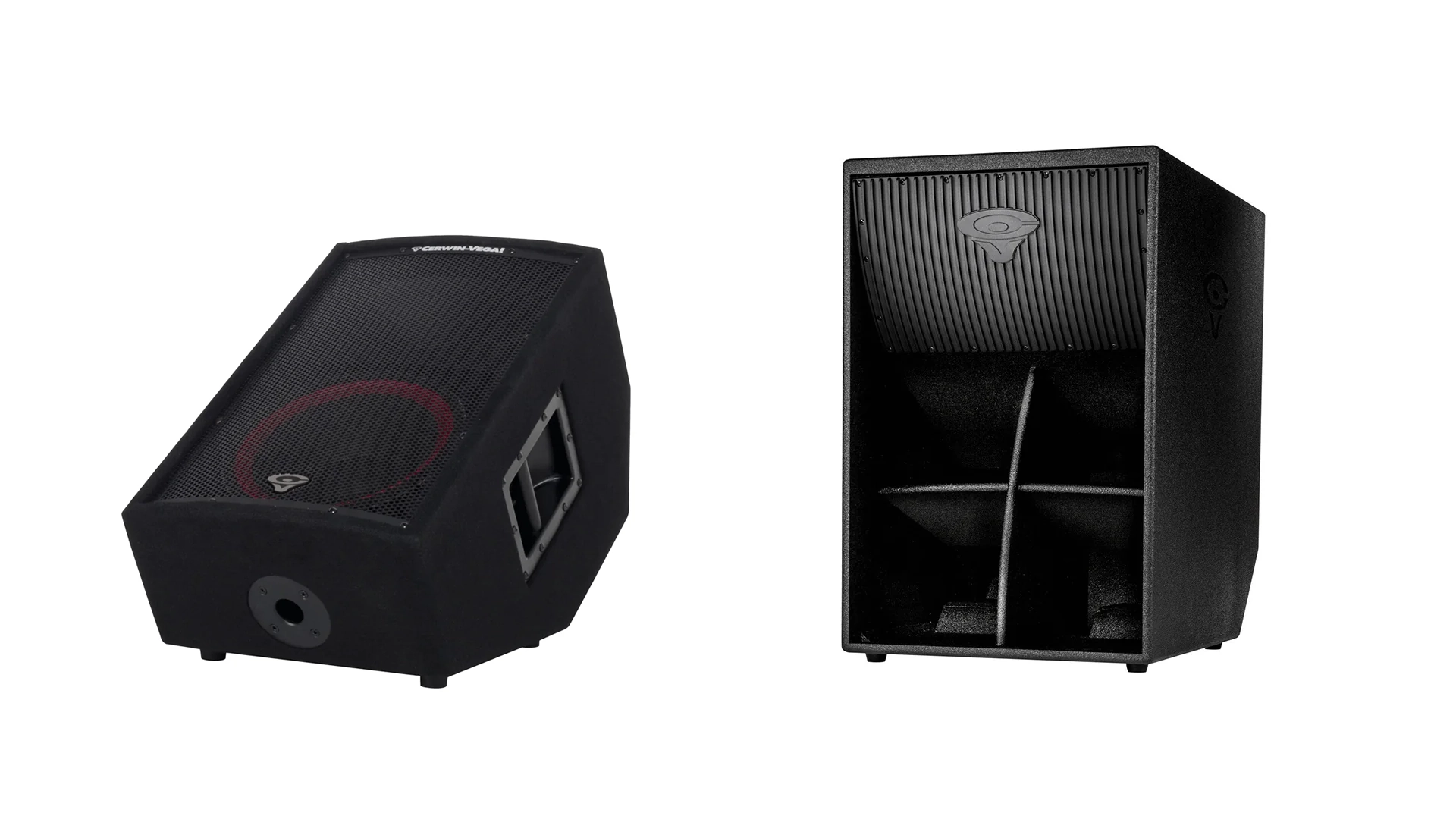
Cerwin-Vega! designs loudspeakers around high efficiency, deep bass and the ability to produce convincing live-event sound pressure without fragile construction. Aerospace engineer Eugene ‘Gene’ Czerwinski founded Vega Associates in Los Angeles in 1954; the company later became Cerwin-Vega. An early 18-inch system capable of exceptional output at 30 Hz established its low-frequency reputation, while professional systems, instrument speakers and the red-surround home models made the brand visually unmistakable. Cerwin-Vega also supplied the folded-horn subwoofer technology used for Universal’s Sensurround presentation of Earthquake in 1974, work recognised with a special technical Academy Award. The brand later passed through several owners and was split between mobile and pro/home operations, but those divisions were reunited under Cerwin-Vega Inc. in 2020. Current ranges cover home speakers and subwoofers, professional PA systems, amplifiers and car audio, preserving the original emphasis on robust drivers, high output and bass with physical impact.
dB Technologies

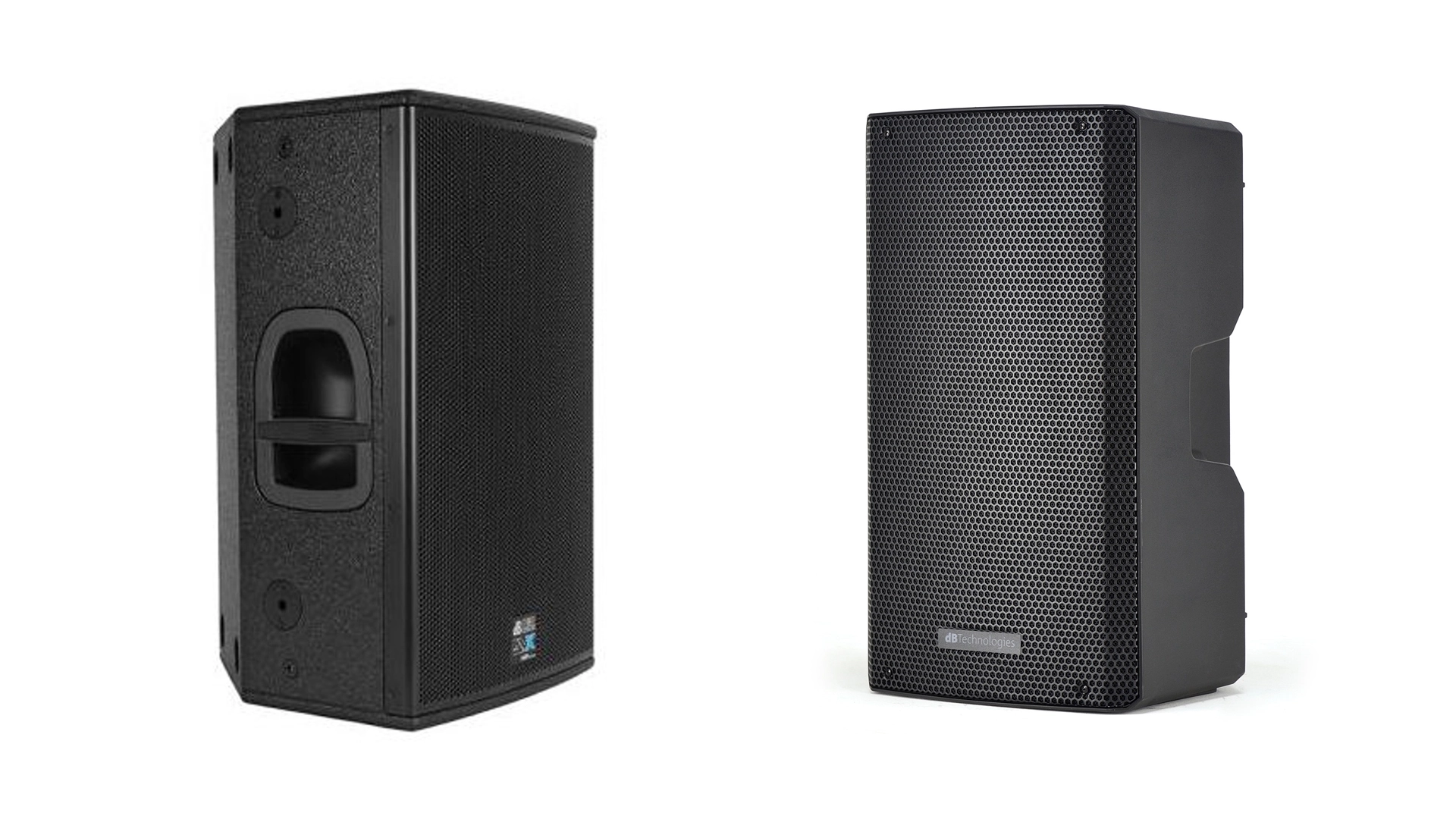
dBTechnologies is the professional loudspeaker brand launched in Bologna in 1990 by AEB Industriale, a company founded by Arturo Vicari in 1973 to build electronic components, radio microphones and speakers. Today it operates within RCF Group, but retains its own development centre and product identity. dBTechnologies became an early adopter of active loudspeakers and digital amplification, integrating amplifiers, DSP, protection and rigging into systems that could be deployed predictably by rental companies, musicians and installers. The OPERA range covers portable powered PA, INGENIA provides modular point-source systems, and VIO scales the approach into network-controlled line arrays and subwoofers for touring and large venues. RDNet monitoring and control, FIR processing and purpose-designed mechanical hardware allow multi-cabinet systems to be configured as one platform rather than a pile of boxes. The brand’s useful distinction lies between entry PA and custom touring manufacture: it offers genuinely scalable Italian-designed systems, carrying the same active and digital know-how from compact speakers to concert arrays while keeping operation practical for real production work.
Electro-Voice

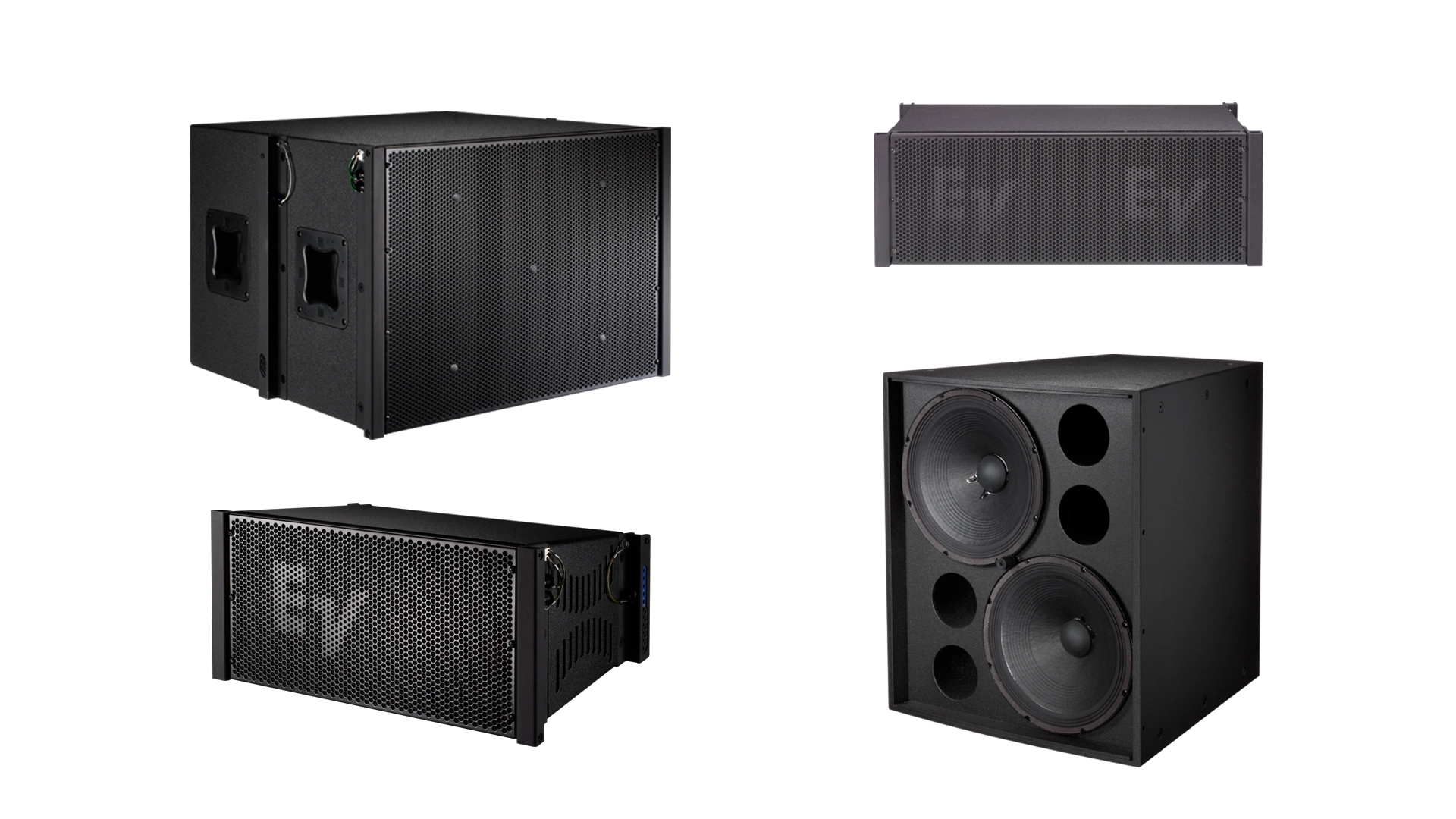
Electro-Voice is an American professional-audio manufacturer formed in 1930 by Lou Burroughs and Albert R. Kahn, whose work grew from servicing early public-address equipment into microphones and loudspeakers used on stages, in broadcast and in installed sound. The name reportedly followed football coach Knute Rockne’s description of Burroughs’ PA as his “electric voice.” EV’s importance rests on engineering that became industry vocabulary. Variable-D microphone construction controls proximity effect through rear acoustic ports and is embodied by the enduring RE20 broadcast microphone. Constant-directivity horn research helped make coverage predictable over frequency, while later powered systems integrated transducers, amplification, DSP limiting and presets as one calibrated platform. The current catalogue spans portable ZLX and EKX speakers, higher-output ETX systems, line arrays, installation loudspeakers, amplifiers, processing and wired or wireless microphones. Electro-Voice has been part of Bosch since 2006, but retains a distinct product and engineering identity. Its speciality is controlled, repeatable performance under professional conditions: intelligibility, pattern control, high output and reliability rather than domestic-audio ornament.
Elementi Audio

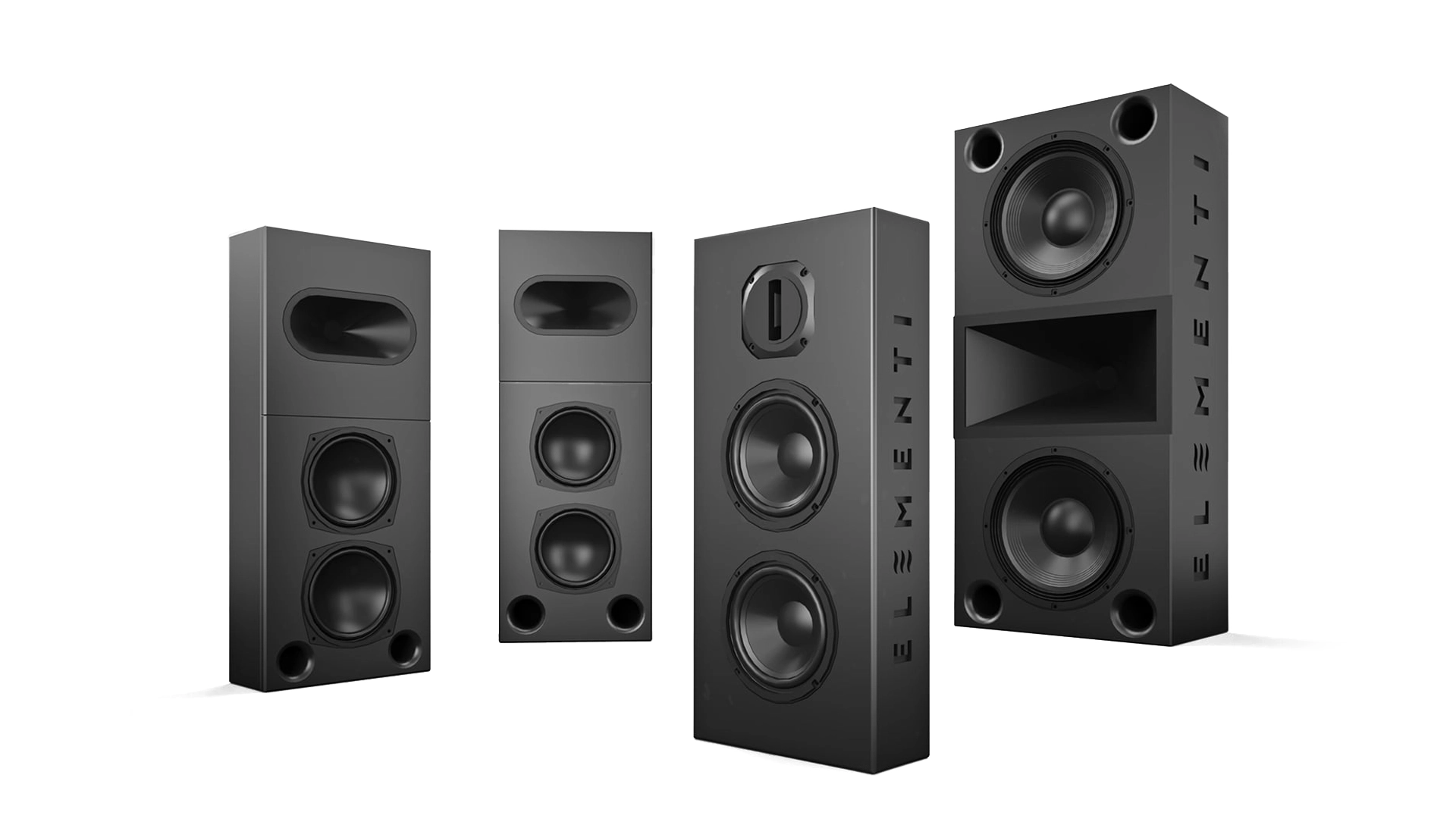
Elementi Audio is an Australian active-loudspeaker system created by cinema designer and acoustician David Moseley of Wavetrain Cinemas and formally launched in 2021 for purpose-built private and commercial theatres. It is not a conventional range of passive hi-fi boxes. Every speaker is paired with dedicated amplification and floating-point DSP, allowing crossover slopes, FIR time correction, protection and output capability to be specified as part of the installed system. The families are organised by function. Fire models use compression drivers for high sound-pressure levels and long throw; Air designs pursue linear-phase reproduction with pleated-diaphragm high-frequency units; Water supplies compact wide-coverage channels for immersive-audio positions; and Earth comprises subwoofers, including extreme models intended to reproduce infrasonic cinema energy. Fire-Dragon is the large three-way LCR flagship, while smaller Firebird, Phoenix and Firefly models cover different room dimensions and seating distances. Elementi’s defining skill is engineering from the room backward: coverage angle, listening distance, reference level, thermal compression and bass requirement determine the loudspeaker and amplifier configuration, rather than asking one retail model to suit every cinema.
Funktion-One

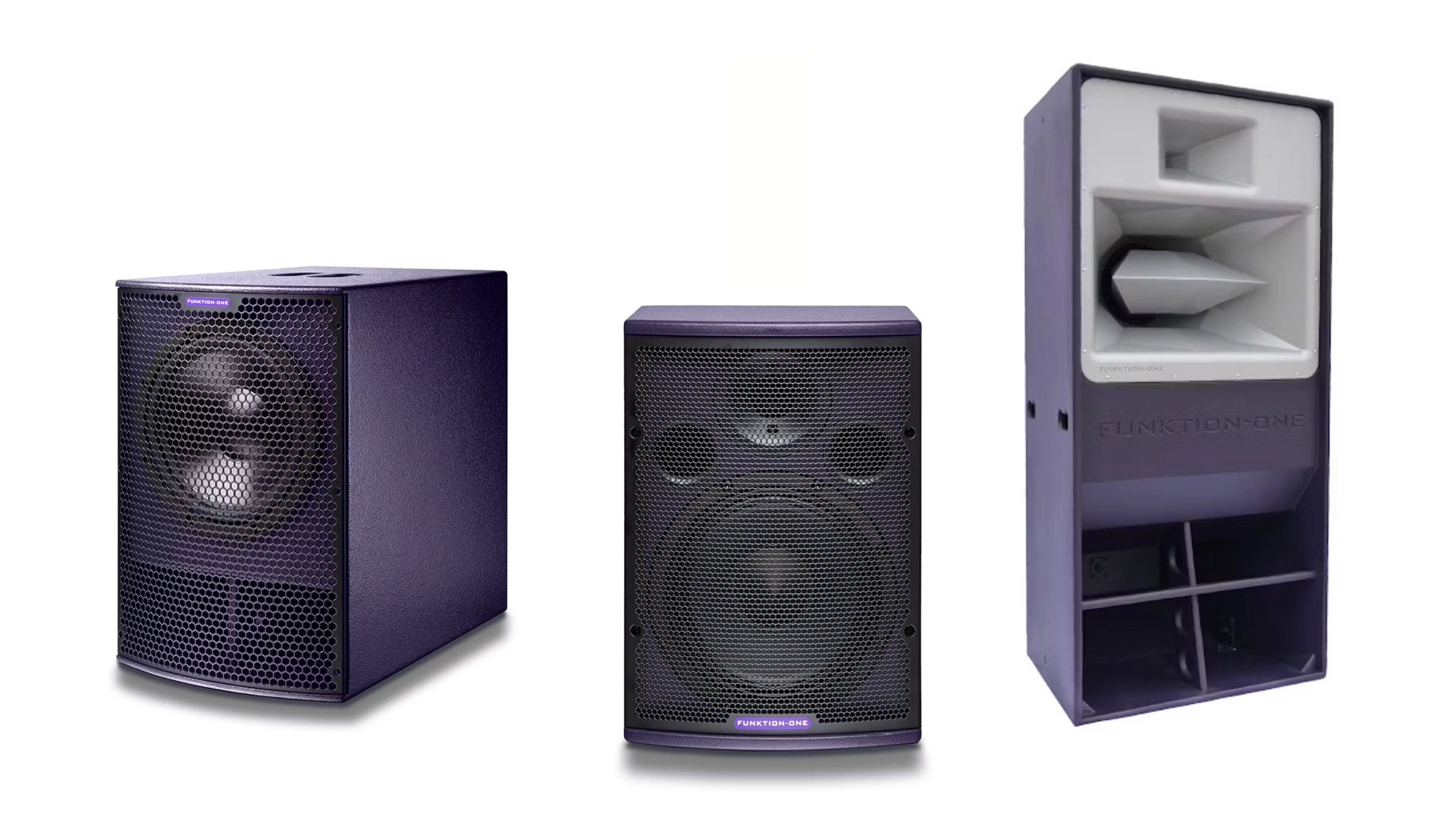
Funktion-One builds high-output sound systems for clubs, festivals, touring and permanent venues, with efficiency and directivity established acoustically before electronic correction is applied. Tony Andrews and John Newsham founded the British company in 1992 after their influential work at Turbosound, where they helped create systems including TMS-3, Flashlight and Floodlight. Funktion-One carried that horn-loading experience into Resolution, Evolution and the scalable Vero and Vero VX arrays, alongside F-Series point-source enclosures, bass systems, DJ monitors and compact installation products. The designs favour lightweight diaphragms, high acoustic efficiency, controlled coverage and generous headroom; the company explicitly avoids using heavy preset equalisation to rescue an uneven loudspeaker response. Proprietary measurement tools, including a robotic three-dimensional directivity system, support that approach. Its purple enclosures are visually distinctive, but the real signature is a system philosophy developed around intelligibility, transient behaviour and consistent coverage at professional sound-pressure levels.
ITC

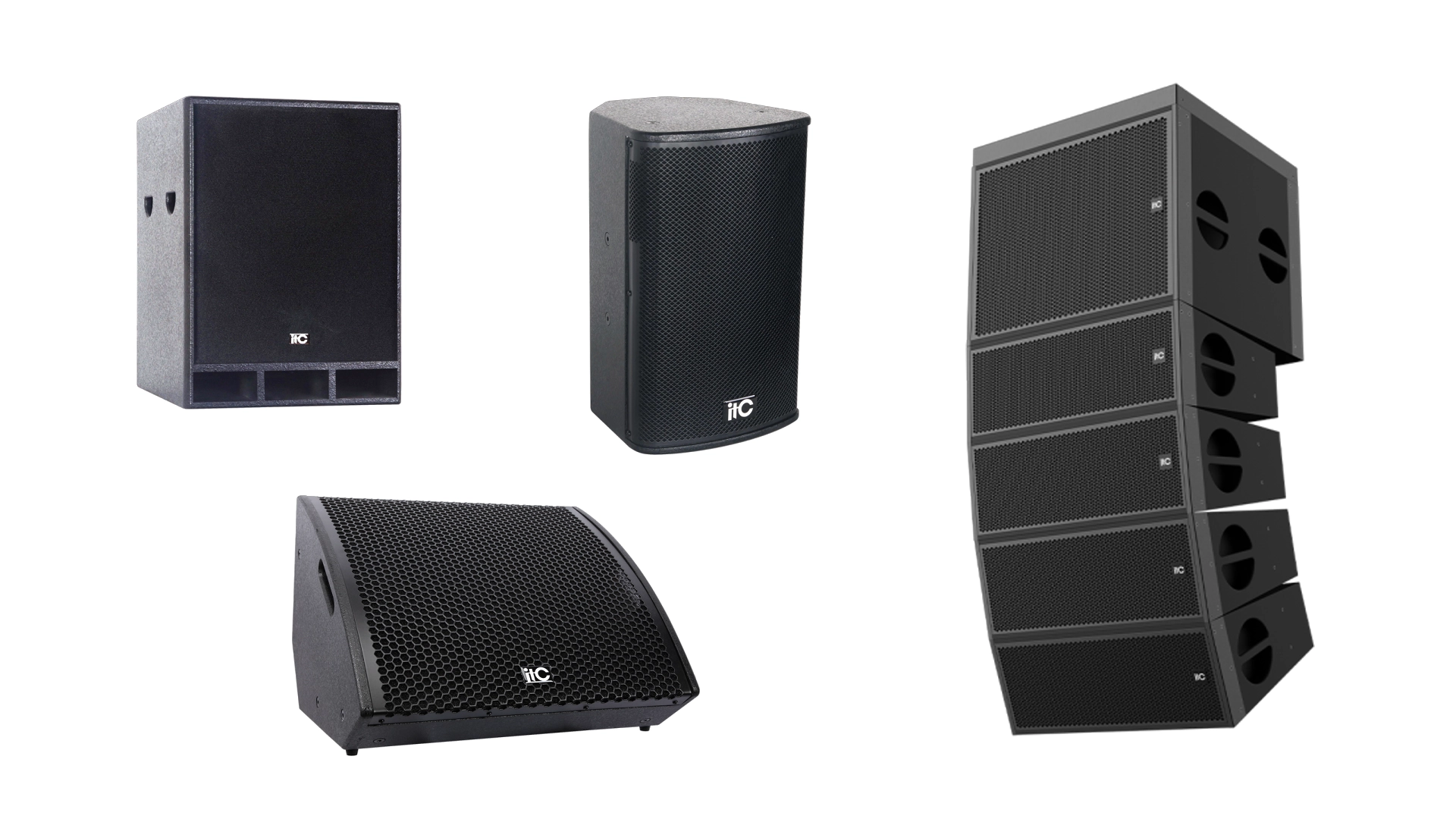
ITC is the export brand of Guangdong Baolun Electronics, a Chinese manufacturer of integrated professional audiovisual systems founded in 1993. Rather than specialise in one loudspeaker or amplifier category, ITC builds the connected layers required for public venues and institutions: IP and analogue public-address systems, voice alarm and evacuation products, conference and simultaneous-interpretation systems, professional sound reinforcement, control-room platforms, video conferencing, LED displays and stage lighting. Its value is system breadth—controllers, servers, amplifiers, microphones, loudspeakers, endpoints and management software can be specified as one architecture instead of assembled from unrelated suppliers. Dedicated R&D and manufacturing in China support custom projects across transport, education, government, hospitality and large public spaces. ITC should therefore be read as a commercial AV and communications-infrastructure company, not a domestic hi-fi brand; reliability, interoperability and project support are its main differentiators.
L-Acoustics

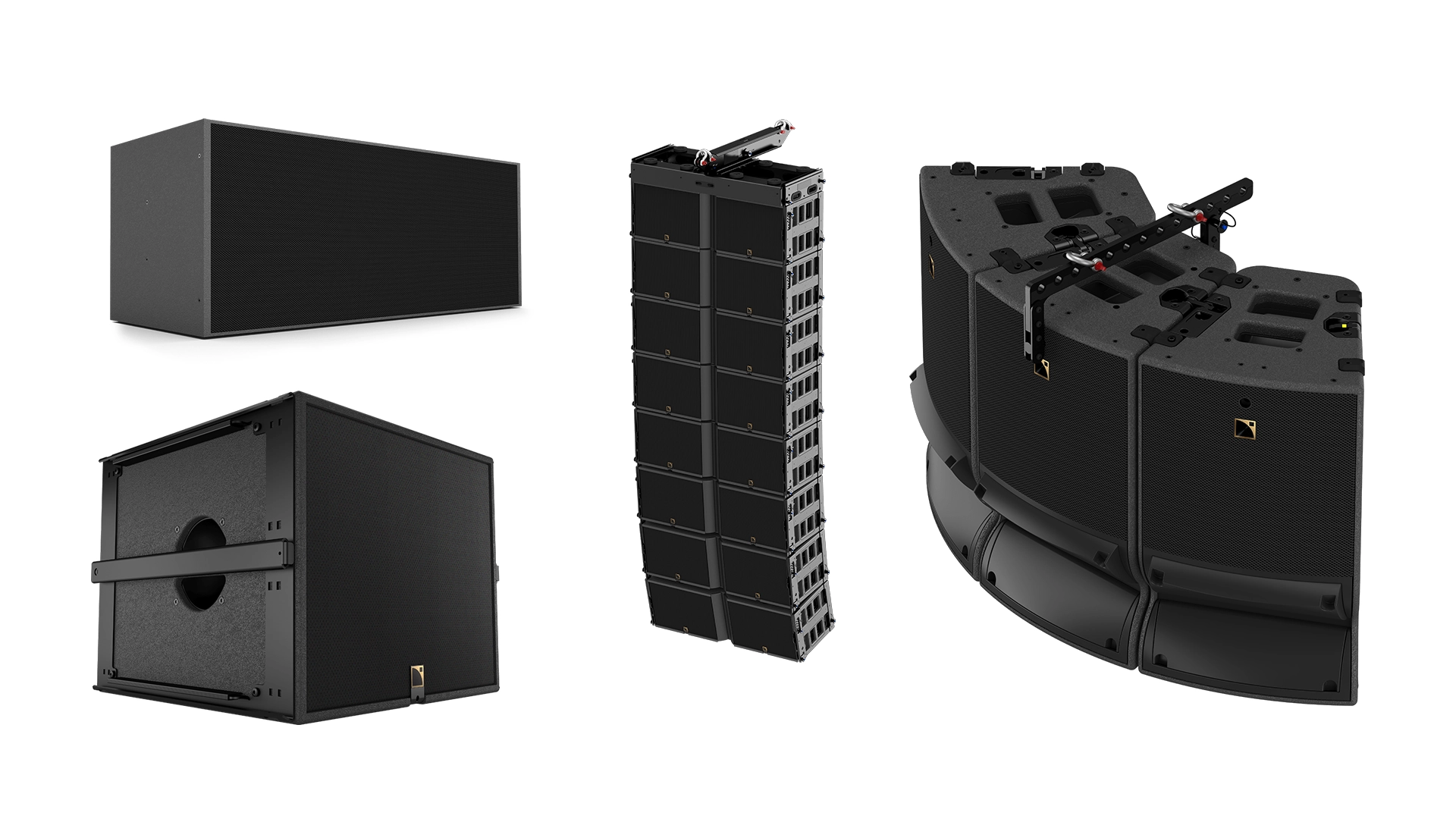
L-Acoustics is a French professional sound company whose research changed how large audiences experience concerts—and now informs immersive systems for homes and private venues. Physicist Christian Heil founded the company in 1984. In 1992 it introduced Wavefront Sculpture Technology, the theoretical basis for combining multiple sources into a coherent line array, followed by the V-DOSC system that made the concept practical at full bandwidth. That work evolved into an integrated ecosystem of loudspeakers, amplified controllers, prediction software and networked signal processing rather than isolated boxes. Technologies such as Panflex adjustable directivity and the L-ISA spatial-audio platform give designers control over where sound is projected and where an object appears within a scene. Current K, A, X and L Series systems cover applications from touring and stadiums to theatres and installations. Through L-Acoustics Creations and the newer HYRISS concept, the same source-system engineering is adapted for residential cinema, music and spatial environments, including Syva and Soka-based solutions. The brand’s strength is repeatable coverage and spatial precision at system scale.
MAG Audio

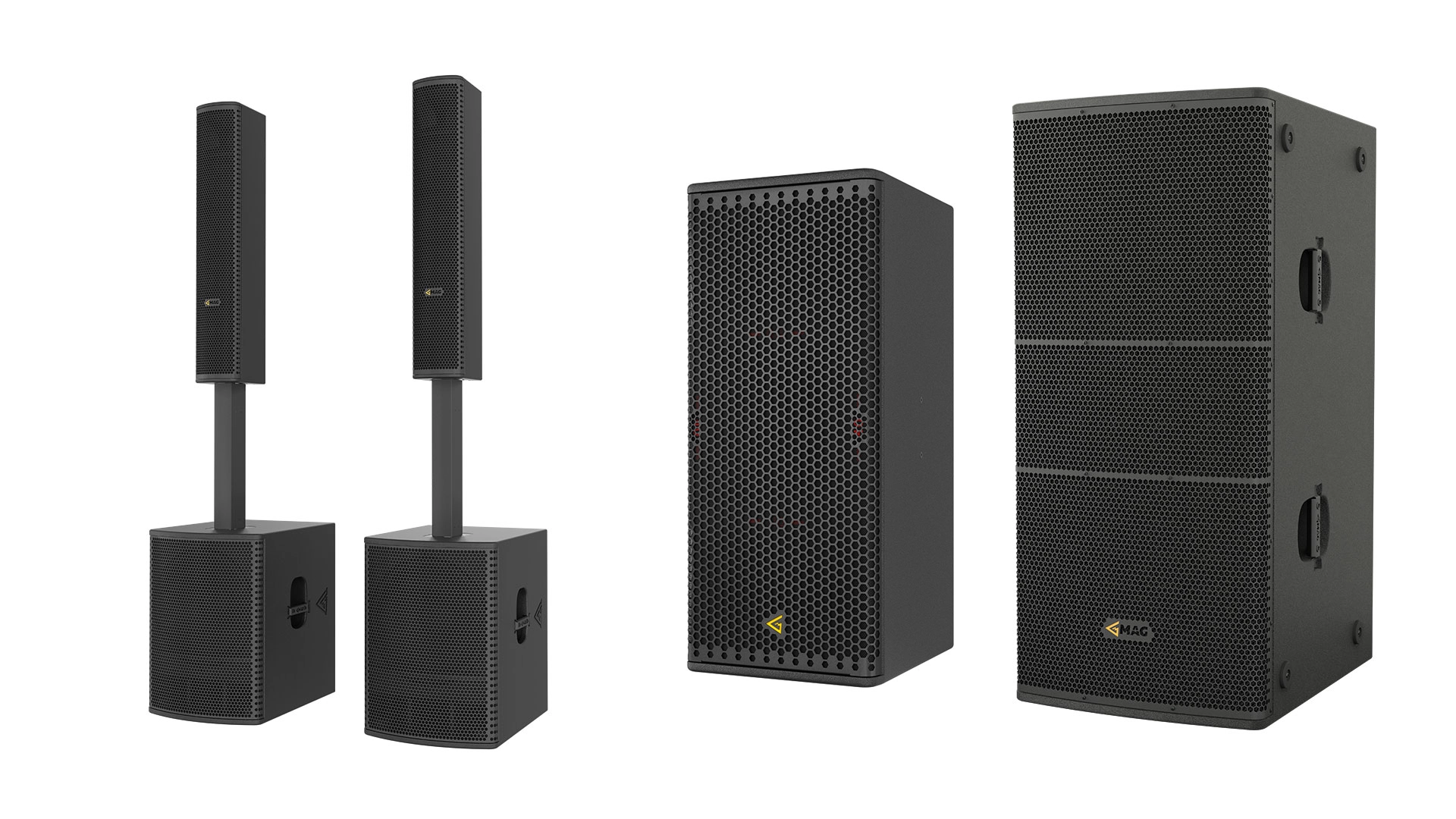
MAG Audio is a Ukrainian professional-sound manufacturer whose history began in Bila Tserkva in 1991, when Boris Khasin established a factory producing magnets. The name “MAG” retains that origin. Experience with magnetic systems and components led into loudspeaker transducers, and from 2008 the company concentrated on complete professional loudspeakers for touring, installation and cinema. Today its catalogue covers line arrays, point-source and stage systems, portable active speakers, subwoofers, installation models, monitors, amplification and mounting hardware. MAG develops and manufactures its own low- and high-frequency drivers for many products, giving the engineering team control over the motor structure, thermal behaviour and final enclosure rather than limiting it to catalogue components. Scalable touring systems are designed around predictable array coverage and rigging, while compact installation families address restaurants, clubs, sports facilities and distributed sound where appearance and mounting flexibility matter. MAG Cinema and the residential MAG Theatron brand extend the same industrial base into their own specialised applications. Production has continued in Ukraine through wartime conditions and the equipment is exported internationally. The company’s strongest story is this vertical progression: a magnet factory became a transducer maker and then a complete systems manufacturer.
Meyer Sound

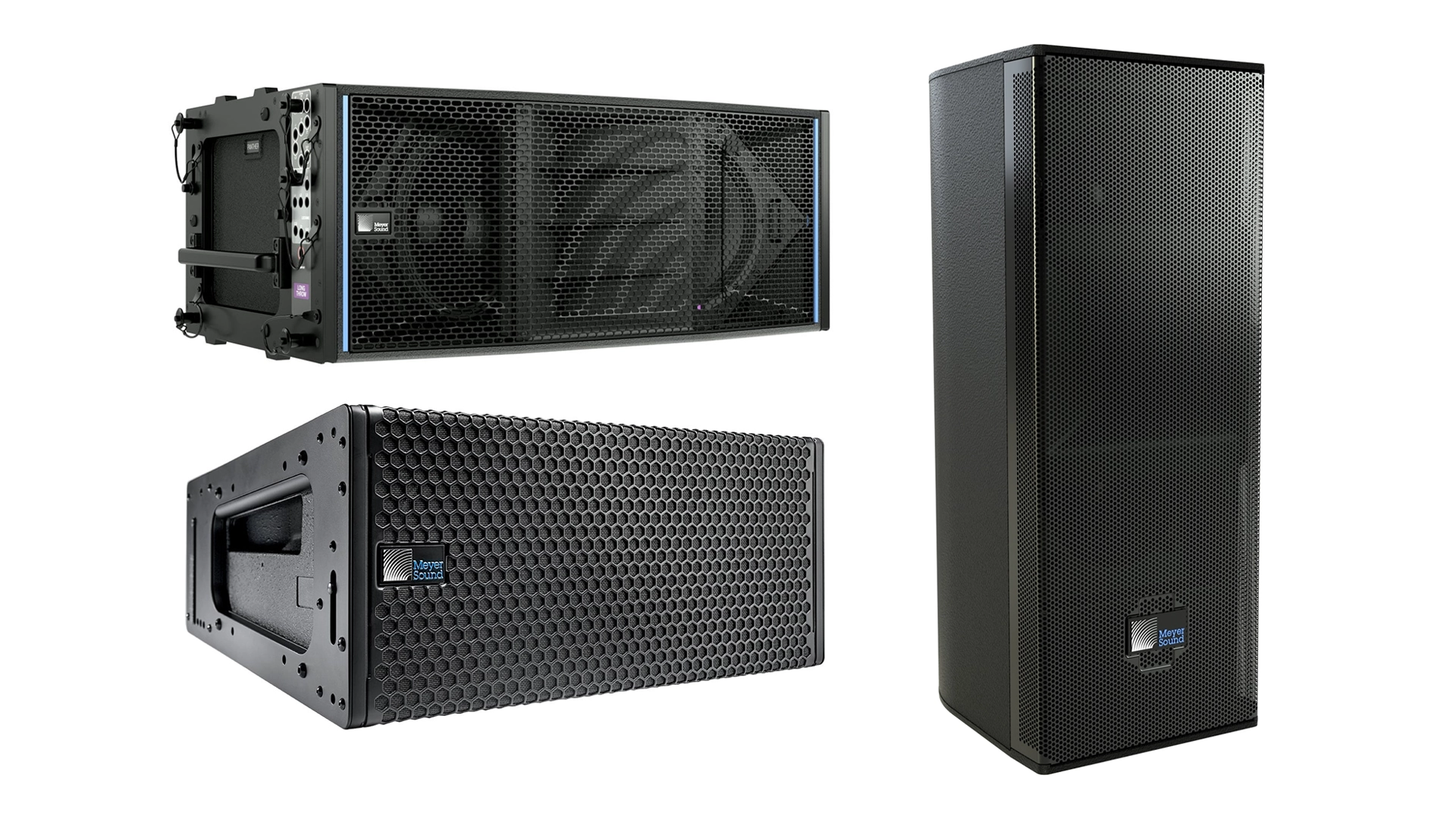
Meyer Sound is an American professional-audio company that helped make self-powered loudspeaker systems a reliable standard for touring, theatre and fixed installation. John and Helen Meyer founded the family-owned business in 1979, combining transducer research with rigorous measurement and repeatable system behavior. The HD-1 studio monitor and MSL-4 reinforcement loudspeaker were important milestones in integrating amplification, processing and drivers as one calibrated product. Today Meyer Sound builds point-source speakers, line arrays, subwoofers, stage monitors, spatial-audio tools and active-acoustic systems. LEO-family arrays—including PANTHER, LEOPARD and LINA—scale from large tours to compact venues, while ULTRA-X models apply concentric-driver concepts to versatile point sources. MAPP 3D predicts coverage and system interaction before installation; GALAXY processors provide networked control and optimization; Spacemap Go handles spatial sound, and Constellation uses microphones, processing and loudspeakers to alter a room’s acoustic response. The company manufactures in Berkeley, California, and supports products with extensive testing and education. Its strongest distinction is systems engineering: loudspeaker, amplifier, protection, prediction and room behavior are designed as one reproducible chain.
QSC

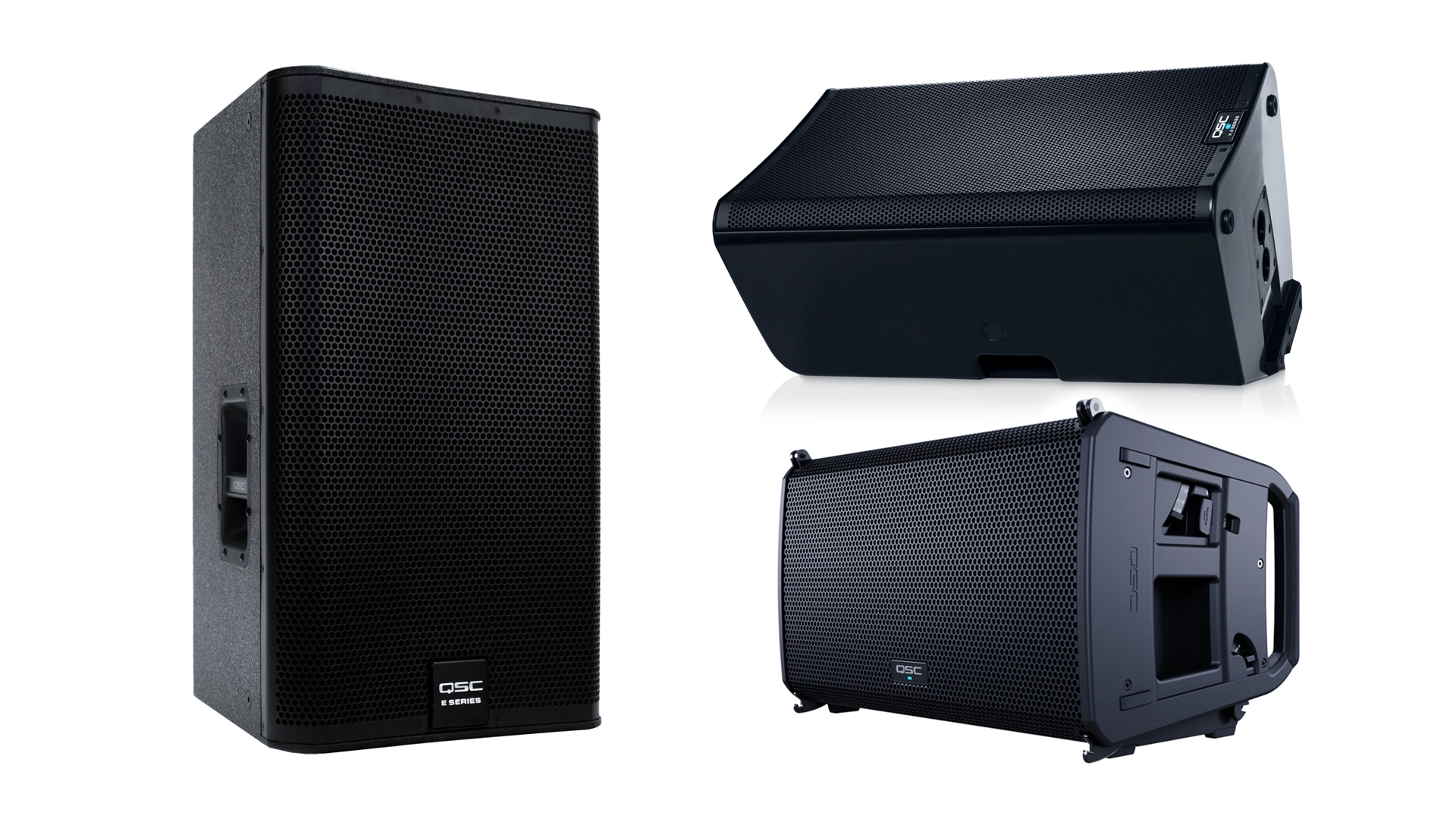
QSC began in Costa Mesa, California, in 1968 as Quilter Sound Things, founded by Pat Quilter with brothers Barry and John Andrews. The first products were hand-built guitar amplifiers, but professional power amplifiers soon became the larger business. That transition established QSC’s reputation: high output, reliability and manufacturable engineering for equipment expected to work night after night in venues, cinemas and installed systems. PowerLight switching technology was an important step in reducing the weight of touring amplifiers without giving up useful output. QSC later expanded from amplification into complete sound systems. K and K.2 powered loudspeakers combine drivers, amplification, protection and onboard DSP in one repeatable package; CP provides a more compact route, while E Series serves passive systems. TouchMix digital mixers put multitrack recording, effects, scene storage and remote control into small-format live consoles. The other side of the company developed into Q-SYS, a software-based network platform that unifies audio processing, video, control and monitoring for workplaces, education, hospitality, entertainment and large venues. This is more than a DSP product line and should not be confused with TouchMix. Corporate status has also changed: Acuity completed its acquisition of QSC in January 2025, placing Q-SYS within Acuity Intelligent Spaces while QSC Audio continues the professional loudspeaker and live-sound range. The original American identity, founders and 1968 date remain; what has grown is the scope—from a small amplifier shop to loudspeaker systems and a cloud-manageable AV-control platform.
Renkus-Heinz

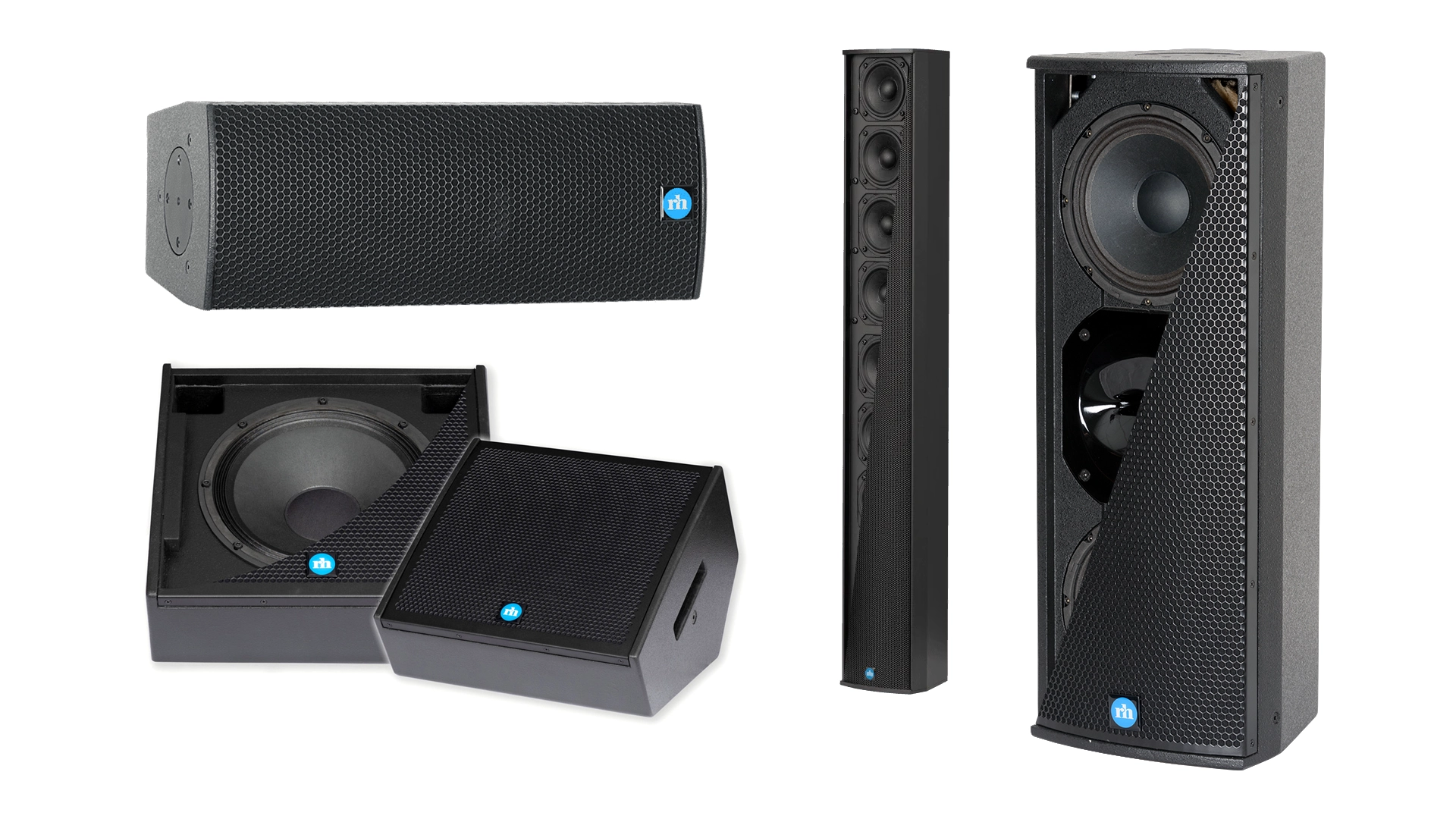
Renkus-Heinz is an American professional-loudspeaker company founded in 1979 by Harro K. Heinz and Algis Renkus. Its speciality is not conventional domestic hi-fi but intelligible, evenly distributed sound in acoustically difficult public spaces—airports, transport terminals, houses of worship, universities, theatres and sports venues. The brand became especially important through ICONYX, a family of digitally steerable column arrays whose tightly controlled vertical beam can be aimed at listeners while limiting energy directed toward reflective ceilings and walls. Current ICONYX Gen5 systems combine many small drivers, individual amplification and DSP channels, and UniBeam algorithms to create consistent coverage from the front to the rear of a room without mechanically tilting the enclosure. RHAON II provides networked configuration, monitoring and control, allowing a complete installation to be supervised rather than treating each loudspeaker as an isolated box. Renkus-Heinz also develops point-source and line-array systems, including the IC Live, UBX, C Series and ICLX families, as well as its Complex Conic horn technology for predictable directivity. Much of the engineering—from transducers and enclosures to electronics, DSP and software—is designed as a single system at the company’s California base. Renkus-Heinz’s defining strength is therefore precision coverage: it uses acoustics, beam steering and network control to make speech and music reach the intended audience clearly while disturbing the room as little as possible.
RFC

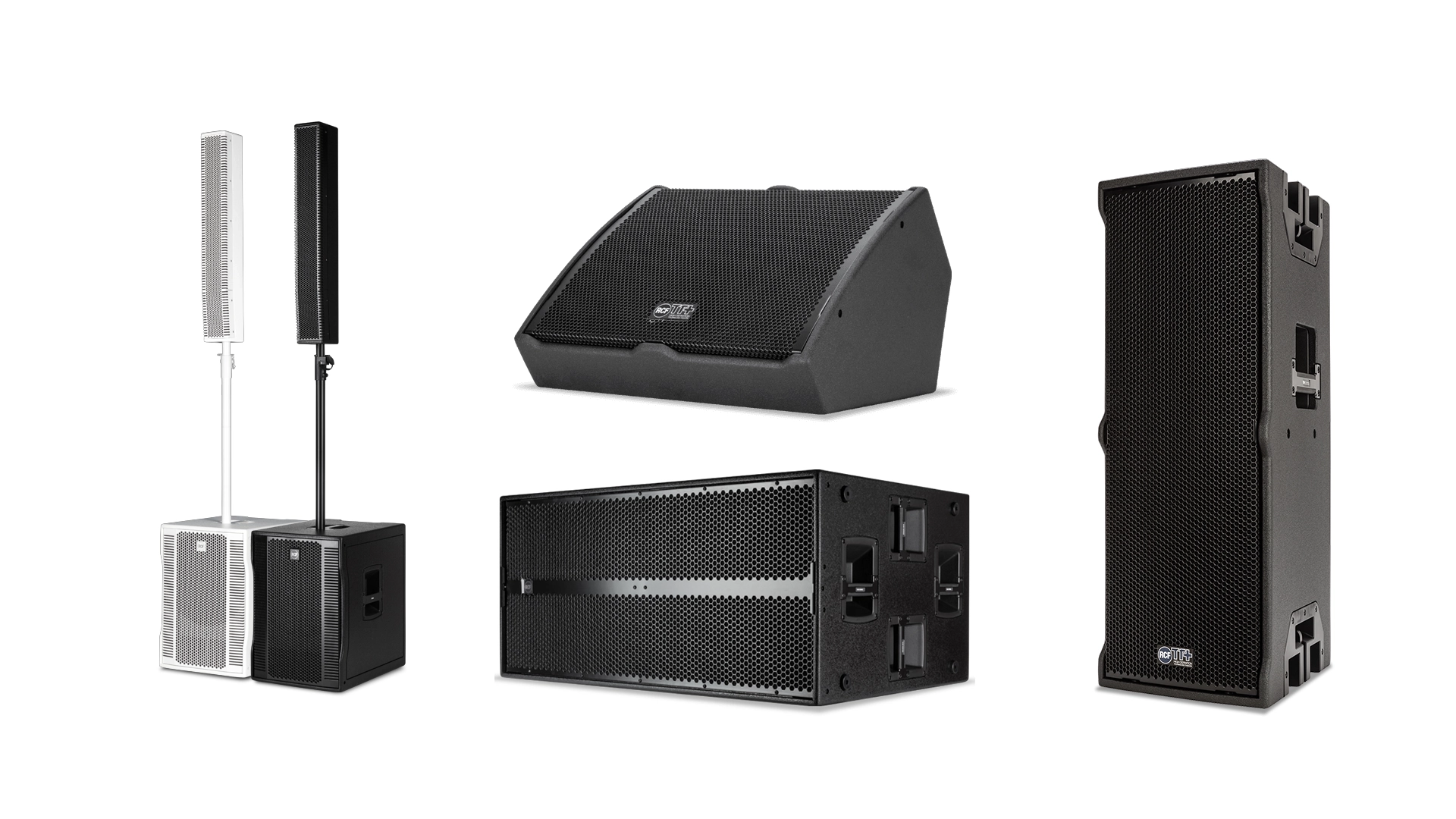
RCF is an Italian professional-audio manufacturer founded in Reggio Emilia in 1949, originally producing loudspeakers and microphones for other companies. The title “RFC” in this database is a transposition; the brand connected to the supplied rcf.it address is RCF. Decades of designing and manufacturing its own transducers remain central to the company: compression drivers, woofers, horns, enclosures, amplification and DSP are developed as parts of one system rather than assembled from unrelated modules. RCF was an early force in self-powered professional loudspeakers, and the ART series, introduced in the 1990s, became one of its most recognisable product families for portable PA, musicians and events. The current catalogue stretches from ART, NX and compact installation speakers to HDL line arrays and the high-output TT+ Audio range for touring, theatres and stadium-scale systems. SUB models, stage monitors and digital mixers complete the live-sound side, while D-Line and architectural products address fixed installations. RDNet provides networked control and monitoring of large systems; FiRPHASE processing is used to align phase response through the crossover region, and Bass Motion Control extends useful low-frequency behaviour while protecting the transducer. RCF’s value is the depth of that vertical integration. It can apply the same driver knowledge to a compact active cabinet and to a flown line-array module, then supply the electronics and software needed to deploy both predictably. The company is not a domestic hi-fi brand despite the similarity of some terminology: its reputation was built on reliable, intelligible and scalable sound for professionals.
Turbosound

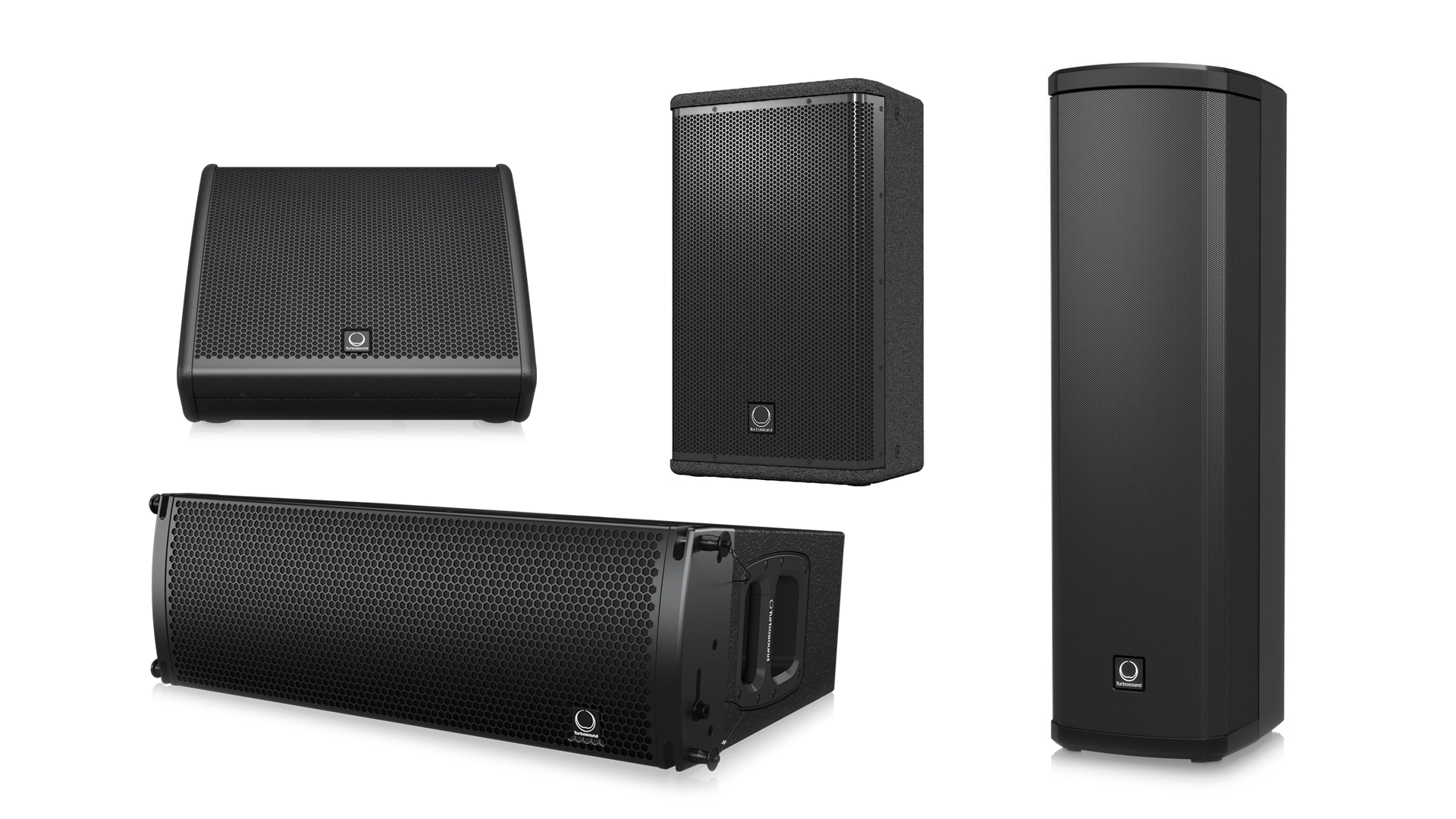
Turbosound is the British professional-loudspeaker brand founded in 1978 by Tony Andrews and John Newsham. It emerged from experiments in concert systems that needed to project with greater clarity and efficiency than the large stacks of conventional boxes then in use. The TMS-3 became an early landmark: its patented TurboMid device and modular three-way architecture delivered high output from a comparatively coherent source.
Flashlight and Floodlight systems later defined Turbosound on major tours, festivals and large venues. Their horn loading and controlled coverage allowed designers to build scalable arrays before modern line-array practice became dominant. Andrews and Newsham eventually left after the company was sold and founded Funktion-One in 1992; that later brand is related through its designers but is not a Turbosound product line. Turbosound continued through several owners and was acquired by Music Group in 2012, now known as Music Tribe.
The present catalogue includes powered portable speakers, column and installed systems, stage monitors, subwoofers and line-array products. Manufacturing and market position have changed substantially from the handcrafted touring systems of the founders’ era, so it would be misleading to describe every current box as a direct Flashlight descendant. The important continuity is the name’s engineering legacy in horn-loaded sound reinforcement and the professional expectation of high output, predictable coverage and roadworthy construction. Turbosound matters because TMS-3, Flashlight and Floodlight helped change how large audiences heard amplified music.
VUE Audiotechnik

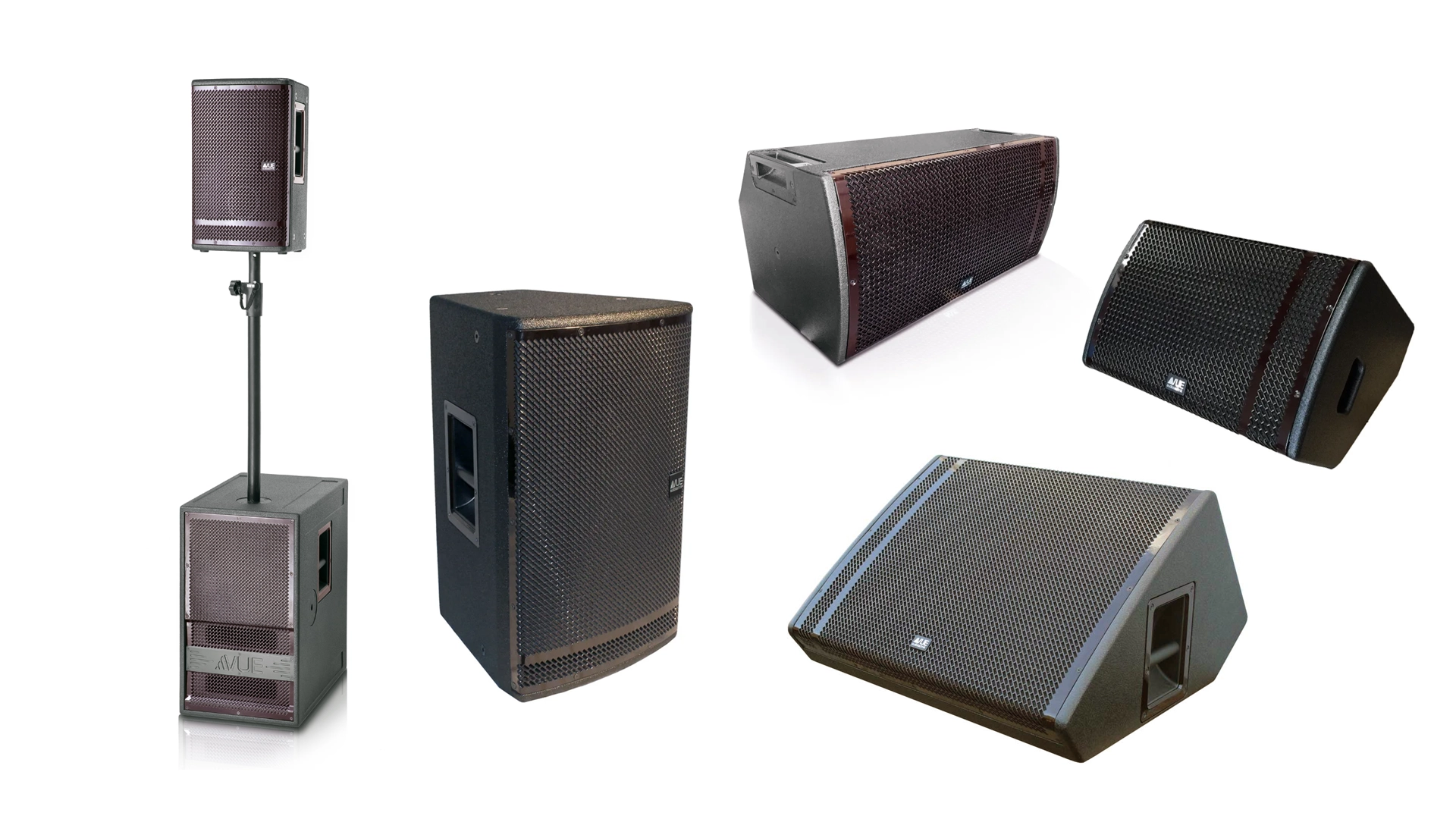
VUE Audiotechnik is an American professional-loudspeaker company founded in 2012 by industry veterans Ken Berger, Jim Sides and Michael Adams. Adams’ design experience at companies including JBL, QSC and Yamaha shaped a practical brief: specifications must survive large-signal operation, touring conditions and difficult venues, not merely look good in a laboratory. VUE therefore develops drivers, waveguides, enclosures, amplification and DSP as complete systems. The al-Class line arrays address scalable touring and installed sound; h-Class systems use high-output transducers and beryllium compression drivers in point-source and arrayable formats; a-Class models bring the same controlled-directivity approach to compact reinforcement and monitoring. Subwoofers, stage monitors, networked processors and system amplifiers allow a deployment to be voiced and protected as one platform. Beryllium is not used as a prestige label alone: its high stiffness-to-mass ratio lets the compression diaphragm operate farther above the audio band, helping reduce breakup within its working range. Coverage consistency, intelligibility at high sound-pressure levels and predictable rigging are equally important because these products serve theatres, houses of worship, clubs, touring productions and studios. VUE’s individuality lies in that field-led engineering culture. The company treats loudspeaker behaviour at performance level, deployment speed and long-term service as parts of sound quality, producing professional tools designed by people who have had to install, tune and rely on such systems in the real world.
Zingali Acoustics

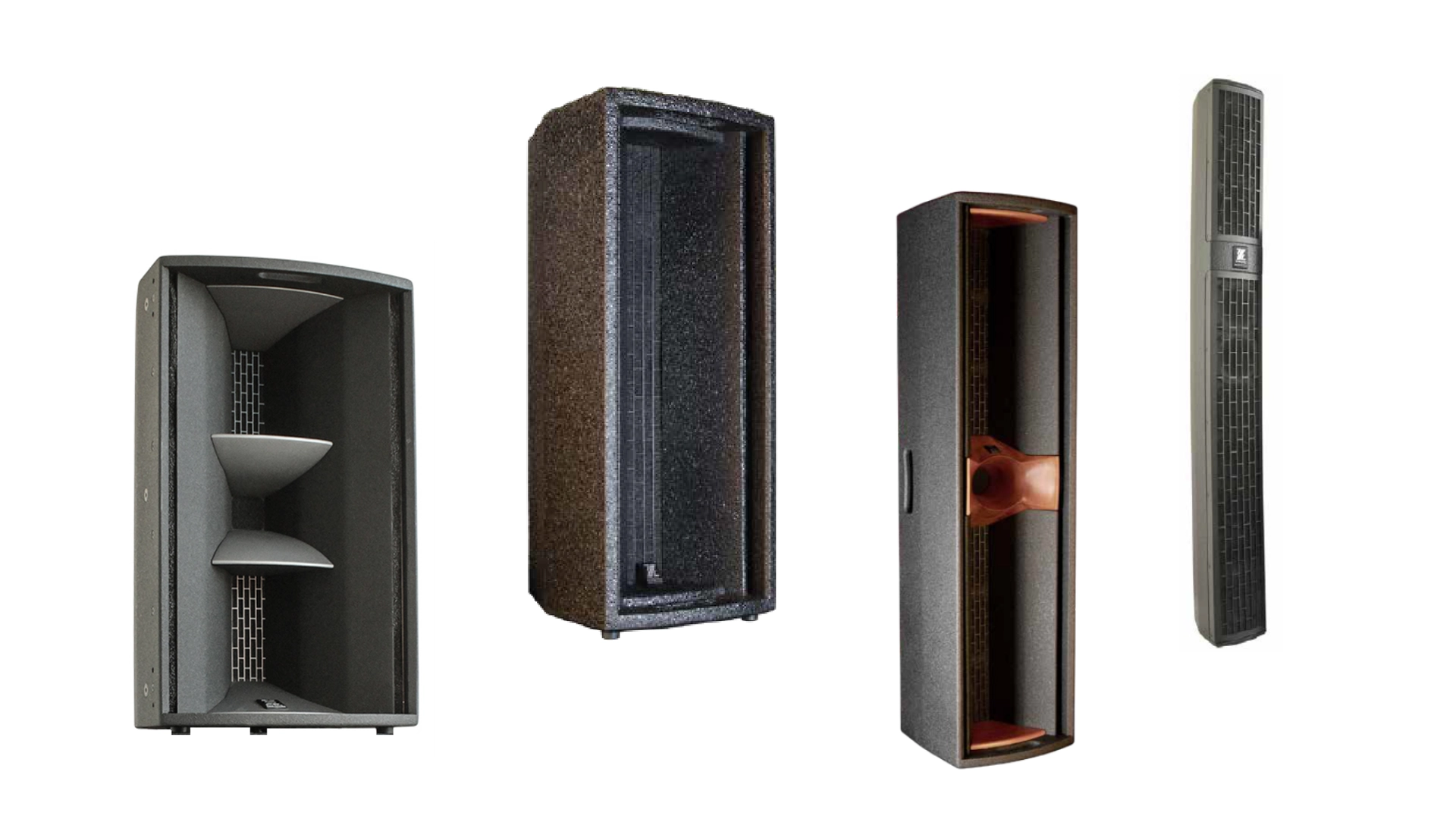
Zingali Acoustics is the Italian loudspeaker company founded in 1986 by Giuseppe Zingali. Its roots lie in professional monitors, where high efficiency, controlled coverage and the ability to reproduce live levels without strain are essential. The 8800 Studio Monitor introduced a wooden mid/high-frequency horn that became the basis of Zingali’s visual and technical identity. In 1995 Giuseppe patented Omniray, a circular horn architecture designed to couple a compression driver to the room with controlled dispersion while avoiding the abrupt profile changes of many conventional horns. The wooden horn is not simply ornamental: its contour defines acoustic loading and coverage, while the material and finish integrate the waveguide into a domestic cabinet. Home ranges including Zero, Twenty and Client Name scale Omniray from compact two-way speakers to large multi-driver systems, with subwoofers, centre channels and architectural options supporting cinema installations. The later Quantum Array programme introduced Kompressor Array, patented in 2018, coordinating low- and high-frequency radiation within a controlled angle to reduce room reflections and maintain output over distance. Cabinets, horns and finishes are produced in Italy with extensive handwork and custom options. Zingali’s distinction is the continuity between studio and home listening: it did not adopt a horn as retro styling, but spent decades refining a proprietary wooden waveguide and then applying its efficiency, dynamics and directivity to products that can also live as crafted furniture.