
Isolation Footers Spikes Shelves
This category covers specialized accessories designed to manage mechanical vibrations that can degrade the sound quality of your components. The two main approaches are coupling (using spikes to drain unwanted energy away from a device) and decoupling (using compliant footers to isolate a device from external vibrations). These products can be placed under speakers, turntables, and electronics to improve clarity and focus. This guide lists the brands that specialize in these advanced vibration control solutions.
Hi-Fi brands in the category
Summary information and image
Direct links to official websites
Alto-Extremo

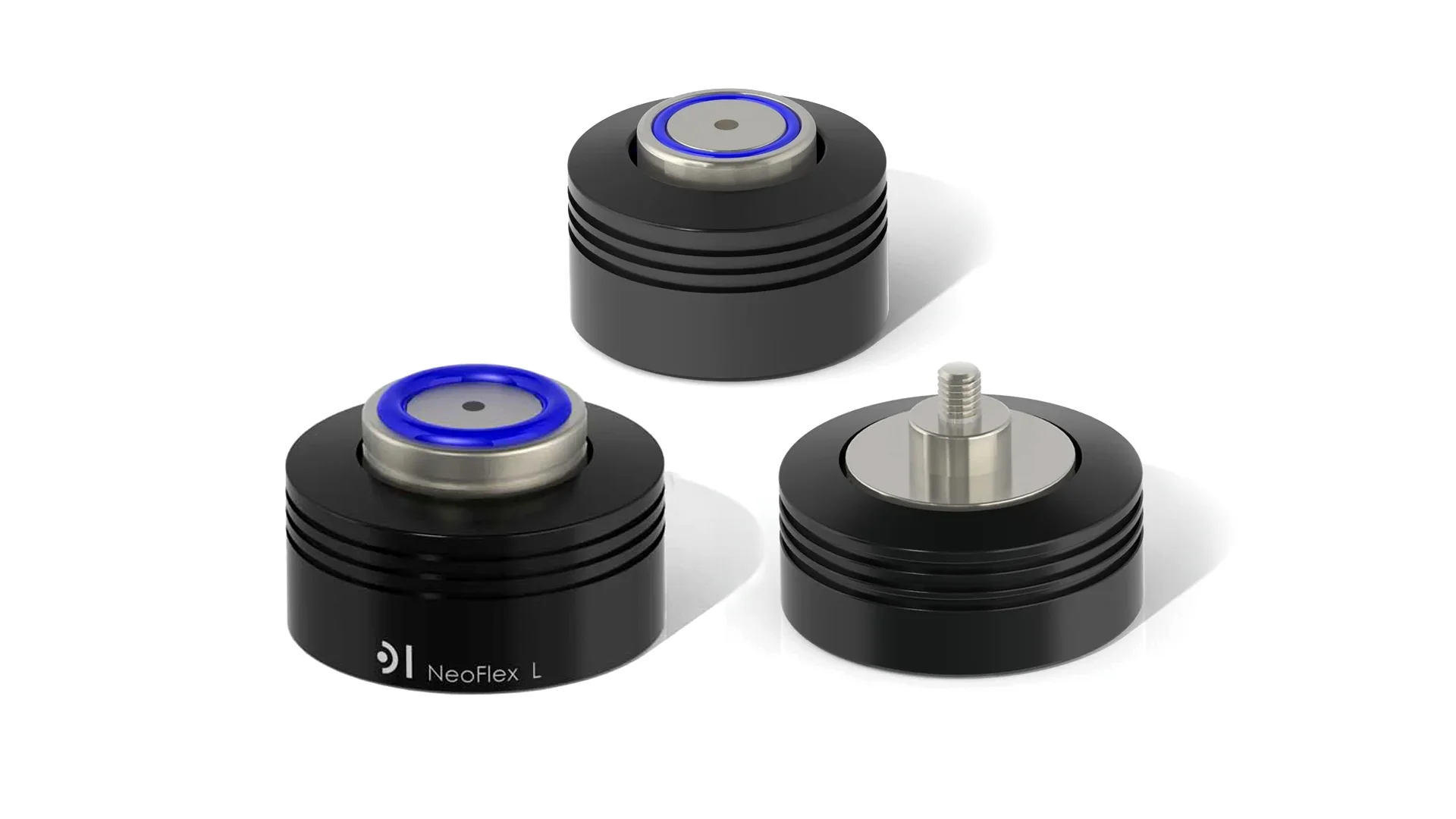
Alto-Extremo specialises in mechanical supports for audio equipment, with different designs for component weight and application. Established in Germany in 2004, it makes isolation feet for electronics, loudspeakers and racks rather than treating every load as the same problem. The MAX-1, for example, combines multiple damping stages and two balls made from different materials; its specified load limit is per foot, an important distinction when selecting a set. The LSP models address loudspeaker and rack support, while other products serve lighter components. Choosing within the range therefore starts with the component’s weight and the support arrangement, so the mechanical system can be matched to the equipment it carries.
Arya Audio Labs

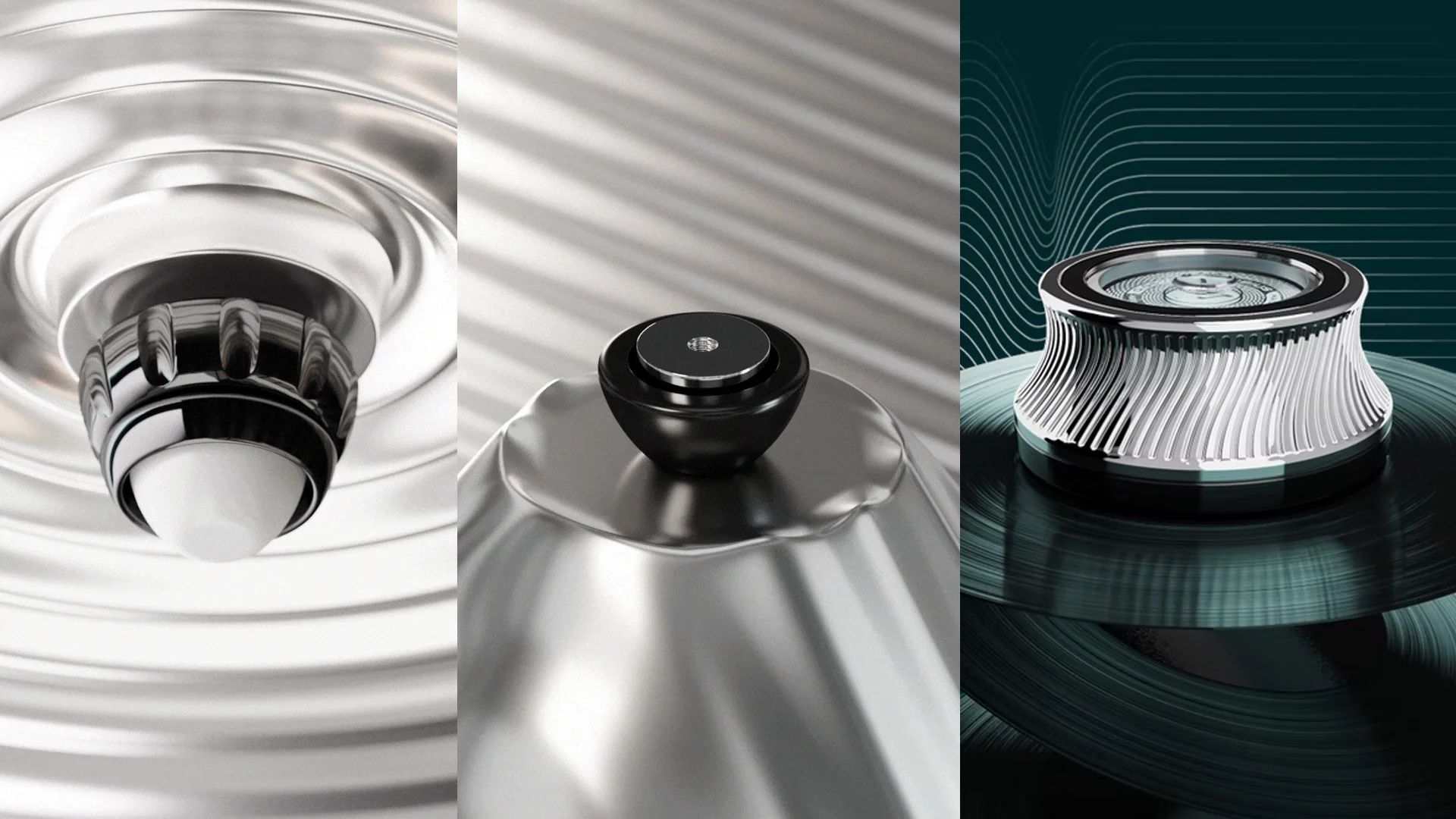
Arya Audio Labs develops both loudspeaker transducers and mechanical accessories, including the AirBlade tweeter and RevOpod damping footers. The British company began in 2017. AirBlade uses a modified Air Motion Transformer principle: conductive foil elements move in a magnetic field, with a curved, layered structure intended to maintain broad dispersion. The AirBlade HYPE add-on provides adjustable crossover frequency and output level so it can be integrated with an existing loudspeaker. RevOpod takes a different engineering route, using a pot-bearing mechanism for equipment support, while Orbius combines a record stabiliser with turntable setup functions. The company also offers its technology and development services to other manufacturers.
Audio Origami


Audio Origami is a Scottish analogue specialist whose reputation rests on precision tonearms rather than general turntable accessories. John ‘Johnnie’ Nilsen developed the PU7 from 2005 alongside his work repairing, rewiring and rebuilding arms that other workshops could no longer support. The current manufacturing business carries that experience into the PU7 GTS, PU8 Reference and PU8 Titan, with products designed, machined largely in Scotland and assembled by hand. Bearing accuracy, structural rigidity and controlled energy flow receive close attention, while Japanese precision bearings are selected where they offer the required consistency. The range now also includes the Core One tonearm cable, Axis One record-coupling system and selected Pure Fidelity turntables. Audio Origami operates as a trading style of PuraNota Limited.
Blue Horizon


Blue Horizon develops small, targeted accessories for cleaning, conditioning, measuring and mechanically supporting an audio system. Keith Martin, also known for founding IsoTek, established the British brand in 2008. Its products have included cable and component burn-in tools, stylus and connector cleaners, phono-stage test and RIAA devices, spike shoes, equipment supports and resonance-control accessories. This makes Blue Horizon different from a conventional cable or electronics manufacturer: it concentrates on the setup and maintenance tasks around the main components. Products such as Clean-IT address contamination at the stylus, while test and conditioning devices are intended for dealers, enthusiasts and reviewers who need repeatable preparation rather than another permanent box in the signal chain. The description now avoids presenting power conditioners or mains cables as the brand’s sole identity and keeps the focus on its broader system-accessory role.
Connected-fidelity

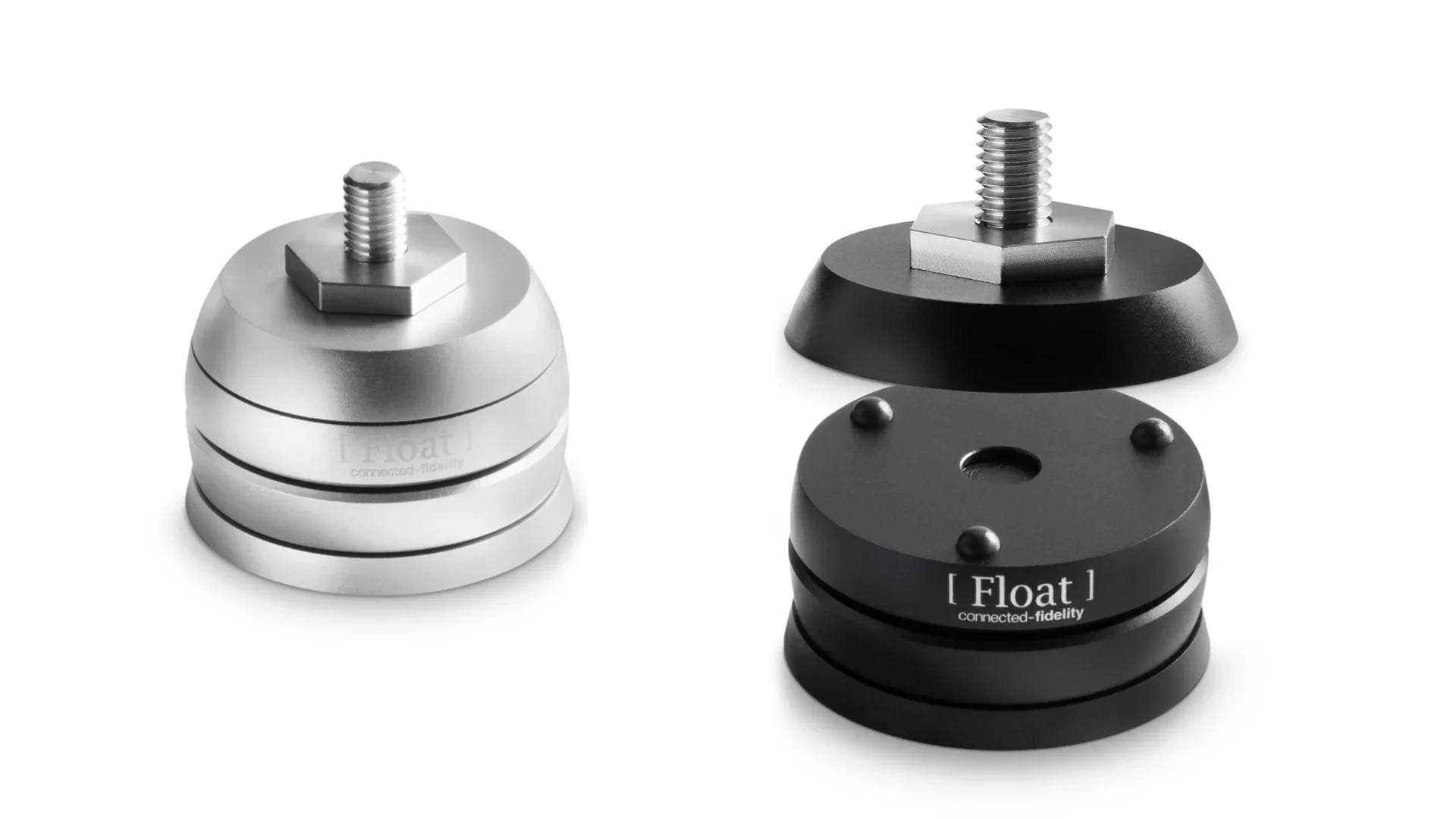
Connected-Fidelity is a British designer and manufacturer of analogue front ends, power products, isolation devices and cables — not merely a grounding-accessory brand. Its catalogue has included turntables and tonearms, balanced mains supplies, distribution blocks, RF filters, audiophile fuses and the Unity cable family, with manufacture carried out in the UK. The same system-level idea links these otherwise different products: reduce mechanical movement, radio-frequency contamination and mains-related noise before they obscure low-level musical information. Float 30 pucks and related supports address vibration beneath components and loudspeakers, while the power and cable ranges provide complementary electrical paths. The company describes an unusually iterative development method involving material research, prototypes and extensive comparative listening, and it explains much of the construction while keeping proprietary processes confidential. Connected-Fidelity is therefore best understood as a focused ecosystem of source, power and support products intended to work at several noise-entry points in a high-resolution audio system.
Critical Mass Systems
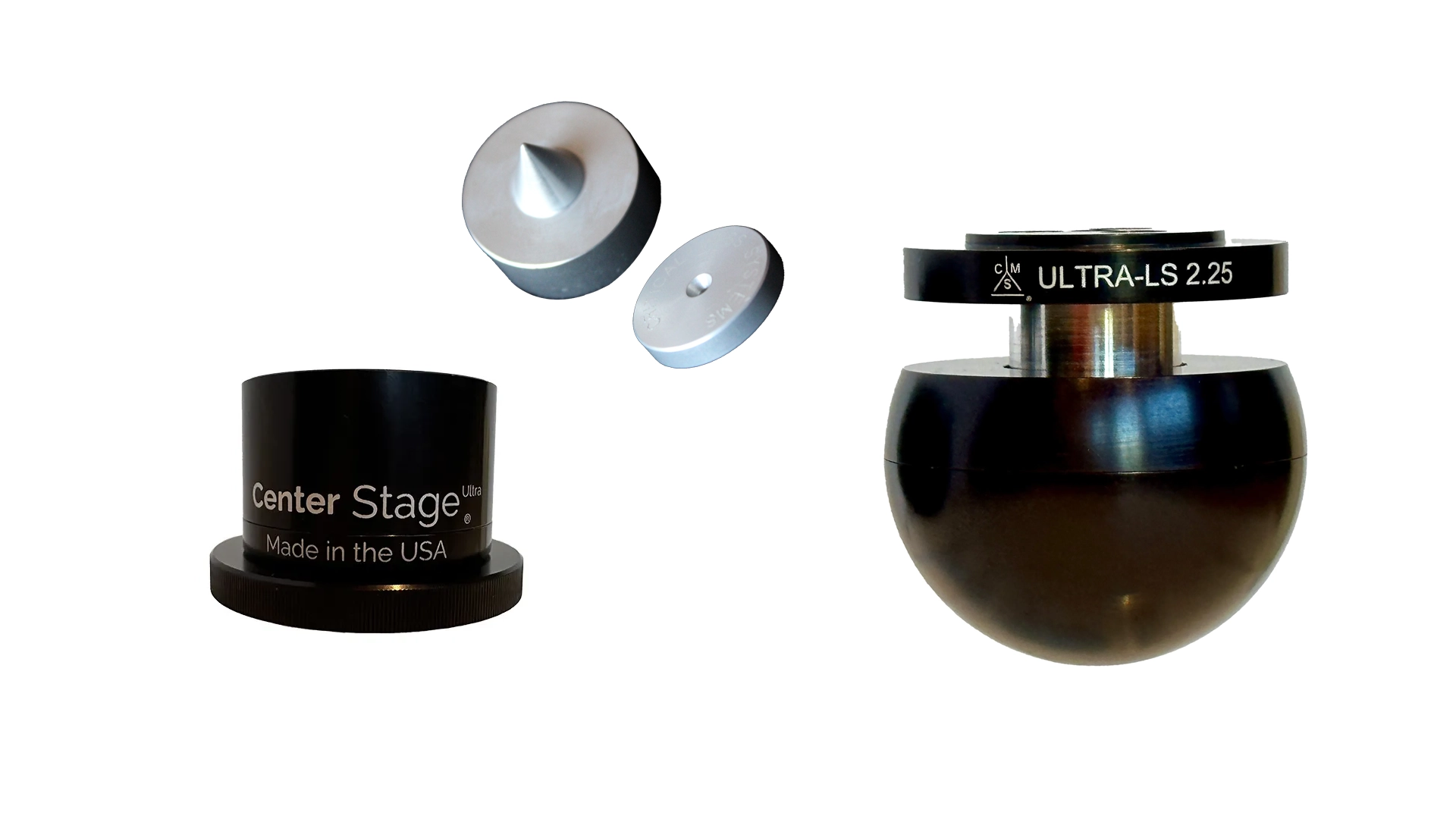
Critical Mass Systems is an American maker of precision equipment racks, amplifier stands and component footers founded by Joseph Lavrencik in 2000. Its products are better described as vibration-mitigation and energy-dissipation systems than as conventional isolation furniture. Lavrencik obtained a US patent for a multistage damping architecture in 2007, and the company later developed a dual-zone, 12-stage constrained-layer system that manages energy through a sequence of materials and mechanical interfaces. That technology appears in products ranging from Center Stage footers and Black Diamond or Black Sapphire stands to Maxxum racks and the flagship Olympus-Ultra. CMS designs are manufactured in the Chicago area and are tailored to component mass and placement rather than relying on one universal soft suspension. The practical aim is to prevent structural and internally generated vibration from accumulating in chassis, circuit boards and transformers while avoiding overdamping. This systematic, load-aware approach — supported by patented layered construction — is the brand’s genuine know-how and should not be reduced to the generic claim that it makes heavy luxury racks.
Custom Design

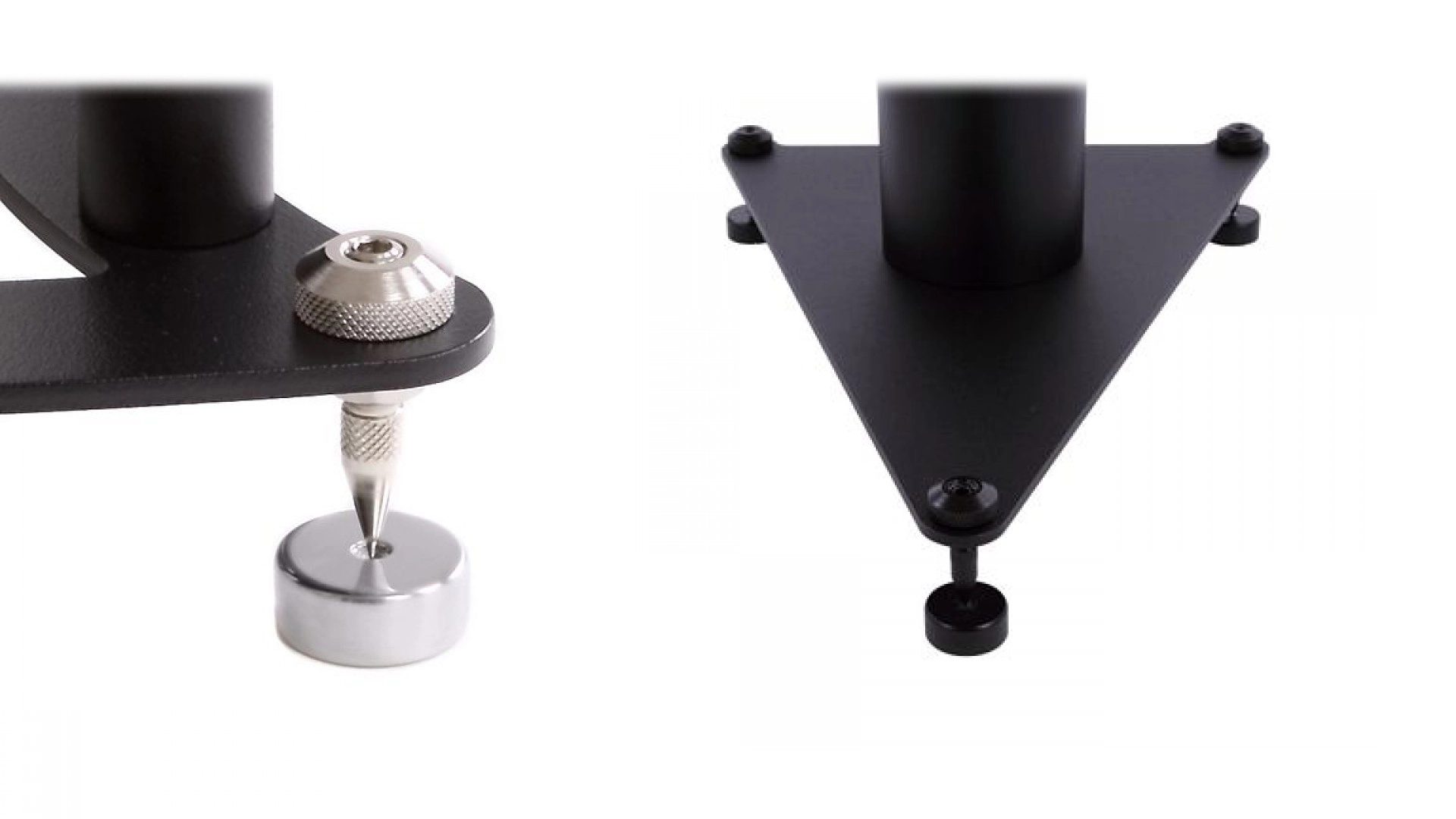
Custom Design is a family-run British manufacturer of speaker stands, hi-fi racks, isolation platforms and audio-visual furniture based in Newcastle upon Tyne. With more than three decades of specialist experience, its broad catalogue is built around a practical idea: a support should be matched mechanically and dimensionally to the component or loudspeaker it carries, not chosen only by appearance. The company combines steel plate, glass, timber, polymers and its own inert mass-loading material to manage resonance in different ways. Acoustic Steel top and base plates, fillable columns and the iRAP isolation-resonance-absorbing platform are recurring technologies, while Milan, Icon and Reference furniture ranges provide modular equipment storage. Custom Design also manufactures model-specific stands for loudspeakers from brands such as Harbeth, KEF, ATC, Focal and Acoustic Energy, adjusting height, top-plate size and mass to the intended speaker. Choice of finishes and custom dimensions remains part of the service, but the important distinction is domestic engineering and fabrication: these are support systems developed and made in the UK, not generic furniture carrying an audio label.
Entreq

Entreq is a Swedish maker best known for passive grounding products developed by Per-Olof Friberg. Its Minimus, Tellus and Olympus ground boxes connect to signal ground points on audio components and provide a separate, frequency-selective path intended to drain high-frequency electrical noise; they do not replace or bypass protective safety earth. The wider system includes purpose-built grounding leads, analogue and digital interconnects, power cables, distribution products and accessories for controlling electromagnetic and mechanical interference. Entreq uses wood, mineral mixtures and other natural materials as functional parts of its constructions, giving the products an unmistakable visual language. Because grounding accessories often attract exaggerated claims, the important point is specific: Entreq concentrates on noise management around an existing audio system and treats connectors, cables and ground boxes as one coordinated interface.
eSseCi Design
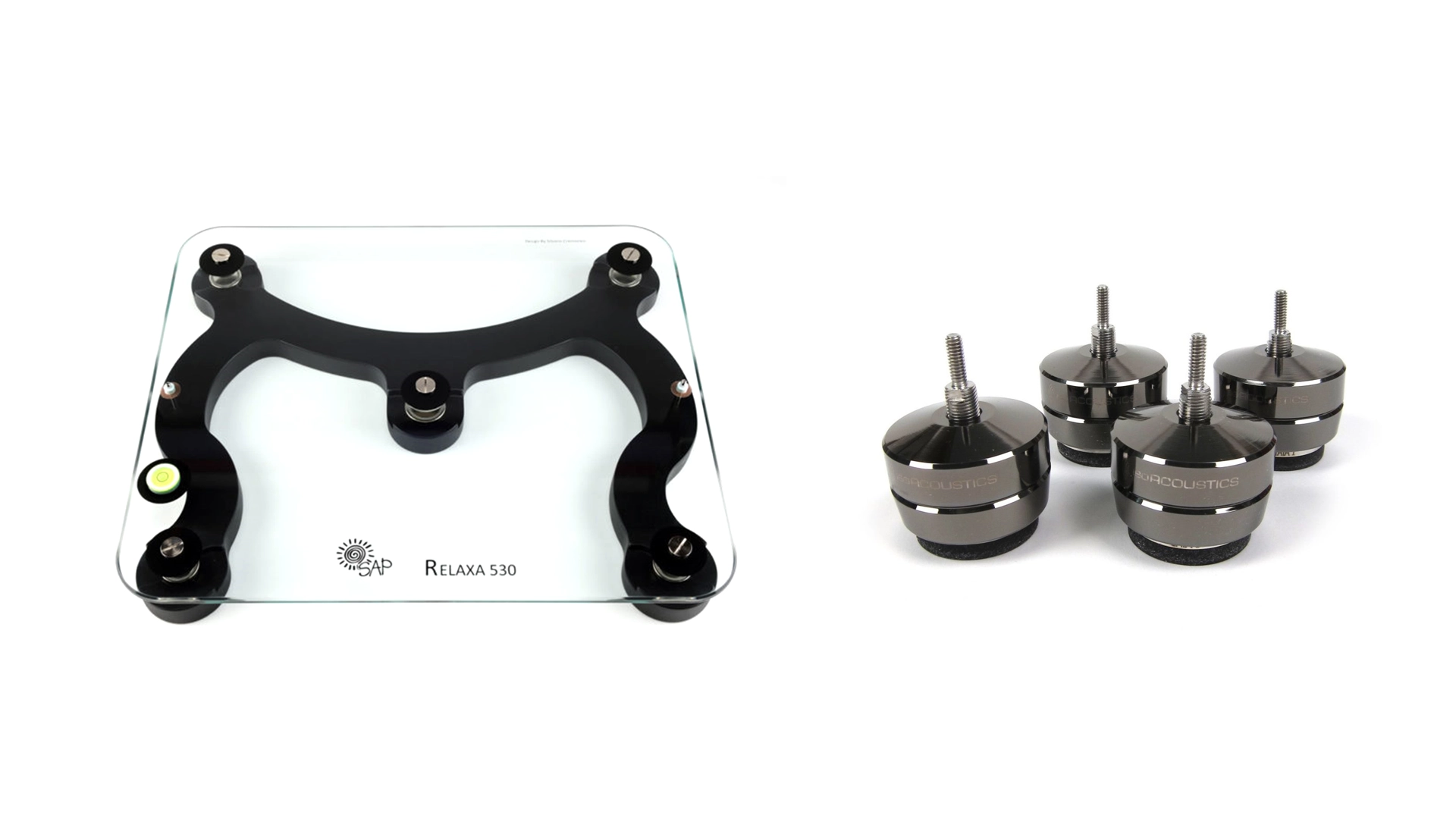
eSseCi Design is the Italian company behind the Relaxa family of magnetic-levitation isolation platforms. Engineer Silvano Cremonesi designed and patented the concept in 1999: a tempered-glass equipment shelf floats above a base on opposed neodymium magnets, mechanically separating a turntable or electronic component from much of the vibration transmitted through its support. Models such as Relaxa 830 and 850 are sized for different loads, and levelling is adjusted to keep the suspended plate correctly centred; the larger platform can carry equipment up to 50 kilograms. The Aequilibrium design explores a related approach with a floating plate and a single central locating point. This is a narrowly focused engineering brand rather than a generic furniture maker—its know-how is load-calibrated magnetic suspension for audio components.
Faber’s Cables

Faber’s Cables is an Italian family workshop created by Fabrizio Baretta and now developed with his son Enrico. It hand-builds analogue interconnects, loudspeaker cables, digital links and power cables, together with Faber’s Power distribution products. The company’s constructions use purpose-selected conductors, PTFE insulation, shielding and proprietary woven geometries designed to control inductance, capacitance, interference and mechanical behaviour. In several ranges, silver-plated stranded copper with military-specification origins is used as an engineering material rather than as a prestige slogan. Cable families differ in geometry and screening instead of relying only on progressively more expensive connectors. Faber’s individuality comes from keeping design, assembly and listening evaluation within a small Italian operation, with a continuous line of development between signal cables and mains products; no exact founding year is stated reliably enough to add one here.
FalkenOhr

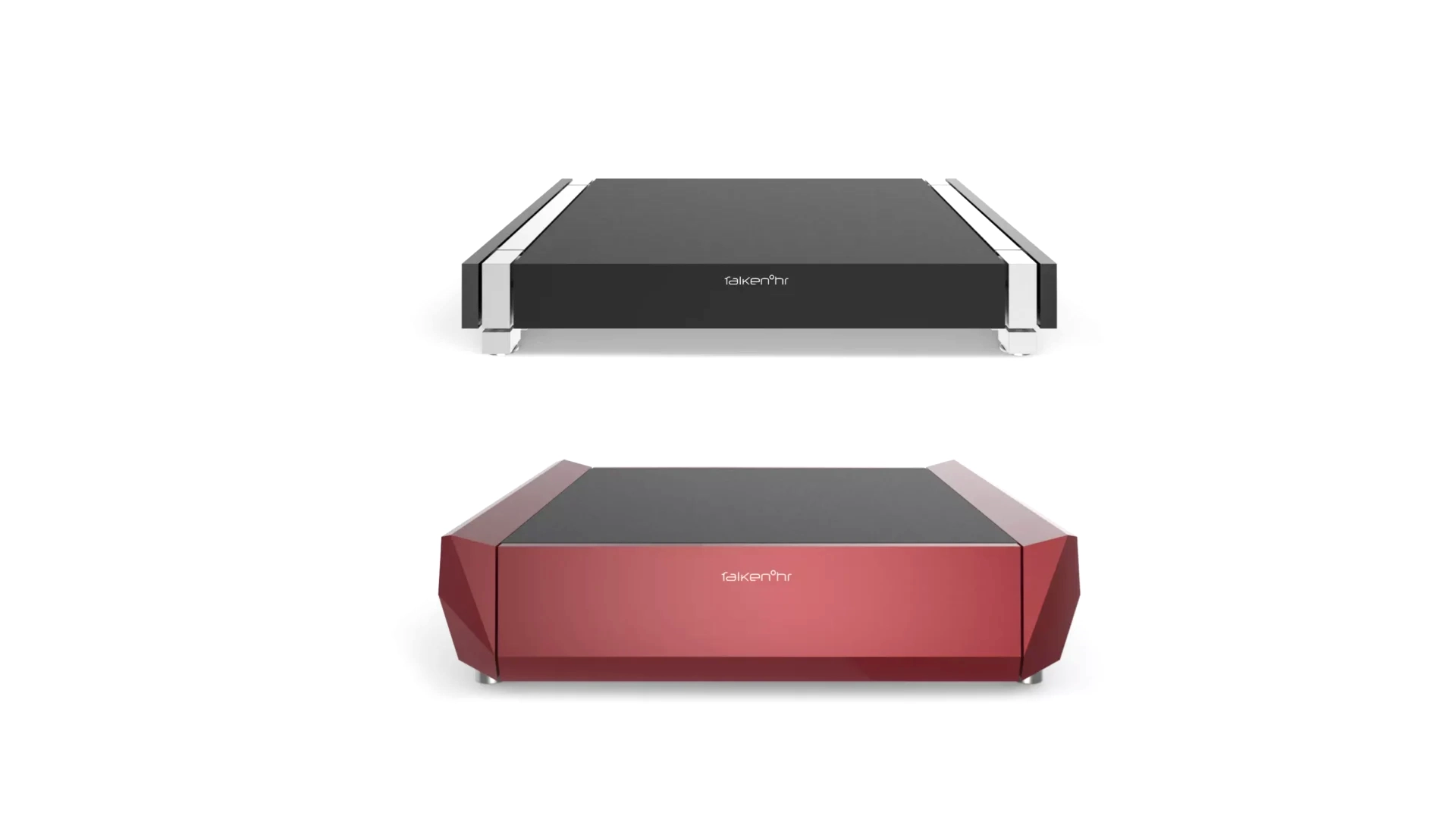
FalkenOhr is an Austrian maker of made-to-order audio racks founded by Robert Mayr in Vorchdorf. Mayr combines engineering experience in automation and mechatronics with the woodworking tradition of a family of master cabinetmakers. The racks use real-wood veneers, anodised aluminium and locally produced hardware, but their main idea is mechanical: the company’s 3D/10 concept connects each shelf to three uprights through isolating interfaces and to a fourth through a controlled conductive path intended to drain vibration. Dimensions, finishes and configurations can be adapted to the equipment and room rather than selected from a fixed furniture catalogue. Production remains deliberately personal—Mayr tests, certifies and signs each completed piece. FalkenOhr is therefore best understood as acoustic furniture built around a specific support geometry, not simply a heavy luxury rack; a precise founding year is not published consistently enough to record.
Finite Elemente

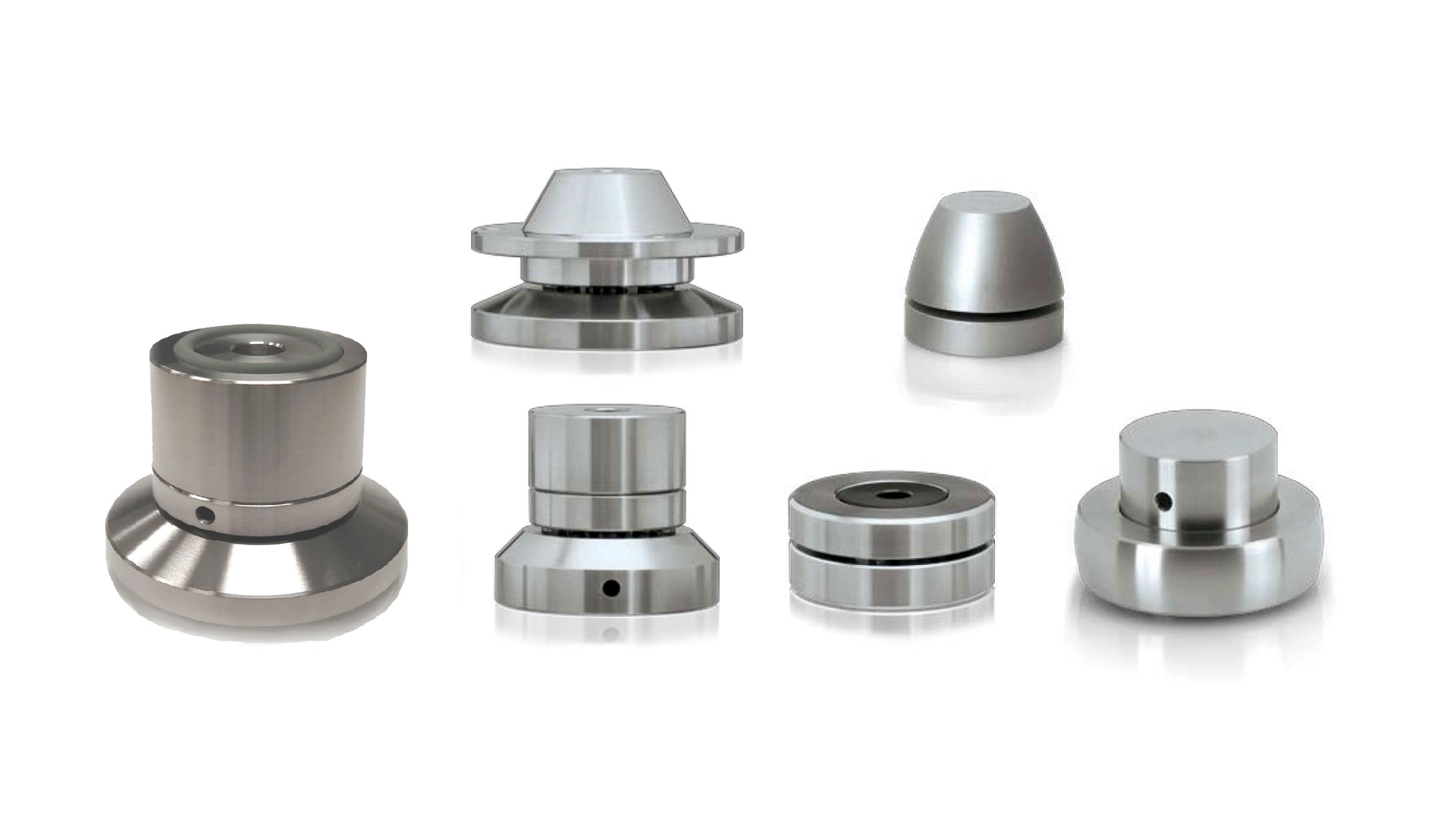
Finite Elemente is a German specialist in vibration control for audio systems, originally founded in 1997. Its best-known Pagode racks treat the support as a tuned mechanical structure: maple frames, aluminium sections, lightweight shelves and precisely placed resonators are combined to move and dissipate energy instead of relying on mass alone. The resonators are metal elements matched to structural frequencies, while Cerabase, Cerapuc and Ceraball feet use ceramic-ball interfaces to provide hard, precisely defined coupling under components, loudspeakers or racks. Carbofibre platforms extend the same approach to individual products. After the original company ceased trading in 2012, the brand and key product lines were revived in 2018, so the current catalogue has both continuity and a break in corporate operation. Finite Elemente’s distinction is a coherent mechanical system whose racks, platforms and feet solve different parts of the same resonance problem.
Grand Prix Audio

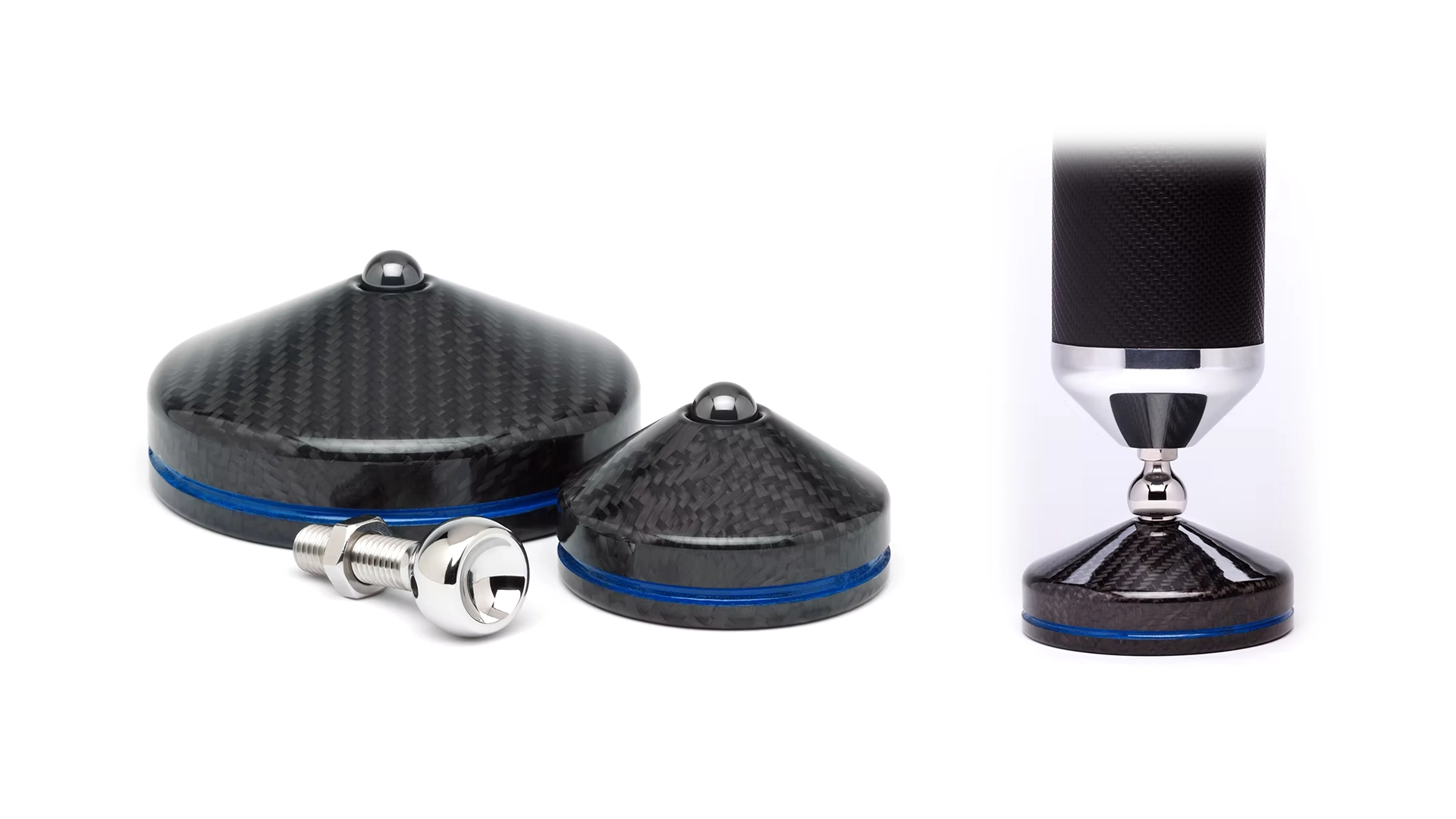
Grand Prix Audio applies racing-derived structural engineering to the problem of keeping vibration out of turntables and audio electronics. Founder and principal designer Alvin Lloyd worked in Formula and Indy-car engineering before creating the first Monaco isolation system in 1999. The company’s modular racks use carbon-fibre members, mechanically constrained joints, tuned dampers and decoupling elements so that stored energy is controlled rather than hidden beneath sheer mass. This approach appears in the Monaco and Silverstone support systems and in Apex equipment footers. Grand Prix Audio later extended the same thinking to the direct-drive Monaco and Parabolica turntables, combining a low-inertia structure with proprietary speed control and fluid damping. Its products are made in the United States and are best understood as engineered mechanical systems, not conventional furniture with an audiophile label.
Harmonic Resolution Systems

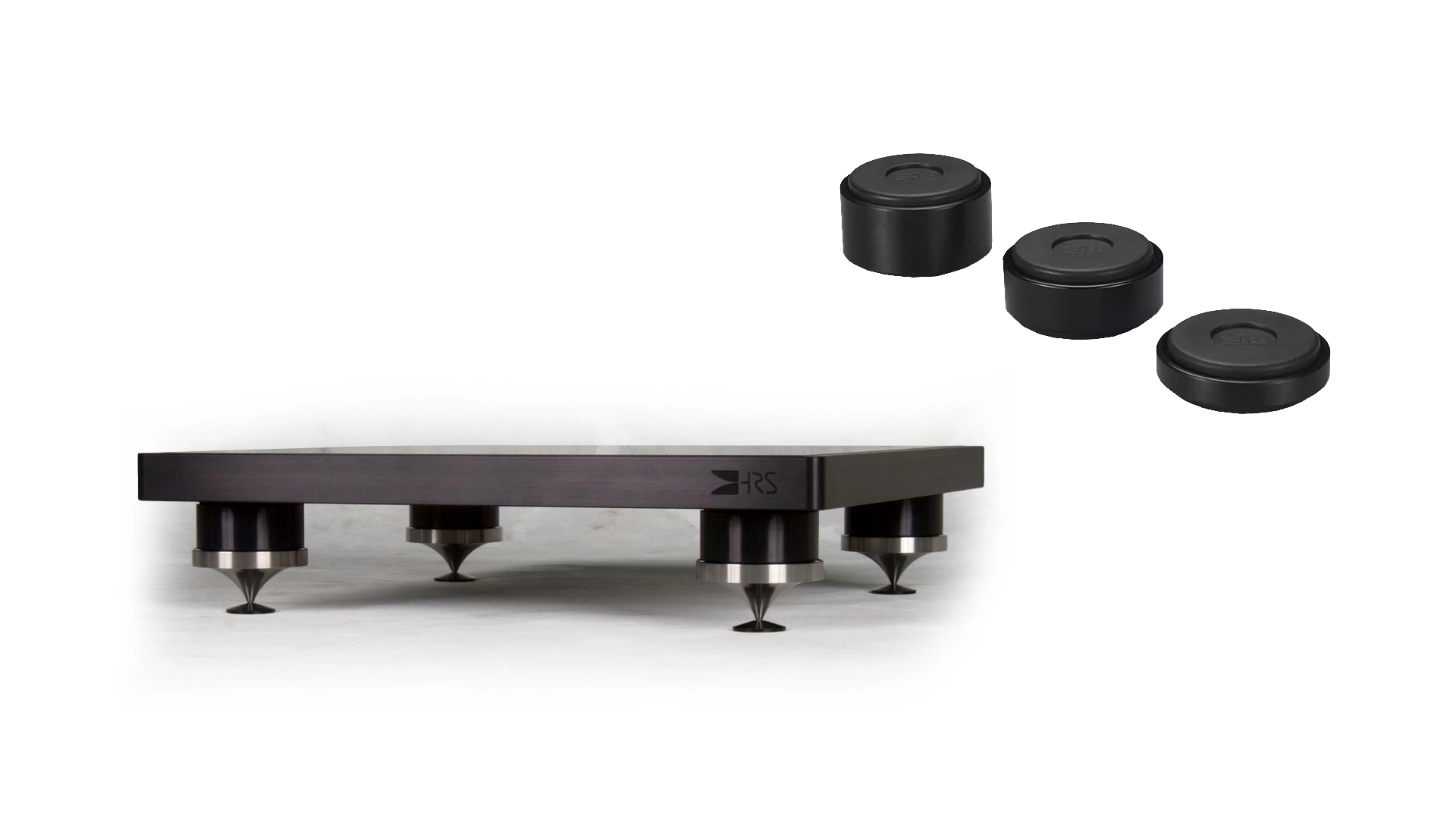
Harmonic Resolution Systems, usually known as HRS, treats the support beneath an audio component as part of the playback system. Founder and chief engineer Michael Latvis established the US company in 1999 after working on vibration, noise and control problems in aerospace and defence. HRS applies that background through measured combinations of structural mass, constrained-layer damping, proprietary elastomers and tuned mechanical interfaces rather than relying on a single universal foot or platform. Its catalogue ranges from Nimbus couplers, Damping Plates and Helix feet to E1X, R3X, S3 and M3X2 isolation bases and the larger EXR, SXR and VXR equipment-support systems. The products are modular and system-specific: load, component construction and support structure all influence the chosen solution. Engineering with 3D modelling and finite-element analysis, US manufacture and upgradeable architectures are central to the brand’s identity.
Ikigai Audio
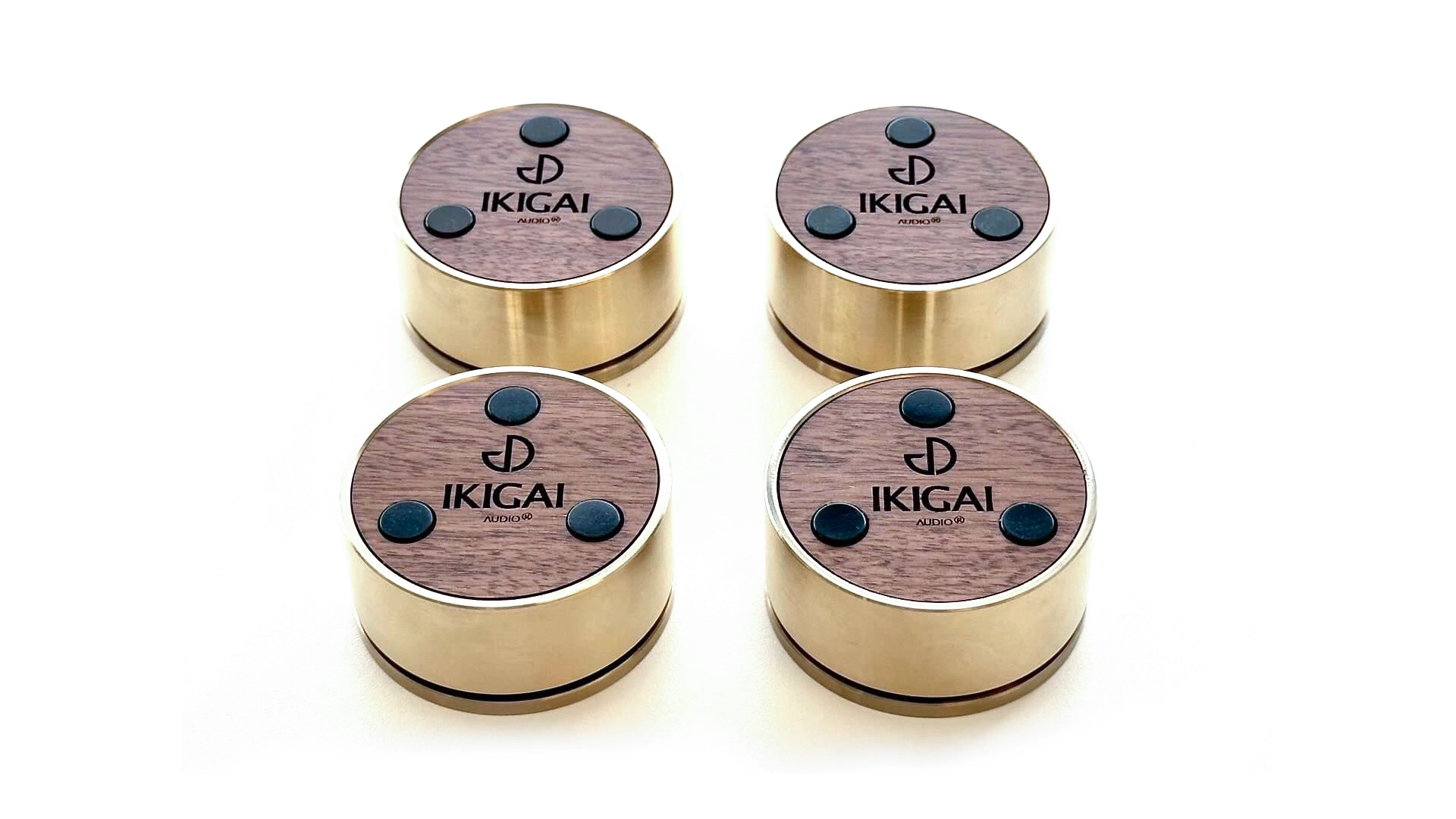
Ikigai Audio is Jeffrey Dam’s Dutch high-end cable company, founded in 2018 around product-design discipline rather than mystical claims. Dam studied Product Design and worked on loudspeakers and cables at Kharma as well as products for Philips, experience that shaped Ikigai’s attention to geometry, material interfaces and finish. The range is organised into five clearly named levels—Tanoshimi, Sugure, Kangai, Kinzan and Tanso—covering speaker cables, analogue and digital interconnects, power cords and associated connections. Moving upward changes the conductor materials, mechanical construction, shielding, damping and termination rather than merely adding a more luxurious sleeve. Ikigai also makes equipment feet, extending the same concern with unwanted mechanical energy beyond the cable itself. The brand’s character lies in combining technically controlled cable architecture with unusually refined industrial design, giving each family a distinct construction and purpose while keeping the progression intelligible.
IsoAcoustics
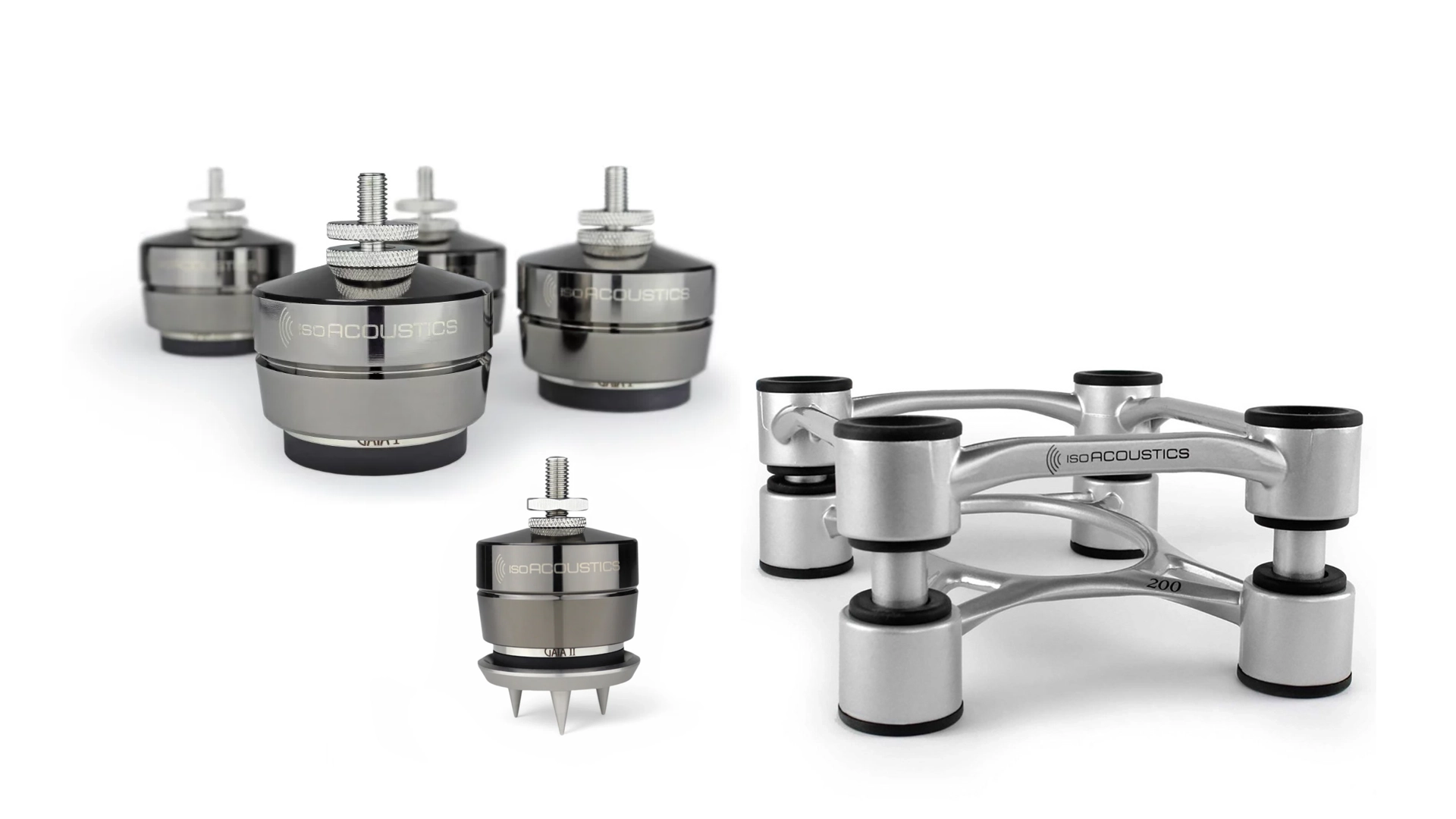
IsoAcoustics is the Canadian company that turned loudspeaker and equipment isolation into a repeatable, load-specific system. Founder Dave Morrison established the business in 2012 after nearly two decades designing and building radio and television studios for the Canadian Broadcasting Corporation. Its patented directional isolation is engineered to reduce vibration transfer while maintaining alignment with the loudspeaker’s intended forward motion, avoiding the unstable behaviour of a soft pad or generic rubber foot. ISO stands and ISO-PUCK products serve studio monitors and musical equipment; Aperta stands, OREA component isolators, zaZen and DELOS platforms, plus GAIA and GAIA-TITAN speaker feet, extend the principle to domestic hi-fi and heavy floorstanders. Products are selected by weight and application, and adapters support many existing speaker bases. IsoAcoustics’ advantage is this combination of mechanical theory, practical sizing and broad compatibility rather than a single universal footer.
Kuzma

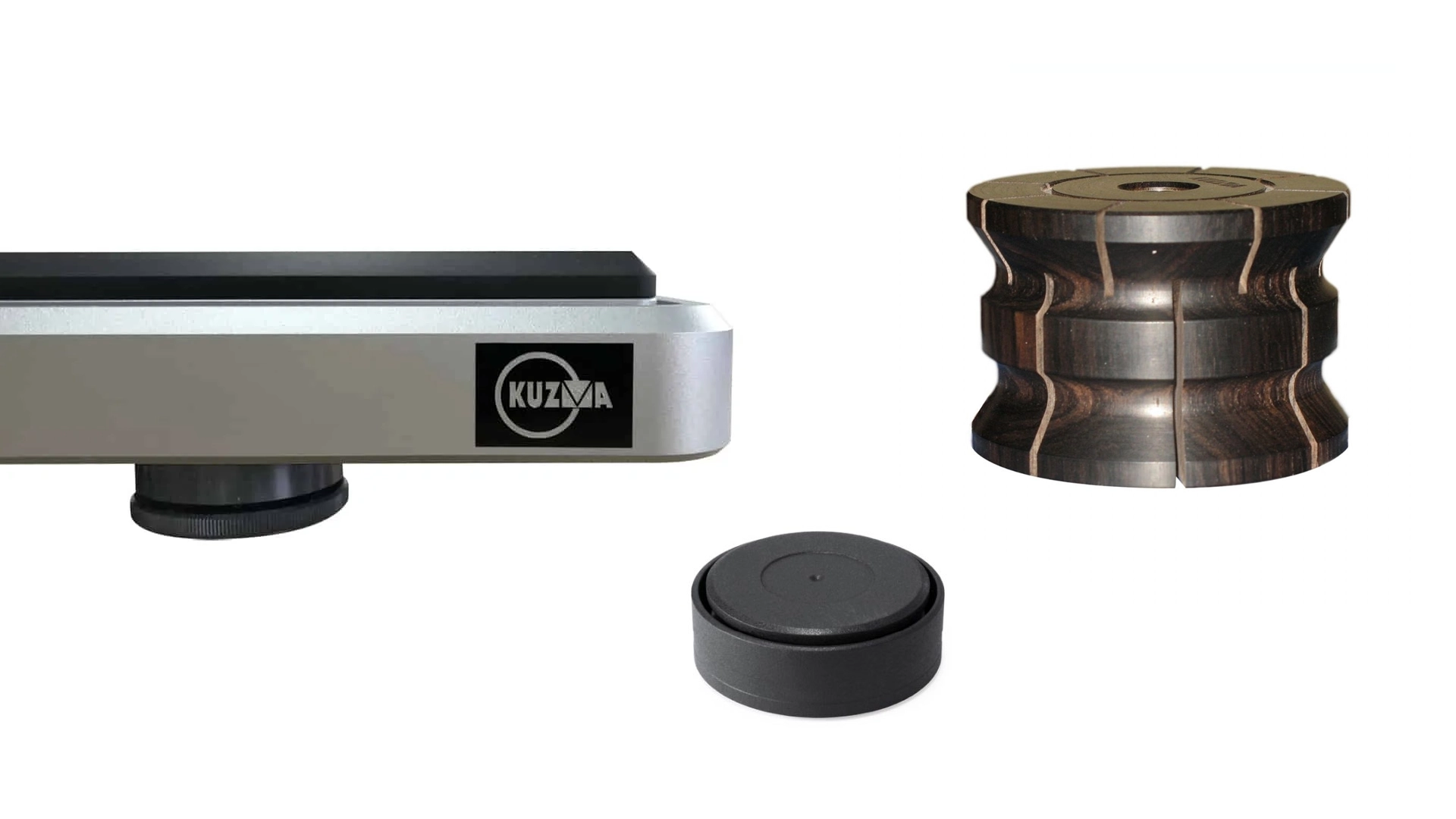
Kuzma is a Slovenian analogue manufacturer whose turntables and tonearms are engineered as precision mechanical instruments. Franc Kuzma founded the company in 1983, applying a background in mechanical engineering to the problems of speed stability, bearing noise and unwanted resonance. The long-running Stabi S demonstrates the basic formula with a rigid, skeletal brass structure and separate motor; the modular Stabi R uses a solid aluminium chassis that accepts multiple tonearms, while the Stabi M and XL DC pursue still greater mass, isolation and rotational consistency. Kuzma’s 4Point tonearms are equally distinctive: four bearing points provide stable, low-friction movement in the horizontal and vertical planes while preserving accurate azimuth, and versions range from the compact 4Point 9 to the 14-inch model. The tangential Air Line and sapphire-arm-tube Safir 9 explore different solutions to the same tracing problem. Cartridges, power supplies and isolation accessories complete the system. Across the range, Kuzma avoids fashion-driven reinvention; rigid structures, serviceable components and upgrade paths keep established designs relevant for decades.
LampizatOr


LampizatOr is a Polish digital-audio specialist founded by engineer Łukasz Fikus, best known for DACs in which valves form an essential part of the analogue conversion path. The unusual name combines the Polish word “lampa,” meaning valve, with a playful reference to the Terminator; it began with Fikus’s published experiments modifying commercial CD players before growing into a manufacturer with its own hardware. LampizatOr rejects the assumption that every converter should be a compact, fully integrated chip-based appliance. Depending on the model, its DACs combine proprietary digital processing, substantial linear power supplies and valve output stages, with directly heated triodes used in the upper ranges. The Horizon, Pacific, Golden Gate, Baltic and Atlantic families show how the concept scales from comparatively approachable designs to multi-chassis statement products, and many units offer selectable output valves or modular options. The company also builds digital transports and analogue components. LampizatOr’s appeal lies in this crossover of computer-era source engineering and traditional valve practice: not a generic promise of “analogue sound,” but a deliberately serviceable, configurable architecture with a strong designer’s fingerprint.
Levin Design

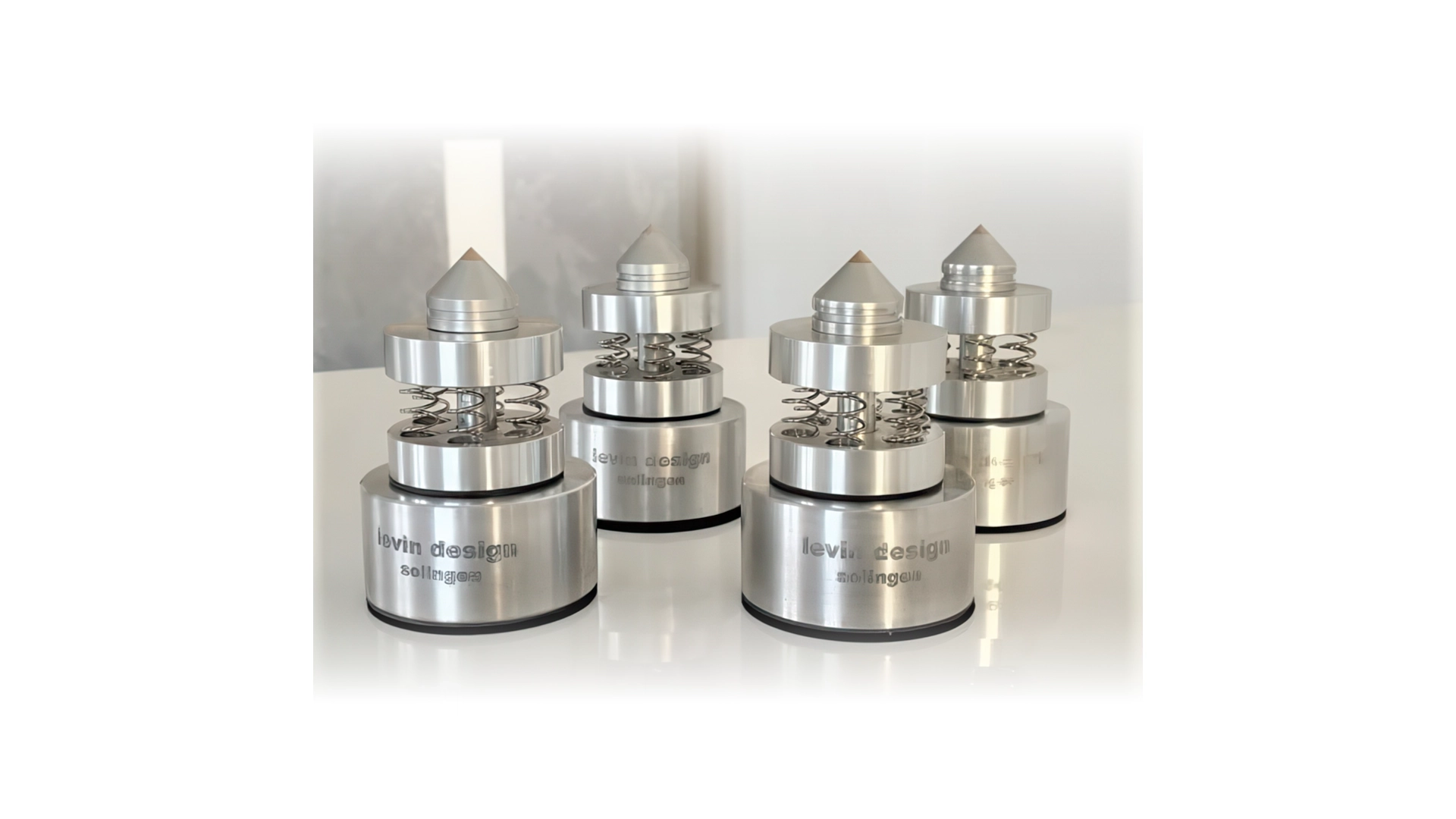
Levin Design is a German industrial-design and development studio whose audio work centres on accessories, resonance control and system furniture—not complete turntables and tonearms. Frank and Kim Levin run the Solingen-based operation, combining functional engineering with a restrained visual language influenced by classic industrial design. Its best-known analogue products include handmade record-cleaning brushes, turntable mats and record weights. The Sandwich platter mat uses a layered construction rather than a single sheet of rubber or felt, while the company’s resonance absorbers were developed to isolate turntables and other components from footfall and structure-borne vibration. Levin Design also creates direct-connect audio cables intended to eliminate a conventional plug interface, modular racks and equipment supports, and more recently complete loudspeaker concepts. Much of the catalogue is produced in small quantities and can be adapted in materials or finish. The brand’s real speciality is therefore the interface around a hi-fi component: how it is supported, coupled, cleaned and connected, with product form treated as part of the engineering rather than decoration added afterwards.
Magico

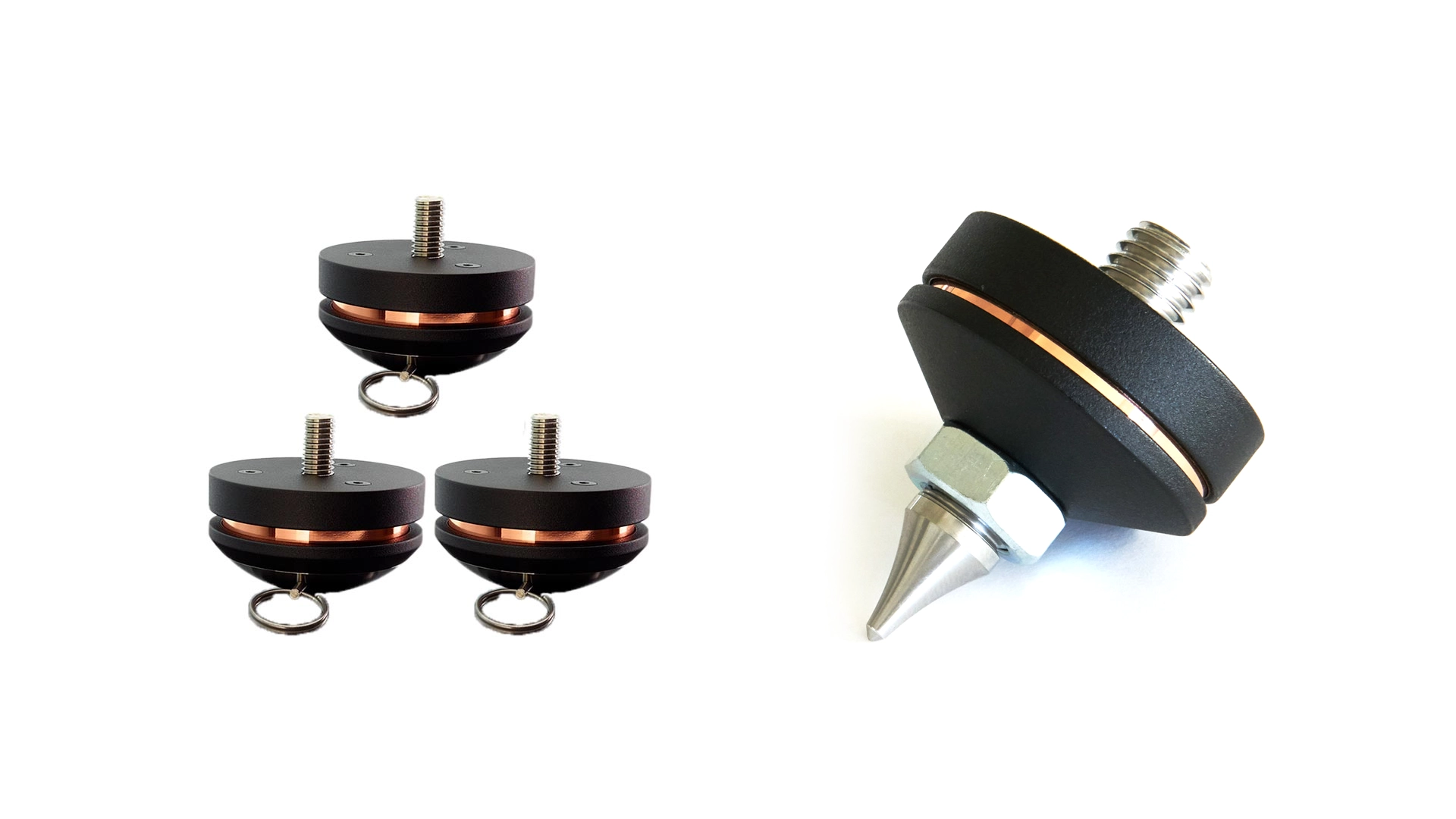
Magico is a California loudspeaker manufacturer founded by Alon Wolf in 2004 to reduce the cabinet, driver and crossover artefacts that obscure recorded information. Instead of conventional veneered fibreboard, the company builds rigid enclosures from machined aluminium sections, constrained-layer assemblies and, in selected M-series designs, carbon-fibre structures. Internal bracing is modelled to move resonances away from critical regions and verified with tools including laser vibrometry and Klippel near-field scanning. Magico’s Nano-Tec cones combine advanced fibre skins with lightweight cores and graphene-based reinforcement, while upper models use diamond-coated beryllium tweeter diaphragms to increase stiffness without excessive moving mass. Elliptical Symmetry crossover networks are developed alongside the drivers rather than treated as final voicing components. The catalogue is organised into A, S and M families: A-series models make the aluminium construction more attainable, S-series balances scale with domestic proportions, and products such as the M7 and semi-active M9 represent the unconstrained reference programme. Active bass and separate crossover electronics appear where they solve a specific system problem. Magico’s distinction is not the use of expensive materials by itself, but the closed engineering loop between simulation, in-house machining, measurement and purpose-designed transducers.
Nagaoka

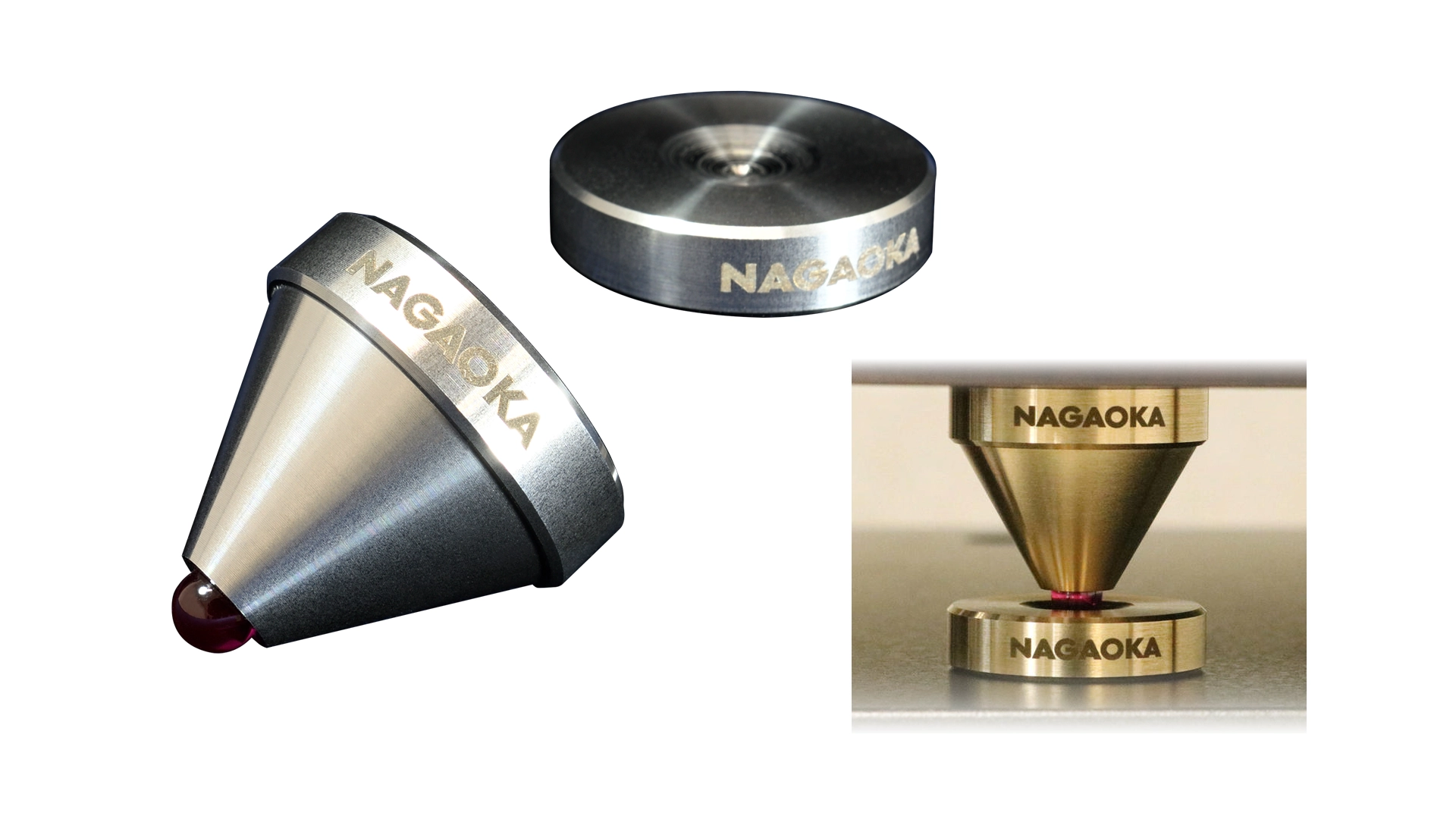
Nagaoka is the Japanese precision manufacturer best known to vinyl listeners for replaceable styli and Moving Permalloy phono cartridges. It began in Tokyo in 1940 as Nagaoka Clock Parts Manufacturing, machining small, hard materials for the watch industry. That expertise led to diamond record styli in 1961 and eventually to complete cartridges, giving the company unusually deep control over the tiny parts that determine tracking and groove contact. The MP range is Nagaoka’s signature. It is a moving-iron principle in which a low-mass permalloy element moves within a fixed magnetic circuit, providing output compatible with a conventional MM phono stage while keeping the replaceable stylus assembly light. Models from the widely used MP-110 through MP-150, MP-200, MP-300 and MP-500 vary in cantilever, stylus profile, body and generator refinement; the MP-700 marks a newer flagship generation. Nagaoka also supplies mono cartridges, headshells, record sleeves, cleaning fluids and stylus-care tools, and remains an important OEM producer. The valuable part of its story is not ornamental language about Japanese craftsmanship: Nagaoka has decades of in-house experience cutting and bonding diamond styli, forming cantilevers and assembling the complete mechanical system that must follow a microscopic groove accurately.
NorStone


NorStone is the French AV-Industry brand that treats furniture and support as part of an audio-video installation rather than as generic household shelving. Its range spans hi-fi racks, speaker stands, television furniture, vinyl storage, wall and projector mounts, professional racks and a broad cable catalogue. The products are designed to organise real systems—allowing for component depth, ventilation, cable routing, equipment weight and loudspeaker height—while remaining visually light enough for a living room. Esse is the accessible open-frame AV rack, Stäbbl and Spider use modular shelves for heavier hi-fi components, and Bergen and Slender address more traditional equipment stacks. Stylum is the best-known speaker-stand family, with steel columns, spikes and several heights for standmount loudspeakers; Walk and Counter offer purpose-built record storage and turntable support. NorStone also sells terminated and bulk speaker cable, RCA, XLR, HDMI, USB, optical and mains connections, so an installer can finish the system within one design language. NorStone is a registered trademark of the French AV-Industry group, alongside brands including Elipson, Tangent, Eltax and Lumene. Published sources disagree on whether the brand began in 1997 or 2001, so leaving the founding-year field blank is more accurate than choosing a false precision.