
Isolation Footers Spikes Shelves
This category covers specialized accessories designed to manage mechanical vibrations that can degrade the sound quality of your components. The two main approaches are coupling (using spikes to drain unwanted energy away from a device) and decoupling (using compliant footers to isolate a device from external vibrations). These products can be placed under speakers, turntables, and electronics to improve clarity and focus. This guide lists the brands that specialize in these advanced vibration control solutions.
Hi-Fi brands in the category
Summary information and image
Direct links to official websites
Oehlbach

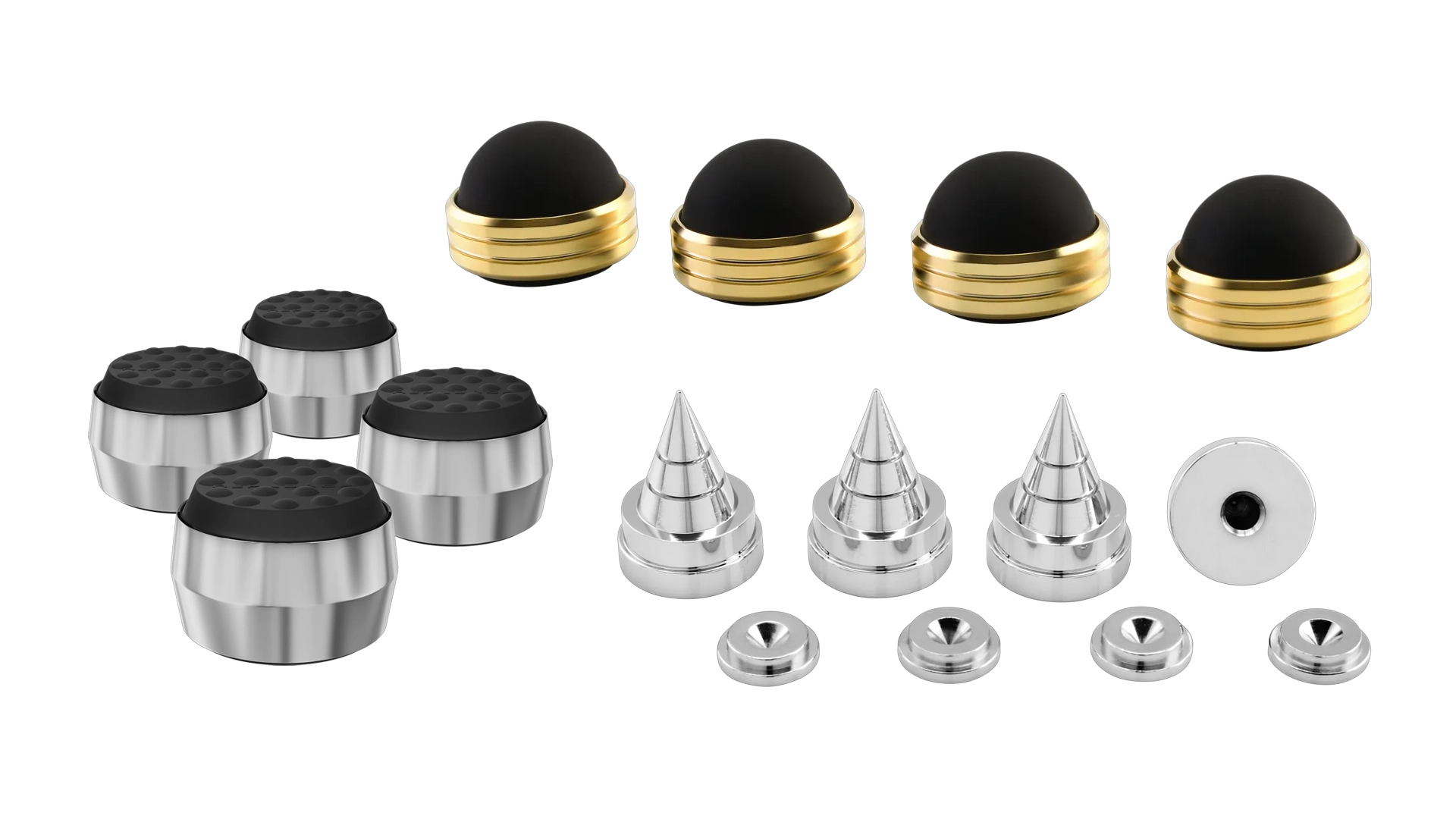
Oehlbach is the German connectivity specialist that helped turn cable construction into an explicit part of a hi-fi system. Manfred Oehlbach founded the business in 1974 after developing an early loudspeaker cable that used different conductor cross-sections for low and high frequencies. From that beginning the company expanded into one of Europe’s broadest catalogues of audio, video, data and power connections. The range now covers speaker cable, RCA and XLR interconnects, optical and coaxial digital links, HDMI, USB and network cables, antennas, mains distribution, phono accessories, adapters and connectors. Four quality levels—Easy Connect, Performance, Excellence and State of the Art—make the catalogue easier to match to an installation without pretending that every product uses the same materials. Depending on the model, Oehlbach employs high-purity copper, silver plating, defined impedance, multi-layer shielding and purpose-made plugs; its XXL and NF families are among the recognisable premium lines. The company’s strength is practical system coverage: it can connect a turntable, television, network streamer, amplifier and loudspeakers with products designed around the electrical and mechanical demands of each interface. That breadth, backed by a continuous German brand history since 1974, is more meaningful than sweeping claims that one cable recipe improves every signal.
Quadraspire

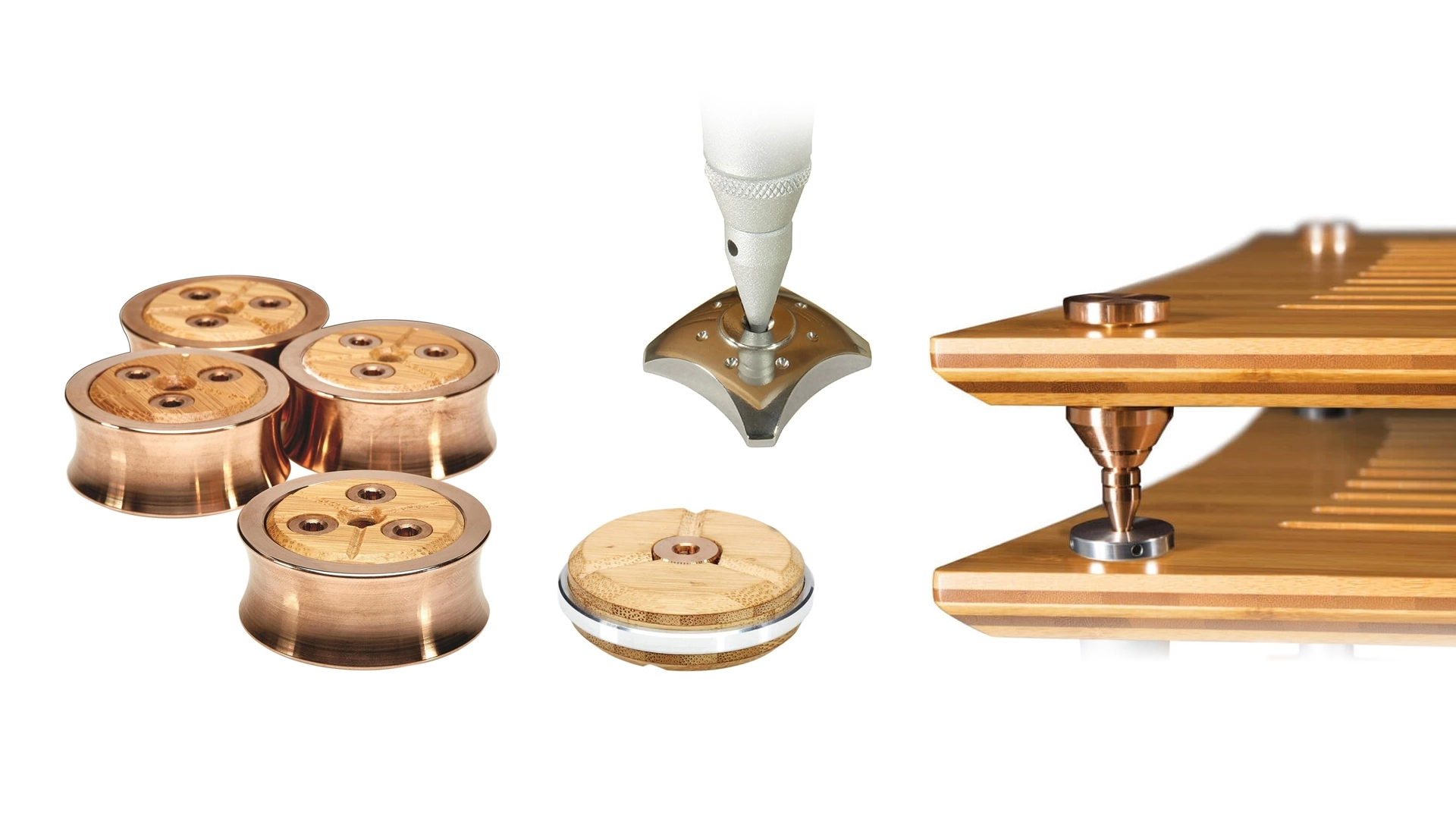
Quadraspire was founded in 1995 by Dutch designer Eddie Spruit in an East London studio. The name came from one of his earlier pieces of folding furniture, but the product that defined the company was the Q4 equipment rack. Instead of treating a rack as a heavy rectangular cupboard, Spruit made it open, modular and visually light, with shaped shelves separated by aluminium columns. The company later established its own manufacturing facility near Bath, England. The design has an acoustic purpose as well as a recognisable look. Curved shelf edges avoid long parallel boundaries and reduce the broad flat surfaces on which standing waves and vibration can build; open sides allow equipment to cool naturally. Threaded columns make shelf spacing configurable and let a system grow one level at a time, while spikes provide defined mechanical contact with the floor. Q4EVO remains the accessible modular platform. SVT uses thicker, vented shelves and a more substantial column system for heavier components; bamboo versions exploit a stiff laminated material with useful damping properties. X-Reference is the flagship architecture, adding constrained-layer shelves, bronze components and more elaborate energy control. QPlus interfaces and Bronze Upgrade parts let owners improve support under individual components without replacing an entire rack, while dedicated speaker stands and wall shelves extend the same thinking. Quadraspire does not promise that furniture changes the electronics inside a component. Its know-how is more practical: manage support, airflow and mechanical energy while giving a serious system furniture that can be reconfigured, repaired and kept in the room for decades.
RDacoustic
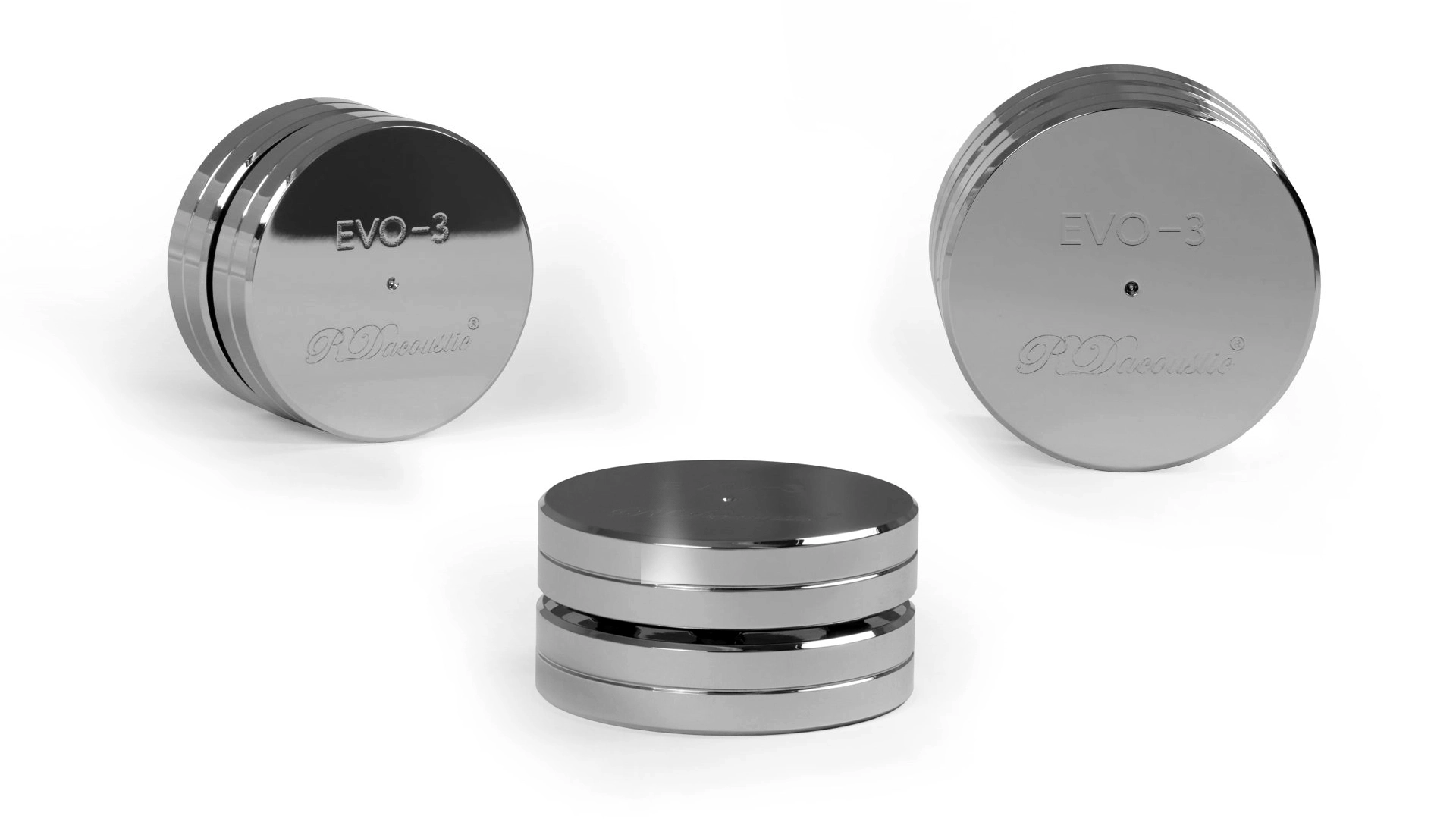
RDacoustic is a Czech company founded by Radovan Řehořek and David Piska after years of experiments with high-sensitivity loudspeakers. Řehořek began a first horn prototype in 2002; the company itself was established in 2014 when the Evolution design was ready to move beyond prototypes. That date has been added to the since field rather than treating the first experiment as a formal launch. Development and much of the production take place around Rožnov pod Radhoštěm in the Czech Republic. Evolution is the product that explains the brand: a high-efficiency loudspeaker built around a single full-range driver and a carefully developed rear horn, avoiding an electrical crossover through most or all of the audible range. Euphoria expands the concept for larger rooms by combining a broad-band driver with a 15-inch bass unit; the crossover is placed low so the main driver remains uninterrupted through the phase-sensitive midrange. Cabinet geometry and horn loading, rather than an assortment of unrelated premium drivers, do the central acoustic work. The original record also named a “Voyager” model that does not belong to RDacoustic’s documented current range and has been removed. The company has grown beyond loudspeakers into the surrounding listening environment: hybrid acoustic diffusers, Silentmax absorption panels, EVO isolation pads and room-design services. EMI Neutralizer products address high-frequency contamination on the mains without replacing the safety-earth function. RDacoustic’s individuality is this joined-up view of a system—efficient crossover-light speakers, mechanical support, power-noise control and the acoustic treatment of the room in which they operate.
Rogoz Audio
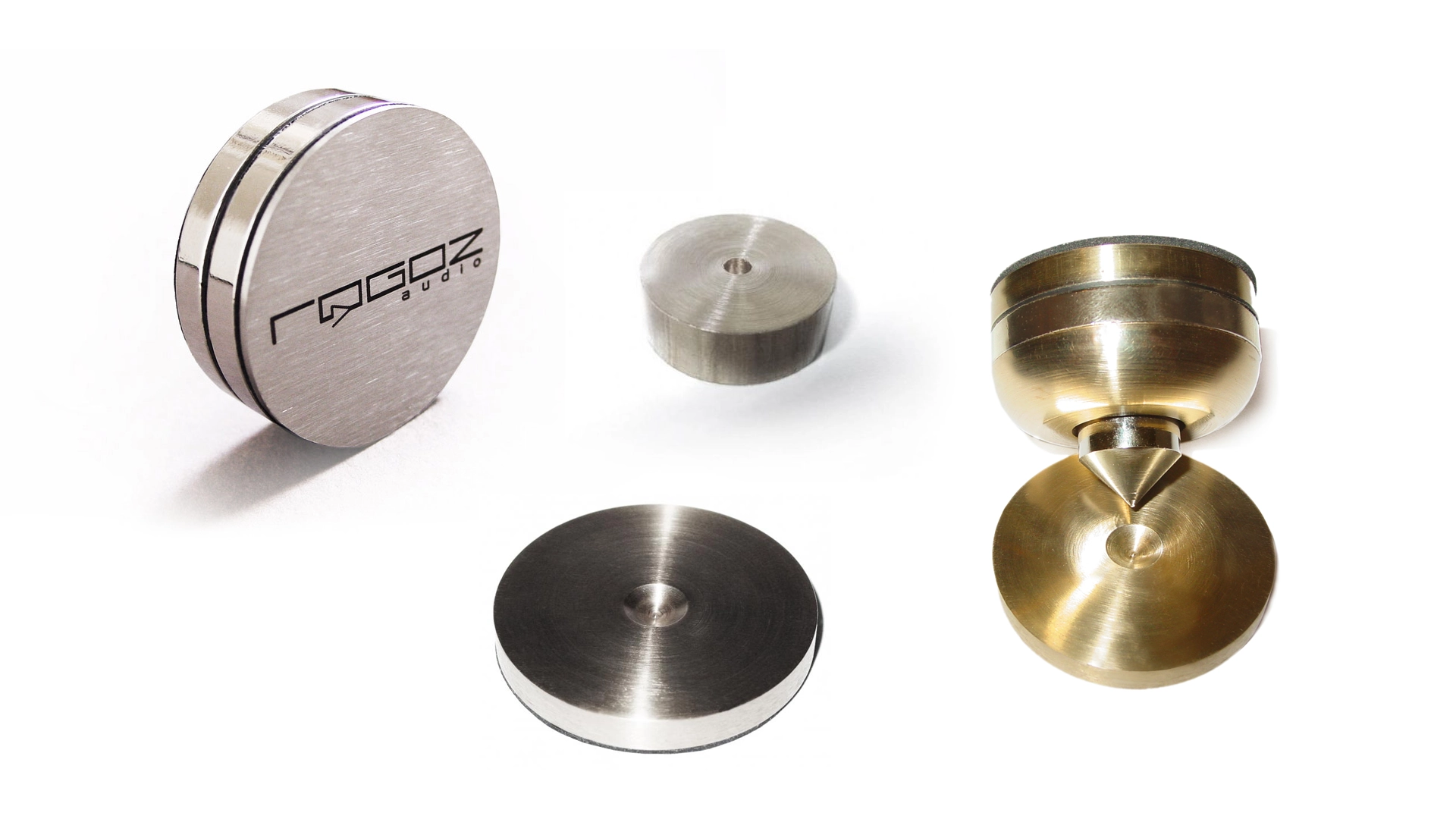
Rogoz Audio is a Polish manufacturer of specialist supports for high-end audio systems, founded in 2010 by Janusz Rogoz. Rather than treating a rack as interior furniture with audiophile branding, the company concentrates on the mechanical path between a component, its support and the floor. Its catalogue includes modular equipment racks, amplifier platforms, turntable bases, loudspeaker stands and anti-vibration accessories, many of them built to order for the mass, dimensions and centre of gravity of a specific component. Steel structures, hardwood and engineered platforms are combined with constrained joints and adjustable interfaces so that energy can be drained, distributed or isolated in a controlled way. A central Rogoz idea is the Balancing Board System, in which a platform is supported at calculated points and allowed a limited, controlled movement instead of being clamped rigidly at every corner. Different rack families adapt that principle to compact systems, heavy power amplifiers and multi-shelf installations. Speaker stands receive the same attention to stability, height, footprint and coupling, and custom fabrication is an important part of the business because a universal platform is not always mechanically appropriate. Products are designed and manufactured in Poland, with visible metalwork and joinery forming part of their identity. Rogoz Audio’s strength is the narrowness of its focus: it does not claim to improve the electrical circuit inside a component. It engineers the physical conditions in which that component or loudspeaker operates, offering repeatable construction and system-specific solutions instead of decorative “isolation” accessories.
Russ Andrews

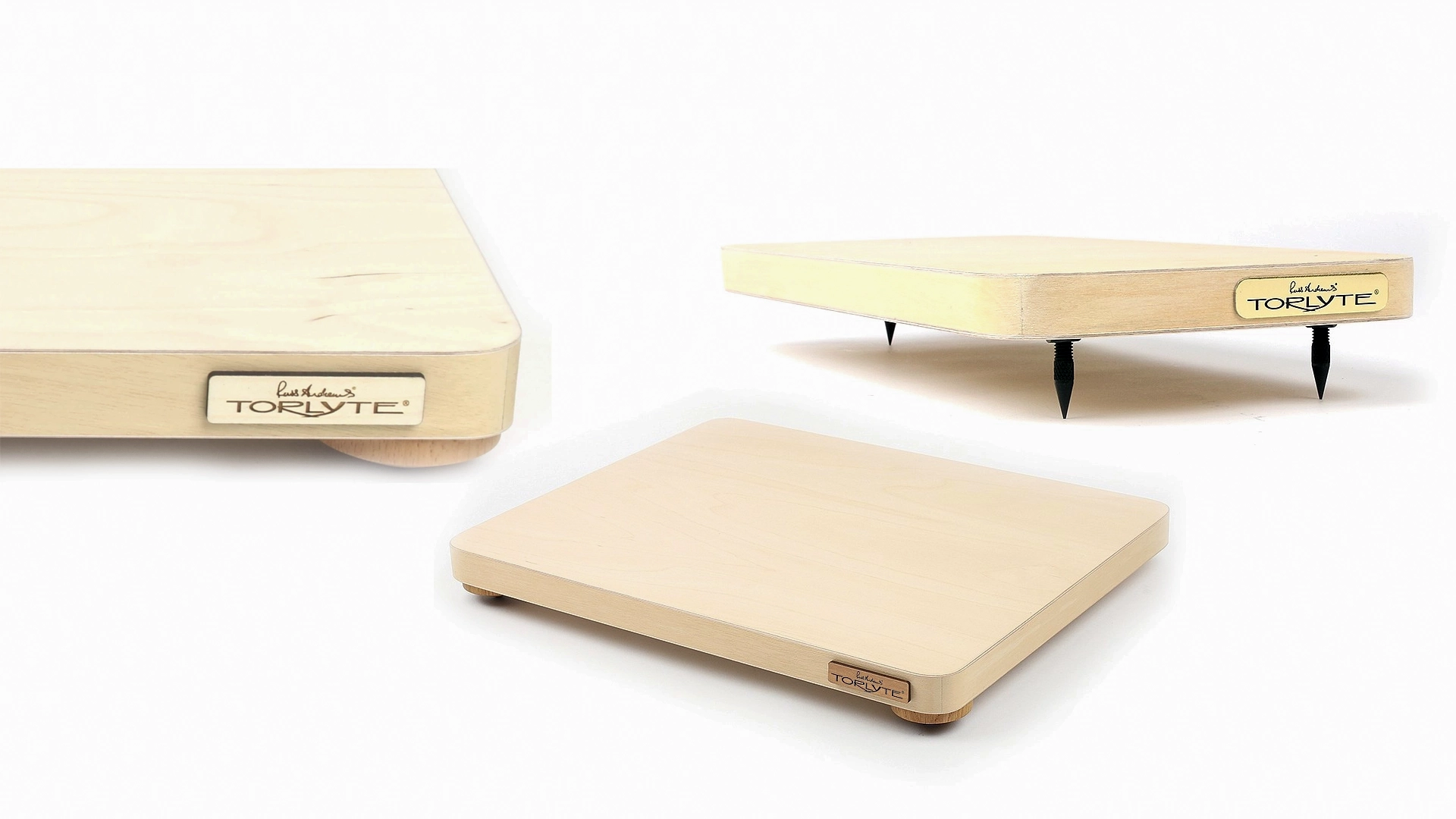
Russ Andrews is a British specialist in hi-fi cables, mains power, grounding and equipment support. Russ Andrews Accessories was incorporated in 1985 and began trading in 1986, initially selling Kimber Kable, Torlyte supports and turntable accessories through dealers. The company later developed a direct-sales model and a broad catalogue built around the parts of a system that sit between the wall socket, components and loudspeakers. Its best-known products include PowerKord mains leads, distribution blocks, conditioners and filters; SuperKord and Signature variants extend the same families, while grounding devices, RF-control accessories, fuses and connectors address installation-specific noise problems. Russ Andrews remains closely associated with the American cable designer Kimber Kable and supplies its analogue, digital and loudspeaker cables alongside products developed in-house. Torlyte racks, platforms and isolation accessories continue the original interest in mechanical support, and the company also offers upgrade parts and practical tools for system setup. Claims made for power and cable products naturally invite debate, so the most meaningful distinction is the way the business lets customers evaluate them in their own systems: a 60-day return period, an upgrade scheme and long warranties—at least 25 years on many Russ Andrews products—reduce dependence on a brief showroom demonstration. The brand’s history should not be reduced to vague “tweaks” or to the controversy surrounding them. It has spent four decades building a coherent accessories business around power delivery, signal connection, vibration control and after-sales support, with clear product hierarchies and unusually long ownership pathways.
Shunyata Research

Shunyata Research is an American specialist in power distribution, grounding and signal cabling founded in 1997 by Caelin Gabriel. Gabriel had worked as a research scientist on highly sensitive military data-acquisition systems, experience that directed the company toward measurable transient-current delivery and noise rather than cable appearance alone. Shunyata developed its own DTCD analysis to examine instantaneous current through conductors, connectors and power devices—behaviour conventional steady-state resistance measurements can miss. Its power distributors became the best-known products: Hydra established the category, while Denali and Everest families combine high-current outlets with technologies such as the patented NIC, or Noise Isolation Chamber, and CCI filters intended to reduce interference between connected components. ALTAIRA grounding hubs address chassis and signal-ground noise separately from protective-earth safety, giving complex systems a central, purpose-built grounding reference. Power cords and analogue, digital, speaker and headphone cables are organised into Venom, Alpha, Sigma and Omega levels. Proprietary elements include VTX conductor geometries and, in speaker cables, HARP modules designed to limit cable-related current resonances; the useful point is not the acronyms themselves but a consistent effort to model the cable, load and power interface as a dynamic electrical system. Products are designed and assembled at the company’s facility near Seattle, and related technology is used in recording, film, medical and surgical environments as well as domestic audio. Shunyata’s individuality lies in applying instrumentation, repeatable testing and application-specific filtering to a field too often described only through listening adjectives, then supporting those measurements with controlled evaluation in complete systems.
Solid Tech

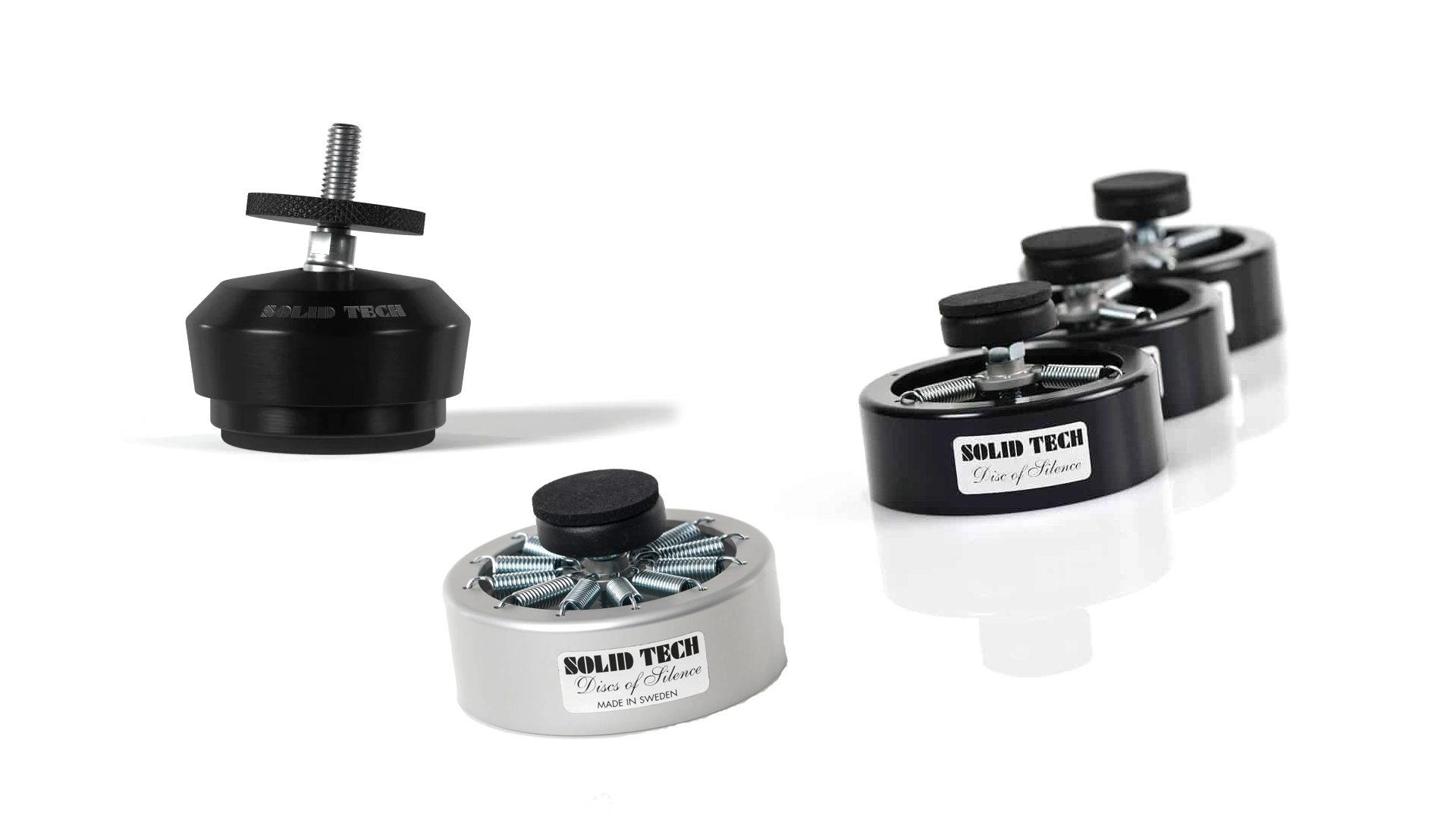
Solid Tech is a Swedish manufacturer of modular audio racks and vibration-control accessories, established in 1995 by Björn Ohlson. Its first major design, Rack of Silence, appeared in the mid-1990s and remains the clearest expression of the company’s thinking: equipment should be supported rigidly where required but isolated from floor-borne and airborne vibration through a controlled suspension rather than simply placed on the heaviest possible slab. The Reference version integrates spring isolation, while the Regular version provides the structural platform without it. Solid Tech states that its extended-spring system can move the suspension resonance down to about 3 Hz, below the most troublesome audio-band vibration, so turntables, valve electronics and sensitive digital clocks receive less mechanical energy. Feet of Silence brings a related suspended interface to individual components, and Disc of Silence provides another compact support option. The rack catalogue is broader than the famous flagship. Radius is the cost-conscious rigid system; Balance allows isolated and conventional shelves to be mixed; Hybrid can expand vertically and horizontally through modular pillars and brackets; Hybrid Wood dresses the aluminium structure in solid-wood finishes, while Hybrid 2nd Gen updates the format and isolation options. This modularity lets a system grow without replacing the entire rack and keeps shelf spacing appropriate to amplifiers, sources and power supplies. Products are handmade in Sweden, with aluminium structures, wooden shelves and suspension parts treated as replaceable elements rather than a sealed piece of furniture. Solid Tech’s individuality lies in making mechanical isolation understandable and configurable: it offers a family of structures and interfaces built around resonance control, not a single decorative rack accompanied by vague claims.
Soulines

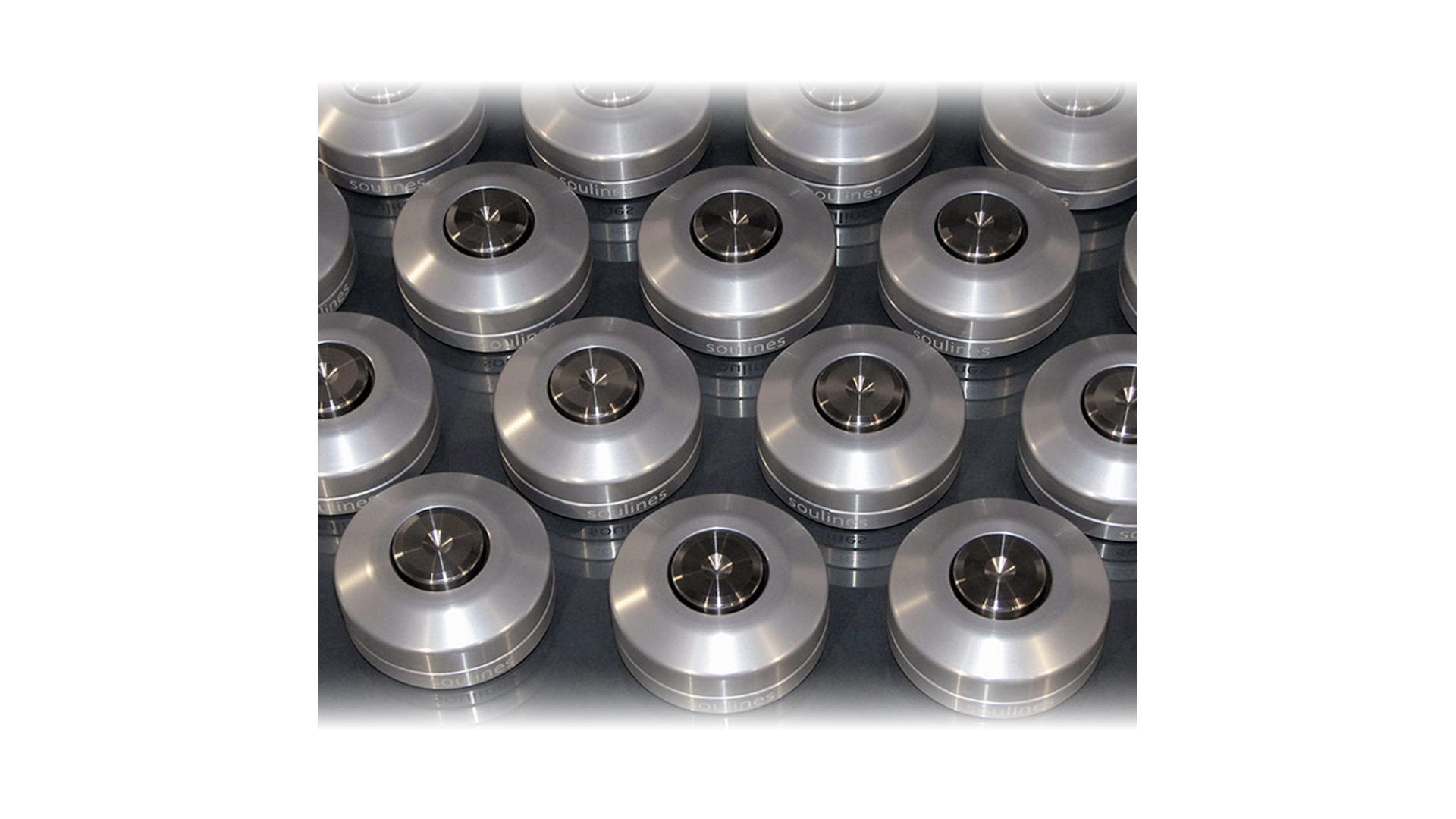
Soulines makes Serbian turntables whose exposed geometry reflects a careful interest in mass distribution, bearings and the path of vibration through the structure. Its roots go back to the tt recycled business started in 2009, when a team with backgrounds in music, recording and mechanical engineering began commercialising its turntable restoration and redesign work. Original designs followed, gaining recognition at the Belgrade Hi-Files Show in 2010. The Hermes DCX was presented successfully in 2011, and the decision to offer that turntable internationally led to Soulines. That progression from working on existing decks to designing complete players is an important part of the company’s character. Kubrick DCX became one of its recognisable models, while the catalogue developed to include tt42, tt9 and tt23 turntables and the KiVi M3 tonearm. The tt23 illustrates the construction approach: acrylic, POM and aluminium elements form the plinth and sub-plinth, with the bearing and arm board located on a common aluminium structure. A cast-acrylic platter turns on an inverted bearing, and an electronically controlled DC motor provides speed selection and fine adjustment. Adjustable supports and an included alignment tool make setup part of the product design. Soulines aims for a rigid, comparatively compact assembly with controlled vibration behaviour, using the shape and arrangement of components as deliberately as their materials. The resulting decks have a distinct mechanical appearance while keeping the everyday acts of levelling, selecting speed and playing records straightforward.
Sound Kaos

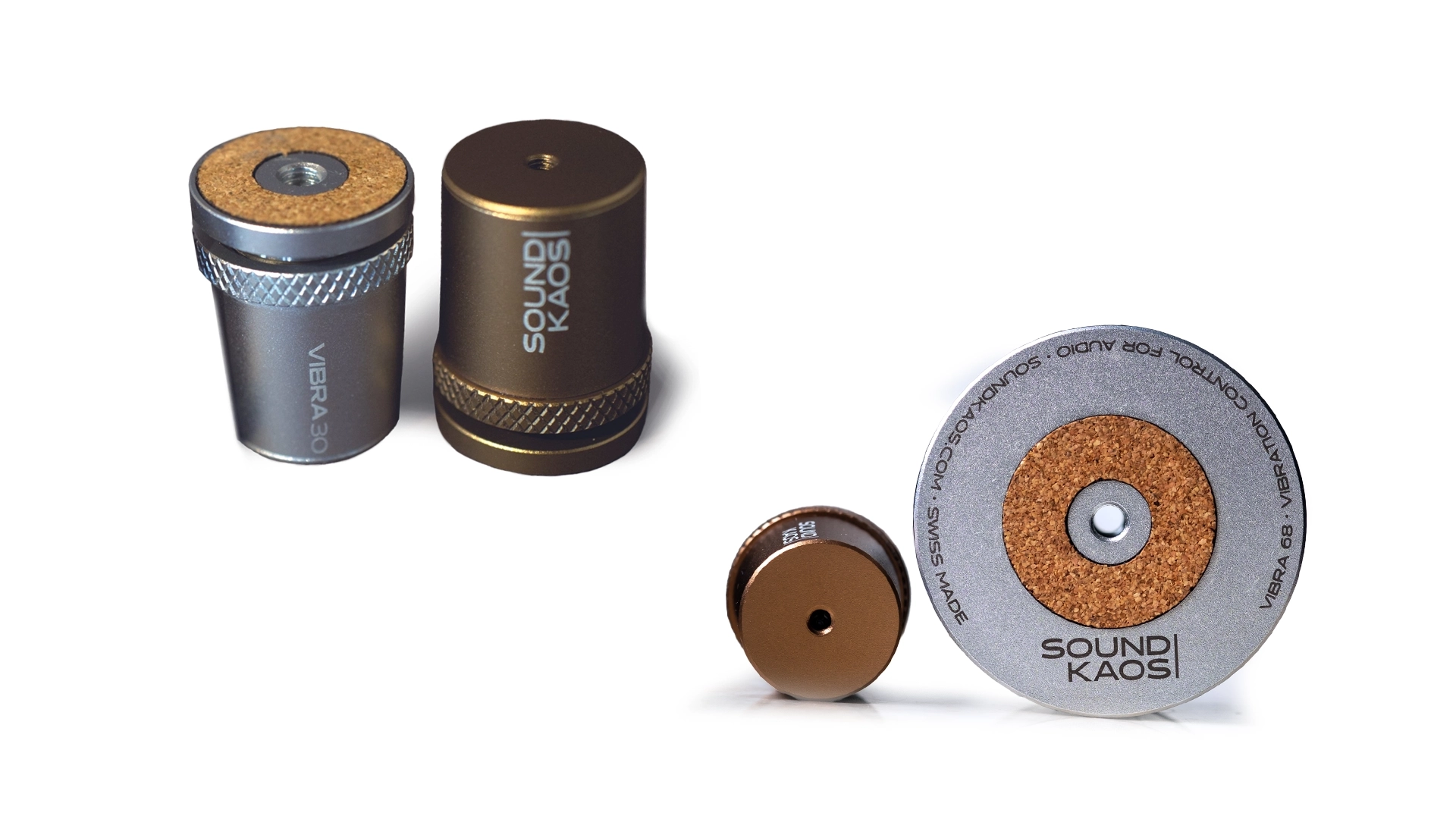
Sound Kaos combines wideband loudspeaker drivers with unusually compact wooden cabinets and, in other designs, open-baffle construction. Founded in Switzerland in 2010 by Martin Gateley, the brand treats industrial design, electroacoustic modelling and local woodworking as complementary parts of the same project. The VOX 3 monitor is a good example of its individual approach. Within a small solid-wood enclosure it combines a forward-facing wideband driver, two opposed side-mounted bass drivers and an upward-facing RAAL ribbon supertweeter. The bass pair is arranged for force cancellation, while the wideband unit covers much of the musically important range. Ferrite and Alnico driver versions offer different implementations of the concept. This is a four-driver, three-way cabinet loudspeaker; the open-baffle approach belongs to designs such as Libération, which explores a different form and radiation pattern. Wood species, natural finishes, bronze mesh covers and matching stands contribute to the physical identity of the range. Gateley develops the initial concept with specialist electroacoustic input, and the company works with a Swiss woodworker before completing assembly and testing in-house. VIBRA decoupling products extend its attention to the mechanical relationship between speaker and support. Sound Kaos is distinctive because it accommodates several acoustic architectures without losing its focus on wideband reproduction, compact proportions where possible and materials whose character remains visible in the finished product.
SRA

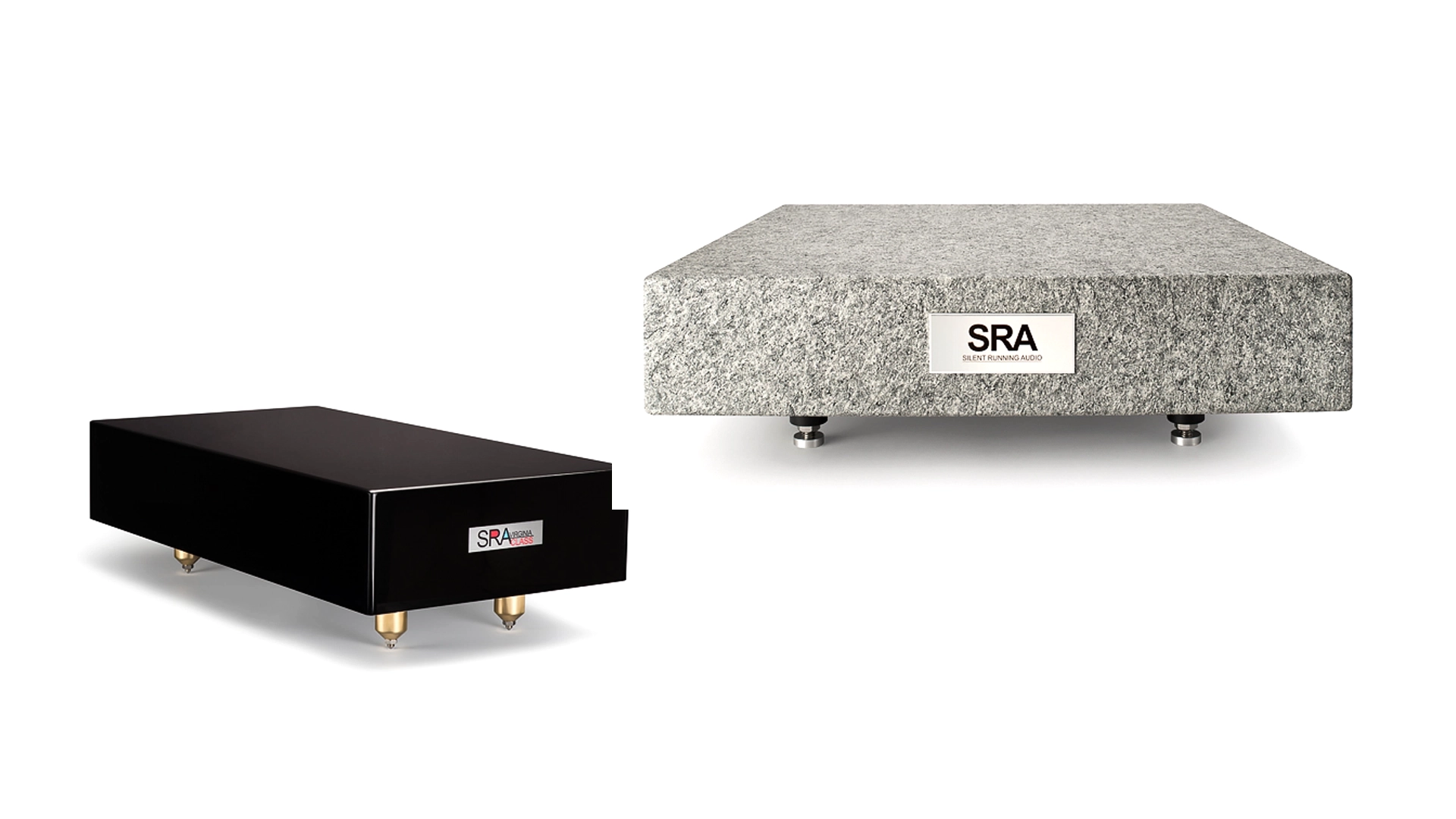
Silent Running Audio (SRA) builds isolation platforms and racks around the mechanical behaviour of the exact component they will support. Founded in 1989 by scientist and engineer Kevin Tellekamp, the American company applies modelling, materials research and experience from demanding industrial vibration-control work to high-end audio. Its key idea is Component Specific Design. Instead of treating every amplifier, turntable or source as the same load, SRA records a “GearPrint” that considers the component’s dimensions, weight, chassis construction and weight distribution, then configures the support for that application. This approach explains why an SRA base may need recalibration when the equipment placed on it changes. The isoBASE families include Virginia-Class and Ohio-Class platforms, while Craz and Scuttle isoRACK systems extend the same thinking to complete equipment furniture. Internal structures, constrained layers and proprietary compounds are hidden beneath comparatively restrained exterior finishes; the engineering task is to control energy entering from the room and energy generated by transformers, motors and loudspeakers within the system itself. SRA also offers lifetime recalibration for its products, preserving their usefulness when an owner changes components. Tellekamp’s broader work has included vibration problems for military, aerospace, medical and commercial clients, but the audio products are not generic laboratory mounts with a badge added. They are designed for the loads, dimensions and practical access requirements of hi-fi equipment. That component-by-component discipline is what distinguishes SRA from universal feet and shelves.
Stack Audio
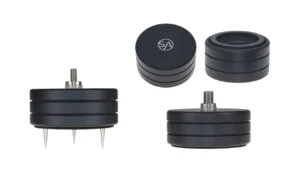
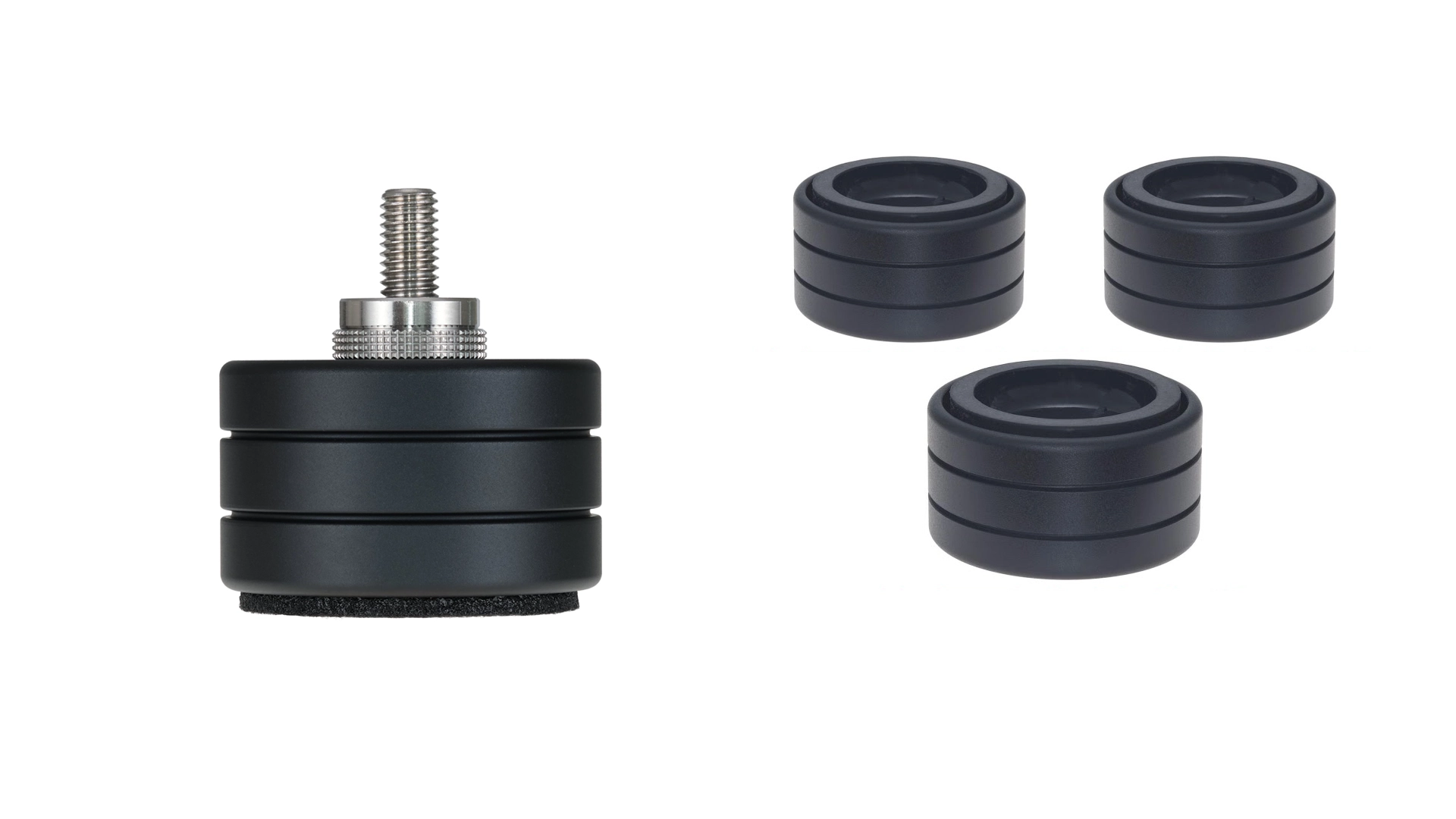
Stack Audio is a British specialist in controlling the vibration and electrical interference around a hi-fi system. Theo Stack created the company in 2013, initially concentrating on digital sources and precision upgrades for the Linn LP12 turntable. Products such as the Onset player/server and later LINK network bridge expressed the early source-first philosophy, while SERENE subchassis, armboards and other LP12 parts addressed the mechanical platform of a classic record player. The present range has broadened without losing that focus on the conditions in which equipment works. AUVA loudspeaker isolators use particle impact damping inside a rigid metal body: moving particles dissipate vibrational energy while the speaker remains firmly located, avoiding the deliberately compliant behaviour of a soft suspension. Different AUVA models suit different speaker weights, and AUVA SW adapts the concept for subwoofers. AUVA EQ and the AUVA Platform apply isolation to electronics, turntables and racks. For digital systems, SmoothLAN products target noise carried by an Ethernet connection; the range includes a passive network filter and an active regenerator. SERENE record mats and stabilisers continue the analogue side of the catalogue. Stack Audio develops its products in the UK and works with specialist local manufacturing where appropriate. Its evolution is notable: rather than remaining a maker of modifications for one turntable, it has turned practical lessons about resonance and source quality into a coherent family of accessories for speakers, components, vinyl replay and network audio.
Stillpoints

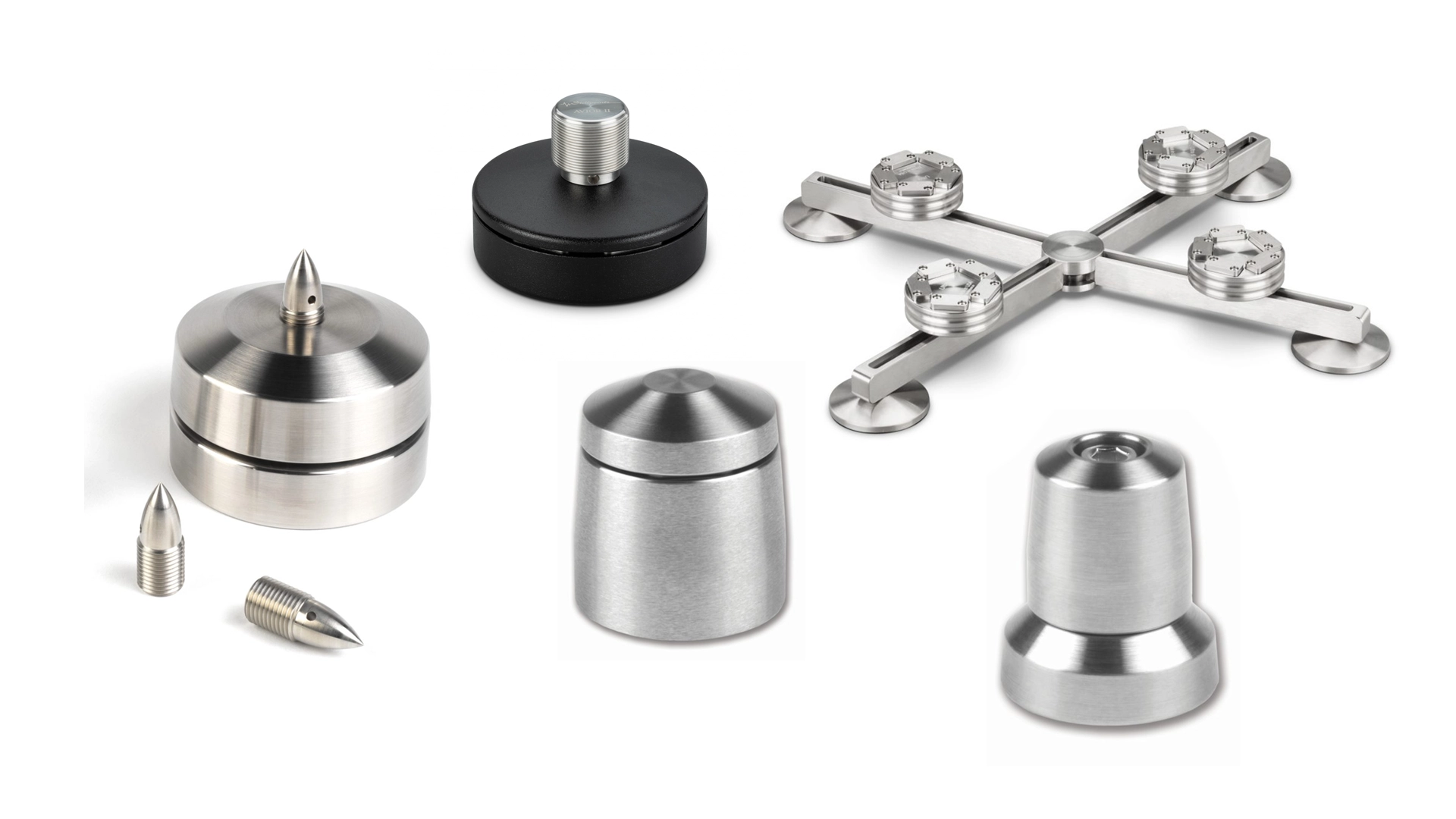
Stillpoints develops mechanical isolation products for audio components and loudspeakers, then extends the same concern with stored energy into equipment furniture and room acoustics. Established in the United States in 2002, the company is closely associated with Paul Wakeen and designer Bruce Jacobs; patents also name Craig Shirley in its acoustic-panel work. The Ultra isolators are its best-known products. Rather than relying on a simple rubber foot or a single spring, they use multiple stages of stainless-steel and ceramic elements to create paths through which vibration can be dissipated. Different bodies and adapters let the system support source components, amplifiers, racks and loudspeakers, while Ultra SS, Ultra 5 and Ultra 6 provide progressively more elaborate implementations. Orientation and loading matter, so installation is part of obtaining the intended result. ESS and Ultra ESS racks integrate Stillpoints technology into complete support structures, and Component Stand SS provides low-level placement for heavy amplifiers. Aperture acoustic panels take the company into the room itself. Their patented internal structure combines absorption and diffusion across a broad area, and panels can be used on walls, in stands or around difficult reflection points without filling the room entirely with soft treatment. Stillpoints therefore addresses two related but distinct paths: mechanical energy travelling through equipment supports and acoustic energy circulating in the listening space. Its value lies in offering a scalable system—from one component footer to a complete rack and treatment plan—rather than presenting every vibration problem as identical.
Synergistic Research
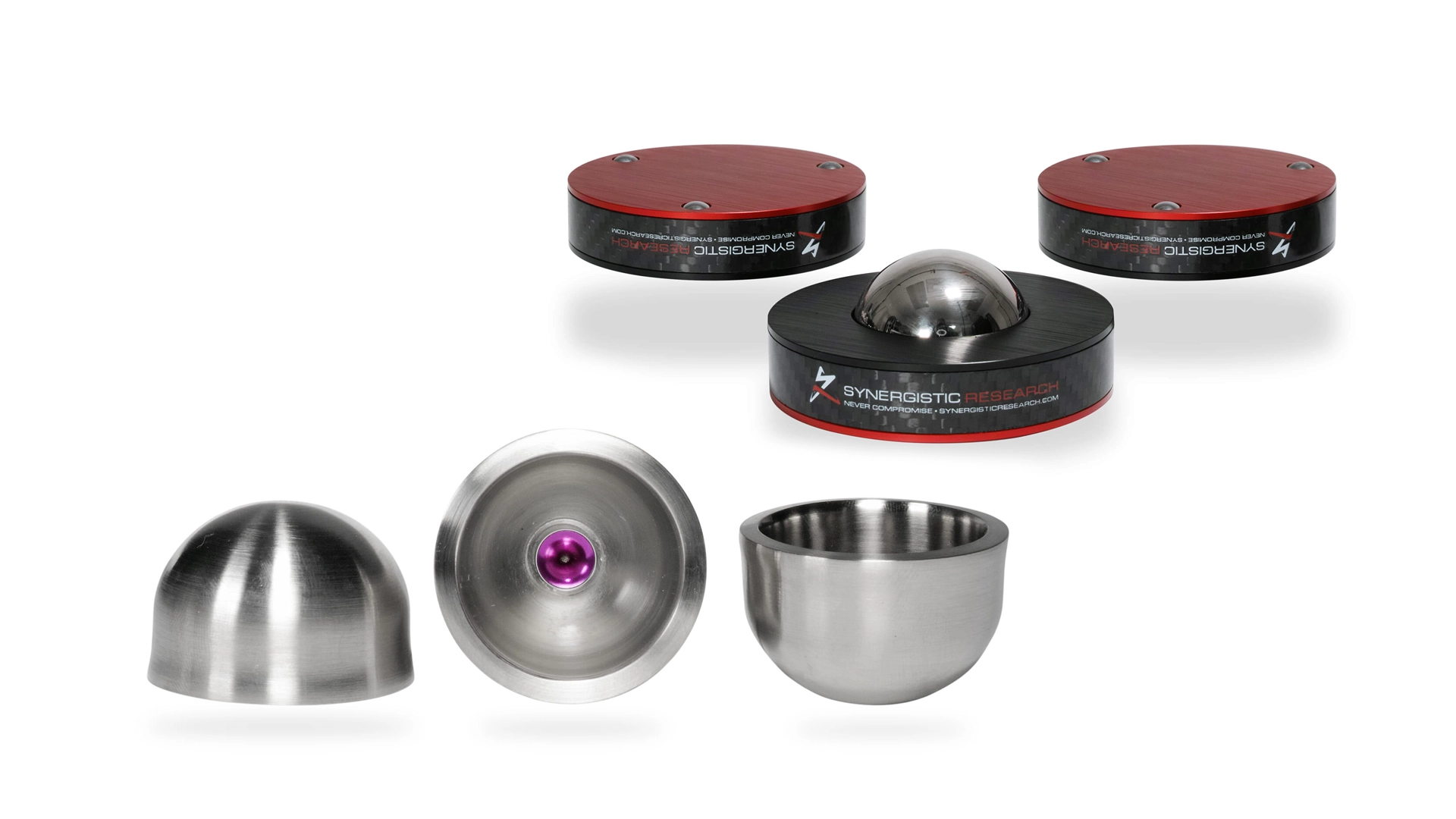
Synergistic Research is an American company specializing in high-end audio cables, power conditioners, acoustic treatment products, and other accessories. Founded by Ted Denney III. The company is known for its innovative and often unconventional technologies, which are claimed to improve the performance of audio systems through various means, including reducing noise, optimizing signal transfer, and controlling resonances. Synergistic Research products often feature unique designs and utilize high-quality materials, such as pure silver conductors, advanced shielding, and proprietary treatments. They offer a wide range of cables, power conditioners, and acoustic treatment solutions, catering to different needs and system configurations. The “Galileo” series and the “Atmosphere” series represent different points in their product line. Synergistic Research products are positioned in the high-end.
TAD

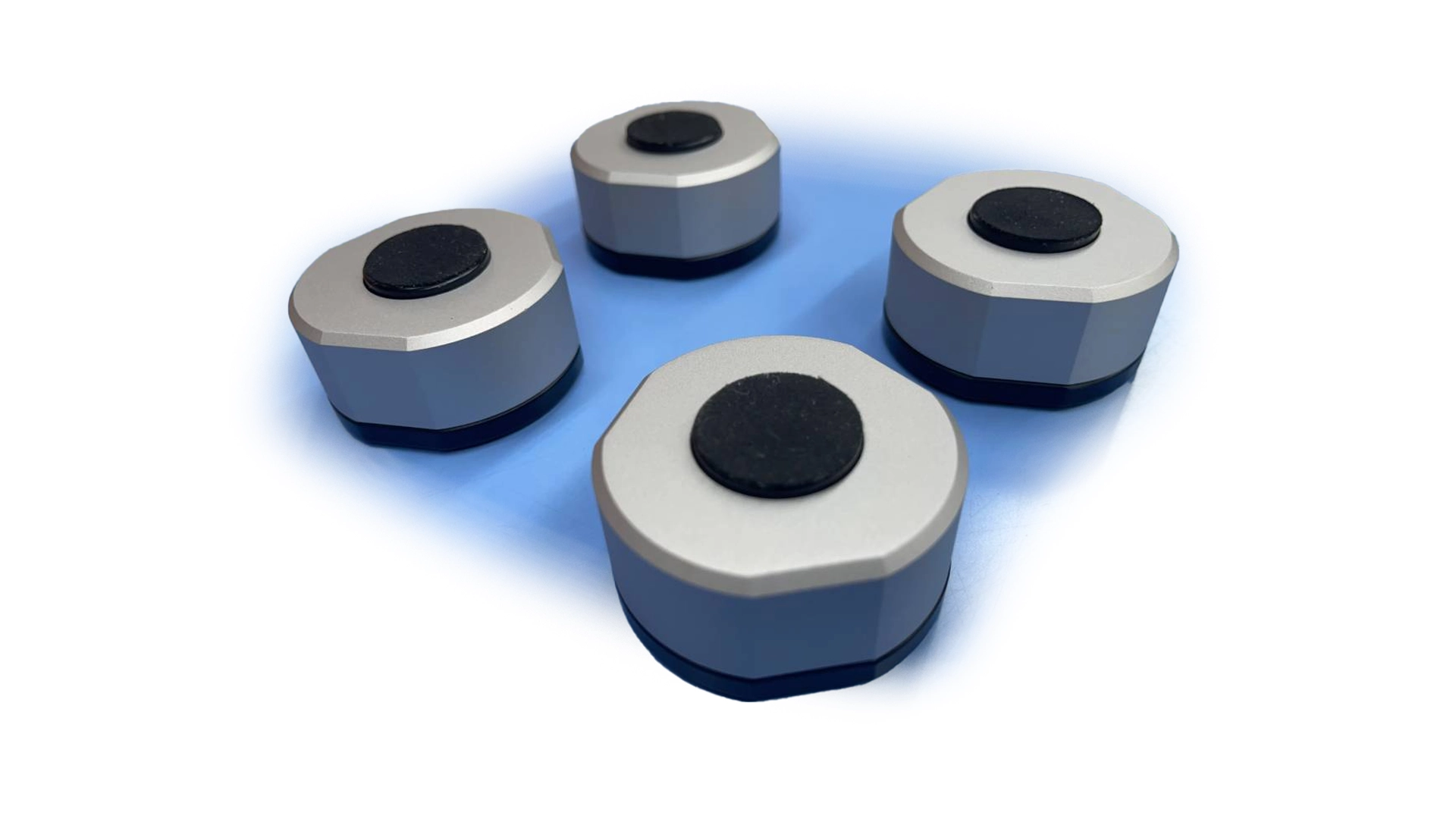
TAD (Technical Audio Devices Laboratories, Inc.), a high-end audio brand and division of Pioneer, was initially focused on professional studio monitors. Founded by Bart Locanthi. Their entry into the consumer market began in 2002 with the TAD-M1 speaker system, unveiled at the Consumer Electronics Show (CES). The TAD-M1, and subsequent TAD speakers, are built around their proprietary CST (Coherent Source Transducer) Driver. This coaxial driver combines a beryllium tweeter dome and a beryllium midrange cone, achieving ultra-wide-range reproduction from 250 Hz to 100 kHz. The CST driver acts as a point source, providing uniform directional characteristics both horizontally and vertically, for natural sound dispersion. The use of beryllium is key: it’s the lightest and most rigid metal with high internal loss, ideal for reproducing ultra-high frequencies (including harmonic overtones that enhance the audible band). The shallow, large-diameter beryllium midrange also contributes to lower bass response. The CST Driver, incorporating high-precision processing and a proprietary vapor deposition technique for the beryllium diaphragm, represents the culmination of years of TAD’s technical expertise. The technology is found in models like the TAD Reference One (released 2007) and other speakers.
TAOC

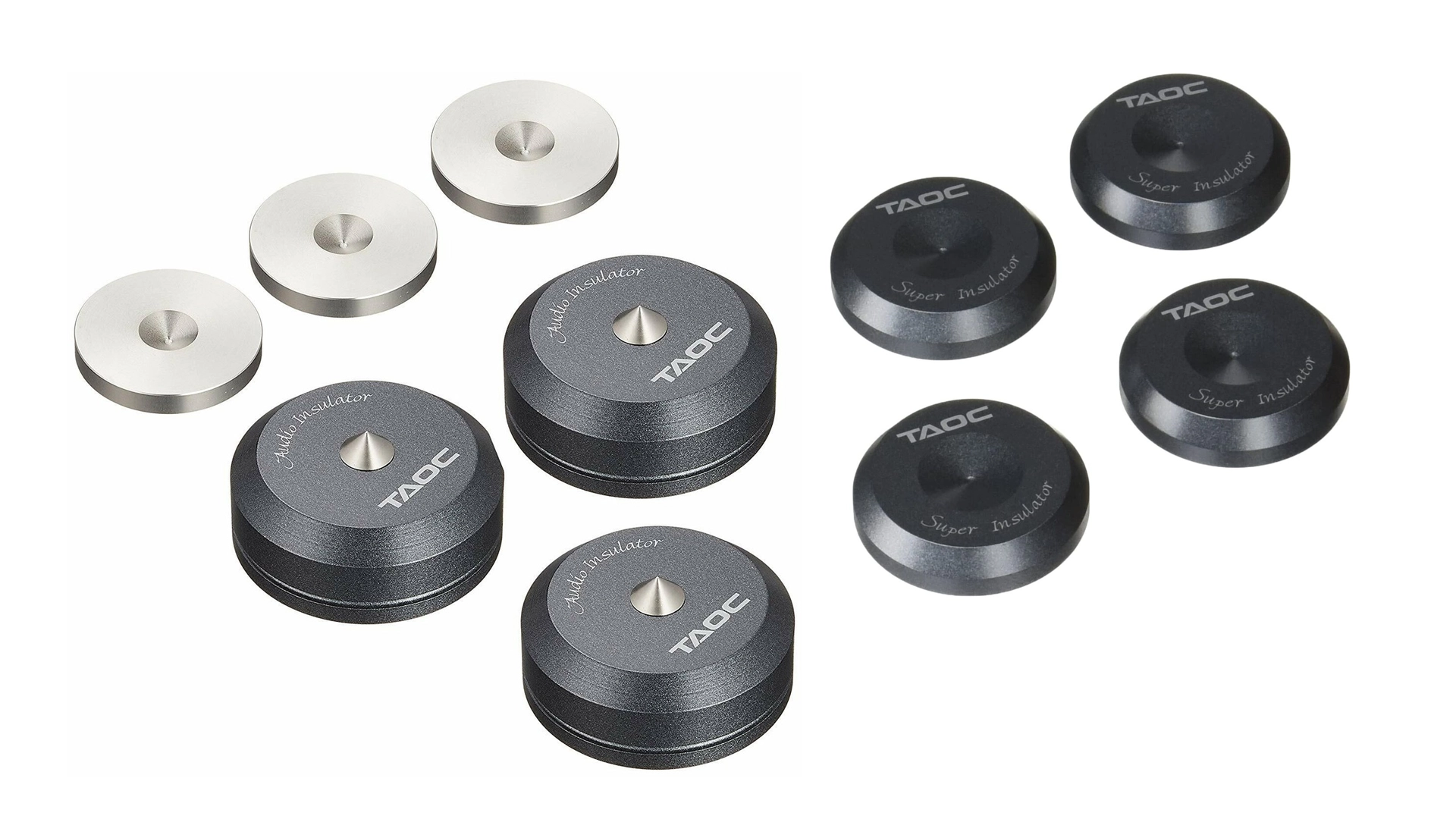
TAOC is a Japanese brand, part of Aisin Takaoka (itself part of the Toyota Group), specializing in high-end audio racks and isolation platforms, known for its use of cast iron and other vibration-damping materials. The company’s products are designed to minimize vibrations and resonances that can negatively impact the performance of audio components, thereby improving clarity, detail, and overall sound quality. TAOC’s racks and platforms often feature a robust construction and a minimalist aesthetic, with a focus on functionality and performance. They utilize advanced engineering principles and carefully chosen materials to achieve their desired isolation effects. The company’s products are positioned in the high-end segment of the audio furniture market, appealing to audiophiles who are meticulous about optimizing every aspect of their system.
The Gryphon
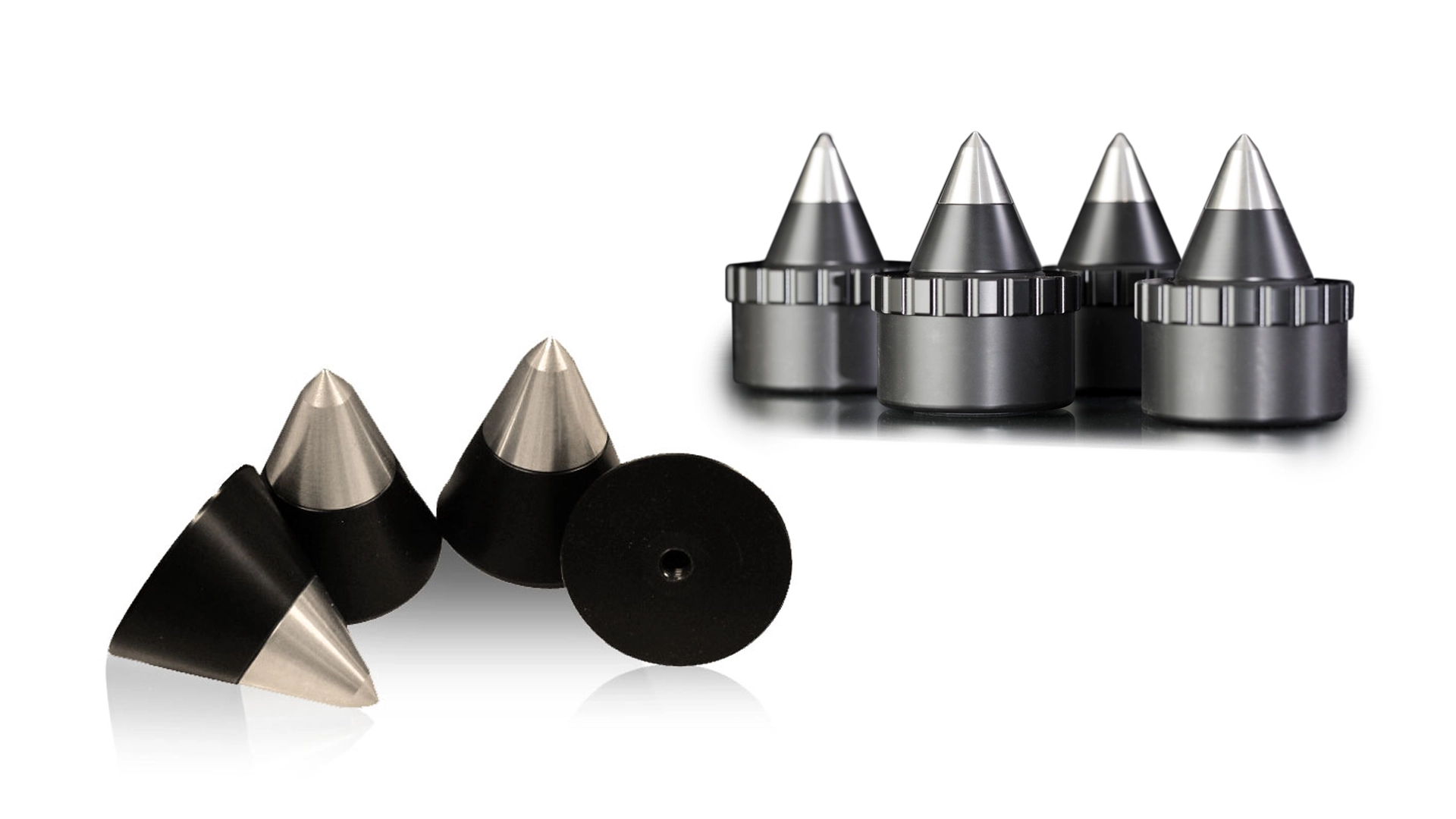
Gryphon Audio Designs is a Danish high-end manufacturer founded in 1985 by artist and industrial designer Flemming E. Rasmussen. The company began as an offshoot of his import business when a one-off moving-coil head amplifier, built for his own system, drew unexpected attention at a hi-fi exhibition. That first Gryphon Head Amp established two traits that still define the brand: electrically ambitious circuits and sculptural objects that do not disguise their scale.
Gryphon became best known for wide-bandwidth, high-current amplification, often operating in pure Class A and built in dual-mono form. The Antileon lineage made that approach internationally recognisable. Current Apex power amplifiers and Commander preamplifier occupy the reference level, while the Essence and Diablo ranges bring the company’s topology and control to more attainable systems. The Diablo 333 integrated amplifier is a good example of Gryphon’s refusal to treat an integrated product as a lightweight compromise.
The catalogue now covers a complete playback chain. Ethos handles CD and digital conversion, and loudspeakers from EOS through Pantheon, Trident and Kodo are designed to exploit the amplifiers’ current delivery and dynamic scale. Gryphon develops and assembles its products in Denmark, using custom metalwork and an unmistakable black visual language. The design can be theatrical, but the brand was not created by styling alone. Its lasting identity comes from Rasmussen’s combination of visual authorship, minimalist signal paths and amplifiers engineered to remain composed with demanding loudspeaker loads.
TiGLON

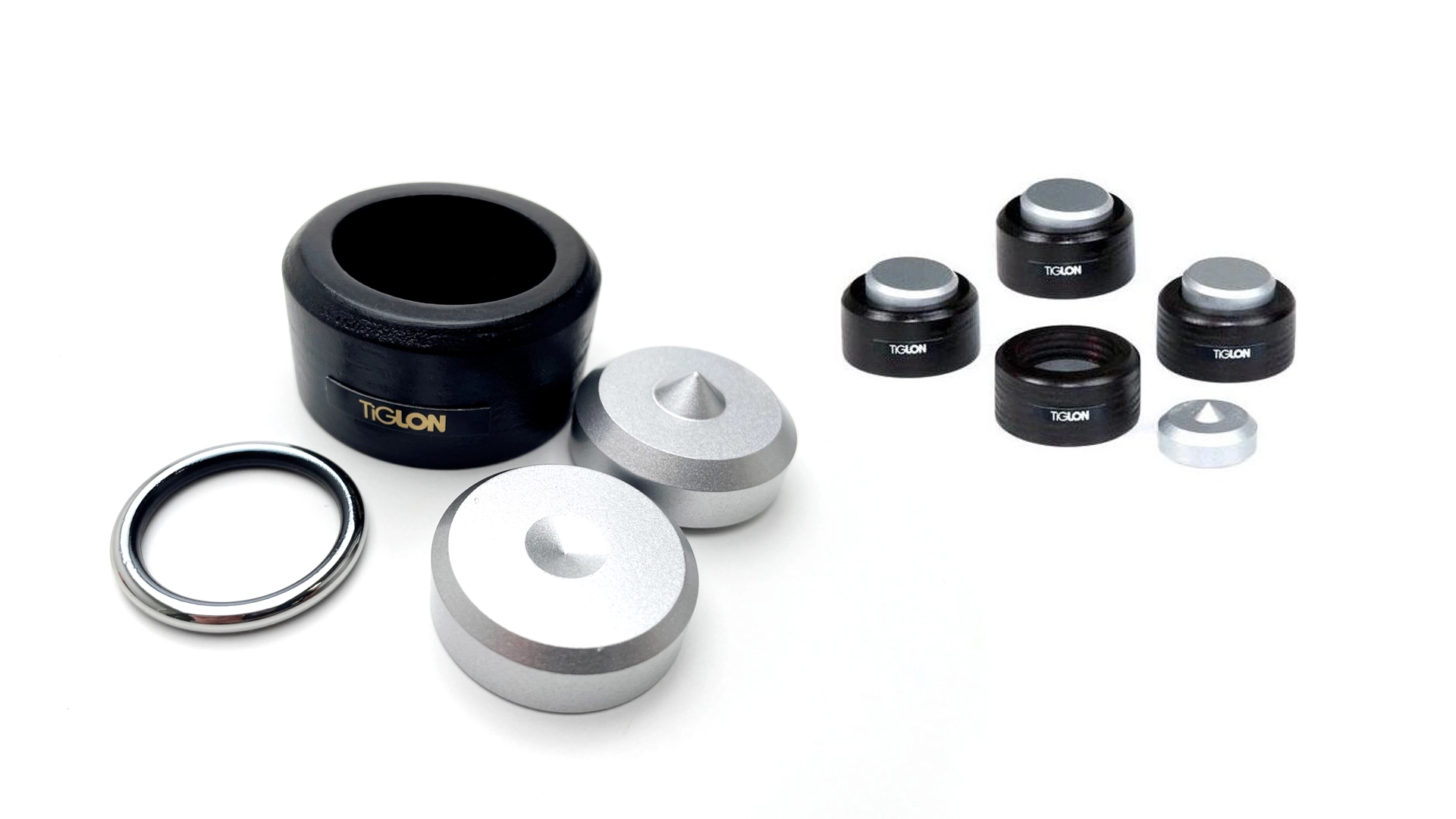
TiGLON is a Japanese cable and vibration-control manufacturer established in 2008 by Kentaro Okino. The business began as KRYNA PRO and adopted the TiGLON company name in 2010, but its defining material had appeared earlier: magnesium. Okino developed magnesium speaker stands and insulators before applying the metal to electromagnetic shielding and structural control, creating a technical thread that still joins the company’s cables, racks and accessories.
TiGLON received patents for its Magnesium Shield technology, in which magnesium elements are used around cable conductors to address external noise and vibration. The concept appears across power, speaker, analogue and digital cables, from White Tiger and Azure Dragon families to the flagship TPL series. Grand Magnesia racks, speaker stands and audio boards extend the same material thinking into equipment support, while D-REN insulators and record-playback accessories solve smaller mechanical interfaces.
The company also developed HSE—Hyper Saturated Energizer—a treatment process offered for cables, components and media. TiGLON describes it as a controlled conditioning method, and those claimed audible effects should be understood as the manufacturer’s position rather than a universally established measurement. More concrete is the continuity of the product design: magnesium is not a word added to one flagship but a material investigated across shielding, resonance and support since the company’s beginnings. That sustained specialisation, Japanese small-batch production and Okino’s willingness to refine existing products through successive generations give TiGLON a recognisable place in a crowded accessory market.
Totem Acoustic

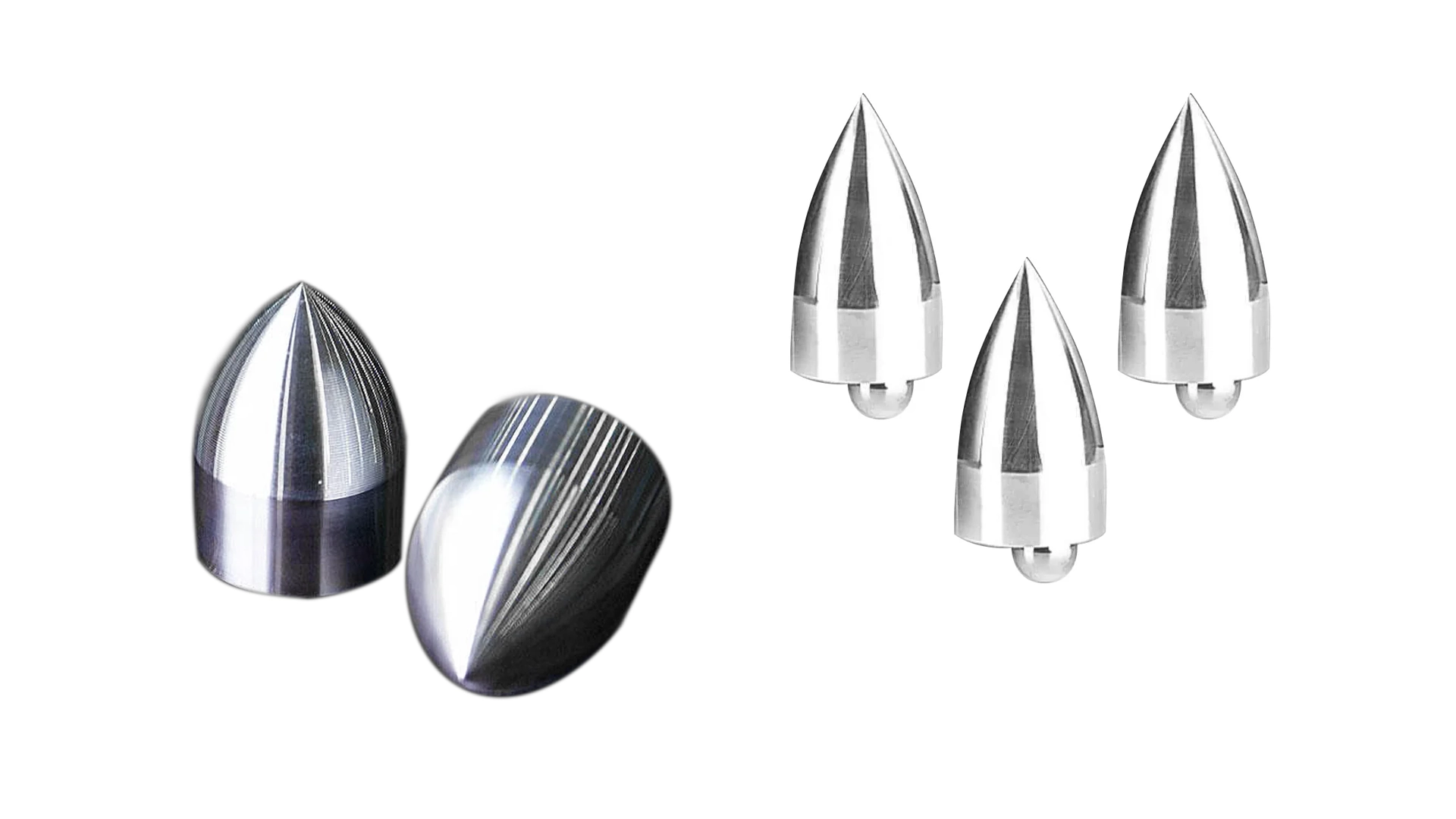
Totem Acoustic is a Canadian loudspeaker company founded in 1987 by Vince Bruzzese. Its reputation was built on a difficult promise: compact speakers should preserve scale, rhythm and bass authority instead of sounding like reduced versions of larger boxes. The original Model 1 monitor made that philosophy audible and established a design language based on carefully selected drivers, extensively tuned cabinets and crossovers kept as simple as the acoustic behaviour allows.
Models such as Mani-2, Arro, Hawk and Forest expanded the idea across stand-mount and floorstanding formats. Totem often uses long-throw drivers, mass-loaded or interlocked enclosures and unusually broad placement tolerance to obtain energy from modest cabinet volume. The Element series introduced Torrent woofers developed for high magnetic control and operation with minimal crossover intervention. Tribe on-wall and in-wall speakers carry the same priorities into architectural systems, while KIN products add powered, wireless and home-cinema options.
Bruzzese remains the central designer, and development is based in Montreal, with many premium models built in Canada. Totem does not pursue a single visual monument; it creates speakers intended to work in real rooms, often closer to walls and with smaller amplifiers than their output suggests. That practical side is part of the brand’s personality. Its best products feel lively without depending on spectacular cabinet size, and the range moves convincingly from a personal stereo to concealed theatre. Totem became distinctive by making compactness an engineering challenge, not a reason to lower musical ambition.
Townshend

Townshend Audio is the British-based company founded by Australian engineer Max Townshend in Sydney in 1975, initially to market parabolic diamond styli under the Elite name. Townshend moved the business to the United Kingdom in 1978. The previous 1972 date was too early: that period belongs to his first experiments, while 1975 is the documented company foundation. Max died in 2021, but the company continues to develop and manufacture products from his work.
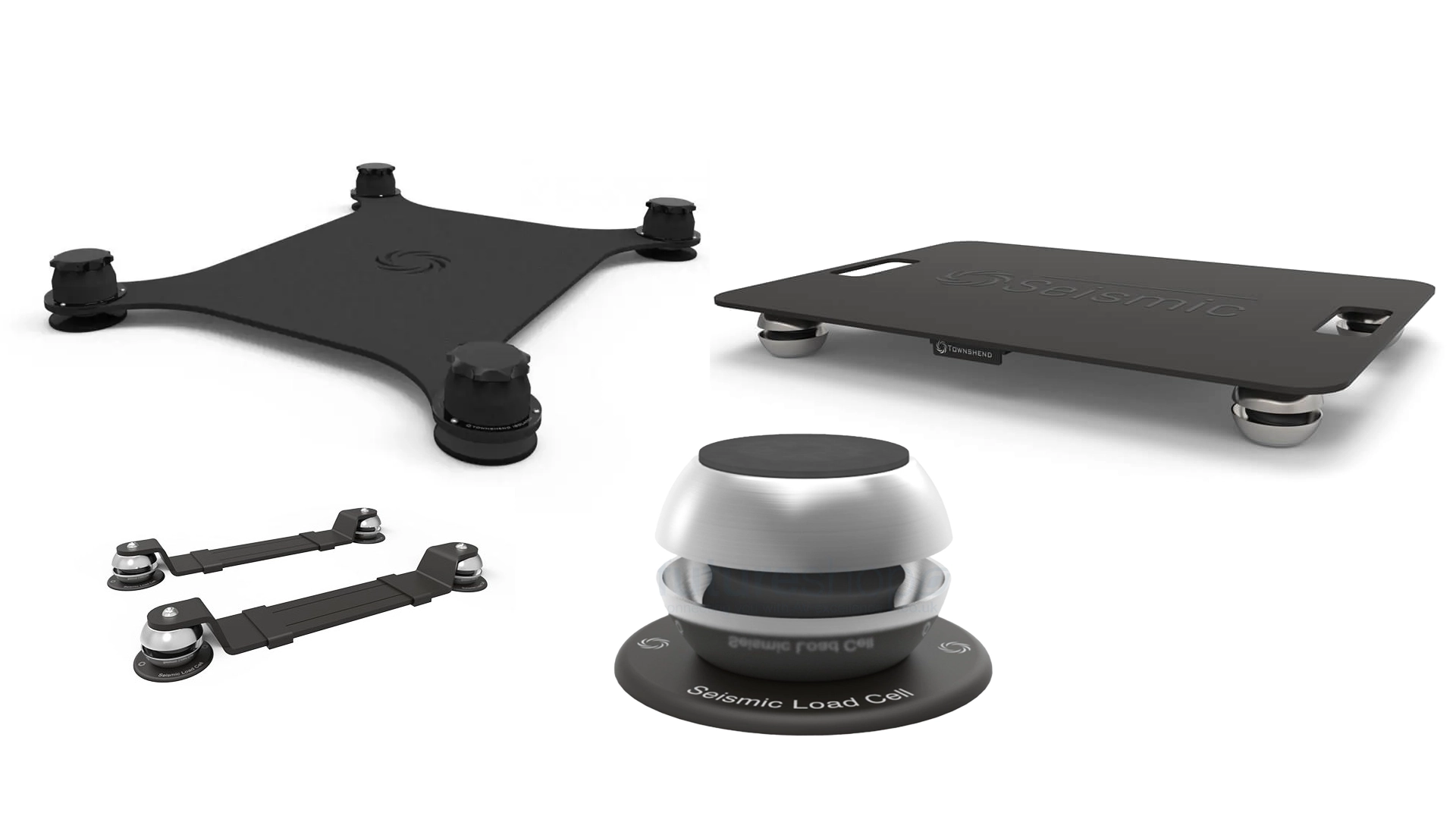
The Rock turntable and Excalibur tonearm made Townshend famous by using a damping trough near the cartridge end of the arm, controlling resonance where conventional suspended decks did not. Later, Max’s attention shifted increasingly to seismic energy entering an audio system through floors and furniture. Seismic Pods, Podiums, Bars and Corners use compliant spring-and-damper structures selected for load, isolating loudspeakers, equipment racks and individual components at very low frequencies.
Townshend’s catalogue also includes the Allegri transformer-based passive preamplifiers, Super Tweeters and F1 Fractal cables, reflecting Max’s willingness to work across mechanical, electrical and acoustic boundaries. Some of his cable and isolation explanations challenged conventional industry thinking and remain subjects for listening and measurement, but the products are not generic accessories with a story added later. They emerged from specific engineering questions pursued over decades. Townshend Audio’s legacy is precisely that restlessness: from stylus geometry and tonearm damping to whole-system isolation, Max repeatedly identified energy paths others treated as fixed and built an adjustable product around them.
Viablue

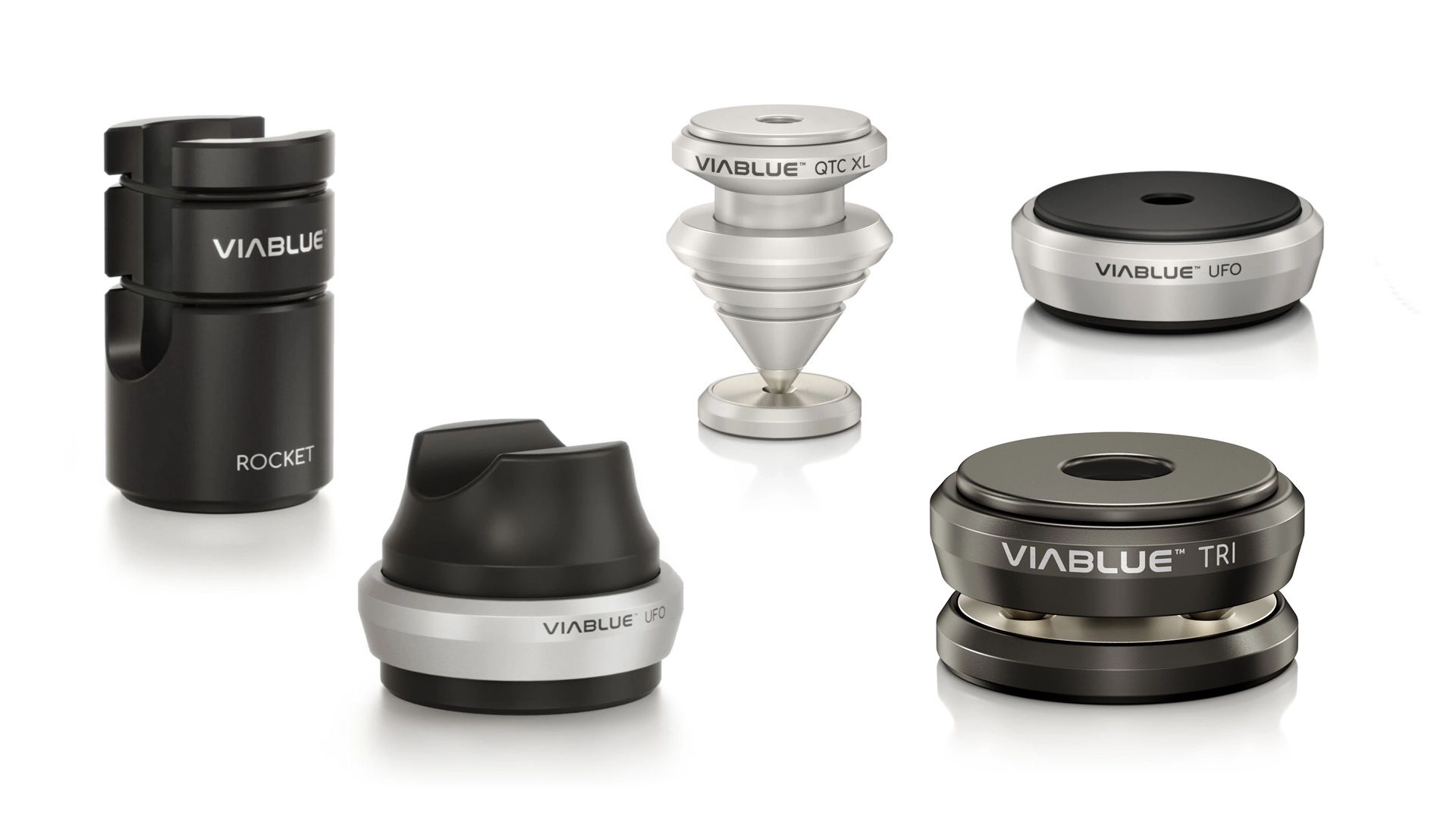
VIABLUE is a German manufacturer of cables, connectors and resonance-control accessories whose products are engineered and assembled as complete interfaces rather than as bulk wire with decorative plugs. Established in 2001, the company develops its range in Malsch and performs cable assembly by hand in Germany. Its catalogue covers analogue RCA and XLR interconnects, phono cables, loudspeaker and subwoofer cables, USB, Ethernet, optical and coaxial digital connections, as well as mains products and installation cable. Silver-plated oxygen-free copper strands, multiple shields and carefully separated conductor groups recur across the range. VIABLUE AIR technology uses air-filled tubes to reduce dielectric contact around critical conductors, while current SC-6 AIR and NF-S6 AIR products show how the company carries this principle into speaker and line-level applications. Connectors are treated as their own engineering family. T6s and T8 plugs use substantial full-metal housings, strain relief and interchangeable contact formats, allowing factory-finished cables and custom assemblies to share a consistent mechanical interface. The brand also makes braided sleeves, splitters and ferrules for installers, plus UFO absorbers, Rocket cable lifters, QTC spikes and related accessories for equipment and loudspeakers. That breadth is useful because it reveals VIABLUE’s real strength: a system of compatible cable construction, termination and mechanical finishing produced to repeatable standards. The visual language is bold, but beneath it is a practical German manufacturing proposition—specialist materials, serviceable connectors and enough formats to wire an entire stereo, cinema or network-audio installation coherently.
VooDoo Cable

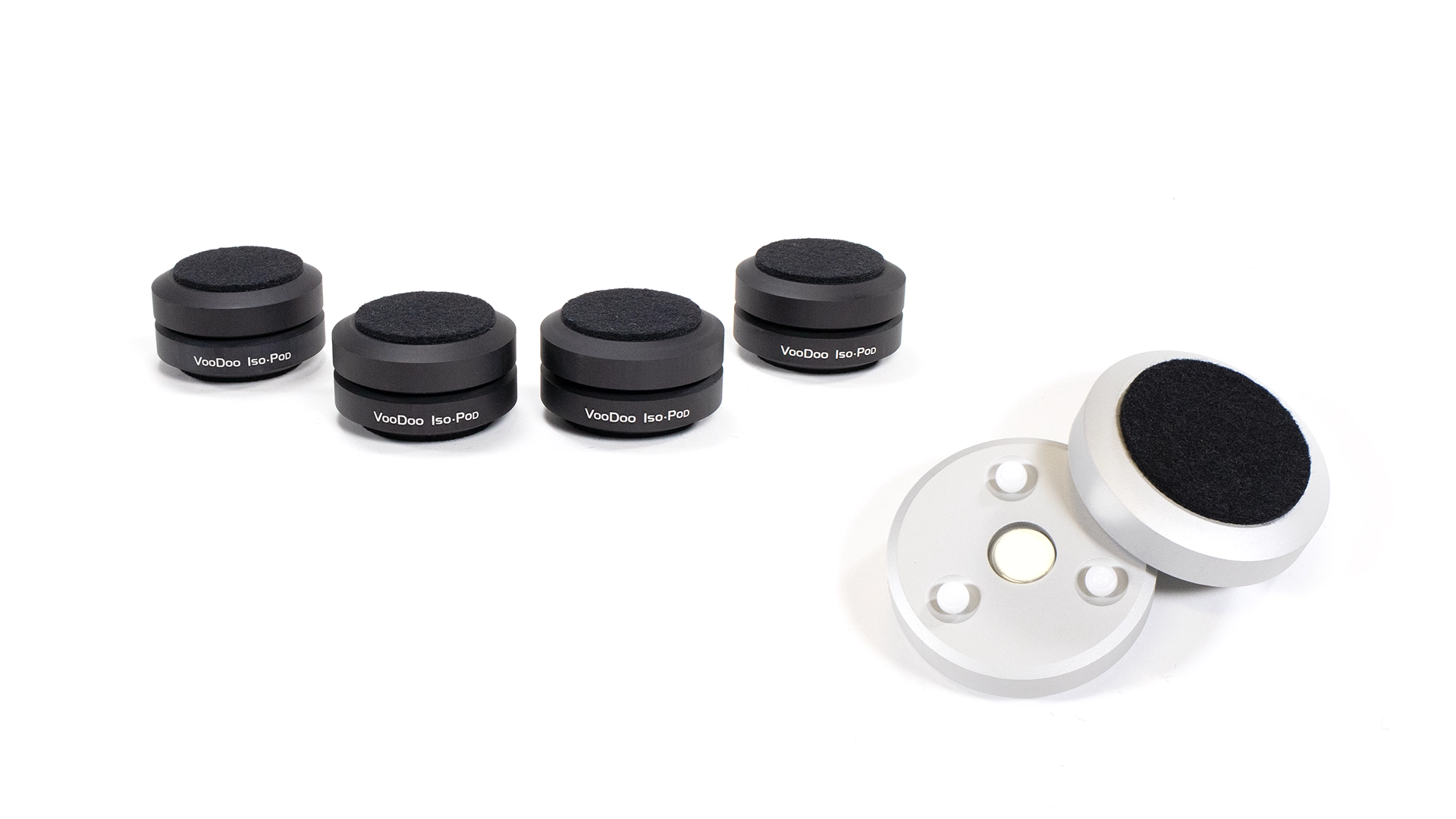
VooDoo Cable is a small American manufacturer that builds audio and video cables to order in Oakland, California. Since 1999, the company has centred its work on conductor preparation rather than buying finished bulk cable and adding connectors. Copper and silver conductors are selected for each application, wound in proprietary geometries and insulated with fluoropolymers such as PTFE; shielding and connectors are treated as parts of the same electrical system. The brand’s signature process is Cold Fusion, a computer-controlled cryogenic cycle applied to conductors, shields and connector parts. VooDoo describes slow cooling, immersion or vapour exposure near liquid-nitrogen temperature and controlled return to ambient conditions, and attributes lower resistance and more stable metallurgy to the treatment. Those sonic benefits are the manufacturer’s claim, but the process itself is a consistent part of the company’s production rather than a decorative option. The catalogue spans analogue interconnects, phono and digital cables, loudspeaker cables, headphone leads and an extensive family of power cords and distribution products. Different models combine high-purity copper, silver or the company’s Cryo-Alloy formulations with application-specific dielectric and shielding arrangements. Custom lengths and terminations are normal because each cable is assembled in-house. VooDoo Cable’s identity therefore rests less on one famous model than on a repeatable workshop method: raw conductors, controlled geometry, cryogenic processing and hand termination carried across every connection in an audio system.
Wilson Audio

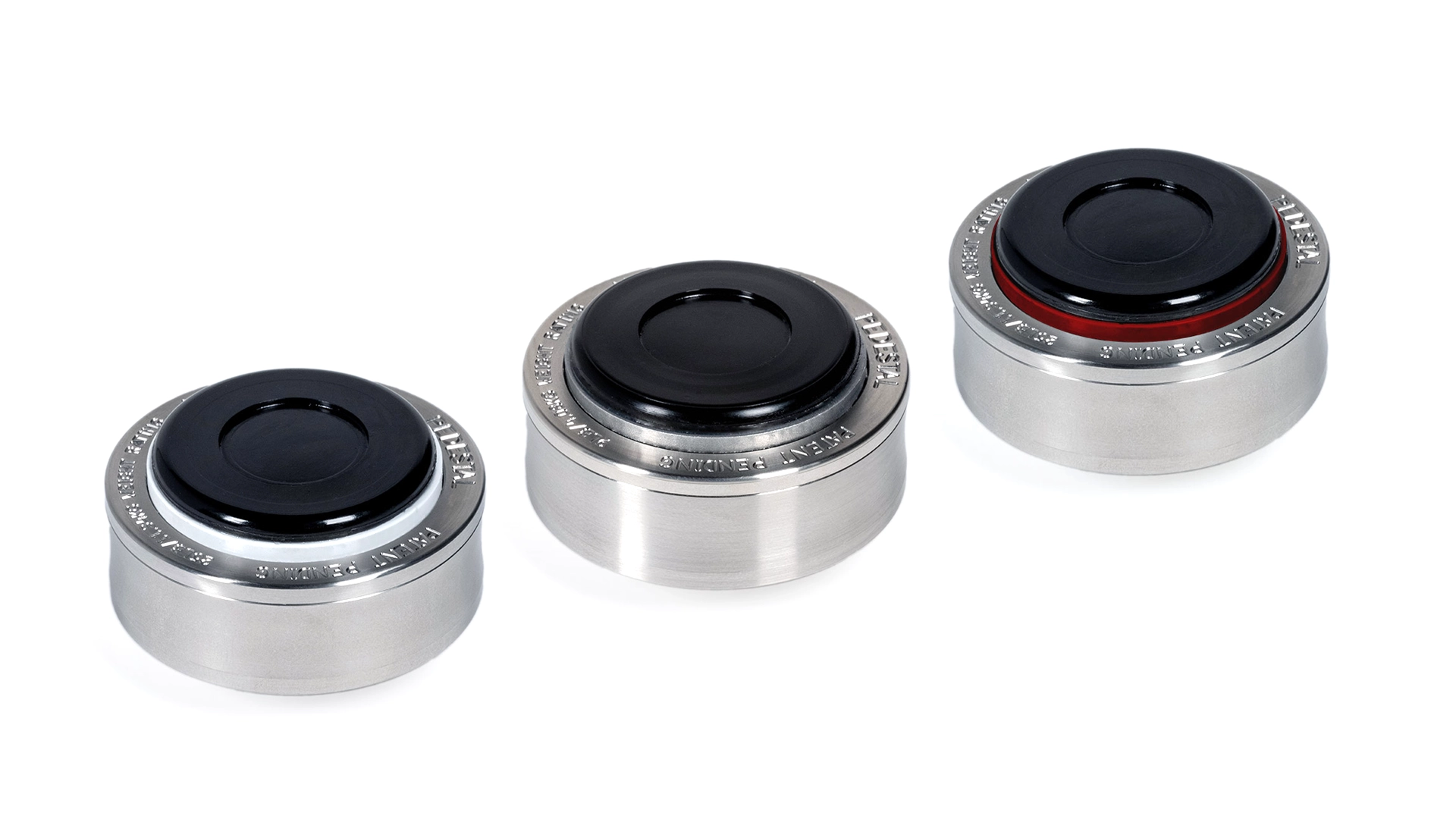
Wilson Audio is the Utah loudspeaker company founded in 1974 by David A. Wilson and Sheryl Lee Wilson. David began by building monitoring tools for his own recordings, and the original WAMM—Wilson Audio Modular Monitor—made the company’s defining concerns visible: dynamic range, low cabinet coloration and precise alignment of drivers in time. The compact WATT monitor, created for location recording and later paired with the Puppy bass module, became one of high-end audio’s most recognisable loudspeaker systems. Modern Wilson designs continue that lineage with separate, adjustable modules for midrange and treble, allowing installation technicians to align their acoustic arrival at the listening seat. The cabinets use proprietary composites rather than ordinary MDF: X-Material supplies rigidity and damping, S-Material is applied where a different mechanical behaviour is useful, and newer formulations are selected for particular enclosure sections. Sasha V, Alexia V and Alexx V scale the modular architecture, while SabrinaX and TuneTot bring Wilson construction to simpler enclosures; Chronosonic XVX and the Master Chronosonic remain statement systems descended from WAMM. Wilson also develops its own crossover components and measurement procedures, and setup geometry is documented for each room rather than left to visual approximation. After David’s death in 2018, his son Daryl Wilson continued as CEO and principal designer, with Sheryl and the family still central to the company. The brand’s individuality lies in treating a loudspeaker as an adjustable acoustic instrument whose materials, driver positions and installation are engineered together.