
Active Powered Speakers
Active, or powered, speakers feature built-in amplifiers, creating a simplified, all-in-one audio system. By integrating the amplification directly within the speaker cabinet, manufacturers can perfectly match the electronics to the drivers for optimal performance. This often results in a cleaner signal path and eliminates the need for separate, bulky components. This index lists the brands offering active speaker solutions, from compact wireless systems and professional monitors to high-fidelity floorstanding towers.
Hi-Fi brands in the category
Summary information and image
Direct links to official websites
Acoustic Energy

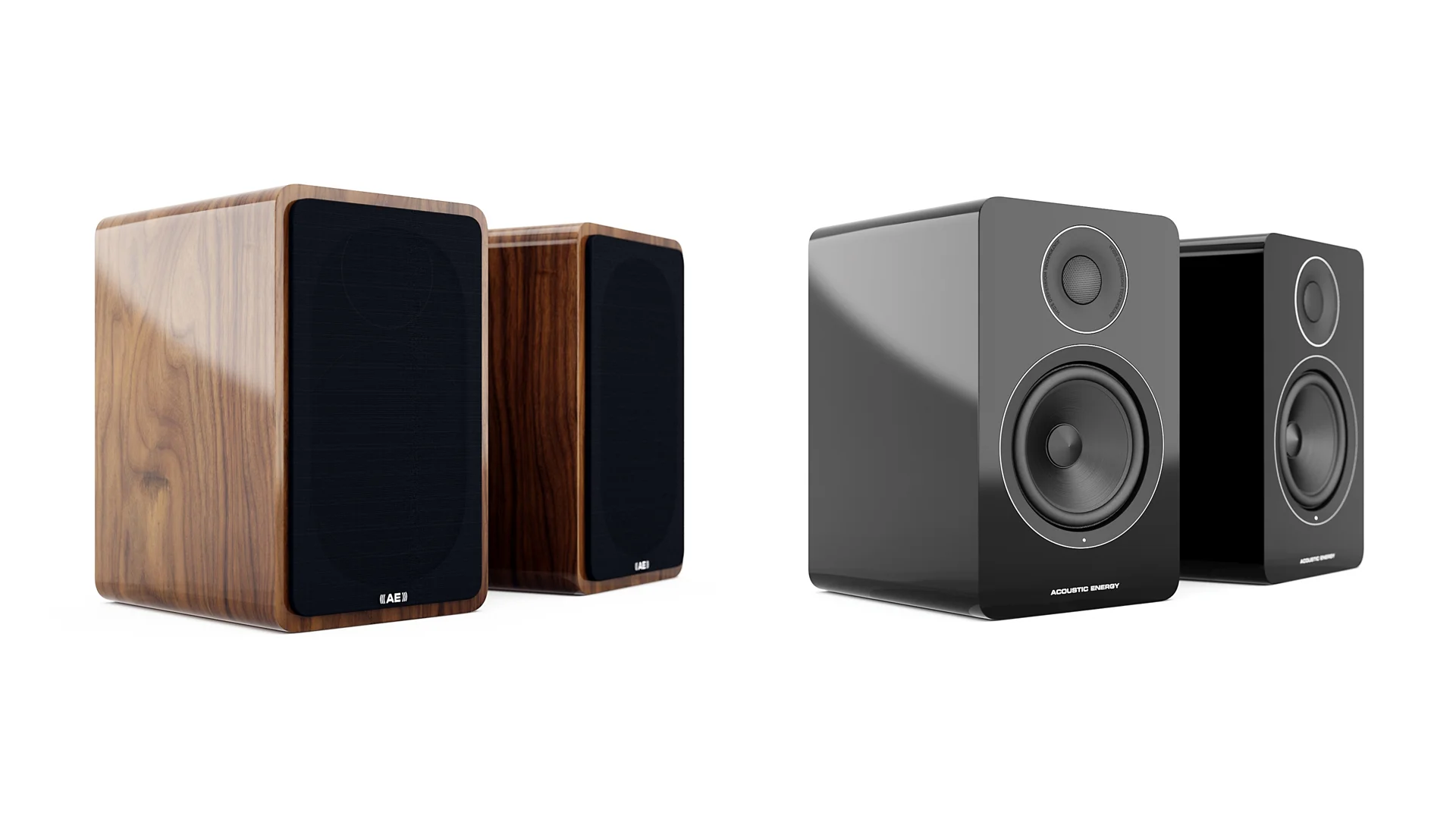
Acoustic Energy’s story began with the compact AE1, and its loudspeakers continue to explore how driver and cabinet design can deliver substantial performance from domestic-sized enclosures. The British company develops standmount and floorstanding speakers, with different materials chosen for different ranges. Corinium, for example, combines carbon-fibre midrange and bass cones with a soft-dome tweeter, an aluminium front baffle and a layered Resonance Suppression Composite cabinet. Founded in London in 1987, Acoustic Energy links its original compact-monitor heritage with larger home-listening designs.
Airpulse

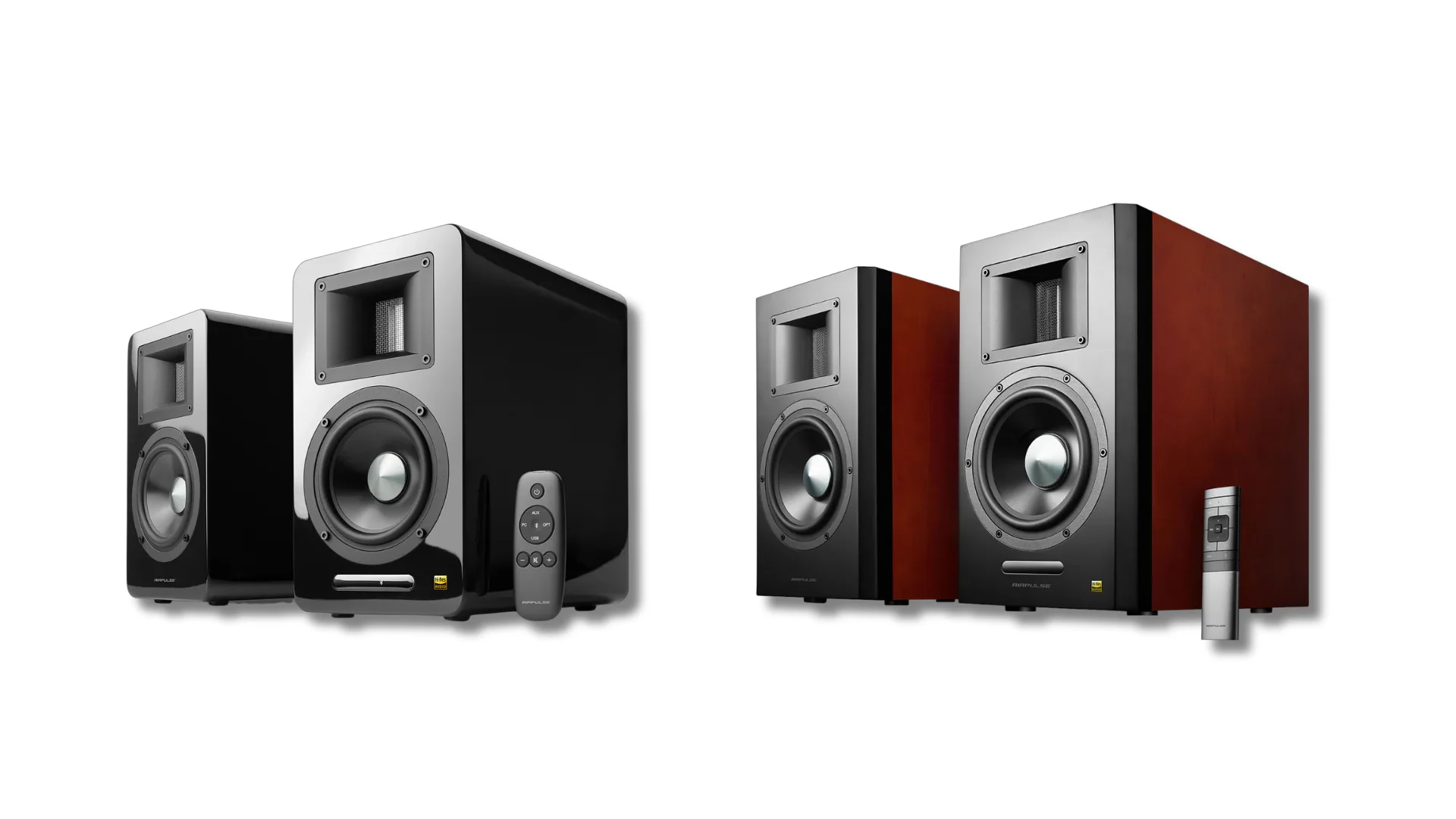
Airpulse puts Phil Jones’s loudspeaker engineering into active speakers that need no separate power amplifier. The A100 illustrates the approach: a horn-loaded ribbon tweeter works with an aluminium-cone mid/bass driver, with amplification built into the system. USB, optical, analogue and Bluetooth inputs allow the same pair to serve a computer, television or other music source, while a subwoofer output provides an expansion option. The A-series also includes larger designs such as the A300, extending the same active-speaker concept to different listening spaces. Airpulse’s identity lies in this combination of distinctive driver design and a self-contained playback system, rather than Bluetooth convenience alone.
Argon Audio

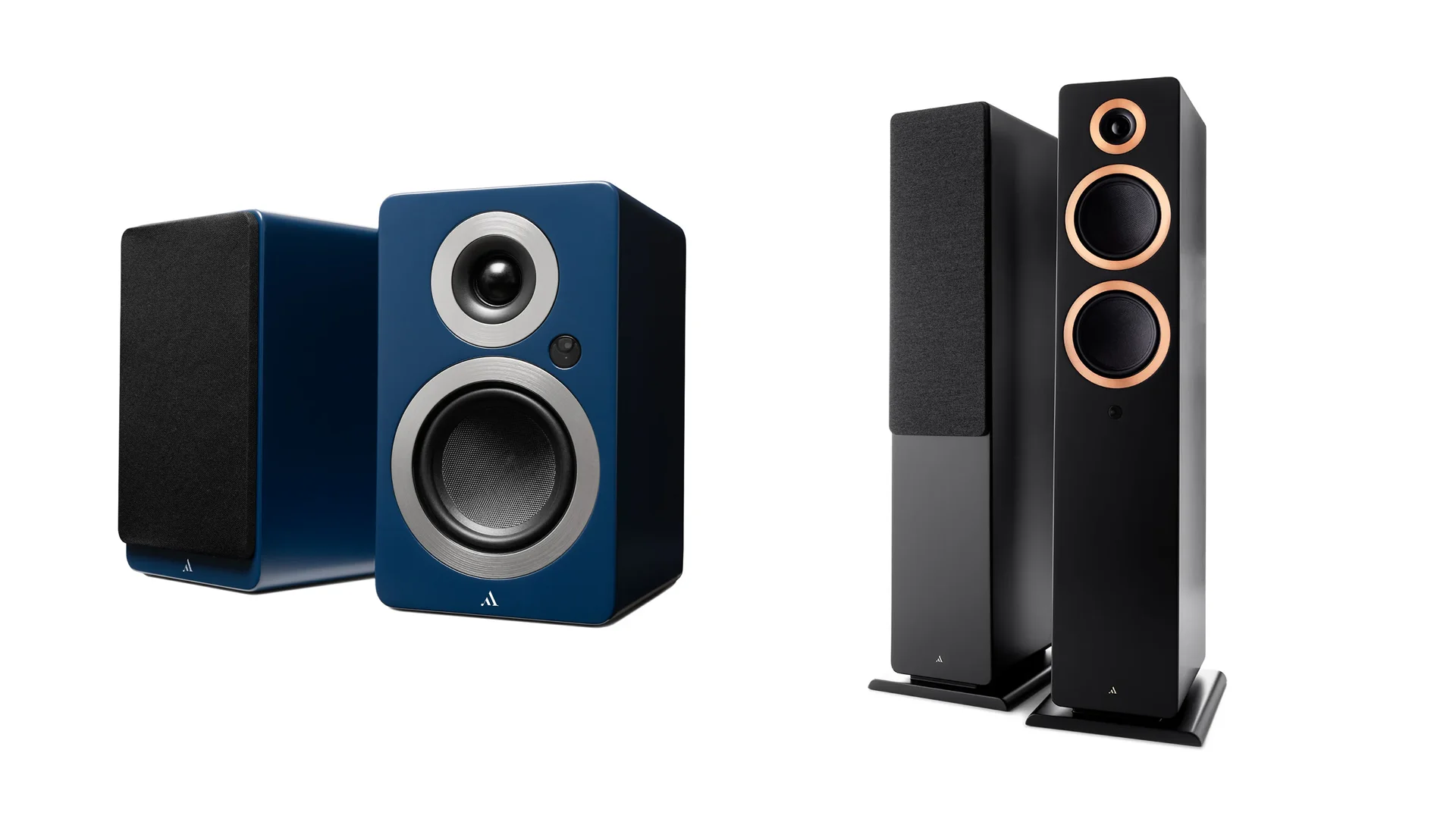
Argon Audio makes compact, affordable hi-fi that reduces the number of separate boxes needed to start listening. Its Danish roots are in HiFi Klubben, where Klaus Philipsen helped develop the brand in the early 2000s. A DAB radio was an early product, followed by active loudspeakers and turntables; the business became a separate limited company in 2019. Today, FENRIS active speakers combine amplification with connections for several sources, including television, while the turntable range offers a straightforward entry into vinyl. The consistent idea is a usable first system—or a smaller second one—with restrained Scandinavian styling and functions selected around everyday listening.
Audio Pro

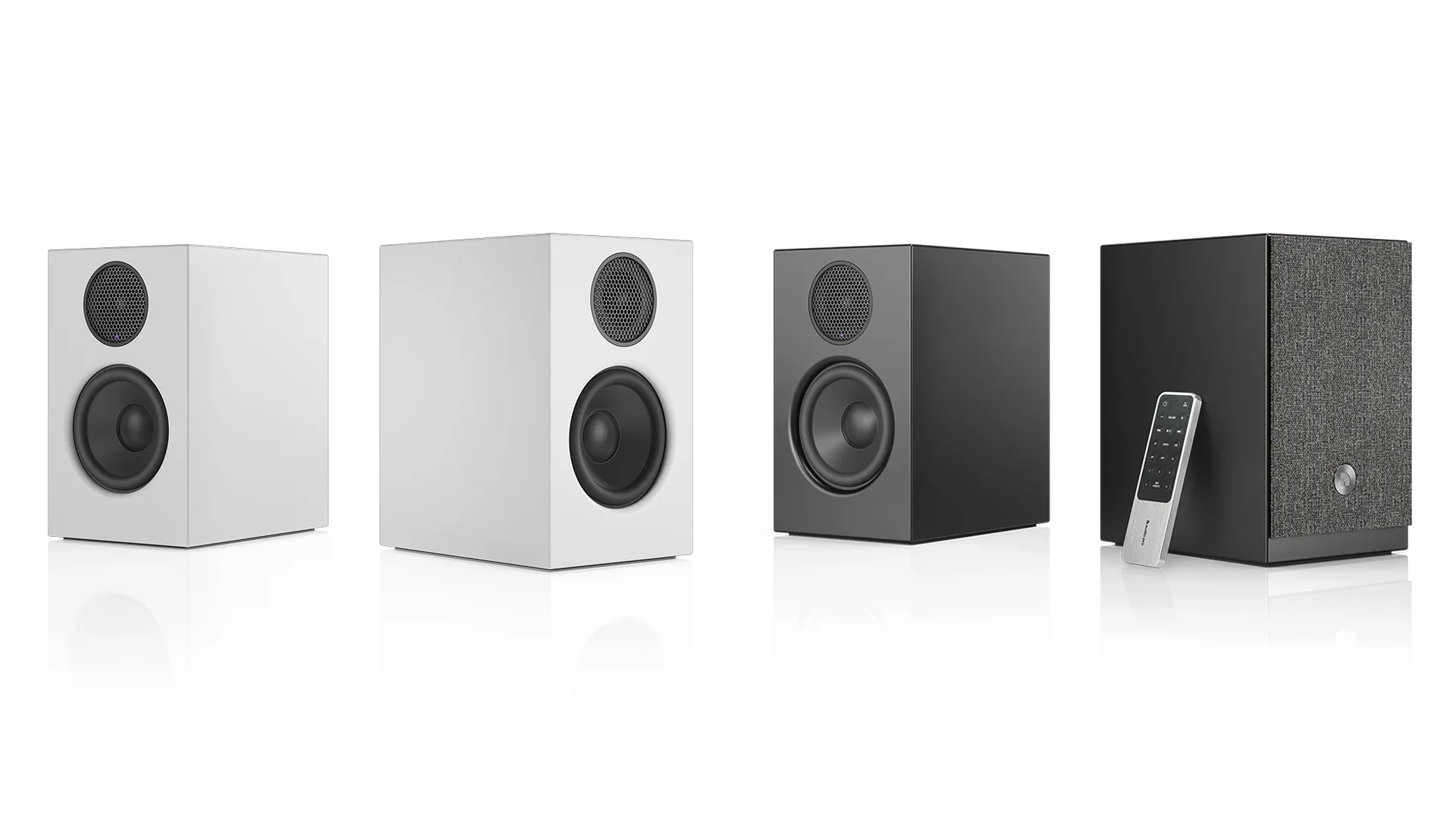
Audio Pro was building compact powered speakers long before wireless multiroom audio became a consumer category. The Swedish company started in 1978 with active speakers and subwoofers developed around engineer Karl-Erik Ståhl’s ACE-Bass technology, which uses amplifier control to obtain deeper, cleaner bass from a small enclosure. The B2.50 subwoofer and A4.14 active speaker established that technical direction. Today’s A, C and Drumfire families translate the same small-box, powered-speaker idea into Wi-Fi, Bluetooth and multiroom products, while models such as C20 also connect televisions and analogue sources. Scandinavian form, direct operation and unusually ambitious bass for the cabinet size remain more useful identifiers than generic smart-speaker features. The previous 1970 foundation date was incorrect.
Audioengine

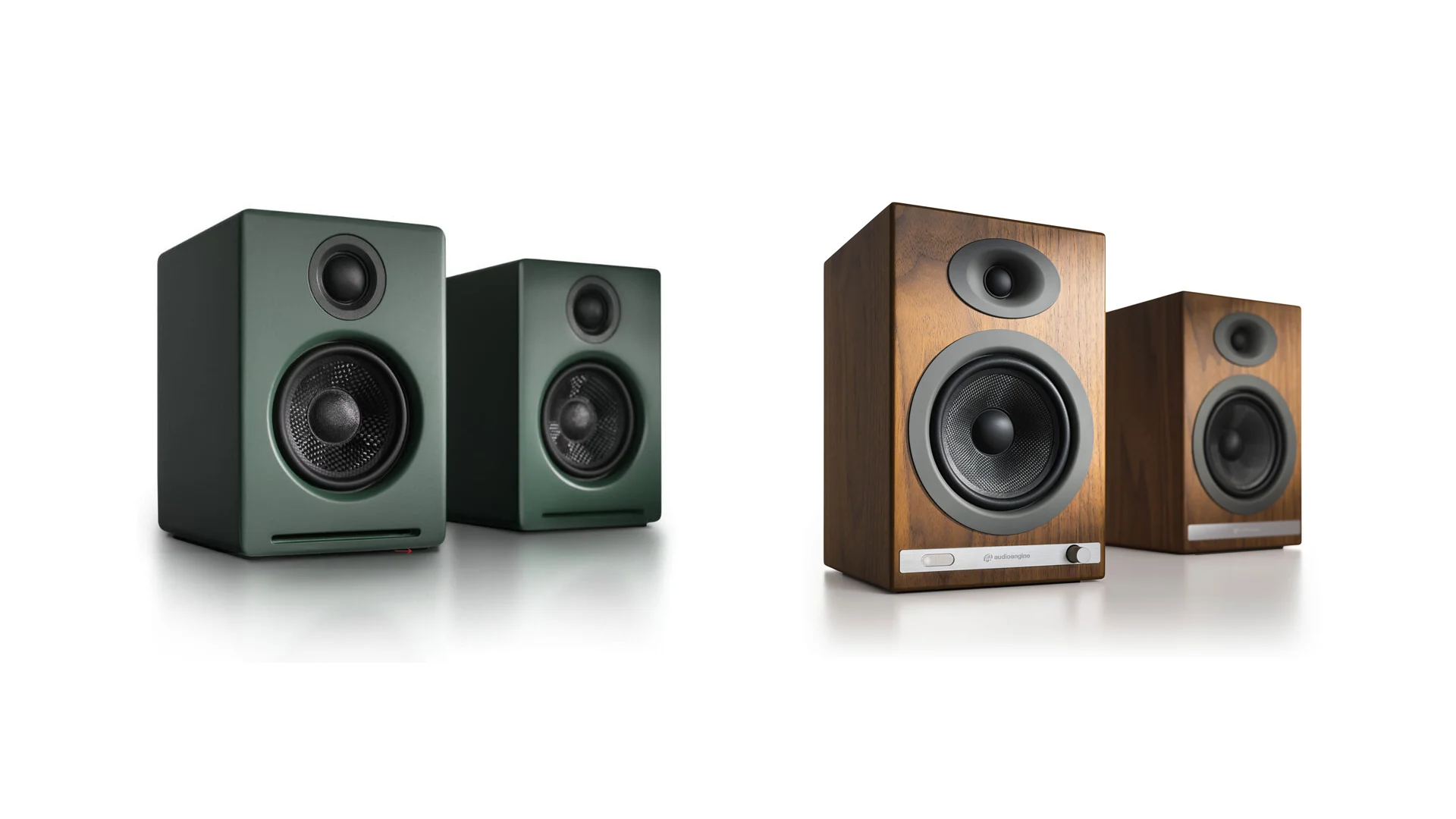
Audioengine helped make a pair of compact powered speakers a credible main music system for a desk, office or small room. Industry veterans Brady and Dave founded the company in Austin, Texas, in 2005 after work with firms including Harman, Apple, Gibson and Alesis. The original A5 put amplification inside a conventional wooden bookshelf cabinet and connected directly to everyday sources. Subsequent A2+, A5+ and HD models added USB, optical and high-quality Bluetooth options without turning setup into a network project. The range also includes passive speakers, subwoofers, DAC/headphone amplifiers and receivers such as the B1 for adding wireless playback to an existing system. Audioengine’s consistent strength is integration: useful connections, matched amplification and domestic-scale cabinets in products that remain recognisably stereo pairs.
Bang & Olufsen

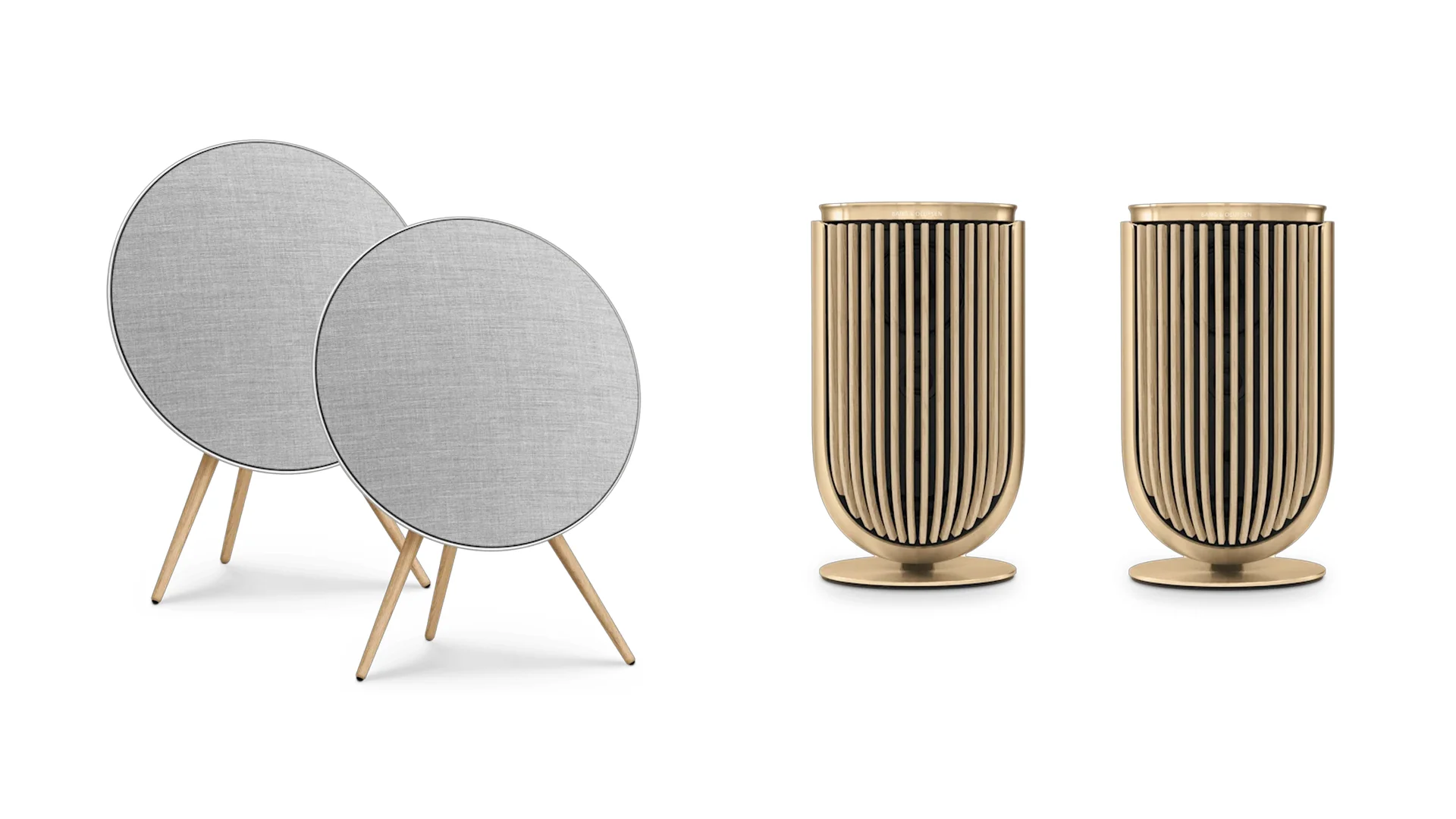
Bang & Olufsen has spent a century treating sound, mechanics and furniture-scale design as one discipline. Engineers Peter Bang and Svend Olufsen founded the Danish company in 1925 at the Olufsen family estate, Quistrup. From early radios and the mains-powered Eliminator to Beomaster systems and active Beolab loudspeakers, B&O repeatedly integrated technology that other manufacturers left in separate boxes. Beolab 90 represents the engineering extreme with multiple amplified drivers, beam-width control and room compensation; Beosound speakers, Beovision televisions, soundbars and Beoplay headphones carry the approach into everyday rooms and portable use. Aluminium machining, acoustic textiles, motorised movement and long software support are used as parts of the experience rather than surface decoration. The strongest B&O products are identifiable before music plays, yet their form is built around active acoustic and interaction engineering.
Betonart Audio

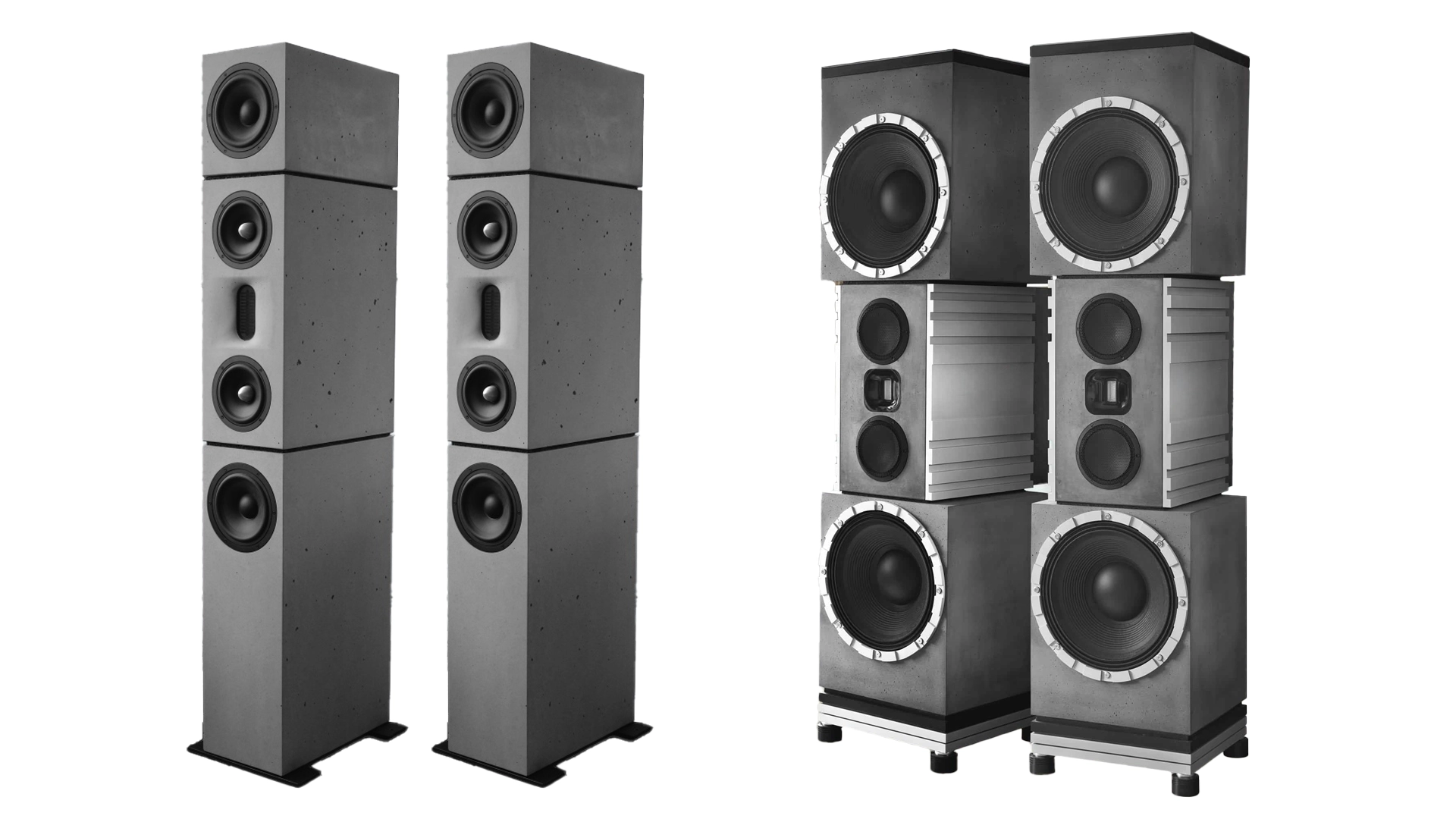
Betonart Audio uses carbon-reinforced concrete to build loudspeaker enclosures whose mass, rigidity and damping are difficult to achieve with conventional wood panels. German physicist Jörg Wähdel founded and directs the specialist workshop, developing monolithic shells and mechanically decoupled internal modules rather than treating concrete as a decorative outer skin. The range includes large Tycoon and Tonale Pro systems, the more compact Diverso and the sculptural Syno, offered in active or passive configurations according to model. Complex moulding allows curved forms and controlled wall thickness while the dense structure limits cabinet radiation around the drivers. Betonart’s individuality lies in combining materials engineering, hand finishing and loudspeaker development in one process. Unsupported numerical comparisons for stiffness, weight and material content have been removed, and no exact foundation year is given because a reliable public date could not be confirmed.
Bluesound

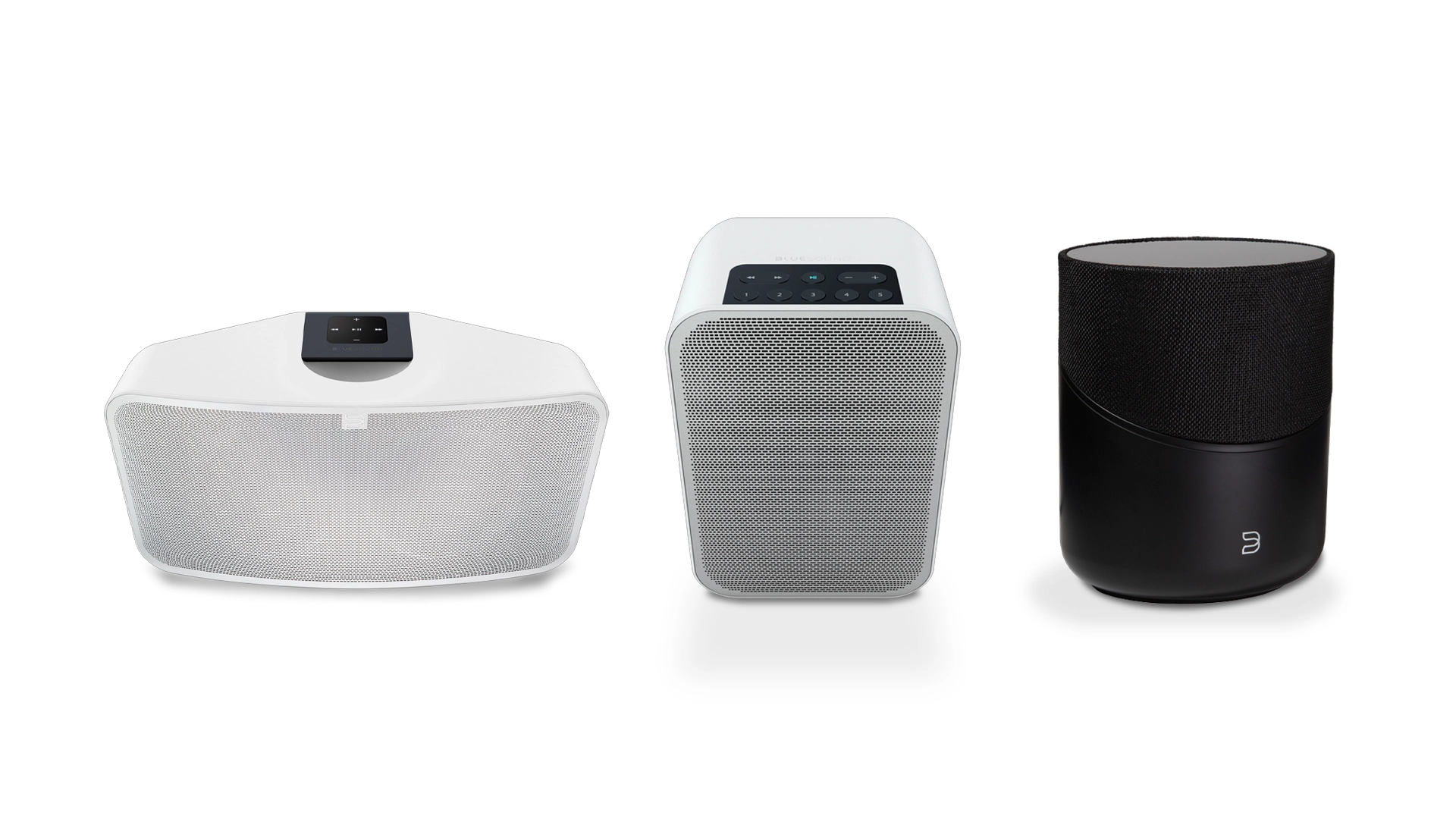
Bluesound brought high-resolution multi-room audio into a compact product family without reducing the system to background listening. Lenbrook launched the Canadian brand in 2013 around BluOS, a network platform that joins local libraries, internet radio and numerous streaming services in one app-controlled ecosystem. NODE streamers add BluOS to an existing hi-fi system; POWERNODE models include speaker amplification; VAULT combines playback with CD ripping and internal storage; PULSE wireless speakers and soundbars extend the platform through the home. Products communicate over the network, can be grouped by room and support lossless high-resolution playback up to 24-bit/192 kHz where the source and model allow. Bluesound’s advantage is the relationship between mature control software and purpose-built audio hardware, backed by Lenbrook’s longer experience with NAD and PSB rather than a stand-alone wireless speaker app.
DALI

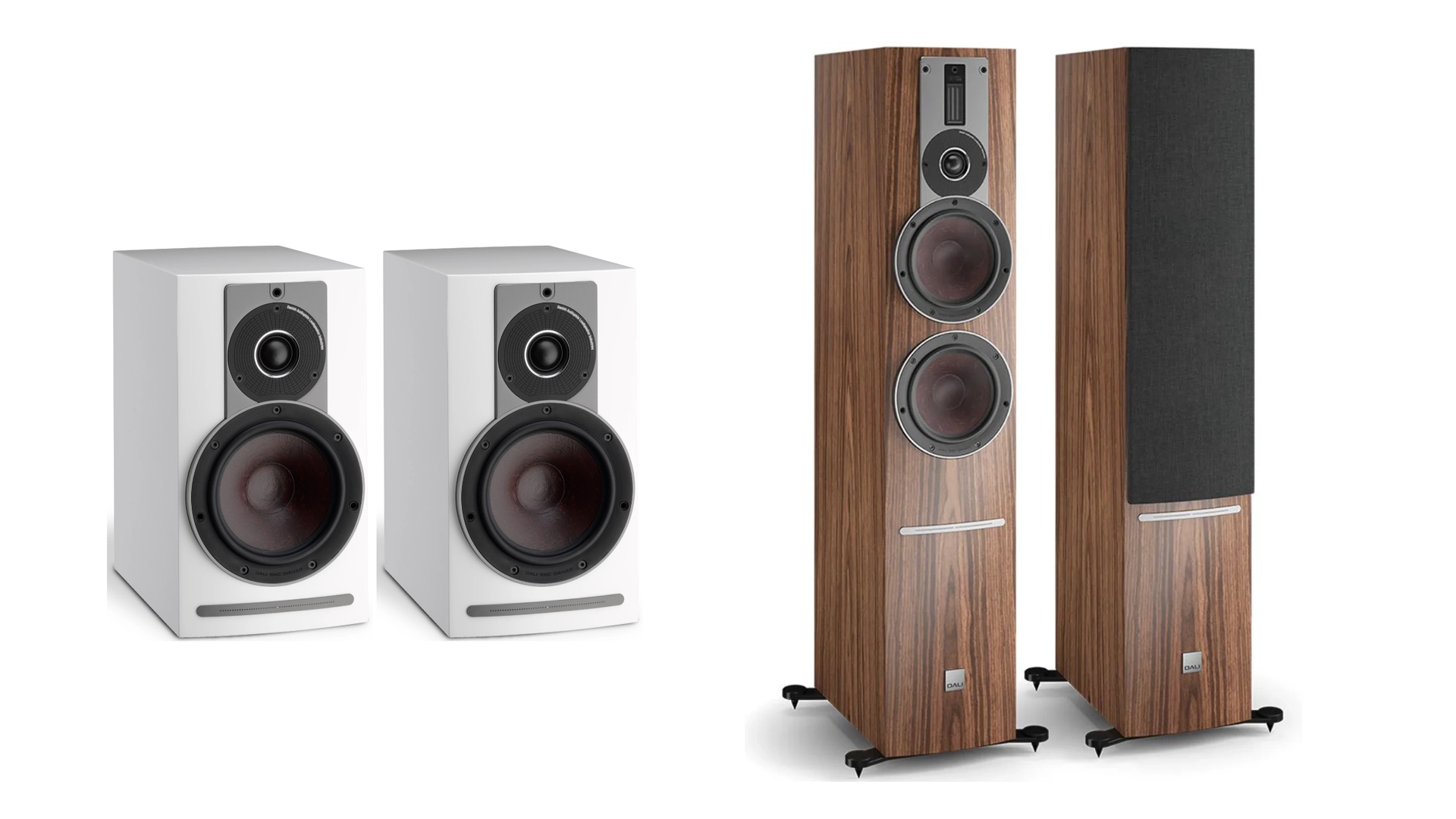
DALI — Danish Audiophile Loudspeaker Industries — was founded by Peter Lyngdorf in 1983 to build loudspeakers that reproduce music honestly across a wide listening area. The company opened its factory in Nørager in 1986, creating the vertically integrated development and production base that still shapes the brand. Several technologies make a DALI speaker easy to identify technically: low-mass wood-fibre cones, wide-dispersion driver geometry, soft-dome or hybrid dome-and-ribbon tweeter modules, and in upper ranges the company’s low-loss SMC magnetic material. These choices are intended to reduce distortion and preserve consistent tonal balance when the listener is not locked to one narrow seat. DALI applies the same principles across compact, floorstanding, on-wall, active and custom-installation models, from accessible OBERON and OPTICON families through RUBIKORE and EPICON to the KORE flagship. The breadth of the catalogue is important, but the stronger story is continuity: driver materials, magnet systems and dispersion behaviour developed for statement products are progressively adapted for speakers intended for ordinary living rooms.
Elac

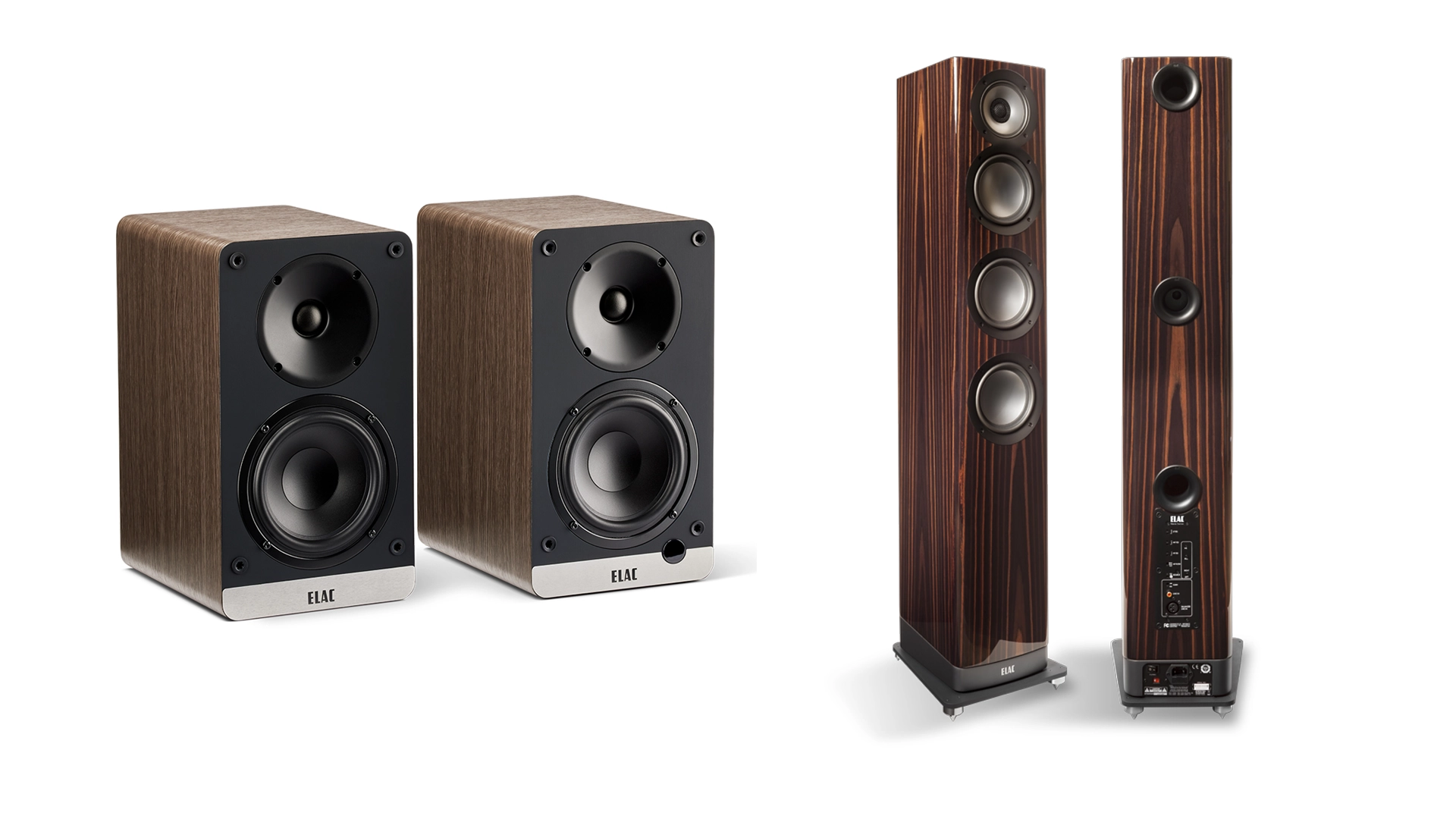
ELAC is a German audio company founded in Kiel on 1 September 1926 by Dr Heinrich Hecht, Dr Wilhelm Rudolph and Gerhard Schmidt. Its near-century history is unusually broad: the company began in electroacoustics and sonar, became a major post-war maker of turntables and cartridges, and shifted its centre of gravity to loudspeakers in the 1980s. Modern ELAC is therefore more than the affordable speakers often associated with designer Andrew Jones. The Debut and Uni-Fi families use carefully engineered cone drivers and, in Uni-Fi, concentric midrange/tweeter geometry to bring controlled directivity and coherent imaging to accessible systems. Carina, Vela and higher ranges draw on the folded JET tweeter, while active subwoofers and electronics complete stereo and cinema installations. Turntables keep the brand’s analogue history visible rather than treating it as a retro licensing exercise. ELAC’s lasting advantage is range backed by real transducer engineering: it can translate its knowledge of motors, diaphragms, wave launch and cabinet behaviour from compact entry models to elaborate floorstanders, while the 1926 date describes the actual company lineage rather than a recently revived name.
Elipson

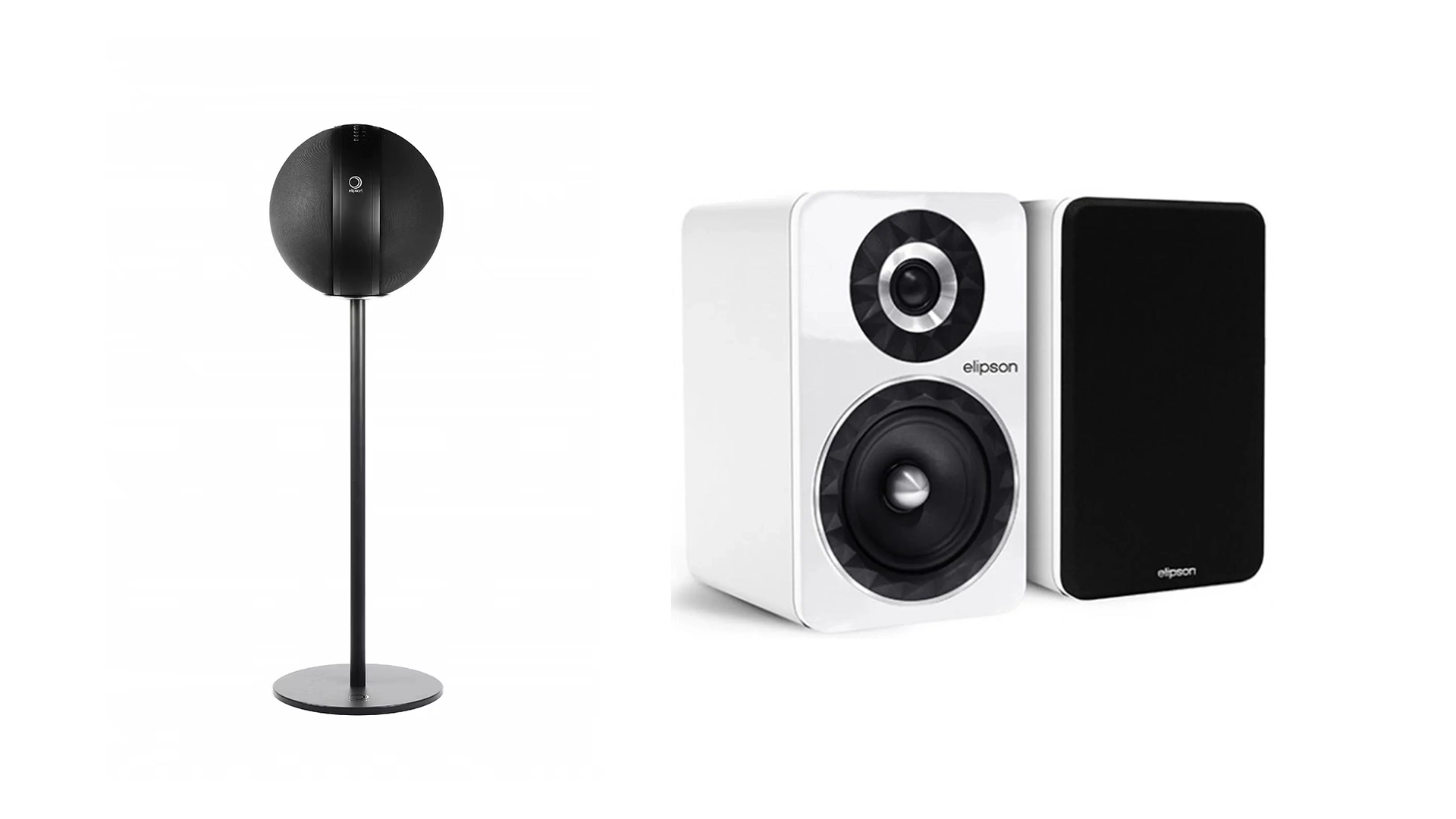
Elipson is France’s oldest surviving specialist loudspeaker name, tracing its company origin to 1938 and its distinctive acoustic identity to engineer Joseph Léon. The historical sequence deserves precision: the business began as Multimoteur, early audio research started around 1940, Léon joined in 1946 and led the company from 1948, and the Elipson name—formed from “ellipse” and the French word “son”—was adopted in 1951. Under Léon, spheres, reflectors and resonators were engineering tools for controlling diffraction, radiation and time alignment, not merely futuristic styling. The BS50 Chambord and later 402 made those experiments iconic in French broadcasting and public installations. Today the Planet series keeps the spherical enclosure visible, while Heritage models revisit large-format designs and newer Prestige, Legacy and wireless products cover conventional home systems. Elipson also offers turntables and electronics, but loudspeaker form remains its signature. Its strength is the unusually direct link between acoustic research and industrial design: shapes that are instantly recognisable because they were first chosen to solve propagation and enclosure problems.
Eltax

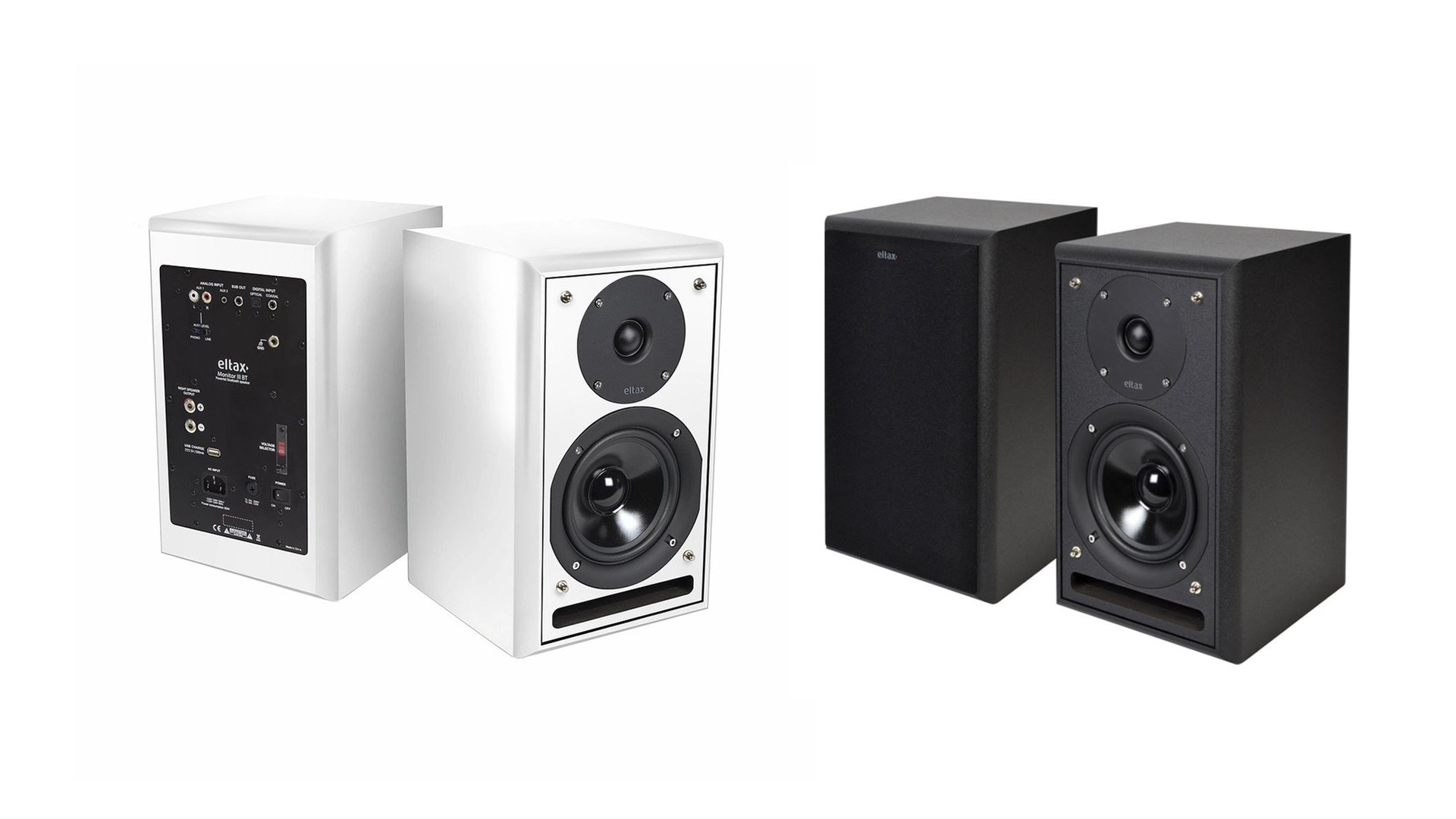
Eltax is a Danish loudspeaker brand founded in Herning in 1959 by Ingemann Marius Nielsen, initially as a hi-fi wholesaler and soon as one of Denmark’s early makers of standalone speaker systems. That documented date corrects the often repeated 1954 claim. Eltax built its reputation on straightforward, attainable speakers rather than prestige pricing, and the long-running Monitor line expresses that philosophy through compact bookshelf, floorstanding, centre and surround models that can form either a stereo pair or a complete home-cinema package. The modern Vintage series gives the range a more individual voice: broad front baffles, large cellulose-cone woofers, horn-assisted treble and high sensitivity recall 1970s studio and domestic monitors without simply reissuing an old cabinet. The imposing Monitor PWR 1959, for example, uses a 38 cm bass driver in a reinforced three-way enclosure to deliver scale and efficiency uncommon at the brand’s price level. Now part of France’s AV Industry group, Eltax remains Danish in origin and design language. Its enduring strength is accessible system building, with robust conventional engineering and enough model variety to serve first hi-fi systems, vinyl setups and multichannel rooms.
Genelec

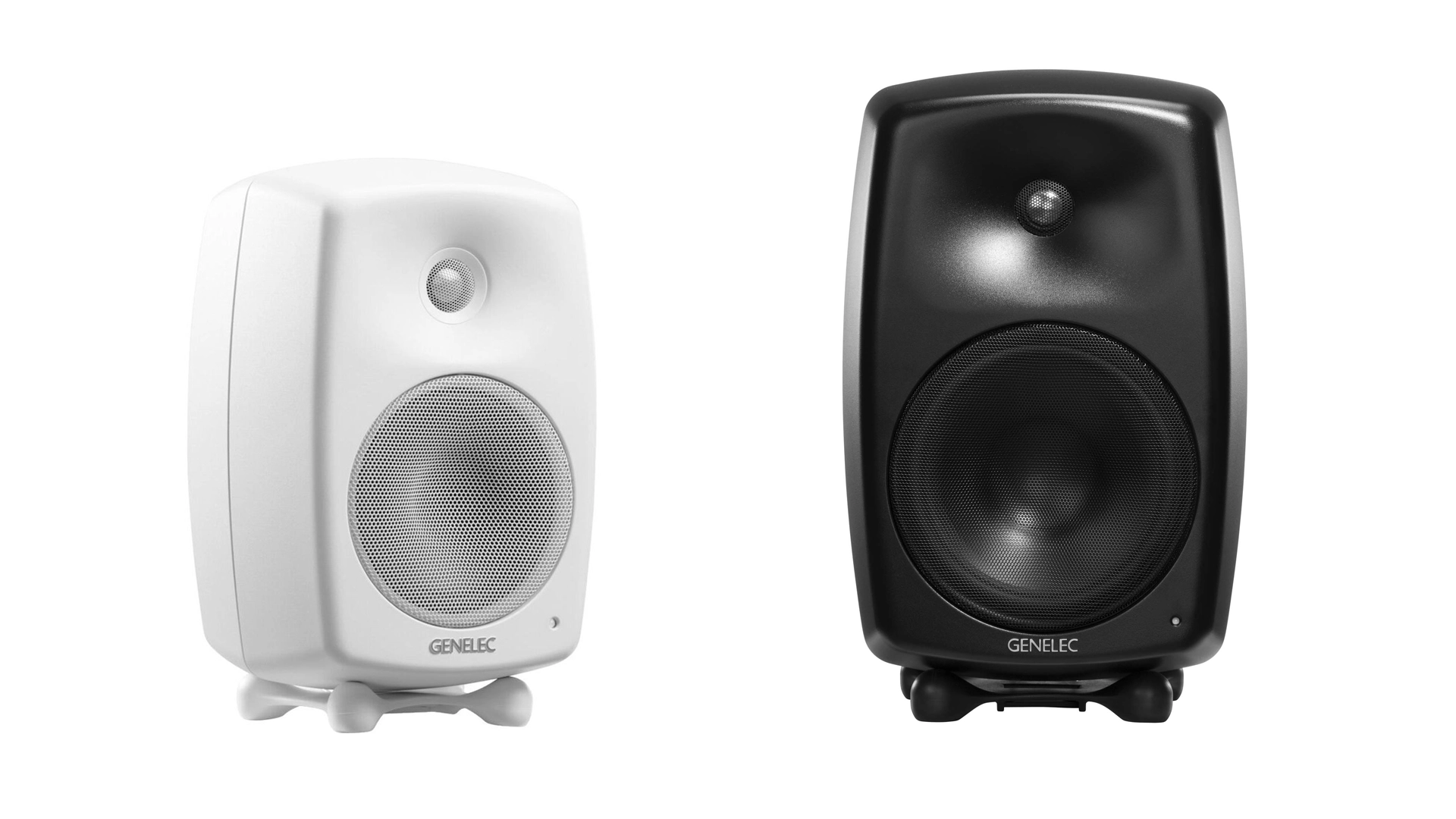
Genelec made active loudspeakers a repeatable monitoring system rather than simply placing an amplifier inside a cabinet. Ilpo Martikainen and Topi Partanen founded the company in Iisalmi in 1978 after Finnish broadcaster YLE asked them to develop a reliable active control-room monitor; the resulting S30 established separate amplification, protection, calibration controls and long-term serviceability as core principles. Modern 8000-series monitors use rounded Minimum Diffraction Enclosures, Directivity Control Waveguides and integrated reflex ports to control radiation and cabinet effects. Smart Active Monitors add DSP and network control, while GLM software measures and calibrates level, delay and room response across stereo or immersive arrays. The Ones combine a Minimum Diffraction Coaxial mid/tweeter with Acoustically Concealed Woofers to create point-source behaviour over a wide bandwidth. Genelec also serves installed audio through Smart IP and home listening through the G and F series. Product development and much of the recycled-aluminium enclosure manufacturing remain in Iisalmi, Finland.
Genuin

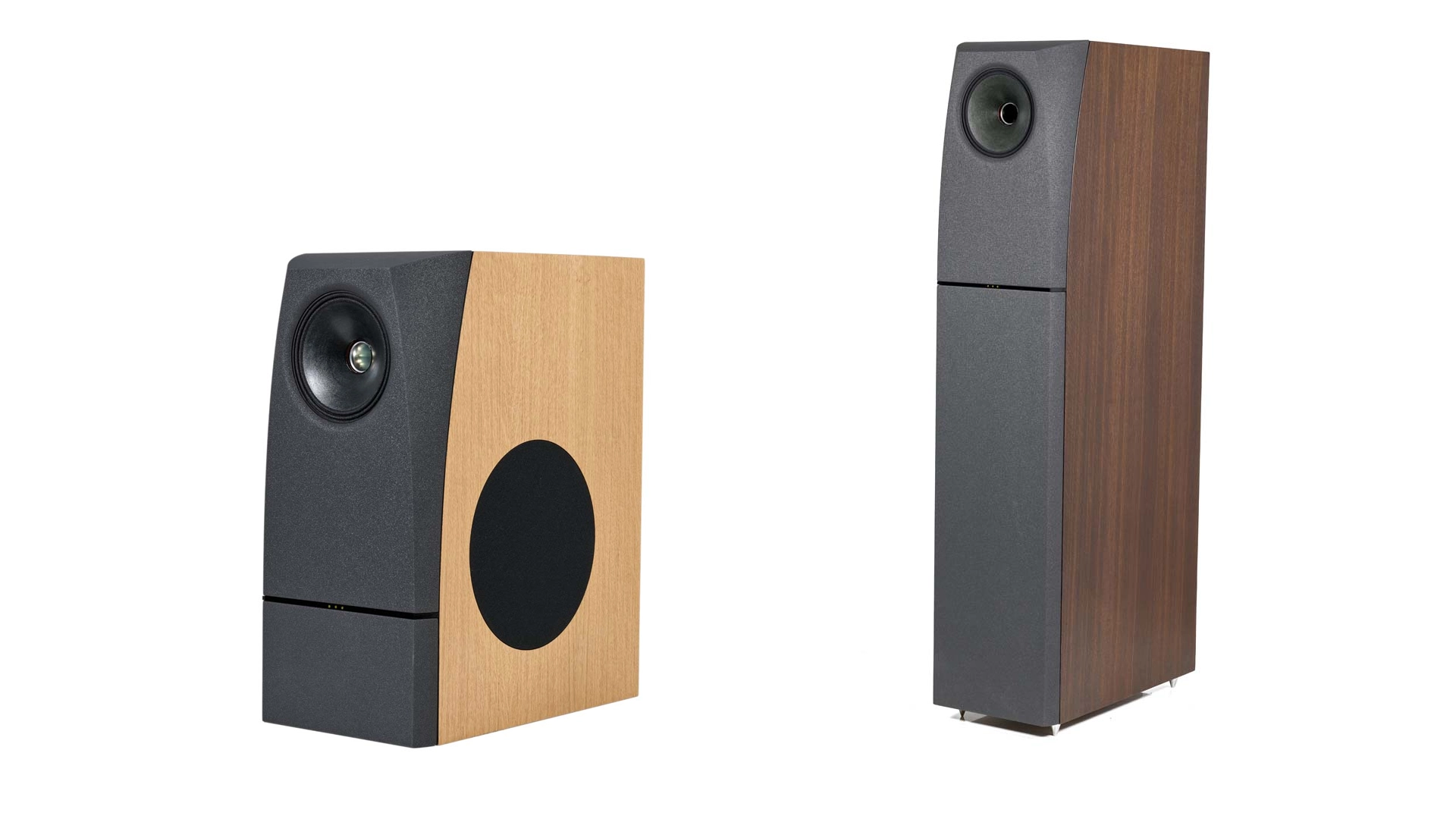
Genuin Audio is Thomas Wendt’s attempt to offer an entire high-end playback chain through commissioned German engineering rather than a single in-house designer. After decades as a listener and as owner of HiFi-Studio Cottbus, Wendt created the product line by asking recognised specialists to develop components specifically for the brand; specialised German manufacturers then build them in small quantities. The catalogue is unusually complete and its short product names describe a coherent system: drive turntable, point tonearm, sting cartridge, pearl phono preamplifier, tars music server, direct cables and the neo, ava, alex and next active loudspeakers. This allows Genuin to address the mechanical, analogue, digital and room-facing parts of reproduction as one chain while keeping each project in the hands of an appropriate expert. The understated cases reflect the company’s ‘The inside matters’ principle: engineering resources are directed toward circuit, mechanism and acoustic function, with manufacture and final quality control kept in Germany.
Goldmund

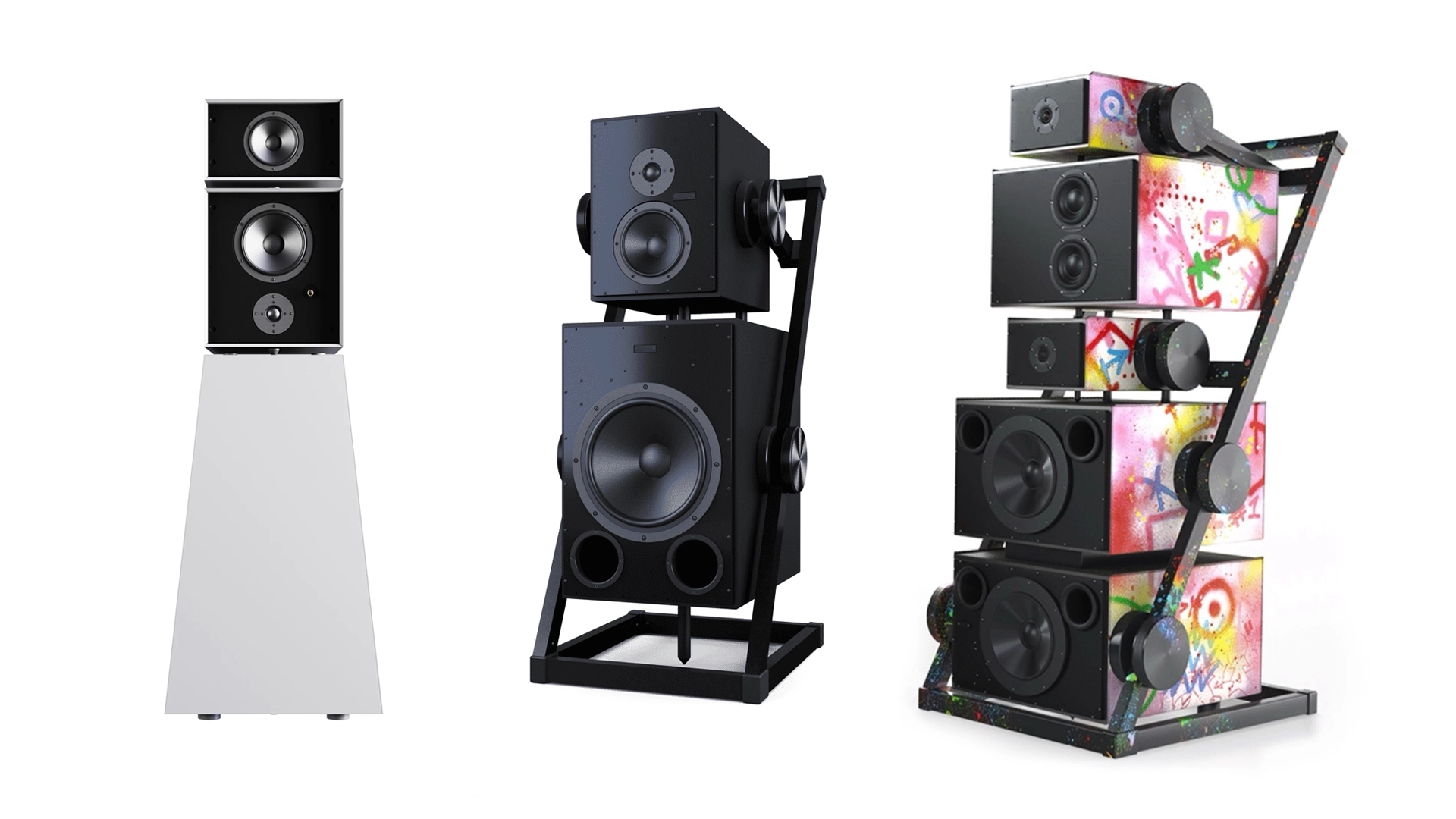
Goldmund is a Geneva-based audio house whose work joins precision mechanics, high-speed amplification and digital system control. The company began in France in 1978 with the servo-controlled T3 tonearm; Michel Reverchon acquired it in 1980 and moved it to Switzerland. The Studio direct-drive turntable and 1983 Reference established Goldmund’s Mechanical Grounding principle, intended to drain vibration through a controlled structural path. Later milestones include Mimesis electronics, Claudio Rotta-Loria’s Apologue loudspeaker, Alize digital conversion and the Proteus mathematical model used to align active speaker systems in time and amplitude. Today the range spans Telos/NextGen amplifiers, preamplifiers, music sources, processors and active or wireless loudspeakers. Goldmund is most distinctive when these elements operate as one engineered system rather than as unrelated luxury components.
HECO

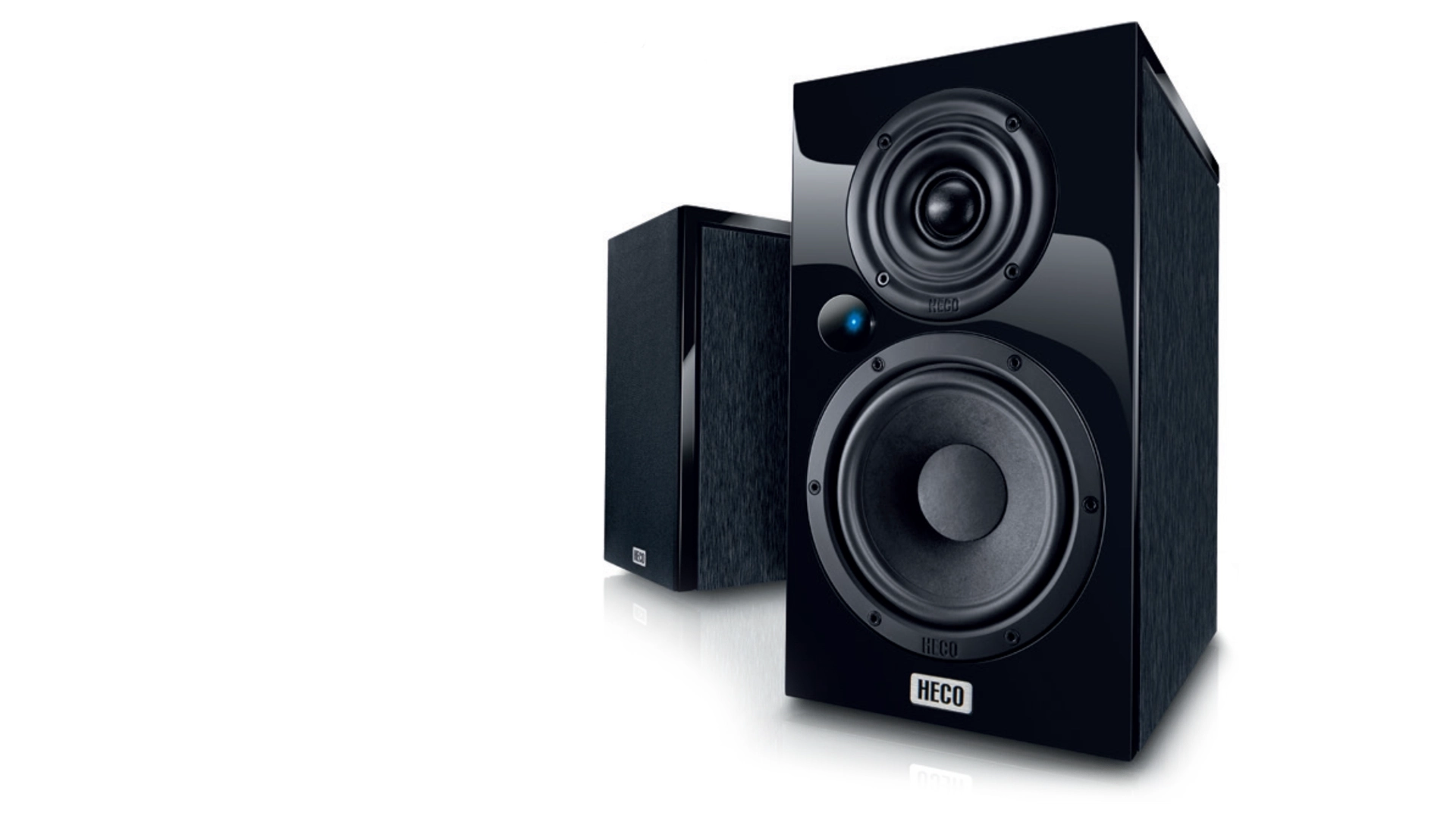
HECO is a German loudspeaker brand whose history reaches back to 1949, making it one of the country’s longest-established names in domestic audio. It produced series-manufactured speaker chassis by 1950 and has since moved through compact hi-fi boxes, ambitious floorstanders and installation speakers without abandoning in-house driver development. A recurring HECO signature is the Kraft paper cone, made from a fibre mixture that includes Nordic pine and wool for a deliberately controlled balance of stiffness and internal damping. Current designs also use the Fluktus tweeter’s computer-optimized waveguide, robust die-cast baskets and, in selected upper models, AlNiCo midrange motors. Ranges such as Victa Elite, Aurora, Celan Revolution and Direkt address different prices and aesthetics, while sharing recognizable acoustic ideas. HECO’s strength is this continuity: traditional paper-cone virtues developed with modern measurement, materials and dispersion control.
Jamo

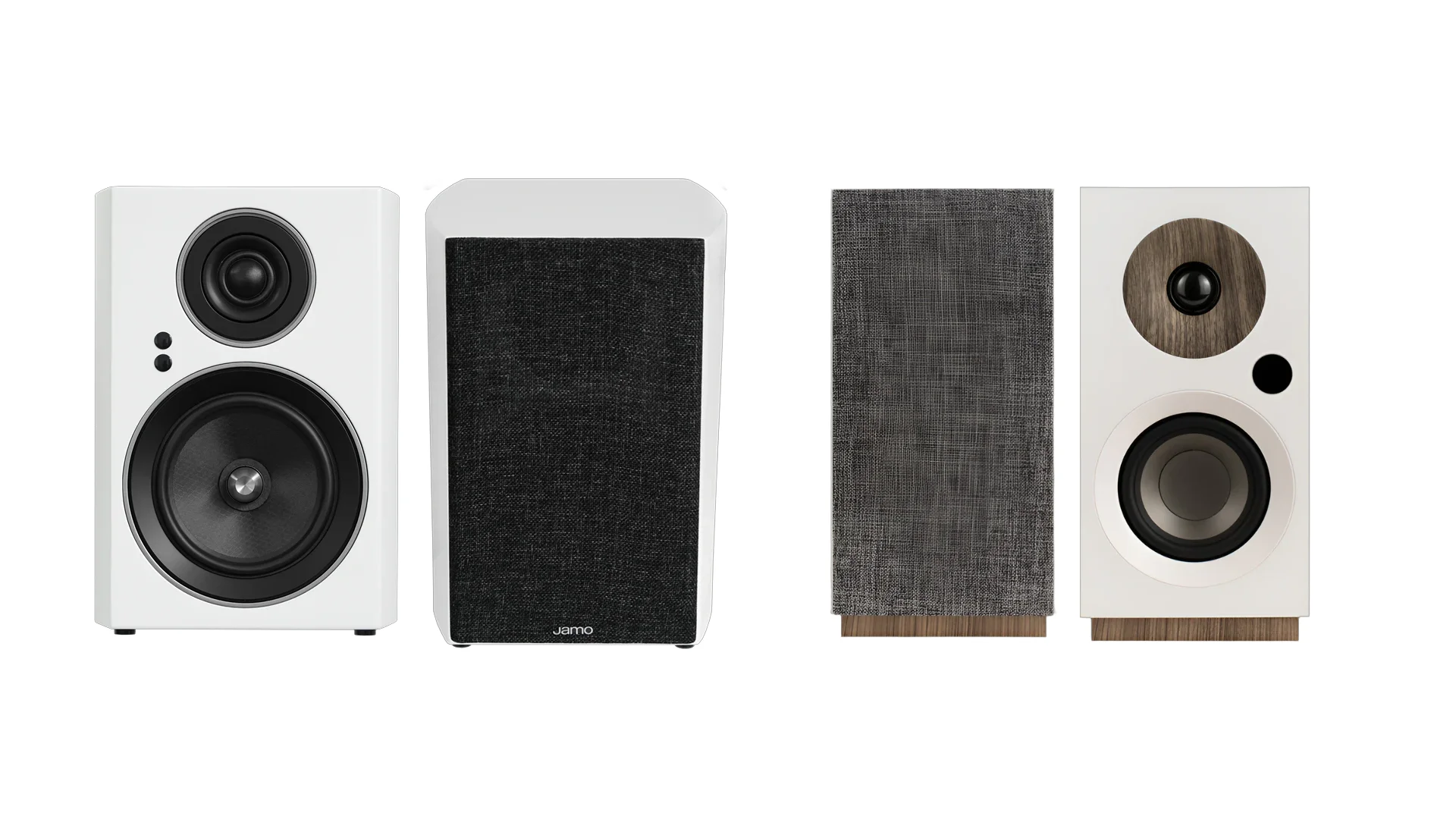
Jamo is a Danish loudspeaker name built on the idea that audio equipment should live comfortably with furniture rather than dominate it. It was founded in 1968 by cabinetmaker Preben Jacobsen and salesman Julius Mortensen; “Jamo” combines the opening letters of their surnames. The company became known for bringing Scandinavian form, practical proportions and broad-market pricing to stereo and home-cinema speakers, with Studio, Concert and Custom installation families forming an important part of its legacy. The present story needs a qualification: after former owner Voxx/PAC sold the brand in 2024, Jamo entered a quiet transition and is now being relaunched by Cinemaster and Rayleigh Lab. A new range announced for 2026 is intended to cover traditional hi-fi, connected lifestyle products and higher-end systems, with development involving European designers and production planned in Denmark and China. That means older catalogue names should not be presented as the whole current line. What remains continuous is Jamo’s core proposition—approachable loudspeakers shaped by Danish design culture—while the products and ownership are entering a new chapter.
Kanto

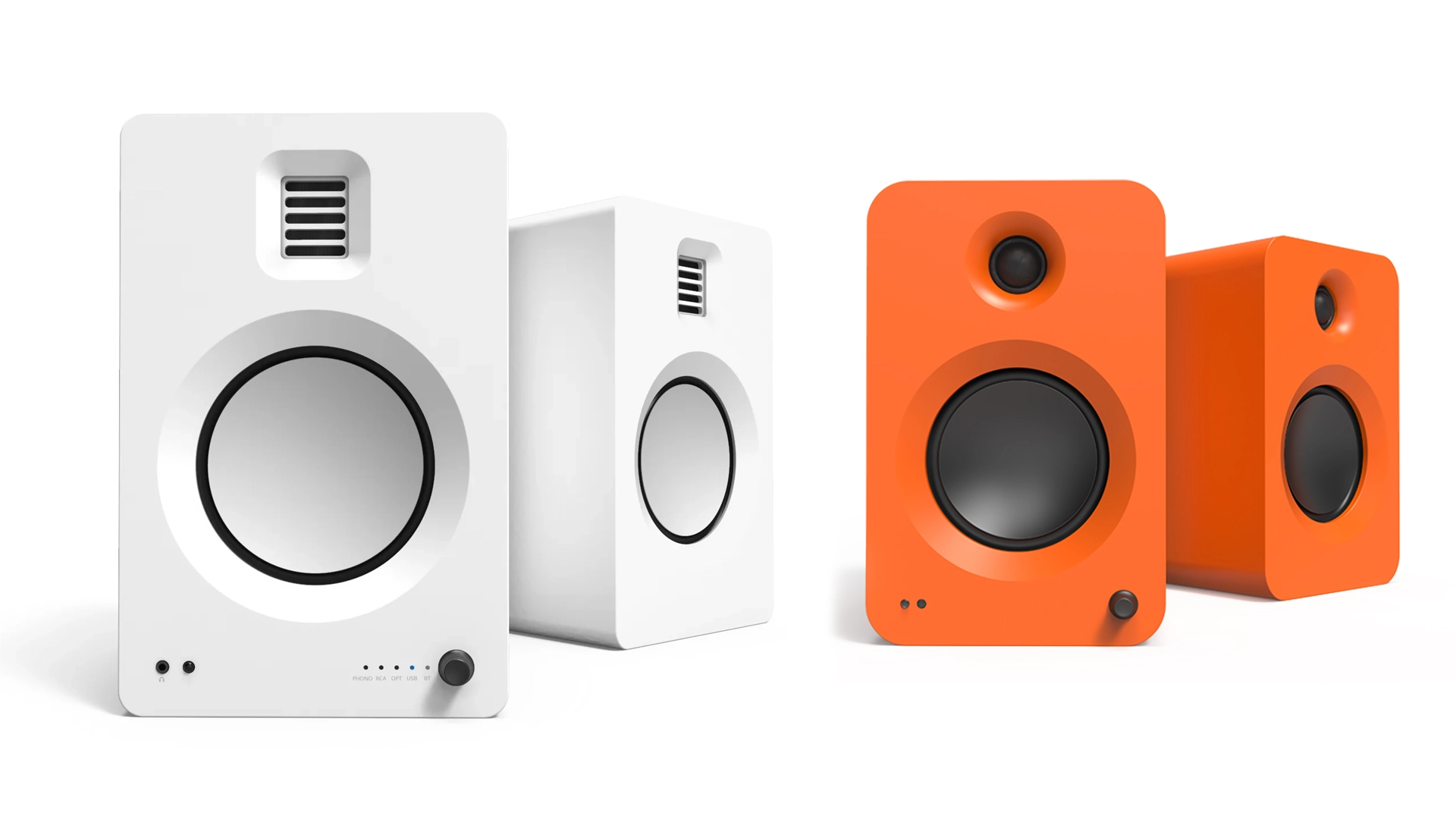
Kanto is a Canadian audio company best known for powered speakers that connect directly to the sources people actually keep on a desk or in a living room. Founded in 2007, it packages amplification, input switching and loudspeaker engineering in compact systems that avoid a separate receiver. The YU family ranges from small desktop models to larger bookshelf speakers, typically combining Bluetooth with analogue inputs; selected versions add USB audio, optical input, a moving-magnet phono stage and a subwoofer output. TUK moves upward with an AMT tweeter, greater power and broader digital connectivity, while ORA targets near-field computer listening in an even smaller enclosure. Matching SUB subwoofers, desktop and floor stands, and mounting products let the speakers form a coherent workspace or TV system. Kanto does not pretend that every model serves the same listener: input sets, cabinet size and bass capability change clearly across the range. Its strength is thoughtful integration—clean industrial design, useful controls and enough connection options to bridge a turntable, computer, television and phone without turning a simple system into a rack of electronics.
KEF

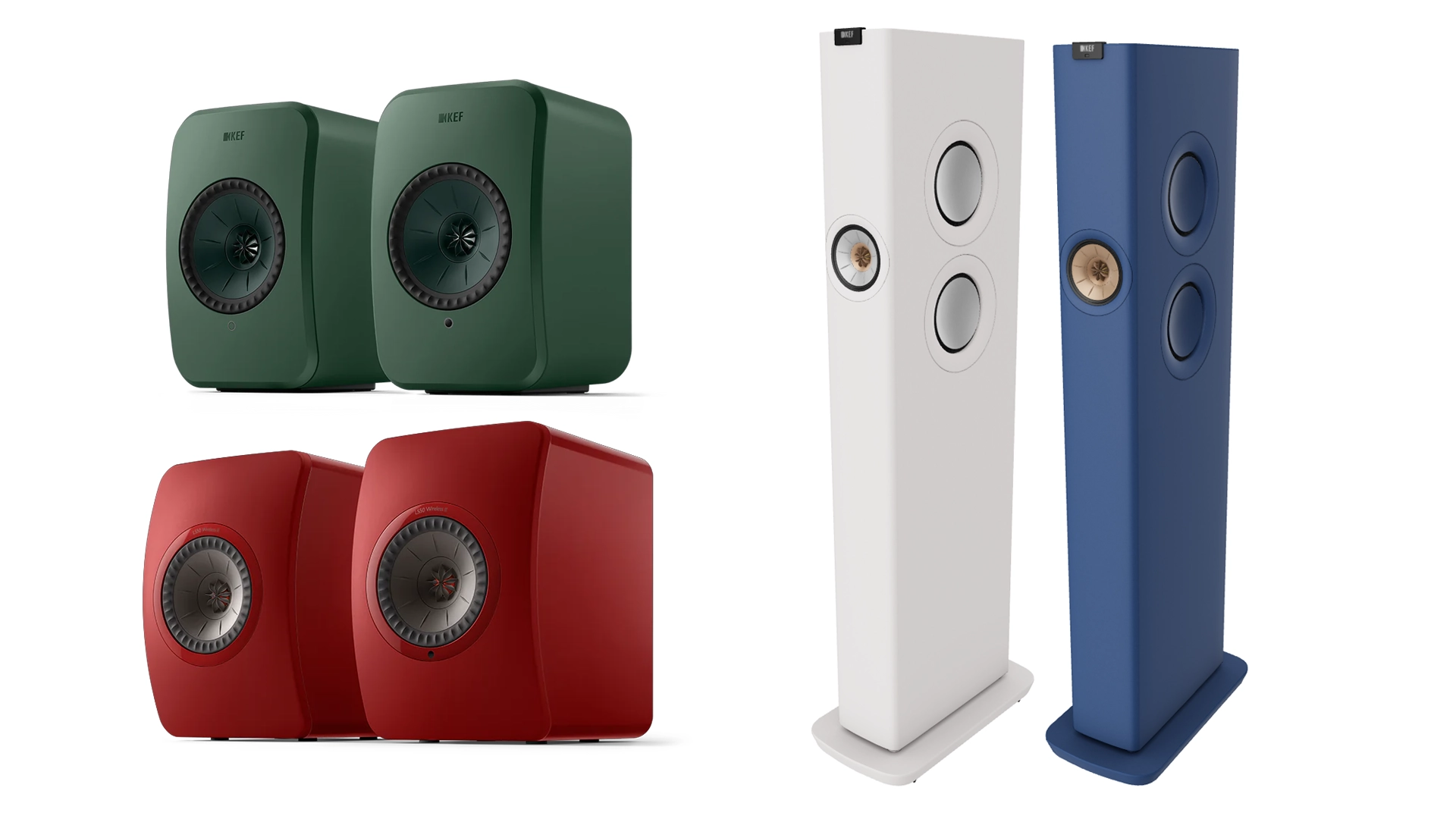
KEF is a British loudspeaker company whose identity rests on acoustic research and driver engineering rather than a house style applied to conventional boxes. BBC engineer Raymond Cooke founded it in Maidstone in 1961; the name comes from Kent Engineering & Foundry, the site of the first workshop. KEF’s defining invention is Uni-Q, introduced in 1988, which places the tweeter at the acoustic centre of the midrange cone so the two behave more like one source across a wide listening area. Recent generations add Metamaterial Absorption Technology behind the tweeter to manage rear radiation, while Uni-Core allows opposed subwoofer drivers to share a compact motor structure. These ideas appear at different scales across the Q, R and Reference ranges, the sculptural Blade models, KC subwoofers and the active LS50 Wireless II and LS60 Wireless. The catalogue spans passive, wireless, architectural and personal audio, but the common thread is unusually deep in-house modelling, measurement and transducer development.
Kii Audio

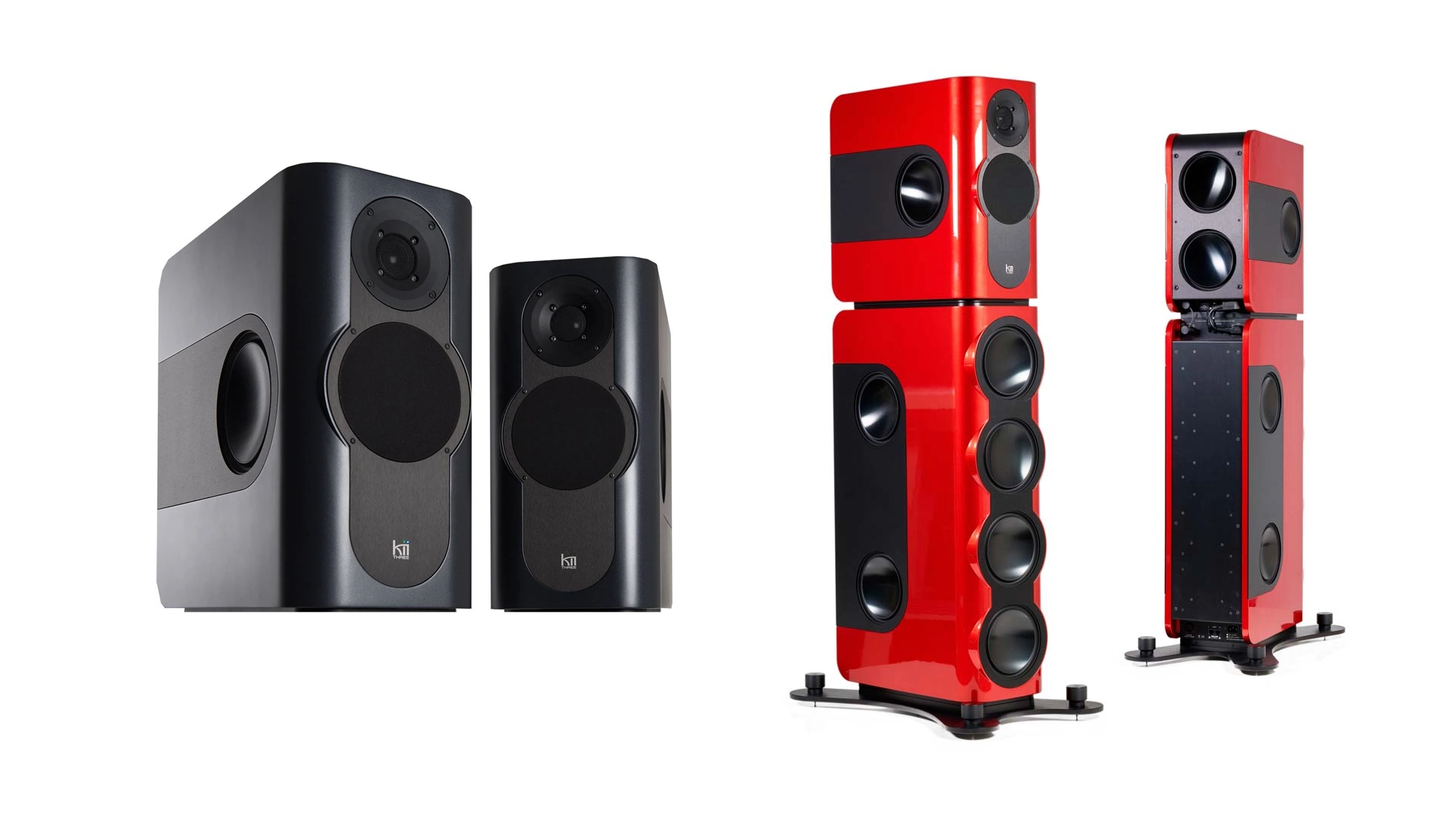
Kii Audio is a German active-loudspeaker company founded in 2015 around engineer Bruno Putzeys and a team drawn from professional and domestic audio. Its central idea is Active Wave Focusing: multiple drivers, dedicated amplification and DSP work together to control how low and mid frequencies spread behind and beside the cabinet. This cardioid behaviour reduces the energy sent toward nearby walls, addressing room interaction at the loudspeaker rather than relying only on later equalisation. The Kii THREE packages that architecture into a compact monitor, with user controls for boundary position and tonal adjustment; the BXT bass module extends it into a floor-standing line-source system. Kii SEVEN brings the same controlled-directivity thinking to a networked, more compact platform. Digital and analogue inputs, onboard conversion and amplification make each model a complete playback system, yet the engineering is aimed at a specific acoustic problem rather than convenience alone. That combination explains Kii’s unusual relevance to mastering rooms, studios and design-conscious home systems alike.
Klipsch

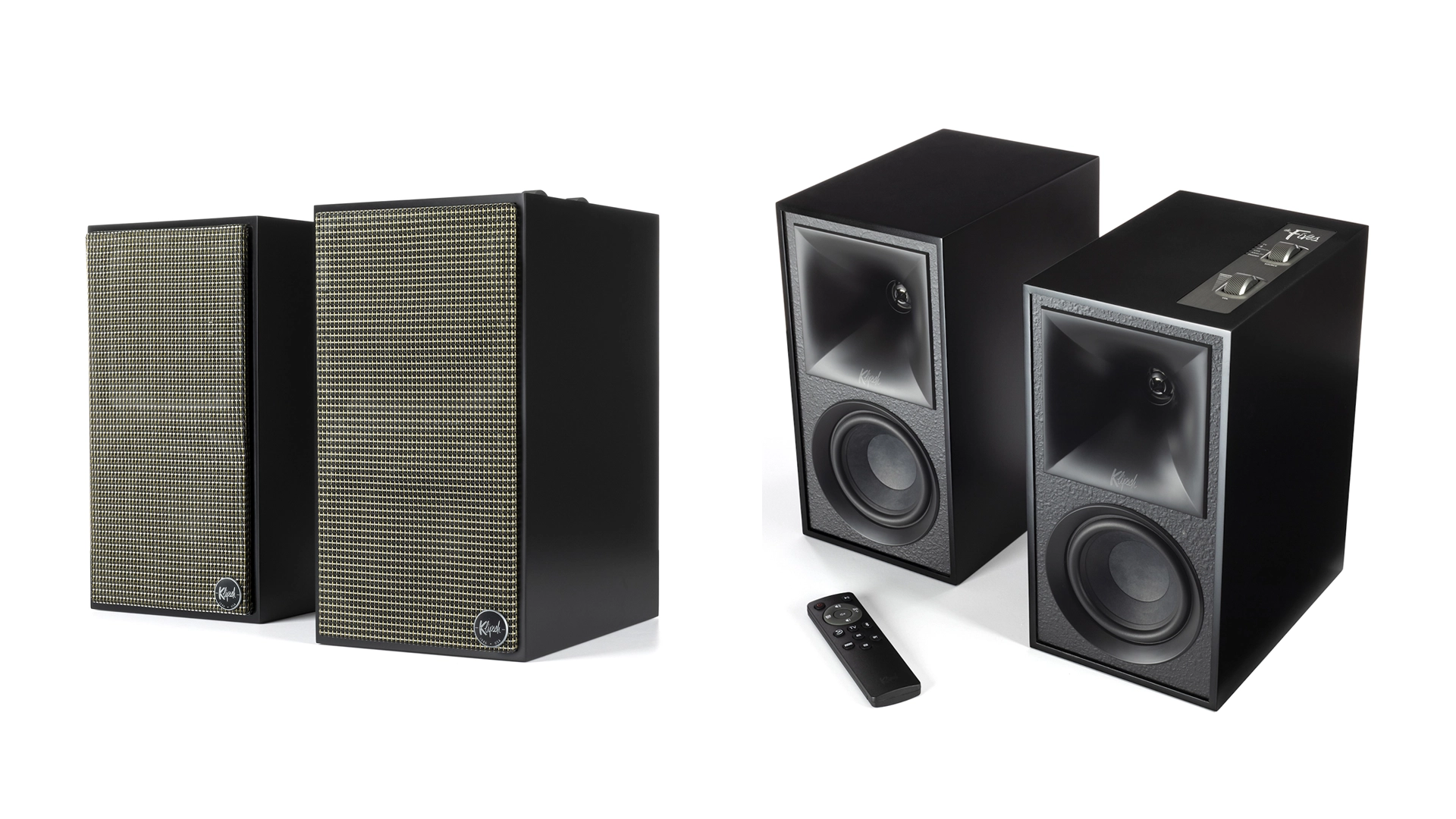
Klipsch is an American loudspeaker company founded by engineer Paul W. Klipsch in Hope, Arkansas, in 1946. His central solution was horn loading: coupling a driver to a shaped acoustic horn raises efficiency and controls dispersion, allowing high output and wide dynamics from comparatively little amplifier power. The corner-loaded Klipschorn put that idea into a domestic loudspeaker and remains in production, joined in the Heritage range by La Scala, Cornwall, Heresy and Forte. Modern Reference Premiere models use Tractrix-based horns in more conventional towers, monitors and centre channels, while the company also makes subwoofers, soundbars, architectural speakers and powered stereo systems. The designs vary widely, but high sensitivity and controlled directivity remain the recognisable technical thread. Klipsch now operates within Premium Audio Company, owned by Gentex, yet Heritage models are still assembled in Hope. Few audio brands can point to both an original flagship still being made and a current mass-market range built around the same underlying acoustic principle.
Magnat

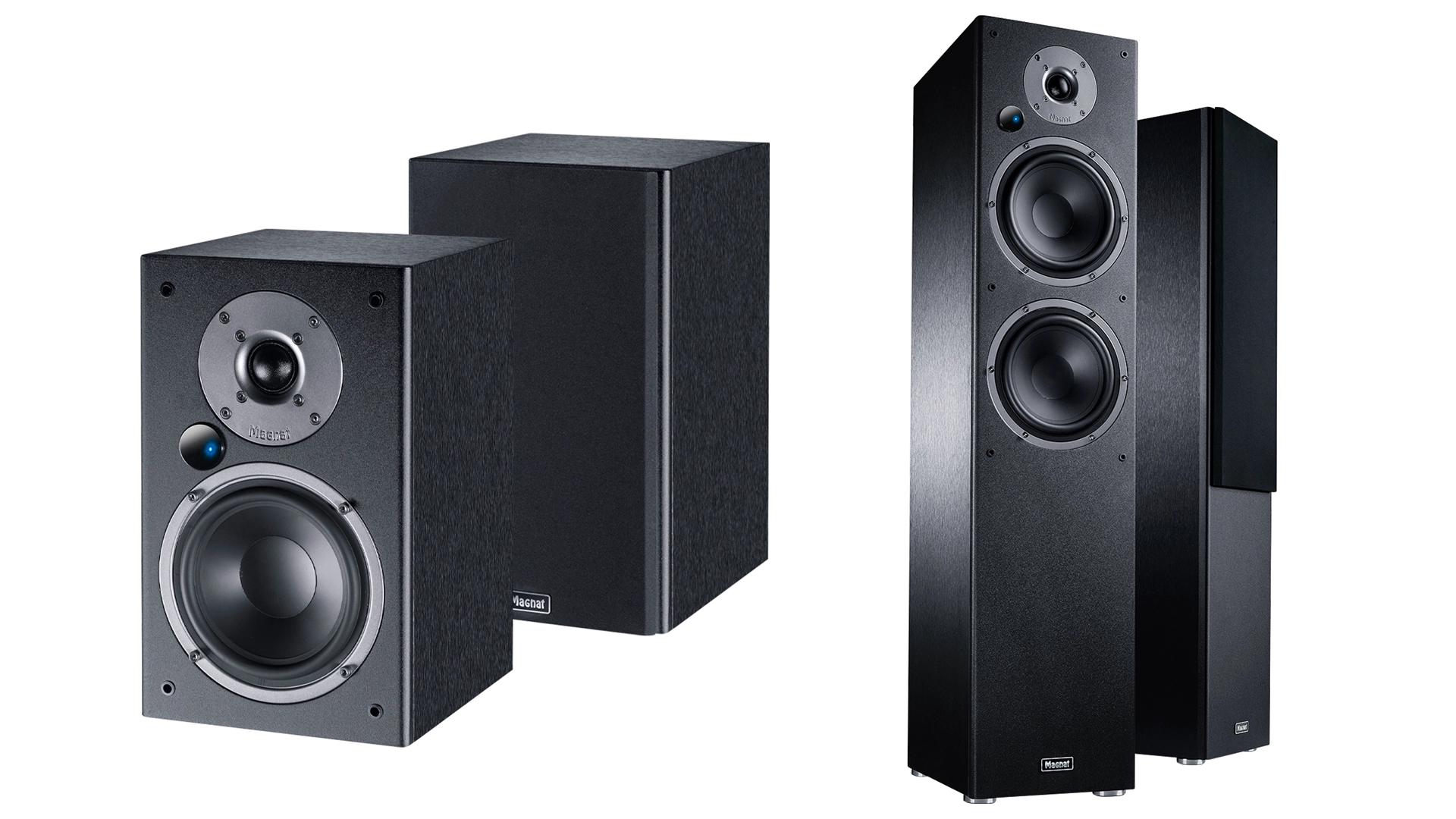
Magnat is a German loudspeaker and audio-electronics brand founded in Cologne by Rainer Haas in 1973. Loudspeaker engineering came first, and bass reproduction has remained a recurring speciality, but the company’s history is more varied than a generic mass-market description suggests. The early Log series established the name internationally; an omnidirectional plasma tweeter followed in 1979, the All-Ribbon family in 1981, and Magnat entered car audio in 1983. Its present home catalogue ranges from compact Monitor S models to Signature loudspeakers, retro-proportioned Transpuls systems and the THX-certified Cinema Ultra family. Active Monitor Reference designs, subwoofers, on-wall and architectural speakers extend the range into lifestyle and custom installation. Magnat also makes electronics, including hybrid valve/solid-state receivers, a network receiver and the substantial MTT 990 direct-drive turntable. Different families serve very different budgets, so the brand should not be characterised only as affordable or only as high-end. Measurement facilities, driver development and crossover optimisation provide the continuity between them. Magnat is now part of Premium Audio Company, but its identity remains German product development applied across stereo, cinema and installation rather than a badge placed on one narrow type of component.