
Active Powered Speakers
Active, or powered, speakers feature built-in amplifiers, creating a simplified, all-in-one audio system. By integrating the amplification directly within the speaker cabinet, manufacturers can perfectly match the electronics to the drivers for optimal performance. This often results in a cleaner signal path and eliminates the need for separate, bulky components. This index lists the brands offering active speaker solutions, from compact wireless systems and professional monitors to high-fidelity floorstanding towers.
Hi-Fi brands in the category
Summary information and image
Direct links to official websites
Paradigm

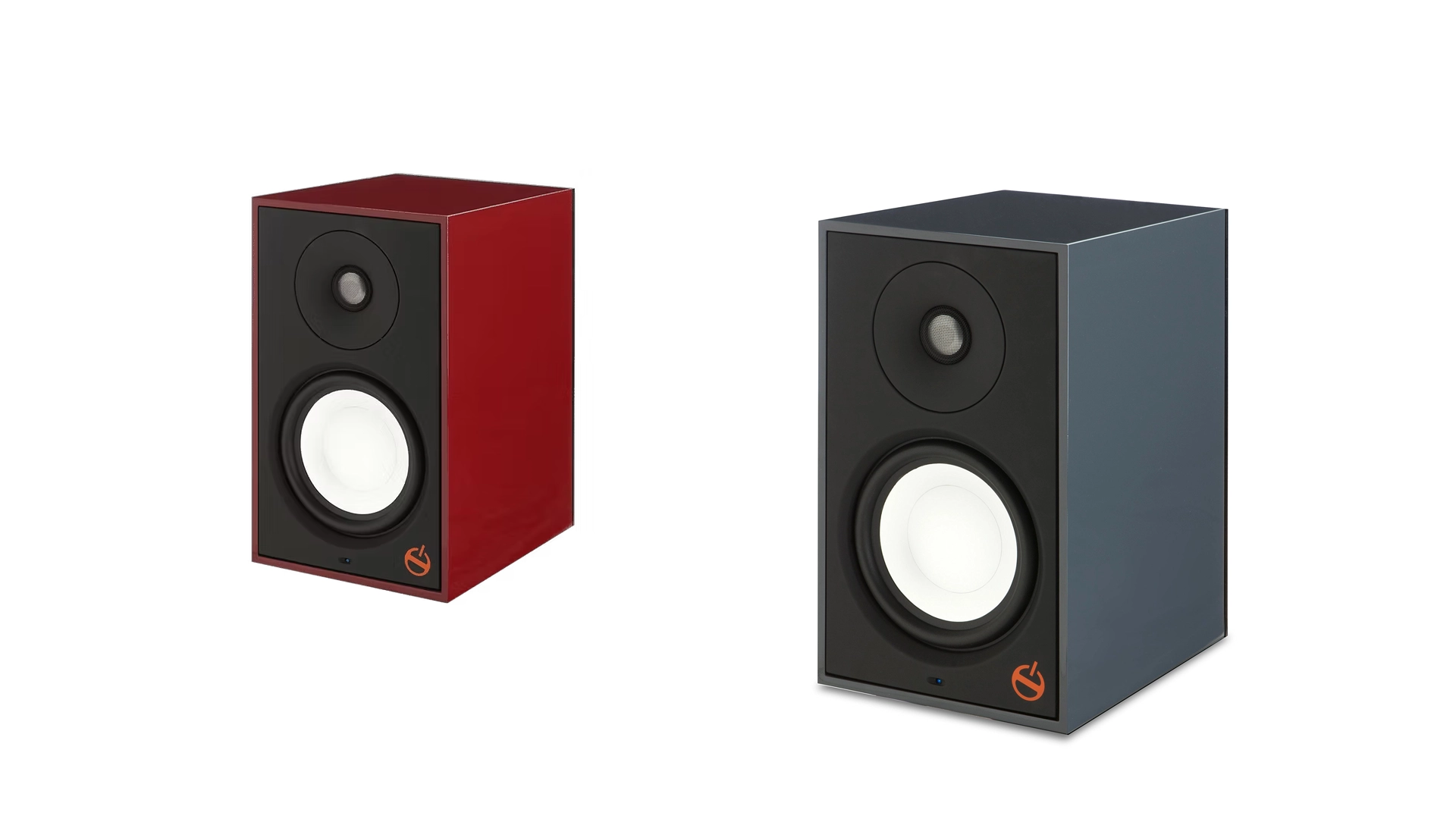
Paradigm is the Canadian loudspeaker manufacturer founded in Toronto in 1982 by Jerry VanderMarel and Scott Bagby. The early Model 7 and Model 9 established an unusual promise for the time: use controlled listening and serious measurement to improve performance while keeping production efficient. Collaboration with Canada’s National Research Council gave the young company access to psychoacoustic research and anechoic testing, a discipline Paradigm later brought into its own engineering facilities. That research-led approach now spans several clear product levels. Monitor SE and Premier make the core technology accessible; Founder combines proprietary aluminium-magnesium ceramic and carbon-based drivers with advanced cabinet isolation, while Persona uses beryllium diaphragms in its premium midrange and tweeter systems. Defiance subwoofers add app control and, on selected models, Anthem Room Correction. Millenia, CI architectural speakers and outdoor models extend the same voicing principles beyond traditional floorstanders. Paradigm designs drivers, crossovers and cabinets together and manufactures many key components and higher-level speakers at its Canadian facility rather than assembling a range solely from catalogue parts. The brand’s signature is not a single famous cone material: it is the long feedback loop between blind listening, anechoic measurement, in-house driver development and scalable Canadian production.
Peachtree Audio

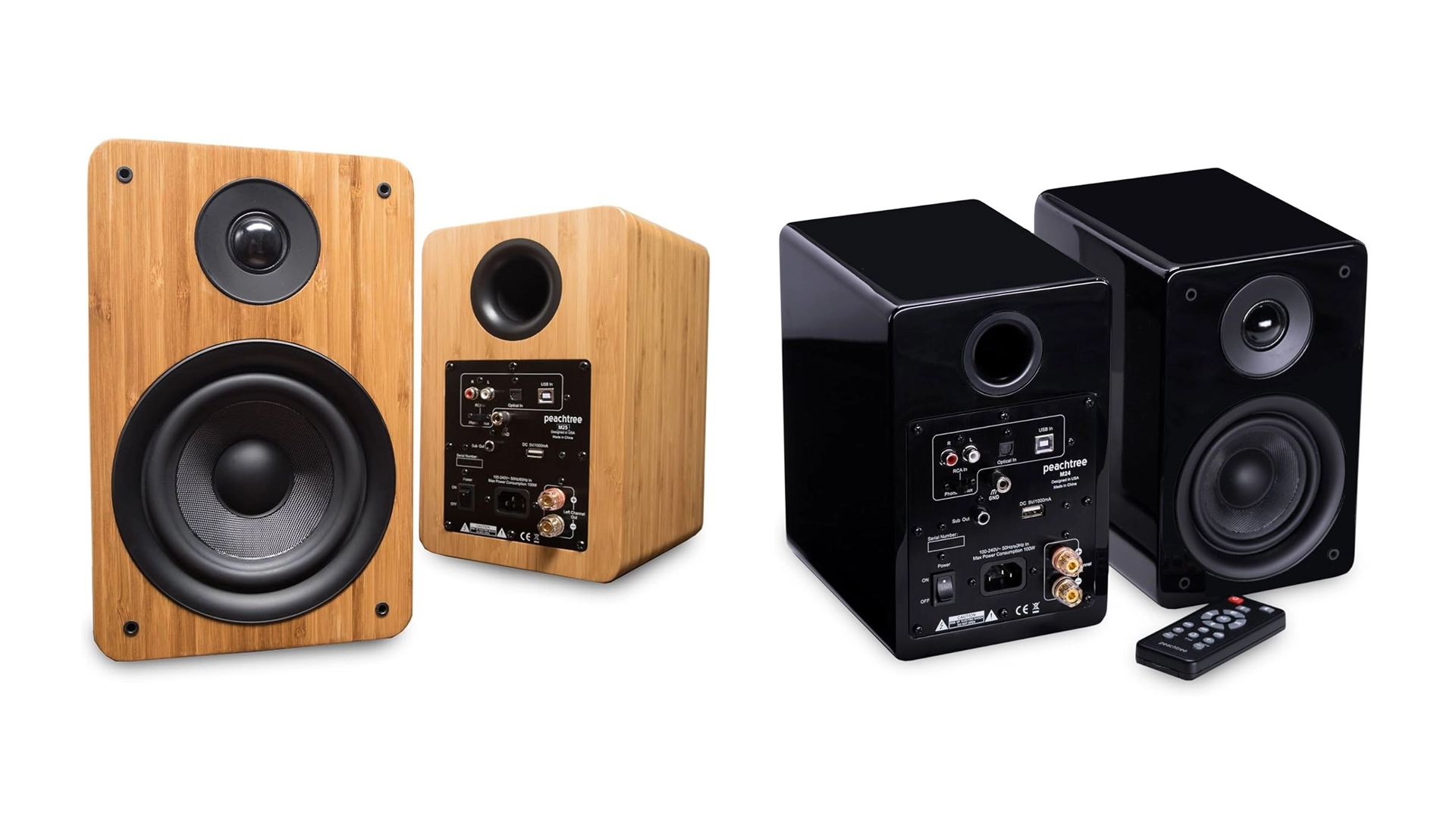
Peachtree Audio was founded in the United States in 2007 by audio veterans Jim Spainhour and David Solomon. Its debut product, Decco, anticipated the way many people would actually use hi-fi: it placed an integrated amplifier and a serious USB DAC in one compact component so music from a computer could enter the system directly. Nova followed in 2009 and turned that idea into the company’s best-known product family. Peachtree’s strength is the one-box amplifier for listeners who want modern digital access without abandoning proper loudspeaker drive. Current Carina components combine analogue inputs, high-resolution digital conversion, headphone output and power amplification in clean, domestically friendly cases. Carina X uses Hypex NCOREx amplification, while the matching Carina preDAC and power amplifier allow the same design language to grow into separates. Earlier nova generations, the compact iNova and the high-power GaN400 power amplifier mark important steps in the company’s development, even where they are no longer the centre of the catalogue. Products are designed, assembled and tested at Peachtree’s facility in North Carolina, with specialised manufacturing partners supplying major subassemblies. Peachtree did not invent the integrated amplifier or the DAC, but it was early to recognise that computer audio needed both in a coherent, easy-to-use product. That practical bridge between digital sources and full-size passive loudspeakers remains the brand’s clearest contribution.
PIEGA

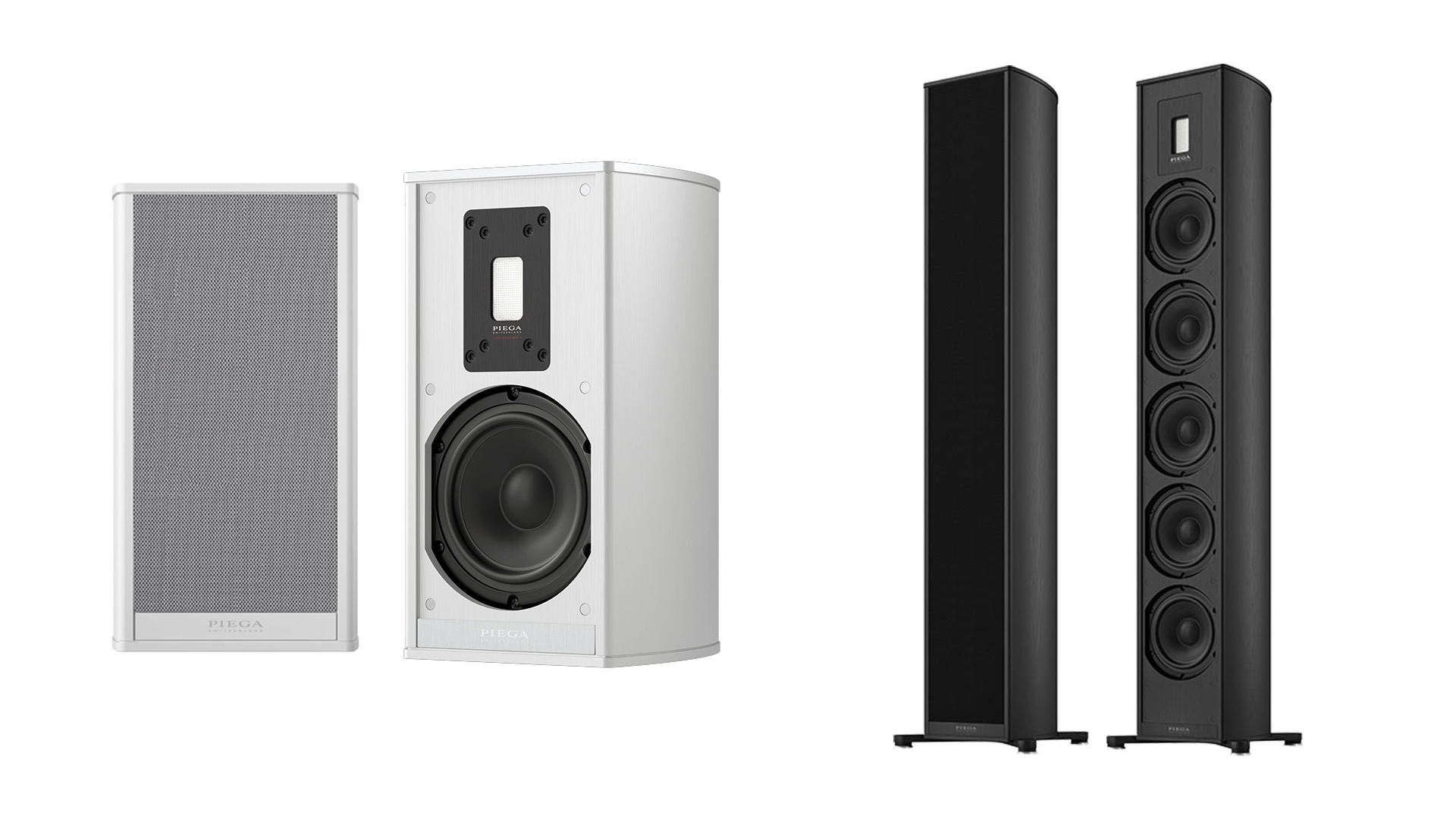
PIEGA is the Swiss loudspeaker manufacturer founded in 1986 by Leo Greiner and Kurt Scheuch. Scheuch’s early work on an extremely light foil tweeter gave the company its technical direction: reproduce high frequencies with a low-mass ribbon system, then design the rest of the loudspeaker around its speed and radiation pattern. Ribbon manufacture remains a skilled in-house process at PIEGA’s Horgen facility near Lake Zurich, and the family company is now led by the next Greiner generation, including Alexander and Manuel. PIEGA introduced a ribbon midrange in 1993 and the first coaxial midrange/tweeter ribbon in the C1 in 2000. In that same period, extruded aluminium enclosures became the other defining technology. Their curved, rigid shells provide a slim form while controlling panel resonance, but require internal damping and carefully shaped end structures to avoid the ringing associated with untreated metal. Coax Gen2 is the present expression of the coaxial ribbon concept; Premium Gen2 and the compact Ace family carry PIEGA engineering into smaller rooms, with wireless variants for active systems. Master Line Source is the flagship: a large dipole line-source array of ribbon elements designed to control vertical dispersion and reduce room interaction. PIEGA’s identity therefore comes from two capabilities developed together over decades—hand-built foil transducers and mechanically controlled aluminium cabinets—rather than from aluminium styling alone.
PMC

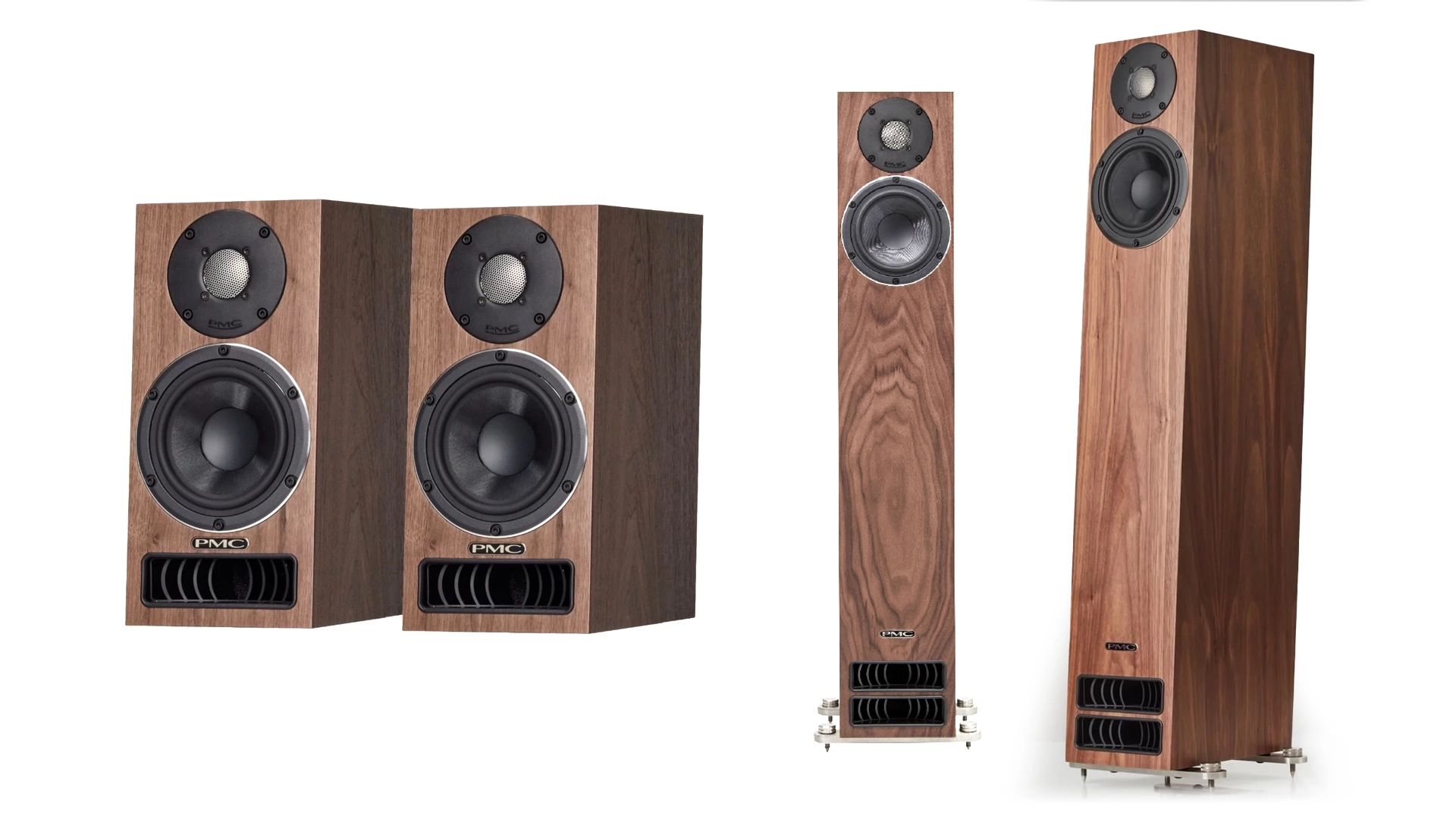
PMC—Professional Monitor Company—was founded in Britain in 1991 by Peter Thomas, then manager of the BBC’s Music Studios, and engineer Adrian Loader. Their first loudspeaker, the BB5-A, was created because they could not find a large monitor that combined the level, bass extension and neutrality required for critical studio work. The design established a rare continuity between professional control rooms and domestic hi-fi: PMC does not maintain one acoustic philosophy for engineers and another for music listeners. The company’s core technology is the Advanced Transmission Line, or ATL. The rear output of the bass driver enters a long, folded, heavily damped passage inside the cabinet. Absorbent material removes much of the unwanted midrange energy, while the lowest frequencies emerge from a tuned vent in phase with the front radiation. Done correctly, this extends bass and reduces driver excursion rather than producing the single-note emphasis of a poorly tuned port. Laminair aerodynamic vents, derived from airflow research, further reduce turbulence and compression at high levels. Current domestic ranges run from prodigy and twenty5i to fact and the flagship fact fenestria; the slim ci series brings the same controlled behaviour to on-wall and in-wall installations. result6, PMC6, PMC6-2 and larger main monitors continue the professional side. PMC’s identity is not merely “accurate British speakers,” but a transmission-line system refined in studios, mastering rooms and broadcast facilities, then scaled coherently for home listening.
PSB

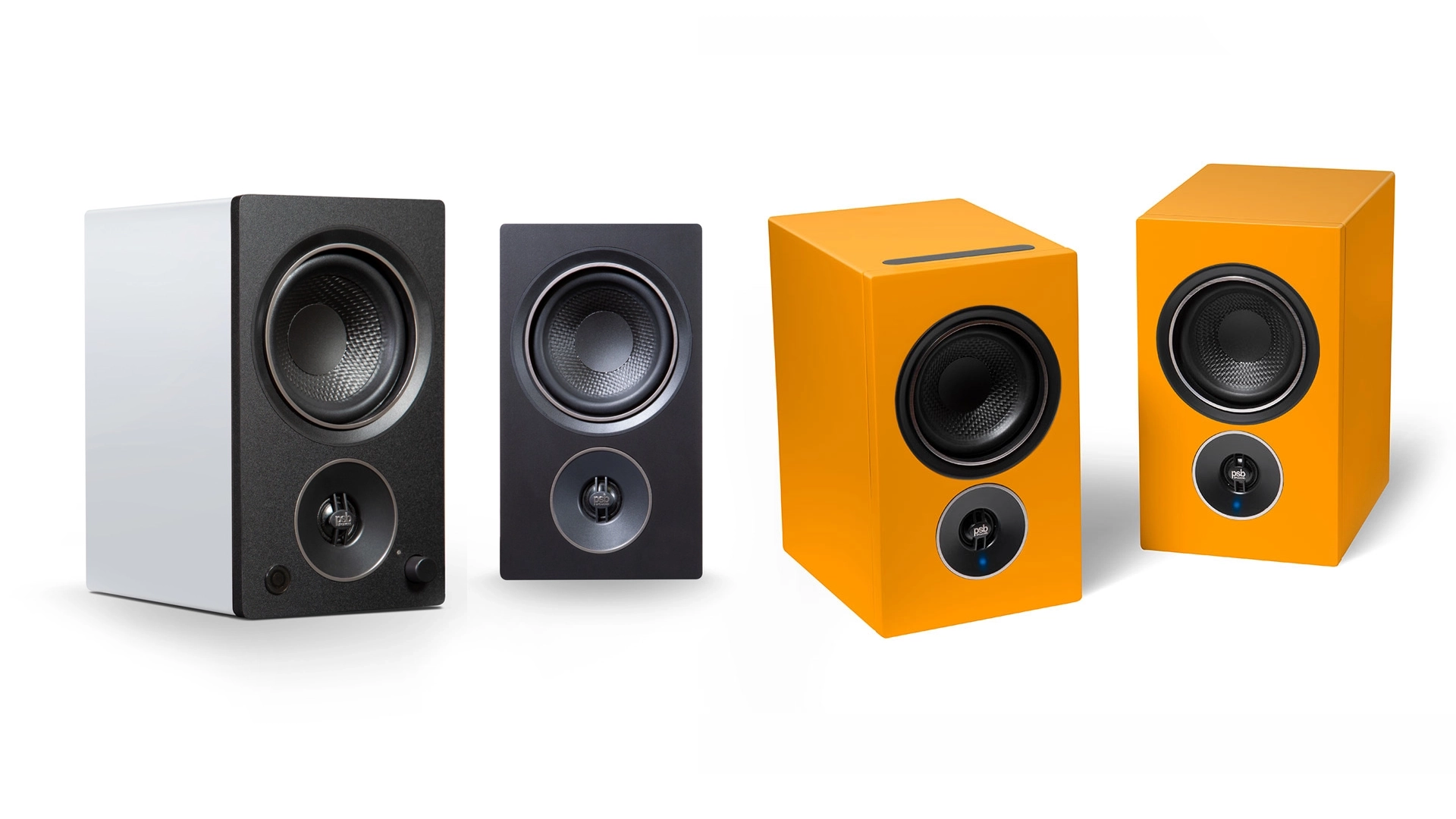
PSB Speakers was founded in 1972 by Canadian designer Paul Barton; the initials stand for Paul and Sue Barton. Rather than building a brand around one fashionable material, Barton developed a repeatable process of anechoic measurement and controlled listening. His long work at Canada’s National Research Council helped connect smooth on-axis response, well-behaved off-axis radiation and listener preference, giving PSB an engineering method that could be applied from entry-level speakers to flagships. Alpha is the accessible expression of that method and has remained important through several generations. Imagine covers stereo and home-cinema systems at a higher level, while Synchrony—including the current T800 flagship—uses more elaborate driver, cabinet and crossover engineering. Architectural PWM and CustomSound models, CS outdoor speakers and subwoofers extend the same voicing to installed systems. PSB also applies acoustic research to M4U headphones; its RoomFeel tuning is intended to reproduce the spectral balance listeners experience from well-designed loudspeakers in a room rather than the unnaturally flat pressure response of a raw headphone fixture. The company is part of Canada’s Lenbrook group alongside NAD and Bluesound, giving it access to shared research and distribution while Paul Barton remains closely associated with its acoustic direction. PSB’s lasting achievement is disciplined value: models at very different prices are developed through the same measurement-and-listening loop, so the family resemblance comes from controlled directivity and tonal balance rather than from repeated styling alone.
Pylon Audio
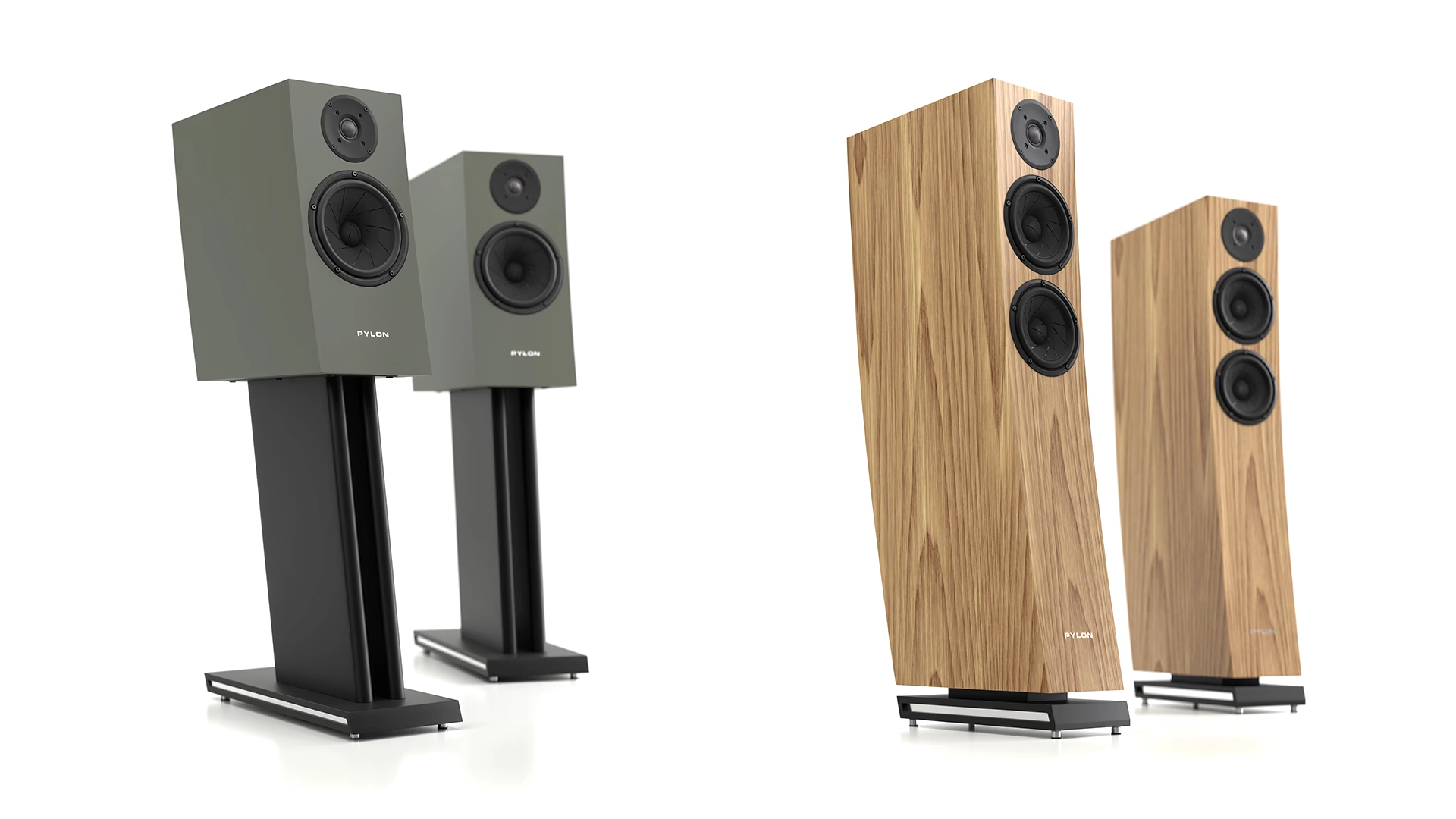
Pylon Audio was founded in Poland in 2011 by childhood friends Mateusz and Mikołaj, drawing on their families’ background in furniture production. The company first built loudspeaker cabinets and then moved into complete speakers, which explains why enclosure manufacture remains more than a styling exercise. Woodworking, acoustic design, finishing and final assembly are kept closely connected at its Jarocin-area operation, and a large anechoic chamber supports development with repeatable full-range measurements. The range is unusually wide but has recognisable characters. Pearl and Opal provide straightforward entry points; Diamond adds more refined drivers, crossover work and cabinetry; Jade uses broad baffles and larger drivers in a deliberate visual and acoustic reference to classic studio monitors. Amber MkII pursues high sensitivity and substantial dynamics, while Jasper and Jasper Active form the modern flagship family with curved cabinets, premium transducers and, in the active versions, integrated amplification and DSP. Zirkon 20 addresses compact listening, and matching centres, surrounds and subwoofers allow home-cinema systems without abandoning the stereo lines. Pylon also manufactures cabinets and selected components for other audio companies, an industrial capability that supports its own price-to-build-quality ratio. The brand’s strength is not a vague claim that every part is made in-house. It is the practical control gained by combining furniture-grade enclosure production, acoustic measurement and final loudspeaker assembly under one Polish organisation, then applying those resources from attainable floorstanders to ambitious statement models.
Quadral

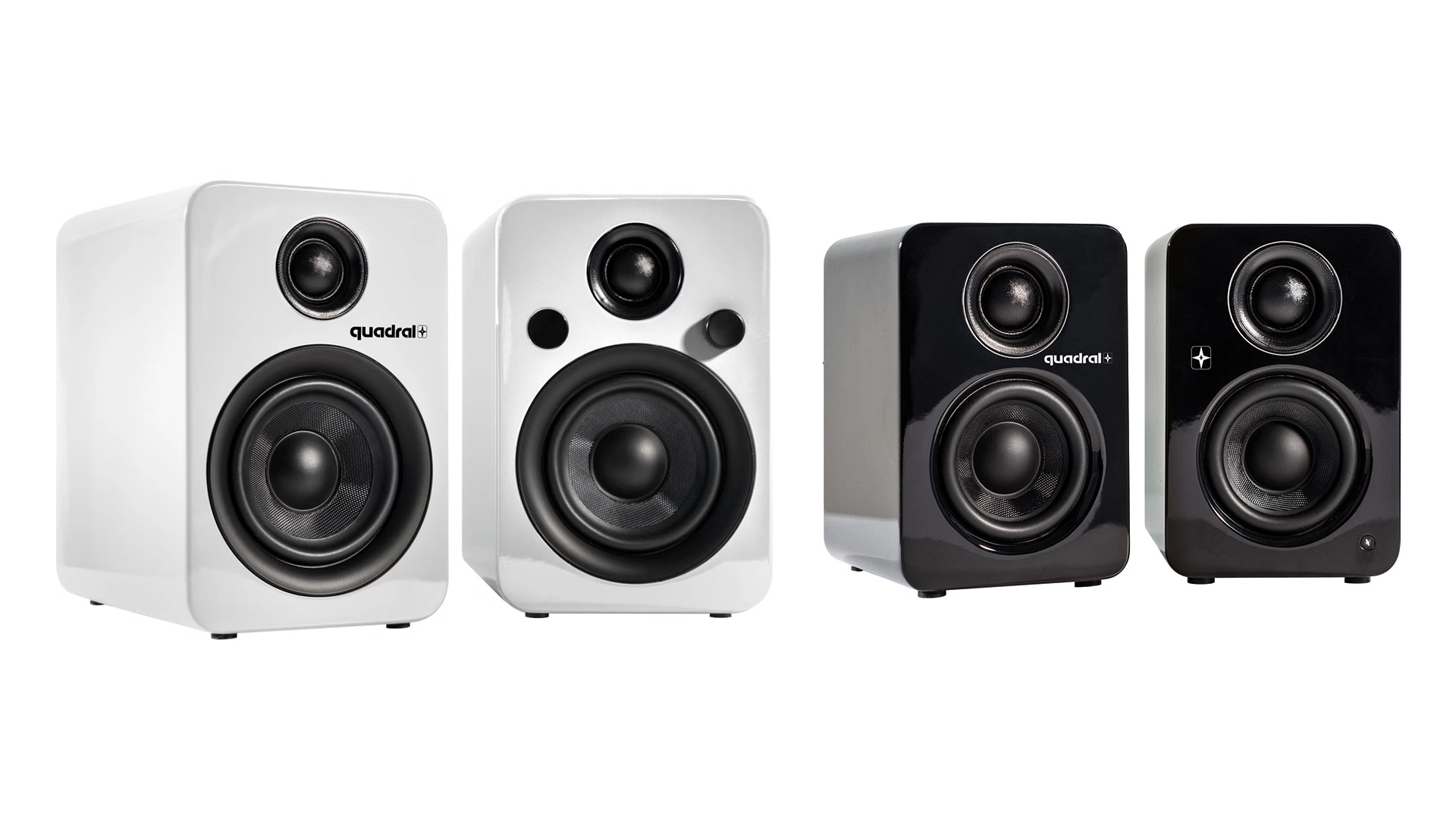
Quadral began in Hanover in 1972 as the consumer-electronics distributor all-akustik, founded by Hans-Dieter Hoffmann, Helmut Pabel, Horst Enders and Friedel Hofmann. It soon moved from importing equipment to developing loudspeakers of its own. The turning point was TITAN in 1981: a large statement system that established the AURUM line and has since evolved through multiple generations rather than surviving only as a nostalgic model. The modern catalogue is organised more clearly than the old description suggested. AURUM is the high-end family, with TITAN at its summit; SIGNUM, CHROMIUM STYLE and ARGENTUM bring the company’s approach to progressively more accessible stereo and home-cinema systems. Quadral’s signature high-frequency device is the quSENSE ribbon tweeter, whose very light diaphragm is intended to combine fast response with wide extension. Upper models pair it with ALTIMA mid/bass cones made from an aluminium, titanium and magnesium alloy, selected for stiffness with controlled mass. Cabinet geometry, internal bracing and model-specific pressure-chamber or bass-reflex loading are developed as part of the system, while matching centre, surround and subwoofer products allow consistent multichannel setups. Ownership also changed in 2020, when Austrian building-automation company Loxone acquired Quadral. The connection added architectural and multiroom audio to the business, but Quadral continues to develop hi-fi loudspeakers in Hanover and manufacture important parts there, including AURUM ribbon tweeters. Its country should remain Germany: Loxone ownership is part of the current corporate story, not a replacement for the brand’s German origin and five decades of loudspeaker engineering.
Sonos

Sonos made synchronised music in different rooms the foundation of an audio system that can grow one speaker at a time. John MacFarlane, Tom Cullen, Trung Mai and Craig Shelburne founded the company in Santa Barbara, California, in 2002. Their idea was to use home networking to make music accessible throughout a house, with playback and room selection managed through a common interface. Early ZonePlayer components established the system approach; the arrival of all-in-one speakers in 2009 made it accessible without a separate amplifier and speakers in every room. Products such as Play:5 and One became familiar expressions of that idea, followed by the Era family. Matching speakers can form stereo pairs, and selected models can work with soundbars and subwoofers in a home-theatre configuration. Arc and Beam brought television into the ecosystem, while Move and Roam added portable listening. Sonos also makes Amp and Port components for connecting conventional loudspeakers or an existing hi-fi system. Its more recent range includes Arc Ultra, Move 2, Roam 2 and Ace headphones, the latter extending compatible television sound to private listening through TV Audio Swap. Across these different forms, Sonos’s defining product is the connected system as much as the individual enclosure: software, synchronisation and compatible hardware make it possible to use rooms separately or bring them together. That continuity explains how a brand associated with wireless speakers also has a substantial role in installed home audio.
Swan Speakers

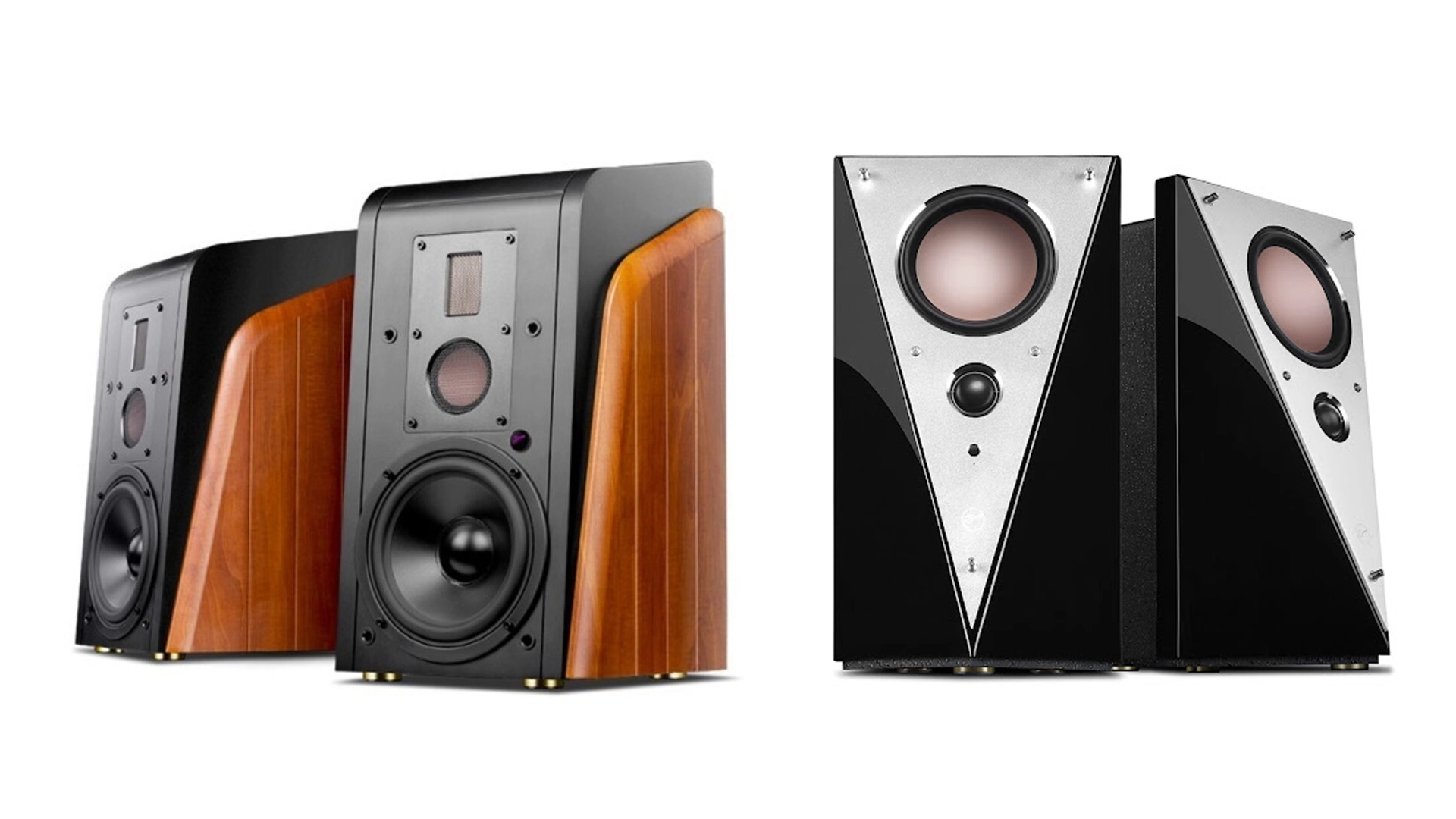
Swan Speakers (HiVi Technology, stock code 002888) is a Chinese audio manufacturer founded in 1991, initially focused on high-end speakers. Their philosophy is “Hear the Difference.” In 1997, they merged with Swan Speaker Systems (USA), acquiring the Swan brand and Frank Hale as chief designer. Hale, known for his work on the Swan M1 speaker, had previously designed the world’s first isodynamic ribbon speaker. The company has grown significantly, with three major industrial bases totaling 200,000 square meters, including a Zhuhai production base established in 2011. They have a full product range, including Hi-Fi, home theater, multimedia active audio, power amplifiers, internet cloud audio, headphones, car audio, professional audio, smart radios, conference systems, and speaker drivers. Swan possesses advanced facilities, including two large anechoic chambers. Their speaker drivers are used by many other audio manufacturers in Europe and America. Swan has won 17 CES Innovation Awards, including two Best of CES. They emphasize innovation, combining advanced electroacoustic technology with Chinese precision manufacturing.
System Audio

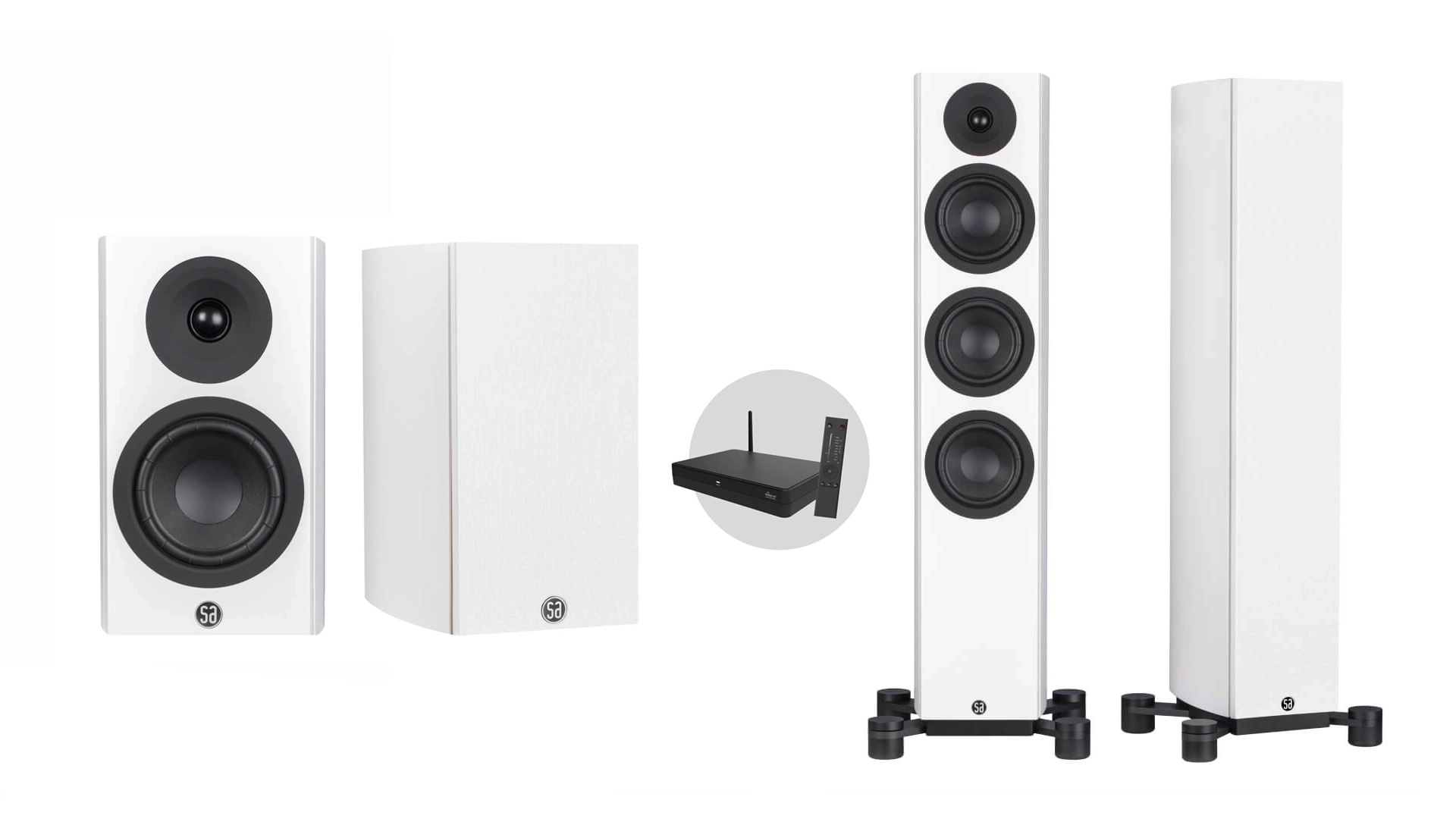
System Audio is a Danish loudspeaker manufacturer known for its slim and elegant designs, focus on fast and dynamic sound, and a commitment to making high-quality audio accessible to a wide audience. Founded by Ole Witthøft. The company’s loudspeakers often feature narrow baffles, which are intended to minimize diffraction and improve imaging. System Audio utilizes a variety of driver technologies and cabinet construction techniques to achieve their desired sonic characteristics. They offer a wide range of models, from compact bookshelf speakers to larger floor-standing designs, as well as on-wall speakers and subwoofers. The “SA legend,” “SA saxo,” and “SA aura” series represent different points in their product line. System Audio products are positioned in the mid-to-high-end segment of the market, appealing to audiophiles and music lovers who value both performance and Scandinavian design.
Taga Harmony


TAGA Harmony is a company specializing in loudspeakers, audio electronics, and cables, known for its focus on providing high-quality sound at accessible price points. While having European roots, the company has significant operations and design influence from Japan. TAGA Harmony offers a wide range of products, including floor-standing speakers, bookshelf speakers, center channel speakers, subwoofers, integrated amplifiers, and various cables. Their products often feature a modern aesthetic and are designed to deliver a balanced and engaging sound. The company’s design philosophy emphasizes a combination of engineering principles and subjective listening evaluations to achieve optimal performance. TAGA Harmony products are positioned in the
Tangent

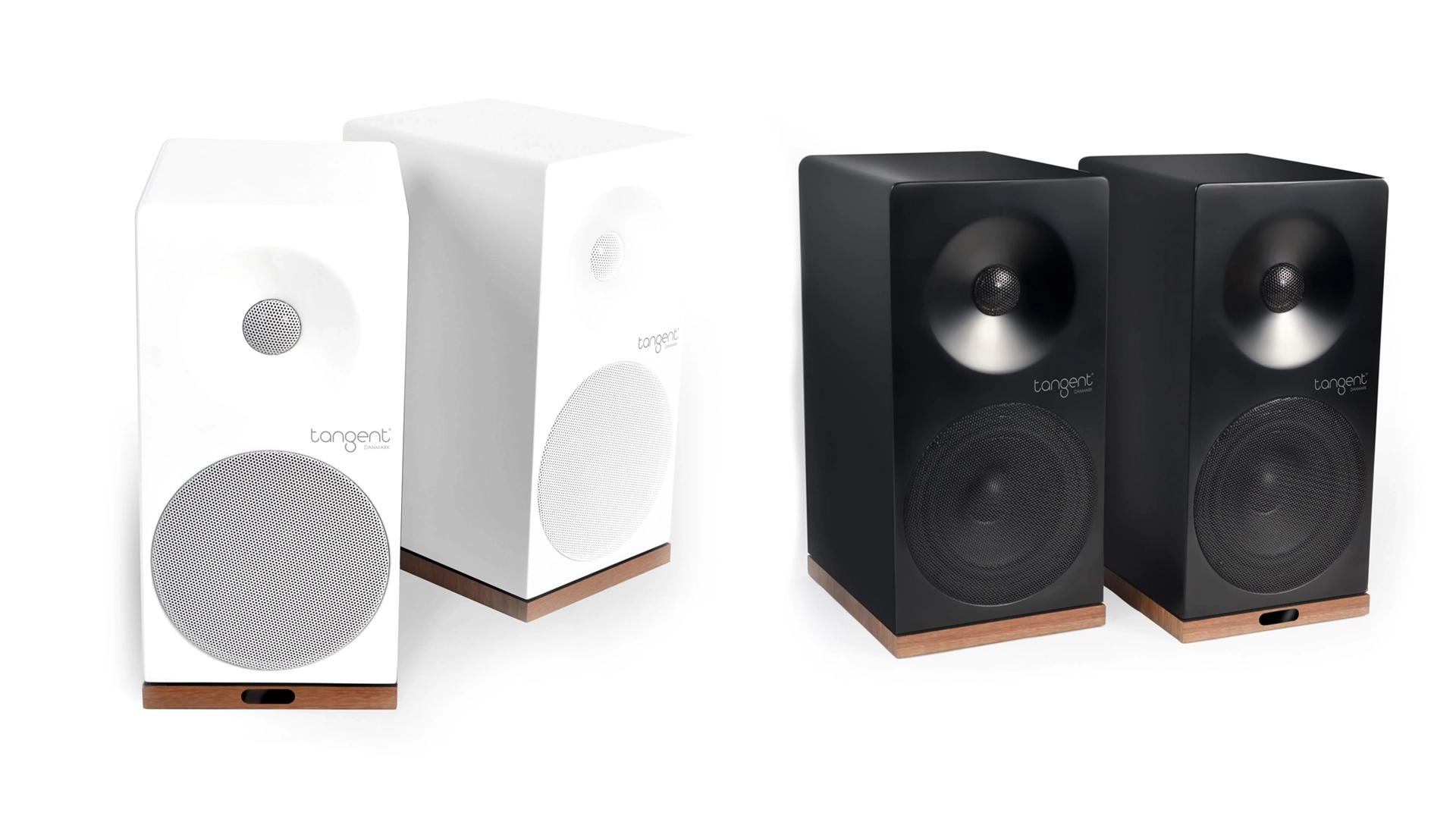
Tangent is a Danish brand of audio electronics, known for its stylish and compact designs, often featuring a minimalist Scandinavian aesthetic. The company offers a range of products, including radios, CD players, amplifiers, speakers, and all-in-one music systems. Tangent products are often characterized by their ease of use, intuitive controls, and support for various wireless technologies, such as Bluetooth and Wi-Fi. They are designed to be versatile and user-friendly, integrating seamlessly into modern living spaces. The company’s focus is on providing a good balance of sound quality, features, and design, at accessible price points. Tangent products are positioned in the mid-range consumer market, appealing to a broad audience who appreciate both aesthetics and functionality.
Technics

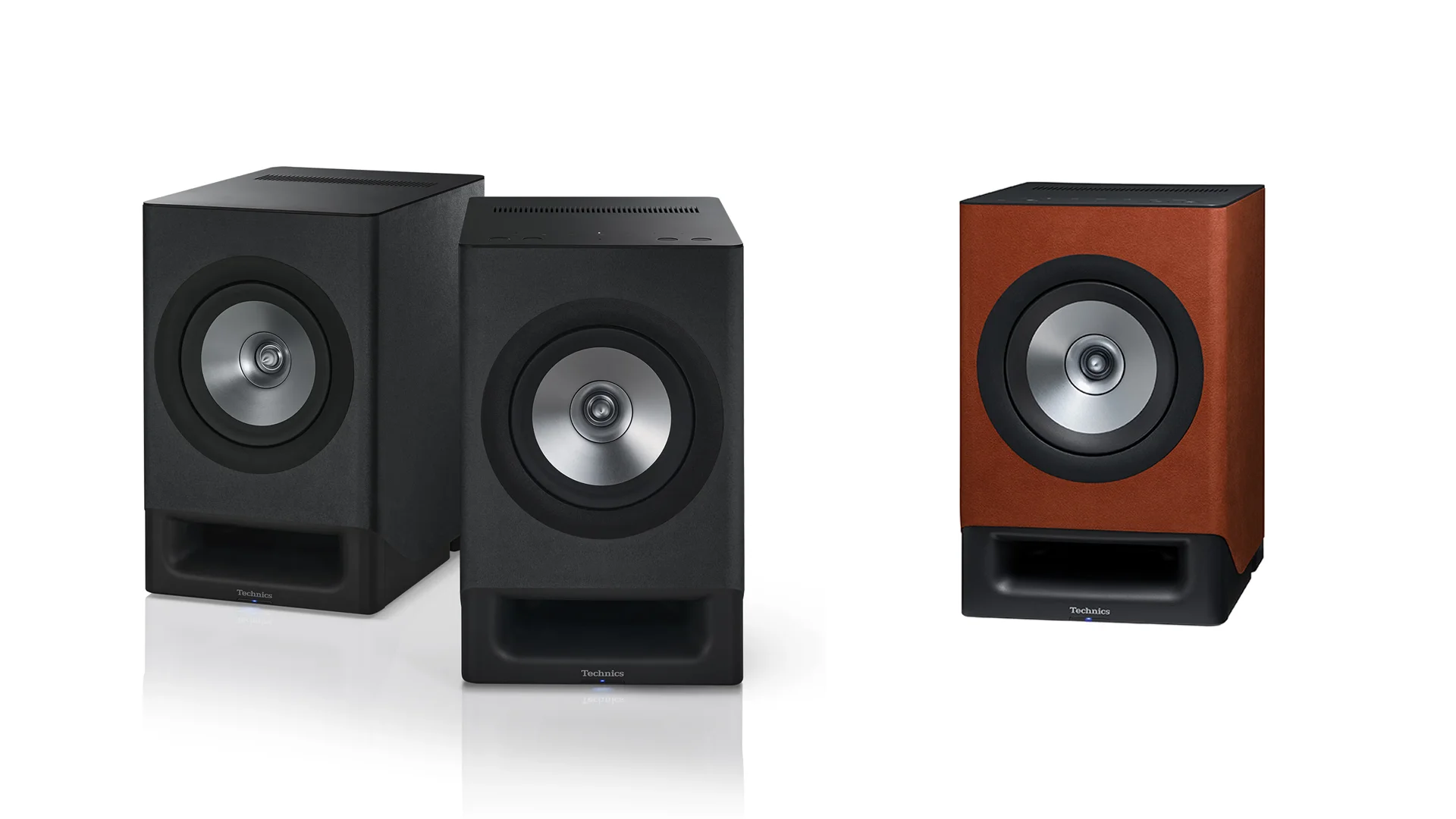
Technics is Panasonic’s Japanese hi-fi brand, introduced in 1965 and defined above all by its transformation of the turntable. The first product to carry the name was the Technics 1 loudspeaker, but the SP-10 of 1970 created the decisive legacy: it was the first commercially available direct-drive turntable, placing the platter directly on the motor and eliminating belts and idlers. The SL-1200 followed in 1972, and the quartz-controlled SL-1200MK2 of 1979 became an enduring tool for broadcasters, clubs, DJs and home listeners. That achievement can obscure the breadth of the company. Technics also built amplifiers, cassette and open-reel machines, CD players and loudspeakers, often using advanced motor, power-supply and digital research from the wider Panasonic organisation. After a pause in dedicated hi-fi production, the brand returned in 2014 with new Reference and Grand Class systems rather than a purely retro catalogue.
Modern turntables range from the accessible SL-1500C and SL-1200GR2 to the SL-1200G and Reference SP-10R, whose coreless direct-drive motors address cogging and rotational stability with current control technology. Electronics such as the SU-R1000 integrated amplifier use digital signal processing for functions including cartridge calibration and load-adaptive speaker control, while wireless systems and loudspeakers broaden the range. Technics remains distinctive because one engineering idea became both an audiophile reference and a global musical instrument, yet the company continues to refine it instead of merely reproducing the past.
Triangle

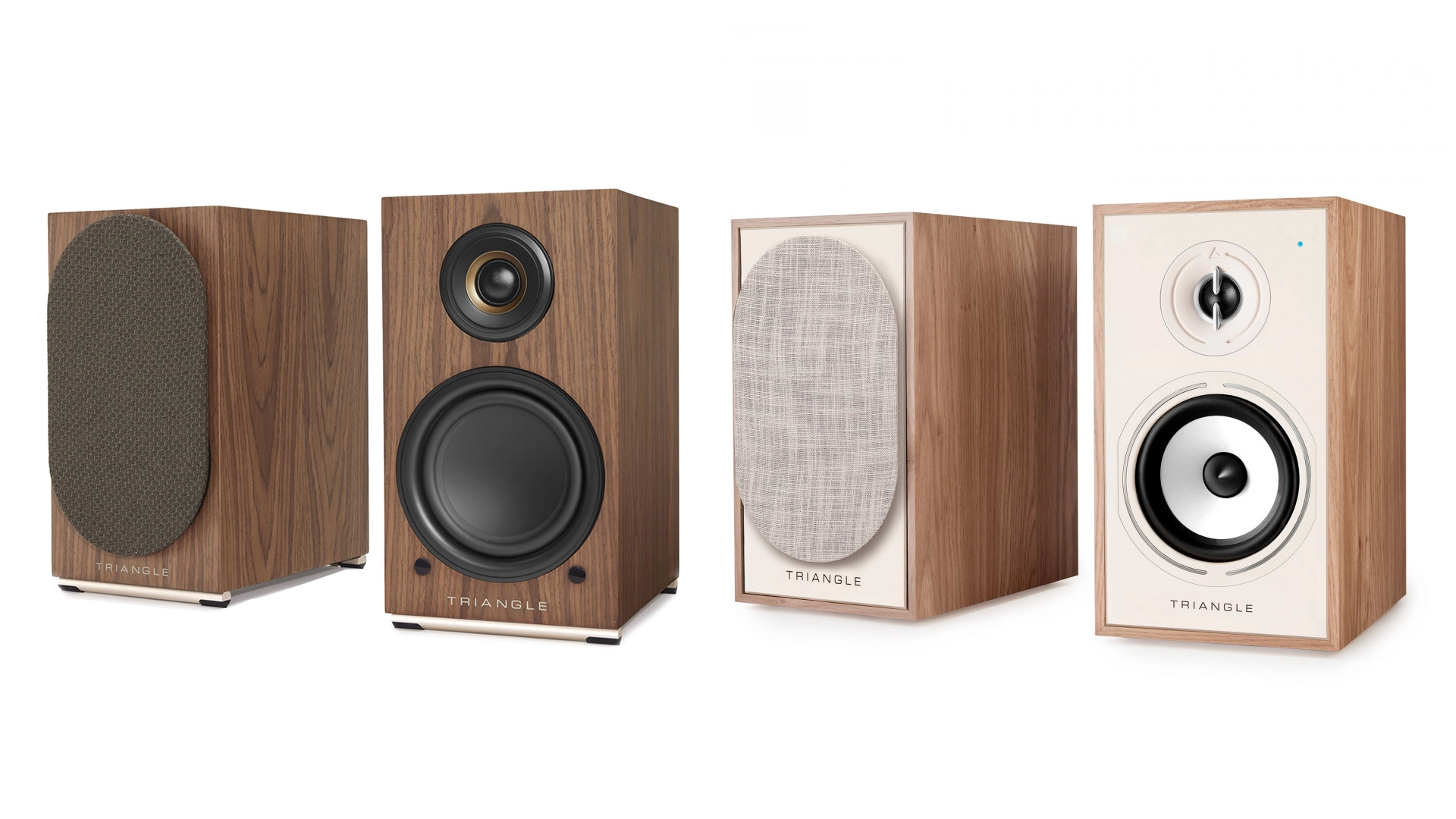
Triangle is a French loudspeaker manufacturer founded in 1980 by engineer Renaud de Vergnette. From its earliest models, the company pursued speed, sensitivity and dynamic contrast rather than the heavily damped, low-efficiency fashion common in parts of the high-end market. Triangle develops key drivers and assembles its premium loudspeakers in Soissons, giving the brand control over the transducers that shape its recognisable presentation.
Horn-loaded tweeters are a signature, designed to provide high efficiency and controlled radiation. Many models pair them with natural-cellulose paper midrange cones, chosen for low mass and direct vocal reproduction, while proprietary bass drivers and carefully vented cabinets provide scale. The flagship Magellan family demonstrates the fullest version of this engineering. Signature and Esprit EZ carry much of it into smaller systems, and the widely successful Borea range brings Triangle’s driver philosophy to accessible stereo and home cinema.
The company now covers architectural speakers, subwoofers and active or connected products as well as traditional passive designs. AIO systems address streaming, while Capella combines active wireless speakers with room optimisation. That expansion has not erased the original character: Triangle speakers are generally designed to communicate musical energy easily and to work with a broad range of amplifiers. The brand’s longevity comes from more than “French sound” or elegant cabinets. It rests on four decades of driver development, a coherent preference for efficiency and transients, and the ability to carry those priorities from a compact Borea monitor to a full Magellan system.
U-Turn Audio

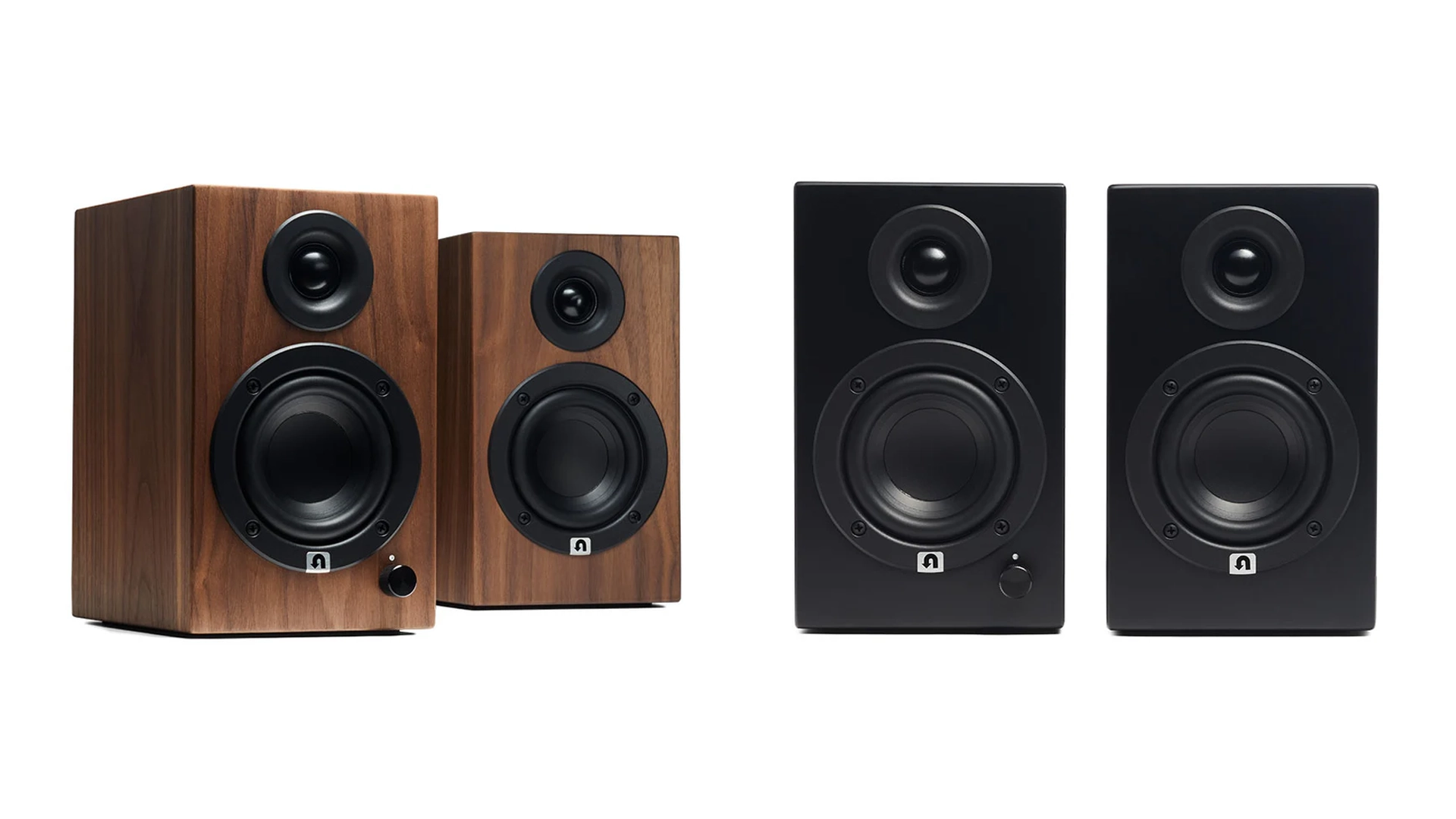
U-Turn Audio is an independent American turntable maker founded in 2012 by Benjamin Carter, Robert Hertig and Peter Maltzan. The three friends developed the first Orbit while taking part in a Northeastern University venture programme, then funded production through Kickstarter. Their proposition was direct and timely: build a simple, genuinely serviceable belt-drive record player in Massachusetts and sell it without the layers that often inflate specialist-audio pricing.
Orbit Basic, Plus, Special and configurable Orbit Custom models share a clean plinth, isolated motor and straightforward manual operation. Successive generations improved the in-house tonearm, cueing, speed control and cartridge options rather than obscuring the platform with cosmetic editions. The higher Orbit Theory uses a more substantial plinth, advanced OA3 Pro tonearm and electronic speed selection. Every Orbit is assembled and tested in U-Turn’s Woburn workshop, with many parts sourced from American suppliers.
The Pluto phono preamplifier allowed systems without a phono input to remain equally simple, and Ethos powered speakers extended U-Turn from source component to complete starter system. Direct sales and clear configuration choices remain part of the product design: buyers can understand what an acrylic platter, cartridge or built-in phono stage changes before ordering. U-Turn’s achievement is not inventing belt drive. It is making the conventional turntable legible again—few controls, accessible replacement parts, domestic assembly and enough upgrade choice to keep a first serious record player useful as its owner’s system develops.