
Invisible Speakers
Invisible speakers represent the ultimate in discreet architectural audio. These specialized speakers are installed directly into a wall or ceiling and then covered with plaster or drywall compound, making them completely disappear from view. The sound radiates through the finished surface, creating a high-quality audio experience with no visible grilles or speaker openings. This directory showcases the pioneering companies that have perfected this “sound-from-nowhere” technology, offering a truly seamless integration of audio and interior design.
Hi-Fi brands in the category
Summary information and image
Direct links to official websites
Amina

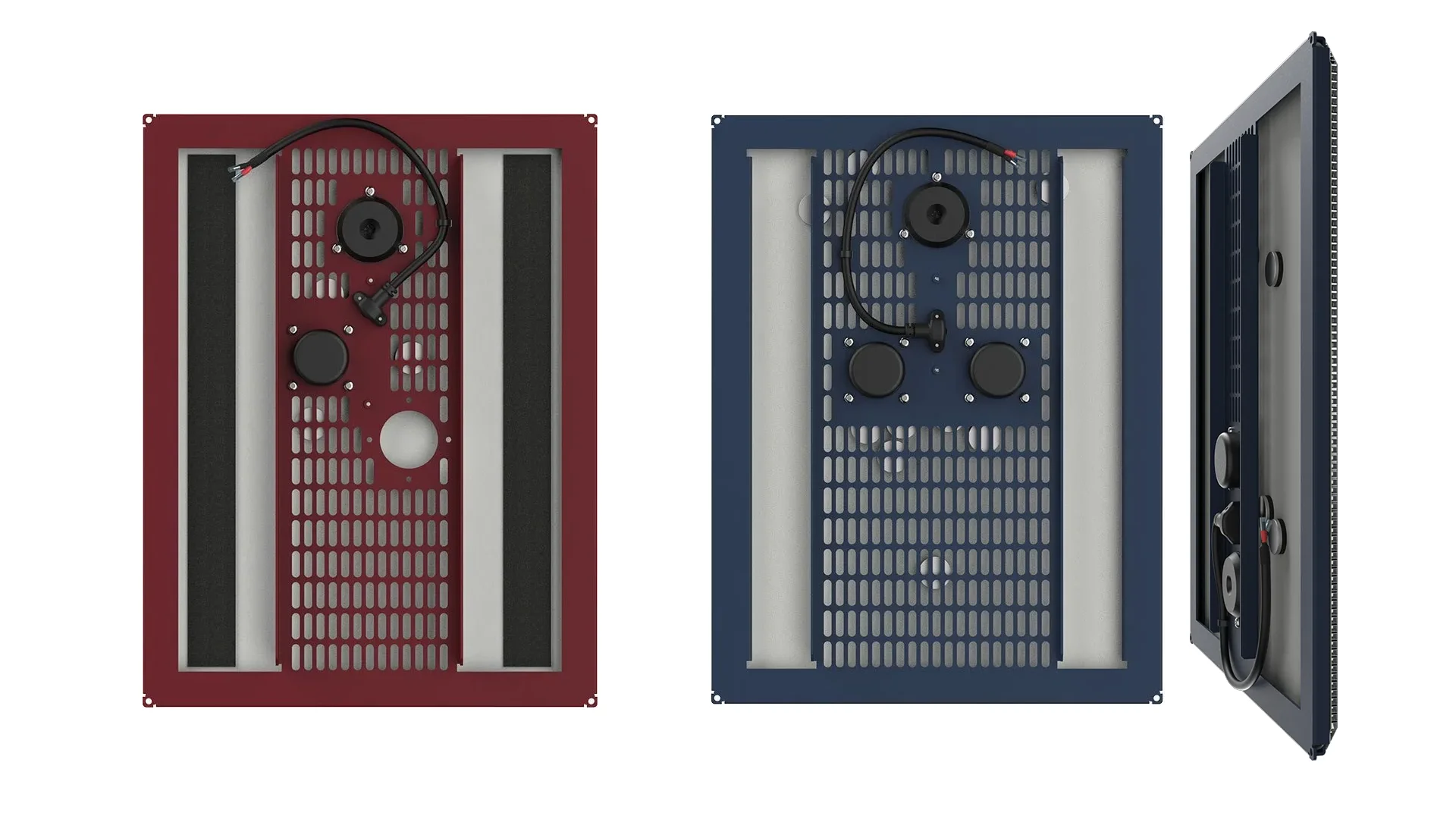
Amina makes loudspeakers intended to disappear into the interior: their sound-radiating panels are installed in walls or ceilings and finished to match the surrounding surface. Richard Newlove founded the British company in 1999 after working with NXT’s distributed-mode loudspeaker technology. Instead of a conventional cone, an exciter drives bending waves across a lightweight panel. Installation differs by range: Edgei integrates with plasterboard and a painted finish, while Mobius systems can be concealed beneath specified finishing materials. The panel and its covering must be treated as a designed acoustic assembly, not simply a speaker hidden behind any wall. Amina’s particular expertise is combining that engineering with the practical requirements of architects and installers.
Nakymatone
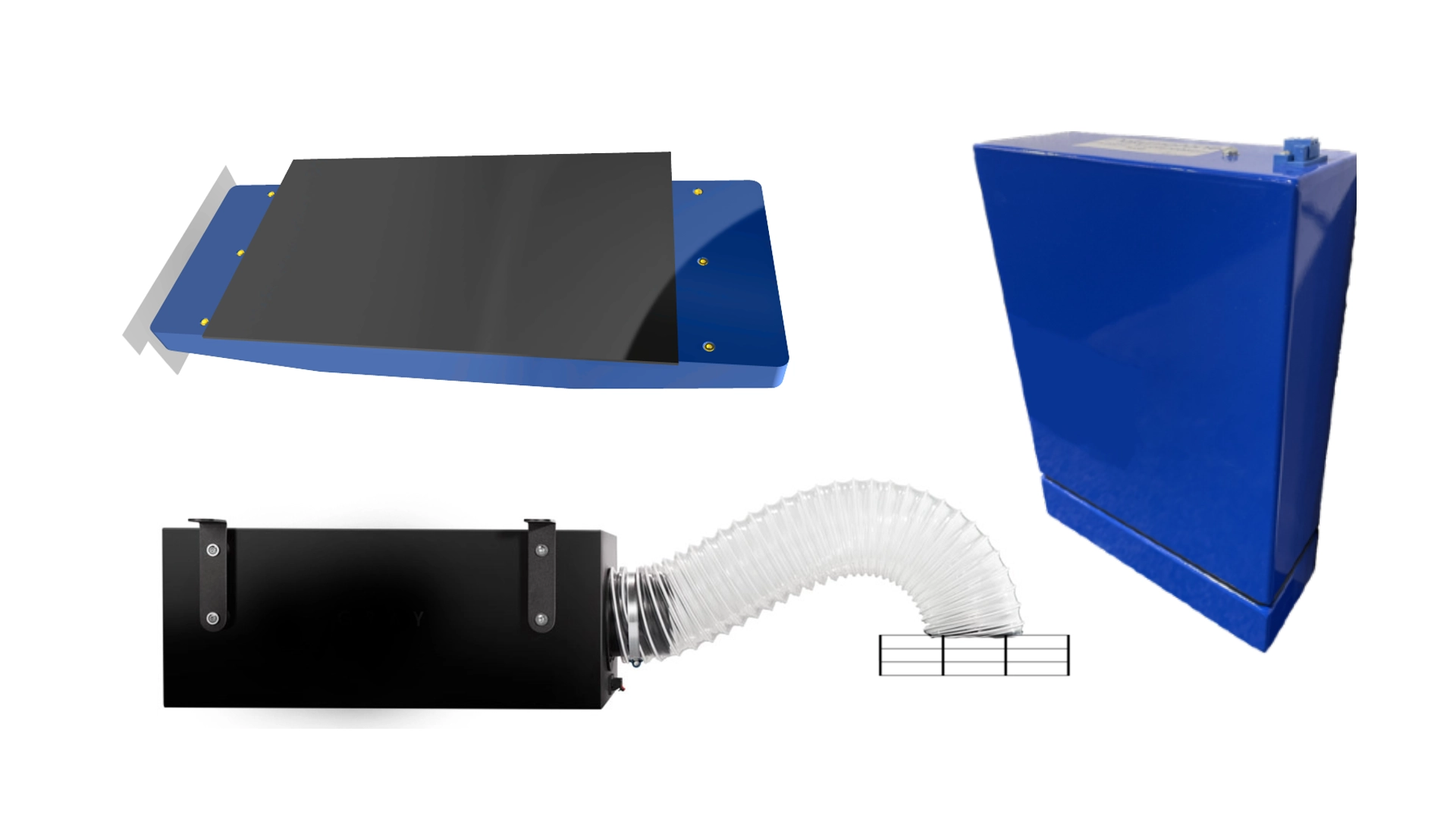
Nakymatone is a Canadian architectural-audio specialist devoted entirely to loudspeakers that disappear beneath a finished wall or ceiling. Instead of a visible cone and grille, its Controlled Resonance Technology turns a flat panel into the radiating surface, an approach inspired by the soundboard of a musical instrument. Once installed, the panel can be covered with common materials including skim coat, paint, wallpaper, decorative plaster or thin wood veneer, allowing music and cinema sound without interrupting the interior design. The engineering challenge is broader than concealment: the surface must radiate evenly through the finish, resist local hot spots and survive permanent installation. Nakymatone specifies 180-by-180-degree dispersion, integrated overload protection and installation hardware intended for repeatable placement; its Pre kit lets builders prepare the opening before final plaster work. Echt is the flagship full-range panel, joined by Mooi, Goed, Twee and the ultra-slim Naky, while Laag handles concealed low frequencies. Every model is manufactured in Canada and carries a ten-year warranty. The earlier description’s “patented system” should be used cautiously—the current site describes CRT as proprietary and, in some passages, patent-pending. The brand’s real speciality is a coherent product-and-installation ecosystem for rooms where conventional loudspeakers are visually unacceptable.
Origin Acoustics

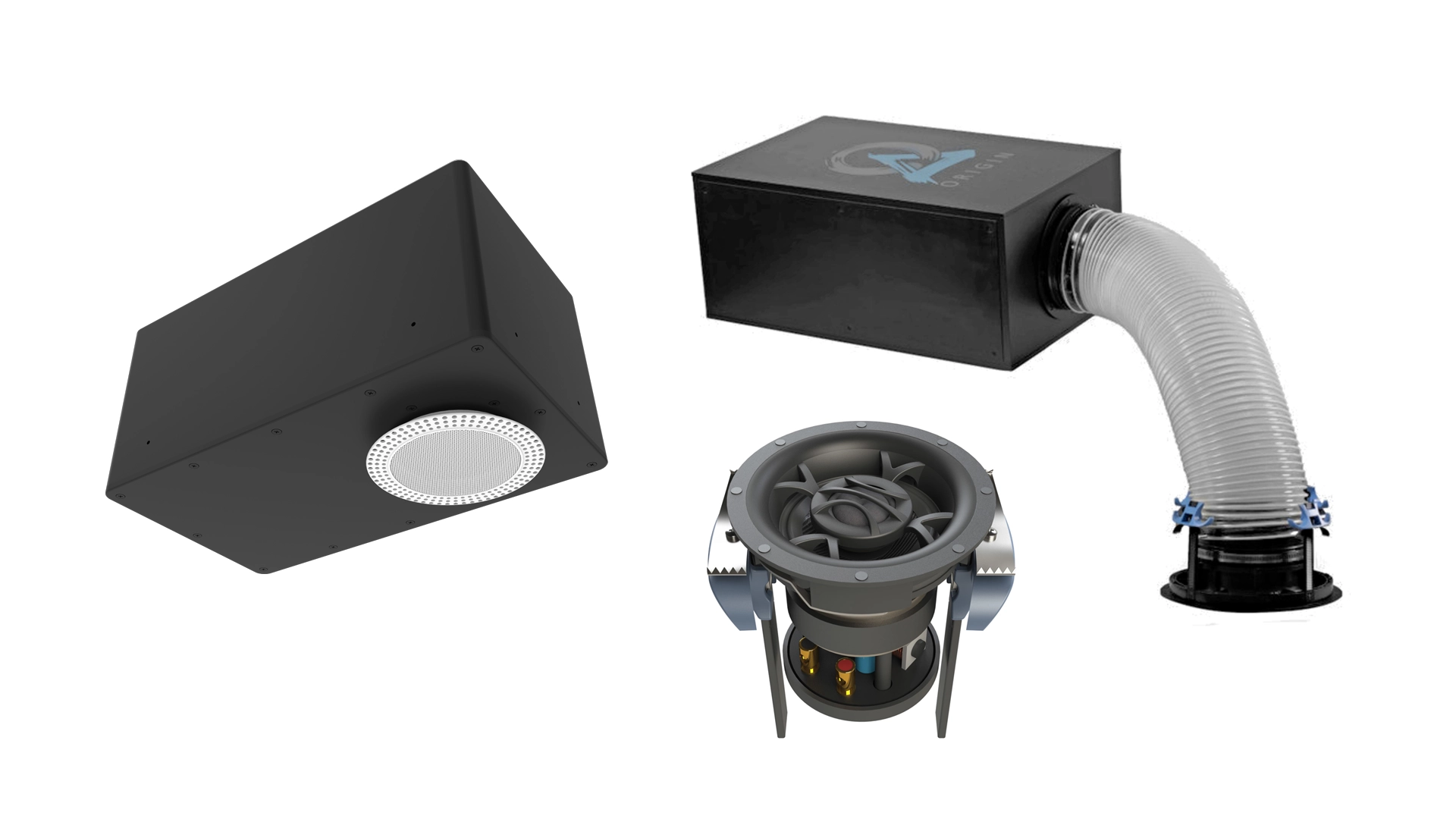
Origin Acoustics is the American architectural-audio company launched in 2014 by Jeremy Burkhardt, Ken Humphreys and Ed Haase. Its roots reach further back: Humphreys and Haase opened a Riverside, California stereo shop in 1976 and helped pioneer the flush-mounted in-wall loudspeaker in the early 1980s; Burkhardt later joined them in building SpeakerCraft into a major custom-installation brand. Origin reunited that experience around products designed from the outset for installers and interior integration. The catalogue covers in-ceiling and in-wall speakers, subwoofers, outdoor and marine systems, soundbars, amplifiers and dedicated cinema products. ThinFit addresses shallow cavities, Minimal Opening models reduce the visible aperture, and BLENDS uses an acoustically active surface for installations intended to disappear under the finish. ZipClip mounting and tool-conscious mechanical details shorten installation and make servicing more predictable, while Director Collection speakers use adjustable or directed arrays to aim sound from fixed ceiling positions. Marquee cinema systems and bollard or landscape products extend the same design language into dedicated rooms and outdoor zones. Origin’s key advantage is not simply hiding a loudspeaker. It combines decades of architectural-speaker experience with mounting hardware, dispersion control and product families that let a designer achieve consistent sound across ceilings, walls, gardens and yachts without compromising the visual plan.
Revox

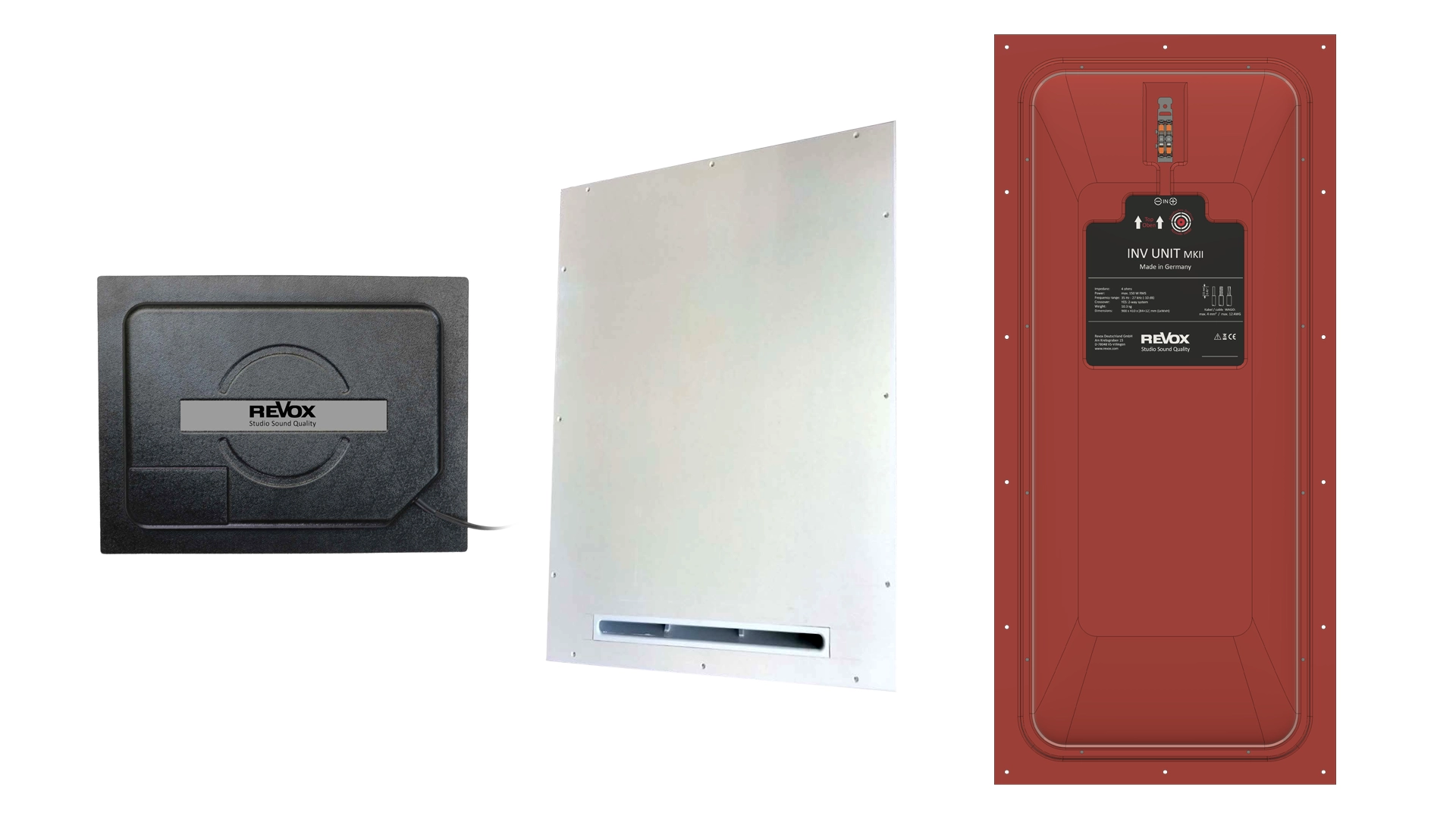
Revox is a Swiss audio company whose story began in 1948, when engineer Willi Studer opened a business in Herisau and developed the Dynavox tape recorder. Revox became the name for the consumer products, while Studer served professional studios and broadcasters; the shared engineering culture made reel-to-reel machines such as the A77 and B77 enduring references for robust mechanics, serviceability and recording quality. The brand later expanded into complete systems, including the B-series electronics and loudspeakers, but tape remains an important part of its identity. In 2024 Revox introduced the B77 MK III, a newly manufactured reel-to-reel recorder rather than a cosmetic reissue, bringing the format back into current production with revised electronics and modern manufacturing. Contemporary Revox is broader than analogue tape. The company develops modular multiroom and custom-installation systems, networked amplifiers, servers, speakers and control interfaces intended to distribute music through an entire home. STUDIOART provides compact wireless products, JOY and STUDIOMASTER components address network playback and amplification, and the T700 turntable connects the brand’s precision-mechanical tradition with vinyl. Revox also maintains restoration and service activity for classic machines, an important distinction for equipment with decades of working life. The company has passed through ownership and organisational changes since the Studer era, but its strongest products still follow the original logic: sources, electronics, speakers and control designed as a coordinated system. Revox is therefore best understood not merely as a historic tape-recorder name, but as a rare bridge between Swiss recording heritage and current integrated audio.
Sonance

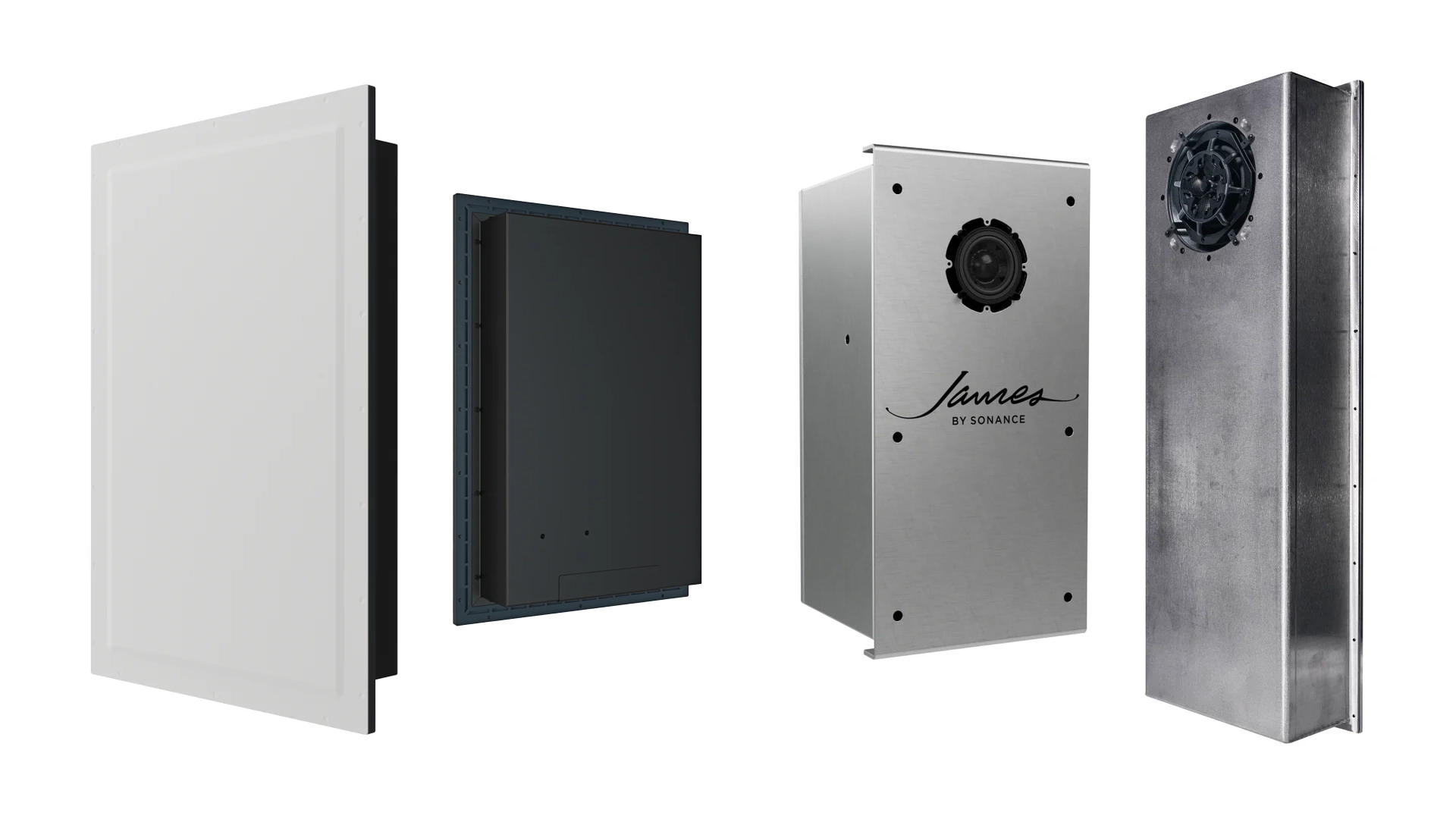
Sonance makes loudspeakers that become part of a building, from discreet ceiling systems to speakers concealed completely behind a finished wall. Scott Struthers and Geoff Spencer founded the Californian company in 1983, helping establish architectural audio as a category in its own right. Its in-wall and in-ceiling designs brought music into rooms without requiring freestanding cabinets, and that integration remains central to the brand. Visual Performance and architectural speaker families serve residential installations, while outdoor systems extend coverage into gardens and terraces. The Invisible Series takes the idea further: the speaker radiates through a thin finish layer, leaving no visible grille. Its Motion Flex architecture combines an Air Flex woofer, Wave Flex drive unit and an acoustically isolated baffle. Installation is part of the engineering; the D.I.S.C. calibration system helps installers check the thickness of the material applied over the speaker, since the finish affects its performance. Professional versions add facilities such as 70V/100V transformer taps for distributed commercial systems. The wider Sonance portfolio includes amplification and solutions for residential, commercial and marine environments, supported by system design resources for integrators. This is the thread connecting its products: the speaker, its coverage and the surrounding architecture are planned together. A Sonance installation can therefore range from barely noticeable background music to a dedicated cinema, with the visual presence of the equipment chosen to suit the room.
Stealth Acoustics

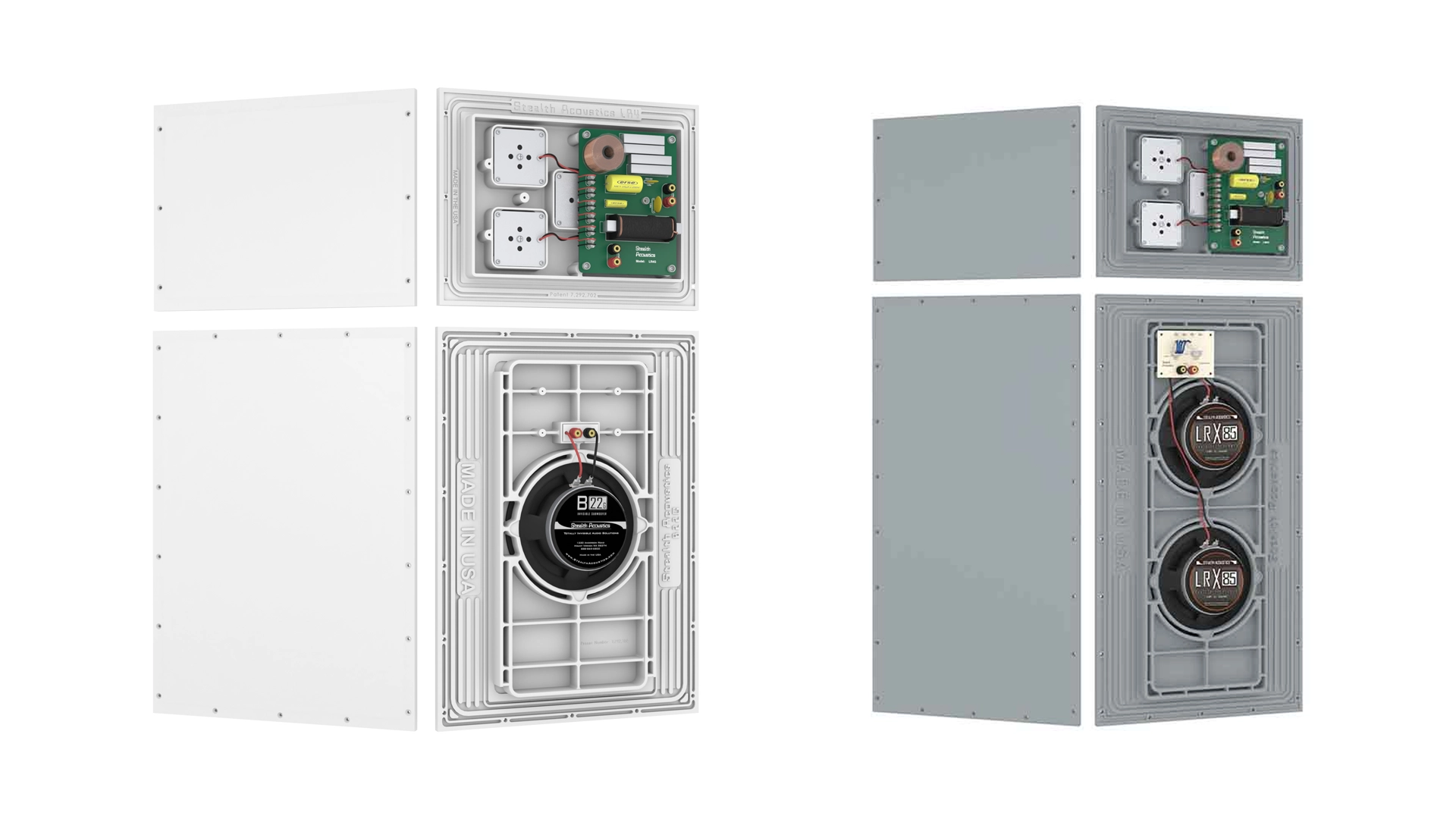
Stealth Acoustics makes loudspeakers intended to disappear behind a finished wall or ceiling while remaining serviceable elements of a designed audio system. The American company is a division of Dimensional Communications in Mount Vernon, Washington, and launched its first invisible-speaker products in 2003 after a dedicated development programme. Rather than hiding a conventional cone speaker behind plaster, Stealth uses a rigid frame and a radiating face panel that becomes the visible—or more accurately invisible—part of the room after skim coating and paint, wallpaper or another approved finish. The LineaResponse family covers two-channel, distributed-audio and home-cinema duties, with models sized for different output and bandwidth requirements. Matching invisible subwoofers extend low-frequency performance without introducing a grille into the interior. Installation is part of the technology: correct mounting, finishing depth and system equalisation matter because the final surface participates in the acoustic result. Stealth therefore supplies DSP amplification and installation guidance alongside the speakers. The company also applies related panel-transducer experience to outdoor products. StingRay loudspeakers use weather-resistant, fibreglass-infused ABS enclosures for locations where durability and a discreet profile matter more than total concealment. Stealth Acoustics is strongest where architecture sets strict visual conditions. Its contribution is a purpose-built loudspeaker system designed from the outset to be integrated, finished and calibrated as part of the wall rather than a standard speaker simply placed out of sight.
Tru Audio

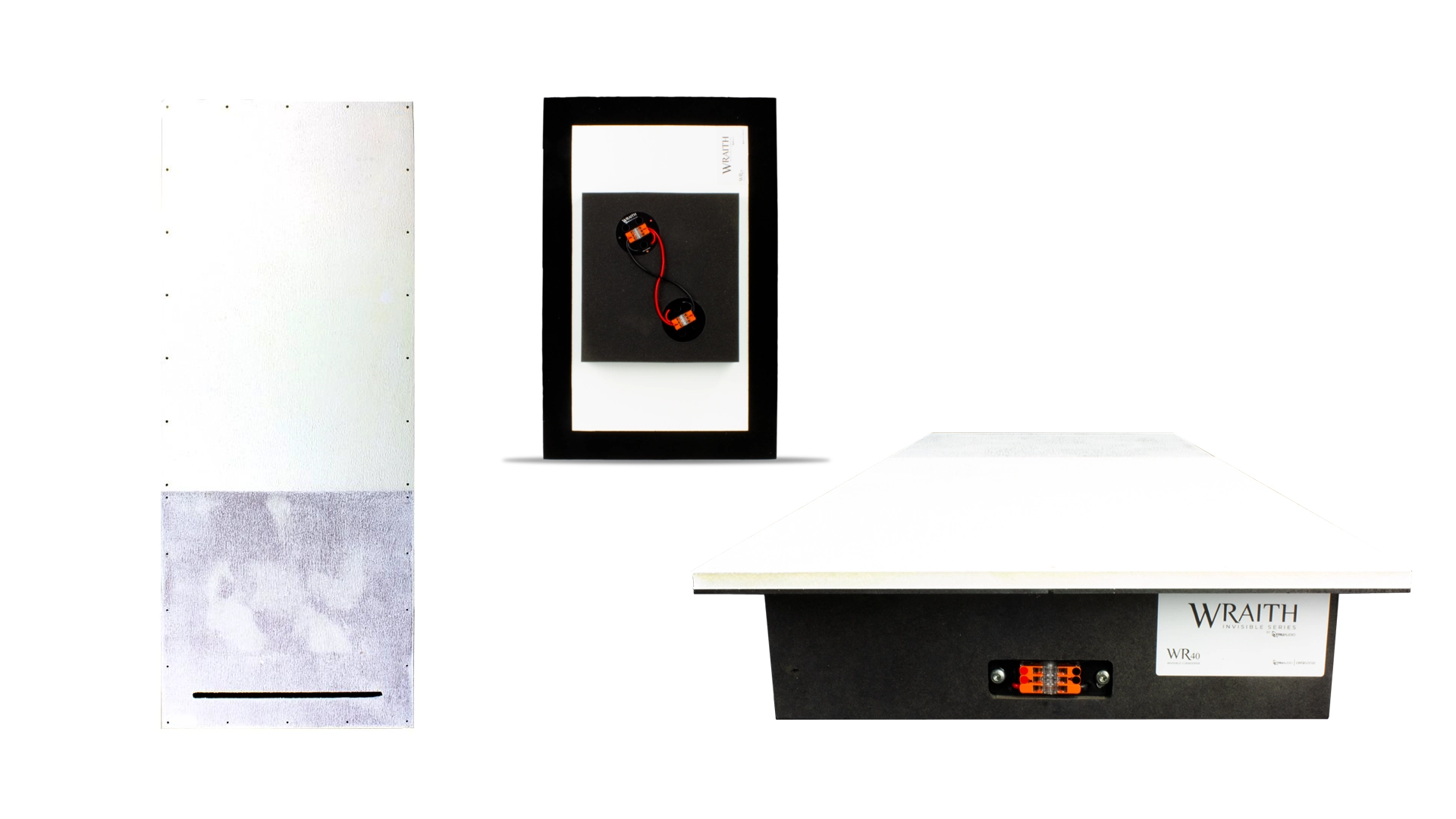
TruAudio is an American architectural-loudspeaker brand founded by custom integrators in 2000 and based in Hurricane, Utah. The founders had designed and installed thousands of theatres and multiroom systems before becoming manufacturers, so the range was shaped by conditions installers encounter: restricted depth, visible grilles, awkward outdoor locations and the need to service a finished room without damaging it.
The Ghost series made TruAudio particularly recognisable by using an almost rimless in-ceiling frame and a magnetic grille with minimal reveal. Phantom and Shadow in-wall and in-ceiling families, LCR and soundbar models, subwoofers and REV or Elite cinema speakers cover residential applications. AcoustiScape, SubTerrain and hardscape products carry distributed sound outdoors, while commercial ceiling and pendant speakers extend the same installer-oriented approach. Matching DSP and multichannel amplifiers allow complete systems to be specified from one source.
Driver materials vary by application—woven carbon fibre, titanium, aluminium and polypropylene appear where their balance of stiffness, weather resistance and cost is appropriate. The more important continuity is mechanical: flush mounting, paintable grilles, protected outdoor enclosures and practical connection details are designed alongside the acoustic system. TruAudio now operates as a division of SoundVision Technologies, but its original country and custom-installation identity remain unchanged. The brand’s real innovation is not making a speaker invisible in a photograph; it is making high-performance audio easier to integrate, align and maintain inside actual architecture.