
Screens for Home Theater
A high-quality projector screen is essential for achieving a truly cinematic image, providing a perfectly smooth and uniform surface for optimal brightness, color, and contrast. Far superior to a bare wall, modern screens come in various materials, including acoustically transparent options that let you place speakers behind them and ambient light rejecting (ALR) surfaces for rooms with more light. This index lists the manufacturers who create these critical surfaces for high-performance projection.
Hi-Fi brands in the category
Summary information and image
Direct links to official websites
Display Technologies

Display Technologies is a British projection specialist founded in 2016 by Neil Davidson and Simon Ridley to solve practical problems encountered by high-end cinema installers. The company designs and manufactures fixed-frame, motorised and multi-aspect masking screens, including ArtMask systems that conceal the cinema surface behind artwork when it is not in use. Its work extends beyond screen fabric and frames to vertical and side-projection mirror mounts, projector brackets, hush boxes, optical port-hole glazing and Mistral airflow systems for cooling projectors and AV equipment quietly. This matters because a premium projection room is an integrated optical, acoustic and thermal installation: screen flatness and masking affect the image, mounting geometry affects alignment, and noise or heat management can compromise the room even when the projector itself is excellent. Bespoke dimensions and installer-oriented mechanisms are therefore more central to Display Technologies than consumer-style model turnover. Its distinctive contribution is a coordinated range of engineered infrastructure for residential cinemas, screening rooms and specialised commercial projection, developed around reliable installation as well as image performance.
Elite Screens
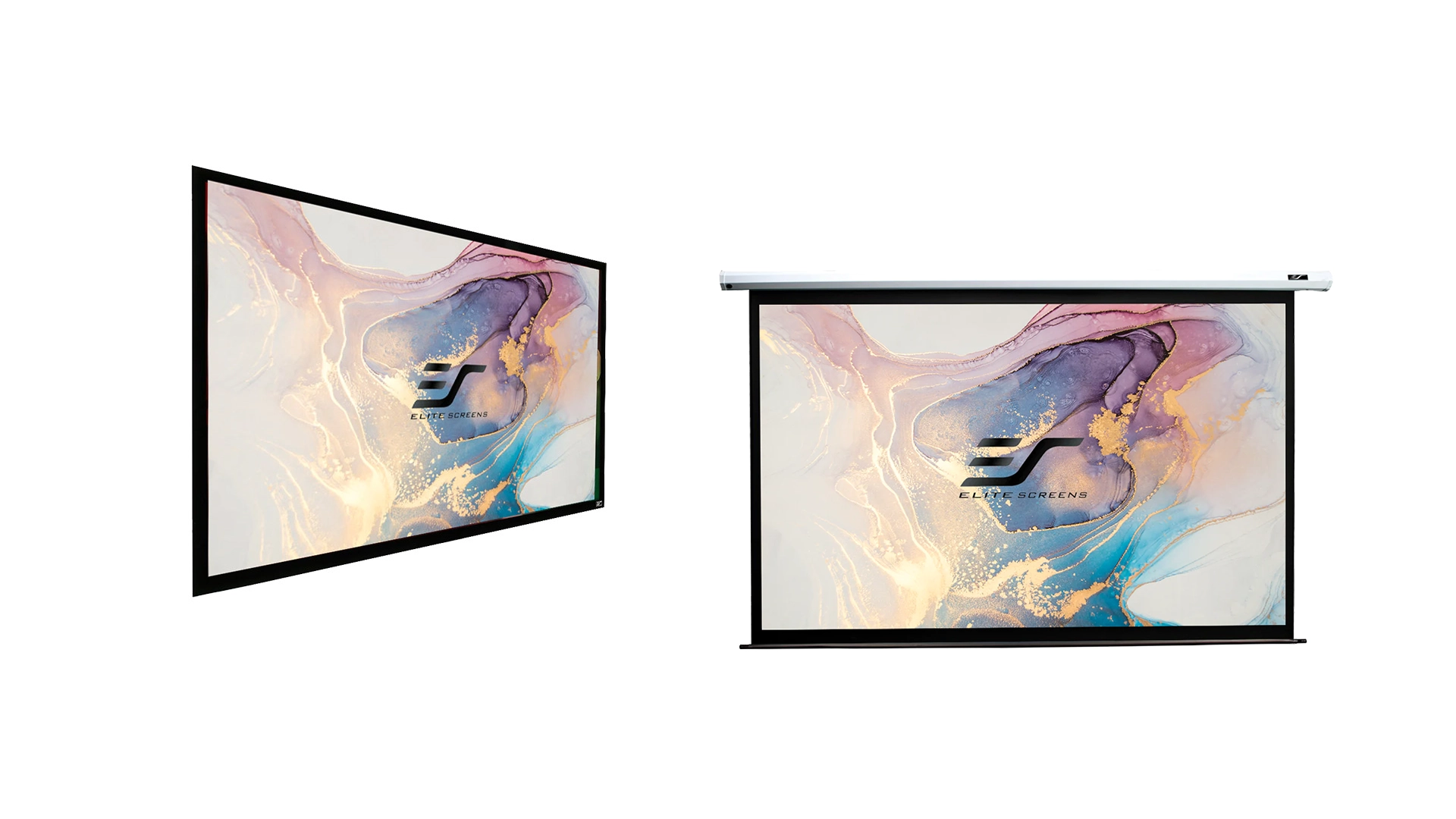
Elite Screens is a Southern California projection-screen manufacturer founded in 2004 by professionals from the video-projector industry to make complete, application-specific screens available at accessible prices. Its range is broad because the surface and mechanism must match the room: fixed frames, manual pull-down models, electric and tab-tensioned screens, portable structures, outdoor Yard Master systems and commercial or educational formats. The most useful technology is in the material choice rather than the frame name. CineWhite serves controlled-light rooms; CineGrey angular-reflective surfaces improve contrast when ambient light cannot be eliminated; AcousticPro fabrics allow loudspeakers to sit behind the image; and CLR materials are designed for the steep light geometry of ultra-short-throw projectors. Aeon uses an edge-free fixed-frame appearance, Sable Frame is a conventional bordered solution, and Spectrum or Saker families address motorised installations. Elite Screens does not make projectors, so its expertise lies in the optical interface the viewer actually sees: gain, viewing cone, texture, colour neutrality, ambient-light behaviour, tension and reliable deployment matched to home cinema, presentation and large-venue use.
Grandview Screens

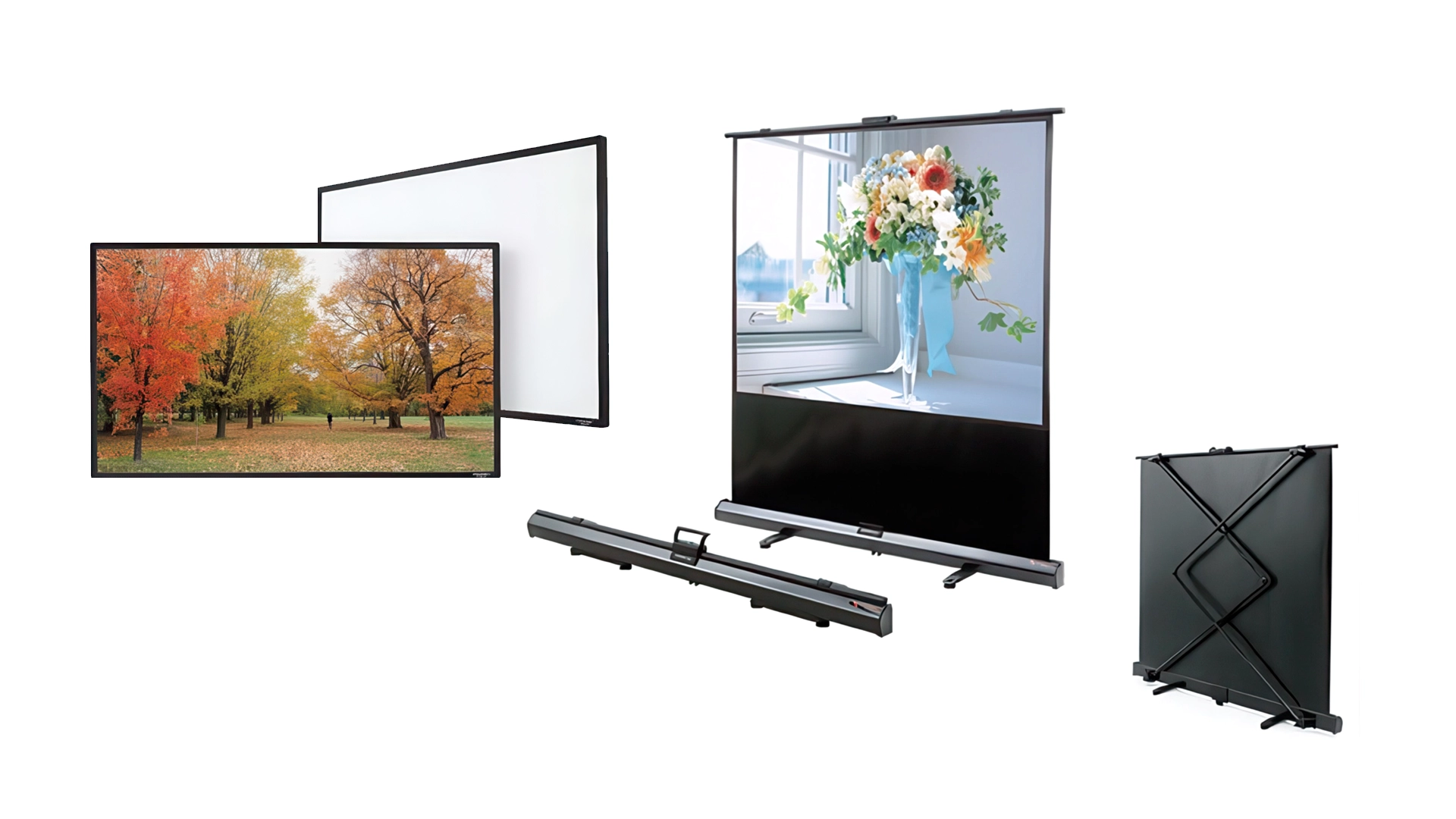
Grandview Screens is a projection-screen manufacturer with Sino-Canadian roots and large-scale production in Guangzhou. A Canadian trading business preceded the factory, while the manufacturing company and Grandview trademark were established in China in 1999. The range covers fixed-frame, motorised, tab-tensioned, floor-rising and portable screens for home cinema, education, corporate spaces and professional venues. Material options include conventional white and grey surfaces, acoustically transparent fabrics and optical or ambient-light-rejecting screens for difficult rooms and ultra-short-throw projectors. Grandview also develops housings, tensioning mechanisms, control systems and mounting hardware rather than treating the projection surface as an isolated product. Its manufacturing depth, numerous mechanism and surface patents, and participation in Chinese projection-screen standards are more informative than the broad “home and commercial” label often attached to the brand.
Screen Excellence
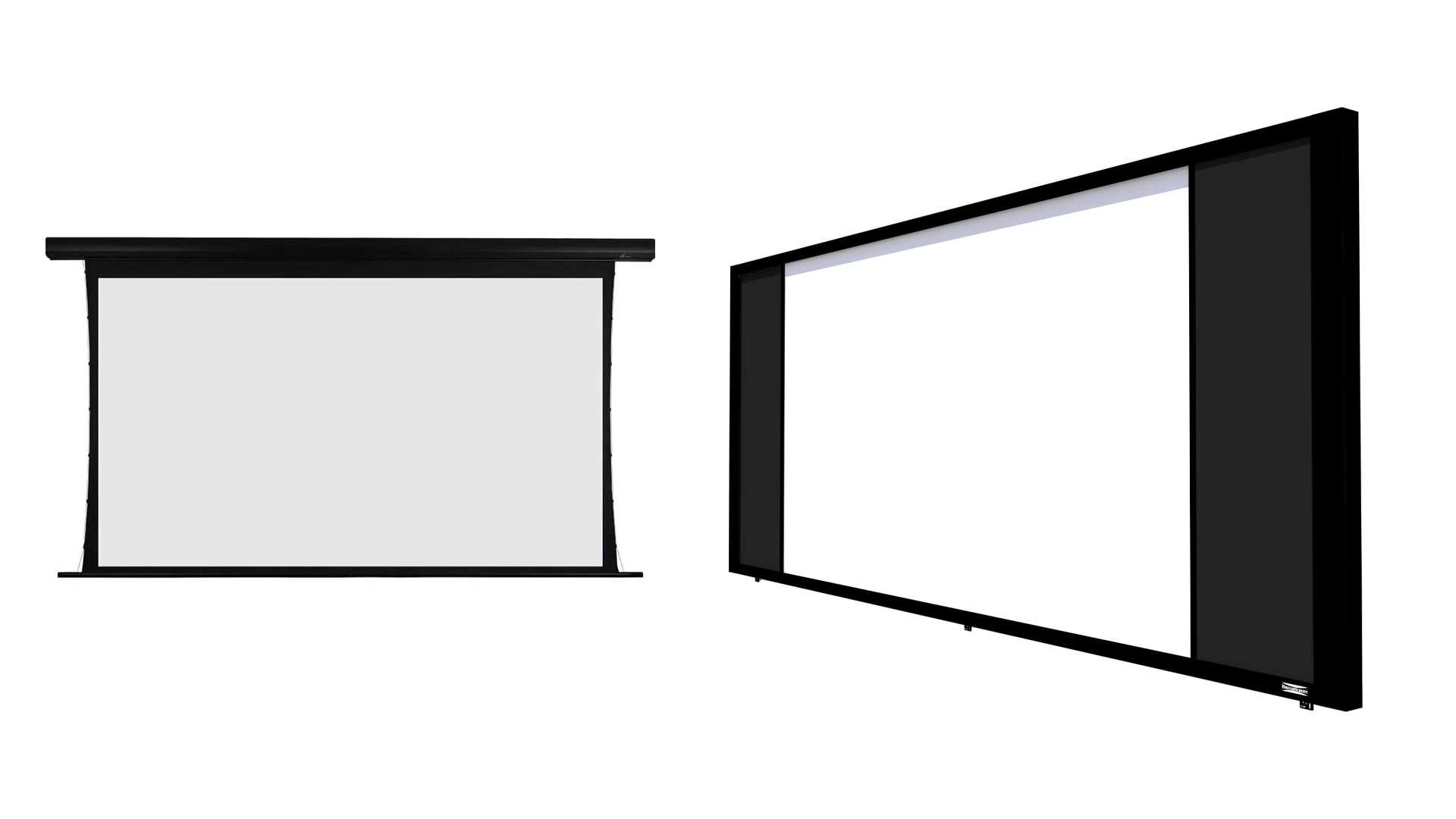
Screen Excellence is a British specialist in acoustically transparent projection screens. The business grew from U-See, incorporated in 2005 by Patrice Congard, and adopted the Screen Excellence name in February 2008 as its woven-screen technology reached the market. Its key material, Enlightor, is not a perforated vinyl sheet but a fine woven fabric designed to let sound from loudspeakers behind the picture pass with minimal tonal disturbance while avoiding visible holes, moiré and excessive light loss at normal cinema viewing distances. That permits the left, centre and right speakers to sit where voices and action appear on screen—the arrangement used in commercial cinemas—rather than above, below or beside the image. Enlightor 4K helped establish the company in 2008, followed by Enlightor Neo and specialised materials for different brightness, resolution and installation needs. Fixed-frame Reference screens provide precise tension and masking options; VistaCurve addresses curved installations, while TAM motorised masking changes the visible image area for different aspect ratios. Absolute is the large-format, custom-built platform for dedicated theatres where frame size, curvature, masking and fabric must be engineered as one installation. The company works closely with cinema designers and calibrators, and offers systems for home, screening-room and professional projects rather than selling fabric alone. Screen Excellence’s distinction is the coordination of image and sound: its screens are designed as acoustic components as well as optical surfaces, allowing a properly placed front soundstage without making weave structure or masking mechanism the visual focus of the room.
Screen Innovations

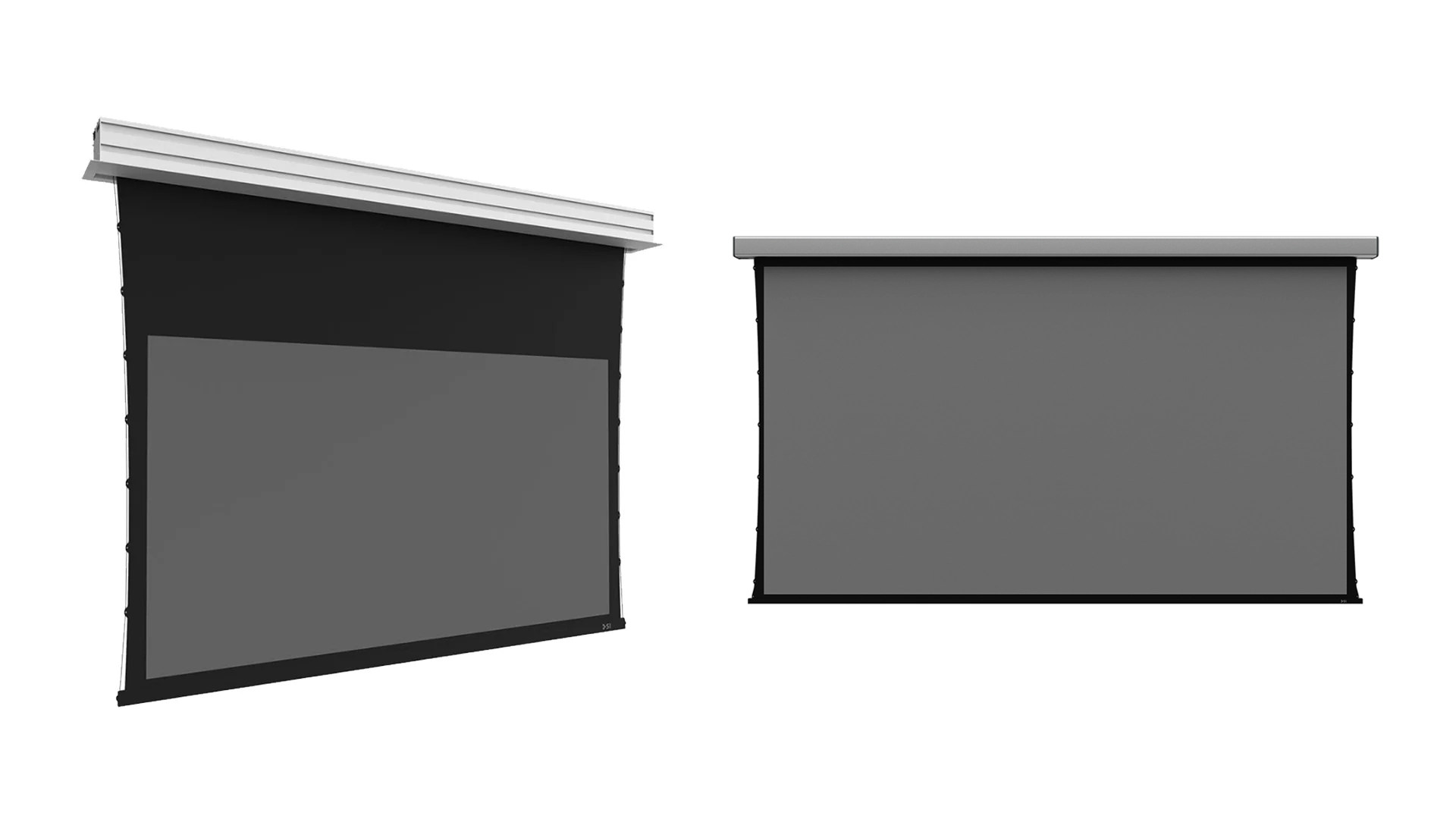
Screen Innovations, usually known as SI, is an American projection-screen and shading company founded in Austin, Texas, in 2003 by Ryan Gustafson. It became widely known for Black Diamond, an ambient-light-rejecting screen material introduced to preserve image contrast in rooms that could not be turned into blacked-out theatres. That product helped move large-format projection from dedicated dark rooms into living spaces, commercial venues and media rooms. SI now treats the screen as an engineered system rather than a passive white rectangle. Slate provides a more flexible ALR option, Pure targets colour-neutral reference viewing, Maestro is woven and acoustically transparent, and Short Throw materials are designed for the steep light angles of ultra-short-throw projectors. Fixed-frame systems sit alongside motorised products such as Solo, whose compact cassette and low-voltage options suit architectural installation. Zero G deploys a screen that descends from the housing while the image surface effectively “floats” in the room, and Transformer changes aspect ratio through masking for cinema content. Large custom sizes, outdoor products and commercial solutions extend the platform. SI also develops motorised window shades and control technology, including wireless and low-voltage integration, so projection, daylight and room automation can be planned together. Materials differ in gain, viewing angle, acoustic openness and rejection direction; the correct one depends on projector and room rather than a universal “best” surface. Screen Innovations’ defining contribution is making projection adaptable: light control, retractability, masking and automation are developed as part of the visual system, enabling a credible large image in spaces where a traditional fixed white screen would fail.
Screen Technics
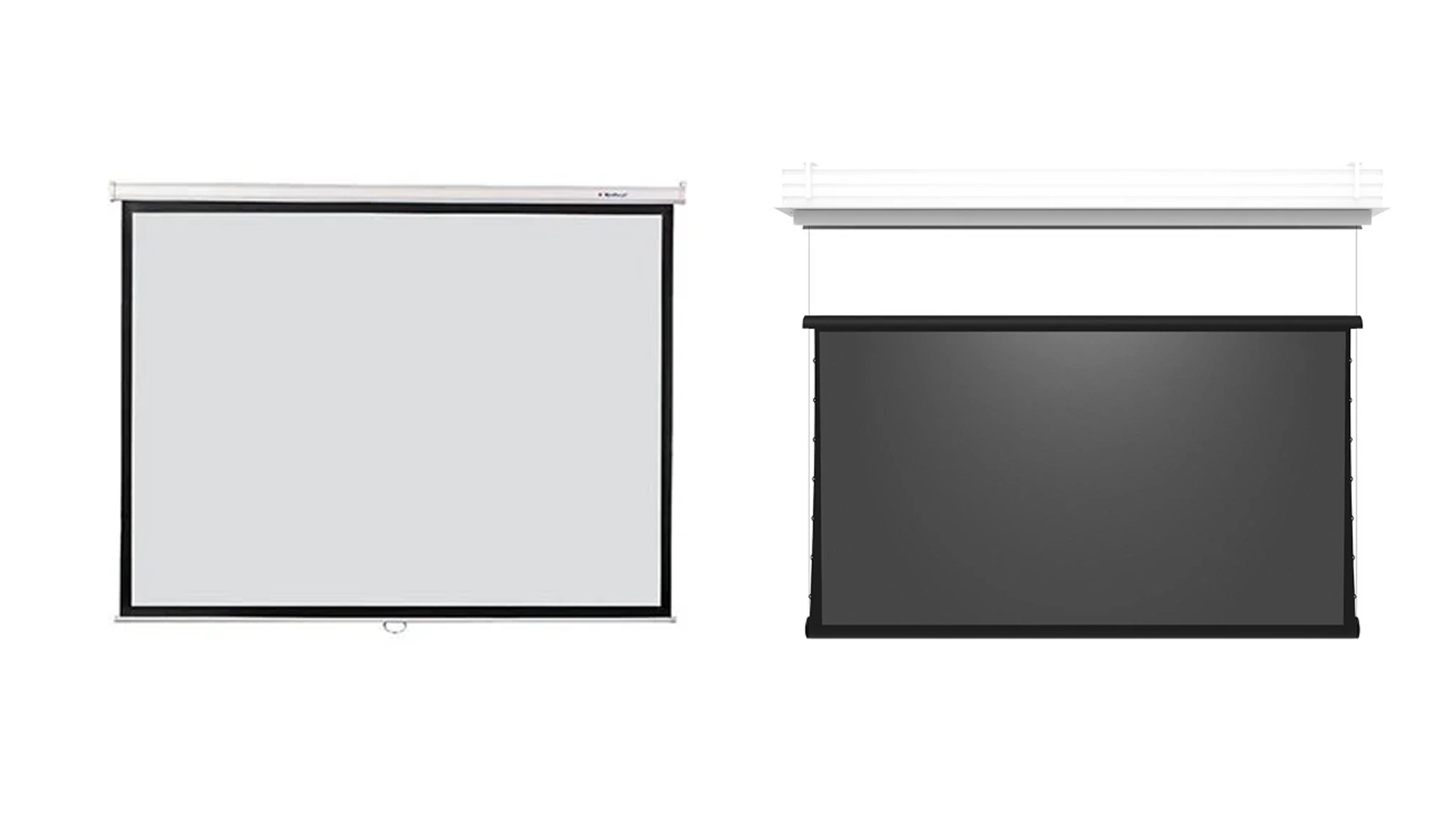
Screen Technics is an Australian manufacturer of projection screens and AV installation hardware, operating since 1990. Based in New South Wales, it has grown into one of the country’s major local screen producers by serving residential cinema, education, corporate, government and large-venue projects. The range includes fixed-frame screens, motorised in-ceiling and surface-mounted models, portable screens and custom formats, with fabrics selected for conventional front projection, acoustically transparent installations, high-ambient-light spaces and rear projection. Sizes and aspect ratios can be tailored for a room rather than limited to television-like consumer dimensions. The company also makes the mechanical infrastructure around the image: projector lifts, flat-panel and projector mounts, ceiling brackets, control interfaces and concealment systems. ElectriCinema and ViewMaster families address common motorised and fixed-frame installations, while larger engineered products support auditoriums, stages and specialised commercial work. Local design and manufacture are important because many projects require non-standard drops, borders, housings, mounting points or control arrangements and must meet Australian installation conditions. Screen Technics works through professional AV channels and provides specification data for integrators instead of positioning every model as a retail accessory. Its value lies in this practical breadth. A screen surface, roller, motor, bracket and control system must remain flat, quiet, safe and serviceable after installation; solving those mechanical details is as important as quoting gain. Screen Technics has built its identity by manufacturing that complete projection interface in Australia and by adapting it to jobs ranging from a home theatre to a large public venue.
Severtson Screens
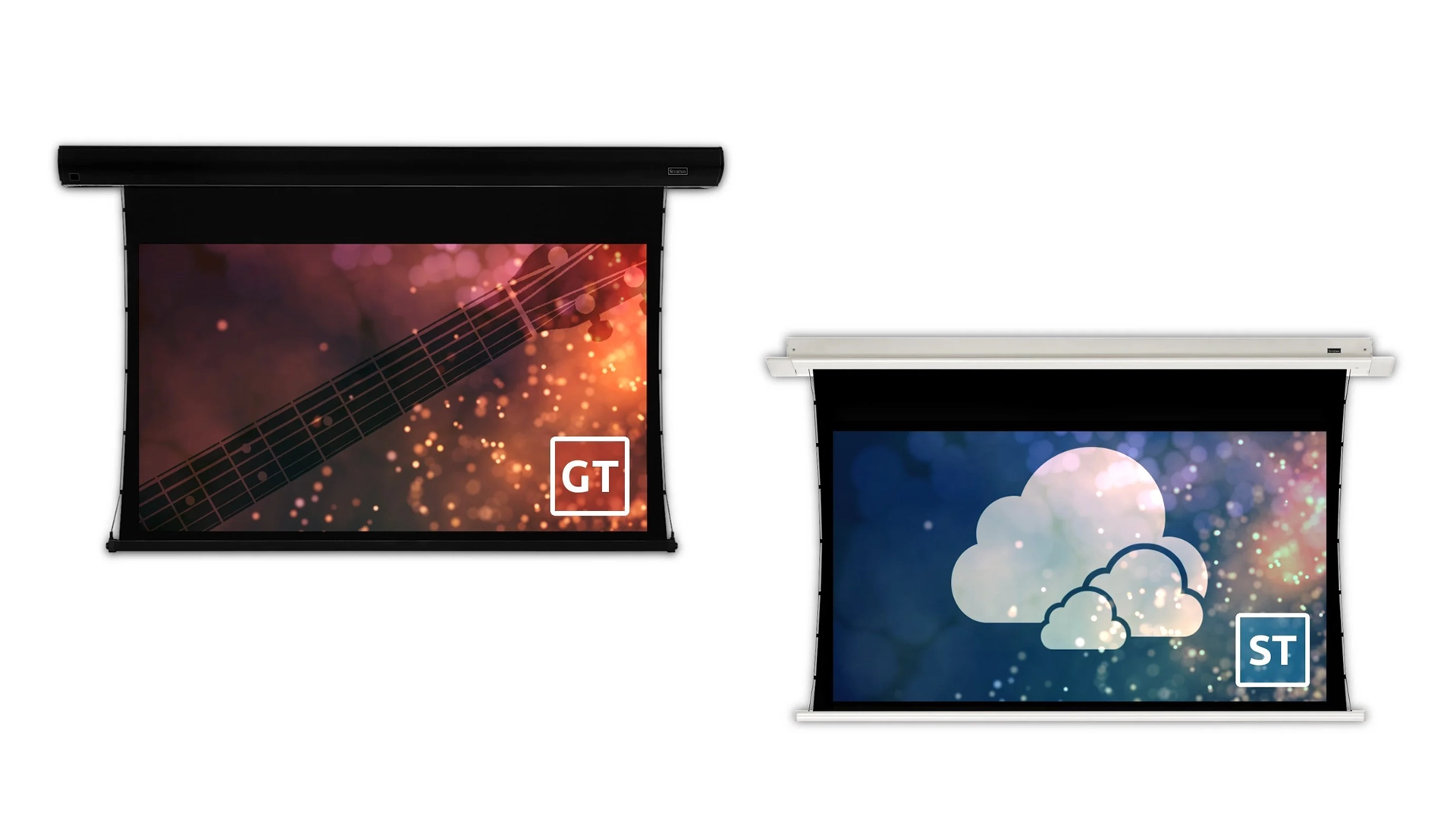
Severtson Screens is an American projection-screen manufacturer whose unusual origin lies in flight simulation rather than home cinema. Ron Severtson founded the company in 1986 at Williams Air Force Base in Arizona, developing optical coatings for the curved screens used in military simulators. It produced 3D coatings by 1988 and water-based coating processes in 1989, then carried that experience into large-format cinema: Severtson supplied IMAX projects in the early 1990s and coated the giant screen installed at IMAX Sydney in 1998. Home-theatre and professional AV screens followed in 2003, and the company became a full-service cinema-screen manufacturer in 2009. Today it serves commercial cinemas, screening rooms, education, corporate AV and residential theatres with fixed-frame, retractable and custom screens. Its catalogue includes solid, perforated and woven acoustically transparent surfaces, allowing front loudspeakers to be placed behind the image, as well as materials selected for different projector brightness, viewing angles and ambient-light conditions. A particularly practical Severtson speciality is folded cinema-screen technology: large surfaces can be shipped in much smaller packaging and installed without the logistics normally required for a full-size roll. Coating, material handling and frame engineering are therefore part of one production discipline rather than unrelated accessories. The company moved to a larger campus in San Tan Valley, Arizona, in 2019 and remains family rooted. Severtson stands apart because its cinema products grew from demanding optical work where uniformity, coating control and large curved surfaces were already essential—not from simply stretching generic white fabric across a frame.
Stewart Filmscreens
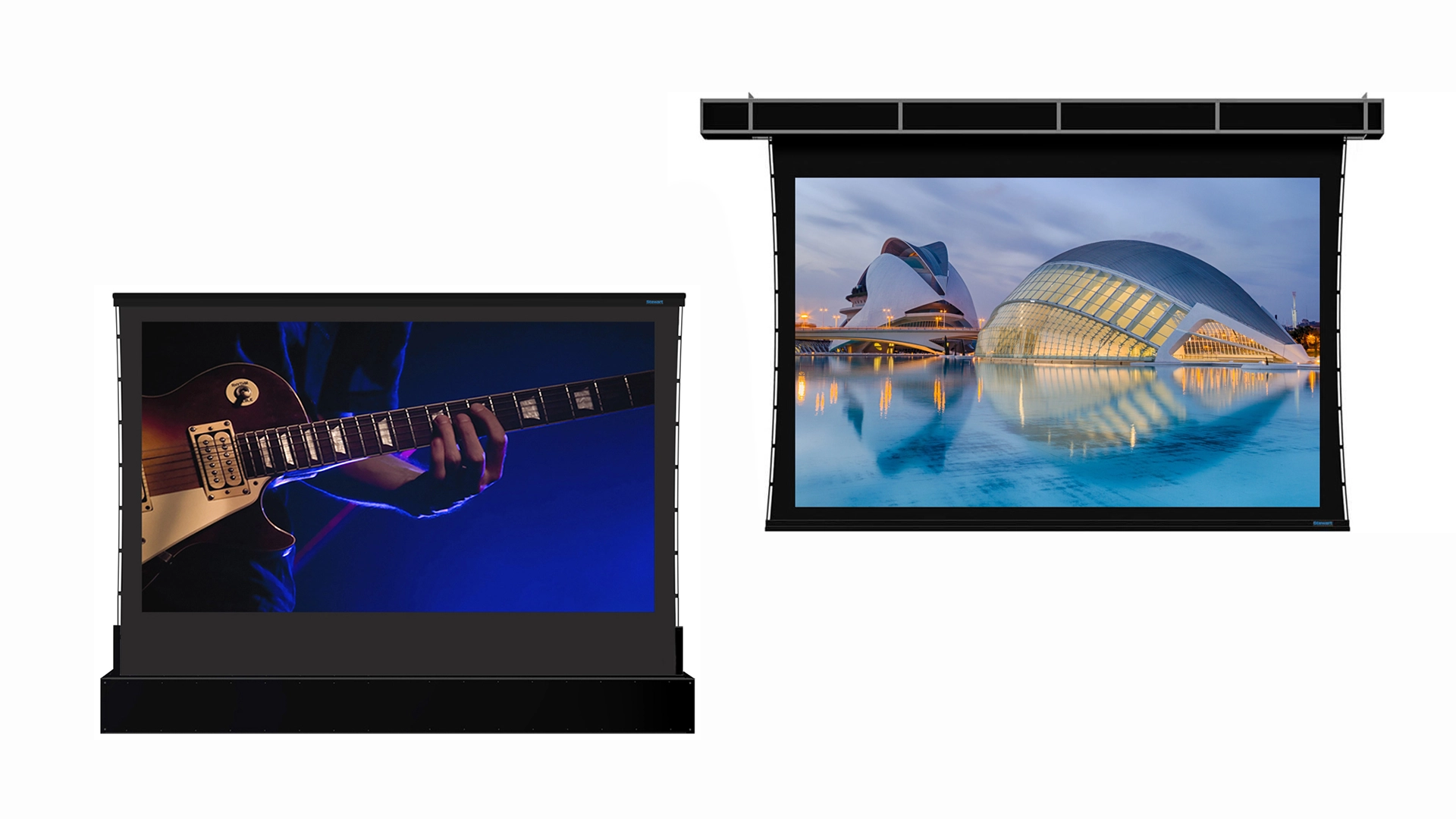
Stewart Filmscreen is the American projection-screen specialist whose materials are used in private cinemas, studios, screening rooms and large professional installations. Roy C. Stewart founded the company with his sons in Torrance, California, in 1947, initially serving the rapidly expanding motion-picture industry. Its long history matters because a screen is an optical component, not a neutral white rectangle: surface gain, colour neutrality, viewing angle, ambient-light behaviour, perforation and projector type all affect the image the audience receives. StudioTek 100 is the company’s reference unity-gain front-projection material and a familiar choice where a controlled dark room allows accuracy to take priority. FireHawk surfaces are designed for environments with more ambient light, while other formulations address higher output, rear projection, simulation and specialised venues. Acoustically transparent MicroPerf and Cinemaperf options allow loudspeakers to sit behind the image, preserving cinema-style placement of dialogue and effects. Stewart builds fixed-frame, retractable and rigid screens, along with masking systems that change the visible image area for different aspect ratios. Many products are made to order rather than cut from a single universal specification. The continuing manufacture in California and the depth of available materials are central to the brand: Stewart’s strength is matching screen, room, projector and seating geometry so that the surface solves a defined visual problem instead of becoming an afterthought at the end of a cinema build.