Tonearms
The tonearm is a critical precision instrument on any high-performance turntable. Its complex job is to hold the phono cartridge at the perfect angle and pressure, allowing the stylus to trace the record groove with absolute stability and minimal error. As a key component influencing sound quality, the tonearm is often the target of significant upgrades. This directory is your guide to the specialized manufacturers who engineer these pivotal mechanical components for vinyl playback.
Hi-Fi brands in the category
Summary information and image
Direct links to official websites
Acoustic Signature

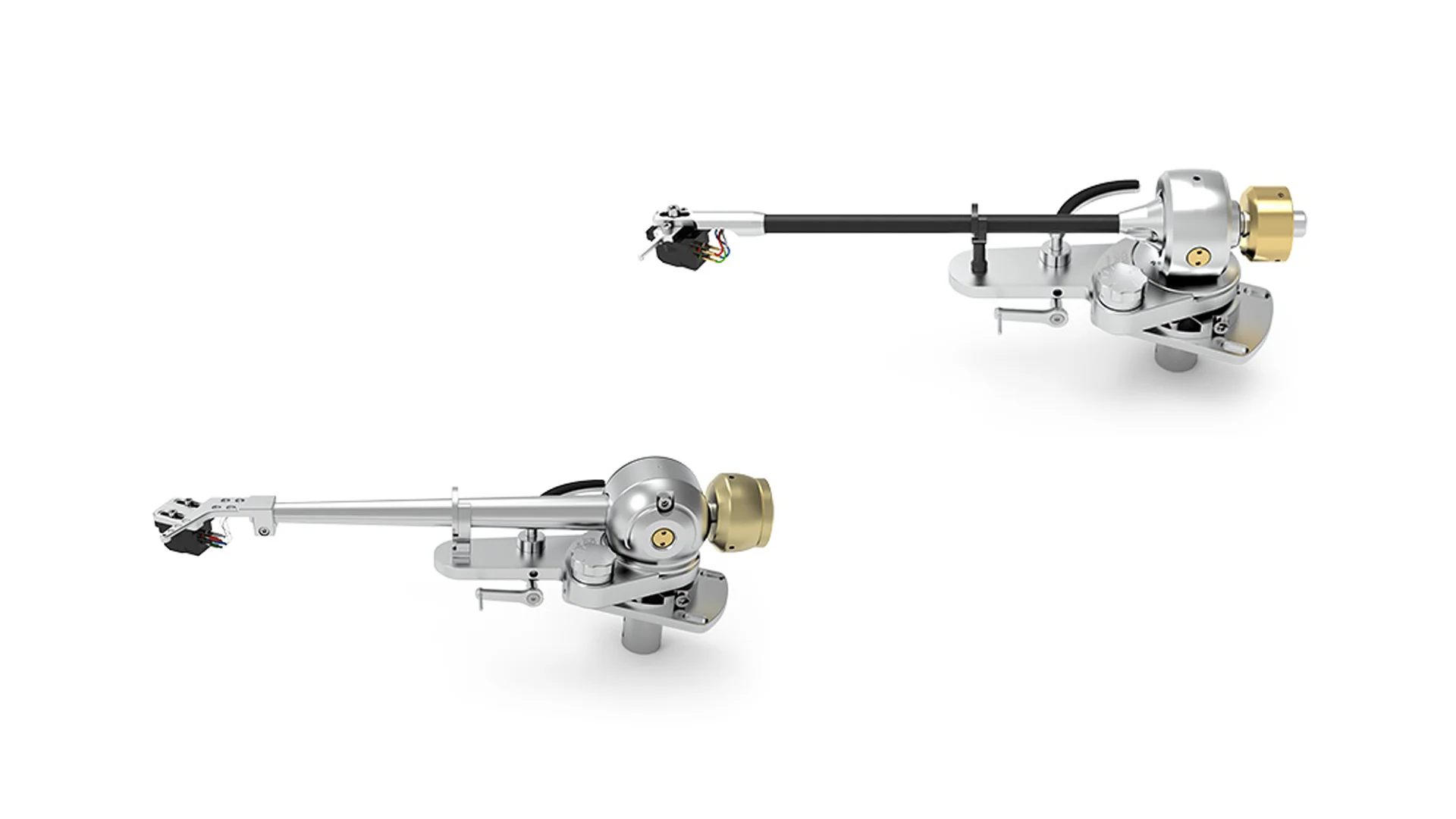
Acoustic Signature develops turntables around high-mass construction and targeted control of mechanical vibration. Its Silencer and Constraint Layer Damping designs address platter and chassis resonances, while Automatic Vibration Control adjusts motor-drive signals to reduce motor-induced vibration. Established in 1996, the company presented its first turntable the following year under managing director and chief developer Gunther Frohnhöfer. In the NEO range, the Dura Turn Diamond bearing uses a diamond-coated spindle, replacing the earlier Tidorfolon design. The German manufacturer’s range also covers tonearms, moving-coil cartridges and phono stages. Its distinctive focus is the mechanical foundation of vinyl playback: the bearing, motor system and supporting structure that let a cartridge follow the record groove.
Acoustical Systems

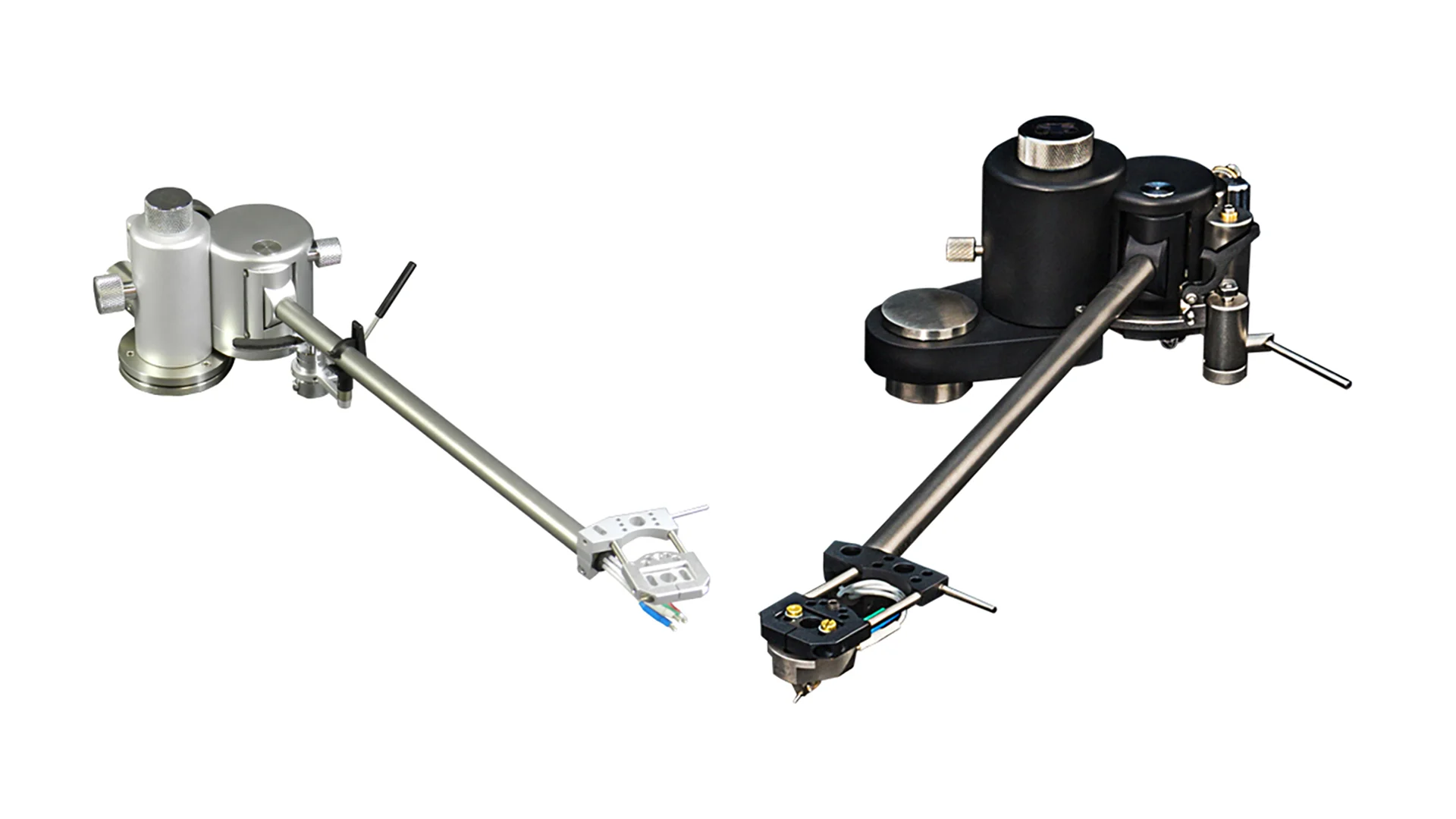
Acoustical Systems treats cartridge alignment as a central part of vinyl playback, alongside the design of turntables, tonearms and cartridges themselves. Its SMARTractor alignment tool offers five geometries, including the company’s UNI-DIN approach, and measures the distance between the platter spindle and tonearm pivot. Established in 1998 by Axinia Schäfer, the family business has Dietrich Brakemeier as its chief designer. It initially supplied vintage audio tubes, then developed complete systems before concentrating on analogue front-end products from 2010. The same focus on analogue setup runs through products such as the AXIOM tonearm and Palladian cartridge family. Its products are designed, manufactured and assembled in Germany with specialist machining and fine-mechanics partners. Its catalogue reaches from practical alignment tools to complete analogue source components.
AMG

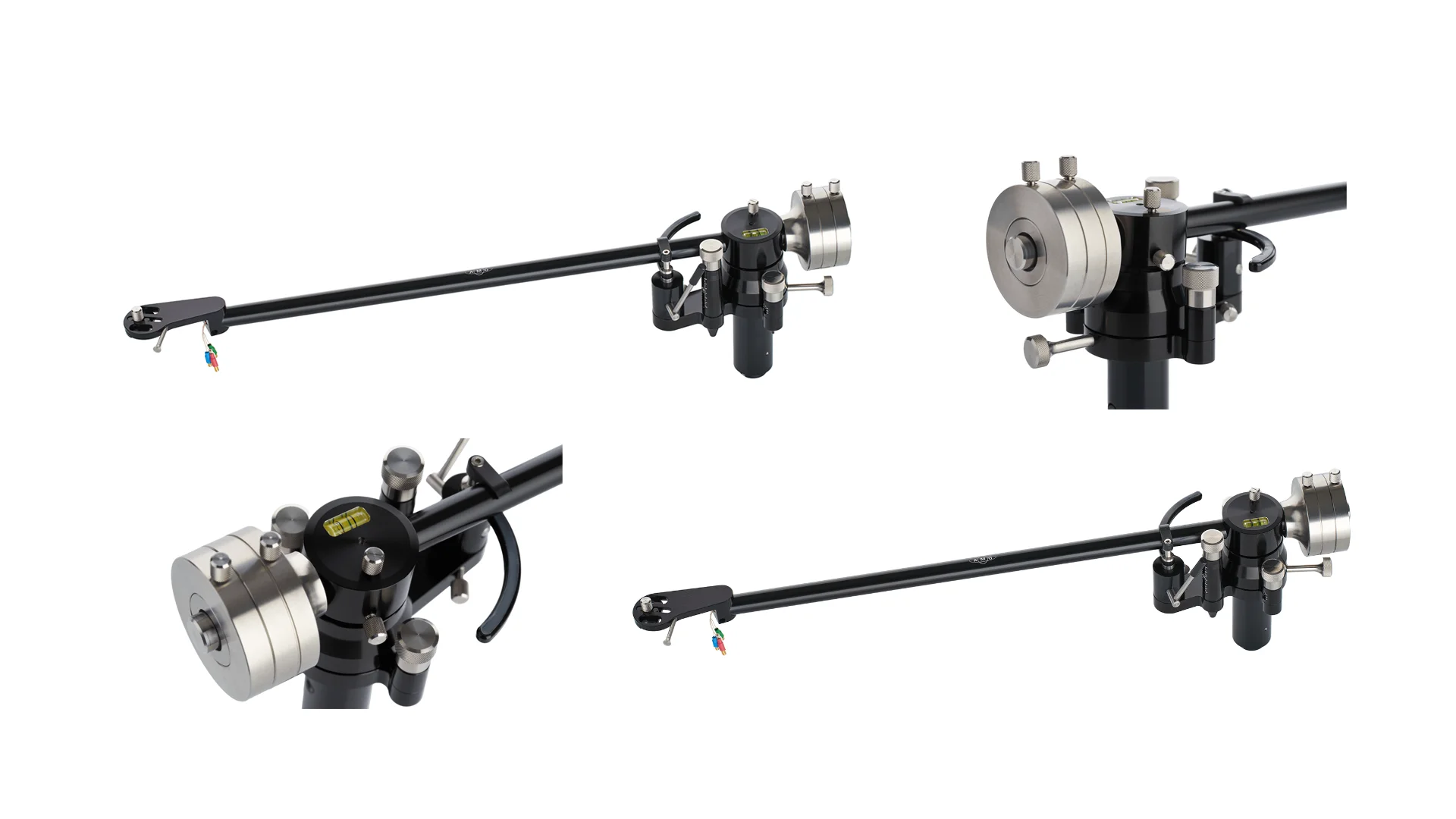
Analog Manufaktur Germany builds turntables and tonearms with an emphasis on precision machining and bearing design. Founder Werner Röschlau, a pilot and master mechanical engineer, established AMG in 2011 after earlier work making components for other analogue-audio manufacturers. His son Julian Lorenzi took over in 2013. Based in Deining, Bavaria, the company develops and manufactures its products around that engineering background; its tonearm work includes a distinctive spring-steel, two-point bearing arrangement. Turntables such as the Viella make AMG’s approach tangible through the relationship between platter, drive and tonearm, rather than decorative complexity. The family history and in-house mechanical work are central to understanding the brand.
Audio Note

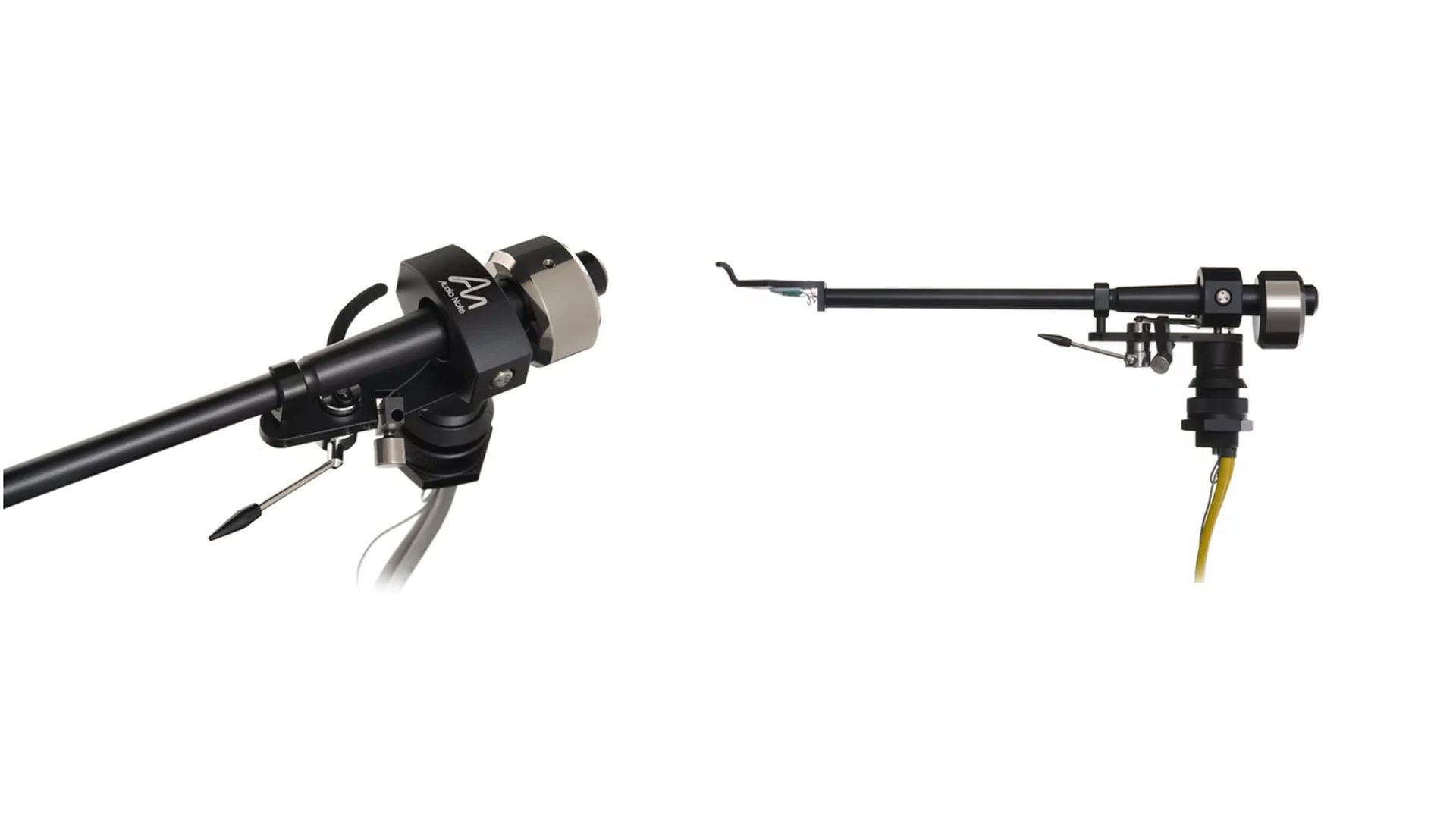
Audio Note (UK) builds complete valve-based playback systems, from cartridges and digital sources to amplifiers, cables and loudspeakers. The UK company led by Peter Qvortrup introduced the OTO PP integrated amplifier in 1991, and that long-lived model still captures its preference for simple circuits and serviceable products. Single-ended triode amplifiers, custom output transformers and internally developed resistors, capacitors and wiring are central to the range. Its DACs deliberately avoid oversampling, digital filtering and conventional reconstruction filters, pursuing timing and musical continuity through a different engineering route. Products are organised by levels from Zero to Five, with models such as Meishu and Ongaku showing how parts quality and transformer design are progressively developed. The name here refers specifically to Audio Note (UK), not Kondo Audio Note Japan.
Audio Origami

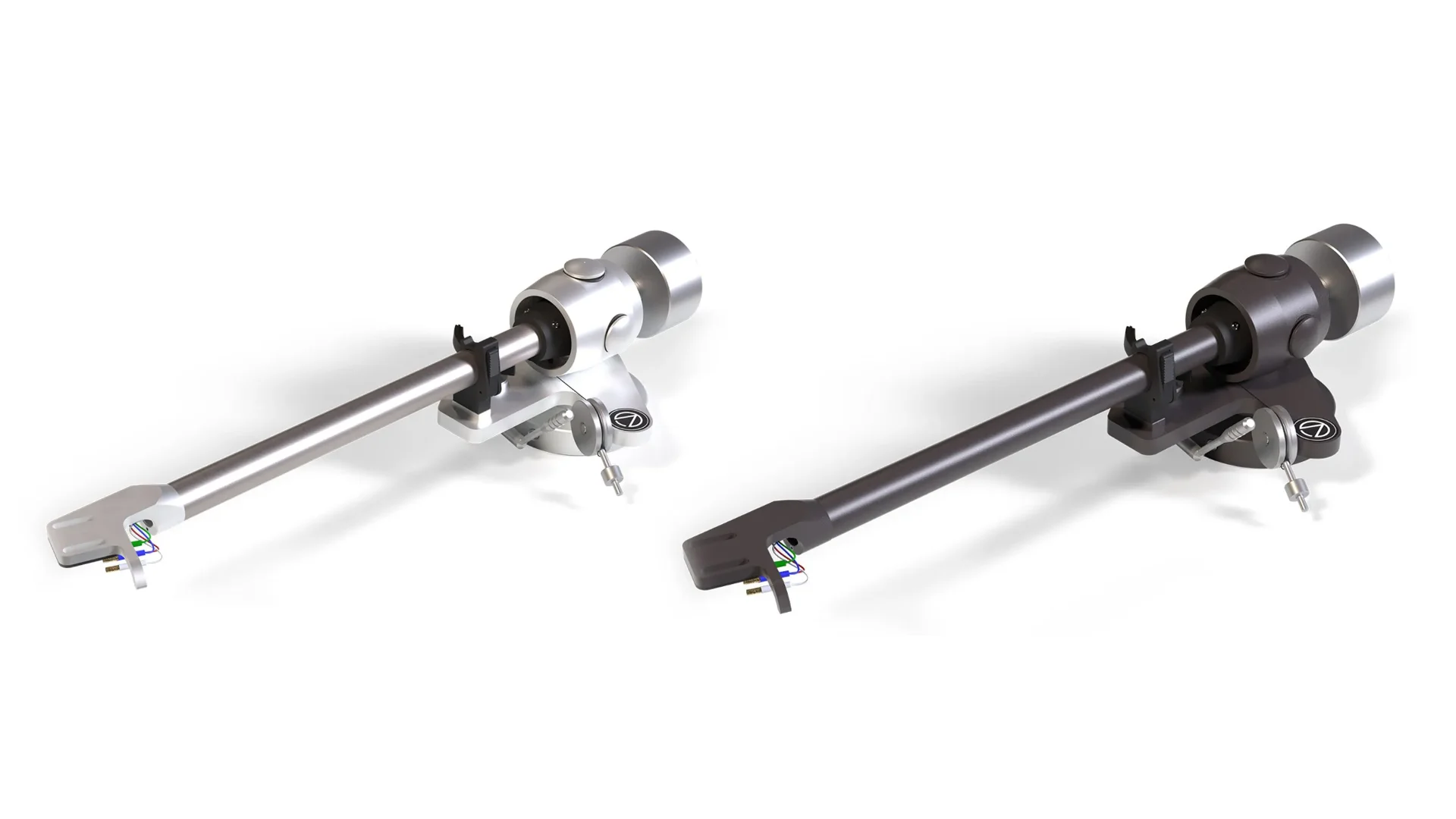
Audio Origami is a Scottish analogue specialist whose reputation rests on precision tonearms rather than general turntable accessories. John ‘Johnnie’ Nilsen developed the PU7 from 2005 alongside his work repairing, rewiring and rebuilding arms that other workshops could no longer support. The current manufacturing business carries that experience into the PU7 GTS, PU8 Reference and PU8 Titan, with products designed, machined largely in Scotland and assembled by hand. Bearing accuracy, structural rigidity and controlled energy flow receive close attention, while Japanese precision bearings are selected where they offer the required consistency. The range now also includes the Core One tonearm cable, Axis One record-coupling system and selected Pure Fidelity turntables. Audio Origami operates as a trading style of PuraNota Limited.
Auris Audio

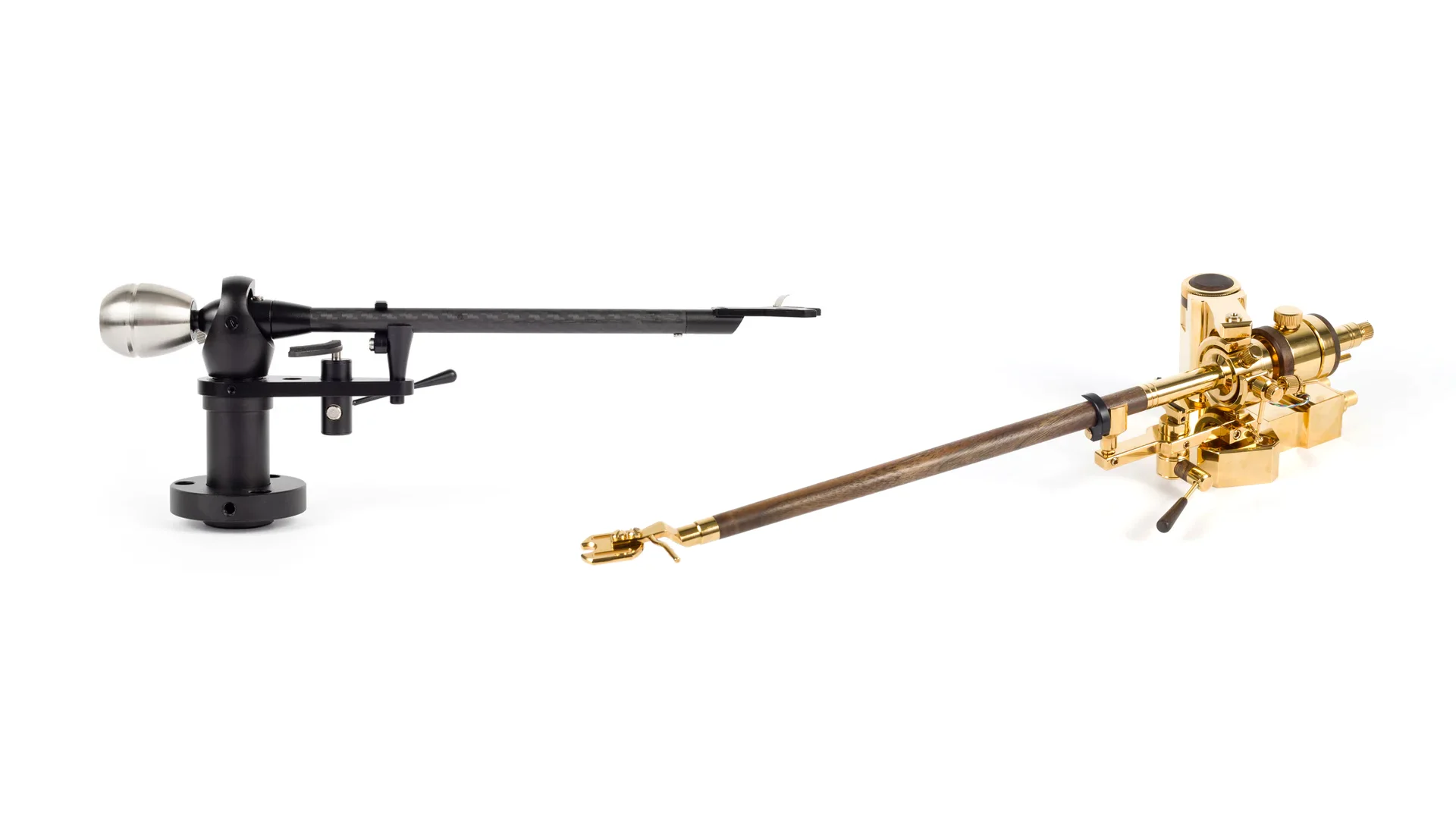
Auris Audio gives valve electronics a recognisable Serbian identity through hand assembly and extensive use of wood, leather and metalwork. Founder and CEO Milomir Trosic formally established the company in 2013 after years of designing amplifiers and other electronics. Integrated and power amplifiers form the core of the range, joined by preamplifiers, DACs, loudspeakers and a particularly strong headphone line. Headonia is the statement headphone amplifier, while Nirvana and the compact Euterpe address different headphones and system roles; Forte power amplifiers extend the same tube-led approach to loudspeakers. Transformers and power supplies are treated as fundamental parts of each circuit rather than hidden commodities. The result is a manufacturer defined by its own valve engineering and material craft, not simply retro styling.
Avid HiFi

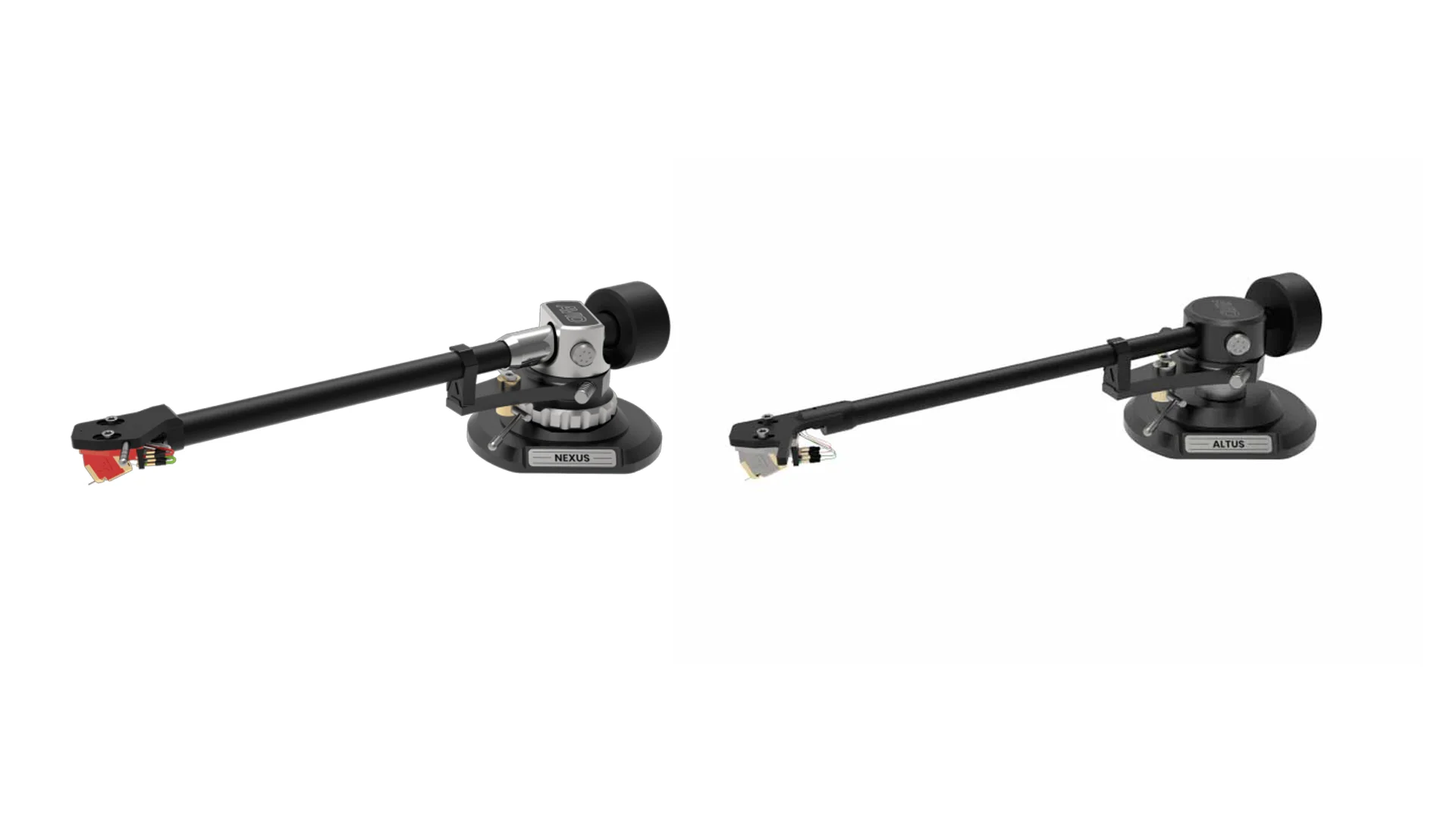
AVID HiFi engineers analogue playback by controlling how vibration enters, travels through and leaves a turntable. Conrad Mas founded the British company in 1995, and the Acutus turntable launched in 1999 after years of development. Its inverted bearing, powerful outboard supply, heavy platter, clamping system and tuned suspension treat record, platter and structure as one mechanical path. Volvere and Sequel extend that architecture, while Diva models provide a simpler rigid platform. AVID has since built a complete ‘groove to ear’ system: cartridges, tonearms, phono stages, integrated and separate amplifiers, loudspeakers, cables and supports. The expansion does not erase the original speciality; the range still begins with extracting information from a moving record while keeping motor, bearing and environmental energy under control. Products are made across the company’s two English factories.
Bergmann Audio

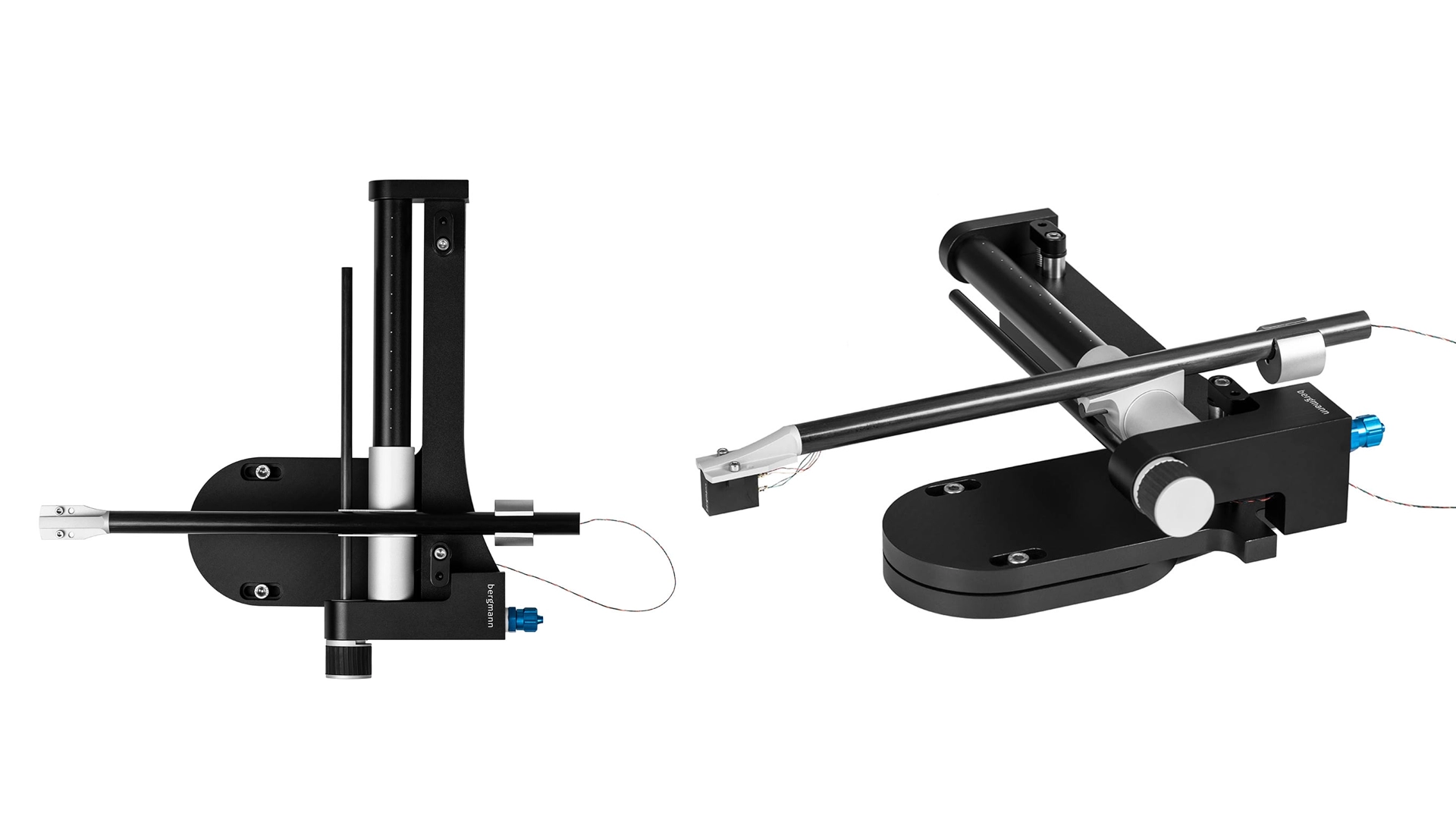
Bergmann Audio removes conventional mechanical contact from two critical parts of vinyl replay: the platter bearing and tonearm movement. Johnnie Bergmann established the Danish company in 2008 and introduced the Sindre air-bearing turntable, setting the pattern for later designs. A thin film of air supports the platter or spindle assembly, while Bergmann’s linear-tracking tonearms also travel on an air bearing so the cartridge follows the record with minimal friction and little tracking-angle error. Galder and Modi turntables can be paired with Odin or Thor arms, while Magne integrates turntable and linear tracker in one system. Pumps and air delivery are engineered as part of the product rather than treated as external laboratory hardware. Every unit is designed, produced and assembled in-house in Denmark, giving the company control over the close tolerances on which the concept depends.
Brinkmann

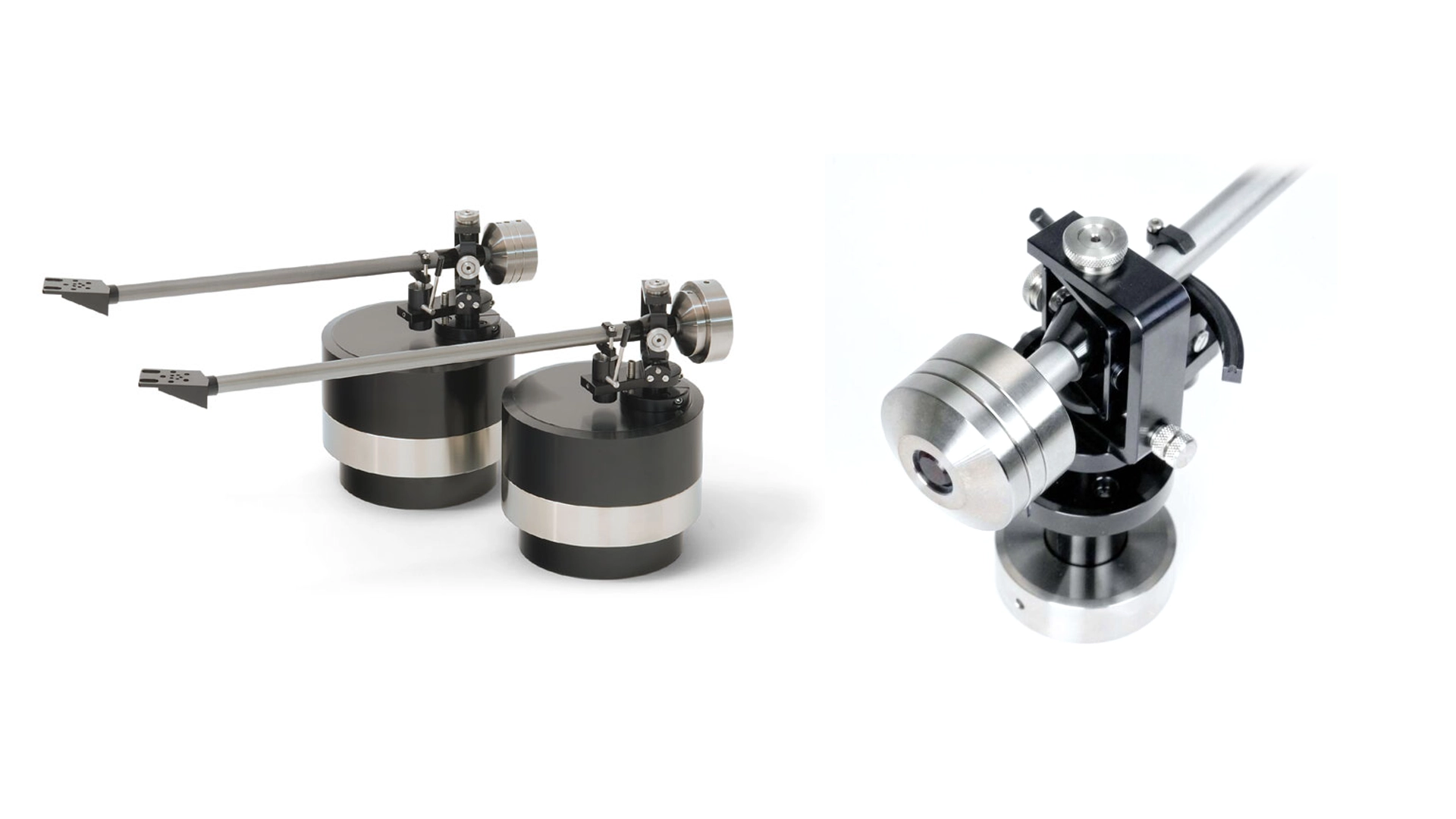
Brinkmann Audio treats the turntable, phono stage, source and amplifier as parts of one engineered playback chain. Helmut Brinkmann founded the German company in 1985 after his earlier work with Audiolabor. The Balance turntable became its best-known design, combining a high-mass platter, heated bearing and separate motor control. Taurus, Spyder and Bardo offer different mechanical architectures, supported by Brinkmann tonearms, cartridges and the RöNt valve power supply. The company was already respected for amplification before building turntables, and its present catalogue includes Edison phono stages, Marconi preamplification, stereo and mono power amplifiers and integrated designs. Nyquist adds streaming and digital conversion without abandoning the same attention to power, grounding and analogue output circuitry. This broader product history corrects the impression that Brinkmann works only with vinyl hardware.
Clearaudio

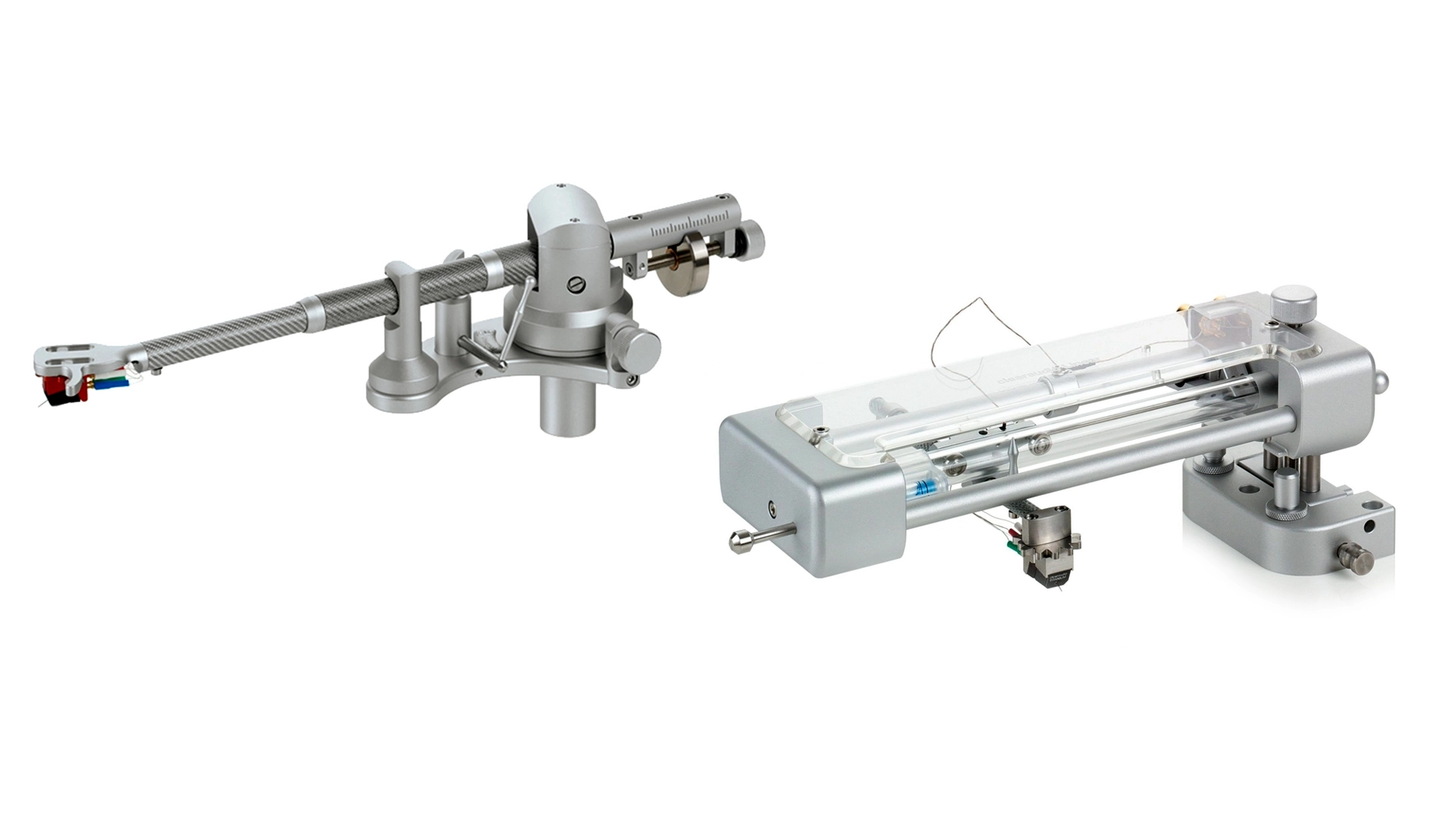
Clearaudio is a family-run German analogue specialist capable of supplying almost every mechanical and electronic part between a record and a line-level input. Peter Suchy founded the company in Erlangen in 1978 and introduced its first fully symmetrical moving-coil cartridge that same year. Clearaudio subsequently expanded from cartridges into turntables, pivoted and tangential tonearms, phono stages, record clamps, isolation accessories and record-cleaning machines. The range begins with accessible Concept packages and progresses through Performance DC, Ovation and Innovation designs to Master Innovation and Statement-level systems. Low-friction bearings, controlled-speed belt drives, layered platters and chassis using acrylic, aluminium, wood composites and ceramics are applied according to model rather than as decorative signatures. Cartridges and tonearms are developed alongside the decks, allowing geometry and mechanical interfaces to be treated as one system. Design, precision manufacture and assembly remain centred at the company’s Erlangen facility, now involving the second generation of the Suchy family.
Consonance

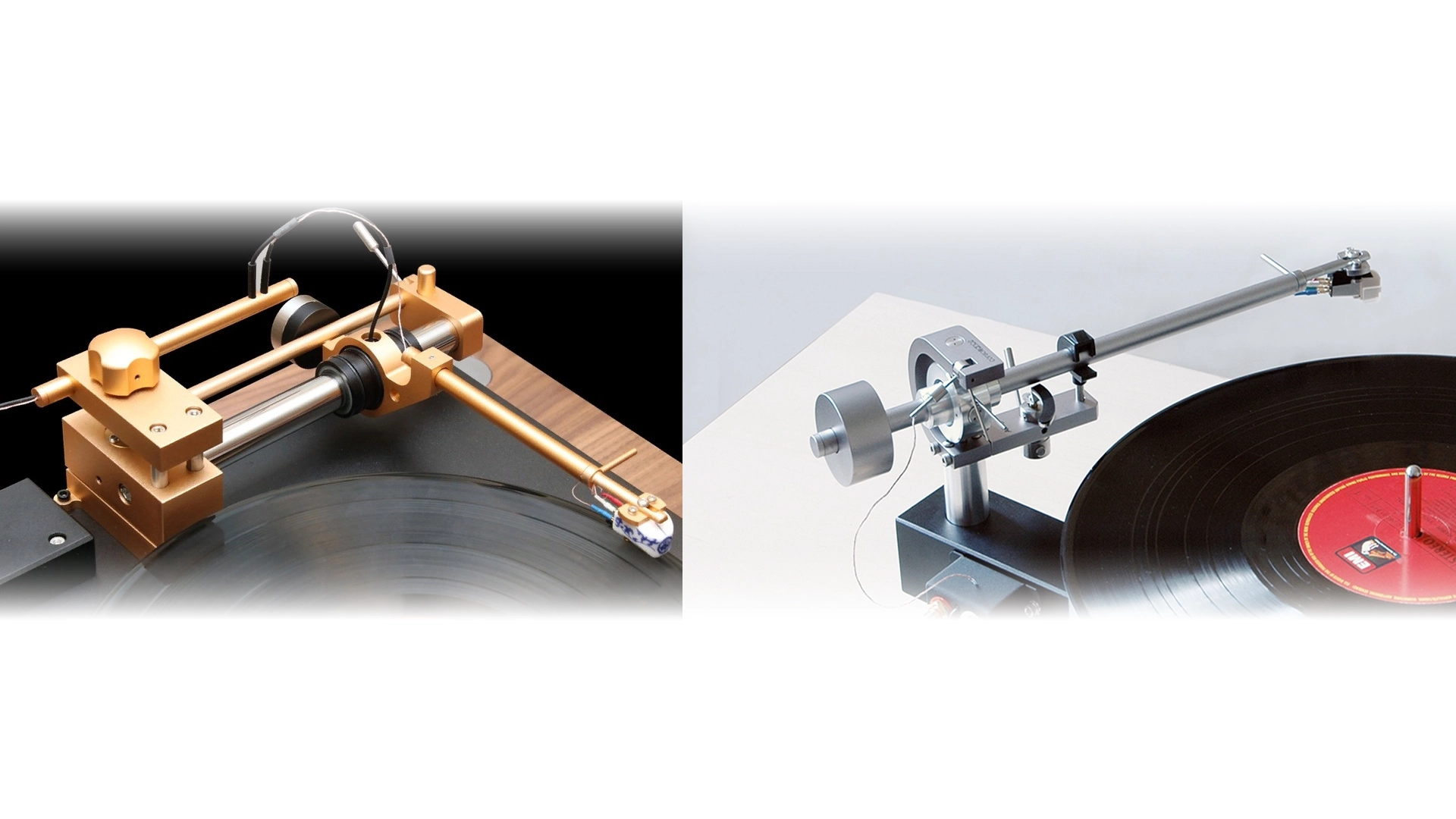
Consonance is the product brand of Opera Audio, one of China’s early internationally distributed high-end audio manufacturers. Opto-mechanical engineer and opera enthusiast Shi Hui Liu founded the Beijing company in 1994 after building a valve amplifier for himself and then being asked to make another. That origin still explains the range: tube and solid-state amplifiers sit alongside CD players, DACs, streamers, loudspeakers, cables and an especially substantial analogue line. Opera became an early Chinese high-end turntable manufacturer, and Consonance decks such as the Droplet, Die Walküre and Wax Engine show a willingness to develop complete mechanisms, plinths and tonearms rather than treat vinyl as a sideline. Many model names reference European opera, but the engineering is not confined to retro styling; the company combines traditional valve circuits with digital sources and modern manufacturing. Its “Simple. Human.” philosophy is a useful summary of the house character: direct circuits, restrained interfaces and a broad, internally designed system intended to serve music rather than specification theatre.
DaVinciAudio

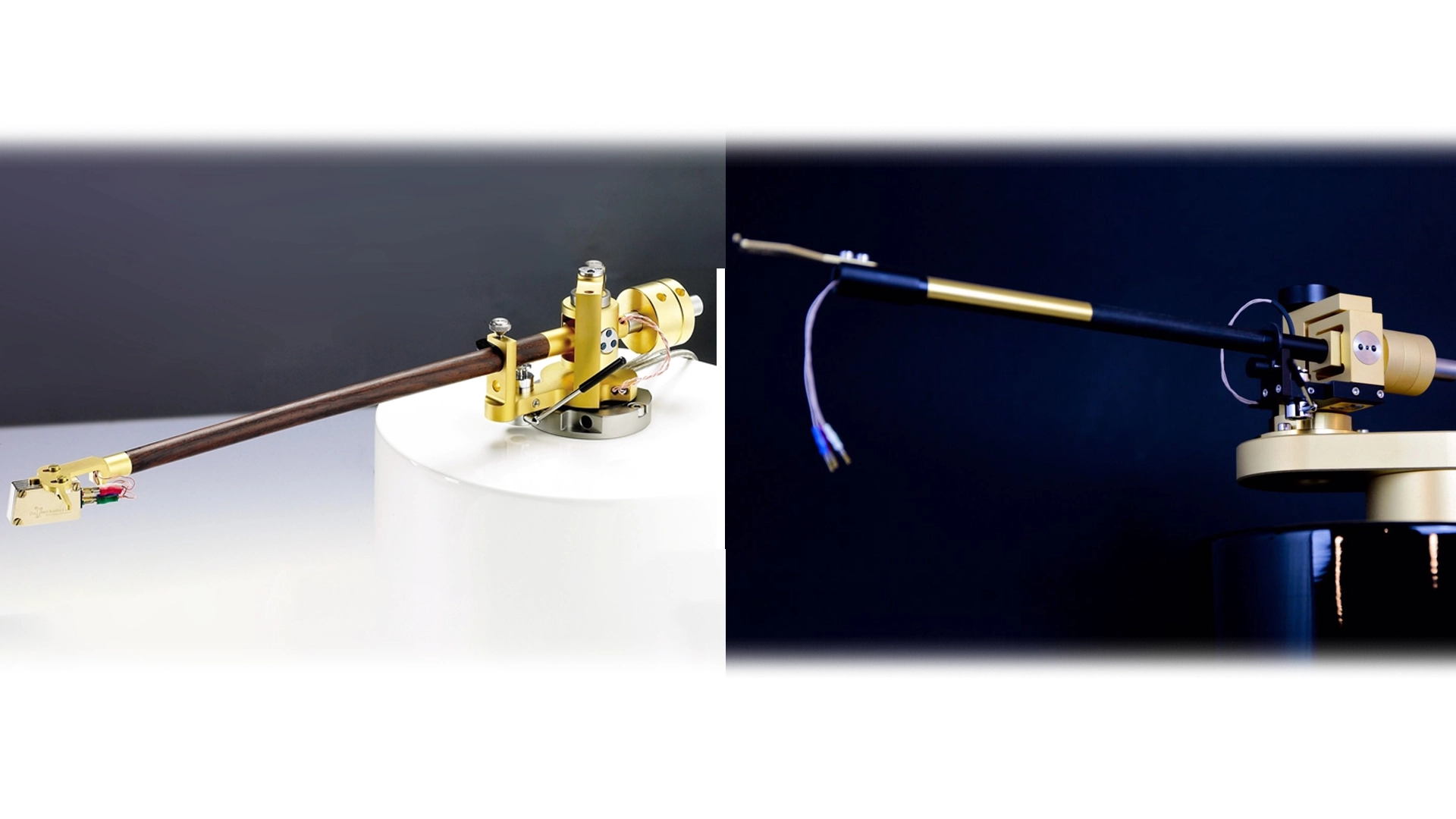
DaVinciAudio Labs is a Swiss workshop best known for treating analogue replay as precision mechanical craft. Founder and chief engineer Peter Brem developed the Gabriel and Grandezza turntables, Grandezza and Virtu tonearms, phono cartridges and limited-production electronics with the live concert as his reference; after his death in 2013, the family team and close collaborators continued the house’s work. The Gabriel reference deck and the more compact Equilibrium address bearing stability, drive, platter energy and arm geometry as one system rather than as a collection of accessories. DaVinci’s tonearms use carefully machined structures and high-grade bearings assembled with watchmaker-like attention, while its Grandezza moving-coil cartridges were specified and assembled in Switzerland around a magnetic engine supplied by Benz Micro. The company has also produced phono stages, line electronics and very low-volume Master Reference amplification. Its activity is documented from the early 2000s, although the company does not publish a sufficiently authoritative exact founding year. The identity is clear: bespoke, made-to-order analogue components whose distinctive value lies in mechanical execution, adjustment precision and continuity of craftsmanship rather than a rapidly changing product cycle.
Dohmann Audio

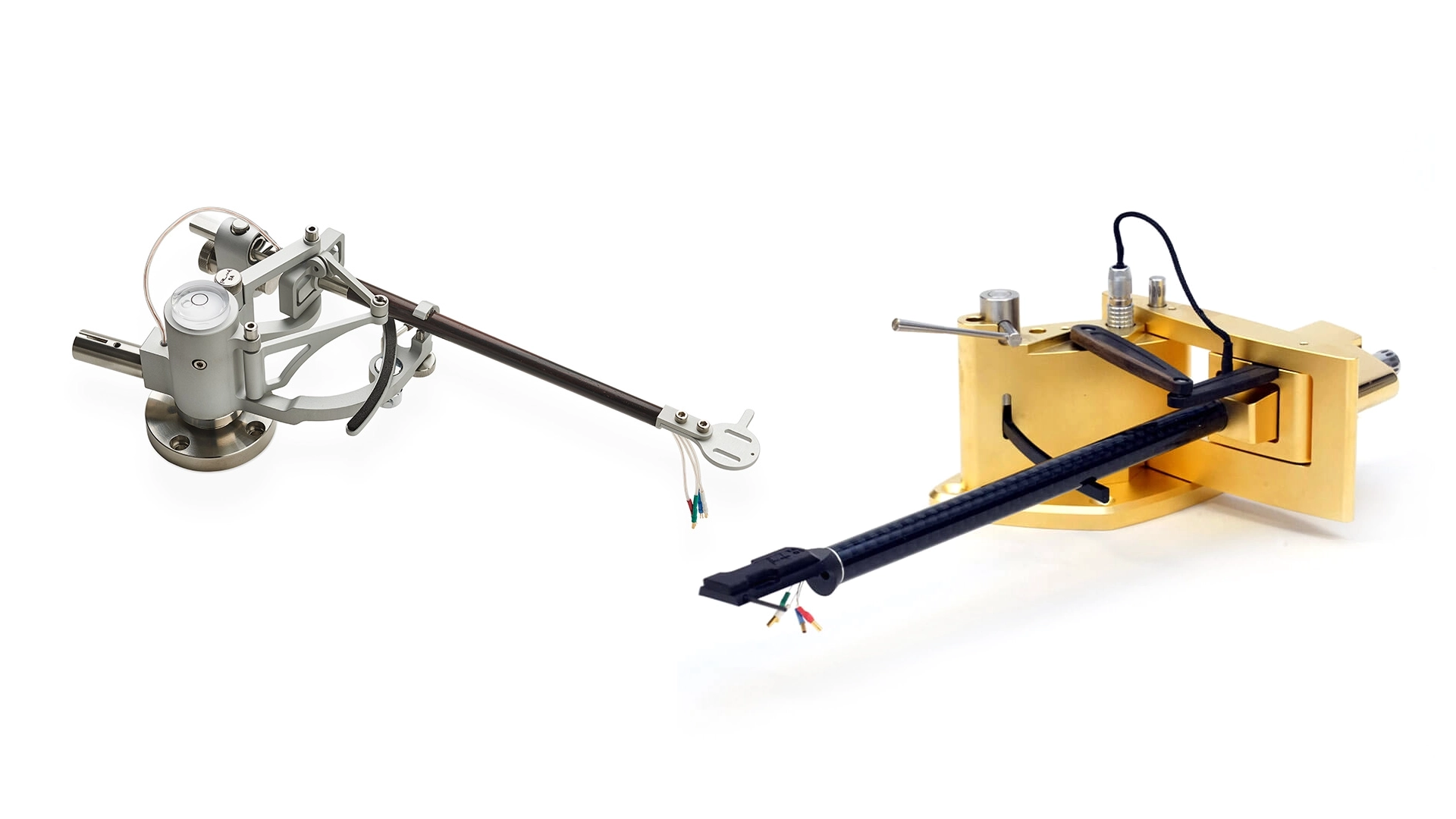
Dohmann Audio is an Australian analogue engineering company established in Melbourne in 2013 by turntable designer Mark Döhmann. Its Helix One and Helix Two decks treat record playback as a vibration-control problem before it becomes a matter of styling. The defining feature is an integrated Minus K negative-stiffness isolation mechanism, developed with Dr David Platus, which filters very low-frequency floor and structural movement without pumps, compressors or electronic feedback. Around it, the Helix architecture combines a high-inertia platter, tightly regulated drive, constrained mechanical paths and carefully separated structural zones; current Mk3 versions refine these elements and remain upgradeable from earlier generations. Helix One provides the larger reference platform and dual-arm capability, while Helix Two applies the same principles in a more compact format. Selected versions or options also add vacuum record hold-down. Döhmann previously led the design work behind Continuum’s Caliburn, Cobra and Castellon, but Dohmann Audio is a distinct company. Its speciality is not turntables in general: it is reducing environmental and self-generated motion at the stylus-groove interface.
Durand Tonearms
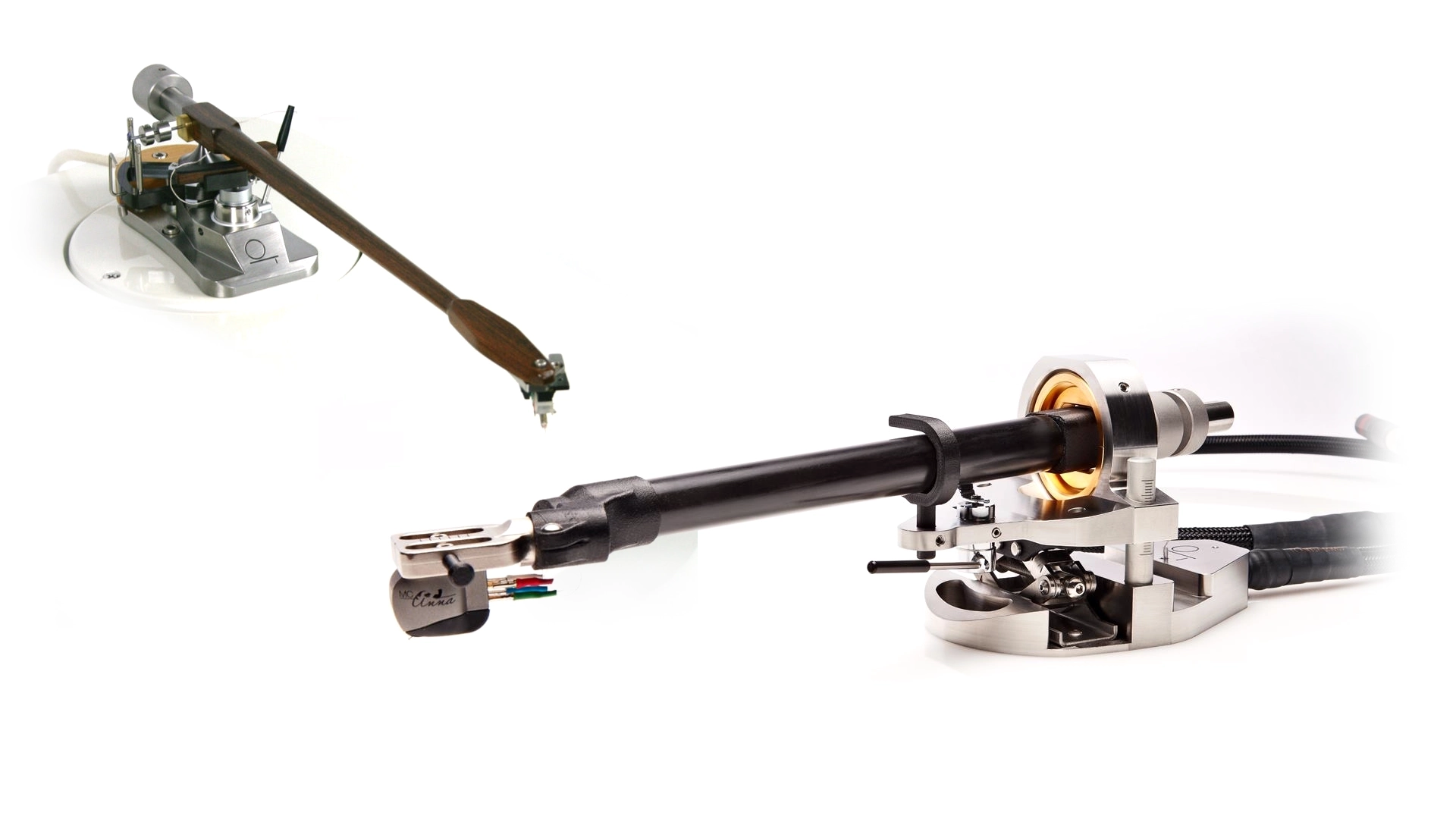
Durand Tonearms is an American analogue specialist founded in 2009 by French composer Joël-François Durand, who approached tonearm design through listening, materials research and geometry rather than through an established audio corporation. The first Talea reached production in 2010 and quickly established the company; Talea II incorporated further work on energy transfer, dynamics and image stability. Telos followed as a more ambitious reference design, and the 2014 Kairos consolidated Durand’s experience with unipivot bearings in a more accessible form. Tosca, introduced in 2019, marked a major change by using a gimbal-bearing architecture; the later Tosca LE refines that platform. Durand currently centres the range on Kairos and Tosca and supplies purpose-matched phono cables in DIN-to-RCA and DIN-to-XLR forms. The arms are manufactured in small numbers with close control of bearing execution, structural shape, counterweight behaviour and setup. Their individuality comes from the founder’s dual perspective: rigorous mechanical development guided by a composer’s attention to musical structure, tone and temporal relationships.
Dynavector Systems

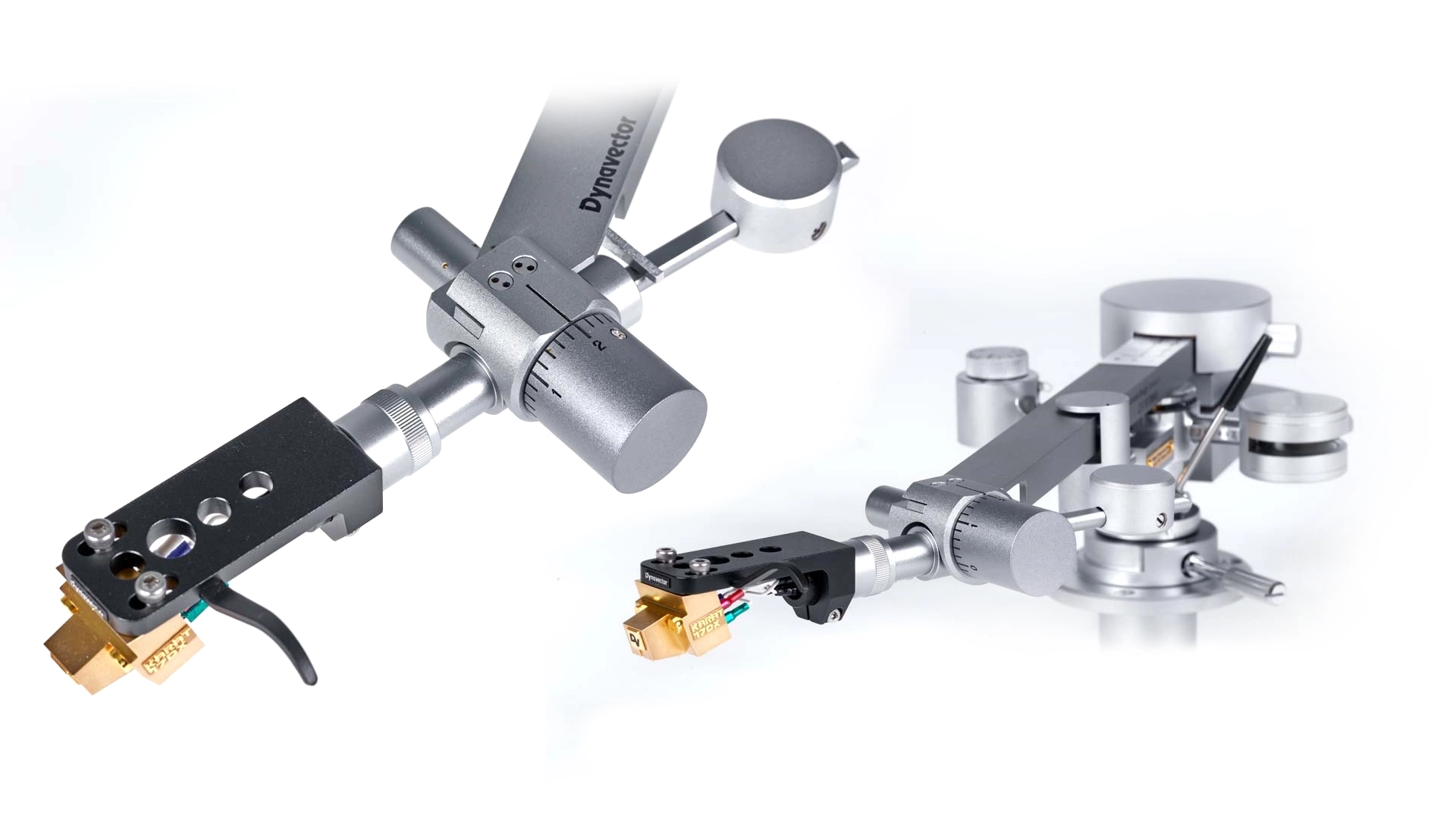
Dynavector Systems is a Japanese analogue-audio company founded in 1975 by engineering professor Dr Noboru Tominari, best known for moving-coil phono cartridges that combine advanced magnetic design with practical system compatibility. Dynavector helped make high-output MC cartridges a serious category, allowing models such as the 10X series to work with many moving-magnet phono inputs, while low-output designs such as 20X, XX-2A, Te Kaitora Rua and XV-1t serve progressively more specialised arms and phono stages. Two patented ideas recur across the range: Flux Damper stabilises unwanted variations in the magnetic circuit, and Softened Magnetism controls abrupt magnetic behaviour that can contribute to distortion. Fine wire coils, carefully shaped armatures, powerful magnets and cantilevers selected for each performance level complete the generator system. The company has also produced tonearms and electronics, but cartridges remain its central identity. Dynavector’s strength is not simply exotic material choice; it is the sustained application of magnetic-circuit theory to preserve tracking energy, dynamics and tonal information while offering both accessible high-output and reference low-output MC solutions.
EAT

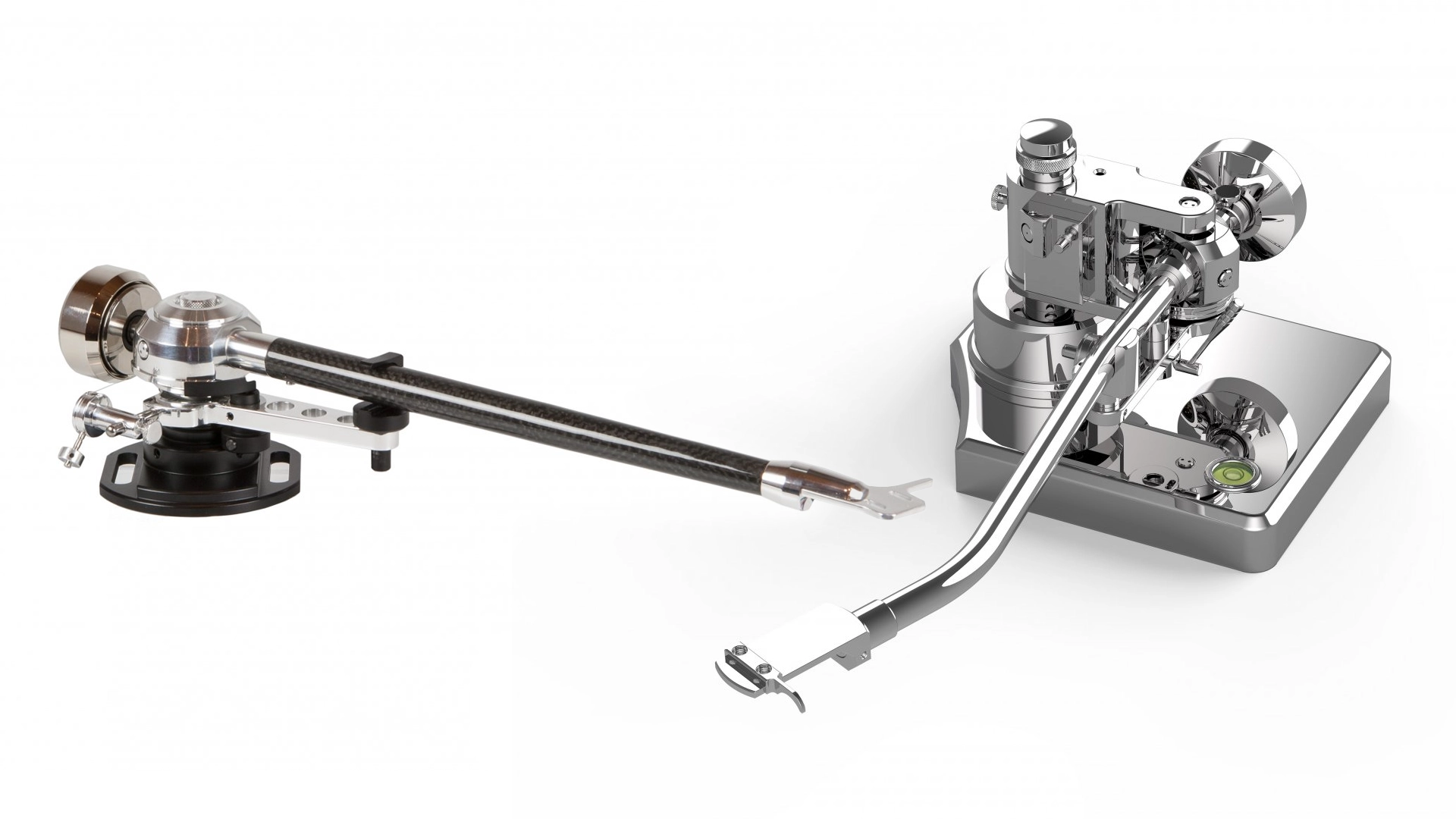
European Audio Team, or E.A.T., is a Slovak high-end analogue brand founded by Jozefina Lichtenegger, with production links spanning Slovakia, Prague and Austria. Its story began with vacuum tubes rather than turntables: after work connected with VAIC, Lichtenegger commissioned 300B and KT88 valves from the former Tesla operation in Prague and established E.A.T. around 2003. She later acquired the tube-making assets, preserving specialist tooling and knowledge that few modern audio firms possess. The first E.A.T. turntable, the substantial Forte, followed in 2009 and set the direction for a range that now includes Fortissimo, F-Dur, Forte, C-Sharp, C-Major and B-Sharp decks, alongside proprietary tonearms, cartridges, phono stages, record accessories and valves. Designs use high-mass platters, isolated motors, carbon-fibre structures and carefully controlled bearings in different combinations rather than repeating one platform cosmetically. The company also develops E-Glo valve phono electronics, connecting its original tube expertise with vinyl replay. E.A.T.’s real individuality lies in that continuity: a founder-led analogue company whose knowledge runs from the cartridge and arm through the deck, phono stage and vacuum tube.
EMT Tontechnik

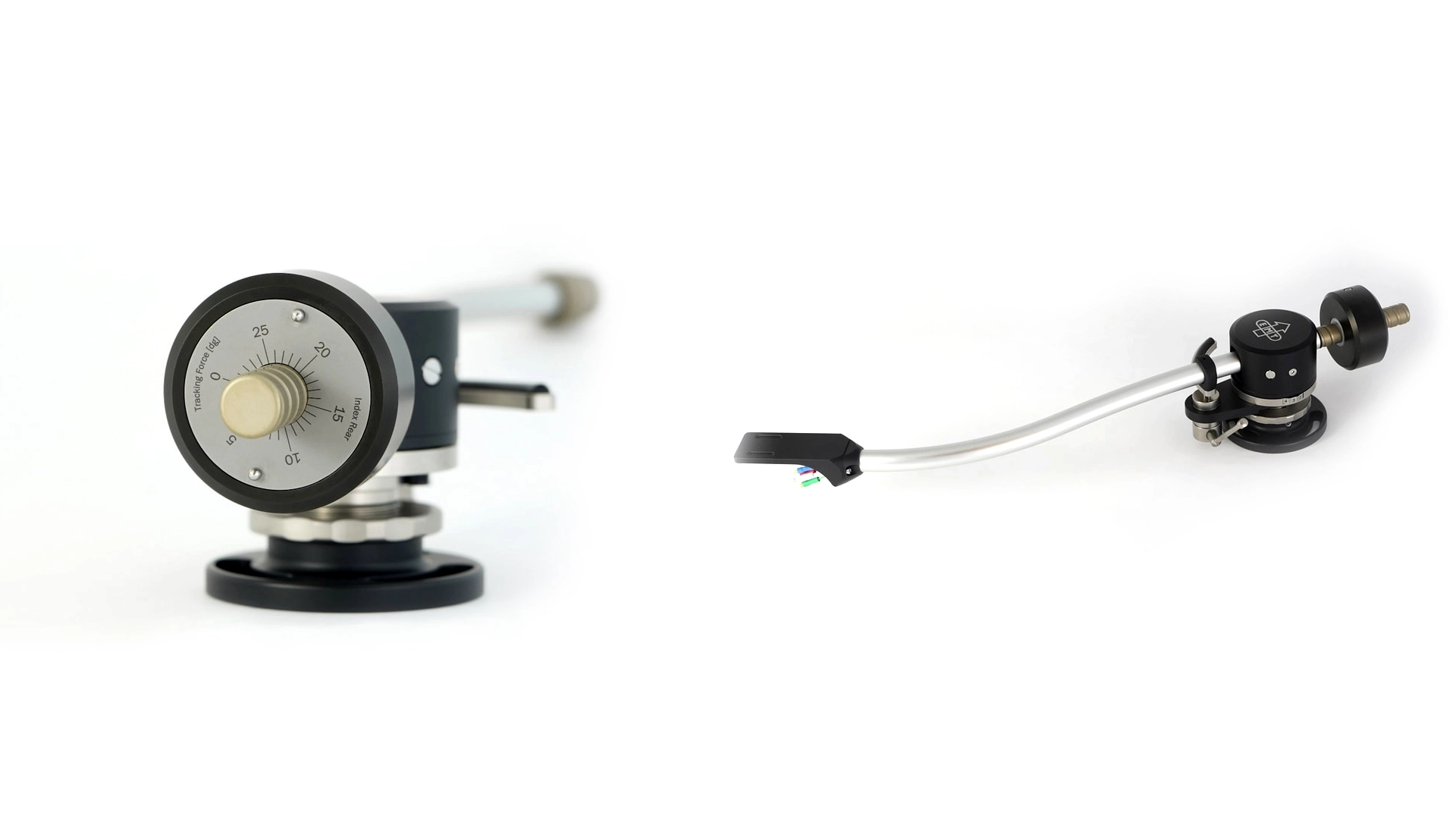
EMT began in Berlin in 1940, when Wilhelm Franz founded Elektromesstechnik Wilhelm Franz to make measurement equipment for broadcasting. The name became inseparable from professional analogue playback: EMT 927 and 930 idler-drive turntables, the direct-drive 950 and the TSD 15 moving-coil cartridge were engineered for continuous studio use, fast cueing and repeatable performance. EMT also created landmark studio processors including the 140 plate reverb and 250 digital reverb. Today the brand’s analogue know-how is continued in Switzerland by HiFiction AG, which develops and manufactures EMT cartridges, the 928 II turntable, 909/912 tonearms and phono electronics. Modern products retain the serviceable, precision-built character of the broadcast originals while using current materials and machining.
Genuin

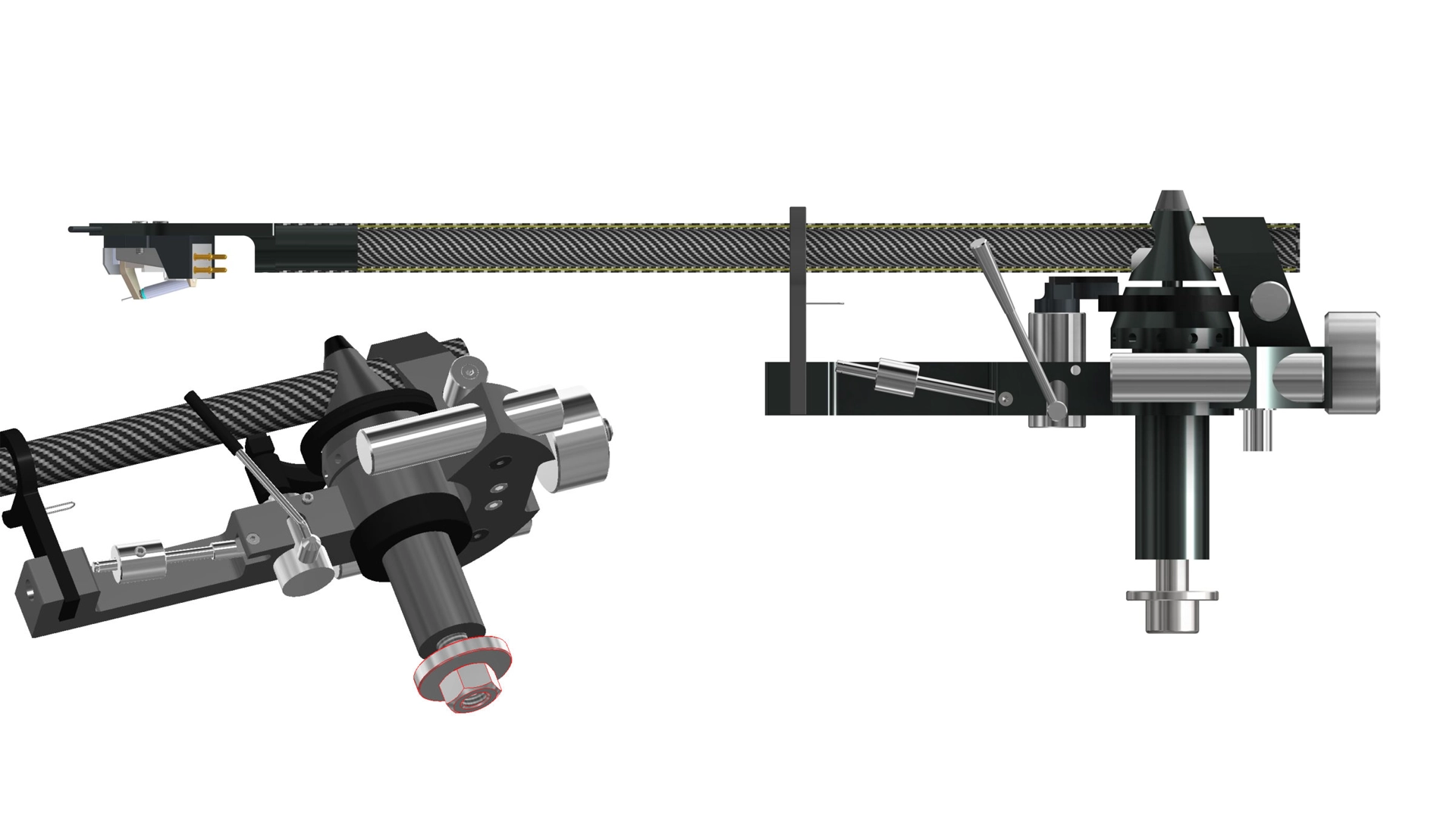
Genuin Audio is Thomas Wendt’s attempt to offer an entire high-end playback chain through commissioned German engineering rather than a single in-house designer. After decades as a listener and as owner of HiFi-Studio Cottbus, Wendt created the product line by asking recognised specialists to develop components specifically for the brand; specialised German manufacturers then build them in small quantities. The catalogue is unusually complete and its short product names describe a coherent system: drive turntable, point tonearm, sting cartridge, pearl phono preamplifier, tars music server, direct cables and the neo, ava, alex and next active loudspeakers. This allows Genuin to address the mechanical, analogue, digital and room-facing parts of reproduction as one chain while keeping each project in the hands of an appropriate expert. The understated cases reflect the company’s ‘The inside matters’ principle: engineering resources are directed toward circuit, mechanism and acoustic function, with manufacture and final quality control kept in Germany.
Gold Note

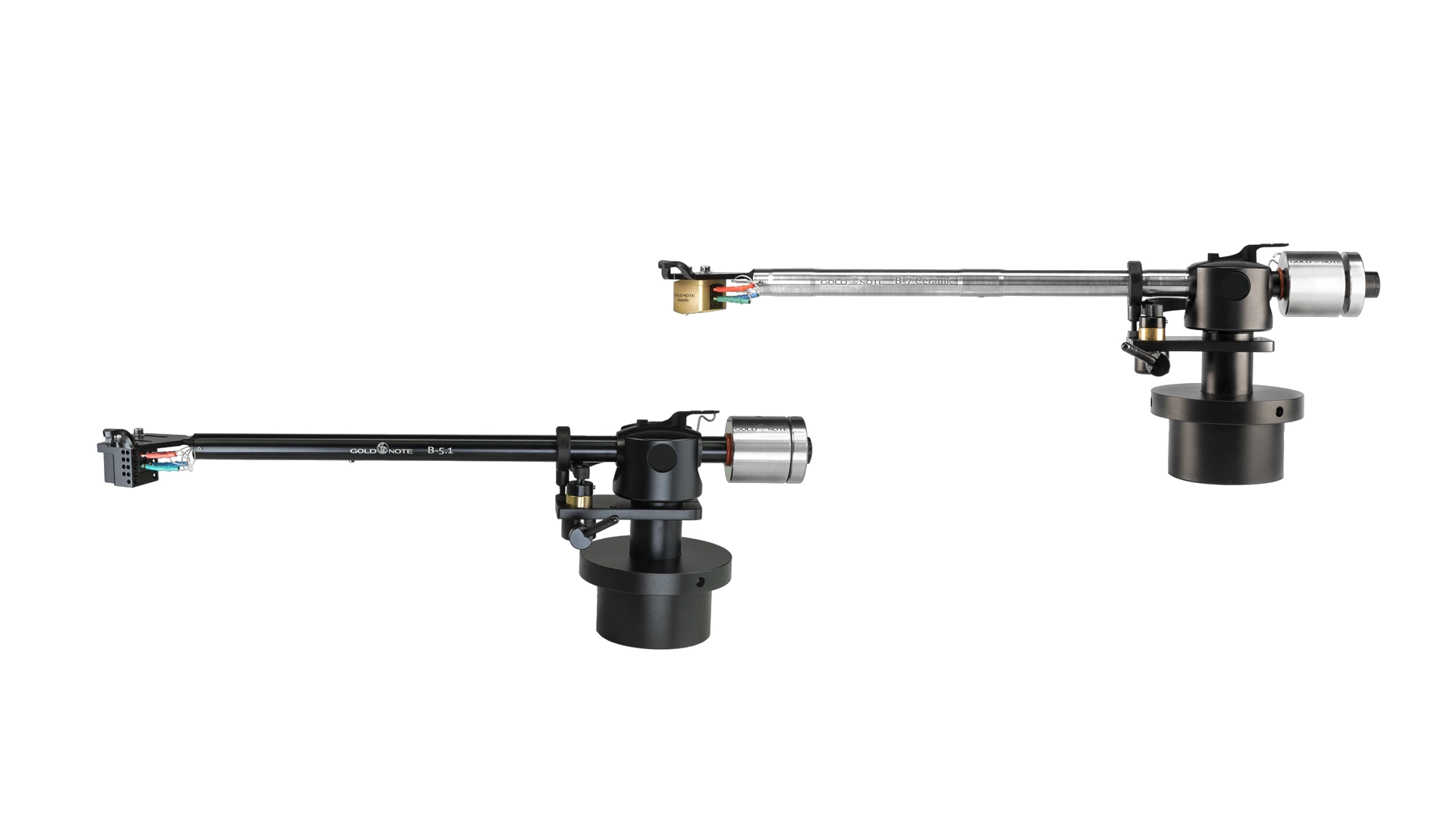
Gold Note is an Italian full-system audio manufacturer whose modern brand grew from Maurizio Aterini’s engineering studio, established in Florence in 1992 to design analogue products for other companies. The Gold Note name itself was founded in 2012, after Elena Basciano and later Alessio Oronti joined the enterprise. Its catalogue now links turntables and cartridges with phono stages, digital sources, all-in-one players, amplifiers, loudspeakers, racks and cables. Recognisable products include the Mediterraneo turntable, PH-10 phono stage, DS-series streamers and IS-series integrated systems. A useful feature of the range is modular upgrading: many components accept dedicated external power supplies, allowing the core unit to remain in service while its power section is improved. Design, development and much of the production remain concentrated in Tuscany.
Holborne

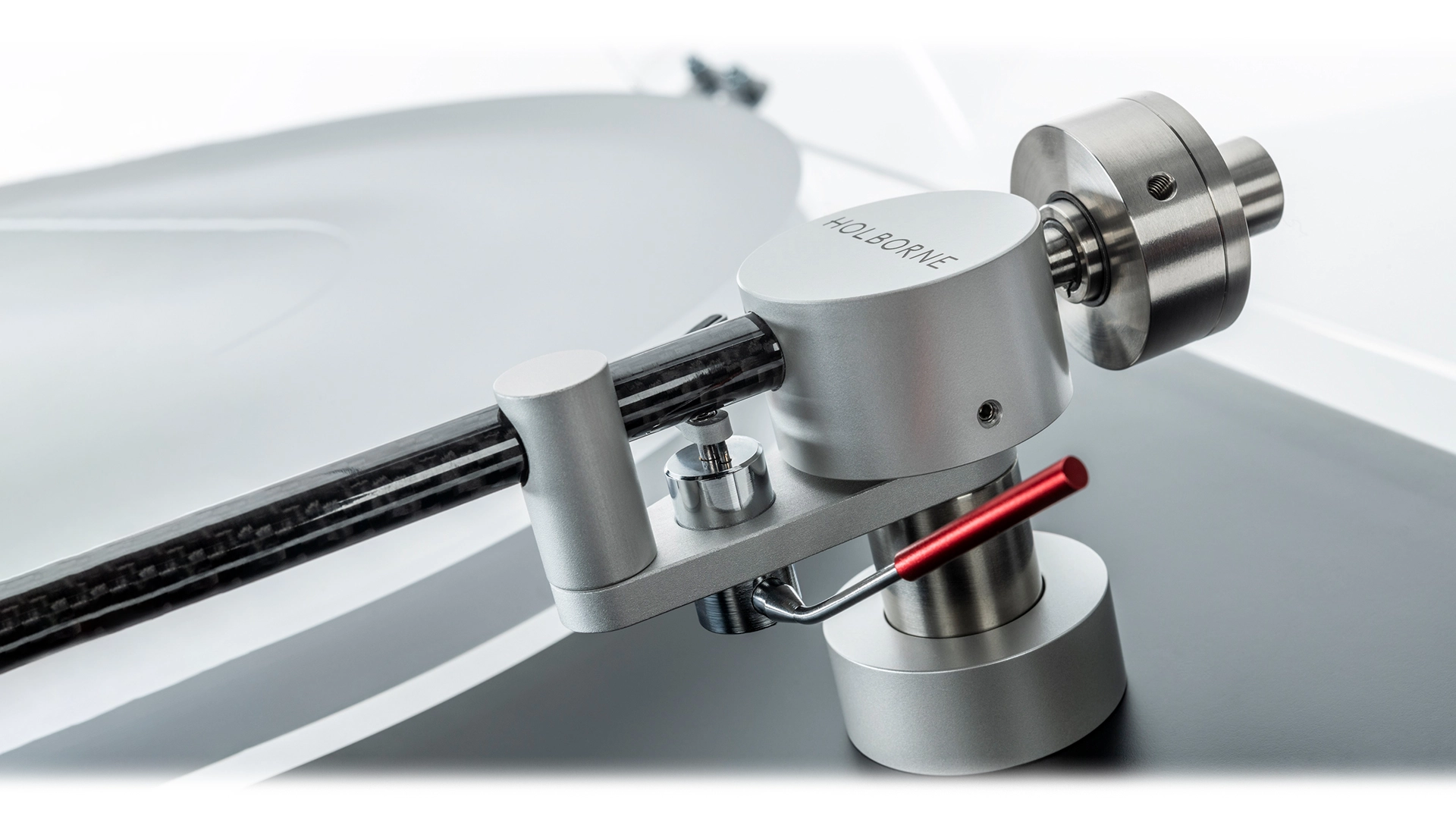
Holborne is a Swiss analogue and electronics brand founded in 1987 by musician and technician Meinrad Müller and named after the English Renaissance composer Anthony Holborne. Small-scale production and a close relationship between musical practice and mechanical design have shaped the company from the beginning. Its best-known current analogue work is the Analog turntable platform and the Dualpivot tonearm. The latter combines unipivot-like freedom in the horizontal plane with a defined rotating support for vertical movement, while a three-part counterweight, interchangeable headshell options and continuous low-resistance wiring allow detailed cartridge setup. The company has also produced amplifiers and phono electronics. Since 2020, Holborne electronics have been made by HiFiction AG, while swiss analog ag progressively took over the turntable business from 2022. Holborne therefore represents both a historic Swiss marque and an evolving specialist manufacturing partnership.
Integrityhifi Canada

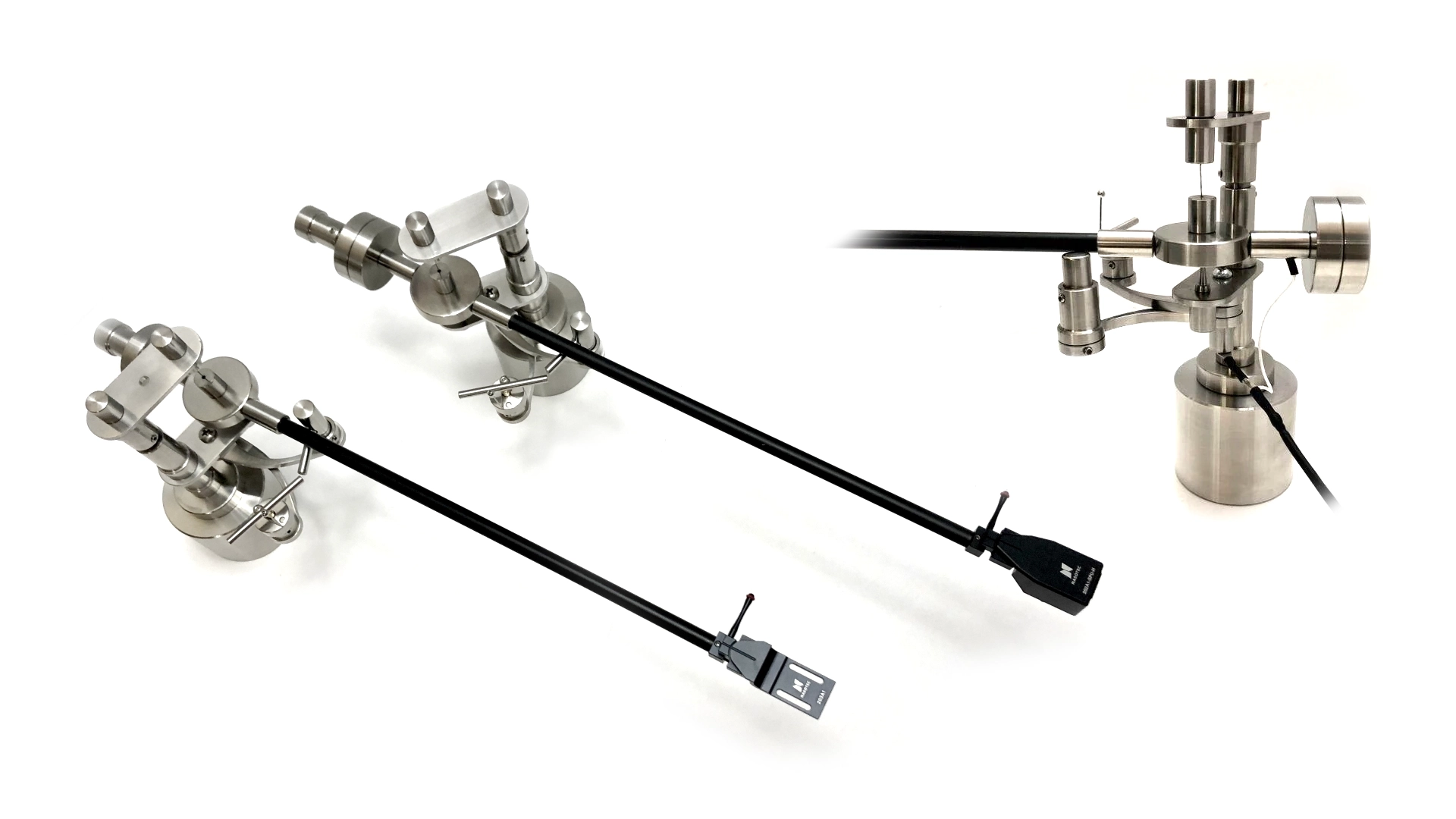
Integrityhifi Canada is a Canadian maker of specialised vinyl-playback tools, best known for solving small mechanical problems that many turntables leave to the owner. The TRU-LIFT is a precision stainless-steel and brass device that gently raises a tonearm at the end of a record without altering the turntable’s drive or signal path. TRU-SWEEP uses a unipivot arm and conductive brush to collect dust and dissipate static during playback, while TRU-KLEEN provides a controlled holder for stylus cleaning. The more unusual TRU-GLIDER is a carbon-fibre pendulum tonearm designed to float above the record and maintain its own geometric relationship to the groove. Integrityhifi also distributes selected analogue products such as Nasotec accessories in Canada. This is not principally an isolation brand: its know-how is in finely machined, largely passive devices that improve safety, cleanliness and tracking around a turntable.
J.Sikora Turntables

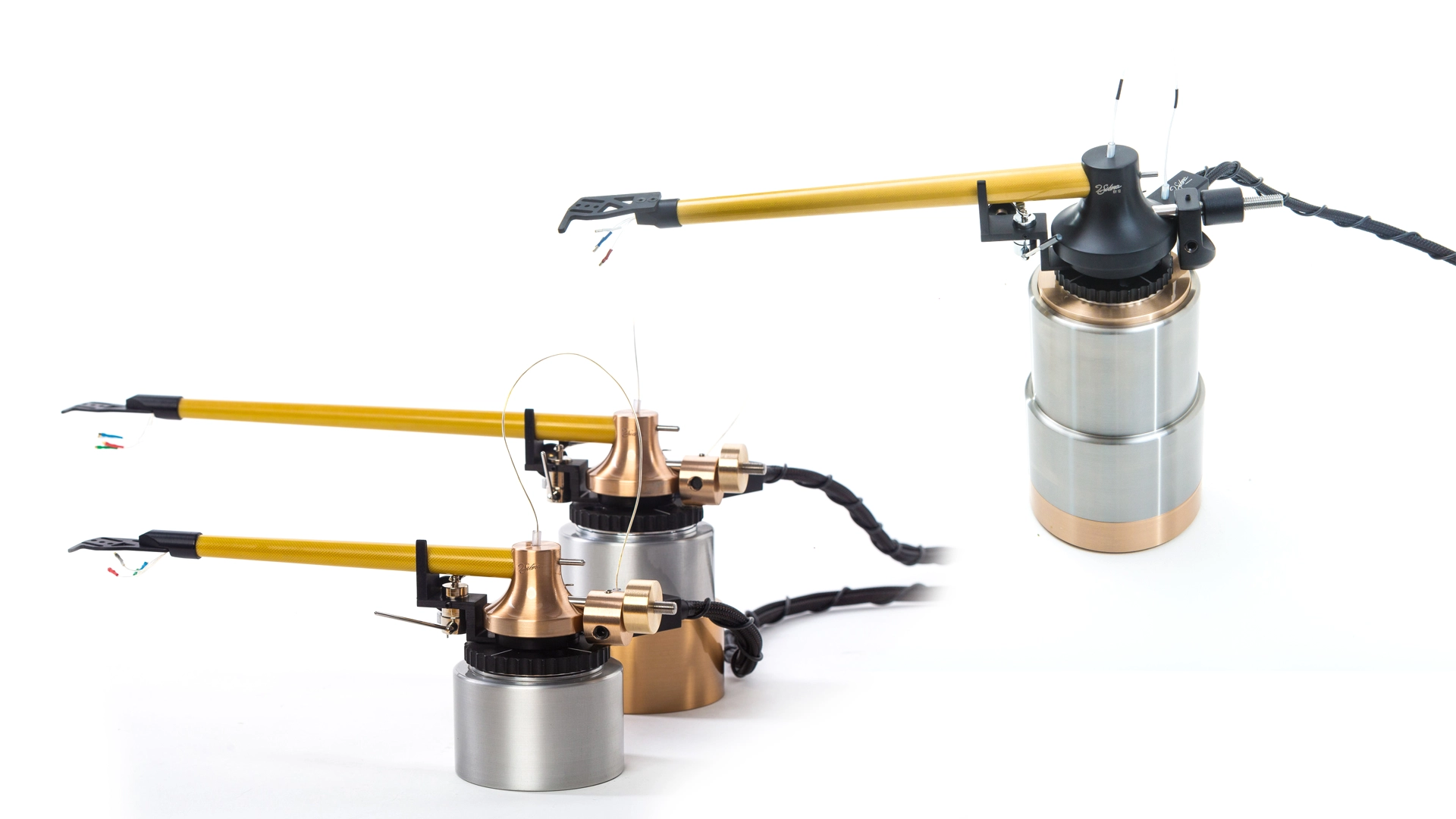
J.Sikora Turntables is Janusz Sikora’s Polish analogue workshop, producing high-mass turntables one at a time in Lublin since 2007. Sikora brought experience from Burdjak & Sikora valve amplifiers, but the new company concentrated on controlling speed, vibration and resonance at the record surface. Its decks deliberately combine different metals and mechanically separate the motor, bearing and layered plinth so that no single material dominates the resonance behaviour. Heavy platters, substantial outboard motors and sophisticated speed controllers scale from the newer Aspire through Initial and Standard models to the Reference; upper designs can use more than one motor for stable drive. J.Sikora later added its own KV9 and KV12 tonearms, using aramid-fibre arm tubes and precision bearings to create a complete Polish record-playing system. In-house metalwork and small-series assembly are central to the brand: these are not cosmetic mass-market platforms dressed in heavier plinths.