
Tonearms
The tonearm is a critical precision instrument on any high-performance turntable. Its complex job is to hold the phono cartridge at the perfect angle and pressure, allowing the stylus to trace the record groove with absolute stability and minimal error. As a key component influencing sound quality, the tonearm is often the target of significant upgrades. This directory is your guide to the specialized manufacturers who engineer these pivotal mechanical components for vinyl playback.
Hi-Fi brands in the category
Summary information and image
Direct links to official websites
Klaudio

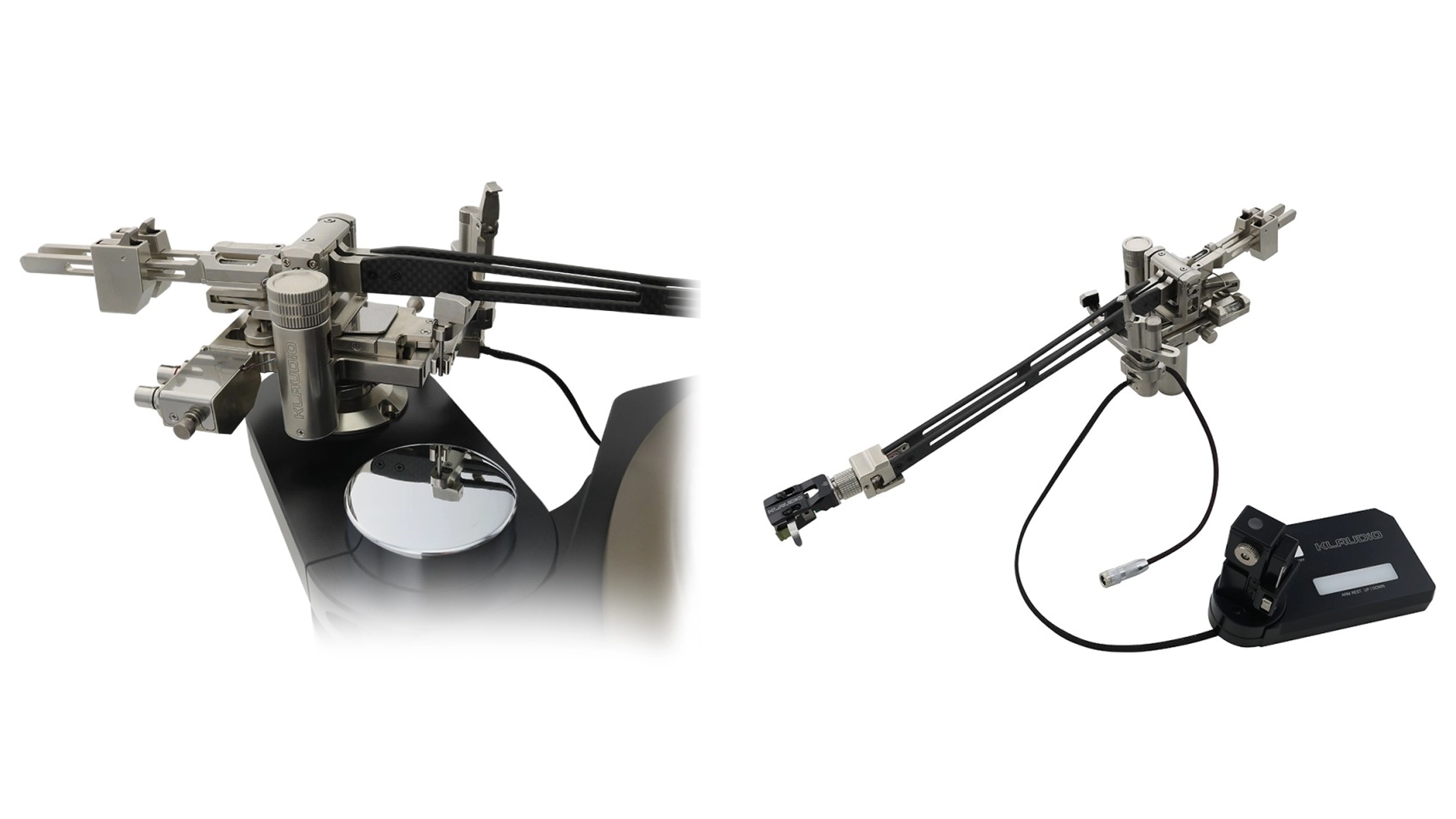
Klaudio is an American analogue-audio brand founded in 2013 from the engineering resources of Koolance, a company experienced in liquid cooling and fluid-control systems. Its first product translated that background into a fully automatic ultrasonic record cleaner: the disc is lowered into a filtered water bath, cleaned without brushes touching the groove and then dried by controlled airflow. That hands-off cycle established Klaudio among collectors who wanted repeatable cleaning without mixing proprietary detergents. The catalogue has since expanded well beyond record care. Magnezar turntables use direct-drive motors and magnetically levitated platters to reduce bearing contact, while Klaudio’s pivoting tangential tonearms use active control to keep tracking geometry close to a true tangential path without a long linear rail. Some systems also automate record clamping and setup functions. The common thread is practical mechatronics—motors, sensors, fluid handling and control electronics—applied to vinyl playback rather than traditional turntable craft alone.
Kronos

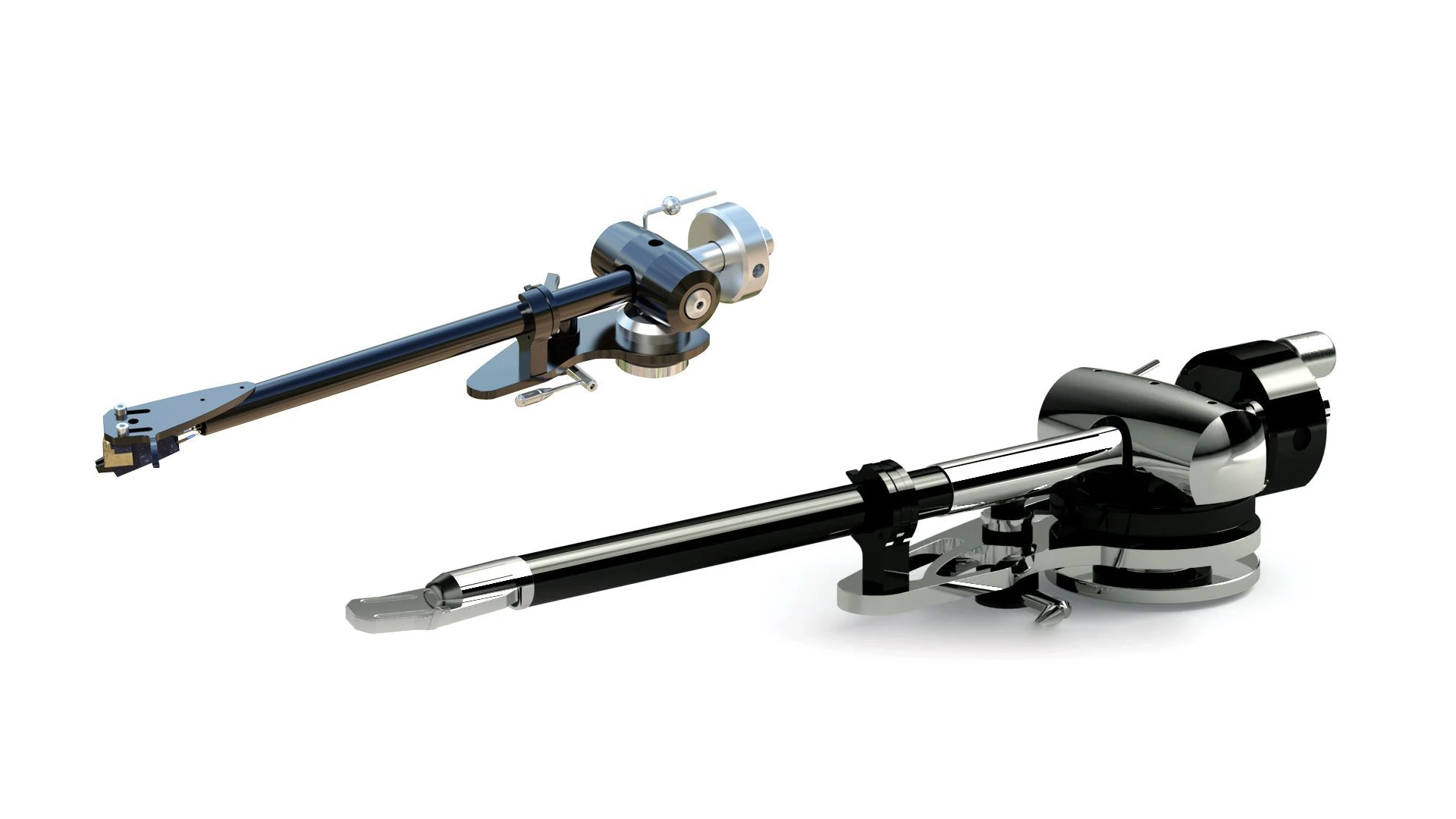
Kronos Audio is a Canadian analogue specialist founded by designer Louis Desjardins, and its defining invention is visible before a record even starts playing. The company’s suspended turntables use two equal-mass platters rotating in opposite directions. Because their drive systems generate opposing torque, rotational forces that would otherwise disturb the suspension largely cancel each other, giving the cartridge a more stable platform from which to read the groove. The concept first appeared publicly at the Montreal Audio Show in 2011 and has evolved from the Sparta to the flagship Discovery. Kronos treats the turntable as a complete mechanical system: constrained structures, carefully controlled belt drive, precision bearings, outboard power supplies and, in upper models, supercapacitor energy storage all target lower vibration and steadier speed. Its Discovery RS and Helena tonearms, SCPS power supplies and vibration-control racks extend the same approach beyond the platter. Kronos also designs products so important advances can often be retrofitted, allowing an existing deck to move closer to later specifications instead of becoming obsolete with each revision.
Kuzma

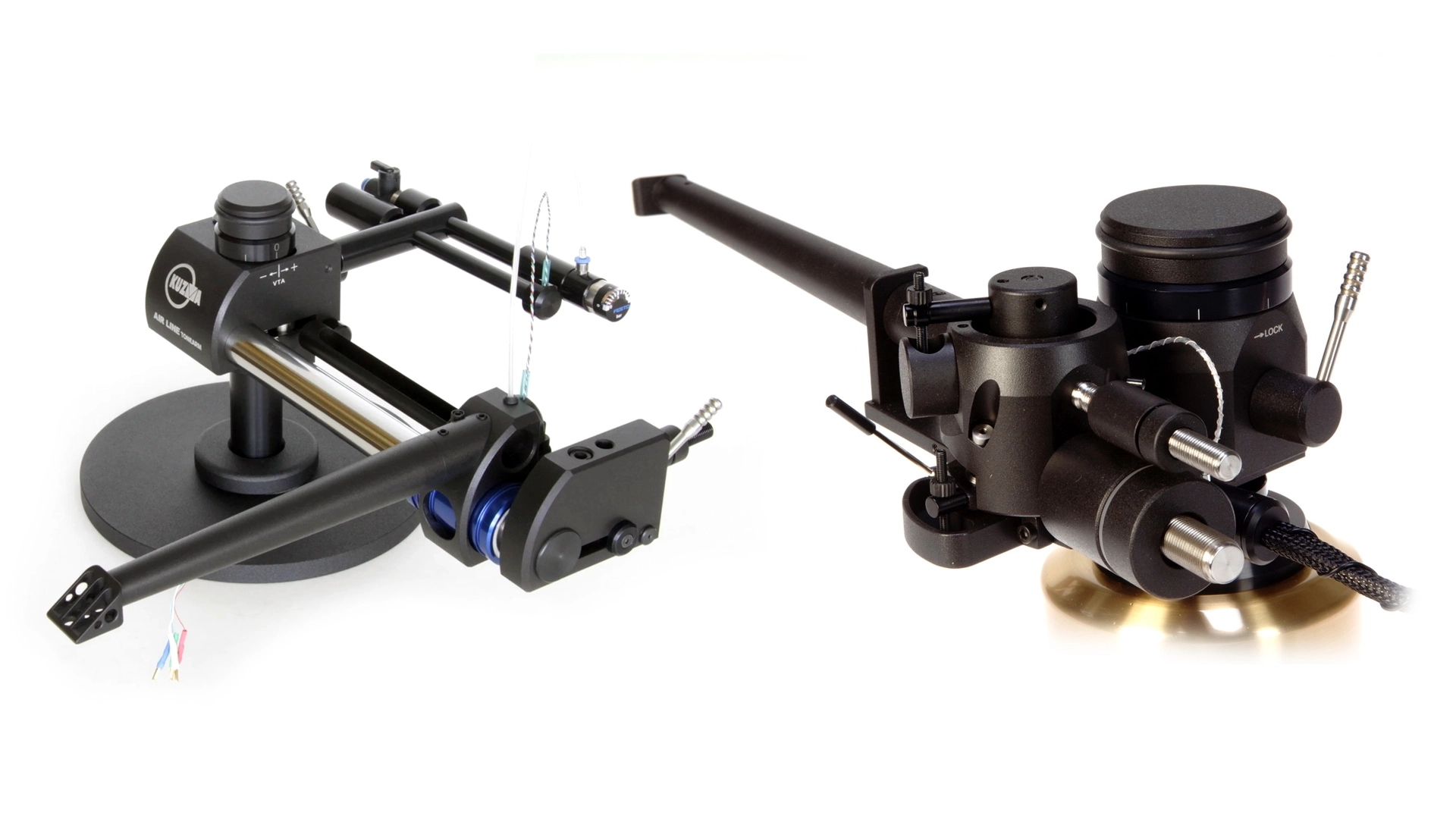
Kuzma is a Slovenian analogue manufacturer whose turntables and tonearms are engineered as precision mechanical instruments. Franc Kuzma founded the company in 1983, applying a background in mechanical engineering to the problems of speed stability, bearing noise and unwanted resonance. The long-running Stabi S demonstrates the basic formula with a rigid, skeletal brass structure and separate motor; the modular Stabi R uses a solid aluminium chassis that accepts multiple tonearms, while the Stabi M and XL DC pursue still greater mass, isolation and rotational consistency. Kuzma’s 4Point tonearms are equally distinctive: four bearing points provide stable, low-friction movement in the horizontal and vertical planes while preserving accurate azimuth, and versions range from the compact 4Point 9 to the 14-inch model. The tangential Air Line and sapphire-arm-tube Safir 9 explore different solutions to the same tracing problem. Cartridges, power supplies and isolation accessories complete the system. Across the range, Kuzma avoids fashion-driven reinvention; rigid structures, serviceable components and upgrade paths keep established designs relevant for decades.
Levin Design

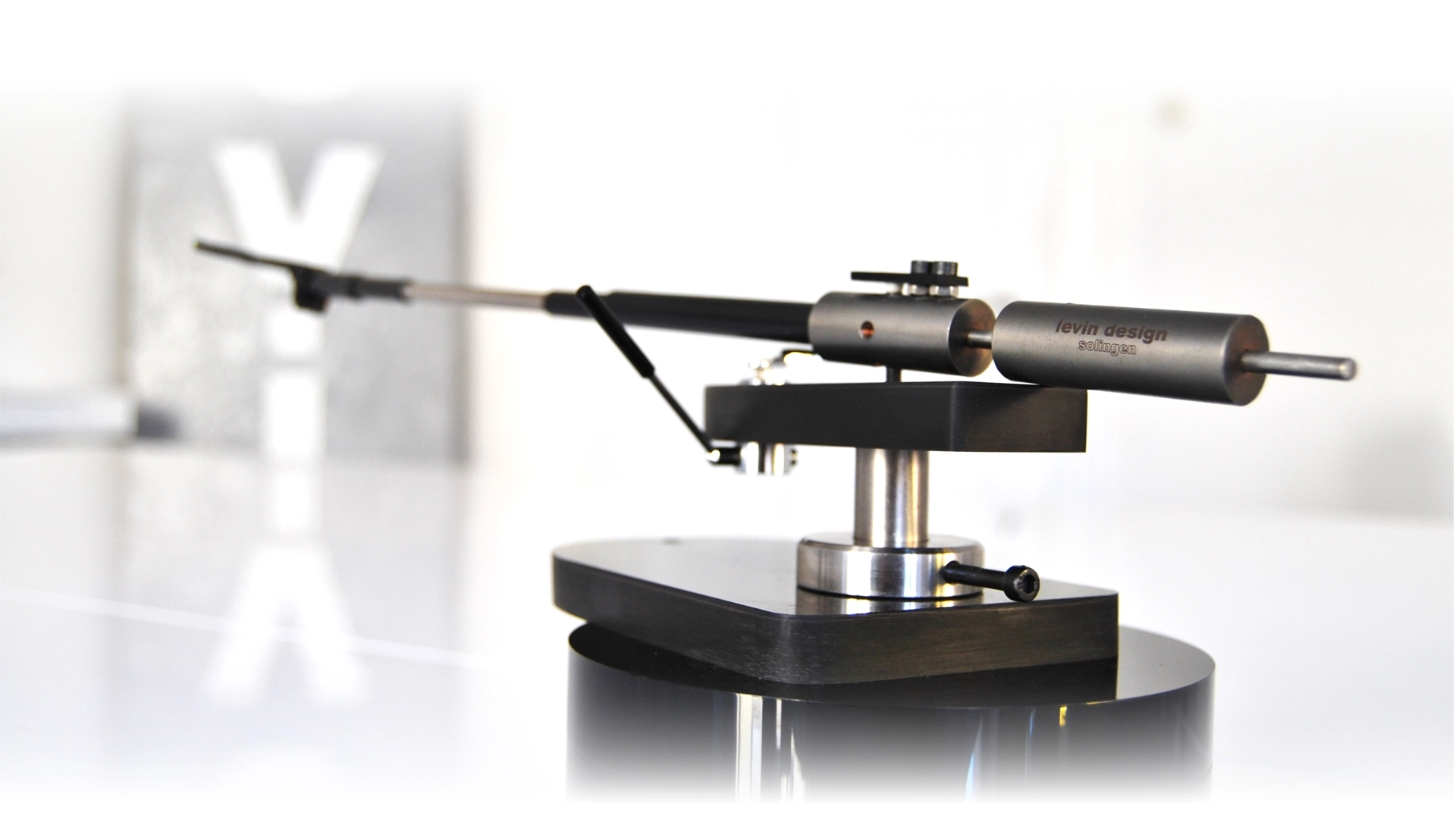
Levin Design is a German industrial-design and development studio whose audio work centres on accessories, resonance control and system furniture—not complete turntables and tonearms. Frank and Kim Levin run the Solingen-based operation, combining functional engineering with a restrained visual language influenced by classic industrial design. Its best-known analogue products include handmade record-cleaning brushes, turntable mats and record weights. The Sandwich platter mat uses a layered construction rather than a single sheet of rubber or felt, while the company’s resonance absorbers were developed to isolate turntables and other components from footfall and structure-borne vibration. Levin Design also creates direct-connect audio cables intended to eliminate a conventional plug interface, modular racks and equipment supports, and more recently complete loudspeaker concepts. Much of the catalogue is produced in small quantities and can be adapted in materials or finish. The brand’s real speciality is therefore the interface around a hi-fi component: how it is supported, coupled, cleaned and connected, with product form treated as part of the engineering rather than decoration added afterwards.
Linn

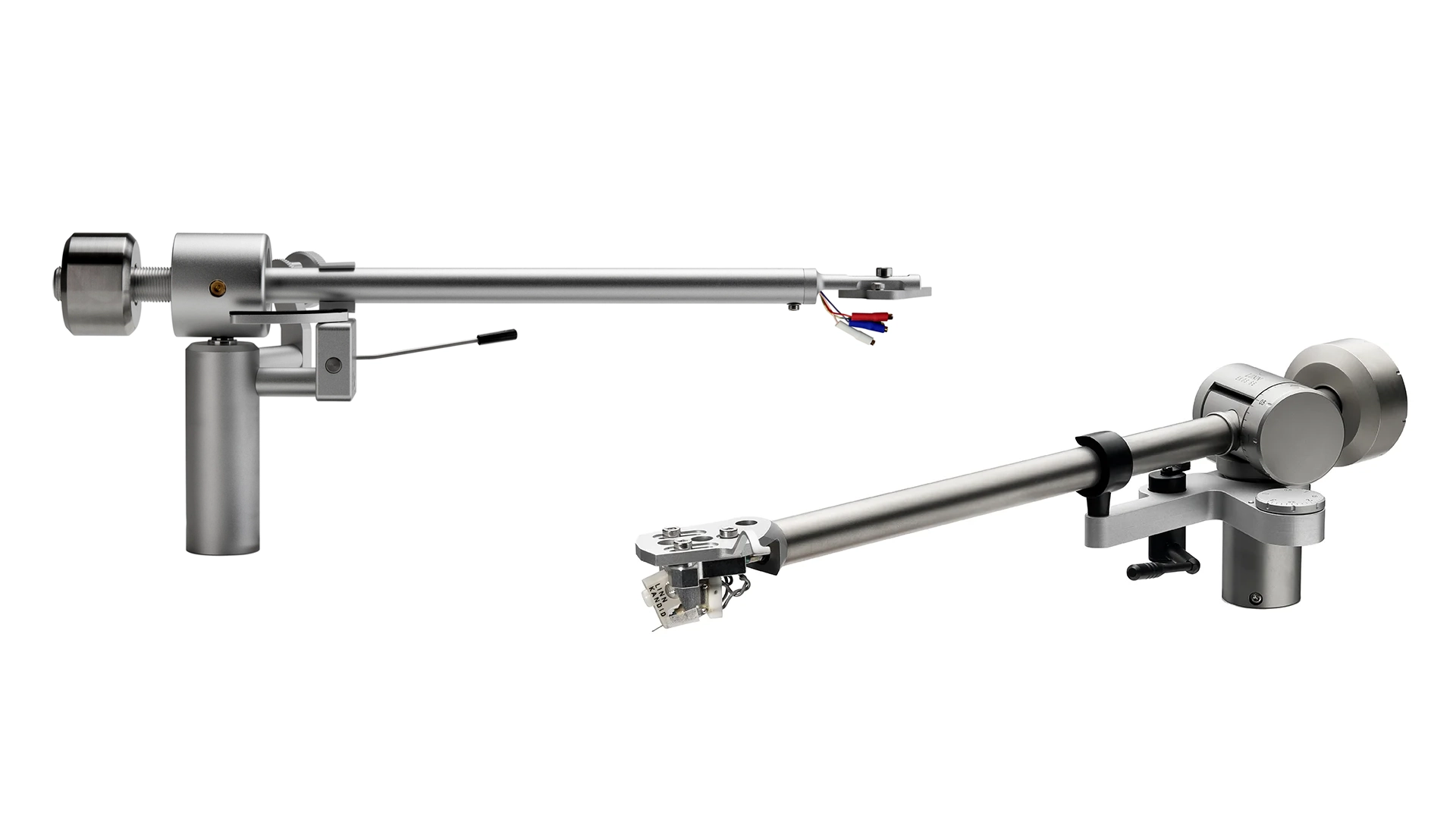
Linn is a Scottish hi-fi manufacturer founded by Ivor Tiefenbrun in 1973, the year the Sondek LP12 established the company’s “source first” argument: information lost at the beginning of a replay chain cannot be recovered later. The suspended, belt-driven LP12 remains in production, but its significance is also structural. Bearings, subchassis, power supplies, tonearms and cartridges can be upgraded individually, allowing decades-old decks to incorporate current engineering. Linn carried the same system thinking into digital audio with its DS network players and today’s Klimax, Selekt and Majik DSM products. Organik is Linn’s in-house discrete DAC architecture; Exakt moves the crossover into the digital domain and time-aligns individual drive units; Space Optimisation models a specific loudspeaker and room to reduce low-frequency interaction without requiring a calibration microphone. Selekt DSM can be configured as a source, preamplifier, integrated amplifier or multichannel hub and upgraded with different DAC and amplification modules. Loudspeakers and complete active systems close the loop. Designed and manufactured near Glasgow, Linn’s defining strength is controlled evolution: analogue and digital platforms are built to accept meaningful upgrades instead of being discarded.
Luxman

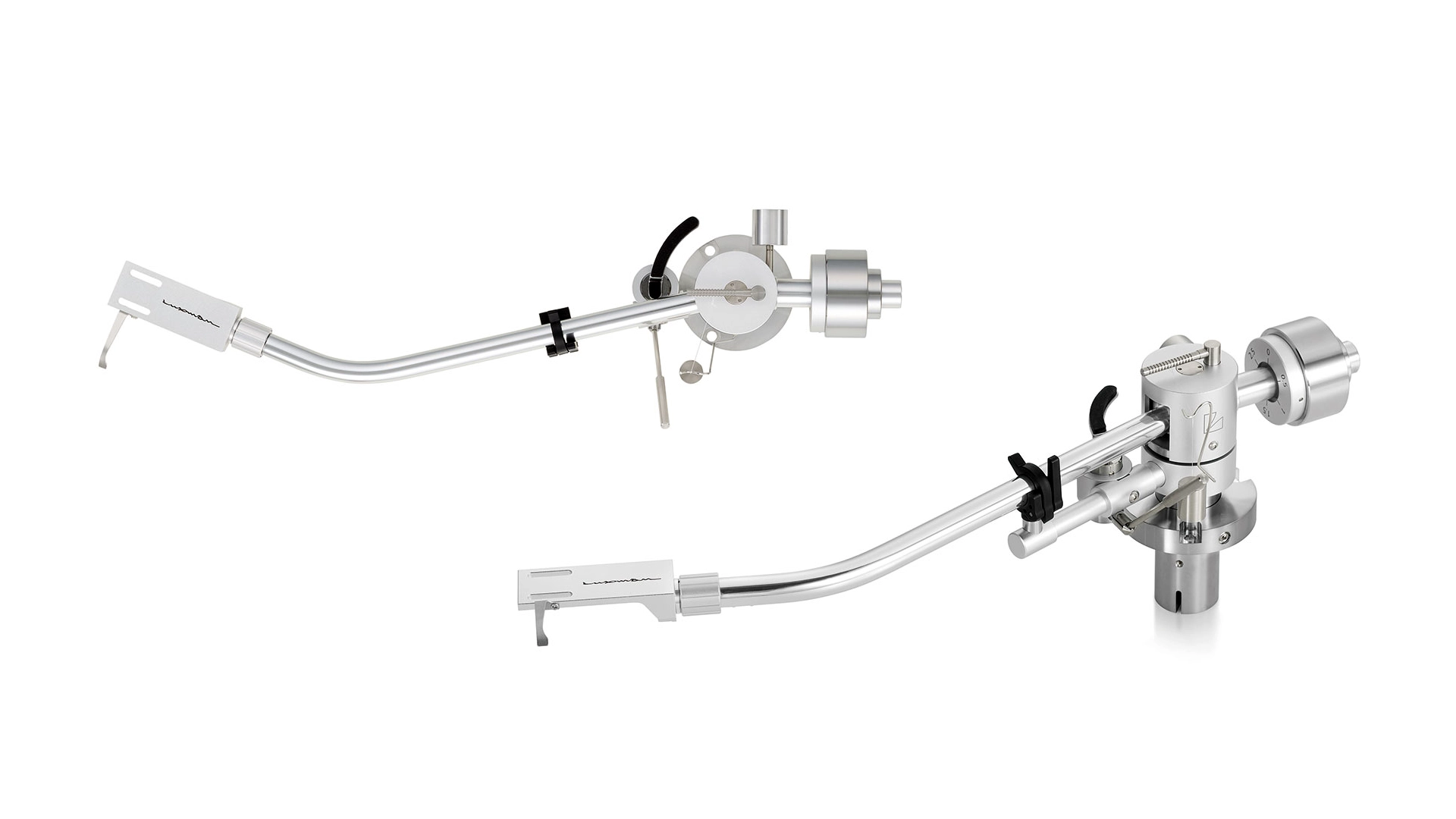
Luxman is one of Japan’s longest-established specialist hi-fi manufacturers, with roots in an Osaka radio department opened in 1925 as broadcasting began in the country. Its catalogue is broad, but amplification remains the centre of gravity: integrated amplifiers, control amplifiers and power amplifiers sit alongside SACD/CD players, network transports, DACs, phono stages and the PD-191A turntable. Luxman develops recurring circuit platforms rather than dressing standard modules in new cases. The current LIFES feedback engine, introduced as the successor to the long-running ODNF concept, is designed to apply correction only to detected distortion components while preserving the music signal’s immediacy. LECUA electronically controlled attenuators provide repeatable volume adjustment with carefully matched channels, and substantial custom transformers and power supplies are used throughout the upper ranges. Products such as the L-509Z integrated amplifier, C-10X/M-10X separates and D-10X disc player pair this engineering with the brand’s characteristic analogue meters and understated industrial design. Luxman’s appeal is the continuity between eras: tube components, modern solid-state circuits, digital sources and vinyl replay are all treated as parts of one coherent Japanese audio tradition.
Michell Audio

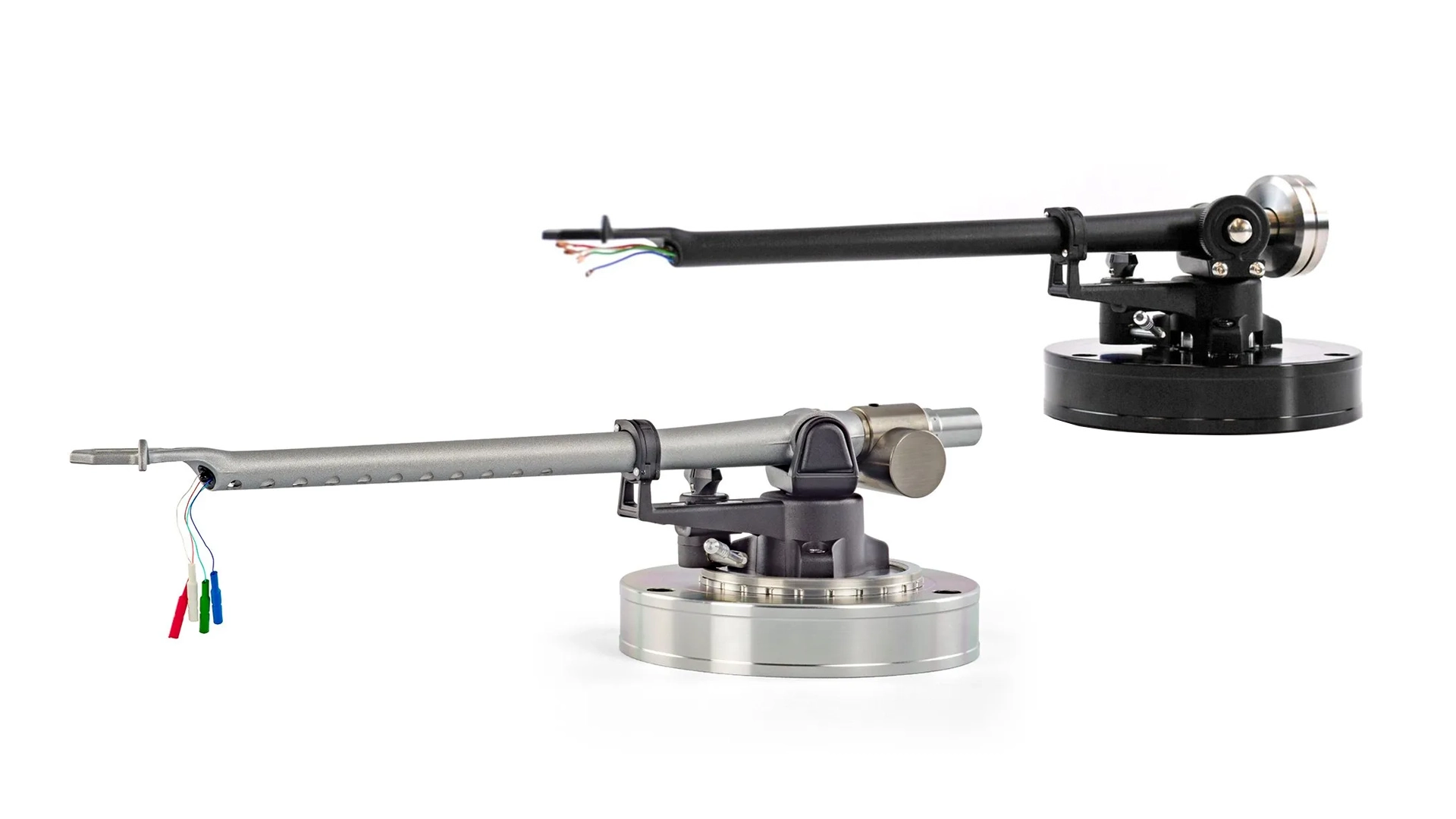
Michell Audio is the British turntable maker behind the unmistakable GyroDec and Orbe: skeletal, suspended record players whose engineering is meant to remain visible. John Michell founded Michell Engineering in the mid-1960s, initially machining precision parts for other manufacturers. Work for Transcriptors, followed by licensed production of the Hydraulic Reference, gave the company a direct route into analogue replay; Michell’s own Reference Electronic appeared in 1977 and the GyroDec followed in the early 1980s. The current range includes the GyroDec, open-frame Gyro SE, flagship Orbe, compact TecnoDec, tonearms, power supplies and upgrades for long-running models. Signature details include suspended subchassis construction, an inverted oil-circulating main bearing, belt drive with an outboard motor, and the GyroDec’s weighted platter. Rather than replacing successful decks every few seasons, Michell develops them through compatible bearings, clamps, power supplies and suspension parts. That continuity is the brand’s real strength: these are visually original turntables supported as evolving mechanical systems, not fashion-led products with a short service life.
Origin Live

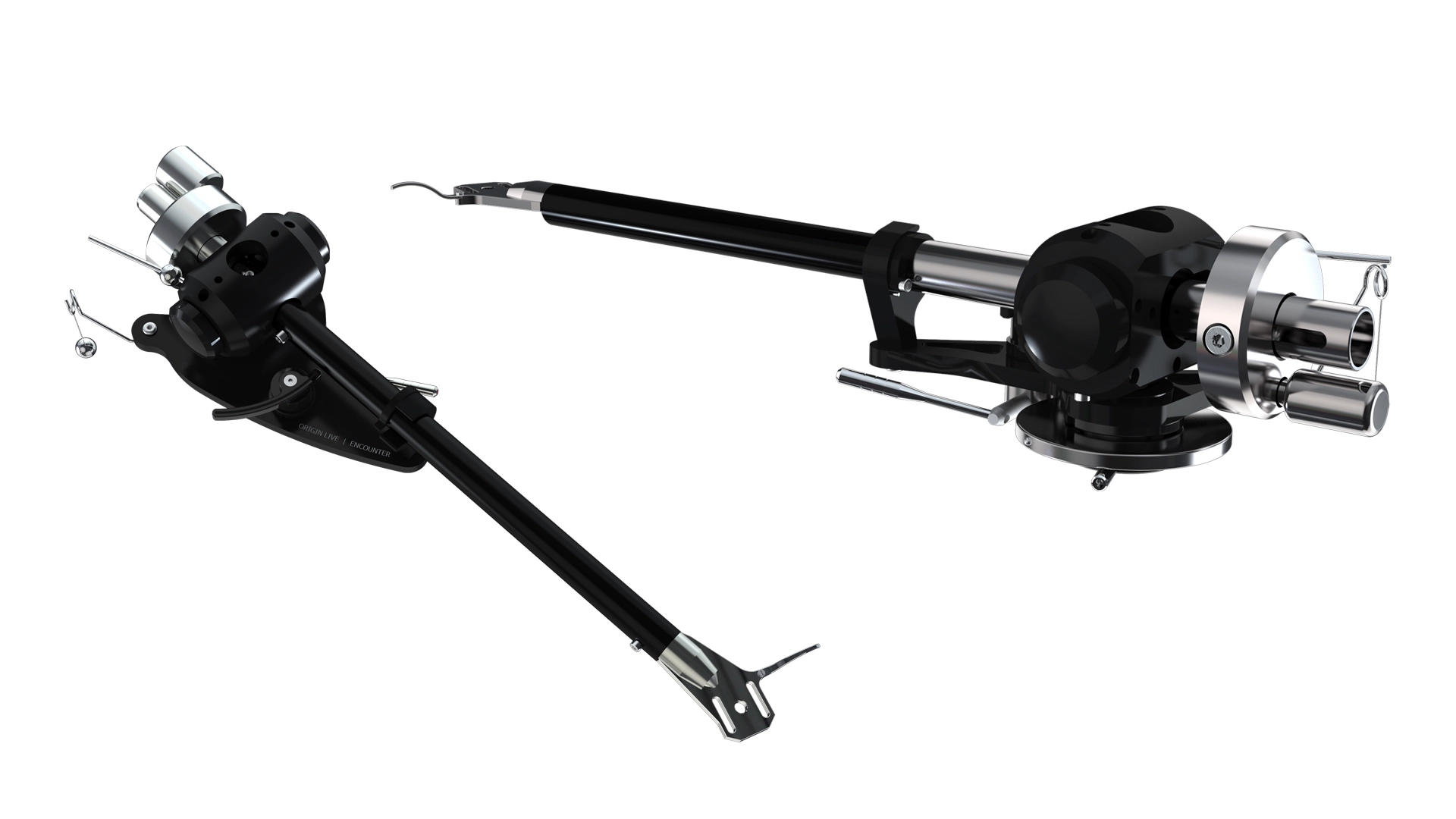
Origin Live is the British analogue manufacturer founded by engineer Mark Baker and operating from Southampton since 1986, not 1990. The company first became known for modifying turntables and developing a replacement DC motor power supply; that practical upgrade work grew into complete decks, tonearms and accessories built around the control of vibration and energy flow. Its turntable range progresses from Aurora and Swift through Calypso, Resolution and Sovereign to the flagship Voyager. Rather than rely on one fashionable material, Origin Live combines low-friction bearings, carefully decoupled motors, layered plinth structures and platter interfaces according to the model. Tonearms are equally central: Onyx and Silver open the range, followed by Zephyr, Encounter, Illustrious, Conqueror, Enterprise, Agile and Renown. Their development focuses on bearing behaviour, tube rigidity, counterweight placement and how mechanical energy leaves the cartridge. Motor kits and structural upgrades remain available for decks from other manufacturers, preserving the company’s original problem-solving role. Origin Live designs and manufactures in Britain and uses listening alongside measurement to judge changes. Its individuality lies in treating the entire record-playing mechanism—motor, bearing, platter, arm and support—as an energy-management system, then offering that knowledge both as complete products and as upgrades.
Ortofon

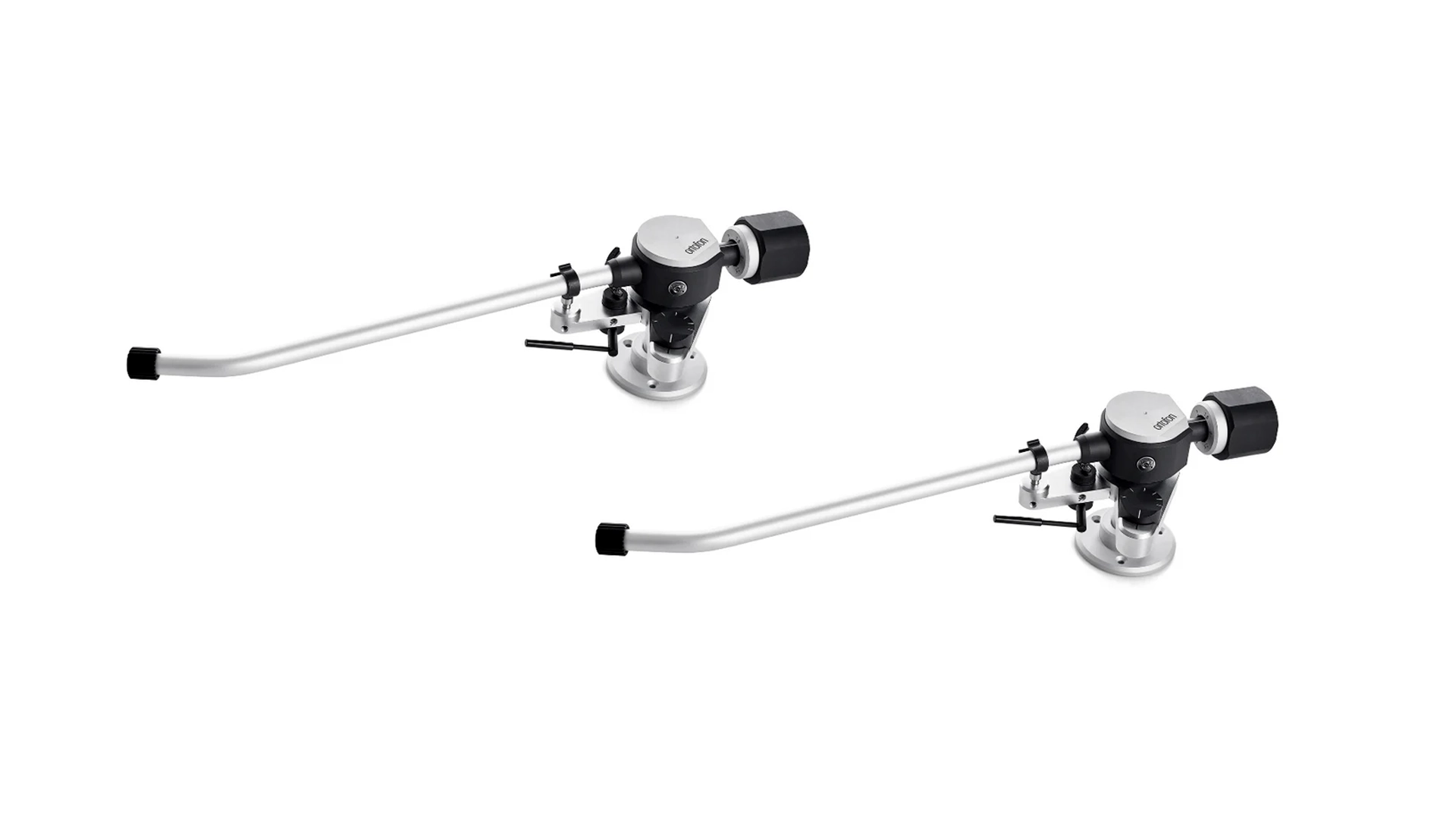
Ortofon is the Danish transducer specialist founded on 9 October 1918 by engineers Axel Petersen and Arnold Poulsen. The original Electrical Phono Film Company developed synchronised sound for cinema; work on optical and mechanical sound reproduction eventually led to record-cutting equipment and pickup cartridges. That century-long route from making the groove to reading it explains why Ortofon is more than a familiar cartridge badge. The SPU established the classic integrated-headshell moving-coil format and remains in production for traditional tonearms. Modern hi-fi ranges span the replaceable-stylus 2M moving-magnet family, Quintet and Cadenza moving coils, the newer MC X series and reference designs such as Windfeld, Verismo and Diamond. Concorde cartridges serve both hi-fi and professional DJ users, where secure tracking, stylus visibility and rapid replacement are as important as tonal refinement. Ortofon develops magnetic systems, suspension components, cantilevers and stylus profiles for different groove contact and compliance requirements; selected rubber and precision parts are made in-house, and cartridge assembly remains centred in Denmark. The catalogue also includes mono, 78-rpm and archival solutions rather than forcing every record through one generator. Ortofon’s defining strength is accumulated control of the microscopic mechanical interface between groove and electrical signal, applied from practical replacement styli to hand-built moving-coil flagships.
Pear Audio Analogue

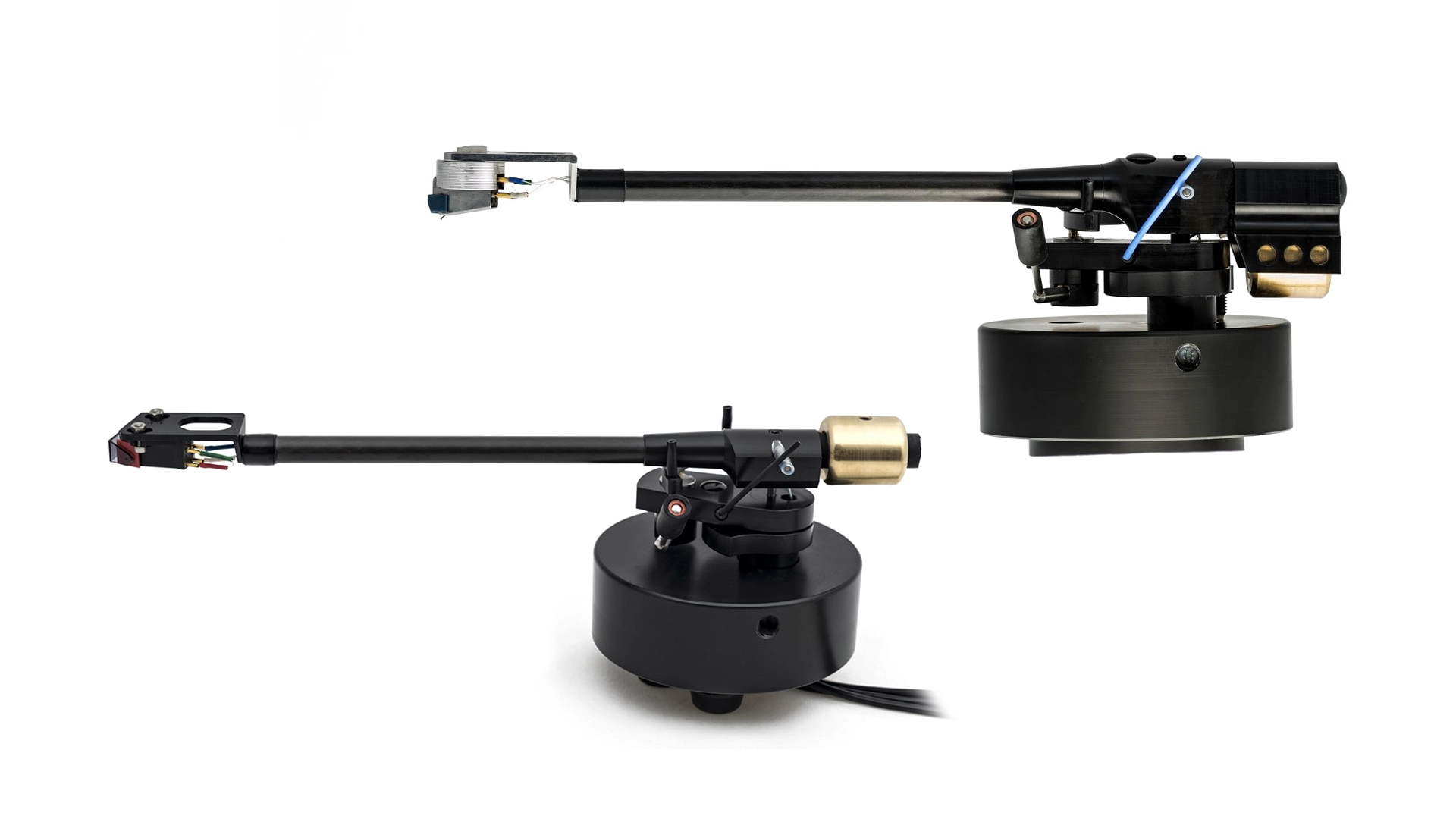
Pear Audio Analogue is Peter Mezek’s Slovenian turntable company and the custodian of the final design ideas of the late Tom Fletcher, founder of Nottingham Analogue. Mezek distributed and worked closely with Fletcher for years; the Pear project grew from that relationship rather than from an attempt to imitate the appearance of classic record players. Because the company does not publish a dependable founding date, the year is best left unstated. The range develops Fletcher’s conviction that a turntable should add as little stored mechanical energy as possible. Low-torque motors, massive platters, carefully matched bearings and restrained plinth structures are used to reduce vibration before it reaches the stylus. On several designs the platter is started by hand, allowing the motor to maintain speed with minimal torque and correspondingly little disturbance. Little John and Captain John Handy provide the more accessible decks; Kid Howard, Kid Thomas and the larger Odar move toward heavier platters, more elaborate power supplies and deeper isolation. Cornet tonearms complete the analogue path. The product names honour jazz musicians whom Mezek and Fletcher enjoyed, giving the catalogue a personal history instead of an invented technical code. Turntables and arms are built by hand in Slovenia. Pear Audio Analogue’s importance is precisely this verified lineage: it carries Tom Fletcher’s low-energy, low-torque approach forward through Peter Mezek’s own manufacturing rather than turning the association into nostalgia.
Pre-audio turntables

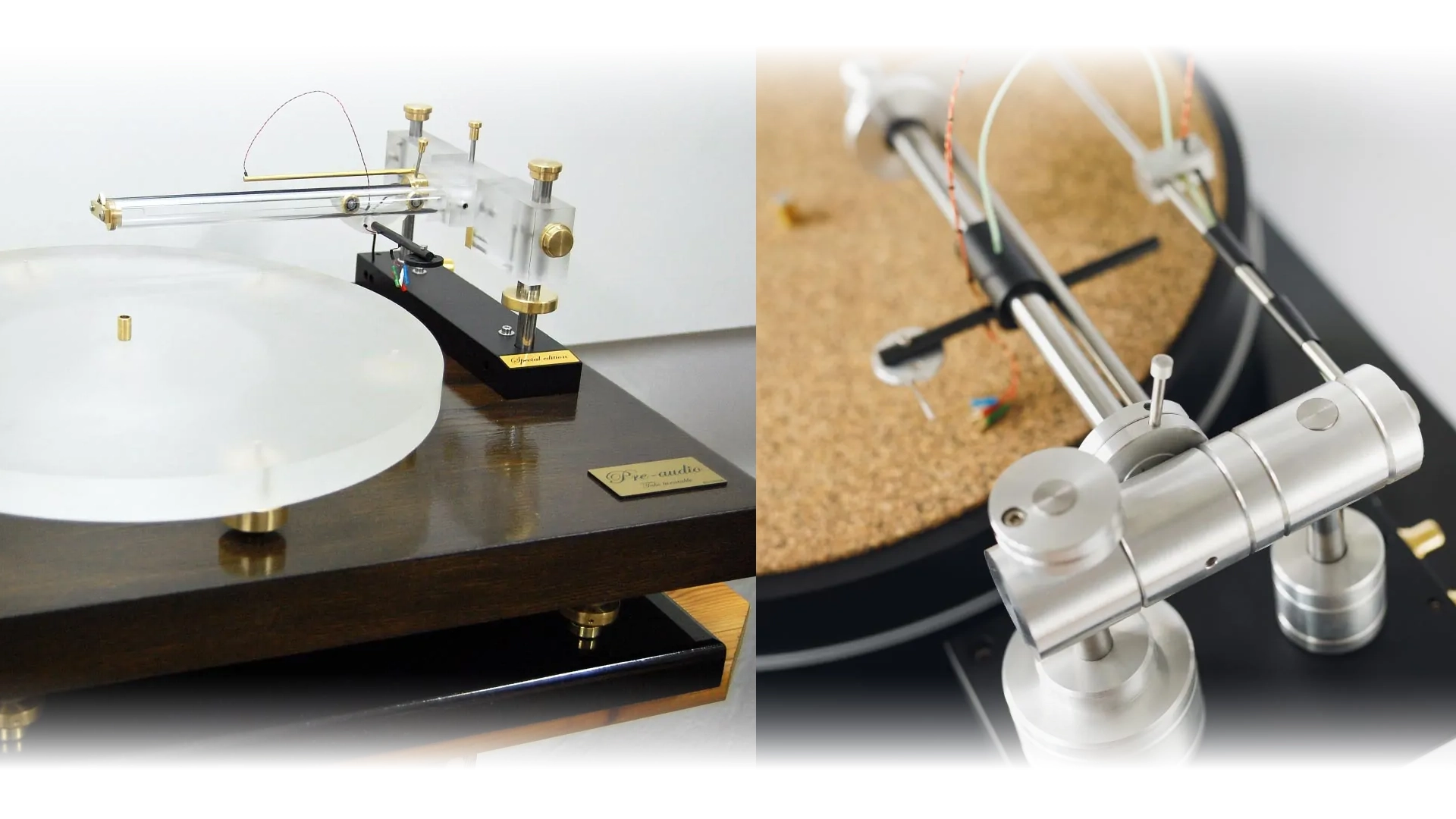
Pre-audio is a small Polish analogue manufacturer in Nysa whose turntables are built around tangential, or linear-tracking, tonearms. That choice distinguishes the company more clearly than generic claims about precision. A conventional pivoted arm traces an arc across the record; a tangential arm keeps the cartridge aligned along a radius, following the geometry used by the cutting lathe and therefore avoiding the changing angular tracking error inherent in a pivoted arm when it is correctly set up. Pre-audio implements the idea with very low-friction air bearings. In the ASP-15 and DE-18 arms, the arm carriage moves along a guide supported by compressed air and is pulled across the record by the stylus itself, without an electronic tracking servo. The absence of a conventional pivot and offset angle can reduce skating force, but the result still depends on cartridge alignment, levelling, clean air supply and careful installation; it should not be described as magically eliminating every source of vinyl distortion. Current turntables include the compact GL-1102, ASP-1501N and DE-1800, as well as the larger BG-XX01, with model-specific combinations of plinth, platter, drive and linear arm. Separate tonearms allow the approach to be used on other decks. The company works in small series and publishes far less corporate history than large brands, so no founding year has been added without dependable evidence. Pre-audio’s real story is sufficient: a Polish specialist that commits its whole record-player range to passive tangential tracking and develops the air-bearing mechanics needed to make it work.
Pro-Ject

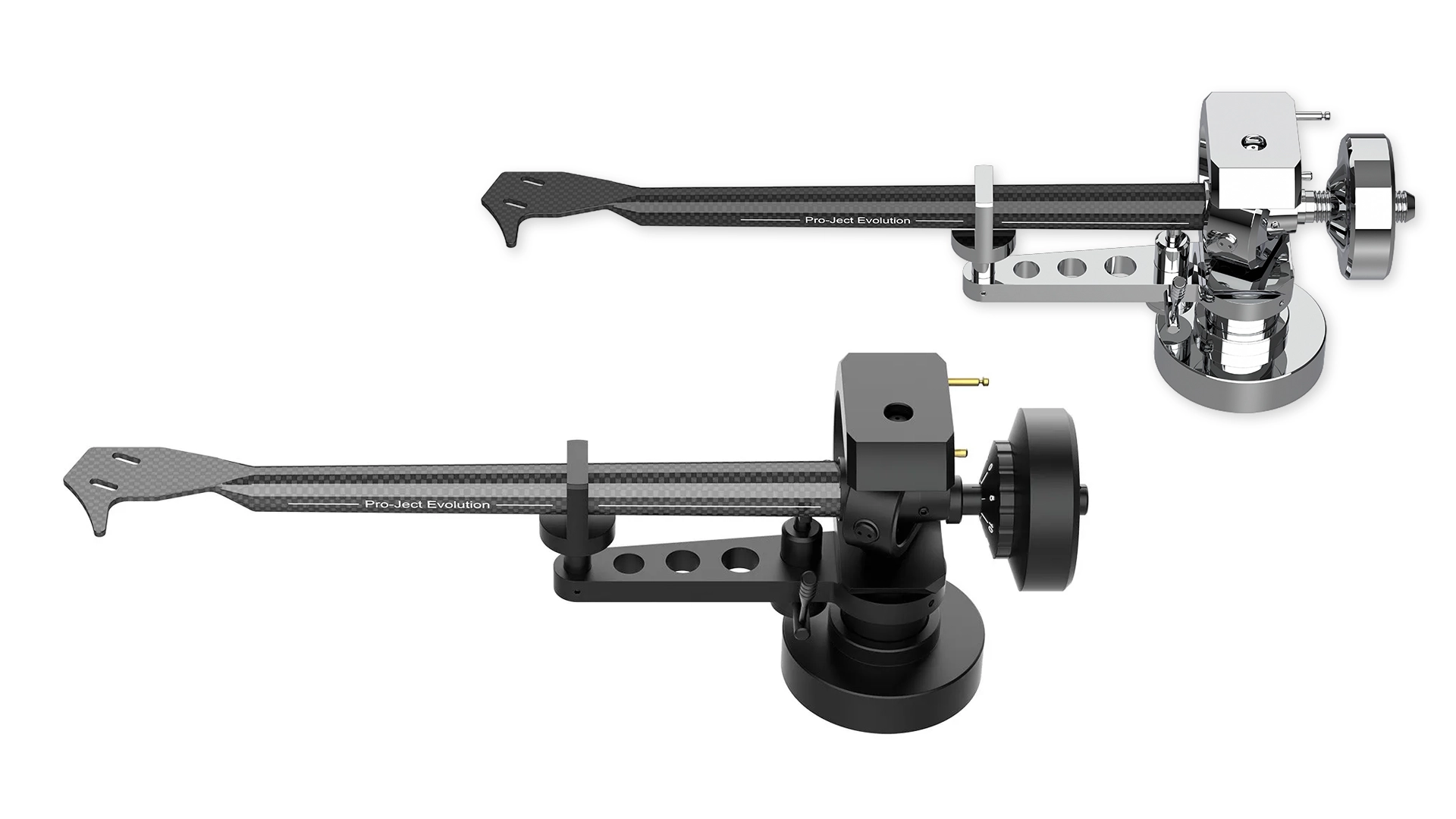
Pro-Ject Audio Systems was founded in Austria in 1991 by Heinz Lichtenegger, at a moment when the audio industry was treating the compact disc as vinyl’s replacement. Lichtenegger’s counterargument was the Pro-Ject 1: a simple belt-drive turntable built around the parts necessary for stable speed and accurate tracking, without automatic mechanisms or cosmetic complexity. The strategy proved prescient, and the Debut, introduced in 1999, became the model that brought the company to a much wider generation of record listeners. Pro-Ject now covers almost every scale of manual turntable. E and T families address first systems; Debut remains the recognisable centre; X, RPM and Xtension add more elaborate plinths, bearings, platters and tonearms; and Signature represents the flagship engineering. Many decks are assembled by hand in the Czech Republic, preserving production skills from the region’s long record-player history. The company also makes phono stages, speed controls, cartridges, record-cleaning machines and accessories, so a turntable can be upgraded rather than discarded. Box Design electronics—compact phono stages, amplifiers, DACs, streamers and CD transports—are largely produced in Slovakia and extend the same space-efficient philosophy beyond vinyl. Artist Collection editions use visual collaborations and licensed themes, but beneath the artwork they remain functional Pro-Ject platforms. The brand’s significance is not simply that it sells many turntables: it maintained European manual-turntable production through the digital era and built a clear path from an inexpensive first deck to genuinely ambitious analogue systems.
Reed

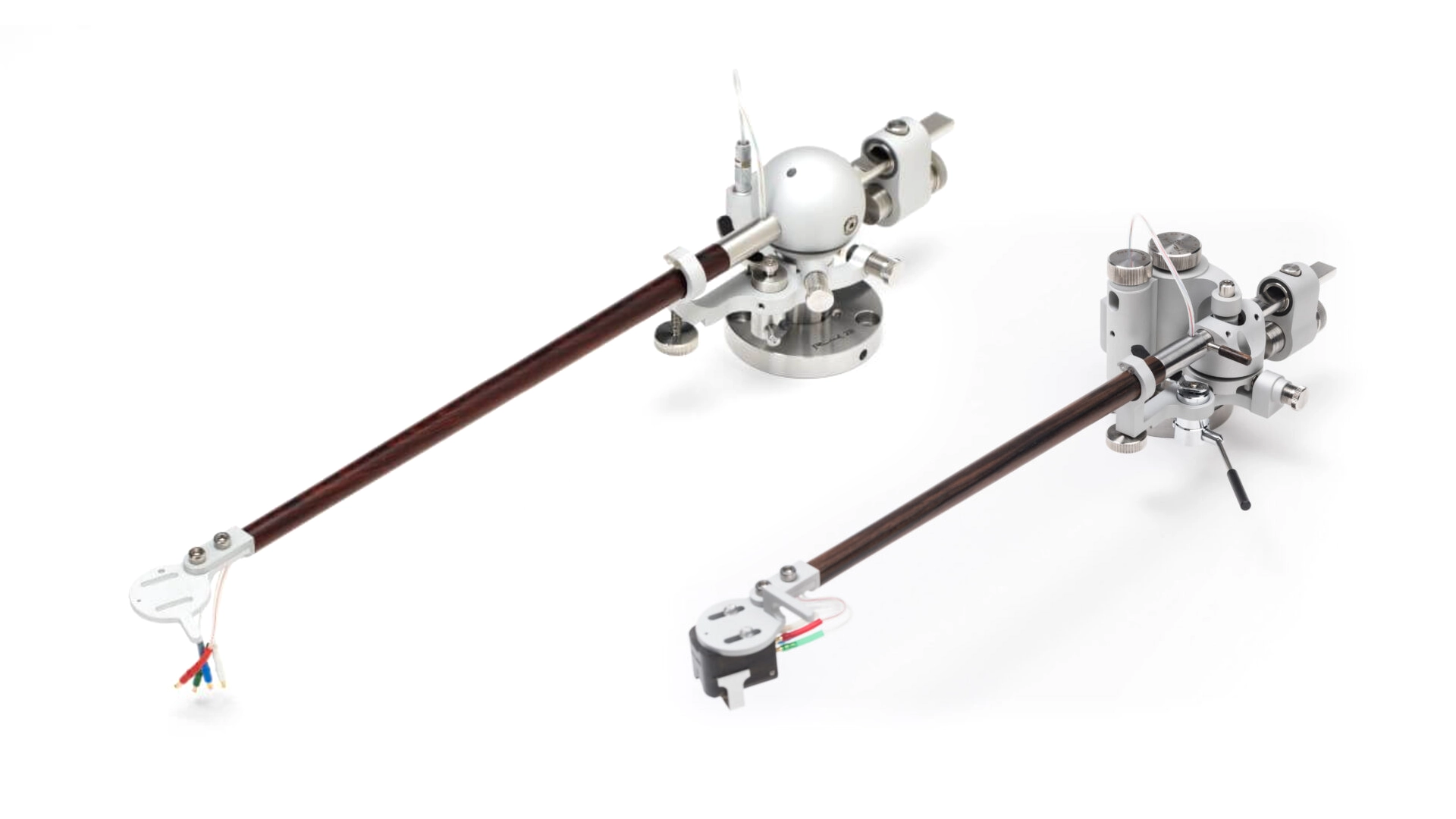
Reed is a Lithuanian analogue specialist founded in 2007 by engineer and company owner Vidmantas Triukas, whose work with hi-fi mechanisms began decades earlier. The company does not simply make massive turntables and conventional luxury tonearms. Its strongest products reconsider how a cartridge moves across the record, how effective mass is matched to cartridge compliance and how drive torque reaches the platter without adding avoidable vibration. Reed’s 3P is a pivoted tonearm with magnetic antiskating and unusually accessible adjustment, including VTA and azimuth while a record is playing. The 5A and 5T pursue tangential geometry without placing the cartridge on a conventional linear carriage. In the 5T, a laser and sensor array monitor position while a limited-angle torque motor rotates the arm’s support to keep the stylus tangent to the groove; replaceable arm tubes allow effective mass to be changed for different cartridges. Muse turntables provide equally distinctive mechanics. Muse 3C uses two DC motors and can be converted between friction drive and belt drive, allowing the owner to choose how torque is coupled to the platter; Muse 1C refines the friction-drive route, while 3A and other versions address different system requirements. Materials for arm tubes include carefully selected woods, carbon fibre and composites, used according to resonance and mass rather than appearance alone. Every Reed installation still depends on precise setup—advanced geometry does not remove that requirement. The brand’s individuality lies in mechanisms that are visible, adjustable and technically consequential: laser-controlled tangential tracking, interchangeable arm mass and a turntable drive that can change topology.
Rega

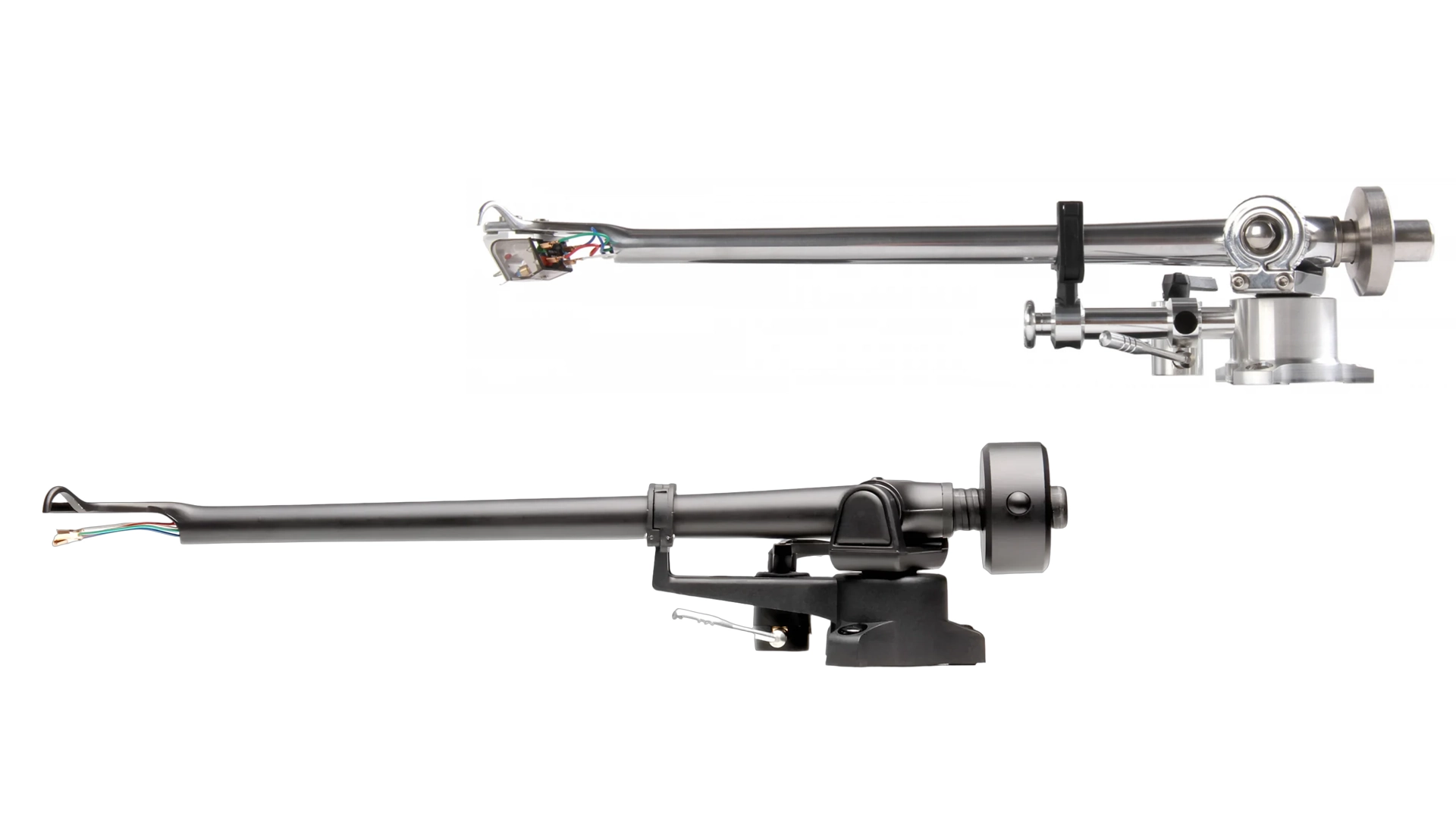
Rega Research was founded in England in 1973 by Roy Gandy and Tony Relph; the name combines parts of their surnames. Its first commercial turntable was the unconventional Planet, but the Planar 3 of 1976 created the enduring template: a simple belt drive, rigid low-mass plinth, glass platter and an integrated tonearm developed as one mechanical system. Rega’s influence comes not from preserving that design unchanged, but from repeatedly refining the same priorities while manufacturing a remarkably broad range in Essex. The central principle is lightweight rigidity. Gandy argues that excessive mass can store vibration and release it later, so current Planar models remove material where it is unnecessary and add stiffness between the main bearing and tonearm through double-brace structures. One-piece RB tonearm tubes minimise joints from headshell to bearing housing; higher models use increasingly precise bearings, ceramic platters and sophisticated power supplies. Planar 1, 2, 3, 6, 8 and 10 form the main progression, while Naia translates research from the limited Naiad into the production flagship. Rega also develops Nd moving-magnet and Ania, Apheta and Aphelion moving-coil cartridges, Fono and Aria phono stages, so the complete record-playing chain can be engineered together. Io, Brio, Elex, Elicit, Aethos and Osiris amplifiers, Apollo and Saturn digital sources, and Kyte or Aya loudspeakers broaden the system without displacing vinyl from the centre. Rega’s lasting strength is purposeful reduction: spend materials and tolerance where they control speed, bearing behaviour, rigidity and cartridge alignment, then leave out mechanisms that do not help record playback.
Scheu Analog

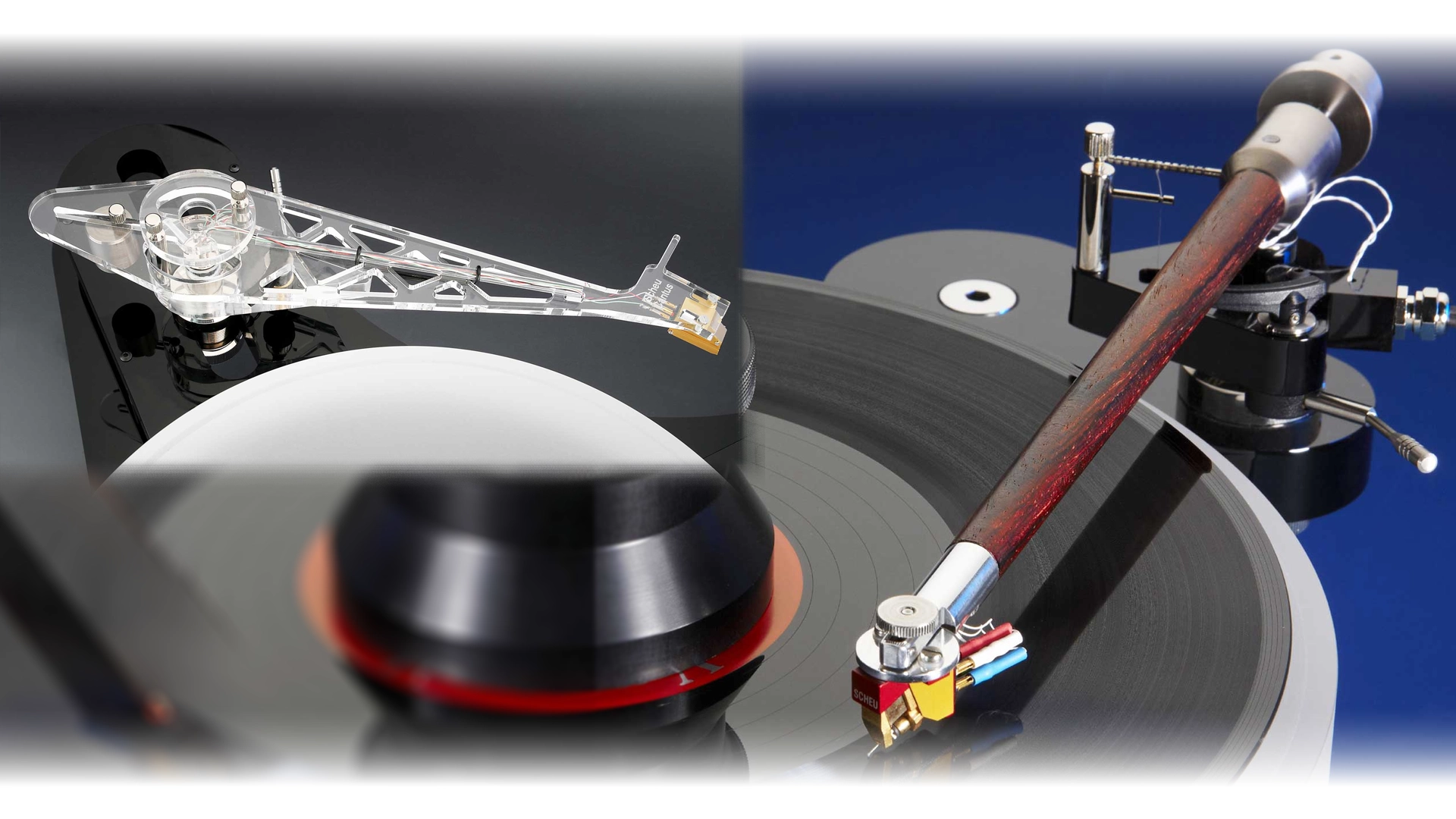
Scheu Analog is a German analogue-audio manufacturer whose origin dates to 1985, when trained toolmaker and musician Thomas Scheu built his first turntable. His knowledge of materials and precision fabrication led to a distinctive family of high-mass, belt- or string-driven decks built around thick acrylic platters and a special inverted bearing. The Premier became the best-known model, while Diamond brings the architecture to a more compact format, Cello integrates the motor for easier entry, and Das Laufwerk No. 2 sits at the top of the range. Separate motor units allow existing decks and ambitious DIY projects to use Scheu’s drive system. The company also makes unipivot tonearms: Tacco uses a tapered wooden arm tube, Cantus an open truss structure, and Classic develops an earlier design in revised form. Cartridges, armboards, bearings, platters and other analogue parts complete an unusually practical ecosystem for owners and builders. After Thomas Scheu’s death in December 2004, his wife Ulla continued the company and expanded its international presence. In June 2025 Scheu Analog passed to new management, which retained the established engineering principles while moving the office and workshop to Germany’s Rhein-Main region. Current products remain hand-built with German suppliers and emphasise serviceable mechanical solutions rather than automated convenience. Scheu Analog’s identity is rooted in the machine itself: stable rotation, controllable energy paths, adaptable tonearm mounting and durable parts. Its history and current ownership should be stated together, because the brand is valuable precisely as a continuing workshop tradition rather than a revived badge.
SME

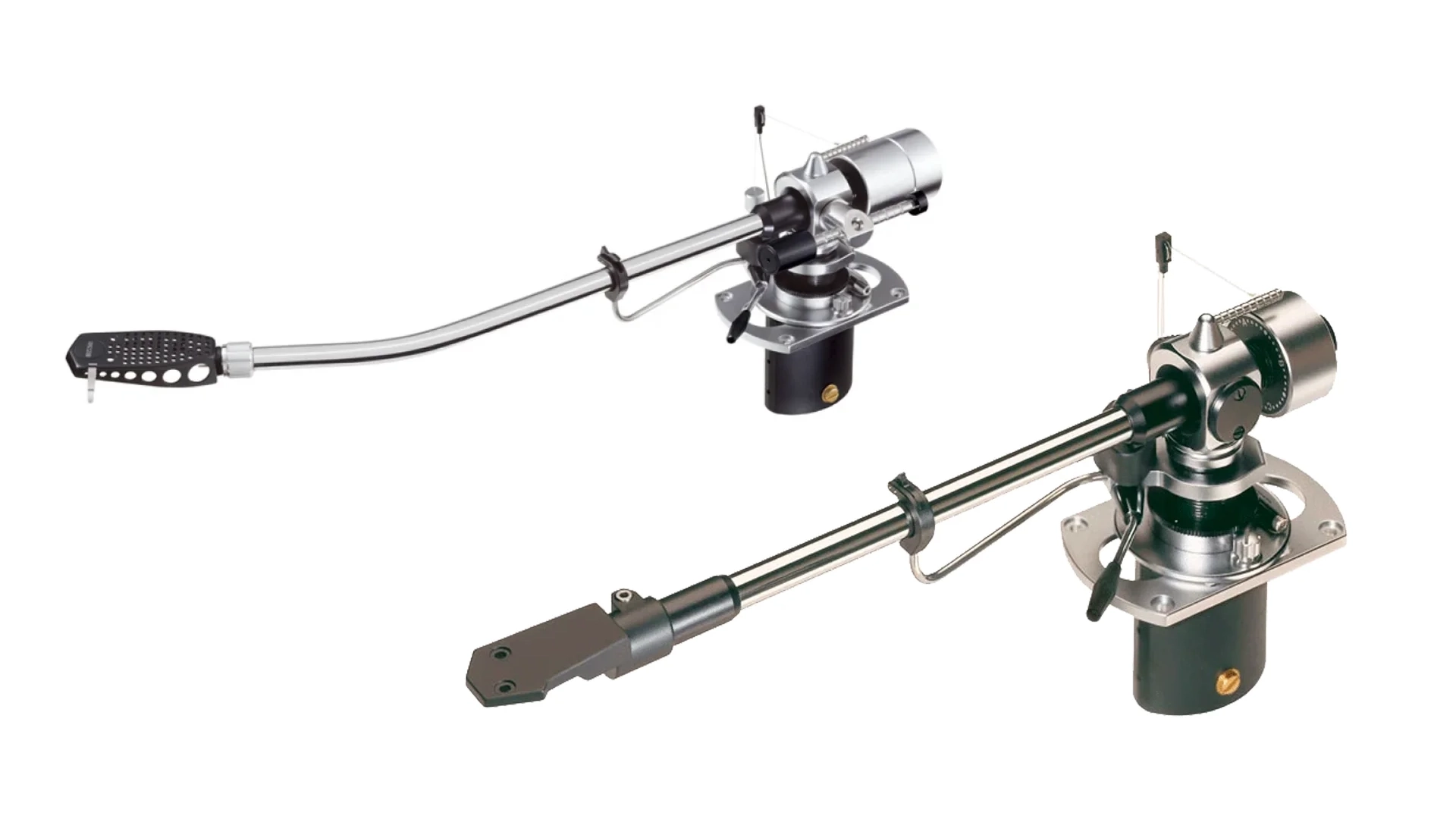
SME is a British precision-engineering company founded in 1946 by Alastair Robertson-Aikman as the Scale Model Equipment Company. It first made exhibition models, then diversified into precision parts for aircraft instruments and other industries. In 1959 Robertson-Aikman built a pickup arm for his own hi-fi system; encouragement from audio-industry friends led to commercial production of the Series I and to the shorter SME name. The Series II arms that followed established the familiar detachable-headshell geometry, while the Series V of 1986 became a modern reference through its one-piece magnesium arm tube, precision bearings and repeatable cartridge setup. SME entered turntables with the Model 30 in 1991 and Model 20 in 1992, applying the same machining, constrained structures and suspension control to the complete record-playing platform. Current products include Model 60 and Model 35 flagships, Model 12, Model 8 and the integrated Synergy, plus M2-9R and M2-12R tonearms. The turntables are manufactured at SME’s Steyning, West Sussex facility, which also undertakes precision work for aerospace, Formula 1, automotive and medical sectors. In 2016 SME became part of the Cadence Audio Group. Cadence acquired Garrard in 2018 and placed its revival alongside SME; Loricraft record-cleaning machines are also presented within the group, but these names retain their own histories. SME’s importance is not simply luxury mass. It comes from tolerances, bearings, stable geometry, serviceability and vertical manufacturing accumulated across industries where dimensional error matters. The company turned a personal tonearm project into one of analogue audio’s longest continuous precision-engineering traditions.
Soulines

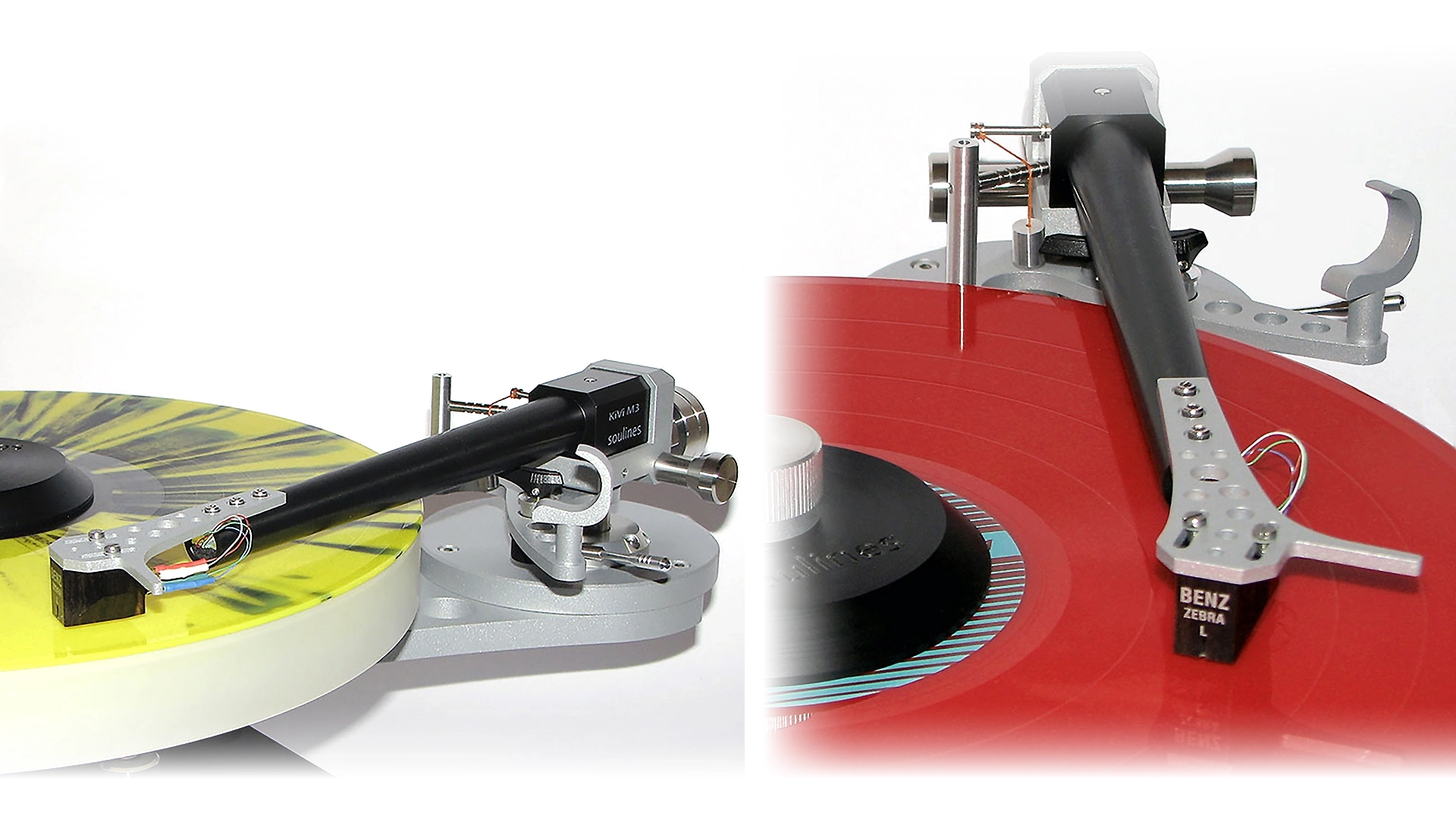
Soulines makes Serbian turntables whose exposed geometry reflects a careful interest in mass distribution, bearings and the path of vibration through the structure. Its roots go back to the tt recycled business started in 2009, when a team with backgrounds in music, recording and mechanical engineering began commercialising its turntable restoration and redesign work. Original designs followed, gaining recognition at the Belgrade Hi-Files Show in 2010. The Hermes DCX was presented successfully in 2011, and the decision to offer that turntable internationally led to Soulines. That progression from working on existing decks to designing complete players is an important part of the company’s character. Kubrick DCX became one of its recognisable models, while the catalogue developed to include tt42, tt9 and tt23 turntables and the KiVi M3 tonearm. The tt23 illustrates the construction approach: acrylic, POM and aluminium elements form the plinth and sub-plinth, with the bearing and arm board located on a common aluminium structure. A cast-acrylic platter turns on an inverted bearing, and an electronically controlled DC motor provides speed selection and fine adjustment. Adjustable supports and an included alignment tool make setup part of the product design. Soulines aims for a rigid, comparatively compact assembly with controlled vibration behaviour, using the shape and arrangement of components as deliberately as their materials. The resulting decks have a distinct mechanical appearance while keeping the everyday acts of levelling, selecting speed and playing records straightforward.
Sperling Audio

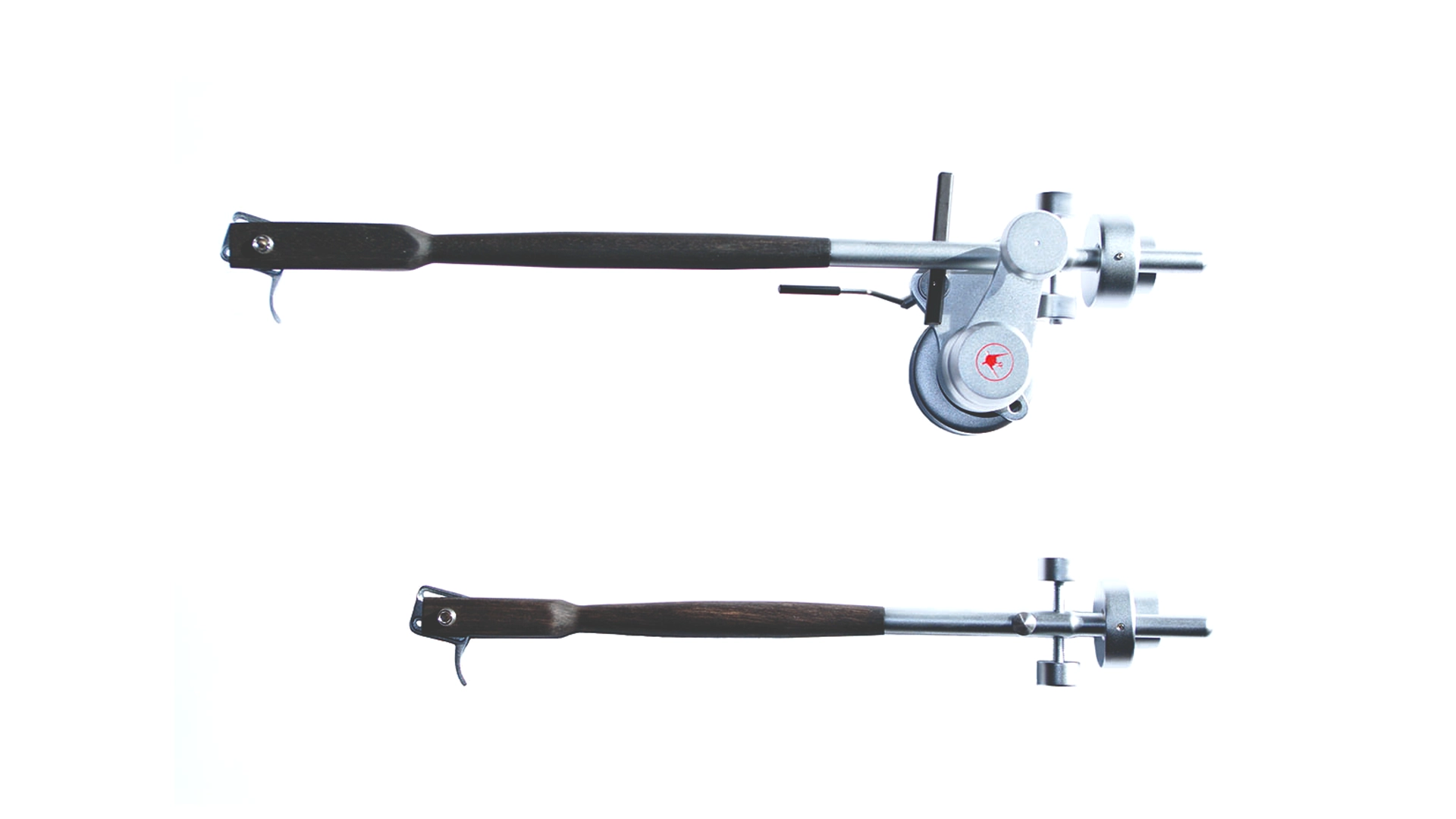
Sperling Audio builds high-mass turntables with unusually flexible tonearm mounting and an adjustable external drive system. Founder Ansgar Sperling and development engineer Michael Bönninghoff brought experience from studio construction and audio electronics to the German company’s analogue products. The L-1 turntable became its most recognisable expression: a substantial aluminium structure supporting a heavy platter and two independently adjustable tonearm bases. These bases accommodate arms from 9 to 12 inches and can be repositioned, making the deck particularly interesting to listeners who use several arms or cartridges. Scales and repeatable settings allow an adjusted arm assembly to be removed and returned to its previous position. Materials at the arm supports and the record interface can also be selected, with options including wood, slate and POM. A separate motor housing drives the platter by tape, and the M-2 housing allows fine adjustment of tape tension while the platter is turning. The L-2 and L-3 expand the turntable family, while the TA-1 tonearm and separate motor housings and power supplies provide further system options. Products are assembled by hand in Germany, with machining performed by German suppliers. Sperling’s defining idea is a substantial mechanical platform that remains adjustable: the owner can work deliberately with arm geometry, support materials and the drive interface, rather than treating the turntable as a sealed assembly with only cartridge alignment left to change.
TechDAS

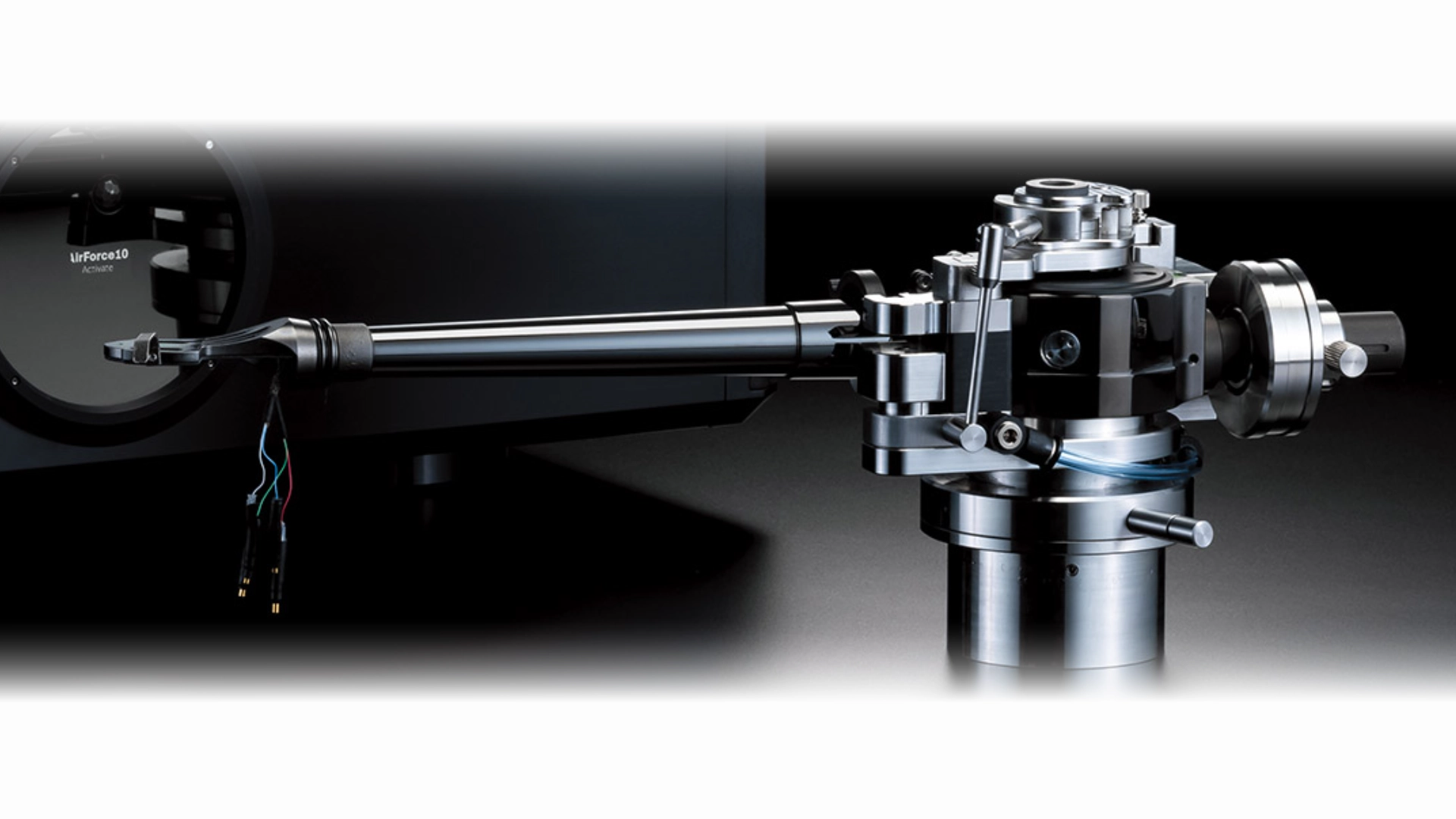
TechDAS is the Japanese analogue brand created in 2010 by Stella Inc. and led by Hideaki Nishikawa, a designer whose career included senior work at the celebrated turntable maker Micro Seiki. The name means “Technical Audio Devices,” and the company’s purpose is unusually focused: to remove mechanical uncertainty from vinyl playback through precision engineering rather than decorative complexity. Its debut Air Force One turntable immediately established that identity at the highest level of the market.
The defining idea is an air-bearing platter. A film of compressed air supports the heavy rotating assembly so the main bearing does not carry it in the conventional way. A vacuum hold-down system draws the record flat against the platter, addressing warps and creating a controlled mechanical interface. Separate pumps, carefully isolated motors and massive chassis structures deal with vibration, speed stability and resonance as parts of one system. The flagship Air Force Zero extends that approach with extreme mass and multiple air-bearing structures.
TechDAS has developed the concept into the Air Force One Premium, III, V and compact Air Force III Premium S, giving different systems access to the same core principles. Tonearms, cartridges and accessories complete the analogue chain, but the turntable remains the centre of the brand. Every model is made in Japan. TechDAS matters because it carries knowledge from Japan’s great direct-drive and air-bearing era into current production, then pushes it with modern machining and control rather than treating vintage engineering as nostalgia.
Thales

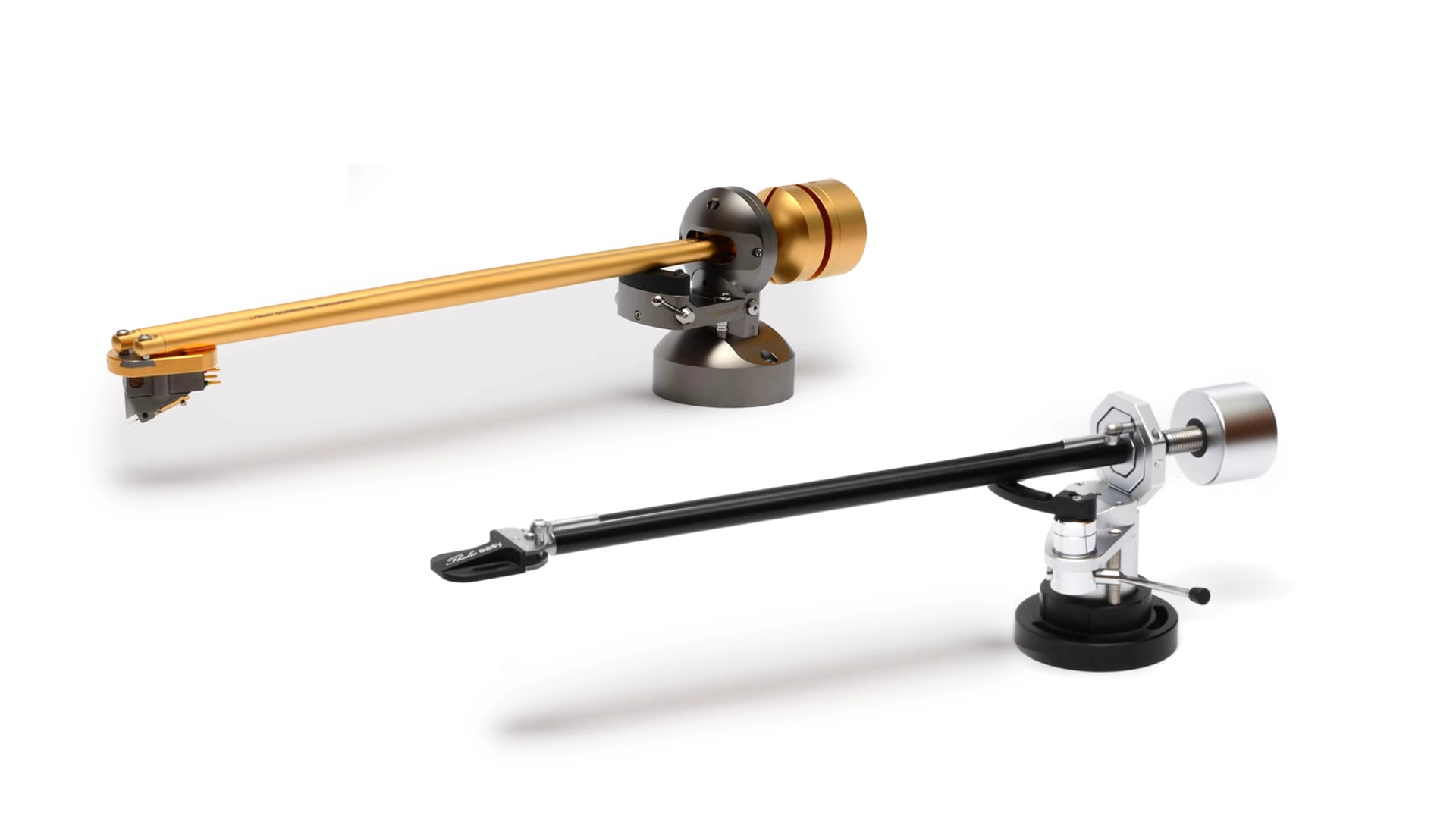
Thales is the Swiss analogue brand built around Micha Huber’s solution to one of vinyl replay’s oldest geometric problems: keeping a cartridge close to tangential alignment without the complexity of a conventional linear-tracking carriage. Huber patented his first Thales tonearm concept in 2004. In 2008 he founded HiFiction AG, the company that develops and manufactures Thales products in Switzerland alongside the EMT cartridge business.
The Thales arm uses two linked arm tubes and carefully calculated pivot geometry. As the stylus moves across the record, the mechanism changes the cartridge angle so lateral tracking error remains extremely small, while the bearings and user operation retain the familiarity of a pivoted tonearm. The current Statement and Simplicity II arms express that principle at different levels. Precise miniature bearings, rigid structures and adjustment parts draw directly on Swiss micromechanical and watchmaking capability.
Complete turntables such as the TTT-Slim II and Reference place the arm in a controlled drive and isolation system rather than treating it as an isolated showpiece. Battery operation, compact direct-drive engineering and carefully separated mechanical paths appear where they serve speed stability and low noise. Thales is not simply a luxury badge attached to familiar analogue hardware. Its identity begins with an original, patented kinematic idea and follows it through machining, setup and complete record players. That makes the brand important even in a field full of elaborate materials: the innovation is visible in the way the stylus actually traces the groove.
The Funk Firm

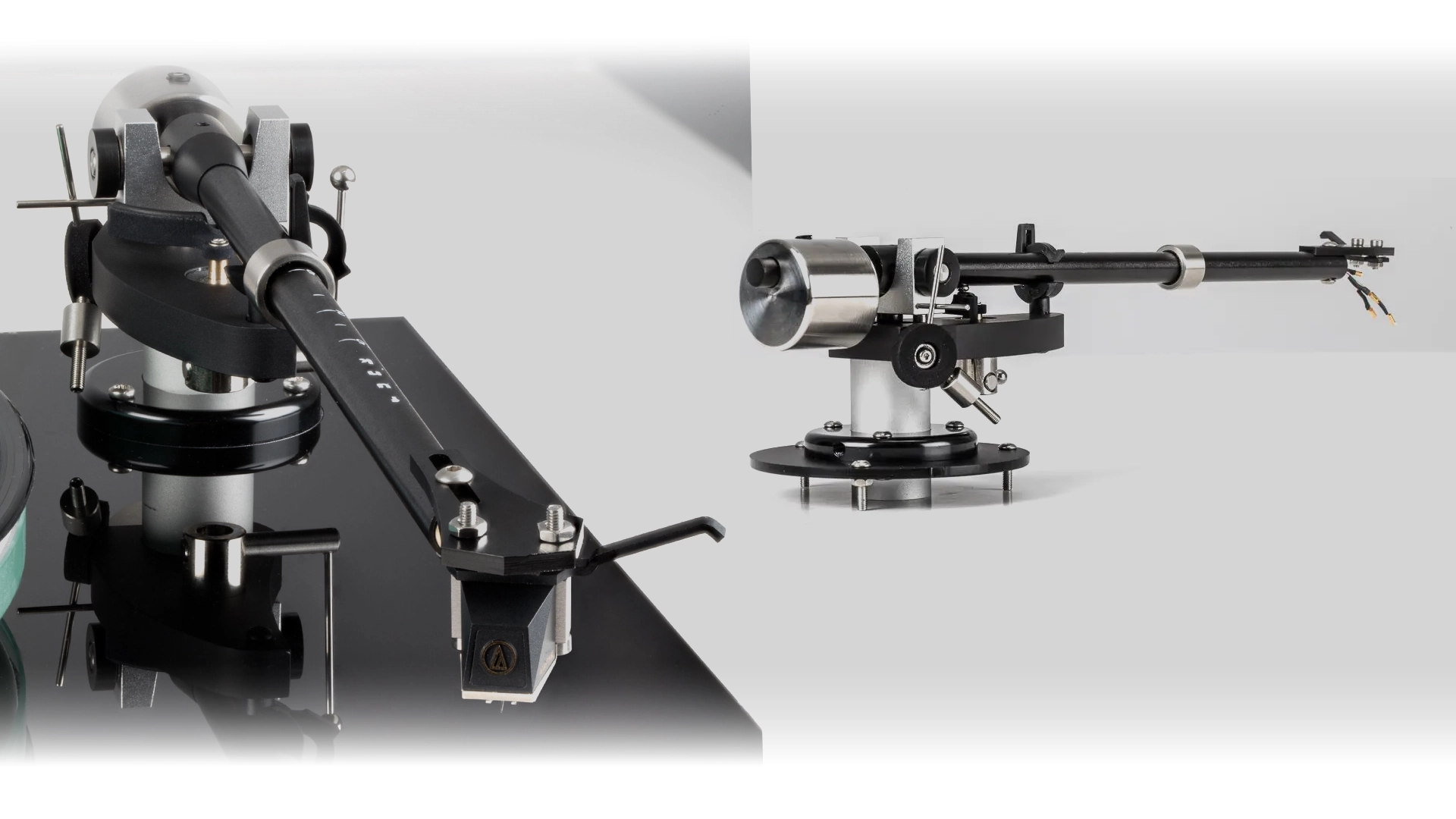
The Funk Firm is the British analogue company founded in 2005 by Arthur Khoubesserian, the engineer behind Pink Triangle. Pink Triangle had challenged turntable convention from 1979 with lightweight structures, acrylic platters and unusual drive thinking. The Funk Firm carried that experimental spirit into a new business, concentrating on the mechanical interfaces that determine how a record, platter, bearing, tonearm and cartridge behave together.
Achromat became the company’s best-known product. Its rigid microcellular structure is designed to support a record while dissipating energy, offering a practical upgrade for many existing turntables. Vector Drive uses multiple pulley contact points to distribute belt force around the platter and reduce the sideways load of a conventional single motor pulley. Funk’s F.X and F.Z tonearms apply stiff, lightweight tubes and controlled bearings, while turntables such as Little Super Deck and Gett! package the ideas at different prices.
The Houdini cartridge decoupler is another characteristic Funk solution. It inserts a carefully controlled articulation between cartridge and arm to reduce unwanted energy transfer, asking users to reconsider an interface normally assumed to require maximum rigidity. Boing feet and Isolation Bubble products extend the same interest to support and suspension. Not every idea is visually dramatic, but each addresses a specific path for vibration or torque. The Funk Firm’s individuality comes from Khoubesserian’s willingness to question analogue rules that have become habits, then turn the answer into products that can improve both Funk decks and machines made by others.
The Wand

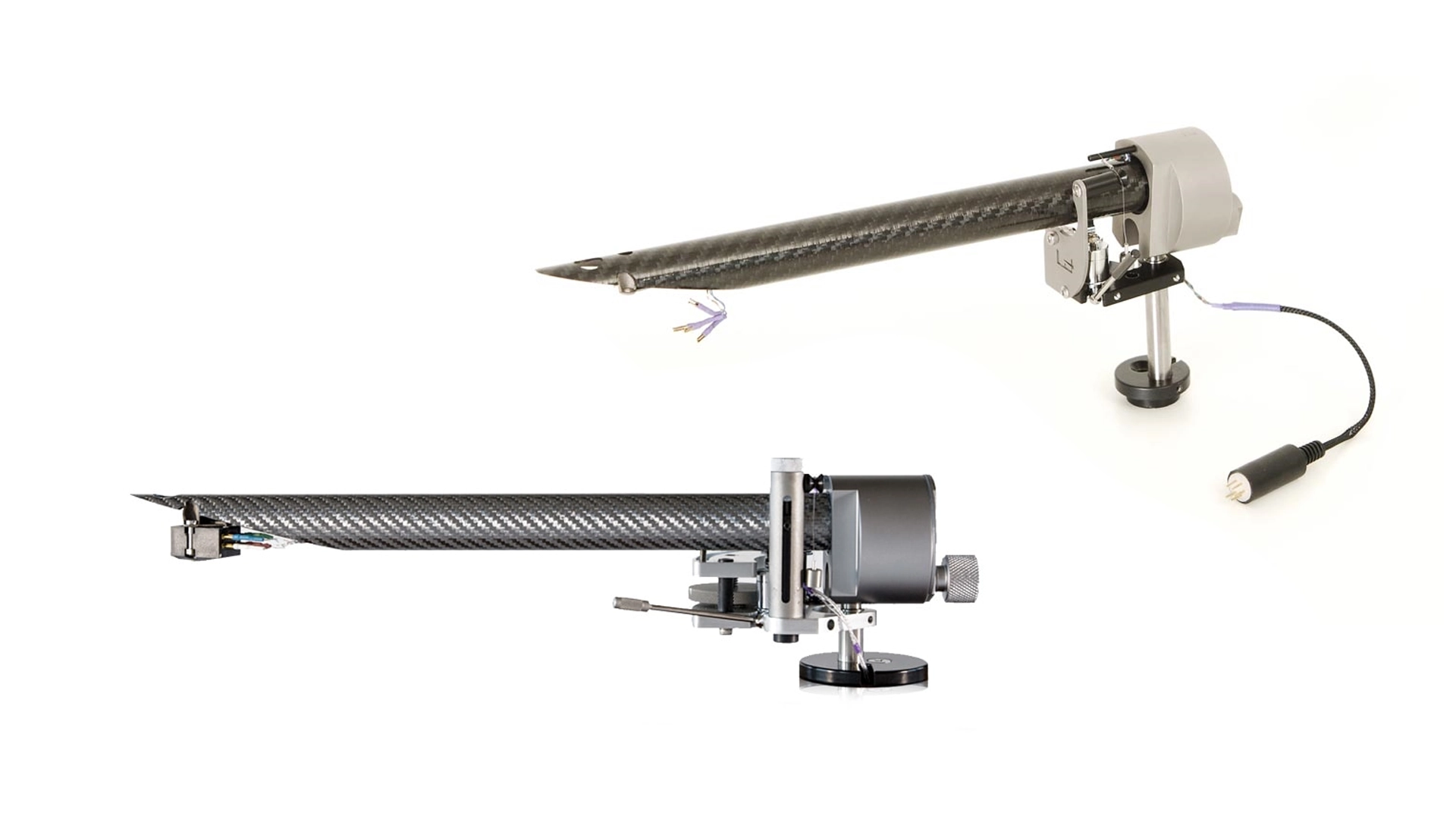
The Wand is the New Zealand tonearm created by engineer Simon Brown through his company Design Build Listen. Introduced in 2011, it rejects the thin arm tube common to many pivoted designs. Its most visible feature is a large-diameter carbon-fibre tube, approximately 24 mm across, chosen to create a stiff and well-damped structure without excessive moving mass. The cartridge, tube and counterweight are arranged as a direct mechanical system with few decorative parts.
At the bearing, The Wand uses a defined-contact unipivot concept intended to combine low friction with more stable location than a freely rocking point bearing. Different generations and levels refine the bearing, wiring, finish and adjustment, while retaining the recognisable one-piece tube. Standard effective lengths include 9.5, 10.3 and 12 inches, making the arm adaptable to a wide range of turntables and cartridge compliances. Design Build Listen has also supplied OEM and special versions, including unusually long arms for specialist decks.
The company later applied the same thinking to its own 14-4 turntable and offers tools and accessories for setup. Brown’s background in professional product engineering is central: modern 3D design, low-volume machining and New Zealand manufacturing are used to make an arm that is simple to understand and maintain. The Wand’s individuality is immediately legible in its proportions, but those proportions are not styling. They are the physical expression of its main argument that tonearm performance begins with controlling structural flex and resonant energy along the complete cartridge-to-bearing path.