
Vinyl Cleaning Machine
A record cleaning machine is an essential tool for any serious vinyl collector, designed to deep-clean LPs far more effectively than a simple brush. These devices use a combination of specially formulated fluids and either a powerful vacuum suction or ultrasonic waves to remove embedded dust, grime, and static from the very bottom of the grooves. The result is clearer sound, reduced noise, and longer life for both your records and your stylus. This page is a directory of manufacturers that produce these vital maintenance systems.
Hi-Fi brands in the category
Summary information and image
Direct links to official websites
Audiorevita

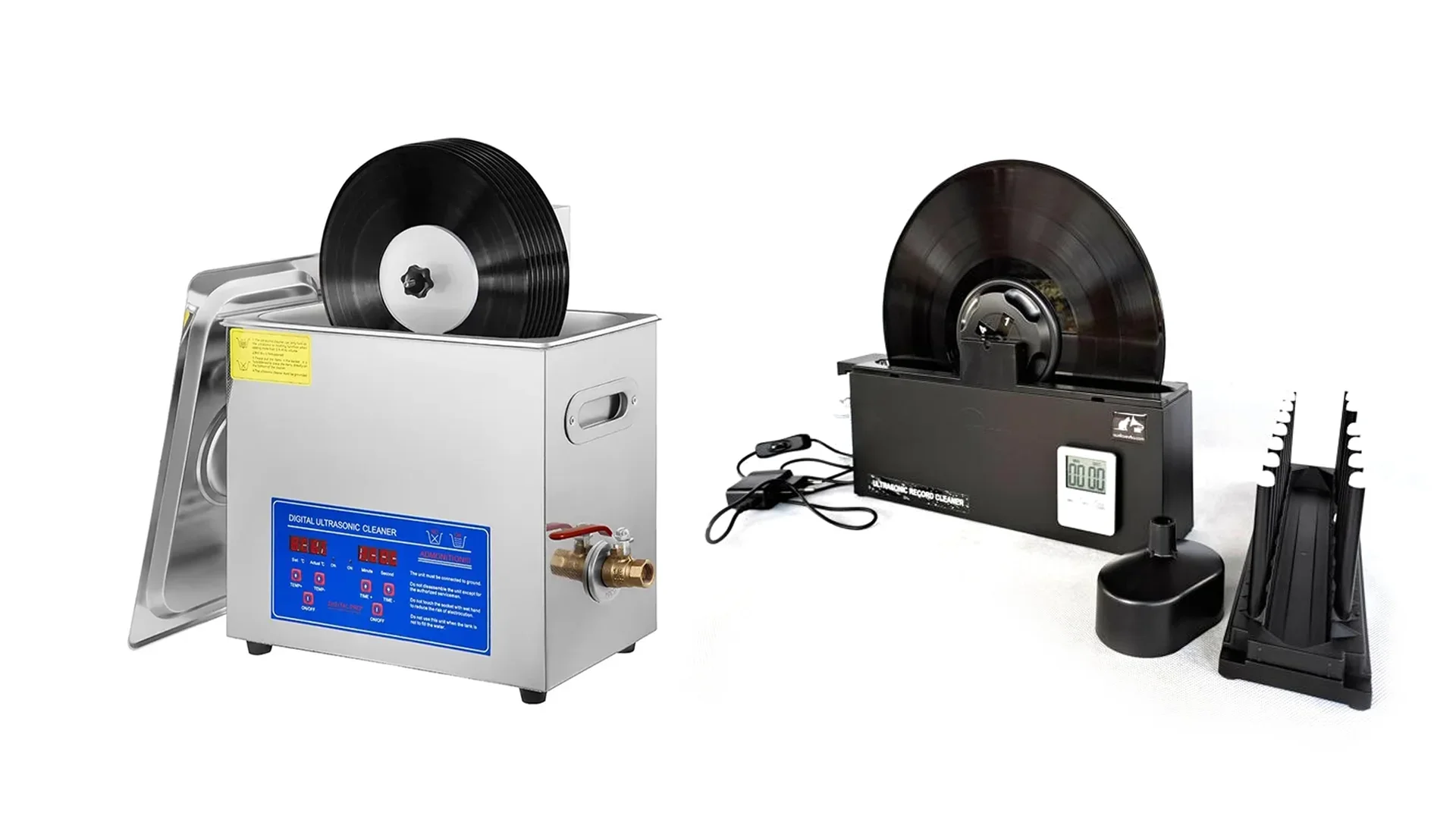
Audiorevita is a small Polish manufacturer of equipment for cleaning vinyl records. Its products combine purpose-built record-rotation modules with ultrasonic cleaning tanks, allowing several LPs to be cleaned in one cycle while their playing surfaces pass through the fluid. The range has included ARC and BRC systems, separate modules, cleaning fluids and practical accessories for rinsing and handling records. Variable-frequency versions address users who want more control over the ultrasonic process, while simpler kits make the method accessible without a fully automated luxury machine. The brand’s work is mechanical record care, not modifications to CD players, DACs or amplifiers. The previous description confused Audiorevita with Ancient Audio and incorrectly attributed it to Ancient Audio founder Jarek Waszczyszyn.
Consonance

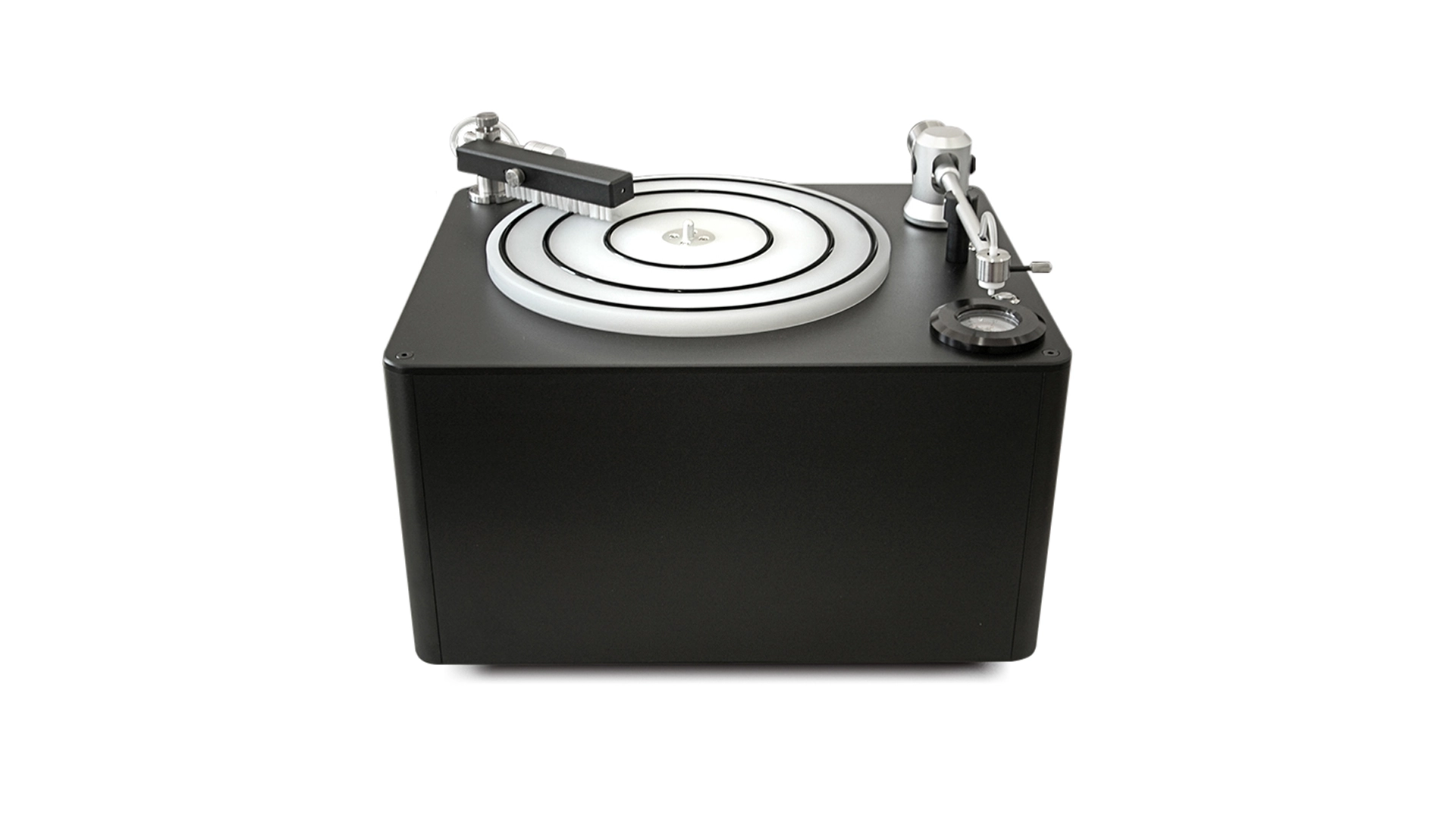
Consonance is the product brand of Opera Audio, one of China’s early internationally distributed high-end audio manufacturers. Opto-mechanical engineer and opera enthusiast Shi Hui Liu founded the Beijing company in 1994 after building a valve amplifier for himself and then being asked to make another. That origin still explains the range: tube and solid-state amplifiers sit alongside CD players, DACs, streamers, loudspeakers, cables and an especially substantial analogue line. Opera became an early Chinese high-end turntable manufacturer, and Consonance decks such as the Droplet, Die Walküre and Wax Engine show a willingness to develop complete mechanisms, plinths and tonearms rather than treat vinyl as a sideline. Many model names reference European opera, but the engineering is not confined to retro styling; the company combines traditional valve circuits with digital sources and modern manufacturing. Its “Simple. Human.” philosophy is a useful summary of the house character: direct circuits, restrained interfaces and a broad, internally designed system intended to serve music rather than specification theatre.
Degritter

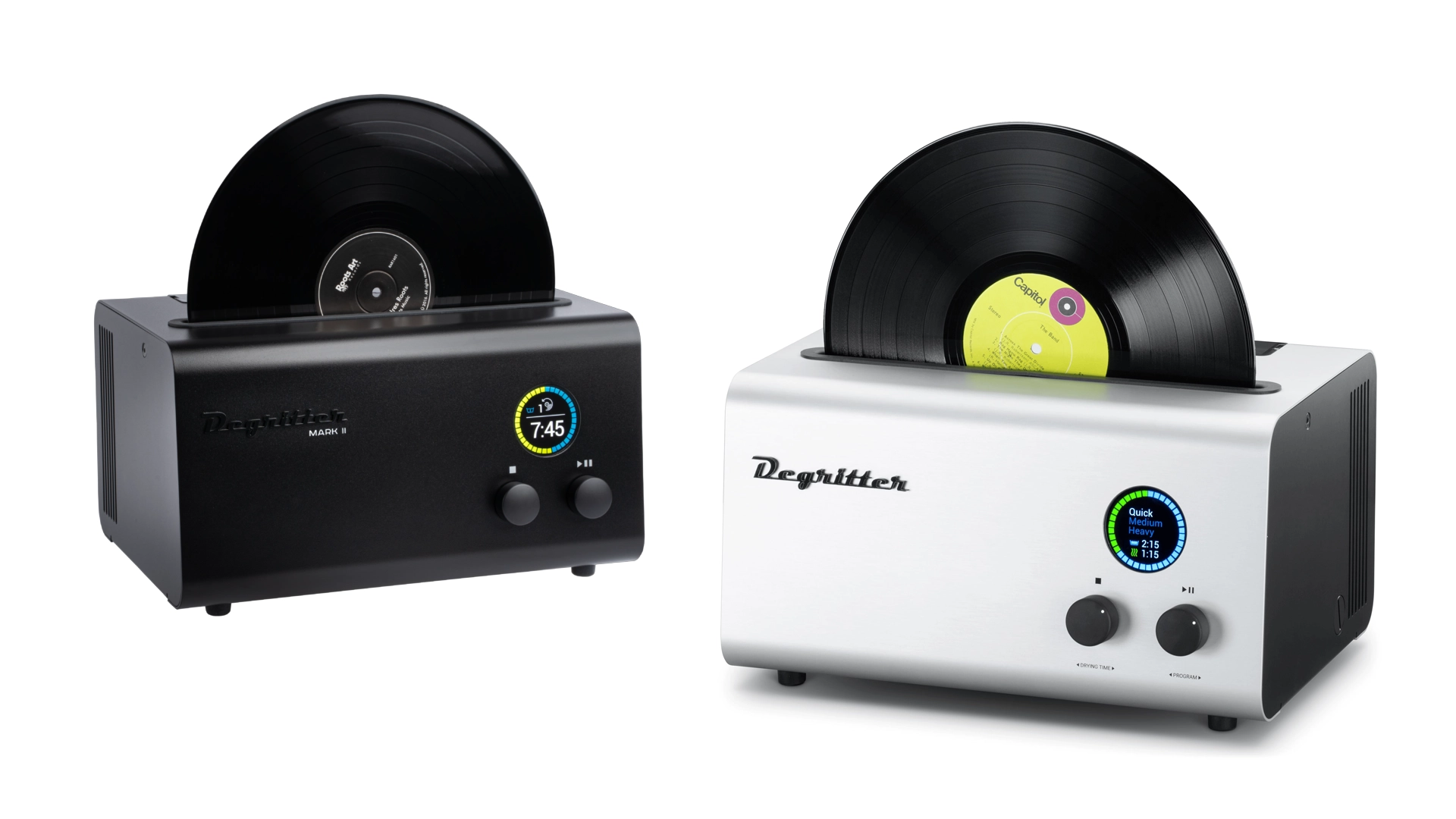
Degritter is an Estonian engineering company founded in Tartu in 2016 to make ultrasonic record cleaning as simple as using a domestic appliance. Its machine cleans the groove without brushes touching the playing surfaces: four transducers arranged on both sides of a purpose-built tank generate 120 kHz cavitation while the record rotates through the water. The higher frequency produces smaller bubbles than many industrial ultrasonic baths, distributing cleaning energy more evenly across fine groove geometry. After the wash cycle, filtered air dries the record automatically. A removable water tank, replaceable fluid filter, active temperature management and selectable programmes make repeated collection maintenance practical rather than a laboratory routine. The Degritter Mark II refined the original machine’s ultrasonic control and remains the core full-size model, supported by cleaning fluid and consumable filters. Degritter’s real achievement is systems integration: transducer placement, fluid circulation, filtration, record handling, temperature protection and drying are engineered as one automated process, avoiding the exposed tanks and manual rotation commonly associated with adapted ultrasonic cleaners.
HumminGuru

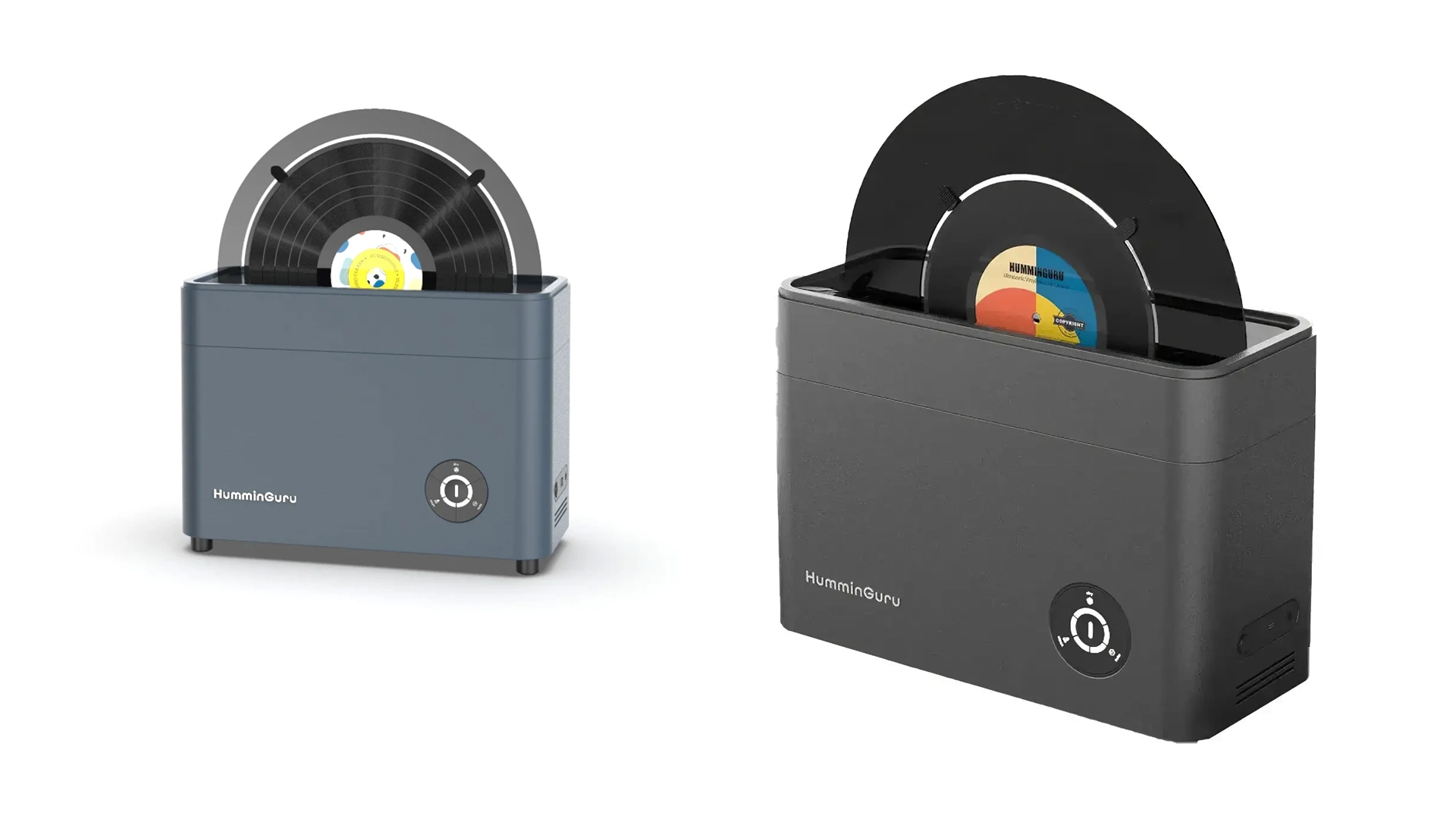
HumminGuru is a Hong Kong vinyl-care specialist that made automated ultrasonic record cleaning compact enough for an ordinary listening room. Established in 2020, the brand became known for an all-in-one machine that rotates a record through an ultrasonic bath and then dries it in the same chassis, avoiding the footprint and manual handling associated with many professional systems. The original cleaner and the more advanced NOVA use replaceable filtration and purpose-designed water management, with adapters available for 7- and 10-inch records as well as standard LPs. HumminGuru has since built a broader maintenance system around that core idea: the EZ washer offers a simpler wet-cleaning route, Orbit removes static charge, S-DUO combines stylus cleaning with tracking-force measurement, and the company supplies sleeves, filters and cleaning accessories. Its real achievement is practical engineering—turning specialist record conservation tasks into repeatable routines for collectors.
Kirmuss Audio

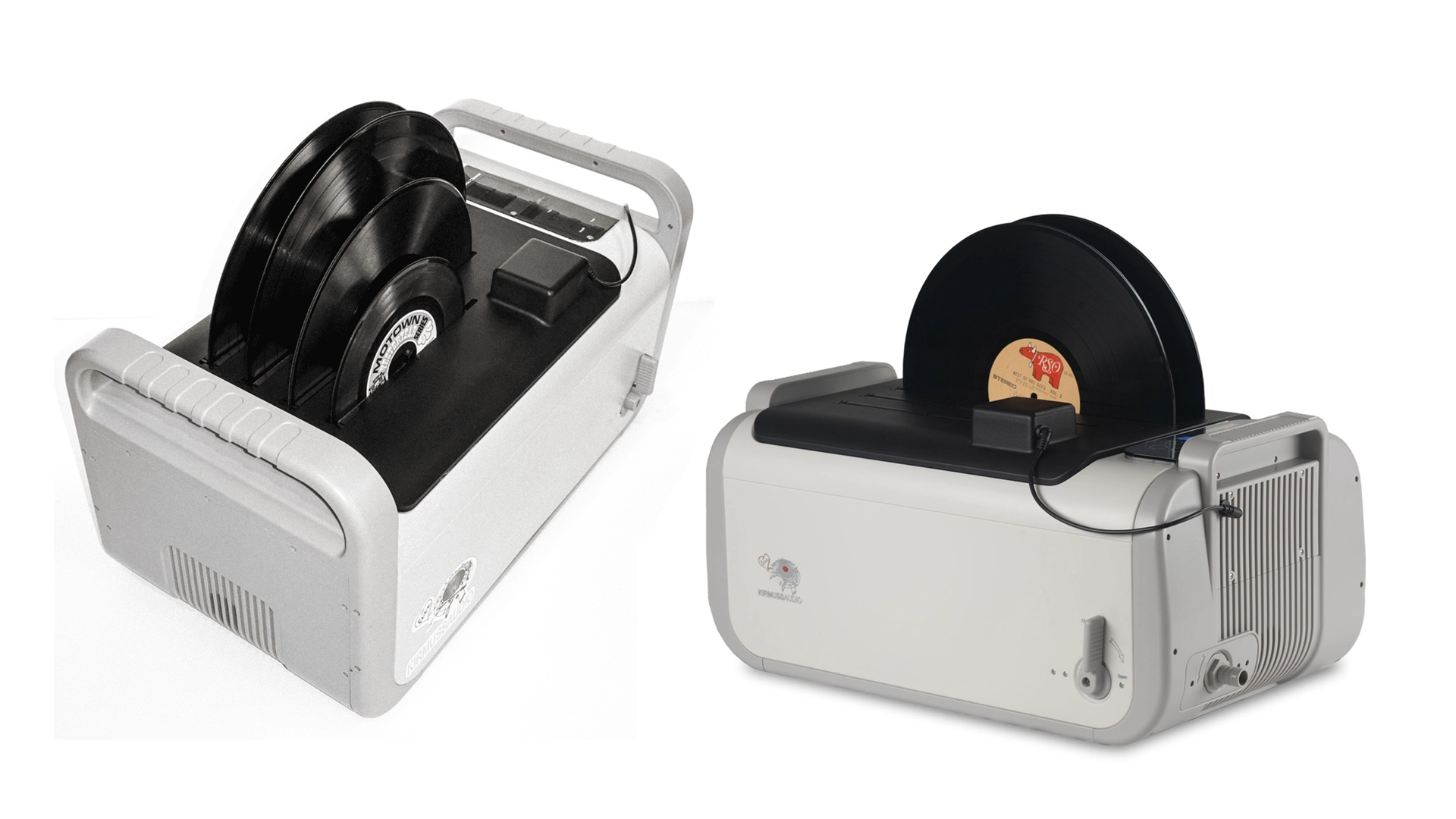
Kirmuss Audio is an American record-care specialist founded by Charles Kirmuss and launched publicly with the KA-RC-1 restoration system in 2017. Its approach differs from a one-button ultrasonic wash. The machine uses controlled ultrasonic cavitation to process as many as four records at once, while the prescribed restoration method alternates bath cycles with manual application and brushing of a surfactant on the groove surface. The repeated steps are intended to remove residues that a short cleaning cycle may leave behind and to show when contamination is still being released. Because the process is hands-on, buyers should understand it as a restoration workflow rather than a fully automatic washer with an integrated final drying programme. Adaptors accommodate several record diameters, and replaceable fluid handling parts support repeated collection use. Kirmuss has since added selected analogue accessories, but the KA-RC-1 and the method built around it remain the reason the name is known among archivists, dealers and listeners maintaining older vinyl.
Klaudio

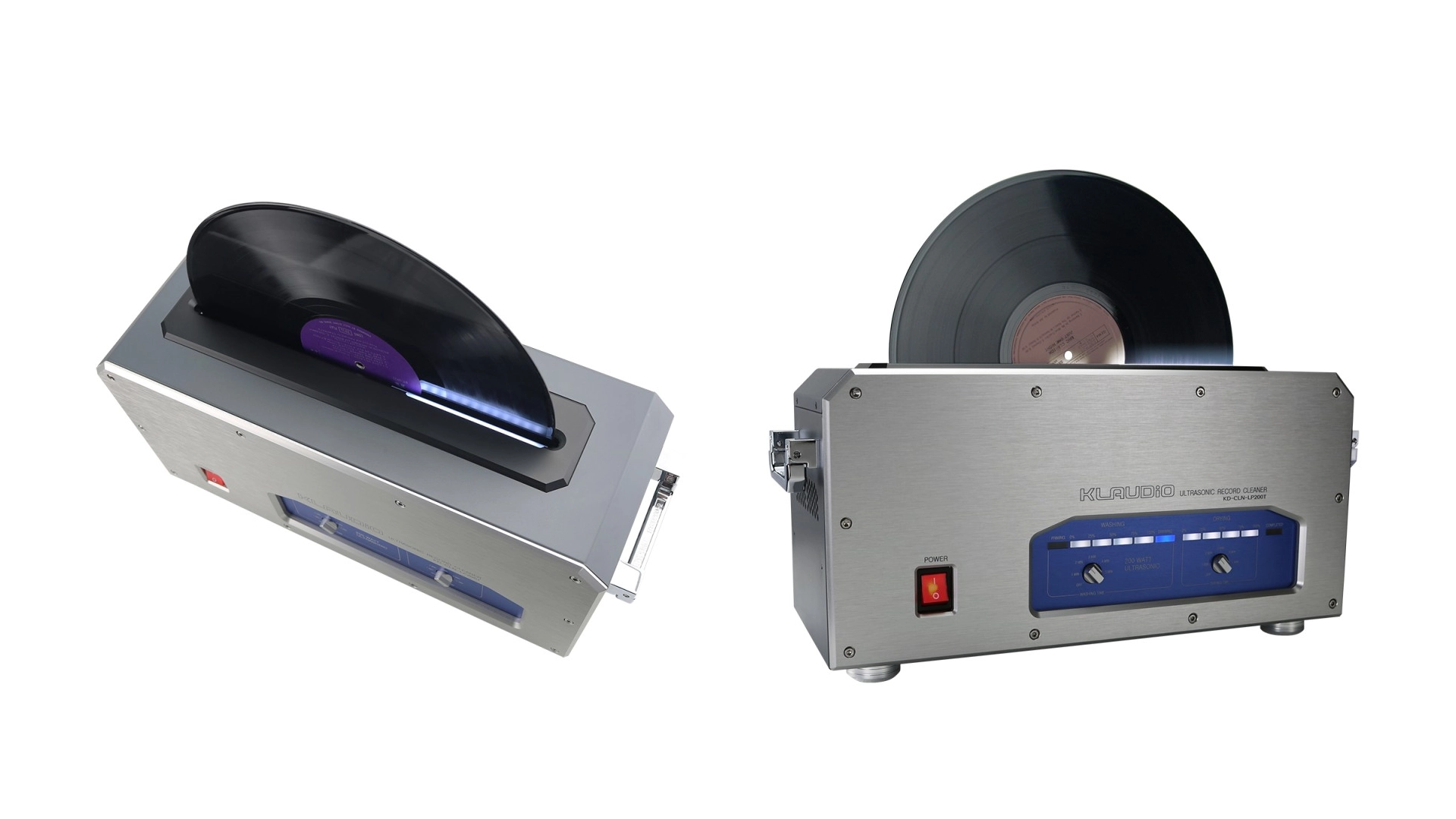
Klaudio is an American analogue-audio brand founded in 2013 from the engineering resources of Koolance, a company experienced in liquid cooling and fluid-control systems. Its first product translated that background into a fully automatic ultrasonic record cleaner: the disc is lowered into a filtered water bath, cleaned without brushes touching the groove and then dried by controlled airflow. That hands-off cycle established Klaudio among collectors who wanted repeatable cleaning without mixing proprietary detergents. The catalogue has since expanded well beyond record care. Magnezar turntables use direct-drive motors and magnetically levitated platters to reduce bearing contact, while Klaudio’s pivoting tangential tonearms use active control to keep tracking geometry close to a true tangential path without a long linear rail. Some systems also automate record clamping and setup functions. The common thread is practical mechatronics—motors, sensors, fluid handling and control electronics—applied to vinyl playback rather than traditional turntable craft alone.
Myllo Vinyllo
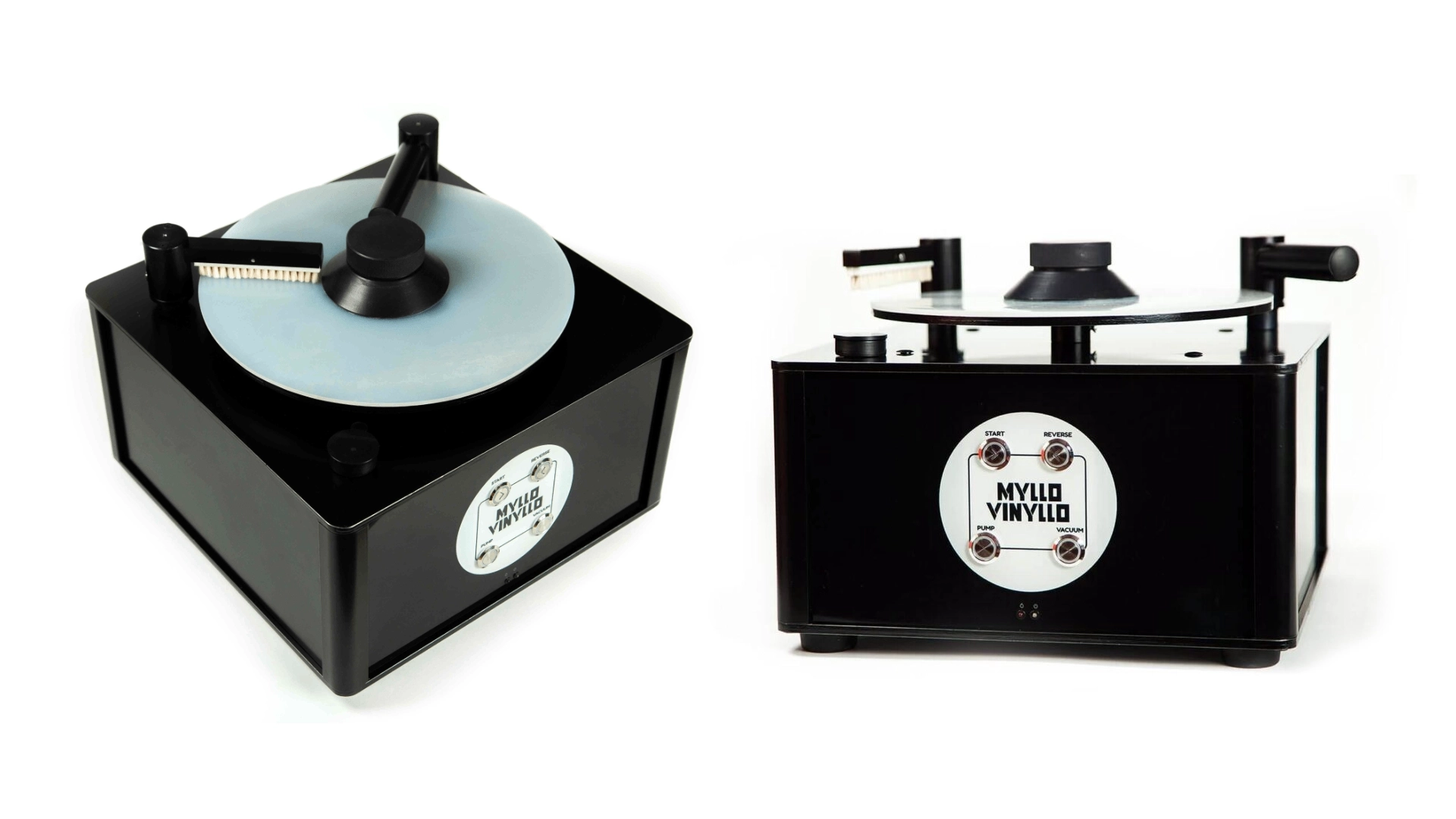
Myllo Vinyllo is a Ukrainian manufacturer of vacuum record-cleaning machines and vinyl-care products based in Kryvyi Rih. Development and prototyping began in 2016, and commercial production in Ukraine started in 2019. The central product is not a record weight or generic turntable accessory, as some descriptions suggest, but a purpose-built wet-cleaning machine designed to remove contamination from both the record surface and its grooves. The machine meters cleaning fluid from an internal reservoir, spreads and agitates it with a double goat-hair antistatic brush, then removes the liquid and suspended dirt by vacuum suction into a waste tank. Automatic fluid delivery reduces handling and makes repeated cleaning more consistent, while metal moving parts, overheat protection and overfill protection address long-term workshop or collection use. The company also supplies cleaning fluids, brushes, replacement parts, care kits and a record-cleaning service. Units are assembled by hand and undergo double testing. Myllo Vinyllo’s real value is practical and local: a maintainable Ukrainian alternative to imported vacuum machines, developed for collectors who clean many records rather than an ornamental accessory marketed through vague sonic promises.
Okki Nokki

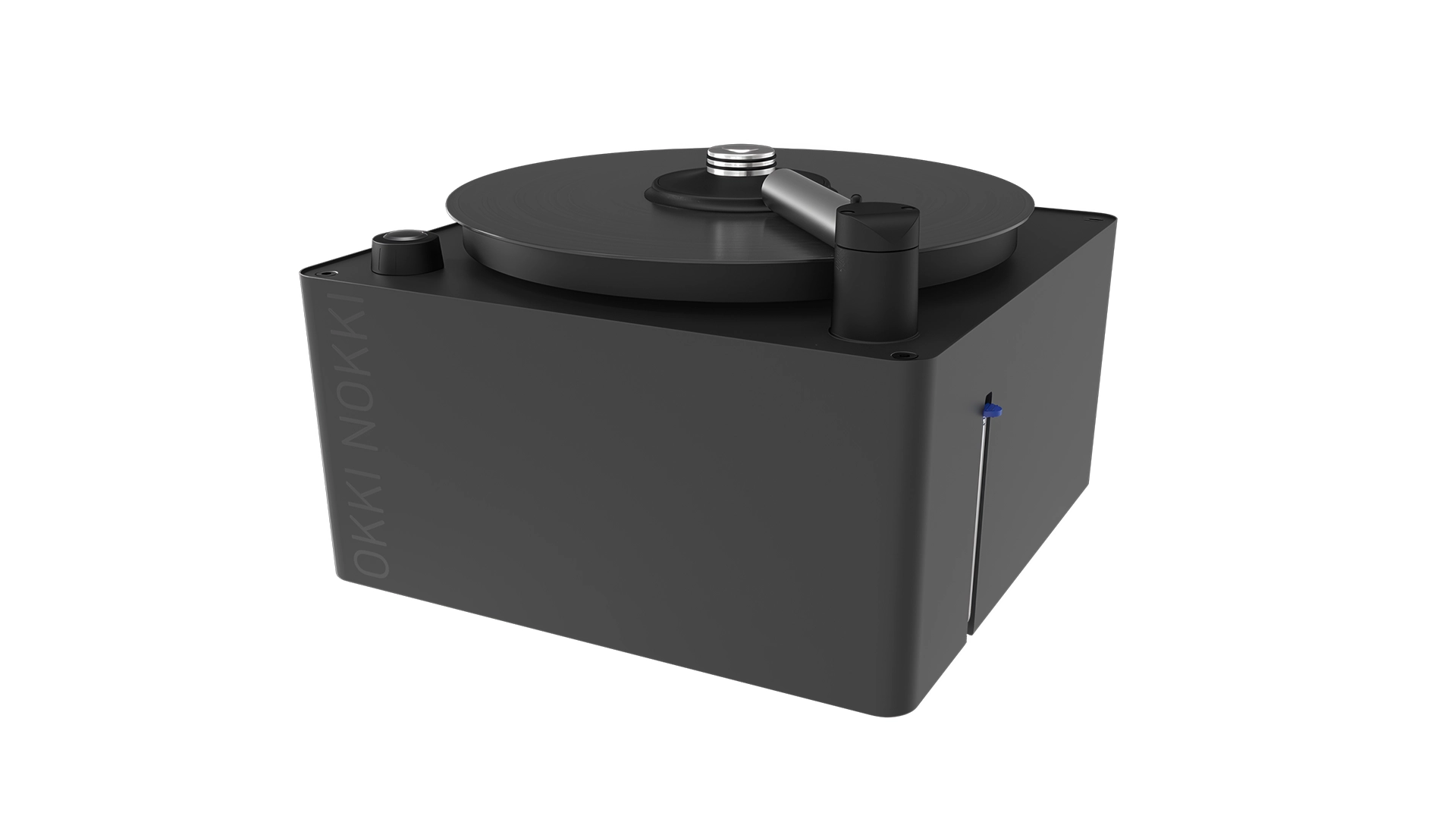
Okki Nokki is the Dutch specialist that made vacuum record cleaning straightforward and comparatively affordable. Johan Bezem designed the first Okki Nokki machine in 1997, not 2005, and the product became an international fixture because it concentrated on the essential wet-cleaning sequence: apply fluid, work it into the groove, then vacuum the contaminated liquid away instead of letting it dry back onto the record. The current Okki Nokki ONE refines that idea into a compact, largely self-contained machine. A full-size platter supports a 12-inch record, an included smaller platter handles 7-inch discs, and the motor turns in both directions so the supplied brush can work the groove from either side. A single suction arm accommodates 12-, 10- and 7-inch records without separate arm tubes, while a label-cover clamp protects the centre area from cleaning fluid. The vacuum system is designed for low operating noise, and an internal reservoir with a level indicator contains the extracted liquid. Replacement velvet strips, brushes and concentrate keep the machine serviceable rather than disposable. Okki Nokki’s importance is not a catalogue crowded with unrelated accessories; it is the evolution of one durable appliance that brought repeatable wet-and-vacuum cleaning into ordinary vinyl systems.
Pro-Ject

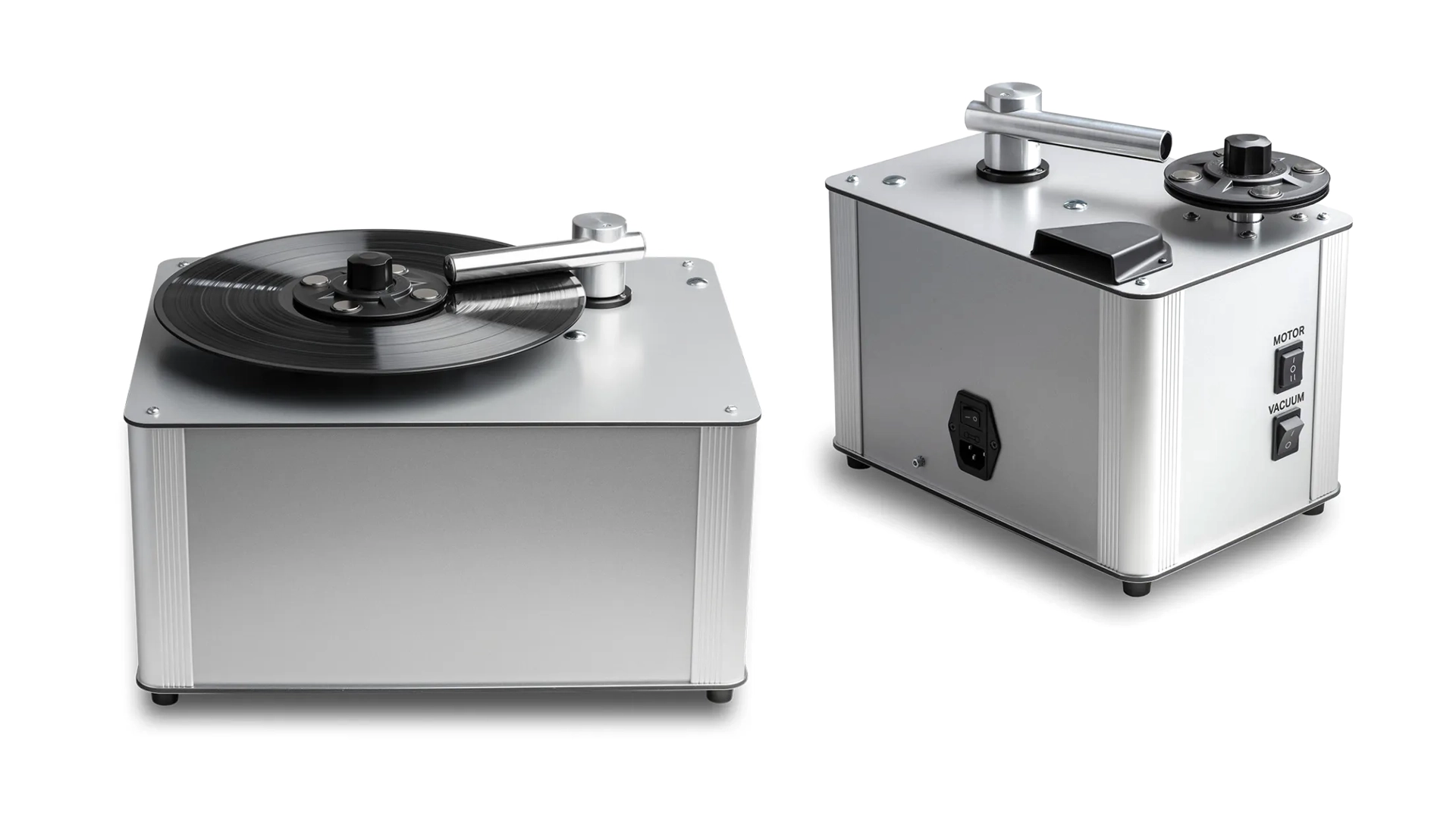
Pro-Ject Audio Systems was founded in Austria in 1991 by Heinz Lichtenegger, at a moment when the audio industry was treating the compact disc as vinyl’s replacement. Lichtenegger’s counterargument was the Pro-Ject 1: a simple belt-drive turntable built around the parts necessary for stable speed and accurate tracking, without automatic mechanisms or cosmetic complexity. The strategy proved prescient, and the Debut, introduced in 1999, became the model that brought the company to a much wider generation of record listeners. Pro-Ject now covers almost every scale of manual turntable. E and T families address first systems; Debut remains the recognisable centre; X, RPM and Xtension add more elaborate plinths, bearings, platters and tonearms; and Signature represents the flagship engineering. Many decks are assembled by hand in the Czech Republic, preserving production skills from the region’s long record-player history. The company also makes phono stages, speed controls, cartridges, record-cleaning machines and accessories, so a turntable can be upgraded rather than discarded. Box Design electronics—compact phono stages, amplifiers, DACs, streamers and CD transports—are largely produced in Slovakia and extend the same space-efficient philosophy beyond vinyl. Artist Collection editions use visual collaborations and licensed themes, but beneath the artwork they remain functional Pro-Ject platforms. The brand’s significance is not simply that it sells many turntables: it maintained European manual-turntable production through the digital era and built a clear path from an inexpensive first deck to genuinely ambitious analogue systems.
Rekkord Audio

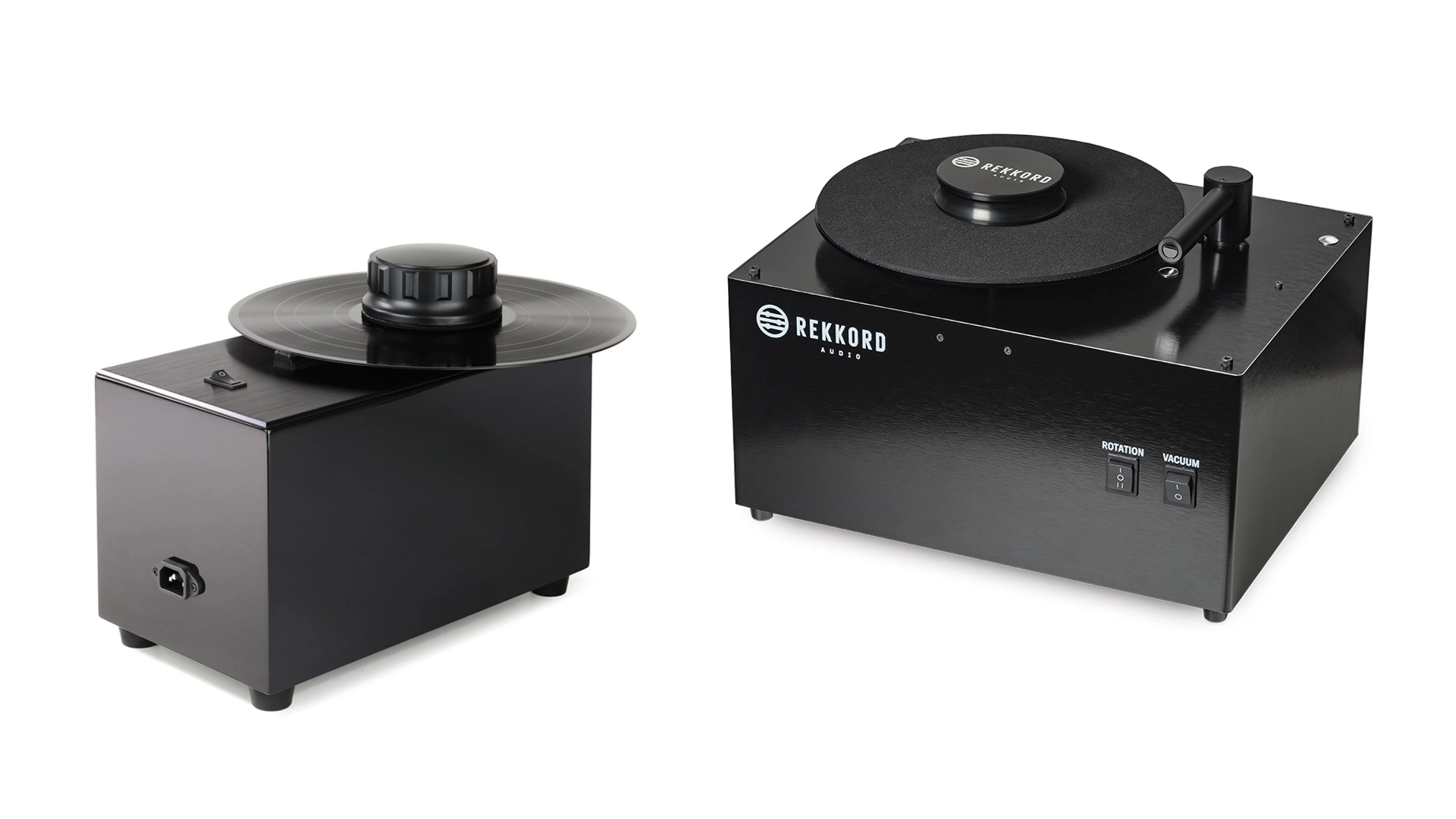
REKKORD Audio makes turntables by hand in St. Georgen in Germany’s Black Forest, a town associated with record-player manufacture since the Steidinger brothers’ factory opened in 1907. The modern brand draws on workshop know-how that continued after the original Dual organisation changed hands. It is now associated with Heinz Lichtenegger, founder of Pro-Ject, but keeps its German factory and particular strength in automatic mechanisms. F100, F110 and F300 are fully automatic designs: one control starts the platter, places the arm and returns it at the end, enabling vinyl playback without manual cueing. Model-dependent versions add a phono stage or pre-fitted cartridge. F400 advances the automatic platform with a more elaborate sub-chassis and tonearm. M500 and M600 are manual models for listeners who prefer direct control; M600 adds a heavier chassis and premium tonearm and cartridge options. Springs, levers, bearings and linkages are individually assembled and adjusted rather than replaced by a generic plastic mechanism. Suspended sub-chassis construction on selected models isolates platter and arm from the outer plinth, useful on furniture susceptible to footfall. The old description placed REKKORD only at entry and mid level and omitted the manual line. Its more accurate identity is broader: one of the few current European makers maintaining genuine automatic turntable manufacture while applying the same workshop to serious manual decks. A launch year remains blank because its corporate continuity is more complex than the 1907 heritage it inherits.
Spinclean
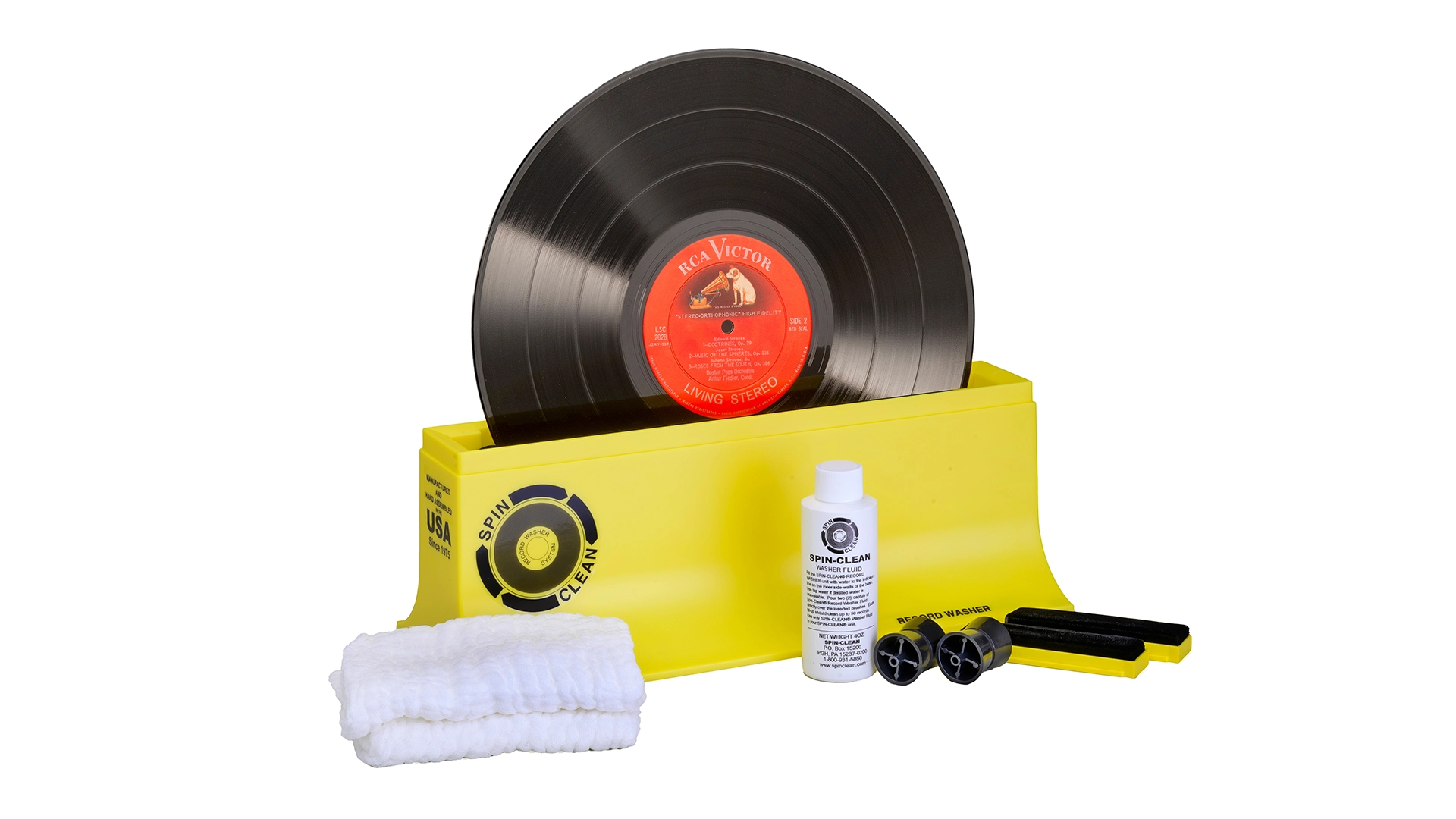
Spin-Clean made record washing a simple manual process that does not require a turntable, vacuum pump or mains power. The product began in Chicago around 1974 as Fidelitone’s “Spin ’n Clean”. When Fidelitone decided to discontinue it, Pittsburgh record retailer Paul C. Mawhinney—whose Record-Rama shop had sold the washer successfully through demonstrations—bought the design and began manufacturing it in 1975 under the Spin-Clean name. His son Mark Mawhinney later took over the business and relaunched an extensively revised Record Washer System in 2010. The principle remains recognisable: a record is rotated by hand through a bath while paired brushes clean both sides at once. Spin-Clean’s alcohol-free fluid is formulated to loosen contamination and carry it to the bottom of the bright yellow basin, away from the grooves. Preset brush pressure keeps operation straightforward, while different rollers accommodate LPs, 45s and 78s. The current range centres on Record Washer MKII packages, with replacement brushes, rollers, drying cloths and cleaning fluid available separately. This is important for a product meant to be used repeatedly rather than discarded when consumables wear out. Spin-Clean is still manufactured and hand-assembled in the United States. Its lasting appeal is not technological theatre but accessibility: collectors can deep-clean both groove walls, reduce dust carried to the stylus and maintain an entire record library with a compact device whose method is visible and easy to understand.
Tonar
Tonar is a Dutch vinyl specialist founded in 1954 by Wilf Libgott, a Canadian pilot for KLM who used his travel between Europe, America and Japan to build an unusual supply network. The company began as an OEM supplier of synthetic-sapphire products, including precision bearings and replacement styli. That origin explains its lasting strength: Tonar understands the small, easily overlooked parts that keep record players working long after the original manufacturer has disappeared.
Its catalogue includes thousands of replacement styli for cartridges from many eras, along with complete moving-magnet cartridges, headshells, belts, idler wheels and setup accessories. Tonar also serves record care through brushes, sleeves, mats and cleaning products such as the familiar Knosti-style wet-cleaning systems it distributes. For owners of vintage turntables, the ability to identify a stylus by cartridge, shape and application is often more valuable than another fashionable new component.
Tonar’s role is broader than manufacturing every item under one roof: it sources, specifies and distributes specialist analogue parts internationally. That distinction matters because the brand’s real know-how lies in continuity, compatibility and inventory. A replacement stylus must have the correct mechanical fit and operating behaviour, not merely a similar plastic grip. After more than seven decades, Tonar remains a practical bridge between the mass-market cartridges of the LP era and today’s vinyl revival. Few audio companies have supported so many different record players through such modest but essential components.
VPI Industries
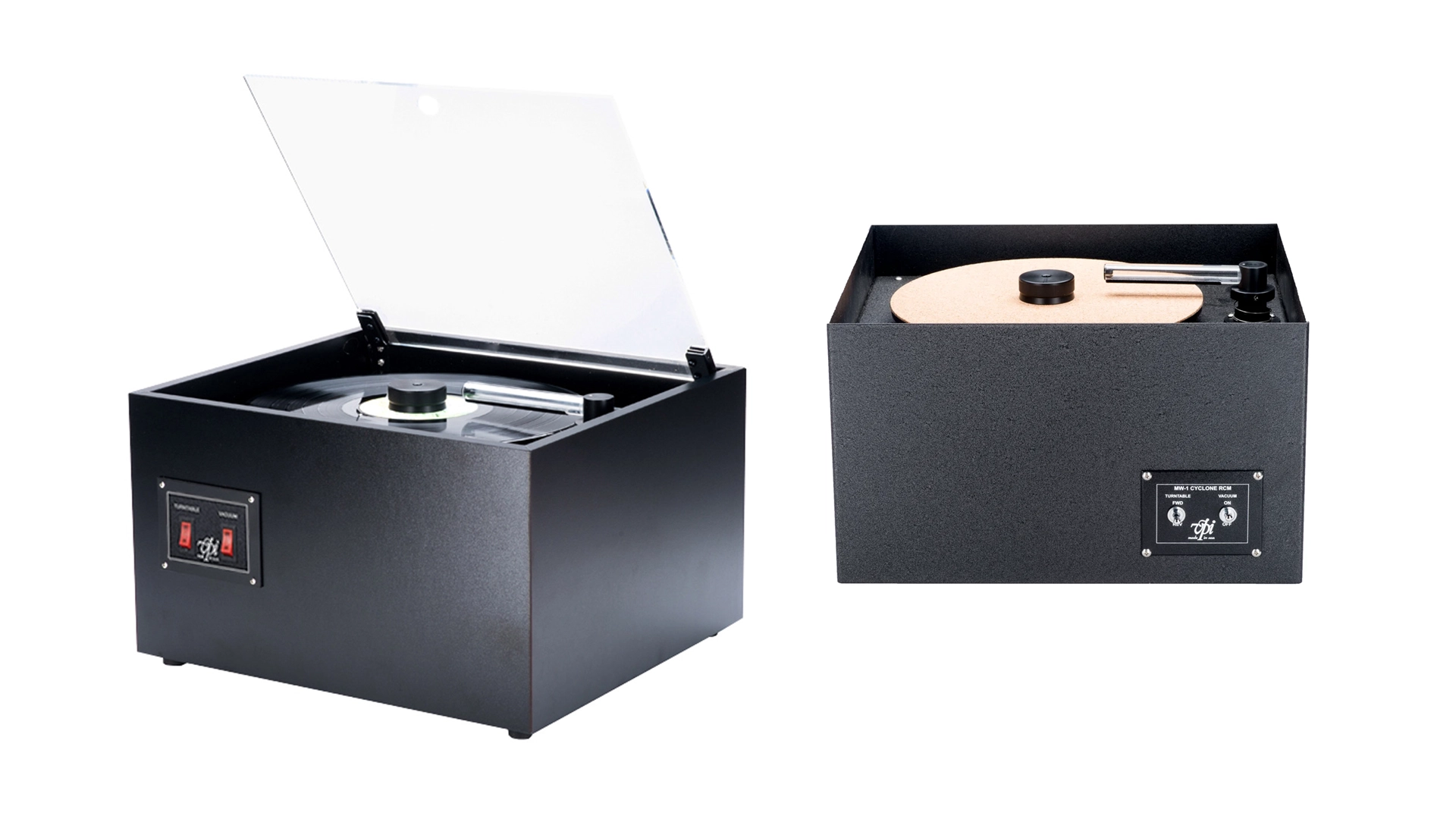
VPI Industries is an American family company whose history joins two parts of vinyl replay that are often treated separately: cleaning the record and playing it accurately. Harry and Sheila Weisfeld founded VPI in 1978, beginning with a practical record-cleaning machine before moving into turntables, tonearms and accessories. The HW-16.5 vacuum cleaner became a long-lived reference, while the HW-19 turntable established VPI as a serious analogue manufacturer. Later generations produced the Scout, Classic, Prime and Avenger families, ranging from approachable high-performance decks to modular reference platforms. VPI became especially associated with JMW unipivot tonearms, whose single-point bearing allows low-friction movement and easy exchange of complete arm wands; the company now also offers gimbal-bearing arms for listeners who prefer their different handling and stability. Heavy platters, substantial bearings, outboard motors and upgradeable construction recur throughout the range, but are applied according to the scale and purpose of each model rather than as a fixed recipe. Current flagships include the direct-drive Titan alongside belt-driven Avenger configurations. After Sheila’s death, their son Mat Weisfeld took a leading role and has kept production, service and much component machining in New Jersey. That continuity matters: VPI turntables are designed as products owners can maintain, modify and keep for decades, supported by a company whose record-cleaning machines, arms and decks grew from the same hands-on knowledge of vinyl.
Watsons

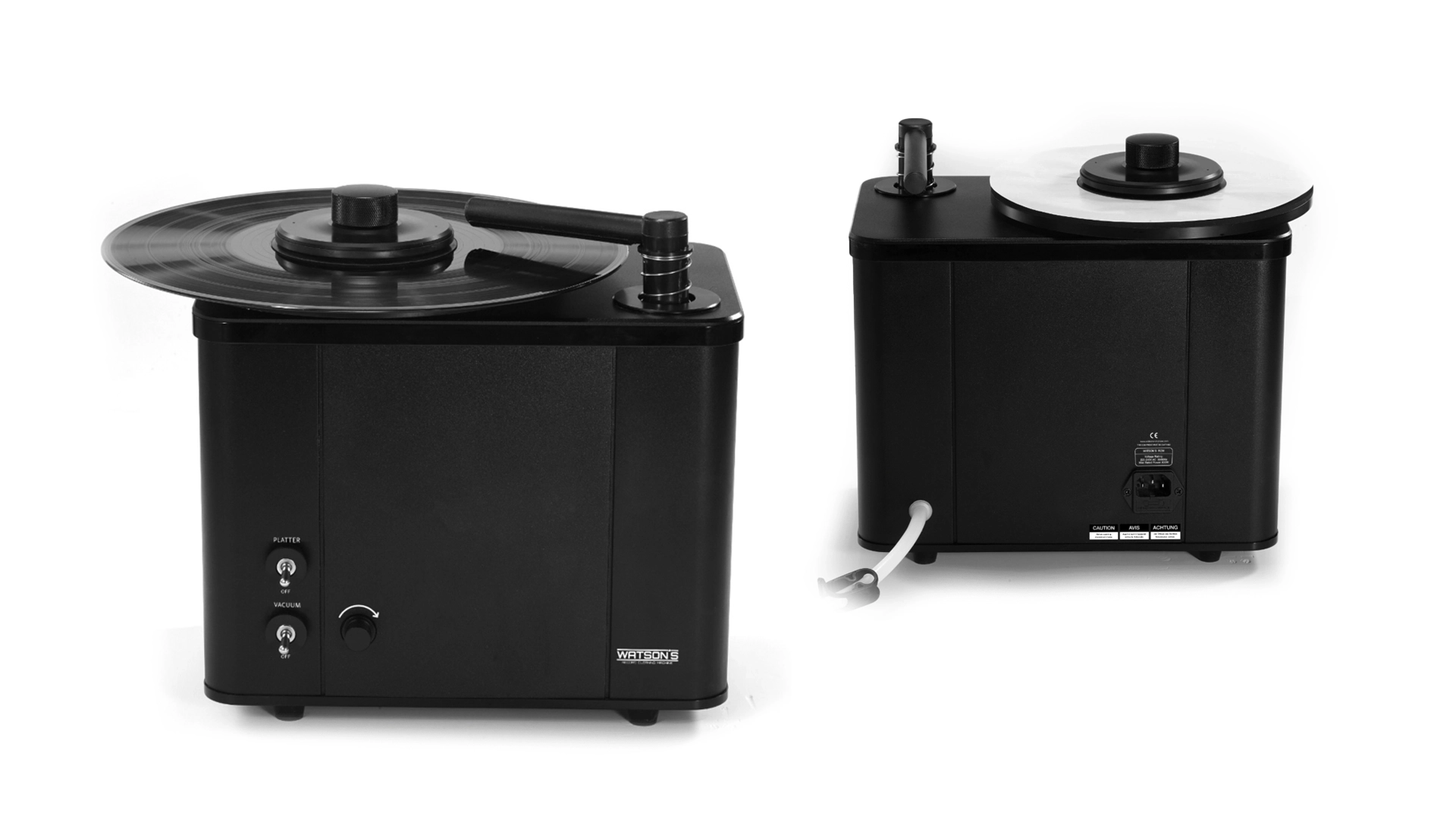
Watson’s VinylCare is a Dutch specialist built around a single purpose-designed vacuum record-cleaning machine. The product appeared in the mid-2010s and received its first documented CE marking in 2017, but available primary material does not establish an exact company-founding year, so the date field is left open. Its machine deliberately keeps the cleaning process visible and under the user’s control. A record is secured by a threaded clamp that also protects the label, then rotated while fluid is spread manually with a brush. The platter is smaller than the record, so the freshly cleaned groove surface does not lie back on a contaminated mat. After scrubbing, a separate vacuum arm removes fluid and suspended debris; Watson’s says a properly adjusted record is dry after only a few rotations. Reverse rotation helps the brush work both groove directions, while adjustable suction lets the user balance drying speed and contact. A 12-inch vacuum arm is standard, with optional arms for 7- and 10-inch records, and the felt strips that touch the disc are replaceable. The aluminium chassis, serviceable waste-fluid container and availability of consumable parts give the machine the character of a durable workshop tool rather than a sealed appliance. Watson’s does not claim an exotic automatic chemistry or ultrasonic cycle. Its strength is a carefully resolved version of traditional wet-and-vacuum cleaning: protect the label, keep clean surfaces apart, remove the dirty fluid completely and make every wear item easy to replace.