Cinema Speakers

Commercial cinema speakers are specialized systems engineered to meet the stringent standards of professional movie theaters. Designed for high-impact playback in large auditoriums, this category includes large screen-channel speakers (often placed behind the screen), high-output subwoofers, and extensive surround speaker arrays. These systems are built for reliability and to achieve industry certifications like THX. This guide lists the manufacturers who build these industry-standard theatrical sound systems.

14

Hi-Fi brands in the category

Summary information and image

Direct links to official websites

Filters
Search
Country
See more See less

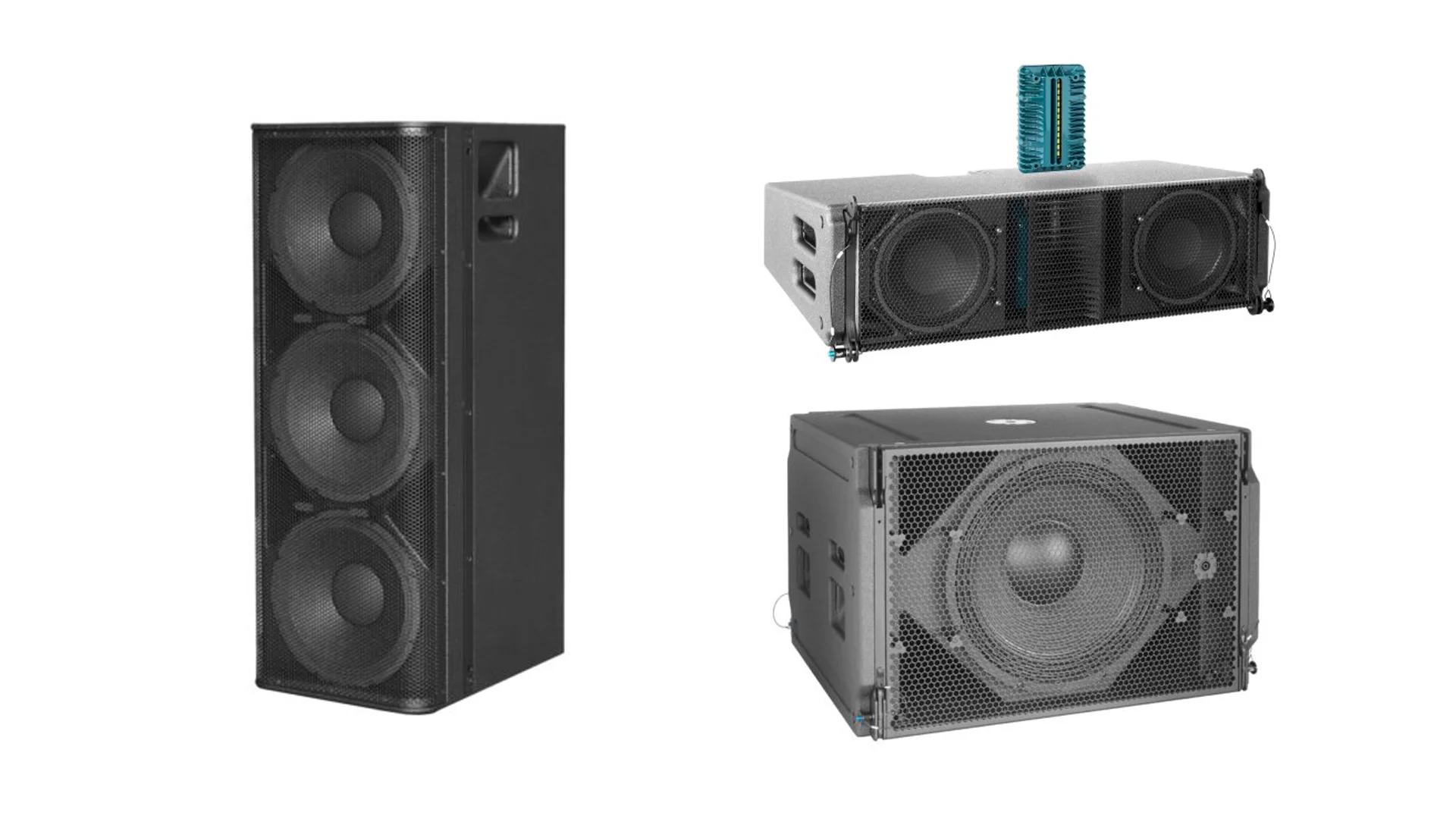
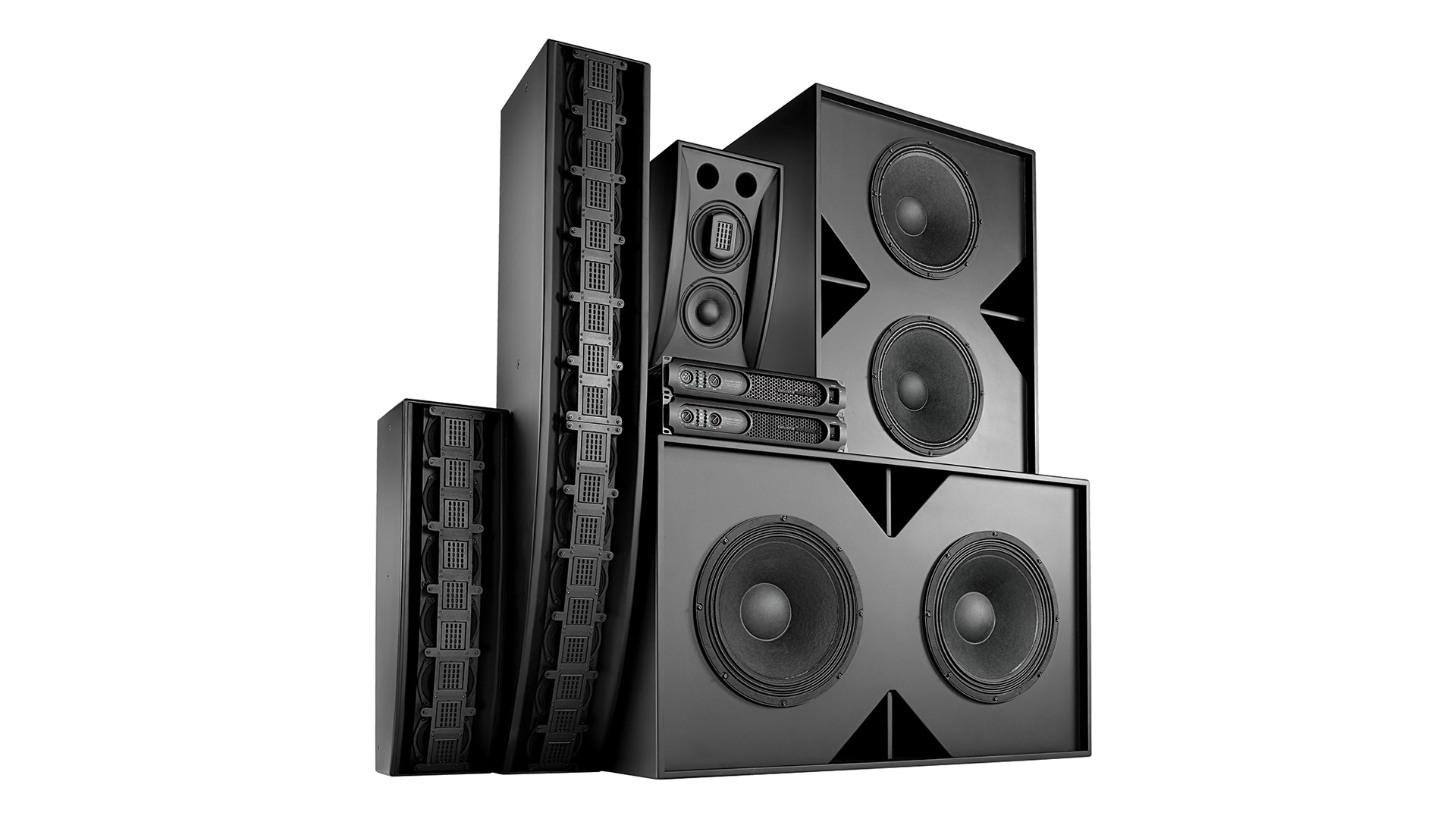
Alcons Audio develops pro-ribbon loudspeaker systems for sound reinforcement, cinemas and demanding residential theatres. Founded in the Netherlands in 2002 by Tom Back, the company pairs his professional-audio background with ribbon-transducer development led by Philip de Haan. Its ribbons are engineered for professional output levels, rather than simply transplanting a domestic hi-fi tweeter into a PA cabinet. The range spans touring line arrays, columns, point-source systems and dedicated cinema speakers. Sentinel amplifier-processors form part of the system approach, bringing amplification and loudspeaker processing together. This makes Alcons a complete professional sound-system manufacturer, with residential cinema as one application of the same engineering discipline.

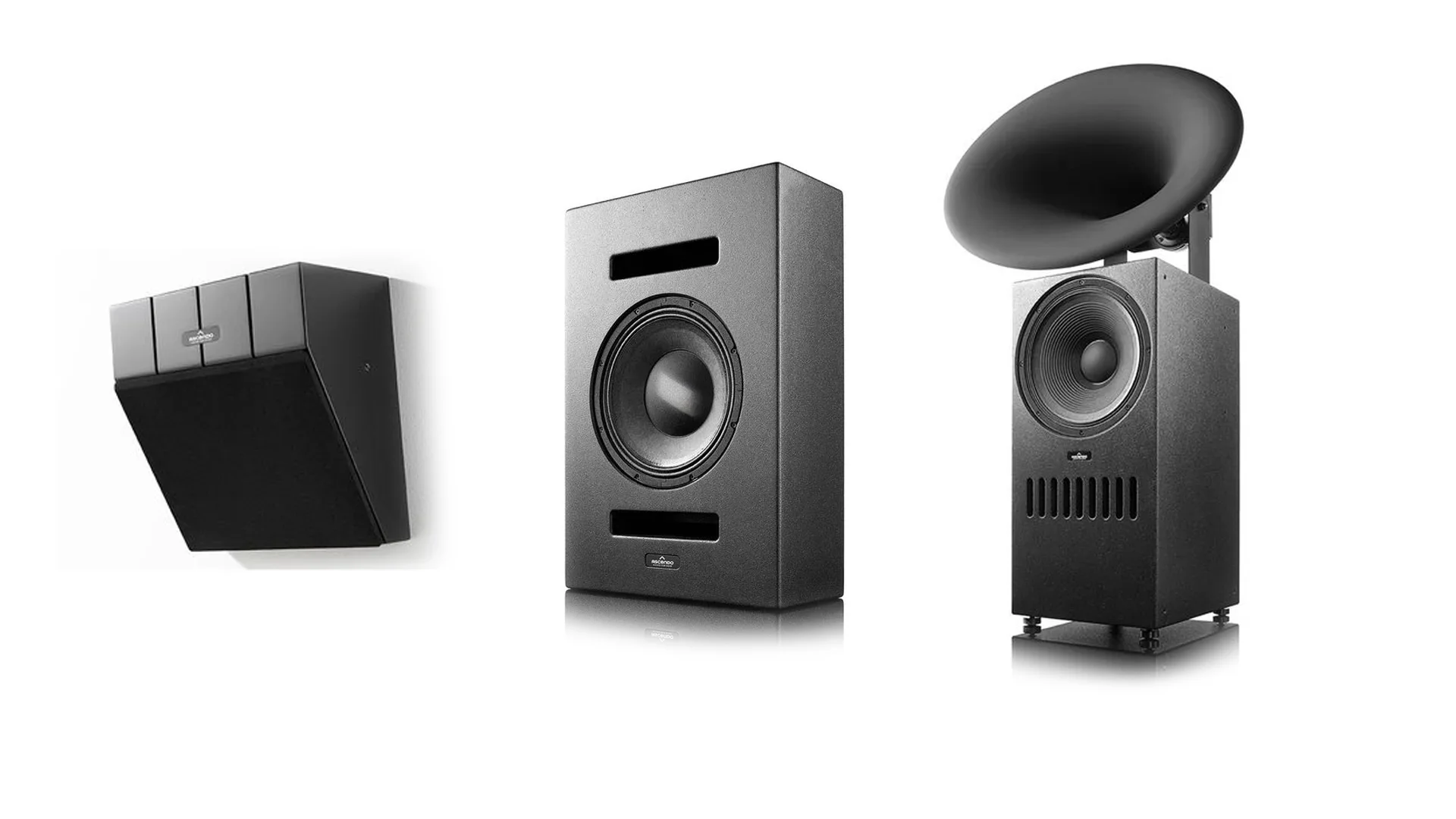
ASCENDO designs cinema systems around coaxial loudspeakers and unusually ambitious low-frequency reproduction. The German brand began in 1999; ASCENDO Immersive Audio followed in 2014, when Geoffrey Heinzel joined Stefan Köpf to develop the cinema business. Its coaxial arrangement places the high-frequency source on the same axis as the larger driver, helping control how the channels integrate across listening positions. The subwoofer range extends from shallow cabinets for constrained installations to very large infrasonic designs. Dedicated electronics and system planning complete the approach. Today’s emphasis is residential cinema, with speaker coverage, installation depth and bass capability considered together as parts of a complete installation.

Audio Excellence designs loudspeakers and electronics specifically for private cinemas, where dialogue clarity, controlled dispersion and sound localisation at the screen matter more than conventional hi-fi styling. Created in 2015 as the audio division of Screen Excellence, the Suffolk-based brand is led by loudspeaker designer Patrice Congard. Its systems combine custom speakers, multichannel amplification and DSP control, often behind an acoustically transparent projection screen. Congard’s patented layout and signal-routing method, known as the Congard Code, addresses bass management and the relationship between sound and picture. Components are tested before assembly, completed loudspeakers are individually measured, and every system passes final quality and listening checks.

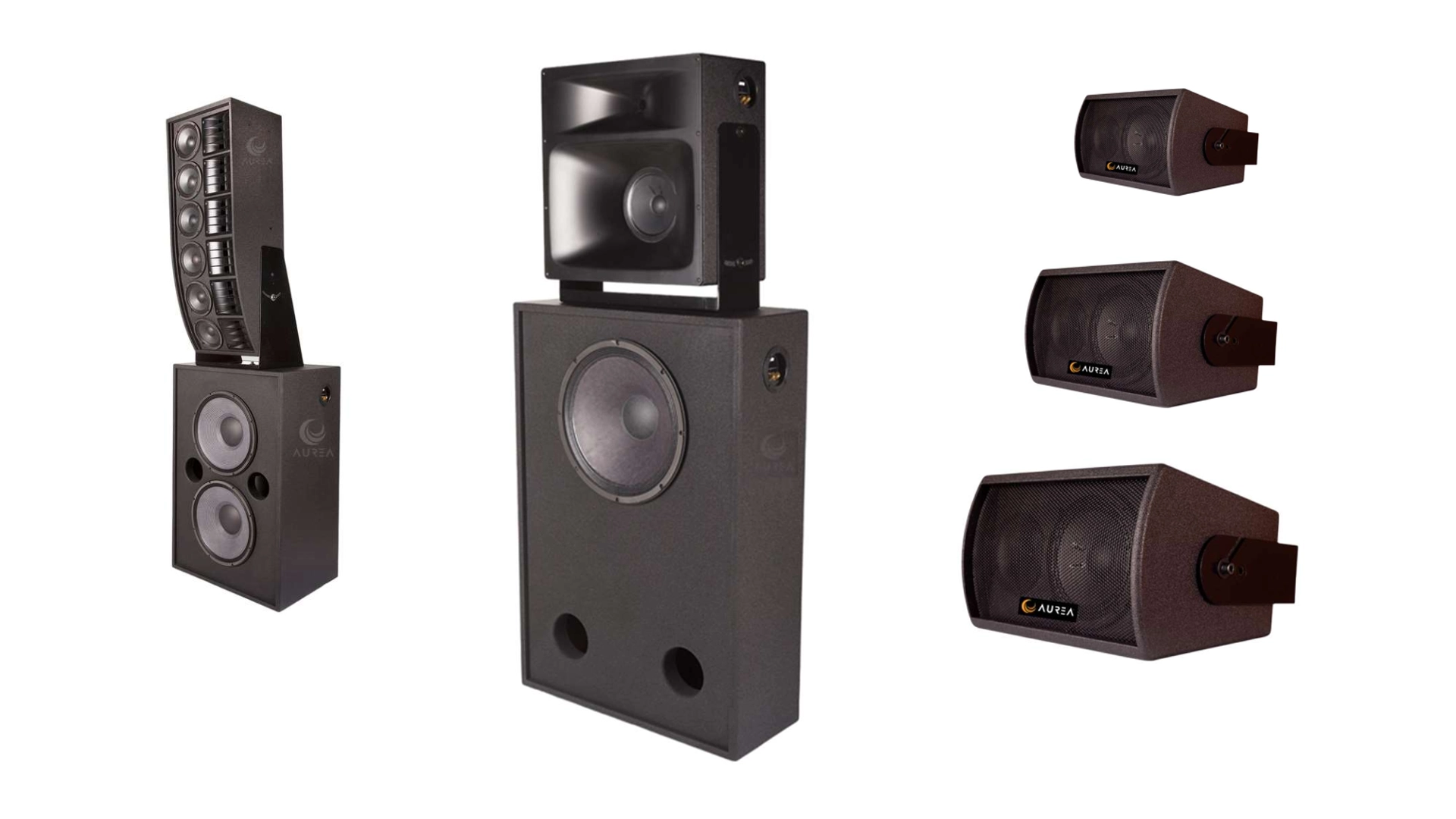
Aurea Cinema brings commercial-theatre loudspeaker engineering into dedicated home cinemas. The Spanish manufacturer, based near Madrid, develops screen-channel systems, surrounds, in-wall and ceiling speakers, subwoofers and matching amplification for professional and residential installations. Its screen models are built for high output, intelligible dialogue and controlled coverage across several seating rows rather than for decorative placement in a living room. Three-way screen systems divide bass, midrange and treble duties, while compact in-wall and overhead models extend the same cinema-oriented approach to immersive layouts. Aurea’s close connection with professional cinema supply and installation is the useful distinction: the home products are derived from equipment designed to work behind screens and in purpose-built theatres. No dependable public foundation date was found, so the year remains unspecified.

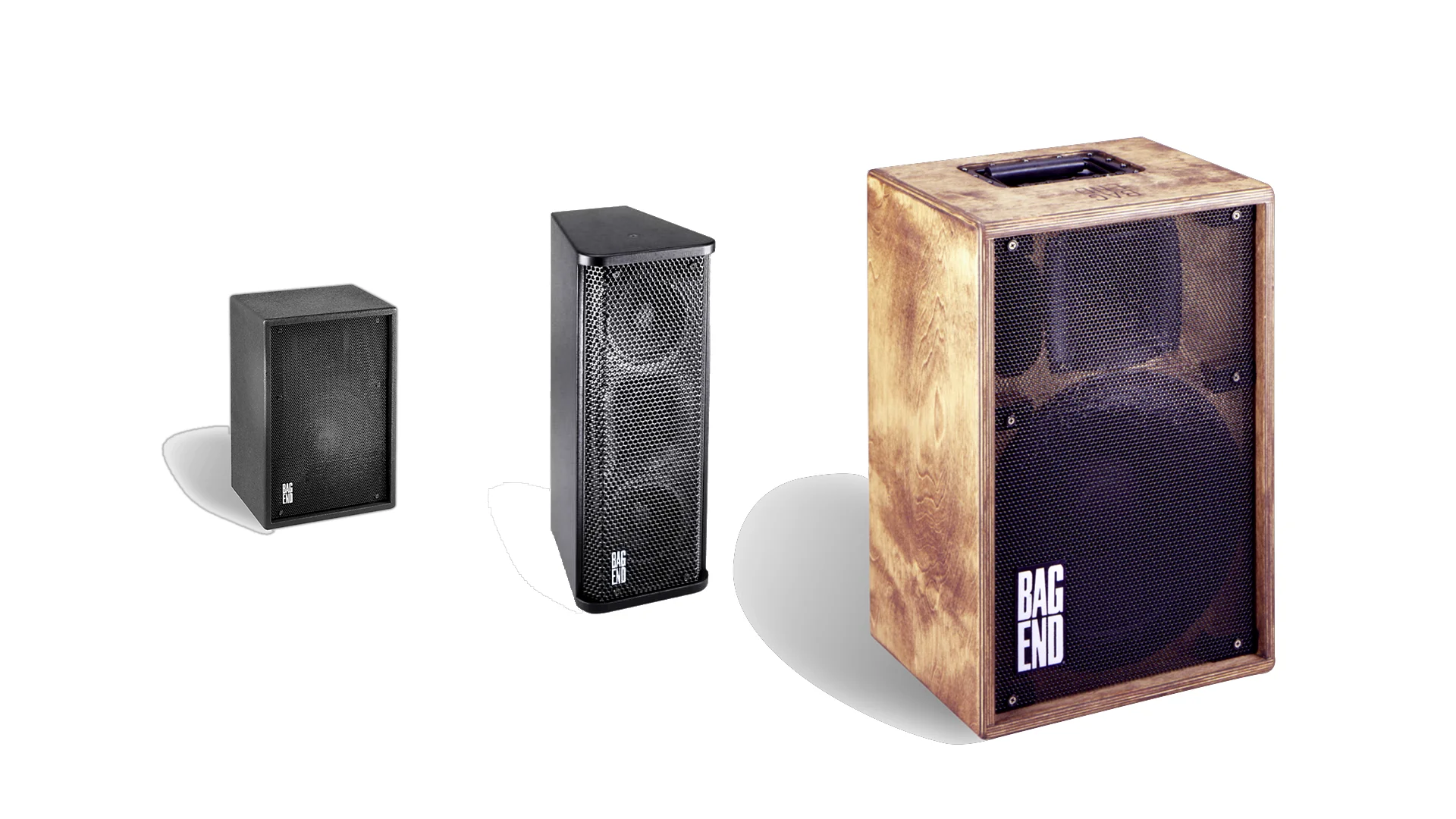
Bag End Loudspeakers connects studio monitoring, sound reinforcement and home audio through two unusual technologies: Time-Align full-range speakers and InfraSub bass systems. The Illinois company officially began in 1976, growing from practical theatre and live-sound work. In 1980 it incorporated the Time-Align approach developed by E.M. Long Associates, aligning driver output in time through physical placement and crossover design instead of treating frequency response alone as the goal. Infra processors and sealed subwoofers use a dual-integrator circuit to extend controlled response into the infrasonic region without a conventional high-order crossover character. TA and professional monitor models are built for coherent arrival, robust output and repeatable installation. Bag End’s value is this specific work on phase, time and very-low-frequency reproduction, not a generic claim of studio accuracy.

Christie is a professional visual-technology company whose equipment moves images from cinema projection booths to large venues, themed attractions, control rooms and simulation systems. S. L. Christie established the original California business in 1929 to build battery chargers and power supplies before it became an important supplier of 35 mm cinema projectors and lamp houses. Japanese light-source specialist Ushio acquired Christie in 1992. Christie then became the first licensee of Texas Instruments’ DLP technology and acquired Electrohome’s Canadian projection operation in 1999, accelerating its move into digital cinema. Its current portfolio includes high-brightness laser projectors, cinema systems, direct-view LED, MicroTiles modular displays, image processors and media/show-control platforms. Engineering operations in Kitchener complement the US headquarters in Cypress, California. Christie’s relevance to AV is therefore not domestic hi-fi but the tightly integrated projection, processing and content-management infrastructure used where image scale, colour, reliability and continuous operation are critical.

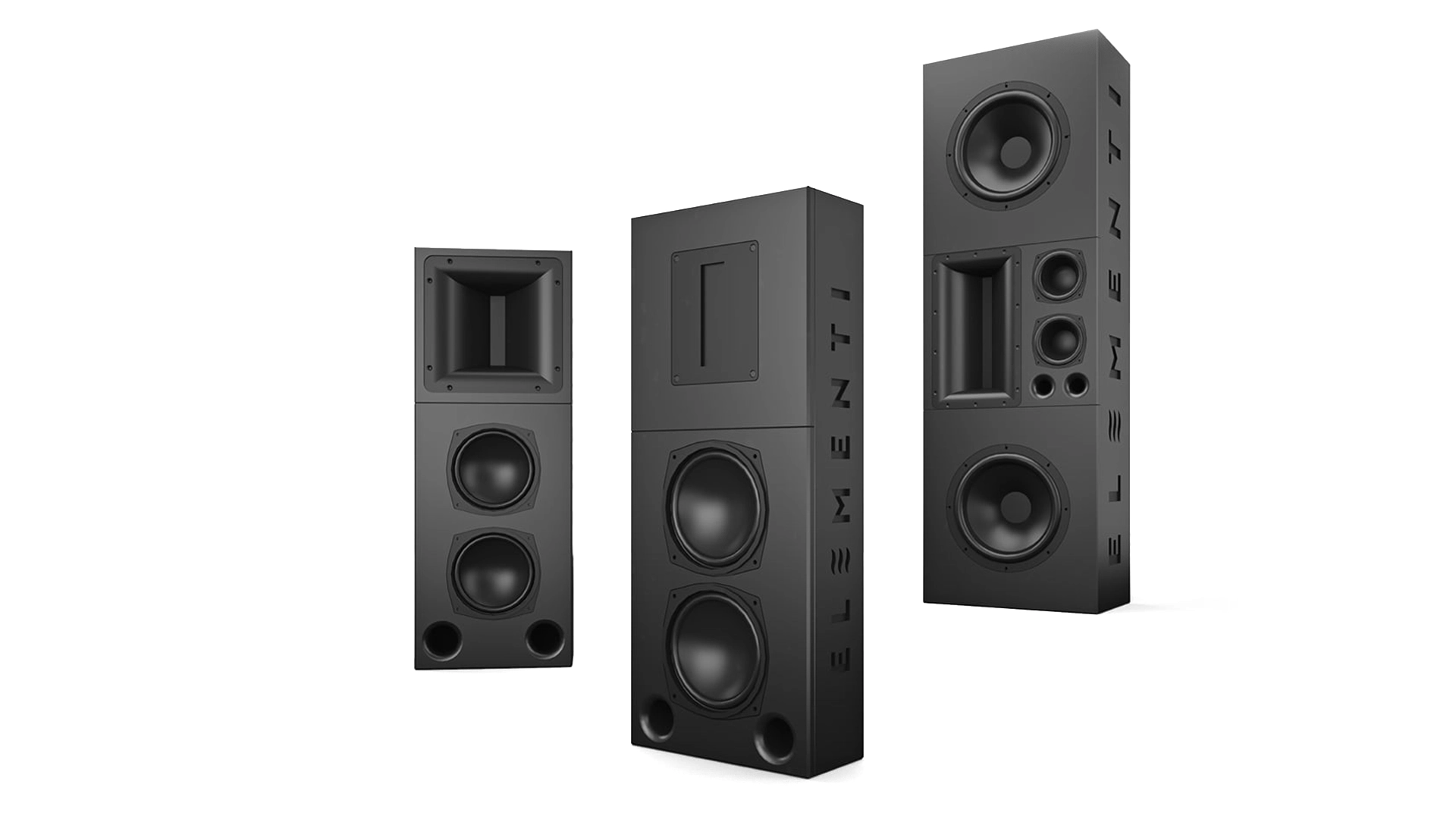
Elementi Audio is an Australian active-loudspeaker system created by cinema designer and acoustician David Moseley of Wavetrain Cinemas and formally launched in 2021 for purpose-built private and commercial theatres. It is not a conventional range of passive hi-fi boxes. Every speaker is paired with dedicated amplification and floating-point DSP, allowing crossover slopes, FIR time correction, protection and output capability to be specified as part of the installed system. The families are organised by function. Fire models use compression drivers for high sound-pressure levels and long throw; Air designs pursue linear-phase reproduction with pleated-diaphragm high-frequency units; Water supplies compact wide-coverage channels for immersive-audio positions; and Earth comprises subwoofers, including extreme models intended to reproduce infrasonic cinema energy. Fire-Dragon is the large three-way LCR flagship, while smaller Firebird, Phoenix and Firefly models cover different room dimensions and seating distances. Elementi’s defining skill is engineering from the room backward: coverage angle, listening distance, reference level, thermal compression and bass requirement determine the loudspeaker and amplifier configuration, rather than asking one retail model to suit every cinema.

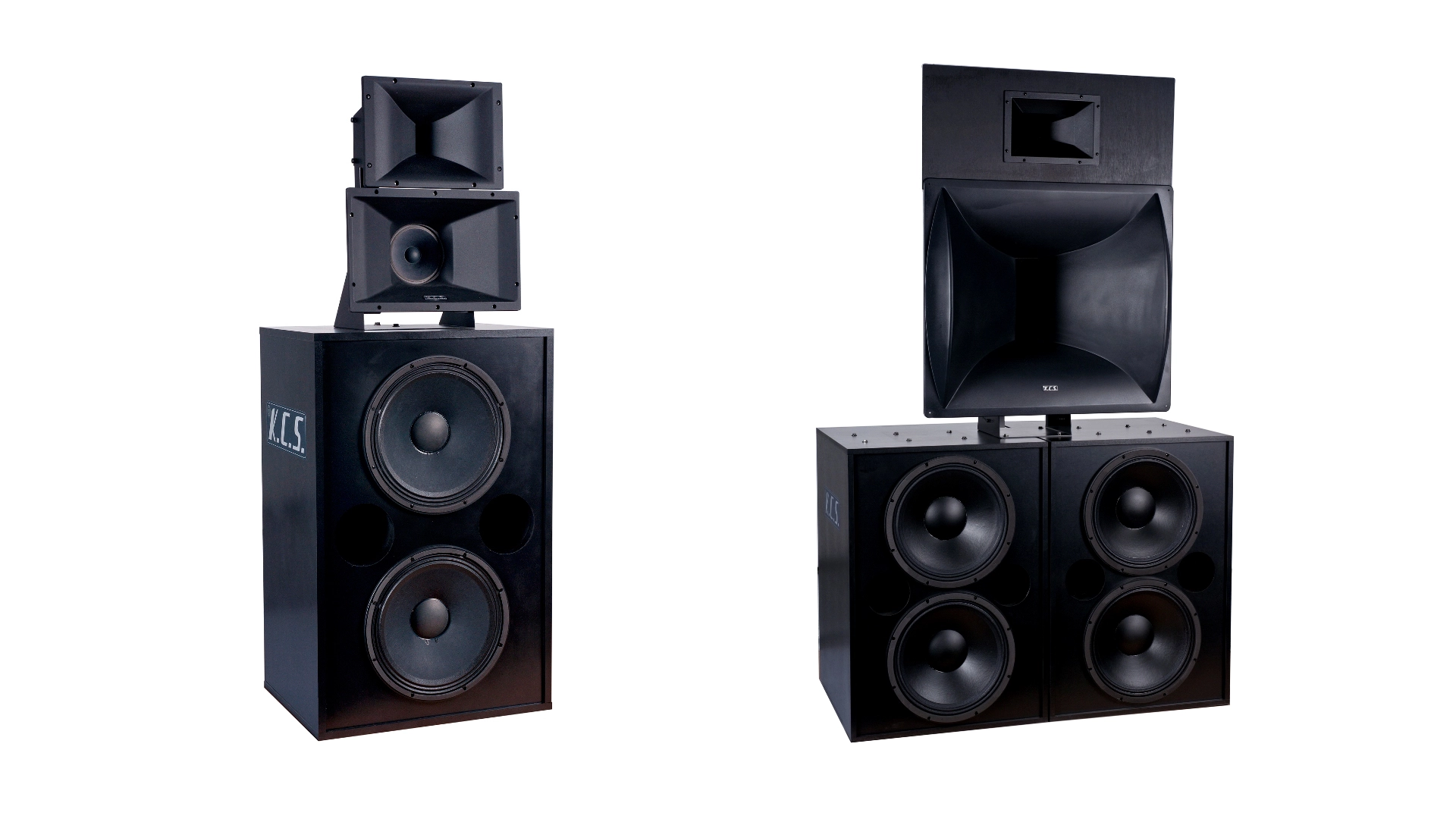
K.C.S—Kelonik Cinema Sound—is a Spanish loudspeaker specialist created specifically for commercial cinemas. Suministros Kelonik, an established cinema-service company, formed the KCS division in 1990; the previous 1979 date did not mark the launch of this speaker brand. Its systems are organised around the architecture of an auditorium: screen-channel loudspeakers deliver dialogue and front-stage energy, surrounds provide coverage around the audience, and high-output subwoofers handle low-frequency effects. KCS offers two- and three-way, bi-amplified and tri-amplified solutions sized for small rooms through large theatres, plus products intended for immersive layouts such as Dolby Atmos and Auro. That breadth matters because cinema design is a coverage and reliability problem, not simply a matter of placing hi-fi speakers behind a screen. The company draws on Kelonik’s installation experience to match directivity, sensitivity and output to room volume and throw distance, and supports complete projects through a distribution network. Its distinctive know-how is therefore practical: purpose-built transducers and enclosures informed by decades of commissioning real cinemas.

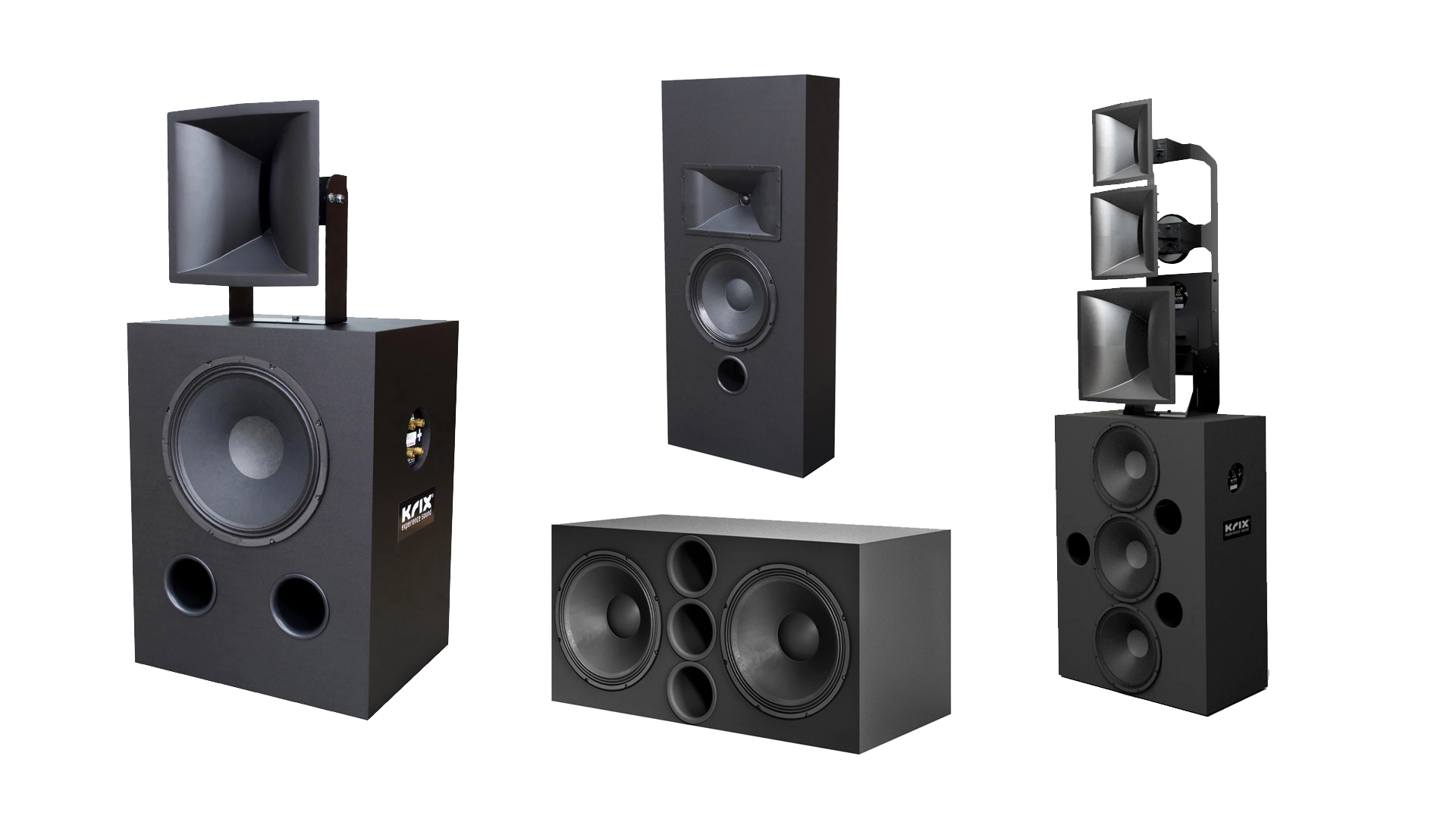
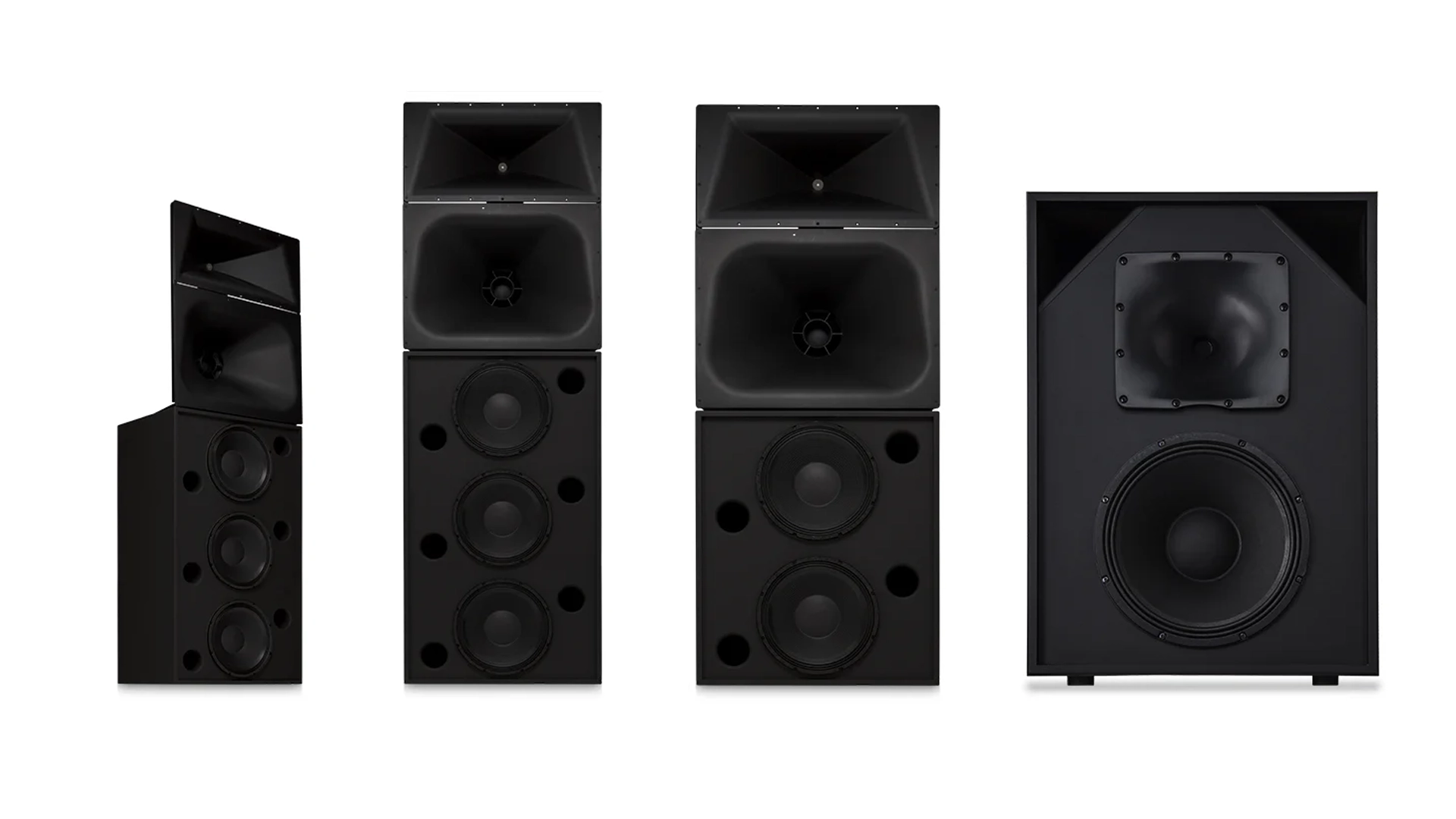
Krix is an Australian loudspeaker company with an unusually direct link between home audio and the commercial cinema. Scott Krix began building loudspeakers in Adelaide in 1974 and installed his first cinema system in 1980; today the company designs and manufactures speakers for dedicated theatres, living rooms and professional auditoriums at its South Australian facility. Cinema experience is central to the brand’s know-how: controlled directivity, high sensitivity, generous headroom and consistent coverage across a seating area. Krix develops its own constant-directivity horns, uses finite-element analysis and extensive acoustic measurement, and builds cabinets in-house with model-specific bracing. For home cinema, the modular Series MX systems place screen, surround and subwoofer channels behind an acoustically transparent screen or within a baffle wall, bringing commercial-cinema architecture into private rooms. Series SX and architectural models address flexible installations, while Esoterix loudspeakers show the same engineering discipline in two-channel hi-fi. The result is a brand whose strength is not a house sound slogan, but predictable dynamics and coverage at real cinema levels.
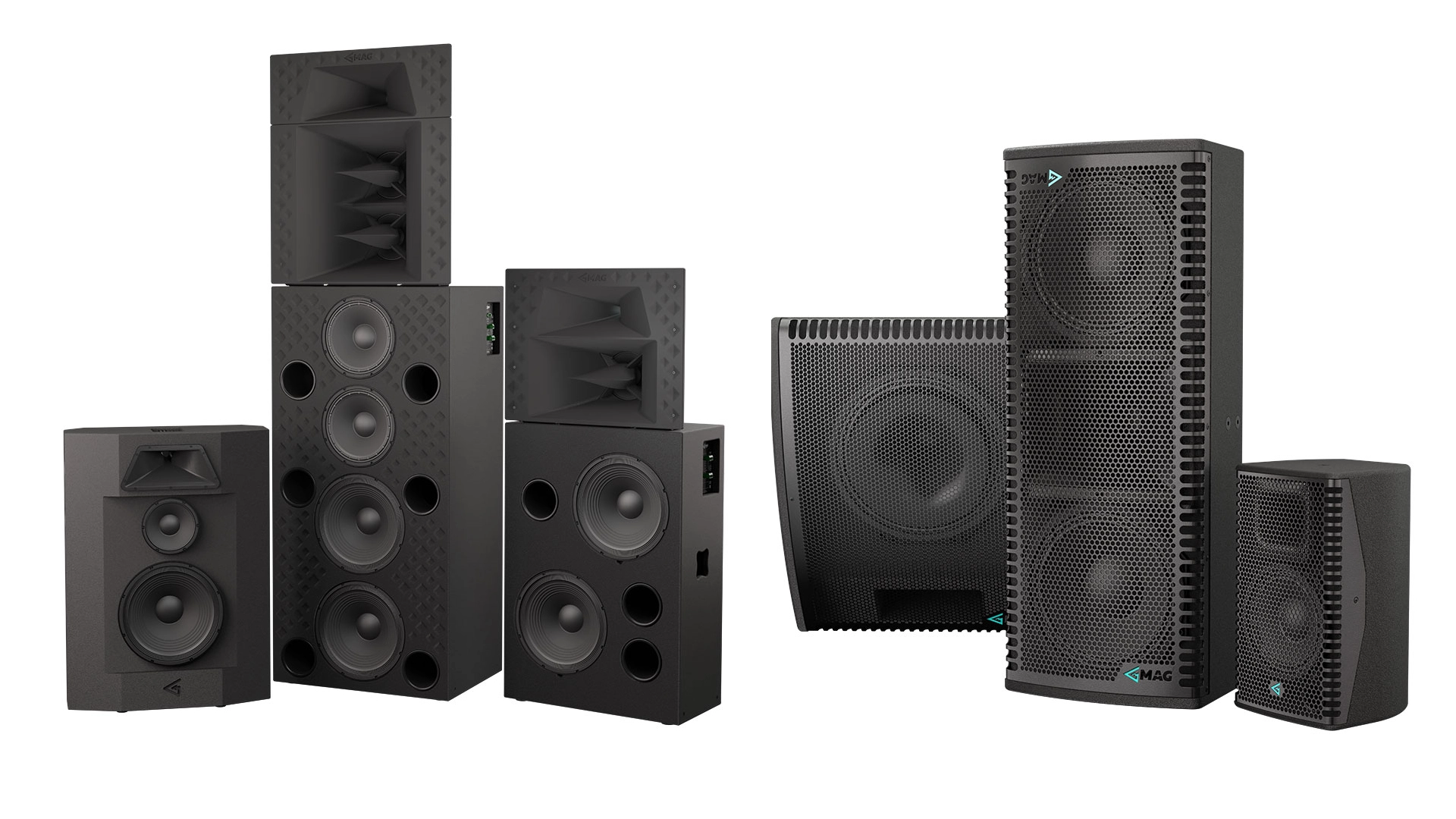
MAG Cinema is the commercial-cinema division of Ukrainian manufacturer MAG Audio, applying the parent company’s driver and enclosure engineering to complete auditorium sound systems. The 1991 date refers to MAG’s industrial origin, not to a separately documented launch of the Cinema division. Its product structure follows the practical needs of a theatre: high-output screen-channel loudspeakers reproduce dialogue and the front soundstage, dedicated surrounds maintain consistent coverage across seating rows, and subwoofers supply controlled low-frequency effects. Modular systems and multiple cabinet sizes allow designers to match room volume, throw distance and amplifier capacity rather than forcing one package into every auditorium. MAG Cinema also develops shallow and specialised solutions for direct-view LED cinema screens, where conventional loudspeakers cannot be placed behind a perforated projection surface. High sensitivity, power handling, serviceable components and secure mounting matter because the equipment must deliver the same programme repeatedly for years, not only sound impressive during a demonstration. The division benefits from MAG’s own transducer production and its experience in touring sound, but cinema voicing and coverage are treated as a distinct task. Its identity is professional infrastructure: an engineered family of screen, surround and bass channels intended to work together throughout an auditorium.
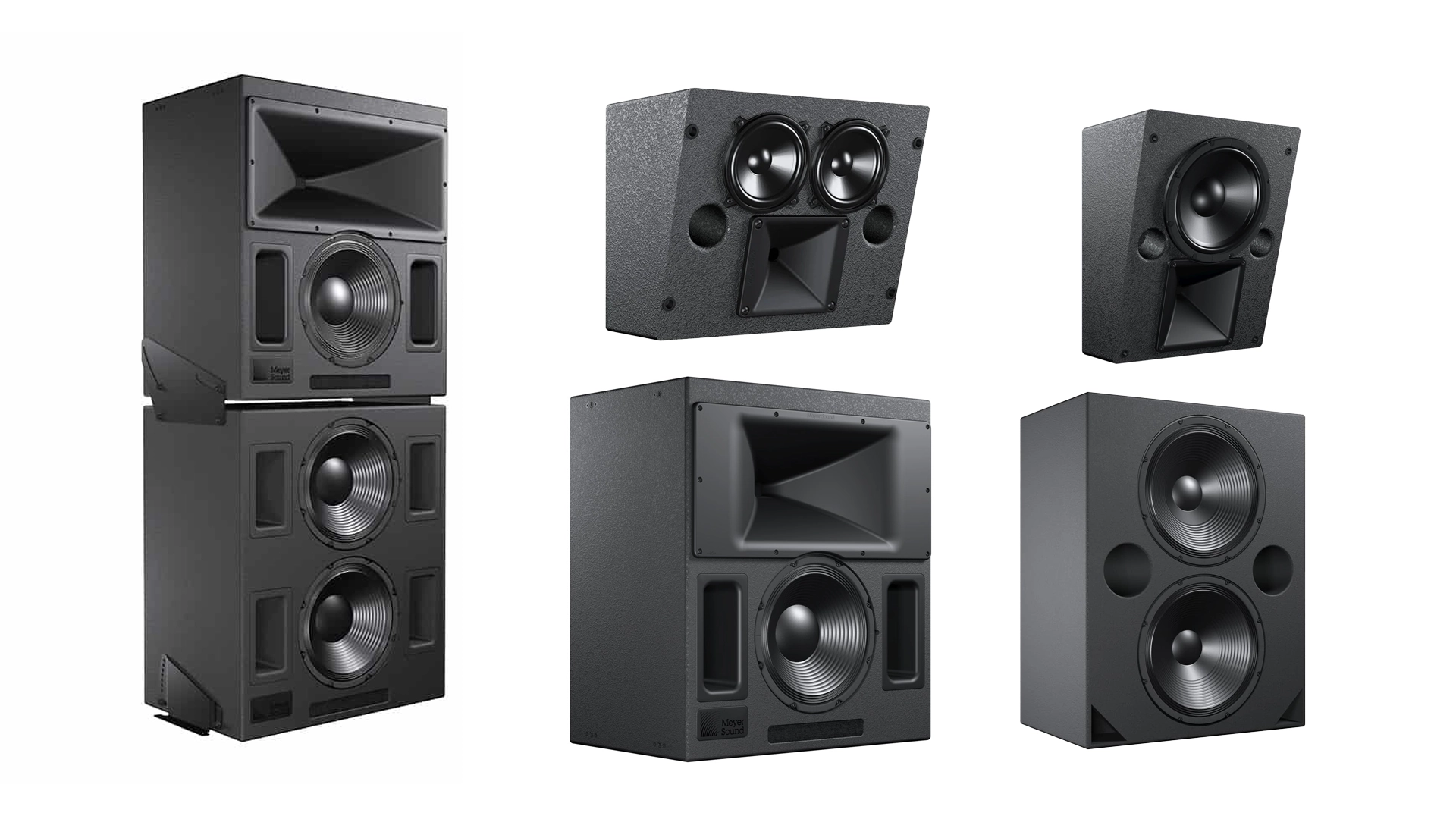
Meyer Sound is an American professional-audio company that helped make self-powered loudspeaker systems a reliable standard for touring, theatre and fixed installation. John and Helen Meyer founded the family-owned business in 1979, combining transducer research with rigorous measurement and repeatable system behavior. The HD-1 studio monitor and MSL-4 reinforcement loudspeaker were important milestones in integrating amplification, processing and drivers as one calibrated product. Today Meyer Sound builds point-source speakers, line arrays, subwoofers, stage monitors, spatial-audio tools and active-acoustic systems. LEO-family arrays—including PANTHER, LEOPARD and LINA—scale from large tours to compact venues, while ULTRA-X models apply concentric-driver concepts to versatile point sources. MAPP 3D predicts coverage and system interaction before installation; GALAXY processors provide networked control and optimization; Spacemap Go handles spatial sound, and Constellation uses microphones, processing and loudspeakers to alter a room’s acoustic response. The company manufactures in Berkeley, California, and supports products with extensive testing and education. Its strongest distinction is systems engineering: loudspeaker, amplifier, protection, prediction and room behavior are designed as one reproducible chain.

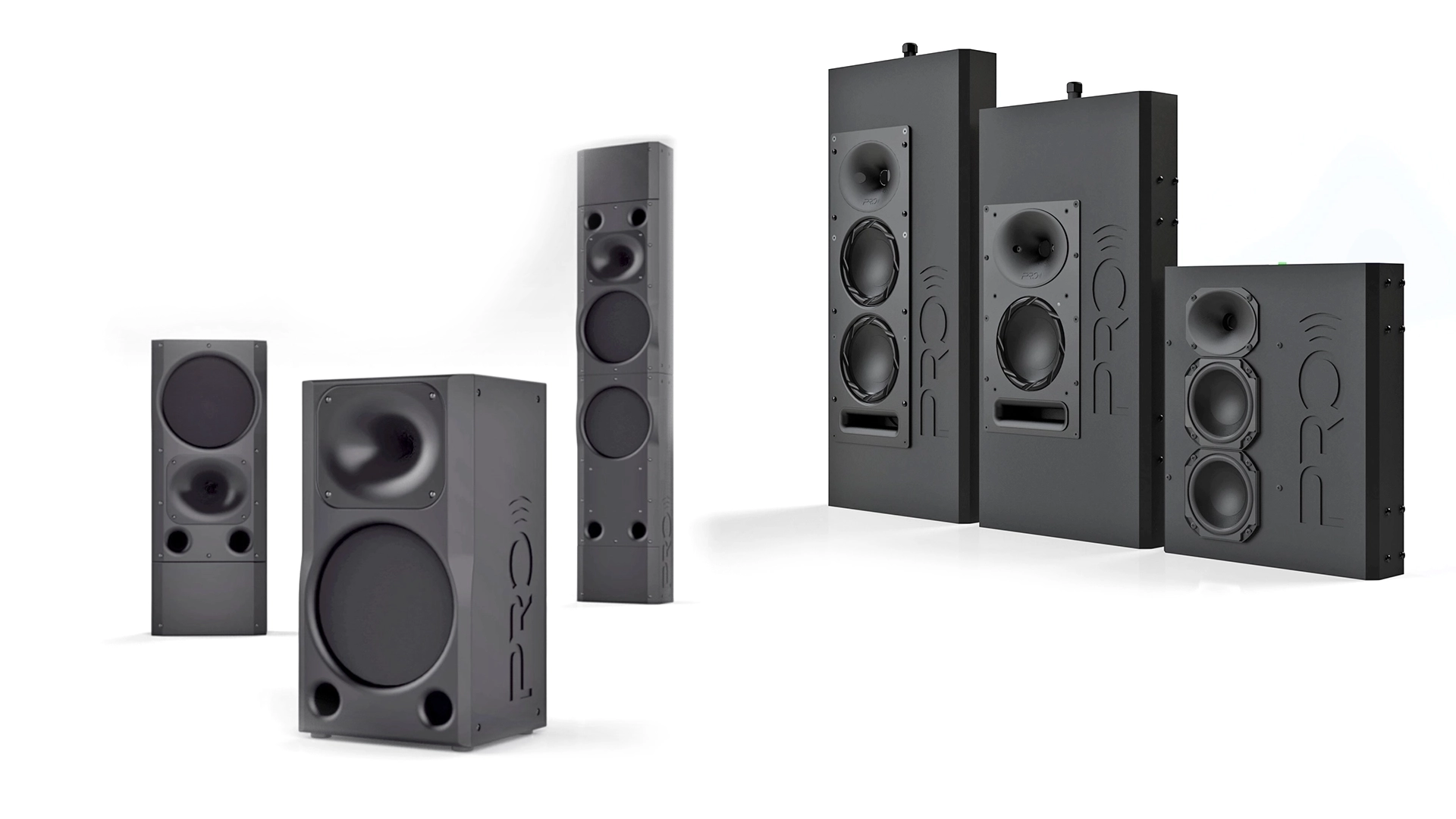
Pro Audio Technology began in 2004 as Professional Home Cinema, LLC, founded by mechanical engineer and loudspeaker designer Paul Hales. It adopted the Pro Audio Technology name in 2010, but the original purpose did not change: bring the output capability, controlled directivity and system engineering of professional cinema into private screening rooms. Hales had previously founded Hales Design Group, led loudspeaker R&D at QSC and consulted for Samsung, BMW and Dolby, giving the company an unusually direct bridge between audiophile, installed and professional sound. PRO systems combine high-sensitivity loudspeakers, large subwoofers and proprietary DSP amplifier/controllers rather than selling each box as an isolated product. Compression drivers and waveguides provide controlled coverage and high output with lower diaphragm excursion; professional-style woofers preserve dynamic headroom; and the DSP electronics store model-specific crossover, equalisation, delay and protection settings. That architecture lets an installer scale a system from a compact media room to a large cinema while keeping tonal behaviour and maximum level predictable. SCRS loudspeakers and LFC subwoofers cover different room sizes and mounting formats, including shallow and in-wall solutions, while PMA amplifier/controllers and the SoundTools software handle configuration and commissioning. In 2018 Hales also founded sister brand Theory Audio Design to adapt related engineering to more attainable installed systems. PRO’s distinguishing product is therefore not a single speaker model but a calibrated loudspeaker–amplifier ecosystem designed to deliver cinema dynamics without asking a residential integrator to assemble incompatible professional parts.
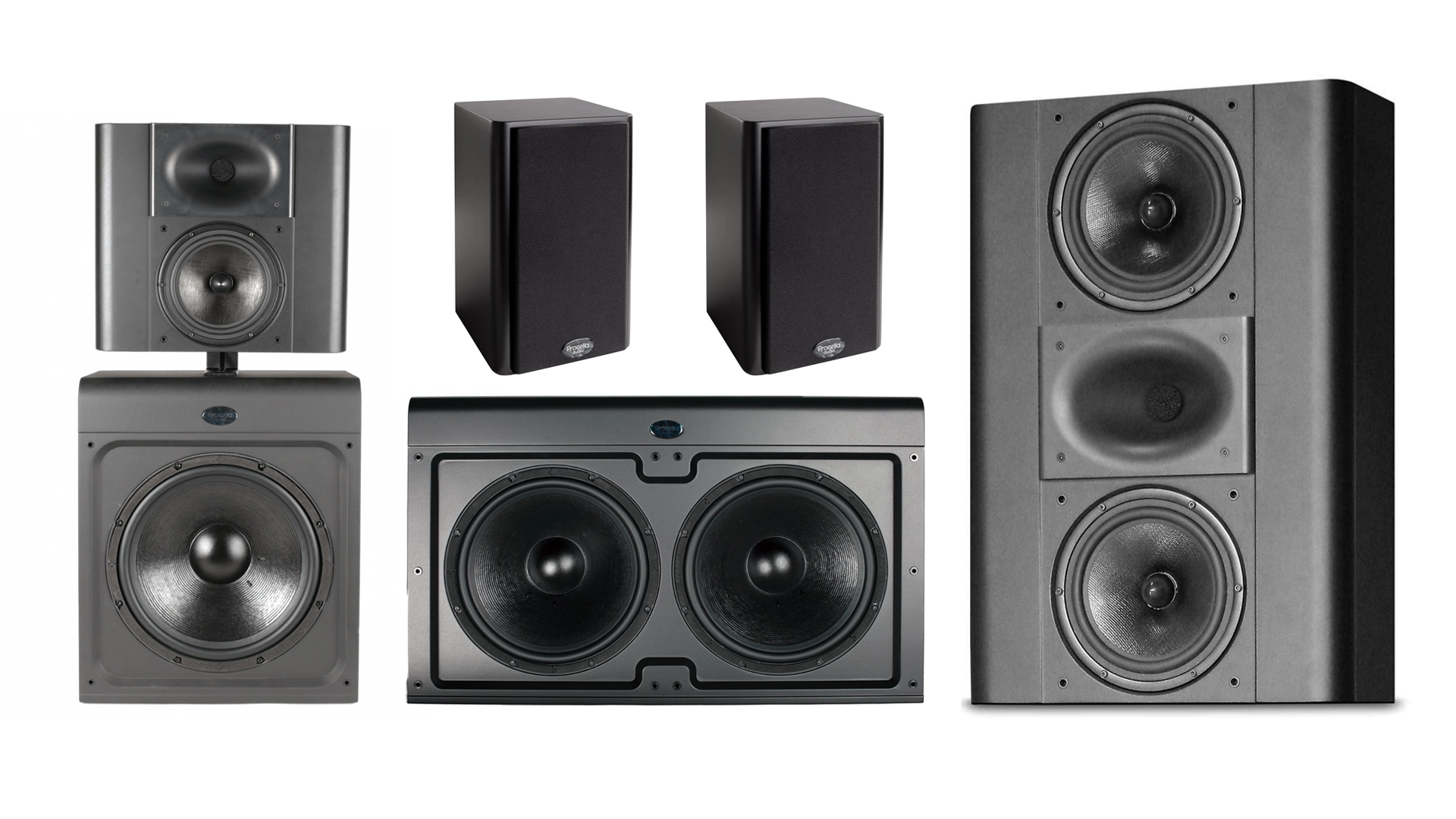
Procella Audio was established in 2005 after Anders Uggelberg and Gerben van Duyl designed the loudspeaker system for a state-of-the-art DTS theatre in Europe. Work on a 7.1 system for BAFTA in London led them to redesign the concept for wider use, and the second generation appeared publicly in 2006. The origin explains the product better than generic home-cinema language: Procella began with the requirement to reproduce cinema reference levels and consistent coverage in a professional demonstration room, then scaled that architecture for private theatres and studios. The P-series uses high-sensitivity woofers and compression-driver waveguides to combine controlled directivity with high output and low compression. P5, P6 and P8 cover compact to substantial screen and surround duties; P610 and P28 increase headroom; the P860 is the large flagship. P10, P12, P15 and other subwoofers extend the system below the main channels, while Procella DSP amplification provides model-specific crossover, equalisation and protection. In-wall and height-channel versions allow the same tonal family to be used behind screens and in immersive Dolby Atmos or DTS:X layouts. Procella Audio Svenska AB and a Swedish factory were established in 2009, including hand assembly of critical parts such as crossovers. In 2024 Wim Buyens and Ignace Rombaut, both with cinema-technology experience at Cinionic/Barco, joined as new owners; Rombaut serves as CEO and Buyens chairs the board. The original Swedish engineering identity remains, now backed by ownership with deep commercial-cinema experience.

QSC began in Costa Mesa, California, in 1968 as Quilter Sound Things, founded by Pat Quilter with brothers Barry and John Andrews. The first products were hand-built guitar amplifiers, but professional power amplifiers soon became the larger business. That transition established QSC’s reputation: high output, reliability and manufacturable engineering for equipment expected to work night after night in venues, cinemas and installed systems. PowerLight switching technology was an important step in reducing the weight of touring amplifiers without giving up useful output. QSC later expanded from amplification into complete sound systems. K and K.2 powered loudspeakers combine drivers, amplification, protection and onboard DSP in one repeatable package; CP provides a more compact route, while E Series serves passive systems. TouchMix digital mixers put multitrack recording, effects, scene storage and remote control into small-format live consoles. The other side of the company developed into Q-SYS, a software-based network platform that unifies audio processing, video, control and monitoring for workplaces, education, hospitality, entertainment and large venues. This is more than a DSP product line and should not be confused with TouchMix. Corporate status has also changed: Acuity completed its acquisition of QSC in January 2025, placing Q-SYS within Acuity Intelligent Spaces while QSC Audio continues the professional loudspeaker and live-sound range. The original American identity, founders and 1968 date remain; what has grown is the scope—from a small amplifier shop to loudspeaker systems and a cloud-manageable AV-control platform.

HFS Ad Rotator · default · slot 1
HFS Ad Rotator · default · slot 2
Add a missing AV-brand or update an existing one

Add a missing AV-brand or update an existing one

Any user can submit a Quick Submission Form to suggest a new AV-brand or suggest update details for an existing one. Brand owners or official representatives of brand can fill a Official Brand Submission Form to provide complete company information, ensuring maximum accuracy and visibility in our portal. All submissions are moderated before publication. 

For suggesting new AV-brands or suggesting updating existing one by users.

Complete official form for brand owners and representatives to provide complete company details to add a new one or update an existing one

Brand Categories:
  • SPEAKERS
    • Bookshelf Speakers — Compact loudspeakers designed for placement on a shelf or dedicated stands.
    • Floorstanding Speakers — Large, full-range loudspeakers that stand directly on the floor, designed for powerful and expansive sound.
    • In-wall Custom Install Speakers — Speakers designed to be installed flush into walls or ceilings for a discreet, "zero-footprint" audio solution.
    • On-Wall Speakers — Slim, low-profile speakers designed to be mounted directly on a wall, often to complement a flat-panel TV.
    • Studio Monitors — Speakers designed for professional audio production, offering a flat, accurate, and uncolored sound reproduction.
    • Planar Ribbon Electrostatic Speakers — Speakers using large, thin diaphragms (panels) instead of cones, prized for their transparent and detailed sound.
    • Horn Speakers — Highly efficient speakers that use a flared horn to amplify a driver, known for their dynamic, "live" sound.
    • Active Powered Speakers — Loudspeakers with built-in amplifiers, creating a simple all-in-one audio solution.
    • Wireless Portable Speakers — Compact, battery-powered speakers with Bluetooth for on-the-go music.
    • Outdoor Speakers — Durable, weather-resistant speakers engineered to provide high-quality audio in open-air spaces like patios and gardens.
    • Marine Extreme Speakers — Rugged, waterproof, and corrosion-resistant speakers built to withstand harsh marine environments on boats and yachts.
    • Commercial Speakers — Durable loudspeaker systems designed for background music and public address in business environments.
    • Invisible Speakers — Architectural speakers installed in a wall and plastered over, making them completely invisible.
    • Subwoofers Bass Speakers — Specialized speakers dedicated to reproducing only the lowest bass frequencies for impact and depth for all purposes
  • AMPLIFIERS
    • Integrated Amplifiers — An all-in-one component combining a preamplifier and a power amplifier in a single chassis.
    • PreAmplifiers — The control hub of a separates audio system, used for source selection and volume control.
    • Power Amplifiers — A component with the sole job of taking a line-level signal and amplifying it to drive loudspeakers.
    • Phono Preamps Phono Stages — A device that amplifies the weak signal from a turntable's cartridge and applies necessary RIAA equalization.
    • Tube Amplifiers — Amplifiers that use vacuum tubes (valves) instead of transistors, prized for their warm and rich sound character.
    • Multi-Zone Multi-Room Amplifiers — Amplifiers that power speakers in multiple different rooms or "zones" from a single, centralized unit.
    • Network Amplifiers — An integrated amplifier with built-in networking and streaming capabilities, creating a modern "just add speakers" system.
    • Desktop Headphone Amplifiers — Mains-powered amplifiers designed to drive high-quality headphones in a desktop or home audio system.
    • Portable Headphone Amplifiers Players — Compact, battery-powered devices (DAPs or amps) for delivering high-quality sound on the move.
  • DAC STREAMERS
    • DAC Desktop — Digital-to-Analog Converters designed to improve sound quality from a computer or other home digital source.
    • DAC Portable — Compact, battery-powered Digital-to-Analog Converters for improving audio from smartphones and laptops.
    • Music Streamers — Devices that connect to the internet to access and play music from online services like Tidal and Spotify.
    • Network Players — Source components focused on high-fidelity playback of digital audio files from a local network (NAS drive).
    • Music Servers HDD Storages — Dedicated devices for storing, managing, and playing a local digital music library with high fidelity.
    • CD Transport Media Players — High-precision disc players that read physical media (CDs, SACDs) and output a pure digital signal to an external DAC.
    • Compact All-in-One Systems — Self-contained audio systems that combine source, amplification, and often speakers into a single, compact unit.
    • Streaming Amplifier — An integrated amplifier with built-in streaming capabilities.
  • TURNTABLES VINYL
    • Turntables — Electromechanical devices that play vinyl records by rotating them at a stable speed.
    • Tonearms — The precision arm on a turntable that holds the cartridge, allowing the stylus to track the record groove.
    • Cartridges — The transducer on a turntable's tonearm that holds the stylus and converts groove vibrations into an electrical signal.
    • Vinyl Cleaning Machine — Specialized machines that use fluid and vacuum/ultrasonic action to deep-clean vinyl records.
    • Vinyl Accessories — Essential tools for setup and maintenance, like clamps, brushes, and alignment protractors.
  • HEADPHONES
    • In-Ear Earbuds — Ultra-portable listening devices, including True Wireless (TWS) models, designed for convenience and daily use.
    • In-Ear Monitors IEM — High-performance in-ear headphones that seal in the ear canal for superior sound isolation and detail.
    • On-Ear Headphones — Headphones with cushions that rest directly on the ears, offering a balance of portability and sound quality.
    • Over-Ear Headphones — Full-sized headphones with large earcups that completely encircle the ears for maximum comfort and immersion.
    • Wireless Headphones — Headphones that connect to source devices via Bluetooth, often featuring Active Noise Cancellation (ANC).
    • Planar Magnetic Ribbon Headphones — High-end headphones using a thin, flat diaphragm driven by magnets, known for their detailed and low-distortion sound.
    • Electrostatic Headphones — High-end headphones using a massless diaphragm in an electrostatic field, requiring a special energizer/amplifier.
  • HOME THEATER
    • AV Receivers Media Players — Central components of a home cinema, combining audio/video processing, amplification, and playback.
    • Home Theater Speakers — Matched sets of speakers (front, center, surround) designed to create an immersive cinematic soundfield.
    • Soundbars — A simple, all-in-one speaker bar that provides a significant audio upgrade over a television's built-in speakers.
    • Subwoofers — Specialized speakers dedicated to reproducing only the lowest bass frequencies for impact and depth for home theaters
    • Processors Amplifiers — High-end home cinema "separates" consisting of a surround sound processor and a multi-channel power amplifier.
    • Screens — High-quality projection surfaces designed to provide an optimal image for a home cinema projector.
    • Projectors — Video projectors optimized for home cinema use, focusing on color accuracy, contrast, and black levels.
  • CABLES ACCESSORIES
    • Speaker Cables — Cables that carry the amplified, high-level signal from an amplifier to passive loudspeakers.
    • Analog Cables — Cables (RCA, XLR) used to transmit analog audio signals between components like DACs and amplifiers.
    • Digital Cables — Cables (Coaxial, Optical, USB) that transmit digital audio data between components.
    • Phono Cables — Specially shielded cables designed to carry the delicate, low-level signal from a turntable to a phono preamp.
    • Headphone Cables — Aftermarket and replacement cables used to upgrade or customize high-quality headphones.
    • Connectors Terminals — The fundamental hardware (plugs, jacks, spades, etc.) used to terminate cables and connect equipment.
    • Power Cables — High-performance AC cords designed to deliver clean, noise-free power to audio components.
    • Power Supplies Conditioners — Devices that filter, stabilize, and protect the AC power supplied to an audio system for improved performance.
  • FURNITURE
    • Speaker Stands Mounts — Stands and mounts used to position speakers at the correct height and angle for optimal sound.
    • Furniture Racks — Purpose-built furniture designed to house audio/video components with a focus on stability, ventilation, and vibration control.
    • Isolation Footers Spikes Shelves — Specialized accessories (spikes, footers, platforms) designed to manage vibrations and isolate components.
    • Soundproof Solutions — Products designed to control room acoustics, including treatment (panels, diffusers) and sound-blocking materials.
  • PROFESSIONAL
    • Concert Speakers — Large-scale PA systems, including line arrays and stage monitors, for live music and public events.
    • Cinema Speakers — Specialized, high-output loudspeaker systems certified for use in large commercial movie theaters.
    • Concert Electronics — Robust electronics including mixing consoles, processors, and amplifiers for live sound reinforcement.
    • Cinema Electronics — Professional, DCI-compliant processors and amplifiers for use in commercial movie theaters.
    • Cinema Screens — Large-format, often acoustically transparent, projection screens built to professional cinema standards.
    • Cinema Projectors — Ultra-high-brightness, DCI-compliant projectors designed for continuous use in commercial movie theaters.
    • Professional Cables Accessories — Rugged, reliable cables and hardware (e.g., snake cables, Speakon connectors) for touring and professional installation.
  • DIY Components
    • Speaker drivers Tweeters — The individual transducers (woofers, mid-range, tweeters) that are the fundamental building blocks of a loudspeaker.
    • Coaxial Speaker Drivers — Speaker drivers where the tweeter is mounted in the center of the woofer, creating a single point source for sound.
    • DIY Speaker Kits — Complete packages including drivers, crossovers, and plans for enthusiasts to build their own loudspeakers.
    • Electron Vacuum Tubes — Glass valves used in tube amplifiers that provide amplification and can be replaced to tune the sound.
    • Electronic Components — Discrete parts (capacitors, resistors, transistors) used by manufacturers and DIYers to build audio circuits.
  • OTHERS
    • Line Stage — A type of preamplifier that exclusively handles line-level sources, without a built-in phono stage.
    • Time Alignment Device — A signal processor that corrects timing delays between drivers or speakers for improved sound coherence.
    • Smart Portable Speakers — Wireless portable speakers with integrated voice assistants (e.g., Alexa, Google Assistant) and smart home functionality.
    • DJ Turntables — Durable, high-torque direct-drive turntables with pitch control, built for performance and DJing applications.
    • Motor Drives — External motor units and power supplies for turntables, providing improved rotational stability and isolation.
    • Crossovers — Electronic circuits that split an audio signal into different frequency bands to route to the correct speaker driver.
    • Car Audio — Audio equipment, including speakers, amplifiers, and source units, specifically designed for use in vehicles.

Brand Categories:
  • Active Powered Speakers — Loudspeakers with built-in amplifiers, creating a simple all-in-one audio solution.
  • Analog Cables — Cables (RCA, XLR) used to transmit analog audio signals between components like DACs and amplifiers.
  • AV Receivers Media Players — Central components of a home cinema, combining audio/video processing, amplification, and playback.
  • Bookshelf Speakers — Compact loudspeakers designed for placement on a shelf or dedicated stands.
  • Car Audio — Audio equipment, including speakers, amplifiers, and source units, specifically designed for use in vehicles.
  • Cartridges — The transducer on a turntable's tonearm that holds the stylus and converts groove vibrations into an electrical signal.
  • CD Transport Media Players — High-precision disc players that read physical media (CDs, SACDs) and output a pure digital signal to an external DAC.
  • Cinema Electronics — Professional, DCI-compliant processors and amplifiers for use in commercial movie theaters.
  • Cinema Projectors — Ultra-high-brightness, DCI-compliant projectors designed for continuous use in commercial movie theaters.
  • Cinema Screens — Large-format, often acoustically transparent, projection screens built to professional cinema standards.
  • Cinema Speakers — Specialized, high-output loudspeaker systems certified for use in large commercial movie theaters.
  • Coaxial Speaker Drivers — Speaker drivers where the tweeter is mounted in the center of the woofer, creating a single point source for sound.
  • Commercial Speakers — Durable loudspeaker systems designed for background music and public address in business environments.
  • Compact All-in-One Systems — Self-contained audio systems that combine source, amplification, and often speakers into a single, compact unit.
  • Concert Electronics — Robust electronics including mixing consoles, processors, and amplifiers for live sound reinforcement.
  • Concert Speakers — Large-scale PA systems, including line arrays and stage monitors, for live music and public events.
  • Connectors Terminals — The fundamental hardware (plugs, jacks, spades, etc.) used to terminate cables and connect equipment.
  • Crossovers — Electronic circuits that split an audio signal into different frequency bands to route to the correct speaker driver.
  • DAC Desktop — Digital-to-Analog Converters designed to improve sound quality from a computer or other home digital source.
  • DAC Portable — Compact, battery-powered Digital-to-Analog Converters for improving audio from smartphones and laptops.
  • Desktop Headphone Amplifiers — Mains-powered amplifiers designed to drive high-quality headphones in a desktop or home audio system.
  • Digital Cables — Cables (Coaxial, Optical, USB) that transmit digital audio data between components.
  • DIY Speaker Kits — Complete packages including drivers, crossovers, and plans for enthusiasts to build their own loudspeakers.
  • DJ Turntables — Durable, high-torque direct-drive turntables with pitch control, built for performance and DJing applications.
  • Electron Vacuum Tubes — Glass valves used in tube amplifiers that provide amplification and can be replaced to tune the sound.
  • Electronic Components — Discrete parts (capacitors, resistors, transistors) used by manufacturers and DIYers to build audio circuits.
  • Electrostatic Headphones — High-end headphones using a massless diaphragm in an electrostatic field, requiring a special energizer/amplifier.
  • Floorstanding Speakers — Large, full-range loudspeakers that stand directly on the floor, designed for powerful and expansive sound.
  • Furniture Racks — Purpose-built furniture designed to house audio/video components with a focus on stability, ventilation, and vibration control.
  • Headphone Cables — Aftermarket and replacement cables used to upgrade or customize high-quality headphones.
  • Home Theater Speakers — Matched sets of speakers (front, center, surround) designed to create an immersive cinematic soundfield.
  • Horn Speakers — Highly efficient speakers that use a flared horn to amplify a driver, known for their dynamic, "live" sound.
  • In-Ear Earbuds — Ultra-portable listening devices, including True Wireless (TWS) models, designed for convenience and daily use.
  • In-Ear Monitors IEM — High-performance in-ear headphones that seal in the ear canal for superior sound isolation and detail.
  • In-wall Custom Install Speakers — Speakers designed to be installed flush into walls or ceilings for a discreet, "zero-footprint" audio solution.
  • Integrated Amplifiers — An all-in-one component combining a preamplifier and a power amplifier in a single chassis.
  • Invisible Speakers — Architectural speakers installed in a wall and plastered over, making them completely invisible.
  • Isolation Footers Spikes Shelves — Specialized accessories (spikes, footers, platforms) designed to manage vibrations and isolate components.
  • Line Stage — A type of preamplifier that exclusively handles line-level sources, without a built-in phono stage.
  • Marine Extreme Speakers — Rugged, waterproof, and corrosion-resistant speakers built to withstand harsh marine environments on boats and yachts.
  • Motor Drives — External motor units and power supplies for turntables, providing improved rotational stability and isolation.
  • Multi-Zone Multi-Room Amplifiers — Amplifiers that power speakers in multiple different rooms or "zones" from a single, centralized unit.
  • Music Servers HDD Storages — Dedicated devices for storing, managing, and playing a local digital music library with high fidelity.
  • Music Streamers — Devices that connect to the internet to access and play music from online services like Tidal and Spotify.
  • Network Amplifiers — An integrated amplifier with built-in networking and streaming capabilities, creating a modern "just add speakers" system.
  • Network Players — Source components focused on high-fidelity playback of digital audio files from a local network (NAS drive).
  • On-Ear Headphones — Headphones with cushions that rest directly on the ears, offering a balance of portability and sound quality.
  • On-Wall Speakers — Slim, low-profile speakers designed to be mounted directly on a wall, often to complement a flat-panel TV.
  • Outdoor Speakers — Durable, weather-resistant speakers engineered to provide high-quality audio in open-air spaces like patios and gardens.
  • Over-Ear Headphones — Full-sized headphones with large earcups that completely encircle the ears for maximum comfort and immersion.
  • Phono Cables — Specially shielded cables designed to carry the delicate, low-level signal from a turntable to a phono preamp.
  • Phono Preamps Phono Stages — A device that amplifies the weak signal from a turntable's cartridge and applies necessary RIAA equalization.
  • Planar Magnetic Ribbon Headphones — High-end headphones using a thin, flat diaphragm driven by magnets, known for their detailed and low-distortion sound.
  • Planar Ribbon Electrostatic Speakers — Speakers using large, thin diaphragms (panels) instead of cones, prized for their transparent and detailed sound.
  • Portable Headphone Amplifiers Players — Compact, battery-powered devices (DAPs or amps) for delivering high-quality sound on the move.
  • Power Amplifiers — A component with the sole job of taking a line-level signal and amplifying it to drive loudspeakers.
  • Power Cables — High-performance AC cords designed to deliver clean, noise-free power to audio components.
  • Power Supplies Conditioners — Devices that filter, stabilize, and protect the AC power supplied to an audio system for improved performance.
  • PreAmplifiers — The control hub of a separates audio system, used for source selection and volume control.
  • Processors Amplifiers — High-end home cinema "separates" consisting of a surround sound processor and a multi-channel power amplifier.
  • Professional Cables Accessories — Rugged, reliable cables and hardware (e.g., snake cables, Speakon connectors) for touring and professional installation.
  • Projectors — Video projectors optimized for home cinema use, focusing on color accuracy, contrast, and black levels.
  • Screens — High-quality projection surfaces designed to provide an optimal image for a home cinema projector.
  • Smart Portable Speakers — Wireless portable speakers with integrated voice assistants (e.g., Alexa, Google Assistant) and smart home functionality.
  • Soundbars — A simple, all-in-one speaker bar that provides a significant audio upgrade over a television's built-in speakers.
  • Soundproof Solutions — Products designed to control room acoustics, including treatment (panels, diffusers) and sound-blocking materials.
  • Speaker Cables — Cables that carry the amplified, high-level signal from an amplifier to passive loudspeakers.
  • Speaker drivers Tweeters — The individual transducers (woofers, mid-range, tweeters) that are the fundamental building blocks of a loudspeaker.
  • Speaker Stands Mounts — Stands and mounts used to position speakers at the correct height and angle for optimal sound.
  • Streaming Amplifier — An integrated amplifier with built-in streaming capabilities.
  • Studio Monitors — Speakers designed for professional audio production, offering a flat, accurate, and uncolored sound reproduction.
  • Subwoofers — Specialized speakers dedicated to reproducing only the lowest bass frequencies for impact and depth for home theaters
  • Subwoofers Bass Speakers — Specialized speakers dedicated to reproducing only the lowest bass frequencies for impact and depth for all purposes
  • Time Alignment Device — A signal processor that corrects timing delays between drivers or speakers for improved sound coherence.
  • Tonearms — The precision arm on a turntable that holds the cartridge, allowing the stylus to track the record groove.
  • Tube Amplifiers — Amplifiers that use vacuum tubes (valves) instead of transistors, prized for their warm and rich sound character.
  • Turntables — Electromechanical devices that play vinyl records by rotating them at a stable speed.
  • Vinyl Accessories — Essential tools for setup and maintenance, like clamps, brushes, and alignment protractors.
  • Vinyl Cleaning Machine — Specialized machines that use fluid and vacuum/ultrasonic action to deep-clean vinyl records.
  • Wireless Headphones — Headphones that connect to source devices via Bluetooth, often featuring Active Noise Cancellation (ANC).
  • Wireless Portable Speakers — Compact, battery-powered speakers with Bluetooth for on-the-go music.

Sales Channels:
  • Dealer & Distributor Network — The traditional sales model where products are sold through a network of authorized, independent retail stores and custom installers. This is the primary channel for most specialized Hi-Fi brands.
  • Direct-to-Consumer (DTC) — The brand sells its products directly to end-users through its own official website, bypassing traditional retail channels. A rapidly growing model in the industry.
  • Custom Installation (CI) Channel — Products are sold primarily through professional firms that design and install integrated smart home and audio-visual systems. This channel is crucial for architectural and high-end integrated solutions.
  • Mass Market Retail — Products are available in large, non-specialized consumer electronics chain stores. This typically applies to more mainstream product lines from larger brands.
  • Brand-Owned Stores / Showrooms — The brand operates its own physical, flagship retail stores or dedicated showrooms to offer a direct and immersive brand experience. This is the least common model, typically used by top-tier brands.

For companies: For any questions about listings & partnership opportunities, please contact us at contact@hifiselector.com

Have a suggestion or found a flaw? Help us improve​

Have a suggestion or found a flaw?