
Turntables
The turntable, or record player, is the electromechanical heart of any analog audio system, designed to bring vinyl records to life. Its function is to spin a record at a highly precise and stable speed while its tonearm allows a stylus to flawlessly track the microscopic grooves. This page is a complete directory of the world’s leading turntable manufacturers, covering everything from accessible belt-drive models for newcomers to massive, high-end direct-drive and suspended designs for the dedicated audiophile.
Hi-Fi brands in the category
Summary information and image
Direct links to official websites
Dohmann Audio

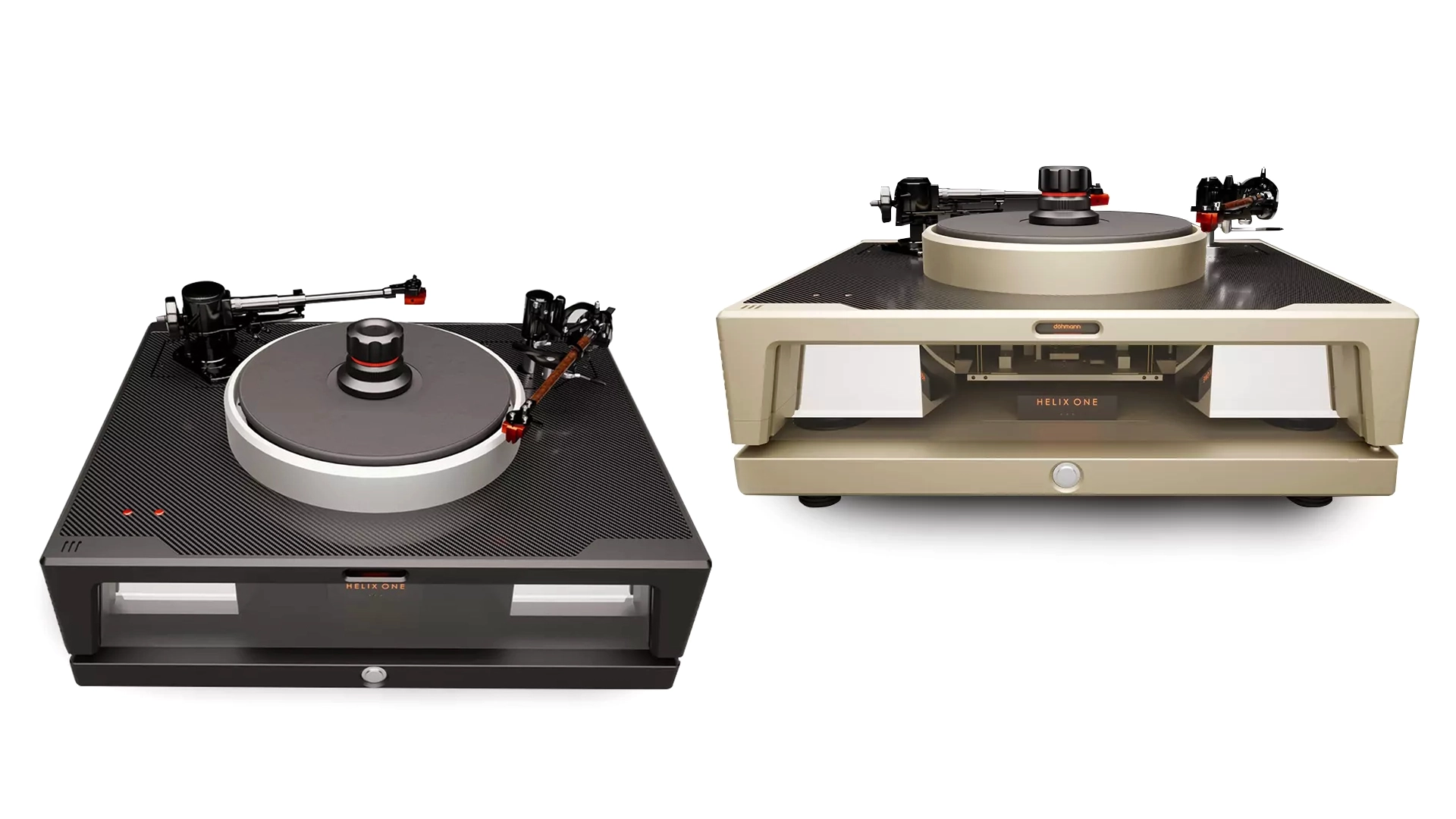
Dohmann Audio is an Australian analogue engineering company established in Melbourne in 2013 by turntable designer Mark Döhmann. Its Helix One and Helix Two decks treat record playback as a vibration-control problem before it becomes a matter of styling. The defining feature is an integrated Minus K negative-stiffness isolation mechanism, developed with Dr David Platus, which filters very low-frequency floor and structural movement without pumps, compressors or electronic feedback. Around it, the Helix architecture combines a high-inertia platter, tightly regulated drive, constrained mechanical paths and carefully separated structural zones; current Mk3 versions refine these elements and remain upgradeable from earlier generations. Helix One provides the larger reference platform and dual-arm capability, while Helix Two applies the same principles in a more compact format. Selected versions or options also add vacuum record hold-down. Döhmann previously led the design work behind Continuum’s Caliburn, Cobra and Castellon, but Dohmann Audio is a distinct company. Its speciality is not turntables in general: it is reducing environmental and self-generated motion at the stylus-groove interface.
Dr. Feickert Analogue
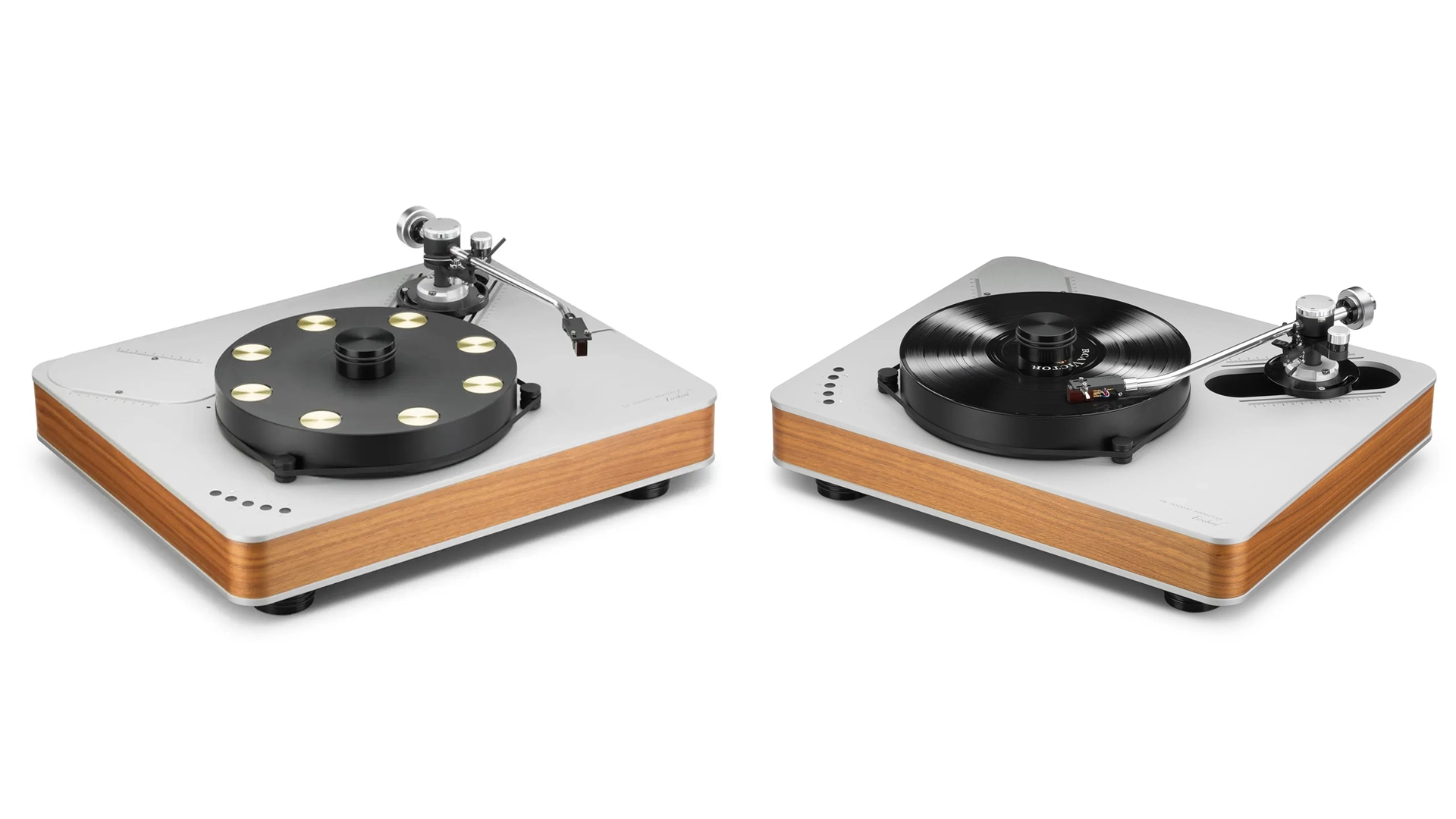
Dr. Feickert Analogue is a German turntable manufacturer founded in 2005 by physicist Dr Christian Feickert, whose work began with tools for setting tonearm geometry accurately. That measurement-led origin still distinguishes the company: turntables are designed to be straightforward to level, align, service and adapt to different arms rather than forcing the owner into one closed configuration. The compact Volare and Woodpecker use a single belt-drive motor and quick-change armboard concept; Blackbird adds two motors positioned opposite one another and provision for two tonearms; Firebird expands the platform with three motors and space for two long arms. The motor arrangements are intended to distribute belt forces and reduce the effect of reactive movement, while external control electronics regulate speed. Feickert also produces alignment tools and software-associated measurement products that address cartridge geometry and setup directly. The brand’s strength is practical precision: substantial German-made decks, flexible arm compatibility and repeatable adjustment, with mechanical and electronic solutions that a dealer or experienced owner can understand rather than hidden mystique.
Dual

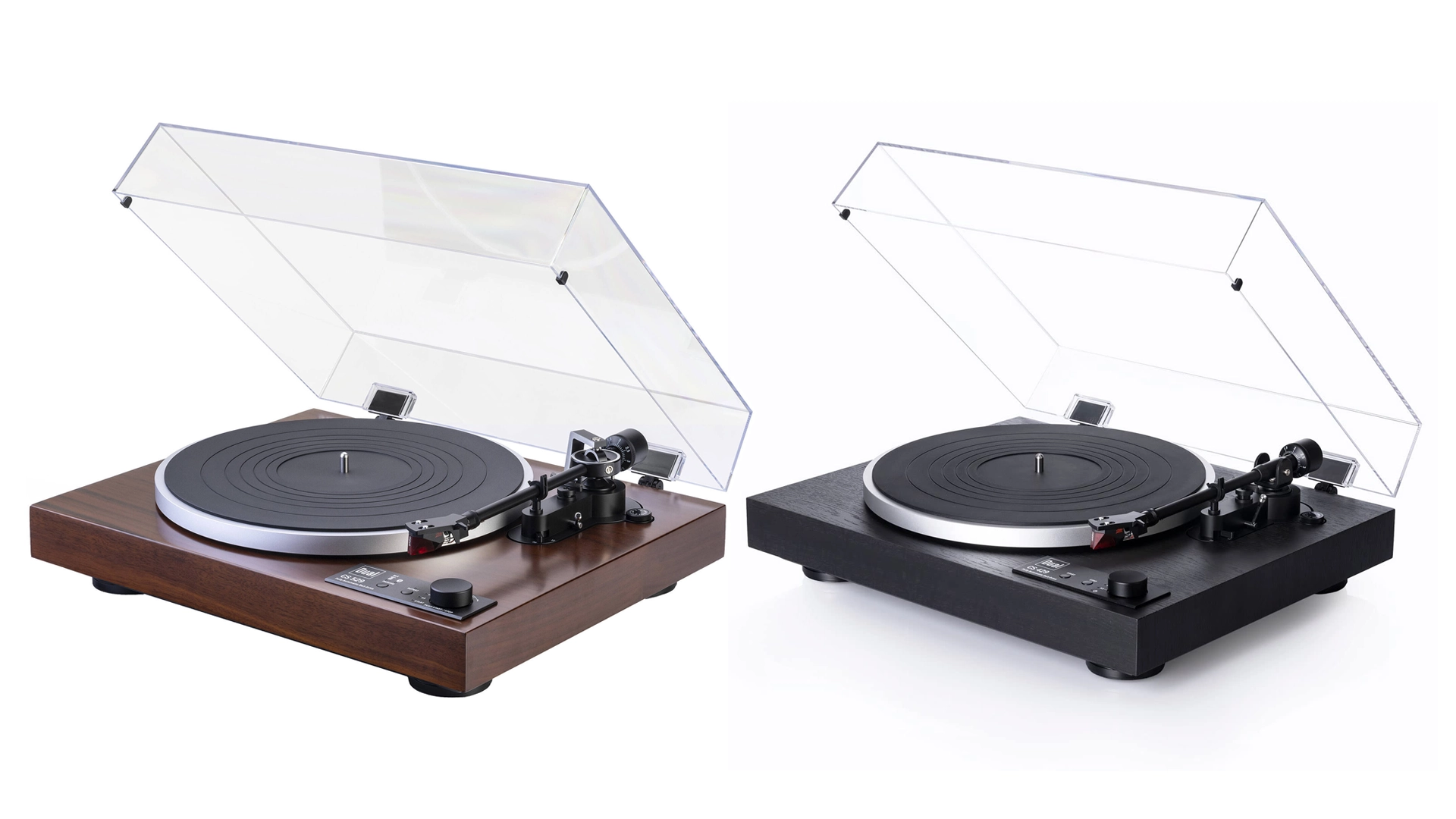
Dual is one of Germany’s historic turntable names, tracing its origin to the precision-mechanics workshop founded in St. Georgen in 1907 by brothers Christian and Josef Steidinger. The later brand name came from the Dual-Motor introduced in 1927, which allowed gramophones to operate from either a spring mechanism or electric mains power. Dual subsequently became a major European producer of record players and was especially influential in reliable automatic mechanisms, idler-drive decks and integrated changers. The company and trademark passed through several owners, so today’s Dual should not be presented as one uninterrupted corporate entity. The current German turntable business nevertheless carries the CS lineage forward with manual, semi-automatic and fully automatic models, using belt or direct drive depending on the design. Products range from accessible plug-and-play decks to heavier CS reference models with adjustable arms, removable headshells and more elaborate bearings and plinths. Dual’s enduring speciality is functional mechanical engineering: making record playback convenient and repeatable without treating automation as incompatible with serious hi-fi.
Dynavector Systems

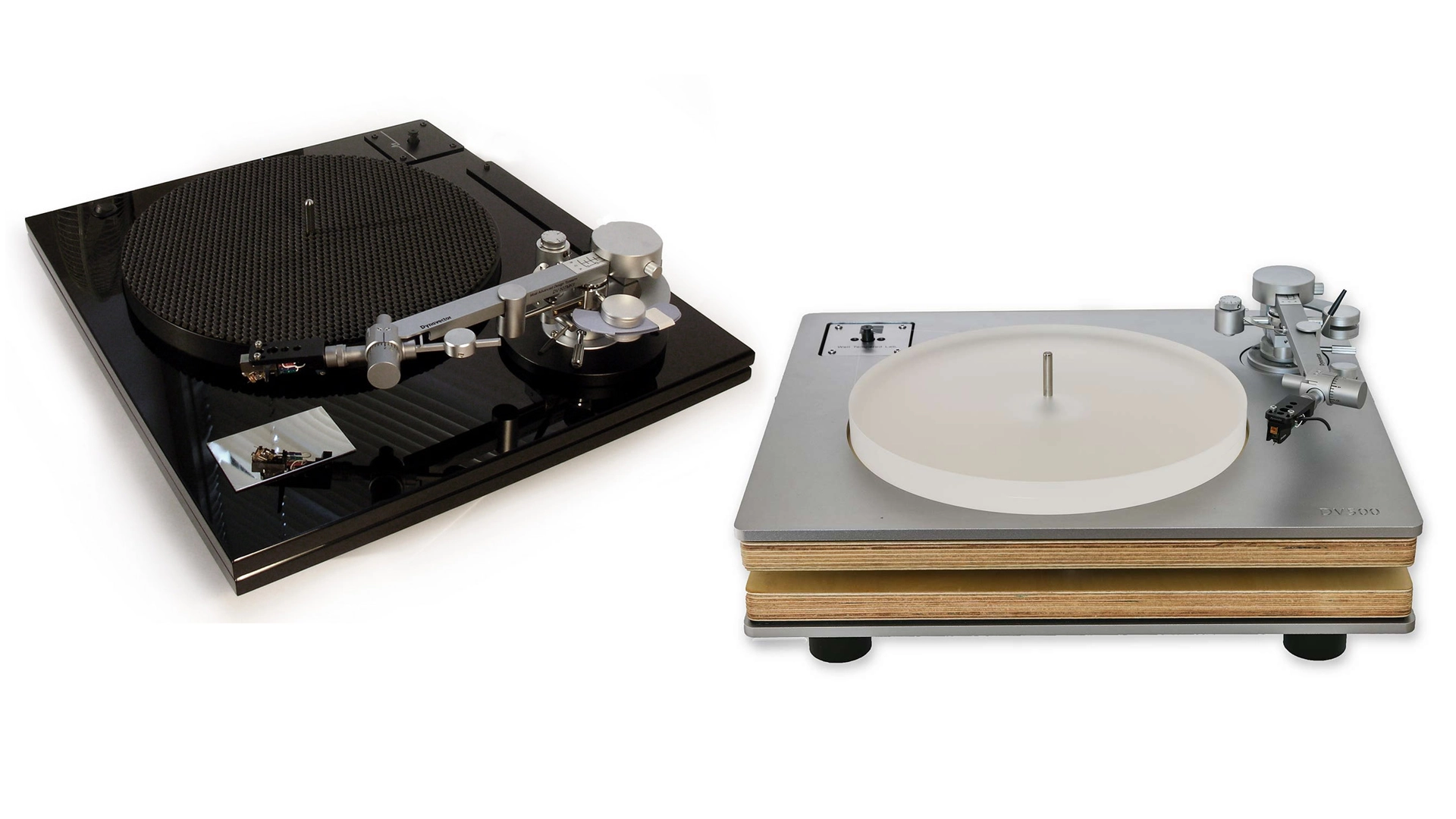
Dynavector Systems is a Japanese analogue-audio company founded in 1975 by engineering professor Dr Noboru Tominari, best known for moving-coil phono cartridges that combine advanced magnetic design with practical system compatibility. Dynavector helped make high-output MC cartridges a serious category, allowing models such as the 10X series to work with many moving-magnet phono inputs, while low-output designs such as 20X, XX-2A, Te Kaitora Rua and XV-1t serve progressively more specialised arms and phono stages. Two patented ideas recur across the range: Flux Damper stabilises unwanted variations in the magnetic circuit, and Softened Magnetism controls abrupt magnetic behaviour that can contribute to distortion. Fine wire coils, carefully shaped armatures, powerful magnets and cantilevers selected for each performance level complete the generator system. The company has also produced tonearms and electronics, but cartridges remain its central identity. Dynavector’s strength is not simply exotic material choice; it is the sustained application of magnetic-circuit theory to preserve tracking energy, dynamics and tonal information while offering both accessible high-output and reference low-output MC solutions.
EAT

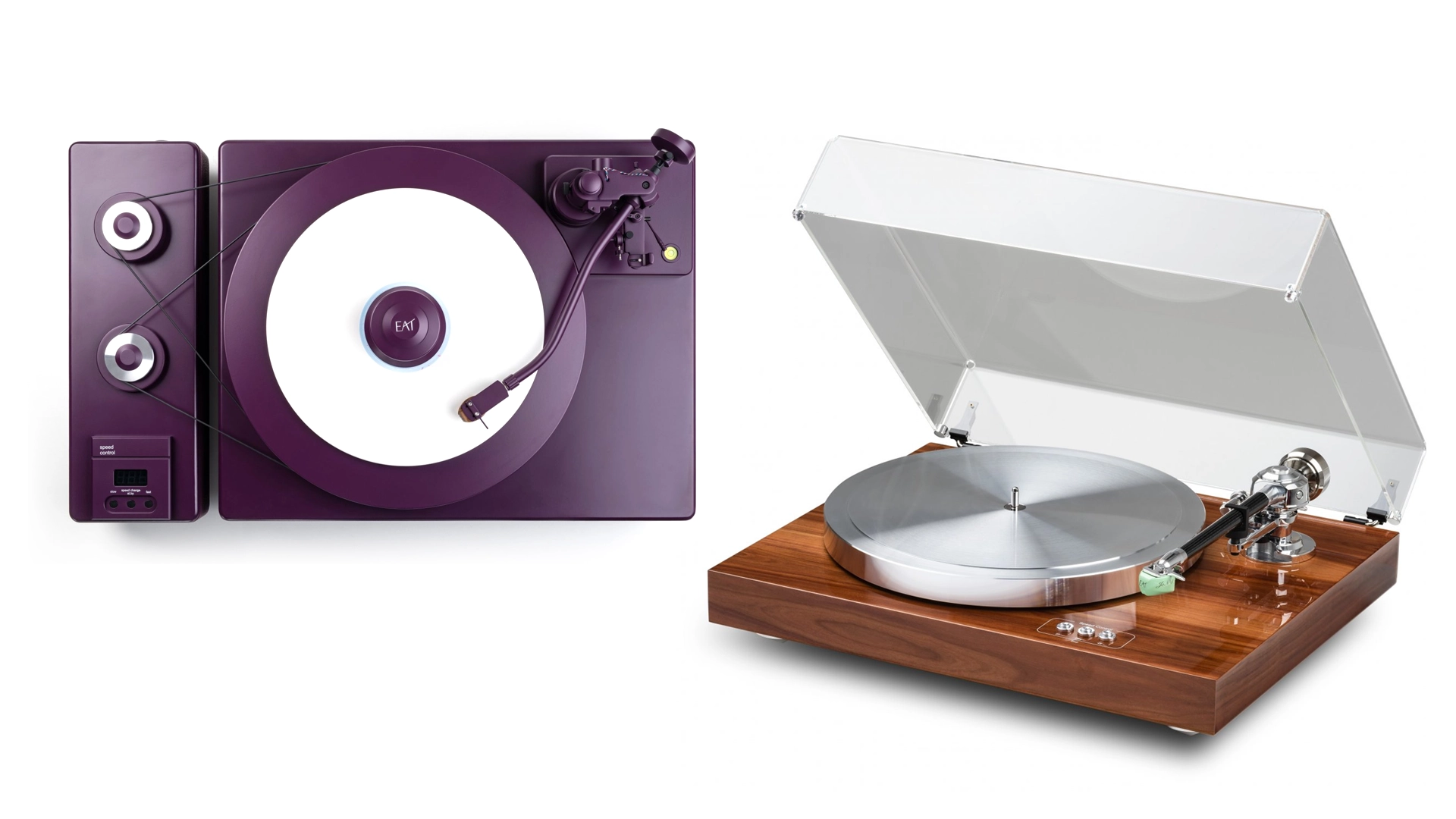
European Audio Team, or E.A.T., is a Slovak high-end analogue brand founded by Jozefina Lichtenegger, with production links spanning Slovakia, Prague and Austria. Its story began with vacuum tubes rather than turntables: after work connected with VAIC, Lichtenegger commissioned 300B and KT88 valves from the former Tesla operation in Prague and established E.A.T. around 2003. She later acquired the tube-making assets, preserving specialist tooling and knowledge that few modern audio firms possess. The first E.A.T. turntable, the substantial Forte, followed in 2009 and set the direction for a range that now includes Fortissimo, F-Dur, Forte, C-Sharp, C-Major and B-Sharp decks, alongside proprietary tonearms, cartridges, phono stages, record accessories and valves. Designs use high-mass platters, isolated motors, carbon-fibre structures and carefully controlled bearings in different combinations rather than repeating one platform cosmetically. The company also develops E-Glo valve phono electronics, connecting its original tube expertise with vinyl replay. E.A.T.’s real individuality lies in that continuity: a founder-led analogue company whose knowledge runs from the cartridge and arm through the deck, phono stage and vacuum tube.
Edwards Audio

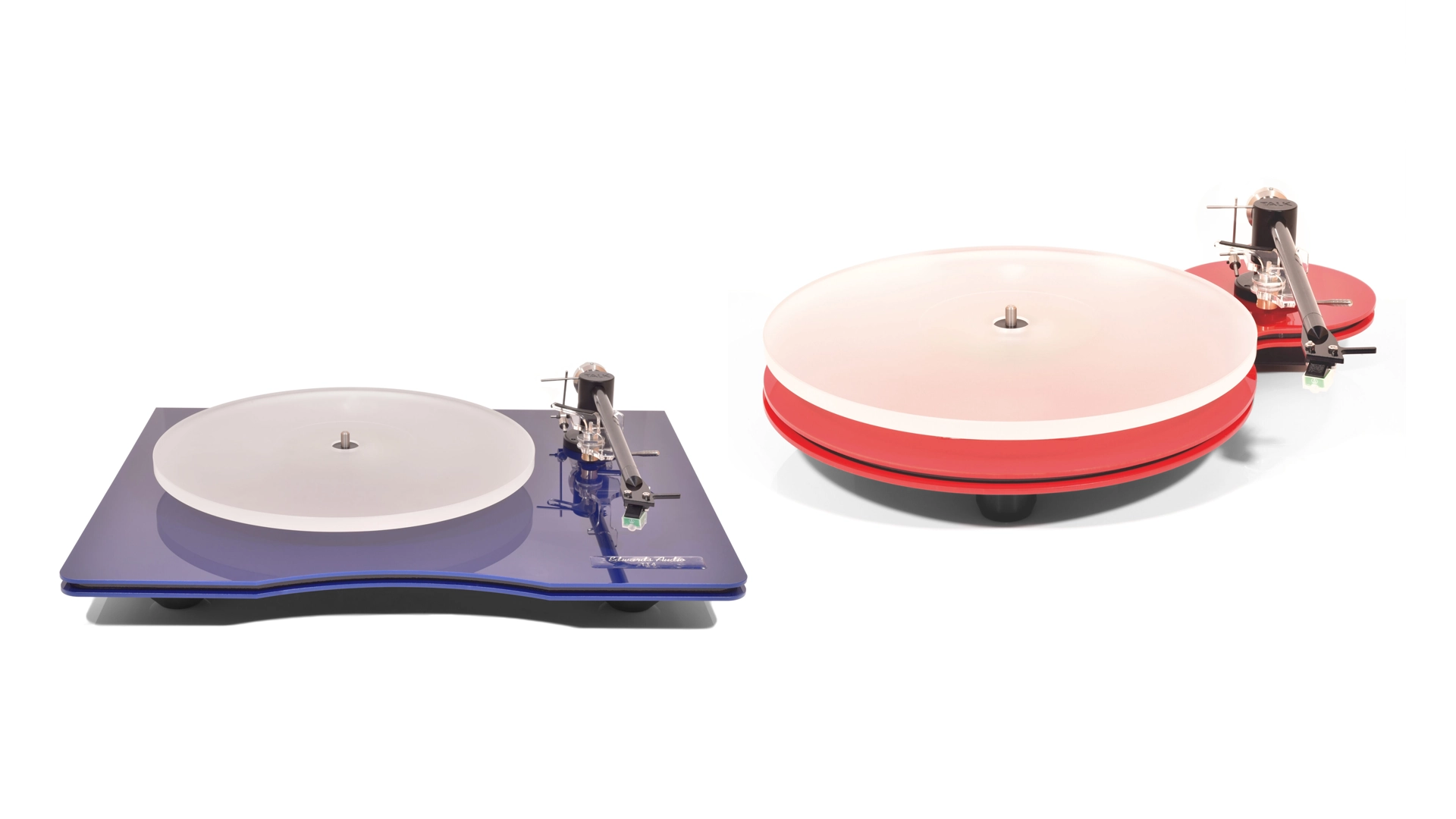
Edwards Audio is the affordable British analogue and electronics brand created in 2009 by Kevin Edwards, founder of TALK Electronics, to prove that meaningful UK manufacture need not be reserved for luxury prices. It began with the compact MC1 moving-magnet/moving-coil phono stage and expanded most visibly through a colour-coded family of belt-drive turntables. Models from the entry TT1 upward use combinations of acrylic plinths, precision-machined platters, external or electronically controlled motors and the company’s own tonearm work; the TT4 and larger TT5 show how the platform develops rather than merely changing finish. Edwards Audio also makes phono stages, integrated amplifiers and speed-control or upgrade accessories, allowing a vinyl system to grow in stages. Design, machining and assembly are centred in Royal Wootton Bassett, and the bright finishes are part of a deliberate rejection of anonymous black-box styling. The brand’s strongest quality is engineering economy: spending on the bearing, drive, arm geometry and low-noise analogue circuits that directly affect playback, while keeping construction straightforward enough to remain serviceable and attainable.
Elac

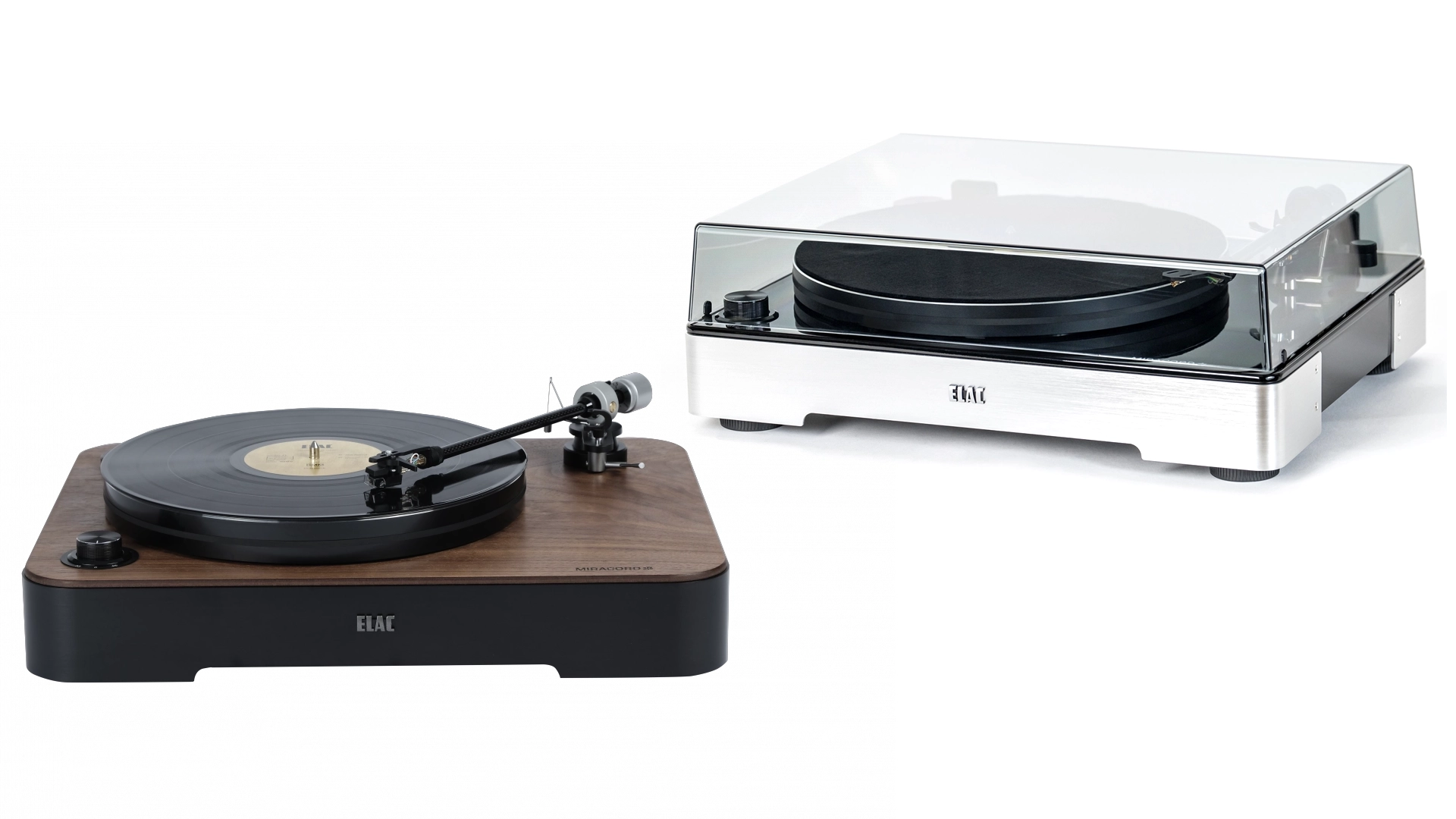
ELAC is a German audio company founded in Kiel on 1 September 1926 by Dr Heinrich Hecht, Dr Wilhelm Rudolph and Gerhard Schmidt. Its near-century history is unusually broad: the company began in electroacoustics and sonar, became a major post-war maker of turntables and cartridges, and shifted its centre of gravity to loudspeakers in the 1980s. Modern ELAC is therefore more than the affordable speakers often associated with designer Andrew Jones. The Debut and Uni-Fi families use carefully engineered cone drivers and, in Uni-Fi, concentric midrange/tweeter geometry to bring controlled directivity and coherent imaging to accessible systems. Carina, Vela and higher ranges draw on the folded JET tweeter, while active subwoofers and electronics complete stereo and cinema installations. Turntables keep the brand’s analogue history visible rather than treating it as a retro licensing exercise. ELAC’s lasting advantage is range backed by real transducer engineering: it can translate its knowledge of motors, diaphragms, wave launch and cabinet behaviour from compact entry models to elaborate floorstanders, while the 1926 date describes the actual company lineage rather than a recently revived name.
Elipson

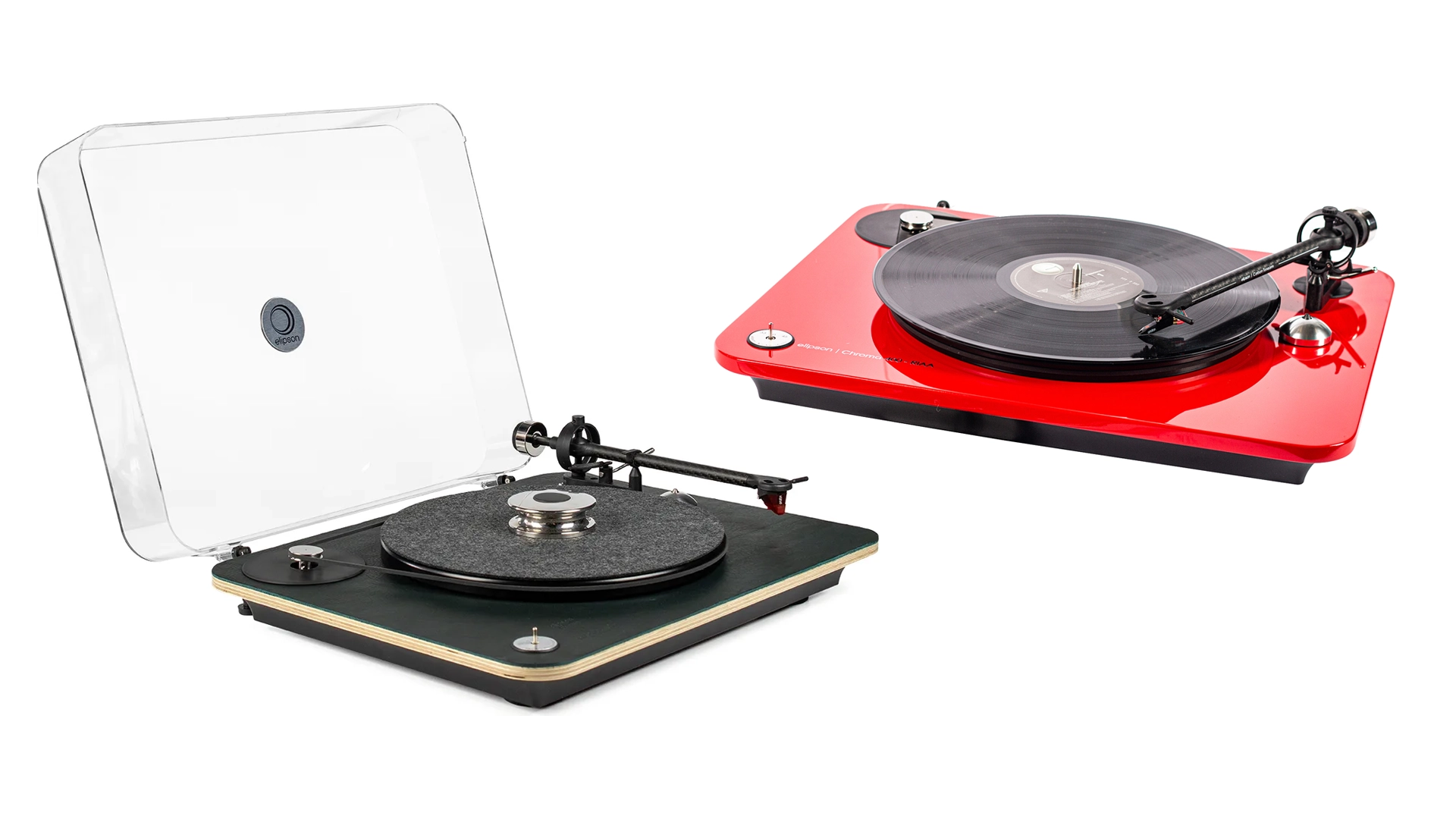
Elipson is France’s oldest surviving specialist loudspeaker name, tracing its company origin to 1938 and its distinctive acoustic identity to engineer Joseph Léon. The historical sequence deserves precision: the business began as Multimoteur, early audio research started around 1940, Léon joined in 1946 and led the company from 1948, and the Elipson name—formed from “ellipse” and the French word “son”—was adopted in 1951. Under Léon, spheres, reflectors and resonators were engineering tools for controlling diffraction, radiation and time alignment, not merely futuristic styling. The BS50 Chambord and later 402 made those experiments iconic in French broadcasting and public installations. Today the Planet series keeps the spherical enclosure visible, while Heritage models revisit large-format designs and newer Prestige, Legacy and wireless products cover conventional home systems. Elipson also offers turntables and electronics, but loudspeaker form remains its signature. Its strength is the unusually direct link between acoustic research and industrial design: shapes that are instantly recognisable because they were first chosen to solve propagation and enclosure problems.
EMT Tontechnik

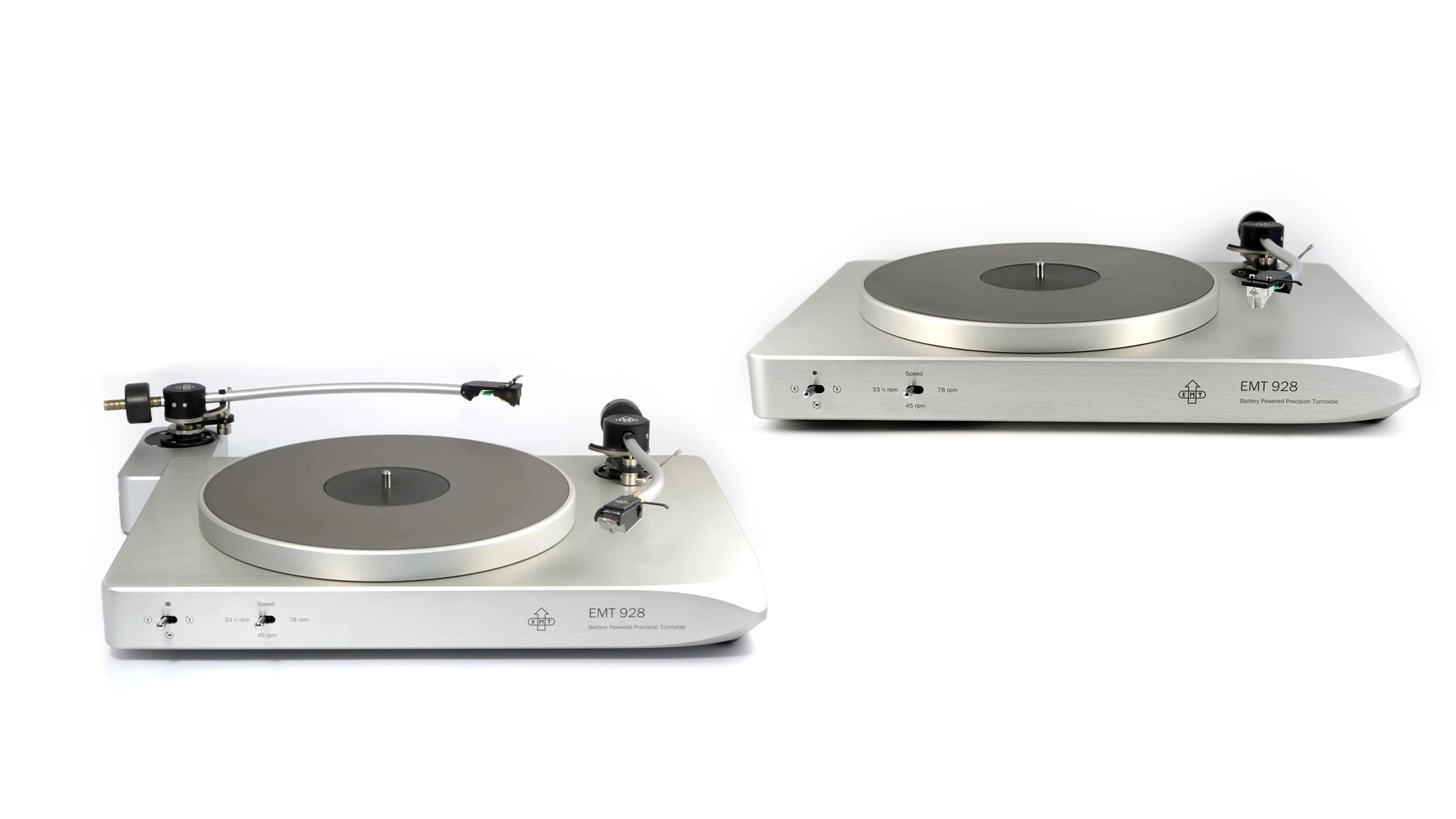
EMT began in Berlin in 1940, when Wilhelm Franz founded Elektromesstechnik Wilhelm Franz to make measurement equipment for broadcasting. The name became inseparable from professional analogue playback: EMT 927 and 930 idler-drive turntables, the direct-drive 950 and the TSD 15 moving-coil cartridge were engineered for continuous studio use, fast cueing and repeatable performance. EMT also created landmark studio processors including the 140 plate reverb and 250 digital reverb. Today the brand’s analogue know-how is continued in Switzerland by HiFiction AG, which develops and manufactures EMT cartridges, the 928 II turntable, 909/912 tonearms and phono electronics. Modern products retain the serviceable, precision-built character of the broadcast originals while using current materials and machining.
Esoteric

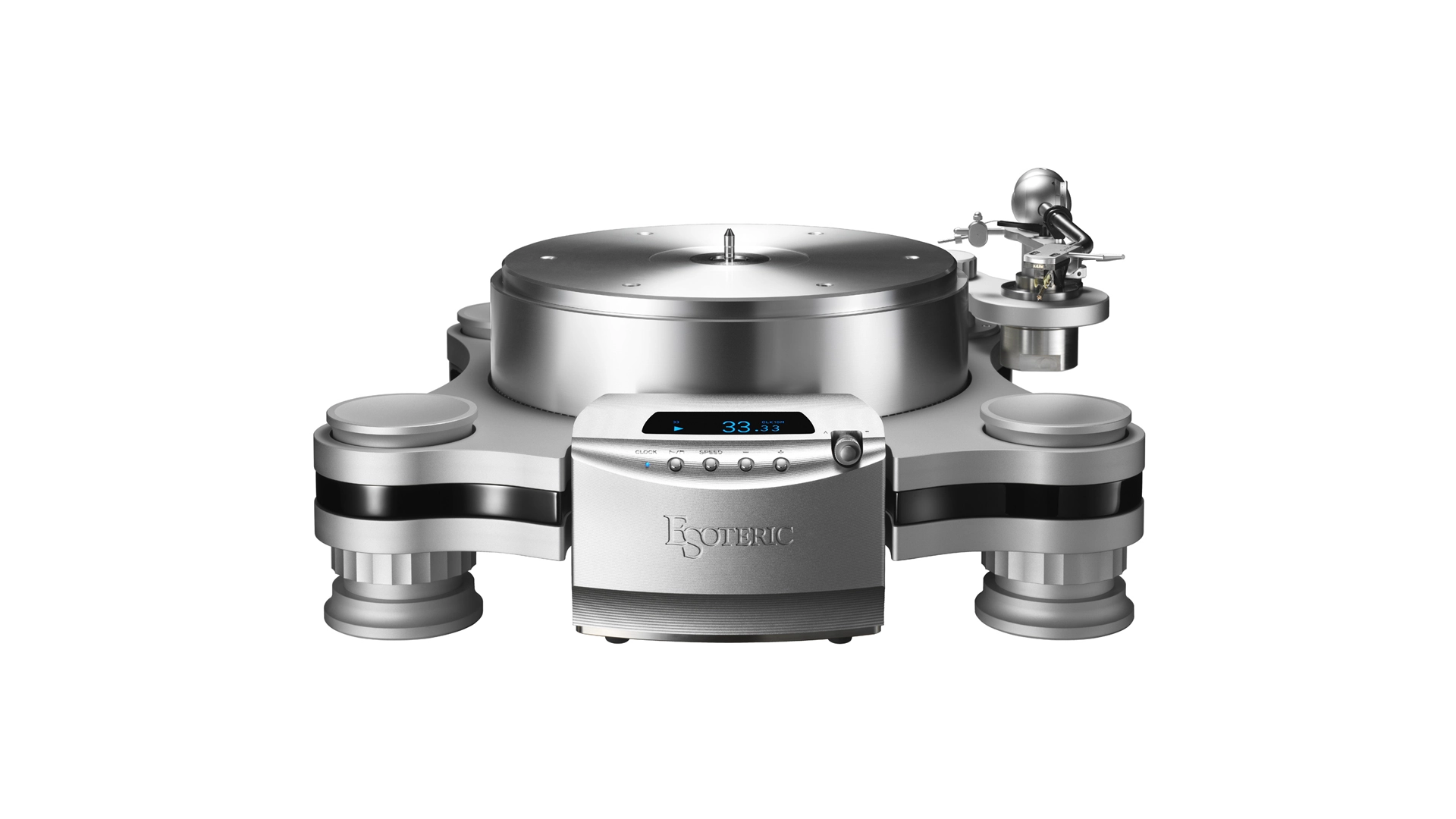
Esoteric is the high-end audio marque created by TEAC in Japan in 1987. It first became famous for extremely rigid CD and SACD transports, especially the VRDS system, which clamps a disc to a precision turntable to stabilise rotation and reduce mechanical error. The current VRDS-ATLAS mechanism extends that principle with a heavy bridge and carefully controlled centre of gravity, while Esoteric’s Master Sound Discrete DAC and clock technologies move critical conversion and timing functions into proprietary hardware. The catalogue now spans SACD/CD players, network players, DACs, master clocks, preamplifiers, power and integrated amplifiers, phono stages and the Grandioso reference series; it has also entered turntables. Esoteric’s lasting strength is vertical engineering—mechanism, chassis, clocking, conversion and analogue stages designed as parts of one playback architecture.
Garrard Turntables

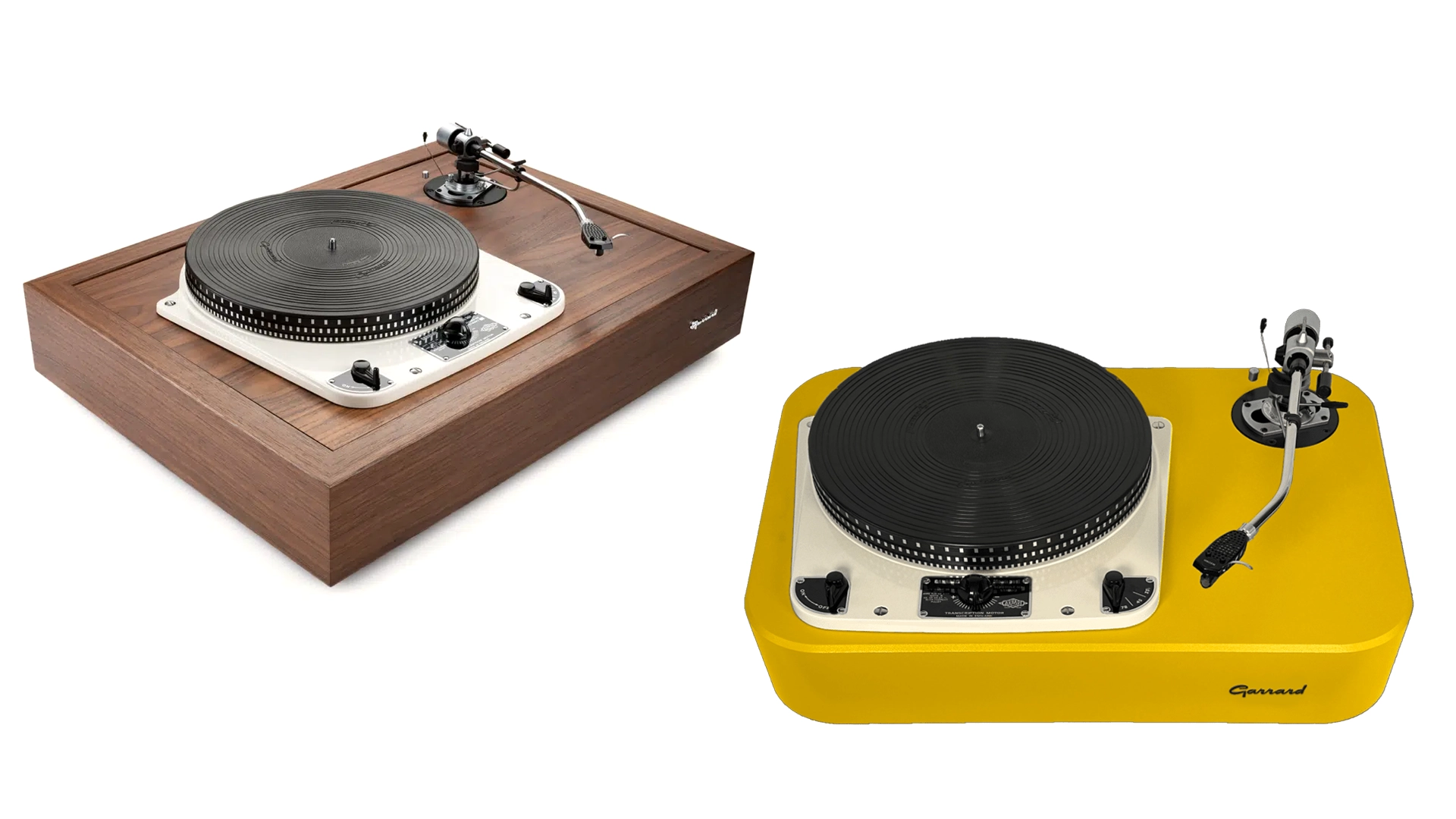
Garrard is one of the foundational British turntable names, with a transcription-deck lineage that begins in 1915 rather than with the first famous hi-fi model. Its enduring reference is the idler-drive 301, introduced in 1954 for professional and domestic installations; the more streamlined 401 followed in 1965. High-torque motors, substantial platters, mechanically switched speeds and serviceable engineering allowed both decks to remain in use for decades and created a specialist restoration industry around them. SME acquired the Garrard name and specialist restorer Loricraft in 2018, bringing the marque under the same Steyning engineering group as SME tonearms. The modern 301 Classic and 301 Advanced projects preserve the architecture and visual language of the original while integrating carefully restored or re-engineered drive assemblies with contemporary plinths, controls and SME tonearms. Garrard’s importance therefore lies in a living idler-drive platform, not merely in nostalgia or the age of its badge.
Genuin

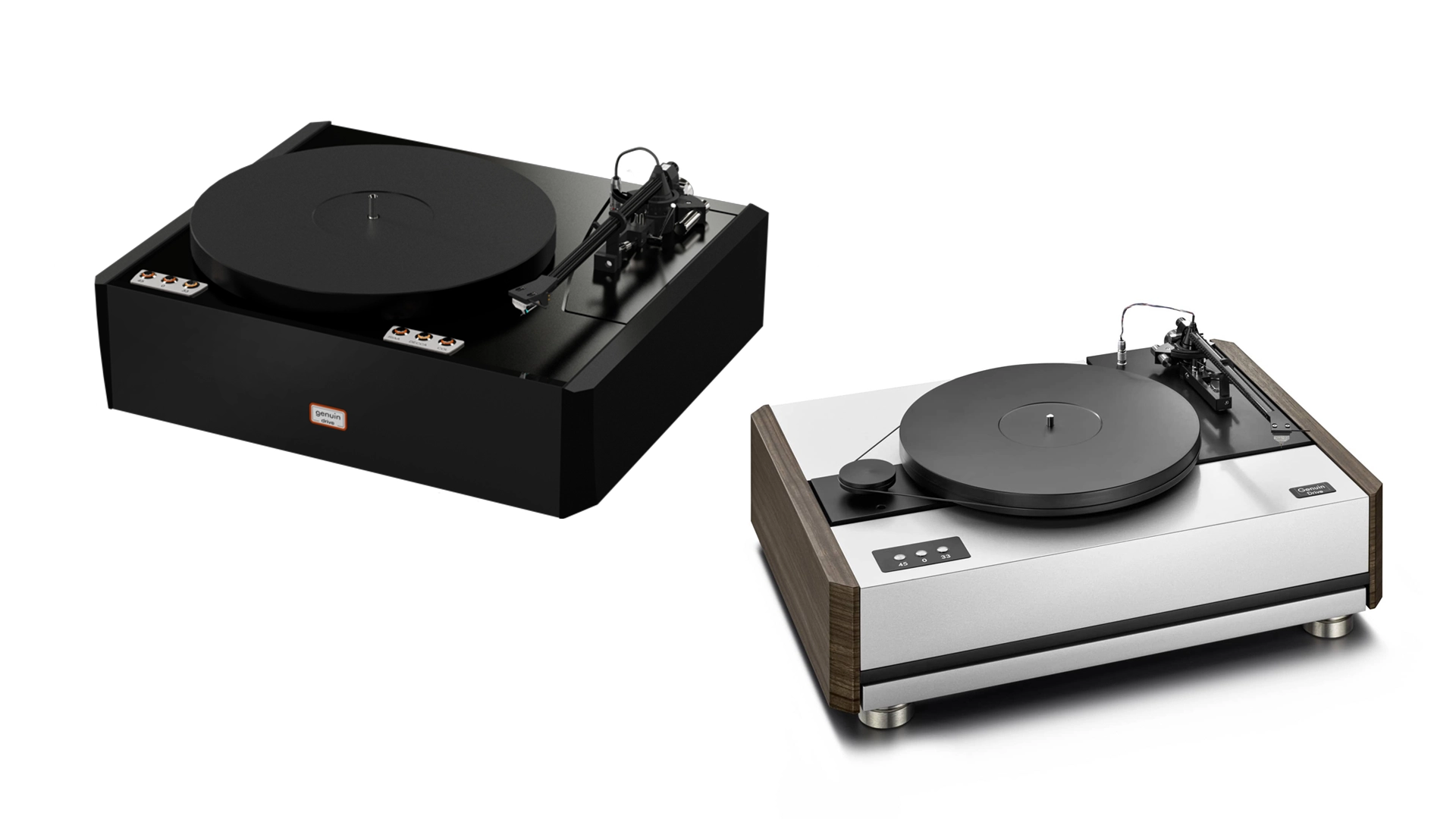
Genuin Audio is Thomas Wendt’s attempt to offer an entire high-end playback chain through commissioned German engineering rather than a single in-house designer. After decades as a listener and as owner of HiFi-Studio Cottbus, Wendt created the product line by asking recognised specialists to develop components specifically for the brand; specialised German manufacturers then build them in small quantities. The catalogue is unusually complete and its short product names describe a coherent system: drive turntable, point tonearm, sting cartridge, pearl phono preamplifier, tars music server, direct cables and the neo, ava, alex and next active loudspeakers. This allows Genuin to address the mechanical, analogue, digital and room-facing parts of reproduction as one chain while keeping each project in the hands of an appropriate expert. The understated cases reflect the company’s ‘The inside matters’ principle: engineering resources are directed toward circuit, mechanism and acoustic function, with manufacture and final quality control kept in Germany.
Gold Note

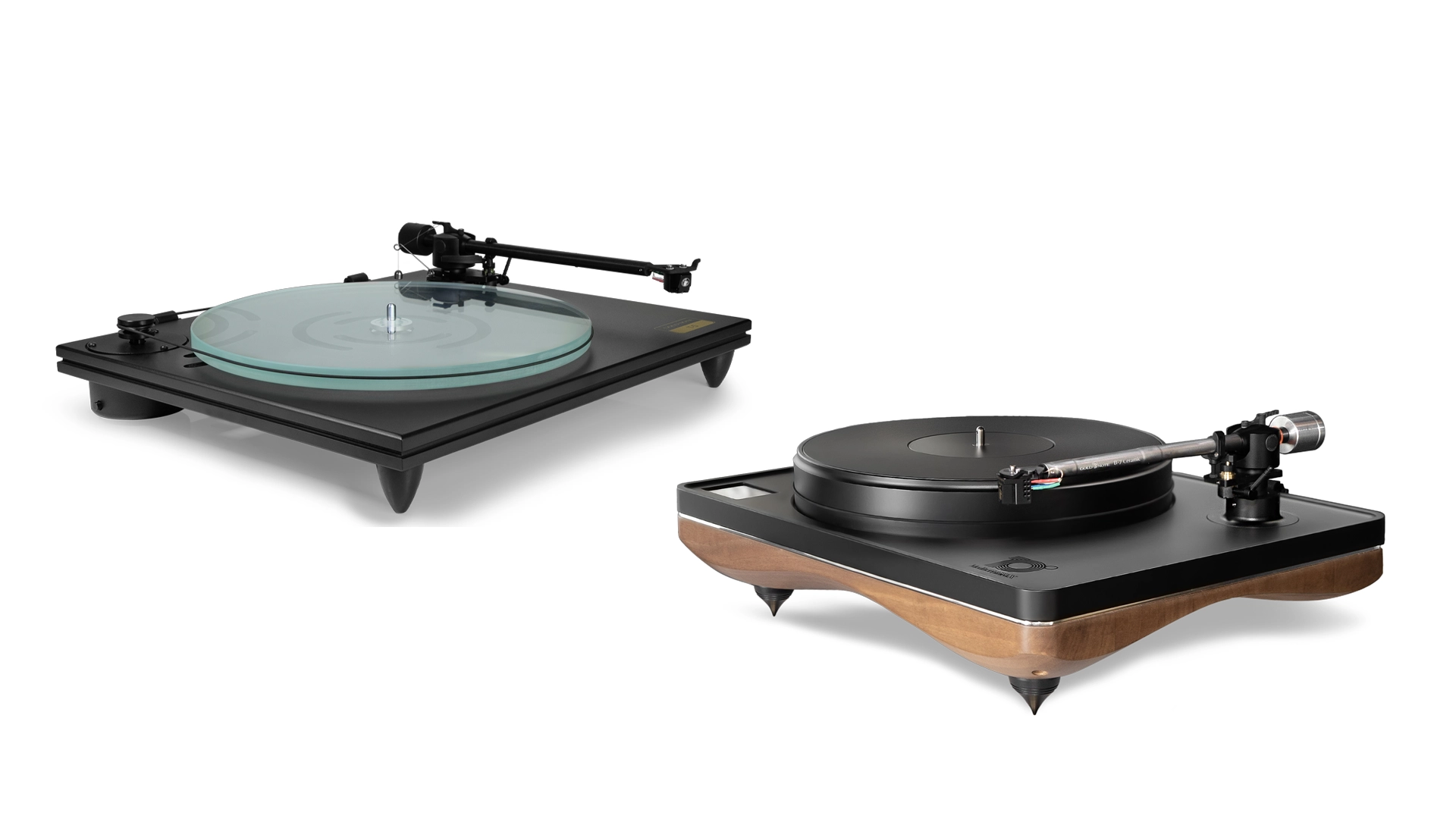
Gold Note is an Italian full-system audio manufacturer whose modern brand grew from Maurizio Aterini’s engineering studio, established in Florence in 1992 to design analogue products for other companies. The Gold Note name itself was founded in 2012, after Elena Basciano and later Alessio Oronti joined the enterprise. Its catalogue now links turntables and cartridges with phono stages, digital sources, all-in-one players, amplifiers, loudspeakers, racks and cables. Recognisable products include the Mediterraneo turntable, PH-10 phono stage, DS-series streamers and IS-series integrated systems. A useful feature of the range is modular upgrading: many components accept dedicated external power supplies, allowing the core unit to remain in service while its power section is improved. Design, development and much of the production remain concentrated in Tuscany.
Goldring

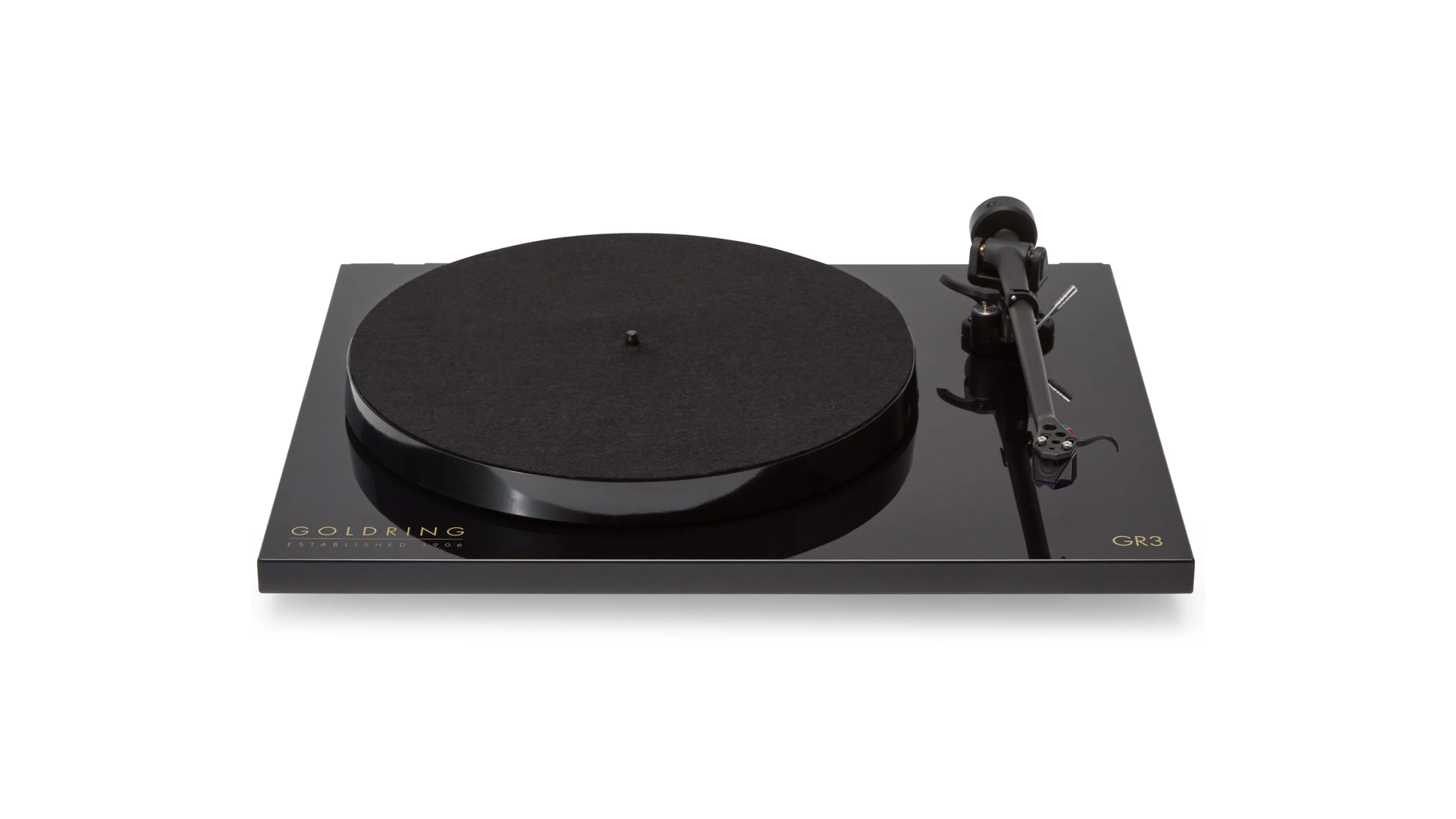
Goldring is a British analogue-audio specialist with roots in the earliest electrical record reproduction. Czech-born brothers Heinrich and Julius Scharf founded Gebrüder Scharf in Berlin in 1906; the business moved to England in 1933 and adopted the Goldring Manufacturing name in 1953. Its history includes the Goldring 500 pickup, the widely used G800 cartridge, collaboration with Lenco on turntables such as the GL75, and the Electro II moving-coil design. The current range covers E-series and 1000/2000-series moving-magnet cartridges alongside Eroica, Elite, Ethos and Legacy moving-coil models, plus replacement styli and dedicated phono accessories. Goldring continues to design cartridges in the UK and hand-builds its moving-coil models there. Long-term stylus support and factory repair expertise are as important to the brand as introducing new models.
Grand Prix Audio

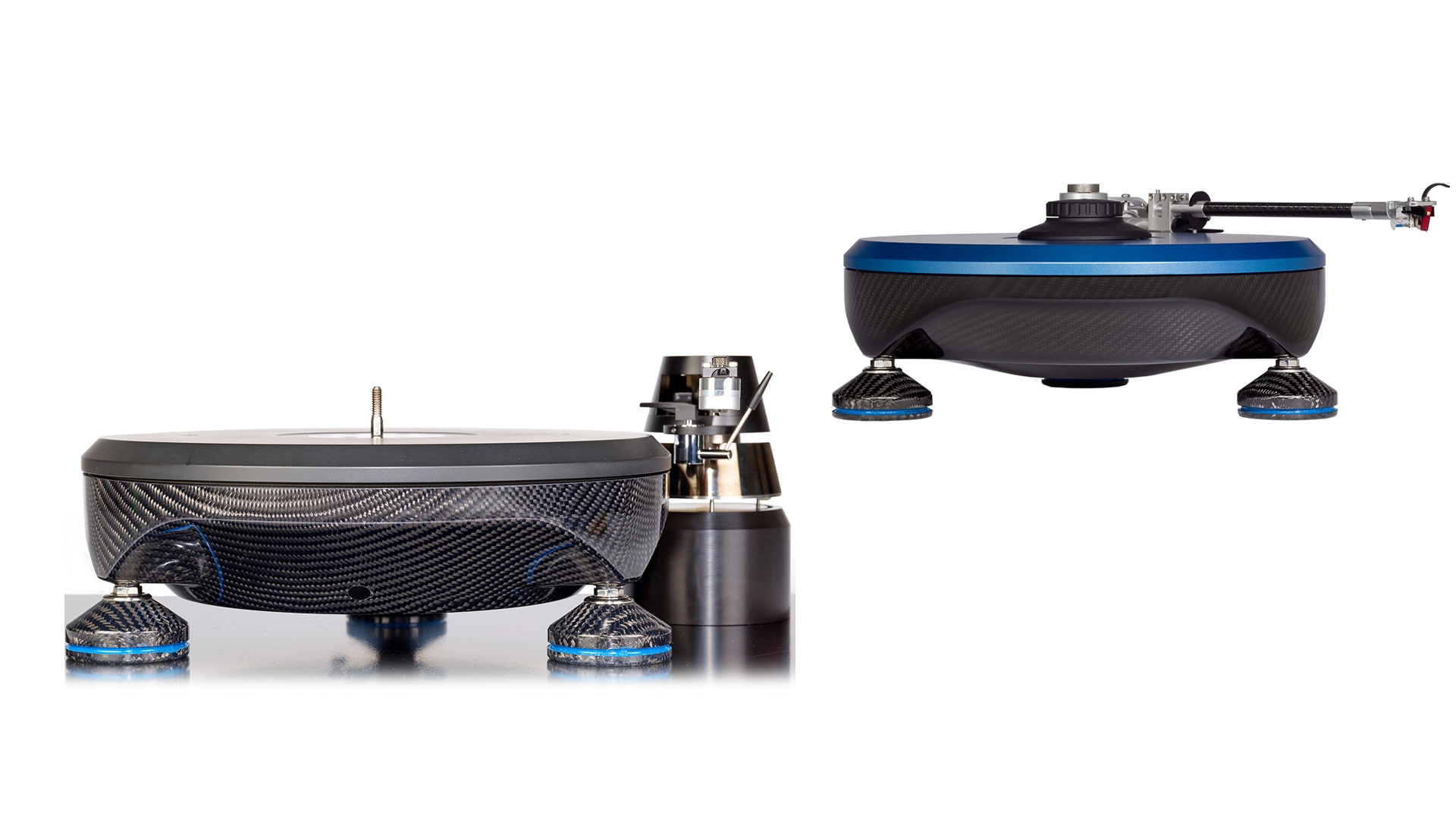
Grand Prix Audio applies racing-derived structural engineering to the problem of keeping vibration out of turntables and audio electronics. Founder and principal designer Alvin Lloyd worked in Formula and Indy-car engineering before creating the first Monaco isolation system in 1999. The company’s modular racks use carbon-fibre members, mechanically constrained joints, tuned dampers and decoupling elements so that stored energy is controlled rather than hidden beneath sheer mass. This approach appears in the Monaco and Silverstone support systems and in Apex equipment footers. Grand Prix Audio later extended the same thinking to the direct-drive Monaco and Parabolica turntables, combining a low-inertia structure with proprietary speed control and fluid damping. Its products are made in the United States and are best understood as engineered mechanical systems, not conventional furniture with an audiophile label.
Hartvig Audio

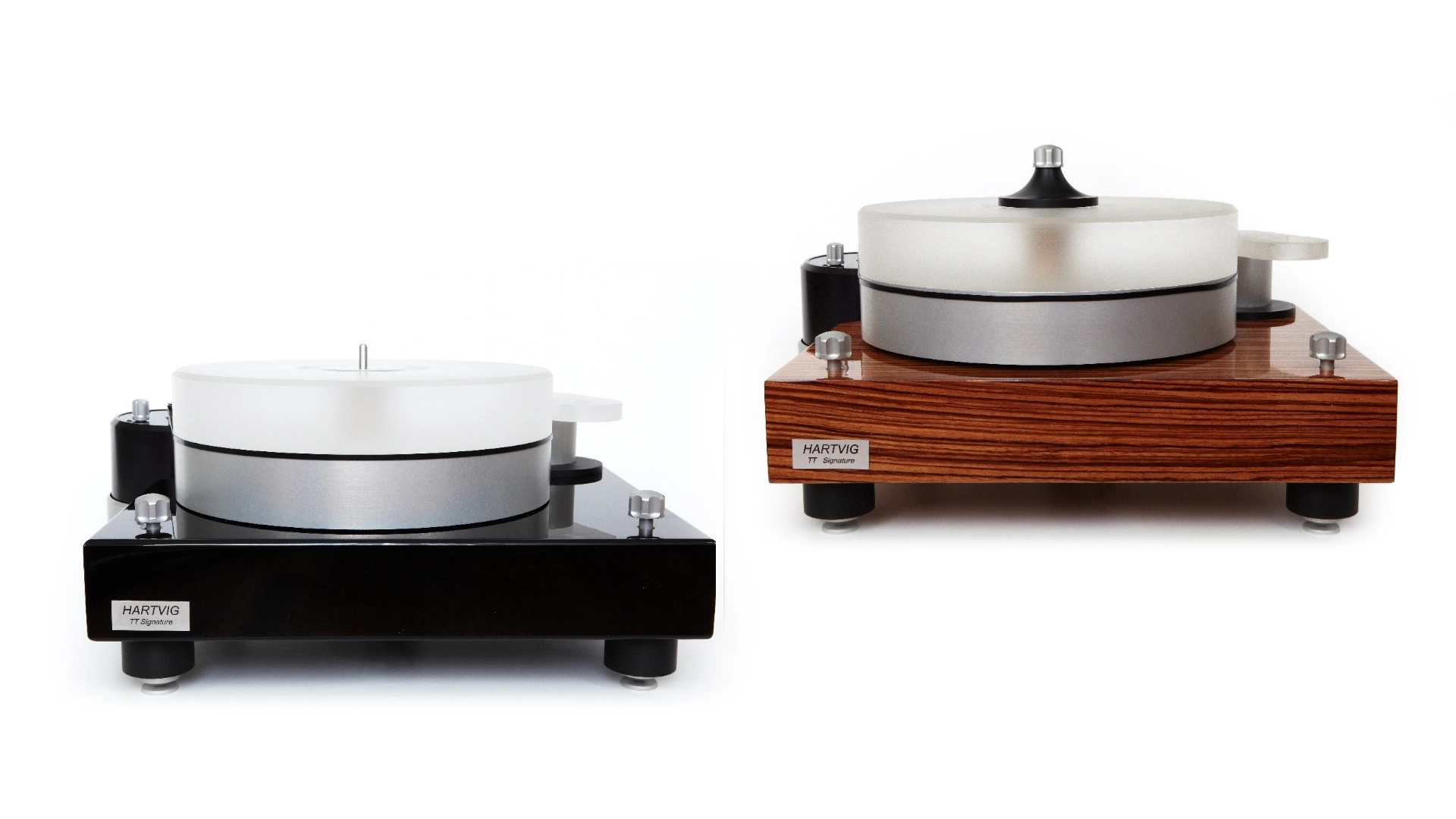
Hartvig Audio is a small Danish analogue specialist created by Søren Hartvig and centred on a single problem: extracting stable, low-noise playback from the vinyl groove. The company became known through the Hartvig TT and TT Signature turntables, whose restrained appearance conceals a deliberately substantial construction. A massive aluminium-and-acrylic platter provides rotational inertia, while belt drive, an outboard motor arrangement and a separate battery-based or isolated power solution keep motor and mains noise away from the cartridge. Interchangeable arm mounting also allows the deck to be configured around different tonearms rather than locked to one package. The later TT Evolution continues this emphasis on mechanical grounding, speed stability and serviceable modular construction. Hartvig Audio is not a mass-market record-player brand; its appeal lies in focused Danish engineering, small-scale manufacture and a turntable platform refined over time instead of a constantly changing catalogue.
Holbo

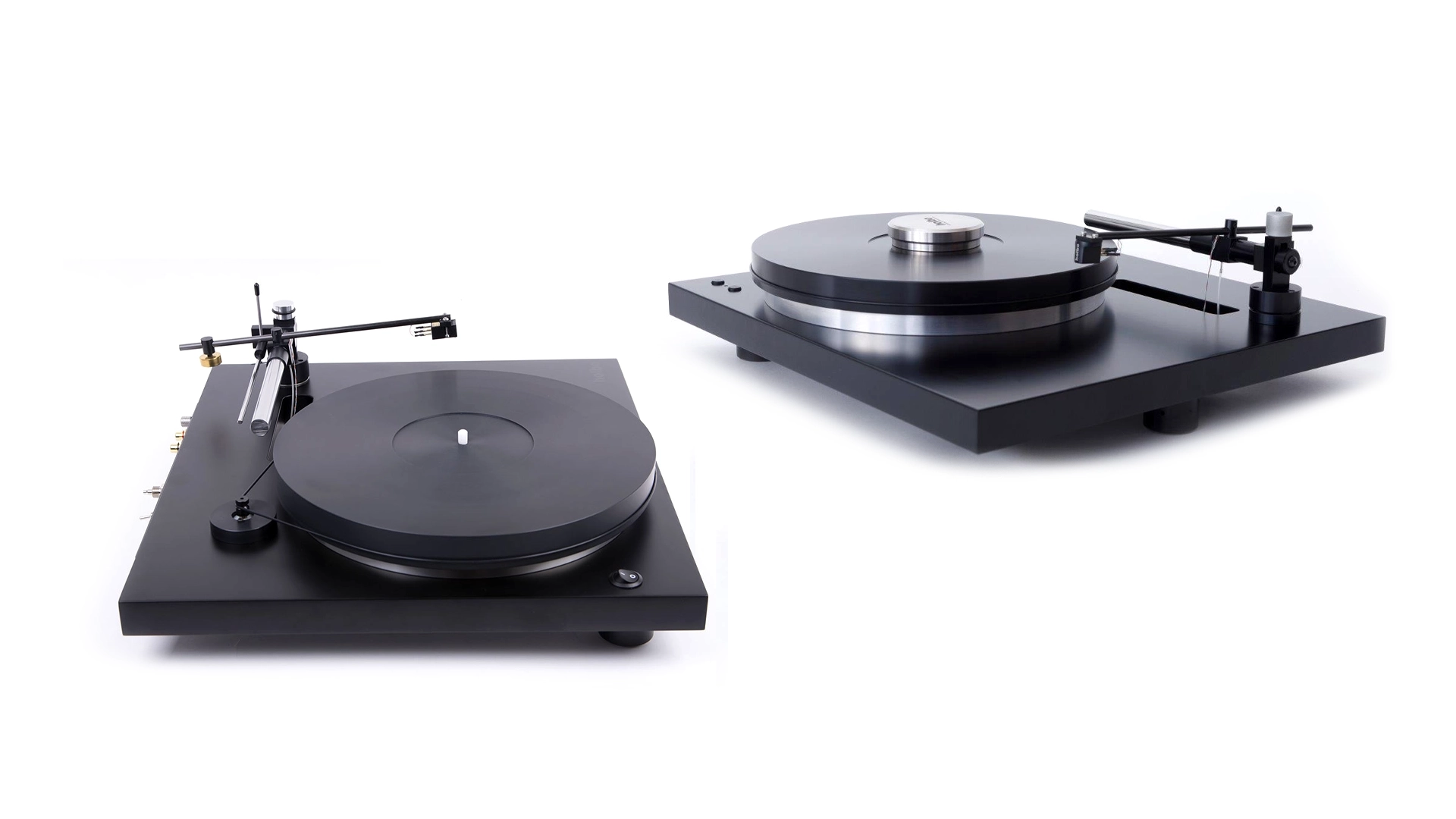
Holbo is a Slovenian analogue brand built around Bostjan Holc’s integrated air-bearing turntable and linear-tracking tonearm. Instead of adding a tangential arm to a conventional deck, Holbo uses one quiet external air supply for both the platter bearing and the arm, reducing mechanical contact while keeping the complete system compact. The belt-driven platter is machined from aluminium and weighs about five kilograms; electronic control provides 33⅓ and 45 rpm operation with fine speed adjustment. The linear arm offers practical setup of tracking force, tangency, azimuth, VTA and SRA, including on-the-fly height adjustment, so its precision does not depend on a factory-fitted cartridge. Holbo’s strength is concentration rather than breadth: one turntable architecture combines low-friction platter support, tangential tracking and user-adjustable geometry in a coherent, serviceable package made in Slovenia.
Holborne

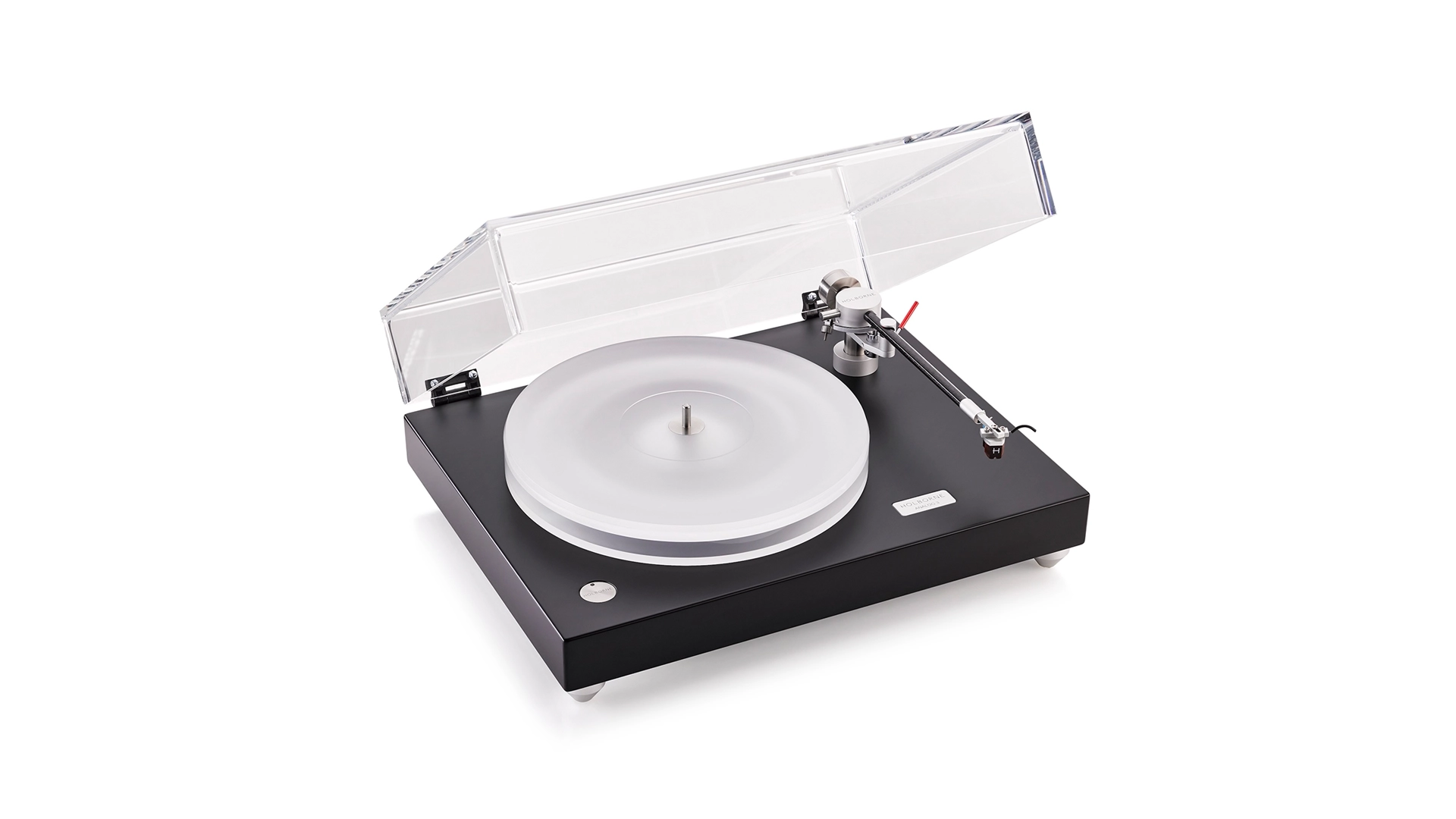
Holborne is a Swiss analogue and electronics brand founded in 1987 by musician and technician Meinrad Müller and named after the English Renaissance composer Anthony Holborne. Small-scale production and a close relationship between musical practice and mechanical design have shaped the company from the beginning. Its best-known current analogue work is the Analog turntable platform and the Dualpivot tonearm. The latter combines unipivot-like freedom in the horizontal plane with a defined rotating support for vertical movement, while a three-part counterweight, interchangeable headshell options and continuous low-resistance wiring allow detailed cartridge setup. The company has also produced amplifiers and phono electronics. Since 2020, Holborne electronics have been made by HiFiction AG, while swiss analog ag progressively took over the turntable business from 2022. Holborne therefore represents both a historic Swiss marque and an evolving specialist manufacturing partnership.
J.Sikora Turntables

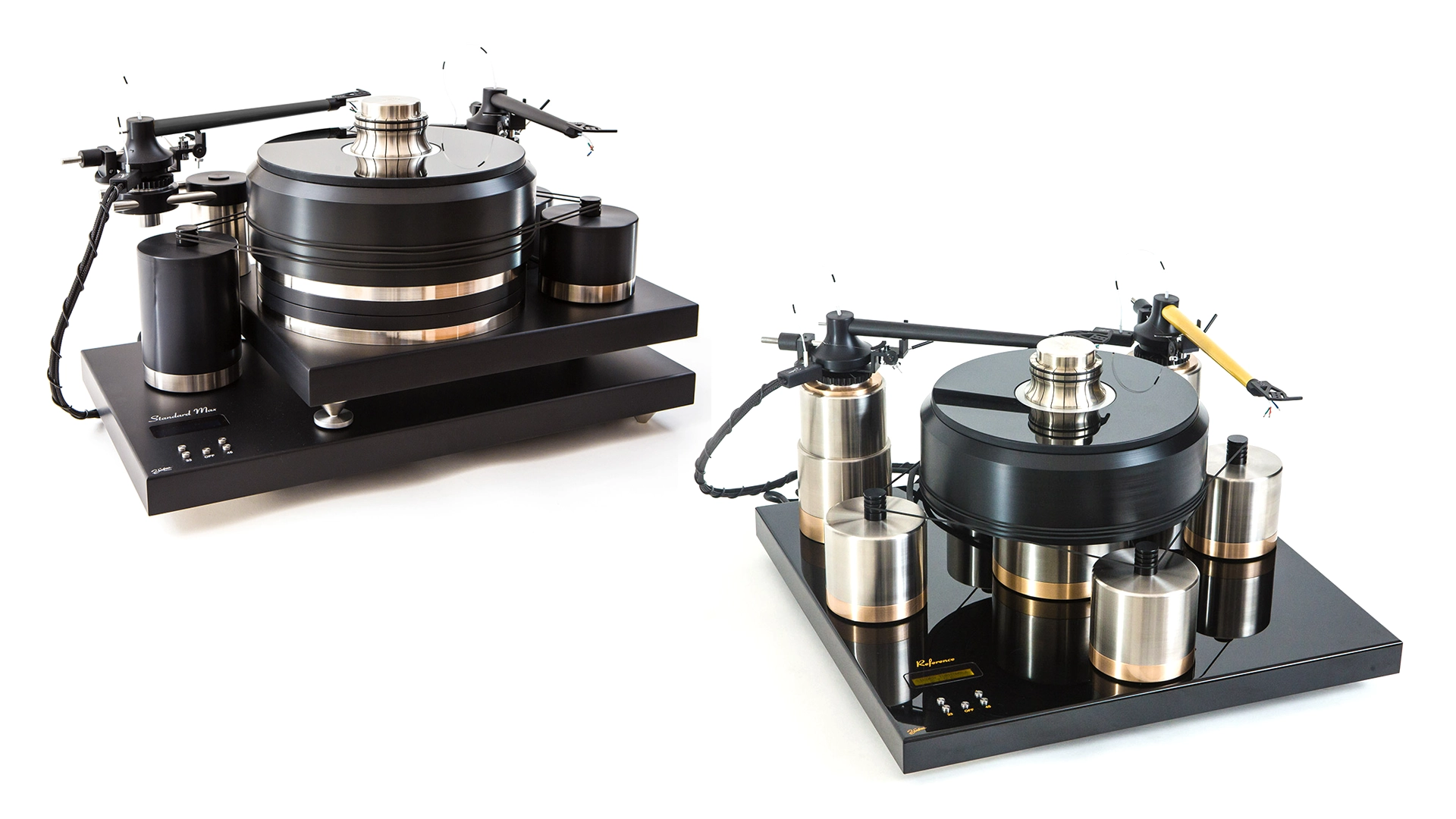
J.Sikora Turntables is Janusz Sikora’s Polish analogue workshop, producing high-mass turntables one at a time in Lublin since 2007. Sikora brought experience from Burdjak & Sikora valve amplifiers, but the new company concentrated on controlling speed, vibration and resonance at the record surface. Its decks deliberately combine different metals and mechanically separate the motor, bearing and layered plinth so that no single material dominates the resonance behaviour. Heavy platters, substantial outboard motors and sophisticated speed controllers scale from the newer Aspire through Initial and Standard models to the Reference; upper designs can use more than one motor for stable drive. J.Sikora later added its own KV9 and KV12 tonearms, using aramid-fibre arm tubes and precision bearings to create a complete Polish record-playing system. In-house metalwork and small-series assembly are central to the brand: these are not cosmetic mass-market platforms dressed in heavier plinths.
JBL

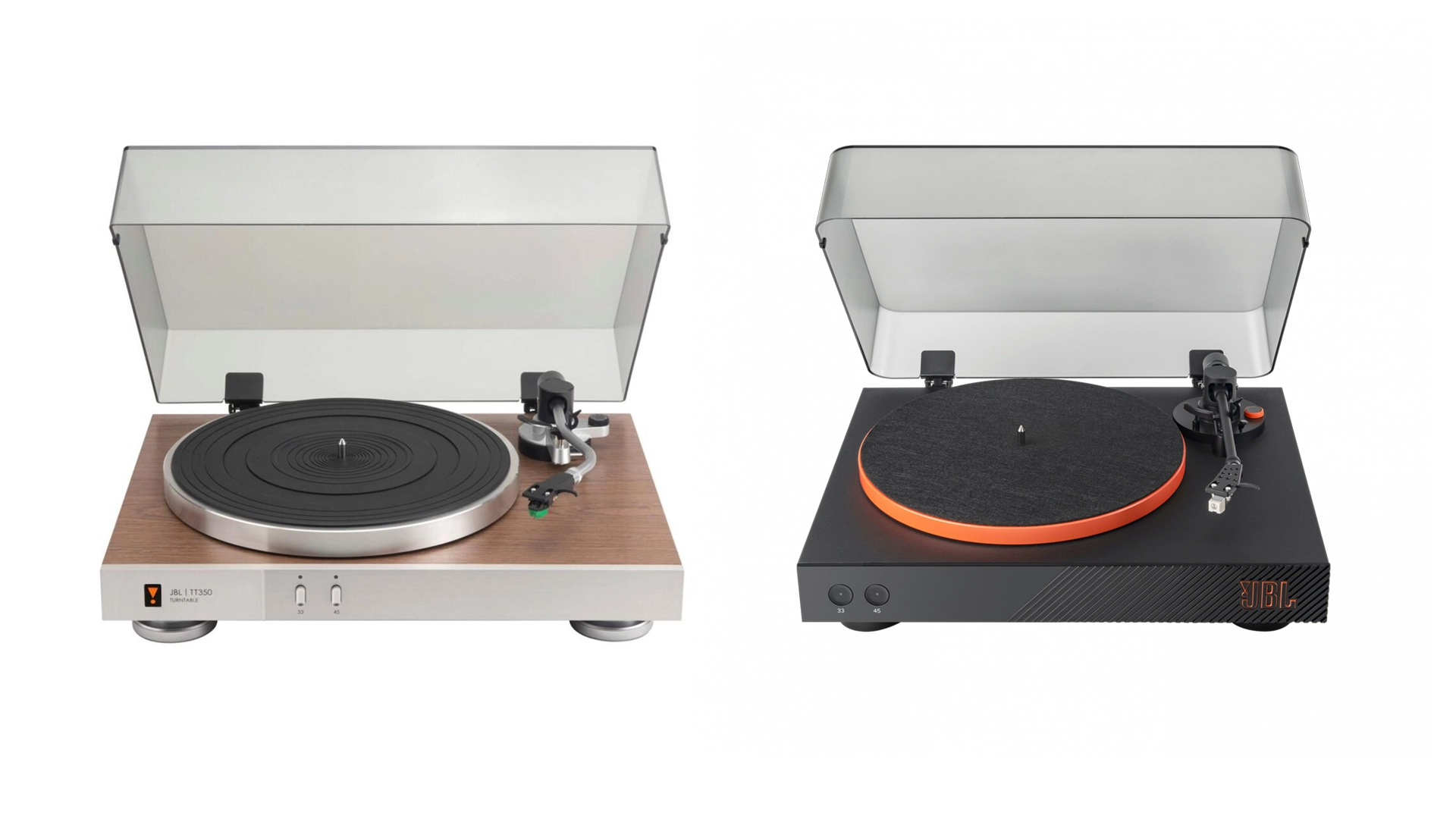
JBL is one of the few audio brands with equally deep roots in cinema, recording studios, touring sound and domestic loudspeakers. Engineer James Bullough Lansing founded James B. Lansing Sound in Los Angeles in 1946, and the early D130 driver introduced a four-inch flat-wire voice coil that helped establish the company’s reputation for high efficiency and power handling. JBL later became a studio reference through 4300-series monitors and translated that visual and acoustic language into the L100 for the home. Its professional division now covers cinema systems, installed sound, stage monitors and large-format arrays, while consumer products range from portable Bluetooth speakers and headphones to Classic and Synthesis systems. Compression drivers, horns and controlled-directivity waveguides recur across many categories because JBL designs for predictable output beyond a single listening seat. The company has belonged to Harman since 1969; Harman has been owned by Samsung since 2017. Scale is part of JBL’s know-how: transducer engineering developed for venues and studios can inform car, home and portable products without erasing the differences between them.
Kalista

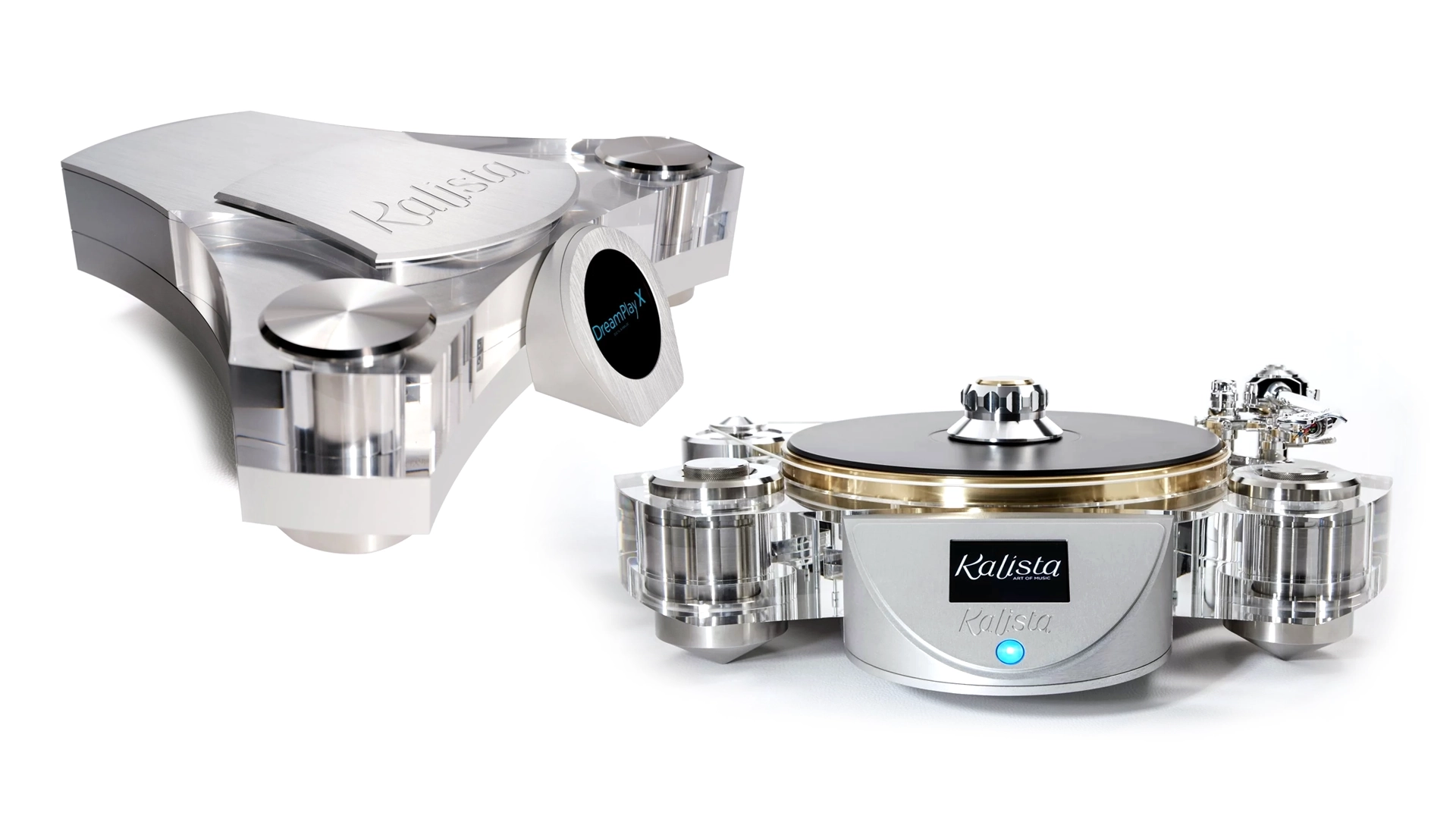
Kalista is the sculptural digital-audio marque created by French manufacturer Métronome Technologie, not merely a model range dating from the parent company’s 1987 foundation. Kalista was launched in 2003 around an exposed, mechanically isolated CD transport whose acrylic, aluminium and steel construction made the disc mechanism part of the visual design. The brand has since developed complete reference digital front ends: DreamPlay transports and integrated players, the DreamPlay X network transport, Mantax DAC and matching Elektra power supply are built as complementary components. Separate power supplies, rigid structures, deliberate mass distribution and vibration control are recurring elements because the company treats mechanical stability and electrical noise as part of digital playback. Manufacture takes place in France, with hand assembly and extensive finishing appropriate to its very small production volumes. Kalista’s individuality lies in making digital sources both technically specialised and visually architectural. Correcting the founding field to 2003 distinguishes the birth of this brand from the earlier history of Métronome itself.
Klaudio

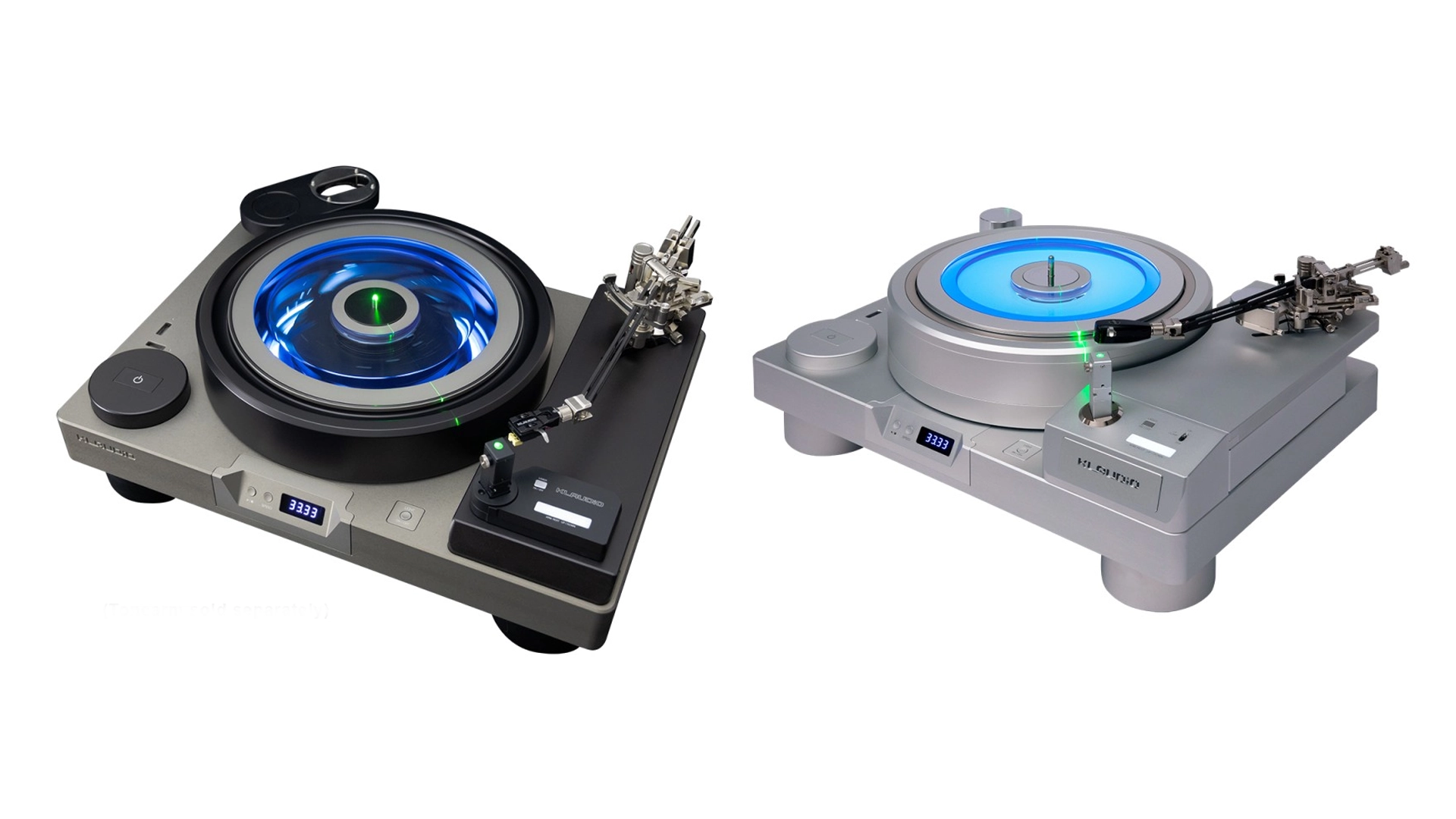
Klaudio is an American analogue-audio brand founded in 2013 from the engineering resources of Koolance, a company experienced in liquid cooling and fluid-control systems. Its first product translated that background into a fully automatic ultrasonic record cleaner: the disc is lowered into a filtered water bath, cleaned without brushes touching the groove and then dried by controlled airflow. That hands-off cycle established Klaudio among collectors who wanted repeatable cleaning without mixing proprietary detergents. The catalogue has since expanded well beyond record care. Magnezar turntables use direct-drive motors and magnetically levitated platters to reduce bearing contact, while Klaudio’s pivoting tangential tonearms use active control to keep tracking geometry close to a true tangential path without a long linear rail. Some systems also automate record clamping and setup functions. The common thread is practical mechatronics—motors, sensors, fluid handling and control electronics—applied to vinyl playback rather than traditional turntable craft alone.