
Floorstanding Speakers
This page provides a wide-ranging collection of floorstanding speaker manufacturers. We have compiled a vast list of brands to serve as a central resource for discovering companies that produce tower speakers. For every manufacturer listed, this database provides key information such as the country of origin, founding details, and a direct link to the floorstanding speaker products on their official site. This resource is intended to be a practical and comprehensive reference for the global market of tower speakers.
Hi-Fi brands in the category
Summary information and image
Direct links to official websites
Diapason
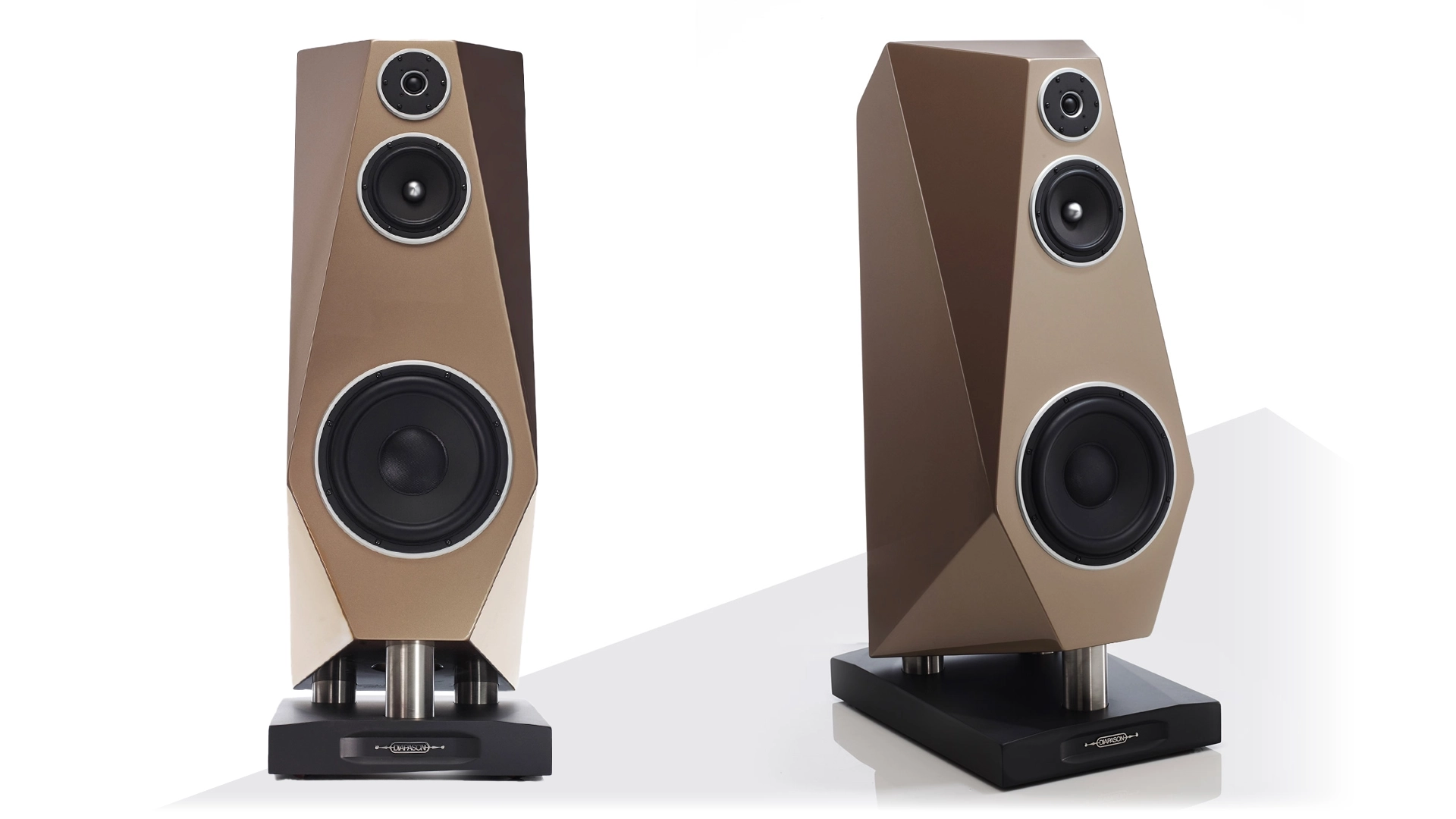
Diapason is an Italian loudspeaker house founded in Brescia in 1987 by Alessandro Schiavi, a conservatory-trained musician and live-classical recording engineer. His first commercial direction grew from a practical need for a monitor he could trust at the Teatro Grande, so Diapason’s design language began with the relationship between live instruments, microphone feed and playback rather than with fashion. The Prelude established the idea; Adamantes became the signature expression through a compact, multi-faceted cabinet made from solid walnut, shaped to control diffraction and cabinet behaviour. Later models such as Astera, Karis, Didascalìa and the large Dynamis extend the range without abandoning carefully selected drivers, minimal but precisely voiced crossover networks and Italian cabinet work. The sculpted enclosures are not merely decorative: their geometry, thick wood sections and rounded or angled surfaces form part of the acoustic design. Diapason’s particular appeal is the continuity between recording experience and manufacture — loudspeakers conceived as tools for preserving instrumental colour, spatial cues and the natural timing of a performance.
Diora Acoustics
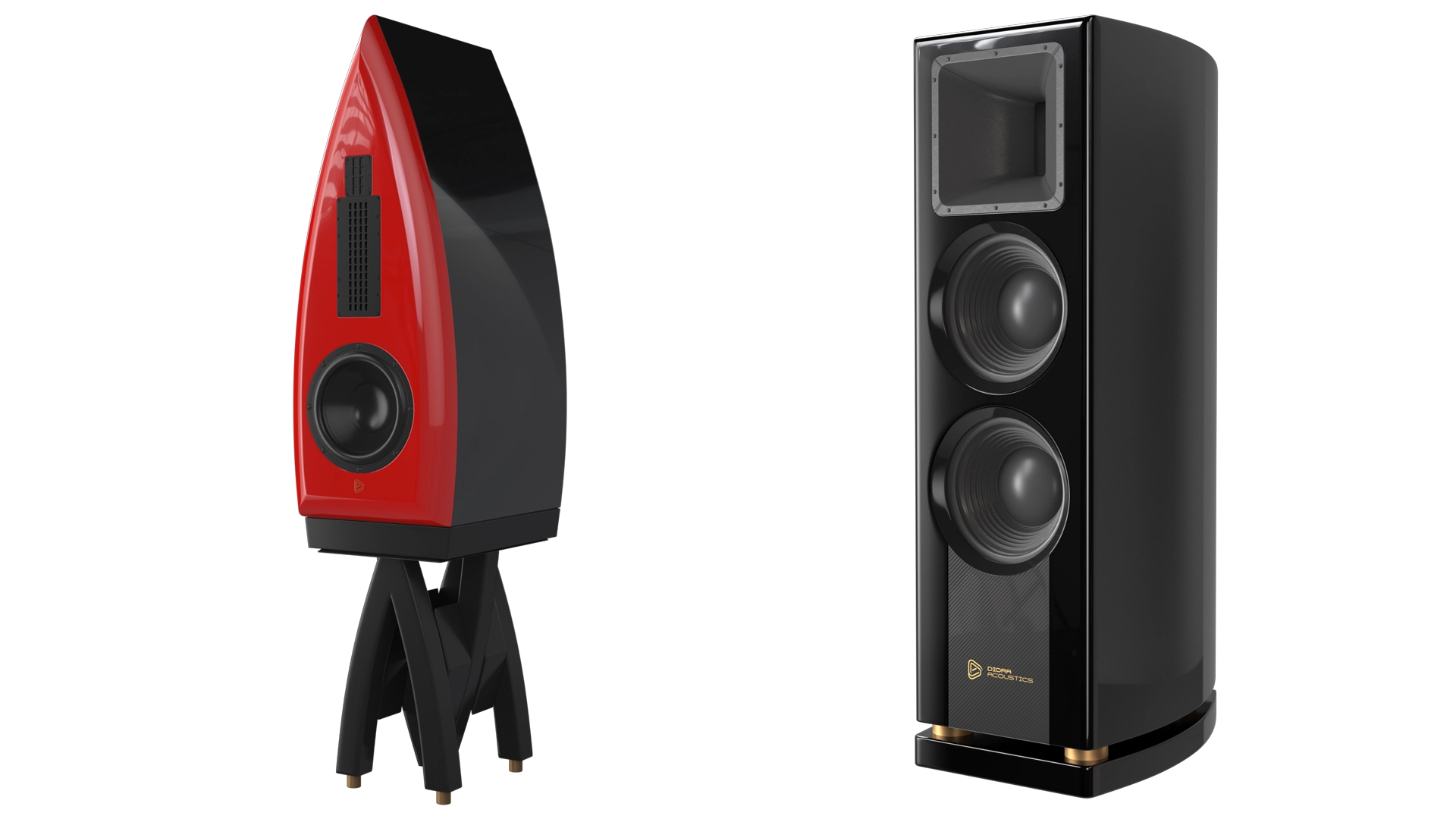
Diora Acoustics is a Polish loudspeaker brand launched in 2023 from the manufacturing base of Diora-Świdnica, a factory with decades of experience producing cabinets and complete products for other audio companies. That background is the brand’s genuine advantage: woodworking, veneering, lacquering, CNC machining and final assembly were already core industrial skills before Diora began selling modern loudspeakers under its own name. The ranges use clearly different acoustic approaches rather than cosmetic tiering. Chors models combine sealed cabinets with ceramic drivers; Lada employs wide-band isodynamic transducers; Perun couples a horn-controlled upper range to a powerful bass section; and Polaris uses passive radiators to extend and control low frequencies. The heritage must be stated carefully: the post-war Diora name and the Świdnica plant date much earlier, but Diora Acoustics as a current branded loudspeaker line began in 2023. Diora-Świdnica entered insolvency proceedings in 2025; production was partly restarted under a Unitra lease while the acquisition process continued in 2026. Product availability should therefore be confirmed, although the engineering and manufacturing lineage is real.
Diptyque Audio
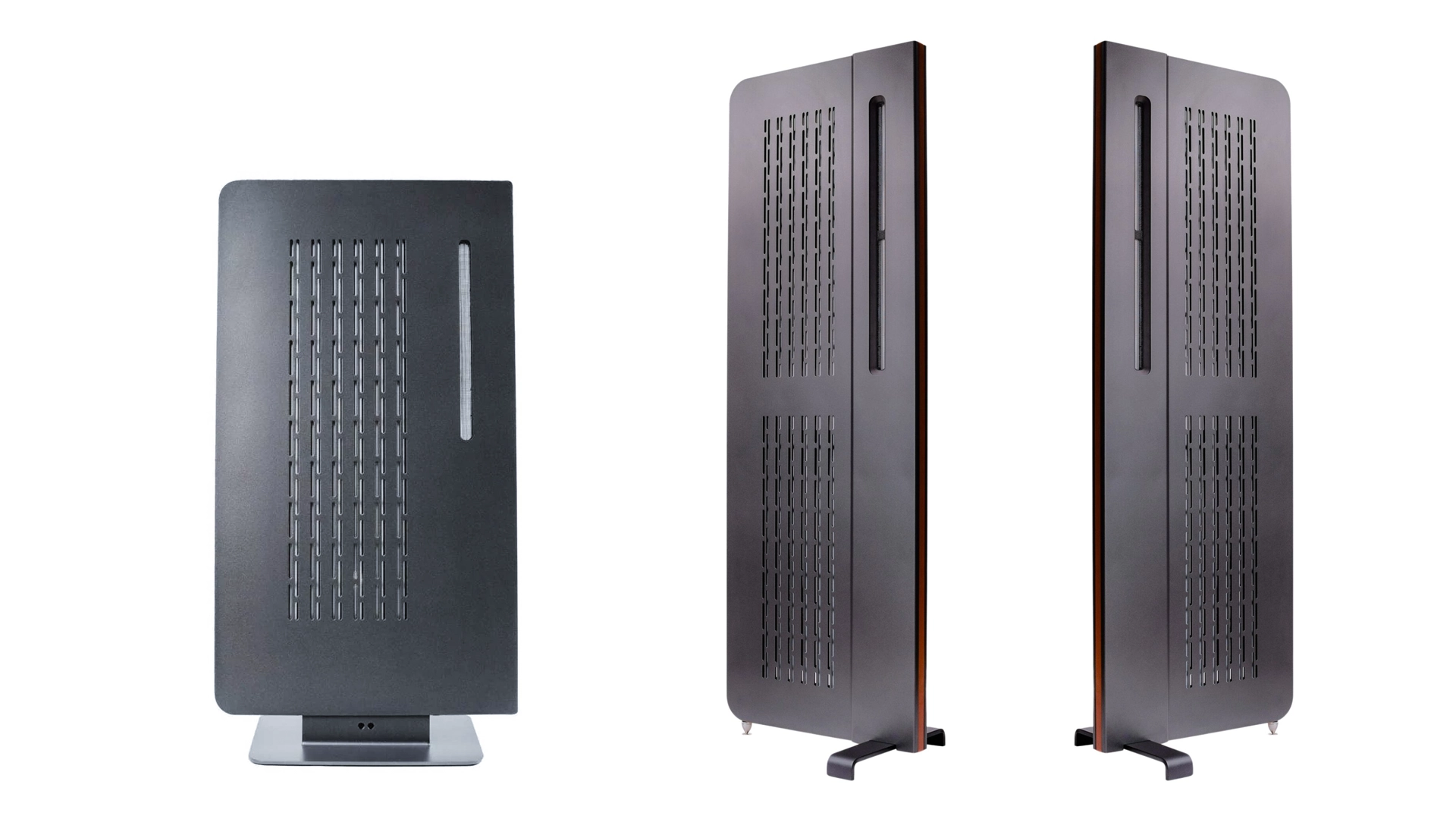
Diptyque Audio is a French specialist in isodynamic planar loudspeakers, born from the collaboration of electronics designer Gilles Douziech and metalwork specialist Eric Poix. Their work began in 2001 with a flat loudspeaker created for a photographic and sound exhibition, then developed into full-range domestic systems built in the company’s Montauban workshops. A lightweight membrane carrying conductive traces is tensioned inside a rigid open frame and driven across a large surface by magnetic structures; upper models use Diptyque’s push-pull bipolar arrangement to apply force more symmetrically. Because the panel radiates as a dipole, rear energy is part of the room interaction rather than being trapped in a box, while the large radiating area reduces the need for conventional cone excursion. Precise frame manufacture and stable diaphragm tension are central to performance, which is where Poix’s mechanical expertise complements Douziech’s acoustic and electronic work. From compact DP models to the Reference, Diptyque’s character comes from joining planar speed and spatial openness with enough membrane area and bass-panel engineering to reproduce full musical scale.
Duntech

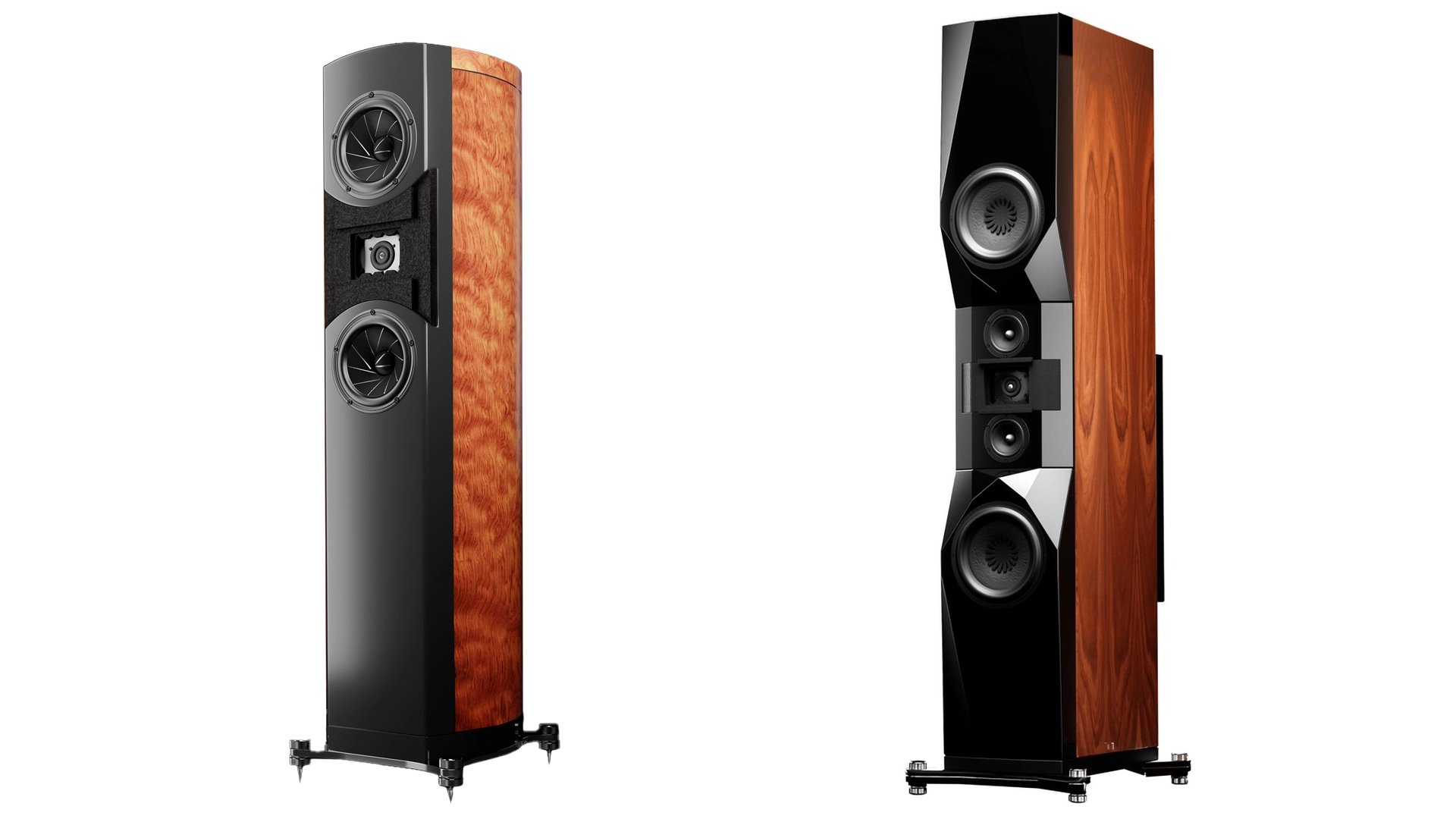
Duntech is the loudspeaker company created by American physicist and antenna engineer John Dunlavy, whose first commercial speaker work began in Texas in 1974 before the business and its founder moved to Australia. Dunlavy applied measurement disciplines from wave propagation to loudspeakers: sealed enclosures, vertically symmetrical driver arrays, carefully controlled spacing and first-order crossover networks were used to pursue accurate impulse, phase and frequency behaviour at the listening position. The large Sovereign PCL 2001 became the defining model, with Princess, Marquis, Senator and other designs adapting the same principles to different rooms and budgets. Dunlavy returned to the United States in 1992 and formed Dunlavy Audio Laboratories, which was separate from Duntech; the Australian brand continued through later ownership and periods of reduced activity. Modern Duntech products preserve the emphasis on time and phase coherence while updating drivers, cabinet construction and crossover components. Its historical importance lies in treating the loudspeaker as a measurable acoustic system and using geometry as deliberately as the individual transducers.
Dynaudio

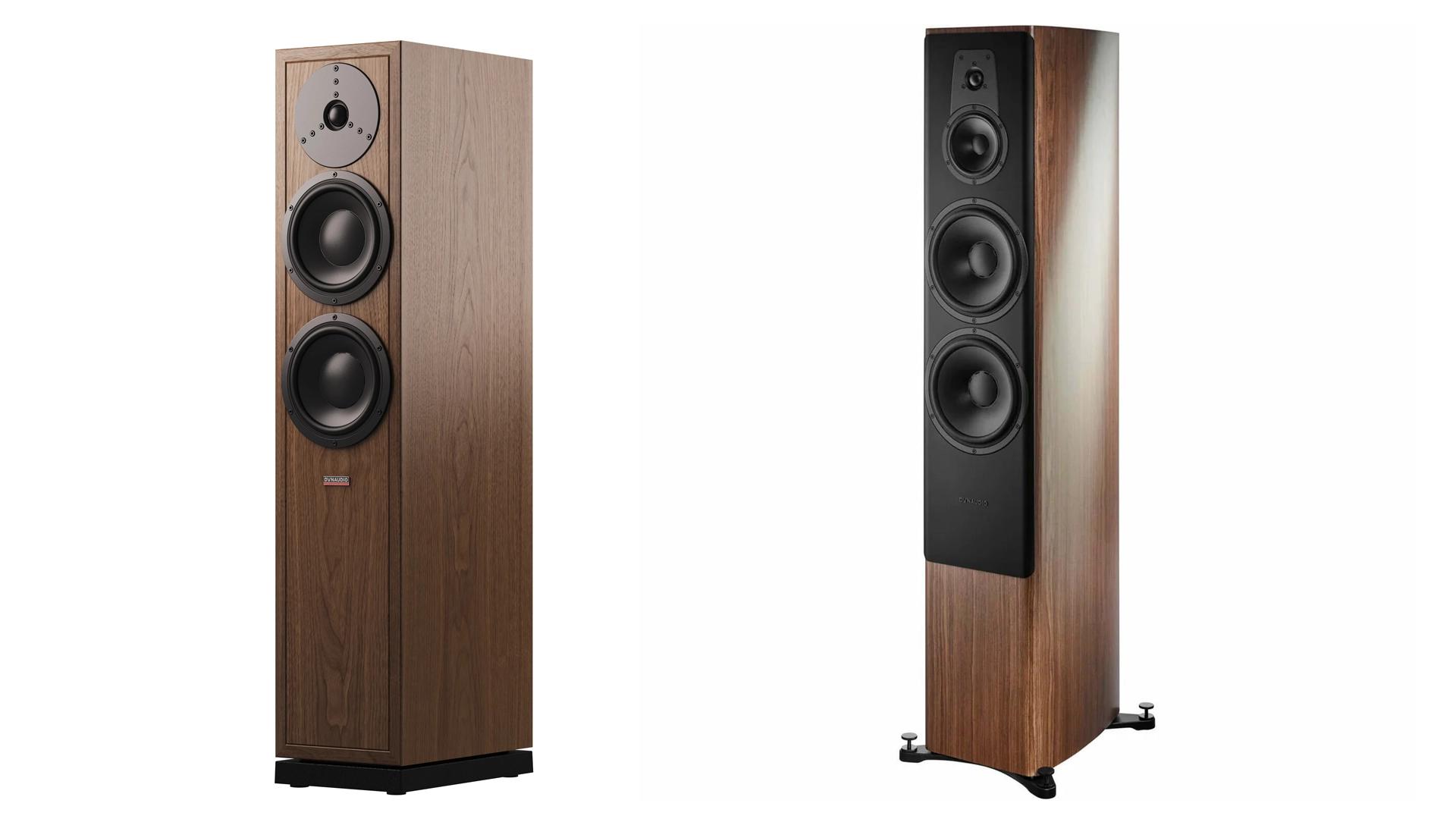
Dynaudio is a Danish loudspeaker and driver manufacturer founded in 1977 in Skanderborg, built on the decision that control over the finished speaker required control over the transducers themselves. Its long-running technical signatures include magnesium silicate polymer cone material, large-diameter lightweight voice coils and coated soft-dome tweeters, developed and manufactured in-house rather than selected from a standard supplier catalogue. Esotar tweeters represent the reference end of that work, while technologies such as Hexis inner domes manage airflow and resonance behind the diaphragm. The home range spans Emit, Evoke, Contour, Confidence and Heritage models; Focus combines active amplification, wireless streaming and room-related DSP. Dynaudio Professional applies the same driver knowledge to studio monitors, and the company also engineers custom-install and automotive systems. Product categories vary, but the defining advantage remains vertical acoustic integration: diaphragm material, motor, voice coil, crossover, cabinet and voicing can be developed together. That continuity gives Dynaudio a recognisable engineering identity across compact monitors, large floorstanders and professional control rooms.
Dynavoice
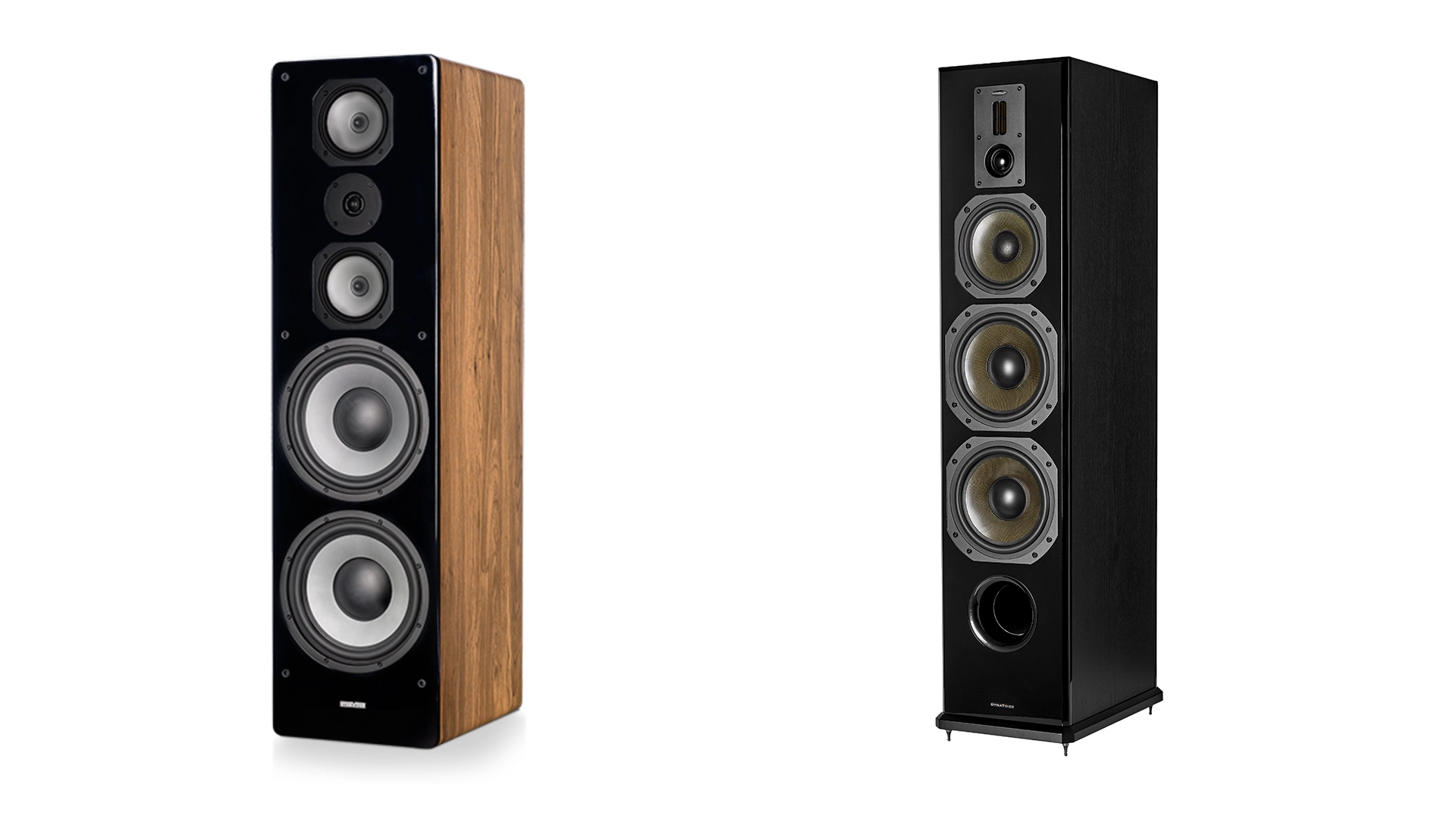
Dynavoice is a Swedish loudspeaker brand built around an unusually practical promise: full-scale stereo and home-cinema sound without turning sensible pricing into an apology. Its roots reach back to 1975, when Tommy Wadensten began the JWS loudspeaker business in Falkenberg; Dynavoice later emerged from that engineering and distribution lineage as the company’s more ambitious speaker identity. The range is structured for real systems rather than one showcase model. Magic covers accessible stereo and surround installations, Challenger adds greater output and cabinet scale, and Definition moves upward with ribbon-assisted high-frequency reproduction and more elaborate driver layouts. Matching centre, surround and subwoofer models make the same voicing available across multichannel setups. A recognisable Dynavoice feature is X-Change, a passive terminal arrangement on selected speakers that lets the owner adjust treble balance without inserting an electronic equaliser. The brand’s strength is therefore not exotic storytelling but system breadth, lively dynamics and useful tuning options developed by a company with decades of Scandinavian loudspeaker experience.
Eclipse

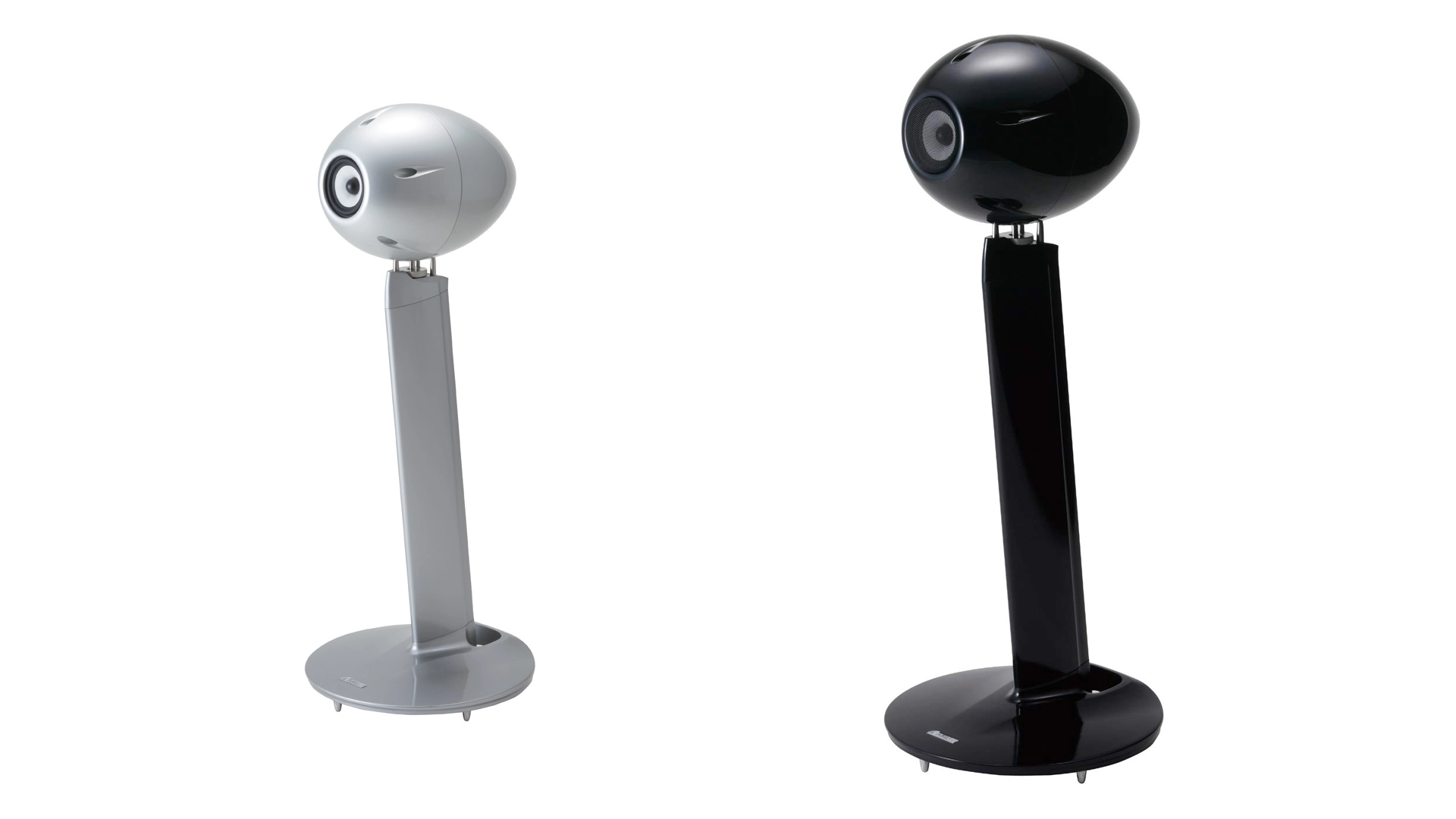
ECLIPSE TD is a Japanese loudspeaker brand launched by Fujitsu Ten in 2001 and now carried by DENSO TEN, built around one demanding idea: preserve the timing and shape of a musical waveform before optimising conventional frequency-response figures. Its egg-shaped speakers use a single full-range driver wherever possible, avoiding the crossover phase shifts and separated acoustic centres of multiway systems. The enclosure is shaped to reduce diffraction, but the more unusual engineering sits inside. A Diffusion Stay supports the driver while isolating it from the shell, and a rear Mass Anchor provides an inertial path for reaction forces so less energy is stored and re-radiated by the cabinet. Models such as the compact TD307MK3 and larger TD510ZMK2 scale this time-domain architecture for desktop, stereo and multichannel use; dedicated TD subwoofers use opposed or mechanically controlled drive arrangements to complement the speed of the main speakers. ECLIPSE does not promise the widest bandwidth from the smallest box. Its speciality is impulse behaviour, point-source coherence and sharply defined spatial information—qualities derived from structural mechanics as much as from the driver itself.
EgglestonWorks

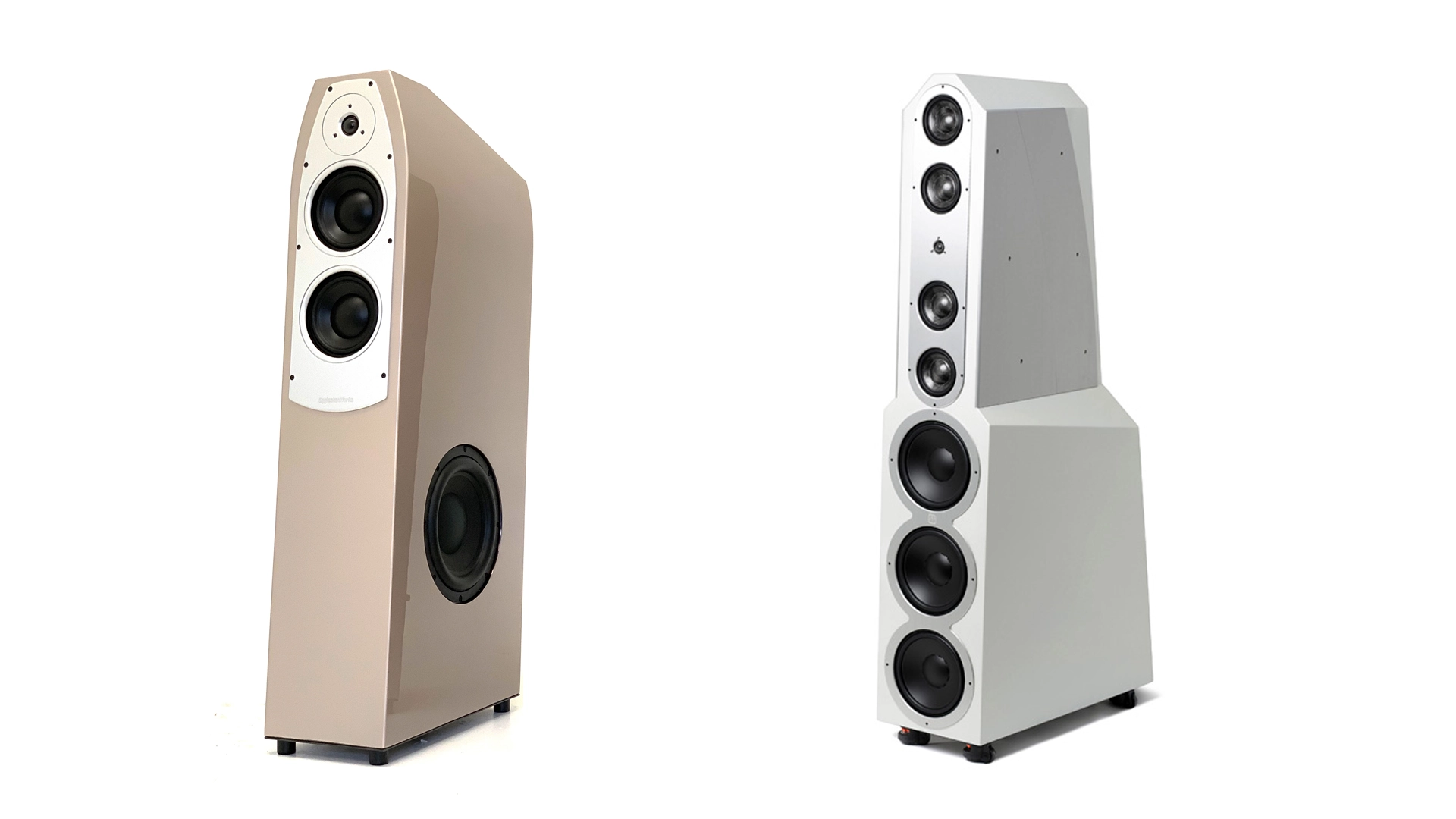
EgglestonWorks is a Memphis loudspeaker manufacturer founded in 1996, recognised for building large, high-resolution speakers in the United States with the physical authority of studio monitors and the finish of bespoke furniture. The Andra, introduced in 1997, established the company internationally and remains the core of its identity through successive generations: a dense, heavily braced cabinet, vertically organised driver array and carefully integrated multiway response intended to preserve scale without losing image focus. Current models range from the compact Nico and Emma through Kiva, Viginti and the latest Andra, with larger systems extending the same approach to greater output and bass depth. Cabinet mass, internal damping, crossover execution and close driver matching matter here because the designs ask several transducers to behave as one source over a wide dynamic range. The company’s Memphis workshop also allows extensive custom finishes, making appearance part of genuine in-house production rather than a catalogue veneer choice. EgglestonWorks stands out less through a single named invention than through continuity: ambitious American-made loudspeakers refined around the long-lived Andra architecture and real-world full-bandwidth listening.
Elac

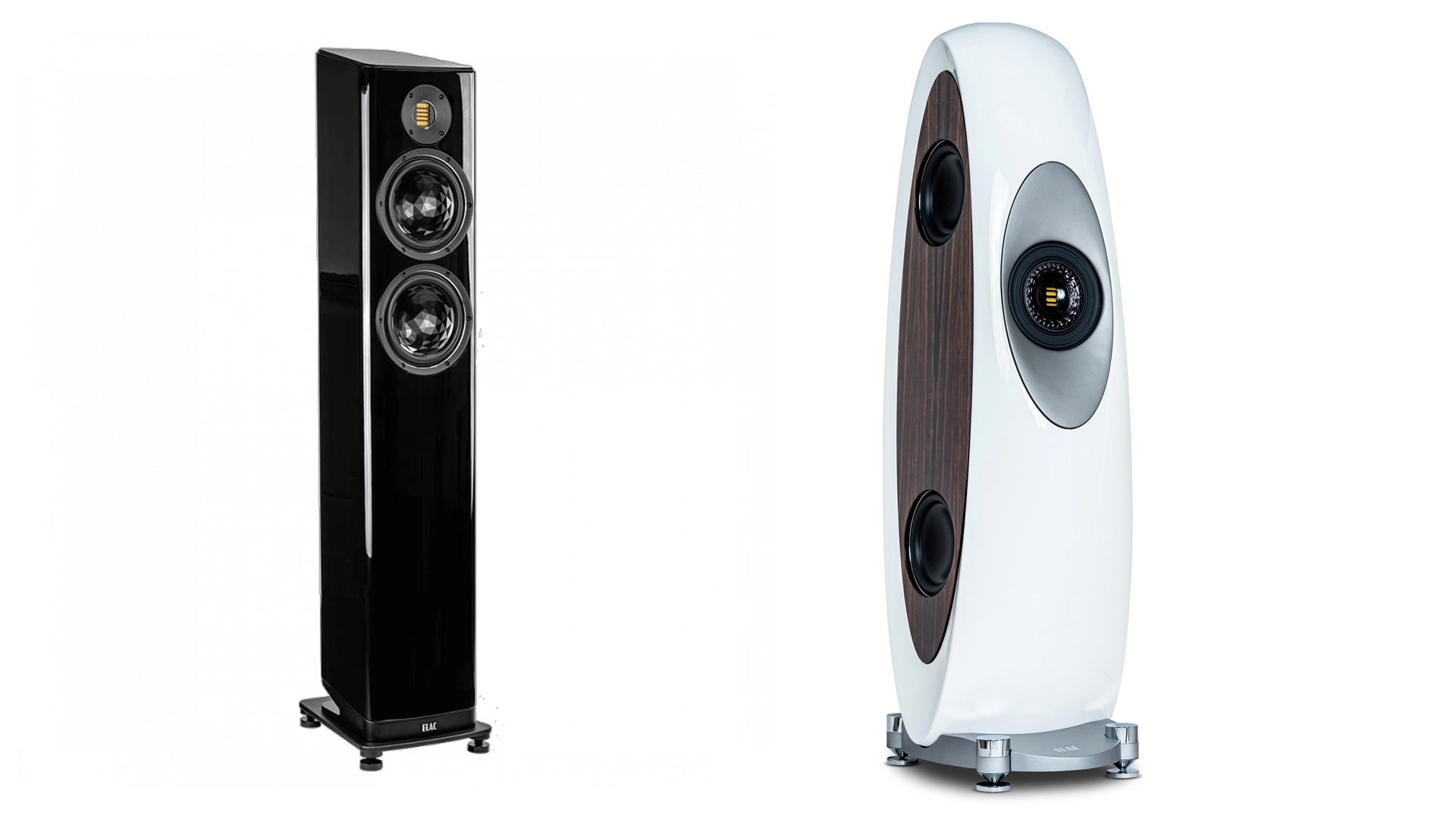
ELAC is a German audio company founded in Kiel on 1 September 1926 by Dr Heinrich Hecht, Dr Wilhelm Rudolph and Gerhard Schmidt. Its near-century history is unusually broad: the company began in electroacoustics and sonar, became a major post-war maker of turntables and cartridges, and shifted its centre of gravity to loudspeakers in the 1980s. Modern ELAC is therefore more than the affordable speakers often associated with designer Andrew Jones. The Debut and Uni-Fi families use carefully engineered cone drivers and, in Uni-Fi, concentric midrange/tweeter geometry to bring controlled directivity and coherent imaging to accessible systems. Carina, Vela and higher ranges draw on the folded JET tweeter, while active subwoofers and electronics complete stereo and cinema installations. Turntables keep the brand’s analogue history visible rather than treating it as a retro licensing exercise. ELAC’s lasting advantage is range backed by real transducer engineering: it can translate its knowledge of motors, diaphragms, wave launch and cabinet behaviour from compact entry models to elaborate floorstanders, while the 1926 date describes the actual company lineage rather than a recently revived name.
Elipson

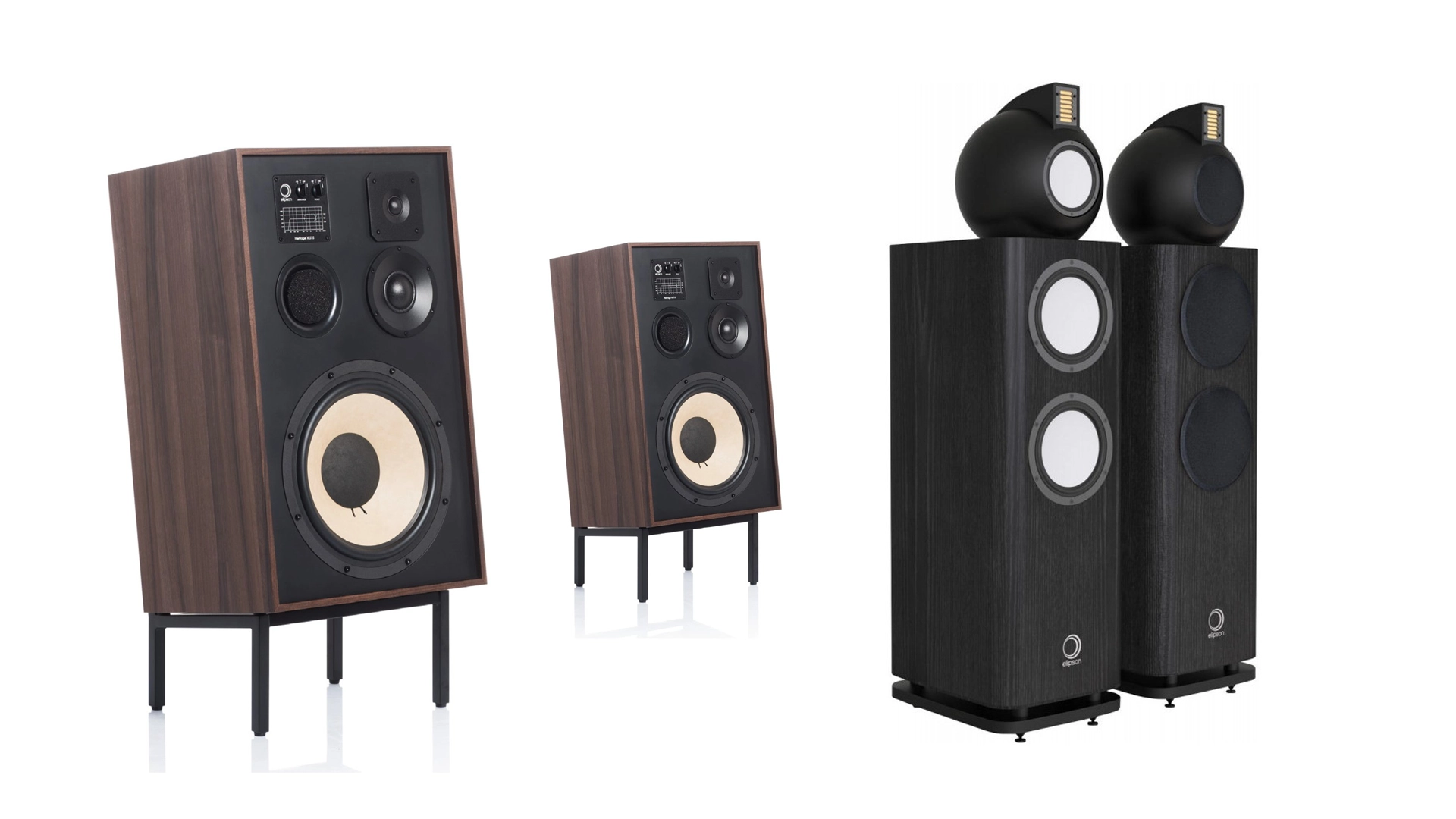
Elipson is France’s oldest surviving specialist loudspeaker name, tracing its company origin to 1938 and its distinctive acoustic identity to engineer Joseph Léon. The historical sequence deserves precision: the business began as Multimoteur, early audio research started around 1940, Léon joined in 1946 and led the company from 1948, and the Elipson name—formed from “ellipse” and the French word “son”—was adopted in 1951. Under Léon, spheres, reflectors and resonators were engineering tools for controlling diffraction, radiation and time alignment, not merely futuristic styling. The BS50 Chambord and later 402 made those experiments iconic in French broadcasting and public installations. Today the Planet series keeps the spherical enclosure visible, while Heritage models revisit large-format designs and newer Prestige, Legacy and wireless products cover conventional home systems. Elipson also offers turntables and electronics, but loudspeaker form remains its signature. Its strength is the unusually direct link between acoustic research and industrial design: shapes that are instantly recognisable because they were first chosen to solve propagation and enclosure problems.
Eltax

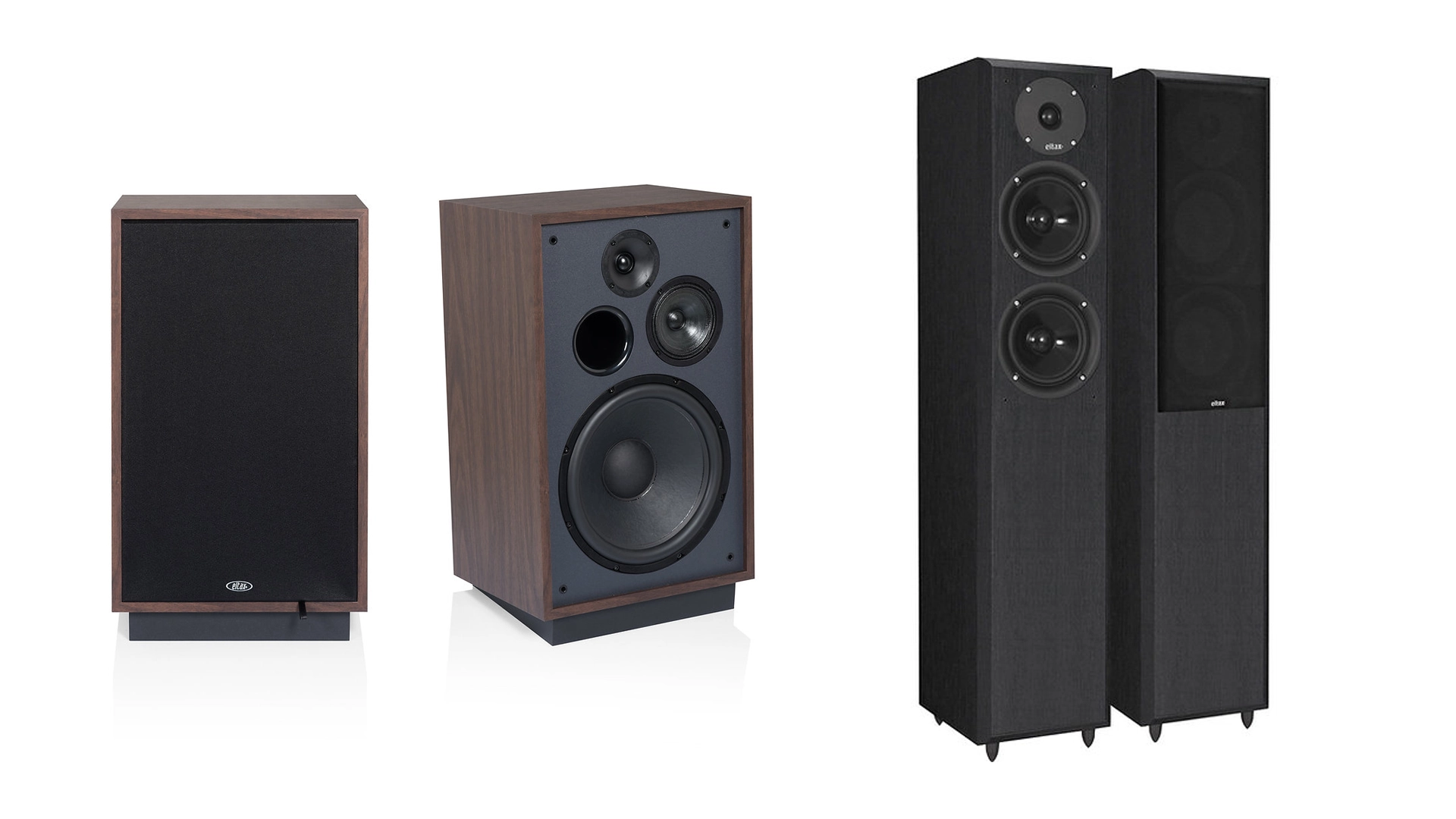
Eltax is a Danish loudspeaker brand founded in Herning in 1959 by Ingemann Marius Nielsen, initially as a hi-fi wholesaler and soon as one of Denmark’s early makers of standalone speaker systems. That documented date corrects the often repeated 1954 claim. Eltax built its reputation on straightforward, attainable speakers rather than prestige pricing, and the long-running Monitor line expresses that philosophy through compact bookshelf, floorstanding, centre and surround models that can form either a stereo pair or a complete home-cinema package. The modern Vintage series gives the range a more individual voice: broad front baffles, large cellulose-cone woofers, horn-assisted treble and high sensitivity recall 1970s studio and domestic monitors without simply reissuing an old cabinet. The imposing Monitor PWR 1959, for example, uses a 38 cm bass driver in a reinforced three-way enclosure to deliver scale and efficiency uncommon at the brand’s price level. Now part of France’s AV Industry group, Eltax remains Danish in origin and design language. Its enduring strength is accessible system building, with robust conventional engineering and enough model variety to serve first hi-fi systems, vinyl setups and multichannel rooms.
Emotiva
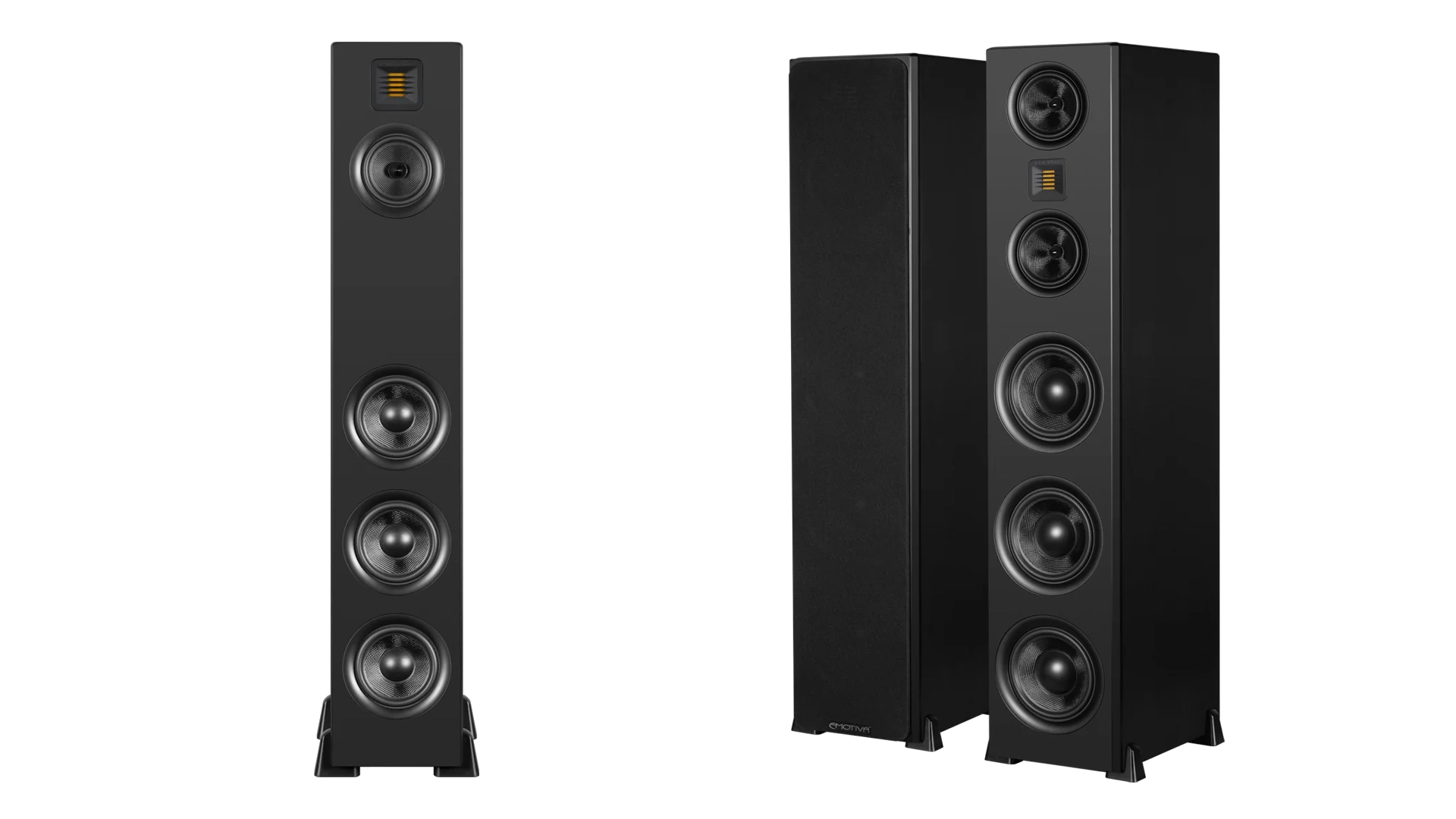
Emotiva is an American audio company founded in 2003 by Dan Laufman to sell serious stereo and home-theatre electronics directly to listeners, removing several layers of conventional distribution cost. That business model matters because it shaped the products: substantial power supplies, high channel counts and upgrade-friendly platforms offered at prices below many specialist competitors. BasX covers accessible amplifiers, preamps and cinema electronics, while XPA power amplifiers scale from stereo systems to multichannel installations through modular high-current Class A/B stages and efficient switch-mode supplies. Differential Reference models use fully balanced, fully differential signal paths and Optimized Class H supply operation for demanding front channels or two-channel systems. Surround processors and receivers address immersive formats, and loudspeakers extend the catalogue into complete systems. Emotiva’s identity is not simply “value for money”; it is the combination of direct sales with unusually powerful, configurable hardware for enthusiasts who may need two channels today and a large cinema later. Design and final product development are centred in Tennessee, with model-specific manufacturing choices rather than a blanket claim that every component is built in the United States.
Eon-Art

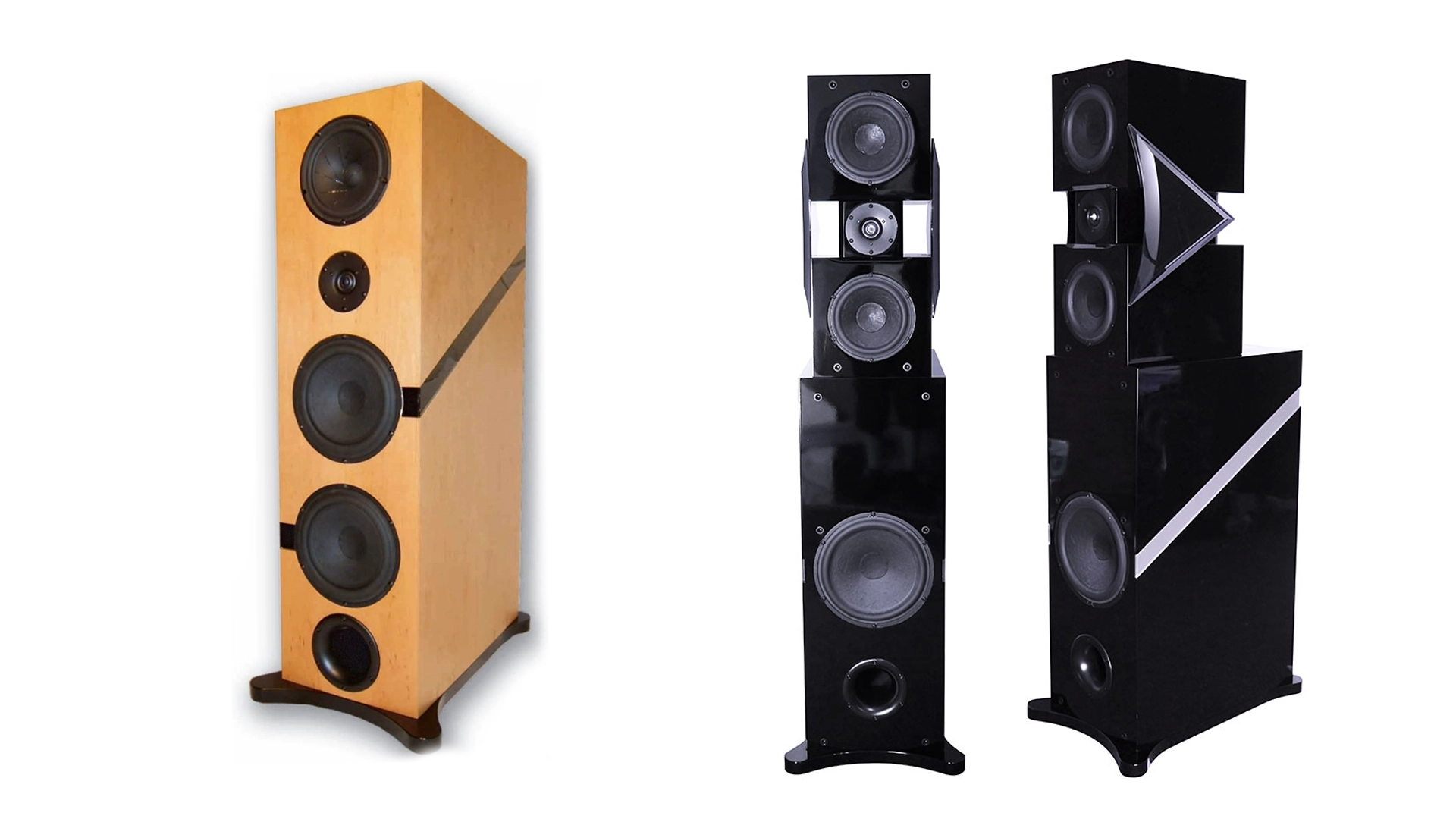
Eon Art is a Canadian high-end audio company based in Chandler, Quebec, and led by Stéphane Hautcoeur. Incorporated in 2017, Eon Art Canada united its electronics work with the French loudspeaker expertise of Venus Acoustic; this French connection is sometimes mistaken for the company’s country of origin. Its best-known electronics, including the Quark integrated amplifier, combine valve gain and regulated valve power supplies with a high-power solid-state output stage, extensive local power regulation and modular multi-board construction. The company also develops digital conversion and Venus-series loudspeakers such as Cybela, whose CFTA internal geometry redirects rear radiation to reduce enclosure resonances. Products are made and assembled in Canada, with the emphasis on complete-system engineering, laboratory measurement and documented quality control rather than a catalogue of conventional separate boxes.
Epos

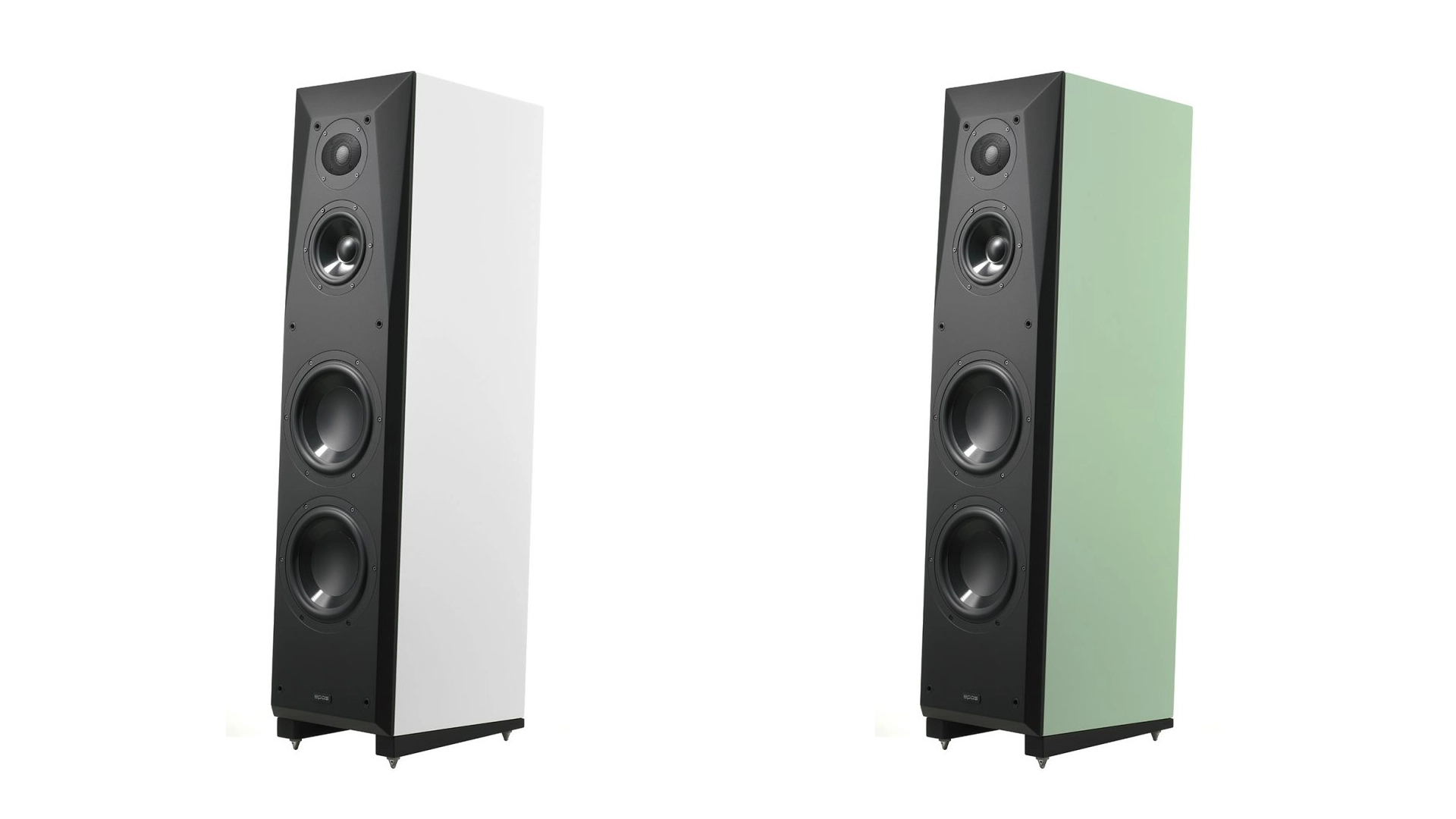
Epos began in Britain in 1983 with designer Robin Marshall and a deliberately simple idea: make the drive units integrate well enough that the crossover can remain uncomplicated. Loudspeakers such as the original ES14 and ES11 built the brand’s reputation for direct, rhythmically convincing sound from compact cabinets. After periods under Mordaunt-Short and Creek Audio, Epos was acquired in 2020 by German loudspeaker engineer Karl-Heinz Fink. The present ES7N, ES14N and ES28N are new designs rather than replicas, but they retain the engineering-first spirit of the originals; the ES28N also expands the range into a three-way floorstander. Epos is therefore a British-founded marque in a German chapter, combining a recognisable historical design philosophy with contemporary drivers, crossovers, cabinets and measurement-led development.
ESD Acoustic

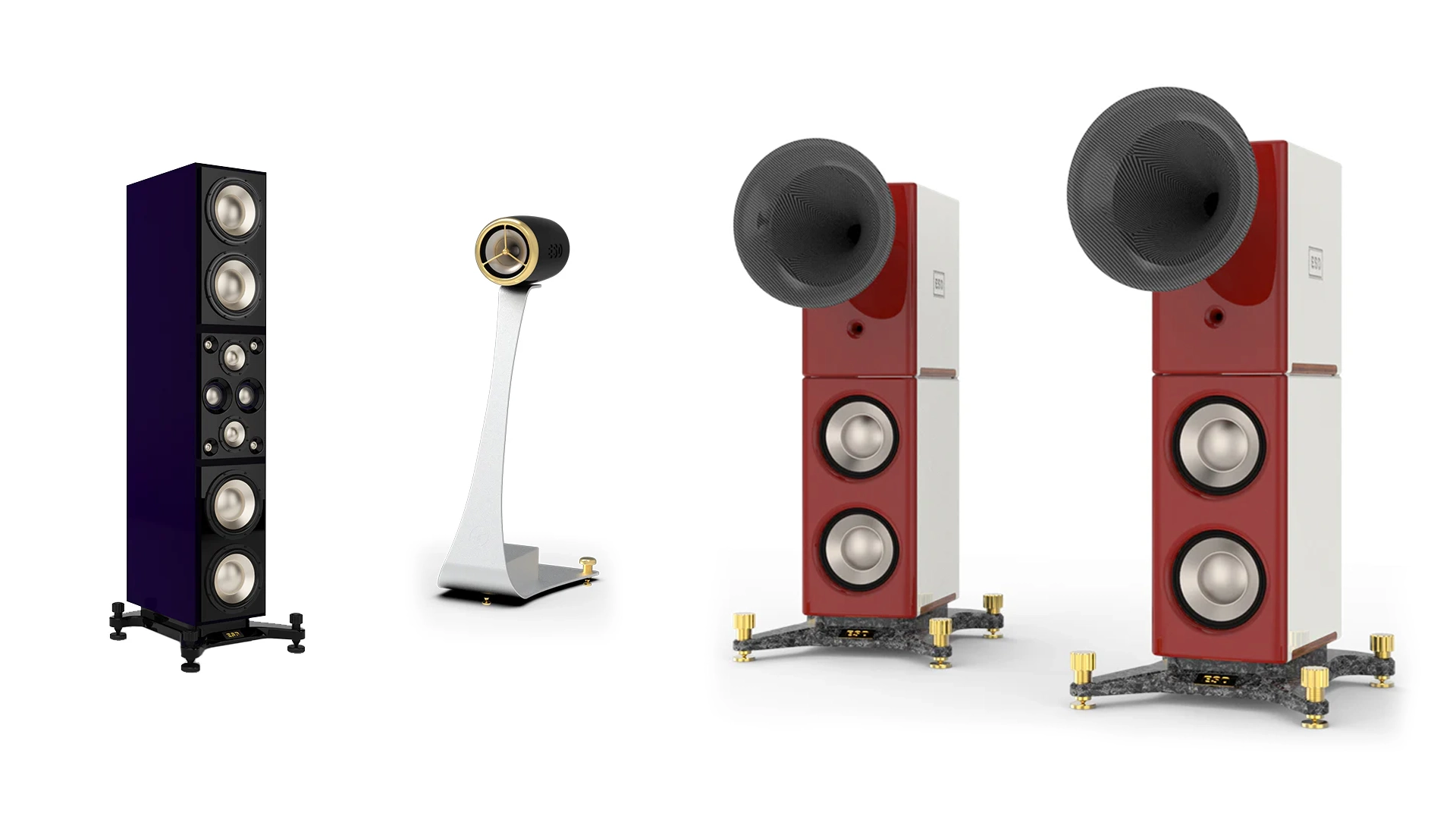
ESD Acoustic is a Chinese ultra-high-end audio manufacturer whose project began in 2016 with David Dai and Jacky Dai. Early development drew on technology and guidance acquired from horn specialists Bruce Edgar and Sam Saye; the Hangzhou company followed in 2017. ESD’s signature is the complete field-coil horn system: externally energised drivers, large carbon-fibre horns and, in selected units, beryllium diaphragms are combined for high efficiency and wide dynamic range. Systems range from comparatively compact models to the immense Dragon and Super Dragon installations. ESD also makes the field-coil power supplies, active crossovers, Class A amplification and source components needed to operate them as an integrated chain. The scale is spectacular, but the important know-how lies in controlling magnetic fields, horn geometry, diaphragm behaviour and system alignment across many ways.
Esprit

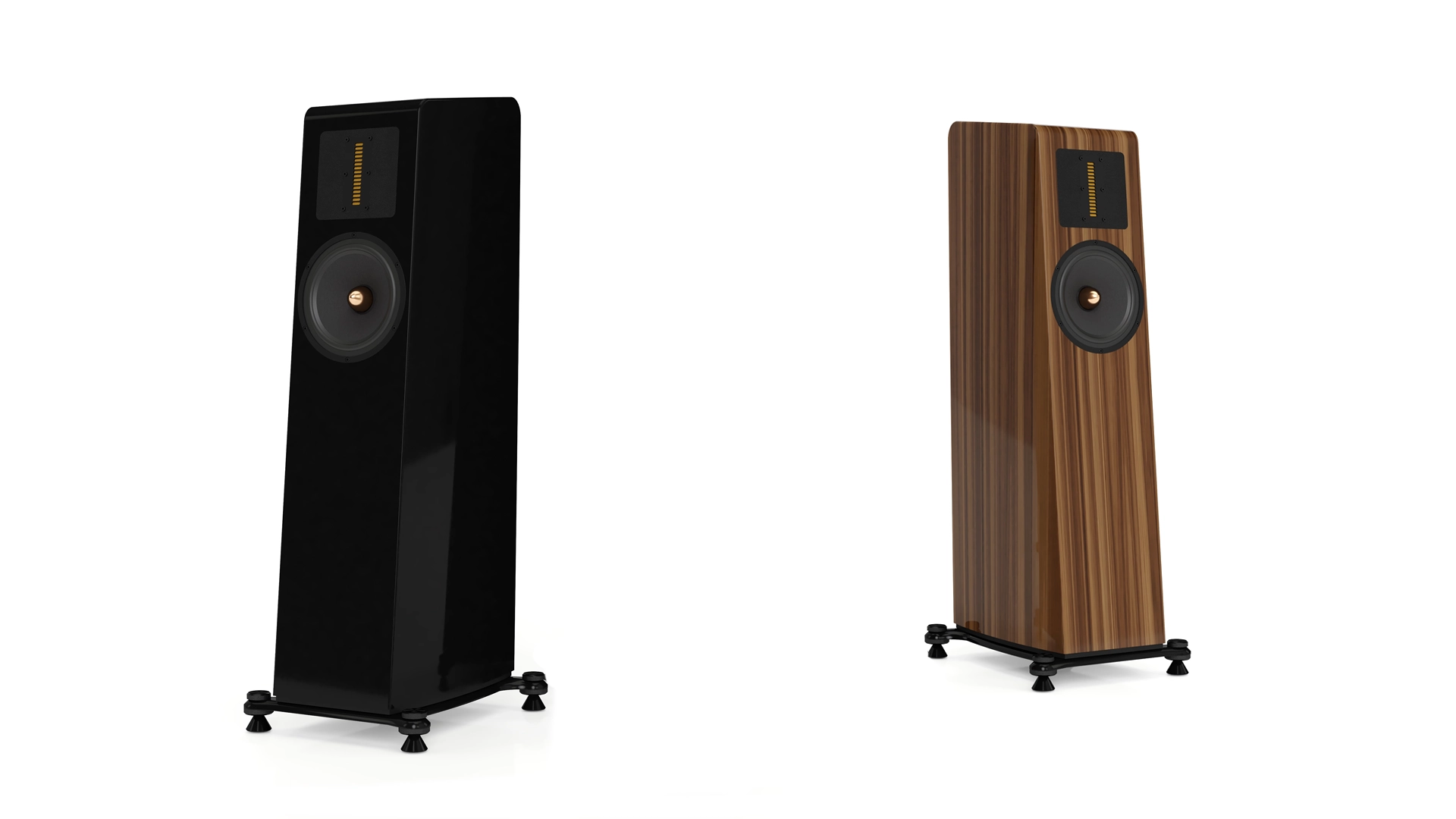
Esprit is a French specialist cable maker founded by electromechanical engineer and musician Richard Cesari in 1997. The company designs and hand-assembles analogue interconnects, loudspeaker cables, mains cables and digital connections in its Charente workshop. Rather than defining the brand through vague promises of ‘musicality’, its practical identity lies in conductor geometry, dielectric choice, shielding, mechanical construction and proprietary connectors carried through a broad family of price levels. Higher ranges use increasingly elaborate conductor bundles and screening, while every finished cable is checked and listening-tested before shipment. Esprit sells through specialist dealers and keeps production in France, allowing the same small team to control termination and repeatability. It is a mature cable house with a consistent construction philosophy, not a general electronics manufacturer.
Estelon
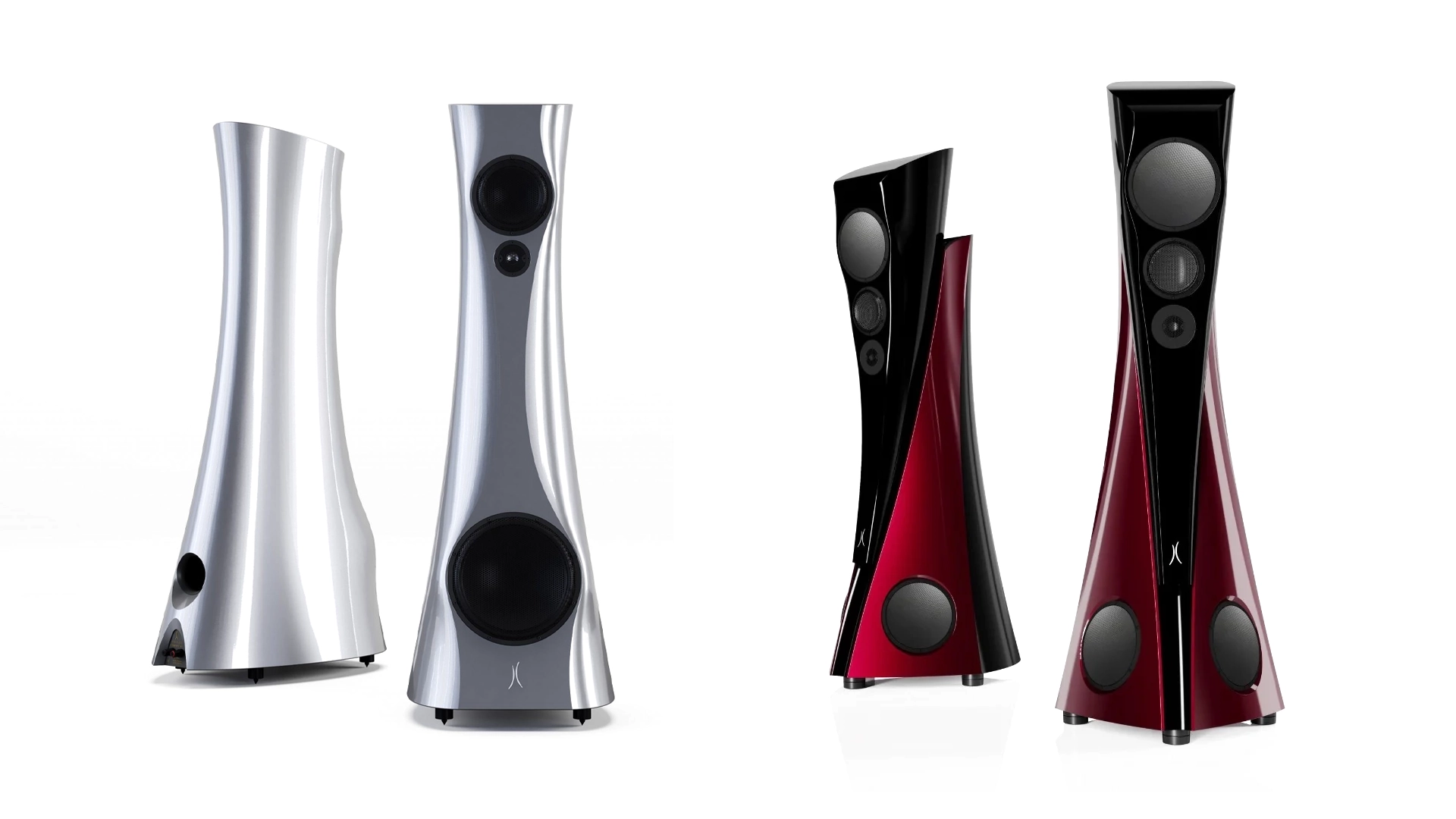
Estelon is an Estonian family-operated loudspeaker company founded in 2010 by electro-acoustic engineer Alfred Vassilkov. Its sculptural shape is a direct engineering device: curved enclosures without parallel walls reduce standing waves and edge diffraction, while internal chambers and damping control stored energy around each driver. Estelon forms these complex cabinets from proprietary marble-based and thermoformed mineral composites chosen for rigidity and low resonance. Driver height and spacing are then set to support time alignment and stable imaging. The range extends from the Aura and Aurelle through the YB and X series to the Forza and adjustable Extreme flagship. Handmade in Estonia, the speakers are distinctive because cabinet material, internal geometry and exterior form solve the same acoustic problems instead of treating industrial design as a separate layer.
Falcon Loudspeakers

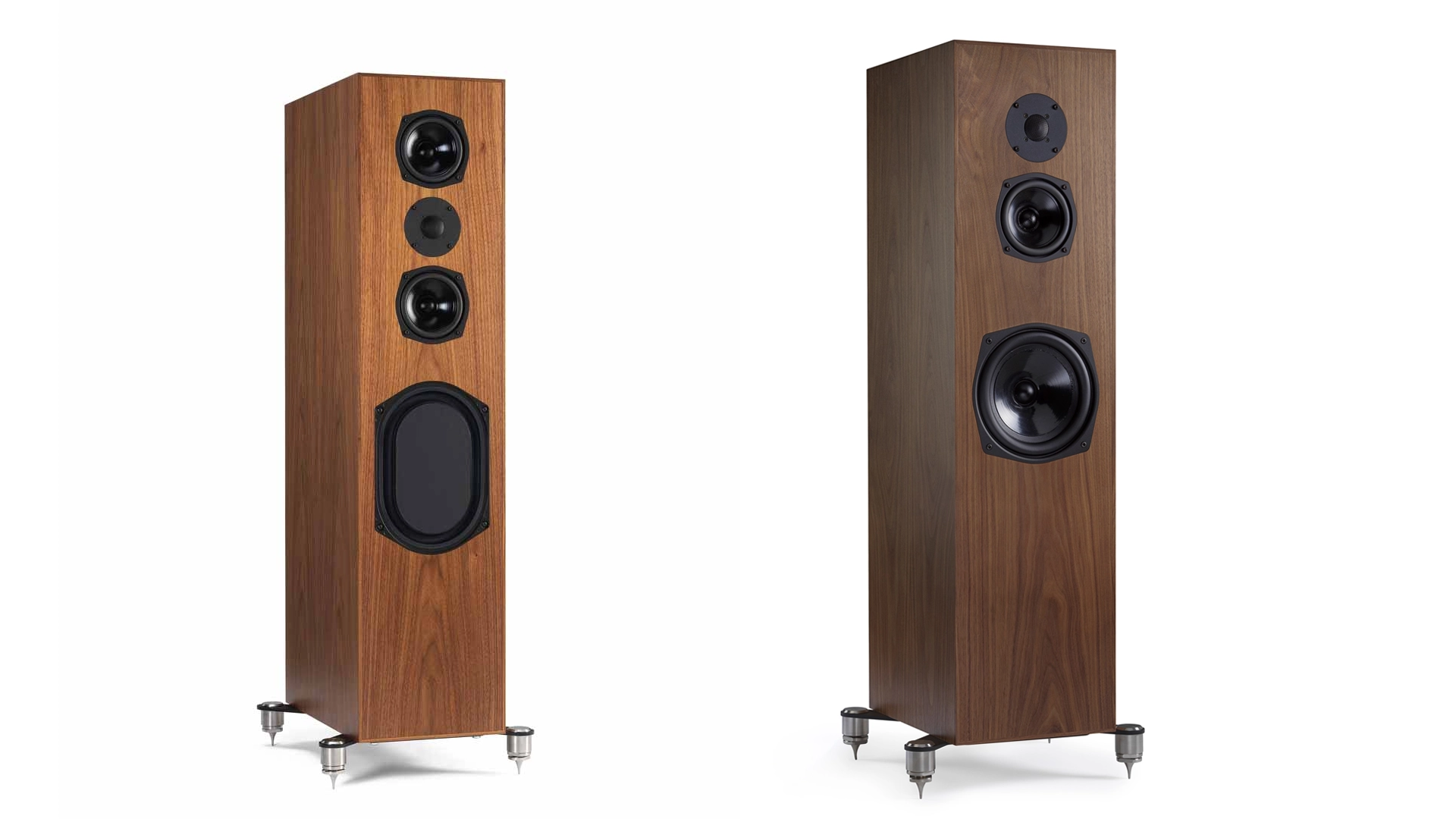
Falcon Acoustics was founded in Britain in 1972 by Malcolm Jones, KEF’s first employee and the engineer behind drive units including the B139, B200, B110, T15 and T27. Falcon initially became essential to the DIY and professional loudspeaker world through self-bonded inductors, crossover networks, drive units and complete kits. Jerry Bloomfield took over the company when Jones retired in 2009 and rebuilt its manufacturing programme around that archive of British engineering. Falcon now makes authentic B110 and T27 units and is licensed by the BBC to produce the LS3/5A to the original 1976 specification, rather than merely styling a modern compact speaker to resemble one. The catalogue also includes RAM and M-series loudspeakers, the F50 floorstander, kits and components. Its rare strength is continuity between driver manufacture, crossover parts, restoration support and complete loudspeakers.
Finale Audio

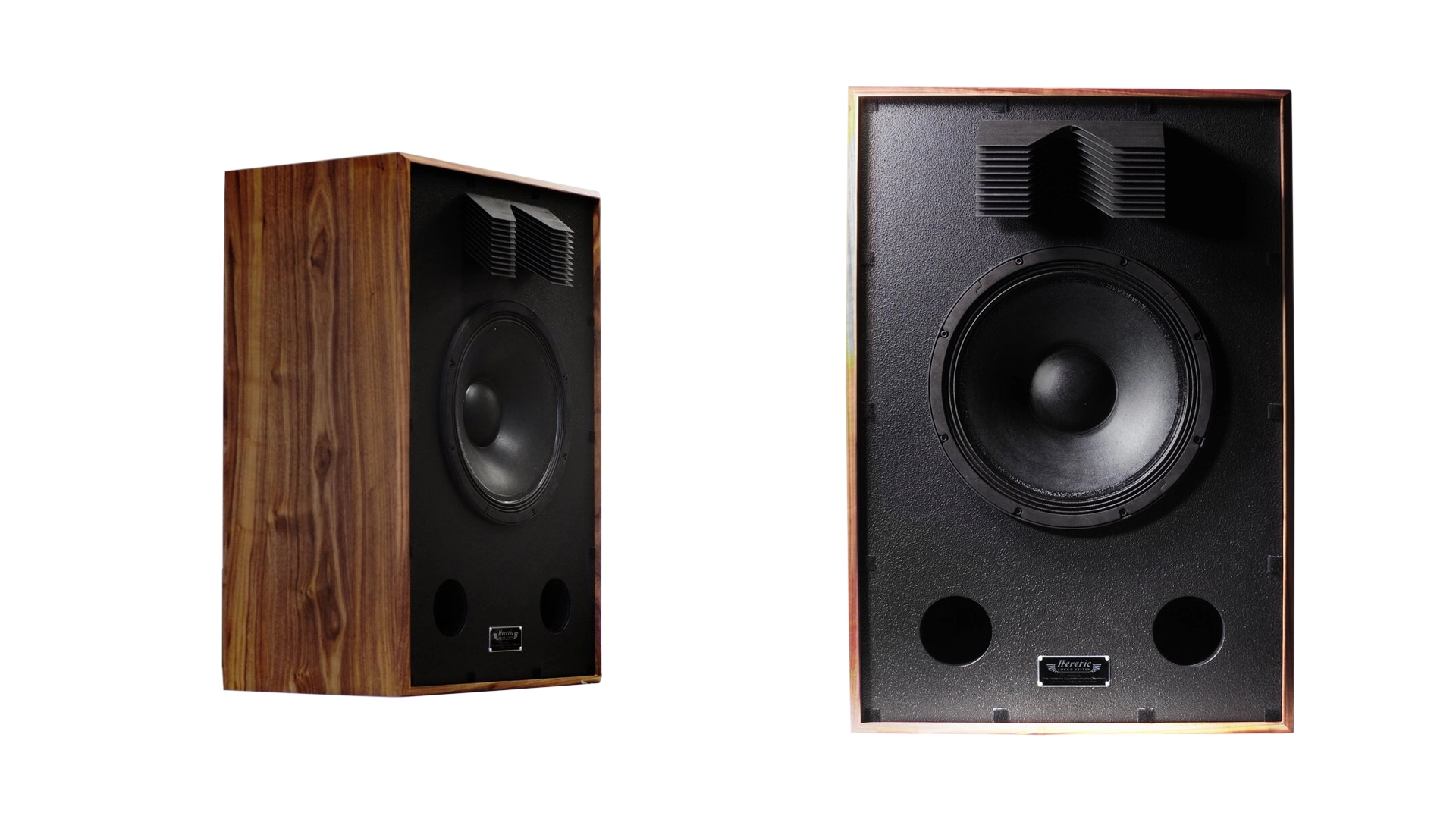
Finale Audio is a Canadian valve-amplifier brand founded by designer Frank Ng and closely linked to Triode Lab. The relationship is best described as a joint family of engineering and production: Triode Lab concentrates on more specialised made-to-order single-ended designs, while Finale has supplied standardised and dealer-oriented amplifiers across a wider range of valves and output powers. Products have extended from low-power 45, 2A3 and 300B circuits to substantially more powerful push-pull designs, all developed and manufactured in Canada. The company deliberately spends on transformers, power supplies, sockets, connectors and signal components inside the chassis rather than elaborate packaging, which gives the brand a clear value proposition without calling it mass-market. Frank Ng is now identified as the retired founder/president, and the published history spans decades but does not establish one sufficiently reliable founding year for the database.
Fink Team

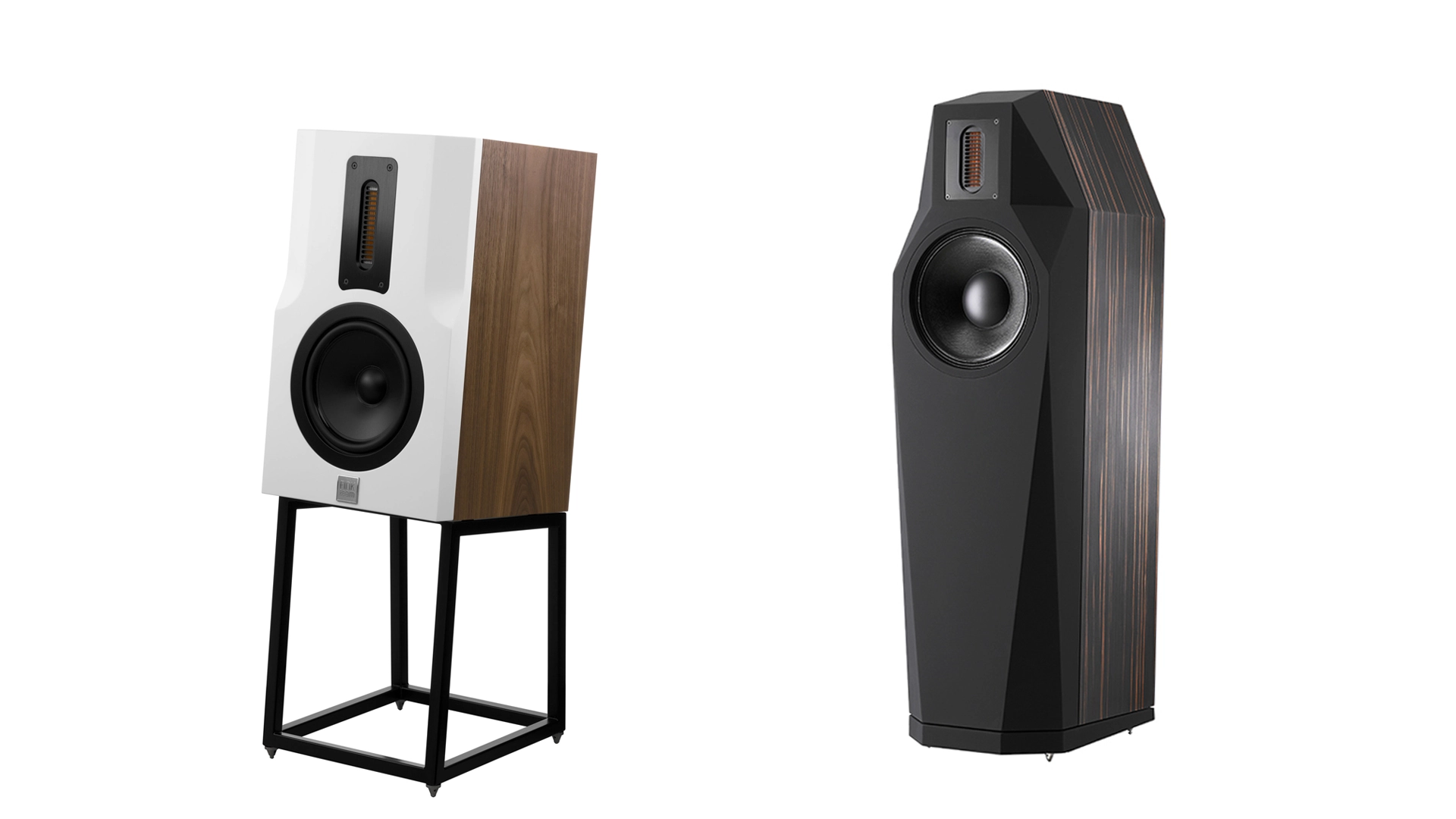
FinkTeam is a German loudspeaker brand born publicly at High End Munich in 2016, when a prototype from the long-established Fink Audio-Consulting engineering group became the WM-3 demonstration speaker requested by Marantz ambassador Ken Ishiwata. The refined WM-4 entered production in 2017, followed by the more room-friendly Borg in 2018 and compact KIM in 2020. This background explains the brand’s unusual depth: drive units, crossover networks and cabinets are developed in-house using the same simulation, measurement and listening methods that the consultancy applies for international manufacturers. Cabinets are handcrafted in Germany, and current responsibility rests with cabinetmaker and acoustic engineer Norbert Theisges while Fink Audio-Consulting remains involved. FinkTeam is not merely Karl-Heinz Fink’s signature on outsourced drivers; it is the public product arm of a specialist loudspeaker-development organisation.
Fischer & Fischer
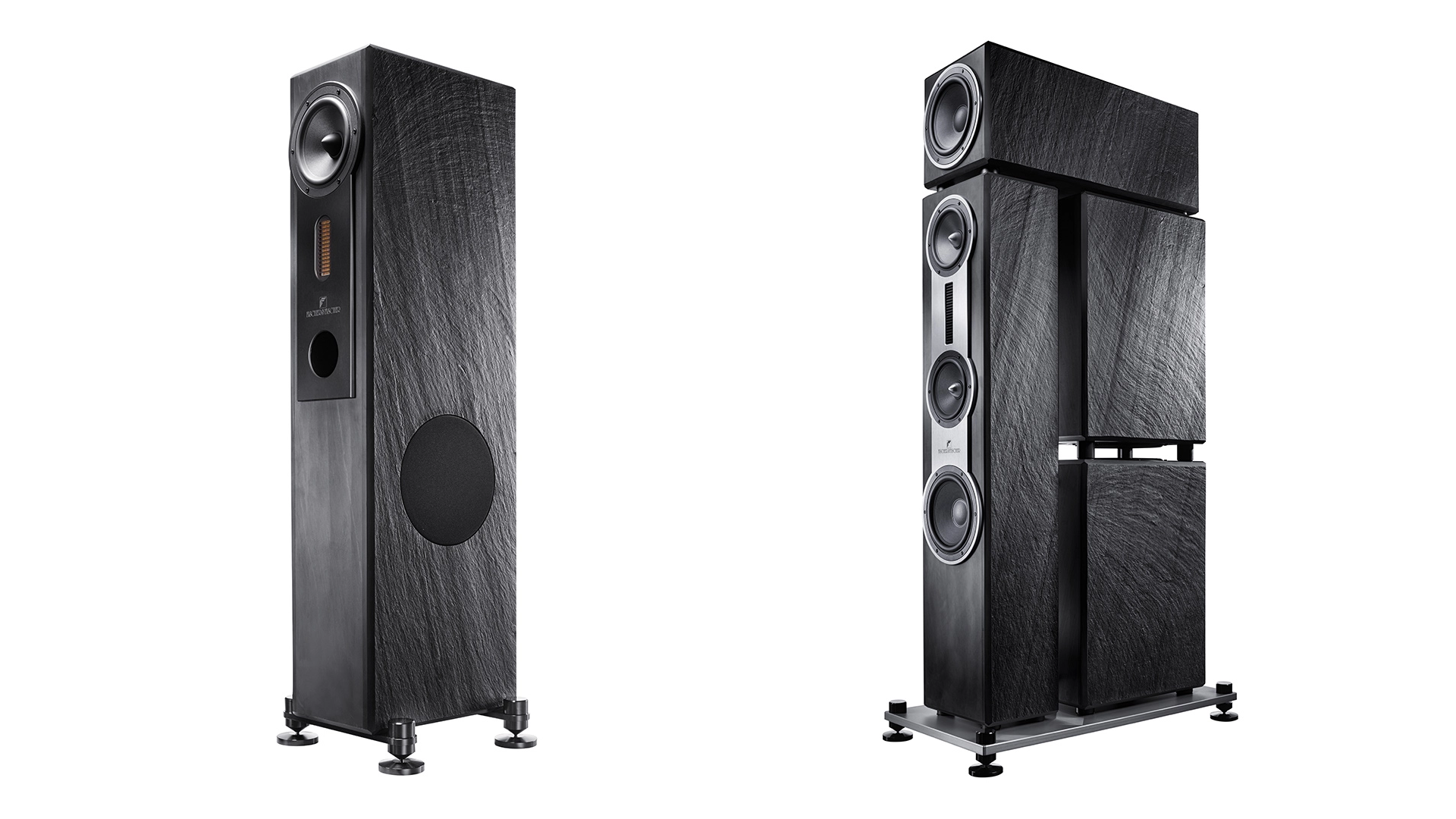
Natural slate is the defining engineering material at Fischer & Fischer, a German loudspeaker company founded in 1981 by electronics students Thomas Fischer and Heinz Fischer. The two founders shared a surname but were not related; Thomas knew slate through his family’s quarrying business and explored it as an alternative to resonant wooden cabinets. Dense, layered slate gives the enclosure high mass and very little tendency to re-radiate energy stored by the drivers. Thomas Fischer remains the owner, while designer Michael Mudra has contributed to the range since the 1990s. Today’s SN and SL families extend from the compact 70 to the 1000.1 AMT flagship, combining slate cabinets with selected dynamic drivers, carefully developed crossovers and Air Motion Transformer tweeters in designated versions. Each cabinet is built and finished in Germany, with natural slate, RAL and automotive colours available. Long product cycles and the possibility of later technical updates are also part of the company’s approach.
Focal
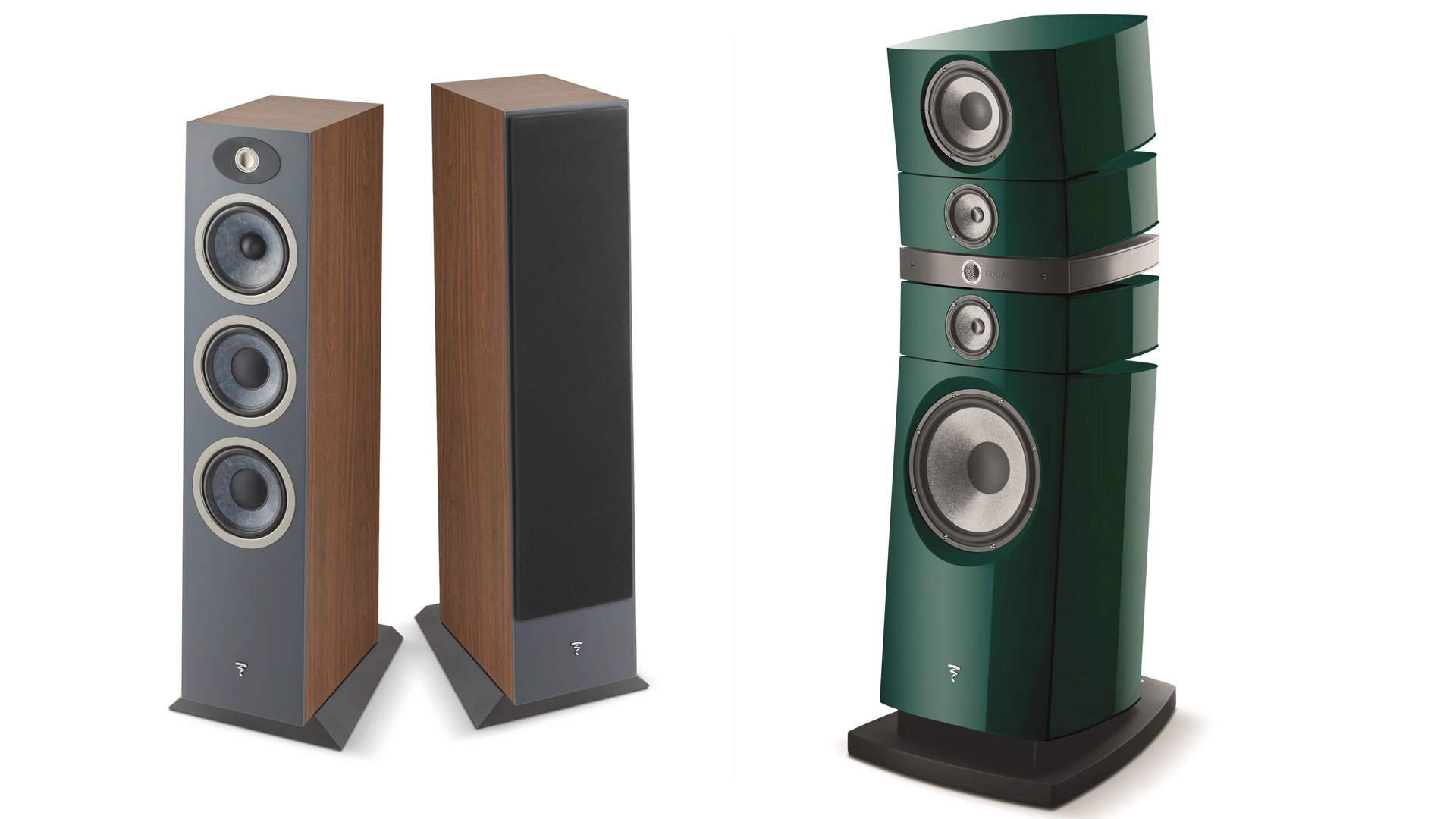
Few audio manufacturers cover as much of the reproduction chain as Focal while still developing and making key drivers in-house. Engineer Jacques Mahul founded Focal-JMlab in Saint-Étienne in 1979, initially building loudspeaker drivers and complete systems in a family precision-engineering workshop. The French company now serves home hi-fi and cinema, professional studios, car audio, headphones and custom installation. Its technical identity is visible in pure-beryllium tweeters, W-composite and K2 cones, flax-sandwich diaphragms, M-shaped profiles and Tuned Mass Damper surrounds; each technology is used where its stiffness, mass or resonance behaviour suits the product. Landmark Utopia loudspeakers established Focal’s high-end reputation, while Sopra, Kanta, Aria Evo X and Vestia broaden the home range. Bathys, Clear, Stellia and Utopia headphones bring the same driver-led philosophy closer to the listener. Cabinet making for the upper loudspeaker lines and much of the driver production remain centred in France.