
Cartridges
The phono cartridge is the tiny transducer at the end of the tonearm that reads the information in a record’s groove. As its diamond stylus vibrates, the cartridge’s motor system converts these physical movements into the delicate electrical signal that becomes music. With distinct technologies like Moving Magnet (MM) and Moving Coil (MC), the cartridge has a profound impact on the final sound. This index lists the brands that craft these essential devices, which are ultimately responsible for the voice of your vinyl collection.
Hi-Fi brands in the category
Summary information and image
Direct links to official websites
Grado

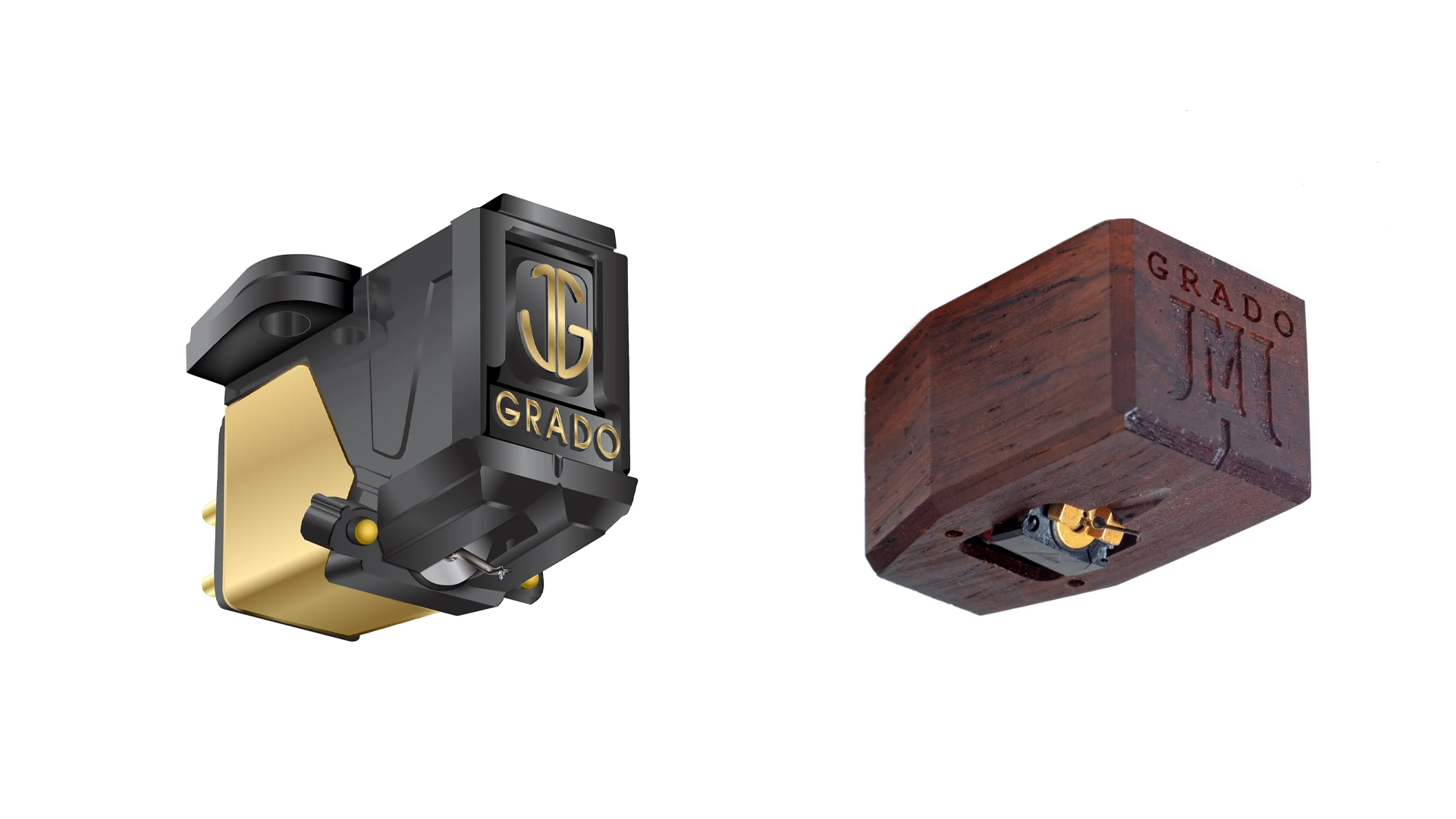
Grado Labs is a family-owned Brooklyn manufacturer whose two specialties—open-back headphones and phono cartridges—share an emphasis on light moving systems and hand assembly. Joseph Grado founded the company with his brother John in 1953, working from the family building where production still takes place. Joseph became known for early stereo moving-coil cartridge work; John Grado assumed leadership in the early 1990s and launched the headphones that made the name familiar to a wider audience. Richard Grado has led the company since 2023, with third-generation family members Jonathan and Matthew also involved. Today Grado offers Prestige, Timbre and Lineage cartridges together with Classic, Reference and Signature headphones, plus wireless models such as the GW series. Continuity of ownership, repairable construction and small-batch Brooklyn production define the brand more clearly than any single model.
Hana

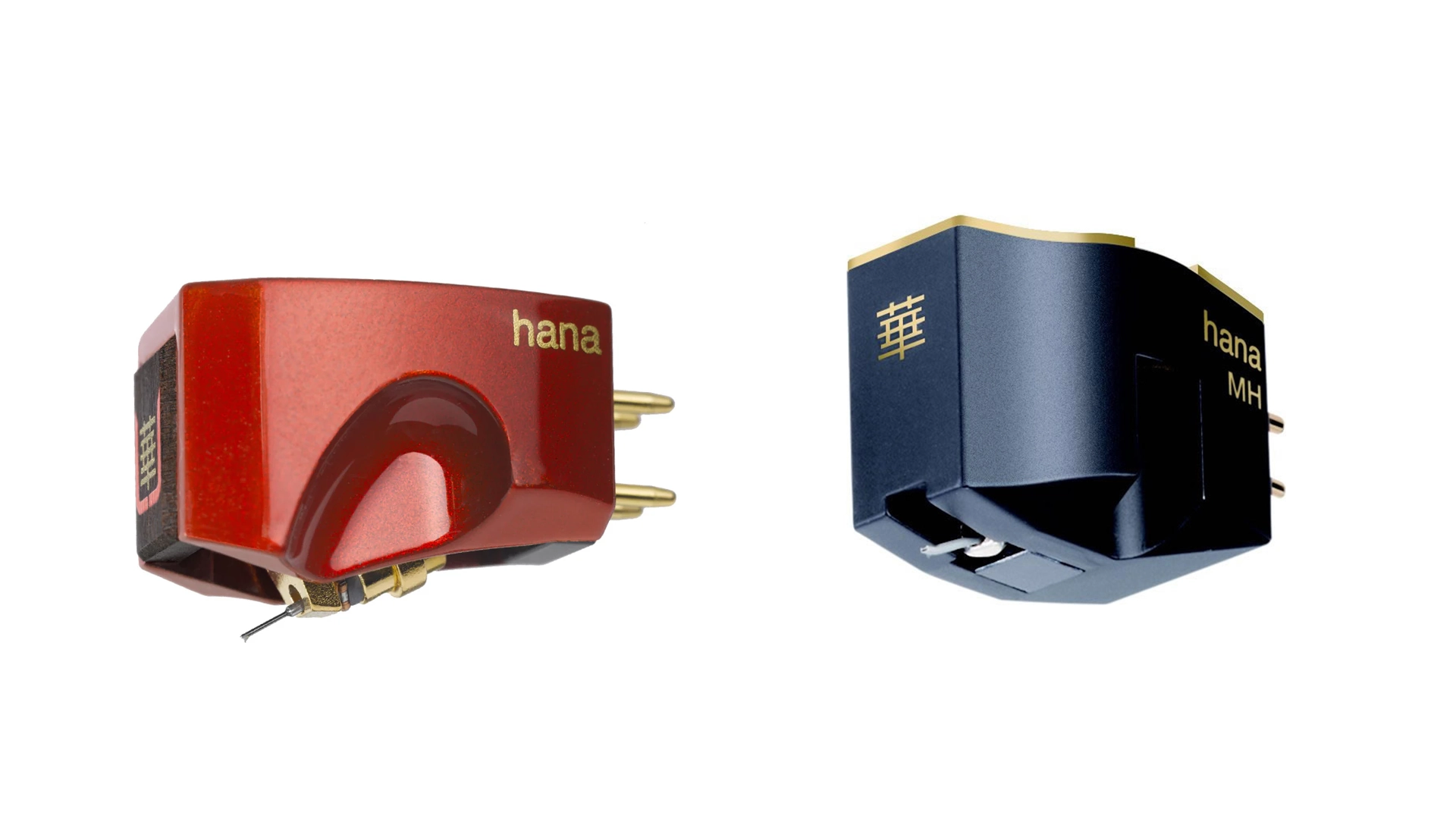
HANA is a Japanese line of moving-coil phono cartridges made by Excel Sound Corporation, a specialist manufacturer whose cartridge work began with Masao Okada’s research in 1964 and the opening of the Excel factory in Tokyo in 1970. The HANA brand itself was developed for export in 2015 with Hiroshi Ishihara of Youtek. Its identity is built around a carefully graded family of hand-assembled and individually tested MC pickups: the high- and low-output EL/EH, SL/SH and ML/MH models, followed by the more ambitious Umami series. Across the range, HANA combines precision-wound coils, rigid bodies, carefully selected cantilevers and advanced stylus profiles; the Umami cartridges add more elaborate generators and resonance-controlled body structures. This gives listeners a clear progression in engineering and price while keeping production rooted in Excel’s long Japanese cartridge-making experience.
Holborne

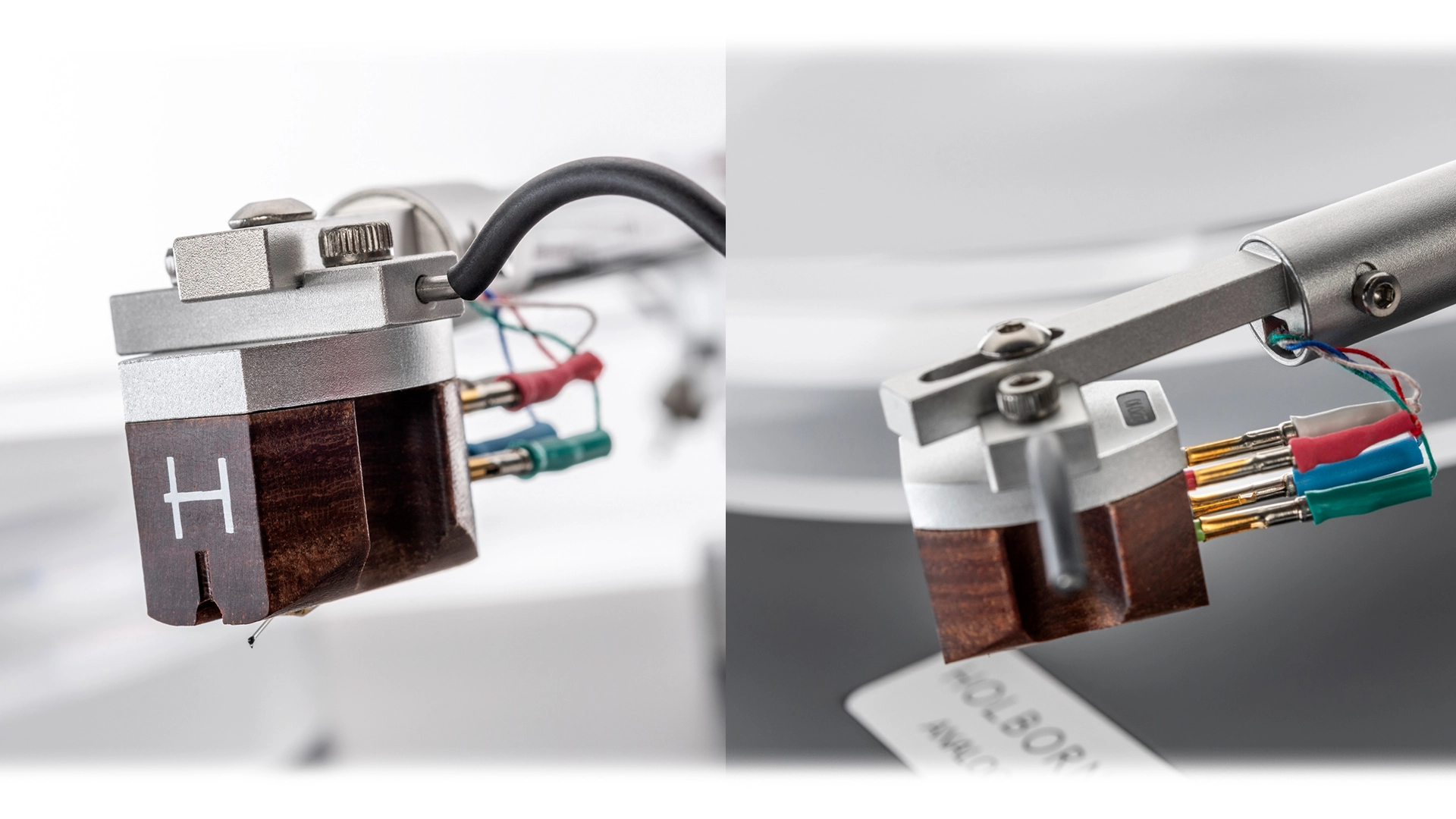
Holborne is a Swiss analogue and electronics brand founded in 1987 by musician and technician Meinrad Müller and named after the English Renaissance composer Anthony Holborne. Small-scale production and a close relationship between musical practice and mechanical design have shaped the company from the beginning. Its best-known current analogue work is the Analog turntable platform and the Dualpivot tonearm. The latter combines unipivot-like freedom in the horizontal plane with a defined rotating support for vertical movement, while a three-part counterweight, interchangeable headshell options and continuous low-resistance wiring allow detailed cartridge setup. The company has also produced amplifiers and phono electronics. Since 2020, Holborne electronics have been made by HiFiction AG, while swiss analog ag progressively took over the turntable business from 2022. Holborne therefore represents both a historic Swiss marque and an evolving specialist manufacturing partnership.
Homogenix

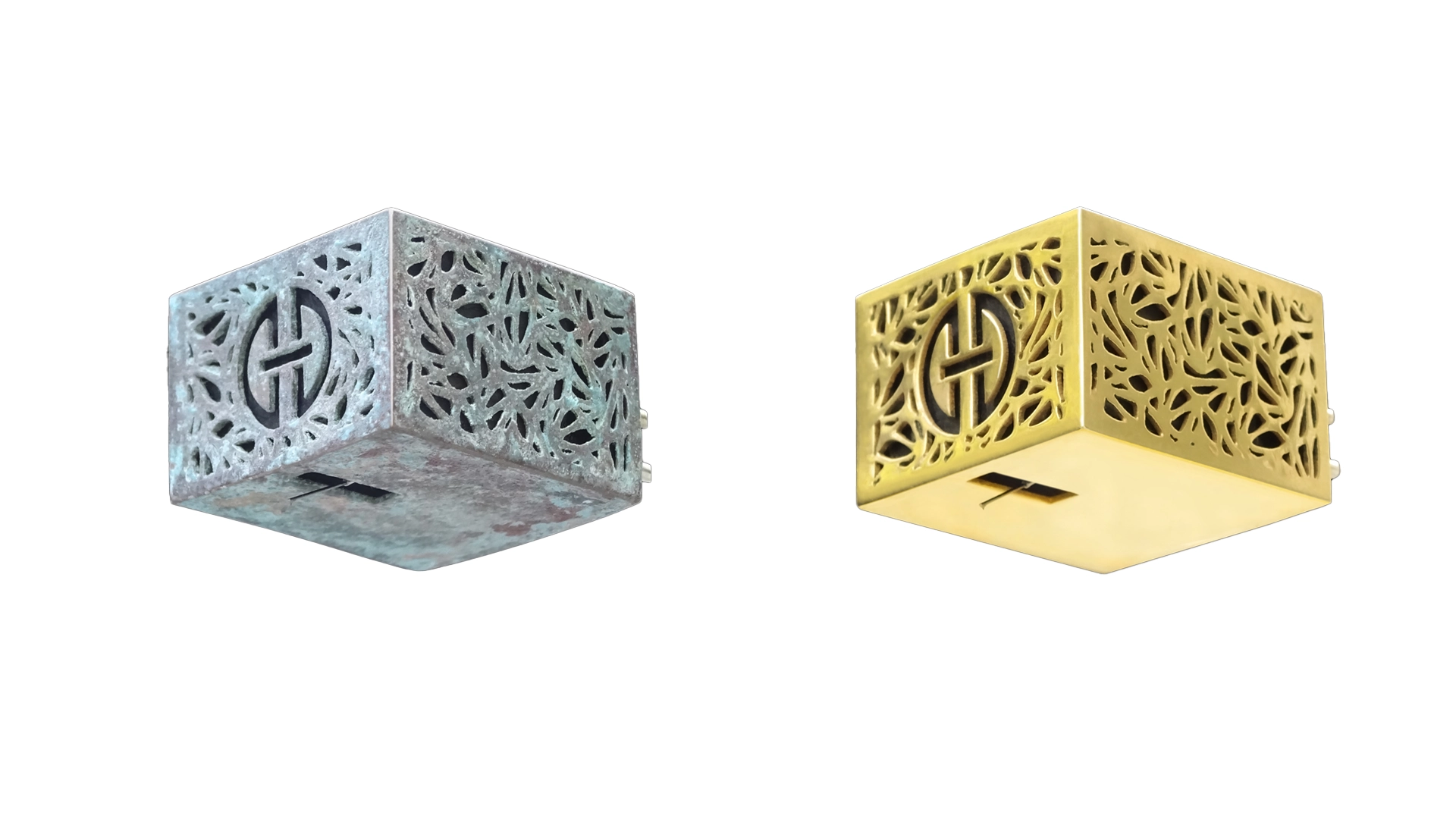
Homogenix is a Polish moving-coil cartridge specialist built around unusually ambitious materials and largely in-house construction. Company president Miroslaw Piekut personally assembles the cartridges; apart from the stylus, cantilever and laser cutting of the outer shell, the manufacturing work is performed by Homogenix. The range uses a core of old fir wood, which the maker dates to 1512, inside metal bodies whose material and finish vary by model. Blue and Gold cartridges use square-coil generators, while Silver and Black use cross-coil motors; sapphire, ruby or boron cantilevers and different precious-metal or plated-brass shells further distinguish the models. The newer EVO continues the same small-series, hand-built approach with a boron cantilever and MicroRidge stylus. Homogenix is therefore not a generic rebadged pickup line: its identity lies in combining generator geometry, cantilever choice, aged wood and metal body construction as one mechanical system.
Kiseki

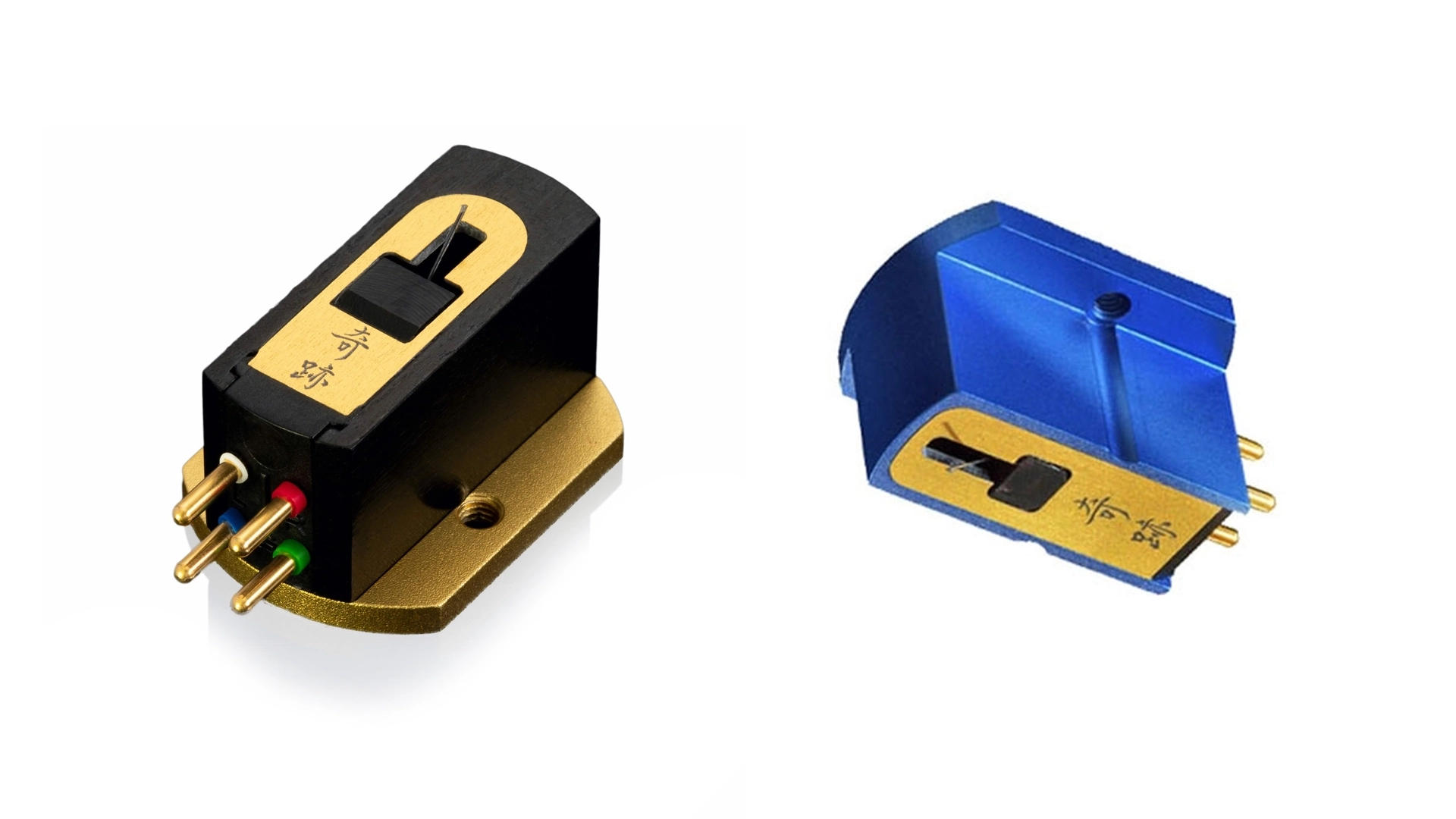
Kiseki is a Dutch-developed name in moving-coil phono cartridges, remembered first for a distinctive group of Japanese-made models from the 1980s and later revived as the NS, or New Style, range. The modern cartridges retain the brand’s emphasis on low-output moving-coil generators, carefully selected body materials and fine stylus/cantilever assemblies, while updating dimensions and production consistency for contemporary tonearms. Blue N.S., PurpleHeart N.S. and BlackHeart N.S. use different bodies and generator details rather than serving as cosmetic versions of one cartridge; boron cantilevers and line-contact-type diamonds appear in selected models. The result is a small analogue catalogue whose differences matter for cartridge mass, compliance, loading and tonal balance. Kiseki should not be described through vague promises of “organic” sound alone: its identity comes from material-led cartridge construction and the continuity between rare originals and the later New Style series. The previously listed founding year of 1990 is not sufficiently supported, so no exact date is asserted here.
Koetsu

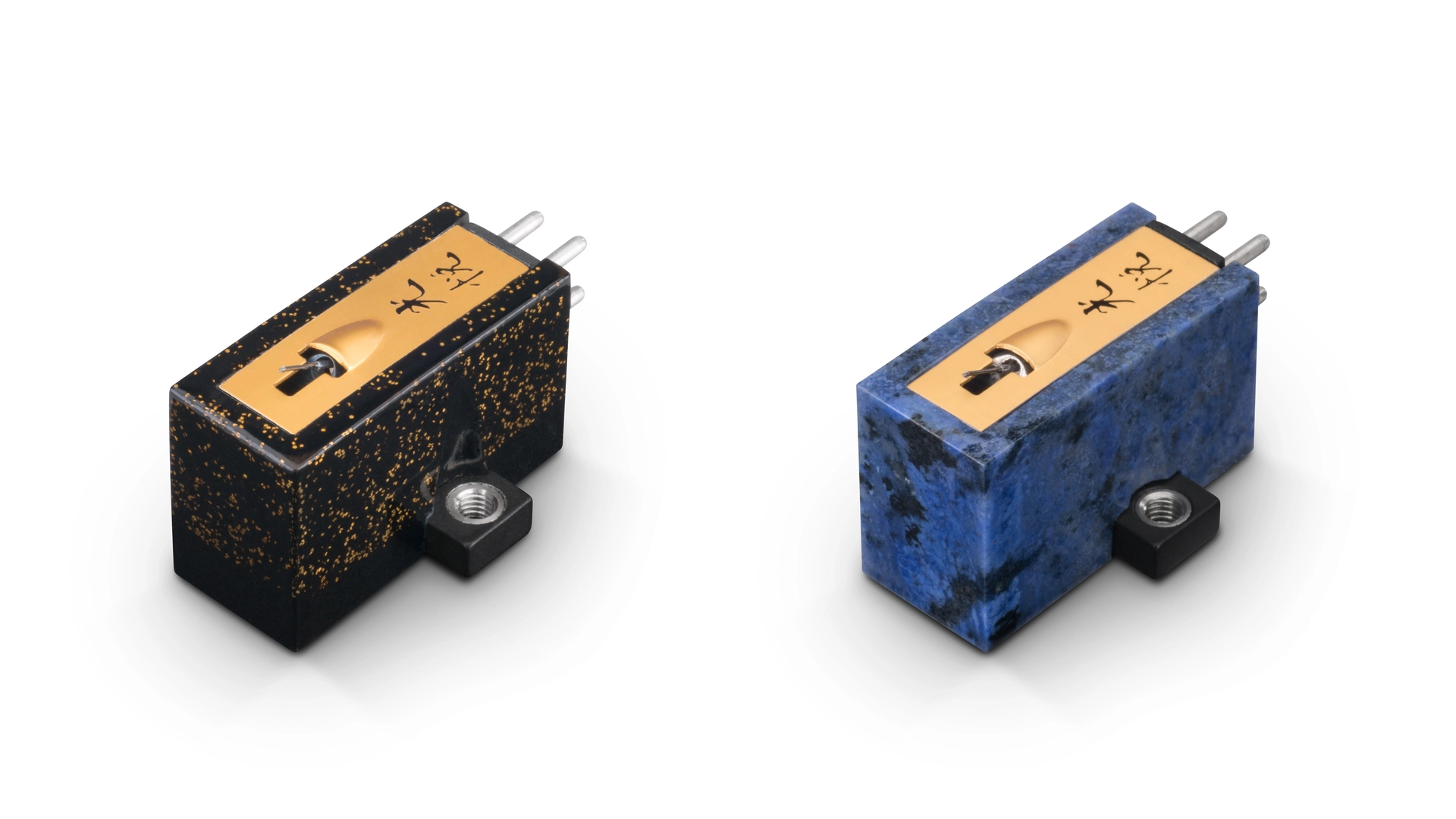
Koetsu was a Japanese maker of hand-built moving-coil phono cartridges founded by Yoshiaki Sugano and named after the artist and craftsman Hon’ami Kōetsu. Sugano combined traditional Japanese finishing with painstaking generator work, creating cartridges whose bodies became as distinctive as their internal construction. Rosewood models established the core form; Urushi versions added lacquered wood bodies, while the stone-body cartridges used materials such as jade and onyx. Koetsu also became associated with high-purity copper coils, carefully selected magnets and individually assembled low-output generators. Yoshiaki’s son Fumihiko Sugano later continued production and preserved the small-scale methods. After Fumihiko died in 2023, the family decided not to continue manufacturing, so Koetsu should no longer be presented as an active producer with an expanding current range. Remaining cartridges, retips and dealer stock now belong to a finite legacy. That ending does not diminish the brand’s importance: Koetsu made cartridge body material, craft finish and generator voicing inseparable parts of one analogue design.
Kondo Audio Note

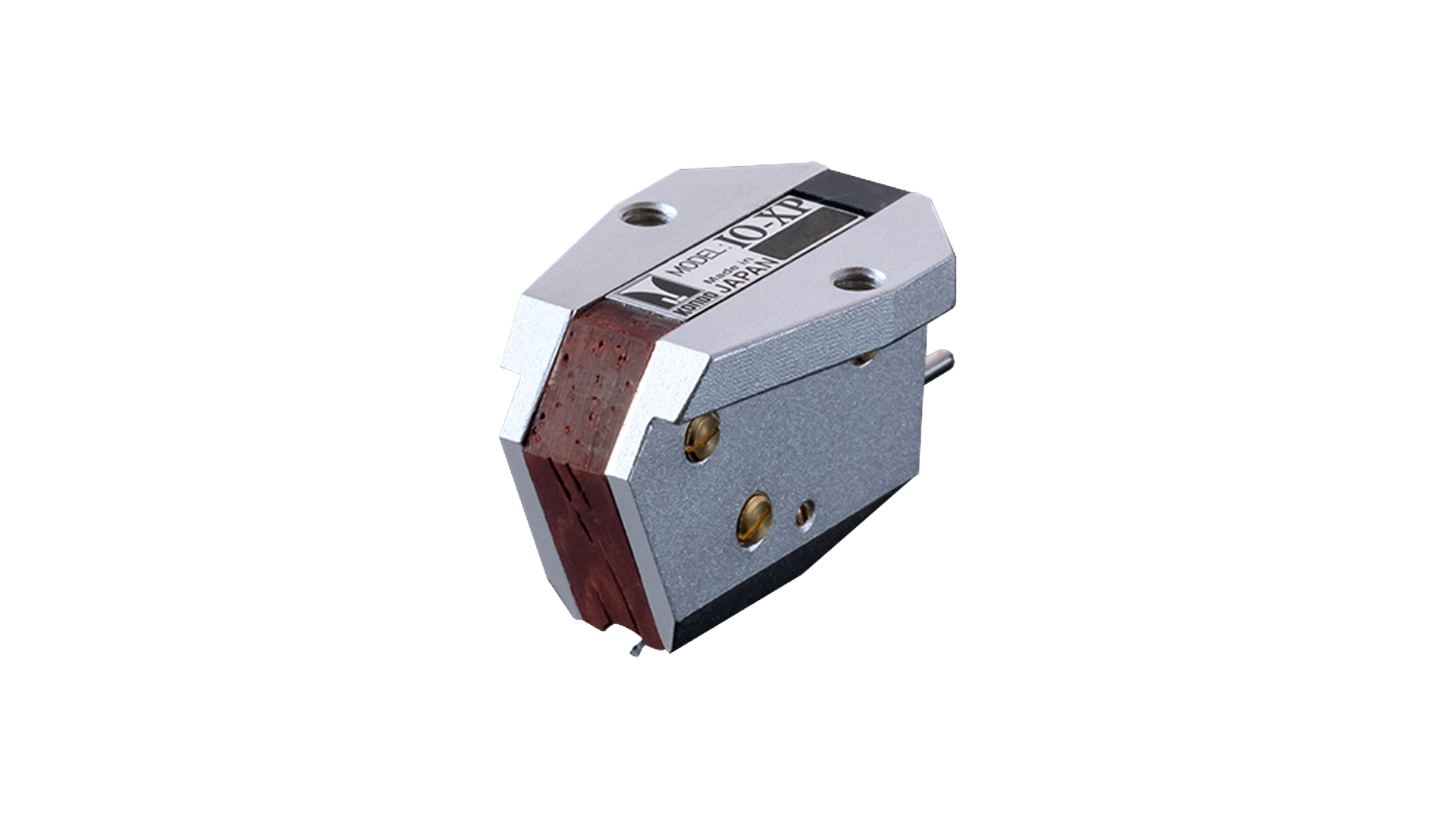
Kondo Audio Note is the Japanese company founded by Hiroyasu Kondo in 1976 and should not be confused with the separate British Audio Note business. Kondo, a former recording engineer, pursued extremely simple valve circuits supported by exceptional passive parts, hand-wound transformers and meticulous point-to-point assembly. The company became an early and influential advocate for using high-purity silver throughout an audio component, from internal wiring and capacitors to transformer windings and cables. Its best-known product is the Ongaku, a single-ended 211 integrated amplifier whose silver output transformers made it a landmark of Japanese high-end audio. The current catalogue extends that thinking through amplifiers such as Kagura and Gakuoh, M7 and G-1000 preamplification, phono stages, step-up transformers and KSL cables. Production remains deliberately small and labour-intensive in Japan. Kondo’s real know-how lies not in “tube warmth,” but in controlling materials, magnetic components, grounding and signal paths as one complete analogue circuit.
Kuzma

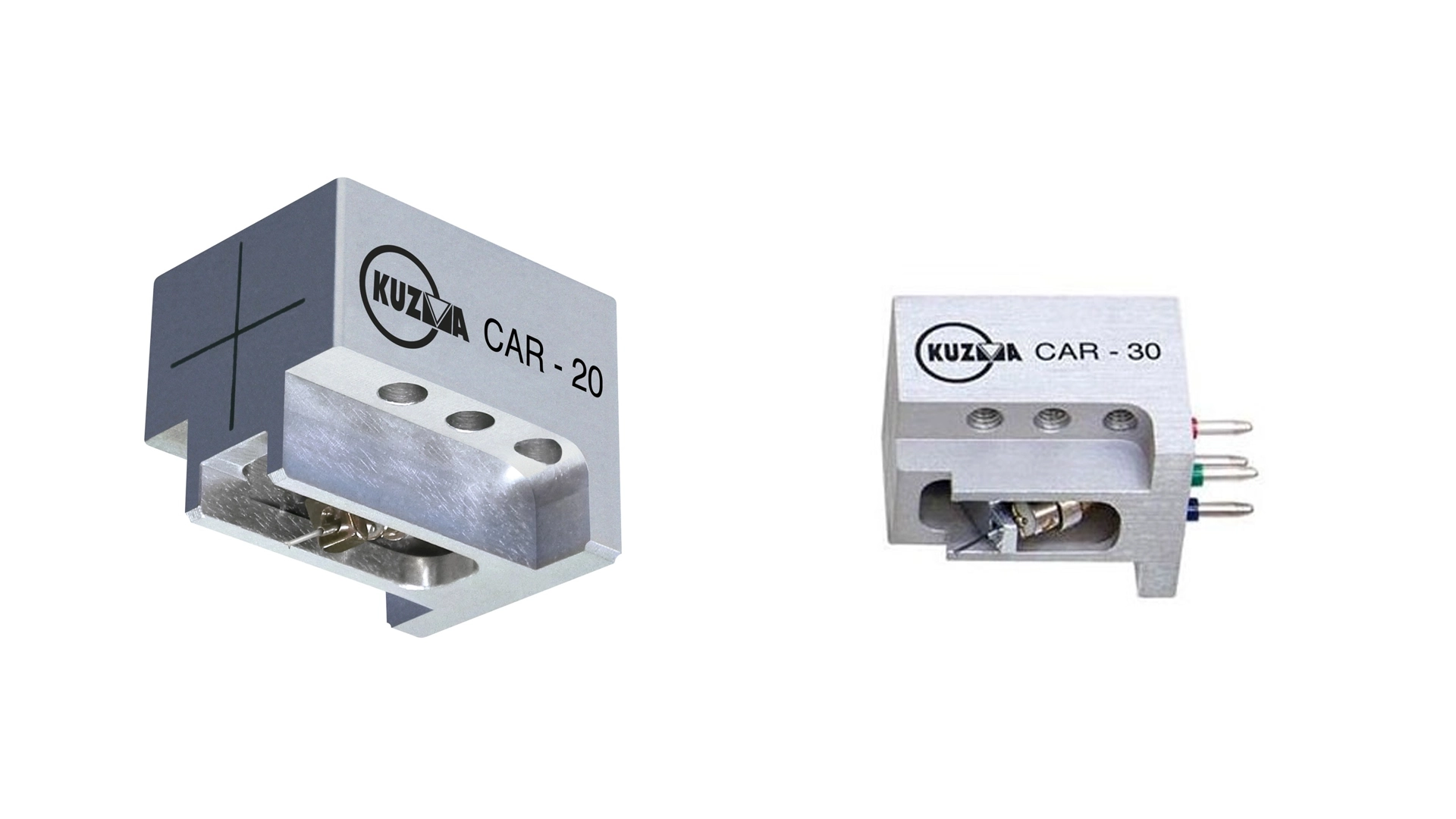
Kuzma is a Slovenian analogue manufacturer whose turntables and tonearms are engineered as precision mechanical instruments. Franc Kuzma founded the company in 1983, applying a background in mechanical engineering to the problems of speed stability, bearing noise and unwanted resonance. The long-running Stabi S demonstrates the basic formula with a rigid, skeletal brass structure and separate motor; the modular Stabi R uses a solid aluminium chassis that accepts multiple tonearms, while the Stabi M and XL DC pursue still greater mass, isolation and rotational consistency. Kuzma’s 4Point tonearms are equally distinctive: four bearing points provide stable, low-friction movement in the horizontal and vertical planes while preserving accurate azimuth, and versions range from the compact 4Point 9 to the 14-inch model. The tangential Air Line and sapphire-arm-tube Safir 9 explore different solutions to the same tracing problem. Cartridges, power supplies and isolation accessories complete the system. Across the range, Kuzma avoids fashion-driven reinvention; rigid structures, serviceable components and upgrade paths keep established designs relevant for decades.
Linn

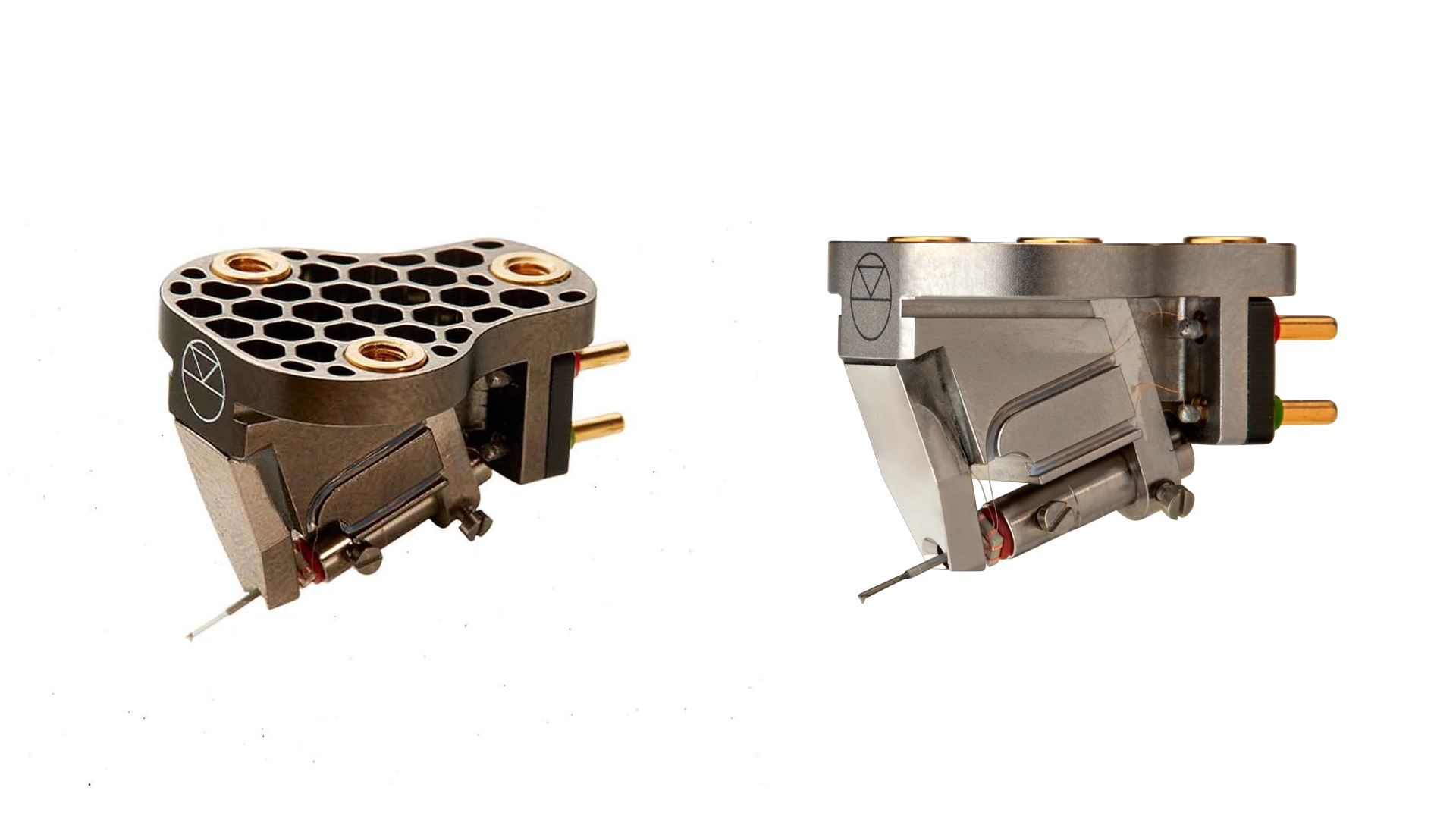
Linn is a Scottish hi-fi manufacturer founded by Ivor Tiefenbrun in 1973, the year the Sondek LP12 established the company’s “source first” argument: information lost at the beginning of a replay chain cannot be recovered later. The suspended, belt-driven LP12 remains in production, but its significance is also structural. Bearings, subchassis, power supplies, tonearms and cartridges can be upgraded individually, allowing decades-old decks to incorporate current engineering. Linn carried the same system thinking into digital audio with its DS network players and today’s Klimax, Selekt and Majik DSM products. Organik is Linn’s in-house discrete DAC architecture; Exakt moves the crossover into the digital domain and time-aligns individual drive units; Space Optimisation models a specific loudspeaker and room to reduce low-frequency interaction without requiring a calibration microphone. Selekt DSM can be configured as a source, preamplifier, integrated amplifier or multichannel hub and upgraded with different DAC and amplification modules. Loudspeakers and complete active systems close the loop. Designed and manufactured near Glasgow, Linn’s defining strength is controlled evolution: analogue and digital platforms are built to accept meaningful upgrades instead of being discarded.
Luxman

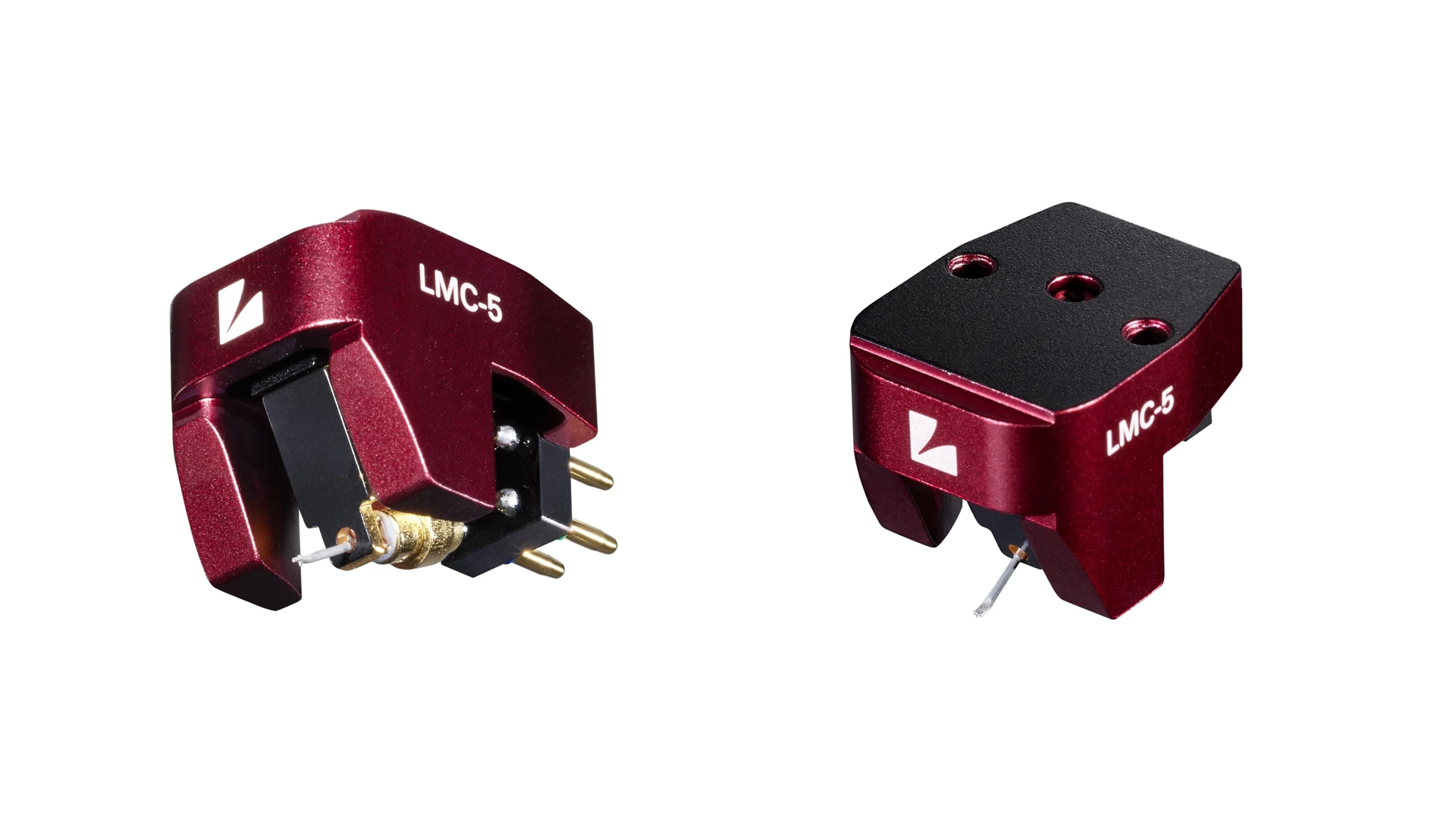
Luxman is one of Japan’s longest-established specialist hi-fi manufacturers, with roots in an Osaka radio department opened in 1925 as broadcasting began in the country. Its catalogue is broad, but amplification remains the centre of gravity: integrated amplifiers, control amplifiers and power amplifiers sit alongside SACD/CD players, network transports, DACs, phono stages and the PD-191A turntable. Luxman develops recurring circuit platforms rather than dressing standard modules in new cases. The current LIFES feedback engine, introduced as the successor to the long-running ODNF concept, is designed to apply correction only to detected distortion components while preserving the music signal’s immediacy. LECUA electronically controlled attenuators provide repeatable volume adjustment with carefully matched channels, and substantial custom transformers and power supplies are used throughout the upper ranges. Products such as the L-509Z integrated amplifier, C-10X/M-10X separates and D-10X disc player pair this engineering with the brand’s characteristic analogue meters and understated industrial design. Luxman’s appeal is the continuity between eras: tube components, modern solid-state circuits, digital sources and vinyl replay are all treated as parts of one coherent Japanese audio tradition.
Lyra

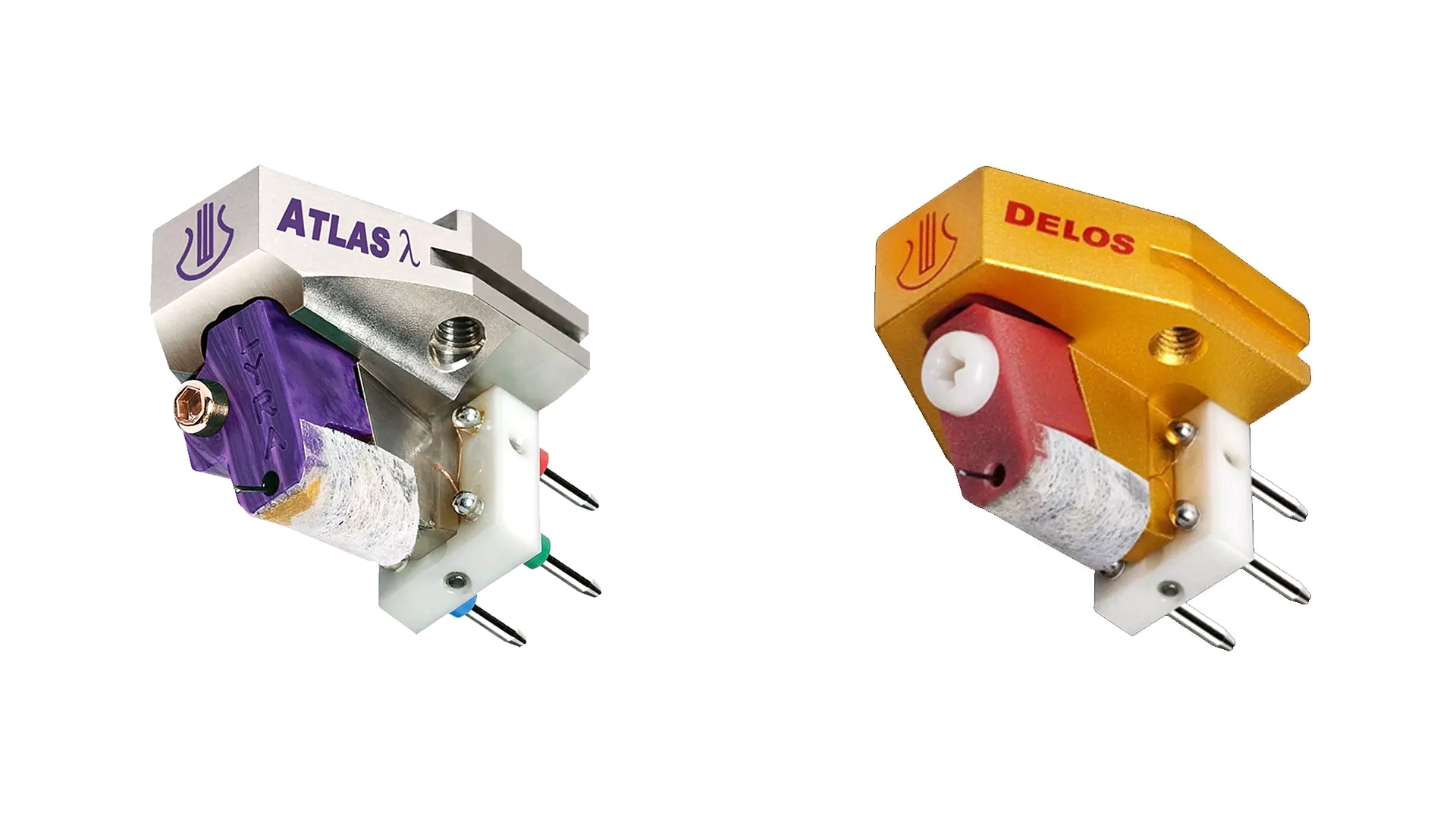
Lyra is a Tokyo-based specialist in moving-coil phono cartridges, established under the Lyra name in 1991 after entering the cartridge field as Scan-Tech in 1986. Its products are the work of an unusually international three-person partnership: American designer Jonathan Carr develops the mechanical and electromagnetic concepts, Japanese master craftsman Yoshinori Mishima oversees manufacturing and assembly, and Norwegian Stig Bjorge directs the business. Every cartridge is built in Japan from the ground up rather than rebadged from an outside supplier. Current models progress from Delos and Kleos to Etna and flagship Atlas, with low-output SL versions for phono stages able to provide the required gain. Lyra’s New Angle geometry aligns the coil and magnetic circuit under normal tracking force, addressing a relationship that changes when the cantilever is loaded on a record. The asymmetric body of Atlas is intended to disrupt standing-wave symmetry, while carefully chosen body materials, cantilevers, styli, suspension and damping distinguish each level of the range. The later Lambda revisions refine how energy is controlled within the cartridge rather than replacing the basic platform. Lyra’s real know-how lies at microscopic scale: maintaining alignment and low moving mass while producing a transducer robust enough for years of record playback.
Michell Audio

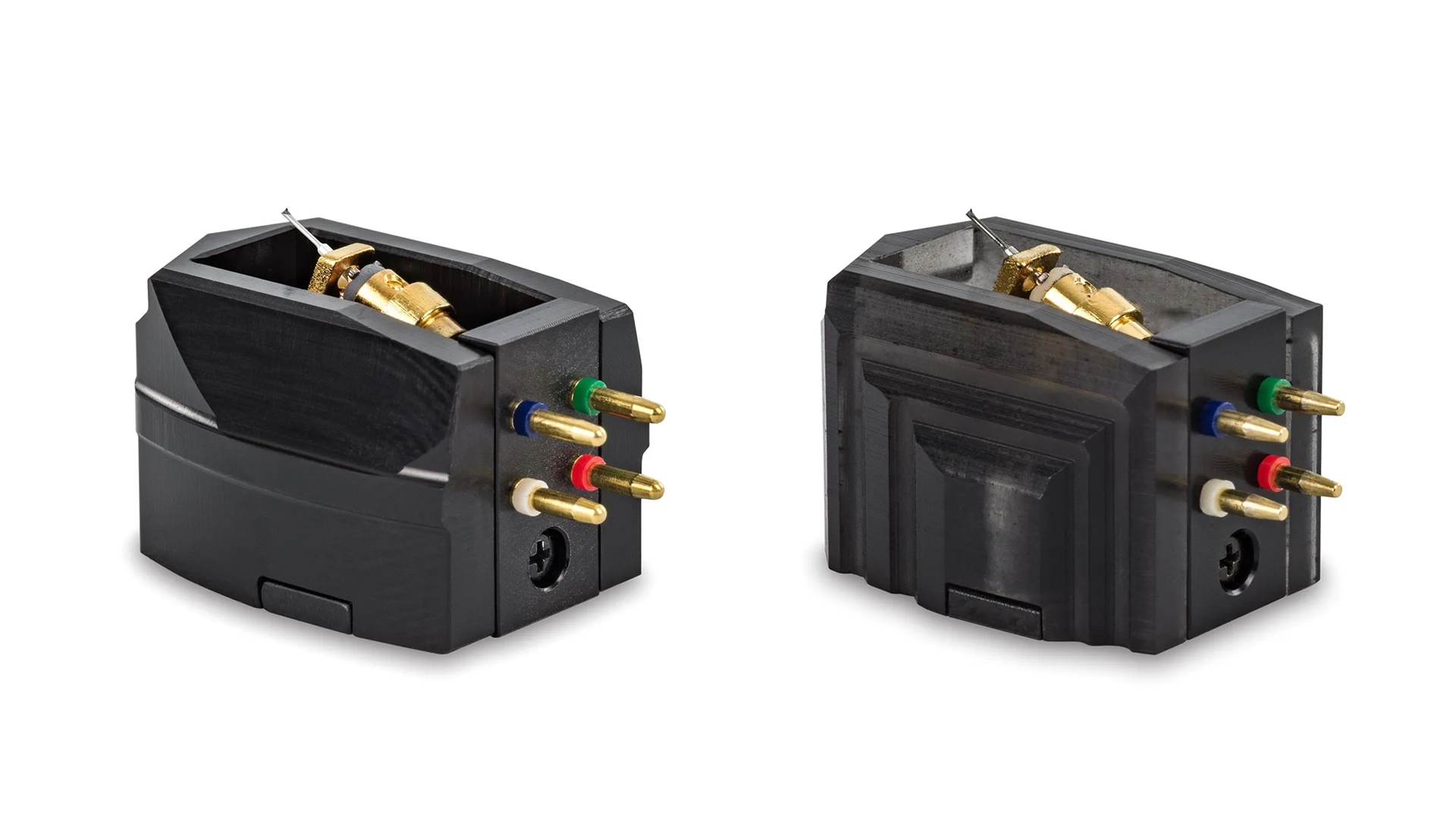
Michell Audio is the British turntable maker behind the unmistakable GyroDec and Orbe: skeletal, suspended record players whose engineering is meant to remain visible. John Michell founded Michell Engineering in the mid-1960s, initially machining precision parts for other manufacturers. Work for Transcriptors, followed by licensed production of the Hydraulic Reference, gave the company a direct route into analogue replay; Michell’s own Reference Electronic appeared in 1977 and the GyroDec followed in the early 1980s. The current range includes the GyroDec, open-frame Gyro SE, flagship Orbe, compact TecnoDec, tonearms, power supplies and upgrades for long-running models. Signature details include suspended subchassis construction, an inverted oil-circulating main bearing, belt drive with an outboard motor, and the GyroDec’s weighted platter. Rather than replacing successful decks every few seasons, Michell develops them through compatible bearings, clamps, power supplies and suspension parts. That continuity is the brand’s real strength: these are visually original turntables supported as evolving mechanical systems, not fashion-led products with a short service life.
Miyajima Lab

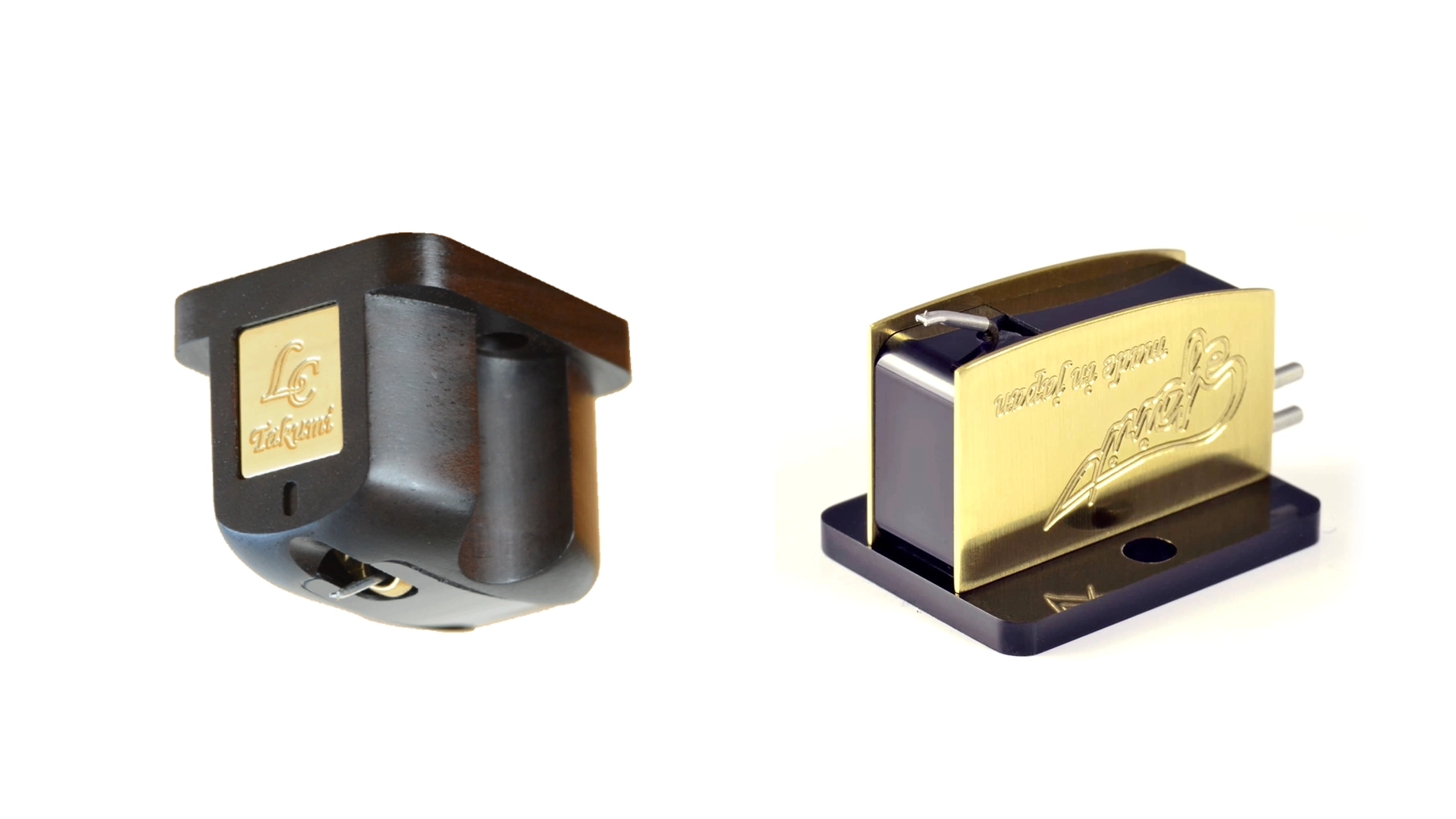
Miyajima Laboratory is the small Japanese analogue specialist whose moving-coil cartridges are built around Noriyuki Miyajima’s patented Cross Ring generator. Miyajima established the business in Fukuoka on 27 March 1980, initially as an audio shop, and still designs the products. The Cross Ring arrangement places the coil’s pivot and centre of gravity at the same point, addressing the asymmetrical motion found in many conventional moving-coil suspensions and allowing the stylus movement to be converted more directly into an electrical signal. The catalogue includes stereo cartridges such as Shilabe, Kansui, Madake and Saboten, dedicated mono designs, step-up transformers and selected amplification. Miyajima treats mono as a separate engineering problem: its true-mono cartridges use vertical-axis concentration so the generator responds appropriately to lateral groove modulation rather than merely wiring a stereo cartridge for mono. Cantilevers and bodies vary by model—bamboo and cactus materials appear where their mechanical behavior serves the design—but the generator architecture is the constant. The brand’s individuality lies in rethinking the cartridge mechanism itself, then hand-building a focused range around that solution.
MoFi Electronics

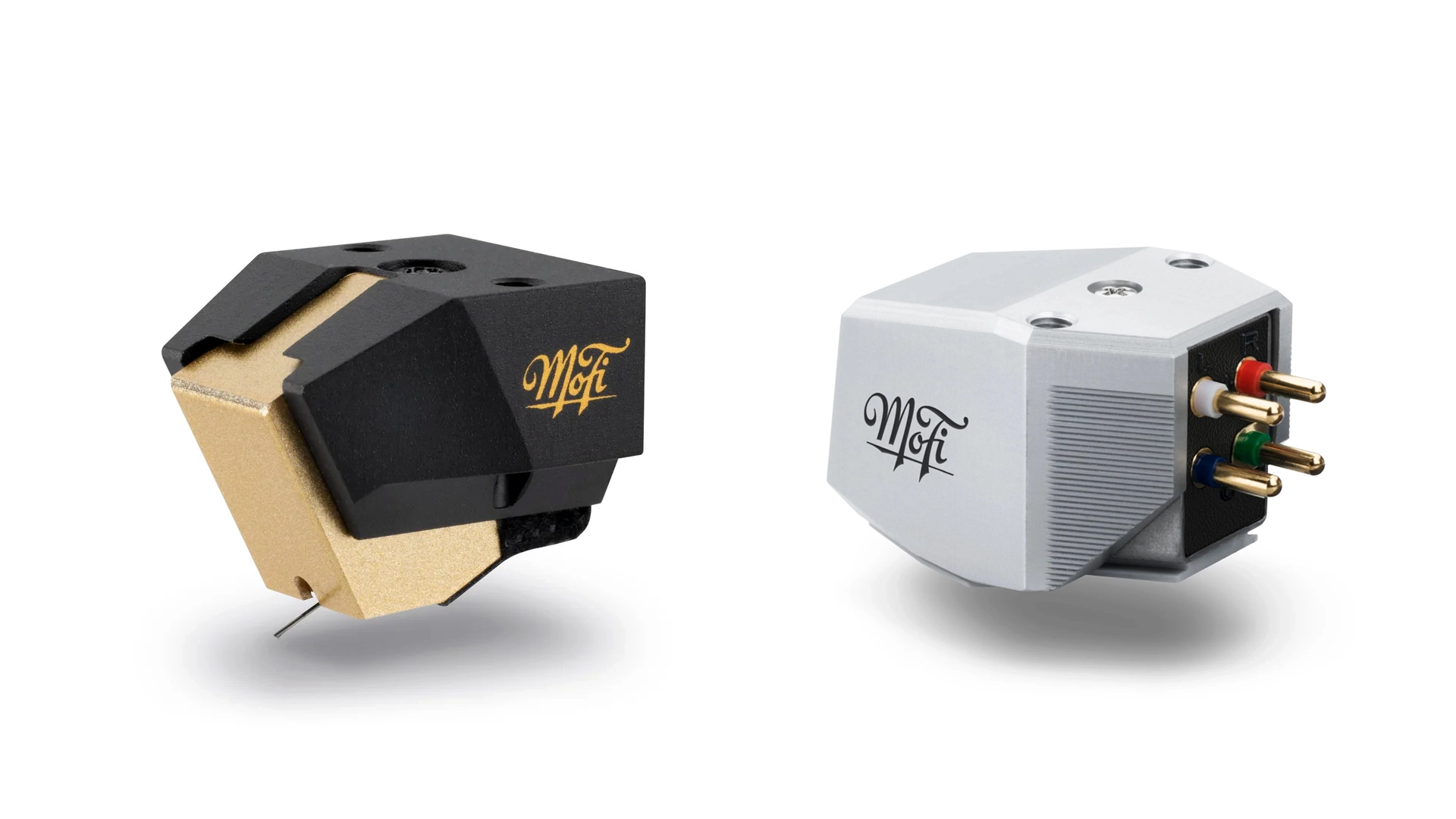
MoFi Electronics is the hardware arm of the Mobile Fidelity family, translating the record label’s analogue experience into turntables, cartridges, phono stages and loudspeakers. The business was formed in 2014 and introduced its first hardware publicly in 2016, drawing on outside specialists rather than claiming that mastering expertise alone is sufficient to design equipment. Turntable engineer Allen Perkins led the analogue platform, while later loudspeakers were created by Andrew Jones and the MasterPhono by Peter Madnick. StudioDeck and UltraDeck established the line with isolated AC motors, constrained-layer plinths and proprietary tonearms; the Allen Perkins-designed MasterDeck adds three-speed operation and fine speed adjustment. UltraGold, MasterTracker and other cartridges are voiced as part of the same playback chain. SourcePoint speakers use Jones’s concentric driver architecture to control directivity and integrate treble with the mid/bass unit from a common acoustic centre. MoFi Electronics is distinctive because its catalogue is not a label-logo exercise: it is a set of purpose-designed components by identifiable engineers, informed by how records are cut, evaluated and replayed.
Murasakino

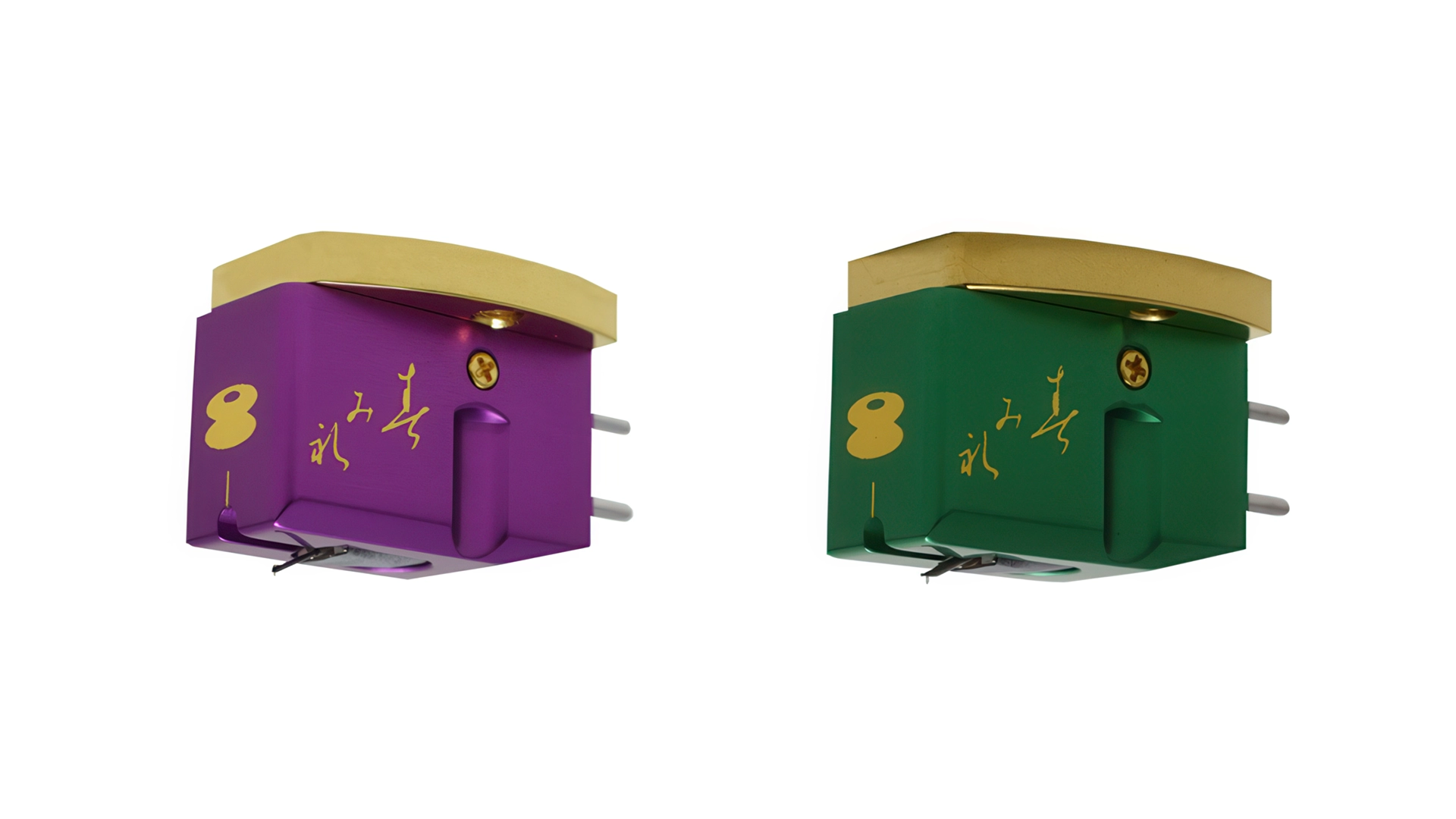
Murasakino is a tiny Kyoto analogue manufacturer whose Sumile moving-coil cartridges and Nobala transformers are made in deliberately small numbers. The company was established in 2014 in Kyoto’s Murasakino district; its name and the violet finish used throughout the range come directly from that place. Sumile launched in 2016, followed by the true-mono Sumile-mono and the Nobala step-up transformer. The products are processed and assembled by hand in Japan, with individual build records retained for traceability. Sumile combines a neodymium magnetic circuit, boron cantilever and carefully chosen stylus geometry in a rigid aluminium body. Nobala is optimized for very-low-impedance moving-coil cartridges, using a transformer solution to raise their minute signal without adding an active gain stage; its copper-rich, heavily shielded construction reflects the same concern with noise and resonance. Murasakino even treats surface colour and plating as controlled production decisions rather than cosmetic afterthoughts. The brand’s attraction is not a broad catalogue but obsessive consistency: a few complementary analogue products, developed slowly and built by a small team with unusually visible accountability.
Mutech

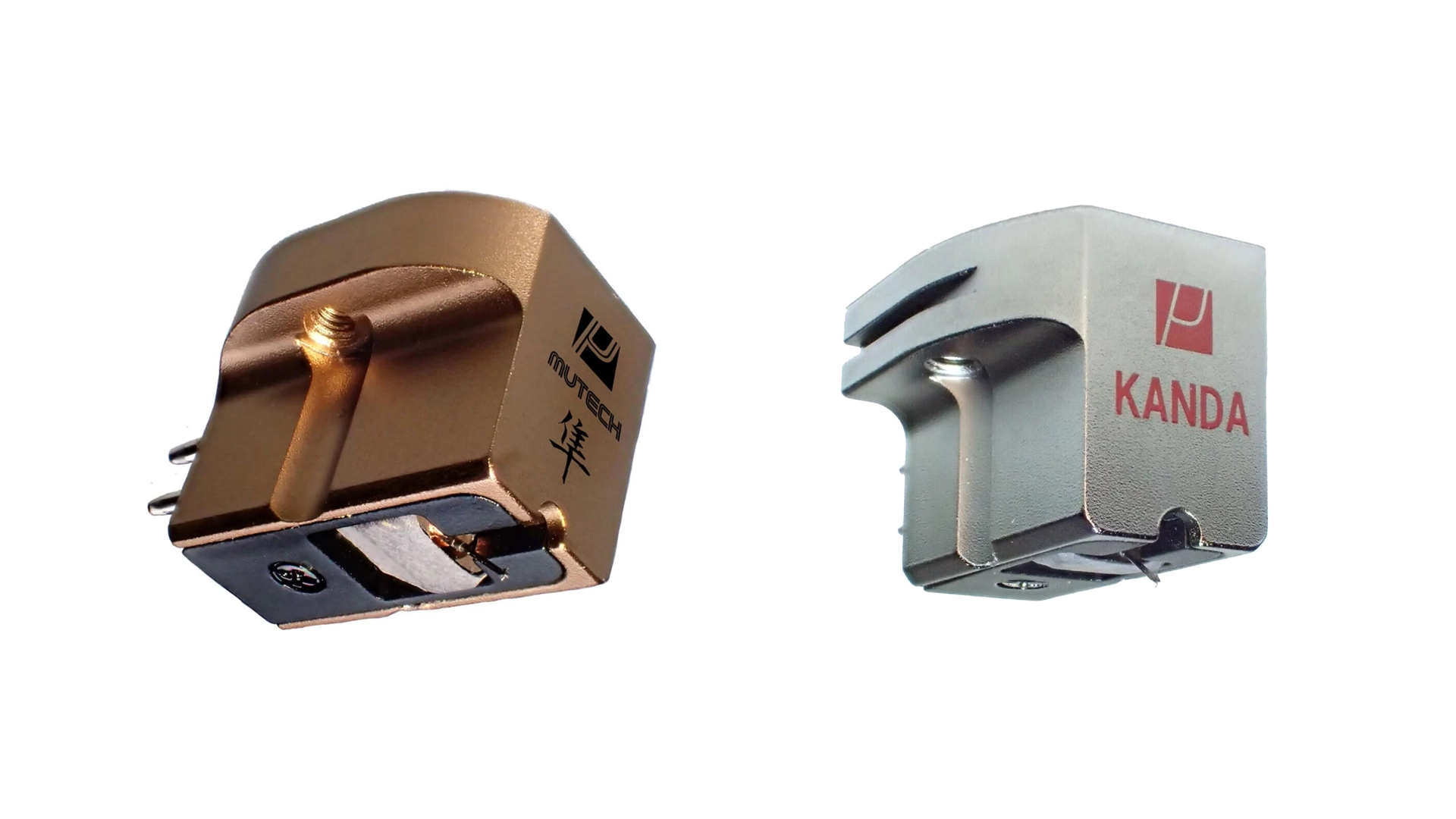
MUTECH is the Japanese moving-coil cartridge marque created by veteran magnetic-circuit engineer Eiji Kanda. Kanda’s cartridge and transformer work reaches back to joint development with Supex in 1959 and decades of OEM cooperation, but that date describes the start of the underlying engineering activity—not the MUTECH brand. The marque was formally established in 2012 with the LM-H cartridge, and later models developed the RM-KANDA generator concept. MUTECH’s technical signature is a yokeless ring-magnet moving-coil system. Instead of using the conventional magnetic yoke found in many MC generators, a specially developed core is coupled directly to the magnet, allowing low internal impedance together with comparatively useful output. RM-KANDA, ZERO, HAYABUSA and related versions refine the magnetic circuit, body, cantilever, stylus and internal wiring while retaining that principle. Production is small and specialist export is handled by Kaji Laboratory. The important story is continuity without inflated chronology: more than half a century of Kanda’s magnetic-material know-how underpins a much younger brand, whose individuality comes from a specific generator architecture rather than exotic body materials alone.
My Sonic Lab

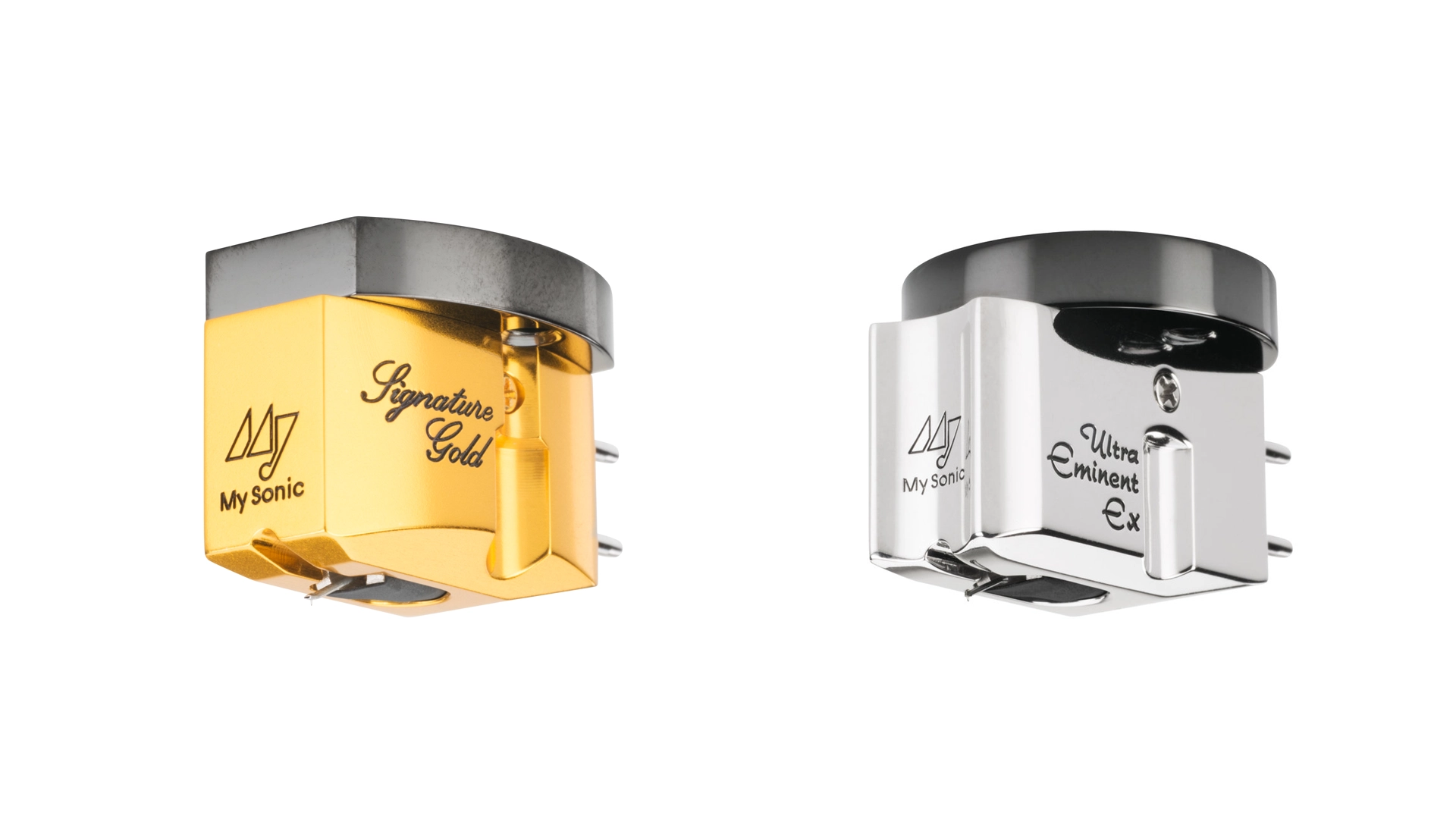
My Sonic Lab is the Japanese analogue brand through which veteran cartridge designer Yoshio Matsudaira develops low-impedance, relatively high-output moving-coil pickups. After designing cartridges for companies including Supex, Audio Craft, Luxman, Koetsu and Air Tight, Matsudaira founded My Sonic Lab in 2004. The range centres on Eminent, Hyper Eminent, Signature and Ultra Eminent cartridges, complemented by step-up transformers designed for their electrical characteristics. Every My Sonic Lab cartridge uses Matsudaira’s proprietary SH-μX magnetic core, a material with higher permeability and flux density than the conventional iron cores commonly used in MC generators. That allows fewer coil turns and very low internal resistance without forcing output to impractically low levels, reducing signal loss and stored energy in the generator. Model differences come from the magnetic circuit, body material, cantilever, stylus and damping rather than a change of the central principle. My Sonic Lab’s distinction is unusually easy to state and verify: it is a mature designer’s focused exploration of one core material and the electrical advantages it enables, carried consistently from cartridges to matching transformers.
Nagaoka

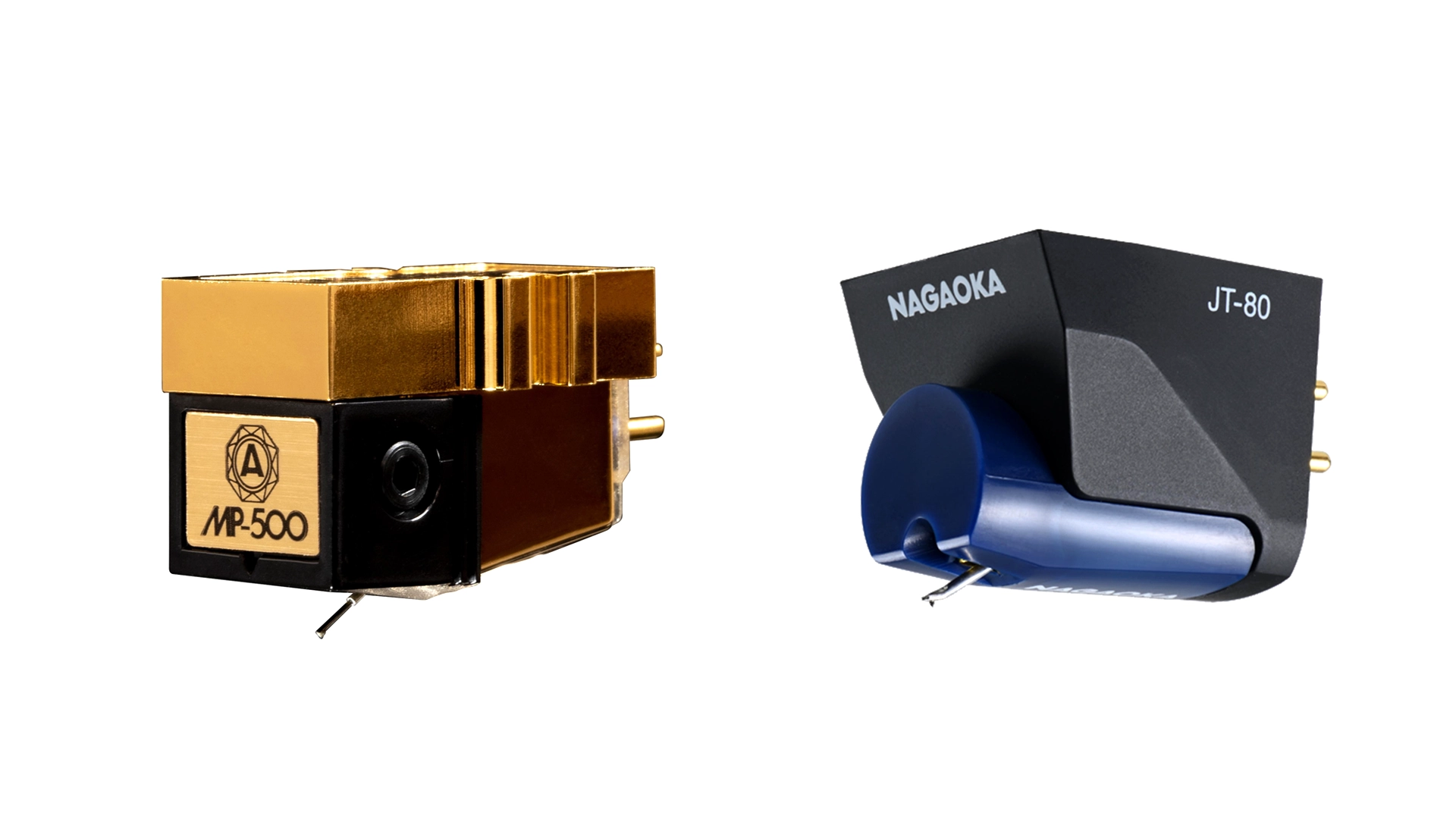
Nagaoka is the Japanese precision manufacturer best known to vinyl listeners for replaceable styli and Moving Permalloy phono cartridges. It began in Tokyo in 1940 as Nagaoka Clock Parts Manufacturing, machining small, hard materials for the watch industry. That expertise led to diamond record styli in 1961 and eventually to complete cartridges, giving the company unusually deep control over the tiny parts that determine tracking and groove contact. The MP range is Nagaoka’s signature. It is a moving-iron principle in which a low-mass permalloy element moves within a fixed magnetic circuit, providing output compatible with a conventional MM phono stage while keeping the replaceable stylus assembly light. Models from the widely used MP-110 through MP-150, MP-200, MP-300 and MP-500 vary in cantilever, stylus profile, body and generator refinement; the MP-700 marks a newer flagship generation. Nagaoka also supplies mono cartridges, headshells, record sleeves, cleaning fluids and stylus-care tools, and remains an important OEM producer. The valuable part of its story is not ornamental language about Japanese craftsmanship: Nagaoka has decades of in-house experience cutting and bonding diamond styli, forming cantilevers and assembling the complete mechanical system that must follow a microscopic groove accurately.
Nagra
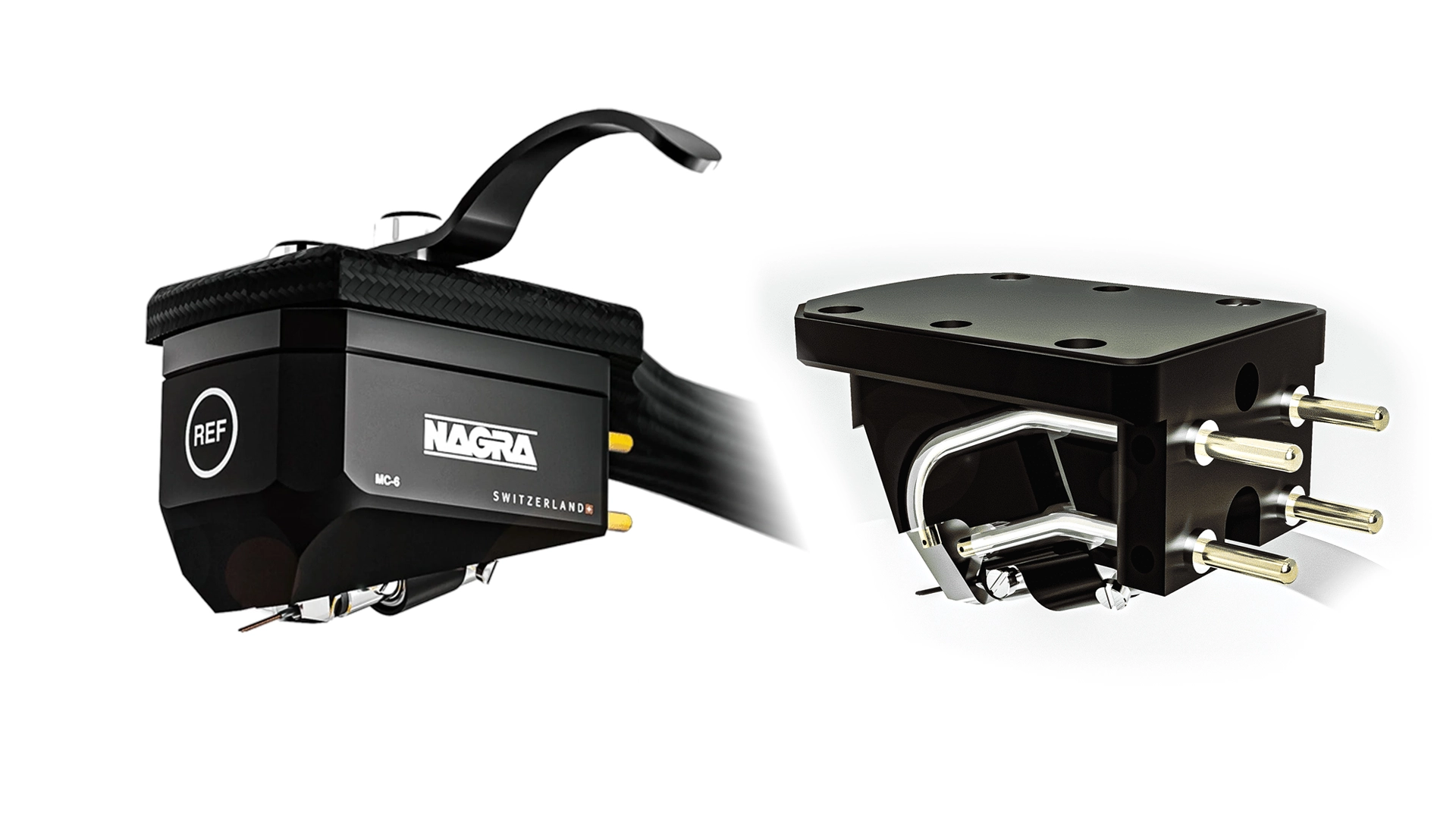
Nagra is the Swiss audio name created by Stefan Kudelski’s first portable recorder in 1951. “Nagra” means “it will record” in Polish, and the compact machine transformed location sound by letting one operator capture broadcast- and film-quality audio away from a studio. The Nagra III and IV generations became fixtures of journalism, documentary production and cinema; Kudelski and the company received multiple Academy and Emmy awards for their technical contribution. Rugged mechanics, precise tape transport and the instantly recognizable modulation meter made the recorder an industry tool rather than a styling exercise. Today Nagra spans professional recorders, security equipment and reference home audio. The Nagra VII continues the field-recording lineage, while the Compact, Classic, HD and Reference families cover streamers, DACs, phono stages, preamplifiers, power amplifiers, turntables and cartridges. Their compact proportions and meter-led design deliberately echo the recorders, but the substance lies in in-house power supplies, analogue circuitry and precision mechanical construction. In 2012 the audio division was spun out of Kudelski Group as Audio Technology Switzerland; members of the Kudelski family remain its principal shareholders. Nagra products are designed and manufactured in the Lake Geneva region, preserving a direct link between the professional machines and the current high-end range.
Oracle Audio

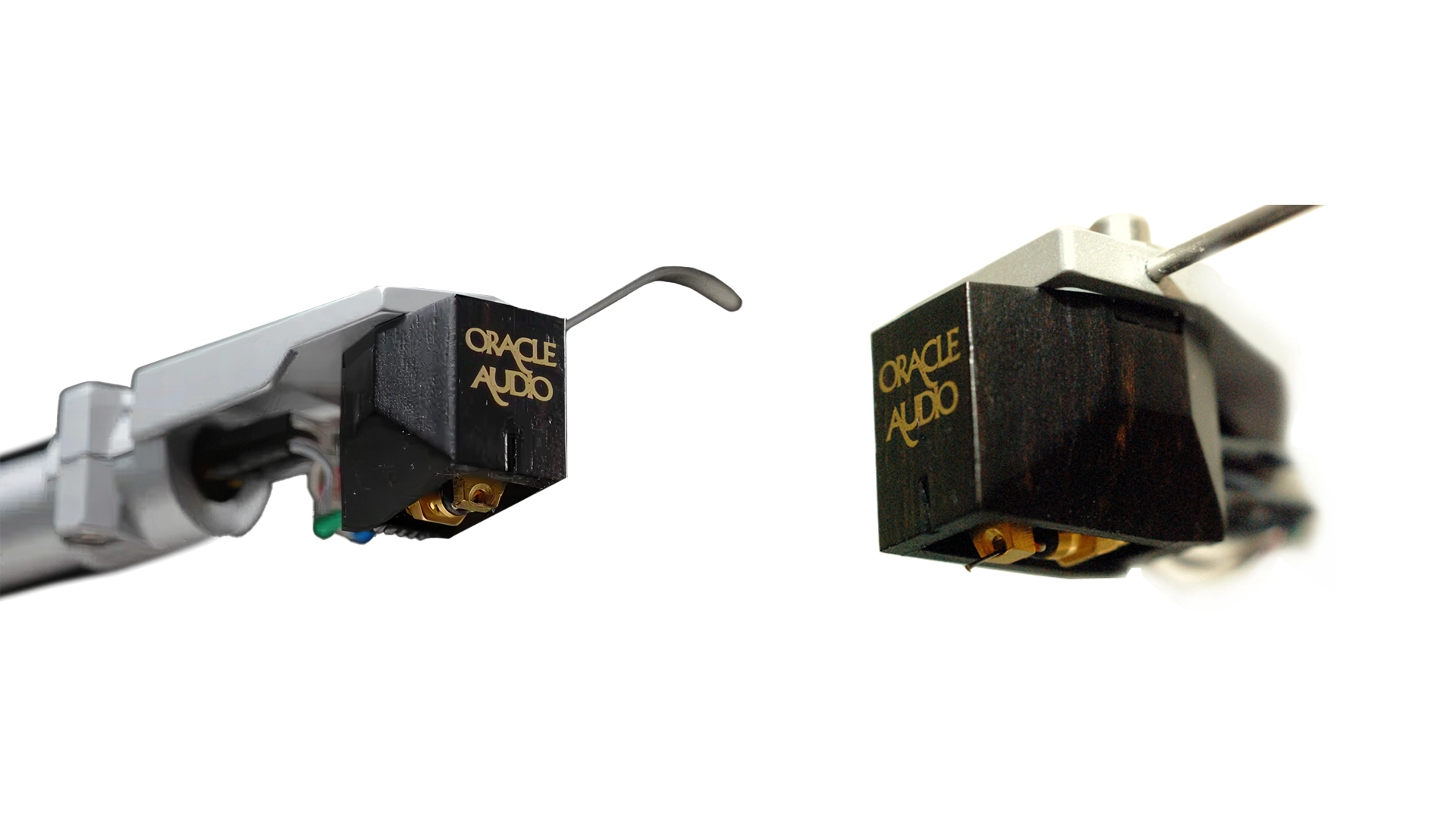
Oracle Audio is the Canadian analogue specialist founded in 1979 by Marcel Riendeau. Its first turntable, the Delphi AC, appeared publicly in 1980 and immediately established the visual and mechanical language that still identifies the brand: an exposed acrylic structure, three suspension towers and a carefully isolated belt-drive platform. Few turntables have evolved through so many generations without losing their basic architecture. The current Delphi MkVII is offered in Classic, Reference and Signature forms, refining the suspended subchassis, bearing, motor control and power supply rather than replacing them with fashion. Paris MkV offers a more conventional silhouette, while Origine MkII provides a simpler route into Oracle’s design philosophy. Matching Origine and Paris tonearms, PH100 and PH200 phono stages, cartridges, record clamps and the Turbo power supply let owners build or upgrade the analogue chain in stages. Oracle also continues a distinctive digital line: CD1000, CD2000 and CD2500 use mechanically substantial transports and DAC architecture for collectors who still value disc replay. Products are developed and built in Quebec. Oracle’s lasting contribution is its treatment of vibration as a complete system—from motor and bearing through suspension, support and clamp—combined with an upgrade path that keeps older Delphi decks serviceable rather than obsolete.
Ortofon

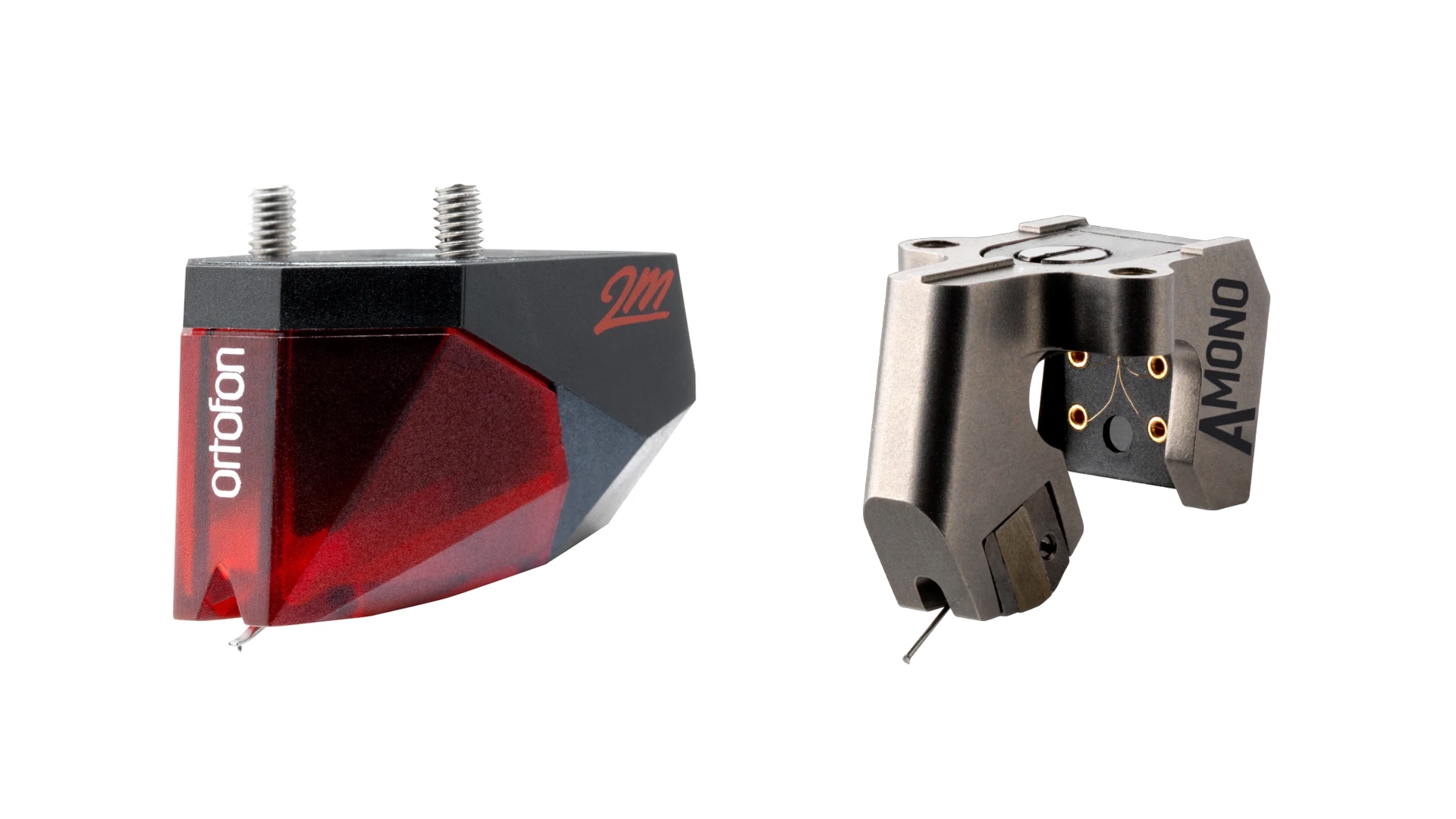
Ortofon is the Danish transducer specialist founded on 9 October 1918 by engineers Axel Petersen and Arnold Poulsen. The original Electrical Phono Film Company developed synchronised sound for cinema; work on optical and mechanical sound reproduction eventually led to record-cutting equipment and pickup cartridges. That century-long route from making the groove to reading it explains why Ortofon is more than a familiar cartridge badge. The SPU established the classic integrated-headshell moving-coil format and remains in production for traditional tonearms. Modern hi-fi ranges span the replaceable-stylus 2M moving-magnet family, Quintet and Cadenza moving coils, the newer MC X series and reference designs such as Windfeld, Verismo and Diamond. Concorde cartridges serve both hi-fi and professional DJ users, where secure tracking, stylus visibility and rapid replacement are as important as tonal refinement. Ortofon develops magnetic systems, suspension components, cantilevers and stylus profiles for different groove contact and compliance requirements; selected rubber and precision parts are made in-house, and cartridge assembly remains centred in Denmark. The catalogue also includes mono, 78-rpm and archival solutions rather than forcing every record through one generator. Ortofon’s defining strength is accumulated control of the microscopic mechanical interface between groove and electrical signal, applied from practical replacement styli to hand-built moving-coil flagships.
Pro-Ject

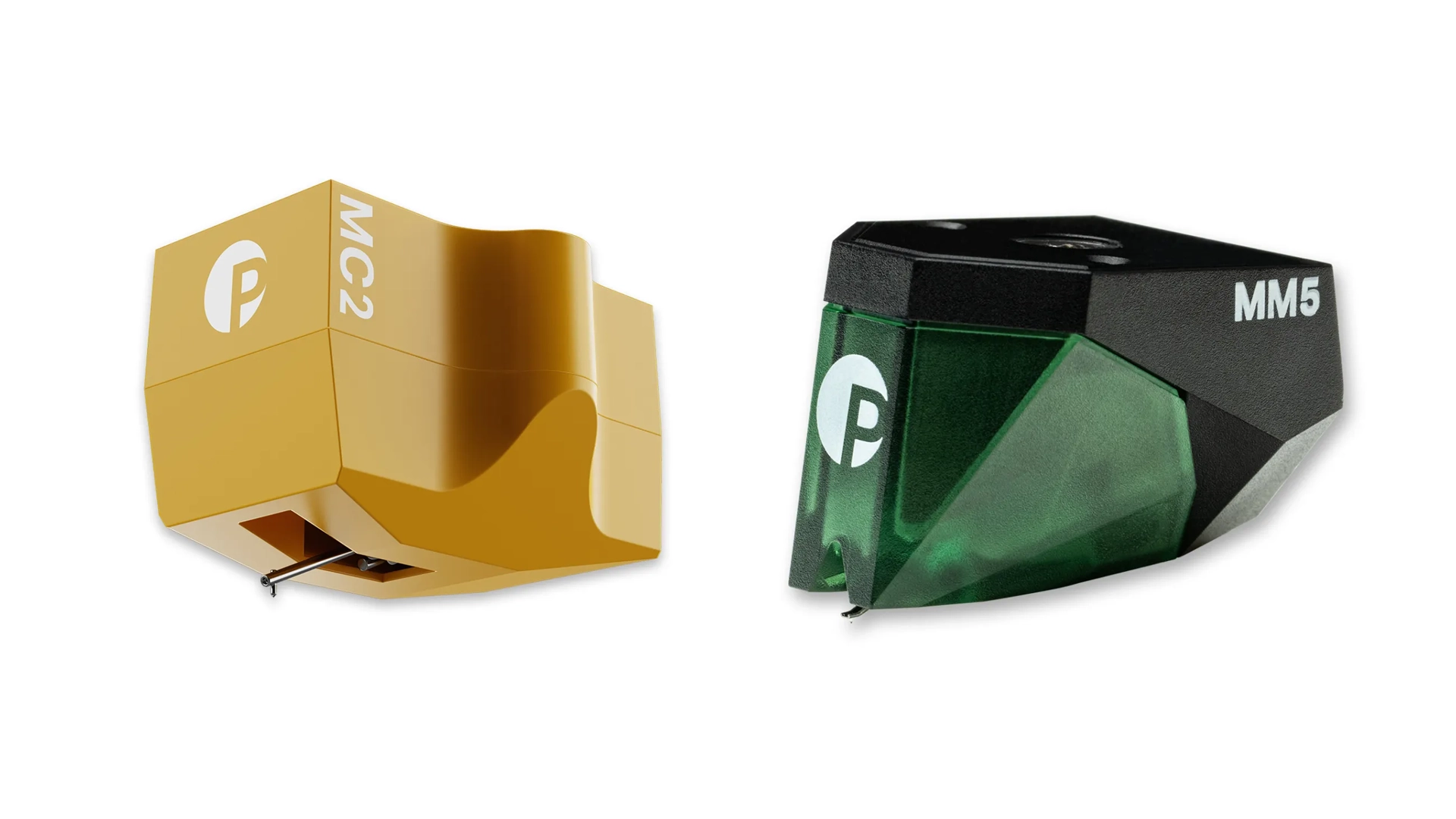
Pro-Ject Audio Systems was founded in Austria in 1991 by Heinz Lichtenegger, at a moment when the audio industry was treating the compact disc as vinyl’s replacement. Lichtenegger’s counterargument was the Pro-Ject 1: a simple belt-drive turntable built around the parts necessary for stable speed and accurate tracking, without automatic mechanisms or cosmetic complexity. The strategy proved prescient, and the Debut, introduced in 1999, became the model that brought the company to a much wider generation of record listeners. Pro-Ject now covers almost every scale of manual turntable. E and T families address first systems; Debut remains the recognisable centre; X, RPM and Xtension add more elaborate plinths, bearings, platters and tonearms; and Signature represents the flagship engineering. Many decks are assembled by hand in the Czech Republic, preserving production skills from the region’s long record-player history. The company also makes phono stages, speed controls, cartridges, record-cleaning machines and accessories, so a turntable can be upgraded rather than discarded. Box Design electronics—compact phono stages, amplifiers, DACs, streamers and CD transports—are largely produced in Slovakia and extend the same space-efficient philosophy beyond vinyl. Artist Collection editions use visual collaborations and licensed themes, but beneath the artwork they remain functional Pro-Ject platforms. The brand’s significance is not simply that it sells many turntables: it maintained European manual-turntable production through the digital era and built a clear path from an inexpensive first deck to genuinely ambitious analogue systems.