
Cartridges
The phono cartridge is the tiny transducer at the end of the tonearm that reads the information in a record’s groove. As its diamond stylus vibrates, the cartridge’s motor system converts these physical movements into the delicate electrical signal that becomes music. With distinct technologies like Moving Magnet (MM) and Moving Coil (MC), the cartridge has a profound impact on the final sound. This index lists the brands that craft these essential devices, which are ultimately responsible for the voice of your vinyl collection.
Hi-Fi brands in the category
Summary information and image
Direct links to official websites
Rega

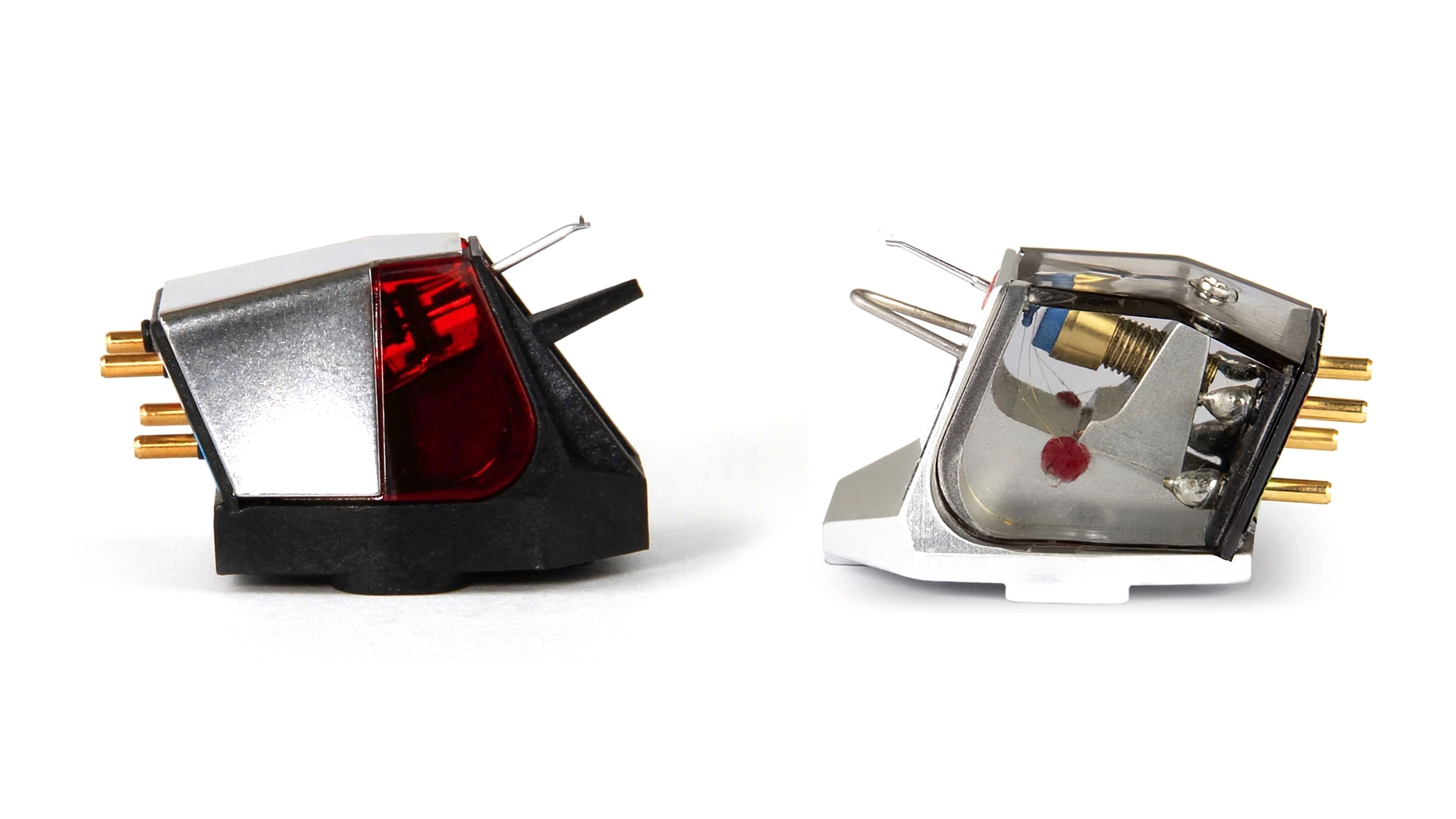
Rega Research was founded in England in 1973 by Roy Gandy and Tony Relph; the name combines parts of their surnames. Its first commercial turntable was the unconventional Planet, but the Planar 3 of 1976 created the enduring template: a simple belt drive, rigid low-mass plinth, glass platter and an integrated tonearm developed as one mechanical system. Rega’s influence comes not from preserving that design unchanged, but from repeatedly refining the same priorities while manufacturing a remarkably broad range in Essex. The central principle is lightweight rigidity. Gandy argues that excessive mass can store vibration and release it later, so current Planar models remove material where it is unnecessary and add stiffness between the main bearing and tonearm through double-brace structures. One-piece RB tonearm tubes minimise joints from headshell to bearing housing; higher models use increasingly precise bearings, ceramic platters and sophisticated power supplies. Planar 1, 2, 3, 6, 8 and 10 form the main progression, while Naia translates research from the limited Naiad into the production flagship. Rega also develops Nd moving-magnet and Ania, Apheta and Aphelion moving-coil cartridges, Fono and Aria phono stages, so the complete record-playing chain can be engineered together. Io, Brio, Elex, Elicit, Aethos and Osiris amplifiers, Apollo and Saturn digital sources, and Kyte or Aya loudspeakers broaden the system without displacing vinyl from the centre. Rega’s lasting strength is purposeful reduction: spend materials and tolerance where they control speed, bearing behaviour, rigidity and cartridge alignment, then leave out mechanisms that do not help record playback.
Scheu Analog

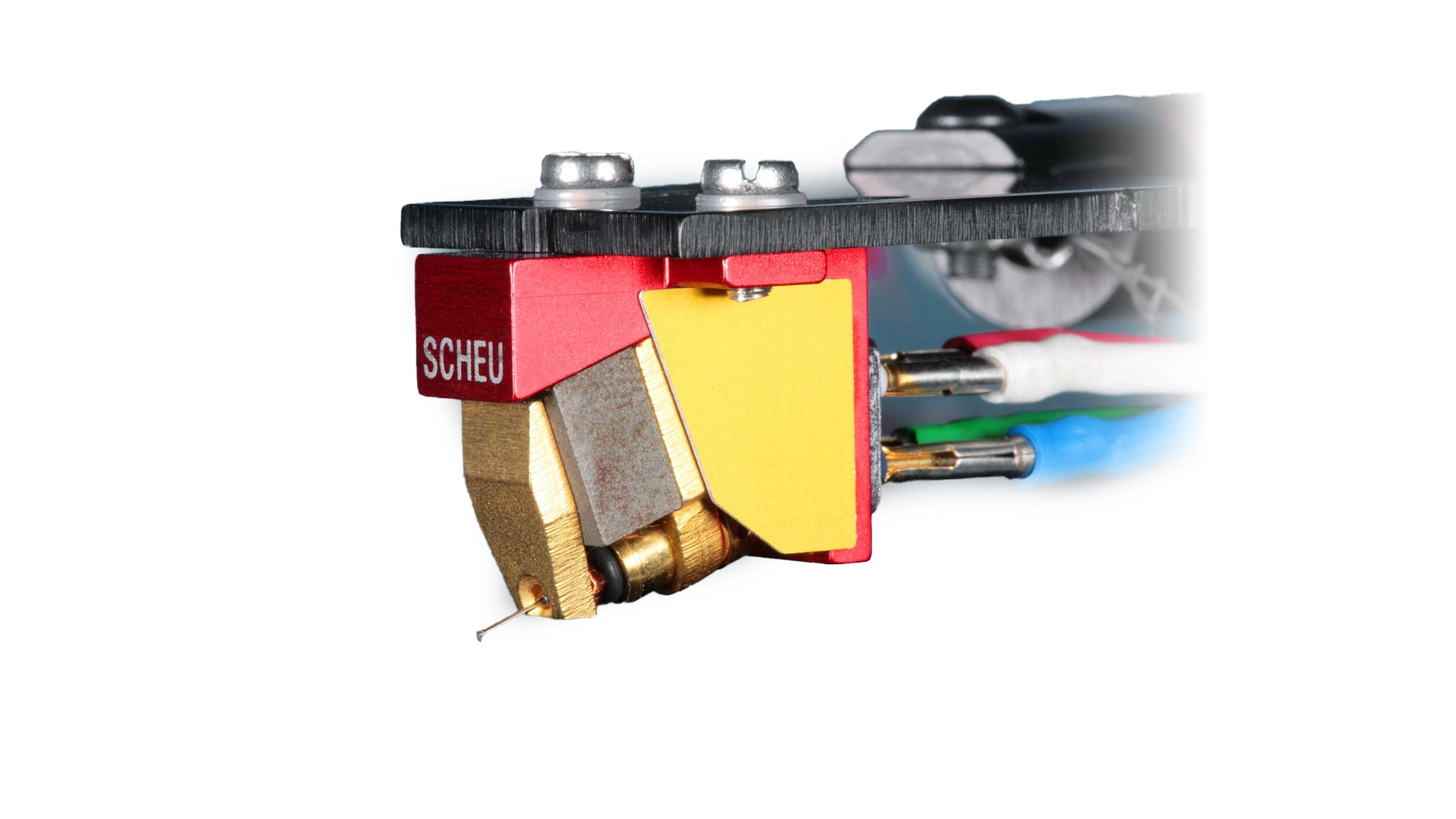
Scheu Analog is a German analogue-audio manufacturer whose origin dates to 1985, when trained toolmaker and musician Thomas Scheu built his first turntable. His knowledge of materials and precision fabrication led to a distinctive family of high-mass, belt- or string-driven decks built around thick acrylic platters and a special inverted bearing. The Premier became the best-known model, while Diamond brings the architecture to a more compact format, Cello integrates the motor for easier entry, and Das Laufwerk No. 2 sits at the top of the range. Separate motor units allow existing decks and ambitious DIY projects to use Scheu’s drive system. The company also makes unipivot tonearms: Tacco uses a tapered wooden arm tube, Cantus an open truss structure, and Classic develops an earlier design in revised form. Cartridges, armboards, bearings, platters and other analogue parts complete an unusually practical ecosystem for owners and builders. After Thomas Scheu’s death in December 2004, his wife Ulla continued the company and expanded its international presence. In June 2025 Scheu Analog passed to new management, which retained the established engineering principles while moving the office and workshop to Germany’s Rhein-Main region. Current products remain hand-built with German suppliers and emphasise serviceable mechanical solutions rather than automated convenience. Scheu Analog’s identity is rooted in the machine itself: stable rotation, controllable energy paths, adaptable tonearm mounting and durable parts. Its history and current ownership should be stated together, because the brand is valuable precisely as a continuing workshop tradition rather than a revived badge.
Skyanalog

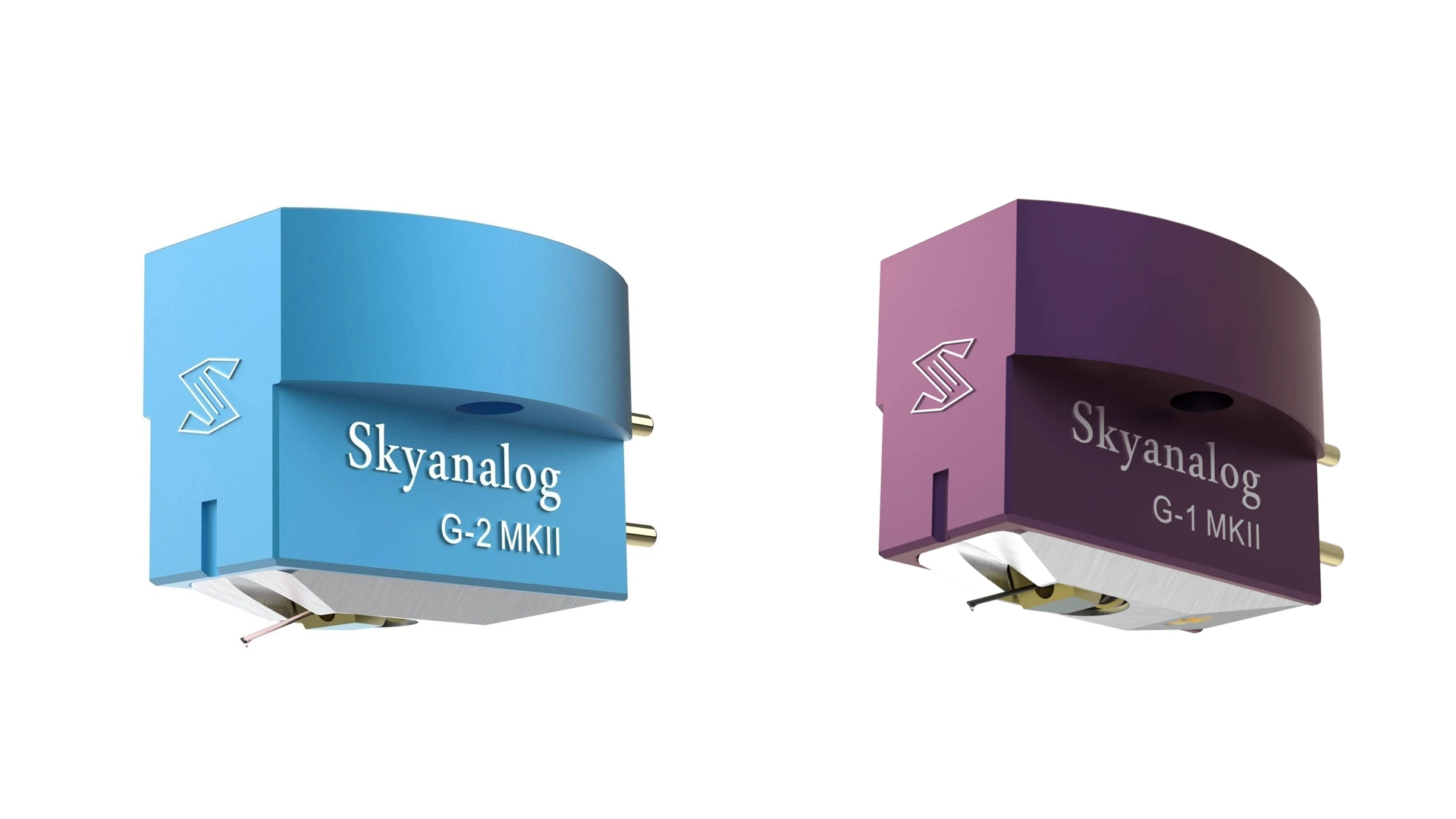
Skyanalog is a Chinese analogue-audio manufacturer established in Jiangmen, Guangdong, in 1999. It spent roughly two decades developing and producing cartridges as an OEM supplier for other international brands before introducing the Skyanalog name and G Series globally in 2019. That background is central to its credibility: the brand did not begin with a logo and outsourced generator, but with in-house tooling, coil winding, magnetic assemblies, suspension work and the difficult after-sales practice of inspecting and rebuilding moving-coil cartridges. The G-1, G-2 and G-3 established the range at different performance levels; Mk II versions introduce the company’s Yan suspension system, designed to control stylus and coil movement more consistently. P-series models extend the catalogue, while the REF and newer statement designs use more ambitious bodies, cantilevers and stylus profiles. P-1G illustrates Skyanalog’s willingness to combine precision machining with distinctive materials and finishes rather than make every cartridge visually identical. Across the range, generator alignment, coil symmetry, magnetic-gap accuracy, damping and hand adjustment matter as much as the published output voltage or frequency response. Each cartridge must track a microscopic groove while producing a tiny signal, so repeatable assembly and service knowledge are more valuable than broad lifestyle marketing. Founder Jack Leung’s engineering story is associated with the company, but the official history places the manufacturing operation itself in 1999 and the Skyanalog export brand in 2019; both dates are preserved in the description instead of being conflated. Skyanalog’s distinction is making Chinese cartridge manufacturing visible under its own name, with a clear product hierarchy and engineering developed through long OEM experience.
Soundsmith

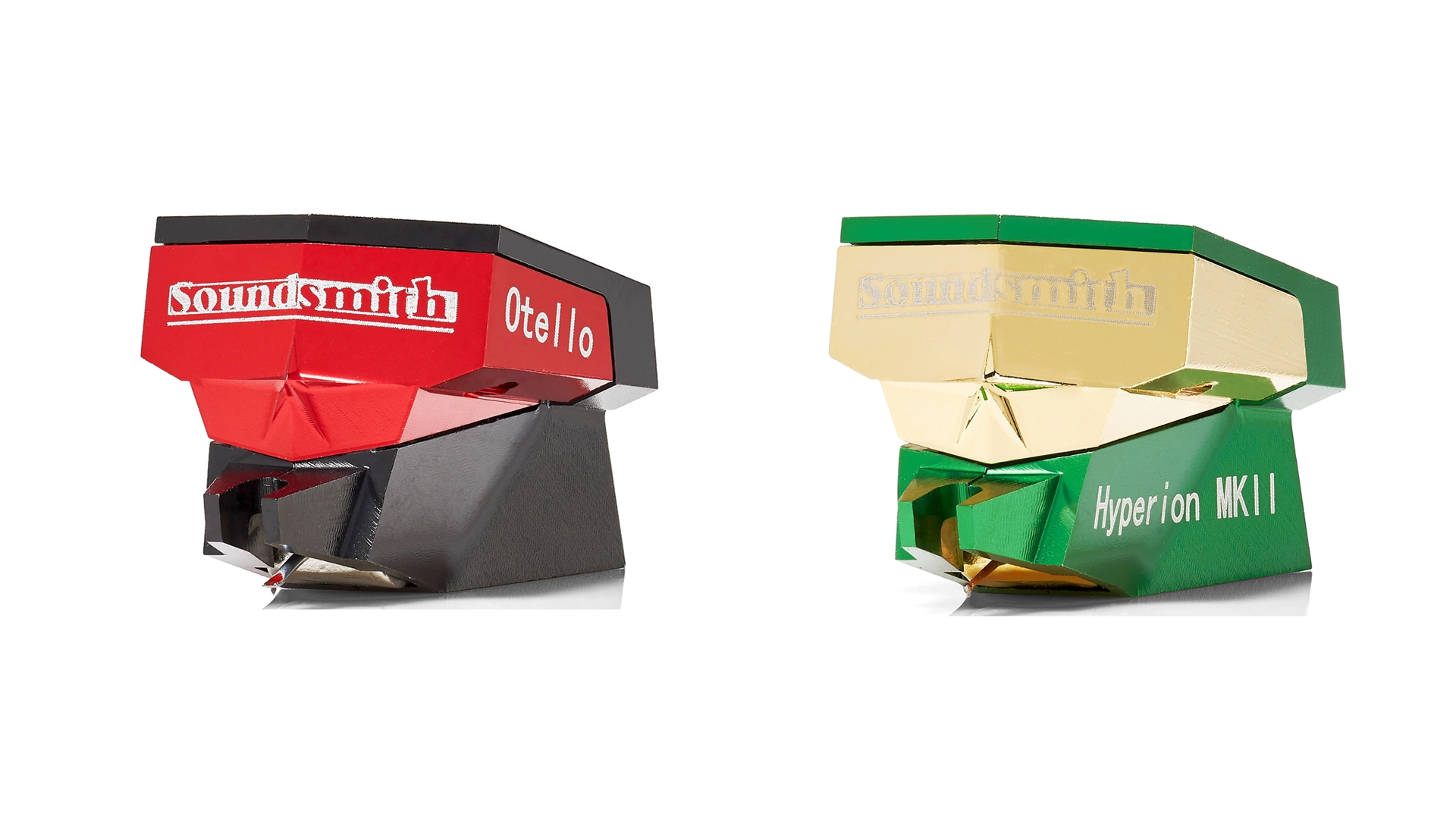
Soundsmith is a New York audio workshop best known for phono cartridges that can be rebuilt and for Peter Ledermann’s work on fixed-coil and strain-gauge reproduction. Founded in 1972, the company combines manufacturing in Peekskill with the repair of cartridges and audio electronics from many other makers. That service background is central to its products: maintainability and the behaviour of the tiny moving system receive as much attention as the finished cartridge body. In its fixed-coil designs, the coils remain stationary while a small magnetic element responds to the stylus movement. Reducing the mass that must follow the groove is a principal design objective. Different output levels allow these cartridges to serve a variety of phono systems, and repeated rebuilding is part of the ownership model. Soundsmith’s strain-gauge cartridges take a separate route and are supplied as systems with their associated electronics. The catalogue includes stereo and mono cartridges, replacements compatible with Bang & Olufsen turntables, and replacement styli for selected classic designs. Phono preamplifiers, the Alto tonearm and other audio products extend the workshop’s work beyond the cartridge itself. Ledermann also operates DirectGrace, a charitable record label supporting children, connecting his interest in recording with a wider personal purpose. Soundsmith’s individuality comes from that close relationship between designer, manufacturing bench and repair service: it produces new ways to read records while keeping existing cartridges and equipment in use.
Stein Music

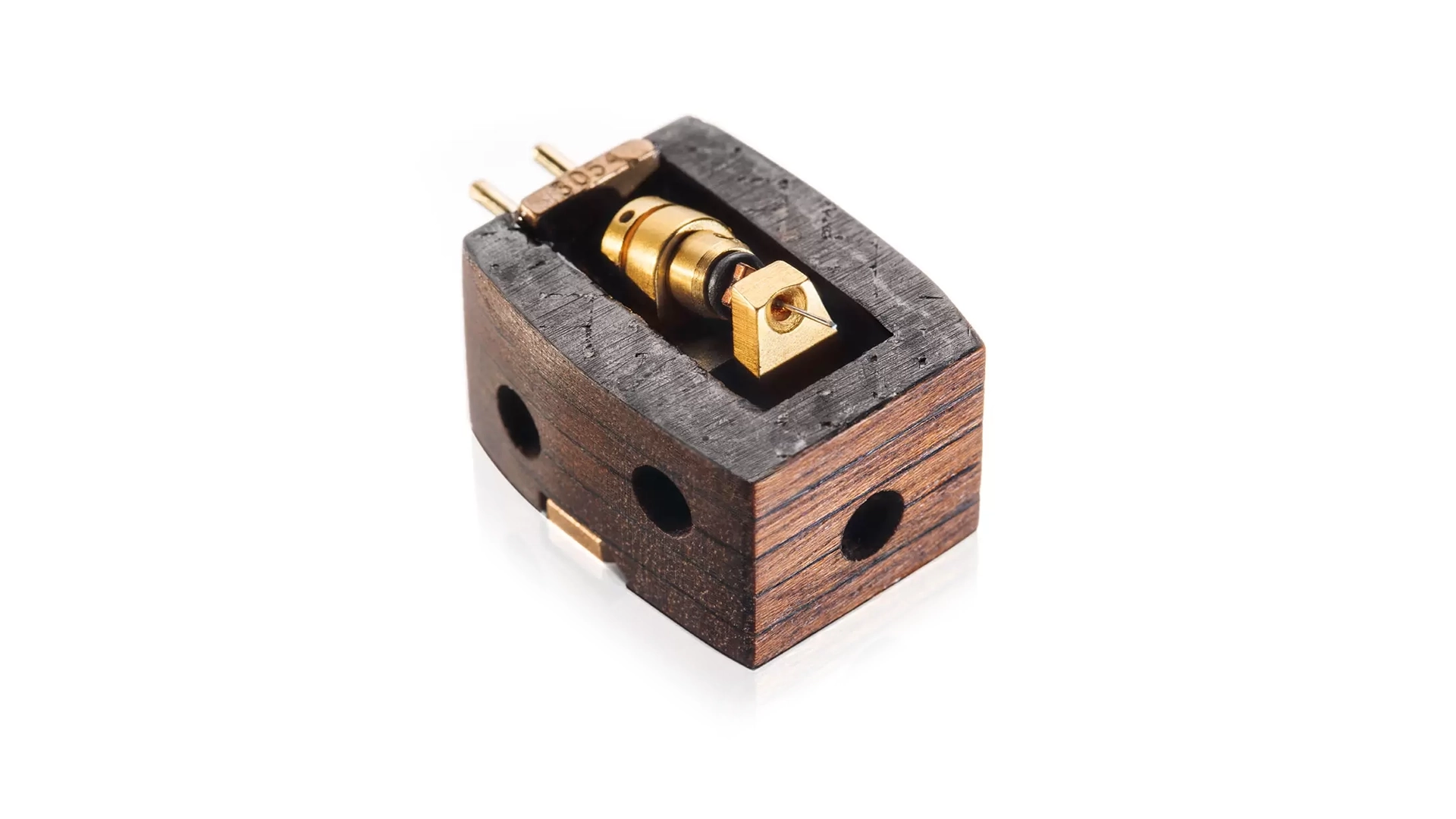
SteinMusic is the unusually broad high-end audio project of German physicist and designer Holger Stein. He built his first amplifier at fourteen and founded the company in Mülheim an der Ruhr in 1982. Over more than four decades, the catalogue has expanded far beyond electronics to include loudspeakers, vinyl accessories, cables, grounding products and room-treatment devices. That breadth reflects Stein’s view that music reproduction depends on the interaction of the entire system and room, not on one component measured in isolation. The Bobby and Bob loudspeakers are current anchors of the range, using modular concepts and dedicated bass solutions to adapt the system to different spaces. Amplifiers provide the matching electronics, while the Perfect Interface mats and cartridge-related products address the mechanical contact points in vinyl replay. SteinMusic is also known for accessories whose operation is less conventional, including Harmonizer room systems, Magic Stones and Super Ground products. Their claimed effects should be understood as the manufacturer’s approach rather than universal engineering consensus; the relevant fact is that these products form a coherent and long-running part of the brand, not a recent marketing detour. More conventional interfaces, including LAN and USB isolators, sit alongside them. Products are developed and assembled in Germany. SteinMusic’s individuality comes from Holger Stein’s willingness to treat acoustics, resonance, electrical grounding and component design as one connected listening problem—and to build a catalogue that lets users explore that philosophy at very different levels.
Sumiko Phono Cartridges

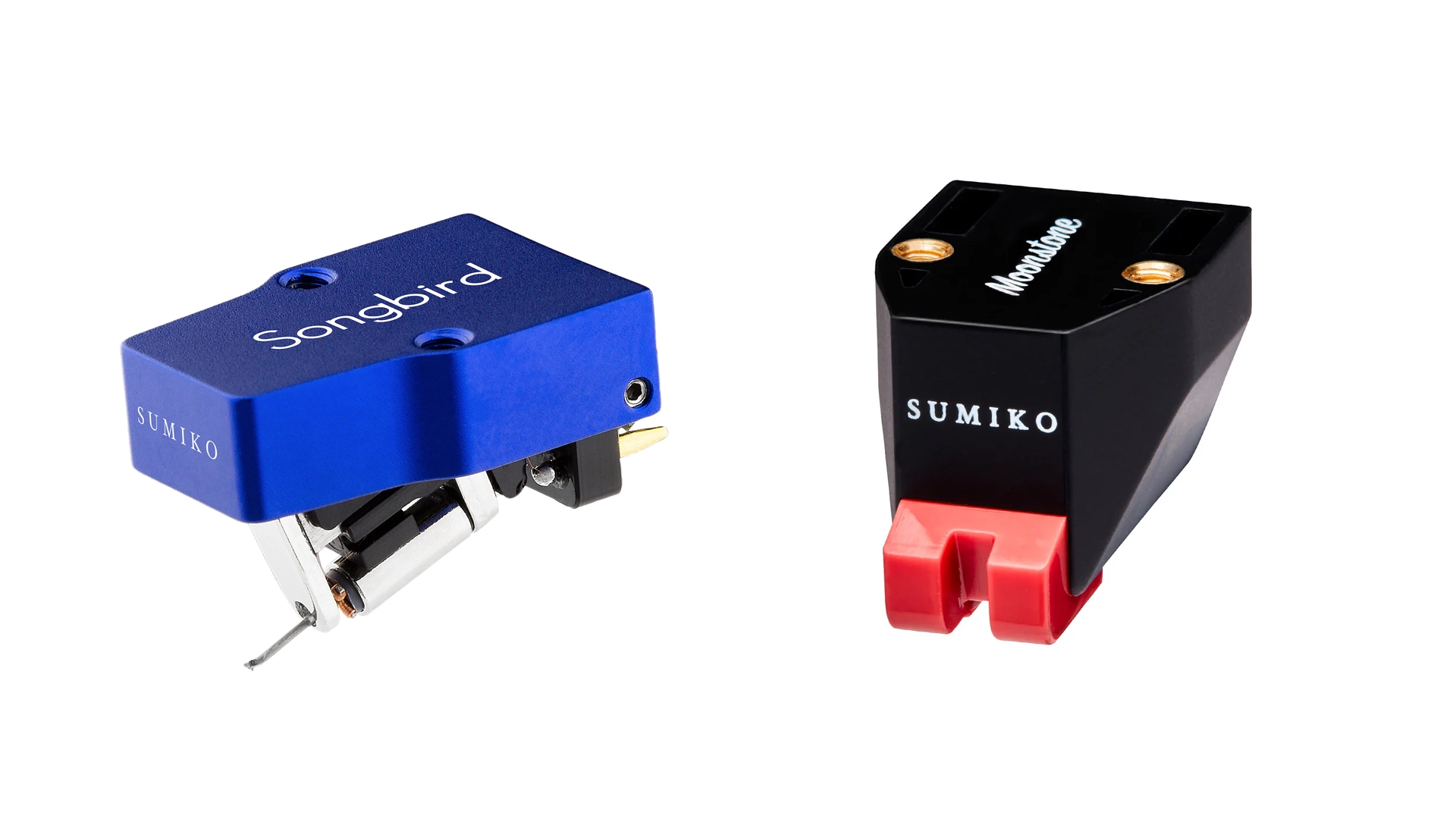
Sumiko is an American distributor and manufacturer of high-end audio equipment, with a particular specialization in phono cartridges. While they distribute other brands, their own Sumiko Phono Cartridges brand, launched in 1982, is the focus here. Sumiko cartridges are hand-built in Japan by skilled artisans. They offer a range from budget-friendly Oyster series Moving Magnet (MM) models to low-output Moving Coil (MC) Reference cartridge designs. Regardless of price point, the emphasis is on state-of-the-art technical performance, superb tracking ability, and a musical, non-fatiguing sonic presentation. This reflects a long-standing commitment to excellence in analog music reproduction.
TechDAS

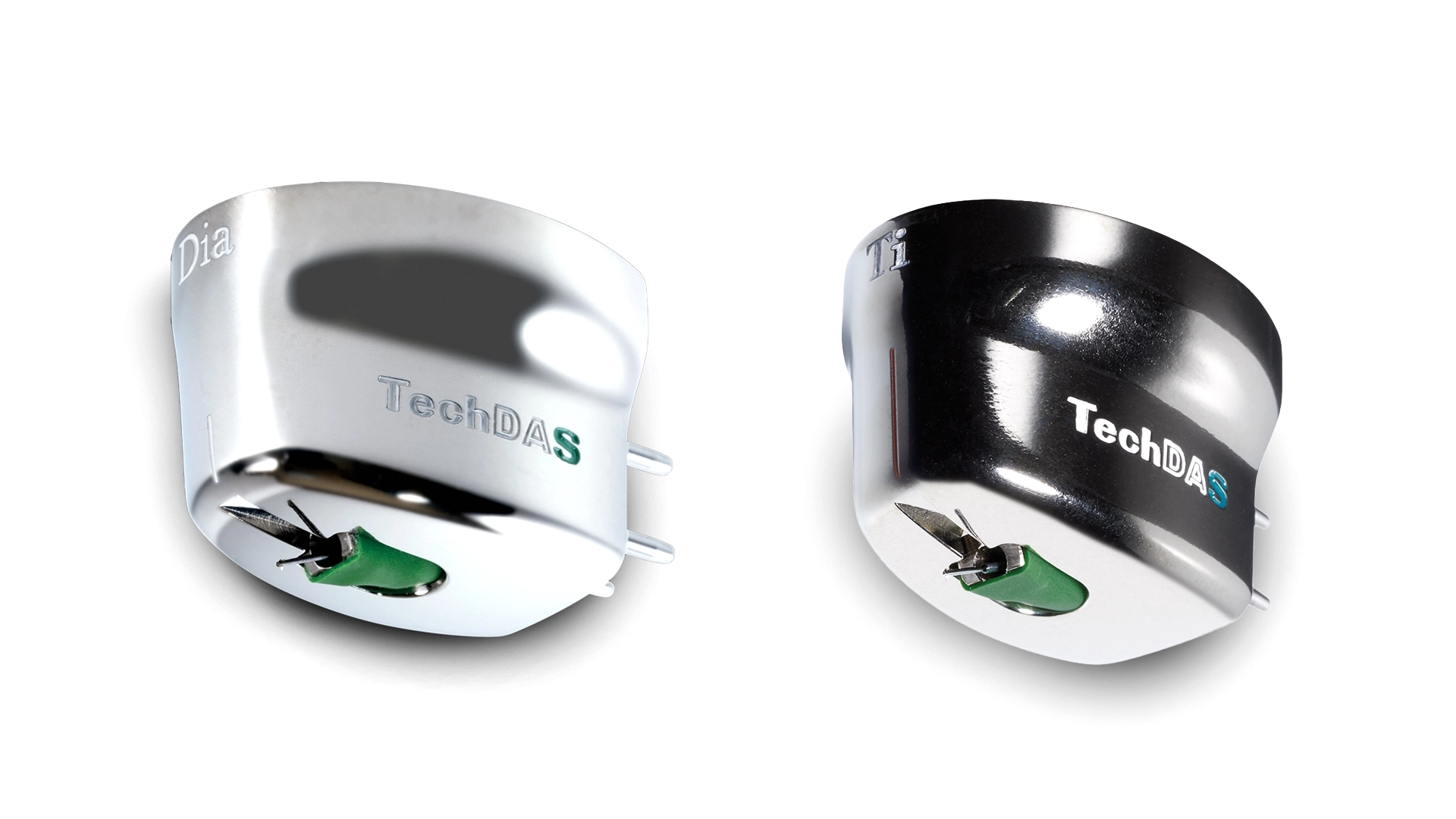
TechDAS is the Japanese analogue brand created in 2010 by Stella Inc. and led by Hideaki Nishikawa, a designer whose career included senior work at the celebrated turntable maker Micro Seiki. The name means “Technical Audio Devices,” and the company’s purpose is unusually focused: to remove mechanical uncertainty from vinyl playback through precision engineering rather than decorative complexity. Its debut Air Force One turntable immediately established that identity at the highest level of the market.
The defining idea is an air-bearing platter. A film of compressed air supports the heavy rotating assembly so the main bearing does not carry it in the conventional way. A vacuum hold-down system draws the record flat against the platter, addressing warps and creating a controlled mechanical interface. Separate pumps, carefully isolated motors and massive chassis structures deal with vibration, speed stability and resonance as parts of one system. The flagship Air Force Zero extends that approach with extreme mass and multiple air-bearing structures.
TechDAS has developed the concept into the Air Force One Premium, III, V and compact Air Force III Premium S, giving different systems access to the same core principles. Tonearms, cartridges and accessories complete the analogue chain, but the turntable remains the centre of the brand. Every model is made in Japan. TechDAS matters because it carries knowledge from Japan’s great direct-drive and air-bearing era into current production, then pushes it with modern machining and control rather than treating vintage engineering as nostalgia.
Tedeska

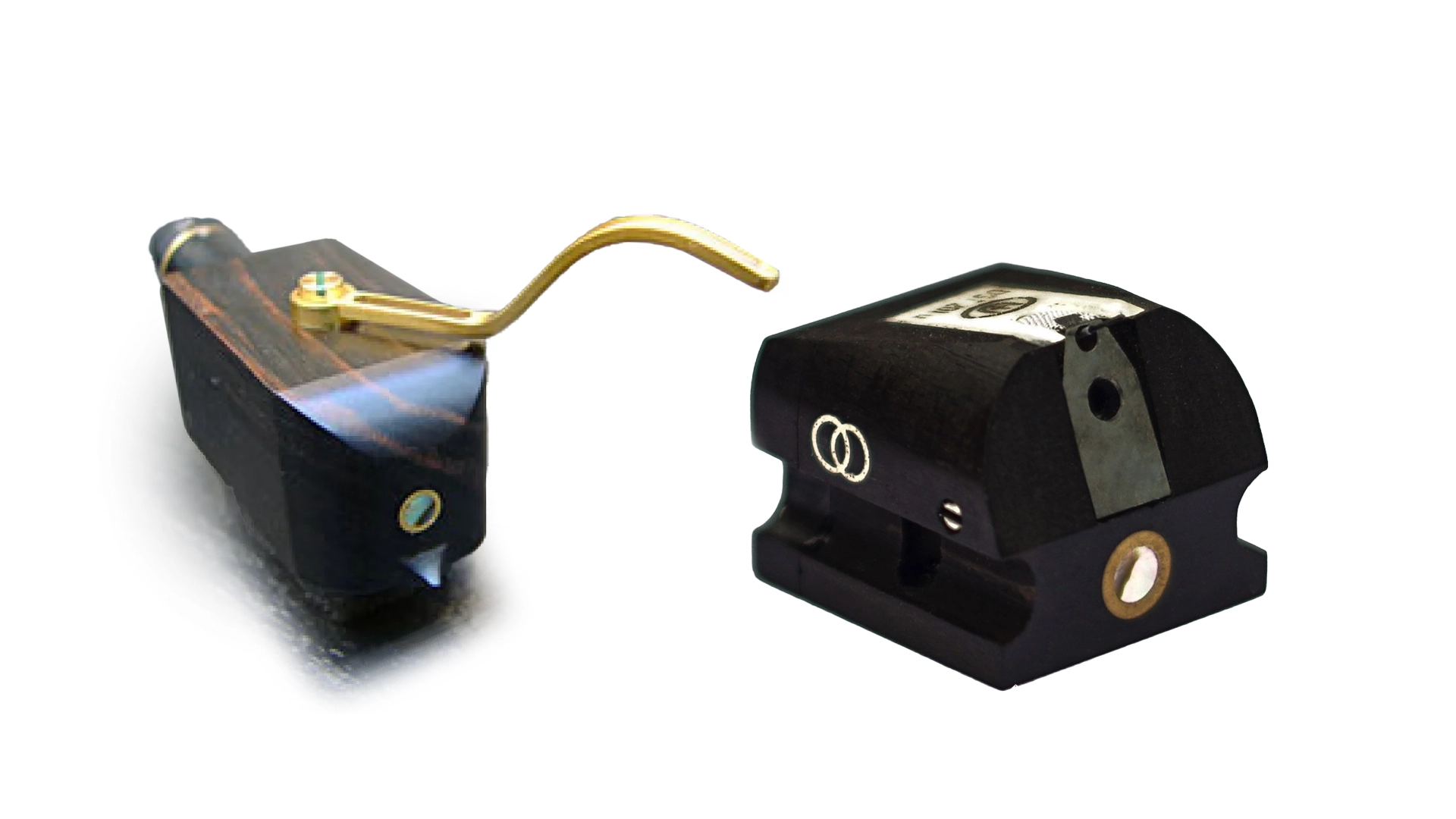
Tedeska is a Berlin phono-cartridge atelier founded in 2015 by Hyun Lee, a classically trained guitarist who applies a musician’s sense of timbre to moving-coil engineering. Each cartridge is built by hand in the company’s laboratory rather than drawn from a large industrial range. The small scale is central to the product: coil winding, generator assembly, body preparation and final tuning can be treated as one craft process and adjusted for a particular tonearm or listening priority.
Tedeska concentrates on low-output moving-coil designs. Its cartridges use selected tonewoods and other carefully chosen body materials, with the mechanical structure developed to control resonance rather than simply add visual luxury. Stylus profile, cantilever, coil and suspension are selected as a system. The company also offers consultation, retipping and rebuilding, important services for a component whose microscopic working parts inevitably wear while the body and generator may remain valuable.
The brand avoids a conventional good-better-best ladder. Bespoke choices and individual voicing are part of the proposition, and the finished cartridge is intended to preserve the harmonic identity and physical attack of instruments without forcing every record into the same sonic character. That approach reflects Lee’s background: the reference is not an abstract list of audiophile effects but familiarity with how strings start, develop and decay. Tedeska’s individuality lies in combining German laboratory precision with the direct accountability of a single cartridge builder.
Thales

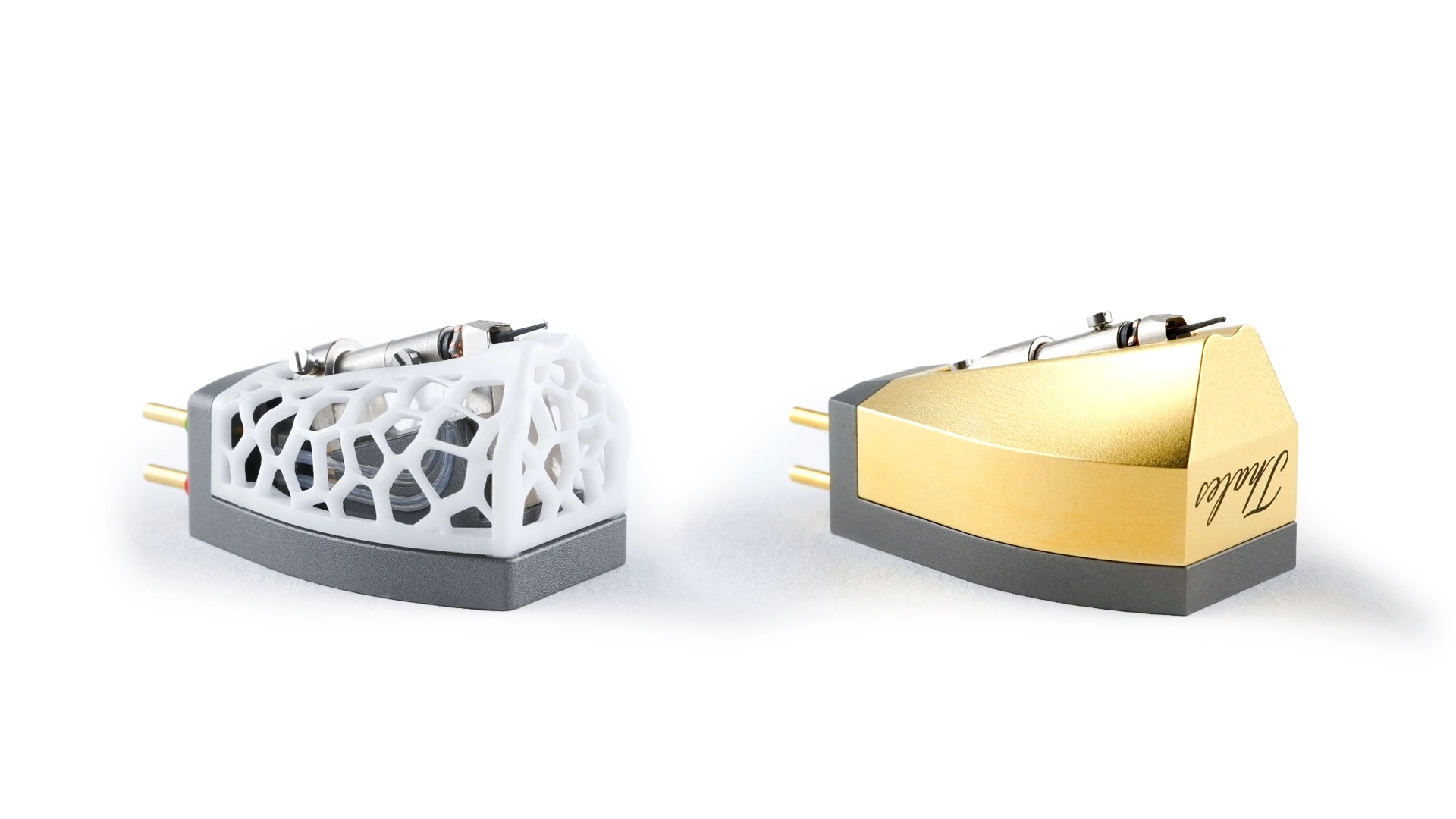
Thales is the Swiss analogue brand built around Micha Huber’s solution to one of vinyl replay’s oldest geometric problems: keeping a cartridge close to tangential alignment without the complexity of a conventional linear-tracking carriage. Huber patented his first Thales tonearm concept in 2004. In 2008 he founded HiFiction AG, the company that develops and manufactures Thales products in Switzerland alongside the EMT cartridge business.
The Thales arm uses two linked arm tubes and carefully calculated pivot geometry. As the stylus moves across the record, the mechanism changes the cartridge angle so lateral tracking error remains extremely small, while the bearings and user operation retain the familiarity of a pivoted tonearm. The current Statement and Simplicity II arms express that principle at different levels. Precise miniature bearings, rigid structures and adjustment parts draw directly on Swiss micromechanical and watchmaking capability.
Complete turntables such as the TTT-Slim II and Reference place the arm in a controlled drive and isolation system rather than treating it as an isolated showpiece. Battery operation, compact direct-drive engineering and carefully separated mechanical paths appear where they serve speed stability and low noise. Thales is not simply a luxury badge attached to familiar analogue hardware. Its identity begins with an original, patented kinematic idea and follows it through machining, setup and complete record players. That makes the brand important even in a field full of elaborate materials: the innovation is visible in the way the stylus actually traces the groove.
Thorens

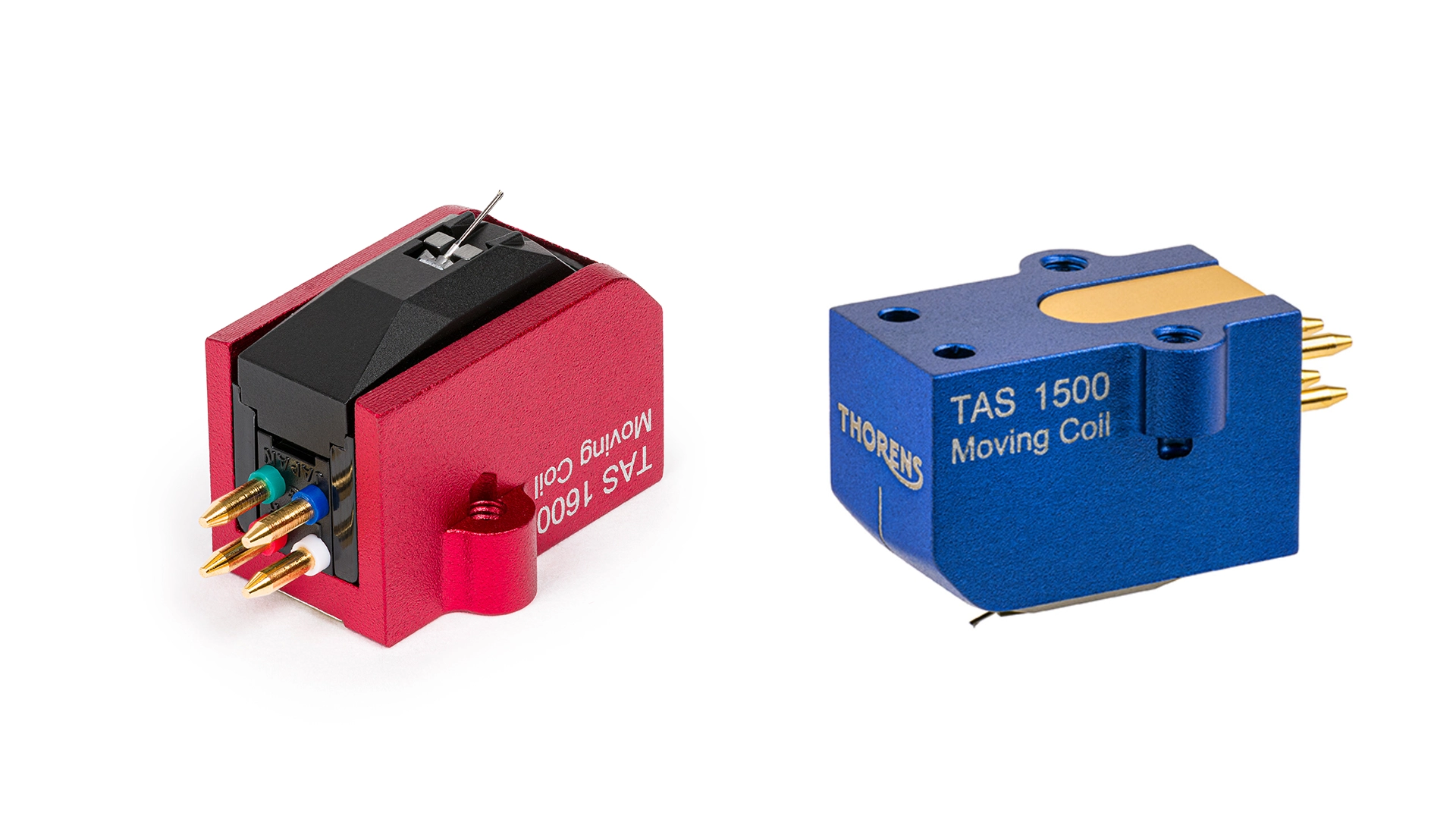
Thorens is the historic Swiss turntable name founded by Hermann Thorens in Sainte-Croix in 1883. The family company began with music boxes and clock movements, entered phonograph production in 1903 and built its first electric record player in 1928. Its hi-fi reputation crystallised after the Second World War through machines that combined precise mechanics with long service life. The idler-drive TD 124 of 1957 became a broadcast and domestic classic, while the suspended, belt-drive TD 150 of 1965 established an architecture that influenced generations of European turntables. The TD 160 carried that idea to a much wider audience.
Thorens survived several ownership changes and periods of financial difficulty. In 2018 Gunter Kürten took over the company and moved its management to Bergisch Gladbach, Germany. That current location should not erase the brand’s Swiss origin, which remains correctly recorded as its country. The modern catalogue balances attainable automatic and manual decks with models that deliberately reinterpret the classics.
The TD 1600 and TD 1601 use controlled subchassis suspension and electronic speed regulation, while the TD 124 DD revisits the famous model with a direct-drive motor rather than imitating its original idler mechanism. Reference is the present statement platform, and current tonearms reflect continuing work with designer Helmut Thiele. Thorens matters because its history is not a single vintage model. It connects the transition from mechanical music devices to electrical record replay, the defining suspended turntables of the LP era and a current company again investing in original analogue engineering.
Titanic Audio

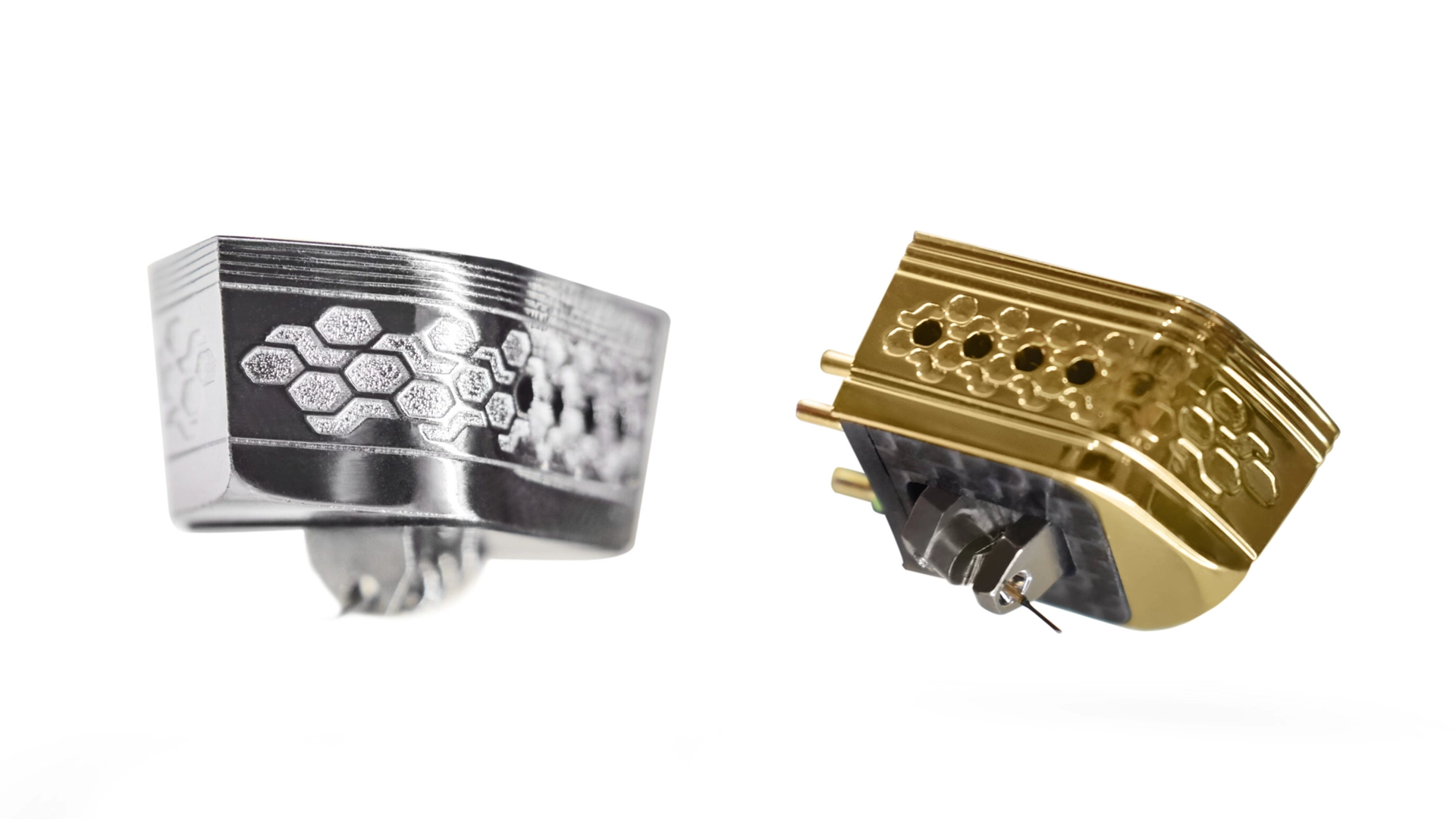
Titanic Audio is a Belfast analogue brand created within Gary Campbell’s family-run DGR Group. It grew from research undertaken by sister company Titan Audio, which began developing power products and cables in 2016. Work with very fine OCC copper conductors led the team toward moving-coil generators, and formal cartridge research began in 2019. The first design was the Model S, establishing a separate Titanic Audio identity inspired by Belfast’s shipbuilding history.
The three original moving-coil cartridges—Model A, Model S and flagship Model G—are manufactured in Belfast and wear CNC-machined, ship-like bodies with porthole details. Beneath that visual theme is a carbon-fibre monocoque carrying the generator, chosen for stiffness and damping. OCC copper is used for the coil windings, while the models differ in cantilever, stylus profile, body finish and output. Model A uses a conical stylus, Model S an elliptical nude stylus, and Model G moves to a boron cantilever with a micro-ridge profile.
Titanic Audio also offers rebuilding and retipping, an important part of ownership for a mechanical transducer that inevitably wears. Newer platter, mat and turntable accessories broaden the range without changing its analogue focus. The earlier description treated the company as a general cable maker; that belongs primarily to Titan Audio. Titanic Audio’s own distinction is more specific: Belfast-made phono cartridges that carry knowledge from conductor research into the microscopic coils, suspension and resonance control at the start of the vinyl signal path.
Tonar

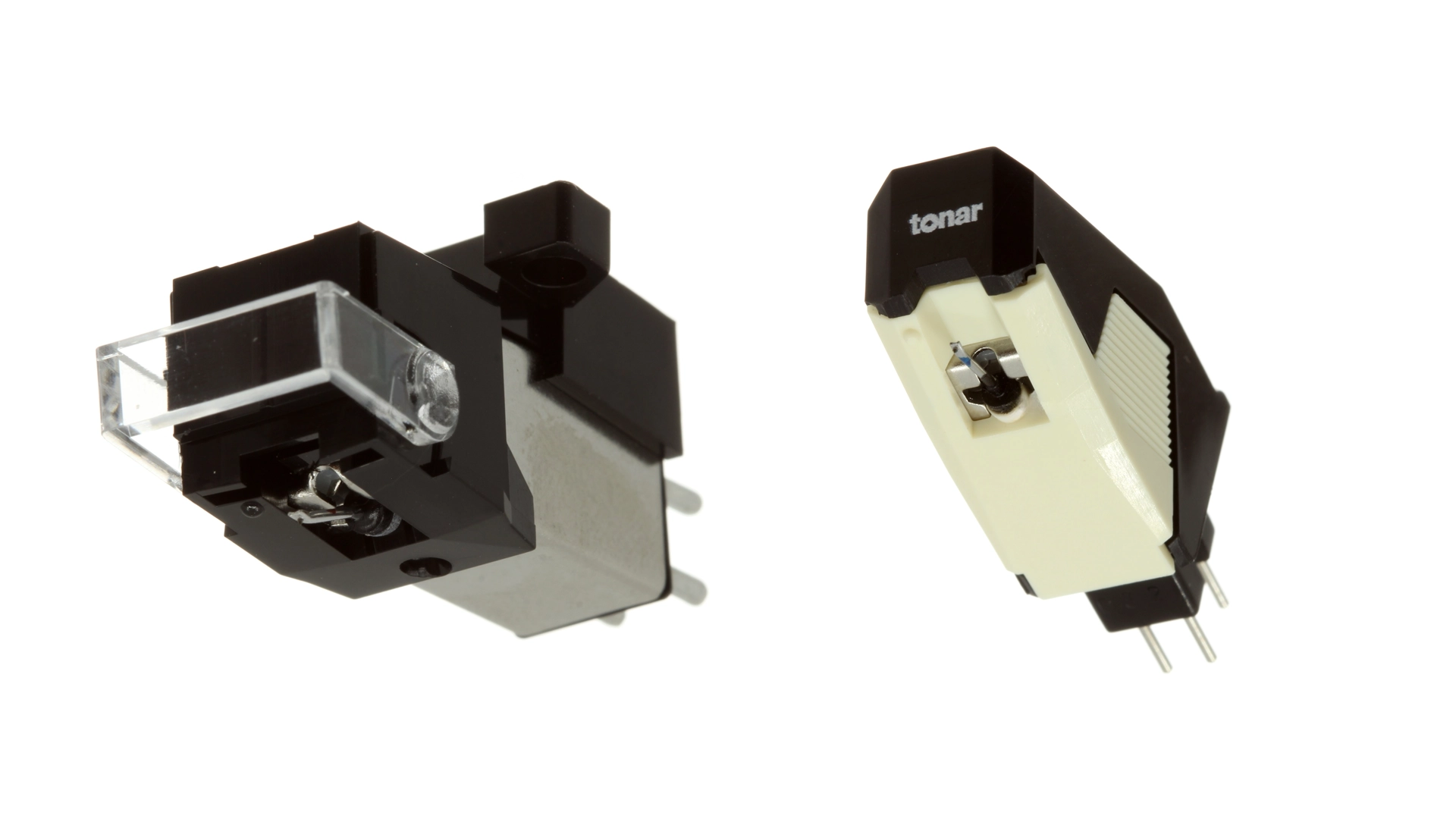
Tonar is a Dutch vinyl specialist founded in 1954 by Wilf Libgott, a Canadian pilot for KLM who used his travel between Europe, America and Japan to build an unusual supply network. The company began as an OEM supplier of synthetic-sapphire products, including precision bearings and replacement styli. That origin explains its lasting strength: Tonar understands the small, easily overlooked parts that keep record players working long after the original manufacturer has disappeared.
Its catalogue includes thousands of replacement styli for cartridges from many eras, along with complete moving-magnet cartridges, headshells, belts, idler wheels and setup accessories. Tonar also serves record care through brushes, sleeves, mats and cleaning products such as the familiar Knosti-style wet-cleaning systems it distributes. For owners of vintage turntables, the ability to identify a stylus by cartridge, shape and application is often more valuable than another fashionable new component.
Tonar’s role is broader than manufacturing every item under one roof: it sources, specifies and distributes specialist analogue parts internationally. That distinction matters because the brand’s real know-how lies in continuity, compatibility and inventory. A replacement stylus must have the correct mechanical fit and operating behaviour, not merely a similar plastic grip. After more than seven decades, Tonar remains a practical bridge between the mass-market cartridges of the LP era and today’s vinyl revival. Few audio companies have supported so many different record players through such modest but essential components.
TOP WING

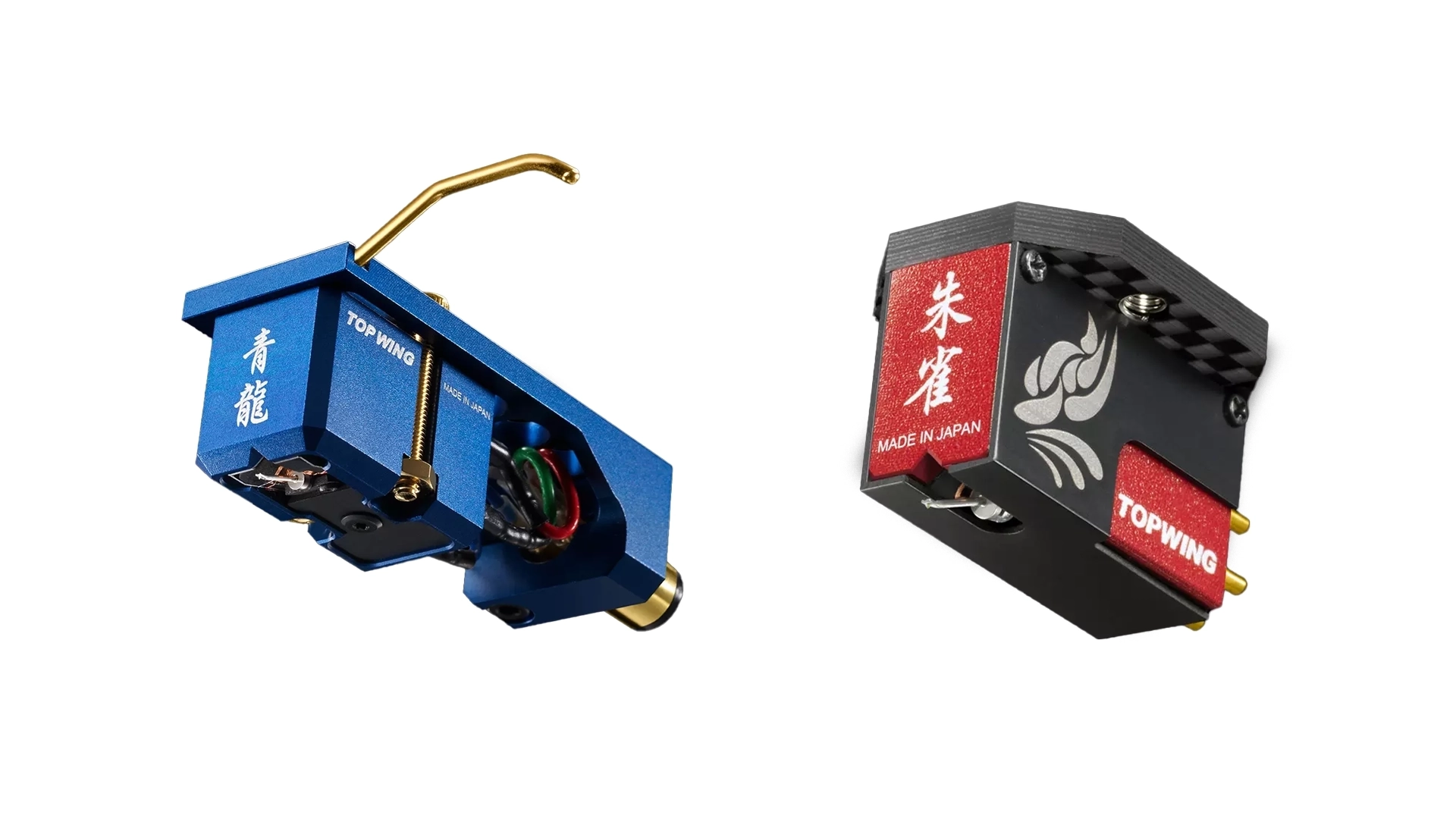
TOP WING is a Japanese analogue company known for phono cartridges that revisit an almost forgotten generator principle rather than merely changing body materials around a conventional moving coil. Its signature Coreless Straight-Flux system was developed by Hiromu Meguro and introduced internationally through the Suzaku “Red Sparrow” and Seiryu “Blue Dragon.” The brand’s public history does not support a precise founding year, so the date is better left open.
In the coreless straight-flux arrangement, the left and right coils sit in a V formation directly above the magnet without the usual magnetic core. TOP WING’s aim is to reduce hysteresis and other effects associated with magnetising a core while converting stylus movement into an electrical signal along a direct flux path. Suzaku applies the principle in a moving-magnet-compatible output format, while the lower-output Seiryu brings it to systems prepared for demanding phono gain. Later models and revised generations develop the same core idea.
The engineering has roots in professional cartridge concepts such as Neumann’s DST, but TOP WING’s implementation is a current Japanese design with modern materials and production. These cartridges demand careful arm matching, alignment and phono-stage selection; their unusual generator does not remove the fundamentals of analogue setup. TOP WING stands out because the novelty is inside the transducer, where it changes how groove motion becomes voltage. In a market crowded with familiar moving-coil architectures, that is a substantive point of difference rather than a cosmetic story.
Van Den Hul

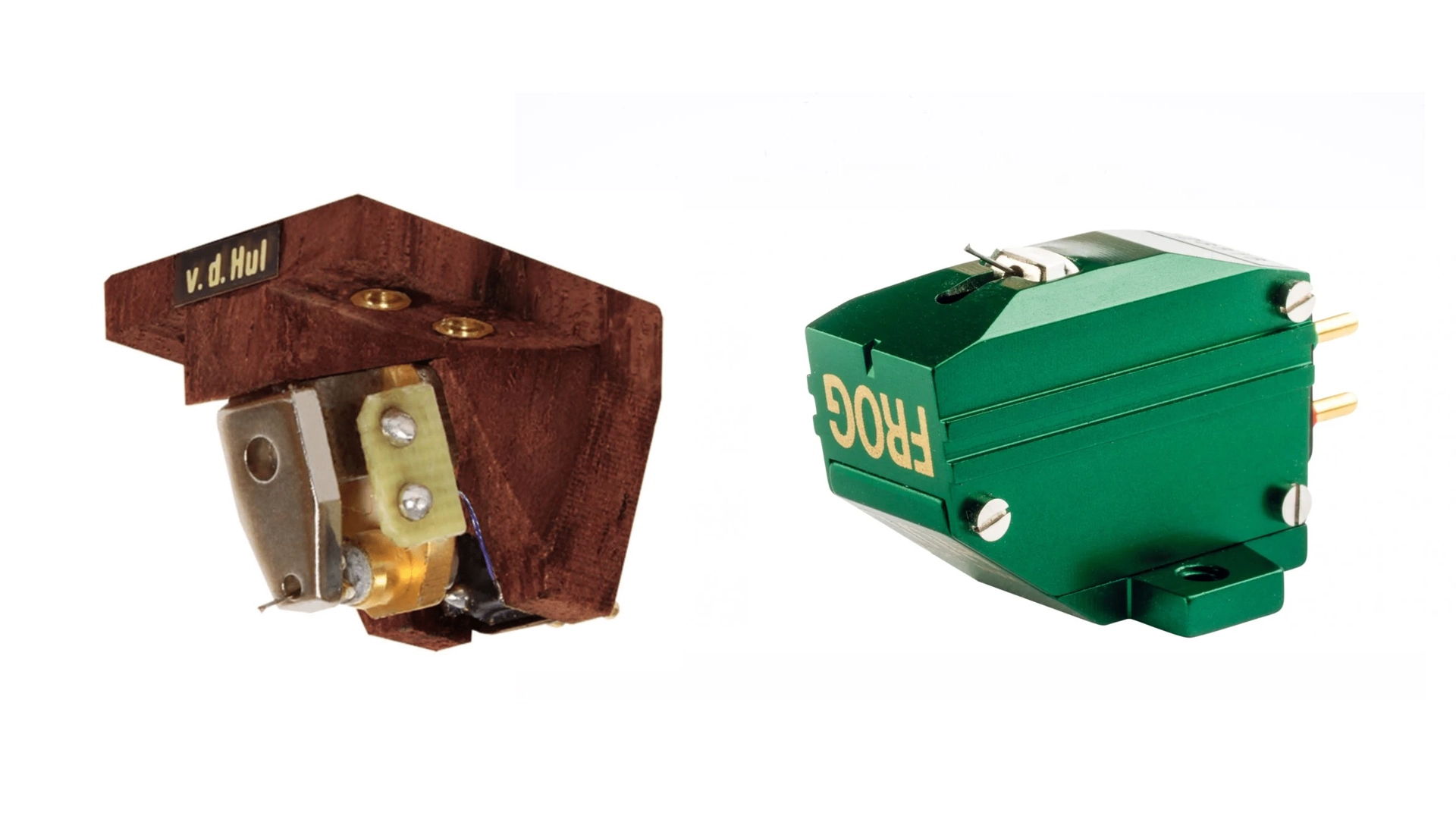
Van den Hul is a Dutch specialist whose identity spans three demanding parts of analogue playback: moving-coil cartridges, signal cables and the electronics that connect them. Aalt Jouk van den Hul founded the company in 1980 after years of cartridge repair and stylus research, and his name remains inseparable from the firm’s phono work. The Van den Hul stylus profile, developed to improve groove contact while reducing wear, led naturally to complete cartridges. Grasshopper established the marque internationally; Colibri, Condor, Crimson, Canary and Frog continue a range in which many units are built or serviced by hand. Cable development followed the same concern for preserving very small signals. Van den Hul introduced Linear Structured Carbon and used it in The First, presented as the first interconnect whose conductors contain no metal. The Second and The Third extended that carbon-conductor idea, while Hybrid designs combine carbon layers with proprietary metal conductors such as Fusion Technology alloys. The catalogue now includes interconnects, loudspeaker, digital and power cables, phono accessories, cartridge transformers and electronics including The Grail phono stages. Production is concentrated in Western Europe and the company also supplies materials and cables to professional and industrial users. What makes Van den Hul unusual is not one fashionable material but the continuity between groove geometry, microscopic cartridge signals and the conductors expected to carry them without adding a recognisable signature.
Vertere

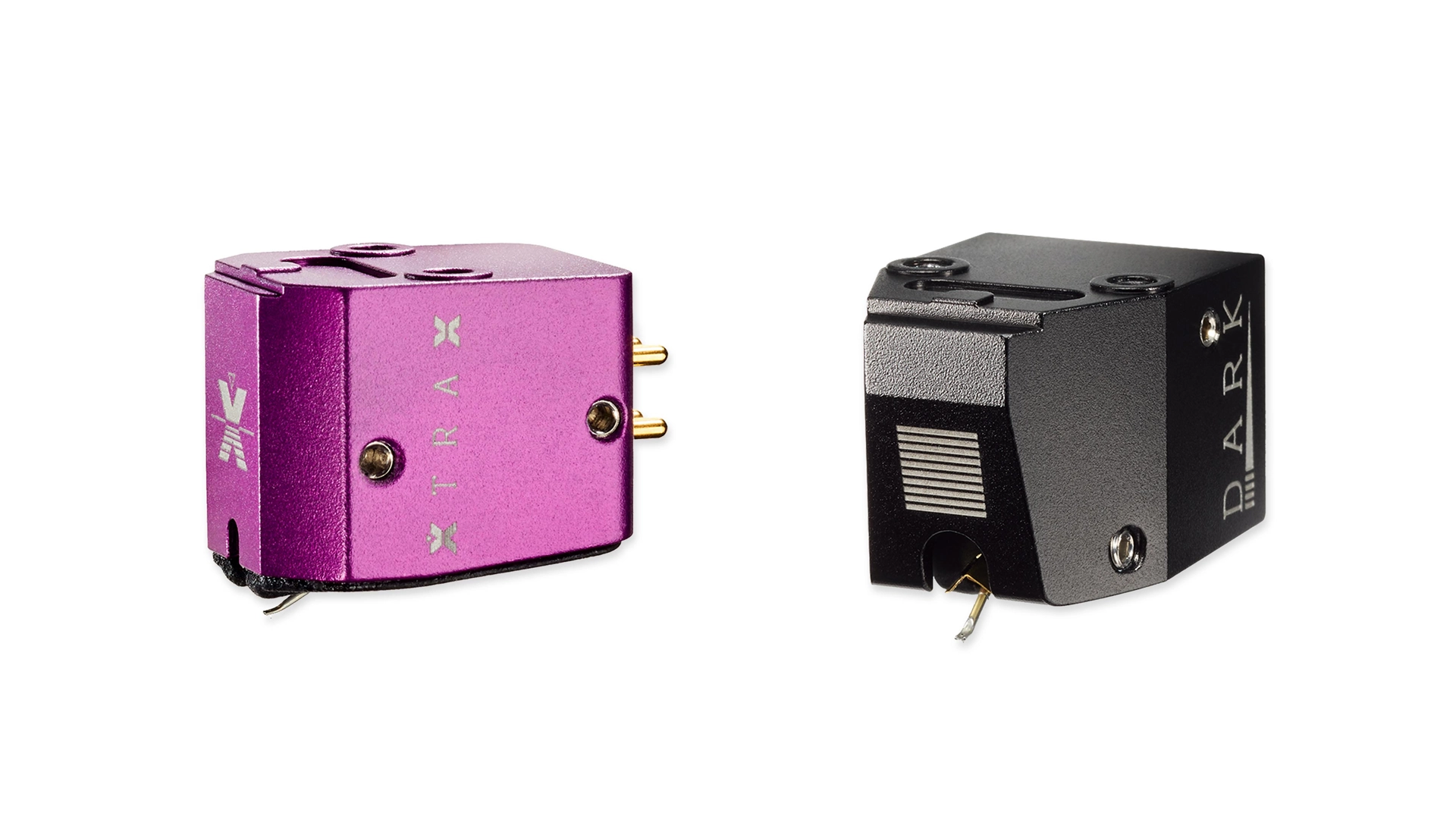
Vertere is the British analogue specialist founded in 2010 by Touraj Moghaddam, the engineer who had earlier co-founded Roksan and designed the Xerxes turntable. The company began with high-performance cables, but its defining work is now a complete vinyl-replay chain in which turntable, motor drive, tonearm, cartridge, phono stage and connections are developed together. At the top, the RG-1 Reference Groove and SG-1 Super Groove platforms pursue extreme control of bearing, structure and motor noise. MG-1 Magic Groove brings related ideas to a less rarefied level, while DG-1 Dynamic Groove—and its later DG X development—uses an immediately recognisable layered acrylic structure to make careful mechanical engineering easier to own and set up. Vertere’s tonearms include Reference, SG-1 and Groove Runner designs; Mystic is its moving-coil cartridge, Phono-1 MkII its adjustable phono stage, and Imperium a high-grade motor-drive power supply. The cable catalogue remains central rather than incidental, reflecting Moghaddam’s view that microscopic cartridge signals are especially vulnerable to conductor geometry, shielding and connector behaviour. Across the range, the recurring task is to prevent unwanted movement from being confused with the modulation in the record groove. Vertere products are modular and upgradeable where practical, so a system can evolve without discarding its mechanical foundation. The brand’s character comes from this unusually coherent engineering authorship: four decades of turntable experience distilled into a modern British ecosystem rather than a collection of unrelated accessories.
VPI Industries

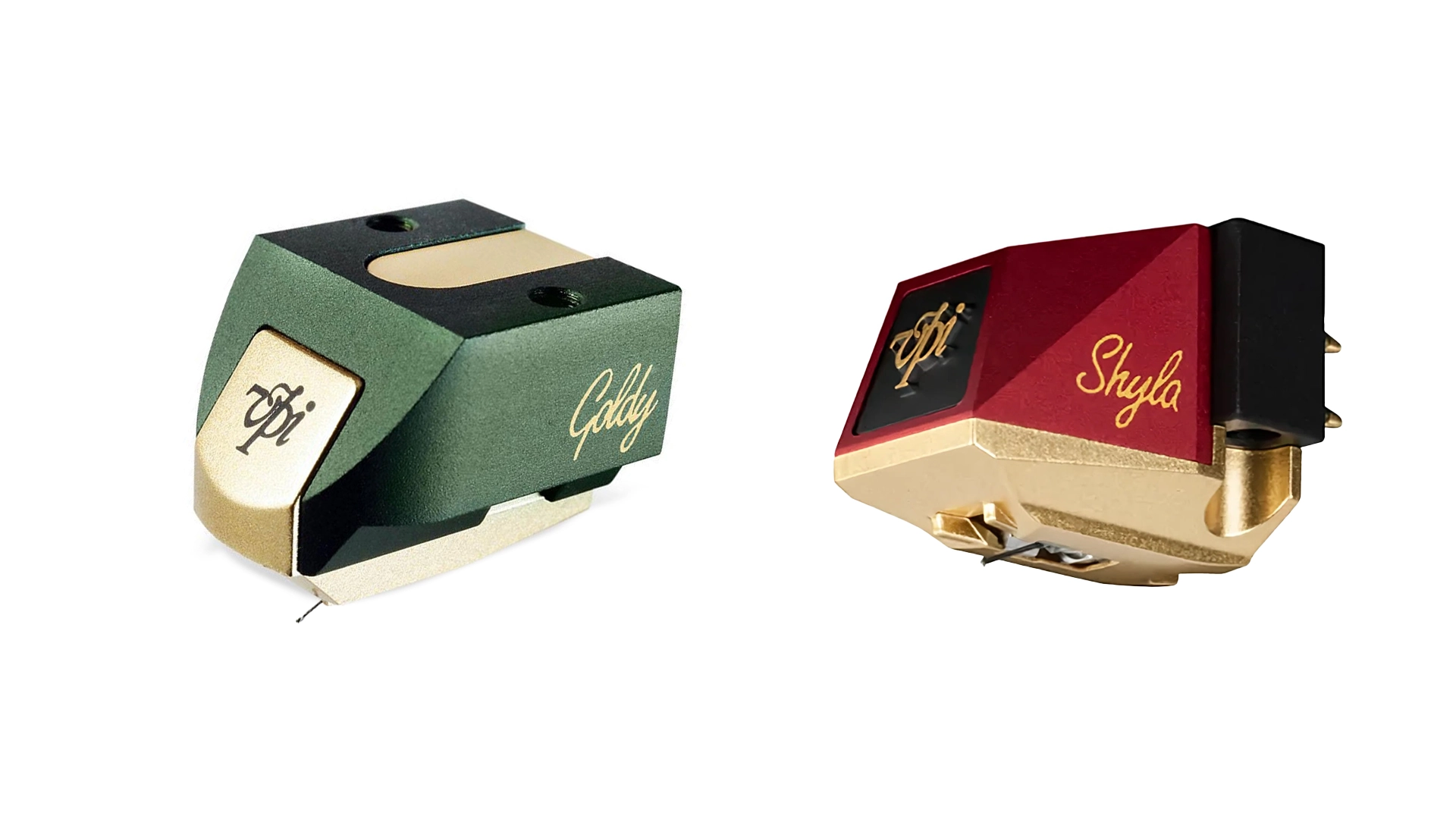
VPI Industries is an American family company whose history joins two parts of vinyl replay that are often treated separately: cleaning the record and playing it accurately. Harry and Sheila Weisfeld founded VPI in 1978, beginning with a practical record-cleaning machine before moving into turntables, tonearms and accessories. The HW-16.5 vacuum cleaner became a long-lived reference, while the HW-19 turntable established VPI as a serious analogue manufacturer. Later generations produced the Scout, Classic, Prime and Avenger families, ranging from approachable high-performance decks to modular reference platforms. VPI became especially associated with JMW unipivot tonearms, whose single-point bearing allows low-friction movement and easy exchange of complete arm wands; the company now also offers gimbal-bearing arms for listeners who prefer their different handling and stability. Heavy platters, substantial bearings, outboard motors and upgradeable construction recur throughout the range, but are applied according to the scale and purpose of each model rather than as a fixed recipe. Current flagships include the direct-drive Titan alongside belt-driven Avenger configurations. After Sheila’s death, their son Mat Weisfeld took a leading role and has kept production, service and much component machining in New Jersey. That continuity matters: VPI turntables are designed as products owners can maintain, modify and keep for decades, supported by a company whose record-cleaning machines, arms and decks grew from the same hands-on knowledge of vinyl.
Well Tempered Lab

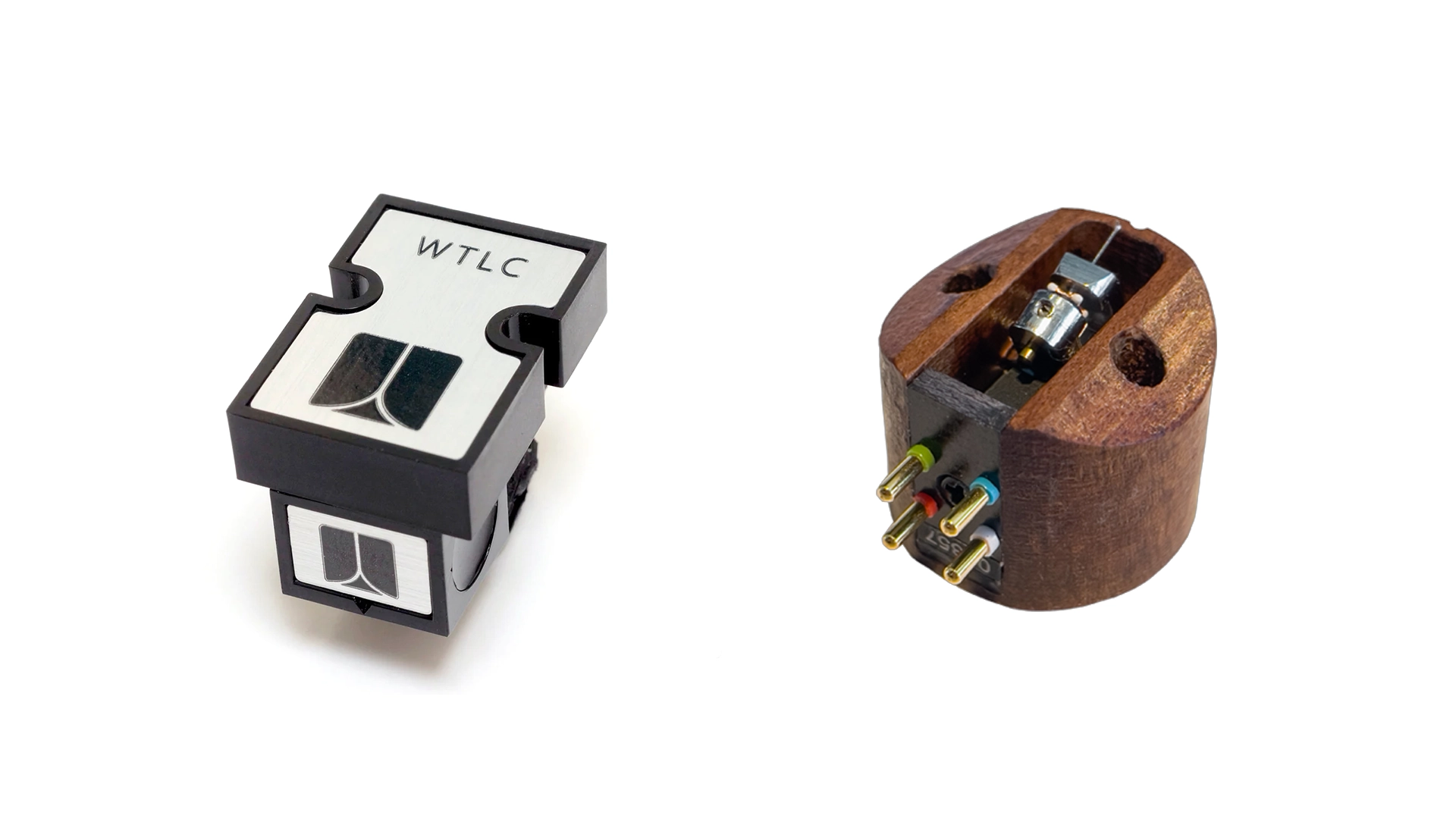
Well Tempered Lab is defined by designer William Firebaugh’s willingness to replace familiar turntable bearings with deceptively simple mechanisms. Firebaugh developed the original Well Tempered Arm in the United States during the 1980s, using a lightweight ball suspended by fine threads and partly immersed in silicone fluid. The threads establish the pivot geometry and azimuth, while the viscous bath damps unwanted movement; later versions famously use a golf ball because its size, surface and availability suit the job. The turntables are equally unconventional. Their platter bearings use a precision spindle constrained against a polymer surface by a fine filament, removing conventional bearing chatter and maintaining stable contact, while a separate belt-driven motor limits vibration reaching the record. Amadeus, Simplex and Versalex models apply these ideas at different scales, with the larger Royale and dedicated LTD arm extending the range. The brand was revived and developed in New Zealand by engineer and distributor Frank Denson in collaboration with Firebaugh, which explains its present New Zealand identity despite the American origin of the concept. Well Tempered Lab products are minimalist, but not primitive: setup of fluid level, thread suspension, azimuth and belt is part of their precisely balanced operation. The brand’s lasting contribution is showing that a tonearm does not need a conventional metal bearing and a turntable does not need massive complexity to control friction and resonance—provided every force is understood and deliberately constrained.
X-Quisite

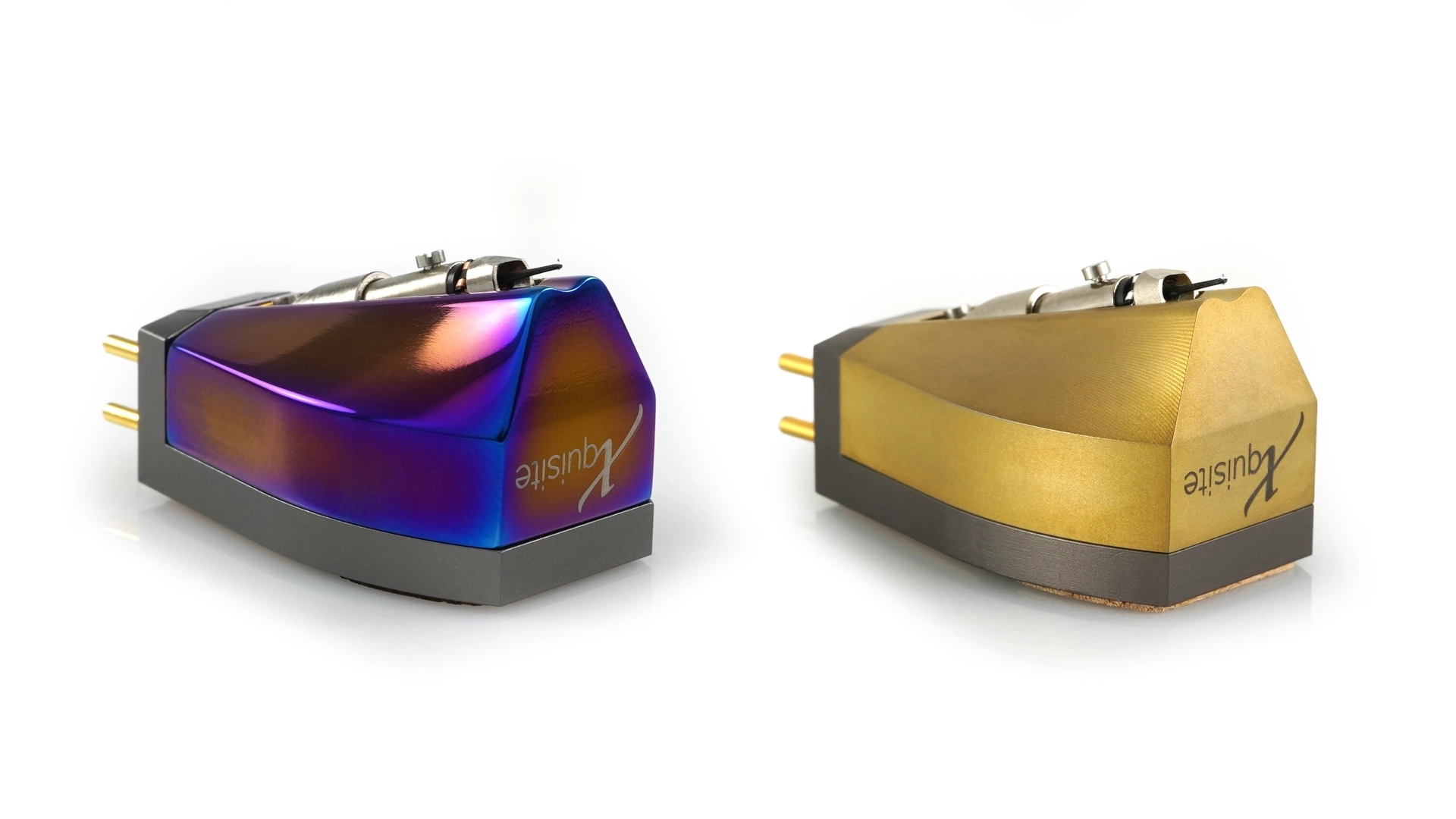
X-Quisite is the Swiss phono-cartridge company created by engineer Micha Huber, the designer behind Thales tonearms and turntables. Launched in 2019, the brand addresses a specific weakness in conventional moving-coil cartridges: the stylus, cantilever, coil former and suspension interface are normally several tiny parts joined together, and every joint can add mass, compliance or uncontrolled movement. X-Quisite’s patented monobloc transducer forms the cantilever and coil body as one high-strength ceramic structure. The stylus is mounted at one end and the coils are wound directly onto the other, eliminating the separate former and adhesive joint between them. A ceramic support structure and carefully arranged magnets complete the generator, while each cartridge is assembled, measured and calibrated by hand in Switzerland. The range began with the ST and CA models and expanded through higher-performance GT and VORO versions, using different coil materials, bodies and styli while retaining the same mechanical principle. Huber’s experience with tangential-tracking geometry also informs the cartridges’ alignment and low moving mass, but X-Quisite is a separate specialist brand rather than simply a Thales label. Its claim to significance is unusually easy to define: not exotic body material or subjective voicing, but a genuinely different moving-coil architecture that reduces the number of mechanical interfaces between groove and generator. That focused invention gives the young company a clear place among far older Swiss analogue manufacturers.
Zu Audio

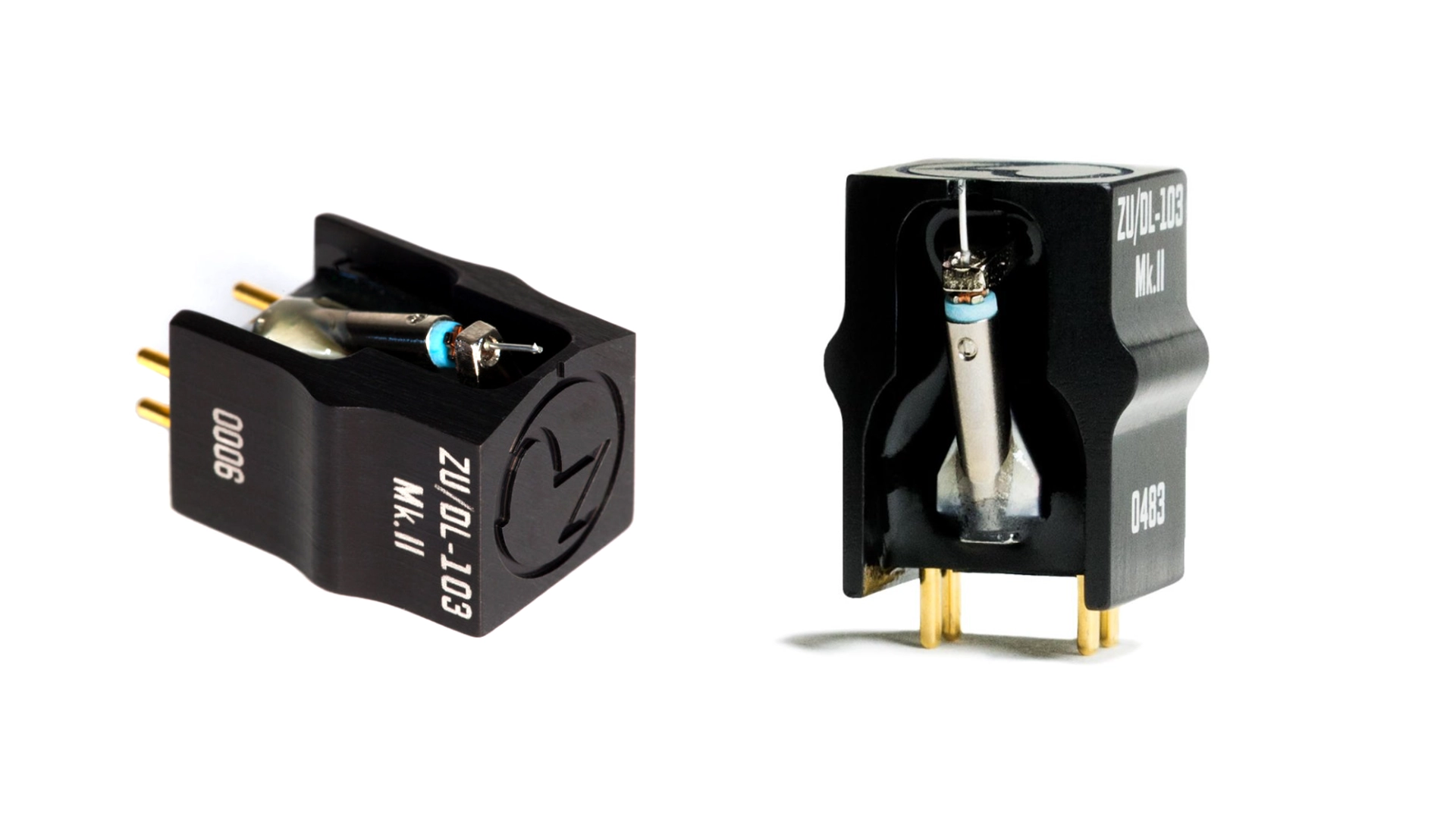
Zu Audio is an American loudspeaker and cable manufacturer founded in 2000 in Ogden, Utah, by Sean Casey and Adam Decaria. The company rejects the assumption that domestic speakers must trade efficiency and dynamic ease for flat measured response. Most Zu models use a large, high-efficiency full-range driver through the critical vocal band, supplemented by a tweeter above it and, where required, dedicated bass support. With no conventional crossover in the main driver’s path, phase shift and component loss are reduced. Zu-Griewe loading—developed from Sean Casey’s earlier work with Ron Griewe—uses a controlled gap between cabinet and floor to couple the enclosure to the room, functioning differently from a normal reflex port. Druid introduced the formula in 2001; Soul and Soul Supreme made it more compact, while Definition added powered bass and greater scale. Union and DW series bring the approach to wider price points, and Experience models explore more ambitious drivers and finishes. High sensitivity allows low-powered valve amplifiers, yet the speakers are designed to preserve impact with modern solid-state power as well. Zu also manufactures cables, driver assemblies, cabinets, metal parts and finishes in-house, giving its Ogden factory unusual control over both loudspeakers and their internal wiring. The result is a coherent alternative to conventional multiway design: minimal filtering, generous radiating area and room-aware loading used to reproduce tone, timing and live-scale dynamics rather than to chase specifications in isolation.
ZYX Audio

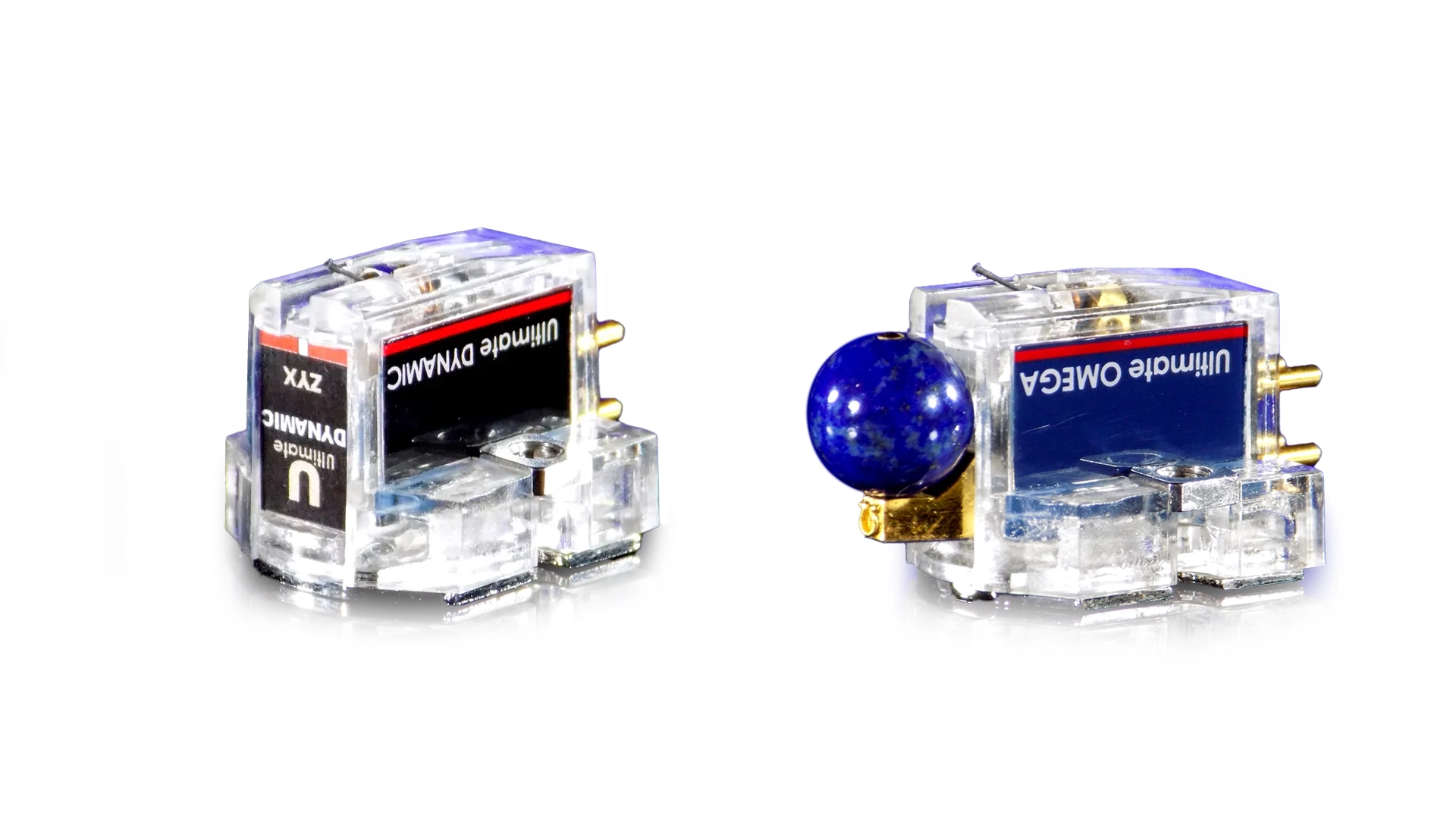
ZYX is the Japanese phono-cartridge company founded in 1986 by engineer Hisayoshi Nakatsuka. His career provides the brand’s technical foundation: after university he worked at Trio/Kenwood on an early optical cartridge, designed the MC-20 during time with Ortofon in Denmark, and later managed OEM cartridge production at Namiki Precision Jewel. With that experience and Namiki support, Nakatsuka created ZYX to address what he calls three-dimensional analogue information. The name maps Z to time, Y to amplitude and X to frequency, emphasising that correct timing is as important as level and bandwidth. ZYX moving-coil cartridges use symmetrical generator layouts, carefully controlled coil windings and low-mass stylus assemblies to reduce phase and time-axis errors. MicroRidge styli and boron cantilevers appear across much of the range, while higher models add carbon-fibre or gemstone structures, silver or copper coils and increasingly elaborate bodies. R100 and Airy established the international reputation; Ultimate and Diamond families refine the same generator, with Mono and low/high-output options serving different phono stages. Some models use a transparent acrylic body that exposes the mechanism rather than hiding it behind decorative metal. Nakatsuka holds numerous cartridge patents, but ZYX’s identity is clearer than an award list: decades of generator experience organised around the relationship among groove timing, coil geometry and mechanical symmetry, executed in hand-assembled Japanese cartridges from attainable specialist models to reference designs.