
On-Wall Speakers
On-wall speakers offer a slim, low-profile alternative to traditional bookshelf or floorstanding models, making them an excellent solution when floor space is limited. Mounted directly on the wall like a picture frame, they provide a clean aesthetic and are often designed to complement modern flat-panel televisions. This guide gathers the key manufacturers of on-wall speakers, from stylish lifestyle-focused brands to companies producing high-performance models for serious home cinema systems. Explore the directory to find the right on-wall solution for your space.
Hi-Fi brands in the category
Summary information and image
Direct links to official websites
Martin Logan

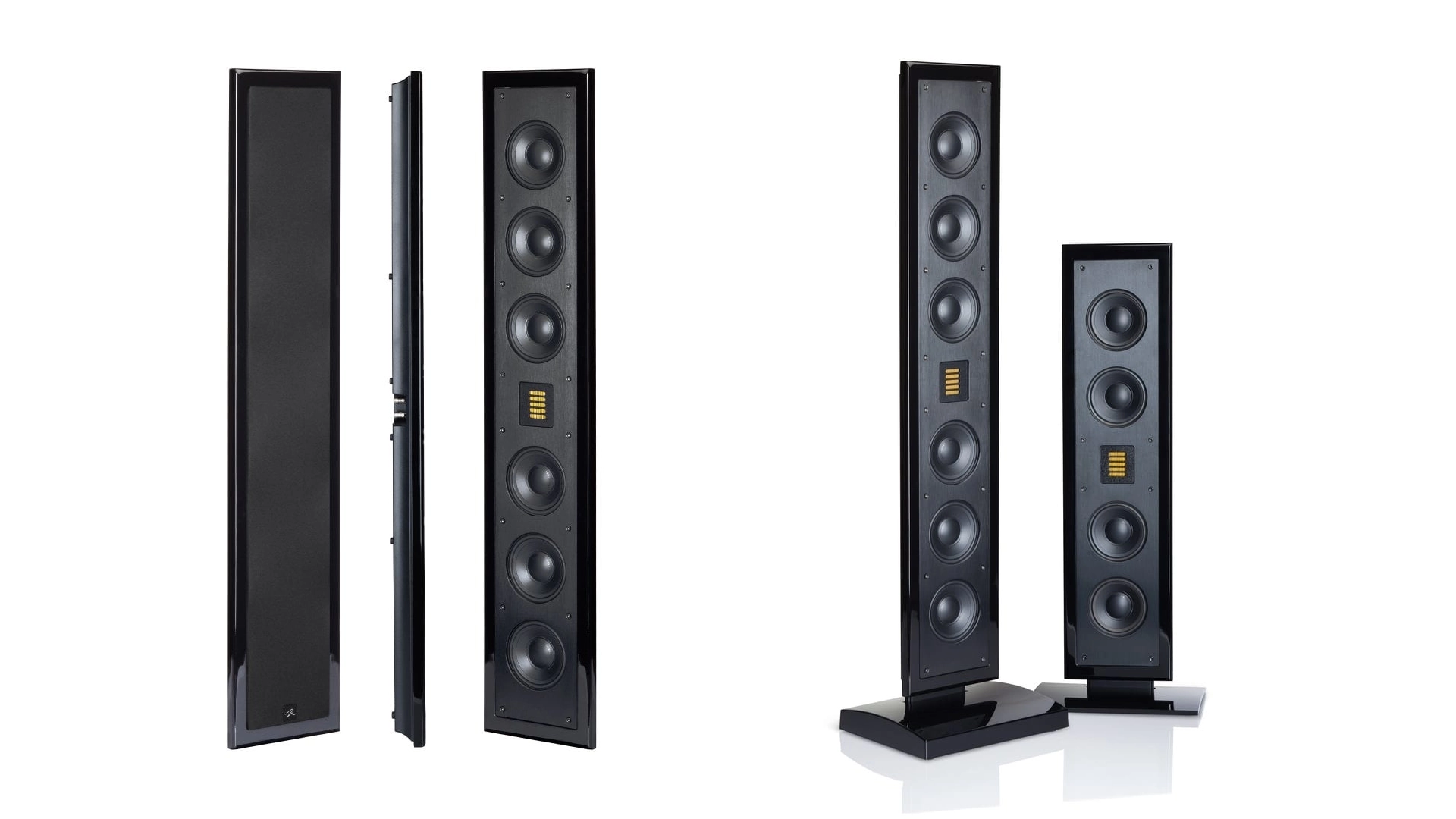
MartinLogan is the American loudspeaker specialist that made the curved electrostatic panel practical for full-range domestic systems. Gayle Martin Sanders and Ron Logan Sutherland developed their first production model, the Monolith, in 1983 after several years of experiments. Its hybrid architecture paired a transparent electrostatic membrane with a dynamic bass driver, solving one of the central limitations of earlier electrostatic designs while preserving their speed and low moving mass. The brand’s large electrostatic models use Curvilinear Line Source panels to control dispersion, MicroPerf stators to increase radiating area and AirFrame structures that hold the panel rigidly without a conventional box. Powered bass sections in selected models add Anthem Room Correction and controlled-force woofer arrangements. MartinLogan also applies its Folded Motion and Folded Motion XT tweeters to the more conventional Motion range, and offers subwoofers, architectural speakers and home-theatre solutions. The important distinction is that MartinLogan is not simply a maker of unusual-looking panels: its know-how lies in integrating electrostatic midrange and treble with dynamic bass, useful room behavior and manageable domestic proportions.
Monitor Audio

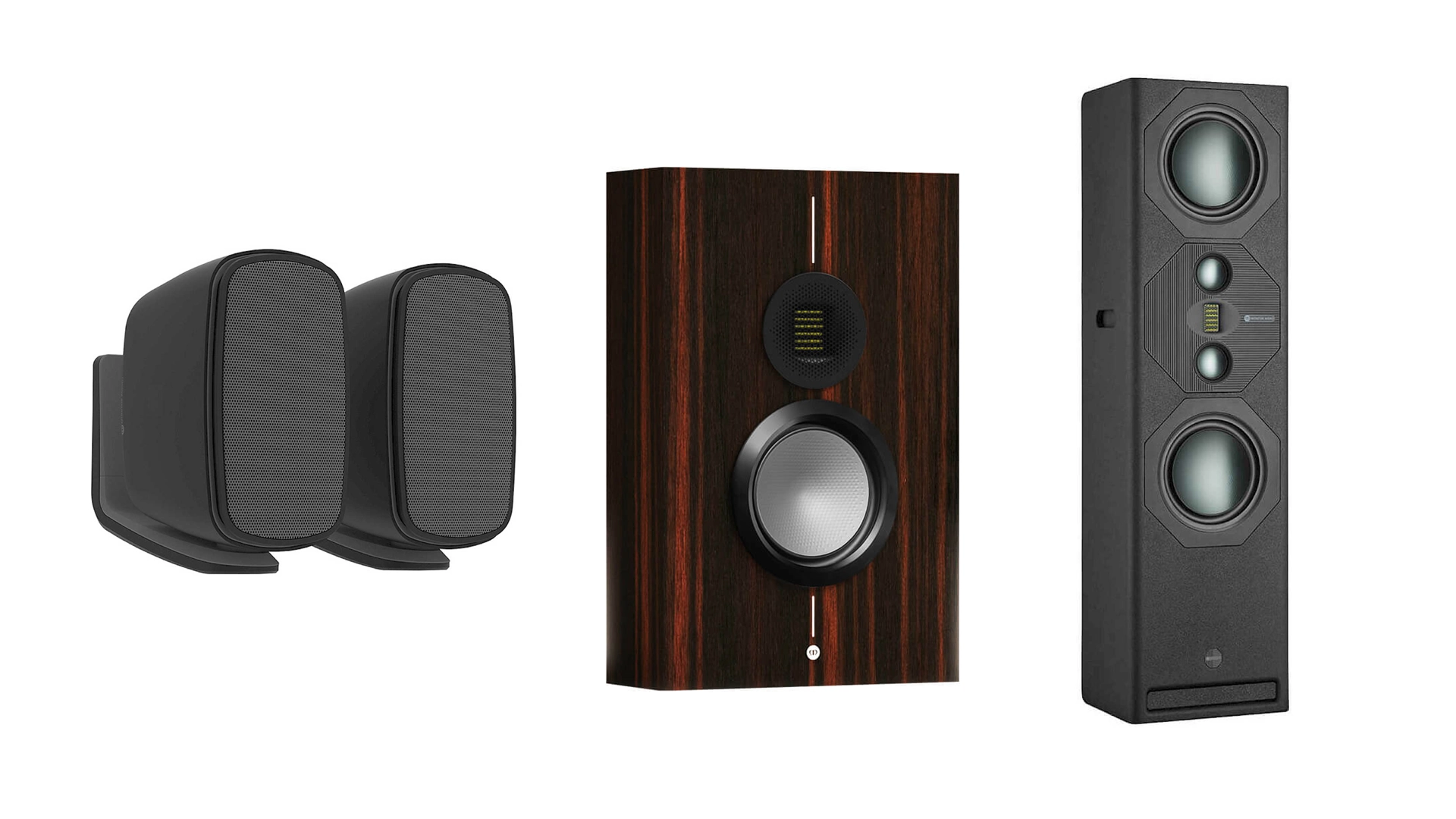
Monitor Audio is a British loudspeaker manufacturer whose strongest identity lies in developing its own metal-diaphragm driver families across products from entry-level stereo to architectural and flagship systems. Mo Iqbal founded the company in 1972 in Teversham near Cambridge, and the MA1 was its first loudspeaker. Design and engineering remain centred in Britain, while the catalogue now spans standmount and floorstanding speakers, home-cinema channels, subwoofers, creator-series installation models and outdoor audio. C-CAM—Ceramic-Coated Aluminium/Magnesium—is the foundation technology, providing a light, rigid diaphragm used in cones and the familiar gold-dome tweeter. Higher ranges extend it through RDT III sandwich cones, MPD III micro-pleated high-frequency transducers, DCF coupling and Hive II reflex ports. The Hyphn flagship arranges six RDT III midrange units around an MPD III transducer as a point-source M-Array and uses opposed, force-cancelling bass drivers. Bronze, Silver, Gold and Platinum apply related ideas at different levels without pretending they are identical. Monitor Audio’s advantage is this continuous driver-development ladder, backed by a broad system range rather than a single celebrated model.
Penaudio

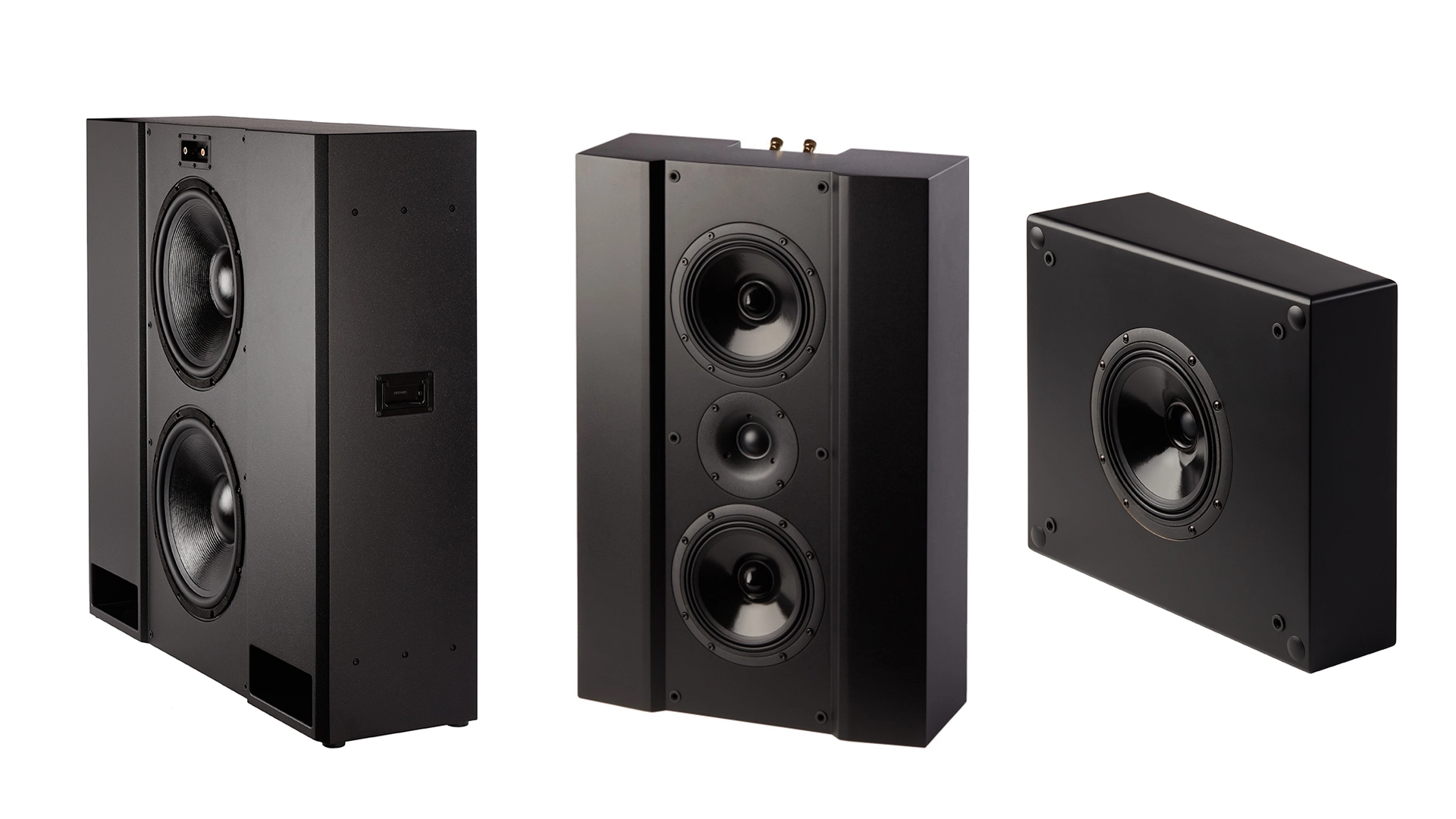
Penaudio is the Finnish loudspeaker company founded by musician and designer Sami Penttilä in 1999. Penttilä began by building the kind of compact speaker he wanted to live with himself, and the brand retained that human scale as it expanded. Its most visible signature is the striped Finnish birch-plywood cabinet: alternating layers are left exposed, turning a structurally stiff, well-damped material into part of the visual identity rather than covering it with a conventional veneer. Penaudio works closely with Scandinavian driver specialist SEAS and designs crossovers and enclosures around the chosen units instead of applying one recipe across every price. Cenya, Sara and Serenade established the international range, with Serenade in particular becoming a long-running reference floorstander. The current Signature family continues those names, while Cenya Diamond and Sara Diamond add diamond tweeters and graphene-treated magnesium bass/midrange diaphragms. The Snow line—such as Lumi, Talvi and Alba Lumi—offers simpler forms and lighter visual treatment. At the top, Karelia and the Suomi models investigate controlled directivity and room interaction on a larger scale; Suomi uses a customised SEAS Excel diamond tweeter. Cabinets and final assembly remain closely associated with Finnish craft, and the proportions stay recognisably Scandinavian even in the flagships. Penaudio’s individuality is the meeting of Penttilä’s musician-led voicing, layered birch construction and carefully commissioned Nordic drivers—not a generic promise of “natural sound.”
Perlisten


Perlisten Audio was founded in 2016 by an international engineering team led by Dan Roemer, Lars Johansen and Erik Wiederholtz; its name contracts “perceptual listening.” The company spent several years developing before releasing its first six products in 2020. It entered the market with complete loudspeaker and subwoofer systems for both two-channel music and large home cinemas, then became the first manufacturer to earn THX Dominus certification, including for the S7t loudspeaker and D215s subwoofer. The S Series is built around Perlisten’s DPC—Directivity Pattern Control—array: a beryllium tweeter sits between two thin-ply-carbon midrange domes in a shaped waveguide. The three drivers operate together to control vertical and horizontal dispersion, reduce floor and ceiling reflections and keep tonal balance more consistent across seats. Woofers, cabinet geometry and crossover behaviour are developed with the same directivity target rather than added around a generic tweeter module. The R Series translates that architecture into different diaphragm materials and more accessible systems, while the A Series extends the range further; matching subwoofers use opposed or multiple drivers, powerful DSP and app control according to model. Perlisten’s key strength is the integration of psychoacoustics, beam control and cinema-level output. THX certification is a consequence of that work, not the whole story: the brand designs speaker families whose directivity and dynamic capability remain coherent from a stereo pair to a multichannel room.
Phoniq

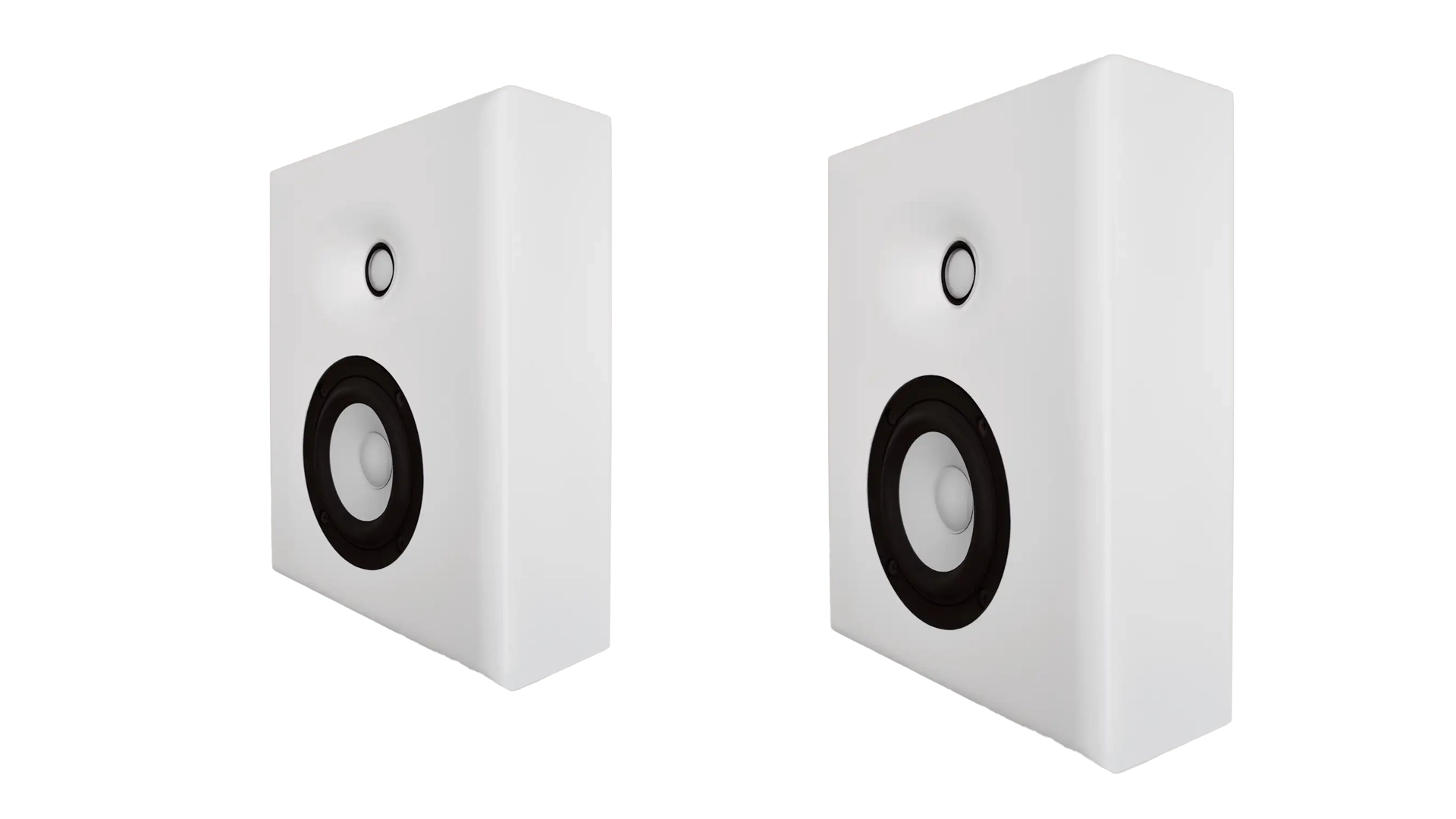
Phoniq is a Berlin audio research, design and manufacturing studio founded in 2020. It works at the intersection of loudspeaker engineering and psychoacoustics: not only how a system measures on axis, but how directivity, reflections, listening distance and the listener’s hearing combine in a particular space. Its clients include private listeners, producers and engineers as well as festivals, museums and other organisations that need a purpose-designed sound system. The company currently concentrates on custom active loudspeakers, studio monitors and acoustic consultancy rather than presenting a mature catalogue of standard retail models. Systems are developed for the room and application, using modern amplification and transducer technology from suppliers such as Hypex, Purifi and Bliesma where appropriate. Active crossover processing, controlled radiation and careful integration allow the designer to address bass behaviour and early reflections as parts of the loudspeaker rather than leaving them to chance after installation. Phoniq’s own site states that its first production model is still in development, so it would be misleading to write as though an established consumer series already existed. That early-stage position is itself informative: Phoniq’s present value lies in evidence-based bespoke work and in translating research into complete installed systems. When the production speaker appears, it should be judged as an outcome of that practice, not retroactively inserted into a history the young company has not yet had.
PMC

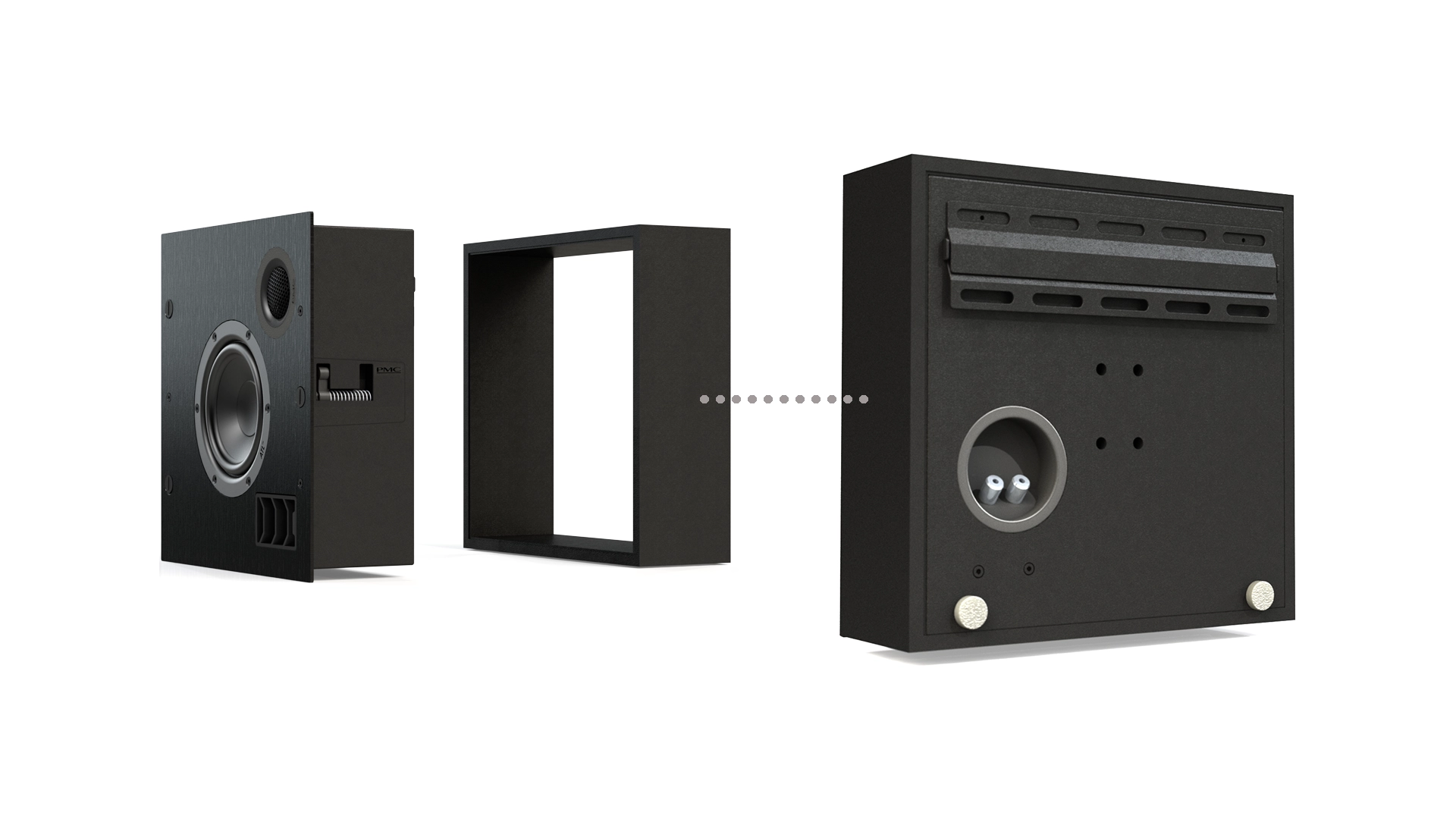
PMC—Professional Monitor Company—was founded in Britain in 1991 by Peter Thomas, then manager of the BBC’s Music Studios, and engineer Adrian Loader. Their first loudspeaker, the BB5-A, was created because they could not find a large monitor that combined the level, bass extension and neutrality required for critical studio work. The design established a rare continuity between professional control rooms and domestic hi-fi: PMC does not maintain one acoustic philosophy for engineers and another for music listeners. The company’s core technology is the Advanced Transmission Line, or ATL. The rear output of the bass driver enters a long, folded, heavily damped passage inside the cabinet. Absorbent material removes much of the unwanted midrange energy, while the lowest frequencies emerge from a tuned vent in phase with the front radiation. Done correctly, this extends bass and reduces driver excursion rather than producing the single-note emphasis of a poorly tuned port. Laminair aerodynamic vents, derived from airflow research, further reduce turbulence and compression at high levels. Current domestic ranges run from prodigy and twenty5i to fact and the flagship fact fenestria; the slim ci series brings the same controlled behaviour to on-wall and in-wall installations. result6, PMC6, PMC6-2 and larger main monitors continue the professional side. PMC’s identity is not merely “accurate British speakers,” but a transmission-line system refined in studios, mastering rooms and broadcast facilities, then scaled coherently for home listening.
Scansonic HD

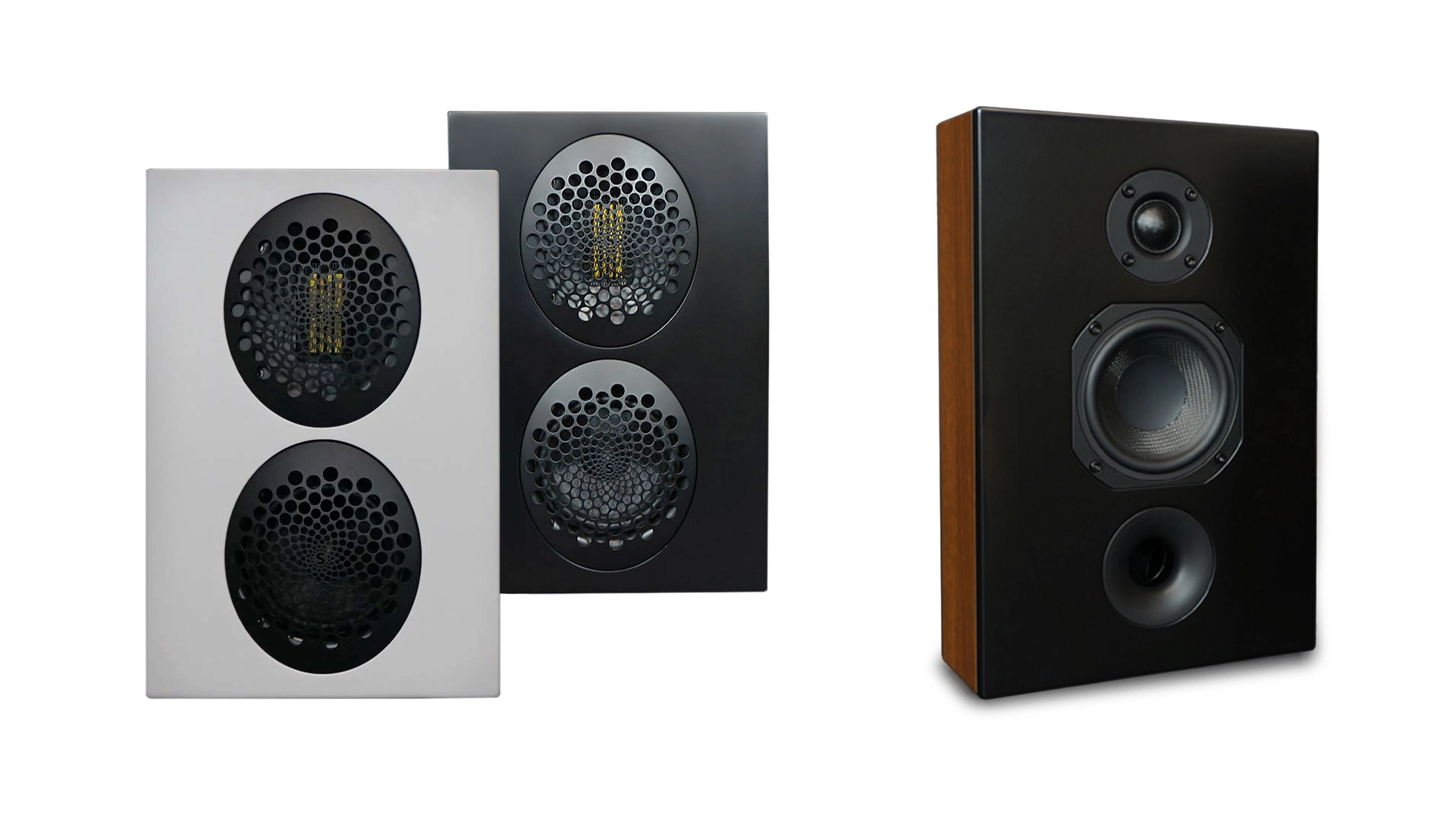
Scansonic HD is a Danish loudspeaker brand established in 2012 within Dantax, the same group that owns Raidho Acoustics. Its purpose is not to produce inexpensive visual copies of Raidho speakers, but to translate knowledge from the sister company’s drivers, crossovers and narrow enclosures into more accessible systems. That relationship is clearest in the ribbon and quasi-ribbon tweeters used in the brand’s performance ranges. Their extremely light membranes are intended to reproduce fast transients with little stored energy, and are paired with carbon-fibre mid/bass drivers designed to keep pace through the crossover region. The earlier MB family established Scansonic HD’s reputation with slim cabinets and ribbon high frequencies. The current M Series develops that approach in compact stand-mount, floorstanding and centre-channel models, using carbon drivers and rear or internal passive-radiator loading according to model to obtain useful bass from small enclosures. Q Series applies bespoke woven-carbon drivers and a quasi-ribbon tweeter with crossover ideas derived from Raidho. The more affordable L Series uses soft-dome tweeters and Kevlar-cone drivers, often in multi-driver slim cabinets, providing stereo and cinema options without pretending to be the same technology at a lower price. Design and voicing take place in Denmark, and the family resemblance is visual as well as technical, yet each range has a defined role. Scansonic HD’s strength is controlled technology transfer: it gives listeners a recognisably fast, open Danish presentation and elegant proportions while keeping the engineering and pricing distinct from Raidho’s far more ambitious products.
Sonus Faber

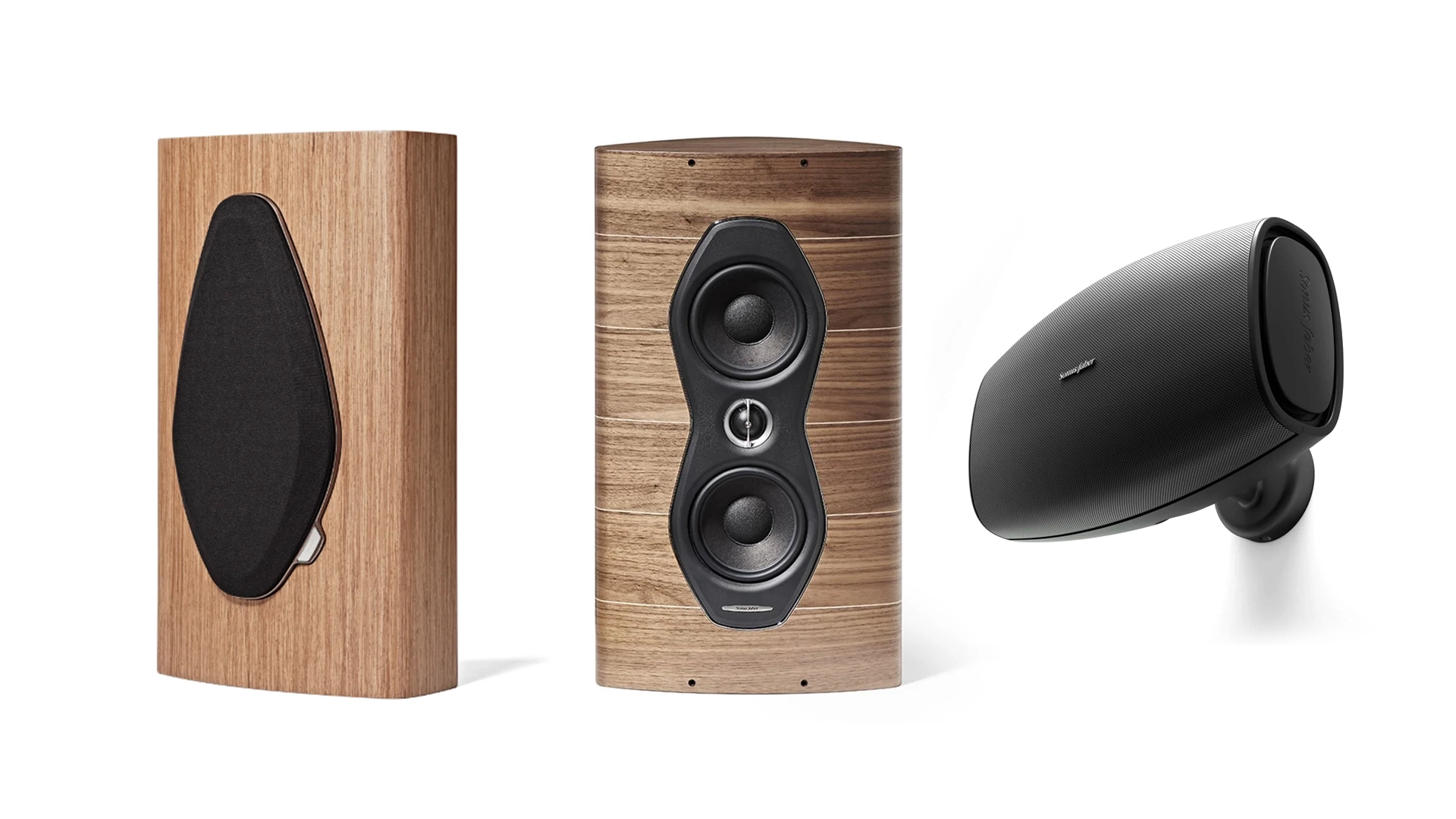
Sonus faber gives loudspeakers the visual and material character of fine musical instruments, combining sculpted cabinets with a long tradition of acoustic development in Vicenza, Italy. Franco Serblin founded the company in 1983, and early designs established the importance of wood, careful proportions and a natural presentation of voices and instruments. Guarneri Homage became a defining model: its lute-inspired cabinet and reference to Italian violin making helped establish a design language that would recur throughout the Homage family. Leather details, shaped wooden surfaces and cabinet construction are part of the engineering and craft rather than a finish applied to an anonymous box. The catalogue now ranges from Lumina and Sonetto loudspeakers to Olympica, Homage and large reference systems, with compact monitors and substantial floorstanders serving different rooms. The company also develops wireless products, Gravis subwoofers and Palladio installation speakers, extending its work into home cinema and distributed audio. Automotive and marine collaborations take its sound engineering into still different environments. Sonus faber became part of Bose’s portfolio through the acquisition of McIntosh Group announced in November 2024; its origin and manufacturing identity remain Italian. The thread connecting the early workshop to the broader modern range is the combination of cabinet craftsmanship, driver development and listening-led tuning. Its most recognisable speakers are objects with a strong physical presence, designed to remain part of the room even when the music has stopped.
Steinway Lyngdorf

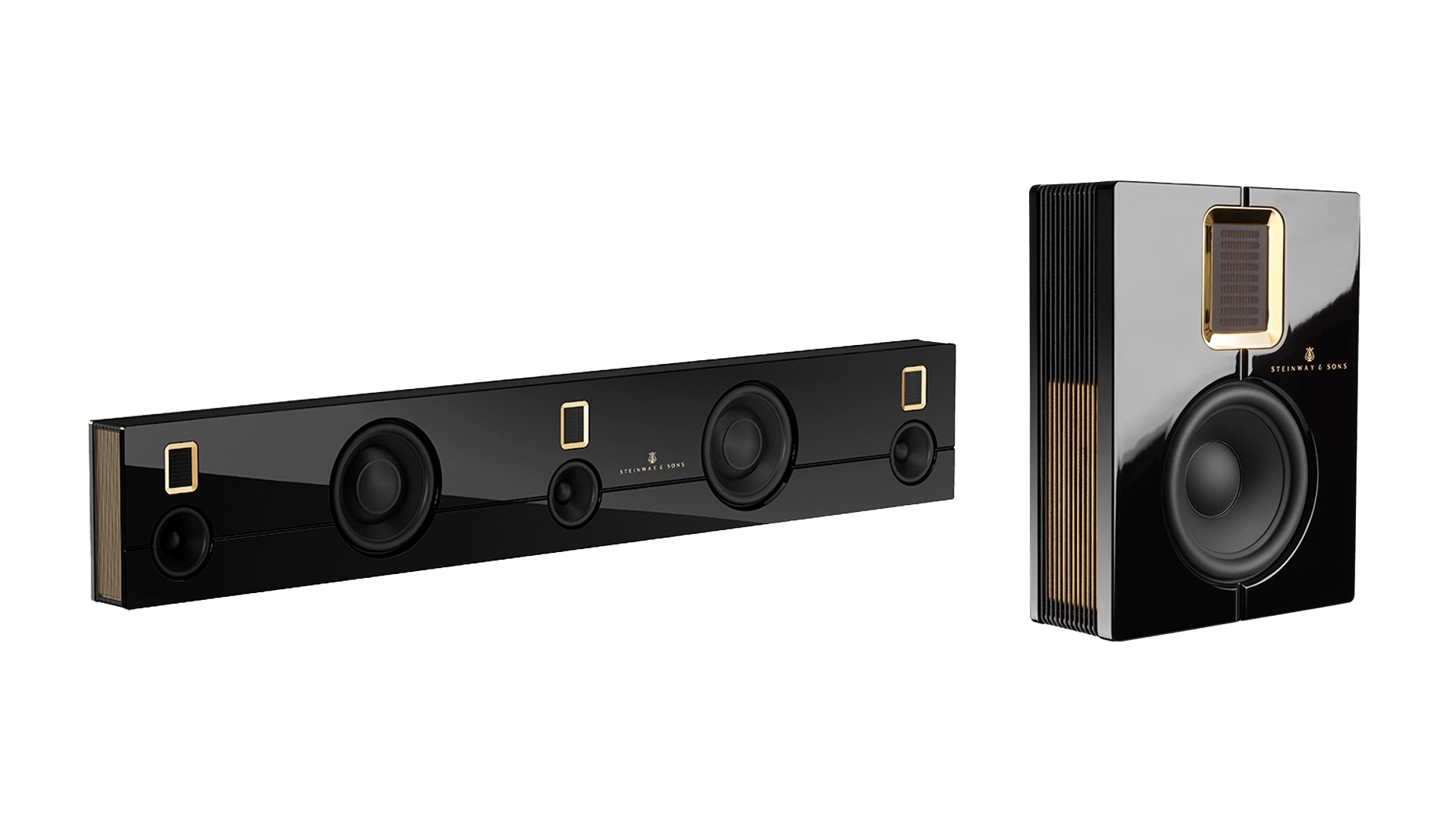
Steinway Lyngdorf creates complete active music and cinema systems in which loudspeakers, digital amplification, signal processing and room calibration are engineered as one installation. The foundation was laid in 2005 when Danish entrepreneur Peter Lyngdorf established Lyngdorf Audio under his own name, following earlier work on the Equibit platform and the Millennium fully digital amplifier. RoomPerfect arrived in 2006, mapping several positions in a room and correcting the system while preserving the loudspeaker’s intended tonal character rather than forcing a simple flat response at one seat. The collaboration with Steinway & Sons followed in 2007. Its first statement product, Model D, was named after the concert grand and set the pattern for a tightly integrated system finished to the visual standards expected of the piano maker. The Steinway & Sons range now includes freestanding Model A, B, C and D systems, the compact Model S family, architectural loudspeakers, boundary woofers and multichannel electronics such as P100 and P300 processors with A1/A2 amplifiers. Boundary woofers deliberately use placement near walls to work with room acoustics, while RoomPerfect handles calibration across stereo and immersive installations. These are not speakers intended to be mixed casually with unrelated electronics: authorised design, installation and tuning are part of the proposition. Steinway Lyngdorf’s defining achievement is turning Peter Lyngdorf’s digital-amplification and room-correction work into a complete architectural audio platform carrying the Steinway & Sons name.
System Audio

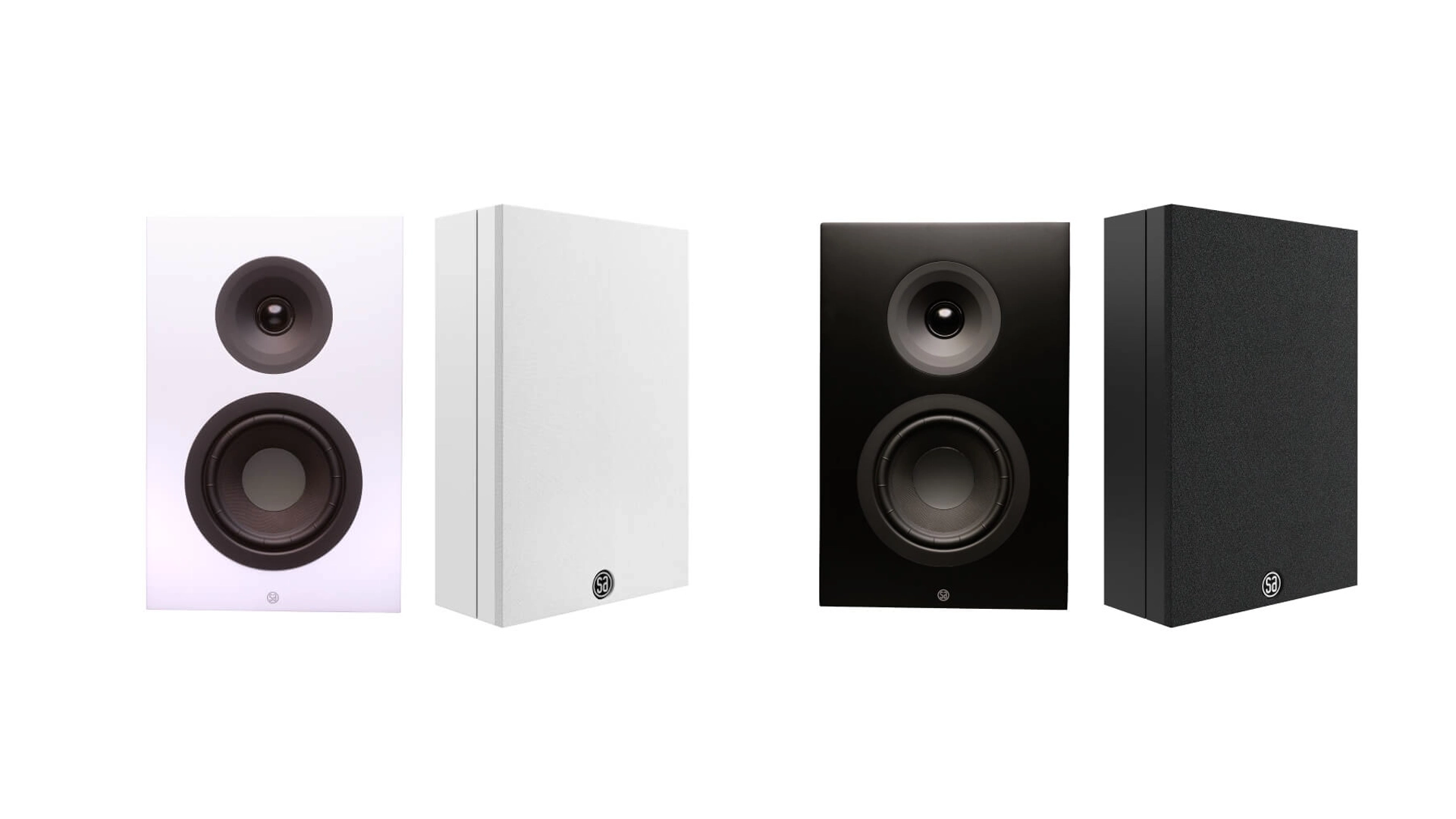
System Audio is a Danish loudspeaker manufacturer known for its slim and elegant designs, focus on fast and dynamic sound, and a commitment to making high-quality audio accessible to a wide audience. Founded by Ole Witthøft. The company’s loudspeakers often feature narrow baffles, which are intended to minimize diffraction and improve imaging. System Audio utilizes a variety of driver technologies and cabinet construction techniques to achieve their desired sonic characteristics. They offer a wide range of models, from compact bookshelf speakers to larger floor-standing designs, as well as on-wall speakers and subwoofers. The “SA legend,” “SA saxo,” and “SA aura” series represent different points in their product line. System Audio products are positioned in the mid-to-high-end segment of the market, appealing to audiophiles and music lovers who value both performance and Scandinavian design.
Taga Harmony


TAGA Harmony is a company specializing in loudspeakers, audio electronics, and cables, known for its focus on providing high-quality sound at accessible price points. While having European roots, the company has significant operations and design influence from Japan. TAGA Harmony offers a wide range of products, including floor-standing speakers, bookshelf speakers, center channel speakers, subwoofers, integrated amplifiers, and various cables. Their products often feature a modern aesthetic and are designed to deliver a balanced and engaging sound. The company’s design philosophy emphasizes a combination of engineering principles and subjective listening evaluations to achieve optimal performance. TAGA Harmony products are positioned in the
Tannoy

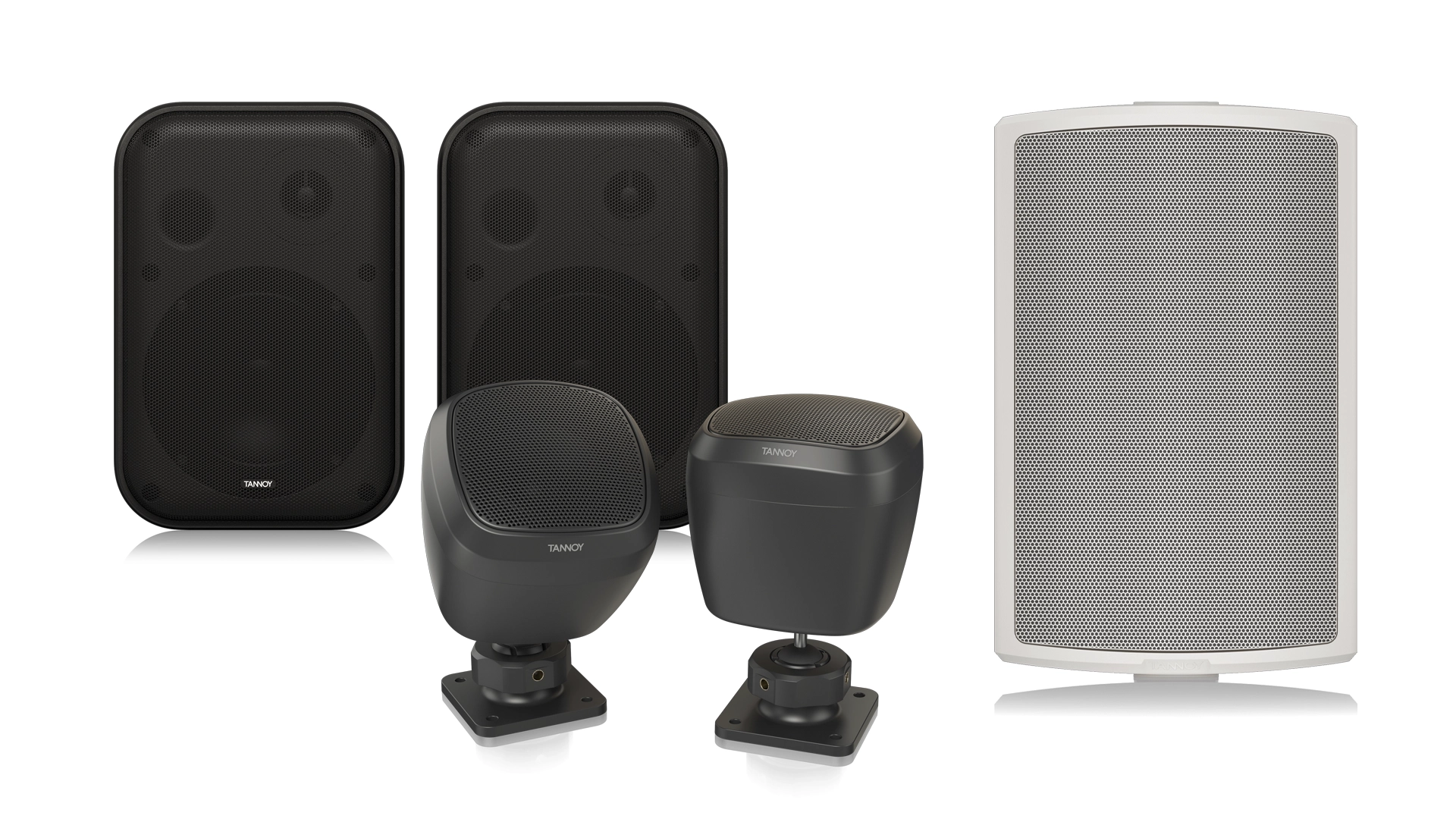
Tannoy is a classic British loudspeaker manufacturer with a long and storied history in the audio industry, particularly known for its “Dual Concentric” driver technology. Founded by Guy Fountain. The company’s Dual Concentric design places the tweeter at the center of the woofer, aiming to create a point-source sound with improved imaging and coherence. Tannoy loudspeakers are used in a variety of applications, from professional studio monitoring and sound reinforcement to high-end home audio. They offer a wide range of models, from compact bookshelf speakers to large, floor-standing designs. The “Prestige,” “Legacy,” and “Definition” series represent different points in their product line. Tannoy products are often characterized by their warm, musical, and engaging sound, with a particular emphasis on midrange clarity and naturalness. The company is a major player in the global loudspeaker market, with a reputation for quality, innovation, and a distinctive sonic signature.
Theory Audio Design

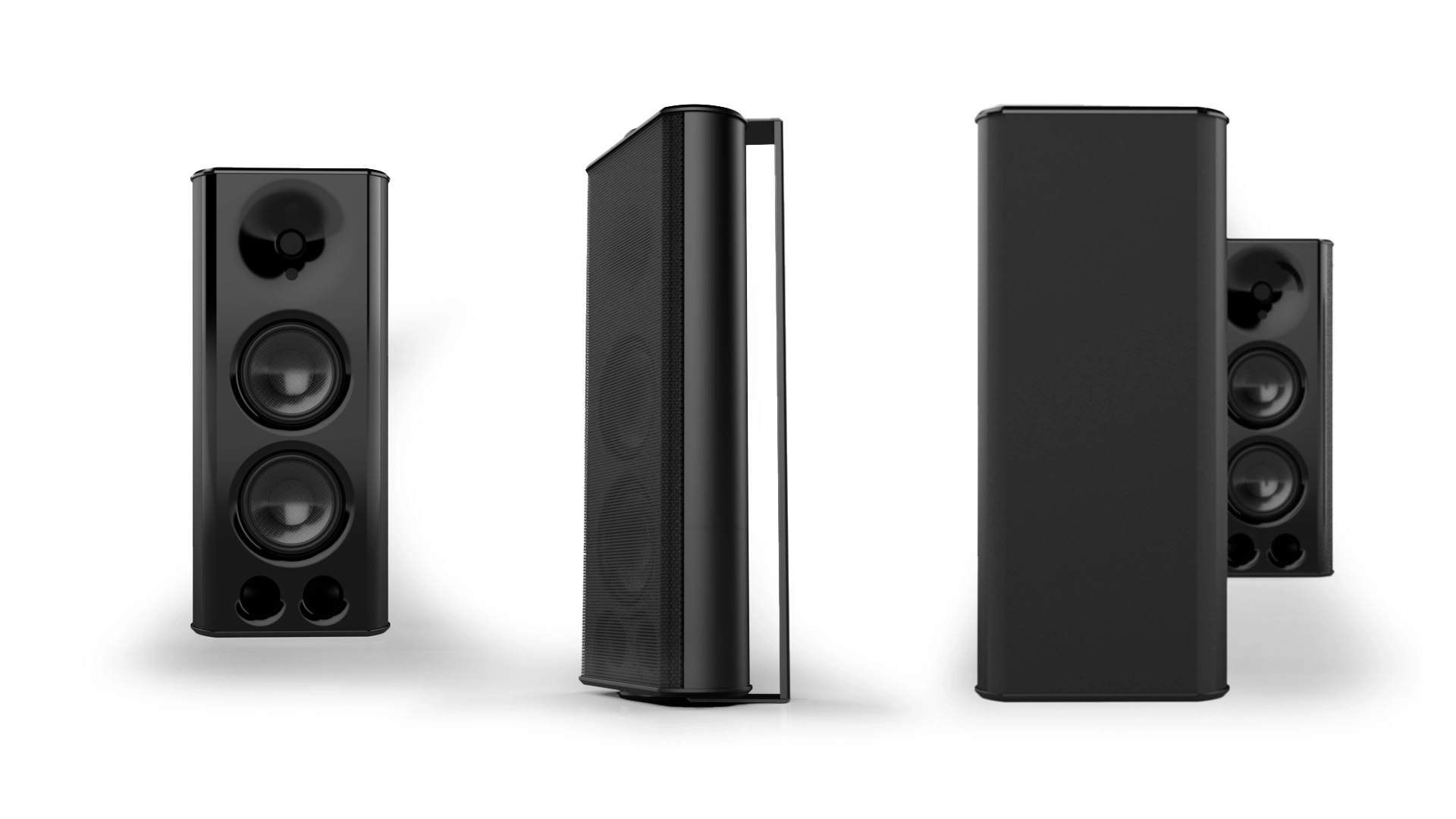
Theory Audio Design is the American architectural-audio brand introduced by loudspeaker designer Paul Hales in 2018. Hales had already founded Hales Design Group and the professional cinema specialist Pro Audio Technology, giving Theory a direct line to high-output studio and screening-room engineering. The residential products began shipping in 2020, and Theory Professional followed in 2023 to address commercial venues with the same compact, DSP-controlled approach.
Theory avoids a huge collection of unrelated speakers. Slim sb25 and sb75 soundbars, on-wall and in-wall models, the ic6 ceiling speaker and high-output subwoofers are combined with amplified loudspeaker controllers from the DLC family. Those controllers provide power, crossover, protection and system DSP, allowing every driver and enclosure to operate as part of a calibrated package. The format is especially useful in media rooms and architectural cinemas where visual restraint is required but ordinary installation speakers cannot deliver convincing cinema dynamics.
The professional range adds purpose-built SR loudspeakers and installation options for hospitality, corporate and entertainment spaces. Theory’s distinction is not simply that its speakers play loudly. Hales applies pro-audio ideas about sensitivity, directivity and headroom to enclosures that can disappear beside a display or inside a wall, then uses centralised processing to make deployment repeatable. The result sits between conventional lifestyle audio and a full cinema system: visually disciplined, installer-friendly and capable of the transient scale that first made Hales’s professional work respected.
Vienna Acoustics

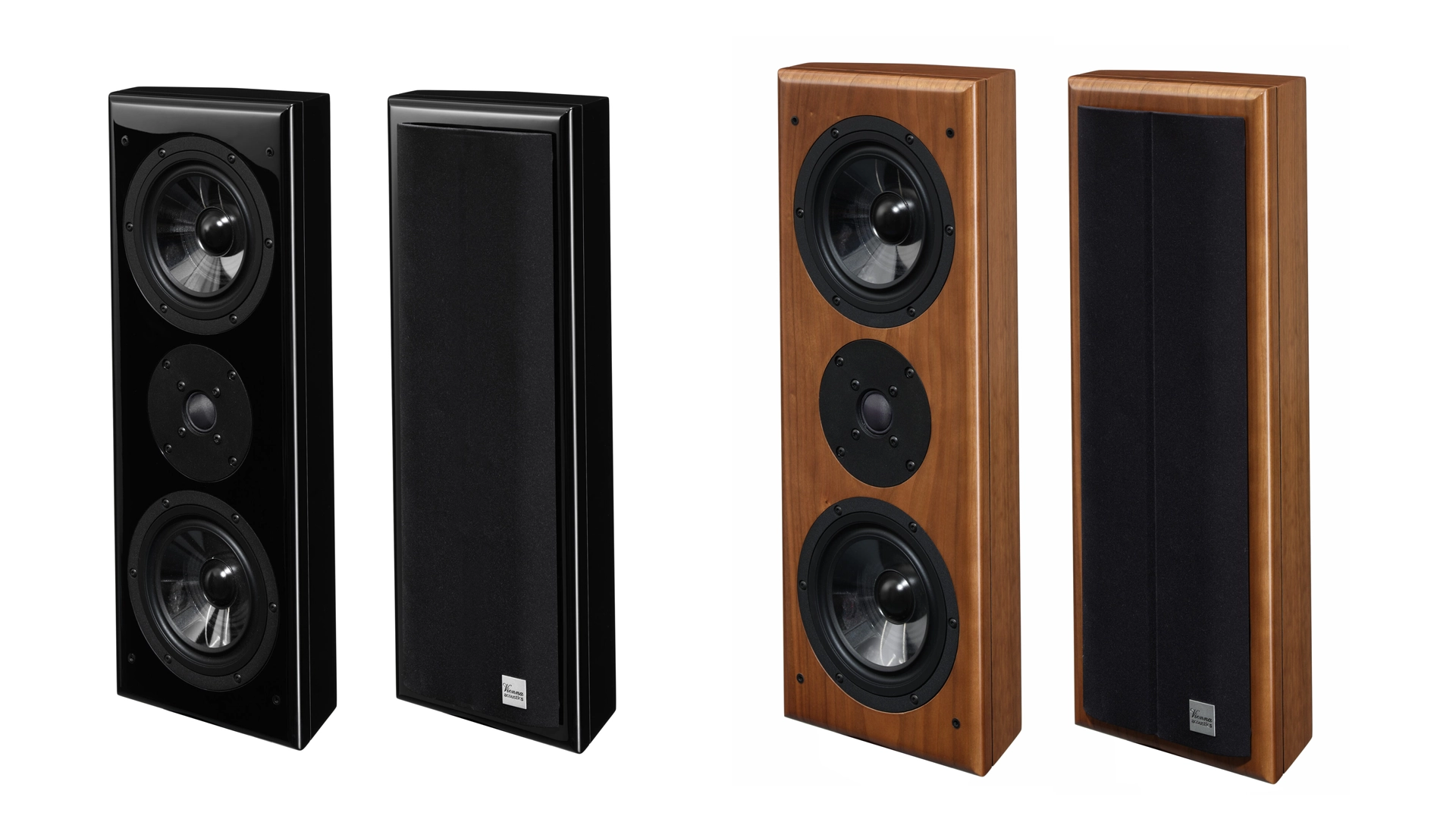
Vienna Acoustics is an Austrian loudspeaker manufacturer founded in 1989 by designer Peter Gansterer, who remains the central voice behind its products. The company develops and builds its speakers near Vienna and names many models after figures and works from the city’s musical culture: Haydn, Mozart, Beethoven, Liszt and The Music are not random labels but a durable product language. Early Mozart and Beethoven floorstanders helped establish the brand internationally by combining room-friendly proportions with a full, unforced presentation. Larger designs such as Liszt and The Music expanded the concept with separate or adjustable head modules and more ambitious bass systems. Vienna Acoustics develops much of its driver technology in-house. Its transparent Spidercone and later Flat-Spider-Cone diaphragms use proprietary polymer formulations and reinforcing ribs to control breakup while keeping moving mass low; coaxial arrangements in reference models align the midrange and tweeter for consistent radiation. Silk-dome tweeters, carefully tuned crossovers and cabinets finished to furniture standards complete an approach in which the engineering is meant to disappear behind the musical result. Recent Reference and Jubilee models refine familiar names rather than discarding them for annual replacement. This continuity is one of the brand’s strengths. Vienna Acoustics does not trade only on an Austrian address or classical associations: it has built a recognisable school of loudspeaker design around proprietary composite drivers, elegant cabinetry and voicing intended to preserve instrumental colour and scale through long listening sessions.
Wharfedale

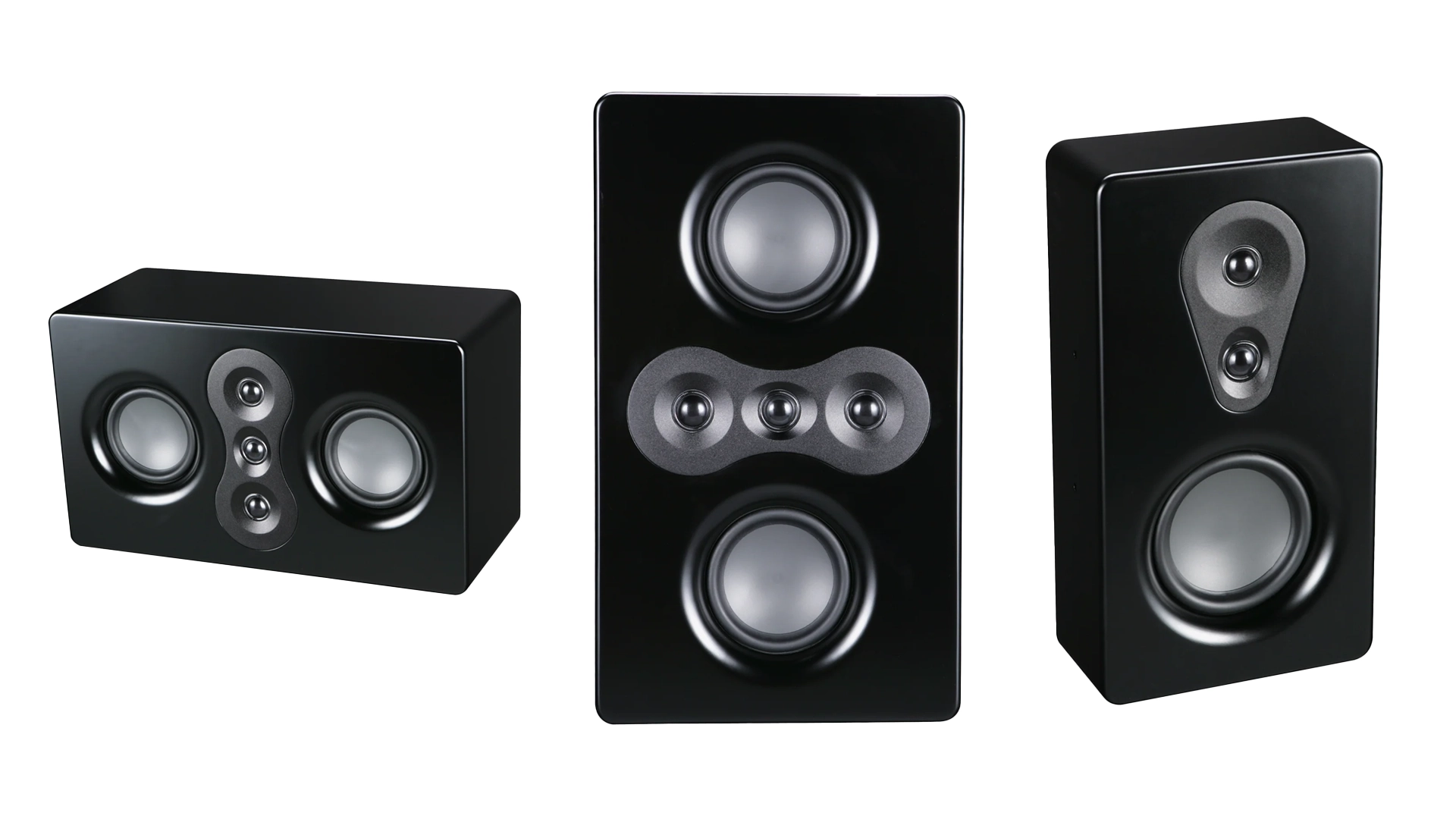
Wharfedale was founded in 1932 by Gilbert Briggs in Ilkley, Yorkshire, and named after the nearby valley of the River Wharfe. Briggs combined practical cabinet and driver development with unusually public demonstrations, comparing live musicians with reproduced sound in major halls to show what domestic loudspeakers could achieve. The company introduced influential techniques in cone manufacture, cabinet damping and multiway design, but its strongest long-term achievement has been bringing serious engineering to attainable price levels. The Diamond series, launched in 1982, became one of hi-fi’s enduring affordable loudspeaker families and remains the entry point to the modern range. EVO and AURA move upward with AMT high-frequency drivers and more elaborate cabinets, while the Heritage line revisits classic proportions without merely reproducing old internals. Denton, Linton, Super Linton and the large Dovedale combine wide baffles, substantial bass drivers and contemporary crossovers; Dovedale also marked a return of selected Wharfedale production to Britain. International Audio Group acquired Wharfedale in the late 1990s. The brand remains British in origin and design direction—now led by long-time acoustic designer Peter Comeau—while IAG’s Chinese manufacturing base supplies most series and its UK facility builds Dovedale. That mixed reality is more accurate than either calling Wharfedale unchanged since Briggs or dismissing it as a badge. Its identity survives in value-conscious loudspeakers that balance tonal ease, useful bass and domestic practicality across unusually broad price levels.
Wisdom

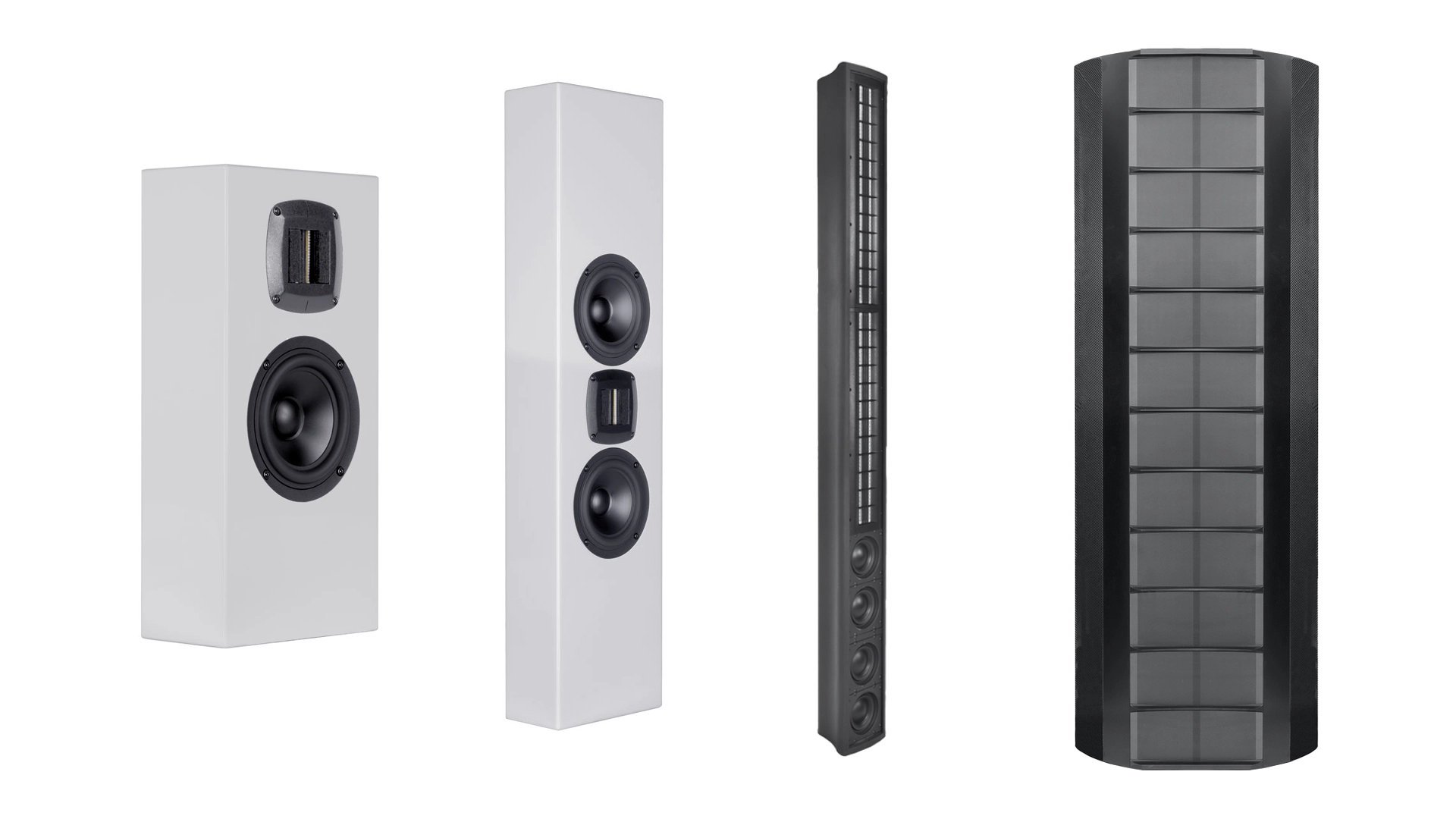
Wisdom Audio is an American loudspeaker company founded in 1996 by Tom and Debi Bohlender. Its early work grew from Bohlender’s experience with large planar-magnetic transducers, but the modern company found a distinctive role in architectural systems where high output and audiophile resolution must coexist with concealed installation. Wisdom’s planar-magnetic drivers place a lightweight conductive diaphragm in a magnetic field, spreading drive force across a large area and avoiding the voice-coil former of a conventional cone. In many models they operate as line sources, producing controlled vertical dispersion that reduces floor and ceiling reflections and maintains level more evenly with distance. Dynamic woofers supply the excursion needed for deep bass, while dedicated system controllers provide crossover, equalisation and protection. Sage is the core high-performance range, including in-wall, on-wall and freestanding line-source models; Insight brings related technology to smaller projects, and the Wisdom Series scales it into multi-metre reference arrays. Regenerative Transmission Line bass modules hide substantial low-frequency systems within walls or joinery. This architecture makes planning essential: speaker height, baffle construction, subwoofer placement, amplification and room calibration must be designed together. Based in Carson City, Nevada, Wisdom works closely with custom integrators and cinema designers rather than treating installation as an after-sale detail. Its identity is the successful translation of very large planar systems into purpose-built residential architecture—thin enough to disappear, yet capable of the dynamics and coverage demanded by serious music rooms and private cinemas.