An icon for an AV processor or multi-channel amplifier.

Processors Amplifiers

For the ultimate in performance, enthusiasts often choose separate components over an all-in-one AV receiver. This high-end approach consists of an AV Processor (the “brain” for decoding and control) and one or more Multi-Channel Power Amplifiers (the “muscle” to drive the speakers). This separation allows for maximum power, control, and fidelity. This directory is your guide to the specialized brands that manufacture these elite home cinema electronics.

34

Hi-Fi brands in the category

Summary information and image

Direct links to official websites

Filters
Search
Country
See more See less

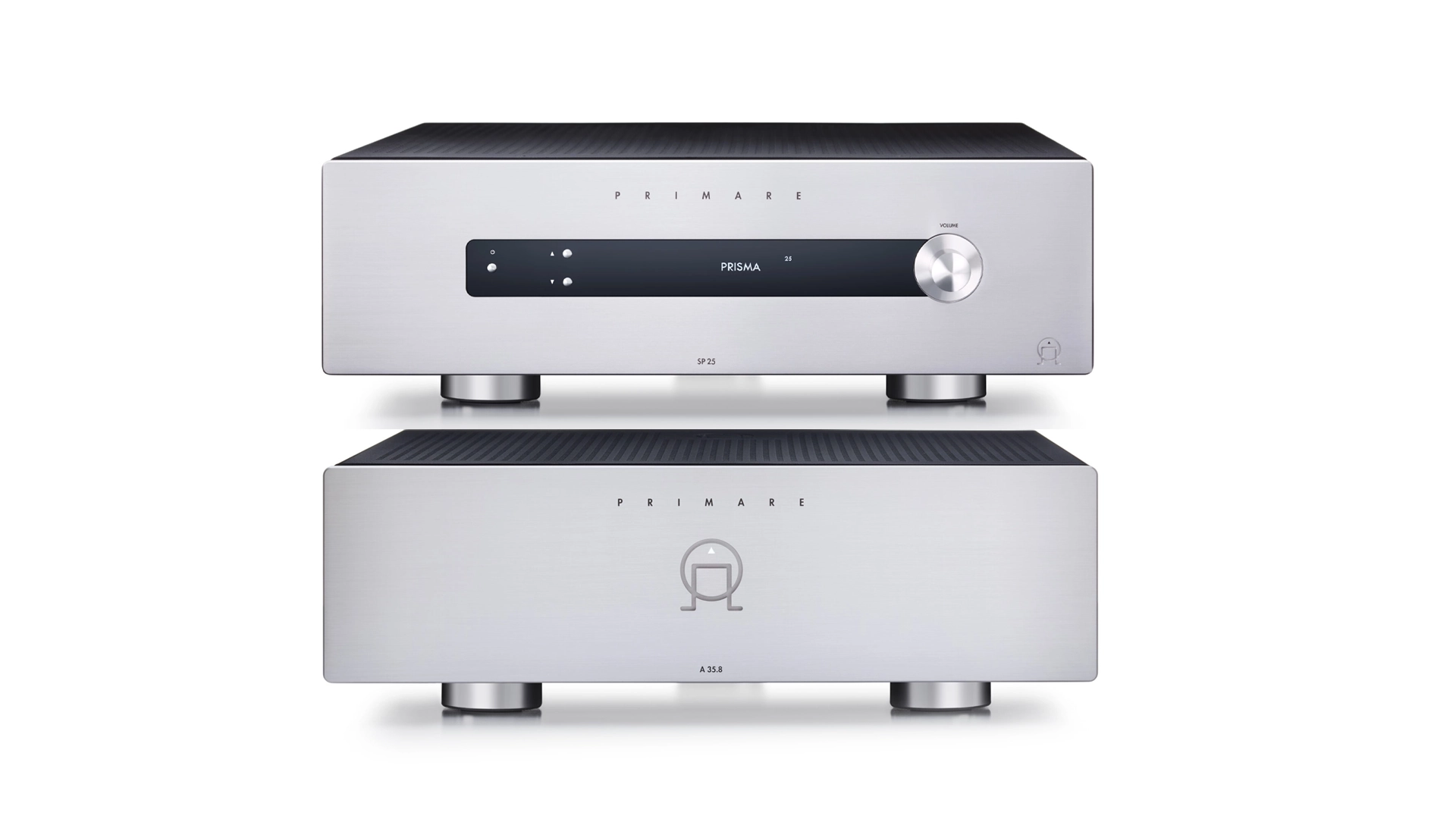
Primare began in 1985 when Danish industrial designer Bo Christensen set out to make audio components whose operation, proportions and sound belonged to one coherent object. Working with engineer Bent Nielsen and a Scandinavian development team, he produced the 928 series in 1986, followed by the 200 and 300 series. The company later came under Swedish leadership through Lars Pedersen and the Xena organisation; the 30 Series of 1998 established the clean forms and modular thinking associated with modern Primare. The present range still follows that idea of “lagom”—neither too much nor too little. I15, I25 and I35 integrated amplifiers anchor the 15, 25 and 35 families, joined by CD transports and players, R15 and R35 phono stages, PRE35 control and A35.2/A35.8 power amplifiers. UFPD and current UFPD 2 are Primare’s proprietary Class D amplifier platforms, designed for consistent gain across the audio band and high-current stability rather than adopted simply to make smaller boxes. Prisma is the network layer: it adds streaming, multiroom control and major service protocols to compatible electronics while keeping the core amplifier usable independently. Plug-in DAC and Prisma modules let selected models be updated instead of replaced, a direct continuation of the “living product” idea. SPA25, SP25 and A35.8 bring the same architecture to multichannel systems without treating cinema as a separate design language. Primare is Swedish in corporate identity, Danish at its creative origin and recognisably Scandinavian in its insistence that technical capability, restraint and ease of use should reinforce one another.

Pro Audio Technology began in 2004 as Professional Home Cinema, LLC, founded by mechanical engineer and loudspeaker designer Paul Hales. It adopted the Pro Audio Technology name in 2010, but the original purpose did not change: bring the output capability, controlled directivity and system engineering of professional cinema into private screening rooms. Hales had previously founded Hales Design Group, led loudspeaker R&D at QSC and consulted for Samsung, BMW and Dolby, giving the company an unusually direct bridge between audiophile, installed and professional sound. PRO systems combine high-sensitivity loudspeakers, large subwoofers and proprietary DSP amplifier/controllers rather than selling each box as an isolated product. Compression drivers and waveguides provide controlled coverage and high output with lower diaphragm excursion; professional-style woofers preserve dynamic headroom; and the DSP electronics store model-specific crossover, equalisation, delay and protection settings. That architecture lets an installer scale a system from a compact media room to a large cinema while keeping tonal behaviour and maximum level predictable. SCRS loudspeakers and LFC subwoofers cover different room sizes and mounting formats, including shallow and in-wall solutions, while PMA amplifier/controllers and the SoundTools software handle configuration and commissioning. In 2018 Hales also founded sister brand Theory Audio Design to adapt related engineering to more attainable installed systems. PRO’s distinguishing product is therefore not a single speaker model but a calibrated loudspeaker–amplifier ecosystem designed to deliver cinema dynamics without asking a residential integrator to assemble incompatible professional parts.
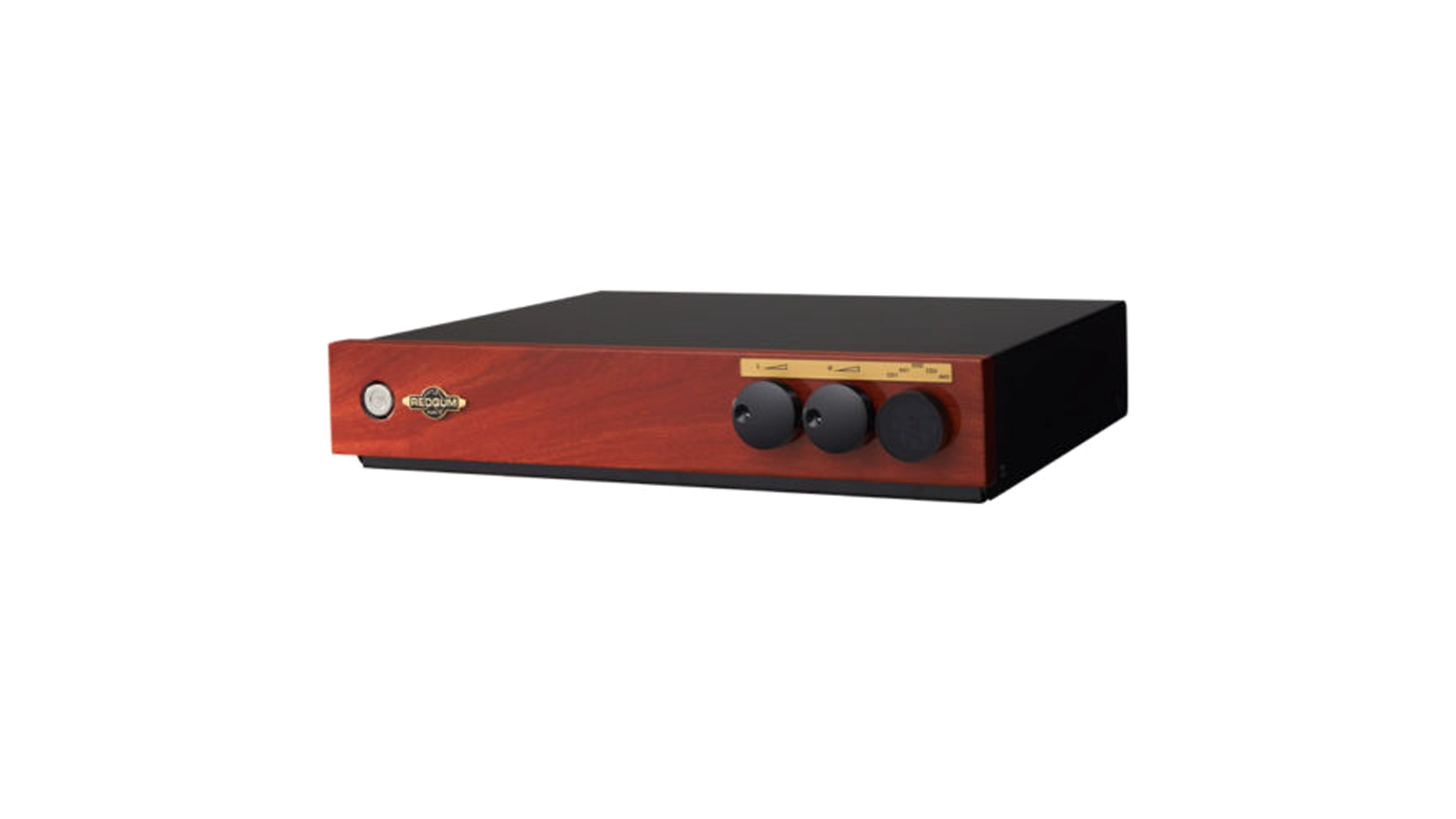
REDGUM Audio was founded in Melbourne in 1993 by Ian Robinson, after two decades of retail and service experience through the Contemporary Sound Centre he had opened in 1972. Hearing unamplified orchestral music convinced him that an amplifier needed transient current and dynamic freedom, not simply an attractive continuous-power figure. Customer response to his early prototypes led to the first commercial integrated amplifier, and the company name supplied the immediately recognisable Australian red-gum timber front panels. High-current solid-state amplification remains the centre of the range. RGi integrated amplifiers and separate power amplifiers are designed with short signal paths, substantial power supplies and protection intended to survive difficult loudspeaker loads; higher ENR versions use “Enhanced Non-Resonant” chassis construction and selected parts. The key-shaped power switch and individually figured timber fascia make each unit visually distinct without hiding its controls. REDGUM has also produced DACs, CD players, phono stages and loudspeakers, including speaker work with John Reilly of Axis. The use of serviceable computer CD-ROM mechanisms in earlier disc players was a practical response to transport obsolescence, not a cost-saving detail to conceal. Model availability has varied as a small manufacturer, so the brand should not be described as maintaining every historic category continuously. What remains consistent is Robinson’s emphasis on locally engineered, repairable electronics with generous current reserve and a seven-year warranty on many products. The original text contained valuable history and has been retained, but reorganised so the products and engineering reasons appear before colourful anecdotes.

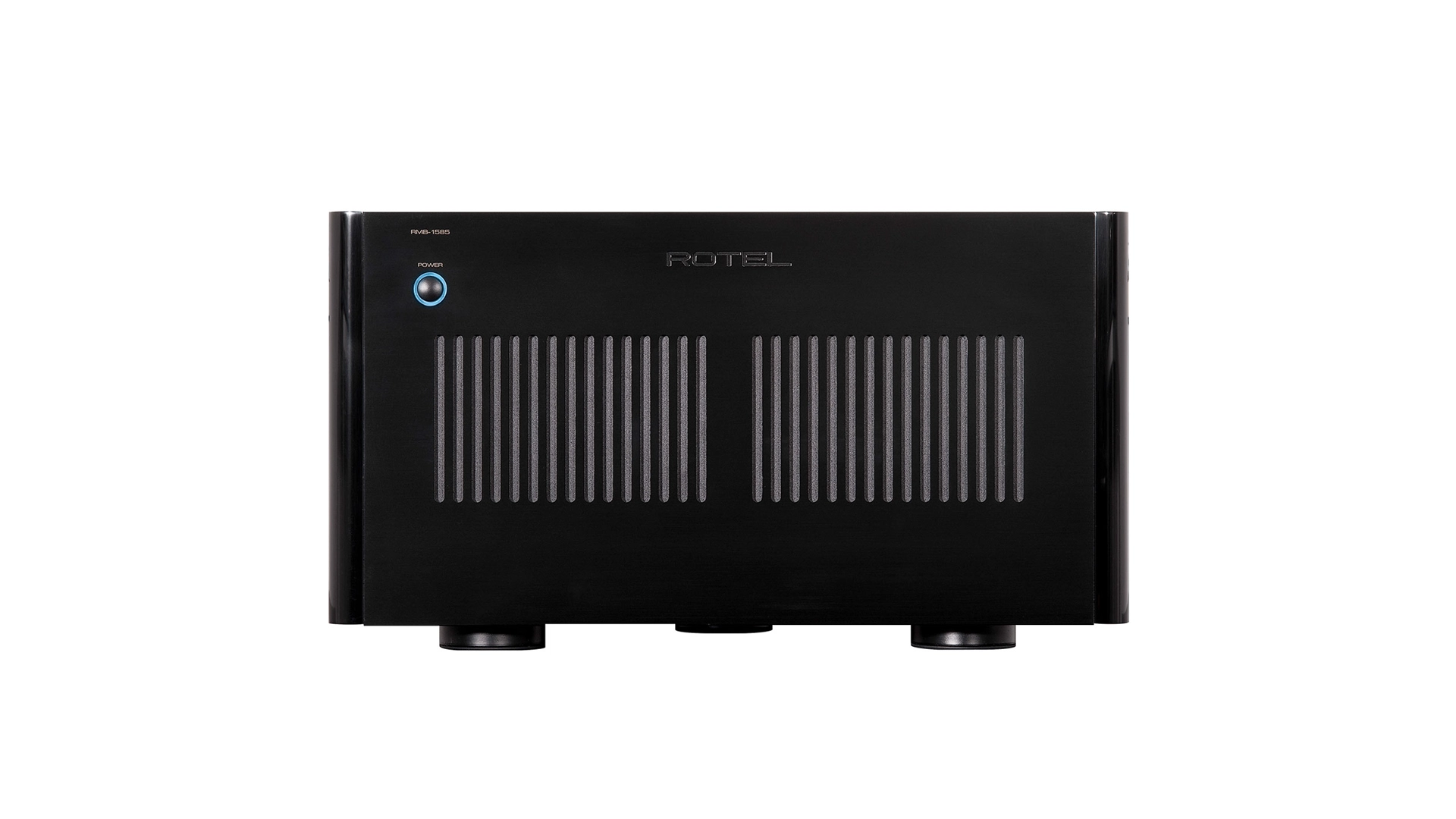
Rotel is a Japanese audio manufacturer founded in 1961 and still closely identified with the Tachikawa family. It built its reputation by offering serious engineering at attainable prices rather than chasing a single exotic circuit or luxury finish. The company’s “Balanced Design Concept” joins three disciplines: selecting parts for their measured and audible behaviour, refining the circuit topology, and listening critically to the complete product. One practical expression is Rotel’s long-standing use of custom toroidal transformers, many wound to its specification, together with carefully regulated power supplies and conservative output ratings. The range spans integrated amplifiers, preamplifiers, power amplifiers, CD players, network streamers and multichannel home-theatre electronics. The 14 and 15 Series cover compact and full-size systems, Diamond models mark anniversary engineering, and the revived Michi name forms the flagship line with components such as the X3 and X5 integrated amplifiers, P5 preamplifier, S5 stereo power amplifier and M8 monoblocks. Rotel also builds distribution amplifiers and custom-installation products, so the same design culture serves both a two-channel listening room and a whole-home system. Streaming, HDMI and modern control have been added without abandoning physical source support or straightforward front-panel operation. Rotel’s importance lies in continuity: it has spent decades improving power supplies, analogue stages and system integration rather than repeatedly reinventing its identity. The result is recognisably Japanese hi-fi—disciplined, durable and engineered to deliver useful current, dynamics and low noise at several price levels.

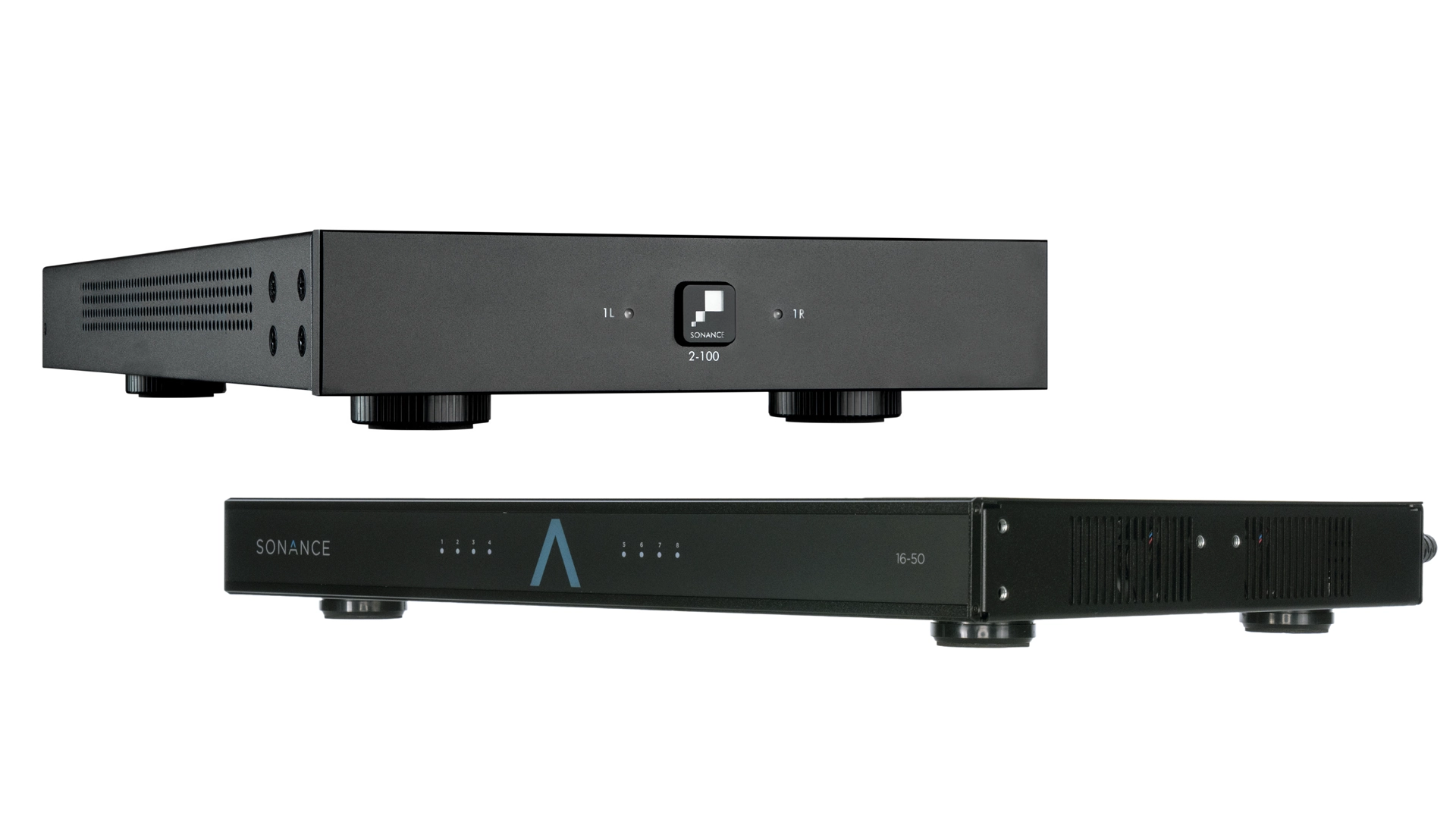
Sonance makes loudspeakers that become part of a building, from discreet ceiling systems to speakers concealed completely behind a finished wall. Scott Struthers and Geoff Spencer founded the Californian company in 1983, helping establish architectural audio as a category in its own right. Its in-wall and in-ceiling designs brought music into rooms without requiring freestanding cabinets, and that integration remains central to the brand. Visual Performance and architectural speaker families serve residential installations, while outdoor systems extend coverage into gardens and terraces. The Invisible Series takes the idea further: the speaker radiates through a thin finish layer, leaving no visible grille. Its Motion Flex architecture combines an Air Flex woofer, Wave Flex drive unit and an acoustically isolated baffle. Installation is part of the engineering; the D.I.S.C. calibration system helps installers check the thickness of the material applied over the speaker, since the finish affects its performance. Professional versions add facilities such as 70V/100V transformer taps for distributed commercial systems. The wider Sonance portfolio includes amplification and solutions for residential, commercial and marine environments, supported by system design resources for integrators. This is the thread connecting its products: the speaker, its coverage and the surrounding architecture are planned together. A Sonance installation can therefore range from barely noticeable background music to a dedicated cinema, with the visual presence of the equipment chosen to suit the room.

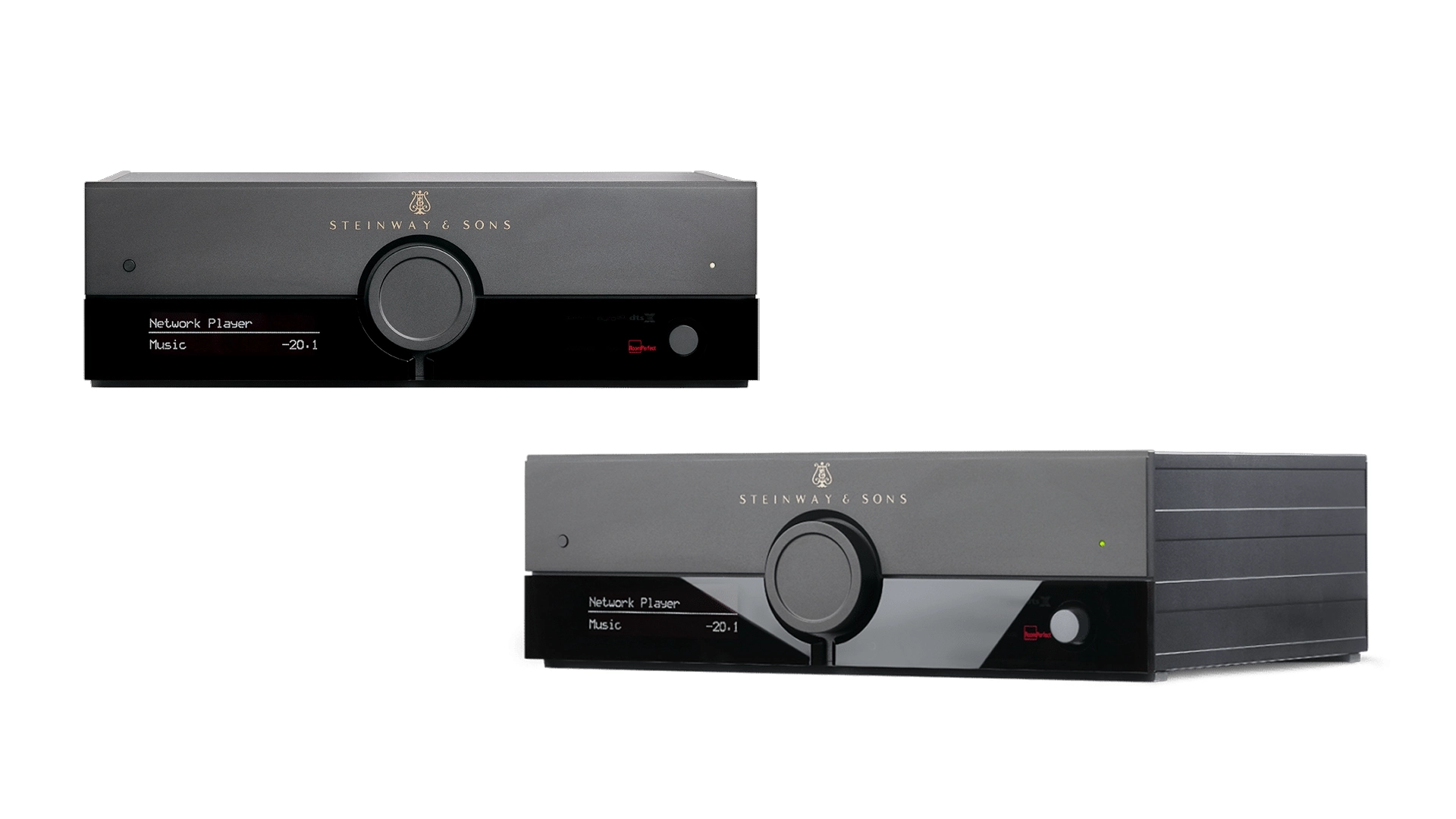
Steinway Lyngdorf creates complete active music and cinema systems in which loudspeakers, digital amplification, signal processing and room calibration are engineered as one installation. The foundation was laid in 2005 when Danish entrepreneur Peter Lyngdorf established Lyngdorf Audio under his own name, following earlier work on the Equibit platform and the Millennium fully digital amplifier. RoomPerfect arrived in 2006, mapping several positions in a room and correcting the system while preserving the loudspeaker’s intended tonal character rather than forcing a simple flat response at one seat. The collaboration with Steinway & Sons followed in 2007. Its first statement product, Model D, was named after the concert grand and set the pattern for a tightly integrated system finished to the visual standards expected of the piano maker. The Steinway & Sons range now includes freestanding Model A, B, C and D systems, the compact Model S family, architectural loudspeakers, boundary woofers and multichannel electronics such as P100 and P300 processors with A1/A2 amplifiers. Boundary woofers deliberately use placement near walls to work with room acoustics, while RoomPerfect handles calibration across stereo and immersive installations. These are not speakers intended to be mixed casually with unrelated electronics: authorised design, installation and tuning are part of the proposition. Steinway Lyngdorf’s defining achievement is turning Peter Lyngdorf’s digital-amplification and room-correction work into a complete architectural audio platform carrying the Steinway & Sons name.

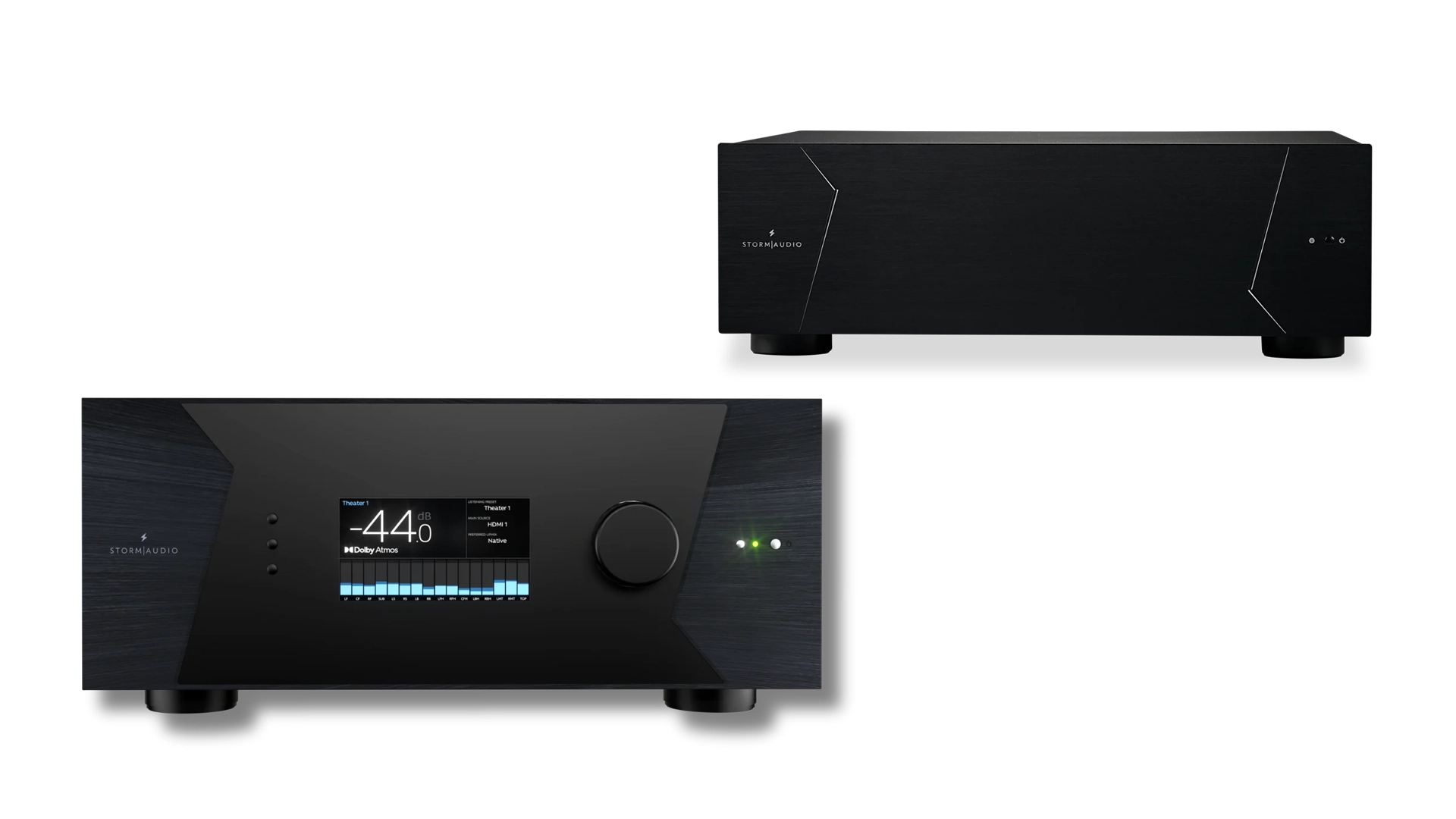
StormAudio designs the electronics at the centre of ambitious immersive home cinemas: surround processors, multichannel power amplifiers and integrated receivers. The brand is based in France and concentrates on systems where channel count, bass management, calibration and long-term upgradeability matter as much as format logos. Its ISP processors support Dolby Atmos, DTS:X Pro and Auro-3D, with configurations extending far beyond conventional 7.1 playback. ISP Elite and ISP Evo models provide modular input and output architectures, while the ISR Fusion combines processing and amplification in one chassis for installations that need fewer separate boxes. StormAudio’s calibration platform integrates Dirac Live, including Bass Control and Active Room Treatment options on compatible systems. This allows an installer to work with several subwoofers and seats as a coordinated acoustic system instead of equalising each channel in isolation. The company’s own Expert Bass Management and flexible routing address the complex loudspeaker layouts found in purpose-built cinemas. StormAudio emerged as a dedicated premium brand within Auro Technologies; in late 2017, Yves Trélohan led a management buyout through Immersive Audio Technologies Group, which remains the company behind the marque. Product development and assembly continue in France. That ownership history matters because it explains the brand’s present focus: a specialist team controls a platform designed for professional integration, publishes meaningful hardware and software upgrades, and avoids treating a high-cost processor as disposable when connection standards or decoding requirements change.
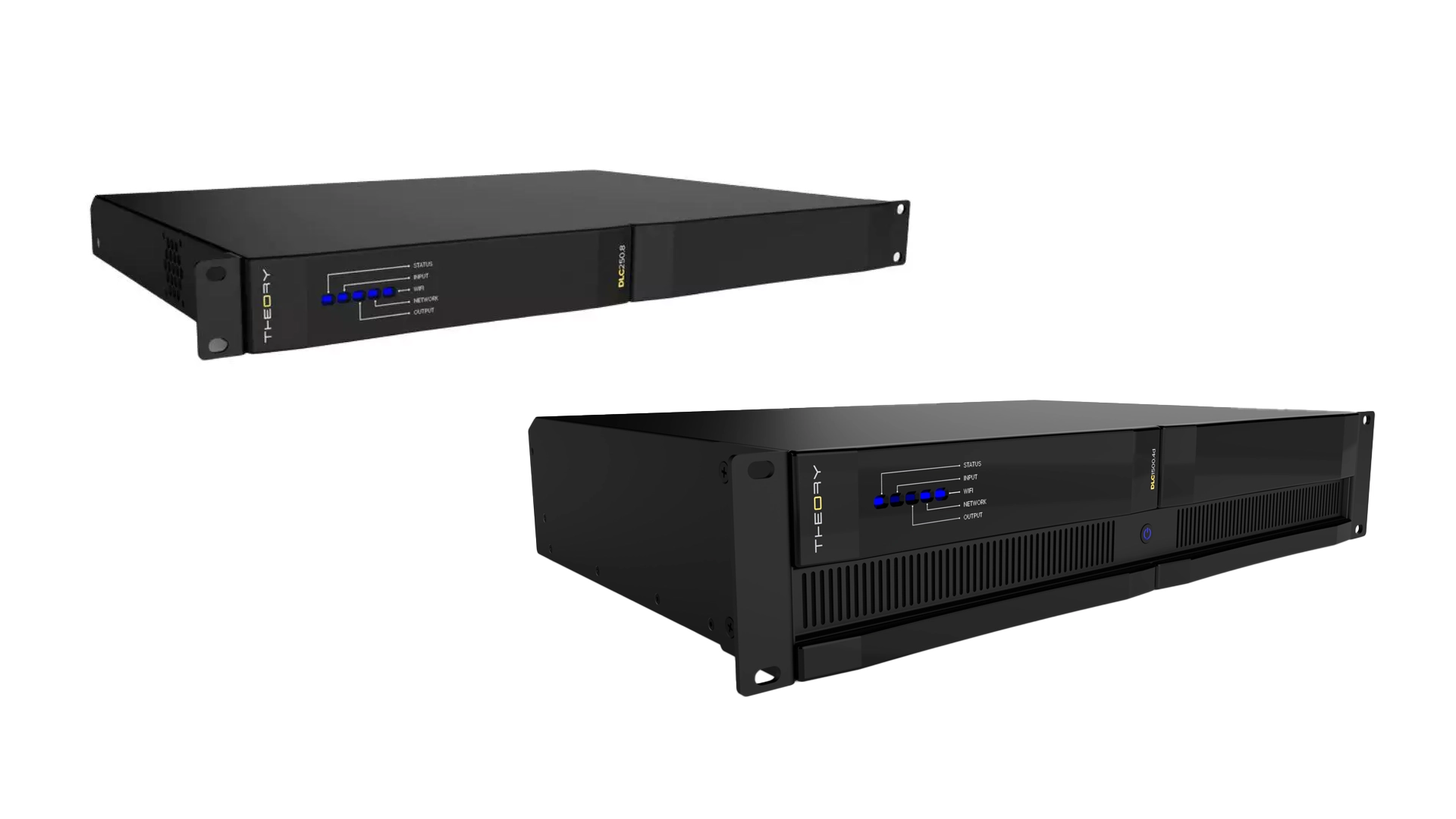
Theory Audio Design is the American architectural-audio brand introduced by loudspeaker designer Paul Hales in 2018. Hales had already founded Hales Design Group and the professional cinema specialist Pro Audio Technology, giving Theory a direct line to high-output studio and screening-room engineering. The residential products began shipping in 2020, and Theory Professional followed in 2023 to address commercial venues with the same compact, DSP-controlled approach.
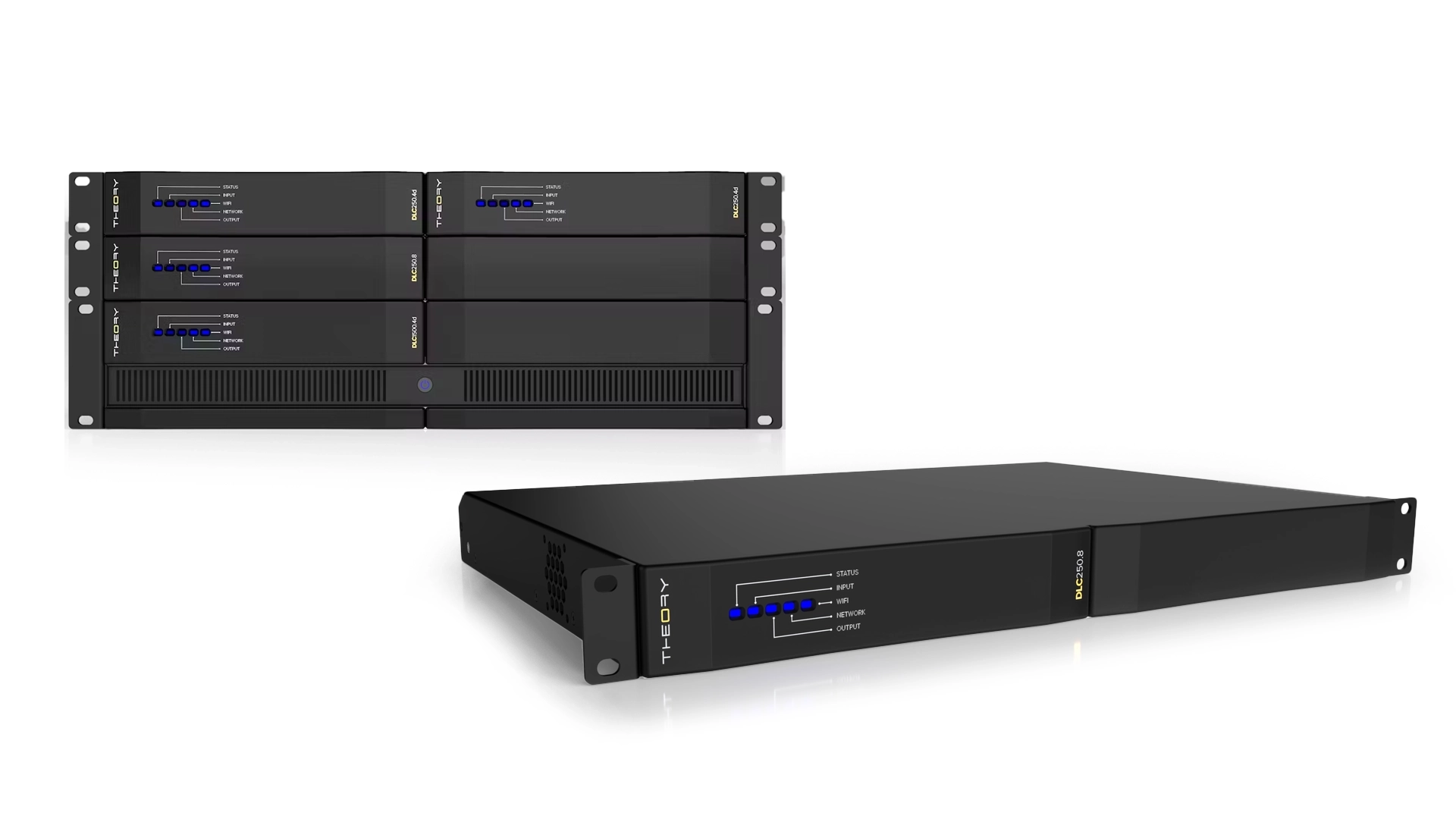
Theory avoids a huge collection of unrelated speakers. Slim sb25 and sb75 soundbars, on-wall and in-wall models, the ic6 ceiling speaker and high-output subwoofers are combined with amplified loudspeaker controllers from the DLC family. Those controllers provide power, crossover, protection and system DSP, allowing every driver and enclosure to operate as part of a calibrated package. The format is especially useful in media rooms and architectural cinemas where visual restraint is required but ordinary installation speakers cannot deliver convincing cinema dynamics.

The professional range adds purpose-built SR loudspeakers and installation options for hospitality, corporate and entertainment spaces. Theory’s distinction is not simply that its speakers play loudly. Hales applies pro-audio ideas about sensitivity, directivity and headroom to enclosures that can disappear beside a display or inside a wall, then uses centralised processing to make deployment repeatable. The result sits between conventional lifestyle audio and a full cinema system: visually disciplined, installer-friendly and capable of the transient scale that first made Hales’s professional work respected.

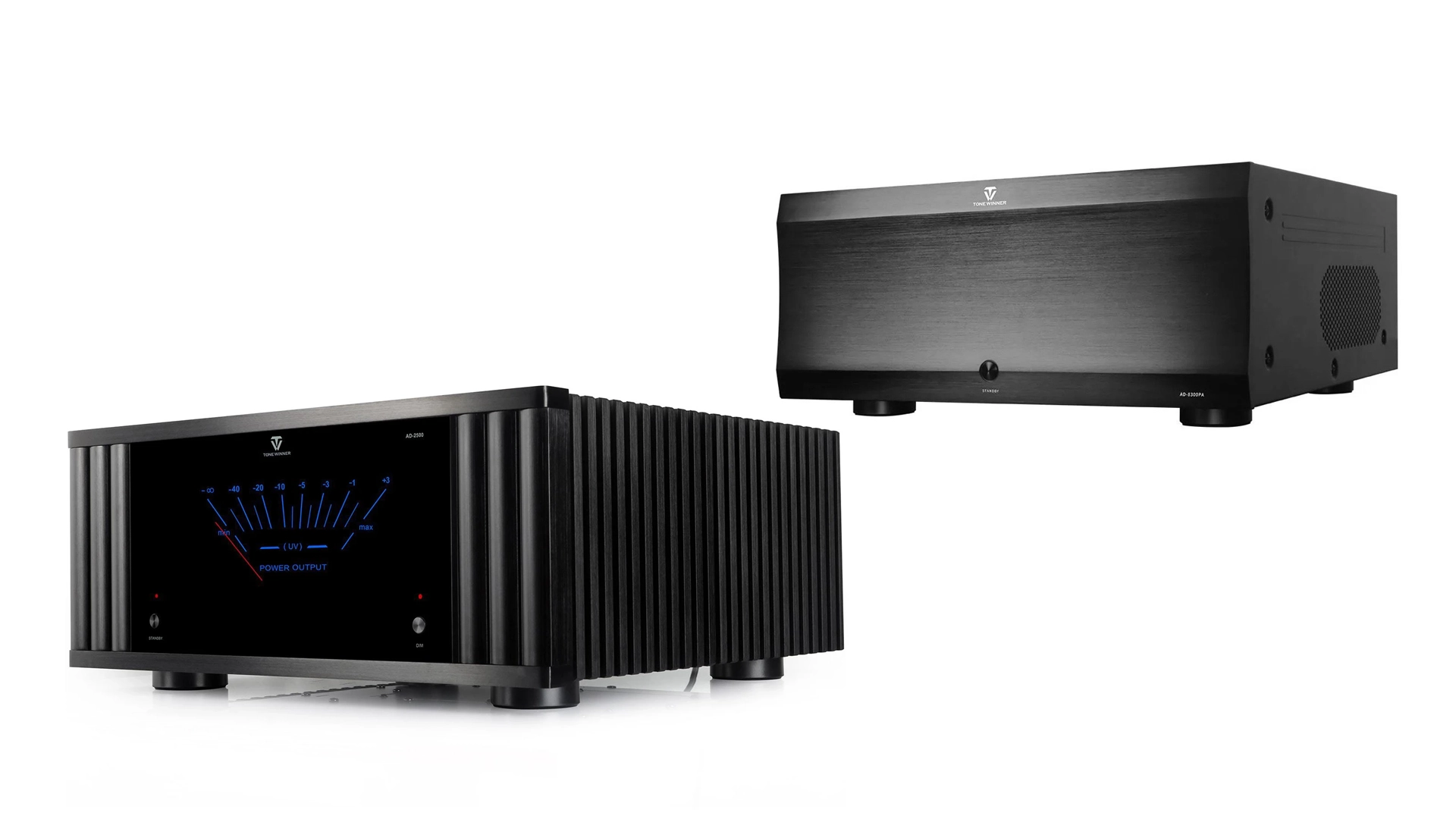
ToneWinner is a Chinese audio manufacturer founded in 1992 and based in Guangzhou. The company is best known internationally for home-cinema electronics that deliver high channel counts and substantial power without the pricing of boutique brands, but its work spans stereo amplifiers, DACs, headphone products, loudspeakers and professional or OEM manufacturing. Large-scale production and in-house engineering are central to its value proposition.

The AT-series processors and AD-series multichannel power amplifiers made ToneWinner particularly visible to cinema builders. Models such as the AT-300 provide immersive decoding and room-calibration functions, while amplifiers including the AD-7300PA+ supply separate high-current channels for demanding speaker arrays. The catalogue also includes integrated stereo components, monoblock and Class A amplification, source electronics and subwoofers, allowing the brand to serve both two-channel listeners and complete theatres.

ToneWinner’s identity should not be reduced to “affordable Chinese hi-fi.” It has decades of experience with power supplies, thermal management, metalwork and the repeatability required for multi-channel hardware, and it manufactures at a scale smaller high-end companies cannot match. At the same time, model specifications and software features vary by market and generation, so individual products deserve evaluation rather than blanket claims. The brand’s strongest contribution is practical: bringing balanced connections, powerful amplification and modern surround processing to systems whose budgets would otherwise force a compromise in channel count or output capability.

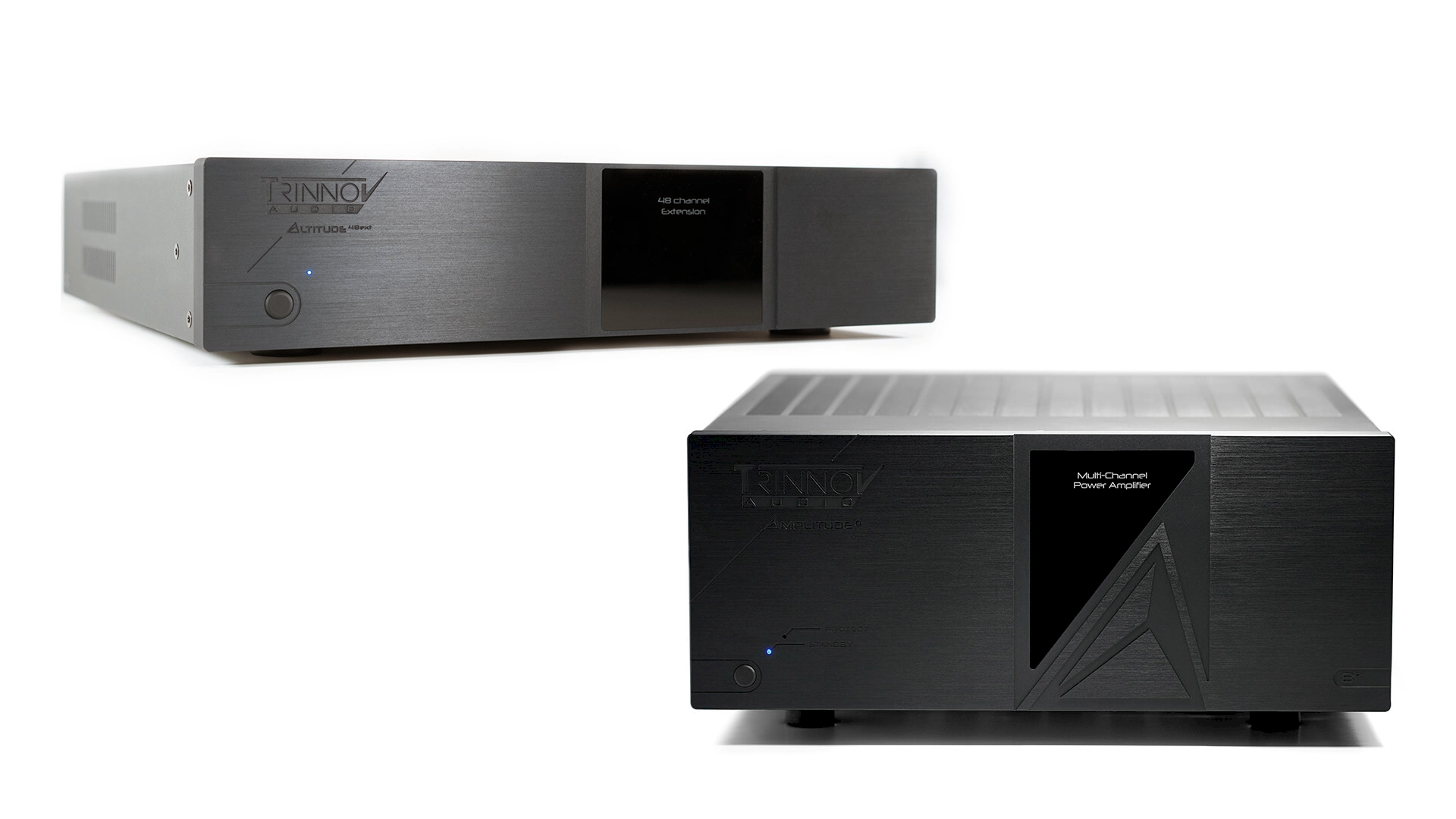
Trinnov Audio is the French digital-audio specialist founded in 2003 after its three co-founders began research into high-spatial-resolution sound at IRCAM in 2000. The name joins “Tri” and “Innovation,” reflecting a company built around three-dimensional measurement, loudspeaker/room optimisation and immersive reproduction. Its processors serve mastering and recording studios, commercial cinemas and some of the most ambitious residential theatres.
The Optimizer platform measures loudspeaker position and room behaviour with Trinnov’s distinctive four-capsule 3D microphone. It can correct amplitude, phase, delay and routing while 3D Remapping compensates for loudspeakers that cannot occupy ideal locations. Altitude16 and Altitude32 processors brought this software-led architecture to home cinema, supporting Dolby Atmos, DTS:X Pro and Auro-3D without relying on a fixed consumer DSP chipset. Amethyst serves two-channel systems, while D-MON and Nova combine monitoring control and calibration for professional rooms.

WaveForming extends the work into low frequencies by coordinating multiple subwoofers to control how bass propagates and decays through a room. The method depends on suitable loudspeaker placement and professional design; it is not a one-button cure for every space. Trinnov’s lasting advantage is that algorithms, measurement hardware, operating software and processor electronics are developed as one platform in France. Products can gain formats and functions through software long after installation, which explains why Altitude has remained relevant since 2014. The brand does not merely apply equalisation—it treats the geometry of the listening environment as part of the reproduction system.

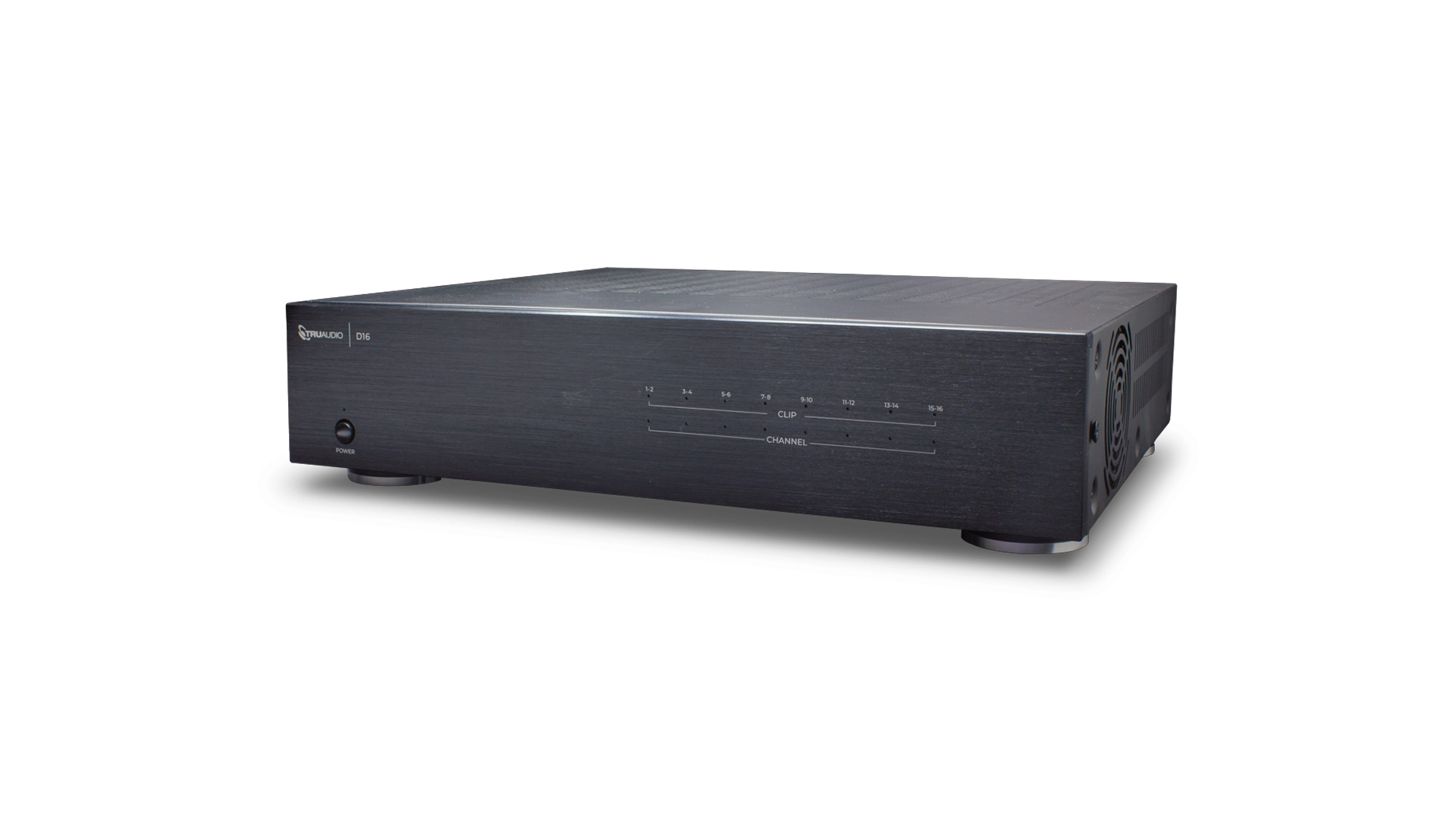
TruAudio is an American architectural-loudspeaker brand founded by custom integrators in 2000 and based in Hurricane, Utah. The founders had designed and installed thousands of theatres and multiroom systems before becoming manufacturers, so the range was shaped by conditions installers encounter: restricted depth, visible grilles, awkward outdoor locations and the need to service a finished room without damaging it.

The Ghost series made TruAudio particularly recognisable by using an almost rimless in-ceiling frame and a magnetic grille with minimal reveal. Phantom and Shadow in-wall and in-ceiling families, LCR and soundbar models, subwoofers and REV or Elite cinema speakers cover residential applications. AcoustiScape, SubTerrain and hardscape products carry distributed sound outdoors, while commercial ceiling and pendant speakers extend the same installer-oriented approach. Matching DSP and multichannel amplifiers allow complete systems to be specified from one source.

Driver materials vary by application—woven carbon fibre, titanium, aluminium and polypropylene appear where their balance of stiffness, weather resistance and cost is appropriate. The more important continuity is mechanical: flush mounting, paintable grilles, protected outdoor enclosures and practical connection details are designed alongside the acoustic system. TruAudio now operates as a division of SoundVision Technologies, but its original country and custom-installation identity remain unchanged. The brand’s real innovation is not making a speaker invisible in a photograph; it is making high-performance audio easier to integrate, align and maintain inside actual architecture.

Wisdom Audio is an American loudspeaker company founded in 1996 by Tom and Debi Bohlender. Its early work grew from Bohlender’s experience with large planar-magnetic transducers, but the modern company found a distinctive role in architectural systems where high output and audiophile resolution must coexist with concealed installation. Wisdom’s planar-magnetic drivers place a lightweight conductive diaphragm in a magnetic field, spreading drive force across a large area and avoiding the voice-coil former of a conventional cone. In many models they operate as line sources, producing controlled vertical dispersion that reduces floor and ceiling reflections and maintains level more evenly with distance. Dynamic woofers supply the excursion needed for deep bass, while dedicated system controllers provide crossover, equalisation and protection. Sage is the core high-performance range, including in-wall, on-wall and freestanding line-source models; Insight brings related technology to smaller projects, and the Wisdom Series scales it into multi-metre reference arrays. Regenerative Transmission Line bass modules hide substantial low-frequency systems within walls or joinery. This architecture makes planning essential: speaker height, baffle construction, subwoofer placement, amplification and room calibration must be designed together. Based in Carson City, Nevada, Wisdom works closely with custom integrators and cinema designers rather than treating installation as an after-sale detail. Its identity is the successful translation of very large planar systems into purpose-built residential architecture—thin enough to disappear, yet capable of the dynamics and coverage demanded by serious music rooms and private cinemas.

HFS Ad Rotator · default · slot 1
HFS Ad Rotator · default · slot 2
Add a missing AV-brand or update an existing one

Add a missing AV-brand or update an existing one

Any user can submit a Quick Submission Form to suggest a new AV-brand or suggest update details for an existing one. Brand owners or official representatives of brand can fill a Official Brand Submission Form to provide complete company information, ensuring maximum accuracy and visibility in our portal. All submissions are moderated before publication. 

For suggesting new AV-brands or suggesting updating existing one by users.

Complete official form for brand owners and representatives to provide complete company details to add a new one or update an existing one

Brand Categories:
  • SPEAKERS
    • Bookshelf Speakers — Compact loudspeakers designed for placement on a shelf or dedicated stands.
    • Floorstanding Speakers — Large, full-range loudspeakers that stand directly on the floor, designed for powerful and expansive sound.
    • In-wall Custom Install Speakers — Speakers designed to be installed flush into walls or ceilings for a discreet, "zero-footprint" audio solution.
    • On-Wall Speakers — Slim, low-profile speakers designed to be mounted directly on a wall, often to complement a flat-panel TV.
    • Studio Monitors — Speakers designed for professional audio production, offering a flat, accurate, and uncolored sound reproduction.
    • Planar Ribbon Electrostatic Speakers — Speakers using large, thin diaphragms (panels) instead of cones, prized for their transparent and detailed sound.
    • Horn Speakers — Highly efficient speakers that use a flared horn to amplify a driver, known for their dynamic, "live" sound.
    • Active Powered Speakers — Loudspeakers with built-in amplifiers, creating a simple all-in-one audio solution.
    • Wireless Portable Speakers — Compact, battery-powered speakers with Bluetooth for on-the-go music.
    • Outdoor Speakers — Durable, weather-resistant speakers engineered to provide high-quality audio in open-air spaces like patios and gardens.
    • Marine Extreme Speakers — Rugged, waterproof, and corrosion-resistant speakers built to withstand harsh marine environments on boats and yachts.
    • Commercial Speakers — Durable loudspeaker systems designed for background music and public address in business environments.
    • Invisible Speakers — Architectural speakers installed in a wall and plastered over, making them completely invisible.
    • Subwoofers Bass Speakers — Specialized speakers dedicated to reproducing only the lowest bass frequencies for impact and depth for all purposes
  • AMPLIFIERS
    • Integrated Amplifiers — An all-in-one component combining a preamplifier and a power amplifier in a single chassis.
    • PreAmplifiers — The control hub of a separates audio system, used for source selection and volume control.
    • Power Amplifiers — A component with the sole job of taking a line-level signal and amplifying it to drive loudspeakers.
    • Phono Preamps Phono Stages — A device that amplifies the weak signal from a turntable's cartridge and applies necessary RIAA equalization.
    • Tube Amplifiers — Amplifiers that use vacuum tubes (valves) instead of transistors, prized for their warm and rich sound character.
    • Multi-Zone Multi-Room Amplifiers — Amplifiers that power speakers in multiple different rooms or "zones" from a single, centralized unit.
    • Network Amplifiers — An integrated amplifier with built-in networking and streaming capabilities, creating a modern "just add speakers" system.
    • Desktop Headphone Amplifiers — Mains-powered amplifiers designed to drive high-quality headphones in a desktop or home audio system.
    • Portable Headphone Amplifiers Players — Compact, battery-powered devices (DAPs or amps) for delivering high-quality sound on the move.
  • DAC STREAMERS
    • DAC Desktop — Digital-to-Analog Converters designed to improve sound quality from a computer or other home digital source.
    • DAC Portable — Compact, battery-powered Digital-to-Analog Converters for improving audio from smartphones and laptops.
    • Music Streamers — Devices that connect to the internet to access and play music from online services like Tidal and Spotify.
    • Network Players — Source components focused on high-fidelity playback of digital audio files from a local network (NAS drive).
    • Music Servers HDD Storages — Dedicated devices for storing, managing, and playing a local digital music library with high fidelity.
    • CD Transport Media Players — High-precision disc players that read physical media (CDs, SACDs) and output a pure digital signal to an external DAC.
    • Compact All-in-One Systems — Self-contained audio systems that combine source, amplification, and often speakers into a single, compact unit.
    • Streaming Amplifier — An integrated amplifier with built-in streaming capabilities.
  • TURNTABLES VINYL
    • Turntables — Electromechanical devices that play vinyl records by rotating them at a stable speed.
    • Tonearms — The precision arm on a turntable that holds the cartridge, allowing the stylus to track the record groove.
    • Cartridges — The transducer on a turntable's tonearm that holds the stylus and converts groove vibrations into an electrical signal.
    • Vinyl Cleaning Machine — Specialized machines that use fluid and vacuum/ultrasonic action to deep-clean vinyl records.
    • Vinyl Accessories — Essential tools for setup and maintenance, like clamps, brushes, and alignment protractors.
  • HEADPHONES
    • In-Ear Earbuds — Ultra-portable listening devices, including True Wireless (TWS) models, designed for convenience and daily use.
    • In-Ear Monitors IEM — High-performance in-ear headphones that seal in the ear canal for superior sound isolation and detail.
    • On-Ear Headphones — Headphones with cushions that rest directly on the ears, offering a balance of portability and sound quality.
    • Over-Ear Headphones — Full-sized headphones with large earcups that completely encircle the ears for maximum comfort and immersion.
    • Wireless Headphones — Headphones that connect to source devices via Bluetooth, often featuring Active Noise Cancellation (ANC).
    • Planar Magnetic Ribbon Headphones — High-end headphones using a thin, flat diaphragm driven by magnets, known for their detailed and low-distortion sound.
    • Electrostatic Headphones — High-end headphones using a massless diaphragm in an electrostatic field, requiring a special energizer/amplifier.
  • HOME THEATER
    • AV Receivers Media Players — Central components of a home cinema, combining audio/video processing, amplification, and playback.
    • Home Theater Speakers — Matched sets of speakers (front, center, surround) designed to create an immersive cinematic soundfield.
    • Soundbars — A simple, all-in-one speaker bar that provides a significant audio upgrade over a television's built-in speakers.
    • Subwoofers — Specialized speakers dedicated to reproducing only the lowest bass frequencies for impact and depth for home theaters
    • Processors Amplifiers — High-end home cinema "separates" consisting of a surround sound processor and a multi-channel power amplifier.
    • Screens — High-quality projection surfaces designed to provide an optimal image for a home cinema projector.
    • Projectors — Video projectors optimized for home cinema use, focusing on color accuracy, contrast, and black levels.
  • CABLES ACCESSORIES
    • Speaker Cables — Cables that carry the amplified, high-level signal from an amplifier to passive loudspeakers.
    • Analog Cables — Cables (RCA, XLR) used to transmit analog audio signals between components like DACs and amplifiers.
    • Digital Cables — Cables (Coaxial, Optical, USB) that transmit digital audio data between components.
    • Phono Cables — Specially shielded cables designed to carry the delicate, low-level signal from a turntable to a phono preamp.
    • Headphone Cables — Aftermarket and replacement cables used to upgrade or customize high-quality headphones.
    • Connectors Terminals — The fundamental hardware (plugs, jacks, spades, etc.) used to terminate cables and connect equipment.
    • Power Cables — High-performance AC cords designed to deliver clean, noise-free power to audio components.
    • Power Supplies Conditioners — Devices that filter, stabilize, and protect the AC power supplied to an audio system for improved performance.
  • FURNITURE
    • Speaker Stands Mounts — Stands and mounts used to position speakers at the correct height and angle for optimal sound.
    • Furniture Racks — Purpose-built furniture designed to house audio/video components with a focus on stability, ventilation, and vibration control.
    • Isolation Footers Spikes Shelves — Specialized accessories (spikes, footers, platforms) designed to manage vibrations and isolate components.
    • Soundproof Solutions — Products designed to control room acoustics, including treatment (panels, diffusers) and sound-blocking materials.
  • PROFESSIONAL
    • Concert Speakers — Large-scale PA systems, including line arrays and stage monitors, for live music and public events.
    • Cinema Speakers — Specialized, high-output loudspeaker systems certified for use in large commercial movie theaters.
    • Concert Electronics — Robust electronics including mixing consoles, processors, and amplifiers for live sound reinforcement.
    • Cinema Electronics — Professional, DCI-compliant processors and amplifiers for use in commercial movie theaters.
    • Cinema Screens — Large-format, often acoustically transparent, projection screens built to professional cinema standards.
    • Cinema Projectors — Ultra-high-brightness, DCI-compliant projectors designed for continuous use in commercial movie theaters.
    • Professional Cables Accessories — Rugged, reliable cables and hardware (e.g., snake cables, Speakon connectors) for touring and professional installation.
  • DIY Components
    • Speaker drivers Tweeters — The individual transducers (woofers, mid-range, tweeters) that are the fundamental building blocks of a loudspeaker.
    • Coaxial Speaker Drivers — Speaker drivers where the tweeter is mounted in the center of the woofer, creating a single point source for sound.
    • DIY Speaker Kits — Complete packages including drivers, crossovers, and plans for enthusiasts to build their own loudspeakers.
    • Electron Vacuum Tubes — Glass valves used in tube amplifiers that provide amplification and can be replaced to tune the sound.
    • Electronic Components — Discrete parts (capacitors, resistors, transistors) used by manufacturers and DIYers to build audio circuits.
  • OTHERS
    • Line Stage — A type of preamplifier that exclusively handles line-level sources, without a built-in phono stage.
    • Time Alignment Device — A signal processor that corrects timing delays between drivers or speakers for improved sound coherence.
    • Smart Portable Speakers — Wireless portable speakers with integrated voice assistants (e.g., Alexa, Google Assistant) and smart home functionality.
    • DJ Turntables — Durable, high-torque direct-drive turntables with pitch control, built for performance and DJing applications.
    • Motor Drives — External motor units and power supplies for turntables, providing improved rotational stability and isolation.
    • Crossovers — Electronic circuits that split an audio signal into different frequency bands to route to the correct speaker driver.
    • Car Audio — Audio equipment, including speakers, amplifiers, and source units, specifically designed for use in vehicles.

Brand Categories:
  • Active Powered Speakers — Loudspeakers with built-in amplifiers, creating a simple all-in-one audio solution.
  • Analog Cables — Cables (RCA, XLR) used to transmit analog audio signals between components like DACs and amplifiers.
  • AV Receivers Media Players — Central components of a home cinema, combining audio/video processing, amplification, and playback.
  • Bookshelf Speakers — Compact loudspeakers designed for placement on a shelf or dedicated stands.
  • Car Audio — Audio equipment, including speakers, amplifiers, and source units, specifically designed for use in vehicles.
  • Cartridges — The transducer on a turntable's tonearm that holds the stylus and converts groove vibrations into an electrical signal.
  • CD Transport Media Players — High-precision disc players that read physical media (CDs, SACDs) and output a pure digital signal to an external DAC.
  • Cinema Electronics — Professional, DCI-compliant processors and amplifiers for use in commercial movie theaters.
  • Cinema Projectors — Ultra-high-brightness, DCI-compliant projectors designed for continuous use in commercial movie theaters.
  • Cinema Screens — Large-format, often acoustically transparent, projection screens built to professional cinema standards.
  • Cinema Speakers — Specialized, high-output loudspeaker systems certified for use in large commercial movie theaters.
  • Coaxial Speaker Drivers — Speaker drivers where the tweeter is mounted in the center of the woofer, creating a single point source for sound.
  • Commercial Speakers — Durable loudspeaker systems designed for background music and public address in business environments.
  • Compact All-in-One Systems — Self-contained audio systems that combine source, amplification, and often speakers into a single, compact unit.
  • Concert Electronics — Robust electronics including mixing consoles, processors, and amplifiers for live sound reinforcement.
  • Concert Speakers — Large-scale PA systems, including line arrays and stage monitors, for live music and public events.
  • Connectors Terminals — The fundamental hardware (plugs, jacks, spades, etc.) used to terminate cables and connect equipment.
  • Crossovers — Electronic circuits that split an audio signal into different frequency bands to route to the correct speaker driver.
  • DAC Desktop — Digital-to-Analog Converters designed to improve sound quality from a computer or other home digital source.
  • DAC Portable — Compact, battery-powered Digital-to-Analog Converters for improving audio from smartphones and laptops.
  • Desktop Headphone Amplifiers — Mains-powered amplifiers designed to drive high-quality headphones in a desktop or home audio system.
  • Digital Cables — Cables (Coaxial, Optical, USB) that transmit digital audio data between components.
  • DIY Speaker Kits — Complete packages including drivers, crossovers, and plans for enthusiasts to build their own loudspeakers.
  • DJ Turntables — Durable, high-torque direct-drive turntables with pitch control, built for performance and DJing applications.
  • Electron Vacuum Tubes — Glass valves used in tube amplifiers that provide amplification and can be replaced to tune the sound.
  • Electronic Components — Discrete parts (capacitors, resistors, transistors) used by manufacturers and DIYers to build audio circuits.
  • Electrostatic Headphones — High-end headphones using a massless diaphragm in an electrostatic field, requiring a special energizer/amplifier.
  • Floorstanding Speakers — Large, full-range loudspeakers that stand directly on the floor, designed for powerful and expansive sound.
  • Furniture Racks — Purpose-built furniture designed to house audio/video components with a focus on stability, ventilation, and vibration control.
  • Headphone Cables — Aftermarket and replacement cables used to upgrade or customize high-quality headphones.
  • Home Theater Speakers — Matched sets of speakers (front, center, surround) designed to create an immersive cinematic soundfield.
  • Horn Speakers — Highly efficient speakers that use a flared horn to amplify a driver, known for their dynamic, "live" sound.
  • In-Ear Earbuds — Ultra-portable listening devices, including True Wireless (TWS) models, designed for convenience and daily use.
  • In-Ear Monitors IEM — High-performance in-ear headphones that seal in the ear canal for superior sound isolation and detail.
  • In-wall Custom Install Speakers — Speakers designed to be installed flush into walls or ceilings for a discreet, "zero-footprint" audio solution.
  • Integrated Amplifiers — An all-in-one component combining a preamplifier and a power amplifier in a single chassis.
  • Invisible Speakers — Architectural speakers installed in a wall and plastered over, making them completely invisible.
  • Isolation Footers Spikes Shelves — Specialized accessories (spikes, footers, platforms) designed to manage vibrations and isolate components.
  • Line Stage — A type of preamplifier that exclusively handles line-level sources, without a built-in phono stage.
  • Marine Extreme Speakers — Rugged, waterproof, and corrosion-resistant speakers built to withstand harsh marine environments on boats and yachts.
  • Motor Drives — External motor units and power supplies for turntables, providing improved rotational stability and isolation.
  • Multi-Zone Multi-Room Amplifiers — Amplifiers that power speakers in multiple different rooms or "zones" from a single, centralized unit.
  • Music Servers HDD Storages — Dedicated devices for storing, managing, and playing a local digital music library with high fidelity.
  • Music Streamers — Devices that connect to the internet to access and play music from online services like Tidal and Spotify.
  • Network Amplifiers — An integrated amplifier with built-in networking and streaming capabilities, creating a modern "just add speakers" system.
  • Network Players — Source components focused on high-fidelity playback of digital audio files from a local network (NAS drive).
  • On-Ear Headphones — Headphones with cushions that rest directly on the ears, offering a balance of portability and sound quality.
  • On-Wall Speakers — Slim, low-profile speakers designed to be mounted directly on a wall, often to complement a flat-panel TV.
  • Outdoor Speakers — Durable, weather-resistant speakers engineered to provide high-quality audio in open-air spaces like patios and gardens.
  • Over-Ear Headphones — Full-sized headphones with large earcups that completely encircle the ears for maximum comfort and immersion.
  • Phono Cables — Specially shielded cables designed to carry the delicate, low-level signal from a turntable to a phono preamp.
  • Phono Preamps Phono Stages — A device that amplifies the weak signal from a turntable's cartridge and applies necessary RIAA equalization.
  • Planar Magnetic Ribbon Headphones — High-end headphones using a thin, flat diaphragm driven by magnets, known for their detailed and low-distortion sound.
  • Planar Ribbon Electrostatic Speakers — Speakers using large, thin diaphragms (panels) instead of cones, prized for their transparent and detailed sound.
  • Portable Headphone Amplifiers Players — Compact, battery-powered devices (DAPs or amps) for delivering high-quality sound on the move.
  • Power Amplifiers — A component with the sole job of taking a line-level signal and amplifying it to drive loudspeakers.
  • Power Cables — High-performance AC cords designed to deliver clean, noise-free power to audio components.
  • Power Supplies Conditioners — Devices that filter, stabilize, and protect the AC power supplied to an audio system for improved performance.
  • PreAmplifiers — The control hub of a separates audio system, used for source selection and volume control.
  • Processors Amplifiers — High-end home cinema "separates" consisting of a surround sound processor and a multi-channel power amplifier.
  • Professional Cables Accessories — Rugged, reliable cables and hardware (e.g., snake cables, Speakon connectors) for touring and professional installation.
  • Projectors — Video projectors optimized for home cinema use, focusing on color accuracy, contrast, and black levels.
  • Screens — High-quality projection surfaces designed to provide an optimal image for a home cinema projector.
  • Smart Portable Speakers — Wireless portable speakers with integrated voice assistants (e.g., Alexa, Google Assistant) and smart home functionality.
  • Soundbars — A simple, all-in-one speaker bar that provides a significant audio upgrade over a television's built-in speakers.
  • Soundproof Solutions — Products designed to control room acoustics, including treatment (panels, diffusers) and sound-blocking materials.
  • Speaker Cables — Cables that carry the amplified, high-level signal from an amplifier to passive loudspeakers.
  • Speaker drivers Tweeters — The individual transducers (woofers, mid-range, tweeters) that are the fundamental building blocks of a loudspeaker.
  • Speaker Stands Mounts — Stands and mounts used to position speakers at the correct height and angle for optimal sound.
  • Streaming Amplifier — An integrated amplifier with built-in streaming capabilities.
  • Studio Monitors — Speakers designed for professional audio production, offering a flat, accurate, and uncolored sound reproduction.
  • Subwoofers — Specialized speakers dedicated to reproducing only the lowest bass frequencies for impact and depth for home theaters
  • Subwoofers Bass Speakers — Specialized speakers dedicated to reproducing only the lowest bass frequencies for impact and depth for all purposes
  • Time Alignment Device — A signal processor that corrects timing delays between drivers or speakers for improved sound coherence.
  • Tonearms — The precision arm on a turntable that holds the cartridge, allowing the stylus to track the record groove.
  • Tube Amplifiers — Amplifiers that use vacuum tubes (valves) instead of transistors, prized for their warm and rich sound character.
  • Turntables — Electromechanical devices that play vinyl records by rotating them at a stable speed.
  • Vinyl Accessories — Essential tools for setup and maintenance, like clamps, brushes, and alignment protractors.
  • Vinyl Cleaning Machine — Specialized machines that use fluid and vacuum/ultrasonic action to deep-clean vinyl records.
  • Wireless Headphones — Headphones that connect to source devices via Bluetooth, often featuring Active Noise Cancellation (ANC).
  • Wireless Portable Speakers — Compact, battery-powered speakers with Bluetooth for on-the-go music.

Sales Channels:
  • Dealer & Distributor Network — The traditional sales model where products are sold through a network of authorized, independent retail stores and custom installers. This is the primary channel for most specialized Hi-Fi brands.
  • Direct-to-Consumer (DTC) — The brand sells its products directly to end-users through its own official website, bypassing traditional retail channels. A rapidly growing model in the industry.
  • Custom Installation (CI) Channel — Products are sold primarily through professional firms that design and install integrated smart home and audio-visual systems. This channel is crucial for architectural and high-end integrated solutions.
  • Mass Market Retail — Products are available in large, non-specialized consumer electronics chain stores. This typically applies to more mainstream product lines from larger brands.
  • Brand-Owned Stores / Showrooms — The brand operates its own physical, flagship retail stores or dedicated showrooms to offer a direct and immersive brand experience. This is the least common model, typically used by top-tier brands.

For companies: For any questions about listings & partnership opportunities, please contact us at contact@hifiselector.com

Have a suggestion or found a flaw? Help us improve​

Have a suggestion or found a flaw?