Phono Cables
Phono cables are specialized interconnects purpose-built for the unique demands of a turntable. They are designed to carry the extremely weak and fragile signal from a phono cartridge to a preamp, requiring exceptional shielding to protect it from hum and interference. Low capacitance is also a key design element for preserving tonal accuracy. This directory is your guide to the brands that create these essential, purpose-built cables for vinyl enthusiasts.
Hi-Fi brands in the category
Summary information and image
Direct links to official websites
VooDoo Cable
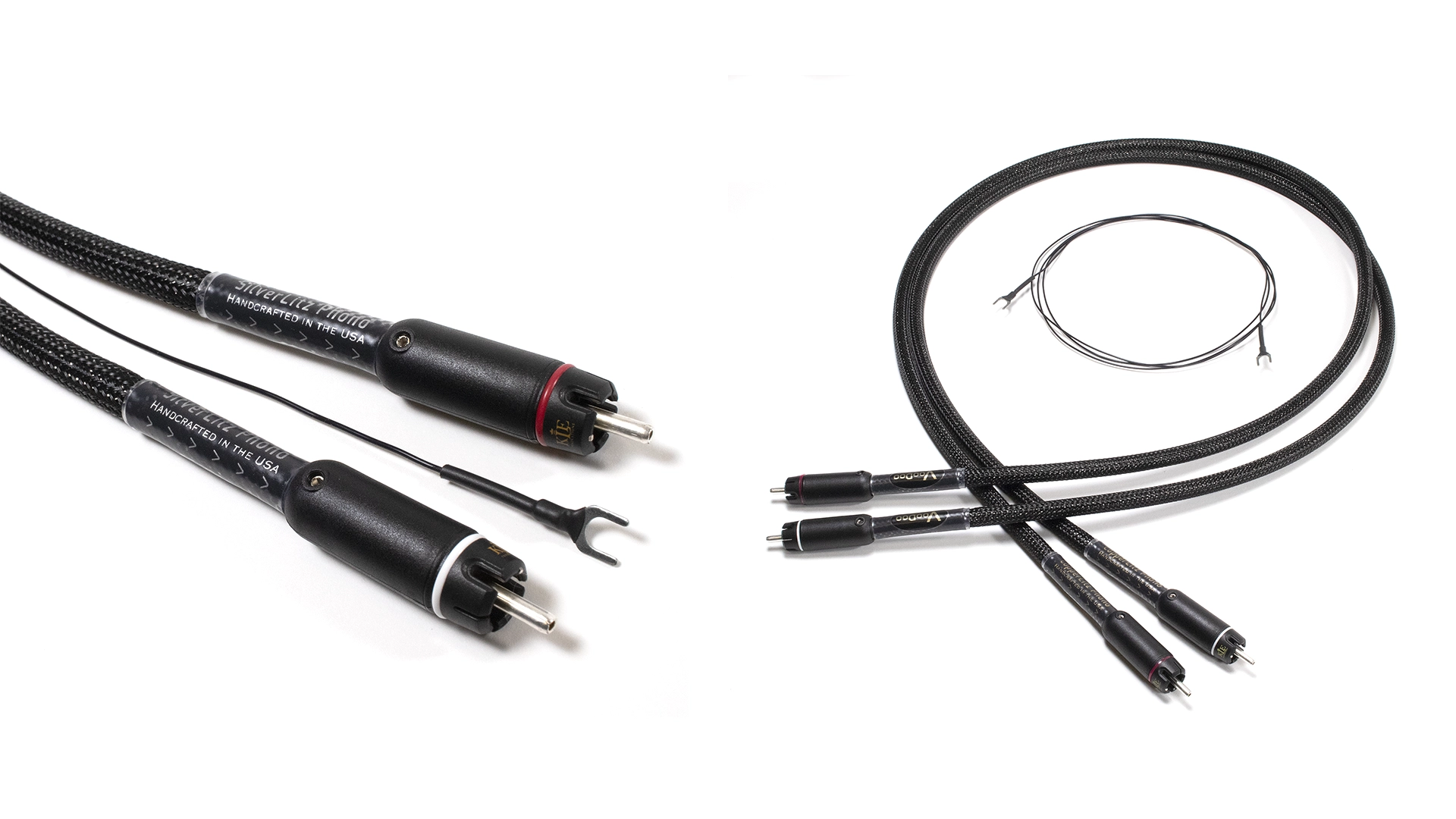
VooDoo Cable is a small American manufacturer that builds audio and video cables to order in Oakland, California. Since 1999, the company has centred its work on conductor preparation rather than buying finished bulk cable and adding connectors. Copper and silver conductors are selected for each application, wound in proprietary geometries and insulated with fluoropolymers such as PTFE; shielding and connectors are treated as parts of the same electrical system. The brand’s signature process is Cold Fusion, a computer-controlled cryogenic cycle applied to conductors, shields and connector parts. VooDoo describes slow cooling, immersion or vapour exposure near liquid-nitrogen temperature and controlled return to ambient conditions, and attributes lower resistance and more stable metallurgy to the treatment. Those sonic benefits are the manufacturer’s claim, but the process itself is a consistent part of the company’s production rather than a decorative option. The catalogue spans analogue interconnects, phono and digital cables, loudspeaker cables, headphone leads and an extensive family of power cords and distribution products. Different models combine high-purity copper, silver or the company’s Cryo-Alloy formulations with application-specific dielectric and shielding arrangements. Custom lengths and terminations are normal because each cable is assembled in-house. VooDoo Cable’s identity therefore rests less on one famous model than on a repeatable workshop method: raw conductors, controlled geometry, cryogenic processing and hand termination carried across every connection in an audio system.
VYDA Laboratories
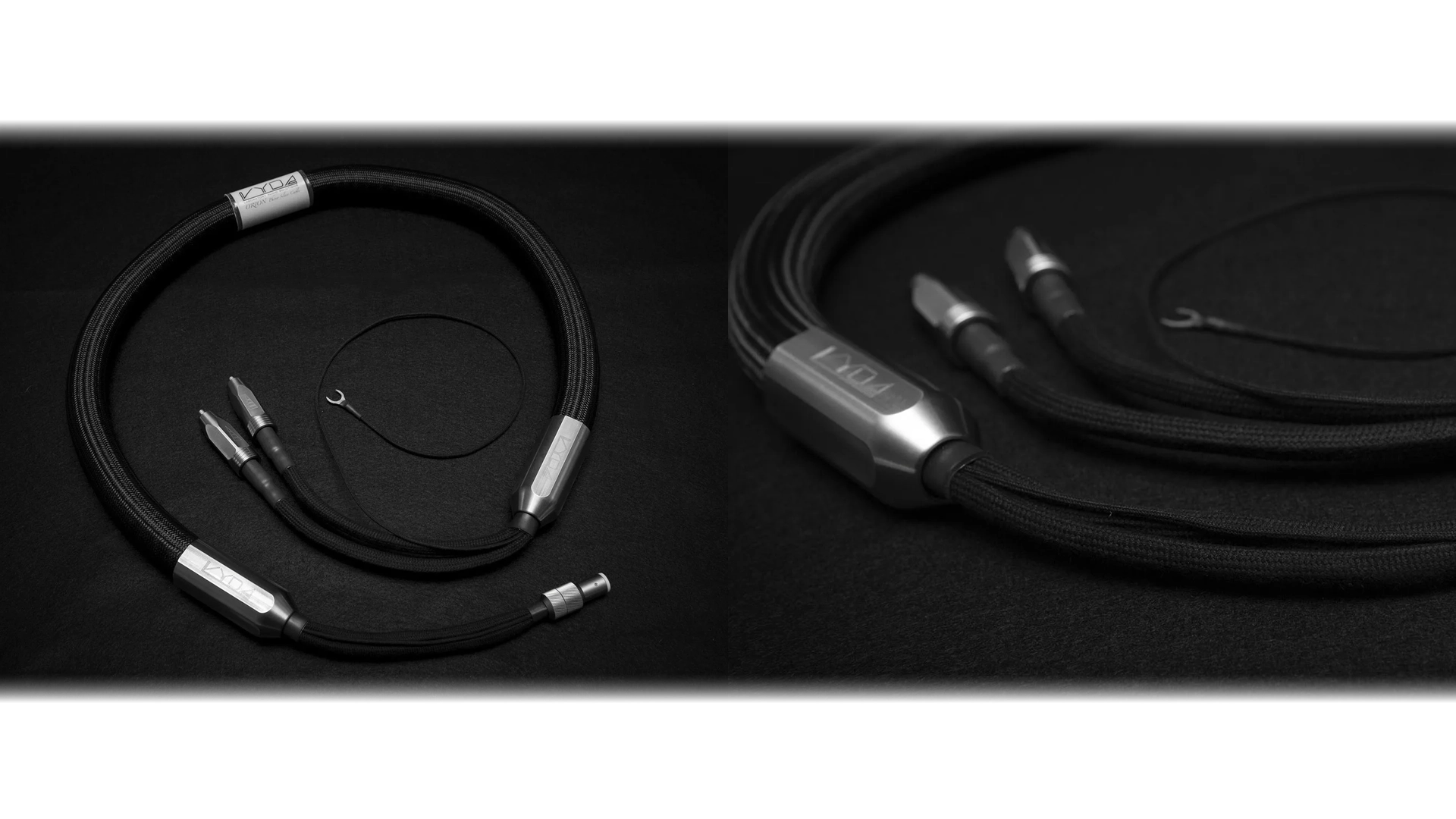
VYDA Laboratories is an Italian high-end cable maker led by founder, chief designer and engineer Enrico Datti. Rather than presenting a large ladder of cosmetically differentiated models, the company has concentrated its research in the ORION family of interconnects, loudspeaker cables and power products. Conductor purity, electrical geometry, mechanical control and the connector interface are treated as one design problem. VYDA specifies controlled inductance, resistance and capacitance, extensive electromagnetic shielding and construction intended to limit resonance around the conductors. Its connector bodies are machined from non-magnetic AISI 303 stainless steel, with contact surfaces given unusually thick silver or rhodium plating; terminations are developed and tested in-house instead of being selected only from an external catalogue. Another recurring stage is a proprietary cryogenic cycle in which conductive parts are cooled gradually to roughly –184 °C and then returned through a controlled warming process. VYDA says this stabilises the metal structure and improves performance; that interpretation should be understood as the manufacturer’s position, while the documented process and construction choices remain factual. Measurement is followed by listening tests during development, reflecting Datti’s attempt to connect repeatable electrical behaviour with use in complete systems. Public sources do not establish a sufficiently reliable founding year, so none is asserted. The clearer identity is technical and personal: a focused Italian laboratory applying one tightly controlled material and termination philosophy across every cable in the chain.
Wireworld
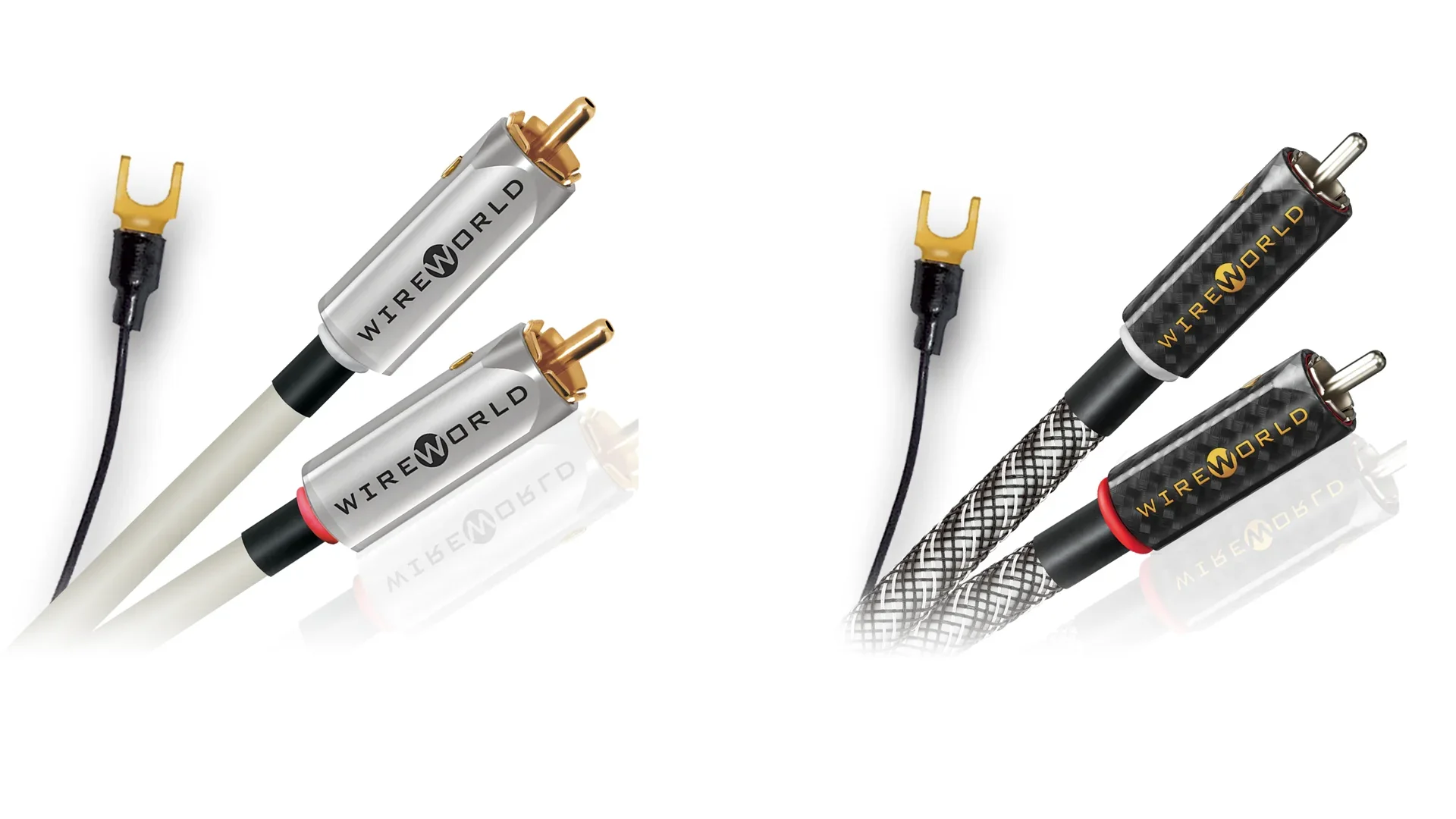
Wireworld Cable Technology is an American cable manufacturer founded in 1992 by industrial designer David Salz. Salz developed the company around comparative testing: a cable is evaluated against a direct connection with as little added conductor as possible, so the design target becomes preservation of the source rather than creation of a preferred tonal signature. Wireworld’s most recognisable construction is DNA Helix, in which flat conductor strands are arranged in parallel layers. The geometry is intended to keep electromagnetic paths consistent and reduce interaction among strands, while Composilex insulation was formulated to lower triboelectric and dielectric noise compared with common plastics. Those ideas are scaled through clearly differentiated ranges rather than reserved for one flagship. Solstice and Oasis provide accessible copper models; Equinox, Eclipse and Silver Eclipse add increasingly sophisticated geometries and silver-clad conductors; Platinum Eclipse uses solid silver at the top. The catalogue covers analogue interconnects, speaker cable, phono leads, power cords, Ethernet, USB, HDMI and specialist digital interfaces, each designed for the impedance and shielding demands of its application. Flat profiles and factory termination are practical consequences of the internal layout, not merely styling. Wireworld also publishes measured design information and maintains test facilities in Florida. The brand’s strength is a coherent engineering vocabulary carried across a very broad range: minimise electromagnetic loss, use low-noise insulation, preserve interface impedance and let direct bypass comparisons expose what the cable adds or removes.
Zavfino
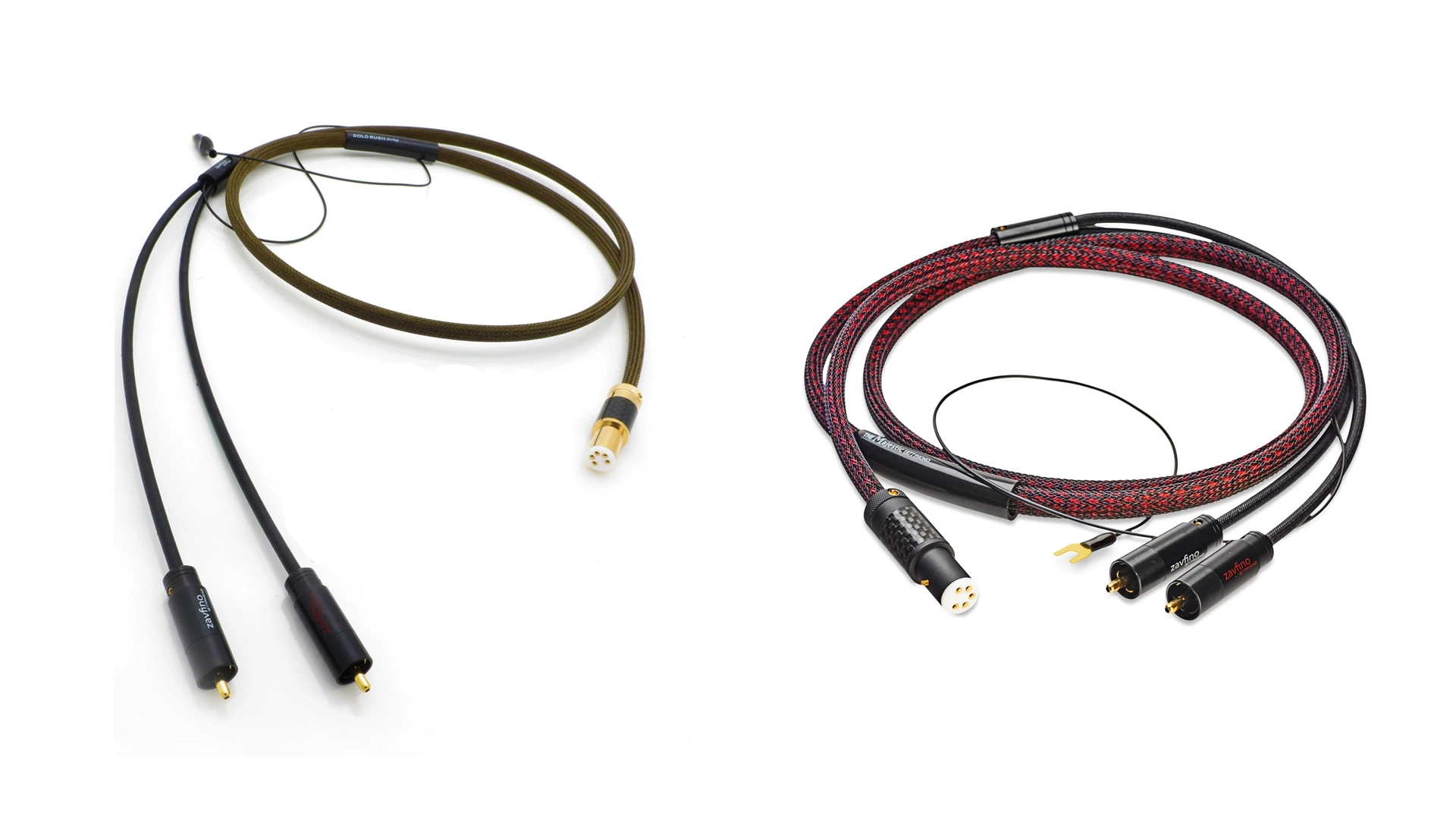
Zavfino is a Canadian-owned analogue and cable brand created around 2009 alongside the 1877Phono name. Its founder came from industrial wire extrusion and OEM cable manufacture, and the company retains unusually direct control over conductor drawing, insulation, geometry and termination instead of sourcing generic finished cable. The catalogue ranges from fine tonearm wire, headshell leads and DIN/RCA connectors to interconnects, loudspeaker cables and power cords. Pure copper, OCC copper, silver and hybrid conductors are used in different constructions, with products such as Fusion, Arcadia, Prima and Silver Dart offering clear steps in material and geometry. 1877Phono originally focused on vinyl accessories, but the business expanded into complete analogue hardware. ZV turntables, Copperhead and Aeshna models use substantial plinths, precision bearings and external motors, while Blackbird and other tonearms extend the same mechanical programme. Canadian offices and ownership are paired with manufacturing expertise and facilities in Asia, including Taiwan; describing the company as exclusively Canadian-made would therefore be misleading. The original country field remains Canada because that is the brand’s commercial identity and home base. Zavfino’s distinguishing strength is vertical knowledge across two scales: manufacturing the minute conductors and connectors between cartridge and phono stage, then designing the turntable and tonearm that generate and carry that signal. This makes its cable work part of a broader analogue system rather than an unrelated accessory line.
ZenSati

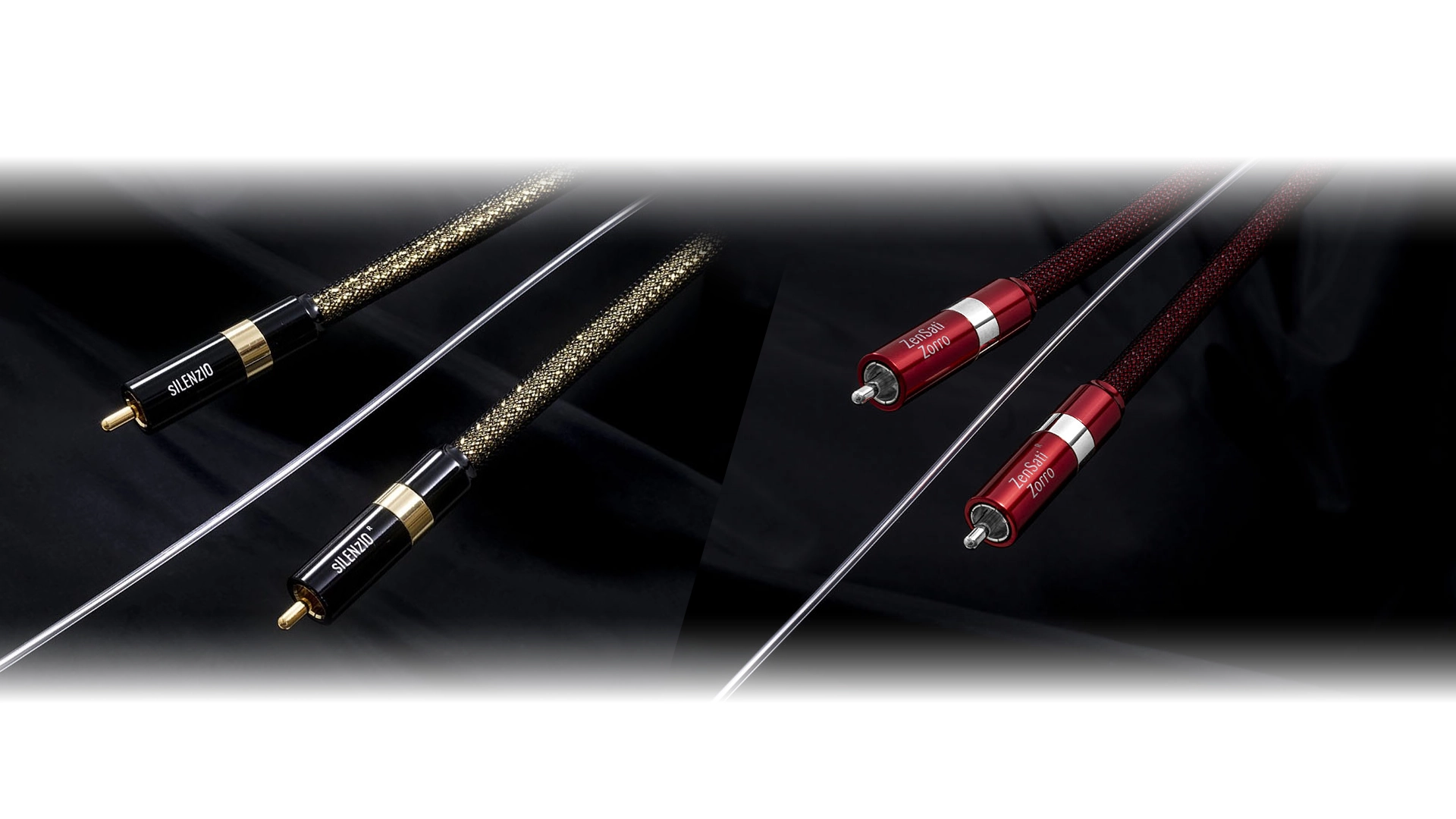
ZenSati is a Danish high-end cable company founded in 2009 by designer and musician Mark Johansen. Its name combines “zen” with the Sanskrit-derived idea of sati, or mindful awareness, reflecting Johansen’s stated goal of removing audible obstruction rather than imposing a house sound. The products are designed and hand-assembled in Denmark in small numbers, with conductor material, strand arrangement, dielectric, shielding and mechanical damping revised together for each series. Cherub and Angel provide the entry to the range; Seraphim, sILENzIO and the extreme #X line move through increasingly complex combinations of silver, gold-plated conductors and proprietary structures. Analogue interconnects, speaker cables, digital links and power cords allow a complete loom to use related construction, while termination is performed as part of the cable rather than delegated to the buyer. Some models use precious metals in quantities that make them among the most expensive cables in audio. Their claimed sonic effects remain dependent on system and listener, so price and material should not be presented as objective proof of improvement. The factual distinction is the consistency of Johansen’s programme and the unusually intensive handwork behind it. ZenSati has remained focused on cables rather than expanding into unrelated electronics, refining the same priorities—speed, neutrality, low mechanical storage and stable contact—across successive families. The newly established 2009 date replaces an empty field and matches the company’s first public period before its international show appearances around 2011.
Zu Audio

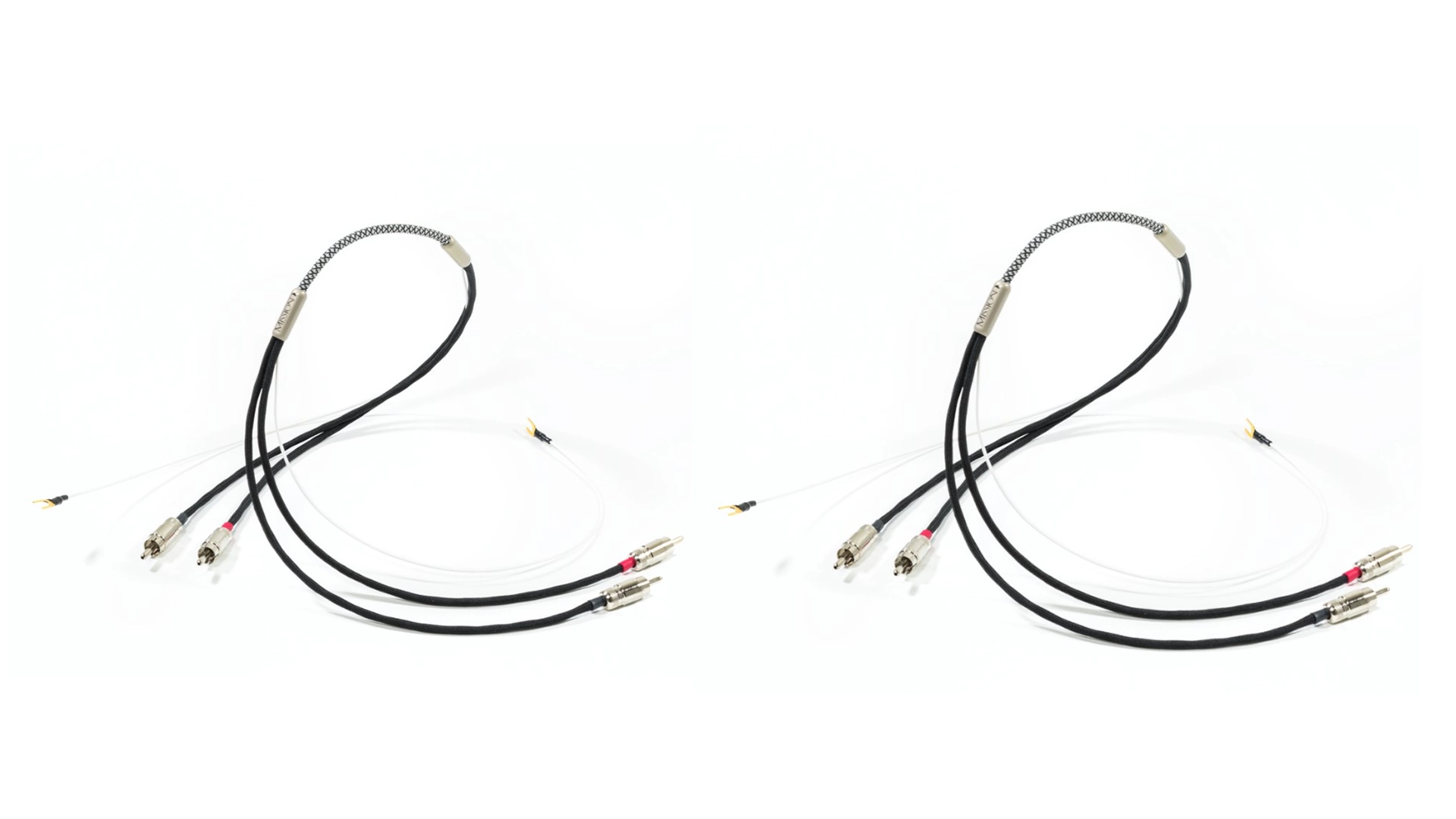
Zu Audio is an American loudspeaker and cable manufacturer founded in 2000 in Ogden, Utah, by Sean Casey and Adam Decaria. The company rejects the assumption that domestic speakers must trade efficiency and dynamic ease for flat measured response. Most Zu models use a large, high-efficiency full-range driver through the critical vocal band, supplemented by a tweeter above it and, where required, dedicated bass support. With no conventional crossover in the main driver’s path, phase shift and component loss are reduced. Zu-Griewe loading—developed from Sean Casey’s earlier work with Ron Griewe—uses a controlled gap between cabinet and floor to couple the enclosure to the room, functioning differently from a normal reflex port. Druid introduced the formula in 2001; Soul and Soul Supreme made it more compact, while Definition added powered bass and greater scale. Union and DW series bring the approach to wider price points, and Experience models explore more ambitious drivers and finishes. High sensitivity allows low-powered valve amplifiers, yet the speakers are designed to preserve impact with modern solid-state power as well. Zu also manufactures cables, driver assemblies, cabinets, metal parts and finishes in-house, giving its Ogden factory unusual control over both loudspeakers and their internal wiring. The result is a coherent alternative to conventional multiway design: minimal filtering, generous radiating area and room-aware loading used to reproduce tone, timing and live-scale dynamics rather than to chase specifications in isolation.