
Streamіng Amplifier
A streaming amplifier is a modern, all-in-one component that combines a network streamer, a DAC, and an integrated amplifier into a single, elegant chassis. This minimalist “just add speakers” approach offers a complete, high-performance system without the clutter of multiple separate boxes. It’s the perfect solution for anyone seeking world-class sound in a simple and convenient package. This directory showcases the brands at the forefront of this popular and growing hi-fi category.
Hi-Fi brands in the category
Summary information and image
Direct links to official websites
Matrix Audio

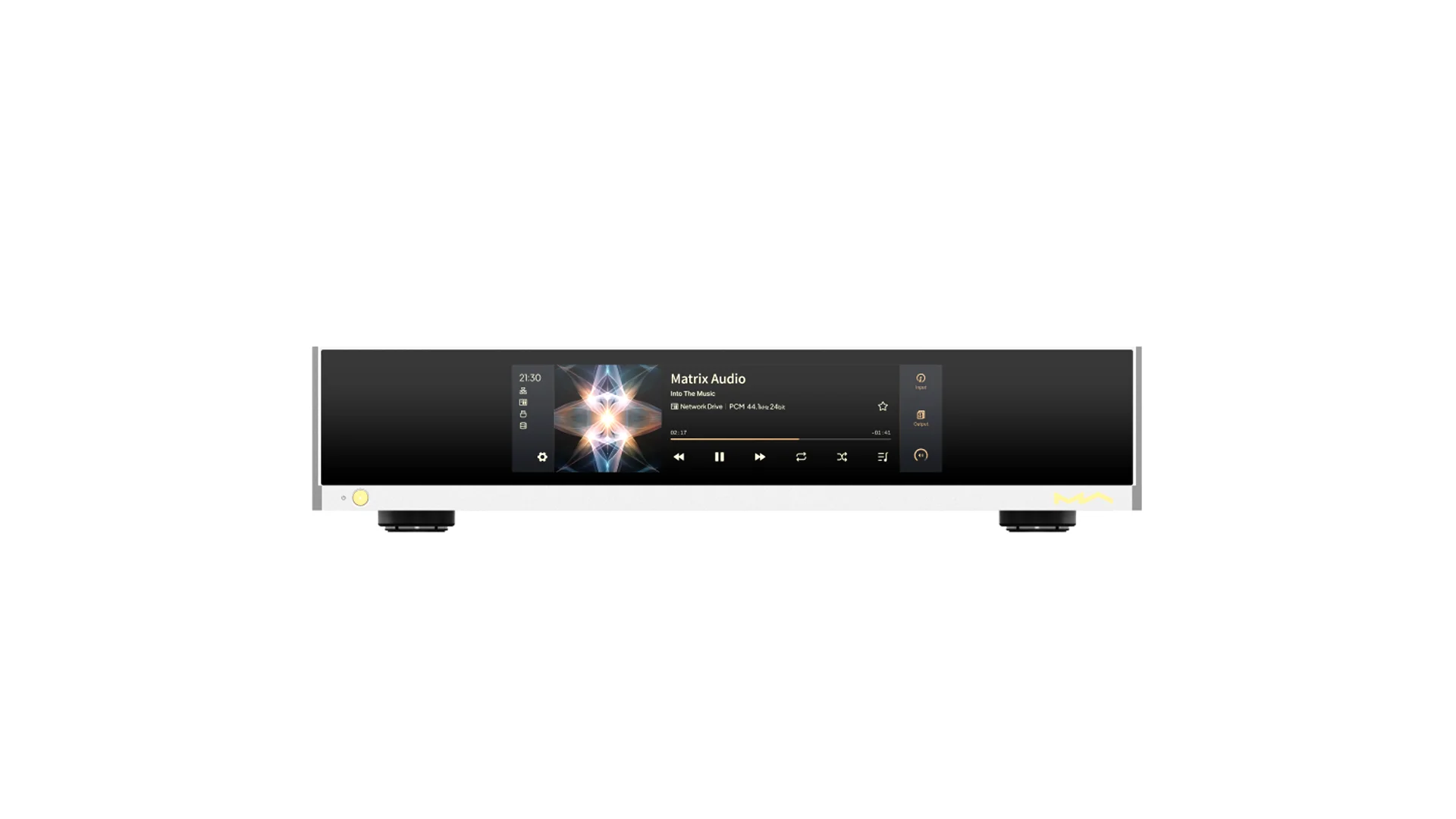
Matrix Audio is a digital-audio specialist from Xi’an, China, known for combining serious conversion hardware with unusually complete network playback and control software. The company traces its beginning to 2006 and later formalized Matrix Electronic Technology and the Matrix Audio trademark. Its early DACs and headphone amplifiers established a reputation for clean circuit layouts and competitive engineering; the element series expanded that expertise into integrated music streamers. Current products cover network players, DACs, headphone amplifiers, preamplifiers, power amplifiers, clocks and all-in-one sources. Matrix develops its own MA Player platform and MA Remote application, allowing local storage, NAS libraries and supported streaming services to be handled within one interface. Higher models use carefully partitioned digital and analogue sections, femtosecond clocking, linear power supplies, balanced outputs and CNC-machined enclosures; implementation varies by model rather than following a single chip recipe. Lines such as element, mini-i and X-SABRE address different system scales. Matrix Audio’s strength is the integration of hardware, firmware and everyday usability: it approaches a network player as a complete audio source, not merely a DAC with a streaming module attached.
McIntosh

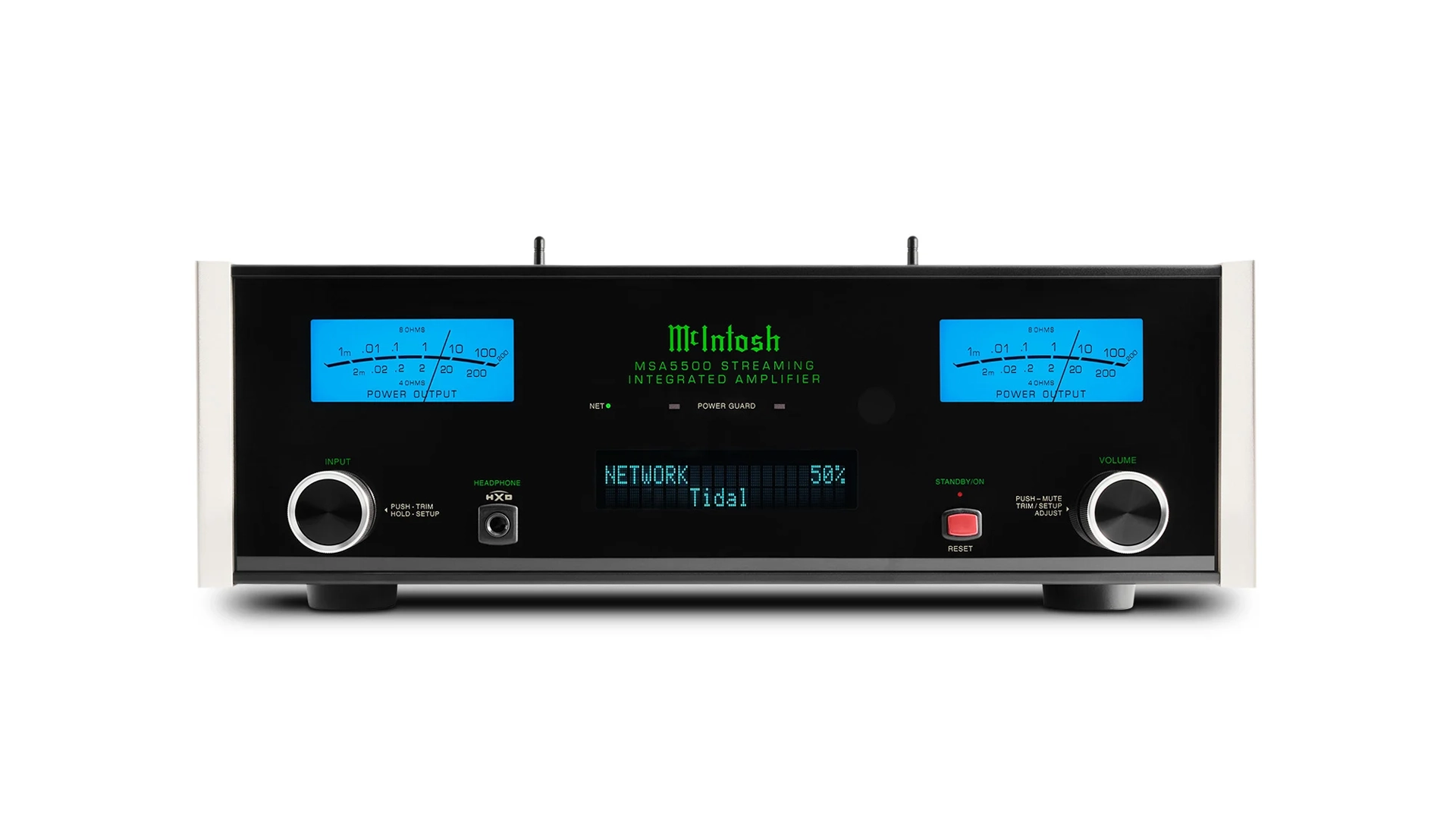
McIntosh is an American high-end audio manufacturer whose blue power meters and black-glass front panels identify products built around unusually durable amplifier engineering. Frank H. McIntosh and Gordon Gow founded the company in 1949 after developing the Unity Coupled Circuit, a transformer-coupled output topology designed to deliver high power with low distortion across the audible band. McIntosh moved to Binghamton, New York, in 1951 and continues to design and assemble products there. The catalogue covers valve and solid-state power amplifiers, preamplifiers, integrated amplifiers, source components, streamers, turntables, speakers and home-cinema processors. Many transistor power amplifiers use Autoformers to deliver their rated power into different loudspeaker impedances, while Power Guard monitors the waveform to reduce clipping-related distortion and Sentry Monitor protects against unsafe operating conditions. The company still winds key transformers in house, and signature glass panels are printed and assembled for long service life. McIntosh’s appeal extends beyond styling: its defining know-how is the marriage of protective circuitry, stable load behavior and conservative construction with a product ecosystem that can support both two-channel and large cinema systems.
Musical Fidelity

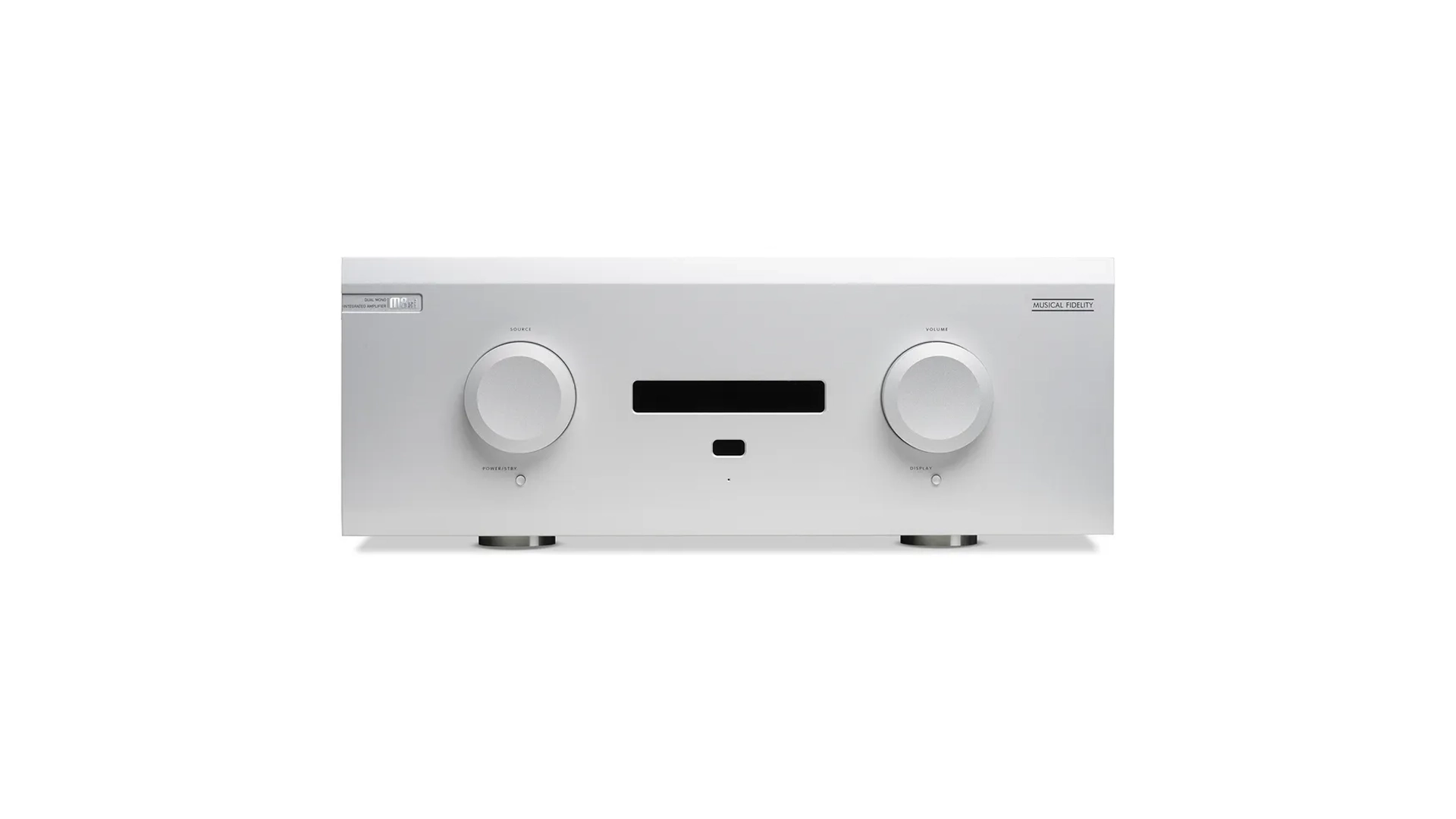
Musical Fidelity is a British hi-fi electronics brand founded in 1982 by clarinettist and audio enthusiast Antony Michaelson. It became known for amplifiers that combined generous power reserves with compact or unconventional formats: the original A1 integrated amplifier, launched in 1985, ran heavily biased in Class A, while the cylindrical X-series made serious phono, DAC and headphone functions accessible as separate components. The Nu-Vista line later adopted nuvistor valves, a low-noise miniature tube technology rarely used in modern consumer audio. The current catalogue includes integrated, pre and power amplifiers, phono stages, DACs, CD players, streamers, turntables and power conditioning. A1 and X-series products have been re-engineered rather than merely cosmetically revived, while M3, M5, M6, M8 and Nu-Vista cover progressively larger systems. Since 2018 the brand has been owned and operated by Austria’s Audio Tuning, but product identity remains explicitly British and analogue-led. Musical Fidelity’s strength is range without anonymity: high-current transistor amplification, discrete phono circuitry and the unusual nuvistor platform give different families real technical character instead of the same chassis being repackaged at several prices.
NAD

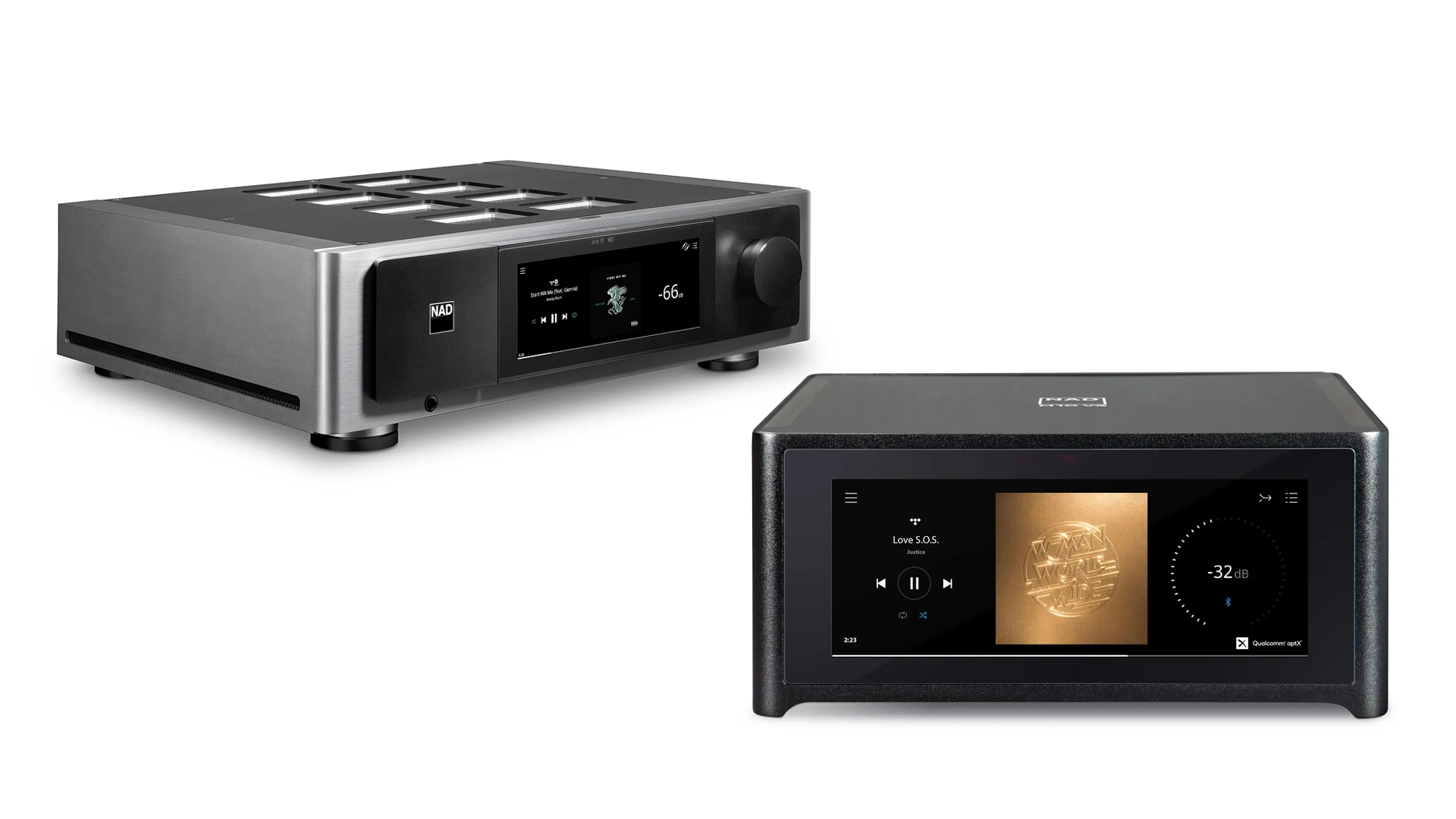
NAD—New Acoustic Dimension—is the British-founded electronics brand that made high-current, musically convincing amplification available without luxury-casework pricing. The company began in London in 1972 when audio-industry entrepreneur Dr Martin “Marty” Borish brought together a group of European distributors. Its turning point was the 3020 integrated amplifier, designed by Bjørn Erik Edvardsen and launched in 1978. Modestly rated at 20 watts per channel, it could drive demanding loudspeakers far beyond what the specification suggested and became one of hi-fi’s landmark affordable amplifiers. That practical engineering continues in the Classic and Masters ranges: integrated, pre- and power amplifiers, streamers, AV receivers and custom-installation components. PowerDrive manages voltage and current reserves for real loudspeaker loads, while Modular Design Construction lets selected amplifiers and receivers accept replaceable digital or HDMI modules. Current products also combine BluOS multi-room streaming with technologies such as Purifi Eigentakt amplification in appropriate models. NAD passed through Danish ownership before Canada’s Lenbrook acquired it in 1999; product development and headquarters are now Canadian, but the brand’s country of origin remains the United Kingdom. The lasting NAD idea is simple: spend the budget on usable power, upgradeability and music rather than decorative excess.
Naim

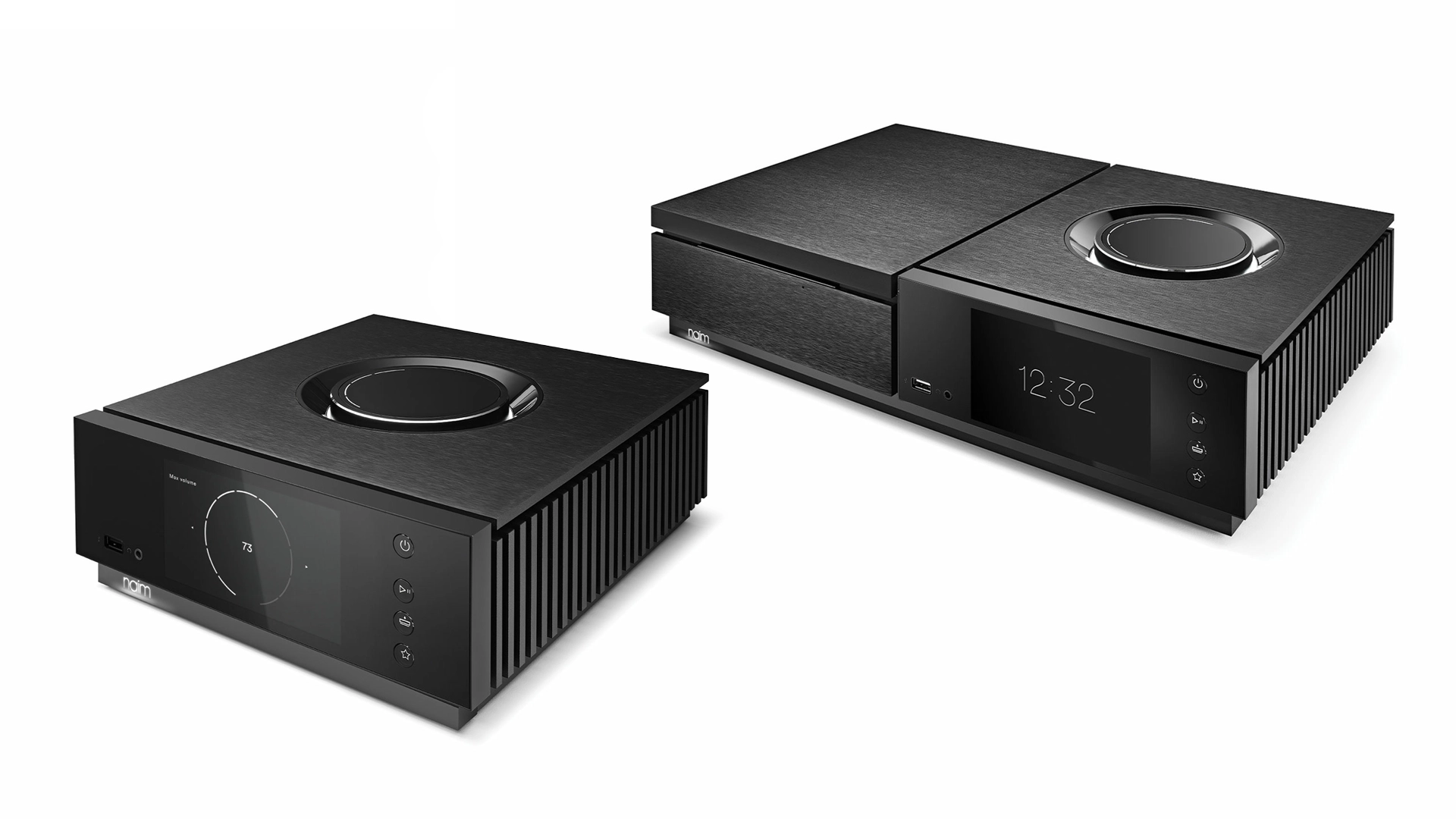
Naim Audio is the Salisbury electronics maker whose reputation rests on amplifiers and sources designed to preserve musical timing and momentum. Julian Vereker’s early amplifier work grew from a contract for Capital Radio, and Naim Audio was incorporated in 1973 with Vereker and Shirley Clarke as directors. The first consumer power amplifiers established a deliberately direct circuit philosophy; the NAP 250, introduced in 1975, became the long-running reference, while the compact NAIT integrated amplifier showed that the same priorities could work in an affordable system. Naim later built complete upgradeable systems around separate preamps, power amps and external power supplies, then became an early serious adopter of network replay. Uniti streaming amplifiers and Mu-so wireless systems broadened the audience, while ND sources, the New Classic separates and Statement amplification maintain the specialist end. Mechanical isolation, low-noise power regulation, carefully controlled grounding and proprietary streaming software matter more to the engineering than the familiar shorthand “PRaT.” Naim joined French loudspeaker maker Focal in 2011 under VerVent Audio Group, while design and production remained centred in Salisbury. In August 2026 Belgium’s Barco completed its acquisition of VerVent, so Naim is now part of Barco while retaining its British origin, brand and manufacturing identity.
Primare

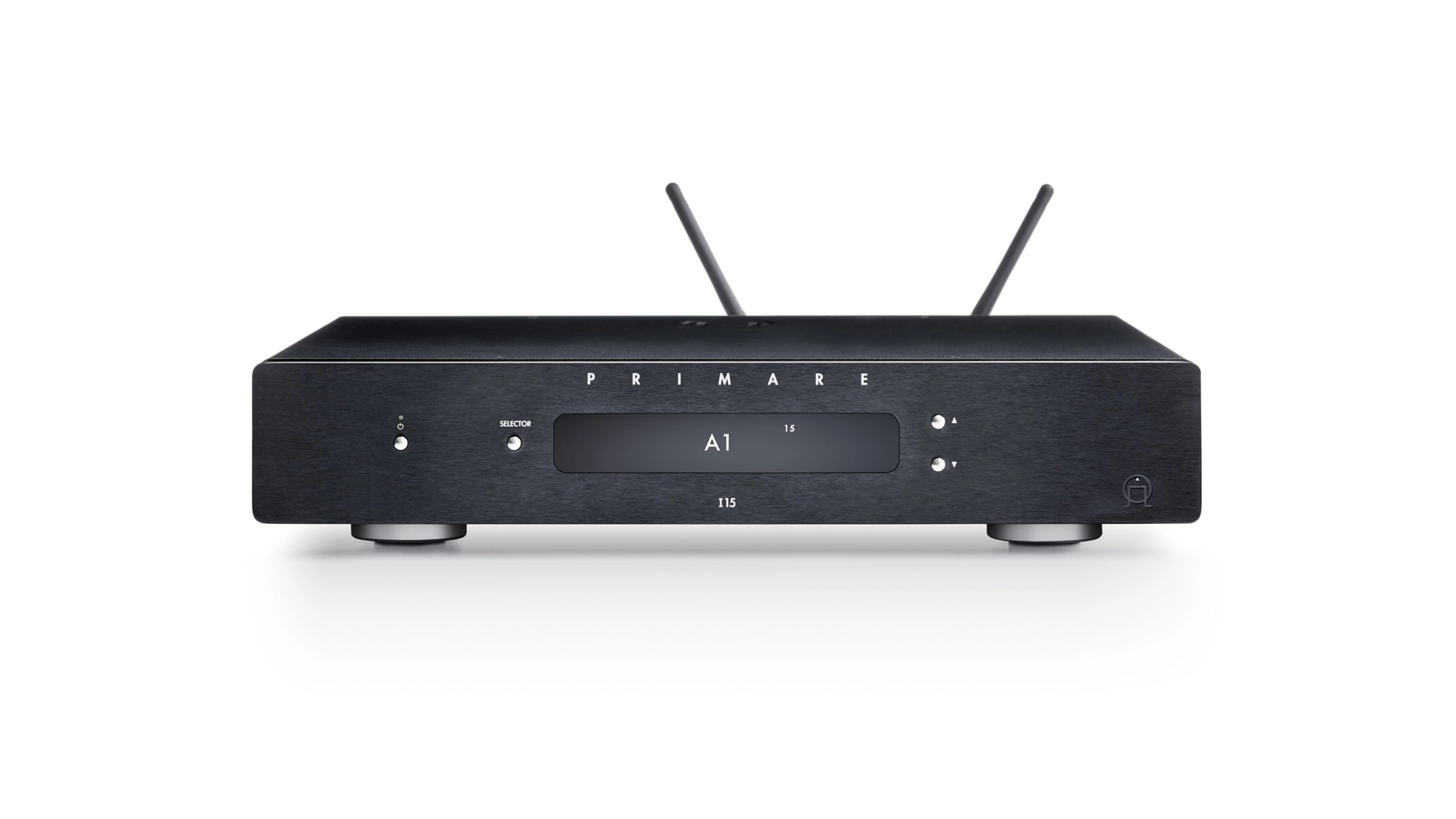
Primare began in 1985 when Danish industrial designer Bo Christensen set out to make audio components whose operation, proportions and sound belonged to one coherent object. Working with engineer Bent Nielsen and a Scandinavian development team, he produced the 928 series in 1986, followed by the 200 and 300 series. The company later came under Swedish leadership through Lars Pedersen and the Xena organisation; the 30 Series of 1998 established the clean forms and modular thinking associated with modern Primare. The present range still follows that idea of “lagom”—neither too much nor too little. I15, I25 and I35 integrated amplifiers anchor the 15, 25 and 35 families, joined by CD transports and players, R15 and R35 phono stages, PRE35 control and A35.2/A35.8 power amplifiers. UFPD and current UFPD 2 are Primare’s proprietary Class D amplifier platforms, designed for consistent gain across the audio band and high-current stability rather than adopted simply to make smaller boxes. Prisma is the network layer: it adds streaming, multiroom control and major service protocols to compatible electronics while keeping the core amplifier usable independently. Plug-in DAC and Prisma modules let selected models be updated instead of replaced, a direct continuation of the “living product” idea. SPA25, SP25 and A35.8 bring the same architecture to multichannel systems without treating cinema as a separate design language. Primare is Swedish in corporate identity, Danish at its creative origin and recognisably Scandinavian in its insistence that technical capability, restraint and ease of use should reinforce one another.
Roksan

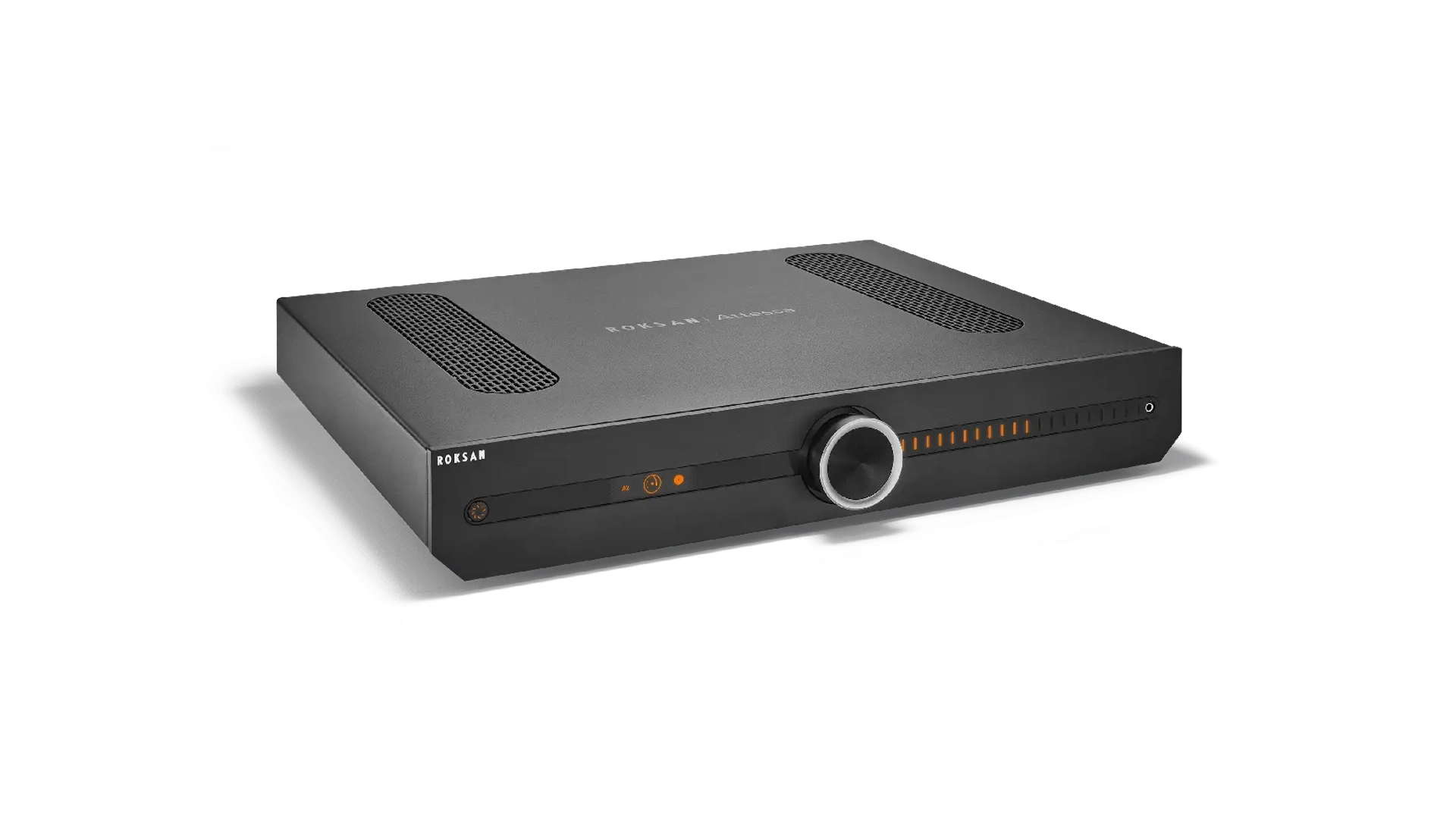
Roksan is a British hi-fi manufacturer founded in London in 1985 by Touraj Moghaddam and Tufan Hashemi. The first product, the Xerxes turntable, challenged the suspended-subchassis orthodoxy with a distinctive multi-layer plinth and bearing arrangement designed to control energy between record, arm and support. Xerxes quickly became the product that defined the company and remains in evolved form as Xerxes 20 Plus, supported by dedicated power supplies and tonearms. Roksan subsequently built complete systems rather than remaining a turntable specialist. Caspian electronics established its reputation in amplification and digital sources; the K3 range brought muscular integrated amplification and matching components to a wider audience. Attessa is the current entry point, combining an integrated or streaming amplifier, CD transport and turntable with app-based control and contemporary connectivity. The newer Caspian 4G generation develops the long-running series with modern streaming and amplification architecture, while vinyl playback remains visible rather than being treated as nostalgia. Monitor Audio acquired Roksan in 2016, giving the brand access to a larger British engineering and manufacturing group while retaining the Roksan name and its original country. This ownership should be stated because current products are developed within that group, but it does not erase the founders or the importance of Xerxes. Roksan’s character comes from that continuity: mechanically inventive analogue sources, energetic amplification and increasingly integrated digital systems, all intended to work as a complete British hi-fi ecosystem rather than a single iconic turntable.
Rotel

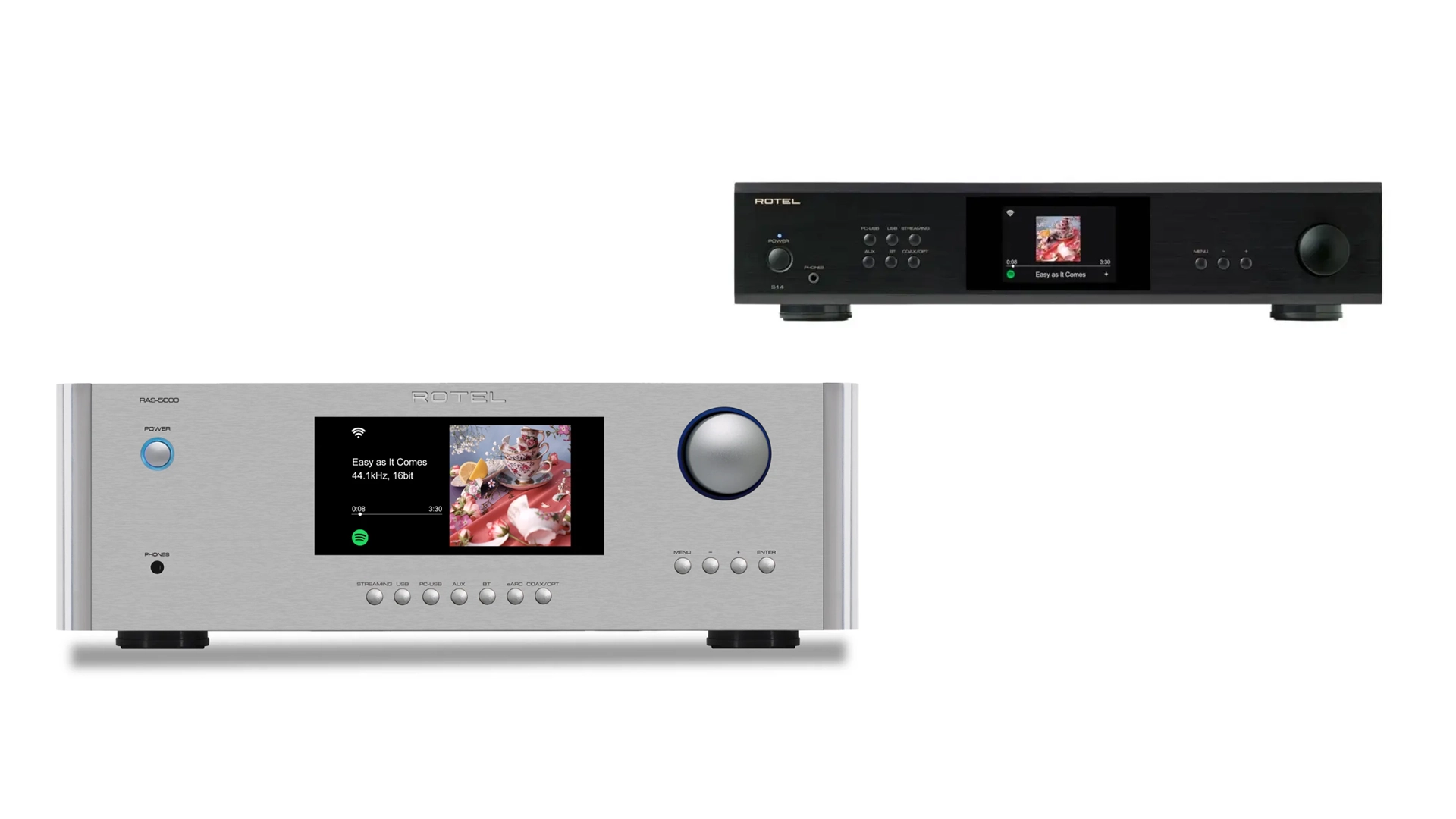
Rotel is a Japanese audio manufacturer founded in 1961 and still closely identified with the Tachikawa family. It built its reputation by offering serious engineering at attainable prices rather than chasing a single exotic circuit or luxury finish. The company’s “Balanced Design Concept” joins three disciplines: selecting parts for their measured and audible behaviour, refining the circuit topology, and listening critically to the complete product. One practical expression is Rotel’s long-standing use of custom toroidal transformers, many wound to its specification, together with carefully regulated power supplies and conservative output ratings. The range spans integrated amplifiers, preamplifiers, power amplifiers, CD players, network streamers and multichannel home-theatre electronics. The 14 and 15 Series cover compact and full-size systems, Diamond models mark anniversary engineering, and the revived Michi name forms the flagship line with components such as the X3 and X5 integrated amplifiers, P5 preamplifier, S5 stereo power amplifier and M8 monoblocks. Rotel also builds distribution amplifiers and custom-installation products, so the same design culture serves both a two-channel listening room and a whole-home system. Streaming, HDMI and modern control have been added without abandoning physical source support or straightforward front-panel operation. Rotel’s importance lies in continuity: it has spent decades improving power supplies, analogue stages and system integration rather than repeatedly reinventing its identity. The result is recognisably Japanese hi-fi—disciplined, durable and engineered to deliver useful current, dynamics and low noise at several price levels.
Ruark

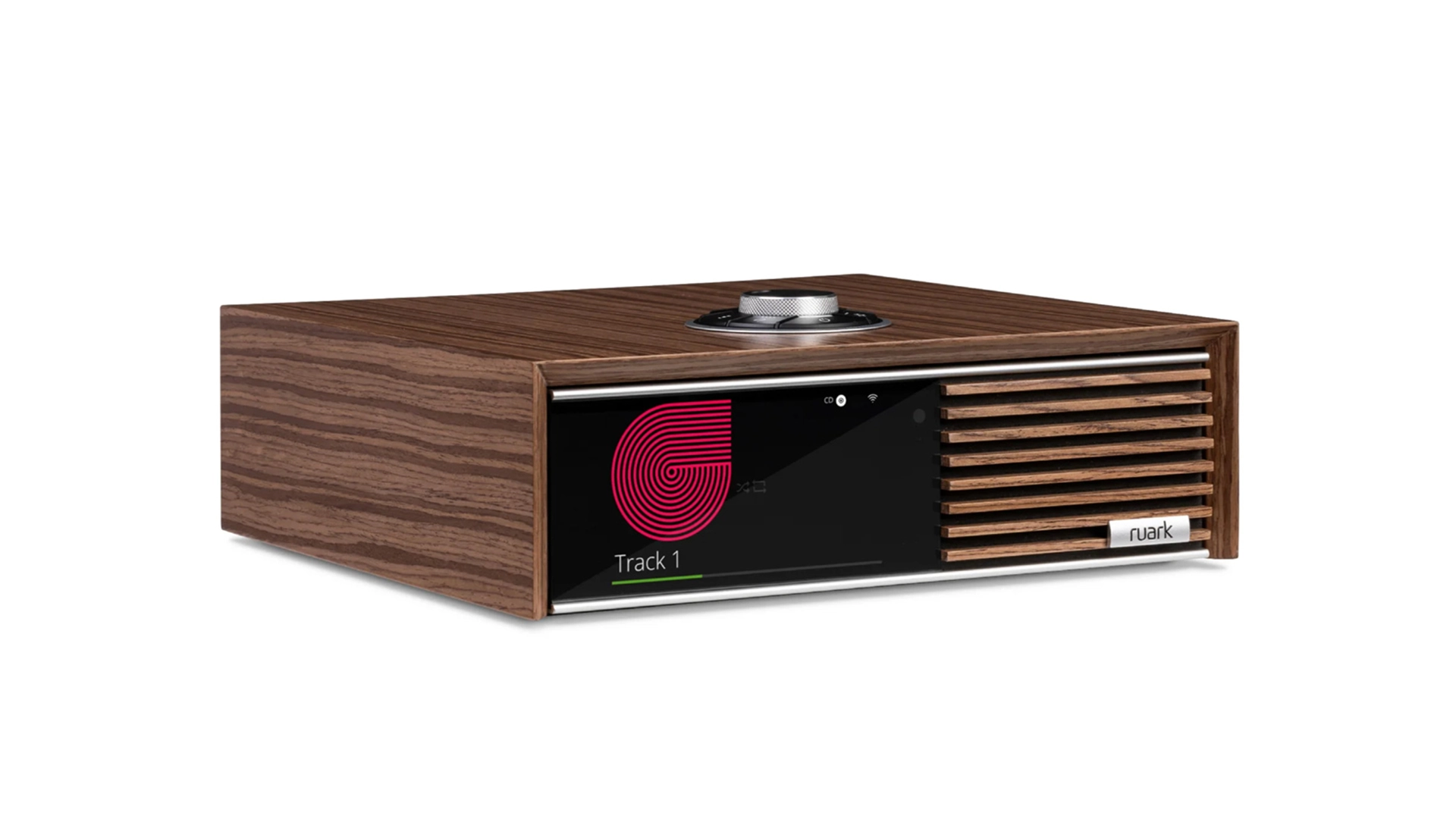
Ruark is a British audio company created in 1985 by Brian O’Rourke and his son Alan in Rayleigh, Essex. It began as Ruark Acoustics, building serious passive loudspeakers: the Sabre and Broadsword arrived in 1986, followed by models such as Accolade, Talisman and Crusader. That loudspeaker background matters because Ruark’s later success did not begin with generic radios. Seeing how poorly many early DAB receivers reproduced music, the company developed the original R1 tabletop radio, launched in 2006 under the Vita Audio name; since 2012 the products have again carried the Ruark name. The R1 and stereo R2 established the formula—purpose-designed drivers and enclosures, tactile controls, readable displays and furniture-grade finishes in a compact product. Today’s range stretches from R1S and R2 connected radios to R3S, R410 and the large R810 radiogram-style system, combining DAB/DAB+, FM, internet radio, Bluetooth, Wi-Fi streaming and service integration according to model. R610 revives the separate music-console idea for use with external speakers, while Sabre-R—and, in 2026, Talisman-R—reconnect the catalogue directly with Ruark’s original loudspeaker craft. The products use real-wood veneers, carefully formed cabinets and the distinctive RotoDial controller instead of disguising audio hardware as anonymous smart technology. Ruark’s strength is this unusual continuity between traditional British speaker making and modern connected listening. It understands that a compact system lives in full view and must be pleasant to operate, but it earns its place through acoustics and long-term design rather than appearance alone.
Simaudio
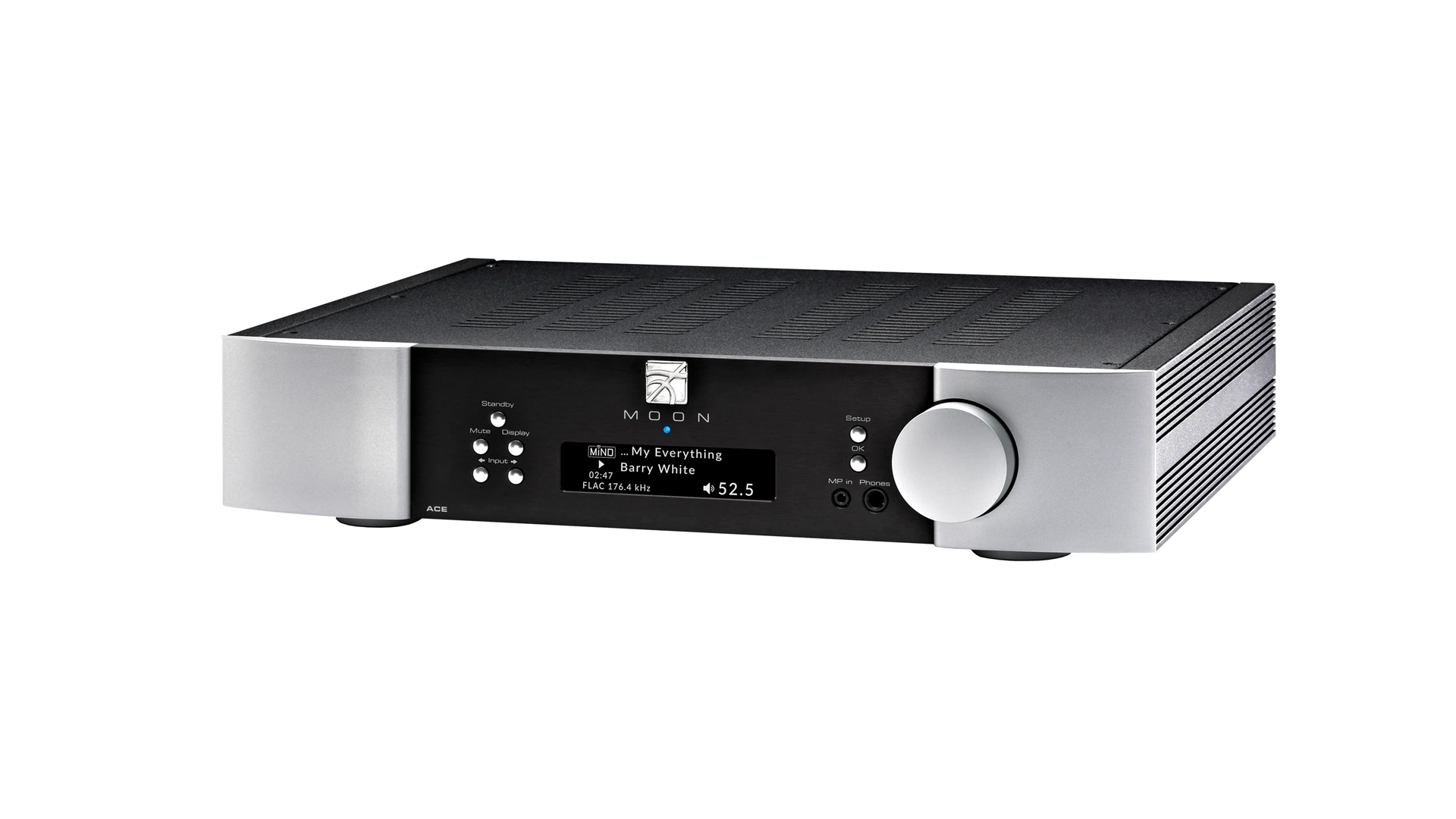
Simaudio is a Canadian high-end electronics manufacturer founded in 1980 as Sima Electronics by Victor Sima. The early company became known for muscular amplifiers able to control demanding loudspeakers; in 1994 Jean Poulin and partners acquired the business, and the MOON name gradually became the public identity of its products. Design and manufacturing remain near Montreal, with metalwork, circuit assembly, testing and long-term service kept unusually close for a modern audio company. MOON electronics cover integrated and power amplifiers, preamplifiers, network players, DACs and phono stages. The Evolution series established technologies such as M-LoVo low-voltage regulation, M-eVOL2 volume control and the MiND network platform, while the compact ACE combined streaming, conversion, amplification and phono input in one chassis. MiND 2 supports contemporary network playback and multiroom control without making a computer the front end. The flagship North Collection develops this architecture in the 681 streamer/DAC, 791 network player/preamplifier, 761 and 861 power amplifiers, and the 891/888 reference separates, with the BRM remote giving tactile control across the system. Simaudio does not use one circuit unchanged at every price: power-supply scale, dual-mono separation, output topology, conversion and control are adjusted to each product, but low noise, high current and operational longevity remain consistent priorities. The company is still independently Canadian rather than a legacy badge owned abroad. Its distinction is the ability to join serious analogue amplification with mature streaming and interface design while preserving repairability and factory support—an evolutionary approach that has kept MOON components current without erasing their two-channel roots.
Sonoro

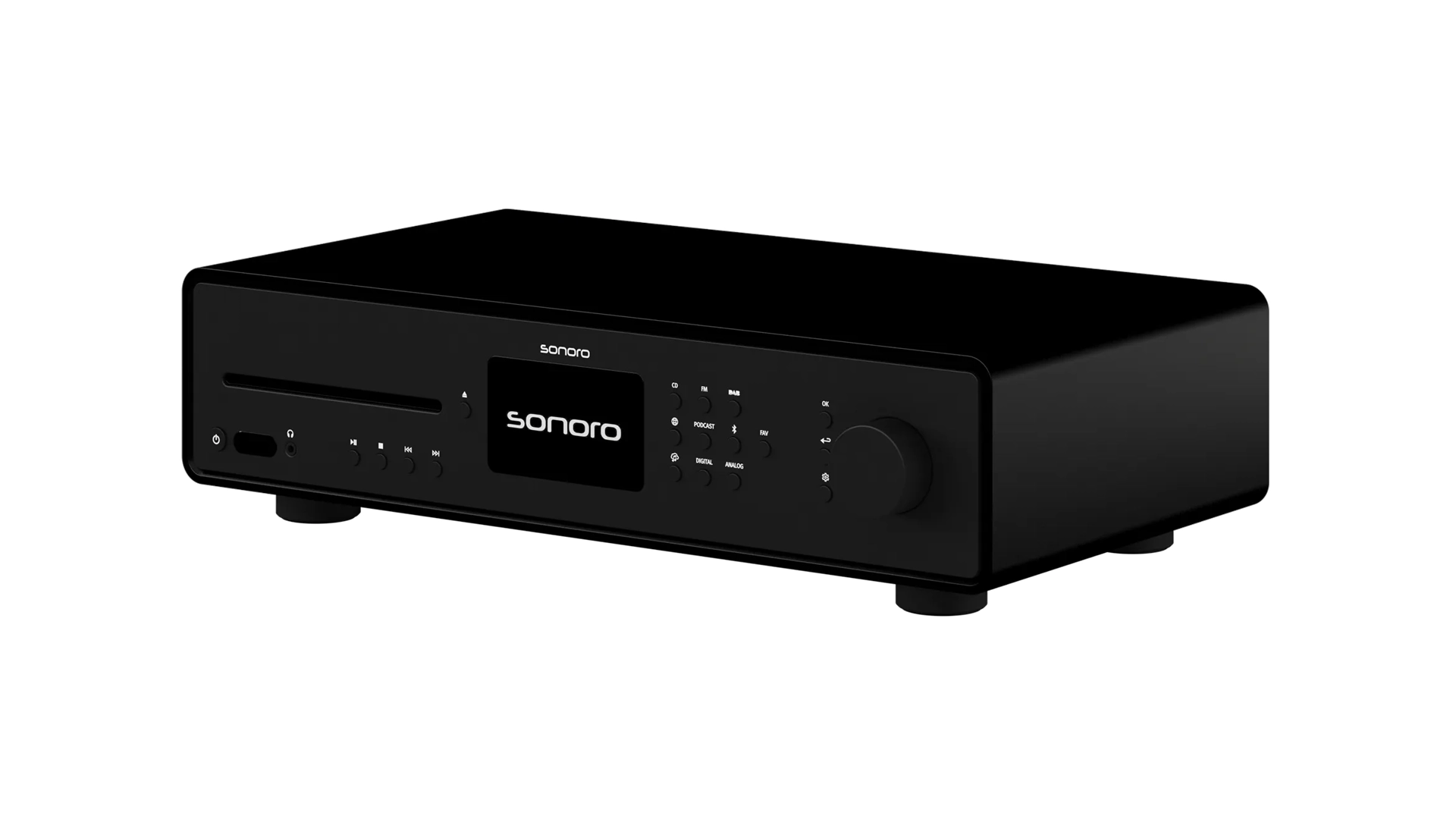
Sonoro brings radio, discs and streaming into music systems designed to live comfortably in an ordinary room. Founded in Germany in 2006 by Marcell Faller, the company develops its products in Neuss with equal attention to their controls, proportions and audio functions. Compact all-in-one systems made its name: products such as Elite, Prestige and Meisterstück gather sources and loudspeakers into a single enclosure, reducing the equipment and cabling needed for everyday listening. Depending on the model, the source selection combines CD playback, FM and DAB+ radio, internet radio and network services. That mixture is an important part of Sonoro’s identity, accommodating a physical music collection alongside newer listening habits. Meisterstück has developed into a more substantial all-in-one platform; its second generation adds facilities including AirPlay, Chromecast and room calibration. Sonoro has also expanded beyond self-contained radios and music centres. Maestro supplies the electronics for a separate stereo system, Orchestra loudspeakers provide the matching speaker option, and Platinum turntables bring vinyl into the catalogue. This gives the brand a path from a single bedroom or living-room unit to a system with physically separated speakers. The common design language remains restrained and domestic, with clearly arranged controls and cabinets intended to be seen. Sonoro’s particular strength is assembling familiar and modern sources into approachable products whose use and appearance matter as much as their specification lists.
Sonos

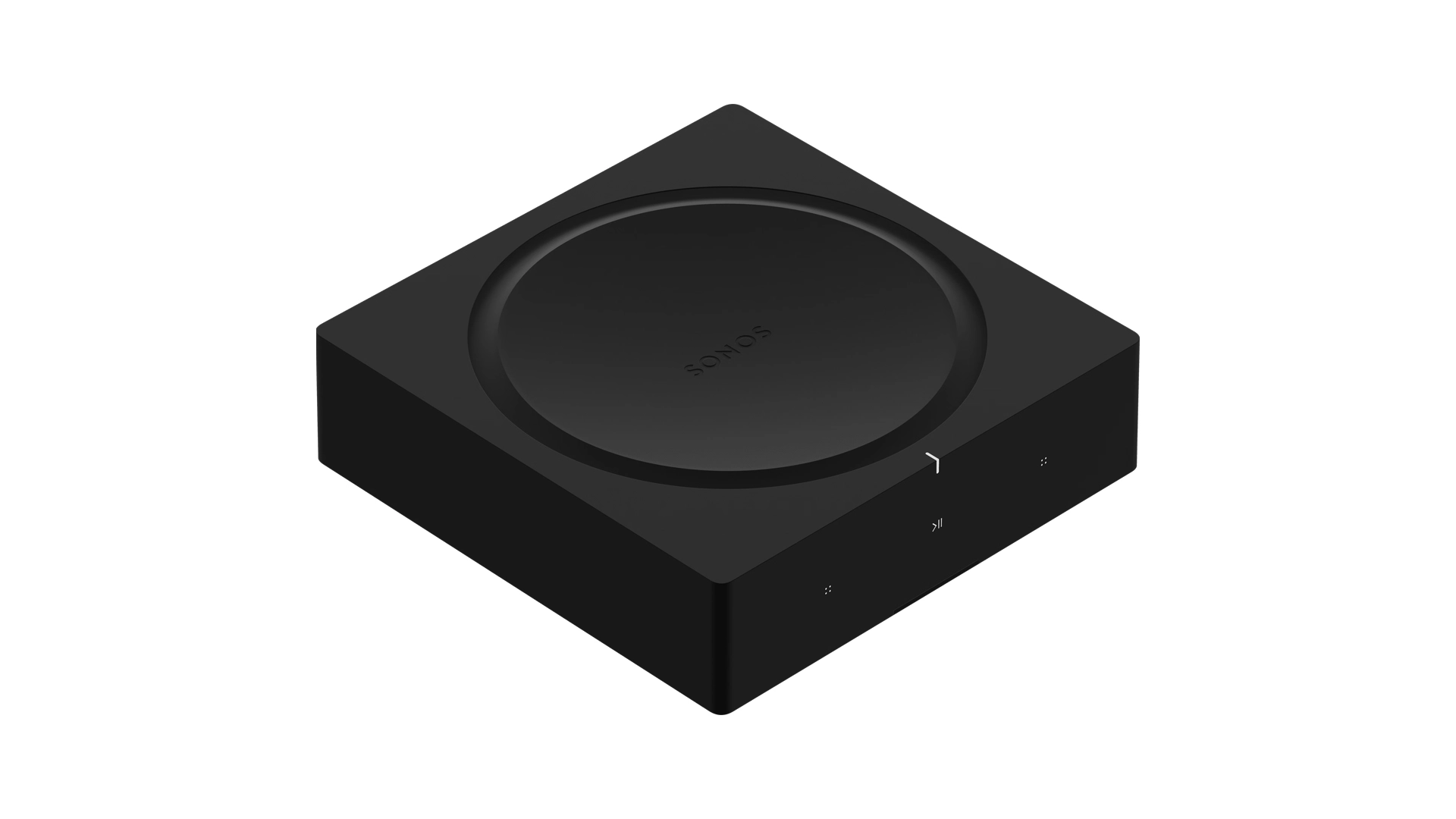
Sonos made synchronised music in different rooms the foundation of an audio system that can grow one speaker at a time. John MacFarlane, Tom Cullen, Trung Mai and Craig Shelburne founded the company in Santa Barbara, California, in 2002. Their idea was to use home networking to make music accessible throughout a house, with playback and room selection managed through a common interface. Early ZonePlayer components established the system approach; the arrival of all-in-one speakers in 2009 made it accessible without a separate amplifier and speakers in every room. Products such as Play:5 and One became familiar expressions of that idea, followed by the Era family. Matching speakers can form stereo pairs, and selected models can work with soundbars and subwoofers in a home-theatre configuration. Arc and Beam brought television into the ecosystem, while Move and Roam added portable listening. Sonos also makes Amp and Port components for connecting conventional loudspeakers or an existing hi-fi system. Its more recent range includes Arc Ultra, Move 2, Roam 2 and Ace headphones, the latter extending compatible television sound to private listening through TV Audio Swap. Across these different forms, Sonos’s defining product is the connected system as much as the individual enclosure: software, synchronisation and compatible hardware make it possible to use rooms separately or bring them together. That continuity explains how a brand associated with wireless speakers also has a substantial role in installed home audio.
T+A

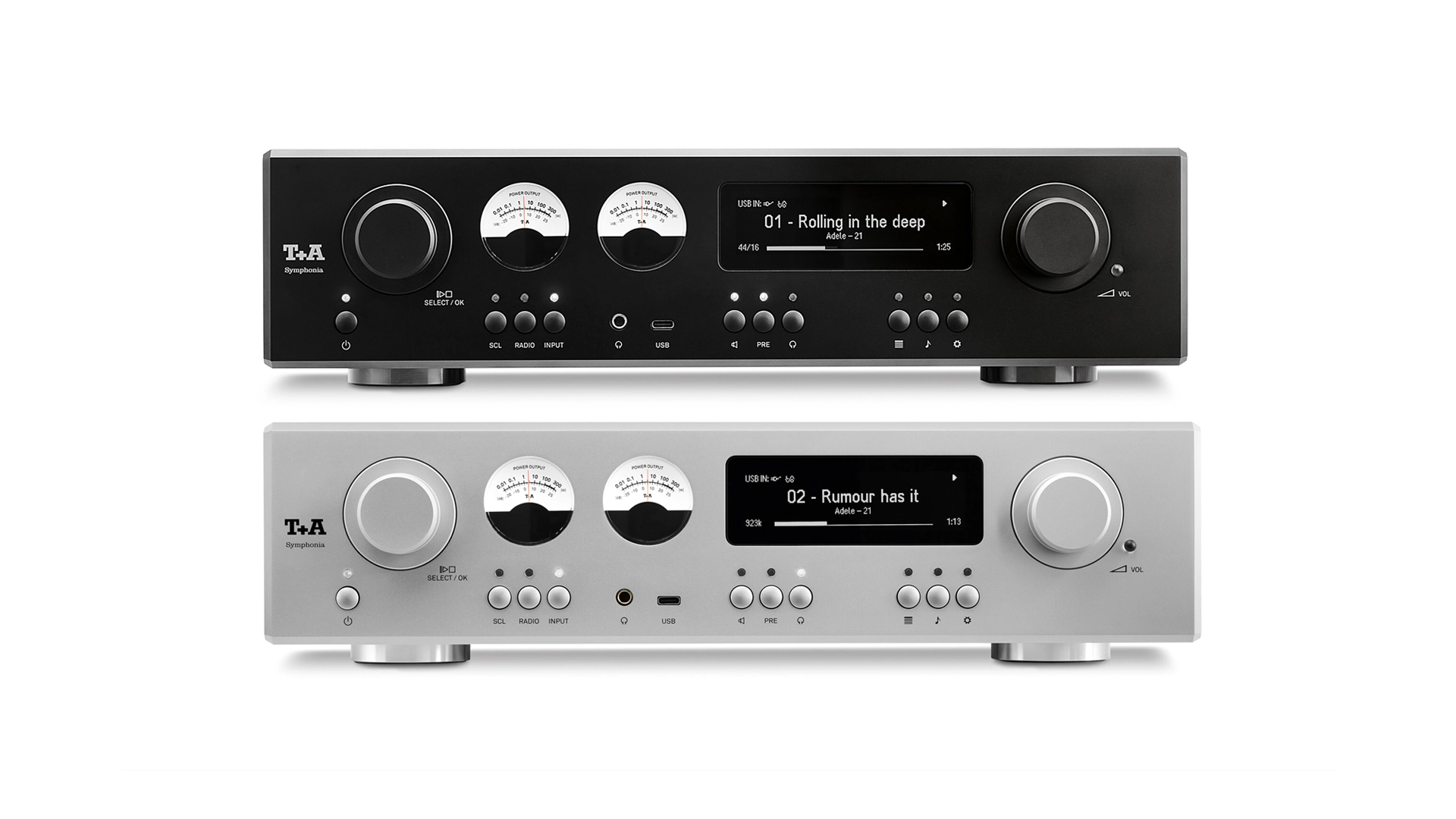
T+A elektroakustik (Theory + Application) is a German manufacturer of high-end audio equipment, known for its wide range of products, innovative technologies, and a focus on delivering both exceptional sound quality and comprehensive features. The company’s product range includes amplifiers, preamplifiers, integrated amplifiers, CD players, streamers, all-in-one systems, loudspeakers, and even headphones. T+A often utilizes proprietary technologies and advanced engineering in its designs, aiming to push the boundaries of audio performance. Their products are characterized by their robust build quality, elegant aesthetics, and a sonic signature that emphasizes detail, dynamics, and a natural, unforced presentation. The “HV” (High Voltage), “R” series , and “Cala” series represent different facets of their product offerings. T+A products are positioned in the high-end segment of the market, appealing to audiophiles who value both performance and German engineering.
Taga Harmony


TAGA Harmony is a company specializing in loudspeakers, audio electronics, and cables, known for its focus on providing high-quality sound at accessible price points. While having European roots, the company has significant operations and design influence from Japan. TAGA Harmony offers a wide range of products, including floor-standing speakers, bookshelf speakers, center channel speakers, subwoofers, integrated amplifiers, and various cables. Their products often feature a modern aesthetic and are designed to deliver a balanced and engaging sound. The company’s design philosophy emphasizes a combination of engineering principles and subjective listening evaluations to achieve optimal performance. TAGA Harmony products are positioned in the
WiiM

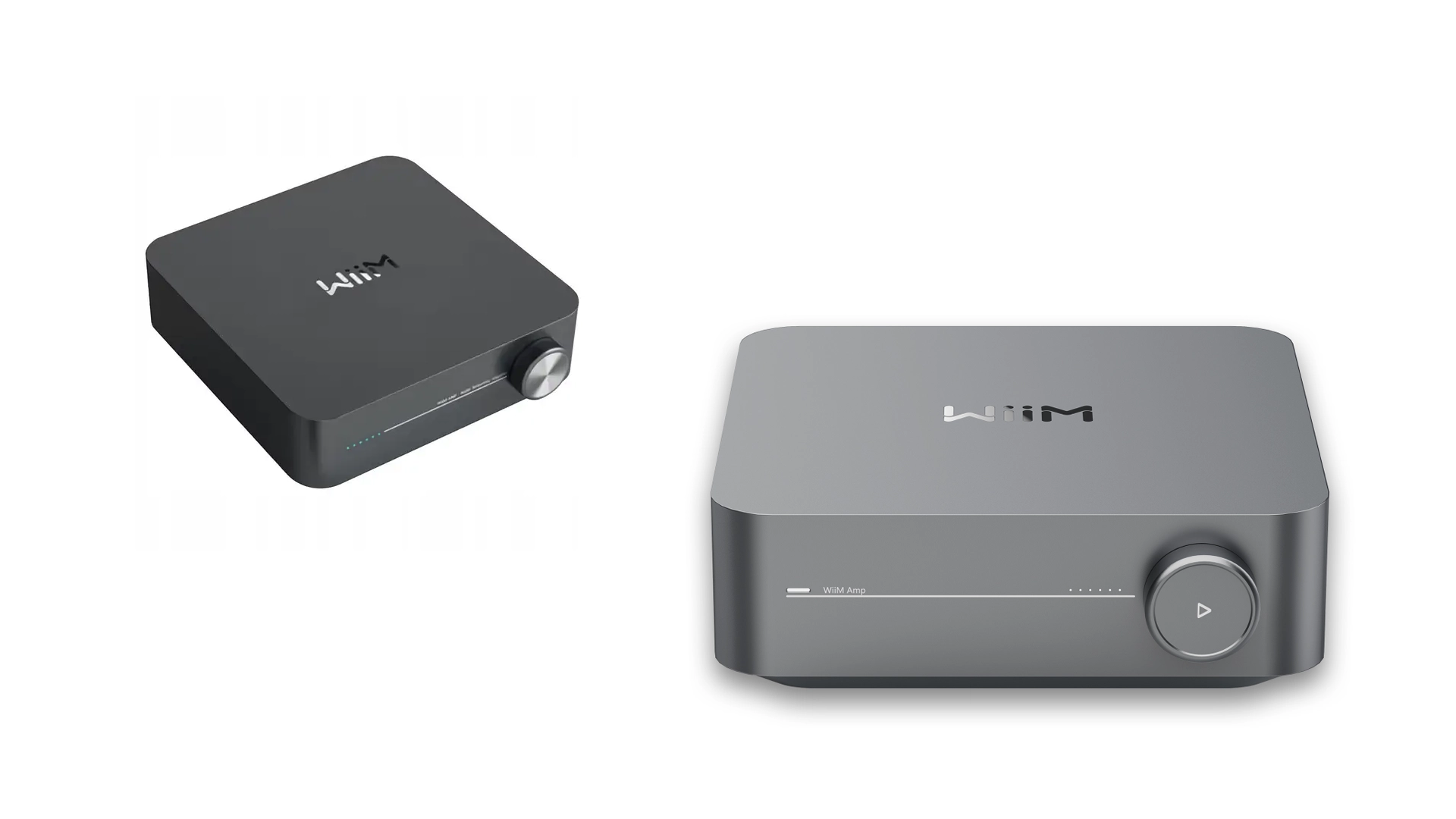
WiiM is the consumer-audio brand of Linkplay Technology, a connected-audio specialist established in 2014 by engineers with backgrounds at companies including Google, Broadcom and Harman. Linkplay had already supplied wireless modules and software to other manufacturers when it launched WiiM as its own product family in 2021. The first WiiM Mini made the proposition clear: add high-resolution network streaming, multi-room playback and app control to an existing hi-fi system at a price far below most specialist transports. WiiM Pro and Pro Plus expanded connectivity and improved conversion, while WiiM Ultra turned the streamer into a compact digital hub with a display, HDMI ARC, phono input and room correction. WiiM Amp and Amp Pro combine the platform with Class-D amplification for passive speakers; Vibelink Amp separates amplification for owners who already use a WiiM source. The ecosystem has since grown into smart speakers, a wireless subwoofer and the WiiM Bar, allowing stereo and home-cinema zones to share the same control architecture. The WiiM Home app, frequent firmware updates, broad streaming-service support, Google Cast, Spotify Connect and flexible input sharing are as important as the hardware. Although Linkplay maintains an American presence, the supplied catalog identifies the brand with China, where its wider engineering and manufacturing operation is based. WiiM’s real achievement is making capable, measured and continuously updated streaming electronics accessible without forcing owners to abandon the amplifiers and speakers they already value.
YBA

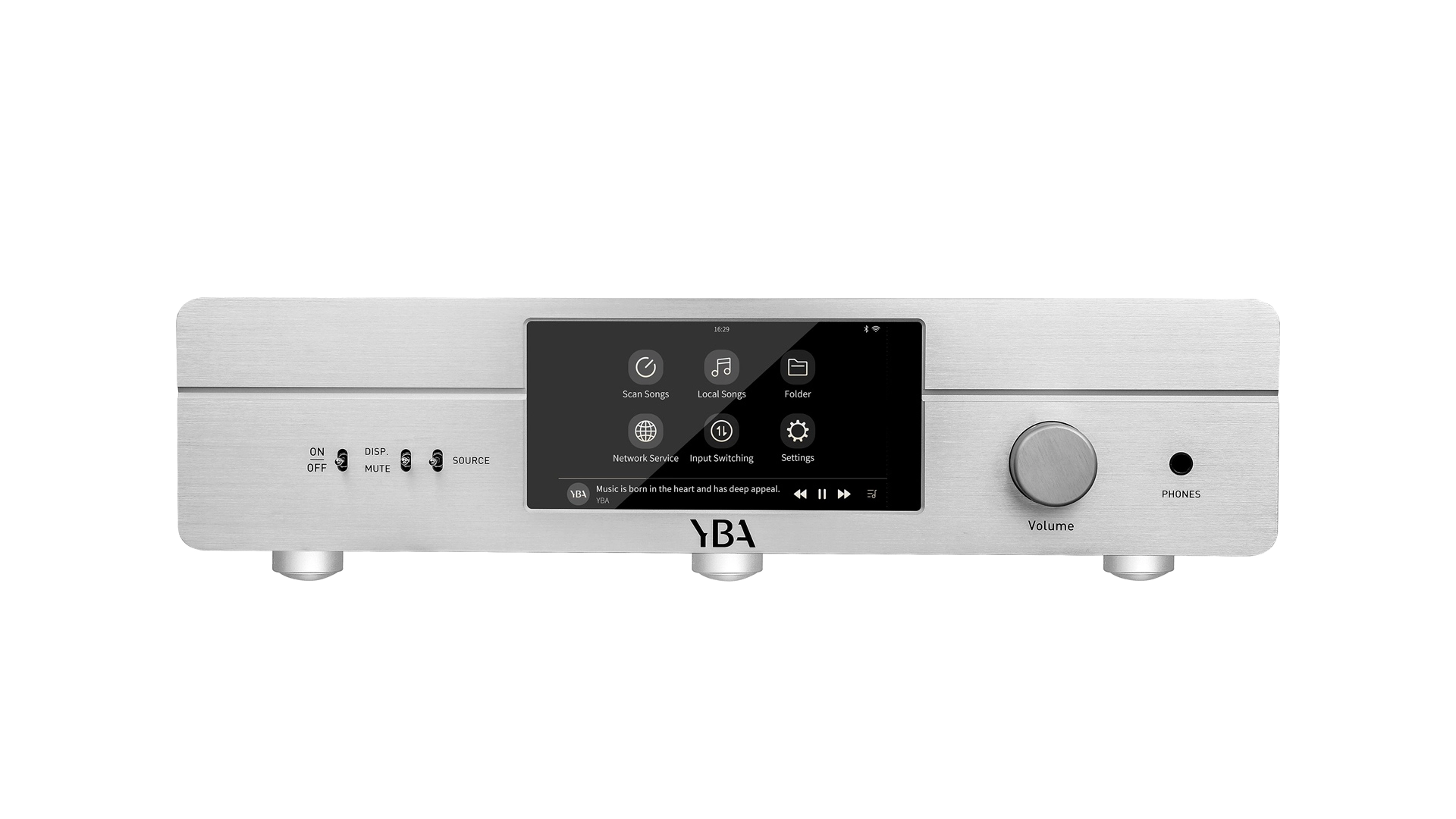
YBA is the French electronics marque founded in 1981 by engineer and electronics professor Yves-Bernard André. His designs became known for short signal paths, carefully selected components and unusual attention to mechanical and electrical details: transformer orientation, non-magnetic fasteners, three-point support and restrained power-supply layout were treated as audible engineering choices rather than accessories. The original YBA 1 amplifiers and later Signature components established the reference line, while Audio Refinement brought related thinking to a wider audience. Today’s catalogue is organised into Signature, Passion, Genesis, Heritage and Design families. It includes integrated, pre- and power amplifiers, phono stages, CD players, DACs and network-capable sources, allowing the core circuit philosophy to appear at several prices rather than only in statement products. Ownership and production changed materially in 2009, when Chinese manufacturer Shanling took a majority stake to stabilise the company and expand manufacturing capacity. André retained an interest and continued to guide product design; current components are therefore designed under a French brand philosophy and manufactured with Shanling’s industrial resources in China. That relationship should be stated openly while the catalog country remains France, where YBA was created and voiced. YBA’s individuality is not a vague promise of “musicality,” but a four-decade design language in which circuit simplicity, component orientation, grounding and mechanical support are refined together—and remain recognisable despite the later ownership structure.