
Desktop Headphone Amplifiers
A desktop headphone amplifier is a dedicated device designed to properly drive high-quality headphones, providing far more power and fidelity than a standard computer or phone output. Its purpose is to unlock the full sonic potential of your headphones for an immersive personal listening experience. Many models also include a high-performance Digital-to-Analog Converter (DAC) to improve the audio signal from your source. This directory is your guide to the essential components for high-end desktop audio.
Hi-Fi brands in the category
Summary information and image
Direct links to official websites
Mytek Audio

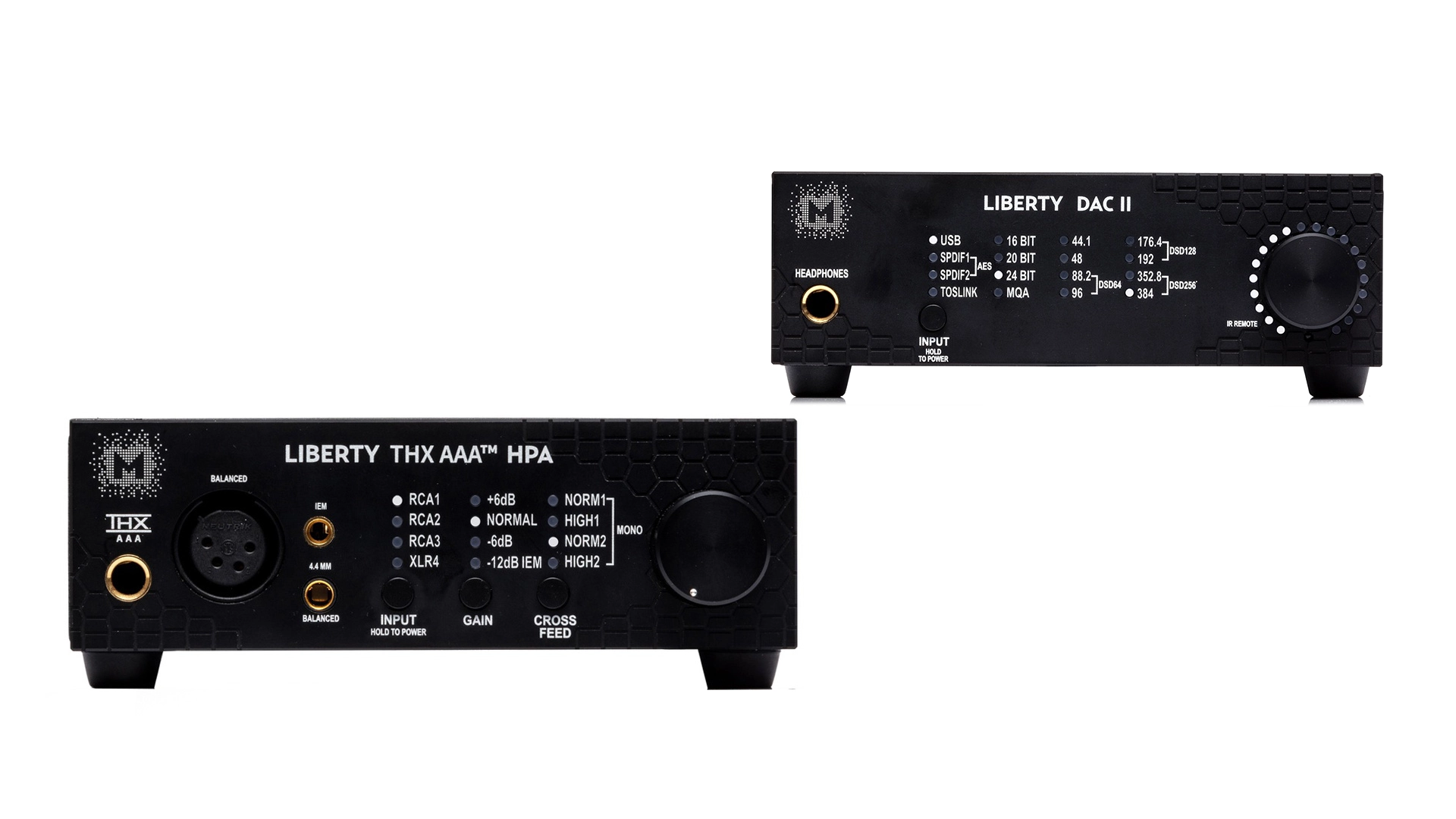
Mytek Audio is a New York-born digital-audio specialist whose products connect professional conversion, mastering practice and domestic hi-fi. Polish engineer Michal Jurewicz founded the company in 1992 after working in Manhattan studios, including The Hit Factory. That background explains the catalogue: Mytek built its name with DACs and ADCs intended to reveal rather than flatter a recording, then brought the same compact, highly connected architecture to headphone and home systems. Brooklyn became the defining product family, combining high-resolution conversion with analogue preamplification, a phono input and a capable headphone stage in a half-width chassis. Brooklyn DAC+, Brooklyn Bridge and the current Brooklyn Bridge II extended the idea with network playback and, in the latter, an integrated Roon Core. Liberty provides a simpler route into the platform, while Manhattan and Empire occupy the reference end. Mytek has supported PCM and DSD, extensive digital inputs, balanced analogue outputs and studio-oriented level control; format support varies by generation. The products are designed in New York and manufactured in Poland. Mytek’s real strength is not a generic “neutral sound” claim, but fitting serious conversion and system control into components equally at home beside a workstation or at the centre of a hi-fi system.
Naim

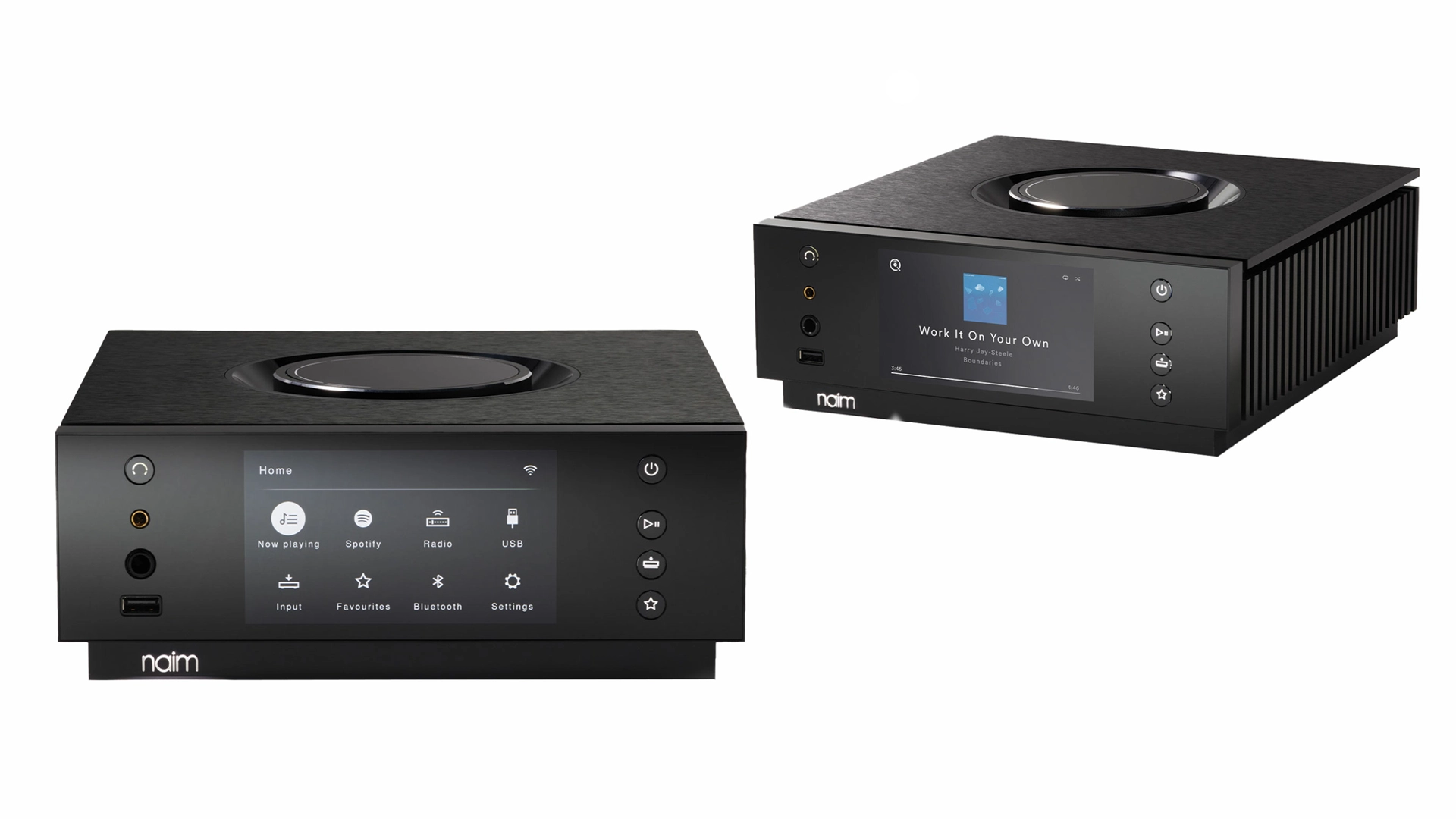
Naim Audio is the Salisbury electronics maker whose reputation rests on amplifiers and sources designed to preserve musical timing and momentum. Julian Vereker’s early amplifier work grew from a contract for Capital Radio, and Naim Audio was incorporated in 1973 with Vereker and Shirley Clarke as directors. The first consumer power amplifiers established a deliberately direct circuit philosophy; the NAP 250, introduced in 1975, became the long-running reference, while the compact NAIT integrated amplifier showed that the same priorities could work in an affordable system. Naim later built complete upgradeable systems around separate preamps, power amps and external power supplies, then became an early serious adopter of network replay. Uniti streaming amplifiers and Mu-so wireless systems broadened the audience, while ND sources, the New Classic separates and Statement amplification maintain the specialist end. Mechanical isolation, low-noise power regulation, carefully controlled grounding and proprietary streaming software matter more to the engineering than the familiar shorthand “PRaT.” Naim joined French loudspeaker maker Focal in 2011 under VerVent Audio Group, while design and production remained centred in Salisbury. In August 2026 Belgium’s Barco completed its acquisition of VerVent, so Naim is now part of Barco while retaining its British origin, brand and manufacturing identity.
NuPrime

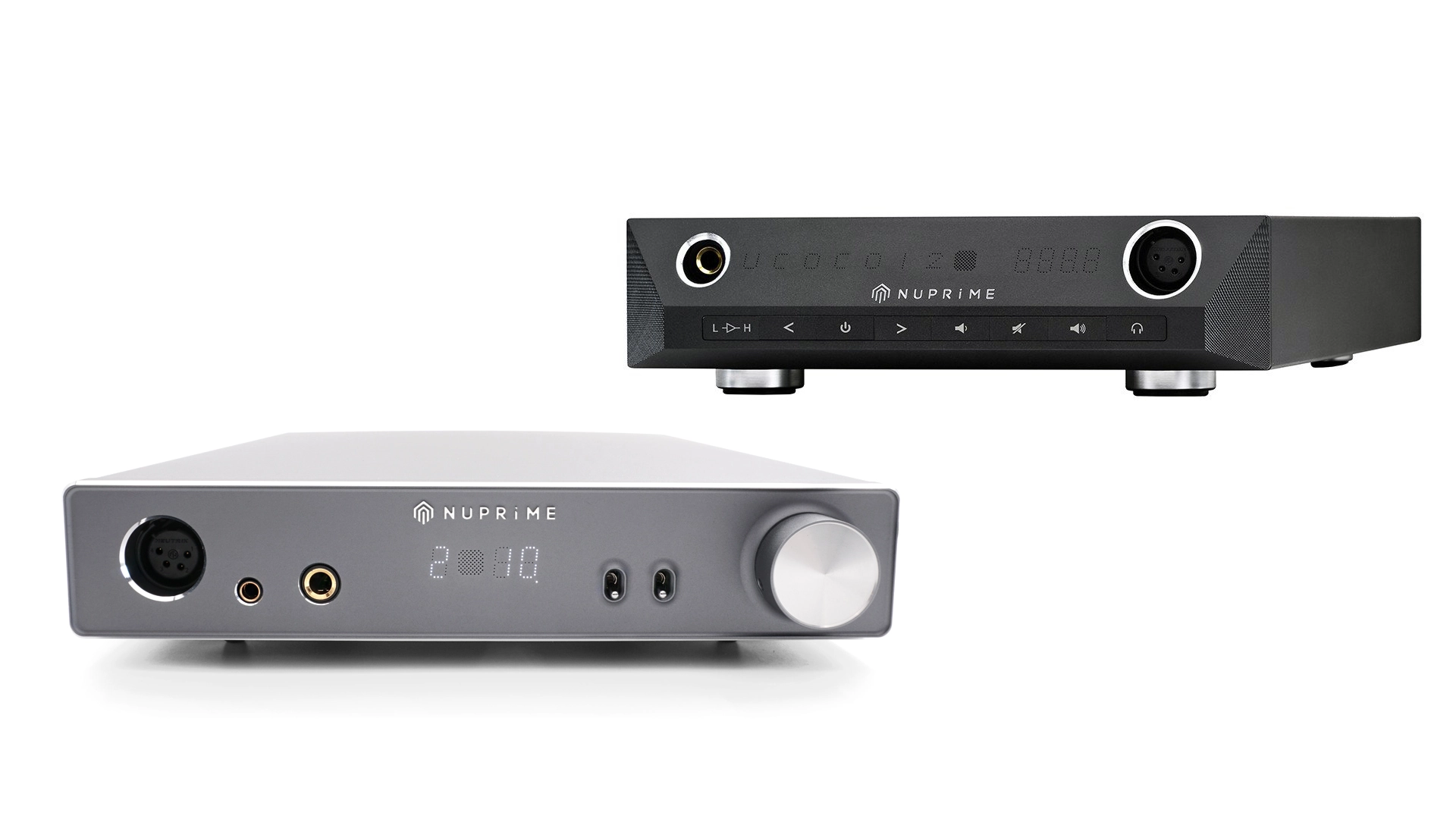
NuPrime Audio is the high-end electronics company Jason Lim created in 2014 after co-founding NuForce. With backing from a Taiwanese OEM partner, Lim acquired the assets of NuForce’s premium division and formed NuPrime to continue developing compact, efficient amplifiers and digital components. That lineage matters because NuPrime was not simply a renamed catalogue: it retained the high-end engineering direction while NuForce’s consumer brand followed a separate path. Amplification is the centre of the range. NuPrime designs its own switching stages and control loops instead of building every model around an off-the-shelf Class-D module; it describes the result as hybrid Class-D, combining a tailored analogue front end with a high-frequency switching output stage. Evolution is the reference family, AMG emphasises compact separates, and the 9 Series offers accessible DACs, preamps and power amplifiers with matching proportions. Integrated amplifiers, phono stages, streamers and the NuPrime-X multi-channel platform extend the architecture into complete and installed systems. As of 2026 the brand is managed by Singapore-based Nuoem Pte. Ltd., while NuPrime Audio, Inc. retains its American origin. The defining advantage is a coherent ecosystem of small, low-heat electronics built around proprietary amplification rather than Class-D efficiency alone.
NVA

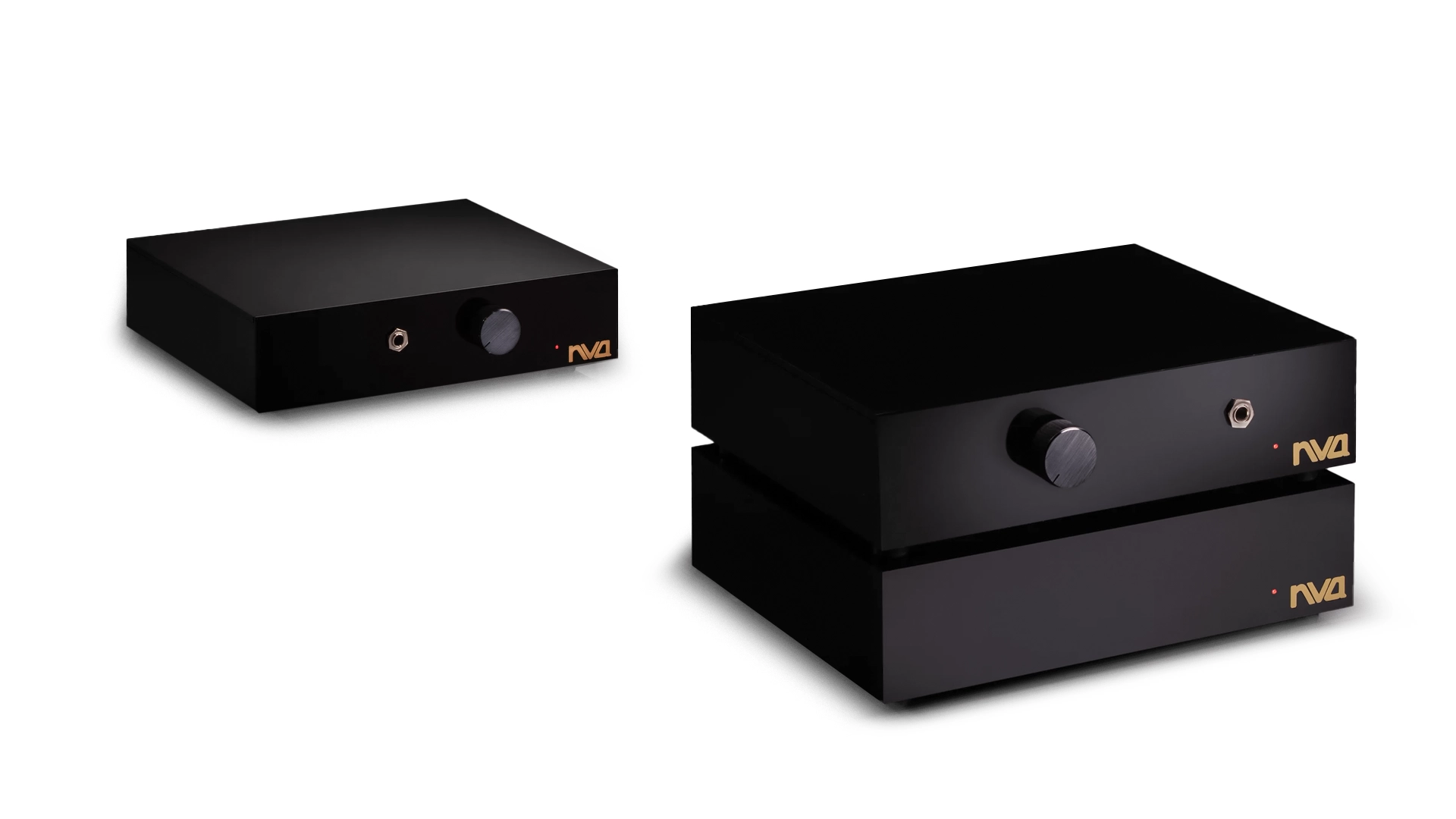
NVA—originally Nene Valley Audio—is the British specialist amplifier brand founded in 1982 by Richard Dunn, formerly of professional-audio maker Tresham. Dunn’s maxim was “if you can do without it, do without it,” and his products removed active preamplifier stages, unnecessary protection networks and long signal paths wherever practical. Acrylic cases avoided the eddy-current paths of conductive metal chassis, while passive volume controls, hard-wired power connections and deliberately low-capacitance NVA cables formed a tightly matched system. The original description is critically wrong in saying NVA ceased trading in 2019. Dunn died that May, but former employee Tomasz Danus and long-time customer Paul Tiernan bought the remaining assets in August and established Hi-fi Subjectivist Audio Ltd to revive the brand. Mark McVitty joined as a shareholder and UK builder in 2022. Current products include P-series passive preamps, S and M power amplifiers, INT integrated amplifiers, phono and headphone stages, Cube semi-omnidirectional speakers, low-capacitance interconnects and speaker cables, and a balanced mains unit. The new team has preserved Dunn’s circuits while improving boards, transformers, capacitors, assembly and service support. NVA remains hand-built and direct-sold in Britain, with home trials and repair paths for legacy units.
ONIX

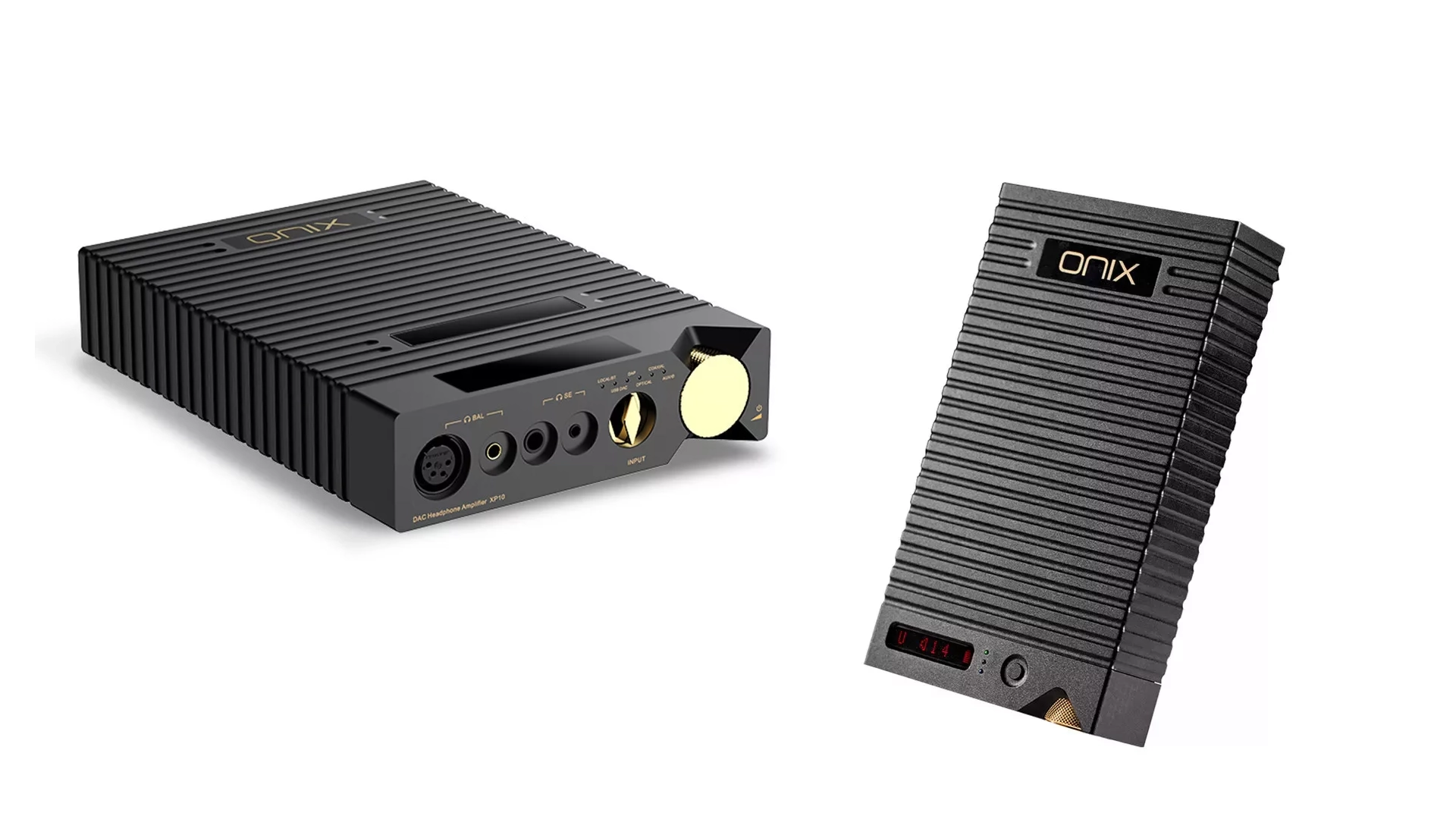
ONIX is a British-origin audio name associated with the compact OA21 integrated amplifier and a minimalist, performance-first approach to electronics. The contemporary range shown on the listed site is developed in close association with Shanling and revives familiar ONIX visual cues—black acrylic, gold details and substantial power supplies—in modern digital and analogue components. Public accounts from the current distributor and from the separate British OA21/ONIX operation conflict over the exact start date, founders and trademark history, so assigning a single founding year here would create false certainty. The present flagship is Miracle, a modular stack that separates streamer, DAC, power supplies and headphone amplification into compact matching chassis. OC93 combines CD replay and network streaming, while OIA92 is a high-current integrated amplifier built around a large UI transformer and a dual-mono output section; ONIX-branded portable players, DACs and headphone products extend the name into personal audio. This should not be presented as an uninterrupted factory history from one owner. It is more accurate to distinguish the classic British amplifier legacy from the current Shanling-associated product programme while recognising that both use the ONIX name. The enduring thread is compact, visually restrained hardware with serious power or digital architecture rather than a broad lifestyle-electronics catalogue.
Pass Labs

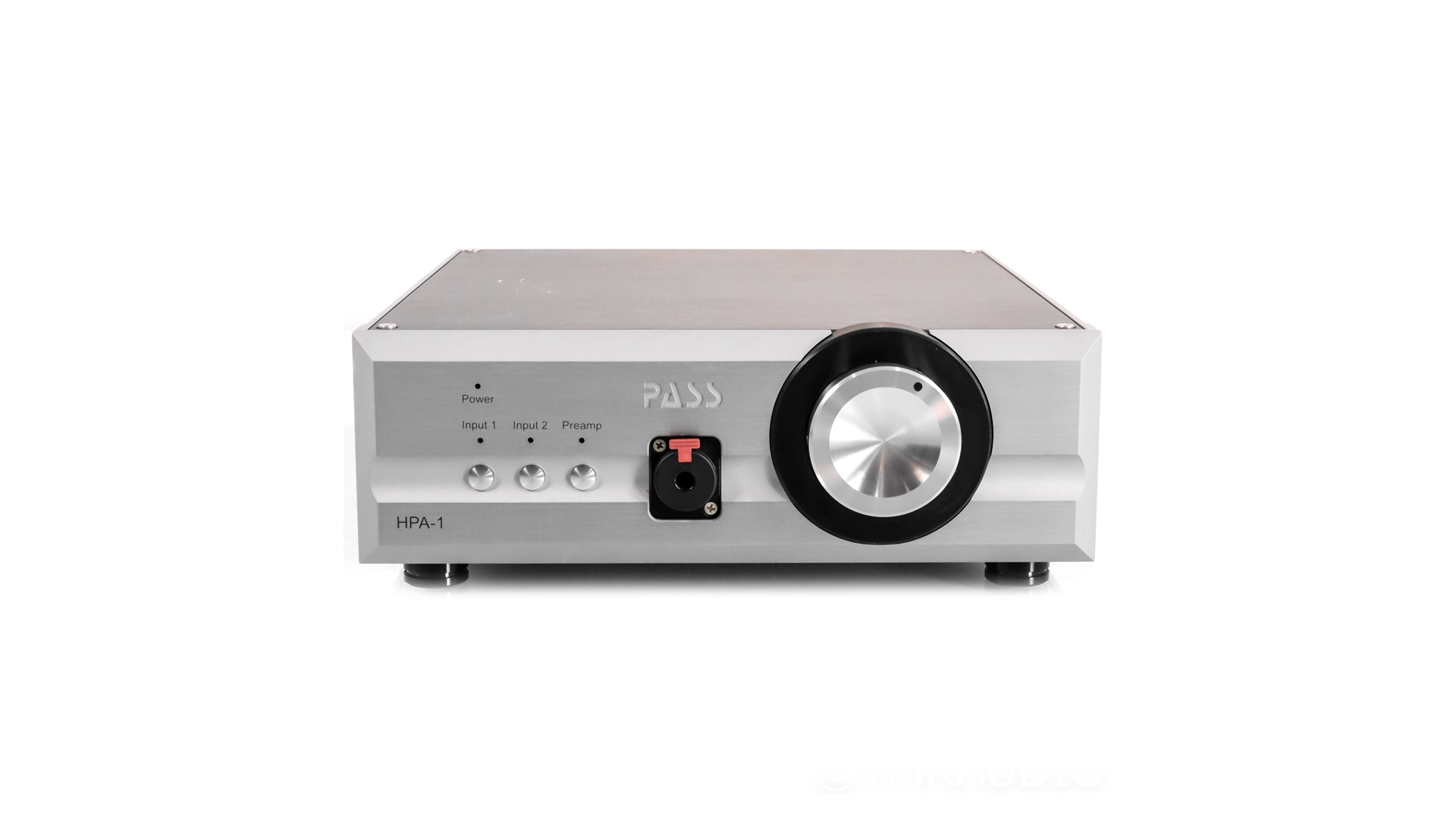
Pass Labs is the American high-end electronics company Nelson Pass founded in 1991 after his years at Threshold. Its reputation rests less on fashionable features than on a sustained investigation of simple, high-bias amplifier circuits. The large heat sinks are functional: many designs keep their output stages in Class A for all or a substantial part of their operating range, accepting heat and weight in exchange for low crossover distortion and an unusually direct signal path. The XA.8 series is the clearest expression of this philosophy in pure Class A, while the X.8 amplifiers deliver more power through a Class A/AB architecture. Both families use Pass Labs’ SuperSymmetry concept, introduced in the late 1990s, to cancel distortion in a balanced circuit without relying on heavy global feedback. The cost-no-object XS line extends the same thinking with separate power supplies and enormous current reserves. XP and XS preamplifiers, XP phono stages, INT integrated amplifiers and the HPA-1 headphone amplifier complete the system. Earlier Aleph amplifiers remain important because they established Nelson Pass’s single-ended Class A direction before the X and XA generations. Pass Labs is therefore defined by continuity: one designer-led school of analogue engineering, refined across power amplifiers, preamplifiers and integrated models rather than reinvented for each product cycle.
Pathos

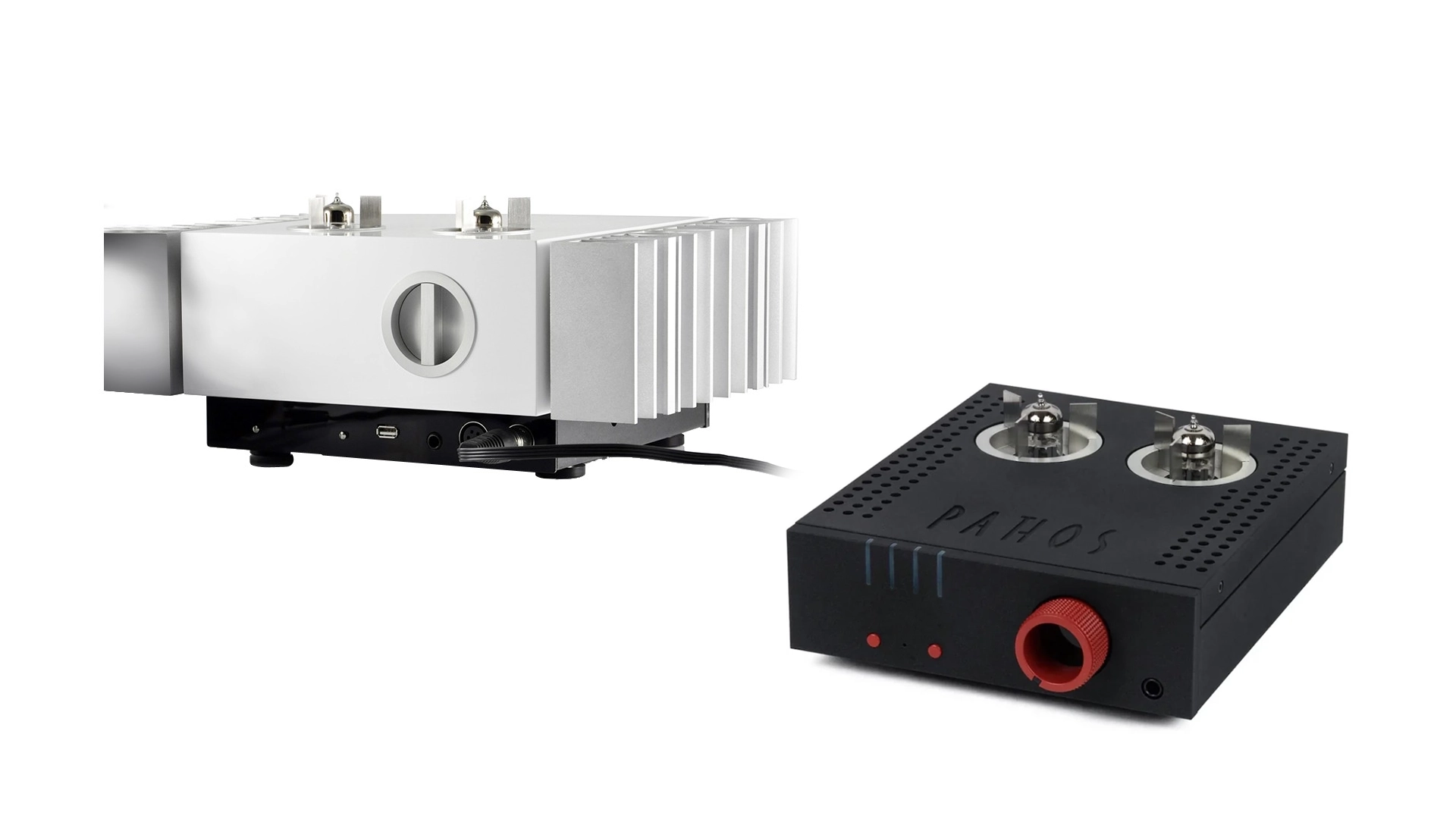
Pathos Acoustics was founded in Vicenza in 1994 by Gaetano Zanini, Gianni Borinato and Paolo Andriolo. Its first amplifier, the T.T. or Twin Towers, made the company’s identity immediately visible: valves handle voltage gain, solid-state devices provide current, and industrial design is treated as part of the component rather than as a box around it. The combination became a recognisable Italian alternative to both traditional tube amplifiers and conventional transistor designs. The technical centre of Pathos is Gianni Borinato’s patented InPoL—Inseguitore Pompa Lineare, or Linear Pump Tracker—topology. In an InPoL amplifier a tube stage provides the gain and a solid-state follower operating at unity gain supplies current in pure Class A; a large energy-storage inductor helps improve efficiency, while the output stage avoids global negative feedback. InPoL Legacy, InPoL Heritage MkII, InPoL2 MkII, the compact InPoL Remix MkII and the InPoL Ear headphone amplifier apply that principle at different scales. Logos, Classic One and Aurium broaden the range beyond the full InPoL architecture, while Adrenalin and InPower Mk2 address high-power systems. Units are assembled in Vicenza using metal, wood and exposed valves with unusually sculptural layouts. Pathos’s real distinction is not merely “warm tube sound,” but a proprietary hybrid circuit that separates voltage gain from current delivery and has been developed continuously since the original Twin Towers.
Playback Designs

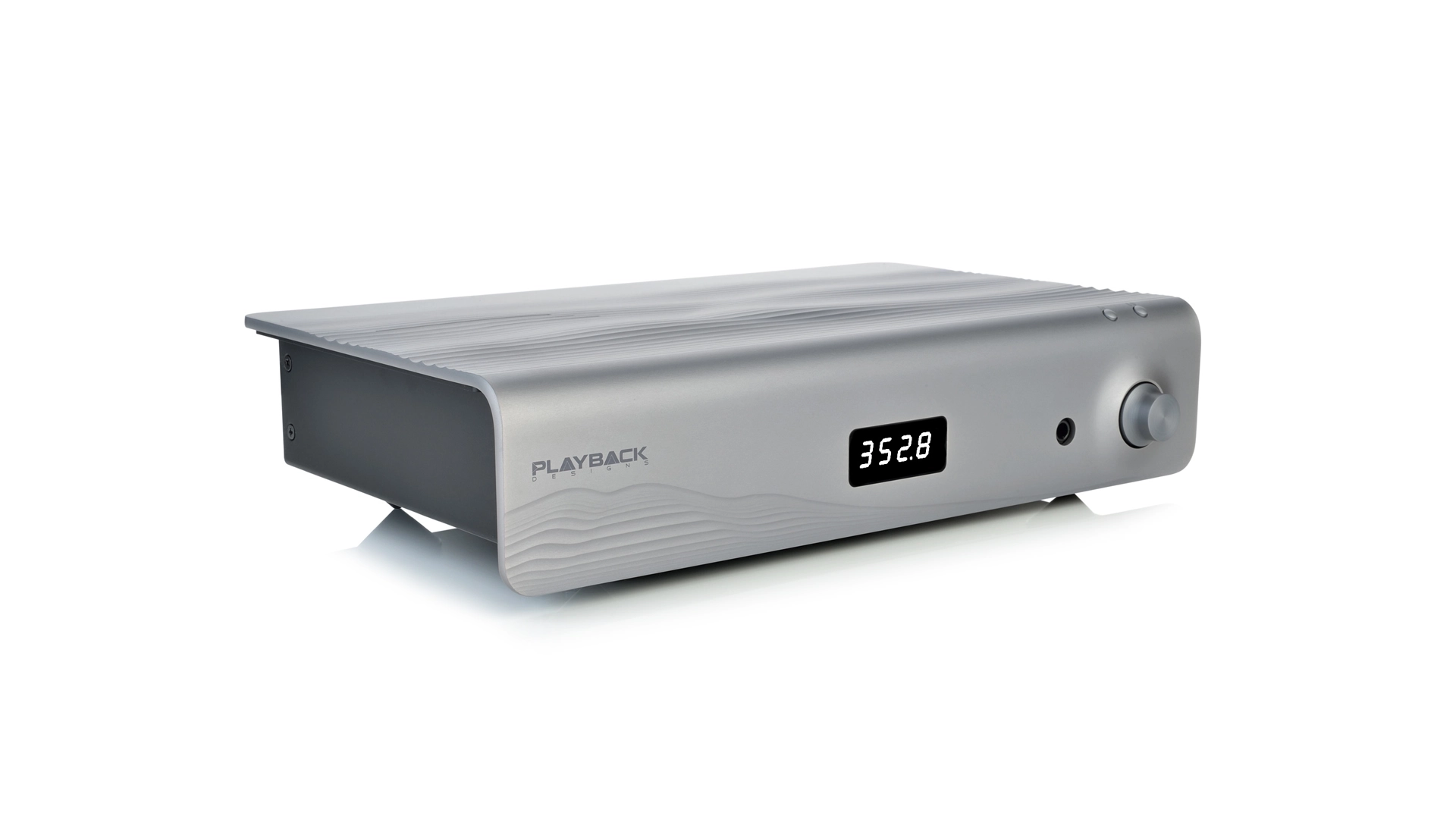
Playback Designs was formed in 2008 by digital-audio engineer Andreas Koch, joining Swiss-German engineering with an American company base. Koch’s experience predates the brand by decades: at Studer ReVox he developed an early asynchronous sample-rate converter and received a patent in 1984; he later worked on Dolby digital systems, Sony’s Sonoma eight-channel DSD recorder and the digital architecture of EMM Labs products. Playback Designs began with an integrated SACD/CD player that also accepted external digital sources, making the disc machine the hub of a high-resolution system. The current Dream Series includes MPD-8 and MPD-8AI DACs, MPT-8 transport, MPS-8 integrated player and SPA-8 power amplifier. Edelweiss models such as MPD-6, MPS-6 and MPS-X bring related architecture to a smaller range, while Pinot converts analogue sources to DSD. Koch avoids standard off-the-shelf DAC operation where it would limit future development: programmable, discrete conversion and proprietary algorithms allow major processing changes through software. PDFAS clocking and signal processing address jitter without a conventional fixed PLL, while the optical PLink connection carries audio between components with galvanic isolation and coordinated timing. The important story is not a list of formats. Playback Designs applies knowledge gained while creating professional DSD recorders to consumer playback, then keeps the digital platform reprogrammable so expensive hardware can evolve as algorithms and interfaces change.
Pro-Ject
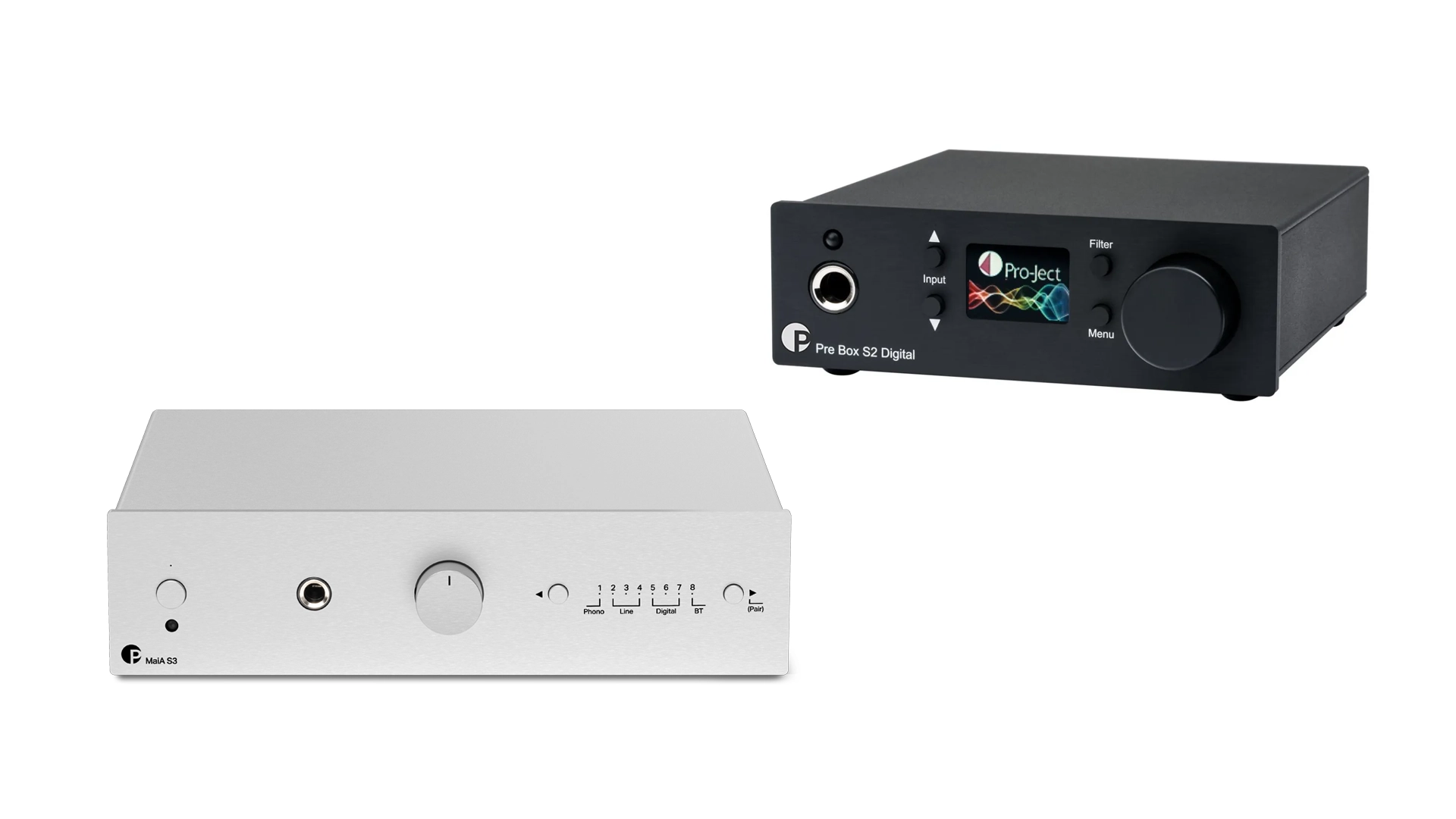
Pro-Ject Audio Systems was founded in Austria in 1991 by Heinz Lichtenegger, at a moment when the audio industry was treating the compact disc as vinyl’s replacement. Lichtenegger’s counterargument was the Pro-Ject 1: a simple belt-drive turntable built around the parts necessary for stable speed and accurate tracking, without automatic mechanisms or cosmetic complexity. The strategy proved prescient, and the Debut, introduced in 1999, became the model that brought the company to a much wider generation of record listeners. Pro-Ject now covers almost every scale of manual turntable. E and T families address first systems; Debut remains the recognisable centre; X, RPM and Xtension add more elaborate plinths, bearings, platters and tonearms; and Signature represents the flagship engineering. Many decks are assembled by hand in the Czech Republic, preserving production skills from the region’s long record-player history. The company also makes phono stages, speed controls, cartridges, record-cleaning machines and accessories, so a turntable can be upgraded rather than discarded. Box Design electronics—compact phono stages, amplifiers, DACs, streamers and CD transports—are largely produced in Slovakia and extend the same space-efficient philosophy beyond vinyl. Artist Collection editions use visual collaborations and licensed themes, but beneath the artwork they remain functional Pro-Ject platforms. The brand’s significance is not simply that it sells many turntables: it maintained European manual-turntable production through the digital era and built a clear path from an inexpensive first deck to genuinely ambitious analogue systems.
Questyle Audio

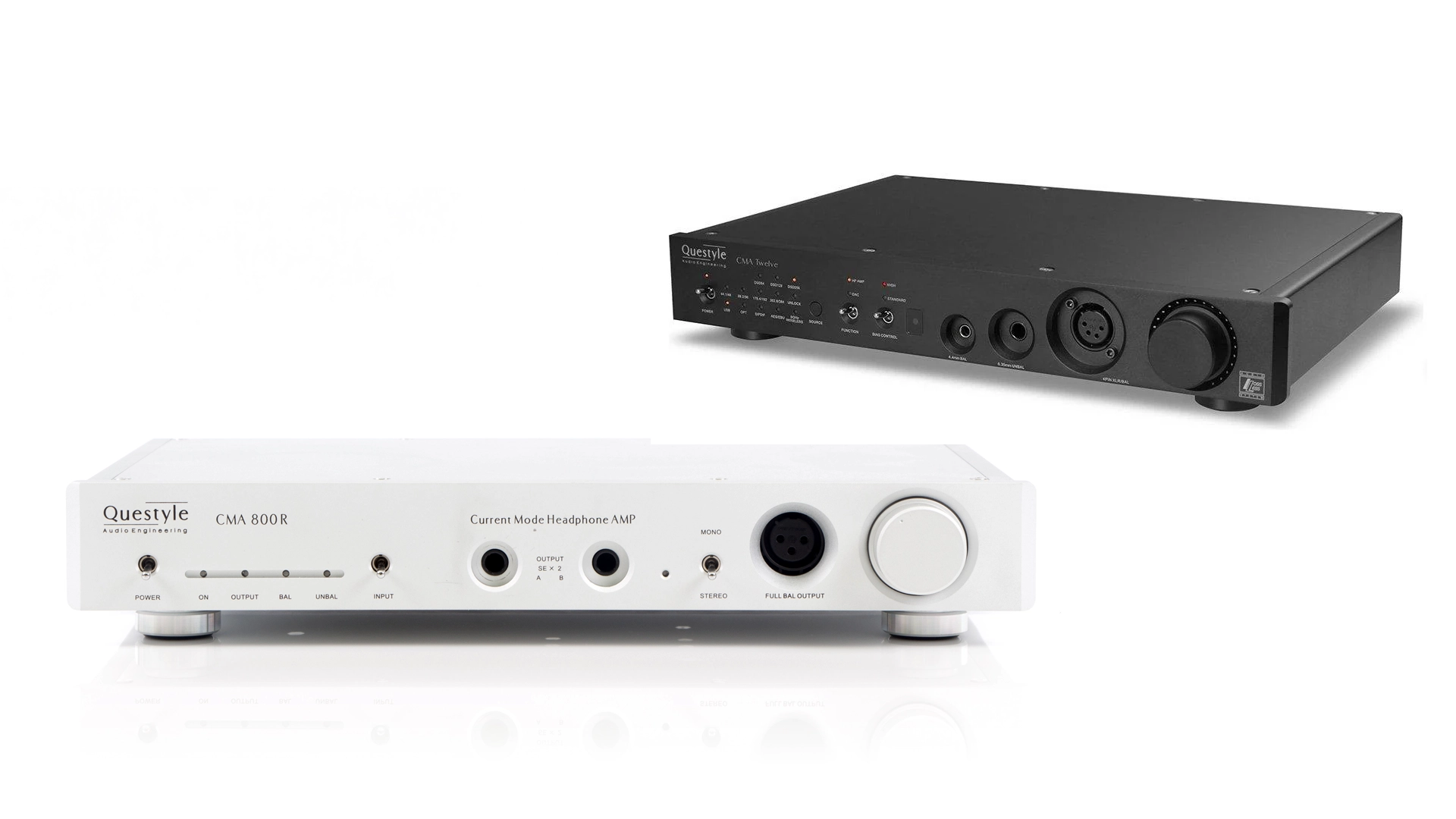
Questyle Audio was founded in Shenzhen in 2012 by engineer Jason Wang. Its identity is built around one circuit approach rather than a generic catalogue of DACs: patented Current Mode Amplification. In a current-mode stage the signal is processed as current through a very low-impedance node, allowing extremely high bandwidth and fast feedback when implemented correctly. Questyle uses the topology in discrete Class A modules, often four per channel in fully balanced desktop products, with the aim of achieving low distortion and stable control of headphones. The CMA family made the technology visible in combined DAC, preamplifier and headphone-amplifier components. CMA Twelve and CMA Fifteen became reference models; CMA Fifteen pairs four current-mode modules with an ESS ES9038PRO converter and can operate as a headphone amplifier, DAC or variable-output preamplifier. Newer CMA18 models continue the desktop line. QP1R and QP2R portable players brought the same amplifier idea to battery-powered listening, while M12, M15 and M15i dongle DAC/amps made it practical with phones and laptops. NHB earphones extend the mobile ecosystem through direct digital connections on supported devices. Product specifications and supported codecs vary by generation, so the brand should not be reduced to a claim that every model is wireless or handles every format. The important point is consistency: Questyle repeatedly redesigns complete source-and-amplifier products around its high-bandwidth current-mode stage, from a pocket dongle to a balanced desktop hub. The founding year has been added only because the 2012 date and Jason Wang’s role are consistently documented; the earlier text had left it blank.
RAAL-Requisite

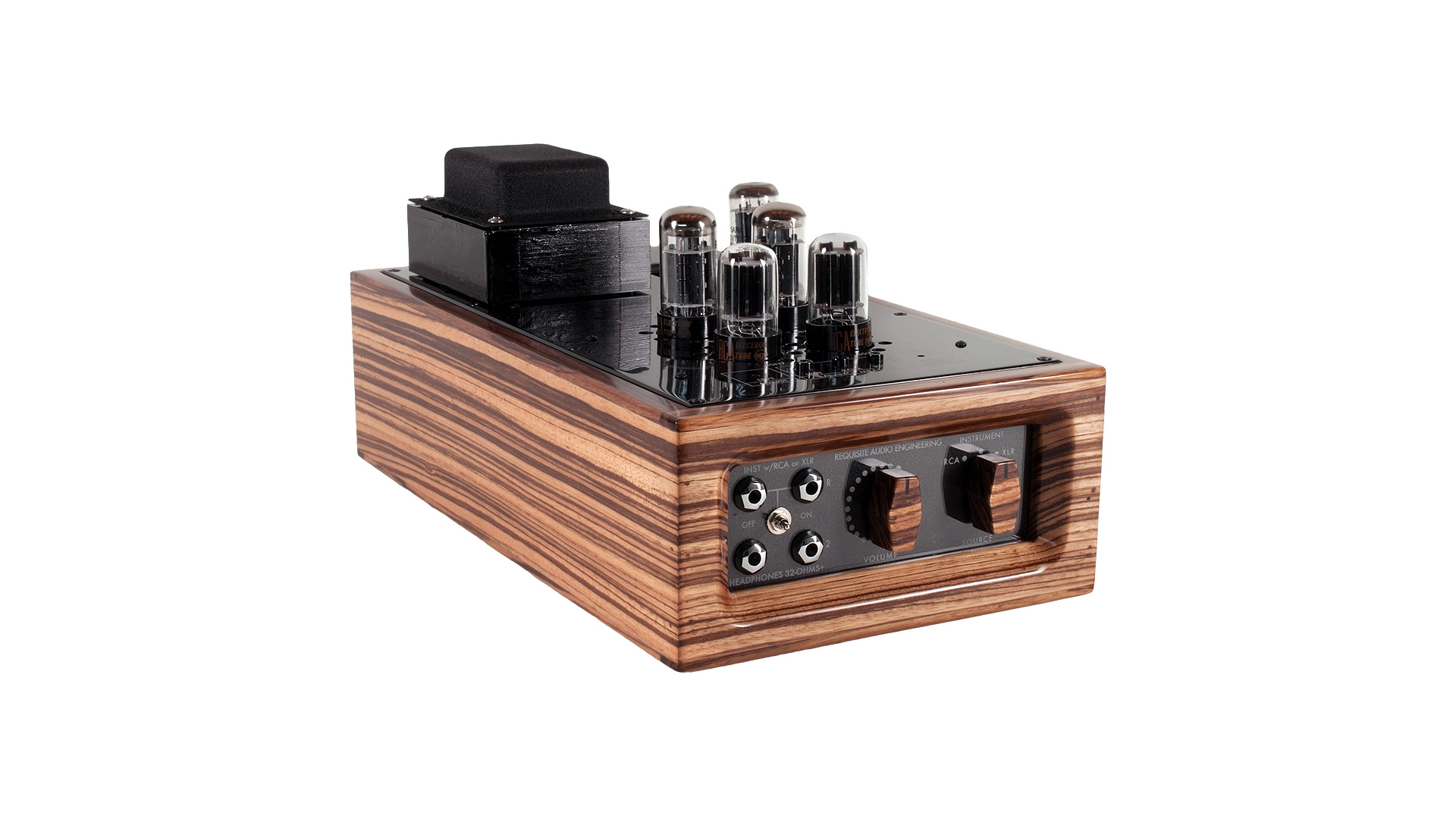
RAAL-requisite was the collaboration between Serbian ribbon specialist RAAL and Danny “Sage” McKinney’s Requisite Audio in California. McKinney and designer Aleksandar Radisavljević worked together for roughly two decades before the SR1a appeared in 2018. Their goal was not to put a conventional planar diaphragm into a headphone cup, but to adapt a true ribbon—the conductor and radiating diaphragm are the same corrugated aluminium foil—to full-range personal listening. The SR1a became the defining product. Its open “earfield monitor” wings sit beside the ears and can be angled to alter the presentation, creating a speaker-like field without sealed cups. The extremely low-impedance ribbon initially required an interface connected to a suitable speaker amplifier or a purpose-built direct-drive amplifier. HSA-1b and VM-1a were developed around that unusual load. CA-1a later placed a full-range ribbon in a more familiar circumaural form while retaining replaceable ribbon cartridges and dedicated amplification requirements. The old text incorrectly suggested a range of open- and closed-back conventional models; neither SR1a nor CA-1a is an ordinary closed-back headphone. The corporate presentation has since changed. Requisite Audio now represents RAAL 1995 in the Americas, and the current Magna and Immanis headphones use two or three purpose-tuned true ribbons per side; Magna EVO continues that multi-ribbon generation. RAAL-requisite remains historically important as the name under which SR1a and CA-1a reached the market, while the current products sit under RAAL 1995 and Requisite. No speculative founding year has been added to the joint brand.
Riviera
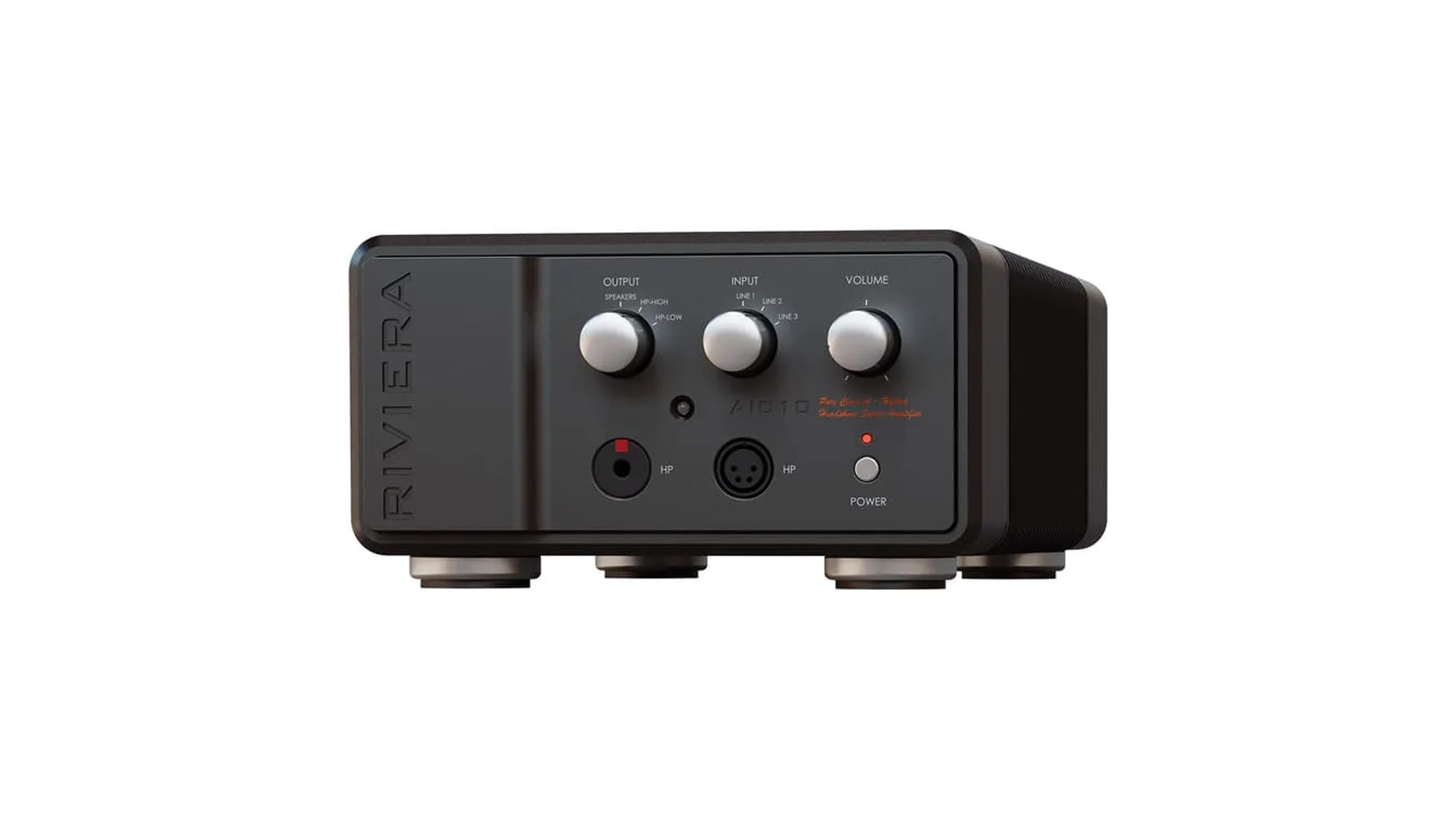
Riviera Audio Laboratories is an Italian high-end electronics company founded in January 2017 by engineer Luca Chiomenti and Silvio Delfino. Marco Muzio has collaborated with the project from its beginning on mechanical and industrial design, but the company’s own history identifies Chiomenti and Delfino as the founding partners. Riviera’s amplifiers are built around an unusual technical position: the voltage-gain stages use directly heated or small-signal triodes, while solid-state devices provide the current needed to control a loudspeaker. The aim is not to advertise a fashionable “hybrid” label, but to assign each device type the job it performs best. Circuits avoid global negative feedback, operate important stages in Class A and are developed as wide-bandwidth analogue systems with carefully regulated power supplies. The AIC-10 headphone amplifier and control unit introduced many listeners to the brand because it can drive demanding headphones while functioning as a compact line preamplifier. Levante applies the philosophy to an integrated amplifier, APL-10 is the dedicated line preamplifier, and AFM-25 and AFM-100 monoblocks provide power at different system scales. Chassis construction, thermal management and internal layout are treated as parts of the electrical design, and production remains deliberately limited. Riviera’s distinguishing feature is the coherence between theory and product: Chiomenti’s research into distortion, feedback and device behaviour is expressed through a small range whose valve input stages and transistor outputs are not compromises but complementary tools. The result is a recognisably Italian brand without reliance on decorative luxury alone.
Schiit

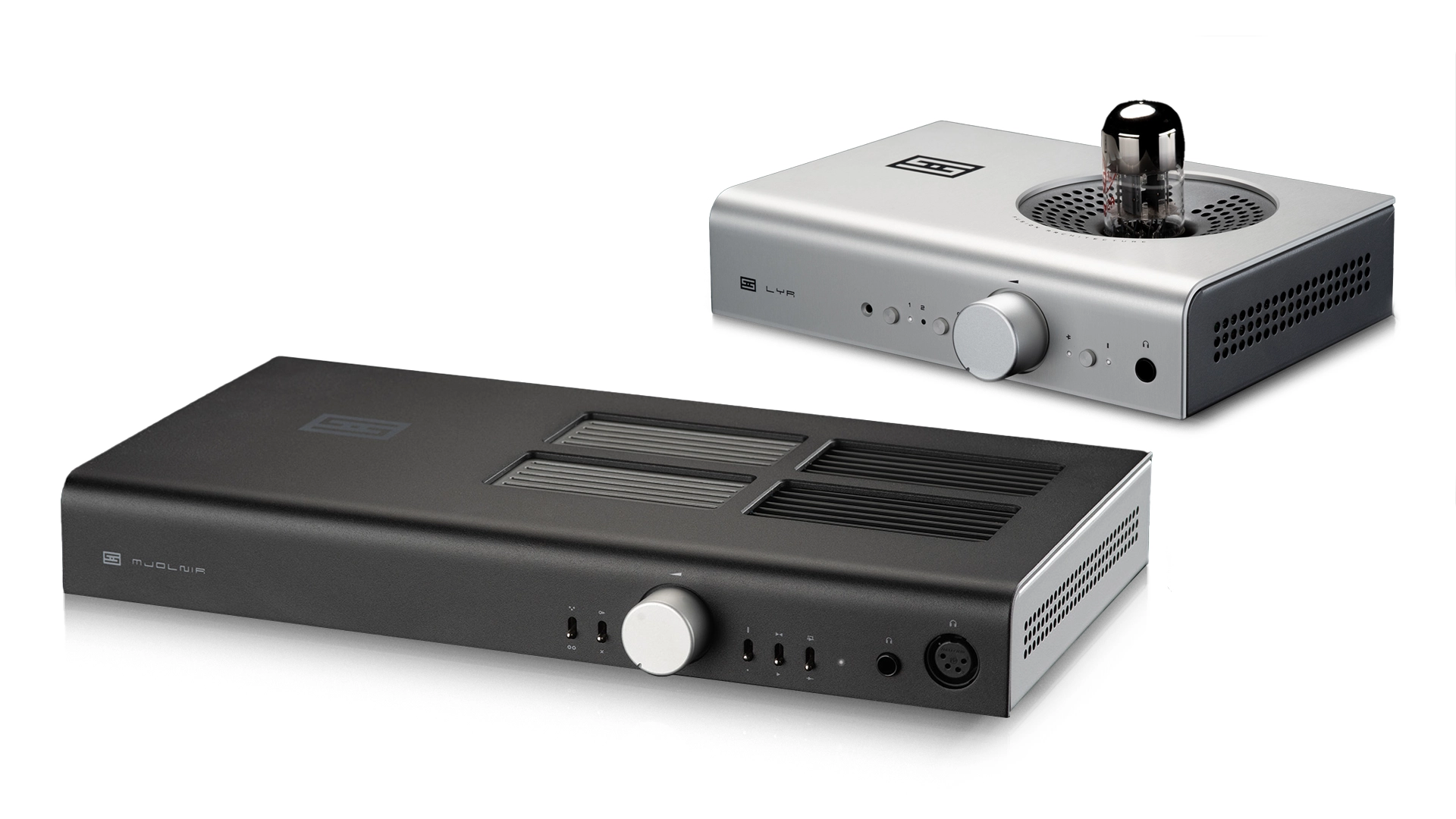
Schiit Audio is an American electronics company founded in June 2010 by Jason Stoddard, formerly of Sumo, and Mike Moffat, known for Theta Digital. It began with the compact Asgard solid-state and Valhalla valve headphone amplifiers, then used direct online sales and deliberately plain industrial design to make specialist audio circuits available without conventional dealer mark-ups. Magni headphone amplifiers and Modi DACs became gateway products, but the catalogue now spans a complete two-channel system. Jotunheim and Lyr offer modular desktop amplification, Midgard introduces the Halo mixed-mode feedback output, and tube designs such as Valhalla and Folkvangr explore different circuit priorities. Bifrost and Yggdrasil are built around Schiit’s proprietary digital filters and multibit conversion options rather than treating every DAC as an interchangeable chip application. Freya and Kara preamplifiers, Vidar, Aegir and Tyr power amplifiers, the Ragnarok integrated amplifier and Mani phono stage extend the range to loudspeakers and vinyl. Many components are designed and assembled in California or Texas with substantial US-sourced chassis and circuit-board work; some lower-cost parts and subassemblies are necessarily global. Modular cards, firmware updates and upgradeable flagship products resist rapid obsolescence. Schiit’s irreverent name and candid engineering essays attract attention, but the lasting contribution is more serious: the company made measurement, circuit topology, domestic manufacturing and price trade-offs unusually visible to customers. Its products are varied rather than tuned to one formula, yet share a practical goal—useful performance and repairable hardware without luxury-audio ceremony.
Shanling

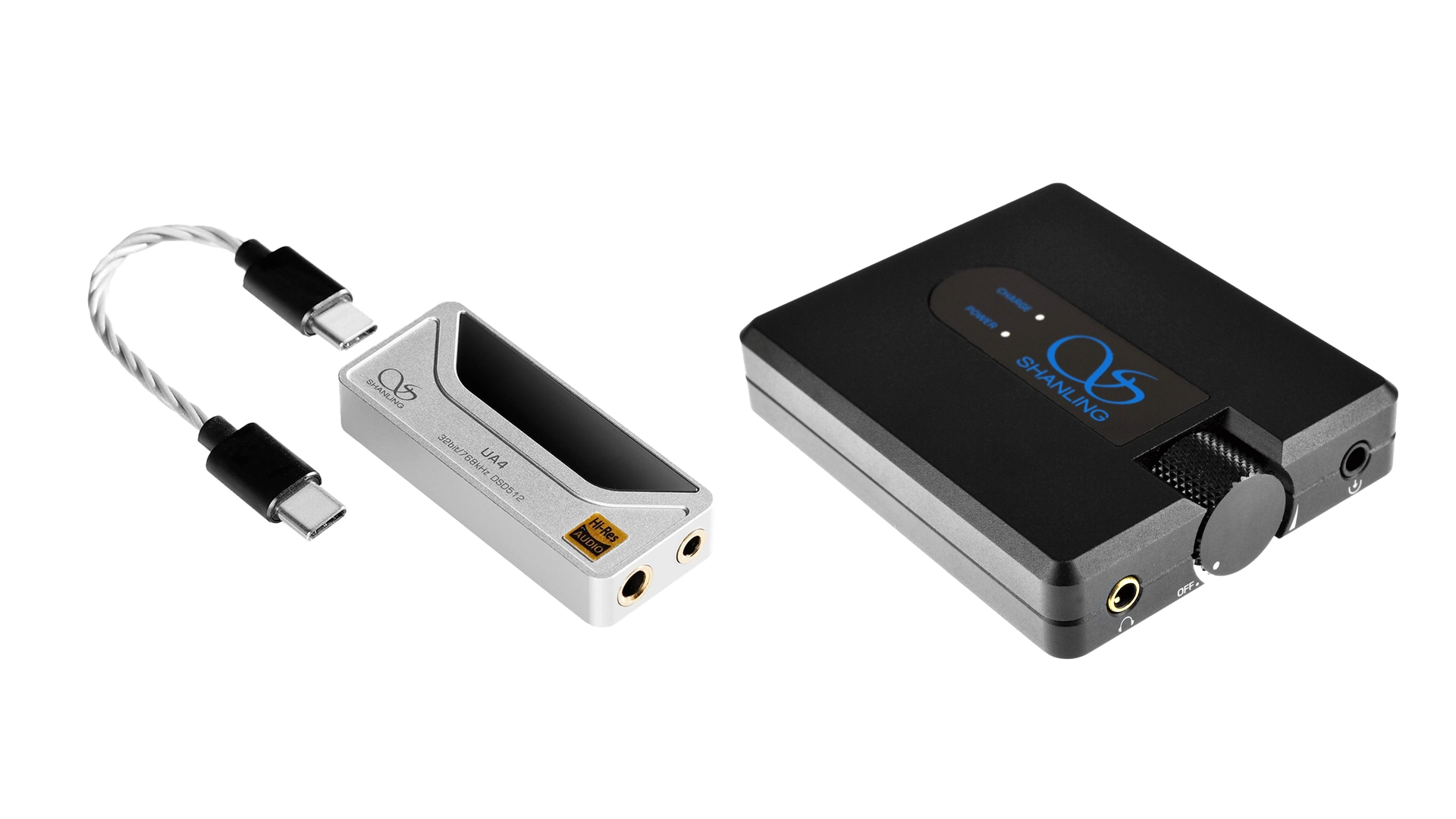
Shanling is a Chinese audio manufacturer founded in 1988, when it developed and released its first stereo amplifier. The company subsequently built CD, HDCD and SACD players, valve-output disc players, tuners, amplifiers and power products, acquiring the manufacturing depth that later distinguished it from brands created solely for the portable-audio boom. The CD-T100 helped Shanling enter international markets, while its M3 of 2014 was the first portable high-resolution player and opened the most visible chapter of the modern range. M-series digital audio players now span tiny entry models to Android flagships, with Shanling’s own MTouch interface used where a lighter operating system is preferable. The miniature M0 became especially influential by combining touchscreen control, high-resolution playback and two-way Bluetooth in a genuinely pocketable body. Portable DAC/headphone amplifiers in the UA and H families, Bluetooth receivers, desktop DACs, streamers and the revived EC/CD lines extend the digital source chain; ME and MG earphones give the company control over the final transducer as well. Shanling regularly works with established DAC, amplifier and Bluetooth platforms, but implements them through its own circuit layouts, clocking, power supplies, firmware and precisely machined aluminium cases. Its Shenzhen offices and Dongguan factory combine R&D, metalwork, assembly and sales, while licences and certifications have included LDAC, Hi-Res Audio, HDCD, Dolby, DTS, DVD and SACD technologies over the firm’s history. Shanling’s strength is continuity across formats: it understands optical discs, desktop hi-fi, wireless links and battery-powered players, so its portable products are not isolated gadgets but compact expressions of a much broader audio-engineering practice.
Silent Angel

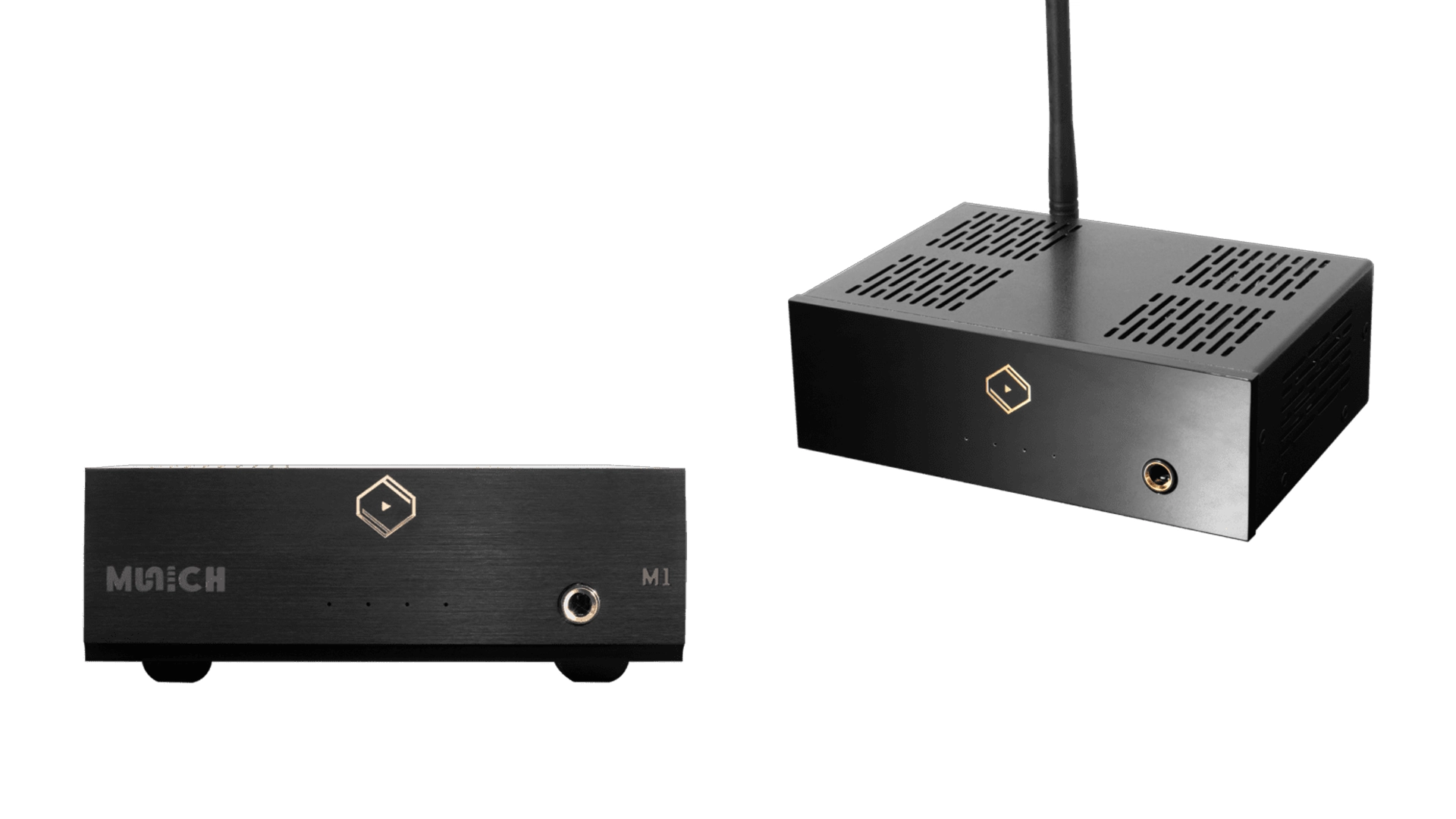
Silent Angel is the network-audio brand of Thunder Data, a technology company established in 2014 with experience in storage, networking and embedded computing. The brand focuses on the digital source before the DAC: music servers, streaming transports, network switches, master clocks, low-noise power supplies and the software required to control them as one system. Rhein Z1 and Z1 Plus servers run Silent Angel’s VitOS platform and can host music libraries and services, including Roon-based workflows, without placing a general-purpose computer beside the audio rack. Munich and Bremen players address network playback, while the Bonn family of switches—from the compact N8 to higher N8 Pro, N8C, NX and dual-zone N16 designs—adds low-noise power, clock control and, on selected models, SFP fibre connections. Genesis GX/GC clock products provide an external timing reference for compatible network devices, and Forester linear supplies or ground-control products let owners improve power without replacing the whole source. VitOS Manager and current companion apps handle configuration, playback and integration with local storage, NAS libraries and streaming platforms. Silent Angel’s claims about network noise and jitter should be judged in a complete system, but the architecture is clear: separate the compute-intensive server, the network link and the endpoint feeding the DAC, then control electrical coupling through fanless hardware, regulated power and optical isolation where useful. Although the brand is Taiwanese in origin, development and company operations are international. Its distinguishing feature is not any single “audiophile switch,” but a modular ecosystem in which computing, networking, clocking, power and user software are designed to work together.
Simaudio
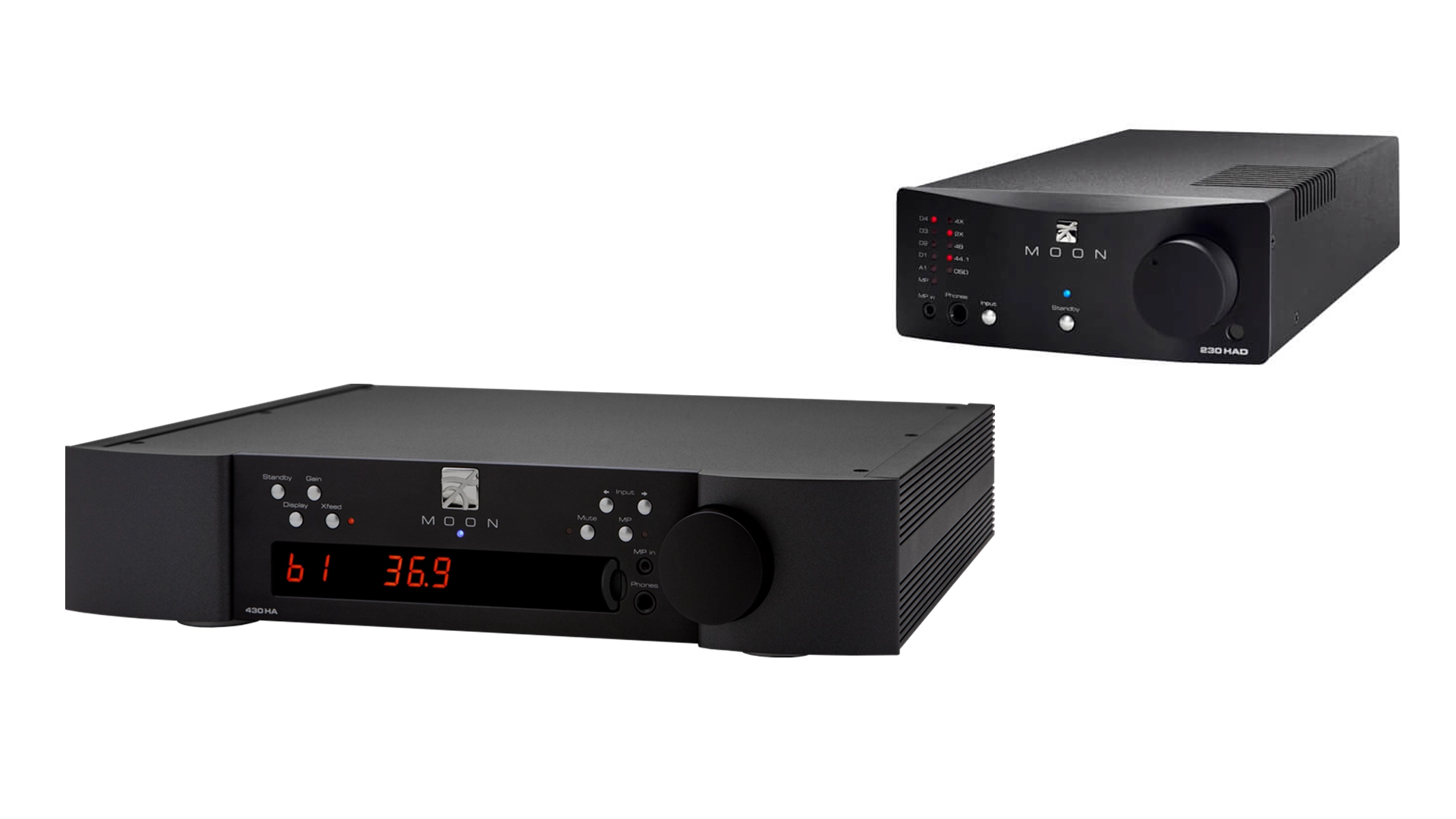
Simaudio is a Canadian high-end electronics manufacturer founded in 1980 as Sima Electronics by Victor Sima. The early company became known for muscular amplifiers able to control demanding loudspeakers; in 1994 Jean Poulin and partners acquired the business, and the MOON name gradually became the public identity of its products. Design and manufacturing remain near Montreal, with metalwork, circuit assembly, testing and long-term service kept unusually close for a modern audio company. MOON electronics cover integrated and power amplifiers, preamplifiers, network players, DACs and phono stages. The Evolution series established technologies such as M-LoVo low-voltage regulation, M-eVOL2 volume control and the MiND network platform, while the compact ACE combined streaming, conversion, amplification and phono input in one chassis. MiND 2 supports contemporary network playback and multiroom control without making a computer the front end. The flagship North Collection develops this architecture in the 681 streamer/DAC, 791 network player/preamplifier, 761 and 861 power amplifiers, and the 891/888 reference separates, with the BRM remote giving tactile control across the system. Simaudio does not use one circuit unchanged at every price: power-supply scale, dual-mono separation, output topology, conversion and control are adjusted to each product, but low noise, high current and operational longevity remain consistent priorities. The company is still independently Canadian rather than a legacy badge owned abroad. Its distinction is the ability to join serious analogue amplification with mature streaming and interface design while preserving repairability and factory support—an evolutionary approach that has kept MOON components current without erasing their two-channel roots.
Sony

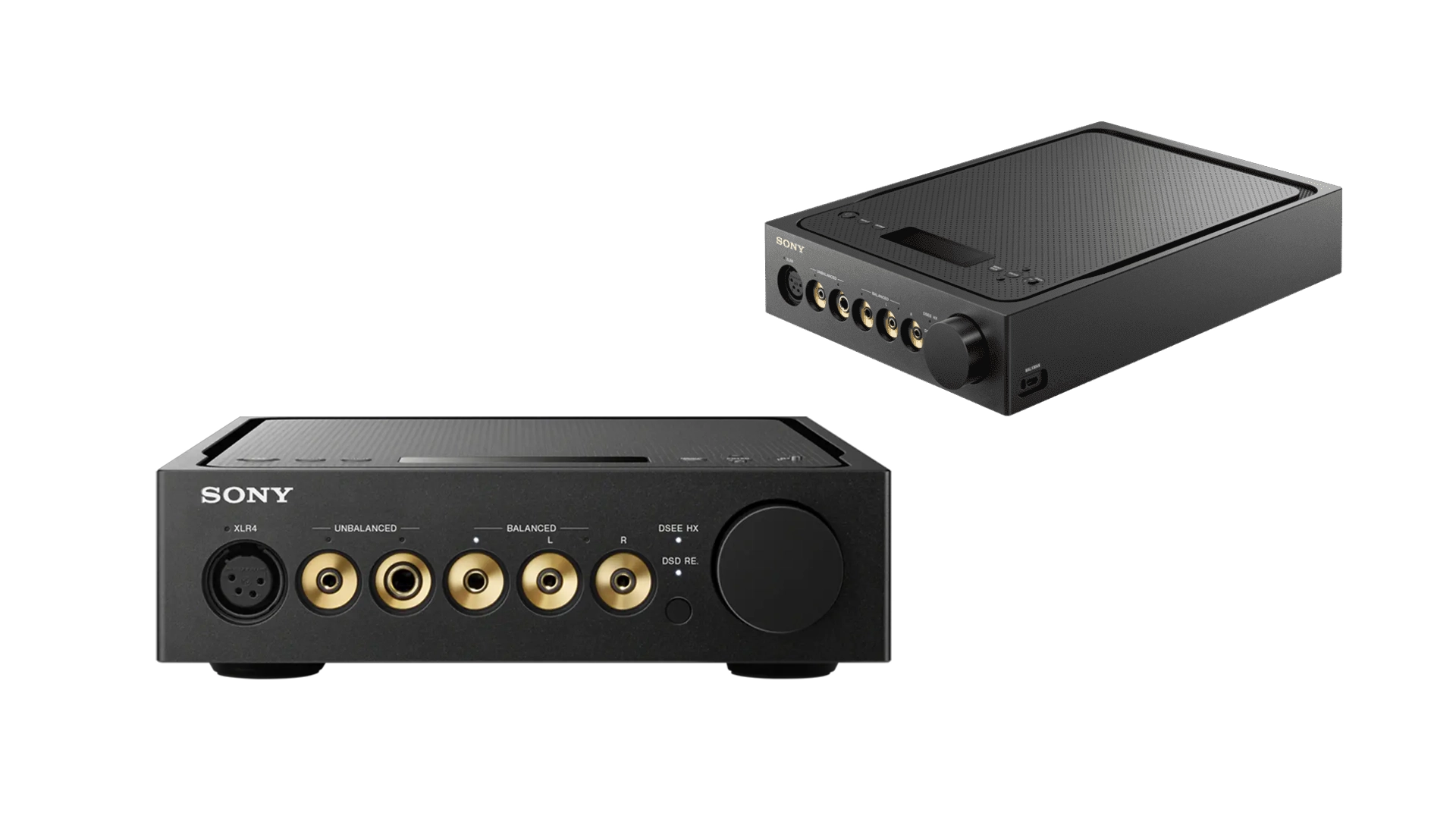
Sony helped shape both personal listening and home entertainment, from the Walkman and Compact Disc era to televisions, headphones and cinema systems. Masaru Ibuka and Akio Morita established the company in Tokyo in 1946 as Tokyo Tsushin Kogyo; the Sony name became its corporate identity in 1958. Tape recorders and transistor radios provided early foundations, but the 1979 TPS-L2 Walkman changed how people carried music with them. The CDP-101 followed in 1982, and the compact D-50 portable CD player in 1984 helped bring digital discs beyond the living room. Sony also played a central role with Philips in developing the Compact Disc and later SACD formats. Its hi-fi history includes ES amplifiers and disc players, while Walkman continued into digital music players. Headphones became another major field, spanning studio use, dedicated home listening and wireless noise-cancelling models. In video, the progression from Trinitron to BRAVIA televisions sits alongside home-cinema projectors and professional imaging equipment. Soundbars, receivers and disc players connect these audio and video interests within domestic systems. Sony’s scale matters because it works across recording, signal processing, playback hardware and entertainment production, with technologies moving between those areas. The consumer brand therefore encompasses far more than its professional AV division: it includes several of the products and formats through which generations of listeners first encountered recorded music and film.
SPL

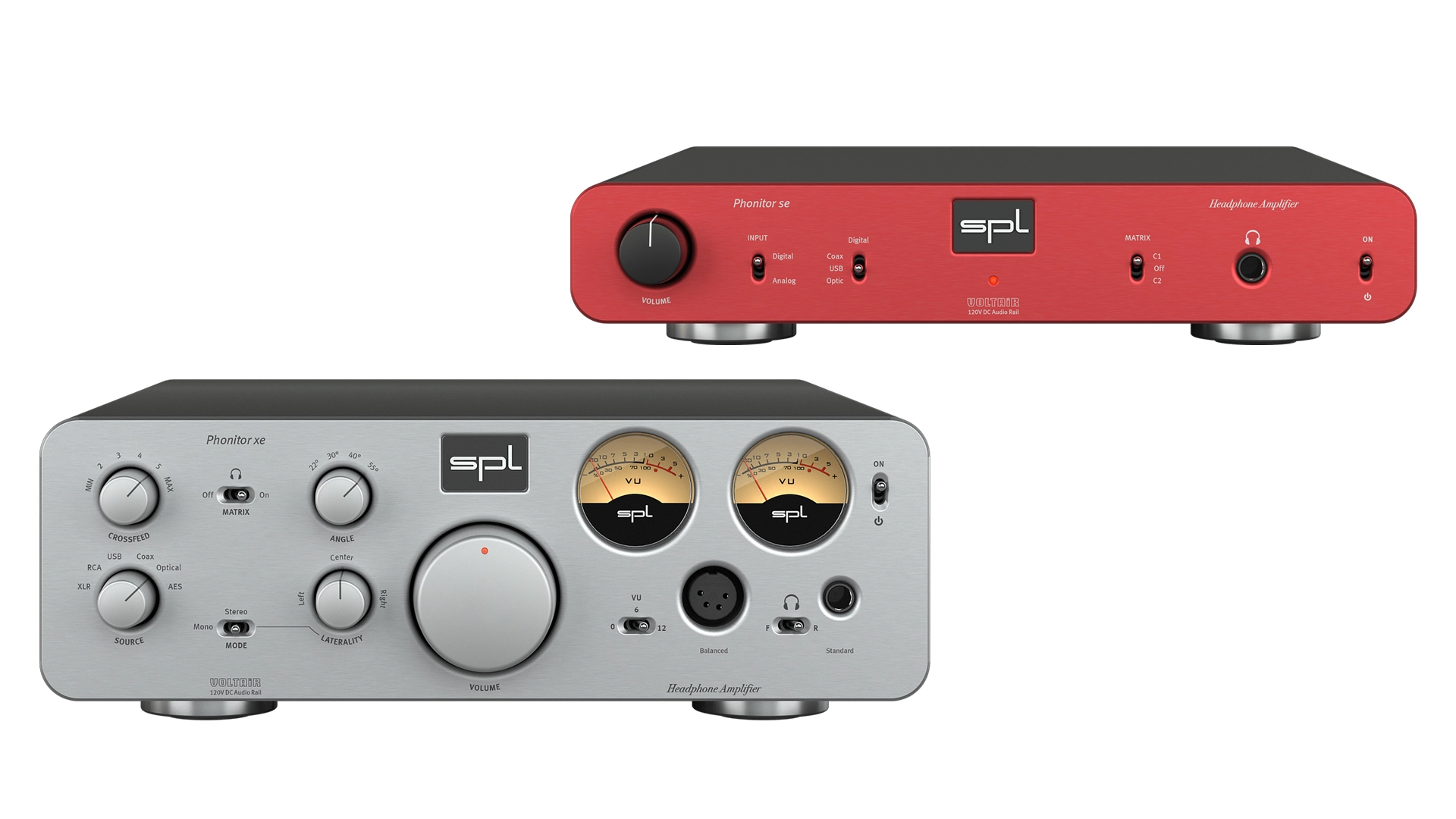
SPL—Sound Performance Lab—is a German manufacturer whose domestic hi-fi electronics grew directly from decades of professional studio design. Hermann Gier and Wolfgang Neumann founded the company in 1983, and processors such as the Vitalizer helped establish its name among recording and mastering engineers. That professional background is central to the later Professional Fidelity range: the goal is to bring the headroom, control and operational clarity of studio equipment into a home system. SPL’s defining circuit platform is VOLTAiR, often described as 120V technology because its audio stages operate from ±60-volt rails. Compared with conventional low-voltage op-amp circuits, the architecture is designed for greater headroom and dynamic range before overload. It appears across products such as the Director DAC/preamplifier, Elector analogue preamplifier, Phonitor headphone amplifiers and Performer power amplifiers. Phonitor models are particularly characteristic, combining serious headphone drive with the company’s Matrix crossfeed system, intended to approximate aspects of loudspeaker listening over headphones. Phonos and Phonos duo address moving-magnet and moving-coil cartridges, while the Diamond DAC and Crossover extend the modular system. SPL develops and manufactures in Germany and continues to serve both professional and domestic markets. The brand’s individuality lies in that continuity: these are not lifestyle products borrowing studio styling, but home components built around circuit ideas, metering, routing experience and high operating voltages refined in working audio environments.
Stax

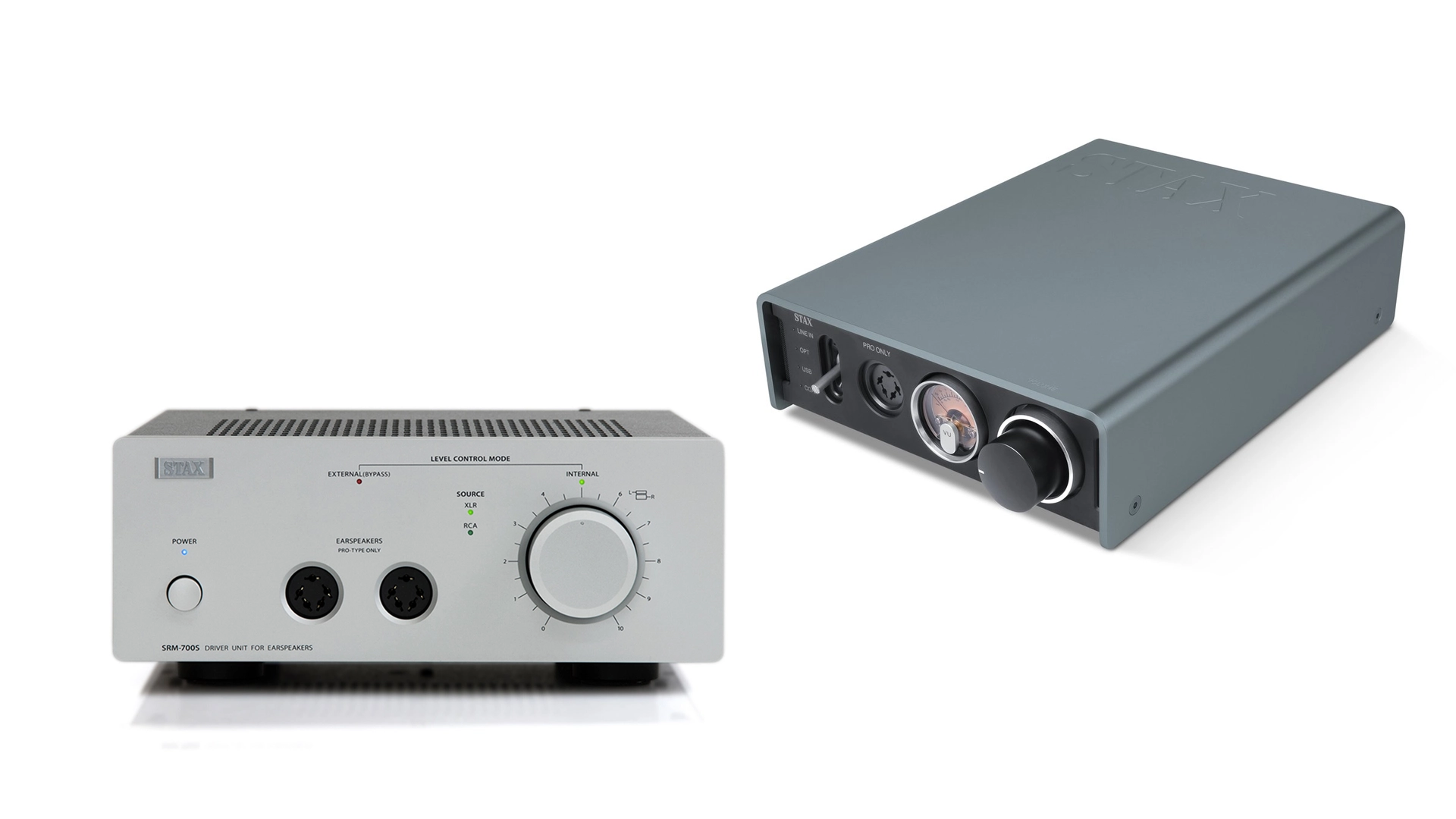
STAX is the Japanese company that turned the electrostatic headphone into a complete, enduring product category. Established in 1938 by Naotake Hayashi, it developed the SR-1 in 1959 and introduced it in 1960 as the world’s first commercially available electrostatic headphone. STAX calls its headphones “Earspeakers”, a useful reminder that their operating principle differs from ordinary dynamic models. A very thin charged diaphragm moves between fixed electrodes, and the headphone must be partnered with a dedicated high-voltage driver unit, commonly called an energizer. This system approach shaped the brand’s history. The Lambda series made the large rectangular open-back form instantly recognisable, while the Omega lineage led to reference models such as SR-007, SR-009 and today’s SR-X9000. Current ranges also include more accessible SR-L and SR-X designs, together with solid-state, valve-hybrid and portable driver units. Because headphone and energizer are designed as an electrical pair, amplification is not an afterthought in a STAX system. The company encountered serious financial difficulties in the 1990s and was re-established in 1996; Chinese loudspeaker manufacturer Edifier later acquired the business, with the alliance announced in 2011. STAX nevertheless remains a Japanese brand with development and production centred on its electrostatic speciality. Few audio companies are so closely associated with one transducer principle, or have refined it through so many generations without turning it into a conventional headphone in different clothing.
T+A

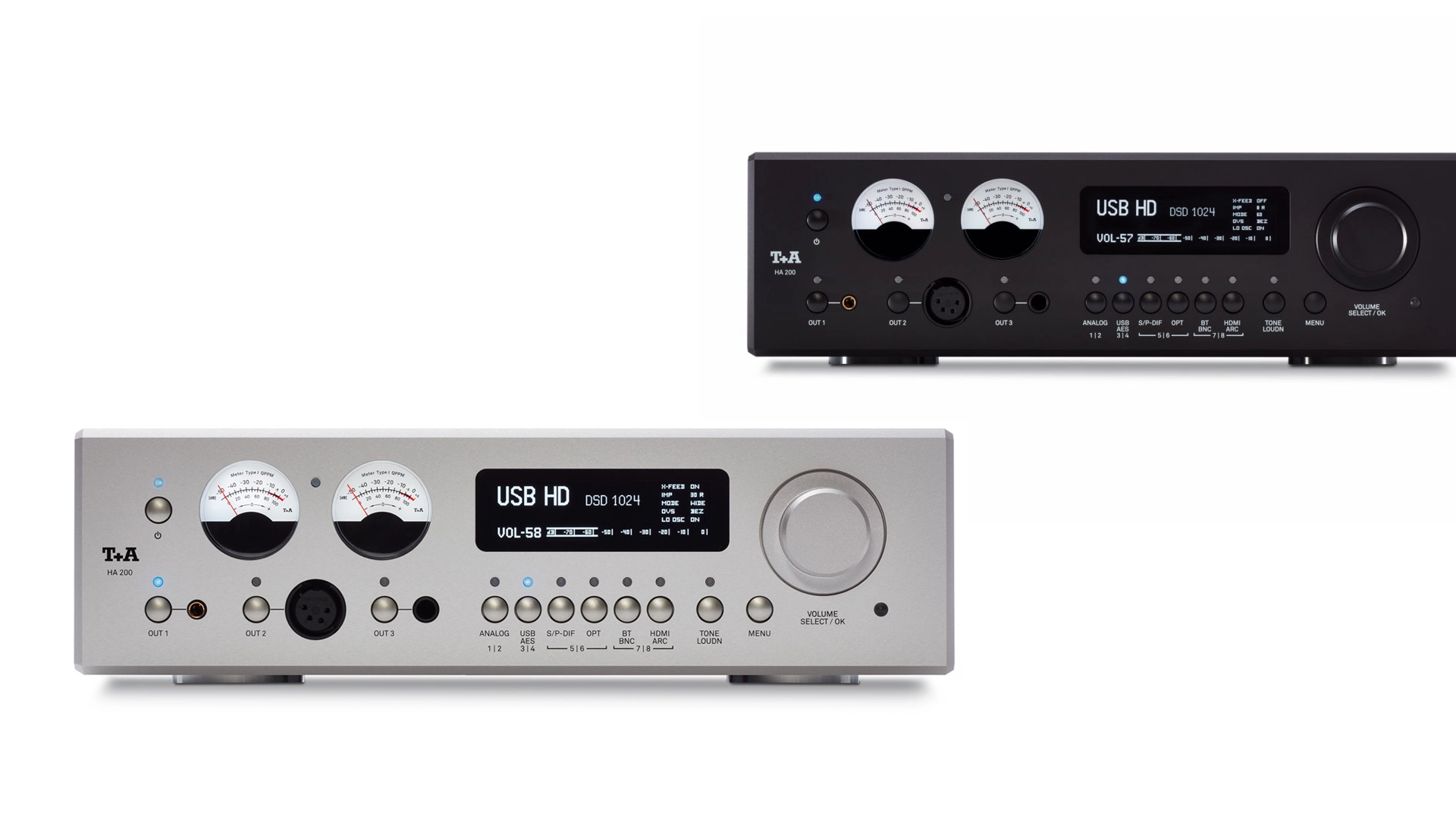
T+A elektroakustik (Theory + Application) is a German manufacturer of high-end audio equipment, known for its wide range of products, innovative technologies, and a focus on delivering both exceptional sound quality and comprehensive features. The company’s product range includes amplifiers, preamplifiers, integrated amplifiers, CD players, streamers, all-in-one systems, loudspeakers, and even headphones. T+A often utilizes proprietary technologies and advanced engineering in its designs, aiming to push the boundaries of audio performance. Their products are characterized by their robust build quality, elegant aesthetics, and a sonic signature that emphasizes detail, dynamics, and a natural, unforced presentation. The “HV” (High Voltage), “R” series , and “Cala” series represent different facets of their product offerings. T+A products are positioned in the high-end segment of the market, appealing to audiophiles who value both performance and German engineering.
Teac

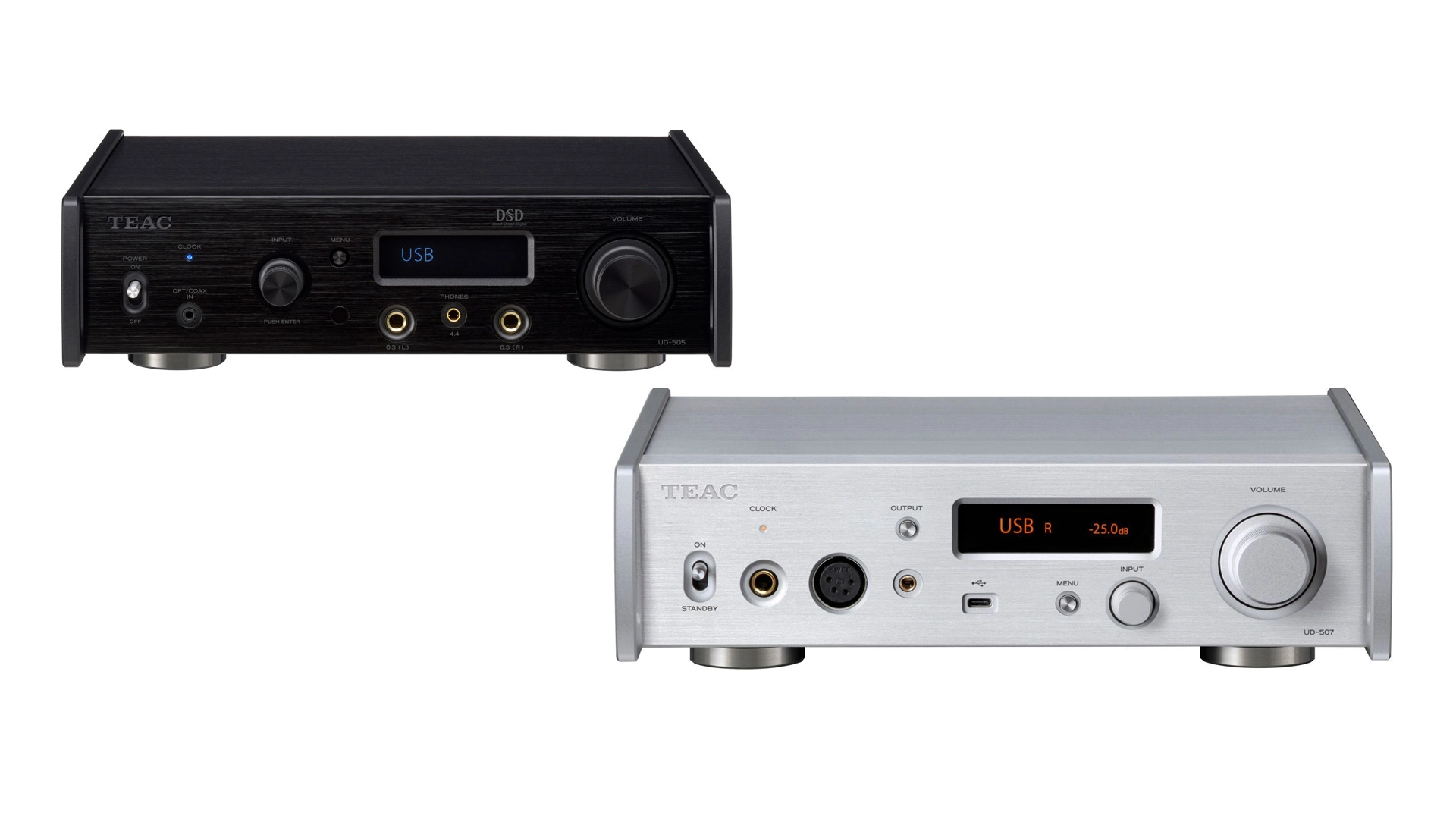
TEAC is a Japanese audio manufacturer whose history links open-reel tape, professional recording and modern digital hi-fi. Brothers Katsuma and Tomoma Tani founded the Tokyo Television Acoustic Company in 1953, and the business soon became Tokyo Electro-Acoustic Company, the source of the TEAC name. Precision tape transports established its international reputation: reel-to-reel machines such as the A-4010 and later X-series decks became fixtures in serious home systems and small studios.
That mechanical expertise led to several distinct branches. TASCAM grew from TEAC’s professional-audio activity and helped bring multitrack recording within reach of musicians through products such as the 80-8 reel-to-reel recorder and Portastudio cassette workstations. Esoteric, introduced in 1987, took the company’s disc-transport and digital engineering into the high-end sector. TEAC itself continued with cassette decks, CD players, turntables, amplifiers and compact Reference components rather than abandoning the consumer listener.
Today’s range connects those traditions. TN-series turntables serve vinyl systems, while the Reference 500 and 700 components combine network playback, USB conversion, headphone amplification and power amplification in relatively compact cases. The VRDS-701 revives TEAC’s rigid-disc-clamping transport principle for CD playback. TEAC’s real distinction is continuity: few brands can trace the same concern for transport stability, recording practice and serviceable engineering from magnetic tape to contemporary streaming and conversion.
Tektron

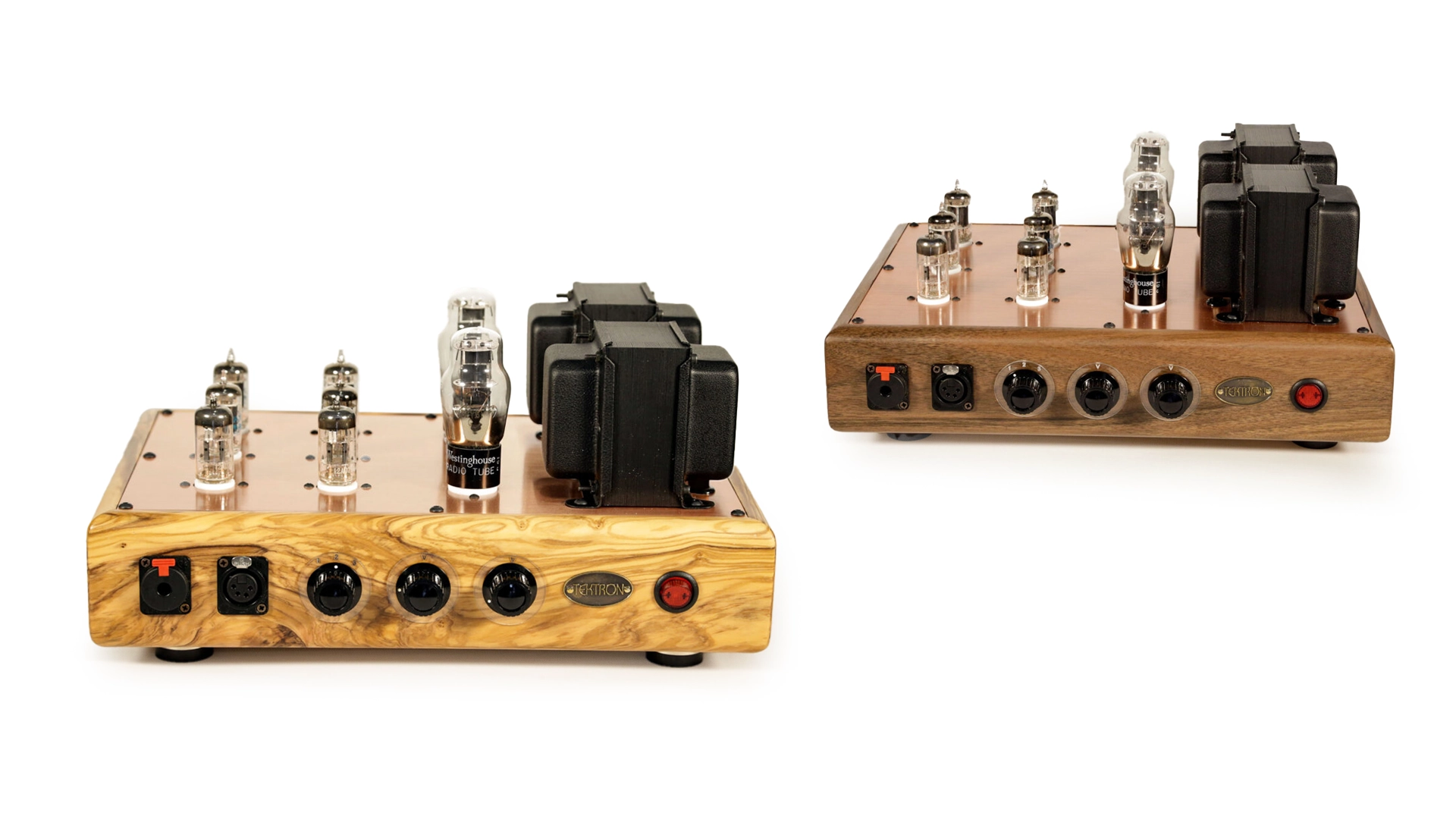
Tektron is an Italian specialist in handcrafted valve amplifiers, founded in 2005 and led by Attilio Caccamo. Its roots reach further back through Caccamo’s decades of restoring antique radios and working with historic vacuum-tube circuits. That experience shaped a company more interested in understanding simple topologies and their components than in adding features. Tektron builds integrated amplifiers, power amplifiers and preamplifiers in small numbers, with custom finishes and electrical configurations available for individual systems.
Single-ended triode designs form the heart of the catalogue. Models are built around valves such as the 2A3, 45, 300B, 211 and 845, including the imposing Neptune 211 amplifier and compact TK-series components. Power supplies, output transformers and the physical layout are engineered for each tube rather than shared across a cosmetic family. Point-to-point wiring, selected new-production or NOS valves and short signal paths keep the construction understandable and serviceable. Wood, copper and brass appear frequently, but the visible craft follows the electrical design instead of concealing a generic chassis.
Tektron does not claim that one valve suits every loudspeaker. Its amplifiers differ widely in output power, gain and operating character, so matching efficiency and impedance is part of choosing the product. That honesty is one of the brand’s strengths. Tektron preserves the directness of classic triode amplification while treating transformer quality, noise control and hand assembly as present-day engineering tasks, not as a costume from audio’s past.