
DAC Desktop
A DAC is an essential component that translates digital audio signals—the 1s and 0s from your computer, streamer, or CD transport—into an analog signal that your amplifier can understand and use. A dedicated desktop DAC performs this conversion with far greater precision than the basic audio chips found in most computers, resulting in significantly improved clarity, detail, and overall sound quality. This directory lists the brands that specialize in these crucial devices for any high-performance digital audio system.
Hi-Fi brands in the category
Summary information and image
Direct links to official websites
Topping

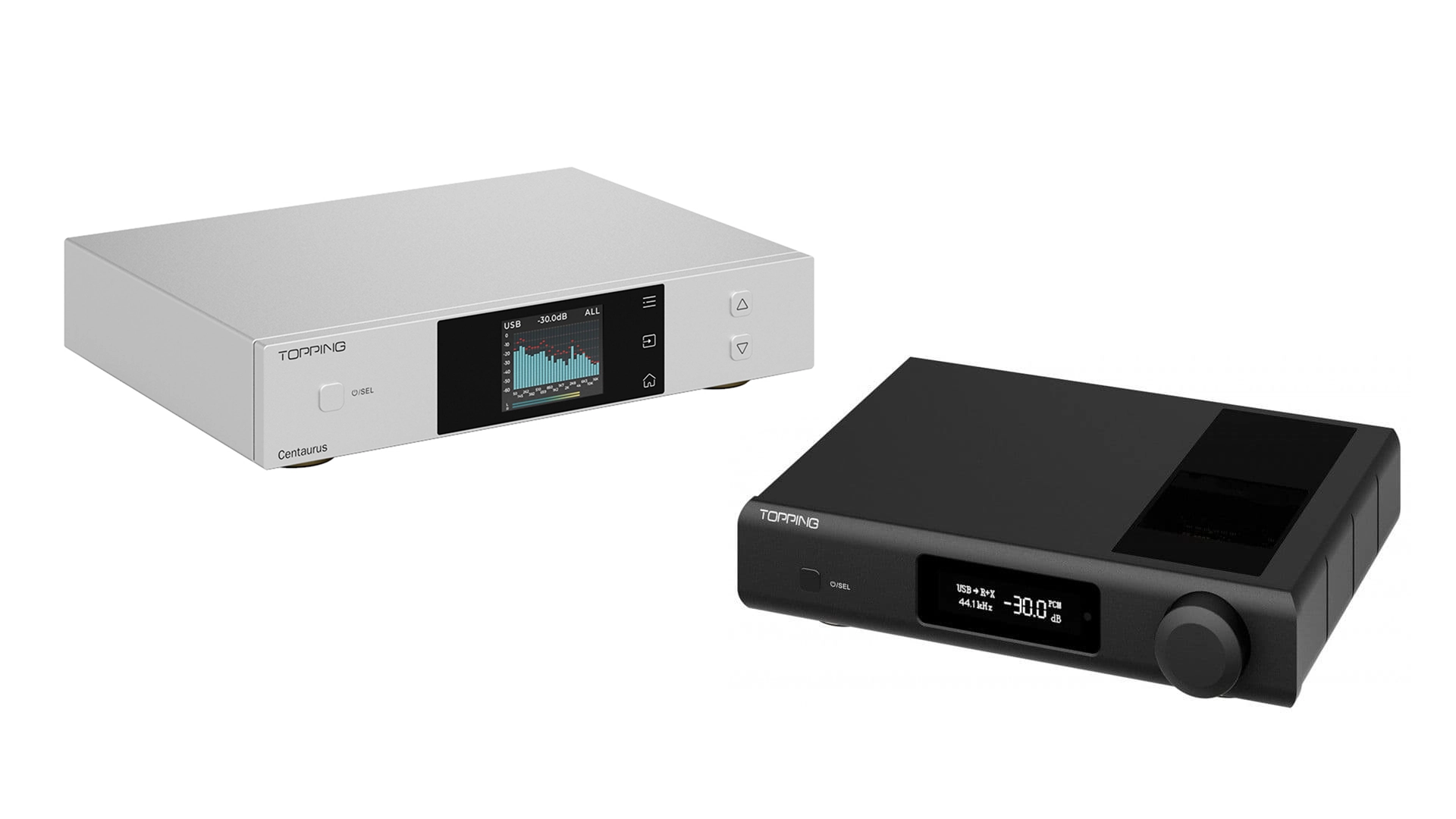
TOPPING is a Chinese desktop-audio manufacturer founded in 2008, recognised for DACs, headphone amplifiers and compact power amplifiers whose measured performance is treated as a primary design target. The company helped shift expectations in affordable digital audio: low noise, low distortion, balanced connections and transparent volume control no longer had to be reserved for physically large or expensive components.
Products such as the D90 DAC and A90 headphone amplifier established TOPPING at the upper end of desktop hi-fi, while E-series DACs, L-series headphone amplifiers and DX combination units cover more accessible systems. The company has also expanded into PA-series power amplifiers, B-series monoblocks and discrete or resistor-ladder conversion. Proprietary NFCA amplifier modules are used to obtain high feedback accuracy, very low output impedance and useful power across a wide range of headphones. Flagship models add sophisticated preamplifier, remote and digital-interface functions without abandoning measurement discipline.
TOPPING’s strength is not that every new model posts another record figure. It is the consistent use of audio analysers, documented specifications and compact circuit integration to make performance predictable. Firmware, user interface and system matching still matter, and a technically excellent device is not automatically the right product for every listener. Yet the brand’s influence is clear: it forced a broad part of the market to explain noise and distortion with evidence. TOPPING now spans entry-level desktop systems and serious separates, but its identity remains unusually focused on engineering results per unit of space and cost.
Totaldac

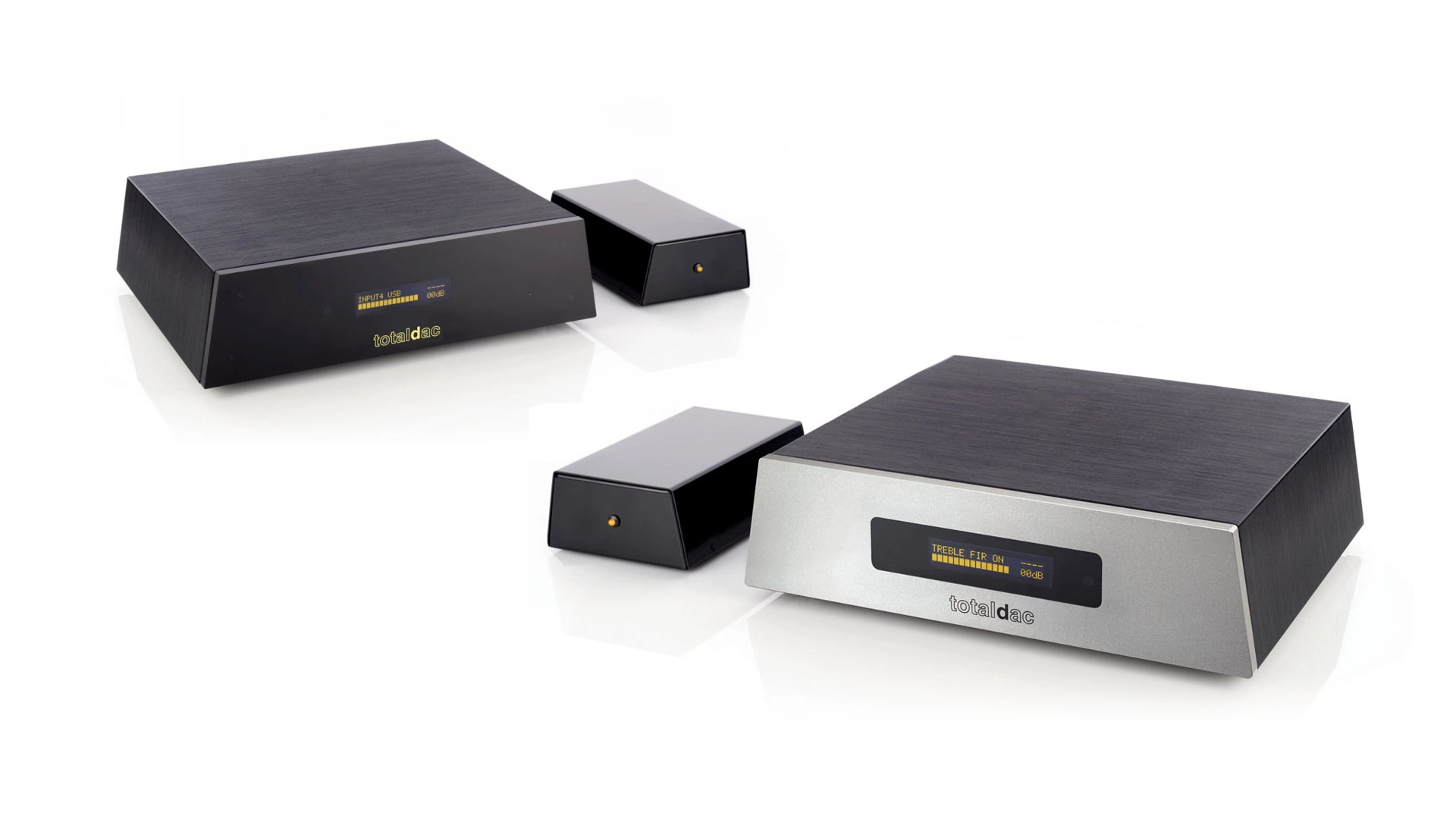
Totaldac is the French digital-audio company founded in 2010 by engineer Vincent Brient. It grew from Brient’s long personal work on digital conversion and became known for refusing the standard integrated DAC chip. Instead, Totaldac builds discrete resistor-ladder converters from proprietary boards populated with closely selected resistors, then controls them with FPGA-based digital processing. This architecture gives the company direct responsibility for the conversion behaviour rather than limiting it to the configuration of another maker’s silicon.
The original d1 series established the approach, followed by more ambitious multi-chassis and multi-ladder models. Current families include d1-unity and higher-order variants such as tri-unity and twelve, alongside server, streamer, reclocker and clock products. Tube or transistor output choices appear in parts of the range, and Totaldac has also developed amplification and loudspeakers to form complete systems. The names can be complex, but they generally indicate how many proprietary DAC boards and channels are used and how the analogue stages are arranged.
Totaldac’s importance comes from the coherence of its independent path. Resistor matching, switching, clocking, digital filtering, power supplies and analogue output stages are all treated as audible parts of conversion. Brient also offers proprietary filtering choices rather than pursuing a single textbook response. The result is not a nostalgic “non-oversampling” label attached to ordinary hardware, but a French-built platform refined across sources and systems. Totaldac remains one of the clearest examples of a small manufacturer turning an original discrete DAC module into a complete digital ecosystem.
Verity Audio

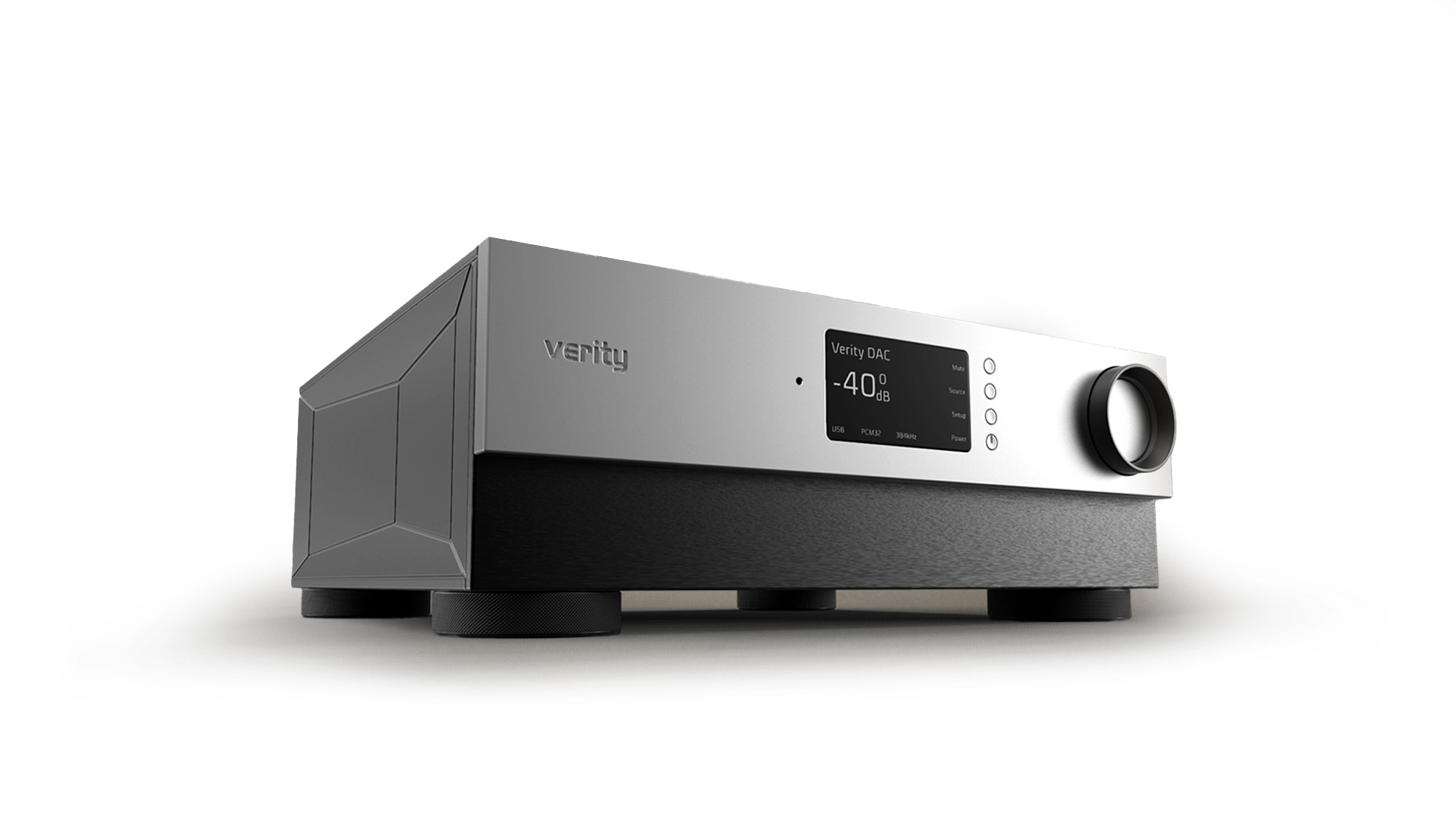
Verity Audio was a Canadian high-end loudspeaker manufacturer admired for combining refined cabinet work with designs that could deliver scale without visually dominating the room. Julien Pelchat and Bruno Bouchard founded the company in Quebec in 1995. Parsifal became its defining model, followed by loudspeakers such as Fidelio, Tamino, Amadis, Sarastro, Lohengrin and Finn. Many Verity designs used a separate bass enclosure with a rear-firing woofer beneath a compact midrange-and-tweeter module. That arrangement was not merely stylistic: it reduced interaction between bass energy and the upper drivers, allowed careful control of cabinet volume and used placement relative to the front wall as part of low-frequency setup. Larger systems developed the concept with proprietary drivers, carefully voiced crossovers and increasingly ambitious cabinet structures. The Monsalvat project expanded Verity’s ambitions into a complete reference system, while the later Florestan showed that the company was still exploring new architectures rather than relying only on established names. Fine veneers, restrained proportions and musical coherence were as important to the brand’s reputation as laboratory specifications. A crucial present-day fact, however, must not be hidden: Verity Audio announced that it ceased operations effective 22 December 2023. Its website and product archive may remain accessible, but they should not be read as proof of continuing production. The brand’s legacy rests on nearly three decades of distinctly Canadian loudspeakers whose elegant appearance concealed serious attention to cabinet isolation, room interaction and natural tonal balance.
Vermeer Audio

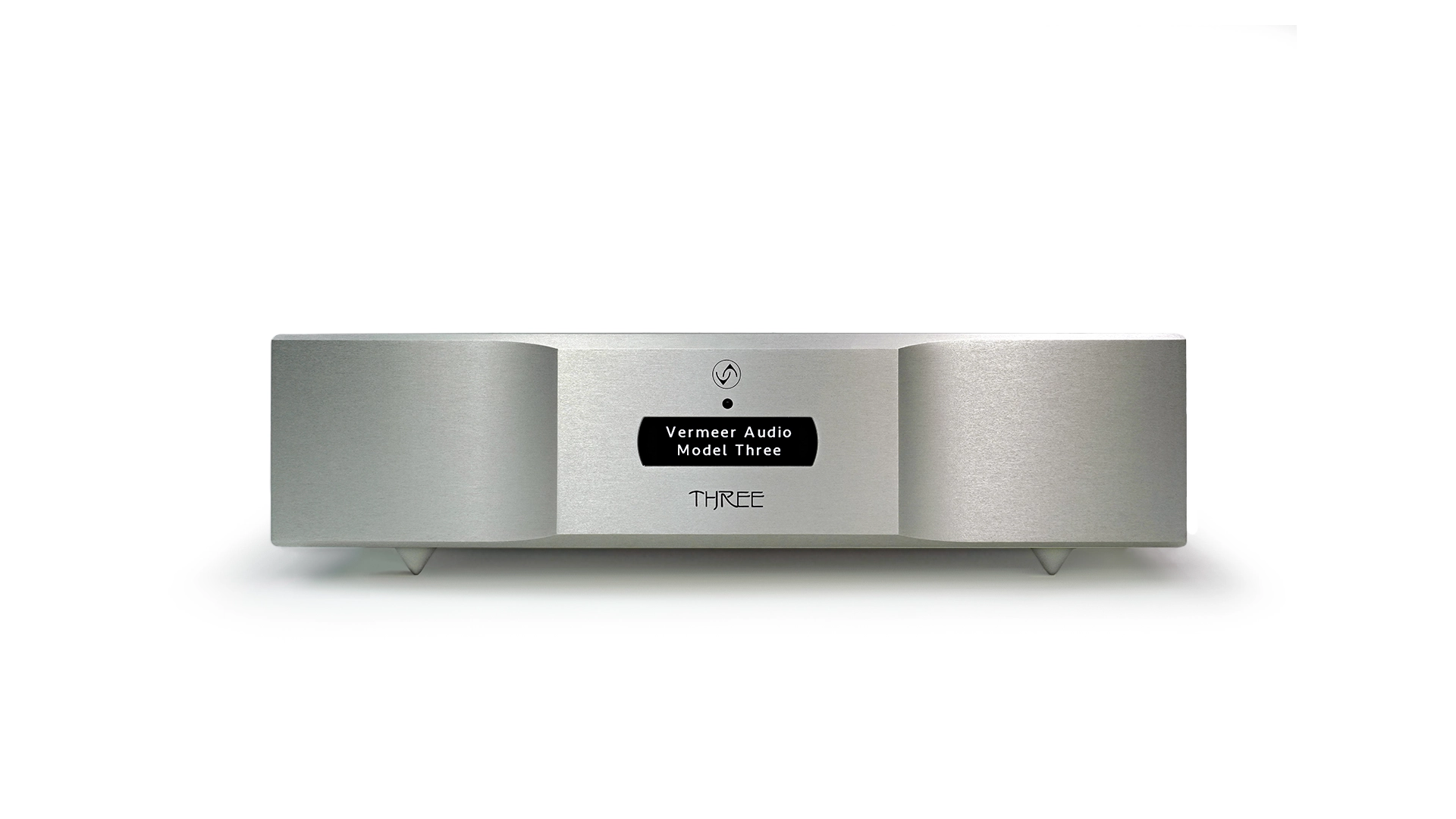
Vermeer Audio is a French digital-audio company created in Lyon in 2014 by a team that acquired the assets and intellectual property of Audio Aero. The 2002 date previously associated with the brand belongs to the earlier history around Audio Aero and is not an accurate founding year for Vermeer Audio itself. Rather than simply rebadging inherited machines, the team used that knowledge as a starting point for its own compact reference components. Model TWO established the approach: a network player, DAC and analogue preamplifier combined as a universal control centre for a high-end system. It accepts local and network digital sources, provides volume control and analogue connectivity, and is intended to drive a power amplifier directly when a separate preamplifier is unnecessary. Model THREE advances the same idea with updated digital processing, streaming and interface design while preserving the emphasis on a short, carefully managed signal path. Vermeer’s engineers draw on more than two decades of experience with digital conversion, clocking and mixed analogue/digital circuitry. Units are assembled by hand in France, with one technician responsible for an individual product rather than a fragmented production line. This background is important because Vermeer Audio should not be described as Audio Aero under another name. Its individuality lies in turning that acquired digital expertise into a small, focused range of French source-preamplifiers: products designed to consolidate streaming, conversion and system control without treating convenience as a reason to lower analogue engineering standards.
Vincent

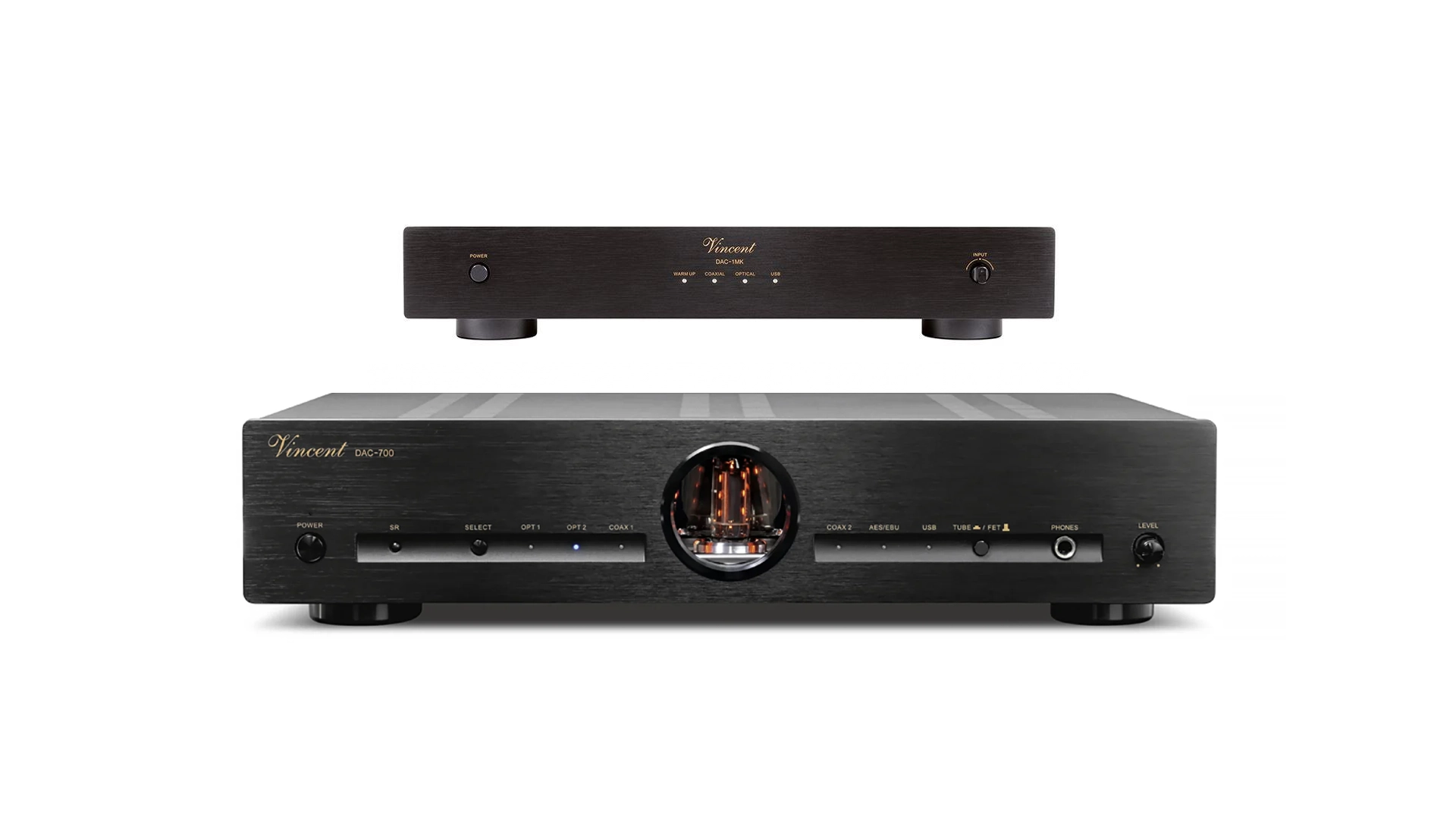
Vincent is a German high-fidelity electronics marque registered in 1995 by Sintron Distribution GmbH of Iffezheim. Product conception and tuning take place in Germany, while manufacturing is carried out in Asia under the company’s specifications—a more accurate description than implying that the components are wholly German-made. Vincent concentrates on two-channel systems and divides its catalogue into complementary design families. SolidLine products use transistor circuitry throughout, whereas tubeLine models combine valves in input or driver stages with solid-state output sections. That hybrid architecture is the brand’s signature: it seeks the voltage gain and harmonic character of tubes without giving up the current delivery, speaker control and everyday practicality of powerful transistor outputs. Integrated amplifiers such as SV-237, SV-700 and SV-737 embody the concept, while SA-T7 preamplifiers and SP-T700 monoblocks separate it into larger systems. PowerLine and solid-state models including SP-332, SV-228 and SV-500 address listeners who prefer an all-transistor path. Vincent also offers CD players, DACs, phono stages, headphone facilities, power conditioning and matching accessories, allowing coherent systems at prices below much boutique high-end electronics. The designs are visually substantial, often exposing their valve complement rather than hiding it, but the engineering proposition is practical: generous power supplies, remote operation, multiple inputs and serviceable conventional circuitry. Vincent’s position is therefore not simply “warm-sounding German hi-fi”. It is a long-running European-developed brand that has made hybrid tube/transistor amplification accessible across integrated, pre/power and source components.
Vitus Audio

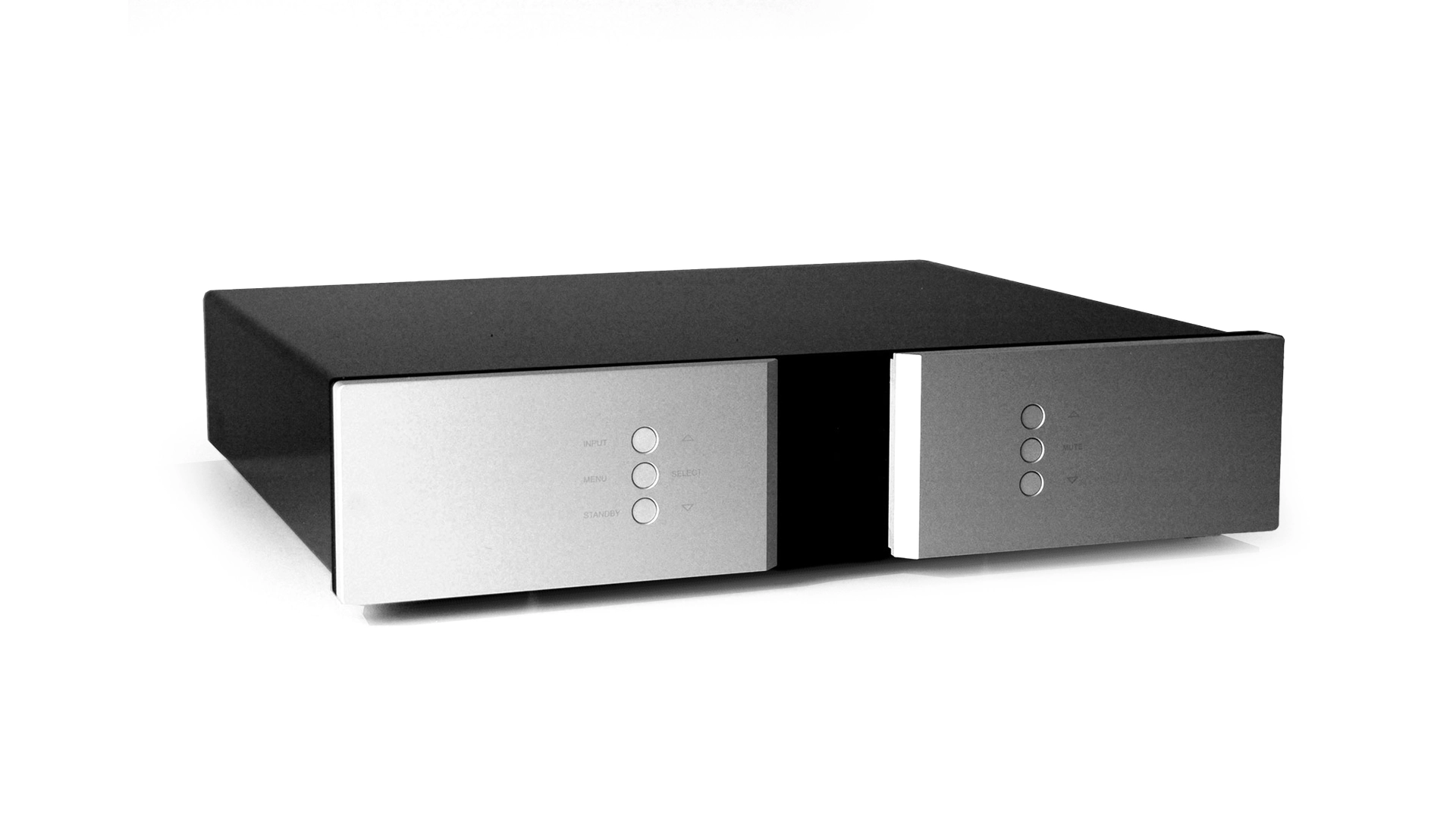
Vitus Audio is a Danish ultra-high-end electronics manufacturer founded in 1995 by Hans-Ole Vitus, initially as a long-term engineering project rather than a conventional product launch. The first complete components—the RP-100 phono stage, RL-100 line stage and SM-100 monoblock—were publicly shown in 2003. That distinction explains why both dates appear in accounts of the company: 1995 marks its origin, while 2003 marks its arrival on the market. Vitus builds integrated amplifiers, preamplifiers, stereo and mono power amplifiers, phono stages, DACs, streamers and disc transports across Reference, Signature and Masterpiece ranges. SIA-025 and SIA-030 integrated amplifiers are among its best-known products, condensing unusually large power supplies and Class A operation into a single chassis, while Masterpiece separates such as MP-M201 monoblocks scale the architecture without compromise. Heavy non-magnetic casework, fully balanced circuits, carefully matched components and extensive in-house assembly are recurring features. The company added its own surface-mount production capability in 2010 to gain closer control over circuit-board quality and consistency. In 2022 the organisation joined with AVM-TEC, associated with Alluxity, under a new group structure; Hans-Ole Vitus continued to focus on research and product development while a younger management team assumed daily operations. Vitus Audio’s defining quality is not power rating alone. It is the effort to preserve low-level colour and timing through electronics capable of controlling difficult loudspeakers, with product families designed as progressively scaled versions of one Danish engineering philosophy.
Viva Audio

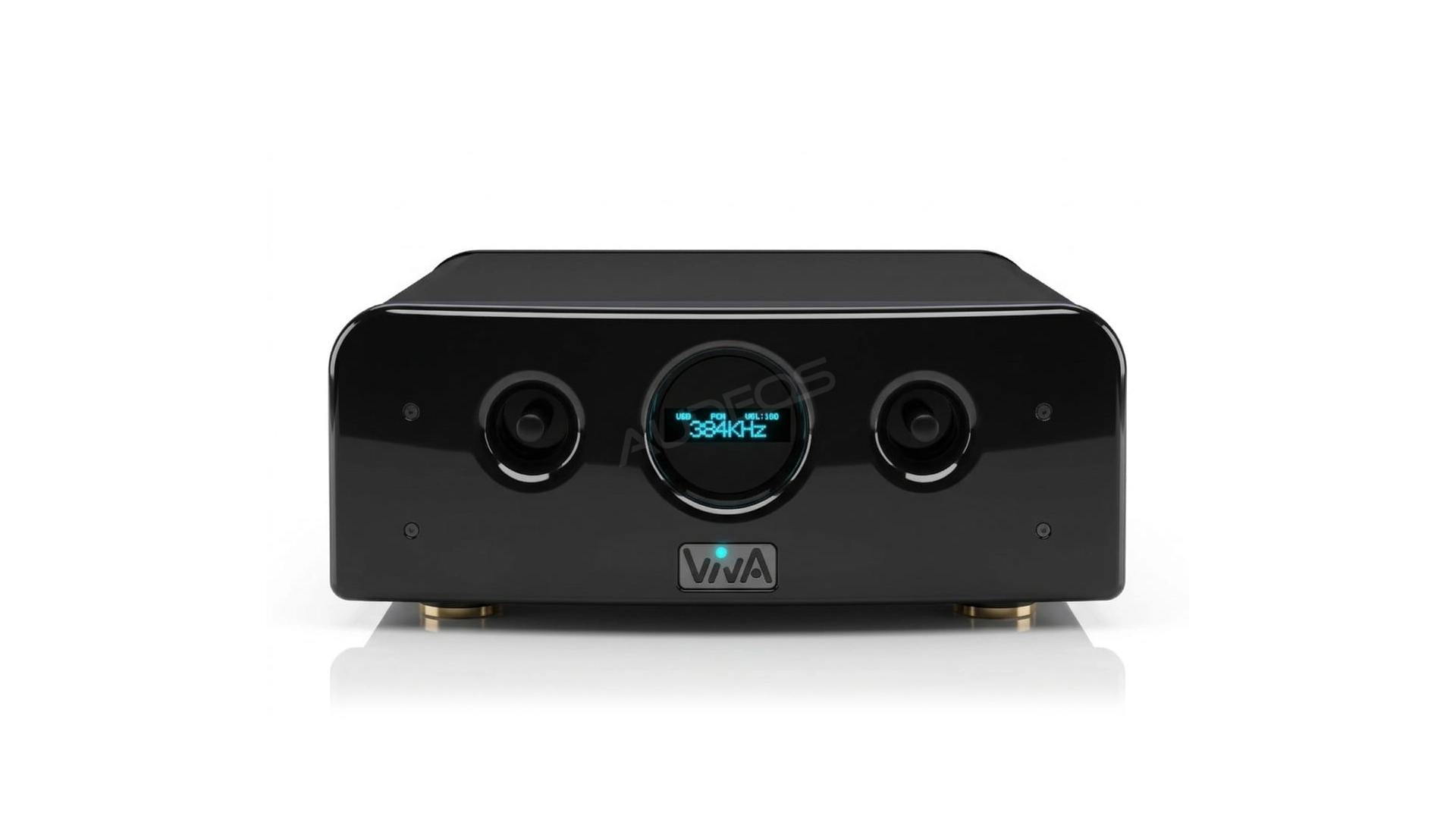
Viva Audio is an Italian manufacturer that treats vacuum-tube electronics, loudspeakers and industrial form as parts of one bespoke system. Amedeo Schembri founded the company in 1996, working with his brother Giampietro, and remains responsible for the circuit and sonic direction. Viva is best known for single-ended triode amplification: products such as the Aurora monoblocks and Solista integrated amplifier use directly heated power tubes in circuits designed around simplicity, substantial custom transformers and point-to-point hand construction. Solistino offers a more compact integrated route, while Linea preamplifiers, Fono phono stages and Numerico digital conversion complete the source chain. The Egoista family adapted Viva’s large triode stages to headphones and became one of the brand’s most visible achievements; versions built around 845 or 2A3 tubes, and the more powerful Egoista STX, address very different loads without reducing the amplifier to a desktop accessory. Viva also makes loudspeakers, from Agile and Allegro to sculptural Nuda and large Master Horn systems, allowing amplification and transducers to be voiced together. Components are assembled and finished by hand in Vicenza, with colours and surface treatments that make each system feel commissioned rather than selected from anonymous black boxes. The visual drama can overshadow the engineering, but the important point is continuity: Viva has spent decades refining transformers, tube operating points, horn and dynamic loudspeakers, and the interfaces between them. Its products are recognisably Italian because craft, colour and proportion are integral to the circuit-led audio design.
Wadax
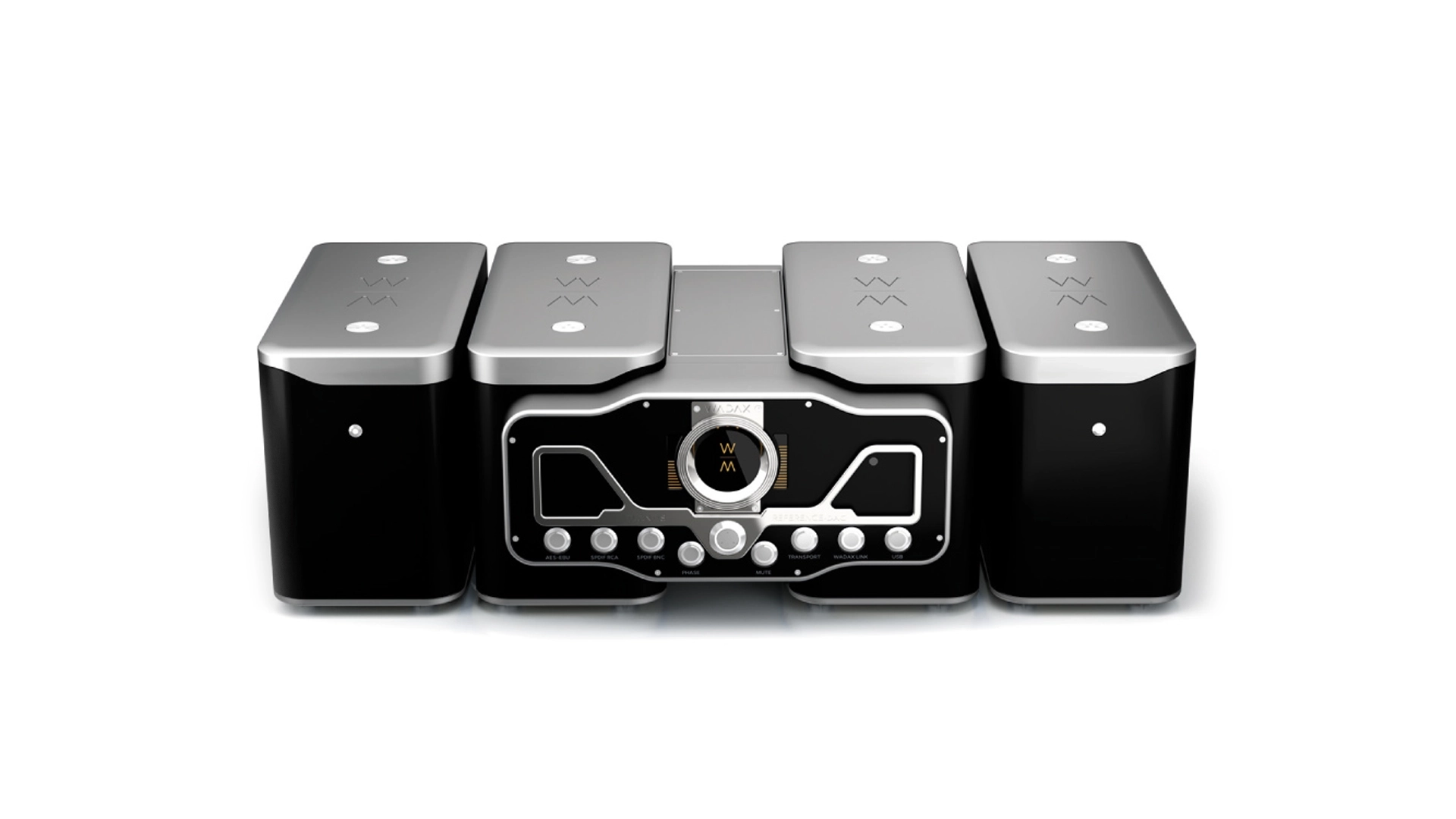
Wadax is a Spanish digital-audio specialist based in Madrid, where its core research, circuit design, prototyping and software development take place. The brand was established by Javier Guadalajara in 2006, drawing on technical work begun within the Guadalajara family decades earlier; the 1958 date sometimes attached to Wadax belongs to that prehistory, not to the company itself. Wadax concentrates on the conversion and transport errors that can make digital replay dependent on timing, power and the electrical load presented by the next stage. Its proprietary musIC technology uses feed-forward error correction and models the behaviour of converter circuits under dynamic load instead of treating a DAC as an ideal isolated block. That research first appeared in electronics beyond conventional digital sources, then matured into the Atlantis and Reference families. Reference DAC, Server and Transport can operate as a complete source, with dedicated Reference PSU supplies and Akasa optical links separating data transfer from ordinary noisy interfaces. Atlantis components bring related ideas to a somewhat less extreme platform, while the newer Studio line integrates the technology into more compact products. Enclosures, power architecture and mechanical construction are developed alongside the signal processing; specialist aerospace-grade suppliers manufacture precision parts to Wadax specifications rather than the products simply being “made in Switzerland,” as older summaries sometimes claim. Wadax’s defining quality is this system view of digital audio: server, clocking, interface, conversion and power are engineered as interacting elements, not independent boxes connected only at the end.
Waversa Systems

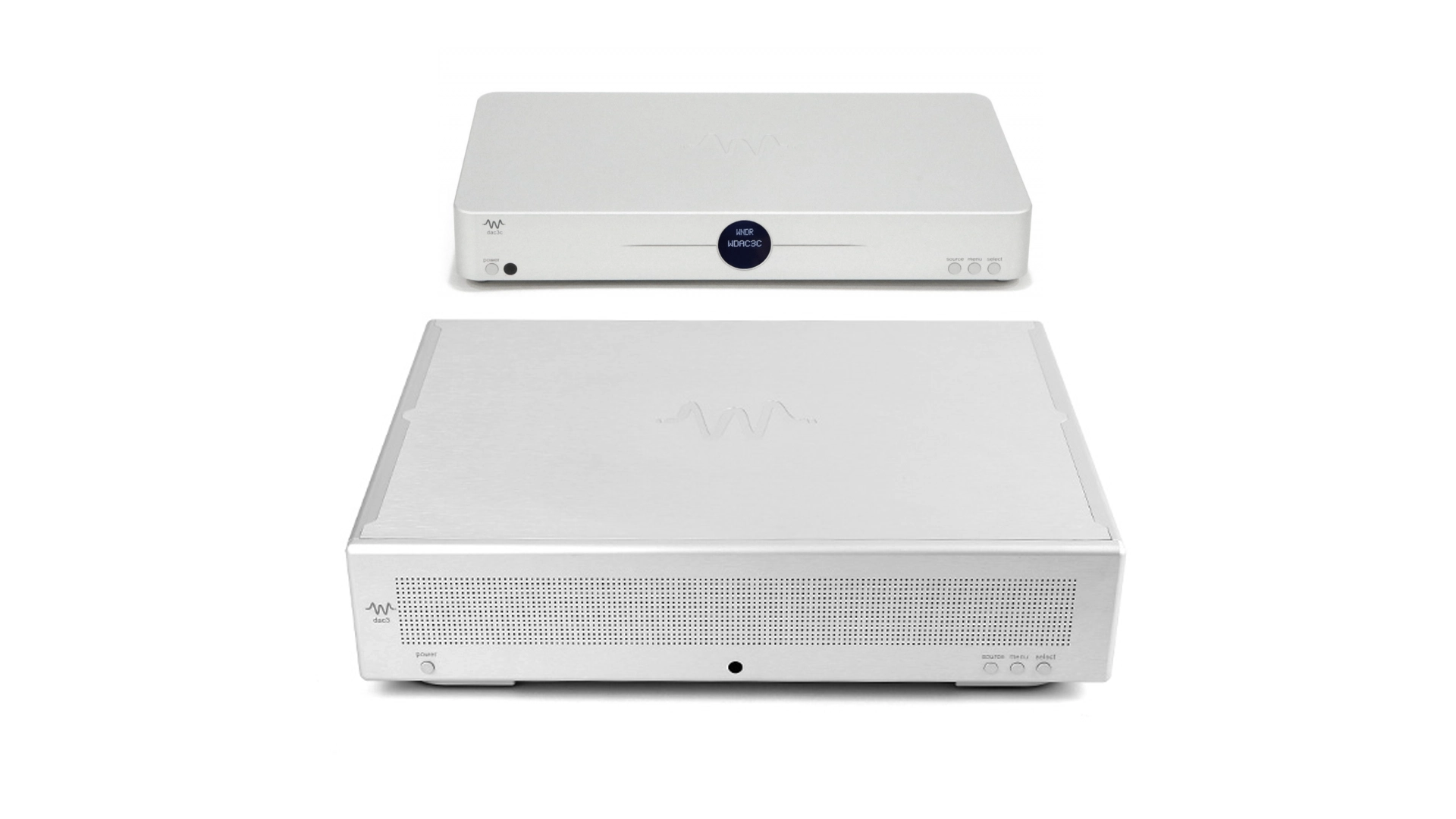
Waversa Systems is a South Korean digital-audio company founded in 2012 by engineer Dr Collin Shin. Before entering high-end audio, Shin worked on semiconductor and system design, experience that shaped a catalogue unusually focused on the behaviour of data, clocks, networks and power inside a complete replay chain. The company announced its WAP—Waversa Audio Processor—platform in 2013 and later developed WNDR, Waversa Network Direct Rendering, as a proprietary route for delivering audio over a network with tighter control of timing and processing. These technologies appear across network players, DACs, servers and hubs rather than belonging to one showcase product. The range spans compact WMini components, WStreamer bridges, WDAC converters, WCore servers and WRouter or WSmartHub network products, as well as integrated players, amplifiers, phono stages and the reference WV series. Waversa also makes Ethernet and USB filters because it treats electrical noise entering through digital connections as part of the source design. Product names and formats vary widely, but the unifying objective is consistent: minimise jitter and unwanted processing, isolate noisy subsystems and preserve the signal through conversion and amplification. Waversa’s distinctiveness lies in approaching a hi-fi system as a networked electronic architecture, not a stack of unrelated boxes. Hardware, FPGA or processor code and control software are developed together in Korea, giving the brand a coherent technical vocabulary that extends from an inexpensive interface filter to its largest source and amplification components.
YBA

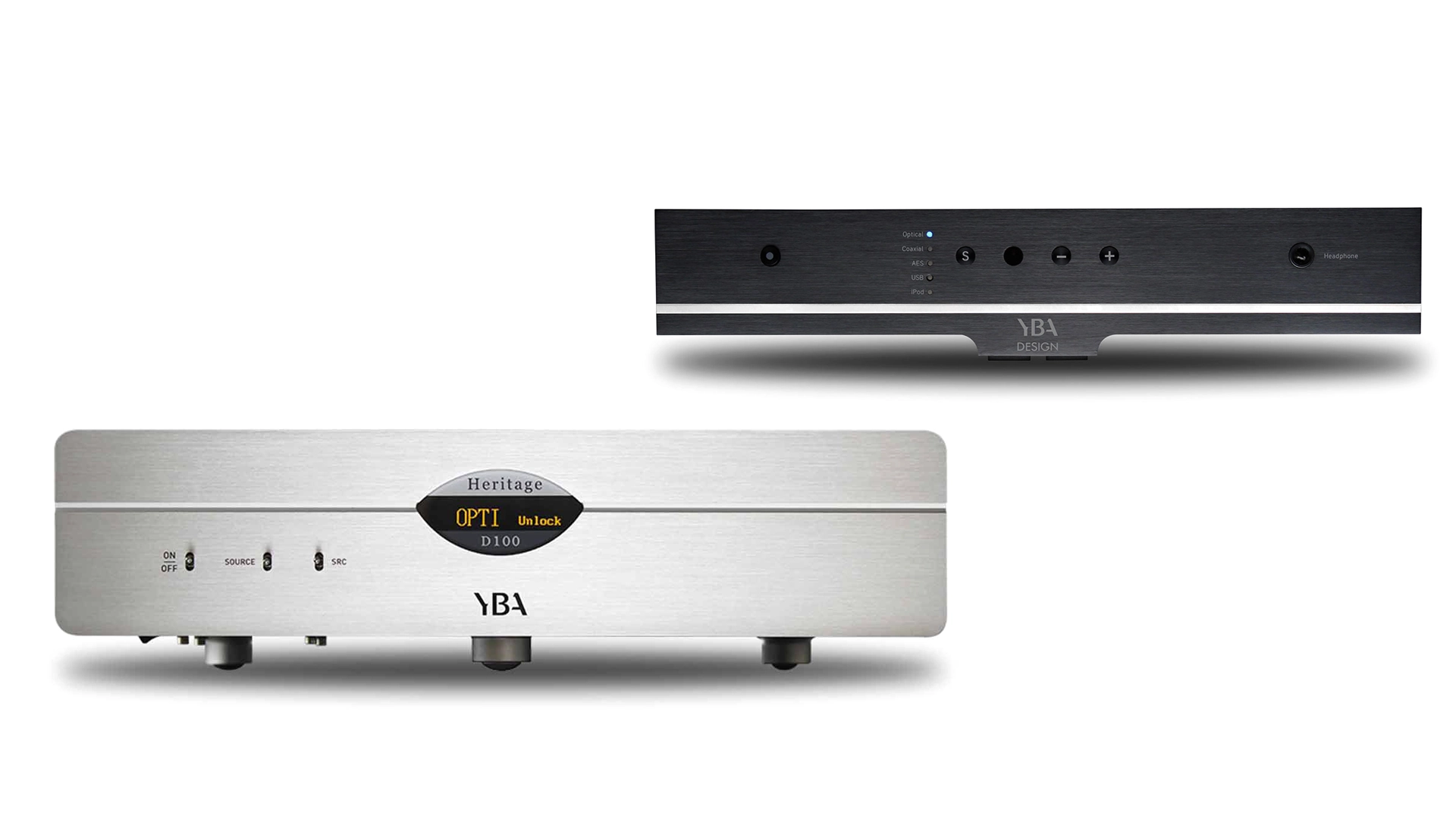
YBA is the French electronics marque founded in 1981 by engineer and electronics professor Yves-Bernard André. His designs became known for short signal paths, carefully selected components and unusual attention to mechanical and electrical details: transformer orientation, non-magnetic fasteners, three-point support and restrained power-supply layout were treated as audible engineering choices rather than accessories. The original YBA 1 amplifiers and later Signature components established the reference line, while Audio Refinement brought related thinking to a wider audience. Today’s catalogue is organised into Signature, Passion, Genesis, Heritage and Design families. It includes integrated, pre- and power amplifiers, phono stages, CD players, DACs and network-capable sources, allowing the core circuit philosophy to appear at several prices rather than only in statement products. Ownership and production changed materially in 2009, when Chinese manufacturer Shanling took a majority stake to stabilise the company and expand manufacturing capacity. André retained an interest and continued to guide product design; current components are therefore designed under a French brand philosophy and manufactured with Shanling’s industrial resources in China. That relationship should be stated openly while the catalog country remains France, where YBA was created and voiced. YBA’s individuality is not a vague promise of “musicality,” but a four-decade design language in which circuit simplicity, component orientation, grounding and mechanical support are refined together—and remain recognisable despite the later ownership structure.
Ypsilon
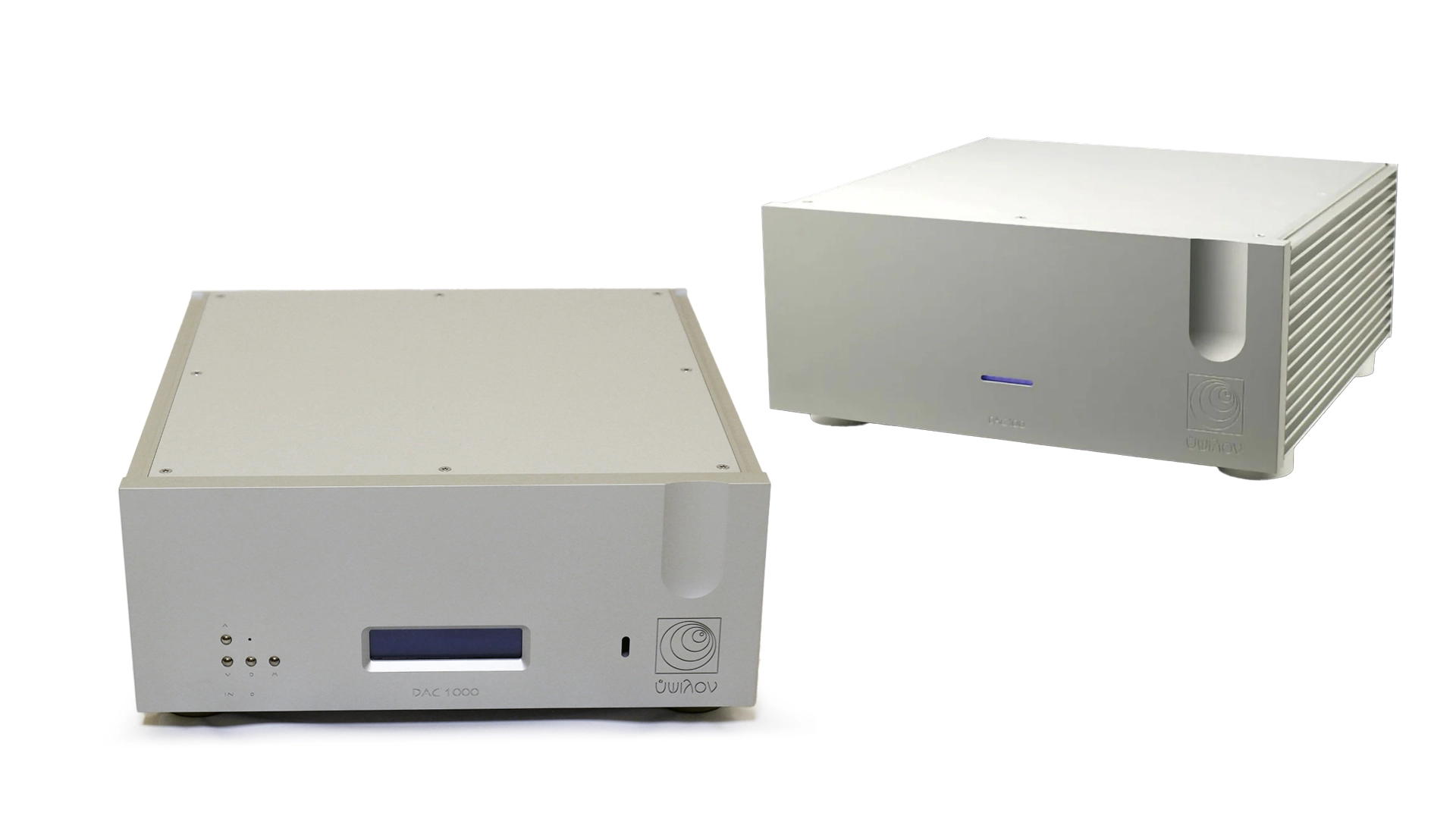
Ypsilon Electronics is a Greek high-end manufacturer founded in 1995 by two sound engineers whose work in live performance shaped the company’s reference for dynamics and tonal scale. Designer Demetris Baklavas and the Athens team build amplifiers, preamplifiers, phono stages and transformers in small numbers, often combining valves with solid-state devices rather than treating either technology as an ideology. Transformers are the central thread. Ypsilon winds many signal and power transformers in-house and uses transformer attenuation in its passive and active preamplifiers, avoiding a conventional resistive volume control in the signal path. The VPS phono stage partners valve gain with external MC step-up transformers, while PST units let cartridges see carefully chosen loading and turns ratios. Aelius and Hyperion power amplifiers use hybrid input and output stages for greater loudspeaker-driving ability; the SET 100 Ultimate applies a single-ended topology at power levels far beyond a traditional low-wattage triode amplifier. Silver-wound transformer options and separate power supplies extend the architecture at the reference level. The products’ substantial metalwork is restrained because the engineering emphasis is inside: magnetic component design, short signal paths, low feedback and a deliberate balance between valve voltage gain and transistor current delivery. Ypsilon’s strongest identity is therefore not simply “Greek tube sound,” but a rare depth of transformer expertise applied consistently from a cartridge’s microvolts to the output stage of a powerful amplifier.