
DAC Desktop
A DAC is an essential component that translates digital audio signals—the 1s and 0s from your computer, streamer, or CD transport—into an analog signal that your amplifier can understand and use. A dedicated desktop DAC performs this conversion with far greater precision than the basic audio chips found in most computers, resulting in significantly improved clarity, detail, and overall sound quality. This directory lists the brands that specialize in these crucial devices for any high-performance digital audio system.
Hi-Fi brands in the category
Summary information and image
Direct links to official websites
Serblin & Son

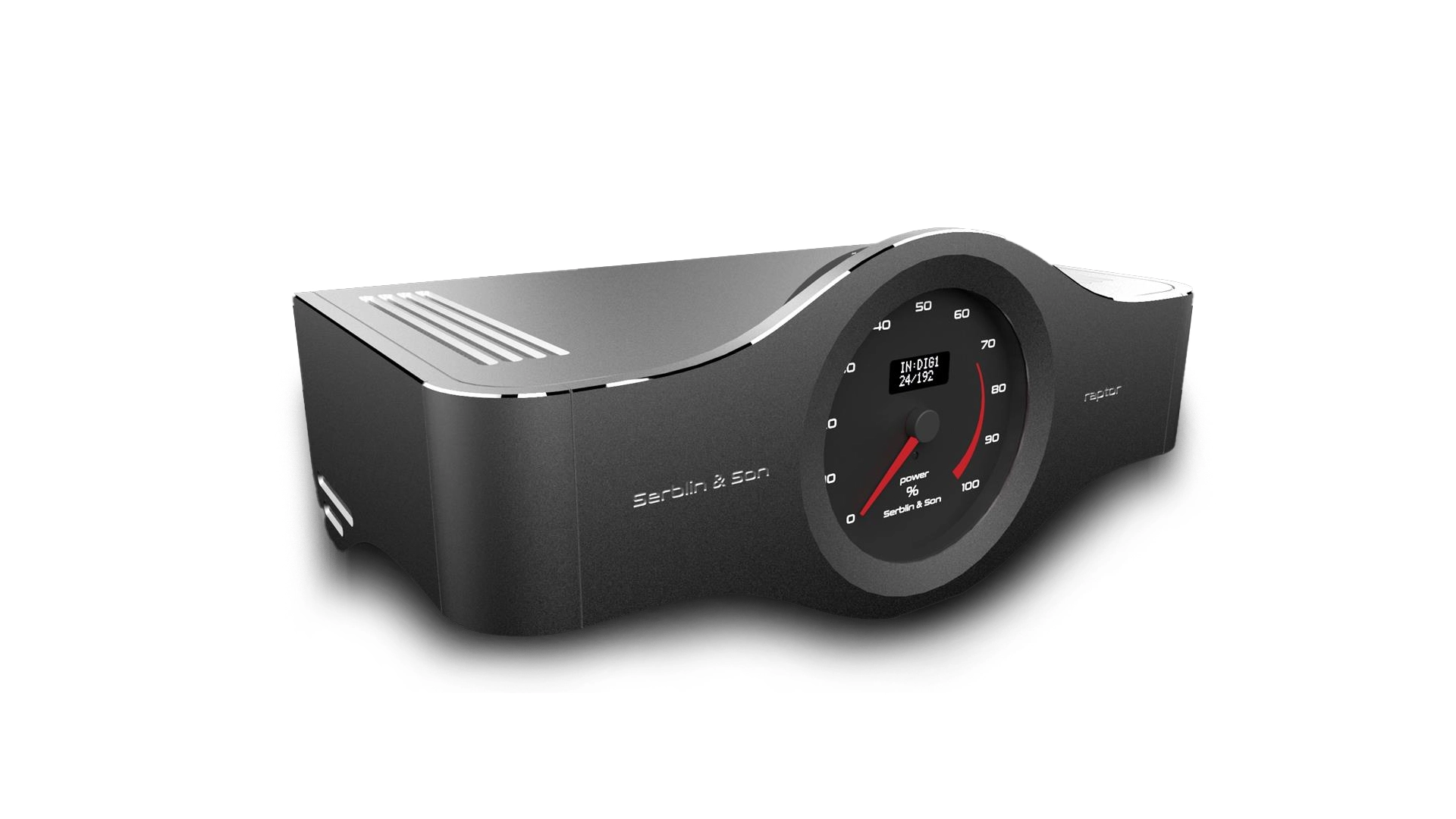
Serblin & Son is an Italian high-end electronics company founded in 2019 by Fabio Serblin, nephew of Sonus faber founder Franco Serblin. The previous description confused it with the Franco Serblin loudspeaker brand and incorrectly attributed products such as Lignea and Accordo Essence to this company. Fabio’s own path is centred on amplification. He worked as a designer during Sonus faber’s early years and in 1991 established Fase Evoluzione Audio, which produced integrated and separate amplifiers and digital sources before he paused manufacturing in 2002 and moved into distribution. Serblin & Son marks his return to designing electronics with modern simulation tools and small-scale Italian production. Its first product, the Frankie integrated amplifier, was named in tribute to Franco and combined valve input stages with solid-state power output. The Frankie concept later expanded into a hybrid preamplifier and matching monoblock power amplifiers, separating control and current delivery while retaining the valve/solid-state architecture. Performer is a substantial integrated amplifier focused on short signal paths, dual-mono construction and high-current Class AB output, while Raptor 1000 develops the integrated format with greater power and system flexibility. The designs are visually restrained and mechanically precise, avoiding the carved-wood language commonly associated with the Serblin surname. Serblin & Son’s identity is therefore not inherited loudspeaker styling. It is Fabio Serblin’s continuation of Faseaudio knowledge: Italian analogue amplification that assigns valves and transistors complementary roles and connects a family history in hi-fi to a distinct, current engineering practice.
Shanling

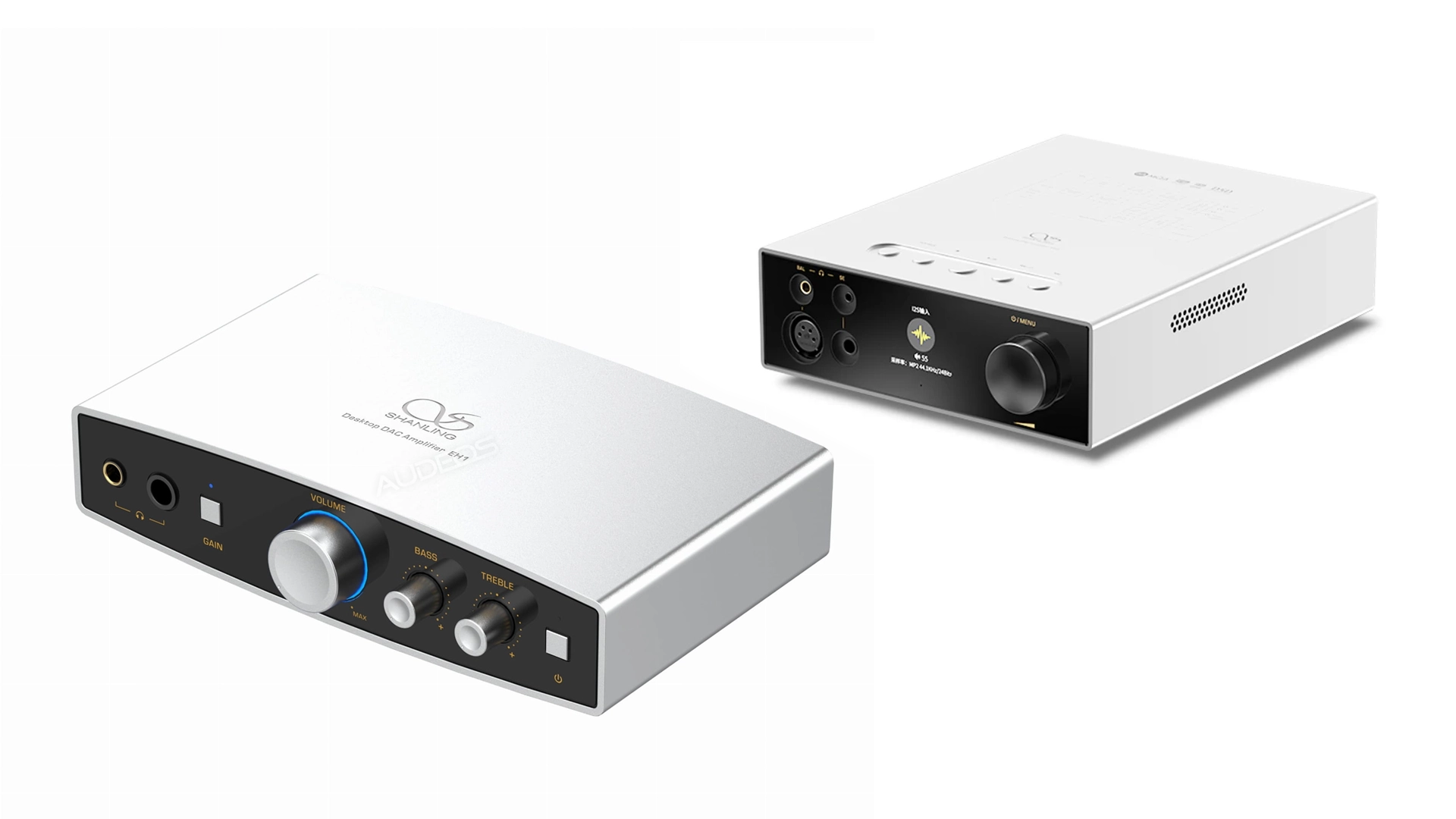
Shanling is a Chinese audio manufacturer founded in 1988, when it developed and released its first stereo amplifier. The company subsequently built CD, HDCD and SACD players, valve-output disc players, tuners, amplifiers and power products, acquiring the manufacturing depth that later distinguished it from brands created solely for the portable-audio boom. The CD-T100 helped Shanling enter international markets, while its M3 of 2014 was the first portable high-resolution player and opened the most visible chapter of the modern range. M-series digital audio players now span tiny entry models to Android flagships, with Shanling’s own MTouch interface used where a lighter operating system is preferable. The miniature M0 became especially influential by combining touchscreen control, high-resolution playback and two-way Bluetooth in a genuinely pocketable body. Portable DAC/headphone amplifiers in the UA and H families, Bluetooth receivers, desktop DACs, streamers and the revived EC/CD lines extend the digital source chain; ME and MG earphones give the company control over the final transducer as well. Shanling regularly works with established DAC, amplifier and Bluetooth platforms, but implements them through its own circuit layouts, clocking, power supplies, firmware and precisely machined aluminium cases. Its Shenzhen offices and Dongguan factory combine R&D, metalwork, assembly and sales, while licences and certifications have included LDAC, Hi-Res Audio, HDCD, Dolby, DTS, DVD and SACD technologies over the firm’s history. Shanling’s strength is continuity across formats: it understands optical discs, desktop hi-fi, wireless links and battery-powered players, so its portable products are not isolated gadgets but compact expressions of a much broader audio-engineering practice.
Silent Angel

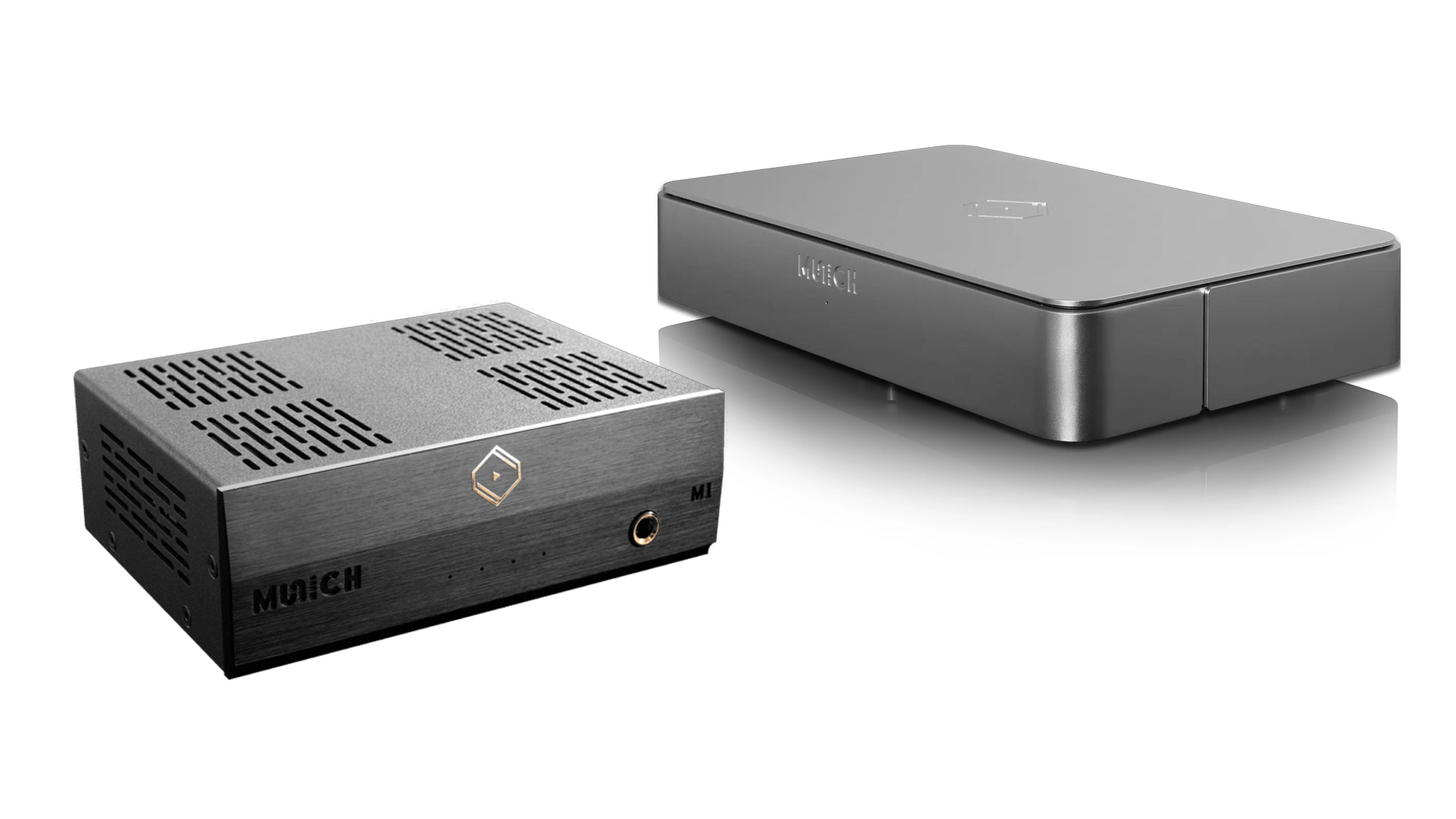
Silent Angel is the network-audio brand of Thunder Data, a technology company established in 2014 with experience in storage, networking and embedded computing. The brand focuses on the digital source before the DAC: music servers, streaming transports, network switches, master clocks, low-noise power supplies and the software required to control them as one system. Rhein Z1 and Z1 Plus servers run Silent Angel’s VitOS platform and can host music libraries and services, including Roon-based workflows, without placing a general-purpose computer beside the audio rack. Munich and Bremen players address network playback, while the Bonn family of switches—from the compact N8 to higher N8 Pro, N8C, NX and dual-zone N16 designs—adds low-noise power, clock control and, on selected models, SFP fibre connections. Genesis GX/GC clock products provide an external timing reference for compatible network devices, and Forester linear supplies or ground-control products let owners improve power without replacing the whole source. VitOS Manager and current companion apps handle configuration, playback and integration with local storage, NAS libraries and streaming platforms. Silent Angel’s claims about network noise and jitter should be judged in a complete system, but the architecture is clear: separate the compute-intensive server, the network link and the endpoint feeding the DAC, then control electrical coupling through fanless hardware, regulated power and optical isolation where useful. Although the brand is Taiwanese in origin, development and company operations are international. Its distinguishing feature is not any single “audiophile switch,” but a modular ecosystem in which computing, networking, clocking, power and user software are designed to work together.
Simaudio
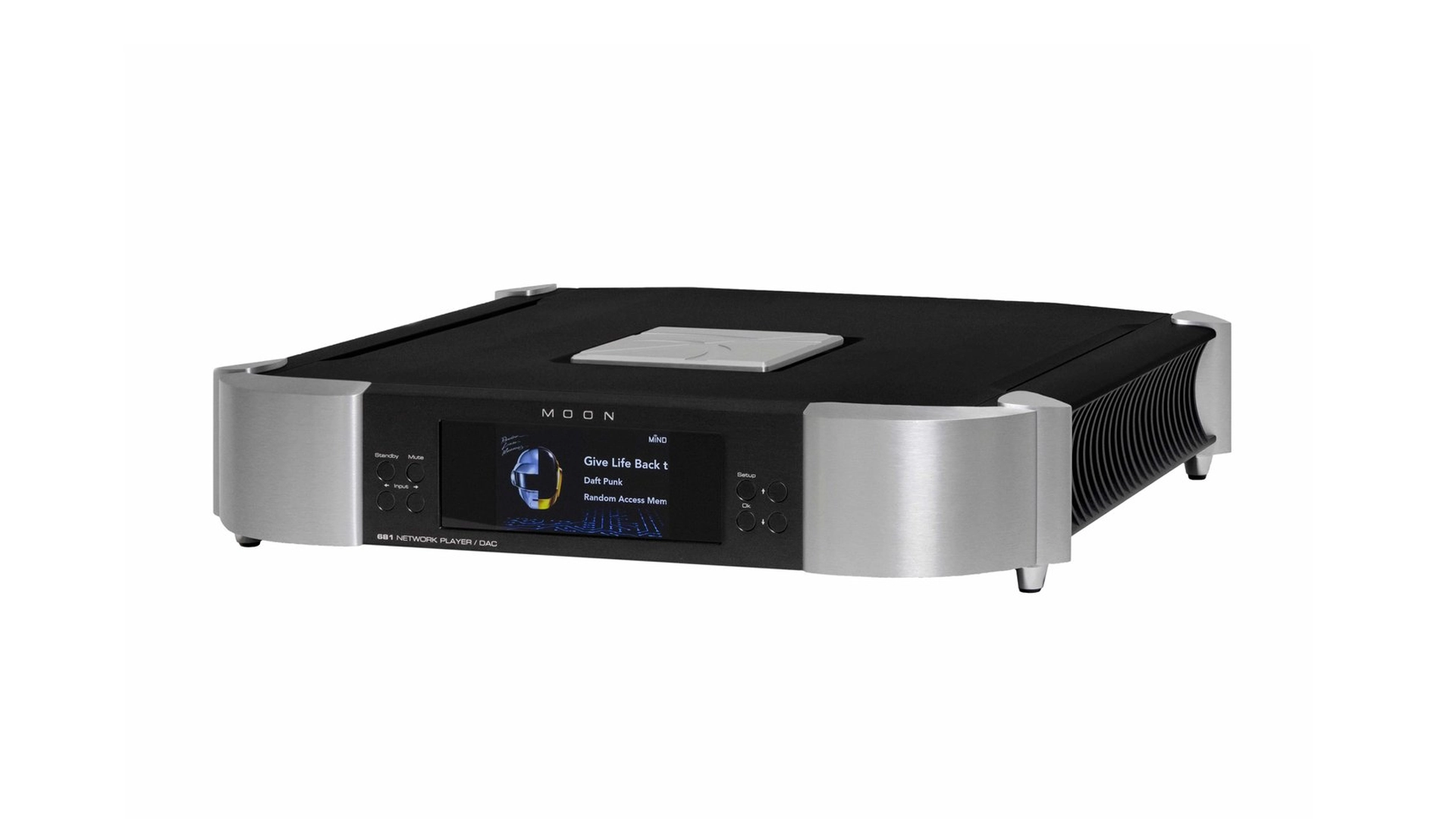
Simaudio is a Canadian high-end electronics manufacturer founded in 1980 as Sima Electronics by Victor Sima. The early company became known for muscular amplifiers able to control demanding loudspeakers; in 1994 Jean Poulin and partners acquired the business, and the MOON name gradually became the public identity of its products. Design and manufacturing remain near Montreal, with metalwork, circuit assembly, testing and long-term service kept unusually close for a modern audio company. MOON electronics cover integrated and power amplifiers, preamplifiers, network players, DACs and phono stages. The Evolution series established technologies such as M-LoVo low-voltage regulation, M-eVOL2 volume control and the MiND network platform, while the compact ACE combined streaming, conversion, amplification and phono input in one chassis. MiND 2 supports contemporary network playback and multiroom control without making a computer the front end. The flagship North Collection develops this architecture in the 681 streamer/DAC, 791 network player/preamplifier, 761 and 861 power amplifiers, and the 891/888 reference separates, with the BRM remote giving tactile control across the system. Simaudio does not use one circuit unchanged at every price: power-supply scale, dual-mono separation, output topology, conversion and control are adjusted to each product, but low noise, high current and operational longevity remain consistent priorities. The company is still independently Canadian rather than a legacy badge owned abroad. Its distinction is the ability to join serious analogue amplification with mature streaming and interface design while preserving repairability and factory support—an evolutionary approach that has kept MOON components current without erasing their two-channel roots.
Sonnet Audio

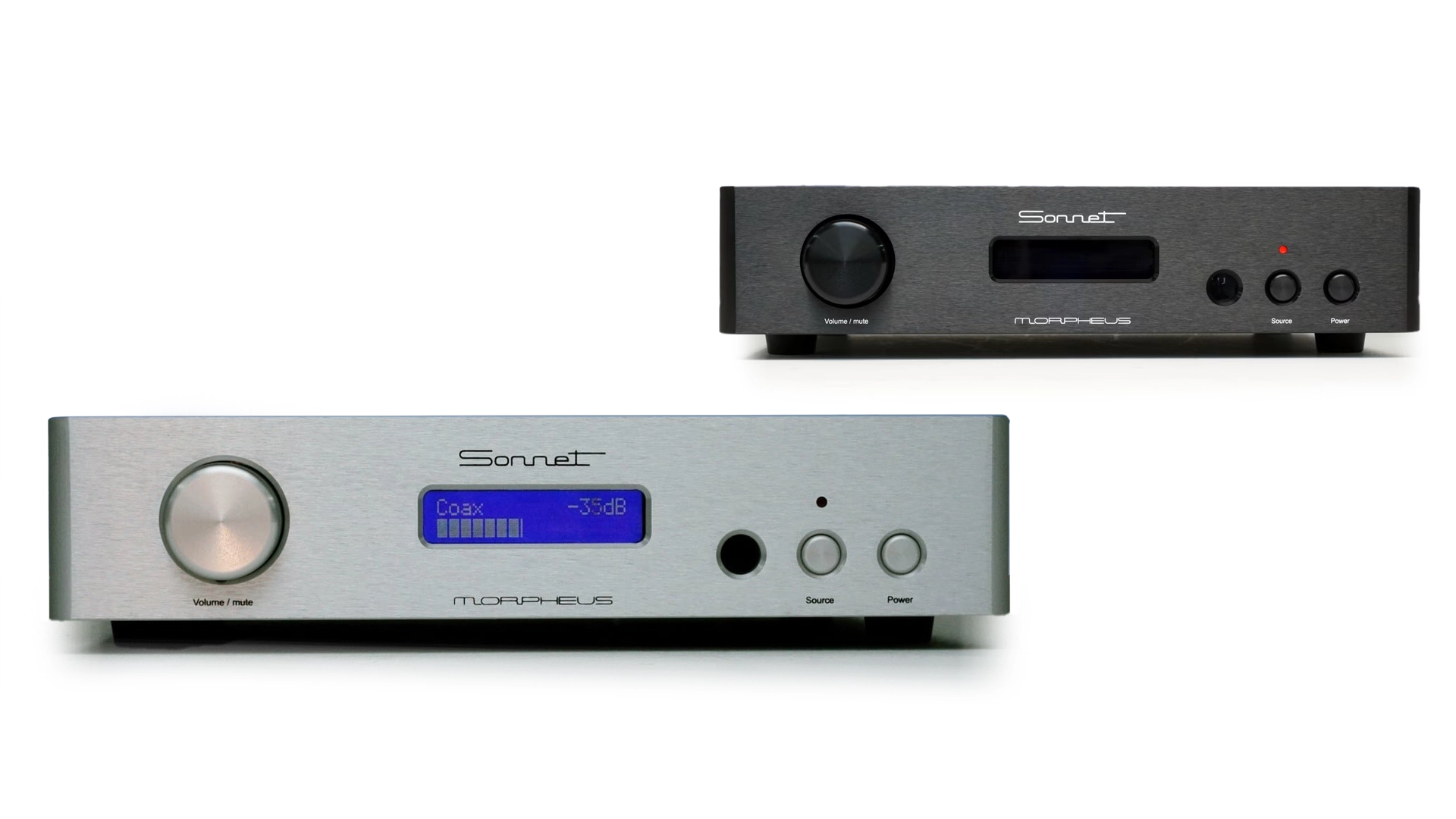
Sonnet Audio is a Dutch digital-audio specialist best known for the Morpheus DAC and the discrete conversion technology developed by Cees Ruijtenberg. Established in 2019 with Lion Kwaaijtaal, the company continued a line of work familiar to listeners of Ruijtenberg’s earlier Metrum Acoustics designs: multibit conversion using proprietary modules, with a preference for non-oversampling playback. Morpheus brought that approach into a compact DAC with volume control, allowing digital sources to be connected to a power amplifier or active system without necessarily adding a separate analogue preamplifier. Morpheus regulates its output by changing the reference voltage of its resistor-ladder DAC modules. This makes volume control part of the conversion architecture itself, with the later MK-II adding attenuation for more sensitive amplification. Its relationship with Metrum became closer again in September 2023, when the companies announced that they were combining their operations while retaining both brand names. They described shared development, production and support, with DAC modules, electronics and final assembly handled by the same Dutch team. Sonnet therefore belongs to an ongoing engineering family rather than an unrelated company that merely borrows Metrum’s reputation. For a listener choosing between digital front ends, its defining attraction is this continuity: the designer’s own conversion modules, a deliberately focused signal path and products built around a particular understanding of digital-to-analogue reproduction.
Sonore

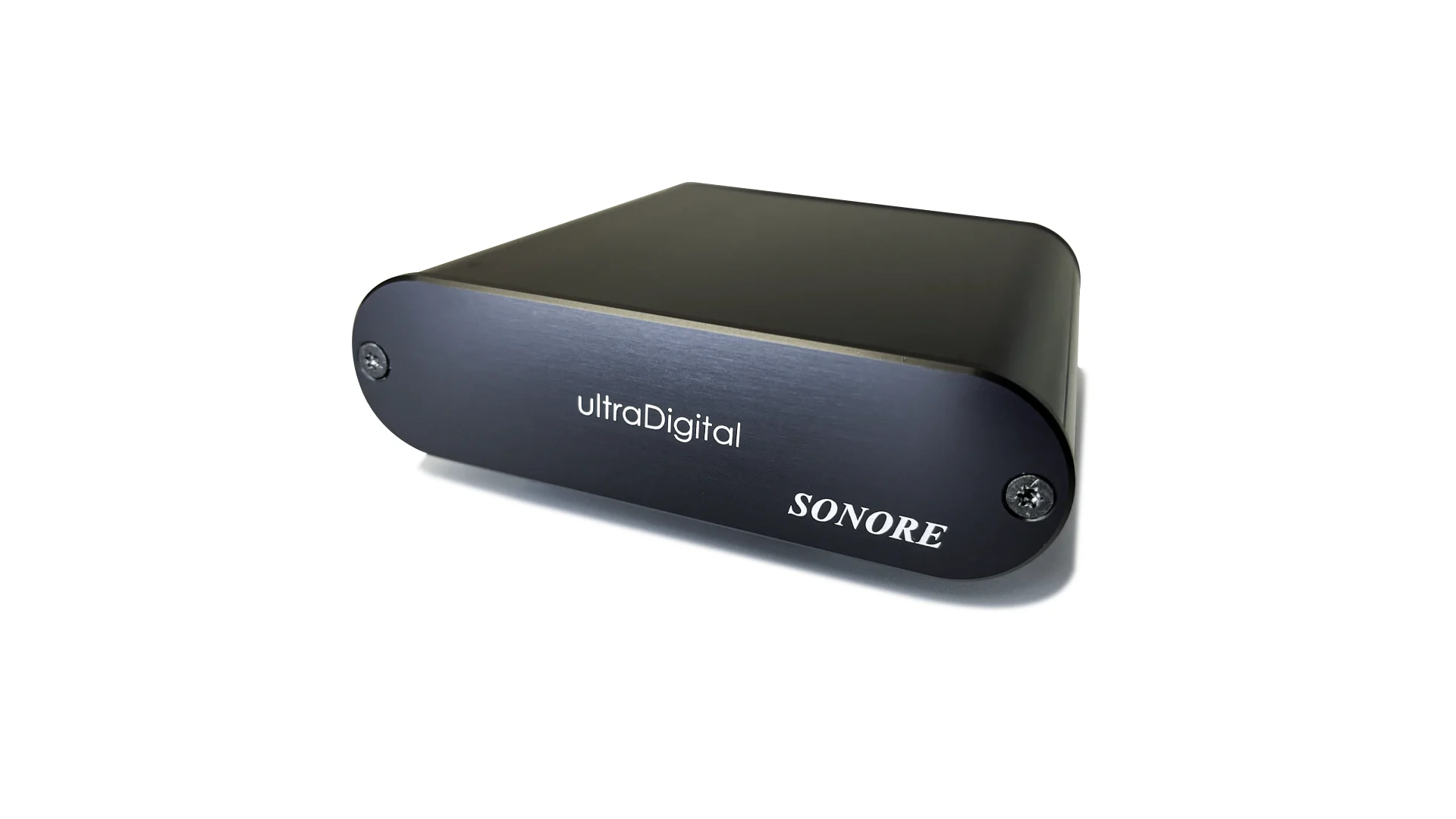
Sonore turns a network connection into a dedicated USB source for an external DAC. Its Rendu family helped make the small audio endpoint a familiar alternative to placing a general-purpose computer beside the hi-fi system. The American brand’s microRendu established that compact format; ultraRendu and opticalRendu developed it through revised hardware and different network interfaces. These devices perform the network playback role while leaving digital-to-analogue conversion to the DAC already chosen by the listener. Optical connectivity became a distinctive part of the range. The opticalRendu Deluxe receives data through fibre Ethernet, and the opticalModule Deluxe converts between copper and optical network links. Fibre provides an electrically non-conductive connection between the network sections it joins, addressing an electrical path rather than changing the music data. The Signature Rendu SE Deluxe offers optical or copper Ethernet input with USB audio output, while ultraRendu Plus serves conventional wired networks. Sonore also supplies linear power supplies and the associated connection accessories. Its software relationship with Small Green Computer brings Sonicorbiter OS to the platform, with playback options suited to network-audio systems. The attraction is the separation of jobs: a server can store and manage the library elsewhere, a Rendu endpoint can sit close to the audio system, and the DAC can remain the conversion component. This modular approach lets owners develop streaming around existing equipment instead of replacing the entire front end.
Sonoro

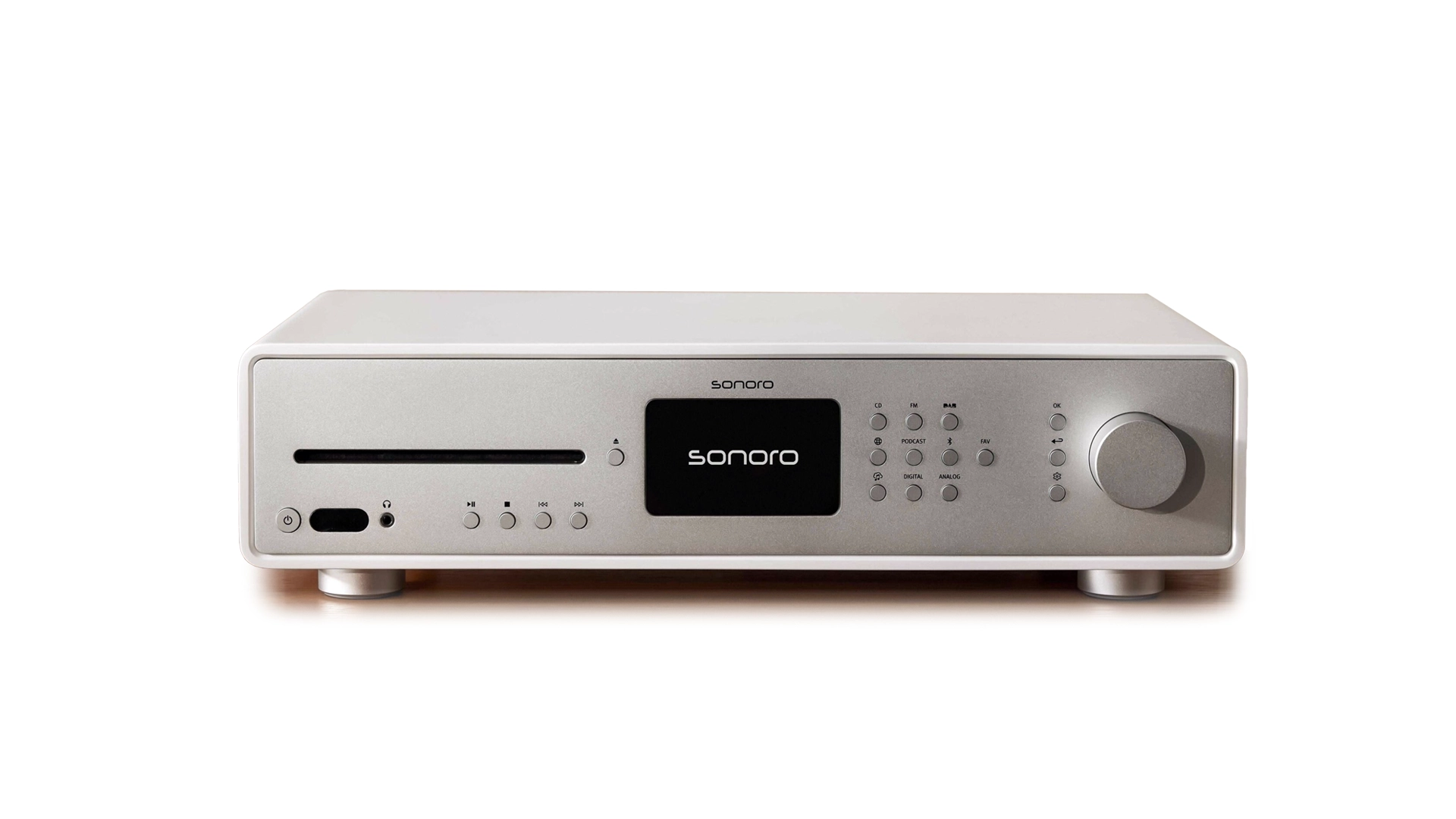
Sonoro brings radio, discs and streaming into music systems designed to live comfortably in an ordinary room. Founded in Germany in 2006 by Marcell Faller, the company develops its products in Neuss with equal attention to their controls, proportions and audio functions. Compact all-in-one systems made its name: products such as Elite, Prestige and Meisterstück gather sources and loudspeakers into a single enclosure, reducing the equipment and cabling needed for everyday listening. Depending on the model, the source selection combines CD playback, FM and DAB+ radio, internet radio and network services. That mixture is an important part of Sonoro’s identity, accommodating a physical music collection alongside newer listening habits. Meisterstück has developed into a more substantial all-in-one platform; its second generation adds facilities including AirPlay, Chromecast and room calibration. Sonoro has also expanded beyond self-contained radios and music centres. Maestro supplies the electronics for a separate stereo system, Orchestra loudspeakers provide the matching speaker option, and Platinum turntables bring vinyl into the catalogue. This gives the brand a path from a single bedroom or living-room unit to a system with physically separated speakers. The common design language remains restrained and domestic, with clearly arranged controls and cabinets intended to be seen. Sonoro’s particular strength is assembling familiar and modern sources into approachable products whose use and appearance matter as much as their specification lists.
SOtM

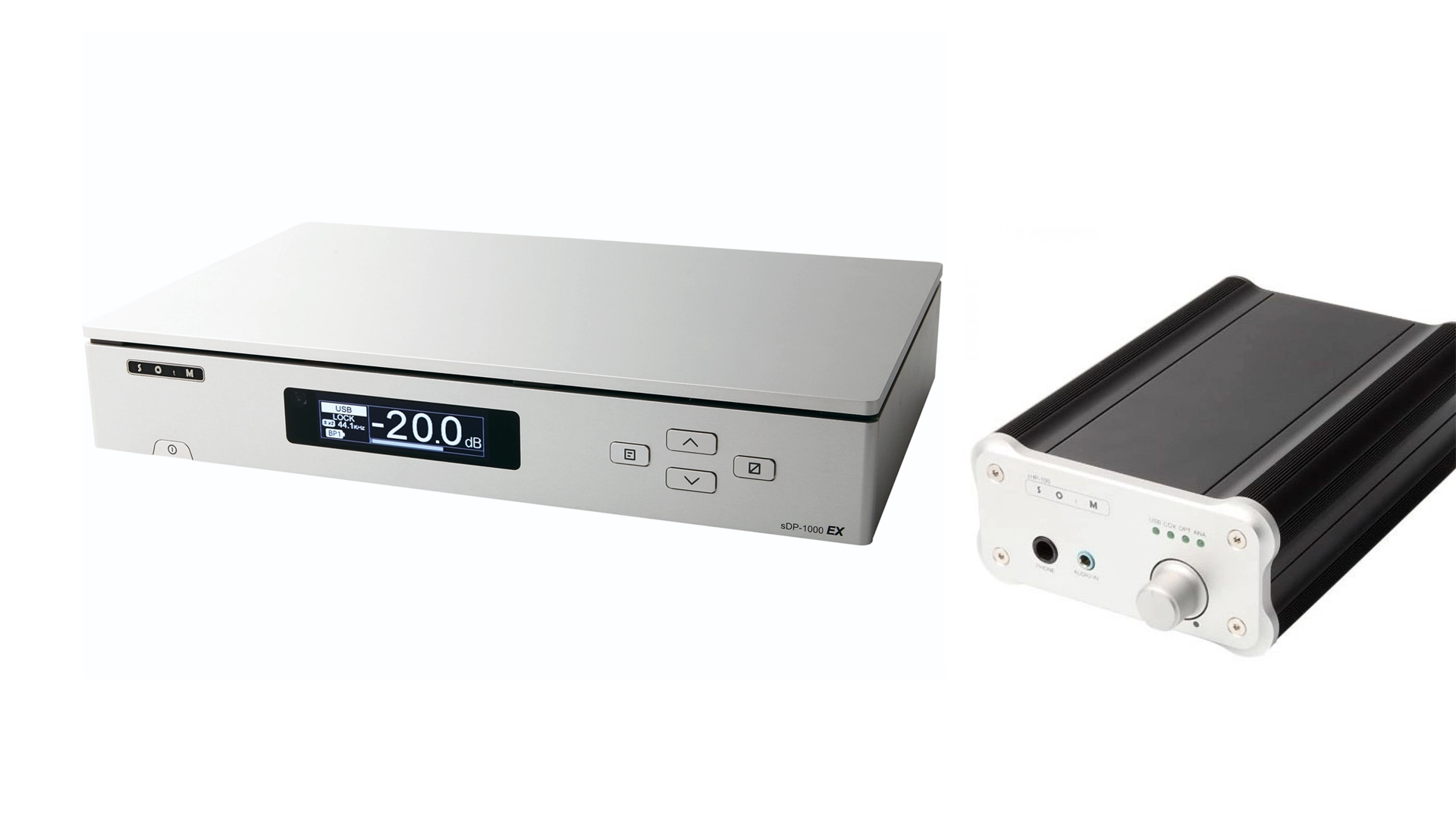
SOtM builds digital-audio components around the less visible parts of computer playback: clocking, power regulation and the electrical interfaces feeding a DAC. The South Korean company’s name stands for Soul Of the Music, and its catalogue connects network players with supporting USB, clock and power products. The sMS-200 family became a recognisable entry point, using a dedicated playback board to send USB audio to an external converter. In the sMS-200ultra, the sCLK-EX clock is integrated into that compact network-player architecture, with an optional connection for an external master clock. Its Linux-based Eunhasu interface provides access to playback modes including Roon Ready, Squeezelite, DLNA and HQPlayer NAA. This makes the player usable within several software environments while allowing the rest of the music library system to reside elsewhere. The wider range includes the sMS-2000 music server, alongside products addressing network connections and the supply of power to digital equipment. DAC and headphone-audio products have also formed part of SOtM’s work. The company’s distinctive approach is to treat a digital source as a collection of interacting electrical subsystems rather than judging it only by supported sample rates. Owners can start with a network player and select compatible supporting components as their system develops. That modular structure is particularly relevant to listeners who already own a DAC and want to build a dedicated streaming front end around it.
Soulnote

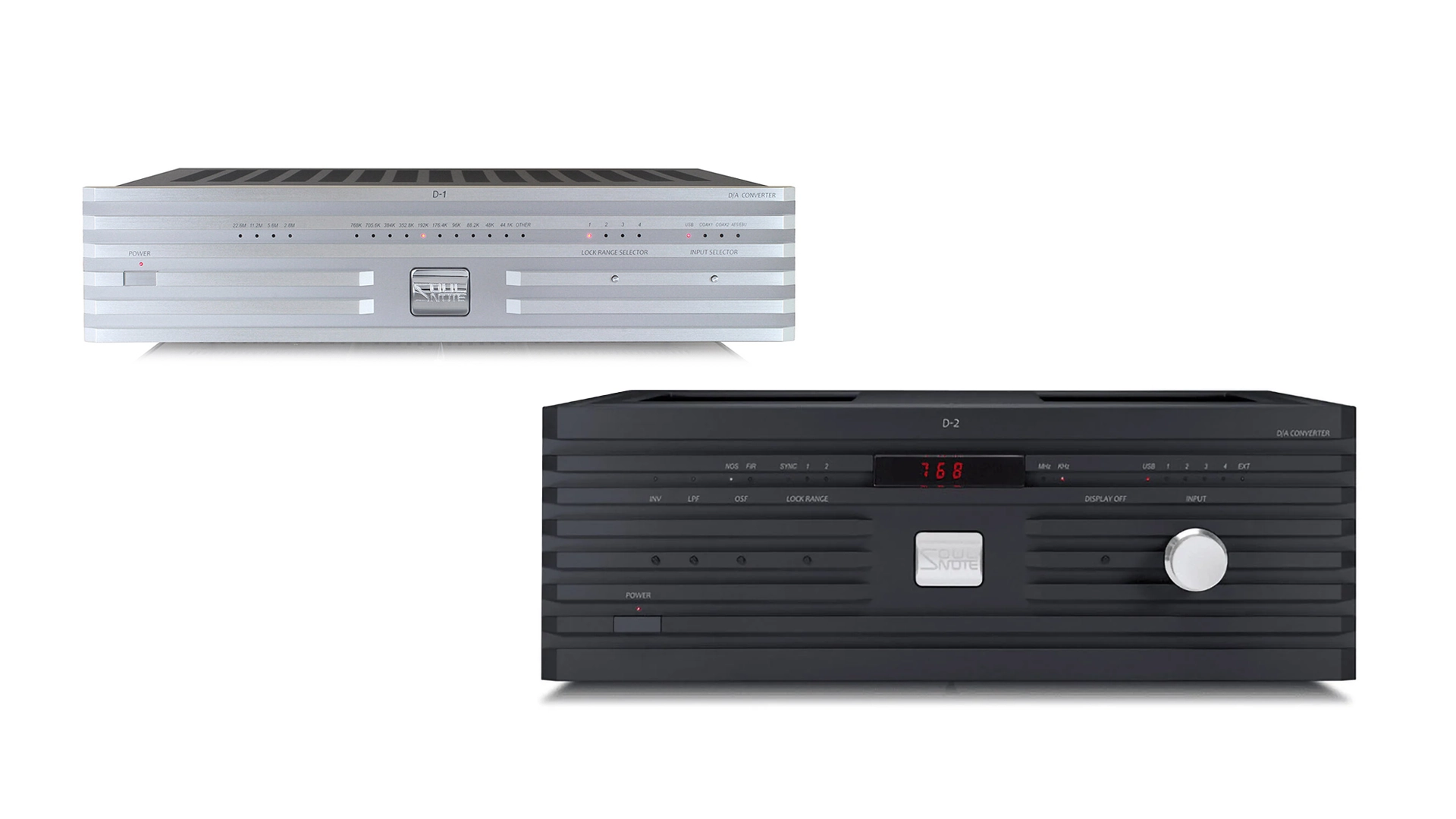
SOULNOTE makes Japanese amplifiers, DACs and phono stages shaped by a particularly explicit listening-led design philosophy. The brand was launched in 2006 by CSR, the Kanagawa company founded in 2004 by former Marantz Japan personnel. SOULNOTE Co., Ltd. was established in 2023. A major change in design direction had come in 2016 when Hideki Kato became Chief Sound Manager. His experience included NEC’s A-10 amplifiers and Philips LHH equipment, and his subsequent SOULNOTE work placed emphasis on what he calls dynamic performance: the behaviour of music in time as heard during playback. This is the rationale behind the use of amplification without negative feedback and non-oversampling options in digital conversion. These are deliberate design choices, not a claim that one circuit approach is universally superior. Listening informs component selection and mechanical construction as well as circuit development. The A-series integrated amplifiers, D-series converters and E-series phono stages provide the main routes into the catalogue. More ambitious systems can use P-3 preamplification, M-3 monoblocks and the S-3 Reference disc player, with X-3 clock and Z-3 network products extending the digital platform. This breadth allows analogue and digital listeners to encounter the same design thinking in different components. SOULNOTE’s individuality lies in the consistency of that programme: it is an engineering team willing to make unusual electrical and mechanical choices in pursuit of its preferred presentation, with Kato’s professional history providing continuity behind the modern range.
Soulution

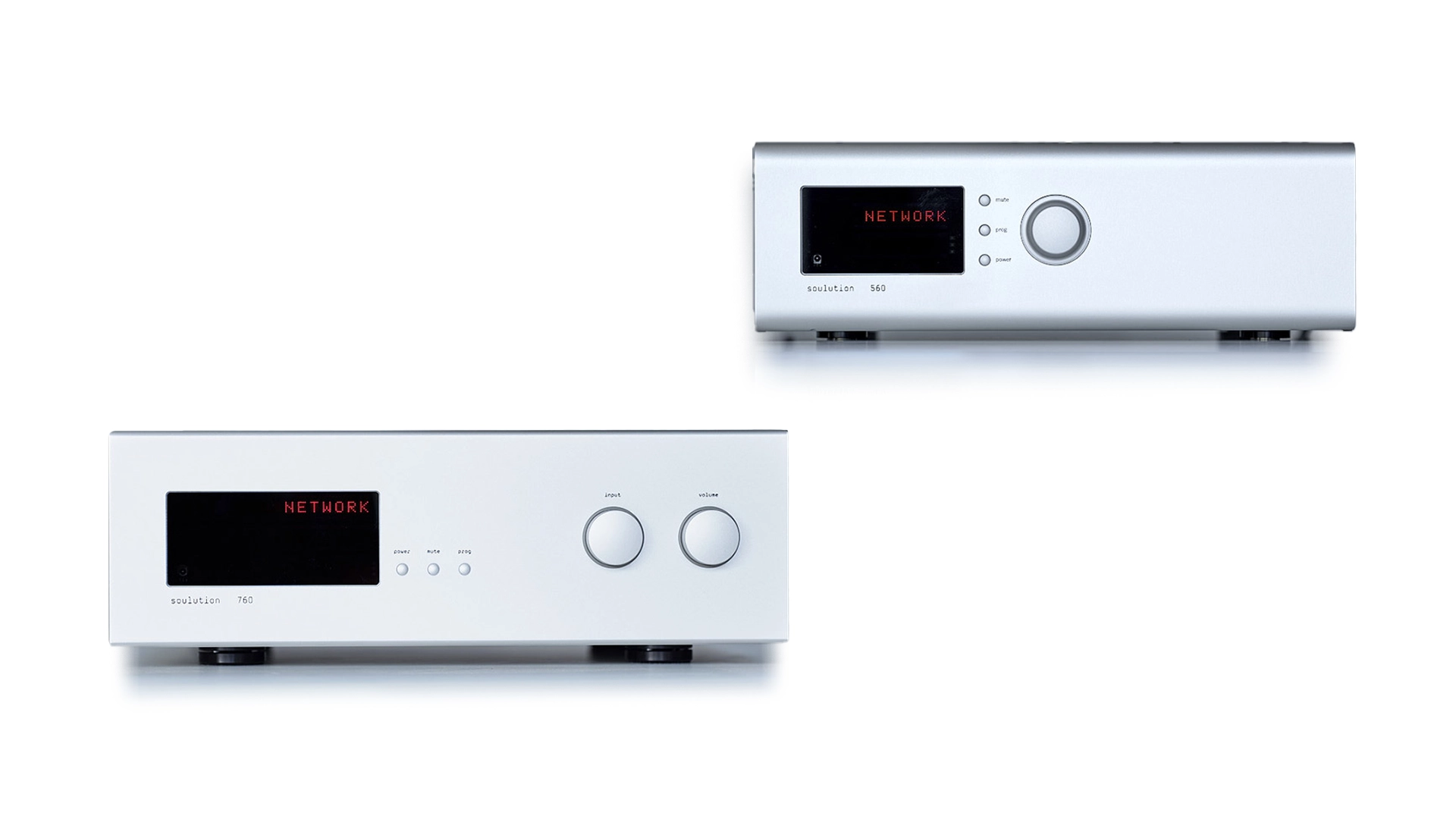
Soulution is a Swiss high-end audio manufacturer whose amplifiers combine exceptionally wide-band circuitry with substantial, carefully regulated power supplies. The brand was created by Cyrill Hammer and Roland Manz, the managing directors of Spemot in Dulliken, bringing an established industrial electronics and motor company’s resources to a shared interest in music reproduction. Its 3, 5 and 7 Series organise integrated amplifiers, separate amplification and digital and analogue source components into different levels of system ambition. The 511 power amplifier offers a useful view of the engineering. A proprietary voltage-gain stage is followed by multiple current-amplification stages, while short signal and supply paths receive close attention. Separate supplies serve different functions, with audio and control circuitry electrically isolated where required. Its four switched-mode supply modules feed extensive energy storage and fast linear regulation, showing that Soulution selects a supply architecture for the job rather than relying on the visual reassurance of a large transformer alone. Stereo, dual and mono operating modes make the same chassis adaptable to different systems. Preamplifiers, DACs and phono stages extend the programme, and the 787 turntable adds an analogue source to the upper range. The large enclosures have a restrained appearance, with their design addressing stability and heat dissipation alongside room placement. Soulution’s defining strength is the development of complete electronic systems around bandwidth, current delivery and controlled operating conditions.
SPL

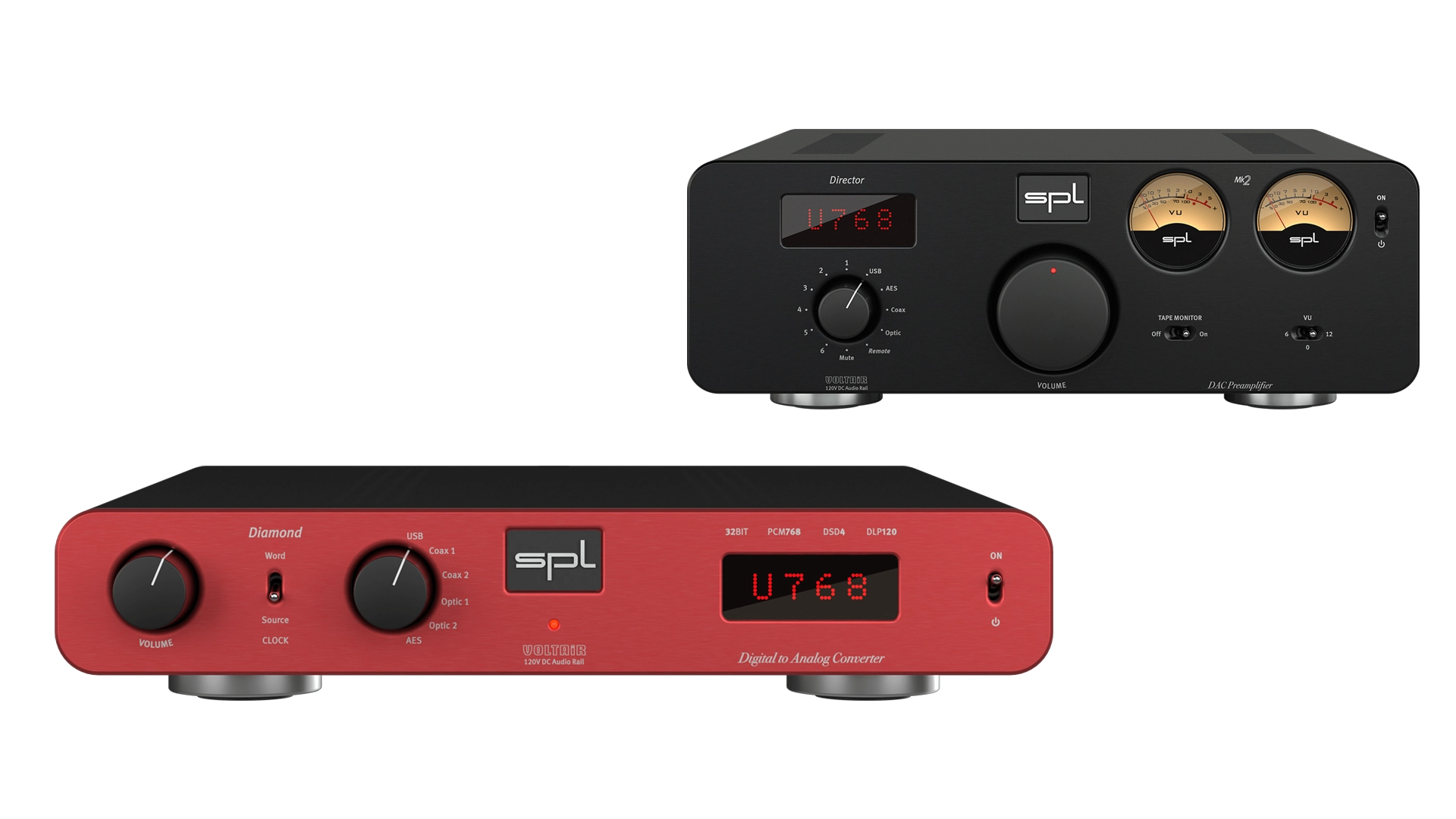
SPL—Sound Performance Lab—is a German manufacturer whose domestic hi-fi electronics grew directly from decades of professional studio design. Hermann Gier and Wolfgang Neumann founded the company in 1983, and processors such as the Vitalizer helped establish its name among recording and mastering engineers. That professional background is central to the later Professional Fidelity range: the goal is to bring the headroom, control and operational clarity of studio equipment into a home system. SPL’s defining circuit platform is VOLTAiR, often described as 120V technology because its audio stages operate from ±60-volt rails. Compared with conventional low-voltage op-amp circuits, the architecture is designed for greater headroom and dynamic range before overload. It appears across products such as the Director DAC/preamplifier, Elector analogue preamplifier, Phonitor headphone amplifiers and Performer power amplifiers. Phonitor models are particularly characteristic, combining serious headphone drive with the company’s Matrix crossfeed system, intended to approximate aspects of loudspeaker listening over headphones. Phonos and Phonos duo address moving-magnet and moving-coil cartridges, while the Diamond DAC and Crossover extend the modular system. SPL develops and manufactures in Germany and continues to serve both professional and domestic markets. The brand’s individuality lies in that continuity: these are not lifestyle products borrowing studio styling, but home components built around circuit ideas, metering, routing experience and high operating voltages refined in working audio environments.
Sugden Audio

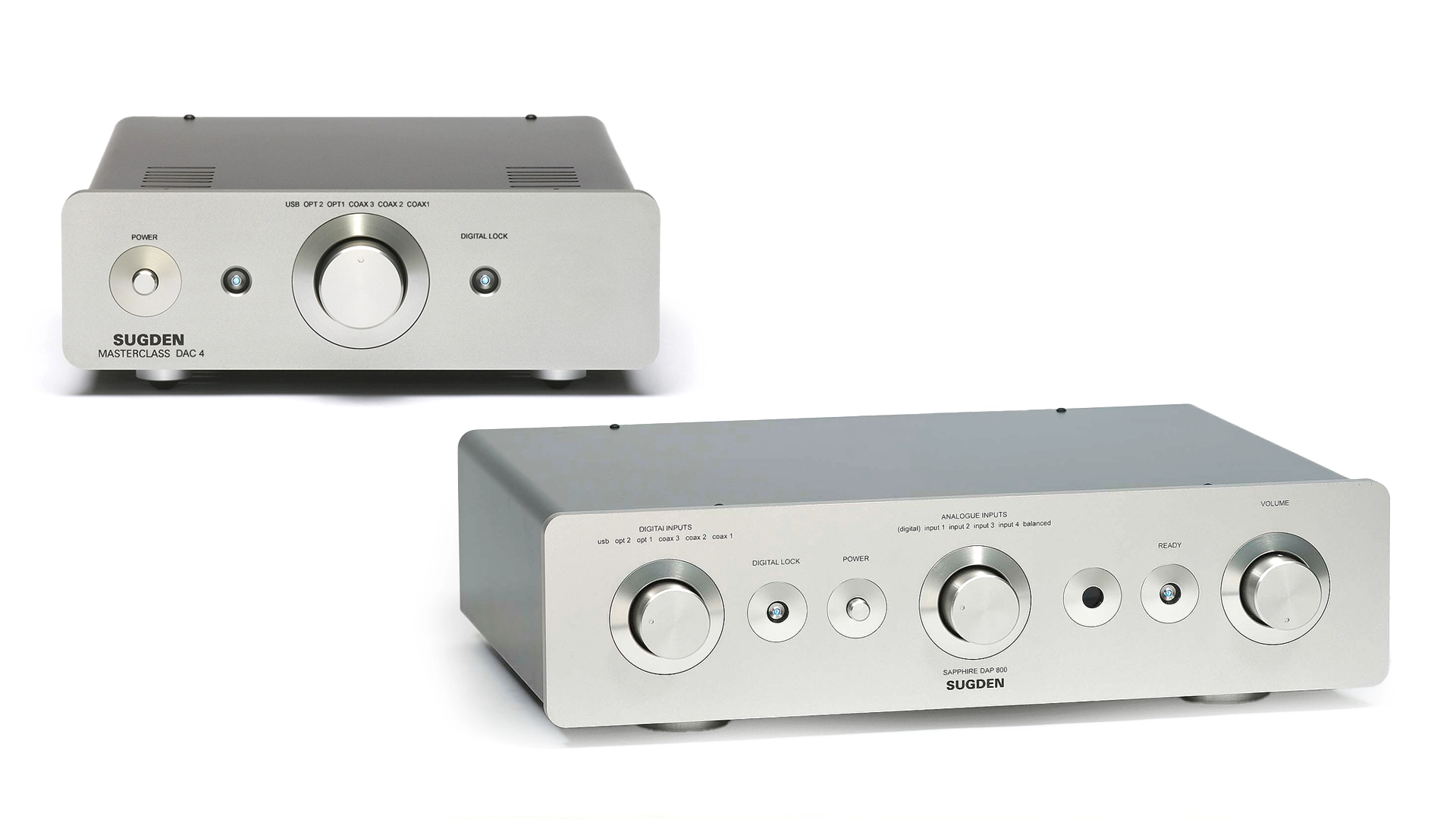
Sugden Audio is the British manufacturer most closely associated with solid-state amplification operated in pure Class A. Engineer James Edward Sugden founded the company in West Yorkshire in 1967 after developing scientific instruments through Research Electronics. His early Si 402 amplifier attacked the crossover distortion inherent in many transistor Class B designs by keeping the output devices conducting throughout the waveform. The commercially viable A21 brought that principle to a wider market and became the product that defined the company. More than half a century later, A21 variants remain in production, making the model a genuine continuous design lineage rather than a heritage name revived for an anniversary. Pure Class A operation is inefficient and generates substantial heat, but it lets Sugden prioritise a simple, stable amplification path without output-stage switching at the zero crossing. The current A21 Series includes integrated and power-amplifier options, while Masterclass and Sapphire components scale the approach into separate preamplifiers, stereo power amplifiers and monoblocks. Dedicated phono stages and digital sources complete systems without forcing every product into the same circuit format. Sugden moved to Heckmondwike in 1981 and continues to build its electronics by hand in Britain. The brand’s identity is unusually clear: conservative casework, long product lives, serviceable construction and a commitment to Class A that began as an engineering solution in the 1960s and remains the organising principle of the modern catalogue.
Synthesis

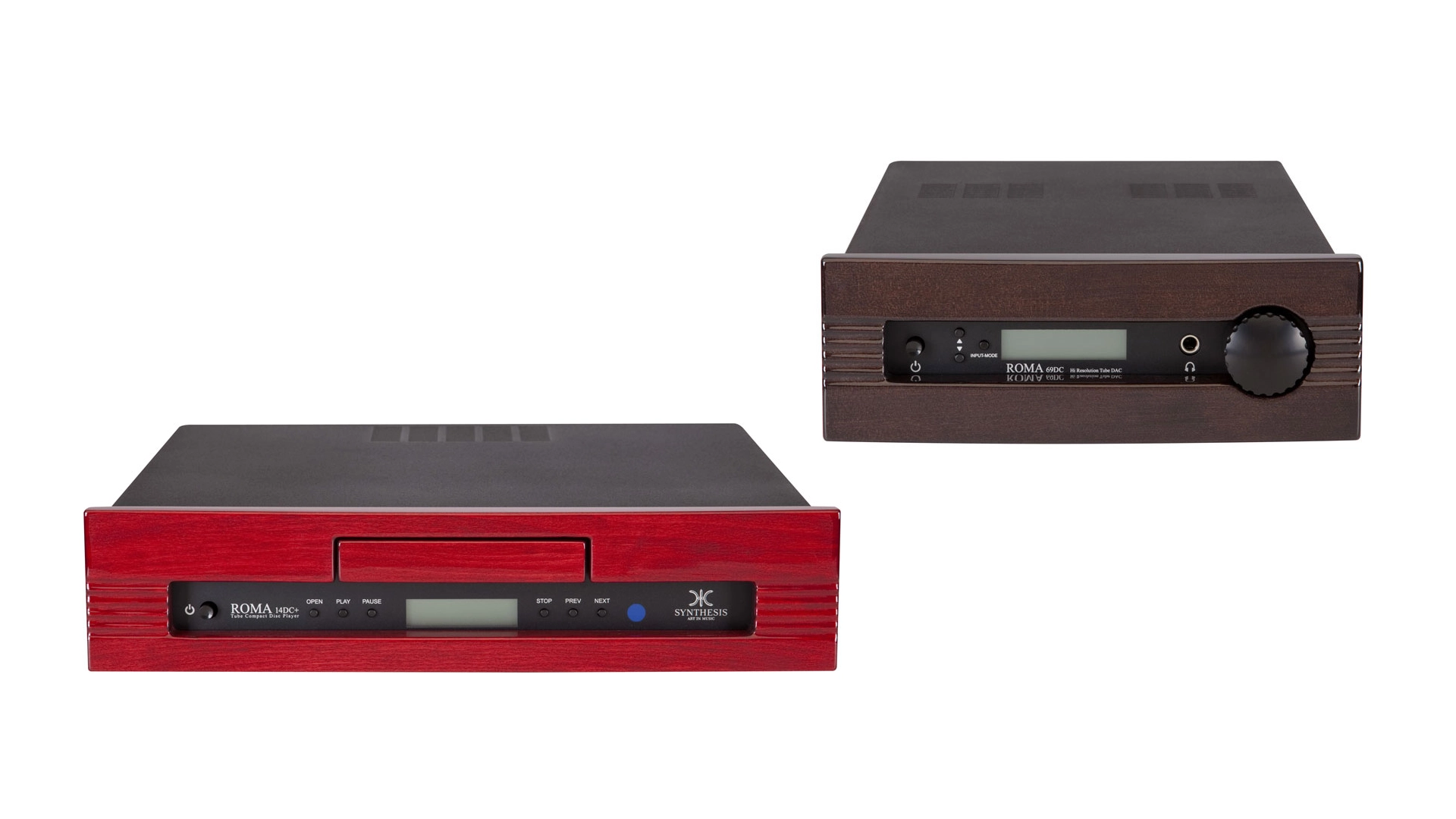
Synthesis: Art In Music, founded in Italy in 1992 by Luigi Lorenzon, is a high-end audio manufacturer specializing in valve (tube) amplifiers. The company is known for its “electronically perfect and aesthetically innovative” designs, often featuring lacquered wood, making them instantly recognizable. Lorenzon’s family history is deeply intertwined with audio: his father founded FASEL in 1961, a renowned manufacturer of transformers for valve amplifiers, including those used in the iconic VOX AC30 amplifier and the red Fasel inductor in Dunlop’s Cry Baby wah-wah. Lorenzon inherited this expertise and combined it with his love for music to create Synthesis. The NIMIS amplifier (15W valve, now discontinued) was a turning point, establishing the company’s reputation worldwide. Synthesis emphasizes that every component, especially the transformers, is entirely handmade in Italy. The company represents a continuation of over 60 years of experience in high-end electronics.
T+A

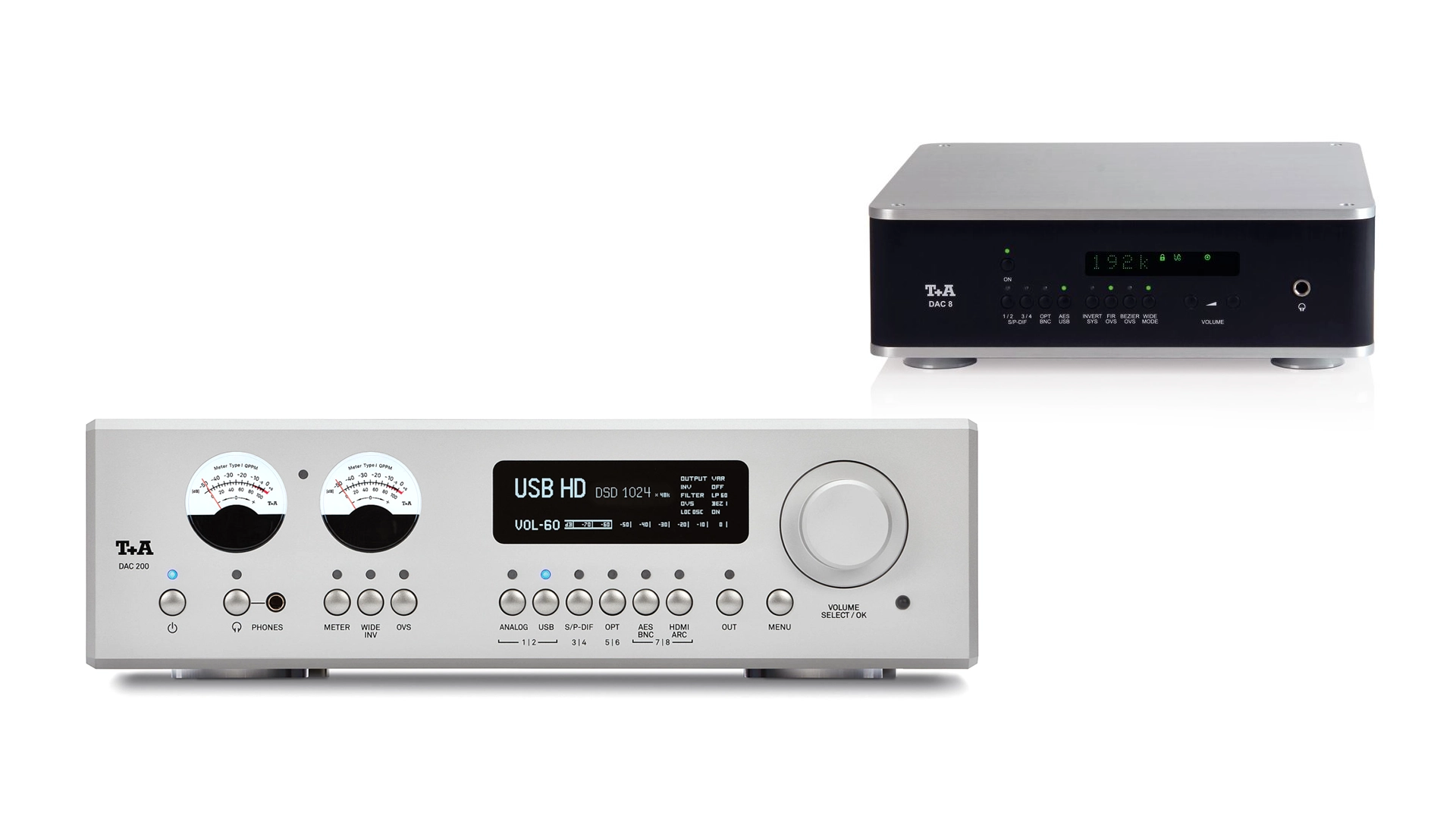
T+A elektroakustik (Theory + Application) is a German manufacturer of high-end audio equipment, known for its wide range of products, innovative technologies, and a focus on delivering both exceptional sound quality and comprehensive features. The company’s product range includes amplifiers, preamplifiers, integrated amplifiers, CD players, streamers, all-in-one systems, loudspeakers, and even headphones. T+A often utilizes proprietary technologies and advanced engineering in its designs, aiming to push the boundaries of audio performance. Their products are characterized by their robust build quality, elegant aesthetics, and a sonic signature that emphasizes detail, dynamics, and a natural, unforced presentation. The “HV” (High Voltage), “R” series , and “Cala” series represent different facets of their product offerings. T+A products are positioned in the high-end segment of the market, appealing to audiophiles who value both performance and German engineering.
TAD

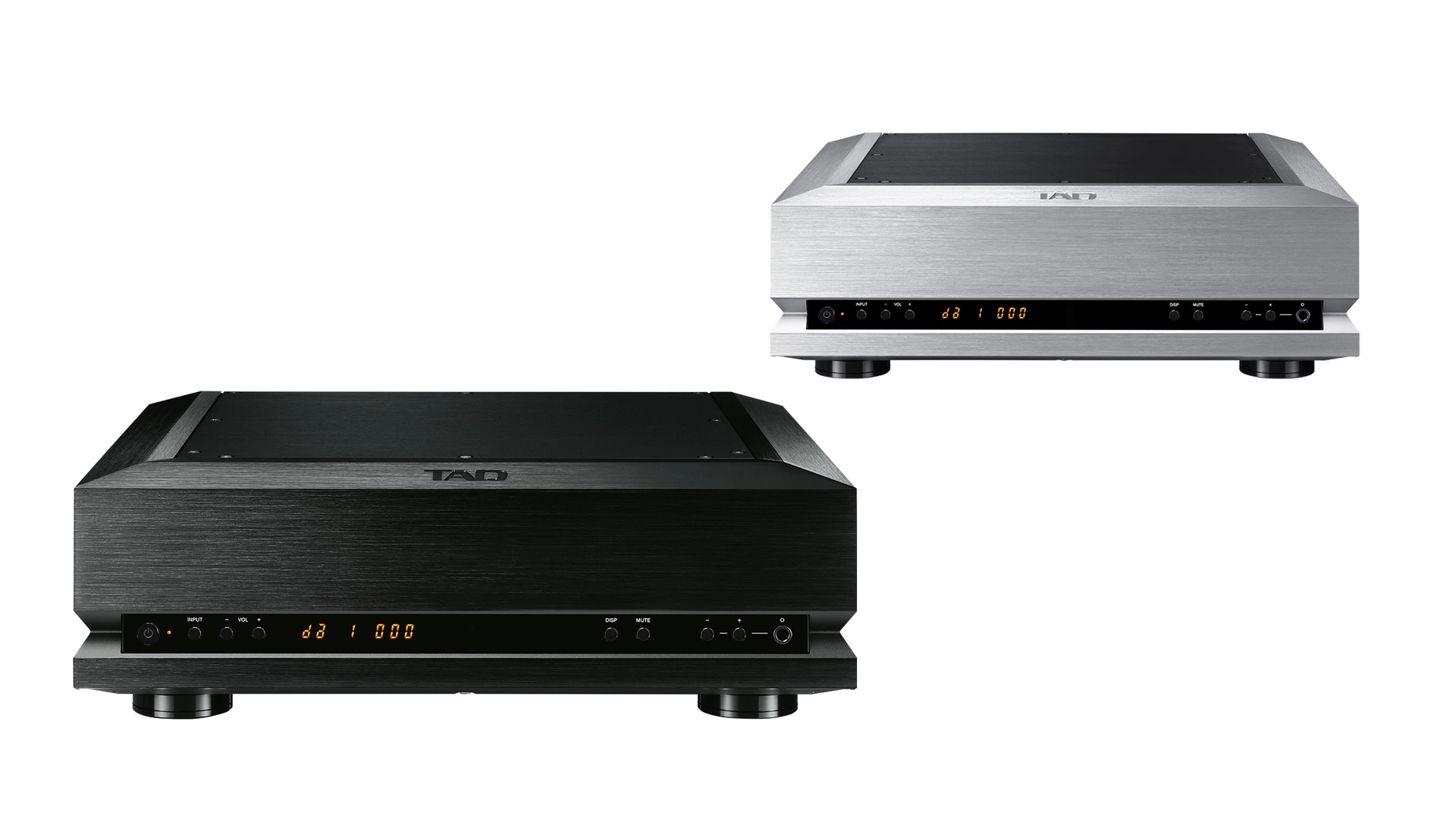
TAD (Technical Audio Devices Laboratories, Inc.), a high-end audio brand and division of Pioneer, was initially focused on professional studio monitors. Founded by Bart Locanthi. Their entry into the consumer market began in 2002 with the TAD-M1 speaker system, unveiled at the Consumer Electronics Show (CES). The TAD-M1, and subsequent TAD speakers, are built around their proprietary CST (Coherent Source Transducer) Driver. This coaxial driver combines a beryllium tweeter dome and a beryllium midrange cone, achieving ultra-wide-range reproduction from 250 Hz to 100 kHz. The CST driver acts as a point source, providing uniform directional characteristics both horizontally and vertically, for natural sound dispersion. The use of beryllium is key: it’s the lightest and most rigid metal with high internal loss, ideal for reproducing ultra-high frequencies (including harmonic overtones that enhance the audible band). The shallow, large-diameter beryllium midrange also contributes to lower bass response. The CST Driver, incorporating high-precision processing and a proprietary vapor deposition technique for the beryllium diaphragm, represents the culmination of years of TAD’s technical expertise. The technology is found in models like the TAD Reference One (released 2007) and other speakers.
Taga Harmony


TAGA Harmony is a company specializing in loudspeakers, audio electronics, and cables, known for its focus on providing high-quality sound at accessible price points. While having European roots, the company has significant operations and design influence from Japan. TAGA Harmony offers a wide range of products, including floor-standing speakers, bookshelf speakers, center channel speakers, subwoofers, integrated amplifiers, and various cables. Their products often feature a modern aesthetic and are designed to deliver a balanced and engaging sound. The company’s design philosophy emphasizes a combination of engineering principles and subjective listening evaluations to achieve optimal performance. TAGA Harmony products are positioned in the
Tangent

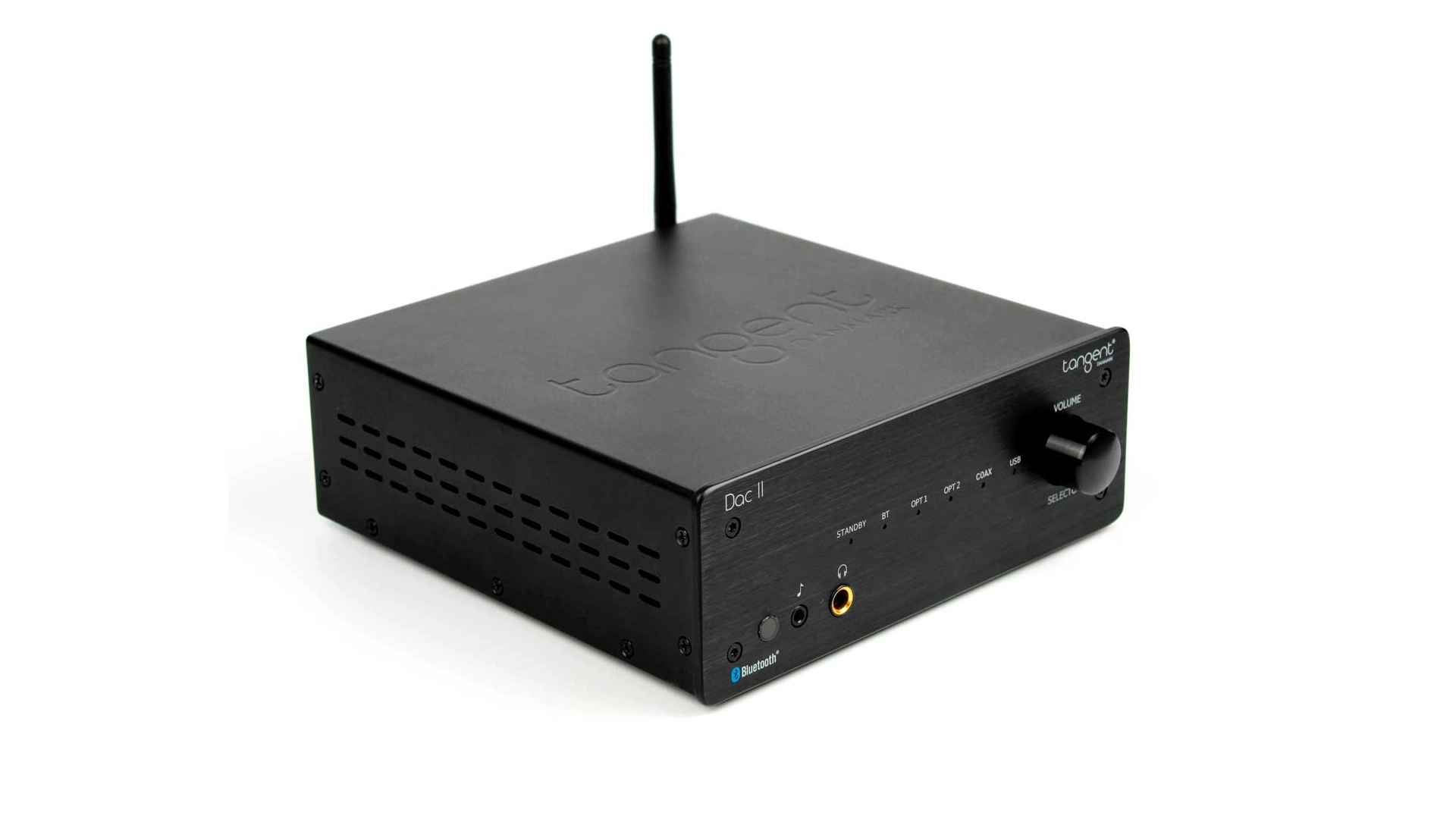
Tangent is a Danish brand of audio electronics, known for its stylish and compact designs, often featuring a minimalist Scandinavian aesthetic. The company offers a range of products, including radios, CD players, amplifiers, speakers, and all-in-one music systems. Tangent products are often characterized by their ease of use, intuitive controls, and support for various wireless technologies, such as Bluetooth and Wi-Fi. They are designed to be versatile and user-friendly, integrating seamlessly into modern living spaces. The company’s focus is on providing a good balance of sound quality, features, and design, at accessible price points. Tangent products are positioned in the mid-range consumer market, appealing to a broad audience who appreciate both aesthetics and functionality.
Teac

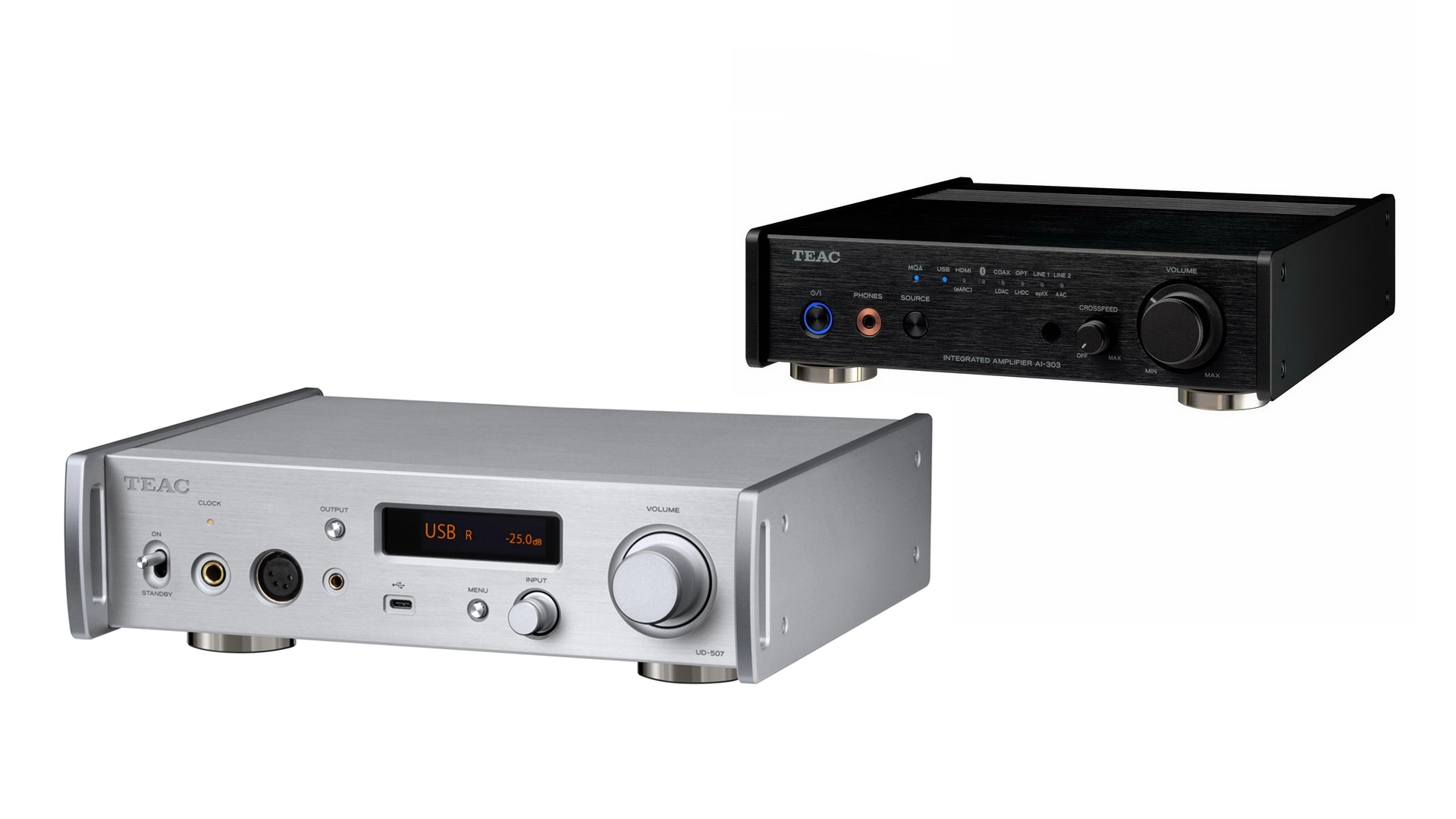
TEAC is a Japanese audio manufacturer whose history links open-reel tape, professional recording and modern digital hi-fi. Brothers Katsuma and Tomoma Tani founded the Tokyo Television Acoustic Company in 1953, and the business soon became Tokyo Electro-Acoustic Company, the source of the TEAC name. Precision tape transports established its international reputation: reel-to-reel machines such as the A-4010 and later X-series decks became fixtures in serious home systems and small studios.
That mechanical expertise led to several distinct branches. TASCAM grew from TEAC’s professional-audio activity and helped bring multitrack recording within reach of musicians through products such as the 80-8 reel-to-reel recorder and Portastudio cassette workstations. Esoteric, introduced in 1987, took the company’s disc-transport and digital engineering into the high-end sector. TEAC itself continued with cassette decks, CD players, turntables, amplifiers and compact Reference components rather than abandoning the consumer listener.
Today’s range connects those traditions. TN-series turntables serve vinyl systems, while the Reference 500 and 700 components combine network playback, USB conversion, headphone amplification and power amplification in relatively compact cases. The VRDS-701 revives TEAC’s rigid-disc-clamping transport principle for CD playback. TEAC’s real distinction is continuity: few brands can trace the same concern for transport stability, recording practice and serviceable engineering from magnetic tape to contemporary streaming and conversion.
The Gryphon
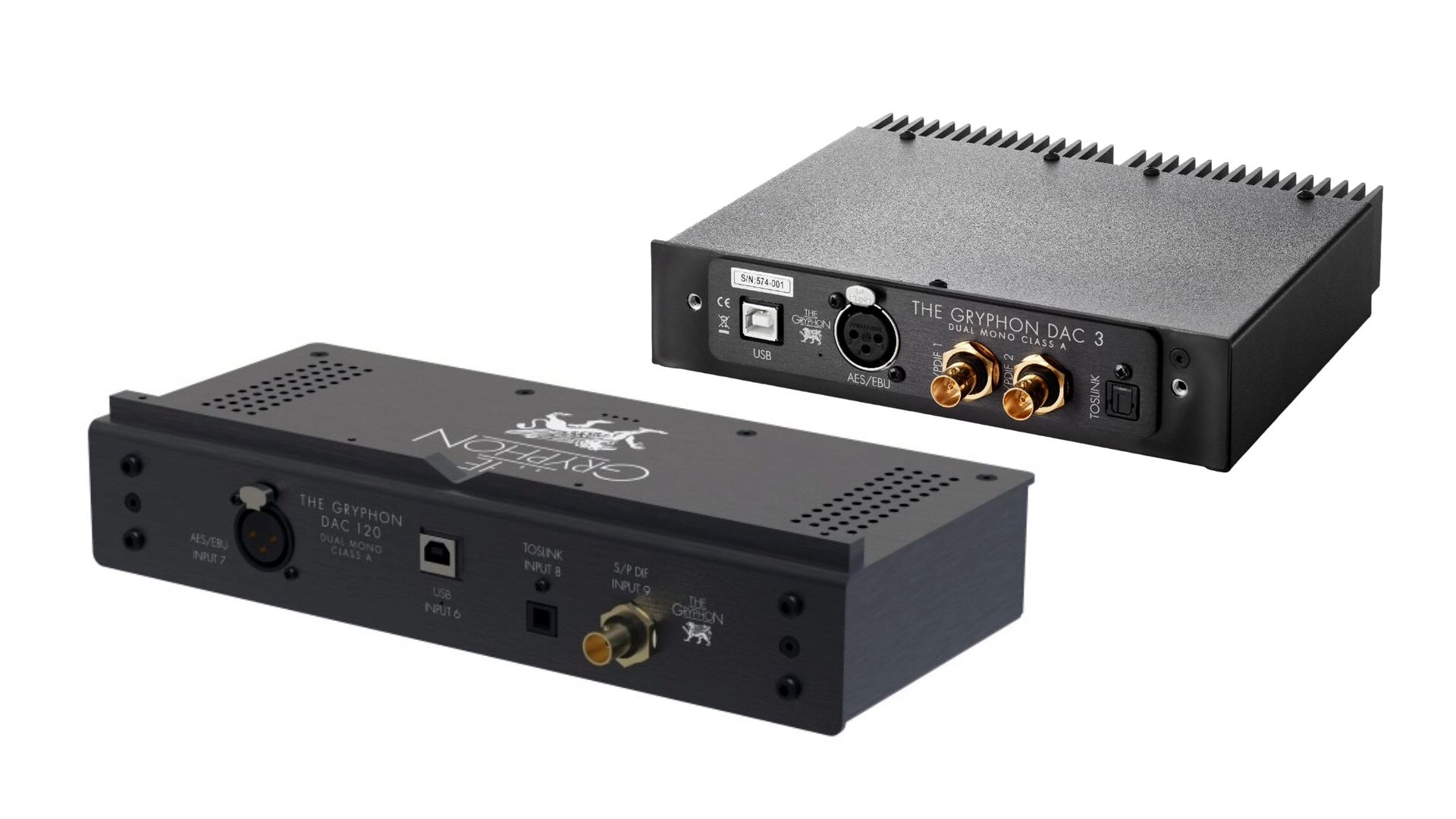
Gryphon Audio Designs is a Danish high-end manufacturer founded in 1985 by artist and industrial designer Flemming E. Rasmussen. The company began as an offshoot of his import business when a one-off moving-coil head amplifier, built for his own system, drew unexpected attention at a hi-fi exhibition. That first Gryphon Head Amp established two traits that still define the brand: electrically ambitious circuits and sculptural objects that do not disguise their scale.
Gryphon became best known for wide-bandwidth, high-current amplification, often operating in pure Class A and built in dual-mono form. The Antileon lineage made that approach internationally recognisable. Current Apex power amplifiers and Commander preamplifier occupy the reference level, while the Essence and Diablo ranges bring the company’s topology and control to more attainable systems. The Diablo 333 integrated amplifier is a good example of Gryphon’s refusal to treat an integrated product as a lightweight compromise.
The catalogue now covers a complete playback chain. Ethos handles CD and digital conversion, and loudspeakers from EOS through Pantheon, Trident and Kodo are designed to exploit the amplifiers’ current delivery and dynamic scale. Gryphon develops and assembles its products in Denmark, using custom metalwork and an unmistakable black visual language. The design can be theatrical, but the brand was not created by styling alone. Its lasting identity comes from Rasmussen’s combination of visual authorship, minimalist signal paths and amplifiers engineered to remain composed with demanding loudspeaker loads.
Thrax

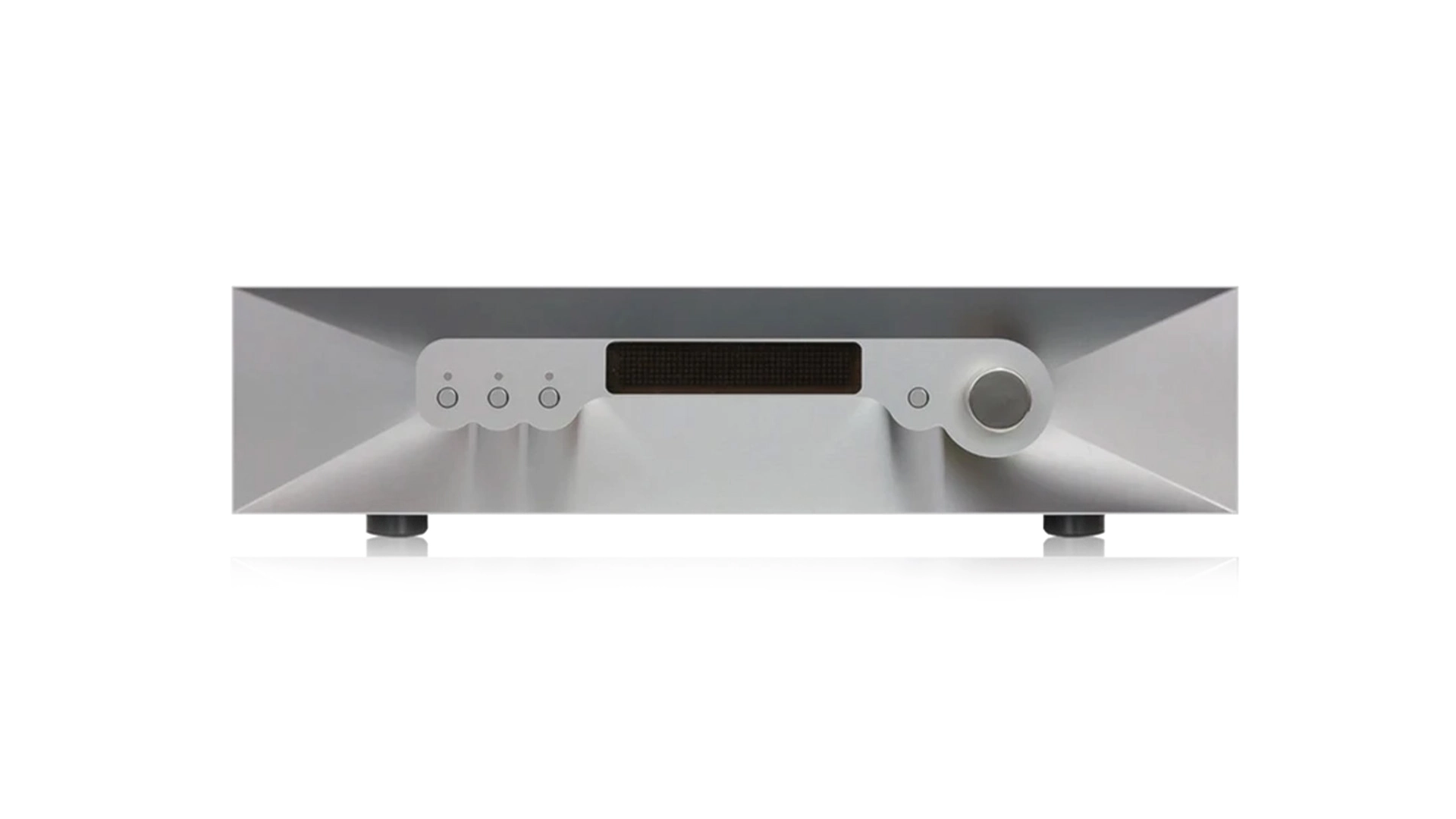
Thrax Audio is a Bulgarian high-end manufacturer founded in Sofia in 2008 by engineer Rumen Artarski. The first product was the Dionysos line preamplifier, created around a single-tube gain stage and an elaborate transformer volume control. It was followed by the Orpheus phono stage and the Spartacus power amplifier, establishing a range that combines vacuum-tube simplicity with demanding power supplies, magnetics and mechanical construction.
The modern statement line includes the Spartacus 300 monoblocks and Libra preamplifier. Maximinus addresses digital conversion, while Orpheus continues the company’s interest in LCR phono equalisation and flexible cartridge matching. Thrax also builds integrated and solid-state amplification, loudspeakers and more accessible Evolution components. These are not scaled copies with different front panels. Artarski’s team chooses a topology for each role, whether directly heated triodes, transformer coupling or high-current solid-state output is the more appropriate tool.
Production is concentrated in Sofia. Transformers are wound in-house, chassis are machined from solid aluminium, and completed units are listened to before shipment. That vertical control is important for a small company working with circuits whose performance depends heavily on magnetics, grounding and physical layout. Thrax’s character comes from joining Eastern European engineering self-reliance with a clear visual and mythological language. The products are luxurious, but the brand’s real credibility lies in original circuits and the ability of a compact team to manufacture the difficult parts itself.
TIDAL

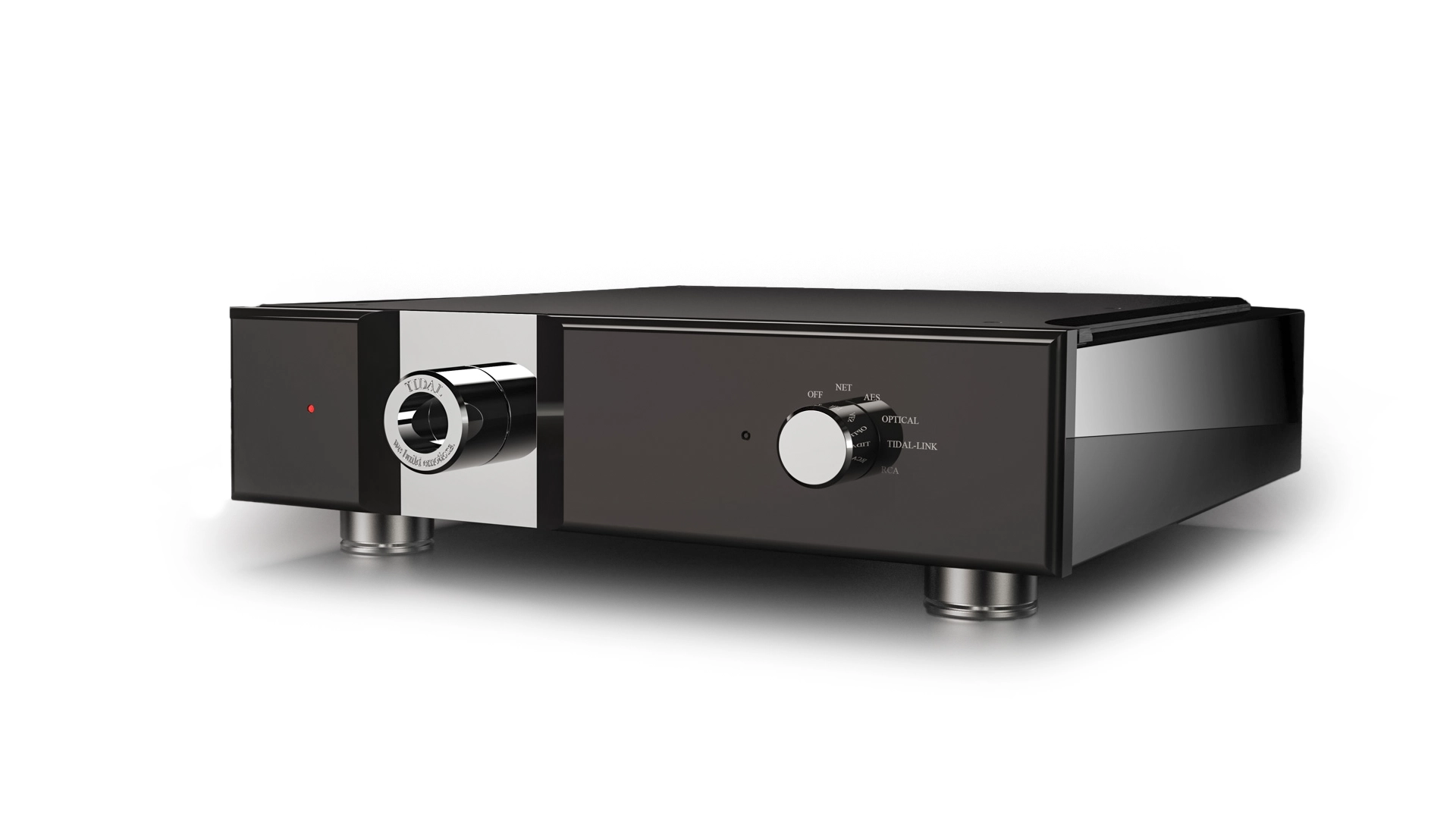
TIDAL Audio is a German ultra-high-end manufacturer founded in 1999 by designer Jörn Janczak. From its base near Cologne, the company develops complete loudspeaker and electronics systems rather than treating the speaker as an isolated luxury object. TIDAL’s identity is precision: proprietary driver applications, elaborate crossover work, massive cabinets and electronics are engineered as one chain, then built and finished in Germany to order.
The loudspeakers made the name. Contriva established the brand internationally, while Piano, Akira and the monumental La Assoluta developed its approach to inert enclosures, carefully controlled dispersion and high-resolution ceramic and diamond diaphragms. Current G3 generations refine those ideas rather than abandoning them. Diamond tweeters are a signature, and selected models extend diamond technology into the midrange; the point is not rarity alone, but low moving mass and controlled breakup within a system whose crossover, cabinet and amplification have been developed around the drivers.
TIDAL also builds the electronics needed to expose that work, including Camira digital conversion, Prisma preamplification and Intra or Ferios power amplification. The related Vimberg marque was created by the same team as a separate brand; it is not a TIDAL loudspeaker model, as the earlier description implied. TIDAL itself remains the no-compromise line. Its appeal is the unusually tight authorship of the whole system—from machining and lacquer to drivers, networks and gain stages—under Janczak’s direction.
TIDAL for Bugatti

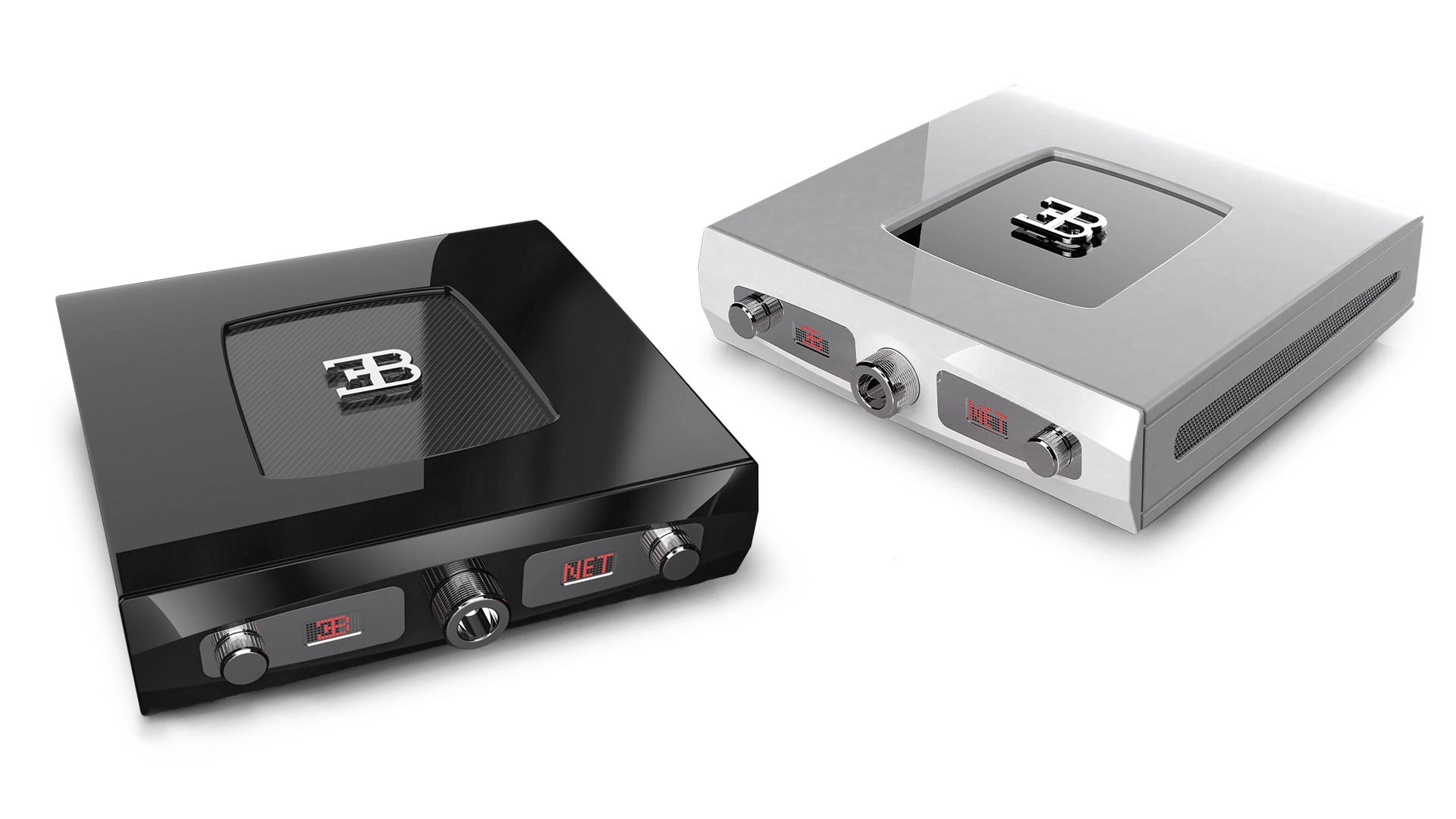
TIDAL for Bugatti is the German audio collaboration unveiled in 2020 by TIDAL Audio and the French hypercar marque Bugatti. It is not a conventional Bugatti-branded lifestyle speaker. Jörn Janczak’s TIDAL team created a complete, made-to-order music system whose engineering, materials and personalisation mirror the logic of Bugatti automobiles: extreme performance, low-volume manufacture and a finish specified for each owner.
The central product is the Royale, a four-way active loudspeaker weighing more than 200 kilograms per channel. Each enclosure combines a 30 mm diamond tweeter and 127 mm diamond midrange-woofer with aluminium-magnesium bass drivers and four long-throw subwoofers. Amplification and signal management are integrated, so the drivers, filters and power stages can be developed as one controlled system rather than assembled by the buyer. The matching Royale MC-1 music controller provides digital playback, conversion and streaming for a complete installation.
Royale is offered in Monocoque and Duotone design interpretations, with extensive choices of lacquer, metal, carbon fibre, leather and other surfaces. Those options matter because the project is as much bespoke industrial design as catalogue hi-fi, but the acoustic platform beneath them remains TIDAL’s. The collaboration should therefore be understood as a distinct product line, not a change of ownership of TIDAL. Bugatti contributes its design language and commissioning culture; TIDAL supplies the loudspeaker, electronics and system engineering that make the object an actual reference audio system.