
Furniture Racks
Hi-Fi racks and audio furniture are purpose-built to house your valuable electronic components. Unlike standard household furniture, they are engineered with open designs for proper ventilation, heavy-duty construction for stability, and integrated solutions for cable management. A good rack not only organizes your system but also contributes to better performance by controlling unwanted vibrations. This page is your guide to the specialized brands that build these foundational pieces of audio furniture.
Hi-Fi brands in the category
Summary information and image
Direct links to official websites
Magico

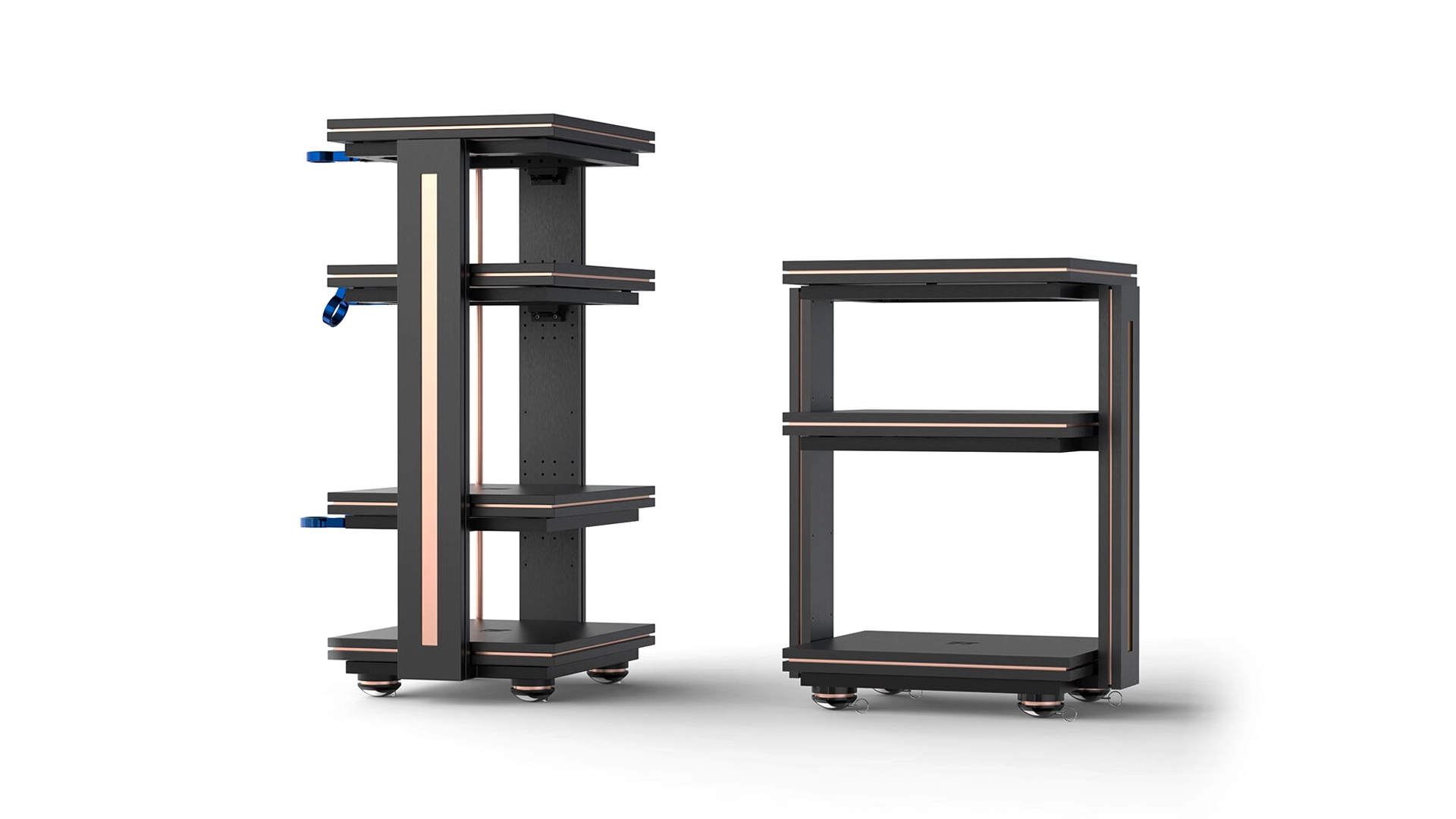
Magico is a California loudspeaker manufacturer founded by Alon Wolf in 2004 to reduce the cabinet, driver and crossover artefacts that obscure recorded information. Instead of conventional veneered fibreboard, the company builds rigid enclosures from machined aluminium sections, constrained-layer assemblies and, in selected M-series designs, carbon-fibre structures. Internal bracing is modelled to move resonances away from critical regions and verified with tools including laser vibrometry and Klippel near-field scanning. Magico’s Nano-Tec cones combine advanced fibre skins with lightweight cores and graphene-based reinforcement, while upper models use diamond-coated beryllium tweeter diaphragms to increase stiffness without excessive moving mass. Elliptical Symmetry crossover networks are developed alongside the drivers rather than treated as final voicing components. The catalogue is organised into A, S and M families: A-series models make the aluminium construction more attainable, S-series balances scale with domestic proportions, and products such as the M7 and semi-active M9 represent the unconstrained reference programme. Active bass and separate crossover electronics appear where they solve a specific system problem. Magico’s distinction is not the use of expensive materials by itself, but the closed engineering loop between simulation, in-house machining, measurement and purpose-designed transducers.
McIntosh

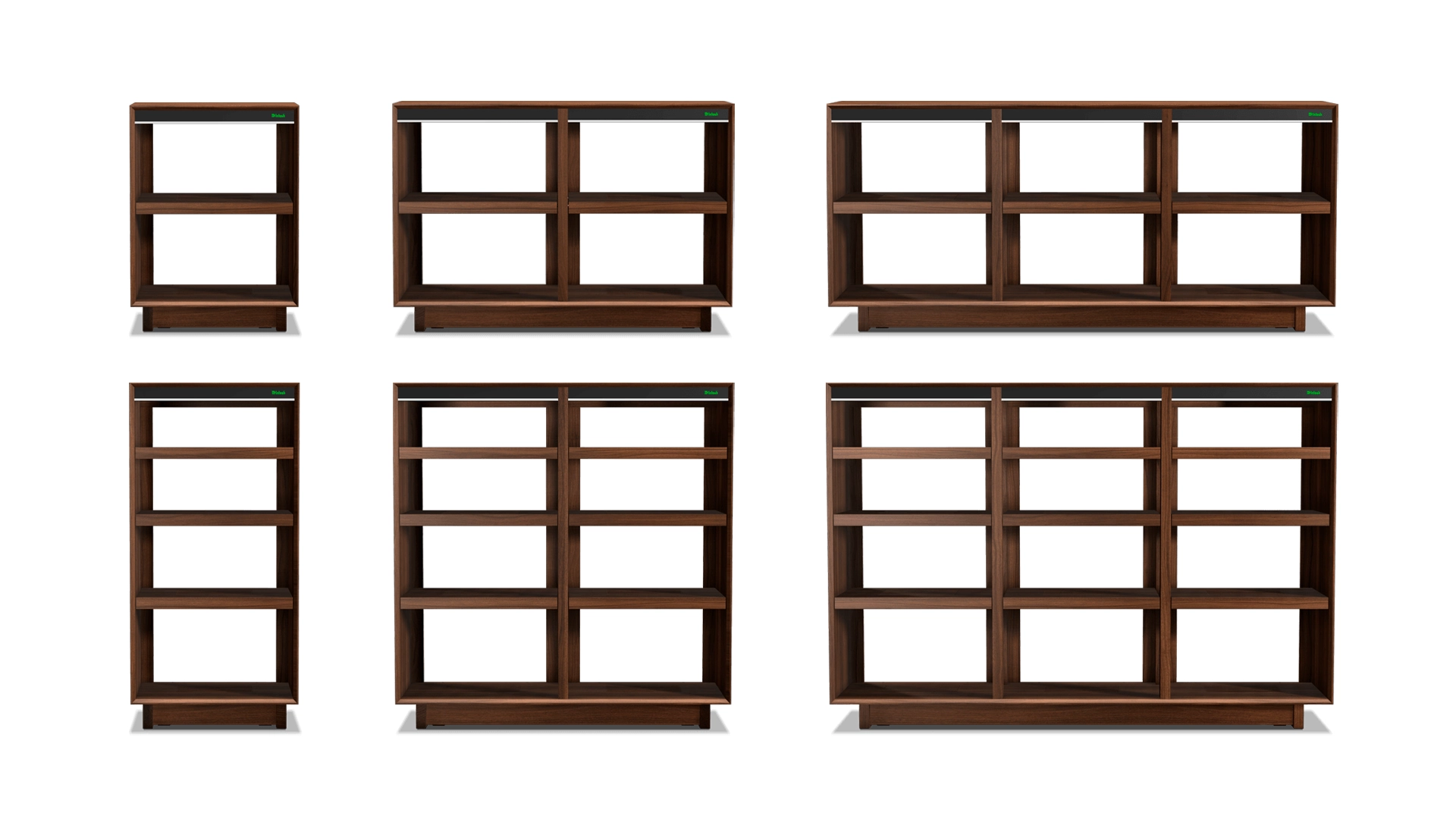
McIntosh is an American high-end audio manufacturer whose blue power meters and black-glass front panels identify products built around unusually durable amplifier engineering. Frank H. McIntosh and Gordon Gow founded the company in 1949 after developing the Unity Coupled Circuit, a transformer-coupled output topology designed to deliver high power with low distortion across the audible band. McIntosh moved to Binghamton, New York, in 1951 and continues to design and assemble products there. The catalogue covers valve and solid-state power amplifiers, preamplifiers, integrated amplifiers, source components, streamers, turntables, speakers and home-cinema processors. Many transistor power amplifiers use Autoformers to deliver their rated power into different loudspeaker impedances, while Power Guard monitors the waveform to reduce clipping-related distortion and Sentry Monitor protects against unsafe operating conditions. The company still winds key transformers in house, and signature glass panels are printed and assembled for long service life. McIntosh’s appeal extends beyond styling: its defining know-how is the marriage of protective circuitry, stable load behavior and conservative construction with a product ecosystem that can support both two-channel and large cinema systems.
Naim

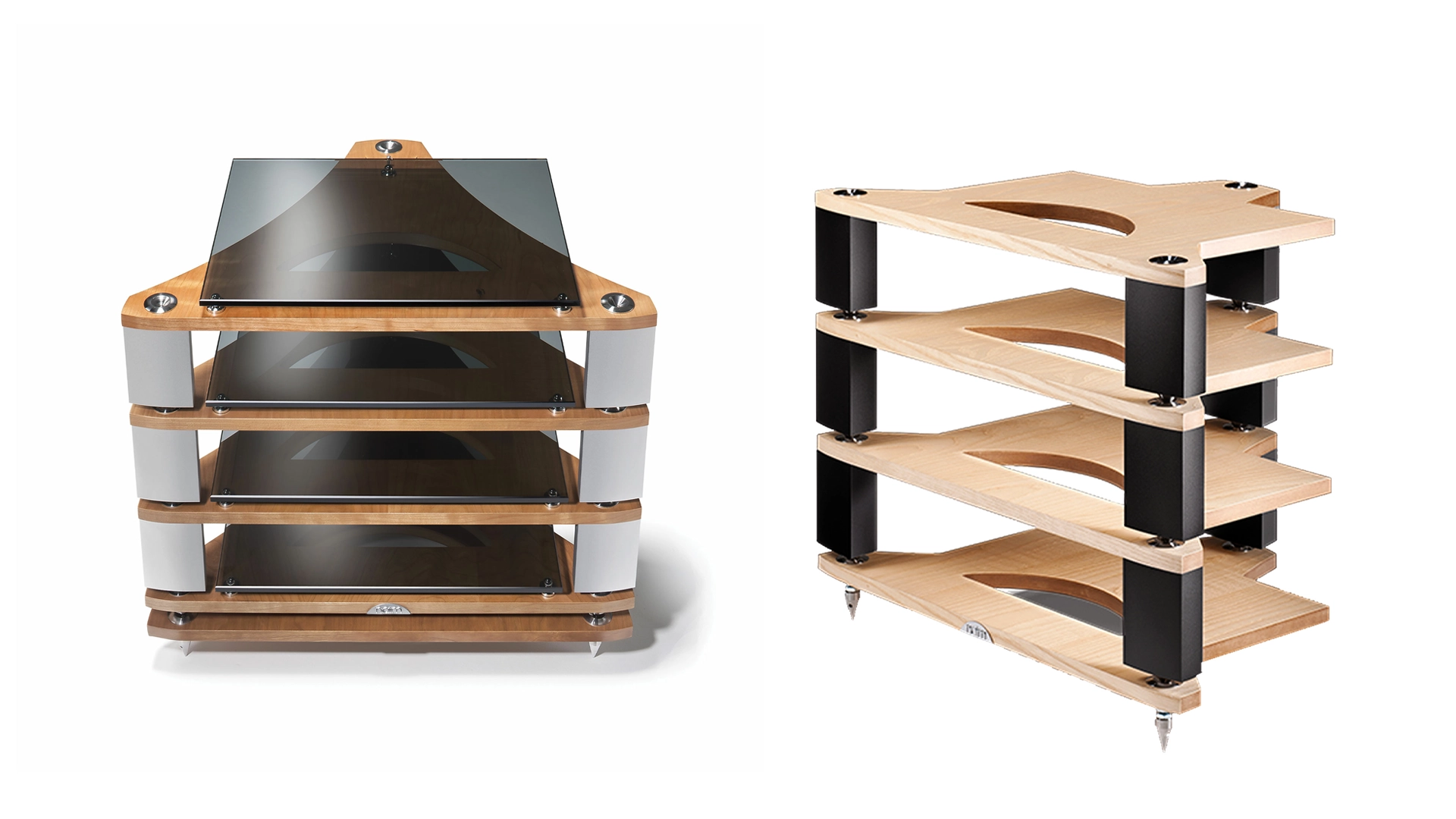
Naim Audio is the Salisbury electronics maker whose reputation rests on amplifiers and sources designed to preserve musical timing and momentum. Julian Vereker’s early amplifier work grew from a contract for Capital Radio, and Naim Audio was incorporated in 1973 with Vereker and Shirley Clarke as directors. The first consumer power amplifiers established a deliberately direct circuit philosophy; the NAP 250, introduced in 1975, became the long-running reference, while the compact NAIT integrated amplifier showed that the same priorities could work in an affordable system. Naim later built complete upgradeable systems around separate preamps, power amps and external power supplies, then became an early serious adopter of network replay. Uniti streaming amplifiers and Mu-so wireless systems broadened the audience, while ND sources, the New Classic separates and Statement amplification maintain the specialist end. Mechanical isolation, low-noise power regulation, carefully controlled grounding and proprietary streaming software matter more to the engineering than the familiar shorthand “PRaT.” Naim joined French loudspeaker maker Focal in 2011 under VerVent Audio Group, while design and production remained centred in Salisbury. In August 2026 Belgium’s Barco completed its acquisition of VerVent, so Naim is now part of Barco while retaining its British origin, brand and manufacturing identity.
NorStone

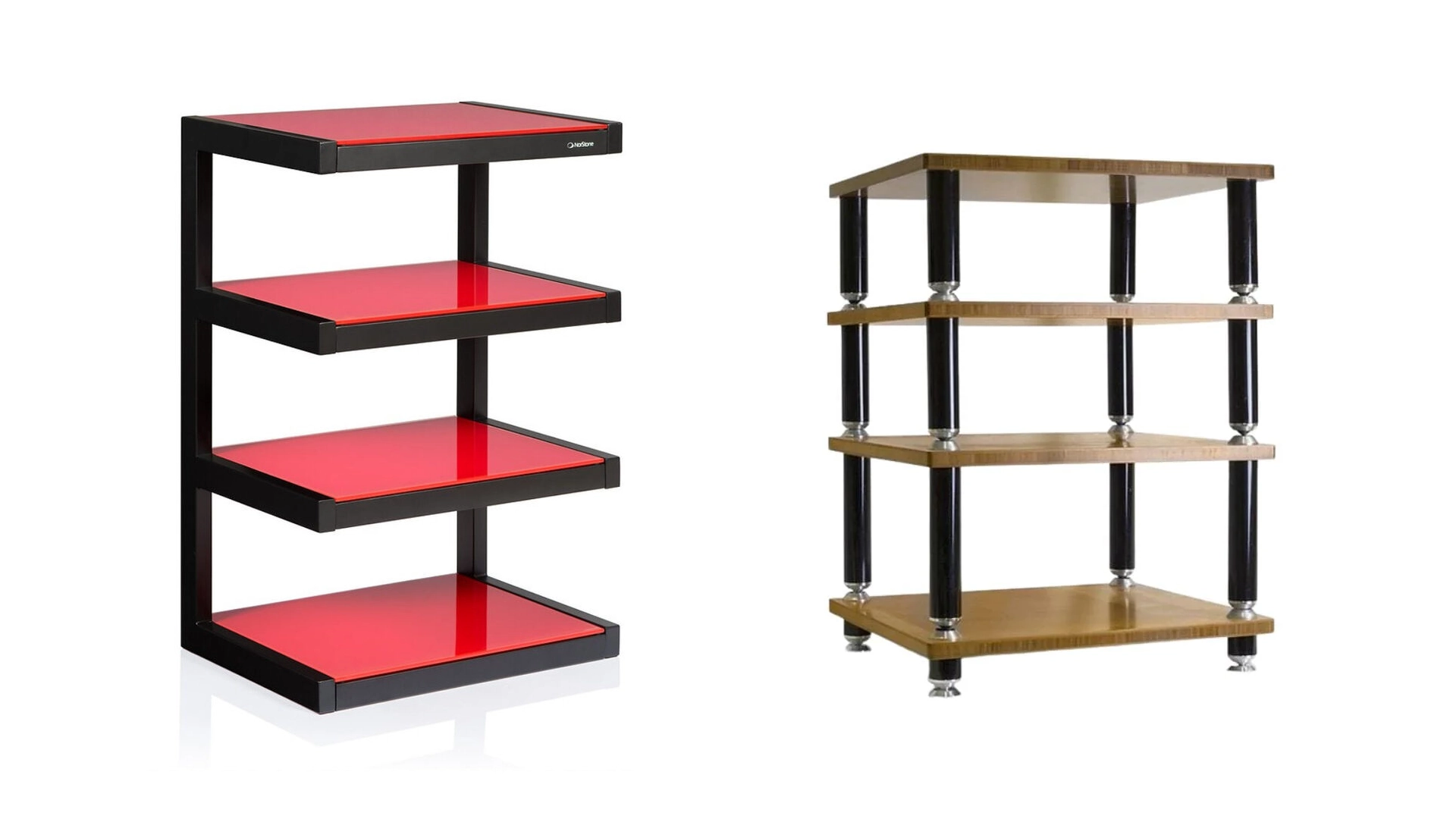
NorStone is the French AV-Industry brand that treats furniture and support as part of an audio-video installation rather than as generic household shelving. Its range spans hi-fi racks, speaker stands, television furniture, vinyl storage, wall and projector mounts, professional racks and a broad cable catalogue. The products are designed to organise real systems—allowing for component depth, ventilation, cable routing, equipment weight and loudspeaker height—while remaining visually light enough for a living room. Esse is the accessible open-frame AV rack, Stäbbl and Spider use modular shelves for heavier hi-fi components, and Bergen and Slender address more traditional equipment stacks. Stylum is the best-known speaker-stand family, with steel columns, spikes and several heights for standmount loudspeakers; Walk and Counter offer purpose-built record storage and turntable support. NorStone also sells terminated and bulk speaker cable, RCA, XLR, HDMI, USB, optical and mains connections, so an installer can finish the system within one design language. NorStone is a registered trademark of the French AV-Industry group, alongside brands including Elipson, Tangent, Eltax and Lumene. Published sources disagree on whether the brand began in 1997 or 2001, so leaving the founding-year field blank is more accurate than choosing a false precision.
Pro-Ject

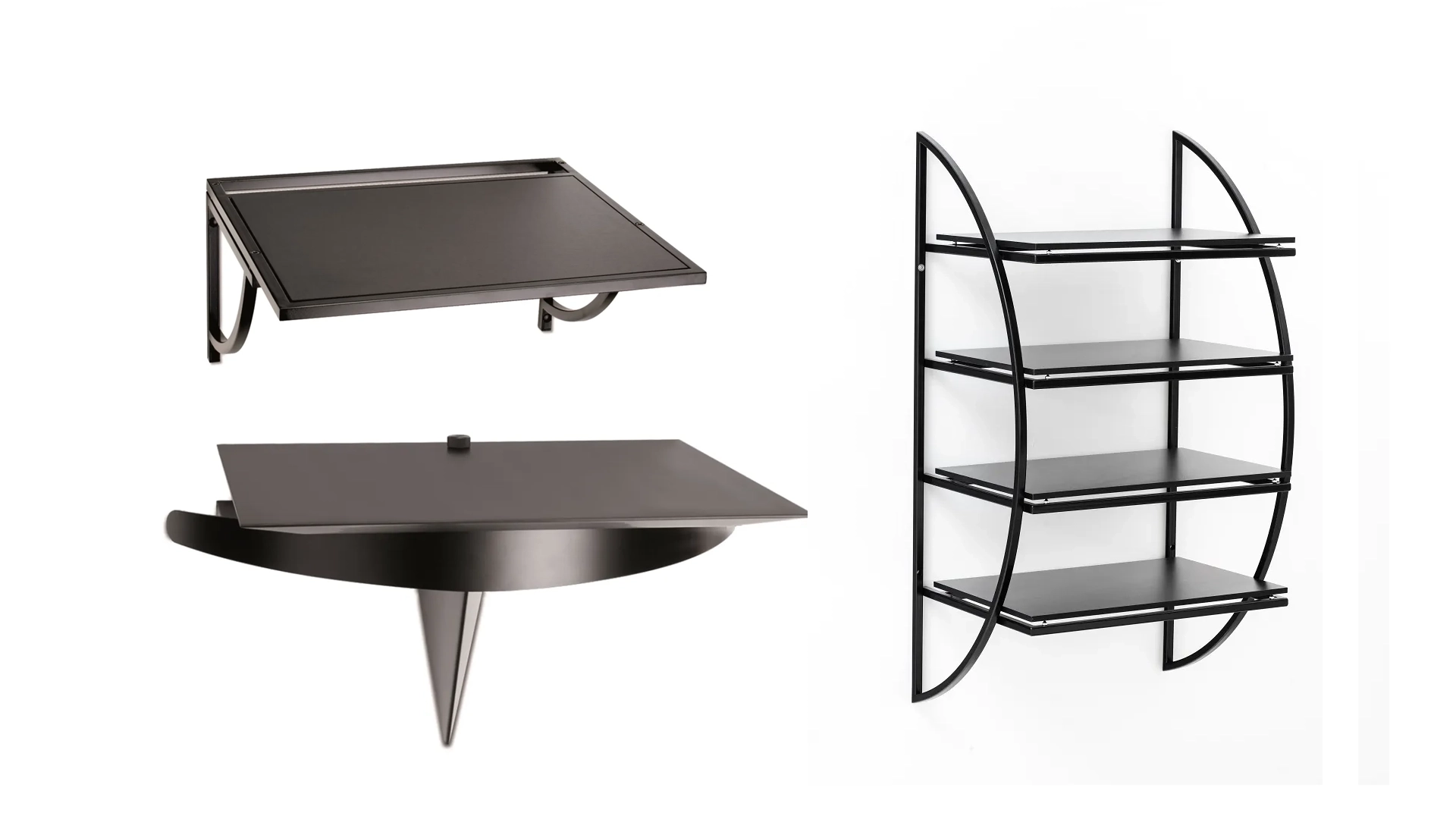
Pro-Ject Audio Systems was founded in Austria in 1991 by Heinz Lichtenegger, at a moment when the audio industry was treating the compact disc as vinyl’s replacement. Lichtenegger’s counterargument was the Pro-Ject 1: a simple belt-drive turntable built around the parts necessary for stable speed and accurate tracking, without automatic mechanisms or cosmetic complexity. The strategy proved prescient, and the Debut, introduced in 1999, became the model that brought the company to a much wider generation of record listeners. Pro-Ject now covers almost every scale of manual turntable. E and T families address first systems; Debut remains the recognisable centre; X, RPM and Xtension add more elaborate plinths, bearings, platters and tonearms; and Signature represents the flagship engineering. Many decks are assembled by hand in the Czech Republic, preserving production skills from the region’s long record-player history. The company also makes phono stages, speed controls, cartridges, record-cleaning machines and accessories, so a turntable can be upgraded rather than discarded. Box Design electronics—compact phono stages, amplifiers, DACs, streamers and CD transports—are largely produced in Slovakia and extend the same space-efficient philosophy beyond vinyl. Artist Collection editions use visual collaborations and licensed themes, but beneath the artwork they remain functional Pro-Ject platforms. The brand’s significance is not simply that it sells many turntables: it maintained European manual-turntable production through the digital era and built a clear path from an inexpensive first deck to genuinely ambitious analogue systems.
Pylon Audio
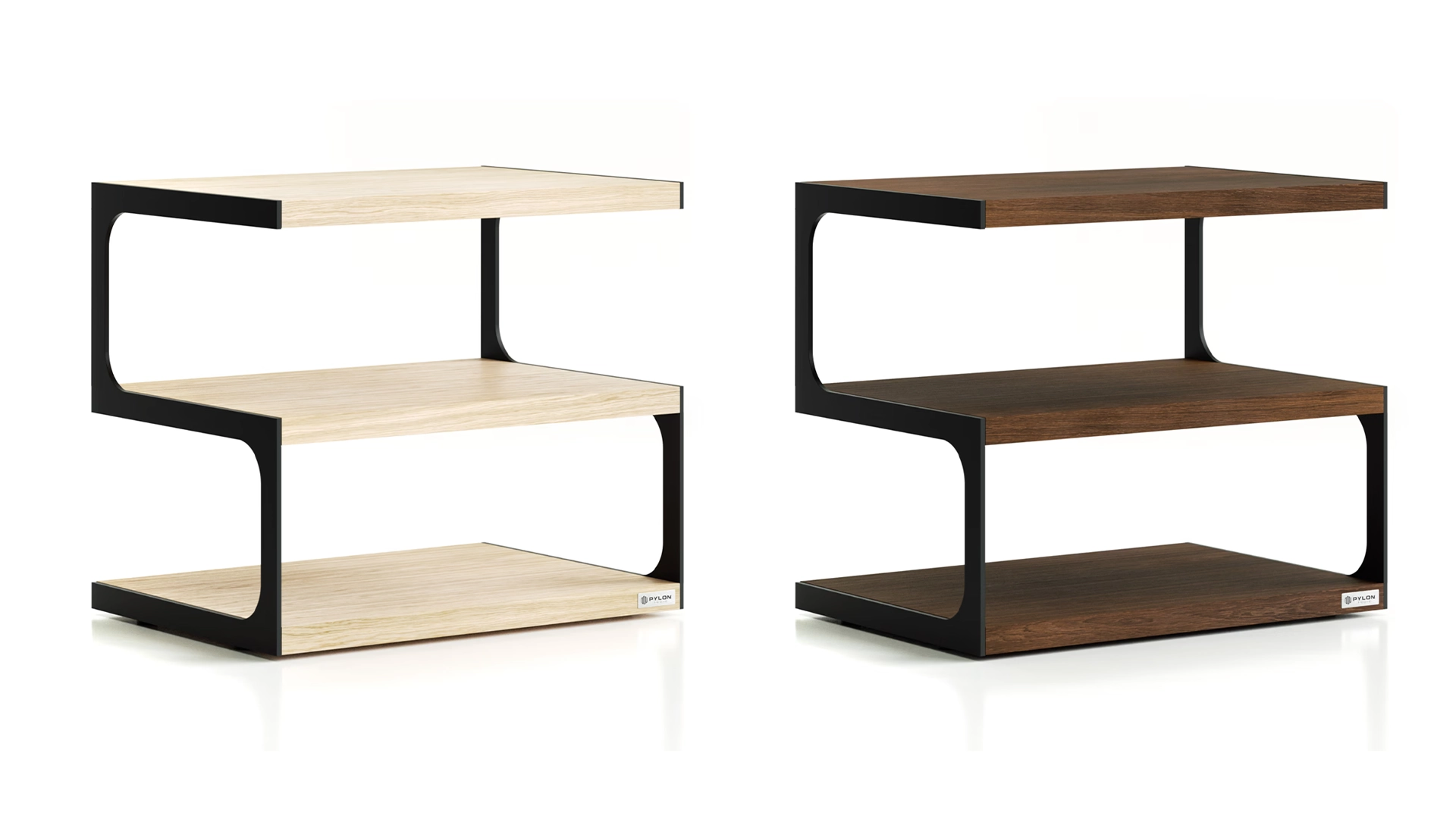
Pylon Audio was founded in Poland in 2011 by childhood friends Mateusz and Mikołaj, drawing on their families’ background in furniture production. The company first built loudspeaker cabinets and then moved into complete speakers, which explains why enclosure manufacture remains more than a styling exercise. Woodworking, acoustic design, finishing and final assembly are kept closely connected at its Jarocin-area operation, and a large anechoic chamber supports development with repeatable full-range measurements. The range is unusually wide but has recognisable characters. Pearl and Opal provide straightforward entry points; Diamond adds more refined drivers, crossover work and cabinetry; Jade uses broad baffles and larger drivers in a deliberate visual and acoustic reference to classic studio monitors. Amber MkII pursues high sensitivity and substantial dynamics, while Jasper and Jasper Active form the modern flagship family with curved cabinets, premium transducers and, in the active versions, integrated amplification and DSP. Zirkon 20 addresses compact listening, and matching centres, surrounds and subwoofers allow home-cinema systems without abandoning the stereo lines. Pylon also manufactures cabinets and selected components for other audio companies, an industrial capability that supports its own price-to-build-quality ratio. The brand’s strength is not a vague claim that every part is made in-house. It is the practical control gained by combining furniture-grade enclosure production, acoustic measurement and final loudspeaker assembly under one Polish organisation, then applying those resources from attainable floorstanders to ambitious statement models.
Quadraspire

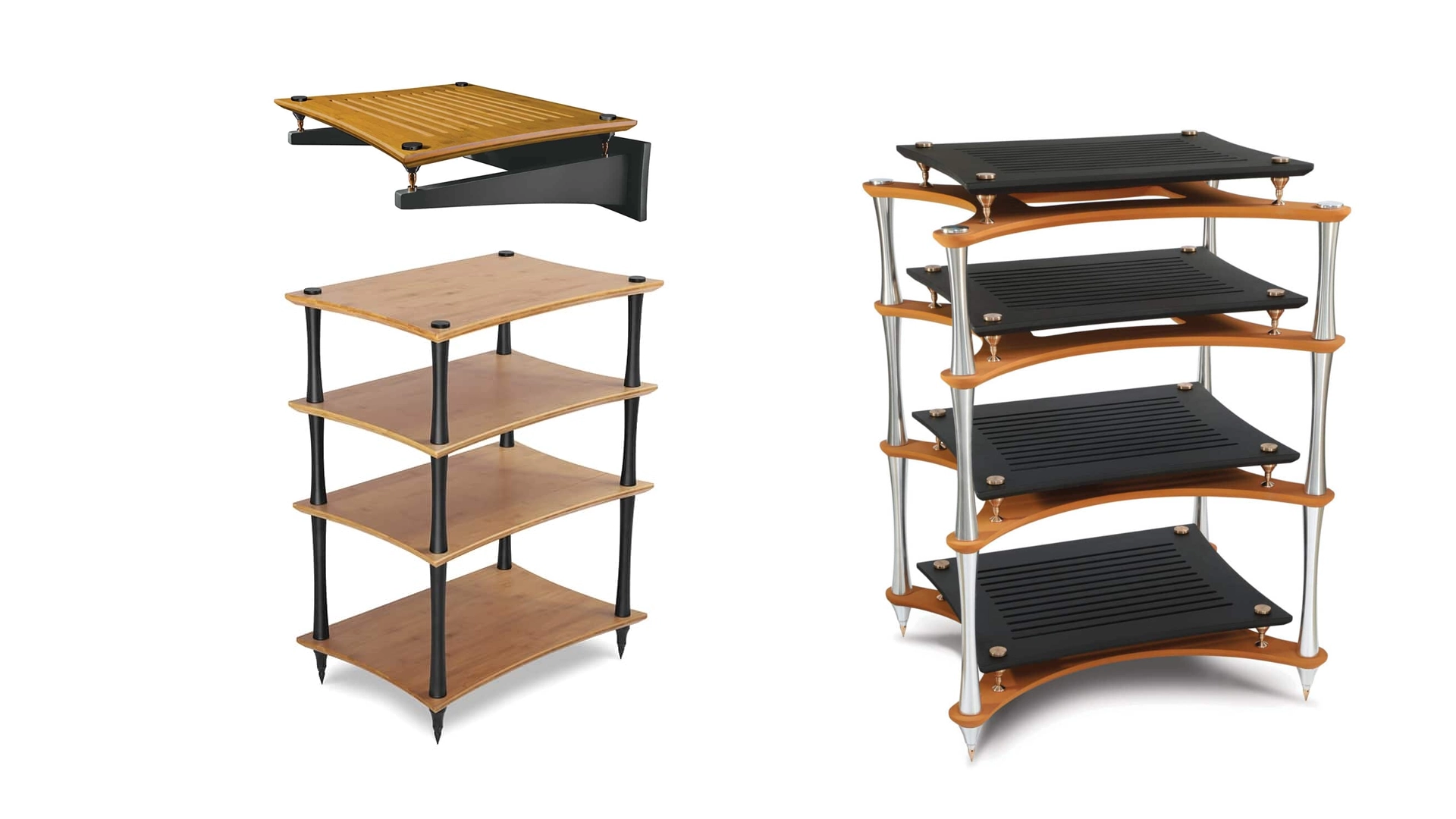
Quadraspire was founded in 1995 by Dutch designer Eddie Spruit in an East London studio. The name came from one of his earlier pieces of folding furniture, but the product that defined the company was the Q4 equipment rack. Instead of treating a rack as a heavy rectangular cupboard, Spruit made it open, modular and visually light, with shaped shelves separated by aluminium columns. The company later established its own manufacturing facility near Bath, England. The design has an acoustic purpose as well as a recognisable look. Curved shelf edges avoid long parallel boundaries and reduce the broad flat surfaces on which standing waves and vibration can build; open sides allow equipment to cool naturally. Threaded columns make shelf spacing configurable and let a system grow one level at a time, while spikes provide defined mechanical contact with the floor. Q4EVO remains the accessible modular platform. SVT uses thicker, vented shelves and a more substantial column system for heavier components; bamboo versions exploit a stiff laminated material with useful damping properties. X-Reference is the flagship architecture, adding constrained-layer shelves, bronze components and more elaborate energy control. QPlus interfaces and Bronze Upgrade parts let owners improve support under individual components without replacing an entire rack, while dedicated speaker stands and wall shelves extend the same thinking. Quadraspire does not promise that furniture changes the electronics inside a component. Its know-how is more practical: manage support, airflow and mechanical energy while giving a serious system furniture that can be reconfigured, repaired and kept in the room for decades.
Raidho Acoustics

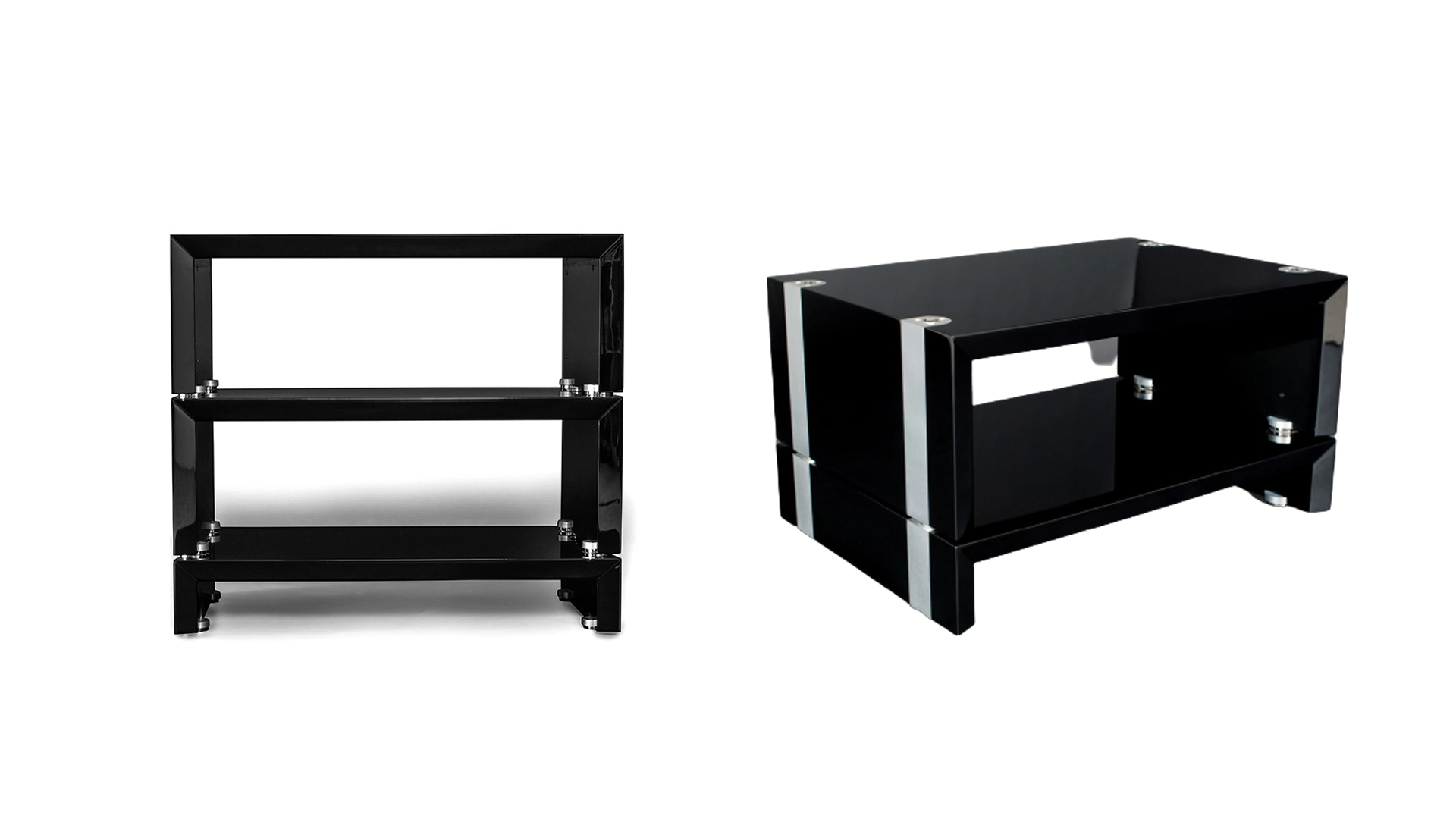
Raidho Acoustics was founded in Denmark in 2001 by loudspeaker designer Michael Børresen. The existing since value of 2009 confused the brand’s founding with a later corporate event: in 2009 Danish public company Dantax acquired the Raidho project. Raidho is now built at Dantax’s facility in Pandrup, where cabinets, crossovers and proprietary drivers are produced or assembled with a high degree of local control. The original country therefore remains Denmark, while Dantax ownership belongs in the description. The signature device is Raidho’s planar-magnetic ribbon tweeter, made from an extremely thin foil with conductive traces and driven by a strong magnetic system. Its very low moving mass and open acoustic path are intended to extend response far beyond the audible band without the stored energy of a conventional dome. Dynamic mid/bass drivers begin with an aluminium cone whose surface is converted to a hard ceramic layer—the basis of Ceramix technology. In the TD series, tantalum and diamond-related surface treatments further increase stiffness and push breakup modes away from the operating band. Current X models provide the more attainable route into the ribbon-and-ceramic architecture; TD is the reference family, extending from compact monitors to large multiway floorstanders. TD8 SUB and TD10 SUB apply diamond-coated drivers to dedicated low-frequency systems. Older C and XT series remain part of Raidho’s development history but should not be presented as the complete current range. After Børresen’s departure, the company continued with a new engineering team, including designer Benno Baun Meldgaard. Raidho’s real distinction is vertically integrated Danish driver work, not ribbon terminology alone.
Rogoz Audio

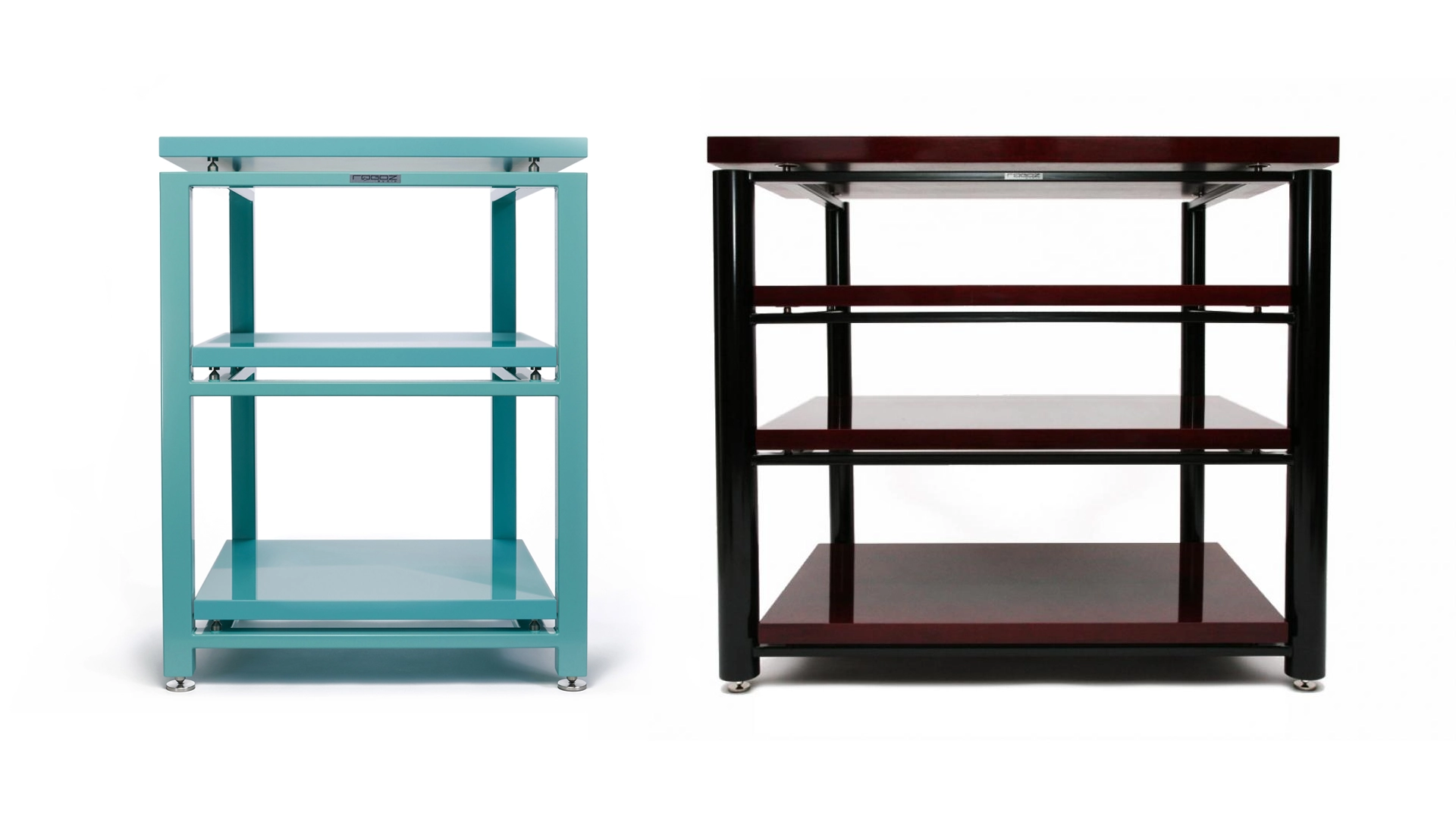
Rogoz Audio is a Polish manufacturer of specialist supports for high-end audio systems, founded in 2010 by Janusz Rogoz. Rather than treating a rack as interior furniture with audiophile branding, the company concentrates on the mechanical path between a component, its support and the floor. Its catalogue includes modular equipment racks, amplifier platforms, turntable bases, loudspeaker stands and anti-vibration accessories, many of them built to order for the mass, dimensions and centre of gravity of a specific component. Steel structures, hardwood and engineered platforms are combined with constrained joints and adjustable interfaces so that energy can be drained, distributed or isolated in a controlled way. A central Rogoz idea is the Balancing Board System, in which a platform is supported at calculated points and allowed a limited, controlled movement instead of being clamped rigidly at every corner. Different rack families adapt that principle to compact systems, heavy power amplifiers and multi-shelf installations. Speaker stands receive the same attention to stability, height, footprint and coupling, and custom fabrication is an important part of the business because a universal platform is not always mechanically appropriate. Products are designed and manufactured in Poland, with visible metalwork and joinery forming part of their identity. Rogoz Audio’s strength is the narrowness of its focus: it does not claim to improve the electrical circuit inside a component. It engineers the physical conditions in which that component or loudspeaker operates, offering repeatable construction and system-specific solutions instead of decorative “isolation” accessories.
Russ Andrews

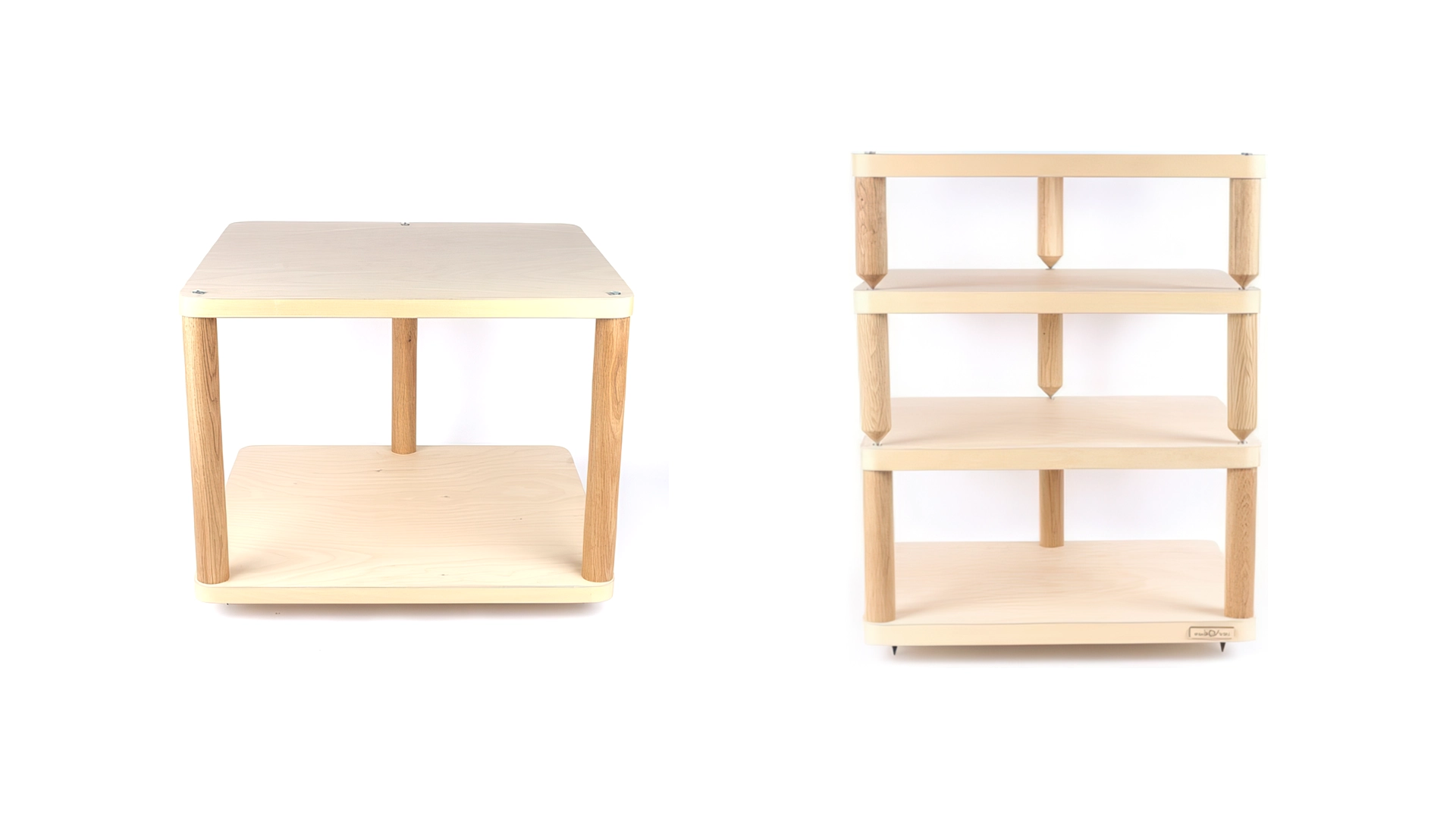
Russ Andrews is a British specialist in hi-fi cables, mains power, grounding and equipment support. Russ Andrews Accessories was incorporated in 1985 and began trading in 1986, initially selling Kimber Kable, Torlyte supports and turntable accessories through dealers. The company later developed a direct-sales model and a broad catalogue built around the parts of a system that sit between the wall socket, components and loudspeakers. Its best-known products include PowerKord mains leads, distribution blocks, conditioners and filters; SuperKord and Signature variants extend the same families, while grounding devices, RF-control accessories, fuses and connectors address installation-specific noise problems. Russ Andrews remains closely associated with the American cable designer Kimber Kable and supplies its analogue, digital and loudspeaker cables alongside products developed in-house. Torlyte racks, platforms and isolation accessories continue the original interest in mechanical support, and the company also offers upgrade parts and practical tools for system setup. Claims made for power and cable products naturally invite debate, so the most meaningful distinction is the way the business lets customers evaluate them in their own systems: a 60-day return period, an upgrade scheme and long warranties—at least 25 years on many Russ Andrews products—reduce dependence on a brief showroom demonstration. The brand’s history should not be reduced to vague “tweaks” or to the controversy surrounding them. It has spent four decades building a coherent accessories business around power delivery, signal connection, vibration control and after-sales support, with clear product hierarchies and unusually long ownership pathways.
SGR Audio

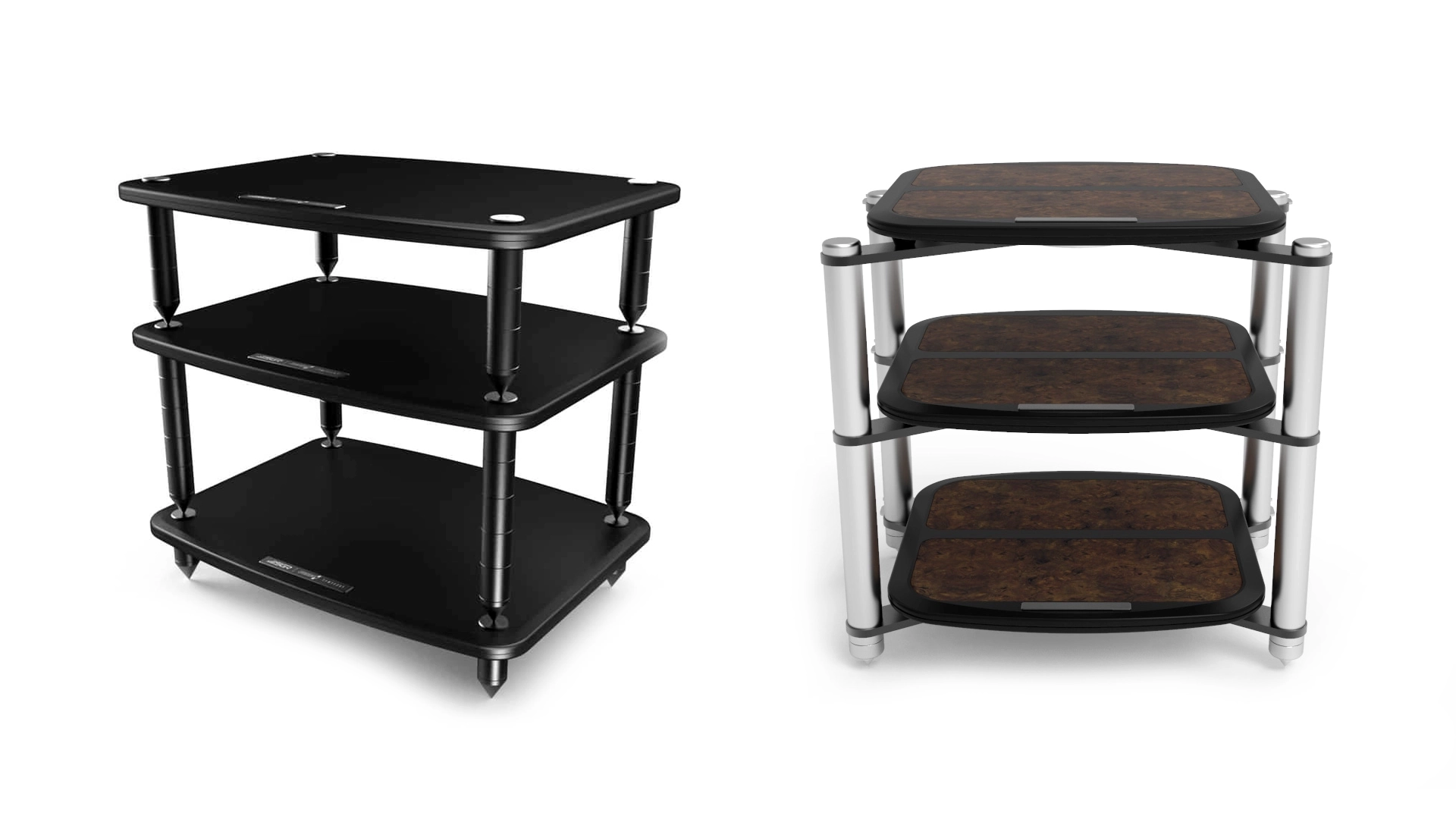
SGR Audio is an Australian high-end manufacturer best known for active loudspeakers and vibration-controlled equipment racks, designed and built in Melbourne. The company began as a boutique speaker maker around 1999 and is led by Stuart Ralston, whose interest in electronics and loudspeaker integration shaped a catalogue in which amplifier, crossover and driver can be engineered as one system. That is the central advantage of SGR’s active designs: each drive unit receives dedicated amplification and filtering, avoiding the compromises of asking one external amplifier and a passive crossover to serve every frequency band. The CX loudspeakers established the brand internationally, and later Voyager, Convex and Maestro families developed the idea across different cabinet sizes and performance levels. The company has also supported earlier products with upgrades, including current-drive revisions for CX3B and CX3C models, evidence that the platform was intended to evolve rather than be discarded. SGR’s second speciality began in 2010 after a customer requested a custom stand. The resulting Signature rack combined the firm’s machining and cabinet resources with layered mechanical isolation, and the range grew into Signature, Symphony and Statement styles with modular dimensions, finishes and isolation options. These racks are not decorative furniture added to the catalogue: shelf interfaces, structural rigidity and vibration paths are treated as engineering problems alongside visual proportion. SGR Audio remains deliberately small enough to control fit, finish, electronics and final assembly locally. Its identity comes from joining two difficult disciplines—self-powered loudspeakers and component support—under the same conviction that mechanical behaviour, electrical drive and appearance must be resolved together.
Solid Tech

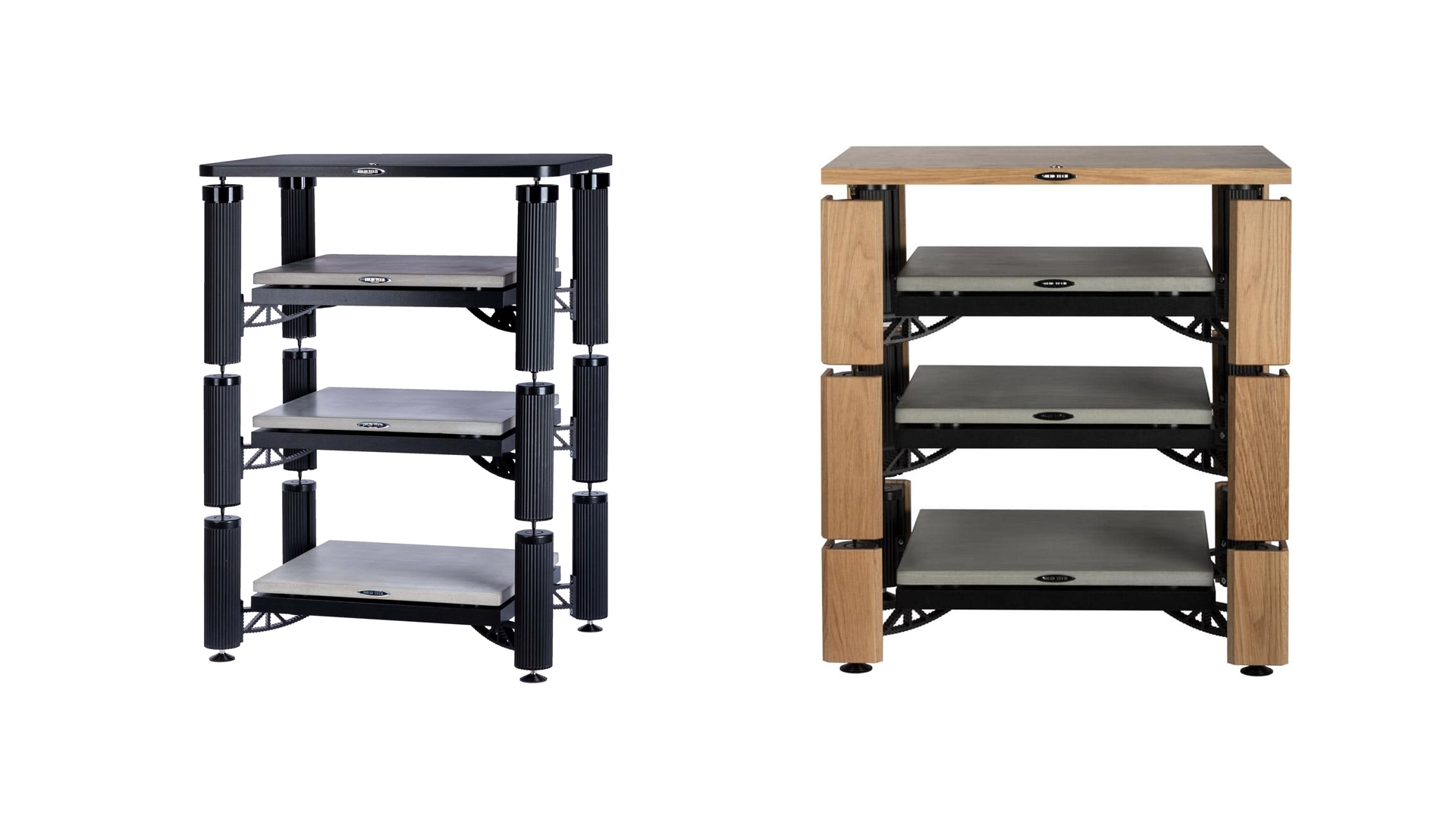
Solid Tech is a Swedish manufacturer of modular audio racks and vibration-control accessories, established in 1995 by Björn Ohlson. Its first major design, Rack of Silence, appeared in the mid-1990s and remains the clearest expression of the company’s thinking: equipment should be supported rigidly where required but isolated from floor-borne and airborne vibration through a controlled suspension rather than simply placed on the heaviest possible slab. The Reference version integrates spring isolation, while the Regular version provides the structural platform without it. Solid Tech states that its extended-spring system can move the suspension resonance down to about 3 Hz, below the most troublesome audio-band vibration, so turntables, valve electronics and sensitive digital clocks receive less mechanical energy. Feet of Silence brings a related suspended interface to individual components, and Disc of Silence provides another compact support option. The rack catalogue is broader than the famous flagship. Radius is the cost-conscious rigid system; Balance allows isolated and conventional shelves to be mixed; Hybrid can expand vertically and horizontally through modular pillars and brackets; Hybrid Wood dresses the aluminium structure in solid-wood finishes, while Hybrid 2nd Gen updates the format and isolation options. This modularity lets a system grow without replacing the entire rack and keeps shelf spacing appropriate to amplifiers, sources and power supplies. Products are handmade in Sweden, with aluminium structures, wooden shelves and suspension parts treated as replaceable elements rather than a sealed piece of furniture. Solid Tech’s individuality lies in making mechanical isolation understandable and configurable: it offers a family of structures and interfaces built around resonance control, not a single decorative rack accompanied by vague claims.
Solidsteel

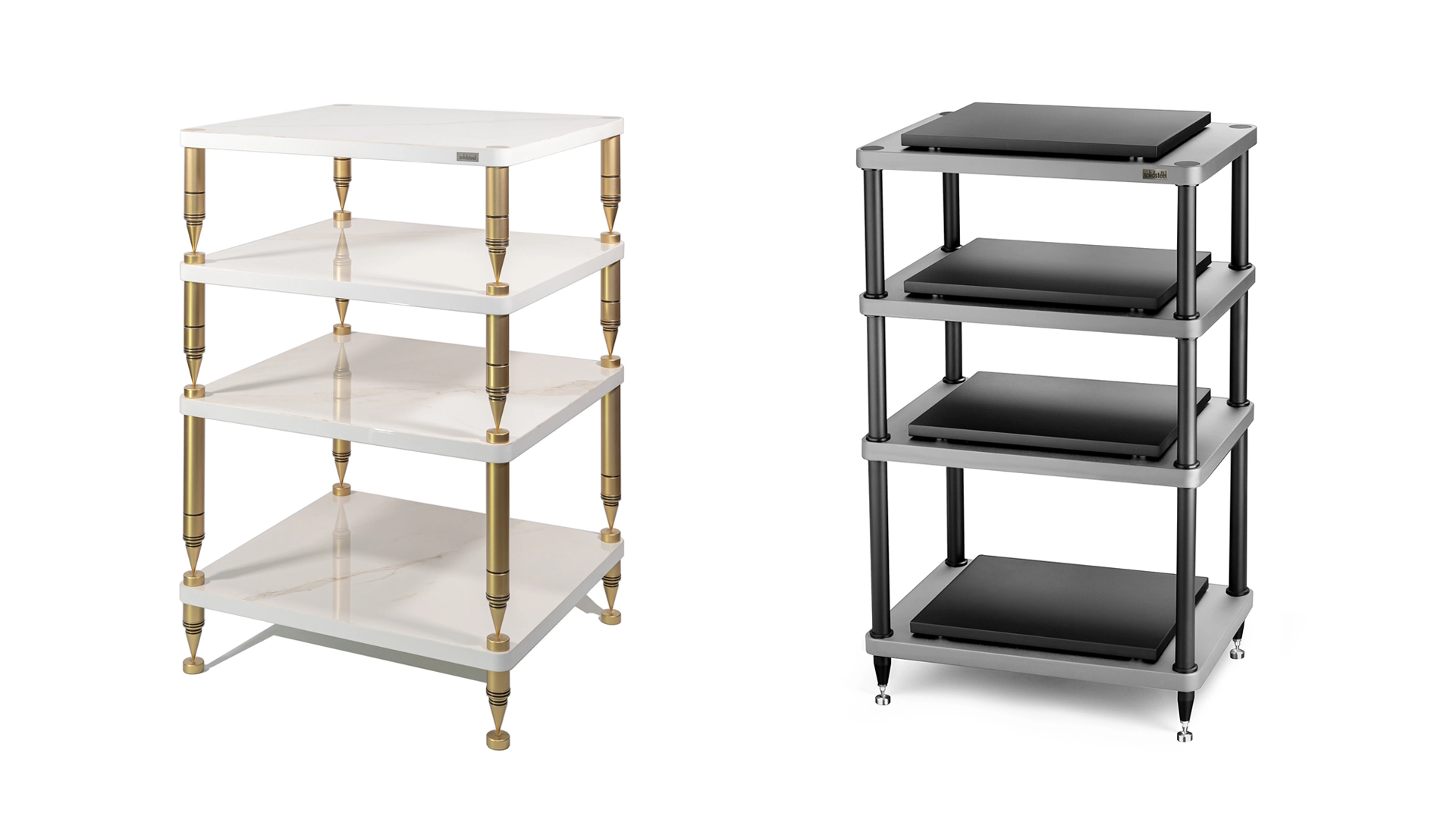
Solidsteel builds the furniture that gives a hi-fi system its physical foundation: equipment racks, amplifier platforms, loudspeaker stands and wall shelves made in Italy. Founded in 1990 by Moreno Conti, the company grew from the Conti family’s metalworking experience in the Pescara area. His sons Gaetano and Manfredi carried the business forward, retaining its emphasis on practical construction and Italian production. The familiar S-series racks and Hyperspike supports approach the same problem at different levels: how to carry substantial components while controlling the mechanical paths between shelves, supports and floor. Open frames also make connections accessible and leave space around equipment that needs ventilation. The catalogue accommodates both compact stereo systems and wider AV installations, with different shelf arrangements, heights and finishes. VL furniture brings record storage into the system, giving vinyl collections a place alongside the equipment used to play them. Speaker stands are another established speciality, with structures designed around a stable support platform and the management of unwanted vibration. The newer UL design combines aluminium profiles, TPU elements and an MDF top plate, illustrating how the company uses different materials for different mechanical roles. Solidsteel’s appeal is easy to see in a complete installation: it provides a coherent family of supports for sources, amplifiers, speakers and records, allowing the layout to follow the system rather than forcing every component into the same cabinet.
SRA

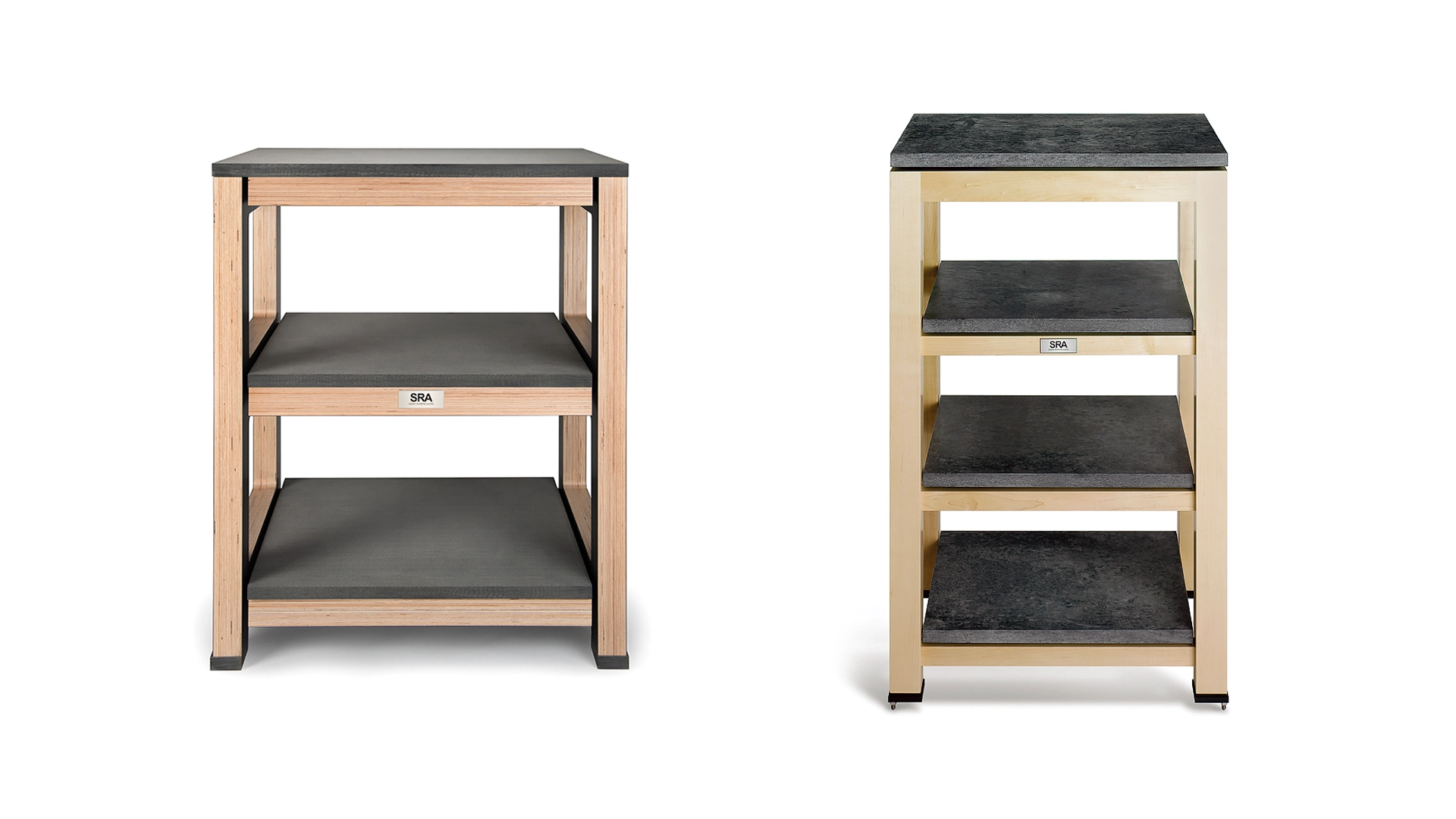
Silent Running Audio (SRA) builds isolation platforms and racks around the mechanical behaviour of the exact component they will support. Founded in 1989 by scientist and engineer Kevin Tellekamp, the American company applies modelling, materials research and experience from demanding industrial vibration-control work to high-end audio. Its key idea is Component Specific Design. Instead of treating every amplifier, turntable or source as the same load, SRA records a “GearPrint” that considers the component’s dimensions, weight, chassis construction and weight distribution, then configures the support for that application. This approach explains why an SRA base may need recalibration when the equipment placed on it changes. The isoBASE families include Virginia-Class and Ohio-Class platforms, while Craz and Scuttle isoRACK systems extend the same thinking to complete equipment furniture. Internal structures, constrained layers and proprietary compounds are hidden beneath comparatively restrained exterior finishes; the engineering task is to control energy entering from the room and energy generated by transformers, motors and loudspeakers within the system itself. SRA also offers lifetime recalibration for its products, preserving their usefulness when an owner changes components. Tellekamp’s broader work has included vibration problems for military, aerospace, medical and commercial clients, but the audio products are not generic laboratory mounts with a badge added. They are designed for the loads, dimensions and practical access requirements of hi-fi equipment. That component-by-component discipline is what distinguishes SRA from universal feet and shelves.
Stillpoints

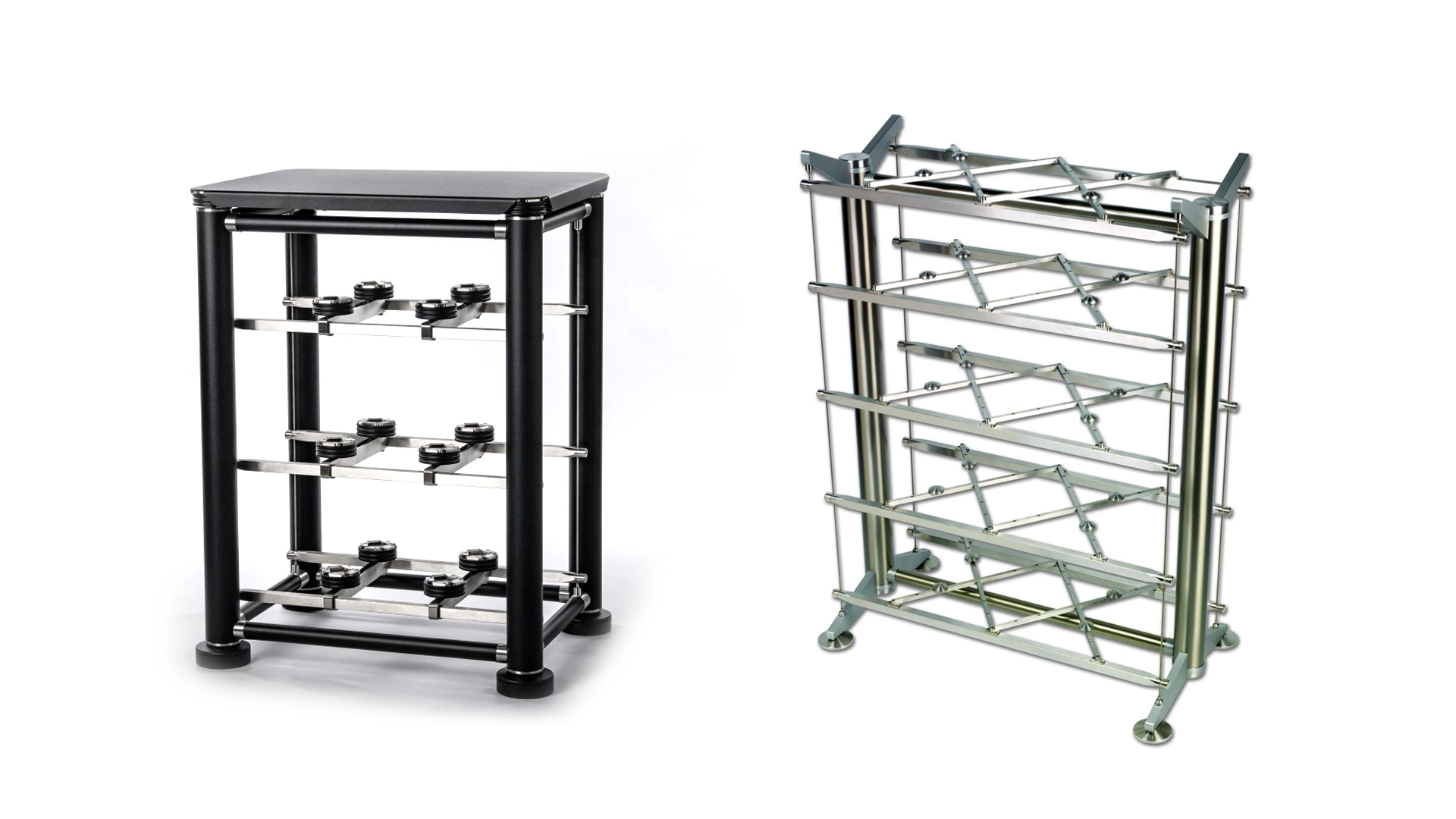
Stillpoints develops mechanical isolation products for audio components and loudspeakers, then extends the same concern with stored energy into equipment furniture and room acoustics. Established in the United States in 2002, the company is closely associated with Paul Wakeen and designer Bruce Jacobs; patents also name Craig Shirley in its acoustic-panel work. The Ultra isolators are its best-known products. Rather than relying on a simple rubber foot or a single spring, they use multiple stages of stainless-steel and ceramic elements to create paths through which vibration can be dissipated. Different bodies and adapters let the system support source components, amplifiers, racks and loudspeakers, while Ultra SS, Ultra 5 and Ultra 6 provide progressively more elaborate implementations. Orientation and loading matter, so installation is part of obtaining the intended result. ESS and Ultra ESS racks integrate Stillpoints technology into complete support structures, and Component Stand SS provides low-level placement for heavy amplifiers. Aperture acoustic panels take the company into the room itself. Their patented internal structure combines absorption and diffusion across a broad area, and panels can be used on walls, in stands or around difficult reflection points without filling the room entirely with soft treatment. Stillpoints therefore addresses two related but distinct paths: mechanical energy travelling through equipment supports and acoustic energy circulating in the listening space. Its value lies in offering a scalable system—from one component footer to a complete rack and treatment plan—rather than presenting every vibration problem as identical.
TAOC

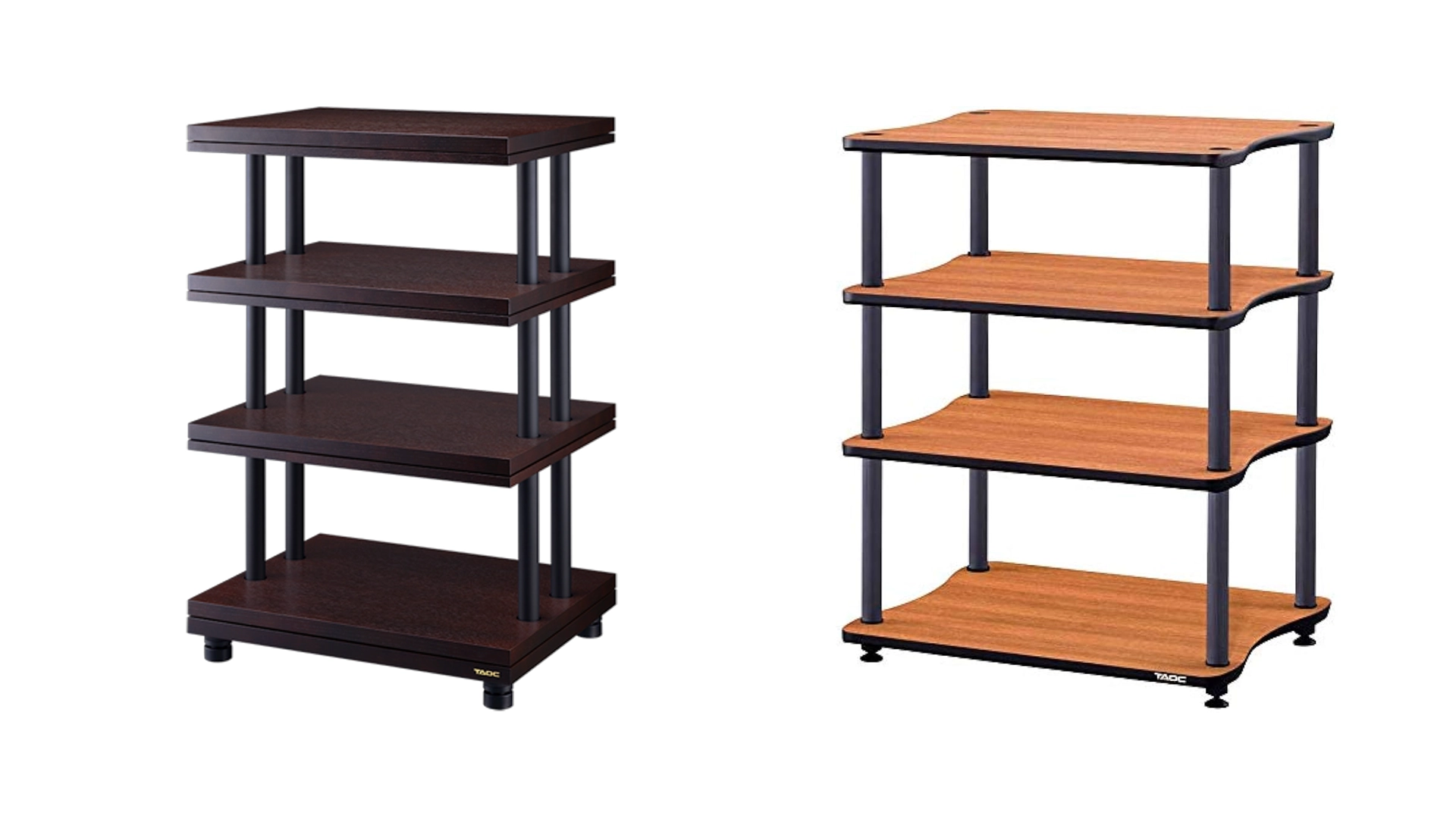
TAOC is a Japanese brand, part of Aisin Takaoka (itself part of the Toyota Group), specializing in high-end audio racks and isolation platforms, known for its use of cast iron and other vibration-damping materials. The company’s products are designed to minimize vibrations and resonances that can negatively impact the performance of audio components, thereby improving clarity, detail, and overall sound quality. TAOC’s racks and platforms often feature a robust construction and a minimalist aesthetic, with a focus on functionality and performance. They utilize advanced engineering principles and carefully chosen materials to achieve their desired isolation effects. The company’s products are positioned in the high-end segment of the audio furniture market, appealing to audiophiles who are meticulous about optimizing every aspect of their system.
TechDAS

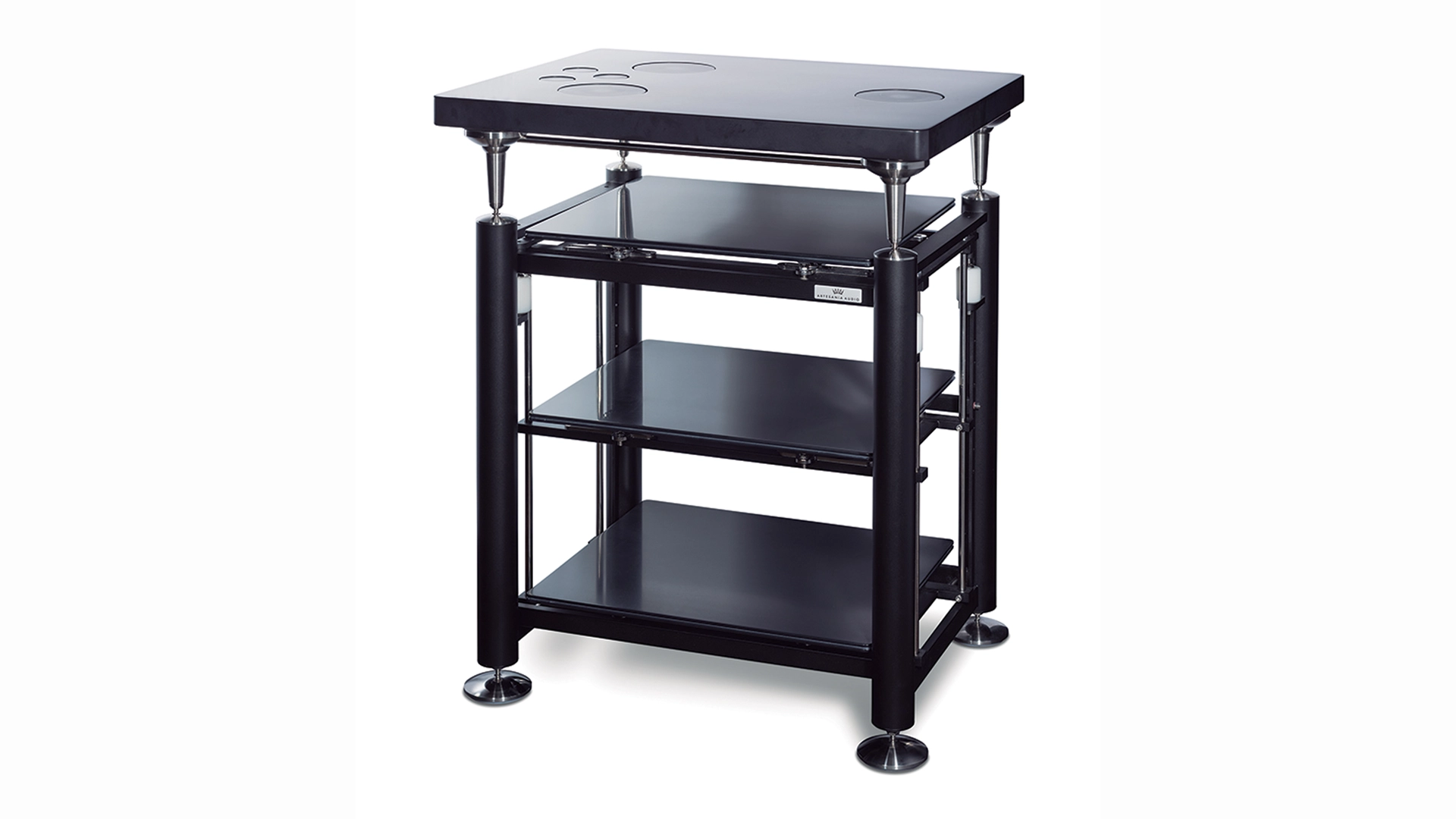
TechDAS is the Japanese analogue brand created in 2010 by Stella Inc. and led by Hideaki Nishikawa, a designer whose career included senior work at the celebrated turntable maker Micro Seiki. The name means “Technical Audio Devices,” and the company’s purpose is unusually focused: to remove mechanical uncertainty from vinyl playback through precision engineering rather than decorative complexity. Its debut Air Force One turntable immediately established that identity at the highest level of the market.
The defining idea is an air-bearing platter. A film of compressed air supports the heavy rotating assembly so the main bearing does not carry it in the conventional way. A vacuum hold-down system draws the record flat against the platter, addressing warps and creating a controlled mechanical interface. Separate pumps, carefully isolated motors and massive chassis structures deal with vibration, speed stability and resonance as parts of one system. The flagship Air Force Zero extends that approach with extreme mass and multiple air-bearing structures.
TechDAS has developed the concept into the Air Force One Premium, III, V and compact Air Force III Premium S, giving different systems access to the same core principles. Tonearms, cartridges and accessories complete the analogue chain, but the turntable remains the centre of the brand. Every model is made in Japan. TechDAS matters because it carries knowledge from Japan’s great direct-drive and air-bearing era into current production, then pushes it with modern machining and control rather than treating vintage engineering as nostalgia.
TiGLON

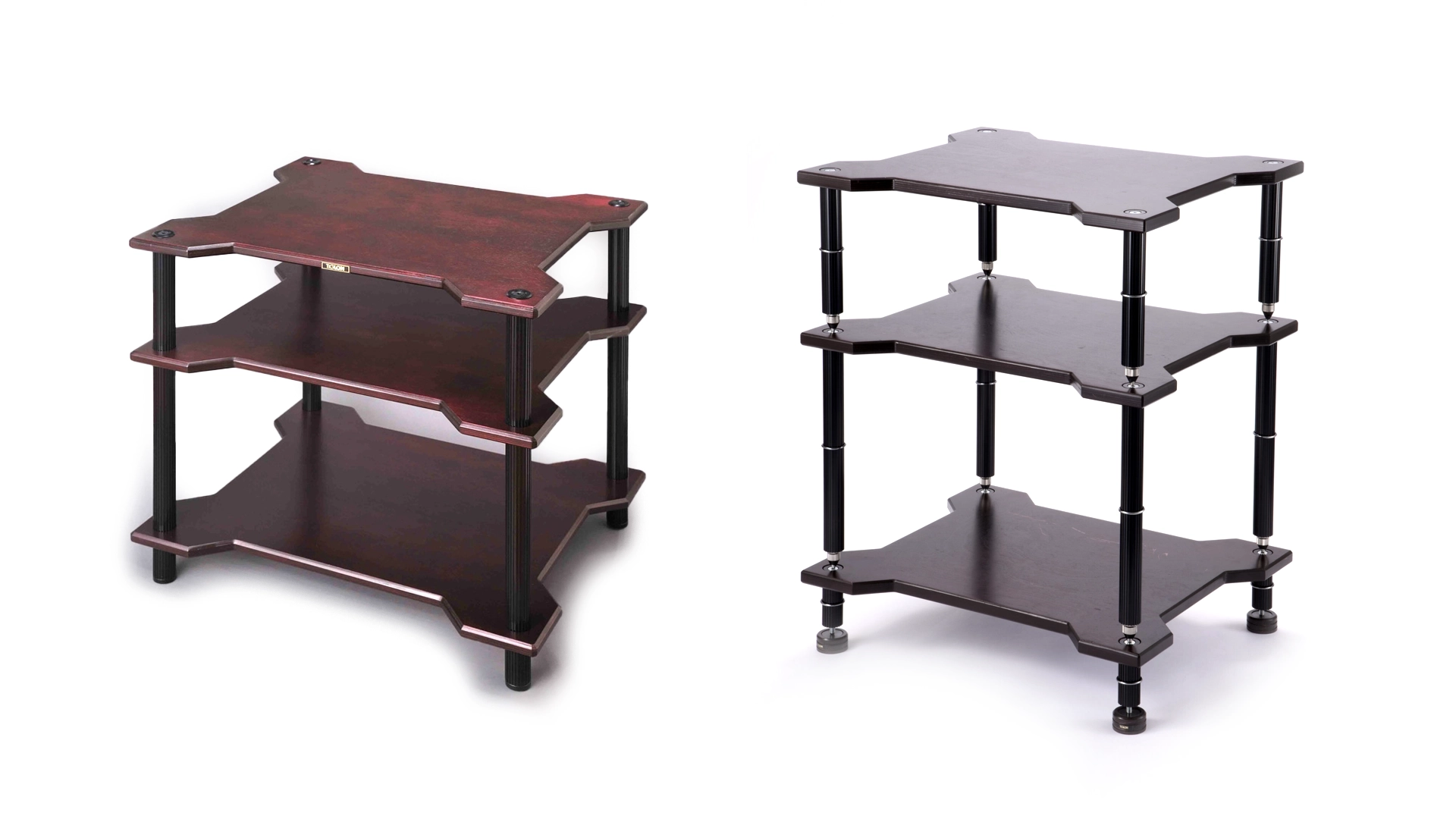
TiGLON is a Japanese cable and vibration-control manufacturer established in 2008 by Kentaro Okino. The business began as KRYNA PRO and adopted the TiGLON company name in 2010, but its defining material had appeared earlier: magnesium. Okino developed magnesium speaker stands and insulators before applying the metal to electromagnetic shielding and structural control, creating a technical thread that still joins the company’s cables, racks and accessories.
TiGLON received patents for its Magnesium Shield technology, in which magnesium elements are used around cable conductors to address external noise and vibration. The concept appears across power, speaker, analogue and digital cables, from White Tiger and Azure Dragon families to the flagship TPL series. Grand Magnesia racks, speaker stands and audio boards extend the same material thinking into equipment support, while D-REN insulators and record-playback accessories solve smaller mechanical interfaces.
The company also developed HSE—Hyper Saturated Energizer—a treatment process offered for cables, components and media. TiGLON describes it as a controlled conditioning method, and those claimed audible effects should be understood as the manufacturer’s position rather than a universally established measurement. More concrete is the continuity of the product design: magnesium is not a word added to one flagship but a material investigated across shielding, resonance and support since the company’s beginnings. That sustained specialisation, Japanese small-batch production and Okino’s willingness to refine existing products through successive generations give TiGLON a recognisable place in a crowded accessory market.
Topping

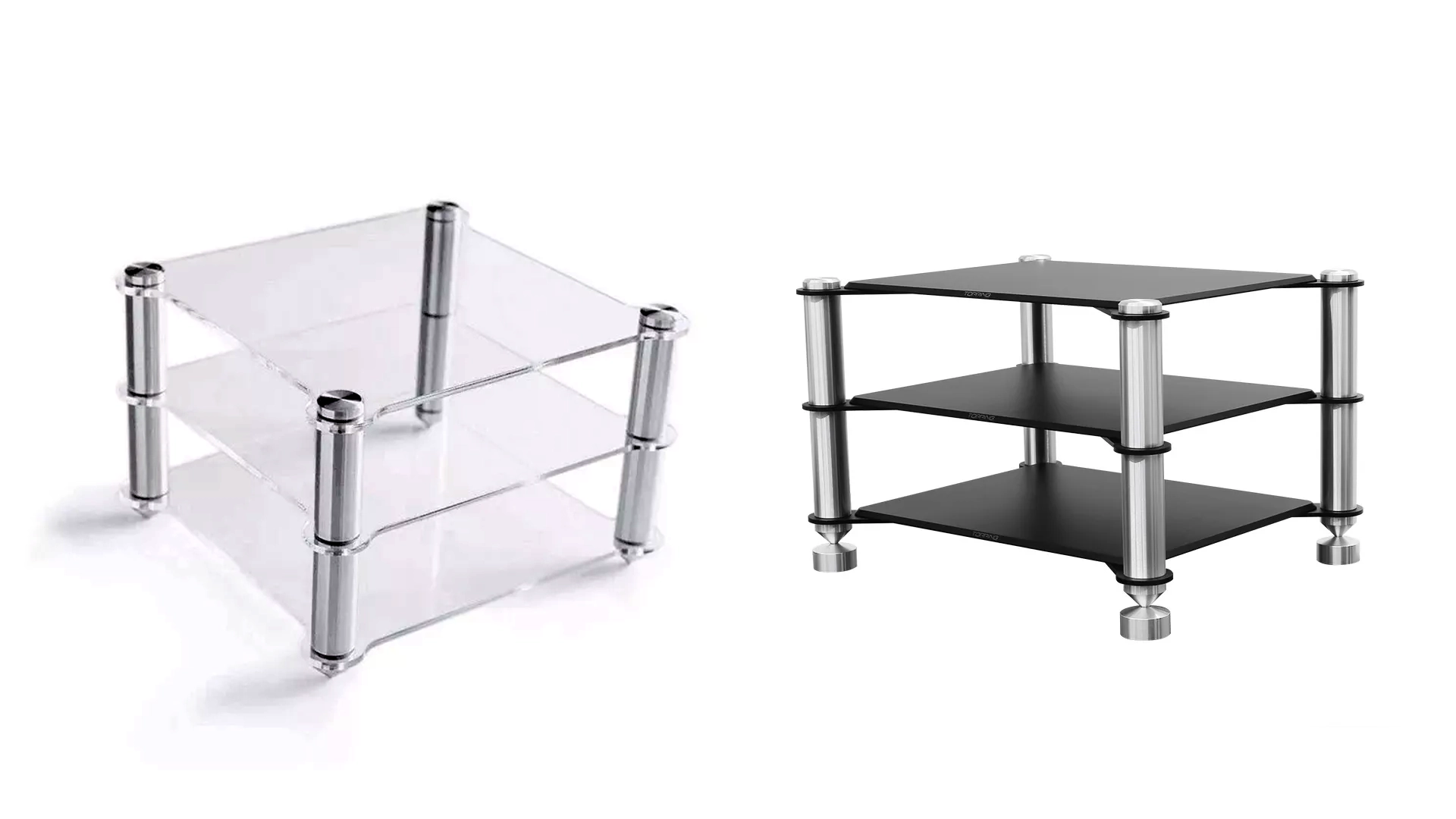
TOPPING is a Chinese desktop-audio manufacturer founded in 2008, recognised for DACs, headphone amplifiers and compact power amplifiers whose measured performance is treated as a primary design target. The company helped shift expectations in affordable digital audio: low noise, low distortion, balanced connections and transparent volume control no longer had to be reserved for physically large or expensive components.
Products such as the D90 DAC and A90 headphone amplifier established TOPPING at the upper end of desktop hi-fi, while E-series DACs, L-series headphone amplifiers and DX combination units cover more accessible systems. The company has also expanded into PA-series power amplifiers, B-series monoblocks and discrete or resistor-ladder conversion. Proprietary NFCA amplifier modules are used to obtain high feedback accuracy, very low output impedance and useful power across a wide range of headphones. Flagship models add sophisticated preamplifier, remote and digital-interface functions without abandoning measurement discipline.
TOPPING’s strength is not that every new model posts another record figure. It is the consistent use of audio analysers, documented specifications and compact circuit integration to make performance predictable. Firmware, user interface and system matching still matter, and a technically excellent device is not automatically the right product for every listener. Yet the brand’s influence is clear: it forced a broad part of the market to explain noise and distortion with evidence. TOPPING now spans entry-level desktop systems and serious separates, but its identity remains unusually focused on engineering results per unit of space and cost.
Townshend

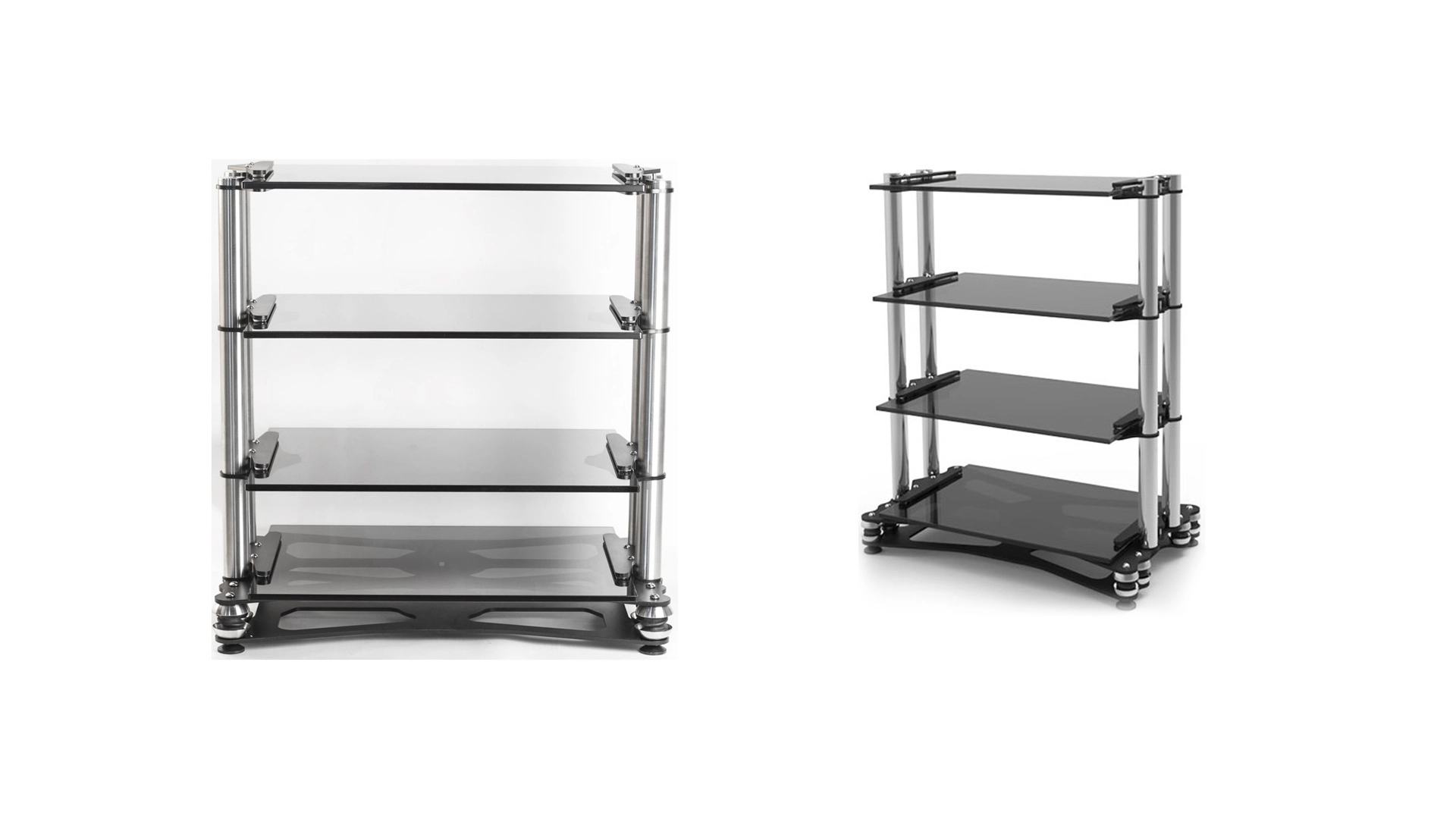
Townshend Audio is the British-based company founded by Australian engineer Max Townshend in Sydney in 1975, initially to market parabolic diamond styli under the Elite name. Townshend moved the business to the United Kingdom in 1978. The previous 1972 date was too early: that period belongs to his first experiments, while 1975 is the documented company foundation. Max died in 2021, but the company continues to develop and manufacture products from his work.
The Rock turntable and Excalibur tonearm made Townshend famous by using a damping trough near the cartridge end of the arm, controlling resonance where conventional suspended decks did not. Later, Max’s attention shifted increasingly to seismic energy entering an audio system through floors and furniture. Seismic Pods, Podiums, Bars and Corners use compliant spring-and-damper structures selected for load, isolating loudspeakers, equipment racks and individual components at very low frequencies.
Townshend’s catalogue also includes the Allegri transformer-based passive preamplifiers, Super Tweeters and F1 Fractal cables, reflecting Max’s willingness to work across mechanical, electrical and acoustic boundaries. Some of his cable and isolation explanations challenged conventional industry thinking and remain subjects for listening and measurement, but the products are not generic accessories with a story added later. They emerged from specific engineering questions pursued over decades. Townshend Audio’s legacy is precisely that restlessness: from stylus geometry and tonearm damping to whole-system isolation, Max repeatedly identified energy paths others treated as fixed and built an adjustable product around them.
Trafomatic Audio

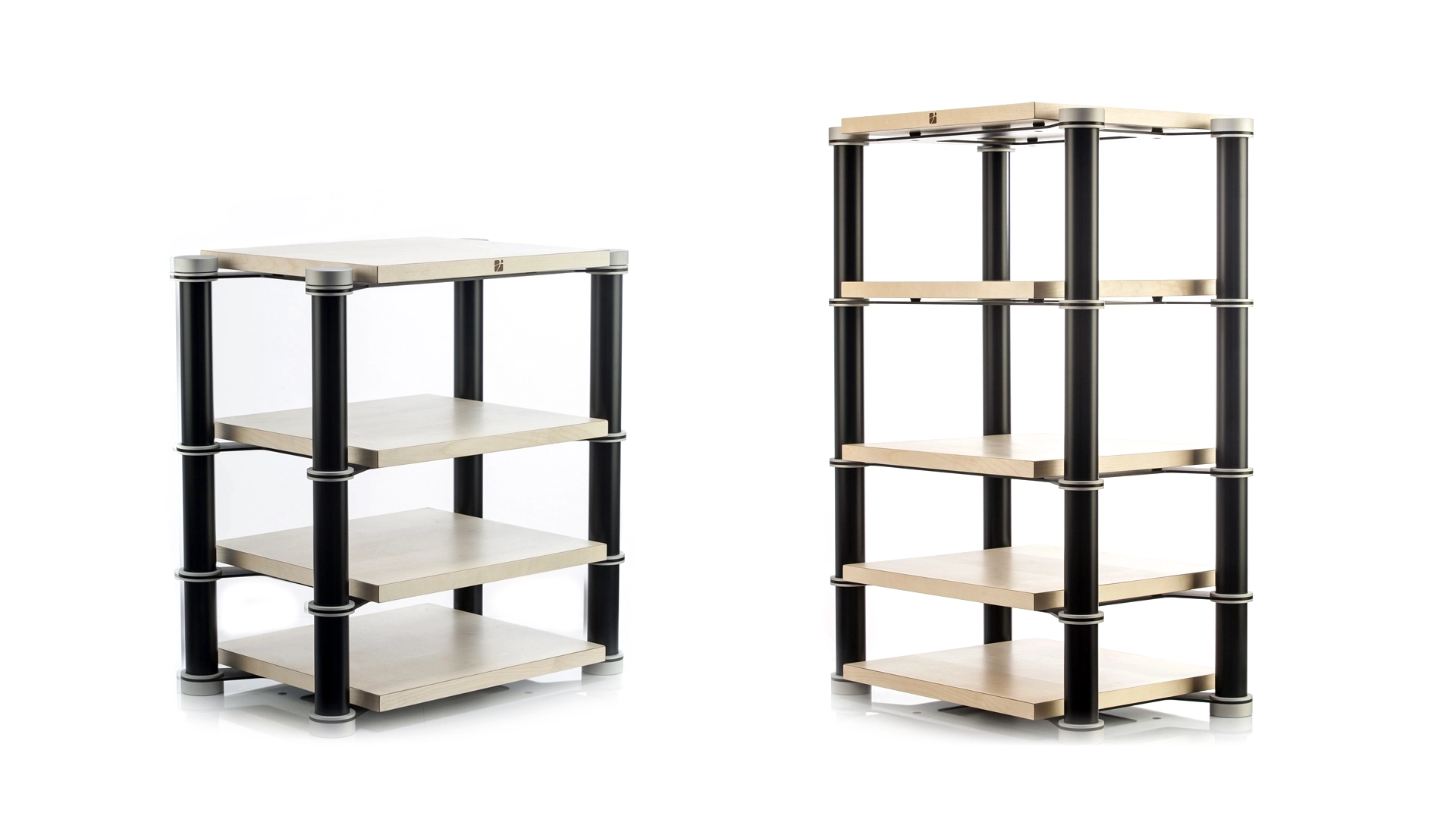
Trafomatic Audio is a Serbian valve-electronics manufacturer founded in 1997 by Saša Čokić in Mladenovac. The company began with transformers, the component that often determines whether a tube amplifier fulfils its circuit on the test bench and with a real loudspeaker. That magnetics background remains its decisive advantage: output transformers, interstage transformers, chokes and power transformers can be developed together with the amplifier rather than purchased as an afterthought.
Early Experience amplifiers introduced Trafomatic internationally, including simple single-ended designs built around classic triodes. The range now reaches from the Rhapsody integrated amplifier and Luna phono stage to Lara and Tara line stages, Primavera headphone amplification and statement power amplifiers such as Elysium, Pandora and Elysian. Directly heated triodes, transformer coupling and pure Class A operation appear where they suit the product, while higher-powered push-pull models serve loudspeakers that need more output.
Čokić’s team builds in Serbia and also supplies transformer expertise beyond its own finished components. This makes Trafomatic more than a boutique assembling famous tubes into attractive cases. Winding geometry, core material, insulation, bandwidth and power-supply behaviour are part of the company’s own daily work. The catalogue has become visually ambitious, but its common DNA is still magnetic. Trafomatic’s strongest amplifiers unite expressive tube topologies with the less glamorous discipline of making the iron correctly—a combination that explains how a small Serbian manufacturer gained lasting international recognition.
Urban Editions

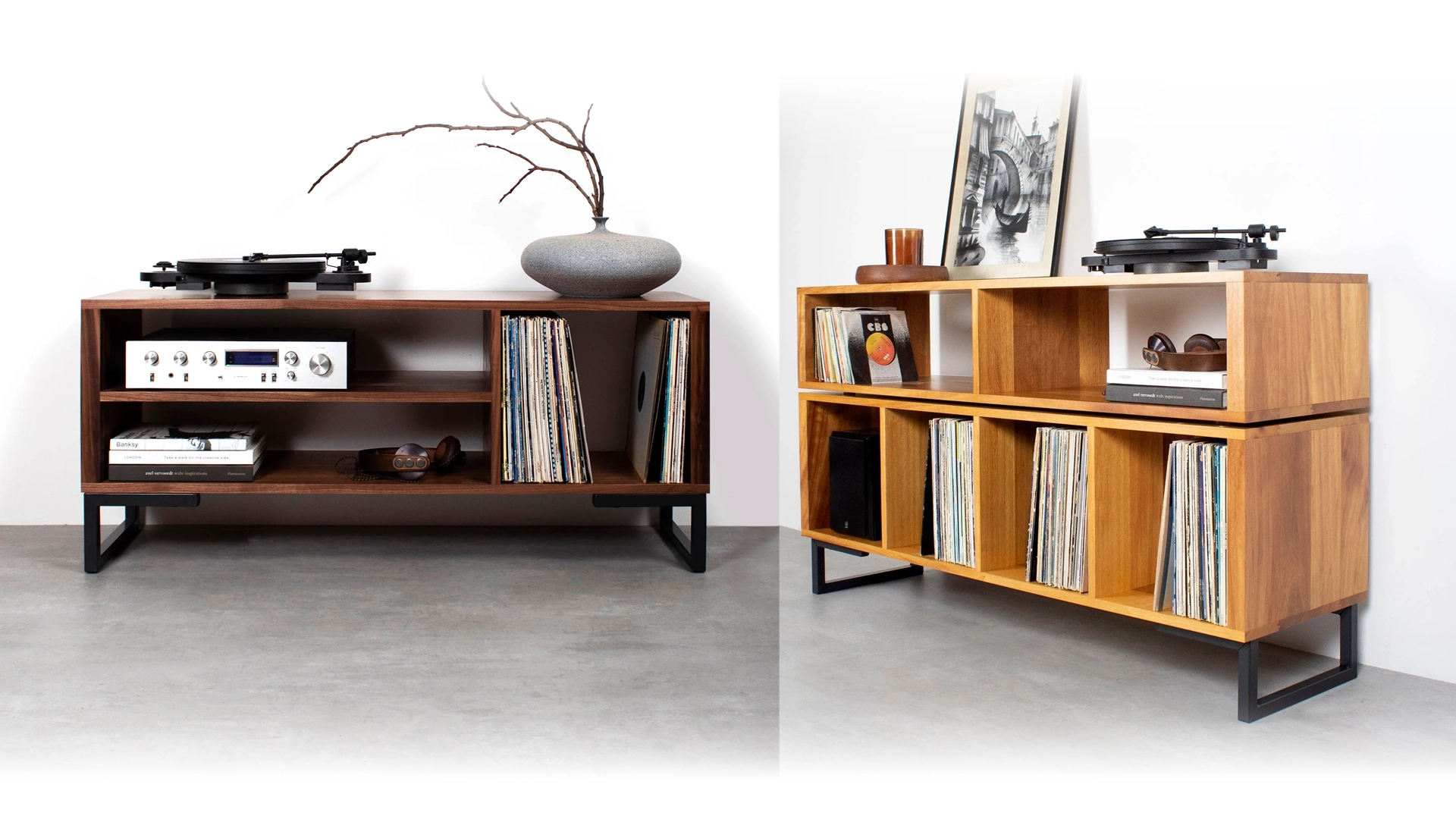
Urban Editions is a British furniture brand and trading name of Derelict Design Ltd., specialising in solid-wood pieces with a restrained mid-century character. It is not an audio-electronics manufacturer. Its relevance to Hi-Fi Selector comes from furniture designed around the awkward physical realities of vinyl: heavy records, turntable isolation, amplifier ventilation, cable access and storage that must remain usable as a collection grows.
Record-player stands and cabinets such as the Stanton and Technic designs place the deck at working height with open or enclosed LP compartments below. Modular vinyl storage, sideboards, media units, desks and console tables can be configured in oak, ash, walnut or iroko, with dimensions and finishes adapted to a room. Products are made in the United Kingdom through manufacturing partners in Somerset and supplied in sections with specialist fittings, making substantial hardwood furniture easier to transport and assemble.
The minimalist appearance serves a practical purpose: open backs and clean spans leave access for signal and power cables, while solid timber provides a durable structure that can be repaired or refinished rather than discarded. Urban Editions does not claim that every cabinet is a laboratory-grade isolation platform; sensitive turntables may still need dedicated supports. Its strength is integrating audio storage into real interiors without reducing records to decoration. Because the public brand history does not establish a precise launch year, the date remains open rather than borrowing the incorporation year of the underlying company.