Furniture Racks
Hi-Fi racks and audio furniture are purpose-built to house your valuable electronic components. Unlike standard household furniture, they are engineered with open designs for proper ventilation, heavy-duty construction for stability, and integrated solutions for cable management. A good rack not only organizes your system but also contributes to better performance by controlling unwanted vibrations. This page is your guide to the specialized brands that build these foundational pieces of audio furniture.
Hi-Fi brands in the category
Summary information and image
Direct links to official websites
Woodyard

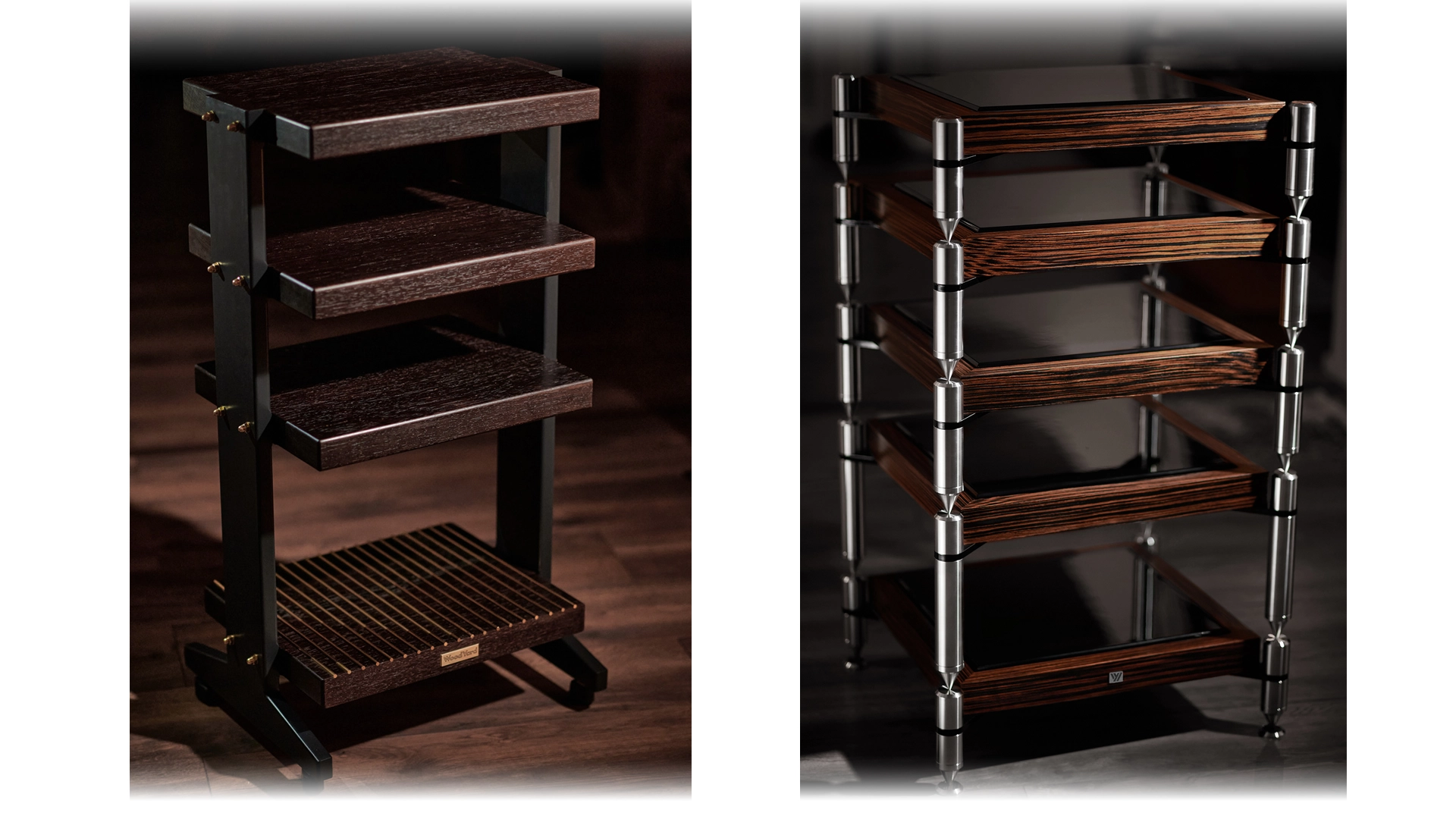
Woodyard is a Romanian analogue specialist whose most distinctive products are replacement wooden platters and related parts for turntables. The workshop selects and laminates hardwoods, then machines the blank to the diameter, spindle fit and mass distribution required by a particular deck. This is a more demanding task than producing a decorative disc: the platter must run concentrically, present a flat record-support surface and remain dimensionally stable as temperature and humidity change. Different constructions have been offered for well-known turntables, allowing owners to replace metal, glass or composite platters while retaining the original drive and bearing architecture. Woodyard also makes record weights, clamps, mats and other turned-wood accessories, using grain and finish as visible evidence that each item began as natural material rather than an anonymous moulding. The company associates wood’s internal damping with reduced ringing, but the audible scale of such changes depends on the turntable, cartridge and setup; it is safer to view each platter as a precisely fitted mechanical alternative, not a universal upgrade. Public material does not establish a sufficiently reliable founding year, so none is added. Woodyard’s individuality is already concrete without invented history: a small Romanian maker applying woodworking, balancing and careful model-specific machining to one of the most mechanically critical parts of a record player, while producing an object that changes both the resonant structure and visual character of the deck.
YG Acoustics
YG Acoustics is an American high-end loudspeaker manufacturer founded in 2002 by Israeli-born engineer Yoav Geva and subsequently established in Arvada, Colorado. The company became known for cabinets machined from thick aluminium plates and for applying mathematical modelling to drivers, crossovers and enclosure behaviour. Its BilletCore mid/bass cones are carved from solid aluminium stock rather than stamped from sheet, producing a stiff, precisely profiled diaphragm; ForgeCore tweeter motors are machined to control magnetic flux and reduce distortion. Earlier DualCoherent crossover work sought flat frequency response while preserving phase behaviour, a difficult combination that helped define the brand’s technical reputation. Carmel, Vantage, Hailey and Sonja form the established Reference range, from compact floorstander to modular flagship. Peaks models bring YG engineering to simpler cabinets and lower prices, while XX Live integrates amplification and active control at the top of the current programme. Ownership changed in 2017 when an investor group led by LK Capital acquired the company alongside Geva; he later departed, and mathematician and engineer Dr Matthew Webster now leads YG with an expanded design team. The factory, CNC machining and assembly remain in Colorado. That transition matters because modern YG is not merely repeating its founder’s catalogue: it preserves the aluminium construction and low-distortion priorities while introducing new drivers, software-led development and more accessible product families under new technical leadership.
Z:Axis Audio

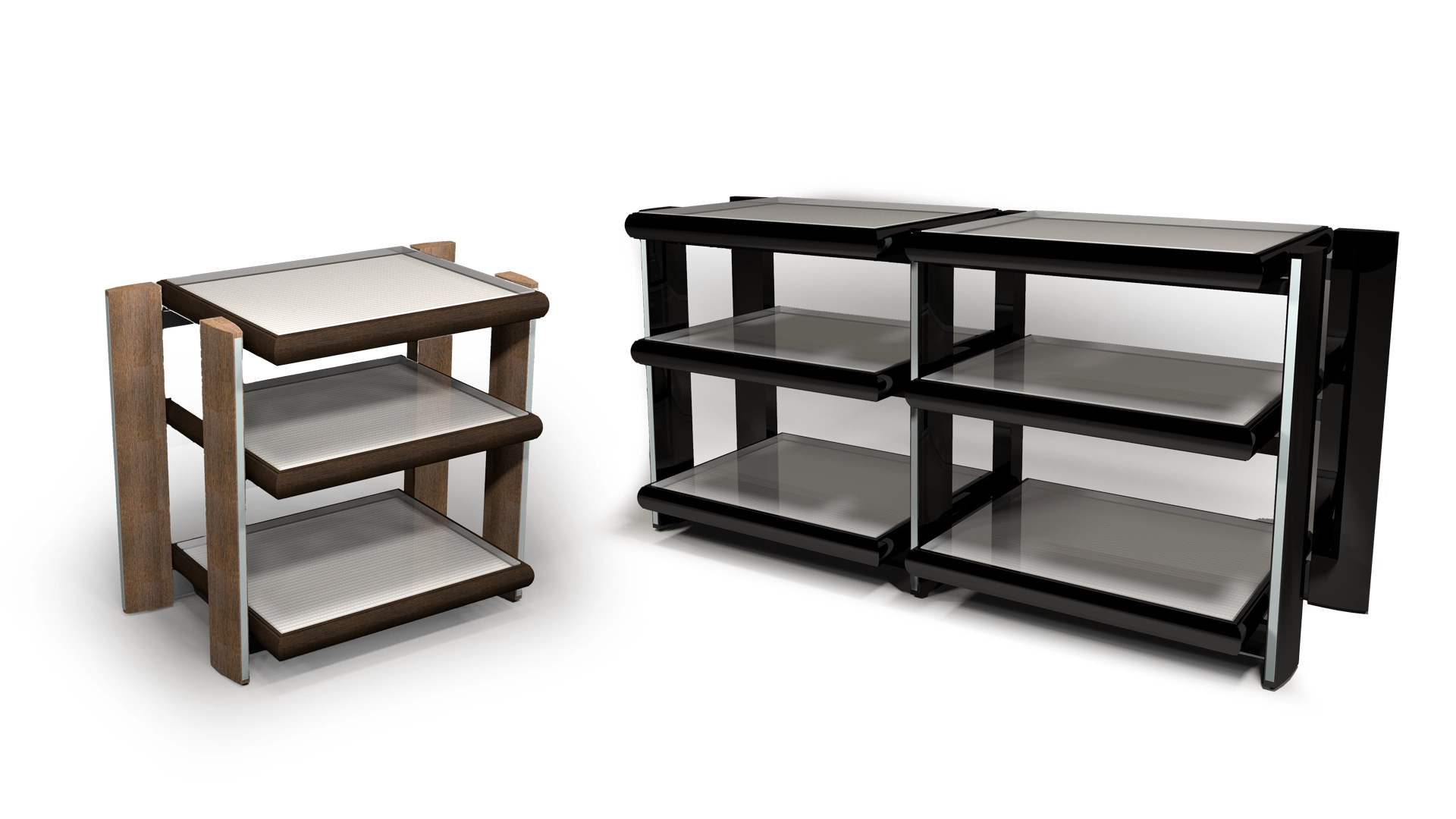
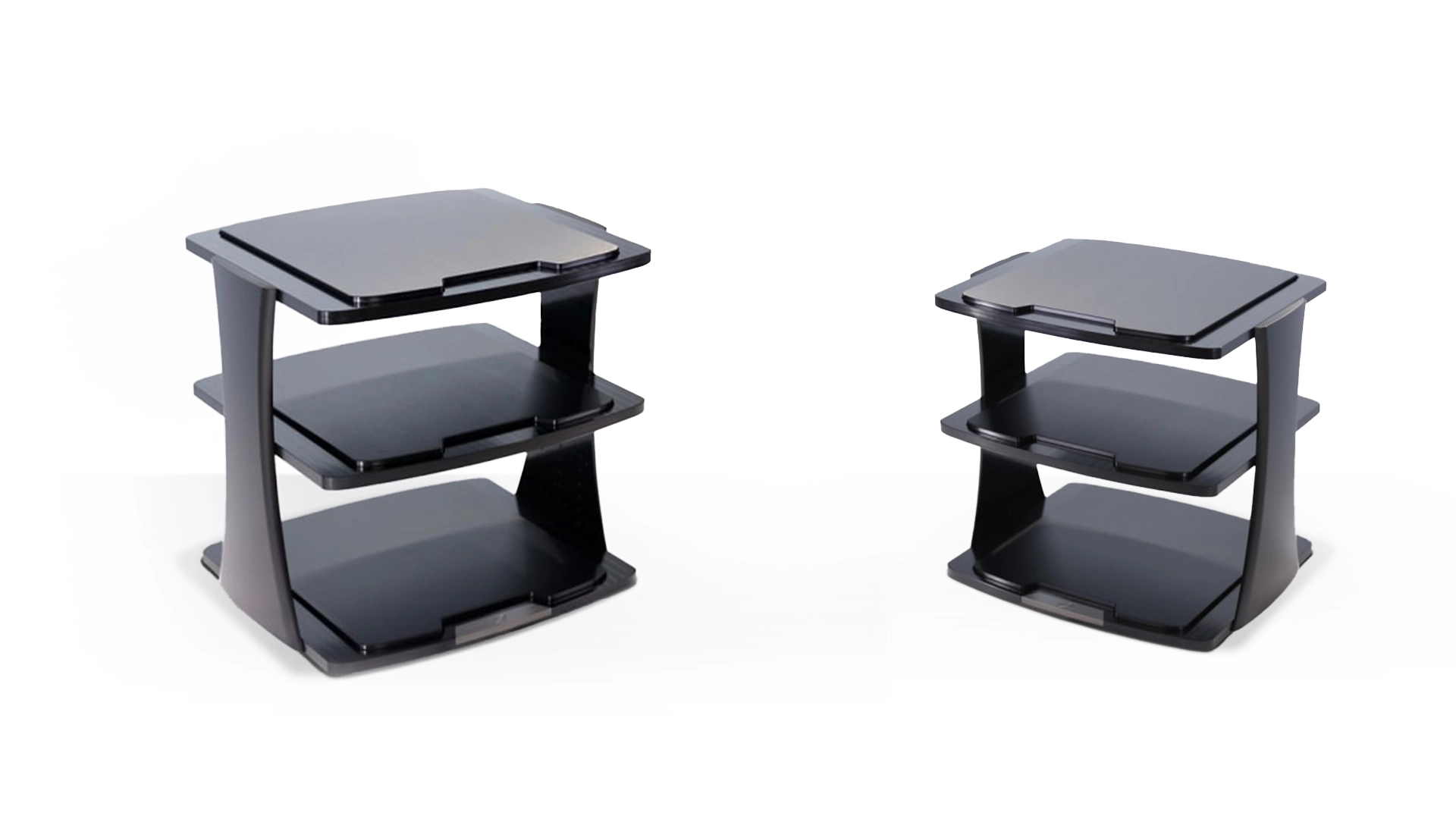
Z:Axis Audio is a British maker of audio cables and equipment supports run by master furniture craftsman Paul Stratton in Sussex. The previous description’s suggestion that the company mainly designs loudspeakers with angled baffles was incorrect: Z:Axis is centred on connection and mechanical support products, all built by hand in the UK. Its cable range includes Infinity interconnects, loudspeaker cables, mains leads and the higher Reference SL series. Depending on model, the designs use copper or pure-silver conductors, individual insulation, carefully controlled geometry and substantial but deliberately managed shielding. Stratton treats plugs and terminations as part of the design, and offers home trials because system compatibility cannot be inferred from conductor material alone. The Symetrica support system draws more directly on his furniture-making background. Modular shelves, hardwood structures, aluminium details and acrylic interface layers create racks that can expand sideways for multi-box systems while controlling how equipment is coupled to the floor. The visual result is refined furniture, but dimensions, load paths and access for cables are practical considerations rather than styling afterthoughts. Public documentation does not provide a dependable founding year, so the date remains blank. Z:Axis is best understood as a small specialist workshop whose two skills meet in a coherent catalogue: meticulous low-volume cable assembly and precision furniture construction for systems where electrical connection, vibration and domestic appearance all matter.