
Home Theater Speakers
Home theater speakers are specifically designed to work together as a cohesive system to create an immersive, 360-degree soundfield. A typical setup includes front speakers for the main soundstage, a dedicated center channel for crystal-clear dialogue, and surround and height speakers for ambient effects that place you in the middle of the action. This directory is your guide to the brands that offer complete, matched surround sound speaker packages for a truly cinematic audio experience.
Hi-Fi brands in the category
Summary information and image
Direct links to official websites
Focal

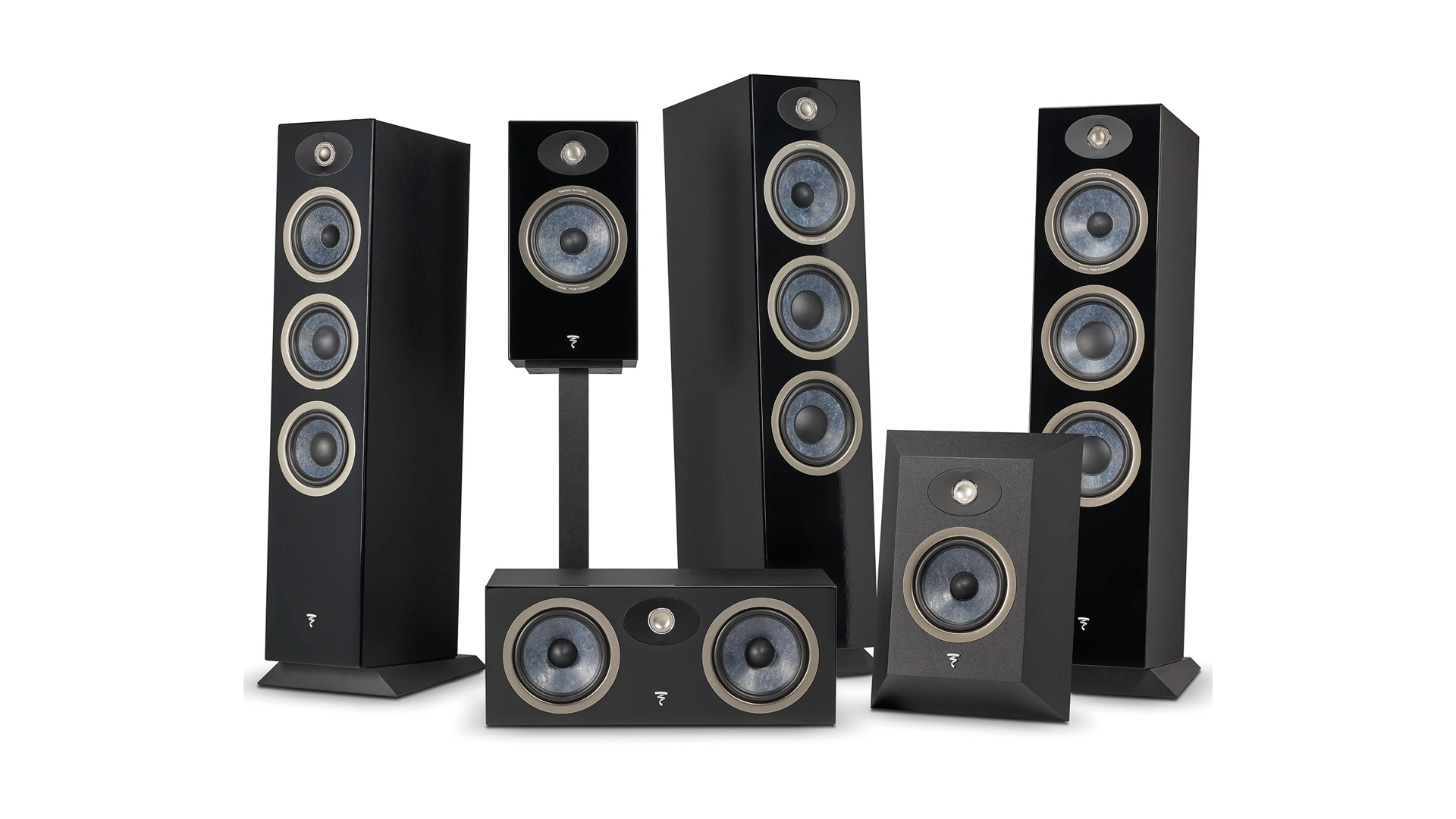
Few audio manufacturers cover as much of the reproduction chain as Focal while still developing and making key drivers in-house. Engineer Jacques Mahul founded Focal-JMlab in Saint-Étienne in 1979, initially building loudspeaker drivers and complete systems in a family precision-engineering workshop. The French company now serves home hi-fi and cinema, professional studios, car audio, headphones and custom installation. Its technical identity is visible in pure-beryllium tweeters, W-composite and K2 cones, flax-sandwich diaphragms, M-shaped profiles and Tuned Mass Damper surrounds; each technology is used where its stiffness, mass or resonance behaviour suits the product. Landmark Utopia loudspeakers established Focal’s high-end reputation, while Sopra, Kanta, Aria Evo X and Vestia broaden the home range. Bathys, Clear, Stellia and Utopia headphones bring the same driver-led philosophy closer to the listener. Cabinet making for the upper loudspeaker lines and much of the driver production remain centred in France.
Fyne Audio

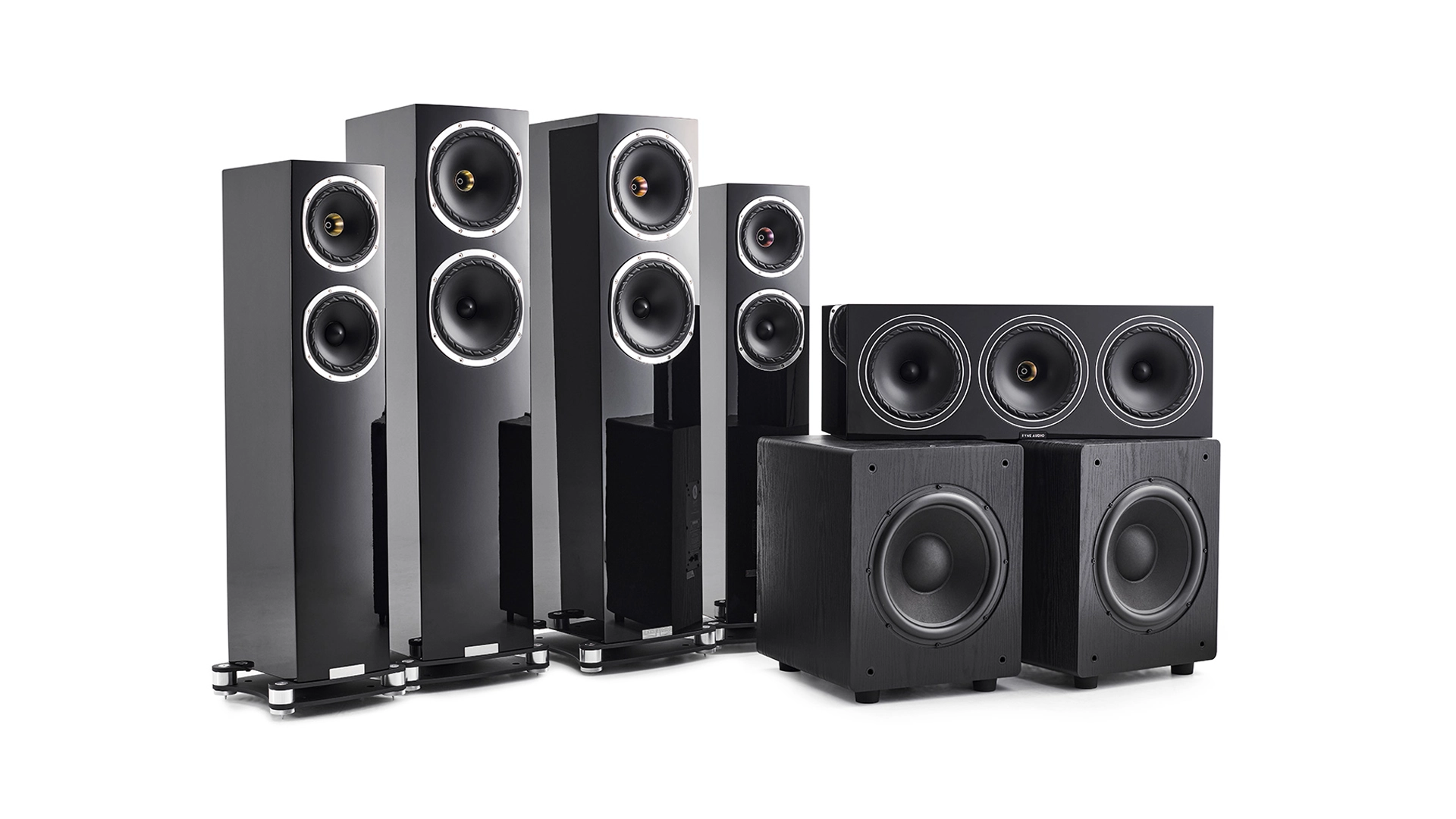
Fyne Audio is a Scottish loudspeaker company built by an experienced team that included many former Tannoy engineers and managers. Established in 2017, it placed technical director Dr Paul Mills’ IsoFlare driver at the centre of its identity: the high-frequency unit sits in the throat of the mid/bass cone so both act as a point source over much of the range. The accompanying FyneFlute surround controls termination at the cone edge, while BassTrax uses a tractrix-profile diffuser beneath a downward-firing port to spread low-frequency energy more evenly into the room. These ideas appear at different levels across the F300, F500, F700 and Special Production families. At the top, the F1 and Vintage series combine large IsoFlare units with elaborate cabinets and adjustable presence controls; custom-install, home-cinema and compact active models extend the catalogue beyond traditional stereo. Engineering and voicing are centred in Scotland, and the flagship cabinets are made there, giving the young marque a clear lineage without simply reproducing its founders’ previous work.
GoldenEar

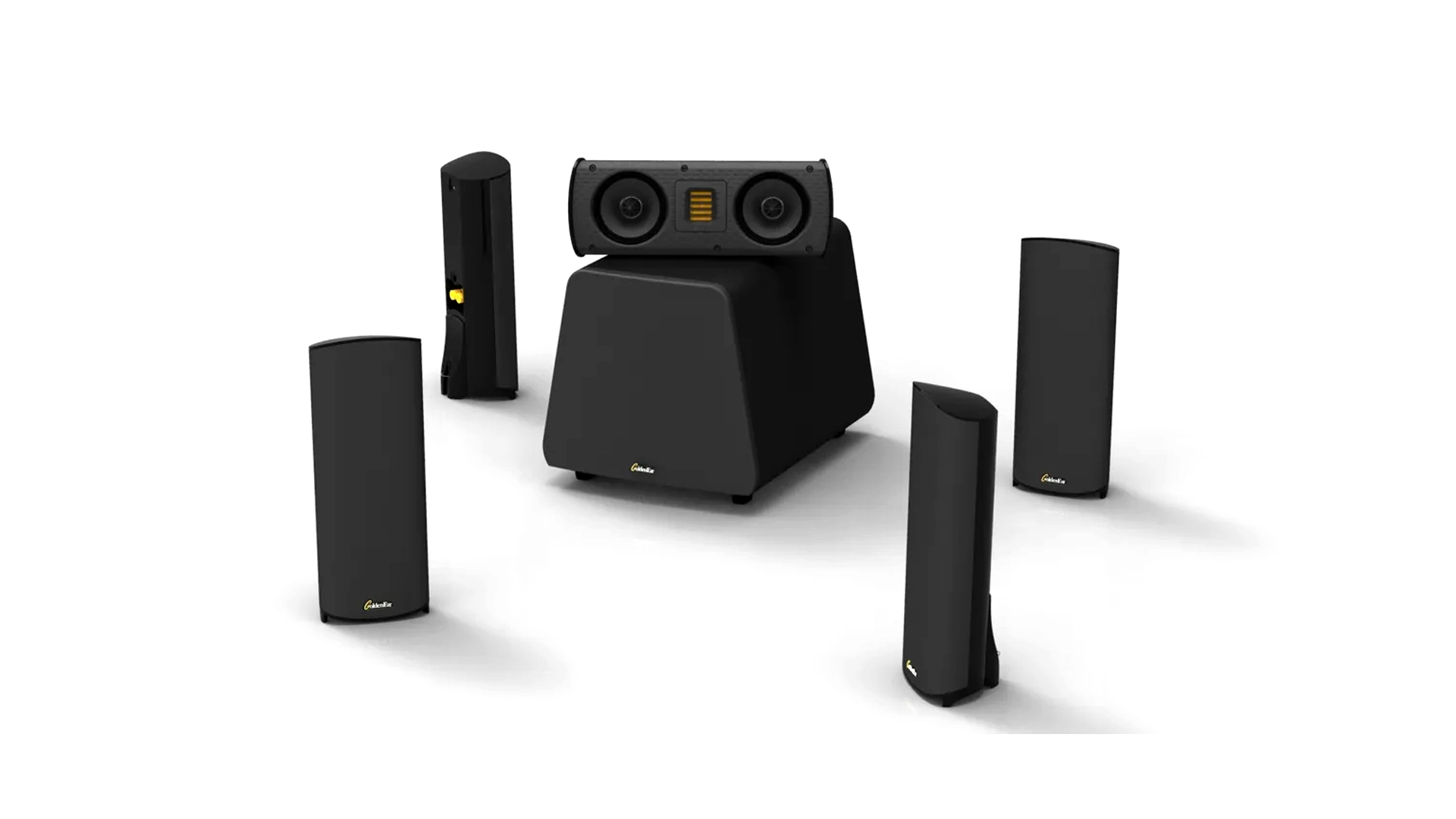
GoldenEar is an American loudspeaker brand that combines compact cabinets with unusually ambitious bass and high-frequency systems. Sandy Gross—previously a co-founder of Polk Audio and Definitive Technology—launched the company in 2010. Its signature High-Velocity Folded Ribbon tweeter moves air by squeezing it through folds in a light diaphragm, while many tower models pair passive radiators with internally powered subwoofer sections. This architecture defines the Triton and newer T-series towers, giving the main speakers control over deep bass without requiring a fully external subwoofer system. GoldenEar also makes BRX bookshelf speakers, SuperSat satellites, centre channels, architectural models and ForceField subwoofers, so the same driver ideas can be used in stereo or cinema installations. The brand’s strength lies in fitting wide bandwidth and room-friendly flexibility into relatively slim enclosures.
HECO

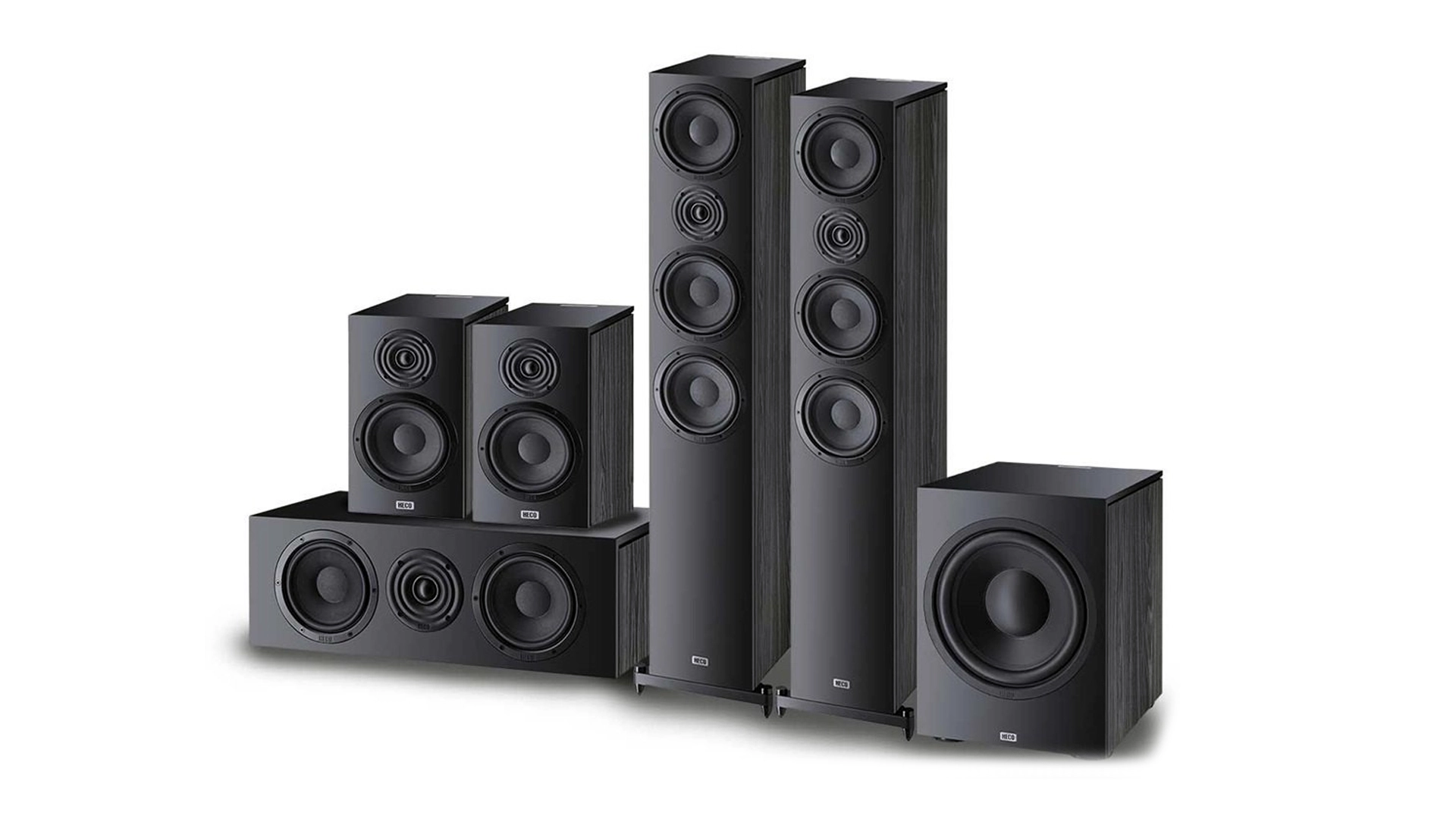
HECO is a German loudspeaker brand whose history reaches back to 1949, making it one of the country’s longest-established names in domestic audio. It produced series-manufactured speaker chassis by 1950 and has since moved through compact hi-fi boxes, ambitious floorstanders and installation speakers without abandoning in-house driver development. A recurring HECO signature is the Kraft paper cone, made from a fibre mixture that includes Nordic pine and wool for a deliberately controlled balance of stiffness and internal damping. Current designs also use the Fluktus tweeter’s computer-optimized waveguide, robust die-cast baskets and, in selected upper models, AlNiCo midrange motors. Ranges such as Victa Elite, Aurora, Celan Revolution and Direkt address different prices and aesthetics, while sharing recognizable acoustic ideas. HECO’s strength is this continuity: traditional paper-cone virtues developed with modern measurement, materials and dispersion control.
HEDD
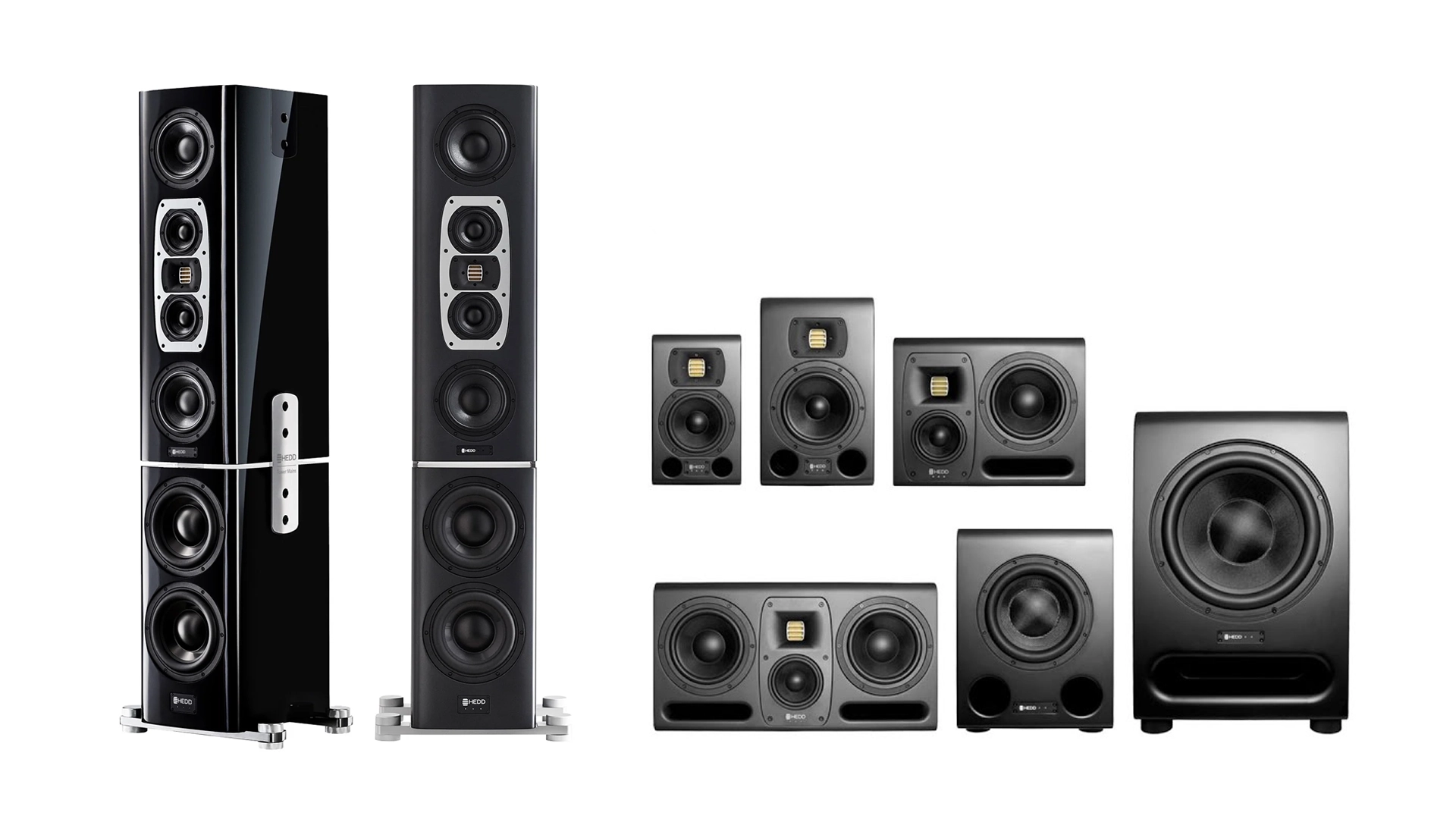
HEDD—Heinz Electrodynamic Designs—is a Berlin company founded in 2015 by physicist Klaus Heinz and his son, musicologist and mastering engineer Dr Frederik Knop. Klaus Heinz had already spent decades developing Air Motion Transformer tweeters, and HEDD made that folded-diaphragm principle the centre of a new range for studios and demanding home systems. The company builds active monitors and subwoofers in Berlin, combining its proprietary AMT with DSP functions such as the Lineariser, a phase-correction system based on zero-phase FIR filtering. MK2 monitors can also be used in closed or ported operation through the CoP design, allowing a practical trade-off between bass extension and transient behaviour. HEDDphone models extend the idea into a full-range Variable Velocity Transform transducer for headphones. HEDD’s identity is unusually coherent: one transducer concept, refined for nearfield monitoring, immersive systems and personal listening.
Indiana Line

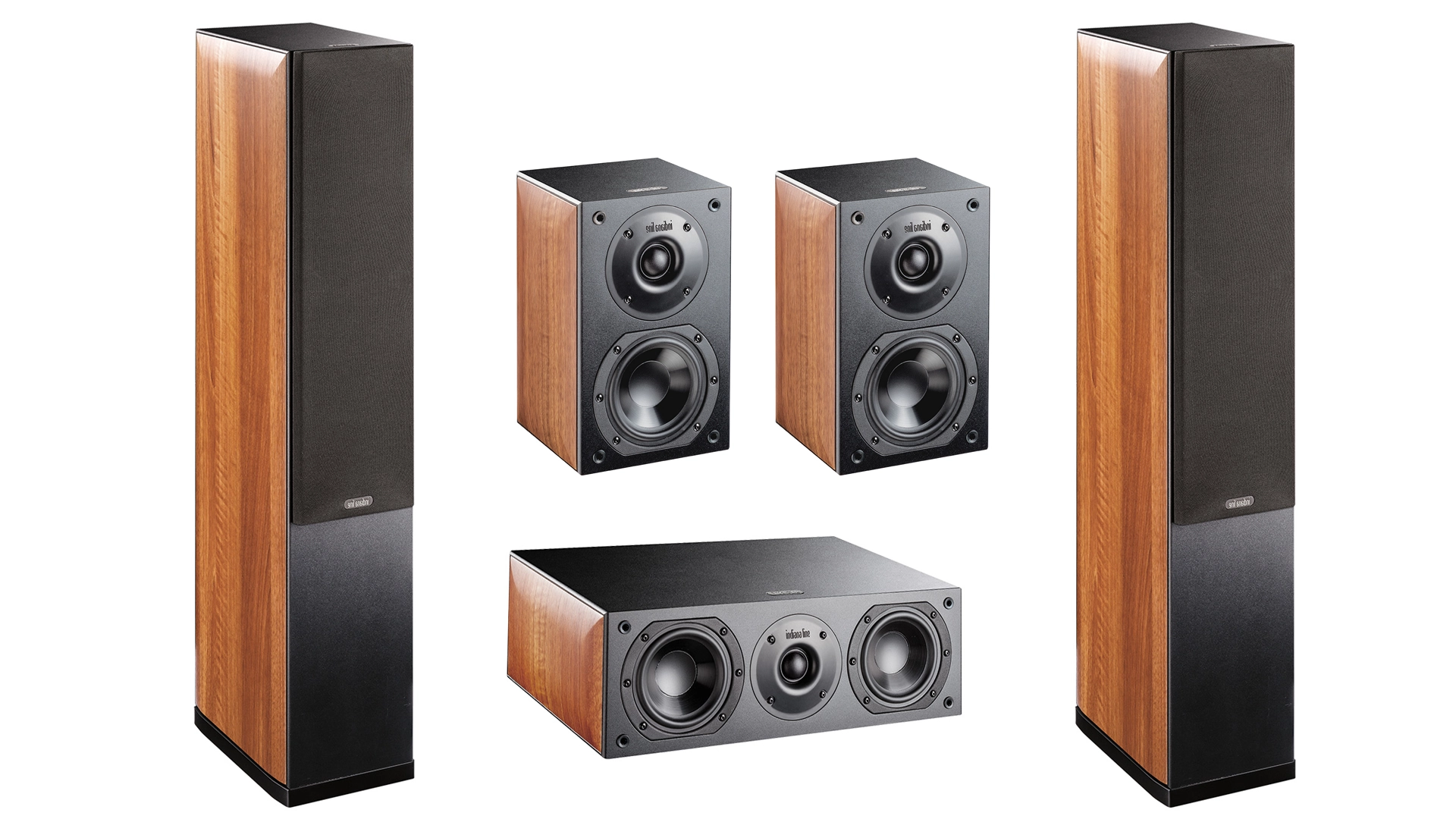
Indiana Line is an Italian loudspeaker brand founded in Turin in 1977, known for turning practical domestic speakers into carefully engineered hi-fi products. Its catalogue covers the ambitious Diva series, the widely accessible Tesi and Nota families, DJ models, Basso subwoofers and architectural speakers for custom installation. The engineering changes with price rather than relying on one repeated recipe: Curv polypropylene appears in selected mid-woofers, mica-reinforced cones are used where greater stiffness is needed, and soft-dome tweeters are loaded and damped to integrate smoothly with the midrange. Cabinets use substantial internal bracing and acoustic damping, while crossover slopes are chosen for predictable behaviour with ordinary 4–8-ohm amplifiers. Indiana Line’s long history includes its development under Coral Electronic and a later transition from Italian to Polish ownership, but the design identity remains rooted in compact European speakers that offer sensible size, finish and system compatibility rather than exotic scale.
James Loudspeaker
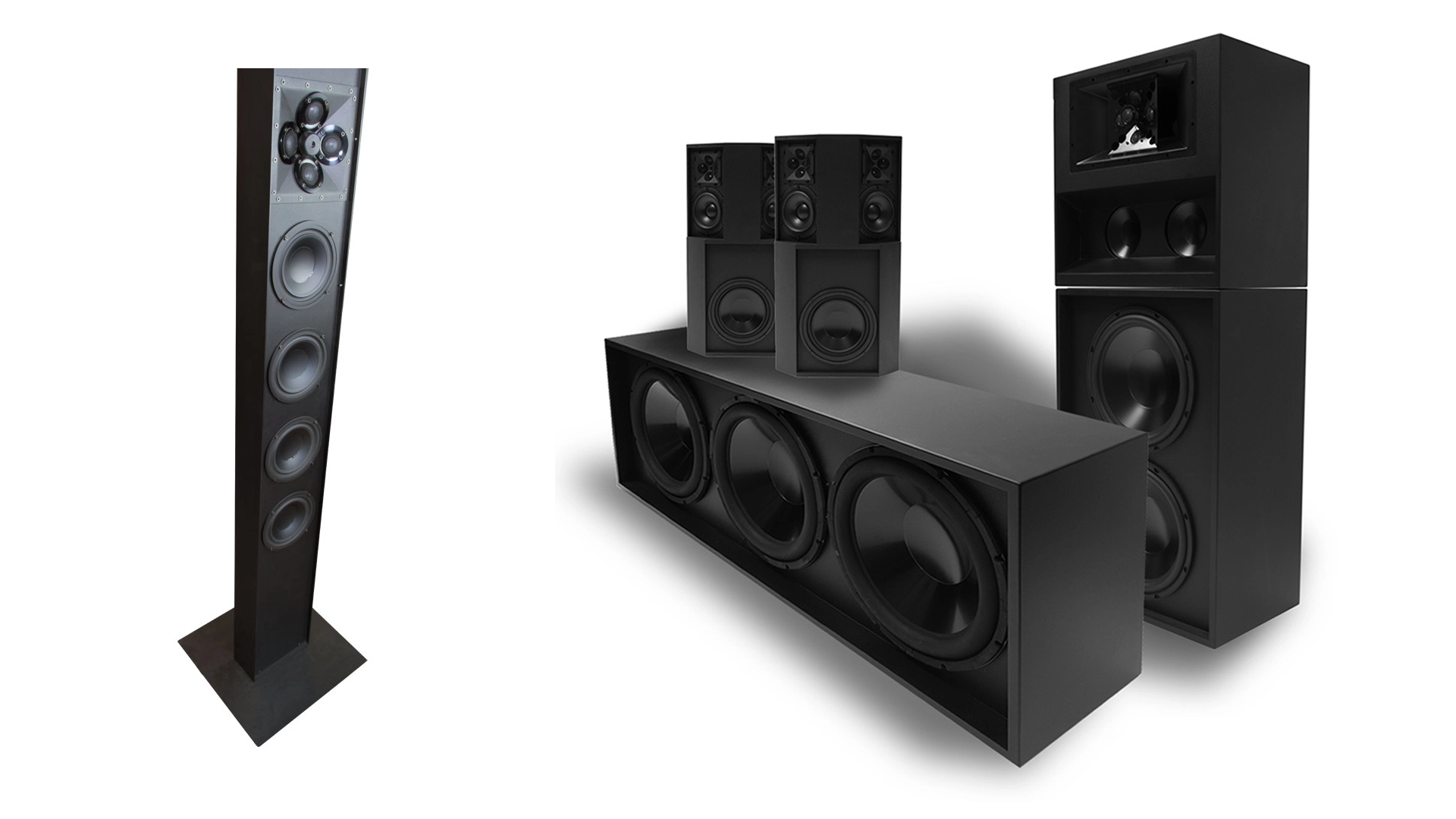
James Loudspeaker designs high-performance speakers for rooms in which conventional boxes are visually or physically unacceptable. Founded in California in 1999 and now part of Sonance, the company specialises in architectural, custom and outdoor systems built around rigid aluminium enclosures, purpose-designed drivers and unusually flexible fabrication. Its Small Aperture models place the visible opening at lighting-fixture scale while locating the enclosure behind the wall or ceiling. PowerPipe subwoofers move low-frequency output through a remote port when the cabinet must be hidden, and the high-output Mavericks range addresses dedicated cinemas. James also makes on-wall, in-wall, landscape, marine and soundbar solutions, including custom widths, colours and finishes for a particular screen or interior. Technologies such as quad-tweeter arrays and the EMB low-frequency platform serve installation problems rather than acting as generic badges. The brand’s strongest advantage is therefore not one signature speaker: it is the ability to engineer an acoustically serious system around architectural constraints, then manufacture the enclosure and finish to suit the project.
Jamo

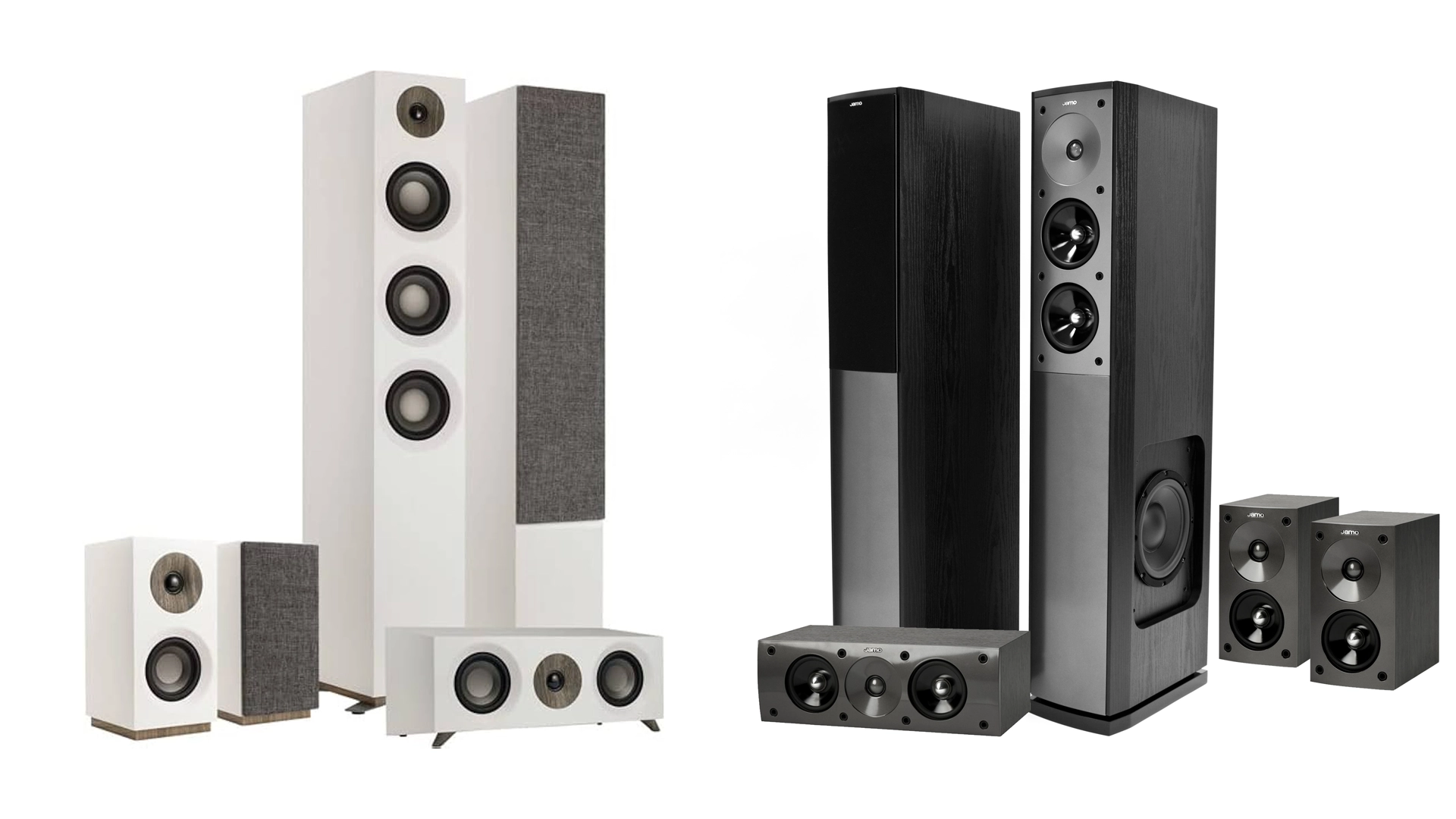
Jamo is a Danish loudspeaker name built on the idea that audio equipment should live comfortably with furniture rather than dominate it. It was founded in 1968 by cabinetmaker Preben Jacobsen and salesman Julius Mortensen; “Jamo” combines the opening letters of their surnames. The company became known for bringing Scandinavian form, practical proportions and broad-market pricing to stereo and home-cinema speakers, with Studio, Concert and Custom installation families forming an important part of its legacy. The present story needs a qualification: after former owner Voxx/PAC sold the brand in 2024, Jamo entered a quiet transition and is now being relaunched by Cinemaster and Rayleigh Lab. A new range announced for 2026 is intended to cover traditional hi-fi, connected lifestyle products and higher-end systems, with development involving European designers and production planned in Denmark and China. That means older catalogue names should not be presented as the whole current line. What remains continuous is Jamo’s core proposition—approachable loudspeakers shaped by Danish design culture—while the products and ownership are entering a new chapter.
K.C.S

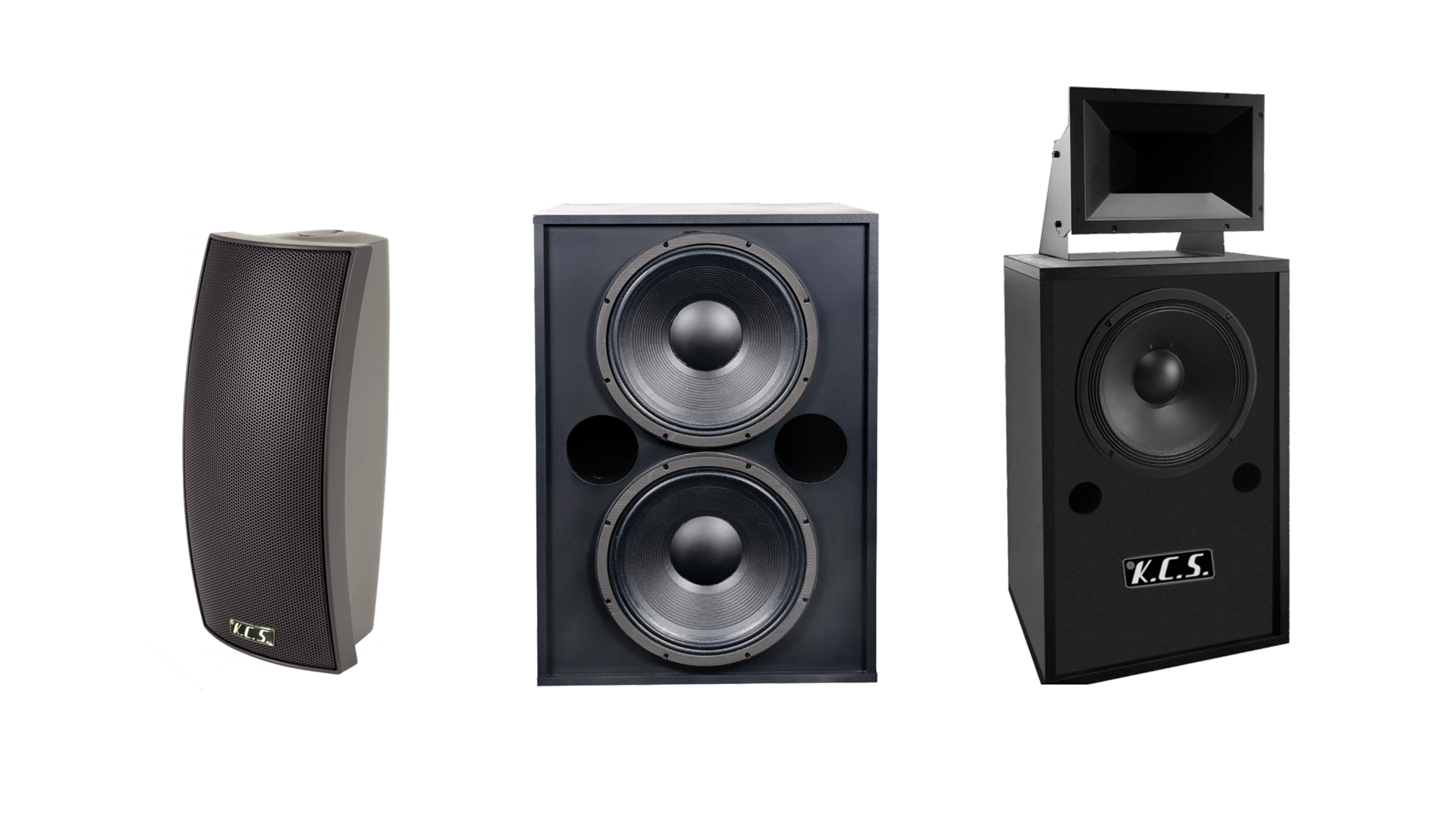
K.C.S—Kelonik Cinema Sound—is a Spanish loudspeaker specialist created specifically for commercial cinemas. Suministros Kelonik, an established cinema-service company, formed the KCS division in 1990; the previous 1979 date did not mark the launch of this speaker brand. Its systems are organised around the architecture of an auditorium: screen-channel loudspeakers deliver dialogue and front-stage energy, surrounds provide coverage around the audience, and high-output subwoofers handle low-frequency effects. KCS offers two- and three-way, bi-amplified and tri-amplified solutions sized for small rooms through large theatres, plus products intended for immersive layouts such as Dolby Atmos and Auro. That breadth matters because cinema design is a coverage and reliability problem, not simply a matter of placing hi-fi speakers behind a screen. The company draws on Kelonik’s installation experience to match directivity, sensitivity and output to room volume and throw distance, and supports complete projects through a distribution network. Its distinctive know-how is therefore practical: purpose-built transducers and enclosures informed by decades of commissioning real cinemas.
KEF

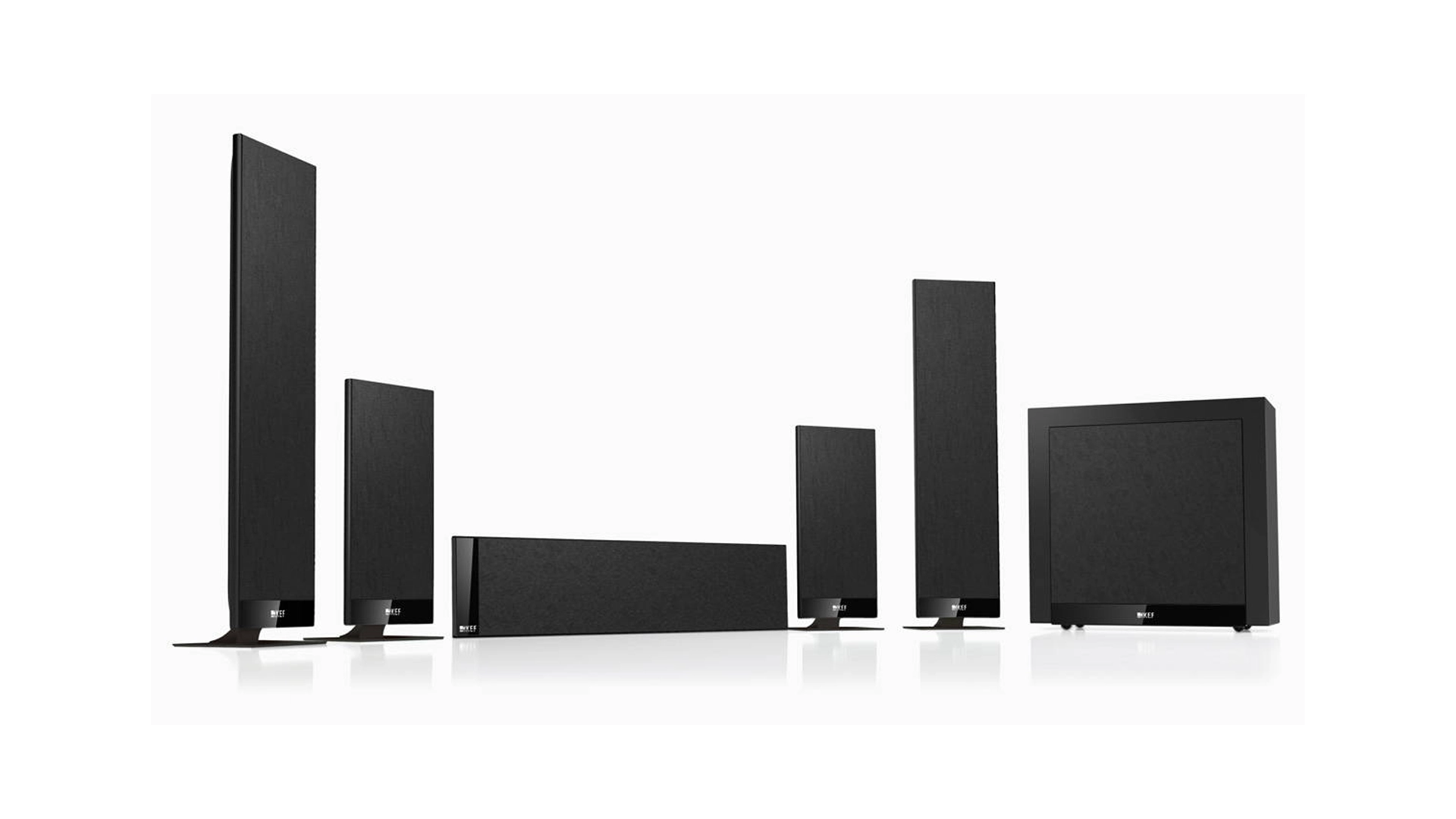
KEF is a British loudspeaker company whose identity rests on acoustic research and driver engineering rather than a house style applied to conventional boxes. BBC engineer Raymond Cooke founded it in Maidstone in 1961; the name comes from Kent Engineering & Foundry, the site of the first workshop. KEF’s defining invention is Uni-Q, introduced in 1988, which places the tweeter at the acoustic centre of the midrange cone so the two behave more like one source across a wide listening area. Recent generations add Metamaterial Absorption Technology behind the tweeter to manage rear radiation, while Uni-Core allows opposed subwoofer drivers to share a compact motor structure. These ideas appear at different scales across the Q, R and Reference ranges, the sculptural Blade models, KC subwoofers and the active LS50 Wireless II and LS60 Wireless. The catalogue spans passive, wireless, architectural and personal audio, but the common thread is unusually deep in-house modelling, measurement and transducer development.
KLH

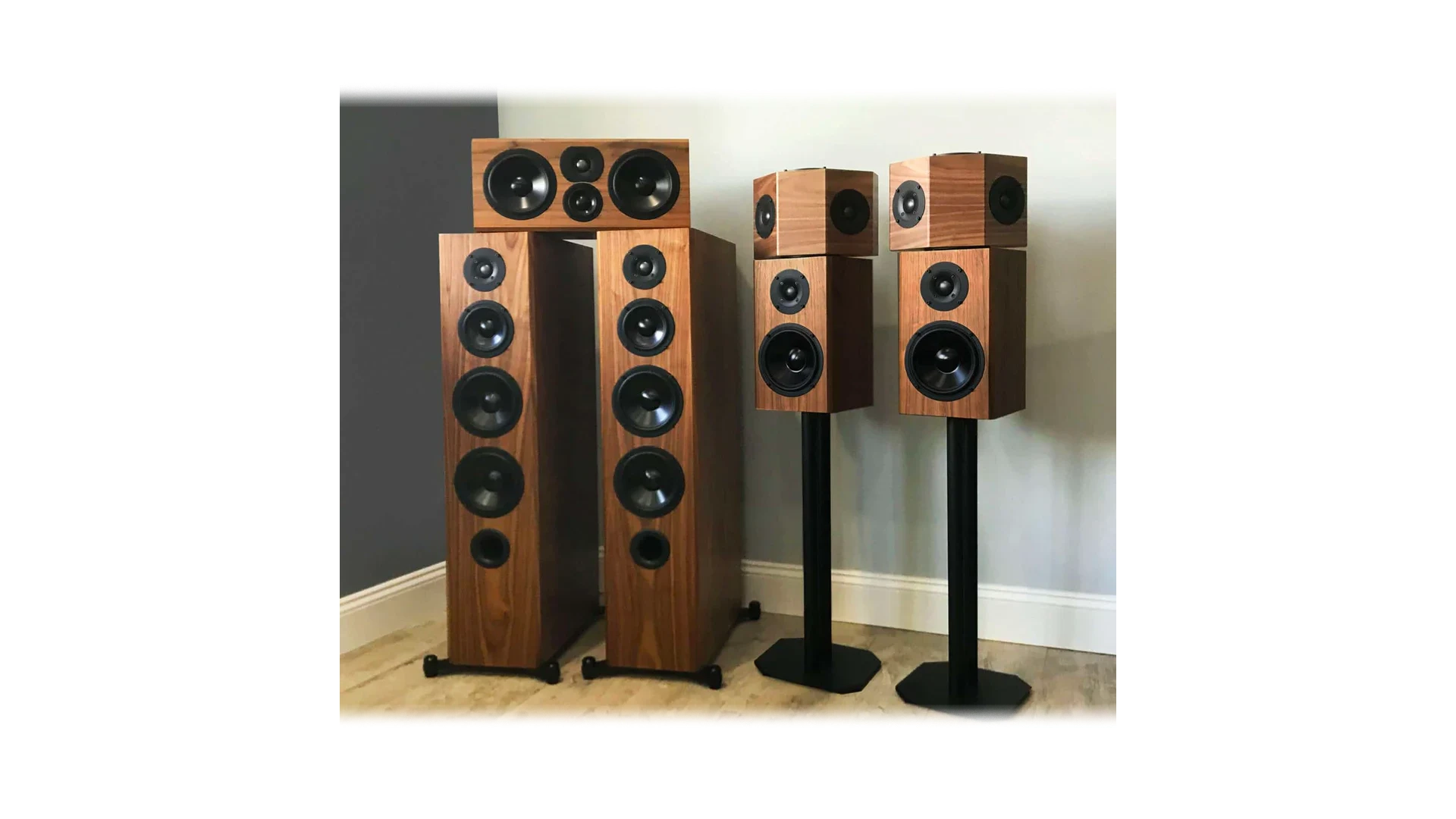
KLH is an American loudspeaker name founded in Cambridge, Massachusetts, in 1957 by Henry Kloss, Malcolm S. Low and Josef Anton Hofmann—the initials behind the brand. The original company helped bring acoustic-suspension loudspeakers into ordinary homes, using sealed enclosures and carefully controlled woofer compliance to obtain extended bass from manageable cabinets. Model Six became the best-known expression, while the Model Eight radio and full-range electrostatic Model Nine showed that KLH was not limited to one product type. Today’s KLH is a revived company rather than an uninterrupted continuation of the Cambridge factory. Its Model Collection deliberately revisits the classic formula: Model Three, Five and Seven combine acoustic-suspension loading, broad baffles and modern drivers, crossovers and finishes. The wider range includes conventional floorstanders, bookshelf speakers, subwoofers and installation models. Victrola acquired KLH in 2025, placing the current brand within a larger consumer-audio group while its most distinctive products continue to reference the engineering ideas associated with Henry Kloss.
Klipsch

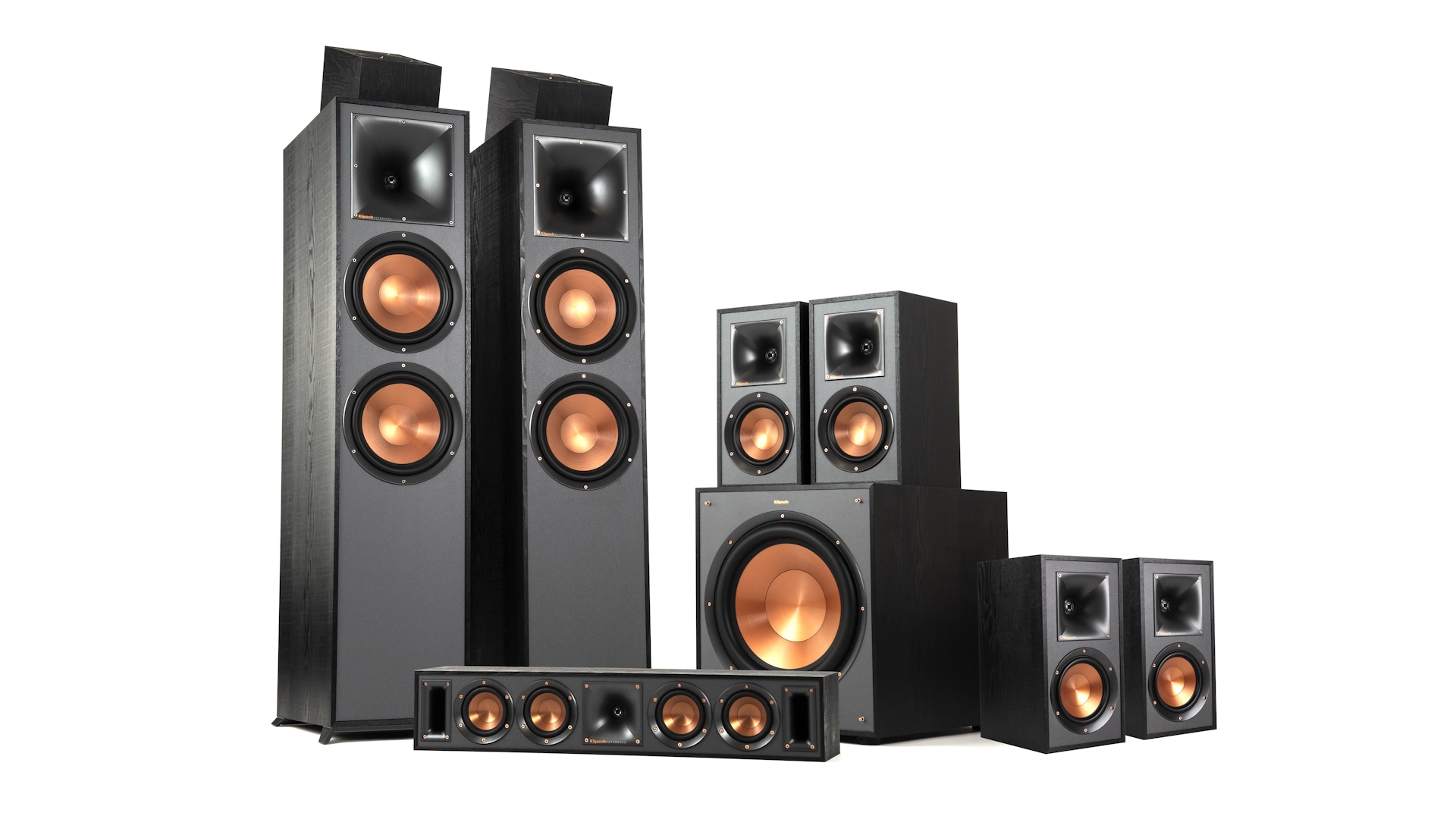
Klipsch is an American loudspeaker company founded by engineer Paul W. Klipsch in Hope, Arkansas, in 1946. His central solution was horn loading: coupling a driver to a shaped acoustic horn raises efficiency and controls dispersion, allowing high output and wide dynamics from comparatively little amplifier power. The corner-loaded Klipschorn put that idea into a domestic loudspeaker and remains in production, joined in the Heritage range by La Scala, Cornwall, Heresy and Forte. Modern Reference Premiere models use Tractrix-based horns in more conventional towers, monitors and centre channels, while the company also makes subwoofers, soundbars, architectural speakers and powered stereo systems. The designs vary widely, but high sensitivity and controlled directivity remain the recognisable technical thread. Klipsch now operates within Premium Audio Company, owned by Gentex, yet Heritage models are still assembled in Hope. Few audio brands can point to both an original flagship still being made and a current mass-market range built around the same underlying acoustic principle.
Krix
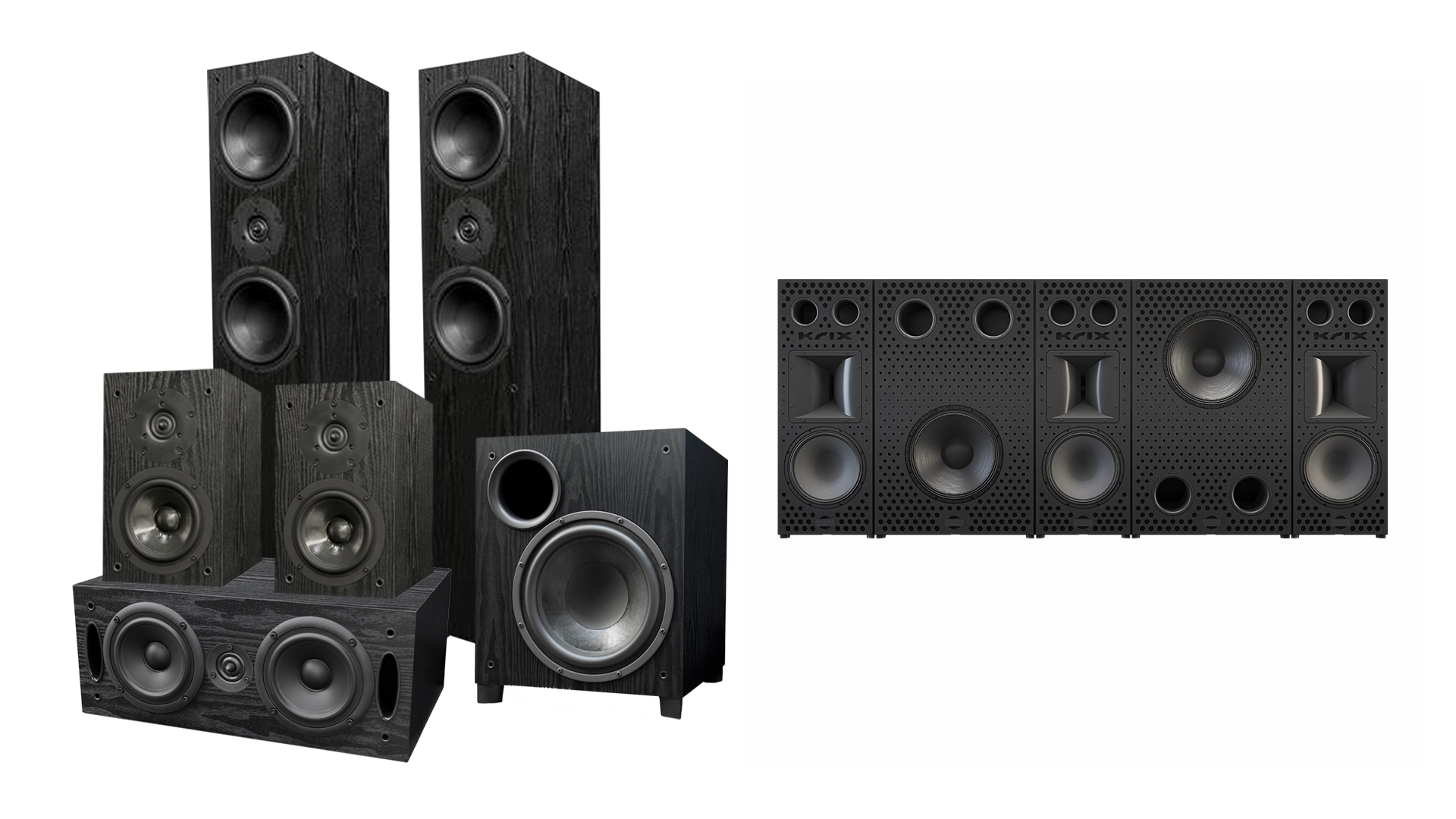
Krix is an Australian loudspeaker company with an unusually direct link between home audio and the commercial cinema. Scott Krix began building loudspeakers in Adelaide in 1974 and installed his first cinema system in 1980; today the company designs and manufactures speakers for dedicated theatres, living rooms and professional auditoriums at its South Australian facility. Cinema experience is central to the brand’s know-how: controlled directivity, high sensitivity, generous headroom and consistent coverage across a seating area. Krix develops its own constant-directivity horns, uses finite-element analysis and extensive acoustic measurement, and builds cabinets in-house with model-specific bracing. For home cinema, the modular Series MX systems place screen, surround and subwoofer channels behind an acoustically transparent screen or within a baffle wall, bringing commercial-cinema architecture into private rooms. Series SX and architectural models address flexible installations, while Esoterix loudspeakers show the same engineering discipline in two-channel hi-fi. The result is a brand whose strength is not a house sound slogan, but predictable dynamics and coverage at real cinema levels.
Lithe Audio

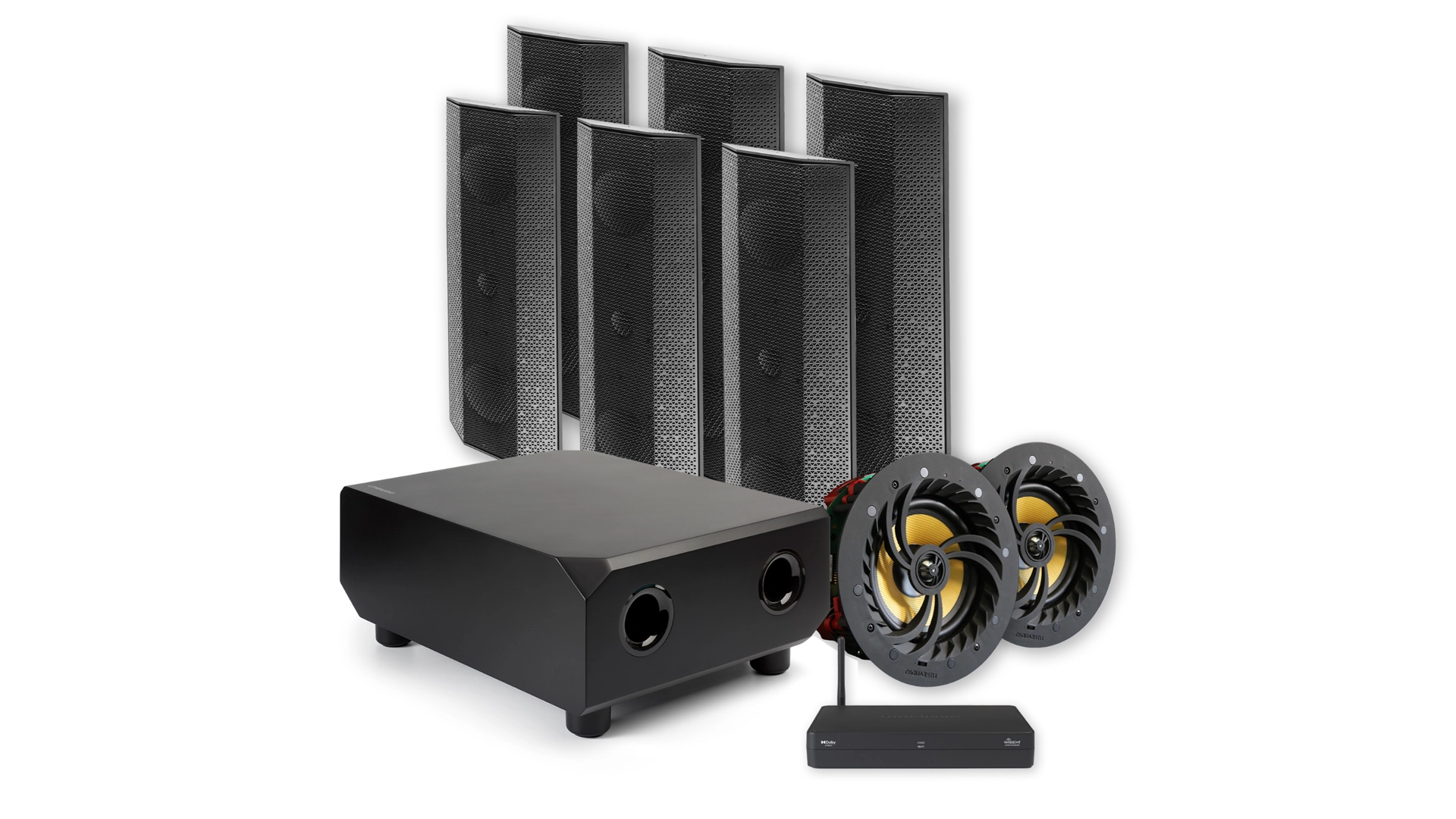
Lithe Audio is a British installation-audio company founded in 2014 to remove the separate amplifier, speaker cable and control hardware from everyday built-in sound. Co-founder Amit Ravat and the development team made the active ceiling speaker the centre of the system: amplification and wireless connectivity sit inside the speaker, so an installer normally adds mains power and a network or Bluetooth source rather than a remote equipment rack. The range includes simple Bluetooth ceiling speakers and Wi-Fi models with AirPlay 2 and Google Cast for synchronised multiroom playback. Pro-series speakers address larger installations, IP-rated models serve bathrooms and outdoor locations, and the iO1 combines an integrated amplifier with multiple mounting options for indoor or exterior use. Lithe Cinema uses WiSA wireless multichannel transport to build scalable surround systems with active ceiling speakers and subwoofers, while newer Auracast products target broadcast audio in commercial spaces. Passive variants and fire or acoustic hoods remain available where regulations or system architecture require them. Lithe Audio’s strength is practical integration: it packages amplification, streaming and loudspeaker engineering into an installer-friendly format without pretending that every room needs traditional hi-fi furniture.
Lyngdorf
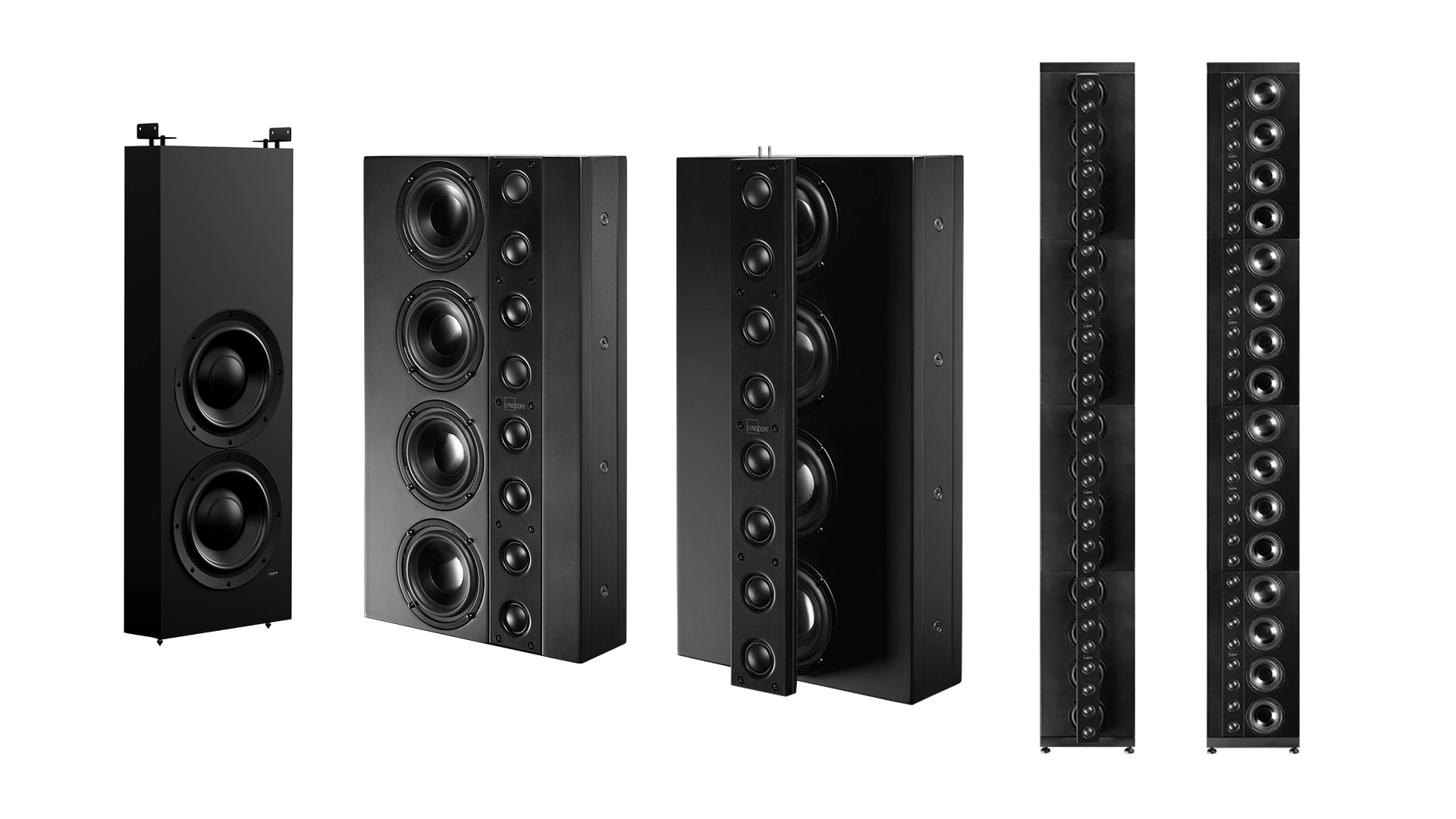
Lyngdorf Audio is a Danish manufacturer built around digital signal processing, system integration and the acoustic behaviour of real rooms. Peter Lyngdorf founded the brand in 2005 after decades of work in loudspeakers, digital amplification and speaker calibration. Its signature RoomPerfect system, developed by Jan Abildgaard Pedersen and a Danish engineering team, measures both a principal listening position and multiple locations around the room. It then reduces room-induced errors while retaining the loudspeaker’s intended tonal character, offering Focus and Global listening modes rather than imposing a generic target curve. The TDAI integrated amplifiers keep sources in the digital domain through volume control and switching, converting close to the output stage; they combine streaming, optional HDMI and analogue modules, bass management and RoomPerfect in a single chassis. MP-series processors extend the same approach to immersive home cinema, while SDA/MXA power amplifiers, compact loudspeakers and boundary woofers allow complete systems to be designed around it. Lyngdorf’s real strength is not room correction as an isolated feature. Amplification, crossover functions, speaker placement and calibration are engineered together so a sophisticated installation can remain comparatively simple to operate.
M&K Sound

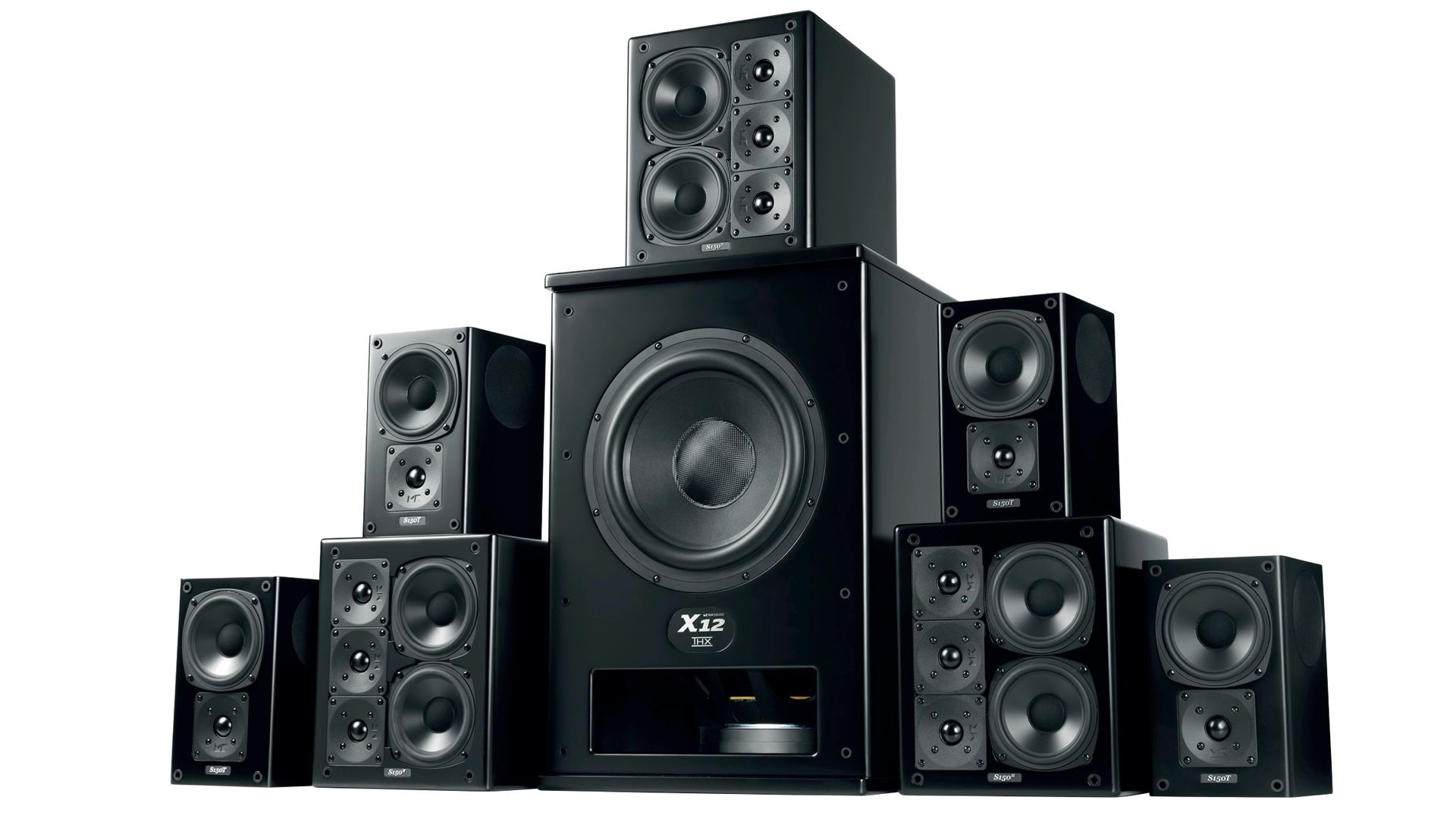
M&K Sound—originally Miller & Kreisel—is a studio-monitor and home-cinema loudspeaker brand with American roots and a present-day base in Denmark. Jonas Miller and Ken Kreisel began the company in Beverly Hills in 1973 after Walter Becker of Steely Dan requested a reference bass system for work on Pretzel Logic. The resulting balanced dual-driver subwoofer made low-frequency reproduction a separate engineering task, and M&K subsequently helped establish the compact satellite-plus-subwoofer format. Its monitors became fixtures in music, film mixing and post-production, creating a direct connection between the rooms where soundtracks are made and the systems used to reproduce them at home. The S150 remains the reference point for the brand’s controlled directivity and high output, while S300, 950 and 750 series address different room sizes. X+ subwoofers use opposed or push-pull driver arrangements to reduce cabinet reaction and distortion, and dedicated surrounds support multichannel installations. Numerous models carry THX certifications, including demanding Dominus applications, but certification is a consequence of measurable output and consistency rather than the whole identity. M&K’s lasting speciality is system scale: compact, closely matched speakers hand the deepest bass to purpose-designed subwoofers, allowing predictable results from stereo through immersive cinema.
MAG Theatron

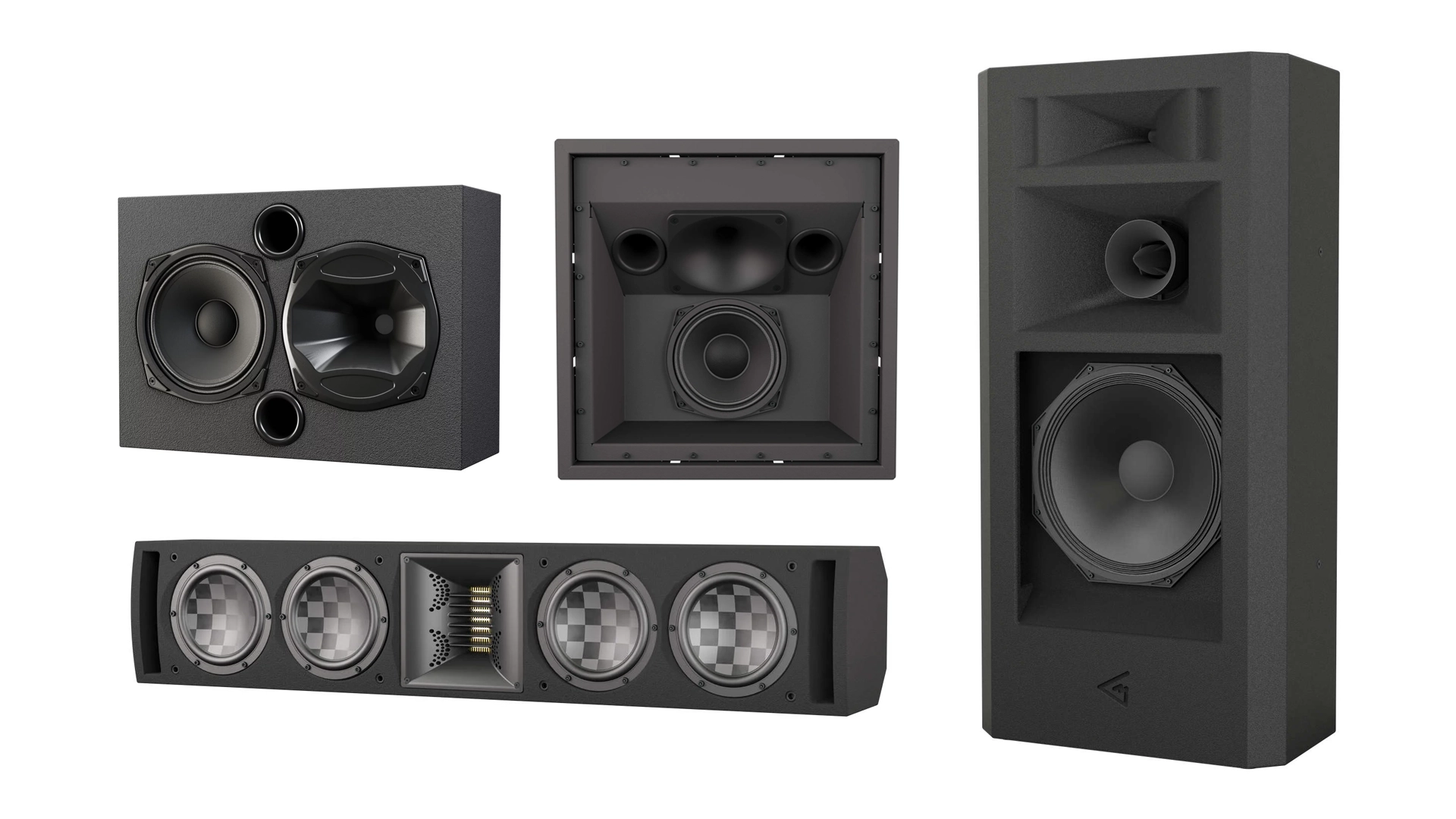
MAG Theatron is the residential home-cinema brand added to the MAG Audio portfolio in 2020, not a company founded in 1991. It takes the efficiency, dynamic headroom and controlled coverage of MAG Cinema systems and adapts them for private screening rooms, where listening distances are shorter, background noise is lower and equipment must integrate discreetly with interiors. Screen-channel speakers, surrounds and subwoofers are designed as coordinated systems rather than unrelated hi-fi boxes placed around a room. Families such as the compact M-series and larger purpose-built solutions let an installer scale output to room volume and seating, while shallow cabinets and flexible mounting simplify placement behind acoustically transparent screens or within treated walls. High sensitivity reduces the amplifier power required for cinema peaks, and professional-style compression drivers and robust low-frequency units preserve dialogue intelligibility and impact at reference playback levels. Theatron also supports project design, calibration and demonstration installations through specialist partners, acknowledging that the final result depends on room acoustics and setup as much as the loudspeakers. Its defining idea is precise: reproduce the energy and coverage of a real cinema at domestic distance, using MAG’s Ukrainian manufacturing base and commercial-theatre experience without pretending that a living room is a multiplex auditorium.
Magnat

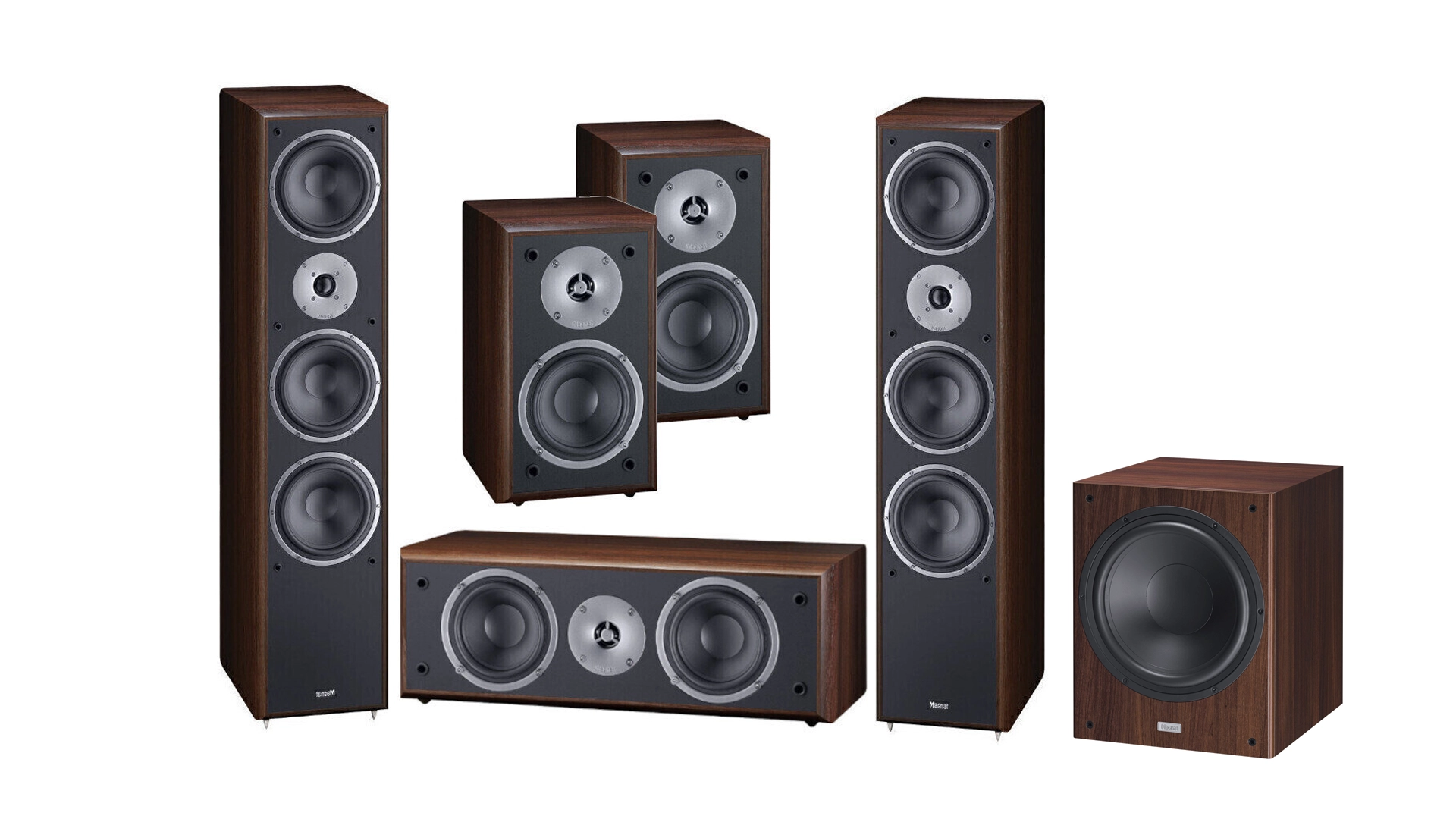
Magnat is a German loudspeaker and audio-electronics brand founded in Cologne by Rainer Haas in 1973. Loudspeaker engineering came first, and bass reproduction has remained a recurring speciality, but the company’s history is more varied than a generic mass-market description suggests. The early Log series established the name internationally; an omnidirectional plasma tweeter followed in 1979, the All-Ribbon family in 1981, and Magnat entered car audio in 1983. Its present home catalogue ranges from compact Monitor S models to Signature loudspeakers, retro-proportioned Transpuls systems and the THX-certified Cinema Ultra family. Active Monitor Reference designs, subwoofers, on-wall and architectural speakers extend the range into lifestyle and custom installation. Magnat also makes electronics, including hybrid valve/solid-state receivers, a network receiver and the substantial MTT 990 direct-drive turntable. Different families serve very different budgets, so the brand should not be characterised only as affordable or only as high-end. Measurement facilities, driver development and crossover optimisation provide the continuity between them. Magnat is now part of Premium Audio Company, but its identity remains German product development applied across stereo, cinema and installation rather than a badge placed on one narrow type of component.
Martin Logan

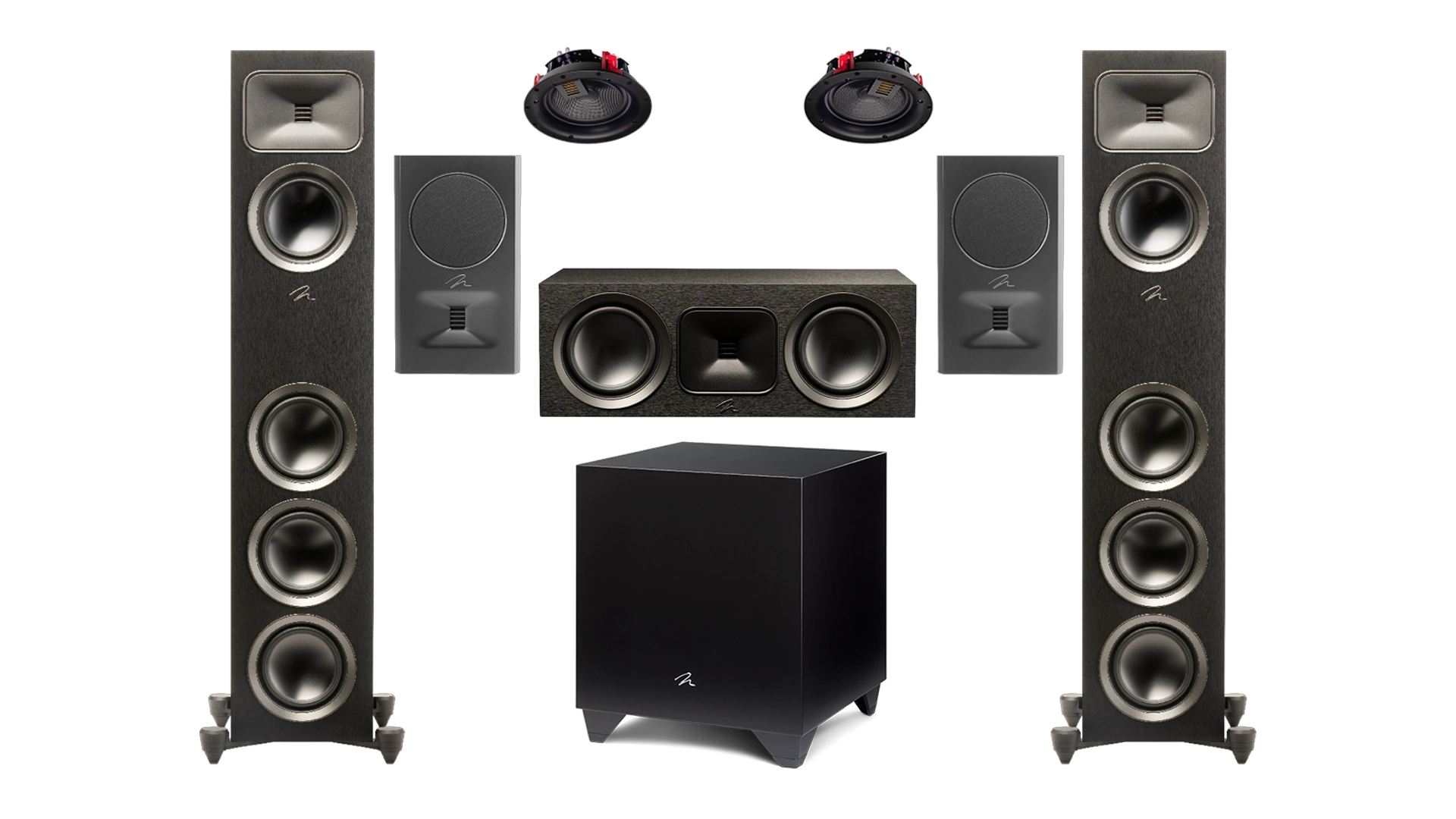
MartinLogan is the American loudspeaker specialist that made the curved electrostatic panel practical for full-range domestic systems. Gayle Martin Sanders and Ron Logan Sutherland developed their first production model, the Monolith, in 1983 after several years of experiments. Its hybrid architecture paired a transparent electrostatic membrane with a dynamic bass driver, solving one of the central limitations of earlier electrostatic designs while preserving their speed and low moving mass. The brand’s large electrostatic models use Curvilinear Line Source panels to control dispersion, MicroPerf stators to increase radiating area and AirFrame structures that hold the panel rigidly without a conventional box. Powered bass sections in selected models add Anthem Room Correction and controlled-force woofer arrangements. MartinLogan also applies its Folded Motion and Folded Motion XT tweeters to the more conventional Motion range, and offers subwoofers, architectural speakers and home-theatre solutions. The important distinction is that MartinLogan is not simply a maker of unusual-looking panels: its know-how lies in integrating electrostatic midrange and treble with dynamic bass, useful room behavior and manageable domestic proportions.
Meridian

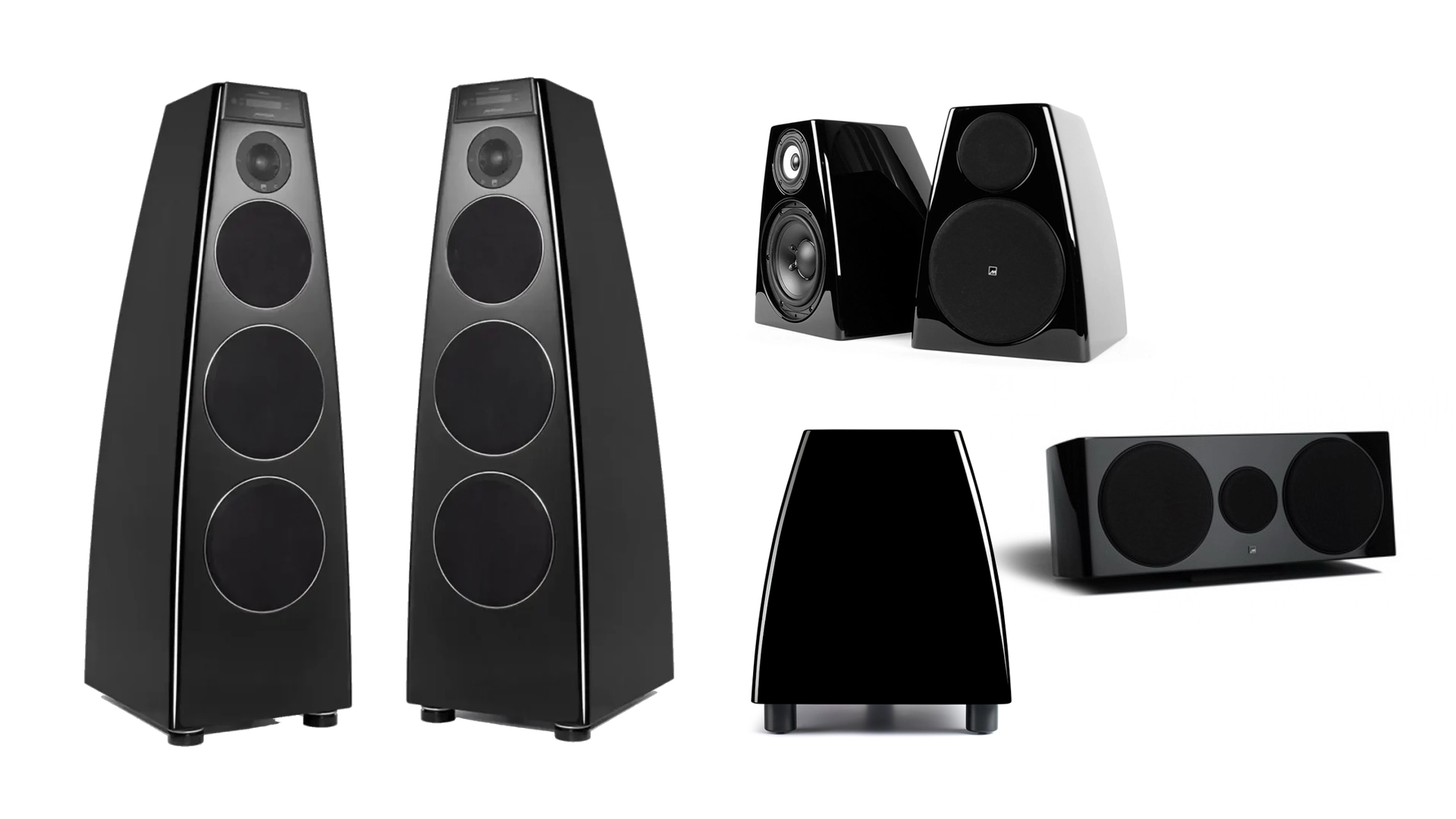
Meridian is a British digital-audio pioneer whose central achievement is treating the loudspeaker, amplification and signal processing as one engineered system. Bob Stuart and industrial designer Allen Boothroyd founded the company in 1977. The active M1 loudspeaker established their combination of electronics and acoustics, while later products helped advance digital source design, lossless coding and DSP-controlled playback. Meridian’s flagship loudspeakers place digital crossovers, dedicated amplification and drivers in the same enclosure, allowing the company to control phase, timing, bass alignment and protection far more precisely than a passive speaker permits. Proprietary techniques include apodising filters, Enhanced Bass Alignment and psychoacoustic processing, implemented in products such as the DSP9 and DSP8000 XE. The wider range includes controllers, streamers, architectural speakers and distributed-audio components, alongside engineering partnerships for automotive, marine, aviation and lifestyle brands. Meridian co-created MQA, but MQA is now independently owned and should not be presented as the company’s defining current product. Meridian’s lasting distinction is broader: decades of research into DSP, active architecture and how complete systems behave in real rooms.
Mission

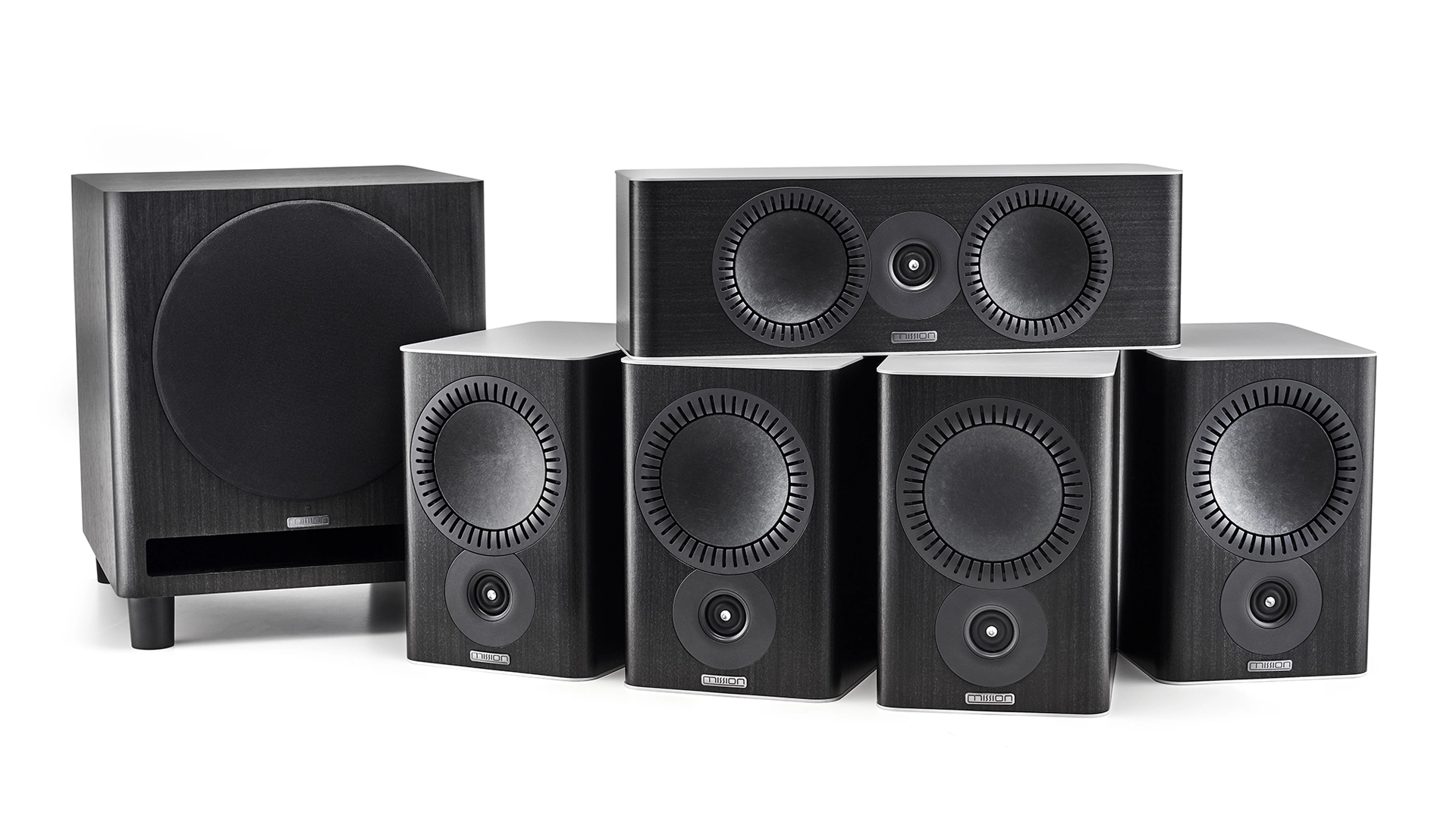
Mission is a British loudspeaker brand whose identity was established by compact, affordable speakers that used unconventional geometry to solve practical acoustic problems. Farad Azima founded Mission in 1977, and the original 770 quickly became a reference point for the company. One of its most recognizable ideas is Inverted Driver Geometry: placing the treble unit below the bass/mid driver to align the acoustic paths at the listening position and improve integration through the crossover region. Mission now offers standmount and floorstanding loudspeakers, centre and surround channels, subwoofers, active wireless systems and the revived 778 electronics. The LX MKII and QX MKII families bring the brand’s core concepts to accessible systems, while the modern 700, 750 and 770 reinterpret historic models with contemporary drivers, crossovers and cabinets. Depending on the range, Mission uses DiaDrive-style mid/bass diaphragms, ring-dome or microfibre-dome tweeters and carefully profiled cabinet structures. Its lasting distinction is not generic “British sound,” but the ability to turn specific engineering choices—driver order, crossover timing and cabinet proportions—into complete ranges that remain straightforward to own.
Monitor Audio

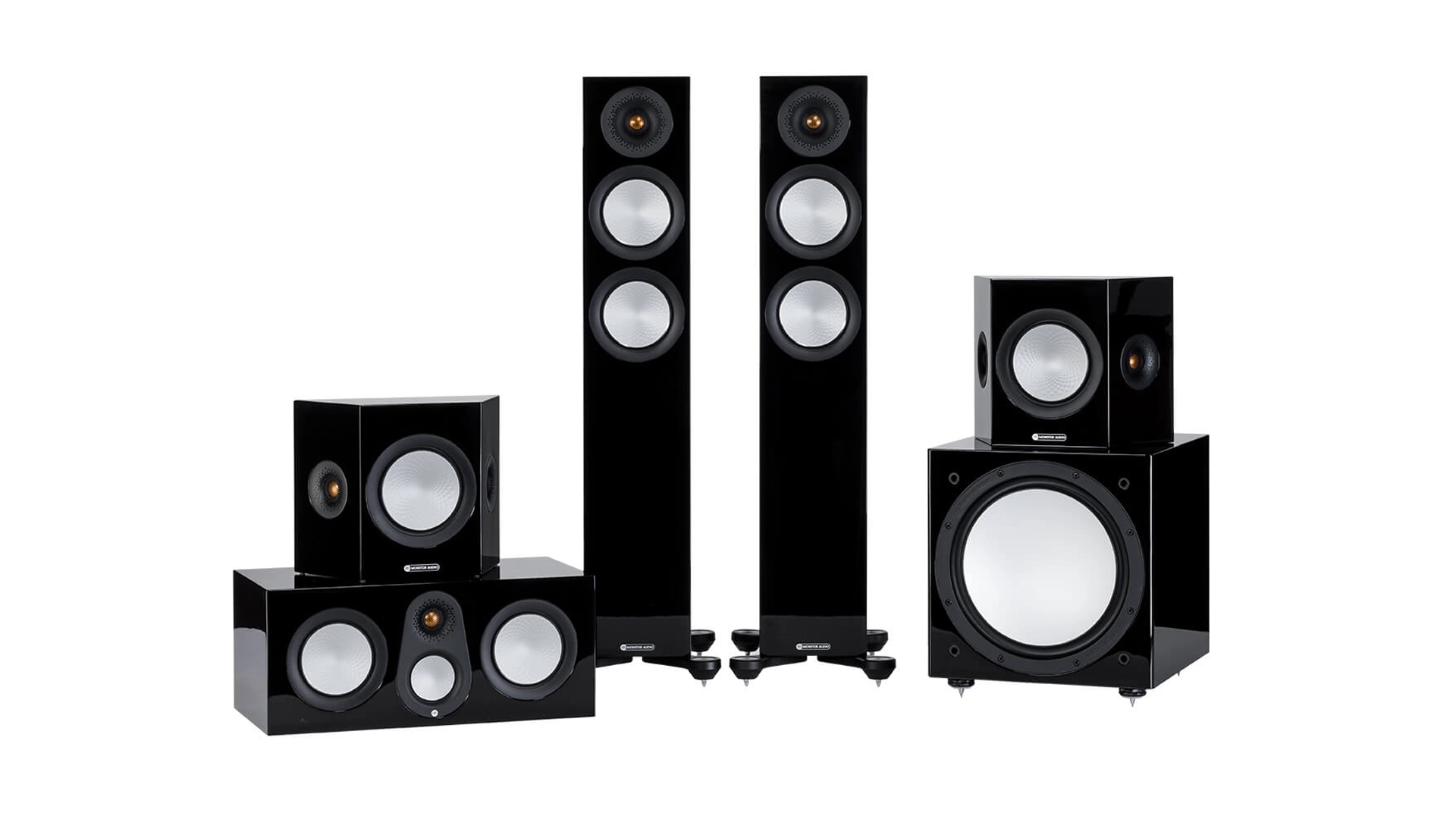
Monitor Audio is a British loudspeaker manufacturer whose strongest identity lies in developing its own metal-diaphragm driver families across products from entry-level stereo to architectural and flagship systems. Mo Iqbal founded the company in 1972 in Teversham near Cambridge, and the MA1 was its first loudspeaker. Design and engineering remain centred in Britain, while the catalogue now spans standmount and floorstanding speakers, home-cinema channels, subwoofers, creator-series installation models and outdoor audio. C-CAM—Ceramic-Coated Aluminium/Magnesium—is the foundation technology, providing a light, rigid diaphragm used in cones and the familiar gold-dome tweeter. Higher ranges extend it through RDT III sandwich cones, MPD III micro-pleated high-frequency transducers, DCF coupling and Hive II reflex ports. The Hyphn flagship arranges six RDT III midrange units around an MPD III transducer as a point-source M-Array and uses opposed, force-cancelling bass drivers. Bronze, Silver, Gold and Platinum apply related ideas at different levels without pretending they are identical. Monitor Audio’s advantage is this continuous driver-development ladder, backed by a broad system range rather than a single celebrated model.