
Home Theater Speakers
Home theater speakers are specifically designed to work together as a cohesive system to create an immersive, 360-degree soundfield. A typical setup includes front speakers for the main soundstage, a dedicated center channel for crystal-clear dialogue, and surround and height speakers for ambient effects that place you in the middle of the action. This directory is your guide to the brands that offer complete, matched surround sound speaker packages for a truly cinematic audio experience.
Hi-Fi brands in the category
Summary information and image
Direct links to official websites
Morel

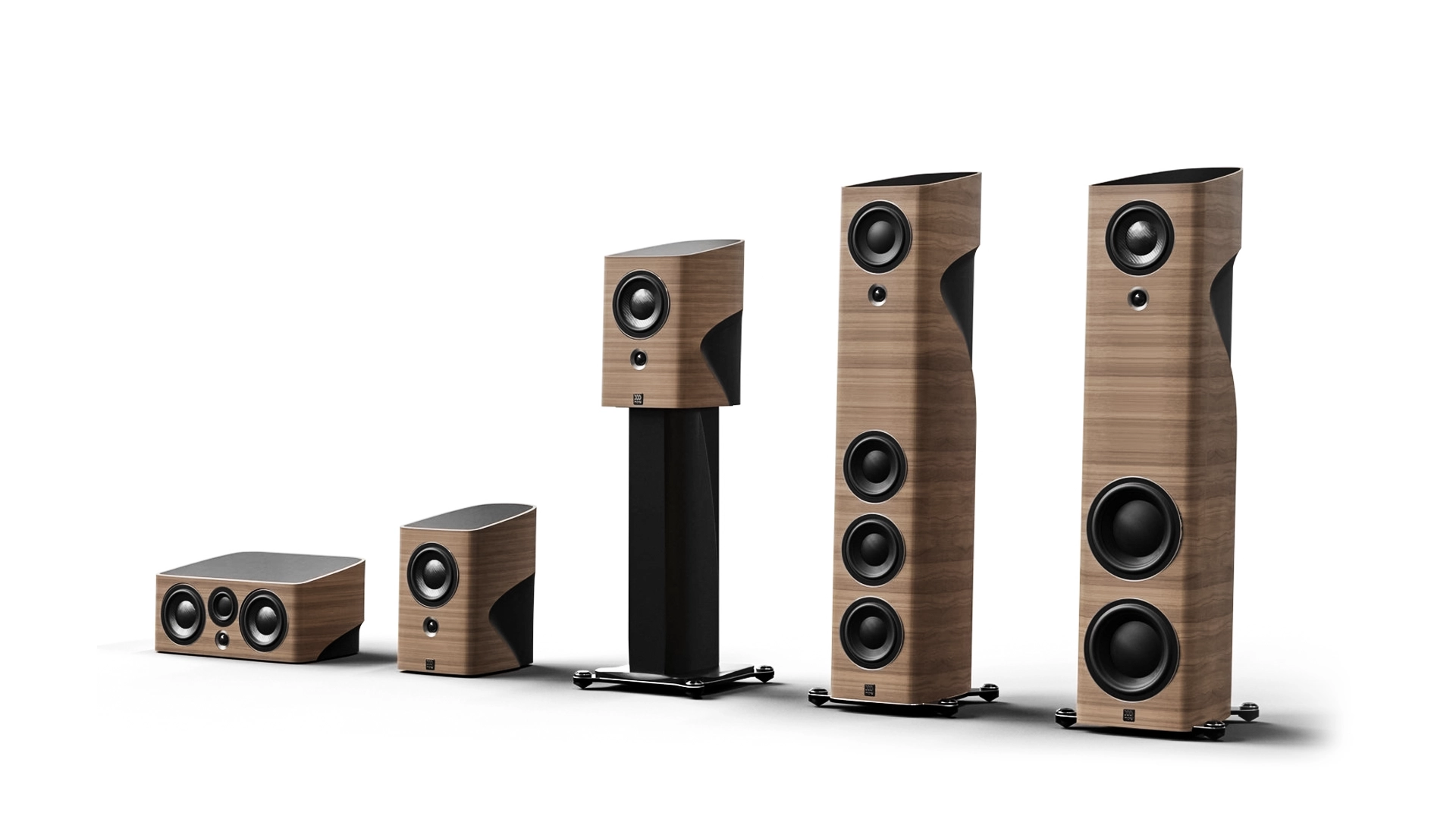
Morel is an Israeli loudspeaker and drive-unit specialist whose complete home and car systems are grounded in nearly five decades of transducer manufacturing. Meir Mordechai founded the company in 1975; the name derives from Mordechai Electro-acoustics. Morel remains family owned and develops raw drivers as well as finished products, giving it control over the motor, suspension, diaphragm and enclosure rather than forcing a speaker design around catalogue parts. The brand’s signature technologies include large External Voice Coils, which place the magnetic motor inside the coil for efficient use of magnetic energy, and Hexatech aluminium wire shaped to pack the winding with minimal air gaps. Hybrid neodymium/ferrite magnet systems, damped polymer composite cones and soft-dome midrange units appear across different applications. Home-audio lines such as Sopran, Avyra and Högtalare sit alongside architectural models, car-audio components and OEM drivers supplied to other makers. Morel’s distinction is therefore broader than a particular “sound”: it is the unusual overlap of specialist driver engineering, hand assembly and the ability to carry the same motor and diaphragm know-how from a raw transducer to a complete loudspeaker.
Origin Acoustics

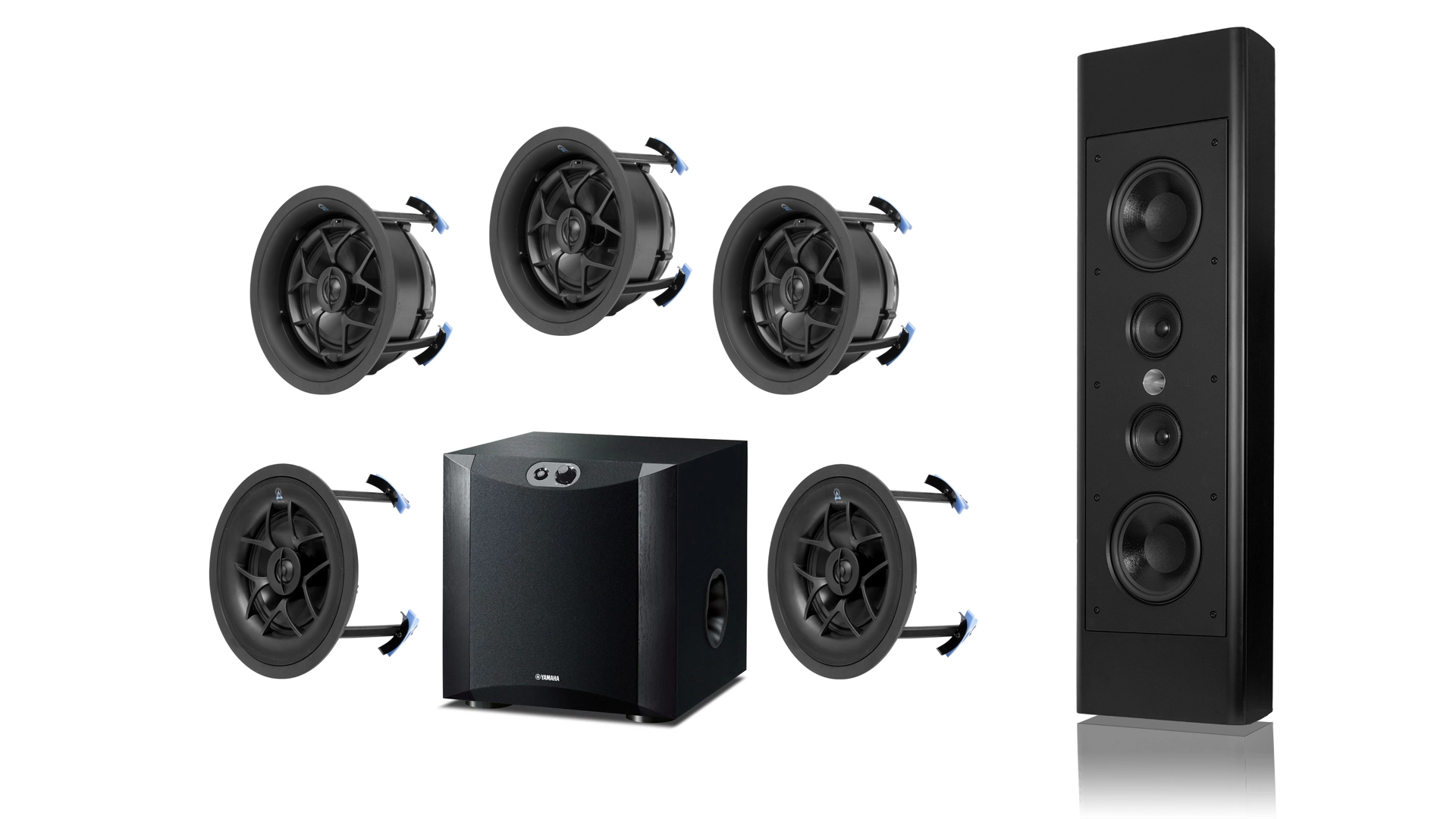
Origin Acoustics is the American architectural-audio company launched in 2014 by Jeremy Burkhardt, Ken Humphreys and Ed Haase. Its roots reach further back: Humphreys and Haase opened a Riverside, California stereo shop in 1976 and helped pioneer the flush-mounted in-wall loudspeaker in the early 1980s; Burkhardt later joined them in building SpeakerCraft into a major custom-installation brand. Origin reunited that experience around products designed from the outset for installers and interior integration. The catalogue covers in-ceiling and in-wall speakers, subwoofers, outdoor and marine systems, soundbars, amplifiers and dedicated cinema products. ThinFit addresses shallow cavities, Minimal Opening models reduce the visible aperture, and BLENDS uses an acoustically active surface for installations intended to disappear under the finish. ZipClip mounting and tool-conscious mechanical details shorten installation and make servicing more predictable, while Director Collection speakers use adjustable or directed arrays to aim sound from fixed ceiling positions. Marquee cinema systems and bollard or landscape products extend the same design language into dedicated rooms and outdoor zones. Origin’s key advantage is not simply hiding a loudspeaker. It combines decades of architectural-speaker experience with mounting hardware, dispersion control and product families that let a designer achieve consistent sound across ceilings, walls, gardens and yachts without compromising the visual plan.
Paradigm

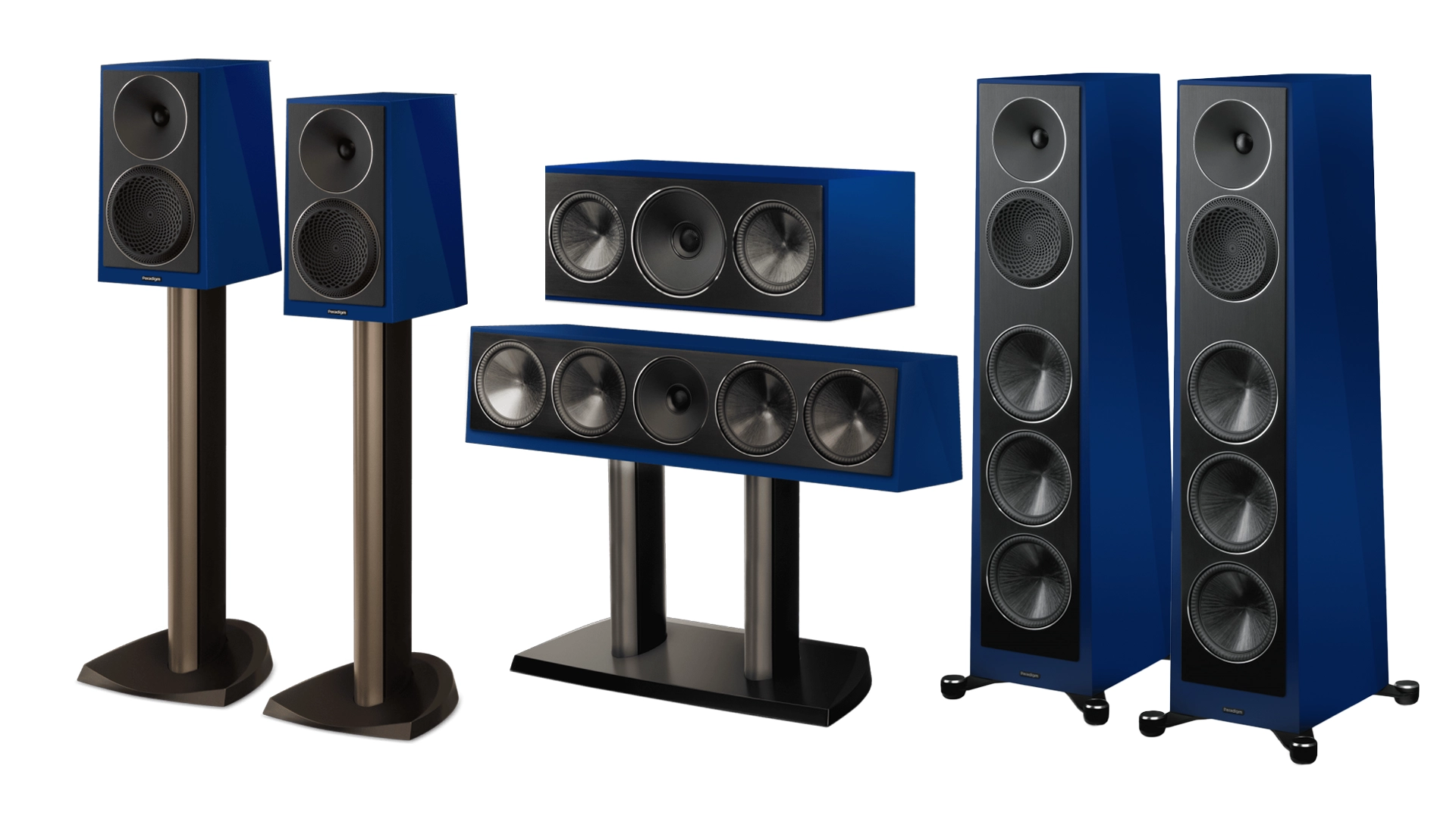
Paradigm is the Canadian loudspeaker manufacturer founded in Toronto in 1982 by Jerry VanderMarel and Scott Bagby. The early Model 7 and Model 9 established an unusual promise for the time: use controlled listening and serious measurement to improve performance while keeping production efficient. Collaboration with Canada’s National Research Council gave the young company access to psychoacoustic research and anechoic testing, a discipline Paradigm later brought into its own engineering facilities. That research-led approach now spans several clear product levels. Monitor SE and Premier make the core technology accessible; Founder combines proprietary aluminium-magnesium ceramic and carbon-based drivers with advanced cabinet isolation, while Persona uses beryllium diaphragms in its premium midrange and tweeter systems. Defiance subwoofers add app control and, on selected models, Anthem Room Correction. Millenia, CI architectural speakers and outdoor models extend the same voicing principles beyond traditional floorstanders. Paradigm designs drivers, crossovers and cabinets together and manufactures many key components and higher-level speakers at its Canadian facility rather than assembling a range solely from catalogue parts. The brand’s signature is not a single famous cone material: it is the long feedback loop between blind listening, anechoic measurement, in-house driver development and scalable Canadian production.
Penaudio

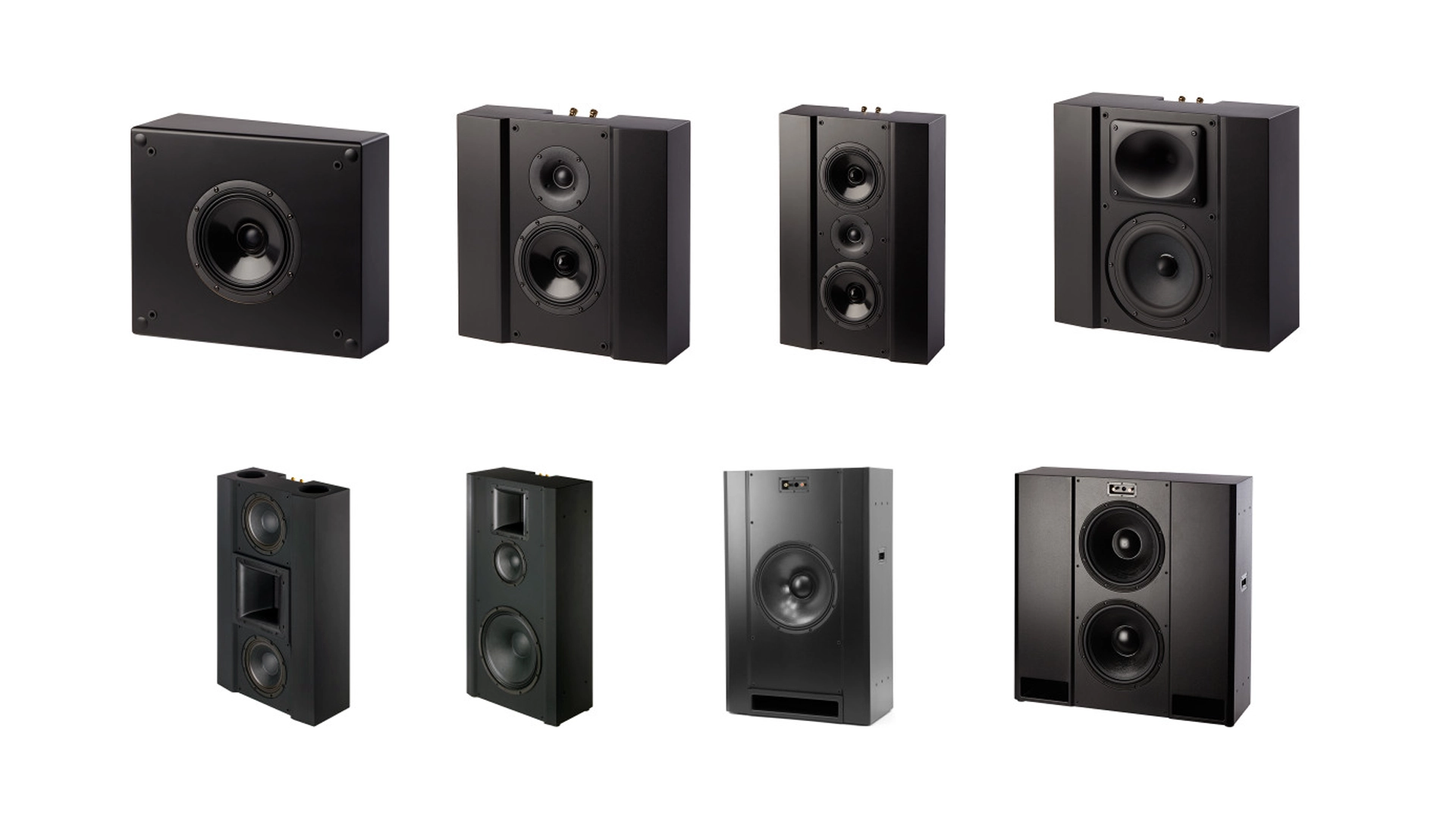
Penaudio is the Finnish loudspeaker company founded by musician and designer Sami Penttilä in 1999. Penttilä began by building the kind of compact speaker he wanted to live with himself, and the brand retained that human scale as it expanded. Its most visible signature is the striped Finnish birch-plywood cabinet: alternating layers are left exposed, turning a structurally stiff, well-damped material into part of the visual identity rather than covering it with a conventional veneer. Penaudio works closely with Scandinavian driver specialist SEAS and designs crossovers and enclosures around the chosen units instead of applying one recipe across every price. Cenya, Sara and Serenade established the international range, with Serenade in particular becoming a long-running reference floorstander. The current Signature family continues those names, while Cenya Diamond and Sara Diamond add diamond tweeters and graphene-treated magnesium bass/midrange diaphragms. The Snow line—such as Lumi, Talvi and Alba Lumi—offers simpler forms and lighter visual treatment. At the top, Karelia and the Suomi models investigate controlled directivity and room interaction on a larger scale; Suomi uses a customised SEAS Excel diamond tweeter. Cabinets and final assembly remain closely associated with Finnish craft, and the proportions stay recognisably Scandinavian even in the flagships. Penaudio’s individuality is the meeting of Penttilä’s musician-led voicing, layered birch construction and carefully commissioned Nordic drivers—not a generic promise of “natural sound.”
PMC

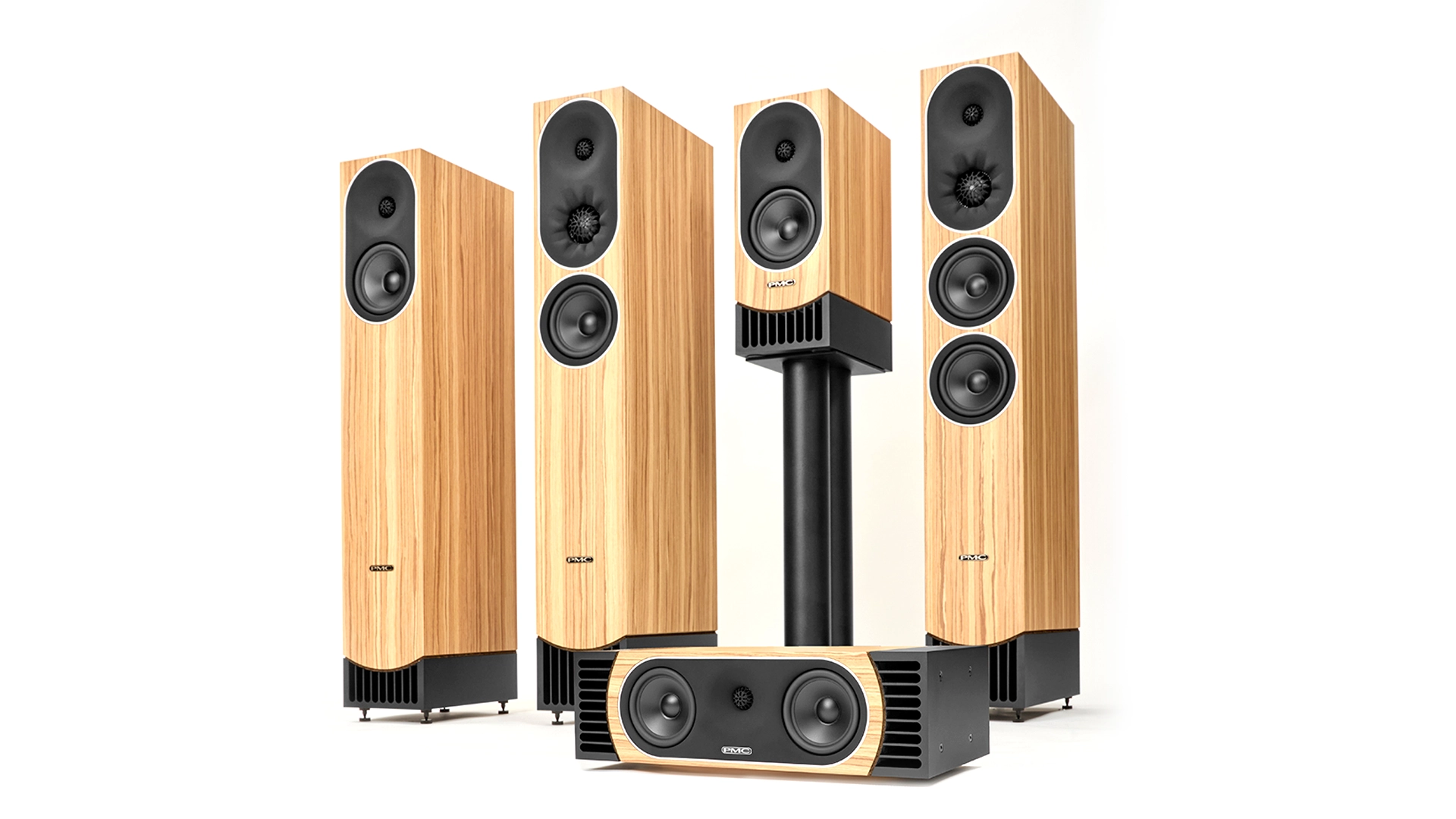
PMC—Professional Monitor Company—was founded in Britain in 1991 by Peter Thomas, then manager of the BBC’s Music Studios, and engineer Adrian Loader. Their first loudspeaker, the BB5-A, was created because they could not find a large monitor that combined the level, bass extension and neutrality required for critical studio work. The design established a rare continuity between professional control rooms and domestic hi-fi: PMC does not maintain one acoustic philosophy for engineers and another for music listeners. The company’s core technology is the Advanced Transmission Line, or ATL. The rear output of the bass driver enters a long, folded, heavily damped passage inside the cabinet. Absorbent material removes much of the unwanted midrange energy, while the lowest frequencies emerge from a tuned vent in phase with the front radiation. Done correctly, this extends bass and reduces driver excursion rather than producing the single-note emphasis of a poorly tuned port. Laminair aerodynamic vents, derived from airflow research, further reduce turbulence and compression at high levels. Current domestic ranges run from prodigy and twenty5i to fact and the flagship fact fenestria; the slim ci series brings the same controlled behaviour to on-wall and in-wall installations. result6, PMC6, PMC6-2 and larger main monitors continue the professional side. PMC’s identity is not merely “accurate British speakers,” but a transmission-line system refined in studios, mastering rooms and broadcast facilities, then scaled coherently for home listening.
Polk

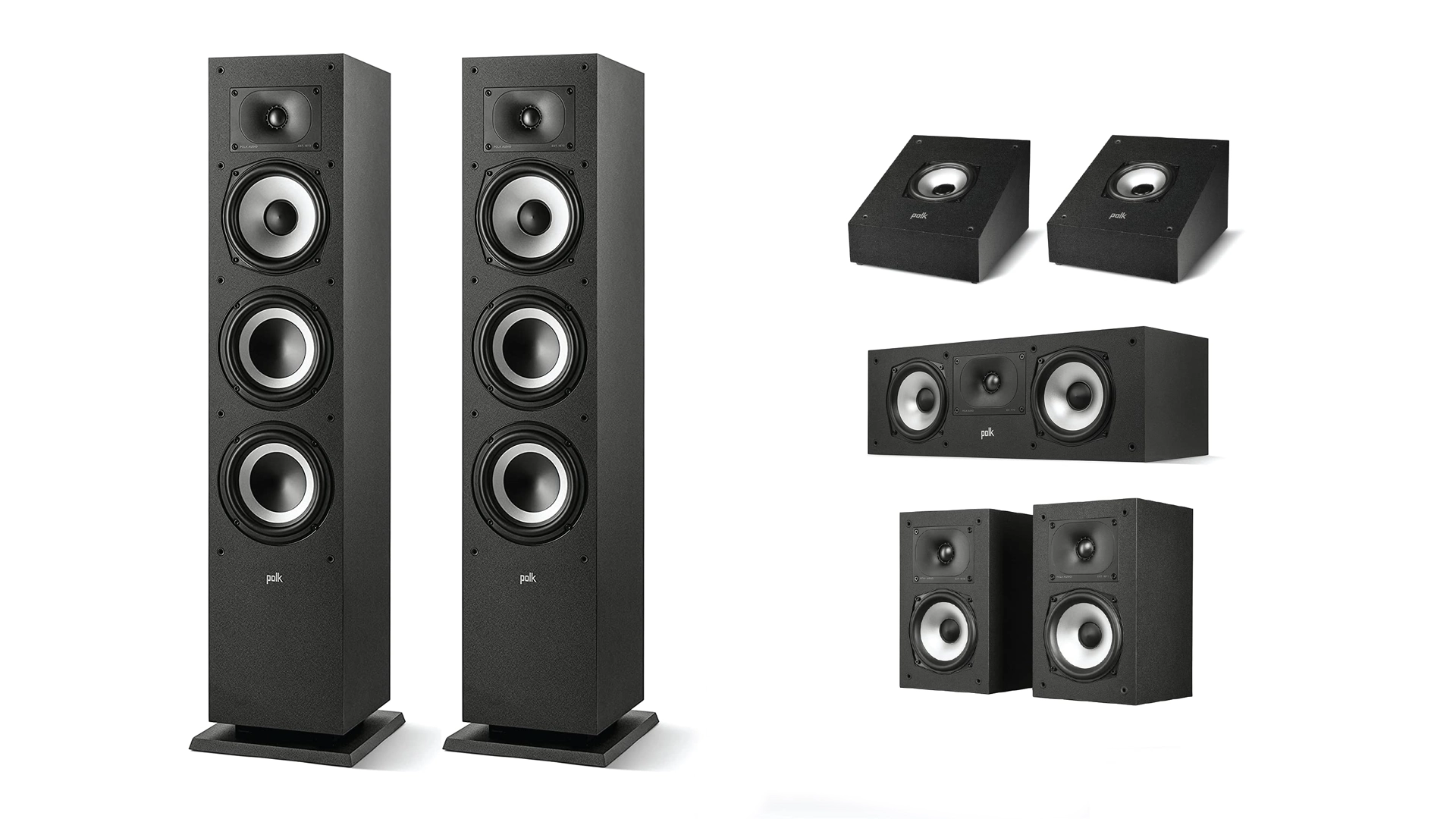
Polk Audio was founded in Baltimore in 1972 by Johns Hopkins graduates Matthew Polk, George Klopfer and Sandy Gross. The company grew by applying serious loudspeaker engineering to products ordinary music lovers could buy, beginning with early Monitor models rather than positioning itself as an inaccessible laboratory brand. That combination of broad availability and distinctive acoustic ideas has remained Polk’s place in American audio. Its most original contribution is Stereo Dimensional Array, introduced in the 1980s. SDA uses additional drivers and a controlled cancellation signal to reduce interaural crosstalk—the sound from the left speaker reaching the right ear and vice versa—so a stereo recording can create a wider, more stable spatial field. The modern Legend L800 revives the concept as SDA-PRO. Dynamic Balance is Polk’s broader method of using modelling and measurement to identify resonances in cones, suspensions and cabinets, while Power Port shapes the transition from reflex port to room to reduce turbulence and increase useful bass output. Legend and Reserve form the upper passive-speaker ranges; Signature Elite and Monitor XT cover more accessible stereo and cinema systems, alongside MagniFi soundbars, architectural, outdoor, car and marine audio. The old description’s ownership note is now obsolete: after periods within Directed Electronics and Sound United, Polk became part of HARMAN in September 2025; HARMAN is a Samsung subsidiary. The brand remains American in origin and engineering identity, even though its corporate parent has changed.
Pro Audio Technology

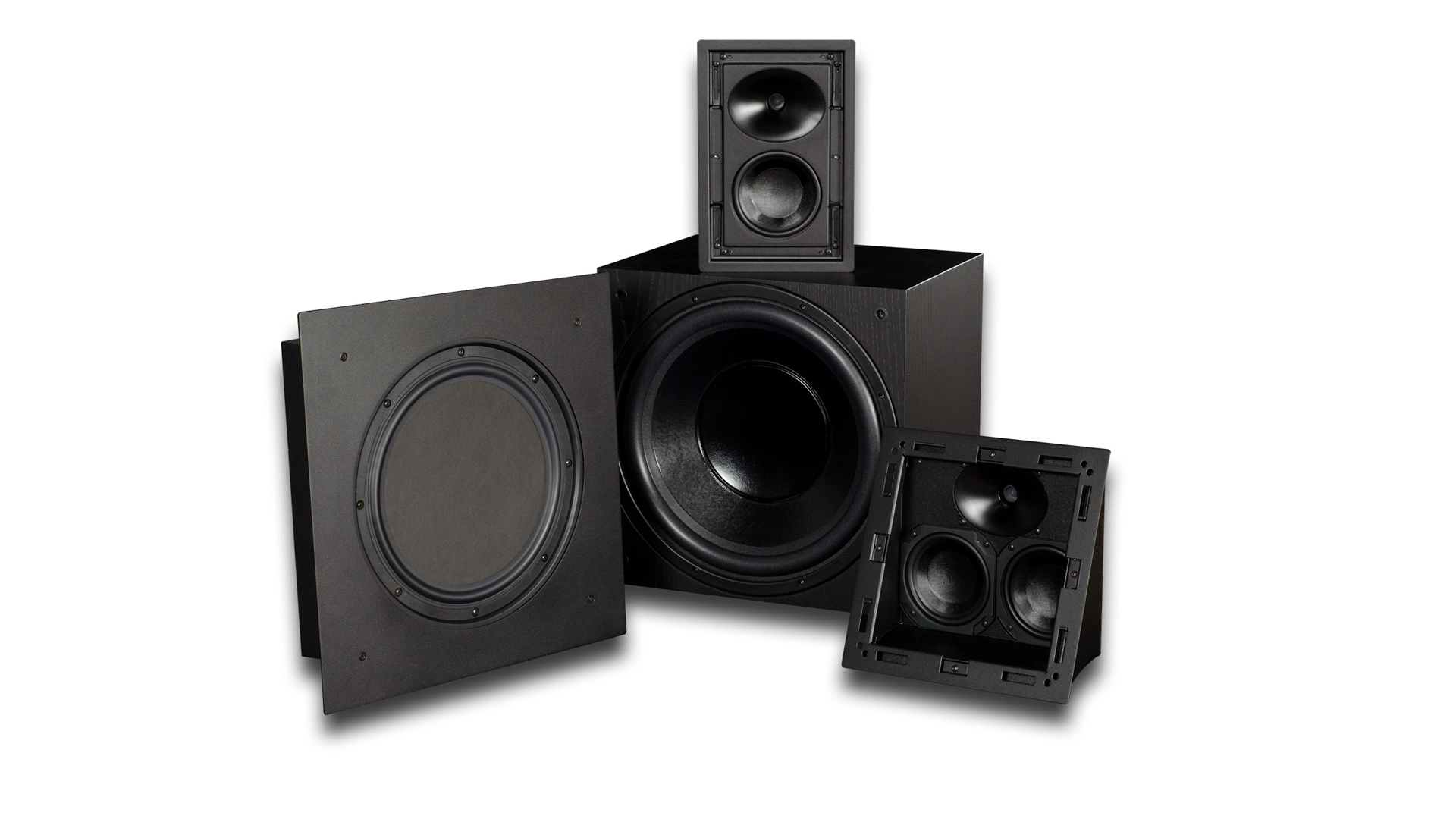
Pro Audio Technology began in 2004 as Professional Home Cinema, LLC, founded by mechanical engineer and loudspeaker designer Paul Hales. It adopted the Pro Audio Technology name in 2010, but the original purpose did not change: bring the output capability, controlled directivity and system engineering of professional cinema into private screening rooms. Hales had previously founded Hales Design Group, led loudspeaker R&D at QSC and consulted for Samsung, BMW and Dolby, giving the company an unusually direct bridge between audiophile, installed and professional sound. PRO systems combine high-sensitivity loudspeakers, large subwoofers and proprietary DSP amplifier/controllers rather than selling each box as an isolated product. Compression drivers and waveguides provide controlled coverage and high output with lower diaphragm excursion; professional-style woofers preserve dynamic headroom; and the DSP electronics store model-specific crossover, equalisation, delay and protection settings. That architecture lets an installer scale a system from a compact media room to a large cinema while keeping tonal behaviour and maximum level predictable. SCRS loudspeakers and LFC subwoofers cover different room sizes and mounting formats, including shallow and in-wall solutions, while PMA amplifier/controllers and the SoundTools software handle configuration and commissioning. In 2018 Hales also founded sister brand Theory Audio Design to adapt related engineering to more attainable installed systems. PRO’s distinguishing product is therefore not a single speaker model but a calibrated loudspeaker–amplifier ecosystem designed to deliver cinema dynamics without asking a residential integrator to assemble incompatible professional parts.
Procella Audio

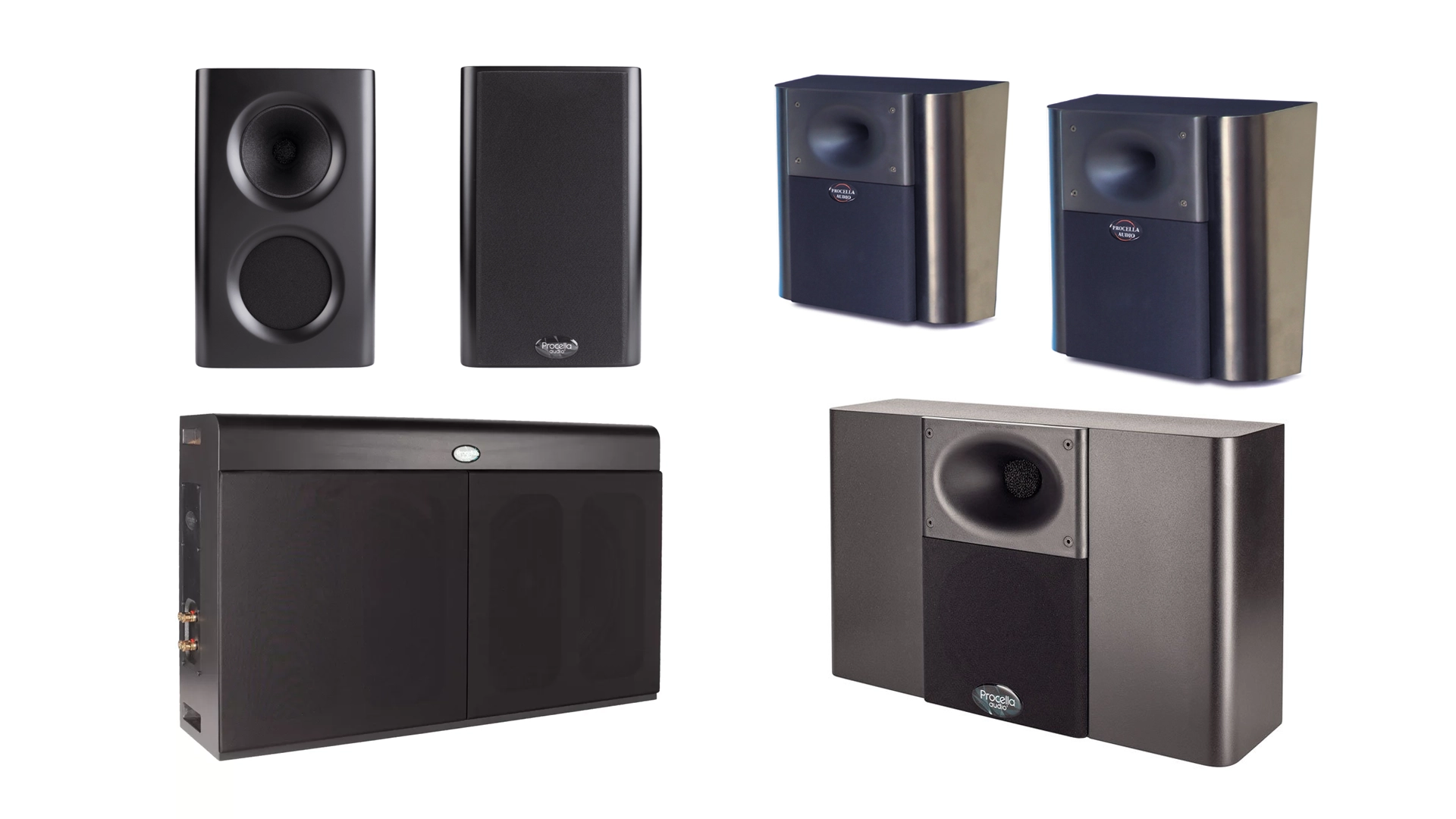
Procella Audio was established in 2005 after Anders Uggelberg and Gerben van Duyl designed the loudspeaker system for a state-of-the-art DTS theatre in Europe. Work on a 7.1 system for BAFTA in London led them to redesign the concept for wider use, and the second generation appeared publicly in 2006. The origin explains the product better than generic home-cinema language: Procella began with the requirement to reproduce cinema reference levels and consistent coverage in a professional demonstration room, then scaled that architecture for private theatres and studios. The P-series uses high-sensitivity woofers and compression-driver waveguides to combine controlled directivity with high output and low compression. P5, P6 and P8 cover compact to substantial screen and surround duties; P610 and P28 increase headroom; the P860 is the large flagship. P10, P12, P15 and other subwoofers extend the system below the main channels, while Procella DSP amplification provides model-specific crossover, equalisation and protection. In-wall and height-channel versions allow the same tonal family to be used behind screens and in immersive Dolby Atmos or DTS:X layouts. Procella Audio Svenska AB and a Swedish factory were established in 2009, including hand assembly of critical parts such as crossovers. In 2024 Wim Buyens and Ignace Rombaut, both with cinema-technology experience at Cinionic/Barco, joined as new owners; Rombaut serves as CEO and Buyens chairs the board. The original Swedish engineering identity remains, now backed by ownership with deep commercial-cinema experience.
PSB

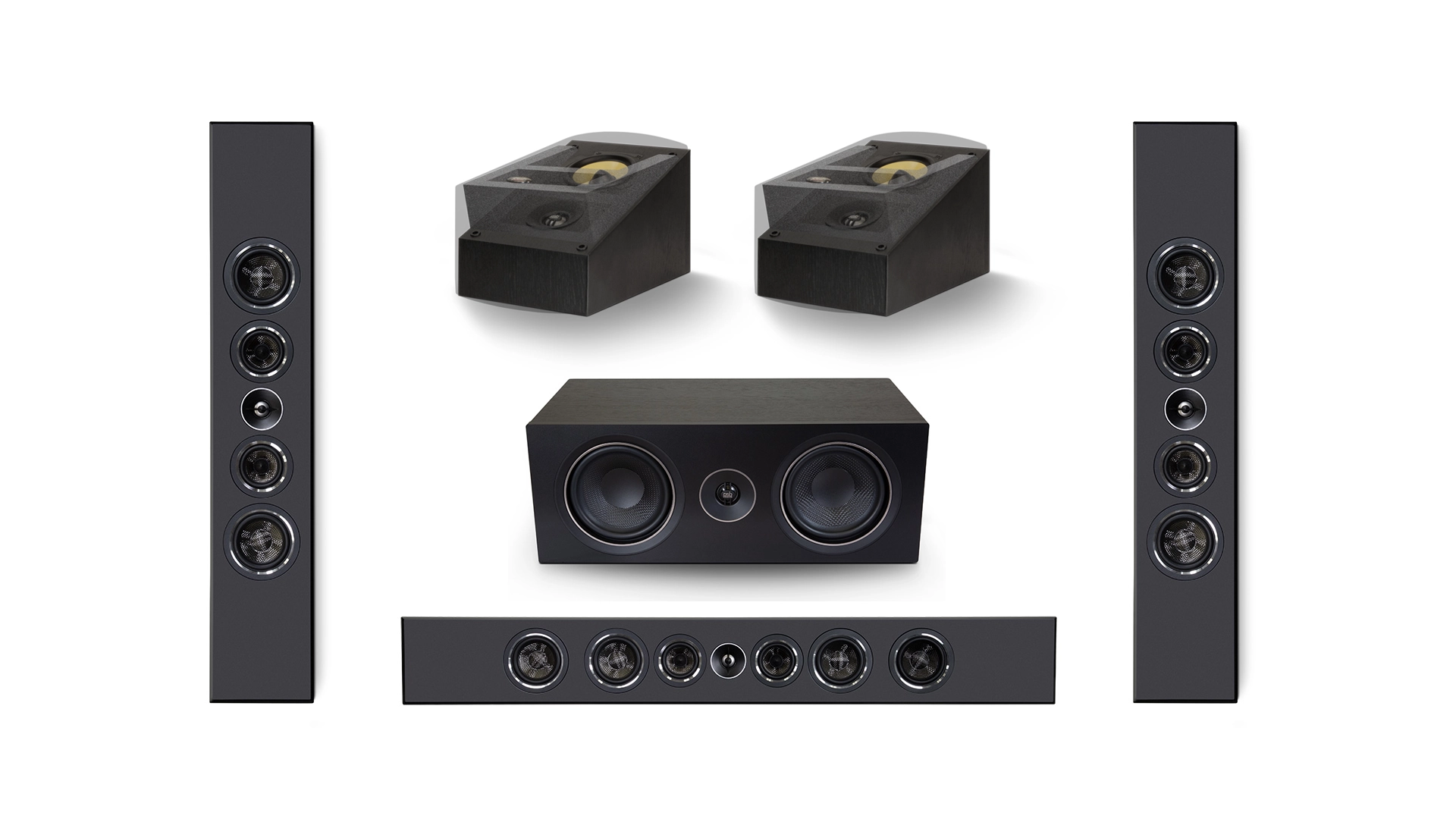
PSB Speakers was founded in 1972 by Canadian designer Paul Barton; the initials stand for Paul and Sue Barton. Rather than building a brand around one fashionable material, Barton developed a repeatable process of anechoic measurement and controlled listening. His long work at Canada’s National Research Council helped connect smooth on-axis response, well-behaved off-axis radiation and listener preference, giving PSB an engineering method that could be applied from entry-level speakers to flagships. Alpha is the accessible expression of that method and has remained important through several generations. Imagine covers stereo and home-cinema systems at a higher level, while Synchrony—including the current T800 flagship—uses more elaborate driver, cabinet and crossover engineering. Architectural PWM and CustomSound models, CS outdoor speakers and subwoofers extend the same voicing to installed systems. PSB also applies acoustic research to M4U headphones; its RoomFeel tuning is intended to reproduce the spectral balance listeners experience from well-designed loudspeakers in a room rather than the unnaturally flat pressure response of a raw headphone fixture. The company is part of Canada’s Lenbrook group alongside NAD and Bluesound, giving it access to shared research and distribution while Paul Barton remains closely associated with its acoustic direction. PSB’s lasting achievement is disciplined value: models at very different prices are developed through the same measurement-and-listening loop, so the family resemblance comes from controlled directivity and tonal balance rather than from repeated styling alone.
Pylon Audio

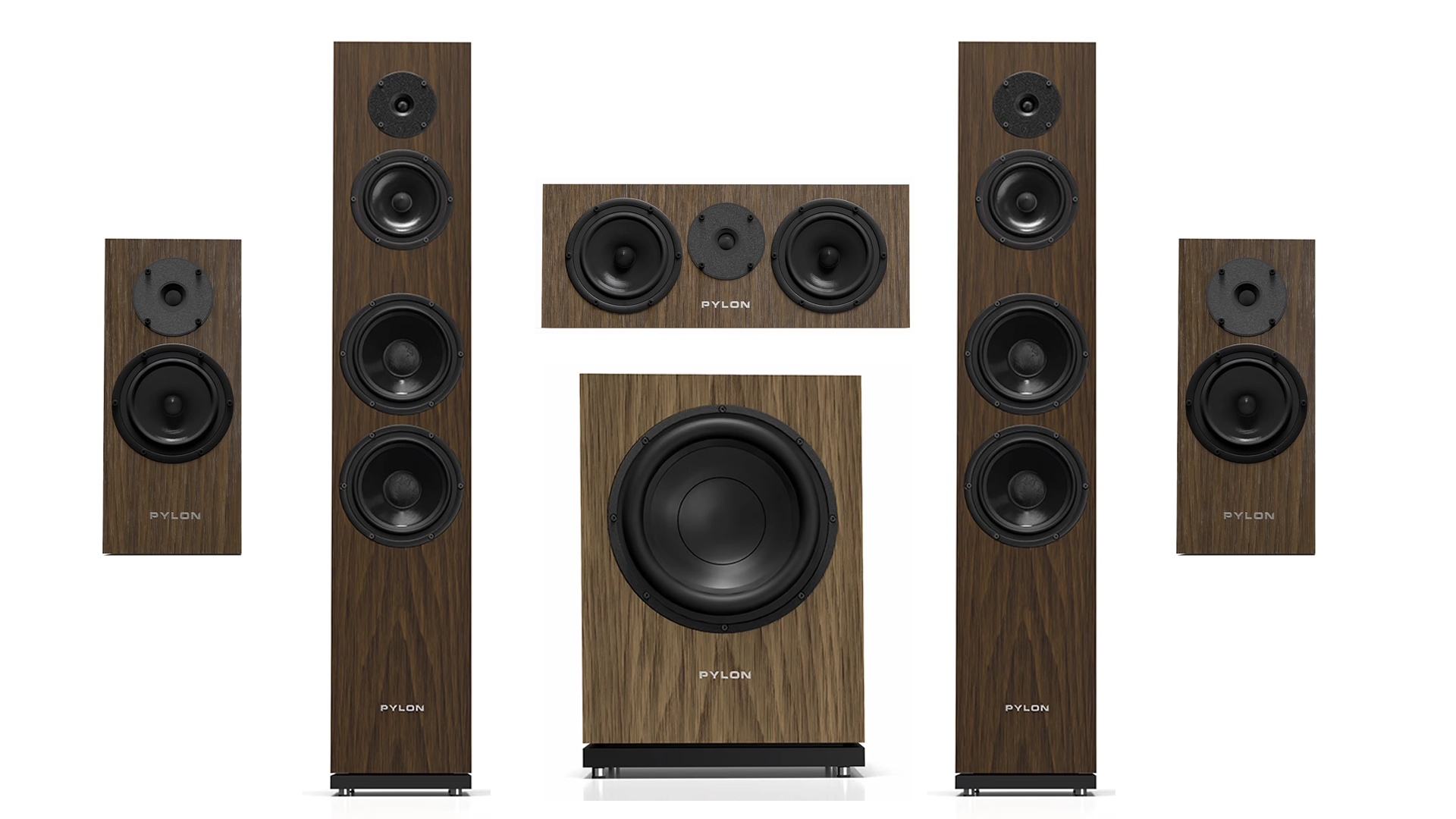
Pylon Audio was founded in Poland in 2011 by childhood friends Mateusz and Mikołaj, drawing on their families’ background in furniture production. The company first built loudspeaker cabinets and then moved into complete speakers, which explains why enclosure manufacture remains more than a styling exercise. Woodworking, acoustic design, finishing and final assembly are kept closely connected at its Jarocin-area operation, and a large anechoic chamber supports development with repeatable full-range measurements. The range is unusually wide but has recognisable characters. Pearl and Opal provide straightforward entry points; Diamond adds more refined drivers, crossover work and cabinetry; Jade uses broad baffles and larger drivers in a deliberate visual and acoustic reference to classic studio monitors. Amber MkII pursues high sensitivity and substantial dynamics, while Jasper and Jasper Active form the modern flagship family with curved cabinets, premium transducers and, in the active versions, integrated amplification and DSP. Zirkon 20 addresses compact listening, and matching centres, surrounds and subwoofers allow home-cinema systems without abandoning the stereo lines. Pylon also manufactures cabinets and selected components for other audio companies, an industrial capability that supports its own price-to-build-quality ratio. The brand’s strength is not a vague claim that every part is made in-house. It is the practical control gained by combining furniture-grade enclosure production, acoustic measurement and final loudspeaker assembly under one Polish organisation, then applying those resources from attainable floorstanders to ambitious statement models.
Q Acoustics

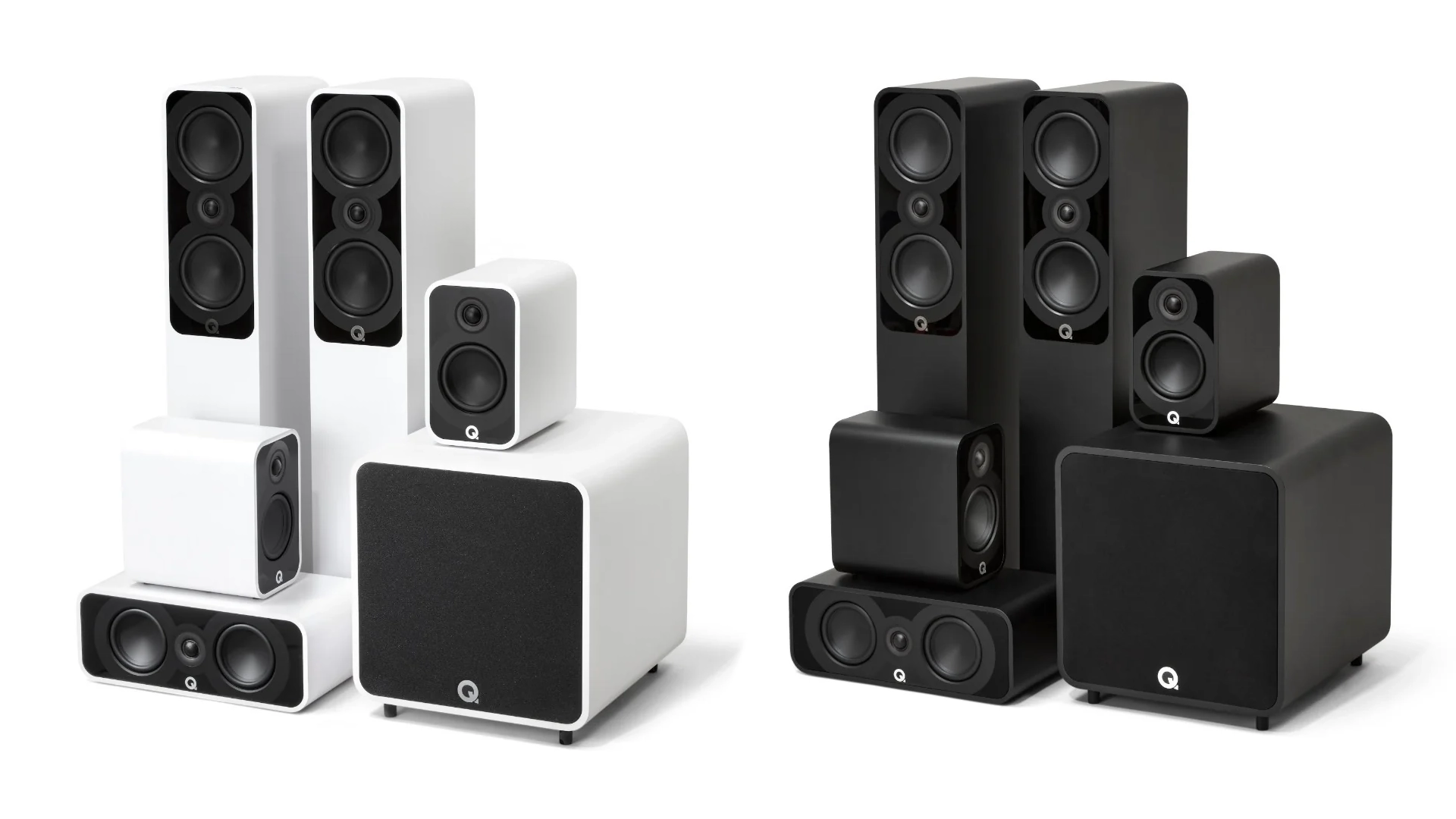
Q Acoustics is a British loudspeaker brand established in 2006 with a clear brief: use serious cabinet and driver engineering at prices below the traditional high-end. Its first 1000 Series quickly established that position, and the company has since expanded from affordable passive speakers to the Concept range, active wireless systems, subwoofers and architectural models without abandoning the value-led centre of the catalogue. Much of its know-how concerns what the cabinet does after a driver begins moving. Gelcore uses a layered enclosure with a non-setting gel between skins to convert high-frequency panel vibration into heat. P2P, or Point-to-Point, bracing reinforces only the areas identified by structural analysis instead of filling the box indiscriminately, while HPE—Helmholtz Pressure Equalizer—tubes reduce pressure gradients and standing-wave effects inside taller enclosures. The Continuous Curved Cone, or C3, bass/midrange profile introduced with the 5000 Series and carried into 3000c combines the smooth flare of a conventional cone with stronger behaviour near the voice coil, improving integration and power handling. Concept models apply the most elaborate cabinet control; 3000c and 5000 cover mainstream stereo and cinema; Q Active adds amplification and wireless hubs; Q SUB and M models serve bass and powered-TV applications; install speakers handle in-wall, in-ceiling and outdoor use. Q Acoustics’ “value” is therefore not a euphemism for basic construction. Its identity comes from moving structural techniques developed for the premium Concept line into progressively more affordable families.
Revel

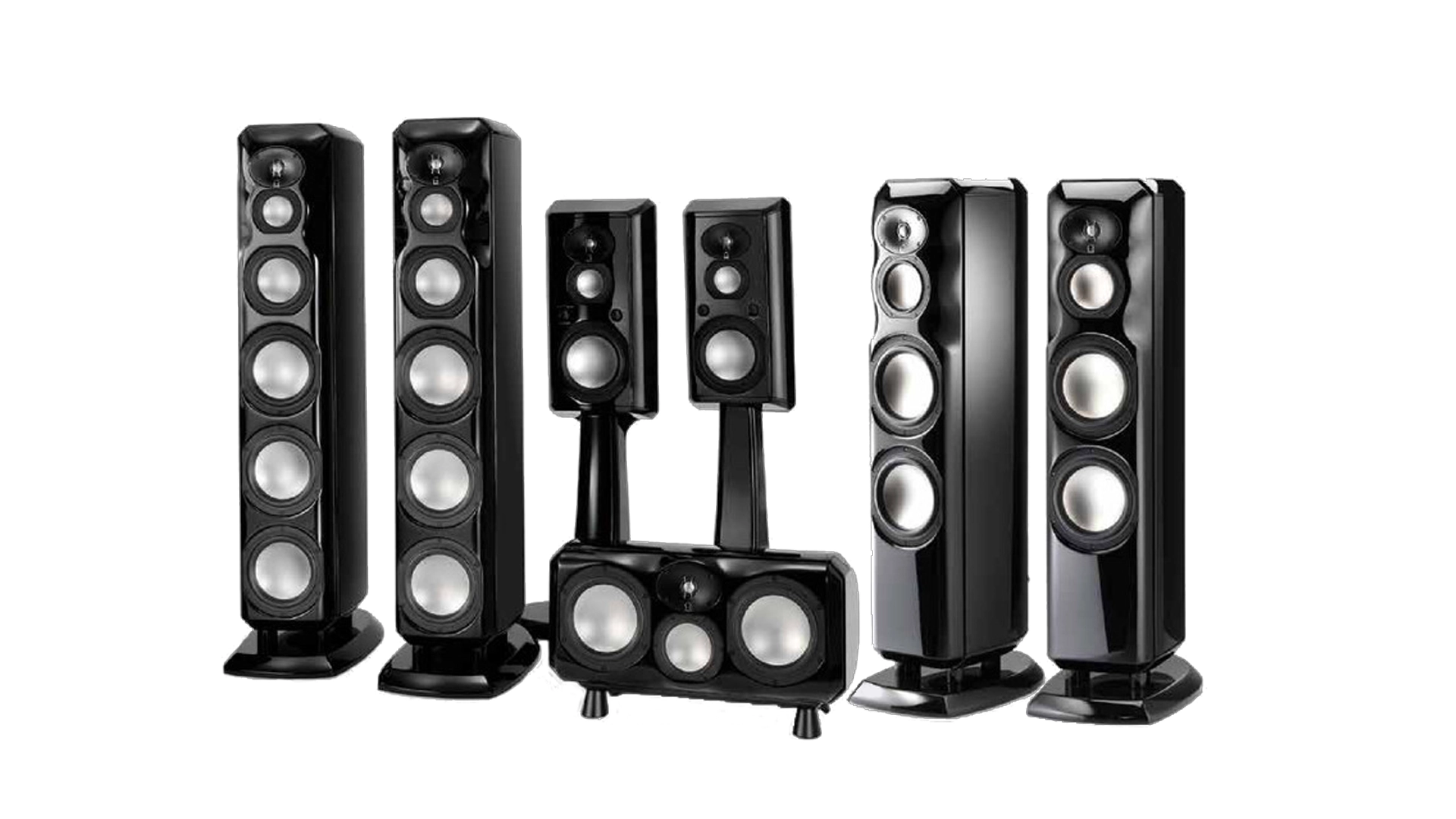
Revel is an American loudspeaker brand established in 1996 within Harman to apply controlled research and repeatable listening tests to high-end speaker design. Under the long-standing technical direction of Kevin Voecks, development has combined anechoic measurements, computer modelling and double-blind listening in Harman’s Multichannel Listening Lab. The objective is practical rather than academic: broad, smooth dispersion and neutral on-axis response should make a speaker sound balanced in a real room and remain convincing for more than one listener. Revel’s reference reputation was built by the Ultima range, especially the Salon and later Salon2 floorstanders, whose carefully shaped cabinets, high-order crossovers and wide-bandwidth drivers demonstrated the method at ambitious scale. PerformaBe brought beryllium tweeters, acoustic lenses and deep ceramic-coated aluminium cones to more attainable models, while Performa3 and Concerta2 extend the same design discipline through floorstanding, stand-mount, centre-channel and surround speakers. Architectural and Extreme Climate models adapt the engineering to concealed and outdoor installations, and Revel systems have also appeared in Lincoln vehicles. The brand does not depend on one exotic material or a deliberately voiced house sound; its real signature is the process by which prototypes are measured, compared and refined. Revel remains part of Harman, which has been owned by Samsung since 2017. Its position in high-end audio rests on making subjective preference testable—then using the results to build loudspeakers with consistent tonal balance, controlled directivity and strong performance across different rooms.
Revox

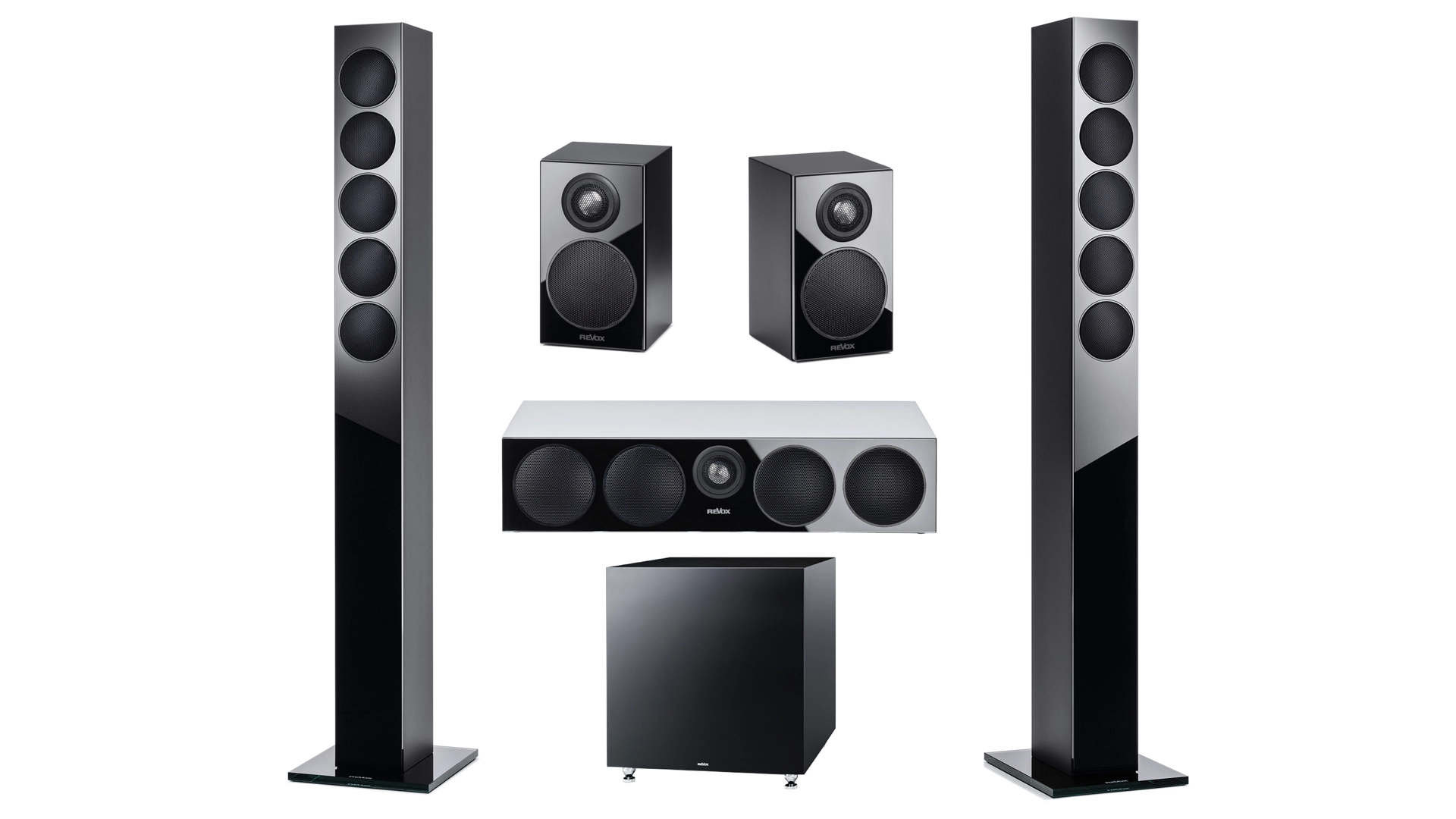
Revox is a Swiss audio company whose story began in 1948, when engineer Willi Studer opened a business in Herisau and developed the Dynavox tape recorder. Revox became the name for the consumer products, while Studer served professional studios and broadcasters; the shared engineering culture made reel-to-reel machines such as the A77 and B77 enduring references for robust mechanics, serviceability and recording quality. The brand later expanded into complete systems, including the B-series electronics and loudspeakers, but tape remains an important part of its identity. In 2024 Revox introduced the B77 MK III, a newly manufactured reel-to-reel recorder rather than a cosmetic reissue, bringing the format back into current production with revised electronics and modern manufacturing. Contemporary Revox is broader than analogue tape. The company develops modular multiroom and custom-installation systems, networked amplifiers, servers, speakers and control interfaces intended to distribute music through an entire home. STUDIOART provides compact wireless products, JOY and STUDIOMASTER components address network playback and amplification, and the T700 turntable connects the brand’s precision-mechanical tradition with vinyl. Revox also maintains restoration and service activity for classic machines, an important distinction for equipment with decades of working life. The company has passed through ownership and organisational changes since the Studer era, but its strongest products still follow the original logic: sources, electronics, speakers and control designed as a coordinated system. Revox is therefore best understood not merely as a historic tape-recorder name, but as a rare bridge between Swiss recording heritage and current integrated audio.
Richter

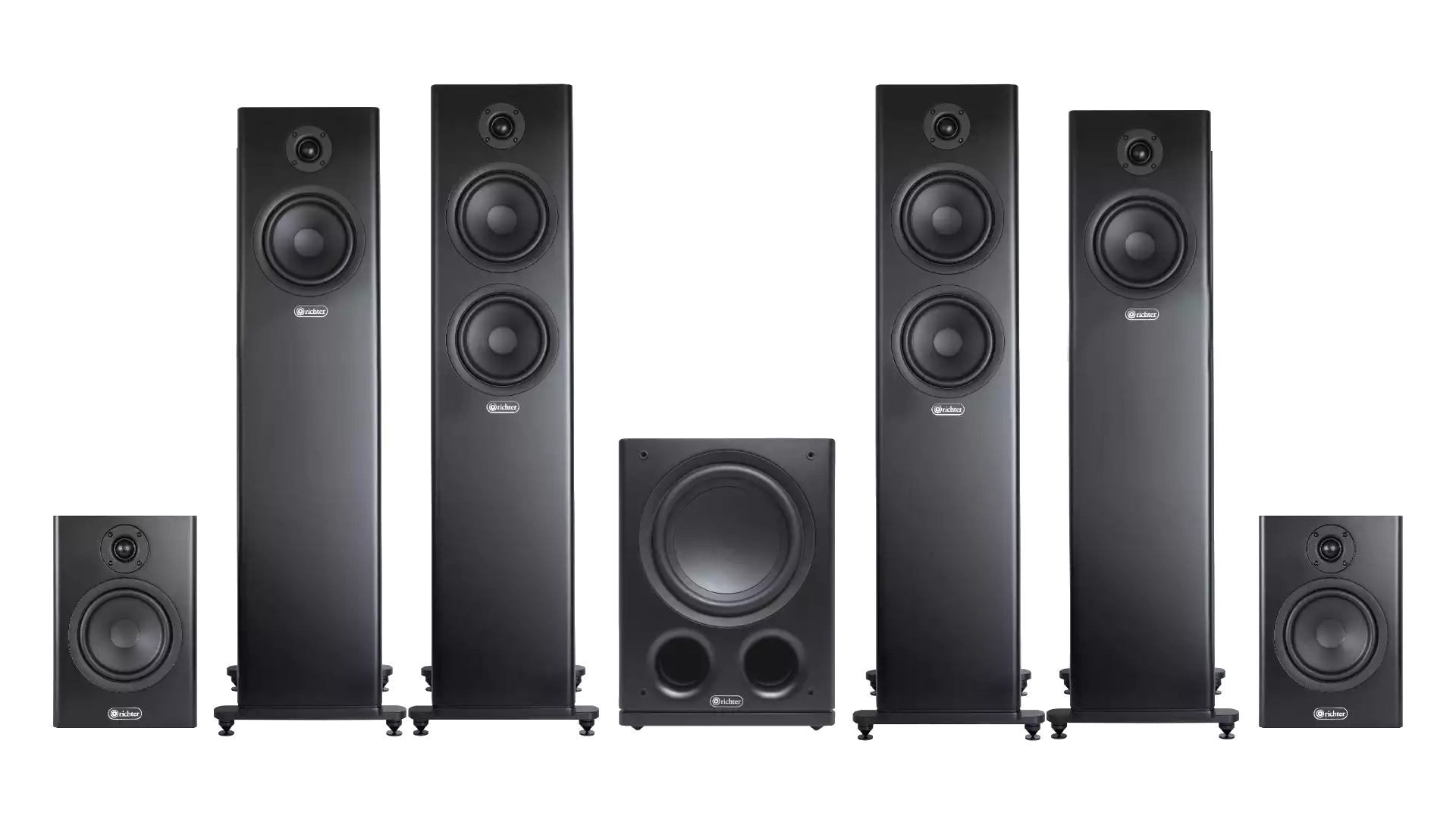
Richter is an Australian loudspeaker company founded in Sydney in November 1986 by designer Ralph Waters. The original description incorrectly named several people as co-founders; Dr Neville Thiele and Dr Richard Small were foundational figures in loudspeaker science, but they did not found Richter. The company earned its reputation by developing speakers specifically for Australian rooms and budgets, with strong low-frequency performance and easy system matching rather than miniature “bookshelf” priorities. The Wizard floorstander became its defining model, while names such as Dragon, Harlequin, Merlin and Thor built a catalogue that Australian listeners could recognise across generations. Modern Legend Series models continue that lineage with floorstanding, stand-mount, centre-channel and surround speakers, while Thor subwoofers serve both stereo and home cinema. Current designs are led by Dr Martin Gosnell and use carefully modelled cabinets, proprietary drivers and crossovers voiced through measurement and listening. The Wizard remains important because it demonstrates the brand’s formula: useful sensitivity, substantial bass from a domestically manageable enclosure and a tonal balance intended for long listening rather than showroom spectacle. Richter has changed ownership and engineering teams during its history, but it has retained Australian design and a strong direct relationship with the local market. That continuity matters more than attaching famous acoustic names to the company. Richter’s individuality lies in making full-range, room-friendly loudspeakers with a distinctly Australian heritage—and in repeatedly updating the products that created that reputation instead of abandoning them for a new identity.
Scansonic HD

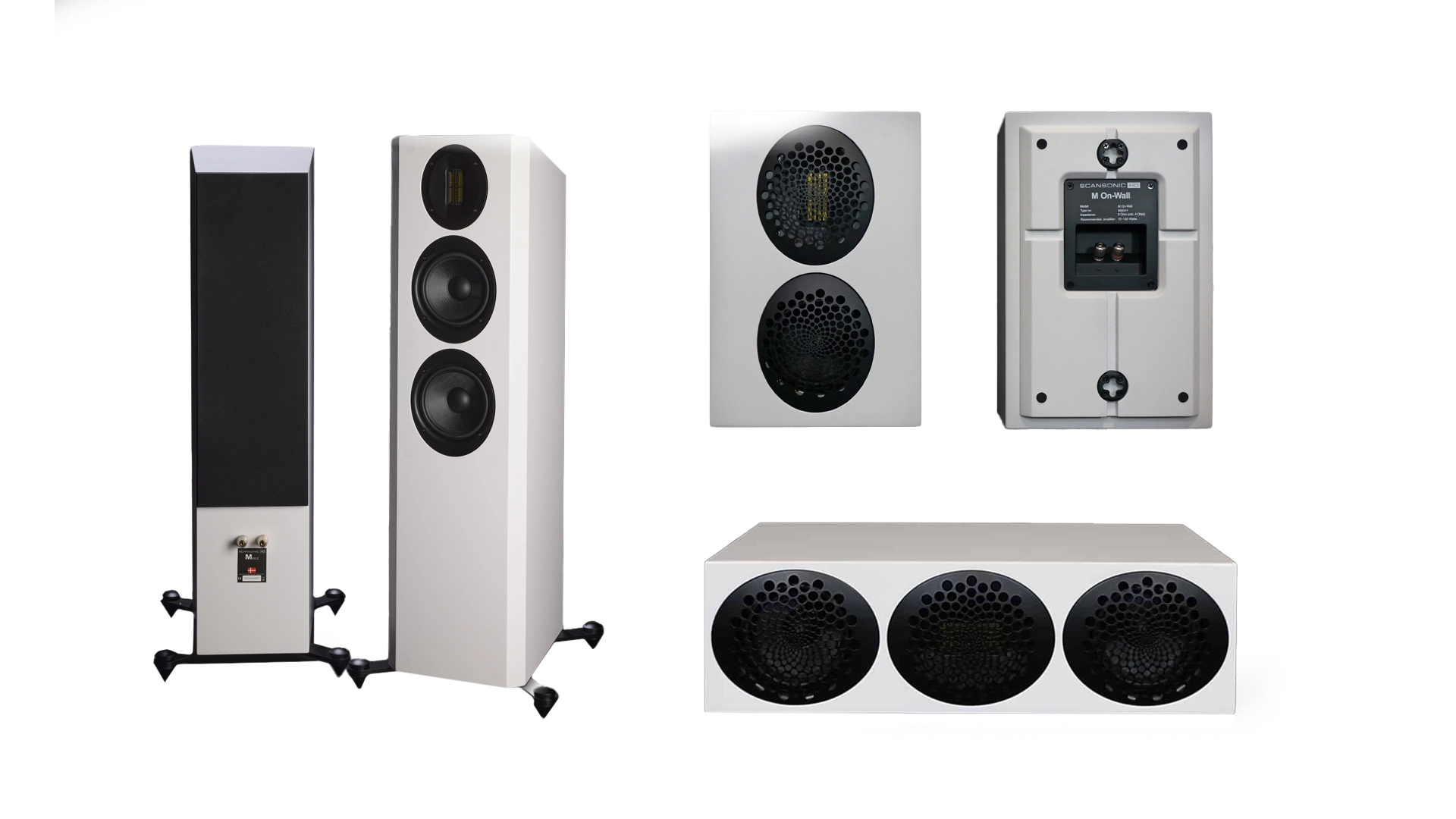
Scansonic HD is a Danish loudspeaker brand established in 2012 within Dantax, the same group that owns Raidho Acoustics. Its purpose is not to produce inexpensive visual copies of Raidho speakers, but to translate knowledge from the sister company’s drivers, crossovers and narrow enclosures into more accessible systems. That relationship is clearest in the ribbon and quasi-ribbon tweeters used in the brand’s performance ranges. Their extremely light membranes are intended to reproduce fast transients with little stored energy, and are paired with carbon-fibre mid/bass drivers designed to keep pace through the crossover region. The earlier MB family established Scansonic HD’s reputation with slim cabinets and ribbon high frequencies. The current M Series develops that approach in compact stand-mount, floorstanding and centre-channel models, using carbon drivers and rear or internal passive-radiator loading according to model to obtain useful bass from small enclosures. Q Series applies bespoke woven-carbon drivers and a quasi-ribbon tweeter with crossover ideas derived from Raidho. The more affordable L Series uses soft-dome tweeters and Kevlar-cone drivers, often in multi-driver slim cabinets, providing stereo and cinema options without pretending to be the same technology at a lower price. Design and voicing take place in Denmark, and the family resemblance is visual as well as technical, yet each range has a defined role. Scansonic HD’s strength is controlled technology transfer: it gives listeners a recognisably fast, open Danish presentation and elegant proportions while keeping the engineering and pricing distinct from Raidho’s far more ambitious products.
Sonance

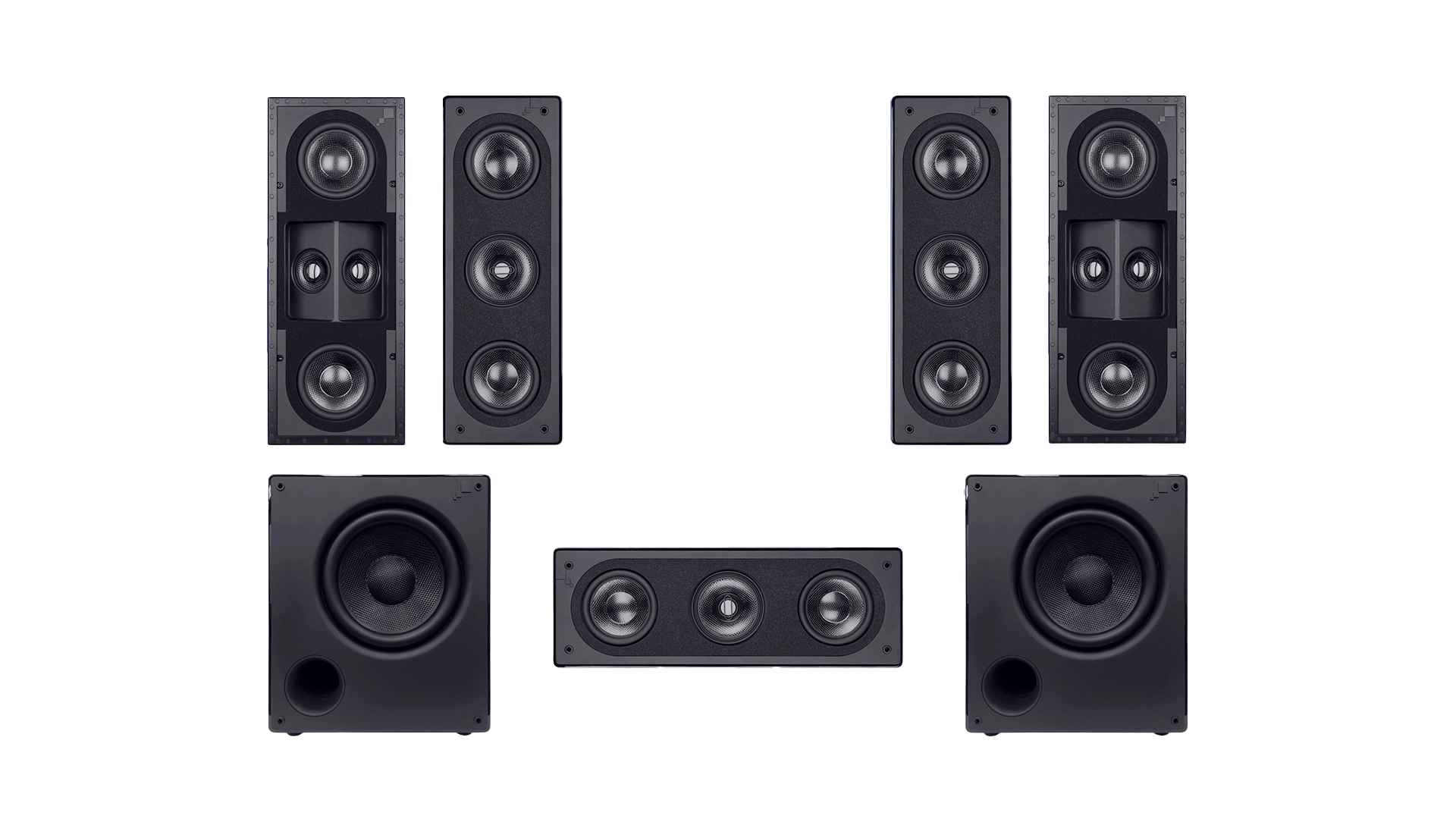
Sonance makes loudspeakers that become part of a building, from discreet ceiling systems to speakers concealed completely behind a finished wall. Scott Struthers and Geoff Spencer founded the Californian company in 1983, helping establish architectural audio as a category in its own right. Its in-wall and in-ceiling designs brought music into rooms without requiring freestanding cabinets, and that integration remains central to the brand. Visual Performance and architectural speaker families serve residential installations, while outdoor systems extend coverage into gardens and terraces. The Invisible Series takes the idea further: the speaker radiates through a thin finish layer, leaving no visible grille. Its Motion Flex architecture combines an Air Flex woofer, Wave Flex drive unit and an acoustically isolated baffle. Installation is part of the engineering; the D.I.S.C. calibration system helps installers check the thickness of the material applied over the speaker, since the finish affects its performance. Professional versions add facilities such as 70V/100V transformer taps for distributed commercial systems. The wider Sonance portfolio includes amplification and solutions for residential, commercial and marine environments, supported by system design resources for integrators. This is the thread connecting its products: the speaker, its coverage and the surrounding architecture are planned together. A Sonance installation can therefore range from barely noticeable background music to a dedicated cinema, with the visual presence of the equipment chosen to suit the room.
Sonos

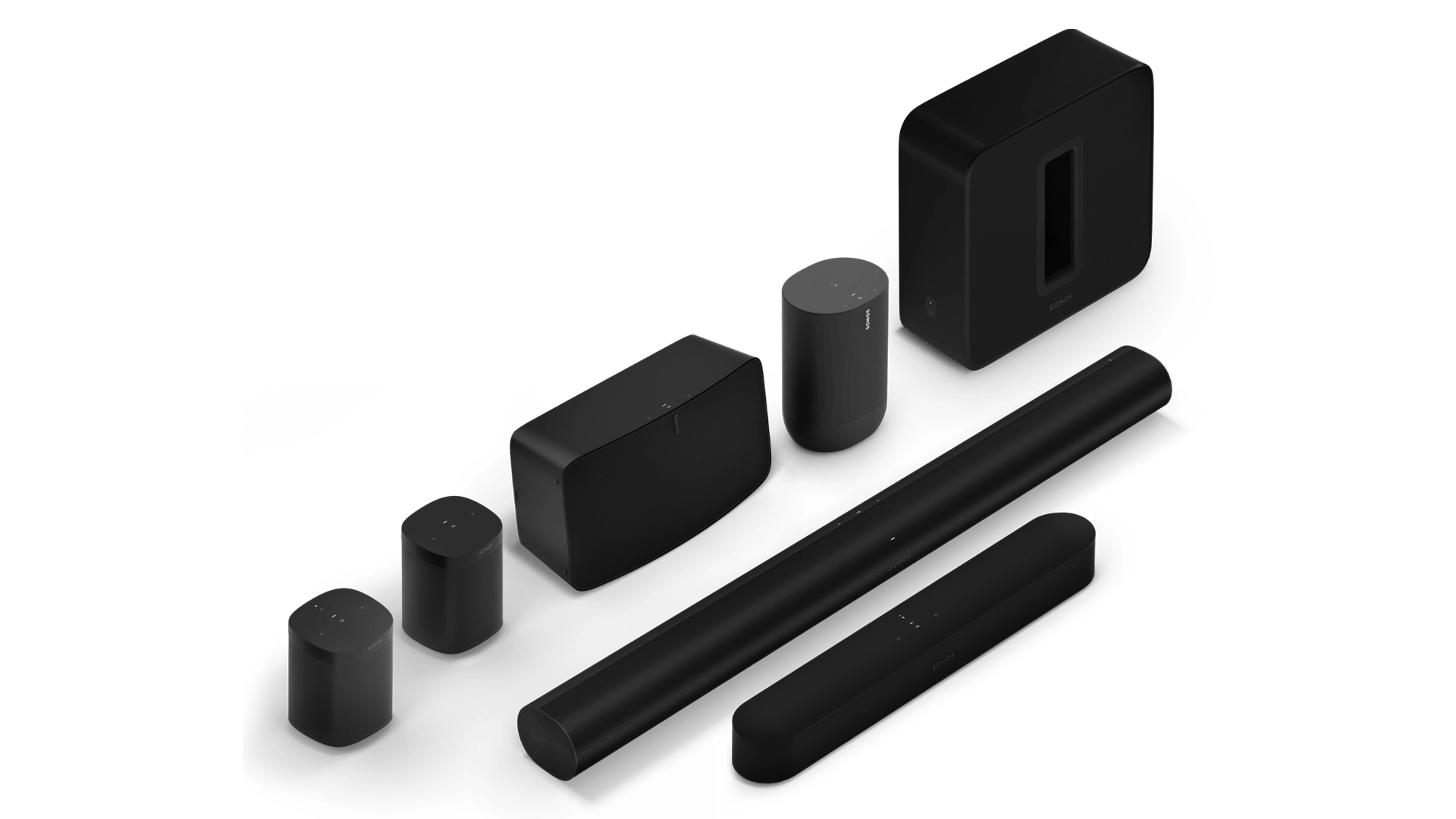
Sonos made synchronised music in different rooms the foundation of an audio system that can grow one speaker at a time. John MacFarlane, Tom Cullen, Trung Mai and Craig Shelburne founded the company in Santa Barbara, California, in 2002. Their idea was to use home networking to make music accessible throughout a house, with playback and room selection managed through a common interface. Early ZonePlayer components established the system approach; the arrival of all-in-one speakers in 2009 made it accessible without a separate amplifier and speakers in every room. Products such as Play:5 and One became familiar expressions of that idea, followed by the Era family. Matching speakers can form stereo pairs, and selected models can work with soundbars and subwoofers in a home-theatre configuration. Arc and Beam brought television into the ecosystem, while Move and Roam added portable listening. Sonos also makes Amp and Port components for connecting conventional loudspeakers or an existing hi-fi system. Its more recent range includes Arc Ultra, Move 2, Roam 2 and Ace headphones, the latter extending compatible television sound to private listening through TV Audio Swap. Across these different forms, Sonos’s defining product is the connected system as much as the individual enclosure: software, synchronisation and compatible hardware make it possible to use rooms separately or bring them together. That continuity explains how a brand associated with wireless speakers also has a substantial role in installed home audio.
Sonus Faber

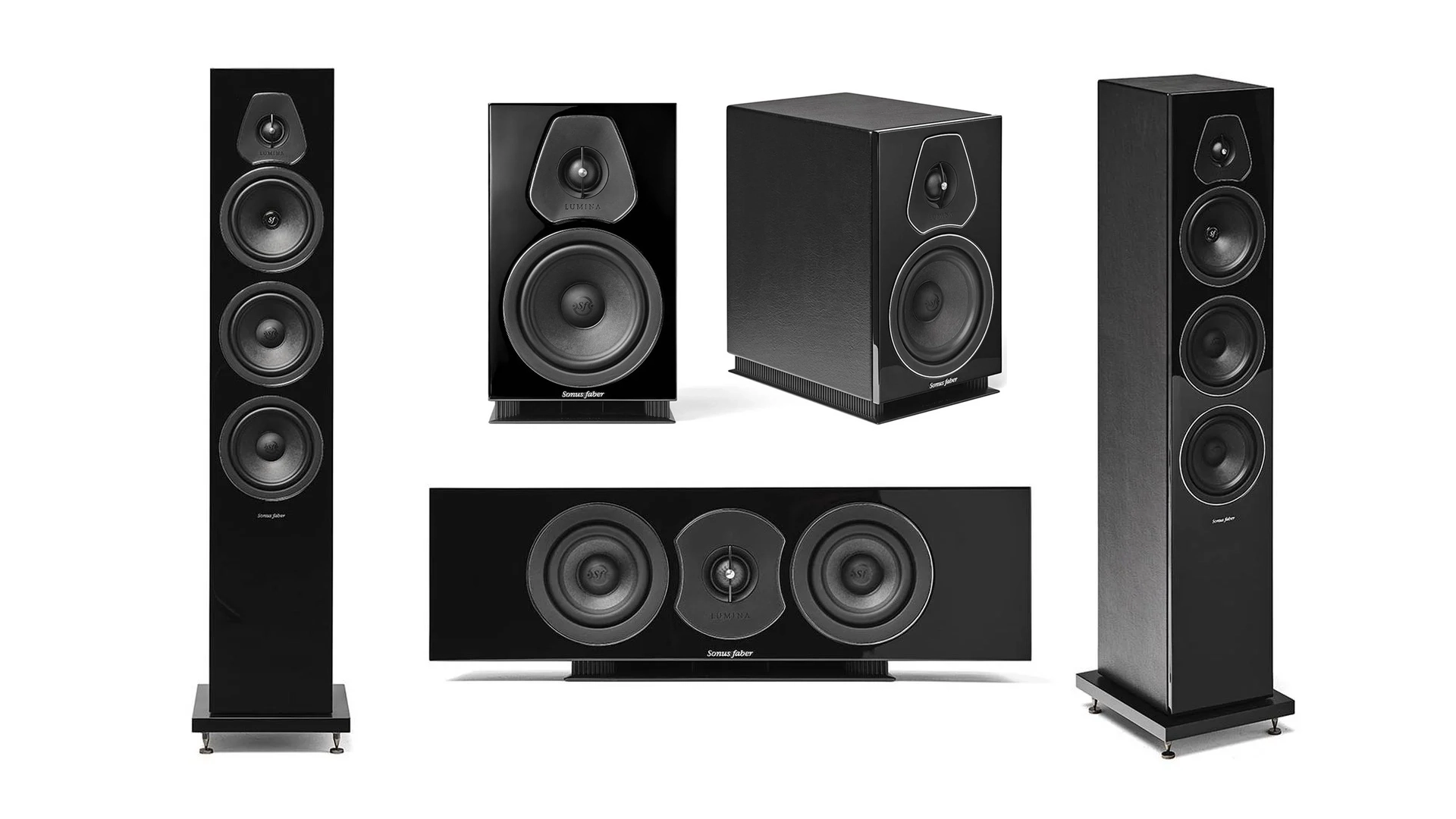
Sonus faber gives loudspeakers the visual and material character of fine musical instruments, combining sculpted cabinets with a long tradition of acoustic development in Vicenza, Italy. Franco Serblin founded the company in 1983, and early designs established the importance of wood, careful proportions and a natural presentation of voices and instruments. Guarneri Homage became a defining model: its lute-inspired cabinet and reference to Italian violin making helped establish a design language that would recur throughout the Homage family. Leather details, shaped wooden surfaces and cabinet construction are part of the engineering and craft rather than a finish applied to an anonymous box. The catalogue now ranges from Lumina and Sonetto loudspeakers to Olympica, Homage and large reference systems, with compact monitors and substantial floorstanders serving different rooms. The company also develops wireless products, Gravis subwoofers and Palladio installation speakers, extending its work into home cinema and distributed audio. Automotive and marine collaborations take its sound engineering into still different environments. Sonus faber became part of Bose’s portfolio through the acquisition of McIntosh Group announced in November 2024; its origin and manufacturing identity remain Italian. The thread connecting the early workshop to the broader modern range is the combination of cabinet craftsmanship, driver development and listening-led tuning. Its most recognisable speakers are objects with a strong physical presence, designed to remain part of the room even when the music has stopped.
Sony

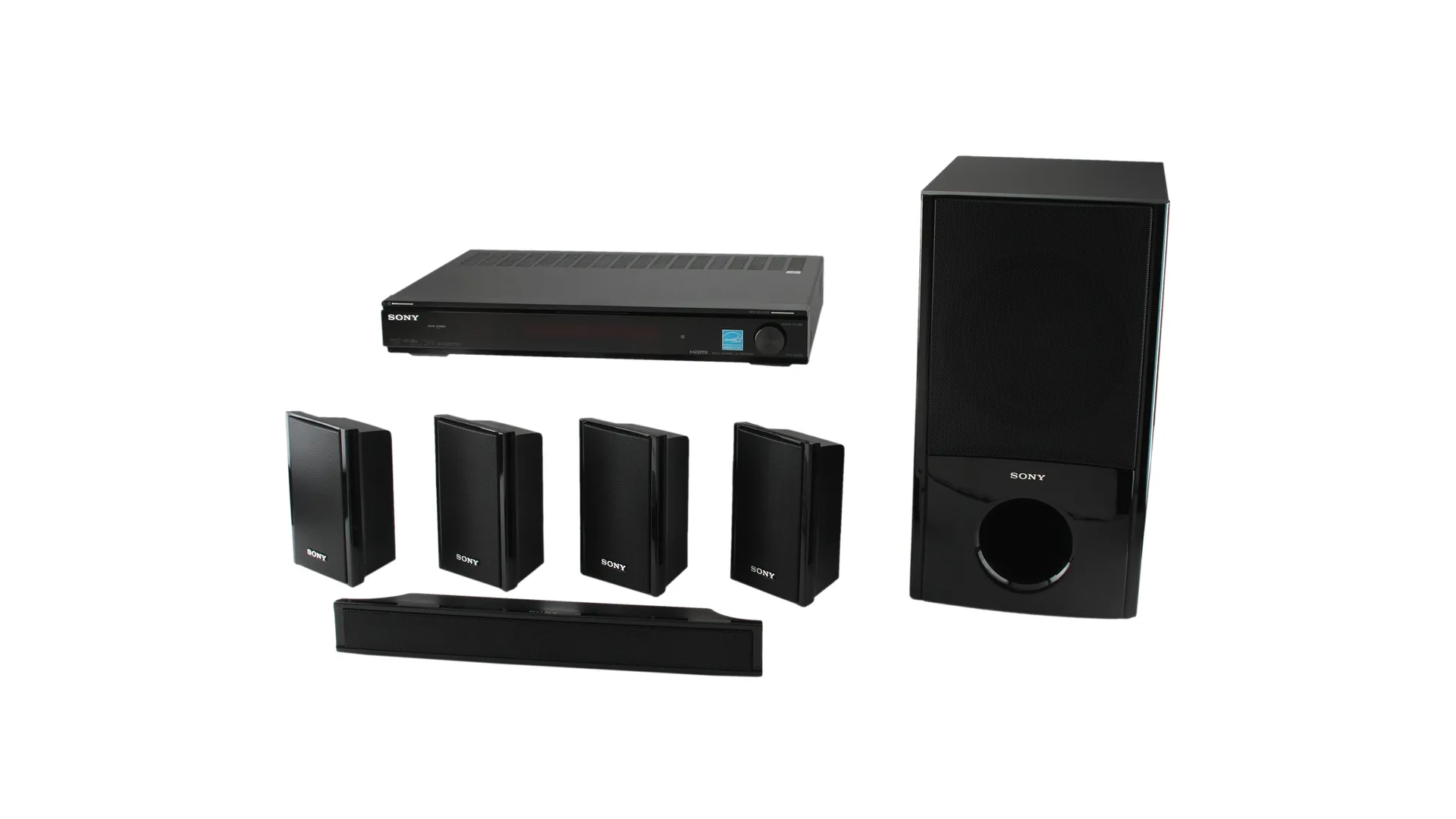
Sony helped shape both personal listening and home entertainment, from the Walkman and Compact Disc era to televisions, headphones and cinema systems. Masaru Ibuka and Akio Morita established the company in Tokyo in 1946 as Tokyo Tsushin Kogyo; the Sony name became its corporate identity in 1958. Tape recorders and transistor radios provided early foundations, but the 1979 TPS-L2 Walkman changed how people carried music with them. The CDP-101 followed in 1982, and the compact D-50 portable CD player in 1984 helped bring digital discs beyond the living room. Sony also played a central role with Philips in developing the Compact Disc and later SACD formats. Its hi-fi history includes ES amplifiers and disc players, while Walkman continued into digital music players. Headphones became another major field, spanning studio use, dedicated home listening and wireless noise-cancelling models. In video, the progression from Trinitron to BRAVIA televisions sits alongside home-cinema projectors and professional imaging equipment. Soundbars, receivers and disc players connect these audio and video interests within domestic systems. Sony’s scale matters because it works across recording, signal processing, playback hardware and entertainment production, with technologies moving between those areas. The consumer brand therefore encompasses far more than its professional AV division: it includes several of the products and formats through which generations of listeners first encountered recorded music and film.
Spendor

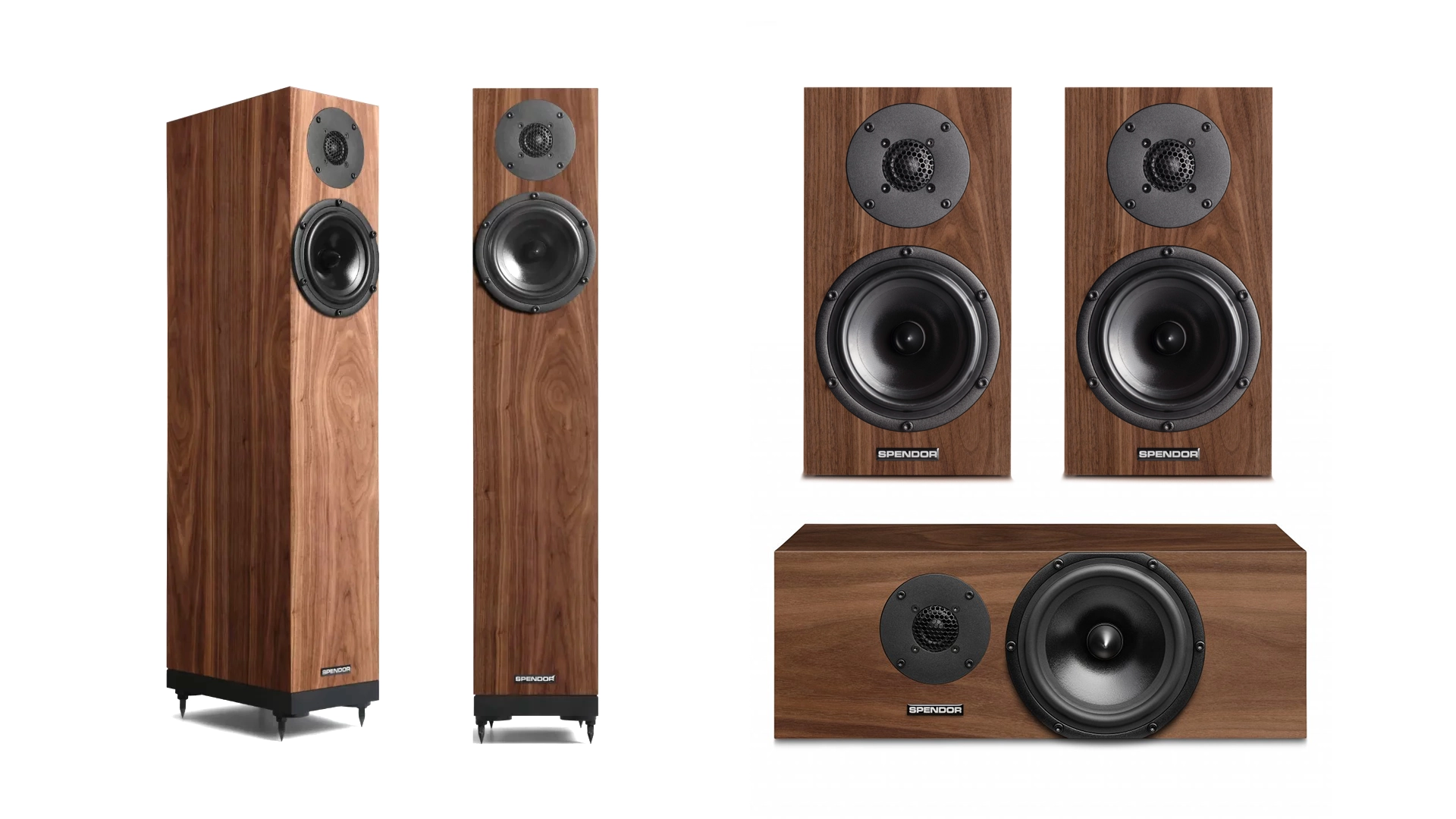
Spendor’s loudspeakers connect the BBC monitor tradition with British-made systems for modern homes. Spencer and Dorothy Hughes founded the company in 1969, combining parts of their names to create Spendor. Spencer’s work in the BBC’s sound engineering department informed the BC1, the loudspeaker that established the company’s reputation with broadcasters, recording studios and domestic listeners. Its influence continues through the Classic range, where familiar cabinet proportions coexist with revised drivers, crossover networks and damping. Spendor has also developed a different visual and technical direction in its slimmer A-Line and D-Line speakers. A-Line emphasises compact forms suited to ordinary living spaces, while D-Line introduces the company’s LPZ high-frequency unit and more ambitious floorstanding designs. The LPZ arrangement is intended to equalise sound-path lengths and create a balanced pressure environment around the tweeter. Products such as D7.2 illustrate how this research sits alongside work on bass airflow, polymer cones and cabinet behaviour. Spendor designs and manufactures its own drive units and cabinets, and assembles its loudspeakers in the UK, giving the company control over parts that many brands purchase as complete assemblies. Listening and measurement both inform development. The continuity with the BC1 is consequently more than a familiar name or a retro silhouette: it lies in the attention to speech and instrumental reproduction, supported by sustained work on the interaction of drive units, crossover and enclosure.
SVS

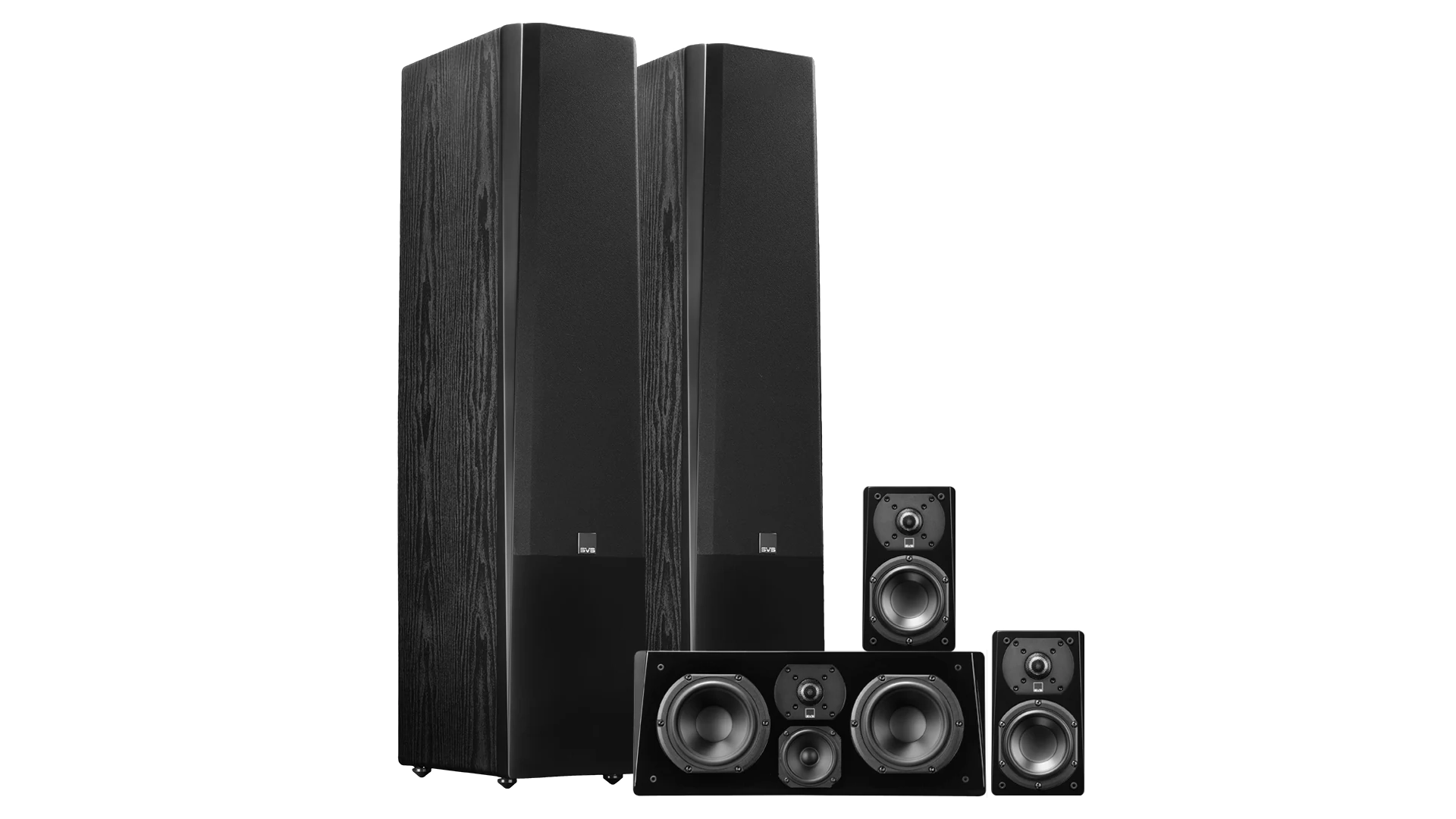
SVS is an American company specializing in high-performance subwoofers, loudspeakers, and audio accessories, known for its direct-to-consumer sales model and its focus on delivering exceptional value for money. The company’s subwoofers are particularly well-regarded, known for their deep bass extension, high output, and ability to provide a powerful and impactful low-frequency foundation for both music and home theater systems. SVS offers a wide range of subwoofers, from compact sealed models to large ported designs, catering to different room sizes and listening preferences. They also produce a range of loudspeakers, designed to complement their subwoofers and provide a complete audio solution. The “PB” (Ported Box) and “SB” (Sealed Box) prefixes are commonly used to denote their subwoofer models, while the “Prime” and “Ultra” series represent different tiers within their loudspeaker lineup.
Swan Speakers

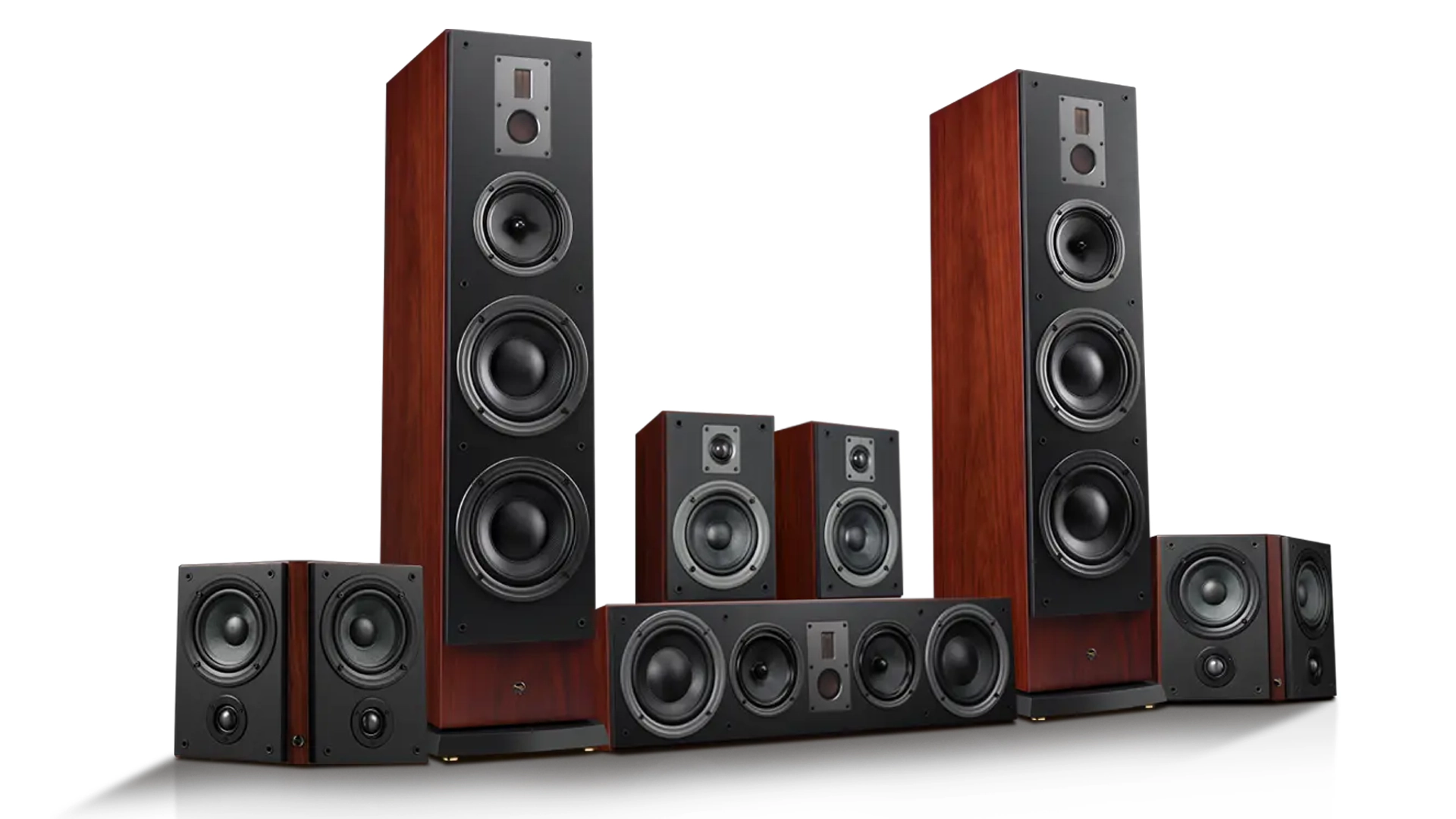
Swan Speakers (HiVi Technology, stock code 002888) is a Chinese audio manufacturer founded in 1991, initially focused on high-end speakers. Their philosophy is “Hear the Difference.” In 1997, they merged with Swan Speaker Systems (USA), acquiring the Swan brand and Frank Hale as chief designer. Hale, known for his work on the Swan M1 speaker, had previously designed the world’s first isodynamic ribbon speaker. The company has grown significantly, with three major industrial bases totaling 200,000 square meters, including a Zhuhai production base established in 2011. They have a full product range, including Hi-Fi, home theater, multimedia active audio, power amplifiers, internet cloud audio, headphones, car audio, professional audio, smart radios, conference systems, and speaker drivers. Swan possesses advanced facilities, including two large anechoic chambers. Their speaker drivers are used by many other audio manufacturers in Europe and America. Swan has won 17 CES Innovation Awards, including two Best of CES. They emphasize innovation, combining advanced electroacoustic technology with Chinese precision manufacturing.