
Floorstanding Speakers
This page provides a wide-ranging collection of floorstanding speaker manufacturers. We have compiled a vast list of brands to serve as a central resource for discovering companies that produce tower speakers. For every manufacturer listed, this database provides key information such as the country of origin, founding details, and a direct link to the floorstanding speaker products on their official site. This resource is intended to be a practical and comprehensive reference for the global market of tower speakers.
Hi-Fi brands in the category
Summary information and image
Direct links to official websites
Magico

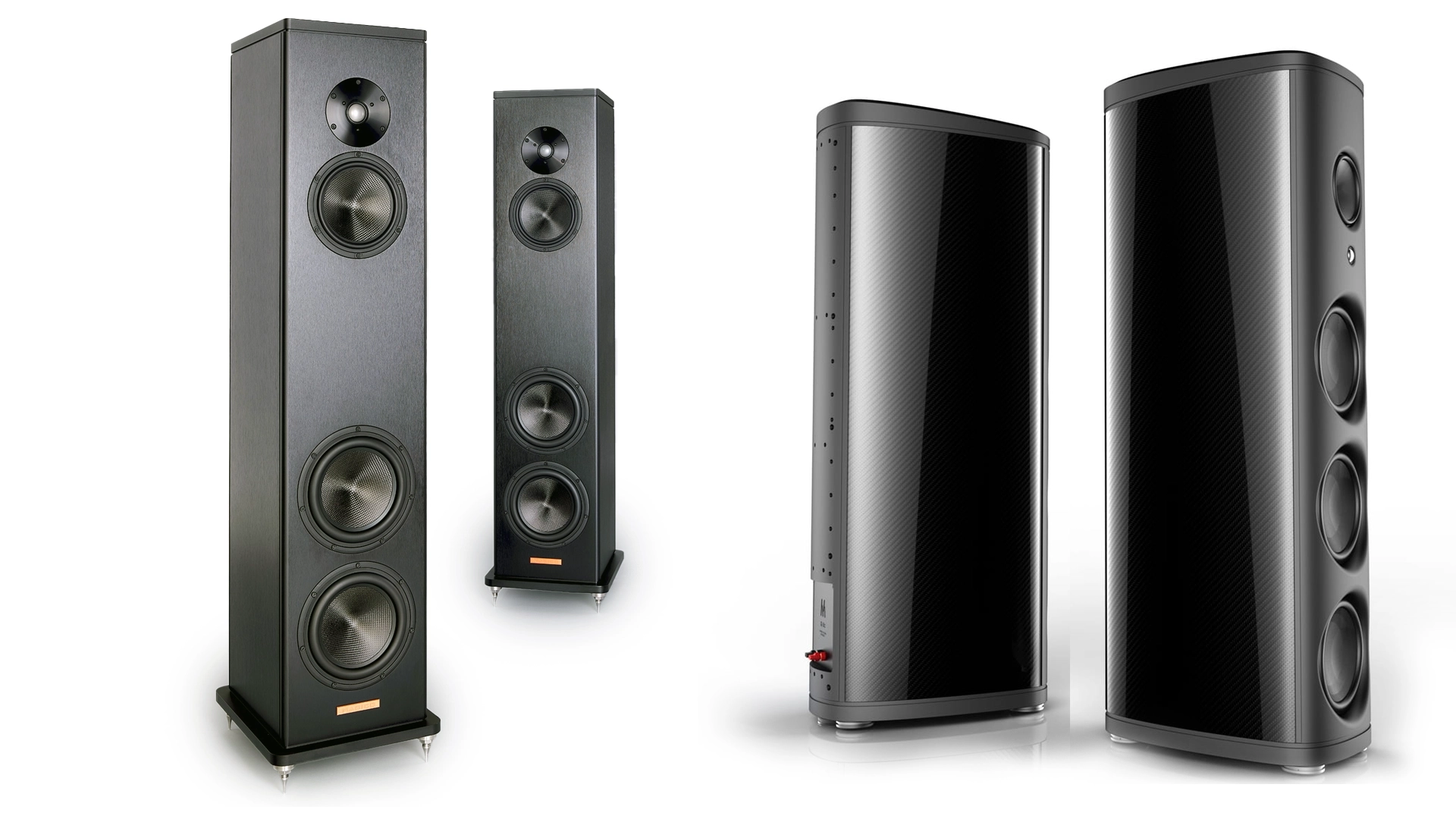
Magico is a California loudspeaker manufacturer founded by Alon Wolf in 2004 to reduce the cabinet, driver and crossover artefacts that obscure recorded information. Instead of conventional veneered fibreboard, the company builds rigid enclosures from machined aluminium sections, constrained-layer assemblies and, in selected M-series designs, carbon-fibre structures. Internal bracing is modelled to move resonances away from critical regions and verified with tools including laser vibrometry and Klippel near-field scanning. Magico’s Nano-Tec cones combine advanced fibre skins with lightweight cores and graphene-based reinforcement, while upper models use diamond-coated beryllium tweeter diaphragms to increase stiffness without excessive moving mass. Elliptical Symmetry crossover networks are developed alongside the drivers rather than treated as final voicing components. The catalogue is organised into A, S and M families: A-series models make the aluminium construction more attainable, S-series balances scale with domestic proportions, and products such as the M7 and semi-active M9 represent the unconstrained reference programme. Active bass and separate crossover electronics appear where they solve a specific system problem. Magico’s distinction is not the use of expensive materials by itself, but the closed engineering loop between simulation, in-house machining, measurement and purpose-designed transducers.
Magnat

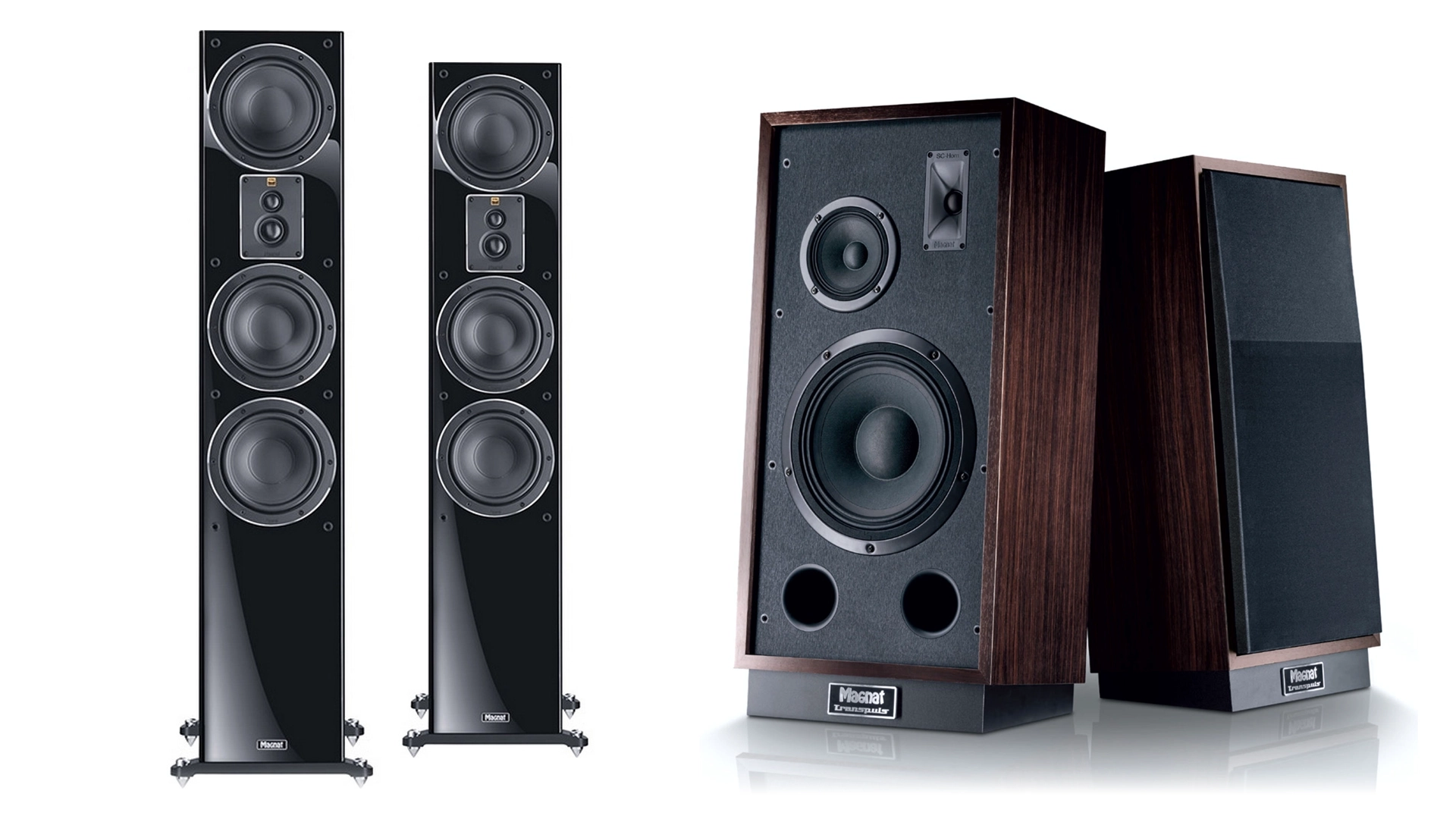
Magnat is a German loudspeaker and audio-electronics brand founded in Cologne by Rainer Haas in 1973. Loudspeaker engineering came first, and bass reproduction has remained a recurring speciality, but the company’s history is more varied than a generic mass-market description suggests. The early Log series established the name internationally; an omnidirectional plasma tweeter followed in 1979, the All-Ribbon family in 1981, and Magnat entered car audio in 1983. Its present home catalogue ranges from compact Monitor S models to Signature loudspeakers, retro-proportioned Transpuls systems and the THX-certified Cinema Ultra family. Active Monitor Reference designs, subwoofers, on-wall and architectural speakers extend the range into lifestyle and custom installation. Magnat also makes electronics, including hybrid valve/solid-state receivers, a network receiver and the substantial MTT 990 direct-drive turntable. Different families serve very different budgets, so the brand should not be characterised only as affordable or only as high-end. Measurement facilities, driver development and crossover optimisation provide the continuity between them. Magnat is now part of Premium Audio Company, but its identity remains German product development applied across stereo, cinema and installation rather than a badge placed on one narrow type of component.
Magnepan

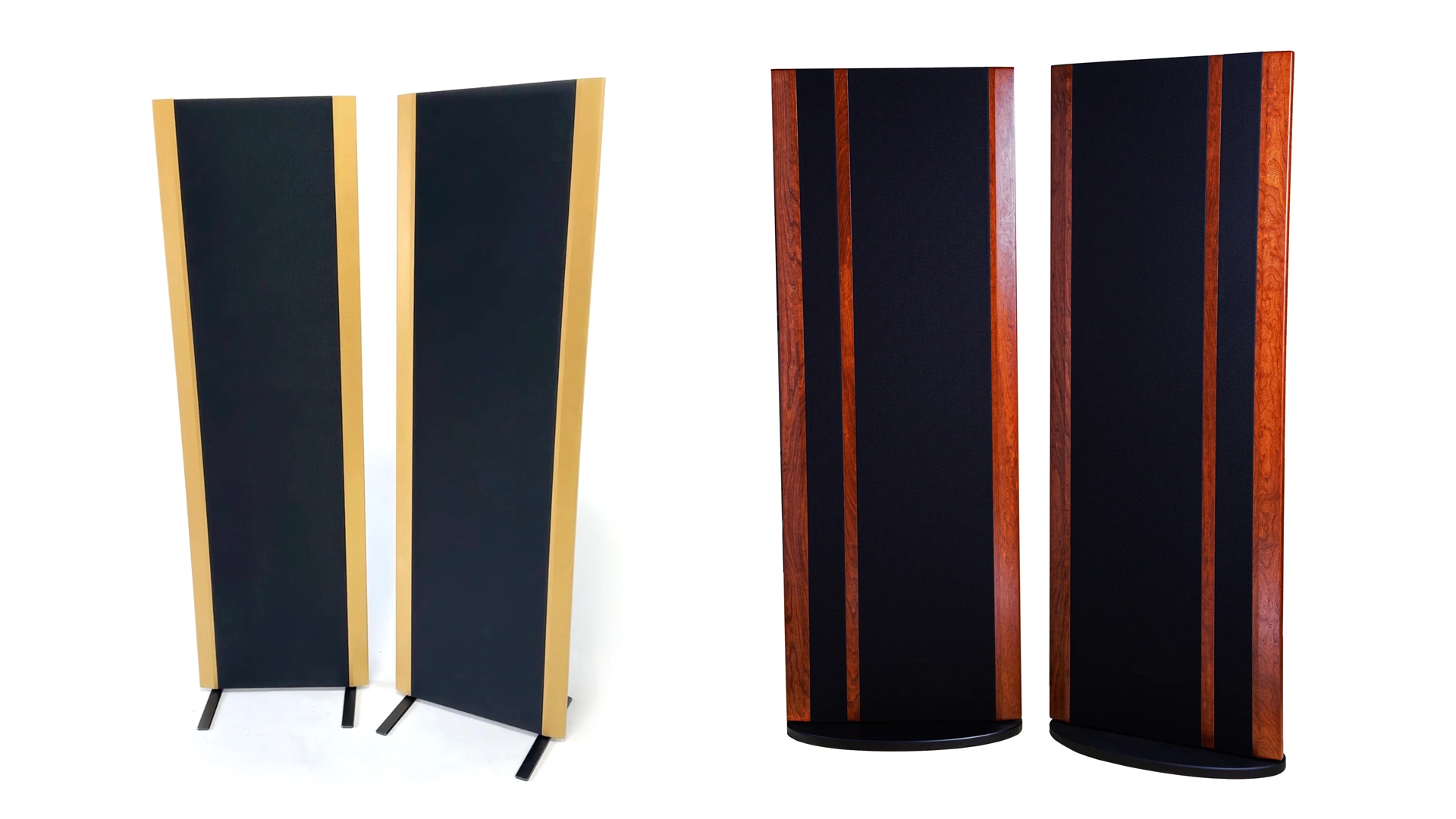
Magnepan is an American loudspeaker manufacturer founded in 1969 by engineer Jim Winey, inventor of the Magneplanar planar-magnetic speaker. Instead of mounting cone drivers in a box, a Magnepan spreads the voice conductor across a large, lightweight film diaphragm suspended in a magnetic field. Much of the surface drives the air, reducing the energy stored in a conventional cabinet and creating a tall line-like source. The panels radiate forward and backward as dipoles, so their open presentation depends on sufficient distance from the wall behind them and careful positioning in the room. Most models use aluminium-wire or foil quasi-ribbon bass and midrange sections; the larger 3.7i and 20.7 add a separate true-ribbon tweeter, an important distinction often lost when every Magnepan is called a ribbon speaker. The range runs from the compact LRS+ and .7 through 1.7i and revived 2.7i to the large reference systems, with X versions offering upgraded frames and crossover components. Low sensitivity and largely resistive four-ohm loads reward an amplifier comfortable with sustained current, while deep bass may require a well-integrated subwoofer in some rooms. Magnepan continues to build its panels in White Bear Lake, Minnesota. Its enduring strength is a fundamentally different way of coupling a loudspeaker to the room, offered from accessible to reference scale.
Marten

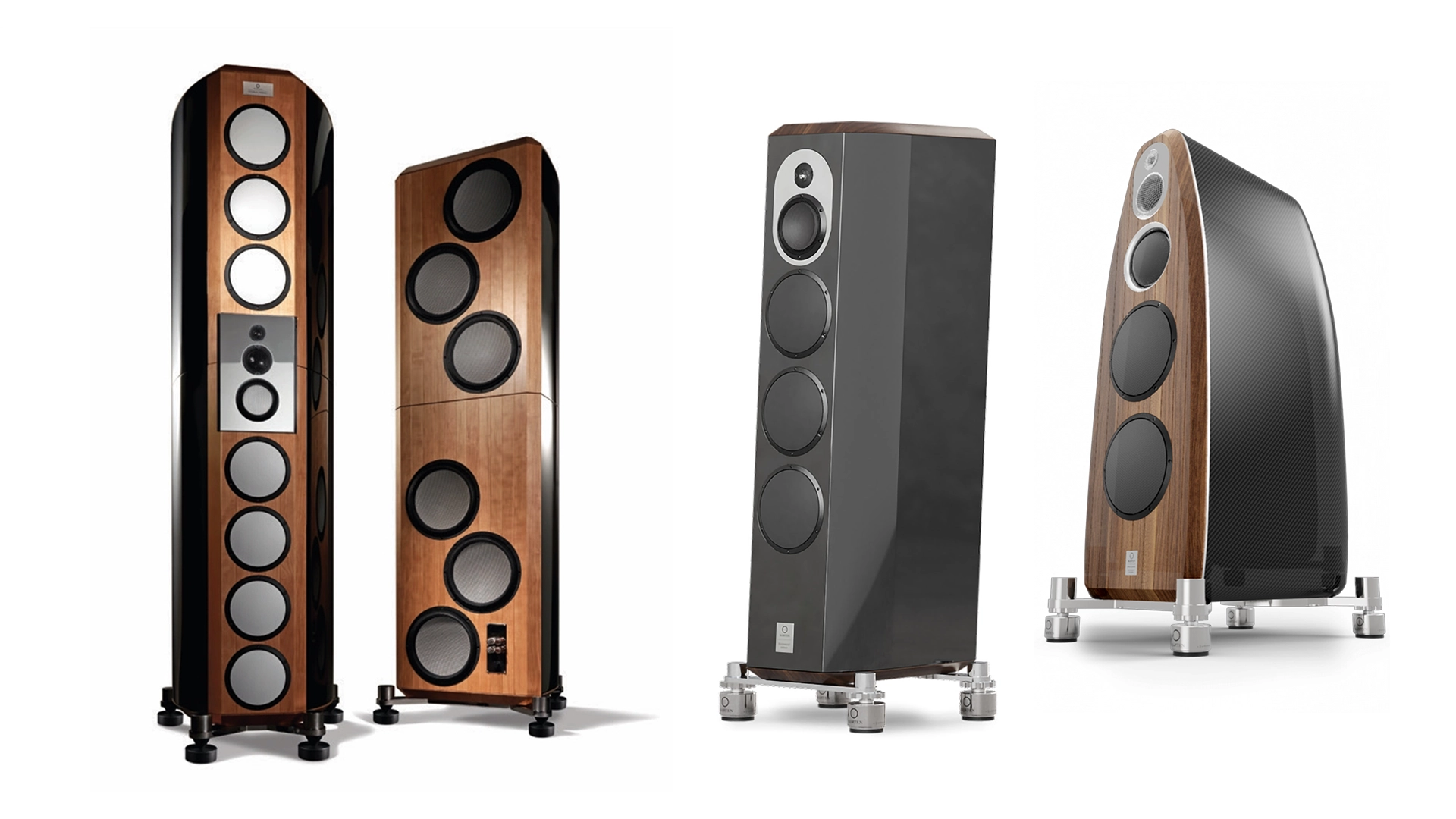
Marten is a family-run Swedish loudspeaker maker that uses very stiff ceramic and diamond diaphragms to pursue low coloration, fast transients and coherent timing. Leif Mårten Olofsson founded the company in Gothenburg in 1998 after decades of building and refining his own speakers. The breakthrough Coltrane established the brand internationally and began a naming tradition drawn largely from jazz. Marten designs complete loudspeakers rather than treating exotic drivers as isolated selling points. Depending on the series, its systems combine Accuton ceramic or pure-diamond treble and midrange units with carbon-fibre bass drivers, carefully tuned crossovers, Jorma Design internal wiring and rigid, resonance-controlled cabinets. Loaded Reflex Line bass loading and passive-radiator solutions are selected model by model, while Diamond editions upgrade not only the tweeter but also crossover parts, terminals and wiring. The catalogue ranges from the compact Oscar and Parker models through Mingus to the ambitious Coltrane family. Marten’s hallmark is the integration of advanced materials with restrained crossover design and extensive listening, producing speakers intended to disappear as sources rather than impose a house effect on every recording.
Martin Logan

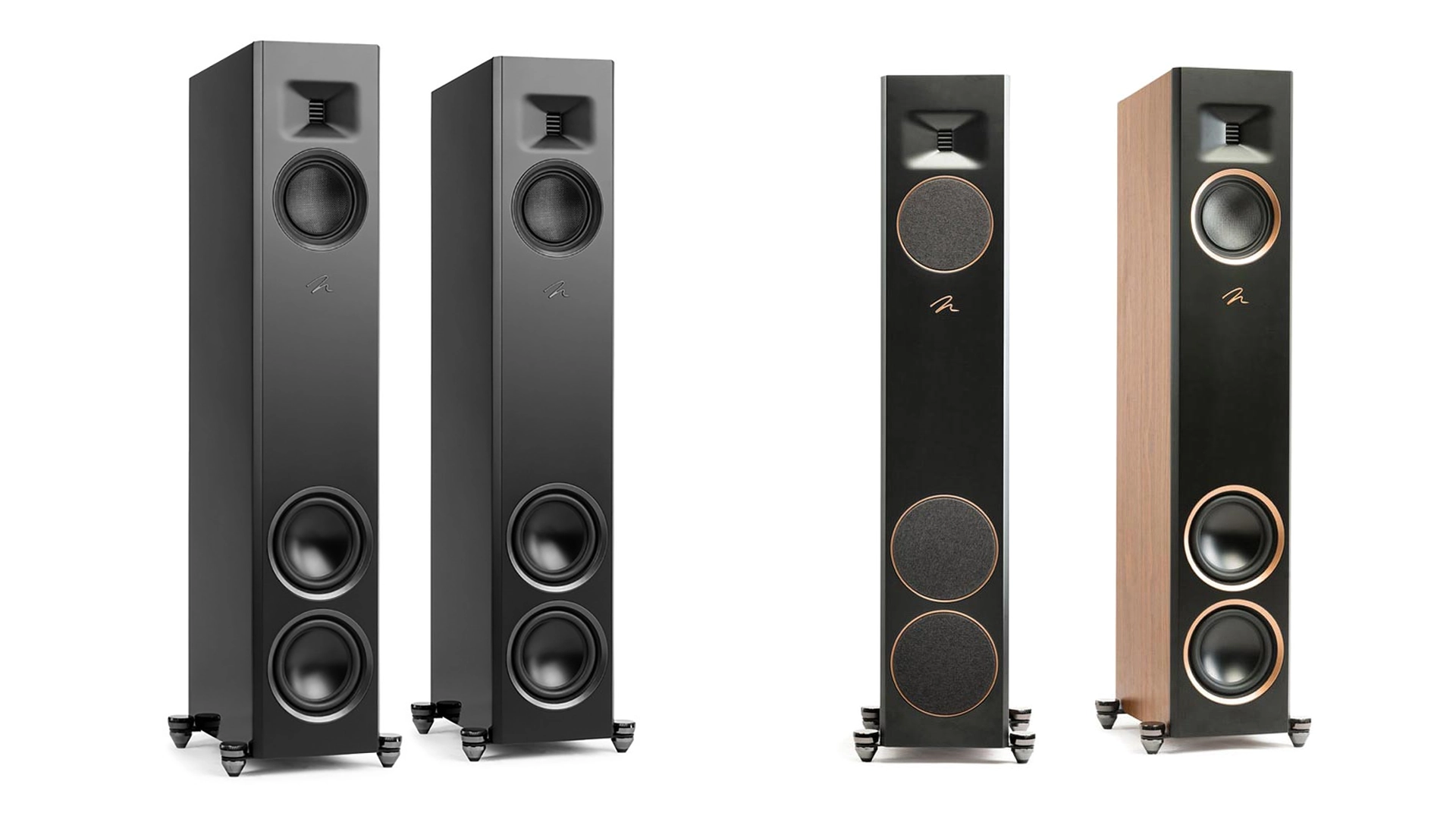
MartinLogan is the American loudspeaker specialist that made the curved electrostatic panel practical for full-range domestic systems. Gayle Martin Sanders and Ron Logan Sutherland developed their first production model, the Monolith, in 1983 after several years of experiments. Its hybrid architecture paired a transparent electrostatic membrane with a dynamic bass driver, solving one of the central limitations of earlier electrostatic designs while preserving their speed and low moving mass. The brand’s large electrostatic models use Curvilinear Line Source panels to control dispersion, MicroPerf stators to increase radiating area and AirFrame structures that hold the panel rigidly without a conventional box. Powered bass sections in selected models add Anthem Room Correction and controlled-force woofer arrangements. MartinLogan also applies its Folded Motion and Folded Motion XT tweeters to the more conventional Motion range, and offers subwoofers, architectural speakers and home-theatre solutions. The important distinction is that MartinLogan is not simply a maker of unusual-looking panels: its know-how lies in integrating electrostatic midrange and treble with dynamic bass, useful room behavior and manageable domestic proportions.
MBL

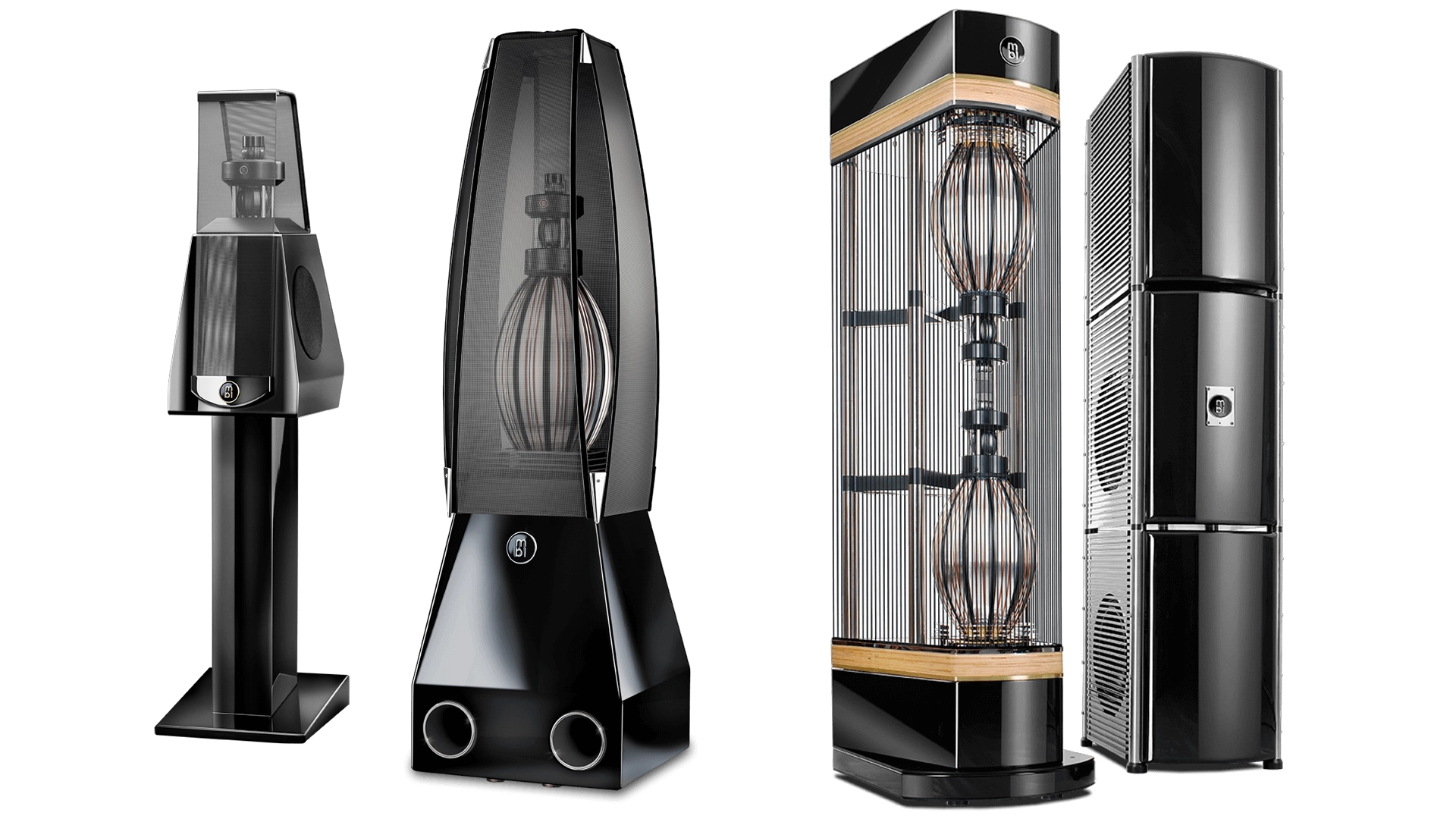
MBL is a German ultra-high-end manufacturer defined by the Radialstrahler, an omnidirectional bending-wave loudspeaker that radiates sound through 360 degrees. Wolfgang Meletzky’s original radial transducer and the MBL 100 were presented at IFA Berlin in 1979. Instead of a conventional forward-firing cone, the design uses vertical lamellae arranged around a central axis; when driven, they flex together to form an expanding and contracting acoustic surface. That principle remains central to models such as the 101, 111 and 126, with separate radial elements optimized for different frequency bands and dynamic woofers handling the lowest octaves where required. MBL also builds matching digital sources, preamplifiers and power amplifiers in its Reference, Noble and Cadenza lines. The electronics emphasize high current capability, low-noise power supplies and the stability needed to control demanding loudspeaker loads. Engineering and manufacturing are carried out at the company’s facility near Berlin. MBL’s genuine distinction is spatial: the Radialstrahler excites a room more like an acoustic instrument than a narrowly aimed box speaker, creating a broad listening area while placing unusual demands on driver precision and system setup.
McIntosh

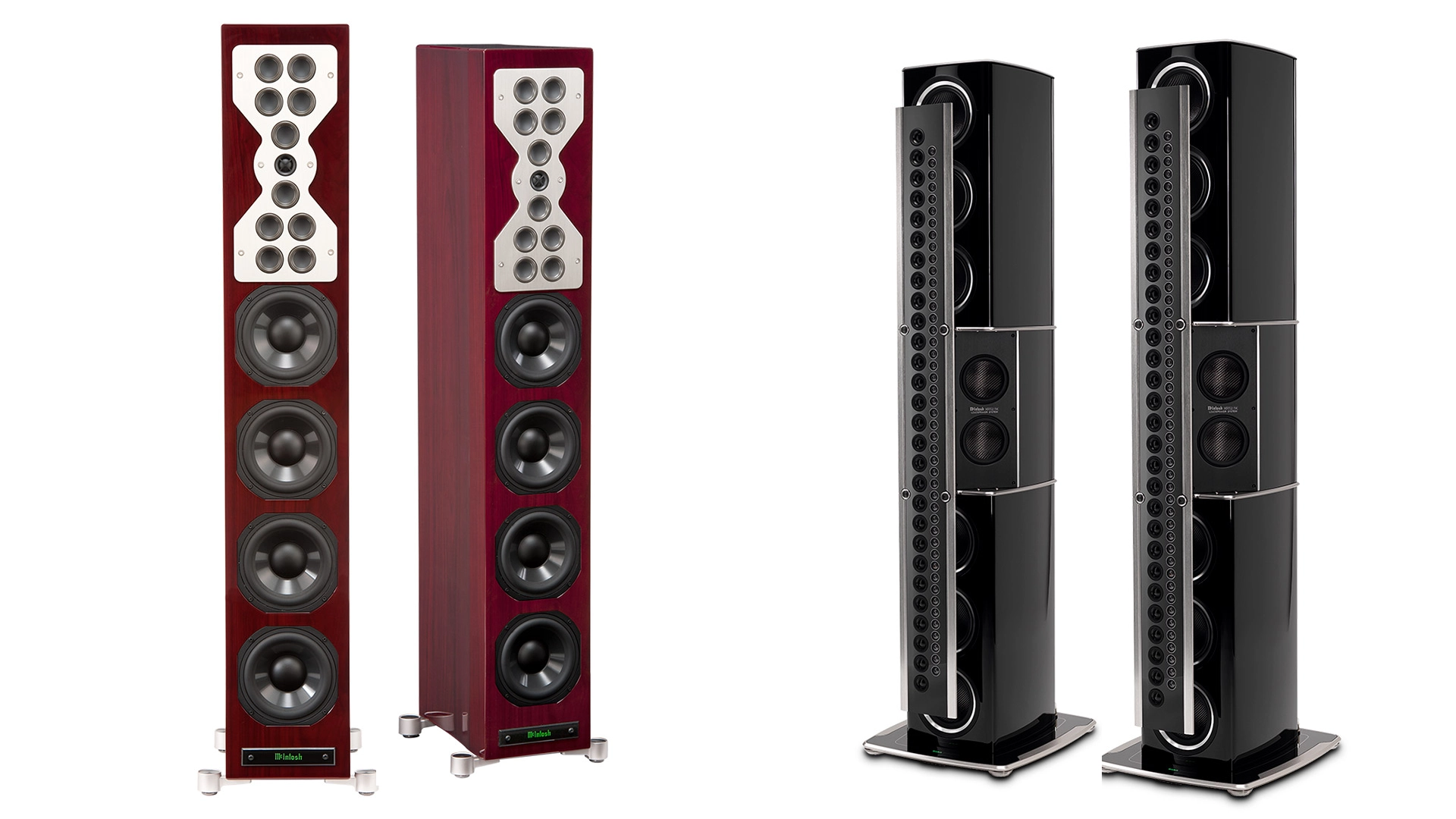
McIntosh is an American high-end audio manufacturer whose blue power meters and black-glass front panels identify products built around unusually durable amplifier engineering. Frank H. McIntosh and Gordon Gow founded the company in 1949 after developing the Unity Coupled Circuit, a transformer-coupled output topology designed to deliver high power with low distortion across the audible band. McIntosh moved to Binghamton, New York, in 1951 and continues to design and assemble products there. The catalogue covers valve and solid-state power amplifiers, preamplifiers, integrated amplifiers, source components, streamers, turntables, speakers and home-cinema processors. Many transistor power amplifiers use Autoformers to deliver their rated power into different loudspeaker impedances, while Power Guard monitors the waveform to reduce clipping-related distortion and Sentry Monitor protects against unsafe operating conditions. The company still winds key transformers in house, and signature glass panels are printed and assembled for long service life. McIntosh’s appeal extends beyond styling: its defining know-how is the marriage of protective circuitry, stable load behavior and conservative construction with a product ecosystem that can support both two-channel and large cinema systems.
Meridian

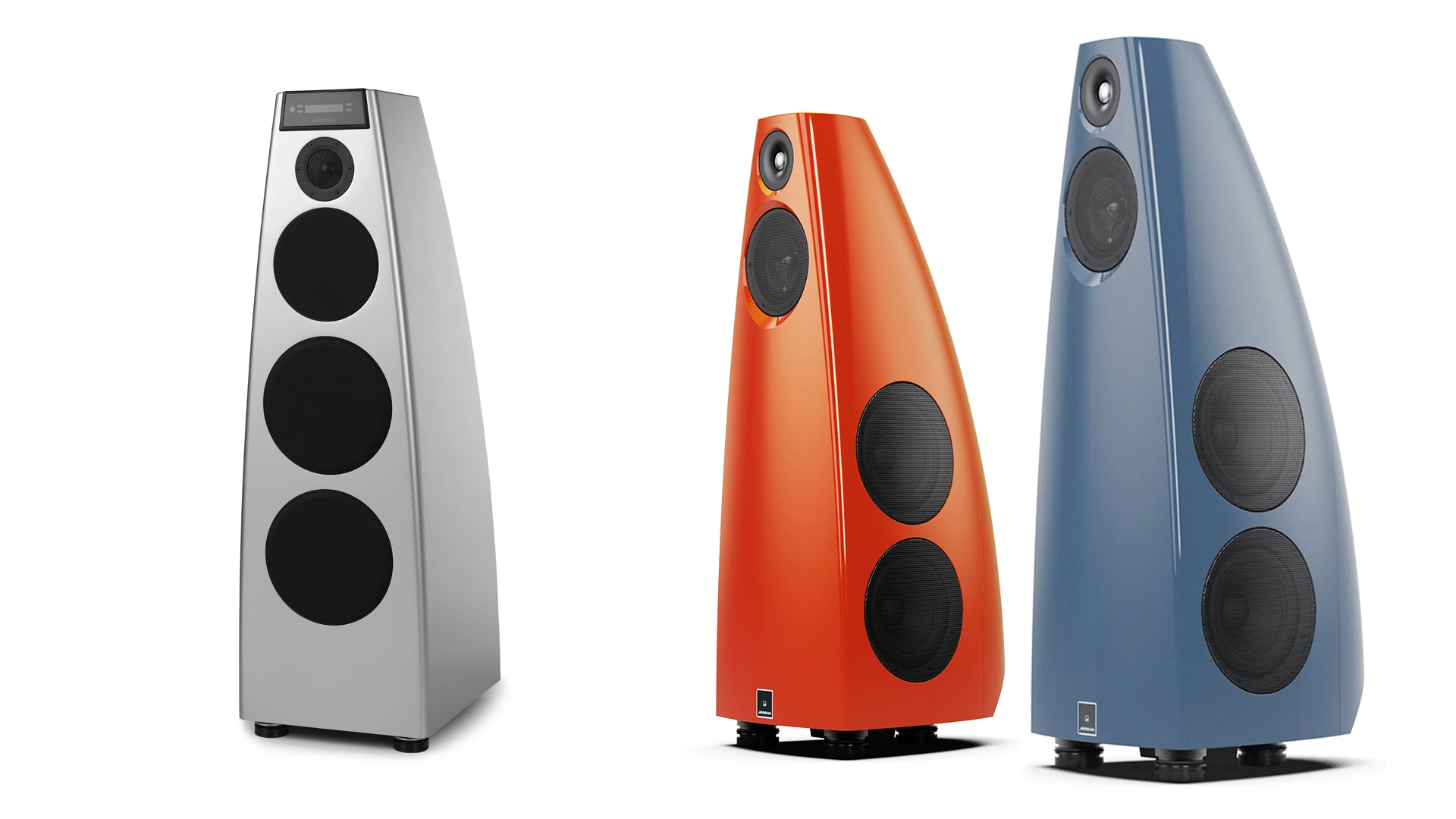
Meridian is a British digital-audio pioneer whose central achievement is treating the loudspeaker, amplification and signal processing as one engineered system. Bob Stuart and industrial designer Allen Boothroyd founded the company in 1977. The active M1 loudspeaker established their combination of electronics and acoustics, while later products helped advance digital source design, lossless coding and DSP-controlled playback. Meridian’s flagship loudspeakers place digital crossovers, dedicated amplification and drivers in the same enclosure, allowing the company to control phase, timing, bass alignment and protection far more precisely than a passive speaker permits. Proprietary techniques include apodising filters, Enhanced Bass Alignment and psychoacoustic processing, implemented in products such as the DSP9 and DSP8000 XE. The wider range includes controllers, streamers, architectural speakers and distributed-audio components, alongside engineering partnerships for automotive, marine, aviation and lifestyle brands. Meridian co-created MQA, but MQA is now independently owned and should not be presented as the company’s defining current product. Meridian’s lasting distinction is broader: decades of research into DSP, active architecture and how complete systems behave in real rooms.
Metaxas & Sins

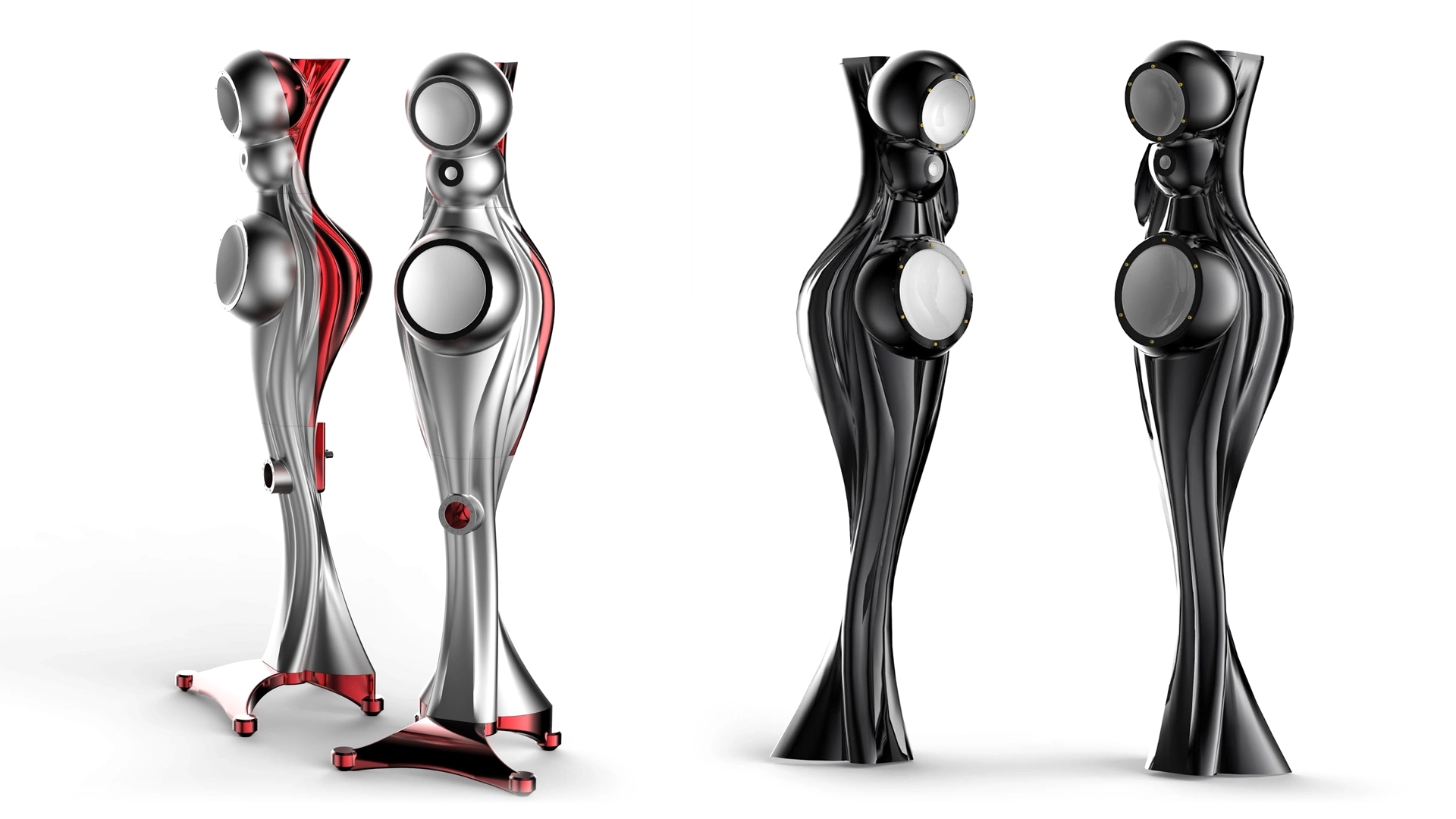
Metaxas & Sins is the design-led audio house of Greek-born engineer, artist and recording specialist Kostas Metaxas, creating amplifiers, headphone systems and open-reel machines as functional sculpture. Metaxas formed his original audio company in 1981 after building equipment for his own recordings. His hundreds of live concert sessions shaped a preference for very short signal paths, wide bandwidth and circuits intended to preserve transient information without excessive filtering. The current family company pairs that electronics work with forms drawn by hand and machined from solid metal. Products such as the Solitaire and Ikarus amplifiers, Marquis headphone amplifier and Ethereal electrostatic system avoid conventional rectangular cases, but the shapes also address rigidity, cooling and resonance. The Tourbillon T-RX and Papillon open-reel machines revisit professional tape transport through precision mechanics, direct-drive concepts and visibly exposed motion. Production is deliberately small-scale and involves Kostas and his sons. Metaxas & Sins stands apart because its visual language is inseparable from the engineering: these are not standard components placed in decorative shells, but audio circuits, mechanisms and enclosures conceived as one object.
Mission

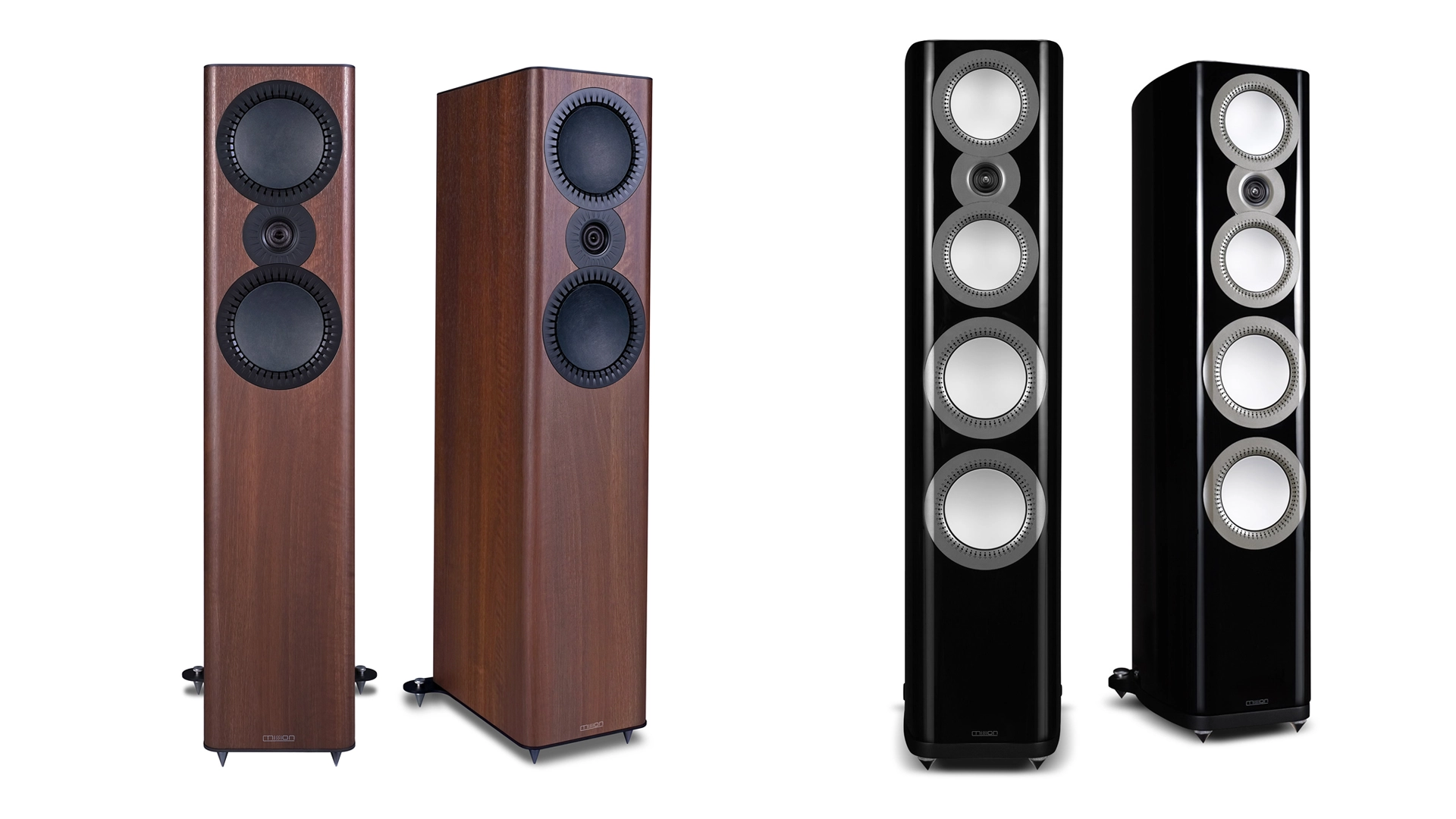
Mission is a British loudspeaker brand whose identity was established by compact, affordable speakers that used unconventional geometry to solve practical acoustic problems. Farad Azima founded Mission in 1977, and the original 770 quickly became a reference point for the company. One of its most recognizable ideas is Inverted Driver Geometry: placing the treble unit below the bass/mid driver to align the acoustic paths at the listening position and improve integration through the crossover region. Mission now offers standmount and floorstanding loudspeakers, centre and surround channels, subwoofers, active wireless systems and the revived 778 electronics. The LX MKII and QX MKII families bring the brand’s core concepts to accessible systems, while the modern 700, 750 and 770 reinterpret historic models with contemporary drivers, crossovers and cabinets. Depending on the range, Mission uses DiaDrive-style mid/bass diaphragms, ring-dome or microfibre-dome tweeters and carefully profiled cabinet structures. Its lasting distinction is not generic “British sound,” but the ability to turn specific engineering choices—driver order, crossover timing and cabinet proportions—into complete ranges that remain straightforward to own.
MoFi Electronics

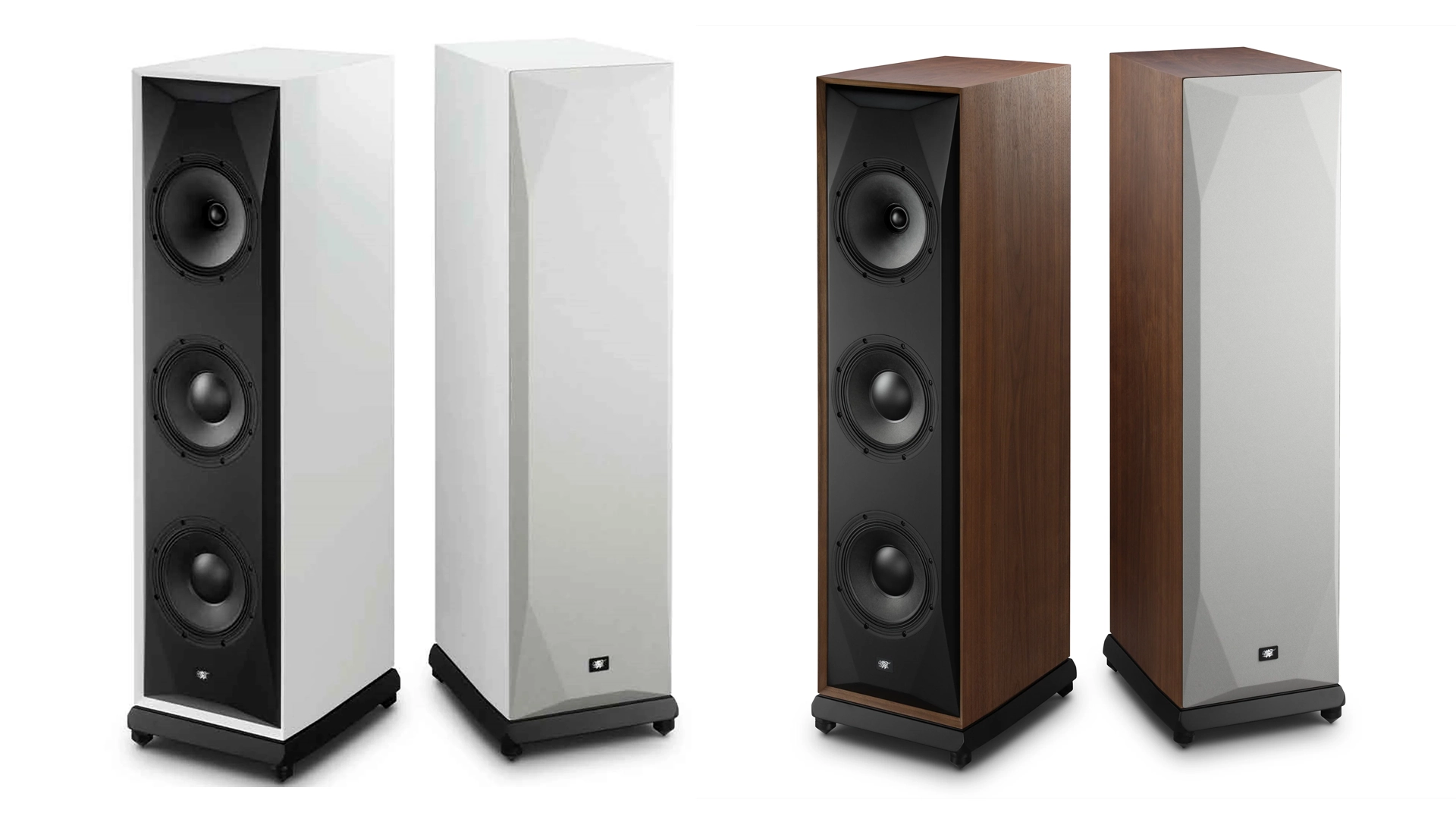
MoFi Electronics is the hardware arm of the Mobile Fidelity family, translating the record label’s analogue experience into turntables, cartridges, phono stages and loudspeakers. The business was formed in 2014 and introduced its first hardware publicly in 2016, drawing on outside specialists rather than claiming that mastering expertise alone is sufficient to design equipment. Turntable engineer Allen Perkins led the analogue platform, while later loudspeakers were created by Andrew Jones and the MasterPhono by Peter Madnick. StudioDeck and UltraDeck established the line with isolated AC motors, constrained-layer plinths and proprietary tonearms; the Allen Perkins-designed MasterDeck adds three-speed operation and fine speed adjustment. UltraGold, MasterTracker and other cartridges are voiced as part of the same playback chain. SourcePoint speakers use Jones’s concentric driver architecture to control directivity and integrate treble with the mid/bass unit from a common acoustic centre. MoFi Electronics is distinctive because its catalogue is not a label-logo exercise: it is a set of purpose-designed components by identifiable engineers, informed by how records are cut, evaluated and replayed.
Monitor Audio

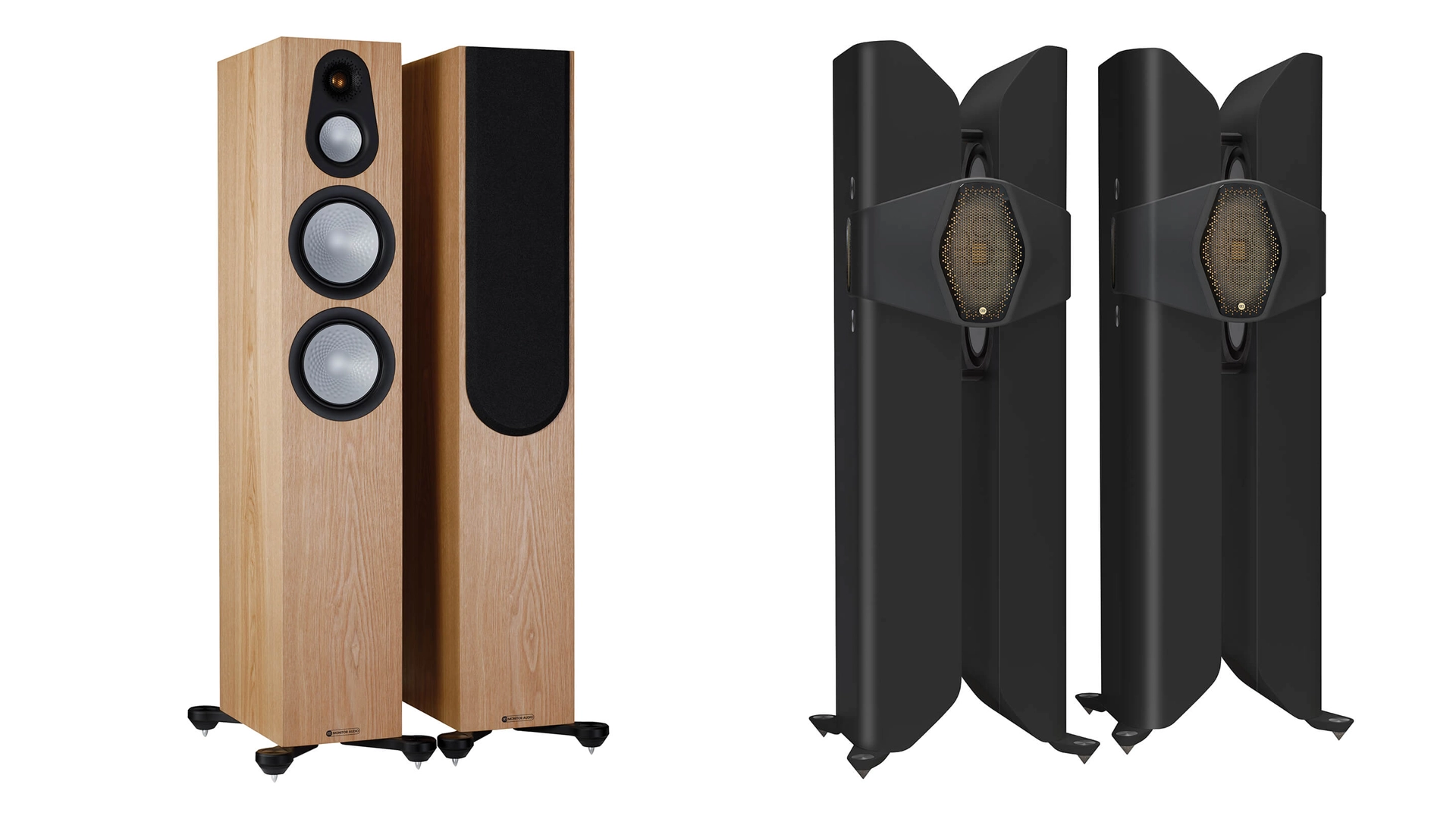
Monitor Audio is a British loudspeaker manufacturer whose strongest identity lies in developing its own metal-diaphragm driver families across products from entry-level stereo to architectural and flagship systems. Mo Iqbal founded the company in 1972 in Teversham near Cambridge, and the MA1 was its first loudspeaker. Design and engineering remain centred in Britain, while the catalogue now spans standmount and floorstanding speakers, home-cinema channels, subwoofers, creator-series installation models and outdoor audio. C-CAM—Ceramic-Coated Aluminium/Magnesium—is the foundation technology, providing a light, rigid diaphragm used in cones and the familiar gold-dome tweeter. Higher ranges extend it through RDT III sandwich cones, MPD III micro-pleated high-frequency transducers, DCF coupling and Hive II reflex ports. The Hyphn flagship arranges six RDT III midrange units around an MPD III transducer as a point-source M-Array and uses opposed, force-cancelling bass drivers. Bronze, Silver, Gold and Platinum apply related ideas at different levels without pretending they are identical. Monitor Audio’s advantage is this continuous driver-development ladder, backed by a broad system range rather than a single celebrated model.
Morel

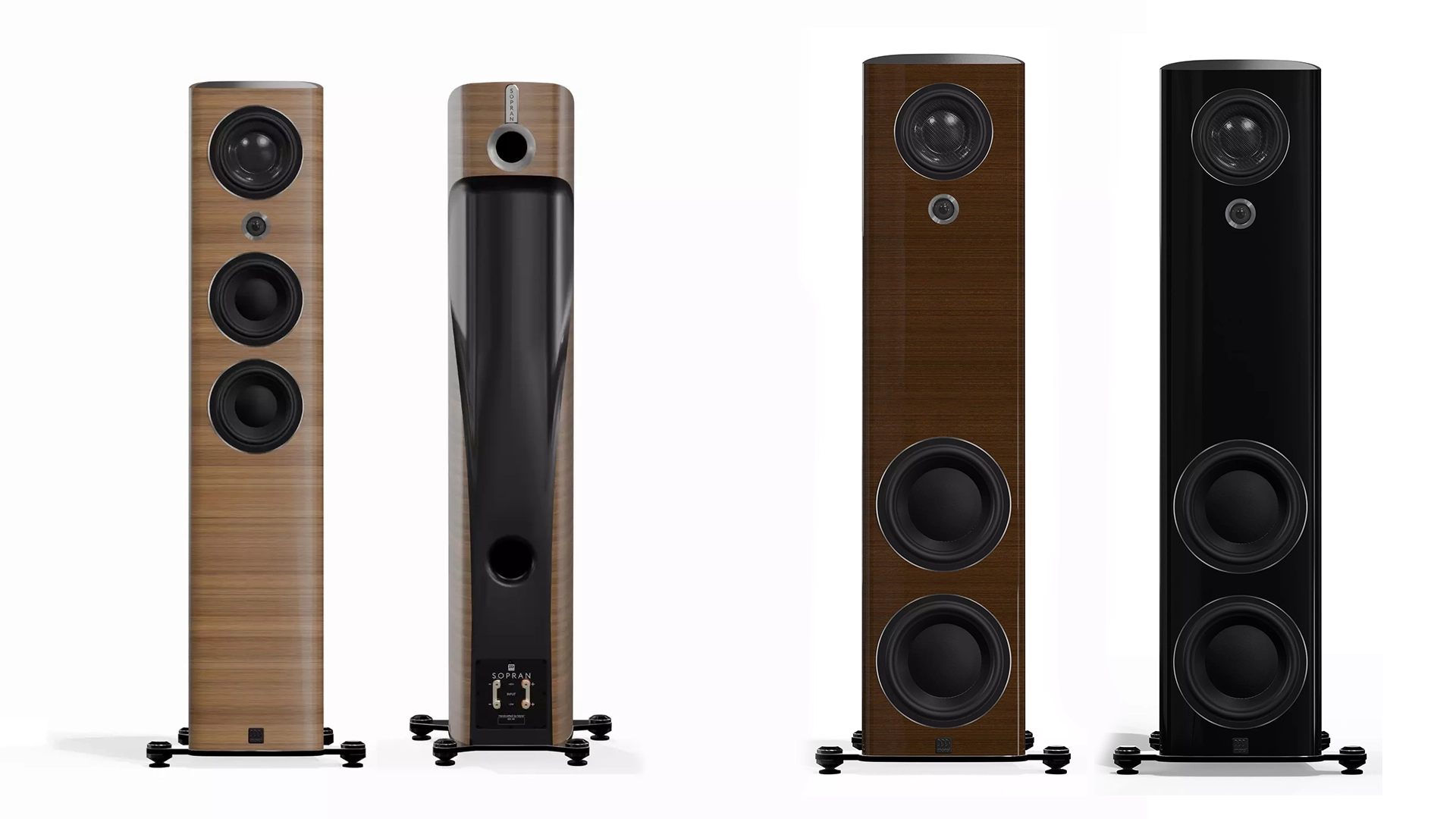
Morel is an Israeli loudspeaker and drive-unit specialist whose complete home and car systems are grounded in nearly five decades of transducer manufacturing. Meir Mordechai founded the company in 1975; the name derives from Mordechai Electro-acoustics. Morel remains family owned and develops raw drivers as well as finished products, giving it control over the motor, suspension, diaphragm and enclosure rather than forcing a speaker design around catalogue parts. The brand’s signature technologies include large External Voice Coils, which place the magnetic motor inside the coil for efficient use of magnetic energy, and Hexatech aluminium wire shaped to pack the winding with minimal air gaps. Hybrid neodymium/ferrite magnet systems, damped polymer composite cones and soft-dome midrange units appear across different applications. Home-audio lines such as Sopran, Avyra and Högtalare sit alongside architectural models, car-audio components and OEM drivers supplied to other makers. Morel’s distinction is therefore broader than a particular “sound”: it is the unusual overlap of specialist driver engineering, hand assembly and the ability to carry the same motor and diaphragm know-how from a raw transducer to a complete loudspeaker.
Neat Acoustics

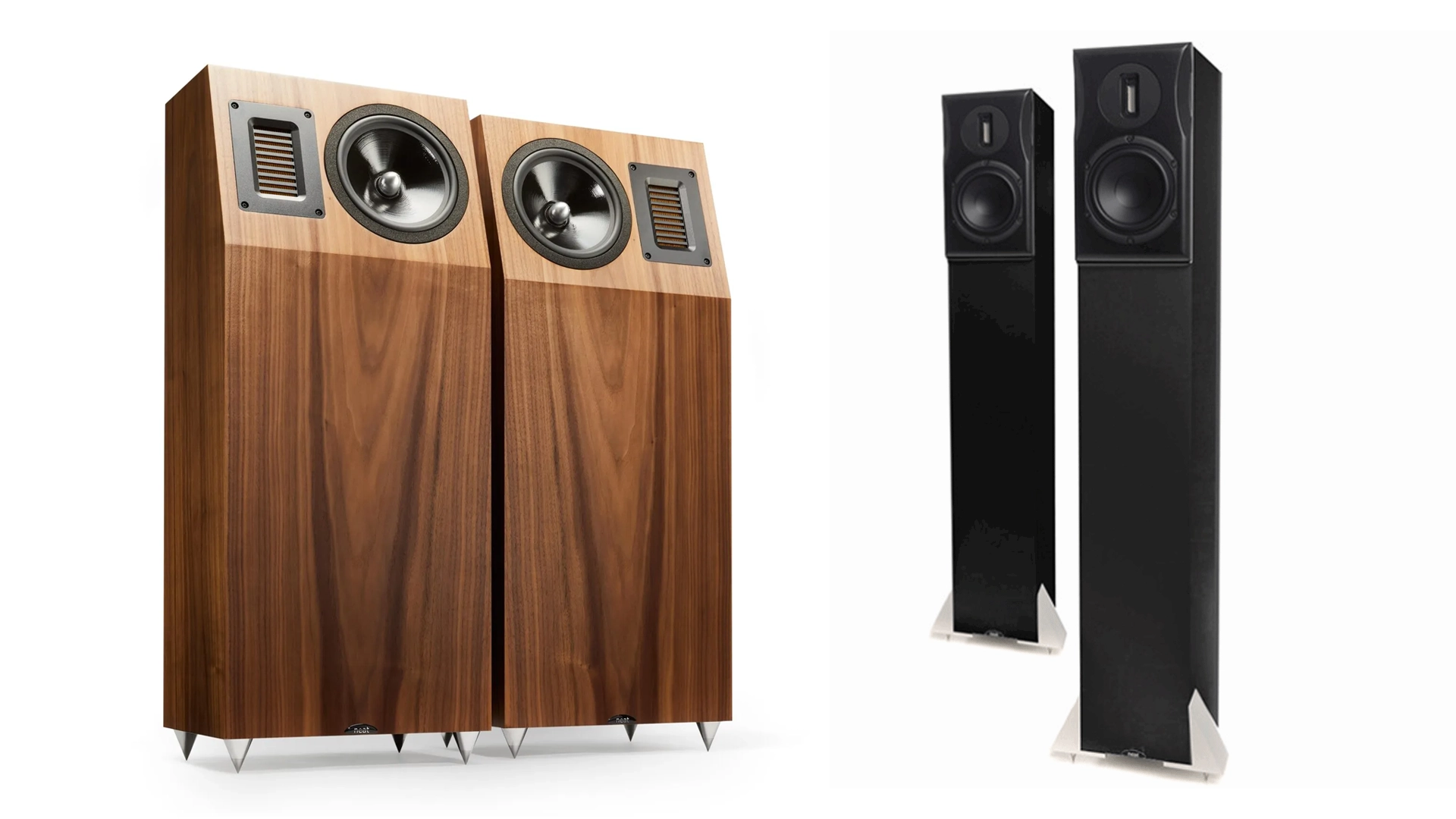
Neat Acoustics is the small British loudspeaker maker that built its identity around speakers sounding much larger than their cabinets suggest. Founder Bob Surgeoner began in 1989 with a hi-fi shop in north-east England and the first Neat Petite monitor; his background as a musician and recording enthusiast shaped a development process in which measurements establish safe engineering boundaries and long listening sessions decide the final crossover and balance. The Petite’s scale from a compact enclosure set the pattern for the brand. Neat repeatedly uses isobaric bass loading, coupling a second internal or lower driver to the visible woofer so a relatively small cabinet can reach deeper without simply enlarging the box. The approach appears in designs such as the Ekstra and Majistra, while the Iota family explores compact, horizontally oriented monitors and the unusually proportioned Iota Alpha floorstander. Momentum and Ultimatum established the earlier high-end line; current Classic models revisit the Petite and Mystique with modern drivers and crossovers. Neat also uses upward-firing supertweeters and mixed driver materials where a model requires them rather than applying one technical recipe everywhere. The brand’s appeal is specific: compact domestic proportions, surprising low-frequency authority and a voicing process led by people who make and record music themselves.
Node

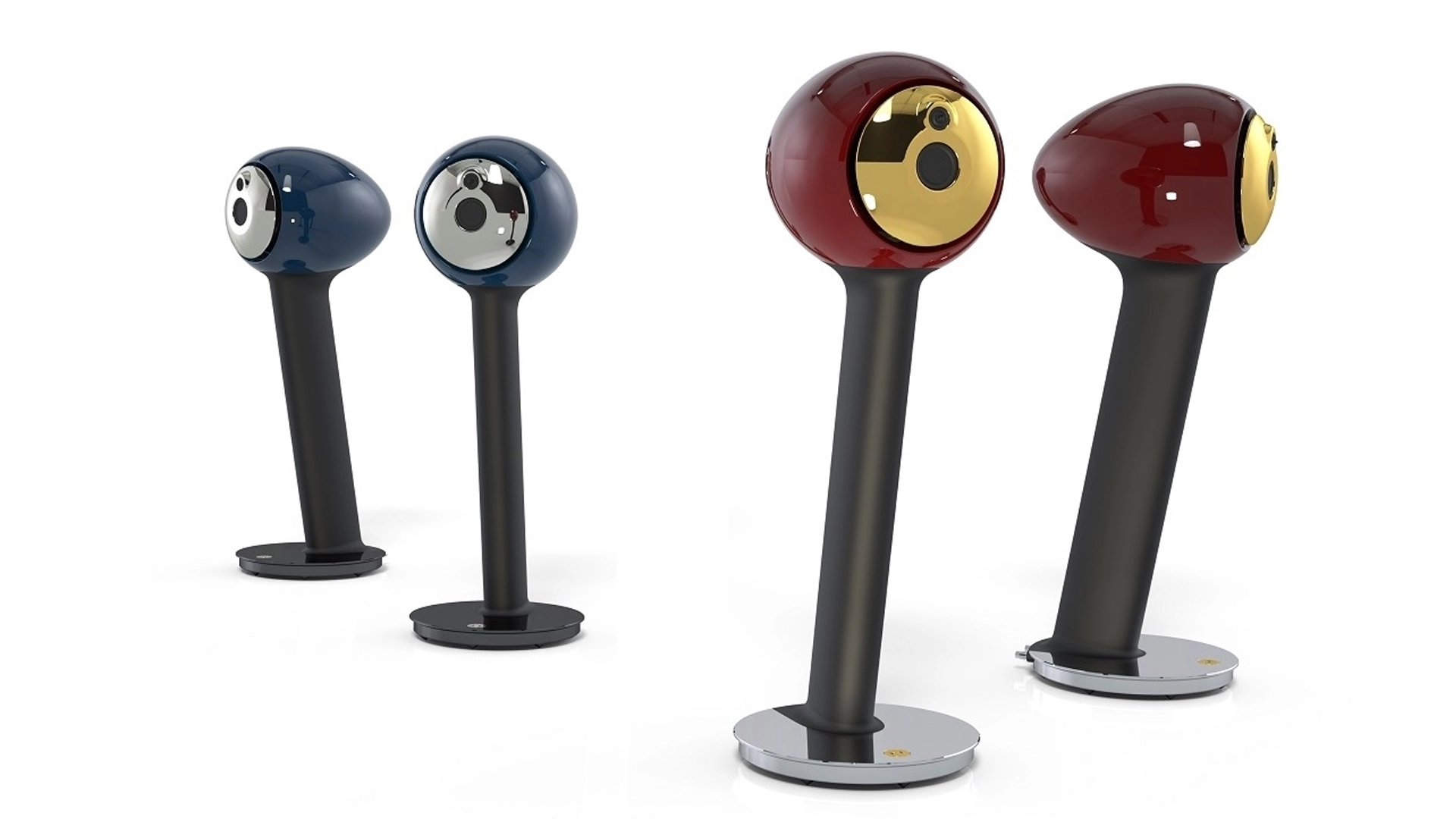
Node Audio is a British loudspeaker company founded by industrial designers Ashley May and David Evans, co-directors of the Studio17 consultancy. Their HYLIXA project asked what loudspeaker geometry could become if it were not limited by flat wooden panels and conventional machining. The answer, launched commercially in 2019, is a sculptural three-way system manufactured in the United Kingdom using selective-laser-sintered parts and extensive hand finishing. HYLIXA’s seamless cabinet contains a patent-pending helical transmission line that winds roughly 1.6 metres around the interior, loading the dedicated bass driver while keeping the enclosure compact. A concentric midrange/tweeter assembly creates a common acoustic origin at the front; this is emphatically not the single full-range driver described in the old text. Additive manufacturing also allows the crossover and internal channels to occupy precisely shaped three-dimensional spaces that would be difficult to fabricate traditionally. HYLIXA Signature refines the platform, while the newer ATOM range and SS-1 equipment-support system broaden Node beyond one statement product. The brand’s strength is the union of industrial design and acoustic engineering: its curves, internal helix and printed structure are functional parts of dispersion, resonance control and bass extension, not a conventional speaker hidden inside artistic bodywork.
OAD Ultrafidelity

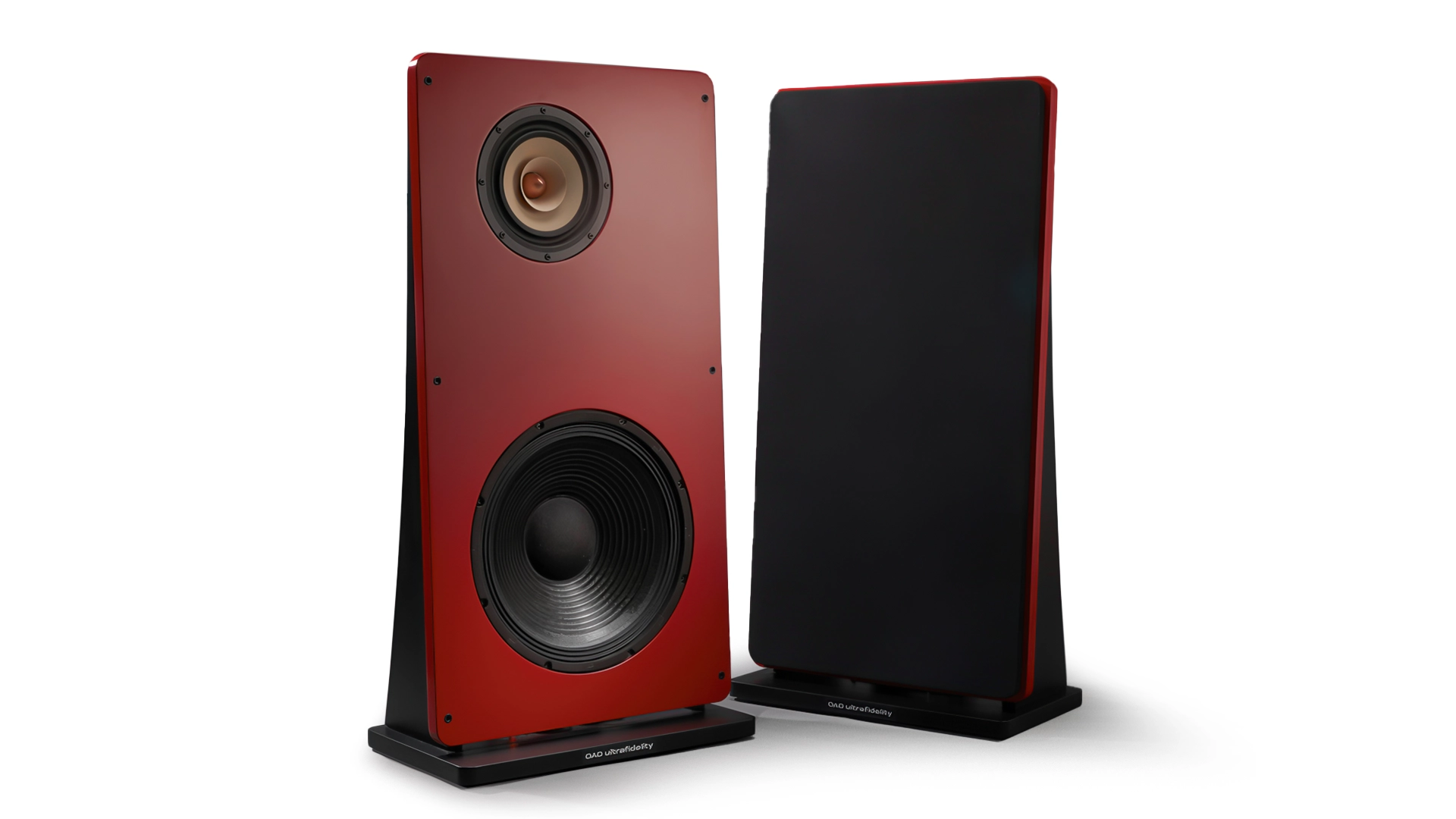
OAD Ultrafidelity—Open Audio Designs—is an Australian high-end company founded in 2015 by electronics engineer Jon De Sensi. It began in his home workshop with prototypes for a fully discrete Class-A preamplifier and a high-current Class-AB power amplifier, then shipped the CP1 preamp and UF1 power amp. De Sensi was not new to the field: in 1990 he founded Music Labs while working as a civilian Department of Defence engineer and later helped replace valve circuitry in Australian weather-radar systems with solid-state designs. Today’s core electronics are the UP1 and UP1 Reference MM/MC phono stages, Padma preamplifier and Vajra power amplifier. UP1 provides unusually broad user-adjustable gain and cartridge loading with separate supply isolation; Padma uses a fully balanced dual-mono signal path and a digitally commanded resistor network that keeps the music signal out of the control mechanism. Vajra delivers its first 15 watts in Class A before moving into Class AB and uses a complementary-feedback output stage plus slit-foil power-supply capacitors. OAD also develops DAC/streaming and open-baffle loudspeaker projects. The old text’s mention of tube electronics was unsupported. The brand’s real signature is De Sensi’s long, traceable circuit-design history and a small range built around low noise, linearity and unusually explicit engineering choices.
Odeon Audio

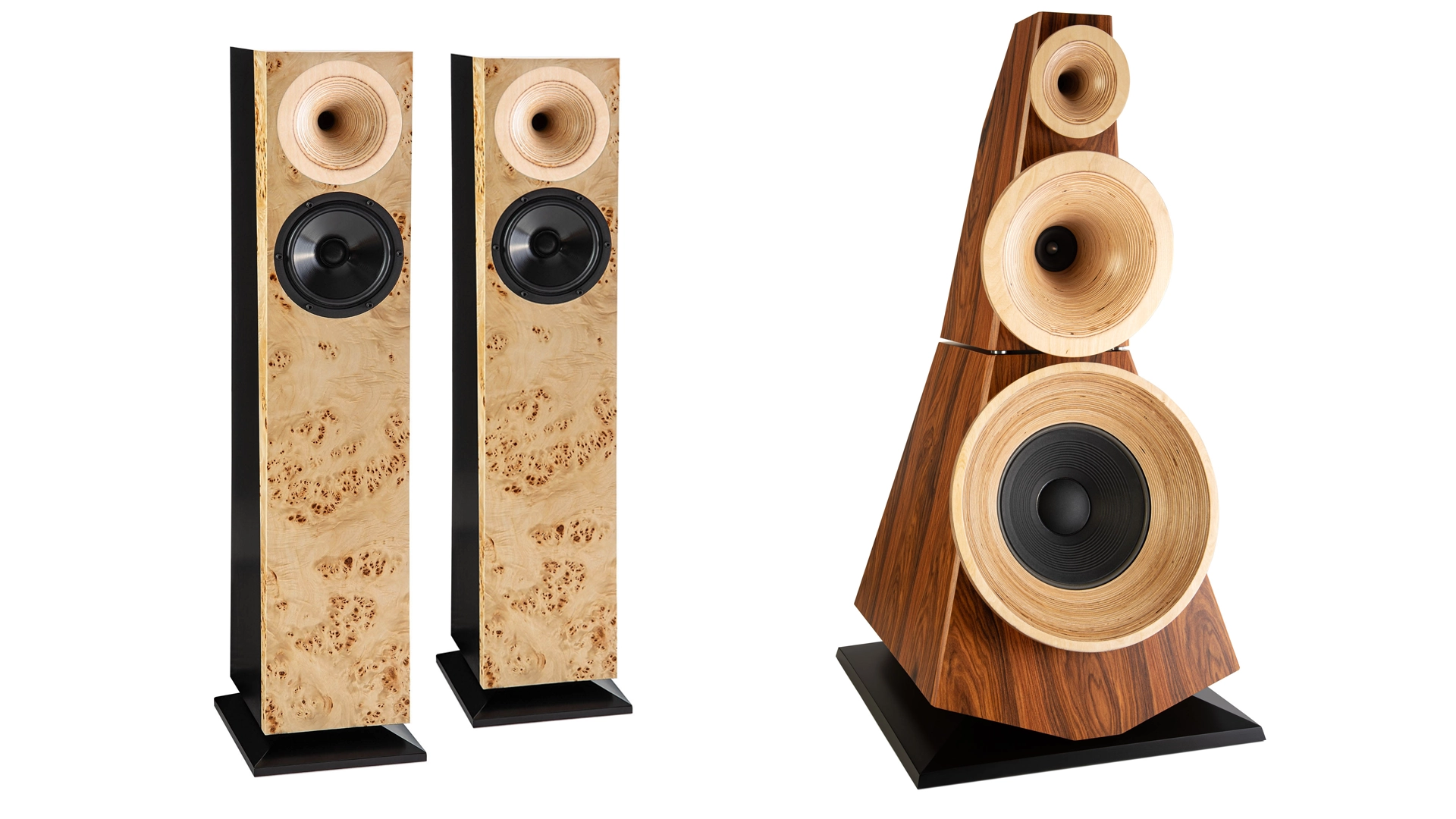
Odeon Audio is the German loudspeaker manufacturer that made the horn principle usable beyond theatre-scale systems. The company traces its roots to 1987, when designer Axel Gersdorff founded ARS Elektroakustik after almost a decade of experimenting with loudspeakers. Today development and final assembly take place in Haltern am See, where Odeon builds high-efficiency systems around a distinctive spherical-wave horn rather than treating the horn as a decorative retro detail. The horn is machined from solid blocks of laminated birch plywood. Its smooth, rotationally symmetrical flare controls directivity without the abrupt transitions of many conventional profiles, while high sensitivity keeps driver excursion low and preserves dynamic contrast. Odeon combines these in-house horns with carefully selected and matched drivers from specialist partners, model-specific crossovers and rigid, regionally produced cabinets. Orfeo and Nova S make the concept relatively compact; Helix and Semper scale it up, while the four-way Carnegie is the statement design. Celeste occupies a more domestically sized middle ground. The useful distinction is not a generic promise of “live sound”: Odeon applies precise woodworking, controlled dispersion and low-excursion operation to obtain the immediacy of a horn without demanding an auditorium-sized room or amplifier power.
Oephi
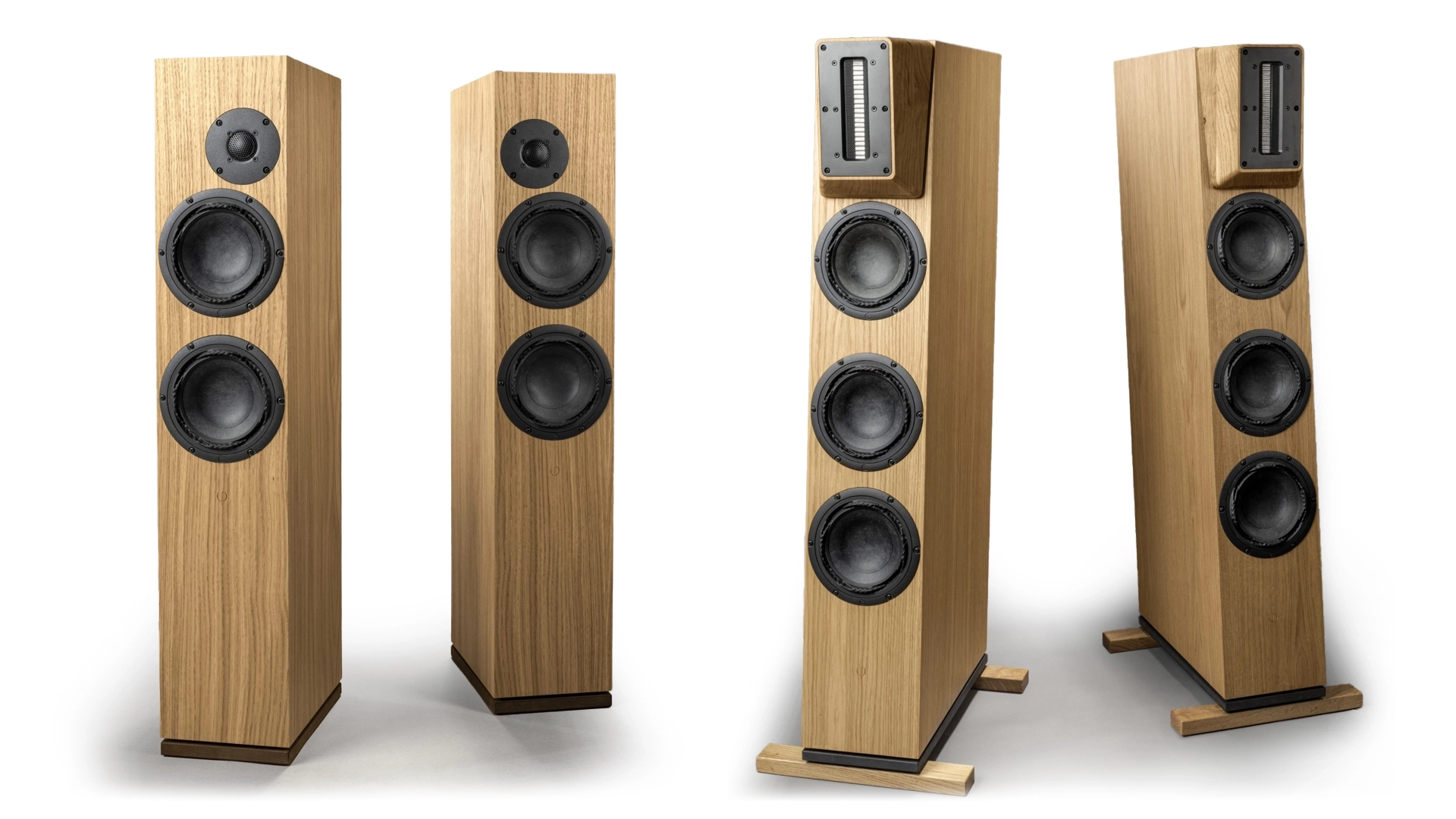
OePhi is the Danish audio company of engineer Joakim Juhl, built around one unusually consistent idea: preserve timing as carefully as frequency response. Juhl arrived at the brand after nearly two decades of cable research, but a reliably documented company-founding year is not available. The work began with signal transmission and has since grown into loudspeakers and amplification designed according to the same time-domain priorities. OePhi cables use in-house conductor geometry, very low capacitance and inductance, and cotton-damped air dielectric rather than heavy conventional insulation. Lounge, Ascendance, Transcendence, Immanence, Reference and Kali form progressive families across interconnect, speaker, digital and power cables, using copper, silver-plated copper or pure silver according to level. The company also manufactures its own silver terminations for selected products and accepts custom lengths and connections. OePhi Acoustics models—including Lounge 2, Transcendence 2 and Immanence 2/2.5—apply careful driver selection, crossover phase behaviour and wide bandwidth to handmade Danish speakers. Integrated amplifiers extend the concept with short Class-AB signal paths and resistor-ladder volume control. OePhi is therefore no longer accurately described as a cable-only brand: cables remain its origin, while complete components now test the same timing philosophy from input to acoustic output.
ONCE Custom Sound

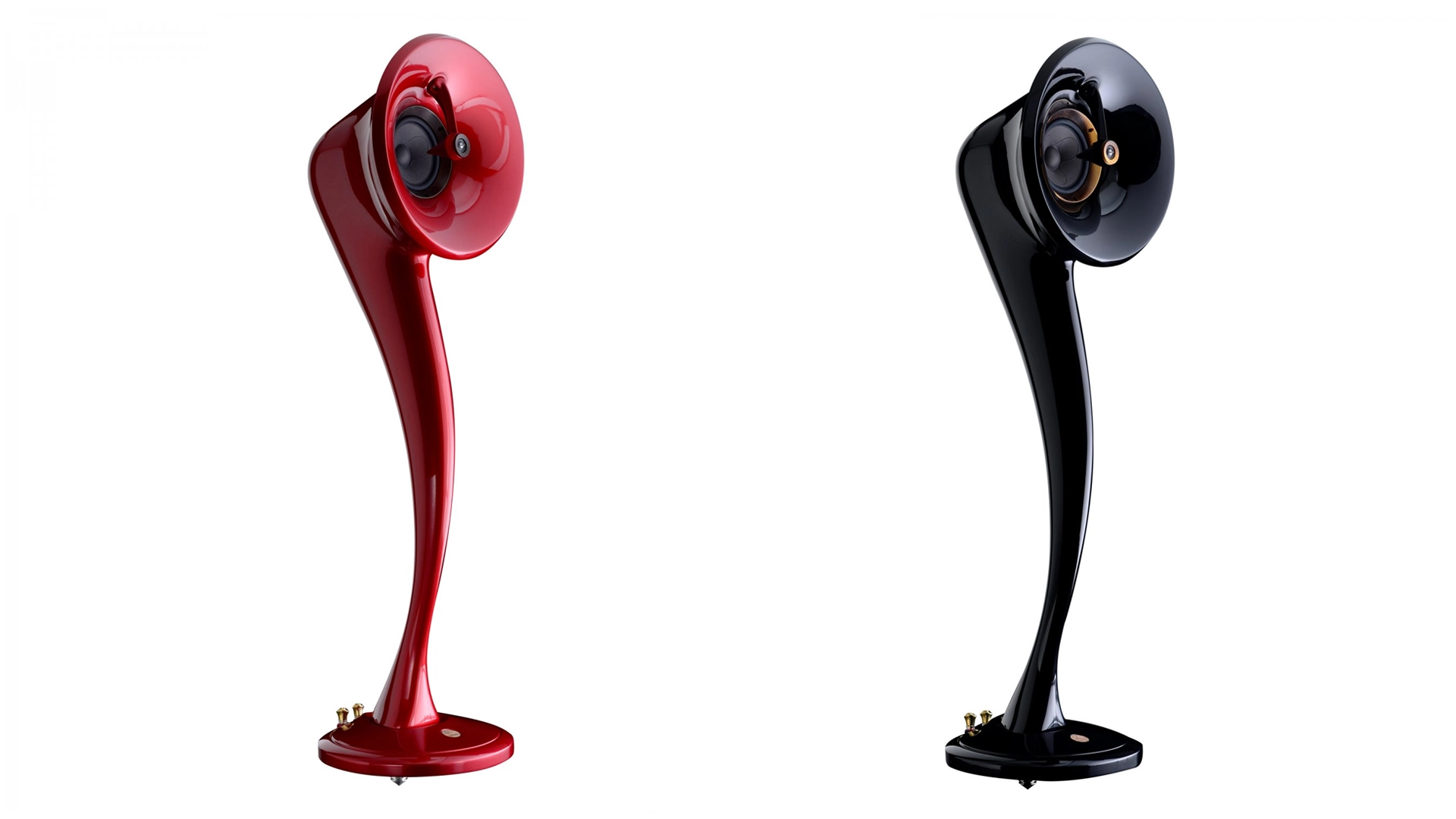
ONCE Custom Sound is a Turkish loudspeaker atelier that treats the cabinet as both an acoustic instrument and a commissioned object. Founded in 2018 by two friends—one formed by a life in music, the other an artist raised around a composer father—the company works in small quantities and adapts finish, colour and surface treatment to the room rather than offering only standard veneers. Its speakers are organised around individually named designs such as Su, Nar, Almula, Ali and Lara. Su—the Turkish word for water—expresses the brand particularly well: a sculpted enclosure and carefully chosen transducers are intended to combine physical presence with an unforced flow. Other models change scale, driver arrangement and visual character instead of stretching one anonymous box into several sizes. Cabinets are shaped and finished by hand, with attention to internal volume, resonance control and the way the loudspeaker occupies living space. The earlier description confused ONCE with an unrelated Danish cable maker; there is no factual reason to connect the two brands. ONCE is best understood on its own terms: a young Istanbul-area maker whose speciality is bespoke loudspeakers in which acoustic tuning, Turkish design references and the client’s choice of materials are developed as one object.
Oneiros

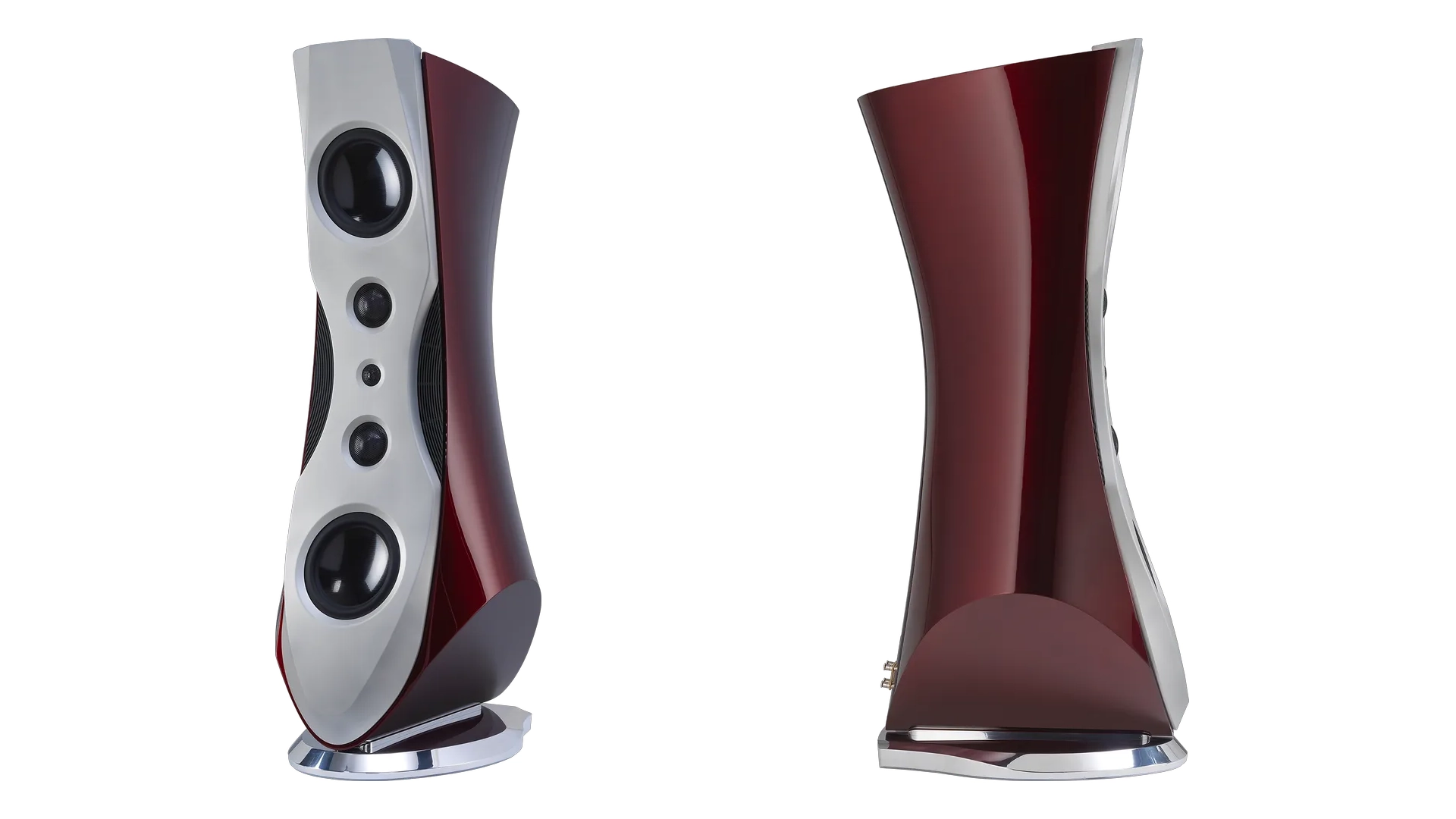
Oneiros Audio is the British company attempting to build a loudspeaker with the materials and manufacturing logic of modern motorsport rather than traditional furniture. The project officially began in late 2023 in the UK’s “Motorsport Valley,” giving its team access to Formula 1 composite specialists, finite-element analysis and autoclave production. Its first product, ONEIROS, is therefore not a wooden cabinet hidden beneath a dramatic skin: the sculpted carbon-fibre monocoque is the enclosure and the structural solution. The three-way floorstander was developed through extensive CAD and more than 100 hours of FEA used to study resonance, core density and carbon lay-up. Five-axis-machined tooling and autoclave curing create a rigid, seamless shell whose organic form would be impractical in timber. Twin in-house 10-inch woofers use Twaron/graphene composite diaphragms; twin 3-inch midrange domes combine Dyneema and graphene, and a one-inch CVD-diamond tweeter handles the highest frequencies. Mundorf components appear in the crossover, while each 67-kilogram speaker is finished to automotive standards. Oneiros has no long back catalogue to embellish. Its identity rests on a single, technically ambitious product and on translating local racing-industry know-how—composite structures, analysis and precision finishing—into an acoustically functional loudspeaker form.
Opera Loudspeakers

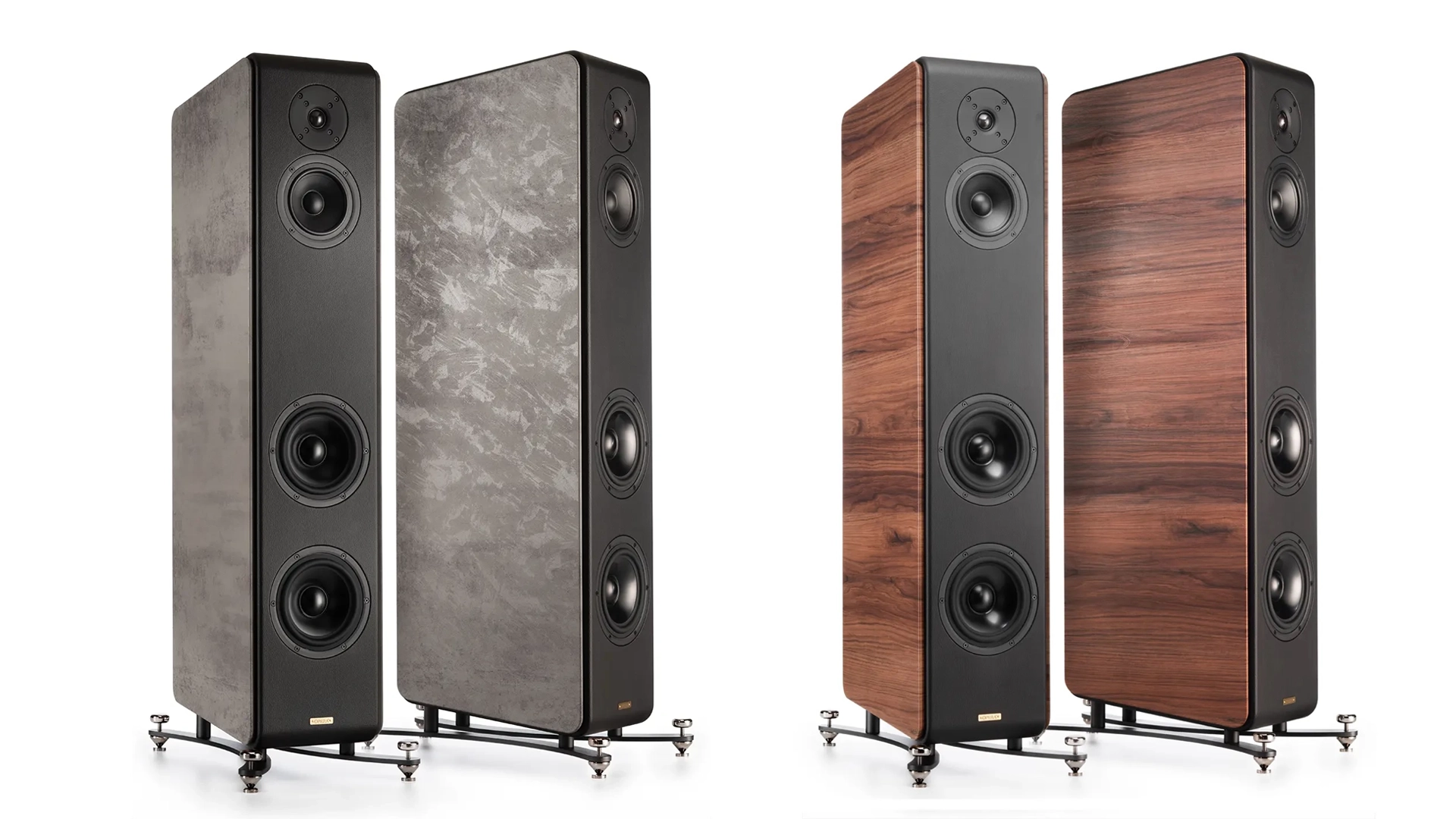
Opera Loudspeakers is an Italian manufacturer founded in 1989 by Giovanni Nasta and closely linked with valve-electronics specialist Unison Research. Based near Treviso, the company builds loudspeakers whose woodworking and upholstery are not applied after the acoustic design but form part of it: curved multilayer cabinets, real wood and leather help create rigid, damped enclosures with a distinctly Italian domestic presence. Opera does not impose one driver formula on every model. Its designers select transducers, cabinet loading and crossover topology for the intended scale, then voice the complete system through measurement and listening. The current Classica family includes Mezza, Quinta and Grand Mezza, while the Callas line moves toward more ambitious multi-driver and standmount designs; the larger Grand Callas remains one of the names most associated with the brand. Production and finishing remain centred in Italy, and the shared organisation with Unison Research allows complete Italian-made systems to be demonstrated and developed under one roof. After Giovanni Nasta’s death in 2020, the family and management continued the operation; the current site identifies UK Distribution Srl as the owner. Opera’s character is the combination of acoustic engineering and furniture-grade cabinet craft, not merely a generic claim of “musical” voicing.
Operly

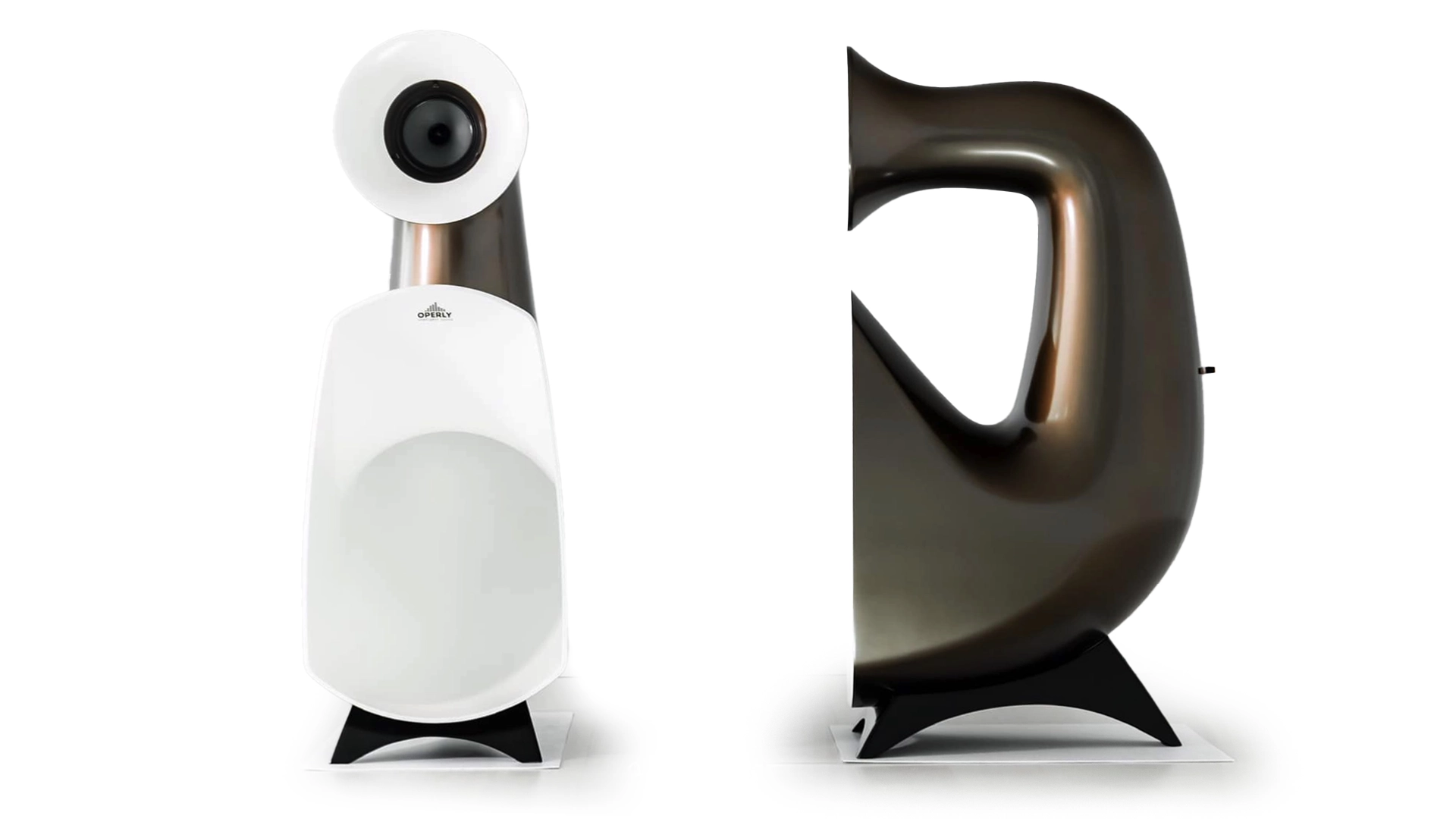
Operly is a German loudspeaker company based in Düsseldorf and focused on a single unconventional system rather than a conventional model ladder. Intelligence III is a passive, crossoverless loudspeaker built around one full-range driver and a two-part horn architecture: a front horn shapes the direct output, while a much longer rear-loaded path reinforces the low frequencies. The absence of a crossover keeps the electrical path simple and avoids handing the musical spectrum between dissimilar drivers. The enclosure is a seamless, high-strength shell with no parallel internal walls. Its wide mouth and sculpted geometry are functional parts of the acoustic loading, yet also make each pair resemble a commissioned interior object. Operly quotes sensitivity around 100 dB, a six-ohm nominal impedance and a recommended amplifier range beginning at only a few watts, so Intelligence III can work with low-powered valve amplifiers while still producing room-scale dynamics. Buyers can choose bespoke colours, metal finishes and decorative treatments, but the acoustic structure remains constant. Operly’s distinction is therefore easy to state without ornamental language: it pursues coherence through one driver, no crossover and carefully calculated front- and back-loaded horns, then uses advanced moulding and custom finishing to make that architecture practical in a luxury domestic setting.