
Integrated Amplifiers
An integrated amplifier is the heart of many classic hi-fi systems, combining two essential components into a single chassis: a preamplifier for input switching and volume control, and a power amplifier to drive the speakers. This all-in-one design offers a straightforward and convenient way to build a high-quality audio system without the complexity of separate boxes. This page is a comprehensive directory of manufacturers that produce these versatile components, from simple, purely analog models to modern amplifiers with built-in DACs and streaming capabilities.
Hi-Fi brands in the category
Summary information and image
Direct links to official websites
Copland

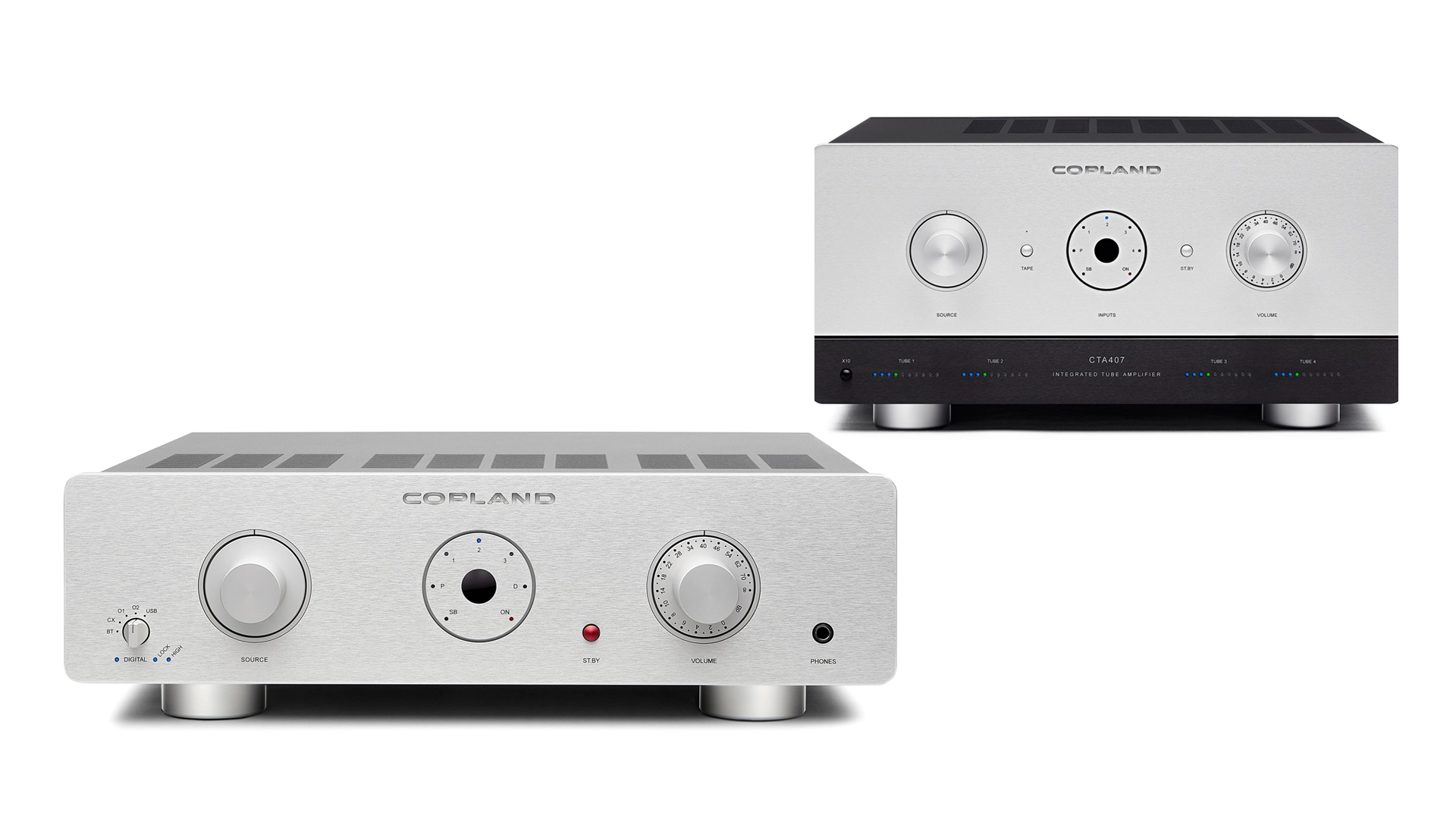
Copland is the Danish electronics company of founder and principal designer Ole Møller, whose earlier work at Ortofon focused on the very low-noise amplification required by phono cartridges and recording equipment. His first Copland product, the 12-watt-per-channel CTA15 valve power amplifier, appeared in 1984. It established an approach the company still follows: use modern circuit boards, component selection and industrial production to make valve technology stable and practical rather than nostalgic. Copland subsequently became known for valve preamplifiers and power amplifiers, CD players and digital sources, while its CSA integrated amplifiers combine a tube line stage with solid-state output power. Current CTA and CSA models retain the clean Scandinavian exterior and internally direct signal paths that distinguish the brand from more theatrical tube equipment. Copland’s particular strength is this continuity between analogue experience and contemporary use — preserving the overload behaviour and tonal qualities valued in valves while adding the power, connectivity and day-to-day reliability expected from a modern hi-fi component.
Creek
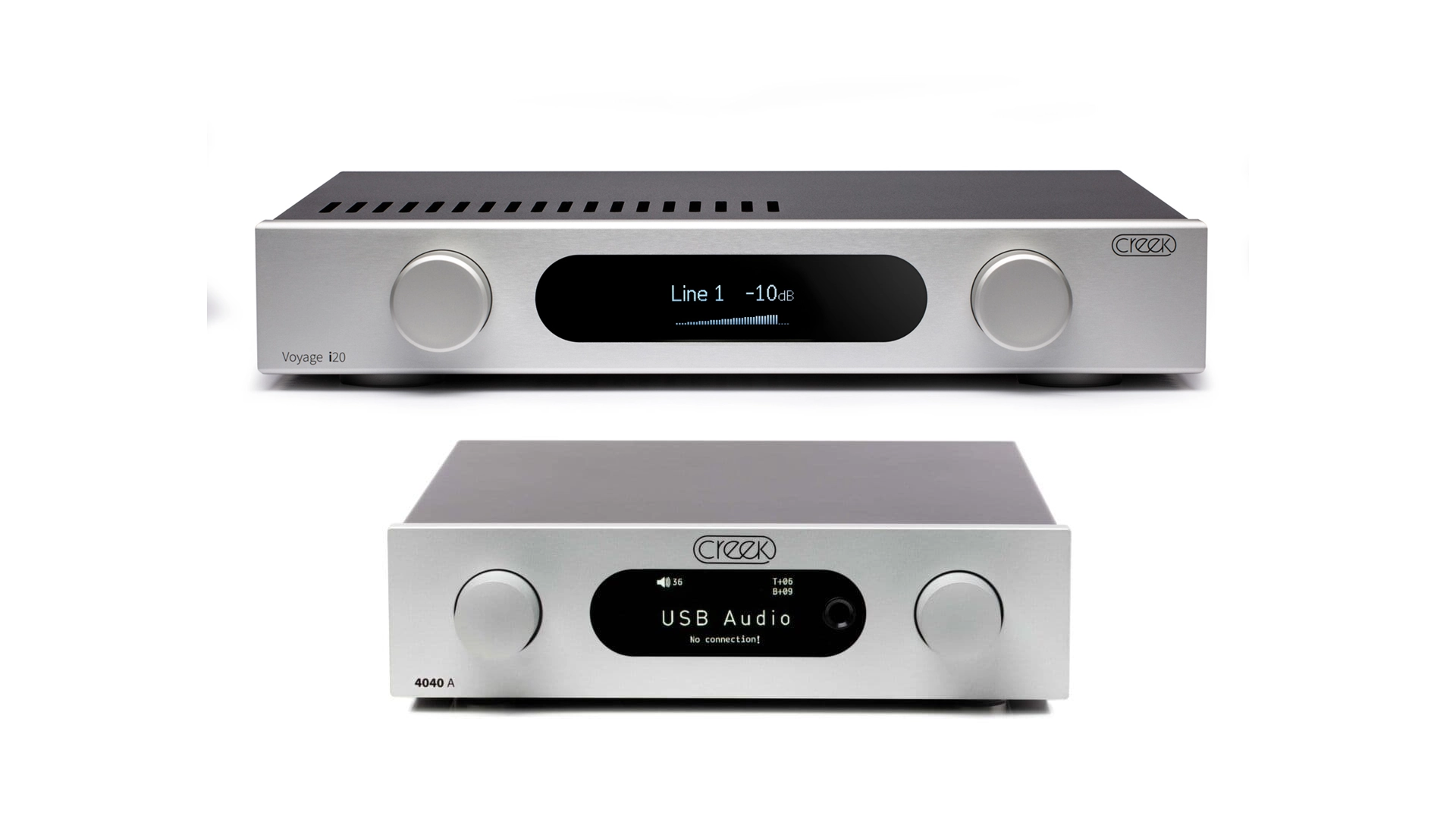
Creek Audio is a British electronics brand founded by Michael Creek in 1982, initially with compact integrated amplifiers and tuners designed to deliver serious performance without luxury pricing or unnecessary controls. The early CAS4040 amplifier established that reputation and its model number remains part of the modern range. Creek’s history was not completely linear: the company was sold to Mordaunt-Short in 1988, then Michael Creek and a group of international distributors bought the name back in 1993. That independent, value-conscious engineering culture continued through Evolution and Voyage amplifiers, CD players, DACs and phono stages. Today’s products are designed and engineered in London under Step Deeper Ltd, with the 4040 line preserving compact proportions and the newer Cymatics direction exploring updated amplification. Creek components typically emphasise sensible power supplies, short signal paths, optional phono or digital capability and straightforward operation. The brand’s individuality lies in making an amplifier easy to own and system-match while keeping circuit design — rather than size, weight or ornament — at the centre of the proposition.
Cyrus

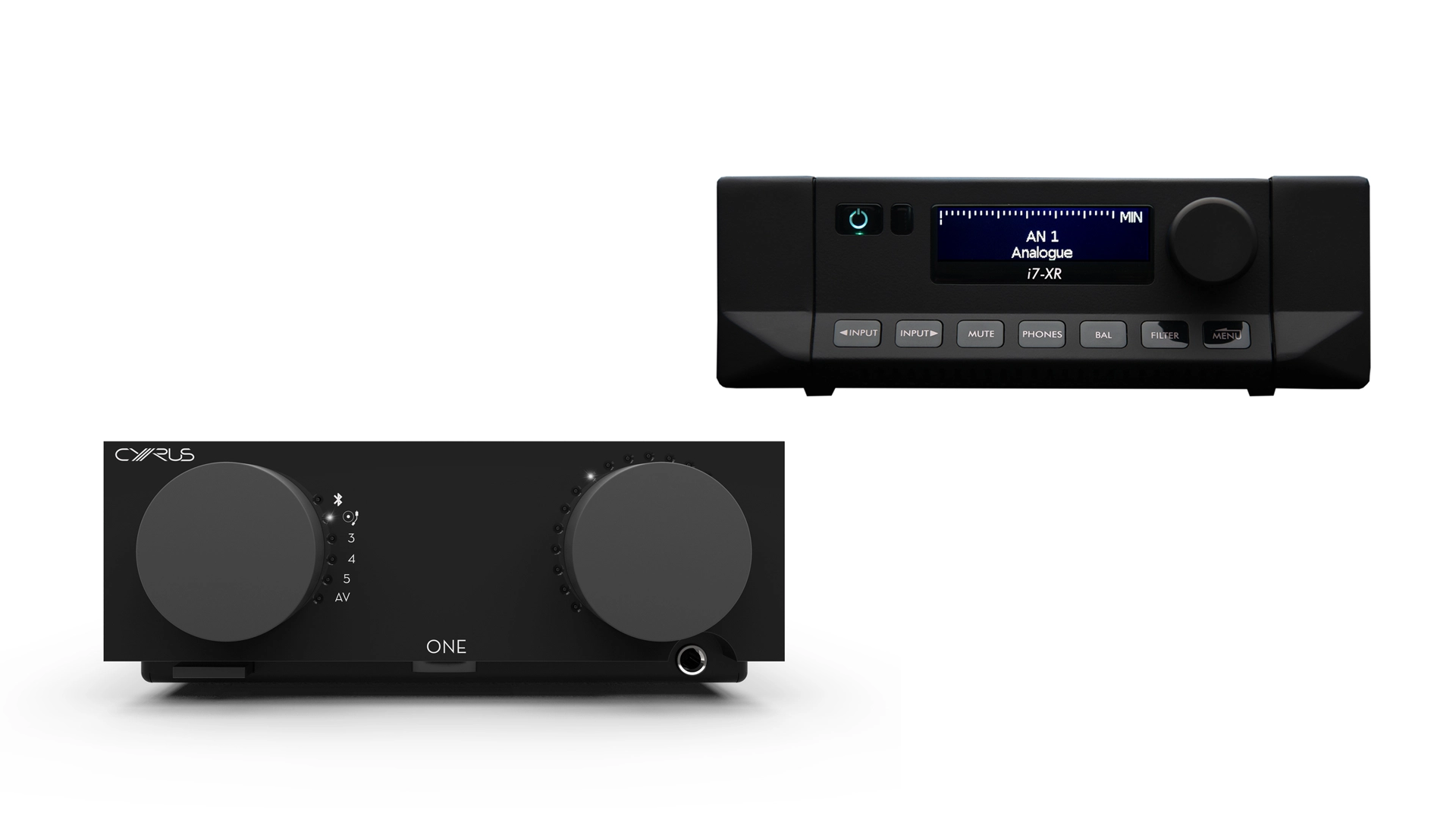
Cyrus Audio is the British company that made half-width hi-fi separates a serious system format. The original Cyrus One integrated amplifier appeared in 1984, when Cyrus was the electronics arm associated with Mission, and established the compact die-cast chassis, clean fascia and upgrade path that became the brand’s visual and technical language. Cyrus later became independent and remains based in Cambridgeshire. Its range has covered integrated and power amplifiers, preamplifiers, CD players, streamers, phono stages and external power supplies, allowing a system to grow without abandoning its core components. The 40 Series carries the concept into a wider but still compact aluminium case with dedicated 40 AMP, 40 ST streamer, 40 CD and 40 PSU models, while the 80 range develops the performance tier further. External PSUs and trade-in or servicing programmes reinforce the long-life, modular philosophy. Cyrus’s individuality is not compactness alone: it is the disciplined use of a consistent footprint, separated power options and interoperable components to build a high-performance system progressively.
Dan D’Agostino

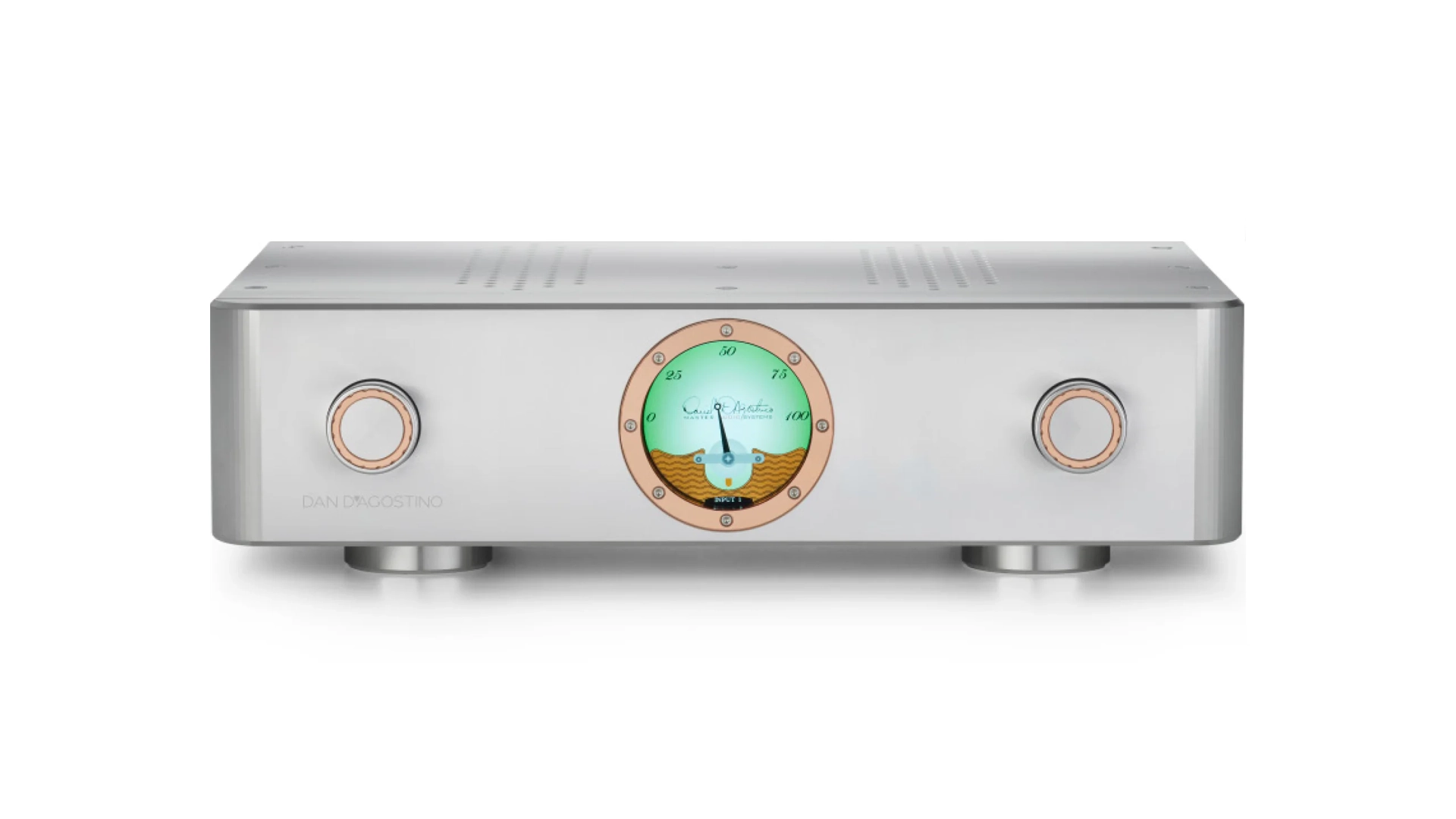
Dan D’Agostino Master Audio Systems is the Arizona company through which one of high-end audio’s best-known amplifier designers began again after co-founding and engineering Krell. Established in 2011, the brand concentrates on preamplifiers, integrated amplifiers and exceptionally high-current power amplifiers rather than a broad catalogue of sources and speakers. The original Momentum amplifier introduced the compact copper heat-sink architecture and watch-inspired level meter that made the products immediately recognisable. Momentum has since been joined by the more extreme Relentless family, the relatively accessible Progression range and the Pendulum integrated amplifier; the fifteenth-anniversary Momentum Z continues the core topology. Large custom power transformers, fully complementary balanced circuits, precision-machined aluminium and substantial thermal management serve the practical goal of controlling demanding loudspeakers without sacrificing low-level resolution. Optional phono or digital-streaming modules in selected preamplifiers and integrated models add flexibility without turning the company away from its central expertise: analogue gain and power delivery.
Daniel Hertz

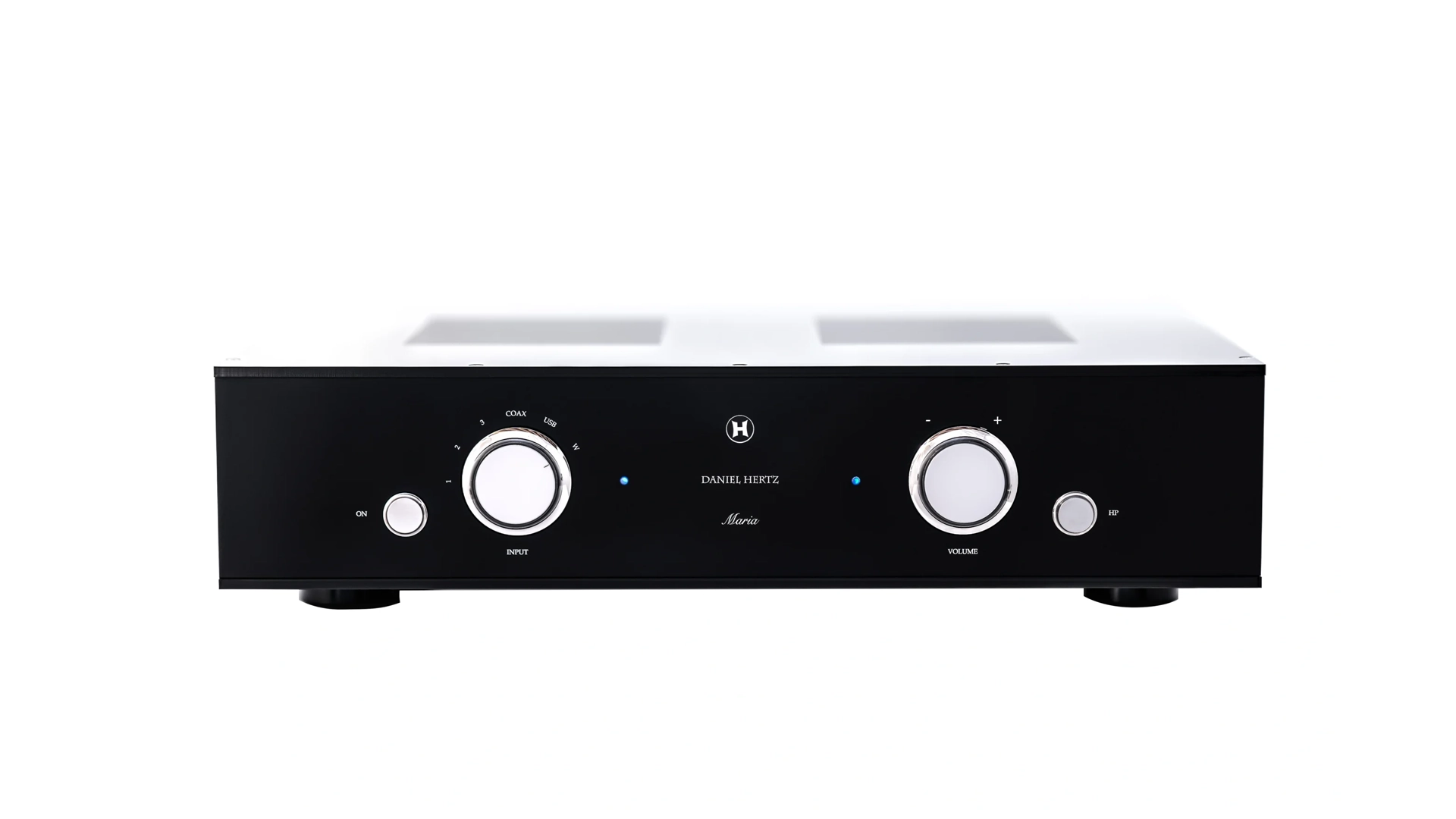
Daniel Hertz is the Swiss audio company founded in 2007 by Mark Levinson, the musician-engineer who had previously created Mark Levinson Audio Systems, Cello and Red Rose Music. The brand combines high-efficiency loudspeakers with integrated amplification and proprietary digital processing, seeking complete-system behaviour rather than isolated components. Its current Maria 350 and four-channel Maria 800 place DAC, preamplifier, power amplification, headphone output, active crossover and time-alignment functions in one chassis. Central to that platform is the programmable Mighty Cat audio chip and the patented C Wave process, which Daniel Hertz describes as restoring continuity to PCM playback through a tuned algorithm; its technical claims should be distinguished from the company’s more speculative health messaging. Maria can drive passive speakers or actively bi-amplify Daniel Hertz models such as Chiara, M1 and M4, while Anton and Amber Midnight broaden the loudspeaker range. The old country entry was incorrect: Daniel Hertz S.A. is based in Switzerland, although its founder and much of his earlier career are American.
Dared

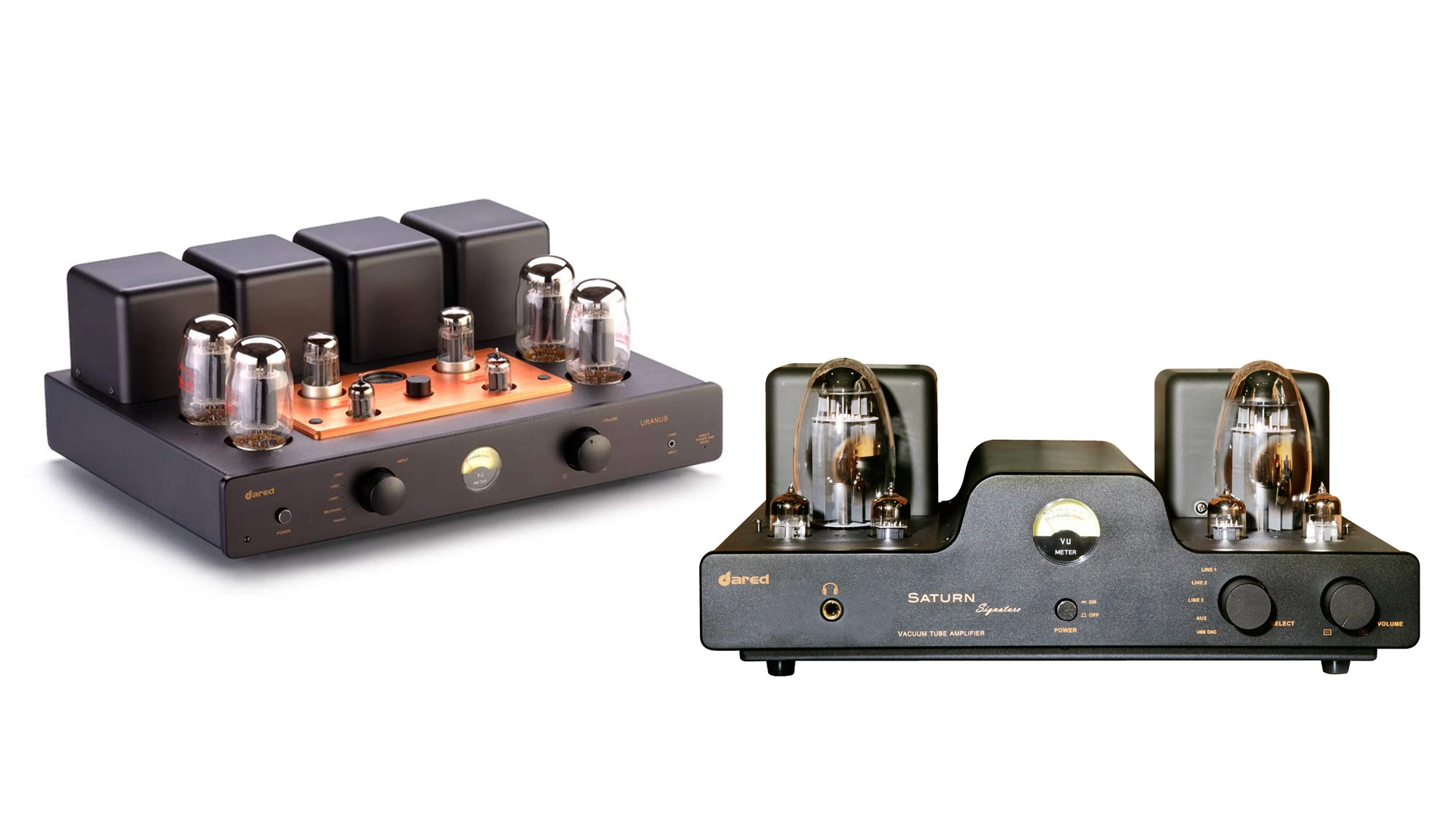
Dared is a Chinese audio manufacturer founded in 1995, initially drawing on transformer-design and production experience before making valve amplification its defining speciality. The registered DARED brand covers integrated amplifiers, power amplifiers, preamplifiers and headphone amplifiers, alongside selected guitar amplifiers and compact multimedia systems. Its products use familiar output valves such as EL34, KT88 and 300B in visually open layouts that make tube ownership approachable to listeners entering this part of hi-fi. The important strength is not extravagant “high-end” language but integration: Dared designs the power supply, output-transformer matching, bias arrangement and user interface as a complete product at prices below many boutique valve makers. Models in the MP family have also combined valves with USB DACs, headphone outputs or compact speaker amplification, showing an early willingness to place traditional circuits in modern desktop systems. Dared’s catalogue is therefore best understood as affordable, factory-produced tube audio with a long manufacturing history, rather than as a small Western-style artisan workshop or a generic badge placed on unrelated electronics.
darTZeel

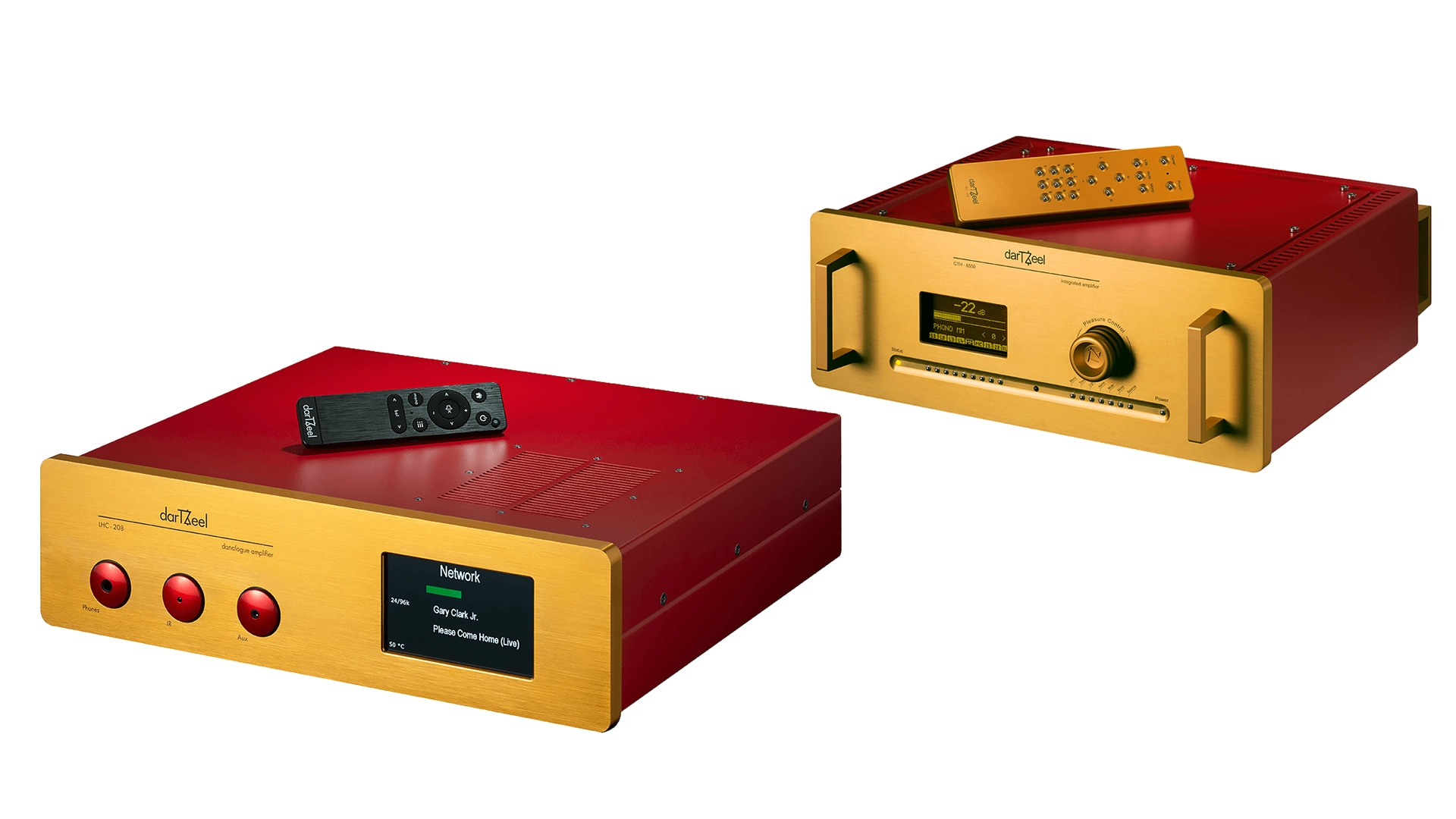
darTZeel is the Geneva amplifier company of Swiss engineer Hervé Delétraz, whose red-and-gold NHB-108 power amplifier established one of high-end audio’s most recognisable design languages after the brand’s formation in 2000. Beneath the colour scheme is a deliberately unusual circuit philosophy: short signal paths, minimal circuit stages, no global negative feedback and symmetrical power arrangements are used to preserve speed and phase behaviour. The NHB-108 Model Two remains a single-ended class-AB stereo design with true dual-mono construction, while the larger NHB-468 monoblocks, NHB-18NS preamplifier and CTH-8550 integrated amplifier apply related ideas at different scales. darTZeel also offers its proprietary 50-ohm Zeel connection on BNC alongside conventional RCA and balanced inputs, aiming to maintain a defined interface between components. The tactile “Pleasure Control” volume system and suspended internal assemblies show how user interaction and mechanical resonance receive the same attention as electrical measurements. These products are handmade in Switzerland in low volume and are intended for long service rather than frequent model replacement.
Dayton Audio

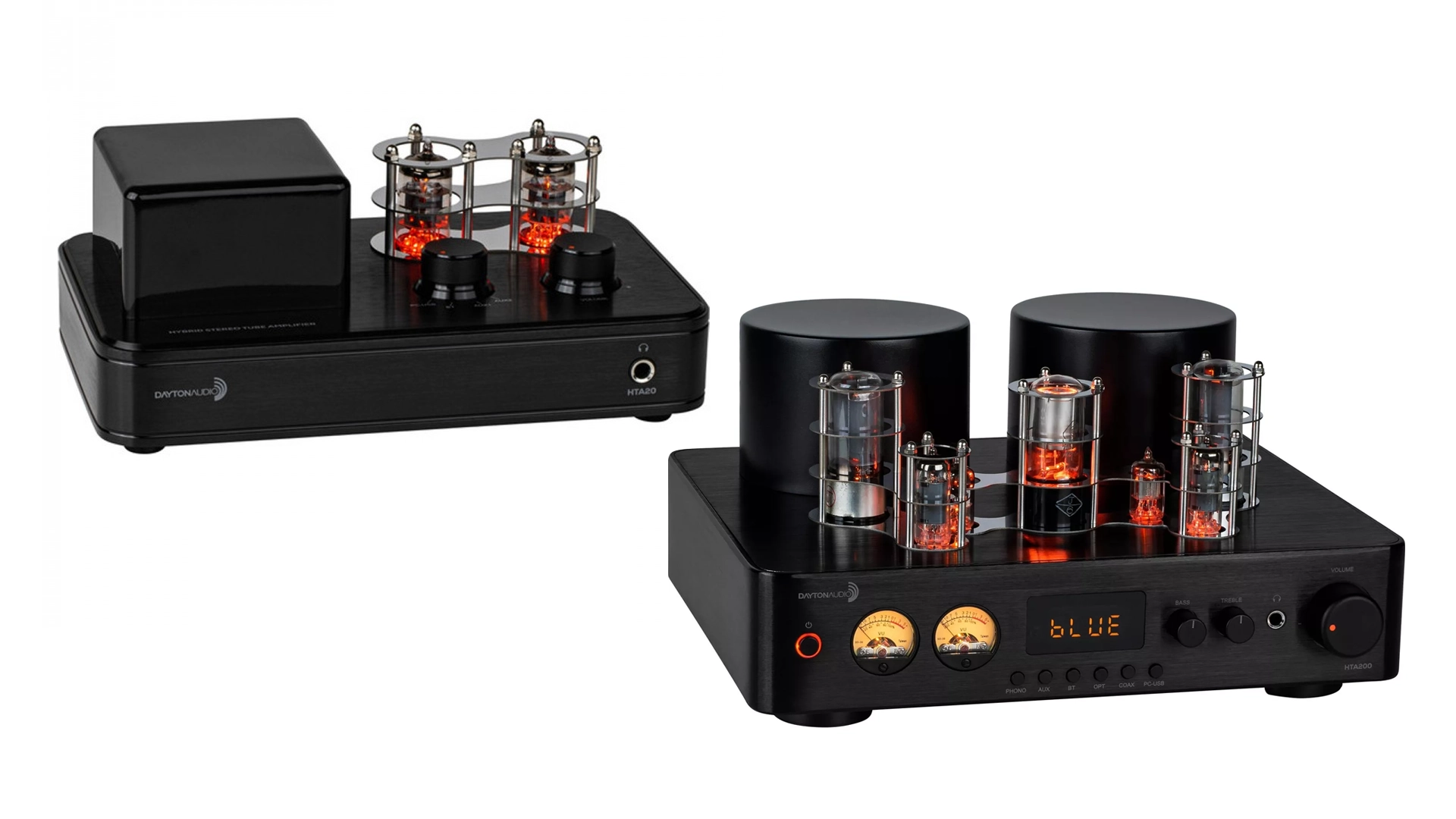
Dayton Audio is the house audio brand associated with Ohio-based Parts Express, serving builders, installers and value-conscious listeners with components that are normally sourced from many separate suppliers. Its catalogue spans individual tweeters, midrange and woofer drivers, passive radiators, subwoofer plate amplifiers, class-D amplifier boards, DSP modules, finished subwoofers, compact speakers and complete kits. Reference and Signature drivers provide measured parameters for original loudspeaker designs, while Ultimax subwoofers prioritise long excursion and power handling. Just as important is the supporting tool chain: the DATS measurement system helps builders determine driver impedance and Thiele-Small parameters, and project documentation makes the parts usable rather than merely inexpensive. Dayton also collaborates with independent designers on kits and supplies OEM or custom-installation solutions through Parts Express. Its distinctive strength is breadth with technical accessibility — drivers, electronics, measurement and practical documentation within one ecosystem — making it especially useful to DIY loudspeaker builders who want compatible parts and test tools from one source.
Denon

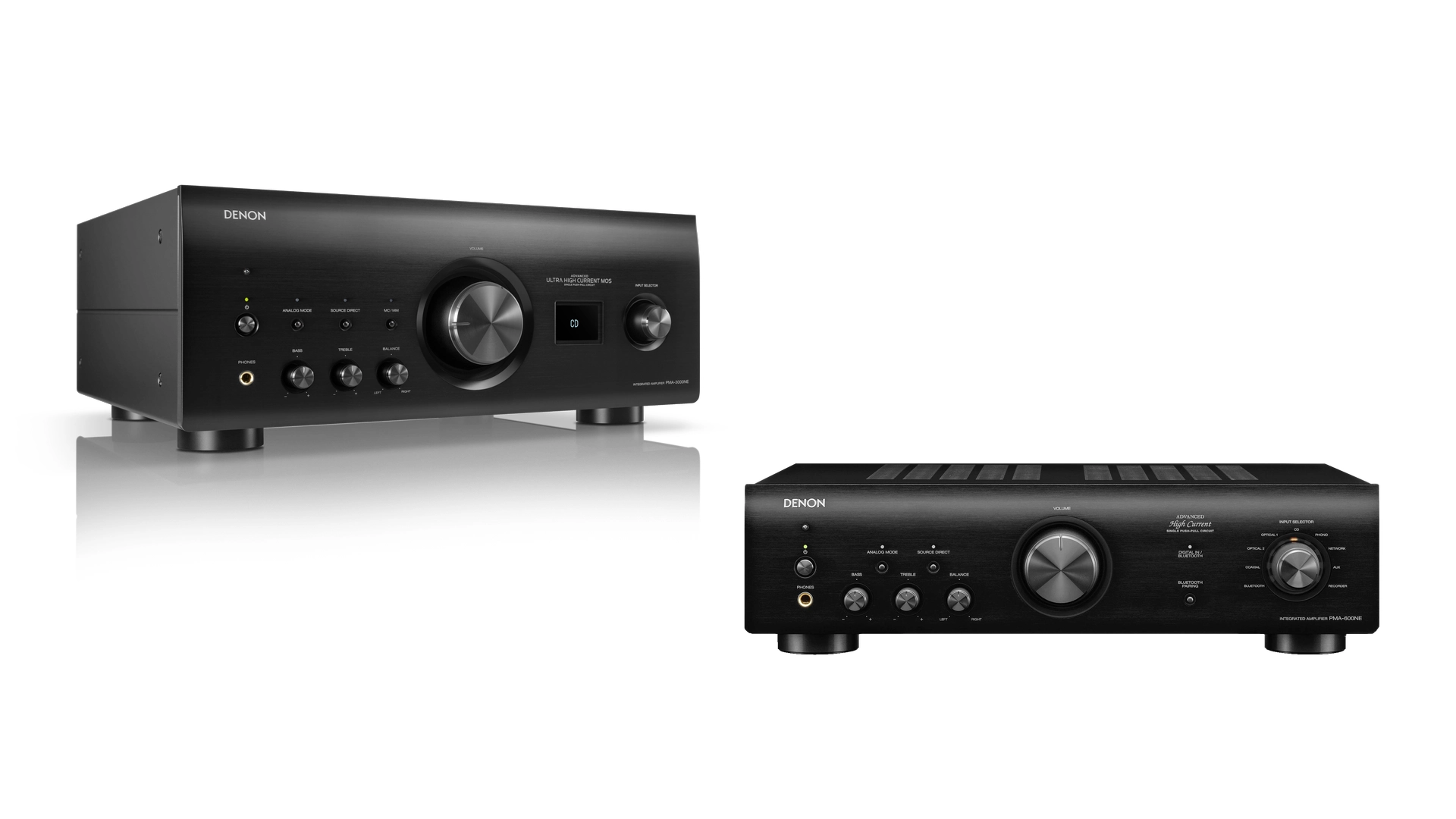
Denon’s history begins in 1910, when American entrepreneur Frederick Whitney Horn established the Japan Recorders Corporation, the antecedent of today’s Japanese audio brand, to manufacture records and gramophones. The company subsequently linked recording and playback in ways few consumer manufacturers can claim: it built Japan’s first professional disc recorder, released the country’s first commercial LP records, developed the broadcast-standard DL-103 moving-coil cartridge in 1963 and introduced an eight-channel PCM digital recorder in 1972. That combination of analogue, digital and broadcast experience still appears in a broad catalogue. AVR and AVC home-cinema receivers integrate amplification, decoding, room correction and HEOS network audio; PMA amplifiers and DCD disc players serve stereo systems; turntables, cartridges, headphones and soundbars cover other parts of the chain. The DL-103 remains in production decades after its broadcast origins, while modern receivers adopt current HDMI and immersive-audio standards. Denon’s strength is not merely age or product count, but a continuous ability to translate professional recording and format changes into durable home-audio products.
Densen Audio

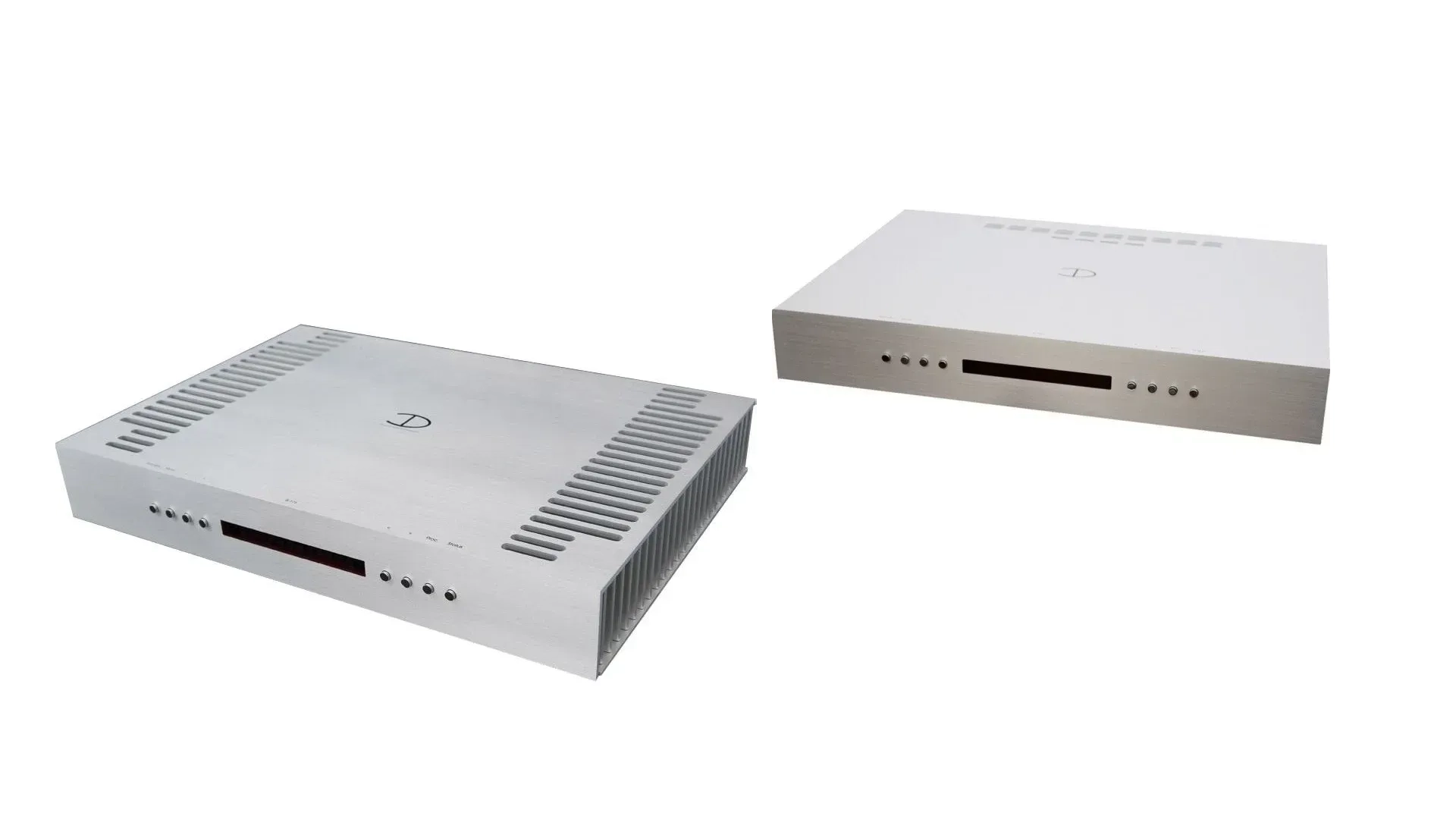
Densen Audio Technologies is a Danish electronics brand founded by Thomas Sillesen in 1992, known for minimalist aluminium components whose simple fronts conceal modular, upgradeable circuits. Sillesen had built his first amplifier as a teenager and carried a direct, listening-led approach into the Beat series of integrated amplifiers, preamplifiers, power amplifiers, CD players and phono stages. Densen’s amplifiers use wide-bandwidth circuit layouts, substantial power supplies and very limited reliance on global feedback, while optional DAC, phono and surround boards let selected models evolve without replacement. The Gizmo system remote, left-side volume control and consistent B-series naming give the products a recognisable personality beyond generic Scandinavian restraint. In 2021 Casper Reinhold and Ditlev Leth acquired Densen’s stock and intellectual property; Leth had already worked with Sillesen, providing continuity as development and manufacturing moved into the next phase. The brand’s strongest idea remains long-term ownership: serviceable hardware, modular functions and compatible amplification stages that can be expanded from an integrated unit into a separated system.
DEQX

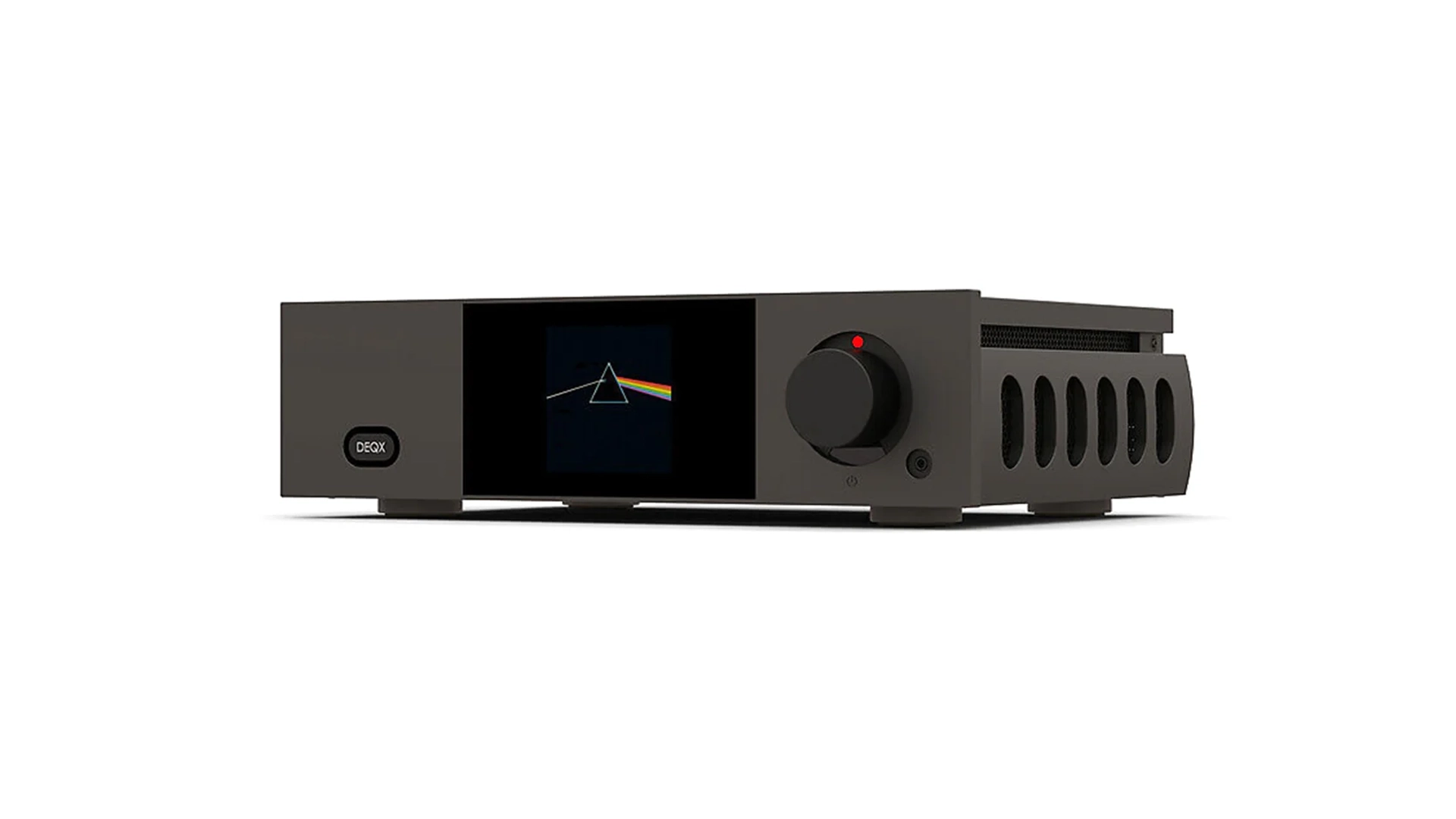
DEQX is an Australian digital-audio company founded in Sydney in 1997 by a team led by Fairlight co-founder Kim Ryrie to correct the largest errors in a playback chain: the loudspeakers and their interaction with the room. Its processors first measure a speaker away from dominant room effects, then use long FIR filters to correct frequency, phase and impulse response; room compensation and subwoofer integration are applied as separate stages. In multiway DEQX-Active systems, the processor also replaces the passive crossover and corrects each driver individually. The early PDC-2.6 brought this approach to professional mastering, followed by HDP and PreMate generations for home audio. The redesigned Gen-4 range now includes the eight-channel Pre-8, four-channel Pre-4 and LS200-X integrated processor-amplifier, using 64-bit multicore processing alongside analogue inputs, streaming and high-grade conversion. DEQX’s distinction is methodological: it does not treat room EQ as a single target curve, but separates loudspeaker timing and linearity from room behaviour so each problem can be measured and corrected on the appropriate scale.
Doshi Audio

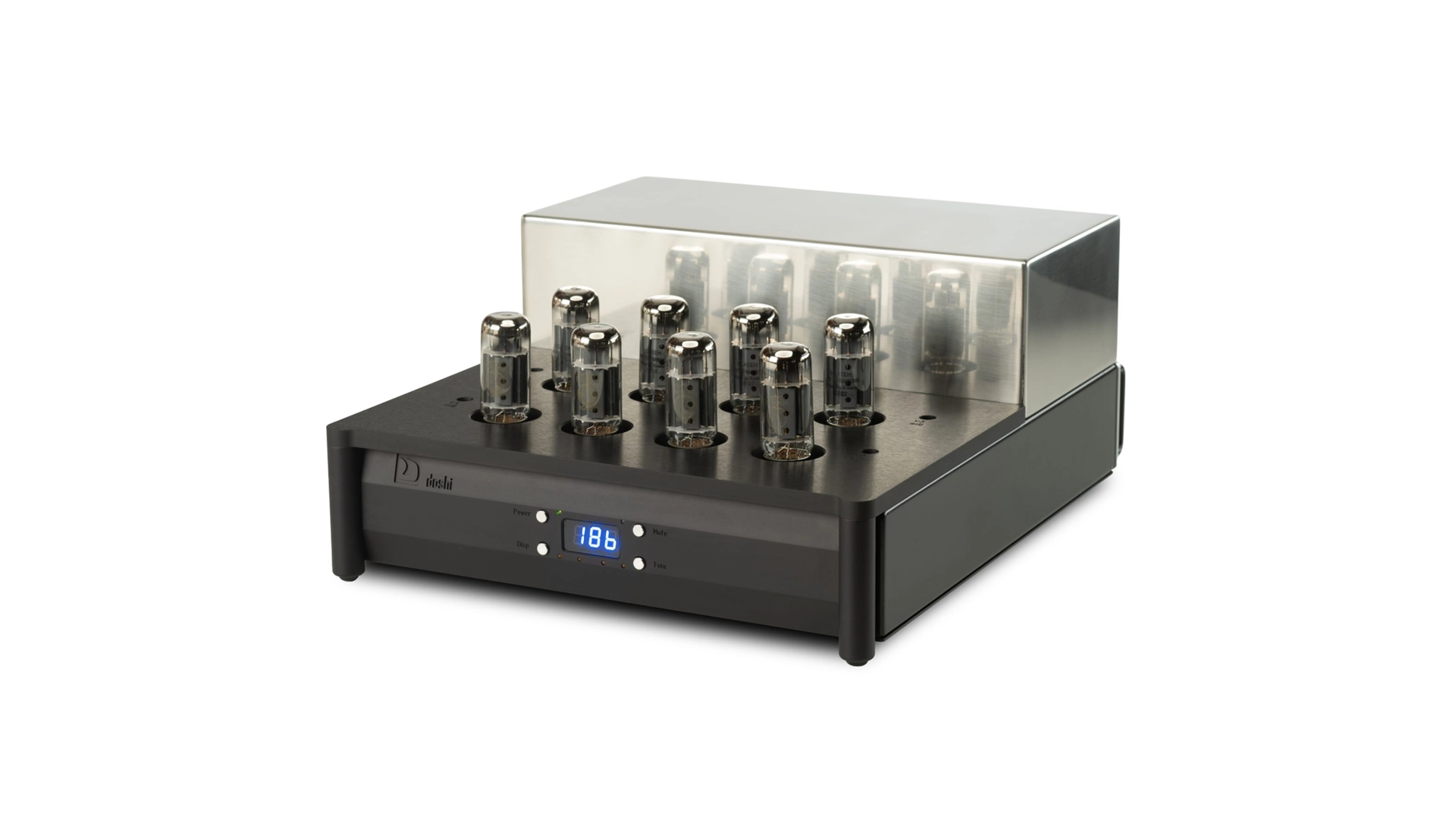
Doshi Audio is an American maker of handcrafted valve electronics founded in 2006 by electrical engineer and recording specialist Nishith “Nick” Doshi. Years spent building equipment and working around live and recorded sound shaped a range focused on the fragile analogue signal: line preamplifiers, phono stages, monoblock power amplifiers and a dedicated tape-head preamplifier. The early Alaap full-function preamplifier established the architecture that evolved through V3 into the current Evolution series. Doshi circuits use tubes for their linear voltage gain while applying modern regulation, power-supply design, grounding and transformer engineering to obtain bandwidth, low noise and drive that traditional valve stereotypes do not guarantee. Separate power supplies and carefully arranged chassis are particularly important in the phono and tape products, where signals are extremely small and hum control is fundamental. Production remains deliberately limited and serviceable rather than model-driven. Doshi’s distinguishing strength is the combination of studio awareness and rigorous electrical design: tube equipment intended to preserve timing, level relationships and tonal information without turning warmth into an effect of its own.
EAR Yoshino

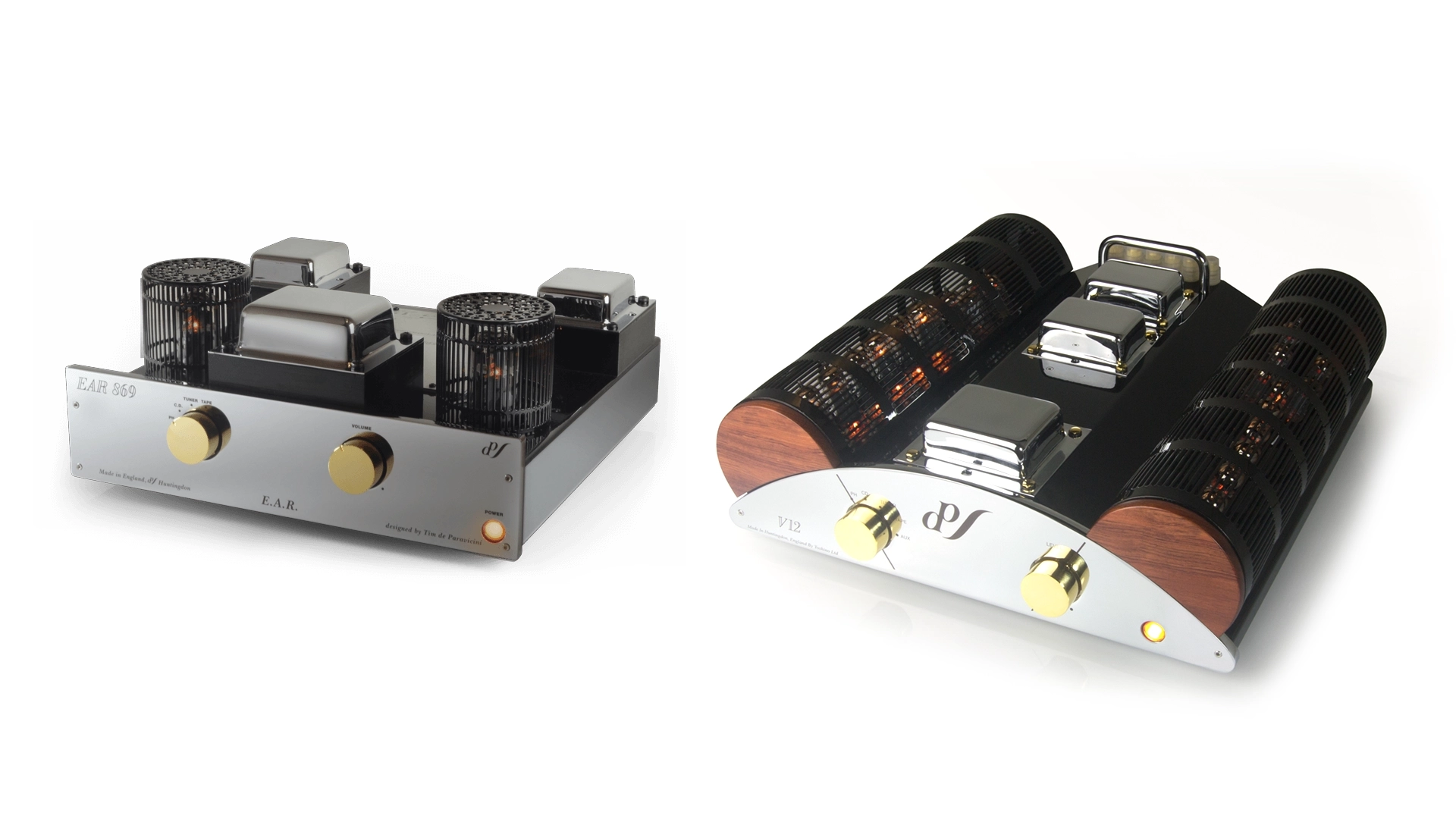
EAR Yoshino is the British high-end audio company through which Tim de Paravicini turned deep knowledge of valves, transformers and studio electronics into products with unmistakable circuit identities. Esoteric Audio Research began in England in 1976 with the EAR 509, a 100-watt valve monoblock whose transformer-coupled output stage challenged the assumption that tube amplifiers must be low-powered or soft. De Paravicini remained the designer behind the company’s amplifiers, line stages, phono stages and specialist tape electronics, and his custom transformer work is central to the brand rather than a purchased finishing touch. The compact 834P phono stage became one of EAR’s most widely known products; the 868 and 912 preamplifiers, V12 integrated amplifier and 509-derived power amplifiers show different applications of the same expertise. EAR equipment often uses unconventional tube operating points and transformer arrangements to obtain bandwidth, drive and low noise while retaining serviceable analogue circuitry. The company’s distinction is not simply that it uses valves: it is the way one engineer’s experience across recording, mastering and reproduction shaped complete circuits from input stage to output transformer.
Edwards Audio

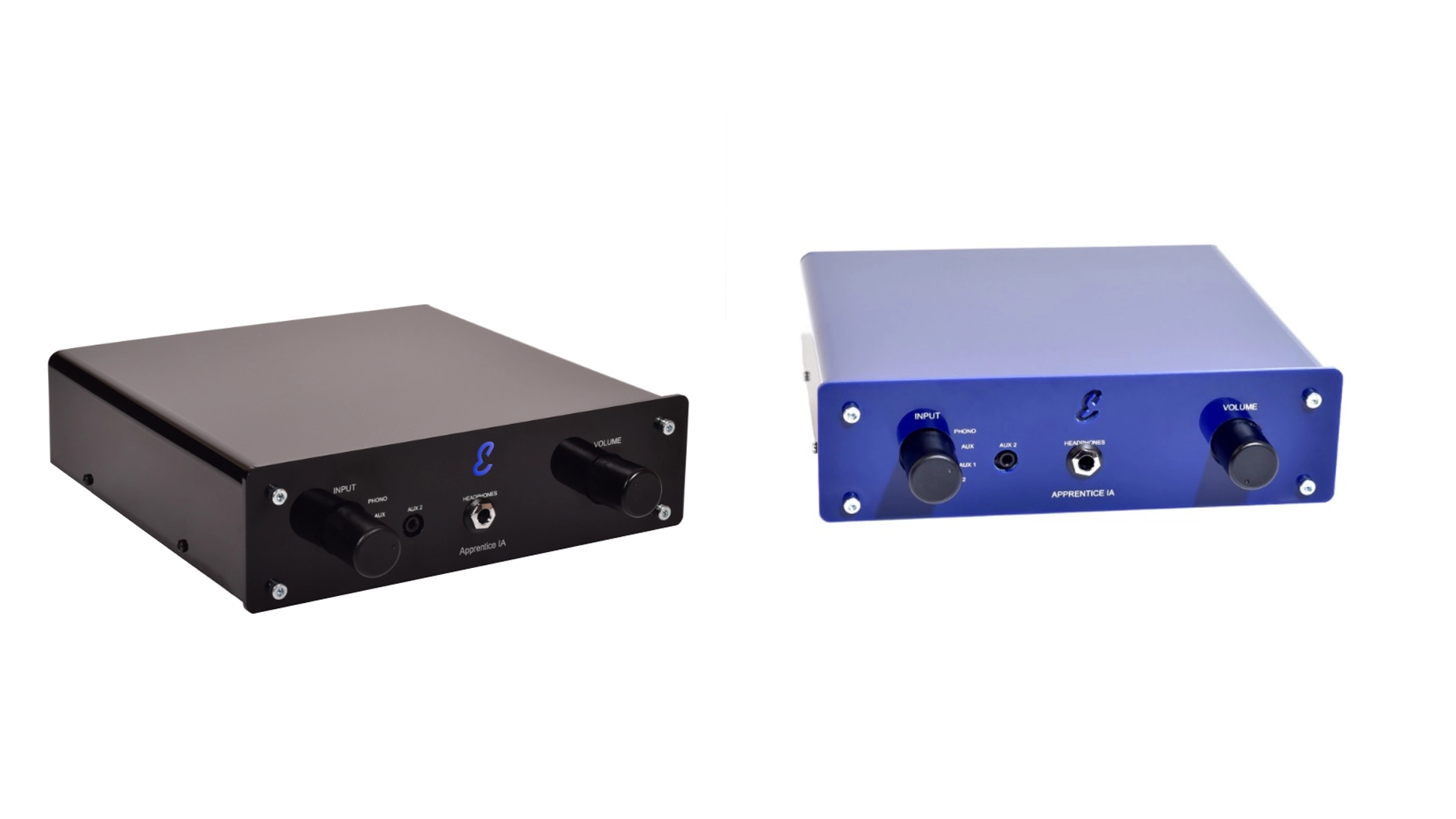
Edwards Audio is the affordable British analogue and electronics brand created in 2009 by Kevin Edwards, founder of TALK Electronics, to prove that meaningful UK manufacture need not be reserved for luxury prices. It began with the compact MC1 moving-magnet/moving-coil phono stage and expanded most visibly through a colour-coded family of belt-drive turntables. Models from the entry TT1 upward use combinations of acrylic plinths, precision-machined platters, external or electronically controlled motors and the company’s own tonearm work; the TT4 and larger TT5 show how the platform develops rather than merely changing finish. Edwards Audio also makes phono stages, integrated amplifiers and speed-control or upgrade accessories, allowing a vinyl system to grow in stages. Design, machining and assembly are centred in Royal Wootton Bassett, and the bright finishes are part of a deliberate rejection of anonymous black-box styling. The brand’s strongest quality is engineering economy: spending on the bearing, drive, arm geometry and low-noise analogue circuits that directly affect playback, while keeping construction straightforward enough to remain serviceable and attainable.
Elac

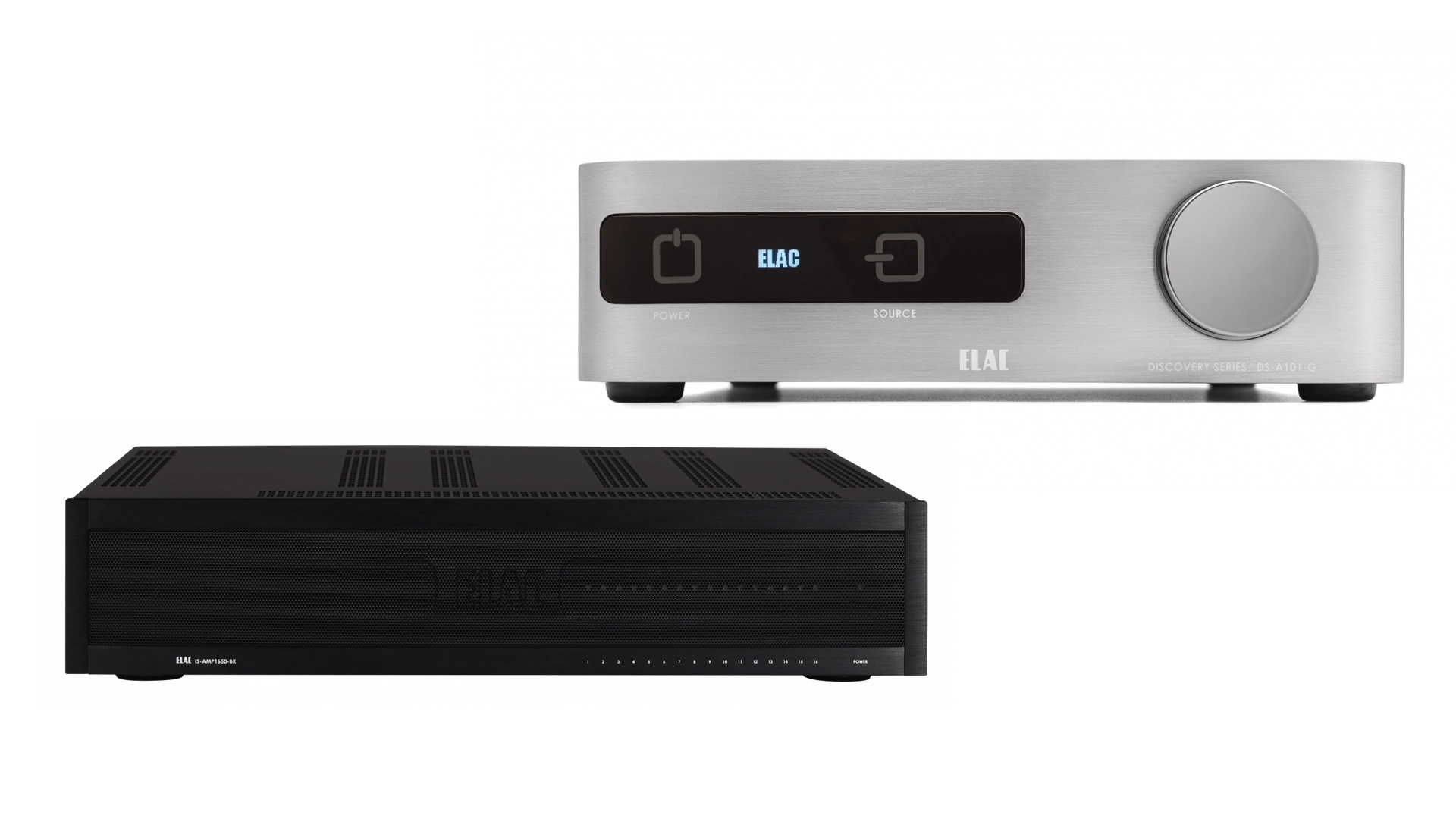
ELAC is a German audio company founded in Kiel on 1 September 1926 by Dr Heinrich Hecht, Dr Wilhelm Rudolph and Gerhard Schmidt. Its near-century history is unusually broad: the company began in electroacoustics and sonar, became a major post-war maker of turntables and cartridges, and shifted its centre of gravity to loudspeakers in the 1980s. Modern ELAC is therefore more than the affordable speakers often associated with designer Andrew Jones. The Debut and Uni-Fi families use carefully engineered cone drivers and, in Uni-Fi, concentric midrange/tweeter geometry to bring controlled directivity and coherent imaging to accessible systems. Carina, Vela and higher ranges draw on the folded JET tweeter, while active subwoofers and electronics complete stereo and cinema installations. Turntables keep the brand’s analogue history visible rather than treating it as a retro licensing exercise. ELAC’s lasting advantage is range backed by real transducer engineering: it can translate its knowledge of motors, diaphragms, wave launch and cabinet behaviour from compact entry models to elaborate floorstanders, while the 1926 date describes the actual company lineage rather than a recently revived name.
Electrocompaniet

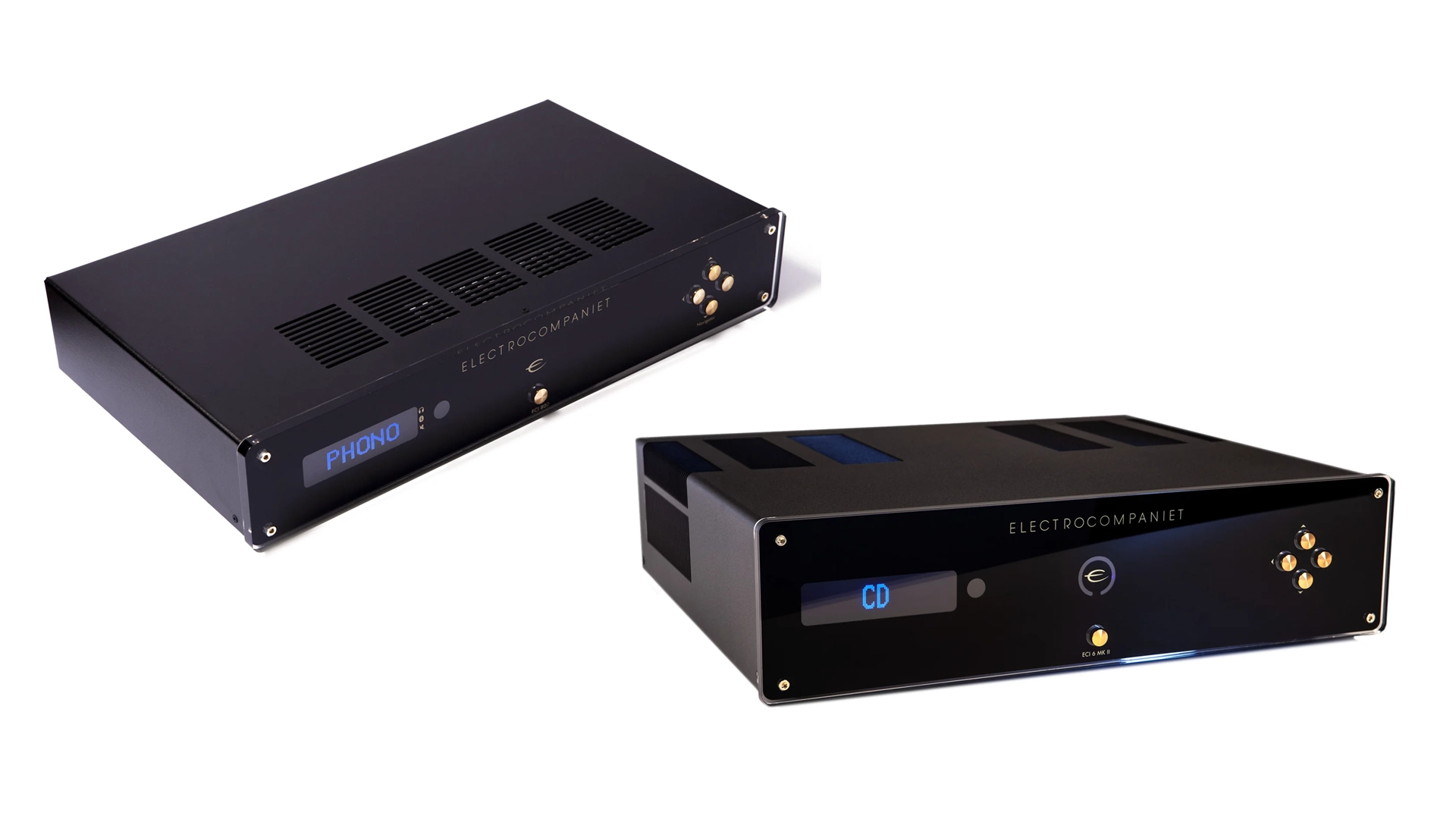
Electrocompaniet is a Norwegian high-end electronics company founded in 1973 by Per Abrahamsen and Svein Erik Børja to build an amplifier informed by Dr Matti Otala’s work on transient intermodulation distortion. The resulting 25-watt power amplifier earned international attention not through brute force, but by showing that measured dynamic behaviour and listening quality could challenge accepted solid-state design practice. That origin still explains the brand better than generic references to Scandinavian style. The Classic Line centres on analogue preamplifiers, integrated amplifiers and high-current power amplifiers, including the AW series and large Nemo monoblocks, complemented by digital players and sources. EC Living brings streaming, wireless control and multiroom operation to a more compact family while maintaining the company’s system approach. Products are developed and assembled in Norway, with substantial power supplies, balanced signal paths where appropriate and amplifier stages designed for difficult loudspeaker loads. Electrocompaniet’s hallmark is a particular combination of authority and ease: solid-state equipment whose circuit choices grew from studying distortion under real transient signals, then evolved across five decades of two-channel and connected audio.
Elins Audio

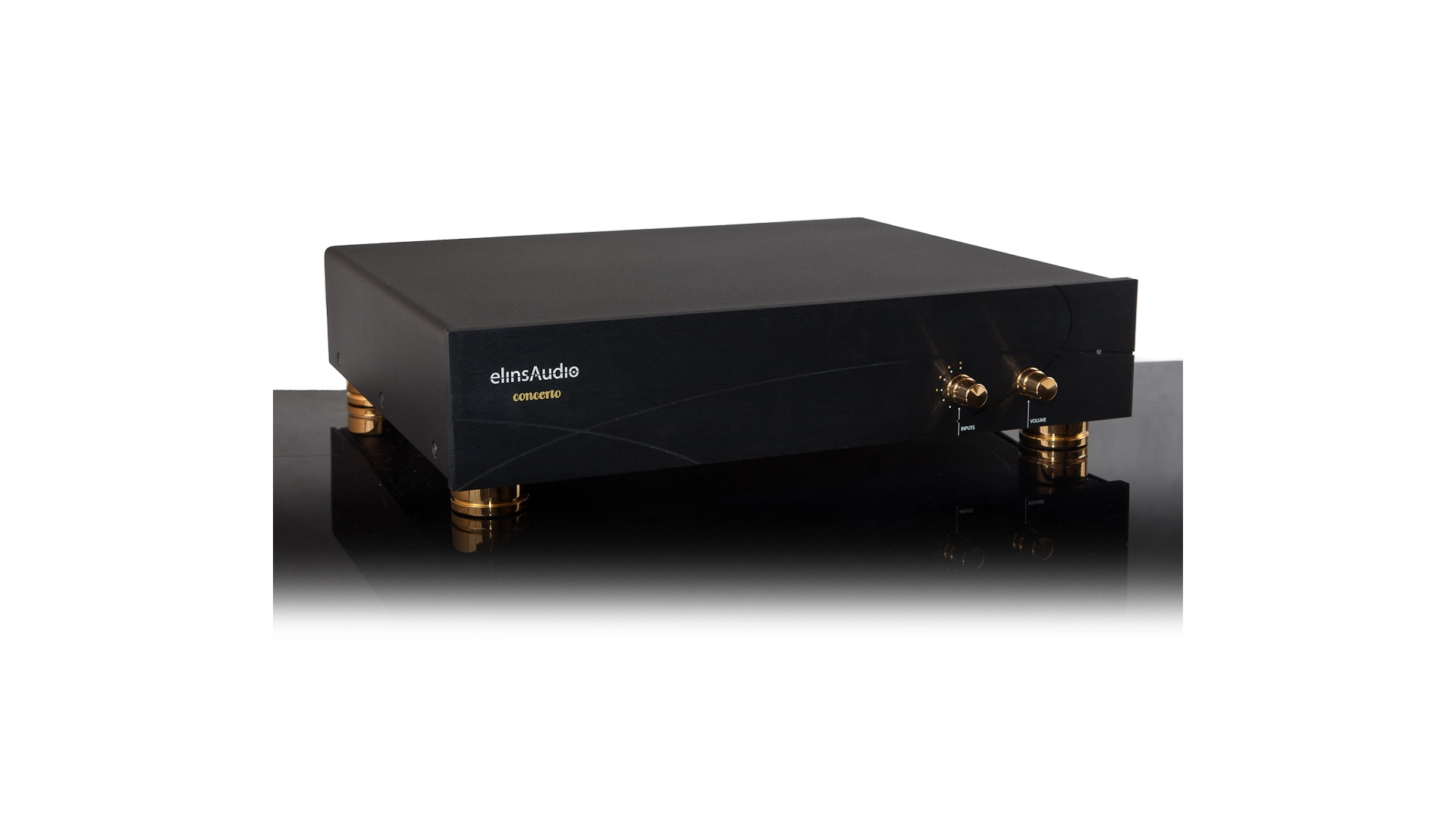
elinsAudio is a Polish high-end amplifier manufacturer founded in 2008 by friends Janusz Sendek and Ireneusz Chwastek. This identity is important because the previous description referred to an unrelated Swedish loudspeaker project; the linked elinsaudio.com domain now represents the Polish company based in Sosnowiec. Its speciality is combining linear analogue preamplifier stages with powerful Class D output modules, seeking the efficiency and loudspeaker control of switching amplification without presenting it as sterile laboratory hardware. The Concerto integrated amplifier pairs a deliberately short, separately powered preamp signal path with an ICEpower-based output stage. The reference Mille separates the system into a linear preamplifier and two monoblocks, uses hybrid mains/battery supply concepts in the low-level section and provides the current reserve required by low-impedance or planar speakers. Cello and newer models extend the same “digital amplifiers with an analogue soul” approach at different scales. Designed and manufactured in Poland, elinsAudio’s real distinction is architectural: sensitive voltage gain, power conversion and high-current output are treated as separate problems, then voiced and packaged as one coherent amplifier.
EMM Labs

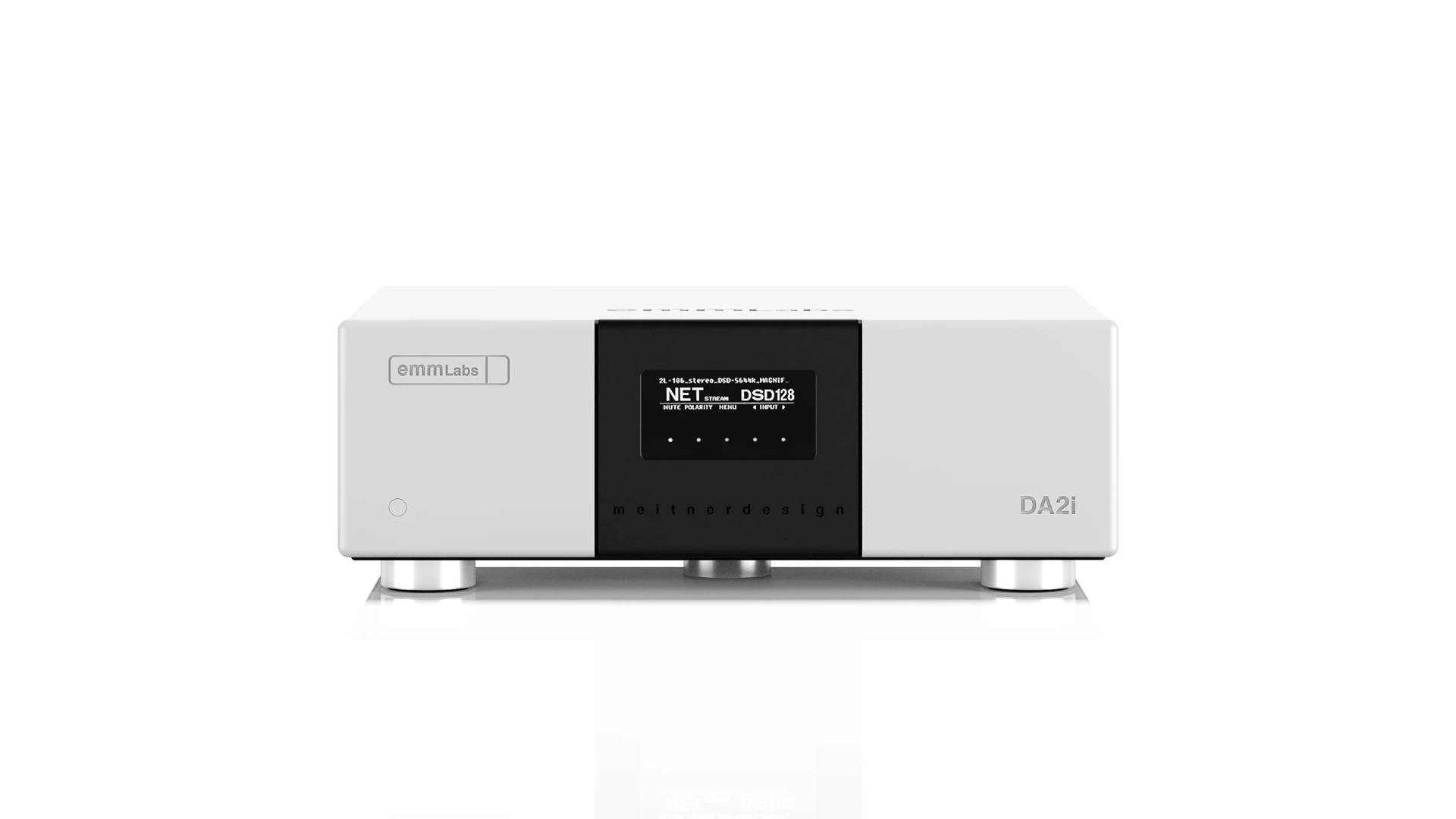
EMM Labs is the Canadian digital-audio company established in 1998 by engineer Ed Meitner, whose converter and test-equipment work already spanned decades when Sony and Philips involved him in the development and professional implementation of SACD. EMM Labs helped create the first complete multichannel DSD playback system, giving the brand a rare bridge between mastering-room tools and domestic high-end components. Its current converters do not rely only on an off-the-shelf DAC chip: proprietary MDAC discrete single-bit conversion, MDAT signal processing, MFAST asynchronous input acquisition and MCLK precision clocking are designed as a coordinated path for PCM and DSD. VControl adds level adjustment without conventional re-quantisation in products such as the DV2. The catalogue includes reference DACs, digital preamplifiers, transports, streamers and amplification, while the related Meitner Audio line packages much of the same design philosophy more accessibly. EMM Labs’ central advantage is provenance with purpose: technology developed to capture, monitor and master high-resolution recordings is carried into playback equipment under the direction of the same designer.
Emotiva

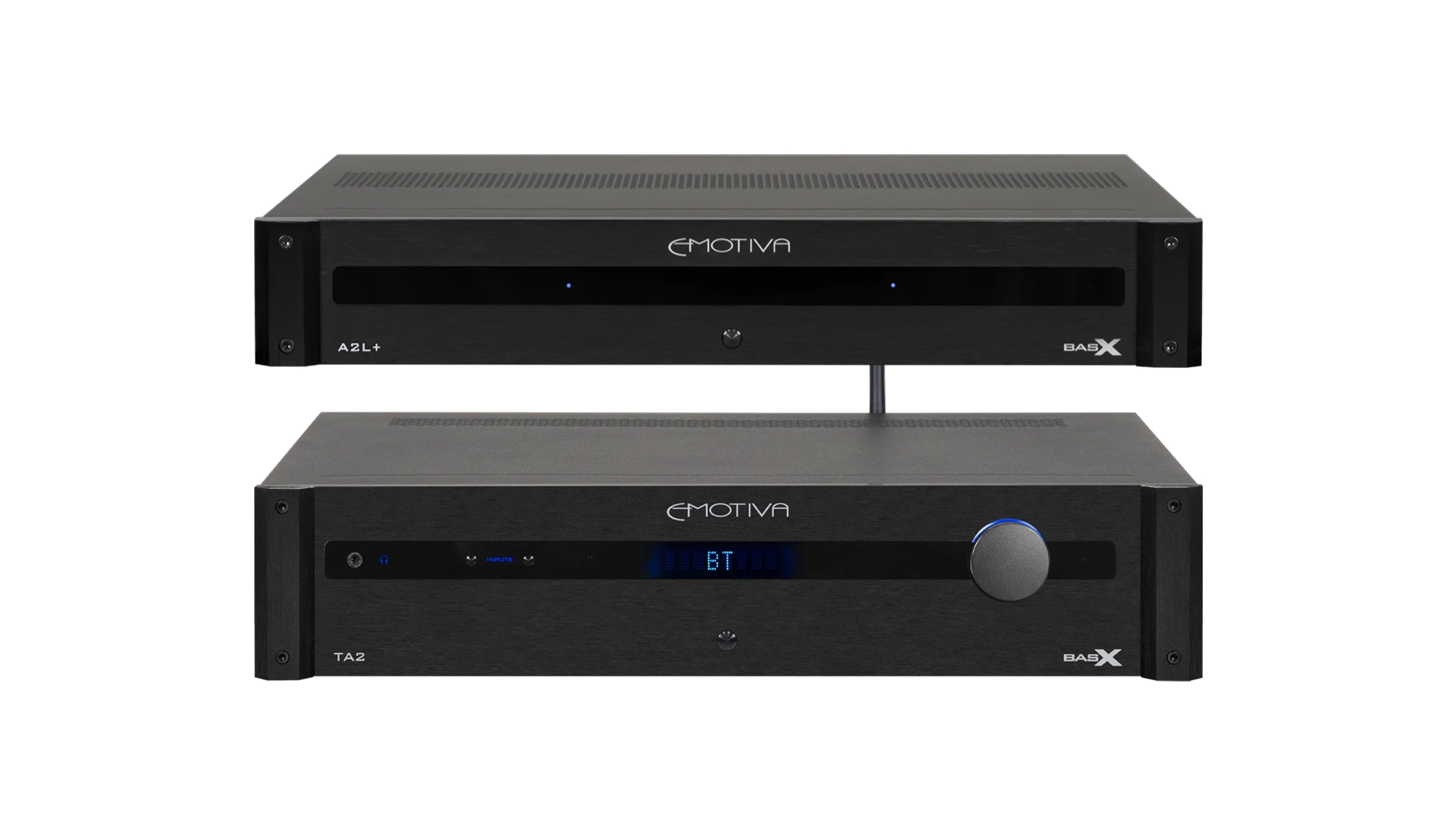
Emotiva is an American audio company founded in 2003 by Dan Laufman to sell serious stereo and home-theatre electronics directly to listeners, removing several layers of conventional distribution cost. That business model matters because it shaped the products: substantial power supplies, high channel counts and upgrade-friendly platforms offered at prices below many specialist competitors. BasX covers accessible amplifiers, preamps and cinema electronics, while XPA power amplifiers scale from stereo systems to multichannel installations through modular high-current Class A/B stages and efficient switch-mode supplies. Differential Reference models use fully balanced, fully differential signal paths and Optimized Class H supply operation for demanding front channels or two-channel systems. Surround processors and receivers address immersive formats, and loudspeakers extend the catalogue into complete systems. Emotiva’s identity is not simply “value for money”; it is the combination of direct sales with unusually powerful, configurable hardware for enthusiasts who may need two channels today and a large cinema later. Design and final product development are centred in Tennessee, with model-specific manufacturing choices rather than a blanket claim that every component is built in the United States.
Encel

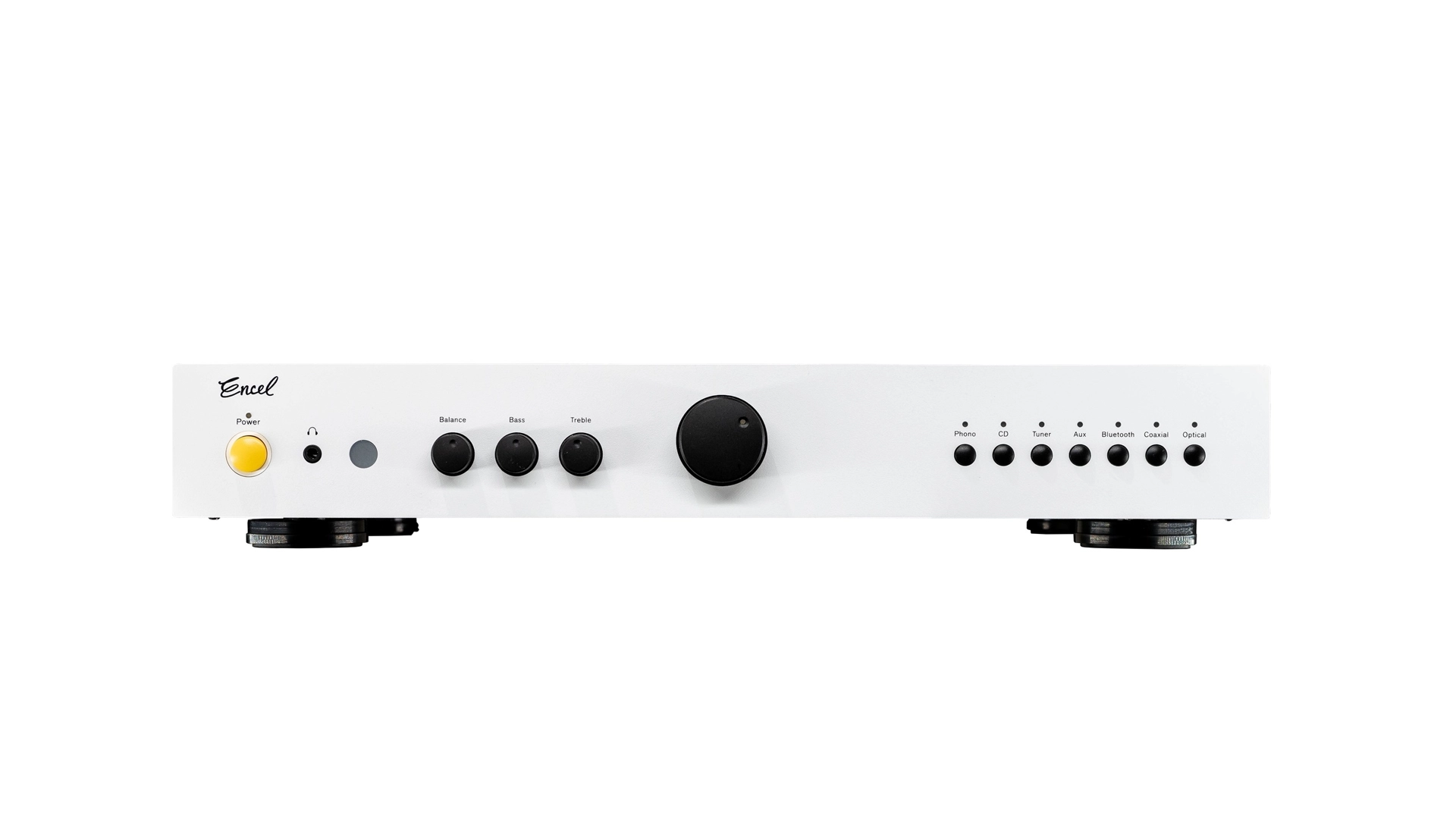
Encel is a Melbourne hi-fi name with an unusually long local history. In 1958, 24-year-old Alex Encel began building stereo systems for Australian listeners and helped introduce the then-new idea of domestic stereophonic sound to the market. The present family business keeps that approachable spirit rather than trying to imitate esoteric high-end brands. Its compact Gelati loudspeakers use playful colours and room-friendly proportions, while the Melbourne-designed Brains integrated amplifier combines 40-watt-per-channel amplification with phono and headphone connections. Encel’s strength is a clearly defined, easy-to-use stereo system: products designed in Australia for buyers who want genuine hi-fi engineering, distinctive industrial design and sensible scale without turning music listening into a technical exercise.
English Acoustics
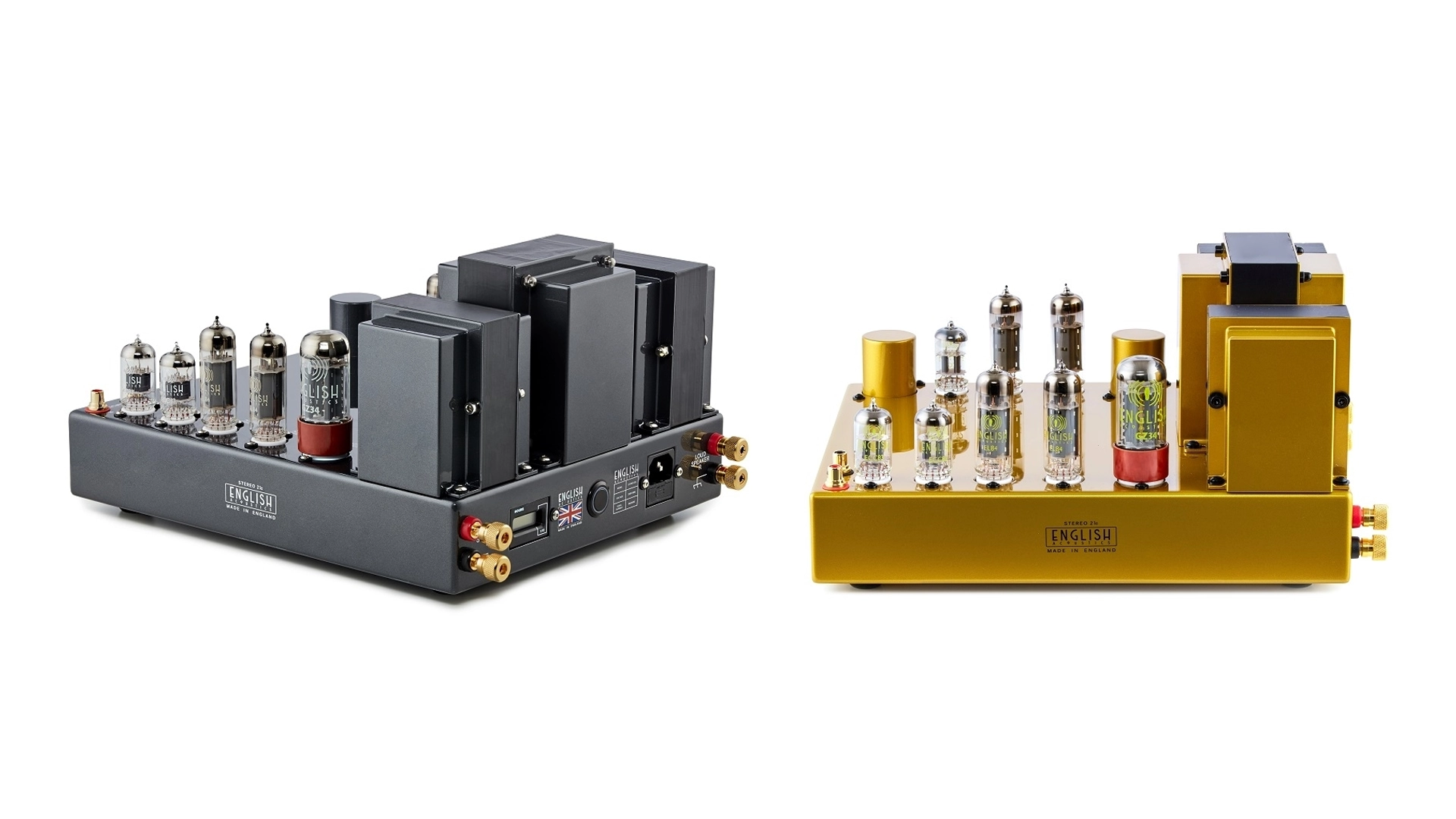
English Acoustics is a Wiltshire valve-amplifier company established in 2018 by former BBC engineer Peter Farrow and Jordan Jackson. Its defining product, the Stereo 21c, is not merely a cosmetic copy of the Leak Stereo 20: it rebuilds the classic EL84 push-pull concept for current production and modern safety requirements. The British-made power amplifier uses point-to-point valve wiring, locally wound transformers, paper-in-oil coupling capacitors and a CNC-machined chassis, while soft start, thermal, current, tilt and vibration protection address weaknesses that belong to 1950s equipment. A valve-hours counter and numerous standard or custom paint finishes add practical and visual individuality. The result is a focused form of heritage engineering—preserving the topology and modest power of a British classic while improving bandwidth, consistency and everyday usability.
Engstrom

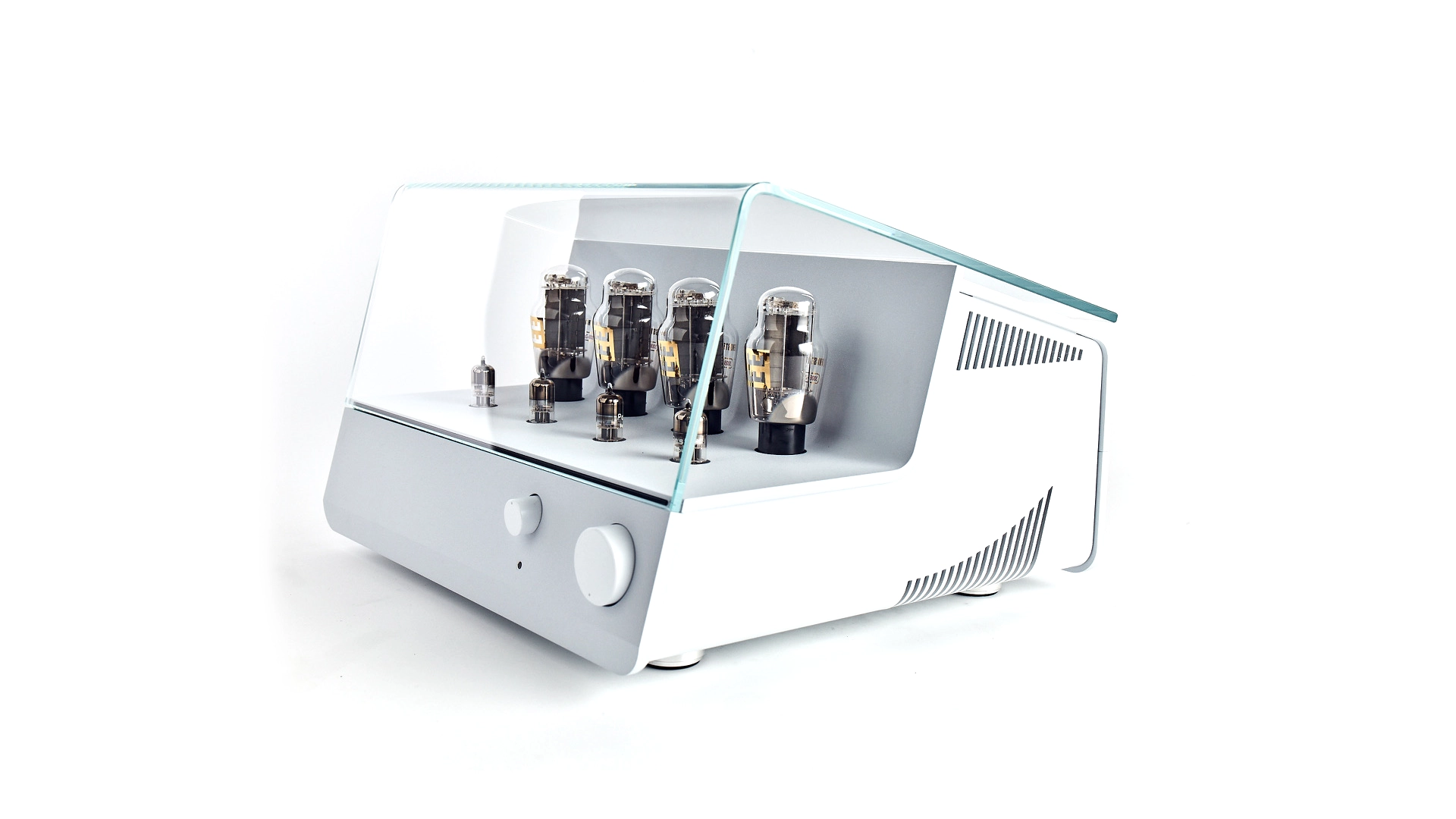
Engström is a small Swedish family company founded in 2008 by engineer Lars Engström and industrial designer Timo Engström. Lars developed the circuitry after decades in radio, navigation and control engineering; Timo gave the products their restrained Scandinavian form, inspired in part by 1960s and 1970s radio furniture. The range centres on valve amplification: the LARS and ERIC power amplifiers, MONICA preamplifier, ARNE integrated amplifier and M-PHONO phono stage. Engström favours fully balanced signal paths, custom transformers, carefully controlled power supplies and zero global negative feedback, with directly heated triodes used where the design calls for them. These are low-volume, high-power-consuming statement components, but their real distinction is the unusually close integration of circuit design, transformer work and industrial design rather than luxury decoration alone.