
Subwoofers Вass Speakers
A subwoofer is a specialized loudspeaker designed exclusively to reproduce the lowest audio frequencies, or deep bass, which regular speakers often struggle to deliver. It’s an essential component for adding impact, weight, and visceral rumble to home theater systems and for providing a full, foundational low-end in music setups. This page serves as a complete directory of manufacturers who specialize in the art of bass, from companies making powerful home cinema subwoofers to brands crafting precise, musical models for audiophiles.
Hi-Fi brands in the category
Summary information and image
Direct links to official websites
Denon

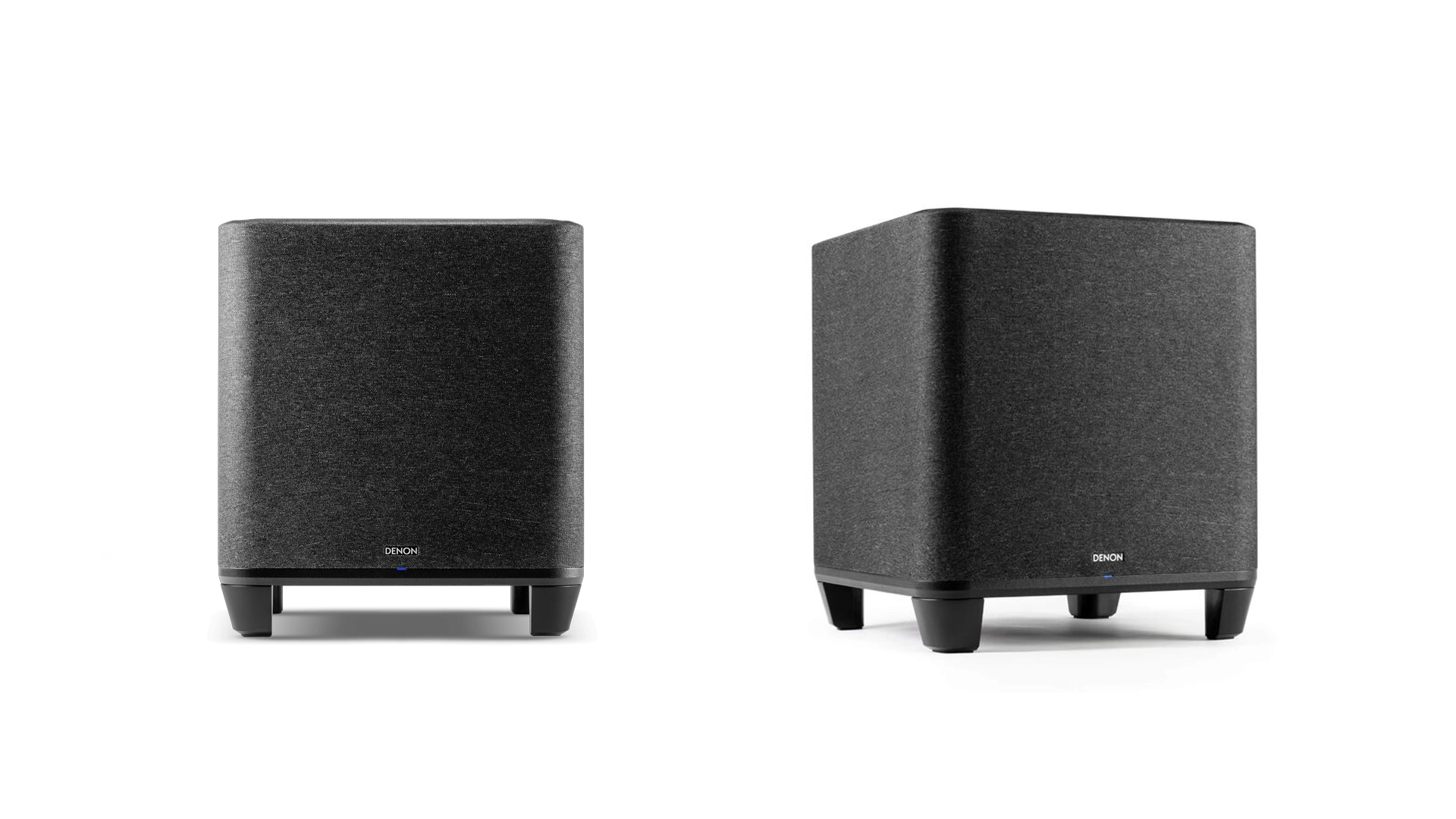
Denon’s history begins in 1910, when American entrepreneur Frederick Whitney Horn established the Japan Recorders Corporation, the antecedent of today’s Japanese audio brand, to manufacture records and gramophones. The company subsequently linked recording and playback in ways few consumer manufacturers can claim: it built Japan’s first professional disc recorder, released the country’s first commercial LP records, developed the broadcast-standard DL-103 moving-coil cartridge in 1963 and introduced an eight-channel PCM digital recorder in 1972. That combination of analogue, digital and broadcast experience still appears in a broad catalogue. AVR and AVC home-cinema receivers integrate amplification, decoding, room correction and HEOS network audio; PMA amplifiers and DCD disc players serve stereo systems; turntables, cartridges, headphones and soundbars cover other parts of the chain. The DL-103 remains in production decades after its broadcast origins, while modern receivers adopt current HDMI and immersive-audio standards. Denon’s strength is not merely age or product count, but a continuous ability to translate professional recording and format changes into durable home-audio products.
Dynaudio

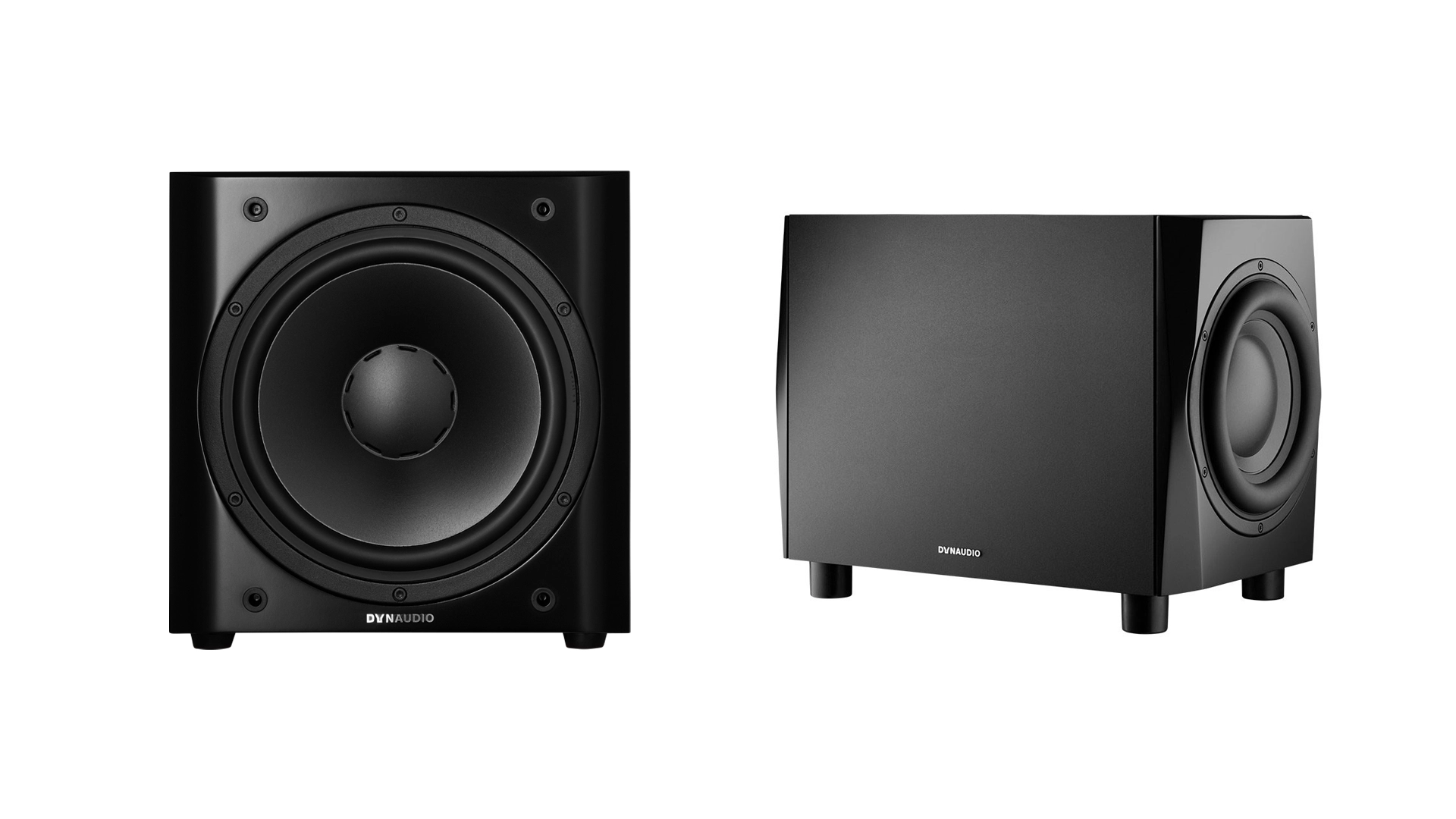
Dynaudio is a Danish loudspeaker and driver manufacturer founded in 1977 in Skanderborg, built on the decision that control over the finished speaker required control over the transducers themselves. Its long-running technical signatures include magnesium silicate polymer cone material, large-diameter lightweight voice coils and coated soft-dome tweeters, developed and manufactured in-house rather than selected from a standard supplier catalogue. Esotar tweeters represent the reference end of that work, while technologies such as Hexis inner domes manage airflow and resonance behind the diaphragm. The home range spans Emit, Evoke, Contour, Confidence and Heritage models; Focus combines active amplification, wireless streaming and room-related DSP. Dynaudio Professional applies the same driver knowledge to studio monitors, and the company also engineers custom-install and automotive systems. Product categories vary, but the defining advantage remains vertical acoustic integration: diaphragm material, motor, voice coil, crossover, cabinet and voicing can be developed together. That continuity gives Dynaudio a recognisable engineering identity across compact monitors, large floorstanders and professional control rooms.
Dynavoice
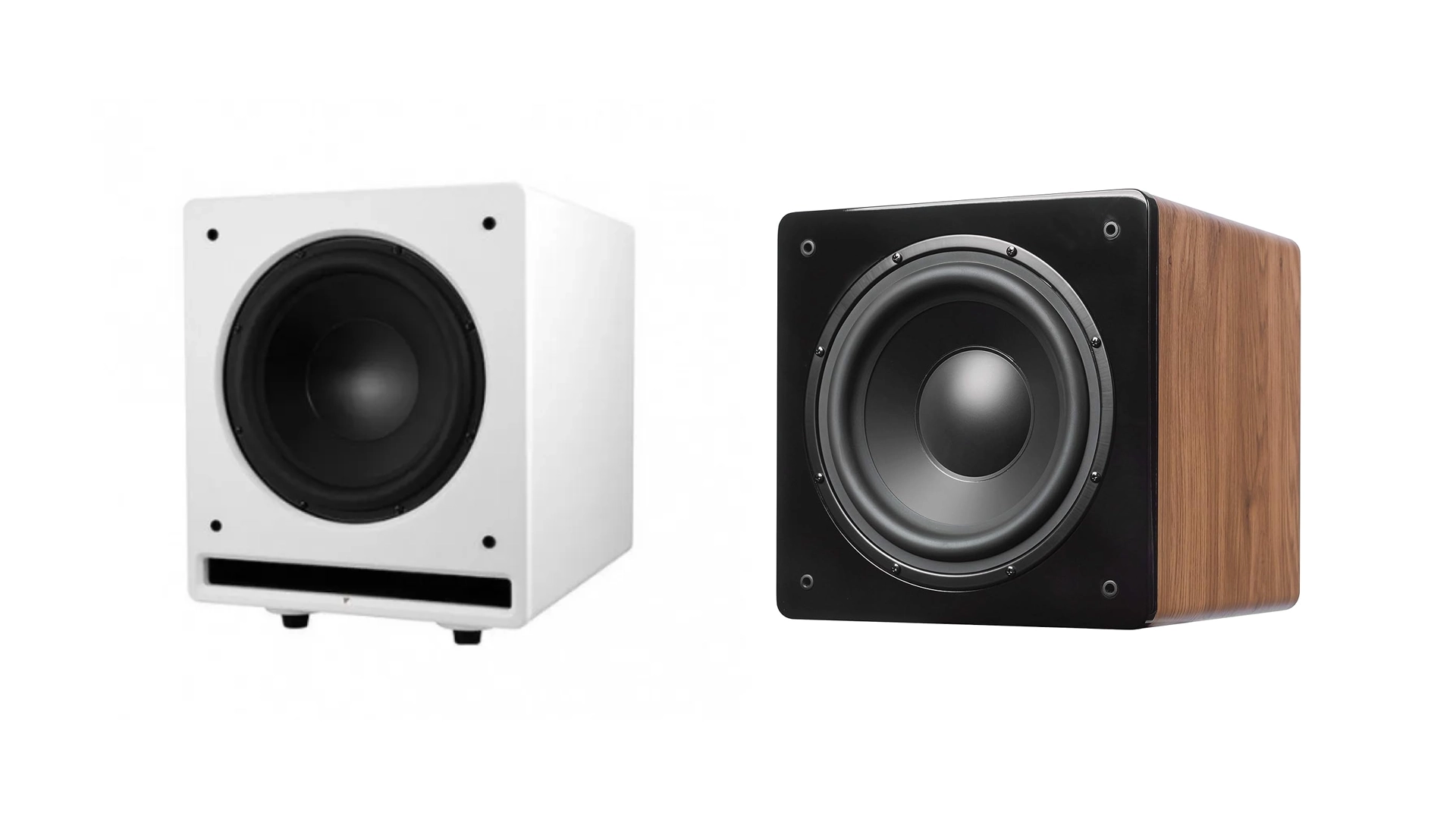
Dynavoice is a Swedish loudspeaker brand built around an unusually practical promise: full-scale stereo and home-cinema sound without turning sensible pricing into an apology. Its roots reach back to 1975, when Tommy Wadensten began the JWS loudspeaker business in Falkenberg; Dynavoice later emerged from that engineering and distribution lineage as the company’s more ambitious speaker identity. The range is structured for real systems rather than one showcase model. Magic covers accessible stereo and surround installations, Challenger adds greater output and cabinet scale, and Definition moves upward with ribbon-assisted high-frequency reproduction and more elaborate driver layouts. Matching centre, surround and subwoofer models make the same voicing available across multichannel setups. A recognisable Dynavoice feature is X-Change, a passive terminal arrangement on selected speakers that lets the owner adjust treble balance without inserting an electronic equaliser. The brand’s strength is therefore not exotic storytelling but system breadth, lively dynamics and useful tuning options developed by a company with decades of Scandinavian loudspeaker experience.
Eclipse

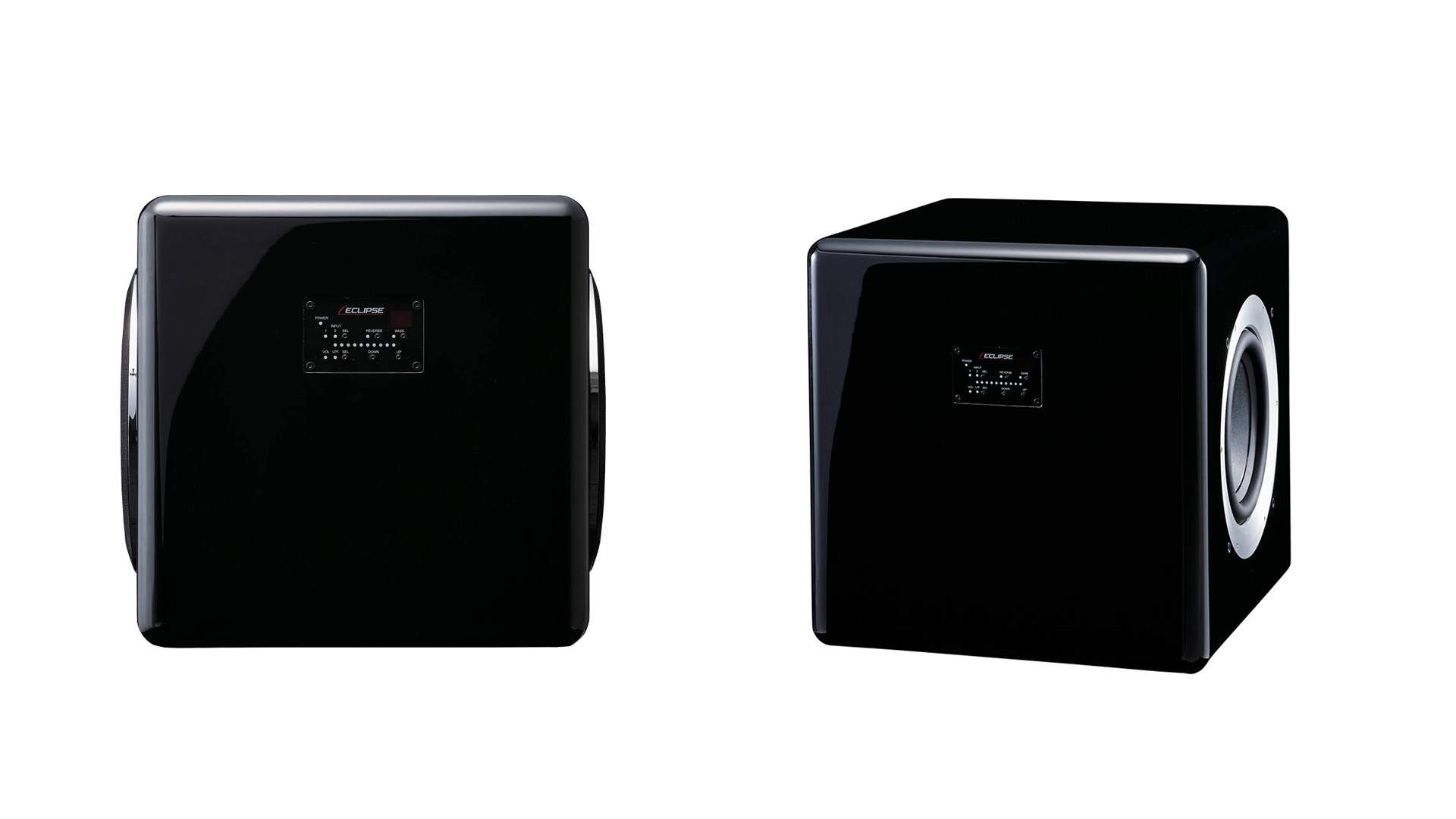
ECLIPSE TD is a Japanese loudspeaker brand launched by Fujitsu Ten in 2001 and now carried by DENSO TEN, built around one demanding idea: preserve the timing and shape of a musical waveform before optimising conventional frequency-response figures. Its egg-shaped speakers use a single full-range driver wherever possible, avoiding the crossover phase shifts and separated acoustic centres of multiway systems. The enclosure is shaped to reduce diffraction, but the more unusual engineering sits inside. A Diffusion Stay supports the driver while isolating it from the shell, and a rear Mass Anchor provides an inertial path for reaction forces so less energy is stored and re-radiated by the cabinet. Models such as the compact TD307MK3 and larger TD510ZMK2 scale this time-domain architecture for desktop, stereo and multichannel use; dedicated TD subwoofers use opposed or mechanically controlled drive arrangements to complement the speed of the main speakers. ECLIPSE does not promise the widest bandwidth from the smallest box. Its speciality is impulse behaviour, point-source coherence and sharply defined spatial information—qualities derived from structural mechanics as much as from the driver itself.
Elac

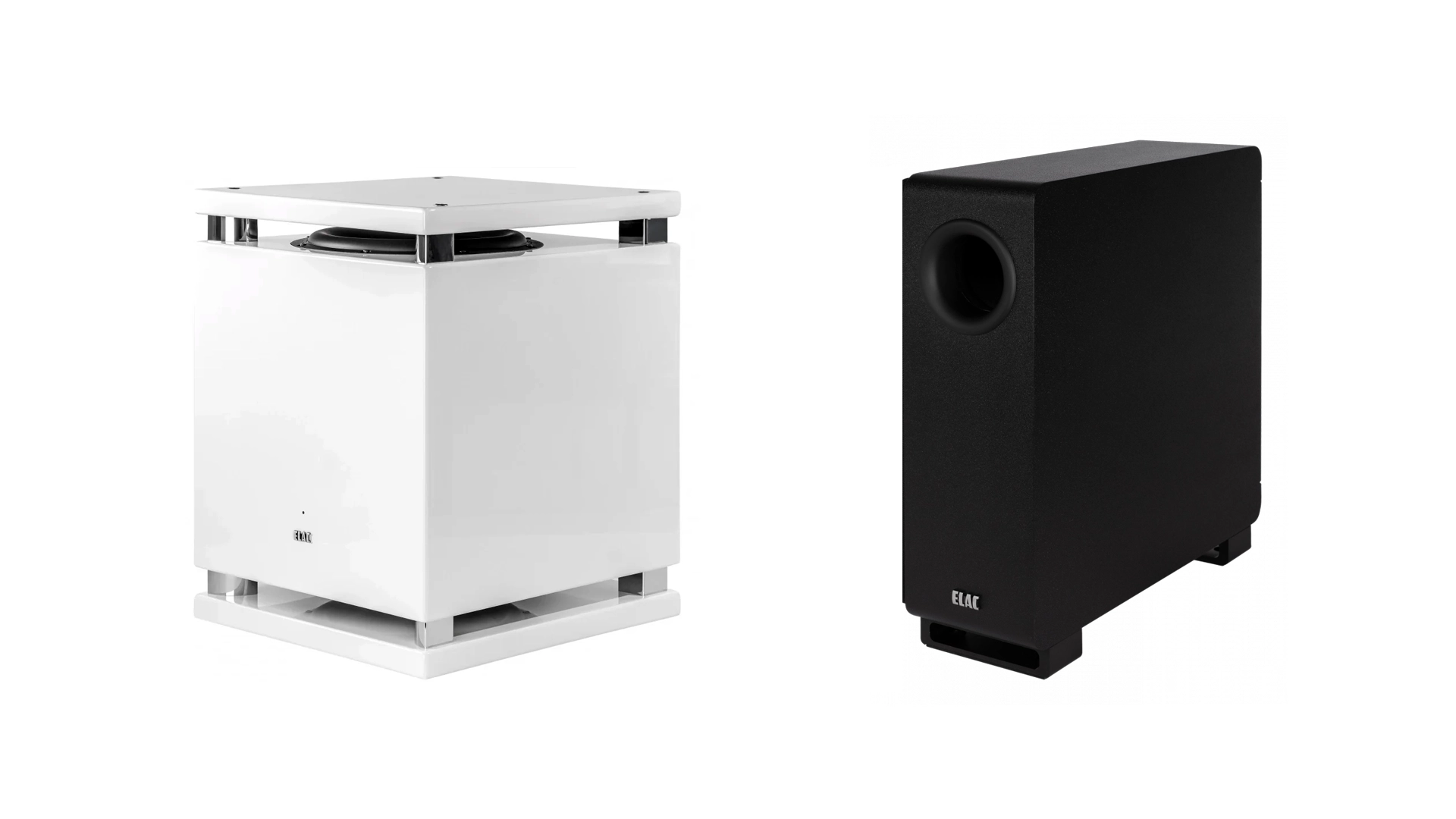
ELAC is a German audio company founded in Kiel on 1 September 1926 by Dr Heinrich Hecht, Dr Wilhelm Rudolph and Gerhard Schmidt. Its near-century history is unusually broad: the company began in electroacoustics and sonar, became a major post-war maker of turntables and cartridges, and shifted its centre of gravity to loudspeakers in the 1980s. Modern ELAC is therefore more than the affordable speakers often associated with designer Andrew Jones. The Debut and Uni-Fi families use carefully engineered cone drivers and, in Uni-Fi, concentric midrange/tweeter geometry to bring controlled directivity and coherent imaging to accessible systems. Carina, Vela and higher ranges draw on the folded JET tweeter, while active subwoofers and electronics complete stereo and cinema installations. Turntables keep the brand’s analogue history visible rather than treating it as a retro licensing exercise. ELAC’s lasting advantage is range backed by real transducer engineering: it can translate its knowledge of motors, diaphragms, wave launch and cabinet behaviour from compact entry models to elaborate floorstanders, while the 1926 date describes the actual company lineage rather than a recently revived name.
Elipson

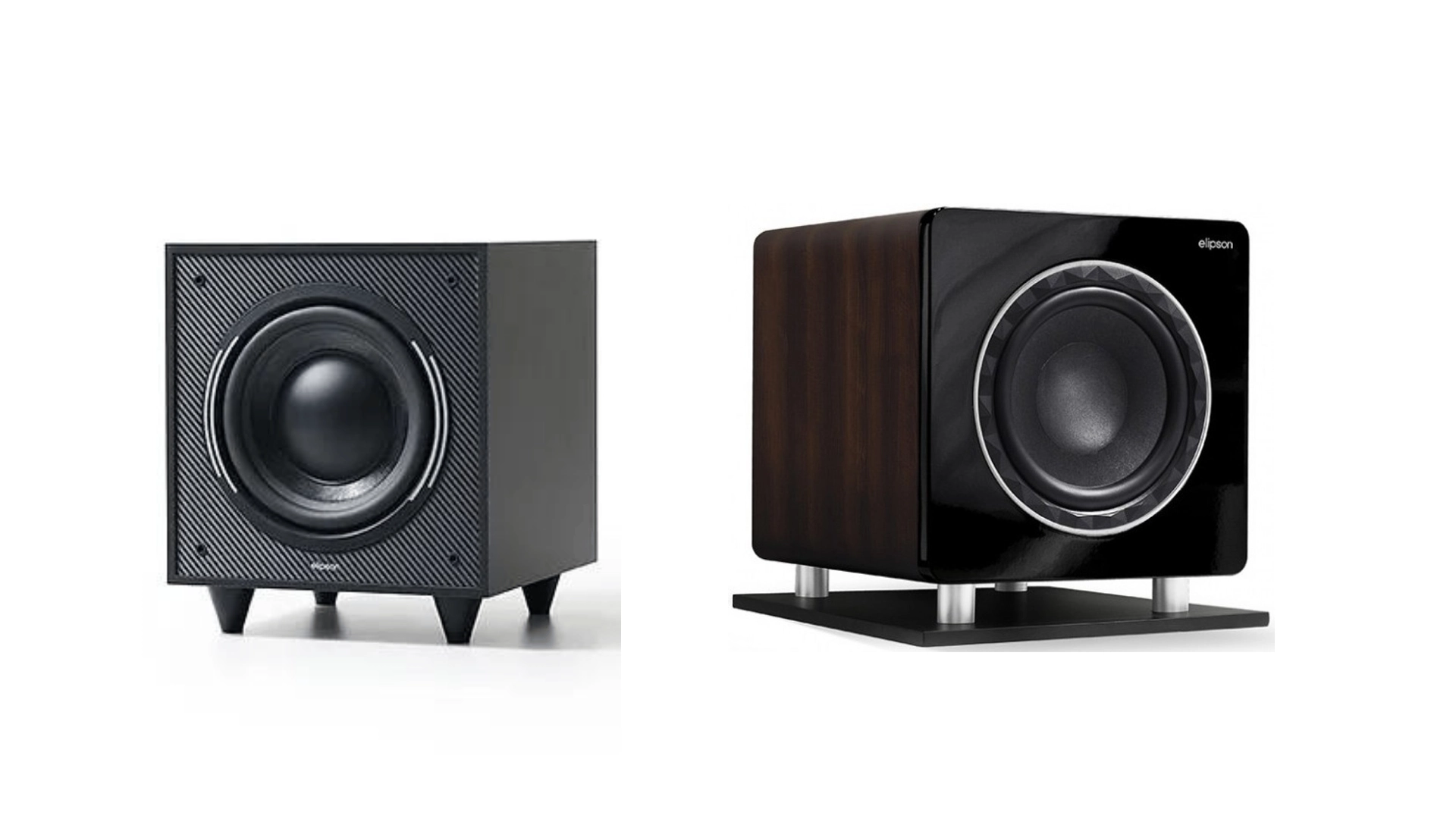
Elipson is France’s oldest surviving specialist loudspeaker name, tracing its company origin to 1938 and its distinctive acoustic identity to engineer Joseph Léon. The historical sequence deserves precision: the business began as Multimoteur, early audio research started around 1940, Léon joined in 1946 and led the company from 1948, and the Elipson name—formed from “ellipse” and the French word “son”—was adopted in 1951. Under Léon, spheres, reflectors and resonators were engineering tools for controlling diffraction, radiation and time alignment, not merely futuristic styling. The BS50 Chambord and later 402 made those experiments iconic in French broadcasting and public installations. Today the Planet series keeps the spherical enclosure visible, while Heritage models revisit large-format designs and newer Prestige, Legacy and wireless products cover conventional home systems. Elipson also offers turntables and electronics, but loudspeaker form remains its signature. Its strength is the unusually direct link between acoustic research and industrial design: shapes that are instantly recognisable because they were first chosen to solve propagation and enclosure problems.
Focal
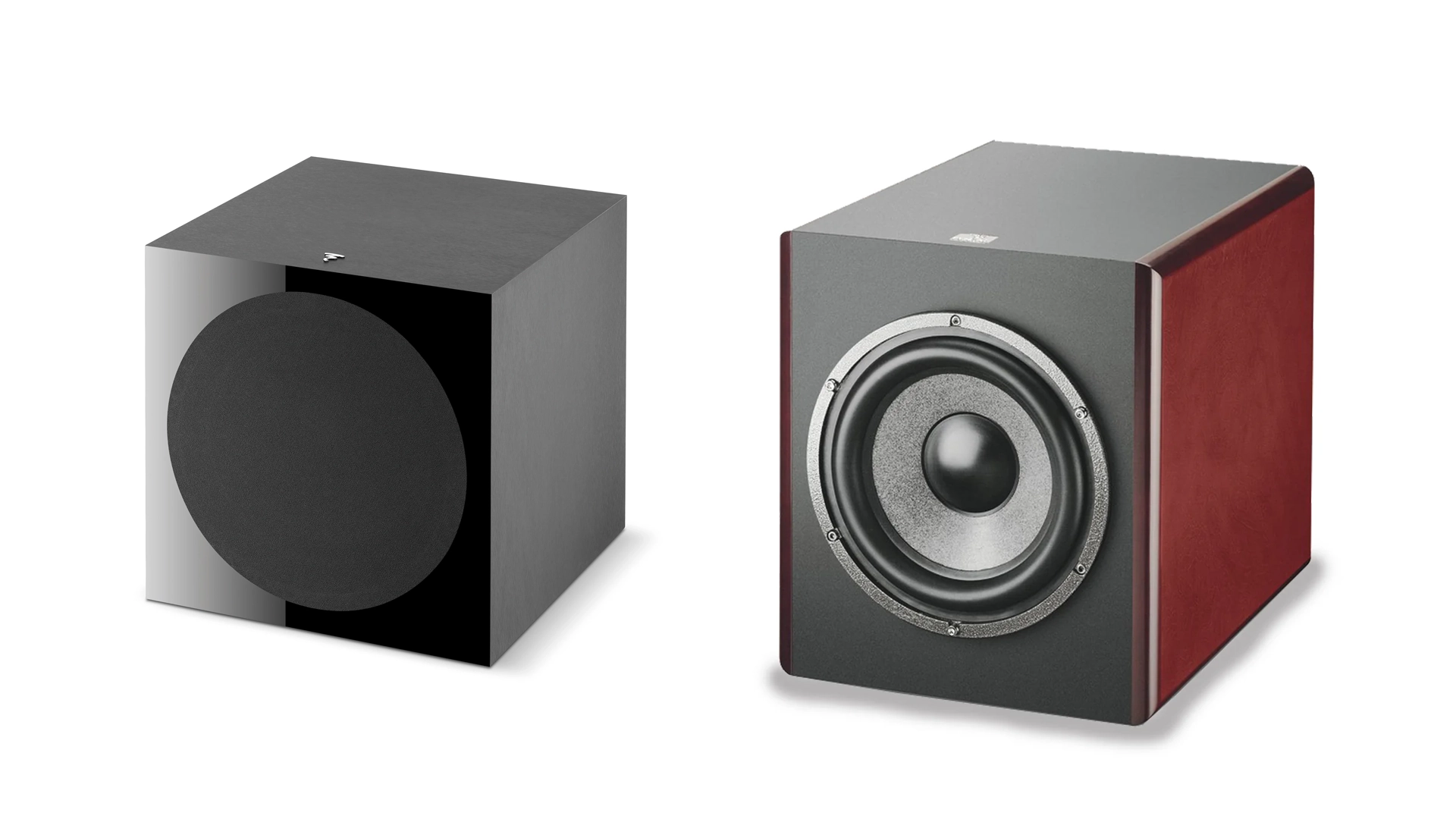
Few audio manufacturers cover as much of the reproduction chain as Focal while still developing and making key drivers in-house. Engineer Jacques Mahul founded Focal-JMlab in Saint-Étienne in 1979, initially building loudspeaker drivers and complete systems in a family precision-engineering workshop. The French company now serves home hi-fi and cinema, professional studios, car audio, headphones and custom installation. Its technical identity is visible in pure-beryllium tweeters, W-composite and K2 cones, flax-sandwich diaphragms, M-shaped profiles and Tuned Mass Damper surrounds; each technology is used where its stiffness, mass or resonance behaviour suits the product. Landmark Utopia loudspeakers established Focal’s high-end reputation, while Sopra, Kanta, Aria Evo X and Vestia broaden the home range. Bathys, Clear, Stellia and Utopia headphones bring the same driver-led philosophy closer to the listener. Cabinet making for the upper loudspeaker lines and much of the driver production remain centred in France.
Fostex

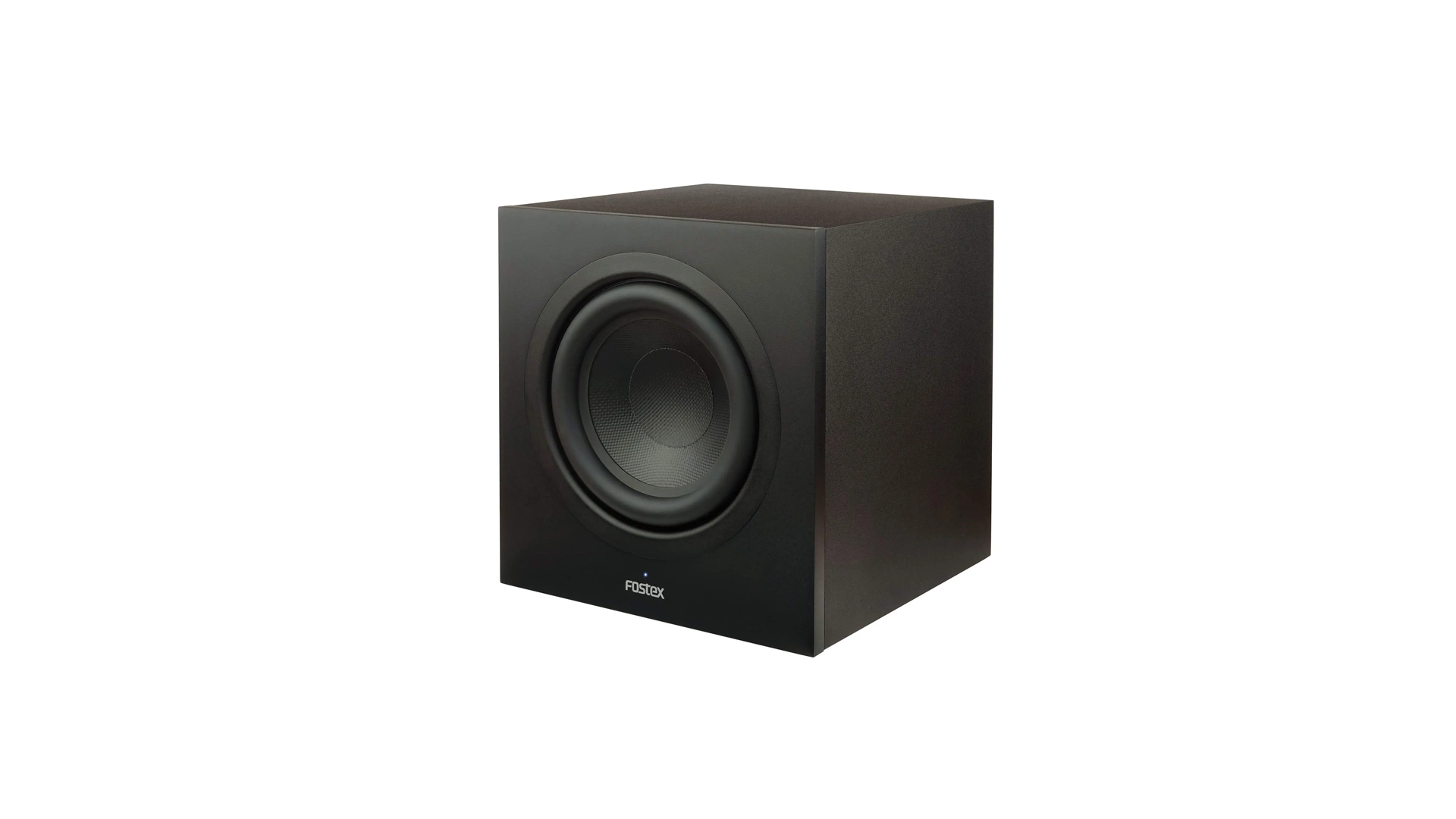
Fostex connects Japanese transducer manufacturing with tools used by recording engineers, musicians and hands-on loudspeaker builders. The company was created in 1973 as an independently managed subsidiary of Foster Electric, whose OEM loudspeaker experience gave the new brand an unusually deep production base. In 1974 it introduced RP, or Regular Phase, technology: a planar diaphragm carrying a printed conductor and driven across its surface in phase. Successive RP generations power the long-running T50RP family and newer premium planar-magnetic headphones, while the TH series explores dynamic drivers and crafted wooden housings. Fostex also makes active studio monitors, field and multitrack recorders, headphone amplifiers, microphones and professional accessories. A second, equally distinctive part of the catalogue is its raw loudspeaker components, including full-range drivers, compression tweeters and enclosure kits used in commercial and DIY designs. That breadth explains why the name appears both in studios and in enthusiast-built speaker systems.
Fyne Audio

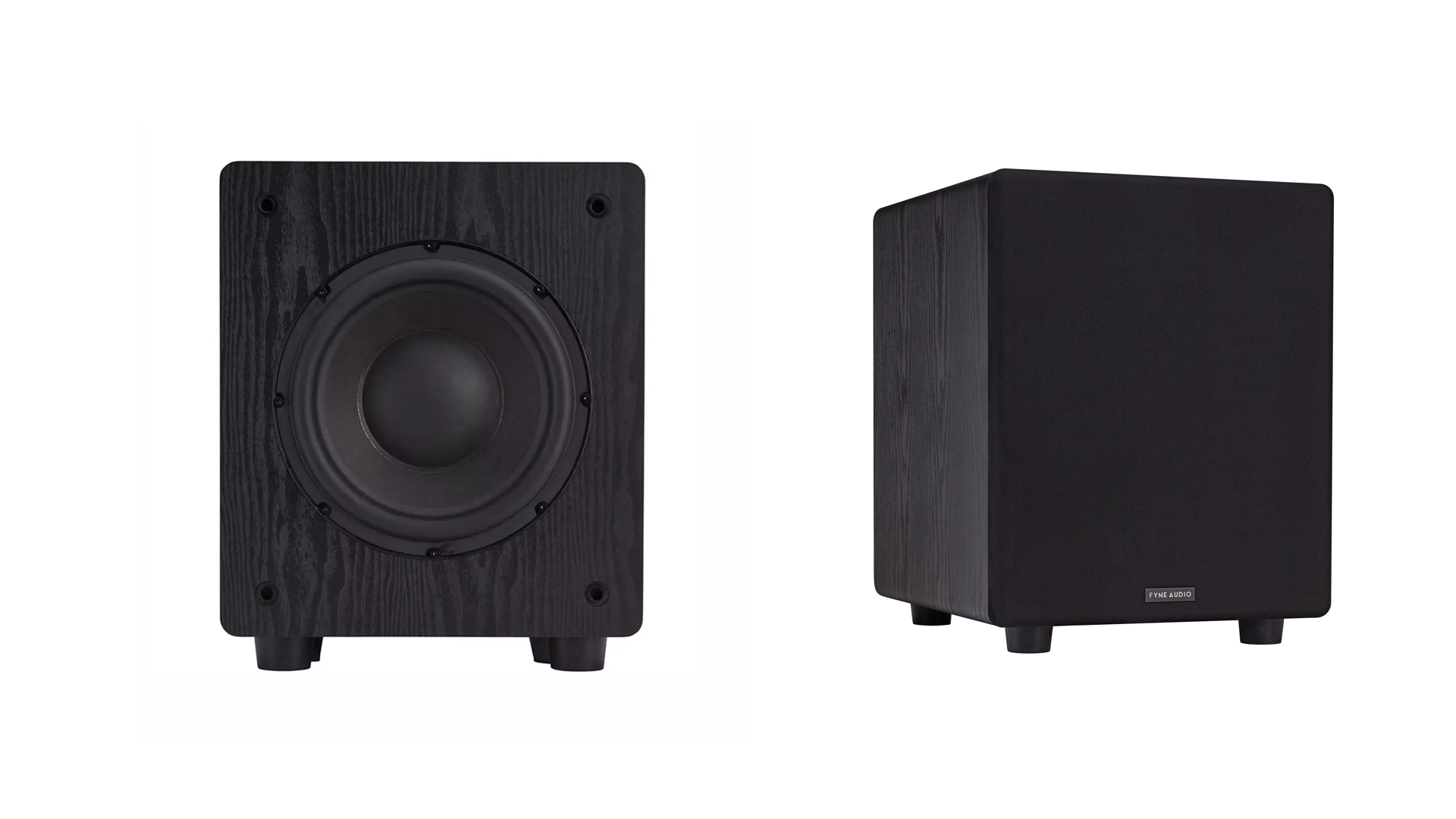
Fyne Audio is a Scottish loudspeaker company built by an experienced team that included many former Tannoy engineers and managers. Established in 2017, it placed technical director Dr Paul Mills’ IsoFlare driver at the centre of its identity: the high-frequency unit sits in the throat of the mid/bass cone so both act as a point source over much of the range. The accompanying FyneFlute surround controls termination at the cone edge, while BassTrax uses a tractrix-profile diffuser beneath a downward-firing port to spread low-frequency energy more evenly into the room. These ideas appear at different levels across the F300, F500, F700 and Special Production families. At the top, the F1 and Vintage series combine large IsoFlare units with elaborate cabinets and adjustable presence controls; custom-install, home-cinema and compact active models extend the catalogue beyond traditional stereo. Engineering and voicing are centred in Scotland, and the flagship cabinets are made there, giving the young marque a clear lineage without simply reproducing its founders’ previous work.
Gallo Acoustics

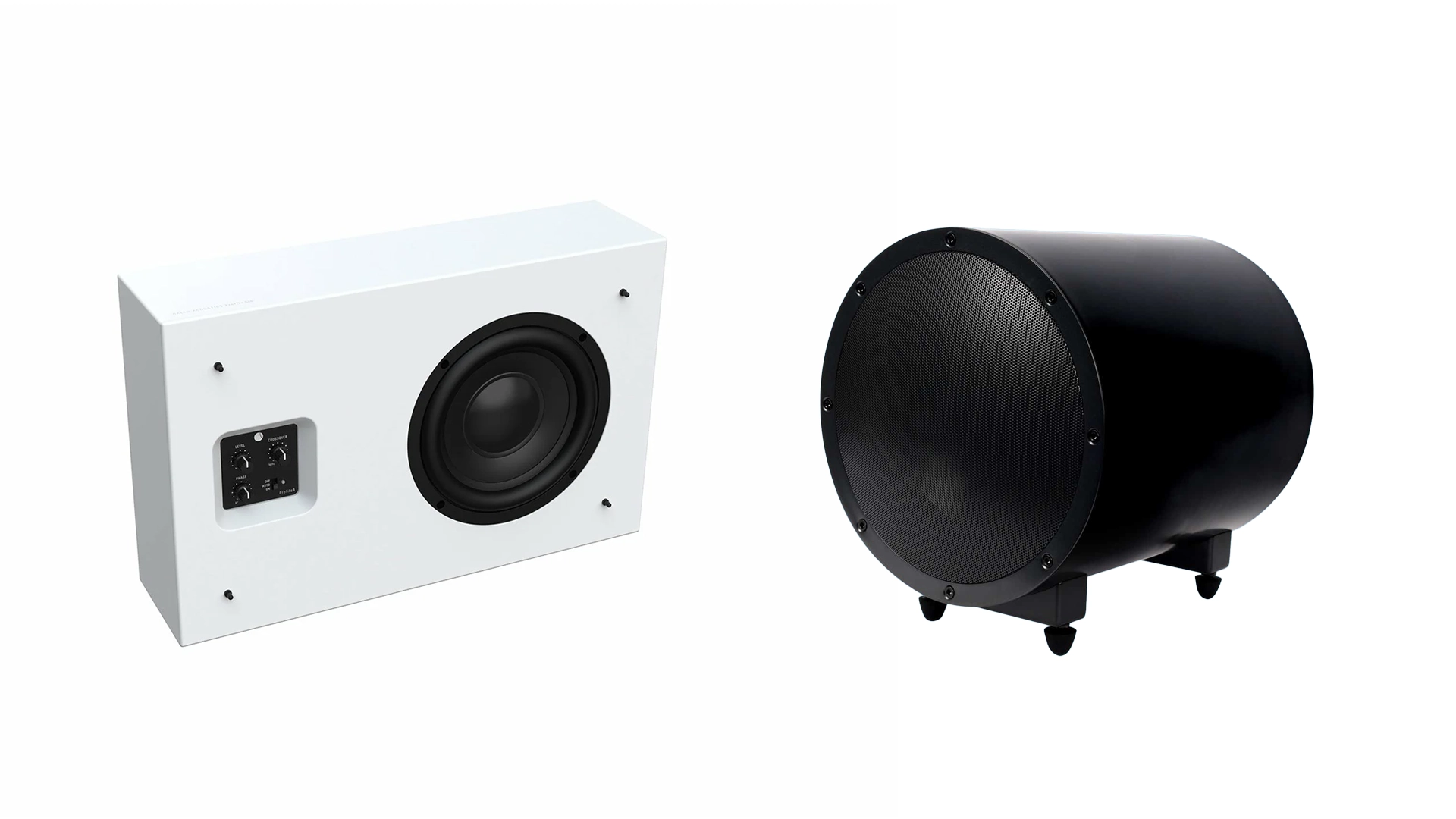
Gallo Acoustics turns the loudspeaker enclosure into a sphere, reducing parallel-panel standing waves and edge diffraction while keeping the product compact enough for domestic and architectural use. American designer Anthony Gallo developed the first commercial Nucleus loudspeaker in 1994 after years of experiments with electrostatic, ribbon and piezo-film transducers. The later Micro and A’Diva models placed small dynamic drivers in rigid steel spheres, while proprietary S2 loading extended useful bass response from the limited internal volume. Strada 2 uses twin spherical bass/mid units around Gallo’s cylindrical-diaphragm CDT3 tweeter, which provides broad horizontal dispersion without a conventional voice coil. The current Scottish-based company assembles products in Lanark and supports stereo, home-cinema and custom-install systems with Micro, A’Diva, Droplet and Strada speakers plus RoomSub and ProfileSub subwoofers. Its history is American, its present operating base is British, and the spherical form follows an acoustic argument rather than styling alone.
Genelec

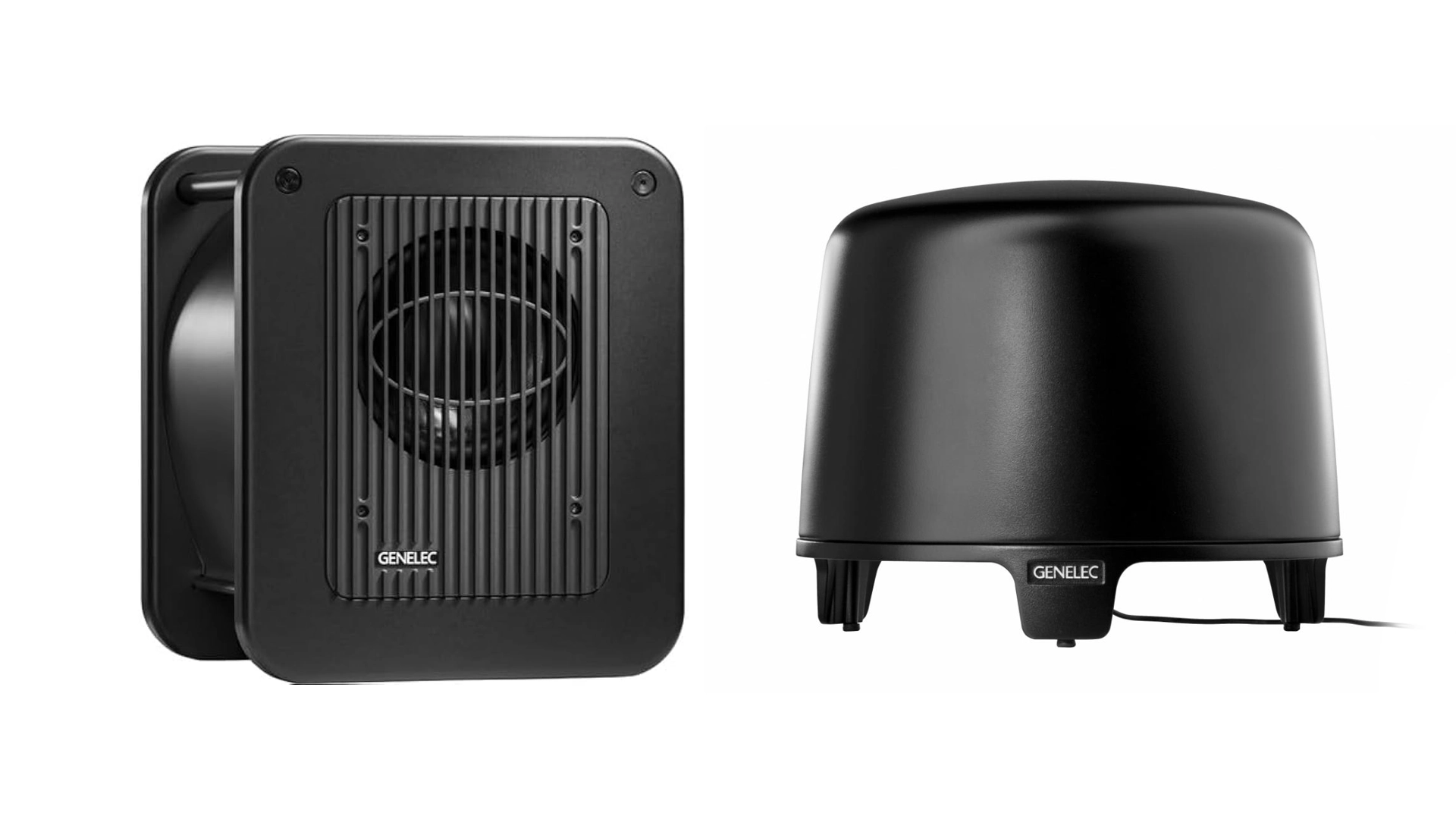
Genelec made active loudspeakers a repeatable monitoring system rather than simply placing an amplifier inside a cabinet. Ilpo Martikainen and Topi Partanen founded the company in Iisalmi in 1978 after Finnish broadcaster YLE asked them to develop a reliable active control-room monitor; the resulting S30 established separate amplification, protection, calibration controls and long-term serviceability as core principles. Modern 8000-series monitors use rounded Minimum Diffraction Enclosures, Directivity Control Waveguides and integrated reflex ports to control radiation and cabinet effects. Smart Active Monitors add DSP and network control, while GLM software measures and calibrates level, delay and room response across stereo or immersive arrays. The Ones combine a Minimum Diffraction Coaxial mid/tweeter with Acoustically Concealed Woofers to create point-source behaviour over a wide bandwidth. Genelec also serves installed audio through Smart IP and home listening through the G and F series. Product development and much of the recycled-aluminium enclosure manufacturing remain in Iisalmi, Finland.
GoldenEar

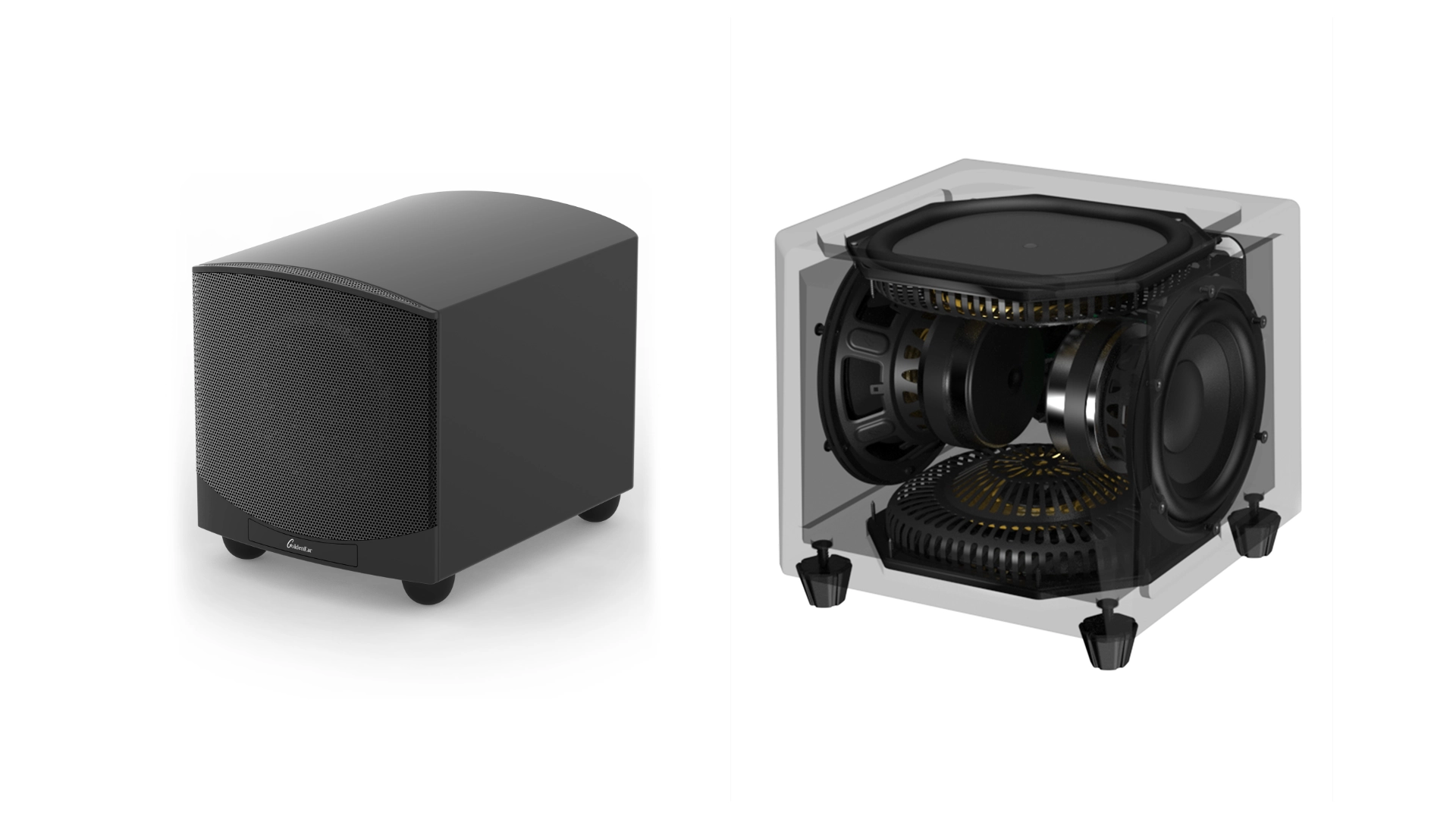
GoldenEar is an American loudspeaker brand that combines compact cabinets with unusually ambitious bass and high-frequency systems. Sandy Gross—previously a co-founder of Polk Audio and Definitive Technology—launched the company in 2010. Its signature High-Velocity Folded Ribbon tweeter moves air by squeezing it through folds in a light diaphragm, while many tower models pair passive radiators with internally powered subwoofer sections. This architecture defines the Triton and newer T-series towers, giving the main speakers control over deep bass without requiring a fully external subwoofer system. GoldenEar also makes BRX bookshelf speakers, SuperSat satellites, centre channels, architectural models and ForceField subwoofers, so the same driver ideas can be used in stereo or cinema installations. The brand’s strength lies in fitting wide bandwidth and room-friendly flexibility into relatively slim enclosures.
HECO

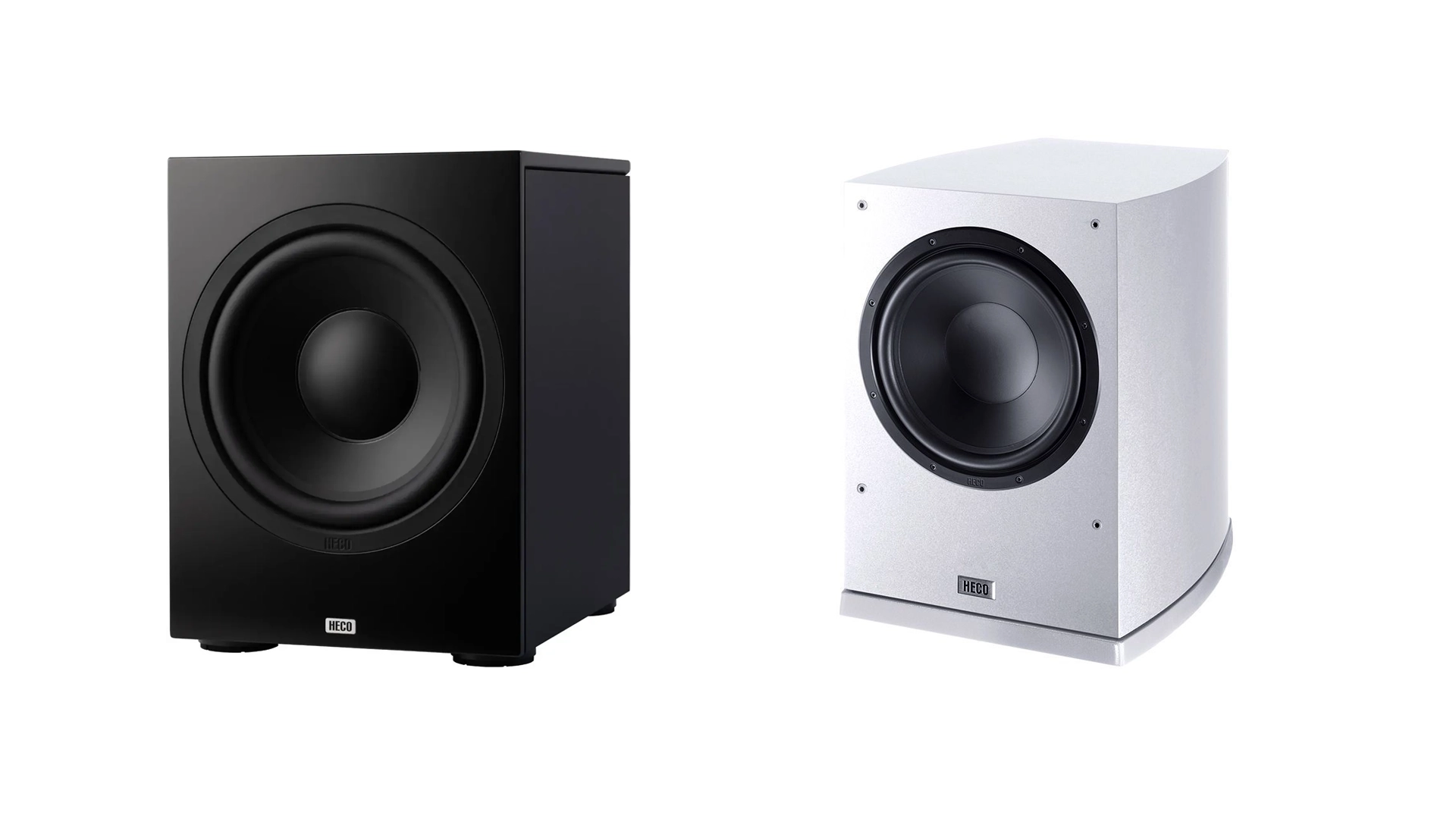
HECO is a German loudspeaker brand whose history reaches back to 1949, making it one of the country’s longest-established names in domestic audio. It produced series-manufactured speaker chassis by 1950 and has since moved through compact hi-fi boxes, ambitious floorstanders and installation speakers without abandoning in-house driver development. A recurring HECO signature is the Kraft paper cone, made from a fibre mixture that includes Nordic pine and wool for a deliberately controlled balance of stiffness and internal damping. Current designs also use the Fluktus tweeter’s computer-optimized waveguide, robust die-cast baskets and, in selected upper models, AlNiCo midrange motors. Ranges such as Victa Elite, Aurora, Celan Revolution and Direkt address different prices and aesthetics, while sharing recognizable acoustic ideas. HECO’s strength is this continuity: traditional paper-cone virtues developed with modern measurement, materials and dispersion control.
HEDD
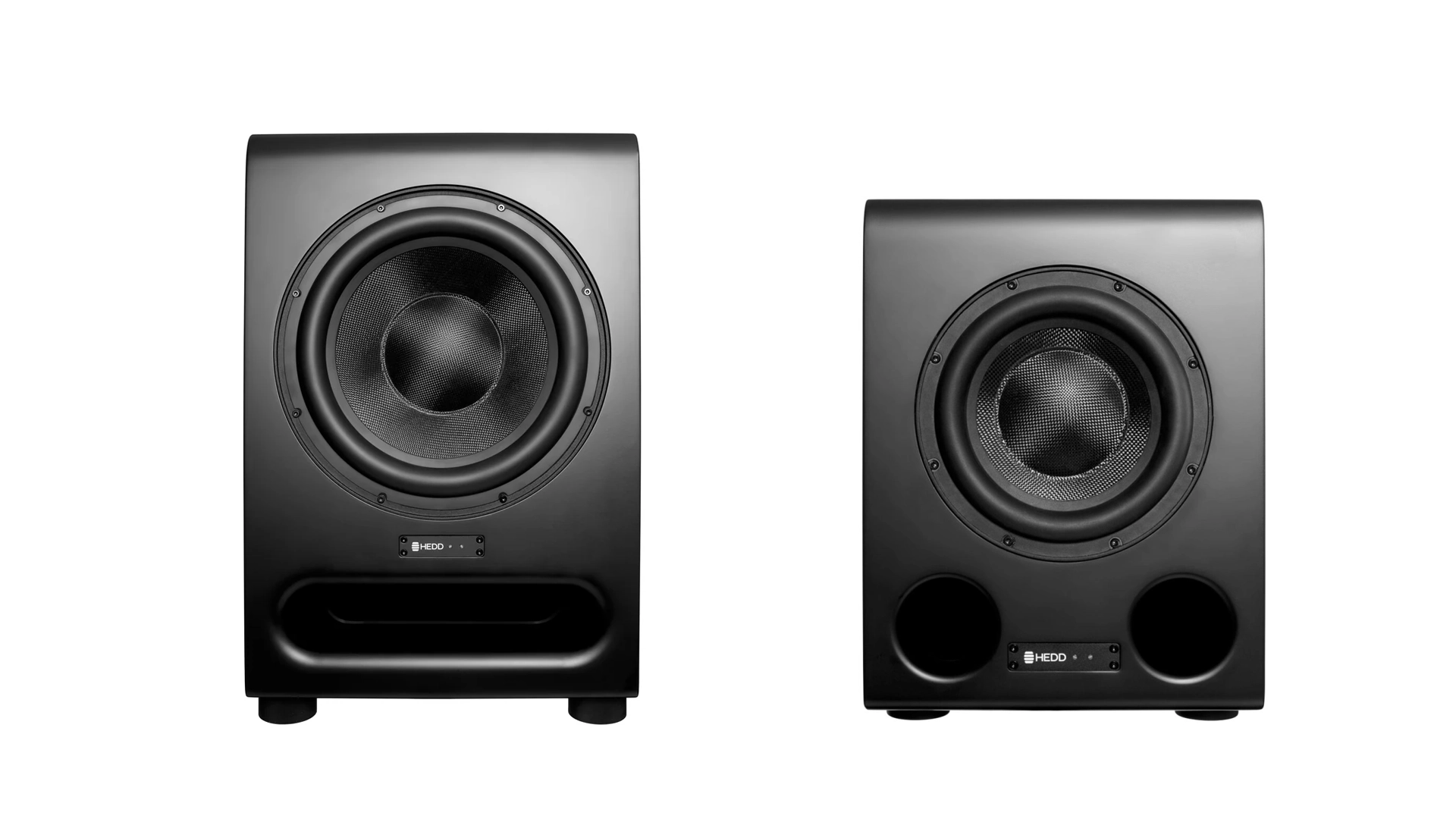
HEDD—Heinz Electrodynamic Designs—is a Berlin company founded in 2015 by physicist Klaus Heinz and his son, musicologist and mastering engineer Dr Frederik Knop. Klaus Heinz had already spent decades developing Air Motion Transformer tweeters, and HEDD made that folded-diaphragm principle the centre of a new range for studios and demanding home systems. The company builds active monitors and subwoofers in Berlin, combining its proprietary AMT with DSP functions such as the Lineariser, a phase-correction system based on zero-phase FIR filtering. MK2 monitors can also be used in closed or ported operation through the CoP design, allowing a practical trade-off between bass extension and transient behaviour. HEDDphone models extend the idea into a full-range Variable Velocity Transform transducer for headphones. HEDD’s identity is unusually coherent: one transducer concept, refined for nearfield monitoring, immersive systems and personal listening.
James Loudspeaker
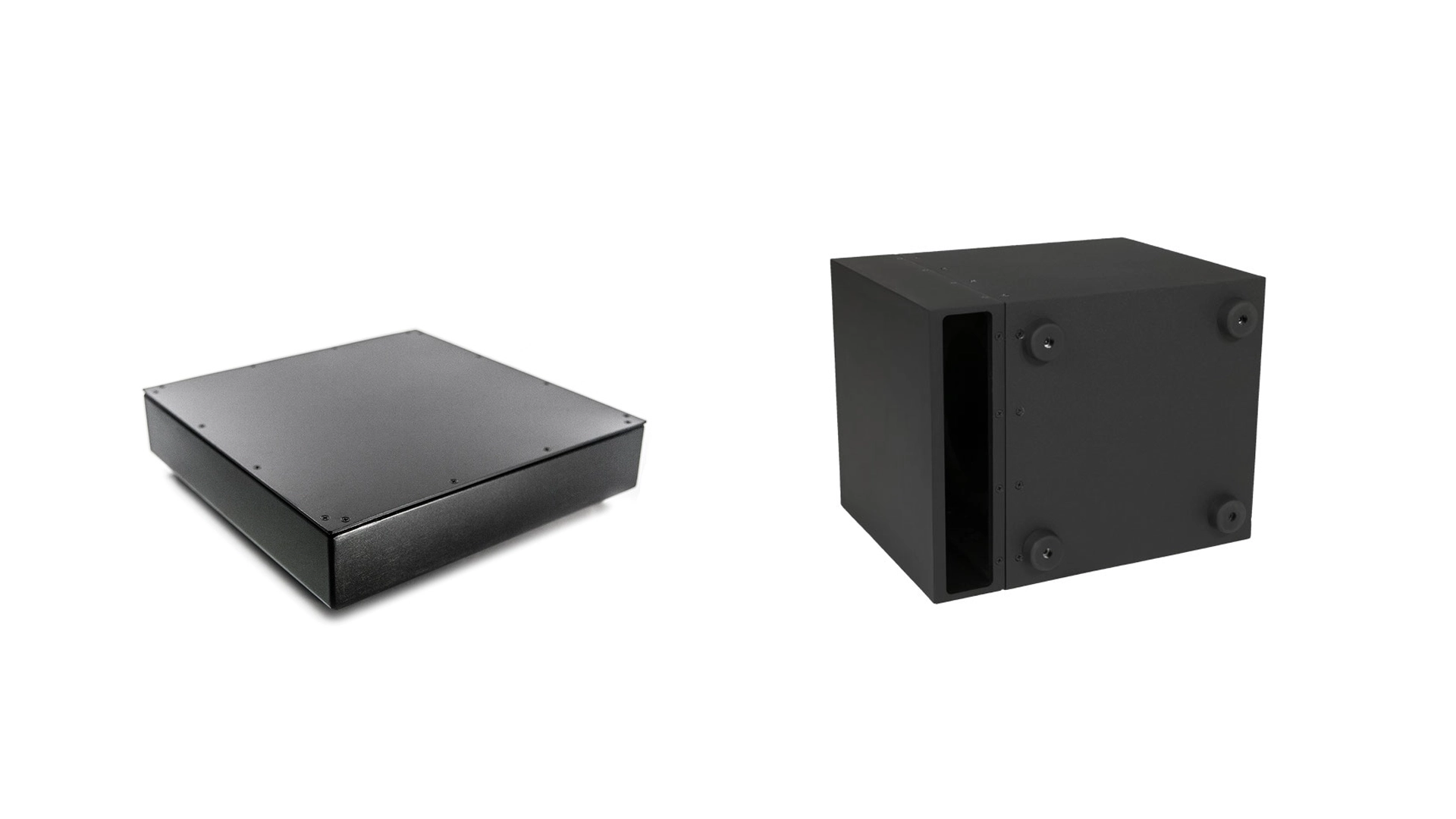
James Loudspeaker designs high-performance speakers for rooms in which conventional boxes are visually or physically unacceptable. Founded in California in 1999 and now part of Sonance, the company specialises in architectural, custom and outdoor systems built around rigid aluminium enclosures, purpose-designed drivers and unusually flexible fabrication. Its Small Aperture models place the visible opening at lighting-fixture scale while locating the enclosure behind the wall or ceiling. PowerPipe subwoofers move low-frequency output through a remote port when the cabinet must be hidden, and the high-output Mavericks range addresses dedicated cinemas. James also makes on-wall, in-wall, landscape, marine and soundbar solutions, including custom widths, colours and finishes for a particular screen or interior. Technologies such as quad-tweeter arrays and the EMB low-frequency platform serve installation problems rather than acting as generic badges. The brand’s strongest advantage is therefore not one signature speaker: it is the ability to engineer an acoustically serious system around architectural constraints, then manufacture the enclosure and finish to suit the project.
Jamo

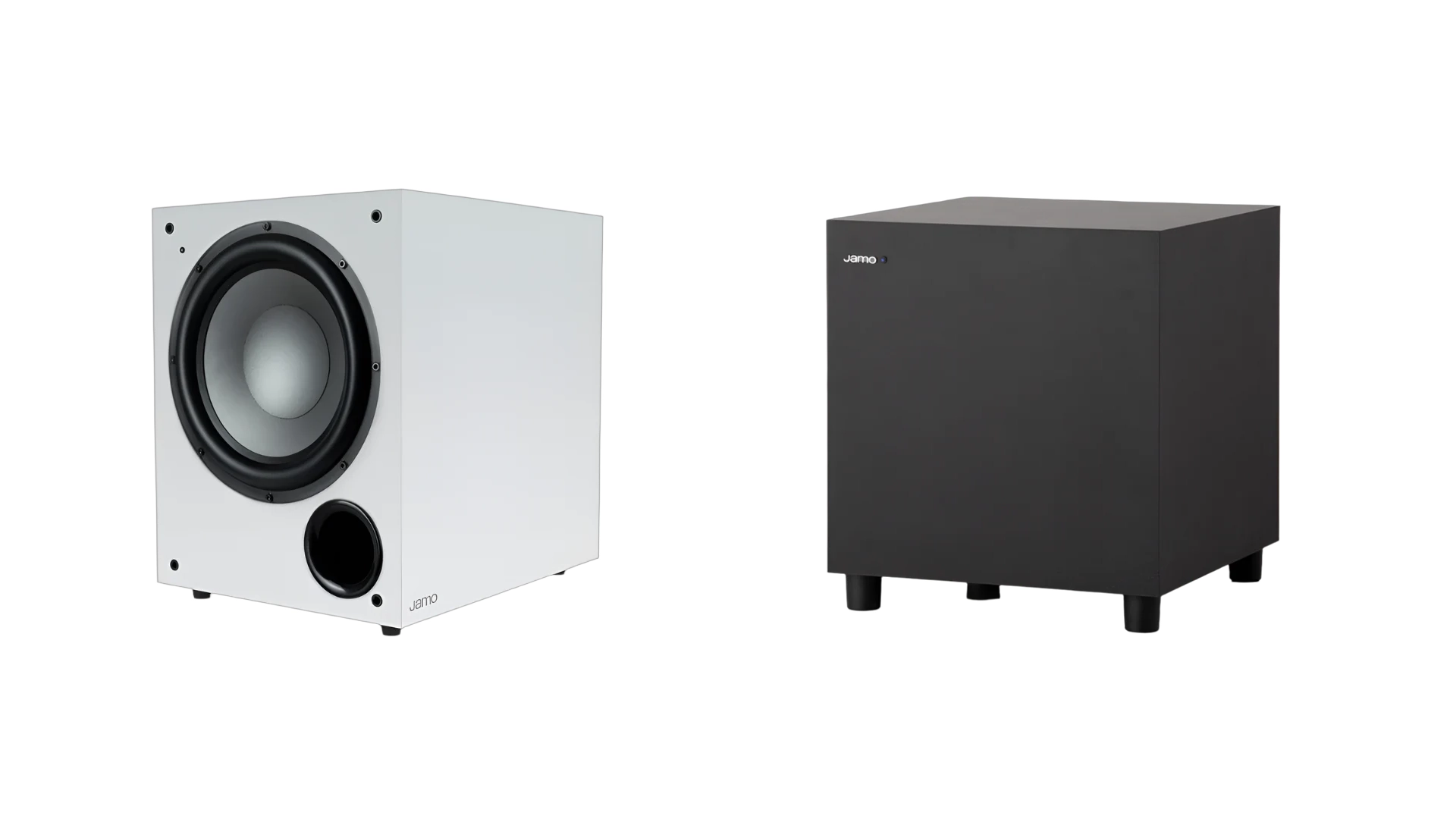
Jamo is a Danish loudspeaker name built on the idea that audio equipment should live comfortably with furniture rather than dominate it. It was founded in 1968 by cabinetmaker Preben Jacobsen and salesman Julius Mortensen; “Jamo” combines the opening letters of their surnames. The company became known for bringing Scandinavian form, practical proportions and broad-market pricing to stereo and home-cinema speakers, with Studio, Concert and Custom installation families forming an important part of its legacy. The present story needs a qualification: after former owner Voxx/PAC sold the brand in 2024, Jamo entered a quiet transition and is now being relaunched by Cinemaster and Rayleigh Lab. A new range announced for 2026 is intended to cover traditional hi-fi, connected lifestyle products and higher-end systems, with development involving European designers and production planned in Denmark and China. That means older catalogue names should not be presented as the whole current line. What remains continuous is Jamo’s core proposition—approachable loudspeakers shaped by Danish design culture—while the products and ownership are entering a new chapter.
JBL

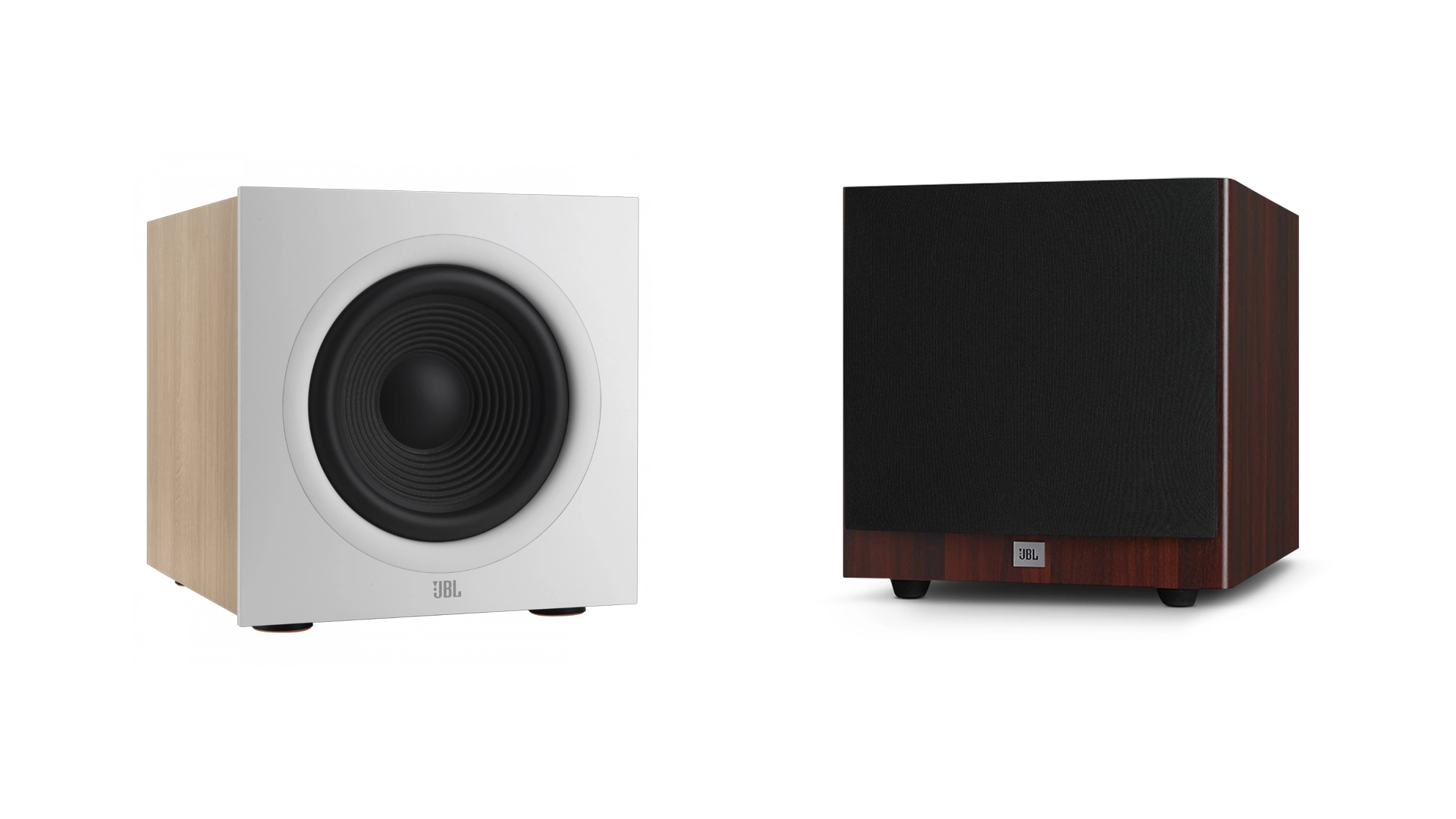
JBL is one of the few audio brands with equally deep roots in cinema, recording studios, touring sound and domestic loudspeakers. Engineer James Bullough Lansing founded James B. Lansing Sound in Los Angeles in 1946, and the early D130 driver introduced a four-inch flat-wire voice coil that helped establish the company’s reputation for high efficiency and power handling. JBL later became a studio reference through 4300-series monitors and translated that visual and acoustic language into the L100 for the home. Its professional division now covers cinema systems, installed sound, stage monitors and large-format arrays, while consumer products range from portable Bluetooth speakers and headphones to Classic and Synthesis systems. Compression drivers, horns and controlled-directivity waveguides recur across many categories because JBL designs for predictable output beyond a single listening seat. The company has belonged to Harman since 1969; Harman has been owned by Samsung since 2017. Scale is part of JBL’s know-how: transducer engineering developed for venues and studios can inform car, home and portable products without erasing the differences between them.
JL Audio

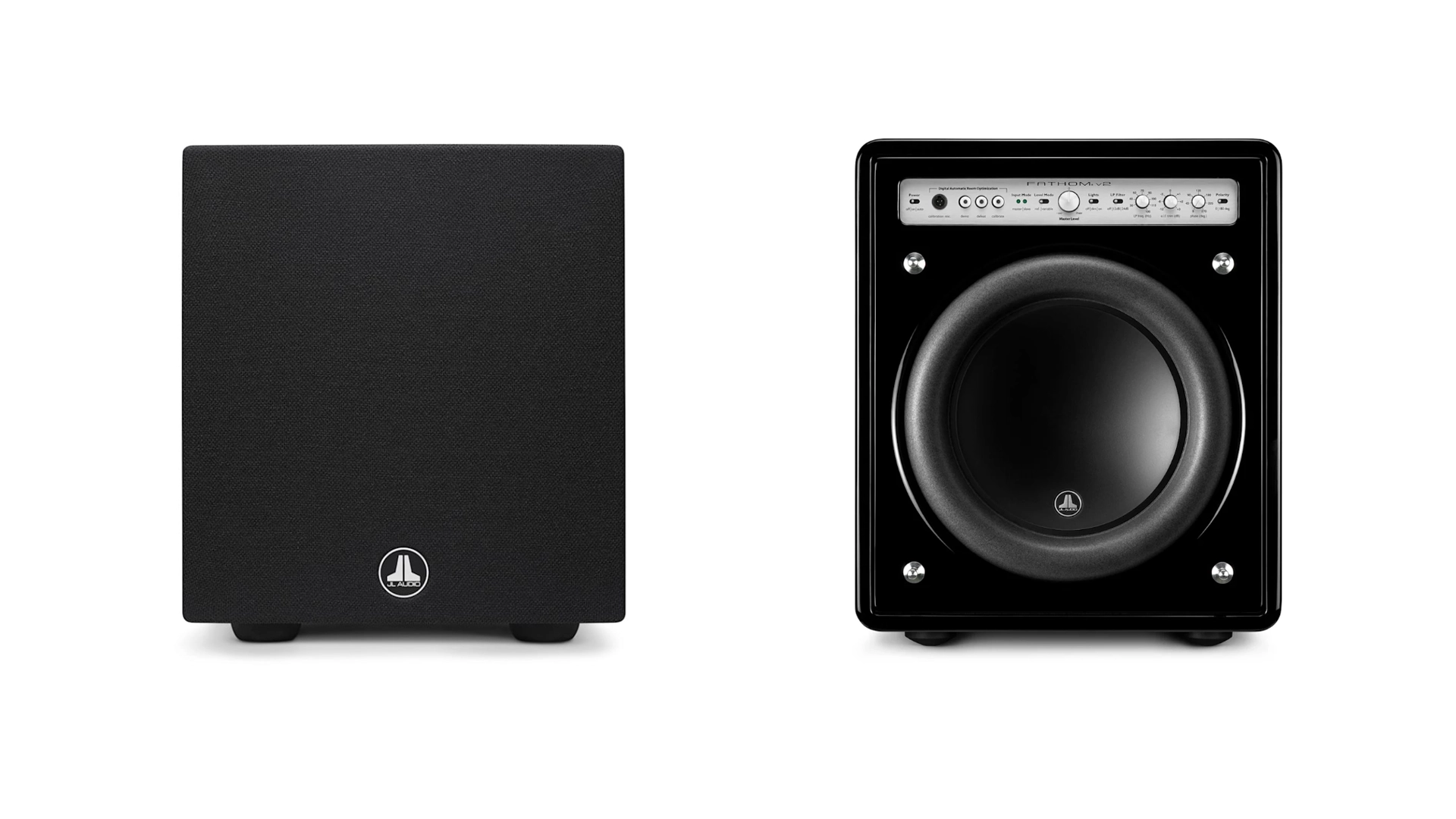
JL Audio is an American transducer and amplifier specialist whose strongest signature is controlled, high-output bass in difficult environments. Friends James Birch and Lucio Proni founded the company in Florida in 1975—the initials of their first names supplied “JL”—and its early speaker work evolved into a major presence in custom car audio. The W7 subwoofer platform showcased technologies developed to keep the voice coil, suspension and cone geometry stable at large excursion, while matching amplifiers and signal processors made complete installations easier to engineer. JL later adapted that low-frequency expertise to marine systems and home subwoofers. Fathom and Gotham use powerful drivers, substantial amplification and automatic room optimisation; Dominion offers a more compact entry to the same category. The company also produces coaxial speakers, component systems and amplifiers for vehicles, boats, powersports and home use, with products designed around the thermal, moisture and space constraints of each application. Garmin acquired JL Audio in 2023, but the brand’s technical centre remains its long-developed command of transducers, amplification and system integration.
Kanto

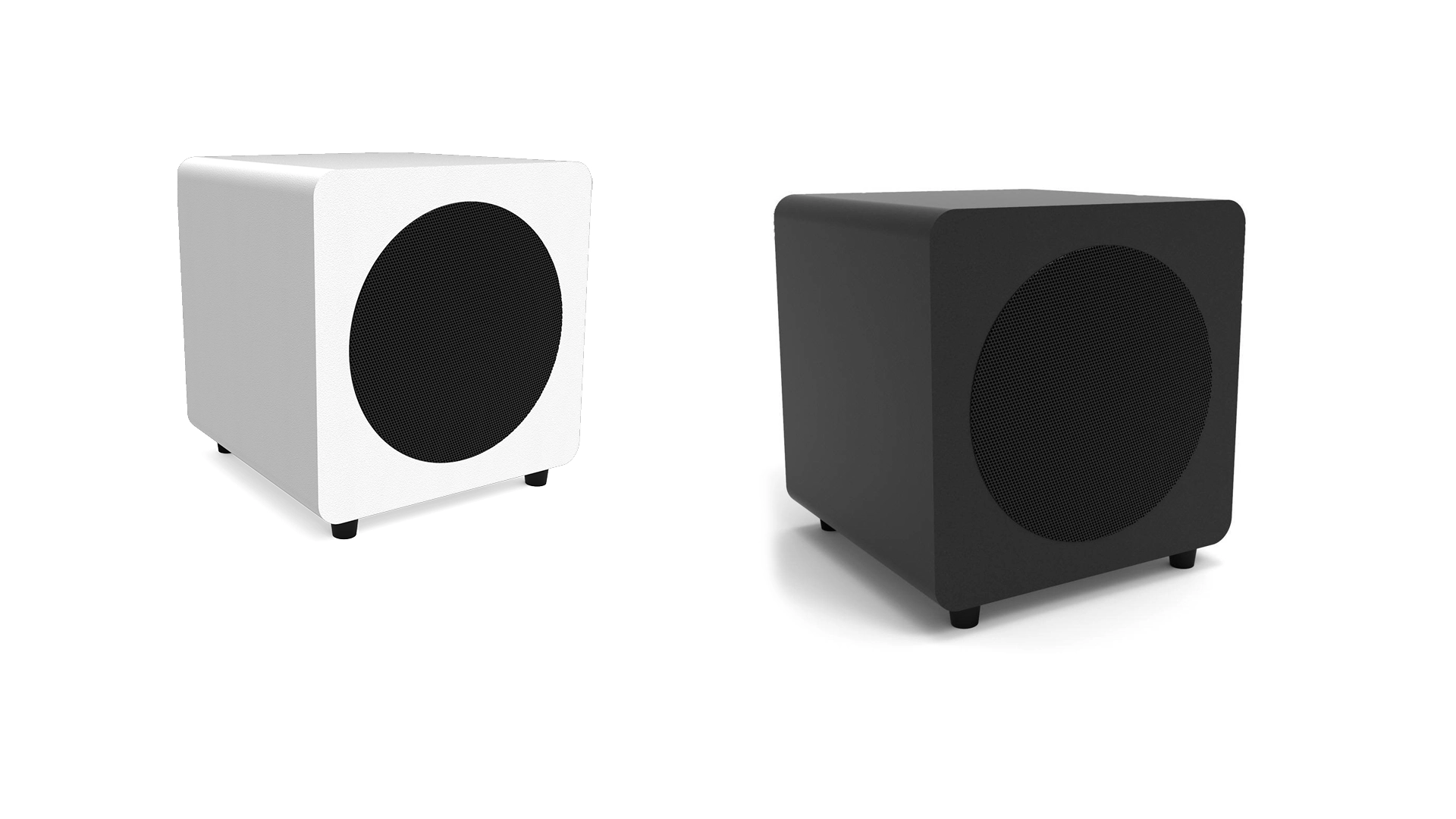
Kanto is a Canadian audio company best known for powered speakers that connect directly to the sources people actually keep on a desk or in a living room. Founded in 2007, it packages amplification, input switching and loudspeaker engineering in compact systems that avoid a separate receiver. The YU family ranges from small desktop models to larger bookshelf speakers, typically combining Bluetooth with analogue inputs; selected versions add USB audio, optical input, a moving-magnet phono stage and a subwoofer output. TUK moves upward with an AMT tweeter, greater power and broader digital connectivity, while ORA targets near-field computer listening in an even smaller enclosure. Matching SUB subwoofers, desktop and floor stands, and mounting products let the speakers form a coherent workspace or TV system. Kanto does not pretend that every model serves the same listener: input sets, cabinet size and bass capability change clearly across the range. Its strength is thoughtful integration—clean industrial design, useful controls and enough connection options to bridge a turntable, computer, television and phone without turning a simple system into a rack of electronics.
KEF

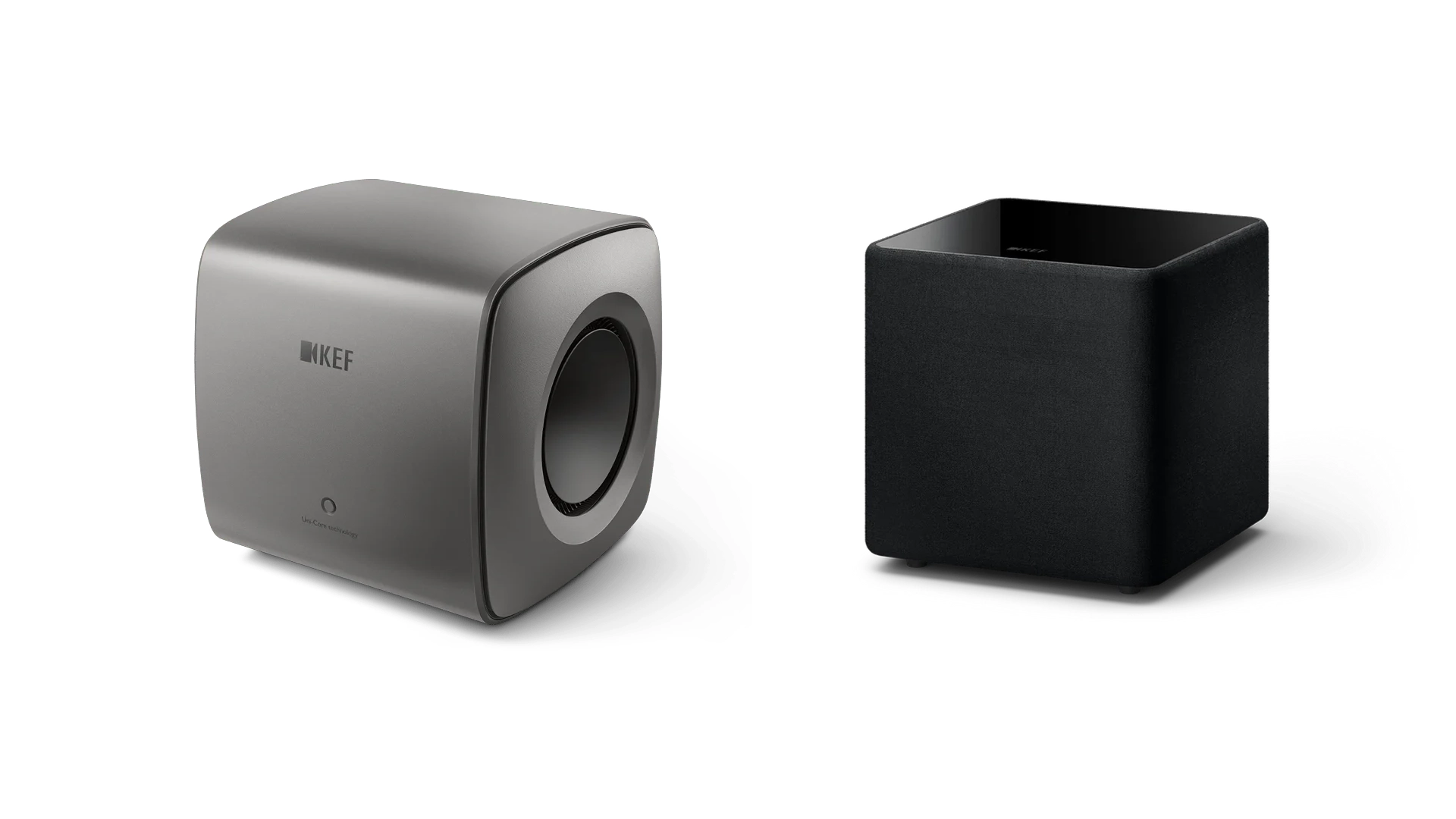
KEF is a British loudspeaker company whose identity rests on acoustic research and driver engineering rather than a house style applied to conventional boxes. BBC engineer Raymond Cooke founded it in Maidstone in 1961; the name comes from Kent Engineering & Foundry, the site of the first workshop. KEF’s defining invention is Uni-Q, introduced in 1988, which places the tweeter at the acoustic centre of the midrange cone so the two behave more like one source across a wide listening area. Recent generations add Metamaterial Absorption Technology behind the tweeter to manage rear radiation, while Uni-Core allows opposed subwoofer drivers to share a compact motor structure. These ideas appear at different scales across the Q, R and Reference ranges, the sculptural Blade models, KC subwoofers and the active LS50 Wireless II and LS60 Wireless. The catalogue spans passive, wireless, architectural and personal audio, but the common thread is unusually deep in-house modelling, measurement and transducer development.
Kharma

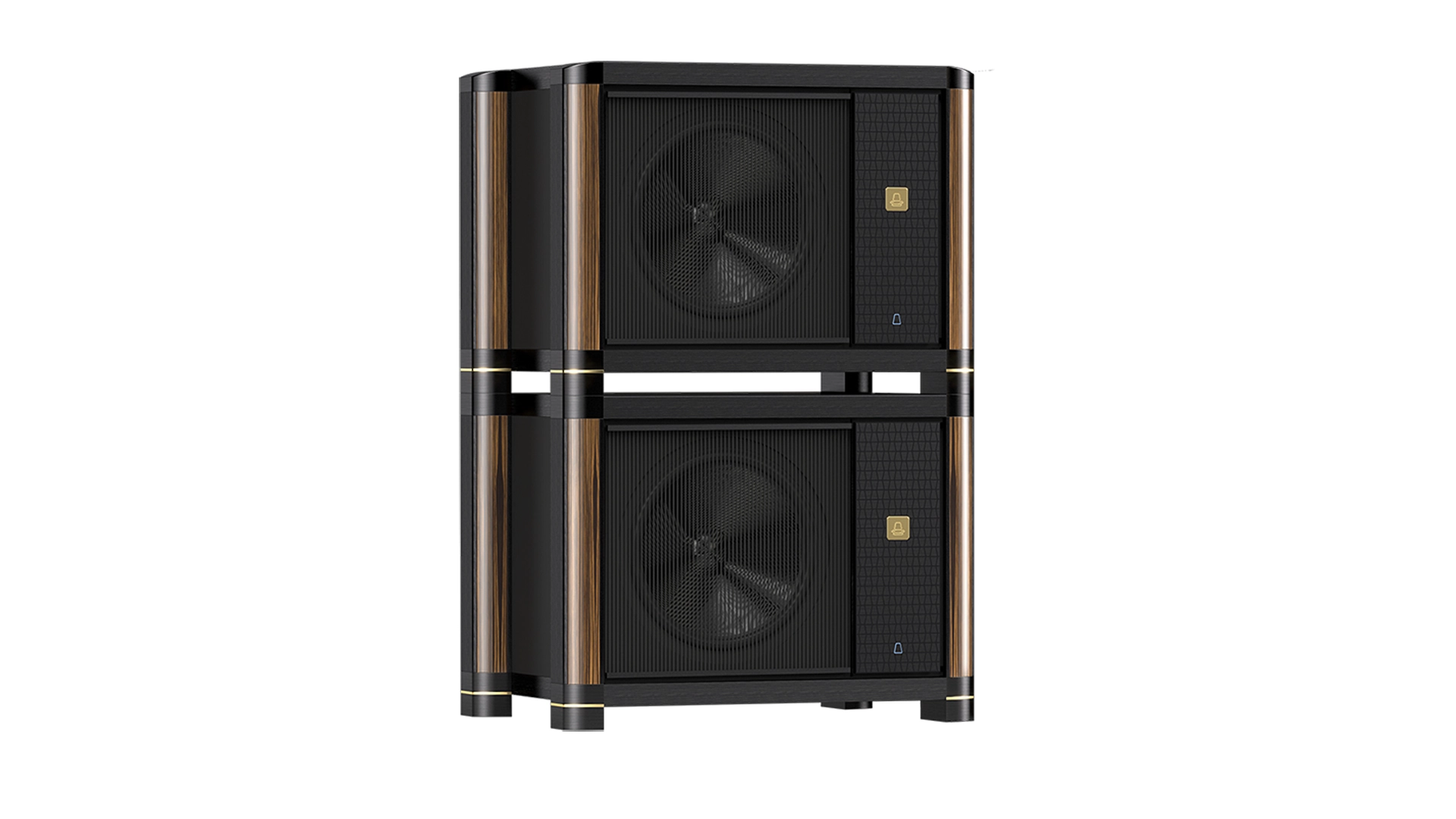
Kharma is a Dutch high-end loudspeaker brand founded by Charles van Oosterum in 1993, after the loudspeaker work he began under Oosterum Loudspeaker Systems in 1982. That distinction matters: 1982 marks the predecessor activity, while Kharma itself emerged in the following decade. The company designs complete systems in which cabinet shape, driver behaviour, crossover parts and internal wiring are treated as one mechanical and electrical structure. Its best-known technologies include diamond tweeters and proprietary Omega mid/bass drivers, used alongside carefully formed composite cabinets to control stored energy and diffraction. Elegance is the most approachable expression of the concept, Exquisite moves into larger reference systems, and Enigma Veyron is the statement range. Kharma also produces matching subwoofers, electronics and cables, but loudspeakers remain the centre of its identity. These are low-volume products built in the Netherlands for installations where material execution, visual finish and system integration are as important as headline specifications.
KLH

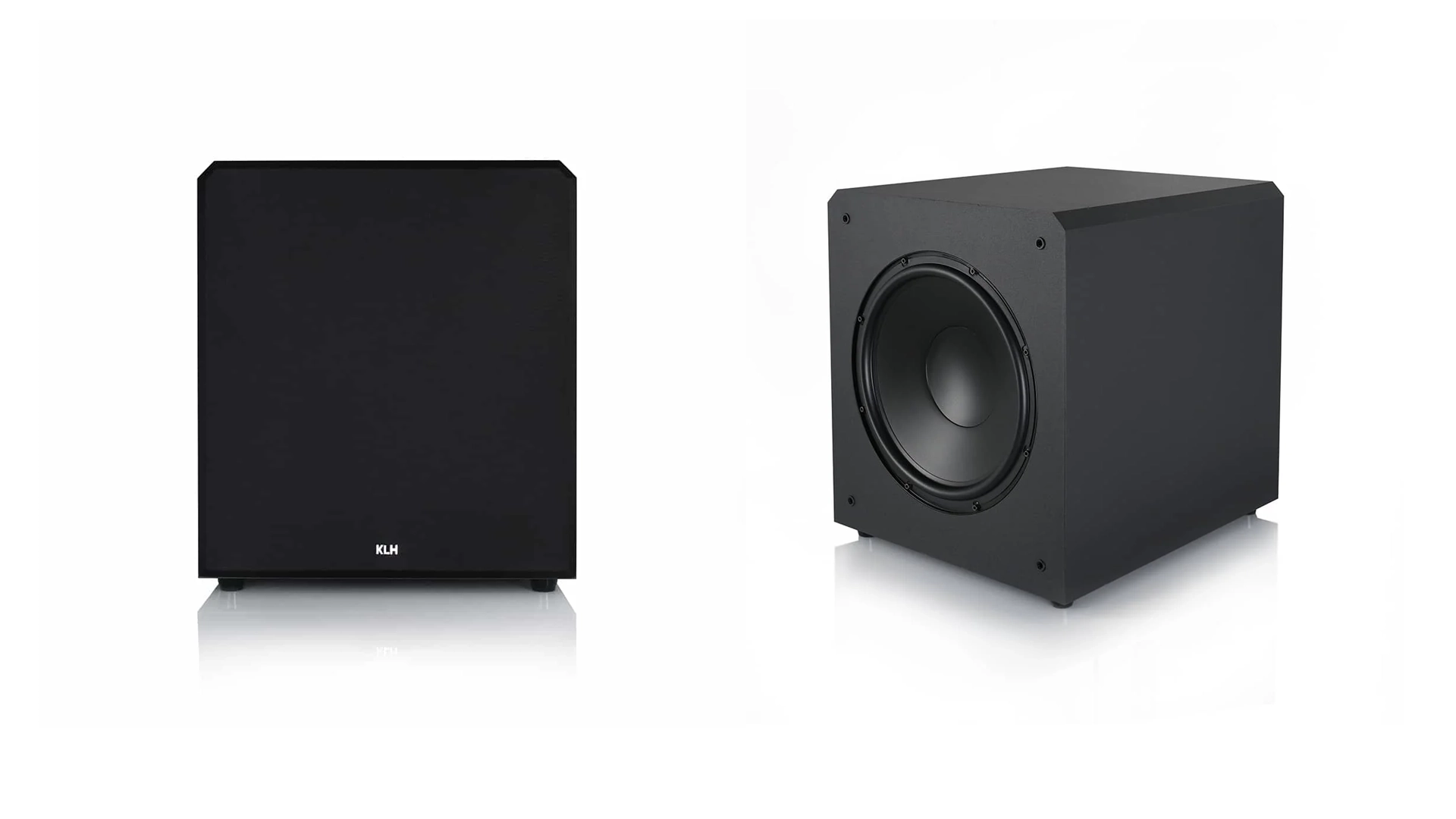
KLH is an American loudspeaker name founded in Cambridge, Massachusetts, in 1957 by Henry Kloss, Malcolm S. Low and Josef Anton Hofmann—the initials behind the brand. The original company helped bring acoustic-suspension loudspeakers into ordinary homes, using sealed enclosures and carefully controlled woofer compliance to obtain extended bass from manageable cabinets. Model Six became the best-known expression, while the Model Eight radio and full-range electrostatic Model Nine showed that KLH was not limited to one product type. Today’s KLH is a revived company rather than an uninterrupted continuation of the Cambridge factory. Its Model Collection deliberately revisits the classic formula: Model Three, Five and Seven combine acoustic-suspension loading, broad baffles and modern drivers, crossovers and finishes. The wider range includes conventional floorstanders, bookshelf speakers, subwoofers and installation models. Victrola acquired KLH in 2025, placing the current brand within a larger consumer-audio group while its most distinctive products continue to reference the engineering ideas associated with Henry Kloss.