
Integrated Amplifiers
An integrated amplifier is the heart of many classic hi-fi systems, combining two essential components into a single chassis: a preamplifier for input switching and volume control, and a power amplifier to drive the speakers. This all-in-one design offers a straightforward and convenient way to build a high-quality audio system without the complexity of separate boxes. This page is a comprehensive directory of manufacturers that produce these versatile components, from simple, purely analog models to modern amplifiers with built-in DACs and streaming capabilities.
Hi-Fi brands in the category
Summary information and image
Direct links to official websites
Teac

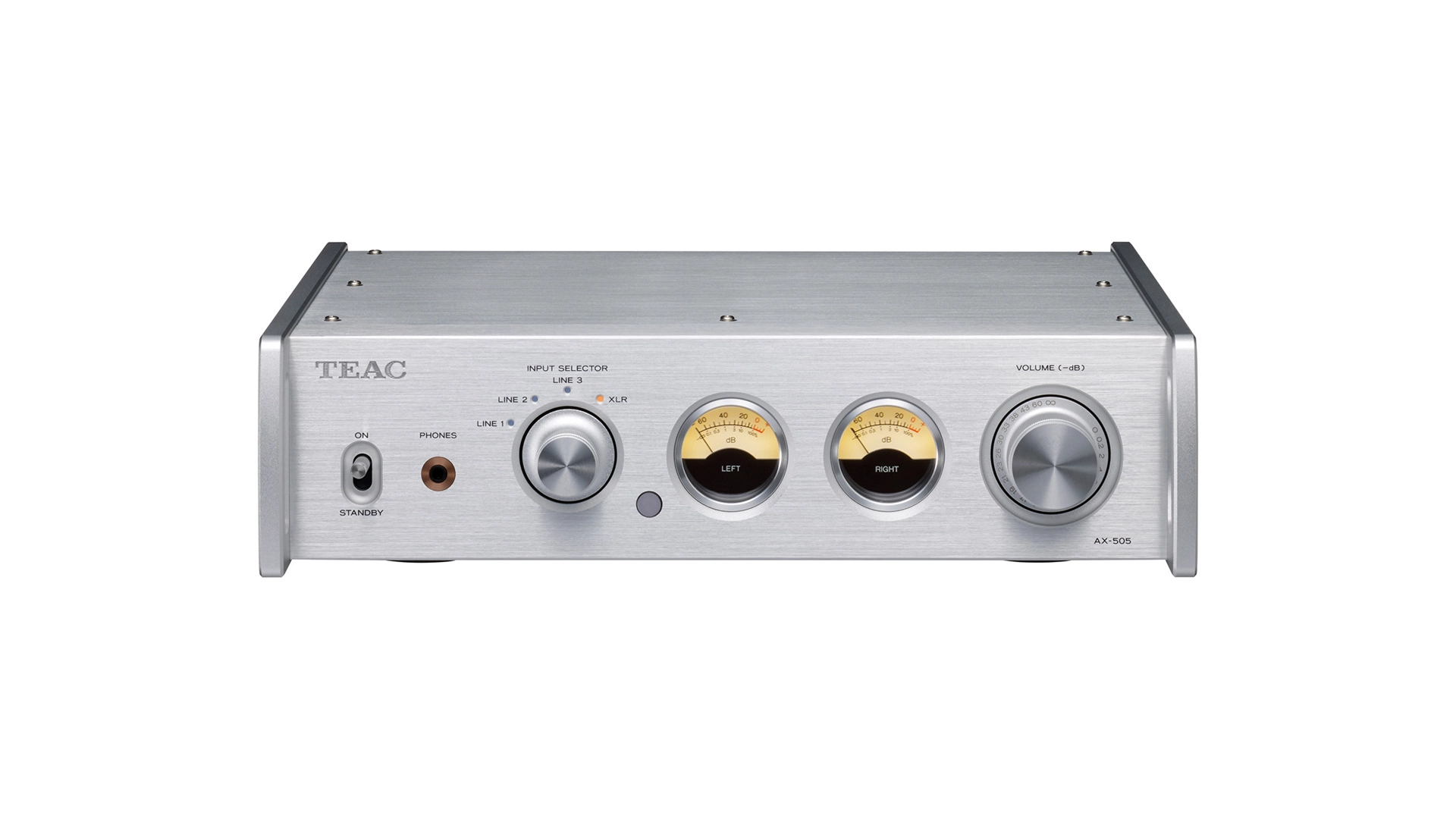
TEAC is a Japanese audio manufacturer whose history links open-reel tape, professional recording and modern digital hi-fi. Brothers Katsuma and Tomoma Tani founded the Tokyo Television Acoustic Company in 1953, and the business soon became Tokyo Electro-Acoustic Company, the source of the TEAC name. Precision tape transports established its international reputation: reel-to-reel machines such as the A-4010 and later X-series decks became fixtures in serious home systems and small studios.
That mechanical expertise led to several distinct branches. TASCAM grew from TEAC’s professional-audio activity and helped bring multitrack recording within reach of musicians through products such as the 80-8 reel-to-reel recorder and Portastudio cassette workstations. Esoteric, introduced in 1987, took the company’s disc-transport and digital engineering into the high-end sector. TEAC itself continued with cassette decks, CD players, turntables, amplifiers and compact Reference components rather than abandoning the consumer listener.
Today’s range connects those traditions. TN-series turntables serve vinyl systems, while the Reference 500 and 700 components combine network playback, USB conversion, headphone amplification and power amplification in relatively compact cases. The VRDS-701 revives TEAC’s rigid-disc-clamping transport principle for CD playback. TEAC’s real distinction is continuity: few brands can trace the same concern for transport stability, recording practice and serviceable engineering from magnetic tape to contemporary streaming and conversion.
Technics

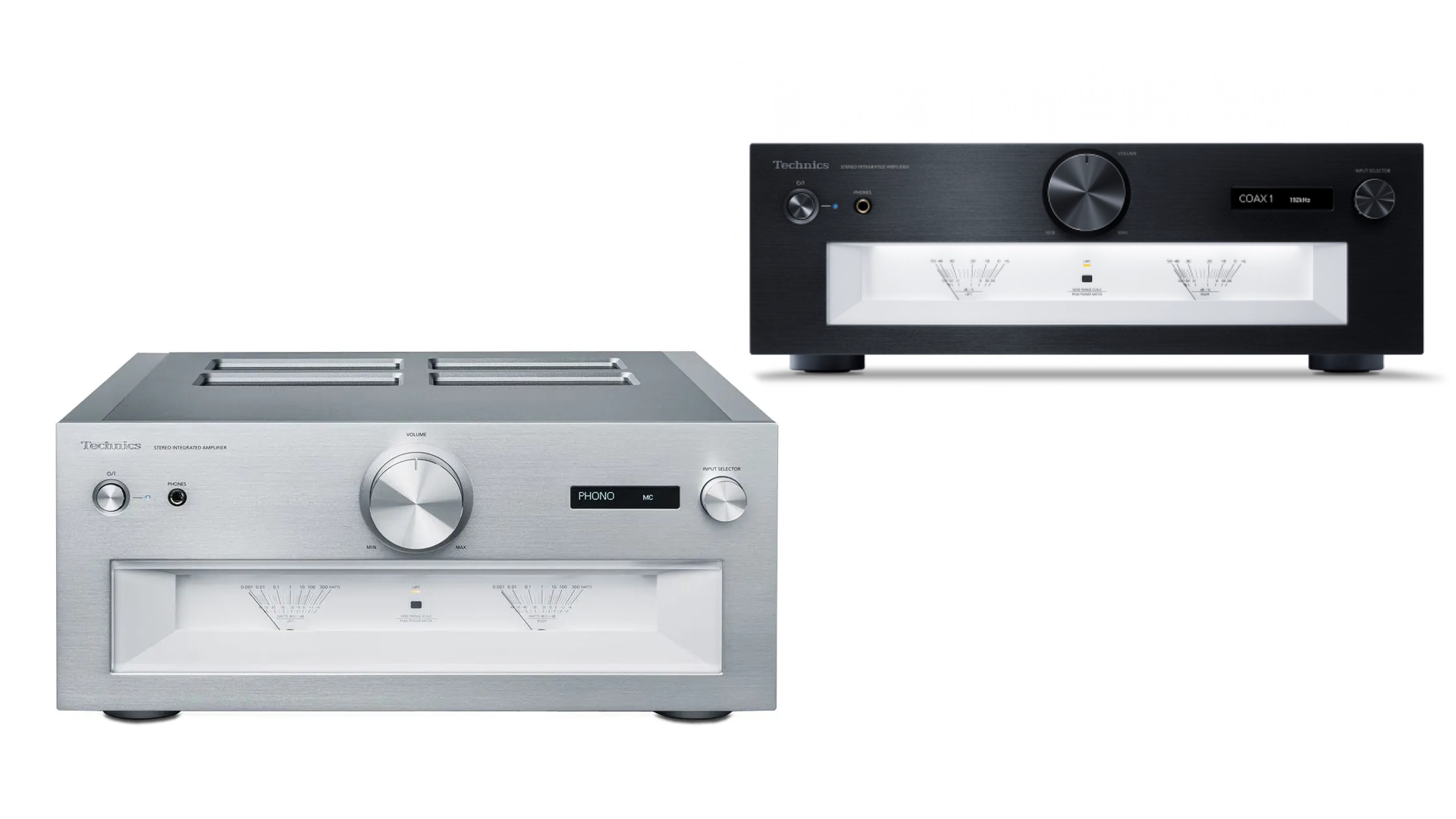
Technics is Panasonic’s Japanese hi-fi brand, introduced in 1965 and defined above all by its transformation of the turntable. The first product to carry the name was the Technics 1 loudspeaker, but the SP-10 of 1970 created the decisive legacy: it was the first commercially available direct-drive turntable, placing the platter directly on the motor and eliminating belts and idlers. The SL-1200 followed in 1972, and the quartz-controlled SL-1200MK2 of 1979 became an enduring tool for broadcasters, clubs, DJs and home listeners. That achievement can obscure the breadth of the company. Technics also built amplifiers, cassette and open-reel machines, CD players and loudspeakers, often using advanced motor, power-supply and digital research from the wider Panasonic organisation. After a pause in dedicated hi-fi production, the brand returned in 2014 with new Reference and Grand Class systems rather than a purely retro catalogue.
Modern turntables range from the accessible SL-1500C and SL-1200GR2 to the SL-1200G and Reference SP-10R, whose coreless direct-drive motors address cogging and rotational stability with current control technology. Electronics such as the SU-R1000 integrated amplifier use digital signal processing for functions including cartridge calibration and load-adaptive speaker control, while wireless systems and loudspeakers broaden the range. Technics remains distinctive because one engineering idea became both an audiophile reference and a global musical instrument, yet the company continues to refine it instead of merely reproducing the past.
Tektron

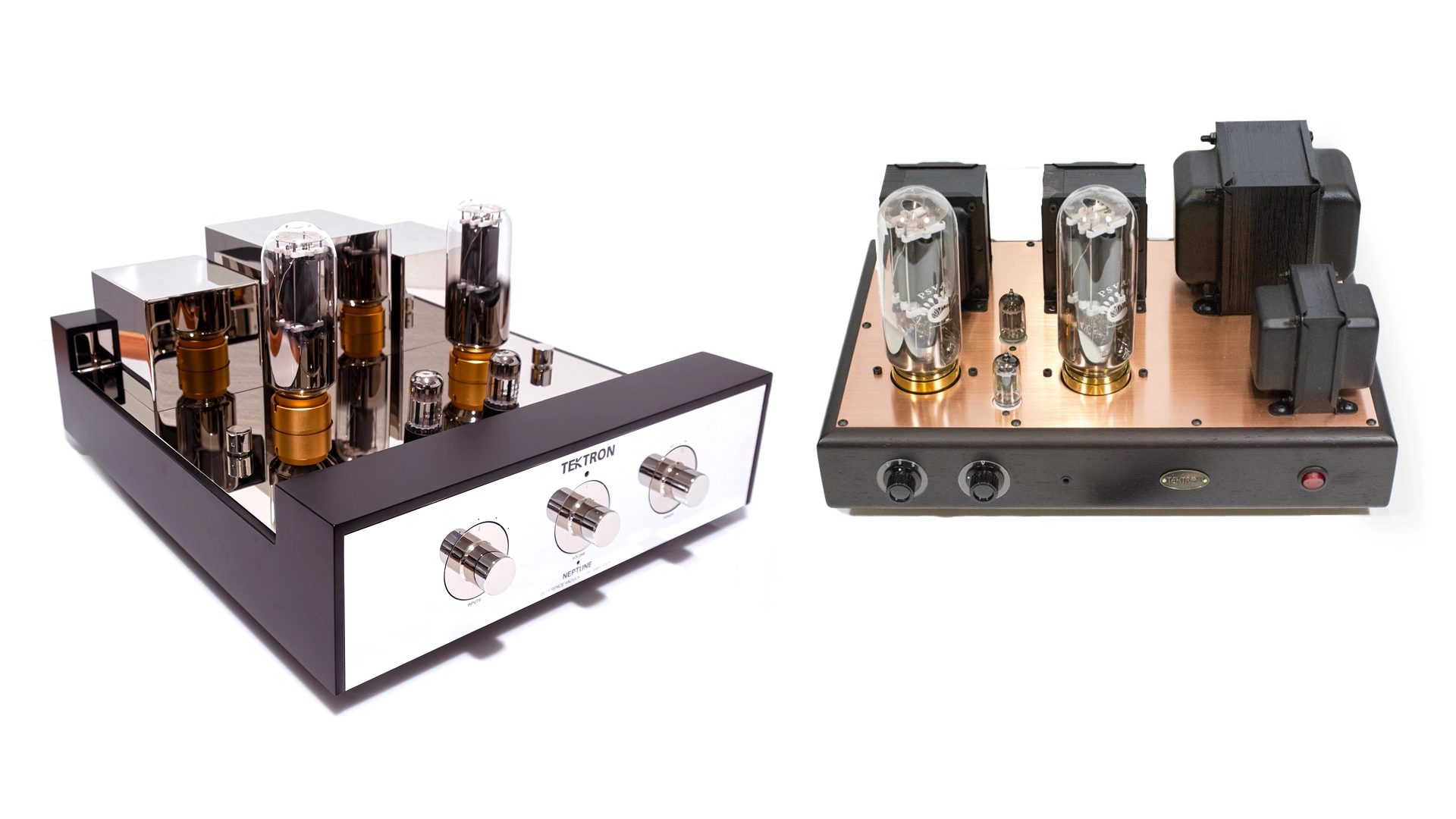
Tektron is an Italian specialist in handcrafted valve amplifiers, founded in 2005 and led by Attilio Caccamo. Its roots reach further back through Caccamo’s decades of restoring antique radios and working with historic vacuum-tube circuits. That experience shaped a company more interested in understanding simple topologies and their components than in adding features. Tektron builds integrated amplifiers, power amplifiers and preamplifiers in small numbers, with custom finishes and electrical configurations available for individual systems.
Single-ended triode designs form the heart of the catalogue. Models are built around valves such as the 2A3, 45, 300B, 211 and 845, including the imposing Neptune 211 amplifier and compact TK-series components. Power supplies, output transformers and the physical layout are engineered for each tube rather than shared across a cosmetic family. Point-to-point wiring, selected new-production or NOS valves and short signal paths keep the construction understandable and serviceable. Wood, copper and brass appear frequently, but the visible craft follows the electrical design instead of concealing a generic chassis.
Tektron does not claim that one valve suits every loudspeaker. Its amplifiers differ widely in output power, gain and operating character, so matching efficiency and impedance is part of choosing the product. That honesty is one of the brand’s strengths. Tektron preserves the directness of classic triode amplification while treating transformer quality, noise control and hand assembly as present-day engineering tasks, not as a costume from audio’s past.
The Gryphon

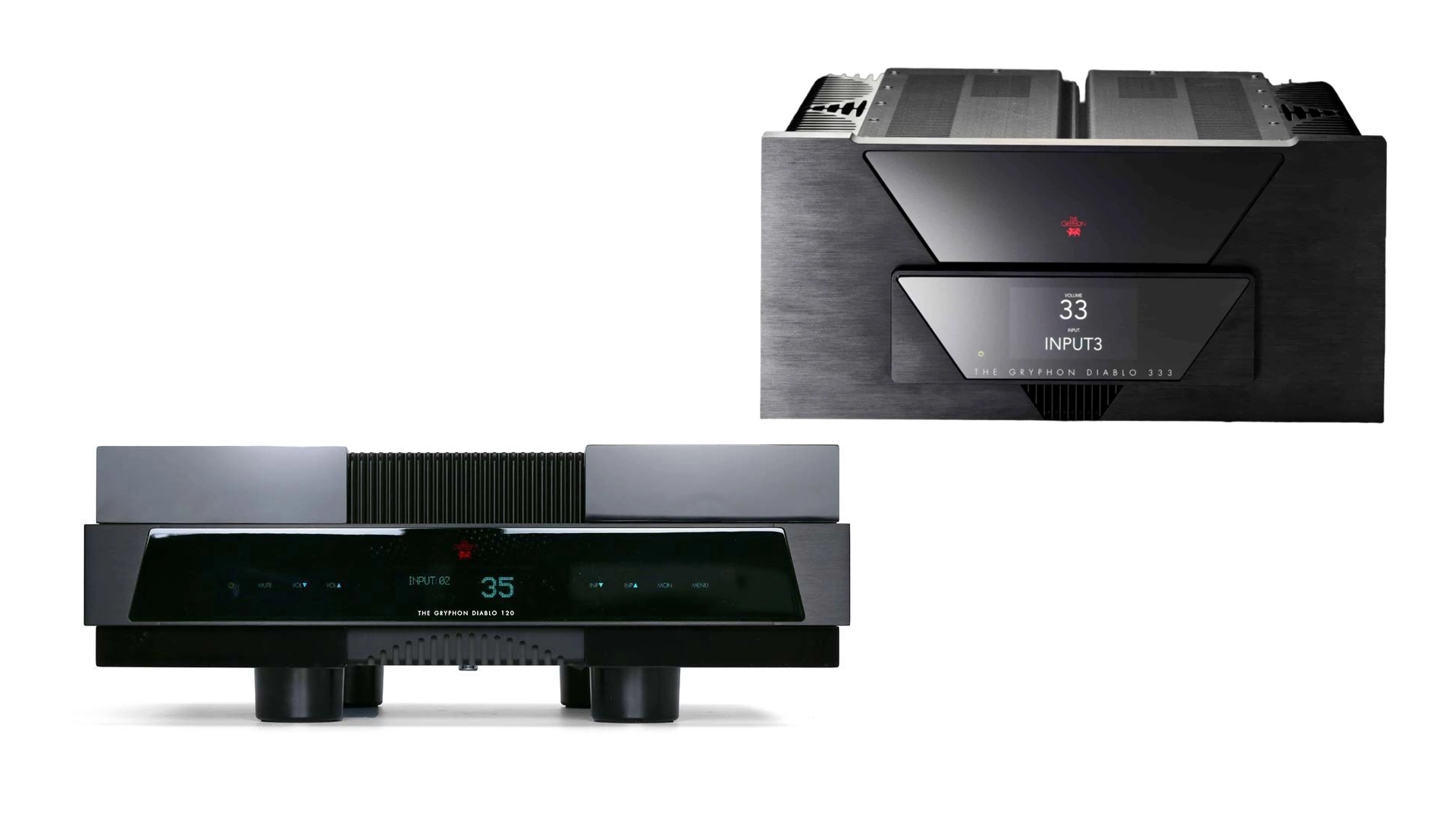
Gryphon Audio Designs is a Danish high-end manufacturer founded in 1985 by artist and industrial designer Flemming E. Rasmussen. The company began as an offshoot of his import business when a one-off moving-coil head amplifier, built for his own system, drew unexpected attention at a hi-fi exhibition. That first Gryphon Head Amp established two traits that still define the brand: electrically ambitious circuits and sculptural objects that do not disguise their scale.
Gryphon became best known for wide-bandwidth, high-current amplification, often operating in pure Class A and built in dual-mono form. The Antileon lineage made that approach internationally recognisable. Current Apex power amplifiers and Commander preamplifier occupy the reference level, while the Essence and Diablo ranges bring the company’s topology and control to more attainable systems. The Diablo 333 integrated amplifier is a good example of Gryphon’s refusal to treat an integrated product as a lightweight compromise.
The catalogue now covers a complete playback chain. Ethos handles CD and digital conversion, and loudspeakers from EOS through Pantheon, Trident and Kodo are designed to exploit the amplifiers’ current delivery and dynamic scale. Gryphon develops and assembles its products in Denmark, using custom metalwork and an unmistakable black visual language. The design can be theatrical, but the brand was not created by styling alone. Its lasting identity comes from Rasmussen’s combination of visual authorship, minimalist signal paths and amplifiers engineered to remain composed with demanding loudspeaker loads.
Thrax

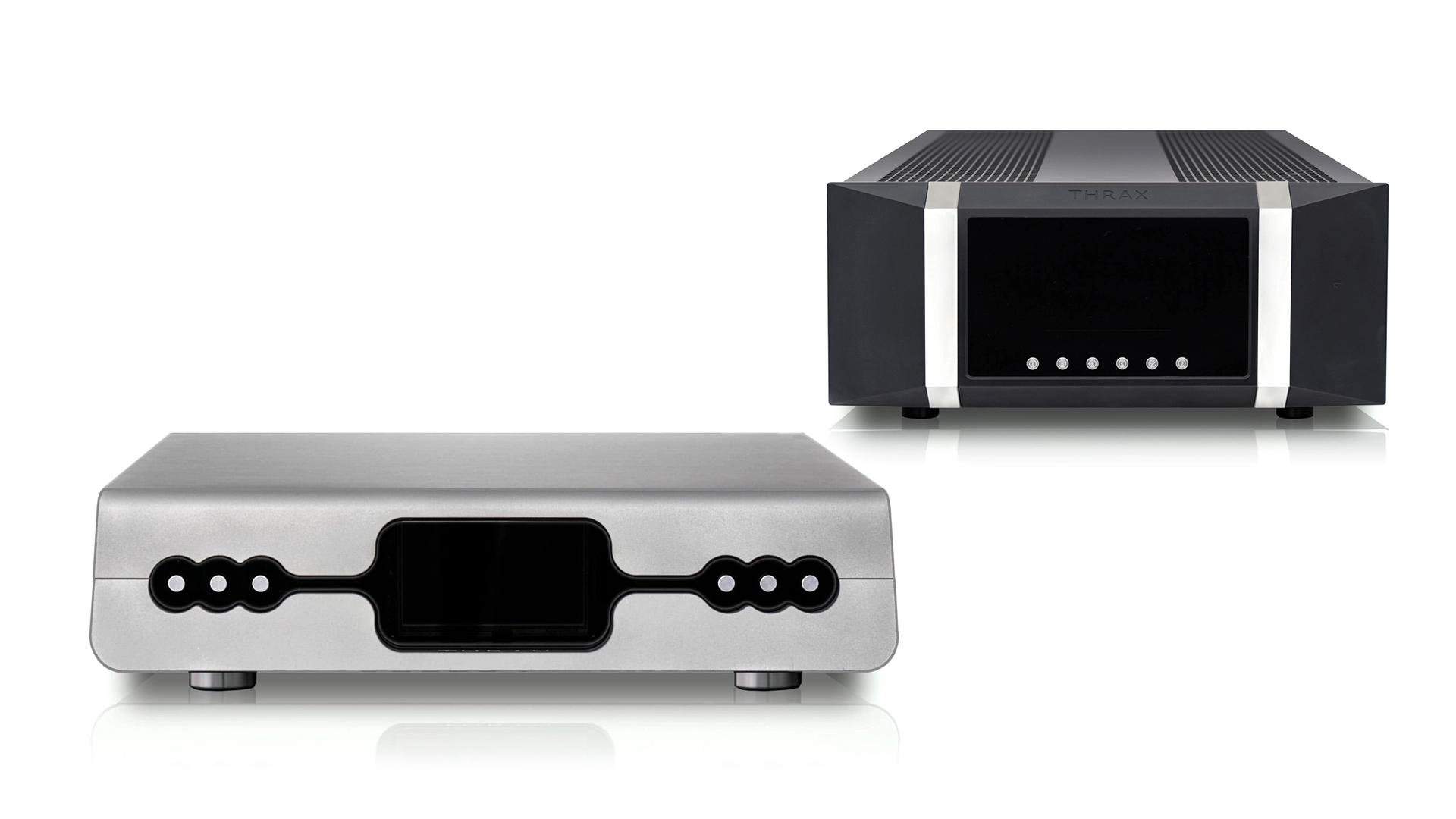
Thrax Audio is a Bulgarian high-end manufacturer founded in Sofia in 2008 by engineer Rumen Artarski. The first product was the Dionysos line preamplifier, created around a single-tube gain stage and an elaborate transformer volume control. It was followed by the Orpheus phono stage and the Spartacus power amplifier, establishing a range that combines vacuum-tube simplicity with demanding power supplies, magnetics and mechanical construction.
The modern statement line includes the Spartacus 300 monoblocks and Libra preamplifier. Maximinus addresses digital conversion, while Orpheus continues the company’s interest in LCR phono equalisation and flexible cartridge matching. Thrax also builds integrated and solid-state amplification, loudspeakers and more accessible Evolution components. These are not scaled copies with different front panels. Artarski’s team chooses a topology for each role, whether directly heated triodes, transformer coupling or high-current solid-state output is the more appropriate tool.
Production is concentrated in Sofia. Transformers are wound in-house, chassis are machined from solid aluminium, and completed units are listened to before shipment. That vertical control is important for a small company working with circuits whose performance depends heavily on magnetics, grounding and physical layout. Thrax’s character comes from joining Eastern European engineering self-reliance with a clear visual and mythological language. The products are luxurious, but the brand’s real credibility lies in original circuits and the ability of a compact team to manufacture the difficult parts itself.
Tonewinner

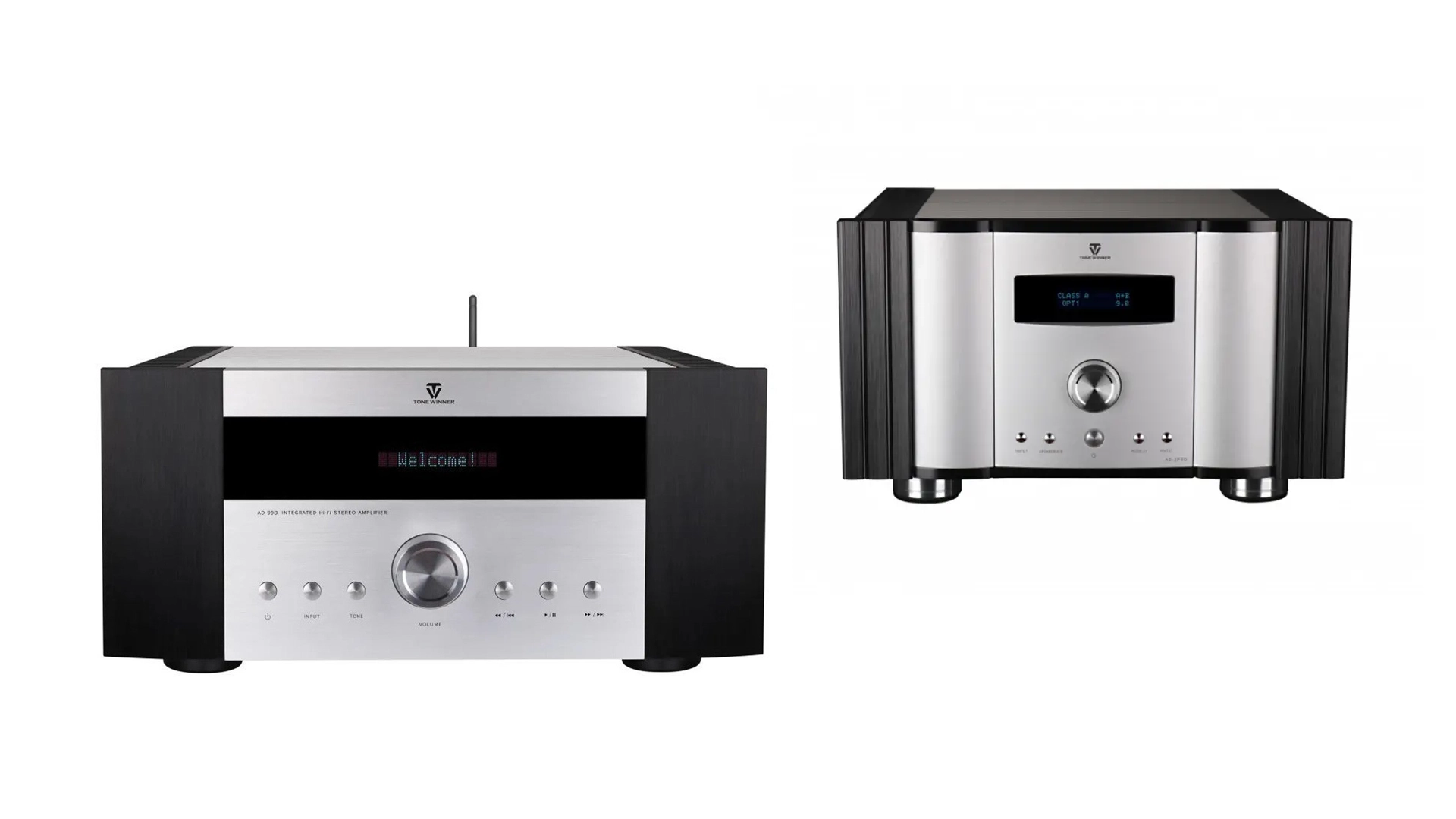
ToneWinner is a Chinese audio manufacturer founded in 1992 and based in Guangzhou. The company is best known internationally for home-cinema electronics that deliver high channel counts and substantial power without the pricing of boutique brands, but its work spans stereo amplifiers, DACs, headphone products, loudspeakers and professional or OEM manufacturing. Large-scale production and in-house engineering are central to its value proposition.
The AT-series processors and AD-series multichannel power amplifiers made ToneWinner particularly visible to cinema builders. Models such as the AT-300 provide immersive decoding and room-calibration functions, while amplifiers including the AD-7300PA+ supply separate high-current channels for demanding speaker arrays. The catalogue also includes integrated stereo components, monoblock and Class A amplification, source electronics and subwoofers, allowing the brand to serve both two-channel listeners and complete theatres.
ToneWinner’s identity should not be reduced to “affordable Chinese hi-fi.” It has decades of experience with power supplies, thermal management, metalwork and the repeatability required for multi-channel hardware, and it manufactures at a scale smaller high-end companies cannot match. At the same time, model specifications and software features vary by market and generation, so individual products deserve evaluation rather than blanket claims. The brand’s strongest contribution is practical: bringing balanced connections, powerful amplification and modern surround processing to systems whose budgets would otherwise force a compromise in channel count or output capability.
Trafomatic Audio

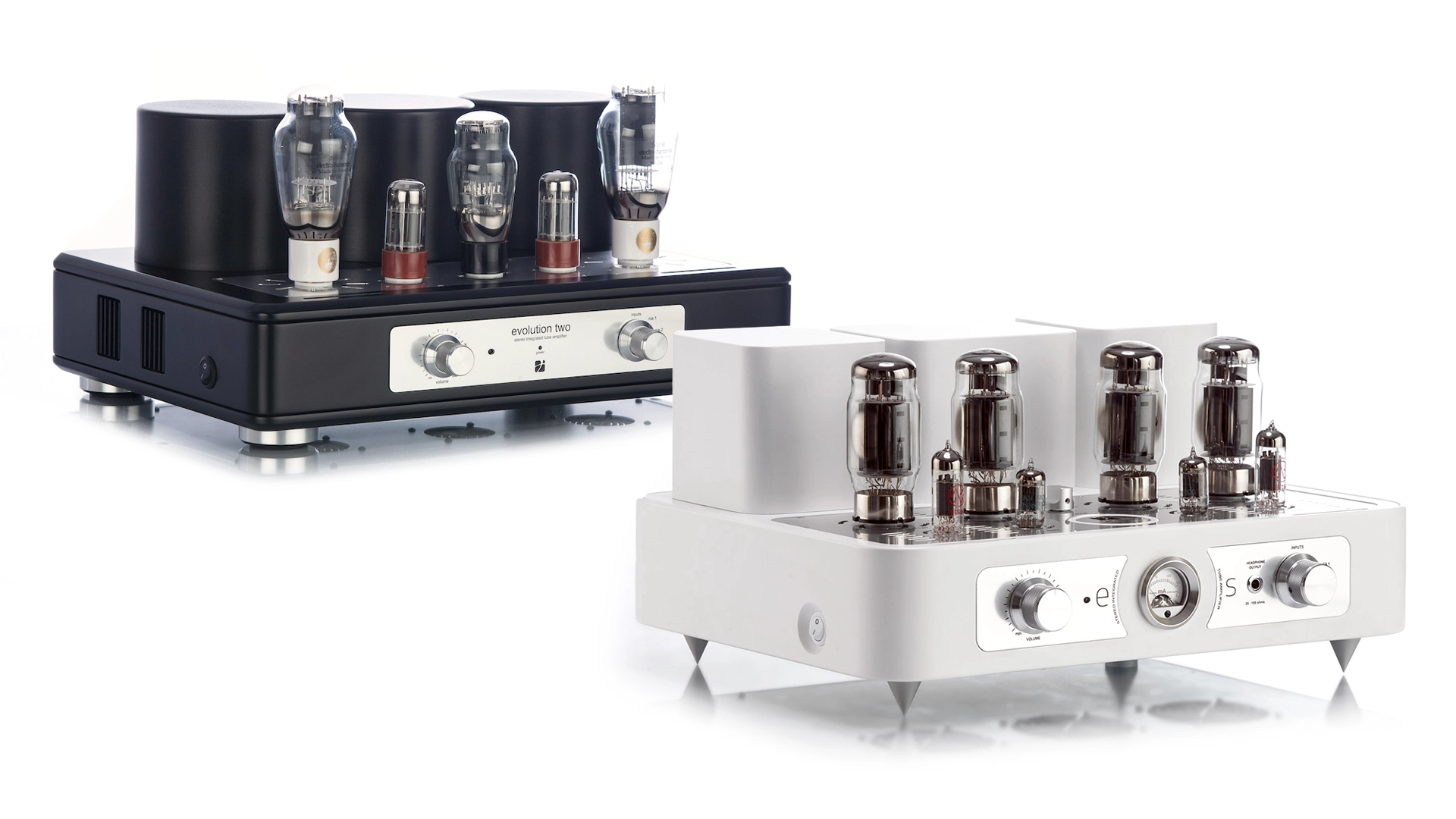
Trafomatic Audio is a Serbian valve-electronics manufacturer founded in 1997 by Saša Čokić in Mladenovac. The company began with transformers, the component that often determines whether a tube amplifier fulfils its circuit on the test bench and with a real loudspeaker. That magnetics background remains its decisive advantage: output transformers, interstage transformers, chokes and power transformers can be developed together with the amplifier rather than purchased as an afterthought.
Early Experience amplifiers introduced Trafomatic internationally, including simple single-ended designs built around classic triodes. The range now reaches from the Rhapsody integrated amplifier and Luna phono stage to Lara and Tara line stages, Primavera headphone amplification and statement power amplifiers such as Elysium, Pandora and Elysian. Directly heated triodes, transformer coupling and pure Class A operation appear where they suit the product, while higher-powered push-pull models serve loudspeakers that need more output.
Čokić’s team builds in Serbia and also supplies transformer expertise beyond its own finished components. This makes Trafomatic more than a boutique assembling famous tubes into attractive cases. Winding geometry, core material, insulation, bandwidth and power-supply behaviour are part of the company’s own daily work. The catalogue has become visually ambitious, but its common DNA is still magnetic. Trafomatic’s strongest amplifiers unite expressive tube topologies with the less glamorous discipline of making the iron correctly—a combination that explains how a small Serbian manufacturer gained lasting international recognition.
Trigon

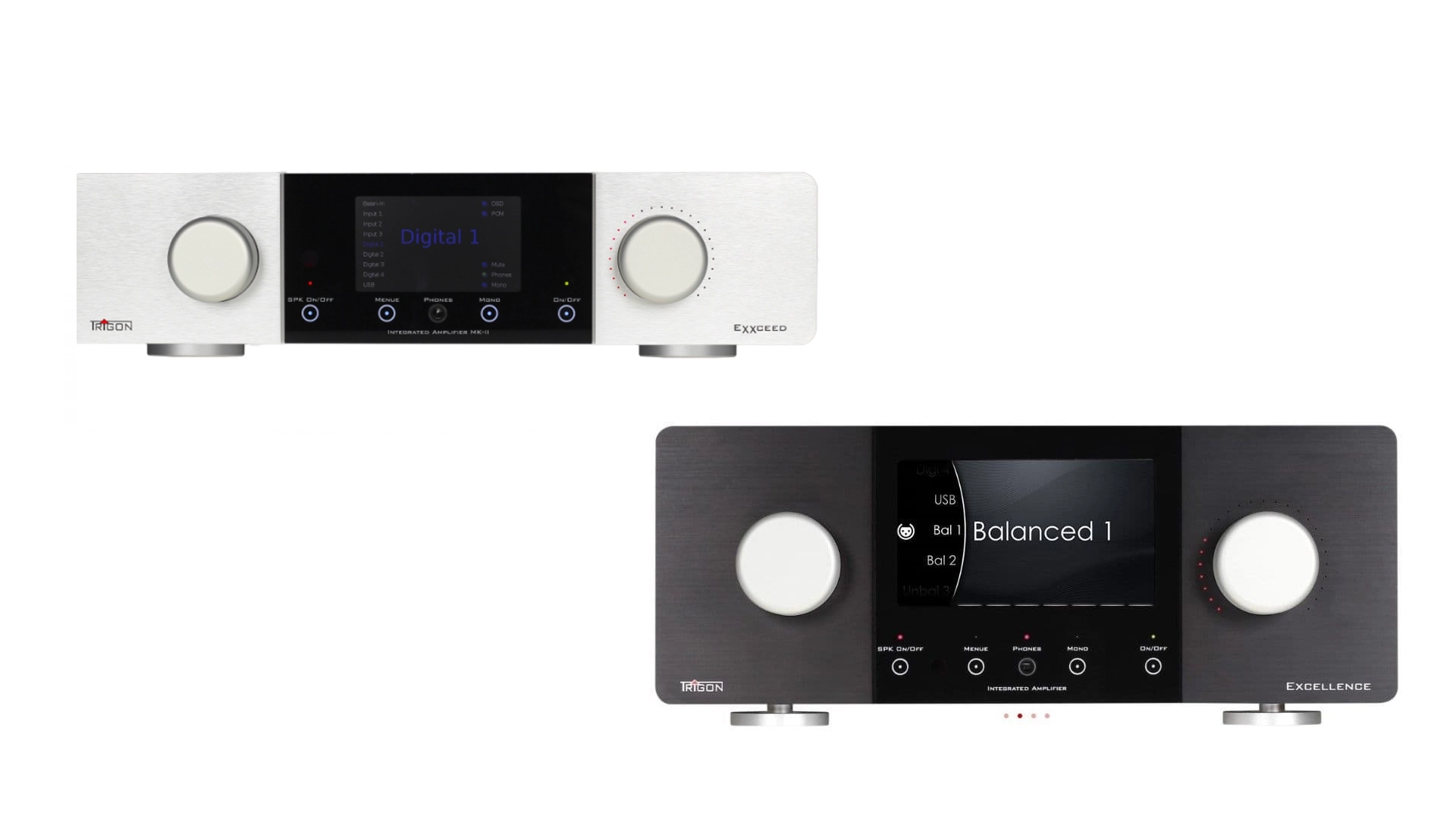
Trigon Elektronik is a German hi-fi manufacturer founded in September 1996 by Ralf Kolmsee and Rainer Reddemann. The partners set out to build components that would remain technically useful, repairable and visually current for years rather than follow short product cycles. Audio is only one expression of their engineering base: the company has also designed and manufactured electronic control systems for industrial applications.
Trigon’s first notable product was the Vanguard phono preamplifier, a foundation that continues in the highly adjustable Vanguard III and matching Volcano III power supply. The catalogue expanded through integrated and power amplifiers, preamplifiers, CD players and network sources. Compact Exxceed components combine streaming and amplification for modern systems, while Exxact and Exxpert address source and headphone duties. Larger models such as the Epilog integrated amplifier and Monolog power amplifiers show the brand’s high-current, dual-mono side without abandoning straightforward operation.
The names and understated cases can make Trigon easy to overlook, yet the range is unusually coherent. Separate power supplies, modular options and careful analogue stages allow products to grow with a system, while the company’s industrial work reinforces attention to thermal stability and long service life. Trigon’s appeal is not a fashionable house sound described in adjectives. It is the quieter German virtue of continuity: the founders remain associated with the company, established models are refined through successive versions, and phono, digital and amplification products share the same concern for durable engineering at realistic high-end prices.
Trilogy

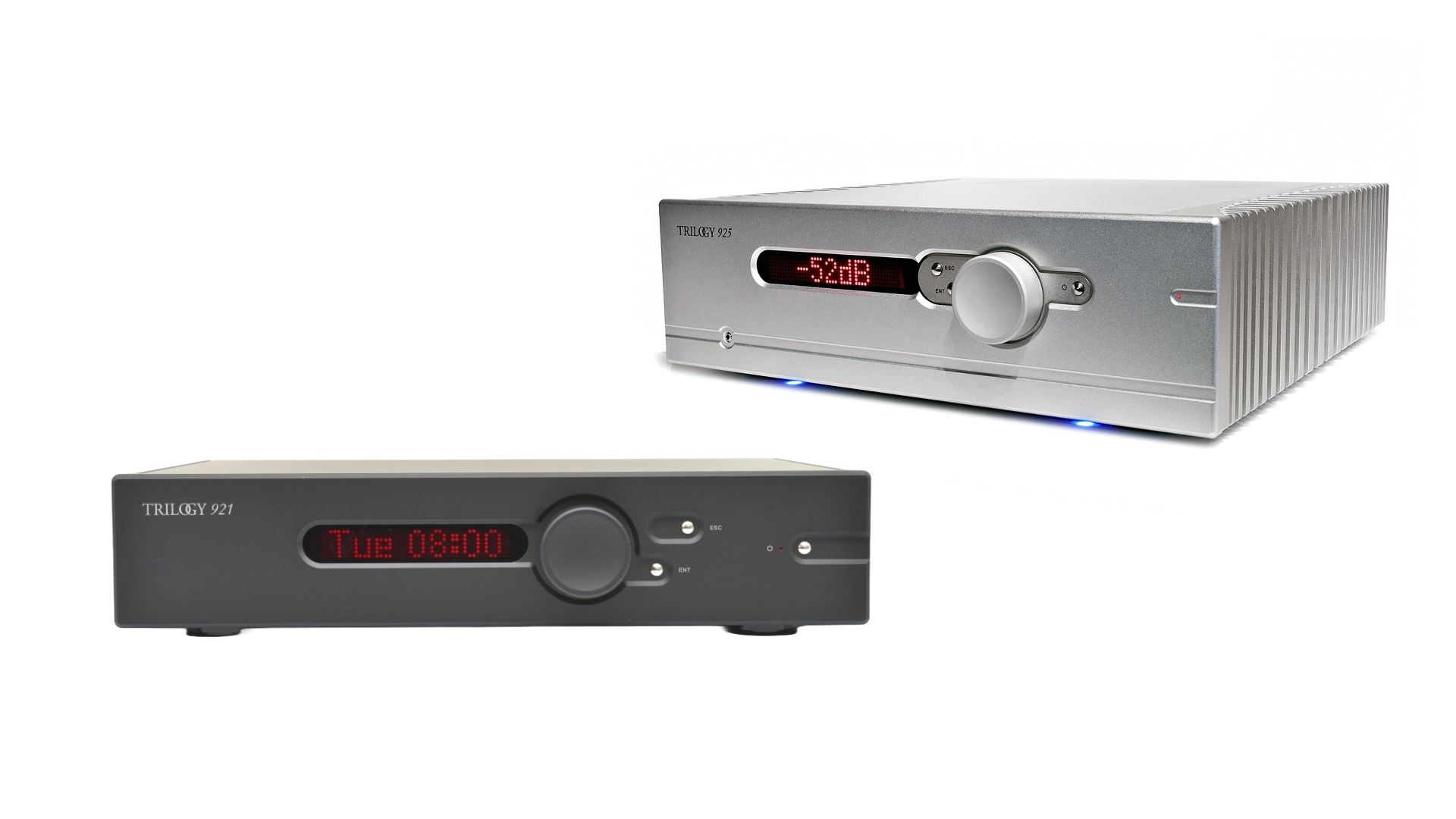
Trilogy Audio Systems is a British electronics manufacturer founded in 1990 by Nic Poulson, an engineer trained in BBC broadcast practice. Poulson remains the principal designer, and the company’s chronology is unusually well documented: the first 901 valve preamplifier and 948 and 958 valve power amplifiers arrived in 1992. The previous 1991 date therefore needs correction to the official 1990 foundation.
Trilogy does not force one circuit type across the range. The 925 integrated amplifier combines valve voltage gain with MOSFET output power, while the 915R valve preamplifier and 995R hybrid monoblocks form a reference control and amplification chain. The 906i phono stage, 931i headphone amplifier and H1 electrostatic-headphone energiser address specialist sources and transducers. More recently, the 921 brought a fully solid-state integrated design into the catalogue. TASlink communication lets compatible components coordinate status and control without placing that data on the audio path.
Power supplies are central to Poulson’s work, a concern that also led him to create the separate ISOL-8 mains-conditioning company. ISOL-8 is a sister business, not a Trilogy product series as the old text implied. Trilogy’s own identity lies in applying first-principles engineering to each audio role, then giving the result elegant, tactile cases made for long ownership. The products may use valves, MOSFETs or bipolar devices, but their common character is authorship: one designer has developed the line from early tube separates to today’s hybrid and solid-state systems over more than three decades.
Trinaudio

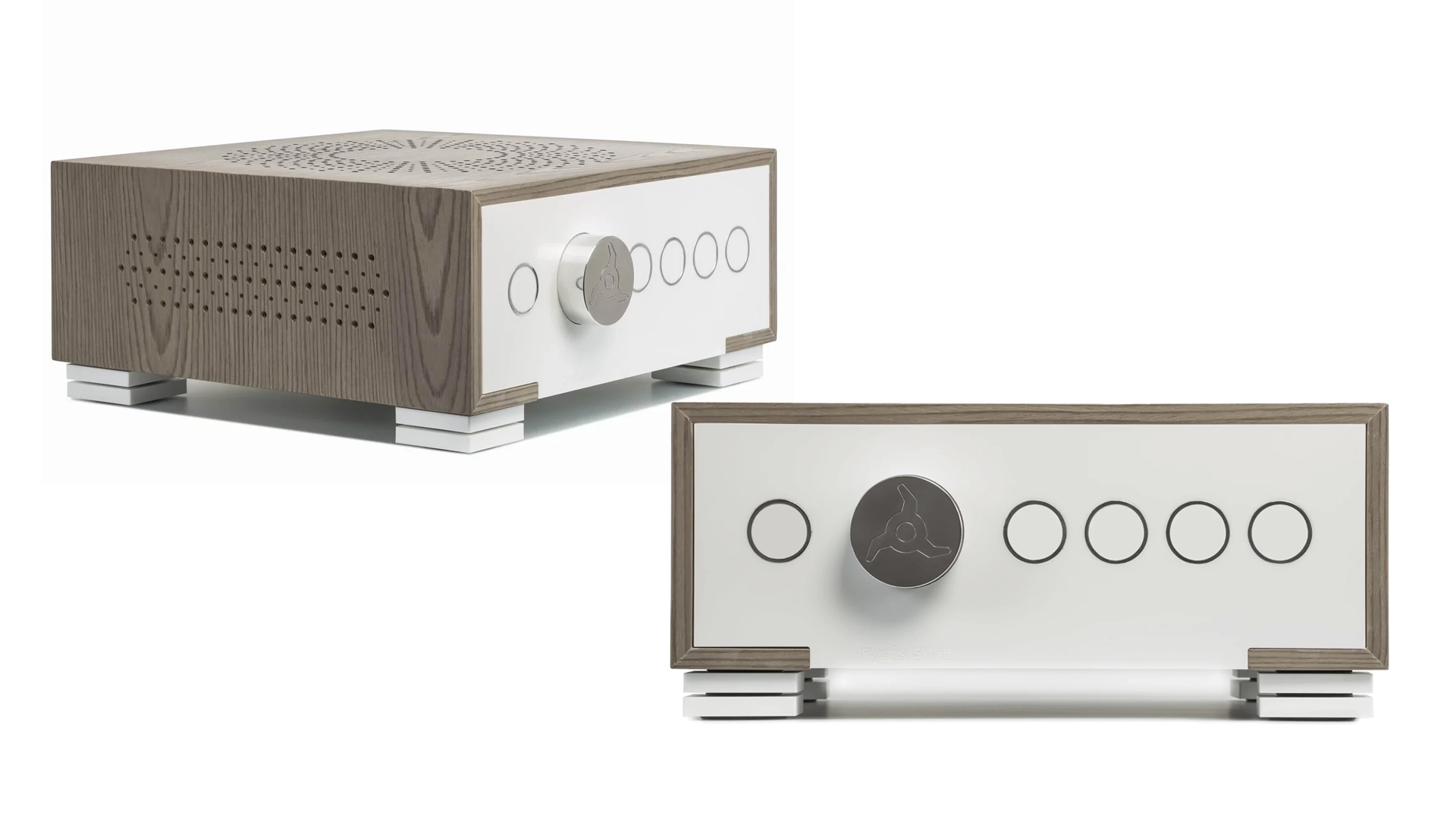
Trinaudio is an Italian maker of handcrafted valve and hybrid amplification, built on more than thirty-five years of audio-electronics experience within C.R.E.A. The brand is led by Marco and Maurizio and manages component manufacture, assembly and final testing in its own laboratories. This is a crucial correction to the previous description: Trinaudio is not a DSP room-correction company and does not make an Ambiophonics processor.
Its compact catalogue is centred on four substantial components. Keleyma Beta is a valve line preamplifier with relay-ladder volume control and no global feedback. Keleyma Rho II applies tube circuitry to MM and MC phono replay. Fysis 50Ti is a hybrid integrated amplifier, using valves for input and driver duties with a unity-gain transistor output stage. Dynamis Beta 120Ti provides the matching power at monoblock scale. Separate or multi-stage power supplies are treated as part of each circuit rather than a shared accessory.
Trinaudio’s recurring technical theme is inductive filtering. The company uses chokes to store and release energy and to separate sensitive audio stages from mains-borne disturbance, preferring this approach to power supplies dominated by capacitive reservoirs. That sonic interpretation is the manufacturer’s position, but the construction behind it is concrete: large magnetics, low-volume manual assembly and substantial Italian metalwork. Because the public material documents long experience rather than an unambiguous Trinaudio launch in 1987, the founding-year field is better left open. What can be stated confidently is more useful—the products, the people and the inductive-supply philosophy that distinguish the real brand.
Tsakiridis Devices

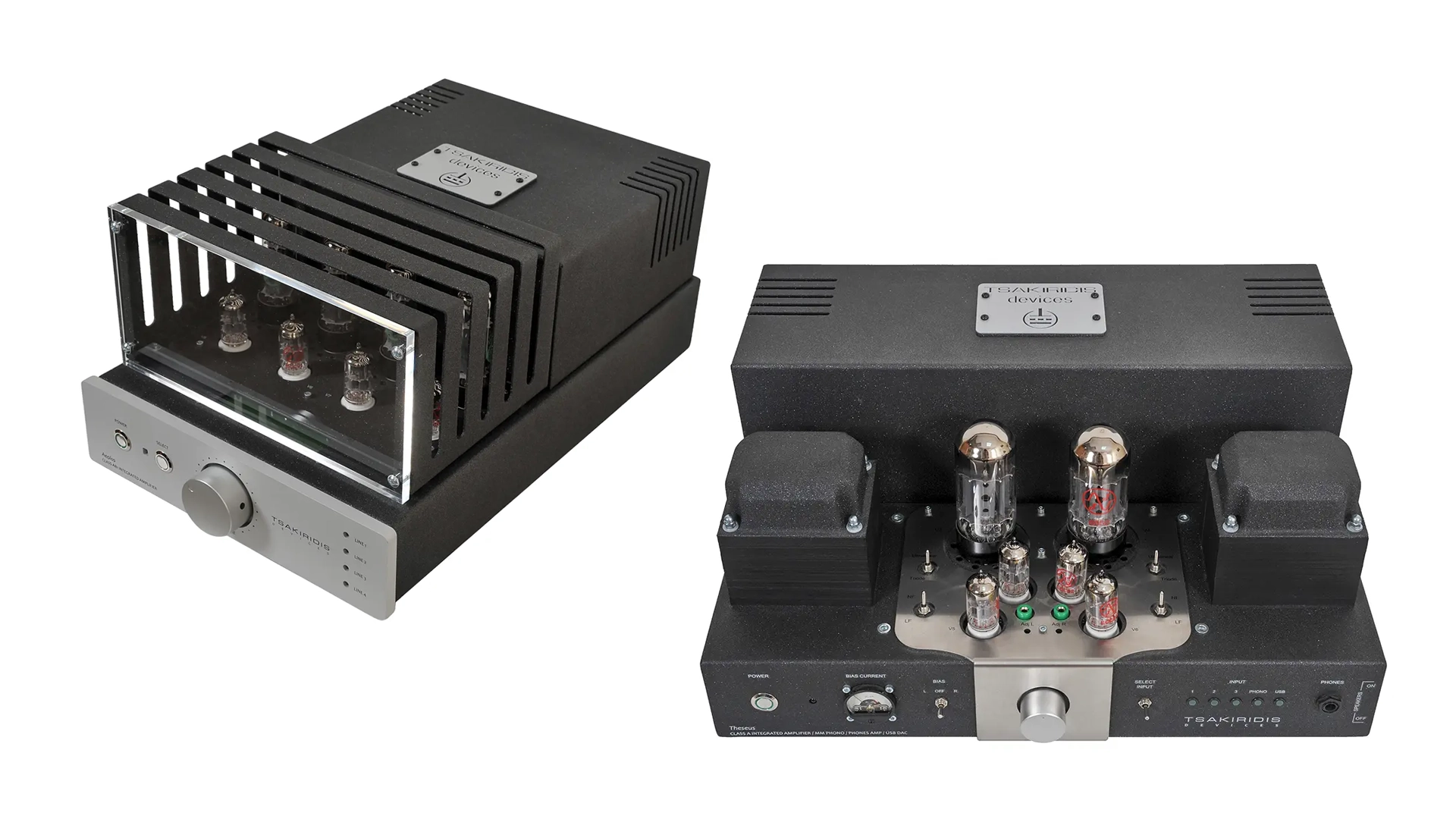
Tsakiridis Devices is a Greek family manufacturer of valve amplifiers, preamplifiers, phono stages and power products. The official company history places its establishment in 1989, correcting the previous 1987 date. Before commercial production, the Tsakiridis team had spent years building equipment for themselves and fellow enthusiasts; that origin still shapes the aim of offering hand-built tube electronics without turning every model into an unattainable statement piece.
The catalogue uses different classic topologies for different loudspeakers. Achilles monoblocks run 300B or 2A3 directly heated triodes in single-ended Class A, intended for efficient speakers. Apollon monoblocks accept output valves such as EL34, KT88, KT120 or KT150 in higher-powered push-pull operation. Artemis places a dual-mono push-pull power amplifier in one chassis. Aeolos and Theseus integrated amplifiers make the range easier to use, with Theseus adding digital and phono inputs, while Alexander line preamplification and Zeus phono stages complete an analogue system.
All products are assembled in Greece, with accessible valve biasing, protective circuitry and remote control used where they improve daily ownership. Power conditioners and supply products show that the company treats mains and transformers as part of amplifier performance rather than cosmetic extras. Tsakiridis does not disguise familiar tubes behind mysterious names; specifications make clear which valves, class of operation and power level each model uses. Its individuality comes from this pragmatic combination of traditional circuits, Greek small-series manufacture and enough model diversity to match both sensitive horn speakers and more conventional modern loads.
Unison Research

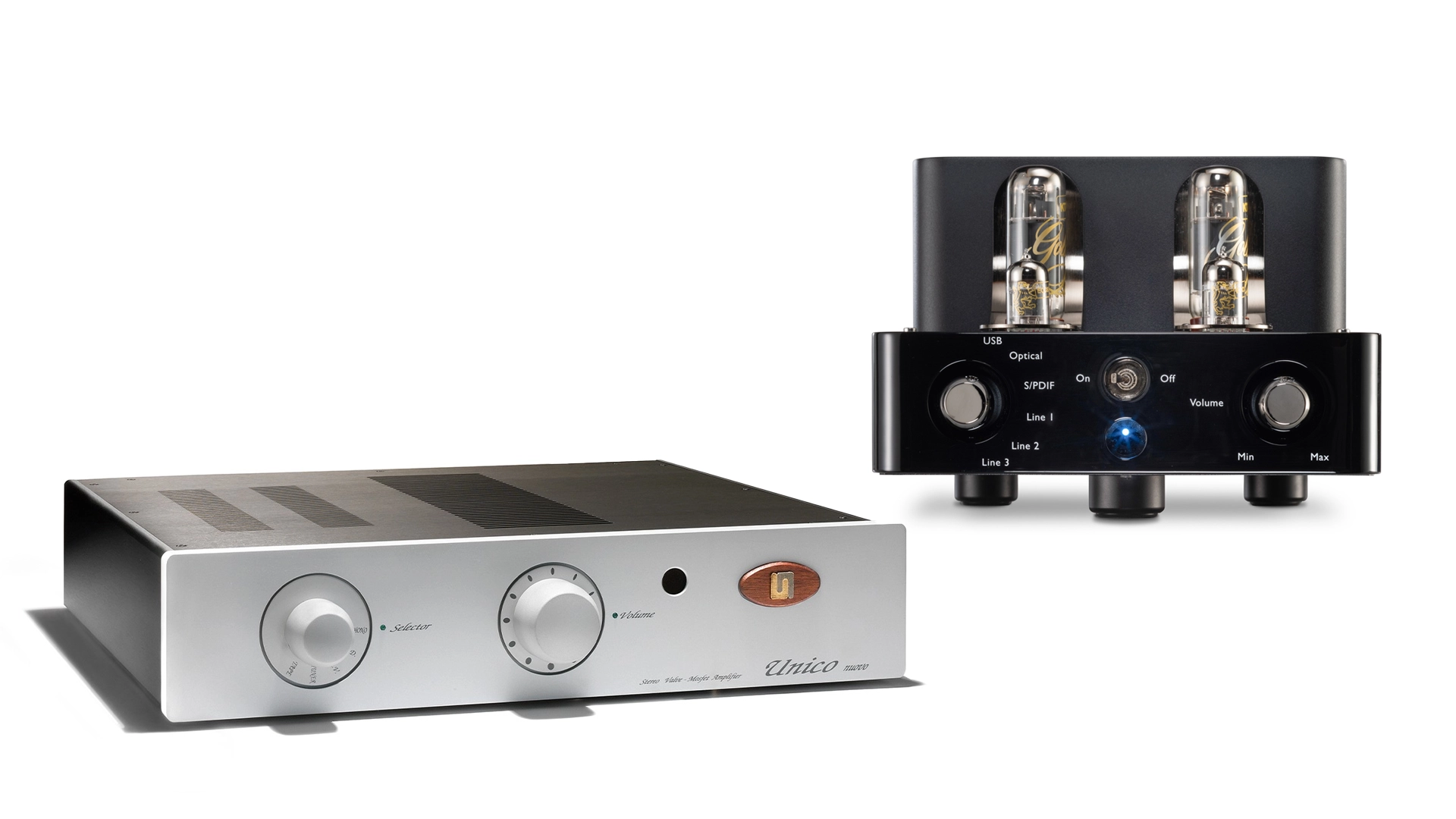
Unison Research is an Italian high-end electronics manufacturer founded near Treviso in 1987 by a group of enthusiasts led by engineer Giovanni Maria Sacchetti. Sacchetti’s study of valve behaviour and transformer coupling gave the company a recognisable direction from the beginning: traditional tubes should be treated as current engineering components, supported by carefully designed power supplies, output transformers and cases made for domestic use.
The Simply Two integrated amplifier became an international emblem of approachable single-ended valve design, and today’s Simply Italy continues that idea with EL34 output tubes and straightforward controls. At the reference end, Absolute 845 and Performance integrated amplifiers use ambitious tube stages and substantial magnetics. Unison also builds line and phono preamplifiers and source components, allowing a complete system to retain the same electrical and visual language.
The Unico series broadened the audience through hybrid circuits: valves handle the input or voltage-gain stage while solid-state output sections provide the current needed by less sensitive loudspeakers. Unico Primo, Nuovo and Unico 90 illustrate how the concept scales rather than simply repeating one amplifier at different prices. Wood details and rounded metalwork are distinctly Italian, but they frame real topology choices between single-ended, push-pull and hybrid operation. Unison Research later developed close ties with Opera Loudspeakers, creating complementary Italian electronics and speaker expertise. Its longevity comes from balancing romance with discipline—visible valves and tactile craft, grounded by Sacchetti’s continuing attention to circuits and transformers.
Unitra

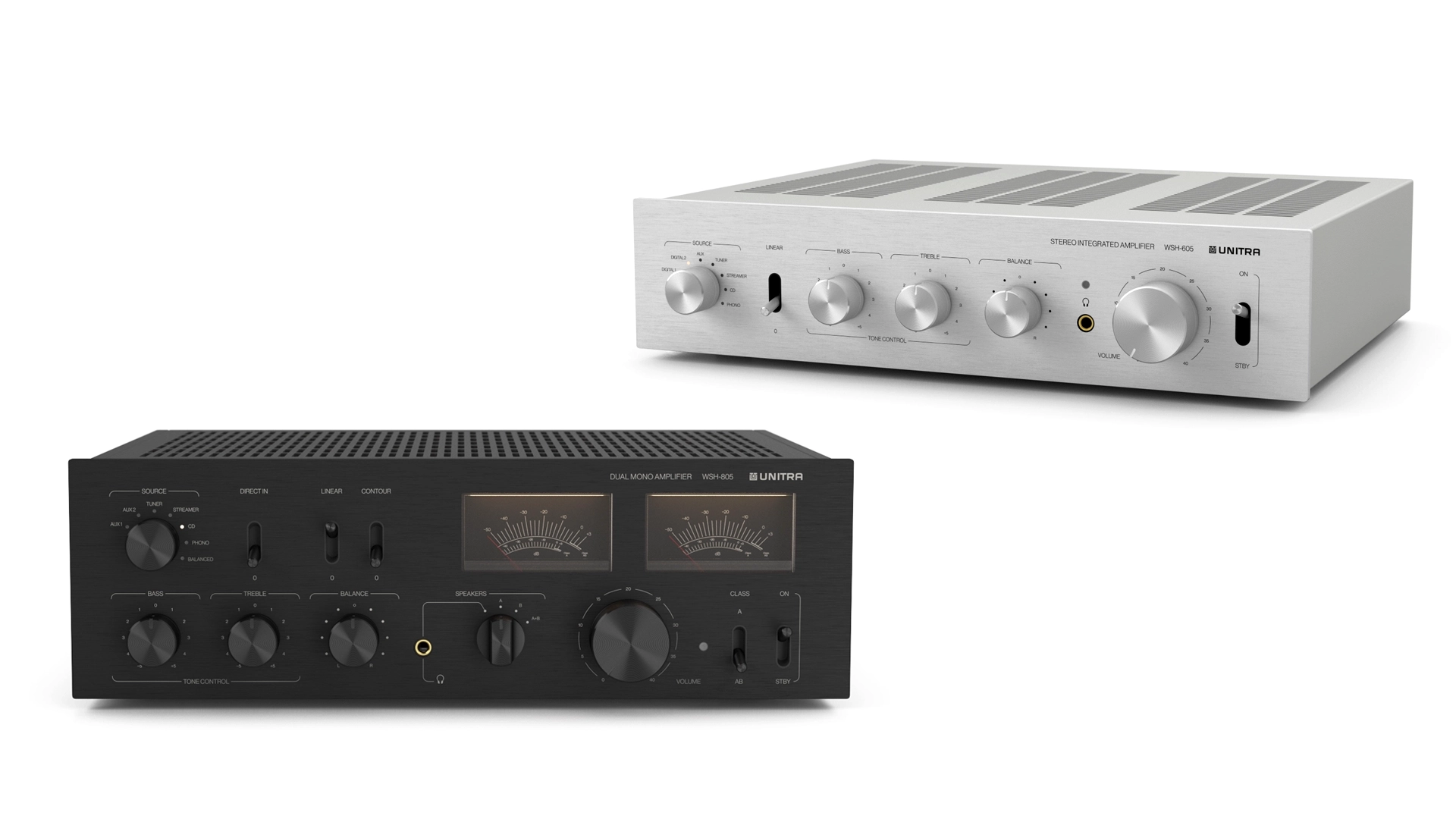
Unitra is the historic Polish electronics name established in 1961 as an association of state-owned radio, telecommunications and consumer-electronics factories. At its height it coordinated an enormous industrial network producing radios, amplifiers, tape machines, turntables and loudspeakers for Poland, other Eastern Bloc markets and export customers. Unitra was therefore not one conventional factory or designer, but a shared brand and research structure joining companies such as Fonica, Diora, Tonsil and ZRK.
The original organisation declined after Poland’s economic transformation and ceased in its old form around 1989. A new management team revived Unitra for specialist audio in 2021, with the current product generation reaching the market in 2023. This ownership and organisational break should be explicit: today’s private company inherits the name and Polish design heritage, not the original state combine itself.
The WSH-805 integrated amplifier uses dual-mono construction, switchable Class A/Class AB operation, analogue inputs and physical meters. GSH-630 Fryderyk and GSH-801 Edmund are direct-drive turntables with Unitra-developed motors and R10 tonearms. CSH-801 adds CD playback, while ZGZ loudspeakers and cables complete the system. Products are designed and engineered in Poland with emphasis on repairability, replaceable assemblies and long support. The achievement of the revival is not retro styling alone: Unitra has rebuilt a coherent Polish hi-fi range around tactile controls and original engineering while honestly carrying one of Central Europe’s most important consumer-audio names into a new corporate era.
VAC

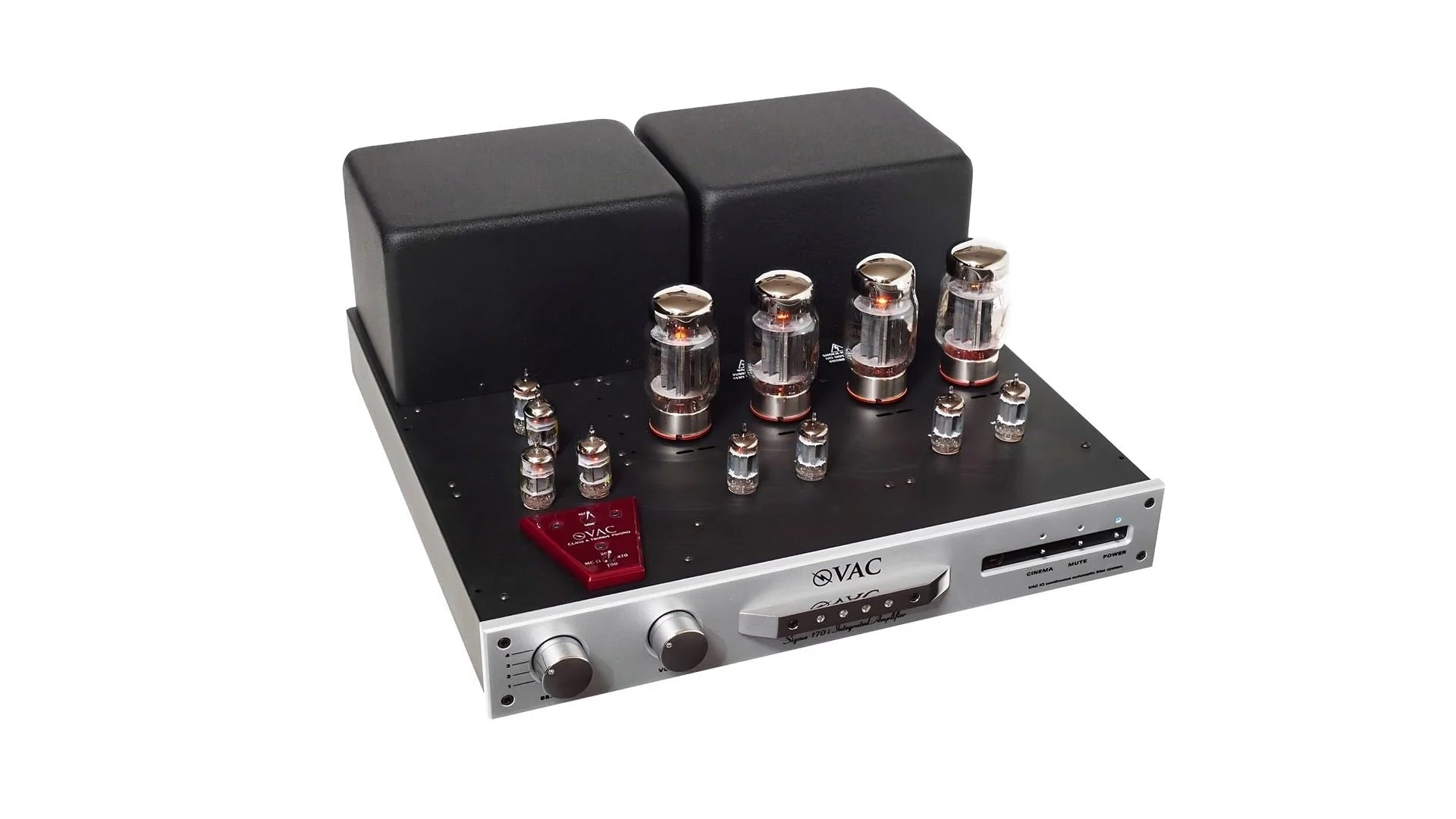
Valve Amplification Company—VAC—is an American high-end electronics manufacturer founded in 1990 by Kevin Hayes and his father, Channing W. Hayes. Their first PA45 and PA90 power amplifiers established a company built almost entirely around vacuum tubes, custom transformers and labour-intensive assembly. Kevin remains chief designer, and VAC manufactures in Sarasota, Florida rather than licensing its name to an anonymous catalogue.
The Renaissance amplifiers of the 1990s developed VAC’s push-pull tube architecture, followed by Avatar integrated amplifiers, Phi and Signature components and increasingly ambitious Statement and Master series. VAC also reproduced classic Marantz Model 7, 8B and 9 electronics for Marantz Japan from 1996 to 1998, a project that required historical accuracy and production discipline rather than a superficial retro case. Current line and phono stages, integrated amplifiers and monoblocks continue the emphasis on wide-bandwidth transformers and substantial power supplies.
Hayes’ patented iQ Intelligent Continuous Automatic Bias system monitors output-tube current while music is playing, maintains the intended idle point and provides protection or indication when a tube weakens or fails. It addresses one of the least convenient parts of owning a powerful valve amplifier without hiding the operating state from the listener. VAC’s appeal is not generic tube warmth. Its best designs pursue bandwidth, current and control at power levels often associated with solid state, while retaining the replaceable devices and visible circuit lineage of valves. That combination of American manufacture, transformer expertise and genuinely useful bias engineering gives VAC its authority.
Verity Audio

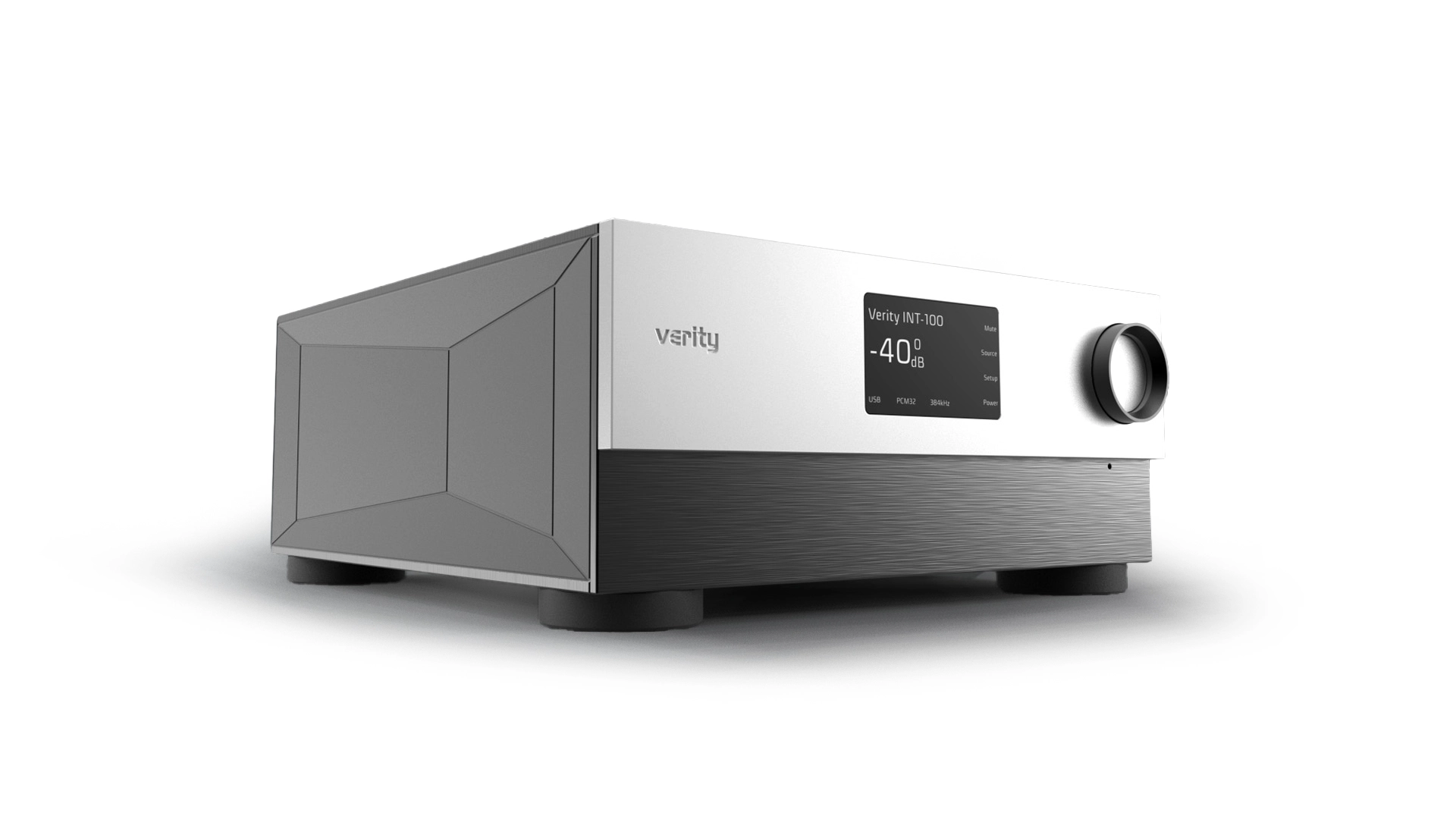
Verity Audio was a Canadian high-end loudspeaker manufacturer admired for combining refined cabinet work with designs that could deliver scale without visually dominating the room. Julien Pelchat and Bruno Bouchard founded the company in Quebec in 1995. Parsifal became its defining model, followed by loudspeakers such as Fidelio, Tamino, Amadis, Sarastro, Lohengrin and Finn. Many Verity designs used a separate bass enclosure with a rear-firing woofer beneath a compact midrange-and-tweeter module. That arrangement was not merely stylistic: it reduced interaction between bass energy and the upper drivers, allowed careful control of cabinet volume and used placement relative to the front wall as part of low-frequency setup. Larger systems developed the concept with proprietary drivers, carefully voiced crossovers and increasingly ambitious cabinet structures. The Monsalvat project expanded Verity’s ambitions into a complete reference system, while the later Florestan showed that the company was still exploring new architectures rather than relying only on established names. Fine veneers, restrained proportions and musical coherence were as important to the brand’s reputation as laboratory specifications. A crucial present-day fact, however, must not be hidden: Verity Audio announced that it ceased operations effective 22 December 2023. Its website and product archive may remain accessible, but they should not be read as proof of continuing production. The brand’s legacy rests on nearly three decades of distinctly Canadian loudspeakers whose elegant appearance concealed serious attention to cabinet isolation, room interaction and natural tonal balance.
Vincent

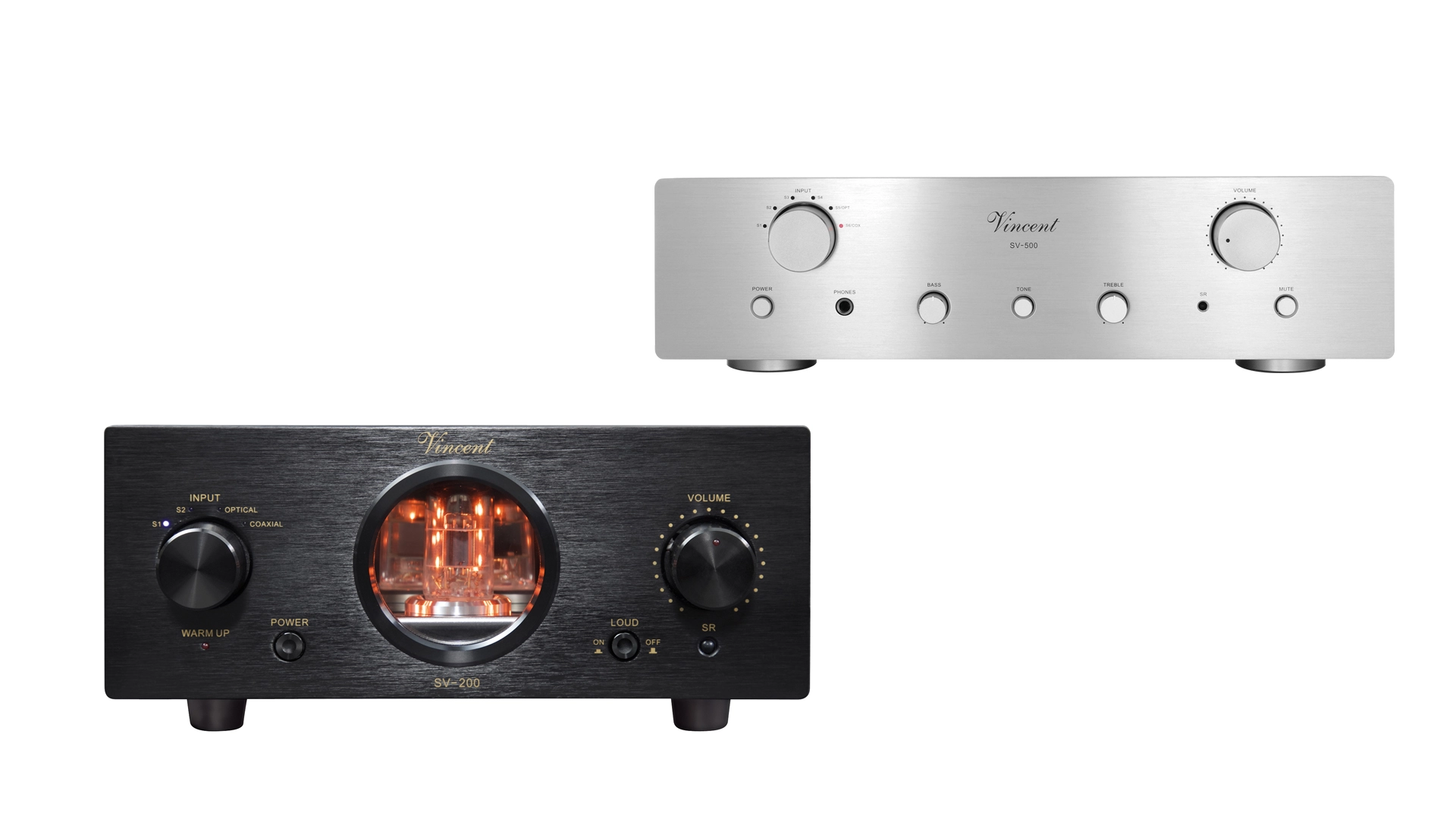
Vincent is a German high-fidelity electronics marque registered in 1995 by Sintron Distribution GmbH of Iffezheim. Product conception and tuning take place in Germany, while manufacturing is carried out in Asia under the company’s specifications—a more accurate description than implying that the components are wholly German-made. Vincent concentrates on two-channel systems and divides its catalogue into complementary design families. SolidLine products use transistor circuitry throughout, whereas tubeLine models combine valves in input or driver stages with solid-state output sections. That hybrid architecture is the brand’s signature: it seeks the voltage gain and harmonic character of tubes without giving up the current delivery, speaker control and everyday practicality of powerful transistor outputs. Integrated amplifiers such as SV-237, SV-700 and SV-737 embody the concept, while SA-T7 preamplifiers and SP-T700 monoblocks separate it into larger systems. PowerLine and solid-state models including SP-332, SV-228 and SV-500 address listeners who prefer an all-transistor path. Vincent also offers CD players, DACs, phono stages, headphone facilities, power conditioning and matching accessories, allowing coherent systems at prices below much boutique high-end electronics. The designs are visually substantial, often exposing their valve complement rather than hiding it, but the engineering proposition is practical: generous power supplies, remote operation, multiple inputs and serviceable conventional circuitry. Vincent’s position is therefore not simply “warm-sounding German hi-fi”. It is a long-running European-developed brand that has made hybrid tube/transistor amplification accessible across integrated, pre/power and source components.
Vinnie Rossi

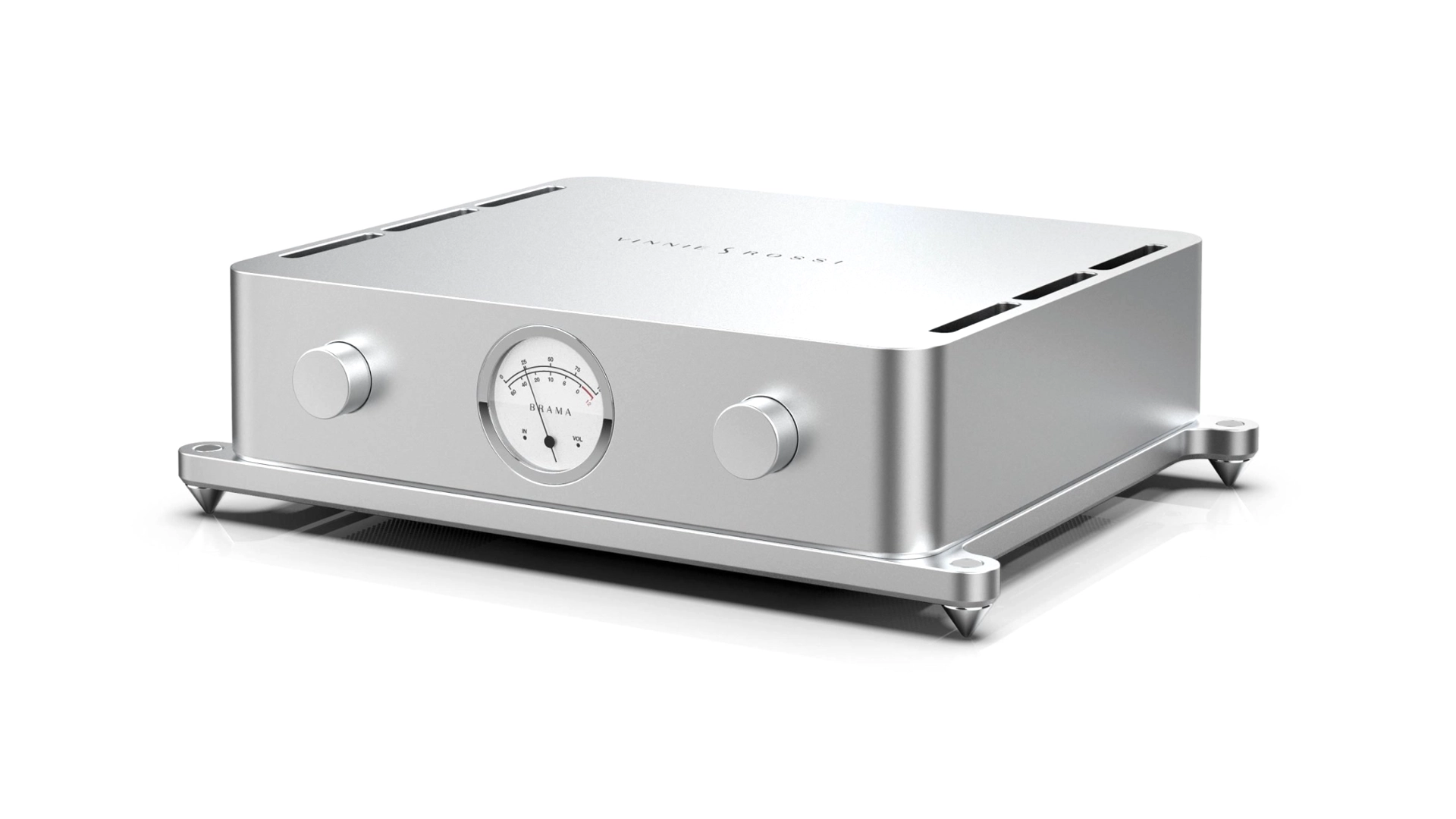
Vinnie Rossi is an American designer-led audio company built around its founder’s repeated rethinking of power supplies, modularity and direct-heated-triode circuitry. Rossi began the business in 2004 as Red Wine Audio, initially becoming known for battery-powered amplifiers that isolated sensitive circuits from mains noise. The later LIO modular integrated amplifier replaced conventional batteries with an ultracapacitor supply and allowed owners to configure DAC, phono, preamplifier and power-amplifier functions within one chassis. Those products belong to the same design career, but the Vinnie Rossi name became the marque only later; the 2004 date should therefore be understood as the start of Rossi’s company, not the launch date of the present badge. The L2 and L2i generations moved upward in scale and introduced direct-heated triodes into carefully controlled line stages. The current Brama Series develops that work as a complete reference system: a 300B preamplifier, integrated amplifier and monoblock power amplifiers combine sculpted industrial design with hand assembly in the United States. Rather than using a 300B as a conventional low-power output tube, Rossi employs it in the voltage-gain stage, preserving its operating character while solid-state output circuitry supplies demanding loudspeakers. The newer Canta line broadens the company’s reach while retaining the same author-led approach. Vinnie Rossi’s history is notable for genuine changes of architecture rather than cosmetic model cycles—from batteries to ultracapacitors, modular LIO construction and then DHT hybrid reference electronics—while keeping quiet power and short signal paths at the centre.
Vitus Audio

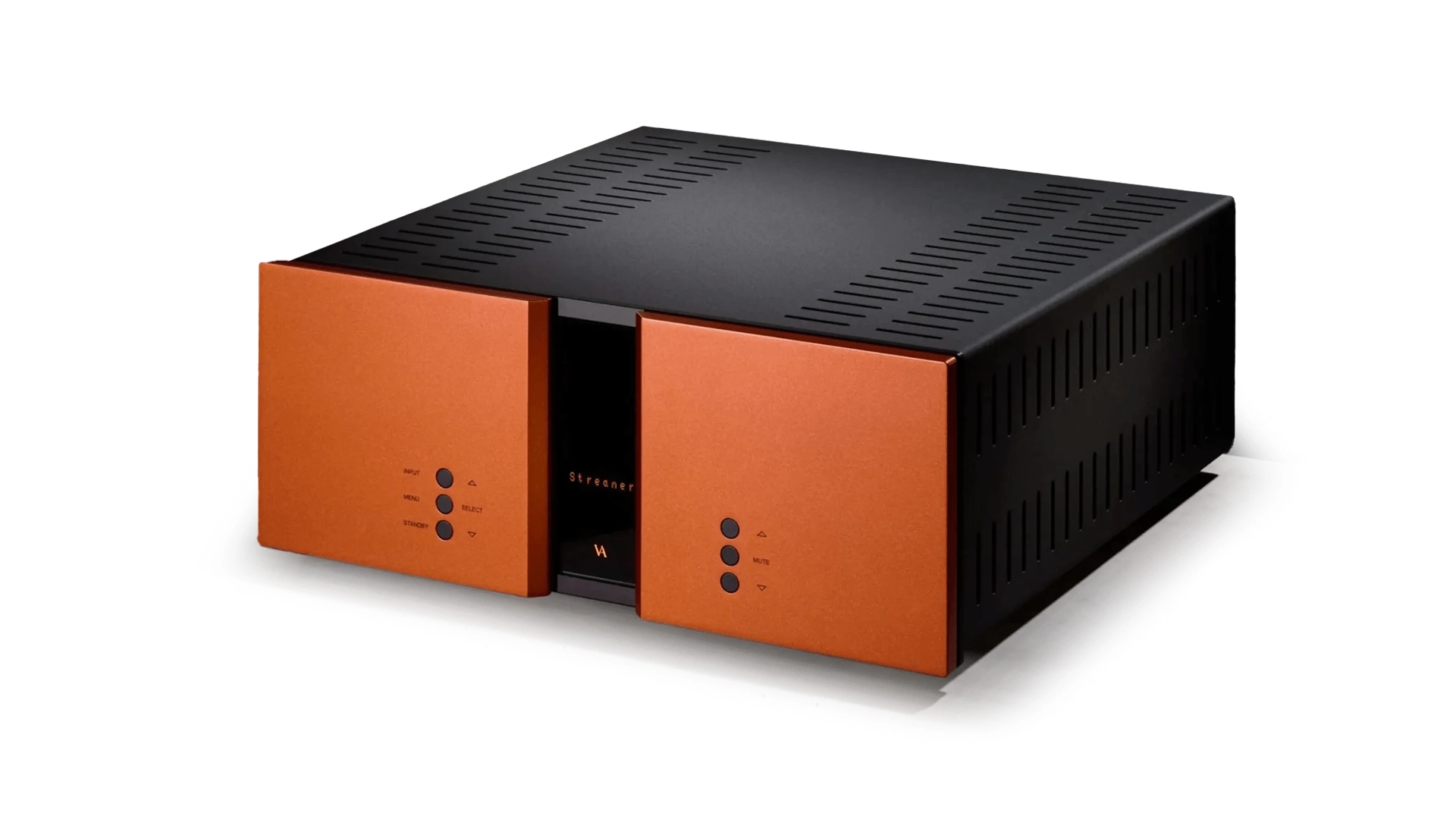
Vitus Audio is a Danish ultra-high-end electronics manufacturer founded in 1995 by Hans-Ole Vitus, initially as a long-term engineering project rather than a conventional product launch. The first complete components—the RP-100 phono stage, RL-100 line stage and SM-100 monoblock—were publicly shown in 2003. That distinction explains why both dates appear in accounts of the company: 1995 marks its origin, while 2003 marks its arrival on the market. Vitus builds integrated amplifiers, preamplifiers, stereo and mono power amplifiers, phono stages, DACs, streamers and disc transports across Reference, Signature and Masterpiece ranges. SIA-025 and SIA-030 integrated amplifiers are among its best-known products, condensing unusually large power supplies and Class A operation into a single chassis, while Masterpiece separates such as MP-M201 monoblocks scale the architecture without compromise. Heavy non-magnetic casework, fully balanced circuits, carefully matched components and extensive in-house assembly are recurring features. The company added its own surface-mount production capability in 2010 to gain closer control over circuit-board quality and consistency. In 2022 the organisation joined with AVM-TEC, associated with Alluxity, under a new group structure; Hans-Ole Vitus continued to focus on research and product development while a younger management team assumed daily operations. Vitus Audio’s defining quality is not power rating alone. It is the effort to preserve low-level colour and timing through electronics capable of controlling difficult loudspeakers, with product families designed as progressively scaled versions of one Danish engineering philosophy.
Viva Audio

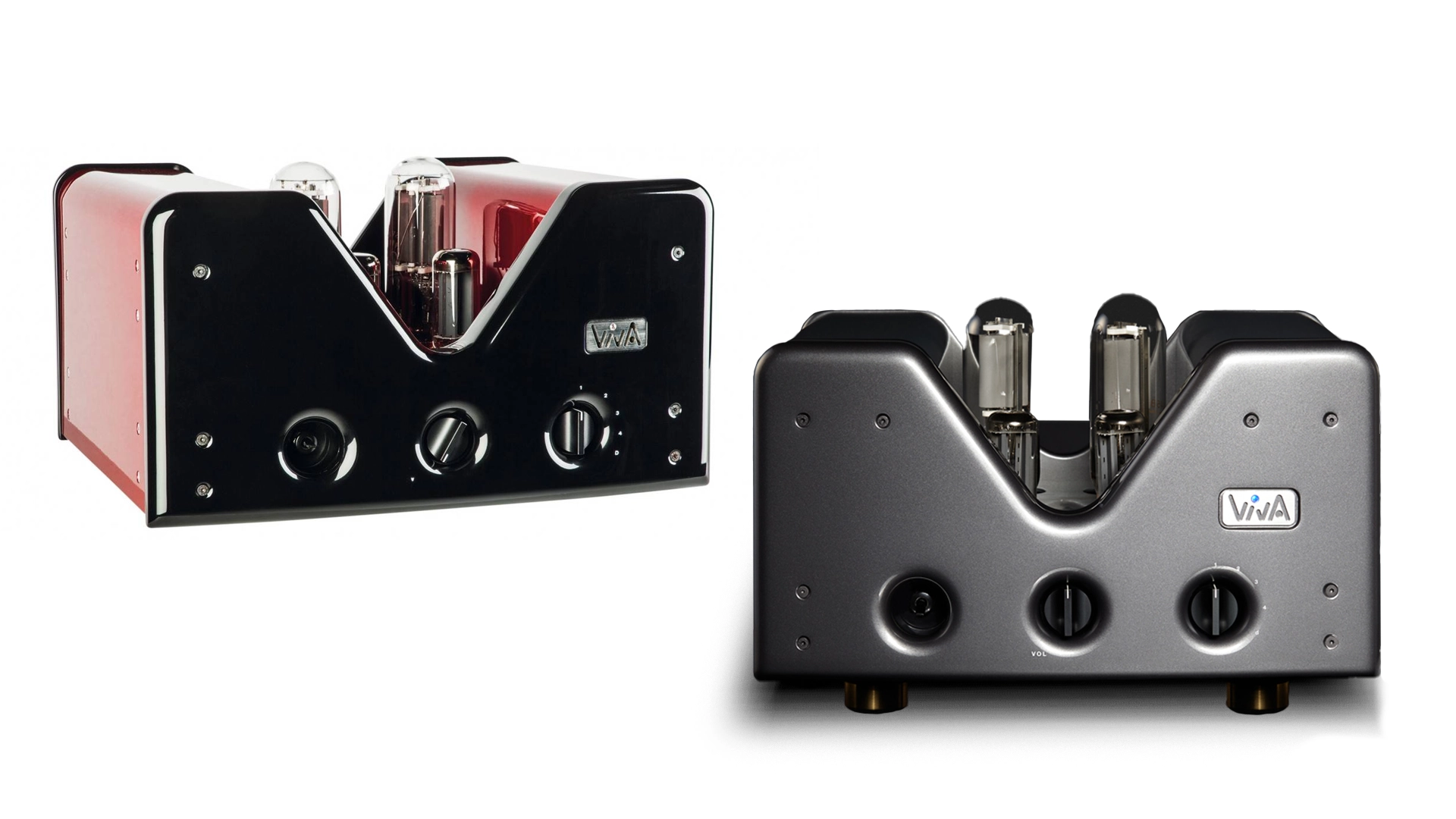
Viva Audio is an Italian manufacturer that treats vacuum-tube electronics, loudspeakers and industrial form as parts of one bespoke system. Amedeo Schembri founded the company in 1996, working with his brother Giampietro, and remains responsible for the circuit and sonic direction. Viva is best known for single-ended triode amplification: products such as the Aurora monoblocks and Solista integrated amplifier use directly heated power tubes in circuits designed around simplicity, substantial custom transformers and point-to-point hand construction. Solistino offers a more compact integrated route, while Linea preamplifiers, Fono phono stages and Numerico digital conversion complete the source chain. The Egoista family adapted Viva’s large triode stages to headphones and became one of the brand’s most visible achievements; versions built around 845 or 2A3 tubes, and the more powerful Egoista STX, address very different loads without reducing the amplifier to a desktop accessory. Viva also makes loudspeakers, from Agile and Allegro to sculptural Nuda and large Master Horn systems, allowing amplification and transducers to be voiced together. Components are assembled and finished by hand in Vicenza, with colours and surface treatments that make each system feel commissioned rather than selected from anonymous black boxes. The visual drama can overshadow the engineering, but the important point is continuity: Viva has spent decades refining transformers, tube operating points, horn and dynamic loudspeakers, and the interfaces between them. Its products are recognisably Italian because craft, colour and proportion are integral to the circuit-led audio design.
VTL

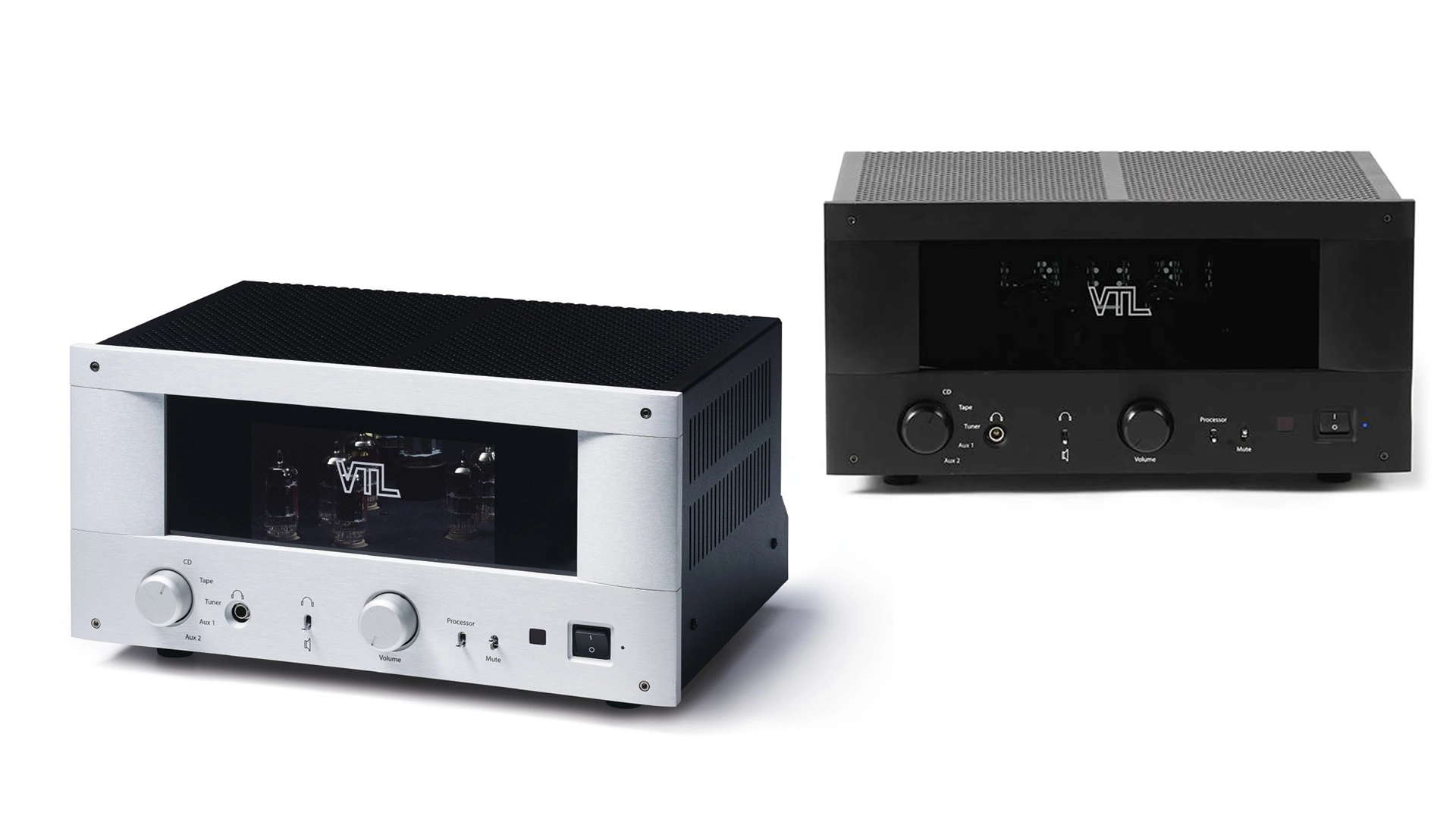
VTL—Vacuum Tube Logic—is an American specialist in valve amplification founded in 1986 by David Manley and his son Luke. The company grew from the Manleys’ earlier work in South Africa and Britain, then established production in California; after David departed to create Manley Laboratories, Luke Manley continued VTL with an increasingly systematic approach to powerful, reliable tube electronics. VTL’s hallmark is not the romantic simplicity of a tiny single-ended amplifier but the controlled use of multiple output valves to drive real loudspeakers. Its push-pull power amplifiers combine substantial output transformers and regulated supplies with protection, monitoring and, in many models, switchable tetrode/triode operation. The range runs from the IT-85 integrated and ST-85/ST-150 stereo amplifiers to S-series stereo chassis and MB monoblocks, culminating in the Siegfried and Lohengrin designs. TL line preamplifiers and TP phono stages complete an all-valve signal chain, with balanced circuitry and carefully managed grounding used in the upper models. Modern VTL products add conveniences such as automatic valve biasing and fault sensing without concealing the operating tubes or making them disposable modules. Design and manufacture remain in Chino, California. The brand’s enduring strength is this union of valve tone and engineering discipline: high power, serviceability and repeatable operation developed for listeners who want the scale and authority of large loudspeakers as well as the harmonic character for which tubes are valued.
Waversa Systems

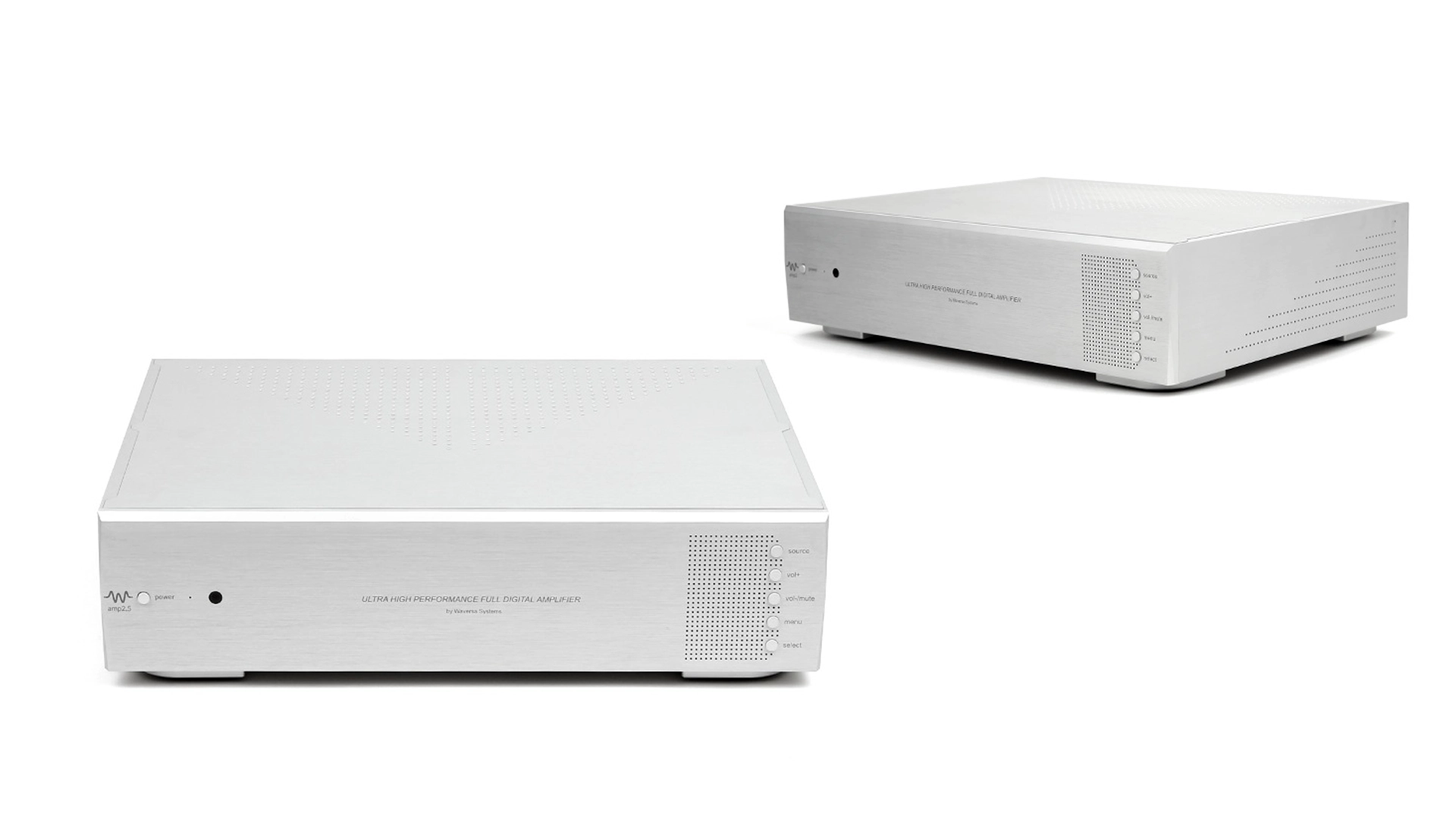
Waversa Systems is a South Korean digital-audio company founded in 2012 by engineer Dr Collin Shin. Before entering high-end audio, Shin worked on semiconductor and system design, experience that shaped a catalogue unusually focused on the behaviour of data, clocks, networks and power inside a complete replay chain. The company announced its WAP—Waversa Audio Processor—platform in 2013 and later developed WNDR, Waversa Network Direct Rendering, as a proprietary route for delivering audio over a network with tighter control of timing and processing. These technologies appear across network players, DACs, servers and hubs rather than belonging to one showcase product. The range spans compact WMini components, WStreamer bridges, WDAC converters, WCore servers and WRouter or WSmartHub network products, as well as integrated players, amplifiers, phono stages and the reference WV series. Waversa also makes Ethernet and USB filters because it treats electrical noise entering through digital connections as part of the source design. Product names and formats vary widely, but the unifying objective is consistent: minimise jitter and unwanted processing, isolate noisy subsystems and preserve the signal through conversion and amplification. Waversa’s distinctiveness lies in approaching a hi-fi system as a networked electronic architecture, not a stack of unrelated boxes. Hardware, FPGA or processor code and control software are developed together in Korea, giving the brand a coherent technical vocabulary that extends from an inexpensive interface filter to its largest source and amplification components.
Western Electric

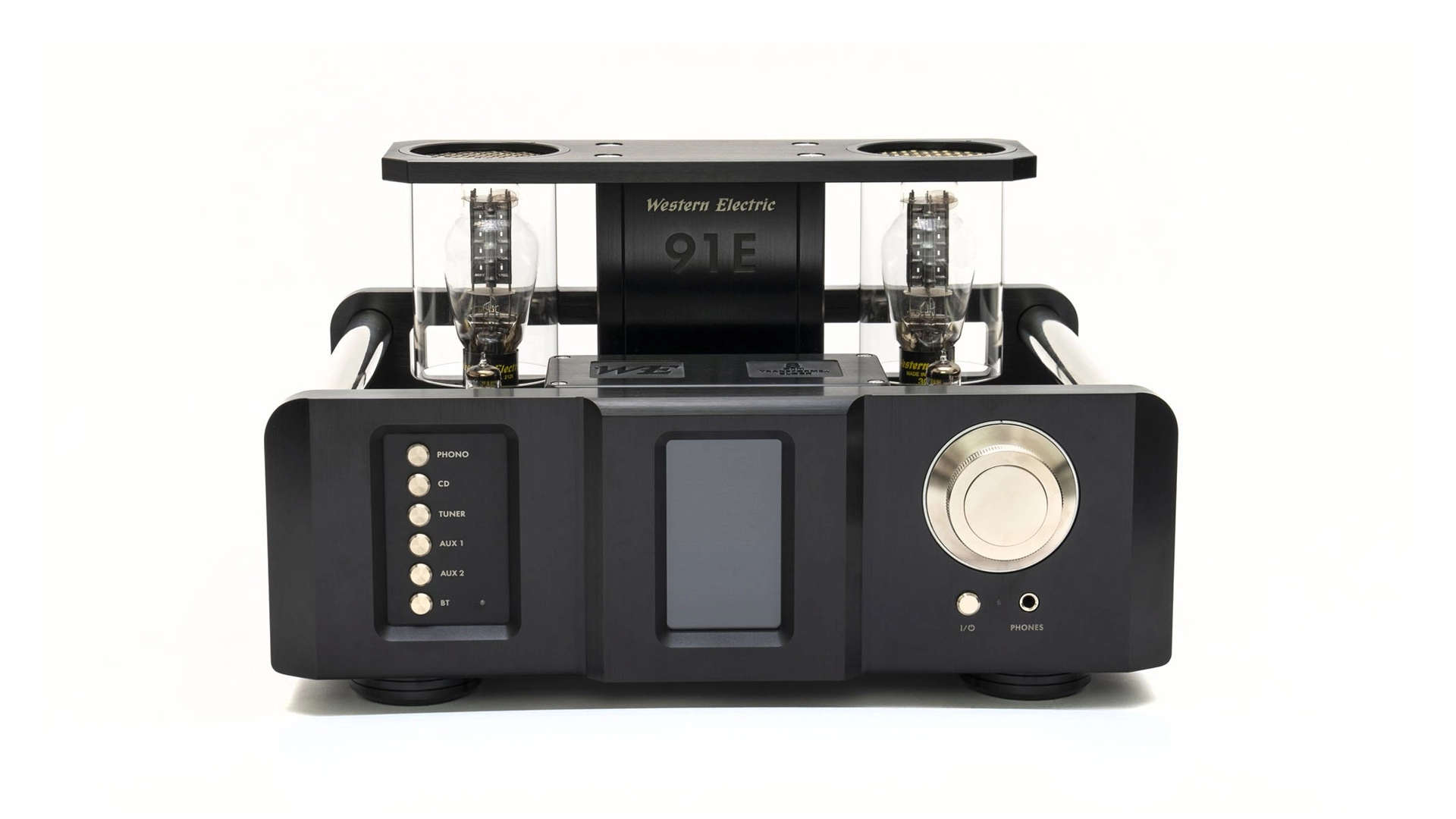
Western Electric occupies a rare place where the history of telecommunications and modern high-end audio genuinely meet. Established in 1869, the company became the manufacturing arm of the Bell System and developed tubes, transformers, amplifiers, microphones and cinema sound equipment at a scale that helped define twentieth-century electrical communication. Its most famous audio product is the 300B directly heated triode, introduced in 1938 for dependable service in telephone repeaters. Long life, linearity and carefully controlled manufacture later made the tube a cornerstone of single-ended hi-fi amplification. After the original corporate structure disappeared, entrepreneur Charles Whitener acquired rights and manufacturing assets and re-established Western Electric tube production in 1996. Today’s company operates in Rossville, Georgia, where it manufactures the 300B using specialised tooling, materials and process knowledge recreated from the historic product. The 91E integrated amplifier brings the valve into a contemporary design with patented electronics intended to obtain useful power while preserving single-ended operation; additional tubes and audio products are being developed around the revived factory. The distinction between legacy and continuity matters. Modern Western Electric is not the uninterrupted Bell System manufacturer of 1869, yet it is more than a licensed logo: it has rebuilt American production around the original tube’s drawings, equipment and quality controls. Few brands can connect present-day listening so directly to hardware once engineered for national telephone networks and early cinema sound.