
Power Amplifiers
A power amplifier has one singular, focused mission: to take the audio signal from a preamplifier and provide the massive current and voltage needed to drive loudspeakers. Free from the duties of source selection or volume control, its design is purely dedicated to delivering clean, effortless power for the best possible sound quality. They come in various configurations, including stereo amps and ultimate-performance monoblocks. This index lists the world’s leading manufacturers of these audio system engines, the power behind high-fidelity sound.
Hi-Fi brands in the category
Summary information and image
Direct links to official websites
CAAS Audio

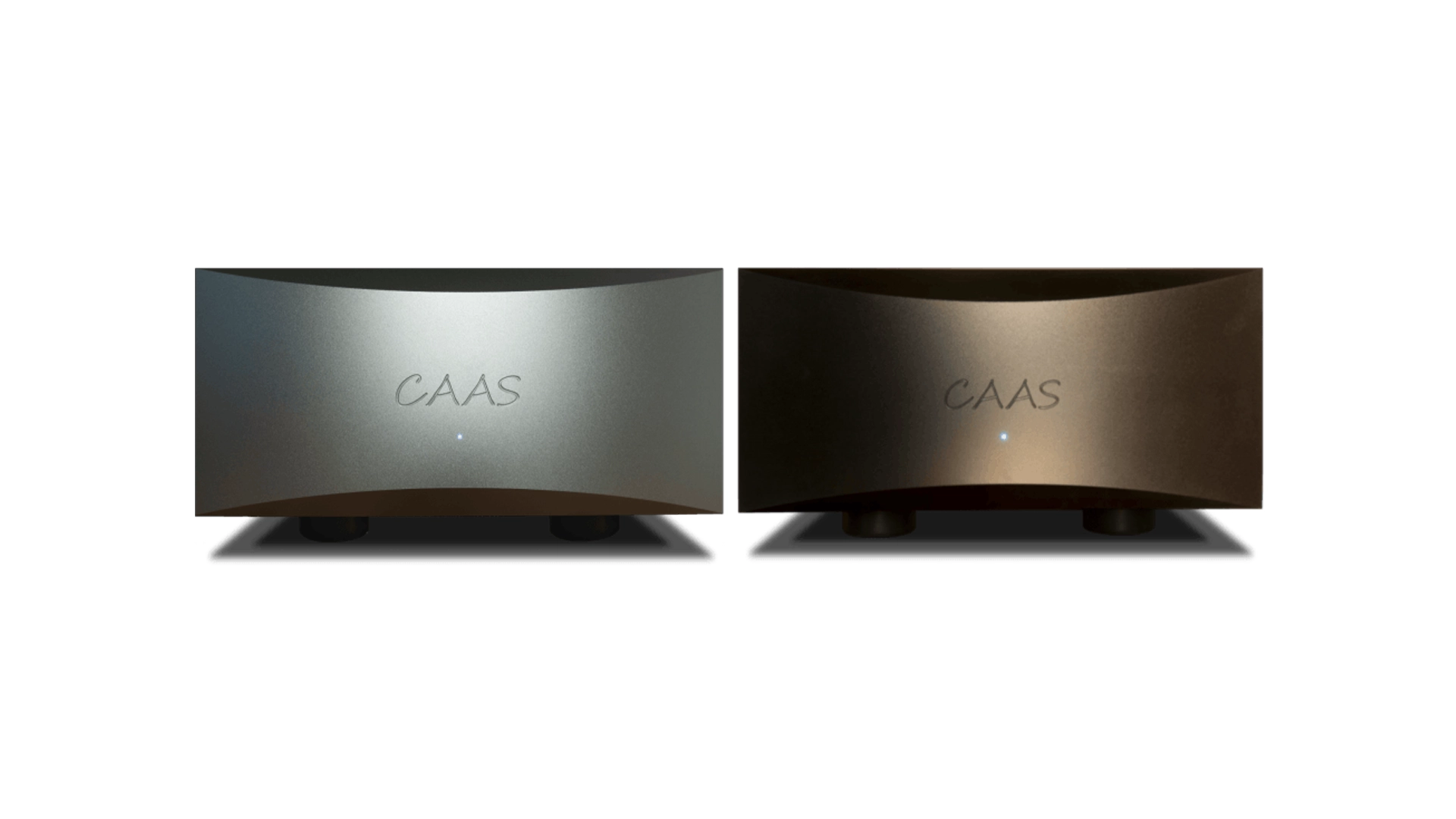
CAAS Audio is a British manufacturer of zero-feedback Class-A and Class-AB electronics, not a Dutch Class-D amplifier company. Brothers Carl and Neil Broomfield founded it in Yorkshire in 2006, combining Carl’s RF and microwave circuit experience with Neil’s real-time software engineering. The Elysian 100 monoblock operates in Class A for its first 20 watts before moving into Class AB for higher output, using no global or local feedback. Elysian preamplifiers employ fully balanced dual-mono layouts with separate power supplies, while the Elysian Audio Streamer and Digital Audio Streamer combine Roon-ready network playback with the company’s HDAC conversion and analogue circuitry. Products are hand-built in the United Kingdom. Both the country and the technology in the old entry were incorrect, so the record now uses UK, adds the 2006 foundation year and describes the actual Class-A-based product family.
Canor

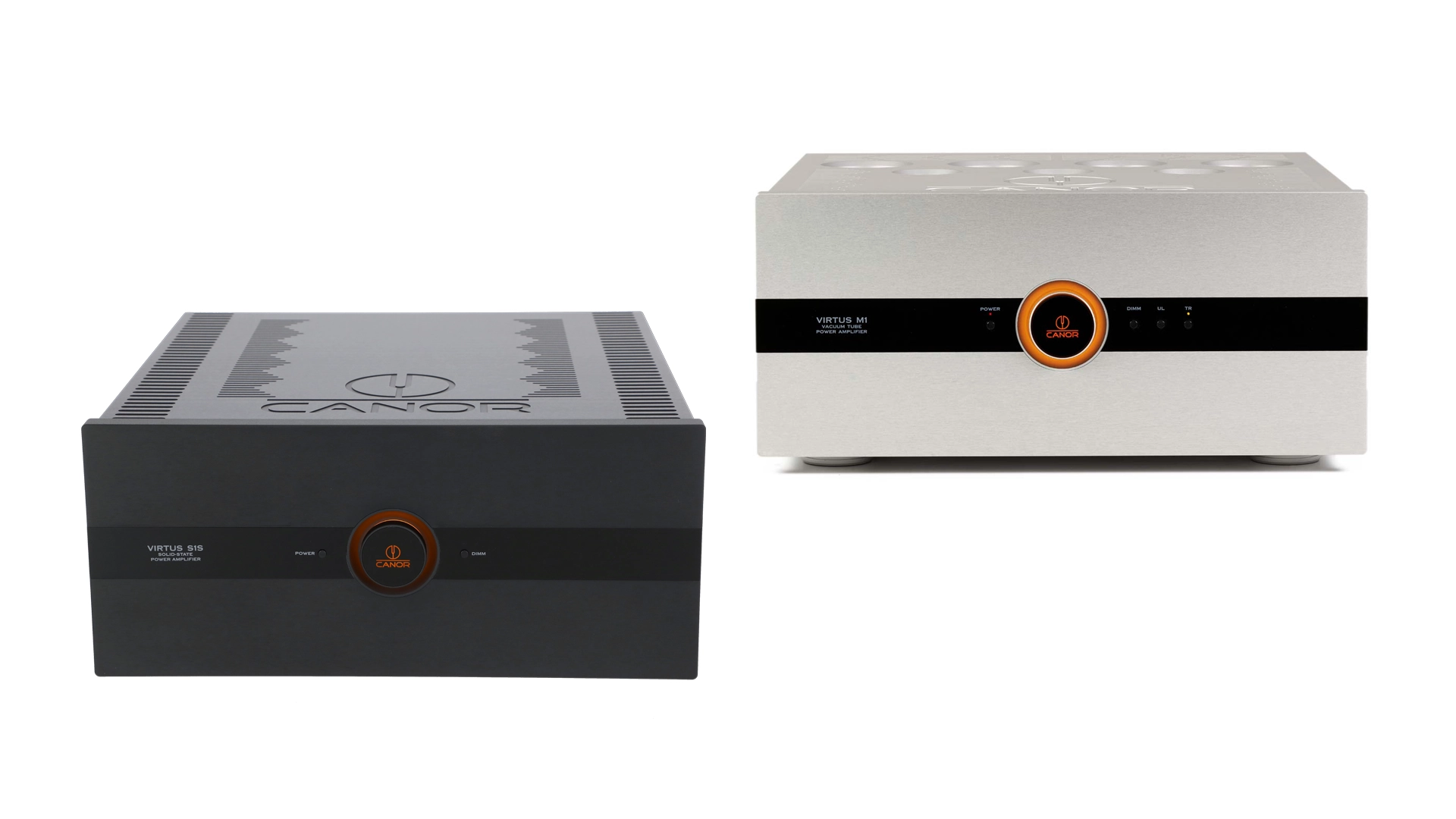
CANOR combines valve-circuit development with unusually extensive in-house manufacturing and tube testing in Prešov, Slovakia. The company began in 1995 with the EDGAR TP101 integrated valve amplifier and adopted the CANOR name in 2007. Co-owner and chief developer Zdeňek Březovják has guided an engineering programme that now covers valve, hybrid and solid-state integrated amplifiers, preamplifiers, power amplifiers, phono stages, DACs and CD players. Hyperion and Virtus form the upper electronics ranges, while Asterion phono stages address analogue sources. CANOR Milling Technology removes selected dielectric material around sensitive PCB conductors, creating short, repeatable signal paths with lower dielectric influence. The Aladdin and related measurement systems select and match valves before assembly. The former reference to an undefined “MCT magnetic conductive technology” was not supported and has been replaced by the company’s documented CMT process.
Cary Audio

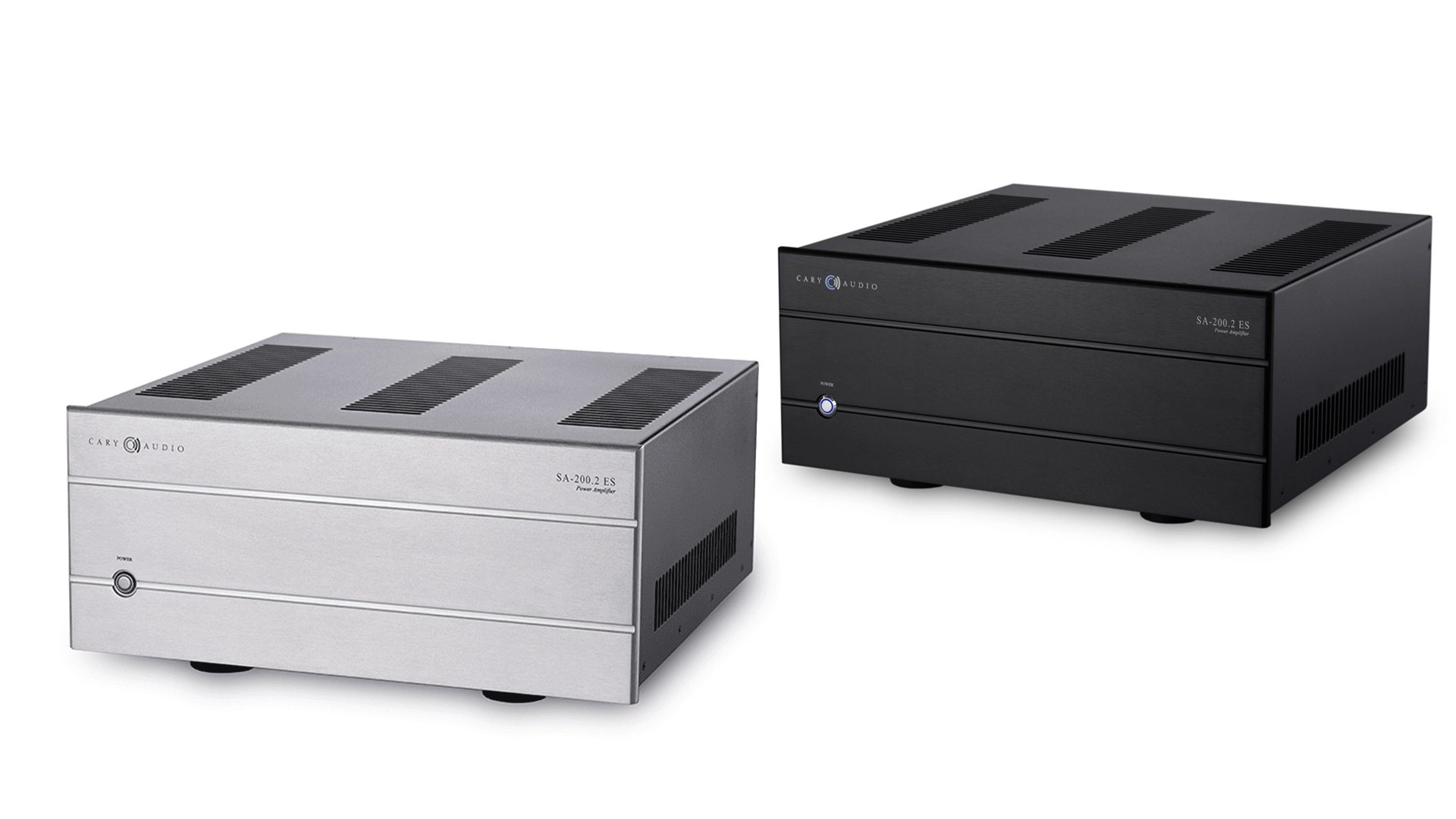
Cary Audio helped establish single-ended triode amplification as a serious modern high-end category in the United States. Dennis and Donna Had founded Cary Audio Design in North Carolina in 1989, initially concentrating on handcrafted vacuum-tube electronics. Dennis Had’s influential SET designs, particularly the CAD-805 monoblock and 300B-based amplifiers, gave the company an identity built around simple signal paths, output-transformer expertise and the expressive qualities of directly heated triodes. Today’s range retains that lineage through products such as the CAD-300SEI, CAD-805RS, CAD-211FE, SLI integrated amplifiers and SLP preamplifiers, while also covering solid-state power amplifiers and phono stages. Cary’s DMS network players and DMC digital sources add streaming, DAC and disc-playback functions to a catalogue that is no longer tube-only. The result is an unusual brand whose classic valve engineering and current digital platform are developed as parts of one complete system.
Cayin

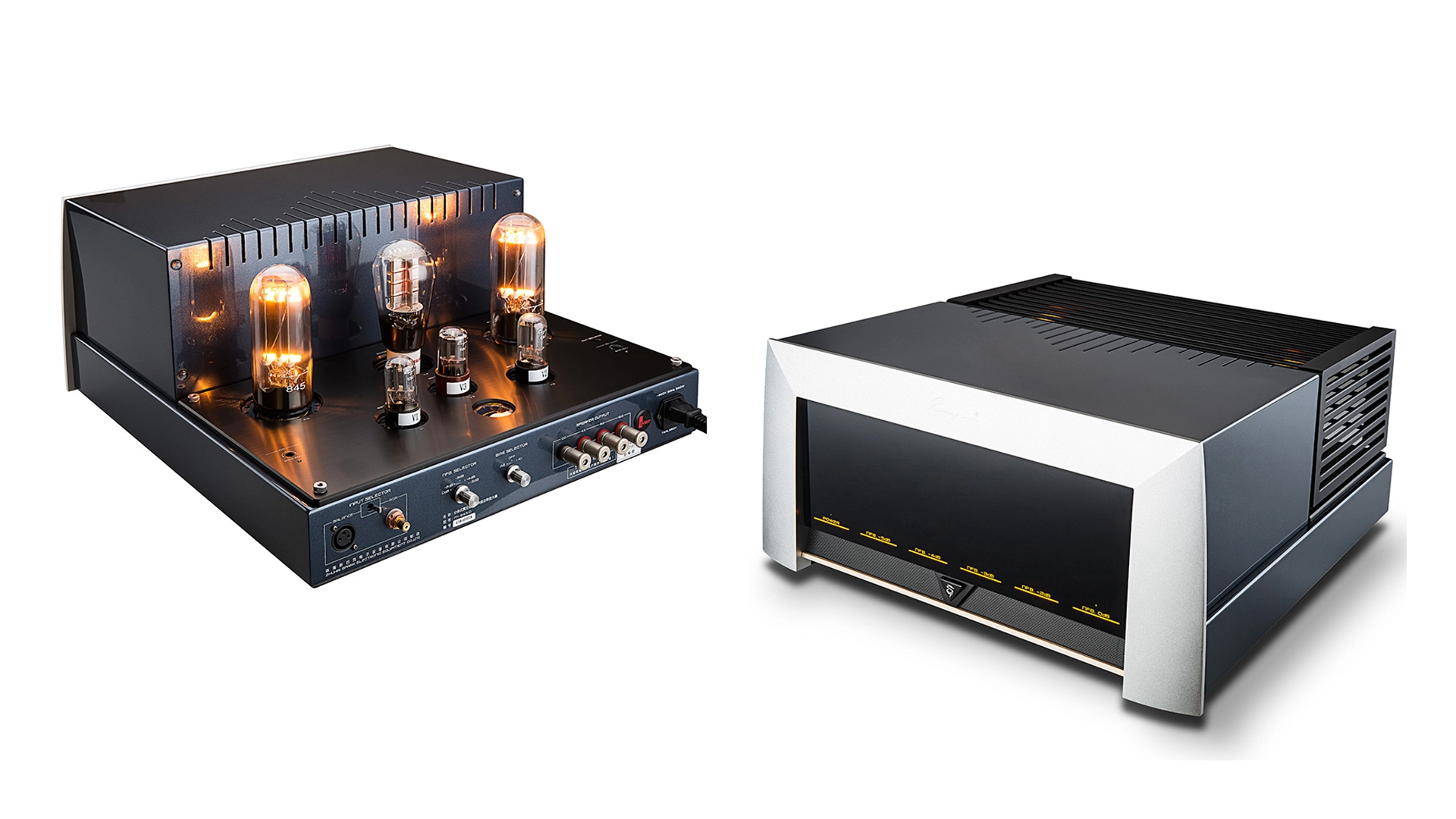
Cayin is one of the few large audio manufacturers to develop valve electronics for both full-size hi-fi systems and genuinely portable listening. Zhuhai Spark Electronic Equipment Co., Ltd. was founded in China in 1993 and markets its audio products under the Cayin name. Its home range spans single-ended 300B amplifiers, push-pull integrated amplifiers using valves such as EL34 and KT88, pre/power combinations, DACs and digital sources. Cayin later brought the same interest in tube operating modes and user-adjustable voicing to desktop headphone amplifiers and N-series digital audio players. Several products allow listeners to change output stage, feedback, bias or valve/solid-state timbre without replacing the component, making configurability part of the brand’s engineering rather than a software preset alone. Cayin also produces portable DAC/amplifiers and in-ear monitors. Broad in price and format, the catalogue links traditional transformer-coupled tube circuits with modern high-resolution digital and personal audio.
Cessaro

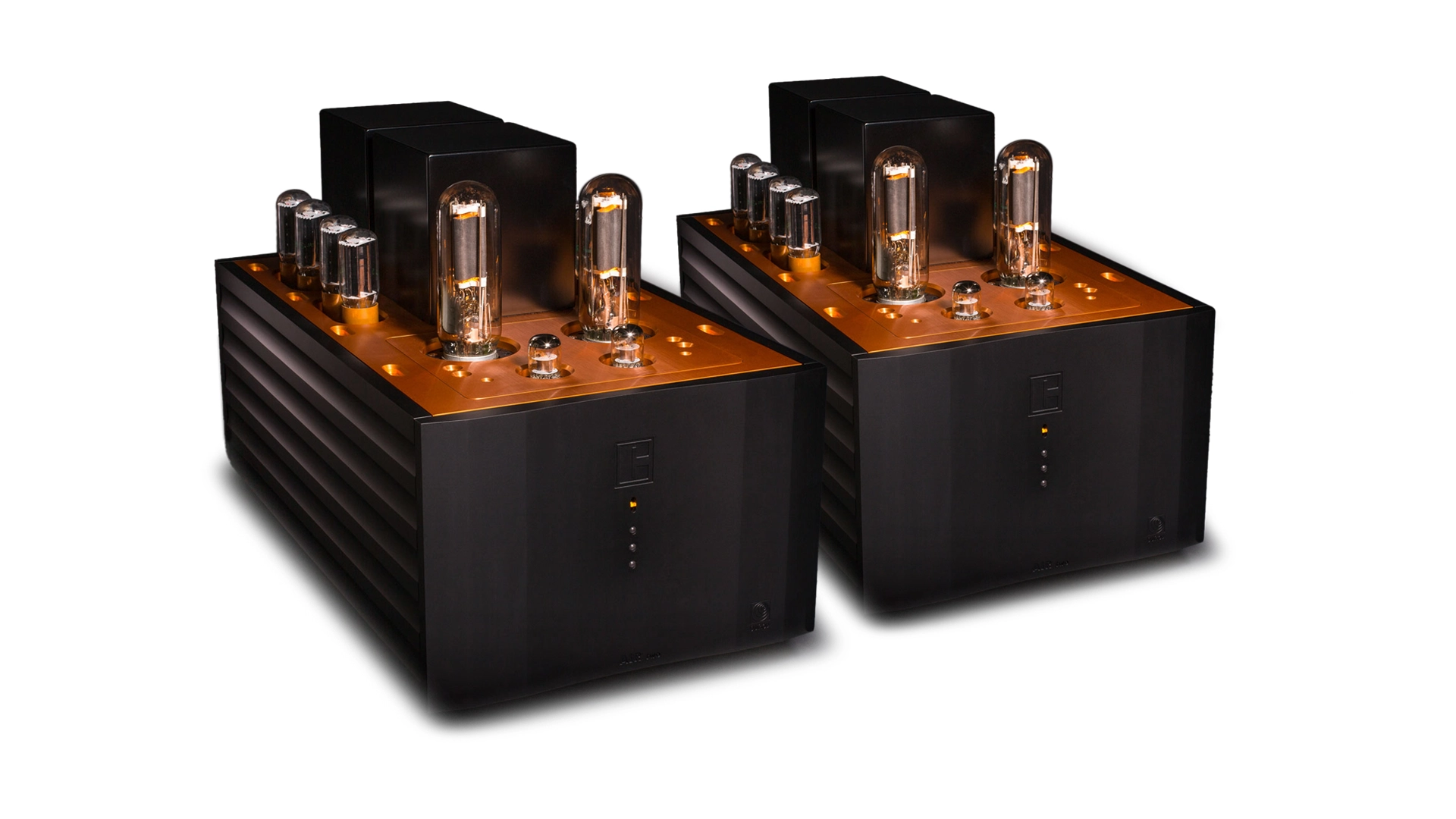
Cessaro Horn Acoustics builds room-scale horn systems for listeners who want the sensitivity and immediacy of professional cinema sound without accepting utilitarian construction. Ralph Krebs founded the German company in 2006. Its most distinctive hardware is the horn itself: a hand-built two-shell composite structure filled with a damping polymer and coupled to the compression driver through a machined aluminium flange. Cessaro combines selected TAD compression units with proprietary in-house drivers, high-sensitivity passive sections and, in larger systems, actively amplified low bass. Opus I and Gaia provide different entry points, while the modular Alpha III can be upgraded toward Beta III or Gamma III configurations; Omega II occupies the statement end of the range. The partly active four-way Alpha III illustrates the approach, pairing horn-loaded mid and high frequencies with a 16-inch bass driver. Systems can be extensively customised in finish and architecture, and the company treats long-term upgradeability as part of the design rather than replacing an entire loudspeaker generation.
CH Precision

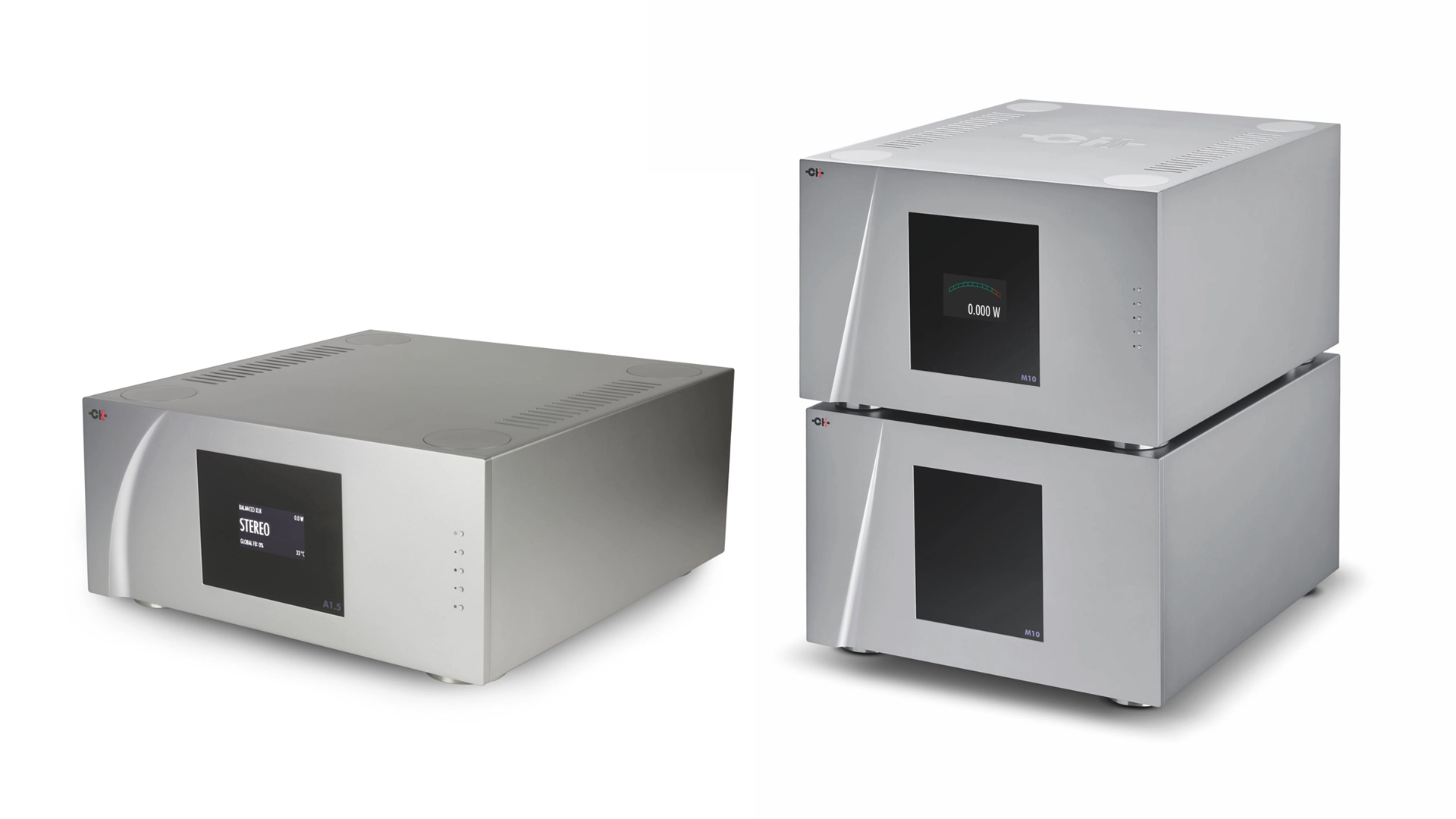
CH Precision makes Swiss reference electronics whose analogue circuits can be configured, monitored and upgraded through a tightly integrated digital-control platform. Engineers Florian Cossy and Thierry Heeb founded the company in 2009 after earlier work in high-end audio and digital engineering. The 1 Series covers transport, DAC, line and phono preamplifiers, integrated and power amplifiers, clock and external power supply; modular option cards let an owner change interfaces or functions without replacing the component. The 10 Series extends that architecture into dual-chassis reference designs with separate power supplies. Proprietary features include ExactBias monitoring for compatible power valves in connected systems, user-adjustable amplifier feedback and extensive software-defined setup. Signal paths remain fully discrete and complementary, while control electronics are galvanically isolated from the analogue domain. Circuit, software and mechanical development are performed in-house, with final assembly, testing and quality control at the company’s facility in Préverenges, Switzerland.
Chord Electronics
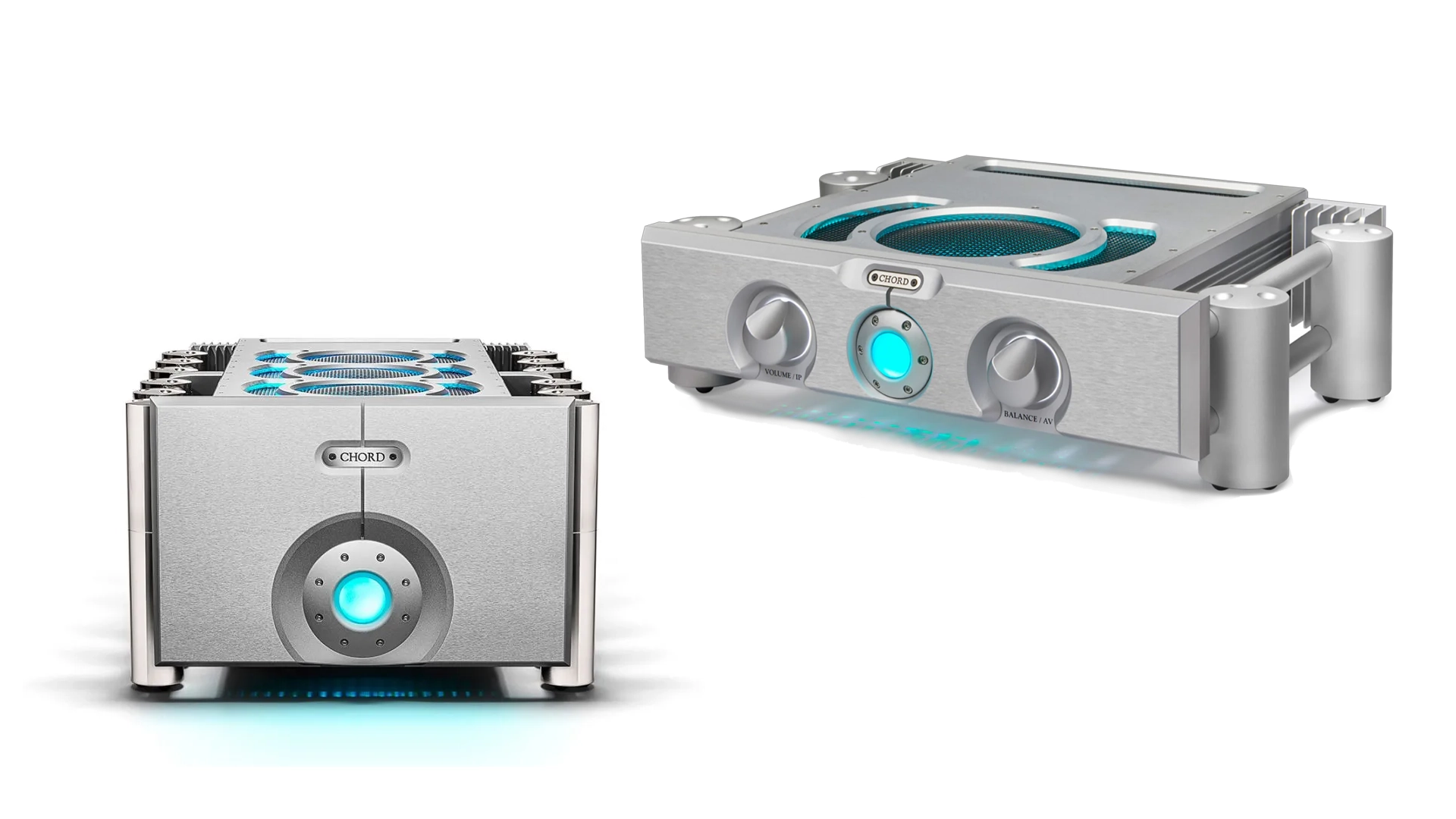
Chord Electronics combines aerospace-derived power-supply engineering with proprietary FPGA digital conversion, giving its amplifiers and DACs two distinct but connected technical lineages. Former avionics engineer John Franks founded the British company in 1989; its first amplifiers went to the BBC and were later used by studios including Abbey Road and Sony Music. Designer Rob Watts subsequently developed Chord’s digital architecture, implementing conversion, noise shaping and the long-tap WTA interpolation filter in programmable logic instead of an off-the-shelf DAC chip. That platform runs from portable Mojo and Hugo products through Qutest, Hugo TT and the reference DAVE, often paired with dedicated streamers or upscalers. Chord’s analogue range includes compact Table Top and Choral components as well as Ultima integrated, stereo and mono power amplifiers using the company’s dual-feed-forward topology. Machined aluminium cases and unusually compact forms are visually distinctive, but the real common thread is control over core circuitry rather than dependence on standard modules.
Circle Labs

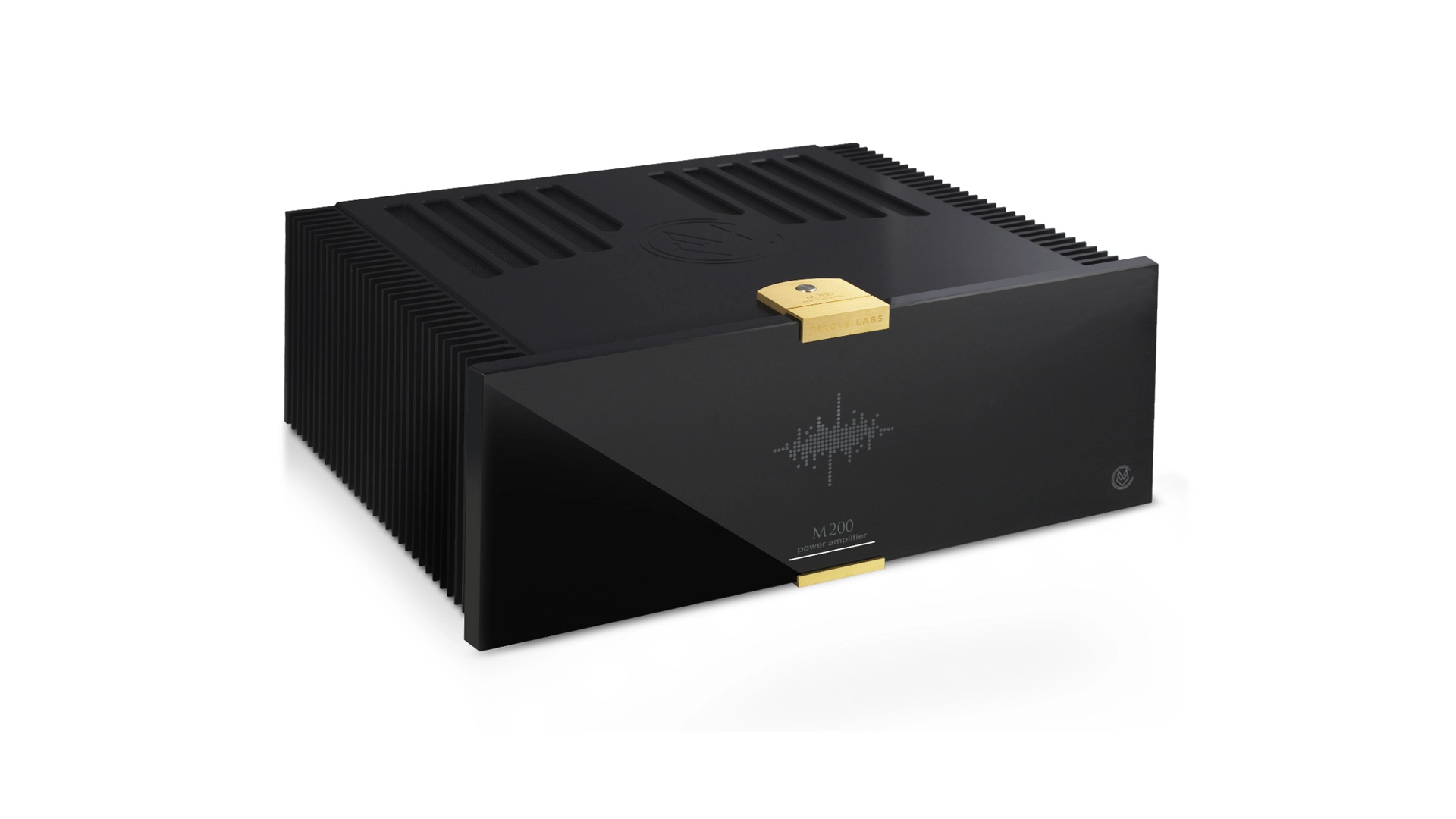
Circle Labs applies experience gained from precision scientific equipment to unusually compact hybrid and solid-state audio amplifiers. Designer Krzysztof Wilczynski founded the Kraków company in 2007 after years of developing specialised apparatus for microbiology research; Krzysztof Lichoń shaped the products’ distinctive industrial design. The proprietary Circle Power output circuit, brought to wider attention in 2019, is engineered for high current and power while retaining a short signal path. The flagship A200 integrated amplifier and M200/M500 power amplifiers combine ECC88 valve voltage-gain stages with transistor output sections, whereas the AS100 is fully solid-state. The P300 line preamplifier uses a fully balanced topology from input to output. Circle Labs has also expanded into analogue playback with the V1000 MM/MC phono stage, including an in-house step-up transformer design. Rather than using valves as decoration, the company assigns them a defined small-signal role and lets the transistor stage provide loudspeaker control and current delivery.
Classe

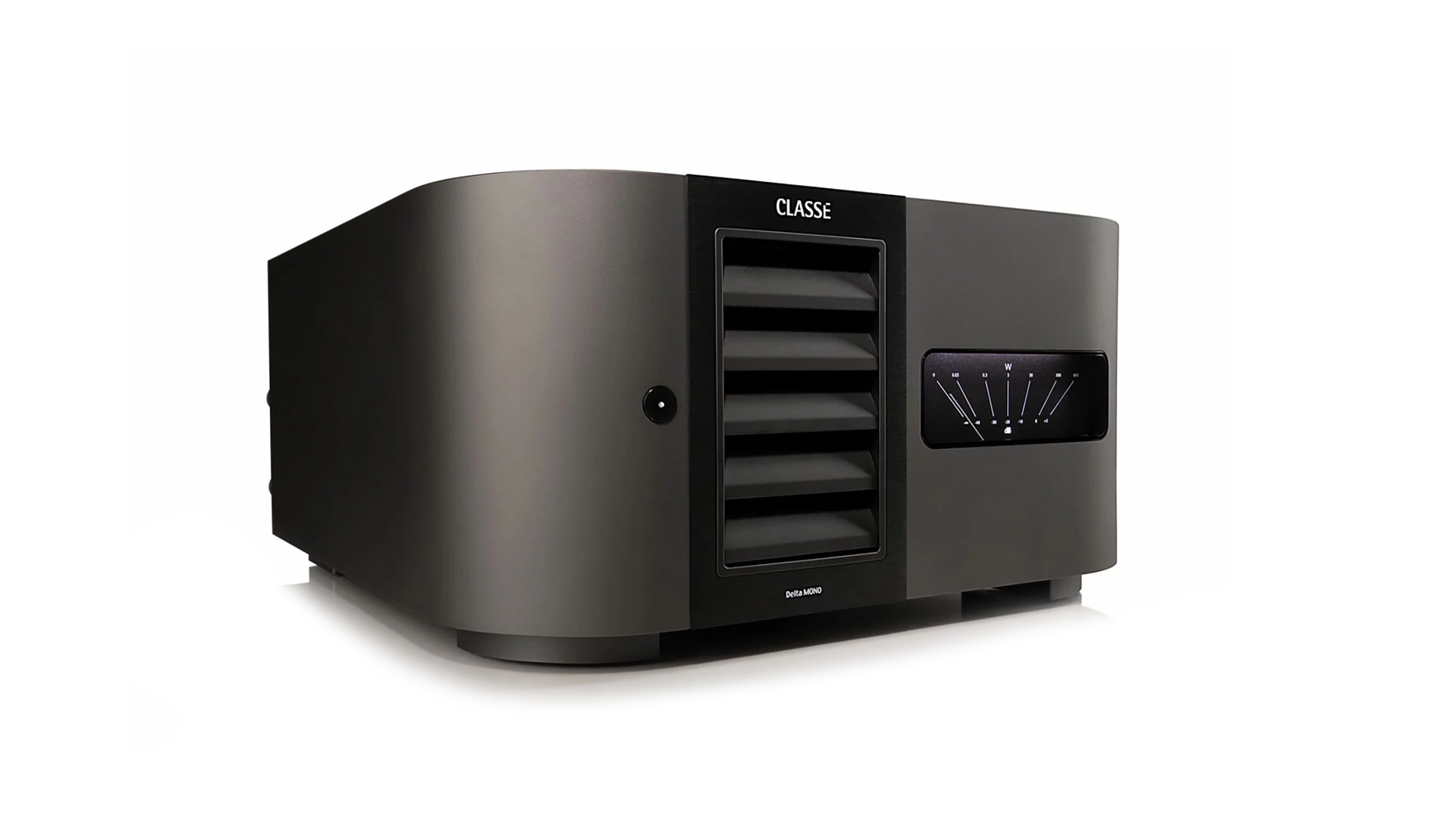
Classé Audio built its reputation by combining the grip of powerful solid-state amplification with unusually refined industrial design. Audiophile entrepreneur Mike Viglas and engineer David Reich founded the company in Montréal in 1980. Their first product, the compact 25-watt DR-2 power amplifier, operated in Class A and helped establish both the brand’s name and its design direction. Later generations expanded into preamplifiers, digital sources and multichannel electronics, with Classé joining the Bowers & Wilkins group in the early 2000s and being acquired by Sound United in 2018. The current Delta range comprises the PRE stereo preamplifier/DAC, STEREO power amplifier and MONO power amplifiers. These amplifiers run their initial output in Class A before transitioning to Class AB and use the ICTunnel active cooling system to stabilise temperature without large exposed heatsinks. Since Harman completed its acquisition of Sound United in 2025, Classé has operated within Harman’s audio portfolio while retaining its Canadian heritage and Delta-series identity.
Clearaudio

Clearaudio is a family-run German analogue specialist capable of supplying almost every mechanical and electronic part between a record and a line-level input. Peter Suchy founded the company in Erlangen in 1978 and introduced its first fully symmetrical moving-coil cartridge that same year. Clearaudio subsequently expanded from cartridges into turntables, pivoted and tangential tonearms, phono stages, record clamps, isolation accessories and record-cleaning machines. The range begins with accessible Concept packages and progresses through Performance DC, Ovation and Innovation designs to Master Innovation and Statement-level systems. Low-friction bearings, controlled-speed belt drives, layered platters and chassis using acrylic, aluminium, wood composites and ceramics are applied according to model rather than as decorative signatures. Cartridges and tonearms are developed alongside the decks, allowing geometry and mechanical interfaces to be treated as one system. Design, precision manufacture and assembly remain centred at the company’s Erlangen facility, now involving the second generation of the Suchy family.
Consonance

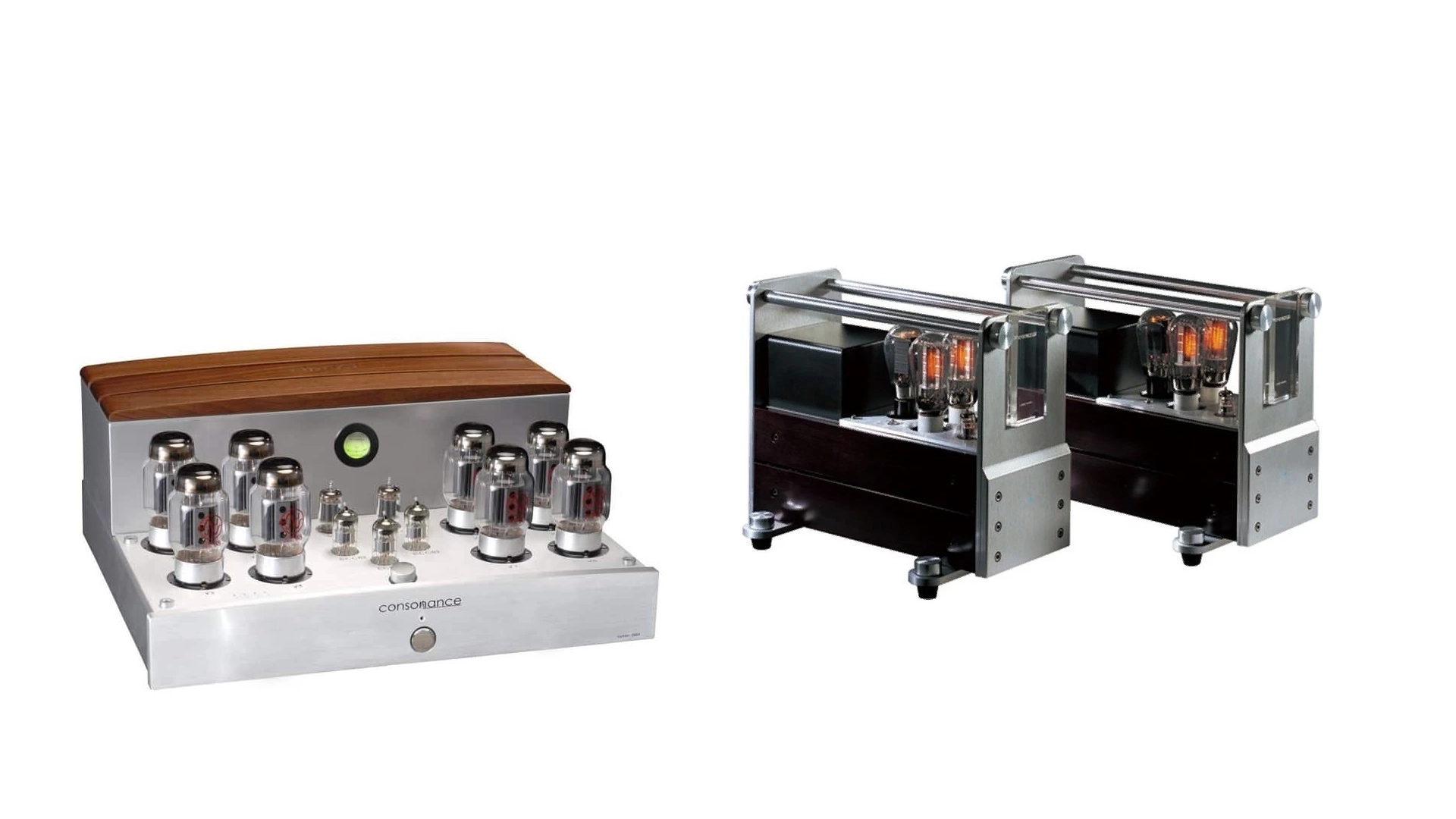
Consonance is the product brand of Opera Audio, one of China’s early internationally distributed high-end audio manufacturers. Opto-mechanical engineer and opera enthusiast Shi Hui Liu founded the Beijing company in 1994 after building a valve amplifier for himself and then being asked to make another. That origin still explains the range: tube and solid-state amplifiers sit alongside CD players, DACs, streamers, loudspeakers, cables and an especially substantial analogue line. Opera became an early Chinese high-end turntable manufacturer, and Consonance decks such as the Droplet, Die Walküre and Wax Engine show a willingness to develop complete mechanisms, plinths and tonearms rather than treat vinyl as a sideline. Many model names reference European opera, but the engineering is not confined to retro styling; the company combines traditional valve circuits with digital sources and modern manufacturing. Its “Simple. Human.” philosophy is a useful summary of the house character: direct circuits, restrained interfaces and a broad, internally designed system intended to serve music rather than specification theatre.
Constellation

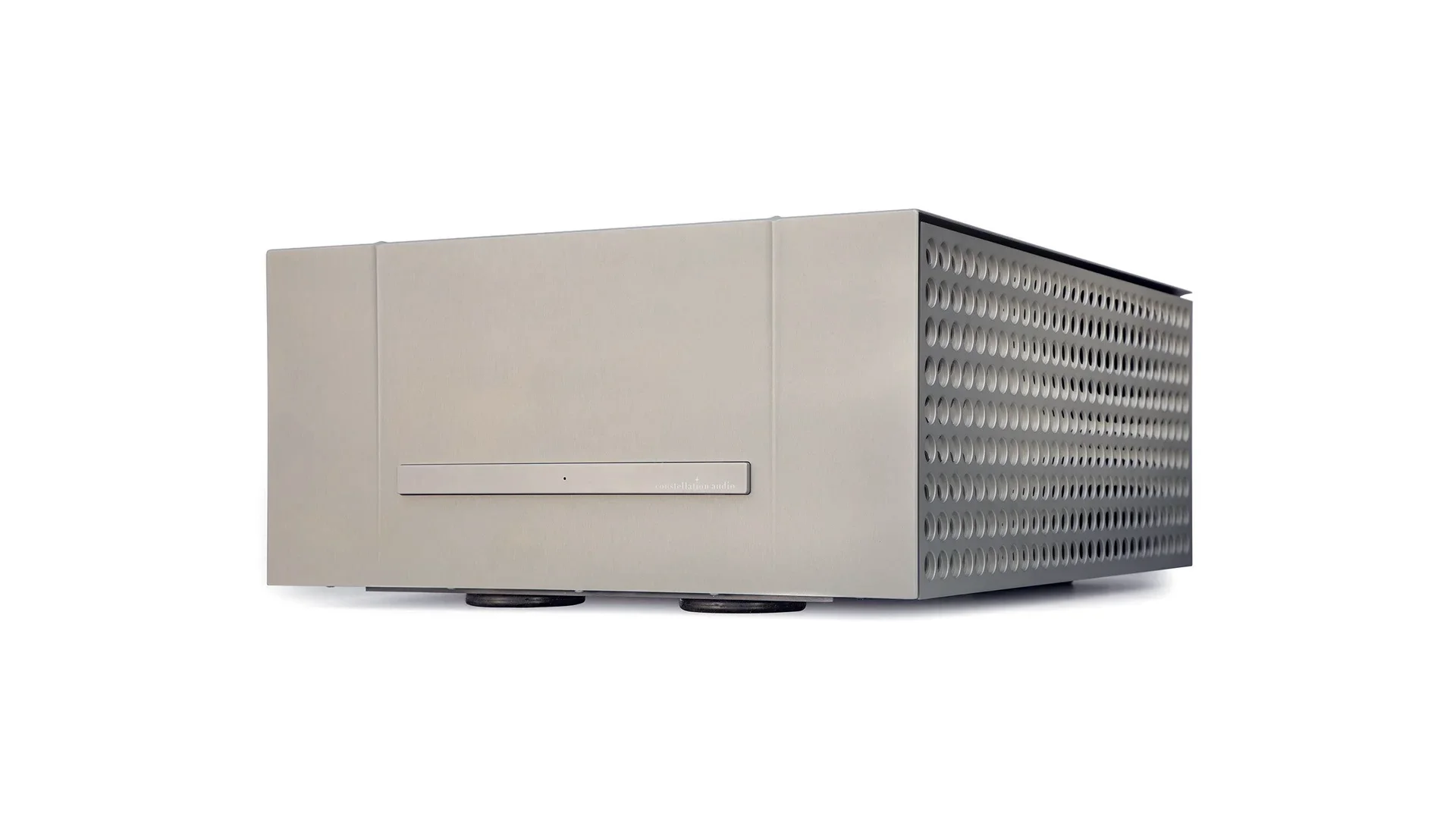
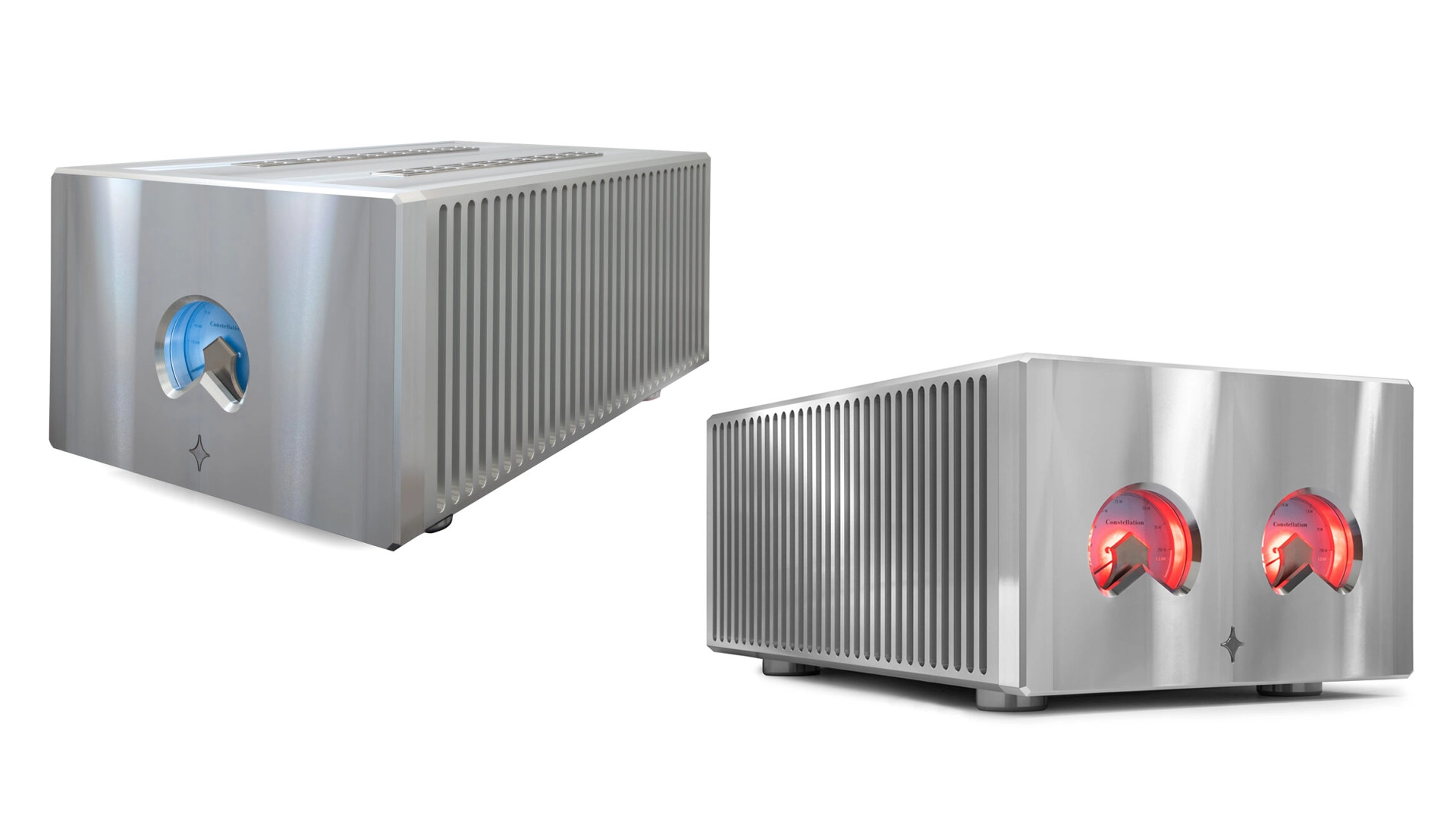
Constellation Audio is a Southern California manufacturer of reference-level solid-state electronics, founded in 2008 around a collaborative “dream team” rather than the voice of one designer. Engineers associated with the project have included John Curl, Bascom H. King and Peter Madnick, allowing specialists in line stages, power amplification and digital audio to contribute within a common architecture. Constellation’s signature ideas include its modular Line Stage Gain Module and fully balanced, bridged amplifier topology, both intended to keep signal paths short and behaviour consistent across products. The catalogue spans preamplifiers, stereo and mono power amplifiers, integrated amplifiers, phono stages and digital sources, arranged in Inspiration, Revelation and Reference families. The hierarchy is meaningful: core circuit concepts developed for the cost-no-object components are adapted for the lower series instead of being replaced by unrelated designs. This continuity, plus mechanically substantial chassis and high-current power supplies, is what gives Constellation a recognisable technical identity beyond its luxury positioning.
Cyrus

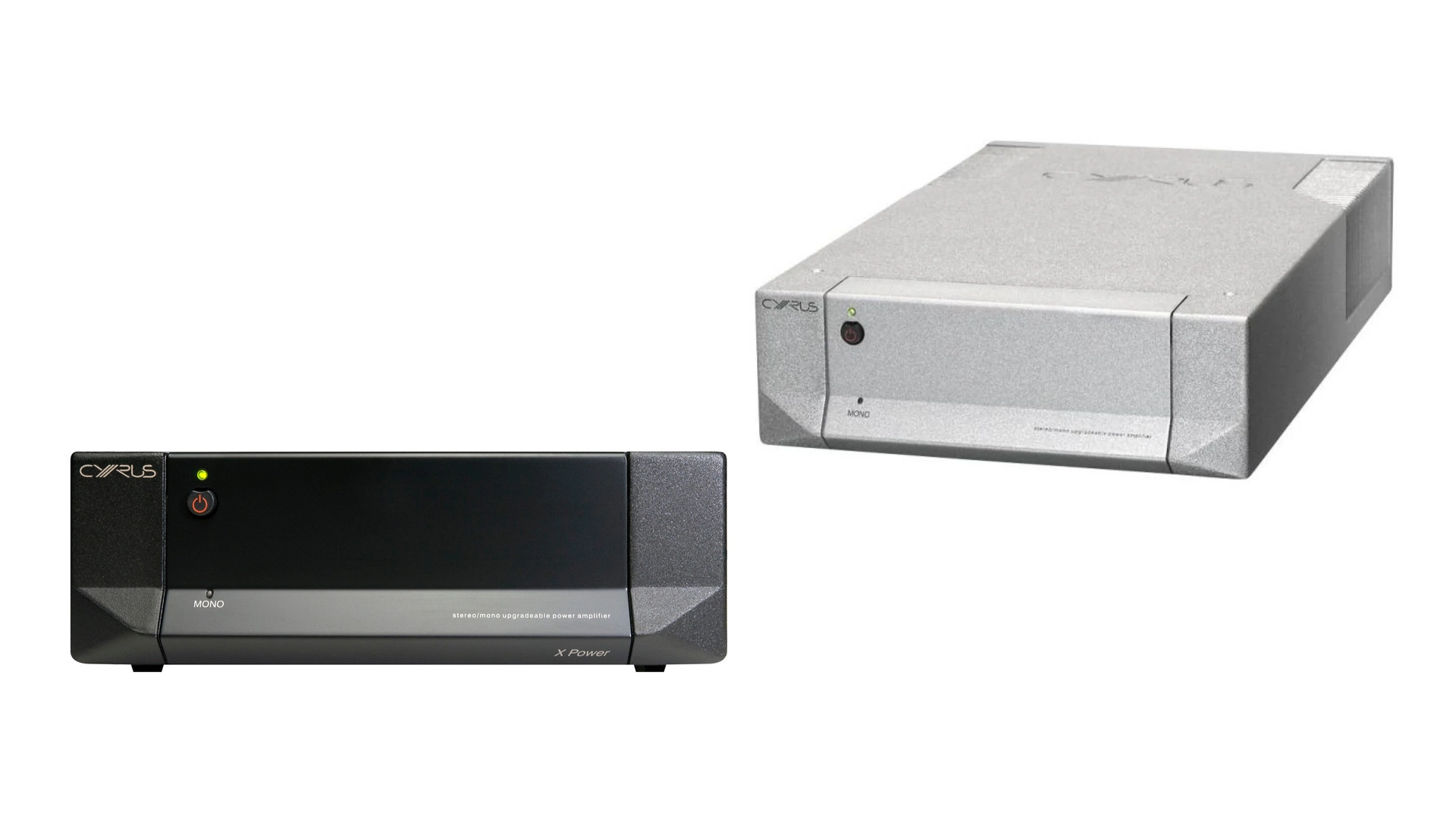
Cyrus Audio is the British company that made half-width hi-fi separates a serious system format. The original Cyrus One integrated amplifier appeared in 1984, when Cyrus was the electronics arm associated with Mission, and established the compact die-cast chassis, clean fascia and upgrade path that became the brand’s visual and technical language. Cyrus later became independent and remains based in Cambridgeshire. Its range has covered integrated and power amplifiers, preamplifiers, CD players, streamers, phono stages and external power supplies, allowing a system to grow without abandoning its core components. The 40 Series carries the concept into a wider but still compact aluminium case with dedicated 40 AMP, 40 ST streamer, 40 CD and 40 PSU models, while the 80 range develops the performance tier further. External PSUs and trade-in or servicing programmes reinforce the long-life, modular philosophy. Cyrus’s individuality is not compactness alone: it is the disciplined use of a consistent footprint, separated power options and interoperable components to build a high-performance system progressively.
Dan D’Agostino

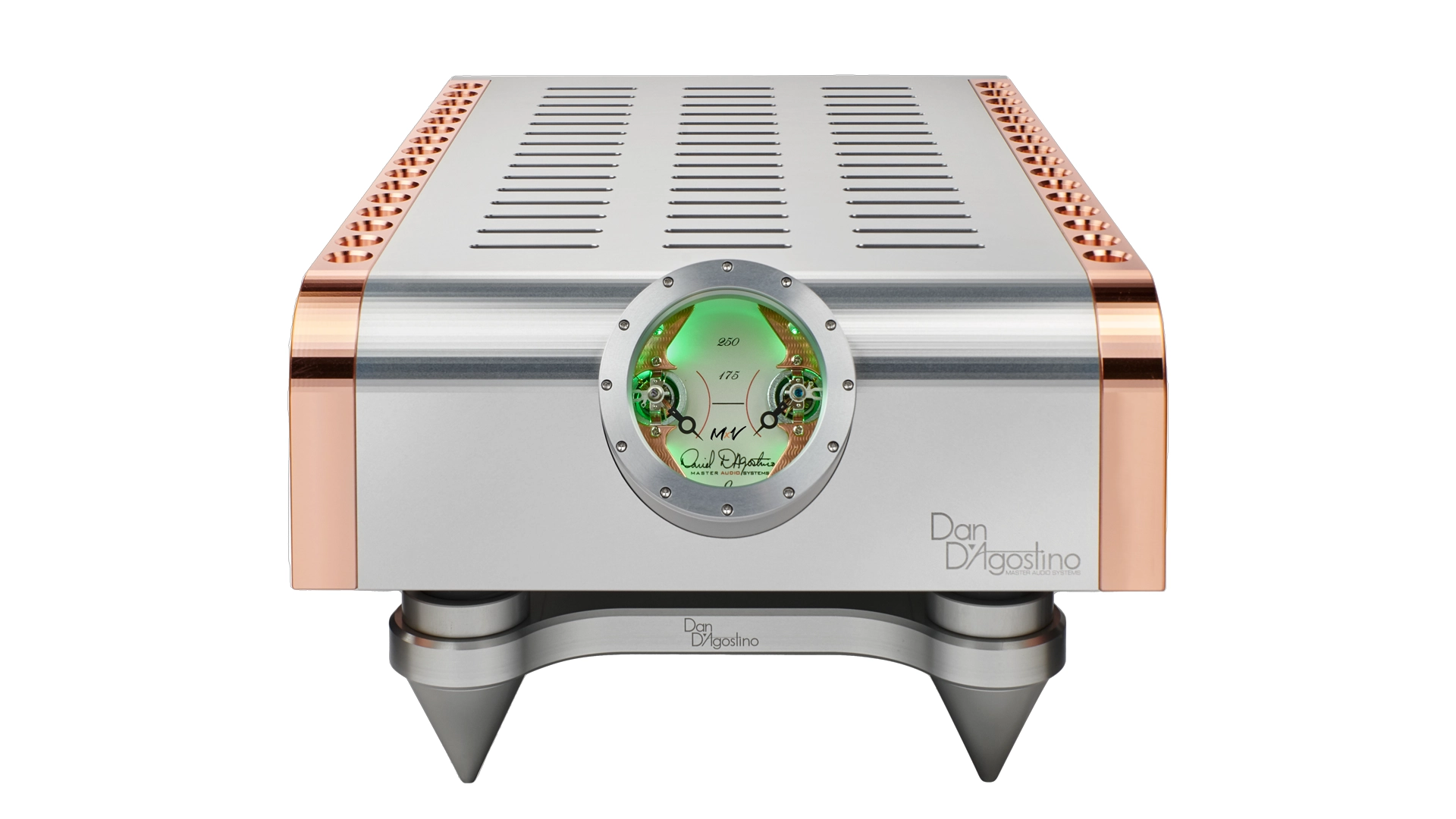
Dan D’Agostino Master Audio Systems is the Arizona company through which one of high-end audio’s best-known amplifier designers began again after co-founding and engineering Krell. Established in 2011, the brand concentrates on preamplifiers, integrated amplifiers and exceptionally high-current power amplifiers rather than a broad catalogue of sources and speakers. The original Momentum amplifier introduced the compact copper heat-sink architecture and watch-inspired level meter that made the products immediately recognisable. Momentum has since been joined by the more extreme Relentless family, the relatively accessible Progression range and the Pendulum integrated amplifier; the fifteenth-anniversary Momentum Z continues the core topology. Large custom power transformers, fully complementary balanced circuits, precision-machined aluminium and substantial thermal management serve the practical goal of controlling demanding loudspeakers without sacrificing low-level resolution. Optional phono or digital-streaming modules in selected preamplifiers and integrated models add flexibility without turning the company away from its central expertise: analogue gain and power delivery.
Dared

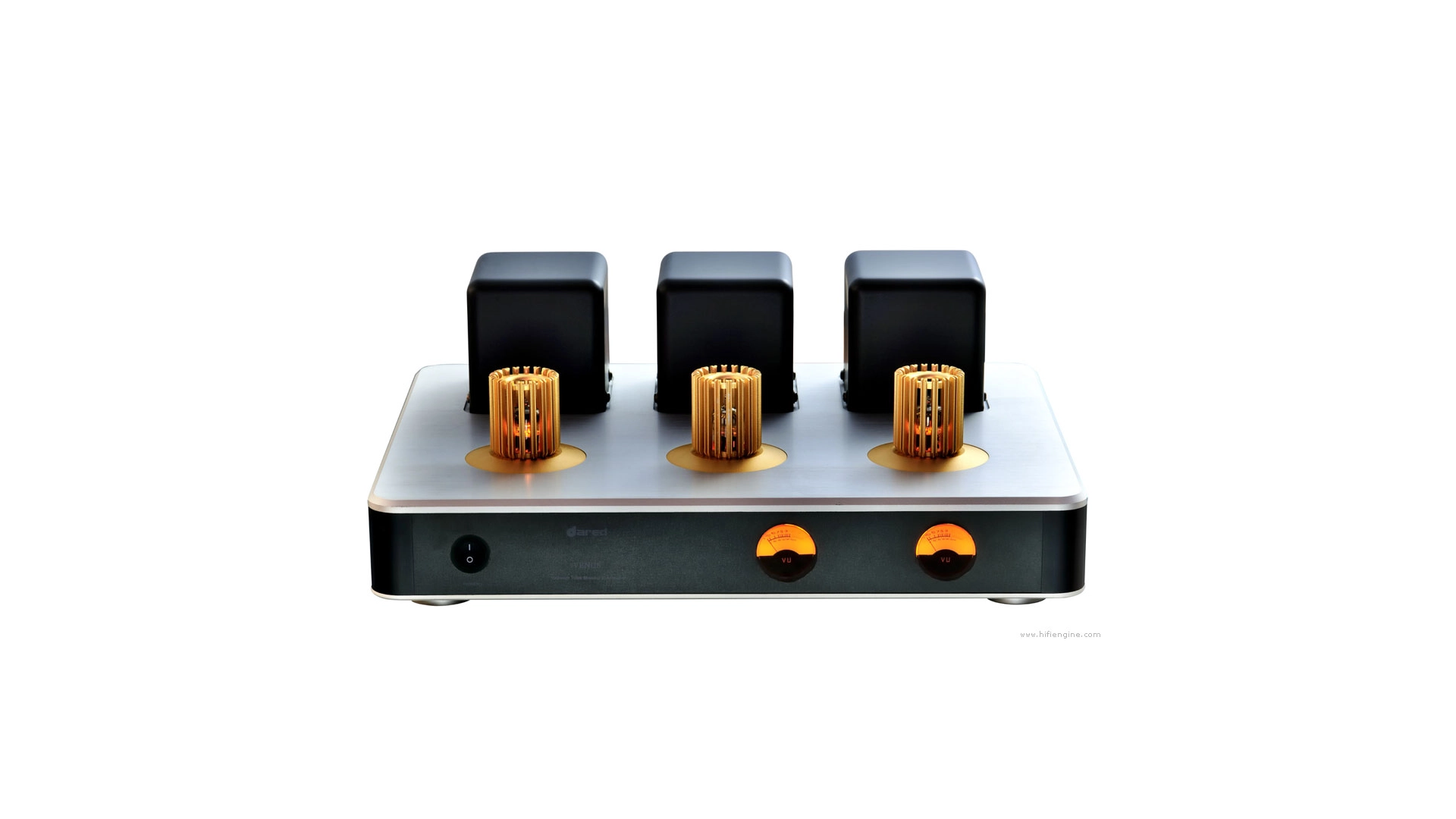
Dared is a Chinese audio manufacturer founded in 1995, initially drawing on transformer-design and production experience before making valve amplification its defining speciality. The registered DARED brand covers integrated amplifiers, power amplifiers, preamplifiers and headphone amplifiers, alongside selected guitar amplifiers and compact multimedia systems. Its products use familiar output valves such as EL34, KT88 and 300B in visually open layouts that make tube ownership approachable to listeners entering this part of hi-fi. The important strength is not extravagant “high-end” language but integration: Dared designs the power supply, output-transformer matching, bias arrangement and user interface as a complete product at prices below many boutique valve makers. Models in the MP family have also combined valves with USB DACs, headphone outputs or compact speaker amplification, showing an early willingness to place traditional circuits in modern desktop systems. Dared’s catalogue is therefore best understood as affordable, factory-produced tube audio with a long manufacturing history, rather than as a small Western-style artisan workshop or a generic badge placed on unrelated electronics.
darTZeel

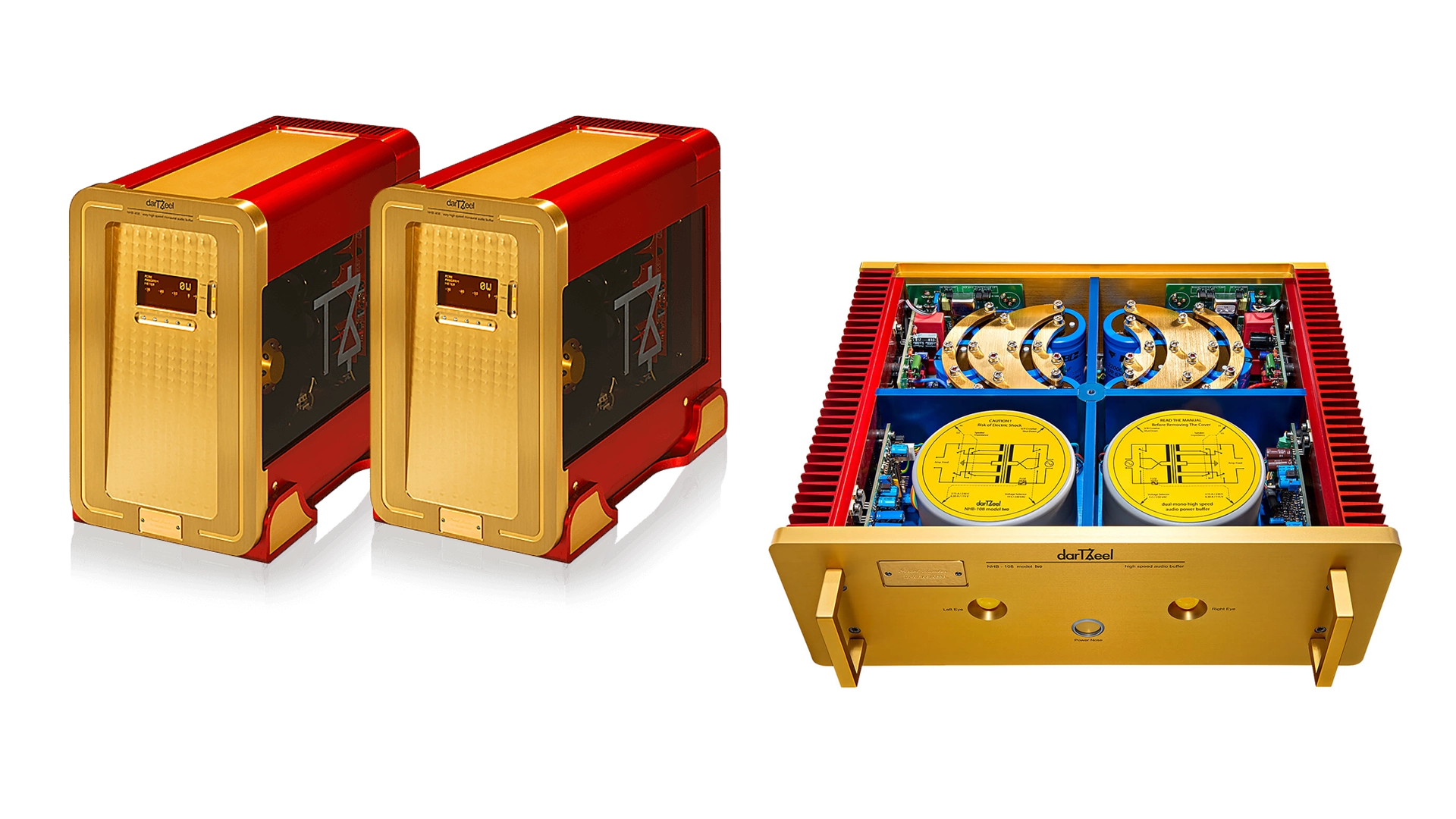
darTZeel is the Geneva amplifier company of Swiss engineer Hervé Delétraz, whose red-and-gold NHB-108 power amplifier established one of high-end audio’s most recognisable design languages after the brand’s formation in 2000. Beneath the colour scheme is a deliberately unusual circuit philosophy: short signal paths, minimal circuit stages, no global negative feedback and symmetrical power arrangements are used to preserve speed and phase behaviour. The NHB-108 Model Two remains a single-ended class-AB stereo design with true dual-mono construction, while the larger NHB-468 monoblocks, NHB-18NS preamplifier and CTH-8550 integrated amplifier apply related ideas at different scales. darTZeel also offers its proprietary 50-ohm Zeel connection on BNC alongside conventional RCA and balanced inputs, aiming to maintain a defined interface between components. The tactile “Pleasure Control” volume system and suspended internal assemblies show how user interaction and mechanical resonance receive the same attention as electrical measurements. These products are handmade in Switzerland in low volume and are intended for long service rather than frequent model replacement.
Dayton Audio

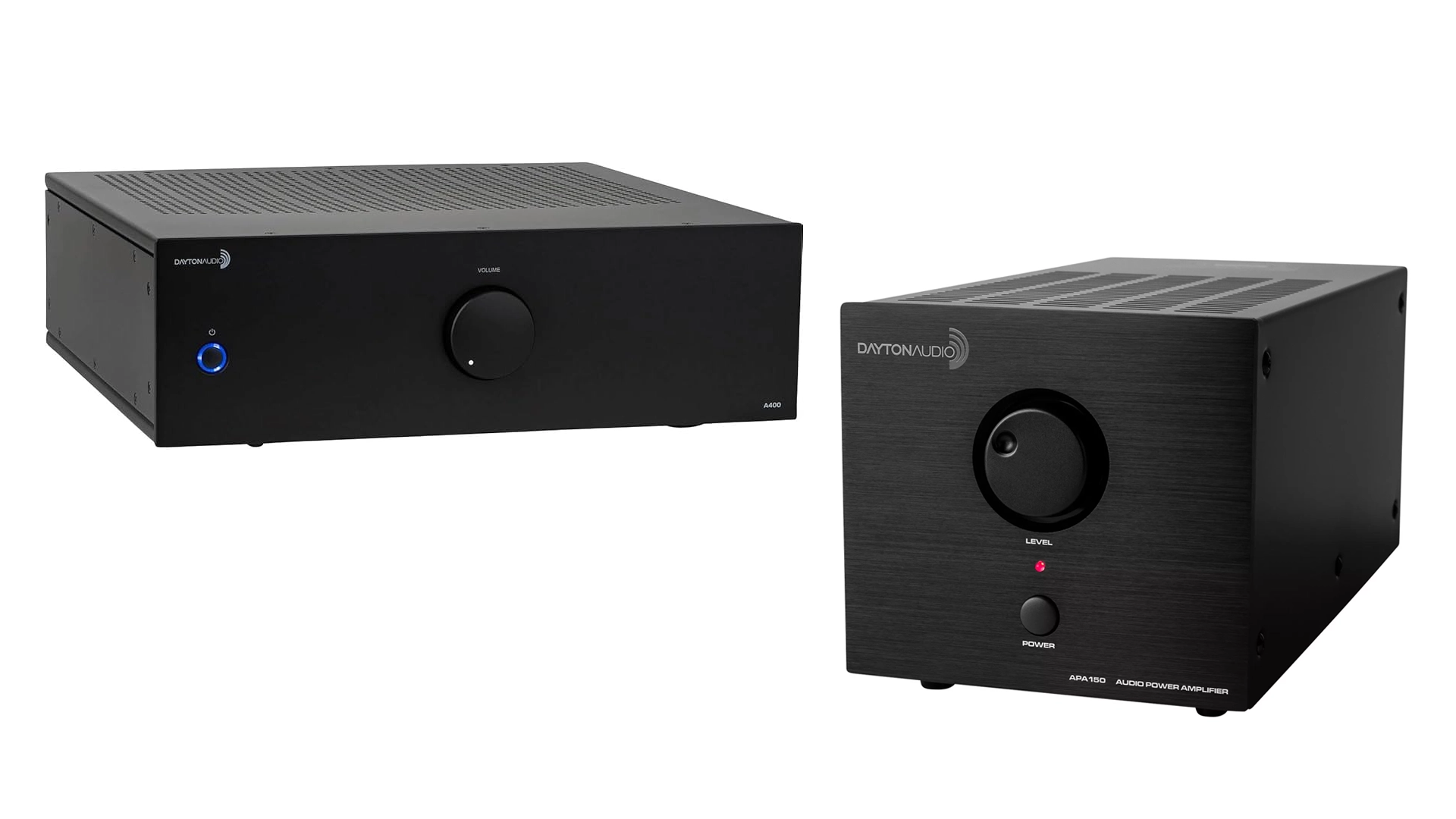
Dayton Audio is the house audio brand associated with Ohio-based Parts Express, serving builders, installers and value-conscious listeners with components that are normally sourced from many separate suppliers. Its catalogue spans individual tweeters, midrange and woofer drivers, passive radiators, subwoofer plate amplifiers, class-D amplifier boards, DSP modules, finished subwoofers, compact speakers and complete kits. Reference and Signature drivers provide measured parameters for original loudspeaker designs, while Ultimax subwoofers prioritise long excursion and power handling. Just as important is the supporting tool chain: the DATS measurement system helps builders determine driver impedance and Thiele-Small parameters, and project documentation makes the parts usable rather than merely inexpensive. Dayton also collaborates with independent designers on kits and supplies OEM or custom-installation solutions through Parts Express. Its distinctive strength is breadth with technical accessibility — drivers, electronics, measurement and practical documentation within one ecosystem — making it especially useful to DIY loudspeaker builders who want compatible parts and test tools from one source.
Densen Audio

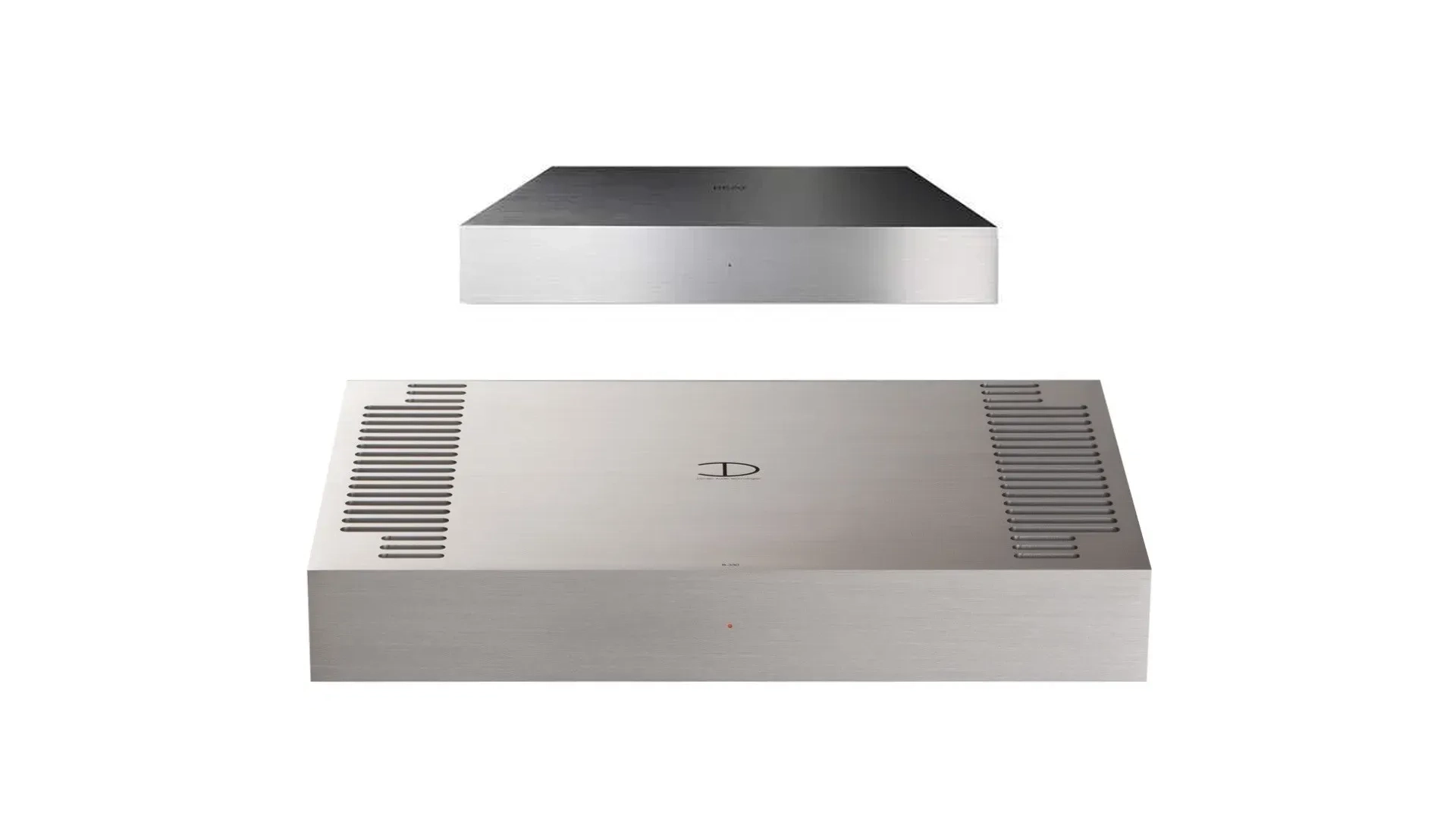
Densen Audio Technologies is a Danish electronics brand founded by Thomas Sillesen in 1992, known for minimalist aluminium components whose simple fronts conceal modular, upgradeable circuits. Sillesen had built his first amplifier as a teenager and carried a direct, listening-led approach into the Beat series of integrated amplifiers, preamplifiers, power amplifiers, CD players and phono stages. Densen’s amplifiers use wide-bandwidth circuit layouts, substantial power supplies and very limited reliance on global feedback, while optional DAC, phono and surround boards let selected models evolve without replacement. The Gizmo system remote, left-side volume control and consistent B-series naming give the products a recognisable personality beyond generic Scandinavian restraint. In 2021 Casper Reinhold and Ditlev Leth acquired Densen’s stock and intellectual property; Leth had already worked with Sillesen, providing continuity as development and manufacturing moved into the next phase. The brand’s strongest idea remains long-term ownership: serviceable hardware, modular functions and compatible amplification stages that can be expanded from an integrated unit into a separated system.
Doshi Audio

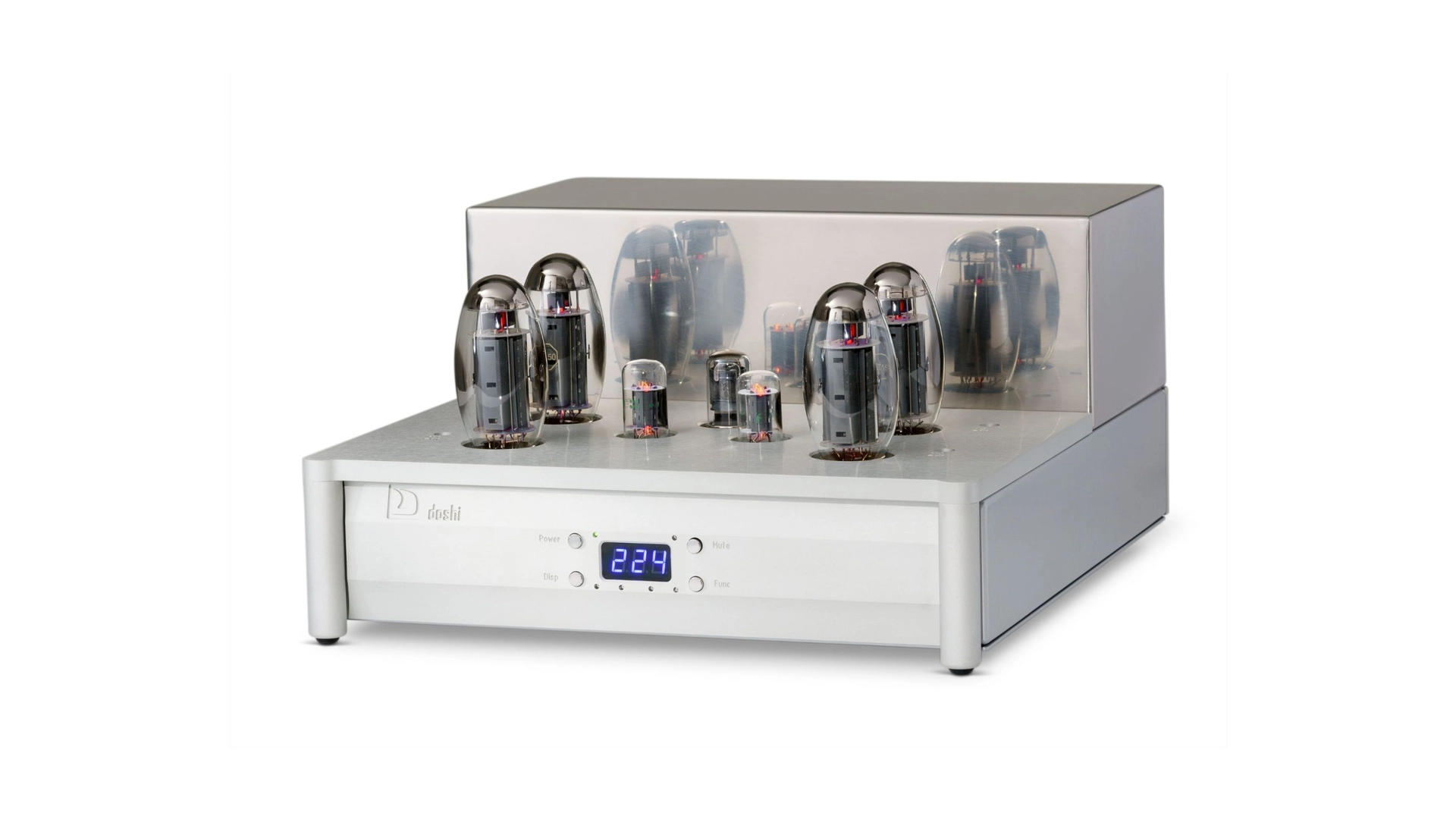
Doshi Audio is an American maker of handcrafted valve electronics founded in 2006 by electrical engineer and recording specialist Nishith “Nick” Doshi. Years spent building equipment and working around live and recorded sound shaped a range focused on the fragile analogue signal: line preamplifiers, phono stages, monoblock power amplifiers and a dedicated tape-head preamplifier. The early Alaap full-function preamplifier established the architecture that evolved through V3 into the current Evolution series. Doshi circuits use tubes for their linear voltage gain while applying modern regulation, power-supply design, grounding and transformer engineering to obtain bandwidth, low noise and drive that traditional valve stereotypes do not guarantee. Separate power supplies and carefully arranged chassis are particularly important in the phono and tape products, where signals are extremely small and hum control is fundamental. Production remains deliberately limited and serviceable rather than model-driven. Doshi’s distinguishing strength is the combination of studio awareness and rigorous electrical design: tube equipment intended to preserve timing, level relationships and tonal information without turning warmth into an effect of its own.
EAR Yoshino

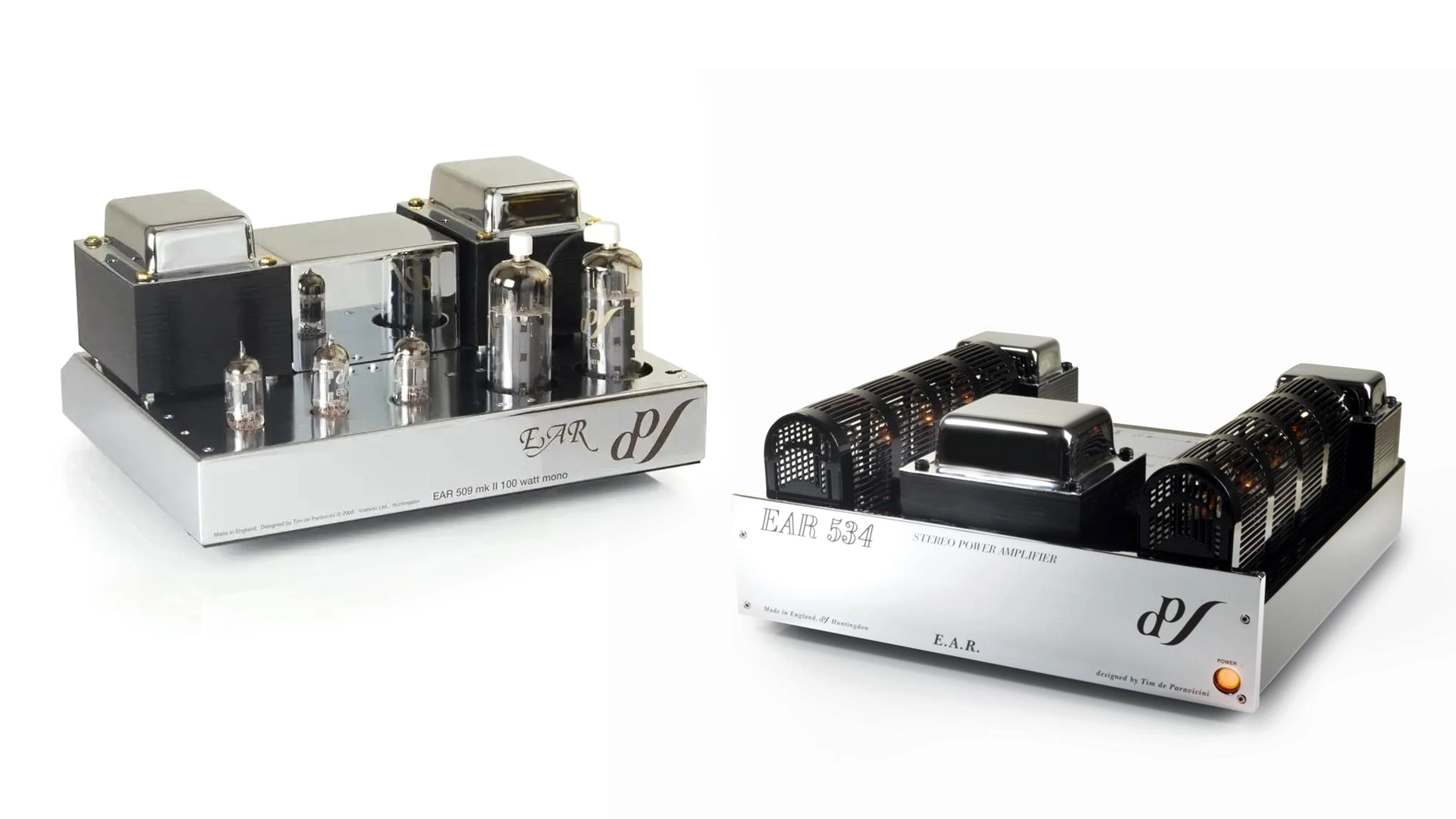
EAR Yoshino is the British high-end audio company through which Tim de Paravicini turned deep knowledge of valves, transformers and studio electronics into products with unmistakable circuit identities. Esoteric Audio Research began in England in 1976 with the EAR 509, a 100-watt valve monoblock whose transformer-coupled output stage challenged the assumption that tube amplifiers must be low-powered or soft. De Paravicini remained the designer behind the company’s amplifiers, line stages, phono stages and specialist tape electronics, and his custom transformer work is central to the brand rather than a purchased finishing touch. The compact 834P phono stage became one of EAR’s most widely known products; the 868 and 912 preamplifiers, V12 integrated amplifier and 509-derived power amplifiers show different applications of the same expertise. EAR equipment often uses unconventional tube operating points and transformer arrangements to obtain bandwidth, drive and low noise while retaining serviceable analogue circuitry. The company’s distinction is not simply that it uses valves: it is the way one engineer’s experience across recording, mastering and reproduction shaped complete circuits from input stage to output transformer.
Electrocompaniet

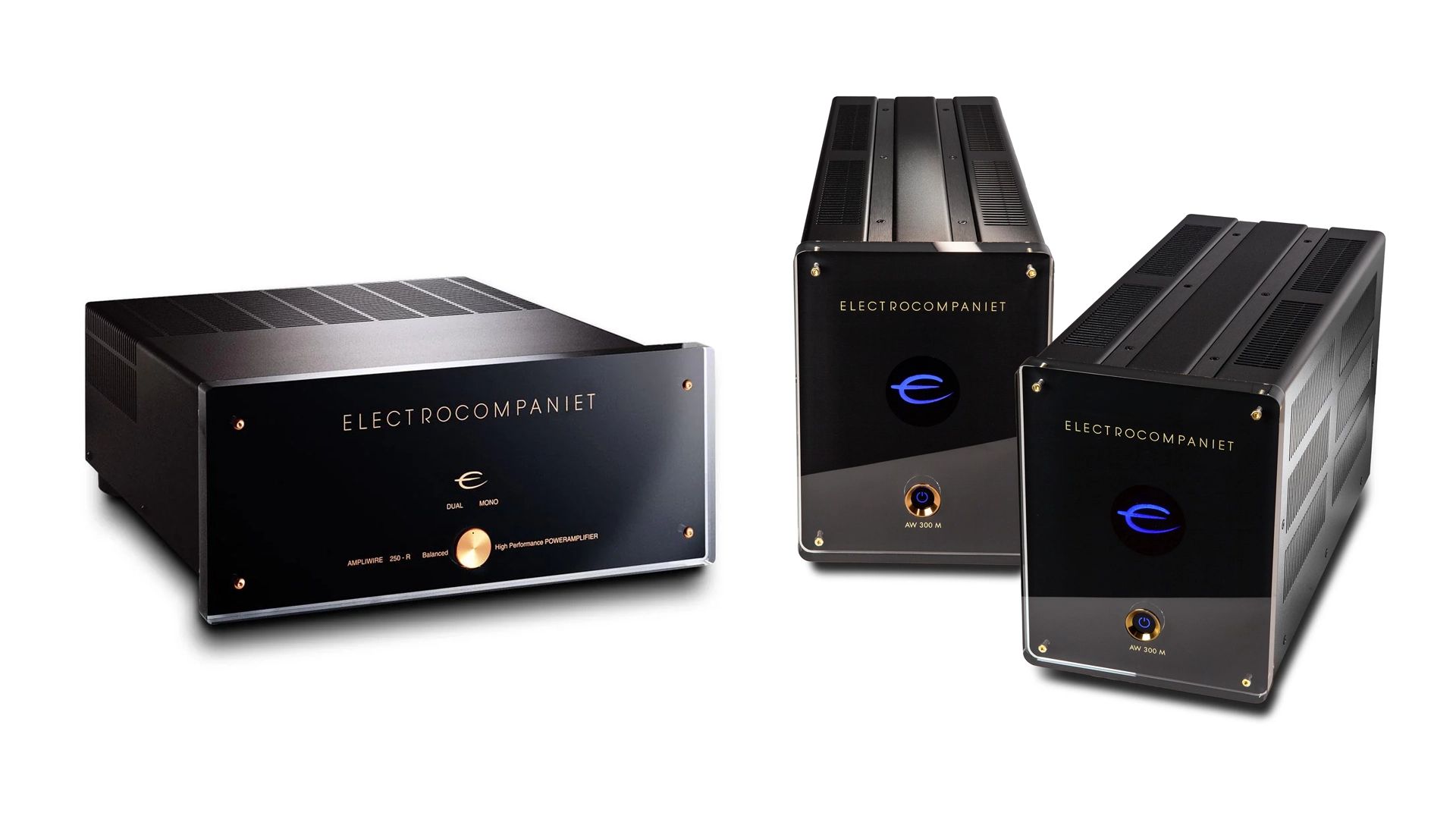
Electrocompaniet is a Norwegian high-end electronics company founded in 1973 by Per Abrahamsen and Svein Erik Børja to build an amplifier informed by Dr Matti Otala’s work on transient intermodulation distortion. The resulting 25-watt power amplifier earned international attention not through brute force, but by showing that measured dynamic behaviour and listening quality could challenge accepted solid-state design practice. That origin still explains the brand better than generic references to Scandinavian style. The Classic Line centres on analogue preamplifiers, integrated amplifiers and high-current power amplifiers, including the AW series and large Nemo monoblocks, complemented by digital players and sources. EC Living brings streaming, wireless control and multiroom operation to a more compact family while maintaining the company’s system approach. Products are developed and assembled in Norway, with substantial power supplies, balanced signal paths where appropriate and amplifier stages designed for difficult loudspeaker loads. Electrocompaniet’s hallmark is a particular combination of authority and ease: solid-state equipment whose circuit choices grew from studying distortion under real transient signals, then evolved across five decades of two-channel and connected audio.
Elins Audio

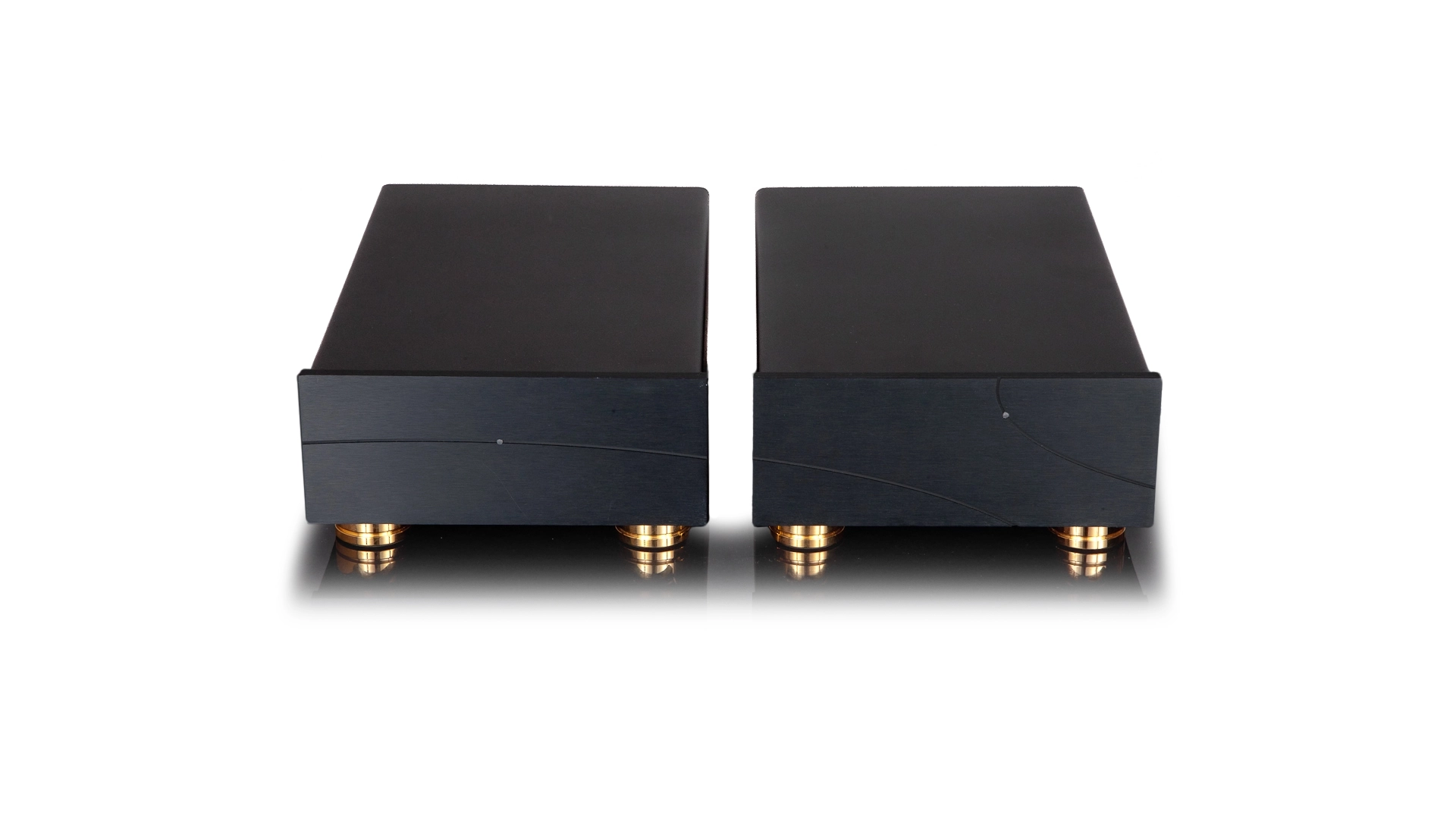
elinsAudio is a Polish high-end amplifier manufacturer founded in 2008 by friends Janusz Sendek and Ireneusz Chwastek. This identity is important because the previous description referred to an unrelated Swedish loudspeaker project; the linked elinsaudio.com domain now represents the Polish company based in Sosnowiec. Its speciality is combining linear analogue preamplifier stages with powerful Class D output modules, seeking the efficiency and loudspeaker control of switching amplification without presenting it as sterile laboratory hardware. The Concerto integrated amplifier pairs a deliberately short, separately powered preamp signal path with an ICEpower-based output stage. The reference Mille separates the system into a linear preamplifier and two monoblocks, uses hybrid mains/battery supply concepts in the low-level section and provides the current reserve required by low-impedance or planar speakers. Cello and newer models extend the same “digital amplifiers with an analogue soul” approach at different scales. Designed and manufactured in Poland, elinsAudio’s real distinction is architectural: sensitive voltage gain, power conversion and high-current output are treated as separate problems, then voiced and packaged as one coherent amplifier.