
Bookshelf Speakers
This page provides an extensive index of bookshelf speaker manufacturers from around the world. Our goal is to present the largest possible collection of brands in one place, including both well-known producers and niche companies. Each entry in this directory lists the brand’s country of origin, its founding information, and a direct link to the bookshelf or standmount speaker category on its official website. The resource is designed as a straightforward almanac for researching and discovering speaker companies.
Hi-Fi brands in the category
Summary information and image
Direct links to official websites
JBL

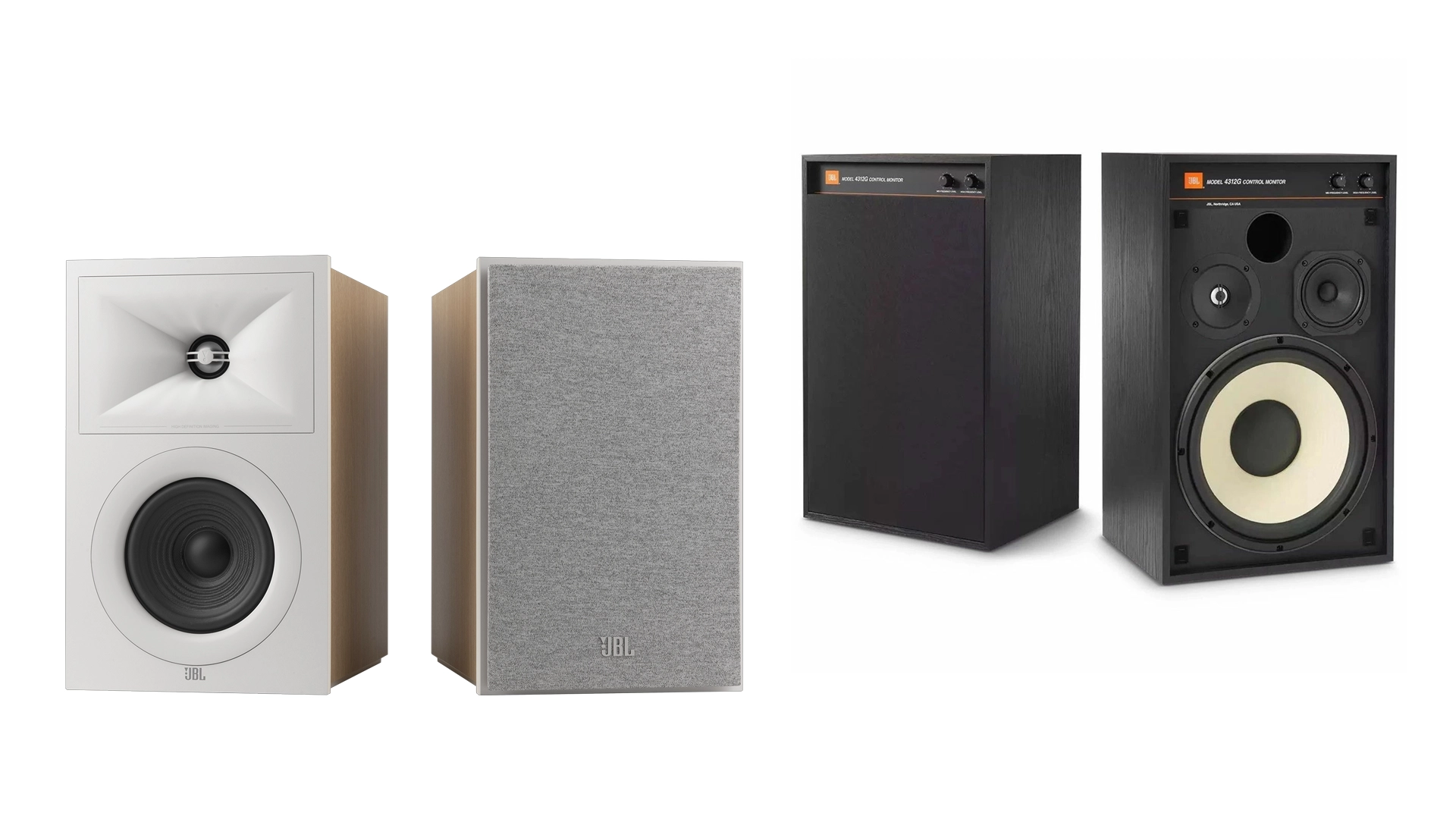
JBL is one of the few audio brands with equally deep roots in cinema, recording studios, touring sound and domestic loudspeakers. Engineer James Bullough Lansing founded James B. Lansing Sound in Los Angeles in 1946, and the early D130 driver introduced a four-inch flat-wire voice coil that helped establish the company’s reputation for high efficiency and power handling. JBL later became a studio reference through 4300-series monitors and translated that visual and acoustic language into the L100 for the home. Its professional division now covers cinema systems, installed sound, stage monitors and large-format arrays, while consumer products range from portable Bluetooth speakers and headphones to Classic and Synthesis systems. Compression drivers, horns and controlled-directivity waveguides recur across many categories because JBL designs for predictable output beyond a single listening seat. The company has belonged to Harman since 1969; Harman has been owned by Samsung since 2017. Scale is part of JBL’s know-how: transducer engineering developed for venues and studios can inform car, home and portable products without erasing the differences between them.
Kanto

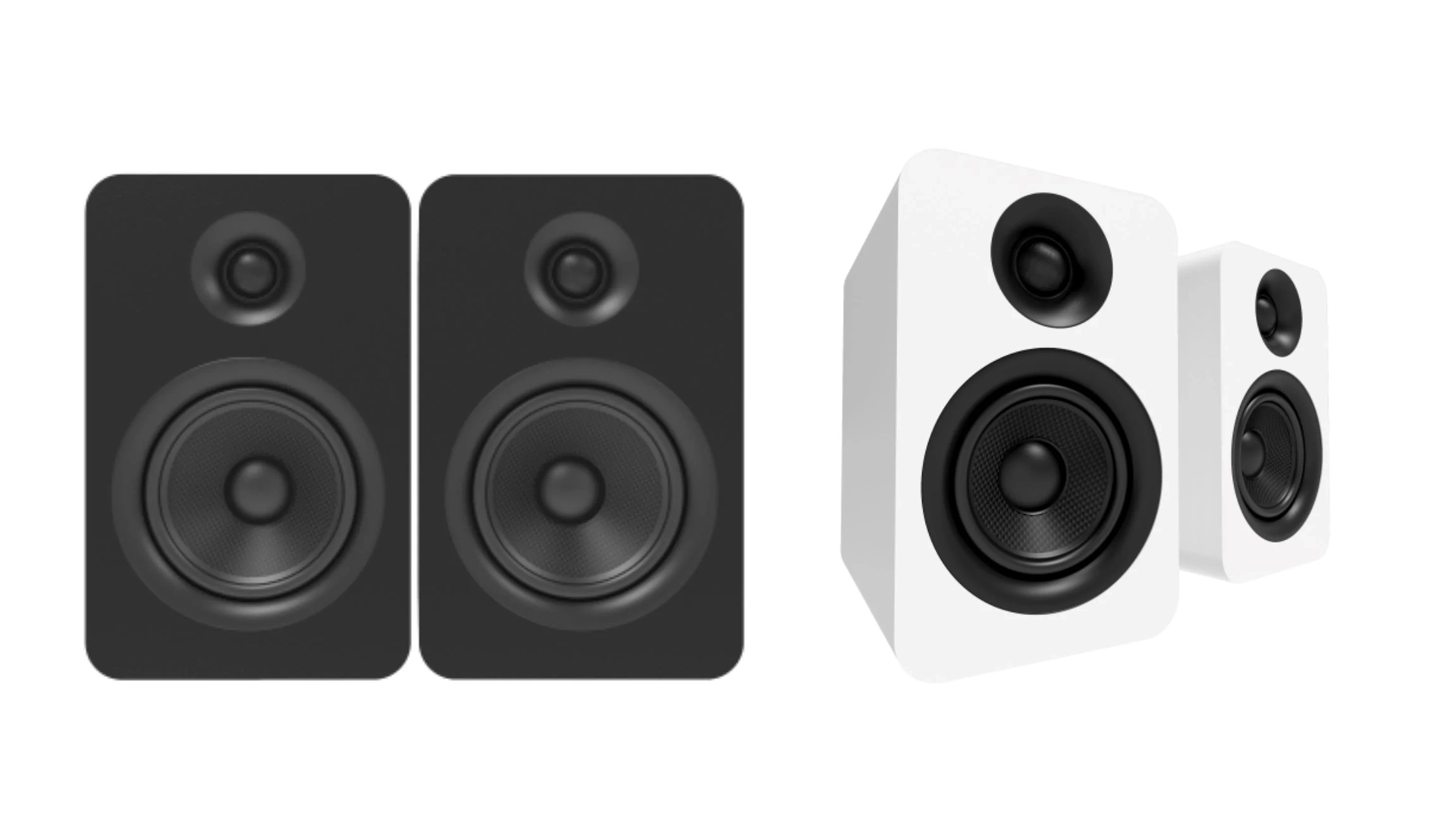
Kanto is a Canadian audio company best known for powered speakers that connect directly to the sources people actually keep on a desk or in a living room. Founded in 2007, it packages amplification, input switching and loudspeaker engineering in compact systems that avoid a separate receiver. The YU family ranges from small desktop models to larger bookshelf speakers, typically combining Bluetooth with analogue inputs; selected versions add USB audio, optical input, a moving-magnet phono stage and a subwoofer output. TUK moves upward with an AMT tweeter, greater power and broader digital connectivity, while ORA targets near-field computer listening in an even smaller enclosure. Matching SUB subwoofers, desktop and floor stands, and mounting products let the speakers form a coherent workspace or TV system. Kanto does not pretend that every model serves the same listener: input sets, cabinet size and bass capability change clearly across the range. Its strength is thoughtful integration—clean industrial design, useful controls and enough connection options to bridge a turntable, computer, television and phone without turning a simple system into a rack of electronics.
KEF

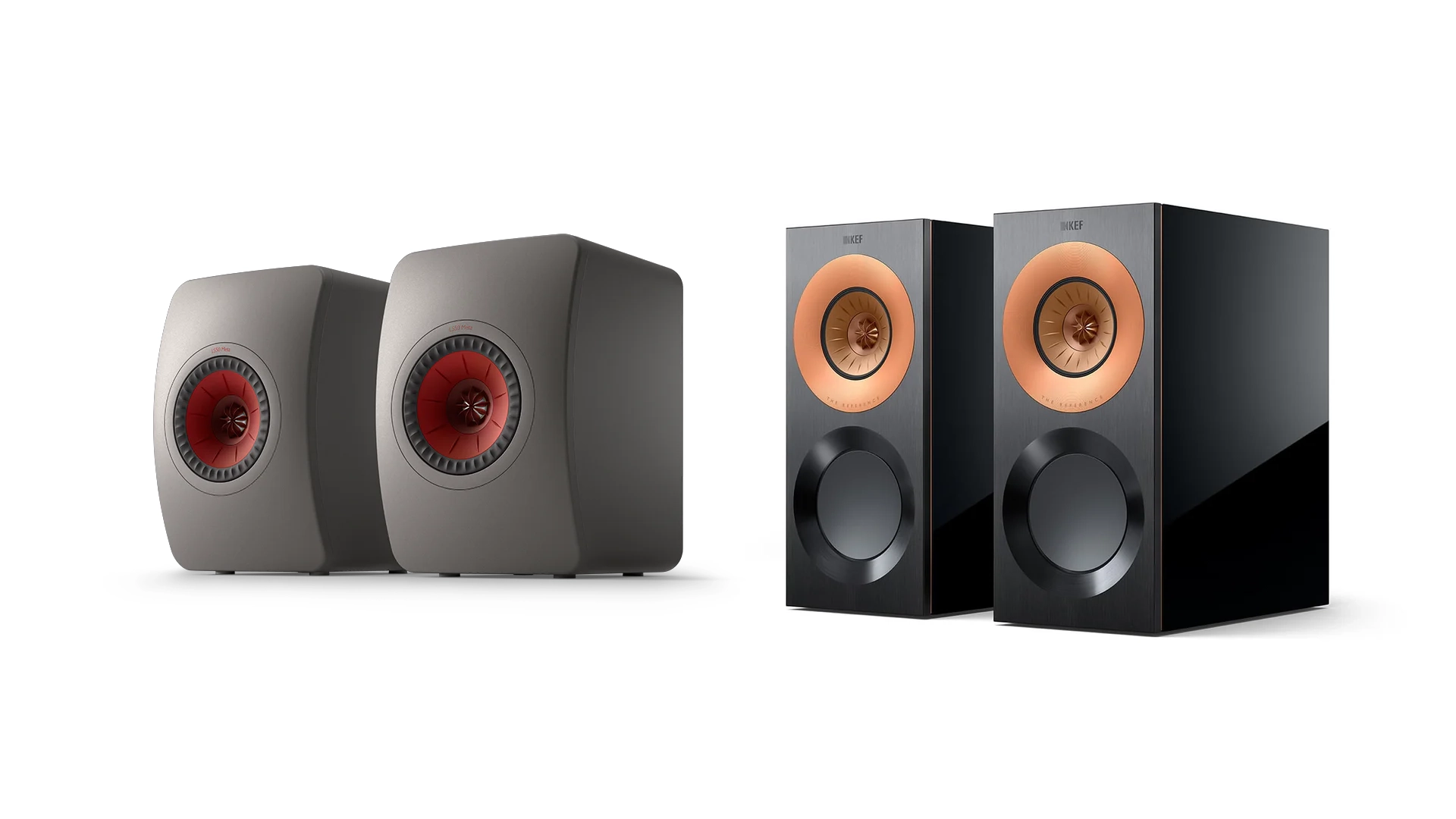
KEF is a British loudspeaker company whose identity rests on acoustic research and driver engineering rather than a house style applied to conventional boxes. BBC engineer Raymond Cooke founded it in Maidstone in 1961; the name comes from Kent Engineering & Foundry, the site of the first workshop. KEF’s defining invention is Uni-Q, introduced in 1988, which places the tweeter at the acoustic centre of the midrange cone so the two behave more like one source across a wide listening area. Recent generations add Metamaterial Absorption Technology behind the tweeter to manage rear radiation, while Uni-Core allows opposed subwoofer drivers to share a compact motor structure. These ideas appear at different scales across the Q, R and Reference ranges, the sculptural Blade models, KC subwoofers and the active LS50 Wireless II and LS60 Wireless. The catalogue spans passive, wireless, architectural and personal audio, but the common thread is unusually deep in-house modelling, measurement and transducer development.
Kingfisher Audio

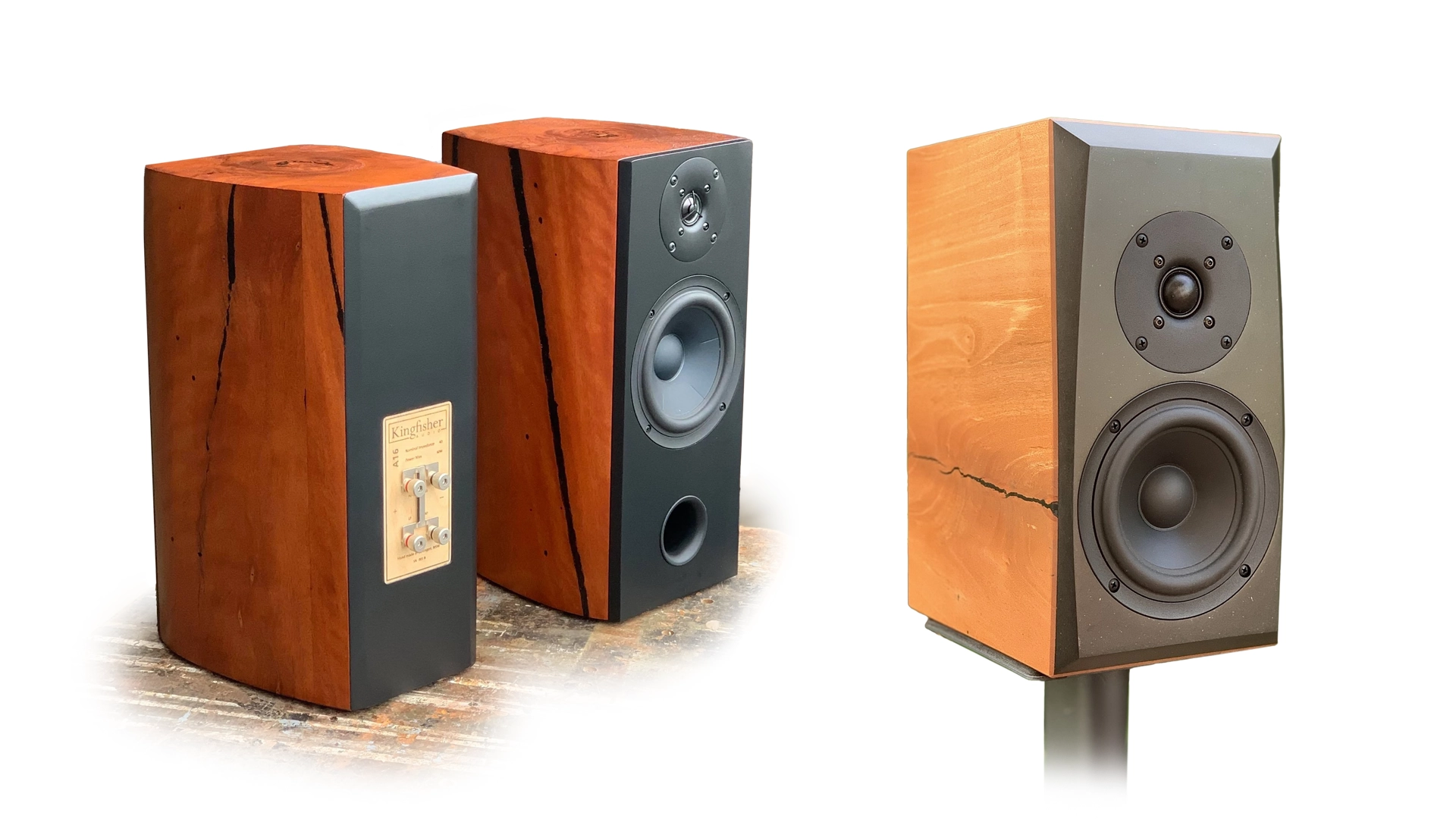
Kingfisher Audio is a small Australian loudspeaker maker building each pair by hand in the Bellinger Valley of New South Wales. Its work is unusually cabinet-led: curved or heavily braced plywood structures, viscoelastic internal damping and sculpted baffles are used to manage standing waves, panel vibration and edge diffraction before the crossover is voiced. The A16 is a substantial two-way stand-mount with a trans-laminated curved enclosure and Danish-designed aluminium-diaphragm drivers. Lutea translates the approach into a more compact two-way using birch ply, a silk-dome tweeter and a Norex-cone midwoofer. Dacelo is the flagship, a large three-way bass-reflex design inspired visually by 1970s and 1980s monitors and fitted with SB Acoustics Satori drivers. Real Australian hardwood veneers, including material produced from salvaged logs, are prepared in-house for individual finishes. The verified story is therefore local loudspeaker manufacture and thoughtful enclosure construction, not the unsupported electronics partnerships or international expansion previously attributed to the brand.
Kiso Acoustic

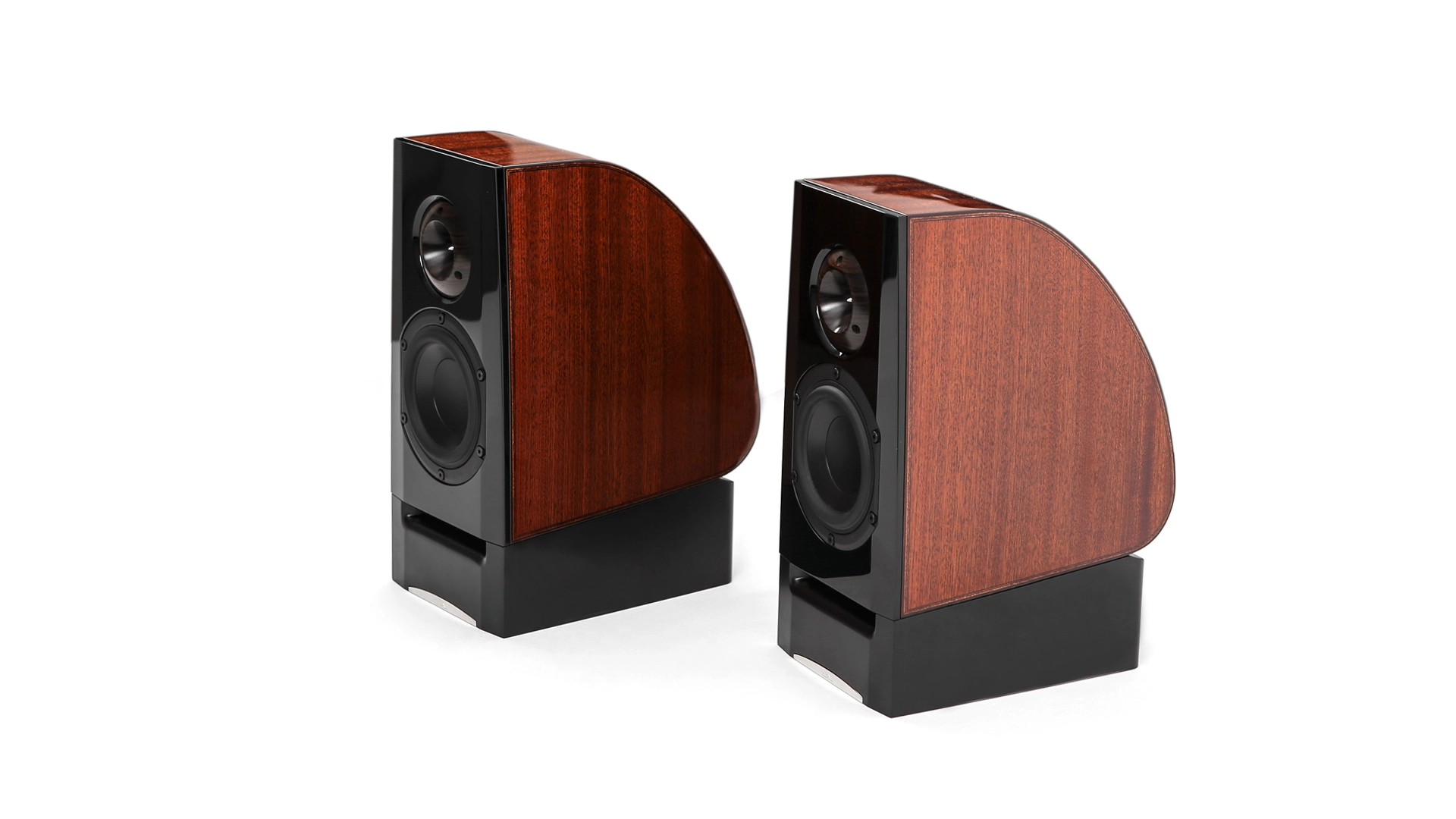
Kiso Acoustic is a Japanese loudspeaker maker that treats the enclosure more like a carefully tuned musical instrument than an inert industrial container. Its signature HB-1 was developed with the woodworking expertise of Takamine, the guitar manufacturer, using thin, curved and laminated tonewood panels joined and finished by instrument craftspeople. The cabinet is not allowed to ring arbitrarily; panel thickness, bracing and construction are controlled so stored energy is released in a deliberate way while the compact enclosure supports a much larger sense of scale than its dimensions suggest. Later designs, including the HB-X1, develop the same principle with revised drivers and construction rather than abandoning it for a conventional heavy box. Carefully integrated dynamic drivers and a restrained crossover complete the system. This is a rare, labour-intensive alternative to the usual pursuit of maximum cabinet mass, rooted in Japanese woodworking and acoustic-instrument practice. An exact company founding year is not stated because reliable public records do not establish one clearly.
KLH

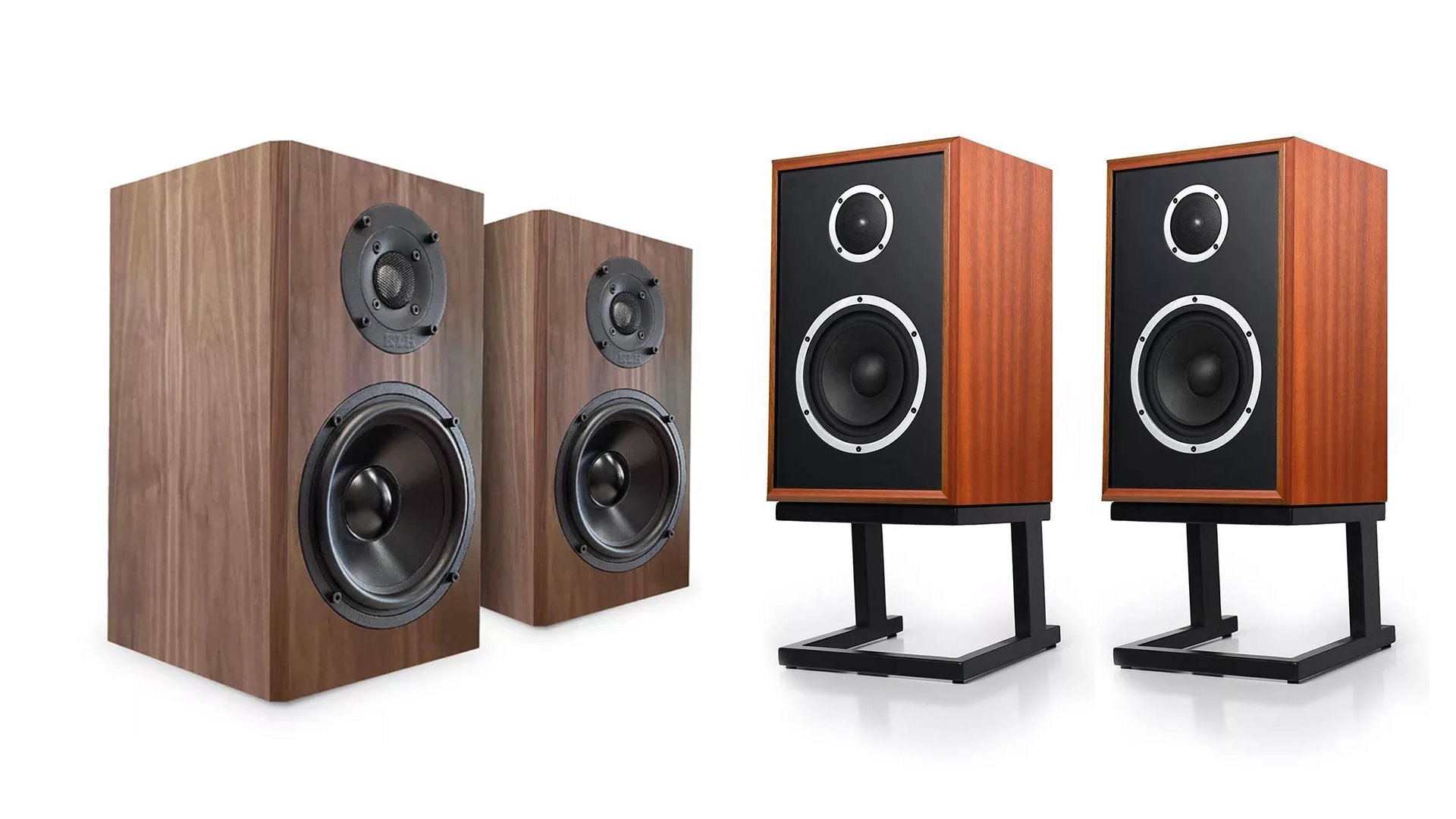
KLH is an American loudspeaker name founded in Cambridge, Massachusetts, in 1957 by Henry Kloss, Malcolm S. Low and Josef Anton Hofmann—the initials behind the brand. The original company helped bring acoustic-suspension loudspeakers into ordinary homes, using sealed enclosures and carefully controlled woofer compliance to obtain extended bass from manageable cabinets. Model Six became the best-known expression, while the Model Eight radio and full-range electrostatic Model Nine showed that KLH was not limited to one product type. Today’s KLH is a revived company rather than an uninterrupted continuation of the Cambridge factory. Its Model Collection deliberately revisits the classic formula: Model Three, Five and Seven combine acoustic-suspension loading, broad baffles and modern drivers, crossovers and finishes. The wider range includes conventional floorstanders, bookshelf speakers, subwoofers and installation models. Victrola acquired KLH in 2025, placing the current brand within a larger consumer-audio group while its most distinctive products continue to reference the engineering ideas associated with Henry Kloss.
Klipsch
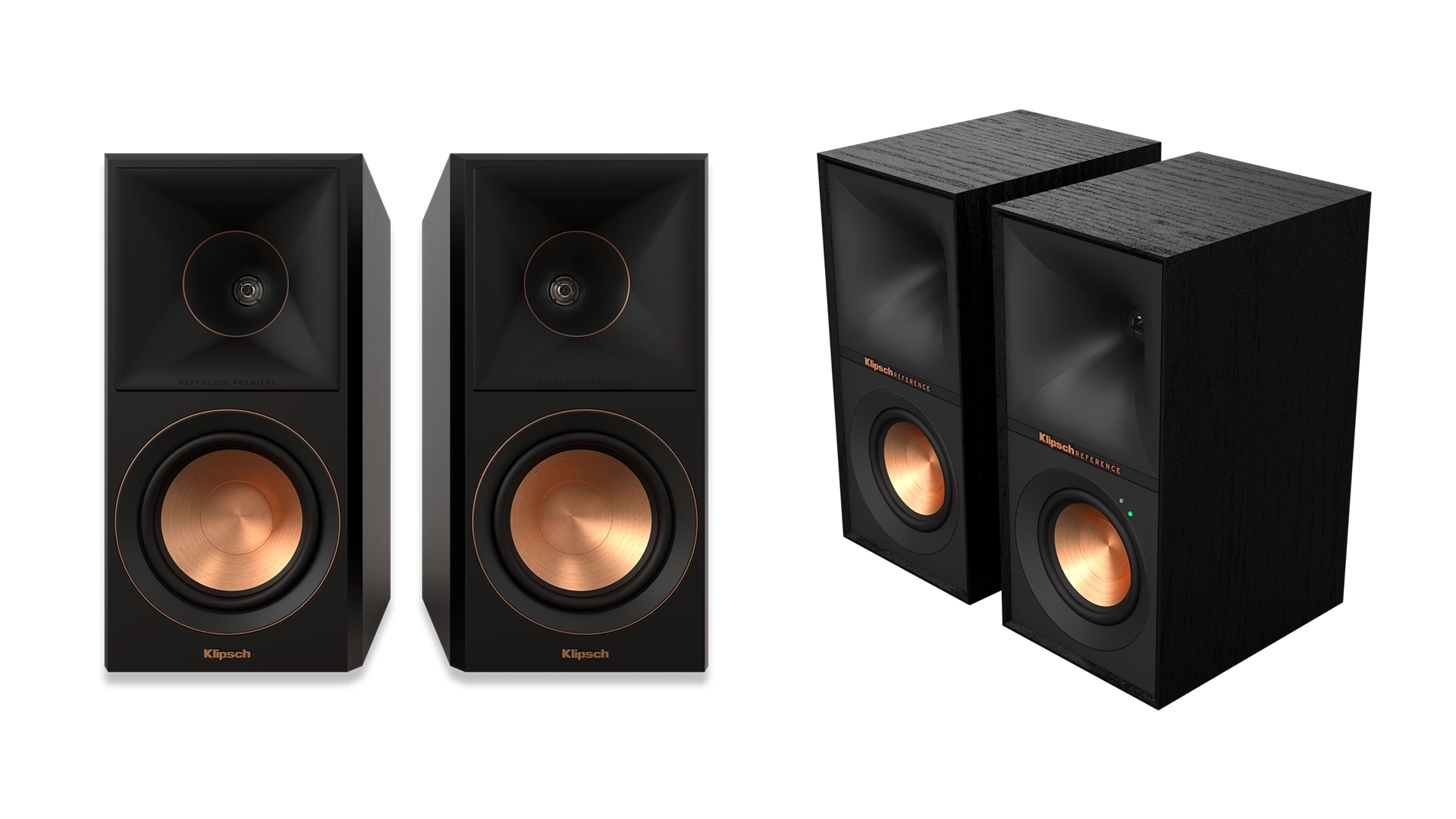
Klipsch is an American loudspeaker company founded by engineer Paul W. Klipsch in Hope, Arkansas, in 1946. His central solution was horn loading: coupling a driver to a shaped acoustic horn raises efficiency and controls dispersion, allowing high output and wide dynamics from comparatively little amplifier power. The corner-loaded Klipschorn put that idea into a domestic loudspeaker and remains in production, joined in the Heritage range by La Scala, Cornwall, Heresy and Forte. Modern Reference Premiere models use Tractrix-based horns in more conventional towers, monitors and centre channels, while the company also makes subwoofers, soundbars, architectural speakers and powered stereo systems. The designs vary widely, but high sensitivity and controlled directivity remain the recognisable technical thread. Klipsch now operates within Premium Audio Company, owned by Gentex, yet Heritage models are still assembled in Hope. Few audio brands can point to both an original flagship still being made and a current mass-market range built around the same underlying acoustic principle.
Krix

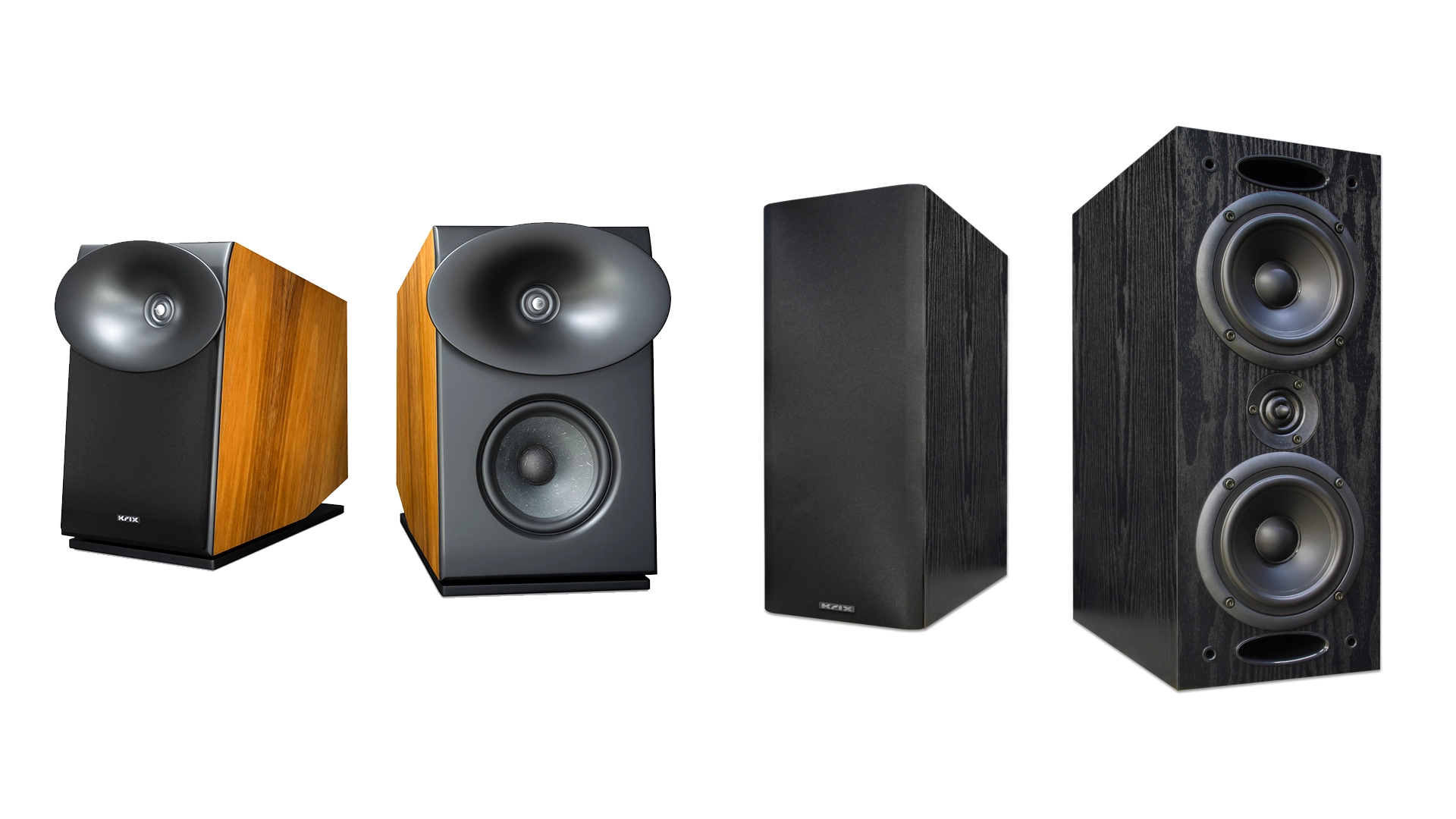
Krix is an Australian loudspeaker company with an unusually direct link between home audio and the commercial cinema. Scott Krix began building loudspeakers in Adelaide in 1974 and installed his first cinema system in 1980; today the company designs and manufactures speakers for dedicated theatres, living rooms and professional auditoriums at its South Australian facility. Cinema experience is central to the brand’s know-how: controlled directivity, high sensitivity, generous headroom and consistent coverage across a seating area. Krix develops its own constant-directivity horns, uses finite-element analysis and extensive acoustic measurement, and builds cabinets in-house with model-specific bracing. For home cinema, the modular Series MX systems place screen, surround and subwoofer channels behind an acoustically transparent screen or within a baffle wall, bringing commercial-cinema architecture into private rooms. Series SX and architectural models address flexible installations, while Esoterix loudspeakers show the same engineering discipline in two-channel hi-fi. The result is a brand whose strength is not a house sound slogan, but predictable dynamics and coverage at real cinema levels.
Kudos

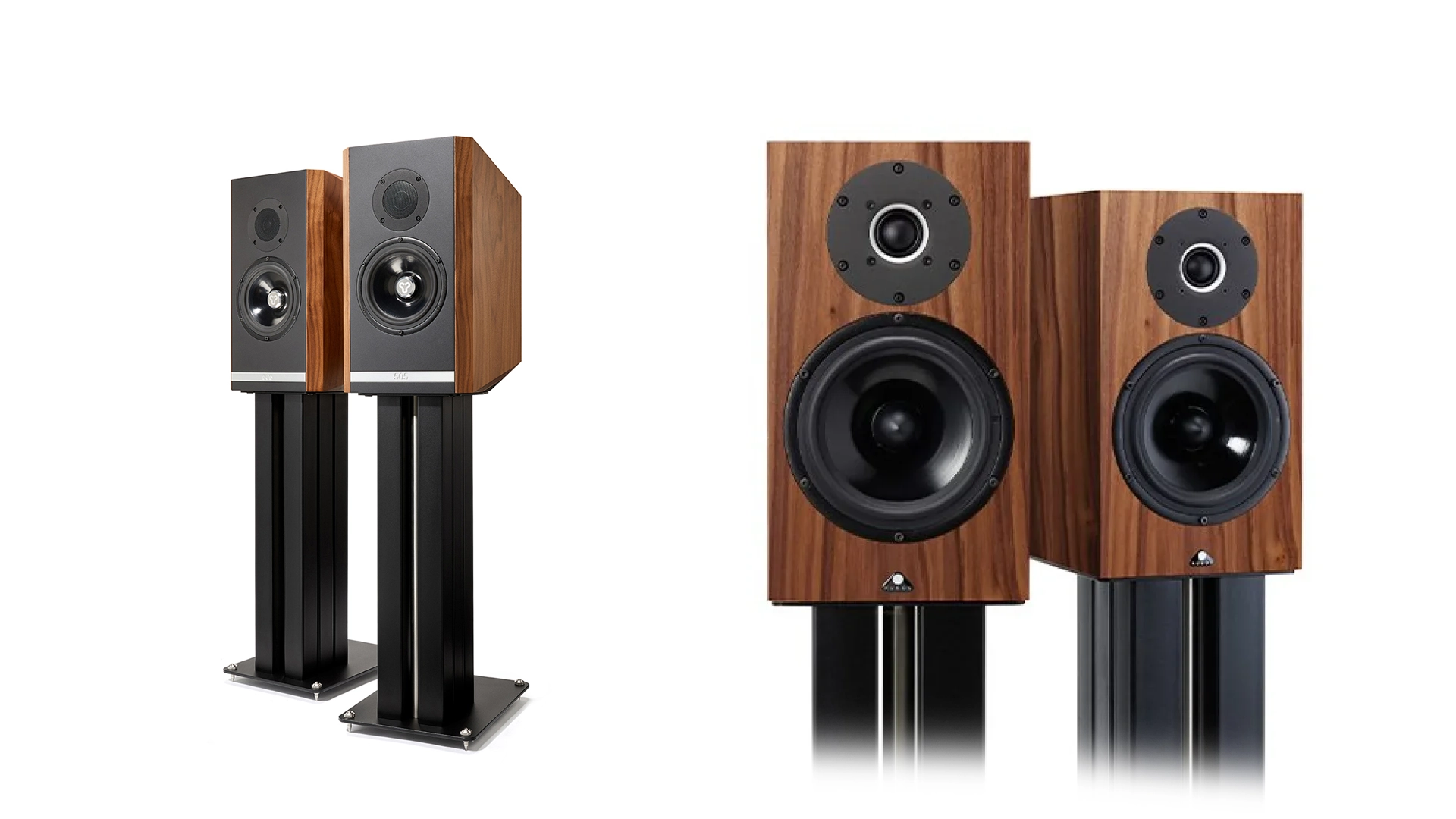
Kudos Audio is a British loudspeaker maker known for systems that can begin as elegantly simple passive speakers and later become fully active without replacing the cabinets or drive units. Established in 1991 and now led in design by Derek Gilligan, Kudos builds its loudspeakers in County Durham around carefully selected SEAS drivers, low-order crossovers and mechanically quiet enclosures. The flagship Titan family is the clearest expression of the approach: proprietary midrange and high-frequency units, isobaric bass arrangements in the larger models and separately managed cabinet sections are used to preserve timing, dynamics and low-colouration output. Several Titan and Super Cardea models allow the internal passive crossover to be bypassed, making them compatible with active platforms from Linn, Naim and Exposure. The newer SIGAO DRIVE external crossover broadens that route and lets owners choose amplification more freely. Cardea models provide a more compact entry point while retaining the brand’s preference for uncomplicated electrical paths. Kudos therefore stands out less for decorative technology than for a coherent upgrade philosophy linking passive and active listening.
LEAK

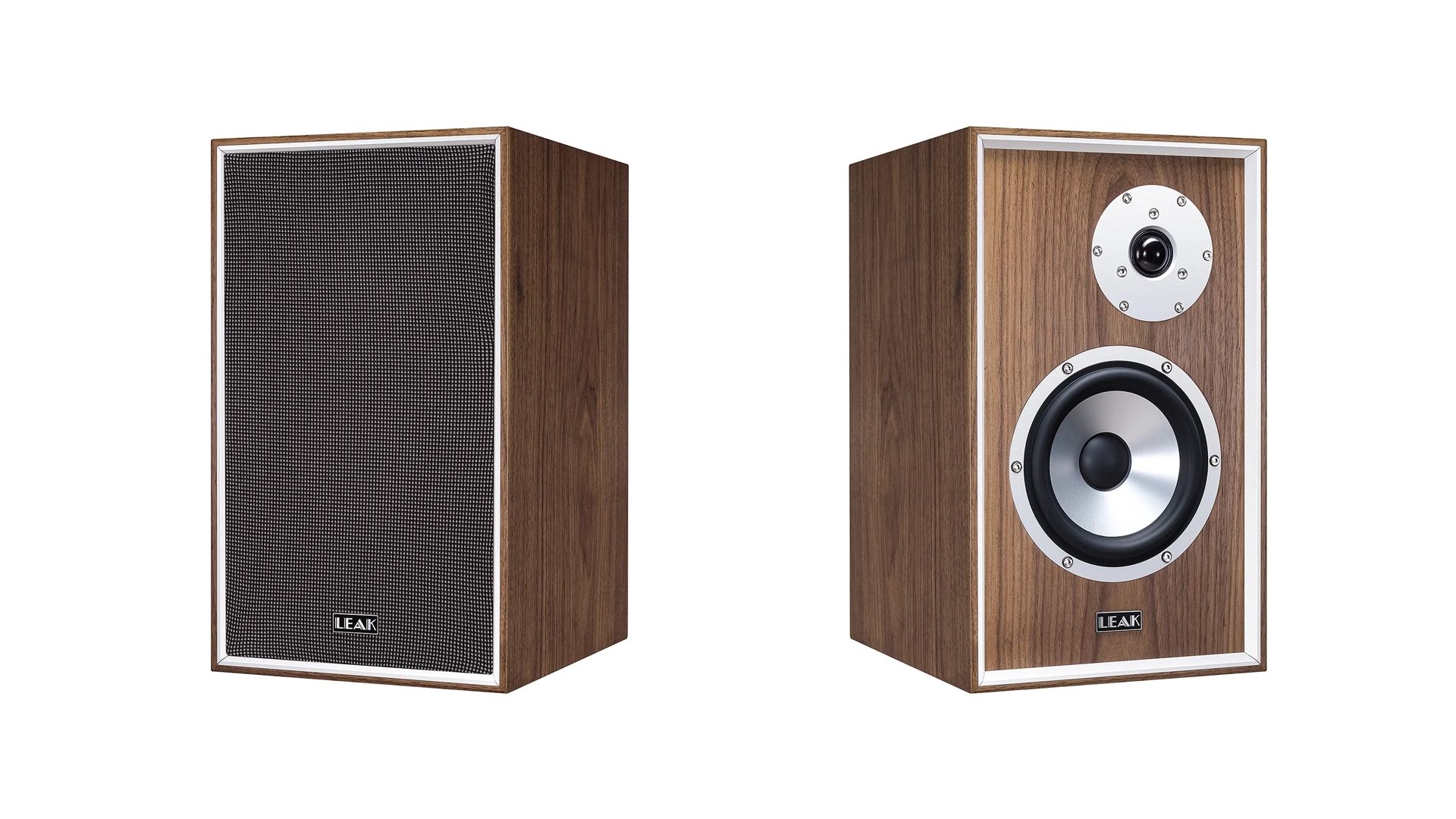
LEAK is one of Britain’s foundational hi-fi names, revived for modern systems without erasing the engineering history behind its walnut sleeves and restrained controls. Harold Joseph Leak established H. J. Leak & Co. in London in 1934. The company became known for the low-distortion “Point One” amplifiers, including the TL/12, and later for products such as the Sandwich loudspeaker and Stereo 30 transistor amplifier. Original production ended after the company passed to the Rank Organisation, but International Audio Group returned LEAK to the market in 2020. The current Stereo 130 and Stereo 230 integrated amplifiers combine contemporary digital connectivity, DACs and Bluetooth with phono inputs and conventional analogue amplification; the CDT is a dedicated CD transport rather than an all-purpose player. New Sandwich loudspeakers reinterpret the rigid composite-cone principle associated with the 1961 original in current cabinet and driver designs. LEAK’s strength is therefore not nostalgia alone. It uses recognisable industrial design to connect an important British engineering lineage with compact, approachable components suited to vinyl, CD, television and streamed audio.
Lindemann

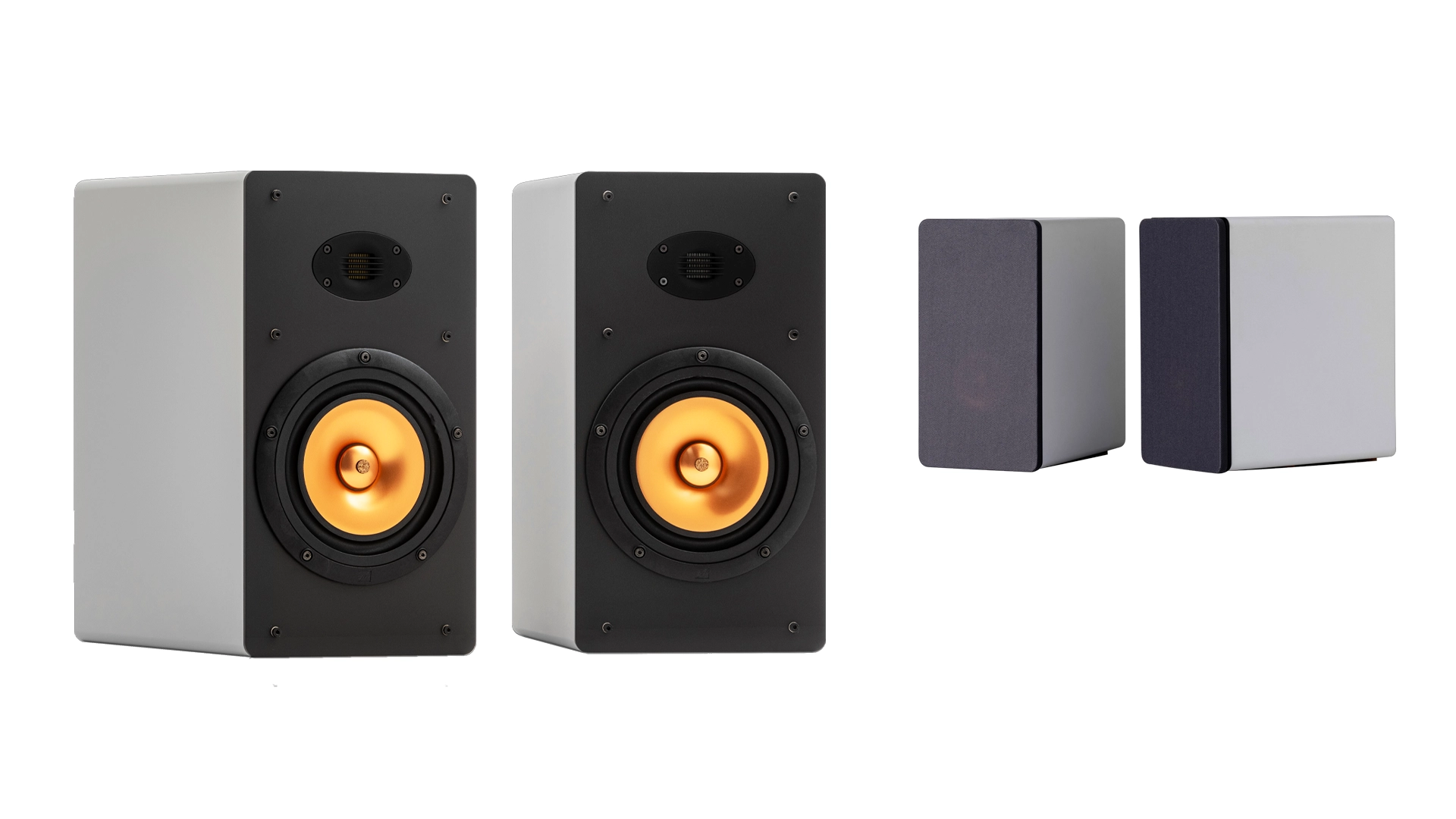
Lindemann is a German high-end electronics company founded by engineer Norbert Lindemann in 1992. From its first AMP 1 integrated amplifier through early high-resolution disc players and today’s network products, the company has concentrated on timing, signal integrity and short, controlled circuit paths rather than feature count for its own sake. The compact Musicbook family is the core of the modern range. Musicbook SOURCE combines streaming, DAC and analogue preamplifier functions, with an optional CD drive on selected versions, while Musicbook POWER provides matching Class D amplification. The smaller Limetree components divide functions such as network playback, USB conversion, phono amplification and headphone drive into affordable, upgradeable modules. Newer Woodnote products continue the same compact-system idea. Lindemann develops hardware and software in Germany and pays particular attention to clocking, power-supply separation, analogue output stages and app-based operation. The brand’s distinction is not simply miniature cases: it builds complete digital front ends whose streaming software, conversion and volume control are engineered together, then offers matching amplification without forcing owners into an oversized stack.
Linn

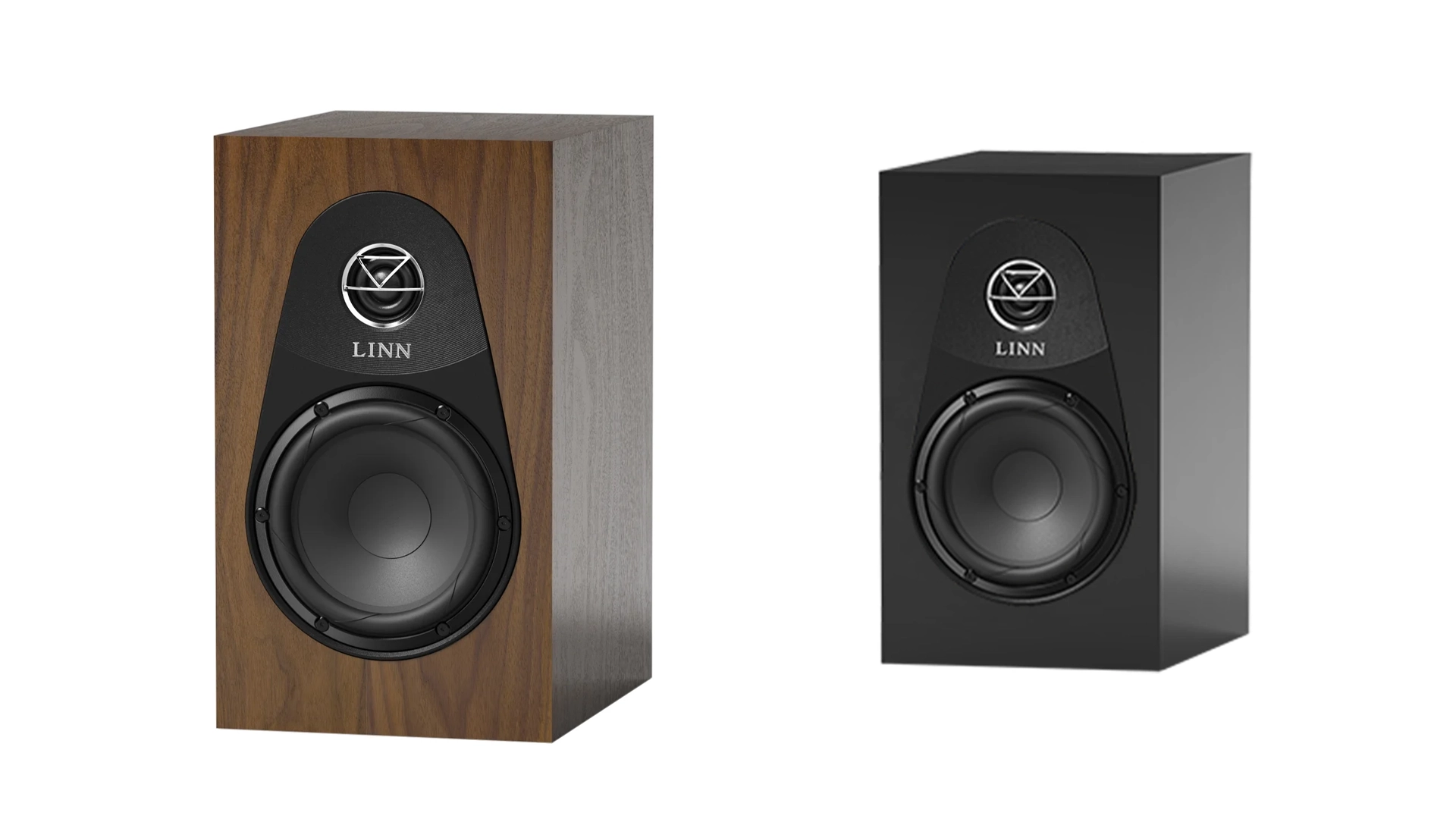
Linn is a Scottish hi-fi manufacturer founded by Ivor Tiefenbrun in 1973, the year the Sondek LP12 established the company’s “source first” argument: information lost at the beginning of a replay chain cannot be recovered later. The suspended, belt-driven LP12 remains in production, but its significance is also structural. Bearings, subchassis, power supplies, tonearms and cartridges can be upgraded individually, allowing decades-old decks to incorporate current engineering. Linn carried the same system thinking into digital audio with its DS network players and today’s Klimax, Selekt and Majik DSM products. Organik is Linn’s in-house discrete DAC architecture; Exakt moves the crossover into the digital domain and time-aligns individual drive units; Space Optimisation models a specific loudspeaker and room to reduce low-frequency interaction without requiring a calibration microphone. Selekt DSM can be configured as a source, preamplifier, integrated amplifier or multichannel hub and upgraded with different DAC and amplification modules. Loudspeakers and complete active systems close the loop. Designed and manufactured near Glasgow, Linn’s defining strength is controlled evolution: analogue and digital platforms are built to accept meaningful upgrades instead of being discarded.
Lu Kang Audio

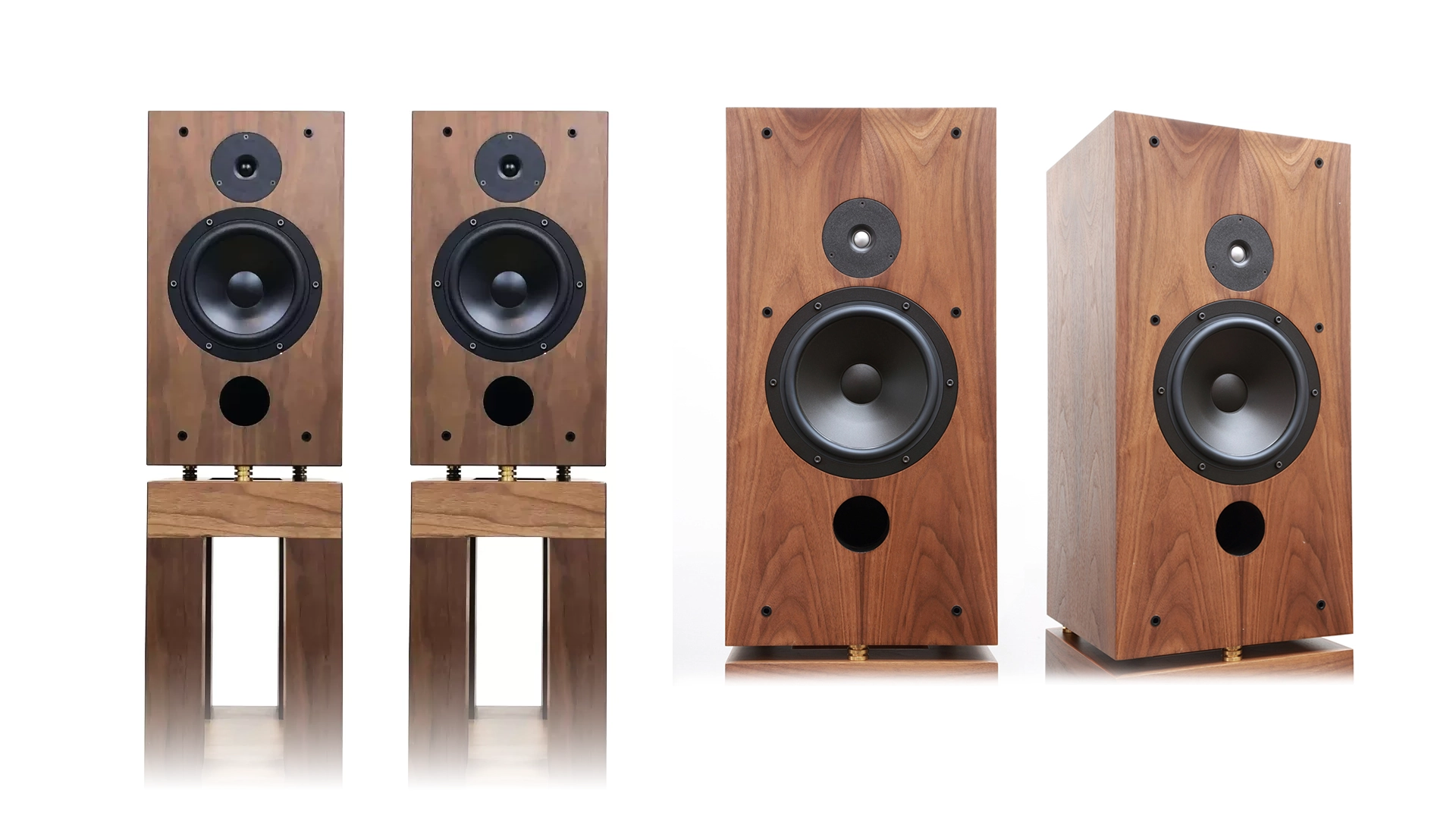
Lu Kang Audio is a Taiwanese family audio company founded in 1983, named after the historic port town of Lukang. Francis “Frank” Shih built the business over four decades as a specialist retailer and distributor, gaining practical experience with international high-end systems before the family began developing loudspeakers of its own. His son Cheng-Chien “Rox” Shih now leads the speaker design work and has brought the Spoey series to markets outside Taiwan. These are not generic cabinets assembled around catalogue parts. For the Spoey 230, for example, Lu Kang worked with AudioTechnology on a customised C-Quenze woofer configuration and partnered it with a Hiquphon OW4 tweeter, then developed the crossover and enclosure around their measured behaviour. Smaller Spoey 155 and larger floorstanding models extend the same approach to different rooms and output requirements. Cabinet proportions, internal damping, port tuning and long listening-based crossover refinement are central to the company’s know-how. Lu Kang’s unusual strength is the route it took to manufacturing: decades spent installing and comparing other makers’ products informed a focused, two-generation loudspeaker programme rather than a broad catalogue created for rapid export.
Lyngdorf
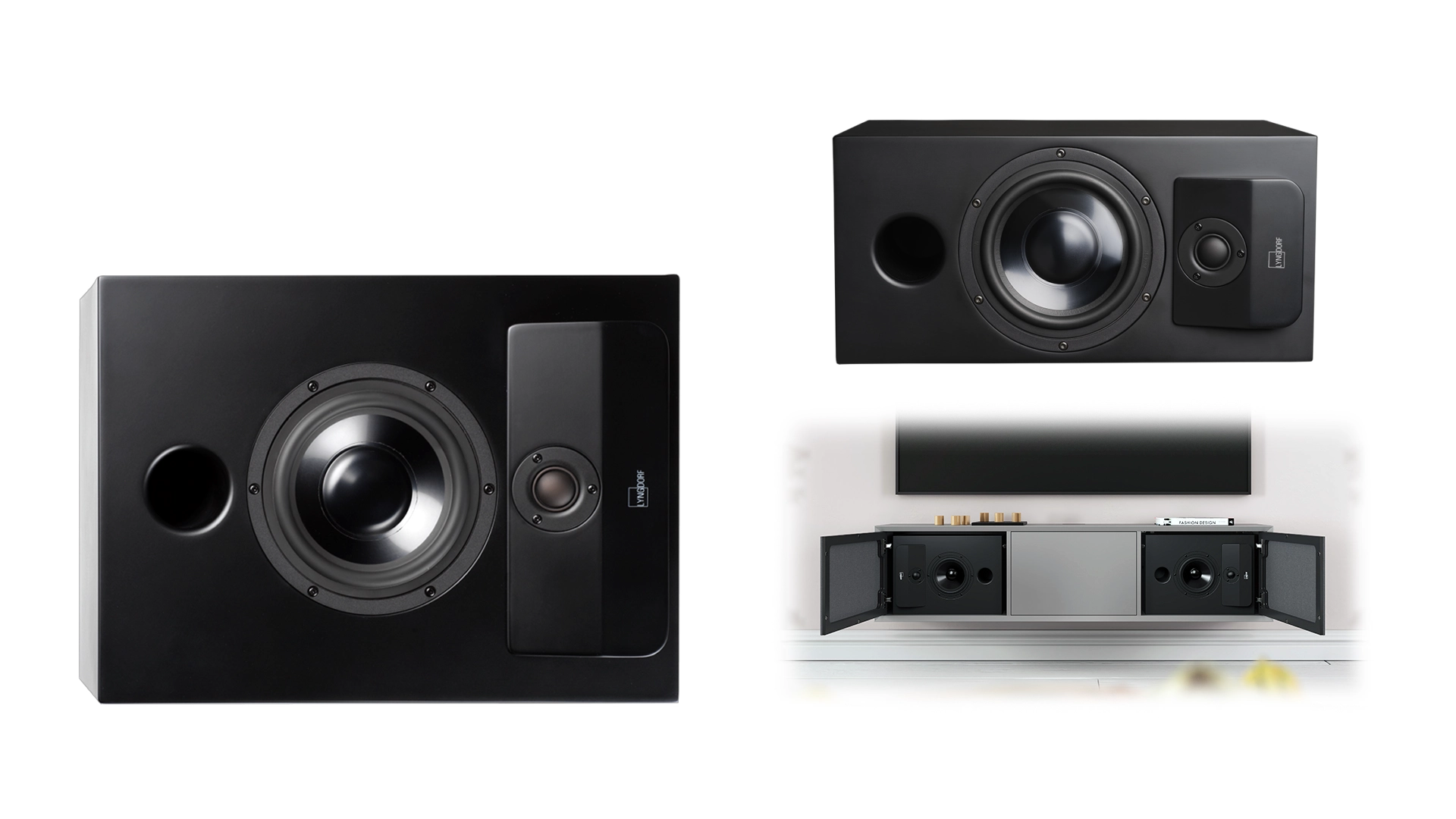
Lyngdorf Audio is a Danish manufacturer built around digital signal processing, system integration and the acoustic behaviour of real rooms. Peter Lyngdorf founded the brand in 2005 after decades of work in loudspeakers, digital amplification and speaker calibration. Its signature RoomPerfect system, developed by Jan Abildgaard Pedersen and a Danish engineering team, measures both a principal listening position and multiple locations around the room. It then reduces room-induced errors while retaining the loudspeaker’s intended tonal character, offering Focus and Global listening modes rather than imposing a generic target curve. The TDAI integrated amplifiers keep sources in the digital domain through volume control and switching, converting close to the output stage; they combine streaming, optional HDMI and analogue modules, bass management and RoomPerfect in a single chassis. MP-series processors extend the same approach to immersive home cinema, while SDA/MXA power amplifiers, compact loudspeakers and boundary woofers allow complete systems to be designed around it. Lyngdorf’s real strength is not room correction as an isolated feature. Amplification, crossover functions, speaker placement and calibration are engineered together so a sophisticated installation can remain comparatively simple to operate.
Lyravox
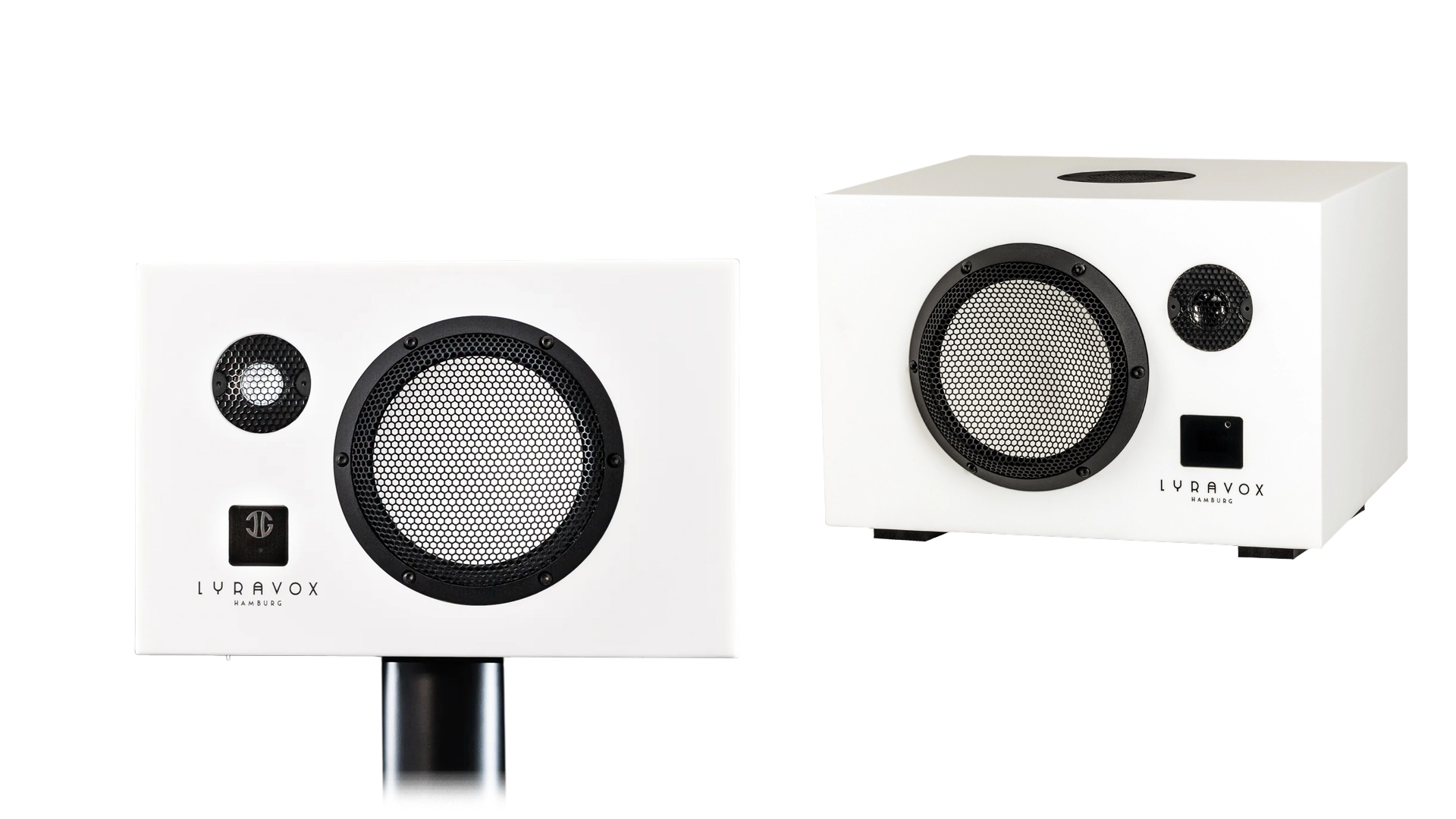
Lyravox is a Hamburg manufacturer of fully active, network-connected loudspeaker systems founded in 2013 by Dr Götz von Laffert and Jens Wietschorke. Its floorstanders may resemble conventional passive speakers, but models such as Karl and Karlotta contain the source interface, streaming platform, multi-channel amplification, digital crossover and driver correction needed for a complete stereo system. Each drive unit has its own amplifier channel; high-resolution DSP applies FIR filtering, phase and delay correction before the signal reaches ceramic, diamond or other specialised transducers selected for the model. This closed architecture lets Lyravox optimise amplifier, crossover and driver as one measured system instead of asking the owner to assemble matching electronics. Smaller Karlina and Karlos designs bring the principle to less imposing rooms, while the Stereomaster concept integrates serious stereo reproduction into hand-built furniture for clients who do not want visible component stacks. Cabinets and finishes are produced with the attention of a bespoke interior object, but the technical point is active control: broad, shallow enclosures, driver layout and correction are developed together to manage radiation and resonance. Lyravox therefore sits between high-end loudspeaker engineering, streaming electronics and custom interior design rather than fitting neatly into only one category.
M&K Sound

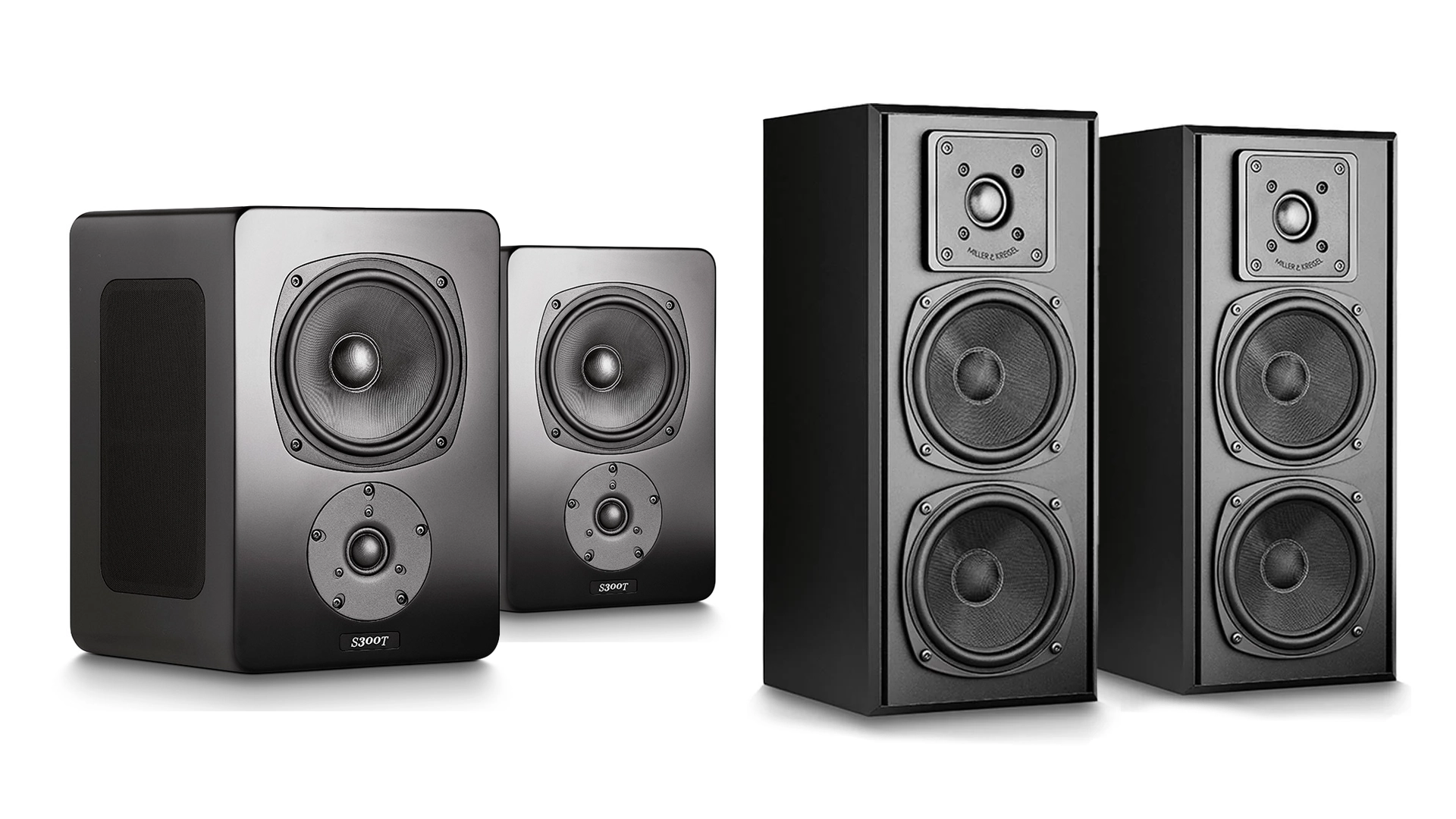
M&K Sound—originally Miller & Kreisel—is a studio-monitor and home-cinema loudspeaker brand with American roots and a present-day base in Denmark. Jonas Miller and Ken Kreisel began the company in Beverly Hills in 1973 after Walter Becker of Steely Dan requested a reference bass system for work on Pretzel Logic. The resulting balanced dual-driver subwoofer made low-frequency reproduction a separate engineering task, and M&K subsequently helped establish the compact satellite-plus-subwoofer format. Its monitors became fixtures in music, film mixing and post-production, creating a direct connection between the rooms where soundtracks are made and the systems used to reproduce them at home. The S150 remains the reference point for the brand’s controlled directivity and high output, while S300, 950 and 750 series address different room sizes. X+ subwoofers use opposed or push-pull driver arrangements to reduce cabinet reaction and distortion, and dedicated surrounds support multichannel installations. Numerous models carry THX certifications, including demanding Dominus applications, but certification is a consequence of measurable output and consistency rather than the whole identity. M&K’s lasting speciality is system scale: compact, closely matched speakers hand the deepest bass to purpose-designed subwoofers, allowing predictable results from stereo through immersive cinema.
Magico

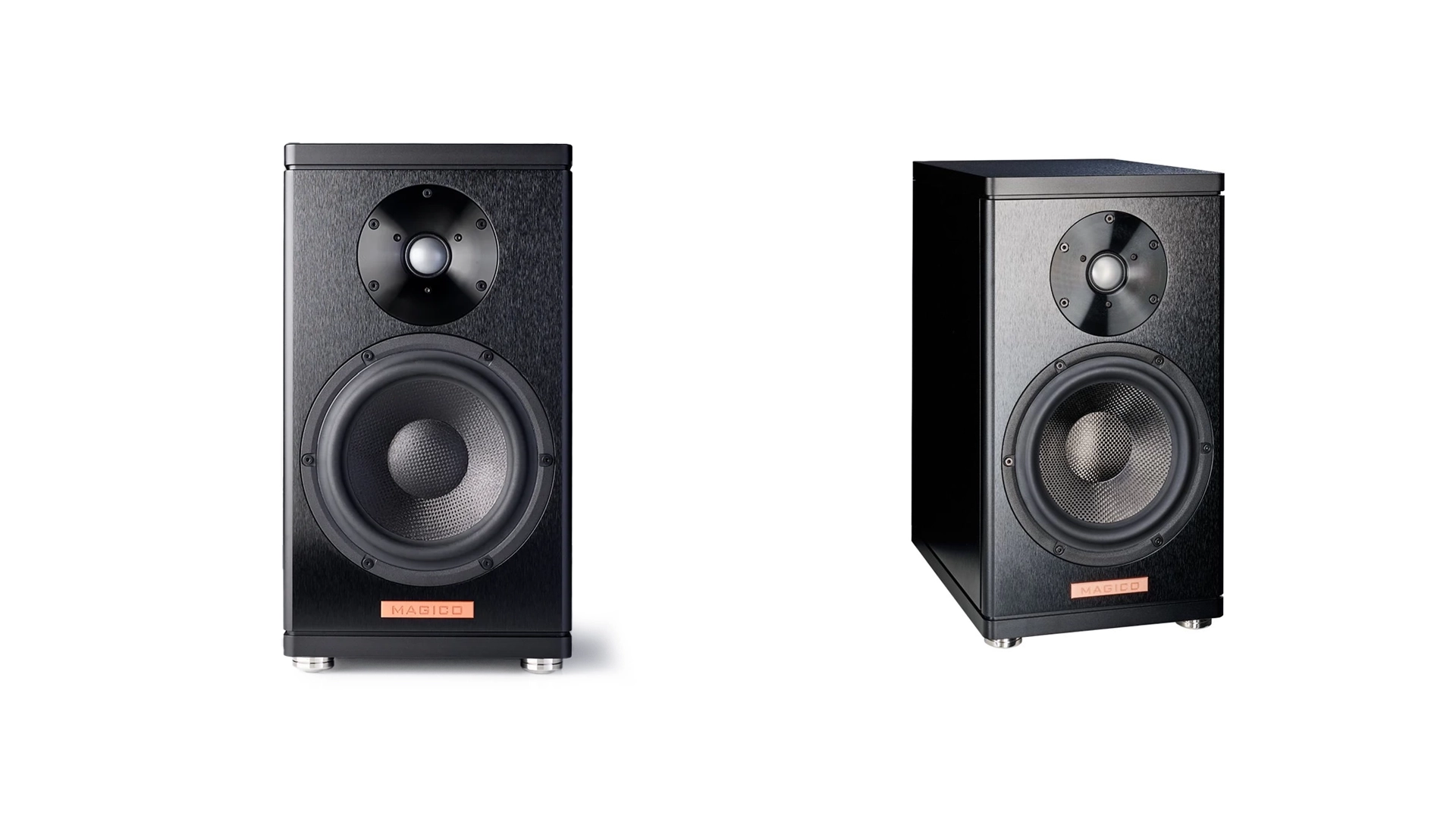
Magico is a California loudspeaker manufacturer founded by Alon Wolf in 2004 to reduce the cabinet, driver and crossover artefacts that obscure recorded information. Instead of conventional veneered fibreboard, the company builds rigid enclosures from machined aluminium sections, constrained-layer assemblies and, in selected M-series designs, carbon-fibre structures. Internal bracing is modelled to move resonances away from critical regions and verified with tools including laser vibrometry and Klippel near-field scanning. Magico’s Nano-Tec cones combine advanced fibre skins with lightweight cores and graphene-based reinforcement, while upper models use diamond-coated beryllium tweeter diaphragms to increase stiffness without excessive moving mass. Elliptical Symmetry crossover networks are developed alongside the drivers rather than treated as final voicing components. The catalogue is organised into A, S and M families: A-series models make the aluminium construction more attainable, S-series balances scale with domestic proportions, and products such as the M7 and semi-active M9 represent the unconstrained reference programme. Active bass and separate crossover electronics appear where they solve a specific system problem. Magico’s distinction is not the use of expensive materials by itself, but the closed engineering loop between simulation, in-house machining, measurement and purpose-designed transducers.
Magnat

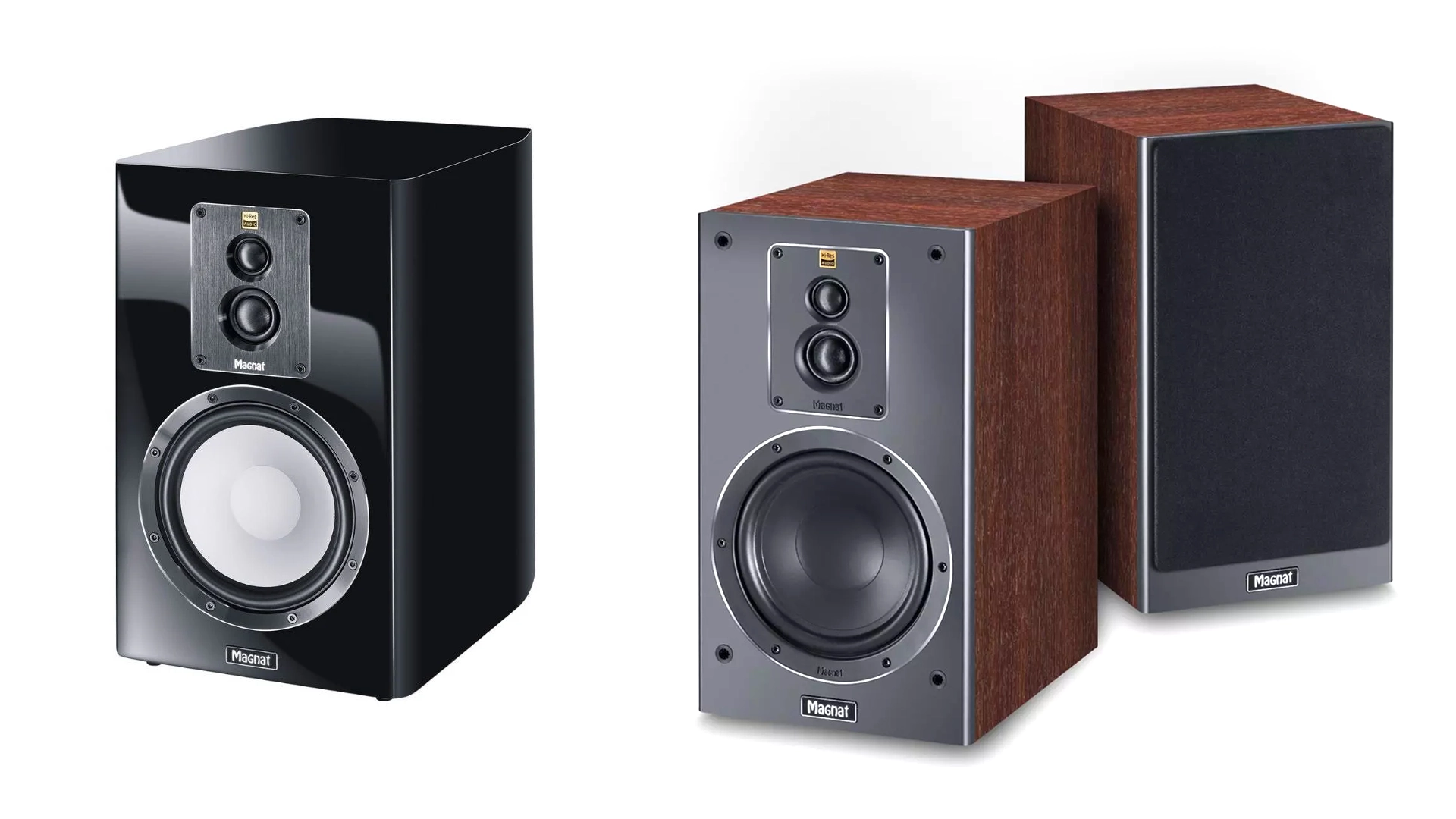
Magnat is a German loudspeaker and audio-electronics brand founded in Cologne by Rainer Haas in 1973. Loudspeaker engineering came first, and bass reproduction has remained a recurring speciality, but the company’s history is more varied than a generic mass-market description suggests. The early Log series established the name internationally; an omnidirectional plasma tweeter followed in 1979, the All-Ribbon family in 1981, and Magnat entered car audio in 1983. Its present home catalogue ranges from compact Monitor S models to Signature loudspeakers, retro-proportioned Transpuls systems and the THX-certified Cinema Ultra family. Active Monitor Reference designs, subwoofers, on-wall and architectural speakers extend the range into lifestyle and custom installation. Magnat also makes electronics, including hybrid valve/solid-state receivers, a network receiver and the substantial MTT 990 direct-drive turntable. Different families serve very different budgets, so the brand should not be characterised only as affordable or only as high-end. Measurement facilities, driver development and crossover optimisation provide the continuity between them. Magnat is now part of Premium Audio Company, but its identity remains German product development applied across stereo, cinema and installation rather than a badge placed on one narrow type of component.
Marten

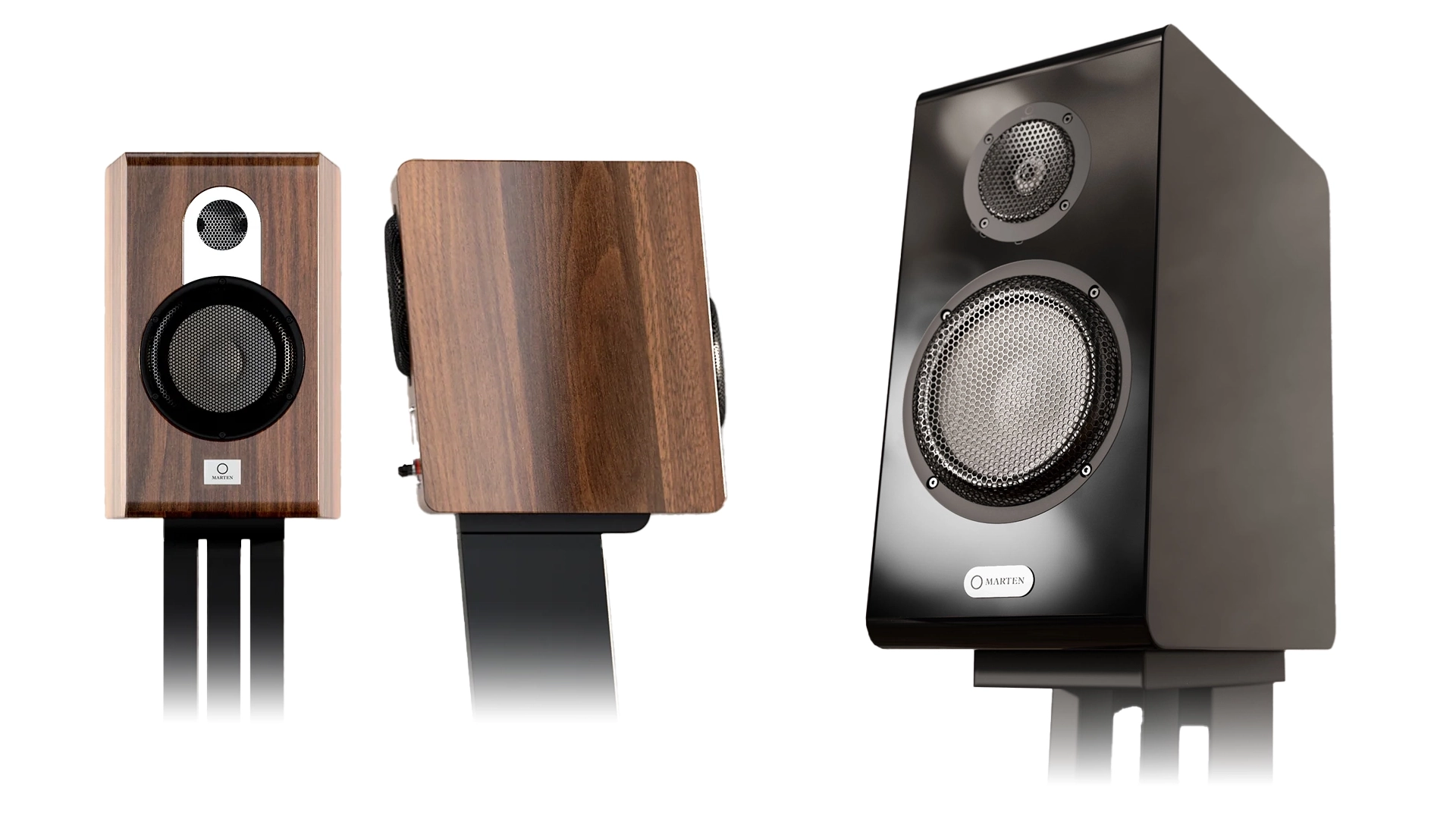
Marten is a family-run Swedish loudspeaker maker that uses very stiff ceramic and diamond diaphragms to pursue low coloration, fast transients and coherent timing. Leif Mårten Olofsson founded the company in Gothenburg in 1998 after decades of building and refining his own speakers. The breakthrough Coltrane established the brand internationally and began a naming tradition drawn largely from jazz. Marten designs complete loudspeakers rather than treating exotic drivers as isolated selling points. Depending on the series, its systems combine Accuton ceramic or pure-diamond treble and midrange units with carbon-fibre bass drivers, carefully tuned crossovers, Jorma Design internal wiring and rigid, resonance-controlled cabinets. Loaded Reflex Line bass loading and passive-radiator solutions are selected model by model, while Diamond editions upgrade not only the tweeter but also crossover parts, terminals and wiring. The catalogue ranges from the compact Oscar and Parker models through Mingus to the ambitious Coltrane family. Marten’s hallmark is the integration of advanced materials with restrained crossover design and extensive listening, producing speakers intended to disappear as sources rather than impose a house effect on every recording.
Martin Logan

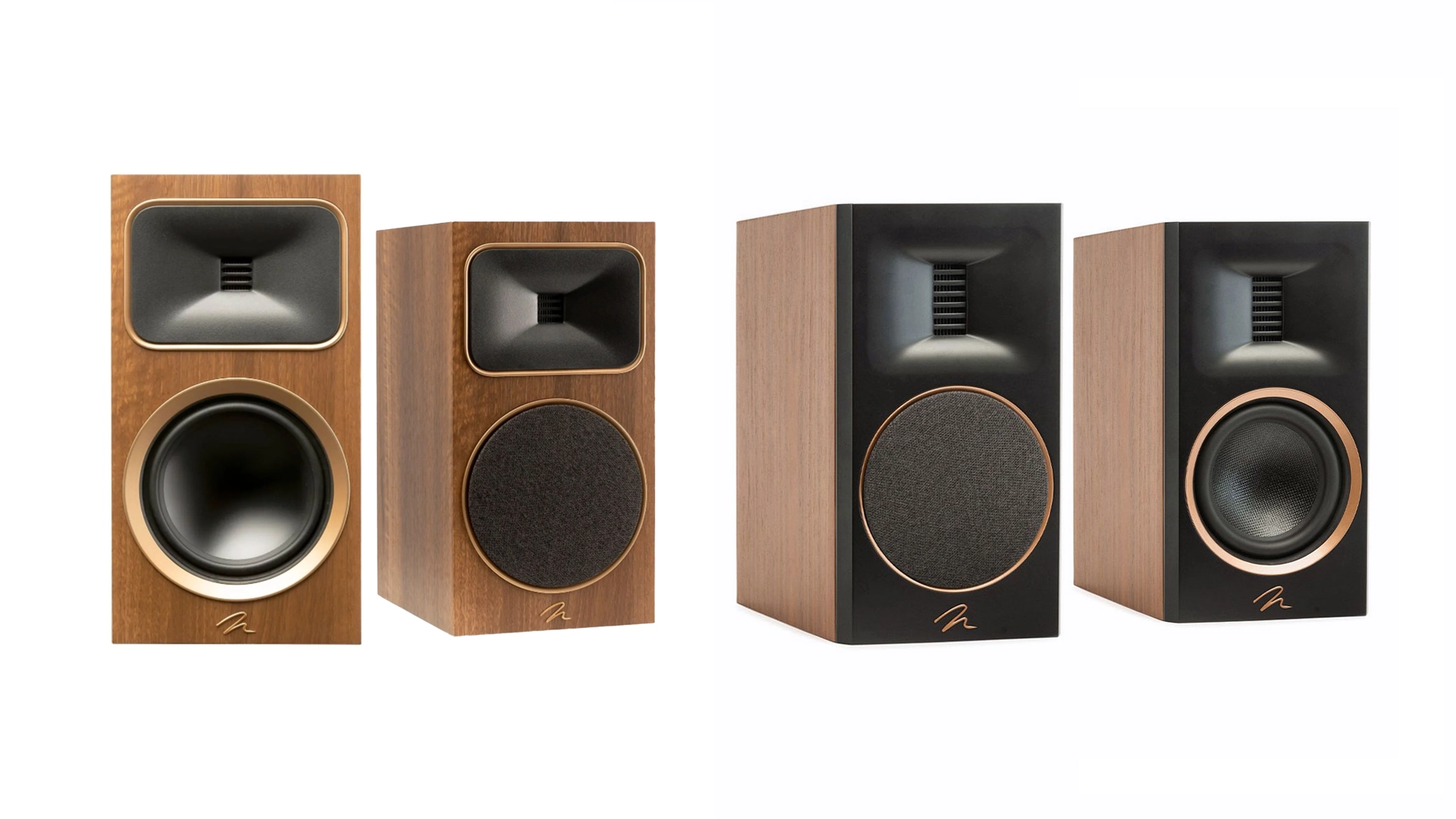
MartinLogan is the American loudspeaker specialist that made the curved electrostatic panel practical for full-range domestic systems. Gayle Martin Sanders and Ron Logan Sutherland developed their first production model, the Monolith, in 1983 after several years of experiments. Its hybrid architecture paired a transparent electrostatic membrane with a dynamic bass driver, solving one of the central limitations of earlier electrostatic designs while preserving their speed and low moving mass. The brand’s large electrostatic models use Curvilinear Line Source panels to control dispersion, MicroPerf stators to increase radiating area and AirFrame structures that hold the panel rigidly without a conventional box. Powered bass sections in selected models add Anthem Room Correction and controlled-force woofer arrangements. MartinLogan also applies its Folded Motion and Folded Motion XT tweeters to the more conventional Motion range, and offers subwoofers, architectural speakers and home-theatre solutions. The important distinction is that MartinLogan is not simply a maker of unusual-looking panels: its know-how lies in integrating electrostatic midrange and treble with dynamic bass, useful room behavior and manageable domestic proportions.
McIntosh

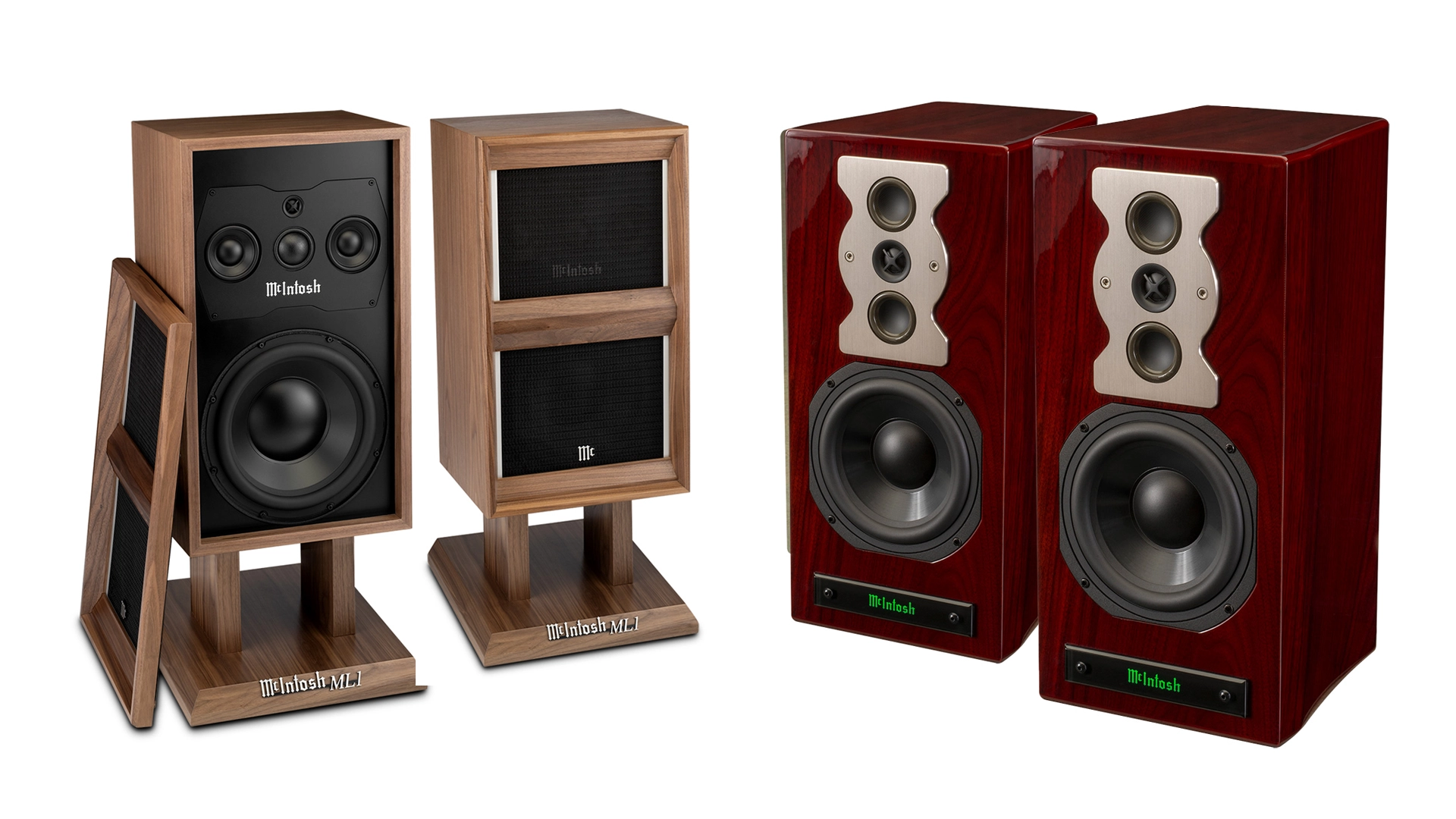
McIntosh is an American high-end audio manufacturer whose blue power meters and black-glass front panels identify products built around unusually durable amplifier engineering. Frank H. McIntosh and Gordon Gow founded the company in 1949 after developing the Unity Coupled Circuit, a transformer-coupled output topology designed to deliver high power with low distortion across the audible band. McIntosh moved to Binghamton, New York, in 1951 and continues to design and assemble products there. The catalogue covers valve and solid-state power amplifiers, preamplifiers, integrated amplifiers, source components, streamers, turntables, speakers and home-cinema processors. Many transistor power amplifiers use Autoformers to deliver their rated power into different loudspeaker impedances, while Power Guard monitors the waveform to reduce clipping-related distortion and Sentry Monitor protects against unsafe operating conditions. The company still winds key transformers in house, and signature glass panels are printed and assembled for long service life. McIntosh’s appeal extends beyond styling: its defining know-how is the marriage of protective circuitry, stable load behavior and conservative construction with a product ecosystem that can support both two-channel and large cinema systems.
Meridian

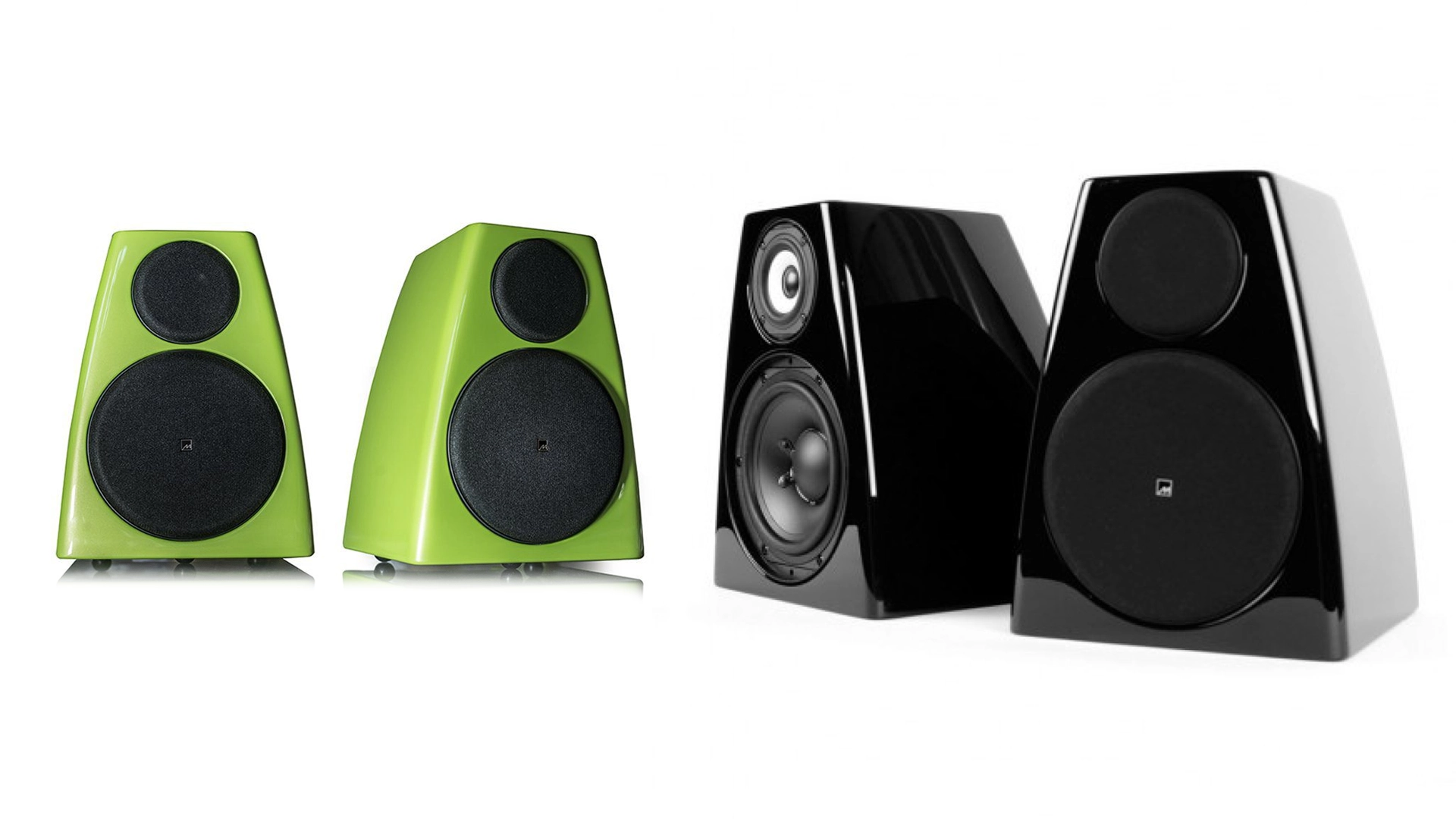
Meridian is a British digital-audio pioneer whose central achievement is treating the loudspeaker, amplification and signal processing as one engineered system. Bob Stuart and industrial designer Allen Boothroyd founded the company in 1977. The active M1 loudspeaker established their combination of electronics and acoustics, while later products helped advance digital source design, lossless coding and DSP-controlled playback. Meridian’s flagship loudspeakers place digital crossovers, dedicated amplification and drivers in the same enclosure, allowing the company to control phase, timing, bass alignment and protection far more precisely than a passive speaker permits. Proprietary techniques include apodising filters, Enhanced Bass Alignment and psychoacoustic processing, implemented in products such as the DSP9 and DSP8000 XE. The wider range includes controllers, streamers, architectural speakers and distributed-audio components, alongside engineering partnerships for automotive, marine, aviation and lifestyle brands. Meridian co-created MQA, but MQA is now independently owned and should not be presented as the company’s defining current product. Meridian’s lasting distinction is broader: decades of research into DSP, active architecture and how complete systems behave in real rooms.